
LOTRO: Pilgrims in a Barren Land
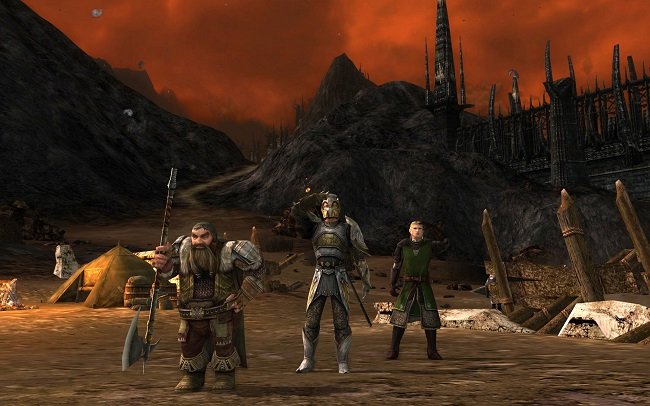
I bought the Mordor expansion for LOTRO in August but apart from playing through the prologue, I made no further progress. I was getting somewhat burnt out with MMOs at the time, so I decided to take a break and pursue other games. I was prompted to return to the LOTRO today by the recent Executive Producer’s Letter from Rob Ciccolini and the announcement that Update 22, coming in 2018, takes the story to Northern Mirkwood. Iconic locations such as Thranduil's Court, Dale, Laketown, and Erebor will feature in the epic story. Looking further ahead another future destination is Minas Morgul and a showdown with Shelob, who so far, we’ve only met briefly from a first-person perspective in a cut scene. Naturally I’m interested in where Standing Stone Games takes the story next, so I need to ensure that I have reached level cap by the end of the year, which isn’t that far away. Hence, it’s back to Mordor. Shame I don’t like Mordor.
I bought the Mordor expansion for LOTRO in August but apart from playing through the prologue, I made no further progress. I was getting somewhat burnt out with MMOs at the time, so I decided to take a break and pursue other games. I was prompted to return to the LOTRO today by the recent Executive Producer’s Letter from Rob Ciccolini and the announcement that Update 22, coming in 2018, takes the story to Northern Mirkwood. Iconic locations such as Thranduil's Court, Dale, Laketown, and Erebor will feature in the epic story. Looking further ahead another future destination is Minas Morgul and a showdown with Shelob, who so far, we’ve only met briefly from a first-person perspective in a cut scene. Naturally I’m interested in where Standing Stone Games takes the story next, so I need to ensure that I have reached level cap by the end of the year, which isn’t that far away. Hence, it’s back to Mordor. Shame I don’t like Mordor.
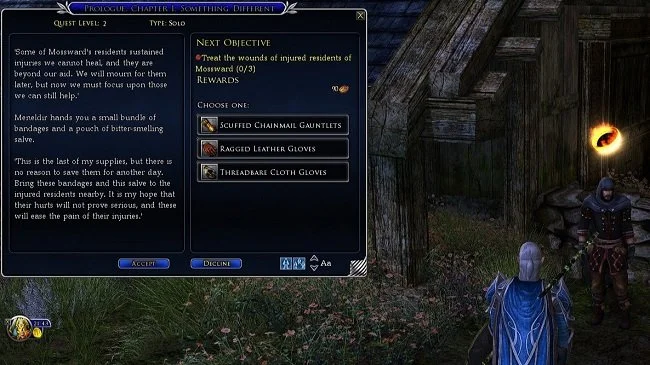
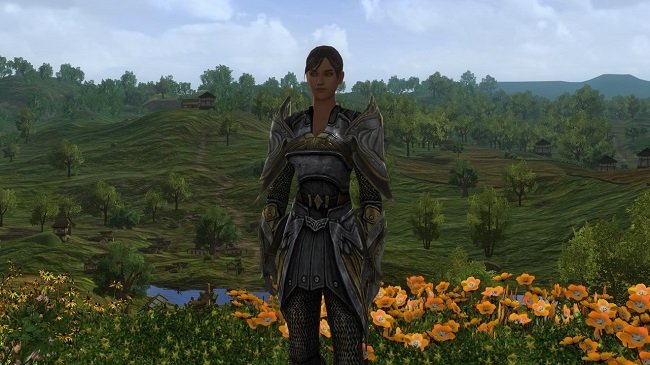
My problem with Mordor is that it’s perpetually dark, extremely convoluted to navigate and filled with a high density of mobs. It certainly looks the part and the various storylines are as creative as ever but it’s a tough grind to slog through. The enemies are difficult to kill and if you’re playing solo, every kill takes twice as long as normal, until you upgrade your gear with that which drops. Now I realise this is a deliberate design choice by SSG to try and encourage group play. However, I don’t like being dependent on others and often play at very late or early hours, thus missing those in my kinship. Let it suffice to say that at present I have to play through Mordor in short burst because otherwise I get bored and frustrated with it. Mercifully, I still have quests to complete in the Drúadan Forest, Beacon Hills and in Ithilien and the Wastes of Dagorlad. These don’t offer such good XP now that I’ve tipped over into level 106, although they do provide a welcome break and an alternative means to reach the current cap. I think tackling some of these Mordor quests above level will ease their difficulty.
It would appear that there is a significant increase in gear stats as you progress through Mordor and of course there is the buff/debuff of the Light of Eärendil versus the Shadow mechanic. All of which offer a “challenge”. If you’re the sort of player who likes to be tested and enjoys MinMaxing then Mordor is certainly a suitable environment for such tastes. I however, like to approach matters in a more pragmatic fashion. I like to be overpowered and to “steam roll” my way through the opposition, in a “shock and awe” manner. To achieve this, I have currently switched to the blue trait line for my Lore-master, relying on my more robust pets to do a lot of tanking and aggro holding. It appears to work so far, although you do have to selectively summon and dismiss your pets to avoid pulling too many mobs and getting swamped. If things really do get out of hand in a combat situation I do use my Landscape Soldier, although this can sometimes cause more problems than it solves. To date Landscape Soldiers are still very difficult to control and have a habit of stationing themselves a little too far away, often straying into place you’d rather they didn’t.
Finally, SSG are currently tinkering with Update 21.3 - Beta #4 on the Bullroarer test server. It looks like they’re looking at reducing the level that Ash of Gorgoroth can be obtained via both the landscape and instances. Ash is required to barter for top tier gear. Let it suffice to say, that it would appear that this change is being made to try and “encourage” players to buy the Gorgoroth Steel-Bound Lootbox, which will be the only other alternative means of obtaining it. Need I mention that this proposed change has not been well received by the community. Given the current debacle regarding lootboxes in Star Wars Battlefront II and the fact that such gaming mechanics are now coming to the attention of the legislature both in the US and Europe, is this really a wise move by SSG? Is the need to push lootboxes an indication that the game is not meeting its revenue projections. This is certainly a subject to watch in the weeks to come, while I grin my way through the barren land of Mordor.





Destiny 2
I bought Destiny 2 on a whim this week. I did not play the first instalment but many of my friends and colleagues gave the game positive feedback. They continued to extol the virtues of the franchise with the recent launch of the sequel, so I decided to give it a try. I’ve always enjoyed the FPS genre and the fact that this title is a pseudo MMO, piqued my interest. So, I shopped around as usual and bought the base game for £42.79, which isn’t a bad price. I didn’t commit to the season pass in case the overall game wasn’t to my liking. However, so far things have been both enjoyable and interesting. I’ve only played for about five or six hours, so haven’t got that far into the game but overall Destiny 2 seems to be a wise investment.
I bought Destiny 2 on a whim this week. I did not play the first instalment but many of my friends and colleagues gave the game positive feedback. They continued to extol the virtues of the franchise with the recent launch of the sequel, so I decided to give it a try. I’ve always enjoyed the FPS genre and the fact that this title is a pseudo MMO, piqued my interest. So, I shopped around as usual and bought the base game for £42.79, which isn’t a bad price. I didn’t commit to the season pass in case the overall game wasn’t to my liking. However, so far things have been both enjoyable and interesting. I’ve only played for about five or six hours, so haven’t got that far into the game but overall Destiny 2 seems to be a wise investment.
Before, I start on what I like about the game, let me voice one criticism. At present it is my only one I have. I was expecting Destiny 2 to start with a specific tutorial, as you would find in an MMO. Something that would introduce all the game systems and provide you with an overview of managing my character and their gear. I appreciate that tutorials are not universally loved. Some players hate the way they slow you down, but I feel it would be beneficial to the game. I’d even settle for highlighted tooltips. Yet both options are conspicuously absent. I therefore had to muddle through the best I could initially and when I encountered something I wasn’t sure about, such as replacing gear or seeking a quest log, I had to tab out of the game and Google it. I always feel that it is a fundamental flaw in any game if you have to temporarily leave it to seek information.
However, the tutorial issue aside, there is much that I like about Destiny 2. Firstly, it looks devilishly saucy. I make no bones about the fact that I like my game to be visually attractive and Destiny 2 makes my graphics card “sing”. Then there’s the actual combat itself, which is very fluid and requires a lot of situational awareness. The mobs are not confined to linear movement and therefore you have to fire very selectively if you wish to conserve ammunition and maintain accuracy. I like the fact that combat is not a cakewalk and that you have to understand your enemy, pick the right weapon and fight tactically. I also enjoy the public events, having become a big fan of this game mechanic in Guild Wars 2. The player interaction has been better than I expected so far, with people banding together and broadly supporting each other.
I found out that I won’t be getting a Sparrow until endgame but frankly that’s fine with me. This is an open world game and wondering about is part of the appeal. From what I’ve seen, having transport would certainly cut down the length of the central campaign and possibly afford to much of an opportunity to miss the out on the game’s striking environment. As an intermediate player who doesn’t always ways feel social, I like the way that all the usual voice chat and text options are turned off by default. I may well have had other players cursing me for my ineptitude in the last few days but I haven’t had to listen to such garrulous inanities. Overall, I think that Destiny 2 is going to scratch an itch I’ve had for a while. I won’t be buying Call of Duty: World War II as a result and the only immediate competition this game has at present is the imminent release of Star Wars Battlefront II.



Emotes
Emotes in MMORPGs have always been a great means to facilitate social interaction. You can hail your friends when you meet them, laugh at their jokes or show displeasure at those indulging in tomfoolery and shenanigans. They can also be used in events, such as dance competitions or as specific actions to be undertaken in quests. Then of course there is the inherent need of some gamers to collect all possible emotes available in a game and the business opportunities that this offers to developers. Thus, emotes are an integral part of MMOs and source of amusement and pleasure for many players.
Emotes in MMORPGs have always been a great means to facilitate social interaction. You can hail your friends when you meet them, laugh at their jokes or show displeasure at those indulging in tomfoolery and shenanigans. They can also be used in events, such as dance competitions or as specific actions to be undertaken in quests. Then of course there is the inherent need of some gamers to collect all possible emotes available in a game and the business opportunities that this offers to developers. Thus, emotes are an integral part of MMOs and source of amusement and pleasure for many players.
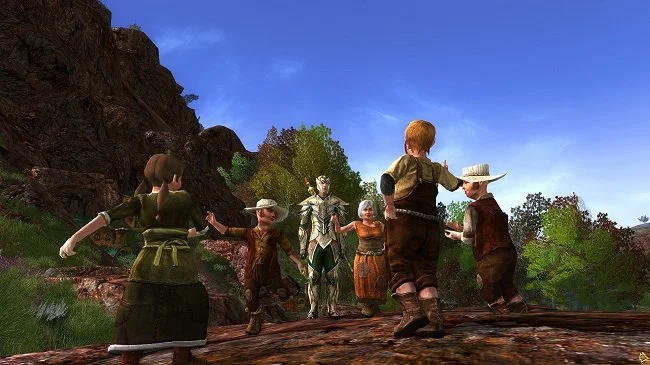
Over the years I have always played many MMOs and one of the first things I’ve always done when in-game is check out what emotes are available. I am especially fond of those found in LOTRO, which are very rich and varied. For starters there are race specific dances which do reflect the appropriate idiom of Elves, Dwarves and Men. However, it is the Hobbit specific emotes that seem to have had the greatest amount of love lavished upon them by the developers. Then there are a wealth of social interactions and humourous embellishments, such as Wippitydo, Surrender and Toast. The Toast emote is gained from an anniversary quest, so is somewhat rare with only a limited yearly window to obtain it.
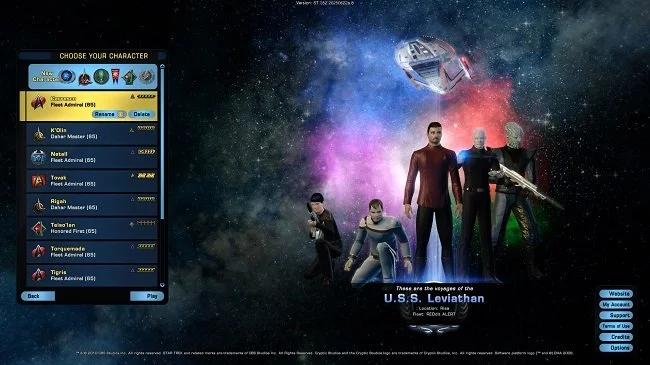
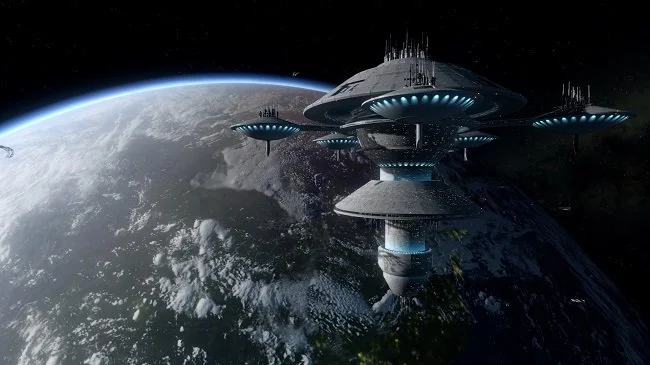
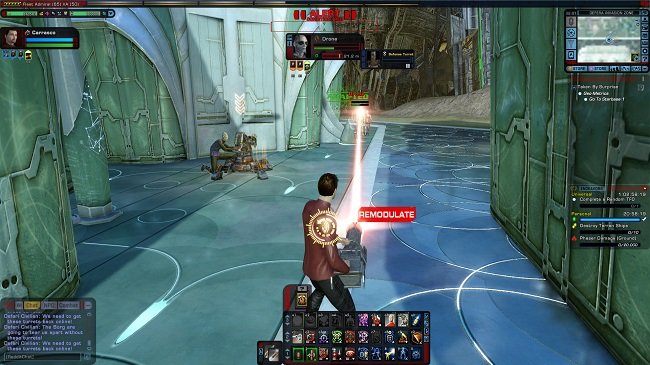
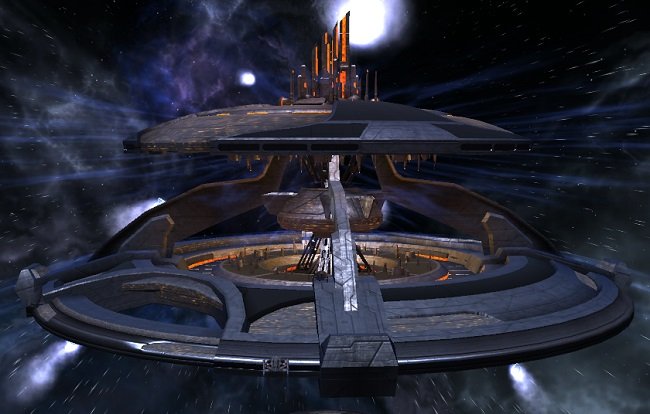
However, Star Trek Online have a diverse collection of emotes which can give other MMOs a run for their money. Naturally there are many that replicate signature salutes and greetings that can be found directly in the various TV shows. Obviously, anything Klingon is very bombastic. However, it is with the dance emotes that the game really excels, and they feature heavily in the summer festival dance competition on Risa. But for me the jewel in the crown is an emote that Cryptic have just recently given away during the Hearts and Minds mission for Halloween. Namely the iconic Michael Jackson Zombie Dance, from the Thriller music video. There was a dozen or so player performing this emote on Drozana station tonight. I have no idea how they managed to synchronise everyone, but it really looked good. I laughed like a drain.
Naturally there are some players who don’t care that much for in-game emotes and think that they’re simply a cosmetic bauble. Each to their own I guess. Plus, there is scope for some players to be a nuisance with communal emotes, although games like LOTRO do have a facility to turn them off. Ultimately, I find that it is the little things within the MMO genre such as emotes, that are increasingly providing my main source of interest in such games. Furthermore, if games must have a cash store then selling emotes is less bothersome than peddling more tangible items that boost performance. In the meantime, I’m off to laugh myself stupid watch Junkrat do his Vaudeville emote in Overwatch.
Star Trek Online: Beyond the Nexus
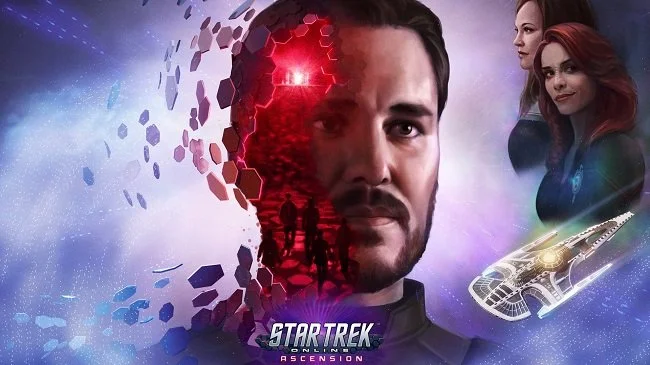
One of the major selling points of Star Trek Online is that it features voice acting from artists who appeared in the various TV shows and feature films. From Star Trek: The Original Series, Leonard Nimoy and Walter Koenig reprised their iconic roles, bringing Spock and Chekov to the game. Michael Dorn and Denise Crosby beamed in from The Next Generation, adding the voices of Worf, Tasha Yar and Empress Sela to several featured episodes. Chase Masterson and Aron Eisenberg came to us from Deep Space Nine to reprise their roles as Leeta and Nog. From Voyager, we have the talents of Tim Russ, Robert Picardo, Jeri Ryan, Ethan Phillips, Garrett Wang, Robert Duncan McNeill, Kim Rhodes, and Lisa LoCicero. Kipleigh Brown and Matt Winston from Enterprise recently joined the roster. The legacy of James Doohan was represented by his son Chris, reprising his father’s role as Scotty. And Zachary Quinto and Joseph Gatt from the Kelvin Timeline Star Trek film franchise have joined the ranks of esteemed Trek alumni in the game.
One of the major selling points of Star Trek Online is that it features voice acting from artists who appeared in the various TV shows and feature films. From Star Trek: The Original Series, Leonard Nimoy and Walter Koenig reprised their iconic roles, bringing Spock and Chekov to the game. Michael Dorn and Denise Crosby beamed in from The Next Generation, adding the voices of Worf, Tasha Yar and Empress Sela to several featured episodes. Chase Masterson and Aron Eisenberg came to us from Deep Space Nine to reprise their roles as Leeta and Nog. From Voyager, we have the talents of Tim Russ, Robert Picardo, Jeri Ryan, Ethan Phillips, Garrett Wang, Robert Duncan McNeill, Kim Rhodes, and Lisa LoCicero. Kipleigh Brown and Matt Winston from Enterprise recently joined the roster. The legacy of James Doohan was represented by his son Chris, reprising his father’s role as Scotty. And Zachary Quinto and Joseph Gatt from the Kelvin Timeline Star Trek film franchise have joined the ranks of esteemed Trek alumni in the game.
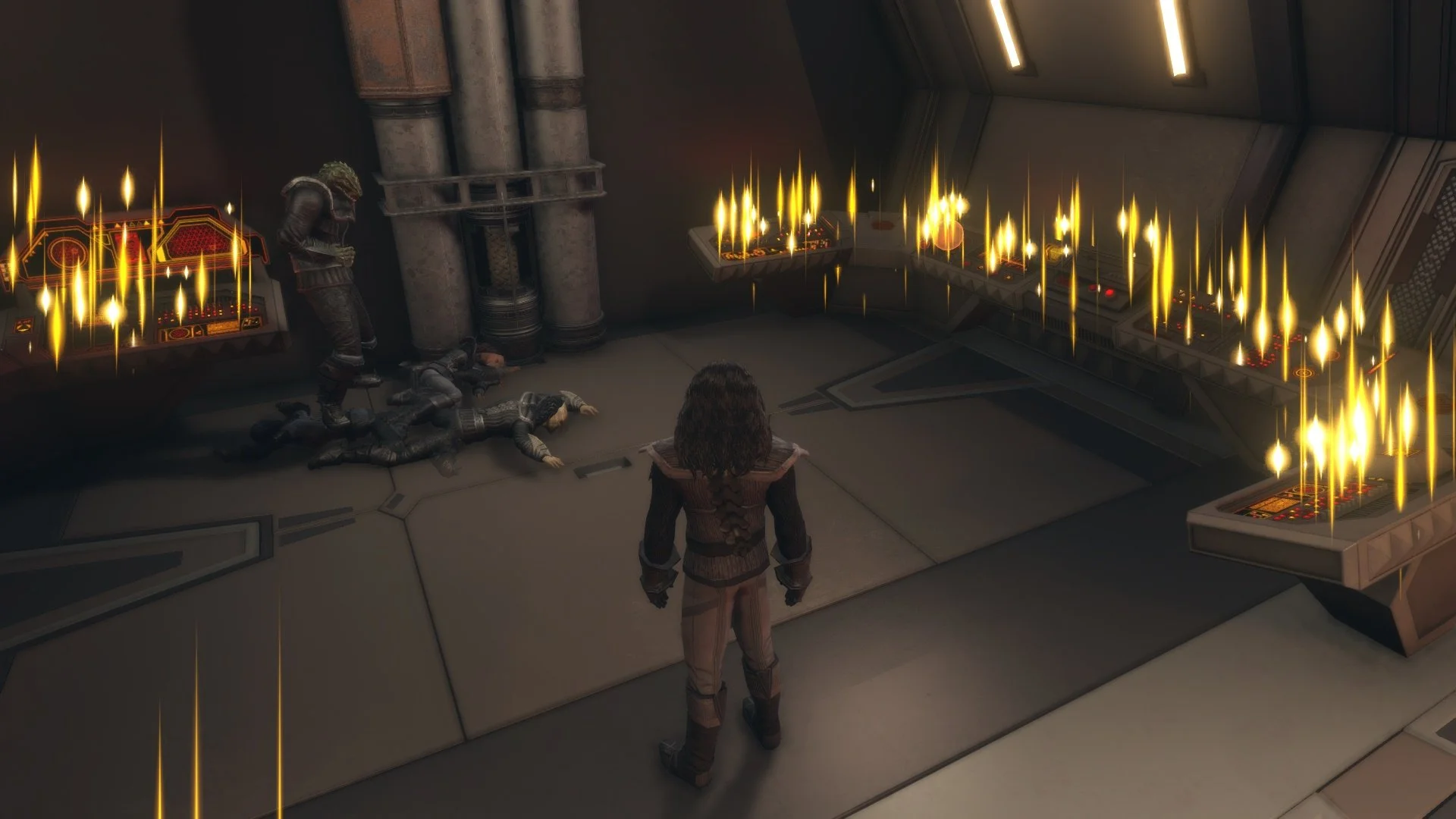
More recently we saw J. G. Hertzler reprise his iconic role as General Martok; a much beloved character among Star Trek devotees. However, this week we saw a milestone in STO as LeVar Burton returned as Geordi La Forge in the latest featured episode “Beyond the Nexus”. I must say I was surprised that Cryptic had managed to facilitate such an appearance, considering it has been discretely pointed out in the past that the cost of certain hiring certain actors is prohibitive. But, not being one to look a gift horse in the mouth, I duly logged into STO today to check out the new featured episode and see if Cryptic’s writers had managed to create a vehicle suitable for Star Trek favourite Geordi La Forge. I was intrigued by the concept of revisiting the Nexus that feature in the film Star Trek: Generations. On paper there’s a lot of narrative scope with such a violent, destructive temporal energy ribbon.
Sadly, “Beyond the Nexus” proved to be a squandered opportunity. The story is somewhat formulaic and distinctly average. During the mission, Captain Geordi La Forge and of course yourself investigate two starfleet ships that went missing while studying the infamous energy ribbon, the Nexus. It's discovered that both ship's crews have been taken over by a powerful psionic entity called Khaj'Buur, who has been imprisoned in the Nexus for unknown reasons. The story then becomes a rather linear adventure in which you have to rescue the crew and then defeat Khaj'Buur. Once this is done he surrenders and is imprisoned pending further enquiry. It is mentioned in the mission's conclusion that Khaj'Buur's wish to leave the Nexus is highly unusual, considering the realm surrounds you with the things that make you the happiest.
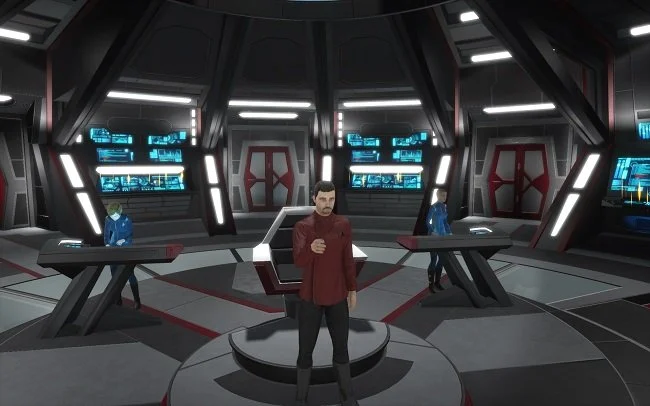
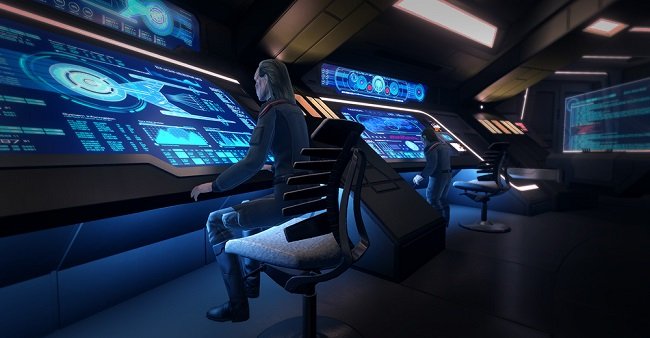
There are some positive aspects to “Beyond the Nexus”. Part of the story takes part on a Galaxy Class vessel, so traversing the ships interior and engine room is a big plus for fans of ST:TNG. As these assets are now in the game it was inevitable that Cryptic would make them available for purchase in the C-Store. Geordi also sports a Type 3 Phaser Rifle which is pleasing to see if you are a lore buff and like things canonical. The weekly rewards are not too shabby either with a three-item gear set on offer. And with regard to the story, although it is rather perfunctory, it does have a few subtle embellishments. The rogue holoprogram written by Ensign Barclay is a nice touch and raised a wry smile. As for Khaj'Buur, I suspect that he’ll feature in later episodes and his back story will be expanded upon. It is also likely that Captain Geordi La Forge has a larger role to play, in next years expansion.
Game Maps
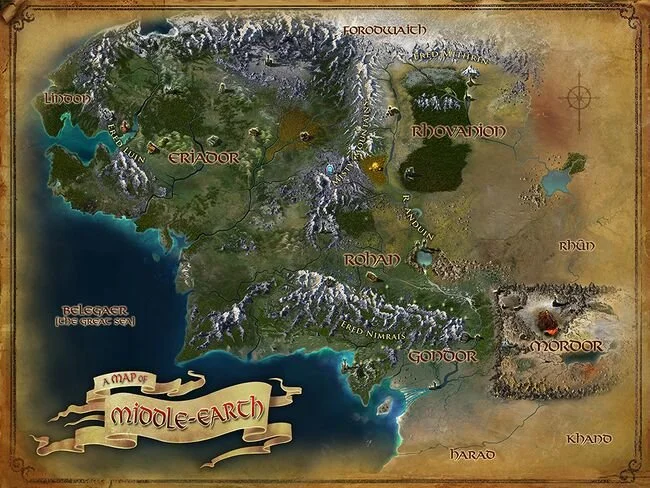
I've been pondering of late the subject of game maps and how they can vary quite radically from title to title. Size, content and instancing can all have an impact on a maps accessibility and the way they are perceived. Then there is the issue of individual player tastes and preferences. Those who like to explore will happily spend time attempting to access remote nooks and crannies. Others will quickly become frustrated if there is no direct route to their goal, as with Guild Wars 2: Heart of Thorns. A games genre also has a significant impact upon map design. A FPS or MOBA has different requirements from it virtual environment that an MMO. I'm sure there are far more variables involved in a maps creation. However, I think most gamers seem to inherently know when the developers have got it right.
I've been pondering of late the subject of game maps and how they can vary quite radically from title to title. Size, content and instancing can all have an impact on a maps accessibility and the way they are perceived. Then there is the issue of individual player tastes and preferences. Those who like to explore will happily spend time attempting to access remote nooks and crannies. Others will quickly become frustrated if there is no direct route to their goal, as with Guild Wars 2: Heart of Thorns. A games genre also has a significant impact upon map design. A FPS or MOBA has different requirements from it virtual environment that an MMO. I'm sure there are far more variables involved in a maps creation. However, I think most gamers seem to inherently know when the developers have got it right.
For me one such example of a map being "just so" is Skyrim. The landmass is about sixteen square miles, which is big but pales into significance when compared to Just Cause 2 which clocks in at four hundred square miles. However, the thing that Bethesda has got right with Skyrim is the balance between the size of the area, the amount of content and aesthetics. The day and night cycle, coupled with procedurally driven events makes it feel like a living environment. You can watch as villagers go about their tasks and farm animals graze for food. The fact that there's no instancing when travelling above ground until you entered a building, also provides an air of authenticity.
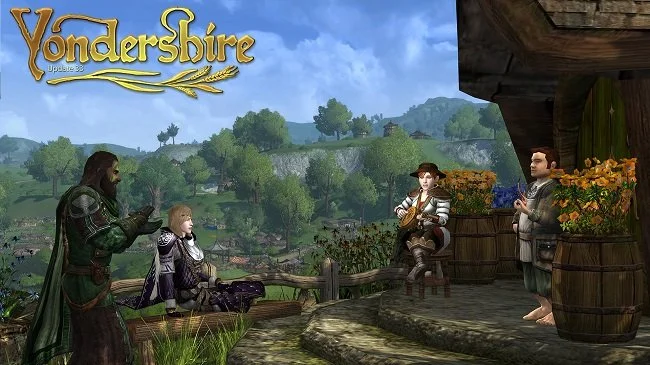
In the halcyon days of LOTRO, Bree-Land was prime example of a rich and varied MMO game map. Although it doesn't have the faux living dynamic of other games, it remains a large and varied landmass with plenty of content to seek out. It also makes a half decent attempt at realising the geography as written in Tolkien's source text. LOTRO still remains a game with a handsome world design but the regions that have subsequently been added of late are far more functional in their construction. Players often cannot access certain areas due to rivers and mountains and find themselves funnelled through pleasant zones on the way to the next quest hub. However more recent MMO's such as ArcheAge and Guild Wars 2 still encourage the exploration of their game worlds and have devised content around players desire to do so.
The open world cities of Mafia 3 or GTA V can also be compelling environments to immerse oneself in. Like their real-world counterparts, both New Bordeaux and Los Santos have distinct zones such as commercial and residential areas. Again random events occur to the citizens as you travel through the map. Weather systems and a customisable day and night cycle again lend credibility to the setting. Unlike fantasy games, these titles have the advantage of contemporary embellishments such as radio stations, roadside advertising and inner-city congestion; all adding to the overall ambience. You can visit bars and diners and watch “life rich pageant” unfold, or at least the developers nearest approximation of it.
However, game maps are still very much determined by the prevailing technology and although things are progressively getting better, there are still limitations. The MMO genre not only has to consider such factors as draw distances and texture loading but there is the question of the players themselves. The game engine has to accommodate both the environment and the population. Unless you have a very high-end gaming PC, then you will often notice system foibles such as "pop-in" as objects appear as you get closer to them. SWTOR and LOTRO are two older MMOs that suffer from this technical idiosyncrasy. Often developers will try to fudge this by blocking line of sight or introducing haze, fog or some other environmental workaround. Single player games have different demands upon them, allowing titles such as Crysis to have draw distance of over nine miles.
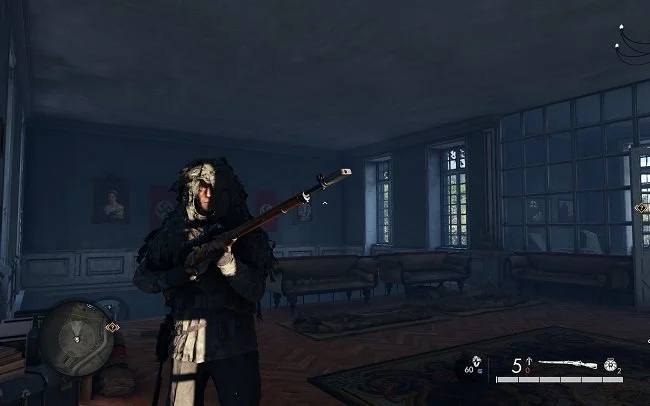
Irrespective of a maps design, its success ultimately depends upon how well it is integrated into the game. The two zones of Mordor and Nurn in Middle-earth: Shadow of Mordor are relatively small but diverse and well implemented. There is a wealth of topographical features that break up the landscape in a very organic way. Unlike some MMOs, this is not done is such an arbitrary and linear fashion. North Africa is well realised in Sniper Elite III, affording the player multiple routes to various targets, across varied terrain. This greatly enhances the re-playability of the game. In Sniper Elite IV, the Sicilian villages and seaports are extremely credible and authentic. The rolling fields and forests of The Witcher 3: Wild Hunt are expansive and atmospheric with a distinctly Eastern European feel to them. Furthermore, the landscape is populated in a credible fashion. Bandits will make use of remote and covered areas. Regions of Wilderness are appropriately empty with minimal amounts of NPCs.
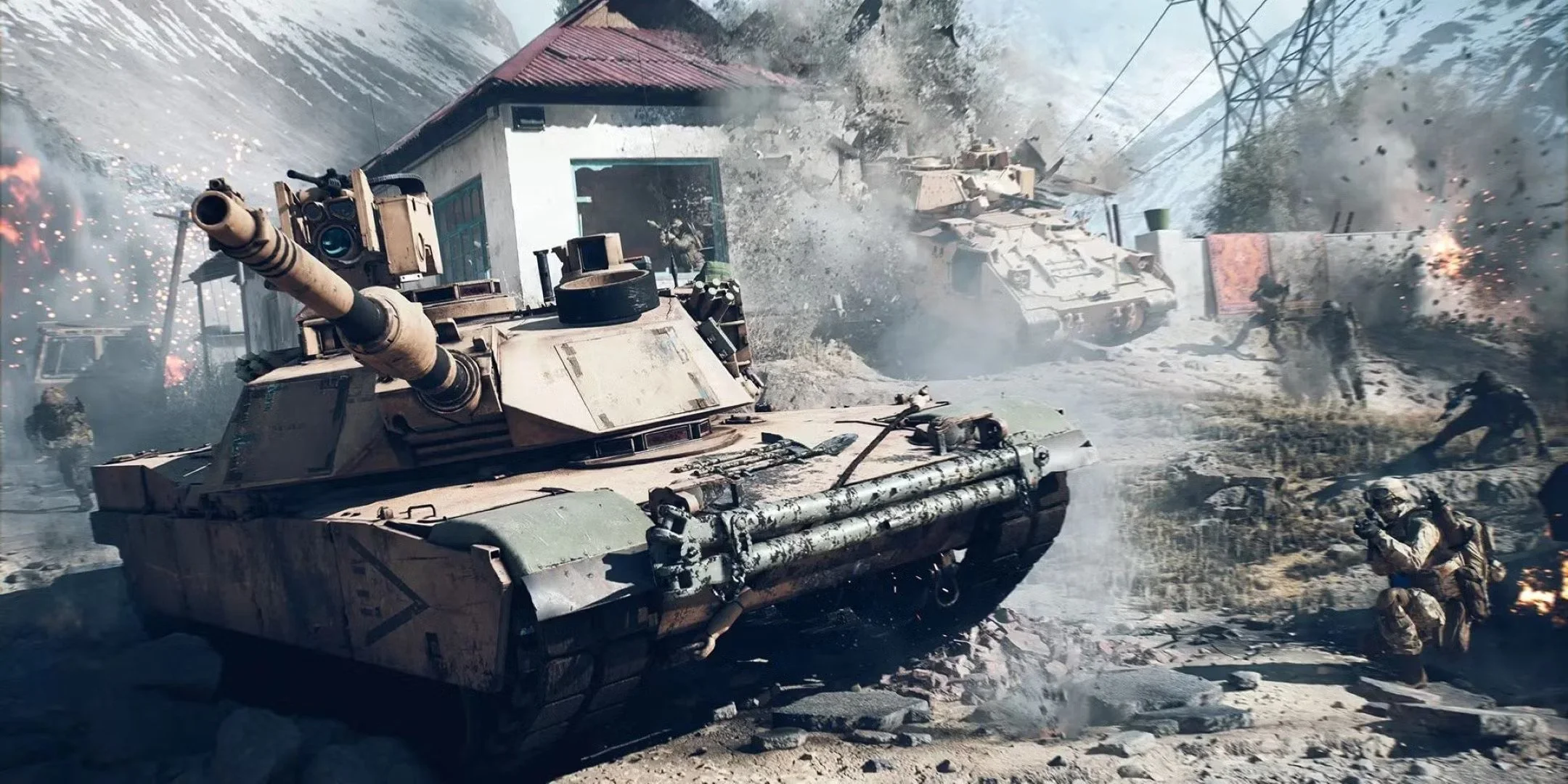
Conversely the London maps in a game such as Sherlock Holmes: Crimes and Punishments are far less dynamic and more functional. They are mainly there for ambience and provide little more than a conduit between each crime scene. The maps in both FPS and MOBA genres, have additional criteria to consider. The fluid nature of their game play requires a different approach to their construction. Multiple routes and chokepoints are common place in such designs. Snipers require vantage points but these need to be relatively exposed to ensure that a single location doesn’t dominate the game. The Battlefield franchise takes map design a stage further, with a mechanic that allows players to destroy the environment and thus change the dynamics of the game. This was to be an integral feature of the now defunct EverQuest Next, although I suspect would have been subject to a wealth of caveats.
As players, we also bring a human element when we interact with game maps and there are many factors that shape our perceptions. Ambient music or when or who we’re playing with, influence how we feel about specific in-game zones. As a result, we often have personal favourites. Evendim in LOTRO is an example of a map that I have fond affection for. More recently the region of Toussaint in the Blood and Wine expansion for The Witcher 3, attracted my interest. It’s a sunny and luxuriant zone and a radical change from the usual ice or desert archetypes you find in so many games. Hopefully, as game technology and the hardware it runs on evolves, we will see map design advance accordingly. I look forward to experiencing larger, more detailed open world environments populated with flora and fauna that have their own lifecycles.
Lockboxes
It would appear that lockboxes are being discussed once again. Bhagpuss wrote a post over at Inventory Full yesterday, which subsequently got used as a talking point on Massively Overpowered today. What made the debate a little different this time around, was that Bhagpuss doesn’t object to lockboxses per se, merely that in most games that have them, the content is frequently lacklustre and uninspiring. A point I am compelled to concur with. I too have no major objection to lockboxes in principle and partake of them from time to time in various games. However, they seldom seem to contain anything that I consider to be of tangible benefit to me. I want pets, gear and weapons. But because of vocal complaints from certain quarters, we are more often than not saddled with inconsequential convenience items and minor cosmetics baubles and trinkets.
It would appear that lockboxes are being discussed once again. Bhagpuss wrote a post over at Inventory Full yesterday, which subsequently got used as a talking point on Massively Overpowered today. What made the debate a little different this time around, was that Bhagpuss doesn’t object to lockboxses per se, merely that in most games that have them, the content is frequently lacklustre and uninspiring. A point I am compelled to concur with. I too have no major objection to lockboxes in principle and partake of them from time to time in various games. However, they seldom seem to contain anything that I consider to be of tangible benefit to me. I want pets, gear and weapons. But because of vocal complaints from certain quarters, we are more often than not saddled with inconsequential convenience items and minor cosmetics baubles and trinkets.
Lockboxes in Star Trek Online are themed and are only available in the game for a limited period of time. There is a nominal percentage chance to win gear, or even a ship if you are “lucky enough”. However, at the very least, each lockbox yields a quantity of Lobi crystals which are a barter currency. If one ever buys keys to open lockboxes it is best to consider the transaction as a means of buying currency that can be traded in for items. Winning a desirable item on top as that is then an added bonus. That is how I think of things on the occasions I purchase keys. Such an outlook then mitigates concerns over gambling although I have no major qualms about that subject either.
However, where STO handles lockboxes in a manner I like, many other MMOs do not. I have yet to find anything of note from one in LOTRO, Guild Wars 2 or Overwatch. The propensity to provided cosmetic or housing items means that lockboxes are often the prerogative of the role players or the game completists. I’m sure the developers target such a market because they pay dividends but if they could broaden their outlook and diversify the rewards there is scope for lockboxes to appeal to a wider number of consumers. Offering bag or bank space, or further character slots could potentially be attractive. Personally, I would like to see more game gear included but that would result in sabre rattling form the “pay to win crowd”. I certainly think that all lockbox rewards should be bind on equip and if not wanted available to sell via the game auction system.
Ultimately, lockboxes are symptomatic of game developers struggling to find a universally acceptable means to finance their game. The demise of the subscription model has left many MMOs in the thrall of an unsatisfactory hybrid F2P business models that have done precious little to improve the overall quality of the games. Monetisation of this kind impacts upon the conception and design of both content as well as game mechanics and seldom in a positive way. If this business model can be overturned for something better, then lockboxes may well go the way of the Dodo. However, that is not something that seems imminent at present so what can’t be cured must be endured. The current debate will more than likely have no effect on developers who have a propensity to repeat their mistakes and so the lockbox will continue as a gaming bête noire.
The Cat Lady's House
Earlier in the year I wrote about the Abandoned Graveyard that is located in Bree-land and how LOTRO has several curious locations that appear to be residual abandoned quest lines. Someone today left a comment and mentioned The Cat lady’s House in Bree. For those who are not familiar with landmark, it can be found as you enter Bree via the Eastern gate. As you proceed up the hill, you pass the stable to your left and the forge of Flint Oakhewer to you right. After the forge, there is a flight of stone steps going up through several terraces of houses. This is the Scholar’s Stair. At the top of the stair the passage widens. To the right is a door with a cat outside. It is opposite the recently added Scholars Hall.
Earlier in the year I wrote about the Abandoned Graveyard that is located in Bree-land and how LOTRO has several curious locations that appear to be residual abandoned quest lines. Someone today left a comment and mentioned The Cat lady’s House in Bree. For those who are not familiar with landmark, it can be found as you enter Bree via the Eastern gate. As you proceed up the hill, you pass the stable to your left and the forge of Flint Oakhewer to you right. After the forge, there is a flight of stone steps going up through several terraces of houses. This is the Scholar’s Stair. At the top of the stair the passage widens. To the right is a door with a cat outside. It is opposite the recently added Scholars Hall.
Once inside you will find a lot more cats. The house is full of them. Four of them are named. These are Oliver, Horatio, Wink and Sylvester. At first glance, this may seem like nothing more than a piece of whimsy or a developer’s in-joke. Or you may think that this is another example of the quest hub that was removed from the game, such as the abandoned graveyard. However, The Cat Lady’s House does play a functional role in LOTRO. It is a specific destination in one of the sub quest of the infamous “Chicken Run”, or what the developer more formally refers to as chicken session play. If you are unfamiliar with this mini game then the following link below will provide you with all the details.
There are still a lot of unanswered questions regarding The Cat Lady’s House. It does seem to be a rather large embellishment just to provide a NPC (Wink the cat) for a solitary quest. So perhaps it did have greater significance during the games development. What is the purpose of Oliver and Horatio? Note also the creepy picture on the wall. It seems a little out of place does it not? Does it have any wider significance? Also, who and where is the Cat Lady herself? Or was the name simply added so the location wasn’t called the cat house which has other connotations. It should also be noted that according to the LOTRO Wiki the house used to be only accessible by drinking from the Inn League Keg. Your character would land inside the house drunk and would have to hearth home.
The LOTRO Wiki also indicates that The Cat Lady’s House is linked to several Spring Festival quests. One of which involves some poor love-sick NPC in the Bree market, who wants you to deliver some flowers. Due to a mistake with the address, the quest takes the player to The Cat Lady’s House and allegedly she is in. Sadly, I cannot confirm whether this particular quest is still active. Either way, the entire location is a very nice embellishment to LOTRO. Like so many others, this dates back to games launch. I am not aware of any similar examples being included in more recent content. The last jovial embellishment that I remember is the “Killer Rabbit” homage to Monty Python and the Holy Grail, in The Wailing Hills in Enedwaith. The game does seem to be getting more functional with each expansion and update. So please take note Standing Stone Games and indulge yourself from time to time. Including such whimsy adds to the games overall fun.
MMO Burnout
Although I have played numerous other online games, LOTRO has been my main MMO for the last nine years years. I have invested a great deal of time into it, which is hardly surprising as that is the entire raison d'etre of the genre. I recently purchased the Mordor expansion for the game which offers a wealth of new content. Yet despite having all this available I have done precious little in the game of late and have made no significant progress. Currently, I have Guilds Wars 2, The Elder Scrolls Online, Secret World Legends and Star Trek Online installed on my PC. I have dabbled with them all over the last few weeks, trying to rekindle a sense of enjoyment and pursue content that I have not completed. Sadly, none of them seem to hold my interest. I log in to them in the hope that something will grab my attention but I always seem to find myself just kicking my heels and aimlessly wandering through zones with no sense of focus.
Although I have played numerous other online games, LOTRO has been my main MMO for the last nine years years. I have invested a great deal of time into it, which is hardly surprising as that is the entire raison d'etre of the genre. I recently purchased the Mordor expansion for the game which offers a wealth of new content. Yet despite having all this available I have done precious little in the game of late and have made no significant progress. Currently, I have Guilds Wars 2, The Elder Scrolls Online, Secret World Legends and Star Trek Online installed on my PC. I have dabbled with them all over the last few weeks, trying to rekindle a sense of enjoyment and pursue content that I have not completed. Sadly, none of them seem to hold my interest. I log in to them in the hope that something will grab my attention but I always seem to find myself just kicking my heels and aimlessly wandering through zones with no sense of focus.
The social side of MMOs can also be an issue at times. You log in to a game hoping to find something you wish to do, only to be met with a barrage of welcomes and offers to join groups or participate in some collective event. In different circumstances, this can be a wonderful thing. The restorative properties of friendship can wash away the ills of a bad day and can replace a dark mood with a good humour. However, there are occasions when the attention can be somewhat overwhelming. There have been times when I’ve been upon the verge of logging in to an MMO but after reflecting upon athe gauntlet of upbeat cheerfulness that lays ahead, I’ve decided to do something else instead. Joking aside, there are times when socialising can be wearing and you just want to be left alone.
The consensus seems to be among gamers, as we get older we become far more particular about how we spend our time. I have purchased several games this year that I knew from the beginning would have a relatively short lifespan. Single player games often present a core campaign, online multiplay and DLC over a six-month period. You can effectively complete a game and gain a sense of closure that you’ve had your fill. Sniper Elite 4 has provided me with a solid five months of entertainment. I’ve progressed through all the content that I care to play through and have no desire to pursue it any further. Conversely, I have also returned to Middle-earth: Shadow of Mordor, in anticipation of the sequel that comes out in October. I have managed to complete a campaign that previously alluded me and now feel that I’m ready to move on.
It is this sense of finality, short and limited gameplay as well as the option to play alone, that MMOs cannot compete with at present. Gamers are fickle creatures. There are times when I want to invest time, work towards long term goals and chat with my fellow man. Yet after doing those very things for three to six months they can become somewhat smothering. Sometimes virtual worlds are a welcome respite from the daily tragedy and horror on real life. Yet I still cannot help but think that it is not healthy to make them too much of a focus and a permanent substitute for real world engagement. I tend not to regret the time I have spent gaming, yet from time to time, I do question the hours required to make progress. Often this happens when a new mechanic or goal is introduced into a game and I calculate exactly how many days it will take to achieve it.
As I am currently without an MMO, I find myself in need of an alternative distraction. However, when I look at the various titles that are currently available through a vendor such as Steam, the first thing that strikes me is the interchangeable and homogeneous nature of them all. This is hardly a revelation as most industries tend to follow tried and tested formulas. At present, mainstream films and music are staggeringly bland and uninventive, so it is almost inevitable that the gaming industry should follow suit. This perfunctory style is a major obstacle for me. For example, after pondering on whether to try Black Desert, I concluded that it simply didn't have sufficient difference from any other MMO to warrant a purchase. And of course, at times like this, EVE: Online raises its head once again, offering a wealth of perceived opportunities. Yet the reality of the situation is that I do not want to take on a game with such a steep learning curve. Neither do I have the time required to be successful at such a game.
So, it would appear that I’m currently suffering from a gaming, specifically MMO "burnout". Perhaps fatigue would be a better term on reflection. Although I have currently tired to a degree of the MMO genre, I still find myself interested in gaming. What I find trying is that I cannot seem to find that many titles, both new and old, to get excited about, especially MMOs. As a genre, they have so much potential but are simply hamstrung by a lack of vision and innovation. Perhaps single player game with co-op are the answers. Furthermore, I’m tired of the noticeable disparity in game engines between MMOs and other genres of game. I appreciate that developers have to lower the bar for entry to lower specified PCs but too many MMOs look and more importantly play as if they hail from a different era. It would be nice to have an MMORPG that had the combat of either For Honor or Middle-earth: Shadow of Mordor.
Fortunately, I have not put all my eggs in one basket and made my online activities the focus of all my friendships and socialising. This can be a real issue for some people when confronted with potential burnout, as loyalties and social ties can compound the problem. Gaming by its very nature can be indulged in to a far greater degree than say fishing or other traditional hobbies. It is not seasonal and is accessible 24/7.You don't have to go anywhere, prepare in advance and be mindful of things like the weather. Subsequently, unless we consciously decide to regulate ourselves it will simply swallow all our leisure time. Burnout is not a term I associate with train spotting, stamp collecting or campanology. As gaming continues to become a more mainstream activity, burnout is a phrase I think we shall hear more often.
Is Co-op Gaming King?
“Is the popularity of smaller-scale co-op (games) hurting MMORPGs?” This interesting question was posted on Massively Overpowered today as part of their regular Massively Overthinking feature. The subject was explored by members of the writing team then thrown over to reader comments, many of which were very thought provoking. The subject was similar to one we debated recently on the Contains Moderate Peril podcast. That focused on whether traditional MMO players were now outsiders within their own genre of choice. Both of these discussions are about change and a shift in player habits. And change is frequently unsettling and potentially comes at the expense of something else.
“Is the popularity of smaller-scale co-op (games) hurting MMORPGs?” This interesting question was posted on Massively Overpowered today as part of their regular Massively Overthinking feature. The subject was explored by members of the writing team then thrown over to reader comments, many of which were very thought provoking. The subject was similar to one we debated recently on the Contains Moderate Peril podcast. That focused on whether traditional MMO players were now outsiders within their own genre of choice. Both of these discussions are about change and a shift in player habits. And change is frequently unsettling and potentially comes at the expense of something else.
A good MMORPG offers a complex persistent world that can be explored and enjoyed both as a solo player and as part of a group. A decade ago, the genre was very much focused on group run content and I have spent many a rewarding evening running dungeons with my guild mates. These sorts of social activities foster close bonding with fellow players and can be extremely uplifting. Yet raiding culture is by its nature time consuming and requires a lot of organising and commitment. Co-op play in other genres of games can offer the same sort of fix but without half as much baggage.
Running The Rift in LOTRO a decade ago meant everyone turning up on time, with the right gear and consumables. Everyone needed to know their job. Even the most casual of raid groups would have to give up a lot of time and if someone fumbled the ball it meant you got nothing for all your work, bar the fun you had. Teaming with your friends in Overwatch is quick and simple. Within minutes you’re in the middle of the action. You can play as casually or as hardcore as you like. If you fail epically, you still get XP points that can unlock loot creates. Such co-op games may not have the immersive world trappings of an MMO but they offer all the fun without the grind. No wonder so many players gravitate towards them.
I enjoy MMOs but play them differently today than how I did ten years ago. I have written recently about how Sniper Elite 4, For Honor and Overwatch can be great fun when played co-operatively with friends and for me I think this is the future. Co-op scratches that social gaming itch but in a manner that allows you to filter out much of the less desirable elements you find in MMOs. The risk of toxic team mates is far less and you aren’t faced with complex barriers to entry. There’s no need to wait for players to change their gear or empty their bags. Where the MMO player is still martialling his team mates, fifteen minutes after the raid was due to begin, the co-op player is knee deep in action, making the most of their precious game time.
If you look back over the last fifty years of popular culture, you’ll find a long list of popular genres, formats and mediums that have bitten the dust. It is sad but ultimately how markets work. Musicals and Westerns came and went as the most popular movie genres. TV saw the rise and fall of the Variety show. The FPS genre moved beyond the confines of World War II and MMOs evolved from open virtual worlds to tightly scripted and managed theme parks. All of these things happened because the public wanted something else that offered them better value for their time and money. At present, co-op games appear to be king by offering what the MMO genre either can’t or won’t. Developers working with such titles should take note but I’m not sure if there’s time left to fix this.
LOTRO: Mordor and Beyond
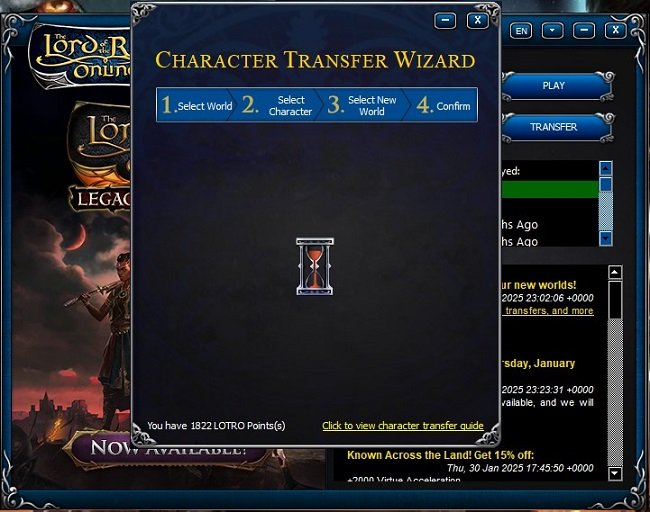
Well, I waited till this afternoon before buying the Mordor expansion for LOTRO. Unlike the song, a day really didn’t make that much difference. In true and traditional Standing Stone Games style there were still problems, glitches and hassles to be found twenty-four hours on from the launch. In fact, there’s a hot fix to be deployed tomorrow to iron some of these out. Yet, in spite of all these minor niggles, tonight I found myself officially entering Mordor, ten years after the launch of LOTRO and eight years on from my subscribing to the game. I must admit as the game wrapped up the original story and I said cheer-bye to Frodo and the rest of The Fellowship of the Ring, I did feel a sense of great satisfaction as I reflected on what my character had achieved on behalf of the free peoples of Middle-earth. Why even Gandalf himself thanked me for my courage and effort. And then a message appeared in chat, stating “You’ve earned 5 LOTRO Points”. The irony wasn’t lost and I then went on to ponder exactly why I’ve spent years being a butler to all the NPCs I’ve met in LOTRO.
Well, I waited till this afternoon before buying the Mordor expansion for LOTRO. Unlike the song, a day really didn’t make that much difference. In true and traditional Standing Stone Games style there were still problems, glitches and hassles to be found twenty-four hours on from the launch. In fact, there’s a hot fix to be deployed tomorrow to iron some of these out. Yet, in spite of all these minor niggles, tonight I found myself officially entering Mordor, ten years after the launch of LOTRO and eight years on from my subscribing to the game. I must admit as the game wrapped up the original story and I said cheer-bye to Frodo and the rest of The Fellowship of the Ring, I did feel a sense of great satisfaction as I reflected on what my character had achieved on behalf of the free peoples of Middle-earth. Why even Gandalf himself thanked me for my courage and effort. And then a message appeared in chat, stating “You’ve earned 5 LOTRO Points”. The irony wasn’t lost and I then went on to ponder exactly why I’ve spent years being a butler to all the NPCs I’ve met in LOTRO.
Joking aside, I did enjoy the final interlude where you play once again as Gollum. Standing Stone Games did somewhat stretch the lore to accommodate the player being present at Sam and Frodo’s rescue. However, it does bring a sense of closure to the player. The subsequent epilogue in The Field of Cormallen set up the premise for the next Epic Book nicely. Overall, the cutscenes were well conceived and showed sufficient of the end of the story without over egging matters. The destruction of Barad-dûr, the demise of the Ring Wraiths and the rescue of Frodo and Sam by the eagles were functional. Once again, the developers work well within the technical restrictions of a decade old game engine. It’s just a shame that they couldn’t have created a more exciting launch trailer. The hastily cobbled together effort that was created using in-game footage was very lacklustre and was far from the most effective marketing tool.
At the time of writing there are still some technical glitches with the new character animations. There are clipping and tearing issues especially with certain types of hats and hair. It was very noticeable of my primary character. There were also delays to some players receiving the Aria of the Valar level boost. I’m sure these matters will be addressed but once again it would have been preferable if these had been sorted prior to launch. The current gaming culture of early access, releasing unfinished content and fixing on the fly is hardly edifying for the game community. It is a lazy, finance driven concept that doesn’t take in to account such matters as professionalism and public perception. The LOTRO player base has proven its tolerance time and time again over the years. I’m sure they would have accommodated a delay or better still a later launch date, if it meant that they got a more polished product.
I was fortunate enough to have received the Aria of the Valar when I logged in to the game today. Not everyone has been as lucky. I applied this boost to level 105 to my Dwarf Hunter. He was currently languishing at level 50 something and loitering in Lothlorien, having simply run through Moria. As I wasn’t relishing revisiting such areas as Mirkwood and Dunland and have always fancied an alternative character at level cap, it seemed like the sensible thing to do. The boost provides adequate gear, although none of it is designed for essences and three Third Age legendary items. Virtues are also increased but not to cap and you are also given a modest quantity of skills points. These are mainly the ones you would acquire if you played through the Epic Story. All things considered it’s not a bad service and allows you to go directly to Mordor adequately equipped. However, it is no more than that and shouldn’t be considered a “pay to win” item. After using the Aria of the Valar my Dwarf Hunter had a Physical Mastery rating of 70K.
So finally, the wait is over. LOTRO has now reached the end of the accepted canonical story and is now moving in to wholly original territory, narratively speaking. It feels like a very major step in the games overall life. Yet the more I look around at LOTRO, the reality is that nothing has significantly changed. The new Allegiance system is merely an adaptation of the existing reputation mechanic. Similarly, the Light of Earendil/Shadow of Mordor System appears to be a regional buff/debuff mechanic, not to different to from the old Radiance/Gloom system. Although the Mordor expansion offers LOTRO player a lot more content, it is still just “more of the same”. For many this will be an acceptable arrangement but I can’t help but think that it would be to the game’s advantage if they introduced something truly innovative. Sadly, I think the reality is that the game is simply too old to support anything too complex.
Although I have bought the Mordor expansion and am happy to play through the new quests, I will more than likely move on to pastures new, once I’ve hit the new level cap. Then it’s a question of waiting to see what the next update has to offer. For those that stay it is then a question of levelling alts and repeating content. Due to the social nature of the game and its community, it is the player created content and activities that binds people to this virtual Middle-earth. Standing Stone Games provides the theatre and the players craft their own experiences with their friends and kinships. Although this on paper seems like a very equitable arrangement, I can’t help but feel that it excuses Standing Stone Games from pushing themselves. Rather than taking a proactive role in creating new innovative content, they seem more like paternal “groundskeepers” charged with maintaining a fertile environment for others. Although it’s a valid position I wonder if its sustainable now LOTRO moves beyond Mordor. What do players want next and can the developers provide it for them?
Standing Stone Games: Is the Honeymoon Over?
I was not that surprised when Standing Stone Games announced that their Mordor expansion for LOTRO would be released at the end of July, just weeks after several open beta tests. This is something the developers have done for a while, with all their major updates. One has to remember that despite a change of name, to core team developing LOTRO has not radically changed since they extricated themselves from Turbine. Something that SSG went out of their way to stress when they formally announced their move, last December. The press releases and interviews at the time focused on a sense of continuity and implied that SSG was now free from the corporate yolk of Warner Bros. and Turbine. It led to a great deal of optimism among LOTRO players and sparked a resurgence in the game. The fact that the MMO has now reached the end of Tolkien’s story and is about to embark upon its own original narrative has been well received. Yet LOTRO has always been regarded both by the faithful and by those outside, as a game that never quite lived up to its potential. Perhaps the release of Mordor would remedy that?
I was not that surprised when Standing Stone Games announced that their Mordor expansion for LOTRO would be released at the end of July, just weeks after several open beta tests. This is something the developers have done for a while, with all their major updates. One has to remember that despite a change of name, to core team developing LOTRO has not radically changed since they extricated themselves from Turbine. Something that SSG went out of their way to stress when they formally announced their move, last December. The press releases and interviews at the time focused on a sense of continuity and implied that SSG was now free from the corporate yolk of Warner Bros. and Turbine. It led to a great deal of optimism among LOTRO players and sparked a resurgence in the game. The fact that the MMO has now reached the end of Tolkien’s story and is about to embark upon its own original narrative has been well received. Yet LOTRO has always been regarded both by the faithful and by those outside, as a game that never quite lived up to its potential. Perhaps the release of Mordor would remedy that?
Well it would appear that the honeymoon between Standing Stone Games and the LOTRO player base is now over. There were cracks appearing in the façade of mutual goodwill during the anniversary event, when it became clear that several activities were exclusional. However, it has been the debacle over the pricing structure of the Mordor expansion that has returned community relationships back to how they were previously. Many LOTRO players do not consider the itemisation and costs of the three different editions of the expansion to be equitable. Once again, the game developers appear to be taking their customers loyalty and support for granted. Something that was a regular complaint when LOTRO was administered under the auspices of Turbine. It would appear that LOTRO is still tied to a cycle of controversies, poor decision making and potentially biting the hand that feeds it. So much for the concept of “a new broom sweeps clean”.
For the last seven years, LOTRO players have been left to assume (often by the inference of Turbine themselves) that a lot of the problems associated with the MMOs development have been down to Warner Bros. interference. However, according to information garnered from staff who have either left Turbine or been laid off, it would appear that has not been the case. Turbine were left to run things pretty much as they liked by their corporate owner, who it would seem were merely interested in obtaining the licence. Thus, we must deduce that all the controversies that have happened with the game since 2010, such as the barter wallet, mounted combat and the skills tree revamp, can all be laid at Turbine’s door. It would appear that Standing Stone Games, despite separating themselves from Turbine per se, have brought with them the same business mindset because it was theirs to begin with.
As ever with matters of this kind, unless the public are given specific information gained from inside the company in question, it really comes down to deductive reasoning and making “educated guesses”. We do not know the exact details of the relationship between Daybreak Game Company and Standing Stone Games. Are they just a publisher or are more involved and control the purse strings? Did they have any say in deciding the pricing of the Mordor expansion? We do not know for certain. However, while these questions and others are debated on the forums and gaming websites, LOTRO players once again find themselves robustly supporting a game that still seems to be failing to meet its potential and at odds with a developer that doesn’t seem to listen as well as it claims. When one stands back and objectively looks at the life cycle of LOTRO, it really has dodged several major bullets mainly due to the goodwill of the players, who seem to be exceptionally forgiving. Perhaps too much so. If this MMO was an original IP with a different audience, then I do not think it would have lasted the ten years that it has.
Money Changes Everything
When I look back at the various posts I’ve written about gaming over the past decade, several themes regularly occur. Player toxicity, marketing hype and industry shenanigans are three that never seem to go away. Pre-order culture, fans enthusiasm and launch day disappointment are also perennial bad pennies. However, there is one point that I constantly find myself reiterating. Yet despite its staggeringly obvious nature it is habitually overlooked and ignored. Namely that money changes everything. Regardless of the nature of a situation, be it the cost of an item in the cash store, alterations to a games mechanics or the relationship between a You Tube personality and their audience, if it involves some sort of financial exchange then it fundamentally alters the dynamic of that given situation.
When I look back at the various posts I’ve written about gaming over the past decade, several themes regularly occur. Player toxicity, marketing hype and industry shenanigans are three that never seem to go away. Pre-order culture, fans enthusiasm and launch day disappointment are also perennial bad pennies. However, there is one point that I constantly find myself reiterating. Yet despite its staggeringly obvious nature it is habitually overlooked and ignored. Namely that money changes everything. Regardless of the nature of a situation, be it the cost of an item in the cash store, alterations to a games mechanics or the relationship between a You Tube personality and their audience, if it involves some sort of financial exchange then it fundamentally alters the dynamic of that given situation.
People are motivated to blog, podcast, live stream and make videos for a variety of reasons. Some do it to please themselves, where some like to please others. It is actually possible to achieve both. If you are persistent in your endeavours and communicate with your audience positively, then you will get some traction. But there are consequences to being successful and I’m not talking exclusively about having an audience of millions. Even a modest site such as Contains Moderate Peril can be subject to some basic internet cause and effect mechanics. Audiences, or readers in my case, consume content voraciously. They also foster expectations regardless of whether you’ve directly instigated them. If you create new material daily, your audience will grow to expect it daily. If you significantly deviate from such a schedule there are consequences. In my case, between March and April last year I took a break from writing and as a result my traffic tanked. It has taken a year plus to recover. Interruptions to the podcast schedule also killed the listener numbers.
Now the reason I mention this is because, even before you’ve got to the point of taking money from your audience, you have to deal with their expectations, regardless of whether they are founded or not. I have known several fan related sites that have been criticised for changing direction, deviating from perceived schedules or having the unmitigated gall to cease producing their free service. But the moment you accept money from your audience, then your independent status is lost. You are no longer providing content but a service. Fans are often blighted by a malady which seems to equate support with direct input. Add money to that spurious equation and you will inevitably have problems. It doesn’t matter what route you take or what platform you use to raise capital, paying is perceived by some as buying a share in “You Incoporated”. Thus, we have Twitch streamers who are criticised for how they spend the money they are “given”, fansites lambasted for championing or not championing specific issues. And at present, popular You Tube personality Joe “Angry Joe” Vargas is at war with a faction of his so-called “Angry Army” of subscribers.
I have in the past toyed with monetising both this site and the associated podcast(s). For a brief period of time, I asked for PayPal donations when the hosting costs were getting extravagant. However, that ended when I was offered a sponsorship deal with Host1Plus. When I moved the site in 2015 to Squarespace I decided it was easier to simply bank roll all my projects myself because it just guaranteed that I could do my own thing free from any external constraints. That’s not to say that I don’t support the notion that people providing content on the internet should be paid, because I do. It’s just that the Huffington Post business model and the fallacy of “exposure” has done a lot of damage. Sadly, Joe Public has become use to getting “free stuff” and it’s very hard to try and overcome that mindset. So, for the present I look upon my online projects as “indulgences” and will fund them myself to maintain my creative control.
If one broadens the scope of the argument that “money changes everything” it is clear that it permeates everything in life and alters are relationship with it. In the UK, university education used to be selective and free of charge. However, now it is more accessible but as more people use it, is chargeable via a deferred loan. Some students no longer see education as a self-determined process of personal improvement but simply as the buying of a service. Thus, academic under achievement is seen not as a personal failure, but as a business dispute. Such a mindset shows how money alters the perception of any undertaking. Thus, some MMO gamers want bespoke content that suits their needs, You Tube subscribers feel that they should dictate what content is posted on a channel and the entire field of crowdfunded projects is rife with complaints, acrimony and misplaced demands.
Now it is fair to say that there is nothing inherently wrong with the traditional business and customer relationship, as long as both parties accept it as such. The same can be said regarding the free content providers and their audiences. Both are perfectly equitable arrangement as along as everyone understand their respective role. Sadly, the internet has impacted upon this perception. Fans think they’re on the board of director’s, Patreon subscribers fail to understand what “donation” actually means and support for any undertaking in general is seen as a point of leverage. Plus, any sort of financial transaction means some sort of contract. Adding a legal veneer to a situation only adds to its complexity.
As I’m writing this very post, someone on my Twitter timeline has just tweeted about how their patrons can now vote on what they review next. If they are happy with this situation then that is fine but it highlights exactly how “money changes everything”. Contains Moderate Peril is never going to make me rich or even break even. But for the present it is exclusively my platform and that makes the operating costs worthwhile. If you feel the need to tell me what I should or should not be doing on my personal site then that is your prerogative. However, I can also ignore your demands and tell you to fuck right off with a clear conscience. So, my advice to any budding blogger, podcaster or You Tuber, is to think long and hard before you take the proverbial “King’s Shilling”. A source of revenue may well be all fine and dandy but at the costs of your independence?















"You're Playing Wrong"
There’s one particular topic that appears with tedious regularity on MMO subreddits and forums. That old chestnut about how the genre has become too solo friendly and that it’s to the ruination of the genre. It usually hails from the raiding community and follows a predictable path about high end gear and those who do and don’t deserve it. When you look beyond the initial arguments, you’ll frequently find that such positions are very emotive, couched in judgemental terms and often end in the sentiment “why even play an MMO?” or something comparable. The reason I mention this perennial debate is because it appeared recently on a forum that I still occasionally visit. It saddens me to a degree because, this point has been debunked so many times, yet it still persists (a bit like many political talking points). It also smacks of that attitude I see all too frequently these days. A concern and borderline resentment of what others are doing, irrespective of whether it impacts upon you or not.
There’s one particular topic that appears with tedious regularity on MMO subreddits and forums. That old chestnut about how the genre has become too solo friendly and that it’s to the ruination of the genre. It usually hails from the raiding community and follows a predictable path about high end gear and those who do and don’t deserve it. When you look beyond the initial arguments, you’ll frequently find that such positions are very emotive, couched in judgemental terms and often end in the sentiment “why even play an MMO?” or something comparable. The reason I mention this perennial debate is because it appeared recently on a forum that I still occasionally visit. It saddens me to a degree because, this point has been debunked so many times, yet it still persists (a bit like many political talking points). It also smacks of that attitude I see all too frequently these days. A concern and borderline resentment of what others are doing, irrespective of whether it impacts upon you or not.
So how shall we tackle this question of “you’re playing wrong” because that is effectively what it boils down to. Well, let us start with that very question. Is there a definitive way to play an MMORPG? No is the brief answer. Sure, each MMO has a set of rules and procedures that set out a path of progression. However, nowhere in these rules will you find a statement saying it is mandatory to play this particular way. Humans like to adapt things to suit their own needs. Play is under pinned by imagination and creativity. Therefore, role-players are free to pursue their particular play style in an MMO. Players can create alts and continuously replay specific content only if they wish. It is not essential to be in a guild or to raid and not everyone wants the best gear. Furthermore, I have never seen a major objection towards varied play styles from the developers of an MMO. They usually just seem happy that people can find joy in their creation and the publishers are content to have your money regardless of what you do.
As for the question "why even play an MMO?" it is utterly irrelevant to the debate. A player’s motivation for playing and indeed the very manner in which they play is no business of anyone else as long as it remains within the TOS of the game. Another common argument and variation upon this theme is that MMOs are meant to be social games and that the very foundation of the genre is the need for continuous interaction with other players. I remember Massively OP writer Jef Rehard claiming not so long ago that “this is a social genre. This is not your world. It's our world, and how you interact with and ultimately shape it is most definitely my concern". Yet the reality is that a MORPG is only social in so far as it includes game mechanics that can facilitate group interaction. They are there as an option and are seldom mandatory. Therefore, MMORPGs are not solely "a social genre" and it is worth noting that the word social does not feature in the acronym. It is also a common misconception that the social dimension that can be found in MMOs, is a result of the game itself. It is not. The game certainly provides a framework for group interaction but ultimately the social element is organically generated by the players themselves. The game at most is a conduit. Gather people together in any social interaction, friendship and fun will present itself.
As for the issue, as to "who's world is it", the answer is simple. It's the publishers. Gamers frequently make the mistake of believing they have a far greater stake in the object of their affection, beyond their consumer rights. We are all nothing more than a customer and any claim suggesting some vicarious form of collective ownership is nonsense. Fandom is a wonderful thing and has many positive aspects but at times it does cause a form of “tunnel vision” that impacts upon some players sense of perspective. MMORPGs are products created to make money. That is their primary purpose. They are not there to provide a social service nor are they under any obligation to foster a morally righteous community. Such activities are simply a byproduct of their use by the player base. There is equal scope for the community to go in the other direction and become toxic.
The MMORPG genre has changed greatly over the last decade and is now quite different from how it was. All consumer products evolve over time. Why is this situation any different? If one finds oneself aggrieved by such change surely it would be logical to blame it upon market forces and the nature of capitalism, rather than on those players that have elected to pursue their entertainment in a different way to you, as is their right? Thus, the argument that “you’re playing wrong” is a fundamentally flawed concept based on faulty data and incorrect assumptions. It also stems from fundamental misunderstanding of what a players role is within the traditional business and customer relationship.
So, in conclusion, concerns over other MMO players habits are misplaced. Beyond abiding by a games TOS (and hopefully maintaining good manners and common decency), a solo player has no obligation to anyone else and is free to pursue their own endeavours within a game in whatever fashion they see fit. As ever with debates of this kind, it is largely a matter of semantics and logical thinking. As a player who predominantly plays MMORPGs solo, the only way my actions affect other players is through the indirect medium of prevailing business trends. IE being part of a group that offers more business potential to the developers. Carping about this is a bit like complaining that not enough people buy a particular brand of coffee that you like and as a result the supermarket no longer stocks it.
Finally, there is a slight hint of a sense of moral outrage associated with this re-occurring argument. Such sentiment is misplaced in a reasoned and rational argument. This is ultimately a discussion about business decisions and how market forces govern product change. Personal indignation based upon perceived injustices does nothing more than cloud the debate. Developers know that they can't please all customers and it would be beneficial is gamers reciprocated. If as a gamer find yourself on the wrong side of a change of policy or game mechanic, then that is sad for you but beyond that it is of no more significance. However as reasoned and rational discussion is not de rigueur in any public arena at present, let alone just in gaming, I suspect we haven’t seen the last of the “you’re playing wrong” debate.
LOTRO: High Elf Preview
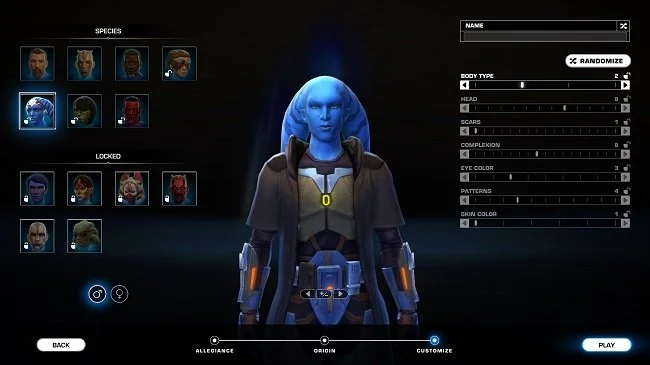
I was more than a little surprised when Standing Stone Games announced the addition of a new race coming to LOTRO. As Elves are already a popular option in the game, I really didn’t see any merit in adding a subtle variation of them, with High Elves. However, as I had time this weekend, I thought I’d take a look at the new introduction for this race, that is currently available for preview on the Bullroarer test server. Like all races in LOTRO, there is a bespoke opening quest line, that orientates players and provides a degree of lore and backstory. Although aspects of the High Elf race are yet to be completed such as the character visualisation, the introduction is in place and has a rather unique narrative compared to the rest of LOTRO.
I was more than a little surprised when Standing Stone Games announced the addition of a new race coming to LOTRO. As Elves are already a popular option in the game, I really didn’t see any merit in adding a subtle variation of them, with High Elves. However, as I had time this weekend, I thought I’d take a look at the new introduction for this race, that is currently available for preview on the Bullroarer test server. Like all races in LOTRO, there is a bespoke opening quest line, that orientates players and provides a degree of lore and backstory. Although aspects of the High Elf race are yet to be completed such as the character visualisation, the introduction is in place and has a rather unique narrative compared to the rest of LOTRO.
After creating your High Elf character and choosing a suitable name, the action moves to The Battle of Dagorlad, during the end of the Second Age. As part of the Last Alliance and in true LOTRO fashion, you find yourself running errands for none other than Gil-galad himself. This presents an opportunity to name check a lot of iconic characters from Tolkien’s work and certainly provides an interesting story line. High Elves have at present some curious parkour style animations when running and jumping. It actually seems quite fitting, considering the physical and tactical abilities of the race. It should also be noted that your character is at level 110 at this point in the proceedings.
SPOILER ALERT:
Now this is where things get curious. SSG have had to find a suitable plot device to bring your character from SA 3434, to a TA 3001. A passage of time of about three thousand plus years. I must admit, I did laugh out loud at the temerity of their solution. Effectively, your character is stabbed with a Morgul blade with the intent of turning them into a minor wraith. However, you’re rescued and brought to Imladris and healed by Elrond. Due to the severity of your wound, you’ve been convalescing in an Elven coma all this time. Overall, it works and does have a degree of plausibility but it’s all somewhat hokey and somewhat “Buck Rogers”. Furthermore, because your strength has been weakened by this experience, you’ve been reduced to an appropriate level for the starting zones of LOTRO.
Much to my surprise, I did enjoy this opening gambit for the High Elf race. Although it is unpolished in its current state, it is clear that some thought has been put into it. However, like the Beorning class that was introduced into the game in late 2014, once the initial excitement of the introduction has passed, you once again find yourself in the Ered Luin starter zone, forging through familiar territory. It’s a shame that SSG cannot maintain a slightly more customised story play through for each race, as Cryptic do with Star Trek Online. At present High Elves may only appeal to Elven enthusiasts and altoholic completists. In the meantime, I am looking forward to the next preview build to see the new facial options and ongoing refinements of the class.
LOTRO: Mordor Preview
I decided to take a look at the second Mordor preview today, that is currently available on Bullroarer test server. Due to technical issues, I could not initially log into the game. The game client stuck at installing “pre-reqs”. However, by the evening SSG had resolved the problem and I managed to successfully login and copy my level cap character from Laurelin. Access to Mordor is via a teleport horse at the Slag-Hills. As with Helm’s Deep and the Battle of the Pelennor fields, this system of transitioning between multiple phases set at different times, can be a little confusing. Irrespective of this, it was rather droll of SSG to have Boromir as the NPC that bestows access to the Mordor quest line. I subsequently spent several hours touring the region. This post is specifically about my initial impressions of the area and is not a critique of all the new features and systems.
I decided to take a look at the second Mordor preview today, that is currently available on Bullroarer test server. Due to technical issues, I could not initially log into the game. The game client stuck at installing “pre-reqs”. However, by the evening SSG had resolved the problem and I managed to successfully login and copy my level cap character from Laurelin. Access to Mordor is via a teleport horse at the Slag-Hills. As with Helm’s Deep and the Battle of the Pelennor fields, this system of transitioning between multiple phases set at different times, can be a little confusing. Irrespective of this, it was rather droll of SSG to have Boromir as the NPC that bestows access to the Mordor quest line. I subsequently spent several hours touring the region. This post is specifically about my initial impressions of the area and is not a critique of all the new features and systems.
The first thing that struck me about Mordor immediately after the fall of Sauron, was how dark and gloomy it was. I’m sure lore experts will correct me if I’m wrong but wasn’t the storm of Mordor supposed to dissipate after the ring was destroyed? I was hoping that the smoke and dust from the ruined Morannon would lift as I travelled into Udûn and beyond. Sadly, this was not the case. Mordor is dark, smokey and depending upon your monitor and graphics card, a strain on the eyes. I had to pull the curtains in my office to be able to see clearly. LOTRO has several other regions that have low lighting and are dismal; Moria and Angmar. However, visibility is still sufficient to navigate. Mordor is very much like Mirkwood, as in it’s not just dark but blurry.
Standing Stone Games have a lot of placeholder NPCs at present. I found myself battling a Blackwold Ruffian at one point, which was somewhat incongruous. But as the expansion is work in progress one has to expect such workarounds. The architecture of the region is in the same idiom of the Dagorlad and Angmar. It looks appropriate but a lot of assets are simply being reused. There are some new beasts roaming Gorgoroth, such as the Sulokil but most else are just variations on existing themea. Rock worms and fire drakes make a return, along with Fire Grims and Fumaroles. There is a swamp like region to the South East of Mount Doom and the area around Cirith Ungol is heavily populated by the Spawn of Ungoliant. Straying from the road or approaching enemy camps triggers the new Light of Eärendil/Shadow of Mordor system. This is a buff/debuff mechanic that isn’t fatal but does diminish your stats.
From what I have seen so far of Mordor, it certainly seems to fit the aesthetic described in Tolkien’s source text. Once you’ve initially gotten over the excitement of simply walking into Mordor, it really becomes apparent that SSG have provided more of the same. That’s not a bad thing per se. The formula has proven to work. Mordor will have some subtle differences from other zones in LOTRO and bespoke mechnics but it will ultimately have Epic and standard quests, rep factions and new items to obtain or craft. For me, the real test will be how engaging the narrative is, now we have stepped beyond the canonical story. The dark and oppressive nature of the new area may also be an obstacle for some players. I certainly do not see myself engaging in lengthy gameplay sessions as did in Northern Ithilien.
As of yet, SSG have not mentioned a price point for the Mordor expansion. They’ve also not yet clarified some details regarding various new game mechanics. The allegiance system for example seems to be an advance variation of a reputation faction. There is also no news on alleged instance cluster and whether it will be included in the expansion or come after. The price may also be an issue. Although the overall Mordor map looks big, much of it is a rocky barren wasteland. I hope the areas to the South of the Sea of Núrnen are more temperate, as these are supposed to be fertile and the bread basket of Mordor. I do not want to pay an excessive amount for a potentially un-diverse region. Hopefully further information will be forthcoming shortly.
I remain for the present, relatively optimistic about this pending expansion as we’ve not had one for several years. It should be remembered that not every LOTRO player has level cap characters, so for them there is no immediate need to buy more endgame content. The introduction of a new race is therefore an interesting development and I shall write more about this in my next blog post. It’s appeal to altoholics is a practical source of revenue for SSG. I’m also looking forward to the revised character animations and aesthetics. LOTRO was never cutting edge with regards to its avatars so an overhaul is more than welcome in my opinion. In the meantime while we await more news and a third test build, here is a small gallery of screen captures taken throughout Mordor today. Please note I have adjusted the brightness, as they were incredibly dark.
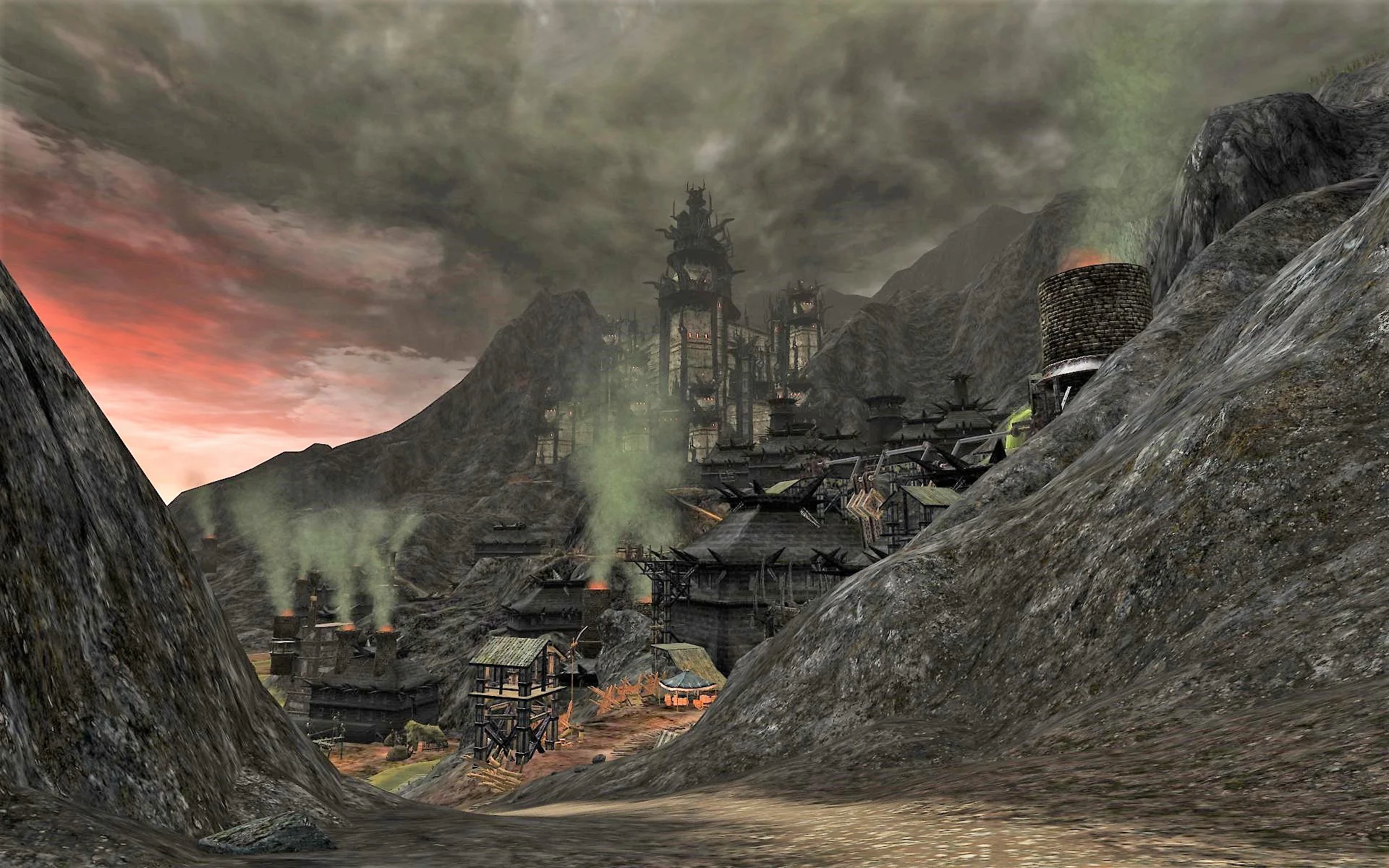
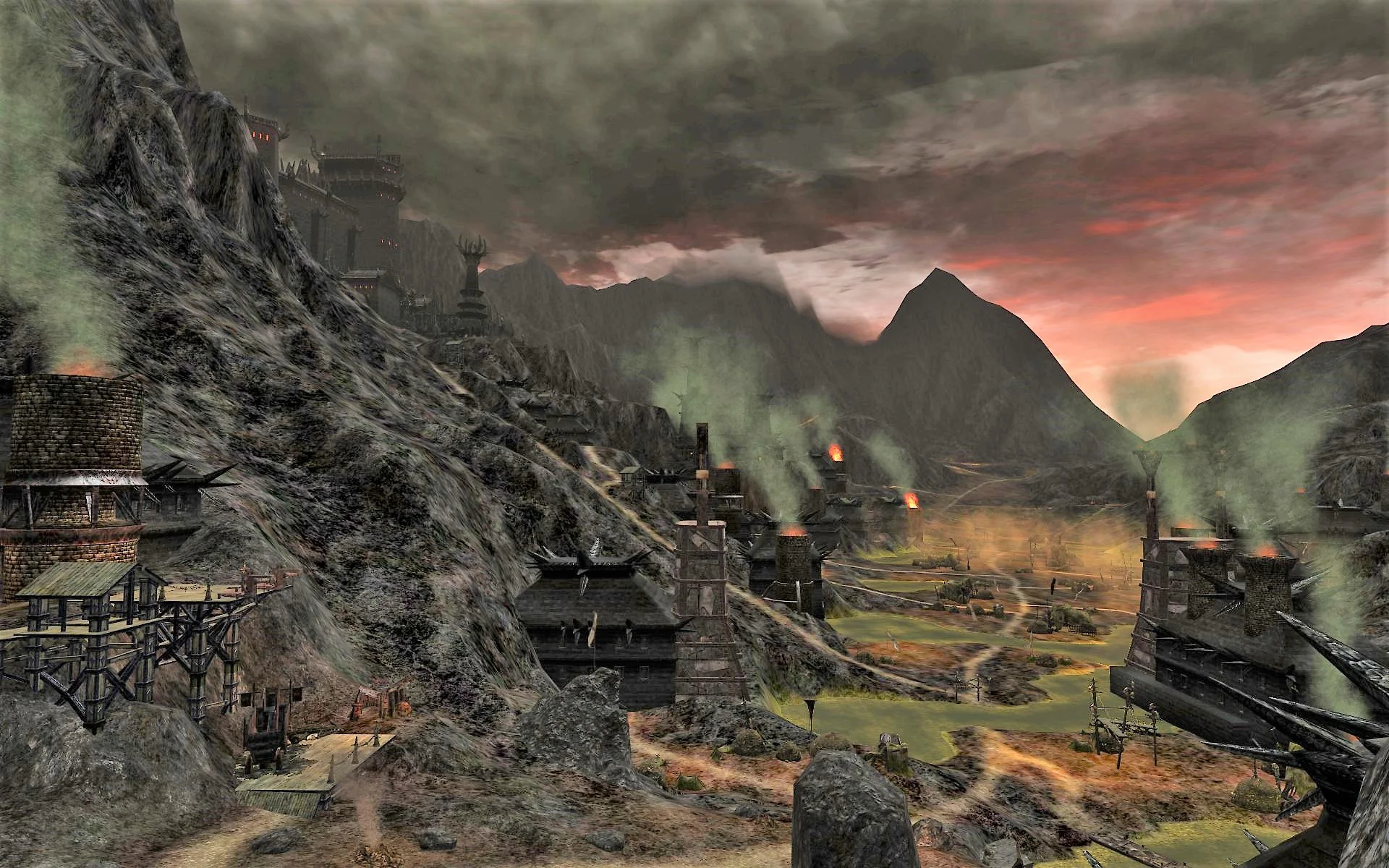
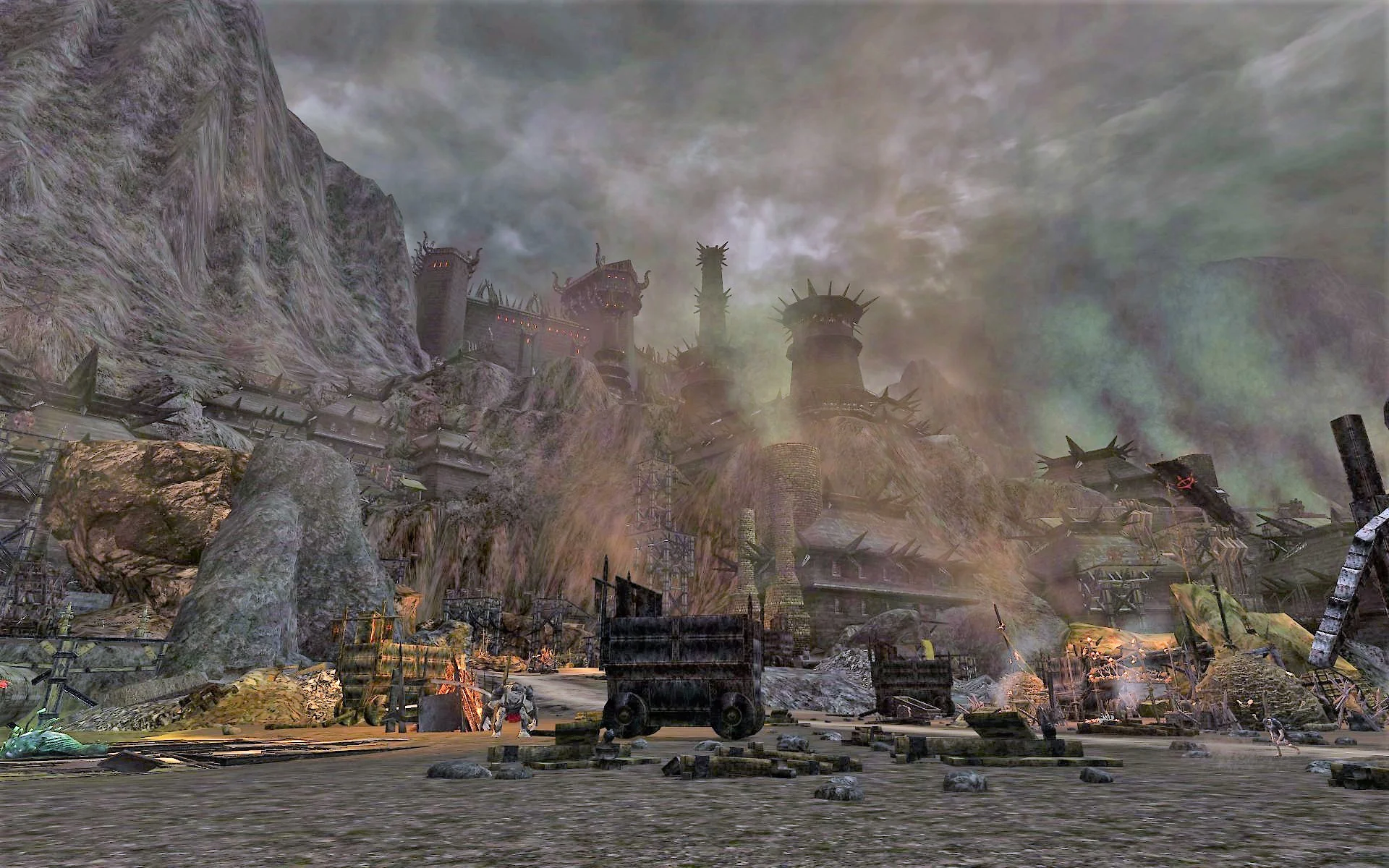
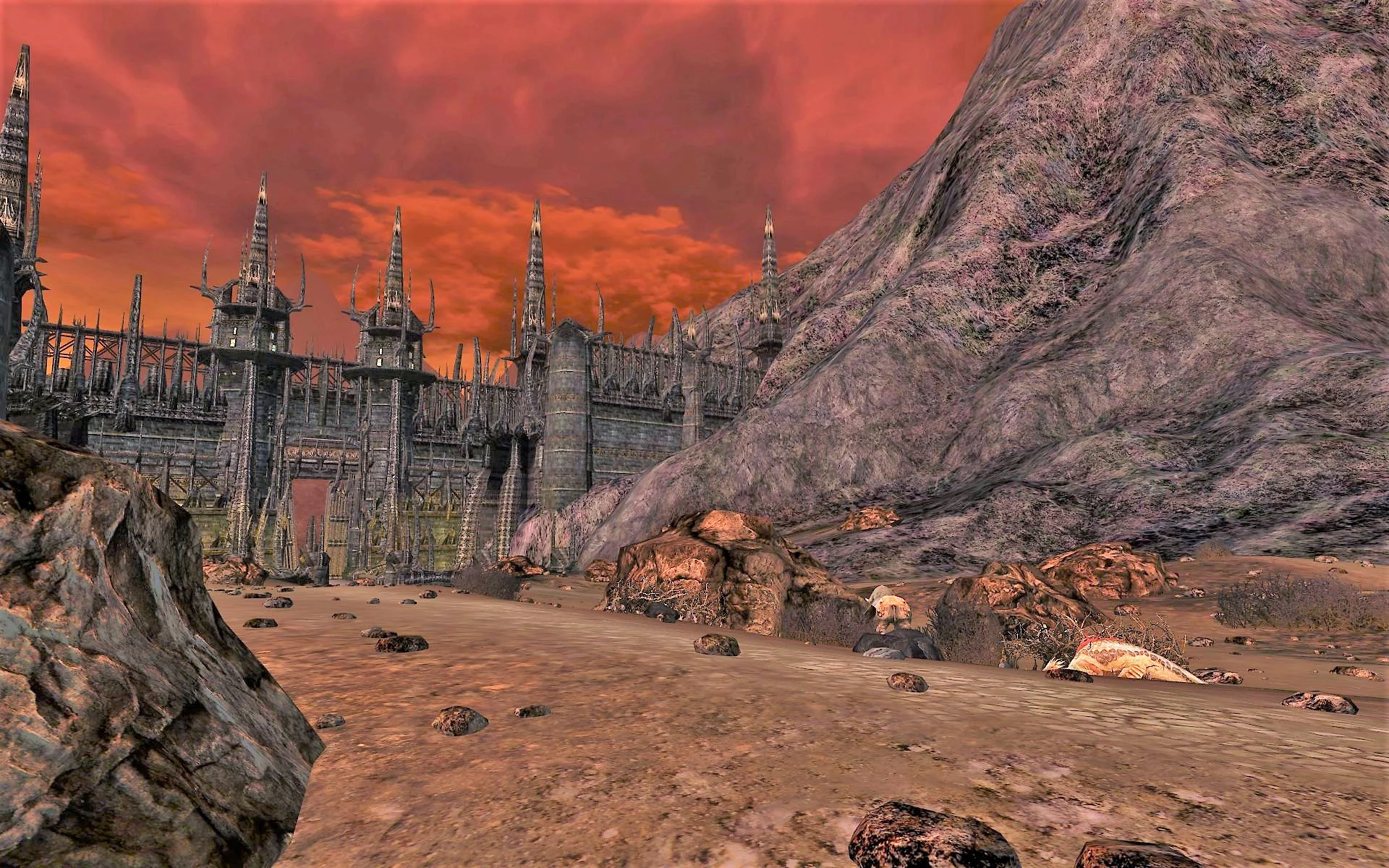
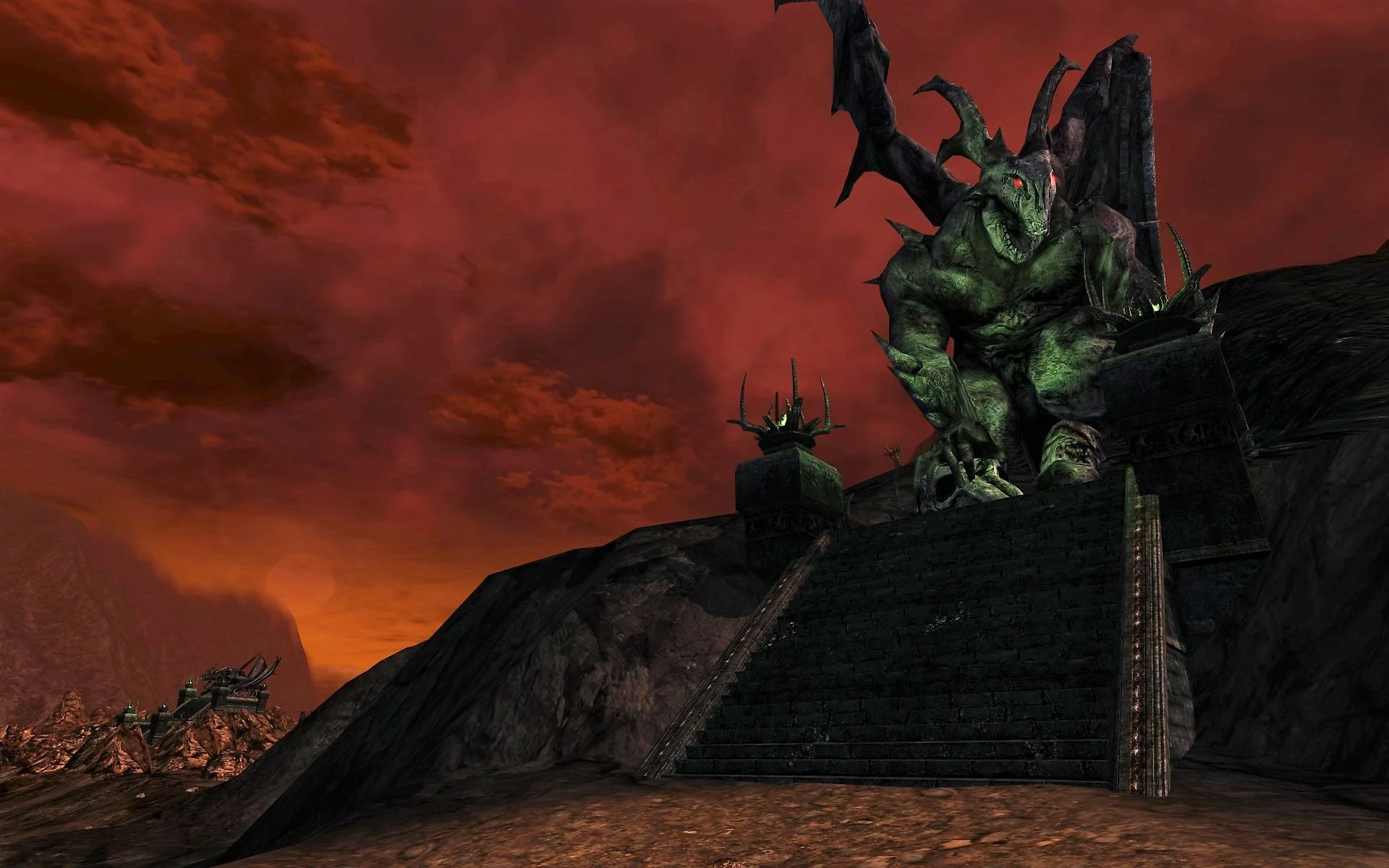
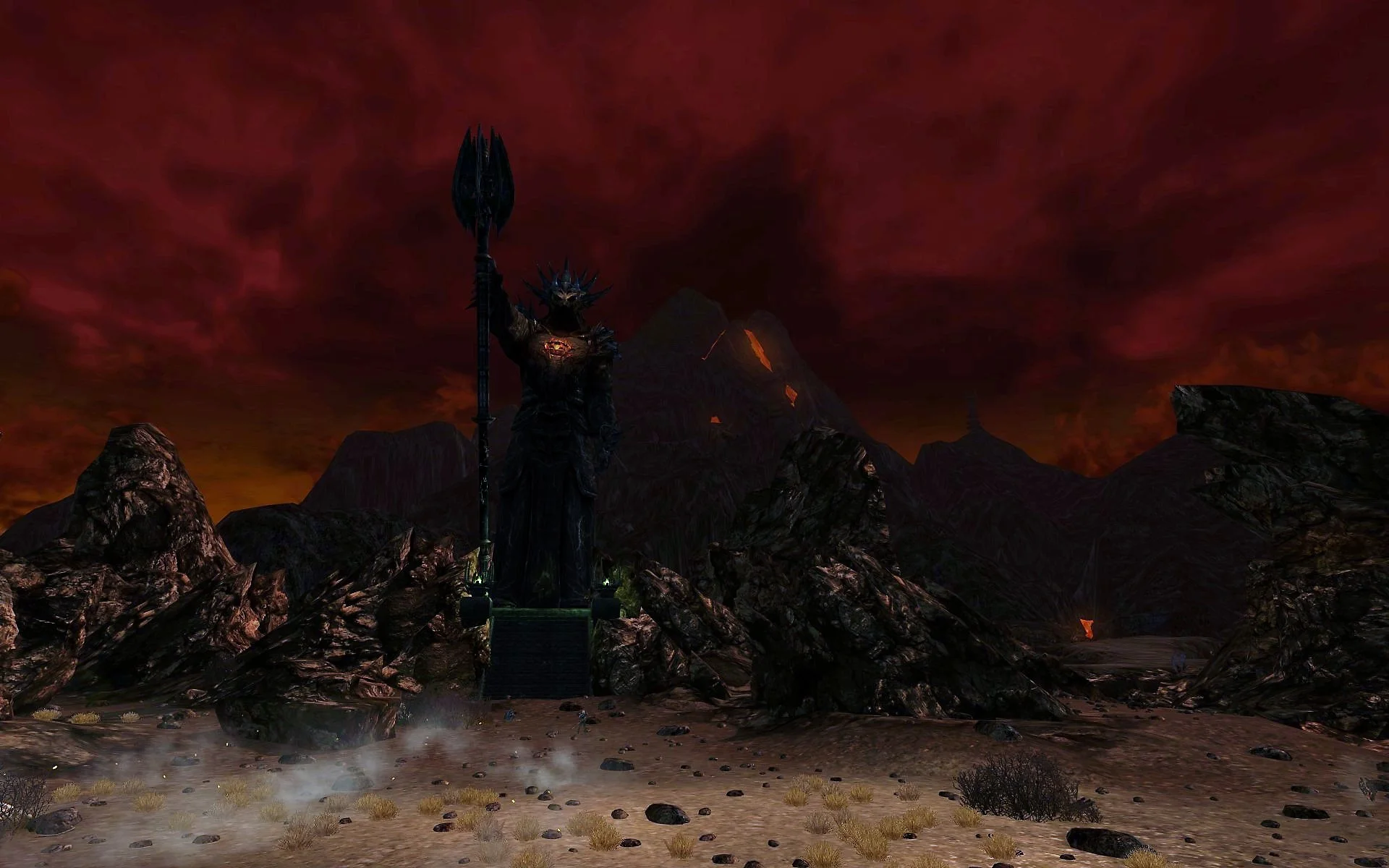

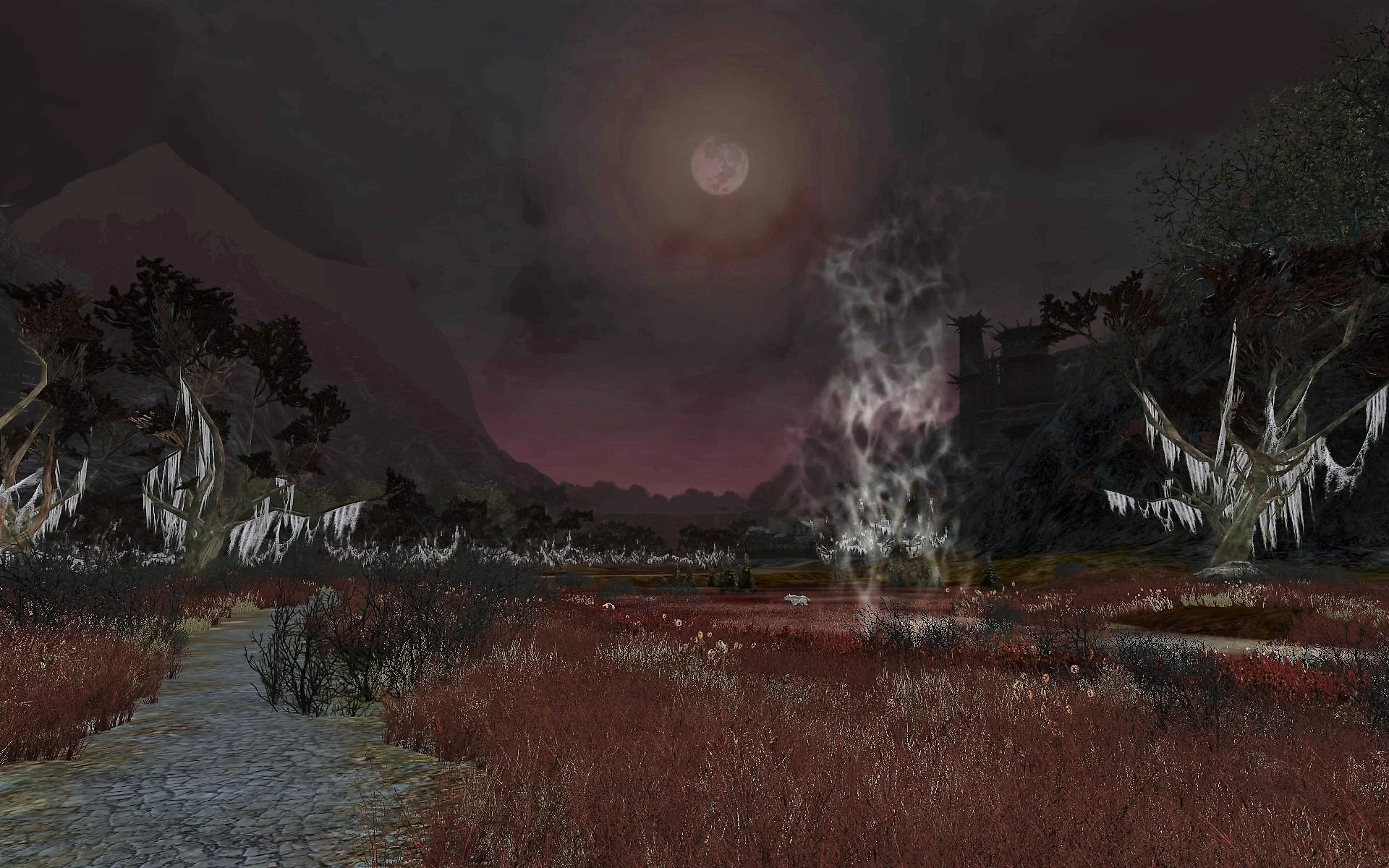
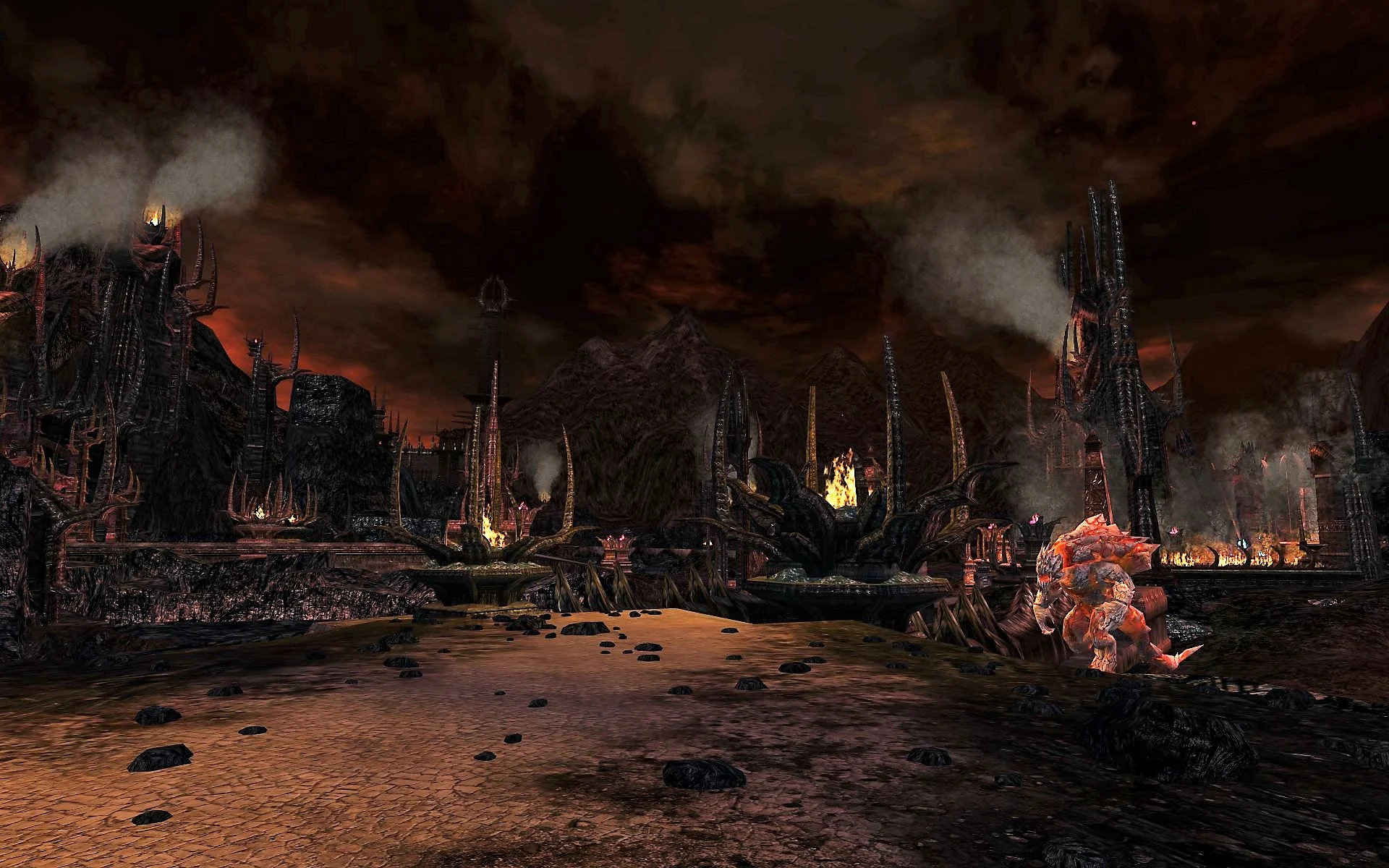
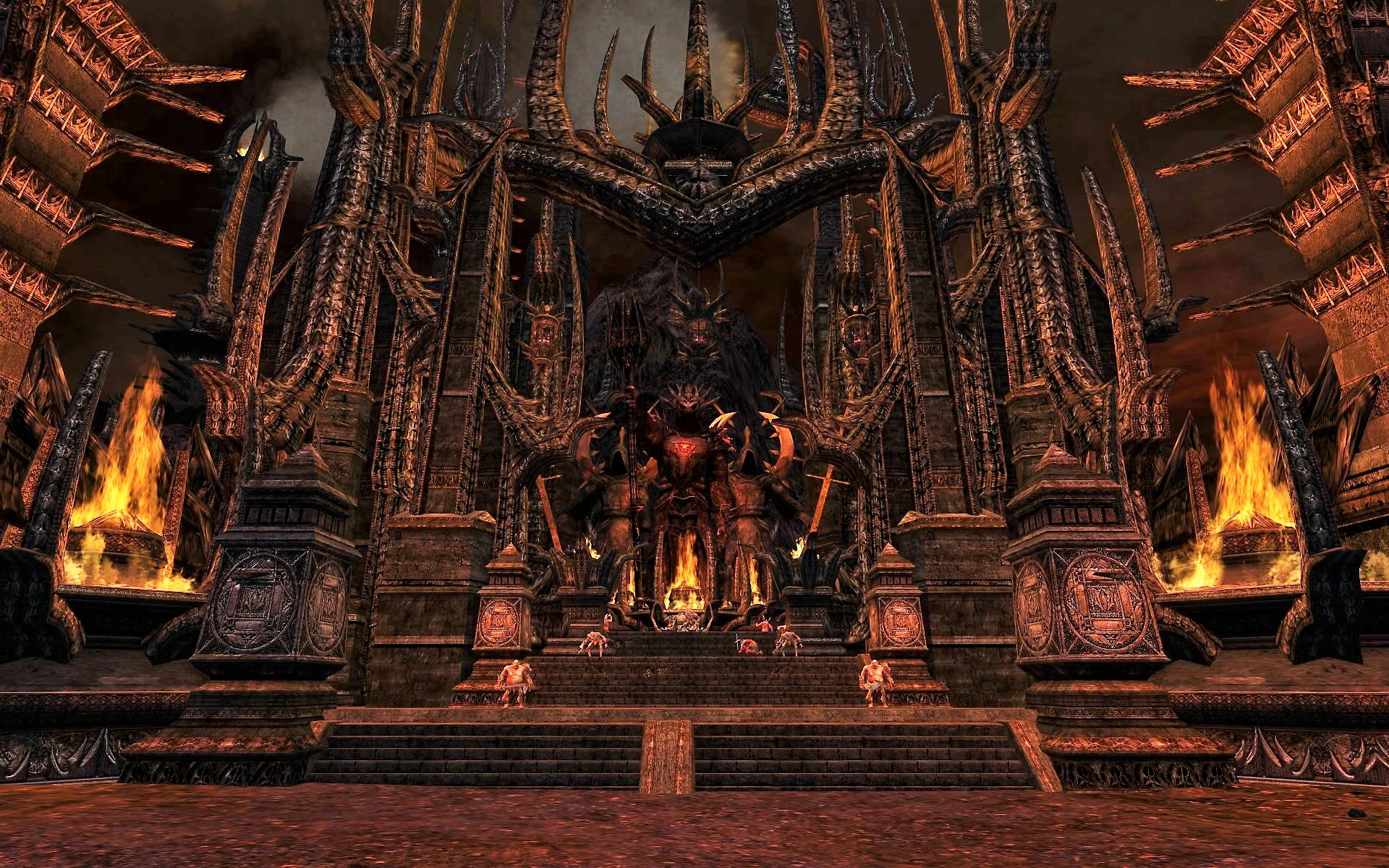
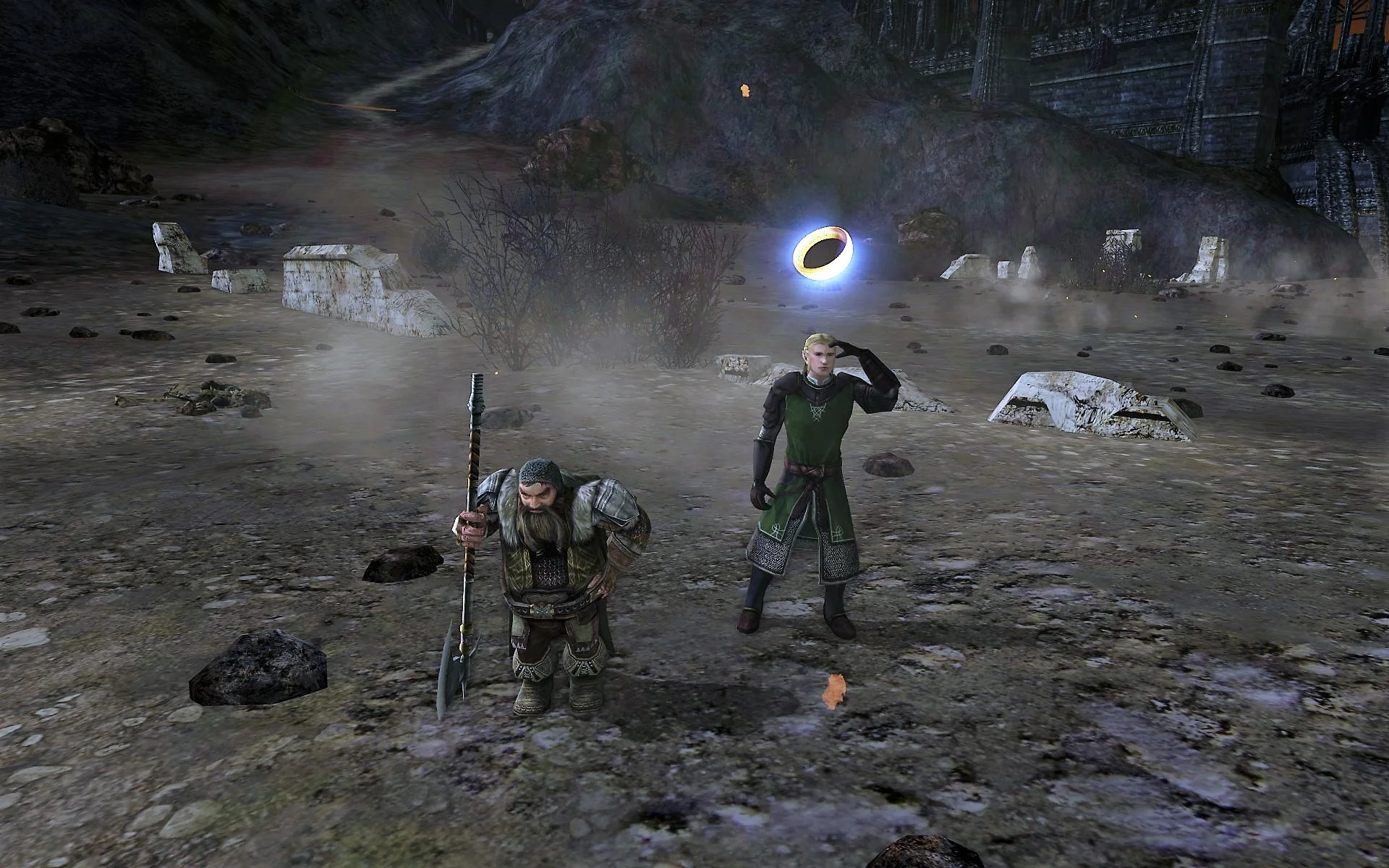
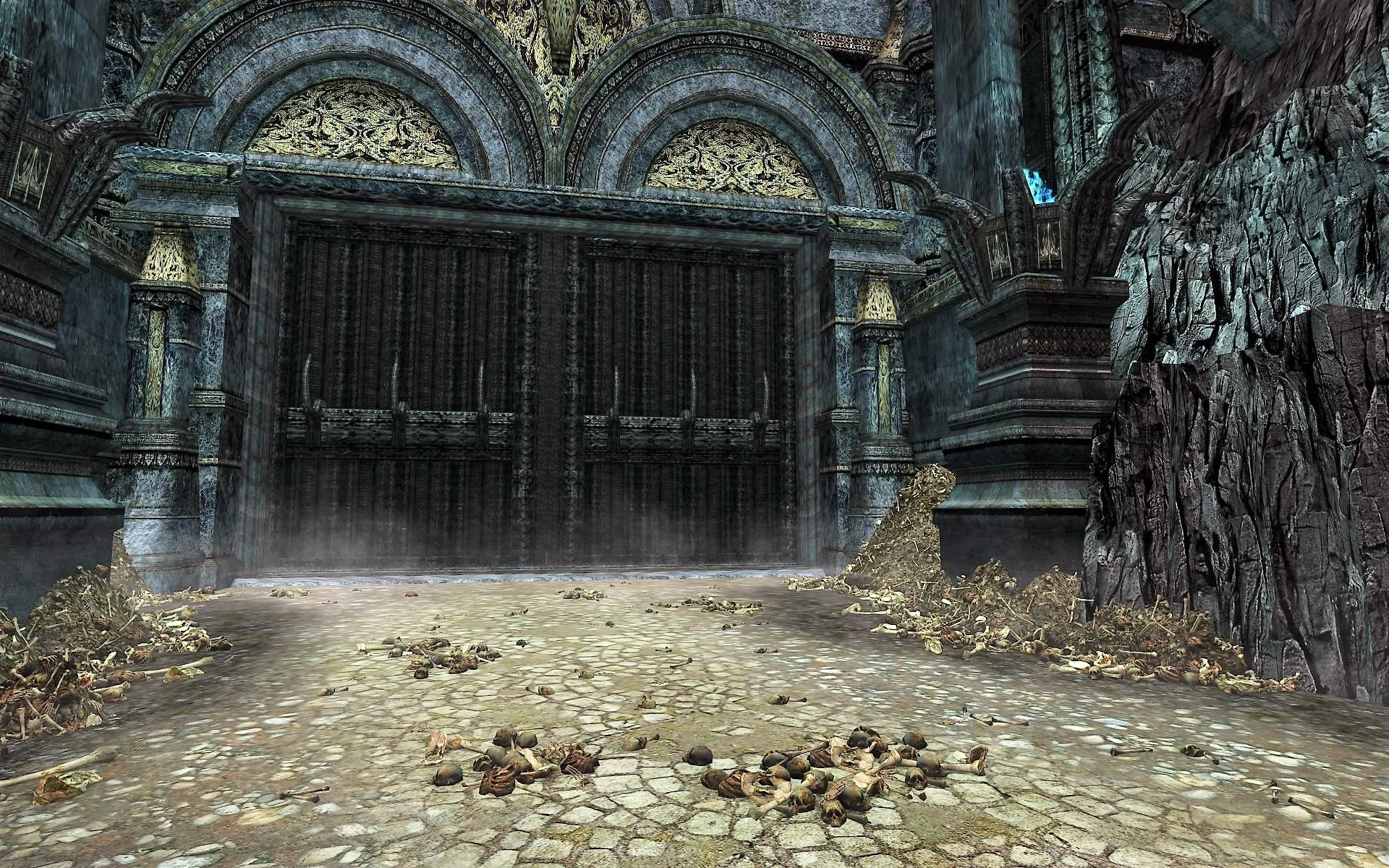
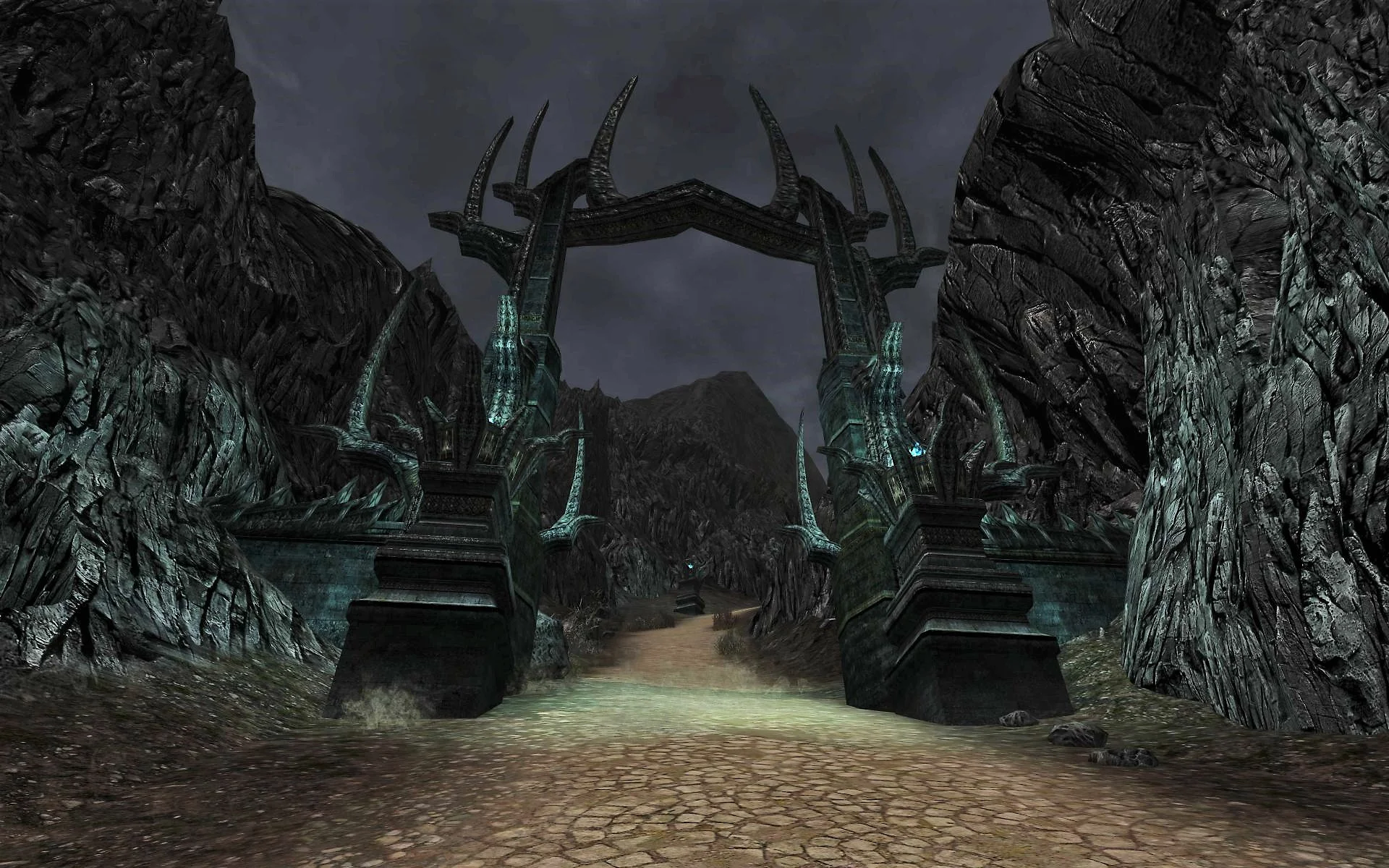
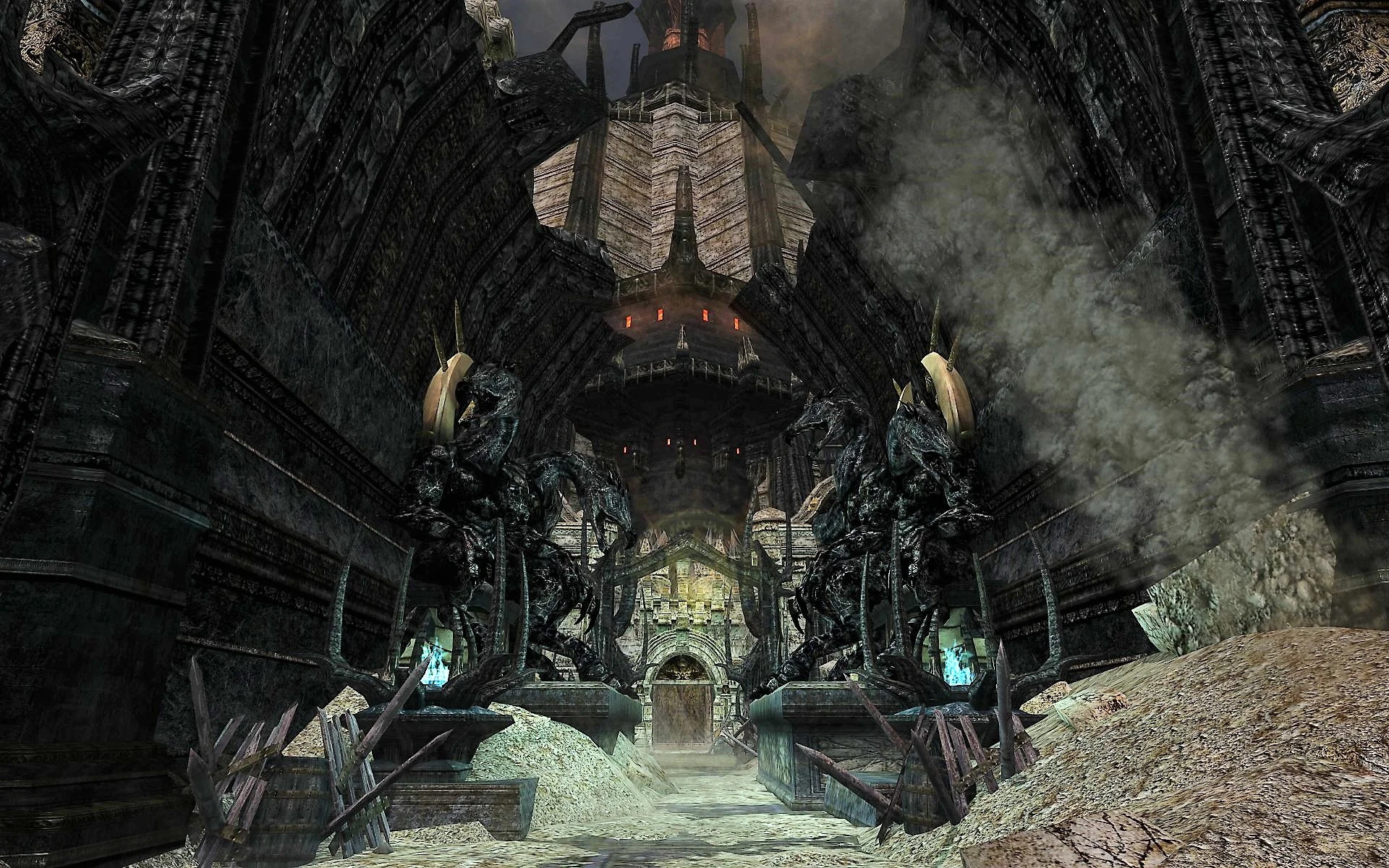
Secret World Legends
Writing a lengthy article as to why you don’t like a game is often a bad idea. It seldom makes for a good post unless you are humorous or have a cogent point to make. Often all the anger, bile and vitriol can be distilled down to the following. “I wanted X and they (the developers) gave me Y”. Its a simple question of differing expectations and personal taste. Well that is what we have here. Simply put, the changes made to The Secret World in its transition to Secret World Legends are insufficient for me to change my overall view of the game. Specifically, I still do not like the combat system and find the UI esoteric and unintuitive. It is easier to play the game now so theoretically I can soldier on to see the narrative that I previously missed. But I still have to endure an unsatisfactory fighting style to do this and that is a big enough hurdle for me to possibly conclude “it’s not worth it”.
Writing a lengthy article as to why you don’t like a game is often a bad idea. It seldom makes for a good post unless you are humorous or have a cogent point to make. Often all the anger, bile and vitriol can be distilled down to the following. “I wanted X and they (the developers) gave me Y”. Its a simple question of differing expectations and personal taste. Well that is what we have here. Simply put, the changes made to The Secret World in its transition to Secret World Legends are insufficient for me to change my overall view of the game. Specifically, I still do not like the combat system and find the UI esoteric and unintuitive. It is easier to play the game now so theoretically I can soldier on to see the narrative that I previously missed. But I still have to endure an unsatisfactory fighting style to do this and that is a big enough hurdle for me to possibly conclude “it’s not worth it”.
One of the things that attracted me to The Secret World when it was initially being beta tested was the idea of the supernatural being countered with modern technology. Thus, firearms were and remain my weapons of choice. However, combat was clunky and awkward at that stage in the games lifespan. I never got the sense that the assault rifle was doing any substantial damage and had to constantly back pedal to stay alive. It was dull and time consuming to clear mobs and make progress. Sadly, despite a streamlining of the combat system in Secret World Legends and a noticeable reduction of skills bloat, combat with pistols and the like, still feels woefully unsatisfying. Yes, foes do now die quicker and I now have a reticule to aim but that is about all that has changed.
What I expected, hoped for, wanted (and I accept the inherent fallacy of thinking in such terms with regards to gaming. After all you get what you’re given and nothing more) was a tangible gun mechanic. Something that felt substantial IE when you fire the gun the enemy took major damage, or recoiled, or at least gave the impression that this was inconvenient for them. However, the problem is where you can credibly scale the DPS of certain weapons or types of attack to suit an MMORPGs progression system, it’s far harder to do with the arbitrary functionality of guns. Firearms do damage per se, based on calibre and rate of fire. Scaling their damage to fit in with the games levelling system renders them tediously impotent at the initial stages of the game. This may come down to perception and they’re probably doing a comparable amount of damage to any other weapon type. But it just feels off and I don’t like wearing mobs down gradually with a pea-shooter.
So, I’ll try to look beyond this “obstacle” and see if I can muster up the interest to persevere with Secret World Legends in the next few days but there’s a fifty-fifty chance I’ll just get bored and move on to pastures new. Oh, and to address some of the inevitable comments one expects from the gaming cognoscenti, firstly, no I don’t want to try any other weapons. I chose guns for a reason. If there was something else I liked I would have picked them. Secondly, no I’m not saying that Secret World Legends is an awful game etc. I am simply highlighting that it has failed to “float my boat” and that comes down to a simple question of taste. As for catching up with the narrative, I’m sure I can probably watch all the relevant cutscenes on You Tube. It wouldn’t be the first time I’d done that to check out a game’s story, without having to go to the hassle of playing it.
PVP in MMOs
There has been an interesting debate this week about PVP in MMOs among several of my fellow bloggers. Syp AKA Justin Olivetti wrote an article for Massively OP referencing “gankbox culture” of EVE Online which then garnered a series of reciprocal posts from the likes of Bhagpuss, Jeromai, UltrViolet and Wilhelm Arcturus. Good points have been made by all but I think Bhaggie hit the nail on the proverbial head when he said that the term “PVP”, like so many in the gaming lexicon, is ill-defined. Player versus player can manifest itself in many forms, such as duels, arenas and zerg against zerg. Some games do offer an open world were players can be preyed upon or “ganked” but it is usually regulated to some degree. However, the thing that came out of this discussion that was of the most interest to me was why some people dislike PVP so much?
There has been an interesting debate this week about PVP in MMOs among several of my fellow bloggers. Syp AKA Justin Olivetti wrote an article for Massively OP referencing “gankbox culture” of EVE Online which then garnered a series of reciprocal posts from the likes of Bhagpuss, Jeromai, UltrViolet and Wilhelm Arcturus. Good points have been made by all but I think Bhaggie hit the nail on the proverbial head when he said that the term “PVP”, like so many in the gaming lexicon, is ill-defined. Player versus player can manifest itself in many forms, such as duels, arenas and zerg against zerg. Some games do offer an open world were players can be preyed upon or “ganked” but it is usually regulated to some degree. However, the thing that came out of this discussion that was of the most interest to me was why some people dislike PVP so much?
Cowardice, risk aversion and conflict-phobic are just some of the terms used by my blogging colleagues to explain as to why some players do not like PVP. Some have argued more simply that the mechanic is just a question of taste. However, I think it is more complex than that, as PVP isn’t a passive game mechanic like a buff or a DoT; something you endure due to the design of the game. PVP is another player impinging directly upon your gaming and I think this is the key to the issue. A lot of gamers do not like the idea of another individual having such a tangible impact upon their experience. Especially if there is nothing they can do to control it. The loss of items or experience is one objection but I believe the most fundamental issue is that no one likes being a victim.
I personally have no objection to the PVP mechanic in principle or its presence in MMOs. As long as its optional and consensual or in a bespoke zone then it can be an enjoyable gaming experience for those who pursue it. Duelling, competitive game play and league tables are legitimate modes of play and totally acceptable in other pastimes. Let us also dispel the myth that PVP is the exclusive province of sociopaths, malcontents and the dysfunctional. My experience of group PVP in games such as Overwatch, Battlefield or Call of Duty, has been broadly positive. Sadly, there is a certain type of person that spoils this overall experience and skews the wider reputation of PVP. A minority of players gravitate to this type of gameplay as it offers a platform for bullying and bragging. PVP is seen by some as a rite of passage and a means to bolster their self-esteem.
I play games for fun. Yes, I like a degree of challenge and to work towards specific goal but overall, they are a form of recreational entertainment. As in real life, I do not want to be inconvenienced by others or for them to have a negative impact upon my experience. I want to be segregated from those who could be potentially problematic and I wish to control as many of the variables as I can. Thus, I do not care for open world PVP, where I could be preyed upon at any time and lose items. Plus, another honest reason why I don’t pursue one on one PVP in MMOs, is that I don’t like losing. Who does? I prefer the safety of the zerg or being over powered. Let us not trot out these tired old arguments about “building character” or “it’s the taking part that counts” because neither hold up to close scrutiny.
There is another factor that impacts upon our attitude towards PVP and that is financial. Most games involve some sort of payment and the majority of players meet those costs at some point. As soon as money enters the equation, the dynamic of our gaming experience changes. Being a customer radically alters your perception of what is and what isn’t desirable. The loss of items and XP have a financial cost, as does the time spent earning them. The appeal of being “ganked” by someone and having to pay for the “experience” alludes me. However, we all ultimately view the world, gaming and thus PVP through the prism of our own experience. I’m sure there are bloggers whose opinions are the polar opposite of mine. As for PVP, I am happy for it to be part of gaming, as long as it is never forced or inflicted upon those who do not want it.
LOTRO 10th Anniversary: Remembering LOTRO Part 2
When reminiscing about LOTRO, there are many personal highlights for me to consider. Raiding in the Rift, completing the epic story in Shadows of Angmar, or even getting my first mount. Yet, if I had to pick a personal favourite experience, it would be the great charge across the River Anduin, into Mirkwood. This happened on Gilrain server on Monday 25th of Janurary 2010, the night before Siege of Mirkwood expansion was launched. An enterprising player by the name of Mikeemoo arranged the event via the forums and at the designated time a hundred plus players assembled on the Western bank of The Great River. Once the signal was given we swam en masse to the Eastern shore and swarmed up the bank into the woods. As the zone was not yet accessible the developers had placed NPCs in the vicinity; Mirkeves Fell Arrows that could one shot any player. However, due to the sheer number of players in the zerg and the resulting lag, many made it across. Eventually the server kicked everyone but it was immense fun while it lasted.
When reminiscing about LOTRO, there are many personal highlights for me to consider. Raiding in the Rift, completing the epic story in Shadows of Angmar, or even getting my first mount. Yet, if I had to pick a personal favourite experience, it would be the great charge across the River Anduin, into Mirkwood. This happened on Gilrain server on Monday 25th of Janurary 2010, the night before Siege of Mirkwood expansion was launched. An enterprising player by the name of Mikeemoo arranged the event via the forums and at the designated time a hundred plus players assembled on the Western bank of The Great River. Once the signal was given we swam en masse to the Eastern shore and swarmed up the bank into the woods. As the zone was not yet accessible the developers had placed NPCs in the vicinity; Mirkeves Fell Arrows that could one shot any player. However, due to the sheer number of players in the zerg and the resulting lag, many made it across. Eventually the server kicked everyone but it was immense fun while it lasted.
This anecdote in many ways encapsulates all that makes LOTRO so enjoyable. Teamwork, a sense of community, an environment that lends itself to more than just the scripted gameplay. This is why player generated events thrive in the game and why Standing Stone Games are wise to support such undertakings. Although over the years, the relationship between the player base and the development team hasn’t always been good and it’s fair to say that mistakes have been made on both sides. The transition to F2P was far from smooth for the European players and both Enedwaith and Dunland where hardly highpoints in the games ten-year journey. Then there was the introduction of the skills tree with Helm’s Deep which divided the player base. However, unlike other fickler communities, LOTRO players tend to take a more pragmatic approach to the ups and downs of gaming. They have rolled with the changes over the last decade mainly due to their passion for Tolkien’s work.
As soon as I had bought LOTRO in 2008, I started blogging about the game. In many respects, it was instrumental in my writing on a regular basis, as it tends to be a rule of thumb that you should write about what you enjoy. What quickly became apparent was that there existed a very dynamic and friendly blogging and podcast community associated with the game. Everyone was extremely welcoming and only too happy to help promote each other’s content. The LOTRO Combo Blog was an invaluable source of information, aggregating dozens of fan related sites. There was also a wealth of LOTRO related podcast and shows, all dealing with a unique facet of the game. But I think we can all agree that the jewel in the crown of fan related productions was “A Casual Stroll to Mordor” with Merric and Goldenstar. The show presented LOTRO related news and views each week with a healthy dose of enthusiasm and honesty. It very soon became indispensable listening among fans and in many ways, did a better job of informing players and promoting the game than Turbine.
On a personal note, one of the most agreeable aspects of playing LOTRO over the years has been the friendship that I’ve formed with fellow bloggers, podcasters and guild mates. The kinship system in LOTRO is a subtly different beast to comparable social systems in other games. It doesn’t offer the obvious items advantages of say Guild Wars 2 or STO. It seems to be far more of a labour of love. I have been in the same kinship since spring 2009 and it is a remarkably tight knit social group. Some players come and go but there is a core group that are the heart and soul of the kinship and they are always online, willing to help and blessed with a boundless enthusiasm. As LOTRO has finally reached the Black Gates and Mordor awaits via the next expansion, I’ve seen many a familiar faces return to the kinship roster. It’s amazing the way friendship just resume, as if time has no bearing on the matter.
Ultan Foebane. Holding his chopper and going nowhere since 2007.
In many ways Update 21 is a major crossroad for both LOTRO and Standing Stone Games. Finally, the central story goes beyond Tolkien’s work and it is incumbent upon the in-house writers to maintain the high standard that they have for the last decade. There is scope for this to be a major creative step forward. It could also go the other way. Yet, despite the importance of this transition, the community seems far from nervous about the matter. Good will abounds at present and the recent ten-year anniversary has been well received. Certainly, the transition from Turbine to SSG has repaired a lot of previously burned bridges and the developers seem to be far better at communicating and keeping players informed than they previously were. So, here’s to LOTROs future and years more of fun and fond memories. May the road continue to go on and on.
Star Trek Online: Summer Festival 2017
The Star Trek Online Summer Festival 2017 or Risa annual Lohlunat Festival to give it its proper name has been running for over a week now. It started on the June 8th and is available through to 20th July. Although many MMOs have festival and seasonal activities, STO’s Summer and Winter events are outstanding, being accessible, enjoyable and very rewarding. Not only are cosmetic clothing and pets available as barter items, the game also offers kit modules and bridge officer skills as rewards. Then of course each event always allows players to earn a new Tier 6 ship. This Summer it’s a Vorgon Ryn’Kodan Carrier.
The Star Trek Online Summer Festival 2017 or Risa annual Lohlunat Festival to give it its proper name has been running for over a week now. It started on the June 8th and is available through to 20th July. Although many MMOs have festival and seasonal activities, STO’s Summer and Winter events are outstanding, being accessible, enjoyable and very rewarding. Not only are cosmetic clothing and pets available as barter items, the game also offers kit modules and bridge officer skills as rewards. Then of course each event always allows players to earn a new Tier 6 ship. This Summer it’s a Vorgon Ryn’Kodan Carrier.
What I especially like about the Summer event in STO is it’s setting on the vacation resort Risa. Holidays are typically about, sun, sea and surf and Risa has that in spades. You can also dress accordingly with a variety of beachwear and other cosmetic items. The use of Floaters and Powerboards in several events is great fun. The addition of the Biathlon this year combines both in a single race. The transition from one mode of transport to the other can be quite challenging and there are still the odd bug to be worked out. I like the fact that despite being a “race” the winner is determined by the claiming of a flag. It helps level the playing field for those with slower internet connections. Half the fun is listening to players carp in chat about how they came first but overshot the flag and lost their placing.
Then there’s the Dance Party. Although it’s just a question of hitting the right emote when it’s called out by the Dance Instructor, the catchy music and the player interactions on the dance floor, really adds to the atmosphere. As for the contest itself, rather than click on individual emotes or type the necessary command in the chat window, you can simply pin the list of dance emotes to your UI for easy access. STO actually has quite a variety of dance emotes, the majority of which are available by default. Then there are a few extra that can be unlocked by specific quests or purchased using various barter currencies.
I’m sure that gamers may well claim that similar fun and larks can be had in other MMOs and that these also offer similar bespoke events. But STO has one remaining trump card up its sleeve that no other games can compete with. Gorns. Gorns in Bermuda Shorts. Gorns on Powerboards and Flaoters. Gorns tearing up the dance floor. Yes, Gorns in party mode are a thing of beauty as the gallery below shows. They are the embodiment of grace and style. So, if you have a STO account and haven’t played for a while, log in to the game and get your ass to Risa. Get out on to the dance floor and bust a move. Still not sold? Here’s the Dance Party tune, the Risa Calypso, for your edification.
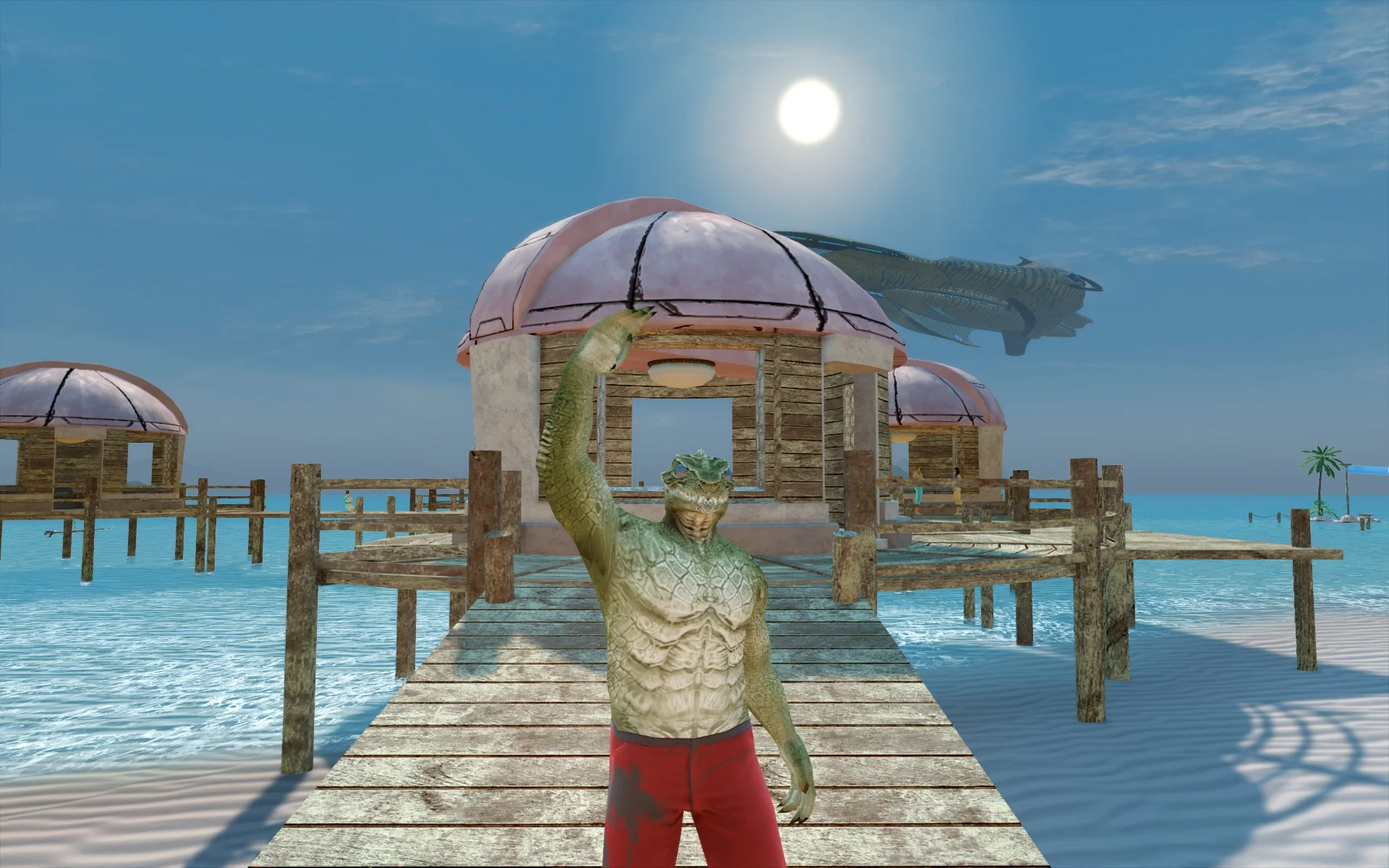
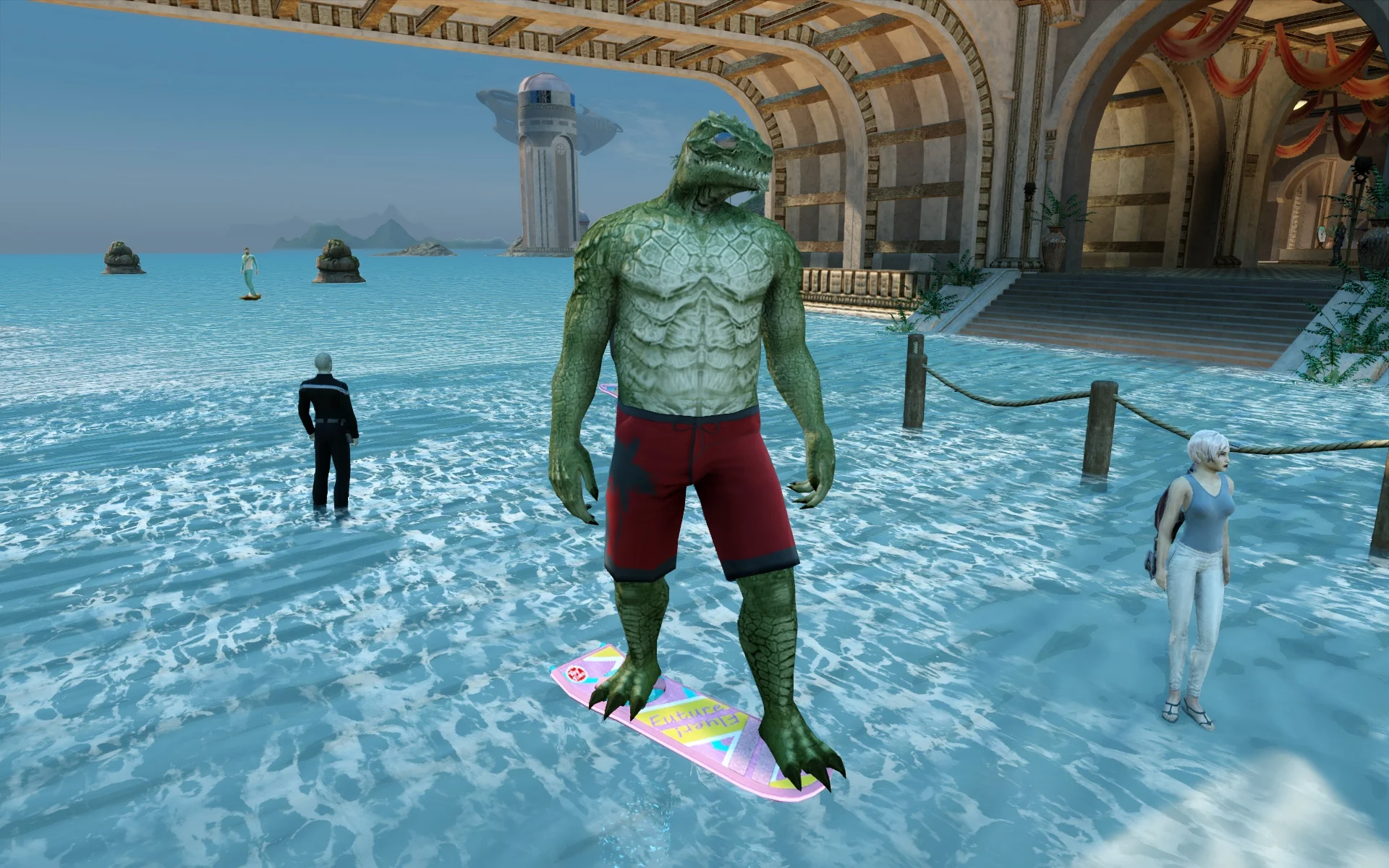
Pick Up Groups
Out of all my recent gaming, Sniper Elite 4 has proved the most entertaining. The engaging mechanics and stealthy gameplay have held my attention and kept me engaged. So far, I spent over seventy-two hours playing through the campaign and DLC. After watching several You Tube videos I was tempted to try the co-operative mode, something that I don’t always do in these sorts of games. Overwatch allows two players to work together as sniper and spotter respectively, to complete objectives within a custom map. It requires communication and co-ordination. It should also be noted that multiplayer in Sniper Elite 4, is dependent on peer-to-peer connection rather than dedicated servers, with the players hosting the games themselves.
Out of all my recent gaming, Sniper Elite 4 has proved the most entertaining. The engaging mechanics and stealthy gameplay have held my attention and kept me engaged. So far, I spent over seventy-two hours playing through the campaign and DLC. After watching several You Tube videos I was tempted to try the co-operative mode, something that I don’t always do in these sorts of games. Overwatch allows two players to work together as sniper and spotter respectively, to complete objectives within a custom map. It requires communication and co-ordination. It should also be noted that multiplayer in Sniper Elite 4, is dependent on peer-to-peer connection rather than dedicated servers, with the players hosting the games themselves.
So far, I’ve found that my enjoyment of co-op mode has been significantly less than that of the campaign due to the human factor. None of my Steam friends own Sniper Elite 4, so I’ve have been dependent on the grouping service built in to the game. You either host a game yourself and wait to be assigned a partner or join an existing game. Therein lies the proverbial rub. Pick up group mechanics have no scope for quality control. So far, I’ve grouped with players who have refused to communicate, have no concept of teamwork and who quit when things don’t go their way. Furthermore, if they’re hosting the game then you find yourself kicked back to the lobby with nothing to show for your work. It’s an old story. One that will be very familiar to anyone who has ever played an MMORPG and used the instance finder tool.
Pick up groups can often bring out the worst in human nature. You are randomly grouped with complete strangers who are anonymous and are driven by their own need for gain. Manners, decorum and social etiquette are purely optional as the system has no means to impose them. Thus, we encounter players that do not know how to play the instance they have joined, or those who are happy to just go AFK and wait for the end reward. Abuse and unpleasantness are common place in chat and if the group undertaking is unsuccessful, then blame is often thrown about. Even if your PUG manages to avoid these problems, they are often extremely soulless experiences. The auto grouping in Guild Wars 2 and the PVE queues in Star Trek Online simply facilitate tasks and require minimal or even zero social interaction.
Now some players will argue that the frictionless grouping that PUGs provide with no need to communicate directly, is a boon rather than a bane. I will concede that this really is a matter of personal preference. However, mechanics that allow you to abandon a game that you are hosting at the expense of others, or quit a group thus leaving the rest of the players in the lurch, are problematic. For Honor had a major problem with the this. If you or your team are losing then there is no imperative to stick around. There is often no penalty or sanction for abandoning an ongoing game that you may be hosting and no recompense for the other players. This is something I also regularly encounter in Overwatch, which seems to have more than its fair share of petulant and bellicose players.
Justin Olivetti referenced the group finding tool in LOTRO recently and discussed how compared to other MMOs, it was an underused facility. Group content seems to more driven by Kinships in that game so players tend to look directly to their colleagues and friends to run group content. Using the instance finder will seldom provide you with a group. STO has a similar problem. Featured group content or that which provides tangible rewards attracts players. However, older and less popular content doesn’t fair so well therefore you can spend hours looking for a group. I also think there is a particular type of troll in that game that delights in joining group queues and then waiting to the last moment to decline the launch invitation, thus consigning the remaining players back to the lobby again.
Sadly, many of the flawed mechanics we encounter in online games exist because they are the most practical way to address a logistical issue. Player hosted games negates the need for dedicated servers and their associated cost. Group finding tools do exactly that, yet offer no further options. The burden to police the group’s activities falls to the players themselves and there’s precious little they can do if things go pear shaped. But what are the alternatives? If grouping with other players is problematic, then bots are really the only immediate alternative. This is an option in games such as Overwatch, For Honor and some of the Call of Duty franchise. However, it is not necessarily an ideal solution as bots do not provide a comparable experience to human interaction. Their use also doesn’t address the root cause of this problem, namely human behaviour.
Like many things in life, the lowest common denominator disproportionately shapes the experience for the majority. Returning to Sniper Elite 4, although I did have some poor co-operative games due to bad grouping, I also had some thoroughly enjoyable interactions. It’s just a shame that PUGs are such a lottery. Ultimately, it is down to the developers of games to maintain community standards. What is the point of having strict terms and conditions if you have no intention of enforcing them? Furthermore, if I cannot enjoy aspects of a game due to others, I am effectively being excluded from experiencing the entire product. Considering the cost of premium titles these days, why should I pay the full price for a game I can only partially play?