
LOTRO: Pilgrims in a Barren Land
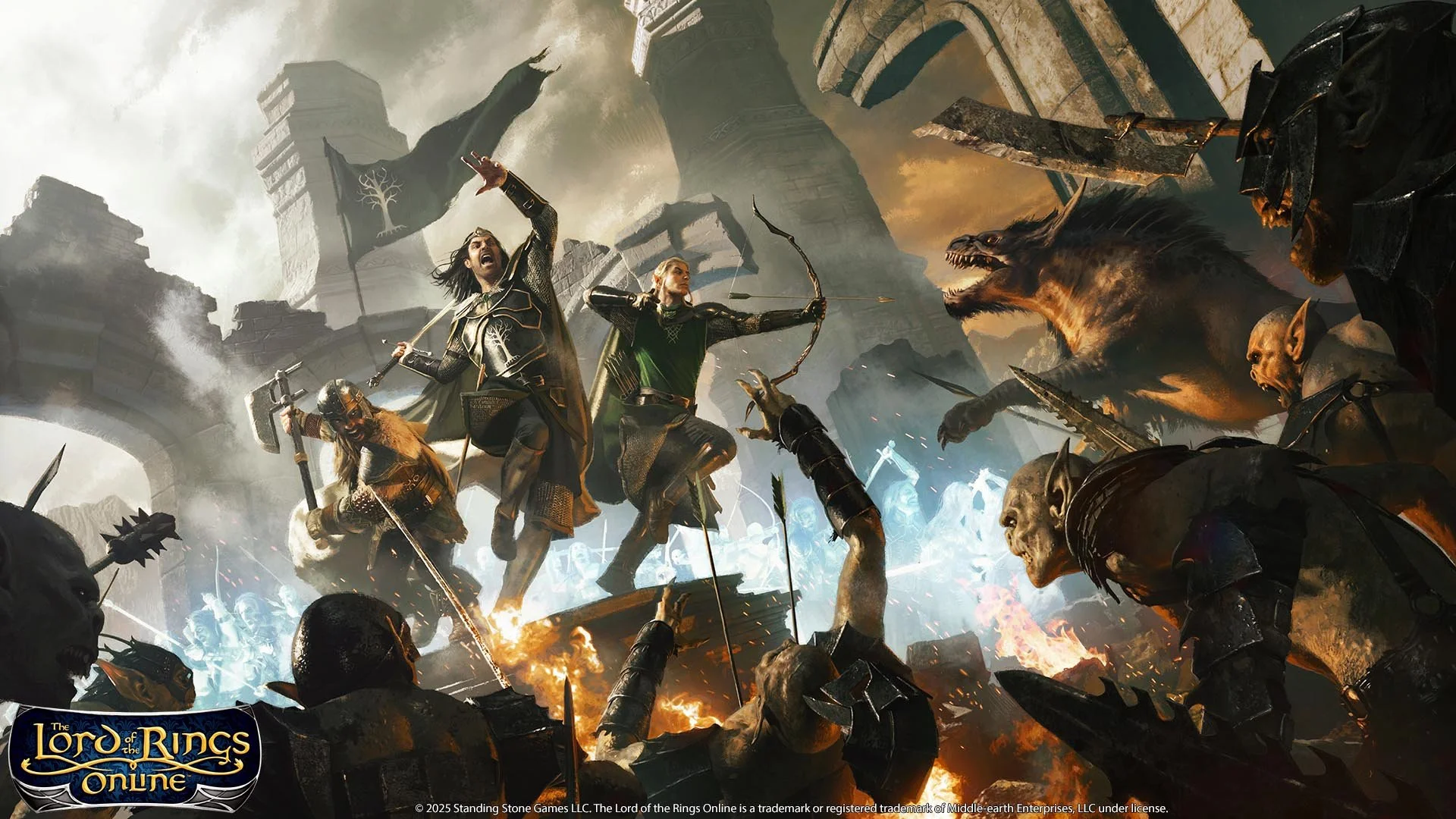
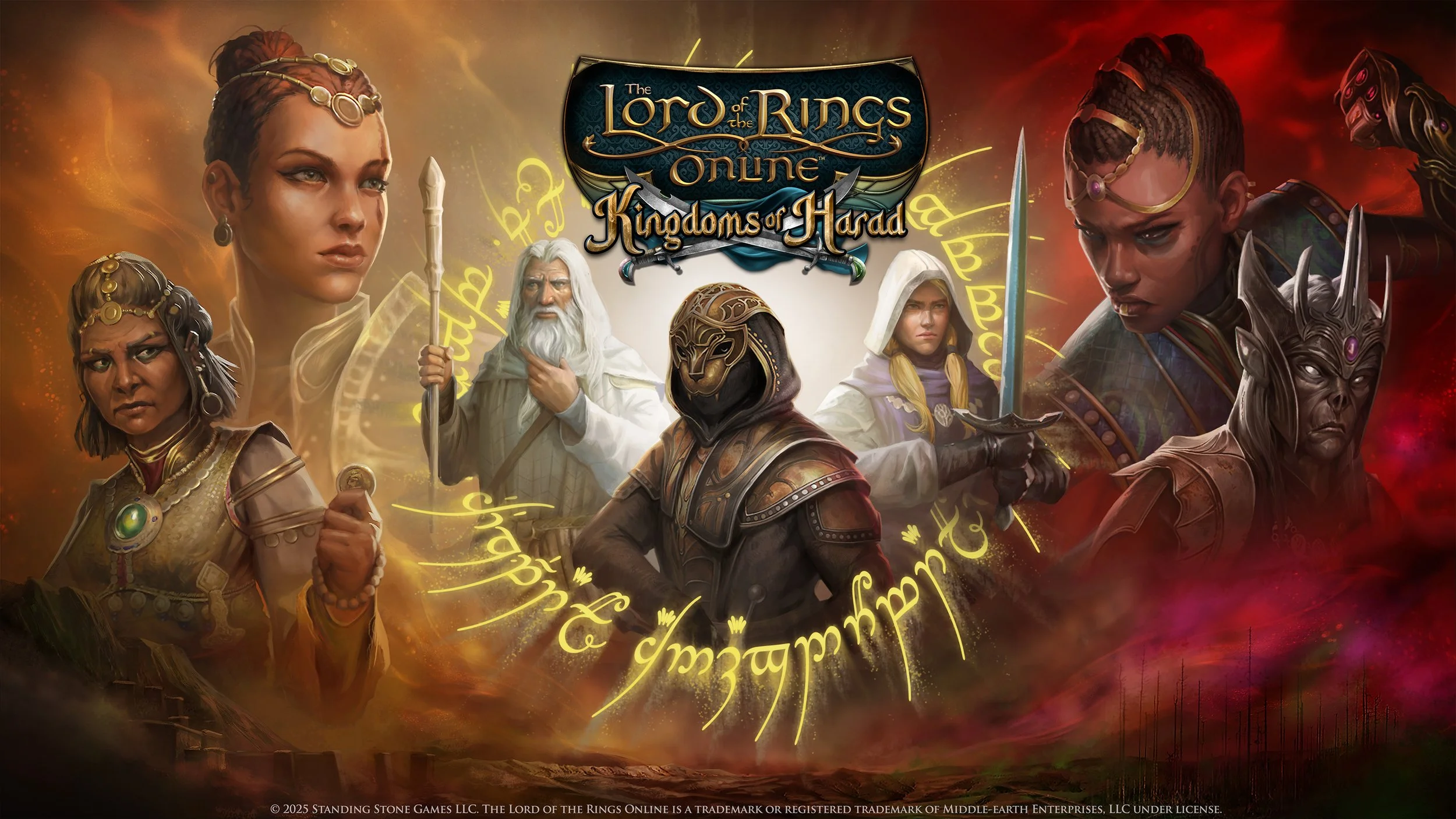
I bought the Mordor expansion for LOTRO in August but apart from playing through the prologue, I made no further progress. I was getting somewhat burnt out with MMOs at the time, so I decided to take a break and pursue other games. I was prompted to return to the LOTRO today by the recent Executive Producer’s Letter from Rob Ciccolini and the announcement that Update 22, coming in 2018, takes the story to Northern Mirkwood. Iconic locations such as Thranduil's Court, Dale, Laketown, and Erebor will feature in the epic story. Looking further ahead another future destination is Minas Morgul and a showdown with Shelob, who so far, we’ve only met briefly from a first-person perspective in a cut scene. Naturally I’m interested in where Standing Stone Games takes the story next, so I need to ensure that I have reached level cap by the end of the year, which isn’t that far away. Hence, it’s back to Mordor. Shame I don’t like Mordor.
I bought the Mordor expansion for LOTRO in August but apart from playing through the prologue, I made no further progress. I was getting somewhat burnt out with MMOs at the time, so I decided to take a break and pursue other games. I was prompted to return to the LOTRO today by the recent Executive Producer’s Letter from Rob Ciccolini and the announcement that Update 22, coming in 2018, takes the story to Northern Mirkwood. Iconic locations such as Thranduil's Court, Dale, Laketown, and Erebor will feature in the epic story. Looking further ahead another future destination is Minas Morgul and a showdown with Shelob, who so far, we’ve only met briefly from a first-person perspective in a cut scene. Naturally I’m interested in where Standing Stone Games takes the story next, so I need to ensure that I have reached level cap by the end of the year, which isn’t that far away. Hence, it’s back to Mordor. Shame I don’t like Mordor.
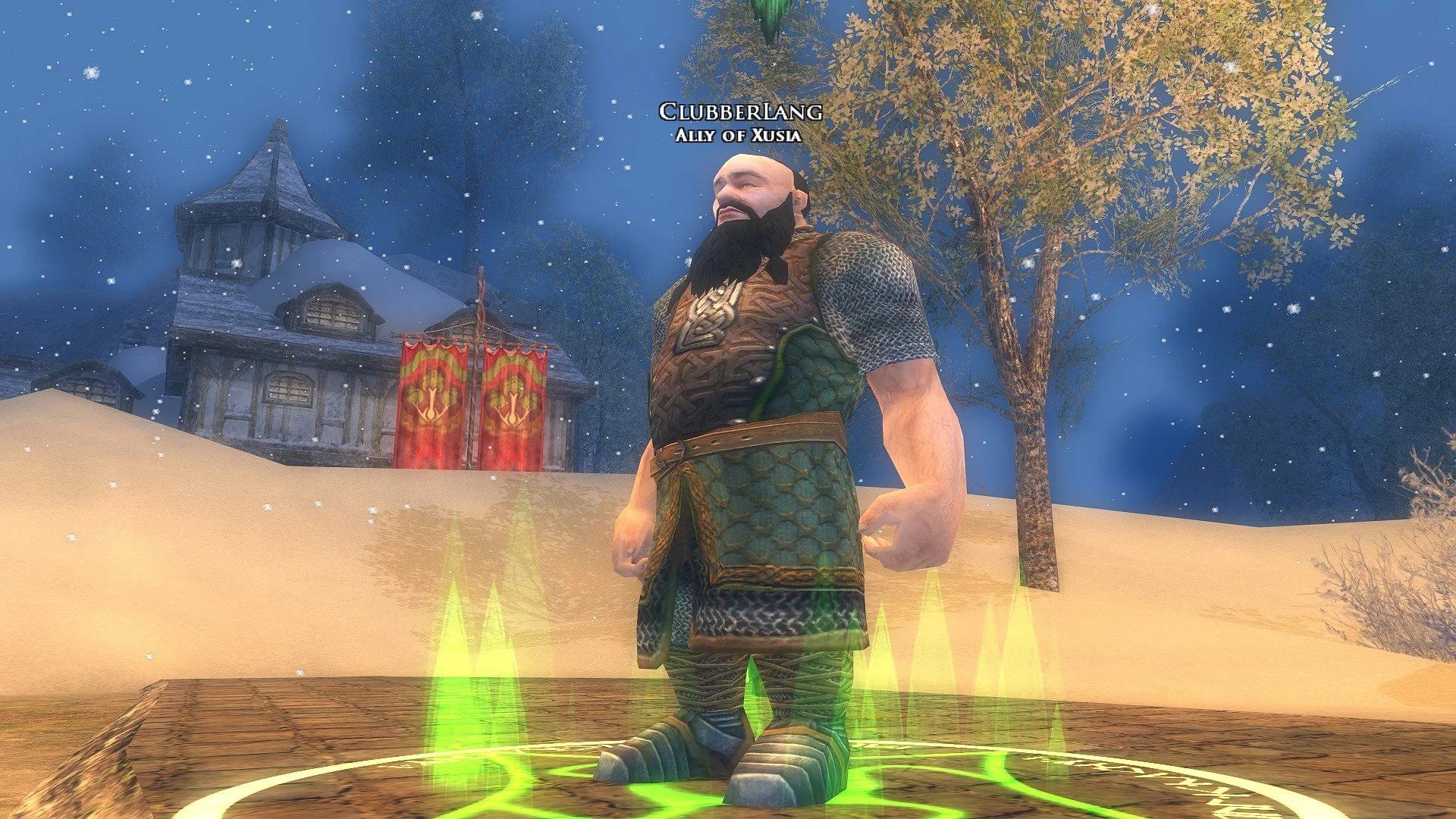
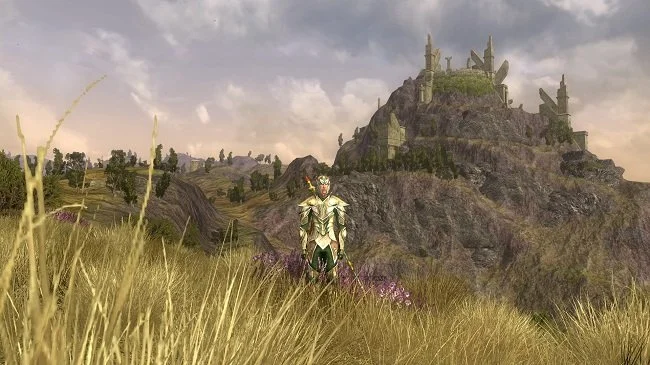
My problem with Mordor is that it’s perpetually dark, extremely convoluted to navigate and filled with a high density of mobs. It certainly looks the part and the various storylines are as creative as ever but it’s a tough grind to slog through. The enemies are difficult to kill and if you’re playing solo, every kill takes twice as long as normal, until you upgrade your gear with that which drops. Now I realise this is a deliberate design choice by SSG to try and encourage group play. However, I don’t like being dependent on others and often play at very late or early hours, thus missing those in my kinship. Let it suffice to say that at present I have to play through Mordor in short burst because otherwise I get bored and frustrated with it. Mercifully, I still have quests to complete in the Drúadan Forest, Beacon Hills and in Ithilien and the Wastes of Dagorlad. These don’t offer such good XP now that I’ve tipped over into level 106, although they do provide a welcome break and an alternative means to reach the current cap. I think tackling some of these Mordor quests above level will ease their difficulty.
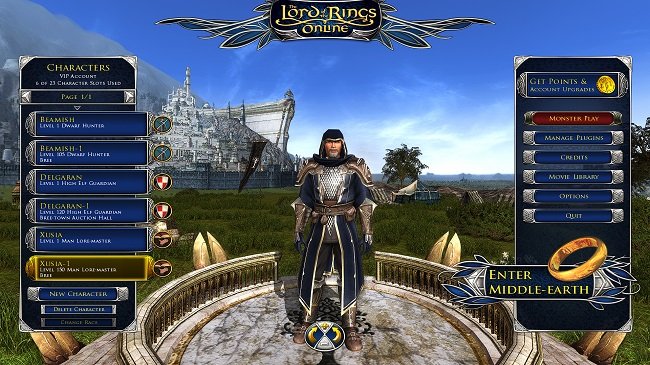
It would appear that there is a significant increase in gear stats as you progress through Mordor and of course there is the buff/debuff of the Light of Eärendil versus the Shadow mechanic. All of which offer a “challenge”. If you’re the sort of player who likes to be tested and enjoys MinMaxing then Mordor is certainly a suitable environment for such tastes. I however, like to approach matters in a more pragmatic fashion. I like to be overpowered and to “steam roll” my way through the opposition, in a “shock and awe” manner. To achieve this, I have currently switched to the blue trait line for my Lore-master, relying on my more robust pets to do a lot of tanking and aggro holding. It appears to work so far, although you do have to selectively summon and dismiss your pets to avoid pulling too many mobs and getting swamped. If things really do get out of hand in a combat situation I do use my Landscape Soldier, although this can sometimes cause more problems than it solves. To date Landscape Soldiers are still very difficult to control and have a habit of stationing themselves a little too far away, often straying into place you’d rather they didn’t.
Finally, SSG are currently tinkering with Update 21.3 - Beta #4 on the Bullroarer test server. It looks like they’re looking at reducing the level that Ash of Gorgoroth can be obtained via both the landscape and instances. Ash is required to barter for top tier gear. Let it suffice to say, that it would appear that this change is being made to try and “encourage” players to buy the Gorgoroth Steel-Bound Lootbox, which will be the only other alternative means of obtaining it. Need I mention that this proposed change has not been well received by the community. Given the current debacle regarding lootboxes in Star Wars Battlefront II and the fact that such gaming mechanics are now coming to the attention of the legislature both in the US and Europe, is this really a wise move by SSG? Is the need to push lootboxes an indication that the game is not meeting its revenue projections. This is certainly a subject to watch in the weeks to come, while I grin my way through the barren land of Mordor.



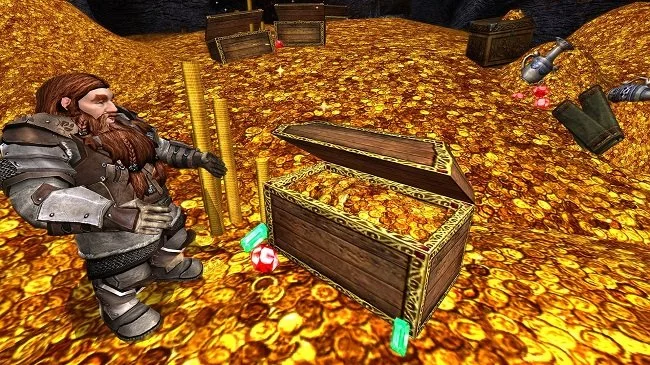
Is Vanity the Achilles Heel of the Game Industry?
On the eve of the launch of Star Wars Battlefront II last Friday, DICE General Manager Oskar Garbrielson released a statement stating that paid microtransactions were to be disabled in the game for the immediate future. It was a major reverse of policy after several weeks of increasing debate and acrimony about the subject from Star Wars fans and wider gamers. It has now come to light that the decision was due to pressure from the rights holders themselves. Disney Head of Consumer Products and Interactive Media Jimmy Pitaro is apparently the driving force behind this U-turn. Naturally with a major movie release only weeks away and the prospect of huge merchandise sales over the holiday season, no one at Disney wanted to see a media circus that could impact upon their bottom line. What happens in the new year when the controversy has died down and the movie leaves the cinemas, remains to be seen. I suspect we have not seen the back of the loot crate issue but for the meantime the problem has been side-lined.
On the eve of the launch of Star Wars Battlefront II last Friday, DICE General Manager Oskar Garbrielson released a statement stating that paid microtransactions were to be disabled in the game for the immediate future. It was a major reverse of policy after several weeks of increasing debate and acrimony about the subject from Star Wars fans and wider gamers. It has now come to light that the decision was due to pressure from the rights holders themselves. Disney Head of Consumer Products and Interactive Media Jimmy Pitaro is apparently the driving force behind this U-turn. Naturally with a major movie release only weeks away and the prospect of huge merchandise sales over the holiday season, no one at Disney wanted to see a media circus that could impact upon their bottom line. What happens in the new year when the controversy has died down and the movie leaves the cinemas, remains to be seen. I suspect we have not seen the back of the loot crate issue but for the meantime the problem has been side-lined.
This entire matter is emblematic of a wider issue surrounding marketing, branding and PR. One that bleeds through into multiple facets of day to day life. We live in a curious world where politicians, communities and businesses are often very protective of their “image” and “reputation”. These may be hard earned through years of doing the right thing or simply be the product of proactive PR and spin. But the bottom line is no one wants to be negatively labelled these days, even if that label is justified. Hence, we live in a world were racists don’t like to be called such and companies hate to be perceived as “greedy”, although that is the nature of the very system that predicates their existence. Everyone seems to want to act with impunity but still be seen as a good guy and be able to hang out with fans at community events and bask in the warm glow of public adulation. It’s hypocritical and it stinks. Sadly, we allow it.
So, EA and DICE were told to stand down and this whole problem has temporarily been defused because Disney doesn’t want their image tarnished, although a little research will show they’re far from angels. Has this move worked? Well initial sales may be a little slow of Star Wars Battlefront II but it’s early days yet and I don’t see the game bombing any time soon. Fans also have very short memories and are their own worst enemy in so far as making a stand. People like to posture but they seldom care to go without and that is the only way to effect real change. What happens next with this game is still up for grabs. However, it does prove that vanity and “public perception” are the industries Achilles Heel and we should as gaming consumers continue to use this to effect the changes that we want. All we need to do now is figure out exactly what those are, as a cursory glance around the internet shows that gamers do not share a universal “dream”.

Classic Game Themes: Shadow of War
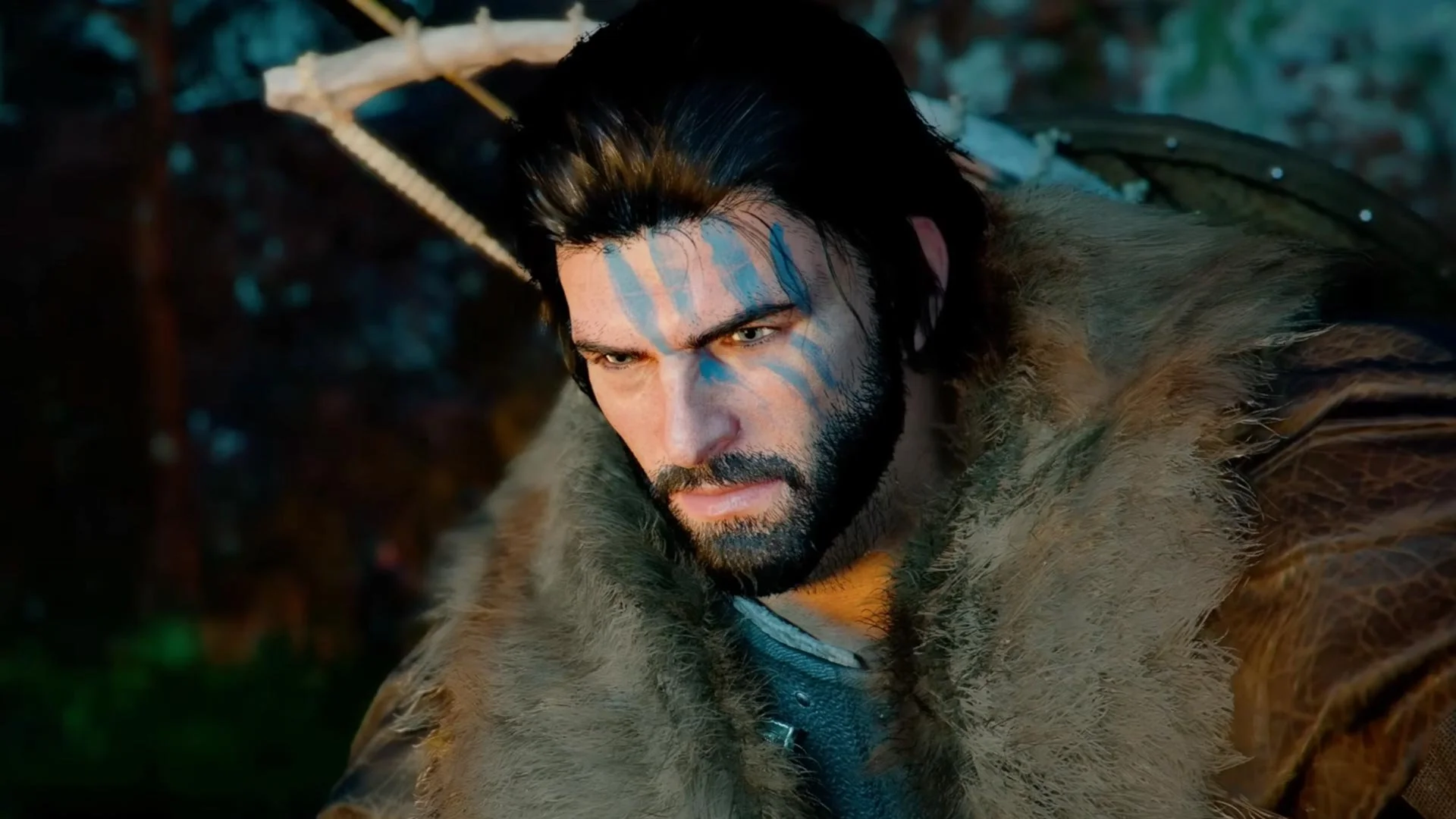
The soundtrack for Middle-earth: Shadow of Mordor by Gary Schyman and Nathan Grigg was a dark and brooding affair, reflecting the tragedy of its central characters. It was a score based upon haunting strings, low vocals and ominous tones. However, both composers have crafted a somewhat different soundscape for the sequel Middle-earth: Shadow of War. It should be noted that if you are an ardent fan of Howard Shores scores for Peter Jackson’s movies, that Gary Schyman and Nathan Grigg’s approach to Middle-earth is quite different, although both are orchestral works. Shores grandiose themes often reflected the enormity and history of Middle-earth. Here the music is more personal, channelling the emotions of those who stories unfold against such momentous events.
The soundtrack for Middle-earth: Shadow of Mordor by Gary Schyman and Nathan Grigg was a dark and brooding affair, reflecting the tragedy of its central characters. It was a score based upon haunting strings, low vocals and ominous tones. However, both composers have crafted a somewhat different soundscape for the sequel Middle-earth: Shadow of War. It should be noted that if you are an ardent fan of Howard Shores scores for Peter Jackson’s movies, that Gary Schyman and Nathan Grigg’s approach to Middle-earth is quite different, although both are orchestral works. Shores grandiose themes often reflected the enormity and history of Middle-earth. Here the music is more personal, channelling the emotions of those who stories unfold against such momentous events.
The first theme we encounter is with the games main menu. It is in fact an instrumental version of the song Fires of War which later plays across the end credits. This time round the music takes a different approach with a more positive and uplifting undercurrent. The stygian darkness of Mordor has been swapped for a more stoical mood and opening theme features swelling staccato strings. The central melody does still feature the high overtone along with the violins that were present in the first game but it feels very different this time, with a more optimistic spin. Talion is no longer seeking revenge but to over throw Sauron himself and this driving passion is reflected in the soundtrack.
Once you start following the narrative of the central story and move beyond Minas Ithil, the soundtrack feels much closer to the tense and portentous ambience of the original title, with choral parts and low register piano interludes. There are not so many leitmotifs used this time round and the score is more of an evolving soundscape. This suits the game play far more appropriately. For the sake of continuity, many of the themes associated with Talion’s specific abilities are used again. This includes the magnificent Caragor Riding with its off-kilter beat, Cello and vocalisation of the Ring Lore. Overall Middle-earth: Shadow of War boasts a very accomplished soundtrack and a worthy successor to its predecessor.






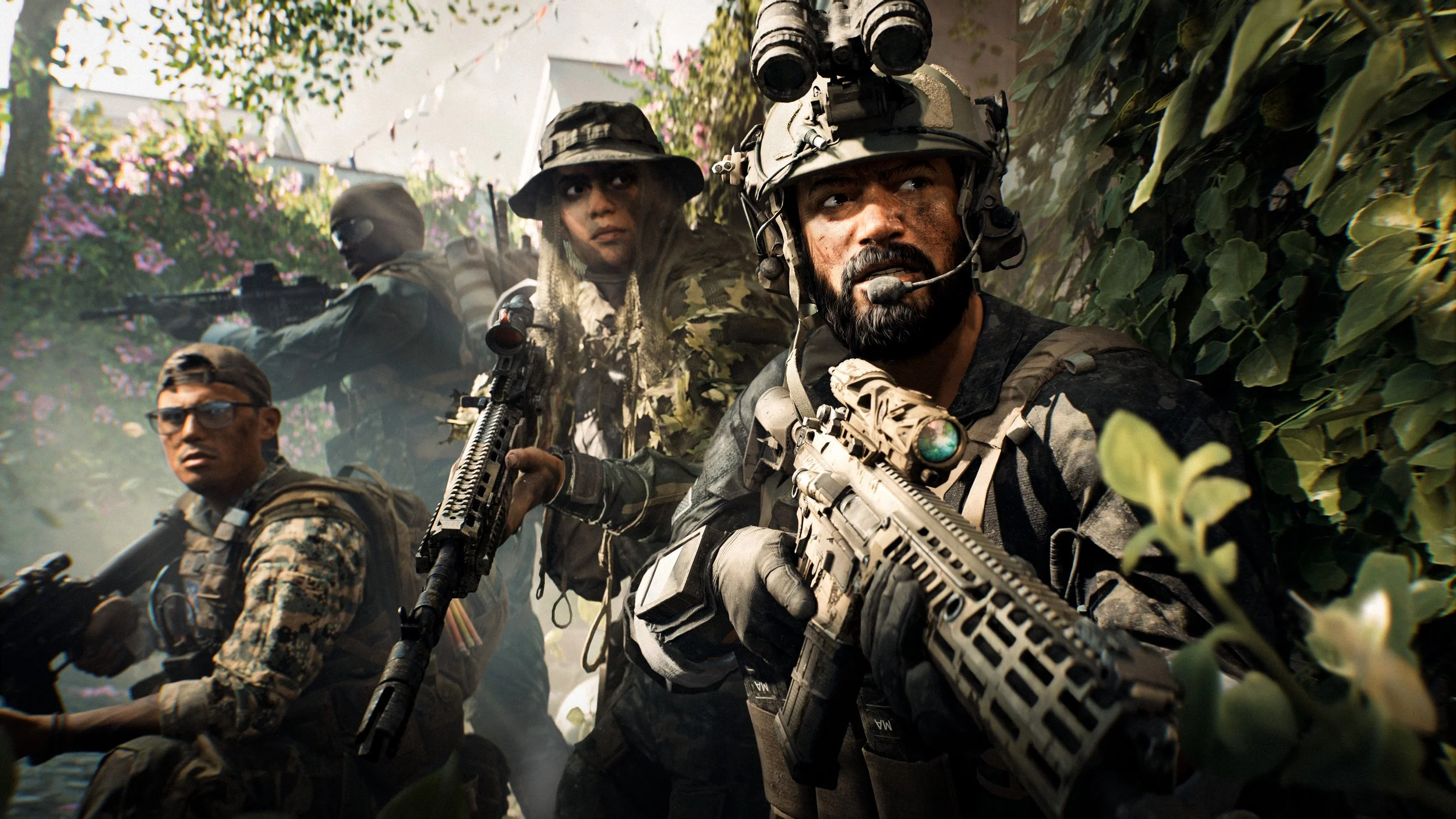
Star Wars Battlefront 2: Update
Having completed my ten-hour Play First Trial of Star Wars Battlefront 2, I wanted to elaborate further upon my initial thoughts of the game. It should be noted that the demo that EA offers via Origin Access, comes with several caveats. Only the first three missions of the campaign are available, although these are sufficient to give to the you a good handle on the game’s various combat mechanics. You play as Imperial Special Forces Agent Iden Versio, the leader of Inferno Squad. The story starts during the Battle of Endor and addresses the fate of the Empire, after the Emperor’s demise. Unlike many games from this genre, the single player campaign is well written and engaging. When this part of the demo ended I found myself wanting to play more and see where the narrative went. Out of the ten hours given for the demo, I spent about three on the campaign. The rest of the time I spent in multiplayer, which is the game’s raison d'être.
Having completed my ten-hour Play First Trial of Star Wars Battlefront 2, I wanted to elaborate further upon my initial thoughts of the game. It should be noted that the demo that EA offers via Origin Access, comes with several caveats. Only the first three missions of the campaign are available, although these are sufficient to give to the you a good handle on the game’s various combat mechanics. You play as Imperial Special Forces Agent Iden Versio, the leader of Inferno Squad. The story starts during the Battle of Endor and addresses the fate of the Empire, after the Emperor’s demise. Unlike many games from this genre, the single player campaign is well written and engaging. When this part of the demo ended I found myself wanting to play more and see where the narrative went. Out of the ten hours given for the demo, I spent about three on the campaign. The rest of the time I spent in multiplayer, which is the game’s raison d'être.
I’m not a huge fan of the ground based multiplayer modes. I find that my reactions are too slow for me to make any meaningful progress. However, Galactic Assault features large team orientated, objective based maps and due to the volume of players is more forgiving to the less skilled. I only spent an hour or so with type of combat before moving on to Starfighter Assault mode. Here two teams of up to 24 players, with an additional 40 AI fighters, compete in multi-stage battles between swift starfighters and powerful hero ships. There are also huge capital ships to be dealt with as well as environmental objectives. Space combat, which was conspicuously absent in the last instalment of the game, is the jewel in the crown of Star Wars Battlefront 2. The combat is fast, fluid and immense fun. The ships handle well and each class has its virtues. I was expecting to have to use my Xbox Controller for this stage of the game but I found that a keyboard and mouse works quite well.
I spent six hours playing Starfighter Assault and learning curve wasn’t too hard. As ever situational awareness is the key to success, as well as firing in controlled and measured bursts. Timing is everything. It also pays to stay with your wingmen and provide cover for each other. Out of all the ships, I found the TIE fighter most to my liking. It is a simple and efficient vessel. As for the hero ships, which become available to fly when you’ve amassed sufficient points in combat, I soon learned to avoid them. Although they do provide increased firepower, they’re also prime targets and other players flock to take them down. Again, for those who are not so confident with one on one combat, there are capital ships to destroy. Because progress is based on points and not just kills, even the novice player can make progress. For me the space combat is the selling point of this game. It is enthralling and entertaining.
Sadly, I must now return to the subject of the loot crates and star cards. Although skill, experience and reactions determine a player’s performance, equipping a star card with a suitable modifier makes a significant difference. While initially playing Starfighter Assault, it became apparent that other players had quicker weapons cooldowns, increased armour or it took less time for their missiles to lock on. I found this out because whenever you’re defeated, your foes details display on screen listing their username, ship class and all the modifiers they have equipped. It’s far from a subtle advertisement for loot crates. Furthermore, I when I experimented with modifiers myself, after buying some loot crates with earned currency, I soon got lucky and obtained some beneficial star cards myself. These did improve my performance by enhancing my ships durability. Thus, those players who do not wish to grind for upgrades can simply throw their wallets at the problem. Theoretically, a new player could have a significantly improved starfighter just after a few hours, if they’re prepared to pay.
I’m wont badger readers any further about the iniquities of microtransactions in triple A titles. I will simply say I think it’s bad for gaming in the long term. However, I suspect that EA have taken a calculated gamble on using this franchise as a guinea pig for this form of monetisation. Star Wars Battlefront 2 is a solid and immensely enjoyable game and I’m certain many players are going to put aside their moral objections and buy this title because, hey, it’s Star Wars. I myself was not going to buy the game after the trial on principle but have now been informed that it has already been purchased as a gift for my upcoming birthday. I will however not pay for any loot crates with real money and will simply rely upon grinding. I shall also be keeping my eyes open for news regarding sales of Star Wars Battlefront 2 when it launches officially on 16th November. Then we will find how much of a stumbling block microtransactions are and whether gamers worry about cognitive dissonance.
Star Wars Battlefront II
Star Wars Battlefront II looks superb, even on an ageing PC such as mine. It absolutely exudes Star Wars ambience, with its aesthetics and sound design. If you are looking for a game that show cases the cutting edge of game graphics, then look no further. However, I cannot praise the game play and mechanics in the same ways as its visuals. Star Wars Battlefront II is hobbled by a progression system that is tied and potentially undermined by its loot crate mechanic. Furthermore, I won’t say “this is a real shame” as if it’s something that just happened by accident because it patently isn’t. The game was design this way. EA elected to block player progression and then provide a means to circumnavigate it, through the spending of additional funds.
Star Wars Battlefront II looks superb, even on an ageing PC such as mine. It absolutely exudes Star Wars ambience, with its aesthetics and sound design. If you are looking for a game that show cases the cutting edge of game graphics, then look no further. However, I cannot praise the game play and mechanics in the same ways as its visuals. Star Wars Battlefront II is hobbled by a progression system that is tied and potentially undermined by its loot crate mechanic. Furthermore, I won’t say “this is a real shame” as if it’s something that just happened by accident because it patently isn’t. The game was design this way. EA elected to block player progression and then provide a means to circumnavigate it, through the spending of additional funds.
Weapons and characters in Star Wars Battlefront II can have their base skills upgraded. In most games with a similar mechanic, as you level up you earn skills points that you then spend to unlock modifiers and upgrades. Here they are dependent on star cards which are only available from loot crates. Theoretically you could simply earn everything you need by grinding through the game and earning the necessary currency and depending on chance. However, it would be a tortuously slow process. Naturally, paying for additional loot crates is the solution that EA have seen fit to implement. You can therefore spend additional money over the cost of the base game and gain modifiers that give you a significant advantage.
Even if you set aside for a moment the questionable ethics of this business model, Star Wars Battlefront II has no match making system in place. Thus, a new player will immediately compete against those who have purchased a clear advantage. These manifests themselves as reduced timers for weapon over heating or quicker weapons lock on in space combat. The net result is that the new player will die more frequently. Even those adept at the FPS genre will find that they have to play far harder for less results. Whether the player has the patience to plod through the game until they have unlocked all the necessary skills without paying for them, ultimately come down to their temperament. All I have to add to this sorry state of affairs is that fun and success should not be the prerogative of those who pay extra. This is supposed to be a “game”.
There is a single player campaign with this instalment of the franchise and from what I’ve seen so far, it is not too bad. The voice acting is solid and the story from an imperial perspective is enjoyable. EA have also made it clear that all future maps and DLC for the game will be free but given that your performance through any additional material is dependent on the skills that you’ve unlocked, we are forced to return to the issue of the loot crates and how not using them diminishes your success in the game. The sad reality is that this system gates player performance and therefore player fun. So, I cannot personally recommend Star Wars Battlefront II. It is immensely enjoyable in principle and embodies Star Wars in many respects but is flawed by an unpleasant and egregious business model.
NB. I shall post an update to this post when I've completed by ten hour trial.
Origin Access
I signed up for Origin Access today. For those who do not know, this is a subscription service to the EA Origin platform on the PC. For the nominal sum of £3.99 a monthly subscriber gets to “explore an instant collection of 75+ PC games and play as much as you want. Origin Access members also get to try new EA games before they’re released and save 10% on Origin purchases”. Out of those 75 PC games many are fairly recent titles such as Mass Effect: Andromeda Deluxe Edition, Battlefield 1, Titanfall 2, Unravel and FIFA 17. There are also classic titles such as the Crysis and Dead Space series. However, the reason I decided to sign up to this service is because Origin Access members get trial access Star Wars Battlefront II before the game is released to the wider public. Here is the staggered release schedule for this much awaited title. Subscribers get their hands on the game first, then owners of the Deluxe Edition. Finally, those who bought the base edition get to play. Make of that what you will.
I signed up for Origin Access today. For those who do not know, this is a subscription service to the EA Origin platform on the PC. For the nominal sum of £3.99 a monthly subscriber gets to “explore an instant collection of 75+ PC games and play as much as you want. Origin Access members also get to try new EA games before they’re released and save 10% on Origin purchases”. Out of those 75 PC games many are fairly recent titles such as Mass Effect: Andromeda Deluxe Edition, Battlefield 1, Titanfall 2, Unravel and FIFA 17. There are also classic titles such as the Crysis and Dead Space series. However, the reason I decided to sign up to this service is because Origin Access members get trial access Star Wars Battlefront II before the game is released to the wider public. Here is the staggered release schedule for this much awaited title. Subscribers get their hands on the game first, then owners of the Deluxe Edition. Finally, those who bought the base edition get to play. Make of that what you will.
- STAR WARS™ Battlefront™ II: Play First Trials Release date: November 9, 2017 (time not yet specified)
- STAR WARS™ Battlefront™ II: Elite Trooper Deluxe Edition Release date: November 13, 2017 11:00 PM GMT
- STAR WARS™ Battlefront™ II Release date: November 16, 2017 11:00 PM GMT
Triple A games are becoming increasingly expensive to buy and as far as I’m concerned if I’m going to sink over £60 into a new title I want to be as certain as possible that I’m going to enjoy the experience and also get value for money. Thus spending £3.99 on a subscription that offers me a free trial of Star Wars Battlefront II, seems a better option than spending £69.99 blind on the Deluxe Edition. If I enjoy the game then I can buy it later with a 10% discount, reducing the price to £62.99 which although not huge, is better than a poke in the eye with a pointed stick. Conversely, if the game is overrated, spoilt by the microtransactions or simply not to my liking I can elect not to buy it. Furthermore, if there are no further titles on Origin Access that interest me, I can simply cancel my subscription. At worst, all I’ve spent is £3.99 which is an acceptable gamble.
It should be noted that the Play First Trial as EA refers to them for both Star Wars Battlefront II and other premium titles are limited to ten hours. Some people may think this too little time however I think it will be sufficient for me to make an appropriate judgement about the game. I now simply await Thursday evening when the game client becomes available for me to install. I suspect it will be a substantial download, so I probably won’t actually be able to check out the game until Friday morning. In the meantime, I shall install one of the older titles available on Origin Access and ruminate upon the ongoing transition of gaming from a product driven business, to a service industry.
Fun With The Jackbox Party Pack 3
For me, the best sort of fun is that which occurs organically and spontaneously. I not a big fan of organised fun, predicated on a predetermination that “everyone will enjoy themselves” (whether they want to or not). Therefore, I’m sure that it will come as no surprise to you that I hate institutions such as Holiday Camps and bullshit like Secret Santa in the workplace. However, this is not a post about the psychology of group interactions and humour but simply a slap on the back to Jackbox Games. Specifically, I had a crash course on The Jackbox Party Pack 3 last night, courtesy of Wolfyseyes Twitch Stream. Let it suffice to say that it was immense fun and I cannot remember laughing so much in a long time. It was a good job I wasn’t on Discord. The games themselves were a creative and enjoyable platform for the fun and mirth but the real comedy gold was down to the crowd of people playing.
For me, the best sort of fun is that which occurs organically and spontaneously. I not a big fan of organised fun, predicated on a predetermination that “everyone will enjoy themselves” (whether they want to or not). Therefore, I’m sure that it will come as no surprise to you that I hate institutions such as Holiday Camps and bullshit like Secret Santa in the workplace. However, this is not a post about the psychology of group interactions and humour but simply a slap on the back to Jackbox Games. Specifically, I had a crash course on The Jackbox Party Pack 3 last night, courtesy of Wolfyseyes Twitch Stream. Let it suffice to say that it was immense fun and I cannot remember laughing so much in a long time. It was a good job I wasn’t on Discord. The games themselves were a creative and enjoyable platform for the fun and mirth but the real comedy gold was down to the crowd of people playing.
First off, for those unfamiliar with the concept, here’s succinct summary of The Jackbox Party Pack franchise, taken from Wikipedia. "The Jackbox Party Pack are a series of party video games developed by Jackbox Games for many different platforms on a near-annual release schedule since 2014. Each installation contains five or so games that are designed to played in large groups, including in conjunction with streaming services like Twitch.tv and provide a means for audiences to participate". Last night Wolyseyes hosted the games from his PC and streamed them. Players then joined the game via a webpage using an authorisation code. For some games joining via a tablet or phone was more practical than a computer. To play you watched the live stream and interacted via your mobile device or web browser. It’s simple and very effective means of bringing people together online as well as great fun. The technology works well.
The games themselves are very creative. Guesspionage is based around making educated guesses about questions drawnfrom data gleaned from the internet. For example, one player would have to guess what percentage of US citizens use a car wash. Once they have made a choice, the other players would have to guess whether the answer is in fact higher or lower. The questions themselves are comically trivial in nature but cunningly contrived because they’re the sort of things that once asked, you really want to know what the answer is. Trivia Murder Party is a stylised horror based trivia game. You get to answer questions and amass money but if you get a question wrong then your avatar will be killed. This game includes some very droll banter from the narrator as you play it. Furthermore, once your character is dead you still get to compete and have a chance to win in the final round. Some of the questions are a little US-centric but that’s to be expected from such products.
However, the game that proved the most fun and provoked the most mirth from the participants was Tee K.O. It’s a drawing-based game, in which you have to create several designs for T-shirts along with some pithy phrases and tagline to go with them. Once everyone has completed several of each, the players are randomly assigned a selection of images and phrases combined into completed T-shirts. These then go head to head and the players vote for which one is best. As you can expect the artwork is often bizarre and the mottos are somewhat left field. I made the school boy error of being far too ambitious with my picture, trying to quickly pen a picture of Cthulhu. Left it suffice to say it was paired with the most random of phrases. We played several rounds of Tee K.O. and I was laughing so hard at times I had tears in my eyes.
I won’t bore readers with an excess of examples that have been taken out of context. Much of the humour and banter you share with friends is purely situational and impromptu. But I will happily sing the praise of these games by Jackbox as they are a perfect conduit for bringing people together online. It was nice to spend time with a diverse group of players from around the world and make new friends. As a result of last night, I have joined a new Discord channel as well as started following some new streamers and twitter accounts. Overall it was a great evening and a welcome change to take part in gaming that isn’t based around an excess of competitiveness, shooting stuff in the face and people getting angry. I really look forward to doing it again soon.
Destiny 2
I bought Destiny 2 on a whim this week. I did not play the first instalment but many of my friends and colleagues gave the game positive feedback. They continued to extol the virtues of the franchise with the recent launch of the sequel, so I decided to give it a try. I’ve always enjoyed the FPS genre and the fact that this title is a pseudo MMO, piqued my interest. So, I shopped around as usual and bought the base game for £42.79, which isn’t a bad price. I didn’t commit to the season pass in case the overall game wasn’t to my liking. However, so far things have been both enjoyable and interesting. I’ve only played for about five or six hours, so haven’t got that far into the game but overall Destiny 2 seems to be a wise investment.
I bought Destiny 2 on a whim this week. I did not play the first instalment but many of my friends and colleagues gave the game positive feedback. They continued to extol the virtues of the franchise with the recent launch of the sequel, so I decided to give it a try. I’ve always enjoyed the FPS genre and the fact that this title is a pseudo MMO, piqued my interest. So, I shopped around as usual and bought the base game for £42.79, which isn’t a bad price. I didn’t commit to the season pass in case the overall game wasn’t to my liking. However, so far things have been both enjoyable and interesting. I’ve only played for about five or six hours, so haven’t got that far into the game but overall Destiny 2 seems to be a wise investment.
Before, I start on what I like about the game, let me voice one criticism. At present it is my only one I have. I was expecting Destiny 2 to start with a specific tutorial, as you would find in an MMO. Something that would introduce all the game systems and provide you with an overview of managing my character and their gear. I appreciate that tutorials are not universally loved. Some players hate the way they slow you down, but I feel it would be beneficial to the game. I’d even settle for highlighted tooltips. Yet both options are conspicuously absent. I therefore had to muddle through the best I could initially and when I encountered something I wasn’t sure about, such as replacing gear or seeking a quest log, I had to tab out of the game and Google it. I always feel that it is a fundamental flaw in any game if you have to temporarily leave it to seek information.
However, the tutorial issue aside, there is much that I like about Destiny 2. Firstly, it looks devilishly saucy. I make no bones about the fact that I like my game to be visually attractive and Destiny 2 makes my graphics card “sing”. Then there’s the actual combat itself, which is very fluid and requires a lot of situational awareness. The mobs are not confined to linear movement and therefore you have to fire very selectively if you wish to conserve ammunition and maintain accuracy. I like the fact that combat is not a cakewalk and that you have to understand your enemy, pick the right weapon and fight tactically. I also enjoy the public events, having become a big fan of this game mechanic in Guild Wars 2. The player interaction has been better than I expected so far, with people banding together and broadly supporting each other.
I found out that I won’t be getting a Sparrow until endgame but frankly that’s fine with me. This is an open world game and wondering about is part of the appeal. From what I’ve seen, having transport would certainly cut down the length of the central campaign and possibly afford to much of an opportunity to miss the out on the game’s striking environment. As an intermediate player who doesn’t always ways feel social, I like the way that all the usual voice chat and text options are turned off by default. I may well have had other players cursing me for my ineptitude in the last few days but I haven’t had to listen to such garrulous inanities. Overall, I think that Destiny 2 is going to scratch an itch I’ve had for a while. I won’t be buying Call of Duty: World War II as a result and the only immediate competition this game has at present is the imminent release of Star Wars Battlefront II.
Discord
I’ve been using a TeamSpeak server for nearly a decade and have found it an invaluable tool during that time. It has primarily provided a “home” for myself and my gaming colleagues. We meet up every Wednesday night and chew the proverbial fat while playing various MMOs. However, it has also provided a backup podcasting recording facility and on several occasions hosted impromptu business meetings. Costing $10.80 every quarter, for a ten-user server, TeamSpeak has been great value for money. The hosting company, TypeFrag, have provided good customer service and until recently there’s been no reason to change this business arrangement. Unfortunately, the server has been problematic over the last fortnight, with random disconnects and lengthy outages. Despite following the troubleshooting FAQ, the matter remains unresolved.
I’ve been using a TeamSpeak server for nearly a decade and have found it an invaluable tool during that time. It has primarily provided a “home” for myself and my gaming colleagues. We meet up every Wednesday night and chew the proverbial fat while playing various MMOs. However, it has also provided a backup podcasting recording facility and on several occasions hosted impromptu business meetings. Costing $10.80 every quarter, for a ten-user server, TeamSpeak has been great value for money. The hosting company, TypeFrag, have provided good customer service and until recently there’s been no reason to change this business arrangement. Unfortunately, the server has been problematic over the last fortnight, with random disconnects and lengthy outages. Despite following the troubleshooting FAQ, the matter remains unresolved.
Rather than waste further time trying to fix the issue, I decided to set up a Discord server. For those who may not know, Discord is a proprietary freeware VoIP application designed for gaming communities. Discord runs on Windows, macOS, Android, iOS, Linux, and in a web browser. As of May 2017, Discord has over 45 million users. Let it suffice to, if you are after a third-party chat server that supports not only voice but text as well, then Discord is the go to app. Configuring the server is very easy and inviting users and setting permissions is straight forward. Discord supports the embedding of hyperlinks, video, live streaming and has a wealth of other functionality. It therefore has appeal to more than just gamers. You can host a full online business conference if you see fit.
Although you can use Discord via your web browser, downloading and installing the desktop client offers full functionality. Even with a modest internet connection the audio quality in chat is very good. However, for me the biggest point of interest about Discord is its support for plugins. The client can be extensively customised both visually and in functionality. I made a cursory Google search regarding creating and managing an audio playlist and instantly found two plugins that supported this. It would appear that there is a busy community of programmer associated with Discord and that the quality control is quite high. Overall, there is much to praise and little to criticise with regard to Discord. Furthermore, it has the best price, in so far that its free.
And it is this final point that is the only thing that slightly alarms me. I’m not quite sure exactly how their business model works. There is no end user fee, at present, so I would guess that the company makes their money via licencing. Discord provides seamless integration with services such as Twitch TV, Steam, and Facebook. I would assume this is where revenue is raised. However, the fact that Discord is free does concern me a little and regular readers will be aware of my thoughts on becoming reliant on services with such a business model. Yet for many people, this is not an issue and the immediate practical solution that the service offers cannot be ignored. Therefore in the meantime, I shall start distributing invites to the all new Contains Moderate Peril Discord server, while bidding a fond farewell to TeamSpeak.
Hand of Fate: A Tale of Cards and Pickled Onions
I stepped outside of my gaming comfort zone when I bought Hand of Fate back in spring 2015. Furthermore, this is a game I purchased purely on the strength of watching a couple of "let's play" videos on You Tube. I don't usually gravitate towards card based video games, although I have always played traditional card games such as Cribbage and Nine Card Brag with my family. If I ever choose to gamble I tend to favour Blackjack. But Hand of Fate with it's curious hybrid mixture of deck based gaming, RPG action combat and story driven narrative just seemed to strike a chord with me. It is definitely more than the sum of its parts.
I stepped outside of my gaming comfort zone when I bought Hand of Fate back in spring 2015. Furthermore, this is a game I purchased purely on the strength of watching a couple of "let's play" videos on You Tube. I don't usually gravitate towards card based video games, although I have always played traditional card games such as Cribbage and Nine Card Brag with my family. If I ever choose to gamble I tend to favour Blackjack. But Hand of Fate with it's curious hybrid mixture of deck based gaming, RPG action combat and story driven narrative just seemed to strike a chord with me. It is definitely more than the sum of its parts.
Hand of Fate includes several other mechanics that would usually deter me from purchasing such a game. Despite there being an element of skill and common sense required to play successfully, random chance also has a role. Curses can be dealt and slowly sap your health, draining your gold and food supply. Therefore, there is scope to fall at the last hurdle simply by starving to death or by being unable to purchase a superior weapon. Usually I would balk at such mechanics, yet it seems to work well here within the context of the game and its own internal logic. There is also no specific save facility, so death results in an entire "hand" of card being replayed. Yet this feels like a credible approach to a deck based game.
The actual combat that stems from the card play itself. It is straightforward and is best played with a game controller. You need to be able to dodge attacks and build up your hit count to unleash superior skills. Sometimes the animation can be a little choppy and the camera views a little counter-intuitive but overall it works and adds to the flow of the proceedings. Then there is the character of the dealer himself, who is very entertaining. The voice acting here is good and enhances the atmosphere. The game soundtrack is relatively low key but is used effectively. Some of the cards in the deck are quirky and enliven the story. I look forward to an appearance by Mister Lionel and his inevitable theft of one of my pickled onions.
Hand of Fate has quite a punishing denouement that I’ve yet to beat, although I find this to be an incentive rather than a deal breaker. I am pleased that this experiment in trying something new has worked out well for me. It has also once again shown the importance that You Tube and Twitch have upon my (and others) purchases. It is also interesting to see such a casual and mainstream gamer as myself, beginning to look outside of the traditional market in to the independent sector, for more of my entertainment. Despite my love of franchises, I am finding more enjoyment and engagement with these smaller more niche market titles. As a result, I am increasingly looking beyond the boundaries I have previously imposed upon myself.
Emotes
Emotes in MMORPGs have always been a great means to facilitate social interaction. You can hail your friends when you meet them, laugh at their jokes or show displeasure at those indulging in tomfoolery and shenanigans. They can also be used in events, such as dance competitions or as specific actions to be undertaken in quests. Then of course there is the inherent need of some gamers to collect all possible emotes available in a game and the business opportunities that this offers to developers. Thus, emotes are an integral part of MMOs and source of amusement and pleasure for many players.
Emotes in MMORPGs have always been a great means to facilitate social interaction. You can hail your friends when you meet them, laugh at their jokes or show displeasure at those indulging in tomfoolery and shenanigans. They can also be used in events, such as dance competitions or as specific actions to be undertaken in quests. Then of course there is the inherent need of some gamers to collect all possible emotes available in a game and the business opportunities that this offers to developers. Thus, emotes are an integral part of MMOs and source of amusement and pleasure for many players.
Over the years I have always played many MMOs and one of the first things I’ve always done when in-game is check out what emotes are available. I am especially fond of those found in LOTRO, which are very rich and varied. For starters there are race specific dances which do reflect the appropriate idiom of Elves, Dwarves and Men. However, it is the Hobbit specific emotes that seem to have had the greatest amount of love lavished upon them by the developers. Then there are a wealth of social interactions and humourous embellishments, such as Wippitydo, Surrender and Toast. The Toast emote is gained from an anniversary quest, so is somewhat rare with only a limited yearly window to obtain it.
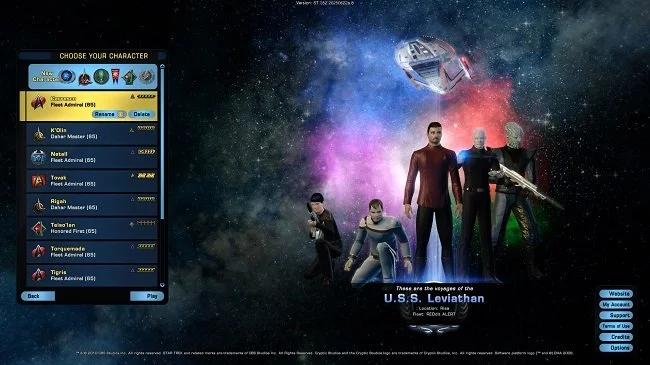
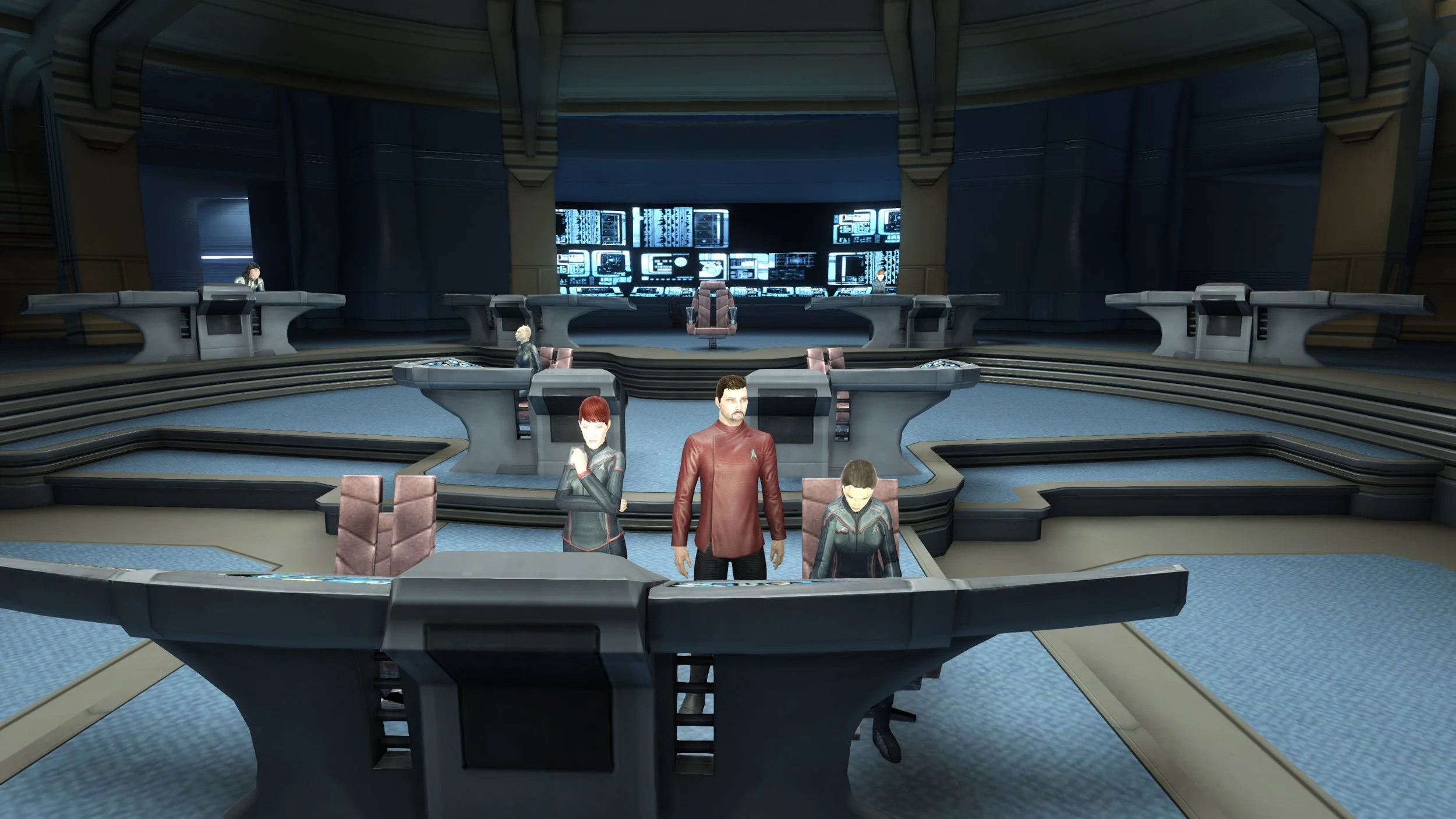
However, Star Trek Online have a diverse collection of emotes which can give other MMOs a run for their money. Naturally there are many that replicate signature salutes and greetings that can be found directly in the various TV shows. Obviously, anything Klingon is very bombastic. However, it is with the dance emotes that the game really excels, and they feature heavily in the summer festival dance competition on Risa. But for me the jewel in the crown is an emote that Cryptic have just recently given away during the Hearts and Minds mission for Halloween. Namely the iconic Michael Jackson Zombie Dance, from the Thriller music video. There was a dozen or so player performing this emote on Drozana station tonight. I have no idea how they managed to synchronise everyone, but it really looked good. I laughed like a drain.
Naturally there are some players who don’t care that much for in-game emotes and think that they’re simply a cosmetic bauble. Each to their own I guess. Plus, there is scope for some players to be a nuisance with communal emotes, although games like LOTRO do have a facility to turn them off. Ultimately, I find that it is the little things within the MMO genre such as emotes, that are increasingly providing my main source of interest in such games. Furthermore, if games must have a cash store then selling emotes is less bothersome than peddling more tangible items that boost performance. In the meantime, I’m off to laugh myself stupid watch Junkrat do his Vaudeville emote in Overwatch.
Gaming as a Service
The recent demise of Visceral Studios and the subsequent statement by Executive Vice President of Electronic Arts, Patrick Söderlund, pertaining to changes in the way the company wishes to realise future products, has got a lot of gamers thinking. EA seem to think that single player games may not be the sure thing they use to be and that co-operative internet play is where it’s at. Co-op play does seem to be finding its way into more and more game these days regardless of whether its needed or not. It facilitates competitive game play and offers publishers broader scope for monetisation. The latter point is probably its inherent appeal from a business perspective. So naturally the gaming commentariat is presently pondering whether the single player game is under threat. However, there are some who are connecting the hypothetical dots a stage further and considering is this a move further towards gaming as a service?
The recent demise of Visceral Studios and the subsequent statement by Executive Vice President of Electronic Arts, Patrick Söderlund, pertaining to changes in the way the company wishes to realise future products, has got a lot of gamers thinking. EA seem to think that single player games may not be the sure thing they use to be and that co-operative internet play is where it’s at. Co-op play does seem to be finding its way into more and more game these days regardless of whether its needed or not. It facilitates competitive game play and offers publishers broader scope for monetisation. The latter point is probably its inherent appeal from a business perspective. So naturally the gaming commentariat is presently pondering whether the single player game is under threat. However, there are some who are connecting the hypothetical dots a stage further and considering is this a move further towards gaming as a service?
This very point was raised over at Keen and Graev’s website and it didn’t take long for noted blogger Bhagpuss to succinctly prophesise the inevitability of gaming’s transitioning from a product to a service. “Music has been successfully re-positioned as a service. Movies have been successfully re-positioned as a service. TV has always been a service but has been re-positioned even more effectively to monetize that role. Reading is in the process of being re-positioned into a service, although the extreme conservatism of the pre-existing customer base for that product is making the transition take longer than expected”. Furthermore, there are numerous other examples that can be added to the list. I no longer own Microsoft Office but subscribe to it, yearly. Rather than buying podcasting software, I use Zencastr which is a chargeable service. Then there is Amazon Prime which negates the need for possibly 70% of my traditional household and personal shopping. So, why should games be any different?
The MMORPG genre has already done a lot of ground work with regard to this future transition. I originally bought The Lord of the Rings Online and its first expansion pack on DVD-ROM. However, considering the demise of physical media, changes in the games business models and the evolution of its terms and conditions over the last ten years, I don’t really own diddly-squat. I just pay to access the game as and when I wish to. Then of course there are already services such as Origin Access, where you can pay for access to “The Vault” which does include some premium titles. A lot of folk simply consider it a convenient means to “try before you buy” but others see it as the first steps down the road of gaming as a service. I remember when OnLive closed in 2015 and thought to myself at the time, that it was simply blazing a trail for other companies to follow. It is often the businesses that are first out of the gate, that fall on their face. However, they provide a very useful blue print to those who follow in their wake, having already highlighted potential mistakes.
Internet infrastructure in the UK is slowly improving. Fibre is becoming more accessible on urban areas. We are also raising a generation that are born into a world of services rather than ownership and frankly it is their behaviours that will ultimately determine this cultural change. Personally, although I am conditioned by my age group to favour ownership and products over services, I can accommodate this change. Therefore, I shall not spend an excess of my time screaming into the wind as gaming as a service becomes a reality. As for those who fundamentally oppose this concept, they need to consider when was the last time they successfully held back the “tide”? It really is a matter of “when” rather than “if”. Fortunately, they’re lots of clouds to shout at in the meantime, for those so inclined.
Shadow of War: Grinding to a Halt
After fifty plus hours of playing Middle-earth: Shadow of War, I have finally ground to a halt, in more ways than one. I have completed the Gondor, Shelob, Eltarial and Carnán quest lines, as well as the Brûz and Nemesis missions. I have also unlocked all the skills gained from the Shadow of the Past session play. Over the course of a fortnight, I’ve tackled all the “busy work” sub missions, such as the collectable Gondorian artefacts and Shelob’s memories. My approach to Middle-earth: Shadow of War has been very focused and methodical. As a result, I have conquered all the regions that are currently available. Each fortress is populated by epic level Orcs that are loyal to the “Bright Lord”. Overall, it has been a very enjoyable experience, although the quality of gameplay has been somewhat inconsistent. Middle-earth: Shadow of War has several flaws and the endgame is one of them.
After fifty plus hours of playing Middle-earth: Shadow of War, I have finally ground to a halt, in more ways than one. I have completed the Gondor, Shelob, Eltarial and Carnán quest lines, as well as the Brûz and Nemesis missions. I have also unlocked all the skills gained from the Shadow of the Past session play. Over the course of a fortnight, I’ve tackled all the “busy work” sub missions, such as the collectable Gondorian artefacts and Shelob’s memories. My approach to Middle-earth: Shadow of War has been very focused and methodical. As a result, I have conquered all the regions that are currently available. Each fortress is populated by epic level Orcs that are loyal to the “Bright Lord”. Overall, it has been a very enjoyable experience, although the quality of gameplay has been somewhat inconsistent. Middle-earth: Shadow of War has several flaws and the endgame is one of them.
Compared to the previous game, there is a degree of skills bloat this time round. Some do seem somewhat superfluous, such as the ability to poison kegs of grog from range. However, picking the right skills for your playstyle and gear build is key to success. Some of the skill modifiers are essential and give the player a distinct advantage. Freeze Vault and Shadow Strike variants (especially the one that summons the target towards you) help immensely. It should be noted that combat is more complex this time round. The higher density of enemies makes stealth far harder. Taking the high ground and considering your next move helps immeasurably. At street level, especially in the fortresses it is very easy to become overwhelmed by enemies at times. Freeze Pin, Elven Fire and Rage can be used tactically to subdue a primary target and then clear swarming enemies. As with the previous game, running away if things get out of hand is a valid tactic. Summoning a body guard or a dominated beast can also be fun, although flying a Drake with a keyboard is not exactly easy.
The third act of the game, is a series of Siege Missions which are especially gruelling. Initially these are quite engaging as you plan your tactics and equip your assault force with suitable skills. But there are ten stages to this part of the game, where you repeatedly defend your five major fortresses. Naturally, the difficulty increases the further you progress as well as the duration of each siege. It does become a little repetitive towards the end and you feel at times like you’re simply plugging holes in a dike. You go from capture point to capture point holding back the enemy and healing your high-level orcs. There is often a tipping point where you know that events have gotten beyond your control and you can feel the battle slipping away from you. Hence there is an element of monotony to this part of the game and if you’ve already cleared all the other quests in the game, it can feel like a treadmill.
During the course of my play through, I’ve also made some basic errors that have now come back to inconvenience me. One of these being the equipment challenge which allows you to upgrade specific legendary gear. One of the easiest sets to obtain in the game is the Bright Lord armour which is gated behind Ithildin doors. There are word puzzles to solve to open them. I obtained this set quite early on in the game and the gear scaled to the level I was at the time. To upgrade the gear, I had to recruit specific Orc captains. However, by this time I had killed, replaced or seeded all relevant enemies in the region and was unable to find any Orcs that met the criteria. The only way to resolve the issue would be to kill my dominated Orcs and allow new ones loyal to Sauron to spawn. As I didn’t relish this prospect, I simply collected another legendary armour set, via the vendetta system. As I am now at level cap, the gear drops where of a comparable rating.
The lore breaking story of Middle-earth: Shadow of War is very inventive but a bit farcical at times. It really does play fast and loose with the established canon and flat out contradicts it at times. But despite these transgressions it is still quite enthralling. The nemesis system and the personalities of the various Orc are still at the games core. However, the endgame suffers due to the gating of Orcs behind loot boxes. As a player you have far less of an emotional connection to an Orc that you’ve literally just obtained from a crate, over one that you’ve fought, dominated and grown accustomed to. Furthermore, even the top tier Orcs that fight for you are somewhat squishy. Pit fights also are far from an exact science and I’ve lost some über Orcs to surprisingly low-level enemies. Integrating a cash shop into this part of the game has clearly had a detrimental effect upon the final act of Middle-earth: Shadow of War.
I have now reached the stage where I shall take some time out from Middle-earth: Shadow of War. As previously mentioned, the last stage of the game has been a bit of a grind and I would rather wait now for further content to be released, rather than kill my passion by just pottering about achieving nothing in particular. The release time table for the DLC was announced yesterday and it would appear that there’s no further narrative driven content until 2018. I don’t mind new Orc tribes to conquer but I do prefer story based content over simple achievements. I don’t regret pre-ordering the game, as it has been fun to participate in an event as it happens. However, if Shadow of War follows the pattern set by Shadow of Mordor, then a drop-in price may well occur by the end of the year. Certainly, buying the game at a discount will help compensate for the weak areas in the gameplay.
Pointing and Laughing
Jim Sterling’s latest comic creation, the Duke Amiel du Harcore, currently presents a weekly video in which he narrates comments written by self-professed “hardcore gamers”. These monologues ironically highlight the pomposity and lack of self-awareness that is so common to individuals possessing such a mindset. Sterling delivers them with his usual theatrical flair, ensuring that source material is presented literally, complete with all their punctuation and spelling mistakes. “Commentocracy” may not be big or particularly clever but it makes its satirical point and is an amusing diversion, providing a welcome break from the po-faced, default stance of the gaming community these days. It also seems to be hitting home and ruffling a few feathers because there has already been some push back from those Sterling seeks to mock.
Jim Sterling’s latest comic creation, the Duke Amiel du Harcore, currently presents a weekly video in which he narrates comments written by self-professed “hardcore gamers”. These monologues ironically highlight the pomposity and lack of self-awareness that is so common to individuals possessing such a mindset. Sterling delivers them with his usual theatrical flair, ensuring that source material is presented literally, complete with all their punctuation and spelling mistakes. “Commentocracy” may not be big or particularly clever but it makes its satirical point and is an amusing diversion, providing a welcome break from the po-faced, default stance of the gaming community these days. It also seems to be hitting home and ruffling a few feathers because there has already been some push back from those Sterling seeks to mock.
Contemporary gaming culture is in many ways a microcosm of everything that is currently wrong in western culture. It can be myopic, self-aggrandising, lacking in humility and rife with hyperbolic rhetoric. Critical thinking, introspection and comradery is hard to find. Too many gamers consider themselves the arbiter of its associated culture and there is still a percentage that mistakenly consider their personal efficiency at playing games to be some laudable achievement, commensurate with success at sports or in the arts. There is one particular blog that I read, whose author is so vain and delusional that they’ve constructed an internal narrative that paints them as a virtual Nietzschean Übermensch. Yet their prose show that they’re a somewhat emotionally damaged individual with an erroneous perspective of the world. Yet such is the nature of gaming these days. “Git Gud” culture and a bellicose, binary world view go hand in hand.
"As I said to Chancellor Metternich at the Congress of Strasbourg: Pooh to you with knobs on!"
It can be argued that debating such a position is the best way to challenge it. I myself enjoy the cut and thrust of a good discussion based around contrasting views. However, we are not currently living in an age where people will concede an argument if given evidence to the contrary. A point of view has become more of an act of faith, a symbol to embrace and a flag to rally round. It’s not about what is demonstrably or ethically right or wrong. It’s about how you feel. A contrary opinion is perceived by default as an attack upon your own. Someone questioning your position is ultimately questioning you. Hence, we see all the zealotry that was once exclusive to religion, manifesting itself around aspects of popular culture. If politics has become tribal, why shouldn’t all the other facets of our life? We’ve spent the last ten years racing to the bottom and we’ve finally arrived, spittle flecked and ready for battle.
However, when confronted with such a bullish and implacable mindset, there is an alternative to debating. There is always humour. Why waste valuable time and energy responding intellectually to professed gaming elitism, when you can simply point and laugh at the utter fatuousness of such a position. Historically, any dogma founded upon self-professed superiority is usually devoid of any capacity for self-deprecation. Philosophies of this kind seek validation and despise ridicule. Humour robs them of the gravitas that they seek and undermines the bogus credibility they espouse. If there was ever a time to justifiably mock and deride these rogue elements of the gaming community, the time is now. Hopefully, the Duke Amiel du Harcore will continue to rib those delusional gamers that haunt subreddits and forums, extoling the virtues of the “PC master race”. He may even encourage more of us to finally climb of the fence and tackle this blight on our community, by doing the same.
LOTRO: More Public Relations Problems
I’m not currently playing LOTRO but it hasn’t escaped my notice that there’s been a “wee stooshie” this week regarding Standing Stone Games handling of the “Incomparable Gear” debacle. To summarise, the cost of some specific high-end gear was set too low (about 75% cheaper than it should have been). Naturally, players bought these items from the barter vendor in good faith. Once the error was discovered, SSG’s initial solution was to patch the game and remove the item(s) from those who currently had it, without adequatecompensation. Naturally this was not well received by those affected by the issue, many of whom had bought the new items, then broken down and asset stripped the gear it was replacing. Drama, rancour and poor public relations ensued, further damaging community relations between SSG and the LOTRO player base. It should be noted that SSG is still trying to recover from the last marketing blunder they made back in July when they announced the profligate pricing range of the Mordor expansion.
I’m not currently playing LOTRO but it hasn’t escaped my notice that there’s been a “wee stooshie” this week regarding Standing Stone Games handling of the “Incomparable Item” debacle. To summarise, the cost of some specific high-end gear was set too low (about 75% cheaper than it should have been). Naturally, players bought these items from the barter vendor in good faith. Once the error was discovered, SSG’s initial solution was to patch the game and remove the item(s) from those who currently had it, without adequate compensation. Naturally this was not well received by those affected by the issue, many of whom had bought the new items, then broken down and asset stripped the gear it was replacing. Drama, rancour and poor public relations ensued, further damaging community relations between SSG and the LOTRO player base. It should be noted that SSG is still trying to recover from the last marketing blunder they made back in July when they announced the profligate pricing range of the Mordor expansion.
Like all problems of this nature, a compromise solution has been eventually found. Community Manager Cordovan released the following statement, although it can be cogently argued that the manner and tone of his previous comments have hardly helped the matter. “For players who already purchased Item Level 330 Incomparable gear, we have several options available. When the hotfix is released, already-purchased level 330 Incomparable items will be able to be disenchanted with the Flame of Ancalamir to return the full Ash of Gorgoroth cost, plus a number of Shadowed Essence Boxes equal to the number of Essence Slots on the gear. Already-purchased Item Level 330 Incomparable Gear will also have its stats adjusted to be approximately equivalent to the level 330 rare gear available through the High-Enchanter, and the Essence Slots will remain. This allows players to utilize the gear if they choose. Following the hotfix, Incomparable gear will have its correct vendor cost.”
It would appear that some LOTRO players are still not entirely happy with this solution but I get the impression that SSG are now done with this issue. Sadly, once again we see a lack of proactive community management and a lack of sensitivity towards paying customers. Stepping back from this issue per se and looking at the bigger picture, it presents yet further proof that SSG’s QA processes are inadequate. Too often “preview builds” from the Bullroarer test server are released into the live game environment with a wealth of bugs, flaws and mistakes. Players have raised this issue time and time again but their legitimate concerns habitually fall upon deaf ears. It’s become a common place to see SSG scrabbling franticly to release a patch or hotfix, within days of major new content going live. As I mentioned in previous posts, we should remember that SSG is just a new label and that the core LOTRO team is the same from the Turbine days. This new broom obviously doesn’t sweep clean.
Returning to the matter of the gear debacle, it’s a textbook example of poor customer service. This problem should have never made it into the live game to begin with, however it did. SSG should have held their hands up, admitted to a mistake and taken this hit directly on the chin. Under UK consumer legislation if you have already bought an item that was incorrectly priced, the retailer has to accept the transaction as it stands. That’s exactly what SSG should have done; let those who bought the gear at the incorrect price, keep it and then fix the problem so the error didn’t continue. If they had done all this with a healthy dose of self-deprecating humour, then the entire problem could have been avoided. Such goodwill would no doubt done much to improve ongoing community relations. But SSG seems to lack such business acumen and chose to do the opposite. Their high-handed attitude as well as their “blame and inconvenience the customer” mindset is incredibly counterproductive. This blunder is certainly not the final nail in LOTRO’s coffin but it is yet another unnecessary “own goal”. And there have been so many in the game’s history. Player goodwill is not an infinite resource. Therefore beware, Standing Stone Games.
Update:
Today's hotfix for this issue, did not go well. It "incorrectly reduced the power of Level 330 Incomparable items acquired through the new Instances and Gorgoroth Steel-bound Lootboxes" according to Community Manager Cordovan. Therefore as a sign of goodwill SSG have granted all players 50 Mithril Coins from the LOTRO Store with the Code MORDORMITHRIL, now through October 22nd, 1/Account. This is a positive step forward. Let us hope that the next hotfix that comes this weekend resolves the issue for good.
Killing Orcs and Taking Names
Middle-earth: Shadow of Mordor unlocked on Steam at 6:00 PM today and within minutes I was back in Mordor murdering Orcs once again. It is interesting sequel, to say the least. First off, I’ve not seen quite as much mainstream publicity for a game for a while. There has been a fair amount of TV advertising and every London Bus I see, seems to be adorned with promotional posters for the game. Next, this game is acutely aware that it’s a sequel and does everything it can to improve and embellish upon the previous instalment. Such a policy broadly works but there are times when there seems to be an overabundance of choice. Many of the core skills from the first game make a return but have a subset of modifiers. Not all of them seem that important or relevant. However, the new double jump is invaluable for navigating the environment which features numerous iconic locations such as Minas Ithil and Cirith Ungol. There’s also a far greater number of mobs about this time so stealth is not always an easy option.
Middle-earth: Shadow of Mordor unlocked on Steam at 6:00 PM today and within minutes I was back in Mordor murdering Orcs once again. It is interesting sequel, to say the least. First off, I’ve not seen quite as much mainstream publicity for a game for a while. There has been a fair amount of TV advertising and every London Bus I see, seems to be adorned with promotional posters for the game. Next, this game is acutely aware that it’s a sequel and does everything it can to improve and embellish upon the previous instalment. Such a policy broadly works but there are times when there seems to be an overabundance of choice. Many of the core skills from the first game make a return but have a subset of modifiers. Not all of them seem that important or relevant. However, the new double jump is invaluable for navigating the environment which features numerous iconic locations such as Minas Ithil and Cirith Ungol. There’s also a far greater number of mobs about this time so stealth is not always an easy option.
As with the previous game, if you’re a Tolkien purist then you may object to some of the liberties that the writers have taken with existing lore. Talion is still connected to the spirit of Celebrimbor and the game starts with the forging of a new ring, free from the power of Sauron. However, the crafting process weakens the Second Age Ñoldorin prince and he is separated from Talion. The Grave Walker eventually tracks him down, finding him in the clutches of Shelob. She will release him only if Talion freely gives her the new ring. As he has no other option Talion agrees and Celebrimbor is restored to him. Shelob encourages them to make war upon Sauron and suggests that the Palantir of Minas Ithil will aid them. However, Sauron has plans of his own and lays siege to the Tower of the Moon. Celebrimbor deems the city lost but Talion feels obliged to fight with his people. However, will the pair of them be able to withstand the Nazgûl and their leader the Witch-King of Angmar.
It's a bold narrative despite the canonical inconsistencies. Minas Ithil fell to the Nazgûl 939 years earlier in the third age but to be honest it doesn’t really matter. This is a game set more in Peter Jackson’s version of Middle-earth, rather than Tolkien’s. And once again it is the nemesis system that is the major selling point. The Orcs, Uruks and Ologs all have incredibly well written personalities and can be either sinister, repulsive or just plain crazy. They often have curious quirks and foibles that come dangerously close to parody but the humour is kept on the right side of the line, so it doesn’t get too silly. The game also has a wealth of minor quests and collectables, that some would describe as busy work. There are dozens of lore items to discover, each with a short-narrated anecdote connected to them. Then there are fragments of Shelob’s memory to collect. Furthermore, this time round there is gear to collect and upgrade.
So far, it all seems highly polished and very familiar. Having maxed out my previous character in the last game it is a little odd to be starting from scratch again and to be missing many of the skills I came to rely puon. They all have to be earned from scratch again. At present I cannot dominate Orcs and so I have had no reason to look any further in to the Fortress Siege system. I’m not required for the meantime to recruit an army to rival Sauron’s. I suspect that mechanic will be part of the endgame along with the requirement to use the loot box system. Exactly how long it takes to get there, is a subject of interest to me. The marketing of Middle-earth: Shadow of War suggests there is fifty to sixty hours of gameplay in the campaign. Considering that I spent £59.99 for the Gold Edition of the game, I hope that is the case. As and when I have to use the microtransaction mechanic in this game, I will write another blog post to discuss how I find it. For the present I will simply say, so far, so good.
Gaming Heresy: Part 1 My Gaming Epiphany
It’s been a while since I’ve had a rant, frothed at the mouth and vigorously shaken my clenched fist at clouds. If you do this too often when running a blog you can paint yourself into a corner. Ranting then becomes the defining aspect of how your writing is perceived. Another reason why I don’t want to write an endless succession of irate screeds about the failings of the gaming industry and its associated player communities, is because as I get older, I simply do not care as much about these things. The recent debacle about microtransactions in Middle-earth: Shadow of War, garnered nothing more than a raised eyebrow from me. A decade ago I would’ve been marshalling a restless lynch mob, armed with hoes, rakes and flaming torches. Time and old age have a habit of cooling one’s ardour. However, letting off steam can be very cathartic, so I’ve decided to inaugurate this infrequent column in which I shall vent my spleen about the things that displease me and express views that may well fly in the face of the prevailing consensus.
It’s been a while since I’ve had a rant, frothed at the mouth and vigorously shaken my clenched fist at clouds. If you do this too often when running a blog you can paint yourself into a corner. Ranting then becomes the defining aspect of how your writing is perceived. Another reason why I don’t want to write an endless succession of irate screeds about the failings of the gaming industry and its associated player communities, is because as I get older, I simply do not care as much about these things. The recent debacle about microtransactions in Middle-earth: Shadow of War, garnered nothing more than a raised eyebrow from me. A decade ago I would’ve been marshalling a restless lynch mob, armed with hoes, rakes and flaming torches. Time and old age have a habit of cooling one’s ardour. However, letting off steam can be very cathartic, so I’ve decided to inaugurate this infrequent column in which I shall vent my spleen about the things that displease me and express views that may well fly in the face of the prevailing consensus.
So, let us begin. Here’s a thought. Gaming is just another commercial leisure industry that is of no greater merit than TV, Movies and popular music. It’s driven primarily by commercial considerations, with art are ethics being secondary issues. Like other entertainment mediums it can be pitched at various ends of the intellectual spectrum and made to varying degrees of quality and professionalism. Although gaming can highlight specific issues and offer social commentary it has no more significant power to impact upon events than other artforms. Games themselves can on occasions be “art” but by and large, most products are just disposable entertainment. Just like a sitcom, an action movie or a pop song. Games are not special, important or unique, when compared to other leisure activities. The social aspects that so many extol exist because of the players themselves and the games are merely a conduit. Essentially, the expression “it’s just a game” is true. It’s not a denigration but simply a statement of fact.
Richard Nixon has no relevance to this article...
And if gaming per se is simply a commercial exercise in mainstream leisure and thus nothing exceptional, then surely the same must be said for fandom? Therefore, claims of gamers being problem solving savants and alternative, high end achievers are bogus. Gaming and its subset of related fandom is a breeding ground for a myriad of unpleasant opinions and facilitates antisocial behaviour. It is a microcosm of the entire “first world problems” mentality that blights Western popular culture. It contributes to the growing infantilization of public discourse and social interaction as well as playing directly into the hands of the “bread and circuses” policies of the political classes. Why waste your time campaigning, lobbying and fighting for universal healthcare, affordable housing and accountable government? Someone on a game development team has nerfed the Sword of Kagnazax and gimped your build, so why not send them death threats?
I was walking around a very large branch of WHSmith recently. Despite the proliferation of digital media, magazines have not yet vanished from the shelves. In fact the number of fan and enthusiast based publications available is still prodigious. Gardening, fishing, mud wrestling are all represented. It’s a similar story if you go online. There are forums and subreddits for every conceivable leisure activity. If you decide to dip your toe in the respective waters of each community you will find one common factor in them all. Drama. All discuss the minutiae of the object of their affection as if it were the meaning of life itself. It soon becomes very apparent that it is not really fandom that is the issue but people. The bastards. Show me a problem and I’ll show you someone called Colin who’s responsible. All of which is just further evidence that gaming is merely another facet of humanity’s habit of slapping itself on the back, while simultaneously kicking some other poor sod in the nuts. When put in such a context, the reality is clear. Gaming ain’t all that.
This is my gaming epiphany. It’s not something that happened on the road to Damascus or overnight in a Premier Inn outside of Chester. It has come about over a period of time in which the iniquities, trivialities and pomposities of both the gaming industry and its fans have been dripped upon me like Chinese water torture. Don’t get me wrong, irrespective of this rant, I enjoy gaming and do not regret the time I’ve spent pursuing it. I just see it for what it is; an amusing diversion, an enjoyable challenge and one of the many pointless activities we fill our lives with before death cold embrace and the inevitable void. Sadly, it is because my perspective is not a common one, that the gaming industry acts with the impunity that it does and treats its customer base so poorly. I wonder if there will be a major shift in perception among fans, in another twenty years? Only time will tell. In the meantime, a percentage of gamers will continue to shriek “Git Gud” and I’ll continue to shake my head at their misplaced sentiments and watch as democracy is dismantled around them.
Game Graphics: A Question of Aesthetics and Personal Taste
The "cartoon versus realistic graphics" debate is a perennial one and regularly appears on gaming websites, often on slow news days. A variation of this question appeared on Massively Overpowered yesterday and reminded me once again that a games aesthetic is a really important selling point and that players tastes are far from universal. There’s a lot of buzz at present associated with the indie run and gun platform game, Cuphead. The game has a striking visual design inspired by the work of Polish-American animator Max Fleischer. Think Betty Boop, Popeye and Color Classics (which were a direct rival of Walt Disney's Silly Symphonies). It certainly gives the game a charismatic look and feel, making it stand out from the crowd. However, choosing such a radical style can also have a very polarising effect. Where some may find a quaint charm in the graphic design, others may abhor it.
The "cartoon versus realistic graphics" debate is a perennial one and regularly appears on gaming websites, often on slow news days. A variation of this question appeared on Massively Overpowered yesterday and reminded me once again that a games aesthetic is a really important selling point and that players tastes are far from universal. There’s a lot of buzz at present associated with the indie run and gun platform game, Cuphead. The game has a striking visual design inspired by the work of Polish-American animator Max Fleischer. Think Betty Boop, Popeye and Color Classics (which were a direct rival of Walt Disney's Silly Symphonies). It certainly gives the game a charismatic look and feel, making it stand out from the crowd. However, choosing such a radical style can also have a very polarising effect. Where some may find a quaint charm in the graphic design, others may abhor it.
There are many reasons why a developer may elect to choose a specific visual style when creating their game. Firstly, it may be a question of choosing a visual aesthetic that matches the idiom of the content or genre. Would an ultra-realistic Mario Kart be as charming as the its present incarnation? Production design (or whatever the appropriate gaming terminology is) sets the tone and can greatly influence consumers perception of the game. When WildStar was in development, I remember watching various videos that promoted the game. They had a very knowing and tongue in cheek tone. Despite the games science fiction setting it expressed this in a very satirical manner. That allowed for all established genre tropes and clichés to be utilised under the blanket of postmodern irony. The new MMO Wild West Online has elected for a more graphically realistic aesthetic. However, it has chosen the look and feel of the Hollywood West, rather than an historically accurate one.
Graphics also have an impact upon such things as a games rating, which can be an important factor when it comes to sales and marketing. Although a percentage of parent and stores are oblivious to ratings, there are those who do take a keen interest in a games content. Characters exploding in a puff of smoke, followed by a cartoon skull falling to the ground in a comical fashion, is a different kettle of fish to wall to wall blood and gore. A game graphic style, if cleverly done, can mitigate violence, potential offence and fosters an entirely different atmosphere. Conversely, the hyper realism of some games, particularly those in the RPG and FPS genres, bolsters the drama and th atmosphere that they are trying to create. It becomes a selling point in itself. This is why Lego games opt for the former and titles such as Middle-earth: Shadow of War and World War II, latest instalment of Call of Duty, elect for the latter.
Then of course there are technical factors to consider. Cutting edge PC graphics often need cutting edge hardware to run on. Not everyone has high end gaming rigs at their disposal. Console systems have set specifications that cannot be upgraded and therefore can only perform up to a certain standard. By opting to create a game that has a very stylised graphics, performance overheads can be lowered and developers can produce a product that can run on a very broad range of hardware. Increasing accessibility is always good for business. Excluding customers or forcing them into a hardware upgrade is a riskier strategy, although PC gamers do tend to embrace the notion of change more freely than other groups. This is one of the reasons why the MMO genre often has a look and feel that is somewhat dated compared to single player games. It has to ensure that its product is scalable to a broader set of customers and can accommodate the additional technical pressures that multiplayer environments create.
However, logical arguments aside, gamers often have preferences regarding graphics based on far more emotive considerations. One must never under estimate the power of consumers personal preferences and tastes. We are a species that rightly or wrongly, place a great deal of stock on aesthetics. Our choice of foods, clothes, interior design, even those we form relationships with is frequently influenced by our own personal views of beauty, or prevailing cultural trends. I personally like the realism achieved by Frostbite 3 engine from DICE. The preview footage available for Star Wars Battlefront II is outstanding. I would love to see an MMO powered by it, although that is unlikely to happened due to licencing costs and the impact it would have on the minimum specifications required to run the game. Conversely, this is why World of Warcraft looks the way it does. I’m not a fan of that particular design style, although I totally understand why the developers elected to make such a choice.
On a positive note, there are many players who will side line their personal graphical likes and dislikes if a title offers good game play. Then there is the recent trend of remastering games and giving old classics a fresh paint job. And let us not forget those titles that are mod friendly. These offer players a further opportunity to correct those visual aspects they don’t like. All of which goes to show that beauty truly does lie in the eye of the beholder. Game developers cannot please everyone, all the time and the reality is that they recognise that they’ll always lose a percentage of potential sales over a game’s looks. As much as I like the merits of logical thinking it is not the driving force behind human decision making. Therefore, the cartoon versus realistic graphics debate is ultimately redundant. There is no right or wrong answer, just individual preference.
Playing PC Games with an Xbox Controller Instead of a Keyboard and Mouse
To fill the gap in my current gaming activities, I decided to try one of the various titles that I have stockpiled. Often these have been bought on a whim but there’s always something of interest to try and explore. So, having recently enjoyed the open world of Mafia 3, I decided to return to GTA V. I’ve owned this title since December 2015 but have never seriously played through in story mode. Last time I dabbled with it was when I bought it and I just fooled around with the various cheat codes that are available and spent a few hours causing mayhem. This time round I’ve decided to apply myself to all facets of the game. However, I ran into one issue with GTA V that I can usually ignore with other titles. Namely, the control set up. I’ve previously played many games that have been developed for multiple platforms or have been direct console conversions. Although such games are intended to be played with traditional games controllers, I have happily managed to play them using a keyboard and mouse. Sometimes I’ve had to spend a lot of time re-mapping keys but I've always got by.
To fill the gap in my current gaming activities, I decided to try one of the various titles that I have stockpiled. Often these have been bought on a whim but there’s always something of interest to try and explore. So, having recently enjoyed the open world of Mafia 3, I decided to return to GTA V. I’ve owned this title since December 2015 but have never seriously played through in story mode. Last time I dabbled with it was when I bought it and I just fooled around with the various cheat codes that are available and spent a few hours causing mayhem. This time round I’ve decided to apply myself to all facets of the game. However, I ran into one issue with GTA V that I can usually ignore with other titles. Namely, the control set up. I’ve previously played many games that have been developed for multiple platforms or have been direct console conversions. Although such games are intended to be played with traditional games controllers, I have happily managed to play them using a keyboard and mouse. Sometimes I’ve had to spend a lot of time re-mapping keys but I've always got by.
However, on this occasion I found that that was not the case. The games driving mechanics simply do not lend themselves to keyboard use. The weapons system and object interaction also consist of a very esoteric selection of keys. I spent a considerable amount of time trying to relocate specific functions but it simply wasn't viable. Often, I would solve one problem only to create another. GTA V with its combination driving, third person shooting and point and click narrative simply favours a bespoke device. So eventually I gave up my experimenting and simply fetched my Xbox controller. As this Xbox peripherals is compatible with the PC, it was no problem to install it and set up the device. However, the next stage was not so easy. Namely, becoming accustomed to using the Xbox controller. It’s a major mental and physical change. I found that driving vehicles was an easy transition to make. Using the left and right triggers to brake and accelerate is extremely intuitive and feels very natural. Controlling my avatar was far more challenging. Walking, climbing and interacting with objects felt far more sluggish and unwieldy. Aiming via the thumb stick takes a long time to get used to. It doesn’t feel as accurate or as responsive as using a mouse.
This “problem” is very much a case of “conditioning” and “muscle memory”. I made the transition from console gaming to the PC in the middle nineties. There was a time when I use to play both platforms but the PC ultimately won because it’s a multifunctional tool. So, for over twenty years, the keyboard and mouse have been my primary means for interacting with games. I assign the most commonly used keys around WASD, so they could all be easily reached with my left hand. My right operates a five-button mouse. The system works for me and trying to change such a mindset is a big ask. However, it can be done. I am now able to navigate the open world of Los Santos using my Xbox controller. The key is patience and perseverance. You have to stop relying your reflexes and get into the habit of thinking in advance, exactly what it is that you want to do, then implementing it via the Xbox controller. I’m reminded of how Nigel Hawthorn told Clint Eastwood in the movie Firefox to “think in Russian”. However, I cannot see myself playing all future titles with a game controller. It is something I have done out of necessity to accommodate GTA V. A keyboard and mouse remains my primary choice for playing games, although using an Xbox controller has been an interesting experience.
Gaming and Voice Chat
I was reading through the patch notes for the latest test build for LOTRO (Bullroarer Update 21.2 - Beta 1 Take 2) and was interested to find down at the bottom of the list, a reference to some changes that are coming to in-game voice chat. Namely, party member voice volume can be adjusted individually. Party volume control visibility can be toggled by clicking on the party voice chat icon for party members. Default Group Volume preference are to be added to the Voice section of Audio options. The volume slider can be used to set the default voice volume level of new group members. Its 75% volume by default. Well, huzzah with highly polished brass knobs on. I’m pleased that this is being done but isn’t it somewhat late? We could have done with these improvements a decade ago.
I was reading through the patch notes for the latest test build for LOTRO (Bullroarer Update 21.2 - Beta 1 Take 2) and was interested to find down at the bottom of the list, a reference to some changes that are coming to in-game voice chat. Namely, party member voice volume can be adjusted individually. Party volume control visibility can be toggled by clicking on the party voice chat icon for party members. Default Group Volume preference are to be added to the Voice section of Audio options. The volume slider can be used to set the default voice volume level of new group members. Its 75% volume by default. Well, huzzah with highly polished brass knobs on. I’m pleased that this is being done but isn’t it somewhat late? We could have done with these improvements a decade ago.
For years LOTRO players have had the benefit of an in-built voice chat service, rather than having to install and configure a third-party application. It was quite a far-reaching thing to do by then developers Turbine, when the game launched back in 2007. However, for years we’ve also had the endure the following issues. Players whose volume levels are simply too low. Players whose volume levels are simply too high. Microphones picking up and repeating voice traffic. Microphones picking up ambient background noise. Poorly configured microphones, producing "pop", distortion and feedback. For every good experience I’ve had with LOTRO voice chat, I also had a bad one. I’ve spent evenings either being deafened by my colleagues or struggling to understand them due to low volume or distortion.
So, I guess it’s good that these problems are being addressed but I must admit, it’s because of them that I’ve been running a TeamSpeak server for the last seven years. However, third party solutions come with their own set of issues. Some solutions such as TeamSpeak have to be paid for. It’s not a fortune but it does add to your ongoing gaming costs. Other services like Discord are free but that can be subject to change. I’ve always been reticent about becoming reliant on free online services as we have no consumer rights should they change business model or decide to discontinue. Which then returns me LOTRO’s built in voice chat service. Considering how crucial voice chat is to the game and the MMO genre, you’d have thought such a facility would have been more common place in other titles.
Star Trek Online is the only other MMO that I’m aware of that boasts in-game voice chat. Perhaps the increasingly solo friendly nature of subsequent MMOs has meant that voice chat is no longer considered important. Or perhaps the licensing of the technology added too much to development costs. However, where the significance of voice chat may have diminished in some genres, it has increased in others. Overwatch, Grand Theft Auto Online and PlayerUnkown’s Battlegrounds all include an in-game voice chat service. PUBG actually has a proximity based chat service as well as team support. It offers a rather interesting perspective to be able to hear your opponent. Then of course there is voice support built into software distribution clients such as Steam and origin. It would appear that third party retailers still deem voice chat to be of merit, even if some developers do not.
However, I do acknowledge the fact that not every user is comfortable speaking publicly and that for everyone who is happy to converse whilst playing a game, there others who are not. However, even if you don’t wish to participate in group chat, you can always mute your microphone and still benefit from being able to hear what’s going on. Sadly, it would be naïve to ignore the fact that voice chat can be a gateway into one of the lower circles of hell and that it can be abused. I have voice chat muted whenever I play Overwatch unless I’m among friends. Bearing that in mind, I guess another reason why some developers won’t include voice chat with their products is that they don’t want to be lumbered with the responsibility of having to police it. Not that Blizzard does much in this respect. Anyway, despite the disparity in up take, I believe the ongoing popularity of co-op based games (as opposed to MMOs) will ensure that in-game voice chat doesn’t vanish. Perhaps as the technology improves, it may evolve beyond just audio into video. There’s a scary thought.