
Restaurants
I really like dining out. I always have. As a child it was considered an adventure, mainly due to its rarity. As an adult I enjoy dining out as an excellent social activity and way to get to know people. It is also a means to discover new types of cuisine and experience meals that you haven’t tried before. I am happy to dine indoors in an atmospheric restaurant or outside if the weather and surroundings justify it. I prefer to sit away from larger tables as they tend to be noisier, and have a leisurely conversation with those I’m dining with. You can catch up with news and gossip or set the world’s wrongs to right. Music can add to the ambience, especially if it is culturally appropriate. Occasionally it can be intrusive but again, if you choose your table wisely, it can be avoided in such circumstances. For me, dining out is more than a practical necessity but a desirable social activity. However, I have friends who take exactly the opposite view.
I really like dining out. I always have. As a child it was considered an adventure, mainly due to its rarity. As an adult I enjoy dining out as an excellent social activity and way to get to know people. It is also a means to discover new types of cuisine and experience meals that you haven’t tried before. I am happy to dine indoors in an atmospheric restaurant or outside if the weather and surroundings justify it. I prefer to sit away from larger tables as they tend to be noisier, and have a leisurely conversation with those I’m dining with. You can catch up with news and gossip or set the world’s wrongs to right. Music can add to the ambience, especially if it is culturally appropriate. Occasionally it can be intrusive but again, if you choose your table wisely, it can be avoided in such circumstances. For me, dining out is more than a practical necessity but a desirable social activity. However, I have friends who take exactly the opposite view.
In the UK, there was a growth in restaurants during the early 1930s to accommodate a growing need by the middle classes. Dining out became more popular after WWII during the 1950s. A greater variety of cuisines became available over time, both from Europe and the UK Commonwealth. As mentioned earlier, dining out at either a humble cafe or restaurant was a rarity in my youth during the seventies. This was mainly due to the prevailing economic climate at the time and the fact that inflation was high. By the time I started my working life during the early nineties, it had become far more commonplace. Many pubs began modernising for a more “family friendly” clientele and providing food. Also by this time, there was a greater variety of restaurants and fast food outlets available, catering for all tastes and budgets. Hence today, dining out is an everyday event. My grandchildren consider it a normal activity and something that happens about once a week.
I like a broad spectrum of restaurants. I’ll happily go to McDonalds or a Wetherspoons pub for breakfast or a quick, convenient and cheap meal. Similarly, I have no prejudice when it comes to local cafes or other fast food outlets. They all serve a useful purpose. I also like to visit restaurants at the other end of the spectrum. Especially when entertaining friends. About twenty years ago, I was working for a financial and economic research company in central London and they would often wine and dine their respective clients. I was often invited along to answer any technology based questions (which never came up). As a result I went to two of the city’s most upmarket restaurants. The Coq d'Argent at Poultry and the OXO Tower at Blackfriars. Both were memorable experiences as these were very formal establishments with outstanding cuisine.
Over the years Mrs P and I have had several favourite restaurants. Places where we have enjoyed not only the food but the ambience. We used to visit a modest, family run Italian restaurant in Cranbourne Street, London and would often book a table after we had seen a show or some such outing. Sadly, the pandemic put pay to this friendly and pleasant establishment. Fortunately, a new Italian restaurant opened locally quite recently. It has proved to be exceptional and is a fine example of a multigenerational family business. The food is simple but exceedingly well made and the atmosphere is cheery and welcoming. Similarly we have discovered a nearby Indian restaurant that does an outstanding Sunday buffet. It is part of a small local chain with three branches in the area. The food is by far the best of its kind I’ve ever had.
The hospitality industry is a competitive one and sadly many businesses don’t survive. Chain outlets often dominate, squeezing out independent vendors. There is also a great deal of snobbery associated with dining out. I was in South Kensington recently and passed what was effectively a cafe. It offered a standard breakfast but due to its location in fashionable West London, saw fit to charge triple the price. It is also worth noting that not everyone enjoys dining out. Some people are not comfortable dining in public or with social meals. I know someone who “doesn’t see the point of restaurants” and just prefers to dine at home. For some the expense is still an issue. It all comes down to what you’re used to and what you prefer to do. For me, dining out is a major part of my social activities and a source of great pleasure.























More DIY
I fitted a new toilet seat today because the old one was broken. To be pedantic, it was the lid over the seat that was actually broken. It would appear they don’t support the weight of a 56 year old man who is reaching for a rubber ducky. However, the complexities of the circumstances leading to the lid breaking are ultimately irrelevant. The problem needed to be addressed as there were dangerous sharp edges. Therefore, to make things easier, I ordered the exact same make and model of toilet seat that I had previously bought in April 2021. Upon subsequent reflection, I do wonder how often the average person changes their toilet seat? Is three years considered a high turnover by the toilet seat statistical community? Who knows? But I digress. The new seat arrived today and in a fit of hubris I thought I’d quickly install it in the morning after showering. I reckoned it would only take half an hour or so. How foolish of me.

I fitted a new toilet seat today because the old one was broken. To be pedantic, it was the lid over the seat that was actually broken. It would appear they don’t support the weight of a 56 year old man who is reaching for a rubber ducky. However, the complexities of the circumstances leading to the lid breaking are ultimately irrelevant. The problem needed to be addressed as there were dangerous sharp edges. Therefore, to make things easier, I ordered the exact same make and model of toilet seat that I had previously bought in April 2021. Upon subsequent reflection, I do wonder how often the average person changes their toilet seat? Is three years considered a high turnover by the toilet seat statistical community? Who knows? But I digress. The new seat arrived today and in a fit of hubris I thought I’d quickly install it in the morning after showering. I reckoned it would only take half an hour or so. How foolish of me.
Now the reason I wanted the same model as before is because it has a quick release mechanism for taking off the seat. Therefore I was hoping I could simply swap out the broken seat with the new one and not have to mess about installing any fittings. The new seat could just click onto the existing posts. So I unpacked the replacement seat, lined up the holes on the hinge with the posts and lowered it down expecting it to conveniently click into place. Except that it didn’t. The existing posts were too thick. Hence I had to get on my hands and knees and reach under the toilet bowl and unscrew the current fittings. Now you may or may not know this but getting on the floor and into confined spaces is a bitch when you’re 56. The problem was further compounded as the existing wingnuts were done up “finger tight” by my son, so they were disinclined to yield.
I find that most problems are easier to solve after lunch, so I took an extended break and had a midday meal along with a couple of pints of beer for medicinal reasons, at a local cafe. Feeling suitably fortified I returned to the job in hand and decided rather than try and unscrew the wingnuts, I’d rotate the posts using an adjustable spanner. This strategy worked and the fittings became loose. I was then able to unscrew the wingnuts and remove the posts. After another beer (I was thirsty by this point), I then installed the new fittings that came with the replacement toilet seat. The posts lined up with the holes in the hinge and this time round the seat clicked securely into place. I stepped back to admire my handy work and basked in the glory of my victory accordingly. I assume this is how Marcus Agrippa felt after the Battle of Actium or all those Amish people after they built that barn in the film Witness.
There was a time when working with your hands was part of most people’s daily life. Furthermore, being a skilled craftsman was venerated by one’s peers and the wider community. Sadly, the days of many of us having practical skills are long gone. We live in a world where we don’t fully understand how everything in our homes actually works and certainly don’t have the necessary skills to fix things. In fact our lifestyle has become so disposable that it often doesn’t even cross our minds whether something can be repaired. Too often we seek to replace by default. My clumsy struggle to fit a toilet seat is in some respects quite shameful. I may have technical skills but they can’t put up shelves or install a shower. My father, who was a practical man, would have rolled his eyes at my incompetence. But this is the world we live in and I am not alone in my lack of DIY skills.
Handwriting
I recently had to complete some formal paperwork which required me to fill in various information by hand, in black ink. I sat myself at the dining room table and subsequently started writing the necessary information. To my surprise this proved quite difficult. After a few minutes of trying to write neatly, my right hand started cramping. The more I tried to concentrate and “write casually”, the harder it became. By the time I completed the form, my writing had deteriorated considerably. I was somewhat ashamed of the way I had scrawled over this legal document. To make things worse, I then remembered having handwriting lessons as a child. Overall, I was somewhat perturbed at my apparent loss of the ability to write. However, after some further thought, I wondered when was the last time I wrote anything longhand? Exactly how often do I put pen to paper nowadays?
I recently had to complete some formal paperwork which required me to fill in various information by hand, in black ink. I sat myself at the dining room table and subsequently started writing the necessary information. To my surprise this proved quite difficult. After a few minutes of trying to write neatly, my right hand started cramping. The more I tried to concentrate and “write casually”, the harder it became. By the time I completed the form, my writing had deteriorated considerably. I was somewhat ashamed of the way I had scrawled over this legal document. To make things worse, I then remembered having handwriting lessons as a child. Overall, I was somewhat perturbed at my apparent loss of the ability to write. However, after some further thought, I wondered when was the last time I wrote anything longhand? Exactly how often do I put pen to paper nowadays?
Upon reflection, the last time I wrote anything longhand, would have been last Christmas. The personal messages that I wrote in a few cards to friends. Beyond that I had to complete some legal paperwork in February and March but it really was no more than writing my signature. In fact even writing my name has become a rarity these days. I don’t write cheques anymore. I think the last time I used such an instrument of payment was about twenty years ago. The UK dropped the requirement for signing when using your credit card, roundabout 2002 or so. Thinking further back, when I started my first job for the UK civil service at the end of the eighties, there was still quite a lot of manual written work. A decade later when I left, all written work was done via a PC. Hence, it would appear that for a lot of people, myself included, modern life has no requirement to write with a pen.
A quick Google search verifies my own experience. Handwriting is no longer considered to be as essential as it once was. However some academics argue that handwriting is still an important skill due to its wider cognitive benefits. Handwriting engages different parts of the brain compared to typing. It can help with memory retention such as learning the alphabet. Handwriting can also help develop artistic skills and can provide an opportunity for a child to develop aspects of their own character. However, children today tend to be digital natives and often their first experiences with letters and spelling can be via that medium. Formal handwriting comes later and is certainly no longer developed as a specific skill. Neural divergence is another reason why handwriting is not treated so formally.
Things change. All major cultural shifts have advantages and disadvantages. Technology makes writing a lot more accessible. The digital written word can be disseminated far more quickly and equitably. Yet without the medium of technology, those words cease to exist. However, we still have written words from over 5,000 years ago, written on clay tablets. Setting aside the practical arguments, handwriting as it existed in the past was often a thing of beauty. Consider the script on the US constitution or the UK Magna Carta. I also have letters written by my grandparents and there is an earthy and honest beauty to their personal handwriting. Perhaps we have lost something special by shedding the necessity to write longhand. However, there is nothing to stop anyone concerned by this societal shift, in taking up handwriting as a hobby. Perhaps our need to conserve our heritage may lead to a resurgence?
Spotify
I currently have over 152 GB of music on my PC. Approximately 26,000 songs or pieces of music. These are in MP3, Flac and other formats. The files have been sourced from various CDs that I have owned over the years and subsequently “ripped”. Others have been bought from Amazon or other similar sources. In the past I have copied music from friends’ collections and vice versa. The files are mainly categorised by artist or name which is sufficient for me to be able to trawl through them to find what I want. I use foobar2000 as my music player of choice, mainly because it is updated by its developer, plays all major file formats and has no adverts. The interface is verging on the spartan but I prefer this minimalist approach, as I do not require an excess of features.
I currently have over 152 GB of music on my PC. Approximately 26,000 songs or pieces of music. These are in MP3, Flac and other formats. The files have been sourced from various CDs that I have owned over the years and subsequently “ripped”. Others have been bought from Amazon or other similar sources. In the past I have copied music from friends’ collections and vice versa. The files are mainly categorised by artist or name which is sufficient for me to be able to trawl through them to find what I want. I use foobar2000 as my music player of choice, mainly because it is updated by its developer, plays all major file formats and has no adverts. The interface is verging on the spartan but I prefer this minimalist approach, as I do not require an excess of features.
For the last decade or so, this has been my default music set up. As I spend a lot of time in my office, at my desk, this is how I’ve mainly listened to music. A few years ago I ditched the ageing desktop speakers that were attached to my PC and bought a good quality soundbar. It has been a great improvement. I also have a pair of Sony WH-CH520 Wireless Bluetooth Headphones for those occasions when I need to keep the noise down, or for when I’m travelling. However, several things happened in the last year or so which made me question the status quo. The first was Mrs P buying a new car. It didn’t come with a CD player. The second occurred at one of my son’s barbecues. A playlist was collated within minutes with many guests contributing via their existing streaming music accounts. This ensured that there was an equitable representation of all kinds of music, negating any arguments.
Hence, when I received an email offering a 3 month free trial of Spotify last Christmas, I jumped at the chance. Needless to say the flexibility of the platform, along with its substantive music catalogue made it pretty much a no brainer. I lived through the album era and although I like sleeve art, I’ve always found records an inconvenience and never bought into the culture of reverence for them. Similarly, I feel the same way about CDs. So when the MP3 format started to gain traction in the earlier 2000s I quickly adopted it as it had the advantages of superior storage and easy access. Hence, streaming music services are a logical progression. Spotify is convenient and offers easy access. It’s on my PC, phone, smartspeaker. We can also access it when out or in the car.
Setting aside the practical benefits of its accessibility, the other major appeal of Spotify is collating and sharing playlists. Playlists are an excellent means of curating music for specific moods and occasions. As I have an organisational streak to begin with, creating bespoke lists of songs is something I can happily do for hours. I also find sharing other peoples playlists a very useful means of discovering new songs and artists. I can do this with friends and celebrities alike. I recently accessed a list of songs curated by film director Edgar Wright and it was very much to my tastes. However, if you still like to listen to a specific album in order the tracks appear, you can still do this. Spotify will also try and recommend comparable artists based upon your listening history. It’s not a perfect system but it can be quite creative in its choices at times.
The obvious downside to using a streaming service, as opposed to playing the music I already have stored, is the cost. However, I can justify that by the increased accessibility I now enjoy. Another issue that happens from time to time, is not being able to find a specific track. Spotify doesn’t claim to be a definitive music source but it does allow you to add files locally. I have also experienced a few glitches from time to time. Specific songs added to a playlist will sometimes default to alternative versions or mixes for no discernable reason. Material will sometimes be greyed out and unplayable. Presumably due to copyright issues. However, these are minor complaints. So far Spotify justifies its cost by its convenience and so I am happy to endure the expenditure. There are wider issues to consider such as the cultural shift away from “owning” music, to just “renting” it but that is a discussion for another blog post.









Dining and Table Manners
I saw a post on social media recently which featured a picture of a plate with three slices of cake, along with a cake fork (also known as a pastry fork or dessert fork). I made a comment about using the right tool for the job and then thought how unusual it was to see this particular piece of cutlery these days. I then remembered that my American friends refer to cutlery as silverware, which then got me thinking about table manners and the associated social etiquette around dining. The internet does an excellent job of making the world smaller and because international English and US pop culture are so ubiquitous, you can be fooled into thinking that we’re all somewhat homogeneous in our habits and customs. That, however, is not the case and I have always found these minor differences fascinating. Hence I thought it would be a good subject to explore.
I saw a post on social media recently which featured a picture of a plate with three slices of cake, along with a cake fork (also known as a pastry fork or dessert fork). I made a comment about using the right tool for the job and then thought how unusual it was to see this particular piece of cutlery these days. I then remembered that my American friends refer to cutlery as silverware, which then got me thinking about table manners and the associated social etiquette around dining. The internet does an excellent job of making the world smaller and because international English and US pop culture are so ubiquitous, you can be fooled into thinking that we’re all somewhat homogeneous in our habits and customs. That, however, is not the case and I have always found these minor differences fascinating. Hence I thought it would be a good subject to explore.
My Grandson, is three years old. He has recently discovered that when he comes to stay with myself and Mrs P, we have quite a lot of rules. Particularly at dinner time. During which, we all sit at the table and the TV goes off. We use our cutlery primarily to eat and our hands when appropriate. Everyone stays at the table while eating and you don’t get to wonder off. If you need to go to the toilet, then you politely excuse yourself from the table. We all remain seated until everyone has finished their meal. Finally, the most controversial rule is, if you don’t eat your dinner, then you don’t get dessert. However, these rules are tempered by common sense. Therefore, we will not serve things that are obviously unpleasant to a three year olds palette. I also see no sense in bullying a child into eating something they don’t enjoy. However, I won’t let our grandchildren dine exclusively just on the things they want.
These rules are a variation of those I learned from my parents. However, ours are far more equitable compared to theirs. My mother and father grew up during World War II and endured rationing. Hence they adopted a scorched earth policy with regard to wasting food or any kind of food fad. To their generation, table manners and indeed manners per se were a direct reflection of your personal character. Hence you used the right cutlery in the correct manner. You didn’t chew with your mouth open, nor eat noisily. Although such codes have good intentions, I do feel that ultimately much of the Edwardian culture surrounding manners that endured in the UK until the seventies, was more about reinforcing class division than just promoting politeness. Hence I take a more flexible approach to such things.
Returning to the specifics of dining etiquette, here are a few differences between the UK, Europe, and the US. Let us start with knife and fork usage. In the UK and Europe, the fork is held in the left hand and the knife in the right. The fork is kept in the left hand even when eating, and food is either pushed onto the back of the fork with the knife, or impaled on the fork. Americans often use the “zigzag” method. They cut food with the fork in the left hand and knife in the right, then switch the fork to the right hand to eat, setting the knife down. With regard to starting a meal, in the UK it is customary to wait for everyone to be served before starting the meal. In countries like Italy and Spain, it’s polite to wait for the host to say “Buon appetito” or something similar before beginning. In the US, while it’s polite to wait for others to be served, in casual settings, it's common to start eating as soon as your food arrives. Naturally none of these rules are set in stone and practices vary.
Modern life is very different from that of the seventies, or the early nineteen hundreds. Dining, although an important aspect of family life and social interaction, is far less formal. However, I do feel it plays a vital role in bringing people together and learning social dynamics. I also believe that dining together is the quickest way to get to know someone, especially those from a different background. However, not everyone has the same relationship with food as I do. Nor do all enjoy the social dynamic of dining with company. I can fully appreciate how people of an introverted nature and the neural divergent can find the various conventions associated with social dining to be smothering and frustrating. Hence, if you prefer to dine on your own in a casual fashion, free from rules and spoon draining people with big personalities, then so be it.
I however enjoy social dining, mainly due to my love of food and because I do believe in its virtues. I am comfortable eating informally, be it at a drive-through or barbeque, or at formal dinner parties or restaurant. I like meals that are leisurely paced, with an emphasis on enjoying conversation and good company. On my few trips to Europe, I have especially liked that dinner often started late in the evening and was a lengthy process. As for the rules relating to salad forks or fish knives, if you’re not sure then just ask. I was at a fancy restaurant once and ordered snails in garlic sauce as a starter. I asked one of the waiters how one tackled such a delicacy and he happily instructed me in the use of the “tools” that I was presented with.
Inevitably, the subject of dining and table manners, segues into other tangential matters such as napkins (and folding them into swans and gibbons), what condiments you prefer, as well as what drinks you serve with a meal. I will quickly make the following points regarding these. If you’re dining with children, then napkins, kitchen towel, or some sort of moist cleaning wipe are essential. Condiments are so much more than salt and pepper these days. Hence have whatever chutneys, sauces, relish or garnish you see fit. If you want ketchup on your steak, damn everyone else, you go for it. Same goes for what you drink with a meal. If you want red wine with fish, fine. It’s your meal after all. The only advice I’d ever give freely is watchout for grapefruit spoons. And if I were to pick one rule associated with table manners that I think should be set in stone, it’s to thank your host or whoever has prepared the meal.
Pot Plants
A week or so prior to Christmas, I bought a succulent in a decorative penguin pot. To be honest it was the pot that initially attracted me. I placed it on the window sill of my office to add some character. It resides next to a fossilised ammonite shell, my wallet, a small pot that has my door keys in it and a tortoise ornament. In the New Year, I bought a cactus and placed it at the other end of the window sill. I have a habit of naming various items in my home. Hence the cactus and succulent are known respectively as Burke and Hare. I won’t waste your time trying to explain how my mind works. I’m not usually the sort of person that likes an excess of clutter but I like the fact that the window sill has some degree of ornamentation. It makes what is essentially a functional room, a little more personal.
Burke
A week or so prior to Christmas, I bought a succulent in a decorative penguin pot. To be honest it was the pot that initially attracted me. I placed it on the window sill of my office to add some character. It resides next to a fossilised ammonite shell, my wallet, a small pot that has my door keys in it and a tortoise ornament. In the New Year, I bought a cactus and placed it at the other end of the window sill. I have a habit of naming various items in my home. Hence the cactus and succulent are known respectively as Burke and Hare. I won’t waste your time trying to explain how my mind works. I’m not usually the sort of person that likes an excess of clutter but I like the fact that the window sill has some degree of ornamentation. It makes what is essentially a functional room, a little more personal.
Eight months later, I am somewhat amazed that these two plants are still alive. I have watered them infrequently, mainly because I keep forgetting to do so. However, I think more through luck than judgement, I have treated them in a manner that is appropriate for their species. However, when dusting the window sill the other day, it occurred to me that they have grown somewhat and more than likely need to be repotted. As I am not a genocidal maniac by default, I decided in a fit of good humour to relocate Burke and Hare to more suitable accommodation. I was curious to see if I extended some degree of care, how much longer they would live and how big would they grow etc. Oh, the folly of hubris.
I mentioned that I was going to transplant my plants to Mrs P and she kindly bought me a new ornamental pot. She only managed to get one at the time. So today we went back to the garden centre and I bought another identical ornamental pot. In a fit of enthusiasm I also bought a small bag of potting mix that is suitable for both plants. I say small, it was 3 litres which is far more than I need. As it was getting near lunchtime, we left and I was feeling somewhat pleased with myself. However, that was all to change because like most things done on a whim, I hadn’t thought it through. Later in the afternoon, I decided to watch a couple of YouTube videos so I didn’t make any crass errors when it came to repotting Burke and Hare. Sadly, after watching the first video it became abundantly clear that I had already done so.
Hare
It turns out that both plants need to be in a suitably sized plant container with drainage holes at the bottom. These brown plastic pots are then placed inside the fancy, ornamental pots which serve a purely aesthetic purpose. I’m sure this is obvious to gardeners and people running cannabis farms but it really didn't occur to me. So I then had to measure the ornamental pots to ensure that I bought the correct size of inner pots. I managed to trackdown some that are 8.5 centimetres wide and 7 centimetres high. The catch was the minimum amount I could buy on Amazon was 10. Next I noticed on the YouTube videos that people often cover the potting mix with a small layer of decorative stones. Apparently this keeps insects from making a home in the soil. Again Amazon wanted to sell me an excessive quantity. I ended up buying a kilogram of the stuff.
It is now Sunday evening. For the present Burke and Hare remain in their old pots. So far a total of £27 has been spent in an attempt to relocate them. Hopefully the outstanding items purchased from Amazon will arrive tomorrow and I can attempt repotting in the evening. In the meantime, I’ve been watching more YouTube videos and have discovered further logistical issues that I will need to address. The biggest being how do you lift a cactus out of its pot without sustaining multiple injuries. So far I’ve been advised to use either bubble wrap or a pair of oven gloves. No wonder I have never previously been interested in gardening. This entire episode is a textbook example of what happens when you do things without prior research and a comprehensive plan. Nothing is ever easy. Furthermore, there are no such things as cheap hobbies.
More British Slang Words and Phrases
About a year ago, I wrote a post about British slang words and phrases. Using fifteen examples, I endeavoured to explain their definition, provenance and the context in which they are commonly used. I then provided an example sentence of each word or phrase for reference. This proved such a popular post (it didn’t), that I thought it would be beneficial if I gave some further examples (Again I didn’t. I just needed to write a quick blog post, with minimal effort). So here is another selection of slang words and phrases that are used in common parlance in the UK, for your amusement, edification and consideration. Some are relatively self explanatory. Others are somewhat tenuous and arcane in their origins.
Manor is a UK slang term for turf or territory
About a year ago, I wrote a post about British slang words and phrases. Using fifteen examples, I endeavoured to explain their definition, provenance and the context in which they are commonly used. I then provided an example sentence of each word or phrase for reference. This proved such a popular post (it didn’t), that I thought it would be beneficial if I gave some further examples (Again I didn’t. I just needed to write a quick blog post, with minimal effort). So here is another selection of slang words and phrases that are used in common parlance in the UK, for your amusement, edification and consideration. Some are relatively self explanatory. Others are somewhat tenuous and arcane in their origins.
All Right: A generic greeting that is used between friends and acquaintances. The standard response is to say “all right” back. It is not an invitation to say no and then list in detail all the reasons why you’re not all right. “All right Colin”. “All right Geoff”.
Dodgy: A person or object that is questionable or suspect in some fashion. The guy down the pub who sells stolen gear out of his van is what you’d call dodgy. Food can also be so. “Blimey Colin, you stink. Was that kabab you had last night dodgy?”
Faffing About: To waste precious time, expending an excessive amount of effort on a relatively simple task. “Oi Colin, stop faffing about. How long does it take to put on a clean duvet cover?”
Innit: A contraction of the phrase “isn't it” or “is it not”. Often used in a rhetorical fashion at the end of a sentence. Similar to how a bellicose American would say “Am I right?”
Jake the Peanut: A loud, brash, over confident person (usually a man) who suffers from the Dunning-Kruger effect. The same as Jack the Lad, Charlie Potato and Billy Big Bollocks. “Look at Colin with his Ray-Bans and corduroy flares. He thinks he’s Jake the Peanut”.
Kip: To sleep. “Colin, don’t forget to put some cream on the cat’s piles. I’m gonna have a kip for an hour”.
Leo Sayer’d: To be intoxicated by alcohol and sing in a high pitched manner, similar to the popular vocalist Leo Sayer.
Mate: An informal term of respect used when addressing a man or woman without using their name. Used instead of the more formal sir or madam. “Oi mate. You can’t park there”.
Muppet: An informal noun for stupid or foolish person. “Colin, flush the toilet after using it, you muppet”.
Pissed: To be intoxicated by alcohol. Not angry as in the US sense of the word. “Colin’s well pissed after that bottle of floor polish”.
Skive: To avoid work or duty by leaving early. “Where’s Colin? Has he skived off down the pub?”
Slag Off: To talk to someone in a deliberately rude or derogatory fashion. “Why are you always slagging off Colin?”
Taking the Piss: To mock or make fun of. “Colin’s fed up with everyone constantly taking the piss out of him”.
Wee Stooshie: A Scottish term for a small brawl. A difference of opinion that ends in violence. Often fueled by alcohol. “I see Colin had a wee stooshie with the Salvation Army band that were playing in the High Street”.
The English language is constantly evolving and as a result, words continuously come and go from the national lexicon. It can be argued that you can ascertain a person’s age by some of the phrases and slang that they use. Possibly their respective socioeconomic group as well. Posh folk (by which I mean the monied and titled upper classes) do seem to have a completely separate dialect. As do the under twenty fives but that has always been the case. As for the above words and phrases, I would hazard a guess that readers from Australia and New Zealand will find similarities between UK slang and their own. Europeans, who are often multilingual, will probably be likely to adapt to the curious foibles of colloquial English. As ever, please feel free to leave your thoughts below and share any interesting phrases or expressions of your own.
Coronary Heart Disease
This morning I had an appointment at the Cardiology Outpatients clinic at St. Thomas’ Hospital, in Southwark, London. The hospital, located across the Thames from the Houses of Parliament, is easily accessible from three nearby tube stations (subway), one major train station and numerous buses. As well as having an extensive A&E department, St. Thomas’ also provides a broad range of healthcare services such as maternal medicine, gastrointestinal surgery, ophthalmology, pain medicine and plastic surgery. The hospital specialises in cardiovascular care and was the first to perform a mitral valve replacement on a beating heart. It is also home to nursing and surgical colleges. The current site has served community needs since 1871. The hospital has existed in some shape or form since the 12th century. There is a pleasant ornamental garden outside the main entrance that overlooks the river and Lambeth bridge.
This morning I had an appointment at the Cardiology Outpatients clinic at St. Thomas’ Hospital, in Southwark, London. The hospital, located across the Thames from the Houses of Parliament, is easily accessible from three nearby tube stations (subway), one major train station and numerous buses. As well as having an extensive A&E department, St. Thomas’ also provides a broad range of healthcare services such as maternal medicine, gastrointestinal surgery, ophthalmology, pain medicine and plastic surgery. The hospital specialises in cardiovascular care and was the first to perform a mitral valve replacement on a beating heart. It is also home to nursing and surgical colleges. The current site has served community needs since 1871. The hospital has existed in some shape or form since the 12th century. There is a pleasant ornamental garden outside the main entrance that overlooks the river and Lambeth bridge.
I was at the hospital to have a stress echocardiogram. Two years ago I was diagnosed with coronary arteriosclerosis and this was a routine test to determine if there were any significant changes in my condition. Stress echocardiography is a test that uses ultrasound imaging to show how well your heart muscle is working to pump blood to your body while physical, pharmacological, or electrical stress is applied to the heart. In my case I was given the drug atropine to increase my heart rate, while I squeezed a pair of stress balls. The procedure took about an hour and was a little uncomfortable towards the end, due to the elevated heart rate. Fortunately, the results of the test showed only a minor progression of my ongoing heart disease, which can be managed within my current treatment strategy. The results have been sent to my local GP and I may or may not have my dosage of bisoprolol (beta blocker) increased.
There is absolutely nothing unusual about a man of my age (56) having coronary arteriosclerosis. It is a result of your heart's blood supply being blocked or interrupted by a build-up of fatty substances in the coronary arteries. Over time, the walls of the arteries can become furred up with fatty deposits. Furthermore, heart disease of this kind is caused by lifestyle factors, such as diet, smoking and regularly drinking excessive amounts of alcohol. Due to the fact that processed foods make up a substantial part of our diets nowadays, heart disease is very common in the UK. At present, there are around 7.6 million people living with heart and circulatory diseases. This statistic includes everything from conditions that are inherited, to those that develop later in life, such as coronary heart disease, atrial fibrillation, heart failure, stroke and vascular dementia. Here is some further information from the British Heart Foundation.
Around 4 million males and 3.6 million females are living with heart and circulatory diseases in the UK.
We estimate that in the UK more than half of us will get a heart or circulatory condition in our lifetime.
Around twice as many people are living with heart and circulatory diseases in the UK than with cancer and Alzheimer’s disease combined.
Heart and circulatory diseases cause around a quarter (27 per cent) of all deaths in the UK; that's more than 170,000 deaths a year, or 480 each day – one every three minutes.
Around 49,000 people under the age of 75 in the UK die from heart and circulatory diseases each year.
Whenever discussing medical matters, it is important to maintain an appropriate sense of perspective. Since the British Heart Foundation was established in 1961,the annual number of deaths from heart and circulatory diseases in the UK has fallen by nearly half. The UK is at the forefront of heart disease research and the NHS has a proven track record of diagnosing and treating it. I have found over the last two years that coronary arteriosclerosis is entirely manageable. A few sensible changes in diet and lifestyle, along with some common place medicines help maintain the status quo. I take the following tablets each day. Bisoprolol (25mg), atorvastatin (40mg) and aspirin (75mg). As a result, I can still pursue all the same activities that I always have. Sometimes I have to adjust the pace at which I do things and any activity at floor level is challenging but you simply develop techniques to work around these.
I am very fortunate that I live in the UK and as such medical treatment is free at the point of use. The only costs I have to pay for are my prescription fees, which are subsidised. My medication is supplied bi-monthly and I am charged a flat fee £9.90 per item. Hence I pay £19.80 for the bisoprolol and atorvastatin. I buy aspirin “over the counter” as they are cheaper that way. The only other aspect of my ongoing healthcare is a weight loss regime which is very much a work in progress. I say this because to celebrate the positive results of today’s test, I ended up at our local Italian restaurant, which may seem somewhat contradictory to my ongoing medical needs. However, as my heart consultant pointed out, preventative healthcare is about adjusting and managing lifestyles and not necessarily abandoning them by default. Everything in moderation, including moderation, as Oscar Wilde said.








The Case for a Written UK Constitution
The United Kingdom is one of the few democratic countries in the world that does not have a single, written constitution. Others include Canada, New Zealand and Israel. To date, its constitution is a combination of written and unwritten sources, including statutes, common law, conventions and somewhat esoterically, royal prerogatives. The reason for this is predominantly historical. Since 1688, Britain has not experienced a revolution or regime change, which often leads to a constitutional initiative, such as the American or the French Revolution. Britain’s constitution has evolved slowly over time under relative stability and as such, it has never been deemed necessary to list the fundamental laws and principles of the country's political system.
The United Kingdom is one of the few democratic countries in the world that does not have a single, written constitution. Others include Canada, New Zealand and Israel. To date, its constitution is a combination of written and unwritten sources, including statutes, common law, conventions and somewhat esoterically, royal prerogatives. The reason for this is predominantly historical. Since 1688, Britain has not experienced a revolution or regime change, which often leads to a constitutional initiative, such as the American or the French Revolution. Britain’s constitution has evolved slowly over time under relative stability and as such, it has never been deemed necessary to list the fundamental laws and principles of the country's political system.
The current constitution is deficient for three reasons. Its lack of clarity, its failure to properly protect fundamental rights and the inadequacy of the current devolution settlement for Scotland and Wales. Firstly, the fact that the UK’s constitution is not codified in a single document means that the place of certain key governmental mechanisms lack clarity. For example, the legal status of referendums has never been properly set out. Secondly, although Britain does have a Human Rights Act, that legislation does not enjoy the same status as a list of fundamental rights in a codified constitution. As it is not entrenched, it does not have any special protection and can be amended or overturned. The current devolution settlement requires a written constitution that properly sets out the position of the devolved administrations of Scotland and Wales and their respective powers.
Bearing this in mind, here are some arguments in favour of the UK adopting a written constitution:
Clarity and Accessibility:
A written constitution would provide a clear and easily accessible document outlining the fundamental principles and rights of all UK citizens. This can enhance public understanding of their rights and the functioning of the government. It would also provide those in government with clear parameters within which they have to work.
Legal Certainty:
A formal constitution would bring legal certainty, as it would serve as a supreme law that can be referred to in all legal disputes. This contrasts with the current situation where constitutional principles are dispersed among various sources which often leads to confusion and misinterpretation (both willful and accidental).
Protection of Rights:
Explicitly enumerating individual rights within the framework of a written constitution, would provide a stronger legal basis for citizens to challenge any encroachments on their rights. This may contribute to a more robust protection of civil liberties and greater public awareness of said rights.
Limitation of Government Power:
A clearly written, unambiguous constitution could establish clear checks and balances on the powers of different branches of government. Thus limiting the potential for abuse of power and ensuring a more effective separation of powers.
Modernisation and Adaptability:
Another key benefit of a written constitution, is the ability to be able to make relevant amendments and updates that reflect changing societal values and circumstances. This adaptability is often considered crucial in a rapidly evolving world. New socio-political issues, especially those driven by technology and the global environment, often need to be addressed as quickly as they emerge.
International Reputation:
Having a written constitution could enhance the UK's international reputation by aligning its governance structure with the constitutional norms followed by most democratic nations. Many international institutions are built upon mutually held ideas and concepts. Enshrining commonly held values and ideas often affords diplomatic, political and commercial benefits.
Citizen Engagement:
Having a clear constitution can positively impact civic education and engagement. Citizens can become more aware of the mechanics of government as well as their constitutional rights and responsibilities. A better informed electorate can make more effective political choices and become more active in local and national government.
Reducing Constitutional Uncertainty:
The lack of a written constitution can lead to uncertainty, particularly during times of constitutional crisis. The events arising from the Brexit referendum and the political deadlock that reached a peak in 2019 being a clear example. Having a clear and precise constitutional framework could provide a clear route for resolving such situations.
Judicial Review:
A written constitution would enhance the role of the judiciary in interpreting and enforcing constitutional principles through judicial review. This would therefore provide a strong mechanism for holding the government accountable, aiding or sanctioning them when circumstances required. It would also facilitate definitive answers on constitutional interpretation, far more efficiently.
Symbolic Value:
It can be argued that there is a positive, symbolic value to adopting a written constitution. It signals a commitment to transparency, democracy and the rule of law. It provides a cultural foundation upon which to build and a degree of social stability in knowing that certain principles are enshrined in law.
It is important to note that this is not an exhaustive list and opinions on this matter will naturally vary. There are also arguments against adopting a written constitution, with some people favouring the flexibility and evolutionary nature of the UK's current constitutional arrangements. The debate over whether the UK should have a written constitution continues and any constitutional change would likely be a significant and complex process.

















Holidays
In 1939 legislation was passed in the UK so that all employees had one week’s annual paid holiday per year. By the 1950s this had become two weeks and by the 1980s most people had at least 4 weeks of annual holiday. On top of this paid leave allocation, the UK currently has 8 bank holidays which provides further time off for employees. This culture of increasing amounts of annual leave also broadly coincided with air travel becoming more accessible. The first UK passenger jet service began in 1952. However, its cost excluded most people. However, as larger airliners with increased range became available, cheaper foreign holidays became more and more economically viable. European holidays became a reality in the 1960s and 1970s. By the 1980s long-distance holidays to other continents became ubiquitous and the package holiday became king. It is also worth noting that the Channel Tunnel opened in 1994, making car travel from Britain to Europe easier and more popular.
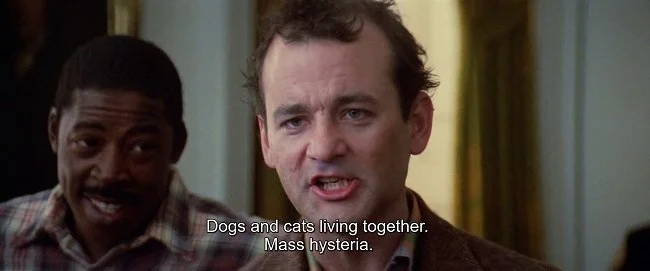
“We’ve gone on holiday by mistake”
In 1939 legislation was passed in the UK so that all employees had one week’s annual paid holiday per year. By the 1950s this had become two weeks and by the 1980s most people had at least 4 weeks of annual holiday. On top of this paid leave allocation, the UK currently has 8 bank holidays which provides further time off for employees. This culture of increasing amounts of annual leave also broadly coincided with air travel becoming more accessible. The first UK passenger jet service began in 1952. However, its cost excluded most people. However, as larger airliners with increased range became available, cheaper foreign holidays became more and more economically viable. European holidays became a reality in the 1960s and 1970s. By the 1980s long-distance holidays to other continents became ubiquitous and the package holiday became king. It is also worth noting that the Channel Tunnel opened in 1994, making car travel from Britain to Europe easier and more popular.
After that potted history of the growth of holidays in the UK, allow me to move onto the main point of this post. Whether you actually like holidays and their respective importance in your life. I grew up in the seventies and early eighties. As a child, going away for a holiday was not a yearly event. I can vaguely remember three major holidays that occurred up to the age of ten. One was in Cornwall when I was about 4 or 5 years old. The other two were both to the Isle of Wight, in 1975 and 1977. All were self catering holidays in rented cottages. We dined in for most of the time we were away. I believe there was one or two meals in a restaurant, which was a rare treat. I believe all holidays were due to my father getting a tax rebate, as he did a lot of contract work as well as teaching. I recollect talking to friends at school at the time and holidays within the UK were very much the norm. International travel did not become commonplace within my peer group, until the eighties.
Sandown, Isle of Wight. Circa early 1970s
Hence, because holidays were not a regular occurrence during my youth, I have reached adulthood without considering them an essential part of my life. My son, his wife and all their friends who are all in their late twenties and early thirties, take a contrary view. They think their civil rights have been violated if they don’t have at least two holidays abroad a year. But this is the culture of today. The average UK household spent £2000 on holidays in 2023. For context, the average UK salary is £34,963 per annum. From the various enquiries that I have made of friends and families, as to why they consider holidays so essential, it seems to come down to three main reasons. For rest, to experience new places and to be indulged. The latter is the one that intrigues me the most. I believe that social media is a major factor here. We see how the rich and famous live and we not only want but expect that life too. Many people believe “they’re worth it”.
I take a far more measured view towards holidays, as I’m sure you expected. I like travelling within the UK, staying in hotels and visiting places of interest, taking in the sights and enjoying local cuisine. I am happy to do that abroad, in principle. But the main impediment to that is travelling by plane. It is not something that I enjoy at all mainly because the type of travel that I can afford is not to my liking. I could travel in a more comfortable manner but that would make travelling as expensive as the holiday itself. I am also very “particular” about where I go. I am cognisant of the UK’s global historical legacy as well as the fact that certain elements of our society do not make a good impression abroad. Current geopolitical problems also determine where I will or won’t travel to. Then there is my own personal comfort zone. I’m not good at languages so I tend to rely heavily on nations that choose to speak English for the benefit of tourists.
Dalmatian Coast, Croatia
Which brings me to the root of this blog post. Mrs P declared recently she wants to go abroad next year. Somewhere where it’s sunny but not excessively so. Humidity as well as insects that feast on your flesh are also a consideration. Once these requirements are met she is happy to relax by a pool and spend the majority of time within the hotel or resort if need be. Sadly, I find the prospect of a week of doing just this extremely dull. Furthermore, if I am going to spend £1,500 plus per person to travel abroad, I have much higher expectations of its entertainment prospects. However, due to the sheer variety of holidays available these days, a suitable compromise that pleases both parties is possible. So far we have decided to travel in June, prior to the school term ending. We have found a hotel which meets Mrs P’s criteria and also has a lot of culture and points of interest nearby. Tours are available from the hotel, which means I then have to do very little apart from travel from A to B. As for the destination, it looks like we’re going to the Dalmatian Coast in Croatia.
Travel does broaden the mind. There are many places in Europe and the wider world that I’d love to visit. However travelling is a pain in the butt. I would happily choose to be anaesthetised, if it meant I could avoid the prospect of enduring several hours on a plane but this is not a service that airlines offer at present. Sometimes for reasons of diplomacy, you have to go somewhere which isn’t your first choice and possibly do some stuff you’re not really that invested in. Such is the nature of holidays. I can at least take my laptop as wifi is ubiquitous these days. I’d be interested to hear your thoughts on holidays and travel, as where you live has an impact on where you tend to go. Neighbouring countries are convenient by nature. Then there is the matter of the US which is so vast, negates the need to travel abroad. Feel free to leave comments.
Selling My Parents House: Part 3
Last month, my sister and I finally sold our parents house. Our late mother’s will has now been fully administered, all funds have been distributed and I finally signed off the “executor’s approval” document and returned it to the solicitors. A line has finally been drawn under a process that has taken about 15 months. Dealing with an estate (in the legal sense of the word) and selling a family home is not something that you do everyday. It’s usually something that comes up maybe once or twice in your life. Few people (myself included) are fully prepared for such an undertaking when it occurs. Hence I have some observations to share about my experience of dealing with the esoteric world of estate agents and solicitors.
Last month, my sister and I finally sold our parents house. Our late mother’s will has now been fully administered, all funds have been distributed and I finally signed off the “executor’s approval” document and returned it to the solicitors. A line has finally been drawn under a process that has taken about 15 months. Dealing with an estate (in the legal sense of the word) and selling a family home is not something that you do everyday. It’s usually something that comes up maybe once or twice in your life. Few people (myself included) are fully prepared for such an undertaking when it occurs. Hence I have some observations to share about my experience of dealing with the esoteric world of estate agents and solicitors.
It really pays to do some research and find an estate agent that is right for you. Selling a house is a unique process because it is very personal. Therefore you want to be dealing with people you can trust, who listen to you and who aren’t just going through the motions. So read reviews and ask other people for recommendations.
Some estate agents are very obliging. Others do very little for their fee (which is substantial). Do not add to the stress of selling a house by having to constantly chase your estate agents to do things. It is their job to arrange viewings, answer the questions that potential buyers raise and to liaise with your solicitors. If they’re asking you to do any of these things then tell them politely to do it themselves.
You also have to harden your heart. The house you are selling should not be viewed as your home but an asset being professionally marketed. You may not like the manner in which your home is described in the marketing material but it is wise to defer to those who do this for a living. A feature that you may think is quaint and quirky may be an absolute eyesore to others. Those viewing your home may not like your choice of decor and might be vocal about it. Simply put, don’t take things personally. Remain detached from the process and elsewhere when there are viewings.
With regards to solicitors and conveyancing, despite a superficial veneer of modernity, this process is still quite archaic in the UK. The language used is frequently very old fashioned and therefore hard to penetrate. Many of the procedures seem to take purely arbitrary amounts of time. Solicitors also tend to play their card close to their chest and communication between them can be vague at times.
Never make the mistake of using an online company for your conveyancing needs as you’ll often find that their postal address is miles away from where you live. Considering the amount of paperwork this process generates, it’s best to find one that is local.
Also, ensure that you are aware of all the fees involved in this process in advance. Selling a house is expensive. The greater the value of the property, the more it costs. The last thing you need is a final invoice with lots of additional costs, eating into your profits.
Don’t be afraid to ask, if you’re not sure about something or do not understand the legalities. This industry is rife with jargon. However, the answers to many of the obscure questions that arise are often very simple. Therefore, seek clarity from those you are paying.
Finally, be patient. Selling a house can be a lengthy and time consuming process. Use this time to your advantage. Don’t just accept the first offer that’s made. A slightly lower offer from a cash buyer may be a far safer bet than a higher offer from someone who hasn’t sold their own property yet, or has a mortgage offer that’s due to expire. It is also worth remembering that until you’ve signed anything, you can always change your mind. I’m not advocating being difficult for the sake of being, but if you feel that a buyer may be problematic or that something just isn’t working, then vote with your feet.
Overall, my own experience of selling my parents home hasn’t been too problematic or traumatic. I am glad that it is now done and that the house has a new family living in it. I think that my parents would be pleased that my sister and I have dealt with the matter and are now moving on. If I ever have to deal with such a process again, I think I am better prepared now. However, I am hoping that nothing of the kind arises in the immediate future.
Selling My Parents House: Part 2
I wasn’t planning on writing a second post about the sale of my late parents’ home but the entire process has been so different from what I expected, I thought there may be some interest in exploring some of the aspects that have come up. The last time I had any dealings in buying and selling property was back in 2003 when Mrs P and I moved from one home to another, to gain more space. It was at a time when the UK economy was booming, and the banks were taking a “relaxed attitude” (some would say cavalier) toward mortgages. The flat that we were selling found buyers very quickly, who offered the full price. Mrs P and I similarly found a bungalow that we liked, and it didn’t take long to secure its purchase. Due to the chain involved it took 8 months to move but the paperwork was handled efficiently, and I don’t recall the bureaucracy being excessively complex. Perhaps due to the busy nature of our lives, I didn’t notice. Plus, memory can be deceptive.
I wasn’t planning on writing a second post about the sale of my late parents’ home but the entire process has been so different from what I expected, I thought there may be some interest in exploring some of the aspects that have come up. The last time I had any dealings in buying and selling property was back in 2003 when Mrs P and I moved from one home to another, to gain more space. It was at a time when the UK economy was booming, and the banks were taking a “relaxed attitude” (some would say cavalier) toward mortgages. The flat that we were selling found buyers very quickly, who offered the full price. Mrs P and I similarly found a bungalow that we liked, and it didn’t take long to secure its purchase. Due to the chain involved it took 8 months to move but the paperwork was handled efficiently, and I don’t recall the bureaucracy being excessively complex. Perhaps due to the busy nature of our lives, I didn’t notice. Plus, memory can be deceptive.
Twenty years later and the UK housing market is very different. My parent’s house was listed (to use an American phrase) on June 19th and interest has been slow, with only a dozen viewings in three months. The house was originally listed at £30,000 more than its probate valuation but due to the housing market, we had to drop the price after two months by £25,000. The reasoning behind this being that the two major housing websites in the UK, list prices in increments of £25,000. If you wish for a property to appear in search results for those who may not have previously seen it, you have to drop the price by that amount. Furthermore, it is very much a buyers’ market at present. Interest rates are high and therefore mortgages are harder to secure. Many currently buying are upsizing and as there is not so much “competition” the pace of selling has slowed. Buyers are also negotiating hard and often not offering the “asking price”.
Fortunately, two weeks ago an acceptable offer was made on the house by a buyer with an uncomplicated property chain. Due to these factors my sister and I agreed to it. This naturally had a tangible impact upon the ongoing sales process. After weeks of everything moving at a glacial pace, things have suddenly accelerated. I asked our family solicitors to handle the conveyancing work and within hours I was inundated with emails with multiple PDF attachments. Although the process of selling a house in the UK appears to have embraced modernity, there are occasional moments when it betrays its arcane and archaic origins. For example, I was sent a document called “Overriding Interests Questionnaire” that included the following questions about the property for sale. “Is there a liability to pay corn rent”. “Are there rights of fishing, shooting or grazing”. “Is there a liability to repair the chancel of any church”.
There are plenty of online guides and FAQs that provide a detailed overview to selling a house. I have found that both my estate agents and solicitors have been very helpful in explaining processes and procedures. However, this is ultimately a legal matter and that means there is a degree of complexity which makes it somewhat daunting regardless of the support you may get. I think there is a psychological element to it all, as the selling or buying of property is potentially the most expensive transaction that most people undertake during the course of their lives. It also bears repeating that selling and buying a property is not cheap. There are additional costs on top of the property price. Estate agents have fees and there are conveyancing charges to cover. Then there is stamp duty to be paid (effectively a tax on the property purchase) unless you’re a first-time buyer. You may also incur costs from having to survey a property. Finally moving or clearing a property add to the total cost.
Having completed all the paperwork regarding the sale and conveyancing of my parent’s house, the process once again returns to a waiting game. Although we are not in a large chain, we still have to wait for our buyers to sell their home. Like any sale, no matter how well organised all parties may be, there is always scope for some unforeseen problems to delay or derail the process. However, the matter is now beyond my control, so I am content to just let things run their course. I would be happy if the sale went through by December with a moving day scheduled for the early New year. That would give my sister one more Christmas in the family home before moving into her new house. If it happens earlier, then that would be an added bonus. Due to the professional manner in which this process has proceeded, so far this is not as stressful as I had thought it would be. I hope it remains that way.
“Trial by Media” and the Court of Public Opinion
On Friday 15th September the former actor and comedian turned internet social commentator, Russell Brand, released a video on his YouTube channel addressing allegations about his personal life, ahead of a forthcoming UK current affairs documentary. Brand vehemently denied what he described as “very serious criminal allegations”. The following day Channel Four broadcast “Russell Brand: In Plain Sight”. During the course of the program Brand was accused by one woman of rape and by three others of sexual assaults, and emotional abuse between 2006 and 2013. During the course of the week, further claims have been made against him and that his “predatory” behaviour was an open secret within the TV industry. Furthermore, women would warn each other in advance if they had any dealing with him. All of which has played out against a mixture of broadsheet analysis, tabloid hyperbole, performative politics and internet bluster.
On Friday 15th September the former actor and comedian turned internet social commentator, Russell Brand, released a video on his YouTube channel addressing allegations about his personal life, ahead of a forthcoming UK current affairs documentary. Brand vehemently denied what he described as “very serious criminal allegations”. The following day Channel Four broadcast “Russell Brand: In Plain Sight”. During the course of the program Brand was accused by one woman of rape and by three others of sexual assaults, and emotional abuse between 2006 and 2013. During the course of the week, further claims have been made against him and that his “predatory” behaviour was an open secret within the TV industry. Furthermore, women would warn each other in advance if they had any dealing with him. All of which has played out against a mixture of broadsheet analysis, tabloid hyperbole, performative politics and internet bluster.
Is this debacle becoming the 21st century version of “l’affaire Dreyfus” It certainly makes you wonder. Another historical phrase that springs to mind is “Star Chamber”. Because contemporary discourse around political and social issues has become so emotionally (and not intellectually) partisan, it has become increasingly difficult to address topical matters of this kind in a measured and intelligent manner. Plus Brand himself is a polarising figure, that the mainstream media has actively cultivated in an odd, symbiotic or even a parasitic relationship over the years. The man generates headlines due to his behaviour and the press then perpetuates “interest” in such matters in the way they choose to report and depict such behaviour. However, now it seems expedient to turn on the proverbial goose that lays the golden egg and join the opprobrium and censure because that is now a superior business model.
At present, there is a growing amount of information in the public domain to suggest that Brand’s behaviour in the past has been unacceptable and has been indulged by those who should not have allowed it. Possibly because it was good business and irrespective of the consequences, which is a sad but familiar story. As members of the public, we are entitled to consider the information presented, seek out further data and then reflect upon its authenticity and relevance. We can then determine if the information has a moral and ethical dimension in comparison to our own personal standards. However, what happens next seems to be the point of dispute. To what extent (if any) should public opinion have any impact upon the individual at the centre of the allegations? In the case of Russell Brand should public opprobrium have a direct influence upon his life? We may judge his behaviour, lifestyle and morality but should public opinion be allowed to directly or indirectly levy sanctions?
Transgressions of the law are dealt with by the legal system, which is independent, accountable and transparent. Cases can be presented and punished if a conviction is secured. If a case cannot be proven, then the accused can consider themselves absolved. If need be, they can seek restitution. At some point, Russell Brand may well appear in court if charges are made, and the CPS deem it in the public interest to prosecute. However, successfully securing a conviction is notoriously difficult when it comes to sexual offences. Procedural, cultural and personal biases impede the process and juries are reluctant to convict when evidence ultimately comes down to contradictory, personal testimony. Hence a legal resolution is difficult, despite the fact it is the preferential route. But what happens if there is no legal approach to resolve the situation? We are left in a state of limbo where nothing has been formally resolved but remains nebulous and unproven. It can be damaging to all concerned parties.
As mentioned previously, the public are entitled to consider matters and withdraw support if they see fit to do so. Hence people who previously followed Russell Brand on social media can unsubscribe and cease any payments if they wish. With regard to YouTube demonetising his channel, this is nothing more than standard business practice. It is common protocol for companies to distance themselves from anyone when serious allegations are made against them. It is not so much a moral sanction against the one accused, but more a question of ensuring that the business, in this case YouTube, does not incur any legal entanglements in a wider context and to avoid negative PR. However, do not attribute such corporate behaviour as something driven by morality, as YouTube seems to enforce its terms and conditions very selectively.
However, what is thoroughly questionable is the chair of the UK Culture, Media and Sport Committee, Dame Caroline Dinneage, writing to the video hosting service Rumble requesting that Russell Brand’s channel there is demonetised. “We would be grateful if you could confirm whether Mr Brand is able to monetise his content, including his videos relating to the serious accusations against him. If so, we would like to know whether Rumble intends to join YouTube in suspending Mr Brand’s ability to earn money on the platform”. It should be noted that Caroline Dinneage, although a peer, does not represent the UK government and that the committee has no authority outside of the UK. Publicly assuming that unproven criminal accusations are true and then “championing” them for political gain, undermines trust and the assumption of good faith of politicians and national institutions. However, politicians can seldom resist the gravitational pull of a passing bandwagon.
With all these things in mind, it would appear that the Russell Brand situation is currently at an impasse. Allegations have been made but as of yet, no criminal proceedings are being undertaken. The polarising nature of Russell Brand, the complaints and the tone of public discourse around them has led to this whole matter becoming part of the wider, ongoing culture wars. Women’s groups and other sociopolitical lobby groups do not feel obliged to maintain a position of “innocent until proven guilty”. And libertarians and other groups leaning towards Brand’s stance on conspiracy theories and the “deep state”, are rallying to his support as they see what is happening to him as part of a larger crackdown on dissent. Elon Musk, Joe Rogan and GB News are not allies some would wish to be associated with. The recent addition of support from former comedian Michael Barrymore seems to imply that anyone with a beef against the media may be a potential ally.
Hence, while this impasse remains, the so-called “court of public opinion” and “trial by media” are left unchecked and unchallenged. I have my own opinions about Russell Brand, but I am reticent to voice them as they contribute to the ongoing drip effect of speculation and personal bias that makes resolving the matter legally more difficult. It is possible that I could be called for jury service and find myself participating in his trial. Yet we live in an age of celebrity tittle-tattle and gossip. Many of us wag our finger disapprovingly but such content is voraciously consumed. People wear their bias openly on their sleeve these days, where in the past they tried to hide it. They are quick to pass judgement regardless of what facts later emerge. Let us not forget the case of singer Cliff Richard. Sadly, until events move forward all we are left with is the “court of public opinion” which is unfair, unreliable and unsanctioned. It is also open to manipulation. From both sides. In the days to come it would be wise to keep an eye on Brand supporters. I suspect some pushback is due.
Linus Tech Tips: What Did You Expect?
Another week, another internet “drama”. I don’t actively seek this shit out. It just bleeds through into my social media timeline with tedious regularity. This latest debacle is regarding the popular (by which I mean over 15 million subscribers) technology product review YouTube channel, Linus Tech Tips. There have been claims of factual inaccuracies in recent reviews and a focus in getting content produced quickly at the expense of quality. Then a former employee made allegations of a toxic work environment and sexual harassment. As a result there has been a great deal of “online outrage” from those who assumed up until now that Linus Tech Tips was a bastion of integrity. Then there was the formal reply video from Linus Tech Tips about the allegations, which made matters worse by joking about the situation and running ads. As a result the YouTube channel has suspended video production for a week. You can read more details on this situation on the Forbes website.
Another week, another internet “drama”. I don’t actively seek this shit out. It just bleeds through into my social media timeline with tedious regularity. This latest debacle is regarding the popular (by which I mean over 15 million subscribers) technology product review YouTube channel, Linus Tech Tips. There have been claims of factual inaccuracies in recent reviews and a focus in getting content produced quickly at the expense of quality. Then a former employee made allegations of a toxic work environment and sexual harassment. As a result there has been a great deal of “online outrage” from those who assumed up until now that Linus Tech Tips was a bastion of integrity. Then there was the formal reply video from Linus Tech Tips about the allegations, which made matters worse by joking about the situation and running ads. As a result the YouTube channel has suspended video production for a week. You can read more details on this situation on the Forbes website.
The allegations made against Linus Tech Tips are serious. I therefore hope that due process is followed and if the claims are substantiated, then appropriate action is taken. Setting these specific matters aside, I would like to discuss the wider and more commonplace phenomenon of businesses (especially those in traditional and new media industries) going rogue. If you are in anyway shocked by the revelations about Linus Tech Tips my question to you is “what the fuck did you expect”? And if your reply is “honesty, integrity and professionalism” then please excuse the howls of derision from the galleries. YouTube is a commercial enterprise that is “self regulating”. It has precious few external checks and balances brought to bear against it, compared to mainstream media. Why do so many people still equate the immediate and informal nature of YouTube with somehow being a sign of trust and even friendship?
Once again we find ourselves at the “something, something, capitalism bad” part of the post. You may well roll your eyes at this old cliche but when will people fucking learn? The internet is no longer the utopian frontier, free from the grasp of corporate interests that it aspired to be decades ago. Just like the real world, small businesses have been squeezed out and monopolies have been established. Any successful YouTube channel that is dependent upon ad revenue to survive has a clear hierarchy of needs. One where the viewer is not necessarily the priority and ethics are an obstacle. Capitalism has been around long enough that it has been established that if you expect big business to do the right thing, it won’t. Business doesn’t like rules or being told “no”. Which is why we have regulations in most industries. The internet seems to have escaped these for the present.
When you have an environment where there is no fear of sanction, you’ll continuously get debacles like the one facing Linus Tech Tips. So instead of naively throwing up your hands in horror when such stories break, why not lobby for change instead? Because change is needed. As a society we’re becoming too dependent on information, tools and resources that are controlled by corporate entities that are broadly outside the sphere of governmental control and regulation. Look at how Twitter/X has changed for the worse in the last twelve months. So once again I reiterate, YouTube is not your friend. Neither are the big players who have successful channels. Game developers and publishers aren’t in their line of work for the betterment of humanity and your wellbeing. We really need to stop seeing the internet as something different from other industries and being surprised when the metaphorical bear defecates in its own habitat.
Taxis and Minicabs
In case you don’t know already, I don’t drive. Haven’t got a licence or taken a test. Never have and never will. The post I’ve linked to explains why, so we won’t be discussing that any further here. Mrs P is our household’s designated driver. Not that she minds as she has always enjoyed driving. However, she is currently immobile due to a fracture in her right leg. Hence we aren’t using the car at present which causes a few problems. Firstly, as Mrs P’s leg injury is still being treated, there is the travel to the various outpatients clinics at the hospital. Then there are our grocery shopping requirements. The latter is easily addressed by home deliveries. The former is more of a problem. Although London has good public transport, travelling while in a wheelchair is far from ideal. Hence we won’t use buses to get to hospital. Which means using taxis or minicabs, which presents its own unique challenges.
In case you don’t know already, I don’t drive. Haven’t got a licence or taken a test. Never have and never will. The post I’ve linked to explains why, so we won’t be discussing that any further here. Mrs P is our household’s designated driver. Not that she minds as she has always enjoyed driving. However, she is currently immobile due to a fracture in her right leg. Hence we aren’t using the car at present which causes a few problems. Firstly, as Mrs P’s leg injury is still being treated, there is the travel to the various outpatients clinics at the hospital. Then there are our grocery shopping requirements. The latter is easily addressed by home deliveries. The former is more of a problem. Although London has good public transport, travelling while in a wheelchair is far from ideal. Hence we won’t use buses to get to hospital. Which means using taxis or minicabs, which presents its own unique challenges.
To begin with, let me clarify the terms being used, as I shall be referring to the UK definitions. By taxis, I mean the iconic black cabs or hackney carriage. In Greater London, these vehicles are licensed by The Taxi and Private Hire office under the auspices of TFL (Transport for London). Taxi drivers have to pass “The Knowledge”, an “in-depth study of a number of pre-set London street routes and all places of interest in the capital”. Taxi drivers do not rely upon satnav. There are also various security checks required before a licence is issued. Taxis can be hailed in the street or booked online, via apps. Minicabs is the term used to cover any other form of private vehicle hire. From big companies such as Addison Lee, local firms and of course Uber. These vary greatly in quality.
I won’t use Uber because on several occasions the driver has simply abandoned the job and failed to turn up, which is singularly inconvenient to put it mildly. Similarly, local minicabs are equally unreliable, often taking the booking but failing to arrive in time. Also most vehicles are not wheelchair friendly and the drivers will do little or nothing to assist the passenger(s). Hence, if I have to use a minicab, I use Addison Lee which has higher standards for their drivers and a good online booking and tracking system. However, by choice I will always use a taxi as the vehicles are by design wheelchair friendly, with a ramp allowing easy access. The drivers are always helpful and considerate taking routes with the minimal amount of “traffic calming measures” AKA speed bumps. The booking apps such as Gett are efficient and reliable.
What has become apparent over the last two and half weeks since Mrs P had her accident and we’ve had to rely on taxis and minicabs, is how the cost of travelling by such means has increased. This is due to the cost of living crisis as well as several other factors. It takes 20 minutes to drive to the hospital at Woolwich and that journey cost £30 including tip. Hence a cost of £60 per round visit. However, there are two other factors that complicate the situation. Since the pandemic, approximately 5,000 London based taxi drivers are no longer active. This shortfall means that booking on the fly is a lot harder. Conversely, some apps will only allow booking one hour in advance. Also, a lot of taxis are reluctant to take shorter journeys, instead favouring longer trips that pay more. It’s a classic consequence of the free market. Like many situations in life, you only become familiar with them when there is a need to. Until recently, taxis and minicabs have been an occasional requirement. However, I count us fortunate that we are in a position to use such services, rather than the alternative.
Accidents
Accidents will happen, as Elvis Costello astutely pointed out. Furthermore they often occur in the most innocuous of fashions, as I shall now tell. Myself and Mrs P were over our local park today with our two and a half year old grandson Oscar. It is located directly behind our home and has a small children’s play area as well as various adult exercise equipment. One of these items is a low, wooden ramp whose highest end is no more than eighteen inches off the ground. Oscar likes to climb on this, run to the end and jump. Naturally, he did this today when we visited. Mrs P then followed suit (at his request) and stepped off onto the soft, child safe surface. Her right knee gave way and she fell over. Despite the short distance and the soft surface, the fall was sufficient to injure her knee, as there was an audible crack. She subsequently could not get up on her own and I had to assist her so she could sit on the aforementioned ramp.
Accidents will happen, as Elvis Costello astutely pointed out. Furthermore they often occur in the most innocuous of fashions, as I shall now tell. Myself and Mrs P were over our local park today with our two and a half year old grandson Oscar. It is located directly behind our home and has a small children’s play area as well as various adult exercise equipment. One of these items is a low, wooden ramp whose highest end is no more than eighteen inches off the ground. Oscar likes to climb on this, run to the end and jump. Naturally, he did this today when we visited. Mrs P then followed suit (at his request) and stepped off onto the soft, child safe surface. Her right knee gave way and she fell over. Despite the short distance and the soft surface, the fall was sufficient to injure her knee, as there was an audible crack. She subsequently could not get up on her own and I had to assist her so she could sit on the aforementioned ramp.
Due to the swelling and the fact that she couldn’t put any weight on her right leg, I had to go to my parents house which is nearby and fetch my late mother’s wheelchair. This proved invaluable. To cut a long story short, we went to the Urgent Care Centre at our local hospital. It is not a full A&E but this is exactly the sort of injury that they deal with. The knee was x-rayed and found to have no bone injuries. However, due to the obvious damage to the soft tissue, Mrs P has been referred to the fracture clinic. In the meantime, her entire right leg from the top of the thigh to the ankle is in a splint. She cannot put weight on it and the pain is intense, even when sitting or lying down. As she cannot move, she requires assistance with visits to the toilet. At present she is taking paracetamol for pain relief but it is proving insufficient. I shall call our local GP tomorrow to see if something more robust can be prescribed. This matter is complicated by Mrs P’s heart condition.
When I reflect on this and other accidents that have befallen my family and friends over the years, I am constantly surprised by their mundane and banal nature. My mother slipped over in the bathroom in November 2019 and broke her upper right arm. She was reaching for a towel to dry her hands. The break was so bad that it had to be pinned. My father hit himself in the face with a spanner while trying to unscrew a particularly difficult engine bolt, resulting in him knocking out a tooth. This was in the seventies when tinkering with your car was an quintessential weekend ritual in suburbia. I sprained my ankle in 2002, when stepping off the curb in Great Newport Street. My foot went black within minutes and I was out of action for at least five days. All of these minor incidents seem to have disproportionate outcomes or long term aftereffects that you wouldn’t immediately associate with such low key beginnings.
Another consideration that springs to mind, is how modern homes and public spaces are far from accommodating if you are not 100% able. Something that the disabled encounter everyday. At present, Mrs P is using a wheelchair for practical reasons. When we were leaving the hospital today, the paving stones outside were in a shocking state making wheelchair use uncomfortable and dangerous. Furthermore, at home when travelling from her bed to the bathroom, the standard doorways in the UK can barely accommodate the width of a wheelchair. We are both grateful that we live in a bungalow and do not have any stairs to navigate. Then there is the issue of care, which often follows in the aftermath of an accident. Both I and Mrs P are retired so we don’t have to worry about taking time off work to look after someone. Not everyone is in such a position or has a partner or family available to help, to begin with.
It would appear that the rule of thumb associated with these sorts of accidents is that they can occur anywhere and at any time. On a personal note I feel that they often go hand-in-hand with the mantra “no good deed goes unpunished”, because such accidents frequently stem from trying to help someone else or doing some kind of favour for another. In a curious validation of this speculation about the banality of accidents, while Mrs P was waiting to be seen in the Urgent Care Centre, one of our neighbours arrived with a cut thumb that required stitches. He sustained his injury as he was ringing his son’s front door. A loose tile caused him to slip and fall into a flower pot. To add insult to injury, the entire incident was caught on his son’s CCTV which overlooks the drive. All of which makes me think there may be something in M.R. James’ short story “The Malice of Inanimate Objects”.
London
You would think that writing about London would be easy. It’s the capital of the United Kingdom after all. However, like so many things in life the devil is in the detail. London is a more complex beast. For example you have the City of London that is the ceremonial county and local government district. Nowadays the City of London is mainly used in reference to the central business district that resides there, similar to Wall Street in the US. Then you have London as it exists within the tourist industry, which encompasses the Borough of Westminster and such iconic attractions as Buckingham Palace, The UK Parliament and Tower Bridge. However, for the benefit of this post, I shall be using the term Greater London. It contains thirty two London Boroughs and is governed by The Greater London Authority. If this is still confusing, then this area is surrounded by the M25 London orbital Motorway. Anywhere inside that area is considered Greater London.
You would think that writing about London would be easy. It’s the capital of the United Kingdom after all. However, like so many things in life the devil is in the detail. London is a more complex beast. For example you have the City of London that is the ceremonial county and local government district. Nowadays the City of London is mainly used in reference to the central business district that resides there, similar to Wall Street in the US. Then you have London as it exists within the tourist industry, which encompasses the Borough of Westminster and such iconic attractions as Buckingham Palace, The UK Parliament and Tower Bridge. However, for the benefit of this post, I shall be using the term Greater London. It contains thirty two London Boroughs and is governed by The Greater London Authority. If this is still confusing, then this area is surrounded by the M25 London orbital Motorway. Anywhere inside that area is considered Greater London.
According to Wikipedia, Greater London has an area of 1,569 km2 (606 sq mi) and a population of 8,889,375. Over time the various towns and villages have grown and expanded to the point where the entire area is almost entirely urbanised. I live in Sidcup in the south east of Greater London. Bexleyheath, Chislehurst and Bromley are neighbouring districts but if you drive through all these areas, there are no obvious lines of demarcation. Such divisions exist only on maps or manifest in themselves more esoterically via the price of housing. Although Greater London is an expansive urban area, the density of population varies throughout and outlying suburban areas are less hectic. Despite the expanse of housing, Greater London has a substantial amount of parks and areas of natural outstanding beauty. The river Thames flows from west to east through the middle of Greater London.
Greater London in many respects can be considered a city state and certainly is unique in comparison to other UK cities. It is the centre of the UK’s wealth, political power and culture. Greater London is home to 12.5% of the UK population and creates 22% of the country’s Gross Domestic Product (GDP). Roughly £500 billion a year. Greater London has an allegedly educated population with 60% of workers having a degree. It is also a very multicultural and diverse place. Over 300 different languages are spoken and there are cultural influences from around the world. All of which, when added to the history and pageantry associated with the capital, contribute to making Greater London an exciting and vibrant place. If you are seeking entertainment, culture, the arts, good food, open spaces or just to explore a place that is simultaneously modern as well as old, then Greater London can offer it all.
Although I genuinely believe all these positive things about Greater London, it is a very polarised place. Wealth is far from spread equally with rich boroughs residing next door with the most deprived. Property prices are very high and as the population increases, insufficient new housing is being built. Despite having a very efficient public transport system, Greater London still struggles to deal with the daily commute as workers travel from the suburbs to the city centre. There is increasing demand upon all local resources, such as roads, schools and hospitals. Life expectations and healthcare is not consistent across the various boroughs and it all comes down to wealth. Plus where there is poverty, there is more crime. Aside from these weighty issues, there are smaller concerns that can also change your perspective. Every part of Greater London is getting busier. The growth in population in the outlying suburban areas means more cars, more congestion and more noise.
The problems confronting Greater London are far from unique. Most major cities in the UK and possibly Europe face the same issues. There never seems to be a comprehensive plan to deal and facilitate inevitable growth. I travel up to central London two or three times a year and although I always enjoy myself, I am always amazed by the sheer number of people going about their business. Yet for some, it is that very quality that they find invigorating. The hustle and bustle of the city and its nightlife are part of its allure. Which is why I was happy to work and play in central London 20 years ago. Age, however, changes one’s perspective. As a result, I am beginning to tire of the excessive traffic in my own street. The ambient noise produced by so many people that persist wells into the night. The delays that incur when trying to get a doctor’s appointment. Again I return to the possibility of moving out of Greater London and finding a new home in a more rural setting. Time will tell.
Going to the Supermarket
When I was a child growing up in the seventies, my parents used local shops such as the grocers, butchers and bakers for their regular shopping needs. All were small, independent, family run businesses. Sadly, those days are long gone. Nowadays, most of us go to a supermarket or local store of some kind, for our respective shopping requirements. The frequency of such visits may depend on your pay cycle and whether you prefer to shop daily, weekly or monthly. In the UK, store loyalty has been an important factor for many years. More recently, because of the cost of living crisis, many shoppers are now going to stores where it is more economical. Store and brand loyalty are being tested and not necessarily winning. The march of online shopping has also stalled, as convenience is no longer trumping cost. Things are changing and changing fast. Who said retail was dull?
Sainsbury’s Crayford
When I was a child growing up in the seventies, my parents used local shops such as the grocers, butchers and bakers for their regular shopping needs. All were small, independent, family run businesses. Sadly, those days are long gone. Nowadays, most of us go to a supermarket or local store of some kind, for our respective shopping requirements. The frequency of such visits may depend on your pay cycle and whether you prefer to shop daily, weekly or monthly. In the UK, store loyalty has been an important factor for many years. More recently, because of the cost of living crisis, many shoppers are now going to stores where it is more economical. Store and brand loyalty are being tested and not necessarily winning. The march of online shopping has also stalled, as convenience is no longer trumping cost. Things are changing and changing fast. Who said retail was dull?
Mrs P and I go to Sainsbury’s at Crayford twice a month. We supplement these major shopping expeditions with additional ad hoc visits to smaller, local stores. Sainsbury’s is the second biggest supermarket chain in the UK with an annual turnover of £33 billion. It occupies the top tier of the UK supermarket industry, although its appeal has broadened in recent years as it has aggressively expanded its discount policy. We usually shop at the Crayford branch because it is the biggest store in the area and the largest in the UK of this particular chain. There are several advantages to using this particular store. It does not require a pound coin to unlock the shopping trolley. More importantly, due to its size the Crayford Sainsbury’s carries a much broader range of stock than smaller local stores, which focus mainly on what sells the most.
A selection of mushrooms
Like many people, we have a shopping routine. We go armed with a list of items we know that we require but we also investigate most isles to find any interesting special offers. We work our way through the store in a logical fashion so unlike The Clash, we’re never lost in the supermarket. There are some products that we always buy a specific brand of, such as coffee, sausages, eggs. However, in recent years we have become less entrenched in such practices and experiment a lot. Stores own brands have improved greatly both at the luxury and “value” end of the market. We therefore buy a lot of products that are Sainsbury’s own brand. As a retired couple, we prepare about two thirds of our weekly meals from scratch. The rest tend to be ready meals or frozen foods for convenience. Quality is a key factor when we shop. We would rather pay a little more for something that is good, than endure a cheaper and potentially inferior product.
After we finish perusing the shelves we will sometimes go to the mezzanine floor of Crayford Sainsbury’s, as it has a clothing department. This is especially good for children’s clothes and school uniforms. Again a lot of the products are exclusive to Sainsbury’s who have their own clothing range by Tu. I often buy t-shirts, socks, fleeces and hoodies here as the prices are significantly cheaper than branded names, yet the quality is good. There is also a substantial home section in the Caryford store which sells bedding, towels, kitchenware and electrical goods. I often find myself drifting towards the stationary much to Mrs P’s chagrin. When we finally have everything we need, we opt to use the traditional checkouts manned by a member of staff, rather than self service, which I strongly oppose. We have a specific bag packing regime that I still have yet to fully master, again much to Mrs P’s annoyance. It is somewhere between atomic weight and the Dewey Decimal system.
Cheese
Store snobbery and store loyalty are major factors in the UK supermarket hierarchy. The UK is a country riven by social distinctions and it permeates everything including where you shop and what you buy. We go to Sainsbury’s mainly because of food quality and choice. There is a wide variety of fresh fruit and vegetables available. Often this extends into multiple choices of specific items, such as mushrooms. I have a liking for cheese and the store stocks many types from all over the UK and Europe. The meat and fish is sourced mainly from the UK and is excellent quality. Another factor that is important to us is the range of product sizes. Smaller households do not always require the same quantity of a product and it is nice to be able to buy the amount that you need and no more. In the past Sainsbury’s used to charge a premium for its upmarket standing but in recent years they have attempted to price match other stores. Customers with store loyalty cards often can buy popular products at noticeably cheaper prices.
However, although I don’t mind going shopping at the store in person, I do find that the volume of customers can be an impediment at times. But then again the human factor is the Achilles Heel of most business enterprises. Hence Mrs P and I tend to go early in the morning in the middle of the week, when crowds are less. Also, during the pandemic, I very much enjoyed the convenience of home deliveries and still use them to bulk buy specific items like 2 litre bottles of carbonated drinks, wine and beer. Although the latter items do greatly increase the cost of shopping. On average a couple in the UK spend about £280 - £300 a month on food shopping. We spend nearer £450 a month, although that total is higher due to alcohol which is currently increasing in price. We also buy more than two people need due to ad hoc visits by grandchildren.
Red wine
Although it is customary to talk about quality and choice with regard to supermarkets, in reality most people in the UK shop where they can afford, as opposed to where they’d actually like. However, German chains Aldi and Lidl have recently upset the status quo by courting the discount market, yet still providing good quality products. In the seventies, where you shopped was very much a social marker. This is no longer the case and stores such as Aldi have a very eclectic customer base. We go there exclusively for household cleaning products, with their own brands of washing detergent and fabric conditioner being excellent but far more economical than leading brands. The UK is also at a turning point with regard to food supply, having left the EU. Just in time supply chains are no longer just in time and the country is having to rethink its sourcing strategy. In the meantime food inflation is high. As a result customers are being a lot more canny about what they buy and where from.
The Full English Breakfast
One of the pleasures I enjoy in life, especially when I’m dining out or staying in a hotel, is having a Full English Breakfast. I like the fact that each one is unique, with potential additional ingredients and regional variations. But then there is the comfort of the familiar and knowing that key aspects of the dish will be present. It is also nice when elements are locally sourced which often means that they stand out. In Norfolk recently, the sausages included in my Full English Breakfast were exceptional. When in Hampshire, I find that the bacon is thicker cut and cured in a manner unique to the county. It is these aspects that make the Full English Breakfast such a pleasant and interesting dish. I also find that having such a robust and substantive breakfast is a great way to start the day and keeps me energised until mid-afternoon.
The Crown, Lyndhurst
One of the pleasures I enjoy in life, especially when I’m dining out or staying in a hotel, is having a Full English Breakfast. I like the fact that each one is unique, with potential additional ingredients and regional variations. But then there is the comfort of the familiar and knowing that key aspects of the dish will be present. It is also nice when elements are locally sourced which often means that they stand out. In Norfolk recently, the sausages included in my Full English Breakfast were exceptional. When in Hampshire, I find that the bacon is thicker cut and cured in a manner unique to the county. It is these aspects that make the Full English Breakfast such a pleasant and interesting dish. I also find that having such a robust and substantive breakfast is a great way to start the day and keeps me energised until mid-afternoon.
The "traditional" Full English Breakfast, if there is such a thing, is more of a dish than a specific meal. It includes fried bacon (traditionally back bacon but streaky is acceptable), poached, fried or scrambled eggs, fried or grilled tomatoes, fried mushrooms, and sausages. Black pudding, baked beans and “bubble and squeak” are also often included. Sauté potatoes or Hash browns and even chips have been added in recent years. Fried bread or toast is served as well. In the North of England, fried or grilled oatcakes sometimes replace fried bread. The breakfast is usually served with tea or coffee, as well as fruit juices. Breakfast cereals are an optional entrée, as are croissants. In the past, alternative main dishes such as kippers, kedgeree and devilled kidneys were often included. Like many popular dishes, there are many variations, however the core elements remain constant.
The Old Railway Station, Petworth
The Full English Breakfast is a mainstay of British cuisine. The fried and substantive nature of the dish has not always found favour internationally where lighter breakfasts are often favoured. However, in the UK, this “fry-up” has grown in popularity and is viewed with cultural pride, similar to fish and chips and curry. It can be found almost anywhere in the country, from the humblest of local cafés to high end hotels and restaurants. It is that ubiquity that has rehabilitated its reputation. The roots of the dish date back to at least the 18th century and the essential elements have been consumed one way or another further back than then. However, the Full English Breakfast only began to gain traction as a popular start to the day, in the 20th century.
Some of its constituent elements found in the Full English Breakfast date back to the Bronze Age. Bread, for example, was a staple in Egypt and Sumeria as well as ancient Greece and Rome. However, tomatoes and potatoes were only introduced to the UK, from the New World, in the 1500s. By the mid 1700s hot bacon and eggs was established as a breakfast staple among the middle classes. Travel writer Patrick Brydone first referred to eating “an English breakfast at his lordship’s” while visiting a peer of the realm. Sir Kenelm Digby mentions in a recipe how “two poached eggs with a few fine dry-fryed collops of pure Bacon, are not bad for break-fast”. At the time, eggs were regarded as luxury items on a par with chicken itself. It was not until the early 20th century when animal farming increased that eggs became part of Victorians breakfast. The eating of eggs and bacon grew in popularity as the urban population sought to imitate the lifestyle of a country estate.
The Crab and Lobster, Bembridge
The spread of the Full English Breakfast after World War I may be due to the increase in popularity in cookery columns in newspapers and in books. Contrary to modern dietary advice, the Full English Breakfast was advocated as “healthy eating”.The actual name became popular after World War II as British Army general Bernard Montgomery was said to have started every day with such a dish during the campaign in North Africa. By the late 1950s, after the end of rationing in the UK, it became the basic breakfast on offer in most UK hotels. Over the following decades additional elements were added such as leftover potatoes, which were fried. Mushrooms, tomatoes, baked beans and black pudding similarly became regular additions. A few items such as kidneys as well as gravy, fell out of favour over time and have vanished from the dish.
The Full English Breakfast is now perceived not only as an essential aspect of British cuisine but part of the UK’s culture. It is one of the few British meals to have found favour with non-Brits and as a nation, we are proud and protective of it. It was once a meal reserved for the affluent but is now a dish accessible and enjoyed by people from all walks of life. Furthermore it continues to evolve, as Hash browns are now a regular addition to the existing classic elements. There are also vegan and vegetarian variants served, however contradictory that may seem. In many ways, the Full English Breakfast is a microcosm of the UK itself and a reflection of its diverse identity. As the nation continues to change, so does the dish. Hence, the Full English Breakfast of the next century may be very different from the one we enjoy now.
British Slang Words and Phrases
After receiving critical acclaim in the UK, the 1980 gangster film The Long Good Friday was revised to make the dialogue more accessible to American audiences. A few lines of dialogue were re-recorded to tone down the East End slang. A glossary of terms was also added at the start of the film, including such phrases as “manor” (precinct, area, patch, turf) and “ponce” (pimp or fool). Conversely, this has seldom happened with regard to American TV shows and films exported around the world, due to the ubiquitous nature of US pop culture. Nowadays, you would think the internet would have bridged this linguistic divide but it would appear not. I still see a lot of YouTube videos explaining British slang and traditional phrases. Never being one to pass up the opportunity to jump on a passing bandwagon, I thought I’d tackle 15 British slang words and phrases for your edification and the sake of an easy blog post.
After receiving critical acclaim in the UK, the 1980 gangster film The Long Good Friday was revised to make the dialogue more accessible to American audiences. A few lines of dialogue were re-recorded to tone down the East End slang. A glossary of terms was also added at the start of the film, including such phrases as “manor” (precinct, area, patch, turf) and “ponce” (pimp or fool). Conversely, this has seldom happened with regard to American TV shows and films exported around the world, due to the ubiquitous nature of US pop culture. Nowadays, you would think the internet would have bridged this linguistic divide but it would appear not. I still see a lot of YouTube videos explaining British slang and traditional phrases. Never being one to pass up the opportunity to jump on a passing bandwagon, I thought I’d tackle 15 British slang words and phrases for your edification and the sake of an easy blog post.
A Few Sandwiches Short of a Picnic: A lighthearted but ultimately pejorative term for someone who may be below average intelligence or who has a bonafide mental health issue. “You must forgive Colin, he’s a few sandwiches short of a picnic”.
Anorak: An anorak is a lightweight, waterproof jacket with a hood. The kind you may take if you go hiking. In the UK it is often associated with geeks, nerds or those with niche market interests. Hence “anorak” is used as a collective term for such individuals. Especially if there is any sort of obsession over details or data. “Colin is a bit of an anorak. He spots trains”.
Blag: To obtain something, be it an object or service, by persuasion, craftiness or guile. “Colin’s brother is a booking agent so we managed to blag some free tickets”. Blag can also mean to steal. “Colin got arrested. He blagged the local post office”.
Bog standard: Basic, entry level, ordinary. “Colin’s phone is a bog standard model”.
Butchers: An example of traditional Cockney rhyming slang. Butcher’s hook = Look. “Colin, go outside and have a butchers and see if the coast is clear”. The phrase is comparable to “look-see”.
Cheeky: As well as its formal definition, cheeky can mean to do something in an unplanned and somewhat self-indulgent fashion. “On the way back from the sales meeting, Colin and I stopped off for a cheeky pint”.
Chugger: A contraction of “charity mugger”. IE someone who represents a charity and engages in conversation with you in a public place, to try and convince you to sign up to some sort of monthly recurring donations. “Me and Colin got rushed by a chugger outside the kebab shop”. These bastards even knock on your front door, in the UK.
Doddle: An undertaking that you initially thought would be complex, difficult or arduous that subsequently proves to be easy and simple. “I thought it was going to be hard getting rid of Colin’s body, but we just threw it in the lake. It was a doddle”.
Dog's Dinner: A location, situation or undertaking that is either messy, chaotic, or poorly planned ending in disaster. “Colin’s desk is a total dog’s dinner”. Alternatively “Colin totally messed up the hotel booking, the menu and the evening’s entertainment. The convention was a total dog’s dinner”.
Gutted: To be bitterly disappointed or upset about something. “Colin was gutted that his favourite Kabaddi team had lost the regional final”.
Minging: Foul smelling. It can also mean that someone is not very attractive. “Colin’s kitchen was minging after he had cooked kippers for breakfast”. Alternatively “Who’s that with Colin? They’re minging”.
Pear Shaped: A plan or situation has gone awry. “It’s all gone pear-shaped. Colin has served red wine with the fish and we haven’t got enough cake forks”.
Shirty: To get annoyed, bellicose or bombastic with someone or something. “Colin got shirty with the Police Officer when he asked him why he was naked”.
Throw Your Toys Out of the Pram: To lose your temper. This can range from a childish tantrum to finally losing your cool after constant provocation. It is a verbal metaphor of a toddler throwing its toys out of a stroller when it can’t get its own way. “I borrowed Colin’s pen to get wax out of my ear. When he found out he really threw his toys out of the pram”.
Wind Up: To tease, goad or provoke someone. Usually just for fun. “We spent the morning winding Colin up until he tried to stab us”.
I hope this has proved informative and useful. Coming up in the next instalment of British Slang Words and Phrases, I will explain the significance and problems associated with thinking you’re “Jake the Peanut”. I’ll also explore exactly what is involved in getting “Leo Sayer’d”. We will also stray North of the border to clarify the differences between a “Wee Stooshie” and a “Wee Rammie”. Feel free to leave any comments below, especially if you have your own regional variation of any of the terms and phrases featured in this post. Or you wish to try and use any of them in a sentence of your own contrivance. Until next time, TTFN.