
Insidious: The Red Door (2023)
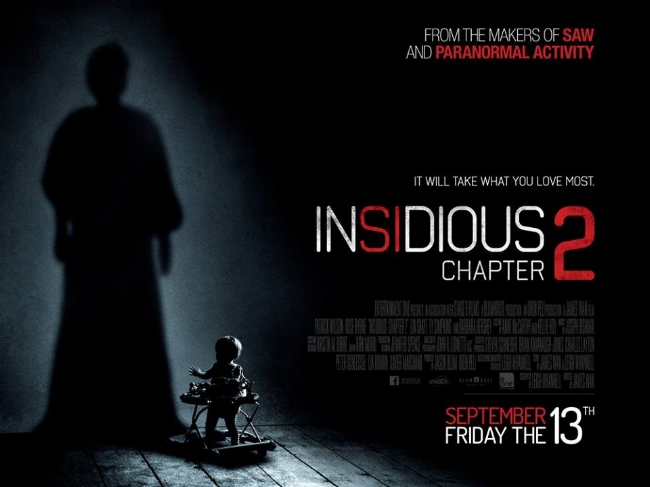
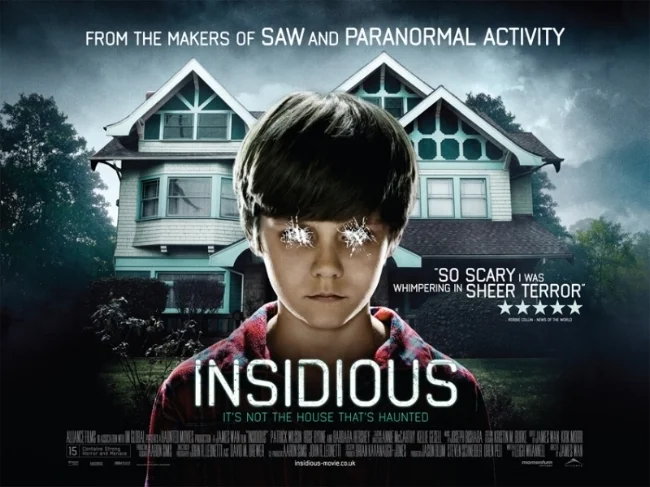
I was surprised to learn that a fifth film had been made in the Insidious franchise. However, I like this series sufficiently well enough to indulge a further entry, especially in light of the fact that the story has returned its focus on the Lambert family. It is also worth noting that lead actor Patrick Wilson who plays Josh Lambert in the first two films directs Insidious: The Red Door. Perhaps the story, which explores the emotional fallout of the previous events, appealed to him both in front and behind the camera. It is this approach to the fifth instalment which keeps things fresh and ensures that the film doesn’t solely revisit familiar territory. That also might also be the reason why this latest instalment didn’t quite get the same critical and commercial traction that previous entries did.
I was surprised to learn that a fifth film had been made in the Insidious franchise. However, I like this series sufficiently well enough to indulge a further entry, especially in light of the fact that the story has returned its focus on the Lambert family. It is also worth noting that lead actor Patrick Wilson who plays Josh Lambert in the first two films directs Insidious: The Red Door. Perhaps the story, which explores the emotional fallout of the previous events, appealed to him both in front and behind the camera. It is this approach to the fifth instalment which keeps things fresh and ensures that the film doesn’t solely revisit familiar territory. That also might also be the reason why this latest instalment didn’t quite get the same critical and commercial traction that previous entries did.
After the events of the first two films, Josh (Patrick Wilson) and Dalton Lambert (Ty Simpkins) are voluntarily hypnotised so that they forget their astral voyage to the Further. Ten years later in the present, Josh has never fully got his life back on track and has subsequently divorced Renai Lambert (Rose Byrne) and is estranged from his children. The family meet up at the funeral of Lorraine Lambert, Josh’s mother and Renai suggests Josh drive Dalton to the university as a means to reconcile. However, the trip ends in an argument that both regret. Dalton is studying art with Professor Armagan (Hiam Abbass) who asks her students to look deep into themselves for inspiration. Dalton discovers hidden memories that manifest themself through his art. His roommate Chris (Sinclair Daniel) soon discovers that Dalton can astral project and the pair wonder if this is the key to unlocking his secret past.
Insidious: The Red Door is a different beast from previous instalments. The first two films are about a family coming apart due to supernatural events, whereas this entry is very much about external events bringing people back together. There is a degree of sentimentality about fathers and sons but it is quite well handled. Josh and Dalton don’t hate each other. They just don’t know each other and the one shared experience that they have is a suppressed memory. This theme is the focus of the plot and hence the demons of the Further are relegated to a more of a supporting role. There are some solidly constructed jump scares, with one taking place in an MRI scanner. They are artfully lit and well constructed, yet they are not quite as impactful as in previous films. Possibly because they are not so pivotal to the story.
Insidious: The Red Door doesn’t suffer from an excess of characters and Dalton has a great foil in his roommate Chris. She is wise and open minded about events and the screenplay doesn’t feel obliged to turn their relationship into a romantic one. There’s a good sense of continuity, with prior characters turning up in inventive ways. Specs (Leigh Whannell) and Tucker (Angus Sampson) appear in a YouTube video and Elise Rainier (Lin Shaye) even manages to make a meaningful appearance. There’s also a poignant scene between Josh and Renai which succinctly explains the inevitable collapse of their marriage. Overall, I thought this to be quite a different sort of sequel but sadly, therein lies the problem. Many viewers wanted a more traditional exploration of the subject and expansion of the lore. Hence Insidious: The Red Door has met with a degree of ambivalence.


Holocaust 2000 (1977)
The commercial and critical success of The Exorcist upon its release in late 1973 led to an increase in major studios investing in big budget, star driven horror films. The Omen (1976) further established this horror renaissance, which moved away from the traditional gothic horror of Hammer Studios and Roger Corman’s AIP releases. Horror was now about evil and biblical predictions manifesting in the modern world. As ever, with any successful film or genre, there are those subsequent productions that seek to imitate and cash-in. Holocaust 2000 is such a film. A British-Italian co-production, it features Kirk Douglas (who does much of the film’s heavy lifting), several well known British character actors and some notably violent set pieces. It takes the fashionable theological threat of the Antichrist and also adds an interesting nuclear angle, where a fusion plant built to solve the energy crisis could prove to be a harbinger of doom.
The commercial and critical success of The Exorcist upon its release in late 1973 led to an increase in major studios investing in big budget, star driven horror films. The Omen (1976) further established this horror renaissance, which moved away from the traditional gothic horror of Hammer Studios and Roger Corman’s AIP releases. Horror was now about evil and biblical predictions manifesting in the modern world. As ever, with any successful film or genre, there are those subsequent productions that seek to imitate and cash-in. Holocaust 2000 is such a film. A British-Italian co-production, it features Kirk Douglas (who does much of the film’s heavy lifting), several well known British character actors and some notably violent set pieces. It takes the fashionable theological threat of the Antichrist and also adds an interesting nuclear angle, where a fusion plant built to solve the energy crisis could prove to be a harbinger of doom.
Industrialist Robert Caine (Kirk Douglas) is looking to build the world’s first nuclear fusion reactor in the Middle East to resolve the energy crisis. While visiting the proposed site with local politicians, journalist Sara Golan (Agostina Belli) shows him a hidden cave where early christians met. It is portentously destroyed during the groundbreaking ceremony. On returning to London Caine finds that his project is strongly opposed. His home is surrounded by protesters and his wife Eva (Virginia McKenna) states she will use her shares in Caine Industries to halt the plan. Eva is subsequently killed by a radical protester whose intended target was Caine himself. Despite this and other setbacks, Caine’s son Angel (Simon Ward) supports the project wholeheartedly and urges him to forge ahead. A chance encounter with a Monsignor (Romolo Valli) on a flight, gives Caine pause for thought. Is the project safe? Does Angel have an ulterior motive? Are there more sinister forces at work?
Director and writer Alberto De Martino was a seasoned Italian filmmaker, having worked as a second unit director for Sergio Leone. Like many genre directors of his time, he had an eye for visual composition and lighting. As ever with Italian genre cinema, the visuals often trump a film’s narrative. There are elements of this in Holocaust 2000. When it is revealed that Robert Caines son, Angel, is the Antichrist there is no explanation as to how this has happened. Also, will Caine’s second son equally be of note. Sadly the screenplay chooses not to explore these points. Instead it invests time and effort in building towards several set pieces. There is a notable dream sequence in which the seven fusion reactors built on towers, rise from the sea and transform into a seven headed hydra. There are some striking death scenes including a nasty accident involving helicopter rotors.
Although Holocaust 2000 treads very familiar territory it has sufficient innovation to keep viewers engaged and benefits greatly from the visual flair inherent in Italian filmmaking. The use of iconic British locations such as Bigbury-on-sea in Devon and Carlton House Terrace in London add to the atmosphere. The cast of solid British actors adds weight to the proceedings. The idea of the Devil using a fusion reactor to destroy the world is clever and the background stories of the energy crisis and the political turmoil in the Middle East are timely. The film is further bolstered by an Ennio Morricone soundtrack. However, several cultural tropes have aged poorly, such as the ageing man with a much younger lover. Kirk Douglas was 61 at the time where co-star Agostina Belli was 30. There’s a plot line where Caine pressurises Sara to have an abortion that feels archaic.
Holocaust 2000, like so many international films, was released in the US and other territories under several different names. It was called Rain of Fire in some prints and The Chosen when it was released in North America by American International Pictures. This version is shorter and has an alternative ending. Where Holocaust 2000 ends ambiguously with Caine fleeing back to Sara’s home in the Middle East, to raise their new child, The Chosen has a more definitive conclusion. Caine flies to Geneva where Angel is holding a board meeting and kills himself and everyone else with a concealed bomb. Sadly the editing and the hastily created miniature effects are poor, undermining the film’s climax. The original ending is the better of the two, reflecting the anxieties of the seventies after several nuclear accidents and the ongoing hostilities between the Arab world and Israel. Italian exploitation cinema doesn’t always try this hard, which makes Holocaust 2000 an interesting entry in the demonology genre.









The Deadly Mantis (1957)
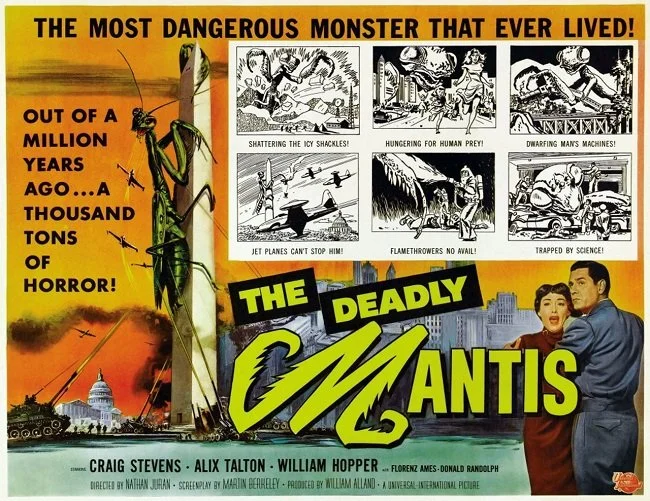
Not to be confused with the Shaw Brothers martial arts film of the same name from 1978, The Deadly Mantis (1957) is a creature feature in the idiom of Them! (1954). Unlike that film’s mutant ants, the monster on this occasion is not the product of the atomic age but a giant prehistoric praying mantis that has been released from the polar ice caps. Exactly how a creature associated with more tropical regions came to be at the North Pole is never explained. In fact precious little is in The Deadly Mantis. The film’s overall scope is somewhat limited with a basic story, limited action scenes and a rather dull cast of generic characters. There is an over reliance upon stock footage from period military documentaries and previous Universal Studio feature films. The film’s biggest failing is the giant praying mantis which does most of its rampaging conveniently off camera. It’s all rather disappointing.
Not to be confused with the Shaw Brothers martial arts film of the same name from 1978, The Deadly Mantis (1957) is a creature feature in the idiom of Them! (1954). Unlike that film’s mutant ants, the monster on this occasion is not the product of the atomic age but a giant prehistoric praying mantis that has been released from the polar ice caps. Exactly how a creature associated with more tropical regions came to be at the North Pole is never explained. In fact precious little is in The Deadly Mantis. The film’s overall scope is somewhat limited with a basic story, limited action scenes and a rather dull cast of generic characters. There is an over reliance upon stock footage from period military documentaries and previous Universal Studio feature films. The film’s biggest failing is the giant praying mantis which does most of its rampaging conveniently off camera. It’s all rather disappointing.
In the South Seas, a volcano erupts and the subsequent seismic disturbance disturbs North Pole polar ice sheets, releasing a 200 foot praying mantis that has been trapped there since prehistoric times. The monster attacks a remote outpost of Red Eagle One, a military early warning station. Despite personally leading the search, Commanding officer Col. Joe Parkman (Craig Stevens) cannot account for the incident or find an elusive blip that appears on radar. After a transport plane is attacked, a curious claw-like object is found in the wreckage. When Doctor of palaeontology, Nedrick Jackson (William Hopper), is asked to identify it he deduces that it is a spur from an insect's leg. Possibly from some unknown species of praying mantis. Dr. Jackson and photographer Marge Blaine (Alix Talton) travel to Red Eagle One to conduct further research. Shortly afterwards, the monster attacks again before migrating south to warmer climates, endangering the USA.
Director Nathan Juran, who was a competent genre film maker, has very little to work with in The Deadly Mantis. The budget is low and the script is arbitrary. The monster appears and the protagonists are confused. Then an academic identifies the threat and expedites the plot. A plucky female character is thrown into the mix for “love interest”. The praying mantis itself attacks a few miniature buildings, a fishing vessel and some vehicles. Minor cast members are killed off camera. The acting is adequate but the dialogue is perfunctory. The film paints with broad brush strokes and its primary saving grace is that it doesn’t outstay its welcome. Perhaps its best achievement is highlighting how superior Them! (1954) and The Beast from 20,000 Fathoms (1953) are. Both of those films do more than the bare minimum and boast enjoyable screenplays and quirky characters.



Amityville 3-D (1983)
The Amityville Horror (1979) performed extremely well commercially upon release. Hence a prequel, Amityville II: The Possession (1982), was made three years later to capitalise on that box office success. Both films are allegedly based upon real events. The first film depicts the haunting of the Amityville house and the events that befell the Lutz family that moved in. The second explores the original DeFeo murders which took place earlier, although here the family is renamed Montelli. A third film, Amityville 3-D, was released in 1983 and is a curious sequel. Unlike previous instalments, it was an original story and did not attempt to mine the wealth of books associated with the Amityville case. It also jumped on the 3-D revival bandwagon that was popular at the time with such films as Friday 13th Part III and Jaws 3-D. It is a very workmanlike production, directed by Richard Fleischer.
The Amityville Horror (1979) performed extremely well commercially upon release. Hence a prequel, Amityville II: The Possession (1982), was made three years later to capitalise on that box office success. Both films are allegedly based upon real events. The first film depicts the haunting of the Amityville house and the events that befell the Lutz family that moved in. The second explores the original DeFeo murders which took place earlier, although here the family is renamed Montelli. A third film, Amityville 3-D, was released in 1983 and is a curious sequel. Unlike previous instalments, it was an original story and did not attempt to mine the wealth of books associated with the Amityville case. It also jumped on the 3-D revival bandwagon that was popular at the time with such films as Friday 13th Part III and Jaws 3-D. It is a very workmanlike production, directed by Richard Fleischer.
After exposing a pair of mediums who have been using the Amityville house for bogus seances, investigative journalist John Baxter (Tony Roberts), decides to buy the property as he is getting divorced and needs a new home. His photographer friend, Melanie (Candy Clark), takes several pictures of John and real estate broker Clifford Sanders (John Harkins) at the house. Shortly afterwards Sanders dies in the attic under mysterious circumstances. When Melanie develops the photos she finds the images of Sanders are distorted and she takes the film and camera to Dr. Elliot West (Robert Joy), at the Institute for Psychic Research. Susan (Lori Loughlin), John’s daughter, is keen to see the alleged haunted house but her mother, Nancy Baxter (Tess Harper), does not want her to stay there. Paranormal events begin to escalate and it becomes clear that a malevolent force is at work.
Amityville 3-D begins by establishing protagonist John Baxter as a dyed in the wool sceptic, who writes about lurid cases in an equally lurid magazine. Initially after buying the Amityville house, all the subsequent supernatural events happen to others. When Baxter asks why he hasn’t experienced anything, Melanie portentously exclaims “maybe the house has other plans for you”. After a deliberate, slow paced first act, several of the lead characters die and it is clear to Baxter that the house is a malign influence. Eventually Dr. West and his team are called in to investigate the Amityville house and its infamous well. This culminates in a climax filled with 3-D special effects with everything bar the kitchen sink being hurled at the camera (including a stuffed swordfish). The story is neatly concluded with an opening for a sequel, yet nothing is really explained beyond a cursory reference to the house being built on an Native American burial ground.
Amityville 3-D starts as a low key supernatural tale with the emphasis on scares, rather than gore. The first death scene harks back to the swarm of flies that attacked Rod Steiger in the first film. The next few set pieces revolve around gusts of freezing wind, a free falling elevator and a bathroom wall that moves. Then at the start of the third act, it all becomes somewhat grimmer with one cast member burnt to death. The climatic demon is also somewhat left field. It’s all somewhat inconsistent as if the production couldn’t quite decide what to do with its competent cast of character actors. There are cinematic nods along the way to The Omen and Poltergeist. The 3-D cinematography leaves the 2.35:1 image a little blurred at the left and right of the frame. The film plays out against a suitably eerie soundtrack written by British composer Howard Blake of The Snowman fame.
Needful Things: Extended TV Cut (1993)
Fraser C. Heston’s 1993 adaptation of Stephen King’s Needful Things did not fare well upon release. Despite having a robust cast of character actors and good production values, it was neither a critical nor commercial success. In more recent years there has been a growing critical reassessment of the film and its lack of success has mainly been attributed to audience fatigue. The eighties and nineties saw a wealth of King adaptations on both the big and small screen. It is also worth noting that condensing the sprawling and character filled books of Stephen King is an incredibly difficult thing to achieve within the parameters of a two hour movie. Which is why the TV miniseries has often proved a more successful format. Which brings me to the extended version of Needful Things that was prepared for television shortly after its theatrical release.
Fraser C. Heston’s 1993 adaptation of Stephen King’s Needful Things did not fare well upon release. Despite having a robust cast of character actors and good production values, it was neither a critical nor commercial success. In more recent years there has been a growing critical reassessment of the film and its lack of success has mainly been attributed to audience fatigue. The eighties and nineties saw a wealth of King adaptations on both the big and small screen. It is also worth noting that condensing the sprawling and character filled books of Stephen King is an incredibly difficult thing to achieve within the parameters of a two hour movie. Which is why the TV miniseries has often proved a more successful format. Which brings me to the extended version of Needful Things that was prepared for television shortly after its theatrical release.
The plot of Needful Things is straightforward. A new antique shop opens in the quiet coastal town of Castle Rock and its charismatic owner, Leland Gaunt (Max von Sydow) has an uncanny ability of discerning his customer needs and providing them with some item that is their heart’s desire. Yet these transactions are often dependent upon a “small service” to be carried out and it is not long before the seeds of discontent are sowed in Castle Rock. As arguments become feuds and feuds end in murder, Sheriff Alan J. Pangborn (Ed Harris) becomes increasingly suspicious of Leland Gaunt and his shop “Needful Things”. As ever with Stephen King, the literary strength of this story stems from the plausibility of his characters and the credibility of small town life that he depicts. These sumptuous details that exist on the page usually have to be cut to the bone when adapting for film. It certainly was a criticism levelled at the theatrical release of Needful Things.
However, shortly after a disappointing box office release, Cable TV network TBS commissioned distributor Columbia Pictures and director Fraser C. Heston to create a longer miniseries edit of three hours, that could air in a four-hour TV time slot with commercial breaks. Hence an hour of previously unused material was added back into the film which mainly extends or appends existing scenes. We see far more of the relationship between Sheriff Pangborn and his fiance, Polly Chalmers (Bonnie Bedelia). There is more exposition of Leland Gaunt manipulating young Brian Rusk (Shane Meier) and the feud between Wilma Jerzyck (Valri Bromfield) and Nettie Cobb (Amanda Plummer) goes through several stages of escalation before ending in murder. The most standout new material is an entire subplot about Cora Rusk (Lisa Blount) who becomes infatuated with a bust of Elvis Presley.
Director Fraser C. Heston integrates the new material skillfully into the extended TV cut subtly changing the pacing and making this version of Needful Things a much slower burn. It remains very much Max von Sydow’s film and the atmosphere increases noticeably when he is on screen. His performance is effortlessly sinister and charming. As this was a version prepared for nineties television there have been some concessions made to that medium. Some profanity has been replaced with alternative, less extreme dialogue but the violence from the theatrical edit remains. The extended TV cut is also presented in an aspect ratio of 4:3 to fit the television sets of the time. Fraser C. Heston has stated that this longer edit is not a director's cut and that he prefers the theatrical edit. Although still flawed, it certainly provides an alternate take on one of Stephen King’s best stories.
Dead Heat (1988)
Throughout the eighties, two of the most commercially successful genres in Hollywood were buddy cop movies and horror films. Therefore it was inevitable that someone, somewhere would eventually combine them. Dead Heat is a comedy action movie with both horror and science fiction elements. If you think such an eclectic blend of themes is a little incongruous, then watching the movie will validate your assumption. All things considered, Dead Heat is a bit of a mess. However, despite its faults, of which there are several, it remains quite an enjoyable film. A textbook example of the over the top eighties action movie, utterly removed from established police procedures and indeed reality. It is also one of two feature films directed by renowned film editor, Mark Goldblatt, whose credits include Rambo: First Blood Part II, RoboCop and Terminator 2: Judgment Day.
Throughout the eighties, two of the most commercially successful genres in Hollywood were buddy cop movies and horror films. Therefore it was inevitable that someone, somewhere would eventually combine them. Dead Heat is a comedy action movie with both horror and science fiction elements. If you think such an eclectic blend of themes is a little incongruous, then watching the movie will validate your assumption. All things considered, Dead Heat is a bit of a mess. However, despite its faults, of which there are several, it remains quite an enjoyable film. A textbook example of the over the top eighties action movie, utterly removed from established police procedures and indeed reality. It is also one of two feature films directed by renowned film editor, Mark Goldblatt, whose credits include Rambo: First Blood Part II, RoboCop and Terminator 2: Judgment Day.
“Loose cannon” LAPD cops, Roger Mortis (Treat Williams) and Doug Bigelow (Joe Piscopo), are hot on the trail of a gang that are robbing jewellery stores. After a chaotic shootout the gang are shot dead and the subsequent autopsies by coroner Dr. Rebecca Smythers (Clare Kirkconnell) indicates that they were dead prior to the robberies. Doug and Roger follow a lead to Dante Pharmaceutical, a company owned by millionaire industrialist Arthur P. Laudermilk (Vincent Price). While investigating the company headquarters, Roger is attacked by another animated corpse. After suffocating in a decompression chamber, Roger is resurrected via an experimental machine that Rebecca and Doug have discovered in a secure laboratory. However, Roger’s new lifespan is only twelve hours, giving him little time to complete his investigation.
Dead Heat telegraphs exactly what sort of film it is within the first ten minutes. The reanimated thieves are dense comic foils to the cool detectives who endorse their clichéd credentials by driving around in a convertible and playing “upbeat rock music” (according to the Blu-ray subtitles). Treat Williams is the suit wearing straight guy, where Joe Piscopo is the “chews with his mouth open”, uncouth sidekick with a mullet. The latter of the two lead characters will either irritate or amuse you. The jokes are a bit hit and miss and due to the brevity of the theatrical edit, the story line doesn’t quite add up. There are several other versions of the film with some additional scenes that do make the plot a little more linear. However, the action scenes are suitably excessive and the prosthetic effects are very well realised. Sadly, many of them did not make it into the US theatrical version in their entirety due rating restrictions at the time.
Dead Heat is fast paced and never dull, with Treat Williams doing much of the heavy lifting. Veteran character actor Darren McGavin also delivers, despite the screenplays shortcomings and his limited screen time. Keye Luke (Gremlins) and Robert Picardo (Star Trek: Voyager) also have cameo appearances. But the standout scene of the entire film is when Roger and Doug follow a lead to a Chinese restaurant which has a prototype resurrection machine. This results in a multitude of items on the menu coming back to life and attacking our heroes. It is filled with old school, practical effects and is both unpleasant and droll. So if you can accommodate the plot holes, the tonal inconsistency and Joe Piscopo’s “love him or loathe him” performance, then Dead Heat may well amuse you. It is very much a product of its time and is the sort of film that would struggle to find a backer these days.
Nightmares (1983)
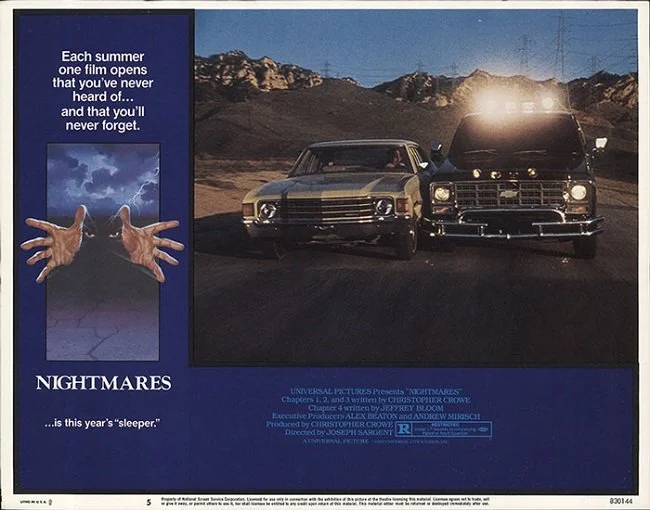
Due to the commercial success of George A. Romero’s Creepshow in 1982 and the Twilight Zone: The Movie in 1983, there was a resurgence of anthology horror films in the eighties and nineties. Nightmares is one of many “portmanteau movies” that followed and is neither the worst, or the best that the genre has to offer. Originally conceived as a pilot for a NBC TV show, the completed film was deemed too “intense” for television and eventually released theatrically with an “R” rating. Judged by today’s standards, it is not especially violent and the strongest content is in the first chapter of the four part story. Written by Jeffrey Bloom and Christopher Crowe, both of whom have a background in popular seventies television, Nightmares has the look and feel of a TV production.
Due to the commercial success of George A. Romero’s Creepshow in 1982 and the Twilight Zone: The Movie in 1983, there was a resurgence of anthology horror films in the eighties and nineties. Nightmares is one of many “portmanteau movies” that followed and is neither the worst, or the best that the genre has to offer. Originally conceived as a pilot for a NBC TV show, the completed film was deemed too “intense” for television and eventually released theatrically with an “R” rating. Judged by today’s standards, it is not especially violent and the strongest content is in the first chapter of the four part story. Written by Jeffrey Bloom and Christopher Crowe, both of whom have a background in popular seventies television, Nightmares has the look and feel of a TV production.
The first story, Terror in Topanga, follows a homicidal patient who escapes from a mental institution and attacks a police officer. Meanwhile, chain smoking housewife Lisa (Christina Raines) drives to the local store to buy cigarettes. Will their paths cross? The second chapter, The Bishop of Battle, follows teenager J.J. (Emilio Estevez) obsessive battle to reach the mysterious thirteenth level of a video game in his local arcade. J. J. learns that all is not quite as it appears. The third chapter, The Benediction, stars Lance Henriksen as priest Frank MacLeod, who leaves his parish after a crisis of faith. He is stalked on a remote desert road by a black pickup truck that has murderous intent and potentially supernatural origins. The final chapter, Night of the Rat, features a suburban family (Richard Masur, Veronica Cartwright and Brigette Andersen) being menaced by a particularly large and intelligent rat.
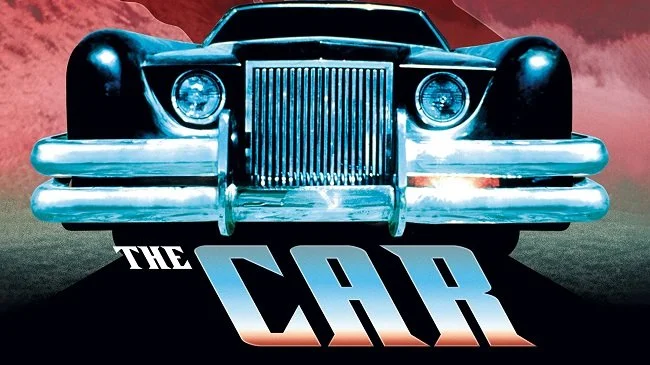
Nightmares is efficiently directed by veteran filmmaker Joseph Sargent. However, the inherent problem with portmanteau films is ensuring that all stories are equally engaging. Sadly that is not the case here. Terror in Topanga is the most efficient of the four chapters. It sets out its stall and delivers a suitable climax to its story arc. But the next instalment, The Bishop of Battle is a major tonal shift from horror to fantasy and an obvious and uninspired tale. The Benediction offers a variation on an established theme (see Duel or The Car) but is carried by the presence of Lance Henriksen. Night of the Rat, which was intended to be the bravura ending to Nightmares, is somewhat stilted due to a weak script and an unlikeable lead character. Yet despite these inconsistencies Nightmares doesn’t out stay its 99 minute running time. It manages to get its pacing right. Something other anthologies often fail to do.
When viewed with a contemporary eye, Nightmares has some interesting points of interest. Setting aside the trope of the escaped murderer, Terror in Topanga uses smoking as a central plot device. Something that seems somewhat archaic today. The Bishop of Battle provides a window not only on arcade culture from the eighties but touches upon hardcore punk, with songs by Black Flag and Fear. The Benediction features a truck stunt that was used heavily in the marketing of the film. Such a thing would nowadays be done digitally, but here it is a physical effect and more impressive for it. Overall, Nightmares now serves mainly as a nostalgic reminder of the popularity of the anthology genre during the horror boom of the eighties. It is an amusing diversion for those well disposed towards such material and may play better to those who grew up during this era.

Crawl (2019)
It is no secret that the film industry relies on a handful of common tropes as the mainstay of their cinematic output. It uses timeless themes, storylines and archetypes that have featured in folk tales, plays and literature throughout history. Hence their familiarity with audiences around the world. Where the skill in filmmaking lies is to take a common, well known idea and interpret it in a new and innovative fashion. Akira Kurosawa took Shakespeare’s MacBeth and retold the tale through the prism of Japanese feudalistic culture. The result, Throne of Blood, is considered a masterpiece. Similarly, The Lion King retells the same story through the medium of animation and anthropomorphic wildlife. All of which proves that the key to successfully retelling a familiar tale is to be creative with regard to setting, presentation and perspective.
It is no secret that the film industry relies on a handful of common tropes as the mainstay of their cinematic output. It uses timeless themes, storylines and archetypes that have featured in folk tales, plays and literature throughout history. Hence their familiarity with audiences around the world. Where the skill in filmmaking lies is to take a common, well known idea and interpret it in a new and innovative fashion. Akira Kurosawa took Shakespeare’s MacBeth and retold the tale through the prism of Japanese feudalistic culture. The result, Throne of Blood, is considered a masterpiece. Similarly, The Lion King retells the same story through the medium of animation and anthropomorphic wildlife. All of which proves that the key to successfully retelling a familiar tale is to be creative with regard to setting, presentation and perspective.
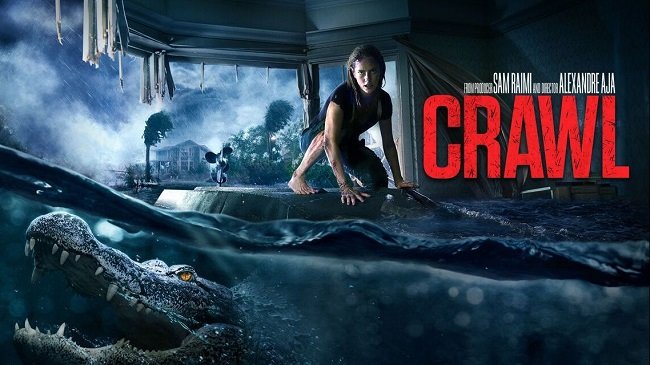
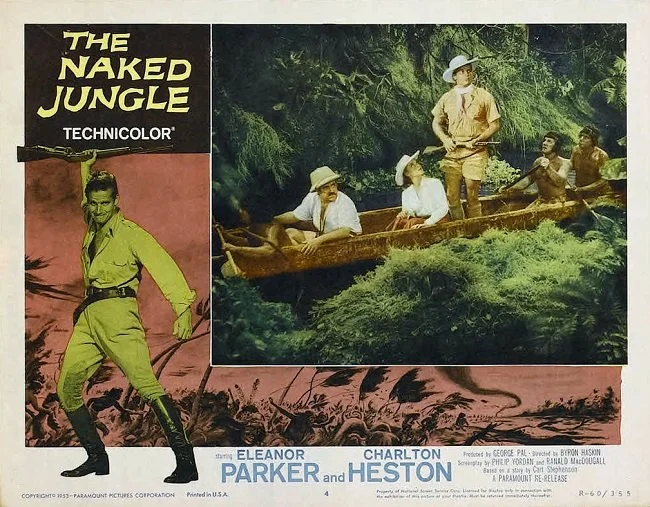
Which neatly brings me to Crawl. A creature feature where the central “McGuffin” is a group of people trapped by wayward wildlife. Hollywood has explored this plot device many times before. Consider The Naked Jungle (1954) in which Charlton Heston faces a swarm of South American ants. Then there is Hitchcock’s The Birds (1963). More recently Bait (2012) features a group of people trapped in a flooded supermarket along with a Great White Shark after a tsunami. Crawl (2019) has a father and daughter trapped in a house during a hurricane. Due to the Florida setting the dangerous beasties are Alligators on this occasion. What makes the film a cut above the average genre outing is a solid script with plausible characters and a decent cast that give life to the proceedings. Director Alexandre Aja builds a genuine sense of tension and punctuates the 87 minute running time with some robust set pieces.
Filmed in Belgrade, the production seamlessly recreates Florida. The digital effects convincingly depict a hurricane and the Alligators are a mixture of animatronics and CGI. But the film’s greatest assets are the main performances by Kaya Scodelario as Haley Keller and Barry Pepper as Dave Keller. Daughter Haley is an aspiring swimmer and her estranged father Dave is her former coach. The screenplay by Michael Rasmussen and Shawn Rasmussen keeps the scope of the narrative simple and immediate, resulting in a plausible family dynamic. The wider cast is minimal and although some characters are merely “red shirts” intended to expedite the threat of the Alligators with their timely deaths, the screenplay doesn’t treat them in a totally arbitrary fashion. The scenes of violence, are well realised, suspenseful and surprisingly unpleasant.
Crawl is content to stick within the parameters it has set itself and concentrates on telling its story to the best of its ability. There is an assumption from some critics that genre movies are by their nature, no more than the sum of their parts. Those with a more enlightened perspective believe that all types of film can craft well told stories and explore deep themes. Crawl is a prime example of an old story told from a fresh and different perspective. Yes, it does include horror elements but that is not all that it has to offer. At its heart this is a film about the perennial theme of fathers and daughters, which Crawl explores this well. It also has a point to make about climate change. However, if you’re just looking for a quality creature feature, complete with jump scares and grisly shocks, then the film also delivers this in spades.
Guillermo del Toro's Pinocchio (2022)
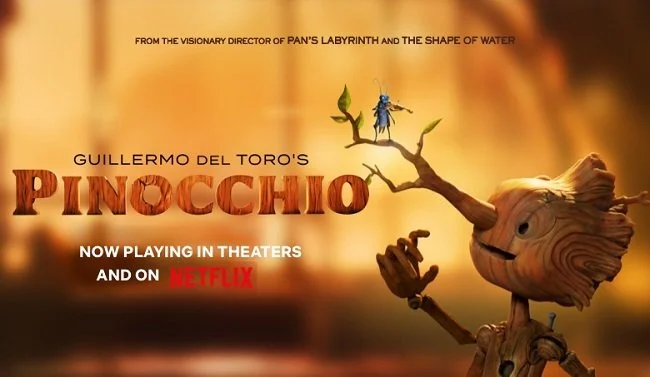
Guillermo del Toro's Pinocchio is a bold and inventive take on Carlo Collodi's classic story of the puppet that aspires to be a “real boy”. As you would expect from the director, it is a far cry from Disney’s 1940 version, taking a more bleak and sinister tone. Despite songs and exuberant set pieces, Guillermo del Toro's Pinocchio is an exploration of grief, death and even fascism. The screenplay by Guillermo del Toro and Patrick McHale also tackles the complexities of the relationship between parent and child. It is a remarkable example of stop motion animation and is visually very striking. However, it is a somewhat niche market adaptation and is not exactly easily accessible to children or the furiously hard of thinking. It comes as no surprise that this cinematic venture was green lit by Netflix, which appears to be the new home of the experimental, rather than a mainstream studio.
Guillermo del Toro's Pinocchio is a bold and inventive take on Carlo Collodi's classic story of the puppet that aspires to be a “real boy”. As you would expect from the director, it is a far cry from Disney’s 1940 version, taking a more bleak and sinister tone. Despite songs and exuberant set pieces, Guillermo del Toro's Pinocchio is an exploration of grief, death and even fascism. The screenplay by Guillermo del Toro and Patrick McHale also tackles the complexities of the relationship between parent and child. It is a remarkable example of stop motion animation and is visually very striking. However, it is a somewhat niche market adaptation and is not exactly easily accessible to children or the furiously hard of thinking. It comes as no surprise that this cinematic venture was green lit by Netflix, which appears to be the new home of the experimental, rather than a mainstream studio.
In Italy during World War I, a carpenter Geppetto (David Bradley) in a small village loses his son, Carlo (Gregory Mann), during an aerial bombardment by Austro-Hungarian forces. Geppetto plants a pine cone near his grave and spends the next twenty years grieving. A cricket named Sebastian J. Cricket (Ewan McGregor) takes up residence in the pine tree that subsequently grows. One day, angered by his prayers to restore his son being ignored, Geppetto cuts the tree down in a fit of drunken rage and makes a new son out of the wood. He leaves the puppet unfinished when he passes out, but the blue Wood Sprite takes pity upon him and brings the puppet to life, christening him Pinocchio (Gregory Mann again). The Sprite encounters Sebastian who lives in Pinocchio’s chest and promises to grant him a wish if he acts as Pinocchio's guide and conscience.
Although the essential “beats” of both the original story and Disney’s adaptation are present in Del Toro’s film, there are elements of Frankenstein as well as nods to Spielberg’s AI: Artificial Intelligence (2001) and Clive Barker’s Nightbreed (1990). Pinnochio is the archetypal “monster” who ironically is more human than his antagonists. Del Toro eschews the rather clumsy metaphor of a physical transformation into a real boy and instead explores the theme as a spiritual and philosophical journey. He even manages to touch upon the allure of fascism to the young, when Italian authorities take an interest in Pinocchio due to his undying nature. As ever magic is a force of nature, neither entirely benign or evil and this is reflected in the two Sprites that feature in the story. Both boast a Chimera like appearance which Del Toro has explored in previous films and have flawed motives.
The production design and creative supervision are outstanding with the film drawing heavily upon such diverse visual influences as Norman Rockwell and Hieronymus Bosch. Composer Alexandre Desplat provides a melancholic and tragic soundtrack and Del Toro co-wrote the lyrics to the songs that punctuate the two hour running time. Again these are not the celebratory or validatory numbers one associates with mainstream animated films. These are far more forlorn and heartbreaking. Yet they work within the context of the film. Guillermo del Toro's unique approach to filmmaking manages to pull all these eclectic elements together. His recurring themes of life, death and difference underpin this imaginative and bold retelling of Pinnochio. Fans of his work will embrace it, as will lovers of quality cinema and animation. Casual viewers may well struggle with such a radical variation on a theme.








Speak No Evil (2022)
The plot of Speak No Evil is an exploration of what can happen when someone driven by a cultural urge to be polite and avoid any form of confrontation, encounters a psychopath who exploits their very nature. Speak No Evil is a very European psychological horror and I stress that point because this film will not necessarily play well to audiences who are not so familiar with such institutionalised deference or passivity. Danish writer and director Christian Tafdrup skilfully and slowly builds the tension, but the plot contrivances of the final act do somewhat mitigate its credibility. Hence realism gives way purely to threat and suspense. If you’re the sort of viewer who can countenance that different cultures, age groups and political leanings can dramatically impact upon one’s behaviour, then you may well get through Speak No Evil. If you struggle to come to terms with the poor decisions made in an episode of Scooby Doo then Speak No Evil will leave you screaming at your TV.
The plot of Speak No Evil is an exploration of what can happen when someone driven by a cultural urge to be polite and avoid any form of confrontation, encounters a psychopath who exploits their very nature. Speak No Evil is a very European psychological horror and I stress that point because this film will not necessarily play well to audiences who are not so familiar with such institutionalised deference or passivity. Danish writer and director Christian Tafdrup skilfully and slowly builds the tension, but the plot contrivances of the final act do somewhat mitigate its credibility. Hence realism gives way purely to threat and suspense. If you’re the sort of viewer who can countenance that different cultures, age groups and political leanings can dramatically impact upon one’s behaviour, then you may well get through Speak No Evil. If you struggle to come to terms with the poor decisions made in an episode of Scooby Doo then Speak No Evil will leave you screaming at your TV.
Speak No Evil superficially is the story of a Danish family who befriends a Dutch family while on holiday. Formal and polite, Bjørn (Morten Burian) and Louise (Sidsel Siem Koch) are enamoured and impressed by the brash Patrick (Fedja van Huêt) and the warmth of Karin (Karina Smulders). Their much beloved daughter Agnes (Liva Forsberg) finds a companion in Patrick and Karin's shy and retiring son Abel (Marius Damslev). After the holiday, when a postcard arrives inviting them to spend a weekend with their new friends in their remote, rural cabin in the Dutch countryside, it seems like a perfect opportunity to further enjoy the new family friendship. “What's the worst that could happen?” Bjørn jokes, ironically telegraphing that the worst is not only coming but that it is going to be a very grim journey.
The cast of Speak No Evil is very good as they experience social faux pas then physical coercion. Morten Burian (Bjørn) is infuriatingly passive, self loathing and conflicted but his performance is worryingly credible. Sidsel Siem Koch (Louise) seems genuinely intimidated by Fedja van Huêt (Patrick) who exudes volatility, where Karina Smulders (Karin) is deliberately ill defined. Is she also being coerced or a more subtle manipulator? However, despite solid performances, Speak No Evil struggles to maintain all the themes and motifs it touches upon during its first act. The big reveal it’s been heading towards is a little too contrived and once it has been established, the protagonist's behaviour becomes hard to identify with. When the violence comes it is quite stark and jarring. The ending doesn’t answer the question of motive, relying on the old trop of “evil people are evil”.
Speak No Evil has some good ideas at its core. One could argue that it explores many talking points about contemporary culture and gender roles. Are modern European men too worried about risk and conflict? Has the modern habit of self examination gone too far and left those who do so powerless to make decisions? Is the need to please a social blessing or a curse? However, a better film would bring us to the conclusion via a less obvious route. It becomes very clear that Speak No Evil is going from A to B to C come hell or highwater and it shows in the final act. Furthermore, I have no problems with horror films with a message. Dawn of the Dead, for example, is as pertinent today as it was back in 1978. But I’m seldom impressed when a message driven story co-opts the horror genre out of convenience. It strikes me as very insincere and confected. And that is how I felt after watching Speak No Evil. That and the fact that the film seems too pleased with itself, when it really has no right to be.
Treasure of the Four Crowns (1983)
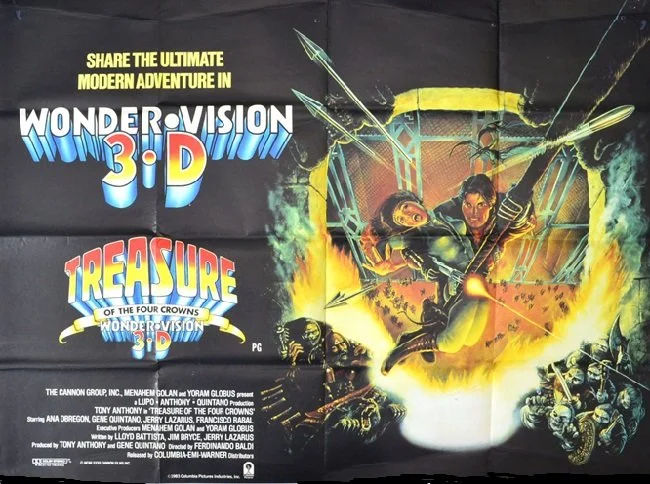
“In the universe there are things man cannot hope to understand. Powers he cannot hope to possess. Forces he cannot hope to control. The Four Crowns are such things. Yet the search has begun. A soldier of fortune takes the first step. He seeks a key that will unlock the power of the Four Crowns and unleash a world where good and evil collide”. So reads the Star Wars-esque opening crawl for the 1983 3D action movie, Treasure of the Four Crowns. It’s worth noting that when it appears on screen, this text is written in capitals and devoid of any punctuation. The movie is also a Cannon Films production. These facts may give viewers an inkling of what is to come over the next 100 minutes. It is certainly best to abandon expectations of linear, narrative filmmaking. Treasure of the Four Crowns is unique, batshit crazy and yet curiously entertaining.
“In the universe there are things man cannot hope to understand. Powers he cannot hope to possess. Forces he cannot hope to control. The Four Crowns are such things. Yet the search has begun. A soldier of fortune takes the first step. He seeks a key that will unlock the power of the Four Crowns and unleash a world where good and evil collide”. So reads the Star Wars-esque opening crawl for the 1983 3D action movie, Treasure of the Four Crowns. It’s worth noting that when it appears on screen, this text is written in capitals and devoid of any punctuation. The movie is also a Cannon Films production. These facts may give viewers an inkling of what is to come over the next 100 minutes. It is certainly best to abandon expectations of linear, narrative filmmaking. Treasure of the Four Crowns is unique, batshit crazy and yet curiously entertaining.
Soldier of Fortune, J.T. Striker (Tony Anthony), is hired by Professor Montgomery to assemble a group of professional thieves to retrieve gemstones which are hidden inside two ancient and Mystical Crowns. These crowns are a part of four. One is already in the Professor’s possession. The other was destroyed by the Moors when they attempted to access its “power”. Striker recruits professional thief Rick (Jerry Lazarus), as well as acrobats and circus performers Liz (Ana Obregon) and her Father Socartes (Francisco Rabal). They are joined by Striker’s friend and Professor Montgomeries agent Edmond (Gene Quintano). The team must infiltrate a heavily fortified compound in a small mountain village that is home to a religious cult. Its leader Brother Jonas (Emiliano Redondo) has the crowns protected by an advanced and deadly security system.
The aforementioned plot sounds fairly straightforward on paper, but what transpires is nothing of the sort. The film begins with Striker infiltrating an old Spanish castle to the strains of a wonderfully portentous soundtrack written by the great Ennio Morricone. There is no dialogue for the next twenty minutes as Striker is subject to a succession of attacks from vultures, wild dogs, rubber pterodactyls, floatings swords and crossbows, balls of fire, all while being mocked by ghostly jeers and cries emanating from the skeletal corpses of long dead knights. And when he finally escapes with a gold key, the entire castle explodes for some particular reason. It makes very little sense and nothing is explained as to why the castle is booby trapped, haunted or contains prehistoric flying reptiles. There are however more 3D effects in this opening sequence than there are in other entire 3D feature films.
The film then continues in the same vein. Scenes of exposition appear from time to time, linking a series of increasingly crazy 3D set pieces. The key appears to have supernatural powers causing at one point Rick’s cabin to erupt into mayhem. This includes teapots and dried food storage jars exploding in slow motion and showering the camera lens in beans and lentils. The dialogue desperately tries to be hard boiled but often comes off as rather sarcastic as if the very cast are passive aggressively trolling the very film they’re appearing in. When Brother Jonas finally appears he is presented as a Charles Mansonesque faith healer with a cult of armed followers, wearing a mixture of World War II partisan clothing and pig masks. In a scene where he allegedly heals a crippled follower to impress a group of new converts, the rather disturbing atmosphere is quickly mitigated when he clumsily winks at the afflicted to telegraph the fact that the entire ceremony is just an act.
The final act of Treasure of the Four Crowns sees the team assemble a series of cables, pulleys and ad hoc trapeze to bypass the security features in the hall where the crowns are kept. The ominous statue that houses them is inevitably booby trapped and triggers an alarm. Brother Jonas and his cohorts arrive, just as Striker grasps the magical jewels contained within the crowns. The film then strays into another genre as he is possessed, his head spins round and half of his face becomes monstrous. He then proceeds to unleash fire and pyrotechnics as Morricone score desperately tries to apply some musical dignity to the spiralling insanity. Viewers are then treated to several full burn stunts and the laser alarm system turns fatal and starts cutting Brother Jonas into pieces. It is a massive tonal shift that will either delight viewers or invoke their scorn at its preposterous nature.
Treasure of the Four Crowns is clearly designed to ride on the coattails of Raiders of the Lost Ark. 3D films were also a cinematic trend at the time and Cannon Films has already made the successful and equally silly film Comin’ at Ya! two years earlier. The production team behind Treasure of the Four Crowns were clearly only interested in a vehicle that could facilitate a plethora of action set pieces that showcase the 3D format. Like many Italian co-productions from this decade, the prevailing attitude is “never mind logic and continuity, throw everything in, bar the kitchen sink”. So the film goes large with the practical effects and culminates in a singularly bizarre cinematic postscript featuring a pulsing sac which spawns some sort of monster which leaps toward the camera. It is all quite mad and yet strangely compelling. Morricone’s score does much of the heavy lifting. Treasure of the Four Crowns is the very definition of a cult film. If you choose to watch it you’ll either love it or loathe it.



Zulu Dawn (1979)
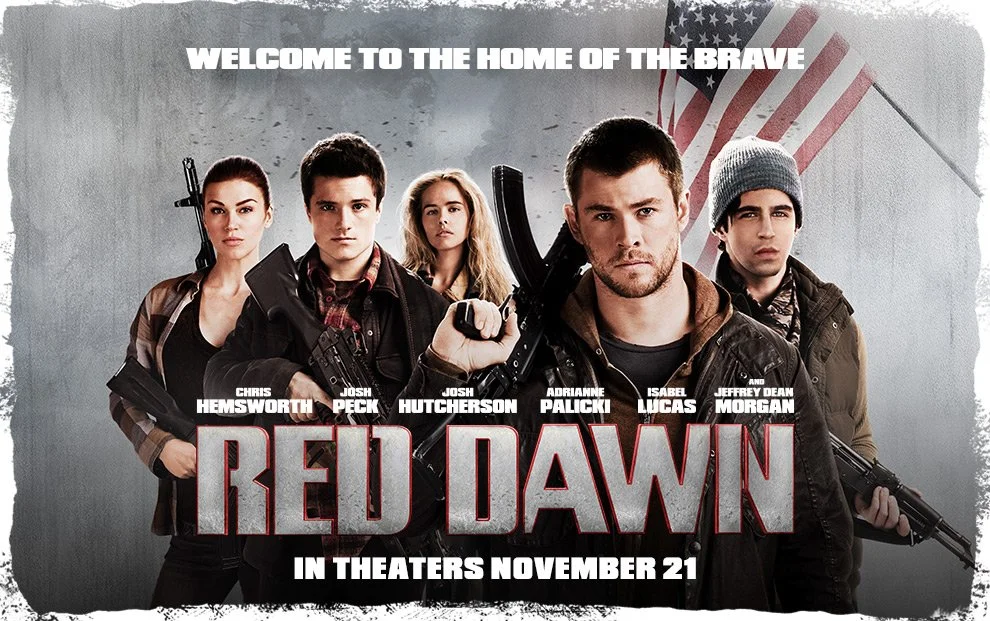
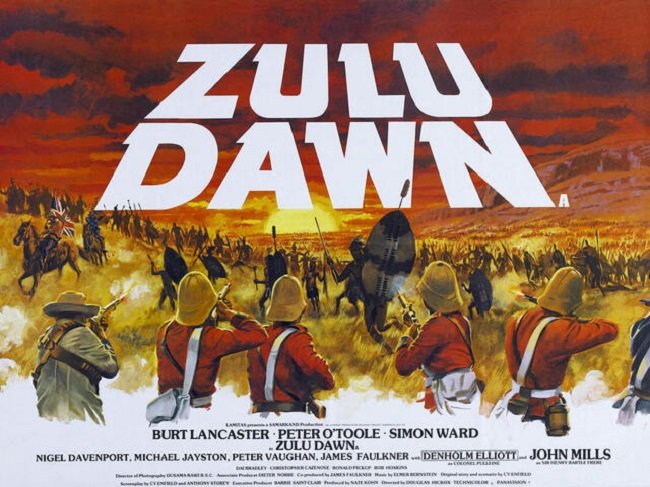
Zulu (1964) recounts the Battle of Rorke’s Drift between the British Army and the Zulus in January 1879. Directed, produced and co-written by Cy Endfield the film presents an action filled account of how 150 British soldiers, 30 of whom were sick and wounded, successfully held off a force of 4,000 Zulu warriors. Although well made and rousing, it is very much a film from the British perspective. Despite depicting the Zulu nation fairly, the film makes no attempt to put the clash between two empires in any sort of wider context. Zulu Dawn is a direct prequel which shows the events that directly lead up to the Battle of Rorke’s Drift. Much more time is dedicated to exploring the Zulu’s position as their leader King Cetshwayo attempts to avoid the political fait accompli he has been presented with. Furthermore, Zulu Dawn does not in any way try to avoid the failure of the British chain of command that resulted in the defeat of 1,300 British soldiers at the Battle of Isandlwana.
Zulu (1964) recounts the Battle of Rorke’s Drift between the British Army and the Zulus in January 1879. Directed, produced and co-written by Cy Endfield the film presents an action filled account of how 150 British soldiers, 30 of whom were sick and wounded, successfully held off a force of 4,000 Zulu warriors. Although well made and rousing, it is very much a film from the British perspective. Despite depicting the Zulu nation fairly, the film makes no attempt to put the clash between two empires in any sort of wider context. Zulu Dawn is a direct prequel which shows the events that directly lead up to the Battle of Rorke’s Drift. Much more time is dedicated to exploring the Zulu’s position as their leader King Cetshwayo attempts to avoid the political fait accompli he has been presented with. Furthermore, Zulu Dawn does not in any way try to avoid the failure of the British chain of command that resulted in the defeat of 1,300 British soldiers at the Battle of Isandlwana.
Fearing that the Zulus are becoming too powerful in the region, Lord Chelmsford (Peter O'Toole) plots with diplomat Sir Henry Bartle Frere (John Mills) to annex the neighbouring Zulu Empire, despite there being an existing treaty in place. Subsequent demands to demilitarise are rejected by King Cetshwayo (Simon Sabela) giving Lord Chelmsford casus belli to invade. Prior to embarking into Zulu territory the British forces are reinforced with native troops and the Natal Mounted Police. However, the Zulus refuse to directly engage the British forces and pursue guerilla attacks. The British expeditionary force subsequently makes camp at Mount Isandlwana but rejects the advice from the Boer contingents to fortify the camp around the ammunition wagons. Lord Chelmsford divides his forces and heads a column to pursue bogus sightings of Zulu forces. Meanwhile the Zulu army masses near Isandlwana, preparing to engage the British camp.
Zulu Dawn takes time in setting the scene and explaining the historical situation. The first act cuts between a garden party being held by Sir Henry Bartle Frere, High Commissioner for Southern Africa and celebrations at Zulu capital, Ulundi. Both events provide a backdrop to ongoing political machinations. The screenplay by Cy Endfield cleverly uses the casual conversations between the officers wives and regional Missionaries to summarise the hubris and condescension of the British in Natal at the time. The disposition of the troops is also explored through the relationships between Colour Sergeant Williams (Bob Hoskins) and raw recruit Private Williams (Dai Bradley). Quartermaster Sergeant Bloomfield (Peter Vaughan) is shown to be a “jobsworth” and instrumental in contributing to the deteriorating situation at the film’s climax. Col. Durnford (Burt Lancaster) is shown to be savvy and well versed in fighting the Zulus. Hence his advice is scorned by his British superiors due to his Irish heritage.
The second act of Zulu Dawn follows the British as they make a series of ill conceived decisions after crossing into Zulu territory. Cinematographer Ousama Rawi makes effective use of the rugged South African terrain. The climax of the film follows in detail the attack upon the British lines by the Zulu and how they overwhelmed them. The subsequent retreat became a rout and one of the most serious defeats for British forces in their military history. Although not excessively explicit in its depiction of violence, director Douglas Hickox does well in depicting the growing sense of fear and disbelief among the British troops as they realise that the tide of the battle is rapidly turning against them. The failure to get ammunition from the wagons to the troops is a major factor. I suspect that the film’s depiction of a major defeat, rather than the usual narrative of the plucky underdog who wins despite the odds may discourage some viewers. Zulu Dawn is more likely to engage those seeking historical authenticity rather than pure action.


Tales of Terror (1962)
Directed by Roger Corman, Tales of Terror is an anthology horror film based upon three short stories by Edgar Allan Poe. “Morella”, “The Black Cat” and “The Facts in the Case of M. Valdemar”. Adapted by Richard Matheson, the screenplay offers a ghoulish tale of revenge, a humorous story of a drunk who murders his wife and her lover and a sinister story of a mesmerist who hypnotises a terminally ill man at the point of death. Deftly produced and looking far more sumptuous than you’d expect from such a modest budget film, Tales of Terror benefits from a strong cast of old school, Hollywood character actors. The anthology format affords each story a fairly prompt and ghoulish climax and as ever with the films of Roger Corman from this period, visual creativity and innovation elevate the proceedings above the standard exploitation fare of the time.
Directed by Roger Corman, Tales of Terror is an anthology horror film based upon three short stories by Edgar Allan Poe. “Morella”, “The Black Cat” and “The Facts in the Case of M. Valdemar”. Adapted by Richard Matheson, the screenplay offers a ghoulish tale of revenge, a humorous story of a drunk who murders his wife and her lover and a sinister story of a mesmerist who hypnotises a terminally ill man at the point of death. Deftly produced and looking far more sumptuous than you’d expect from such a modest budget film, Tales of Terror benefits from a strong cast of old school, Hollywood character actors. The anthology format affords each story a fairly prompt and ghoulish climax and as ever with the films of Roger Corman from this period, visual creativity and innovation elevate the proceedings above the standard exploitation fare of the time.
Tales of Terror is the fourth entry into the Roger Corman’s series of adaptations of the work of Edgar Allan Poe and the first to use the portmanteau format. Vincent Price makes a return after being absent in the previous entry Premature Burial which starred Ray Milland. Price demonstrates his acting prowess not only in three lead roles but by also providing the linking narration that frame all the stories. The short nature of each story doesn’t afford an opportunity for any in depth character development, hence the presence of a cast of robust and charismatic actors is invaluable in bolstering the narrative. The financial success of the previous instalments of the series meant that there was a greater budget available for the cast. Hence Price is joined by two stalwarts from the golden age of Hollywood; Peter Lorre and Basil Rathbone.
As ever with Corman productions, the production design by Daniel Haller is handsome and the sets are cleverly contrived to look more opulent than they actually are. Many have been recycled from previous production. Cinematographer Floyd Crosby, a long time collaborator of Roger Corman productions, lights the proceedings in an atmospheric way. This is especially noticeable in the last story, in which the mutlicoloured light used by mesmerist Mr. Carmichael (Basil Rathbone), bathes the actors in red, blue and yellow light in turn. There are also several sequences that use optical effects to distort the film image and give the stories a suitably supernatural ambiance. They also mask the basic nature of some of the make up effects. Legendary special effects artist Albert Whitlock created two notable matte paintings for the film. The Locke residence next to the sea and the Valdemar mansion nestled among the trees.
Tales of Terror presents an interesting change of approach from the earlier Roger Corman adaptations of the work of Edgar Allan Poe. The anthology format has both strengths and weaknesses. It provides a convenient means to swiftly build up to a climatic shock and offers three stories instead of one. Yet the strong cast have to rely on their established cinematic personalities to carry each story, as the script doesn’t offer much beyond what you see. Perhaps the most noticeable deviation from prior Poe adaptations is the humorous tone of the second story, The Black Cat. Peter Lorre is an amusing drunk and doesn’t really come across as a potential threat and murderer. However, despite this tonal shift, Tales of Terror remains a well crafted and enjoyable example of US Gothic horror form the sixties. Although similar in many ways to the UK’s Hammer productions, Corman’s work has a very different look and feel to it.
Classic Movie Themes: Allonsanfàn
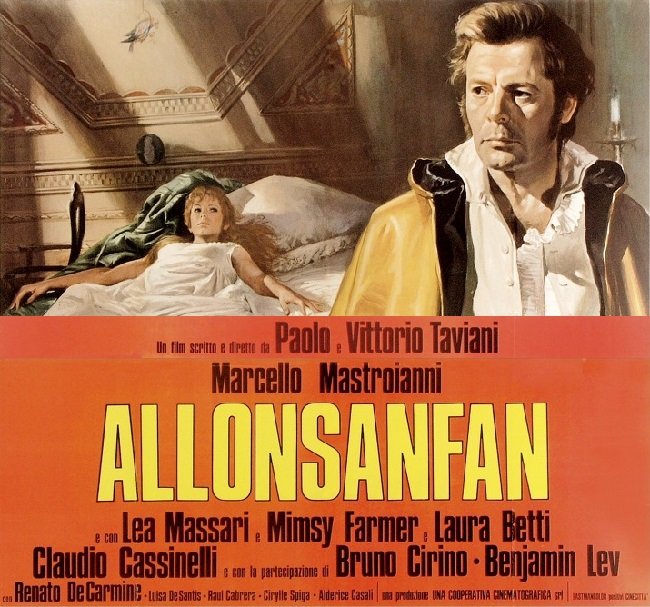
Allonsanfàn (1974) is an Italian historical drama film written and directed by Paolo and Vittorio Taviani. The title of the film derives from the first words of the French Revolutionary anthem La Marseillaise (Allons enfants, IE “Arise, children”). It is also the name of a character in the story. Set against the backdrop of the Italian Unification in early 19th-century Italy, Marcello Mastroianni stars as an ageing revolutionary, Fulvio Imbriani, who becomes disillusioned after the Restoration and endeavours to betray his companions, who are organising an insurrection in Southern Italy. Allonsanfàn is a complex film that is not immediately accessible to those unfamiliar with the intricacies of Italian political history nor the arthouse style of the Taviani brothers. However, it is visually arresting and features a rousing score by Ennio Morricone.
Allonsanfàn (1974) is an Italian historical drama film written and directed by Paolo and Vittorio Taviani. The title of the film derives from the first words of the French Revolutionary anthem La Marseillaise (Allons enfants, IE “Arise, children”). It is also the name of a character in the story. Set against the backdrop of the Italian Unification in early 19th-century Italy, Marcello Mastroianni stars as an ageing revolutionary, Fulvio Imbriani, who becomes disillusioned after the Restoration and endeavours to betray his companions, who are organising an insurrection in Southern Italy. Allonsanfàn is a complex film that is not immediately accessible to those unfamiliar with the intricacies of Italian political history nor the arthouse style of the Taviani brothers. However, it is visually arresting and features a rousing score by Ennio Morricone.
The Tavianis brothers’ previous composer Giovanni Fusco introduced Morricone to the directors, who initially didn't want to use any original music for the film. As Morricone was not disposed towards arranging anyone else's work he insisted upon writing his own material or he would leave the production. Upon hearing the motif he created for the climatic “dance” scene, the Tavianis brothers immediately set aside their previous objections and gave Morricone free reign. Hence, Morricone’s deliciously inventive score is part of the fabric of the film, providing a pulse to the story. This is most noticeable in the scene in which Fulvio’s sister Esther (Laura Betti) turns a half-remembered revolutionary song into a full-blown song-and-dance number and when Fulvio himself borrows a violin in a restaurant to impress his son. Allonsanfàn may not be to everyone’s taste but Morricone’s score is very accessible.
Perhaps the most standout track from the film’s score is “Rabbia e tarantella” (Revolution and Tarantella). A Tarantella is a form of Italian folk dance characterised by a fast upbeat tempo. Morricone has crafted a remarkably rhythmic piece featuring aggressive piano and low-end brass against a backdrop of a stabbing string melody. All of which is driven and underpinned by the timpani drum which robustly punctuates the track. It is certainly not your typical tarantellas of Italian folk but it is a catchy piece that highlights the innate understanding of music that Ennio Morricone possessed and how he could bring this talent to bear on any cinematic scene. “Rabbia e tarantella” was subsequently used during the closing credits of Quentin Tarantino's Inglourious Basterds (2009). Due to its inherent quality it survives being transplanted into a film with a completely different context.








Scream and Scream Again (1970)
I first saw Scream and Scream Again as a teenager while watching late night television. I was expecting the usual sort of lurid, seventies, exploitation horror and much to my surprise was met with something quite different. The film left a marked impression upon me and so I decided to re-watch it recently. This second viewing only further compounded my sense of surprise. Scream and Scream Again was clearly marketed as a horror film upon release but it strays more into the science fiction genre. I was reminded of Don Siegel’s Invasion of the Body Snatchers and there is a further hint of conspiracy thrillers such as The Parallax View. Although a low budget film, quickly made to meet production schedule and fill a gap in the market, Scream and Scream Again has an intriguing premise and is presented in an engaging format, with three seemingly separate stories coming together to form a rather sinister conclusion. There are more ideas here than you’ll find in many big budget contemporary movies.
I first saw Scream and Scream Again as a teenager while watching late night television. I was expecting the usual sort of lurid, seventies, exploitation horror and much to my surprise was met with something quite different. The film left a marked impression upon me and so I decided to re-watch it recently. This second viewing only further compounded my sense of surprise. Scream and Scream Again was clearly marketed as a horror film upon release but it strays more into the science fiction genre. I was reminded of Don Siegel’s Invasion of the Body Snatchers and there is a further hint of conspiracy thrillers such as The Parallax View. Although a low budget film, quickly made to meet production schedule and fill a gap in the market, Scream and Scream Again has an intriguing premise and is presented in an engaging format, with three seemingly separate stories coming together to form a rather sinister conclusion. There are more ideas here than you’ll find in many big budget contemporary movies.
A jogger running through suburban London collapses in the street. He wakes up in a hospital bed, tended by a mute nurse. He lifts the bed sheets to discover his right leg has been amputated. He starts to scream. Elsewhere, in an unidentified Eastern European totalitarian state, intelligence operative Konratz (Marshall Jones) returns home for a debriefing with his superior, Captain Schweitz (Peter Sallis). During the meeting Konratz reveals some information he isn’t supposed to know, arousing Schweitz’s suspicion. Konratz calmly kills him by placing his hand on his shoulder, paralysing him. In London Detective Superintendent Bellaver (Alfred Marks) investigates the rape and murder of a young woman, Eileen Stevens. Supt. Bellaver and forensic pathologist Dr. David Sorel (Christopher Matthews) interview her employer Dr. Browning (Vincent Price) who is unable to provide any information. Meanwhile another young woman, Sylvia (Judy Huxtable), is picked up by a tall man named Keith (Michael Gothard) at a nightclub. She later found dead and completely drained of blood
Scream and Scream Again has a strong cast featuring horror stalwarts such as Vincent Price, Christopher Lee and Peter Cushing. However due to the three distinct story lines they do not often cross paths or share much screen time together. Performances are solid with British character actors such as Peter Sallis and Julian Holloway filling minor roles. The screenplay by Christopher Wicking is fast paced and handles the complexity of the different plot threads well. Alfred Marks has some suitably droll and cynical dialogue that is becoming of a senior and cynical career police officer. Again I must mention that the proceedings feel far more like a thriller. There’s a particularly well staged car chase in a rural setting, culminating at a chalk quarry, which has a real sense of speed and inertia. The night club scene briefly features the Welsh psychedelic rock group Amen Corner who also provide a song which plays over the end credits.
For those who are expecting a bonafide horror film, then there’s little on screen violence. The storyline featuring the jogger who has his limbs amputated one by one is disconcerting but far from graphic as you only ever see him recovering in bed. The nightclub serial killer is similarly far from graphic with the emphasis on him chasing his prey. Yet despite the absence of overt violence, there is a very unsettling undertone to Scream and Scream Again and it builds to a suitably grim climax. The film’s modest budget does let it down in some areas. The make up and practical special effects are somewhat cheap, especially the acid bath which appears mainly to be dishwashing detergent. Yet despite these minor shortcomings, the film is a prime example of low budget innovation and how good ideas can carry a production. Scream and Scream Again stands out because it is not afraid to do something different. It is not only a genre anomaly but also a rather interesting and enjoyable film.
Jurassic World Dominion (2022)
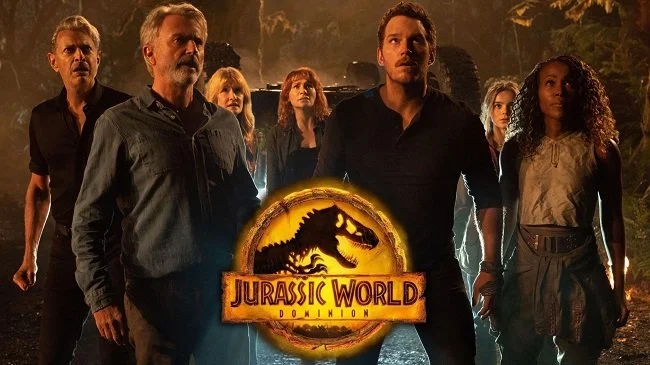
Jurassic World Dominion is a textbook example of a franchise that has run out of steam. Despite the enormous budget, the top notch production values and the presence of three members of the original cast, this is a long, tedious and curiously uneventful film. It has nothing new to say about environmental matters or unfettered science; themes that were front and centre in previous instalments. Nor does it do anything interesting with the main plot device of dinosaurs trying to integrate into our current ecosystems. But perhaps its biggest failing is the conspicuous lack of tension. The denizens of Jurassic World are simply not a threat and fail to have any emotional impact. The film doesn’t even placate viewers with superfluous cast members being eaten. The onscreen deaths by dinosaurs are rather tame.
Jurassic World Dominion is a textbook example of a franchise that has run out of steam. Despite the enormous budget, the top notch production values and the presence of three members of the original cast, this is a long, tedious and curiously uneventful film. It has nothing new to say about environmental matters or unfettered science; themes that were front and centre in previous instalments. Nor does it do anything interesting with the main plot device of dinosaurs trying to integrate into our current ecosystems. But perhaps its biggest failing is the conspicuous lack of tension. The denizens of Jurassic World are simply not a threat and fail to have any emotional impact. The film doesn’t even placate viewers with superfluous cast members being eaten. The onscreen deaths by dinosaurs are rather tame.
Four years after dinosaurs escaped into the wider world, humans struggle to adapt to their presence. The US government has contracted BioSyn Genetics, to control the dinosaurs in a reserve based in Italy's Dolomite Mountains and to further research them for pharmaceutical purposes. Meanwhile in Nevada, Claire Dearing (Bryce Dallas Howard) and Owen Grady (Chris Pratt) do their best to protect the local dinosaur population and advocate for their humane treatment. They also care for 14-year-old Maisie Lockwood (Isabella Sermon), Benjamin Lockwood's biogenetic granddaughter. Maisie has become curious about her heritage and the fact that she was cloned from the scientist Charlotte Lockwood. Neither Claire or Owen are aware that the CEO of BioSyn, Lewis Dodgson (Campbell Scott), has designs on both Maisie and the velociraptor Blue, so he can further his genetic research. He hires mercenary Rainn Delacourt (Scott Haze) to kidnap both.
Jurassic World Dominion is not without a few good points. I was initially amused by the conceit of bringing back the character of Lewis Dodgson from the original movie, who is now the CEO of BioSyn, the main competitor to InGen. Sadly, the character doesn’t develop beyond being a two dimensional corporate bad guy. Which raises the question, are real life corporate bad guys “interesting”? The more I consider this the more I think not. The return of Sam Neil and Laura Dern sees a resumption of their “will they, won’t they” relationship. Dr. Ellie Sattler’s cosy family dynamic that we last saw in Jurassic Park III has now ended. There’s certainly still a spark between her and Dr. Alan Grant and it is fun to watch it rekindle. The return of Jeff Goldblum as Dr. Ian Malcolm is not so endearing and the character is trivialised to the status of a comic foil. As ever Michael Giacchino proves why he’s one of the best film composers around at present.
Director Colin Trevorrow does attempt to do several different things with the franchise formula. There’s a subplot about a thriving dinosaur blackmarket based in Malta. Owen and Claire attempt to infiltrate a sale only to be targeted by weaponized Atrociraptors that have been trained to kill. This culminates in a high speed chase through the narrow Maltese streets resulting in sub Bond/Jason Bourne shenanigans. It’s a curious change in style that doesn’t quite work. Then there is another storyline in which BioSyn creates genetically modified prehistoric locusts that eat everything apart from the company’s own copyrighted crops. It’s a superficially bold idea, again playing into existing evil corporation tropes but it simply doesn’t stand up to any scrutiny. Such a plan couldn’t be concealed and would quickly reveal that BioSyn was publicly holding the world to ransom.
Despite some potential promise, Jurassic World Dominion succumbs to the endemic failings of modern, mainstream, franchise filmmaking. The action scenes are loud, frenetic and rapidly edited yet devoid of any suspense. The visual effects are produced by a variety of companies and vary greatly in quality. The script is perfunctory, devoid of any charm and has nothing new to say. There are numerous nods and homages to Spielberg’s first instalment but all these do is highlight how well made the original film was and how superfluous the latest iteration is. Therein lies the flaw with popular franchise movies. Success begets ubiquity and ubiquity ultimately diminishes interest. However, the box office returns for Jurassic World: Dominion remain curiously high, indicating that the public still has an appetite for dinosaur based spectacle, irrespective of its narrative quality. I have no interest in a further instalment.
Update. Jurassic World Dominion has just been released on home media and includes the theatrical release of the film and an extended director’s edition which runs 14 minutes longer. As my review is based upon the cinema release I thought it fair to watch the longer version to see if it offers any significant improvement. The extended edition does provide a more coherent narrative and expands the role of Dr. Ellie Sattler. There’s a five minute prologue set in the Jurassic era, as well as an extra scene showing that there’s a history between Owen Grady and Rainn Delacourt. Naturally there are additional scenes of dinosaur based mayhem including something akin to a cockfight that takes place in the Maltese dinosaur black market. However, although the story is more coherent in the extended edition, it does not really impact upon the overall superfluous nature of Jurassic World Dominion. If you do decide to watch the film then choose the extended edition as it does iron out some of the flaws and is the better of the two versions.
Dear Mr. Watterson (2013)
Joel Allen Schroeder's documentary Dear Mr. Watterson is a curious beast insofar that it takes some time before it decides exactly what it wants to focus upon. It begins by examining the cultural impact of the hugely popular comic strip “Calvin & Hobbes” and what it means to people around the world. However, little information is given about the creator, Bill Watterson beyond a very simple biography. Joel Allen Schroeder’s also makes no attempt to contact and interview the reclusive Mr. Watterson to find out more about the man and his iconic work. Instead, the documentary eventually settles into an assessment of Watterson’s work by other industry luminaries and a broader accounting of the overall decline of the newspaper cartoon as a social institution. The presentation is bright, stylish and there’s a lot of love for the subject but it takes some time before it commits to a specific approach.
Joel Allen Schroeder's documentary Dear Mr. Watterson is a curious beast insofar that it takes some time before it decides exactly what it wants to focus upon. It begins by examining the cultural impact of the hugely popular comic strip “Calvin & Hobbes” and what it means to people around the world. However, little information is given about the creator, Bill Watterson beyond a very simple biography. Joel Allen Schroeder’s also makes no attempt to contact and interview the reclusive Mr. Watterson to find out more about the man and his iconic work. Instead, the documentary eventually settles into an assessment of Watterson’s work by other industry luminaries and a broader accounting of the overall decline of the newspaper cartoon as a social institution. The presentation is bright, stylish and there’s a lot of love for the subject but it takes some time before it commits to a specific approach.
Cartoonist Bill Watterson retired his comic strip “Calvin & Hobbes”, after a very successful ten year run from 1985 to 1995. The cartoon about a 6-year-old boy and his tiger companion, had and continues to have much to say about American culture, childhood, friendship and many other philosophical points. Although demonstrably a US product, its themes and characters had a worldwide appeal due to its universal themes. Furthermore, Watterson was extremely experimental in the way he presented his artwork, often abandoning the traditional linear panel format. What the documentary makes clear is that both Watterson and subsequently his cartoonist peers consider his creations “art”. The notion that the cartoon strip is an inherently lower form of artistic endeavour, is summarily dismissed as part of the inherent snobbery that exists around art per se. Watterson’s perspective on his own work is a key theme throughout the documentary.
Post 1995, Bill Watterson has led a reclusive life in small-town Ohio, where he has pursued other artistic endeavours. Although financially successful due to the ongoing syndication of “Calvin & Hobbes”, along with the continuous sales of anthologies of the cartoon, Watterson is notable as one of the few artists that has eschewed lucrative merchandising deals. Unlike most of his contemporaries such as Charles M. Schulz (“Peanuts”) and Jim Davis (“Garfield”). Dear Mr. Watterson takes a lot of pain to examine such an unusual stance, with one talking head hinting that it is borderline “unamerican” to do such a thing. Yet Watterson saw such monetisation as diminishing the artistic merits and significance of his creation. Something that Stephan Pastis, creator of “Pearls Before Swine” broadly agrees with, citing from personal experience that the moment you embrace marketing you are subject to a wealth of commercial pressures that impact upon your creativity.
Dear Mr. Watterson ultimately fall between two stools as it is a little too insular to be immediately accessible to those casually interested in “Calvin & Hobbes”, while simultaneously not being a definitive overview for hardcore fans. It does have its moments. One certainly gets a sense of Bill Watterson’s talent when looking at his original artwork at The Ohio State University. The documentary also does a good job of analysing the final cartoon he created which ends with the positive statement “Let’s go exploring”. It also accurately assesses the diminishing of comic strips in newspapers due to the industry's own decline. The conclusion is that it's highly unlikely that any other strip will achieve similar success and have such a cultural impact. “Calvin & Hobbes” remains an enigma born of great talent and the good fortune to be in the right place at the right time.





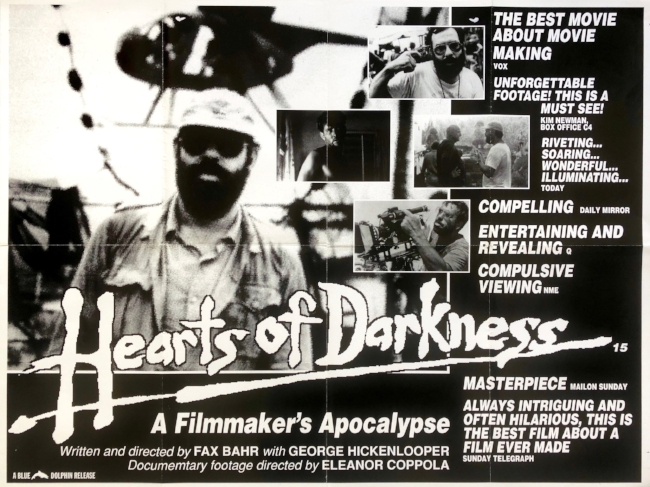
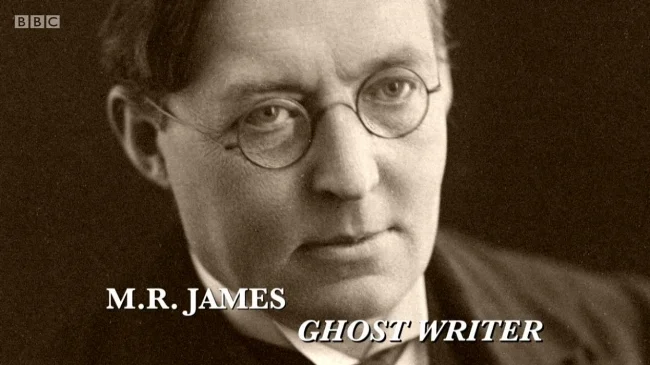
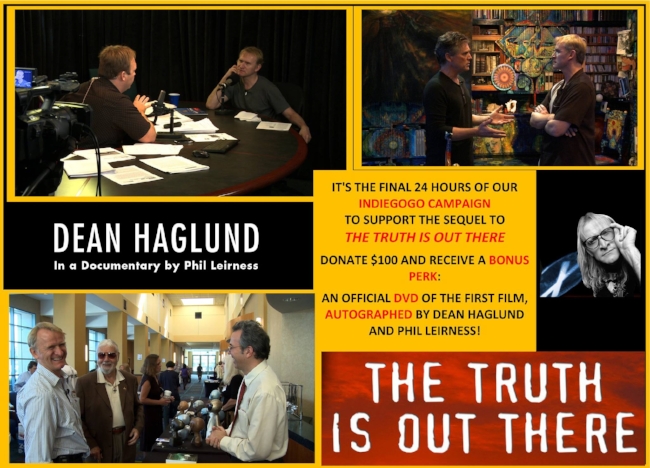







Kurt Vonnegut: Unstuck in Time (2021)
“Kurt Vonnegut: Unstuck in Time” is a sprawling, non-linear eulogy to the to the life of writer Kurt Vonnegut, by Emmy-winning director Robert B. Weide (“Curb Your Enthusiasm”), who was a friend of Vonnegut's throughout the last 25 years of his life. Weide himself features heavily throughout the two hour running time, which is something Weide says he usually hates in documentaries. However, what unfolds is a story of a documentary maker who wanted to film his idol and was granted an opportunity to do so in the early eighties. The project was never completed and both Weide and Vonnegut continuously returned to it over the years as their friendship grew, leading to Weide eventually becoming Vonnegut’s personal archivist. However, despite this curious relationship, this is still very much a film about Kurt Vonnegut, the author, the social commentator and the man. It becomes quite clear why he is considered one of the most important writers of the 20th century.
“Kurt Vonnegut: Unstuck in Time” is a sprawling, non-linear eulogy to the to the life of writer Kurt Vonnegut, by Emmy-winning director Robert B. Weide (“Curb Your Enthusiasm”), who was a friend of Vonnegut's throughout the last 25 years of his life. Weide himself features heavily throughout the two hour running time, which is something Weide says he usually hates in documentaries. However, what unfolds is a story of a documentary maker who wanted to film his idol and was granted an opportunity to do so in the early eighties. The project was never completed and both Weide and Vonnegut continuously returned to it over the years as their friendship grew, leading to Weide eventually becoming Vonnegut’s personal archivist. However, despite this curious relationship, this is still very much a film about Kurt Vonnegut, the author, the social commentator and the man. It becomes quite clear why he is considered one of the most important writers of the 20th century.
“Kurt Vonnegut: Unstuck in Time” is structured very much like Vonnegut's writing; deliberately fragmented and very self-aware. At times it takes a chronological approach and at others, leaps forward to future events and highlights this by showing Weide editing the very documentary on his computer. We do get to learn about Vonnegut’s youth, family and other key aspects of his life as the documentary lapses into a classic PBS approach to its subject. It takes a while to get to the matter of his experiences in Dresden in World War II and despite his irreverent tone, it is clear that this part of his life is key to his mindset and philosophy in later life, as well as his emotional well being. All of which paints a very interesting and broadly favourable portrait of the man. Which makes it all the more jarring when he leaves his wife shortly after achieving the success in which her support is instrumental.
Where “Kurt Vonnegut: Unstuck in Time” excels is in examining the wealth of material regarding Vonnegut’s writing. We see first draft, typewritten manuscripts complete with handwritten revisions that clearly show the author refining his style and process during his early years. Correspondence and then later, answerphone messages provide further insight to the author’s struggle to commit his work to the page and the birth of his alter ego, Kilgore Trout. As the documentary progresses, over time Vonnegut becomes very comfortable talking about himself to Weide. He clearly shows he is someone who relishes his relationship with his audience and the opportunity to “perform”. There is some compelling footage of talks and lectures in which Vonnegut effortlessly engages with fans and riffs off their questions and adulation. Not every author requires the love of his readers but it clearly was integral to Vonnegut’s pathology.
Overall, any gaps in the history of Kurt Vonnegut or self-indulgent asides are subordinate to this documentary’s sincere and honest analysis of Vonnegut's World War II experiences. His initial denial of the significance of his time as a P.O.W. is ultimately overturned after writing “Slaughterhouse Five” and the documentary takes great pains to stress the cathartic nature of this undertaking. His disgust of war subsequently boiled over again during the second Bush administration and the subsequent invasion of Iraq. Vonnegut despised the use of patriotism as a political tool and subsequently wrote a series of opinion pieces for “In These Times” magazine which became the foundation for his final major work “A Man Without a Country”. Robert B. Weide’s ““Kurt Vonnegut: Unstuck in Time”” is a loving tribute to a dear friend as well as an analysis of a cultural icon. It’s important to appreciate the former while addressing the latter. There may well be future documentaries about Vonnegut that are more objective but they’ll not be as personal as this one.
Murphy's War (1971)
During the last days of World War II, the British Merchant Navy ship Mount Kyle is torpedoed by a German U-Boat off the coast of Venezuela. The crew are subsequently massacred as they abandon ship, leaving one survivor, an Irish engineer named Murphy (Peter O’Toole). After being rescued by Louis Brezon (Philippe Noiret), a caretaker for an oil company which has a pipeline in the area, he is taken to a local missionary medical facility run by Dr. Hayden (Siân Phillips). Upon recovering, Murphy becomes determined to find the U-Boat that sank his ship and seeks revenge. However, as the war is clearly drawing to a close Dr. Hayden is reluctant to help him and tries to dissuade him from his plan as it may endanger the local community. In the meantime, Murphy finds a damaged Grumman J2F Duck floatplane from his ship and salvages it. With the assistance of Louis, he makes some improvised munitions and draws his plans against the Germans.
During the last days of World War II, the British Merchant Navy ship Mount Kyle is torpedoed by a German U-Boat off the coast of Venezuela. The crew are subsequently massacred as they abandon ship, leaving one survivor, an Irish engineer named Murphy (Peter O’Toole). After being rescued by Louis Brezon (Philippe Noiret), a caretaker for an oil company which has a pipeline in the area, he is taken to a local missionary medical facility run by Dr. Hayden (Siân Phillips). Upon recovering, Murphy becomes determined to find the U-Boat that sank his ship and seeks revenge. However, as the war is clearly drawing to a close Dr. Hayden is reluctant to help him and tries to dissuade him from his plan as it may endanger the local community. In the meantime, Murphy finds a damaged Grumman J2F Duck floatplane from his ship and salvages it. With the assistance of Louis, he makes some improvised munitions and draws his plans against the Germans.
I suspect that Murphy’s War was intended to be a minimalist exploration of the old adage “if you devote your life to seeking revenge, first dig two graves”. Written by Stirling Silliphant (The Enforcer, Towering Inferno) and directed by Peter Yates (Bullitt, The Deep and Krull), Murphy’s War teases the audience with several instances of potential narrative depths. What motivates U-Boat Commander Lauchs (Horst Janson) to shoot the crew of the Mount Kyle, as they pose no threat to him or his vessel? Is there a love triangle between Murphy, Dr. Hayden and Louis? Why is Murphy so motivated to destroy the U-Boat, considering he initially comes across as a reluctant seaman with little love for English Officers. There’s even a tenuous reference to the IRA. Is he deranged or honourable? These questions raise some interesting opportunities for the film to explore some timeless cinematic themes.
Sadly, even within the deliberately understated framework of seventies cinema, these elements are woefully neglected, leaving us with a matter of fact story that struggles to fill its 106 minutes running time. It’s all somewhat ponderous and very frustrating when considering the quality of the cast and production. Hence we have lengthy scenes in which Murphy struggles to fly the salvaged seaplane and then later, flying around the Orinoco River searching for his quarry. It’s all beautifully shot by veteran cinematographer, Douglas Slocombe, but it often feels like padding to bolster a story that isn’t anywhere near as deep as it likes to think. The climax of the film and Murphy’s subsequent Pyrrhic victory lacks any dramatic impact because there’s no explanation for his descent into a latter day Captain Ahab. The audience is left to ponder whether it was all worthwhile and I for one, broadly feel that it wasn’t. Considering the pedigree of this production, Murphy’s War should be much better.
Ennio (2021)
Giuseppe Tornatore’s sprawling documentary Ennio, is a finely detailed and absorbing exploration of prolific and iconic Italian composer Ennio Morricone. Despite its very traditional approach to its subject matter, looking at Morricone’s career chronologically, intercut with celebrity talking heads, it still manages to convey the unorthodox, innovative and experimental nature of the composer. The 156 minute running time is not necessarily the impediment that one expects. Rather it is the sheer weight of the emotional impact that comes from Morricone’s music that is at times overwhelming. Archival footage and a new and comprehensive interview recorded just prior to the composer’s death in 2020 is intercut with a wealth of audio cues and concert footage from a broad cross section of his work. The result is most illuminating with regard to the man and his approach to composing. The conclusion backed by many of those interviewed is that Ennio Morricone has shaped the nature of film music and elevated it to an artform.
Giuseppe Tornatore’s sprawling documentary Ennio, is a finely detailed and absorbing exploration of prolific and iconic Italian composer Ennio Morricone. Despite its very traditional approach to its subject matter, looking at Morricone’s career chronologically, intercut with celebrity talking heads, it still manages to convey the unorthodox, innovative and experimental nature of the composer. The 156 minute running time is not necessarily the impediment that one expects. Rather it is the sheer weight of the emotional impact that comes from Morricone’s music that is at times overwhelming. Archival footage and a new and comprehensive interview recorded just prior to the composer’s death in 2020 is intercut with a wealth of audio cues and concert footage from a broad cross section of his work. The result is most illuminating with regard to the man and his approach to composing. The conclusion backed by many of those interviewed is that Ennio Morricone has shaped the nature of film music and elevated it to an artform.
Morricone’s personal recollections of his youth and of his family’s poverty are candid. His Father, a trumpet player of some note, insisted his son learn music as a means to “put food on the table”. Morricone’s skill took him to the Saint Cecilia Conservatory to take trumpet lessons under the guidance of Umberto Semproni. He then went on to study composition, and choral music under the direction of Goffredo Petrassi. However, despite this very formal music education, Morricone took an innovative approach to his arrangements and would often use unorthodox sounds to add character to his work. During his tenure at RCA Victor as senior studio arranger, his contemporary approach found him working with such artists as Renato Rascel, Rita Pavone and Mario Lanza. As his reputation subsequently grew, composing for film became a logical and practical career progression. However, this was something that was looked down on by his more formal colleagues. A view that changed overtime as the calibre of his work became undeniable.
Ennio features a wealth of soundbites from prior interviews and new ones, from old friends, fellow musicians and admirers. Some are profound, some gush and others are curious by sheer dint of their inclusion. The views of Bruce Springsteen are somewhat hyperbolic and Paul Simonon makes a single obvious statement. However the insight we gain from classical composer Boris Porena is extremely thoughtful and interesting. As are the views of Hans Zimmer and Mychael Danna. There are also numerous personal anecdotes from assorted collaborators, including Joan Baez, Paolo and Vittorio Taviani as well as Roland Joffé. Baez recalls how Morricone intuitively wrote for her entire vocal range. The Taviani brothers reflected upon how they were at odds with the maestro only to be totally won over by work. Joffé reflects how Morricone wept when he saw The Mission, stating it didn’t need a score. Often it is Morricone’s own recollections that are the most intriguing. For someone of such exceptional talent he remains grounded, sincere and protective of his craft.
Director Giuseppe Tornatore naturally focuses on his own collaborations with Morricone, especially Cinema Paradiso, but overall Ennio is about the man, his philosophy and his joy of music. Some critics have inferred that this documentary is too Italian-centric but that is a crass complaint. Sixty years of Italian culture, both artistically and politically, are reflected in Morricone’s work. Hence there is significance in the reminiscences of Italian pop stars contracted to RCA who owe their success to Morricone’s innovative arrangements and production values. Ennio also features several anecdotes that are surprising and revealing, such as how the maestro missed an opportunity to write the soundtrack for Stanley Kubrick’s A Clockwork Orange. Long and at times a little overwhelming, Ennio is a fitting tribute to the great composer. It is also a testament to the skills of editor Massimo Quaglia for cogently assembling such a vast amount of information and sentiment into a coherent narrative.