
Ennio (2021)
Giuseppe Tornatore’s sprawling documentary Ennio, is a finely detailed and absorbing exploration of prolific and iconic Italian composer Ennio Morricone. Despite its very traditional approach to its subject matter, looking at Morricone’s career chronologically, intercut with celebrity talking heads, it still manages to convey the unorthodox, innovative and experimental nature of the composer. The 156 minute running time is not necessarily the impediment that one expects. Rather it is the sheer weight of the emotional impact that comes from Morricone’s music that is at times overwhelming. Archival footage and a new and comprehensive interview recorded just prior to the composer’s death in 2020 is intercut with a wealth of audio cues and concert footage from a broad cross section of his work. The result is most illuminating with regard to the man and his approach to composing. The conclusion backed by many of those interviewed is that Ennio Morricone has shaped the nature of film music and elevated it to an artform.
Giuseppe Tornatore’s sprawling documentary Ennio, is a finely detailed and absorbing exploration of prolific and iconic Italian composer Ennio Morricone. Despite its very traditional approach to its subject matter, looking at Morricone’s career chronologically, intercut with celebrity talking heads, it still manages to convey the unorthodox, innovative and experimental nature of the composer. The 156 minute running time is not necessarily the impediment that one expects. Rather it is the sheer weight of the emotional impact that comes from Morricone’s music that is at times overwhelming. Archival footage and a new and comprehensive interview recorded just prior to the composer’s death in 2020 is intercut with a wealth of audio cues and concert footage from a broad cross section of his work. The result is most illuminating with regard to the man and his approach to composing. The conclusion backed by many of those interviewed is that Ennio Morricone has shaped the nature of film music and elevated it to an artform.
Morricone’s personal recollections of his youth and of his family’s poverty are candid. His Father, a trumpet player of some note, insisted his son learn music as a means to “put food on the table”. Morricone’s skill took him to the Saint Cecilia Conservatory to take trumpet lessons under the guidance of Umberto Semproni. He then went on to study composition, and choral music under the direction of Goffredo Petrassi. However, despite this very formal music education, Morricone took an innovative approach to his arrangements and would often use unorthodox sounds to add character to his work. During his tenure at RCA Victor as senior studio arranger, his contemporary approach found him working with such artists as Renato Rascel, Rita Pavone and Mario Lanza. As his reputation subsequently grew, composing for film became a logical and practical career progression. However, this was something that was looked down on by his more formal colleagues. A view that changed overtime as the calibre of his work became undeniable.
Ennio features a wealth of soundbites from prior interviews and new ones, from old friends, fellow musicians and admirers. Some are profound, some gush and others are curious by sheer dint of their inclusion. The views of Bruce Springsteen are somewhat hyperbolic and Paul Simonon makes a single obvious statement. However the insight we gain from classical composer Boris Porena is extremely thoughtful and interesting. As are the views of Hans Zimmer and Mychael Danna. There are also numerous personal anecdotes from assorted collaborators, including Joan Baez, Paolo and Vittorio Taviani as well as Roland Joffé. Baez recalls how Morricone intuitively wrote for her entire vocal range. The Taviani brothers reflected upon how they were at odds with the maestro only to be totally won over by work. Joffé reflects how Morricone wept when he saw The Mission, stating it didn’t need a score. Often it is Morricone’s own recollections that are the most intriguing. For someone of such exceptional talent he remains grounded, sincere and protective of his craft.
Director Giuseppe Tornatore naturally focuses on his own collaborations with Morricone, especially Cinema Paradiso, but overall Ennio is about the man, his philosophy and his joy of music. Some critics have inferred that this documentary is too Italian-centric but that is a crass complaint. Sixty years of Italian culture, both artistically and politically, are reflected in Morricone’s work. Hence there is significance in the reminiscences of Italian pop stars contracted to RCA who owe their success to Morricone’s innovative arrangements and production values. Ennio also features several anecdotes that are surprising and revealing, such as how the maestro missed an opportunity to write the soundtrack for Stanley Kubrick’s A Clockwork Orange. Long and at times a little overwhelming, Ennio is a fitting tribute to the great composer. It is also a testament to the skills of editor Massimo Quaglia for cogently assembling such a vast amount of information and sentiment into a coherent narrative.
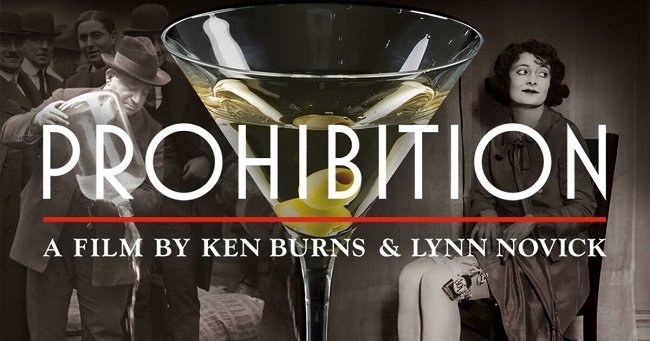
Despite being an analysis of the past there is a portentous air about Ken Burns and Lynn Novick’s Prohibition. A fascinating five-and-a-half-hour documentary produced for PBS in 2011. The history of this disastrous experiment, the banning of alcoholic beverages, is a textbook example of how the transactional nature of US politics can be effectively used upon “wedge” issues. Prohibition follows the format and style of Burns previous documentaries such as the Civil War (1990) and The War (2007) with the wider subject broken down and analysed according to protagonists, events and the political background. Specific historical figures and key players are followed throughout the documentary’s narrative, giving viewers a sense of focus. Hence we meet the hatchet-wielding Carrie Nation, Wayne Wheeler from the Anti-Saloon League and media savvy gangsters like Al Capone. It is interesting to note that some themes continue from Burns’ previous work, such as the political and cultural conflict between native-born Americans and European immigrants. The rural heartlands versus the big cities.
Joel Allen Schroeder's documentary Dear Mr. Watterson is a curious beast insofar that it takes some time before it decides exactly what it wants to focus upon. It begins by examining the cultural impact of the hugely popular comic strip “Calvin & Hobbes” and what it means to people around the world. However, little information is given about the creator, Bill Watterson beyond a very simple biography. Joel Allen Schroeder’s also makes no attempt to contact and interview the reclusive Mr. Watterson to find out more about the man and his iconic work. Instead, the documentary eventually settles into an assessment of Watterson’s work by other industry luminaries and a broader accounting of the overall decline of the newspaper cartoon as a social institution. The presentation is bright, stylish and there’s a lot of love for the subject but it takes some time before it commits to a specific approach.

“Kurt Vonnegut: Unstuck in Time” is a sprawling, non-linear eulogy to the to the life of writer Kurt Vonnegut, by Emmy-winning director Robert B. Weide (“Curb Your Enthusiasm”), who was a friend of Vonnegut's throughout the last 25 years of his life. Weide himself features heavily throughout the two hour running time, which is something Weide says he usually hates in documentaries. However, what unfolds is a story of a documentary maker who wanted to film his idol and was granted an opportunity to do so in the early eighties. The project was never completed and both Weide and Vonnegut continuously returned to it over the years as their friendship grew, leading to Weide eventually becoming Vonnegut’s personal archivist. However, despite this curious relationship, this is still very much a film about Kurt Vonnegut, the author, the social commentator and the man. It becomes quite clear why he is considered one of the most important writers of the 20th century.
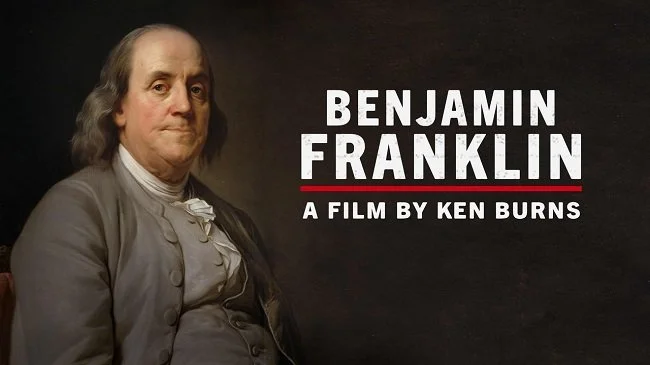
Benjamin Franklin is in many ways the most interesting of the American Founding Fathers. A self taught man who went on to become a polymath. An inventor, accomplished writer and publisher. A diplomat who successfully held multiple public offices. A loyalist who went on to become a “reluctant revolutionary”. A slave owner who eventually became an abolitionist. A questionable parent who favoured specific children over others, as well as a negligent husband. Franklin was all these things, as Ken Burns’ documentary takes great pains to highlight. A broad cross section of historians tackle these foibles and contradictions from multiple perspectives. As Joseph J. Ellis states, Benjamin Franklin was “a Nobel-calibre scientist, the greatest prose stylist of his generation, and probably the greatest diplomat in American history”. His legacy is chronologically analysed over four hours in two distinct episodes.

Giuseppe Tornatore’s sprawling documentary Ennio, is a finely detailed and absorbing exploration of prolific and iconic Italian composer Ennio Morricone. Despite its very traditional approach to its subject matter, looking at Morricone’s career chronologically, intercut with celebrity talking heads, it still manages to convey the unorthodox, innovative and experimental nature of the composer. The 156 minute running time is not necessarily the impediment that one expects. Rather it is the sheer weight of the emotional impact that comes from Morricone’s music that is at times overwhelming. Archival footage and a new and comprehensive interview recorded just prior to the composer’s death in 2020 is intercut with a wealth of audio cues and concert footage from a broad cross section of his work. The result is most illuminating with regard to the man and his approach to composing. The conclusion backed by many of those interviewed is that Ennio Morricone has shaped the nature of film music and elevated it to an artform.
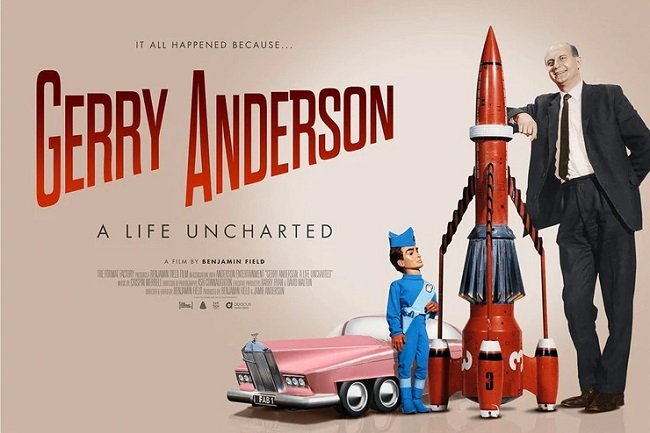
Gerry Anderson: A Life Uncharted is a documentary that focuses specifically on the man, rather than the shows that he created. If you are more interested in the latter then you would be better off watching Filmed in Supermarionation (2014), which provides a comprehensive overview of all productions, wrapped in a cosy blanket of nostalgia and fandom. Gerry Anderson: A Life Uncharted offers a more challenging viewing experience due to its honesty and candour. Gerry Anderson had a difficult childhood and suffered a bereavement early in life. During the course of this 88 minute exploration of his life it becomes clear that these traumas both drove his creativity as well as marred his own personal life. Furthermore, this documentary is also about a son looking for answers, as Jamie Anderson attempts to learn more about his father’s past.
Star Trek documentaries are very much like Bruce Lee documentaries, in so far as they’re both a saturated market and more often than not, new content frequently ends up covering the same ground. However, fans tend to watch anything new in the hope that they will find a few new nuggets of information. Brian Volk-Weiss’ new 11 part series, The Center Seat: 55 years of Star Trek, not only covers established facts about the iconic show but also expands upon them as well as providing a wealth of new information. Volk-Weiss has previously explored popular culture with documentaries such as The Toys That Made Us and The Movies That Made Us. The Center Seat: 55 years of Star Trek is an in-depth chronological study of the Star Trek franchise, from its creation at Desilu Productions in 1965 all the way through to the latest iterations, Star Trek: Picard and Star Trek: Discovery.
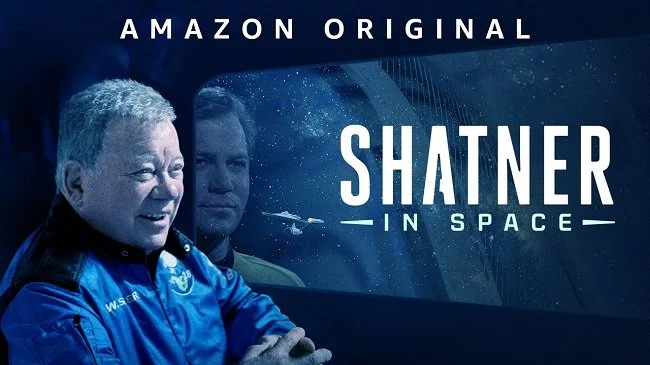
Shatner in Space is a 45 minute documentary about the 90 year old actor, William Shatner and his recent foray into space via Jeff Bezos’ Blue Origin sub-orbital spaceflight service. Considering the provenance of this entire undertaking, attitudes in general towards billionaires and the obvious publicity seeking hubris of sending a cultural icon into space, it’s easy to dismiss Shatner in Space as nothing more than a very, very expensive infomercial. However, the quiet dignity of Mr Shatner whose age and experience means that he draws a very different conclusion from his space flight than his fellow passengers, is utterly compelling and possibly a little profound. If you can endure the soulless polish of the scenes with an immaculately staged managed Jeff Bezos, then you’ll be rewarded with the philosophical musings of a man approaching the end of his life who is naturally curious about his own mortality.
I am not a fan of conspiracy theories, nor those who are heavily invested in them. There are many reasons to repudiate such ideas but for me the main one is just a simple observation on human nature. Any major conspiracy, plot or cover up requires large swaths of people to participate and remain quiet about the facts. Yet one of the most common attributes of the human condition is peoples total inability to shut up. Simply put, most conspiracy theories don’t hold water because someone would have blabbed. Hence, documentaries about how the moon landings were faked or how 9/11 was an “inside job” tend not to “butter any parsnips” with me. However, JFK Revisited: Through the Looking Glass is a surprisingly different beast. I was surprised by its measured approach and its inferred conclusion. Has old age mellowed the filmmaker Oliver Stone?
Television programmes that deal with the so-called supernatural, mysterious and the unexplained are commonplace these days. They fill the schedules of channels that used to broadcast quality wildlife, historical and scientific documentaries. All too often these shows focus on the sensational nature of their subject matter and lack any real objectivity, analysis and scientific rigour. The idea is not to impartially explore a subject to determine its veracity but to simply provide a degree of spectacle for as broad a viewing demographic as possible. However, that was not always the case. Back in 1980, Yorkshire Television produced Arthur C. Clarke's Mysterious World. A high profile exploration thirteen-part British television series looking at unexplained phenomena from around the world. The presence of Clarke, who introduced and book-ended the various subjects the show explored, brought a degree of impartiality and credibility to the proceedings.

Over the years I have seen many documentaries about World War II. Although I do not claim in any way to be an expert, I believe I have a good grasp on the causes and the course of that six year conflict. However, it recently struck me that I could not say the same about World War I. In my youth I watched a repeat showing of the BBC documentary series The Great War (1964) but I remember very little of its prodigious 26 episodes. The one thing that stood out were the interviews with veterans. So I was very pleased when perusing BritBox over the weekend to find the 2003 documentary The First World War, based upon the book of the same name by Professor Hew Strachan. This ten part analysis takes a global view of the conflict, rather than excessively focusing upon the Western Front and also debunks a lot of the apocryphal ideas and notions that have persisted over the years. I found it so compelling that I binged watched the entire thing over two evenings.

The music business is a strange, interesting and broad church. A spectrum of musical styles and personalities all fulfilling the needs of different markets. There are pop stars who are buoyant but ephemeral. Then there are singer/songwriters who take their work seriously as they express their critique of the human condition via their music. There are also style icons, novelty acts, indie bands, lounge crooners and a myriad of other niche acts, all doing their own thing. And occasionally there are enigmas. Artists and bands that fly in the face of prevailing trends and commercial interest, who do consider their work to be an artistic endeavour and an expression of themselves and as such, do not see the virtue of personal compromise or corporate interests. Esoteric musicians who reinvent themselves continuously as they grow and age. Constantly defying the expectations of both their own fans and naysayers. Sparks are such a musical entity and the subject of a fascinating documentary by director Edgar Wright.
Carl Sagan's seminal science documentary Cosmos: A Personal Voyage was initially broadcast in the US between 28th September and 21st December 1980. Six months later it was shown in the UK on BBC One throughout the summer of 1981. I was thirteen years old at the time and this science documentary series had a tremendous impact upon not only me but an entire generation. The complexity of some of the subjects explored and discussed by Carl Sagan often left me perplexed. However, I knew that there was something special about this show and the way it presented science in such a personal manner. Therefore, I found myself going to both my local and school library to further read about the topics raised in each episode. But perhaps the most standout aspect of the show was Sagan himself. His commentary delivered directly to the camera was both enthralling and lyrical. His love and enthusiasm was palpable and clearly bled through into every aspect of the show. His ability to communicate clearly, complex and at times esoteric ideas, was a revelation and in many ways a gift. Similar to that of Jacob Bronowski and David Attenborough.
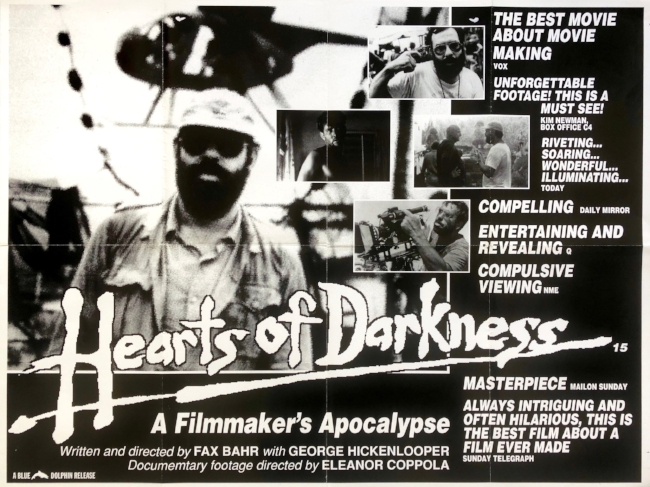
There was a time when film making was seen as an artistic endeavour and the idea of the auteur director pursuing a vision was considered a romantic and even noble undertaking. Big multi-million-dollar productions were welcomed when they filmed on location, providing work and glamour to the local population. The might of the dollar would often grease the wheels of industry, making the impossible possible. Egos were massaged, and actors were indulged and treated like minor deities. Huge sets would appear in the middle of nowhere, like Victorian follies and luxury items would be flown around the world to placate the capricious nature of the various Hollywood stars. Money would flow like water, much to the dismay of the producers, sitting back in the offices in the US or Europe. But this era has now past. Big budget movies are still made but it is now driven by corporate accounting and artistic vision is no longer a primary consideration. It is now a rather soulless business process. Hence a movie such as Apocalypse Now would never be made today in the same manner that it was back in 1976 when the production started.
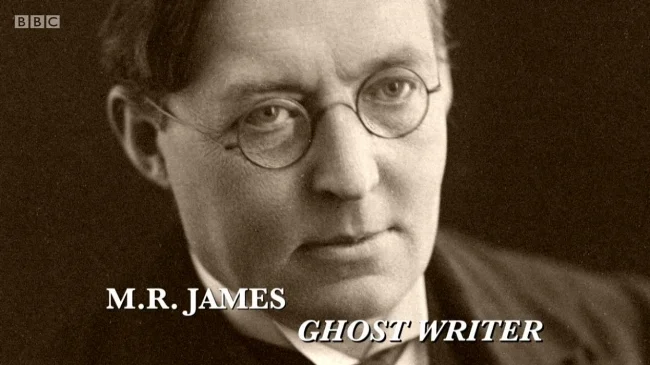
MR James: Ghost Writer is a sixty-minute documentary written and presented by Mark Gatiss, exploring the life of Britain's foremost ghost story writer. Gatiss, a long-time admirer of James, delves in to the life of the author from his devout Anglican upbringing and close-knit family life, through to his ascent to the summit of academia at King's college, Cambridge. The program seeks to discover what motivated this scholarly bachelor to create some of the most iconic and chilling ghost stories in English literature. By following in James’s footsteps, the documentary attempts to gain a greater insight in to the enigmatic author.

Wisconsin Death Trip is a strange, enigmatic, non-linear docudrama and that makes for compelling viewing for the open minded. It is based upon the 1973 non-fiction book Wisconsin Death Trip by Michael Lesy, which explores a collection of late 19th century photographs by Jackson County, photographer Charles Van Schaick. These are mainly taken in the city of Black River Falls. The authentic black and white pictures are further embellished by local news reports from the same period, predominantly taken from the Black River Falls newspaper. These articles emphasise the harsh aspects of Midwestern rural life under the pressures of crime, disease, mental illness, and urbanization. The book has been a source of influence over the years, with authors such as Stephen King and Rod Jones citing the impact its had upon their respective work. Film maker James Marsh has subsequently taken this curious microcosm of rural life and death and extrapolated it a compelling reflection upon mortality and the fragility of human existence.
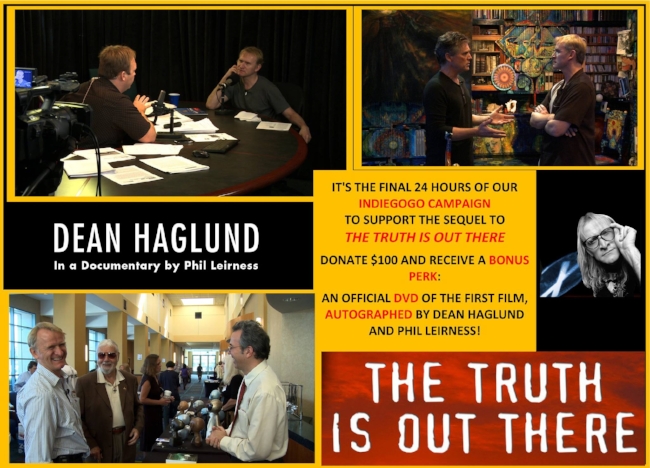
Dean Haglund is best known for playing Richard Langly, one of the Lone Gunmen on The X-Files. In recent years has capitalised upon that role and has become closely identified with the realm of the paranormal and the world of conspiracy theories. The documentary The Truth Is Out There follows Dean as he travels the US and attempts to discover just what it means to search for the truth in a world where conspiracies theories, untruths and fake news abound. The documentary directed by Phil Leirness, humorously takes the viewer on a journey of discovery, talking to those who believe that the world is not what it seems.
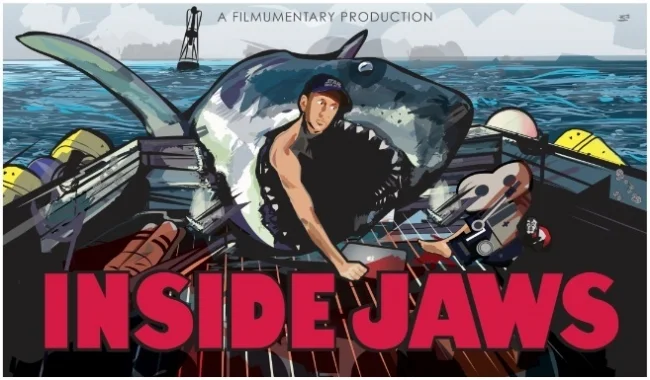
Once again Jamie Benning has created a filmumentary that is pretty much a definitive exploration of its subject matter. Inside Jaws contains a staggering amount of facts, details, insight and commentary about one of the greatest films ever made. Yet despite a wealth of information, it is presented in a way that is easily digestible and enhances the movie, rather than overwhelms it. As with Star Wars Begins, the original movie is annotated with on-screen text, commentary tracks and behind the scenes footage, which provide incisive overview into the movies production.

Star Wars Begins is a detailed documentary by film maker Jamie Benning that explores the creation of what is now considered to be the most iconic movie of the seventies; namely Star Wars. It features a wealth of deleted scenes, alternate takes, behind-the-scenes footage, bloopers, original on set audio recordings and a great deal of commentary by the original cast and crew. As far as I’m concerned, it is the most thorough and in-depth analysis of Star Wars I have yet to see. Frankly it beats hands down, any of the officially sanctioned documentaries that have appeared over the year on the various DVD and Blu-ray releases of the trilogy.

Indie Game: The Movie is a genuinely fascinating documentary not only about the machinations video games industry but also the blood, sweat and tears that go into any creative process. It is a film that really does give you pause for thought and encourages you to reflect upon what you may want in life. It clearly shows the true cost and the star reality of any labour of love. It should be required viewing in schools and colleges for any wannabe who dreams of being on a reality shows and achieving a fast path to their perceived heart’s desire. Such is the impact of the documentary’s message.
Despite having played a broad spectrum of games in my time, I've never really had much dealings with the Blizzard. Beyond owning Overwatch, a game I’ve long stopped playing and trying a free trial of both World of Warcraft and Hearthstone, I have little personal experience of their games. However, I am fully aware of their product range and their reputation within the gaming industry. Overwatch has taught me how well-conceived and polished their games can be. Blizzard may not be incredibly innovative, but they learn from others and produce titles with all the elements that work well. Sadly, I have no real affinity to their flagship MMORPG, as my point of entry with that genre was LOTRO. My interest in World of Warcraft mainly stems from a business perspective and the place it holds in gaming history. Overall my curiosity about the game, its community and culture is mainly academic. So, I finally got around to watching the documentary World of Warcraft: Looking for Group that showcased at Blizzcon in 2014 and was subsequently released on You Tube thereafter.

Certain groups just lend themselves to ridicule from the media and in popular culture in general, irrespective of whether they deserve it or not. Star Wars fans are a prime example of this. Their love of the lore, predilection for cosplay and hunger for collectables at first glance makes them an easy target. Film maker Mark Edlitz, takes a decidedly different approach in his documentary Jedi Junkies. Instead of finger-pointing and making cheap jokes, Jedi Junkies puts a very human face on a group of enthusiasts, showing their passion to be in essence, no different to that of sports fans or other more mainstream hobbies and pastimes.

After watching several hours of the documentary, The Vietnam War, one has to wonder at the utter inability of the US government of the time, to think outside the box during the period of that conflict. Seldom does a military, political, and social analysis of an historical event go this deep. During its eighteen hour running time directors Ken Burns and Lynn Novick cover a wealth of issues associated with this conflict, exploring it from multiple perspectives. Not only do they shine a light upon the hubris and folly of both respective governments, they manage to keep a very intimate and human perspective. Personal stories from both sides are told and if there is a common theme, it is sadly one of tragedy and regret.
Considering the mainstream popularity of gaming, there is a distinct lack of related content on television. Journalist, writer and social commentator Charlie Brooker attempted to address this in 2009 with Gameswipe but the show remained a one-off production. Then again in late 2013, he had another crack at the subject with the documentary How Videogames Changed the World, providing a broad overview on the genre, exploring key events and titles from the past forty years. As ever with Mr. Brooker, the commentary was intelligent and acerbic. There was also an interesting and diverse selection of talking heads who spoke from personal experience, rather than the usual scripted garrulous inanities.
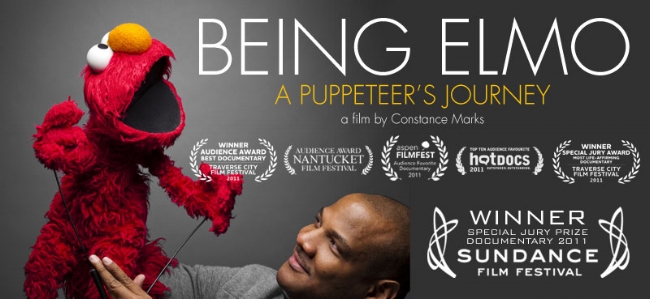
Constance Marks’ documentary explores the story of Kevin Clash, the man who effectively "was" Seasame Street's Elmo until 2014. The film charts Kevin Clash's rise from his modest beginnings in Baltimore to his success as a globally famous character and a major player in the Henson family of puppeteers. The documentary manages to maintain a good balance between examining the mechanics of puppetry and focusing on the human impact of Kevin's work. Like so many documentaries of these type, it clearly shows that achieving your dreams always comes with a cost and is often immensely arduous. It also reveals the complexity of something we take for granted and possibly trivialise, namely puppetry. Filmed in 2011 the documentary does not cover Kevin Clash’s resignation from “Seasame Workshop” three years later.

Documentaries about the fans and fandom often lack any impartiality and frequently have their own agenda, be it positive or negative. Looking at the names associated with Comic-Con Episode IV: A Fan's Hope, it’s fairly clear from the outset that this is not going to be an overtly critical undertaking. Director Morgan Spurlock follows five attendees during San Diego Comic-Con 2010 as they endeavour to fulfil their ambitions. The fans are immediately presented in a fairly positive way and as the documentary proceeds the viewer gets the opportunity to form their own opinion about the lifestyles, choices and philosophies. The documentary is also interspersed with talking heads from known genre luminaries such a Joss Wheedon, Kevin Smith and Stan Lee, who provide some interesting and quite frank views on Comic-Con as well as the wider fan scene.

The documentary Mifune: The Last Samurai is both an exploration and celebration of the Japanese actor Toshiro Mifune (1920-1997), narrated by Keanu Reeves. Over the course of seventy minutes his life and body of work is critiqued by his industry peers as well as several cinematic luminaries such as Martin Scorsese and Steven Speilberg. The focus is very much upon the man himself, as his personality was integral to his acting technique. For those unfamiliar with classic Japanese cinema during its golden age, the documentary provides a broad and practical overview. It also includes a brief history of the chanbara (sword fighting) genre, as well as a concise and honest analysis of Mifune’s career.
The Legend of 1900 (La leggenda del pianista sull'oceano) (1998)
I first watched La Leggenda del pianista sull'oceano (released in US as The Legend of 1900) on the recommendation of a friend who was very enthusiastic about it. I must admit that I was profoundly moved at the time, in that way that only a thoroughly good film can do. I’d almost forgotten how powerful quality cinema can be. I feel justified in my assertion that film may be the greatest art form of the last and current century. Having watched the film again recently, this time on Blu-ray, I was again deeply impressed by the scope of the film and its timeless themes. The high-definition transfer makes the most of the film’s audio-visual excesses. The Legend of 1900 is a beautiful piece of cinema with a striking production design, rich cinematography and a marvellous score by the great Ennio Morricone. Tim Roth is utterly convincing in the lead role and excels in conveying the quirky foibles of the lead character.
I first watched La Leggenda del pianista sull'oceano (released in US as The Legend of 1900) on the recommendation of a friend who was very enthusiastic about it. I must admit that I was profoundly moved at the time, in that way that only a thoroughly good film can do. I’d almost forgotten how powerful quality cinema can be. I feel justified in my assertion that film may be the greatest art form of the last and current century. Having watched the film again recently, this time on Blu-ray, I was again deeply impressed by the scope of the film and its timeless themes. The high-definition transfer makes the most of the film’s audio-visual excesses. The Legend of 1900 is a beautiful piece of cinema with a striking production design, rich cinematography and a marvellous score by the great Ennio Morricone. Tim Roth is utterly convincing in the lead role and excels in conveying the quirky foibles of the lead character.
On the first day of the twentieth century, an abandoned child is discovered in the state room of the luxury liner Virginian. The Stoker (Bill Nunn) who discovers the child, names him 1900 or more accurately Danny Boodmann T.D. Lemon Nineteen-Hundred. Raised within the confines of the ship and never stepping foot on land, 1900 soon develops an ear for music and displays signs of being a child prodigy. It is implied that living among the multi-cultural crew and the rhythm of the engines has somehow shaped his abilities. As 1900 (Tim Roth) reaches adulthood, he becomes an integral part of the ships orchestra, with his sublime talents proving quite a hit with the first-class passengers. But it is with those in steerage that he finds his greatest inspiration. Using his talents to read a person by their look and manner and then to interpret that into music.
Directed by Giuseppe Tornatore (Cinema Paradiso) and based on a dramatic monologue by Italian novelist Alessandro Baricco, The Legend Of 1900 is a beautifully crafted fable and audio-visual metaphor. The sets designs and especially the beautiful cinematography by Lajos Koltai are a delight, reflecting the decadence and excess of sea travel at the time. The film embodies that visual creativity that is so integral to Italian cinema; actors are often cast primarily for the uniqueness of their faces. Polished surfaces reflect the opulent surroundings, yet distort the images, lending a subtle subtext to the dramatic themes. One standout scene sees 1900 playing a Grand Piano with the breaks off, as the ship is tossed in a storm. The instrument glides around the dance floor in the main state room, to the accompanying music. It’s a beautiful vignette and a clever metaphor for the wealthy elites of Europe pursuing their elegant lifestyle, while the sea of politics rages around them as they race headlong towards disaster.
However, visuals aside, it is the films musical score and the way that it is linked to the storyline, which stands out the most. Two of the most powerful scenes centre on how 1900 conveys his emotions through the piano. An apocryphal piano duel between 1900 and the equally legendary Jelly Roll Morton (the self-proclaimed creator of modern Jazz) showcases some incredible musical interpretations combined with innovative camera work. The music played are all genuine period pieces that push technical and artistic performance to its limits. The other scene takes place as 1900 makes his first and only audio recording. While improvising a piece at the piano, he sees a young girl through the porthole. His feelings shape the piece as he creates it, reflecting her beauty, naivety and innocence. This piece, Playing Love, composed by Ennio Morricone is sublime and one of his finest works. The scene is possibly one of the most genuinely moving pieces of cinema committed to film.
The Legend of 1900 suffers slightly through being an Italian film, with an international cast, shot in multiple languages. A lot of the dialogue was subsequently added in post-production by the original actors and voice artists. It was the director’s intention to try and reach a wider audience by not shooting in Italian. Sadly, the dubbing is noticeable at times and a minor distraction. Furthermore, the US distributors as usual failed to see anything beyond the bottom line and subsequently, removed 40 minutes from the films 160-minute running time. This shorter version is inferior to the director’s cut. Also, some of the films digital effects are not quite as polished as they could be, but they do not spoil the overall film. Giuseppe Tornatore also walks a tight rope with the use of sentimentality and dramatic pathos but succeeds where other directors would have failed. The key theme of a man of great talent and ability surrendering his life to the restrictions he has chosen for himself, is very tragic. 1900's world has clearly defined limits that he won’t venture beyond. Land represents for him a place without boundaries, where people can get lost.
“Take the piano. Keys begin, keys end. You know there are 88 of them. Nobody can tell you any different. They are not infinite. You're infinite... And on those keys, the music that you can make... is infinite. I like that. That I can live by. You rolled out in front of me a keyboard of millions of keys, millions and billions of keys that never end. And that's the truth Max, that they never end. That keyboard is infinite... and if that keyboard is infinite, then on that keyboard there is no music you can play. You're sitting on the wrong bench... That is God's piano”.
If you enjoy quality cinema and despair at its absence in the current climate then seek out The Legend Of 1900, especially the full 160-minute Italian version under its original title La Leggenda Del Pianista Sull'oceano. It is a thought provoking piece of cinema, that stays with you long after the film has finished. 1900 himself is an enigma which is never fully explained, although to do so would be to the films detriment. The story focuses on many themes such as loss and regret, but at its heart is the concept that it is ourselves that ultimately define the boundaries of our own life. Change is there, if we choose it, however, it always comes with a price. And if such philosophical themes do not appeal to you, then The Legend Of 1900 has a wealth of outstanding musical performances and set pieces to offer. Although the film ultimately belongs to Roth, whose off-kilter and deliberately vague performance underpins the narrative, just like that of Peter Sellers' in Being There.
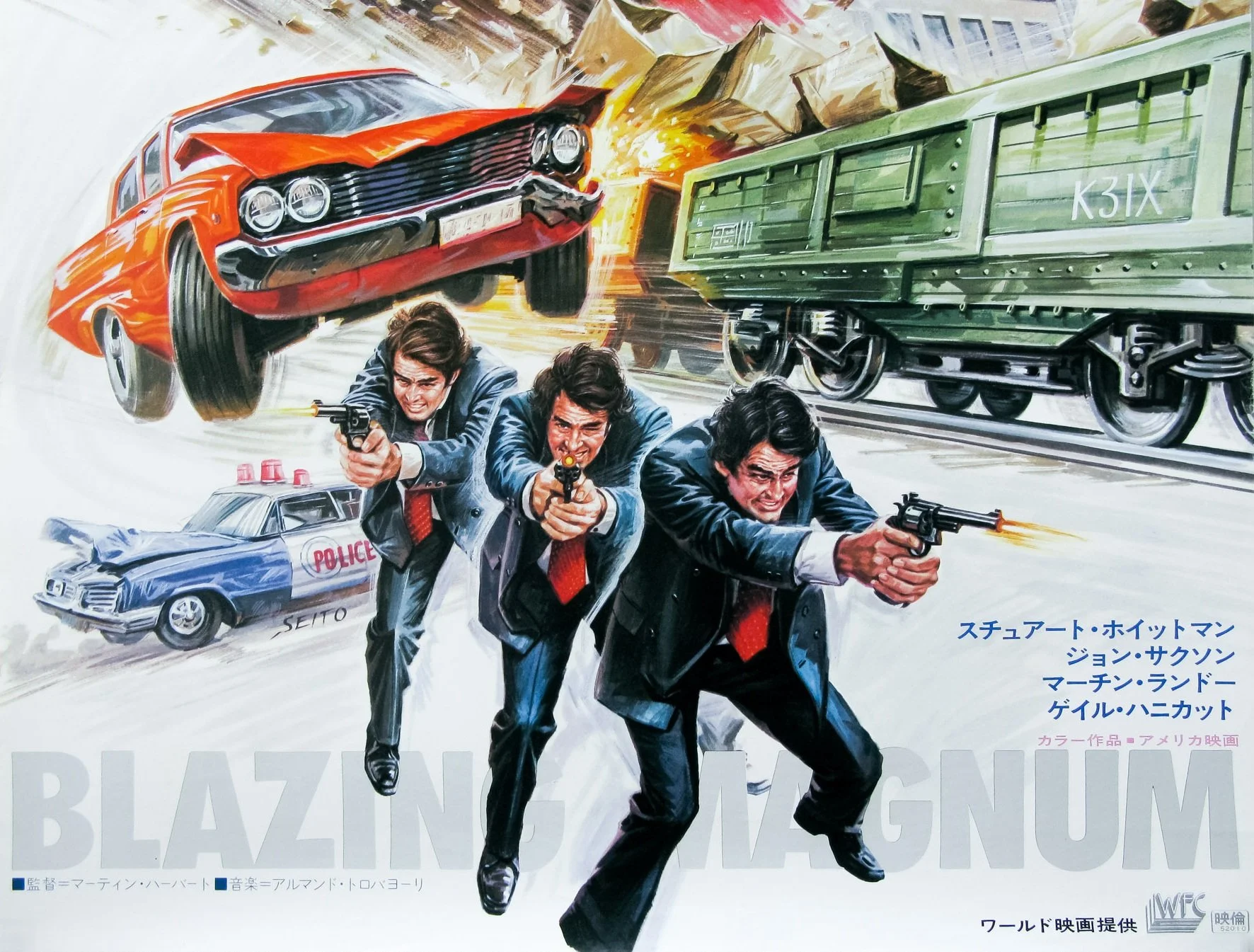
Mainstream films are easy to recommend to people. They’re usually formulaic, work within clear parameters and they’re not controversial. Most people, when viewing such film on someone else’s suggestion, are left with a fairly simply choice. Did they like it or not? Whatever the outcome, no feathers are ruffled. No one looks at you askance afterwards and says “why the hell did you think I’d like that piece of shit”? If something like this happens, then you have clearly not recommended a mainstream film. Perhaps you’ve suggested something that’s a little more of an acquired taste. Something niche, from a very specific sub-genre. Which brings me neatly to Blazing Magnum AKA Strange Shadows in an Empty Room (1976). The US title gives the impression that this film is a hard boiled cop thriller, like so many others that followed in the wake of Dirty Harry. But there’s a clue in the European title. Yes, this movie has more than just a whiff of a giallo about it.

In the year 1860, Baron Victor Frankenstein (Peter Cushing) faces execution by guillotine for the murders perpetrated by the creature he created. With the assistance of a hunchback named Karl (Oscar Quitak) he avoids death by beheading the priest who came to give him the last rites. The priest’s body is then mistakenly buried by the authorities. Three years later, Victor, now using the name Doctor Stein, has established himself as a prosperous physician in Karlsbrück, serving both affluent patients and the poor at a paupers’ hospital. Hans Kleve (Francis Matthews), a junior member of the medical council, recognises Victor and being an admirer, seeks to become his apprentice. Victor and Hans then undertake an experiment to transplant Karl’s living brain into a new, more refined body, rather than a grotesque monstrosity the Baron has previously made. Karl is eager to have a new healthy body, especially after encountering Margaret Conrad (Eunice Gayson), the charming new assistant at the hospital.

This movie questionnaire was originally created by Alexander from Cinemaniac Reviews. Sadly, I believe that website is now defunct. However, that doesn’t in anyway invalidate the questionnaire itself which has some very good questions about your relationship with cinema. Some of my answers to the questions posed are about films that I enjoy, as opposed to those that are considered cinematic classics. However, I have answered some questions more seriously than others, especially the one about undeserving recipients of the Best Film Oscar. I struggled with a couple of questions because I no longer go the cinema as frequently as I did 10 years ago. This is mainly due to the fact that a lot of the films I find interesting end up going straight to streaming after very brief theatrical releases. Some do not even get shown in cinemas. Hence I view far more at home. But I digress. On with the questions and answers. Feel free to comment below and share your views.

Exit 8 is a sophisticated and claustrophobic psychological thriller directed by Genki Kawamura, which skilfully transforms a minimalist indie walking-simulator game into a cinematic existential enigma. This overtly metaphorical film renders the repetitive nature and drudgery of modern working life into a physical environment in which the lead character is trapped and must find a way out. A random, brutal maze filled with an atmosphere of indifference to the lab rats that find themselves trapped within. Or is it their personal guilt that has put them there? Genki Kawamura’s psychological mystery draws inspiration from the Japanese video game of the same name, as well as from the cyclical nature of Groundhog Day and endless corridors of the Overlook Hotel in Kubrick’s The Shining. Although there are jump scares and some ghoulish imagery, this is not a horror vehicle. Instead this is a disquieting psychological drama with a strong sense of morality.
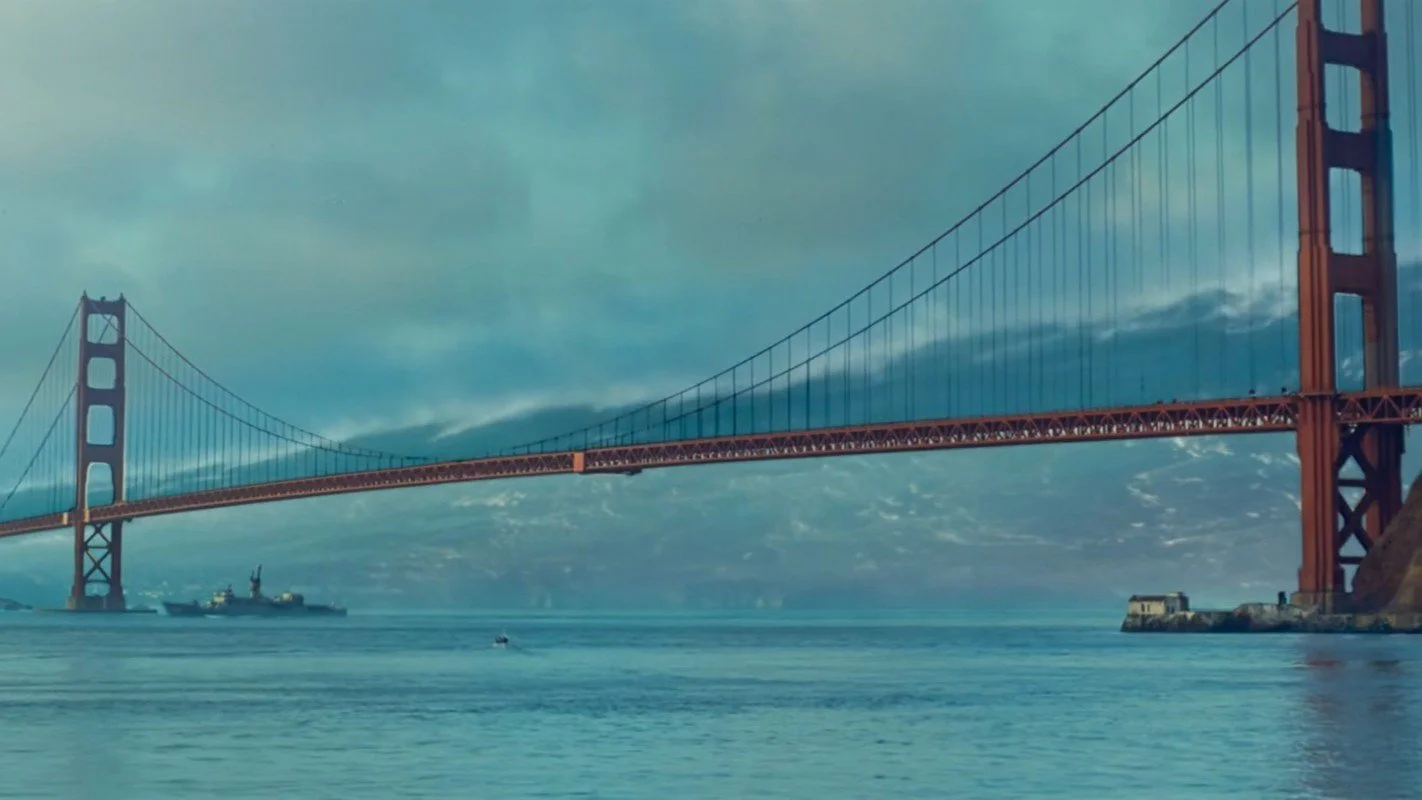
I wrote a post 18 month’s ago regarding whether a directors cut of a film is superior by default to the version originally shown in cinemas. Obviously the answer was no and I then went on to give three examples of films where I think the theatrical release is better to lengthier or substantially altered director’s cut that was subsequently made available at a later date. This time round in this post, I would like to do the complete opposite. I shall provide some examples of films that I think are significantly improved by a longer cut or a substantially, restructured edit. Note some of these examples are technically not a “director’s cuts” but a restoration or reconstruction of the director’s original vision. I shall endeavour to highlight what specific material or broader changes make each respective film “better”. As ever, all of these examples are a matter of subjective opinion and my views are presented as such, not “fact”.
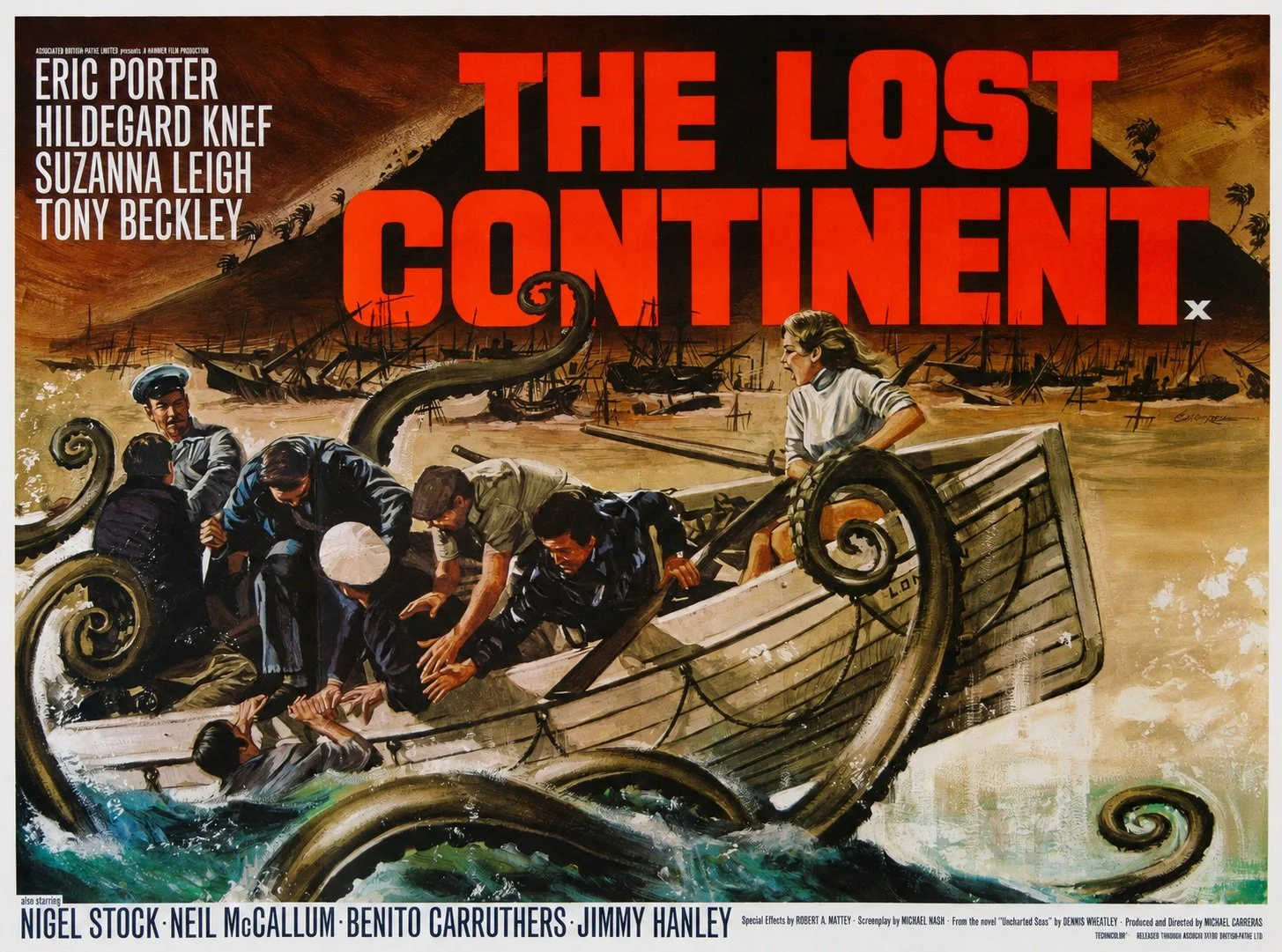
In 1968 the dilapidated freighter Corita hastily leaves Freetown to avoid a customs inspection. Captain Lansen (Eric Porter) has a cargo of dangerous explosives which he is smuggling so he can finally retire. His ship’s passengers also have reasons for leaving in a hurry. Dr. Webster (Nigel Stock), together with his daughter Unity (Suzanna leigh), is relocating due to his indiscretions with patients and illegal operations. Alcoholic pianist Harry Tyler (Tony Beckley) is aimlessly drifting from port to port. Eva Peters (Hildegard Knef) is fleeing from her husband with stolen bearer bonds which she intend to use to buy back her son from his evil clutches Caracas. Ricaldi (Ben Carruthers), a questionable lawyer, is pursuing Eva to retrieve the stolen bonds. First officer Hemmings (Neil McCallum) suggests that the ship should return to Freetown after an imminent Hurricane warning. The Captain asks the passengers and they are unanimous that they do not wish to return. However a mutinous crew, the bad weather and the instability of the explosives force everyone to abandon ship. The survivors find themselves adrift in a lifeboat surrounded by a strange carnivorous seaweed.
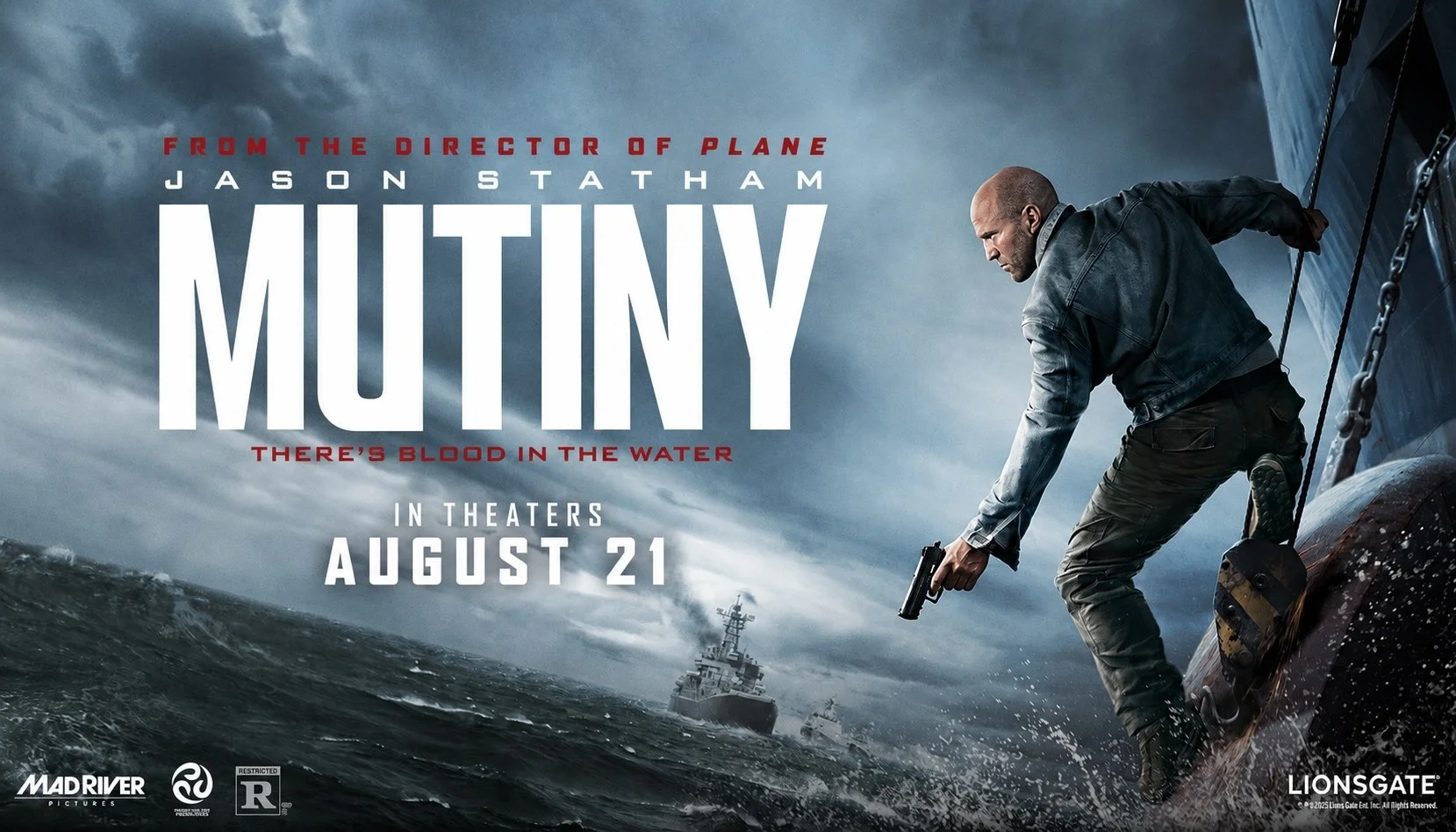
Jason Statham is an exemplar of the US mantra of “staying in your lane”. He makes action movies and occasionally strays into action comedies. His formula broadly works and is sufficiently lucrative to keep Mr. Statham employed. Therefore, if you watch a film in which he stars, you have a fairly good idea of what you’ll be getting. Of late, the criteria for his action vehicles have become more succinct. Jason Statham will play an innocuous character, such as a construction foreman or a bee keeper. Something terrible will subsequently befall another character who Mr. Statham has an emotional connection with in some capacity. He will subsequently hunt down those responsible and meet out death and violence. At some point the villain of the story will enquire as to how this innocuous person is so lethal. Research will then show that our Jason is in fact an ex-police officer/special forces operative/international assassin. There’s then a showdown and the villain dies. Job done.
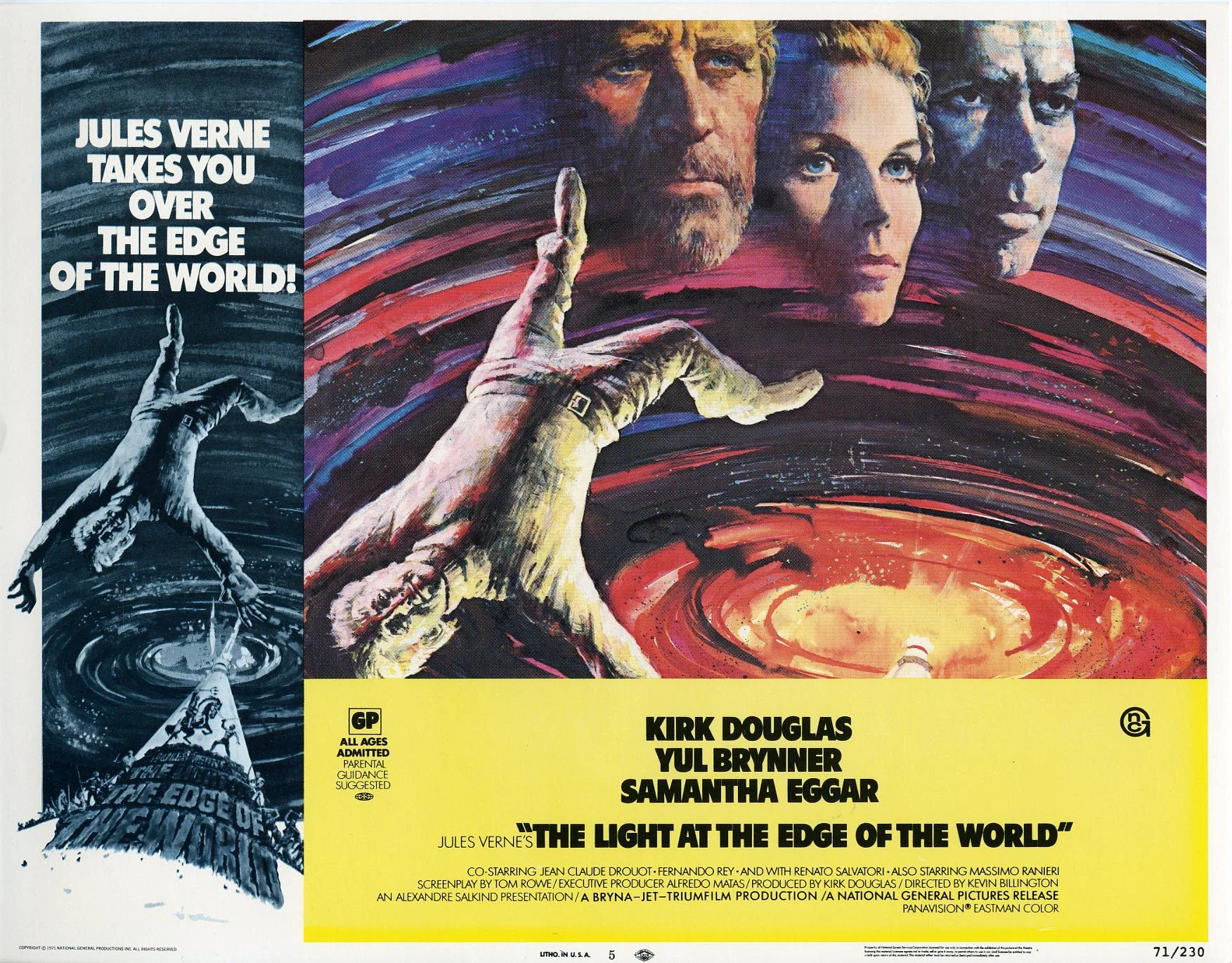
The Light at the Edge of the World presented itself as an action movie upon its release in 1971. Based upon a story by Jules Verne, the Spanish American co-production was driven by its star Kirk Douglas, who curiously hired British director Kevin Billington to helm the project. This tale of a lighthouse keeper fighting a war of attrition against a group of pirates that have captured his island, was market as an adventure film ostensibly in the idiom of the authors previous works and as a pirate movie. MGM bought the rights to distribute the film in the UK on the misunderstanding that it was a family friendly production. It was not and remains so. They subsequently had to cut 15 minutes of violence and torture as well as an undercurrent of sexual assault to secure a suitable rating. Conversely, the US distributors received an arbitrary PG rating, despite the fact this is one of a handful of films that honestly depicts pirates as murderers, rapists and worse.
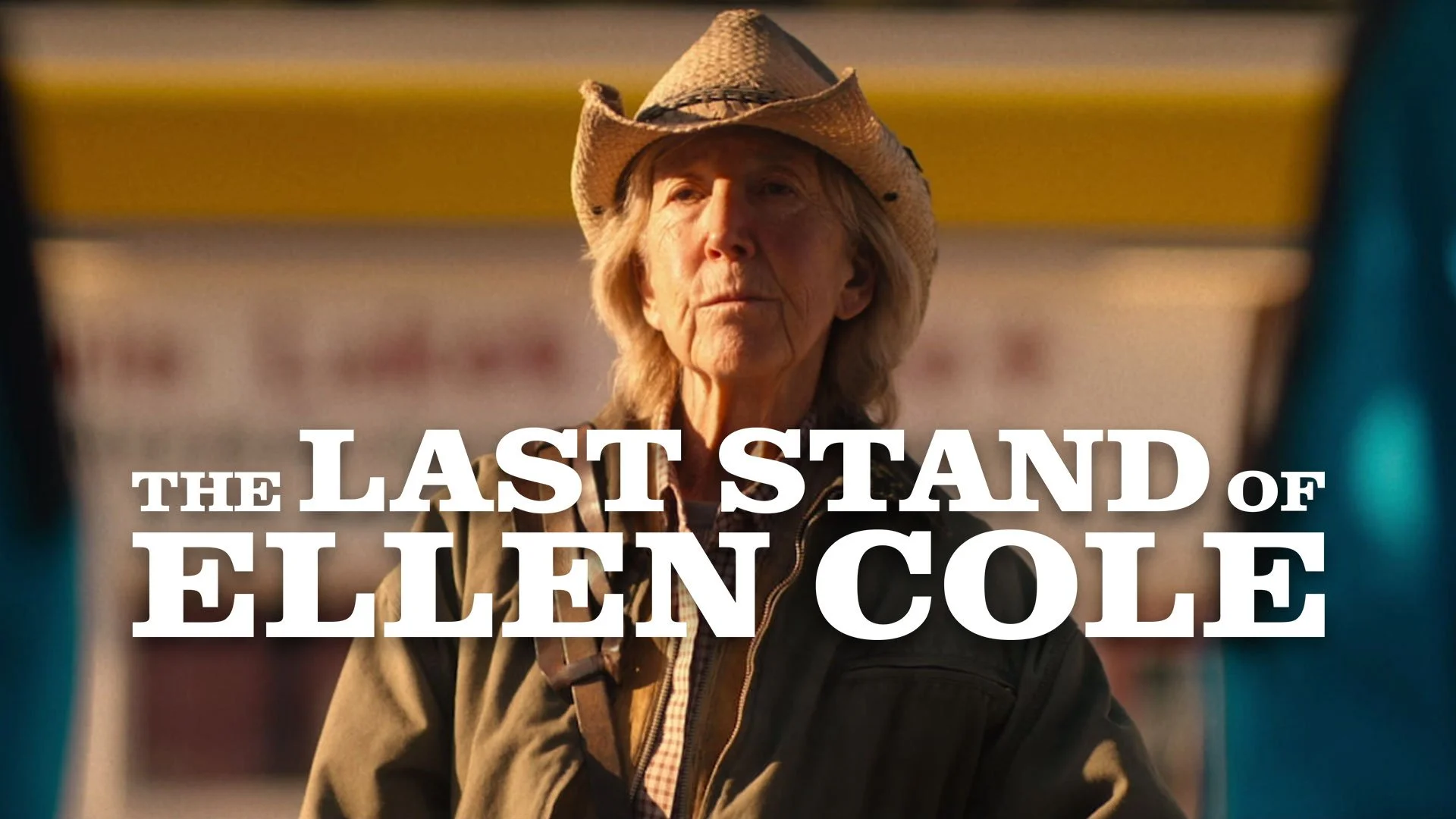
It’s an established action film trope. The fire team comprised of ex-military personnel, move in on their target. Only to have the tables turned by someone they don’t deem a threat. What makes it different in The Last Stand of Ellen Cole is a throwaway line of dialogue. The bested operative lies bleeding on the floor and the protagonists stands over them ready to finish them off. “Don’t, I have a cat” they feebly plead. For me that was the icing on the cake. The movie had already established it was taking the “same old, same old” and doing something different. Something fun, if taken in the right spirit. This scene tipped the balance and I embraced this film because it was being honest about what it is. This is a modern B movie that decides to give a very specific sub-genre a makeover. Furthermore, its clearly done with an affectionate wink, which is very different to sly wink. This isn’t deliberate self-knowing irony. Its just a film doing something different and possibly silly but it genuinely wants to have fun with it.
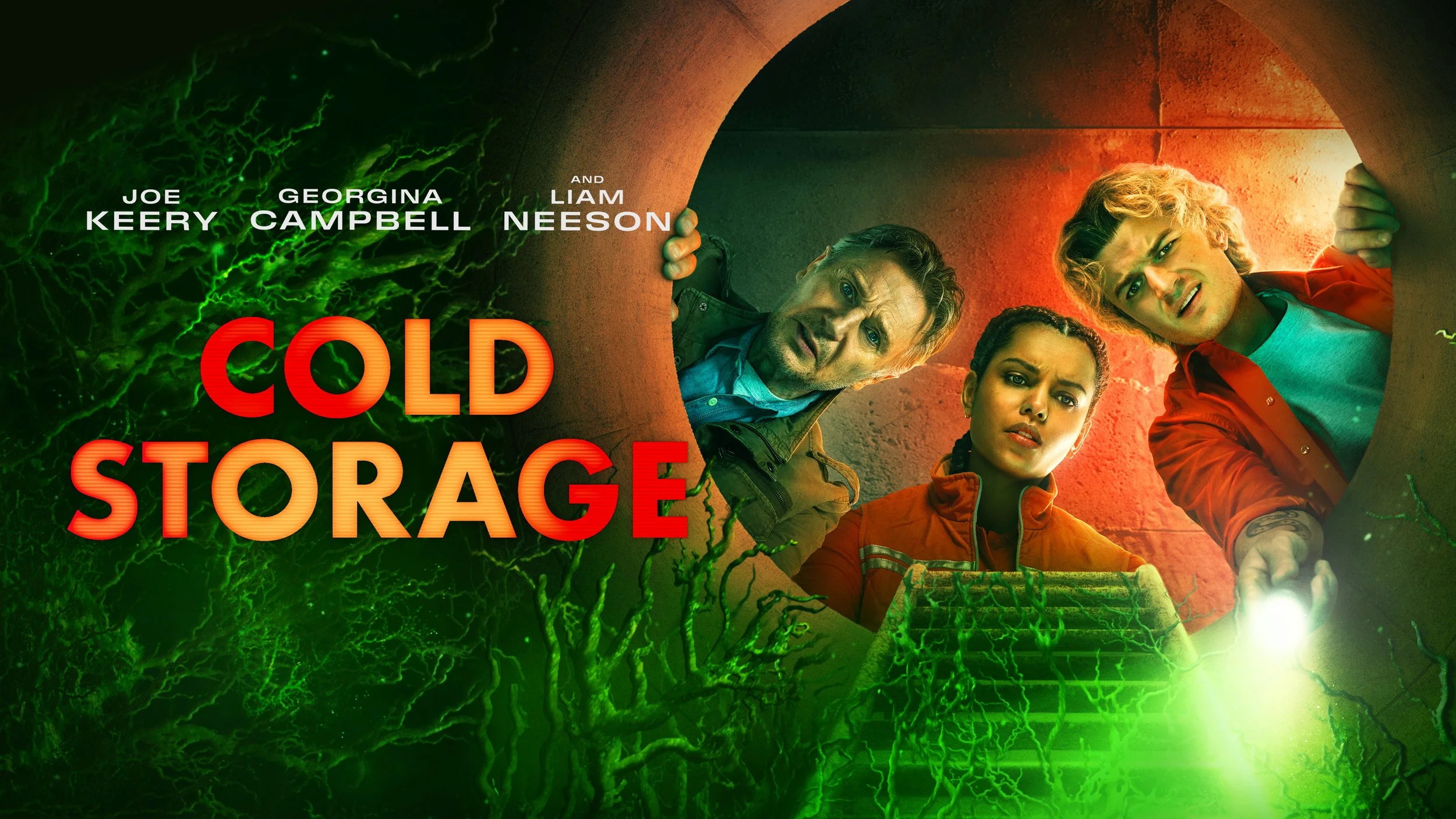
David Koepp is no stranger to genre cinema, having written the screenplay for such films as Jurassic Park, Spider-man and War of the Worlds. Where these titles are big budget, major studio productions, Cold Storage is a far more modest production with a smaller scope. Adapted from his own novel, the screenplay is by David Koepp and the film is directed by British film-maker Jonny Campbell. At first glance, Cold Storage seems a somewhat derivative science fiction horror film with a relatively modest budget, financed through a convoluted US and French co-production. Lurid green and red colours feature heavily in the marketing artwork and it is easy, after a cursory look, to write the film off as cheap, generic, direct-to-streaming filler. However, Cold Storage is prime example of why you should not judge a book by it’s cover, or in this case, a film by its posters and online advertising. It is in fact an amusing and fun endeavour that can fill an evening.
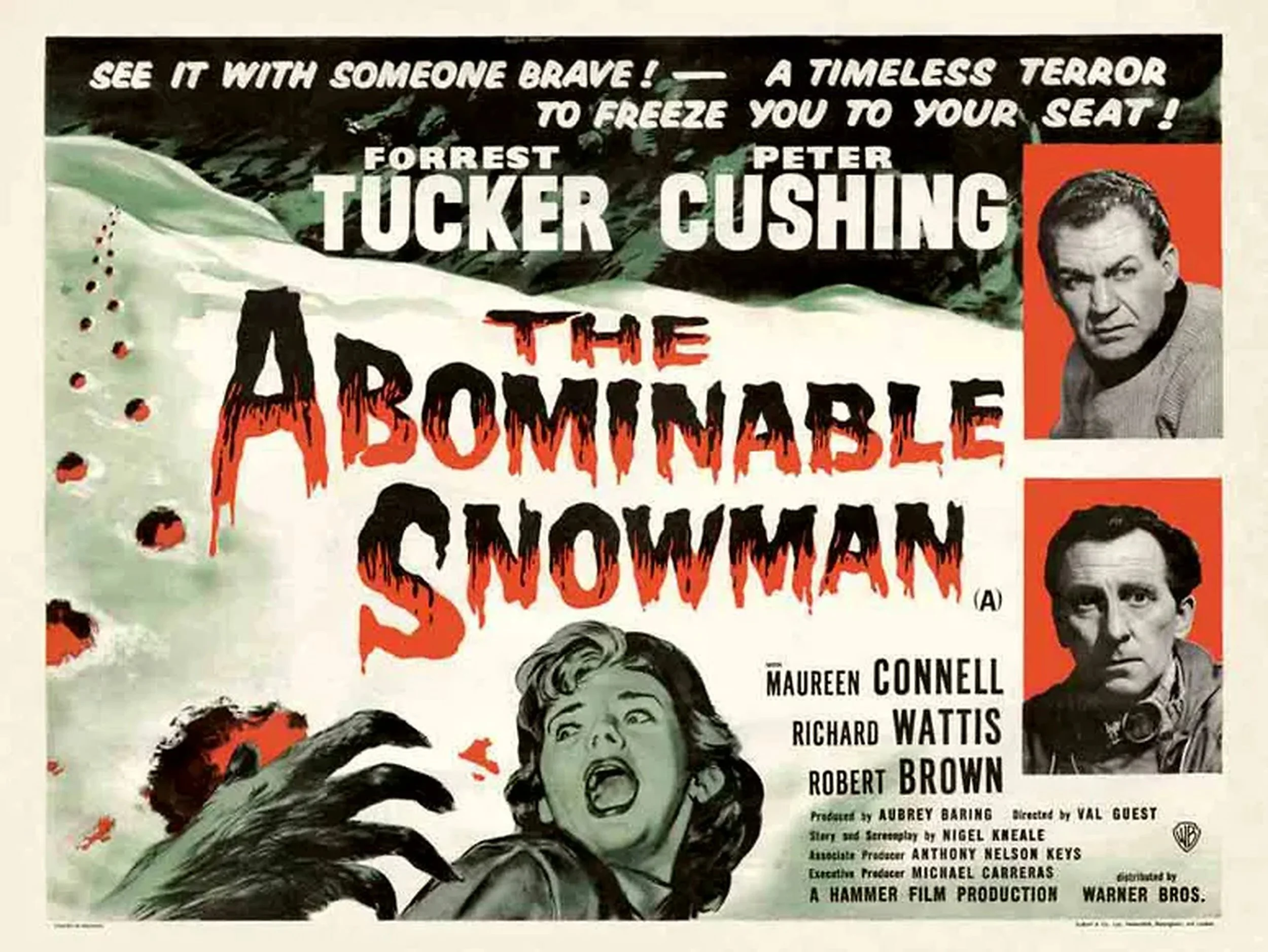
Despite being considered by many as an original story, The Abominable Snowman (1957) is in fact a remake of a made for television play, The Creature, that was originally broadcast in the UK in 1955. Hammer Films would often purchase the rights of popular TV programs and subsequently re-work them for mainstream, international cinema. Larger production budgets and fewer censorship restrictions allowed them to make their cinematic interpretations more lurid, thus commercially viable. Hence The Quatermass Xperiment, Quatermass II and Quatermass and the Pit were all given a big screen makeover and were commercially successful. The Abominable Snowman was written by acclaimed writer Nigel Kneale, who also wrote the original television drama and the aforementioned Quatermass trilogy. Although ostensibly marketed as a horror film this production is actually an interesting blend of psychological thriller and science fiction.
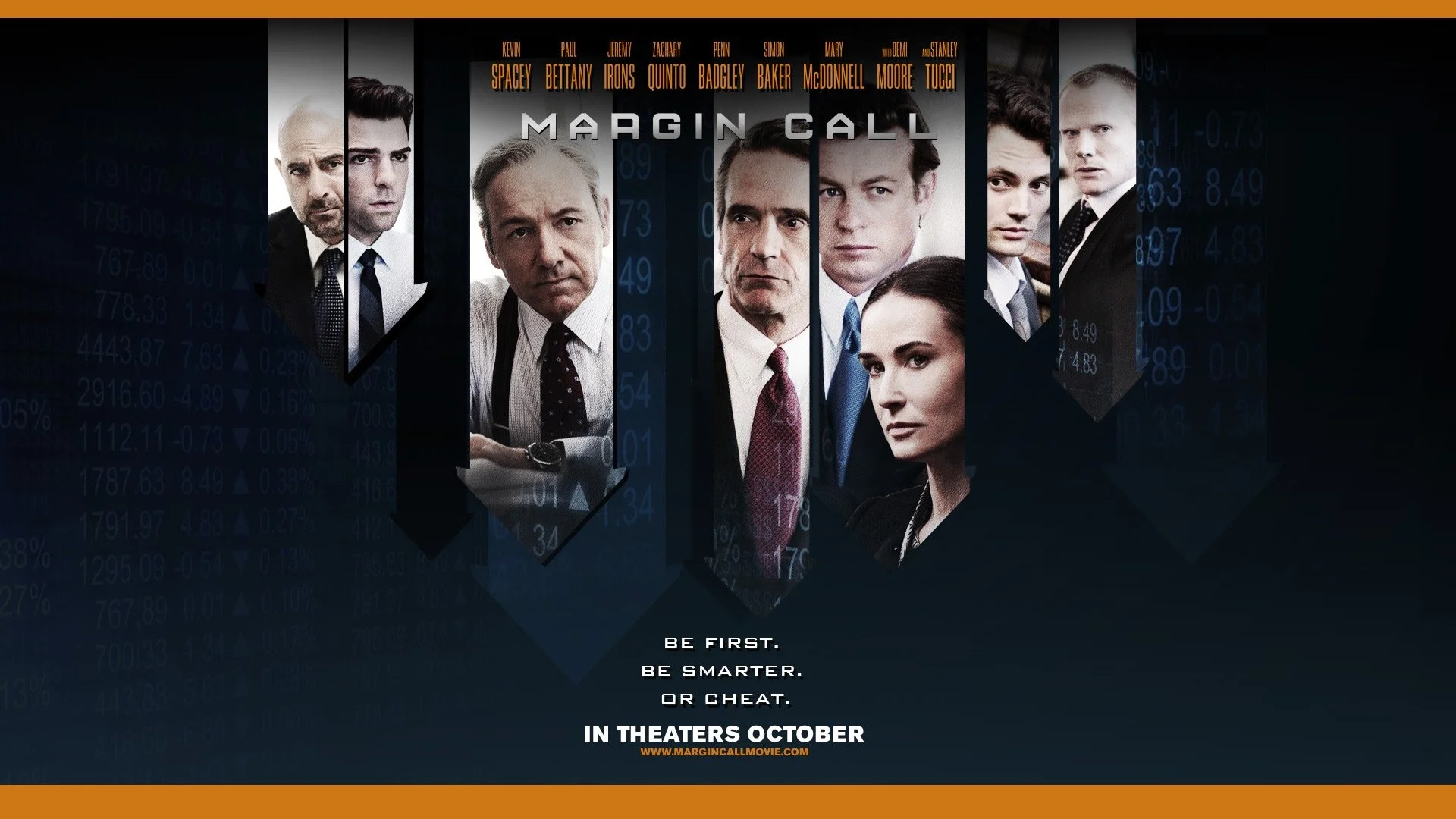
There are certain subjects that are notoriously uncinematic. These tend to be things that exist or are undertaken mainly in the mind, rather than expressed in an overtly physical way. Computing, science and mathematics are good examples. Writing code or working out complex equations does not immediately lend themselves to a visual medium such as cinema. Therefore, any film dealing with the world of corporate finance has its work cut out. Hence writer-director J C Chandor immediately deserves praise for making Margin Call, a film about the financial crash of 2008, as gripping and compelling as any political thriller. He does this by keeping the financial elements of the story to a minimum, choosing instead to focus upon those who have become aware of the imminent crisis and their reaction to it. However, the film remains a tough watch with regard to the some of the characters and their respective personal morality or lack there of.
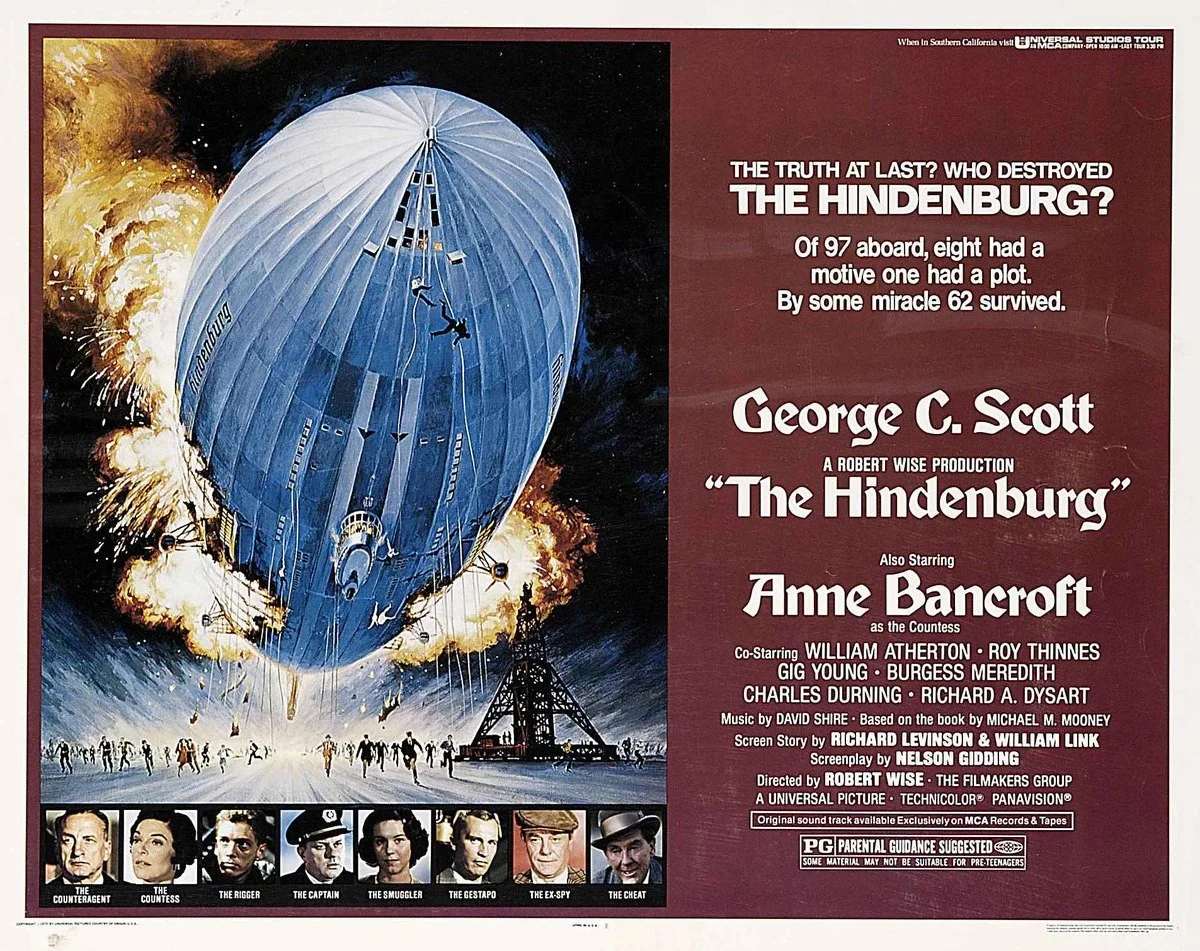
The 1937 Hindenburg disaster has remained an enduring mystery over the years. The physical mechanics of how this airship filled with 7,000,000 cubic feet of hydrogen gas caught fire has been fully explored over the decades and there are now several extremely plausible theories as to how it may have happened. However, there remains the possibility of sabotage. As such an idea has more dramatic potential than mechanical failure, it was used as the central theme of the 1975 disaster movie The Hindenburg. Directed by Robert Wise, the screenplay by Nelson Gidding explores a German resistance against the Nazi regime. The airship is targeted as it is a powerful propaganda symbol for Hitler’s Germany. Sadly despite some interesting ideas, a strong cast and solid, old school optical effects, The Hindenburg is a slow and somewhat ponderous production. Although the final 20 minutes of the film recreate the infamous explosion meticulously, it doesn’t quite compensate for the uneventful, dialogue driven investigation of the previous 100 minutes.

On the Eastern Front in 1943, a German Tiger tank crew led by Lieutenant Philip Gerkens (David Schütter) is sent on a mission to rescue the missing officer Paul von Hardenburg (Tilman Strauss) from a top-secret bunker that is at risk of falling into enemy hands. As they make their way through an eerie no-man’s land, they have to avoid Russian armoured vehicles that seem to be aware of their mission. They also encounter a German unit taking punitive action against a peasant village, in reprisal for partisan activity in the area. The youngest crew member, Michel (Yoran Leicher), talks of the land being home to ghosts and spirits. As the tank penetrates further into contested territory the crew become increasingly disturbed by the uncanny nature of their mission and begin to fall prey to their own inner fears.
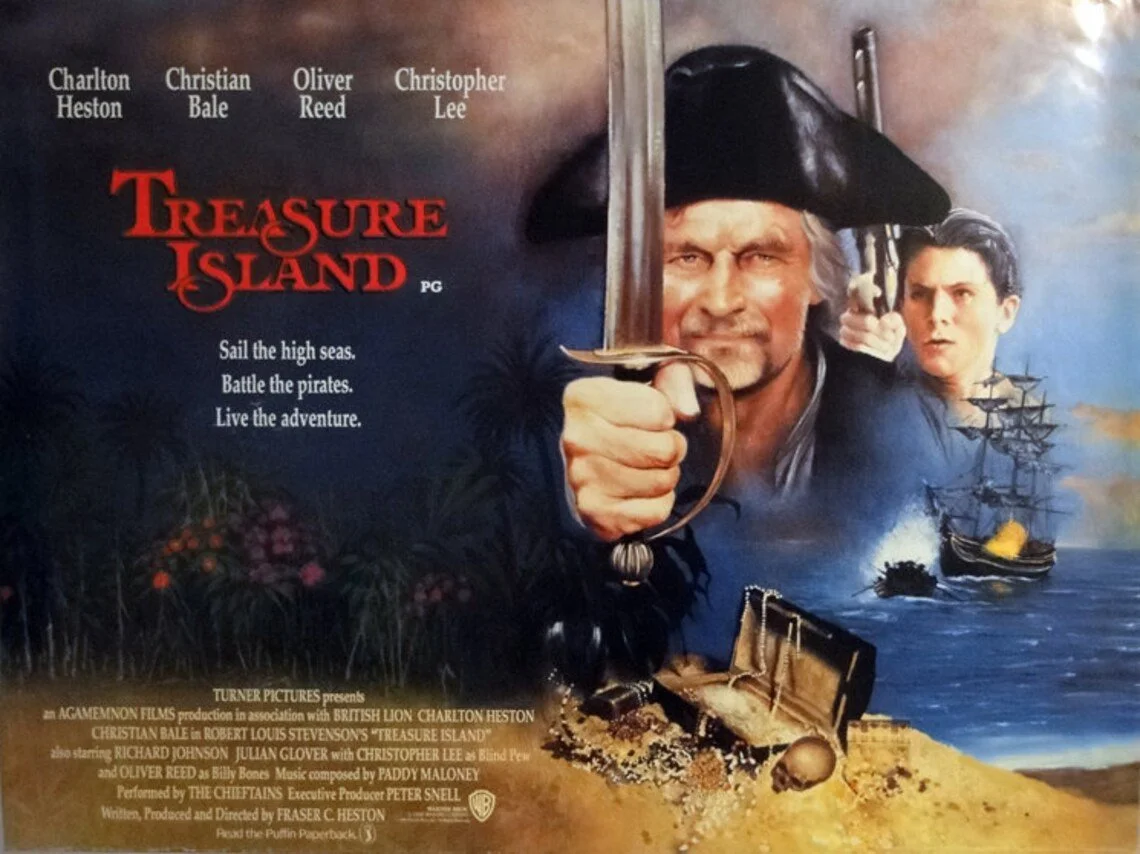
Robert Louis Stevenson’s classic novel has been adapted for cinema and television numerous times. Perhaps the most well known is the 1950 Disney version, starring Robert Newton as Long John Silver. His eye rolling performance and exaggerated West Country accent is credited with popularising the stereotypical form of “pirate speech" that has become the pop culture default. Although an enjoyable film, it does gloss over the more sinister aspects of both the source text and history, perpetuating the myth that pirates are just loveable scoundrels. Many subsequent adaptations have fallen into the same trap to a greater or lesser degree. However, that is not the case with the 1990 version of Treasure island, which was made for the TNT cable network and released theatrically outside of the US. This darker and notably more violent adaptation closely follows the source text and is widely considered the most faithful to the book.
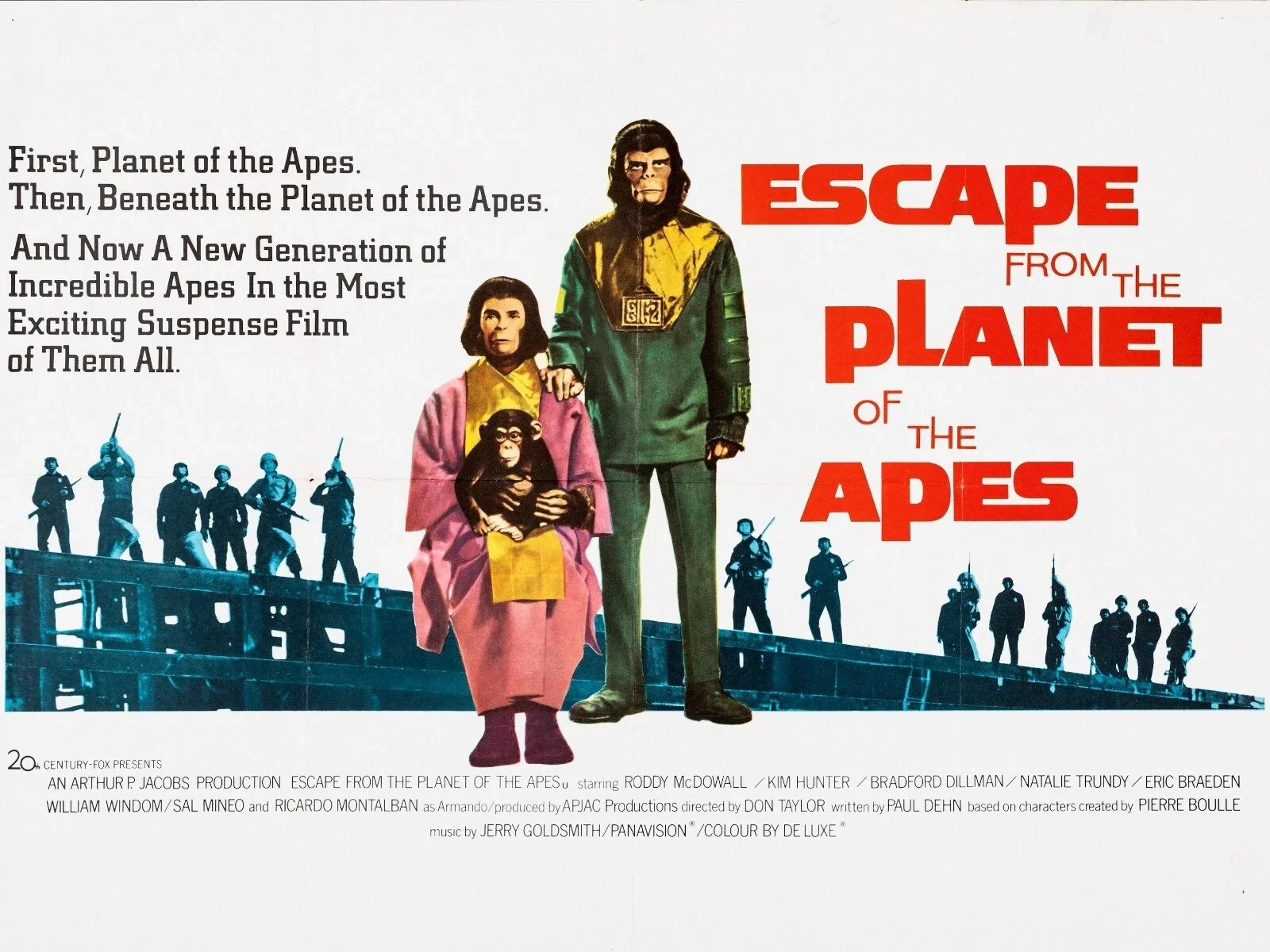
The Planet of the Apes movie franchise took a radical change of course with its third entry in the series. The first two films were set in the future and benefited from high production values to help realise a post apocalyptic earth. However, due to a substantial reduction of budget, Escape from the Planet of the Apes uses a time travel plot device to bring the ape protagonists to present day Los Angeles (1971 in this case). The result is a film with a much smaller narrative scope. However, although it lacks the science fiction spectacle of its predecessors, it features an interesting satirical exploration of celebrity culture and ponders what it is like to be deemed an enemy of the state. As ever, Roddy McDowell and Kim Hunter provide exceptional lead performances as the Chimpanzees Cornelius and Zira. Escape from the Planet of the Apes also captures the pop culture vibe of seventies America.
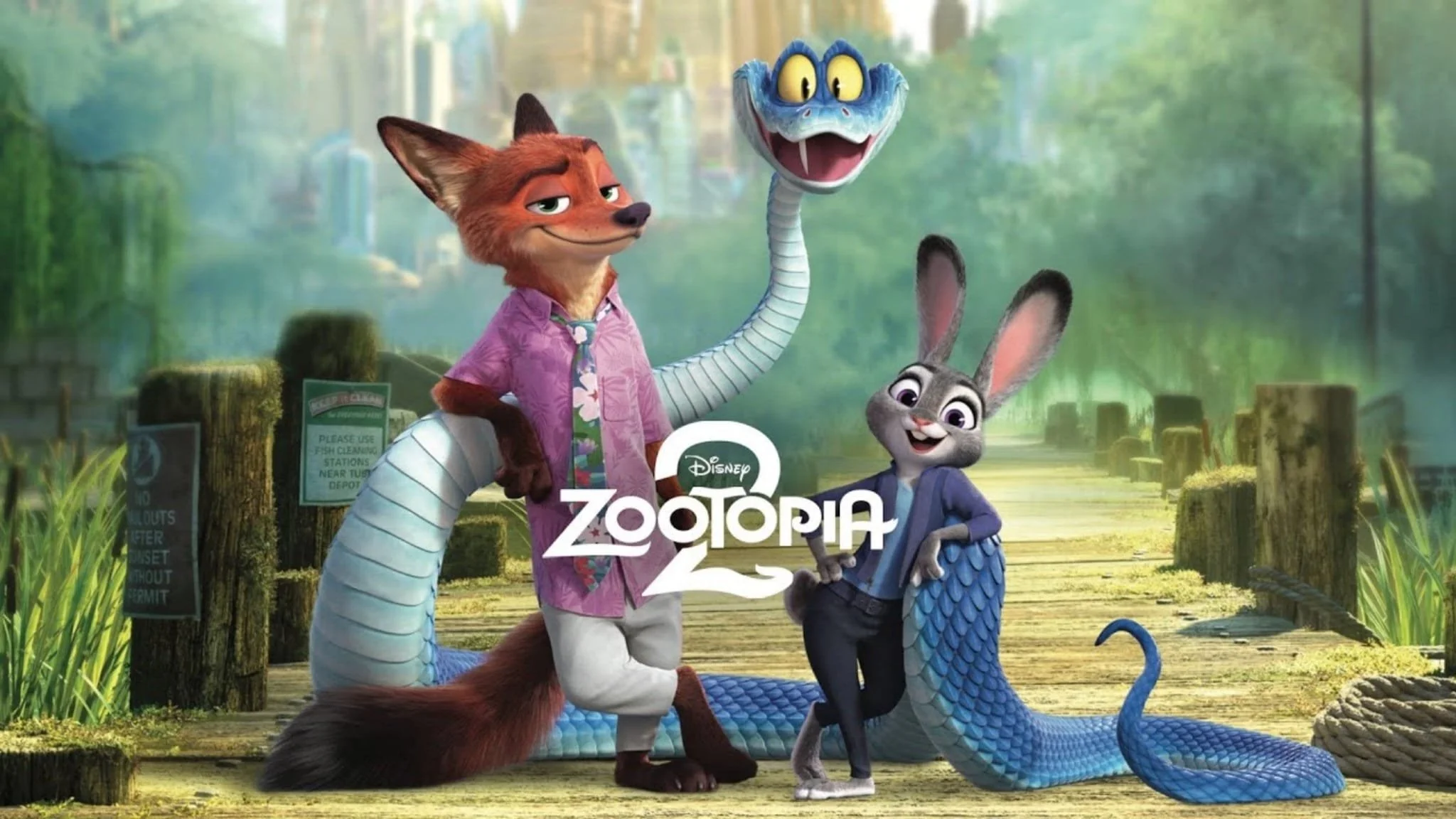
It is not unusual for Disney to change film titles when marketing them outside of the US. In 2016 they renamed the animated feature film Zootopia to Zootropolis in the UK and Europe to avoid trademark conflicts with other existing businesses. For example there is a Danish zoo which already holds the “Zootopia” name. Similarly, in Germany there is a children’s book which caused copyright conflict, which led to the film being released under the title Zoomania. Such changes, although practical for legal reasons, can sometimes cause a degree of confusion. Especially as there are numerous, low budget productions companies that go out of their way to produce similarly titled “mockbusters” whenever there are big, tentpole, releases. So for clarity, Zootopia 2 has been released in the UK as Zootropolis 2.
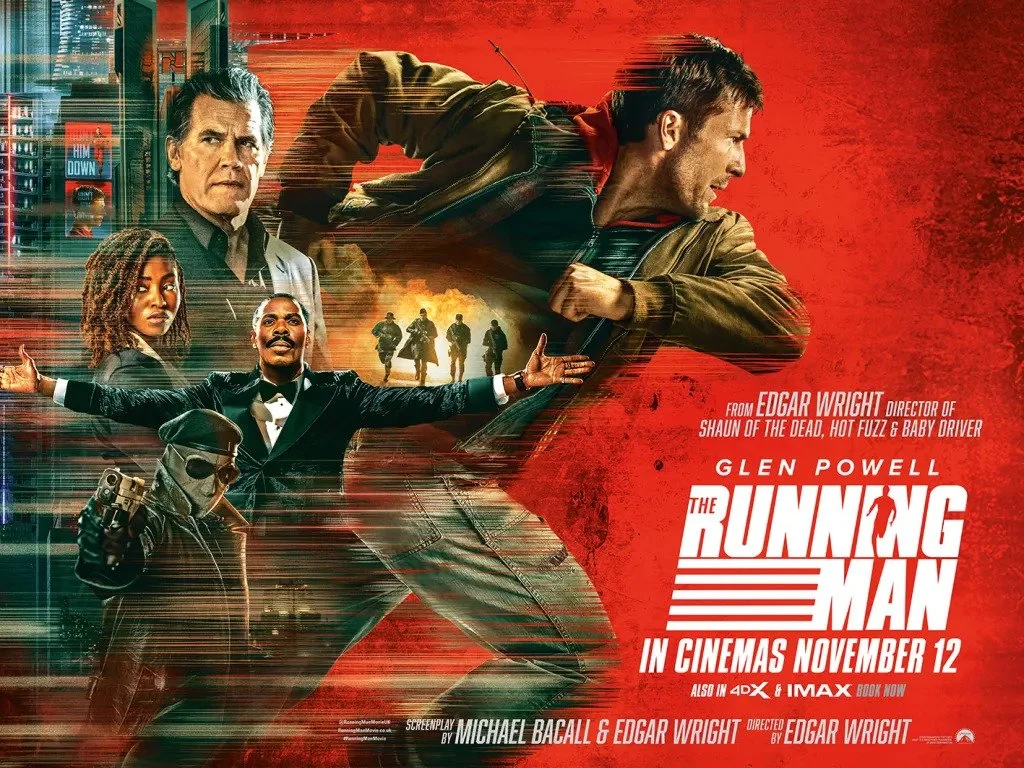
Stephen King’s dystopian story, The Running Man, was previously adapted very loosely in 1987, as a vehicle for Arnold Schwarzenegger. That version focused mainly on the “Battle Royale” element of the story and leaned heavily into Arnie’s personality, rather than the politics of the book. It also wasn’t well received by the author. Edgar Wright’s remake follows the source text a lot more closely and is far more interested in its political themes and wider social commentary. Furthermore, this version re-establishes the everyman quality of the hero of Ben Richards, rather than him being the muscle bound, ex-military hero as per Mr. Schwarzenegger’s prior interpretation. This time round, The Running Man uses a lot of the visual and narrative tropes of contemporary reality TV, making this forty three year old story very relevant to today’s viewers and couching the film in a style that is recognisable and accessible.
The Haunted Dolls House is a short film based on a story by M.R. James about a unique antique that is subject to supernatural phenomenon. Adapted by Stephen Gray and David Lilley, this is the third of three short films based upon James’ work that the pair have made. It stars Steven Dolton as Mr. Dillet, a collector of antique dolls houses, who acquires a bargain only to discover that it harbours a ghostly secret. Made on an extremely modest budget over the course of 2012 this clever, innovative and rather sinister adaptation is a fine example of short film creativity. It manages to offer a unique visual depiction of M.R. James’ classic story whilst capturing the unsettling quality of the author’s work. Like so many independently made short films it is clearly a labour of love, made with modest resources. It succinctly captures the spirit of the author’s work and is both innovative and rewarding.
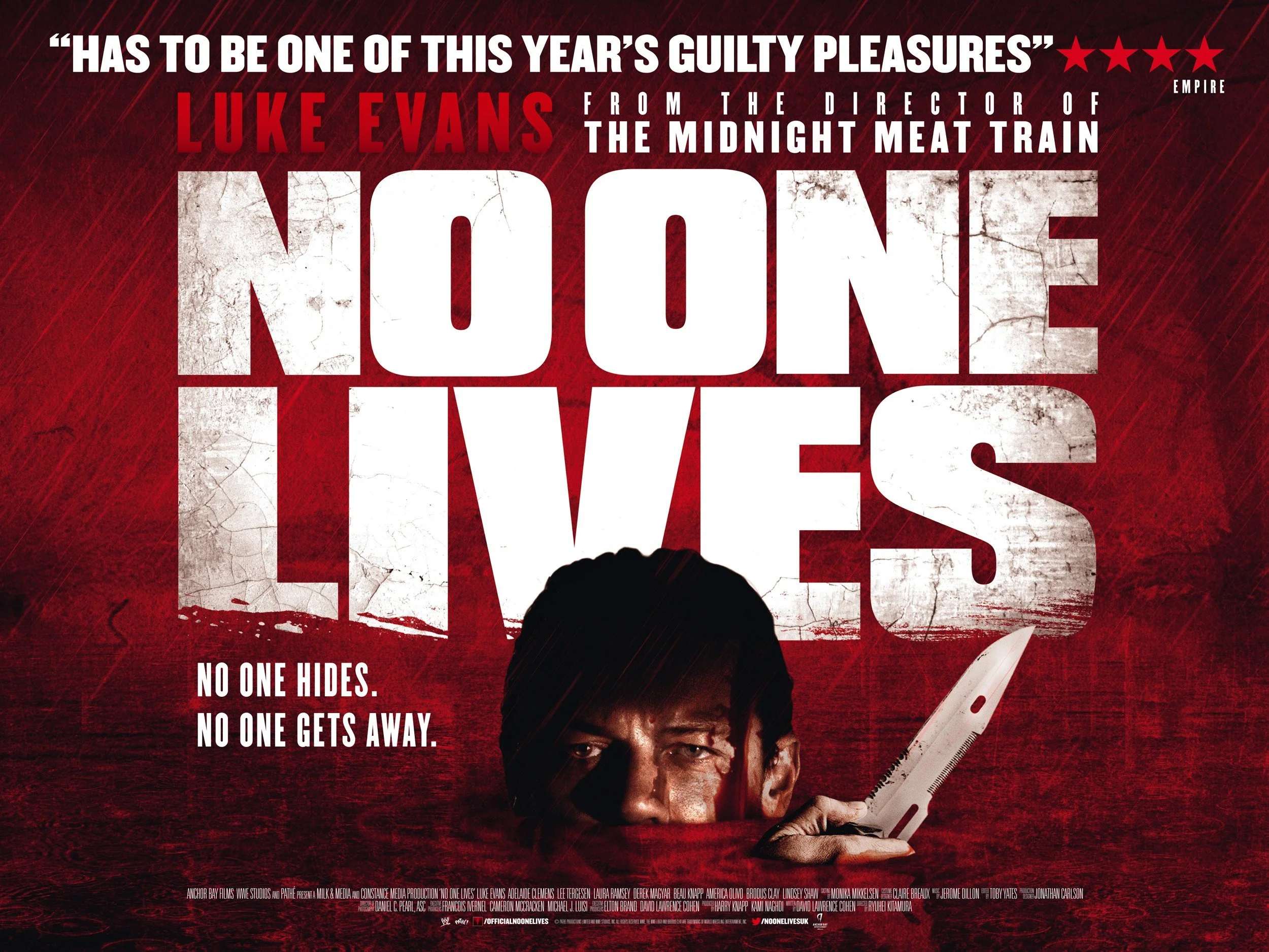
A lot of people may know Luke Evans from the live action version of Beauty and the Beast or Peter Jackson’s The Hobbit trilogy. With his matinee idol good looks, charming Welsh demeanour and his “smoky” tenor singing voice, he projects a sense of old school stardom. Which brings us to No One Lives; a film which is a radical departure from his previous work. His performance is disconcerting to say the least and the film is somewhat unhinged. Directed by Ryuhei Kitamura, who made an interesting adaptation of Clive Barker’s The Midnight Meat Train, this cinematic outing is similarly replete with robust shocks and gore. There are some interesting ideas about the nature of violence, Stockholm Syndrome and whether one should deny or embrace one’s nature. However, these are ultimately minor asides. Philosophical musings in between bouts of surprisingly striking unpleasantness.
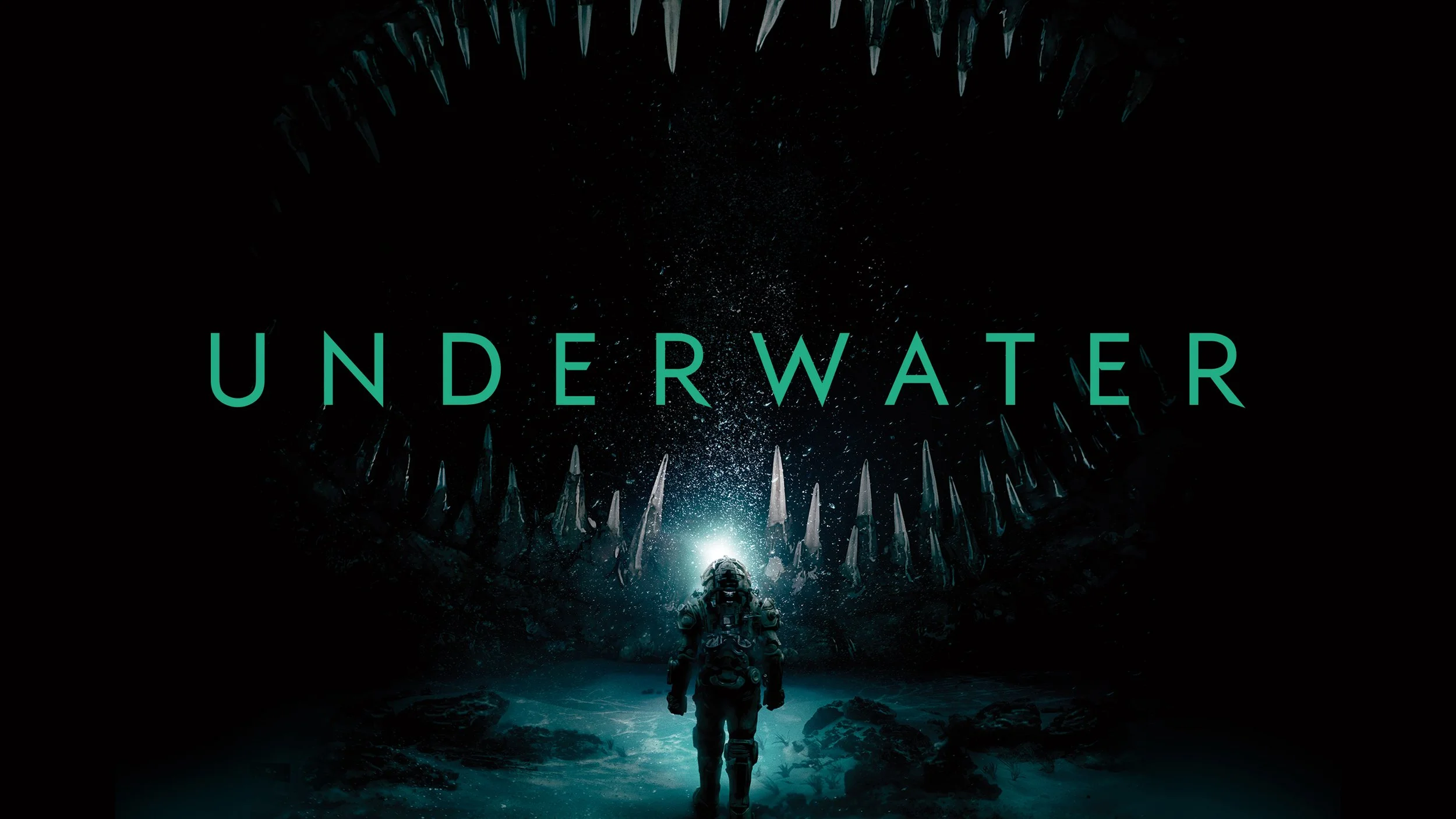
In the near future, Kepler 822, a research and drilling facility located at the bottom of the Mariana Trench, suffers a sudden and catastrophic structural failure. There are only six survivors. Mechanical engineer Norah Price (Kristen Stewart), Captain Lucien (Vincent Cassel), biologist Emily Haversham (Jessica Henwick), engineer Liam Smith (John Gallagher Jr.) and crew members Rodrigo (Mamoudou Athie) and Paul (T.J. Miller). As all the functional escape pods have been used and they are unable to contact the surface, the Captain suggests using pressurized suits to walk one mile across the ocean floor to the Roebuck 641 drill installation. There they will find more escape pods. However, it soon becomes apparent that the disaster was not caused by an undersea earthquake and that they are not alone as they make their journey.
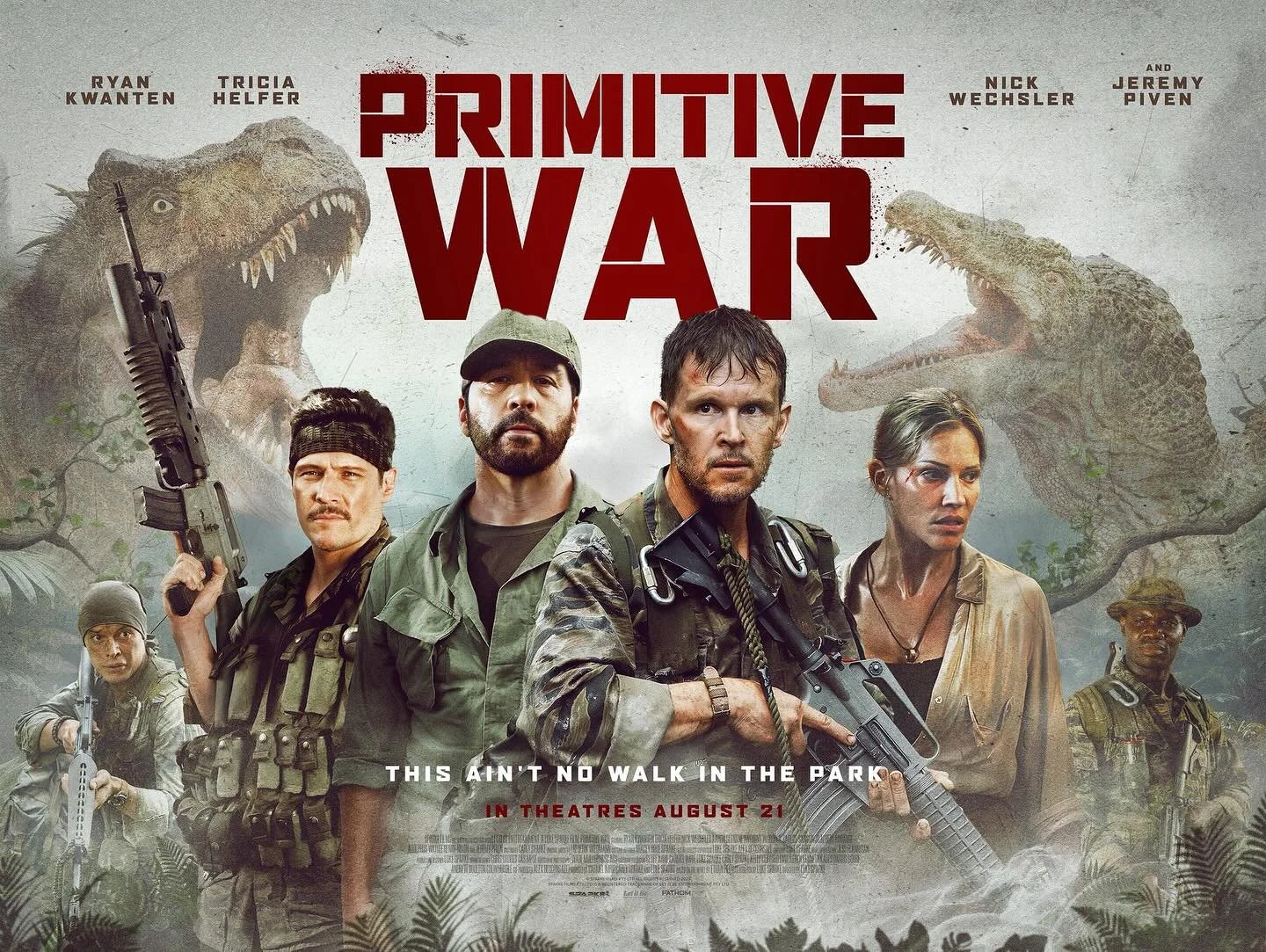
One of the most common objections raised regarding the Jurassic Park/Jurassic World franchise is that the films are specifically made to obtain a PG-13 rating from the Motion Picture Association, for purely commercial reasons. Hence, in all films, there is little on screen violence and the dinosaurs are mainly portrayed as a threat and a means of providing jump scares. When a character is killed by a dinosaur it usually happens off screen, is obscured by something else in frame, or is shown in long shot with very little detail. The realities of being eaten alive by a predator are conspicuously absent. Hence, audiences looking for films featuring more graphic dinosaur attacks, have not been well catered for apart from some minor direct-to-video titles. Primitive War finally fills this gap in the market with a frenetic genre mashup that strives to punch above is budgetary weight.
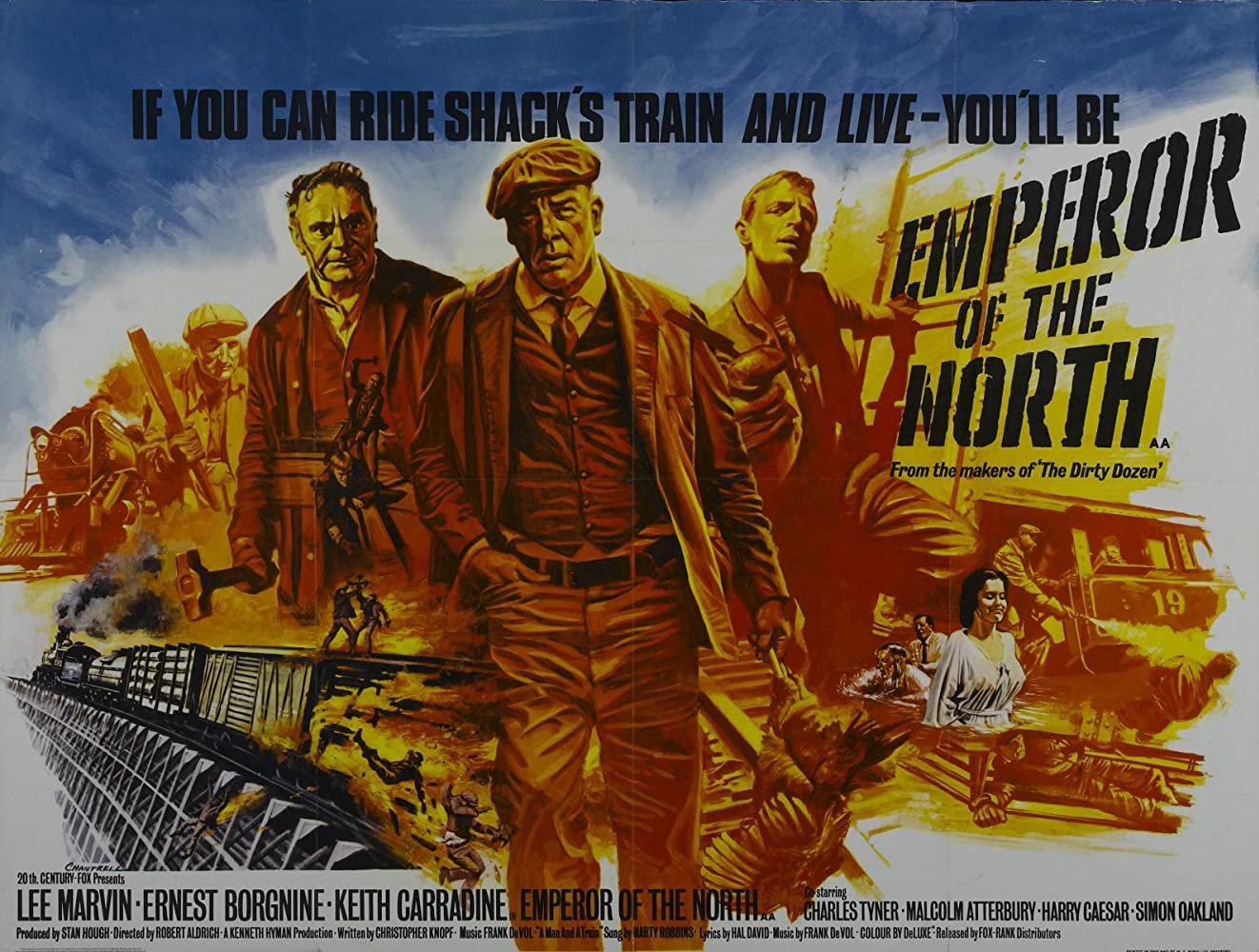
During the seventies, cinema was not only a source of mass, commercial entertainment but was still perceived as a medium for intellectual and philosophical discourse. Television was a poor relation in terms of art and cultural significance. Film was where the so called auteur director could muse and ruminate upon the nature of the human condition and audiences could subsequently gush sycophantically about their work at dinner parties. Or something like that. Let it suffice to say that some film makers were still indulged by studios and financiers, who were still keen to cash in on the cultural sea change that came to Hollywood in the late sixties. It’s difficult to see how a film such as Emperor of the North (AKA Emperor of the North Pole) could have been made otherwise. A film set in the Great Depression about a hobo illegally travelling on freight trains and his feud with a ruthless conductor.
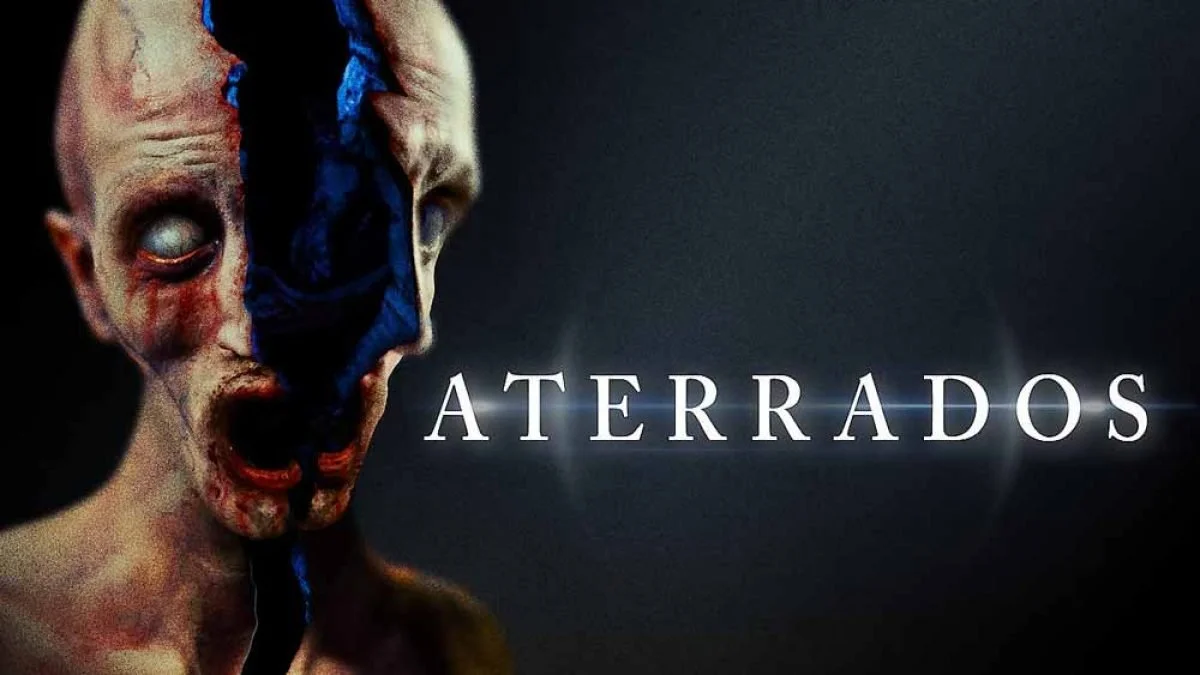
In Buenos Aires, Clara (Natalia Señorales) hears voices emanating from the plughole in her kitchen sink. The voices seem to be plotting against her. Her husband Juan (Agustín Rittano) says the sounds are coming from next door. That night, Juan finds Clara’s dead body levitating in their bathroom, slamming against the wall by an invisible force. Meanwhile their neighbour, Walter (Demián Salomón), is experiencing supernatural occurrences while he tries to sleep. An invisible force repeatedly shakes his bed. After using a video camera to film these events, he sees a tall, cadaverous figure emerging from under the bed, standing over him as he sleeps. Across the road, Alicia (Julieta Vallina) is grieving for her recently deceased son, who was run over outside Walter’s house. Alicia's ex-boyfriend, police commissioner Funes (Maximiliano Ghione) calls Jano (Norberto Gonzalo), a paranormal investigator and the pair soon discover more supernatural occurrences in the area.

Black Sabbath (AKA I tre volti della paura) is a 1963 horror anthology film directed by Mario Bava. Although an Italian production, the film was co-financed by American International Pictures and as such was conceived to appeal to US audiences. Hence, the English dialogue edit of the film which was released in America differs significantly to the original Italian version. Despite the presence of the legendary Boris Karloff and the popularity of both anthology and gothic horror at the time,the film was only a modest success at the US box office and did not do well in Italy. However, in more recent years there has been a critical reappraisal of Black Sabbath, especially the Italian dialogue version. Many aspects of the film which are standard genre tropes today, were in fact novel at the time. Also despite the production mainly being studio bound, the film oozes style and has a striking visual aesthetic.
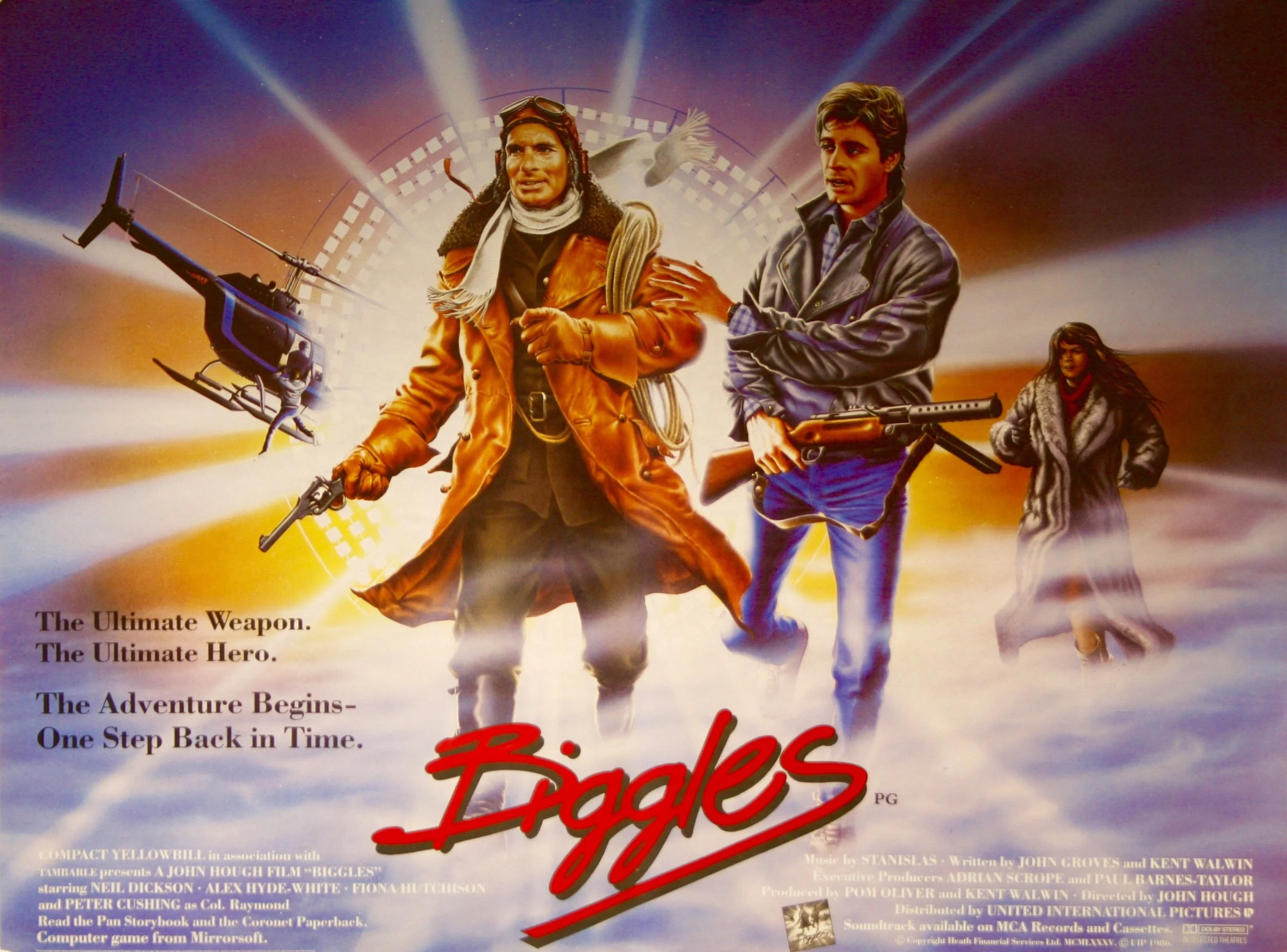
After the success of Raiders of the Lost Ark in 1981, filmmakers scrambled to find existing intellectual properties that they could use for similar films. Hence archaic heroes such as Alan Quatermain were hastily given a modern makeover and thrust into generic movies, in a vague attempt to replicate Steven Spielberg’s successful formula. Which brings us neatly on to James Charles Bigglesworth AKA “Biggles”, a fictional pilot and adventurer from a series of books written by W. E. Johns between 1932 and 1968. Several attempts had been made in the past to bring this character to the silver screen, including one by Disney but they all failed. However, the commercial and critical success of Indiana Jones provided sufficient impetus to greenlight a new film. However, due to some curious production choices, when Biggles was finally released it was far from just a period set, action movie.
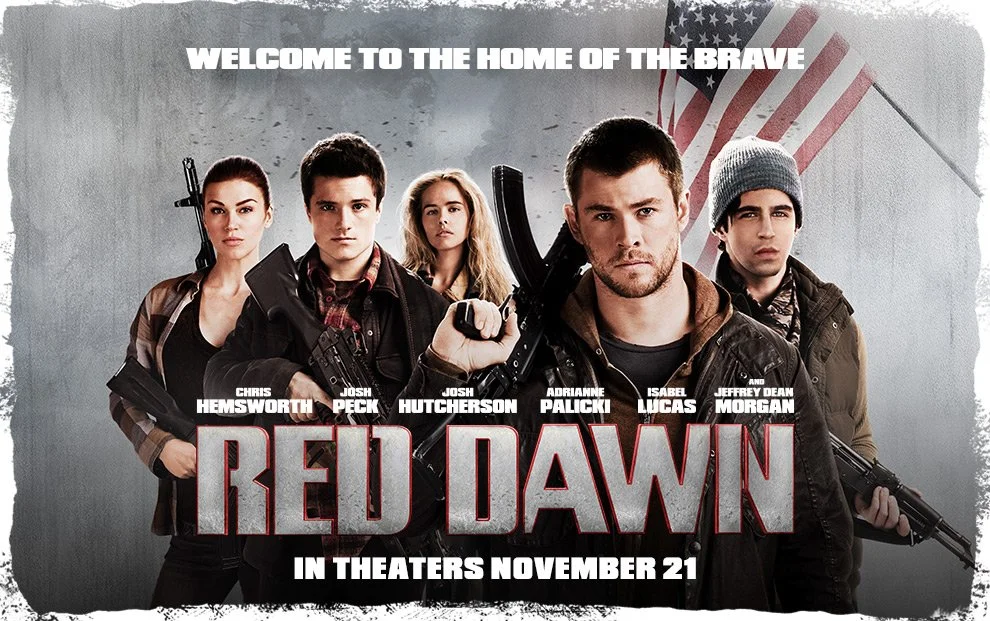
Setting aside the hubris of remaking a film such as Red Dawn, the 2012 reboot had a troubled production. Shot over the course of late 2009, on location in Michigan, MGM intended to release the film in September 2010. However, the studio’s financial problems became unsustainable over the course of that year and the film was shelved, while a financial solution was sought. Furthermore, while Red Dawn was in post production, there was a major economic shift within Hollywood due to the increasing importance of the Chinese market. This was a significant problem for MGM because the new version of Red Dawn had the Chinese invading the USA instead of Russia. Hence there were reshoots and the need for additional visual effects, so that the Chinese could be replaced with North Koreans. MGM eventually went bankrupt and the distribution rights to Red Dawn were sold off. The film was eventually released in 2012.
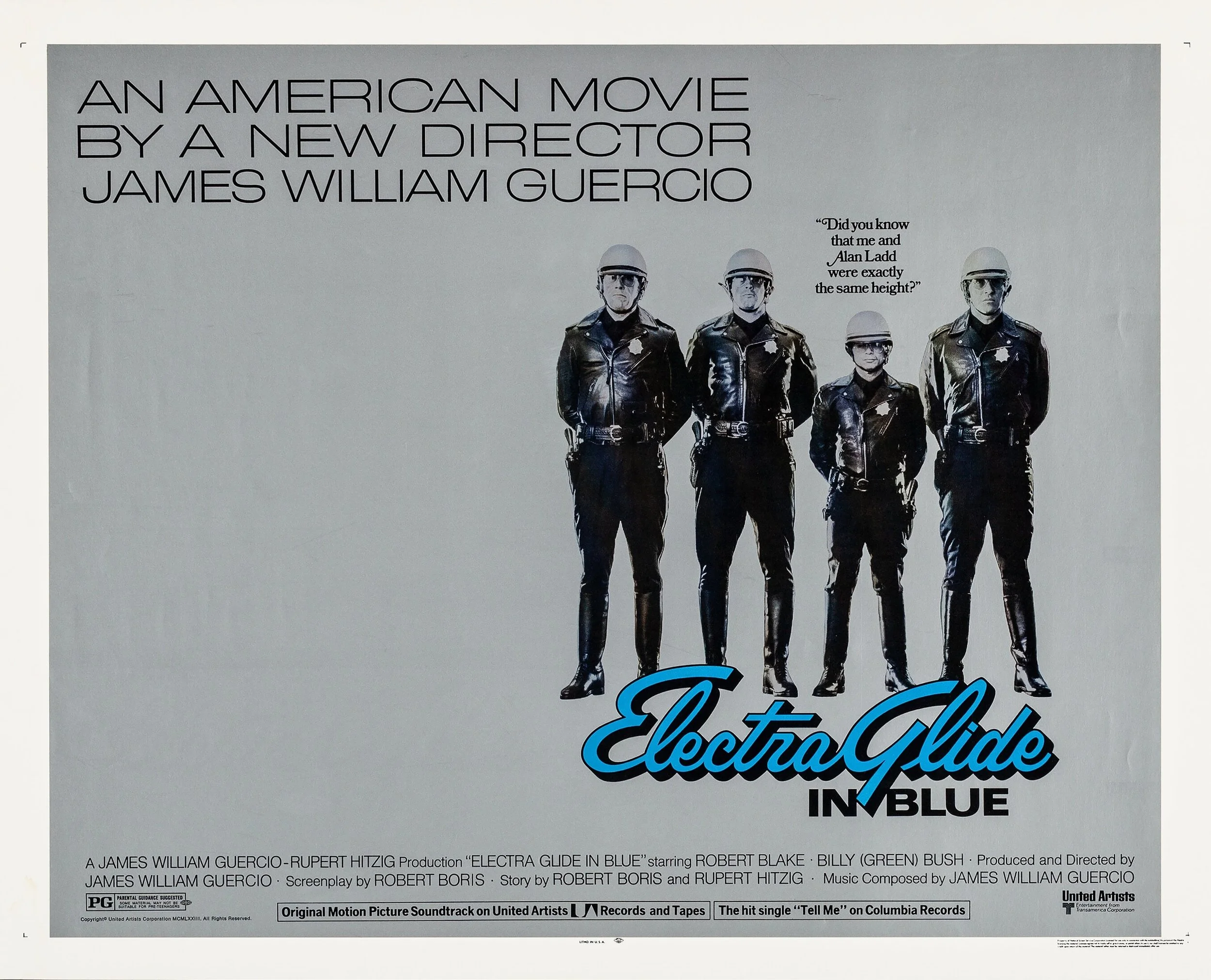
American music producer James William Guercio is primarily known for his work in the music industry. He was the producer of the band Chicago’s first eleven studio albums. In the mid-seventies he also managed the Beach Boys and was a member of their backing band. He was during this time, well known in his field and respected. In 1973, Guercio directed, produced and wrote the score for his first and only feature film, Electra Glide in Blue. He was 28 years old at the time. Upon release the film received mixed reviews from many traditional US newspapers, who were dismissive of its revisionist themes and poetical style. However, in Europe the film was received more favourably and was entered into the 1973 Cannes Film Festival. Fifty two years on and Electra Glide in Blue is now considered an overlooked cult classic and is analysed in a more measured fashion.
Music by John Williams is a documentary celebration of the famous composer and his illustrious body of work. It provides some interesting biographical background information as to how the man was born into a family of talented musicians. It then traces his rise from pianist for hire to the most well known film composer today. Along the way, anyone who is anyone in film and music appears to heap justifiable praise upon him and his body of work. It also features a continuous medley of John Williams’ greatest hits, as it catalogues his work in broadly chronological order. Music by John Williams is an upbeat and positive love letter to the composer and exactly what you would expect, when you consider that the documentary was produced by his friends and peers.