Awake (2007)
Publicity and word of mouth are curious bedfellows. Awake came to my attention mainly because it starred Hayden Christensen, an actor whose portrayal of a young Darth Vader, looms large over his career. Not necessarily for the right reasons. The gossip of the time inferred that his performance in Awake was of a similar nature. Yet the basic premise for the movie is quite intriguing, so I decided to see for myself. Medical based thrillers are a curious and underrepresented sub-genre. Directed by Joby Harold, Awake is a "high-concept" movie that deals with the universal fear of hospitals, surgery and "anaesthetic awareness". It also features several plot twists that takes the film in a direction that the viewer may not have anticipated. The production shows signs of being influenced by the works of Hitchcock and M. Night Shyamalan and the Italian Giallo genre.
Publicity and word of mouth are curious bedfellows. Awake came to my attention mainly because it starred Hayden Christensen, an actor whose portrayal of a young Darth Vader, looms large over his career. Not necessarily for the right reasons. The gossip of the time inferred that his performance in Awake was of a similar nature. Yet the basic premise for the movie is quite intriguing, so I decided to see for myself. Medical based thrillers are a curious and underrepresented sub-genre. Directed by Joby Harold, Awake is a "high-concept" movie that deals with the universal fear of hospitals, surgery and "anaesthetic awareness". It also features several plot twists that takes the film in a direction that the viewer may not have anticipated. The production shows signs of being influenced by the works of Hitchcock and M. Night Shyamalan and the Italian Giallo genre.
Clay Beresford (Hayden Christensen) is a young industrialist, with a heart defect. Secretly engaged to his secretary Sam (Jessica Alba), Clay worries about their future. He shares these with his heart surgeon friend, Dr. Jack (Terrence Howard) who urges surgery. On the very night of his secret marriage, a heart donor is found, and Clay is rushed into hospital. His controlling mother (Lena Olin) wants her choice of surgeon to handle the transplant. Once under general anaesthesia, Clay finds he is fully awake but unable to communicate his condition to any of the operating theatre staff. As the heart transplant procedure begins, Clay must endure the agony. With all his senses working, he soon learns that greater threats lie ahead and that his current situation is far from a medical mistake.
The narrative unfolds quite rapidly during the first act of Awake, moving the film along at a fast pace. Unfortunately, this is at the expense of character development. Both Alba and Christensen give adequate performances, but the film is carried by the Olin, and Howard who frankly have more interesting roles to sink their teeth into. I got the feeling that there was a lot of dialogue removed from the final edit of the film. The narrative seems too focused on moving forward. There are apparently seven deleted scenes on the Region 1 DVD release. Perhaps the film would have benefited from their reinstatement.
The despite horrific idea of "Anaesthesia Awareness", it is explored with a degree of subtlety. The scenes of surgery are unpleasant but not excessive and are sufficient to put your teeth on edge. Writer and director Joby Harold decide to employ several plot twists that increasing tax the audience’s suspension of disbelief. It is here that opinion divides. Some critics felt that there were simply too many narrative indulgences that strained credibility. There is also a specific point in the story when the film takes an unexpected turn into a completely different genre. I would also argue that even the most casual of viewer would see through some of the medical inconsistencies.
Awake had a troubled production with multiple cast change. As a result, the studio lacked confidence in the film. In more experienced hands, the scares would have been harder and the performances stronger. Yet despite these shortcomings, I still enjoyed Awake. It reminded me of film noirs of the fifties such as DOA and also of the sort of tales you’d find in The Twilight Zone. Even considering its faults, at least we have a film that tries to approach its subject with a degree of creativity. Awake does not wholly deserve the battering it received at the hands of the critics. So, if you are of a forgiving nature and have a liking for more traditional thrillers, it may be worth ninety minutes of your time.






Gone Girl (2014)
Gone Girl is an exquisitely crafted piece of contemporary film making. Its visual aesthetic is sleek, elegant and ever so modern. At times the interior shots of Nick and Amy’s Missouri home, take on an almost clinical quality. Everything is of the finest quality but utterly soulless. This of course is the central theme of the entire movie. This is a tale to two people with no true identity of their own, who are desperately pursuing an abstract concept of who and what they should be. Gone Girl is about utterly dysfunctional, broken people, the worst excesses of the consumerist culture and the stark impact that rolling news has upon public opinion. It is not the overall storyline that is horrific but the reality of the world in which it takes place. It makes for fascinating viewing but leaves one feeling incredibly bleak about certain quarters of society.
Gone Girl is an exquisitely crafted piece of contemporary film making. Its visual aesthetic is sleek, elegant and ever so modern. At times the interior shots of Nick and Amy’s Missouri home, take on an almost clinical quality. Everything is of the finest quality but utterly soulless. This of course is the central theme of the entire movie. This is a tale to two people with no true identity of their own, who are desperately pursuing an abstract concept of who and what they should be. Gone Girl is about utterly dysfunctional, broken people, the worst excesses of the consumerist culture and the stark impact that rolling news has upon public opinion. It is not the overall storyline that is horrific but the reality of the world in which it takes place. It makes for fascinating viewing but leaves one feeling incredibly bleak about certain quarters of society.
Failing author Nick Dunne (Ben Affleck) comes home to find his wife Amy (Rosamund Pyke) missing and signs of struggle. The Police are initially sympathetic but when Nick fails to behave in accordance with public expectations at the press conference, opinion and tabloid outrage turns against him. It is not long before evidence indicates that not all is well in their relationship and Nick becomes the prime suspect in a potential murder investigation. Of course, nothing is as it seems and the movie re-invents itself several time during the two and half hour duration.
Gone Girl does not shy away from examining the reality of a failed relationship and the dialogue is frequently ripe and the camera unflinching. Director David Fincher, along with writer Gillian Flynn who adapted her own novel, dissects the hollow existence of the aspirational classes as well as their warped interpretation of the institution of marriage. Perhaps the movies boldest move is its scrutiny of sexual politics and gender roles in modern America. There are monologues stripped straight from the book that may shock those of a more conservative nature, in that “did she really say that out loud” way?
Like so many movies of this nature that are centred on a complex mystery and plots within plots, it falls down somewhat during the third act when trying to neatly bring all the plot threads together. Yet this does not mitigate the films core themes, nor diminish the strength of the lead performances. Rosamund Pyke is hypnotic whenever on screen. It would also be remiss of me if I didn't mention the movies only likeable character that of Detective Rhonda Boney played with conviction by Kim Dickens.
On many levels Gone Girl is an extremely laudable piece of film making. It is confident, technically outstanding and emotionally detached from its subject matter. Often, we are simply shown events and left to dwell on them from our own moral and ethical perspective. Yet my enjoyment of the movie was tempered by the fact that I was consciously prejudice towards the central characters. This is a movie about what I consider to be awful human beings and the very culture that makes them the way they are. Such an exploration is fascinating to behold but simultaneously repellent due to my lack of empathy towards these dry husks, masquerading as people.
World War Z (2013)
Contrary to a lot of the pre-release doom and gloom regarding re-edits and extensive new footage being shot, World War Z turned out to be far from the disaster that some critics implied. Ultimately there were some good ideas and snatches of interesting dialogue. Some of the characters were unusual and there seems to have been an attempt do something different with the genre. All of these things are laudable. Unfortunately, despite these positive attributes the movie clearly shows the signs of post-production interference and material from the extensive re-shoot is all too apparent. That’s not to say that is bad because that is not the case. It’s because it is noticeably different in style and tone from the rest of the film.
Contrary to a lot of the pre-release doom and gloom regarding re-edits and extensive new footage being shot, World War Z turned out to be far from the disaster that some critics implied. Ultimately there were some good ideas and snatches of interesting dialogue. Some of the characters were unusual and there seems to have been an attempt do something different with the genre. All of these things are laudable. Unfortunately, despite these positive attributes the movie clearly shows the signs of post-production interference and material from the extensive re-shoot is all too apparent. That’s not to say that is bad because that is not the case. It’s because it is noticeably different in style and tone from the rest of the film.
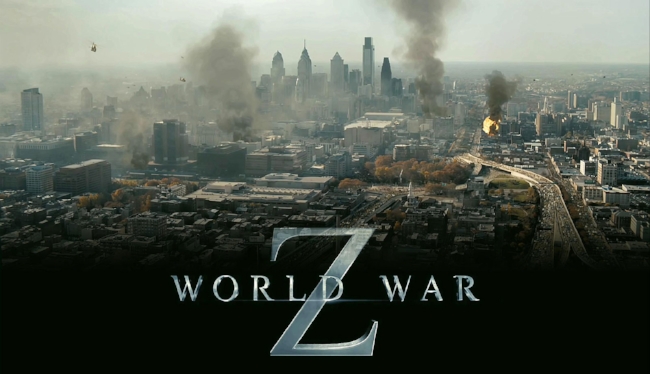
World War Z performs best in the first act, in which the global disaster is convincingly set up. We are efficiently introduced to a likeable lead Gerry Lane (Brad Pitt) and his family and within minutes they are caught up in a major outbreak incident in Philadelphia. The movie excels at showing large scale and convincing scenes of destruction, scratching that perennial cinematic itch audiences seem to have for scenes of an apocalyptic nature. Yet even at this point, the narrative has moments of hesitation which undermine the overall movie. World War Z is reticent to clarify exactly whether this is a true Zombie scenario or some sort of viral outbreak. If this was done for dramatic effect, I can understand it as a plot point to reinforce the sense of national confusion. But I feel the ambiguity is actually a result of the movies re-editing.
The plot soon takes on a globetrotting sub plot as our World Health Organisation hero (Brad Pitt) travels from South Korea, to Israel and then to Wales in attempt to find patient zero. We meet many characters along the way, yet few of them have sufficient screen time to become anything more than just a means of exposition. The Navy seal officer who sacrifices himself, the ex-CIA agent turned arms trader, the Hispanic parents who become infected and turn on their own children, all show promise dramatically. The dialogue also has possibility, showing a leaning towards the more philosophical. Perhaps an extra twenty minutes of material could correct these deficiencies. Zombies hurling themselves at potential victims cannot sustain a movie.
As I stated earlier the final act, although interesting, doesn't sit well with the previous two. Set in a WHO laboratory in Wales, it is a far more sedate and traditional denouement. The absence of the shaky cam and lightning editing of the first hour is noticeable. There is also the incongruous casting of Peter Capaldi as a research scientist which, after years of seeing him as Malcolm Tucker in The Thick of It, it becomes hard to see him in a role where every other word is not a profanity. Furthermore, the movie's conclusion, although plausible within the context of the story, is derailed by it being solely the brain work of Gerry Lane. The whole point of World War Z is surely its global dimension and thus its resolution is based upon the involvement of multiple parties. The one man saves the day concept seems somewhat lazy.
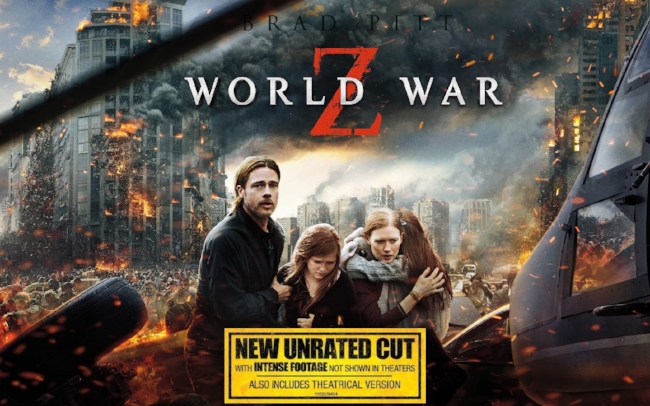
Ultimately, despite promising concepts World War Z fails to satisfy any of its target audiences and demographics. The PG-13 rating forces too many restrictions upon a genre that by its very nature has to be visceral. Death is cruel and ugly, and zombies reflect this. Yet such a low rating has meant that the producers have had to obfuscate and fudge the violence and horror through rapid editing and out of shot framing. The movie does have a dark and brooding tone, but this is not enough to sustain the horror theme alone. Perhaps Max Brooks' book, which is very challenging to adapt, would have been better suited to a TV mini-series. But is that required in the wake of The Walking Dead? I certainly question whether Marc Forster was the right person to direct World War Z. In the mean time if you do elect to watch World War Z then seek out the unrated version which at least has a little more gore and an increase sense of urgency.




Chappie (2015)
In the near future, crime is patrolled by an oppressive mechanized police force. But now, the people are fighting back. When one police droid, Chappie, is stolen and given new programming, he becomes the first robot with the ability to think and feel for himself. As powerful, destructive forces start to see Chappie as a danger to mankind and order, they will stop at nothing to maintain the status quo and ensure that Chappie is the last of his kind. Sony Pictures Entertainment
There is much to praise about Chappie, which in turn makes me reticent to catalogue its subsequent failings. Once again Blomkamp uses a near-future Johannesburg to effectively paint a convincing picture of urban decay and social division. He manages to seamlessly integrate CGI with the physical and the overall design of all the paramilitary hardware on display is very credible. Image Engine once again created some solid visual effects and actor Sharlto Copley provides not only the voice for the titular Chappie but also a motion captured performance. The screenplay by Neil Blomkamp and Teri Tatchell makes a laudable attempt to explore the subject of Cartesian Dualism.
In the near future, crime is patrolled by an oppressive mechanized police force. But now, the people are fighting back. When one police droid, Chappie, is stolen and given new programming, he becomes the first robot with the ability to think and feel for himself. As powerful, destructive forces start to see Chappie as a danger to mankind and order, they will stop at nothing to maintain the status quo and ensure that Chappie is the last of his kind. Sony Pictures Entertainment
There is much to praise about Chappie, which in turn makes me reticent to catalogue its subsequent failings. Once again Blomkamp uses a near-future Johannesburg to effectively paint a convincing picture of urban decay and social division. He manages to seamlessly integrate CGI with the physical and the overall design of all the paramilitary hardware on display is very credible. Image Engine once again created some solid visual effects and actor Sharlto Copley provides not only the voice for the titular Chappie but also a motion captured performance. The screenplay by Neil Blomkamp and Teri Tatchell makes a laudable attempt to explore the subject of Cartesian Dualism.
Sadly, Chappie is tonally all over the place. It veers from Robocopesque violence one moment to Short Circuit sentimentality in another. Some of the plot devices are clumsy and contrived as the director struggles to take the narrative from points A to B. Many of the interesting ideas that the film raises are abandoned along the way. Then of course there are the Chappie's adopted parent, two criminals played by musical artists Ninja and Yolandi Visser. Neither are professional actors and although they have the appropriate deportment and atttitude by dint of their music careers, they fail to live up to their roles. The characters they play are also questionable and at times their manipulation of chappie is not far from child abuse.
Ultimately Chappie pursues an action-based climax and offers a semi twist ending designed to leave the audience musing upon the nature of consciousness, how parental responsibilities impact on society and the privatisation of law enforcement. Yet due to the uneven structure of the movie and its fundamental mistake of trying to be too many things at once, a lot of viewers may well end the movie dissatisfied or confused. Alex Garland's Ex Machina explored many similar themes far more effectively. Then of course the shadow of Steven Spielberg’s AI: Artificial Intelligence, looms large.
The trouble with scoring a hit with your debut picture, such as Blomkamp did with District 9, is that you're often hamstrung by your own previous success. The critics and public can be very unreasonable at times and simply expect lightning to strike twice. This is the second time that Neil Blomkamp appears to have fallen between two stools. The movie smacks of a picture that simply hasn't found the right edit and has already suffered from a lot of post-production tinkering. Apparently after initial shooting in Johannesburg, there was further re-shooting in British Columbia. So perhaps Chappie may benefit from an extended edition or a director’s cut sometime in the future. In the meantime, it remains an intriguing but uneven movie that doesn't meet its potential.







Death Wish (2018)
The latest movie adaptation of Brian Garfield’s notorious 1972 novel has not had an easy journey to the big screen. Over more than a decade, multiple directors have been associated with the project, including Sylvester Stallone, Joe Carnahan as well as Aharon Keshales and Navot Papushado. Actors such as Liam Neeson, Russel Crowe and Frank Grillo have been on the shortlist to play Paul Kersey. Yet due to differing opinions as to how the subject matter of vigilantism should be approached, most of these earlier projects failed. Joe Carnahan apparently wanted to explore the concepts of “toxic masculinity” and gun culture but studio executives simply wanted a more traditional action thriller. This resulted in a particularly acrimonious public falling out in which the boss in question was labelled a “gutless turd” by Carnahan. Oddly enough the job of remaking Death Wish finally went to horror film maker Eli Roth. And as you would expect from a director with such credentials as Cabin Fever, Hostel and The Green Inferno, his grisly signature set pieces take pride of place in the proceedings.
The latest movie adaptation of Brian Garfield’s notorious 1972 novel has not had an easy journey to the big screen. Over more than a decade, multiple directors have been associated with the project, including Sylvester Stallone, Joe Carnahan as well as Aharon Keshales and Navot Papushado. Actors such as Liam Neeson, Russel Crowe and Frank Grillo have been on the shortlist to play Paul Kersey. Yet due to differing opinions as to how the subject matter of vigilantism should be approached, most of these earlier projects failed. Joe Carnahan apparently wanted to explore the concepts of “toxic masculinity” and gun culture but studio executives simply wanted a more traditional action thriller. This resulted in a particularly acrimonious public falling out in which the boss in question was labelled a “gutless turd” by Carnahan. Oddly enough the job of remaking Death Wish finally went to horror film maker Eli Roth. And as you would expect from a director with such credentials as Cabin Fever, Hostel and The Green Inferno, his grisly signature set pieces take pride of place in the proceedings.
As a crime wave grips Chicago, surgeon Paul Kersey (Bruce Willis) experiences first hand the resulting increase in gunshot wounds as he treats both police and criminal alike. Kersey is a law-abiding citizen and doesn’t own any firearms and seems bemused by the violence of society, as he watches various TV talk shows and listens to radio phone-ins. When his wife Lucy (Elisabeth Shue) is fatally shot and his daughter Jordan (Camilla Morrone) is left comatose after a bungled burglary, Kersey looks to the police and Detectives Kevin Raines (Dean Norris) and Leonore Jackson (Kimberly Elise) to track down the culprits. But it soon becomes apparent that crimes of this nature are seldom solved, so grief and anger drive the doctor to seek a gun and roam the streets at night. After he intervenes in a carjacking, a video taken by a passer-by goes viral on the internet. Labelled “The Grim Reaper” by the press, public opinion is divided over his actions. As the police turn their attention on this urban vigilante, Kersey stumbles upon evidence that points to those who attacked his family and sets out to track them down.
Death Wish is professionally made with a robust cast of character actors. The production is not lacking and certainly doesn’t look cheap or rushed. The location work is appropriate contrasting the opulence of the wealthy suburbs with the poverty and decay of the inner city. Sadly, what is lacking is a quality screenplay and a willingness to explore any of the subjects and themes that the narrative sets up. Eli Roth has simply made a seventies exploitation movie with the trapping of a contemporary thriller. If you are just looking for violent set pieces, then you’ll find them here. There is a particular wince inducing torture scene in which Bruce Willis slices into a bad guys sciatic nerve with a scalpel and then pours brake fluid into the wound. There is also a fight sequence that culminates in a random bowling ball incommoding a villain, that could have come straight out of the Wile E. Coyote playbook. If you like your movies nasty and meanspirited, then Death Wish has those qualities in spades.
What Death Wish fails to do is follow through on any of the “hooks” it uses in the first two acts. Talk radio shows, social media, populist news channels are touched upon in setting up “The Grim Reaper” but then fail to dissect and debate the contentious nature of such a social phenomenon. The subject of gun control is referenced and then utterly side-lined in the third act to accommodate the required blood-spattered denouement. As for the character of Paul Kersey, his journey from sedate model citizen to cold blooded killer is perfunctory to say the least. Bruce Willis still has a degree of inherent charisma, but he doesn’t give a performance of note, nor does the much re-written screenplay give him any depth to explore. The remainder of the film is littered with further missed opportunities. There’s a brief appearance by Stephen McHattie as the Chief of Detectives who seems concerned about the appearance of a vigilante. However, this political angle is abandoned. Then there’s Vincent D'Onofrio as Paul Kersey’s brother. Yet the potential of this role as an underachiever who’s always in his brother’s shadow is left undeveloped.
Considering the current political climate in the US along with the thorny issue of gun control and mass shootings, Death Wish could have said something relevant on a multitude of issues if it had wished to. The studio chose conspicuously not to do so. Instead we have a rather glib throwback exploitation movie that achieves nothing new. Compared to The Equalizer 2, which touches upon similar themes and wraps them in a character driven narrative, Eli Roth’s movie is a pale imitation. If you are simply looking for a violent and undemanding thriller to fill an evening, without having to apply yourself in anyway, then Death Wish will tick those boxes. If you want something more then I would recommend James Wan’s Death Sentence, which explores similar territory but actually sticks it’s neck out (especially in the unrated version) and tries to bring some moral consequences to the subject of vigilantism. And then there’s always Michael Winner’s original Death Wish to consider. Although a product of its time it at least had something more to say on the subject, than this current remake. Choose accordingly.






The Predator (2018)
It’s a fairly common habit for a film studio to seek out a particularly skilled director who has an established track record with regard handling specific types of movies, only to subsequently micro-manage and impede them as they go about the task they were employed to do. The net result is often a movie that falls between two stools and lacks any conviction. Furthermore, this is a malady that seems to happen far more often with genre movies. All too often you’ll read about film makers that endured tumultuous productions, running battles with studio executives and ultimately chose to disassociate themselves from the final cut of a movie. With The Predator, we have a curious situation where the opposite appears to be true. Genre luminaries Shane Black and Fred Dekker were both hired to write the screenplay and Black then went on to direct this fourth instalment in the franchise. The idea was to use their established talents to create something that would please core fans and return to the spirit of the first movie. Yet I can only describe the finished results as a classic case of trying too hard. The Predator feels like a caricature of its predecessors and fails to hit its mark.
It’s a fairly common habit for a film studio to seek out a particularly skilled director who has an established track record with regard handling specific types of movies, only to subsequently micro-manage and impede them as they go about the task they were employed to do. The net result is often a movie that falls between two stools and lacks any conviction. Furthermore, this is a malady that seems to happen far more often with genre movies. All too often you’ll read about film makers that endured tumultuous productions, running battles with studio executives and ultimately chose to disassociate themselves from the final cut of a movie. With The Predator, we have a curious situation where the opposite appears to be true. Genre luminaries Shane Black and Fred Dekker were both hired to write the screenplay and Black then went on to direct this fourth instalment in the franchise. The idea was to use their established talents to create something that would please core fans and return to the spirit of the first movie. Yet I can only describe the finished results as a classic case of trying too hard. The Predator feels like a caricature of its predecessors and fails to hit its mark.
Army Ranger sniper Quinn McKenna (Boyd Holbrook) and his team are attacked by a "classic" Predator while on a hostage retrieval mission. McKenna incapacitates the Predator and escapes with part of its armour as a government team arrive. McKenna suspecting the worse sends his evidence by courier to his former home address. After being arrested by government agent Will Traeger (Sterling K. Brown), he written off as "insane" and used as an alibi to cover the governments tracks. McKenna is subsequently shipped off with a bus full of other "troubled" ex-army members. This includes ex-Marine Gaylord "Nebraska" Williams, military veterans Coyle and Baxley, helicopter pilot Nettles, and Lynch, another ex-Marine. Meanwhile Traeger takes the captured Predator to a lab for experimentation and observation, recruiting evolutionary biologist Casey Bracket (Olivia Munn) to study it. The Predator awakes, breaks out of its bonds, and escapes so it can find it's missing equipment that is now in the hands of McKenna's autistic son, Rory (Jacob Tremblay). However, it becomes apparent that a second genetically enhanced Predator is en route, pursuing its own agenda.
It's difficult to know where to start, as there as so many aspects of the film that are problematic. Many of them have been raised by others already. But here are a few off the top of my head that stand out. The plot is tediously generic, simply falling back on an arbitrary trope to justify a “bigger and better” monster (which is neither). The protagonists (and antagonists) are cookie-cutter characters who have zero development. The dialogue strives to be hardboiled, punctuated by dry quips and banter, but sadly comes across as crass, unrelenting and strident, like teenagers trying to out gross each other. The film reeks of re-editing and frequent changes to the production. Characters and plot devices come and go, such as Jake Busey as Scientist Sean Keyes, the son of Peter Keyes from Predator 2 (played by his own father Gary Busey). The alien dog storyline also runs out of steam and ends up being killed quickly out of frame. Then there’s the unpleasant trend of portraying autism as some kind of super power or novelty ability. The action scenes are violent but soulless and of course the villain is underused. The list goes on and on.
What The Predator clearly needed was for the writers to be reined in and for each idea to be developed in a measured and relevant fashion. The “everything bar the kitchen sink” approach that permeates the movie quickly becomes wearing. I have only seen Boyd Holbrook previously in Logan; a role in which he was more of a plot device rather than a defining aspect of the movie. On the strength of The Predator I am far from convinced he can carry a film such as this. Even the score by Henry Jackman overreaches itself. It riffs on previous cues and themes by Alan Silvestri too frequently and the new material sounds more satirical than a homage. The only flashes of inspiration remain the Predator make up effects work by Tom Woodruff Jr (but only for the “classic” predator) and for the brief exchanges of dialogue between the school bullies (it reminded me so much of the Monster Squad). But these are just fleeting positive aspects during one hundred and six minutes of bad choices. I am still aghast that a studio such as Twentieth Century Fox could spend $88 million on an established franchise, employ the best in the genre writing and production wise, only to still fumble the ball so monumentally.
The Predator franchise has spawned numerous comics and novels that have endeavoured to approach the core story from new and innovative angles. Why have none of these been optioned or at least used as a premise for a bespoke screenplay? For example, setting Predator hunts in different periods of world history is a promising premise. Why not explore the backstory of the Predator culture and history? Are there other alien cultures that oppose Predator hunts? Is there any form of law enforcement body that intercedes in their activities? All of these ideas are better and more to the point, have the scope to be developed into something far superior to the sorry mess that is The Predator. Perhaps the studio will reflect upon such feedback before they proceed with yet another instalment. I won’t hold my breath however, as film studios are notoriously tone deaf when it comes to feedback and franchise management. The Predator despite all it’s failings still doubled its budget at the world box office. And the way the movie ends sets things up nicely for further sequels, although given the standard of this one and it’s childish cliffhanger, who would want more of the same?
Taken 3 (2015)
Life in the Mills family is never easy. After surviving two previous kidnappings, Brian (Liam Neeson) now finds that his ex-wife Lenore (Famke Janssen) has been brutally murdered. Framed for the crime, goes on the run from the Police, in an attempt to discover the true perpetrator and clear his name. Is Lenore's current partner, Stuart St. John (Dougray Scott) involved in some way? Can Brian protect his pregnant daughter Kim (Maggie Grace)? Has he ever stopped to consider why so many bad things happen to him? Why wasn’t this movie set in Europe like the others? What happens to the huge cuddly Panda seen at the start of the movie? Who in the name of all that is holy edited this movie?
Life in the Mills family is never easy. After surviving two previous kidnappings, Brian (Liam Neeson) now finds that his ex-wife Lenore (Famke Janssen) has been brutally murdered. Framed for the crime, goes on the run from the Police, in an attempt to discover the true perpetrator and clear his name. Is Lenore's current partner, Stuart St. John (Dougray Scott) involved in some way? Can Brian protect his pregnant daughter Kim (Maggie Grace)? Has he ever stopped to consider why so many bad things happen to him? Why wasn’t this movie set in Europe like the others? What happens to the huge cuddly Panda seen at the start of the movie? Who in the name of all that is holy edited this movie?
There's no denying it Taken 3 (or Taken to the Cleaners as I like to call it) is a loud, insanely edited, contrived and downright stupid movie. Once again, just like it’s immediate predecessor, it feels like a bad soap opera for the first thirty minutes until the action kicks in. As before there are two versions of the film available; a PG-13 cut where the fights and set pieces are lightning edited to the point of confusion. Then there’s an unrated edition with a more graphic body count that uses alternative material. The plot and dialogue are often risible with numerous plot holes, to the point that its almost becomes self-parody. At one-point Brian Mills kills two henchmen with a defibrillator, begging the question why wasn't it used in an attempt to resuscitate the screenplay? Yet despite its utter mediocrity, headache inducing visual style and overall stupidity, I still enjoyed Taken 3. That doesn't pardon its sins in anyway. I just find Liam Neeson compelling to watch, even in a movie such as this. He has a very humane, even avuncular quality about him. But an uncle who is also a bit of a sociopath.
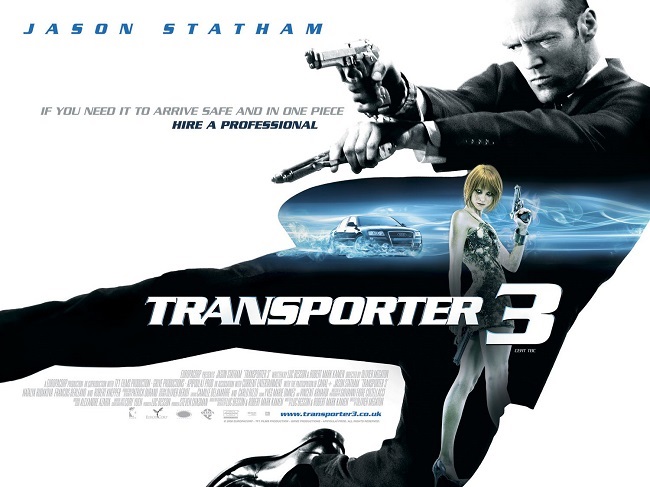
Director Oliver Megaton is a very inconsistent film maker. Previous movies such as Colombiana and The Transporter 3 have been more than serviceable. Yet more recent titles such as Taken 2 and Taken 3 are lacking in polish. In this latest instalment the even the ever-dependable Forest Whitaker is left with precious little to do as the Police Inspector tracking down Brian Mills. He tries to bring embellishments to the character, such as his habit of wearing rubber bands around the wrists and carrying a solitary chess piece, but there simply isn't enough material for him to work with. Sam Spruell similarly has a vague role, as Malankov, the villain of the proceedings. Both these actors are potential assets to the movie, but Megaton simply neglects them, focusing more of unnecessary chases and CGI effects.
A Walk Among the Tombstones proved that Liam Neeson can still produce quality performances when given a well written screenplay. He is a good actor and a genuine screen presence. It is the latter attribute that allows him to bluff his way through such unmitigated nonsense as Taken 3. I won't deny that I had fun watching the film (the unrated version naturally), although that was mainly due to my revelling in its iniquities and failings. However, I do recognise that if you are not as forgiving towards Mr. Neeson as I am, then all you will see if a crass, overcooked action movie starring an ageing Irish man who seems nice in-between breaking people’s limbs.
Taken 2 (2012)
If it worked once already, why not just do it all again irrespective of logic and statistical likelihood? Thus, in Taken 2 Ex-CIA operative (and mail order catalogue) Bryan Mills (Liam Neeson) is struggling to come to terms with his daughter Kim (Maggie Grace) growing up and his relationship with his ex-wife Lenore (Famke Janssen). If life wasn't complicated enough with being a Dad, Bryan finds himself up against a vengeful Albanian gang. It would appear that they're somewhat annoyed that he slaughtered their brethren in the previous instalment. Hence Bryan and Lenore are kidnapped whilst on vacation in Istanbul and face a grim death at the hands of the gang's patriarch, Murad Hoxha (Rade Šerbedžija). Once again, the criminal fraternity underestimates the resourcefulness of Mr. Mills and it is not long before the tables are turned.
If it worked once already, why not just do it all again irrespective of logic and statistical likelihood? Thus, in Taken 2 Ex-CIA operative (and mail order catalogue) Bryan Mills (Liam Neeson) is struggling to come to terms with his daughter Kim (Maggie Grace) growing up and his relationship with his ex-wife Lenore (Famke Janssen). If life wasn't complicated enough with being a Dad, Bryan finds himself up against a vengeful Albanian gang. It would appear that they're somewhat annoyed that he slaughtered their brethren in the previous instalment. Hence Bryan and Lenore are kidnapped whilst on vacation in Istanbul and face a grim death at the hands of the gang's patriarch, Murad Hoxha (Rade Šerbedžija). Once again, the criminal fraternity underestimates the resourcefulness of Mr. Mills and it is not long before the tables are turned.
Taken 2 is a tonally odd movie. It bookends the action content with what feels like a quasi-soap opera. A sort of "Life with the Mills family", where Bryan blunders through every stereotype about being a modern Dad. Again, there are plot holes a mile wide along with a total disregard for the laws of sovereign nations. It would appear that running gun battles, car chases and the use of hand grenades are not a big deal in Turkey, just like they weren't in Paris in the first movie. In this alternative universe, people also recover very quickly from traumatic, life altering events such as kidnapping, a near fatal wound and both physical and psychological torture. "Oh, those pesky Albanian gangsters really are a nuisance. Who wants an ice cream?"
Yet despite the complete stupidity of virtually every aspect of Taken 2, it still manages to shrug off all these criticisms and play a lone trump card that saves it. Yes, Liam Neeson manages to carry Taken 2, by the sheer force of his personality, irrespective of the ludicrous dialogue, crass narrative and total lack of internal logic. I don't quite know how to define it, but Mr. Neeson has a quality about him that somehow cancels out all these negative points. He commands the viewers’ attention by being a sort of alpha male, “pater familias”, sexy old death machine. A real achievement for a sixty-year-old man (at the time of filming).
There is a paradox regarding the action sequences in Taken 2. There are some very interesting techniques used, but they are somewhat difficult to discern due to the lightning editing. There is a telescopic baton fight of note and a climatic hand-to-hand battle that is very impressive. Again, I can only recommend the unrated version of the film. The theatrical version was reduced in content to obtain lower ratings on both sides of the Atlantic. Unlike the perfunctory nature of US action movies, there is a noticeable cruel streak running through Taken 2. Some may find this unpalatable. The torture of Lenore focuses very much upon her psychological suffering as the villain brandishes the instruments, he intends to use upon her.
Critics lined up to pour scorn on Taken 2 upon release. Director Olivier Megaton was quickly accused of being the French McG. The film certainly is quite spectacularly preposterous, yet still manages to entertain with it's interesting locations and the towering presence of Liam Neeson. Plus, any movie that advocates locating people by using a map, a bootlace, a pen and several hand grenades deserves some credit. So, I do not feel disposed to join others in beating of this particular cinematic piñata. We all choose to adopt some waif and stray or lost cause at some point. Taken 2 is mine.
Taken (2008)
Sometimes when a movie chimes with the public is goes from being a box office success to becoming part of popular culture. The Taken franchise has done exactly that and a piece of iconic dialogue has now become a perennial internet meme. But if you look beyond this “baggage” and subsequently judge the film by the standards of the genre, you’ll find there’s more than meets the eye. On paper Taken is a fairly formulaic thriller. But it boasts a more interesting pedigree than other movies of this kind. Written by Luc Besson and directed by Pierre Morel (of District 13 fame), the action driven story set in Paris, has all the benefits that come from a European production. But the most intriguing aspect of Taken is the casting of the lead character Bryan Mills. Instead of relying on a known action star, the part ended up with Oscar nominated actor Liam Nesson. As you can imagine, the results are not as you would expect and as a result a serious actor re-invented himself as an action star.
Sometimes when a movie chimes with the public is goes from being a box office success to becoming part of popular culture. The Taken franchise has done exactly that and a piece of iconic dialogue has now become a perennial internet meme. But if you look beyond this “baggage” and subsequently judge the film by the standards of the genre, you’ll find there’s more than meets the eye. On paper Taken is a fairly formulaic thriller. But it boasts a more interesting pedigree than other movies of this kind. Written by Luc Besson and directed by Pierre Morel (of District 13 fame), the action driven story set in Paris, has all the benefits that come from a European production. But the most intriguing aspect of Taken is the casting of the lead character Bryan Mills. Instead of relying on a known action star, the part ended up with Oscar nominated actor Liam Nesson. As you can imagine, the results are not as you would expect and as a result a serious actor re-invented himself as an action star.
Bryan Mills (Liam Nesson), a retired US government agent, is trying to rebuild his relationship with his 17-year-old daughter Kim (Maggie Grace) who lives with his ex-wife (Famke Janssen) and her new husband. Kim, despite her father’s concerns, takes a trip to Paris with her friend Amanda on the pretext of seeing the sights. Her real motive is to follow U2 as they tour Europe. However, events take a bad turn when both girls are abducted by the Albanian Mafia who intend to sell them into slavery. But they do not realise that Kim's Father has a unique set of skills gained from his former line of work. He subsequently brings them to bear in rescuing his daughter. Naturally mayhem follows.
The plot is simple and doesn’t attempt to re-invent the wheel. There are numerous logical flaws, and some may argue that Taken trivialises the issue of human trafficking. But this is an action film and therefore its not obliged to serve as a serious analysis on contemporary social problems. What it does have is a lead actor who is skilled in his craft, bringing an element of credibility and gravitas to a genre known for poor performances. There is also the advantage of a French director who approaches the subject with a little more respect than average US studio. There is no smug humour, designed to mitigate the violence. There is also no moral agenda, self-justification or a requirement for redemption. The characters do what they do and are what they are.
Taken has its flaws. It ignores the laws of a sovereign nation and has an ending similar to that of the 1979 action film Ashanti, which also dealt with modern day slavery. But it also has exceptionally plausible fight scenes using credible techniques. Fight choreographer Olivier Schneider (Transporter, Kiss of The Dragon and District 13) utilises throat punches, wrist and elbow locks, along with realistic knife usage and accurate gun stances. Liam Neeson, an ex-boxer who is well over 6 foot, acquits himself well for a man of his age (he was 56 at the time of shooting). Taken and its subsequent sequels were all edited for a PG-13 rating when released theatrically in the US. However, uncut versions are available on DVD and Blu-ray and it is these editions that action fans should seek out.
Looper (2012)
Rian Johnson's Looper is a thoughtful, bleak and inventive new spin to the time travel genre. The first act quickly establishes the main protagonists and the economically ravaged future he inhabits. I won't burden you with another re-iteration of the plot, because any of the trailers available on YouTube can do that far more efficiently than I. Let it suffice that the central conceit is the paradox that arises from a hitman meeting his younger self. What I would like to point out that after watching so many poorly conceived films, with little or no narrative, Looper stands out as a piece of thought provoking, quality film making. Mainstream Hollywood needs to take a long hard look at this movie and reacquaint themselves with the proper and full potential of the science fiction genre.
Rian Johnson's Looper is a thoughtful, bleak and inventive new spin to the time travel genre. The first act quickly establishes the main protagonists and the economically ravaged future he inhabits. I won't burden you with another re-iteration of the plot, because any of the trailers available on YouTube can do that far more efficiently than I. Let it suffice that the central conceit is the paradox that arises from a hitman meeting his younger self. What I would like to point out that after watching so many poorly conceived films, with little or no narrative, Looper stands out as a piece of thought provoking, quality film making. Mainstream Hollywood needs to take a long hard look at this movie and reacquaint themselves with the proper and full potential of the science fiction genre.
Looper hinges on the dynamic between Bruce Willis and Joseph Gordon-Levitt which works very well. Willis always seems to give his best performances in genre productions, however I would concede that this really Gordon-Levitt's film. His characterisation and deportment is extremely good. The narrative veers from dry asides about the complexity of time travel movie to occasions of quite jolting violence, but keeps you guessing as to where it will ultimately end up. Looper does not make the mistake of wallowing in the excesses of its own scope of vision and has a minimal amount of effects work. Ultimately it is an exploration of whether you can escape your own destiny and a rather sombre, self-contemplative tale.
To say more would be to spoil Looper for those who have not yet seen it, and it is a movie that benefits from as little prior knowledge as possible. That is not to say that it is dependent on a major plot twist in the third act, because it is not. Viewers will however, benefit by reflecting upon what they have seen. Which of course is what quality film making is all about. Rather than being presented with a stereotypical dystopian future, we are shown an all to plausible scenario and characters who face exactly the same moral and ethical issues as we do. That is the movies greatest strength and also its most disturbing quality. The acknowledgement that no matter how much things change, they remain the same.
X-Men: First Class (2011)
Falling somewhere between a sequel and a reboot, director Matthew Vaughn has managed to make X-Men: First Class a worthy entry in the X-Men franchise that successfully explores the origins of the characters as well as Christopher Nolan did with Batman Begins. X-Men: Last Stand painted the movie series into a difficult corner by killing off key characters. This movie provides a clever means of bypassing such issue by offering an origins story that subsequent leads in later sequels to an alternative timeline that redresses past mistakes. X-Men: First Class opens with a rather bleak and dark pre-credit sequence set in a WWII concentration camp that sets up the central protagonists and antagonist. It then maintains a steady pace and unlike other more recent bloated blockbusters, it's running time works in its favour and not against it.
Falling somewhere between a sequel and a reboot, director Matthew Vaughn has managed to make X-Men: First Class a worthy entry in the X-Men franchise that successfully explores the origins of the characters as well as Christopher Nolan did with Batman Begins. X-Men: Last Stand painted the movie series into a difficult corner by killing off key characters. This movie provides a clever means of bypassing such issue by offering an origins story that subsequent leads in later sequels to an alternative timeline that redresses past mistakes. X-Men: First Class opens with a rather bleak and dark pre-credit sequence set in a WWII concentration camp that sets up the central protagonists and antagonist. It then maintains a steady pace and unlike other more recent bloated blockbusters, it's running time works in its favour and not against it.
Underpinning the film are the central performances of James McAvoy and Michael Fassbender as Charles Xavier and Erik Lensherr. Both excel in their respective roles, and unusually for a genre piece, have been given a screenplay that doesn't merely paint them as black and white caricatures. The set pieces, especially the denouement set against the Cuban blockade, are impressive but do not overwhelm the story line. The plot device of setting the film in 1963, works surprisingly well and does not make the mistake of becoming some sort of sub Austin Powers cliché. There is even room for homages to such films as Goldfinger, The Odessa File and The Marathon Man, courtesy of the films Nazi sub-plot.
Despite its PG -13/12 rating, X-Men: First Class cunningly exploits as much adult material that the classification allows. The is a high emphasis on sexuality and some rather hard-edged action. I was amused to see the use of one major profanity, which was neatly designed to embellish a standout vignette featuring a clever cameo. Overall this is a superior mainstream comic adaptation that seems to knowingly cater for all viewing demographics. The film also fairs well due to the rather lacklustre previous entry in the franchise. It is hard not to be superior to the incredibly flat and by the numbers X-Men: Last Stand. The emphasis this time is on motivation, politics and revenge rather than a need to string together endless scenes of destruction.
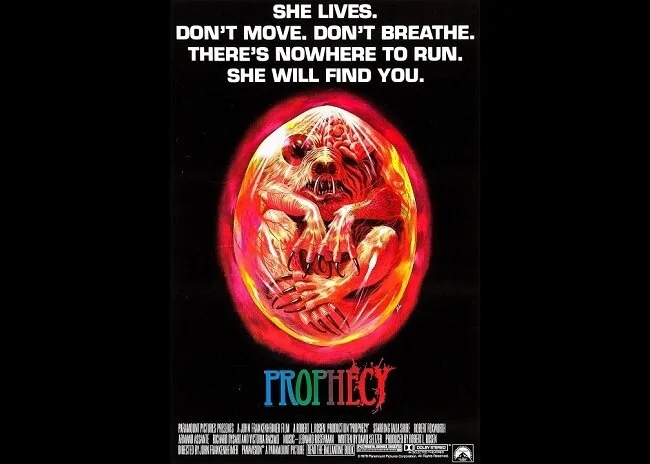
The Meg (2018)
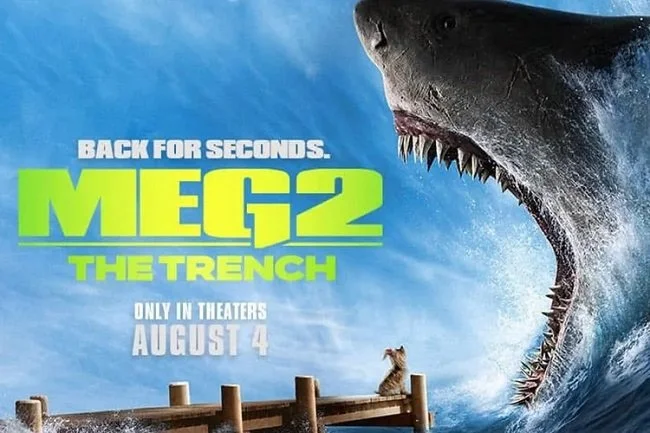
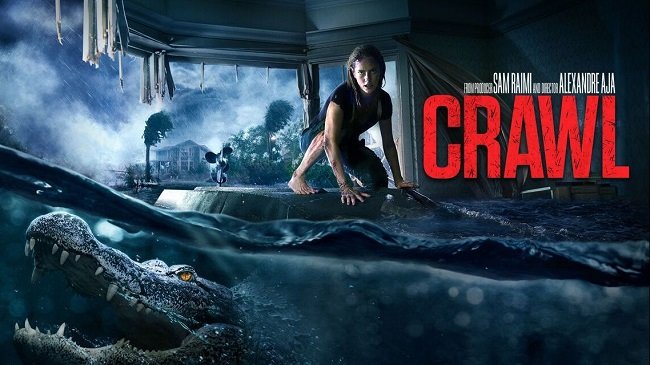
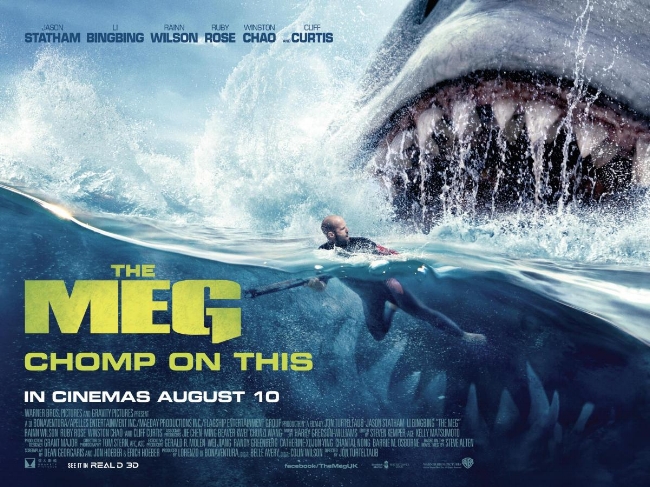
If you have seen any of the marketing material or trailers for The Meg, then you know exactly what you’re getting right from the get-go. All movies inherently require the viewer to suspend their sense of disbelief to various degrees. Naturally, the “creature feature” genre asks audience to go the extra mile with this concept. The Meg takes a major gamble by insisting that everyone goes further still, not by believing in a giant prehistoric shark (Megalodon) but that Jason Statham is a ex-navy, deep sea rescue diver. However, it pays off and the resulting movie is staggeringly stupid, but mercifully entertaining in an undemanding way. Recent movies such as Into the Storm and Geostorm are crass and made worse by their implicit assumption that their viewers are stupid. The Meg is far from cerebral but has an upbeat tone and a sense of playfulness that knowingly invites the audience to come aboard with the silliness. It’s a big distinction and the reason why I smiled a lot and frequently rolled my eyes while watching The Meg, but never with derision.
If you have seen any of the marketing material or trailers for The Meg, then you know exactly what you’re getting right from the get-go. All movies inherently require the viewer to suspend their sense of disbelief to various degrees. Naturally, the “creature feature” genre asks audience to go the extra mile with this concept. The Meg takes a major gamble by insisting that everyone goes further still, not by believing in a giant prehistoric shark (Megalodon) but that Jason Statham is a ex-navy, deep sea rescue diver. However, it pays off and the resulting movie is staggeringly stupid, but mercifully entertaining in an undemanding way. Recent movies such as Into the Storm and Geostorm are crass and made worse by their implicit assumption that their viewers are stupid. The Meg is far from cerebral but has an upbeat tone and a sense of playfulness that knowingly invites the audience to come aboard with the silliness. It’s a big distinction and the reason why I smiled a lot and frequently rolled my eyes while watching The Meg, but never with derision.
Plot wise, no cliché, genre trope or established cinematic convention is left unturned. Jonas Taylor (Jason Statham) retires with a cloud over his head after leaving several fellow divers behind during a deep-sea rescue. His claim there was an imminent danger from some unknown sea creature, is not believed by fellow team mate Dr Heller (Robert Taylor), who suspects he may have suffered pressure-induced psychosis. Five years later an incident involving a submersible, trapped in the Marianas Trench, forces Jonas out of retirement and into a confrontation with his aquatic nemesis, a prehistoric Megalodon. The creature subsequently escapes the depth of the ocean trench and threatens the safety of an underwater research station, Mana One, owned by billionaire Jack Morris (Rainn Wilson) and run by oceanographer Dr. Minway Zhang (Winston Chao) and his daughter and fellow scientist Suyin Zhang (Li Bingbing). After a failed attempt to destroy the shark, the creature heads off towards the major tourist resort of Sanya Bay in Hainan Province, China. Digital effects abound, scenery is chewed by the cast, Statham is gruff and does everything one expects of him.
The Meg is effectively a big budget copy of the sort of movies The Asylum make, which is ironic on multiple levels when you think about it. It is one of the few recent US-Chinese co-productions that actually manages to maintain a sense of identity. Often when trying to please multiple markets, cultural and social differences are stripped back from the narrative resulting in a very bland and homogeneous product. The Meg manages to maintain a foot in both nations’ respective zeitgeist and the brief scenes showing the Chinese middle-classes indulging in identical leisure activities to their western counterparts is an interesting reflection of the nature of globalism. However, this brief moment of depth is more than likely purely accidental. As for the shark itself, it suffers from being purely a CGI creation and oddly enough, it’s size actually makes it less threatening. This isn’t Jaws where victims are slowly dismembered as the shark feeds. This is a Megalodon that can swallow multiple people in one mouthful. As a result, the climatic action scene at Sanya Bay is fun but oddly not that shocking. The Meg certainly doesn’t push the boundaries of its rating.
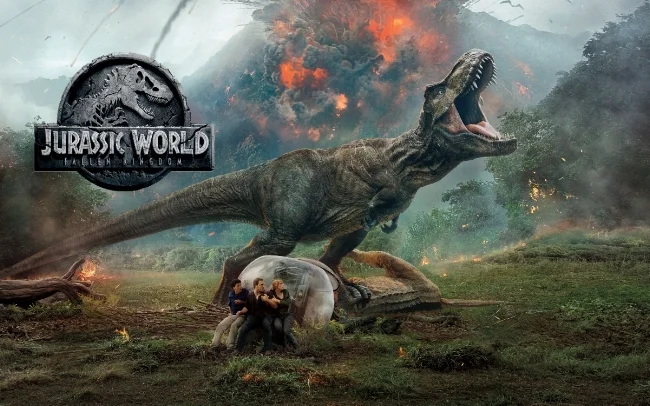
Some viewers will still find The Meg too “stupid” for their tastes. It is the sort of movie that is best viewed in the company of likeminded friends, late on a Friday night, after an evening in the pub. It is fair to say that if it wasn’t for the presence of Jason Statham, Cliff Curtis and Shuya Sophia Cai then this would have simply been a DTV release with an unusually big budget. It’s difficult to put an exact finger upon it, but Jason Statham has created his own unique niche within the action movie genre and he carries this movie by his own curious form of star appeal. Plus, the “creature feature” genre still seems to have an inherent attraction with audiences, as the box office returns of the Jurassic Park franchise prove. I’ll be honest and state that my interest in The Meg doesn’t go so far as a sequel. This sort of movie is the equivalent of a greasy burger you buy at the funfair. It’s fine once in a while as an indulgence, despite the fact that you know it’s bad, but you would soon tire of them being a regular part of my diet.

Bullet to the Head (2012)
Walter Hill is a director whose work is often overlooked or marginalised by critics who fail to appreciate its wider merits. Yet despite this, over the course of four decades he has consistently produced thoughtful, intelligent and sometimes positively subversive movies. He has a connection with the past and succeeds in creating stories that often reflect periods of transition and how such times effect the protagonists. There is no denying his flair for crating action sequences and frequently coaxes strong performances from actors, often with the minimum of dialogue. He also has a great understanding of the importance of a movies soundtrack and his collaboration with Ry Cooder has produced some memorable scores.
Walter Hill is a director whose work is often overlooked or marginalised by critics who fail to appreciate its wider merits. Yet despite this, over the course of four decades he has consistently produced thoughtful, intelligent and sometimes positively subversive movies. He has a connection with the past and succeeds in creating stories that often reflect periods of transition and how such times effect the protagonists. There is no denying his flair for crating action sequences and frequently coaxes strong performances from actors, often with the minimum of dialogue. He also has a great understanding of the importance of a movies soundtrack and his collaboration with Ry Cooder has produced some memorable scores.
So, it was Walter Hill's name on the credits for Bullet to the Head that was my main interest. He has not made many movies of late, having focused on his television and movie production work. Naturally seeing his credentials attached to an action picture offered great promise, especially in an age when the art of making such movies is waning. However, I was well aware that the production of Bullet to the Head had not been a straight forward enterprise and that many individuals involved with the project had come and gone. Therefore, I was not expecting a movie comparable to 48 Hrs or Southern Comfort.
The story centres around hit man James "Bobo" Bonomo (Stallone) who is double-crossed by his employers, leaving his partner Louis (Jon Seda) dead. Jimmy has to form an uneasy alliance with cop Taylor Kwon (Sung Kang) as they go up against crime lord Morel (Adewale Akinnuoye-Agbaje) and his enforcer Keegan (Jason Momoa). It's formulaic and strictly by the numbers with all the standard tropes of the buddy movie sub-genre. Cultural difference, borderline racism and snappy one liners. Bullet to the Head is exceeding conventional in its remit. Even the old plot device of a family member being kidnapped is thrown into the mix. Yet it is saved from totally mediocrity due to the charisma of Stallone, the banter between the main characters and the fact that even with such safe material, Walter Hill still manages to stamp his own brand on the action sequences.
The real selling points for Bullet to the Head are Adewale Akinnuoye-Agbaje and Jason Momoa who manage to achieve performances of interest, despite the fact that the screenplay gives them little to go on. Alessandro Camon’s adaptation of Alexis Nolent’s graphic novel is perfunctory to say the least. Things like the use of voice-over to bridge the narrative are tired clichés. Yet every now and then there is a spark in the dialogue between leads or a nod and a wink to the old days of the genre. Overall, there are enough positive attributes to Bullet to the Head to cancel out its own stupidity and down play its familiar nature. Without the direction of Walter Hill, this movie would have been a misfire. The director has a flair for the excessive that few other film makers can get away with (like an axe fight). As it is, it’s a step down from Red Heat, which itself was inferior to 48 Hrs.
Halloween (2018)
It is a bold move to write off six sequels and effectively retcon a major horror cinematic milestone after forty years. Yet that is exactly what Director and co-writer David Gordon Green has done, producing a follow up movie to John Carpenter’s 1978 original, that is distinctly more than the sum of its parts. And in the process of doing this, Halloween has attracted a great deal of media attention that has somewhat skewed subsequent reporting. There has been a great deal of hyperbole and marketing hype in the lead up to the film’s release which is concerning, because in an atmosphere of such exuberance and fan excitement, it can be difficult to accurately gauge the public mood. I have only ever experienced the one other deferred sequel that generated such a similar buzz and that was Psycho II back in 1983. Despite a lot of reservations, that proved to be a worthy successor to Hitchcock’s classic.
It is a bold move to write off six sequels and effectively retcon a major horror cinematic milestone after forty years. Yet that is exactly what Director and co-writer David Gordon Green has done, producing a follow up movie to John Carpenter’s 1978 original, that is distinctly more than the sum of its parts. And in the process of doing this, Halloween has attracted a great deal of media attention that has somewhat skewed subsequent reporting. There has been a great deal of hyperbole and marketing hype in the lead up to the film’s release which is concerning, because in an atmosphere of such exuberance and fan excitement, it can be difficult to accurately gauge the public mood. I have only ever experienced the one other deferred sequel that generated such a similar buzz and that was Psycho II back in 1983. Despite a lot of reservations, that proved to be a worthy successor to Hitchcock’s classic.
However, I am pleased to say that Halloween is as good as the early reviews indicated. It takes many of the essential themes of the original film and presents them from an alternative perspective. To summarise the uncomplex plot, Michael Myers escapes from custody while being transferred to a new psychiatric facility. Meanwhile, Laurie Strode now traumatised, fixated and estranged from her own daughter Karen (Judy Greer) and granddaughter Allyson (Andi Matichak), prepares for the inevitable return of her nemesis. Throughout its 106-minute running time Halloween frequently makes clever and wise nods to its predecessor. The movie has a very dark tone, but it knows when to lighten things with some humorous banter. There is a higher body count and certainly the mayhem is more graphic this time round, but this is not to the detriment of the movie and simply reflects the style and tastes of the contemporary horror genre and its consumers.
The film benefits from a strong and focused performances by all three female leads. Jamie Lee Curtis excels in her role, providing a fulcrum for the narrative. There is also a robust support role from Will Patton as local Sheriff Frank Hawkins. If there is a weak link it the character of Dr. Ranbir Sartain (Haluk Bilginer) who is the new “Sam Loomis” and telegraphs his intentions quite early in the story. However, his role is needed to expedite events and assemble everyone for the inevitable showdown. There are some excellent tracking shots by cinematographer Michael Simmonds and some cunningly contrived set pieces set around the alley ways and back entrances of suburban Haddonfield. The classic score from the original movie has been re-arranged and further embellished with some superb additional cues written by John Carpenter himself, his son Cody Carpenter and David Davies. Some of which stray into Goblin territory, which is magnificent.
Films of this nature that are directly connected to established and iconic cinematic milestones, need to do far more than recreated that which has gone before. They need to juxtapose classic scenes or sequences and explore content from a different perspective. The key element of this that features in Halloween, is the concept of predator and prey. It is cunningly reversed during the film’s climax and there are several scenes that mirror those from the 1978 movie but are done with a tangible difference. To reference them would be to spoil them, so I’ll simply say that fans of the original movie will recognise them when they see them and should hopefully be impressed by the new inflection that the director imbues them with. Overall, irrespective of the hype Halloween is a genuinely worthy successor to John Carpenter’s original. It is inventive, intelligent, suspenseful and knows when to hit the audience right between the eyes.





The Expendables 2 (2012)
After viewing The Expendables 2, I read back through my notes. They ran as follows: People were shot. Stuff exploded. Quips were made. Amusing. And that is pretty much all you need to know, because if you watch this movie expecting anything more, then you'll be disappointed (and possibly a fool). So, Barney Ross (Stallone) and co are back and this time they have a better (by genre standards) script which is a little more equitable with the screen time (Terry Crews and Randy Couture fans take note). Gallows humour and self-referential one-liners abound, and the plot is rife with over the top situations and features an absurdly named villain (Jean-Claude Van Damme). Mickey Rourke is replaced by Chinese star Yu Nan’s Maggie, and Liam Hemsworth. Oh, and there's lots of mayhem. The movie has the trademark high body count.
After viewing The Expendables 2, I read back through my notes. They ran as follows: People were shot. Stuff exploded. Quips were made. Amusing. And that is pretty much all you need to know, because if you watch this movie expecting anything more, then you'll be disappointed (and possibly a fool). So, Barney Ross (Stallone) and co are back and this time they have a better (by genre standards) script which is a little more equitable with the screen time (Terry Crews and Randy Couture fans take note). Gallows humour and self-referential one-liners abound, and the plot is rife with over the top situations and features an absurdly named villain (Jean-Claude Van Damme). Mickey Rourke is replaced by Chinese star Yu Nan’s Maggie, and Liam Hemsworth. Oh, and there's lots of mayhem. The movie has the trademark high body count.
Director Simon West provides the audience with a suitable homage to eighties action movies, that is a slicker, more robust and at ease with itself that its predecessor. He does not quite reach the heights of his Magnum Opus, Con-Air, but The Expendables 2 is a worthy genre piece. Furthermore, he presents the action is a way that is discernible to the viewer and fun. We are not subjected to a lot of shaky cam, lightning edited bilge, but actually get to see the carnage in all its glory (although a lot of that is CGI bullet hits). The physical stunts are top notch and the fights extremely well-choreographed.
The plot is standard with the team sent to collect the content of a crashed military airplane. Of course, it's not as easy as that, with other parties showing an interest in its plutonium cargo. The subsequent clash between groups results in the death of one of the team, making matters personal. You don't have to be a genius to figure out what happens next. Not only are we treated to one hundred minutes of old school action, but also a who's who of eighties action heroes. Furthermore, they are all happy to send themselves up. It's all a lot better this time round because the production team know what works and what doesn't. Dolph Lundgren steals the show with his banter and casual asides. It is this shift in tone that improves this outing over the first.
Not everything succeeds as well as it could, though. The climatic shootout is not as strong a set piece as some of the proceeding sequences and somehow, I expected the arrival of Schwarzenegger, Willis, and Chuck Norris to have a little more impact. That's not to say it's not good. I was just expected something more bombastic. Two of the three have been out of the acting game for a while (at the time of filming), so I guess we should cut them some slack. It is also curious to note that although the film has a lot of violence, the use of profanity is quite restrained. It is present but tends use a lot of milder terms. A concession of some kind perhaps? It certainly does not spoil The Expendables 2. I picked up on it just because bad language is so prevalent in this genre.
The Expendables 2 manages to find the right balance between loud action, tongue in-cheek humour and respect for the genre. It is also a most welcome change to modern PG-13 rated action movies that want to be hard hitting and tough but cannot countenance depicting violence for fear of tipping over into a higher rating. It is the honesty of The Expendables 2 that is one of its strongest assets, along with the fact that it does exactly what it sets out to do. That and of course Schwarzenegger and Willis in a Smart Car, shooting the crap out of things. When you add on top of that Chuck Norris quoting his own "facts" then you are in action movie hog heaven.
Classic Movie Themes: The Day the Earth Stood Still
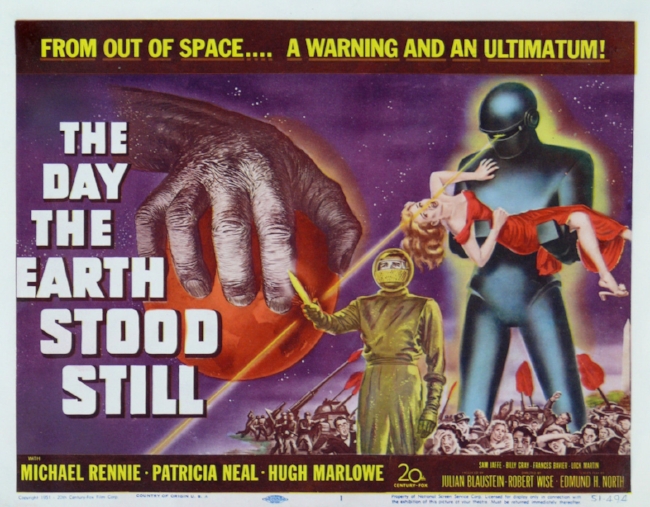
Film producer Julian Blaustein had a long-standing desire to make a film that addressed the fears and concerns of the post war Atomic Age. With the backing from Fox Studio Executive Darryl F. Zanuck, he hired screenwriter Edmund North to adapt the short story Farewell to the Master by Harry Bates. The screenplay provided a moral commentary about the ongoing arms race and featured an alien visitor with Christ like qualities who delivers an apocalyptic message. Veteran director Robert Wise was brought in head the project and a fine cast of established characters actors such as Michael Rennie, Patricia Neal Hugh Marlowe and Sam Jaffe was assembled. The finished movie has proven to be one of the greatest science fiction movies ever; it is The Day the Earth Stood Still made in 1951.
Film producer Julian Blaustein had a long-standing desire to make a film that addressed the fears and concerns of the post war Atomic Age. With the backing from Fox Studio Executive Darryl F. Zanuck, he hired screenwriter Edmund North to adapt the short story Farewell to the Master by Harry Bates. The screenplay provided a moral commentary about the ongoing arms race and featured an alien visitor with Christ like qualities who delivers an apocalyptic message. Veteran director Robert Wise was brought in head the project and a fine cast of established characters actors such as Michael Rennie, Patricia Neal Hugh Marlowe and Sam Jaffe was assembled. The finished movie has proven to be one of the greatest science fiction movies ever; it is The Day the Earth Stood Still made in 1951.
Alfred Newman was Director of Music at 20th Century Fox at the time and decided to assign the project to Bernard Herrmann, who has recently relocated to Los Angeles. Director Robert Wise had worked previously with Herrmann on The Magnificent Ambersons in 1942 and the pair had a good working relationship. So, he effectively gave him an open remit to create something different and special. Herrmann was far from a musical traditionalist and chose to craft an innovative soundscape to highlight the differences between the Alien Klaatu the bellicose and bombastic nature of humanity. He therefore elected to remove acoustic string and woodwind instruments from the orchestra and expanded the horn section. He then further embellished the sound of the film by adding such diverse instruments as an electric violin, Theremins, Hammond organs, vibraphones, and a celesta.
“Prelude and Outer Space” is a magnificent opening cue which highlights Herrmann genius in capturing the narratives emotional essence. The opening credits roll against a shifting panorama of stars and the sumptuously eerie main motif, featuring multi-tracked Theremin and tuba, juxtaposed by piano arpeggios, horns and crystalline harp. Herrmann further embellishes this portentous theme with a vibraphone played backwards. This cue is a masterpiece in both conception and execution. “Radar” offers another incredible track, which demonstrates Herrmann’s compositional aptitude. As the world watches on at the alien space ship, a harp glissando preludes a rapid duet between two pianos, one with bass and the other with vibraphone, which are octaves apart.
Bernard Herrmann was one of the most innovative composers of his generation who endeavoured to bring new and dynamic methods to the process of film scoring. His decision to remove the acoustic instruments from the string and woodwind sections of the orchestra and to augment his score with the abstract otherworldly sounds of the Theremin, vibraphone, and celesta was a bold move. Yet it proved to be a genre defining decision and adds another layer of subtlety to the storytelling. Over the years, many of the unique aspects of the film score have become standard genre tropes. You only have to listen to Danny Elfman’s main them for the 1996 Tim Burton movie, Mars Attacks to hear the reach of Herrmann’s influence.







The Last Stand (2012)
Upon release The Last Stands opening weekend box office returns were not as much as Lionsgate pictures had anticipated. The long-term worldwide gross was only $48 million, for a movie that had cost over $40 million. There was talk in the mainstream movie press of Arnie's comeback stalling and that the sky was falling for R rated action movies. Theatres at the time were thriving on “Jason Bourne” style thrillers and the ubiquitous Marvel Cinematic Universe. Critics were also mixed in their opinions regarding the film. Some were quite dismissive, citing the very things that an ageing Arnold Schwarzenegger brings to the table in The Last Stand, as faults. Exactly what were they expecting? It's like criticising a dog for barking.
Upon release The Last Stands opening weekend box office returns were not as much as Lionsgate pictures had anticipated. The long-term worldwide gross was only $48 million, for a movie that had cost over $40 million. There was talk in the mainstream movie press of Arnie's comeback stalling and that the sky was falling for R rated action movies. Theatres at the time were thriving on “Jason Bourne” style thrillers and the ubiquitous Marvel Cinematic Universe. Critics were also mixed in their opinions regarding the film. Some were quite dismissive, citing the very things that an ageing Arnold Schwarzenegger brings to the table in The Last Stand, as faults. Exactly what were they expecting? It's like criticising a dog for barking.
When I saw The Last Stand upon its UK release, it was well received by the audience. There was laughter at the one liners and at some of the death scenes. There was even a smattering of applause at the end. As we left the screening, knowing looks and nods were exchanged. By and large the consensus was one of a job well done, because The Last Stand provided everything that we expected. A modern action movie, with an ageing star, making copious amounts of references to his age and the incongruity of the situation in a humorous way. The set pieces were competent and hard edged, and the overall film was relatively low key compared to the excesses of the star’s former works, such as Total Recall. A recent second viewing has re-iterated my opinion that it was the right sort of comeback vehicle for such a star.
The story is a very traditional set up, that lends itself perfectly to delivering the sort of content that fans of this genre (and in particular this star) actually want. The head of a Mexican drug cartel (Eduardo Noriega) escapes FBI custody, leaving a senior agent (Forest Whitaker) pondering how he will get across the border. The trail points to the sleepy town of Sommerton Junction. As an army of hired mercenaries descend upon the town to facilitate their bosses return to Mexico, it falls to local Sheriff (Schwarzenegger) and his deputies, Jamie Alexander, Luis Guzman and Zach Gilford to thwart their plans. Assisted by eccentric local gun collector Lewis Dinkum (Johnny Knoxville) they barricade the main street and make their proverbial last stand.
The Last Stand is surprisingly a little more than just the sum of its parts. Director Kim Ji-woon brings a subtly different look and feel to the proceedings, taking what is essentially a western and tempering it with an Asiatic aesthetic and better than average script (as far as action movies go). The movie benefits from interesting characters who you can relate to and who are quite endearing. There are elements of emotional drama here, that you don't often get in this genre. Arnold Schwarzenegger is actually a better actor than a lot of people think, and his portrayal of world-weary sheriff Ray Owens is pretty good. When a particular cast member dies in the second act, it is handled well by all the cast and it is a surprisingly sad scene. It's not Shakespeare but is light years beyond a lot of movies these days, who are populated by disposable characters you are totally indifferent to.
The less is more (by Arnie standards) approach of The Last Stand works well. It is nice to see physical car stunts and action set pieces when they’re used in these sorts of productions. Yes, there are elements of CGI but not to the extent of other genre movies. It is also a pleasant change to see a production of this kind receiving a higher rating and nailing its colours firmly to the mast. Also, an action movie of this scope with a body count in the dozens rather than hundreds, seems to be far more appropriate for a man of Mr. Schwarzenegger age. The Last Stand is not a perfect movie, but it is certainly not the pedestrian misfire some would have you believe. However, Arnold Schwarzenegger appeal is a generational thing. Upon mature reflection, if this movie had been released on Netflix then it may well have found a wider audience among fans who grew up with his work.
Unfriended: Dark Web (2018)
I wondered recently whether Unfriended (2014) would kick start an entire subgenre comparable to the “found footage” format. It would appear that it has, and these movies shot on phones, computers and other digital devices have subsequently been labelled “screenlife” films. It’s worth noting that Unfriended: Dark Web is produced by Russian filmmaker Timur Bekmambetov who has already produced two other movies (Profile and Searching) using this technique. So, it won’t be surprising to see further forays into this style of film making. It is cheap, quick to make with a lot of box office potential. So, it’s hardly surprising to see Jason Blum (of Get Out and The Purge fame) attached to the credits as well. As for Unfriended: Dark Web it’s suitably nasty, voyeuristic, fare that is competently made. At this point the novelty of the “screenlife” films has yet run out, but it is still a physically challenging format to endure (as I found with its predecessor).
I wondered recently whether Unfriended (2014) would kick start an entire subgenre comparable to the “found footage” format. It would appear that it has, and these movies shot on phones, computers and other digital devices have subsequently been labelled “screenlife” films. It’s worth noting that Unfriended: Dark Web is produced by Russian filmmaker Timur Bekmambetov who has already produced two other movies (Profile and Searching) using this technique. So, it won’t be surprising to see further forays into this style of film making. It is cheap, quick to make with a lot of box office potential. So, it’s hardly surprising to see Jason Blum (of Get Out and The Purge fame) attached to the credits as well. As for Unfriended: Dark Web it’s suitably nasty, voyeuristic, fare that is competently made. At this point the novelty of the “screenlife” films has yet run out, but it is still a physically challenging format to endure (as I found with its predecessor).
Technically talented slacker with a heart of gold Matias (Colin Woodall) “acquires” a new MacBook and sets about installing all his own files and personalising it. He’s working on a speech to text and signing app for his deaf girlfriend, Amaya (Stephanie Nogueras). She is not overly impressed because its primary purpose is to make it easy for her to understand him and not the other way around. As it’s “game night” he joins a group Skype call with his friends, tech wiz Damon, conspiracy theorist AJ, DJ Lexx, and couple Serena and Nari. After numerous reboots and a series of DMs intended for the previous owner, Matias starts digging around the root directory of his new laptop. This leads to a hidden folder filled torture and snuff videos. Matias soon realises that he and his friends are being watched online, by the computer’s original owner. They wants it back because it’s the only way to access a secure account with a substantial cryptocurrency deposit in it.
Writer director Stephen Susco certainly makes the most out of the “screenlife” format using every glitch, software buffering and packet loss to his advantage. Like the previous movie, the medium used to convey the story adds to the tension and growing suspense. However, once again to enjoy the movie to the fullest I had to watch on my 24-inch computer monitor, rather than on my lounge TV. Unfriended: Dark Web is convincingly acted by the young cast, in so far as the performances do feel like they’re captured from real life, which that’s not an easy thing to achieve. Again, the characters are flawed and therefore do come across as credible. The hubris and tempestuous emotions of youth are reflected well in the serviceable screenplay. The group of friends are overly confident in their collective tech abilities and is never crosses their mind that they’re being “played” until it’s too late.
The evil mastermind behind all these shenanigans is called Charon, which is the name of the ferryman in Greek mythology who took the dead over the river Styx to Hades. The movie then runs with this metaphor as the cast are bumped off in innovative ways. The main difference this time round is that there is a clear human agency behind all the mayhem, rather than the supernatural theme of the first movie. Although Unfriended: Dark Web is far from a milestone in the horror genre, it does have a point to make about voyeurism and the screen-dominated lives and social media leisure habits of the younger generation. Horror like any other cinematic genre has its elitists and snobs and I think that this movie got a tough time from those who see themselves “gatekeepers” or who are simply a few generations removed from such online culture. It’s not without flaws, but its not a complete dogs dinner and if approached with the right mindset it can be rewarding.
The Expendables Extended Director's Cut (2010)
If you are expecting more violence, explosions and sundry mayhem in the extended director's cut of The Expendables, then you'll find none. What you will discover is an additional ten minutes of character development and back story, which greatly improves the overall film. The theatrical cut was certainly not lacking in the action department but was a bit thin on narrative and back story. This extended version of the movie with over two hundred changes to the original cut, bolsters the dramatic elements of the plot. We get to know more about the team and as a result care a little more for them. You can find a comprehensive comparison over at moviecensorship.com of both versions of the movie.
If you are expecting more violence, explosions and sundry mayhem in the extended director's cut of The Expendables, then you'll find none. What you will discover is an additional ten minutes of character development and back story, which greatly improves the overall film. The theatrical cut was certainly not lacking in the action department but was a bit thin on narrative and back story. This extended version of the movie with over two hundred changes to the original cut, bolsters the dramatic elements of the plot. We get to know more about the team and as a result care a little more for them. You can find a comprehensive comparison over at moviecensorship.com of both versions of the movie.
A further improvement that has been made in the extended director's cut is that several of the action scenes have been re-edited. Not for any censorship reasons but mainly to improve the flow of the content. The water-boarding sequence now seems more relevant and clinical, rather than just brutal. The infamous knife twisting in the throat scene which was dropped from the UK theatrical print has been shortened in the extended cut. The hand amputation and decapitation that proceeded it, have had a few frames added and the entire sequence now seems to be structured better, allowing the viewer to follow what is happening on screen a lot more easily. I am not a fan of the modern style of lightning editing and felt that some sequences where quite jarring when I first saw The Expendables in the cinema. These revisions and others have addressed this issue. The style is still very fast but what is depicted can be visually assimilated a lot more easily.
Although there is much to enjoy about this film, one of its biggest shortcomings is its reliance on CGI FX over traditional physical effects. A lot of the bullet hits, knife wounds and blood splatter have been added in post-production. I'm sure time constraints and budgetary restrictions where deciding factors as to why the production chose this approach, but the reality is that these FX sequences often don't work. Take for the example the scene where the Somalia pirate gets blown in half by Dolph Lundgren. The sequence does not look at all credible and all the surrounding extras are conspicuously free from blood splatter. A simple physical effect using a prosthetic body would have been infinitely superior. Eric Roberts demise is similarly poorly realised, which is a shame because it diminishes the impact of the scene.
I don't expect to be schooled in military geo-politics by a movie such as The Expendables. Nor do I expect it to afford me any insight into the human condition, the horrors of war or the nature of the soul (although the scene where Mickey Rourke talks about how he failed to stop a suicide attempt was extremely well acted and somewhat out of place). What I do expect is hard edged action, quirky characters, witty banter and genuine love of the genre in question. The Expendables achieves all of these and does so with aplomb. Too often, equivalent movies fail to do this because they’re fundamentally dishonest. The soulless manner in which they’re contrived to retrofit a money-making formula shows nothing but contempt for their target audience. Whatever your view on the merits of The Expendables its heart is clearly in the right place, which is a rare quality these days.
Where's That Fire? (1940)
Until a copy was found by the BBC television in 1975, this was considered a lost film. Where's That Fire? is an often over looked comedy. Will Hay plays Captain Viking of the Bishop Wallop fire station in his usual seedy incompetent fashion. He and his trusty assistants Albert (Graham Moffatt) and Harbottle (Moore Marriott) run an antiquated Victorian fire tender but seldom put out any fires. After the Town Hall burns down they find that their jobs are on the line. Viking tries to solve their problems by inventing a new fire-retardant foam as well as renting the tender to a film production company, who may not be quite what they seem. It all ends in mayhem, with an attempted robbery of the Crown Jewels at The Tower of London.
Until a copy was found by the BBC television in 1975, this was considered a lost film. Where's That Fire? is an often over looked comedy. Will Hay plays Captain Viking of the Bishop Wallop fire station in his usual seedy incompetent fashion. He and his trusty assistants Albert (Graham Moffatt) and Harbottle (Moore Marriott) run an antiquated Victorian fire tender but seldom put out any fires. After the Town Hall burns down they find that their jobs are on the line. Viking tries to solve their problems by inventing a new fire-retardant foam as well as renting the tender to a film production company, who may not be quite what they seem. It all ends in mayhem, with an attempted robbery of the Crown Jewels at The Tower of London.
More ambitiously staged than most of the team's efforts, Where's That Fire? has several brilliantly orchestrated slapstick sequences. One has our trio trying to install their new firemen's pole, causing a traffic jam in the street, wrecking a china shop, bothering a man confined to bed with gout and finally demolishing his roof. Charles Hawtrey has an amusing cameo as a schoolboy “swot” who provides geometrical and linguistic advice. There is also an elaborate physical FX sequence when a local garage gets set ablaze. Harbottle mistakenly connects the fire hoses to the fuel pump instead of the water mains, with hilarious incendiary results.
Ultimately, the film succeeds because of the timeless characters that have been created. Some of the jokes may have dated somewhat, but the interaction between the three leads is still credible today. Hay's blustering inanity, Marriott's rambling Octogenarian and Moffatt's wide boy are all still accessible archetypes. The dialogue between them is loaded with that unique sense of British irony and sarcasm. Two visitors disbelieve that Hay is the Captain of the fire station. "Tell them what I am" he says to Graham Moffatt. "What? Out loud" he replies. Where's That Fire? is a wonderful piece of cinema, from a quieter, gentler time. Recommended to those seeking nostalgia and to those who may wish to familiarise themselves with the work of Will Hay.