
Taken (2008)
Sometimes when a movie chimes with the public is goes from being a box office success to becoming part of popular culture. The Taken franchise has done exactly that and a piece of iconic dialogue has now become a perennial internet meme. But if you look beyond this “baggage” and subsequently judge the film by the standards of the genre, you’ll find there’s more than meets the eye. On paper Taken is a fairly formulaic thriller. But it boasts a more interesting pedigree than other movies of this kind. Written by Luc Besson and directed by Pierre Morel (of District 13 fame), the action driven story set in Paris, has all the benefits that come from a European production. But the most intriguing aspect of Taken is the casting of the lead character Bryan Mills. Instead of relying on a known action star, the part ended up with Oscar nominated actor Liam Nesson. As you can imagine, the results are not as you would expect and as a result a serious actor re-invented himself as an action star.
Sometimes when a movie chimes with the public is goes from being a box office success to becoming part of popular culture. The Taken franchise has done exactly that and a piece of iconic dialogue has now become a perennial internet meme. But if you look beyond this “baggage” and subsequently judge the film by the standards of the genre, you’ll find there’s more than meets the eye. On paper Taken is a fairly formulaic thriller. But it boasts a more interesting pedigree than other movies of this kind. Written by Luc Besson and directed by Pierre Morel (of District 13 fame), the action driven story set in Paris, has all the benefits that come from a European production. But the most intriguing aspect of Taken is the casting of the lead character Bryan Mills. Instead of relying on a known action star, the part ended up with Oscar nominated actor Liam Nesson. As you can imagine, the results are not as you would expect and as a result a serious actor re-invented himself as an action star.
Bryan Mills (Liam Nesson), a retired US government agent, is trying to rebuild his relationship with his 17-year-old daughter Kim (Maggie Grace) who lives with his ex-wife (Famke Janssen) and her new husband. Kim, despite her father’s concerns, takes a trip to Paris with her friend Amanda on the pretext of seeing the sights. Her real motive is to follow U2 as they tour Europe. However, events take a bad turn when both girls are abducted by the Albanian Mafia who intend to sell them into slavery. But they do not realise that Kim's Father has a unique set of skills gained from his former line of work. He subsequently brings them to bear in rescuing his daughter. Naturally mayhem follows.
The plot is simple and doesn’t attempt to re-invent the wheel. There are numerous logical flaws, and some may argue that Taken trivialises the issue of human trafficking. But this is an action film and therefore its not obliged to serve as a serious analysis on contemporary social problems. What it does have is a lead actor who is skilled in his craft, bringing an element of credibility and gravitas to a genre known for poor performances. There is also the advantage of a French director who approaches the subject with a little more respect than average US studio. There is no smug humour, designed to mitigate the violence. There is also no moral agenda, self-justification or a requirement for redemption. The characters do what they do and are what they are.
Taken has its flaws. It ignores the laws of a sovereign nation and has an ending similar to that of the 1979 action film Ashanti, which also dealt with modern day slavery. But it also has exceptionally plausible fight scenes using credible techniques. Fight choreographer Olivier Schneider (Transporter, Kiss of The Dragon and District 13) utilises throat punches, wrist and elbow locks, along with realistic knife usage and accurate gun stances. Liam Neeson, an ex-boxer who is well over 6 foot, acquits himself well for a man of his age (he was 56 at the time of shooting). Taken and its subsequent sequels were all edited for a PG-13 rating when released theatrically in the US. However, uncut versions are available on DVD and Blu-ray and it is these editions that action fans should seek out.
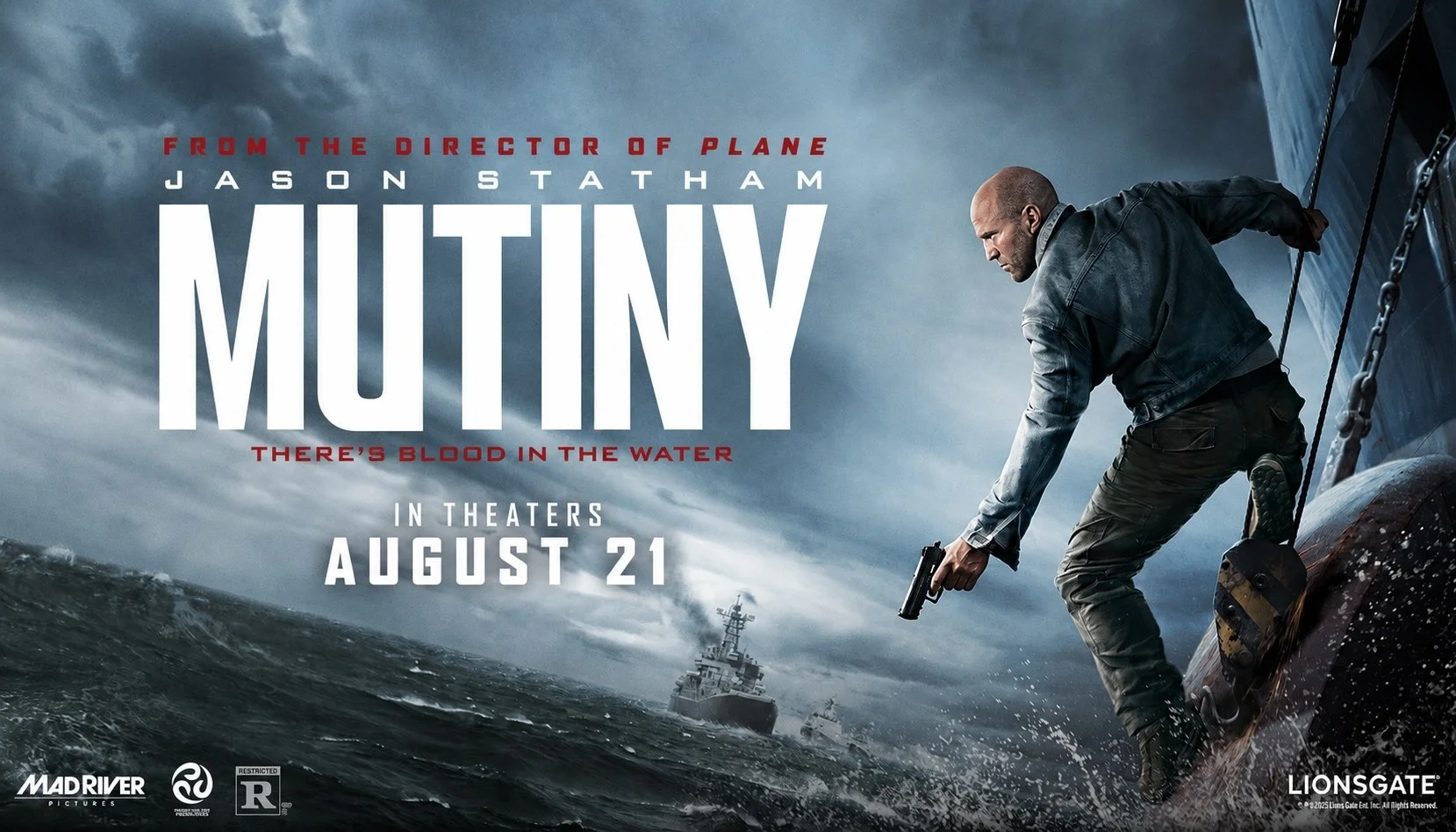
Jason Statham is an exemplar of the US mantra of “staying in your lane”. He makes action movies and occasionally strays into action comedies. His formula broadly works and is sufficiently lucrative to keep Mr. Statham employed. Therefore, if you watch a film in which he stars, you have a fairly good idea of what you’ll be getting. Of late, the criteria for his action vehicles have become more succinct. Jason Statham will play an innocuous character, such as a construction foreman or a bee keeper. Something terrible will subsequently befall another character who Mr. Statham has an emotional connection with in some capacity. He will subsequently hunt down those responsible and meet out death and violence. At some point the villain of the story will enquire as to how this innocuous person is so lethal. Research will then show that our Jason is in fact an ex-police officer/special forces operative/international assassin. There’s then a showdown and the villain dies. Job done.
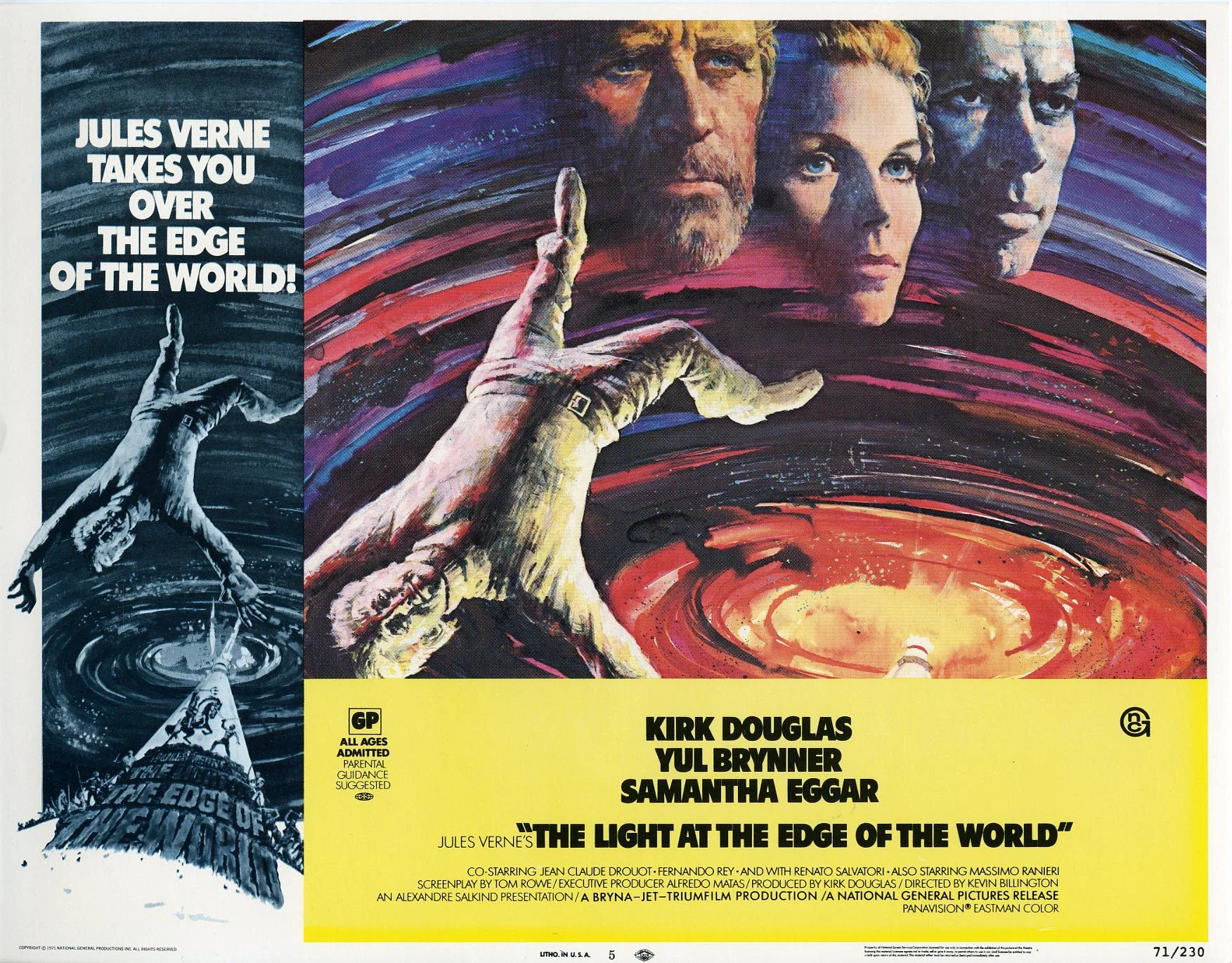
The Light at the Edge of the World presented itself as an action movie upon its release in 1971. Based upon a story by Jules Verne, the Spanish American co-production was driven by its star Kirk Douglas, who curiously hired British director Kevin Billington to helm the project. This tale of a lighthouse keeper fighting a war of attrition against a group of pirates that have captured his island, was market as an adventure film ostensibly in the idiom of the authors previous works and as a pirate movie. MGM bought the rights to distribute the film in the UK on the misunderstanding that it was a family friendly production. It was not and remains so. They subsequently had to cut 15 minutes of violence and torture as well as an undercurrent of sexual assault to secure a suitable rating. Conversely, the US distributors received an arbitrary PG rating, despite the fact this is one of a handful of films that honestly depicts pirates as murderers, rapists and worse.
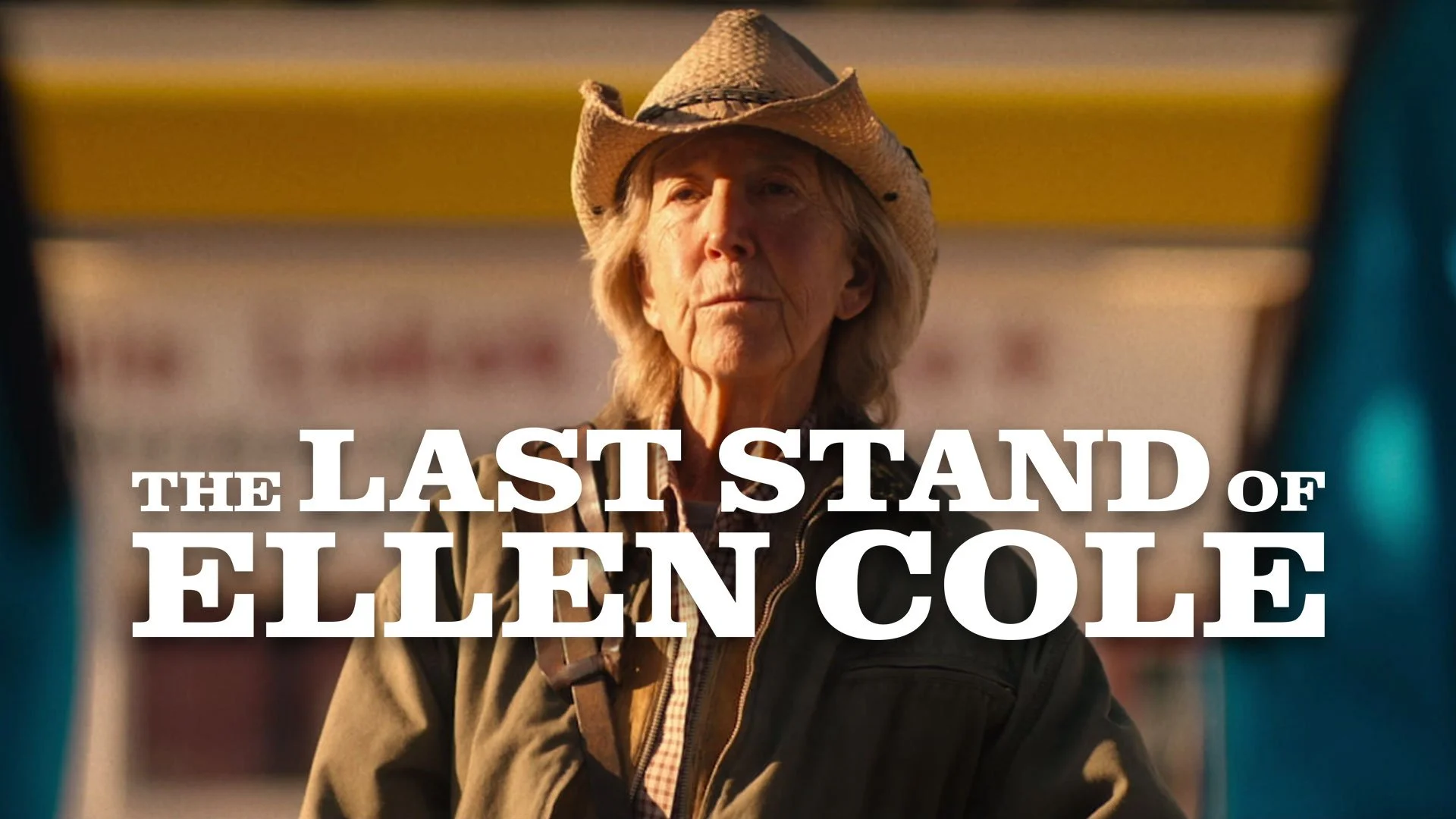
It’s an established action film trope. The fire team comprised of ex-military personnel, move in on their target. Only to have the tables turned by someone they don’t deem a threat. What makes it different in The Last Stand of Ellen Cole is a throwaway line of dialogue. The bested operative lies bleeding on the floor and the protagonists stands over them ready to finish them off. “Don’t, I have a cat” they feebly plead. For me that was the icing on the cake. The movie had already established it was taking the “same old, same old” and doing something different. Something fun, if taken in the right spirit. This scene tipped the balance and I embraced this film because it was being honest about what it is. This is a modern B movie that decides to give a very specific sub-genre a makeover. Furthermore, its clearly done with an affectionate wink, which is very different to sly wink. This isn’t deliberate self-knowing irony. Its just a film doing something different and possibly silly but it genuinely wants to have fun with it.
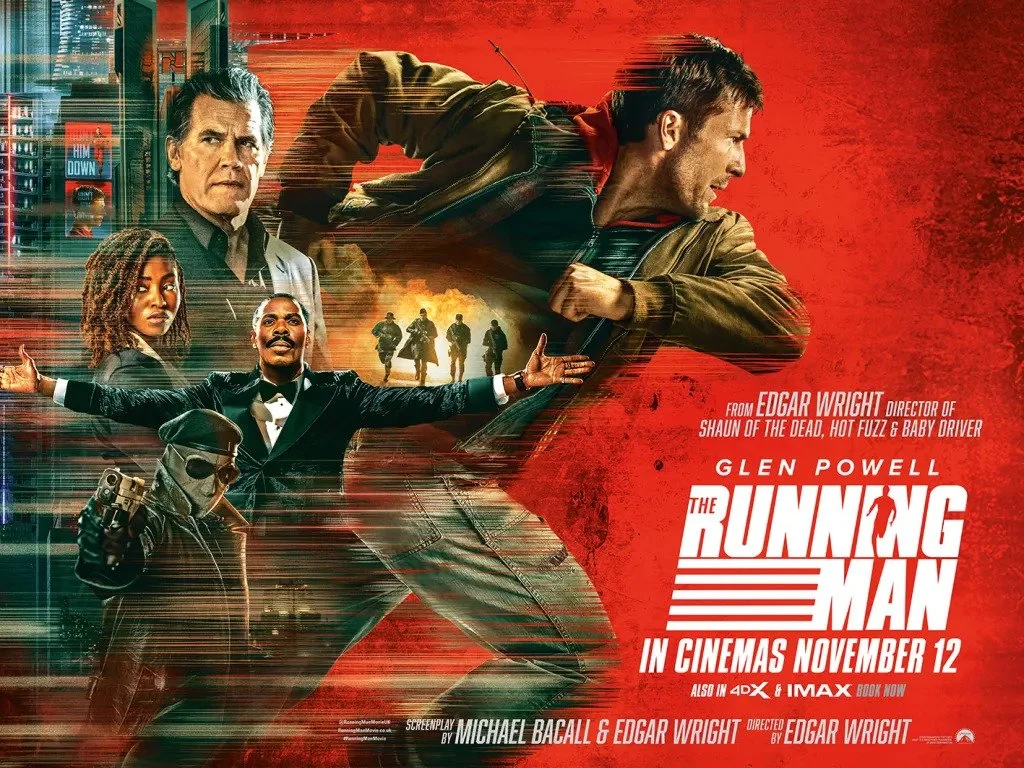
Stephen King’s dystopian story, The Running Man, was previously adapted very loosely in 1987, as a vehicle for Arnold Schwarzenegger. That version focused mainly on the “Battle Royale” element of the story and leaned heavily into Arnie’s personality, rather than the politics of the book. It also wasn’t well received by the author. Edgar Wright’s remake follows the source text a lot more closely and is far more interested in its political themes and wider social commentary. Furthermore, this version re-establishes the everyman quality of the hero of Ben Richards, rather than him being the muscle bound, ex-military hero as per Mr. Schwarzenegger’s prior interpretation. This time round, The Running Man uses a lot of the visual and narrative tropes of contemporary reality TV, making this forty three year old story very relevant to today’s viewers and couching the film in a style that is recognisable and accessible.
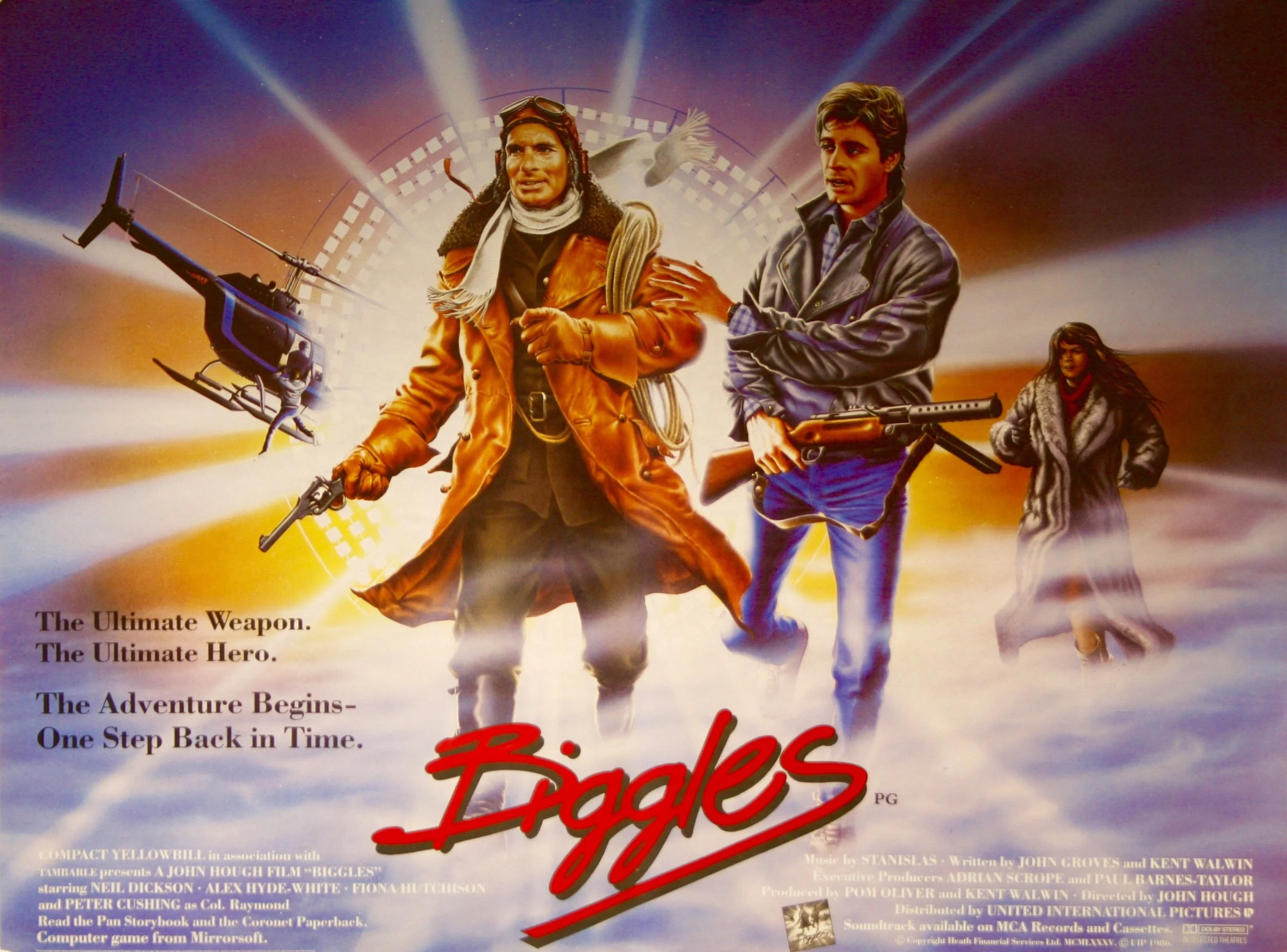
After the success of Raiders of the Lost Ark in 1981, filmmakers scrambled to find existing intellectual properties that they could use for similar films. Hence archaic heroes such as Alan Quatermain were hastily given a modern makeover and thrust into generic movies, in a vague attempt to replicate Steven Spielberg’s successful formula. Which brings us neatly on to James Charles Bigglesworth AKA “Biggles”, a fictional pilot and adventurer from a series of books written by W. E. Johns between 1932 and 1968. Several attempts had been made in the past to bring this character to the silver screen, including one by Disney but they all failed. However, the commercial and critical success of Indiana Jones provided sufficient impetus to greenlight a new film. However, due to some curious production choices, when Biggles was finally released it was far from just a period set, action movie.
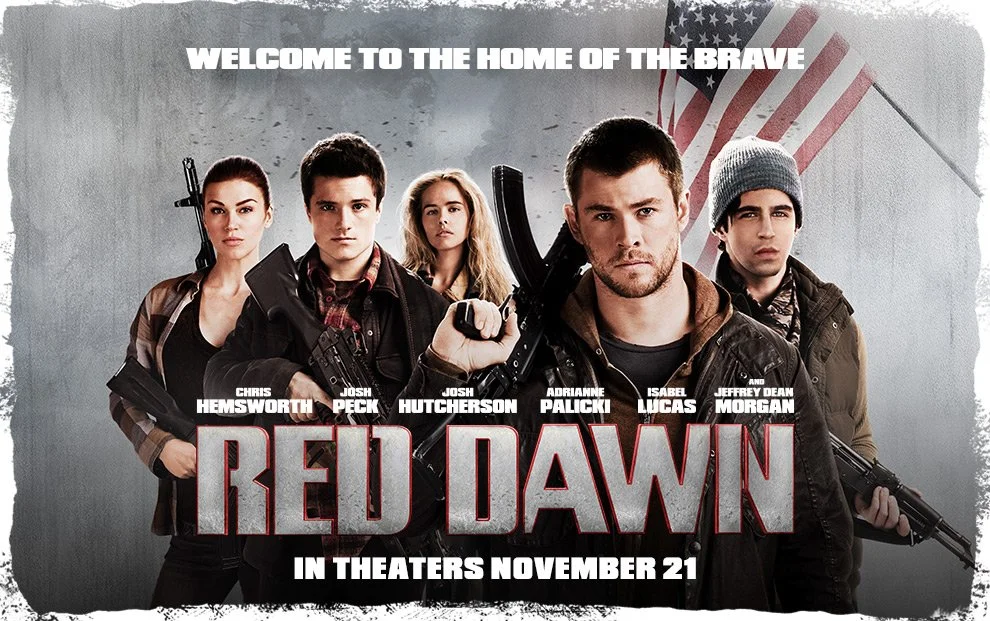
Setting aside the hubris of remaking a film such as Red Dawn, the 2012 reboot had a troubled production. Shot over the course of late 2009, on location in Michigan, MGM intended to release the film in September 2010. However, the studio’s financial problems became unsustainable over the course of that year and the film was shelved, while a financial solution was sought. Furthermore, while Red Dawn was in post production, there was a major economic shift within Hollywood due to the increasing importance of the Chinese market. This was a significant problem for MGM because the new version of Red Dawn had the Chinese invading the USA instead of Russia. Hence there were reshoots and the need for additional visual effects, so that the Chinese could be replaced with North Koreans. MGM eventually went bankrupt and the distribution rights to Red Dawn were sold off. The film was eventually released in 2012.
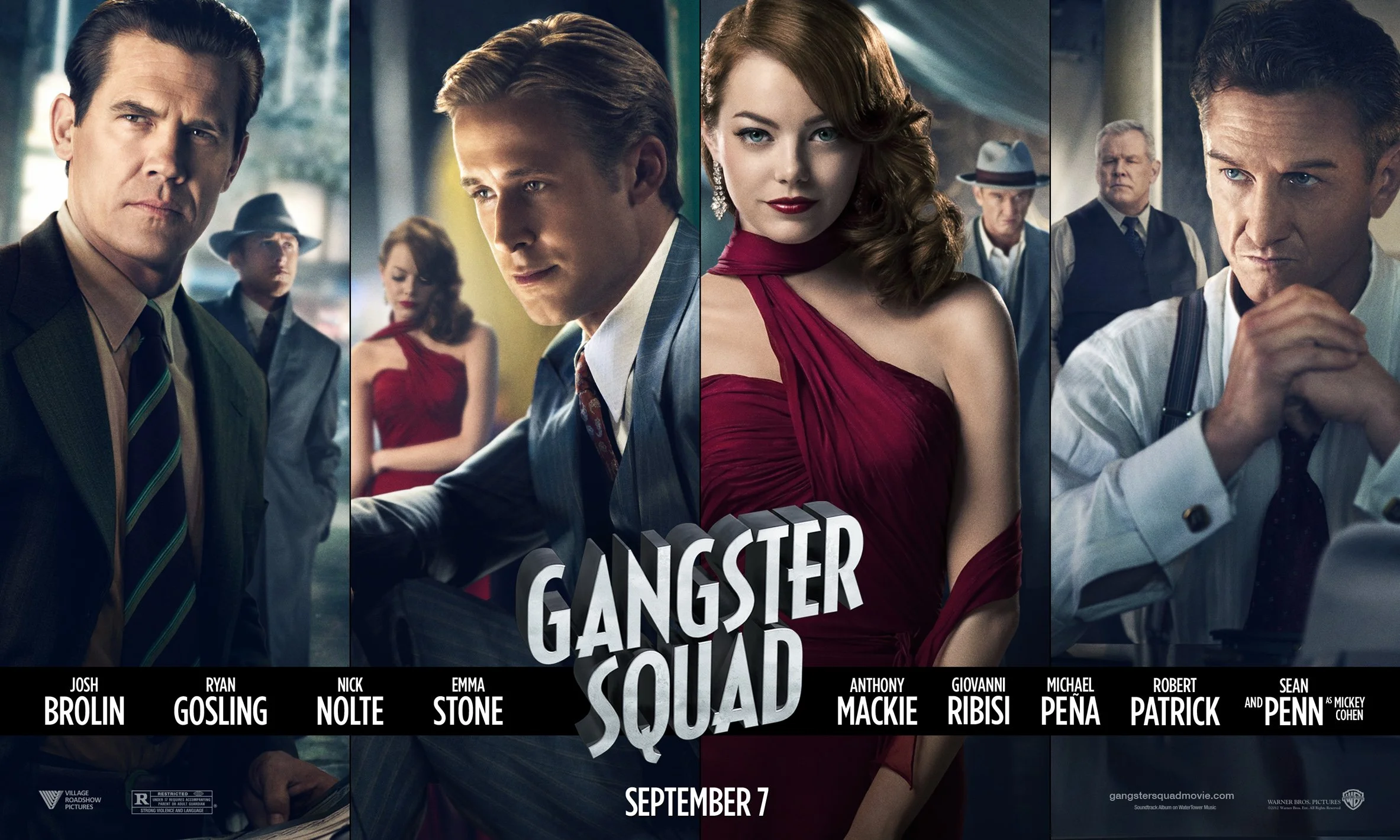
When I first saw the promotional trailer for Gangster Squad back in 2012, prior to its release, I wasn't especially impressed. I simply thought the film was another attempt to re-invent the gangster genre for a generation who were not especially familiar with it. I wasn't exactly overwhelmed with director Ruben Fleischer's resume either. I didn't particularly like Zombieland and haven't seen 30 Minutes Or Less. Then came the tragic mass shootings in Aurora, Colorado which led to the movie being delayed so that the original ending, which featured a shoot-out in a movie theatre, could be replaced. Hence when I finally watched this film recently, I wasn't expecting a movie up to the standards of say Once Upon A Time In America or Miller’s Crossing and it would seem that I was right do so. Gangster Squad is not especially noteworthy in any respect.

Levon Cade (Jason Staham) is a former Royal Marine Commando who has retired from military service and now works as the leader of a construction team in Chicago. He has a close relationship with Joe and Carla Garcia (Michael Peña and Noemi Gonzalez ) who run the company and considers them as family. Outside of work, Levon is involved in a bitter custody battle for his daughter, against her maternal grandfather, who blames Levon for his daughter’s suicide. When Garcia's teenage daughter Jenny (Arianna Rivas) goes missing, Levon reluctantly agrees to help her parents and get her back. Beginning his search at the nightclub where Jenny was last seen, he soon discovers that she was abducted by Russian traffickers. Furthermore, the culprit is Dimi Kolisnyk (Maximilian Osinski), the wayward son of a senior ranking gangster.
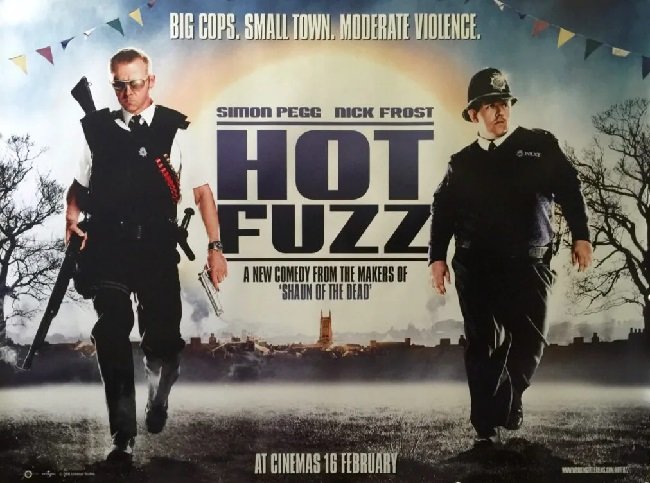
PC Nicholas Angel (Simon Pegg) is an exemplary Police Officer, with a strict adherence to the letter of the law. As a result of making the rest of the London Metropolitan Police look bad, he is transferred to the rural town of Sandford, Gloucestershire. On arrival, Angel finds that the local Inspector, Frank Butterman (Jim Broadbent), takes a far more laissez-faire approach to policing. His colleagues are incompetent and he is further hampered by the Neighbourhood Watch Alliance (NWA), who prioritise low crime statistics over law enforcement due to their desire to win the title of “Village of the Year”. Furthermore, Angel is partnered with the Inspector’s son, Constable Danny Butterman (Nick Frost), who is infatuated with “buddy cop” movies and is in awe of Angel’s London experience. “Have you ever fired two guns while jumping through the air?” However, a sudden spate of grisly accidents lead Angel to believe that there's more to the seemingly tranquil and picture-perfect community than meets the eye.
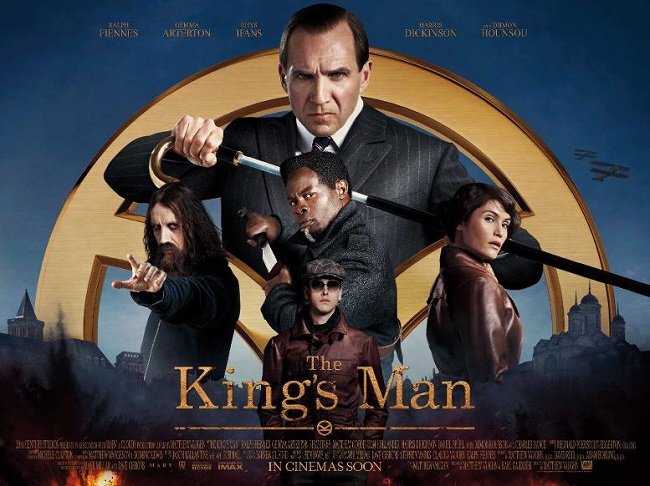
As a collection of history's worst tyrants and criminal masterminds gather to plot a war to wipe out millions, one man must race against time to stop them. Discover the origins of the very first independent intelligence agency in The King's Man. Based on the Comic Book “The Secret Service” by Mark Millar and Dave Gibbons. 20th Century Studios
Matthew Vaughn’s The King’s Man is an inconsistent film, both narratively and tonally. It veers between serious themes and stylised, hyperbolic action. At times it does quite a good job of exploring such complex subjects as global politics, mechanised warfare and colonialism. Sadly it then wrenches the viewer out of these cerebral reveries as it lapses into the sort of over the top action sequences that were notable in the two earlier films. It’s a shame because The King’s Man gets so many other aspects of the production right. The casting is very interesting, especially Ralph Fiennes as the “pacifist” Duke of Oxford. He is actually a very good fit for the action genre. Djimon Hounsou and Gemma Arterton are given little backstory beyond being respectively the faithful manservant and the family nanny but both are notable due to their own inherent acting chops and personal charisma. Rhys Ifans obviously has a great time as Grigori Rasputin, ensuring all the man’s vices are robustly depicted.
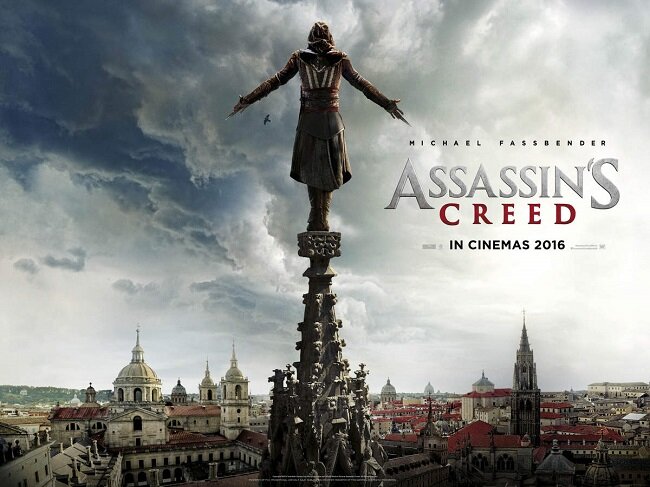
On paper, a video games franchise such as Assassin’s Creed lends itself perfectly to a cinematic adaptation. The parkour action scenes, the historical settings and the contemporary conspiracy theory themes are all elements that should play well with a modern youth audience. Hence with the backing of a major studio such as Twentieth Century Fox and a budget of $125 million, the 2016 movie should have been a guaranteed box office hit. The casting of Michael Fassbender, an actor who is comfortable with serious roles and big Hollywood franchises, should have carried this film comfortably over the finishing line. Director Justin Kurzel, who had found critical success with his adaptation of MacBeth a year previously, must have looked like a safe pair of hands to handle such a project. Sadly, that was not the case. Assassin’s Creed is not the sum of its parts, in fact many elements appear to be pulling in opposite directions. The resulting feature film is staggeringly dull, soulless and a chore to watch. A testament to how modern big budget franchise movies have become a production line, with all the art stripped from them.

300: Rise of an Empire is a curious beast, being neither a sequel nor a prequel. It is infact a tale that takes place simultaneously with those of the original movie. While Gerard Butler is busy making a last stand at the Battle of Thermopylae, fellow warrior and politician Themistokles, played by the singularly uncharismatic Sullivan Stapleton, leads a similar army of buffed Greeks against the Persian fleet. Once again we have a movie that is the epitome of style over substance, complete with a sound design that challenges what can physically be endured by human hearing. They say the first casualty of war is innocence but in this type of movie it's closely followed by historical accuracy and authentic depictions of ethnicity. 300: Rise of an Empire is a cinematic assault upon the senses but not in a good way like Mad Max: Fury Road.
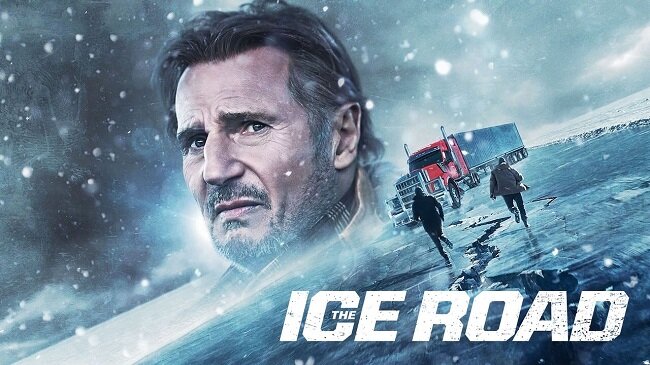
Back in September 2017, Liam Neeson stated in an interview with Sky News that he was retiring from the action genre, due to his age. He felt that audiences would question his credibility in such roles. After the release of The Commuter (2018) and Cold Pursuit (2019) Mr Neeson appeared to return to human dramas and films that focus on performance rather than punching man and beast. Ordinary Love and Made in Italy, both released in 2019, demonstrate the actor’s versatility and skill. People seem to forget that he is a thespian who was initially known for his character driven roles in films such as The Mission (1986), Rob Roy (1995 and Michael Collins (1996). It was only in 2008 that he reinvented himself as an action hero. It’s all a far cry from Schindler’s List and his performance that earned him an academy award nomination. The reason I mention all of this is because The Ice Road is the third action movie I’ve seen in 2021 that stars Liam Neeson.
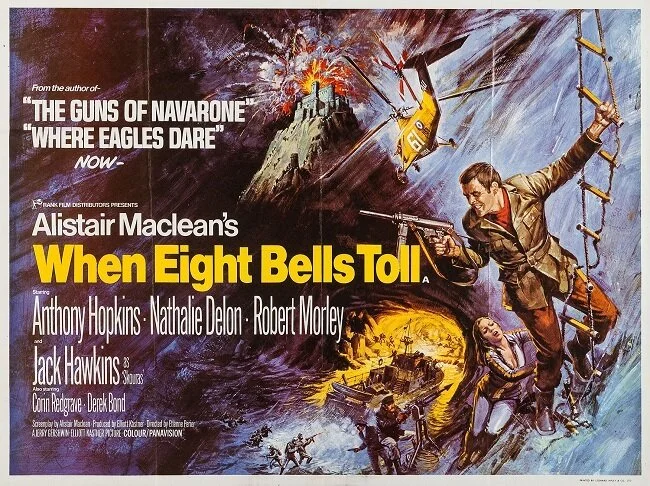
One of the stand out tropes of the modern action film is that the stakes are always cranked right up to 11. Terrorists, biological weapons and nuclear bombs are common threats in such movies with a hero or heroes trying to save the world from death and destruction or worse. However, back in the sixties and seventies, things were a little more straight forward and in some respects more credible. Take When Eight Bells Toll, released in 1971, for example. British Treasury secret agent Phillip Calvert investigates the theft of £8,000,000 in gold bullion by a gang of international smugglers. In the context of the times this was no small beer however it’s somewhat mundane compared to fighting super villains and their space lasers. Frankly I prefer these low key plot devices as they can make a film a little more plausible within the confines of the genre. A concept that is often forgotten today.
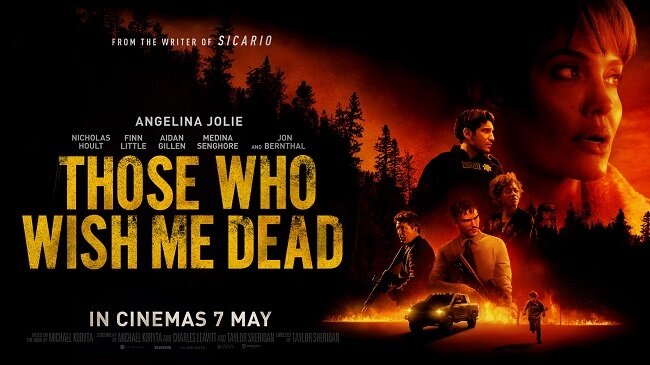
Forensic accountant Owen Casserly (Jake Weber) flees his home with his teenage son Connor (Finn Little) when he discovers he has been targeted by a pair of assassins (Nicholas Hoult and Aidan Gillen) who have been hired to stop him giving evidence in a major corruption case. Connor witnesses the murder of his father after their car is run off the road. Entrusted with important written evidence, he escapes into the dense forests of the Montana wilderness pursued by the killers. Seeking help he runs into smokejumper Hannah Faber (Angelina Jolie) who is stationed at a remote fire lookout tower. Hannah suffers from PTSD from a previous forest fire in which she was unable to save three young boys. Hannah attempts to lead Connor through the forest to safety. Meanwhile the assassins set fire to the forest to divert the attention of the authorities and cover their tracks.

I must admit that I did not have particularly high hopes for Paul W S Anderson's remake of the 1975 Roger Corman produced cult classic. Anderson’s work varies greatly. Event Horizon and Soldier are solid genre films but I still have not fully come to terms with Alien vs. Predator. Jason Statham is also a name that divides the public, with solid material such as The Transporter and unfathomable tosh like Revolver. But despite these considerations, Death Race is in fact quite a surprise and does not follow the path that so many remakes do. It takes the basic themes and concept associated with the original and tries to do something different with them. It doesn’t reinvent the wheel nor is it a genre milestone. But it does offer a different spin on things, have some engaging action scenes and provide some dumb but enjoyable entertainment. When combined with snacks and some beer this is a passable way to kill 111 minutes.
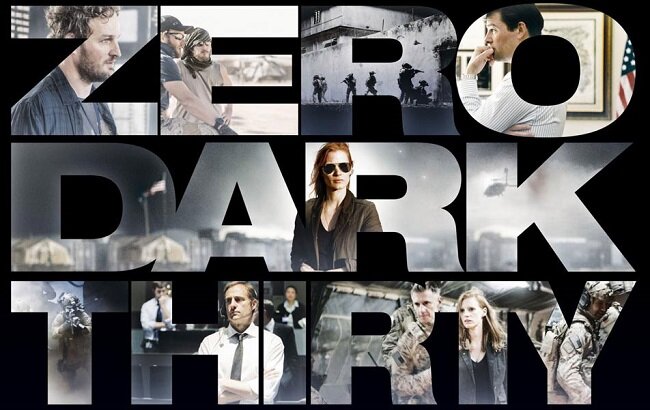
I did not watch Zero Dark Thirty upon its initial release, due to the politics surrounding it. I wanted to be able to view it free from bipartisan debate. Eight years on I believe this now achievable and although debate still exists it is now more measured and less strident. Zero Dark Thirty is certainly a compelling movie. It plays as a docudrama, providing an in-depth study of the US intelligence services hunt for Osama Bin Laden. It cannot be faulted on a technical level and the performances are very strong. It does not adopt a celebratory or triumphalist tone in its approach to the story. Director Kathryn Bigelow endeavours to keep the proceedings focused upon the intricacies of an intelligence driven manhunt. There is little or no tubthumping, jingoism. The decision to find Bin Laden is shown as a political and military exercise of foreign policy. The film solely focuses on the story from a US perspective but that is perfectly acceptable as it is not intended to be an exploration of geo-politics.
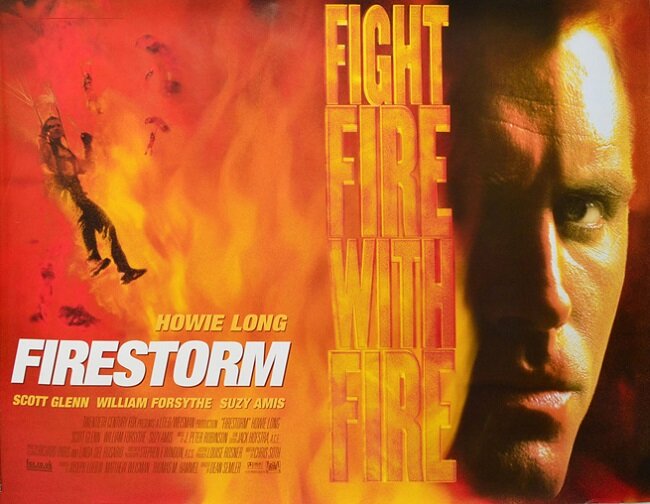
Firestorm was originally written as a vehicle for Sylvester Stallone, however when the production company Savoy Pictures went bankrupt the screenplay was bought by Twentieth Fox and the scope of the movie reduced to suit a lower budget. It’s broadly similar to Cliffhanger in so far as the lead character is a specialist in a certain field who runs afoul of criminals in a perilous environment. Whereas Cliffhanger is set in the Rocky Mountains, Firestorm takes place in the forests of Northern Wyoming. After the script was revised four times, the finished screenplay was given a final “polish” by Graham Yost who has considerable experience with the action movie genre. As stallone was no longer associated with the project and the production had been repurposed to be less extravagant, the movie was assigned to former NFL star Howie Long. Long had already appeared in the John Woo movie Broken Arrow (1996) and the Firestorm was seen as a means to give him a star vehicle.

The original French movies District 13 and its sequel District 13: Ultimatum, conceived and produced by Luc Besson, were enjoyable variations of the Escape from New York theme. Their charm lay in their European pedigree and the skilful use of parkour. The two leads, David Belle and Cyril Raffaelli, were eminently suited to the minimalist roles and the screenplays were fun. Half of these movies appeal was the fact that they were not mainstream US products. Brick Mansions is the Hollywood remake of District 13, as well as being Paul Walkers’ final movie. Sadly, this film is far from a fitting epitaph, being devoid of any charisma or innovations. It is blandly shot , poorly edited and has been stripped of everything that made the original entertaining.
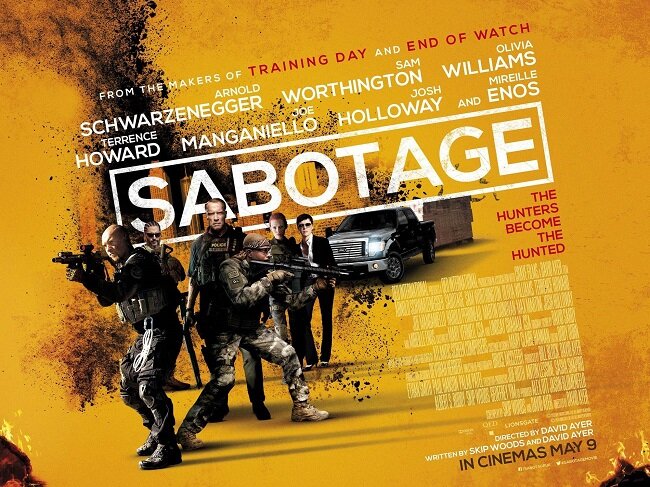
Arnold Schwarzenegger's return to the big screen after his political career has been uneven to say the least. His cameos in The Expendables and The Expendables 2 were well received, with their self referential charm and age related irony. Yet his first major movie The Last Stand, although competent, failed to find an audience. Escape Plan fared better at the box office but did not put Arnie back on the A list. Effectively there's a large percentage of the contemporary cinematic audience who were born after his heyday and are simply not overt fans of his work. His core audience is more than likely of the age group that consume most of their film entertainment at home. Which may explain why Sabotage tanked in the US upon release on March 28th 2014. It was the worst opening box office of Arnie's career. He used to break first day opening records.
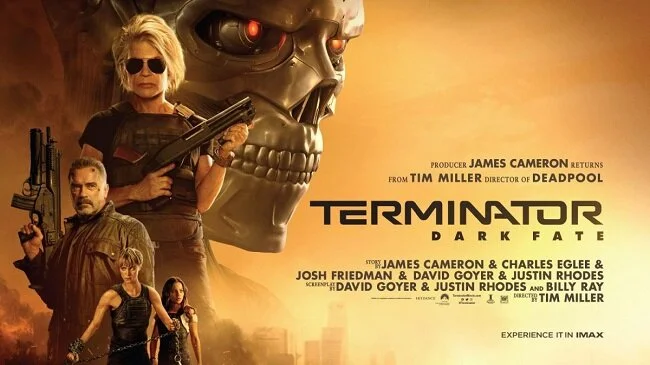
Sequels and reboots are hardly a new concept and have been a part of Hollywood culture since the 1930s. The success of the Universal Horror movies from that era being a prime example of direct follow ups and retconned movies. However, there is one fundamental rule that distinguishes a good sequel from a bad one. You should never mitigate, undermine or make irrelevant the events of the previous movie, just to provide your new film with a raison d'être. For example, the events of Aliens do not contradict or trivialise those that happened in Alien. In fact with that franchise there is a very clear logical progression between the two movies. The same is true for Mad Max and Mad Max 2 or Star Wars and The Empire Strikes Back. The key is to progress a story, enhance it or explore things from an alternative angle and bring something new to the cinematic table. Sadly this philosophy is all too often lost on corporate film making. Which means that many sequels are just tedious replays of prior films. Terminator: Dark Fate falls squarely into this category.

The enduring appeal of the character John Rambo in First Blood comes from the fact that he is a traumatised ex- service man who keeps himself to himself as he drifts from job to job, trying to come to terms with his wartime experiences. His poor treatment at the hands of a small-town Sheriff is a succinct metaphor for the social and political indifference that Vietnam veterans were shown upon their return to the US. He’s a man with a code in a world that no longer has any use for him. His simple and honest patriotism is not returned and he is in fact viewed with shame by many from the nation he loves. Furthermore, the first movie does not paint him as a cold-blooded killer. Despite provocation he is not the first person to shoot to kill. Rambo is in many ways a victim. A broken man, who society has asked to do unspeakable things. Now society wants nothing to do with him and fears the “monster” they created. Although clearly an action movie, First Blood had narrative depth and a flawed but sympathetic protagonist. 37 years and four movies later, such dramatic themes have long left the franchise. The central character is indeed a caricature of its former self.

It was hardly surprising that the movie adaptation of Chris Kyle's autobiography American Sniper, would cause controversy. The Iraq war, US Foreign Policy and national pride are seldom subjects that are discussed in a calm and measured fashion. And then there are the personal politics of director Clint Eastwood to consider. Hence there were claims from some quarters upon the movie’s release, that it was Islamophobic and counter claims that criticisms of the late Chris Kyle were unpatriotic. There still remain issues regarding the authenticity of events depicted in the source text and subsequently the movies screenplay by Jason Hall. Yet none of these factors have in anyway impacted upon the film's box office returns which currently stands at $247,900,417 worldwide.
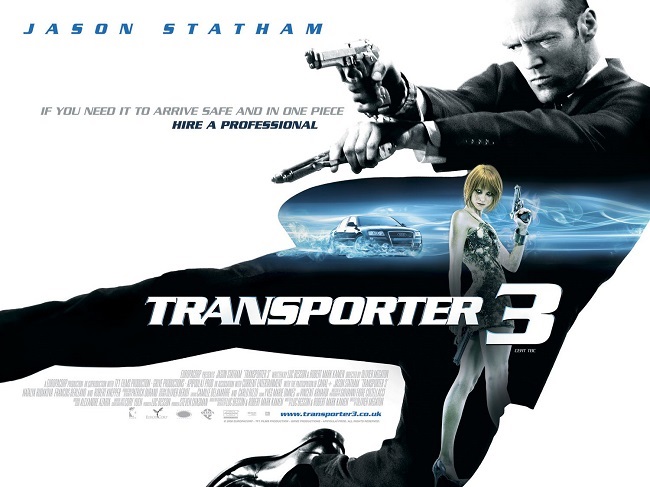
Do I really need to present you with some sort of plot synopsis for Transporter 3? No, I didn’t think so. More of the same as Frank Martin (Jason Statham) and his police chum, Inspector Tarconi (Francois Berleand) become embroiled in yet another high-octane escapade. There's fights, car stunts, exotic international locations and a strong sense of humour. This time, the disposable love interest is a Ukrainian girl named Valentina (Natalya Rudakova) who fulfils her role succinctly. The film benefits by being set back in Europe, after the mistake of basing Transporter 2 in the US. This time, the story takes us to such locations as Budapest and Odessa. The international film crew once again bring a veneer of panache to the production that is conspicuously absent in US action movies. For a modest budget fil, Transporter 3 it looks very good. Again the proceedings are given a boost by a pertinent soundtrack by Alexandre Azaria and a selection of European “tunes”.

Jason Bourne originally graced our screens for the first time seventeen years ago. The Bourne Identity was a gritty, minimalist take on the espionage genre and a welcome change from the excesses of the Pierce Brosnan Bond era. The story arc was sustained over three movies and ended efficiently and succinctly. After which Matt Damon moved on, as did the director of two of the movies, Paul Greengrass. Which leaves us with The Bourne Legacy; the tangential sequel that arrived in 2012. A film that exists because the money men and bean counters hate to pass up on a franchise until it has been squeezed utterly dry. Hence, they commissioned the writer of the series, Tony Gilroy, to come up with a screenplay and direct a spinoff movie. Jeremy Renner was cast in the lead role. Yet despite narrative and production continuity, The Bourne Legacy was not a Jason Bourne movie with the star appeal of Matt Damon. Although the film turned a profit, it had the lowest box office returns out of the entire franchise.
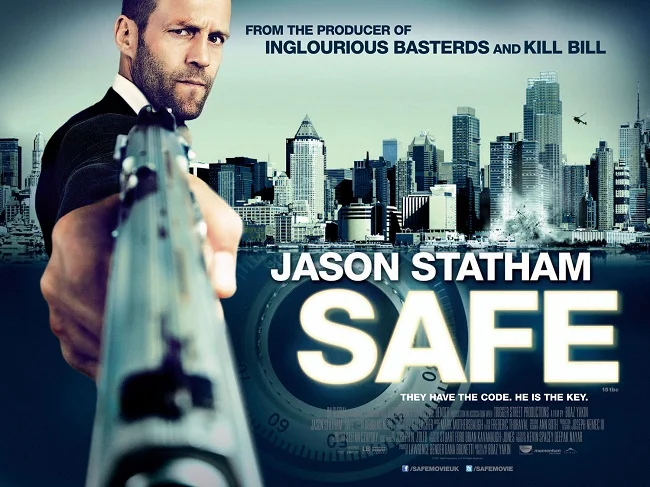
During the eighties there was a clear league table of action movie stars. By the mid-nineties this system fell into decline and the Hollywood lacked any clearly defined exponents of the genre. A decade later, due to the success of Luc Besson’s Transporter films, Jason Statham became a bankable box office star in this field. When you look at Statham's early work in Lock, Stock and Two Smoking Barrels it is hard to envisage the "mockney geezer" as an international action star. Yet he has successfully stepped into the role and enjoys a large following. I enjoy his work as he has a likeable on-screen persona. My 88-year-old Mum likes him to because "he wears nice suits". The action genre seldom reaches such a diverse demographic.
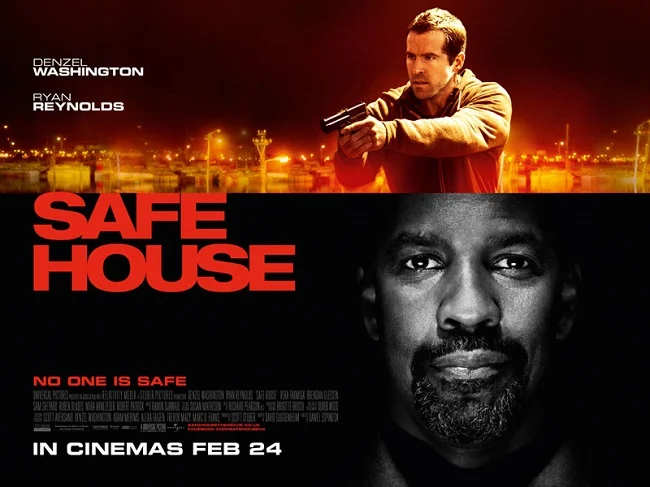
Before we start, I recollect that one well known UK critic described Safe House as sub-Tony Scott, upon its release. Now I’ve always been conflicted over Scott’s back catalogue, as I’ve always found his movies to be hampered by their own unique style. The subtleties of his characters and depth of his themes are all too often drowned out by his frenetic style and fast paced editing. Therefore a comment such as this really sets off alarm bells for me. Having recently watched The Equalizer 2, I wanted a further fix of Denzel Washington in a similar action vehicle. As Safe House was available on Netflix UK, I decided to kill a couple of hours and see what actually constitutes as “sub-Tony Scott”.
Looper (2012)
Rian Johnson's Looper is a thoughtful, bleak and inventive new spin to the time travel genre. The first act quickly establishes the main protagonists and the economically ravaged future he inhabits. I won't burden you with another re-iteration of the plot, because any of the trailers available on YouTube can do that far more efficiently than I. Let it suffice that the central conceit is the paradox that arises from a hitman meeting his younger self. What I would like to point out that after watching so many poorly conceived films, with little or no narrative, Looper stands out as a piece of thought provoking, quality film making. Mainstream Hollywood needs to take a long hard look at this movie and reacquaint themselves with the proper and full potential of the science fiction genre.
Rian Johnson's Looper is a thoughtful, bleak and inventive new spin to the time travel genre. The first act quickly establishes the main protagonists and the economically ravaged future he inhabits. I won't burden you with another re-iteration of the plot, because any of the trailers available on YouTube can do that far more efficiently than I. Let it suffice that the central conceit is the paradox that arises from a hitman meeting his younger self. What I would like to point out that after watching so many poorly conceived films, with little or no narrative, Looper stands out as a piece of thought provoking, quality film making. Mainstream Hollywood needs to take a long hard look at this movie and reacquaint themselves with the proper and full potential of the science fiction genre.
Looper hinges on the dynamic between Bruce Willis and Joseph Gordon-Levitt which works very well. Willis always seems to give his best performances in genre productions, however I would concede that this really Gordon-Levitt's film. His characterisation and deportment is extremely good. The narrative veers from dry asides about the complexity of time travel movie to occasions of quite jolting violence, but keeps you guessing as to where it will ultimately end up. Looper does not make the mistake of wallowing in the excesses of its own scope of vision and has a minimal amount of effects work. Ultimately it is an exploration of whether you can escape your own destiny and a rather sombre, self-contemplative tale.
To say more would be to spoil Looper for those who have not yet seen it, and it is a movie that benefits from as little prior knowledge as possible. That is not to say that it is dependent on a major plot twist in the third act, because it is not. Viewers will however, benefit by reflecting upon what they have seen. Which of course is what quality film making is all about. Rather than being presented with a stereotypical dystopian future, we are shown an all to plausible scenario and characters who face exactly the same moral and ethical issues as we do. That is the movies greatest strength and also its most disturbing quality. The acknowledgement that no matter how much things change, they remain the same.
Star Trek is slightly older than me by 14 months. I was born on December 18th 1967. Star Trek was first broadcast in the US on 8th September 1966. Hence this show has always been part of the prevailing pop culture that surrounded me, as I grew up. I first began watching Star Trek as a young child in the early seventies. It would be repeated on the BBC in the early evening on Fridays and it became a family ritual to sit down together and watch it. As a seven or eight year old, it left a great impression upon me and was in many ways, the television highlight of the week. Star Trek along with Doctor Who certainly started my interest in science fiction. Star Trek was also one of the first shows that introduced me to tie-in marketing. I remember seeing in a toy shop, near to my school at the time, a Dinky Klingon Battle Cruiser and was flabbergasted that such a thing existed. I immediately coveted it but sadly never obtained one.
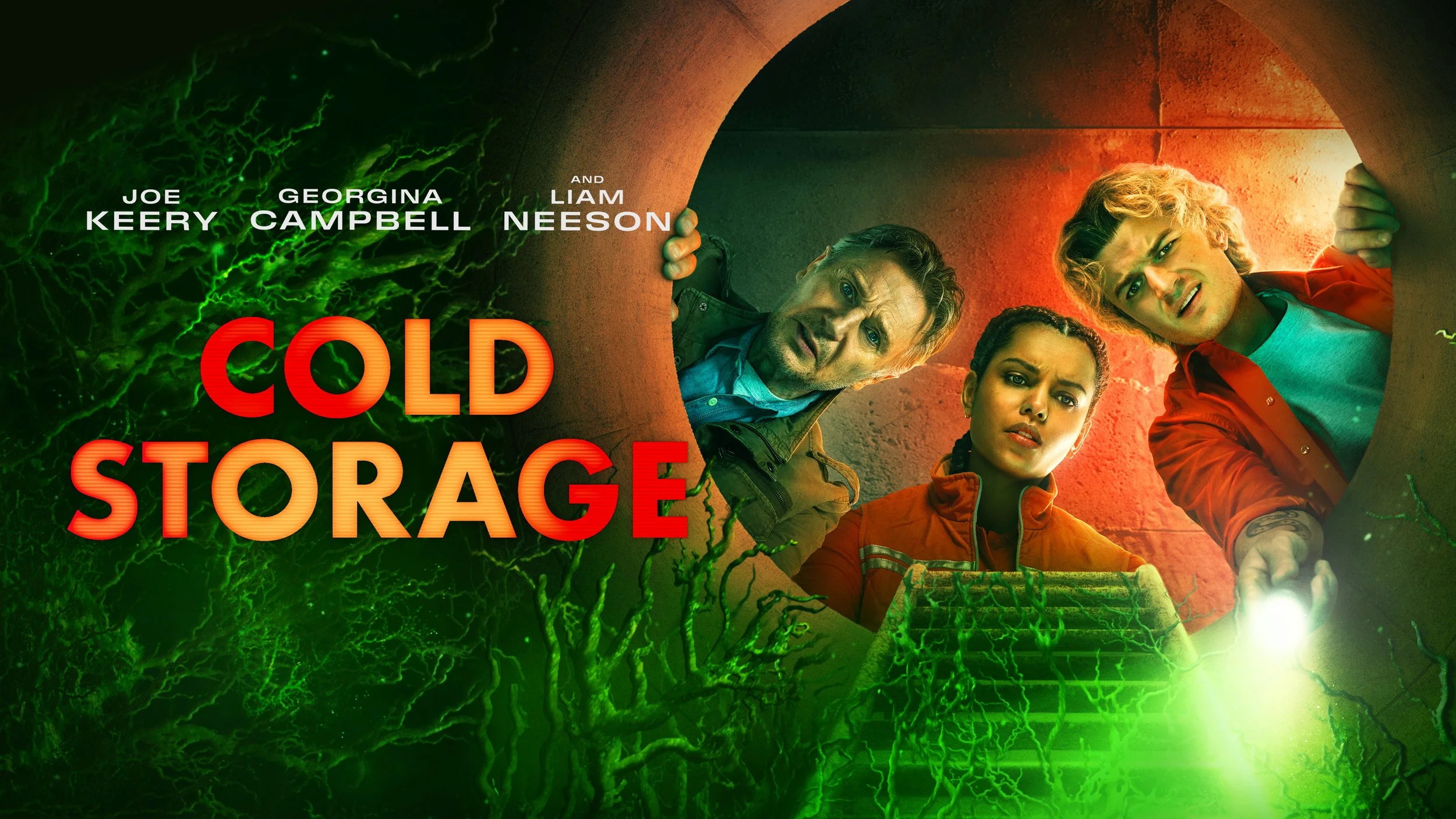
David Koepp is no stranger to genre cinema, having written the screenplay for such films as Jurassic Park, Spider-man and War of the Worlds. Where these titles are big budget, major studio productions, Cold Storage is a far more modest production with a smaller scope. Adapted from his own novel, the screenplay is by David Koepp and the film is directed by British film-maker Jonny Campbell. At first glance, Cold Storage seems a somewhat derivative science fiction horror film with a relatively modest budget, financed through a convoluted US and French co-production. Lurid green and red colours feature heavily in the marketing artwork and it is easy, after a cursory look, to write the film off as cheap, generic, direct-to-streaming filler. However, Cold Storage is prime example of why you should not judge a book by it’s cover, or in this case, a film by its posters and online advertising. It is in fact an amusing and fun endeavour that can fill an evening.
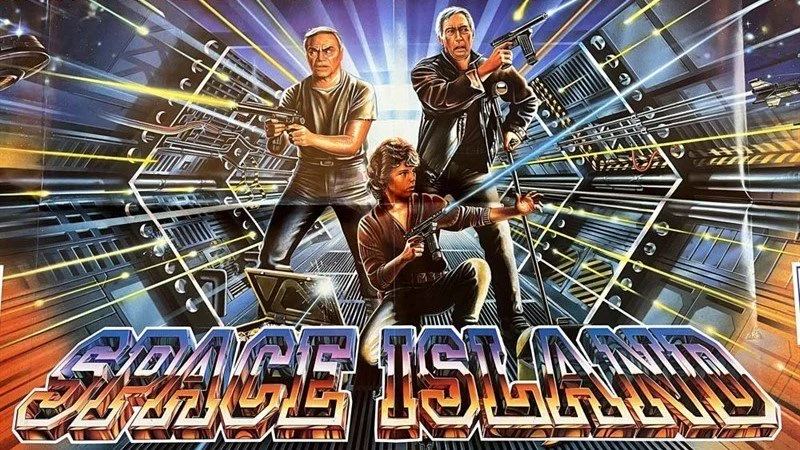
Treasure Island In Outer Space is a curious Italian television production from 1987 starring Anthony Quinn and Ernest Borgnine. It also features numerous international actors better known for their work in cult and exploitation films, such as Bobby Rhodes, David Warbeck and John Morghan. Directed by Antonio Margheriti (AKA Anthony Dawson), famous for such films as Killer Fish (a cash in on Piranha) and The Last Hunter (a Vietnam exploitation epic), Treasure Island In Outer Space is a faithful adaptation of Robert Louis Stevenson’s classic novel. The screenplay by Renato Castellani and Lucio De Caro draws heavily from the source text, maintaining character names and original dialogue. However in updating the material to a futuristic setting, the script is littered with the worst kind of eighties sci-fi clichés. We are subjected to sonic trains, anti-gravity rays and the usual buzzword driven faux science.
After the success of Raiders of the Lost Ark in 1981, filmmakers scrambled to find existing intellectual properties that they could use for similar films. Hence archaic heroes such as Alan Quatermain were hastily given a modern makeover and thrust into generic movies, in a vague attempt to replicate Steven Spielberg’s successful formula. Which brings us neatly on to James Charles Bigglesworth AKA “Biggles”, a fictional pilot and adventurer from a series of books written by W. E. Johns between 1932 and 1968. Several attempts had been made in the past to bring this character to the silver screen, including one by Disney but they all failed. However, the commercial and critical success of Indiana Jones provided sufficient impetus to greenlight a new film. However, due to some curious production choices, when Biggles was finally released it was far from just a period set, action movie.
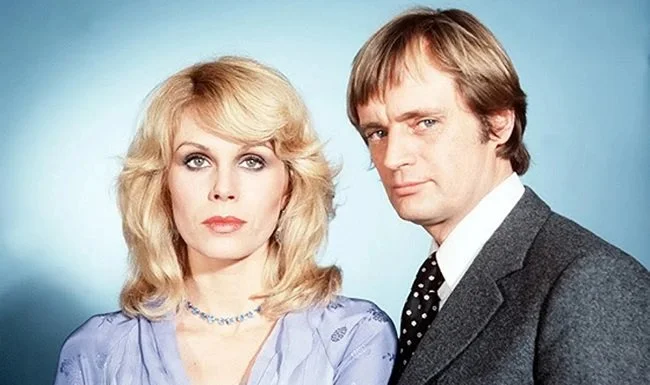
The seventies was an interesting time for UK genre television. Despite small budgets and often low key visual effects, there was no shortage of good ideas and creativity. Sapphire & Steel is a prime example of a show couched in a high concept, produced on a shoestring. It also credits its audiences with some degree of intelligence. Rather than spoon feeding the narrative in a didactic manner, it hints and implies, then leaves the rest to its viewers imagination. Created by Peter J. Hammond, a veteran TV writer, Sapphire & Steel centres on a pair of interdimensional operatives named Sapphire and Steel. They are two of a number of elements that assume human form. Over the course of three seasons little is revealed about the pair but they appear whenever there is any anomalous temporal activity. Time itself is portrayed as a sentient and malignant force that seeks to make incursions into the present reality, through weaknesses in the fabric of space.
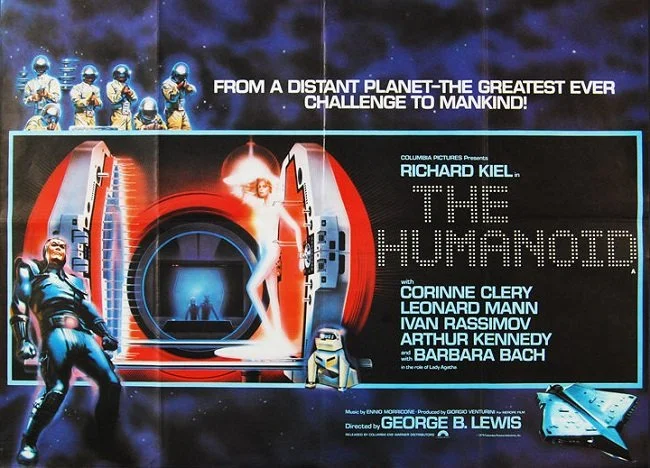
The Humanoid is one of many international Star Wars knock-offs that flooded cinemas in the late seventies and early eighties. Like so many others, it is derivative (even to the extent of replicating specific scenes from George Lucas’ movie), replete with awful dialogue and has somewhat basic production values. However, it does have an interesting cast including Richard Kiel, Barbara Bach, Arthur Kennedy and Corinne Cléry. Kiel gained a lot of media attention after his appearance as the steel-toothed villain Jaws in the 1977 Bond film, The Spy Who Loved Me. His stature made him the perfect fit for the titular character in this Italian science fiction production. Sadly, beyond a curious lineup of actors, The Humanoid has little to distinguish it from so many similar movies. For example, if you’ve seen Starcrash then you’ll be adequately prepared for this film.

Some films are made with the intention of starting a franchise, others evolve into one after a surprise box office success and lucrative sequels. Alien (1979) falls into the latter category. A mid-budget science fiction horror film that was well crafted and then benefited immensely by being released at just the right time. Sadly, many franchises become derailed and enter into a death spiral due to competing artistic visions, cynical studio politics and cinematic ignorance. This has certainly afflicted all subsequent Alien films after James Cameron’s magnificent Aliens (1986). Sometimes, a franchise can correct its course and do something fresh with the source material. Prey (2022) is a fine example of this with director Dan Trachtenberg bringing fresh vigour and intelligence back to the Predator movies. I believe that was the intention with Alien Romulus (2024). Sadly, the road to hell is paved with good intentions.

Event Horizon is a curious movie hybrid, mixing plot elements from classic sci-fi and horror genres. It has been labelled “Hellraiser in Space” by some lazy critics, although I think there's far more to it than that. Perhaps a more apt description would be a Gothic horror story set in space. The movie has garnered a cult reputation since its release in 1997, mainly due to its graphic imagery and troubled production history. It does indeed have some quite shocking sequences but the lightning editing does not show as much as some would think. Paramount forced director Paul W S Anderson to reduce the original one hundred and thirty minute running time down to a more manageable ninety, after unfavourable test screenings. Much of the violence was allegedly removed as a result of that process. Sadly nothing survives of the removed material other than a VHS workprint. Hence a restored director’s cut is therefore unlikely.
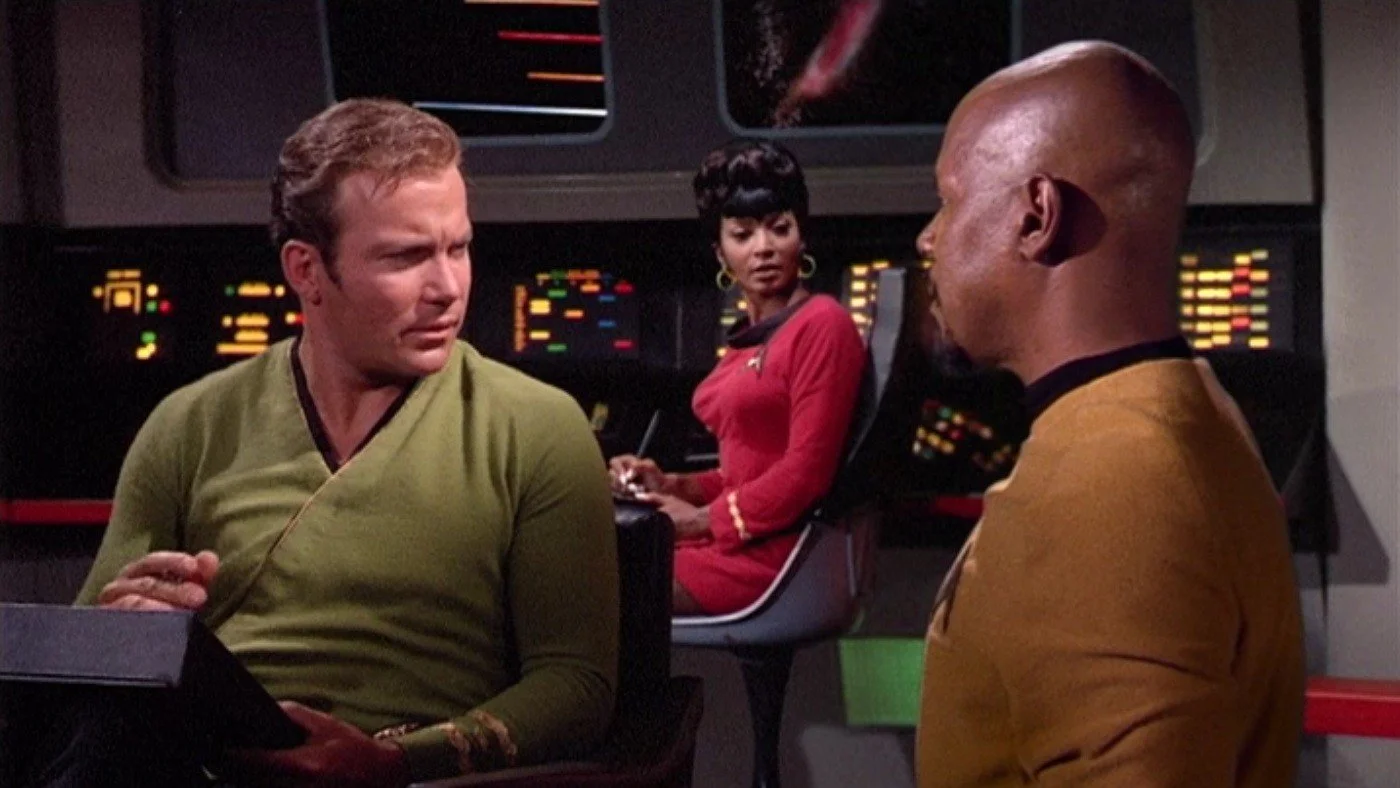
I recently watched the first trailer for the new Obi-Wan Kenobi television show that is premiering on Disney + in May. I am interested in this latest instalment in the Star Wars franchise and curious as to whether Liam Neeson will make an appearance. I also watched a 20 minute fan video in which they “analysed” the entire trailer. They discussed the content of this 2 minute preview and then did a great deal of speculating about potential themes and characters that may feature in the show. They were clearly enthusiastic about what they had seen and were very knowledgeable about the subject. This resonated with me, as I like to be well versed about the things I enjoy. However, it is worth remembering that fandom can tip into obsession and gatekeeping. Hence I feel there is a subject to explore here.
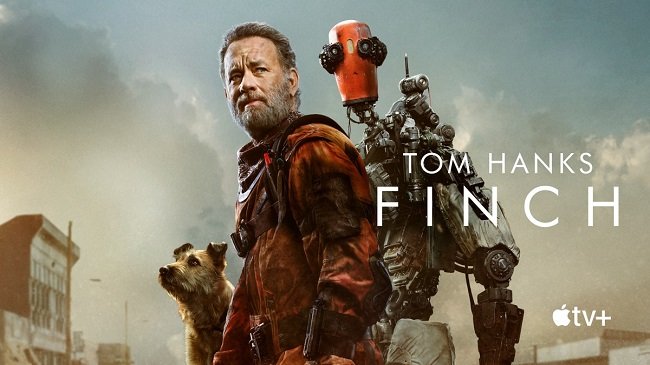
On paper Finch has little originality. The moment I read the plot synopsis and saw the first trailer I instantly thought of other such films as Silent Running, Short Circuit and Chappie. However, irrespective of its derivative concept and the fact it channels many of the major tropes of the genre, it does have three cards to play. Namely strong performances by Tom Hanks, Caleb Landry Jones and canine actor Seamus. Although not a genre milestone, Finch is a curiously pleasant post apocalyptic road movie. Despite travelling through the sun bleached vistas of a ravaged America, the story focuses on the three protagonists and their relationship. It is no small feat to find genuine sentiment in such a harsh environment and indeed in such a genre but Finch proves to be an engaging emotional journey. Once again the most effective explorations of the human condition are often through characters who are conspicuously not.
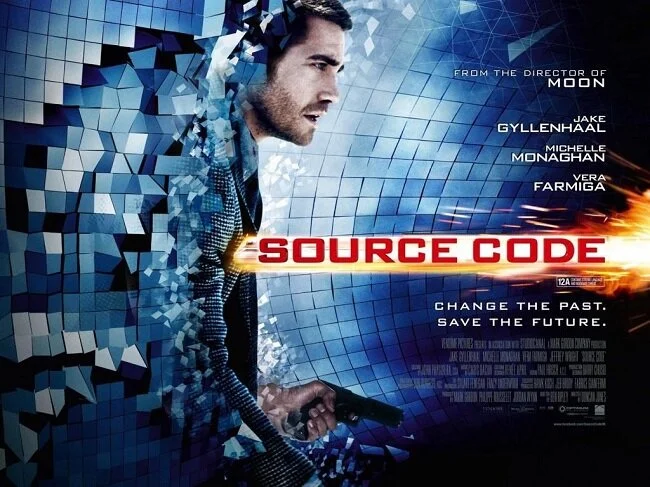
I wanted to watch Source Code for a second time before I wrote about it. This is because numerous internet debates have arisen regarding the plausibility of the film’s ending. I find this a somewhat curious stance considering that the story, written by Ben Ripley, deals with temporal travel and multiple timelines. All of which are purely theoretical and not currently subject to singular, definitive interpretations. I would further add that the science of the film is simply a plot device and is not its raison d'être. But that’s movies for you. People love to discuss them and more recently we have seen the rise of “explanation” videos on YouTube. However, the latter is a separate debate and something I may write about in the future. As for Source Code, I enjoyed it even more the second time round, as I had the time to focus on the minor details rather than trying to stay abreast with the main plot, as I did on my first viewing.
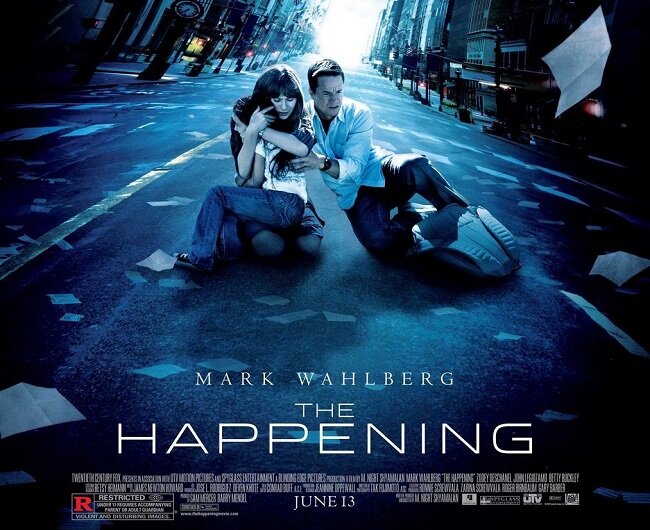
I revisited M Night Shyamalan's The Happening recently to try and determine whether he is indeed suffering from Orson Welles syndrome. IE that he has made all his best work at the beginning of his career. Because he’s never quite recaptured the critical or artistic success of The Sixth Sense, Unbreakable and Signs. I was one of the few that actually liked The Lady in The water but I could see why viewers would assume that he had become a victim of his own style and technique with that particular movie. Casting yourself as an author whose work will reshape society and change the course of history is at the very least, a little egotistical and at worst an act of immense hubris. Then in recent years we have had The Last Airbender and After Earth, both of which have performed poorly. However I thought I'd give The Happening another chance as it remains the directors only R rated movie to date.

I wrote an article back in 2009 as to why I felt a remake of The Thing was a bad idea. At that time, the project was in development hell and didn’t look like getting off the ground. Subsequently, the production evolved into a prequel and managed to find financial support, culminating in a theatrical release in late 2011. Like many interested parties, I watched the initial teaser trailer with a mixture of curiosity and trepidation. Then when the red band trailer arrived I felt that the shark was well and truly jumped. Too much was shown (a common problem with modern trailers) and there the internet was awash with discontented mutterings from John Carpenter purists. Hence I refrained from watching this movie for several years. When I finally got round to doing so, I was not well disposed towards it. However, over the Christmas holidays, I decide to give this prequel a second viewing and see if I could approach it with a less partisan mindset.
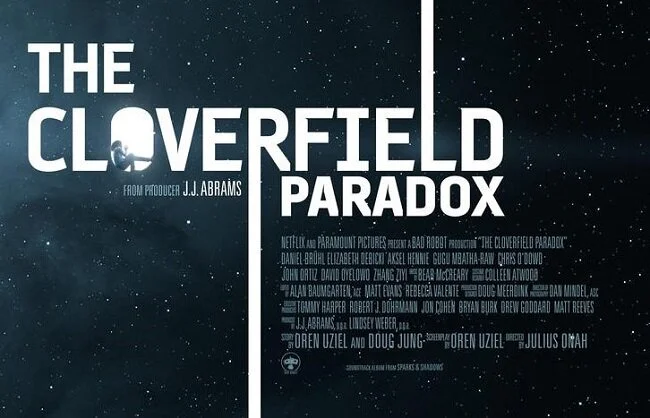
Cloverfield (2008) was a surprise hit, earning $172 million worldwide at the box office against a $25 million budget. Paramount Pictures naturally wanted a sequel but director Matt Reeves and writer Drew Goddard struggled to find a suitable narrative means to progress the original story. Both eventually left the project and the production descended into development hell. The subsequent success of Godzilla and Pacific Rim saw the Kaiju genre becoming oversaturated and so the decision to make a direct sequel was re-evaluated. Eventually a “speculative screenplay” called The Cellar was purchased and repurposed to include some additional science fiction elements and became 10 Cloverfield Lane. Despite being a curious genre hybrid which only tenuously links to the original movie, this too fared well at the box office. Therefore it was inevitable that a third movie in the so-called “Cloververse” would follow.
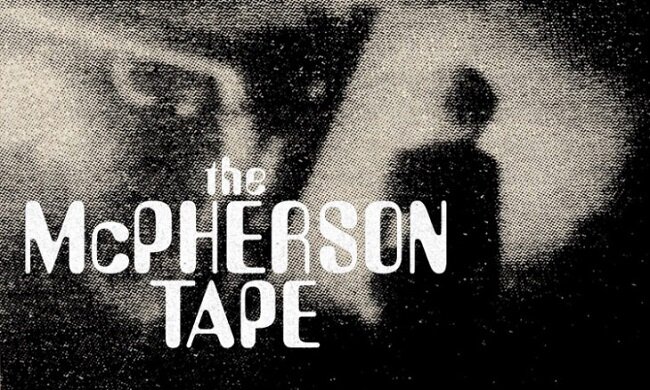
In many ways the story behind The McPherson Tape is a lot more interesting than the film itself. This early found footage movie from 1989, was shot on home video on a virtually non-existent budget. The director Dean Alioto eventually found a distributor but on the eve of the movie’s home video release, the warehouse burned down and allegedly destroyed the master tape and all the promotional artwork. Yet this was not the end of the story. It was common practice in the eighties for small distributors to send advance copies to local independent video stores. Hence The McPherson Tape found its way into the pirate video ecosystem. It then migrated to the UFO community where it was circulated as being a video of a legitimate alien abduction. Dean found himself in the unusual position of having to debunk his own work. Three decades later due to the intriguing tale associated with The McPherson Tape, it has been remastered from the newly rediscovered 3/4" tape and re-released.
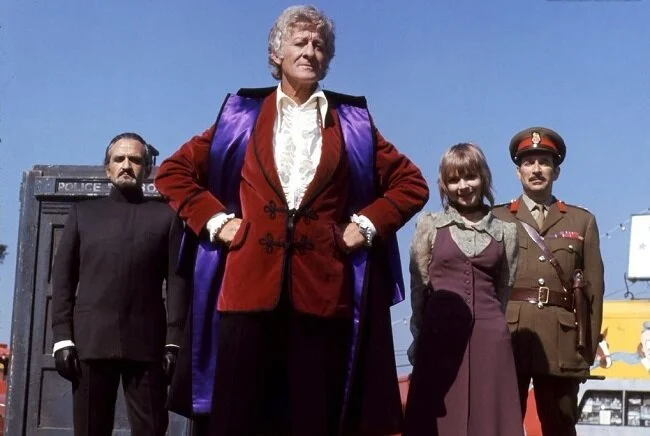
Last month, I tried a 30 day free trial of the streaming service BritBox. One of the main selling points was that the platform has an extensive back catalogue of Classic Doctor Who. Although I initially tried to keep up with the reboot of the franchise in 2005 my interest waned after several seasons. I am not opposed to any of the changes made and I am very pleased that the show has found a new audience. However, it doesn’t resonate with me so much anymore and I find that there is too much human drama for my liking. So I decided to revisit my youth and watch some classic Doctor Who; episodes that I haven’t seen in over forty years (yes, I’m that old). Now I’m fully aware of the potential issues that can come from returning to things that you enjoyed in one’s youth, so I believe I did my best in managing my expectations. However, the results of my nostalgia trip were interesting. The things I thought would be a problem nowadays weren’t so and the things I expected to hold up well despite the passage of time, didn’t always succeed. It’s been a curious experience.
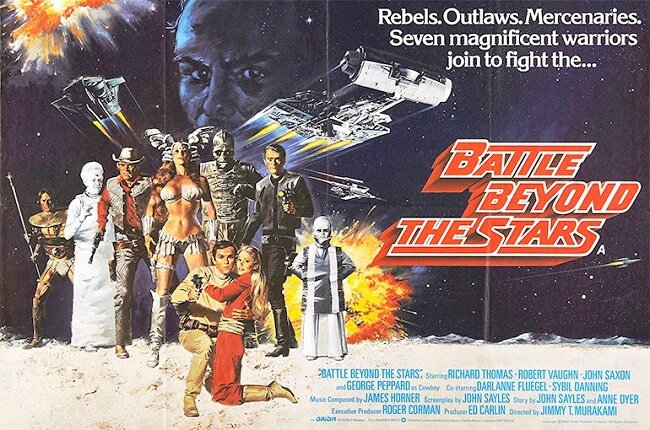
I was 12 years old when I first saw Battle Beyond the Stars during its UK theatrical release. I remember that I enjoyed it and thought it was an action packed movie. Being young, lacking the critical faculties that come with age and exposure to a wider variety of cinematic material, a lot of the films plus points were lost on me. I recollect that I did pick up on the fact that this film was more ghoulish than the other “Space Operas” that flooded theatres at the time. But beyond that, all I saw was a fun and enjoyable science fiction movie. I cheered when the Malmori were defeated and was saddened when Space Cowboy died. It is only after subsequent viewing over the years, that I’ve realised that this film is a microcosm of all the things that made Roger Corman productions so successful and unique. Despite its low budget, the visual effects were good and innovative for the times. There was more sex and violence present, than in comparable productions. And the crew is a veritable who’s who of talent that went on to wider success.
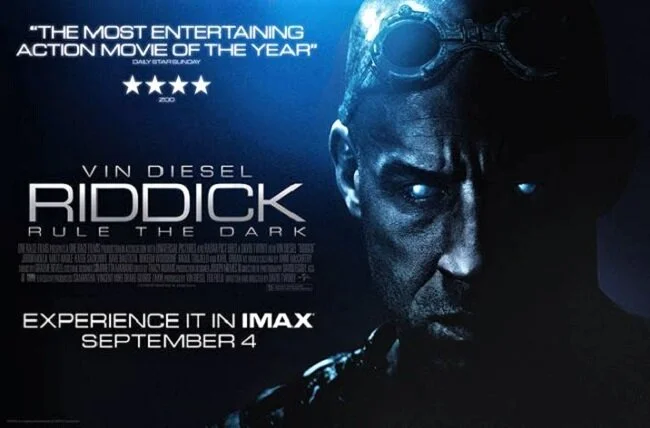
Contrary to the endorsement on the above poster, Riddick was not "the most entertaining action movie of the year" in 2013. It was just an adequate third instalment in a rather ambitious franchise, that has failed to grab the wider public's attention. That’s not to say that they didn’t make money. This is after all the third movie. Writer and Director David Twohy has done his best to try and make the character of Riddick (Vin Diesel) more than the sum of his parts and I admire both of them for their persistence. Unfortunately, Riddick just isn't engaging or complicated enough a protagonist to sustain a franchise of this nature. The anti-hero was sufficient to drive the original Pitch Black back in 2000 which had some good ideas but just couldn't sustain the overarching and overblown Chronicles of Riddick in 2004. This instalment is competently made but ultimately superfluous.
Sequels and reboots are hardly a new concept and have been a part of Hollywood culture since the 1930s. The success of the Universal Horror movies from that era being a prime example of direct follow ups and retconned movies. However, there is one fundamental rule that distinguishes a good sequel from a bad one. You should never mitigate, undermine or make irrelevant the events of the previous movie, just to provide your new film with a raison d'être. For example, the events of Aliens do not contradict or trivialise those that happened in Alien. In fact with that franchise there is a very clear logical progression between the two movies. The same is true for Mad Max and Mad Max 2 or Star Wars and The Empire Strikes Back. The key is to progress a story, enhance it or explore things from an alternative angle and bring something new to the cinematic table. Sadly this philosophy is all too often lost on corporate film making. Which means that many sequels are just tedious replays of prior films. Terminator: Dark Fate falls squarely into this category.

In the near future, a series of mysterious power surges strike the Solar System, endangering all human life. Astronaut Major Roy McBride, is selected by U.S. Space Command (SpaceCom) to investigate their source near Neptune. The surges are linked to the "Lima Project", a failed experiment from 26 years earlier, that was intended to search for intelligent life outside of our solar system. The ship’s antimatter drive is potentially malfunctioning and responsible for the energy surges. Roy’s investigation is further complicated by the fact his Father H. Clifford McBride (Tommy Lee Jones), led the "Lima Project" and has not been heard from for 16 years after reaching Neptune. Having been told that Clifford may still be alive, Roy is joined by his father's old associate Colonel Pruitt (Donald Sutherland) whose loyalties remain ambiguous. Roy, who is noted for remaining calm under pressure, shows little emotional reaction to the news about his Father. As he and Pruitt travel covertly from Earth, to the moon and then onto Mars, it becomes clear that there is more to the mission than meets the eye. Will Roy remain emotionally detached or will old wounds impair his judgement?

I was very surprised when I saw a trailer for a fourth instalment on the MiB franchise, based on Lowell Cunningham’s 1990 comic book series about secret government agents battling alien infiltration of earth. The third movie from 2012 managed to keep its head above water despite a very troubled production. At the time of its release, I like everyone else, pretty much thought that the series had run its course. Yet we live in the age of belated sequels as well as hard and soft reboots. And although Will Smith’s star may well be waning, Chris Hemsworth is still box office gold. Hence, we saw the release of Men in Black: International this summer. The basic concept of the franchise remains the same but this time the action begins in the London Office and then takes a more international journey with such locations as Marrakesh and Naples. Emma Thompson returns as Agent O and Liam Neeson joins the cast as agent High T.
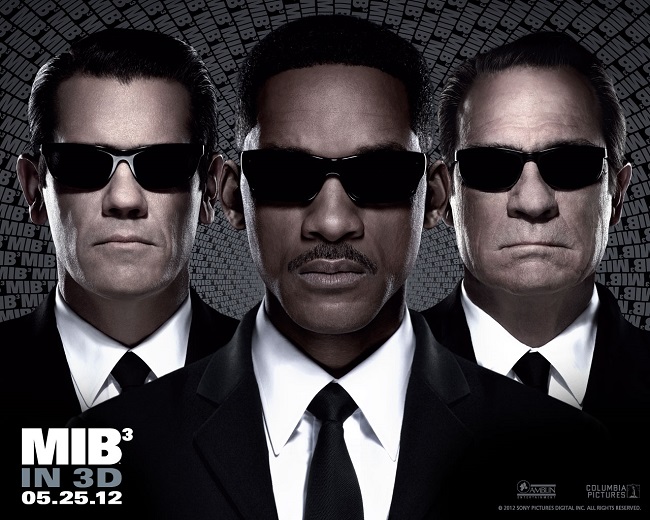
The original Men in Black movie hit our screens back in 1997. It was a box office success and was therefore followed by a mediocre sequel in 2002. It took a decade before we got a third instalment in the franchise. However, the popularity of the two lead actors contributed greatly to the success of this series and so despite well documented production problems Men in Black III was released in 2012. However, the delay between movies did have consequences. Will Smith, despite being an Oscar winner and box office star, had lost his way during this time and was not as popular with audiences. Men in Black III was a timely opportunity to reconnect with his core fans. So to ensure that the film hit all the required beats and stand a better chance of being a success, the Columbia Pictures brought back previous director Barry Sonnenfeld, in hopes of warding off the Hollywood curse of third movie instalments.
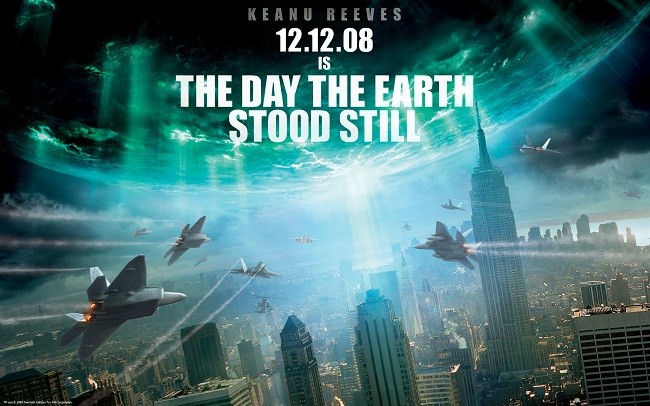
Fellow blogger and all round good guy Murf, posted an ode to Bill & Ted’s Excellent Adventure today. It is clearly a movie that he enjoys (Go read his review). He references how due to this movie (along with others), as well as being a decent person in real life, that actor Keanu Reeves enjoys a great deal of goodwill from fans and pop culture cognoscenti. Which is a good thing for Mr Reeves, because goodwill often means that folk are prepared to overlook past transgressions and misdemeanours. And in cinematic terms, Keanu has had a few. The Day the Earth Stood Still is definitely one of them. Now I’ve questioned before the wisdom and merits of writing a predominantly negative film review and believe me my thoughts on The Day the Earth Stood Still are most definitely so. However, I think that something positive can still be gained from scrutinising this film. It can be held up as a textbook example of how not to remake a classic.
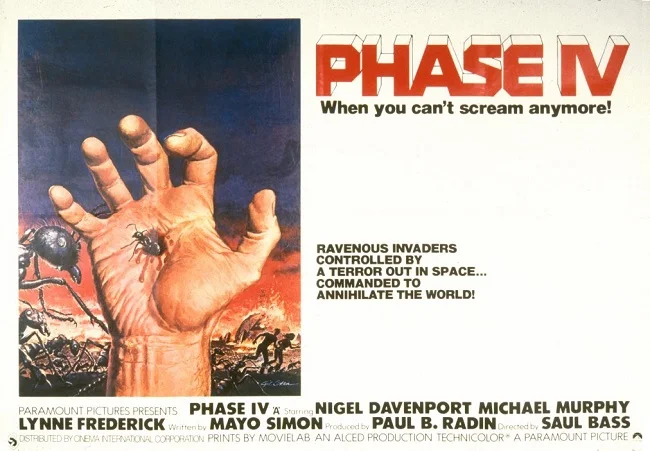
Every now and then, a mainstream film studio employs an artisan director to helm some sort of experimental or vanity project. The studio executives often have very little understanding of the film maker or their body of work, beyond that their artistically respected by their peers. Hence there is the corporate hope that the resulting production will be both critically acclaimed and financially successful. However, what all too often happens is that the said director goes off and indulges themselves, or simply does what they’re hired to do and delivers a finished picture that is beyond the intellectual horizons of the studio. Sphincter’s subsequently tighten among executives; the director is denied final cut and the film is taken a way and re-edited in the hope of rendering it more commercially viable. In the worse cases, a second director is brought onboard and new material shot in the hope of “saving” the picture. The net result is usually acrimony among all involved parties and a film that fails to make its money back at the box office.

For anyone with a passing interest in literary science fiction, Arthur C. Clarke’s Childhood’s End is a seminal novel and considered an essential read. The story of humanity being shepherded into a utopian golden age by allegedly benevolent alien Overlords and the consequences it has upon society, was a radical departure from prevailing science fiction norms of the time. Over the years several film makers have expressed interest in adapting the story, but it has proven difficult to come to grips with. Stanley Kubrick initially wished to develop the novel but his subsequent collaboration with the author eventually lead to the making of 2001: A Space Odyssey. Since then there have been radio adaptations and audiobook versions, all of which seem to be a better medium for this episodic and contemplative tale. In late 2015 US cable and satellite channel Syfy broadcast a three-part miniseries based upon the 1953 story; something that past me by at the time. I recently caught up with this adaptation which seems to have provoked very mixed reactions among viewers. As ever, the controversy seems to stem from purists who favour a more slavish interpretation of the book.

I always cringe when I hear the phrase re-imagining. It's yet another contrived expression created by marketing bodies to justify the somewhat arbitrary process of remaking an established title. Often the re-imagined product has little to do with the source material and was chosen simply because of brand awareness. If you want a textbook example of a recent example of this somewhat cynical process then look no further than last year’s Death Wish reboot. It had nothing new to say on the subject and simply trotted out a generic and bland revenge thriller. So, when I discovered that Robert Wise's classic science fiction film, The Andromeda Strain had been remade as a TV miniseries (that had completely passed me by), I had great reservations as to whether this would be worth watching. However, the involvement of Tony and Ridley Scott piqued my interest, so I decided to take a calculated risk and give this 2008 A&E Network production a go.
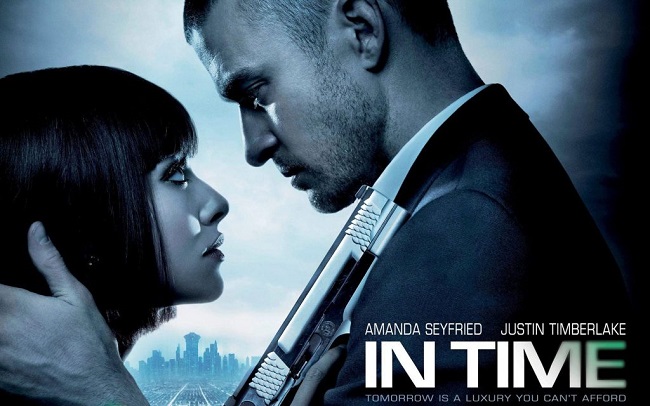
Time is quite literally money in the movie In Time, starring Amanda Seyfried and Justin Timberlake. Written and directed by Andrew Niccol, who previously wrote Gattaca and S1m0ne which both had similar dystopian themes, we are presented with a chilling scenario. What if you had to spend minutes or hours or perhaps days of your life in the same way you spend money? The movie offers a future where the population is genetically programmed to stop aging at twenty-five. If you're rich enough, you can purchase and trade this commodity, adding time to your life, making you effectively immortal. For the poor, the future is a far bleaker with most dying within a year of this hardcoded end date. Every transaction comes with a price in minutes and seconds.
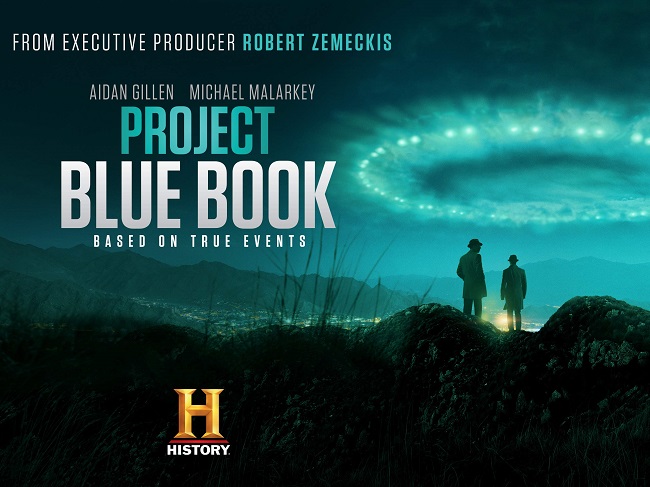
Many years ago, I use to rush home from school to watch Project UFO. Based loosely on the real-life Project Blue Book, this show from 1978 featured two U.S. Air Force investigators, Maj. Jake Gatlin (William Jordan) and Staff Sgt. Harry Fitz (Caskey Swaim) and their subsequent investigation into alleged UFO sightings. Sometimes there would be rational explanations and on other occasions, there was clearly extraterrestrial involvement. By the second season out protagonists experienced a close encounter of their own. It wasn’t the most densely plotted of dramas and was produced and presented in the idiom of mainstream television of the time. However, for a ten-year-old boy it had some excellent miniature work (Brick Price Movie Miniatures) and anything about UFOs was always a source of interest. There was also a great and very seventies theme tune by Nelson Riddle. So when I discovered that History (formerly The History Channel) had produced a science fiction drama series called Project Blue Book, I became somewhat nostalgic and equally intrigued.
X-Men: First Class (2011)
Falling somewhere between a sequel and a reboot, director Matthew Vaughn has managed to make X-Men: First Class a worthy entry in the X-Men franchise that successfully explores the origins of the characters as well as Christopher Nolan did with Batman Begins. X-Men: Last Stand painted the movie series into a difficult corner by killing off key characters. This movie provides a clever means of bypassing such issue by offering an origins story that subsequent leads in later sequels to an alternative timeline that redresses past mistakes. X-Men: First Class opens with a rather bleak and dark pre-credit sequence set in a WWII concentration camp that sets up the central protagonists and antagonist. It then maintains a steady pace and unlike other more recent bloated blockbusters, it's running time works in its favour and not against it.
Falling somewhere between a sequel and a reboot, director Matthew Vaughn has managed to make X-Men: First Class a worthy entry in the X-Men franchise that successfully explores the origins of the characters as well as Christopher Nolan did with Batman Begins. X-Men: Last Stand painted the movie series into a difficult corner by killing off key characters. This movie provides a clever means of bypassing such issue by offering an origins story that subsequent leads in later sequels to an alternative timeline that redresses past mistakes. X-Men: First Class opens with a rather bleak and dark pre-credit sequence set in a WWII concentration camp that sets up the central protagonists and antagonist. It then maintains a steady pace and unlike other more recent bloated blockbusters, it's running time works in its favour and not against it.
Underpinning the film are the central performances of James McAvoy and Michael Fassbender as Charles Xavier and Erik Lensherr. Both excel in their respective roles, and unusually for a genre piece, have been given a screenplay that doesn't merely paint them as black and white caricatures. The set pieces, especially the denouement set against the Cuban blockade, are impressive but do not overwhelm the story line. The plot device of setting the film in 1963, works surprisingly well and does not make the mistake of becoming some sort of sub Austin Powers cliché. There is even room for homages to such films as Goldfinger, The Odessa File and The Marathon Man, courtesy of the films Nazi sub-plot.
Despite its PG -13/12 rating, X-Men: First Class cunningly exploits as much adult material that the classification allows. The is a high emphasis on sexuality and some rather hard-edged action. I was amused to see the use of one major profanity, which was neatly designed to embellish a standout vignette featuring a clever cameo. Overall this is a superior mainstream comic adaptation that seems to knowingly cater for all viewing demographics. The film also fairs well due to the rather lacklustre previous entry in the franchise. It is hard not to be superior to the incredibly flat and by the numbers X-Men: Last Stand. The emphasis this time is on motivation, politics and revenge rather than a need to string together endless scenes of destruction.
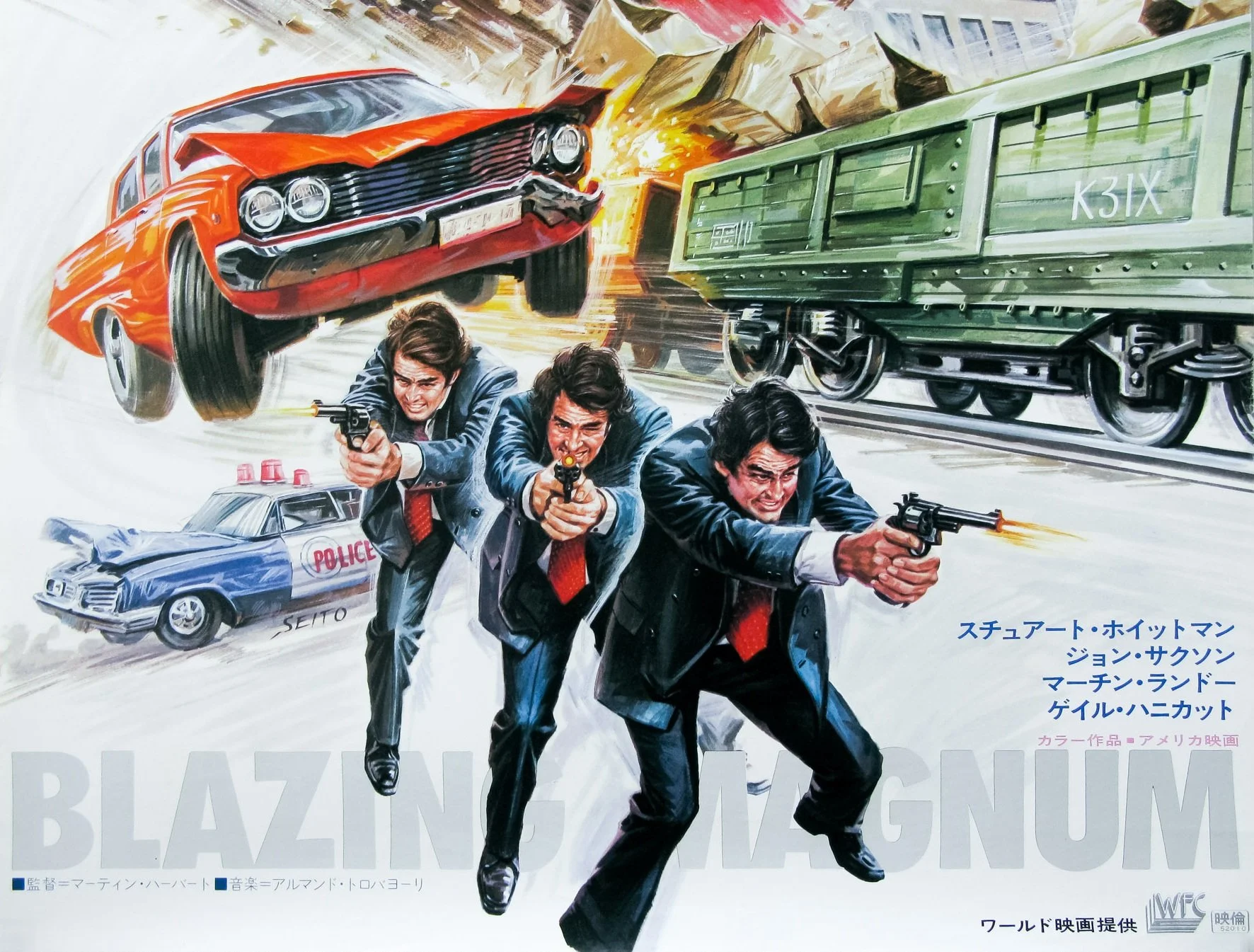
Mainstream films are easy to recommend to people. They’re usually formulaic, work within clear parameters and they’re not controversial. Most people, when viewing such film on someone else’s suggestion, are left with a fairly simply choice. Did they like it or not? Whatever the outcome, no feathers are ruffled. No one looks at you askance afterwards and says “why the hell did you think I’d like that piece of shit”? If something like this happens, then you have clearly not recommended a mainstream film. Perhaps you’ve suggested something that’s a little more of an acquired taste. Something niche, from a very specific sub-genre. Which brings me neatly to Blazing Magnum AKA Strange Shadows in an Empty Room (1976). The US title gives the impression that this film is a hard boiled cop thriller, like so many others that followed in the wake of Dirty Harry. But there’s a clue in the European title. Yes, this movie has more than just a whiff of a giallo about it.
Jason Statham is an exemplar of the US mantra of “staying in your lane”. He makes action movies and occasionally strays into action comedies. His formula broadly works and is sufficiently lucrative to keep Mr. Statham employed. Therefore, if you watch a film in which he stars, you have a fairly good idea of what you’ll be getting. Of late, the criteria for his action vehicles have become more succinct. Jason Statham will play an innocuous character, such as a construction foreman or a bee keeper. Something terrible will subsequently befall another character who Mr. Statham has an emotional connection with in some capacity. He will subsequently hunt down those responsible and meet out death and violence. At some point the villain of the story will enquire as to how this innocuous person is so lethal. Research will then show that our Jason is in fact an ex-police officer/special forces operative/international assassin. There’s then a showdown and the villain dies. Job done.
The Light at the Edge of the World presented itself as an action movie upon its release in 1971. Based upon a story by Jules Verne, the Spanish American co-production was driven by its star Kirk Douglas, who curiously hired British director Kevin Billington to helm the project. This tale of a lighthouse keeper fighting a war of attrition against a group of pirates that have captured his island, was market as an adventure film ostensibly in the idiom of the authors previous works and as a pirate movie. MGM bought the rights to distribute the film in the UK on the misunderstanding that it was a family friendly production. It was not and remains so. They subsequently had to cut 15 minutes of violence and torture as well as an undercurrent of sexual assault to secure a suitable rating. Conversely, the US distributors received an arbitrary PG rating, despite the fact this is one of a handful of films that honestly depicts pirates as murderers, rapists and worse.
It’s an established action film trope. The fire team comprised of ex-military personnel, move in on their target. Only to have the tables turned by someone they don’t deem a threat. What makes it different in The Last Stand of Ellen Cole is a throwaway line of dialogue. The bested operative lies bleeding on the floor and the protagonists stands over them ready to finish them off. “Don’t, I have a cat” they feebly plead. For me that was the icing on the cake. The movie had already established it was taking the “same old, same old” and doing something different. Something fun, if taken in the right spirit. This scene tipped the balance and I embraced this film because it was being honest about what it is. This is a modern B movie that decides to give a very specific sub-genre a makeover. Furthermore, its clearly done with an affectionate wink, which is very different to sly wink. This isn’t deliberate self-knowing irony. Its just a film doing something different and possibly silly but it genuinely wants to have fun with it.
Stephen King’s dystopian story, The Running Man, was previously adapted very loosely in 1987, as a vehicle for Arnold Schwarzenegger. That version focused mainly on the “Battle Royale” element of the story and leaned heavily into Arnie’s personality, rather than the politics of the book. It also wasn’t well received by the author. Edgar Wright’s remake follows the source text a lot more closely and is far more interested in its political themes and wider social commentary. Furthermore, this version re-establishes the everyman quality of the hero of Ben Richards, rather than him being the muscle bound, ex-military hero as per Mr. Schwarzenegger’s prior interpretation. This time round, The Running Man uses a lot of the visual and narrative tropes of contemporary reality TV, making this forty three year old story very relevant to today’s viewers and couching the film in a style that is recognisable and accessible.
After the success of Raiders of the Lost Ark in 1981, filmmakers scrambled to find existing intellectual properties that they could use for similar films. Hence archaic heroes such as Alan Quatermain were hastily given a modern makeover and thrust into generic movies, in a vague attempt to replicate Steven Spielberg’s successful formula. Which brings us neatly on to James Charles Bigglesworth AKA “Biggles”, a fictional pilot and adventurer from a series of books written by W. E. Johns between 1932 and 1968. Several attempts had been made in the past to bring this character to the silver screen, including one by Disney but they all failed. However, the commercial and critical success of Indiana Jones provided sufficient impetus to greenlight a new film. However, due to some curious production choices, when Biggles was finally released it was far from just a period set, action movie.
Setting aside the hubris of remaking a film such as Red Dawn, the 2012 reboot had a troubled production. Shot over the course of late 2009, on location in Michigan, MGM intended to release the film in September 2010. However, the studio’s financial problems became unsustainable over the course of that year and the film was shelved, while a financial solution was sought. Furthermore, while Red Dawn was in post production, there was a major economic shift within Hollywood due to the increasing importance of the Chinese market. This was a significant problem for MGM because the new version of Red Dawn had the Chinese invading the USA instead of Russia. Hence there were reshoots and the need for additional visual effects, so that the Chinese could be replaced with North Koreans. MGM eventually went bankrupt and the distribution rights to Red Dawn were sold off. The film was eventually released in 2012.
When I first saw the promotional trailer for Gangster Squad back in 2012, prior to its release, I wasn't especially impressed. I simply thought the film was another attempt to re-invent the gangster genre for a generation who were not especially familiar with it. I wasn't exactly overwhelmed with director Ruben Fleischer's resume either. I didn't particularly like Zombieland and haven't seen 30 Minutes Or Less. Then came the tragic mass shootings in Aurora, Colorado which led to the movie being delayed so that the original ending, which featured a shoot-out in a movie theatre, could be replaced. Hence when I finally watched this film recently, I wasn't expecting a movie up to the standards of say Once Upon A Time In America or Miller’s Crossing and it would seem that I was right do so. Gangster Squad is not especially noteworthy in any respect.
Levon Cade (Jason Staham) is a former Royal Marine Commando who has retired from military service and now works as the leader of a construction team in Chicago. He has a close relationship with Joe and Carla Garcia (Michael Peña and Noemi Gonzalez ) who run the company and considers them as family. Outside of work, Levon is involved in a bitter custody battle for his daughter, against her maternal grandfather, who blames Levon for his daughter’s suicide. When Garcia's teenage daughter Jenny (Arianna Rivas) goes missing, Levon reluctantly agrees to help her parents and get her back. Beginning his search at the nightclub where Jenny was last seen, he soon discovers that she was abducted by Russian traffickers. Furthermore, the culprit is Dimi Kolisnyk (Maximilian Osinski), the wayward son of a senior ranking gangster.
PC Nicholas Angel (Simon Pegg) is an exemplary Police Officer, with a strict adherence to the letter of the law. As a result of making the rest of the London Metropolitan Police look bad, he is transferred to the rural town of Sandford, Gloucestershire. On arrival, Angel finds that the local Inspector, Frank Butterman (Jim Broadbent), takes a far more laissez-faire approach to policing. His colleagues are incompetent and he is further hampered by the Neighbourhood Watch Alliance (NWA), who prioritise low crime statistics over law enforcement due to their desire to win the title of “Village of the Year”. Furthermore, Angel is partnered with the Inspector’s son, Constable Danny Butterman (Nick Frost), who is infatuated with “buddy cop” movies and is in awe of Angel’s London experience. “Have you ever fired two guns while jumping through the air?” However, a sudden spate of grisly accidents lead Angel to believe that there's more to the seemingly tranquil and picture-perfect community than meets the eye.
As a collection of history's worst tyrants and criminal masterminds gather to plot a war to wipe out millions, one man must race against time to stop them. Discover the origins of the very first independent intelligence agency in The King's Man. Based on the Comic Book “The Secret Service” by Mark Millar and Dave Gibbons. 20th Century Studios
Matthew Vaughn’s The King’s Man is an inconsistent film, both narratively and tonally. It veers between serious themes and stylised, hyperbolic action. At times it does quite a good job of exploring such complex subjects as global politics, mechanised warfare and colonialism. Sadly it then wrenches the viewer out of these cerebral reveries as it lapses into the sort of over the top action sequences that were notable in the two earlier films. It’s a shame because The King’s Man gets so many other aspects of the production right. The casting is very interesting, especially Ralph Fiennes as the “pacifist” Duke of Oxford. He is actually a very good fit for the action genre. Djimon Hounsou and Gemma Arterton are given little backstory beyond being respectively the faithful manservant and the family nanny but both are notable due to their own inherent acting chops and personal charisma. Rhys Ifans obviously has a great time as Grigori Rasputin, ensuring all the man’s vices are robustly depicted.
On paper, a video games franchise such as Assassin’s Creed lends itself perfectly to a cinematic adaptation. The parkour action scenes, the historical settings and the contemporary conspiracy theory themes are all elements that should play well with a modern youth audience. Hence with the backing of a major studio such as Twentieth Century Fox and a budget of $125 million, the 2016 movie should have been a guaranteed box office hit. The casting of Michael Fassbender, an actor who is comfortable with serious roles and big Hollywood franchises, should have carried this film comfortably over the finishing line. Director Justin Kurzel, who had found critical success with his adaptation of MacBeth a year previously, must have looked like a safe pair of hands to handle such a project. Sadly, that was not the case. Assassin’s Creed is not the sum of its parts, in fact many elements appear to be pulling in opposite directions. The resulting feature film is staggeringly dull, soulless and a chore to watch. A testament to how modern big budget franchise movies have become a production line, with all the art stripped from them.
300: Rise of an Empire is a curious beast, being neither a sequel nor a prequel. It is infact a tale that takes place simultaneously with those of the original movie. While Gerard Butler is busy making a last stand at the Battle of Thermopylae, fellow warrior and politician Themistokles, played by the singularly uncharismatic Sullivan Stapleton, leads a similar army of buffed Greeks against the Persian fleet. Once again we have a movie that is the epitome of style over substance, complete with a sound design that challenges what can physically be endured by human hearing. They say the first casualty of war is innocence but in this type of movie it's closely followed by historical accuracy and authentic depictions of ethnicity. 300: Rise of an Empire is a cinematic assault upon the senses but not in a good way like Mad Max: Fury Road.
Back in September 2017, Liam Neeson stated in an interview with Sky News that he was retiring from the action genre, due to his age. He felt that audiences would question his credibility in such roles. After the release of The Commuter (2018) and Cold Pursuit (2019) Mr Neeson appeared to return to human dramas and films that focus on performance rather than punching man and beast. Ordinary Love and Made in Italy, both released in 2019, demonstrate the actor’s versatility and skill. People seem to forget that he is a thespian who was initially known for his character driven roles in films such as The Mission (1986), Rob Roy (1995 and Michael Collins (1996). It was only in 2008 that he reinvented himself as an action hero. It’s all a far cry from Schindler’s List and his performance that earned him an academy award nomination. The reason I mention all of this is because The Ice Road is the third action movie I’ve seen in 2021 that stars Liam Neeson.
One of the stand out tropes of the modern action film is that the stakes are always cranked right up to 11. Terrorists, biological weapons and nuclear bombs are common threats in such movies with a hero or heroes trying to save the world from death and destruction or worse. However, back in the sixties and seventies, things were a little more straight forward and in some respects more credible. Take When Eight Bells Toll, released in 1971, for example. British Treasury secret agent Phillip Calvert investigates the theft of £8,000,000 in gold bullion by a gang of international smugglers. In the context of the times this was no small beer however it’s somewhat mundane compared to fighting super villains and their space lasers. Frankly I prefer these low key plot devices as they can make a film a little more plausible within the confines of the genre. A concept that is often forgotten today.
Forensic accountant Owen Casserly (Jake Weber) flees his home with his teenage son Connor (Finn Little) when he discovers he has been targeted by a pair of assassins (Nicholas Hoult and Aidan Gillen) who have been hired to stop him giving evidence in a major corruption case. Connor witnesses the murder of his father after their car is run off the road. Entrusted with important written evidence, he escapes into the dense forests of the Montana wilderness pursued by the killers. Seeking help he runs into smokejumper Hannah Faber (Angelina Jolie) who is stationed at a remote fire lookout tower. Hannah suffers from PTSD from a previous forest fire in which she was unable to save three young boys. Hannah attempts to lead Connor through the forest to safety. Meanwhile the assassins set fire to the forest to divert the attention of the authorities and cover their tracks.
I must admit that I did not have particularly high hopes for Paul W S Anderson's remake of the 1975 Roger Corman produced cult classic. Anderson’s work varies greatly. Event Horizon and Soldier are solid genre films but I still have not fully come to terms with Alien vs. Predator. Jason Statham is also a name that divides the public, with solid material such as The Transporter and unfathomable tosh like Revolver. But despite these considerations, Death Race is in fact quite a surprise and does not follow the path that so many remakes do. It takes the basic themes and concept associated with the original and tries to do something different with them. It doesn’t reinvent the wheel nor is it a genre milestone. But it does offer a different spin on things, have some engaging action scenes and provide some dumb but enjoyable entertainment. When combined with snacks and some beer this is a passable way to kill 111 minutes.
I did not watch Zero Dark Thirty upon its initial release, due to the politics surrounding it. I wanted to be able to view it free from bipartisan debate. Eight years on I believe this now achievable and although debate still exists it is now more measured and less strident. Zero Dark Thirty is certainly a compelling movie. It plays as a docudrama, providing an in-depth study of the US intelligence services hunt for Osama Bin Laden. It cannot be faulted on a technical level and the performances are very strong. It does not adopt a celebratory or triumphalist tone in its approach to the story. Director Kathryn Bigelow endeavours to keep the proceedings focused upon the intricacies of an intelligence driven manhunt. There is little or no tubthumping, jingoism. The decision to find Bin Laden is shown as a political and military exercise of foreign policy. The film solely focuses on the story from a US perspective but that is perfectly acceptable as it is not intended to be an exploration of geo-politics.
Firestorm was originally written as a vehicle for Sylvester Stallone, however when the production company Savoy Pictures went bankrupt the screenplay was bought by Twentieth Fox and the scope of the movie reduced to suit a lower budget. It’s broadly similar to Cliffhanger in so far as the lead character is a specialist in a certain field who runs afoul of criminals in a perilous environment. Whereas Cliffhanger is set in the Rocky Mountains, Firestorm takes place in the forests of Northern Wyoming. After the script was revised four times, the finished screenplay was given a final “polish” by Graham Yost who has considerable experience with the action movie genre. As stallone was no longer associated with the project and the production had been repurposed to be less extravagant, the movie was assigned to former NFL star Howie Long. Long had already appeared in the John Woo movie Broken Arrow (1996) and the Firestorm was seen as a means to give him a star vehicle.
The original French movies District 13 and its sequel District 13: Ultimatum, conceived and produced by Luc Besson, were enjoyable variations of the Escape from New York theme. Their charm lay in their European pedigree and the skilful use of parkour. The two leads, David Belle and Cyril Raffaelli, were eminently suited to the minimalist roles and the screenplays were fun. Half of these movies appeal was the fact that they were not mainstream US products. Brick Mansions is the Hollywood remake of District 13, as well as being Paul Walkers’ final movie. Sadly, this film is far from a fitting epitaph, being devoid of any charisma or innovations. It is blandly shot , poorly edited and has been stripped of everything that made the original entertaining.
Arnold Schwarzenegger's return to the big screen after his political career has been uneven to say the least. His cameos in The Expendables and The Expendables 2 were well received, with their self referential charm and age related irony. Yet his first major movie The Last Stand, although competent, failed to find an audience. Escape Plan fared better at the box office but did not put Arnie back on the A list. Effectively there's a large percentage of the contemporary cinematic audience who were born after his heyday and are simply not overt fans of his work. His core audience is more than likely of the age group that consume most of their film entertainment at home. Which may explain why Sabotage tanked in the US upon release on March 28th 2014. It was the worst opening box office of Arnie's career. He used to break first day opening records.
Sequels and reboots are hardly a new concept and have been a part of Hollywood culture since the 1930s. The success of the Universal Horror movies from that era being a prime example of direct follow ups and retconned movies. However, there is one fundamental rule that distinguishes a good sequel from a bad one. You should never mitigate, undermine or make irrelevant the events of the previous movie, just to provide your new film with a raison d'être. For example, the events of Aliens do not contradict or trivialise those that happened in Alien. In fact with that franchise there is a very clear logical progression between the two movies. The same is true for Mad Max and Mad Max 2 or Star Wars and The Empire Strikes Back. The key is to progress a story, enhance it or explore things from an alternative angle and bring something new to the cinematic table. Sadly this philosophy is all too often lost on corporate film making. Which means that many sequels are just tedious replays of prior films. Terminator: Dark Fate falls squarely into this category.
The enduring appeal of the character John Rambo in First Blood comes from the fact that he is a traumatised ex- service man who keeps himself to himself as he drifts from job to job, trying to come to terms with his wartime experiences. His poor treatment at the hands of a small-town Sheriff is a succinct metaphor for the social and political indifference that Vietnam veterans were shown upon their return to the US. He’s a man with a code in a world that no longer has any use for him. His simple and honest patriotism is not returned and he is in fact viewed with shame by many from the nation he loves. Furthermore, the first movie does not paint him as a cold-blooded killer. Despite provocation he is not the first person to shoot to kill. Rambo is in many ways a victim. A broken man, who society has asked to do unspeakable things. Now society wants nothing to do with him and fears the “monster” they created. Although clearly an action movie, First Blood had narrative depth and a flawed but sympathetic protagonist. 37 years and four movies later, such dramatic themes have long left the franchise. The central character is indeed a caricature of its former self.
It was hardly surprising that the movie adaptation of Chris Kyle's autobiography American Sniper, would cause controversy. The Iraq war, US Foreign Policy and national pride are seldom subjects that are discussed in a calm and measured fashion. And then there are the personal politics of director Clint Eastwood to consider. Hence there were claims from some quarters upon the movie’s release, that it was Islamophobic and counter claims that criticisms of the late Chris Kyle were unpatriotic. There still remain issues regarding the authenticity of events depicted in the source text and subsequently the movies screenplay by Jason Hall. Yet none of these factors have in anyway impacted upon the film's box office returns which currently stands at $247,900,417 worldwide.
Do I really need to present you with some sort of plot synopsis for Transporter 3? No, I didn’t think so. More of the same as Frank Martin (Jason Statham) and his police chum, Inspector Tarconi (Francois Berleand) become embroiled in yet another high-octane escapade. There's fights, car stunts, exotic international locations and a strong sense of humour. This time, the disposable love interest is a Ukrainian girl named Valentina (Natalya Rudakova) who fulfils her role succinctly. The film benefits by being set back in Europe, after the mistake of basing Transporter 2 in the US. This time, the story takes us to such locations as Budapest and Odessa. The international film crew once again bring a veneer of panache to the production that is conspicuously absent in US action movies. For a modest budget fil, Transporter 3 it looks very good. Again the proceedings are given a boost by a pertinent soundtrack by Alexandre Azaria and a selection of European “tunes”.
Jason Bourne originally graced our screens for the first time seventeen years ago. The Bourne Identity was a gritty, minimalist take on the espionage genre and a welcome change from the excesses of the Pierce Brosnan Bond era. The story arc was sustained over three movies and ended efficiently and succinctly. After which Matt Damon moved on, as did the director of two of the movies, Paul Greengrass. Which leaves us with The Bourne Legacy; the tangential sequel that arrived in 2012. A film that exists because the money men and bean counters hate to pass up on a franchise until it has been squeezed utterly dry. Hence, they commissioned the writer of the series, Tony Gilroy, to come up with a screenplay and direct a spinoff movie. Jeremy Renner was cast in the lead role. Yet despite narrative and production continuity, The Bourne Legacy was not a Jason Bourne movie with the star appeal of Matt Damon. Although the film turned a profit, it had the lowest box office returns out of the entire franchise.
During the eighties there was a clear league table of action movie stars. By the mid-nineties this system fell into decline and the Hollywood lacked any clearly defined exponents of the genre. A decade later, due to the success of Luc Besson’s Transporter films, Jason Statham became a bankable box office star in this field. When you look at Statham's early work in Lock, Stock and Two Smoking Barrels it is hard to envisage the "mockney geezer" as an international action star. Yet he has successfully stepped into the role and enjoys a large following. I enjoy his work as he has a likeable on-screen persona. My 88-year-old Mum likes him to because "he wears nice suits". The action genre seldom reaches such a diverse demographic.
Before we start, I recollect that one well known UK critic described Safe House as sub-Tony Scott, upon its release. Now I’ve always been conflicted over Scott’s back catalogue, as I’ve always found his movies to be hampered by their own unique style. The subtleties of his characters and depth of his themes are all too often drowned out by his frenetic style and fast paced editing. Therefore a comment such as this really sets off alarm bells for me. Having recently watched The Equalizer 2, I wanted a further fix of Denzel Washington in a similar action vehicle. As Safe House was available on Netflix UK, I decided to kill a couple of hours and see what actually constitutes as “sub-Tony Scott”.
The Meg (2018)
If you have seen any of the marketing material or trailers for The Meg, then you know exactly what you’re getting right from the get-go. All movies inherently require the viewer to suspend their sense of disbelief to various degrees. Naturally, the “creature feature” genre asks audience to go the extra mile with this concept. The Meg takes a major gamble by insisting that everyone goes further still, not by believing in a giant prehistoric shark (Megalodon) but that Jason Statham is a ex-navy, deep sea rescue diver. However, it pays off and the resulting movie is staggeringly stupid, but mercifully entertaining in an undemanding way. Recent movies such as Into the Storm and Geostorm are crass and made worse by their implicit assumption that their viewers are stupid. The Meg is far from cerebral but has an upbeat tone and a sense of playfulness that knowingly invites the audience to come aboard with the silliness. It’s a big distinction and the reason why I smiled a lot and frequently rolled my eyes while watching The Meg, but never with derision.
If you have seen any of the marketing material or trailers for The Meg, then you know exactly what you’re getting right from the get-go. All movies inherently require the viewer to suspend their sense of disbelief to various degrees. Naturally, the “creature feature” genre asks audience to go the extra mile with this concept. The Meg takes a major gamble by insisting that everyone goes further still, not by believing in a giant prehistoric shark (Megalodon) but that Jason Statham is a ex-navy, deep sea rescue diver. However, it pays off and the resulting movie is staggeringly stupid, but mercifully entertaining in an undemanding way. Recent movies such as Into the Storm and Geostorm are crass and made worse by their implicit assumption that their viewers are stupid. The Meg is far from cerebral but has an upbeat tone and a sense of playfulness that knowingly invites the audience to come aboard with the silliness. It’s a big distinction and the reason why I smiled a lot and frequently rolled my eyes while watching The Meg, but never with derision.
Plot wise, no cliché, genre trope or established cinematic convention is left unturned. Jonas Taylor (Jason Statham) retires with a cloud over his head after leaving several fellow divers behind during a deep-sea rescue. His claim there was an imminent danger from some unknown sea creature, is not believed by fellow team mate Dr Heller (Robert Taylor), who suspects he may have suffered pressure-induced psychosis. Five years later an incident involving a submersible, trapped in the Marianas Trench, forces Jonas out of retirement and into a confrontation with his aquatic nemesis, a prehistoric Megalodon. The creature subsequently escapes the depth of the ocean trench and threatens the safety of an underwater research station, Mana One, owned by billionaire Jack Morris (Rainn Wilson) and run by oceanographer Dr. Minway Zhang (Winston Chao) and his daughter and fellow scientist Suyin Zhang (Li Bingbing). After a failed attempt to destroy the shark, the creature heads off towards the major tourist resort of Sanya Bay in Hainan Province, China. Digital effects abound, scenery is chewed by the cast, Statham is gruff and does everything one expects of him.
The Meg is effectively a big budget copy of the sort of movies The Asylum make, which is ironic on multiple levels when you think about it. It is one of the few recent US-Chinese co-productions that actually manages to maintain a sense of identity. Often when trying to please multiple markets, cultural and social differences are stripped back from the narrative resulting in a very bland and homogeneous product. The Meg manages to maintain a foot in both nations’ respective zeitgeist and the brief scenes showing the Chinese middle-classes indulging in identical leisure activities to their western counterparts is an interesting reflection of the nature of globalism. However, this brief moment of depth is more than likely purely accidental. As for the shark itself, it suffers from being purely a CGI creation and oddly enough, it’s size actually makes it less threatening. This isn’t Jaws where victims are slowly dismembered as the shark feeds. This is a Megalodon that can swallow multiple people in one mouthful. As a result, the climatic action scene at Sanya Bay is fun but oddly not that shocking. The Meg certainly doesn’t push the boundaries of its rating.
Some viewers will still find The Meg too “stupid” for their tastes. It is the sort of movie that is best viewed in the company of likeminded friends, late on a Friday night, after an evening in the pub. It is fair to say that if it wasn’t for the presence of Jason Statham, Cliff Curtis and Shuya Sophia Cai then this would have simply been a DTV release with an unusually big budget. It’s difficult to put an exact finger upon it, but Jason Statham has created his own unique niche within the action movie genre and he carries this movie by his own curious form of star appeal. Plus, the “creature feature” genre still seems to have an inherent attraction with audiences, as the box office returns of the Jurassic Park franchise prove. I’ll be honest and state that my interest in The Meg doesn’t go so far as a sequel. This sort of movie is the equivalent of a greasy burger you buy at the funfair. It’s fine once in a while as an indulgence, despite the fact that you know it’s bad, but you would soon tire of them being a regular part of my diet.
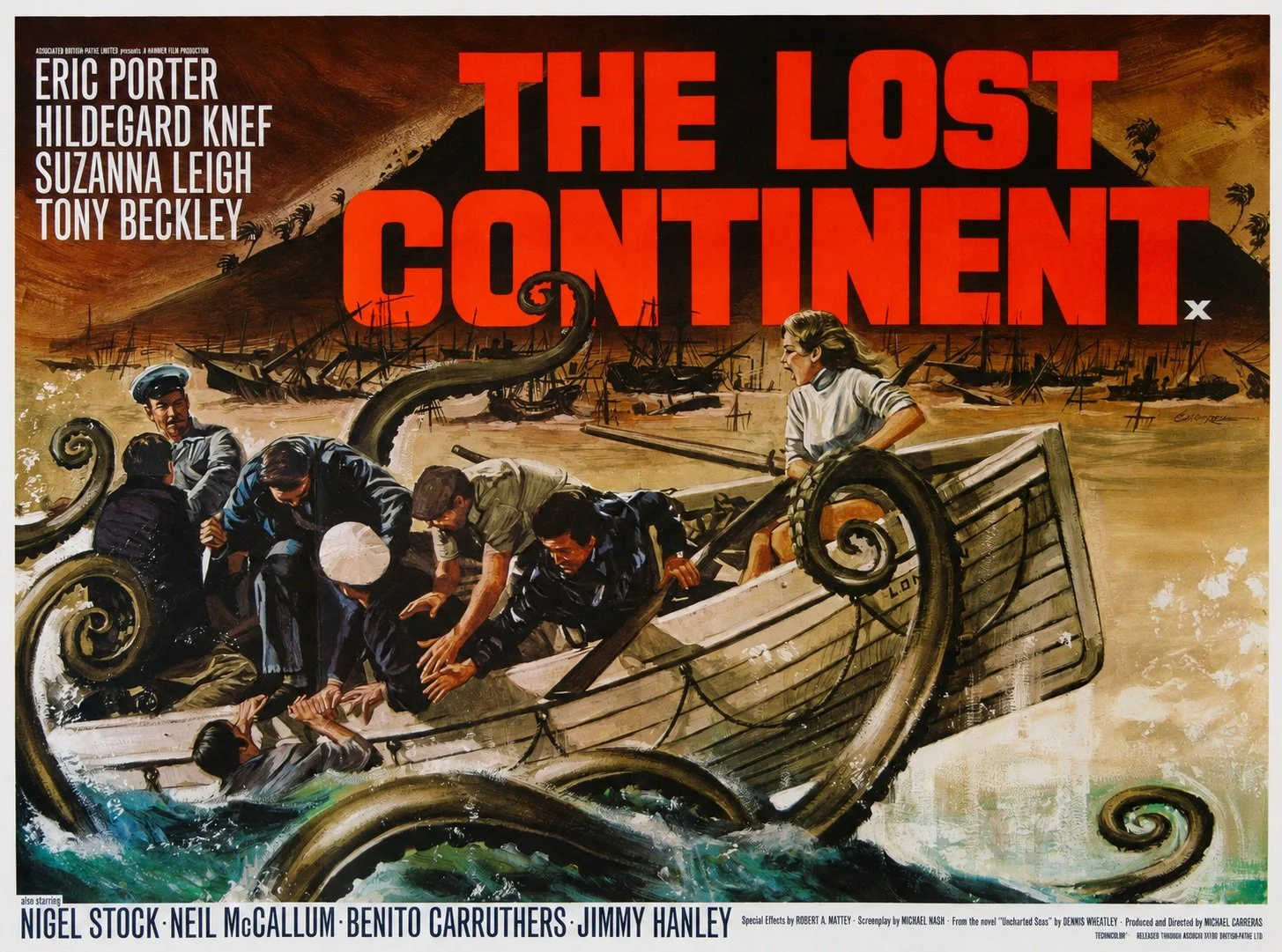
In 1968 the dilapidated freighter Corita hastily leaves Freetown to avoid a customs inspection. Captain Lansen (Eric Porter) has a cargo of dangerous explosives which he is smuggling so he can finally retire. His ship’s passengers also have reasons for leaving in a hurry. Dr. Webster (Nigel Stock), together with his daughter Unity (Suzanna leigh), is relocating due to his indiscretions with patients and illegal operations. Alcoholic pianist Harry Tyler (Tony Beckley) is aimlessly drifting from port to port. Eva Peters (Hildegard Knef) is fleeing from her husband with stolen bearer bonds which she intend to use to buy back her son from his evil clutches Caracas. Ricaldi (Ben Carruthers), a questionable lawyer, is pursuing Eva to retrieve the stolen bonds. First officer Hemmings (Neil McCallum) suggests that the ship should return to Freetown after an imminent Hurricane warning. The Captain asks the passengers and they are unanimous that they do not wish to return. However a mutinous crew, the bad weather and the instability of the explosives force everyone to abandon ship. The survivors find themselves adrift in a lifeboat surrounded by a strange carnivorous seaweed.
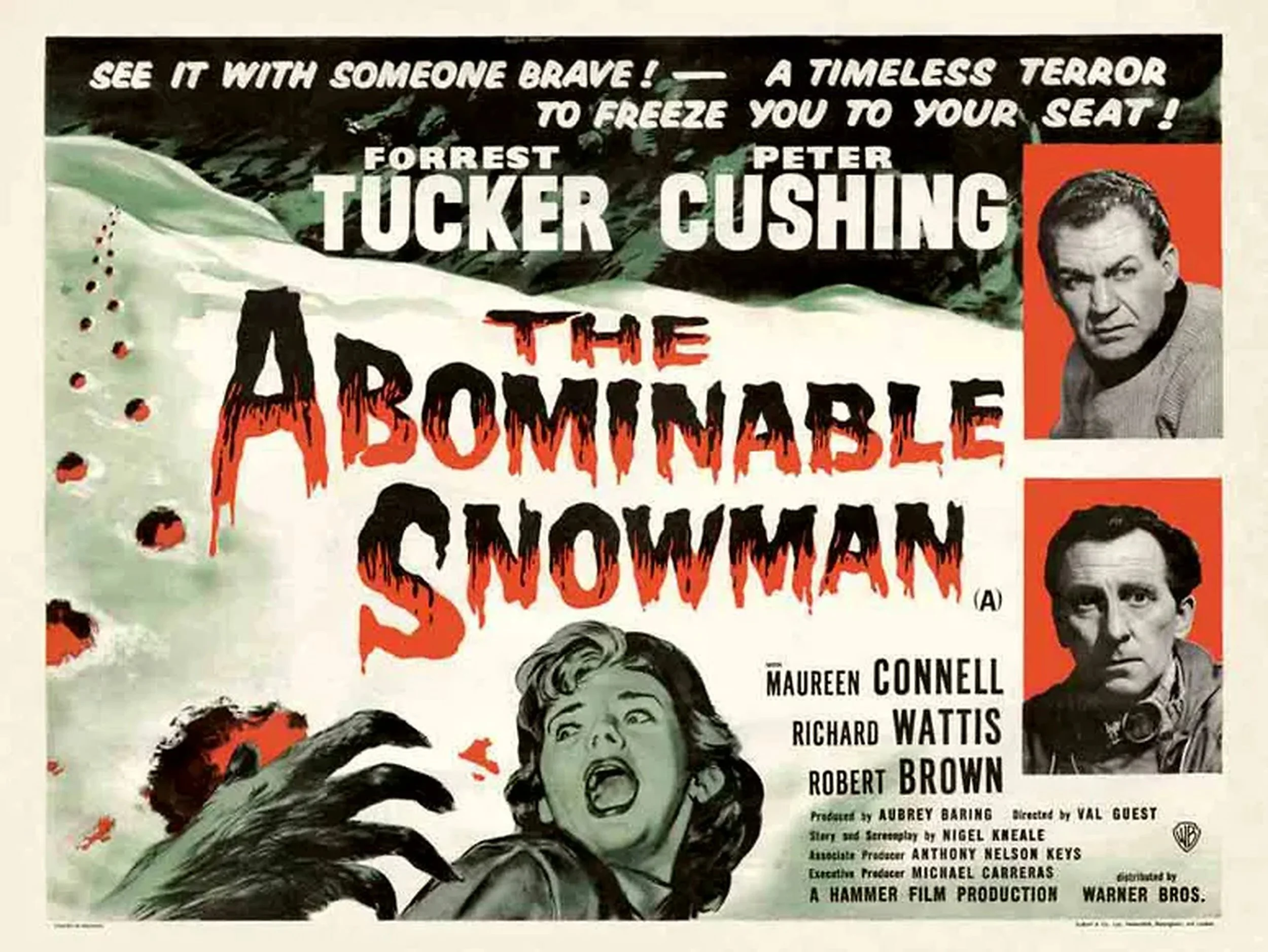
Despite being considered by many as an original story, The Abominable Snowman (1957) is in fact a remake of a made for television play, The Creature, that was originally broadcast in the UK in 1955. Hammer Films would often purchase the rights of popular TV programs and subsequently re-work them for mainstream, international cinema. Larger production budgets and fewer censorship restrictions allowed them to make their cinematic interpretations more lurid, thus commercially viable. Hence The Quatermass Xperiment, Quatermass II and Quatermass and the Pit were all given a big screen makeover and were commercially successful. The Abominable Snowman was written by acclaimed writer Nigel Kneale, who also wrote the original television drama and the aforementioned Quatermass trilogy. Although ostensibly marketed as a horror film this production is actually an interesting blend of psychological thriller and science fiction.
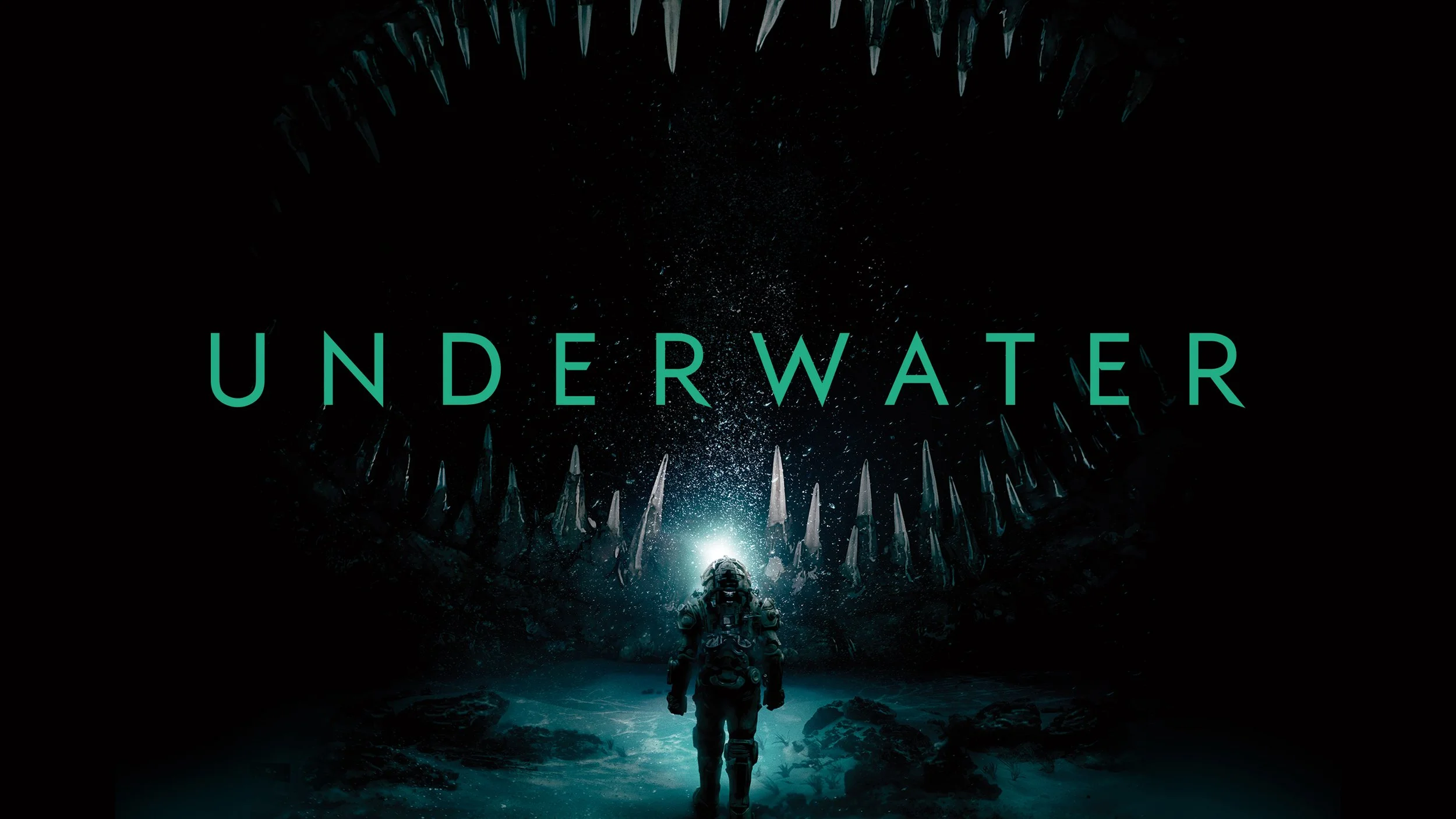
In the near future, Kepler 822, a research and drilling facility located at the bottom of the Mariana Trench, suffers a sudden and catastrophic structural failure. There are only six survivors. Mechanical engineer Norah Price (Kristen Stewart), Captain Lucien (Vincent Cassel), biologist Emily Haversham (Jessica Henwick), engineer Liam Smith (John Gallagher Jr.) and crew members Rodrigo (Mamoudou Athie) and Paul (T.J. Miller). As all the functional escape pods have been used and they are unable to contact the surface, the Captain suggests using pressurized suits to walk one mile across the ocean floor to the Roebuck 641 drill installation. There they will find more escape pods. However, it soon becomes apparent that the disaster was not caused by an undersea earthquake and that they are not alone as they make their journey.
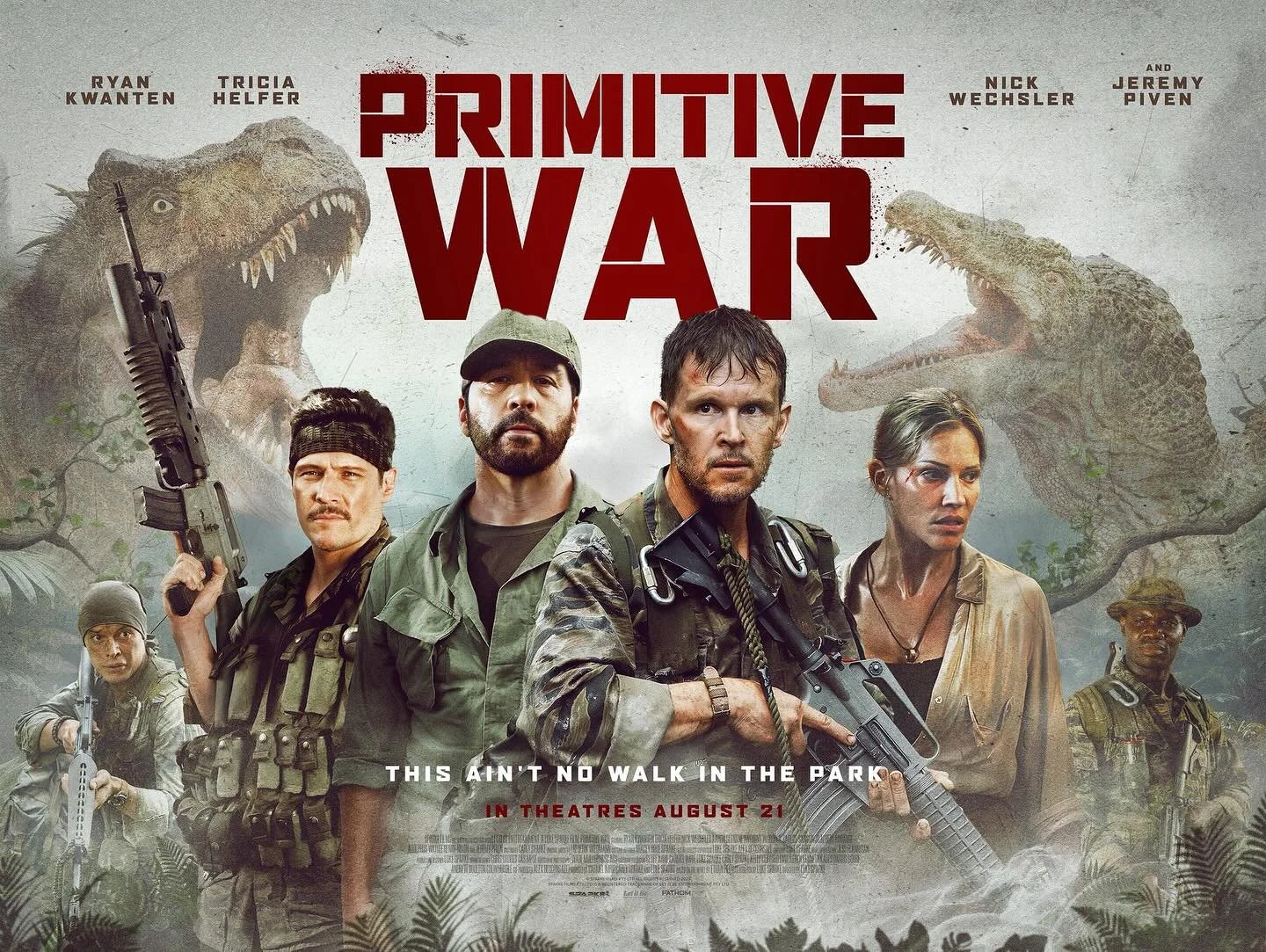
One of the most common objections raised regarding the Jurassic Park/Jurassic World franchise is that the films are specifically made to obtain a PG-13 rating from the Motion Picture Association, for purely commercial reasons. Hence, in all films, there is little on screen violence and the dinosaurs are mainly portrayed as a threat and a means of providing jump scares. When a character is killed by a dinosaur it usually happens off screen, is obscured by something else in frame, or is shown in long shot with very little detail. The realities of being eaten alive by a predator are conspicuously absent. Hence, audiences looking for films featuring more graphic dinosaur attacks, have not been well catered for apart from some minor direct-to-video titles. Primitive War finally fills this gap in the market with a frenetic genre mashup that strives to punch above is budgetary weight.
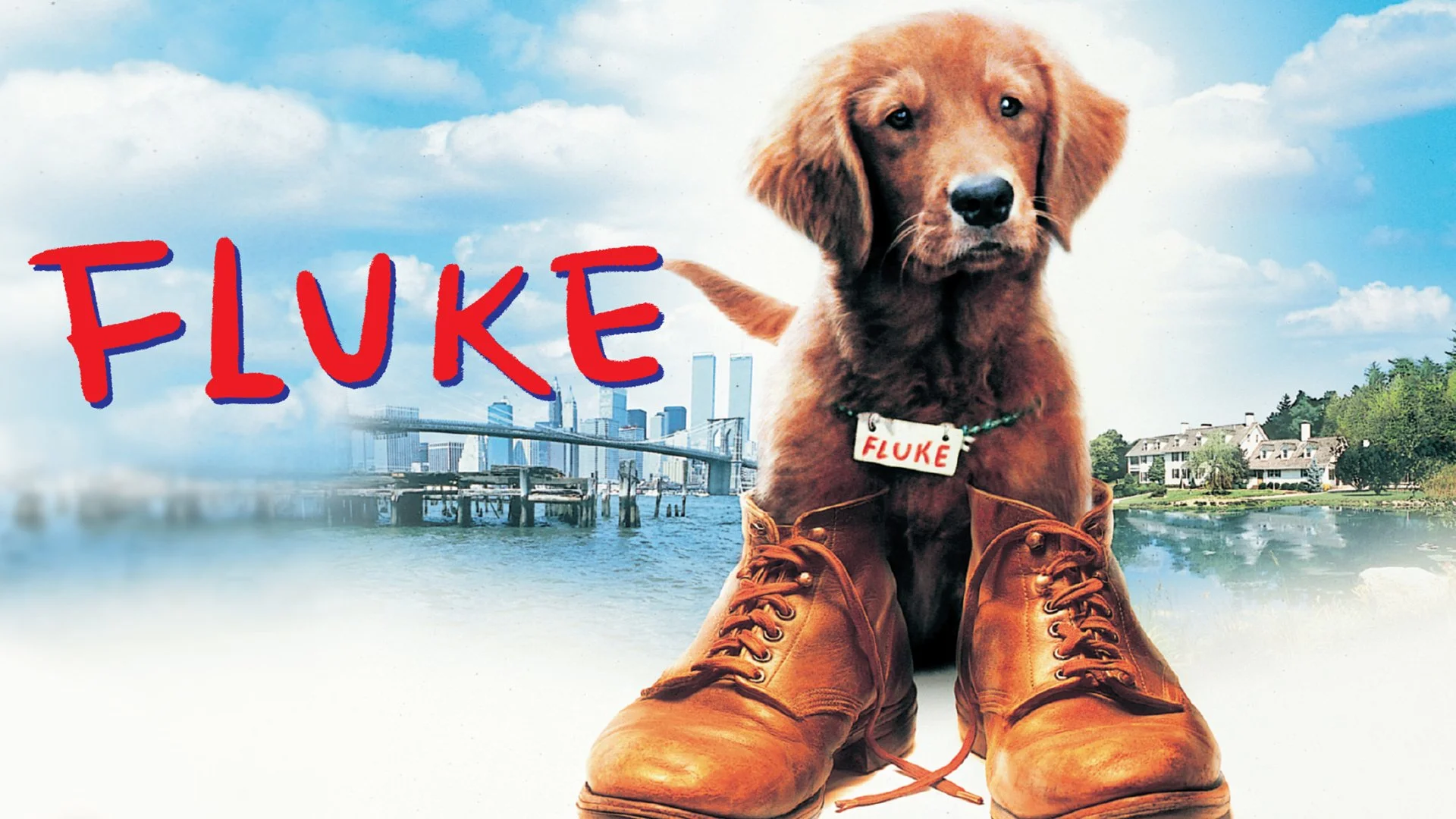
Fluke is a curious film about a man who is reincarnated as a dog and his subsequent realisation that he may have been murdered. It takes an adult novel by British author James Herbert, which is filled with philosophical musing and strives to adapt it in a far more family friendly fashion. The result is a somewhat bipolar production which thematically alternates between existential introspection and Buddhism. It then strives to deliver its message in a Disneyesque idiom. Children will potentially be confused and upset by what they see and adults will be wrongfooted by the continual shift in tone. Fluke was not a critical or commercial success upon release and the flaws that were identified by critics at the time still ring true today. That being said, Fluke is still an interesting and entertaining film, despite its faults.

When reviewing Sting, one critic stated that the small scale setting and thus, low stakes (IE only a few peoples lives are at risk), made the film not especially memorable. I consider this to be a somewhat spurious criticism. It is the very fact that Sting takes place in such a commonplace environment, with the main characters being everyday people that makes it different. There is a clear focus on well defined characters and their backstory. Unlike so many contemporary films, I actually gave a damn about the protagonists in Sting. An integral aspect of the horror genre is the ability to take a well known and familiar trope and provide a different and absorbing spin on it .It would appear that some audiences have been belaboured over the head by so many overblown and bombastic blockbusters, that the very notion of depicting small, localised and intimate events in a film, seems to bamboozle them.
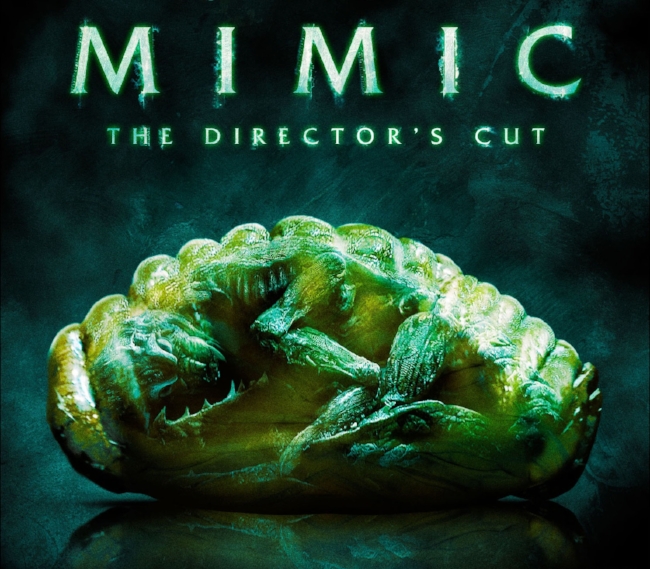
When I first saw Mimic in 1997, I was impressed by the fact that it offered a different perspective on the monster movie genre and that it seemed to have moments of greater depth than you'd expect from such material. Later on when I became more aware of the works of writer, director Guillermo del Toro, I learned that this movie had had a troubled production and that Miramx had imposed specific requirements upon the final cut of the film. This explained some of the movies inconsistencies and hinted at a far more ambitious artistic endeavour by del Toro. Initially Mimic was conceived as a thirty minute short and part of a three part anthology movie. However it along with the sci-fi film Imposter were both deemed to be of sufficient merit to be developed into feature length productions.
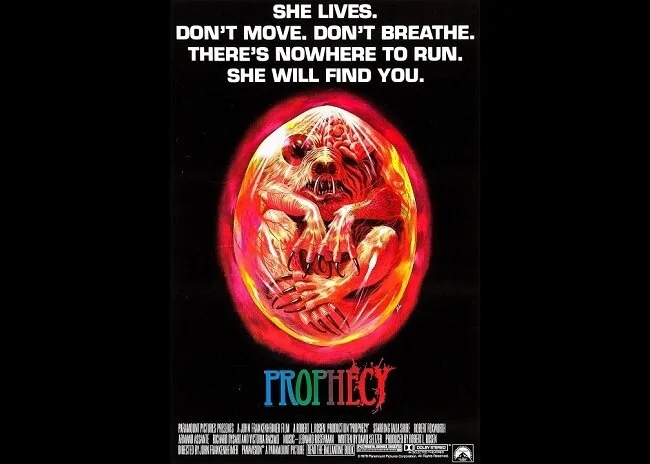
During the seventies, Hollywood started looking to ongoing societal and political concerns as a source of material for movies. Hence, the energy crisis, terrorism and global pollution quickly found themselves being subsumed into hastily written screenplays, in attempt to be topical, commercially successful and relevant. Prophecy based upon a novel by David Seltzer tackled not only the issue of pollution but also the ongoing disenfranchisement of Native Americans. Paramount studios went so far as hiring an established director of note, John Frankenheimer. In many respects this movie should have been a bigger success with a reasonable budget, robust cast and studio support. Sadly it did not fare well, either critically or at the box office due to obvious flaws in the production. Despite his outstanding body work, (Birdman of Alcatraz, The Manchurian Candidate) Frankenheimer was not the best choice of director for a genre movie such as this and he was also going through a period of alcoholism.
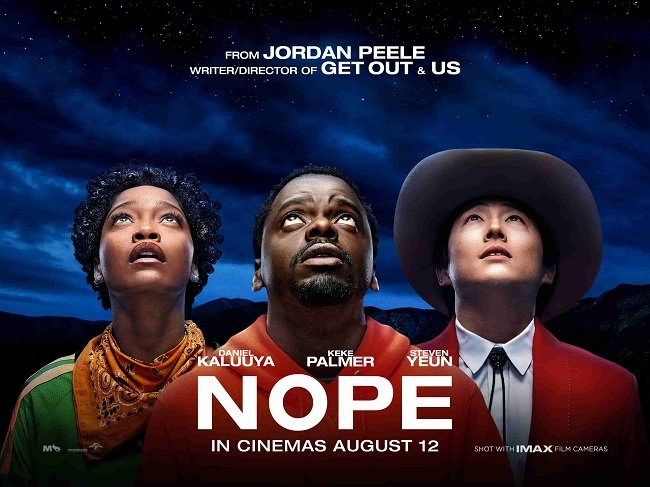
In Agua Dulce, California, the Haywood family trains horses for film and TV productions. One day at the Haywood ranch, small metal objects unaccountably fall from the sky. One of which, a nickel, kills Otis Haywood Sr (Keith David). His children, Emerald “Em” Haywood (Keke Palmer) and Otis “OJ” Haywood Jr. (Daniel Kaluuya), continue to run the business. However, due to the loss of a contract, they have to sell some of the horses to Ricky “Jupe” Park (Steven Yeun), who operates a Western theme park called Jupiter's Claim. One night, the Haywood’s notice the electricity supply fluctuating and their horses violently reacting to an unknown presence. They discover that something has been taking their horses and regurgitating inorganic matter, which OJ believes caused their father's death. The Haywood’s decide to obtain proof and subsequently ask electronics store employee and UFO enthusiast, Angel Torres (Brandon Perea) to set up surveillance cameras.
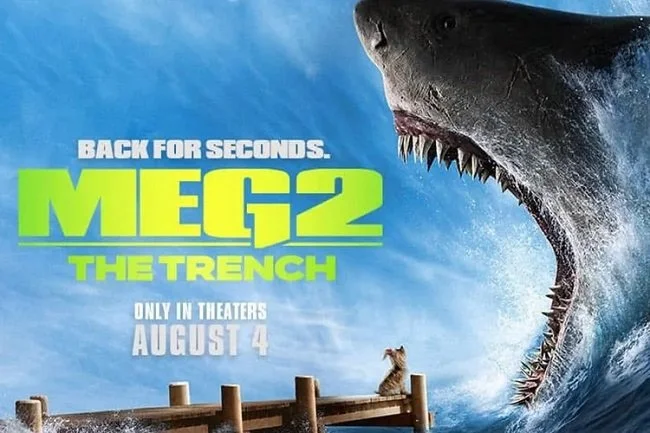
Back in 2018 I wrote the following about The Meg in my review. “My interest doesn’t go so far as a sequel. This sort of movie is the equivalent of a greasy burger you buy at the funfair. It’s fine once in a while as an indulgence, despite the fact that you know it’s bad, but you would soon tire of them being a regular part of my diet”. Five years later, I foolishly thought it may be “fun” to give the sequel, Meg 2: The Trench (2023), a go. Especially in light of the fact that it’s directed by Ben Wheatley. Surely such a filmmaker would bring some creativity and a fresh perspective to this franchise? Nope. Turns out he didn’t. Meg 2: The Trench lacks everything that made its predecessor tolerable. This superfluous sequel is an uninspired, poorly written mess which confuses turning everything up to eleven with entertainment. It gets nowhere near “it’s so bad, it’s good” territory. Instead it makes the biggest mistake a film of this nature can do. It’s dull.
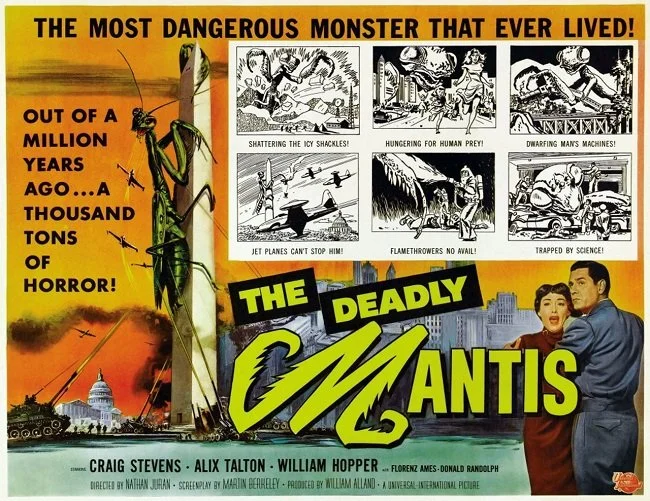
Not to be confused with the Shaw Brothers martial arts film of the same name from 1978, The Deadly Mantis (1957) is a creature feature in the idiom of Them! (1954). Unlike that film’s mutant ants, the monster on this occasion is not the product of the atomic age but a giant prehistoric praying mantis that has been released from the polar ice caps. Exactly how a creature associated with more tropical regions came to be at the North Pole is never explained. In fact precious little is in The Deadly Mantis. The film’s overall scope is somewhat limited with a basic story, limited action scenes and a rather dull cast of generic characters. There is an over reliance upon stock footage from period military documentaries and previous Universal Studio feature films. The film’s biggest failing is the giant praying mantis which does most of its rampaging conveniently off camera. It’s all rather disappointing.
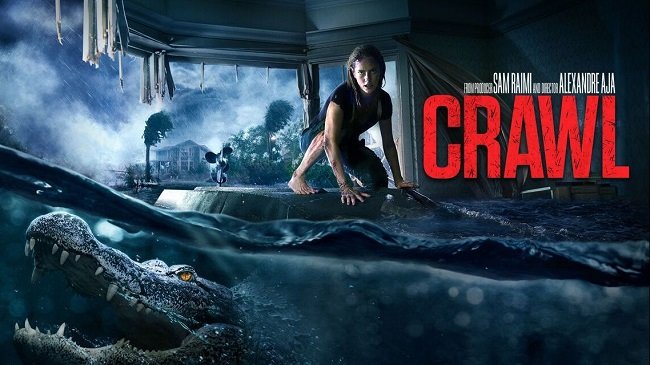
It is no secret that the film industry relies on a handful of common tropes as the mainstay of their cinematic output. It uses timeless themes, storylines and archetypes that have featured in folk tales, plays and literature throughout history. Hence their familiarity with audiences around the world. Where the skill in filmmaking lies is to take a common, well known idea and interpret it in a new and innovative fashion. Akira Kurosawa took Shakespeare’s MacBeth and retold the tale through the prism of Japanese feudalistic culture. The result, Throne of Blood, is considered a masterpiece. Similarly, The Lion King retells the same story through the medium of animation and anthropomorphic wildlife. All of which proves that the key to successfully retelling a familiar tale is to be creative with regard to setting, presentation and perspective.
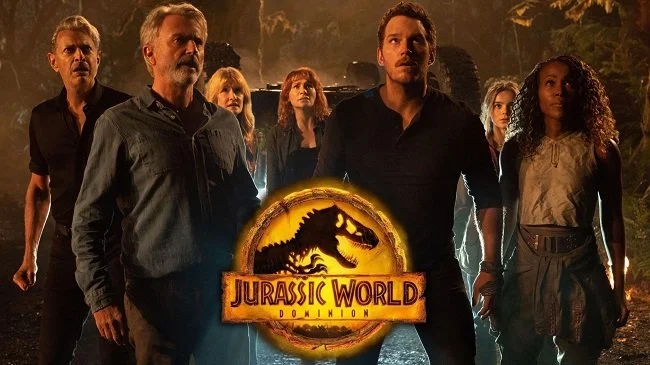
Jurassic World Dominion is a textbook example of a franchise that has run out of steam. Despite the enormous budget, the top notch production values and the presence of three members of the original cast, this is a long, tedious and curiously uneventful film. It has nothing new to say about environmental matters or unfettered science; themes that were front and centre in previous instalments. Nor does it do anything interesting with the main plot device of dinosaurs trying to integrate into our current ecosystems. But perhaps its biggest failing is the conspicuous lack of tension. The denizens of Jurassic World are simply not a threat and fail to have any emotional impact. The film doesn’t even placate viewers with superfluous cast members being eaten. The onscreen deaths by dinosaurs are rather tame.
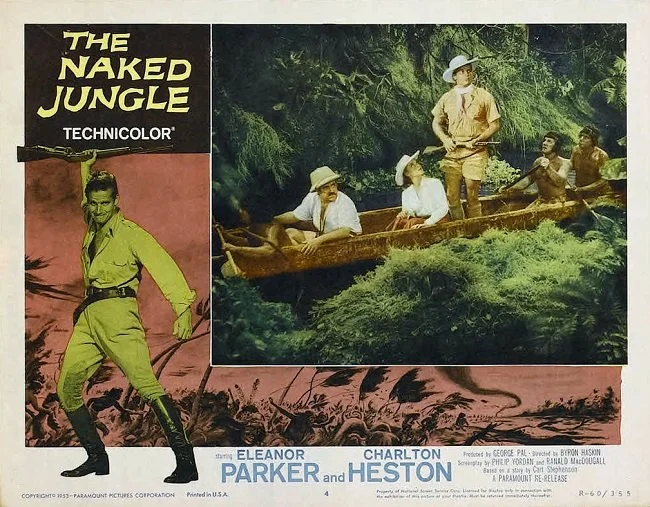
Set in Brazil in 1901, plantation owner Christopher Leiningen (Charlton Heston) makes arrangements to get married. He has spent his entire life building his estate and reclaiming land from the jungle. He is fiercely independent but he is also alone and isolated. Joanna Selby (Eleanor Parker) from New Orleans agrees to marry him but their first meeting does not go well. Leiningen is unhappy to discover that Joanna is a widow and hence has a past, so he tells her to return to America on the next available boat. However, local commissioner (William Conrad) informs Leiningen that swarming soldier ants, or Marabunta, are moving towards his plantation destroying everything in their path. Leiningen refuses to abandon his life’s work and is surprised when Joanna decides to stay with him. Can they convince their native workers to stay too and can they defend the estate from the Marabunta, described as “forty square miles of agonising death”.
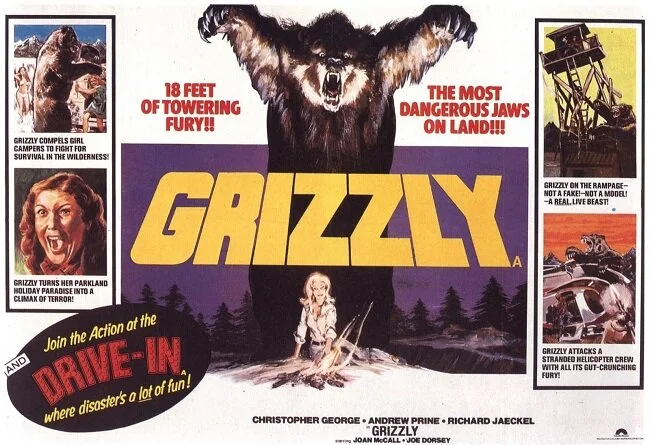
After the critical and commercial success of Jaws in 1975, a veritable tsunami of “creature feature” movies followed in its wake. A few titles, such as Alligator (1980) and Piranha (1978) managed to do something different with the rogue animal trope, both providing a quirky and satirical look at the genre along with plenty of exploitation mayhem. However, most of the rest were low budget productions of negligible quality. However, such qualities are not always an impediment at the box office. Grizzly (1976) was hastily made on a budget of $750,000 yet earned an impressive $39,000,000 at the box office. The critics hated it but the public loved it and it went on to be the second most financially successful independent feature film in the US that year (the first being Monty Python and the Holy Grail). Grizzly is in many ways a microcosm of the exploitation genre from the seventies and needs to be viewed through that prism if it is to be enjoyed.
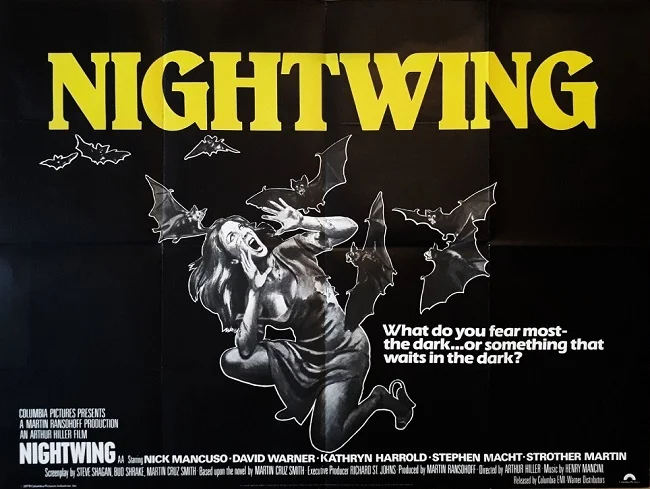
The seventies saw a minor boom in creature feature films after the box office success of Jaws. Hence, we had movies such as Orca (1977), Tentacles (1977), The Pack (1977) and Piranha (1978). If an animal could eat you or potentially pose any threat to people, someone somewhere would make a movie about it. Usually a bad one. A few of these even dared to stray into other hot topics of the time such as pollution and protecting the environment. Some would even invoke mysticism and folk lore to facilitate their protagonists. Nightwing is one such curious genre hybrid which combines vampire bats, shale oil mining and Native American culture in its clumsy and unsubtle plot. It’s a somewhat odd undertaking, directed by Arthur Hiller. His previous work included Love Story (1970) and Silver Streak (1976), so he was not the first person you’d expect to see associated with such material. The film doesn’t work well as either a horror movie or an exploration of social issues, but like so many movies from this era, it is of interest mainly due to its sheer incongruity.
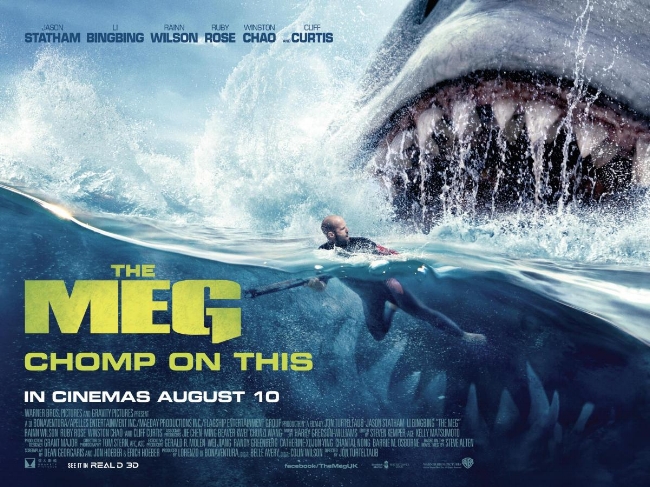
If you have seen any of the marketing material or trailers for The Meg, then you know exactly what you’re getting right from the get-go. All movies inherently require the viewer to suspend their sense of disbelief to various degrees. Naturally, the “creature feature” genre asks audience to go the extra mile with this concept. The Meg takes a major gamble by insisting that everyone goes further still, not by believing in a giant prehistoric shark (Megalodon) but that Jason Statham is a ex-navy, deep sea rescue diver. However, it pays off and the resulting movie is staggeringly stupid, but mercifully entertaining in an undemanding way. Recent movies such as Into the Storm and Geostorm are crass and made worse by their implicit assumption that their viewers are stupid. The Meg is far from cerebral but has an upbeat tone and a sense of playfulness that knowingly invites the audience to come aboard with the silliness. It’s a big distinction and the reason why I smiled a lot and frequently rolled my eyes while watching The Meg, but never with derision.
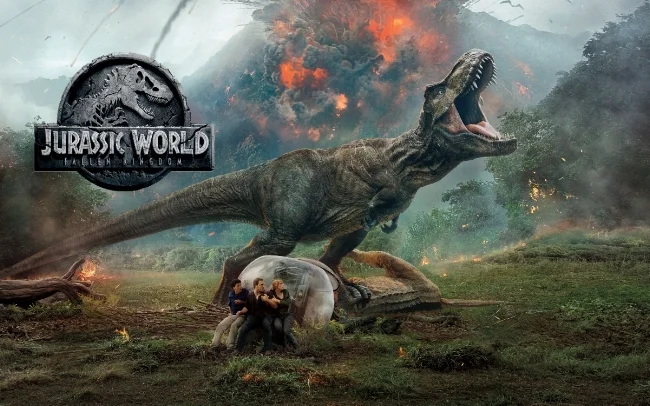
Critical opinion was very much split this summer when Jurassic World: Fallen Kingdom was released. However, the viewers were somewhat indifferent to the opinions of the professional critics and the movie made a healthy $1,303,476,615 globally, proving once again that the public’s’ continuing love affair with “all things dinosaur” shows no sign of abating. When you factor in the home media market into overall profits, the entire Jurassic Park franchise will have made $5 billion worldwide. So, bearing in mind the old adage that “money talks and bullshit walks”, I think it’s safe to say there’ll be more instalments in the years to come. When faced with such overwhelming box office popularity it seems somewhat pointless to dissect the latest movie, because the film seems to be bullet proof regardless of narrative flaws or ill-conceived plot devices. However, film criticism isn’t about box office popularity but about analysing the relative quality of a movie’s construction and its subsequent standing.
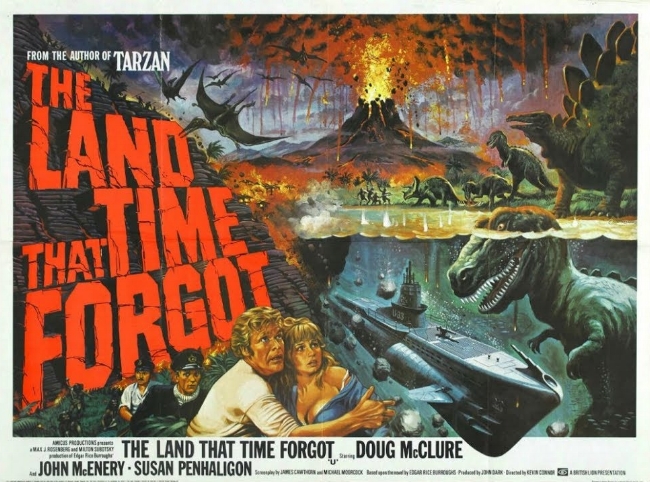
I first saw The Land That Time Forgot way back in 1975 at the Odeon Isle of Wight, when it was first released. We were on holiday at the time, which was cause for celebration in itself, as these were few and far between during my youth, due to the state of the UK economy at the time. But to then go to the cinema and see a fantasy film, filled with action, adventure and monsters, was the icing on the cake for an over excited eight-year-old. Adapted by Michael Moorcock and James Cawthorn from the 1924 the novel by Edgar Rice Burroughs, The Land That Time Forgot is a classic example of high adventure on a low budget. Its technical shortcomings were even apparent to me as a child, yet there was a charm and honesty to this curious British production, that had the audacity to try and compete with the likes of more expensive US productions such as The Golden Voyage of Sinbad and Island at the Top of the World.
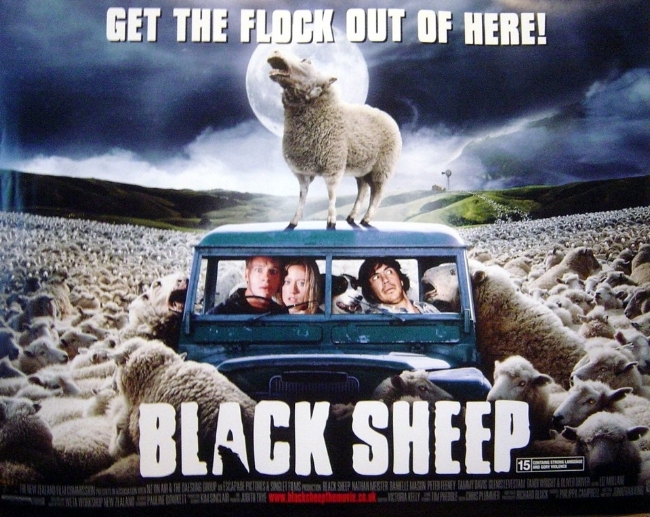
Black Sheep is a high concept horror comedy from New Zealand. Featuring creative physical effects by Weta Workshop, this tale of genetically modified killer sheep, animal husbandry and environmentalism requires a very broad sense of humour and an abiding love for the “creature feature” sub-genre. It should be noted that the copy I watched was the unrated R1 DVD. This version is stronger in content than the R rated US theatrical release and yet was released at the UK cinemas with only a 15 rating from the BBFC. I suspect that the similarities in humour between the UK and New Zealand contributed to this somewhat low rating. That and the fact that horror comedy often gets a free pass because the humour always tends to mitigate the violence.
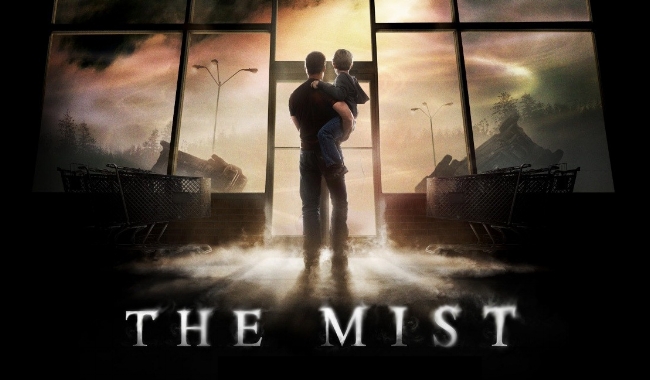
Frank Darabont achieved both critical acclaim and mass appeal with his adaptations of The Shawshank Redemption and The Green Mile. In 2007 he returned once again to the work of Stephen King with his film version of The Mist. It’s a sideways step away from human drama into a more genre piece, yet it still retains a very traditional story at its heart. Once you look beyond the superficial elements of "creature feature" plot, you get yet another well written character study by an ensemble cast, again focusing on how the human condition deals with extreme situations. The particular route it takes and some of the themes it explores may not be to everyone's taste. However, it still focuses on characters and performances. It is also a movie that ends with a somewhat unexpected plot development, that some viewers may find a little extreme. It is one of those film related twists that if known in advance, greatly diminishes once enjoyment of the film.
When you see the names of such cinematic luminaries as Steven Spielberg and J.J. Abrams together on the same movie poster, naturally your expectations are going to be high. Yet when watching the various trailers for Super 8, just prior to its release in 2011, I was somewhat cautious. I have discussed in the past at some length the ambiguous nature of trailers and that they can misrepresent a film. Yet even bearing this in mind at the time, I couldn’t help but feel that Super 8 seemed like a somewhat self-indulgent homage to Spielberg's earlier work. I subsequently saw the movie at the cinema in August that year and my suspicions were validated. However, over time I have spoken to several friends who are advocates of the movie, so I thought I’d watch it a second time. Sadly, I still find myself unable to label Super 8 as anything else other than adequate. Now I would hasten to add, that I use adequate within the context of both director’s body of work. An adequate film from either Mr Spielberg or Abrams is still superior to many of their competitors. But that's not the point. I simply expected better from such a project.
Having recently sat through Orcs! I decided to take a further chance and watch Orc Wars. It too is a very low budget film, although this time the finances were raised through crowdfunding. Sadly, it is not the fun, tongue in cheek, independent adventure movie the trailer and associated marketing implies. There is very little merit in this production. It's cheap, cheerful and although harmless, it clearly demonstrates that not all fan funded projects are good cinema. Some are just indulgences. The problem is in the title itself, which tries to sell an idea that the movie production is incapable of delivering. Instead of the spectacle of an army of a thousand Orcs pitted against the technological might of the US war machine, we get a few extras in ill-fitting costumes, running skirmishes against no-name actors on quad bikes and a few old Army Surplus vehicles. It's all rather lacklustre and underwhelming.
As a fan of the horror genre I’ve sat through numerous low budget films in my time. This has usually been at festivals or conventions. Sometimes watching something as part of a group, with likeminded individuals, makes a difference. You find yourself groaning in unison and the shared experience helps compensate for potential deficiencies. Watching questionable material in the comfort of your own home, purely on your own can be a lot tougher. However, due to my abiding love of the genre, I am prepared to cut a lot of cheap ass indie flicks considerably more slack than I would others. So, I'll endeavour to review Orcs! with as much impartiality as possible. Oh, and before we start, let us clarify the term Orcs. Although Middle-earth is not referenced in any way, this film is definitely about Tolkien's creations. Or at least their depiction in another well-known series of films.
10 Cloverfield Lane blends several cinematic genres producing an interesting premise. Once it has established its narrative arc, it then dives head long into an exciting and tense one hundred and four minutes. The movie is not a direct sequel to Cloverfield (2008) but does touch upon some of the same themes and ideas. Made on a modest budget of $15 million, the claustrophobic setting of a nuclear bunker accommodates strong performances from the lead actors. It is not until the third act when the story movies back to the outside world, do we see any major visual effects. Overall, this is a very compelling film due to the strong screenplay and well defined central characters.
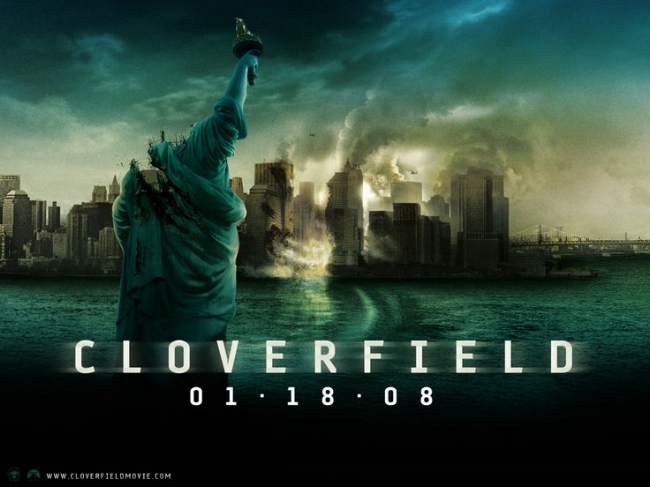
I did my best to avoid the hype surrounding the initial release of Cloverfield. Such media saturation and public interest can often cloud the issue of whether the actual film is any good. Five years later and having watched the movie twice, once in the theatre and once at home, I am still somewhat conflicted about this movie. The use of hand held video cameras is both a boon and a bane. The constant movement of the image has proven to cause motion sickness for some viewers, although this is not so overwhelming when viewed on a smaller screen at home. Yet the medium of news footage mixed with handheld cameras does create a palpable sense of immediacy. This helps immensely when trying to sell a fantastic concept, such as the one that Cloverfield features.
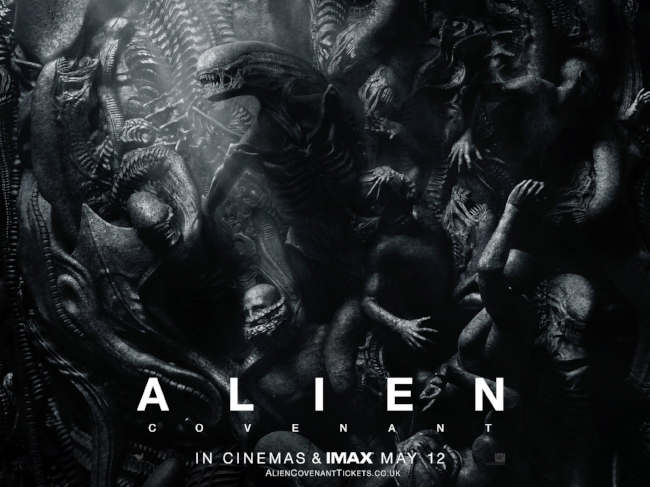
The enigma of the Xenomorph in the Alien franchise is diminished once you start to rationalise its heritage. Sadly, that’s exactly what Alien: Covenant has chosen to do. It jettisons the mystery of the original 1979 movie and pulls back the curtain, so wisely put in place thirty-eight years ago, to reveal a rather lacklustre explanation to the Xenomorph’s origin. Having spent nearly $100 million and employed a production team of some of the finest talent that money can buy, the resulting movie is not bad per se, just crushingly superfluous. After watching Alien: Covenant this week, my overall reaction can be distilled down to a deep sigh of indifference and a shrug of the shoulders.
I have written many times in recent years about how big titles get announced by the gaming industry, of the ensuing hype up that leads up to launch day and then the subsequent disappointment on purchase. It is a malady that has afflicted the movie industry for decades and has become increasingly more common in the last decade. Hype has a curious link with reputation. There are a handful of directors in contemporary Hollywood who when they add their name to a production, people take notice. Ridley Scott is one of these. His body of work pretty much guarantees he can make whatever he wants, be it a commercial undertaking or a ludicrous vanity project. However, the downside to being a film maker of this stature is that you are not so easily exposed to proper scrutiny by your peers. No one stops you from making a mistake because you are supposed to know what you are doing. They let you do what you want. Which is bad.
Bullet to the Head (2012)
Walter Hill is a director whose work is often overlooked or marginalised by critics who fail to appreciate its wider merits. Yet despite this, over the course of four decades he has consistently produced thoughtful, intelligent and sometimes positively subversive movies. He has a connection with the past and succeeds in creating stories that often reflect periods of transition and how such times effect the protagonists. There is no denying his flair for crating action sequences and frequently coaxes strong performances from actors, often with the minimum of dialogue. He also has a great understanding of the importance of a movies soundtrack and his collaboration with Ry Cooder has produced some memorable scores.
Walter Hill is a director whose work is often overlooked or marginalised by critics who fail to appreciate its wider merits. Yet despite this, over the course of four decades he has consistently produced thoughtful, intelligent and sometimes positively subversive movies. He has a connection with the past and succeeds in creating stories that often reflect periods of transition and how such times effect the protagonists. There is no denying his flair for crating action sequences and frequently coaxes strong performances from actors, often with the minimum of dialogue. He also has a great understanding of the importance of a movies soundtrack and his collaboration with Ry Cooder has produced some memorable scores.
So, it was Walter Hill's name on the credits for Bullet to the Head that was my main interest. He has not made many movies of late, having focused on his television and movie production work. Naturally seeing his credentials attached to an action picture offered great promise, especially in an age when the art of making such movies is waning. However, I was well aware that the production of Bullet to the Head had not been a straight forward enterprise and that many individuals involved with the project had come and gone. Therefore, I was not expecting a movie comparable to 48 Hrs or Southern Comfort.
The story centres around hit man James "Bobo" Bonomo (Stallone) who is double-crossed by his employers, leaving his partner Louis (Jon Seda) dead. Jimmy has to form an uneasy alliance with cop Taylor Kwon (Sung Kang) as they go up against crime lord Morel (Adewale Akinnuoye-Agbaje) and his enforcer Keegan (Jason Momoa). It's formulaic and strictly by the numbers with all the standard tropes of the buddy movie sub-genre. Cultural difference, borderline racism and snappy one liners. Bullet to the Head is exceeding conventional in its remit. Even the old plot device of a family member being kidnapped is thrown into the mix. Yet it is saved from totally mediocrity due to the charisma of Stallone, the banter between the main characters and the fact that even with such safe material, Walter Hill still manages to stamp his own brand on the action sequences.
The real selling points for Bullet to the Head are Adewale Akinnuoye-Agbaje and Jason Momoa who manage to achieve performances of interest, despite the fact that the screenplay gives them little to go on. Alessandro Camon’s adaptation of Alexis Nolent’s graphic novel is perfunctory to say the least. Things like the use of voice-over to bridge the narrative are tired clichés. Yet every now and then there is a spark in the dialogue between leads or a nod and a wink to the old days of the genre. Overall, there are enough positive attributes to Bullet to the Head to cancel out its own stupidity and down play its familiar nature. Without the direction of Walter Hill, this movie would have been a misfire. The director has a flair for the excessive that few other film makers can get away with (like an axe fight). As it is, it’s a step down from Red Heat, which itself was inferior to 48 Hrs.
Mainstream films are easy to recommend to people. They’re usually formulaic, work within clear parameters and they’re not controversial. Most people, when viewing such film on someone else’s suggestion, are left with a fairly simply choice. Did they like it or not? Whatever the outcome, no feathers are ruffled. No one looks at you askance afterwards and says “why the hell did you think I’d like that piece of shit”? If something like this happens, then you have clearly not recommended a mainstream film. Perhaps you’ve suggested something that’s a little more of an acquired taste. Something niche, from a very specific sub-genre. Which brings me neatly to Blazing Magnum AKA Strange Shadows in an Empty Room (1976). The US title gives the impression that this film is a hard boiled cop thriller, like so many others that followed in the wake of Dirty Harry. But there’s a clue in the European title. Yes, this movie has more than just a whiff of a giallo about it.
Jason Statham is an exemplar of the US mantra of “staying in your lane”. He makes action movies and occasionally strays into action comedies. His formula broadly works and is sufficiently lucrative to keep Mr. Statham employed. Therefore, if you watch a film in which he stars, you have a fairly good idea of what you’ll be getting. Of late, the criteria for his action vehicles have become more succinct. Jason Statham will play an innocuous character, such as a construction foreman or a bee keeper. Something terrible will subsequently befall another character who Mr. Statham has an emotional connection with in some capacity. He will subsequently hunt down those responsible and meet out death and violence. At some point the villain of the story will enquire as to how this innocuous person is so lethal. Research will then show that our Jason is in fact an ex-police officer/special forces operative/international assassin. There’s then a showdown and the villain dies. Job done.
The Light at the Edge of the World presented itself as an action movie upon its release in 1971. Based upon a story by Jules Verne, the Spanish American co-production was driven by its star Kirk Douglas, who curiously hired British director Kevin Billington to helm the project. This tale of a lighthouse keeper fighting a war of attrition against a group of pirates that have captured his island, was market as an adventure film ostensibly in the idiom of the authors previous works and as a pirate movie. MGM bought the rights to distribute the film in the UK on the misunderstanding that it was a family friendly production. It was not and remains so. They subsequently had to cut 15 minutes of violence and torture as well as an undercurrent of sexual assault to secure a suitable rating. Conversely, the US distributors received an arbitrary PG rating, despite the fact this is one of a handful of films that honestly depicts pirates as murderers, rapists and worse.
It’s an established action film trope. The fire team comprised of ex-military personnel, move in on their target. Only to have the tables turned by someone they don’t deem a threat. What makes it different in The Last Stand of Ellen Cole is a throwaway line of dialogue. The bested operative lies bleeding on the floor and the protagonists stands over them ready to finish them off. “Don’t, I have a cat” they feebly plead. For me that was the icing on the cake. The movie had already established it was taking the “same old, same old” and doing something different. Something fun, if taken in the right spirit. This scene tipped the balance and I embraced this film because it was being honest about what it is. This is a modern B movie that decides to give a very specific sub-genre a makeover. Furthermore, its clearly done with an affectionate wink, which is very different to sly wink. This isn’t deliberate self-knowing irony. Its just a film doing something different and possibly silly but it genuinely wants to have fun with it.
Stephen King’s dystopian story, The Running Man, was previously adapted very loosely in 1987, as a vehicle for Arnold Schwarzenegger. That version focused mainly on the “Battle Royale” element of the story and leaned heavily into Arnie’s personality, rather than the politics of the book. It also wasn’t well received by the author. Edgar Wright’s remake follows the source text a lot more closely and is far more interested in its political themes and wider social commentary. Furthermore, this version re-establishes the everyman quality of the hero of Ben Richards, rather than him being the muscle bound, ex-military hero as per Mr. Schwarzenegger’s prior interpretation. This time round, The Running Man uses a lot of the visual and narrative tropes of contemporary reality TV, making this forty three year old story very relevant to today’s viewers and couching the film in a style that is recognisable and accessible.
After the success of Raiders of the Lost Ark in 1981, filmmakers scrambled to find existing intellectual properties that they could use for similar films. Hence archaic heroes such as Alan Quatermain were hastily given a modern makeover and thrust into generic movies, in a vague attempt to replicate Steven Spielberg’s successful formula. Which brings us neatly on to James Charles Bigglesworth AKA “Biggles”, a fictional pilot and adventurer from a series of books written by W. E. Johns between 1932 and 1968. Several attempts had been made in the past to bring this character to the silver screen, including one by Disney but they all failed. However, the commercial and critical success of Indiana Jones provided sufficient impetus to greenlight a new film. However, due to some curious production choices, when Biggles was finally released it was far from just a period set, action movie.
Setting aside the hubris of remaking a film such as Red Dawn, the 2012 reboot had a troubled production. Shot over the course of late 2009, on location in Michigan, MGM intended to release the film in September 2010. However, the studio’s financial problems became unsustainable over the course of that year and the film was shelved, while a financial solution was sought. Furthermore, while Red Dawn was in post production, there was a major economic shift within Hollywood due to the increasing importance of the Chinese market. This was a significant problem for MGM because the new version of Red Dawn had the Chinese invading the USA instead of Russia. Hence there were reshoots and the need for additional visual effects, so that the Chinese could be replaced with North Koreans. MGM eventually went bankrupt and the distribution rights to Red Dawn were sold off. The film was eventually released in 2012.
When I first saw the promotional trailer for Gangster Squad back in 2012, prior to its release, I wasn't especially impressed. I simply thought the film was another attempt to re-invent the gangster genre for a generation who were not especially familiar with it. I wasn't exactly overwhelmed with director Ruben Fleischer's resume either. I didn't particularly like Zombieland and haven't seen 30 Minutes Or Less. Then came the tragic mass shootings in Aurora, Colorado which led to the movie being delayed so that the original ending, which featured a shoot-out in a movie theatre, could be replaced. Hence when I finally watched this film recently, I wasn't expecting a movie up to the standards of say Once Upon A Time In America or Miller’s Crossing and it would seem that I was right do so. Gangster Squad is not especially noteworthy in any respect.
Levon Cade (Jason Staham) is a former Royal Marine Commando who has retired from military service and now works as the leader of a construction team in Chicago. He has a close relationship with Joe and Carla Garcia (Michael Peña and Noemi Gonzalez ) who run the company and considers them as family. Outside of work, Levon is involved in a bitter custody battle for his daughter, against her maternal grandfather, who blames Levon for his daughter’s suicide. When Garcia's teenage daughter Jenny (Arianna Rivas) goes missing, Levon reluctantly agrees to help her parents and get her back. Beginning his search at the nightclub where Jenny was last seen, he soon discovers that she was abducted by Russian traffickers. Furthermore, the culprit is Dimi Kolisnyk (Maximilian Osinski), the wayward son of a senior ranking gangster.
PC Nicholas Angel (Simon Pegg) is an exemplary Police Officer, with a strict adherence to the letter of the law. As a result of making the rest of the London Metropolitan Police look bad, he is transferred to the rural town of Sandford, Gloucestershire. On arrival, Angel finds that the local Inspector, Frank Butterman (Jim Broadbent), takes a far more laissez-faire approach to policing. His colleagues are incompetent and he is further hampered by the Neighbourhood Watch Alliance (NWA), who prioritise low crime statistics over law enforcement due to their desire to win the title of “Village of the Year”. Furthermore, Angel is partnered with the Inspector’s son, Constable Danny Butterman (Nick Frost), who is infatuated with “buddy cop” movies and is in awe of Angel’s London experience. “Have you ever fired two guns while jumping through the air?” However, a sudden spate of grisly accidents lead Angel to believe that there's more to the seemingly tranquil and picture-perfect community than meets the eye.
As a collection of history's worst tyrants and criminal masterminds gather to plot a war to wipe out millions, one man must race against time to stop them. Discover the origins of the very first independent intelligence agency in The King's Man. Based on the Comic Book “The Secret Service” by Mark Millar and Dave Gibbons. 20th Century Studios
Matthew Vaughn’s The King’s Man is an inconsistent film, both narratively and tonally. It veers between serious themes and stylised, hyperbolic action. At times it does quite a good job of exploring such complex subjects as global politics, mechanised warfare and colonialism. Sadly it then wrenches the viewer out of these cerebral reveries as it lapses into the sort of over the top action sequences that were notable in the two earlier films. It’s a shame because The King’s Man gets so many other aspects of the production right. The casting is very interesting, especially Ralph Fiennes as the “pacifist” Duke of Oxford. He is actually a very good fit for the action genre. Djimon Hounsou and Gemma Arterton are given little backstory beyond being respectively the faithful manservant and the family nanny but both are notable due to their own inherent acting chops and personal charisma. Rhys Ifans obviously has a great time as Grigori Rasputin, ensuring all the man’s vices are robustly depicted.
On paper, a video games franchise such as Assassin’s Creed lends itself perfectly to a cinematic adaptation. The parkour action scenes, the historical settings and the contemporary conspiracy theory themes are all elements that should play well with a modern youth audience. Hence with the backing of a major studio such as Twentieth Century Fox and a budget of $125 million, the 2016 movie should have been a guaranteed box office hit. The casting of Michael Fassbender, an actor who is comfortable with serious roles and big Hollywood franchises, should have carried this film comfortably over the finishing line. Director Justin Kurzel, who had found critical success with his adaptation of MacBeth a year previously, must have looked like a safe pair of hands to handle such a project. Sadly, that was not the case. Assassin’s Creed is not the sum of its parts, in fact many elements appear to be pulling in opposite directions. The resulting feature film is staggeringly dull, soulless and a chore to watch. A testament to how modern big budget franchise movies have become a production line, with all the art stripped from them.
300: Rise of an Empire is a curious beast, being neither a sequel nor a prequel. It is infact a tale that takes place simultaneously with those of the original movie. While Gerard Butler is busy making a last stand at the Battle of Thermopylae, fellow warrior and politician Themistokles, played by the singularly uncharismatic Sullivan Stapleton, leads a similar army of buffed Greeks against the Persian fleet. Once again we have a movie that is the epitome of style over substance, complete with a sound design that challenges what can physically be endured by human hearing. They say the first casualty of war is innocence but in this type of movie it's closely followed by historical accuracy and authentic depictions of ethnicity. 300: Rise of an Empire is a cinematic assault upon the senses but not in a good way like Mad Max: Fury Road.
Back in September 2017, Liam Neeson stated in an interview with Sky News that he was retiring from the action genre, due to his age. He felt that audiences would question his credibility in such roles. After the release of The Commuter (2018) and Cold Pursuit (2019) Mr Neeson appeared to return to human dramas and films that focus on performance rather than punching man and beast. Ordinary Love and Made in Italy, both released in 2019, demonstrate the actor’s versatility and skill. People seem to forget that he is a thespian who was initially known for his character driven roles in films such as The Mission (1986), Rob Roy (1995 and Michael Collins (1996). It was only in 2008 that he reinvented himself as an action hero. It’s all a far cry from Schindler’s List and his performance that earned him an academy award nomination. The reason I mention all of this is because The Ice Road is the third action movie I’ve seen in 2021 that stars Liam Neeson.
One of the stand out tropes of the modern action film is that the stakes are always cranked right up to 11. Terrorists, biological weapons and nuclear bombs are common threats in such movies with a hero or heroes trying to save the world from death and destruction or worse. However, back in the sixties and seventies, things were a little more straight forward and in some respects more credible. Take When Eight Bells Toll, released in 1971, for example. British Treasury secret agent Phillip Calvert investigates the theft of £8,000,000 in gold bullion by a gang of international smugglers. In the context of the times this was no small beer however it’s somewhat mundane compared to fighting super villains and their space lasers. Frankly I prefer these low key plot devices as they can make a film a little more plausible within the confines of the genre. A concept that is often forgotten today.
Forensic accountant Owen Casserly (Jake Weber) flees his home with his teenage son Connor (Finn Little) when he discovers he has been targeted by a pair of assassins (Nicholas Hoult and Aidan Gillen) who have been hired to stop him giving evidence in a major corruption case. Connor witnesses the murder of his father after their car is run off the road. Entrusted with important written evidence, he escapes into the dense forests of the Montana wilderness pursued by the killers. Seeking help he runs into smokejumper Hannah Faber (Angelina Jolie) who is stationed at a remote fire lookout tower. Hannah suffers from PTSD from a previous forest fire in which she was unable to save three young boys. Hannah attempts to lead Connor through the forest to safety. Meanwhile the assassins set fire to the forest to divert the attention of the authorities and cover their tracks.
I must admit that I did not have particularly high hopes for Paul W S Anderson's remake of the 1975 Roger Corman produced cult classic. Anderson’s work varies greatly. Event Horizon and Soldier are solid genre films but I still have not fully come to terms with Alien vs. Predator. Jason Statham is also a name that divides the public, with solid material such as The Transporter and unfathomable tosh like Revolver. But despite these considerations, Death Race is in fact quite a surprise and does not follow the path that so many remakes do. It takes the basic themes and concept associated with the original and tries to do something different with them. It doesn’t reinvent the wheel nor is it a genre milestone. But it does offer a different spin on things, have some engaging action scenes and provide some dumb but enjoyable entertainment. When combined with snacks and some beer this is a passable way to kill 111 minutes.
I did not watch Zero Dark Thirty upon its initial release, due to the politics surrounding it. I wanted to be able to view it free from bipartisan debate. Eight years on I believe this now achievable and although debate still exists it is now more measured and less strident. Zero Dark Thirty is certainly a compelling movie. It plays as a docudrama, providing an in-depth study of the US intelligence services hunt for Osama Bin Laden. It cannot be faulted on a technical level and the performances are very strong. It does not adopt a celebratory or triumphalist tone in its approach to the story. Director Kathryn Bigelow endeavours to keep the proceedings focused upon the intricacies of an intelligence driven manhunt. There is little or no tubthumping, jingoism. The decision to find Bin Laden is shown as a political and military exercise of foreign policy. The film solely focuses on the story from a US perspective but that is perfectly acceptable as it is not intended to be an exploration of geo-politics.
Firestorm was originally written as a vehicle for Sylvester Stallone, however when the production company Savoy Pictures went bankrupt the screenplay was bought by Twentieth Fox and the scope of the movie reduced to suit a lower budget. It’s broadly similar to Cliffhanger in so far as the lead character is a specialist in a certain field who runs afoul of criminals in a perilous environment. Whereas Cliffhanger is set in the Rocky Mountains, Firestorm takes place in the forests of Northern Wyoming. After the script was revised four times, the finished screenplay was given a final “polish” by Graham Yost who has considerable experience with the action movie genre. As stallone was no longer associated with the project and the production had been repurposed to be less extravagant, the movie was assigned to former NFL star Howie Long. Long had already appeared in the John Woo movie Broken Arrow (1996) and the Firestorm was seen as a means to give him a star vehicle.
The original French movies District 13 and its sequel District 13: Ultimatum, conceived and produced by Luc Besson, were enjoyable variations of the Escape from New York theme. Their charm lay in their European pedigree and the skilful use of parkour. The two leads, David Belle and Cyril Raffaelli, were eminently suited to the minimalist roles and the screenplays were fun. Half of these movies appeal was the fact that they were not mainstream US products. Brick Mansions is the Hollywood remake of District 13, as well as being Paul Walkers’ final movie. Sadly, this film is far from a fitting epitaph, being devoid of any charisma or innovations. It is blandly shot , poorly edited and has been stripped of everything that made the original entertaining.
Arnold Schwarzenegger's return to the big screen after his political career has been uneven to say the least. His cameos in The Expendables and The Expendables 2 were well received, with their self referential charm and age related irony. Yet his first major movie The Last Stand, although competent, failed to find an audience. Escape Plan fared better at the box office but did not put Arnie back on the A list. Effectively there's a large percentage of the contemporary cinematic audience who were born after his heyday and are simply not overt fans of his work. His core audience is more than likely of the age group that consume most of their film entertainment at home. Which may explain why Sabotage tanked in the US upon release on March 28th 2014. It was the worst opening box office of Arnie's career. He used to break first day opening records.
Sequels and reboots are hardly a new concept and have been a part of Hollywood culture since the 1930s. The success of the Universal Horror movies from that era being a prime example of direct follow ups and retconned movies. However, there is one fundamental rule that distinguishes a good sequel from a bad one. You should never mitigate, undermine or make irrelevant the events of the previous movie, just to provide your new film with a raison d'être. For example, the events of Aliens do not contradict or trivialise those that happened in Alien. In fact with that franchise there is a very clear logical progression between the two movies. The same is true for Mad Max and Mad Max 2 or Star Wars and The Empire Strikes Back. The key is to progress a story, enhance it or explore things from an alternative angle and bring something new to the cinematic table. Sadly this philosophy is all too often lost on corporate film making. Which means that many sequels are just tedious replays of prior films. Terminator: Dark Fate falls squarely into this category.
The enduring appeal of the character John Rambo in First Blood comes from the fact that he is a traumatised ex- service man who keeps himself to himself as he drifts from job to job, trying to come to terms with his wartime experiences. His poor treatment at the hands of a small-town Sheriff is a succinct metaphor for the social and political indifference that Vietnam veterans were shown upon their return to the US. He’s a man with a code in a world that no longer has any use for him. His simple and honest patriotism is not returned and he is in fact viewed with shame by many from the nation he loves. Furthermore, the first movie does not paint him as a cold-blooded killer. Despite provocation he is not the first person to shoot to kill. Rambo is in many ways a victim. A broken man, who society has asked to do unspeakable things. Now society wants nothing to do with him and fears the “monster” they created. Although clearly an action movie, First Blood had narrative depth and a flawed but sympathetic protagonist. 37 years and four movies later, such dramatic themes have long left the franchise. The central character is indeed a caricature of its former self.
It was hardly surprising that the movie adaptation of Chris Kyle's autobiography American Sniper, would cause controversy. The Iraq war, US Foreign Policy and national pride are seldom subjects that are discussed in a calm and measured fashion. And then there are the personal politics of director Clint Eastwood to consider. Hence there were claims from some quarters upon the movie’s release, that it was Islamophobic and counter claims that criticisms of the late Chris Kyle were unpatriotic. There still remain issues regarding the authenticity of events depicted in the source text and subsequently the movies screenplay by Jason Hall. Yet none of these factors have in anyway impacted upon the film's box office returns which currently stands at $247,900,417 worldwide.
Do I really need to present you with some sort of plot synopsis for Transporter 3? No, I didn’t think so. More of the same as Frank Martin (Jason Statham) and his police chum, Inspector Tarconi (Francois Berleand) become embroiled in yet another high-octane escapade. There's fights, car stunts, exotic international locations and a strong sense of humour. This time, the disposable love interest is a Ukrainian girl named Valentina (Natalya Rudakova) who fulfils her role succinctly. The film benefits by being set back in Europe, after the mistake of basing Transporter 2 in the US. This time, the story takes us to such locations as Budapest and Odessa. The international film crew once again bring a veneer of panache to the production that is conspicuously absent in US action movies. For a modest budget fil, Transporter 3 it looks very good. Again the proceedings are given a boost by a pertinent soundtrack by Alexandre Azaria and a selection of European “tunes”.
Jason Bourne originally graced our screens for the first time seventeen years ago. The Bourne Identity was a gritty, minimalist take on the espionage genre and a welcome change from the excesses of the Pierce Brosnan Bond era. The story arc was sustained over three movies and ended efficiently and succinctly. After which Matt Damon moved on, as did the director of two of the movies, Paul Greengrass. Which leaves us with The Bourne Legacy; the tangential sequel that arrived in 2012. A film that exists because the money men and bean counters hate to pass up on a franchise until it has been squeezed utterly dry. Hence, they commissioned the writer of the series, Tony Gilroy, to come up with a screenplay and direct a spinoff movie. Jeremy Renner was cast in the lead role. Yet despite narrative and production continuity, The Bourne Legacy was not a Jason Bourne movie with the star appeal of Matt Damon. Although the film turned a profit, it had the lowest box office returns out of the entire franchise.
During the eighties there was a clear league table of action movie stars. By the mid-nineties this system fell into decline and the Hollywood lacked any clearly defined exponents of the genre. A decade later, due to the success of Luc Besson’s Transporter films, Jason Statham became a bankable box office star in this field. When you look at Statham's early work in Lock, Stock and Two Smoking Barrels it is hard to envisage the "mockney geezer" as an international action star. Yet he has successfully stepped into the role and enjoys a large following. I enjoy his work as he has a likeable on-screen persona. My 88-year-old Mum likes him to because "he wears nice suits". The action genre seldom reaches such a diverse demographic.
Before we start, I recollect that one well known UK critic described Safe House as sub-Tony Scott, upon its release. Now I’ve always been conflicted over Scott’s back catalogue, as I’ve always found his movies to be hampered by their own unique style. The subtleties of his characters and depth of his themes are all too often drowned out by his frenetic style and fast paced editing. Therefore a comment such as this really sets off alarm bells for me. Having recently watched The Equalizer 2, I wanted a further fix of Denzel Washington in a similar action vehicle. As Safe House was available on Netflix UK, I decided to kill a couple of hours and see what actually constitutes as “sub-Tony Scott”.
Halloween (2018)
It is a bold move to write off six sequels and effectively retcon a major horror cinematic milestone after forty years. Yet that is exactly what Director and co-writer David Gordon Green has done, producing a follow up movie to John Carpenter’s 1978 original, that is distinctly more than the sum of its parts. And in the process of doing this, Halloween has attracted a great deal of media attention that has somewhat skewed subsequent reporting. There has been a great deal of hyperbole and marketing hype in the lead up to the film’s release which is concerning, because in an atmosphere of such exuberance and fan excitement, it can be difficult to accurately gauge the public mood. I have only ever experienced the one other deferred sequel that generated such a similar buzz and that was Psycho II back in 1983. Despite a lot of reservations, that proved to be a worthy successor to Hitchcock’s classic.
It is a bold move to write off six sequels and effectively retcon a major horror cinematic milestone after forty years. Yet that is exactly what Director and co-writer David Gordon Green has done, producing a follow up movie to John Carpenter’s 1978 original, that is distinctly more than the sum of its parts. And in the process of doing this, Halloween has attracted a great deal of media attention that has somewhat skewed subsequent reporting. There has been a great deal of hyperbole and marketing hype in the lead up to the film’s release which is concerning, because in an atmosphere of such exuberance and fan excitement, it can be difficult to accurately gauge the public mood. I have only ever experienced the one other deferred sequel that generated such a similar buzz and that was Psycho II back in 1983. Despite a lot of reservations, that proved to be a worthy successor to Hitchcock’s classic.
However, I am pleased to say that Halloween is as good as the early reviews indicated. It takes many of the essential themes of the original film and presents them from an alternative perspective. To summarise the uncomplex plot, Michael Myers escapes from custody while being transferred to a new psychiatric facility. Meanwhile, Laurie Strode now traumatised, fixated and estranged from her own daughter Karen (Judy Greer) and granddaughter Allyson (Andi Matichak), prepares for the inevitable return of her nemesis. Throughout its 106-minute running time Halloween frequently makes clever and wise nods to its predecessor. The movie has a very dark tone, but it knows when to lighten things with some humorous banter. There is a higher body count and certainly the mayhem is more graphic this time round, but this is not to the detriment of the movie and simply reflects the style and tastes of the contemporary horror genre and its consumers.
The film benefits from a strong and focused performances by all three female leads. Jamie Lee Curtis excels in her role, providing a fulcrum for the narrative. There is also a robust support role from Will Patton as local Sheriff Frank Hawkins. If there is a weak link it the character of Dr. Ranbir Sartain (Haluk Bilginer) who is the new “Sam Loomis” and telegraphs his intentions quite early in the story. However, his role is needed to expedite events and assemble everyone for the inevitable showdown. There are some excellent tracking shots by cinematographer Michael Simmonds and some cunningly contrived set pieces set around the alley ways and back entrances of suburban Haddonfield. The classic score from the original movie has been re-arranged and further embellished with some superb additional cues written by John Carpenter himself, his son Cody Carpenter and David Davies. Some of which stray into Goblin territory, which is magnificent.
Films of this nature that are directly connected to established and iconic cinematic milestones, need to do far more than recreated that which has gone before. They need to juxtapose classic scenes or sequences and explore content from a different perspective. The key element of this that features in Halloween, is the concept of predator and prey. It is cunningly reversed during the film’s climax and there are several scenes that mirror those from the 1978 movie but are done with a tangible difference. To reference them would be to spoil them, so I’ll simply say that fans of the original movie will recognise them when they see them and should hopefully be impressed by the new inflection that the director imbues them with. Overall, irrespective of the hype Halloween is a genuinely worthy successor to John Carpenter’s original. It is inventive, intelligent, suspenseful and knows when to hit the audience right between the eyes.

In the year 1860, Baron Victor Frankenstein (Peter Cushing) faces execution by guillotine for the murders perpetrated by the creature he created. With the assistance of a hunchback named Karl (Oscar Quitak) he avoids death by beheading the priest who came to give him the last rites. The priest’s body is then mistakenly buried by the authorities. Three years later, Victor, now using the name Doctor Stein, has established himself as a prosperous physician in Karlsbrück, serving both affluent patients and the poor at a paupers’ hospital. Hans Kleve (Francis Matthews), a junior member of the medical council, recognises Victor and being an admirer, seeks to become his apprentice. Victor and Hans then undertake an experiment to transplant Karl’s living brain into a new, more refined body, rather than a grotesque monstrosity the Baron has previously made. Karl is eager to have a new healthy body, especially after encountering Margaret Conrad (Eunice Gayson), the charming new assistant at the hospital.
Exit 8 is a sophisticated and claustrophobic psychological thriller directed by Genki Kawamura, which skilfully transforms a minimalist indie walking-simulator game into a cinematic existential enigma. This overtly metaphorical film renders the repetitive nature and drudgery of modern working life into a physical environment in which the lead character is trapped and must find a way out. A random, brutal maze filled with an atmosphere of indifference to the lab rats that find themselves trapped within. Or is it their personal guilt that has put them there? Genki Kawamura’s psychological mystery draws inspiration from the Japanese video game of the same name, as well as from the cyclical nature of Groundhog Day and endless corridors of the Overlook Hotel in Kubrick’s The Shining. Although there are jump scares and some ghoulish imagery, this is not a horror vehicle. Instead this is a disquieting psychological drama with a strong sense of morality.
In 1968 the dilapidated freighter Corita hastily leaves Freetown to avoid a customs inspection. Captain Lansen (Eric Porter) has a cargo of dangerous explosives which he is smuggling so he can finally retire. His ship’s passengers also have reasons for leaving in a hurry. Dr. Webster (Nigel Stock), together with his daughter Unity (Suzanna leigh), is relocating due to his indiscretions with patients and illegal operations. Alcoholic pianist Harry Tyler (Tony Beckley) is aimlessly drifting from port to port. Eva Peters (Hildegard Knef) is fleeing from her husband with stolen bearer bonds which she intend to use to buy back her son from his evil clutches Caracas. Ricaldi (Ben Carruthers), a questionable lawyer, is pursuing Eva to retrieve the stolen bonds. First officer Hemmings (Neil McCallum) suggests that the ship should return to Freetown after an imminent Hurricane warning. The Captain asks the passengers and they are unanimous that they do not wish to return. However a mutinous crew, the bad weather and the instability of the explosives force everyone to abandon ship. The survivors find themselves adrift in a lifeboat surrounded by a strange carnivorous seaweed.
David Koepp is no stranger to genre cinema, having written the screenplay for such films as Jurassic Park, Spider-man and War of the Worlds. Where these titles are big budget, major studio productions, Cold Storage is a far more modest production with a smaller scope. Adapted from his own novel, the screenplay is by David Koepp and the film is directed by British film-maker Jonny Campbell. At first glance, Cold Storage seems a somewhat derivative science fiction horror film with a relatively modest budget, financed through a convoluted US and French co-production. Lurid green and red colours feature heavily in the marketing artwork and it is easy, after a cursory look, to write the film off as cheap, generic, direct-to-streaming filler. However, Cold Storage is prime example of why you should not judge a book by it’s cover, or in this case, a film by its posters and online advertising. It is in fact an amusing and fun endeavour that can fill an evening.
Despite being considered by many as an original story, The Abominable Snowman (1957) is in fact a remake of a made for television play, The Creature, that was originally broadcast in the UK in 1955. Hammer Films would often purchase the rights of popular TV programs and subsequently re-work them for mainstream, international cinema. Larger production budgets and fewer censorship restrictions allowed them to make their cinematic interpretations more lurid, thus commercially viable. Hence The Quatermass Xperiment, Quatermass II and Quatermass and the Pit were all given a big screen makeover and were commercially successful. The Abominable Snowman was written by acclaimed writer Nigel Kneale, who also wrote the original television drama and the aforementioned Quatermass trilogy. Although ostensibly marketed as a horror film this production is actually an interesting blend of psychological thriller and science fiction.
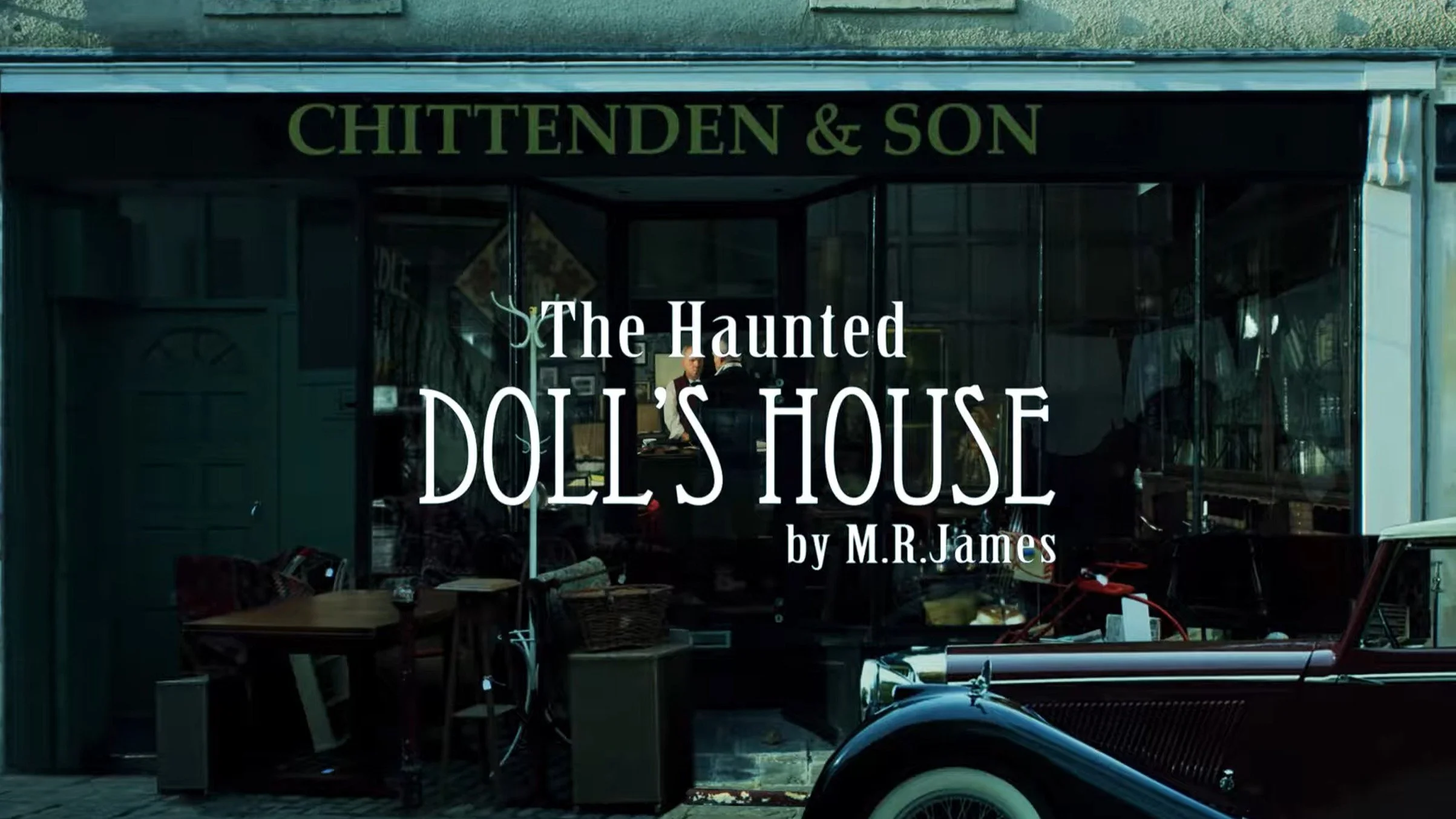
The Haunted Dolls House is a short film based on a story by M.R. James about a unique antique that is subject to supernatural phenomenon. Adapted by Stephen Gray and David Lilley, this is the third of three short films based upon James’ work that the pair have made. It stars Steven Dolton as Mr. Dillet, a collector of antique dolls houses, who acquires a bargain only to discover that it harbours a ghostly secret. Made on an extremely modest budget over the course of 2012 this clever, innovative and rather sinister adaptation is a fine example of short film creativity. It manages to offer a unique visual depiction of M.R. James’ classic story whilst capturing the unsettling quality of the author’s work. Like so many independently made short films it is clearly a labour of love, made with modest resources. It succinctly captures the spirit of the author’s work and is both innovative and rewarding.
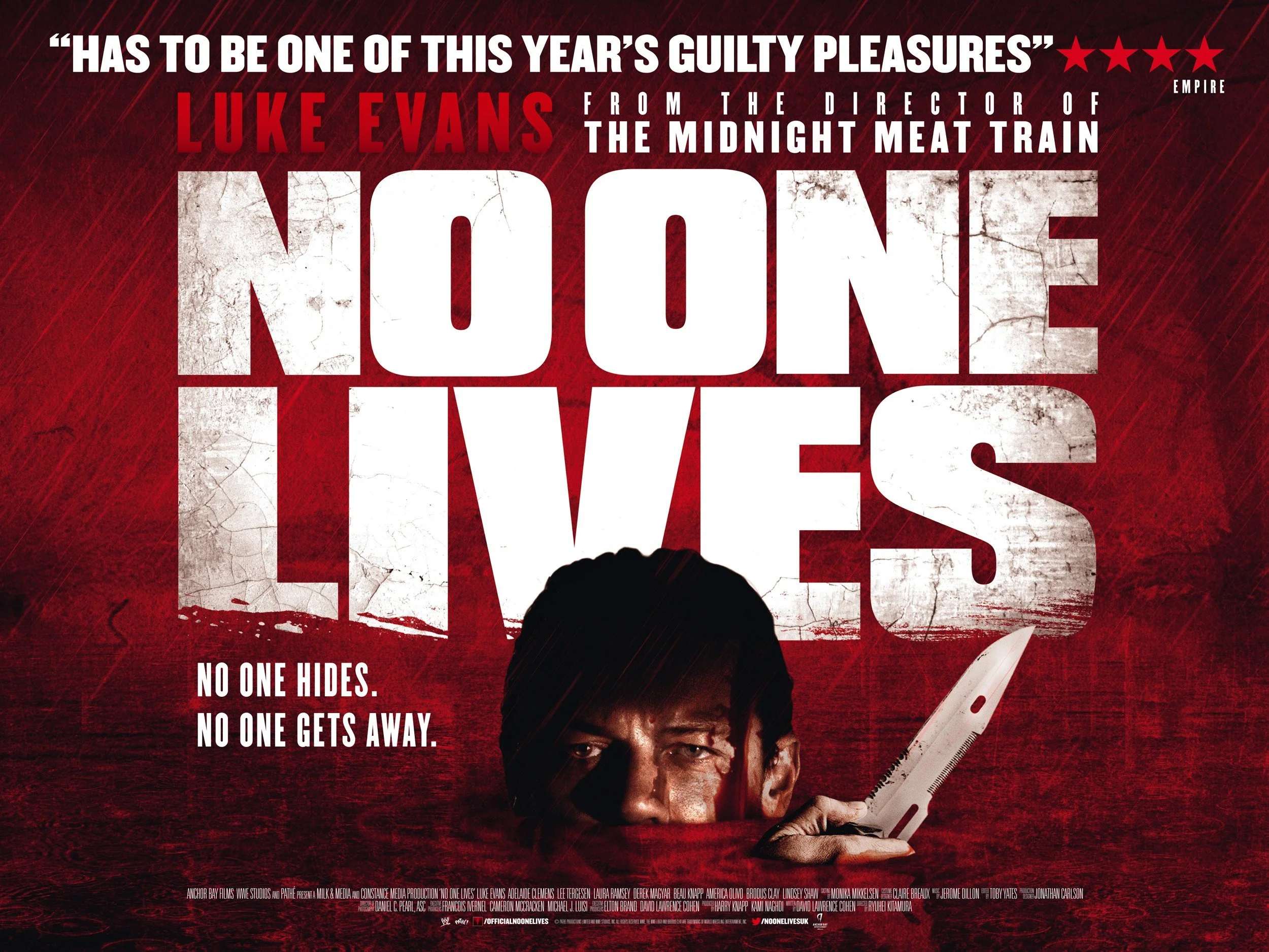
A lot of people may know Luke Evans from the live action version of Beauty and the Beast or Peter Jackson’s The Hobbit trilogy. With his matinee idol good looks, charming Welsh demeanour and his “smoky” tenor singing voice, he projects a sense of old school stardom. Which brings us to No One Lives; a film which is a radical departure from his previous work. His performance is disconcerting to say the least and the film is somewhat unhinged. Directed by Ryuhei Kitamura, who made an interesting adaptation of Clive Barker’s The Midnight Meat Train, this cinematic outing is similarly replete with robust shocks and gore. There are some interesting ideas about the nature of violence, Stockholm Syndrome and whether one should deny or embrace one’s nature. However, these are ultimately minor asides. Philosophical musings in between bouts of surprisingly striking unpleasantness.
In the near future, Kepler 822, a research and drilling facility located at the bottom of the Mariana Trench, suffers a sudden and catastrophic structural failure. There are only six survivors. Mechanical engineer Norah Price (Kristen Stewart), Captain Lucien (Vincent Cassel), biologist Emily Haversham (Jessica Henwick), engineer Liam Smith (John Gallagher Jr.) and crew members Rodrigo (Mamoudou Athie) and Paul (T.J. Miller). As all the functional escape pods have been used and they are unable to contact the surface, the Captain suggests using pressurized suits to walk one mile across the ocean floor to the Roebuck 641 drill installation. There they will find more escape pods. However, it soon becomes apparent that the disaster was not caused by an undersea earthquake and that they are not alone as they make their journey.
In Buenos Aires, Clara (Natalia Señorales) hears voices emanating from the plughole in her kitchen sink. The voices seem to be plotting against her. Her husband Juan (Agustín Rittano) says the sounds are coming from next door. That night, Juan finds Clara’s dead body levitating in their bathroom, slamming against the wall by an invisible force. Meanwhile their neighbour, Walter (Demián Salomón), is experiencing supernatural occurrences while he tries to sleep. An invisible force repeatedly shakes his bed. After using a video camera to film these events, he sees a tall, cadaverous figure emerging from under the bed, standing over him as he sleeps. Across the road, Alicia (Julieta Vallina) is grieving for her recently deceased son, who was run over outside Walter’s house. Alicia's ex-boyfriend, police commissioner Funes (Maximiliano Ghione) calls Jano (Norberto Gonzalo), a paranormal investigator and the pair soon discover more supernatural occurrences in the area.

Black Sabbath (AKA I tre volti della paura) is a 1963 horror anthology film directed by Mario Bava. Although an Italian production, the film was co-financed by American International Pictures and as such was conceived to appeal to US audiences. Hence, the English dialogue edit of the film which was released in America differs significantly to the original Italian version. Despite the presence of the legendary Boris Karloff and the popularity of both anthology and gothic horror at the time,the film was only a modest success at the US box office and did not do well in Italy. However, in more recent years there has been a critical reappraisal of Black Sabbath, especially the Italian dialogue version. Many aspects of the film which are standard genre tropes today, were in fact novel at the time. Also despite the production mainly being studio bound, the film oozes style and has a striking visual aesthetic.
During 1836, in the town of Darkness Falls, Maine, an elderly widow Matilda Dixon is adored by the town’s children as she gives them a gold coin whenever they lose a tooth. One day, after a house fire, Matilda is left burned and sensitive to sunlight, so she starts wearing a china mask. When two children are reported missing, Matilda is blamed by some locals, dragged from her home and hung. She curses the town, stating that whenever a child loses their last tooth, she would come for it. If the child looks at her, she will kill them. The missing children are subsequently found, so the citizens cover up their unjust lynching. In 1990, young Kyle Walsh awakes one night to find Matilda Walsh standing over him. Kyle’s mother is killed and he is blamed for her death and institutionalised. 12 years later, Kyle (Channey Kley) is released and tries to warn the town of the imminent danger when lightning disables the power supply. He is ignored by all until the deaths begin.
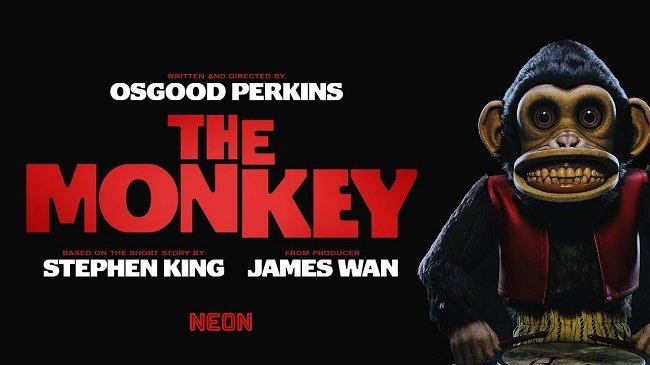
Osgood Perkins has a distinct visual style and tone to his films. It is why his previous film, Longlegs, was such a welcome change from standard genre outings. It was atmospheric both visually and tonally, demonstrating a keen understanding of horror cinema. Hence he is the perfect director to helm this adaptation of a Stephen King short story. The plot is greatly expanded and the screenplay takes a lot of liberties with the source material but the main themes of your past being inescapable and the power of guilt remain front and centre. Due to the extreme and bizarre nature of much of the onscreen deaths, the film wisely has a strong streak of gallows humour running through it which is extremely well handled. Comedy can often be used to defuse or mitigate violence which can be narratively dishonest (think Fred Krueger). Here it adds to the cruel and capricious nature of the random deaths.
When reviewing Sting, one critic stated that the small scale setting and thus, low stakes (IE only a few peoples lives are at risk), made the film not especially memorable. I consider this to be a somewhat spurious criticism. It is the very fact that Sting takes place in such a commonplace environment, with the main characters being everyday people that makes it different. There is a clear focus on well defined characters and their backstory. Unlike so many contemporary films, I actually gave a damn about the protagonists in Sting. An integral aspect of the horror genre is the ability to take a well known and familiar trope and provide a different and absorbing spin on it .It would appear that some audiences have been belaboured over the head by so many overblown and bombastic blockbusters, that the very notion of depicting small, localised and intimate events in a film, seems to bamboozle them.
Some films are made with the intention of starting a franchise, others evolve into one after a surprise box office success and lucrative sequels. Alien (1979) falls into the latter category. A mid-budget science fiction horror film that was well crafted and then benefited immensely by being released at just the right time. Sadly, many franchises become derailed and enter into a death spiral due to competing artistic visions, cynical studio politics and cinematic ignorance. This has certainly afflicted all subsequent Alien films after James Cameron’s magnificent Aliens (1986). Sometimes, a franchise can correct its course and do something fresh with the source material. Prey (2022) is a fine example of this with director Dan Trachtenberg bringing fresh vigour and intelligence back to the Predator movies. I believe that was the intention with Alien Romulus (2024). Sadly, the road to hell is paved with good intentions.
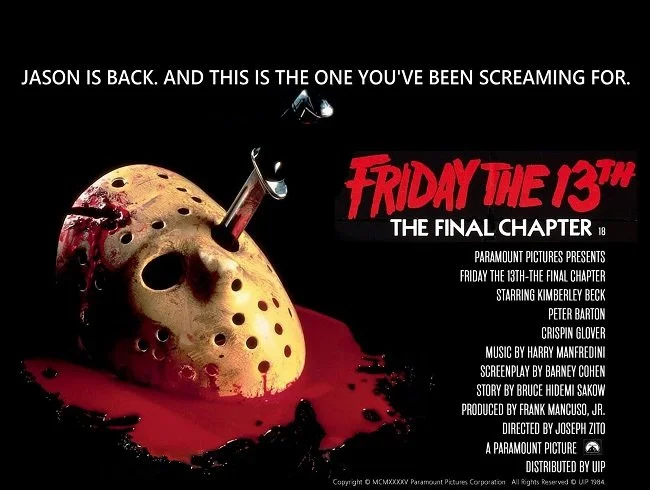
Friday the 13th: The Final Chapter is a popular entry among fans of the franchise. This is mainly due to the return of makeup artist, Tom Savini, who creates several notable death scenes and a bravura ending for Jason Voorhees. There is also an attempt by writer Barney Cohen to have a more involving story compared to previous entries in the series. Director Joseph Zito, who previously directed the above average slasher movie The Prowler AKA Rosemary’s Killer (1981), brings a harder edge to the proceedings, making Jason more menacing than in the previous instalment. As ever, the film was dismissed by the critics but performed well at the box office. Producer Frank Mancuso Jr fully intended for this film to be a definitive end to the series, as he was becoming increasingly concerned that his association with the franchise was having a negative impact upon his career.

Set directly after the events of the previous film, Friday the 13th Part III is again about a group of friends staying near Crystal Lake who encounter Jason Voorhees as he embarks upon another killing spree. Shot in 3D the film has a less sleazy tone than its predecessors although the formula remains the same. The set pieces and death scenes are more elaborate and less clinical, taking advantage of the 3D picture format. The film marks the first appearance of Jason's signature hockey mask, which subsequently became a trademark of both the character and the franchise. Originally conceived to be an end to the series of films, Friday the 13th Part III performed extremely well at the box office, earning $36.7 million on a budget of $2.2 million. As a result, the franchise was given a stay of execution and a further sequel was commissioned.
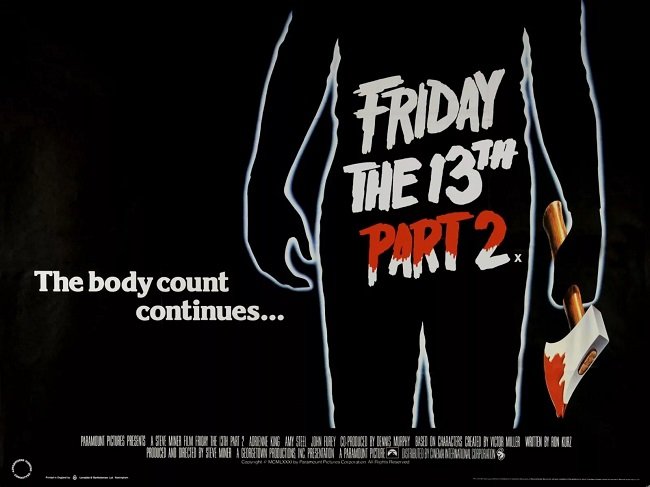
Originally, Friday the 13th Part 2 was intended to be an anthology film based on the superstition associated with the date. However, after the popularity of the original film's surprise ending, the producers opted to continue the story and mythology surrounding Camp Crystal Lake. This eventually became the parameters which all future films would broadly work within. Friday the 13th Part 2 is a more polished production than the first movie, benefitting from twice the budget of the original. The quick turnaround meant that Paramount Pictures could continue to capitalise on the popularity of the slasher genre. However, there was growing social pushback against these types of films, from Christian lobby groups and other “concerned parties”. Hence, Friday the 13th Part 2 ran into problems with the MPAA ratings board and cuts were imposed. Something that would continuously plague the franchise over the years.

Writing any kind of review for the original Friday the 13th movie seems somewhat redundant, as it has been analysed and written about numerous times before. If you’re interested in the film’s production as well as its subsequent impact on US cinema at the time, then there is an excellent summary on Wikipedia. Having recently rewatched the entire franchise, courtesy of the Shout Factory’s Friday the 13th Collection Deluxe Edition, I have a few thoughts I’d like to share. The picture quality of all the films is very good, offering a lot more visual information compared to previous releases. The amount of “extras” included in the box set is prodigious. I suspect that these are the best versions that we’re ever likely to see. Fans hoping that one day all the cut footage will be found and re-integrated into each film are likely to remain disappointed. Some material has surfaced but sadly a lot of deleted and extended scenes have been destroyed.

George A. Romero's Day Of The Dead (1985) is a bleak and remorseless masterpiece. The final entry in his “Dead Trilogy”, its central theme is that in a world on the brink of destruction, man is still the biggest threat to his own existence. It is well scripted, clinically accurate in its observations on human nature and thought provoking, despite having its budget cut just weeks before production commenced. 40 years later it is revered as a genre milestone and is considered one of Romero’s finest works. Sadly, the 2008 “remake” directed by Steve Miner, who has a background in slasher and exploitation movies, takes a contrasting approach, to say the least. It certainly has very little to do with Romero’s film and one can’t help but assume that it is nothing more than a cynical cash in. Setting aside comparisons with the original, this is not in any way a standout zombie film in its own right.
Although I was unaware of it, there was a guerrilla marketing campaign for Longlegs which was focused on the internet rather than traditional television adverts. Hence the film gained a lot of interest prior to its release and as well as some some disproportionate expectations. Then immediately after its theatrical debut, the matter was further compounded by a possible excess of gushing praise as the film was “over reviewed”. Therefore I maintained a degree of scepticism about Longlegs and tempered my expectations prior to watching it. Any film that is hailed as the next Silence of the Lambs, featuring a “traumatising” performance by Nicholas Cage needs to be keenly scrutinised so that its cinematic merits can be carefully separated from the surrounding hyperbole. After viewing I found Longlegs to be a finely honed, atmospheric and precisely targeted horror thriller but not the genre milestone that some would claim.

As a rule, it is always a challenge to end a trilogy of films successfully. Writing a satisfying denouement to a standalone movie is hard enough. To be able to conclude all pertinent story arcs and themes that have been sustained over three feature films, to everyone’s liking is far harder to achieve. In the case of The Final Conflict (1981), the last instalment of The Omen trilogy, writer Andrew Birkin does manage to resolve all of the external, internal and philosophical stakes, which are the fundamental components of a cinematic screenplay. Unfortunately, it is done in an incredibly underwhelming manner, which left audiences feeling cheated. The last time good defeated evil evil in such an unspectacular fashion was in Hammer’s To the Devil a Daughter (1976). This is why, in spite of solid production values, The Final Conflict is the least popular of the films about the Antichrist, Damien Thorn.

Halloween III: Season of the Witch is a film that often provokes a strong reaction from genre fans. This is mainly due to it not having any direct connection to the previous two films. The absence of Michael Myers in such a franchise was a serious mistake and the subsequent poor box office returns endorsed this. Yet if this film had been released as a separate product it may not have performed so poorly. After re-examining Halloween III: Season of the Witch there are many aspects of interest. Despite a troubled production, the film is an intriguing anomaly that tried to be different during a decade where the established horror formula was “stalk n' slash”. It does have a very bleak tone and some consider it to be mean spirited as the cast are killed off one by one. Perhaps theme of child sacrifice caused audiences to balk?

Ghostwatch is a controversial British horror “mockumentary” produced by the BBC that was first broadcast on October 31st 1992. Written by Stephen Volk and produced by Ruth Baumgarten it is now considered a milestone in UK broadcasting. This was mainly due to the strong reaction it provoked from the public, many of whom failed to grasp that it was a drama. At the time it raised serious questions about responsible programming and caused a furore in the British press. It has curiously never been shown since by the BBC. Ghostwatch remains a talking point to this day and is a text book example of the power of television as well as the publics enduring belief in the supernatural.
Event Horizon is a curious movie hybrid, mixing plot elements from classic sci-fi and horror genres. It has been labelled “Hellraiser in Space” by some lazy critics, although I think there's far more to it than that. Perhaps a more apt description would be a Gothic horror story set in space. The movie has garnered a cult reputation since its release in 1997, mainly due to its graphic imagery and troubled production history. It does indeed have some quite shocking sequences but the lightning editing does not show as much as some would think. Paramount forced director Paul W S Anderson to reduce the original one hundred and thirty minute running time down to a more manageable ninety, after unfavourable test screenings. Much of the violence was allegedly removed as a result of that process. Sadly nothing survives of the removed material other than a VHS workprint. Hence a restored director’s cut is therefore unlikely.
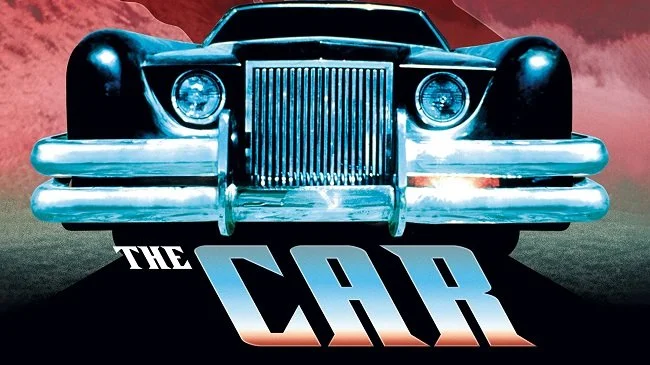
The peace of tranquillity of Santa Ynes, Utah, is shattered when the town becomes the focus of several hit and run deaths, by a mysterious and apparently driverless, black car. After the Sheriff (John Marley) is run down, it is down to Captain Wade Parent (James Brolin) and his deputies to protect the town from this sinister threat. Is the car simply a driven by a mad man or is there a more supernatural explanation? When the car menaces a local school marching band, the teachers and students take refuge in the nearby cemetery. Does the cars inability to enter consecrated ground provide a clue to its otherworldly origins and offer a potential solution? As the death count increases and the population becomes more fearful, the Captain and his team of deputies form a desperate plan to see if they can lure the car into a trap.
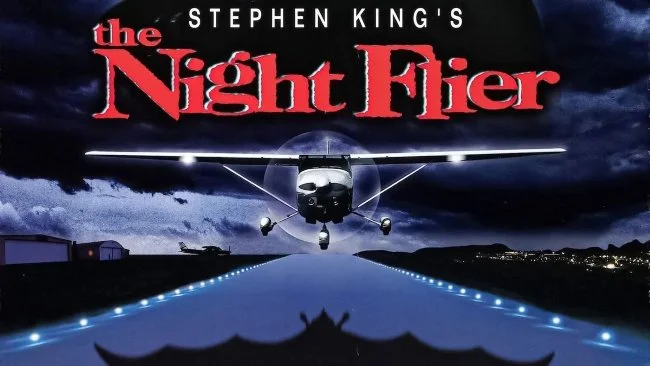
The key to success in the horror genre is to try and find an innovative new angle on tried and tested themes and tropes. The Night Flier is an often-overlooked gem, that takes a unique perspective on vampirism and features strong performances as well as an intelligent and thoughtful screenplay. It builds a sense of foreboding during it’s first two acts and teases audiences with some unpleasant prosthetic effects, courtesy of KNB EFX Group. The climax of the movie is both thought provoking and suitably unpleasant. Furthermore, The Night Flier even manages to make a coherent criticism of tabloid culture and morals of those journalists working in the industry. It’s a damn shame that this modest but well-crafted genre movie didn’t get the attention it deserved when it was initially released in 1997.
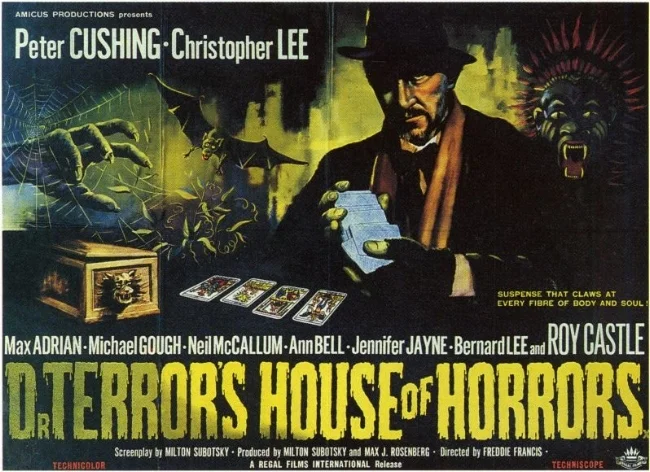
Dr. Terror's House of Horrors was the first portmanteau horror movie by Amicus Productions. The small British studio was founded by producers and screenwriters Milton Subotsky and Max Rosenberg. As the horror genre grew in popularity due to the success of Hammer films, Amicus saw the potential in the portmanteau format. Subotsky in particular held Ealing Studios 1945 classic Dead of Night in very high regard. Although only a modest budget movie, Dr. Terror's House of Horrors proved to be financially successful and led to a series of similarly structured films over the next decade. These included Torture Garden (1967), The House That Dripped Blood (1970), Asylum (1972), Tales from the Crypt (1972), The Vault of Horror (1973), From Beyond the Grave (1974),

Ghost Story is a deliberately superficial adaptation of the novel by Peter Straub. If you’ve read the book and are expecting a verbatim retelling of the plot, then you will be disappointed. It’s complex narrative structure and the abundance of characters do not immediately lend themselves to mainstream film making. However, if you like tales of the supernatural and solid performances from Hollywood legends, then this may well be for you. John Irvin has always been a workman like director and has therefore often been overlooked. Films such as Hamburger Hill and When Trumpets Fade show a great deal of focus and a clear understanding of the mechanics of cinema.
The Expendables 2 (2012)
After viewing The Expendables 2, I read back through my notes. They ran as follows: People were shot. Stuff exploded. Quips were made. Amusing. And that is pretty much all you need to know, because if you watch this movie expecting anything more, then you'll be disappointed (and possibly a fool). So, Barney Ross (Stallone) and co are back and this time they have a better (by genre standards) script which is a little more equitable with the screen time (Terry Crews and Randy Couture fans take note). Gallows humour and self-referential one-liners abound, and the plot is rife with over the top situations and features an absurdly named villain (Jean-Claude Van Damme). Mickey Rourke is replaced by Chinese star Yu Nan’s Maggie, and Liam Hemsworth. Oh, and there's lots of mayhem. The movie has the trademark high body count.
After viewing The Expendables 2, I read back through my notes. They ran as follows: People were shot. Stuff exploded. Quips were made. Amusing. And that is pretty much all you need to know, because if you watch this movie expecting anything more, then you'll be disappointed (and possibly a fool). So, Barney Ross (Stallone) and co are back and this time they have a better (by genre standards) script which is a little more equitable with the screen time (Terry Crews and Randy Couture fans take note). Gallows humour and self-referential one-liners abound, and the plot is rife with over the top situations and features an absurdly named villain (Jean-Claude Van Damme). Mickey Rourke is replaced by Chinese star Yu Nan’s Maggie, and Liam Hemsworth. Oh, and there's lots of mayhem. The movie has the trademark high body count.
Director Simon West provides the audience with a suitable homage to eighties action movies, that is a slicker, more robust and at ease with itself that its predecessor. He does not quite reach the heights of his Magnum Opus, Con-Air, but The Expendables 2 is a worthy genre piece. Furthermore, he presents the action is a way that is discernible to the viewer and fun. We are not subjected to a lot of shaky cam, lightning edited bilge, but actually get to see the carnage in all its glory (although a lot of that is CGI bullet hits). The physical stunts are top notch and the fights extremely well-choreographed.
The plot is standard with the team sent to collect the content of a crashed military airplane. Of course, it's not as easy as that, with other parties showing an interest in its plutonium cargo. The subsequent clash between groups results in the death of one of the team, making matters personal. You don't have to be a genius to figure out what happens next. Not only are we treated to one hundred minutes of old school action, but also a who's who of eighties action heroes. Furthermore, they are all happy to send themselves up. It's all a lot better this time round because the production team know what works and what doesn't. Dolph Lundgren steals the show with his banter and casual asides. It is this shift in tone that improves this outing over the first.
Not everything succeeds as well as it could, though. The climatic shootout is not as strong a set piece as some of the proceeding sequences and somehow, I expected the arrival of Schwarzenegger, Willis, and Chuck Norris to have a little more impact. That's not to say it's not good. I was just expected something more bombastic. Two of the three have been out of the acting game for a while (at the time of filming), so I guess we should cut them some slack. It is also curious to note that although the film has a lot of violence, the use of profanity is quite restrained. It is present but tends use a lot of milder terms. A concession of some kind perhaps? It certainly does not spoil The Expendables 2. I picked up on it just because bad language is so prevalent in this genre.
The Expendables 2 manages to find the right balance between loud action, tongue in-cheek humour and respect for the genre. It is also a most welcome change to modern PG-13 rated action movies that want to be hard hitting and tough but cannot countenance depicting violence for fear of tipping over into a higher rating. It is the honesty of The Expendables 2 that is one of its strongest assets, along with the fact that it does exactly what it sets out to do. That and of course Schwarzenegger and Willis in a Smart Car, shooting the crap out of things. When you add on top of that Chuck Norris quoting his own "facts" then you are in action movie hog heaven.
Mainstream films are easy to recommend to people. They’re usually formulaic, work within clear parameters and they’re not controversial. Most people, when viewing such film on someone else’s suggestion, are left with a fairly simply choice. Did they like it or not? Whatever the outcome, no feathers are ruffled. No one looks at you askance afterwards and says “why the hell did you think I’d like that piece of shit”? If something like this happens, then you have clearly not recommended a mainstream film. Perhaps you’ve suggested something that’s a little more of an acquired taste. Something niche, from a very specific sub-genre. Which brings me neatly to Blazing Magnum AKA Strange Shadows in an Empty Room (1976). The US title gives the impression that this film is a hard boiled cop thriller, like so many others that followed in the wake of Dirty Harry. But there’s a clue in the European title. Yes, this movie has more than just a whiff of a giallo about it.
Jason Statham is an exemplar of the US mantra of “staying in your lane”. He makes action movies and occasionally strays into action comedies. His formula broadly works and is sufficiently lucrative to keep Mr. Statham employed. Therefore, if you watch a film in which he stars, you have a fairly good idea of what you’ll be getting. Of late, the criteria for his action vehicles have become more succinct. Jason Statham will play an innocuous character, such as a construction foreman or a bee keeper. Something terrible will subsequently befall another character who Mr. Statham has an emotional connection with in some capacity. He will subsequently hunt down those responsible and meet out death and violence. At some point the villain of the story will enquire as to how this innocuous person is so lethal. Research will then show that our Jason is in fact an ex-police officer/special forces operative/international assassin. There’s then a showdown and the villain dies. Job done.
The Light at the Edge of the World presented itself as an action movie upon its release in 1971. Based upon a story by Jules Verne, the Spanish American co-production was driven by its star Kirk Douglas, who curiously hired British director Kevin Billington to helm the project. This tale of a lighthouse keeper fighting a war of attrition against a group of pirates that have captured his island, was market as an adventure film ostensibly in the idiom of the authors previous works and as a pirate movie. MGM bought the rights to distribute the film in the UK on the misunderstanding that it was a family friendly production. It was not and remains so. They subsequently had to cut 15 minutes of violence and torture as well as an undercurrent of sexual assault to secure a suitable rating. Conversely, the US distributors received an arbitrary PG rating, despite the fact this is one of a handful of films that honestly depicts pirates as murderers, rapists and worse.
It’s an established action film trope. The fire team comprised of ex-military personnel, move in on their target. Only to have the tables turned by someone they don’t deem a threat. What makes it different in The Last Stand of Ellen Cole is a throwaway line of dialogue. The bested operative lies bleeding on the floor and the protagonists stands over them ready to finish them off. “Don’t, I have a cat” they feebly plead. For me that was the icing on the cake. The movie had already established it was taking the “same old, same old” and doing something different. Something fun, if taken in the right spirit. This scene tipped the balance and I embraced this film because it was being honest about what it is. This is a modern B movie that decides to give a very specific sub-genre a makeover. Furthermore, its clearly done with an affectionate wink, which is very different to sly wink. This isn’t deliberate self-knowing irony. Its just a film doing something different and possibly silly but it genuinely wants to have fun with it.
Stephen King’s dystopian story, The Running Man, was previously adapted very loosely in 1987, as a vehicle for Arnold Schwarzenegger. That version focused mainly on the “Battle Royale” element of the story and leaned heavily into Arnie’s personality, rather than the politics of the book. It also wasn’t well received by the author. Edgar Wright’s remake follows the source text a lot more closely and is far more interested in its political themes and wider social commentary. Furthermore, this version re-establishes the everyman quality of the hero of Ben Richards, rather than him being the muscle bound, ex-military hero as per Mr. Schwarzenegger’s prior interpretation. This time round, The Running Man uses a lot of the visual and narrative tropes of contemporary reality TV, making this forty three year old story very relevant to today’s viewers and couching the film in a style that is recognisable and accessible.
After the success of Raiders of the Lost Ark in 1981, filmmakers scrambled to find existing intellectual properties that they could use for similar films. Hence archaic heroes such as Alan Quatermain were hastily given a modern makeover and thrust into generic movies, in a vague attempt to replicate Steven Spielberg’s successful formula. Which brings us neatly on to James Charles Bigglesworth AKA “Biggles”, a fictional pilot and adventurer from a series of books written by W. E. Johns between 1932 and 1968. Several attempts had been made in the past to bring this character to the silver screen, including one by Disney but they all failed. However, the commercial and critical success of Indiana Jones provided sufficient impetus to greenlight a new film. However, due to some curious production choices, when Biggles was finally released it was far from just a period set, action movie.
Setting aside the hubris of remaking a film such as Red Dawn, the 2012 reboot had a troubled production. Shot over the course of late 2009, on location in Michigan, MGM intended to release the film in September 2010. However, the studio’s financial problems became unsustainable over the course of that year and the film was shelved, while a financial solution was sought. Furthermore, while Red Dawn was in post production, there was a major economic shift within Hollywood due to the increasing importance of the Chinese market. This was a significant problem for MGM because the new version of Red Dawn had the Chinese invading the USA instead of Russia. Hence there were reshoots and the need for additional visual effects, so that the Chinese could be replaced with North Koreans. MGM eventually went bankrupt and the distribution rights to Red Dawn were sold off. The film was eventually released in 2012.
When I first saw the promotional trailer for Gangster Squad back in 2012, prior to its release, I wasn't especially impressed. I simply thought the film was another attempt to re-invent the gangster genre for a generation who were not especially familiar with it. I wasn't exactly overwhelmed with director Ruben Fleischer's resume either. I didn't particularly like Zombieland and haven't seen 30 Minutes Or Less. Then came the tragic mass shootings in Aurora, Colorado which led to the movie being delayed so that the original ending, which featured a shoot-out in a movie theatre, could be replaced. Hence when I finally watched this film recently, I wasn't expecting a movie up to the standards of say Once Upon A Time In America or Miller’s Crossing and it would seem that I was right do so. Gangster Squad is not especially noteworthy in any respect.
Levon Cade (Jason Staham) is a former Royal Marine Commando who has retired from military service and now works as the leader of a construction team in Chicago. He has a close relationship with Joe and Carla Garcia (Michael Peña and Noemi Gonzalez ) who run the company and considers them as family. Outside of work, Levon is involved in a bitter custody battle for his daughter, against her maternal grandfather, who blames Levon for his daughter’s suicide. When Garcia's teenage daughter Jenny (Arianna Rivas) goes missing, Levon reluctantly agrees to help her parents and get her back. Beginning his search at the nightclub where Jenny was last seen, he soon discovers that she was abducted by Russian traffickers. Furthermore, the culprit is Dimi Kolisnyk (Maximilian Osinski), the wayward son of a senior ranking gangster.
PC Nicholas Angel (Simon Pegg) is an exemplary Police Officer, with a strict adherence to the letter of the law. As a result of making the rest of the London Metropolitan Police look bad, he is transferred to the rural town of Sandford, Gloucestershire. On arrival, Angel finds that the local Inspector, Frank Butterman (Jim Broadbent), takes a far more laissez-faire approach to policing. His colleagues are incompetent and he is further hampered by the Neighbourhood Watch Alliance (NWA), who prioritise low crime statistics over law enforcement due to their desire to win the title of “Village of the Year”. Furthermore, Angel is partnered with the Inspector’s son, Constable Danny Butterman (Nick Frost), who is infatuated with “buddy cop” movies and is in awe of Angel’s London experience. “Have you ever fired two guns while jumping through the air?” However, a sudden spate of grisly accidents lead Angel to believe that there's more to the seemingly tranquil and picture-perfect community than meets the eye.
As a collection of history's worst tyrants and criminal masterminds gather to plot a war to wipe out millions, one man must race against time to stop them. Discover the origins of the very first independent intelligence agency in The King's Man. Based on the Comic Book “The Secret Service” by Mark Millar and Dave Gibbons. 20th Century Studios
Matthew Vaughn’s The King’s Man is an inconsistent film, both narratively and tonally. It veers between serious themes and stylised, hyperbolic action. At times it does quite a good job of exploring such complex subjects as global politics, mechanised warfare and colonialism. Sadly it then wrenches the viewer out of these cerebral reveries as it lapses into the sort of over the top action sequences that were notable in the two earlier films. It’s a shame because The King’s Man gets so many other aspects of the production right. The casting is very interesting, especially Ralph Fiennes as the “pacifist” Duke of Oxford. He is actually a very good fit for the action genre. Djimon Hounsou and Gemma Arterton are given little backstory beyond being respectively the faithful manservant and the family nanny but both are notable due to their own inherent acting chops and personal charisma. Rhys Ifans obviously has a great time as Grigori Rasputin, ensuring all the man’s vices are robustly depicted.
On paper, a video games franchise such as Assassin’s Creed lends itself perfectly to a cinematic adaptation. The parkour action scenes, the historical settings and the contemporary conspiracy theory themes are all elements that should play well with a modern youth audience. Hence with the backing of a major studio such as Twentieth Century Fox and a budget of $125 million, the 2016 movie should have been a guaranteed box office hit. The casting of Michael Fassbender, an actor who is comfortable with serious roles and big Hollywood franchises, should have carried this film comfortably over the finishing line. Director Justin Kurzel, who had found critical success with his adaptation of MacBeth a year previously, must have looked like a safe pair of hands to handle such a project. Sadly, that was not the case. Assassin’s Creed is not the sum of its parts, in fact many elements appear to be pulling in opposite directions. The resulting feature film is staggeringly dull, soulless and a chore to watch. A testament to how modern big budget franchise movies have become a production line, with all the art stripped from them.
300: Rise of an Empire is a curious beast, being neither a sequel nor a prequel. It is infact a tale that takes place simultaneously with those of the original movie. While Gerard Butler is busy making a last stand at the Battle of Thermopylae, fellow warrior and politician Themistokles, played by the singularly uncharismatic Sullivan Stapleton, leads a similar army of buffed Greeks against the Persian fleet. Once again we have a movie that is the epitome of style over substance, complete with a sound design that challenges what can physically be endured by human hearing. They say the first casualty of war is innocence but in this type of movie it's closely followed by historical accuracy and authentic depictions of ethnicity. 300: Rise of an Empire is a cinematic assault upon the senses but not in a good way like Mad Max: Fury Road.
Back in September 2017, Liam Neeson stated in an interview with Sky News that he was retiring from the action genre, due to his age. He felt that audiences would question his credibility in such roles. After the release of The Commuter (2018) and Cold Pursuit (2019) Mr Neeson appeared to return to human dramas and films that focus on performance rather than punching man and beast. Ordinary Love and Made in Italy, both released in 2019, demonstrate the actor’s versatility and skill. People seem to forget that he is a thespian who was initially known for his character driven roles in films such as The Mission (1986), Rob Roy (1995 and Michael Collins (1996). It was only in 2008 that he reinvented himself as an action hero. It’s all a far cry from Schindler’s List and his performance that earned him an academy award nomination. The reason I mention all of this is because The Ice Road is the third action movie I’ve seen in 2021 that stars Liam Neeson.
One of the stand out tropes of the modern action film is that the stakes are always cranked right up to 11. Terrorists, biological weapons and nuclear bombs are common threats in such movies with a hero or heroes trying to save the world from death and destruction or worse. However, back in the sixties and seventies, things were a little more straight forward and in some respects more credible. Take When Eight Bells Toll, released in 1971, for example. British Treasury secret agent Phillip Calvert investigates the theft of £8,000,000 in gold bullion by a gang of international smugglers. In the context of the times this was no small beer however it’s somewhat mundane compared to fighting super villains and their space lasers. Frankly I prefer these low key plot devices as they can make a film a little more plausible within the confines of the genre. A concept that is often forgotten today.
Forensic accountant Owen Casserly (Jake Weber) flees his home with his teenage son Connor (Finn Little) when he discovers he has been targeted by a pair of assassins (Nicholas Hoult and Aidan Gillen) who have been hired to stop him giving evidence in a major corruption case. Connor witnesses the murder of his father after their car is run off the road. Entrusted with important written evidence, he escapes into the dense forests of the Montana wilderness pursued by the killers. Seeking help he runs into smokejumper Hannah Faber (Angelina Jolie) who is stationed at a remote fire lookout tower. Hannah suffers from PTSD from a previous forest fire in which she was unable to save three young boys. Hannah attempts to lead Connor through the forest to safety. Meanwhile the assassins set fire to the forest to divert the attention of the authorities and cover their tracks.
I must admit that I did not have particularly high hopes for Paul W S Anderson's remake of the 1975 Roger Corman produced cult classic. Anderson’s work varies greatly. Event Horizon and Soldier are solid genre films but I still have not fully come to terms with Alien vs. Predator. Jason Statham is also a name that divides the public, with solid material such as The Transporter and unfathomable tosh like Revolver. But despite these considerations, Death Race is in fact quite a surprise and does not follow the path that so many remakes do. It takes the basic themes and concept associated with the original and tries to do something different with them. It doesn’t reinvent the wheel nor is it a genre milestone. But it does offer a different spin on things, have some engaging action scenes and provide some dumb but enjoyable entertainment. When combined with snacks and some beer this is a passable way to kill 111 minutes.
I did not watch Zero Dark Thirty upon its initial release, due to the politics surrounding it. I wanted to be able to view it free from bipartisan debate. Eight years on I believe this now achievable and although debate still exists it is now more measured and less strident. Zero Dark Thirty is certainly a compelling movie. It plays as a docudrama, providing an in-depth study of the US intelligence services hunt for Osama Bin Laden. It cannot be faulted on a technical level and the performances are very strong. It does not adopt a celebratory or triumphalist tone in its approach to the story. Director Kathryn Bigelow endeavours to keep the proceedings focused upon the intricacies of an intelligence driven manhunt. There is little or no tubthumping, jingoism. The decision to find Bin Laden is shown as a political and military exercise of foreign policy. The film solely focuses on the story from a US perspective but that is perfectly acceptable as it is not intended to be an exploration of geo-politics.
Firestorm was originally written as a vehicle for Sylvester Stallone, however when the production company Savoy Pictures went bankrupt the screenplay was bought by Twentieth Fox and the scope of the movie reduced to suit a lower budget. It’s broadly similar to Cliffhanger in so far as the lead character is a specialist in a certain field who runs afoul of criminals in a perilous environment. Whereas Cliffhanger is set in the Rocky Mountains, Firestorm takes place in the forests of Northern Wyoming. After the script was revised four times, the finished screenplay was given a final “polish” by Graham Yost who has considerable experience with the action movie genre. As stallone was no longer associated with the project and the production had been repurposed to be less extravagant, the movie was assigned to former NFL star Howie Long. Long had already appeared in the John Woo movie Broken Arrow (1996) and the Firestorm was seen as a means to give him a star vehicle.
The original French movies District 13 and its sequel District 13: Ultimatum, conceived and produced by Luc Besson, were enjoyable variations of the Escape from New York theme. Their charm lay in their European pedigree and the skilful use of parkour. The two leads, David Belle and Cyril Raffaelli, were eminently suited to the minimalist roles and the screenplays were fun. Half of these movies appeal was the fact that they were not mainstream US products. Brick Mansions is the Hollywood remake of District 13, as well as being Paul Walkers’ final movie. Sadly, this film is far from a fitting epitaph, being devoid of any charisma or innovations. It is blandly shot , poorly edited and has been stripped of everything that made the original entertaining.
Arnold Schwarzenegger's return to the big screen after his political career has been uneven to say the least. His cameos in The Expendables and The Expendables 2 were well received, with their self referential charm and age related irony. Yet his first major movie The Last Stand, although competent, failed to find an audience. Escape Plan fared better at the box office but did not put Arnie back on the A list. Effectively there's a large percentage of the contemporary cinematic audience who were born after his heyday and are simply not overt fans of his work. His core audience is more than likely of the age group that consume most of their film entertainment at home. Which may explain why Sabotage tanked in the US upon release on March 28th 2014. It was the worst opening box office of Arnie's career. He used to break first day opening records.
Sequels and reboots are hardly a new concept and have been a part of Hollywood culture since the 1930s. The success of the Universal Horror movies from that era being a prime example of direct follow ups and retconned movies. However, there is one fundamental rule that distinguishes a good sequel from a bad one. You should never mitigate, undermine or make irrelevant the events of the previous movie, just to provide your new film with a raison d'être. For example, the events of Aliens do not contradict or trivialise those that happened in Alien. In fact with that franchise there is a very clear logical progression between the two movies. The same is true for Mad Max and Mad Max 2 or Star Wars and The Empire Strikes Back. The key is to progress a story, enhance it or explore things from an alternative angle and bring something new to the cinematic table. Sadly this philosophy is all too often lost on corporate film making. Which means that many sequels are just tedious replays of prior films. Terminator: Dark Fate falls squarely into this category.
The enduring appeal of the character John Rambo in First Blood comes from the fact that he is a traumatised ex- service man who keeps himself to himself as he drifts from job to job, trying to come to terms with his wartime experiences. His poor treatment at the hands of a small-town Sheriff is a succinct metaphor for the social and political indifference that Vietnam veterans were shown upon their return to the US. He’s a man with a code in a world that no longer has any use for him. His simple and honest patriotism is not returned and he is in fact viewed with shame by many from the nation he loves. Furthermore, the first movie does not paint him as a cold-blooded killer. Despite provocation he is not the first person to shoot to kill. Rambo is in many ways a victim. A broken man, who society has asked to do unspeakable things. Now society wants nothing to do with him and fears the “monster” they created. Although clearly an action movie, First Blood had narrative depth and a flawed but sympathetic protagonist. 37 years and four movies later, such dramatic themes have long left the franchise. The central character is indeed a caricature of its former self.
It was hardly surprising that the movie adaptation of Chris Kyle's autobiography American Sniper, would cause controversy. The Iraq war, US Foreign Policy and national pride are seldom subjects that are discussed in a calm and measured fashion. And then there are the personal politics of director Clint Eastwood to consider. Hence there were claims from some quarters upon the movie’s release, that it was Islamophobic and counter claims that criticisms of the late Chris Kyle were unpatriotic. There still remain issues regarding the authenticity of events depicted in the source text and subsequently the movies screenplay by Jason Hall. Yet none of these factors have in anyway impacted upon the film's box office returns which currently stands at $247,900,417 worldwide.
Do I really need to present you with some sort of plot synopsis for Transporter 3? No, I didn’t think so. More of the same as Frank Martin (Jason Statham) and his police chum, Inspector Tarconi (Francois Berleand) become embroiled in yet another high-octane escapade. There's fights, car stunts, exotic international locations and a strong sense of humour. This time, the disposable love interest is a Ukrainian girl named Valentina (Natalya Rudakova) who fulfils her role succinctly. The film benefits by being set back in Europe, after the mistake of basing Transporter 2 in the US. This time, the story takes us to such locations as Budapest and Odessa. The international film crew once again bring a veneer of panache to the production that is conspicuously absent in US action movies. For a modest budget fil, Transporter 3 it looks very good. Again the proceedings are given a boost by a pertinent soundtrack by Alexandre Azaria and a selection of European “tunes”.
Jason Bourne originally graced our screens for the first time seventeen years ago. The Bourne Identity was a gritty, minimalist take on the espionage genre and a welcome change from the excesses of the Pierce Brosnan Bond era. The story arc was sustained over three movies and ended efficiently and succinctly. After which Matt Damon moved on, as did the director of two of the movies, Paul Greengrass. Which leaves us with The Bourne Legacy; the tangential sequel that arrived in 2012. A film that exists because the money men and bean counters hate to pass up on a franchise until it has been squeezed utterly dry. Hence, they commissioned the writer of the series, Tony Gilroy, to come up with a screenplay and direct a spinoff movie. Jeremy Renner was cast in the lead role. Yet despite narrative and production continuity, The Bourne Legacy was not a Jason Bourne movie with the star appeal of Matt Damon. Although the film turned a profit, it had the lowest box office returns out of the entire franchise.
During the eighties there was a clear league table of action movie stars. By the mid-nineties this system fell into decline and the Hollywood lacked any clearly defined exponents of the genre. A decade later, due to the success of Luc Besson’s Transporter films, Jason Statham became a bankable box office star in this field. When you look at Statham's early work in Lock, Stock and Two Smoking Barrels it is hard to envisage the "mockney geezer" as an international action star. Yet he has successfully stepped into the role and enjoys a large following. I enjoy his work as he has a likeable on-screen persona. My 88-year-old Mum likes him to because "he wears nice suits". The action genre seldom reaches such a diverse demographic.
Before we start, I recollect that one well known UK critic described Safe House as sub-Tony Scott, upon its release. Now I’ve always been conflicted over Scott’s back catalogue, as I’ve always found his movies to be hampered by their own unique style. The subtleties of his characters and depth of his themes are all too often drowned out by his frenetic style and fast paced editing. Therefore a comment such as this really sets off alarm bells for me. Having recently watched The Equalizer 2, I wanted a further fix of Denzel Washington in a similar action vehicle. As Safe House was available on Netflix UK, I decided to kill a couple of hours and see what actually constitutes as “sub-Tony Scott”.
Classic Movie Themes: The Day the Earth Stood Still
Film producer Julian Blaustein had a long-standing desire to make a film that addressed the fears and concerns of the post war Atomic Age. With the backing from Fox Studio Executive Darryl F. Zanuck, he hired screenwriter Edmund North to adapt the short story Farewell to the Master by Harry Bates. The screenplay provided a moral commentary about the ongoing arms race and featured an alien visitor with Christ like qualities who delivers an apocalyptic message. Veteran director Robert Wise was brought in head the project and a fine cast of established characters actors such as Michael Rennie, Patricia Neal Hugh Marlowe and Sam Jaffe was assembled. The finished movie has proven to be one of the greatest science fiction movies ever; it is The Day the Earth Stood Still made in 1951.
Film producer Julian Blaustein had a long-standing desire to make a film that addressed the fears and concerns of the post war Atomic Age. With the backing from Fox Studio Executive Darryl F. Zanuck, he hired screenwriter Edmund North to adapt the short story Farewell to the Master by Harry Bates. The screenplay provided a moral commentary about the ongoing arms race and featured an alien visitor with Christ like qualities who delivers an apocalyptic message. Veteran director Robert Wise was brought in head the project and a fine cast of established characters actors such as Michael Rennie, Patricia Neal Hugh Marlowe and Sam Jaffe was assembled. The finished movie has proven to be one of the greatest science fiction movies ever; it is The Day the Earth Stood Still made in 1951.
Alfred Newman was Director of Music at 20th Century Fox at the time and decided to assign the project to Bernard Herrmann, who has recently relocated to Los Angeles. Director Robert Wise had worked previously with Herrmann on The Magnificent Ambersons in 1942 and the pair had a good working relationship. So, he effectively gave him an open remit to create something different and special. Herrmann was far from a musical traditionalist and chose to craft an innovative soundscape to highlight the differences between the Alien Klaatu the bellicose and bombastic nature of humanity. He therefore elected to remove acoustic string and woodwind instruments from the orchestra and expanded the horn section. He then further embellished the sound of the film by adding such diverse instruments as an electric violin, Theremins, Hammond organs, vibraphones, and a celesta.
“Prelude and Outer Space” is a magnificent opening cue which highlights Herrmann genius in capturing the narratives emotional essence. The opening credits roll against a shifting panorama of stars and the sumptuously eerie main motif, featuring multi-tracked Theremin and tuba, juxtaposed by piano arpeggios, horns and crystalline harp. Herrmann further embellishes this portentous theme with a vibraphone played backwards. This cue is a masterpiece in both conception and execution. “Radar” offers another incredible track, which demonstrates Herrmann’s compositional aptitude. As the world watches on at the alien space ship, a harp glissando preludes a rapid duet between two pianos, one with bass and the other with vibraphone, which are octaves apart.
Bernard Herrmann was one of the most innovative composers of his generation who endeavoured to bring new and dynamic methods to the process of film scoring. His decision to remove the acoustic instruments from the string and woodwind sections of the orchestra and to augment his score with the abstract otherworldly sounds of the Theremin, vibraphone, and celesta was a bold move. Yet it proved to be a genre defining decision and adds another layer of subtlety to the storytelling. Over the years, many of the unique aspects of the film score have become standard genre tropes. You only have to listen to Danny Elfman’s main them for the 1996 Tim Burton movie, Mars Attacks to hear the reach of Herrmann’s influence.
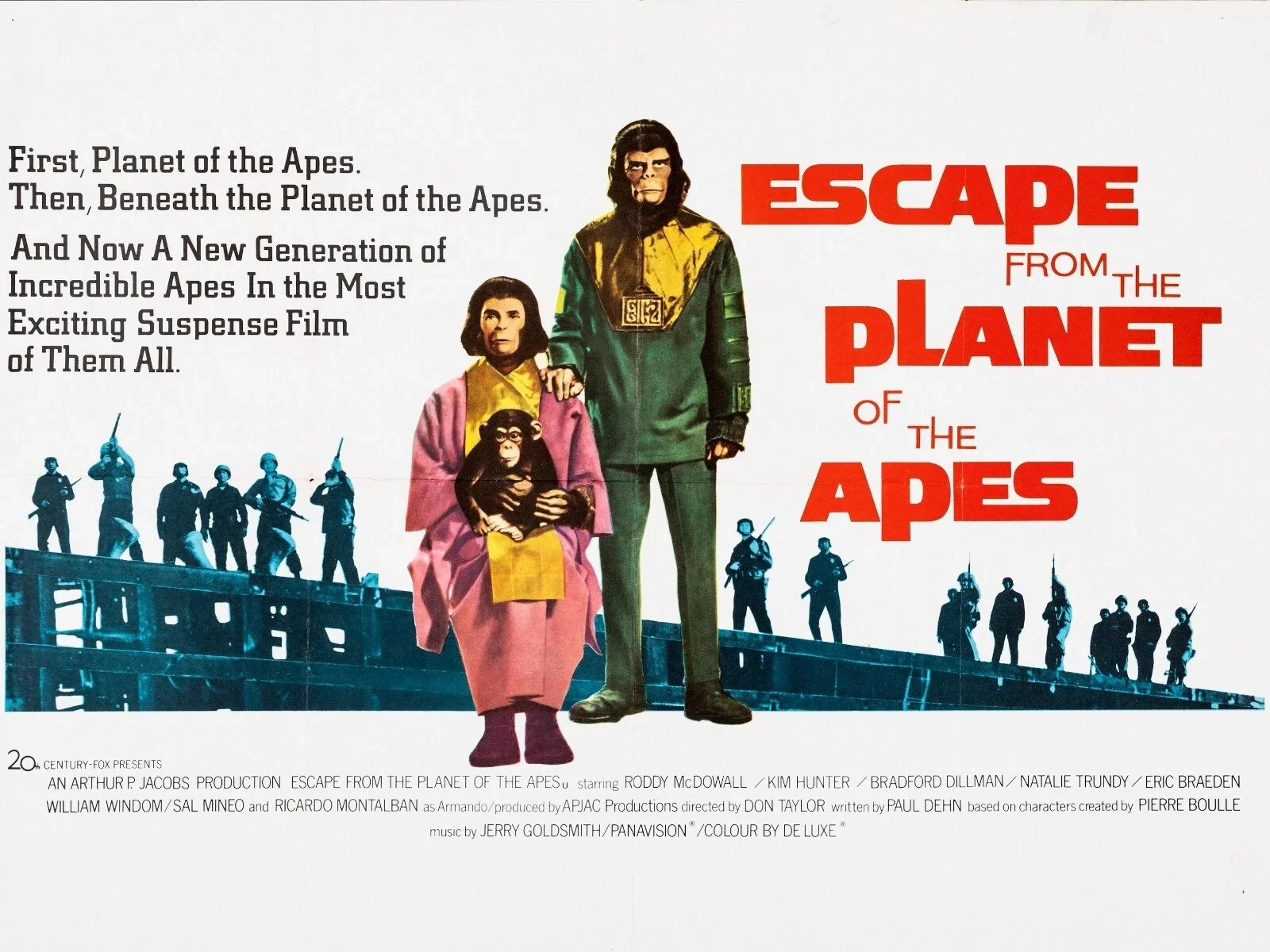
The Planet of the Apes movie franchise took a radical change of course with its third entry in the series. The first two films were set in the future and benefited from high production values to help realise a post apocalyptic earth. However, due to a substantial reduction of budget, Escape from the Planet of the Apes uses a time travel plot device to bring the ape protagonists to present day Los Angeles (1971 in this case). The result is a film with a much smaller narrative scope. However, although it lacks the science fiction spectacle of its predecessors, it features an interesting satirical exploration of celebrity culture and ponders what it is like to be deemed an enemy of the state. As ever, Roddy McDowell and Kim Hunter provide exceptional lead performances as the Chimpanzees Cornelius and Zira. Escape from the Planet of the Apes also captures the pop culture vibe of seventies America.
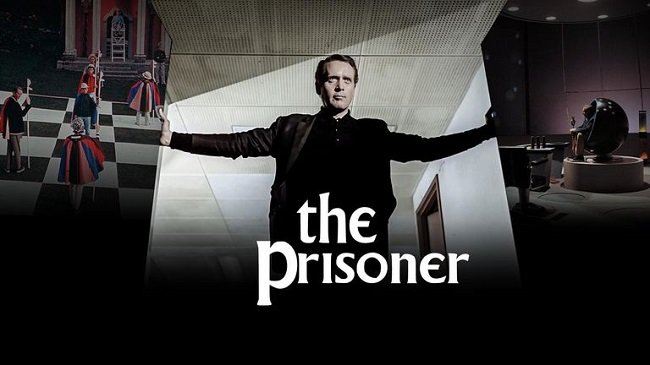
Ronald Erle Grainer (11 August 1922 – 21 February 1981) was a prolific Australian composer who is best remembered for his work in the United Kingdom during the sixties and seventies. He wrote numerous notable scores and theme music for several iconic television shows such as Doctor Who, Steptoe and Son and Tales of the Unexpected. He also composed the soundtrack for several major motion pictures such as Some People (1962), The Assassination Bureau (1969) and The Omega Man (1971). Grainer relocated to London from Australia in 1952 but it was not until 1960 that he gained critical success after writing the music for the popular TV show Maigret. He subsequently received an Ivor Novello award for “Outstanding Composition for Film, TV or Radio”.

The following is about a cultural change. That is not to say that it’s a value judgement or one of those posts you so frequently read by bloggers of a certain age, that essentially boil down to “things were better in my day”. It is merely an observation and like all observations it is not 100% universal. There will always be exceptions to the rule. I am simply painting with broad strokes a general truism for your consideration. My point being that people listen, experience and enjoy music differently these days compared to how they did three to four decades ago. I’m not talking about the science of hearing or anything complex like that. I am merely highlighting the change in the way we choose to experience music and how that has an impact upon its creation and presentation. So like Anne Elk, presenting her theory on the Brontosaurus, here is the axiom at the heart of this post.
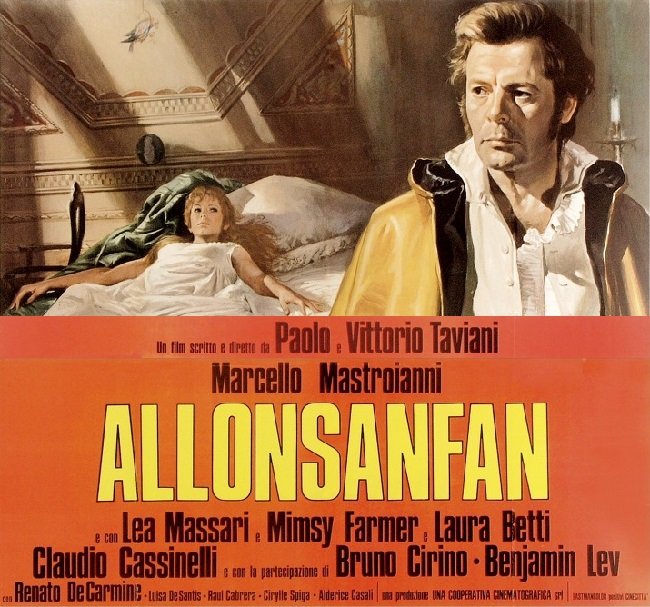
Allonsanfàn (1974) is an Italian historical drama film written and directed by Paolo and Vittorio Taviani. The title of the film derives from the first words of the French Revolutionary anthem La Marseillaise (Allons enfants, IE “Arise, children”). It is also the name of a character in the story. Set against the backdrop of the Italian Unification in early 19th-century Italy, Marcello Mastroianni stars as an ageing revolutionary, Fulvio Imbriani, who becomes disillusioned after the Restoration and endeavours to betray his companions, who are organising an insurrection in Southern Italy. Allonsanfàn is a complex film that is not immediately accessible to those unfamiliar with the intricacies of Italian political history nor the arthouse style of the Taviani brothers. However, it is visually arresting and features a rousing score by Ennio Morricone.
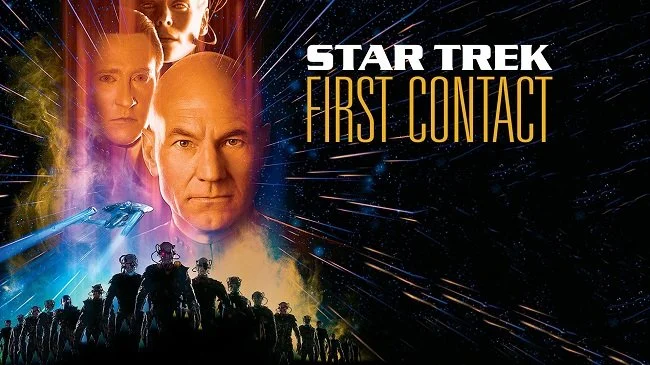
Jerry Goldsmith’s contribution to Star Trek is immense. Yet simply listing the films and TV episodes he wrote music for does not adequately encapsulate the significance of his contribution to the franchise. His majestic, thoughtful and uplifting musical scores provide an emotional foundation that reflects the core ethos of Star Trek. They also create an invaluable sense of continuity that spans multiple shows and movies. Perhaps the most obvious example of this is his iconic title music for Star Trek: The Motion Picture (1979) that was subsequently adopted as the theme tune for Star Trek: The Next Generation. His work was held in such high regard, when Star Trek V: The Final Frontier (1989) ran into production issues, it was thought that a Jerry Goldsmith soundtrack may well elevate the film. Sadly it didn’t but his work on that instalment was outstanding and among his best.
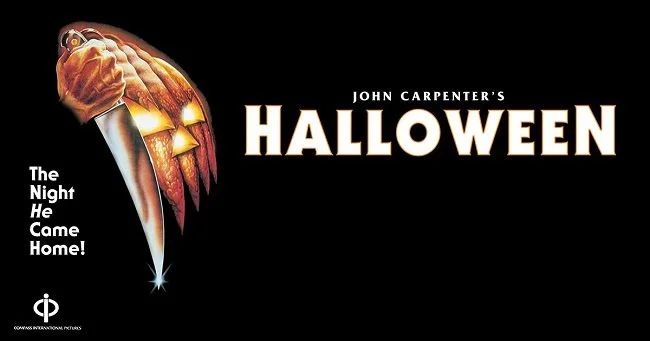
Halloween (1978) is both a genre and cinematic milestone. It made stars of Jamie Lee Curtis and director John Carpenter as well as kickstarting the slasher genre that dominated the box office for the next 15 years. Unlike many of the inferior imitations that followed in its wake, Halloween is not a gorefest but a far more suspenseful and unsettling film. It’s shocks and sinister atmosphere are the result of sumptuous panavision cinematography by Dean Cundey and inventive editing by Tommy Wallace and Charles Bornstein. Another invaluable asset to the film’s effectiveness is John Carpenter minimalistic synth and piano score which perfectly embellishes the film with an air of menace. After 33 years and various re-arrangements in subsequent sequels, the original Halloween Theme is still as effective today as it was when the film was first released.
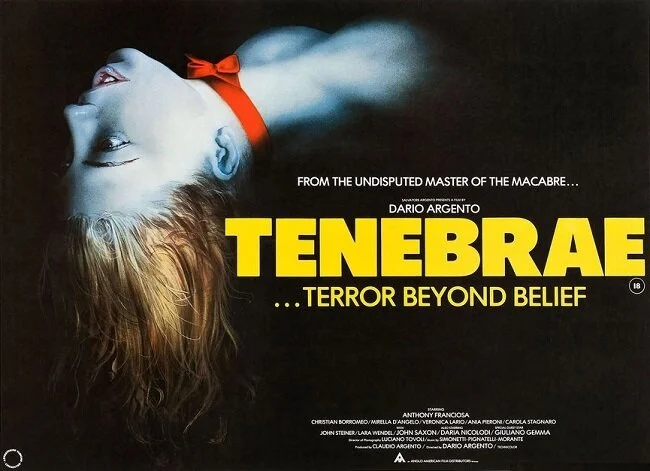
Tenebrae (1982) is probably Dario Argento’s most accessible “giallo” for mainstream audiences. Although violent, it is not as narratively complex as Deep Red (1975) or as bat shit crazy as Phenomena (1985). The story centres on popular American novelist Peter Neal (Anthony Fanciosa) who is in Rome to promote his latest book. Events take a turn for the worst when a series of murders appear to have been inspired by his work. The plot twists and turns, the director explores themes such as dualism along with sexual aberration and blood is copiously spattered across the white walled interiors of modernist buildings. It is slick, disturbing and has a pounding synth and rock score by former Goblin members, Claudio Simonetti, Fabio Pignatelli, and Massimo Morante.
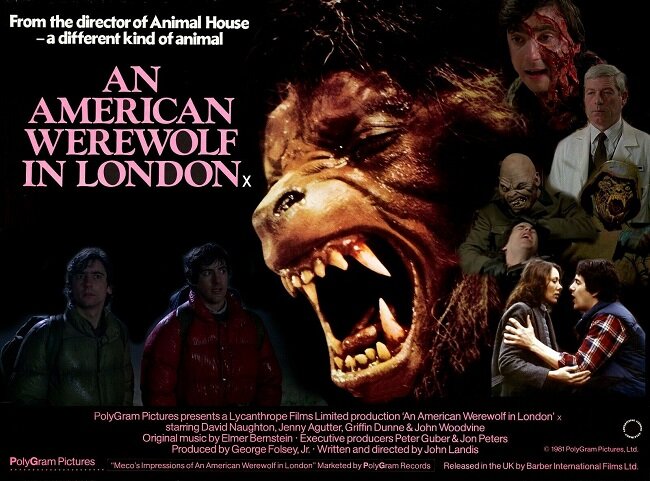
An American Werewolf in London is a genre milestone and one of the few horror films that successfully manages to balance humour and suspense without mitigating the overall tone of the story. 40 years on from its theatrical release it still holds up well with its bitter sweet love story, tragic themes and ground breaking transformation effects by Rick Baker. Director John Landis never really bettered this concise and effective genre outing. It hits the mark in virtually every part of the production. However, there is one aspect of the film that does suffer as a result of the director’s personal choices. Whether it is to the detriment of the overall film is debatable. The point in question is the film’s soundtrack and the director’s focus upon the song Blue Moon by Richard Rodgers and Lorenz Hart.

Before we start, no I am not writing about Alexander Courage’s classic main theme for the original Star Trek show. I can add nothing further to that particular discussion and it remains iconic and inspiring, even when distilled down to just the initial fanfare. In this post I want to draw your attention to another piece of music from Star Trek that has permeated its way into popular culture. A cue that when heard, if the listener is familiar with its provenance, will instantly conjure up images of flying drop kicks, ear claps and judo chops. A piece of music that can be added to pretty much any video footage and instantly make it more heroic. Yes, I am talking about what has become generically known as Star Trek “fight music”. Or more specifically, the "The Ancient Battle/2nd Kroykah" cue from Amok Time (S02E01) composed by Gerald Fried. The scene during the koon-ut-kal-if-fee ritual in which Spock fights Kirk on the planet Vulcan for complicated “reasons”.

Classical music has often been used to great effect in cinema since the advent of sound. It has certain advantages over bespoke compositions, in that it can imbue a scene with a sense of gravitas and emotionally connect with viewers who may already be familiar with the piece being played. Legendary director Stanley Kubrick famously rejected Alex North’s score for 2001: A space Odyssey after finding the classical tracks he used for the temporary soundtrack complement the visuals perfectly. Over the years, some particular pieces of classical music have proven to be very popular and flexible, thus appearing in a wide variety of films across multiple genres. Hence, I have chosen two well known tracks that demonstrate this. I would also like to highlight contemporary classical music and have also selected one example that I feel demonstrates how the genre sublimely compliments cinema.
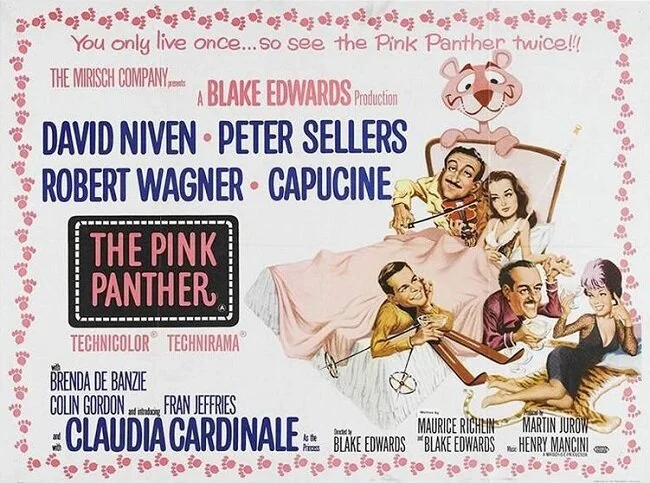
If you mention The Pink Panther (1963) I’d hazard a guess that most people will instantly think of Inspector Clouseau (and possibly throw in a quote in faux French about “Minkeys”) or hum or whistle the iconic theme tune. It’s blend of cool sixties Jazz and Lounge is both classy and evocative. Henry Mancini’s contribution to the Pink Panther franchise is commensurate to that of Peter Sellers and Blake Edwards. If you removed his musical scores from any of the films they would be greatly diminished. In fact one can argue that the movies made in the eighties after Sellers’ death are greatly bolstered by Mancini’s intelligent and accomplished musical accompaniment. The franchise may have run out of steam but Mancini never did so.
Back in August 2018, I posted seven of my favourite tracks from various video games that I’ve played over the years. I thought recently that it was high time that I did the same again. So here are a further five musical cues that I especially enjoy. All of which contribute greatly to the respective games that they feature in. Unlike film composers, musicians that write for video games do not always enjoy comparable exposure or attention. Yet often they have a more complex remit, having to write material for dozens of hours of content, rather than just two or three. Furthermore, the complete soundtrack to many video games often remain conspicuously absent, with fans having to data mine the game client to find the tracks that they love. Which is why it is important for those that enjoy video game music to show their support. Perhaps then more publishers will release full and comprehensive game soundtracks for digital download.
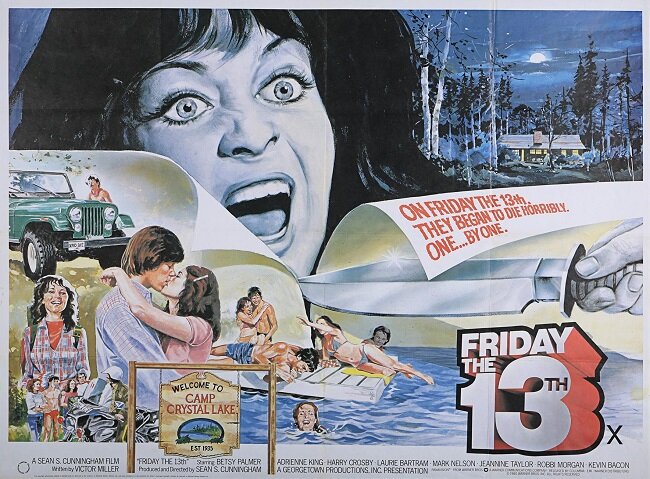
It was Friday the 13th yesterday, so I thought it was about time that I added Harry Manfredini’s iconic score to the annals of Classic Movie Themes. The 1980 slasher movie Friday the 13th has become as legendary in the pantheon of cinematic horror history as John Carpenter’s Halloween. Although there are marked differences between these two films, both use minimalist musical scores extremely effectively to punctuate the proceedings and embellish the overall atmosphere. However, Manfedini did not want to provide viewers with obvious audio cues during scenes of building tension. He preferred to focus his score upon the activities of the franchise's iconic killer, Jason Voorhees, and hence have strong musical cues when he was on screen. This approach meant that he had to use a unique musical motif to denote potential tension, without diminishing its effect on the audience by excessive use of obvious and melodramatic cues.

Game of Death was Bruce Lee’s fourth Hong Kong martial arts movie. Due to the success of his previous films he found himself in a position where he could finally write and direct a project himself. Filmed in late 1972 and early 1973, the film was put on hold midway through production when Hollywood offered him a starring role in Enter the Dragon. He died shortly after completing the US backed movie that made him an international star, so Game of Death remained unfinished. Several years later the rights to the raw footage were sold and recycled for a new movie, that kept the name but bore little resemblance to Lee’s original vision. For most of Game of Death, Kim Tai-jong and Yuen Biao double for Bruce Lee and it is only in the final act that audiences actually get to see about 12 minutes of material that he shot himself. The 1978 release of Game of Death, directed by Robert Clouse, is a mess but remains a cinematic curiosity. The scenes which genuinely feature Bruce Lee are outstanding, even in an abridged form.
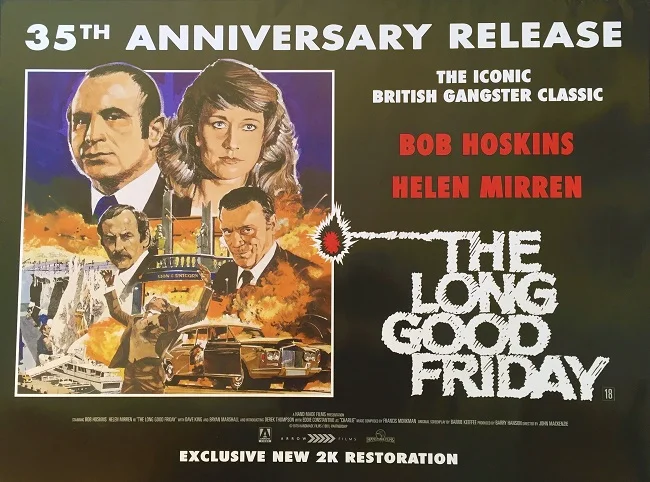
The Long Good Friday not only launched then career of Bob Hoskins but remains a uniquely British take on the gangster genre. Featuring authentic performances and a credible plot, the screenplay touches upon many of the social and political issues of the time; police corruption, the IRA, urban renewal and the decline of industry, along with EEC membership and the free-market economy. It’s a gritty and unrelenting drama that is still relevant today. Furthermore, the film is filled with quotable dialogue and has several stand out scenes that showcase Bob Hoskins’ smouldering performance. It’s also offers of “who’s who” of British character actors and there is one sequence still has the power to shock even today.
A few years ago, I wrote a post about cult movie soundtracks and how many of these movies are often blessed with a high quality score from an established composer. The subject came up again recently when I was visiting the British Film Institute with friends, and several other examples were discussed. Hence, I thought it would be prudent to write a follow up post with another selection of material, as it continues to amaze me how often the most appalling films can still have outstanding soundtracks. With this idea in mind I've collated five films that are for various reasons are labelled “cult” and have suffered the “slings and arrows of outrageous fortune” over the years. All have scores of interests and note, though for different reasons. I have chosen a track from each soundtrack which I think highlights the musical excellence and integrity of the composers involved. The genres are varied as are the musical styles and nuances of each piece. All clearly demonstrate how a well-conceived score can embellish and enhance a movie, effectively becoming a character in its own right.
Lords of the Fallen is an action role-playing game from 2014, played from a third-person perspective. It is broadly in the same idiom to Darksiders and Dark Souls with the emphasis on complex and challenging combat. And it is for that reason that I didn’t get on with this title when I bought it in a Steam sale a few years ago. I felt that the long, protracted fights were an impediment to the narrative, which I quite enjoyed. However, the game was designed this way to appeal to the combat focused gamer and “git gud” culture. But I think that it’s important to try different genres of games from time to time and to step occasionally out of your comfort zone. I would cite the Hand of Fate series as a positive example of this. Both of those titles are from a genre I wouldn’t usually consider and playing them turned out to be a very positive experience
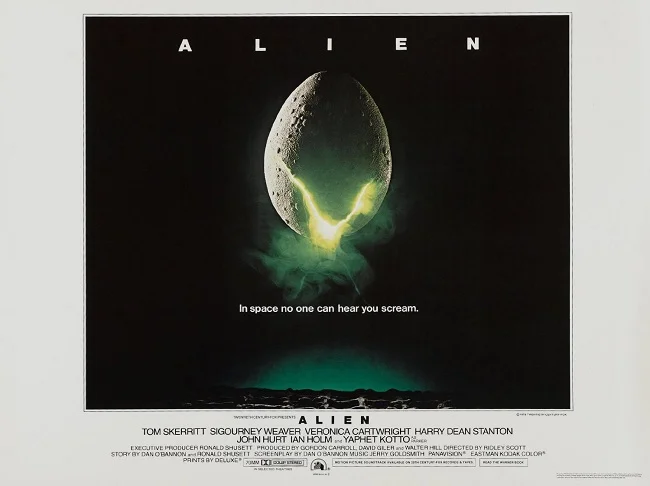
Alien is a unique genre milestone. It challenged the established aesthetic created by 2001: A Space Odyssey of space travel being pristine, clinical and high tech and replaced it with a grimy, industrial quality. The space tug Nostromo is also a conspicuously “blue collar”, civilian venture, underwritten by a large corporation. As for H. R Giger’s xenomorph, it redefined the depiction of extraterrestrial life in movies. Director Ridley Scott brought visual style and atmosphere to particularly unglamorous and dismal setting. He also scared the hell out of audiences at the time with his slow burn story structure and editing style that hints, rather than shows. Overall, Alien is a text book example of how to make a horror movie and put a new spin on a classic and well-trodden concept.

James Horner was a prolific, yet consistently good composer with a broad range of styles. Consider his score for 48 Hrs with its Jazz under currents and then compare it to his grand swashbuckling approach to Krull. They are radically different soundtracks, but both are extremely effective in embellishing their respective motion pictures. That was James Horner great talent. He knew when to be theatrical and bombastic but could also dial it back and be subtle, gentle and delicate. It made his body of work very diverse and memorable.
James Horner, although possessing a very broad and eclectic musical range, was in many respects a very traditional composer. He was certainly au fait with works of such giants as Miklós Rózsa, Korngold and Bernard Herrmann and it often manifested itself in his music through his use of the leitmotif. Perhaps the reason James Horner was so consistently good and crafted so many outstanding pieces of music, is because he never saw his profession as just a means to an end. As he said in an interview once, “I don’t look at this as just a job. I see music as art”.
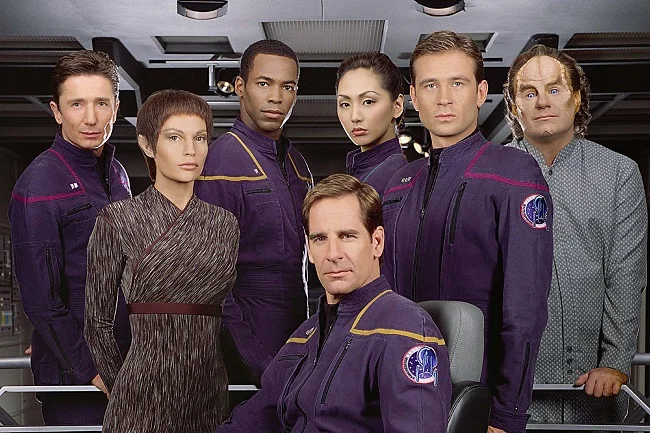
Star Trek: Enterprise was the first show in the Star Trek pantheon to have a song performed by an established artist play over the opening credits, rather than a traditional theme tune. Up until 2001, the franchise had maintained a more formal approach, established with the iconic introduction to the original series composed by Alexander Courage. Needless to say, such a radical departure from established practise brought about consternation and debate among fans. In some respects, you can argue that point about the entire show itself, but that as they say, is an entirely different blog post. Needless to say, the dislike and hatred that the song Where My Heart Will Take Me engendered in certain quarters, lead to a petition to have it removed. Needless to say, this movement failed, and the show continued using it for four seasons. Seventeen years on this particular debacle has now died down and the song is often just referenced ironically by fans as an amusing anecdote and piece of Trek trivia.
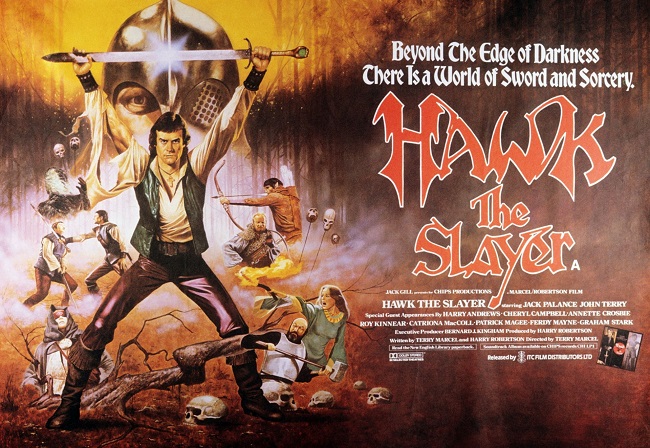
According to Wikipedia “Hawk the Slayer is a 1980 British sword and sorcery adventure film directed by Terry Marcel and starring John Terry and Jack Palance. The film has developed a cult following”. That doesn’t do the movie justice by any reckoning. Hawk the Slayer is a quirky, low budget, high camp fantasy movie that compensates for its budgetary shortcoming by being so preposterously silly. It is loaded with hard boiled, fantasy steeped dialogue that parodies well known genre tropes. It treads a fine line between utter bilge and stupid fun. It is very much a product of its time and is also filled with British character actors. Some viewers will see nothing more than a cheap and cheerful cash-in on the eighties Sword and Sorcery boom. Others will delight at this inventive, stylised and silly fantasy orientated outing. Such is the nature of cult movies.
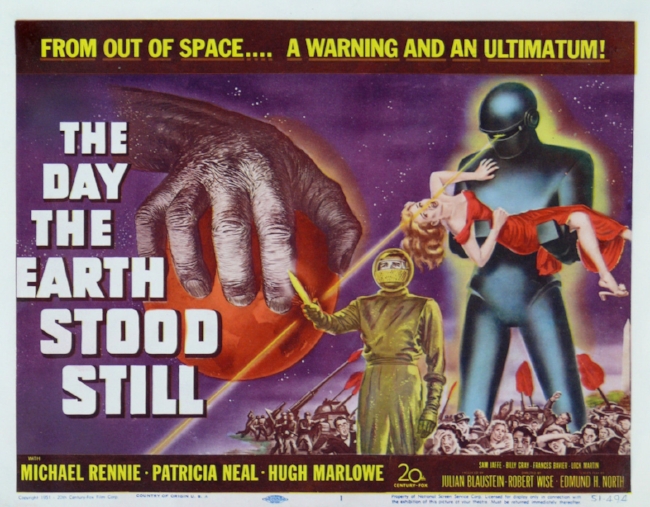
Film producer Julian Blaustein had a long-standing desire to make a film that addressed the fears and concerns of the post war Atomic Age. With the backing from Fox Studio Executive Darryl F. Zanuck, he hired screenwriter Edmund North to adapt the short story Farewell to the Master by Harry Bates. The screenplay provided a moral commentary about the ongoing arms race and featured an alien visitor with Christ like qualities who delivers an apocalyptic message. Veteran director Robert Wise was brought in head the project and a fine cast of established characters actors such as Michael Rennie, Patricia Neal Hugh Marlowe and Sam Jaffe was assembled. The finished movie has proven to be one of the greatest science fiction movies ever; it is The Day the Earth Stood Still made in 1951.
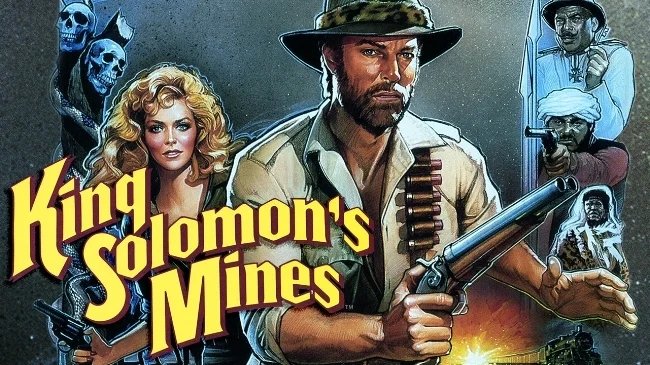
King Solomon’s Mines is a 1985 Cannon Films production based on the pulp works of H. Rider Haggard. It was quickly made to cash in on the ongoing success of Indiana Jones franchise, although the finished movie bears little resemblance to the classic original novel. Like most Cannon movies from that boom era, it was a cheap and fast enterprise that superficially sported a good cast, but ultimately didn’t do much with them. Veteran director J. Lee Thompson favoured a light and comic approach to the material, as the film’s budget could hardly sustain any major notable set pieces. Yet, it proved popular enough at the box office to warrant a sequel the following year. Allan Quatermain and the Lost City of Gold proved to be as equally silly but by then the public’s interest had waned.
A ten months ago, I wrote about the LOTRO soundtrack and listed some of my favourite tracks. This time round rather than just limit myself to music from one game, I thought it may be more interesting to broaden the remit. So, I have decided to upload seven of my favourite tracks and music cues from various games I have played over the last two decades. As with cinema, the soundtrack of a game plays a very important role. It can make a substantial impact on the players perceptions and enjoyment. The following tracks are examples that I feel have greatly enhanced a game. They’re also ones that I find particularly enjoyable. They are not in any order of preference.

Paul Verhoeven has seldom made a movie without some semblance of controversy associated with it, and his 1992 neo-noir Basic Instinct was no different. Even before its US release, Basic Instinct courted controversy due over its overt sexuality and graphic depiction of violence. It was strongly opposed by gay rights activists, who criticised the film's depiction of homosexual relationships and the portrayal of a bisexual woman as a homocidal narcissistic psychopath. The opening murder with an icepick is still shocking twenty six years later and is an excellent showcase for makeup FX artists Rob Bottin.

You can write pages on Gerry Anderson's 1968 Supermarionation series Joe 90. There's the morally ambiguous premise of giving an emotionally immature nine-year-old the experiences of an adult. Then the psychological effects of allowing him to kill at will. Then there's the perennial issue of scientists prostituting their skills to the intelligence community. One can also reflect upon the absence of any major female characters in the series and how that may impact upon Joe himself. Finally, when one finally arrives she's a gold-digging bitch who tries to exploit Joe’s Dad, Professor McClaine. Joe 90 is certainly a psychiatrist’s dream subject.

Despite the popularity of the TV show in 1965, the two spinoff Thunderbirds feature films were both box offices failures. This has often been attributed to the indifferently written screenplays that seem to have completely missed the sense of suspense that the fifty-minute episodes achieved. Both feature films feel rather slow and like extended episodes rather than big budget extravaganzas. They fail to do anything different with established characters and apart from showcasing more extensive miniature effects in a widescreen format, don’t really have much more to offer. It’s curious that the winning, character driven formula that worked on television was overlooked for these big screen outings.
I grew up during the seventies when network TV shows still put a lot of thought and effort into such things as their theme tune. It was a decade littered with memorable tracks that captured the essence of the shows they came from. Many have now become integral aspects of popular culture, leading to countless internet memes as well as becoming the ringtones of choice for many a fortysomething. However, things are very different now. You can have a staggeringly good theme for your show, but it can't possibly be longer than thirty seconds. And don’t think for a moment that viewers can listen to it again at the end, as it has now become standard practice to compress the credits into a third of the TV screen and preview what's coming next, while some link announcer spouts inanities. Mercifully, cable and streaming companies tend to treat their TV shows with greater respect. The lack of commercial advertising ensures a longer program duration and hence more focus on a theme tune. However, network TV still commands big audiences, yet hasn’t in recent years produced any TV show themes of note.
The Last Stand (2012)
Upon release The Last Stands opening weekend box office returns were not as much as Lionsgate pictures had anticipated. The long-term worldwide gross was only $48 million, for a movie that had cost over $40 million. There was talk in the mainstream movie press of Arnie's comeback stalling and that the sky was falling for R rated action movies. Theatres at the time were thriving on “Jason Bourne” style thrillers and the ubiquitous Marvel Cinematic Universe. Critics were also mixed in their opinions regarding the film. Some were quite dismissive, citing the very things that an ageing Arnold Schwarzenegger brings to the table in The Last Stand, as faults. Exactly what were they expecting? It's like criticising a dog for barking.
Upon release The Last Stands opening weekend box office returns were not as much as Lionsgate pictures had anticipated. The long-term worldwide gross was only $48 million, for a movie that had cost over $40 million. There was talk in the mainstream movie press of Arnie's comeback stalling and that the sky was falling for R rated action movies. Theatres at the time were thriving on “Jason Bourne” style thrillers and the ubiquitous Marvel Cinematic Universe. Critics were also mixed in their opinions regarding the film. Some were quite dismissive, citing the very things that an ageing Arnold Schwarzenegger brings to the table in The Last Stand, as faults. Exactly what were they expecting? It's like criticising a dog for barking.
When I saw The Last Stand upon its UK release, it was well received by the audience. There was laughter at the one liners and at some of the death scenes. There was even a smattering of applause at the end. As we left the screening, knowing looks and nods were exchanged. By and large the consensus was one of a job well done, because The Last Stand provided everything that we expected. A modern action movie, with an ageing star, making copious amounts of references to his age and the incongruity of the situation in a humorous way. The set pieces were competent and hard edged, and the overall film was relatively low key compared to the excesses of the star’s former works, such as Total Recall. A recent second viewing has re-iterated my opinion that it was the right sort of comeback vehicle for such a star.
The story is a very traditional set up, that lends itself perfectly to delivering the sort of content that fans of this genre (and in particular this star) actually want. The head of a Mexican drug cartel (Eduardo Noriega) escapes FBI custody, leaving a senior agent (Forest Whitaker) pondering how he will get across the border. The trail points to the sleepy town of Sommerton Junction. As an army of hired mercenaries descend upon the town to facilitate their bosses return to Mexico, it falls to local Sheriff (Schwarzenegger) and his deputies, Jamie Alexander, Luis Guzman and Zach Gilford to thwart their plans. Assisted by eccentric local gun collector Lewis Dinkum (Johnny Knoxville) they barricade the main street and make their proverbial last stand.
The Last Stand is surprisingly a little more than just the sum of its parts. Director Kim Ji-woon brings a subtly different look and feel to the proceedings, taking what is essentially a western and tempering it with an Asiatic aesthetic and better than average script (as far as action movies go). The movie benefits from interesting characters who you can relate to and who are quite endearing. There are elements of emotional drama here, that you don't often get in this genre. Arnold Schwarzenegger is actually a better actor than a lot of people think, and his portrayal of world-weary sheriff Ray Owens is pretty good. When a particular cast member dies in the second act, it is handled well by all the cast and it is a surprisingly sad scene. It's not Shakespeare but is light years beyond a lot of movies these days, who are populated by disposable characters you are totally indifferent to.
The less is more (by Arnie standards) approach of The Last Stand works well. It is nice to see physical car stunts and action set pieces when they’re used in these sorts of productions. Yes, there are elements of CGI but not to the extent of other genre movies. It is also a pleasant change to see a production of this kind receiving a higher rating and nailing its colours firmly to the mast. Also, an action movie of this scope with a body count in the dozens rather than hundreds, seems to be far more appropriate for a man of Mr. Schwarzenegger age. The Last Stand is not a perfect movie, but it is certainly not the pedestrian misfire some would have you believe. However, Arnold Schwarzenegger appeal is a generational thing. Upon mature reflection, if this movie had been released on Netflix then it may well have found a wider audience among fans who grew up with his work.
Mainstream films are easy to recommend to people. They’re usually formulaic, work within clear parameters and they’re not controversial. Most people, when viewing such film on someone else’s suggestion, are left with a fairly simply choice. Did they like it or not? Whatever the outcome, no feathers are ruffled. No one looks at you askance afterwards and says “why the hell did you think I’d like that piece of shit”? If something like this happens, then you have clearly not recommended a mainstream film. Perhaps you’ve suggested something that’s a little more of an acquired taste. Something niche, from a very specific sub-genre. Which brings me neatly to Blazing Magnum AKA Strange Shadows in an Empty Room (1976). The US title gives the impression that this film is a hard boiled cop thriller, like so many others that followed in the wake of Dirty Harry. But there’s a clue in the European title. Yes, this movie has more than just a whiff of a giallo about it.
Jason Statham is an exemplar of the US mantra of “staying in your lane”. He makes action movies and occasionally strays into action comedies. His formula broadly works and is sufficiently lucrative to keep Mr. Statham employed. Therefore, if you watch a film in which he stars, you have a fairly good idea of what you’ll be getting. Of late, the criteria for his action vehicles have become more succinct. Jason Statham will play an innocuous character, such as a construction foreman or a bee keeper. Something terrible will subsequently befall another character who Mr. Statham has an emotional connection with in some capacity. He will subsequently hunt down those responsible and meet out death and violence. At some point the villain of the story will enquire as to how this innocuous person is so lethal. Research will then show that our Jason is in fact an ex-police officer/special forces operative/international assassin. There’s then a showdown and the villain dies. Job done.
The Light at the Edge of the World presented itself as an action movie upon its release in 1971. Based upon a story by Jules Verne, the Spanish American co-production was driven by its star Kirk Douglas, who curiously hired British director Kevin Billington to helm the project. This tale of a lighthouse keeper fighting a war of attrition against a group of pirates that have captured his island, was market as an adventure film ostensibly in the idiom of the authors previous works and as a pirate movie. MGM bought the rights to distribute the film in the UK on the misunderstanding that it was a family friendly production. It was not and remains so. They subsequently had to cut 15 minutes of violence and torture as well as an undercurrent of sexual assault to secure a suitable rating. Conversely, the US distributors received an arbitrary PG rating, despite the fact this is one of a handful of films that honestly depicts pirates as murderers, rapists and worse.
It’s an established action film trope. The fire team comprised of ex-military personnel, move in on their target. Only to have the tables turned by someone they don’t deem a threat. What makes it different in The Last Stand of Ellen Cole is a throwaway line of dialogue. The bested operative lies bleeding on the floor and the protagonists stands over them ready to finish them off. “Don’t, I have a cat” they feebly plead. For me that was the icing on the cake. The movie had already established it was taking the “same old, same old” and doing something different. Something fun, if taken in the right spirit. This scene tipped the balance and I embraced this film because it was being honest about what it is. This is a modern B movie that decides to give a very specific sub-genre a makeover. Furthermore, its clearly done with an affectionate wink, which is very different to sly wink. This isn’t deliberate self-knowing irony. Its just a film doing something different and possibly silly but it genuinely wants to have fun with it.
Stephen King’s dystopian story, The Running Man, was previously adapted very loosely in 1987, as a vehicle for Arnold Schwarzenegger. That version focused mainly on the “Battle Royale” element of the story and leaned heavily into Arnie’s personality, rather than the politics of the book. It also wasn’t well received by the author. Edgar Wright’s remake follows the source text a lot more closely and is far more interested in its political themes and wider social commentary. Furthermore, this version re-establishes the everyman quality of the hero of Ben Richards, rather than him being the muscle bound, ex-military hero as per Mr. Schwarzenegger’s prior interpretation. This time round, The Running Man uses a lot of the visual and narrative tropes of contemporary reality TV, making this forty three year old story very relevant to today’s viewers and couching the film in a style that is recognisable and accessible.
After the success of Raiders of the Lost Ark in 1981, filmmakers scrambled to find existing intellectual properties that they could use for similar films. Hence archaic heroes such as Alan Quatermain were hastily given a modern makeover and thrust into generic movies, in a vague attempt to replicate Steven Spielberg’s successful formula. Which brings us neatly on to James Charles Bigglesworth AKA “Biggles”, a fictional pilot and adventurer from a series of books written by W. E. Johns between 1932 and 1968. Several attempts had been made in the past to bring this character to the silver screen, including one by Disney but they all failed. However, the commercial and critical success of Indiana Jones provided sufficient impetus to greenlight a new film. However, due to some curious production choices, when Biggles was finally released it was far from just a period set, action movie.
Setting aside the hubris of remaking a film such as Red Dawn, the 2012 reboot had a troubled production. Shot over the course of late 2009, on location in Michigan, MGM intended to release the film in September 2010. However, the studio’s financial problems became unsustainable over the course of that year and the film was shelved, while a financial solution was sought. Furthermore, while Red Dawn was in post production, there was a major economic shift within Hollywood due to the increasing importance of the Chinese market. This was a significant problem for MGM because the new version of Red Dawn had the Chinese invading the USA instead of Russia. Hence there were reshoots and the need for additional visual effects, so that the Chinese could be replaced with North Koreans. MGM eventually went bankrupt and the distribution rights to Red Dawn were sold off. The film was eventually released in 2012.
When I first saw the promotional trailer for Gangster Squad back in 2012, prior to its release, I wasn't especially impressed. I simply thought the film was another attempt to re-invent the gangster genre for a generation who were not especially familiar with it. I wasn't exactly overwhelmed with director Ruben Fleischer's resume either. I didn't particularly like Zombieland and haven't seen 30 Minutes Or Less. Then came the tragic mass shootings in Aurora, Colorado which led to the movie being delayed so that the original ending, which featured a shoot-out in a movie theatre, could be replaced. Hence when I finally watched this film recently, I wasn't expecting a movie up to the standards of say Once Upon A Time In America or Miller’s Crossing and it would seem that I was right do so. Gangster Squad is not especially noteworthy in any respect.
Levon Cade (Jason Staham) is a former Royal Marine Commando who has retired from military service and now works as the leader of a construction team in Chicago. He has a close relationship with Joe and Carla Garcia (Michael Peña and Noemi Gonzalez ) who run the company and considers them as family. Outside of work, Levon is involved in a bitter custody battle for his daughter, against her maternal grandfather, who blames Levon for his daughter’s suicide. When Garcia's teenage daughter Jenny (Arianna Rivas) goes missing, Levon reluctantly agrees to help her parents and get her back. Beginning his search at the nightclub where Jenny was last seen, he soon discovers that she was abducted by Russian traffickers. Furthermore, the culprit is Dimi Kolisnyk (Maximilian Osinski), the wayward son of a senior ranking gangster.
PC Nicholas Angel (Simon Pegg) is an exemplary Police Officer, with a strict adherence to the letter of the law. As a result of making the rest of the London Metropolitan Police look bad, he is transferred to the rural town of Sandford, Gloucestershire. On arrival, Angel finds that the local Inspector, Frank Butterman (Jim Broadbent), takes a far more laissez-faire approach to policing. His colleagues are incompetent and he is further hampered by the Neighbourhood Watch Alliance (NWA), who prioritise low crime statistics over law enforcement due to their desire to win the title of “Village of the Year”. Furthermore, Angel is partnered with the Inspector’s son, Constable Danny Butterman (Nick Frost), who is infatuated with “buddy cop” movies and is in awe of Angel’s London experience. “Have you ever fired two guns while jumping through the air?” However, a sudden spate of grisly accidents lead Angel to believe that there's more to the seemingly tranquil and picture-perfect community than meets the eye.
As a collection of history's worst tyrants and criminal masterminds gather to plot a war to wipe out millions, one man must race against time to stop them. Discover the origins of the very first independent intelligence agency in The King's Man. Based on the Comic Book “The Secret Service” by Mark Millar and Dave Gibbons. 20th Century Studios
Matthew Vaughn’s The King’s Man is an inconsistent film, both narratively and tonally. It veers between serious themes and stylised, hyperbolic action. At times it does quite a good job of exploring such complex subjects as global politics, mechanised warfare and colonialism. Sadly it then wrenches the viewer out of these cerebral reveries as it lapses into the sort of over the top action sequences that were notable in the two earlier films. It’s a shame because The King’s Man gets so many other aspects of the production right. The casting is very interesting, especially Ralph Fiennes as the “pacifist” Duke of Oxford. He is actually a very good fit for the action genre. Djimon Hounsou and Gemma Arterton are given little backstory beyond being respectively the faithful manservant and the family nanny but both are notable due to their own inherent acting chops and personal charisma. Rhys Ifans obviously has a great time as Grigori Rasputin, ensuring all the man’s vices are robustly depicted.
On paper, a video games franchise such as Assassin’s Creed lends itself perfectly to a cinematic adaptation. The parkour action scenes, the historical settings and the contemporary conspiracy theory themes are all elements that should play well with a modern youth audience. Hence with the backing of a major studio such as Twentieth Century Fox and a budget of $125 million, the 2016 movie should have been a guaranteed box office hit. The casting of Michael Fassbender, an actor who is comfortable with serious roles and big Hollywood franchises, should have carried this film comfortably over the finishing line. Director Justin Kurzel, who had found critical success with his adaptation of MacBeth a year previously, must have looked like a safe pair of hands to handle such a project. Sadly, that was not the case. Assassin’s Creed is not the sum of its parts, in fact many elements appear to be pulling in opposite directions. The resulting feature film is staggeringly dull, soulless and a chore to watch. A testament to how modern big budget franchise movies have become a production line, with all the art stripped from them.
300: Rise of an Empire is a curious beast, being neither a sequel nor a prequel. It is infact a tale that takes place simultaneously with those of the original movie. While Gerard Butler is busy making a last stand at the Battle of Thermopylae, fellow warrior and politician Themistokles, played by the singularly uncharismatic Sullivan Stapleton, leads a similar army of buffed Greeks against the Persian fleet. Once again we have a movie that is the epitome of style over substance, complete with a sound design that challenges what can physically be endured by human hearing. They say the first casualty of war is innocence but in this type of movie it's closely followed by historical accuracy and authentic depictions of ethnicity. 300: Rise of an Empire is a cinematic assault upon the senses but not in a good way like Mad Max: Fury Road.
Back in September 2017, Liam Neeson stated in an interview with Sky News that he was retiring from the action genre, due to his age. He felt that audiences would question his credibility in such roles. After the release of The Commuter (2018) and Cold Pursuit (2019) Mr Neeson appeared to return to human dramas and films that focus on performance rather than punching man and beast. Ordinary Love and Made in Italy, both released in 2019, demonstrate the actor’s versatility and skill. People seem to forget that he is a thespian who was initially known for his character driven roles in films such as The Mission (1986), Rob Roy (1995 and Michael Collins (1996). It was only in 2008 that he reinvented himself as an action hero. It’s all a far cry from Schindler’s List and his performance that earned him an academy award nomination. The reason I mention all of this is because The Ice Road is the third action movie I’ve seen in 2021 that stars Liam Neeson.
One of the stand out tropes of the modern action film is that the stakes are always cranked right up to 11. Terrorists, biological weapons and nuclear bombs are common threats in such movies with a hero or heroes trying to save the world from death and destruction or worse. However, back in the sixties and seventies, things were a little more straight forward and in some respects more credible. Take When Eight Bells Toll, released in 1971, for example. British Treasury secret agent Phillip Calvert investigates the theft of £8,000,000 in gold bullion by a gang of international smugglers. In the context of the times this was no small beer however it’s somewhat mundane compared to fighting super villains and their space lasers. Frankly I prefer these low key plot devices as they can make a film a little more plausible within the confines of the genre. A concept that is often forgotten today.
Forensic accountant Owen Casserly (Jake Weber) flees his home with his teenage son Connor (Finn Little) when he discovers he has been targeted by a pair of assassins (Nicholas Hoult and Aidan Gillen) who have been hired to stop him giving evidence in a major corruption case. Connor witnesses the murder of his father after their car is run off the road. Entrusted with important written evidence, he escapes into the dense forests of the Montana wilderness pursued by the killers. Seeking help he runs into smokejumper Hannah Faber (Angelina Jolie) who is stationed at a remote fire lookout tower. Hannah suffers from PTSD from a previous forest fire in which she was unable to save three young boys. Hannah attempts to lead Connor through the forest to safety. Meanwhile the assassins set fire to the forest to divert the attention of the authorities and cover their tracks.
I must admit that I did not have particularly high hopes for Paul W S Anderson's remake of the 1975 Roger Corman produced cult classic. Anderson’s work varies greatly. Event Horizon and Soldier are solid genre films but I still have not fully come to terms with Alien vs. Predator. Jason Statham is also a name that divides the public, with solid material such as The Transporter and unfathomable tosh like Revolver. But despite these considerations, Death Race is in fact quite a surprise and does not follow the path that so many remakes do. It takes the basic themes and concept associated with the original and tries to do something different with them. It doesn’t reinvent the wheel nor is it a genre milestone. But it does offer a different spin on things, have some engaging action scenes and provide some dumb but enjoyable entertainment. When combined with snacks and some beer this is a passable way to kill 111 minutes.
I did not watch Zero Dark Thirty upon its initial release, due to the politics surrounding it. I wanted to be able to view it free from bipartisan debate. Eight years on I believe this now achievable and although debate still exists it is now more measured and less strident. Zero Dark Thirty is certainly a compelling movie. It plays as a docudrama, providing an in-depth study of the US intelligence services hunt for Osama Bin Laden. It cannot be faulted on a technical level and the performances are very strong. It does not adopt a celebratory or triumphalist tone in its approach to the story. Director Kathryn Bigelow endeavours to keep the proceedings focused upon the intricacies of an intelligence driven manhunt. There is little or no tubthumping, jingoism. The decision to find Bin Laden is shown as a political and military exercise of foreign policy. The film solely focuses on the story from a US perspective but that is perfectly acceptable as it is not intended to be an exploration of geo-politics.
Firestorm was originally written as a vehicle for Sylvester Stallone, however when the production company Savoy Pictures went bankrupt the screenplay was bought by Twentieth Fox and the scope of the movie reduced to suit a lower budget. It’s broadly similar to Cliffhanger in so far as the lead character is a specialist in a certain field who runs afoul of criminals in a perilous environment. Whereas Cliffhanger is set in the Rocky Mountains, Firestorm takes place in the forests of Northern Wyoming. After the script was revised four times, the finished screenplay was given a final “polish” by Graham Yost who has considerable experience with the action movie genre. As stallone was no longer associated with the project and the production had been repurposed to be less extravagant, the movie was assigned to former NFL star Howie Long. Long had already appeared in the John Woo movie Broken Arrow (1996) and the Firestorm was seen as a means to give him a star vehicle.
The original French movies District 13 and its sequel District 13: Ultimatum, conceived and produced by Luc Besson, were enjoyable variations of the Escape from New York theme. Their charm lay in their European pedigree and the skilful use of parkour. The two leads, David Belle and Cyril Raffaelli, were eminently suited to the minimalist roles and the screenplays were fun. Half of these movies appeal was the fact that they were not mainstream US products. Brick Mansions is the Hollywood remake of District 13, as well as being Paul Walkers’ final movie. Sadly, this film is far from a fitting epitaph, being devoid of any charisma or innovations. It is blandly shot , poorly edited and has been stripped of everything that made the original entertaining.
Arnold Schwarzenegger's return to the big screen after his political career has been uneven to say the least. His cameos in The Expendables and The Expendables 2 were well received, with their self referential charm and age related irony. Yet his first major movie The Last Stand, although competent, failed to find an audience. Escape Plan fared better at the box office but did not put Arnie back on the A list. Effectively there's a large percentage of the contemporary cinematic audience who were born after his heyday and are simply not overt fans of his work. His core audience is more than likely of the age group that consume most of their film entertainment at home. Which may explain why Sabotage tanked in the US upon release on March 28th 2014. It was the worst opening box office of Arnie's career. He used to break first day opening records.
Sequels and reboots are hardly a new concept and have been a part of Hollywood culture since the 1930s. The success of the Universal Horror movies from that era being a prime example of direct follow ups and retconned movies. However, there is one fundamental rule that distinguishes a good sequel from a bad one. You should never mitigate, undermine or make irrelevant the events of the previous movie, just to provide your new film with a raison d'être. For example, the events of Aliens do not contradict or trivialise those that happened in Alien. In fact with that franchise there is a very clear logical progression between the two movies. The same is true for Mad Max and Mad Max 2 or Star Wars and The Empire Strikes Back. The key is to progress a story, enhance it or explore things from an alternative angle and bring something new to the cinematic table. Sadly this philosophy is all too often lost on corporate film making. Which means that many sequels are just tedious replays of prior films. Terminator: Dark Fate falls squarely into this category.
The enduring appeal of the character John Rambo in First Blood comes from the fact that he is a traumatised ex- service man who keeps himself to himself as he drifts from job to job, trying to come to terms with his wartime experiences. His poor treatment at the hands of a small-town Sheriff is a succinct metaphor for the social and political indifference that Vietnam veterans were shown upon their return to the US. He’s a man with a code in a world that no longer has any use for him. His simple and honest patriotism is not returned and he is in fact viewed with shame by many from the nation he loves. Furthermore, the first movie does not paint him as a cold-blooded killer. Despite provocation he is not the first person to shoot to kill. Rambo is in many ways a victim. A broken man, who society has asked to do unspeakable things. Now society wants nothing to do with him and fears the “monster” they created. Although clearly an action movie, First Blood had narrative depth and a flawed but sympathetic protagonist. 37 years and four movies later, such dramatic themes have long left the franchise. The central character is indeed a caricature of its former self.
It was hardly surprising that the movie adaptation of Chris Kyle's autobiography American Sniper, would cause controversy. The Iraq war, US Foreign Policy and national pride are seldom subjects that are discussed in a calm and measured fashion. And then there are the personal politics of director Clint Eastwood to consider. Hence there were claims from some quarters upon the movie’s release, that it was Islamophobic and counter claims that criticisms of the late Chris Kyle were unpatriotic. There still remain issues regarding the authenticity of events depicted in the source text and subsequently the movies screenplay by Jason Hall. Yet none of these factors have in anyway impacted upon the film's box office returns which currently stands at $247,900,417 worldwide.
Do I really need to present you with some sort of plot synopsis for Transporter 3? No, I didn’t think so. More of the same as Frank Martin (Jason Statham) and his police chum, Inspector Tarconi (Francois Berleand) become embroiled in yet another high-octane escapade. There's fights, car stunts, exotic international locations and a strong sense of humour. This time, the disposable love interest is a Ukrainian girl named Valentina (Natalya Rudakova) who fulfils her role succinctly. The film benefits by being set back in Europe, after the mistake of basing Transporter 2 in the US. This time, the story takes us to such locations as Budapest and Odessa. The international film crew once again bring a veneer of panache to the production that is conspicuously absent in US action movies. For a modest budget fil, Transporter 3 it looks very good. Again the proceedings are given a boost by a pertinent soundtrack by Alexandre Azaria and a selection of European “tunes”.
Jason Bourne originally graced our screens for the first time seventeen years ago. The Bourne Identity was a gritty, minimalist take on the espionage genre and a welcome change from the excesses of the Pierce Brosnan Bond era. The story arc was sustained over three movies and ended efficiently and succinctly. After which Matt Damon moved on, as did the director of two of the movies, Paul Greengrass. Which leaves us with The Bourne Legacy; the tangential sequel that arrived in 2012. A film that exists because the money men and bean counters hate to pass up on a franchise until it has been squeezed utterly dry. Hence, they commissioned the writer of the series, Tony Gilroy, to come up with a screenplay and direct a spinoff movie. Jeremy Renner was cast in the lead role. Yet despite narrative and production continuity, The Bourne Legacy was not a Jason Bourne movie with the star appeal of Matt Damon. Although the film turned a profit, it had the lowest box office returns out of the entire franchise.
During the eighties there was a clear league table of action movie stars. By the mid-nineties this system fell into decline and the Hollywood lacked any clearly defined exponents of the genre. A decade later, due to the success of Luc Besson’s Transporter films, Jason Statham became a bankable box office star in this field. When you look at Statham's early work in Lock, Stock and Two Smoking Barrels it is hard to envisage the "mockney geezer" as an international action star. Yet he has successfully stepped into the role and enjoys a large following. I enjoy his work as he has a likeable on-screen persona. My 88-year-old Mum likes him to because "he wears nice suits". The action genre seldom reaches such a diverse demographic.
Before we start, I recollect that one well known UK critic described Safe House as sub-Tony Scott, upon its release. Now I’ve always been conflicted over Scott’s back catalogue, as I’ve always found his movies to be hampered by their own unique style. The subtleties of his characters and depth of his themes are all too often drowned out by his frenetic style and fast paced editing. Therefore a comment such as this really sets off alarm bells for me. Having recently watched The Equalizer 2, I wanted a further fix of Denzel Washington in a similar action vehicle. As Safe House was available on Netflix UK, I decided to kill a couple of hours and see what actually constitutes as “sub-Tony Scott”.
Unfriended: Dark Web (2018)
I wondered recently whether Unfriended (2014) would kick start an entire subgenre comparable to the “found footage” format. It would appear that it has, and these movies shot on phones, computers and other digital devices have subsequently been labelled “screenlife” films. It’s worth noting that Unfriended: Dark Web is produced by Russian filmmaker Timur Bekmambetov who has already produced two other movies (Profile and Searching) using this technique. So, it won’t be surprising to see further forays into this style of film making. It is cheap, quick to make with a lot of box office potential. So, it’s hardly surprising to see Jason Blum (of Get Out and The Purge fame) attached to the credits as well. As for Unfriended: Dark Web it’s suitably nasty, voyeuristic, fare that is competently made. At this point the novelty of the “screenlife” films has yet run out, but it is still a physically challenging format to endure (as I found with its predecessor).
I wondered recently whether Unfriended (2014) would kick start an entire subgenre comparable to the “found footage” format. It would appear that it has, and these movies shot on phones, computers and other digital devices have subsequently been labelled “screenlife” films. It’s worth noting that Unfriended: Dark Web is produced by Russian filmmaker Timur Bekmambetov who has already produced two other movies (Profile and Searching) using this technique. So, it won’t be surprising to see further forays into this style of film making. It is cheap, quick to make with a lot of box office potential. So, it’s hardly surprising to see Jason Blum (of Get Out and The Purge fame) attached to the credits as well. As for Unfriended: Dark Web it’s suitably nasty, voyeuristic, fare that is competently made. At this point the novelty of the “screenlife” films has yet run out, but it is still a physically challenging format to endure (as I found with its predecessor).
Technically talented slacker with a heart of gold Matias (Colin Woodall) “acquires” a new MacBook and sets about installing all his own files and personalising it. He’s working on a speech to text and signing app for his deaf girlfriend, Amaya (Stephanie Nogueras). She is not overly impressed because its primary purpose is to make it easy for her to understand him and not the other way around. As it’s “game night” he joins a group Skype call with his friends, tech wiz Damon, conspiracy theorist AJ, DJ Lexx, and couple Serena and Nari. After numerous reboots and a series of DMs intended for the previous owner, Matias starts digging around the root directory of his new laptop. This leads to a hidden folder filled torture and snuff videos. Matias soon realises that he and his friends are being watched online, by the computer’s original owner. They wants it back because it’s the only way to access a secure account with a substantial cryptocurrency deposit in it.
Writer director Stephen Susco certainly makes the most out of the “screenlife” format using every glitch, software buffering and packet loss to his advantage. Like the previous movie, the medium used to convey the story adds to the tension and growing suspense. However, once again to enjoy the movie to the fullest I had to watch on my 24-inch computer monitor, rather than on my lounge TV. Unfriended: Dark Web is convincingly acted by the young cast, in so far as the performances do feel like they’re captured from real life, which that’s not an easy thing to achieve. Again, the characters are flawed and therefore do come across as credible. The hubris and tempestuous emotions of youth are reflected well in the serviceable screenplay. The group of friends are overly confident in their collective tech abilities and is never crosses their mind that they’re being “played” until it’s too late.
The evil mastermind behind all these shenanigans is called Charon, which is the name of the ferryman in Greek mythology who took the dead over the river Styx to Hades. The movie then runs with this metaphor as the cast are bumped off in innovative ways. The main difference this time round is that there is a clear human agency behind all the mayhem, rather than the supernatural theme of the first movie. Although Unfriended: Dark Web is far from a milestone in the horror genre, it does have a point to make about voyeurism and the screen-dominated lives and social media leisure habits of the younger generation. Horror like any other cinematic genre has its elitists and snobs and I think that this movie got a tough time from those who see themselves “gatekeepers” or who are simply a few generations removed from such online culture. It’s not without flaws, but its not a complete dogs dinner and if approached with the right mindset it can be rewarding.
In the year 1860, Baron Victor Frankenstein (Peter Cushing) faces execution by guillotine for the murders perpetrated by the creature he created. With the assistance of a hunchback named Karl (Oscar Quitak) he avoids death by beheading the priest who came to give him the last rites. The priest’s body is then mistakenly buried by the authorities. Three years later, Victor, now using the name Doctor Stein, has established himself as a prosperous physician in Karlsbrück, serving both affluent patients and the poor at a paupers’ hospital. Hans Kleve (Francis Matthews), a junior member of the medical council, recognises Victor and being an admirer, seeks to become his apprentice. Victor and Hans then undertake an experiment to transplant Karl’s living brain into a new, more refined body, rather than a grotesque monstrosity the Baron has previously made. Karl is eager to have a new healthy body, especially after encountering Margaret Conrad (Eunice Gayson), the charming new assistant at the hospital.
Exit 8 is a sophisticated and claustrophobic psychological thriller directed by Genki Kawamura, which skilfully transforms a minimalist indie walking-simulator game into a cinematic existential enigma. This overtly metaphorical film renders the repetitive nature and drudgery of modern working life into a physical environment in which the lead character is trapped and must find a way out. A random, brutal maze filled with an atmosphere of indifference to the lab rats that find themselves trapped within. Or is it their personal guilt that has put them there? Genki Kawamura’s psychological mystery draws inspiration from the Japanese video game of the same name, as well as from the cyclical nature of Groundhog Day and endless corridors of the Overlook Hotel in Kubrick’s The Shining. Although there are jump scares and some ghoulish imagery, this is not a horror vehicle. Instead this is a disquieting psychological drama with a strong sense of morality.
In 1968 the dilapidated freighter Corita hastily leaves Freetown to avoid a customs inspection. Captain Lansen (Eric Porter) has a cargo of dangerous explosives which he is smuggling so he can finally retire. His ship’s passengers also have reasons for leaving in a hurry. Dr. Webster (Nigel Stock), together with his daughter Unity (Suzanna leigh), is relocating due to his indiscretions with patients and illegal operations. Alcoholic pianist Harry Tyler (Tony Beckley) is aimlessly drifting from port to port. Eva Peters (Hildegard Knef) is fleeing from her husband with stolen bearer bonds which she intend to use to buy back her son from his evil clutches Caracas. Ricaldi (Ben Carruthers), a questionable lawyer, is pursuing Eva to retrieve the stolen bonds. First officer Hemmings (Neil McCallum) suggests that the ship should return to Freetown after an imminent Hurricane warning. The Captain asks the passengers and they are unanimous that they do not wish to return. However a mutinous crew, the bad weather and the instability of the explosives force everyone to abandon ship. The survivors find themselves adrift in a lifeboat surrounded by a strange carnivorous seaweed.
David Koepp is no stranger to genre cinema, having written the screenplay for such films as Jurassic Park, Spider-man and War of the Worlds. Where these titles are big budget, major studio productions, Cold Storage is a far more modest production with a smaller scope. Adapted from his own novel, the screenplay is by David Koepp and the film is directed by British film-maker Jonny Campbell. At first glance, Cold Storage seems a somewhat derivative science fiction horror film with a relatively modest budget, financed through a convoluted US and French co-production. Lurid green and red colours feature heavily in the marketing artwork and it is easy, after a cursory look, to write the film off as cheap, generic, direct-to-streaming filler. However, Cold Storage is prime example of why you should not judge a book by it’s cover, or in this case, a film by its posters and online advertising. It is in fact an amusing and fun endeavour that can fill an evening.
Despite being considered by many as an original story, The Abominable Snowman (1957) is in fact a remake of a made for television play, The Creature, that was originally broadcast in the UK in 1955. Hammer Films would often purchase the rights of popular TV programs and subsequently re-work them for mainstream, international cinema. Larger production budgets and fewer censorship restrictions allowed them to make their cinematic interpretations more lurid, thus commercially viable. Hence The Quatermass Xperiment, Quatermass II and Quatermass and the Pit were all given a big screen makeover and were commercially successful. The Abominable Snowman was written by acclaimed writer Nigel Kneale, who also wrote the original television drama and the aforementioned Quatermass trilogy. Although ostensibly marketed as a horror film this production is actually an interesting blend of psychological thriller and science fiction.
The Haunted Dolls House is a short film based on a story by M.R. James about a unique antique that is subject to supernatural phenomenon. Adapted by Stephen Gray and David Lilley, this is the third of three short films based upon James’ work that the pair have made. It stars Steven Dolton as Mr. Dillet, a collector of antique dolls houses, who acquires a bargain only to discover that it harbours a ghostly secret. Made on an extremely modest budget over the course of 2012 this clever, innovative and rather sinister adaptation is a fine example of short film creativity. It manages to offer a unique visual depiction of M.R. James’ classic story whilst capturing the unsettling quality of the author’s work. Like so many independently made short films it is clearly a labour of love, made with modest resources. It succinctly captures the spirit of the author’s work and is both innovative and rewarding.
A lot of people may know Luke Evans from the live action version of Beauty and the Beast or Peter Jackson’s The Hobbit trilogy. With his matinee idol good looks, charming Welsh demeanour and his “smoky” tenor singing voice, he projects a sense of old school stardom. Which brings us to No One Lives; a film which is a radical departure from his previous work. His performance is disconcerting to say the least and the film is somewhat unhinged. Directed by Ryuhei Kitamura, who made an interesting adaptation of Clive Barker’s The Midnight Meat Train, this cinematic outing is similarly replete with robust shocks and gore. There are some interesting ideas about the nature of violence, Stockholm Syndrome and whether one should deny or embrace one’s nature. However, these are ultimately minor asides. Philosophical musings in between bouts of surprisingly striking unpleasantness.
In the near future, Kepler 822, a research and drilling facility located at the bottom of the Mariana Trench, suffers a sudden and catastrophic structural failure. There are only six survivors. Mechanical engineer Norah Price (Kristen Stewart), Captain Lucien (Vincent Cassel), biologist Emily Haversham (Jessica Henwick), engineer Liam Smith (John Gallagher Jr.) and crew members Rodrigo (Mamoudou Athie) and Paul (T.J. Miller). As all the functional escape pods have been used and they are unable to contact the surface, the Captain suggests using pressurized suits to walk one mile across the ocean floor to the Roebuck 641 drill installation. There they will find more escape pods. However, it soon becomes apparent that the disaster was not caused by an undersea earthquake and that they are not alone as they make their journey.
In Buenos Aires, Clara (Natalia Señorales) hears voices emanating from the plughole in her kitchen sink. The voices seem to be plotting against her. Her husband Juan (Agustín Rittano) says the sounds are coming from next door. That night, Juan finds Clara’s dead body levitating in their bathroom, slamming against the wall by an invisible force. Meanwhile their neighbour, Walter (Demián Salomón), is experiencing supernatural occurrences while he tries to sleep. An invisible force repeatedly shakes his bed. After using a video camera to film these events, he sees a tall, cadaverous figure emerging from under the bed, standing over him as he sleeps. Across the road, Alicia (Julieta Vallina) is grieving for her recently deceased son, who was run over outside Walter’s house. Alicia's ex-boyfriend, police commissioner Funes (Maximiliano Ghione) calls Jano (Norberto Gonzalo), a paranormal investigator and the pair soon discover more supernatural occurrences in the area.
Black Sabbath (AKA I tre volti della paura) is a 1963 horror anthology film directed by Mario Bava. Although an Italian production, the film was co-financed by American International Pictures and as such was conceived to appeal to US audiences. Hence, the English dialogue edit of the film which was released in America differs significantly to the original Italian version. Despite the presence of the legendary Boris Karloff and the popularity of both anthology and gothic horror at the time,the film was only a modest success at the US box office and did not do well in Italy. However, in more recent years there has been a critical reappraisal of Black Sabbath, especially the Italian dialogue version. Many aspects of the film which are standard genre tropes today, were in fact novel at the time. Also despite the production mainly being studio bound, the film oozes style and has a striking visual aesthetic.
During 1836, in the town of Darkness Falls, Maine, an elderly widow Matilda Dixon is adored by the town’s children as she gives them a gold coin whenever they lose a tooth. One day, after a house fire, Matilda is left burned and sensitive to sunlight, so she starts wearing a china mask. When two children are reported missing, Matilda is blamed by some locals, dragged from her home and hung. She curses the town, stating that whenever a child loses their last tooth, she would come for it. If the child looks at her, she will kill them. The missing children are subsequently found, so the citizens cover up their unjust lynching. In 1990, young Kyle Walsh awakes one night to find Matilda Walsh standing over him. Kyle’s mother is killed and he is blamed for her death and institutionalised. 12 years later, Kyle (Channey Kley) is released and tries to warn the town of the imminent danger when lightning disables the power supply. He is ignored by all until the deaths begin.
Osgood Perkins has a distinct visual style and tone to his films. It is why his previous film, Longlegs, was such a welcome change from standard genre outings. It was atmospheric both visually and tonally, demonstrating a keen understanding of horror cinema. Hence he is the perfect director to helm this adaptation of a Stephen King short story. The plot is greatly expanded and the screenplay takes a lot of liberties with the source material but the main themes of your past being inescapable and the power of guilt remain front and centre. Due to the extreme and bizarre nature of much of the onscreen deaths, the film wisely has a strong streak of gallows humour running through it which is extremely well handled. Comedy can often be used to defuse or mitigate violence which can be narratively dishonest (think Fred Krueger). Here it adds to the cruel and capricious nature of the random deaths.
When reviewing Sting, one critic stated that the small scale setting and thus, low stakes (IE only a few peoples lives are at risk), made the film not especially memorable. I consider this to be a somewhat spurious criticism. It is the very fact that Sting takes place in such a commonplace environment, with the main characters being everyday people that makes it different. There is a clear focus on well defined characters and their backstory. Unlike so many contemporary films, I actually gave a damn about the protagonists in Sting. An integral aspect of the horror genre is the ability to take a well known and familiar trope and provide a different and absorbing spin on it .It would appear that some audiences have been belaboured over the head by so many overblown and bombastic blockbusters, that the very notion of depicting small, localised and intimate events in a film, seems to bamboozle them.
Some films are made with the intention of starting a franchise, others evolve into one after a surprise box office success and lucrative sequels. Alien (1979) falls into the latter category. A mid-budget science fiction horror film that was well crafted and then benefited immensely by being released at just the right time. Sadly, many franchises become derailed and enter into a death spiral due to competing artistic visions, cynical studio politics and cinematic ignorance. This has certainly afflicted all subsequent Alien films after James Cameron’s magnificent Aliens (1986). Sometimes, a franchise can correct its course and do something fresh with the source material. Prey (2022) is a fine example of this with director Dan Trachtenberg bringing fresh vigour and intelligence back to the Predator movies. I believe that was the intention with Alien Romulus (2024). Sadly, the road to hell is paved with good intentions.
Friday the 13th: The Final Chapter is a popular entry among fans of the franchise. This is mainly due to the return of makeup artist, Tom Savini, who creates several notable death scenes and a bravura ending for Jason Voorhees. There is also an attempt by writer Barney Cohen to have a more involving story compared to previous entries in the series. Director Joseph Zito, who previously directed the above average slasher movie The Prowler AKA Rosemary’s Killer (1981), brings a harder edge to the proceedings, making Jason more menacing than in the previous instalment. As ever, the film was dismissed by the critics but performed well at the box office. Producer Frank Mancuso Jr fully intended for this film to be a definitive end to the series, as he was becoming increasingly concerned that his association with the franchise was having a negative impact upon his career.
Set directly after the events of the previous film, Friday the 13th Part III is again about a group of friends staying near Crystal Lake who encounter Jason Voorhees as he embarks upon another killing spree. Shot in 3D the film has a less sleazy tone than its predecessors although the formula remains the same. The set pieces and death scenes are more elaborate and less clinical, taking advantage of the 3D picture format. The film marks the first appearance of Jason's signature hockey mask, which subsequently became a trademark of both the character and the franchise. Originally conceived to be an end to the series of films, Friday the 13th Part III performed extremely well at the box office, earning $36.7 million on a budget of $2.2 million. As a result, the franchise was given a stay of execution and a further sequel was commissioned.
Originally, Friday the 13th Part 2 was intended to be an anthology film based on the superstition associated with the date. However, after the popularity of the original film's surprise ending, the producers opted to continue the story and mythology surrounding Camp Crystal Lake. This eventually became the parameters which all future films would broadly work within. Friday the 13th Part 2 is a more polished production than the first movie, benefitting from twice the budget of the original. The quick turnaround meant that Paramount Pictures could continue to capitalise on the popularity of the slasher genre. However, there was growing social pushback against these types of films, from Christian lobby groups and other “concerned parties”. Hence, Friday the 13th Part 2 ran into problems with the MPAA ratings board and cuts were imposed. Something that would continuously plague the franchise over the years.
Writing any kind of review for the original Friday the 13th movie seems somewhat redundant, as it has been analysed and written about numerous times before. If you’re interested in the film’s production as well as its subsequent impact on US cinema at the time, then there is an excellent summary on Wikipedia. Having recently rewatched the entire franchise, courtesy of the Shout Factory’s Friday the 13th Collection Deluxe Edition, I have a few thoughts I’d like to share. The picture quality of all the films is very good, offering a lot more visual information compared to previous releases. The amount of “extras” included in the box set is prodigious. I suspect that these are the best versions that we’re ever likely to see. Fans hoping that one day all the cut footage will be found and re-integrated into each film are likely to remain disappointed. Some material has surfaced but sadly a lot of deleted and extended scenes have been destroyed.
George A. Romero's Day Of The Dead (1985) is a bleak and remorseless masterpiece. The final entry in his “Dead Trilogy”, its central theme is that in a world on the brink of destruction, man is still the biggest threat to his own existence. It is well scripted, clinically accurate in its observations on human nature and thought provoking, despite having its budget cut just weeks before production commenced. 40 years later it is revered as a genre milestone and is considered one of Romero’s finest works. Sadly, the 2008 “remake” directed by Steve Miner, who has a background in slasher and exploitation movies, takes a contrasting approach, to say the least. It certainly has very little to do with Romero’s film and one can’t help but assume that it is nothing more than a cynical cash in. Setting aside comparisons with the original, this is not in any way a standout zombie film in its own right.
Although I was unaware of it, there was a guerrilla marketing campaign for Longlegs which was focused on the internet rather than traditional television adverts. Hence the film gained a lot of interest prior to its release and as well as some some disproportionate expectations. Then immediately after its theatrical debut, the matter was further compounded by a possible excess of gushing praise as the film was “over reviewed”. Therefore I maintained a degree of scepticism about Longlegs and tempered my expectations prior to watching it. Any film that is hailed as the next Silence of the Lambs, featuring a “traumatising” performance by Nicholas Cage needs to be keenly scrutinised so that its cinematic merits can be carefully separated from the surrounding hyperbole. After viewing I found Longlegs to be a finely honed, atmospheric and precisely targeted horror thriller but not the genre milestone that some would claim.
As a rule, it is always a challenge to end a trilogy of films successfully. Writing a satisfying denouement to a standalone movie is hard enough. To be able to conclude all pertinent story arcs and themes that have been sustained over three feature films, to everyone’s liking is far harder to achieve. In the case of The Final Conflict (1981), the last instalment of The Omen trilogy, writer Andrew Birkin does manage to resolve all of the external, internal and philosophical stakes, which are the fundamental components of a cinematic screenplay. Unfortunately, it is done in an incredibly underwhelming manner, which left audiences feeling cheated. The last time good defeated evil evil in such an unspectacular fashion was in Hammer’s To the Devil a Daughter (1976). This is why, in spite of solid production values, The Final Conflict is the least popular of the films about the Antichrist, Damien Thorn.
Halloween III: Season of the Witch is a film that often provokes a strong reaction from genre fans. This is mainly due to it not having any direct connection to the previous two films. The absence of Michael Myers in such a franchise was a serious mistake and the subsequent poor box office returns endorsed this. Yet if this film had been released as a separate product it may not have performed so poorly. After re-examining Halloween III: Season of the Witch there are many aspects of interest. Despite a troubled production, the film is an intriguing anomaly that tried to be different during a decade where the established horror formula was “stalk n' slash”. It does have a very bleak tone and some consider it to be mean spirited as the cast are killed off one by one. Perhaps theme of child sacrifice caused audiences to balk?
Ghostwatch is a controversial British horror “mockumentary” produced by the BBC that was first broadcast on October 31st 1992. Written by Stephen Volk and produced by Ruth Baumgarten it is now considered a milestone in UK broadcasting. This was mainly due to the strong reaction it provoked from the public, many of whom failed to grasp that it was a drama. At the time it raised serious questions about responsible programming and caused a furore in the British press. It has curiously never been shown since by the BBC. Ghostwatch remains a talking point to this day and is a text book example of the power of television as well as the publics enduring belief in the supernatural.
Event Horizon is a curious movie hybrid, mixing plot elements from classic sci-fi and horror genres. It has been labelled “Hellraiser in Space” by some lazy critics, although I think there's far more to it than that. Perhaps a more apt description would be a Gothic horror story set in space. The movie has garnered a cult reputation since its release in 1997, mainly due to its graphic imagery and troubled production history. It does indeed have some quite shocking sequences but the lightning editing does not show as much as some would think. Paramount forced director Paul W S Anderson to reduce the original one hundred and thirty minute running time down to a more manageable ninety, after unfavourable test screenings. Much of the violence was allegedly removed as a result of that process. Sadly nothing survives of the removed material other than a VHS workprint. Hence a restored director’s cut is therefore unlikely.
The peace of tranquillity of Santa Ynes, Utah, is shattered when the town becomes the focus of several hit and run deaths, by a mysterious and apparently driverless, black car. After the Sheriff (John Marley) is run down, it is down to Captain Wade Parent (James Brolin) and his deputies to protect the town from this sinister threat. Is the car simply a driven by a mad man or is there a more supernatural explanation? When the car menaces a local school marching band, the teachers and students take refuge in the nearby cemetery. Does the cars inability to enter consecrated ground provide a clue to its otherworldly origins and offer a potential solution? As the death count increases and the population becomes more fearful, the Captain and his team of deputies form a desperate plan to see if they can lure the car into a trap.
The key to success in the horror genre is to try and find an innovative new angle on tried and tested themes and tropes. The Night Flier is an often-overlooked gem, that takes a unique perspective on vampirism and features strong performances as well as an intelligent and thoughtful screenplay. It builds a sense of foreboding during it’s first two acts and teases audiences with some unpleasant prosthetic effects, courtesy of KNB EFX Group. The climax of the movie is both thought provoking and suitably unpleasant. Furthermore, The Night Flier even manages to make a coherent criticism of tabloid culture and morals of those journalists working in the industry. It’s a damn shame that this modest but well-crafted genre movie didn’t get the attention it deserved when it was initially released in 1997.
Dr. Terror's House of Horrors was the first portmanteau horror movie by Amicus Productions. The small British studio was founded by producers and screenwriters Milton Subotsky and Max Rosenberg. As the horror genre grew in popularity due to the success of Hammer films, Amicus saw the potential in the portmanteau format. Subotsky in particular held Ealing Studios 1945 classic Dead of Night in very high regard. Although only a modest budget movie, Dr. Terror's House of Horrors proved to be financially successful and led to a series of similarly structured films over the next decade. These included Torture Garden (1967), The House That Dripped Blood (1970), Asylum (1972), Tales from the Crypt (1972), The Vault of Horror (1973), From Beyond the Grave (1974),
Ghost Story is a deliberately superficial adaptation of the novel by Peter Straub. If you’ve read the book and are expecting a verbatim retelling of the plot, then you will be disappointed. It’s complex narrative structure and the abundance of characters do not immediately lend themselves to mainstream film making. However, if you like tales of the supernatural and solid performances from Hollywood legends, then this may well be for you. John Irvin has always been a workman like director and has therefore often been overlooked. Films such as Hamburger Hill and When Trumpets Fade show a great deal of focus and a clear understanding of the mechanics of cinema.
The Expendables Extended Director's Cut (2010)
If you are expecting more violence, explosions and sundry mayhem in the extended director's cut of The Expendables, then you'll find none. What you will discover is an additional ten minutes of character development and back story, which greatly improves the overall film. The theatrical cut was certainly not lacking in the action department but was a bit thin on narrative and back story. This extended version of the movie with over two hundred changes to the original cut, bolsters the dramatic elements of the plot. We get to know more about the team and as a result care a little more for them. You can find a comprehensive comparison over at moviecensorship.com of both versions of the movie.
If you are expecting more violence, explosions and sundry mayhem in the extended director's cut of The Expendables, then you'll find none. What you will discover is an additional ten minutes of character development and back story, which greatly improves the overall film. The theatrical cut was certainly not lacking in the action department but was a bit thin on narrative and back story. This extended version of the movie with over two hundred changes to the original cut, bolsters the dramatic elements of the plot. We get to know more about the team and as a result care a little more for them. You can find a comprehensive comparison over at moviecensorship.com of both versions of the movie.
A further improvement that has been made in the extended director's cut is that several of the action scenes have been re-edited. Not for any censorship reasons but mainly to improve the flow of the content. The water-boarding sequence now seems more relevant and clinical, rather than just brutal. The infamous knife twisting in the throat scene which was dropped from the UK theatrical print has been shortened in the extended cut. The hand amputation and decapitation that proceeded it, have had a few frames added and the entire sequence now seems to be structured better, allowing the viewer to follow what is happening on screen a lot more easily. I am not a fan of the modern style of lightning editing and felt that some sequences where quite jarring when I first saw The Expendables in the cinema. These revisions and others have addressed this issue. The style is still very fast but what is depicted can be visually assimilated a lot more easily.
Although there is much to enjoy about this film, one of its biggest shortcomings is its reliance on CGI FX over traditional physical effects. A lot of the bullet hits, knife wounds and blood splatter have been added in post-production. I'm sure time constraints and budgetary restrictions where deciding factors as to why the production chose this approach, but the reality is that these FX sequences often don't work. Take for the example the scene where the Somalia pirate gets blown in half by Dolph Lundgren. The sequence does not look at all credible and all the surrounding extras are conspicuously free from blood splatter. A simple physical effect using a prosthetic body would have been infinitely superior. Eric Roberts demise is similarly poorly realised, which is a shame because it diminishes the impact of the scene.
I don't expect to be schooled in military geo-politics by a movie such as The Expendables. Nor do I expect it to afford me any insight into the human condition, the horrors of war or the nature of the soul (although the scene where Mickey Rourke talks about how he failed to stop a suicide attempt was extremely well acted and somewhat out of place). What I do expect is hard edged action, quirky characters, witty banter and genuine love of the genre in question. The Expendables achieves all of these and does so with aplomb. Too often, equivalent movies fail to do this because they’re fundamentally dishonest. The soulless manner in which they’re contrived to retrofit a money-making formula shows nothing but contempt for their target audience. Whatever your view on the merits of The Expendables its heart is clearly in the right place, which is a rare quality these days.
Mainstream films are easy to recommend to people. They’re usually formulaic, work within clear parameters and they’re not controversial. Most people, when viewing such film on someone else’s suggestion, are left with a fairly simply choice. Did they like it or not? Whatever the outcome, no feathers are ruffled. No one looks at you askance afterwards and says “why the hell did you think I’d like that piece of shit”? If something like this happens, then you have clearly not recommended a mainstream film. Perhaps you’ve suggested something that’s a little more of an acquired taste. Something niche, from a very specific sub-genre. Which brings me neatly to Blazing Magnum AKA Strange Shadows in an Empty Room (1976). The US title gives the impression that this film is a hard boiled cop thriller, like so many others that followed in the wake of Dirty Harry. But there’s a clue in the European title. Yes, this movie has more than just a whiff of a giallo about it.
Jason Statham is an exemplar of the US mantra of “staying in your lane”. He makes action movies and occasionally strays into action comedies. His formula broadly works and is sufficiently lucrative to keep Mr. Statham employed. Therefore, if you watch a film in which he stars, you have a fairly good idea of what you’ll be getting. Of late, the criteria for his action vehicles have become more succinct. Jason Statham will play an innocuous character, such as a construction foreman or a bee keeper. Something terrible will subsequently befall another character who Mr. Statham has an emotional connection with in some capacity. He will subsequently hunt down those responsible and meet out death and violence. At some point the villain of the story will enquire as to how this innocuous person is so lethal. Research will then show that our Jason is in fact an ex-police officer/special forces operative/international assassin. There’s then a showdown and the villain dies. Job done.
The Light at the Edge of the World presented itself as an action movie upon its release in 1971. Based upon a story by Jules Verne, the Spanish American co-production was driven by its star Kirk Douglas, who curiously hired British director Kevin Billington to helm the project. This tale of a lighthouse keeper fighting a war of attrition against a group of pirates that have captured his island, was market as an adventure film ostensibly in the idiom of the authors previous works and as a pirate movie. MGM bought the rights to distribute the film in the UK on the misunderstanding that it was a family friendly production. It was not and remains so. They subsequently had to cut 15 minutes of violence and torture as well as an undercurrent of sexual assault to secure a suitable rating. Conversely, the US distributors received an arbitrary PG rating, despite the fact this is one of a handful of films that honestly depicts pirates as murderers, rapists and worse.
It’s an established action film trope. The fire team comprised of ex-military personnel, move in on their target. Only to have the tables turned by someone they don’t deem a threat. What makes it different in The Last Stand of Ellen Cole is a throwaway line of dialogue. The bested operative lies bleeding on the floor and the protagonists stands over them ready to finish them off. “Don’t, I have a cat” they feebly plead. For me that was the icing on the cake. The movie had already established it was taking the “same old, same old” and doing something different. Something fun, if taken in the right spirit. This scene tipped the balance and I embraced this film because it was being honest about what it is. This is a modern B movie that decides to give a very specific sub-genre a makeover. Furthermore, its clearly done with an affectionate wink, which is very different to sly wink. This isn’t deliberate self-knowing irony. Its just a film doing something different and possibly silly but it genuinely wants to have fun with it.
Stephen King’s dystopian story, The Running Man, was previously adapted very loosely in 1987, as a vehicle for Arnold Schwarzenegger. That version focused mainly on the “Battle Royale” element of the story and leaned heavily into Arnie’s personality, rather than the politics of the book. It also wasn’t well received by the author. Edgar Wright’s remake follows the source text a lot more closely and is far more interested in its political themes and wider social commentary. Furthermore, this version re-establishes the everyman quality of the hero of Ben Richards, rather than him being the muscle bound, ex-military hero as per Mr. Schwarzenegger’s prior interpretation. This time round, The Running Man uses a lot of the visual and narrative tropes of contemporary reality TV, making this forty three year old story very relevant to today’s viewers and couching the film in a style that is recognisable and accessible.
After the success of Raiders of the Lost Ark in 1981, filmmakers scrambled to find existing intellectual properties that they could use for similar films. Hence archaic heroes such as Alan Quatermain were hastily given a modern makeover and thrust into generic movies, in a vague attempt to replicate Steven Spielberg’s successful formula. Which brings us neatly on to James Charles Bigglesworth AKA “Biggles”, a fictional pilot and adventurer from a series of books written by W. E. Johns between 1932 and 1968. Several attempts had been made in the past to bring this character to the silver screen, including one by Disney but they all failed. However, the commercial and critical success of Indiana Jones provided sufficient impetus to greenlight a new film. However, due to some curious production choices, when Biggles was finally released it was far from just a period set, action movie.
Setting aside the hubris of remaking a film such as Red Dawn, the 2012 reboot had a troubled production. Shot over the course of late 2009, on location in Michigan, MGM intended to release the film in September 2010. However, the studio’s financial problems became unsustainable over the course of that year and the film was shelved, while a financial solution was sought. Furthermore, while Red Dawn was in post production, there was a major economic shift within Hollywood due to the increasing importance of the Chinese market. This was a significant problem for MGM because the new version of Red Dawn had the Chinese invading the USA instead of Russia. Hence there were reshoots and the need for additional visual effects, so that the Chinese could be replaced with North Koreans. MGM eventually went bankrupt and the distribution rights to Red Dawn were sold off. The film was eventually released in 2012.
When I first saw the promotional trailer for Gangster Squad back in 2012, prior to its release, I wasn't especially impressed. I simply thought the film was another attempt to re-invent the gangster genre for a generation who were not especially familiar with it. I wasn't exactly overwhelmed with director Ruben Fleischer's resume either. I didn't particularly like Zombieland and haven't seen 30 Minutes Or Less. Then came the tragic mass shootings in Aurora, Colorado which led to the movie being delayed so that the original ending, which featured a shoot-out in a movie theatre, could be replaced. Hence when I finally watched this film recently, I wasn't expecting a movie up to the standards of say Once Upon A Time In America or Miller’s Crossing and it would seem that I was right do so. Gangster Squad is not especially noteworthy in any respect.
Levon Cade (Jason Staham) is a former Royal Marine Commando who has retired from military service and now works as the leader of a construction team in Chicago. He has a close relationship with Joe and Carla Garcia (Michael Peña and Noemi Gonzalez ) who run the company and considers them as family. Outside of work, Levon is involved in a bitter custody battle for his daughter, against her maternal grandfather, who blames Levon for his daughter’s suicide. When Garcia's teenage daughter Jenny (Arianna Rivas) goes missing, Levon reluctantly agrees to help her parents and get her back. Beginning his search at the nightclub where Jenny was last seen, he soon discovers that she was abducted by Russian traffickers. Furthermore, the culprit is Dimi Kolisnyk (Maximilian Osinski), the wayward son of a senior ranking gangster.
PC Nicholas Angel (Simon Pegg) is an exemplary Police Officer, with a strict adherence to the letter of the law. As a result of making the rest of the London Metropolitan Police look bad, he is transferred to the rural town of Sandford, Gloucestershire. On arrival, Angel finds that the local Inspector, Frank Butterman (Jim Broadbent), takes a far more laissez-faire approach to policing. His colleagues are incompetent and he is further hampered by the Neighbourhood Watch Alliance (NWA), who prioritise low crime statistics over law enforcement due to their desire to win the title of “Village of the Year”. Furthermore, Angel is partnered with the Inspector’s son, Constable Danny Butterman (Nick Frost), who is infatuated with “buddy cop” movies and is in awe of Angel’s London experience. “Have you ever fired two guns while jumping through the air?” However, a sudden spate of grisly accidents lead Angel to believe that there's more to the seemingly tranquil and picture-perfect community than meets the eye.
As a collection of history's worst tyrants and criminal masterminds gather to plot a war to wipe out millions, one man must race against time to stop them. Discover the origins of the very first independent intelligence agency in The King's Man. Based on the Comic Book “The Secret Service” by Mark Millar and Dave Gibbons. 20th Century Studios
Matthew Vaughn’s The King’s Man is an inconsistent film, both narratively and tonally. It veers between serious themes and stylised, hyperbolic action. At times it does quite a good job of exploring such complex subjects as global politics, mechanised warfare and colonialism. Sadly it then wrenches the viewer out of these cerebral reveries as it lapses into the sort of over the top action sequences that were notable in the two earlier films. It’s a shame because The King’s Man gets so many other aspects of the production right. The casting is very interesting, especially Ralph Fiennes as the “pacifist” Duke of Oxford. He is actually a very good fit for the action genre. Djimon Hounsou and Gemma Arterton are given little backstory beyond being respectively the faithful manservant and the family nanny but both are notable due to their own inherent acting chops and personal charisma. Rhys Ifans obviously has a great time as Grigori Rasputin, ensuring all the man’s vices are robustly depicted.
On paper, a video games franchise such as Assassin’s Creed lends itself perfectly to a cinematic adaptation. The parkour action scenes, the historical settings and the contemporary conspiracy theory themes are all elements that should play well with a modern youth audience. Hence with the backing of a major studio such as Twentieth Century Fox and a budget of $125 million, the 2016 movie should have been a guaranteed box office hit. The casting of Michael Fassbender, an actor who is comfortable with serious roles and big Hollywood franchises, should have carried this film comfortably over the finishing line. Director Justin Kurzel, who had found critical success with his adaptation of MacBeth a year previously, must have looked like a safe pair of hands to handle such a project. Sadly, that was not the case. Assassin’s Creed is not the sum of its parts, in fact many elements appear to be pulling in opposite directions. The resulting feature film is staggeringly dull, soulless and a chore to watch. A testament to how modern big budget franchise movies have become a production line, with all the art stripped from them.
300: Rise of an Empire is a curious beast, being neither a sequel nor a prequel. It is infact a tale that takes place simultaneously with those of the original movie. While Gerard Butler is busy making a last stand at the Battle of Thermopylae, fellow warrior and politician Themistokles, played by the singularly uncharismatic Sullivan Stapleton, leads a similar army of buffed Greeks against the Persian fleet. Once again we have a movie that is the epitome of style over substance, complete with a sound design that challenges what can physically be endured by human hearing. They say the first casualty of war is innocence but in this type of movie it's closely followed by historical accuracy and authentic depictions of ethnicity. 300: Rise of an Empire is a cinematic assault upon the senses but not in a good way like Mad Max: Fury Road.
Back in September 2017, Liam Neeson stated in an interview with Sky News that he was retiring from the action genre, due to his age. He felt that audiences would question his credibility in such roles. After the release of The Commuter (2018) and Cold Pursuit (2019) Mr Neeson appeared to return to human dramas and films that focus on performance rather than punching man and beast. Ordinary Love and Made in Italy, both released in 2019, demonstrate the actor’s versatility and skill. People seem to forget that he is a thespian who was initially known for his character driven roles in films such as The Mission (1986), Rob Roy (1995 and Michael Collins (1996). It was only in 2008 that he reinvented himself as an action hero. It’s all a far cry from Schindler’s List and his performance that earned him an academy award nomination. The reason I mention all of this is because The Ice Road is the third action movie I’ve seen in 2021 that stars Liam Neeson.
One of the stand out tropes of the modern action film is that the stakes are always cranked right up to 11. Terrorists, biological weapons and nuclear bombs are common threats in such movies with a hero or heroes trying to save the world from death and destruction or worse. However, back in the sixties and seventies, things were a little more straight forward and in some respects more credible. Take When Eight Bells Toll, released in 1971, for example. British Treasury secret agent Phillip Calvert investigates the theft of £8,000,000 in gold bullion by a gang of international smugglers. In the context of the times this was no small beer however it’s somewhat mundane compared to fighting super villains and their space lasers. Frankly I prefer these low key plot devices as they can make a film a little more plausible within the confines of the genre. A concept that is often forgotten today.
Forensic accountant Owen Casserly (Jake Weber) flees his home with his teenage son Connor (Finn Little) when he discovers he has been targeted by a pair of assassins (Nicholas Hoult and Aidan Gillen) who have been hired to stop him giving evidence in a major corruption case. Connor witnesses the murder of his father after their car is run off the road. Entrusted with important written evidence, he escapes into the dense forests of the Montana wilderness pursued by the killers. Seeking help he runs into smokejumper Hannah Faber (Angelina Jolie) who is stationed at a remote fire lookout tower. Hannah suffers from PTSD from a previous forest fire in which she was unable to save three young boys. Hannah attempts to lead Connor through the forest to safety. Meanwhile the assassins set fire to the forest to divert the attention of the authorities and cover their tracks.
I must admit that I did not have particularly high hopes for Paul W S Anderson's remake of the 1975 Roger Corman produced cult classic. Anderson’s work varies greatly. Event Horizon and Soldier are solid genre films but I still have not fully come to terms with Alien vs. Predator. Jason Statham is also a name that divides the public, with solid material such as The Transporter and unfathomable tosh like Revolver. But despite these considerations, Death Race is in fact quite a surprise and does not follow the path that so many remakes do. It takes the basic themes and concept associated with the original and tries to do something different with them. It doesn’t reinvent the wheel nor is it a genre milestone. But it does offer a different spin on things, have some engaging action scenes and provide some dumb but enjoyable entertainment. When combined with snacks and some beer this is a passable way to kill 111 minutes.
I did not watch Zero Dark Thirty upon its initial release, due to the politics surrounding it. I wanted to be able to view it free from bipartisan debate. Eight years on I believe this now achievable and although debate still exists it is now more measured and less strident. Zero Dark Thirty is certainly a compelling movie. It plays as a docudrama, providing an in-depth study of the US intelligence services hunt for Osama Bin Laden. It cannot be faulted on a technical level and the performances are very strong. It does not adopt a celebratory or triumphalist tone in its approach to the story. Director Kathryn Bigelow endeavours to keep the proceedings focused upon the intricacies of an intelligence driven manhunt. There is little or no tubthumping, jingoism. The decision to find Bin Laden is shown as a political and military exercise of foreign policy. The film solely focuses on the story from a US perspective but that is perfectly acceptable as it is not intended to be an exploration of geo-politics.
Firestorm was originally written as a vehicle for Sylvester Stallone, however when the production company Savoy Pictures went bankrupt the screenplay was bought by Twentieth Fox and the scope of the movie reduced to suit a lower budget. It’s broadly similar to Cliffhanger in so far as the lead character is a specialist in a certain field who runs afoul of criminals in a perilous environment. Whereas Cliffhanger is set in the Rocky Mountains, Firestorm takes place in the forests of Northern Wyoming. After the script was revised four times, the finished screenplay was given a final “polish” by Graham Yost who has considerable experience with the action movie genre. As stallone was no longer associated with the project and the production had been repurposed to be less extravagant, the movie was assigned to former NFL star Howie Long. Long had already appeared in the John Woo movie Broken Arrow (1996) and the Firestorm was seen as a means to give him a star vehicle.
The original French movies District 13 and its sequel District 13: Ultimatum, conceived and produced by Luc Besson, were enjoyable variations of the Escape from New York theme. Their charm lay in their European pedigree and the skilful use of parkour. The two leads, David Belle and Cyril Raffaelli, were eminently suited to the minimalist roles and the screenplays were fun. Half of these movies appeal was the fact that they were not mainstream US products. Brick Mansions is the Hollywood remake of District 13, as well as being Paul Walkers’ final movie. Sadly, this film is far from a fitting epitaph, being devoid of any charisma or innovations. It is blandly shot , poorly edited and has been stripped of everything that made the original entertaining.
Arnold Schwarzenegger's return to the big screen after his political career has been uneven to say the least. His cameos in The Expendables and The Expendables 2 were well received, with their self referential charm and age related irony. Yet his first major movie The Last Stand, although competent, failed to find an audience. Escape Plan fared better at the box office but did not put Arnie back on the A list. Effectively there's a large percentage of the contemporary cinematic audience who were born after his heyday and are simply not overt fans of his work. His core audience is more than likely of the age group that consume most of their film entertainment at home. Which may explain why Sabotage tanked in the US upon release on March 28th 2014. It was the worst opening box office of Arnie's career. He used to break first day opening records.
Sequels and reboots are hardly a new concept and have been a part of Hollywood culture since the 1930s. The success of the Universal Horror movies from that era being a prime example of direct follow ups and retconned movies. However, there is one fundamental rule that distinguishes a good sequel from a bad one. You should never mitigate, undermine or make irrelevant the events of the previous movie, just to provide your new film with a raison d'être. For example, the events of Aliens do not contradict or trivialise those that happened in Alien. In fact with that franchise there is a very clear logical progression between the two movies. The same is true for Mad Max and Mad Max 2 or Star Wars and The Empire Strikes Back. The key is to progress a story, enhance it or explore things from an alternative angle and bring something new to the cinematic table. Sadly this philosophy is all too often lost on corporate film making. Which means that many sequels are just tedious replays of prior films. Terminator: Dark Fate falls squarely into this category.
The enduring appeal of the character John Rambo in First Blood comes from the fact that he is a traumatised ex- service man who keeps himself to himself as he drifts from job to job, trying to come to terms with his wartime experiences. His poor treatment at the hands of a small-town Sheriff is a succinct metaphor for the social and political indifference that Vietnam veterans were shown upon their return to the US. He’s a man with a code in a world that no longer has any use for him. His simple and honest patriotism is not returned and he is in fact viewed with shame by many from the nation he loves. Furthermore, the first movie does not paint him as a cold-blooded killer. Despite provocation he is not the first person to shoot to kill. Rambo is in many ways a victim. A broken man, who society has asked to do unspeakable things. Now society wants nothing to do with him and fears the “monster” they created. Although clearly an action movie, First Blood had narrative depth and a flawed but sympathetic protagonist. 37 years and four movies later, such dramatic themes have long left the franchise. The central character is indeed a caricature of its former self.
It was hardly surprising that the movie adaptation of Chris Kyle's autobiography American Sniper, would cause controversy. The Iraq war, US Foreign Policy and national pride are seldom subjects that are discussed in a calm and measured fashion. And then there are the personal politics of director Clint Eastwood to consider. Hence there were claims from some quarters upon the movie’s release, that it was Islamophobic and counter claims that criticisms of the late Chris Kyle were unpatriotic. There still remain issues regarding the authenticity of events depicted in the source text and subsequently the movies screenplay by Jason Hall. Yet none of these factors have in anyway impacted upon the film's box office returns which currently stands at $247,900,417 worldwide.
Do I really need to present you with some sort of plot synopsis for Transporter 3? No, I didn’t think so. More of the same as Frank Martin (Jason Statham) and his police chum, Inspector Tarconi (Francois Berleand) become embroiled in yet another high-octane escapade. There's fights, car stunts, exotic international locations and a strong sense of humour. This time, the disposable love interest is a Ukrainian girl named Valentina (Natalya Rudakova) who fulfils her role succinctly. The film benefits by being set back in Europe, after the mistake of basing Transporter 2 in the US. This time, the story takes us to such locations as Budapest and Odessa. The international film crew once again bring a veneer of panache to the production that is conspicuously absent in US action movies. For a modest budget fil, Transporter 3 it looks very good. Again the proceedings are given a boost by a pertinent soundtrack by Alexandre Azaria and a selection of European “tunes”.
Jason Bourne originally graced our screens for the first time seventeen years ago. The Bourne Identity was a gritty, minimalist take on the espionage genre and a welcome change from the excesses of the Pierce Brosnan Bond era. The story arc was sustained over three movies and ended efficiently and succinctly. After which Matt Damon moved on, as did the director of two of the movies, Paul Greengrass. Which leaves us with The Bourne Legacy; the tangential sequel that arrived in 2012. A film that exists because the money men and bean counters hate to pass up on a franchise until it has been squeezed utterly dry. Hence, they commissioned the writer of the series, Tony Gilroy, to come up with a screenplay and direct a spinoff movie. Jeremy Renner was cast in the lead role. Yet despite narrative and production continuity, The Bourne Legacy was not a Jason Bourne movie with the star appeal of Matt Damon. Although the film turned a profit, it had the lowest box office returns out of the entire franchise.
During the eighties there was a clear league table of action movie stars. By the mid-nineties this system fell into decline and the Hollywood lacked any clearly defined exponents of the genre. A decade later, due to the success of Luc Besson’s Transporter films, Jason Statham became a bankable box office star in this field. When you look at Statham's early work in Lock, Stock and Two Smoking Barrels it is hard to envisage the "mockney geezer" as an international action star. Yet he has successfully stepped into the role and enjoys a large following. I enjoy his work as he has a likeable on-screen persona. My 88-year-old Mum likes him to because "he wears nice suits". The action genre seldom reaches such a diverse demographic.
Before we start, I recollect that one well known UK critic described Safe House as sub-Tony Scott, upon its release. Now I’ve always been conflicted over Scott’s back catalogue, as I’ve always found his movies to be hampered by their own unique style. The subtleties of his characters and depth of his themes are all too often drowned out by his frenetic style and fast paced editing. Therefore a comment such as this really sets off alarm bells for me. Having recently watched The Equalizer 2, I wanted a further fix of Denzel Washington in a similar action vehicle. As Safe House was available on Netflix UK, I decided to kill a couple of hours and see what actually constitutes as “sub-Tony Scott”.
Where's That Fire? (1940)
Until a copy was found by the BBC television in 1975, this was considered a lost film. Where's That Fire? is an often over looked comedy. Will Hay plays Captain Viking of the Bishop Wallop fire station in his usual seedy incompetent fashion. He and his trusty assistants Albert (Graham Moffatt) and Harbottle (Moore Marriott) run an antiquated Victorian fire tender but seldom put out any fires. After the Town Hall burns down they find that their jobs are on the line. Viking tries to solve their problems by inventing a new fire-retardant foam as well as renting the tender to a film production company, who may not be quite what they seem. It all ends in mayhem, with an attempted robbery of the Crown Jewels at The Tower of London.
Until a copy was found by the BBC television in 1975, this was considered a lost film. Where's That Fire? is an often over looked comedy. Will Hay plays Captain Viking of the Bishop Wallop fire station in his usual seedy incompetent fashion. He and his trusty assistants Albert (Graham Moffatt) and Harbottle (Moore Marriott) run an antiquated Victorian fire tender but seldom put out any fires. After the Town Hall burns down they find that their jobs are on the line. Viking tries to solve their problems by inventing a new fire-retardant foam as well as renting the tender to a film production company, who may not be quite what they seem. It all ends in mayhem, with an attempted robbery of the Crown Jewels at The Tower of London.
More ambitiously staged than most of the team's efforts, Where's That Fire? has several brilliantly orchestrated slapstick sequences. One has our trio trying to install their new firemen's pole, causing a traffic jam in the street, wrecking a china shop, bothering a man confined to bed with gout and finally demolishing his roof. Charles Hawtrey has an amusing cameo as a schoolboy “swot” who provides geometrical and linguistic advice. There is also an elaborate physical FX sequence when a local garage gets set ablaze. Harbottle mistakenly connects the fire hoses to the fuel pump instead of the water mains, with hilarious incendiary results.
Ultimately, the film succeeds because of the timeless characters that have been created. Some of the jokes may have dated somewhat, but the interaction between the three leads is still credible today. Hay's blustering inanity, Marriott's rambling Octogenarian and Moffatt's wide boy are all still accessible archetypes. The dialogue between them is loaded with that unique sense of British irony and sarcasm. Two visitors disbelieve that Hay is the Captain of the fire station. "Tell them what I am" he says to Graham Moffatt. "What? Out loud" he replies. Where's That Fire? is a wonderful piece of cinema, from a quieter, gentler time. Recommended to those seeking nostalgia and to those who may wish to familiarise themselves with the work of Will Hay.
PC Nicholas Angel (Simon Pegg) is an exemplary Police Officer, with a strict adherence to the letter of the law. As a result of making the rest of the London Metropolitan Police look bad, he is transferred to the rural town of Sandford, Gloucestershire. On arrival, Angel finds that the local Inspector, Frank Butterman (Jim Broadbent), takes a far more laissez-faire approach to policing. His colleagues are incompetent and he is further hampered by the Neighbourhood Watch Alliance (NWA), who prioritise low crime statistics over law enforcement due to their desire to win the title of “Village of the Year”. Furthermore, Angel is partnered with the Inspector’s son, Constable Danny Butterman (Nick Frost), who is infatuated with “buddy cop” movies and is in awe of Angel’s London experience. “Have you ever fired two guns while jumping through the air?” However, a sudden spate of grisly accidents lead Angel to believe that there's more to the seemingly tranquil and picture-perfect community than meets the eye.
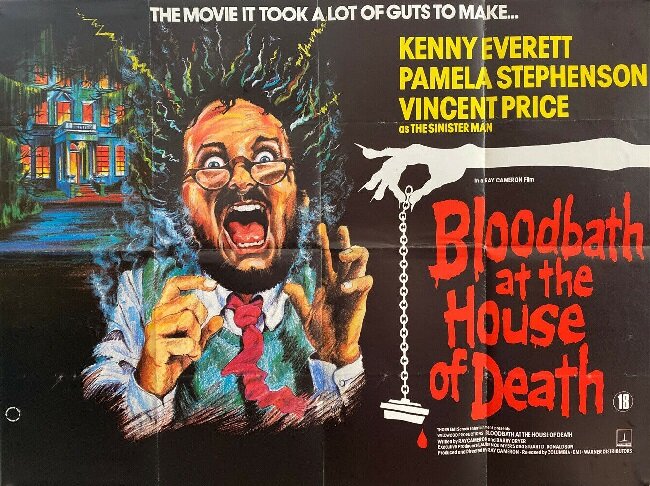
During the early eighties Kenny Everett was one of the most popular comedians on UK television. His mix of “zany” characters, slapstick and innuendo filled the gap between traditional comedians and their sketch show format and the anarchy of the new alternative comedy scene. Therefore his foray into feature films in 1984 was a logical progression of his growing success. Bloodbath at the House of Death was conceived as a satire on the Hammer Horror genre, although the script by Barry Cryer and Ray Cameron touched upon everything from An American Werewolf in London, Alien, The Amityville Horror, The Legend of Hell House and The Entity. Featuring a solid cast of British character actors and a cameo appearance by the great Vincent Price, on paper the film had all the trappings of a potential box office success. Sadly, it failed to meet expectations and was savaged by the UK press who used it as a means to attack Kenny Everett for his perceived transgressions.
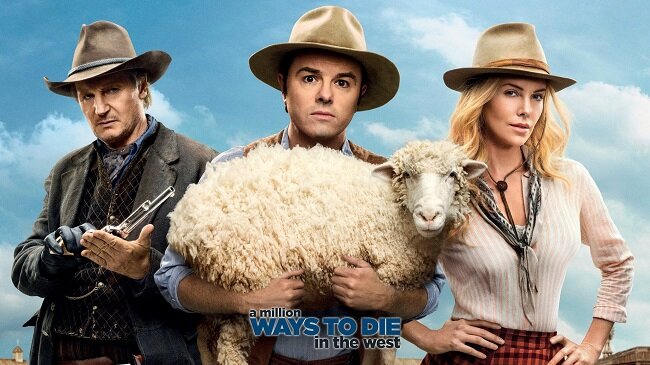
You could quite easily lose thirty minutes from A Million Ways to Die in the West. Tighter pacing would certainly shorten the gaps between the genuinely funny material. As it is, the movie is somewhat baggy and surprisingly middle of the road. Yes it has all of Seth McFarlane's usual hallmarks as far as extreme humour but it lacks the occasional moments of satire and social commentary that you see in Family Guy and in Ted (his best movie to date). The movie is very much aware of what it is and focuses a little excessively on observational humour based on traditional tropes and memes of the Western genre. You frequently get the feeling at times that it’s trying very hard to be “funny” in a “Seth McFarlane” idiom but it smacks a little of “art imitating art”.

Written by Jim Abrahams, David Zucker, Jerry Zucker and directed by John Landis, The Kentucky Fried Movie is an eclectic collection of skits, parodies and bogus commercials, lampooning what you’d see on seventies TV or in the movie theatres of the time. The sketches are fast paced and many feature well known faces from TV and cinema such as Bill Bixby, George Lazenby, Donald Sutherland and Henry Gibson. Some of the parodies may not “connect” with modern audiences who may not get the source references but for every skit that misses the mark, there are at least two others hit the target. Overall, it’s a litany of visual gags, stupid humour and endless puns and wordplay. Just what you’d expect from the team that went on to bring you Airplane! and Top Secret! The Kentucky Fried Movie is at its best when it satirises the movie industry, with such wonderful faux movies trailers as Cleopatra Schwartz; a blaxploitation action movie featuring a foxy African American vigilante and her devout Hasidic Jew partner.
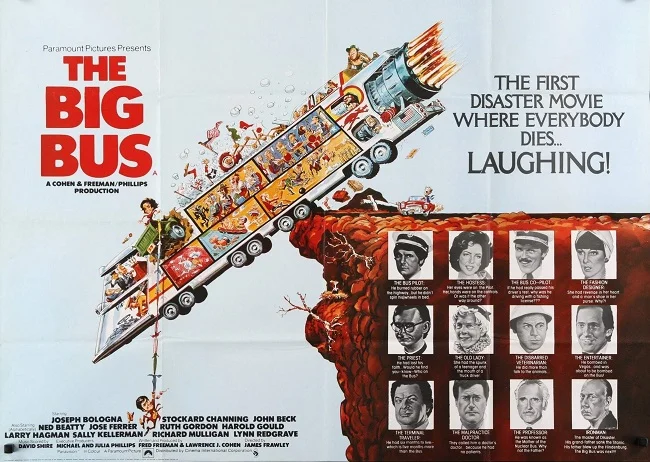
Being a child of the seventies I have a soft spot, cinematically speaking, for the various disaster films of that time. Iconic titles such as The Towering Inferno, The Poseidon Adventure and Airport franchise. The latter was superbly lampooned in the 1980 movie, Airplane! by Jim Abrahams, David Zucker and Jerry Zucker. The team of writer/directors went on to make numerous other comedies in a similar idiom. However Airplane! was not the first major spoof of this particular genre. Four years earlier, director James Frawley made The Big Bus which similarly sends up the standard tropes of all major disaster movies. Where Airplane! was right on the money, The Big Bus is a little more scattershot in its approach and takes a while to find its feet. But James Frawley had a background in TV comedy, having worked on The Monkees TV show, and he does much within the limitations of the films budget. The films greatest asset is that it keeps up the pace. If a gag doesn’t work then don’t worry, there’s another immediately afterwards.

I had mixed feelings about whether The Three Stooges could be successfully re-imagined and revitalised for a modern audience. When the first trailer was released it seemed to highlight the major differences between the old school slapstick humour of the forties with the worldly adult style of present comedy movies. However, as more information came out regarding the production and it became clear that the Farrelly Brothers are consummate fans of the source material, I began to revise my expectations. After finally having caught up with the movie, six years after its theatrical release, I am afraid all my initial fears have proven true and that The Three Stooges falls into all the traps I anticipated it would. That is not to say that the film is not without merits, but overall it fails to deliver in a manner that pleases all parties.
Until a copy was found by the BBC television in 1975, this was considered a lost film. Where's That Fire? is an often over looked comedy. Will Hay plays Captain Viking of the Bishop Wallop fire station in his usual seedy incompetent fashion. He and his trusty assistants Albert (Graham Moffatt) and Harbottle (Moore Marriott) run an antiquated Victorian fire tender but seldom put out any fires. After the Town Hall burns down they find that their jobs are on the line. Viking tries to solve their problems by inventing a new fire-retardant foam as well as renting the tender to a film production company, who may not be quite what they seem. It all ends in mayhem, with an attempted robbery of the Crown Jewels at The Tower of London.
I was raised on old black and white films as a child. My parents age and personal tastes meant that I had exposure to a lot of material that people today may be oblivious to. This was especially true with regard to pre-war UK comic luminaries such as Arthur Askey, Old Mother Riley and Will Hay. I am very grateful in a way, as it has afforded me the opportunity to broaden my cinematic horizons and cultural references. Comedy is also an interesting social barometer of the times and can be quite a useful tool for historians. Its curious how something change there are certain comic tropes that are timeless. Often these are fundamental aspects of the human character but not necessarily the best ones.

Critics were somewhat split over Paul when it was released in the UK in spring 2011. The absence of director Edgar Wright from the production, was cited as a weakness. Critics also felt the film was generally too mainstream and did not play sufficiently to Simon Pegg and Nick Frost's strengths. There were the usual claims of the whole premise being a self-indulgence. However, rather than cross reference Paul against similar films or compare it to material from the stars back catalogue of work, it should be judged on its own merit. On reflection, it is nowhere near as week as some claim it to be. You don’t often get big studio comedies that happily explores what is still considered a niche market genre. If approached with the right outlook, then Paul can be an entertaining diversion with plenty of laughs.

By 1988 Blackadder had run for three seasons in the UK and had seen the central character of Edmund Blackadder evolve from a seedy incompetent to a cunning, scheming, evil genius who was always frustrated at the last moment. Cleverly written by Richard Curtis and Ben Elton and superbly portrayed by Rowan Atkinson, Blackadder was very much at the cutting edge of British comedy of the time. It managed to mix physical humour, with verbal sparring, sarcasm, dry self-deprecation and irony. It was popular with a very broad spectrum of viewers.
The Goon Show is one of a handful of comedy shows that had a profound and unique impact upon the UK comedy scene, both at the time of its broadcast and over the preceding two decades. The creative and comic genius of its three main stars, Spike Milligan, Peter Sellers and Harry Secombe re-invented radio comedy and introduced a new form of audio slapstick through its surreal imagery. This concept was then taken further by the Monty Python team and The Goons legacy is still apparent today in artists such as Eddie Izzard and Tim Vine. Despite some aspects of the show that are a little dated, such as the musical interludes and cultural references, there is still much that is fresh and pertinent.
Sherlock Holmes: A Game of Shadows (2011)
Sherlock Holmes: A Game of Shadows, is very much a film of two halves. The initial hour is filled with gunfights, explosions, and bullet time fist fights. Sherlock Holmes (Robert Downey, Jr.) and Dr. Watson (Jude Law) unravel the sinister plans of Professor Moriarty (Jared Harris) and proceed to deal with it in the idiom of Frank Martin, as director Guy Ritchie's pulls every visual trick he knows out of the bag. The pace is fast yet a fairly strong script and superb chemistry between central characters, makes this a cut above the usual PG-13 rated action fodder served to the masses at present. It is beneficial that the bulk of the original cast and crew returned for this sequel as it maintains a strong sense of continuity with it predecessor.
Sherlock Holmes: A Game of Shadows, is very much a film of two halves. The initial hour is filled with gunfights, explosions, and bullet time fist fights. Sherlock Holmes (Robert Downey, Jr.) and Dr. Watson (Jude Law) unravel the sinister plans of Professor Moriarty (Jared Harris) and proceed to deal with it in the idiom of Frank Martin, as director Guy Ritchie's pulls every visual trick he knows out of the bag. The pace is fast yet a fairly strong script and superb chemistry between central characters, makes this a cut above the usual PG-13 rated action fodder served to the masses at present. It is beneficial that the bulk of the original cast and crew returned for this sequel as it maintains a strong sense of continuity with it predecessor.
Inspector Lastrade (Eddie Marsan) is sidelined in this story and Holmes's love, Irene Adler (Rachel McAdams) is dispensed with quite early in the proceedings, leaving us with much more interaction between Holmes and Watson. A dynamic that is skewed by Watson's marriage, leading to an unconventional love triangle. Sadly, there are a few weaknesses in the finished film. Gypsy leader Madam Simza Heron (Noomi Rapace) has a great introduction then is left somewhat under developed. Also, the disgraced Colonel and crack shot, Sebastian Moran is similarly vague. He also drops out of the film towards the end, providing a suitable antagonist for a third instalment.
But these issues notwithstanding, the second half, quickly shifts from action to the traditional game of intellectual cat and mouse between our hero and his arch nemesis. It is during these verbal confrontations that the more traditional elements of Sir Arthur Conan Doyle's work come through. The final battle via a game of chess on a balcony overlooking the Reichenbach falls, is ingenious and enthralling. Guy Ritchie's has certainly found the right mix between old school cerebral sleuthing and contemporary action styles. He also understands that the linchpin of these films is the relationship between leads and he handles this dynamic skilfully. Hans Zimmer's soundtrack once gain embellishes the film and avoids the usual musical clichés associated with this unique sub-genre.
Sherlock Holmes: A Game of Shadows is very entertaining holiday fare and is certainly not an inferior sequel. Twice now director Guy Ritchie has exceeded expectations and made amends for previous sins (need we list them?). Plus, it is always a pleasure to see genre stalwart, rent-a-German and purveyor of Ferrero Roche, Wolf Kahler back on the screen. On a parting note, Sherlock Holmes: A Game of Shadows is quite surprisingly strong in content. It is interesting to see how Mr. Ritchie has carefully shot and choreographed the violence so as to secure a PG-13 rating/12 Certificate. I was quite surprised about one scene in which Sherlock Holmes is rather brutally interrogated. Although the unpleasantness is justified, viewers should be aware of this hard edge to the movie.
Mainstream films are easy to recommend to people. They’re usually formulaic, work within clear parameters and they’re not controversial. Most people, when viewing such film on someone else’s suggestion, are left with a fairly simply choice. Did they like it or not? Whatever the outcome, no feathers are ruffled. No one looks at you askance afterwards and says “why the hell did you think I’d like that piece of shit”? If something like this happens, then you have clearly not recommended a mainstream film. Perhaps you’ve suggested something that’s a little more of an acquired taste. Something niche, from a very specific sub-genre. Which brings me neatly to Blazing Magnum AKA Strange Shadows in an Empty Room (1976). The US title gives the impression that this film is a hard boiled cop thriller, like so many others that followed in the wake of Dirty Harry. But there’s a clue in the European title. Yes, this movie has more than just a whiff of a giallo about it.
Jason Statham is an exemplar of the US mantra of “staying in your lane”. He makes action movies and occasionally strays into action comedies. His formula broadly works and is sufficiently lucrative to keep Mr. Statham employed. Therefore, if you watch a film in which he stars, you have a fairly good idea of what you’ll be getting. Of late, the criteria for his action vehicles have become more succinct. Jason Statham will play an innocuous character, such as a construction foreman or a bee keeper. Something terrible will subsequently befall another character who Mr. Statham has an emotional connection with in some capacity. He will subsequently hunt down those responsible and meet out death and violence. At some point the villain of the story will enquire as to how this innocuous person is so lethal. Research will then show that our Jason is in fact an ex-police officer/special forces operative/international assassin. There’s then a showdown and the villain dies. Job done.
The Light at the Edge of the World presented itself as an action movie upon its release in 1971. Based upon a story by Jules Verne, the Spanish American co-production was driven by its star Kirk Douglas, who curiously hired British director Kevin Billington to helm the project. This tale of a lighthouse keeper fighting a war of attrition against a group of pirates that have captured his island, was market as an adventure film ostensibly in the idiom of the authors previous works and as a pirate movie. MGM bought the rights to distribute the film in the UK on the misunderstanding that it was a family friendly production. It was not and remains so. They subsequently had to cut 15 minutes of violence and torture as well as an undercurrent of sexual assault to secure a suitable rating. Conversely, the US distributors received an arbitrary PG rating, despite the fact this is one of a handful of films that honestly depicts pirates as murderers, rapists and worse.
It’s an established action film trope. The fire team comprised of ex-military personnel, move in on their target. Only to have the tables turned by someone they don’t deem a threat. What makes it different in The Last Stand of Ellen Cole is a throwaway line of dialogue. The bested operative lies bleeding on the floor and the protagonists stands over them ready to finish them off. “Don’t, I have a cat” they feebly plead. For me that was the icing on the cake. The movie had already established it was taking the “same old, same old” and doing something different. Something fun, if taken in the right spirit. This scene tipped the balance and I embraced this film because it was being honest about what it is. This is a modern B movie that decides to give a very specific sub-genre a makeover. Furthermore, its clearly done with an affectionate wink, which is very different to sly wink. This isn’t deliberate self-knowing irony. Its just a film doing something different and possibly silly but it genuinely wants to have fun with it.
Stephen King’s dystopian story, The Running Man, was previously adapted very loosely in 1987, as a vehicle for Arnold Schwarzenegger. That version focused mainly on the “Battle Royale” element of the story and leaned heavily into Arnie’s personality, rather than the politics of the book. It also wasn’t well received by the author. Edgar Wright’s remake follows the source text a lot more closely and is far more interested in its political themes and wider social commentary. Furthermore, this version re-establishes the everyman quality of the hero of Ben Richards, rather than him being the muscle bound, ex-military hero as per Mr. Schwarzenegger’s prior interpretation. This time round, The Running Man uses a lot of the visual and narrative tropes of contemporary reality TV, making this forty three year old story very relevant to today’s viewers and couching the film in a style that is recognisable and accessible.
After the success of Raiders of the Lost Ark in 1981, filmmakers scrambled to find existing intellectual properties that they could use for similar films. Hence archaic heroes such as Alan Quatermain were hastily given a modern makeover and thrust into generic movies, in a vague attempt to replicate Steven Spielberg’s successful formula. Which brings us neatly on to James Charles Bigglesworth AKA “Biggles”, a fictional pilot and adventurer from a series of books written by W. E. Johns between 1932 and 1968. Several attempts had been made in the past to bring this character to the silver screen, including one by Disney but they all failed. However, the commercial and critical success of Indiana Jones provided sufficient impetus to greenlight a new film. However, due to some curious production choices, when Biggles was finally released it was far from just a period set, action movie.
Setting aside the hubris of remaking a film such as Red Dawn, the 2012 reboot had a troubled production. Shot over the course of late 2009, on location in Michigan, MGM intended to release the film in September 2010. However, the studio’s financial problems became unsustainable over the course of that year and the film was shelved, while a financial solution was sought. Furthermore, while Red Dawn was in post production, there was a major economic shift within Hollywood due to the increasing importance of the Chinese market. This was a significant problem for MGM because the new version of Red Dawn had the Chinese invading the USA instead of Russia. Hence there were reshoots and the need for additional visual effects, so that the Chinese could be replaced with North Koreans. MGM eventually went bankrupt and the distribution rights to Red Dawn were sold off. The film was eventually released in 2012.
When I first saw the promotional trailer for Gangster Squad back in 2012, prior to its release, I wasn't especially impressed. I simply thought the film was another attempt to re-invent the gangster genre for a generation who were not especially familiar with it. I wasn't exactly overwhelmed with director Ruben Fleischer's resume either. I didn't particularly like Zombieland and haven't seen 30 Minutes Or Less. Then came the tragic mass shootings in Aurora, Colorado which led to the movie being delayed so that the original ending, which featured a shoot-out in a movie theatre, could be replaced. Hence when I finally watched this film recently, I wasn't expecting a movie up to the standards of say Once Upon A Time In America or Miller’s Crossing and it would seem that I was right do so. Gangster Squad is not especially noteworthy in any respect.
Levon Cade (Jason Staham) is a former Royal Marine Commando who has retired from military service and now works as the leader of a construction team in Chicago. He has a close relationship with Joe and Carla Garcia (Michael Peña and Noemi Gonzalez ) who run the company and considers them as family. Outside of work, Levon is involved in a bitter custody battle for his daughter, against her maternal grandfather, who blames Levon for his daughter’s suicide. When Garcia's teenage daughter Jenny (Arianna Rivas) goes missing, Levon reluctantly agrees to help her parents and get her back. Beginning his search at the nightclub where Jenny was last seen, he soon discovers that she was abducted by Russian traffickers. Furthermore, the culprit is Dimi Kolisnyk (Maximilian Osinski), the wayward son of a senior ranking gangster.
PC Nicholas Angel (Simon Pegg) is an exemplary Police Officer, with a strict adherence to the letter of the law. As a result of making the rest of the London Metropolitan Police look bad, he is transferred to the rural town of Sandford, Gloucestershire. On arrival, Angel finds that the local Inspector, Frank Butterman (Jim Broadbent), takes a far more laissez-faire approach to policing. His colleagues are incompetent and he is further hampered by the Neighbourhood Watch Alliance (NWA), who prioritise low crime statistics over law enforcement due to their desire to win the title of “Village of the Year”. Furthermore, Angel is partnered with the Inspector’s son, Constable Danny Butterman (Nick Frost), who is infatuated with “buddy cop” movies and is in awe of Angel’s London experience. “Have you ever fired two guns while jumping through the air?” However, a sudden spate of grisly accidents lead Angel to believe that there's more to the seemingly tranquil and picture-perfect community than meets the eye.
As a collection of history's worst tyrants and criminal masterminds gather to plot a war to wipe out millions, one man must race against time to stop them. Discover the origins of the very first independent intelligence agency in The King's Man. Based on the Comic Book “The Secret Service” by Mark Millar and Dave Gibbons. 20th Century Studios
Matthew Vaughn’s The King’s Man is an inconsistent film, both narratively and tonally. It veers between serious themes and stylised, hyperbolic action. At times it does quite a good job of exploring such complex subjects as global politics, mechanised warfare and colonialism. Sadly it then wrenches the viewer out of these cerebral reveries as it lapses into the sort of over the top action sequences that were notable in the two earlier films. It’s a shame because The King’s Man gets so many other aspects of the production right. The casting is very interesting, especially Ralph Fiennes as the “pacifist” Duke of Oxford. He is actually a very good fit for the action genre. Djimon Hounsou and Gemma Arterton are given little backstory beyond being respectively the faithful manservant and the family nanny but both are notable due to their own inherent acting chops and personal charisma. Rhys Ifans obviously has a great time as Grigori Rasputin, ensuring all the man’s vices are robustly depicted.
On paper, a video games franchise such as Assassin’s Creed lends itself perfectly to a cinematic adaptation. The parkour action scenes, the historical settings and the contemporary conspiracy theory themes are all elements that should play well with a modern youth audience. Hence with the backing of a major studio such as Twentieth Century Fox and a budget of $125 million, the 2016 movie should have been a guaranteed box office hit. The casting of Michael Fassbender, an actor who is comfortable with serious roles and big Hollywood franchises, should have carried this film comfortably over the finishing line. Director Justin Kurzel, who had found critical success with his adaptation of MacBeth a year previously, must have looked like a safe pair of hands to handle such a project. Sadly, that was not the case. Assassin’s Creed is not the sum of its parts, in fact many elements appear to be pulling in opposite directions. The resulting feature film is staggeringly dull, soulless and a chore to watch. A testament to how modern big budget franchise movies have become a production line, with all the art stripped from them.
300: Rise of an Empire is a curious beast, being neither a sequel nor a prequel. It is infact a tale that takes place simultaneously with those of the original movie. While Gerard Butler is busy making a last stand at the Battle of Thermopylae, fellow warrior and politician Themistokles, played by the singularly uncharismatic Sullivan Stapleton, leads a similar army of buffed Greeks against the Persian fleet. Once again we have a movie that is the epitome of style over substance, complete with a sound design that challenges what can physically be endured by human hearing. They say the first casualty of war is innocence but in this type of movie it's closely followed by historical accuracy and authentic depictions of ethnicity. 300: Rise of an Empire is a cinematic assault upon the senses but not in a good way like Mad Max: Fury Road.
Back in September 2017, Liam Neeson stated in an interview with Sky News that he was retiring from the action genre, due to his age. He felt that audiences would question his credibility in such roles. After the release of The Commuter (2018) and Cold Pursuit (2019) Mr Neeson appeared to return to human dramas and films that focus on performance rather than punching man and beast. Ordinary Love and Made in Italy, both released in 2019, demonstrate the actor’s versatility and skill. People seem to forget that he is a thespian who was initially known for his character driven roles in films such as The Mission (1986), Rob Roy (1995 and Michael Collins (1996). It was only in 2008 that he reinvented himself as an action hero. It’s all a far cry from Schindler’s List and his performance that earned him an academy award nomination. The reason I mention all of this is because The Ice Road is the third action movie I’ve seen in 2021 that stars Liam Neeson.
One of the stand out tropes of the modern action film is that the stakes are always cranked right up to 11. Terrorists, biological weapons and nuclear bombs are common threats in such movies with a hero or heroes trying to save the world from death and destruction or worse. However, back in the sixties and seventies, things were a little more straight forward and in some respects more credible. Take When Eight Bells Toll, released in 1971, for example. British Treasury secret agent Phillip Calvert investigates the theft of £8,000,000 in gold bullion by a gang of international smugglers. In the context of the times this was no small beer however it’s somewhat mundane compared to fighting super villains and their space lasers. Frankly I prefer these low key plot devices as they can make a film a little more plausible within the confines of the genre. A concept that is often forgotten today.
Forensic accountant Owen Casserly (Jake Weber) flees his home with his teenage son Connor (Finn Little) when he discovers he has been targeted by a pair of assassins (Nicholas Hoult and Aidan Gillen) who have been hired to stop him giving evidence in a major corruption case. Connor witnesses the murder of his father after their car is run off the road. Entrusted with important written evidence, he escapes into the dense forests of the Montana wilderness pursued by the killers. Seeking help he runs into smokejumper Hannah Faber (Angelina Jolie) who is stationed at a remote fire lookout tower. Hannah suffers from PTSD from a previous forest fire in which she was unable to save three young boys. Hannah attempts to lead Connor through the forest to safety. Meanwhile the assassins set fire to the forest to divert the attention of the authorities and cover their tracks.
I must admit that I did not have particularly high hopes for Paul W S Anderson's remake of the 1975 Roger Corman produced cult classic. Anderson’s work varies greatly. Event Horizon and Soldier are solid genre films but I still have not fully come to terms with Alien vs. Predator. Jason Statham is also a name that divides the public, with solid material such as The Transporter and unfathomable tosh like Revolver. But despite these considerations, Death Race is in fact quite a surprise and does not follow the path that so many remakes do. It takes the basic themes and concept associated with the original and tries to do something different with them. It doesn’t reinvent the wheel nor is it a genre milestone. But it does offer a different spin on things, have some engaging action scenes and provide some dumb but enjoyable entertainment. When combined with snacks and some beer this is a passable way to kill 111 minutes.
I did not watch Zero Dark Thirty upon its initial release, due to the politics surrounding it. I wanted to be able to view it free from bipartisan debate. Eight years on I believe this now achievable and although debate still exists it is now more measured and less strident. Zero Dark Thirty is certainly a compelling movie. It plays as a docudrama, providing an in-depth study of the US intelligence services hunt for Osama Bin Laden. It cannot be faulted on a technical level and the performances are very strong. It does not adopt a celebratory or triumphalist tone in its approach to the story. Director Kathryn Bigelow endeavours to keep the proceedings focused upon the intricacies of an intelligence driven manhunt. There is little or no tubthumping, jingoism. The decision to find Bin Laden is shown as a political and military exercise of foreign policy. The film solely focuses on the story from a US perspective but that is perfectly acceptable as it is not intended to be an exploration of geo-politics.
Firestorm was originally written as a vehicle for Sylvester Stallone, however when the production company Savoy Pictures went bankrupt the screenplay was bought by Twentieth Fox and the scope of the movie reduced to suit a lower budget. It’s broadly similar to Cliffhanger in so far as the lead character is a specialist in a certain field who runs afoul of criminals in a perilous environment. Whereas Cliffhanger is set in the Rocky Mountains, Firestorm takes place in the forests of Northern Wyoming. After the script was revised four times, the finished screenplay was given a final “polish” by Graham Yost who has considerable experience with the action movie genre. As stallone was no longer associated with the project and the production had been repurposed to be less extravagant, the movie was assigned to former NFL star Howie Long. Long had already appeared in the John Woo movie Broken Arrow (1996) and the Firestorm was seen as a means to give him a star vehicle.
The original French movies District 13 and its sequel District 13: Ultimatum, conceived and produced by Luc Besson, were enjoyable variations of the Escape from New York theme. Their charm lay in their European pedigree and the skilful use of parkour. The two leads, David Belle and Cyril Raffaelli, were eminently suited to the minimalist roles and the screenplays were fun. Half of these movies appeal was the fact that they were not mainstream US products. Brick Mansions is the Hollywood remake of District 13, as well as being Paul Walkers’ final movie. Sadly, this film is far from a fitting epitaph, being devoid of any charisma or innovations. It is blandly shot , poorly edited and has been stripped of everything that made the original entertaining.
Arnold Schwarzenegger's return to the big screen after his political career has been uneven to say the least. His cameos in The Expendables and The Expendables 2 were well received, with their self referential charm and age related irony. Yet his first major movie The Last Stand, although competent, failed to find an audience. Escape Plan fared better at the box office but did not put Arnie back on the A list. Effectively there's a large percentage of the contemporary cinematic audience who were born after his heyday and are simply not overt fans of his work. His core audience is more than likely of the age group that consume most of their film entertainment at home. Which may explain why Sabotage tanked in the US upon release on March 28th 2014. It was the worst opening box office of Arnie's career. He used to break first day opening records.
Sequels and reboots are hardly a new concept and have been a part of Hollywood culture since the 1930s. The success of the Universal Horror movies from that era being a prime example of direct follow ups and retconned movies. However, there is one fundamental rule that distinguishes a good sequel from a bad one. You should never mitigate, undermine or make irrelevant the events of the previous movie, just to provide your new film with a raison d'être. For example, the events of Aliens do not contradict or trivialise those that happened in Alien. In fact with that franchise there is a very clear logical progression between the two movies. The same is true for Mad Max and Mad Max 2 or Star Wars and The Empire Strikes Back. The key is to progress a story, enhance it or explore things from an alternative angle and bring something new to the cinematic table. Sadly this philosophy is all too often lost on corporate film making. Which means that many sequels are just tedious replays of prior films. Terminator: Dark Fate falls squarely into this category.
The enduring appeal of the character John Rambo in First Blood comes from the fact that he is a traumatised ex- service man who keeps himself to himself as he drifts from job to job, trying to come to terms with his wartime experiences. His poor treatment at the hands of a small-town Sheriff is a succinct metaphor for the social and political indifference that Vietnam veterans were shown upon their return to the US. He’s a man with a code in a world that no longer has any use for him. His simple and honest patriotism is not returned and he is in fact viewed with shame by many from the nation he loves. Furthermore, the first movie does not paint him as a cold-blooded killer. Despite provocation he is not the first person to shoot to kill. Rambo is in many ways a victim. A broken man, who society has asked to do unspeakable things. Now society wants nothing to do with him and fears the “monster” they created. Although clearly an action movie, First Blood had narrative depth and a flawed but sympathetic protagonist. 37 years and four movies later, such dramatic themes have long left the franchise. The central character is indeed a caricature of its former self.
It was hardly surprising that the movie adaptation of Chris Kyle's autobiography American Sniper, would cause controversy. The Iraq war, US Foreign Policy and national pride are seldom subjects that are discussed in a calm and measured fashion. And then there are the personal politics of director Clint Eastwood to consider. Hence there were claims from some quarters upon the movie’s release, that it was Islamophobic and counter claims that criticisms of the late Chris Kyle were unpatriotic. There still remain issues regarding the authenticity of events depicted in the source text and subsequently the movies screenplay by Jason Hall. Yet none of these factors have in anyway impacted upon the film's box office returns which currently stands at $247,900,417 worldwide.
Do I really need to present you with some sort of plot synopsis for Transporter 3? No, I didn’t think so. More of the same as Frank Martin (Jason Statham) and his police chum, Inspector Tarconi (Francois Berleand) become embroiled in yet another high-octane escapade. There's fights, car stunts, exotic international locations and a strong sense of humour. This time, the disposable love interest is a Ukrainian girl named Valentina (Natalya Rudakova) who fulfils her role succinctly. The film benefits by being set back in Europe, after the mistake of basing Transporter 2 in the US. This time, the story takes us to such locations as Budapest and Odessa. The international film crew once again bring a veneer of panache to the production that is conspicuously absent in US action movies. For a modest budget fil, Transporter 3 it looks very good. Again the proceedings are given a boost by a pertinent soundtrack by Alexandre Azaria and a selection of European “tunes”.
Jason Bourne originally graced our screens for the first time seventeen years ago. The Bourne Identity was a gritty, minimalist take on the espionage genre and a welcome change from the excesses of the Pierce Brosnan Bond era. The story arc was sustained over three movies and ended efficiently and succinctly. After which Matt Damon moved on, as did the director of two of the movies, Paul Greengrass. Which leaves us with The Bourne Legacy; the tangential sequel that arrived in 2012. A film that exists because the money men and bean counters hate to pass up on a franchise until it has been squeezed utterly dry. Hence, they commissioned the writer of the series, Tony Gilroy, to come up with a screenplay and direct a spinoff movie. Jeremy Renner was cast in the lead role. Yet despite narrative and production continuity, The Bourne Legacy was not a Jason Bourne movie with the star appeal of Matt Damon. Although the film turned a profit, it had the lowest box office returns out of the entire franchise.
During the eighties there was a clear league table of action movie stars. By the mid-nineties this system fell into decline and the Hollywood lacked any clearly defined exponents of the genre. A decade later, due to the success of Luc Besson’s Transporter films, Jason Statham became a bankable box office star in this field. When you look at Statham's early work in Lock, Stock and Two Smoking Barrels it is hard to envisage the "mockney geezer" as an international action star. Yet he has successfully stepped into the role and enjoys a large following. I enjoy his work as he has a likeable on-screen persona. My 88-year-old Mum likes him to because "he wears nice suits". The action genre seldom reaches such a diverse demographic.
Before we start, I recollect that one well known UK critic described Safe House as sub-Tony Scott, upon its release. Now I’ve always been conflicted over Scott’s back catalogue, as I’ve always found his movies to be hampered by their own unique style. The subtleties of his characters and depth of his themes are all too often drowned out by his frenetic style and fast paced editing. Therefore a comment such as this really sets off alarm bells for me. Having recently watched The Equalizer 2, I wanted a further fix of Denzel Washington in a similar action vehicle. As Safe House was available on Netflix UK, I decided to kill a couple of hours and see what actually constitutes as “sub-Tony Scott”.
Sherlock Holmes (2009)
For me the inherent appeal of Conan Doyle’s great detective is the way in which it lends itself to continuous reinvention and interpretation. And so, I was greatly surprised by how well director Guy Ritchie handled the 2009 reboot. He in fact did so well, that you could argue it put his career back on track. You won’t find a deerstalker on the head of Robert Downey Jr’s Holmes. This is very much a Holmes for the current times, with bar knuckle boxing, explosions and frenetic chases around a stylised CGI London, but despite how it sounds it works extremely well. The pacing, tone and humour are just right and so the movie avoid becoming a caricature. Under all the modern trappings the screenplay retains the essential elements of source text, such as a densely plotted narrative, cunning mental gymnastics and of course the complex dynamics of the Holmes, Watson relationship.
For me the inherent appeal of Conan Doyle’s great detective is the way in which it lends itself to continuous reinvention and interpretation. And so, I was greatly surprised by how well director Guy Ritchie handled the 2009 reboot. He in fact did so well, that you could argue it put his career back on track. You won’t find a deerstalker on the head of Robert Downey Jr’s Holmes. This is very much a Holmes for the current times, with bar knuckle boxing, explosions and frenetic chases around a stylised CGI London, but despite how it sounds it works extremely well. The pacing, tone and humour are just right and so the movie avoid becoming a caricature. Under all the modern trappings the screenplay retains the essential elements of source text, such as a densely plotted narrative, cunning mental gymnastics and of course the complex dynamics of the Holmes, Watson relationship.
Robert Downey Jr is a far cry from Peter Cushing’s Holmes. He introduces a slovenly element to the character who’s continuously intellectually absorbed at the expense of others and worldly social niceties. Opium addiction is not mentioned this time round. He excels at the things that engage his intellect, including pugilism, so we have some solid set pieces, driven by Holmes pre-fight analysis. Jude Law’s Doctor Watson is an amiable and long-suffering foil, very much in the Danny Glover mould from Lethal Weapon. He offsets Holmes’s intellect perfectly with his common sense and sarcasm. As for the plot, it centres upon an aristocratic serial killer called Lord Blackwood (Mark Strong), who is caught and tried, sent to the gallows and placed in his family tomb. However, he subsequently appears to rise from the dead, and returns to his killing spree.
It’s all very fast paced and at times you can see how certain characters are introduced to simply expedite the plot and allow Holmes to do his quota of “sleuthing” before the next action sequence. Sarah Greenwood’s production design is a definite high point with here stylised, even borderline steampunk “Victoriana”. Ritchie attends to the proceeding well and balances the films elements, ensuring that just as things start to get a bit silly, he moves them on to another diversion. There is also a great score by Hans Zimmer which is radically different from the usual Violin driven motifs one associates with Holmes. Rachel McAdams, as American femme fatale Irene Adler, is more than the usual window-dressing female characters have in such movies and as ever Eddie Marsan is extremely watchable as the hang dog Inspector Lestrade.
Considering that Sherlock Holmes was released as the MCU was beginning to get traction with cinema audiences, it does well not to just repackage the great detective as yet another superhero. Yes, there are some very flashy visual affectations and contemporary editing techniques but there is still room for film to focus on the dynamics of Holmes and Watson relationship. There is a definite chemistry between both leads and it is the ongoing examination of relationship that once again underpins the story and makes it worth watching. This coupled with the right tone and visual embellishments meant that Sherlock Holmes found an audience and did well at the box office, with the cast and director returning for a sequel.
Mainstream films are easy to recommend to people. They’re usually formulaic, work within clear parameters and they’re not controversial. Most people, when viewing such film on someone else’s suggestion, are left with a fairly simply choice. Did they like it or not? Whatever the outcome, no feathers are ruffled. No one looks at you askance afterwards and says “why the hell did you think I’d like that piece of shit”? If something like this happens, then you have clearly not recommended a mainstream film. Perhaps you’ve suggested something that’s a little more of an acquired taste. Something niche, from a very specific sub-genre. Which brings me neatly to Blazing Magnum AKA Strange Shadows in an Empty Room (1976). The US title gives the impression that this film is a hard boiled cop thriller, like so many others that followed in the wake of Dirty Harry. But there’s a clue in the European title. Yes, this movie has more than just a whiff of a giallo about it.
Jason Statham is an exemplar of the US mantra of “staying in your lane”. He makes action movies and occasionally strays into action comedies. His formula broadly works and is sufficiently lucrative to keep Mr. Statham employed. Therefore, if you watch a film in which he stars, you have a fairly good idea of what you’ll be getting. Of late, the criteria for his action vehicles have become more succinct. Jason Statham will play an innocuous character, such as a construction foreman or a bee keeper. Something terrible will subsequently befall another character who Mr. Statham has an emotional connection with in some capacity. He will subsequently hunt down those responsible and meet out death and violence. At some point the villain of the story will enquire as to how this innocuous person is so lethal. Research will then show that our Jason is in fact an ex-police officer/special forces operative/international assassin. There’s then a showdown and the villain dies. Job done.
The Light at the Edge of the World presented itself as an action movie upon its release in 1971. Based upon a story by Jules Verne, the Spanish American co-production was driven by its star Kirk Douglas, who curiously hired British director Kevin Billington to helm the project. This tale of a lighthouse keeper fighting a war of attrition against a group of pirates that have captured his island, was market as an adventure film ostensibly in the idiom of the authors previous works and as a pirate movie. MGM bought the rights to distribute the film in the UK on the misunderstanding that it was a family friendly production. It was not and remains so. They subsequently had to cut 15 minutes of violence and torture as well as an undercurrent of sexual assault to secure a suitable rating. Conversely, the US distributors received an arbitrary PG rating, despite the fact this is one of a handful of films that honestly depicts pirates as murderers, rapists and worse.
It’s an established action film trope. The fire team comprised of ex-military personnel, move in on their target. Only to have the tables turned by someone they don’t deem a threat. What makes it different in The Last Stand of Ellen Cole is a throwaway line of dialogue. The bested operative lies bleeding on the floor and the protagonists stands over them ready to finish them off. “Don’t, I have a cat” they feebly plead. For me that was the icing on the cake. The movie had already established it was taking the “same old, same old” and doing something different. Something fun, if taken in the right spirit. This scene tipped the balance and I embraced this film because it was being honest about what it is. This is a modern B movie that decides to give a very specific sub-genre a makeover. Furthermore, its clearly done with an affectionate wink, which is very different to sly wink. This isn’t deliberate self-knowing irony. Its just a film doing something different and possibly silly but it genuinely wants to have fun with it.
Stephen King’s dystopian story, The Running Man, was previously adapted very loosely in 1987, as a vehicle for Arnold Schwarzenegger. That version focused mainly on the “Battle Royale” element of the story and leaned heavily into Arnie’s personality, rather than the politics of the book. It also wasn’t well received by the author. Edgar Wright’s remake follows the source text a lot more closely and is far more interested in its political themes and wider social commentary. Furthermore, this version re-establishes the everyman quality of the hero of Ben Richards, rather than him being the muscle bound, ex-military hero as per Mr. Schwarzenegger’s prior interpretation. This time round, The Running Man uses a lot of the visual and narrative tropes of contemporary reality TV, making this forty three year old story very relevant to today’s viewers and couching the film in a style that is recognisable and accessible.
After the success of Raiders of the Lost Ark in 1981, filmmakers scrambled to find existing intellectual properties that they could use for similar films. Hence archaic heroes such as Alan Quatermain were hastily given a modern makeover and thrust into generic movies, in a vague attempt to replicate Steven Spielberg’s successful formula. Which brings us neatly on to James Charles Bigglesworth AKA “Biggles”, a fictional pilot and adventurer from a series of books written by W. E. Johns between 1932 and 1968. Several attempts had been made in the past to bring this character to the silver screen, including one by Disney but they all failed. However, the commercial and critical success of Indiana Jones provided sufficient impetus to greenlight a new film. However, due to some curious production choices, when Biggles was finally released it was far from just a period set, action movie.
Setting aside the hubris of remaking a film such as Red Dawn, the 2012 reboot had a troubled production. Shot over the course of late 2009, on location in Michigan, MGM intended to release the film in September 2010. However, the studio’s financial problems became unsustainable over the course of that year and the film was shelved, while a financial solution was sought. Furthermore, while Red Dawn was in post production, there was a major economic shift within Hollywood due to the increasing importance of the Chinese market. This was a significant problem for MGM because the new version of Red Dawn had the Chinese invading the USA instead of Russia. Hence there were reshoots and the need for additional visual effects, so that the Chinese could be replaced with North Koreans. MGM eventually went bankrupt and the distribution rights to Red Dawn were sold off. The film was eventually released in 2012.
When I first saw the promotional trailer for Gangster Squad back in 2012, prior to its release, I wasn't especially impressed. I simply thought the film was another attempt to re-invent the gangster genre for a generation who were not especially familiar with it. I wasn't exactly overwhelmed with director Ruben Fleischer's resume either. I didn't particularly like Zombieland and haven't seen 30 Minutes Or Less. Then came the tragic mass shootings in Aurora, Colorado which led to the movie being delayed so that the original ending, which featured a shoot-out in a movie theatre, could be replaced. Hence when I finally watched this film recently, I wasn't expecting a movie up to the standards of say Once Upon A Time In America or Miller’s Crossing and it would seem that I was right do so. Gangster Squad is not especially noteworthy in any respect.
Levon Cade (Jason Staham) is a former Royal Marine Commando who has retired from military service and now works as the leader of a construction team in Chicago. He has a close relationship with Joe and Carla Garcia (Michael Peña and Noemi Gonzalez ) who run the company and considers them as family. Outside of work, Levon is involved in a bitter custody battle for his daughter, against her maternal grandfather, who blames Levon for his daughter’s suicide. When Garcia's teenage daughter Jenny (Arianna Rivas) goes missing, Levon reluctantly agrees to help her parents and get her back. Beginning his search at the nightclub where Jenny was last seen, he soon discovers that she was abducted by Russian traffickers. Furthermore, the culprit is Dimi Kolisnyk (Maximilian Osinski), the wayward son of a senior ranking gangster.
PC Nicholas Angel (Simon Pegg) is an exemplary Police Officer, with a strict adherence to the letter of the law. As a result of making the rest of the London Metropolitan Police look bad, he is transferred to the rural town of Sandford, Gloucestershire. On arrival, Angel finds that the local Inspector, Frank Butterman (Jim Broadbent), takes a far more laissez-faire approach to policing. His colleagues are incompetent and he is further hampered by the Neighbourhood Watch Alliance (NWA), who prioritise low crime statistics over law enforcement due to their desire to win the title of “Village of the Year”. Furthermore, Angel is partnered with the Inspector’s son, Constable Danny Butterman (Nick Frost), who is infatuated with “buddy cop” movies and is in awe of Angel’s London experience. “Have you ever fired two guns while jumping through the air?” However, a sudden spate of grisly accidents lead Angel to believe that there's more to the seemingly tranquil and picture-perfect community than meets the eye.
As a collection of history's worst tyrants and criminal masterminds gather to plot a war to wipe out millions, one man must race against time to stop them. Discover the origins of the very first independent intelligence agency in The King's Man. Based on the Comic Book “The Secret Service” by Mark Millar and Dave Gibbons. 20th Century Studios
Matthew Vaughn’s The King’s Man is an inconsistent film, both narratively and tonally. It veers between serious themes and stylised, hyperbolic action. At times it does quite a good job of exploring such complex subjects as global politics, mechanised warfare and colonialism. Sadly it then wrenches the viewer out of these cerebral reveries as it lapses into the sort of over the top action sequences that were notable in the two earlier films. It’s a shame because The King’s Man gets so many other aspects of the production right. The casting is very interesting, especially Ralph Fiennes as the “pacifist” Duke of Oxford. He is actually a very good fit for the action genre. Djimon Hounsou and Gemma Arterton are given little backstory beyond being respectively the faithful manservant and the family nanny but both are notable due to their own inherent acting chops and personal charisma. Rhys Ifans obviously has a great time as Grigori Rasputin, ensuring all the man’s vices are robustly depicted.
On paper, a video games franchise such as Assassin’s Creed lends itself perfectly to a cinematic adaptation. The parkour action scenes, the historical settings and the contemporary conspiracy theory themes are all elements that should play well with a modern youth audience. Hence with the backing of a major studio such as Twentieth Century Fox and a budget of $125 million, the 2016 movie should have been a guaranteed box office hit. The casting of Michael Fassbender, an actor who is comfortable with serious roles and big Hollywood franchises, should have carried this film comfortably over the finishing line. Director Justin Kurzel, who had found critical success with his adaptation of MacBeth a year previously, must have looked like a safe pair of hands to handle such a project. Sadly, that was not the case. Assassin’s Creed is not the sum of its parts, in fact many elements appear to be pulling in opposite directions. The resulting feature film is staggeringly dull, soulless and a chore to watch. A testament to how modern big budget franchise movies have become a production line, with all the art stripped from them.
300: Rise of an Empire is a curious beast, being neither a sequel nor a prequel. It is infact a tale that takes place simultaneously with those of the original movie. While Gerard Butler is busy making a last stand at the Battle of Thermopylae, fellow warrior and politician Themistokles, played by the singularly uncharismatic Sullivan Stapleton, leads a similar army of buffed Greeks against the Persian fleet. Once again we have a movie that is the epitome of style over substance, complete with a sound design that challenges what can physically be endured by human hearing. They say the first casualty of war is innocence but in this type of movie it's closely followed by historical accuracy and authentic depictions of ethnicity. 300: Rise of an Empire is a cinematic assault upon the senses but not in a good way like Mad Max: Fury Road.
Back in September 2017, Liam Neeson stated in an interview with Sky News that he was retiring from the action genre, due to his age. He felt that audiences would question his credibility in such roles. After the release of The Commuter (2018) and Cold Pursuit (2019) Mr Neeson appeared to return to human dramas and films that focus on performance rather than punching man and beast. Ordinary Love and Made in Italy, both released in 2019, demonstrate the actor’s versatility and skill. People seem to forget that he is a thespian who was initially known for his character driven roles in films such as The Mission (1986), Rob Roy (1995 and Michael Collins (1996). It was only in 2008 that he reinvented himself as an action hero. It’s all a far cry from Schindler’s List and his performance that earned him an academy award nomination. The reason I mention all of this is because The Ice Road is the third action movie I’ve seen in 2021 that stars Liam Neeson.
One of the stand out tropes of the modern action film is that the stakes are always cranked right up to 11. Terrorists, biological weapons and nuclear bombs are common threats in such movies with a hero or heroes trying to save the world from death and destruction or worse. However, back in the sixties and seventies, things were a little more straight forward and in some respects more credible. Take When Eight Bells Toll, released in 1971, for example. British Treasury secret agent Phillip Calvert investigates the theft of £8,000,000 in gold bullion by a gang of international smugglers. In the context of the times this was no small beer however it’s somewhat mundane compared to fighting super villains and their space lasers. Frankly I prefer these low key plot devices as they can make a film a little more plausible within the confines of the genre. A concept that is often forgotten today.
Forensic accountant Owen Casserly (Jake Weber) flees his home with his teenage son Connor (Finn Little) when he discovers he has been targeted by a pair of assassins (Nicholas Hoult and Aidan Gillen) who have been hired to stop him giving evidence in a major corruption case. Connor witnesses the murder of his father after their car is run off the road. Entrusted with important written evidence, he escapes into the dense forests of the Montana wilderness pursued by the killers. Seeking help he runs into smokejumper Hannah Faber (Angelina Jolie) who is stationed at a remote fire lookout tower. Hannah suffers from PTSD from a previous forest fire in which she was unable to save three young boys. Hannah attempts to lead Connor through the forest to safety. Meanwhile the assassins set fire to the forest to divert the attention of the authorities and cover their tracks.
I must admit that I did not have particularly high hopes for Paul W S Anderson's remake of the 1975 Roger Corman produced cult classic. Anderson’s work varies greatly. Event Horizon and Soldier are solid genre films but I still have not fully come to terms with Alien vs. Predator. Jason Statham is also a name that divides the public, with solid material such as The Transporter and unfathomable tosh like Revolver. But despite these considerations, Death Race is in fact quite a surprise and does not follow the path that so many remakes do. It takes the basic themes and concept associated with the original and tries to do something different with them. It doesn’t reinvent the wheel nor is it a genre milestone. But it does offer a different spin on things, have some engaging action scenes and provide some dumb but enjoyable entertainment. When combined with snacks and some beer this is a passable way to kill 111 minutes.
I did not watch Zero Dark Thirty upon its initial release, due to the politics surrounding it. I wanted to be able to view it free from bipartisan debate. Eight years on I believe this now achievable and although debate still exists it is now more measured and less strident. Zero Dark Thirty is certainly a compelling movie. It plays as a docudrama, providing an in-depth study of the US intelligence services hunt for Osama Bin Laden. It cannot be faulted on a technical level and the performances are very strong. It does not adopt a celebratory or triumphalist tone in its approach to the story. Director Kathryn Bigelow endeavours to keep the proceedings focused upon the intricacies of an intelligence driven manhunt. There is little or no tubthumping, jingoism. The decision to find Bin Laden is shown as a political and military exercise of foreign policy. The film solely focuses on the story from a US perspective but that is perfectly acceptable as it is not intended to be an exploration of geo-politics.
Firestorm was originally written as a vehicle for Sylvester Stallone, however when the production company Savoy Pictures went bankrupt the screenplay was bought by Twentieth Fox and the scope of the movie reduced to suit a lower budget. It’s broadly similar to Cliffhanger in so far as the lead character is a specialist in a certain field who runs afoul of criminals in a perilous environment. Whereas Cliffhanger is set in the Rocky Mountains, Firestorm takes place in the forests of Northern Wyoming. After the script was revised four times, the finished screenplay was given a final “polish” by Graham Yost who has considerable experience with the action movie genre. As stallone was no longer associated with the project and the production had been repurposed to be less extravagant, the movie was assigned to former NFL star Howie Long. Long had already appeared in the John Woo movie Broken Arrow (1996) and the Firestorm was seen as a means to give him a star vehicle.
The original French movies District 13 and its sequel District 13: Ultimatum, conceived and produced by Luc Besson, were enjoyable variations of the Escape from New York theme. Their charm lay in their European pedigree and the skilful use of parkour. The two leads, David Belle and Cyril Raffaelli, were eminently suited to the minimalist roles and the screenplays were fun. Half of these movies appeal was the fact that they were not mainstream US products. Brick Mansions is the Hollywood remake of District 13, as well as being Paul Walkers’ final movie. Sadly, this film is far from a fitting epitaph, being devoid of any charisma or innovations. It is blandly shot , poorly edited and has been stripped of everything that made the original entertaining.
Arnold Schwarzenegger's return to the big screen after his political career has been uneven to say the least. His cameos in The Expendables and The Expendables 2 were well received, with their self referential charm and age related irony. Yet his first major movie The Last Stand, although competent, failed to find an audience. Escape Plan fared better at the box office but did not put Arnie back on the A list. Effectively there's a large percentage of the contemporary cinematic audience who were born after his heyday and are simply not overt fans of his work. His core audience is more than likely of the age group that consume most of their film entertainment at home. Which may explain why Sabotage tanked in the US upon release on March 28th 2014. It was the worst opening box office of Arnie's career. He used to break first day opening records.
Sequels and reboots are hardly a new concept and have been a part of Hollywood culture since the 1930s. The success of the Universal Horror movies from that era being a prime example of direct follow ups and retconned movies. However, there is one fundamental rule that distinguishes a good sequel from a bad one. You should never mitigate, undermine or make irrelevant the events of the previous movie, just to provide your new film with a raison d'être. For example, the events of Aliens do not contradict or trivialise those that happened in Alien. In fact with that franchise there is a very clear logical progression between the two movies. The same is true for Mad Max and Mad Max 2 or Star Wars and The Empire Strikes Back. The key is to progress a story, enhance it or explore things from an alternative angle and bring something new to the cinematic table. Sadly this philosophy is all too often lost on corporate film making. Which means that many sequels are just tedious replays of prior films. Terminator: Dark Fate falls squarely into this category.
The enduring appeal of the character John Rambo in First Blood comes from the fact that he is a traumatised ex- service man who keeps himself to himself as he drifts from job to job, trying to come to terms with his wartime experiences. His poor treatment at the hands of a small-town Sheriff is a succinct metaphor for the social and political indifference that Vietnam veterans were shown upon their return to the US. He’s a man with a code in a world that no longer has any use for him. His simple and honest patriotism is not returned and he is in fact viewed with shame by many from the nation he loves. Furthermore, the first movie does not paint him as a cold-blooded killer. Despite provocation he is not the first person to shoot to kill. Rambo is in many ways a victim. A broken man, who society has asked to do unspeakable things. Now society wants nothing to do with him and fears the “monster” they created. Although clearly an action movie, First Blood had narrative depth and a flawed but sympathetic protagonist. 37 years and four movies later, such dramatic themes have long left the franchise. The central character is indeed a caricature of its former self.
It was hardly surprising that the movie adaptation of Chris Kyle's autobiography American Sniper, would cause controversy. The Iraq war, US Foreign Policy and national pride are seldom subjects that are discussed in a calm and measured fashion. And then there are the personal politics of director Clint Eastwood to consider. Hence there were claims from some quarters upon the movie’s release, that it was Islamophobic and counter claims that criticisms of the late Chris Kyle were unpatriotic. There still remain issues regarding the authenticity of events depicted in the source text and subsequently the movies screenplay by Jason Hall. Yet none of these factors have in anyway impacted upon the film's box office returns which currently stands at $247,900,417 worldwide.
Do I really need to present you with some sort of plot synopsis for Transporter 3? No, I didn’t think so. More of the same as Frank Martin (Jason Statham) and his police chum, Inspector Tarconi (Francois Berleand) become embroiled in yet another high-octane escapade. There's fights, car stunts, exotic international locations and a strong sense of humour. This time, the disposable love interest is a Ukrainian girl named Valentina (Natalya Rudakova) who fulfils her role succinctly. The film benefits by being set back in Europe, after the mistake of basing Transporter 2 in the US. This time, the story takes us to such locations as Budapest and Odessa. The international film crew once again bring a veneer of panache to the production that is conspicuously absent in US action movies. For a modest budget fil, Transporter 3 it looks very good. Again the proceedings are given a boost by a pertinent soundtrack by Alexandre Azaria and a selection of European “tunes”.
Jason Bourne originally graced our screens for the first time seventeen years ago. The Bourne Identity was a gritty, minimalist take on the espionage genre and a welcome change from the excesses of the Pierce Brosnan Bond era. The story arc was sustained over three movies and ended efficiently and succinctly. After which Matt Damon moved on, as did the director of two of the movies, Paul Greengrass. Which leaves us with The Bourne Legacy; the tangential sequel that arrived in 2012. A film that exists because the money men and bean counters hate to pass up on a franchise until it has been squeezed utterly dry. Hence, they commissioned the writer of the series, Tony Gilroy, to come up with a screenplay and direct a spinoff movie. Jeremy Renner was cast in the lead role. Yet despite narrative and production continuity, The Bourne Legacy was not a Jason Bourne movie with the star appeal of Matt Damon. Although the film turned a profit, it had the lowest box office returns out of the entire franchise.
During the eighties there was a clear league table of action movie stars. By the mid-nineties this system fell into decline and the Hollywood lacked any clearly defined exponents of the genre. A decade later, due to the success of Luc Besson’s Transporter films, Jason Statham became a bankable box office star in this field. When you look at Statham's early work in Lock, Stock and Two Smoking Barrels it is hard to envisage the "mockney geezer" as an international action star. Yet he has successfully stepped into the role and enjoys a large following. I enjoy his work as he has a likeable on-screen persona. My 88-year-old Mum likes him to because "he wears nice suits". The action genre seldom reaches such a diverse demographic.
Before we start, I recollect that one well known UK critic described Safe House as sub-Tony Scott, upon its release. Now I’ve always been conflicted over Scott’s back catalogue, as I’ve always found his movies to be hampered by their own unique style. The subtleties of his characters and depth of his themes are all too often drowned out by his frenetic style and fast paced editing. Therefore a comment such as this really sets off alarm bells for me. Having recently watched The Equalizer 2, I wanted a further fix of Denzel Washington in a similar action vehicle. As Safe House was available on Netflix UK, I decided to kill a couple of hours and see what actually constitutes as “sub-Tony Scott”.
Evil Dead (2013)
Urugyan writer and director Fede Alvarez obviously has a great deal of passion for the horror genre and certainly understands it a lot better than may other mainstream film makers. Make no mistake, Evil Dead is an extremely hard R rated movie and is certainly not like the usual tame studio output we see so often these days. There is also an emphasis on physical effects rather than CGI. The film also endeavours to re-invent the movies iconic plot to avoid a scene-by-scene retread of Sam Raimi's original. The idea of a groups of friends electing to stay somewhere isolated to help one of the group go "cold turkey", is a clever one. Perhaps the smartest thing the production does is the removal of the character Ash. Replacing someone such as Bruce Campbell is virtually impossible.
Urugyan writer and director Fede Alvarez obviously has a great deal of passion for the horror genre and certainly understands it a lot better than may other mainstream film makers. Make no mistake, Evil Dead is an extremely hard R rated movie and is certainly not like the usual tame studio output we see so often these days. There is also an emphasis on physical effects rather than CGI. The film also endeavours to re-invent the movies iconic plot to avoid a scene-by-scene retread of Sam Raimi's original. The idea of a groups of friends electing to stay somewhere isolated to help one of the group go "cold turkey", is a clever one. Perhaps the smartest thing the production does is the removal of the character Ash. Replacing someone such as Bruce Campbell is virtually impossible.
They say that the road to hell is paved with good intentions, because despite all its positive points, Evil Dead still manages to fall short of the mark. Don't get me wrong, this is far from a poor film. It will meet a lot of horror fan’s needs, especially those looking for a fix of hardcore gore. It's just that once again we see that there’s a fine line between fandom and homage as opposed to what is in fact just a fan service by someone who is a little too close to the subject they love. Sadly, Evil Dead leans towards the latter to its detriment. There is an unnecessary prologue, Fede Alvarez and Rodo Sayagues screenplay falls very flat and the performances seem strained. Overall there is too much focus on production values, rather than the strong character interaction.
Violence and profanity are just two of the many tools a film maker has at their disposal. The key to using them effectively is to do so in a pertinent fashion that validates their presence. Watching something unpleasant happen to a character that you relate to in some capacity, has a great deal of impact. Viewing clinically accurate effects work, just for the sake of it, without the benefit of a wider context is less effective and possibly the biggest school boy mistakes you can make in the horror genre. When you consider the lengths that cinematographer Aaron Morton has gone to makes the woods in which Evil Dead is set in, seem genuinely malevolent, it is a shame that the atmosphere was not more directly linked to the physical on-screen horror.
Overall this reboot of Evil Dead has far more in common with the works of Eli Roth rather than Sam Raimi. Glimpses of invention and originality are ultimately lost in the frenetic third act when the focus shifts from suspense and horror to mayhem and mutilation. The joy of being scared is replaced with the challenge of enduring the repulsive. As the movie didn’t meet its full potential a new franchise did not materialise. The 2015 Starz TV show Ash vs Evil Dead further put pay to any further cinematic outings. Some degree of praise should be given to all concerned for at least trying to buck the current movie trend. Evil Dead has at least had the courage to try and please the traditional horror market rather than simply court the most commercially viable demographic.
In the year 1860, Baron Victor Frankenstein (Peter Cushing) faces execution by guillotine for the murders perpetrated by the creature he created. With the assistance of a hunchback named Karl (Oscar Quitak) he avoids death by beheading the priest who came to give him the last rites. The priest’s body is then mistakenly buried by the authorities. Three years later, Victor, now using the name Doctor Stein, has established himself as a prosperous physician in Karlsbrück, serving both affluent patients and the poor at a paupers’ hospital. Hans Kleve (Francis Matthews), a junior member of the medical council, recognises Victor and being an admirer, seeks to become his apprentice. Victor and Hans then undertake an experiment to transplant Karl’s living brain into a new, more refined body, rather than a grotesque monstrosity the Baron has previously made. Karl is eager to have a new healthy body, especially after encountering Margaret Conrad (Eunice Gayson), the charming new assistant at the hospital.
Exit 8 is a sophisticated and claustrophobic psychological thriller directed by Genki Kawamura, which skilfully transforms a minimalist indie walking-simulator game into a cinematic existential enigma. This overtly metaphorical film renders the repetitive nature and drudgery of modern working life into a physical environment in which the lead character is trapped and must find a way out. A random, brutal maze filled with an atmosphere of indifference to the lab rats that find themselves trapped within. Or is it their personal guilt that has put them there? Genki Kawamura’s psychological mystery draws inspiration from the Japanese video game of the same name, as well as from the cyclical nature of Groundhog Day and endless corridors of the Overlook Hotel in Kubrick’s The Shining. Although there are jump scares and some ghoulish imagery, this is not a horror vehicle. Instead this is a disquieting psychological drama with a strong sense of morality.
In 1968 the dilapidated freighter Corita hastily leaves Freetown to avoid a customs inspection. Captain Lansen (Eric Porter) has a cargo of dangerous explosives which he is smuggling so he can finally retire. His ship’s passengers also have reasons for leaving in a hurry. Dr. Webster (Nigel Stock), together with his daughter Unity (Suzanna leigh), is relocating due to his indiscretions with patients and illegal operations. Alcoholic pianist Harry Tyler (Tony Beckley) is aimlessly drifting from port to port. Eva Peters (Hildegard Knef) is fleeing from her husband with stolen bearer bonds which she intend to use to buy back her son from his evil clutches Caracas. Ricaldi (Ben Carruthers), a questionable lawyer, is pursuing Eva to retrieve the stolen bonds. First officer Hemmings (Neil McCallum) suggests that the ship should return to Freetown after an imminent Hurricane warning. The Captain asks the passengers and they are unanimous that they do not wish to return. However a mutinous crew, the bad weather and the instability of the explosives force everyone to abandon ship. The survivors find themselves adrift in a lifeboat surrounded by a strange carnivorous seaweed.
David Koepp is no stranger to genre cinema, having written the screenplay for such films as Jurassic Park, Spider-man and War of the Worlds. Where these titles are big budget, major studio productions, Cold Storage is a far more modest production with a smaller scope. Adapted from his own novel, the screenplay is by David Koepp and the film is directed by British film-maker Jonny Campbell. At first glance, Cold Storage seems a somewhat derivative science fiction horror film with a relatively modest budget, financed through a convoluted US and French co-production. Lurid green and red colours feature heavily in the marketing artwork and it is easy, after a cursory look, to write the film off as cheap, generic, direct-to-streaming filler. However, Cold Storage is prime example of why you should not judge a book by it’s cover, or in this case, a film by its posters and online advertising. It is in fact an amusing and fun endeavour that can fill an evening.
Despite being considered by many as an original story, The Abominable Snowman (1957) is in fact a remake of a made for television play, The Creature, that was originally broadcast in the UK in 1955. Hammer Films would often purchase the rights of popular TV programs and subsequently re-work them for mainstream, international cinema. Larger production budgets and fewer censorship restrictions allowed them to make their cinematic interpretations more lurid, thus commercially viable. Hence The Quatermass Xperiment, Quatermass II and Quatermass and the Pit were all given a big screen makeover and were commercially successful. The Abominable Snowman was written by acclaimed writer Nigel Kneale, who also wrote the original television drama and the aforementioned Quatermass trilogy. Although ostensibly marketed as a horror film this production is actually an interesting blend of psychological thriller and science fiction.
The Haunted Dolls House is a short film based on a story by M.R. James about a unique antique that is subject to supernatural phenomenon. Adapted by Stephen Gray and David Lilley, this is the third of three short films based upon James’ work that the pair have made. It stars Steven Dolton as Mr. Dillet, a collector of antique dolls houses, who acquires a bargain only to discover that it harbours a ghostly secret. Made on an extremely modest budget over the course of 2012 this clever, innovative and rather sinister adaptation is a fine example of short film creativity. It manages to offer a unique visual depiction of M.R. James’ classic story whilst capturing the unsettling quality of the author’s work. Like so many independently made short films it is clearly a labour of love, made with modest resources. It succinctly captures the spirit of the author’s work and is both innovative and rewarding.
A lot of people may know Luke Evans from the live action version of Beauty and the Beast or Peter Jackson’s The Hobbit trilogy. With his matinee idol good looks, charming Welsh demeanour and his “smoky” tenor singing voice, he projects a sense of old school stardom. Which brings us to No One Lives; a film which is a radical departure from his previous work. His performance is disconcerting to say the least and the film is somewhat unhinged. Directed by Ryuhei Kitamura, who made an interesting adaptation of Clive Barker’s The Midnight Meat Train, this cinematic outing is similarly replete with robust shocks and gore. There are some interesting ideas about the nature of violence, Stockholm Syndrome and whether one should deny or embrace one’s nature. However, these are ultimately minor asides. Philosophical musings in between bouts of surprisingly striking unpleasantness.
In the near future, Kepler 822, a research and drilling facility located at the bottom of the Mariana Trench, suffers a sudden and catastrophic structural failure. There are only six survivors. Mechanical engineer Norah Price (Kristen Stewart), Captain Lucien (Vincent Cassel), biologist Emily Haversham (Jessica Henwick), engineer Liam Smith (John Gallagher Jr.) and crew members Rodrigo (Mamoudou Athie) and Paul (T.J. Miller). As all the functional escape pods have been used and they are unable to contact the surface, the Captain suggests using pressurized suits to walk one mile across the ocean floor to the Roebuck 641 drill installation. There they will find more escape pods. However, it soon becomes apparent that the disaster was not caused by an undersea earthquake and that they are not alone as they make their journey.
In Buenos Aires, Clara (Natalia Señorales) hears voices emanating from the plughole in her kitchen sink. The voices seem to be plotting against her. Her husband Juan (Agustín Rittano) says the sounds are coming from next door. That night, Juan finds Clara’s dead body levitating in their bathroom, slamming against the wall by an invisible force. Meanwhile their neighbour, Walter (Demián Salomón), is experiencing supernatural occurrences while he tries to sleep. An invisible force repeatedly shakes his bed. After using a video camera to film these events, he sees a tall, cadaverous figure emerging from under the bed, standing over him as he sleeps. Across the road, Alicia (Julieta Vallina) is grieving for her recently deceased son, who was run over outside Walter’s house. Alicia's ex-boyfriend, police commissioner Funes (Maximiliano Ghione) calls Jano (Norberto Gonzalo), a paranormal investigator and the pair soon discover more supernatural occurrences in the area.
Black Sabbath (AKA I tre volti della paura) is a 1963 horror anthology film directed by Mario Bava. Although an Italian production, the film was co-financed by American International Pictures and as such was conceived to appeal to US audiences. Hence, the English dialogue edit of the film which was released in America differs significantly to the original Italian version. Despite the presence of the legendary Boris Karloff and the popularity of both anthology and gothic horror at the time,the film was only a modest success at the US box office and did not do well in Italy. However, in more recent years there has been a critical reappraisal of Black Sabbath, especially the Italian dialogue version. Many aspects of the film which are standard genre tropes today, were in fact novel at the time. Also despite the production mainly being studio bound, the film oozes style and has a striking visual aesthetic.
During 1836, in the town of Darkness Falls, Maine, an elderly widow Matilda Dixon is adored by the town’s children as she gives them a gold coin whenever they lose a tooth. One day, after a house fire, Matilda is left burned and sensitive to sunlight, so she starts wearing a china mask. When two children are reported missing, Matilda is blamed by some locals, dragged from her home and hung. She curses the town, stating that whenever a child loses their last tooth, she would come for it. If the child looks at her, she will kill them. The missing children are subsequently found, so the citizens cover up their unjust lynching. In 1990, young Kyle Walsh awakes one night to find Matilda Walsh standing over him. Kyle’s mother is killed and he is blamed for her death and institutionalised. 12 years later, Kyle (Channey Kley) is released and tries to warn the town of the imminent danger when lightning disables the power supply. He is ignored by all until the deaths begin.
Osgood Perkins has a distinct visual style and tone to his films. It is why his previous film, Longlegs, was such a welcome change from standard genre outings. It was atmospheric both visually and tonally, demonstrating a keen understanding of horror cinema. Hence he is the perfect director to helm this adaptation of a Stephen King short story. The plot is greatly expanded and the screenplay takes a lot of liberties with the source material but the main themes of your past being inescapable and the power of guilt remain front and centre. Due to the extreme and bizarre nature of much of the onscreen deaths, the film wisely has a strong streak of gallows humour running through it which is extremely well handled. Comedy can often be used to defuse or mitigate violence which can be narratively dishonest (think Fred Krueger). Here it adds to the cruel and capricious nature of the random deaths.
When reviewing Sting, one critic stated that the small scale setting and thus, low stakes (IE only a few peoples lives are at risk), made the film not especially memorable. I consider this to be a somewhat spurious criticism. It is the very fact that Sting takes place in such a commonplace environment, with the main characters being everyday people that makes it different. There is a clear focus on well defined characters and their backstory. Unlike so many contemporary films, I actually gave a damn about the protagonists in Sting. An integral aspect of the horror genre is the ability to take a well known and familiar trope and provide a different and absorbing spin on it .It would appear that some audiences have been belaboured over the head by so many overblown and bombastic blockbusters, that the very notion of depicting small, localised and intimate events in a film, seems to bamboozle them.
Some films are made with the intention of starting a franchise, others evolve into one after a surprise box office success and lucrative sequels. Alien (1979) falls into the latter category. A mid-budget science fiction horror film that was well crafted and then benefited immensely by being released at just the right time. Sadly, many franchises become derailed and enter into a death spiral due to competing artistic visions, cynical studio politics and cinematic ignorance. This has certainly afflicted all subsequent Alien films after James Cameron’s magnificent Aliens (1986). Sometimes, a franchise can correct its course and do something fresh with the source material. Prey (2022) is a fine example of this with director Dan Trachtenberg bringing fresh vigour and intelligence back to the Predator movies. I believe that was the intention with Alien Romulus (2024). Sadly, the road to hell is paved with good intentions.
Friday the 13th: The Final Chapter is a popular entry among fans of the franchise. This is mainly due to the return of makeup artist, Tom Savini, who creates several notable death scenes and a bravura ending for Jason Voorhees. There is also an attempt by writer Barney Cohen to have a more involving story compared to previous entries in the series. Director Joseph Zito, who previously directed the above average slasher movie The Prowler AKA Rosemary’s Killer (1981), brings a harder edge to the proceedings, making Jason more menacing than in the previous instalment. As ever, the film was dismissed by the critics but performed well at the box office. Producer Frank Mancuso Jr fully intended for this film to be a definitive end to the series, as he was becoming increasingly concerned that his association with the franchise was having a negative impact upon his career.
Set directly after the events of the previous film, Friday the 13th Part III is again about a group of friends staying near Crystal Lake who encounter Jason Voorhees as he embarks upon another killing spree. Shot in 3D the film has a less sleazy tone than its predecessors although the formula remains the same. The set pieces and death scenes are more elaborate and less clinical, taking advantage of the 3D picture format. The film marks the first appearance of Jason's signature hockey mask, which subsequently became a trademark of both the character and the franchise. Originally conceived to be an end to the series of films, Friday the 13th Part III performed extremely well at the box office, earning $36.7 million on a budget of $2.2 million. As a result, the franchise was given a stay of execution and a further sequel was commissioned.
Originally, Friday the 13th Part 2 was intended to be an anthology film based on the superstition associated with the date. However, after the popularity of the original film's surprise ending, the producers opted to continue the story and mythology surrounding Camp Crystal Lake. This eventually became the parameters which all future films would broadly work within. Friday the 13th Part 2 is a more polished production than the first movie, benefitting from twice the budget of the original. The quick turnaround meant that Paramount Pictures could continue to capitalise on the popularity of the slasher genre. However, there was growing social pushback against these types of films, from Christian lobby groups and other “concerned parties”. Hence, Friday the 13th Part 2 ran into problems with the MPAA ratings board and cuts were imposed. Something that would continuously plague the franchise over the years.
Writing any kind of review for the original Friday the 13th movie seems somewhat redundant, as it has been analysed and written about numerous times before. If you’re interested in the film’s production as well as its subsequent impact on US cinema at the time, then there is an excellent summary on Wikipedia. Having recently rewatched the entire franchise, courtesy of the Shout Factory’s Friday the 13th Collection Deluxe Edition, I have a few thoughts I’d like to share. The picture quality of all the films is very good, offering a lot more visual information compared to previous releases. The amount of “extras” included in the box set is prodigious. I suspect that these are the best versions that we’re ever likely to see. Fans hoping that one day all the cut footage will be found and re-integrated into each film are likely to remain disappointed. Some material has surfaced but sadly a lot of deleted and extended scenes have been destroyed.
George A. Romero's Day Of The Dead (1985) is a bleak and remorseless masterpiece. The final entry in his “Dead Trilogy”, its central theme is that in a world on the brink of destruction, man is still the biggest threat to his own existence. It is well scripted, clinically accurate in its observations on human nature and thought provoking, despite having its budget cut just weeks before production commenced. 40 years later it is revered as a genre milestone and is considered one of Romero’s finest works. Sadly, the 2008 “remake” directed by Steve Miner, who has a background in slasher and exploitation movies, takes a contrasting approach, to say the least. It certainly has very little to do with Romero’s film and one can’t help but assume that it is nothing more than a cynical cash in. Setting aside comparisons with the original, this is not in any way a standout zombie film in its own right.
Although I was unaware of it, there was a guerrilla marketing campaign for Longlegs which was focused on the internet rather than traditional television adverts. Hence the film gained a lot of interest prior to its release and as well as some some disproportionate expectations. Then immediately after its theatrical debut, the matter was further compounded by a possible excess of gushing praise as the film was “over reviewed”. Therefore I maintained a degree of scepticism about Longlegs and tempered my expectations prior to watching it. Any film that is hailed as the next Silence of the Lambs, featuring a “traumatising” performance by Nicholas Cage needs to be keenly scrutinised so that its cinematic merits can be carefully separated from the surrounding hyperbole. After viewing I found Longlegs to be a finely honed, atmospheric and precisely targeted horror thriller but not the genre milestone that some would claim.
As a rule, it is always a challenge to end a trilogy of films successfully. Writing a satisfying denouement to a standalone movie is hard enough. To be able to conclude all pertinent story arcs and themes that have been sustained over three feature films, to everyone’s liking is far harder to achieve. In the case of The Final Conflict (1981), the last instalment of The Omen trilogy, writer Andrew Birkin does manage to resolve all of the external, internal and philosophical stakes, which are the fundamental components of a cinematic screenplay. Unfortunately, it is done in an incredibly underwhelming manner, which left audiences feeling cheated. The last time good defeated evil evil in such an unspectacular fashion was in Hammer’s To the Devil a Daughter (1976). This is why, in spite of solid production values, The Final Conflict is the least popular of the films about the Antichrist, Damien Thorn.
Halloween III: Season of the Witch is a film that often provokes a strong reaction from genre fans. This is mainly due to it not having any direct connection to the previous two films. The absence of Michael Myers in such a franchise was a serious mistake and the subsequent poor box office returns endorsed this. Yet if this film had been released as a separate product it may not have performed so poorly. After re-examining Halloween III: Season of the Witch there are many aspects of interest. Despite a troubled production, the film is an intriguing anomaly that tried to be different during a decade where the established horror formula was “stalk n' slash”. It does have a very bleak tone and some consider it to be mean spirited as the cast are killed off one by one. Perhaps theme of child sacrifice caused audiences to balk?
Ghostwatch is a controversial British horror “mockumentary” produced by the BBC that was first broadcast on October 31st 1992. Written by Stephen Volk and produced by Ruth Baumgarten it is now considered a milestone in UK broadcasting. This was mainly due to the strong reaction it provoked from the public, many of whom failed to grasp that it was a drama. At the time it raised serious questions about responsible programming and caused a furore in the British press. It has curiously never been shown since by the BBC. Ghostwatch remains a talking point to this day and is a text book example of the power of television as well as the publics enduring belief in the supernatural.
Event Horizon is a curious movie hybrid, mixing plot elements from classic sci-fi and horror genres. It has been labelled “Hellraiser in Space” by some lazy critics, although I think there's far more to it than that. Perhaps a more apt description would be a Gothic horror story set in space. The movie has garnered a cult reputation since its release in 1997, mainly due to its graphic imagery and troubled production history. It does indeed have some quite shocking sequences but the lightning editing does not show as much as some would think. Paramount forced director Paul W S Anderson to reduce the original one hundred and thirty minute running time down to a more manageable ninety, after unfavourable test screenings. Much of the violence was allegedly removed as a result of that process. Sadly nothing survives of the removed material other than a VHS workprint. Hence a restored director’s cut is therefore unlikely.
The peace of tranquillity of Santa Ynes, Utah, is shattered when the town becomes the focus of several hit and run deaths, by a mysterious and apparently driverless, black car. After the Sheriff (John Marley) is run down, it is down to Captain Wade Parent (James Brolin) and his deputies to protect the town from this sinister threat. Is the car simply a driven by a mad man or is there a more supernatural explanation? When the car menaces a local school marching band, the teachers and students take refuge in the nearby cemetery. Does the cars inability to enter consecrated ground provide a clue to its otherworldly origins and offer a potential solution? As the death count increases and the population becomes more fearful, the Captain and his team of deputies form a desperate plan to see if they can lure the car into a trap.
The key to success in the horror genre is to try and find an innovative new angle on tried and tested themes and tropes. The Night Flier is an often-overlooked gem, that takes a unique perspective on vampirism and features strong performances as well as an intelligent and thoughtful screenplay. It builds a sense of foreboding during it’s first two acts and teases audiences with some unpleasant prosthetic effects, courtesy of KNB EFX Group. The climax of the movie is both thought provoking and suitably unpleasant. Furthermore, The Night Flier even manages to make a coherent criticism of tabloid culture and morals of those journalists working in the industry. It’s a damn shame that this modest but well-crafted genre movie didn’t get the attention it deserved when it was initially released in 1997.
Dr. Terror's House of Horrors was the first portmanteau horror movie by Amicus Productions. The small British studio was founded by producers and screenwriters Milton Subotsky and Max Rosenberg. As the horror genre grew in popularity due to the success of Hammer films, Amicus saw the potential in the portmanteau format. Subotsky in particular held Ealing Studios 1945 classic Dead of Night in very high regard. Although only a modest budget movie, Dr. Terror's House of Horrors proved to be financially successful and led to a series of similarly structured films over the next decade. These included Torture Garden (1967), The House That Dripped Blood (1970), Asylum (1972), Tales from the Crypt (1972), The Vault of Horror (1973), From Beyond the Grave (1974),
Ghost Story is a deliberately superficial adaptation of the novel by Peter Straub. If you’ve read the book and are expecting a verbatim retelling of the plot, then you will be disappointed. It’s complex narrative structure and the abundance of characters do not immediately lend themselves to mainstream film making. However, if you like tales of the supernatural and solid performances from Hollywood legends, then this may well be for you. John Irvin has always been a workman like director and has therefore often been overlooked. Films such as Hamburger Hill and When Trumpets Fade show a great deal of focus and a clear understanding of the mechanics of cinema.
Jurassic World: Fallen Kingdom (2018)
Critical opinion was very much split this summer when Jurassic World: Fallen Kingdom was released. However, the viewers were somewhat indifferent to the opinions of the professional critics and the movie made a healthy $1,303,476,615 globally, proving once again that the public’s’ continuing love affair with “all things dinosaur” shows no sign of abating. When you factor in the home media market into overall profits, the entire Jurassic Park franchise will have made $5 billion worldwide. So, bearing in mind the old adage that “money talks and bullshit walks”, I think it’s safe to say there’ll be more instalments in the years to come. When faced with such overwhelming box office popularity it seems somewhat pointless to dissect the latest movie, because the film seems to be bullet proof regardless of narrative flaws or ill-conceived plot devices. However, film criticism isn’t about box office popularity but about analysing the relative quality of a movie’s construction and its subsequent standing.
Critical opinion was very much split this summer when Jurassic World: Fallen Kingdom was released. However, the viewers were somewhat indifferent to the opinions of the professional critics and the movie made a healthy $1,303,476,615 globally, proving once again that the public’s’ continuing love affair with “all things dinosaur” shows no sign of abating. When you factor in the home media market into overall profits, the entire Jurassic Park franchise will have made $5 billion worldwide. So, bearing in mind the old adage that “money talks and bullshit walks”, I think it’s safe to say there’ll be more instalments in the years to come. When faced with such overwhelming box office popularity it seems somewhat pointless to dissect the latest movie, because the film seems to be bullet proof regardless of narrative flaws or ill-conceived plot devices. However, film criticism isn’t about box office popularity but about analysing the relative quality of a movie’s construction and its subsequent standing.
Jurassic World: Fallen Kingdom is a film of two distinct halves. The first follows a tried and tested formula and although technically accomplished, doesn’t really offer anything new. In fact, I’d go so far as to say it retreads a lot of ground previously covered in The Lost World: Jurassic Park (1997). As a U.S. Senate hearing in Washington, D.C. debates whether Isla Nublar's dinosaurs should be saved from an impending volcanic eruption, Owen Grady (Chris Pratt) and Claire Dearing (Bryce Dallas Howard) return to the island on behalf of business man Benjamin Lockwood (James Cromwell) who has offered the animals safe haven in a nature reserve. However, his aide, Eli Mills (Rafe Spall) has different plans, looking to sell off the dinosaurs to private investors. Which brings us neatly and conveniently to the second half of the film in which the dinosaurs are returned to Lockwood’s big country estate and the subsequently escape. There is also a further variation on a theme, where the bones of the deceased Indominus rex have been used to create a further hybrid using Velociraptor DNA harvested from “Blue”. Naturally this new beast, the Indoraptor, becomes the antagonist of the last hour of the film.
It is the second half of Jurassic World: Fallen Kingdom that is the most enjoyable, as it affords director J. A. Bayona the opportunity to be creative and take the franchise in a different direction to previous instalments. As an experienced director of supernatural dramas, the movie takes an interesting step into the Gothic horror genre. The Indoraptor escapes and stalks Lockwood’s granddaughter Maisie (Isabella Sermon) around the mansion, invoking a great deal of traditional horror imagery, tropes and homages. There is skilful use of silhouettes and flickering lights whilst prowling around a distinctly Gothic mansion, that looks like it came straight out of The Haunting of Hill House. The dinosaur is treated more as a traditional horror movie antagonist such as a vampire or ghost, rather than a beast in a classic “creature feature”. The climax set on a fragile glass atrium could have come straight out of a Hammer horror movie, during the studio’s heyday.
Once again, I wish to return to the subject of the PG-13 rating that seems to dominate the box office at present. A film that is predicated on big dinosaurs eating people is by its very nature going to have to show some degree of violence at some point. However, the parameters of the rating mean that such depictions are going to have to be less than graphic. Therefore, as ever the devil lies in the detail. Jurassic World: Fallen Kingdom works round this issue creatively. Firstly, sound is often used to bolster the onscreen violence, or relative lack of it. A dinosaur will stoop to devour someone in a relatively close shot, with the victim predominantly outside of the frame. Bone crunching noises, screams and tearing sounds are then used to embellish the scene. Furthermore, the death of second tier villain, Ted Levine, is a text book example of how to frame a rather unpleasant act of physical mutilation, without showing too much. It is incredibly clear what has happened, but it is not shown in explicit detail. These innovative workarounds of restraints of the rating are becoming increasingly common. For further details, go watch Kong: Skull Island and the latest Tomb Raider.
Now not all of these visual affectations discussed in the second half of Jurassic World: Fallen Kingdom work. There’s a noticeable tonal shift from the movies first hour and for some its a little too obvious, but I would argue that it’s all a welcome change to a franchise that up until now has been very set in its way. The ending of Jurassic World: Fallen Kingdom clearly indicates where the producers want to take things next. If the studio follows through, then the next instalment will be a far cry from the initial concept of dinosaurs in an amusement park. There is scope for an interesting and extensive exploration of the idea of the human race having to co-exist with another species. The ramifications both on land and at sea are ripe for dramatisation. In the meantime, if you simply want some big budget, glossy dinosaur fun then Jurassic World: Fallen Kingdom can provide that. If you dig deeper, you’ll discover an interesting franchise experiment brought about by the involvement of atypical director, which is a rare thing these days.
In 1968 the dilapidated freighter Corita hastily leaves Freetown to avoid a customs inspection. Captain Lansen (Eric Porter) has a cargo of dangerous explosives which he is smuggling so he can finally retire. His ship’s passengers also have reasons for leaving in a hurry. Dr. Webster (Nigel Stock), together with his daughter Unity (Suzanna leigh), is relocating due to his indiscretions with patients and illegal operations. Alcoholic pianist Harry Tyler (Tony Beckley) is aimlessly drifting from port to port. Eva Peters (Hildegard Knef) is fleeing from her husband with stolen bearer bonds which she intend to use to buy back her son from his evil clutches Caracas. Ricaldi (Ben Carruthers), a questionable lawyer, is pursuing Eva to retrieve the stolen bonds. First officer Hemmings (Neil McCallum) suggests that the ship should return to Freetown after an imminent Hurricane warning. The Captain asks the passengers and they are unanimous that they do not wish to return. However a mutinous crew, the bad weather and the instability of the explosives force everyone to abandon ship. The survivors find themselves adrift in a lifeboat surrounded by a strange carnivorous seaweed.
Despite being considered by many as an original story, The Abominable Snowman (1957) is in fact a remake of a made for television play, The Creature, that was originally broadcast in the UK in 1955. Hammer Films would often purchase the rights of popular TV programs and subsequently re-work them for mainstream, international cinema. Larger production budgets and fewer censorship restrictions allowed them to make their cinematic interpretations more lurid, thus commercially viable. Hence The Quatermass Xperiment, Quatermass II and Quatermass and the Pit were all given a big screen makeover and were commercially successful. The Abominable Snowman was written by acclaimed writer Nigel Kneale, who also wrote the original television drama and the aforementioned Quatermass trilogy. Although ostensibly marketed as a horror film this production is actually an interesting blend of psychological thriller and science fiction.
In the near future, Kepler 822, a research and drilling facility located at the bottom of the Mariana Trench, suffers a sudden and catastrophic structural failure. There are only six survivors. Mechanical engineer Norah Price (Kristen Stewart), Captain Lucien (Vincent Cassel), biologist Emily Haversham (Jessica Henwick), engineer Liam Smith (John Gallagher Jr.) and crew members Rodrigo (Mamoudou Athie) and Paul (T.J. Miller). As all the functional escape pods have been used and they are unable to contact the surface, the Captain suggests using pressurized suits to walk one mile across the ocean floor to the Roebuck 641 drill installation. There they will find more escape pods. However, it soon becomes apparent that the disaster was not caused by an undersea earthquake and that they are not alone as they make their journey.
One of the most common objections raised regarding the Jurassic Park/Jurassic World franchise is that the films are specifically made to obtain a PG-13 rating from the Motion Picture Association, for purely commercial reasons. Hence, in all films, there is little on screen violence and the dinosaurs are mainly portrayed as a threat and a means of providing jump scares. When a character is killed by a dinosaur it usually happens off screen, is obscured by something else in frame, or is shown in long shot with very little detail. The realities of being eaten alive by a predator are conspicuously absent. Hence, audiences looking for films featuring more graphic dinosaur attacks, have not been well catered for apart from some minor direct-to-video titles. Primitive War finally fills this gap in the market with a frenetic genre mashup that strives to punch above is budgetary weight.
Fluke is a curious film about a man who is reincarnated as a dog and his subsequent realisation that he may have been murdered. It takes an adult novel by British author James Herbert, which is filled with philosophical musing and strives to adapt it in a far more family friendly fashion. The result is a somewhat bipolar production which thematically alternates between existential introspection and Buddhism. It then strives to deliver its message in a Disneyesque idiom. Children will potentially be confused and upset by what they see and adults will be wrongfooted by the continual shift in tone. Fluke was not a critical or commercial success upon release and the flaws that were identified by critics at the time still ring true today. That being said, Fluke is still an interesting and entertaining film, despite its faults.
When reviewing Sting, one critic stated that the small scale setting and thus, low stakes (IE only a few peoples lives are at risk), made the film not especially memorable. I consider this to be a somewhat spurious criticism. It is the very fact that Sting takes place in such a commonplace environment, with the main characters being everyday people that makes it different. There is a clear focus on well defined characters and their backstory. Unlike so many contemporary films, I actually gave a damn about the protagonists in Sting. An integral aspect of the horror genre is the ability to take a well known and familiar trope and provide a different and absorbing spin on it .It would appear that some audiences have been belaboured over the head by so many overblown and bombastic blockbusters, that the very notion of depicting small, localised and intimate events in a film, seems to bamboozle them.
When I first saw Mimic in 1997, I was impressed by the fact that it offered a different perspective on the monster movie genre and that it seemed to have moments of greater depth than you'd expect from such material. Later on when I became more aware of the works of writer, director Guillermo del Toro, I learned that this movie had had a troubled production and that Miramx had imposed specific requirements upon the final cut of the film. This explained some of the movies inconsistencies and hinted at a far more ambitious artistic endeavour by del Toro. Initially Mimic was conceived as a thirty minute short and part of a three part anthology movie. However it along with the sci-fi film Imposter were both deemed to be of sufficient merit to be developed into feature length productions.
During the seventies, Hollywood started looking to ongoing societal and political concerns as a source of material for movies. Hence, the energy crisis, terrorism and global pollution quickly found themselves being subsumed into hastily written screenplays, in attempt to be topical, commercially successful and relevant. Prophecy based upon a novel by David Seltzer tackled not only the issue of pollution but also the ongoing disenfranchisement of Native Americans. Paramount studios went so far as hiring an established director of note, John Frankenheimer. In many respects this movie should have been a bigger success with a reasonable budget, robust cast and studio support. Sadly it did not fare well, either critically or at the box office due to obvious flaws in the production. Despite his outstanding body work, (Birdman of Alcatraz, The Manchurian Candidate) Frankenheimer was not the best choice of director for a genre movie such as this and he was also going through a period of alcoholism.
In Agua Dulce, California, the Haywood family trains horses for film and TV productions. One day at the Haywood ranch, small metal objects unaccountably fall from the sky. One of which, a nickel, kills Otis Haywood Sr (Keith David). His children, Emerald “Em” Haywood (Keke Palmer) and Otis “OJ” Haywood Jr. (Daniel Kaluuya), continue to run the business. However, due to the loss of a contract, they have to sell some of the horses to Ricky “Jupe” Park (Steven Yeun), who operates a Western theme park called Jupiter's Claim. One night, the Haywood’s notice the electricity supply fluctuating and their horses violently reacting to an unknown presence. They discover that something has been taking their horses and regurgitating inorganic matter, which OJ believes caused their father's death. The Haywood’s decide to obtain proof and subsequently ask electronics store employee and UFO enthusiast, Angel Torres (Brandon Perea) to set up surveillance cameras.
Back in 2018 I wrote the following about The Meg in my review. “My interest doesn’t go so far as a sequel. This sort of movie is the equivalent of a greasy burger you buy at the funfair. It’s fine once in a while as an indulgence, despite the fact that you know it’s bad, but you would soon tire of them being a regular part of my diet”. Five years later, I foolishly thought it may be “fun” to give the sequel, Meg 2: The Trench (2023), a go. Especially in light of the fact that it’s directed by Ben Wheatley. Surely such a filmmaker would bring some creativity and a fresh perspective to this franchise? Nope. Turns out he didn’t. Meg 2: The Trench lacks everything that made its predecessor tolerable. This superfluous sequel is an uninspired, poorly written mess which confuses turning everything up to eleven with entertainment. It gets nowhere near “it’s so bad, it’s good” territory. Instead it makes the biggest mistake a film of this nature can do. It’s dull.
Not to be confused with the Shaw Brothers martial arts film of the same name from 1978, The Deadly Mantis (1957) is a creature feature in the idiom of Them! (1954). Unlike that film’s mutant ants, the monster on this occasion is not the product of the atomic age but a giant prehistoric praying mantis that has been released from the polar ice caps. Exactly how a creature associated with more tropical regions came to be at the North Pole is never explained. In fact precious little is in The Deadly Mantis. The film’s overall scope is somewhat limited with a basic story, limited action scenes and a rather dull cast of generic characters. There is an over reliance upon stock footage from period military documentaries and previous Universal Studio feature films. The film’s biggest failing is the giant praying mantis which does most of its rampaging conveniently off camera. It’s all rather disappointing.
It is no secret that the film industry relies on a handful of common tropes as the mainstay of their cinematic output. It uses timeless themes, storylines and archetypes that have featured in folk tales, plays and literature throughout history. Hence their familiarity with audiences around the world. Where the skill in filmmaking lies is to take a common, well known idea and interpret it in a new and innovative fashion. Akira Kurosawa took Shakespeare’s MacBeth and retold the tale through the prism of Japanese feudalistic culture. The result, Throne of Blood, is considered a masterpiece. Similarly, The Lion King retells the same story through the medium of animation and anthropomorphic wildlife. All of which proves that the key to successfully retelling a familiar tale is to be creative with regard to setting, presentation and perspective.
Jurassic World Dominion is a textbook example of a franchise that has run out of steam. Despite the enormous budget, the top notch production values and the presence of three members of the original cast, this is a long, tedious and curiously uneventful film. It has nothing new to say about environmental matters or unfettered science; themes that were front and centre in previous instalments. Nor does it do anything interesting with the main plot device of dinosaurs trying to integrate into our current ecosystems. But perhaps its biggest failing is the conspicuous lack of tension. The denizens of Jurassic World are simply not a threat and fail to have any emotional impact. The film doesn’t even placate viewers with superfluous cast members being eaten. The onscreen deaths by dinosaurs are rather tame.
Set in Brazil in 1901, plantation owner Christopher Leiningen (Charlton Heston) makes arrangements to get married. He has spent his entire life building his estate and reclaiming land from the jungle. He is fiercely independent but he is also alone and isolated. Joanna Selby (Eleanor Parker) from New Orleans agrees to marry him but their first meeting does not go well. Leiningen is unhappy to discover that Joanna is a widow and hence has a past, so he tells her to return to America on the next available boat. However, local commissioner (William Conrad) informs Leiningen that swarming soldier ants, or Marabunta, are moving towards his plantation destroying everything in their path. Leiningen refuses to abandon his life’s work and is surprised when Joanna decides to stay with him. Can they convince their native workers to stay too and can they defend the estate from the Marabunta, described as “forty square miles of agonising death”.
After the critical and commercial success of Jaws in 1975, a veritable tsunami of “creature feature” movies followed in its wake. A few titles, such as Alligator (1980) and Piranha (1978) managed to do something different with the rogue animal trope, both providing a quirky and satirical look at the genre along with plenty of exploitation mayhem. However, most of the rest were low budget productions of negligible quality. However, such qualities are not always an impediment at the box office. Grizzly (1976) was hastily made on a budget of $750,000 yet earned an impressive $39,000,000 at the box office. The critics hated it but the public loved it and it went on to be the second most financially successful independent feature film in the US that year (the first being Monty Python and the Holy Grail). Grizzly is in many ways a microcosm of the exploitation genre from the seventies and needs to be viewed through that prism if it is to be enjoyed.
The seventies saw a minor boom in creature feature films after the box office success of Jaws. Hence, we had movies such as Orca (1977), Tentacles (1977), The Pack (1977) and Piranha (1978). If an animal could eat you or potentially pose any threat to people, someone somewhere would make a movie about it. Usually a bad one. A few of these even dared to stray into other hot topics of the time such as pollution and protecting the environment. Some would even invoke mysticism and folk lore to facilitate their protagonists. Nightwing is one such curious genre hybrid which combines vampire bats, shale oil mining and Native American culture in its clumsy and unsubtle plot. It’s a somewhat odd undertaking, directed by Arthur Hiller. His previous work included Love Story (1970) and Silver Streak (1976), so he was not the first person you’d expect to see associated with such material. The film doesn’t work well as either a horror movie or an exploration of social issues, but like so many movies from this era, it is of interest mainly due to its sheer incongruity.
If you have seen any of the marketing material or trailers for The Meg, then you know exactly what you’re getting right from the get-go. All movies inherently require the viewer to suspend their sense of disbelief to various degrees. Naturally, the “creature feature” genre asks audience to go the extra mile with this concept. The Meg takes a major gamble by insisting that everyone goes further still, not by believing in a giant prehistoric shark (Megalodon) but that Jason Statham is a ex-navy, deep sea rescue diver. However, it pays off and the resulting movie is staggeringly stupid, but mercifully entertaining in an undemanding way. Recent movies such as Into the Storm and Geostorm are crass and made worse by their implicit assumption that their viewers are stupid. The Meg is far from cerebral but has an upbeat tone and a sense of playfulness that knowingly invites the audience to come aboard with the silliness. It’s a big distinction and the reason why I smiled a lot and frequently rolled my eyes while watching The Meg, but never with derision.
Critical opinion was very much split this summer when Jurassic World: Fallen Kingdom was released. However, the viewers were somewhat indifferent to the opinions of the professional critics and the movie made a healthy $1,303,476,615 globally, proving once again that the public’s’ continuing love affair with “all things dinosaur” shows no sign of abating. When you factor in the home media market into overall profits, the entire Jurassic Park franchise will have made $5 billion worldwide. So, bearing in mind the old adage that “money talks and bullshit walks”, I think it’s safe to say there’ll be more instalments in the years to come. When faced with such overwhelming box office popularity it seems somewhat pointless to dissect the latest movie, because the film seems to be bullet proof regardless of narrative flaws or ill-conceived plot devices. However, film criticism isn’t about box office popularity but about analysing the relative quality of a movie’s construction and its subsequent standing.
I first saw The Land That Time Forgot way back in 1975 at the Odeon Isle of Wight, when it was first released. We were on holiday at the time, which was cause for celebration in itself, as these were few and far between during my youth, due to the state of the UK economy at the time. But to then go to the cinema and see a fantasy film, filled with action, adventure and monsters, was the icing on the cake for an over excited eight-year-old. Adapted by Michael Moorcock and James Cawthorn from the 1924 the novel by Edgar Rice Burroughs, The Land That Time Forgot is a classic example of high adventure on a low budget. Its technical shortcomings were even apparent to me as a child, yet there was a charm and honesty to this curious British production, that had the audacity to try and compete with the likes of more expensive US productions such as The Golden Voyage of Sinbad and Island at the Top of the World.
Black Sheep is a high concept horror comedy from New Zealand. Featuring creative physical effects by Weta Workshop, this tale of genetically modified killer sheep, animal husbandry and environmentalism requires a very broad sense of humour and an abiding love for the “creature feature” sub-genre. It should be noted that the copy I watched was the unrated R1 DVD. This version is stronger in content than the R rated US theatrical release and yet was released at the UK cinemas with only a 15 rating from the BBFC. I suspect that the similarities in humour between the UK and New Zealand contributed to this somewhat low rating. That and the fact that horror comedy often gets a free pass because the humour always tends to mitigate the violence.
Frank Darabont achieved both critical acclaim and mass appeal with his adaptations of The Shawshank Redemption and The Green Mile. In 2007 he returned once again to the work of Stephen King with his film version of The Mist. It’s a sideways step away from human drama into a more genre piece, yet it still retains a very traditional story at its heart. Once you look beyond the superficial elements of "creature feature" plot, you get yet another well written character study by an ensemble cast, again focusing on how the human condition deals with extreme situations. The particular route it takes and some of the themes it explores may not be to everyone's taste. However, it still focuses on characters and performances. It is also a movie that ends with a somewhat unexpected plot development, that some viewers may find a little extreme. It is one of those film related twists that if known in advance, greatly diminishes once enjoyment of the film.
When you see the names of such cinematic luminaries as Steven Spielberg and J.J. Abrams together on the same movie poster, naturally your expectations are going to be high. Yet when watching the various trailers for Super 8, just prior to its release in 2011, I was somewhat cautious. I have discussed in the past at some length the ambiguous nature of trailers and that they can misrepresent a film. Yet even bearing this in mind at the time, I couldn’t help but feel that Super 8 seemed like a somewhat self-indulgent homage to Spielberg's earlier work. I subsequently saw the movie at the cinema in August that year and my suspicions were validated. However, over time I have spoken to several friends who are advocates of the movie, so I thought I’d watch it a second time. Sadly, I still find myself unable to label Super 8 as anything else other than adequate. Now I would hasten to add, that I use adequate within the context of both director’s body of work. An adequate film from either Mr Spielberg or Abrams is still superior to many of their competitors. But that's not the point. I simply expected better from such a project.
Having recently sat through Orcs! I decided to take a further chance and watch Orc Wars. It too is a very low budget film, although this time the finances were raised through crowdfunding. Sadly, it is not the fun, tongue in cheek, independent adventure movie the trailer and associated marketing implies. There is very little merit in this production. It's cheap, cheerful and although harmless, it clearly demonstrates that not all fan funded projects are good cinema. Some are just indulgences. The problem is in the title itself, which tries to sell an idea that the movie production is incapable of delivering. Instead of the spectacle of an army of a thousand Orcs pitted against the technological might of the US war machine, we get a few extras in ill-fitting costumes, running skirmishes against no-name actors on quad bikes and a few old Army Surplus vehicles. It's all rather lacklustre and underwhelming.
As a fan of the horror genre I’ve sat through numerous low budget films in my time. This has usually been at festivals or conventions. Sometimes watching something as part of a group, with likeminded individuals, makes a difference. You find yourself groaning in unison and the shared experience helps compensate for potential deficiencies. Watching questionable material in the comfort of your own home, purely on your own can be a lot tougher. However, due to my abiding love of the genre, I am prepared to cut a lot of cheap ass indie flicks considerably more slack than I would others. So, I'll endeavour to review Orcs! with as much impartiality as possible. Oh, and before we start, let us clarify the term Orcs. Although Middle-earth is not referenced in any way, this film is definitely about Tolkien's creations. Or at least their depiction in another well-known series of films.
10 Cloverfield Lane blends several cinematic genres producing an interesting premise. Once it has established its narrative arc, it then dives head long into an exciting and tense one hundred and four minutes. The movie is not a direct sequel to Cloverfield (2008) but does touch upon some of the same themes and ideas. Made on a modest budget of $15 million, the claustrophobic setting of a nuclear bunker accommodates strong performances from the lead actors. It is not until the third act when the story movies back to the outside world, do we see any major visual effects. Overall, this is a very compelling film due to the strong screenplay and well defined central characters.
I did my best to avoid the hype surrounding the initial release of Cloverfield. Such media saturation and public interest can often cloud the issue of whether the actual film is any good. Five years later and having watched the movie twice, once in the theatre and once at home, I am still somewhat conflicted about this movie. The use of hand held video cameras is both a boon and a bane. The constant movement of the image has proven to cause motion sickness for some viewers, although this is not so overwhelming when viewed on a smaller screen at home. Yet the medium of news footage mixed with handheld cameras does create a palpable sense of immediacy. This helps immensely when trying to sell a fantastic concept, such as the one that Cloverfield features.
The enigma of the Xenomorph in the Alien franchise is diminished once you start to rationalise its heritage. Sadly, that’s exactly what Alien: Covenant has chosen to do. It jettisons the mystery of the original 1979 movie and pulls back the curtain, so wisely put in place thirty-eight years ago, to reveal a rather lacklustre explanation to the Xenomorph’s origin. Having spent nearly $100 million and employed a production team of some of the finest talent that money can buy, the resulting movie is not bad per se, just crushingly superfluous. After watching Alien: Covenant this week, my overall reaction can be distilled down to a deep sigh of indifference and a shrug of the shoulders.
I have written many times in recent years about how big titles get announced by the gaming industry, of the ensuing hype up that leads up to launch day and then the subsequent disappointment on purchase. It is a malady that has afflicted the movie industry for decades and has become increasingly more common in the last decade. Hype has a curious link with reputation. There are a handful of directors in contemporary Hollywood who when they add their name to a production, people take notice. Ridley Scott is one of these. His body of work pretty much guarantees he can make whatever he wants, be it a commercial undertaking or a ludicrous vanity project. However, the downside to being a film maker of this stature is that you are not so easily exposed to proper scrutiny by your peers. No one stops you from making a mistake because you are supposed to know what you are doing. They let you do what you want. Which is bad.
Classic Movie Themes: King Solomon's Mines
King Solomon’s Mines is a 1985 Cannon Films production based on the pulp works of H. Rider Haggard. It was quickly made to cash in on the ongoing success of Indiana Jones franchise, although the finished movie bears little resemblance to the classic original novel. Like most Cannon movies from that boom era, it was a cheap and fast enterprise that superficially sported a good cast, but ultimately didn’t do much with them. Veteran director J. Lee Thompson favoured a light and comic approach to the material, as the film’s budget could hardly sustain any major notable set pieces. Yet, it proved popular enough at the box office to warrant a sequel the following year. Allan Quatermain and the Lost City of Gold proved to be as equally silly but by then the public’s interest had waned.
King Solomon’s Mines is a 1985 Cannon Films production based on the pulp works of H. Rider Haggard. It was quickly made to cash in on the ongoing success of Indiana Jones franchise, although the finished movie bears little resemblance to the classic original novel. Like most Cannon movies from that boom era, it was a cheap and fast enterprise that superficially sported a good cast, but ultimately didn’t do much with them. Veteran director J. Lee Thompson favoured a light and comic approach to the material, as the film’s budget could hardly sustain any major notable set pieces. Yet, it proved popular enough at the box office to warrant a sequel the following year. Allan Quatermain and the Lost City of Gold proved to be as equally silly but by then the public’s interest had waned.
Set in 1910 in an unspecified part of colonial Africa, Allen Quartermain (Richard Chamberlin) is an adventurer and fortune hunter hired by Jesse Huston (Sharon Stone) to find her missing father. Professor Huston has been captured by a German military expedition led by Colonel Bockner (Herbert Lom) and Turkish slave-trader and adventurer, Dogati (John Rhys-Davies), who are searching for the legendary King Solomon’s Mines. Cliched adventures such as being chased by natives, wild animals and cooked in a pot ensue, along with modicum of cheap special effects. The screenplay is weak and tries to pass off a bunch of tired stereotypes as humour. Some viewers may find it a dumb, silly adventure. But for many it’s a tedious experience.
However, King Solomon’s Mines has one sole virtue in so far as it boasts a score by the legendary Jerry Goldsmith. Despite being intentionally composed in the idiom of John Williams Indiana Jones March, Goldsmith’s main title theme is sufficiently engaging in its own right. It exudes all of his usual sophistication and charm as well as being devilishly catchy. Despite being a musical caricature, the score, especially the title theme gets away with it in the same way as the The Rutles do. Once again it proves that Jerry Goldsmith could turn his hand to anything, musically speaking. Even when required to produce something “generic”, his work still remains a cut above the rest.
The Planet of the Apes movie franchise took a radical change of course with its third entry in the series. The first two films were set in the future and benefited from high production values to help realise a post apocalyptic earth. However, due to a substantial reduction of budget, Escape from the Planet of the Apes uses a time travel plot device to bring the ape protagonists to present day Los Angeles (1971 in this case). The result is a film with a much smaller narrative scope. However, although it lacks the science fiction spectacle of its predecessors, it features an interesting satirical exploration of celebrity culture and ponders what it is like to be deemed an enemy of the state. As ever, Roddy McDowell and Kim Hunter provide exceptional lead performances as the Chimpanzees Cornelius and Zira. Escape from the Planet of the Apes also captures the pop culture vibe of seventies America.
Ronald Erle Grainer (11 August 1922 – 21 February 1981) was a prolific Australian composer who is best remembered for his work in the United Kingdom during the sixties and seventies. He wrote numerous notable scores and theme music for several iconic television shows such as Doctor Who, Steptoe and Son and Tales of the Unexpected. He also composed the soundtrack for several major motion pictures such as Some People (1962), The Assassination Bureau (1969) and The Omega Man (1971). Grainer relocated to London from Australia in 1952 but it was not until 1960 that he gained critical success after writing the music for the popular TV show Maigret. He subsequently received an Ivor Novello award for “Outstanding Composition for Film, TV or Radio”.
The following is about a cultural change. That is not to say that it’s a value judgement or one of those posts you so frequently read by bloggers of a certain age, that essentially boil down to “things were better in my day”. It is merely an observation and like all observations it is not 100% universal. There will always be exceptions to the rule. I am simply painting with broad strokes a general truism for your consideration. My point being that people listen, experience and enjoy music differently these days compared to how they did three to four decades ago. I’m not talking about the science of hearing or anything complex like that. I am merely highlighting the change in the way we choose to experience music and how that has an impact upon its creation and presentation. So like Anne Elk, presenting her theory on the Brontosaurus, here is the axiom at the heart of this post.
Allonsanfàn (1974) is an Italian historical drama film written and directed by Paolo and Vittorio Taviani. The title of the film derives from the first words of the French Revolutionary anthem La Marseillaise (Allons enfants, IE “Arise, children”). It is also the name of a character in the story. Set against the backdrop of the Italian Unification in early 19th-century Italy, Marcello Mastroianni stars as an ageing revolutionary, Fulvio Imbriani, who becomes disillusioned after the Restoration and endeavours to betray his companions, who are organising an insurrection in Southern Italy. Allonsanfàn is a complex film that is not immediately accessible to those unfamiliar with the intricacies of Italian political history nor the arthouse style of the Taviani brothers. However, it is visually arresting and features a rousing score by Ennio Morricone.
Jerry Goldsmith’s contribution to Star Trek is immense. Yet simply listing the films and TV episodes he wrote music for does not adequately encapsulate the significance of his contribution to the franchise. His majestic, thoughtful and uplifting musical scores provide an emotional foundation that reflects the core ethos of Star Trek. They also create an invaluable sense of continuity that spans multiple shows and movies. Perhaps the most obvious example of this is his iconic title music for Star Trek: The Motion Picture (1979) that was subsequently adopted as the theme tune for Star Trek: The Next Generation. His work was held in such high regard, when Star Trek V: The Final Frontier (1989) ran into production issues, it was thought that a Jerry Goldsmith soundtrack may well elevate the film. Sadly it didn’t but his work on that instalment was outstanding and among his best.
Halloween (1978) is both a genre and cinematic milestone. It made stars of Jamie Lee Curtis and director John Carpenter as well as kickstarting the slasher genre that dominated the box office for the next 15 years. Unlike many of the inferior imitations that followed in its wake, Halloween is not a gorefest but a far more suspenseful and unsettling film. It’s shocks and sinister atmosphere are the result of sumptuous panavision cinematography by Dean Cundey and inventive editing by Tommy Wallace and Charles Bornstein. Another invaluable asset to the film’s effectiveness is John Carpenter minimalistic synth and piano score which perfectly embellishes the film with an air of menace. After 33 years and various re-arrangements in subsequent sequels, the original Halloween Theme is still as effective today as it was when the film was first released.
Tenebrae (1982) is probably Dario Argento’s most accessible “giallo” for mainstream audiences. Although violent, it is not as narratively complex as Deep Red (1975) or as bat shit crazy as Phenomena (1985). The story centres on popular American novelist Peter Neal (Anthony Fanciosa) who is in Rome to promote his latest book. Events take a turn for the worst when a series of murders appear to have been inspired by his work. The plot twists and turns, the director explores themes such as dualism along with sexual aberration and blood is copiously spattered across the white walled interiors of modernist buildings. It is slick, disturbing and has a pounding synth and rock score by former Goblin members, Claudio Simonetti, Fabio Pignatelli, and Massimo Morante.
An American Werewolf in London is a genre milestone and one of the few horror films that successfully manages to balance humour and suspense without mitigating the overall tone of the story. 40 years on from its theatrical release it still holds up well with its bitter sweet love story, tragic themes and ground breaking transformation effects by Rick Baker. Director John Landis never really bettered this concise and effective genre outing. It hits the mark in virtually every part of the production. However, there is one aspect of the film that does suffer as a result of the director’s personal choices. Whether it is to the detriment of the overall film is debatable. The point in question is the film’s soundtrack and the director’s focus upon the song Blue Moon by Richard Rodgers and Lorenz Hart.
Before we start, no I am not writing about Alexander Courage’s classic main theme for the original Star Trek show. I can add nothing further to that particular discussion and it remains iconic and inspiring, even when distilled down to just the initial fanfare. In this post I want to draw your attention to another piece of music from Star Trek that has permeated its way into popular culture. A cue that when heard, if the listener is familiar with its provenance, will instantly conjure up images of flying drop kicks, ear claps and judo chops. A piece of music that can be added to pretty much any video footage and instantly make it more heroic. Yes, I am talking about what has become generically known as Star Trek “fight music”. Or more specifically, the "The Ancient Battle/2nd Kroykah" cue from Amok Time (S02E01) composed by Gerald Fried. The scene during the koon-ut-kal-if-fee ritual in which Spock fights Kirk on the planet Vulcan for complicated “reasons”.
Classical music has often been used to great effect in cinema since the advent of sound. It has certain advantages over bespoke compositions, in that it can imbue a scene with a sense of gravitas and emotionally connect with viewers who may already be familiar with the piece being played. Legendary director Stanley Kubrick famously rejected Alex North’s score for 2001: A space Odyssey after finding the classical tracks he used for the temporary soundtrack complement the visuals perfectly. Over the years, some particular pieces of classical music have proven to be very popular and flexible, thus appearing in a wide variety of films across multiple genres. Hence, I have chosen two well known tracks that demonstrate this. I would also like to highlight contemporary classical music and have also selected one example that I feel demonstrates how the genre sublimely compliments cinema.
If you mention The Pink Panther (1963) I’d hazard a guess that most people will instantly think of Inspector Clouseau (and possibly throw in a quote in faux French about “Minkeys”) or hum or whistle the iconic theme tune. It’s blend of cool sixties Jazz and Lounge is both classy and evocative. Henry Mancini’s contribution to the Pink Panther franchise is commensurate to that of Peter Sellers and Blake Edwards. If you removed his musical scores from any of the films they would be greatly diminished. In fact one can argue that the movies made in the eighties after Sellers’ death are greatly bolstered by Mancini’s intelligent and accomplished musical accompaniment. The franchise may have run out of steam but Mancini never did so.
Back in August 2018, I posted seven of my favourite tracks from various video games that I’ve played over the years. I thought recently that it was high time that I did the same again. So here are a further five musical cues that I especially enjoy. All of which contribute greatly to the respective games that they feature in. Unlike film composers, musicians that write for video games do not always enjoy comparable exposure or attention. Yet often they have a more complex remit, having to write material for dozens of hours of content, rather than just two or three. Furthermore, the complete soundtrack to many video games often remain conspicuously absent, with fans having to data mine the game client to find the tracks that they love. Which is why it is important for those that enjoy video game music to show their support. Perhaps then more publishers will release full and comprehensive game soundtracks for digital download.
It was Friday the 13th yesterday, so I thought it was about time that I added Harry Manfredini’s iconic score to the annals of Classic Movie Themes. The 1980 slasher movie Friday the 13th has become as legendary in the pantheon of cinematic horror history as John Carpenter’s Halloween. Although there are marked differences between these two films, both use minimalist musical scores extremely effectively to punctuate the proceedings and embellish the overall atmosphere. However, Manfedini did not want to provide viewers with obvious audio cues during scenes of building tension. He preferred to focus his score upon the activities of the franchise's iconic killer, Jason Voorhees, and hence have strong musical cues when he was on screen. This approach meant that he had to use a unique musical motif to denote potential tension, without diminishing its effect on the audience by excessive use of obvious and melodramatic cues.
Game of Death was Bruce Lee’s fourth Hong Kong martial arts movie. Due to the success of his previous films he found himself in a position where he could finally write and direct a project himself. Filmed in late 1972 and early 1973, the film was put on hold midway through production when Hollywood offered him a starring role in Enter the Dragon. He died shortly after completing the US backed movie that made him an international star, so Game of Death remained unfinished. Several years later the rights to the raw footage were sold and recycled for a new movie, that kept the name but bore little resemblance to Lee’s original vision. For most of Game of Death, Kim Tai-jong and Yuen Biao double for Bruce Lee and it is only in the final act that audiences actually get to see about 12 minutes of material that he shot himself. The 1978 release of Game of Death, directed by Robert Clouse, is a mess but remains a cinematic curiosity. The scenes which genuinely feature Bruce Lee are outstanding, even in an abridged form.
The Long Good Friday not only launched then career of Bob Hoskins but remains a uniquely British take on the gangster genre. Featuring authentic performances and a credible plot, the screenplay touches upon many of the social and political issues of the time; police corruption, the IRA, urban renewal and the decline of industry, along with EEC membership and the free-market economy. It’s a gritty and unrelenting drama that is still relevant today. Furthermore, the film is filled with quotable dialogue and has several stand out scenes that showcase Bob Hoskins’ smouldering performance. It’s also offers of “who’s who” of British character actors and there is one sequence still has the power to shock even today.
A few years ago, I wrote a post about cult movie soundtracks and how many of these movies are often blessed with a high quality score from an established composer. The subject came up again recently when I was visiting the British Film Institute with friends, and several other examples were discussed. Hence, I thought it would be prudent to write a follow up post with another selection of material, as it continues to amaze me how often the most appalling films can still have outstanding soundtracks. With this idea in mind I've collated five films that are for various reasons are labelled “cult” and have suffered the “slings and arrows of outrageous fortune” over the years. All have scores of interests and note, though for different reasons. I have chosen a track from each soundtrack which I think highlights the musical excellence and integrity of the composers involved. The genres are varied as are the musical styles and nuances of each piece. All clearly demonstrate how a well-conceived score can embellish and enhance a movie, effectively becoming a character in its own right.
Lords of the Fallen is an action role-playing game from 2014, played from a third-person perspective. It is broadly in the same idiom to Darksiders and Dark Souls with the emphasis on complex and challenging combat. And it is for that reason that I didn’t get on with this title when I bought it in a Steam sale a few years ago. I felt that the long, protracted fights were an impediment to the narrative, which I quite enjoyed. However, the game was designed this way to appeal to the combat focused gamer and “git gud” culture. But I think that it’s important to try different genres of games from time to time and to step occasionally out of your comfort zone. I would cite the Hand of Fate series as a positive example of this. Both of those titles are from a genre I wouldn’t usually consider and playing them turned out to be a very positive experience
Alien is a unique genre milestone. It challenged the established aesthetic created by 2001: A Space Odyssey of space travel being pristine, clinical and high tech and replaced it with a grimy, industrial quality. The space tug Nostromo is also a conspicuously “blue collar”, civilian venture, underwritten by a large corporation. As for H. R Giger’s xenomorph, it redefined the depiction of extraterrestrial life in movies. Director Ridley Scott brought visual style and atmosphere to particularly unglamorous and dismal setting. He also scared the hell out of audiences at the time with his slow burn story structure and editing style that hints, rather than shows. Overall, Alien is a text book example of how to make a horror movie and put a new spin on a classic and well-trodden concept.
James Horner was a prolific, yet consistently good composer with a broad range of styles. Consider his score for 48 Hrs with its Jazz under currents and then compare it to his grand swashbuckling approach to Krull. They are radically different soundtracks, but both are extremely effective in embellishing their respective motion pictures. That was James Horner great talent. He knew when to be theatrical and bombastic but could also dial it back and be subtle, gentle and delicate. It made his body of work very diverse and memorable.
James Horner, although possessing a very broad and eclectic musical range, was in many respects a very traditional composer. He was certainly au fait with works of such giants as Miklós Rózsa, Korngold and Bernard Herrmann and it often manifested itself in his music through his use of the leitmotif. Perhaps the reason James Horner was so consistently good and crafted so many outstanding pieces of music, is because he never saw his profession as just a means to an end. As he said in an interview once, “I don’t look at this as just a job. I see music as art”.
Star Trek: Enterprise was the first show in the Star Trek pantheon to have a song performed by an established artist play over the opening credits, rather than a traditional theme tune. Up until 2001, the franchise had maintained a more formal approach, established with the iconic introduction to the original series composed by Alexander Courage. Needless to say, such a radical departure from established practise brought about consternation and debate among fans. In some respects, you can argue that point about the entire show itself, but that as they say, is an entirely different blog post. Needless to say, the dislike and hatred that the song Where My Heart Will Take Me engendered in certain quarters, lead to a petition to have it removed. Needless to say, this movement failed, and the show continued using it for four seasons. Seventeen years on this particular debacle has now died down and the song is often just referenced ironically by fans as an amusing anecdote and piece of Trek trivia.
According to Wikipedia “Hawk the Slayer is a 1980 British sword and sorcery adventure film directed by Terry Marcel and starring John Terry and Jack Palance. The film has developed a cult following”. That doesn’t do the movie justice by any reckoning. Hawk the Slayer is a quirky, low budget, high camp fantasy movie that compensates for its budgetary shortcoming by being so preposterously silly. It is loaded with hard boiled, fantasy steeped dialogue that parodies well known genre tropes. It treads a fine line between utter bilge and stupid fun. It is very much a product of its time and is also filled with British character actors. Some viewers will see nothing more than a cheap and cheerful cash-in on the eighties Sword and Sorcery boom. Others will delight at this inventive, stylised and silly fantasy orientated outing. Such is the nature of cult movies.
Film producer Julian Blaustein had a long-standing desire to make a film that addressed the fears and concerns of the post war Atomic Age. With the backing from Fox Studio Executive Darryl F. Zanuck, he hired screenwriter Edmund North to adapt the short story Farewell to the Master by Harry Bates. The screenplay provided a moral commentary about the ongoing arms race and featured an alien visitor with Christ like qualities who delivers an apocalyptic message. Veteran director Robert Wise was brought in head the project and a fine cast of established characters actors such as Michael Rennie, Patricia Neal Hugh Marlowe and Sam Jaffe was assembled. The finished movie has proven to be one of the greatest science fiction movies ever; it is The Day the Earth Stood Still made in 1951.
King Solomon’s Mines is a 1985 Cannon Films production based on the pulp works of H. Rider Haggard. It was quickly made to cash in on the ongoing success of Indiana Jones franchise, although the finished movie bears little resemblance to the classic original novel. Like most Cannon movies from that boom era, it was a cheap and fast enterprise that superficially sported a good cast, but ultimately didn’t do much with them. Veteran director J. Lee Thompson favoured a light and comic approach to the material, as the film’s budget could hardly sustain any major notable set pieces. Yet, it proved popular enough at the box office to warrant a sequel the following year. Allan Quatermain and the Lost City of Gold proved to be as equally silly but by then the public’s interest had waned.
A ten months ago, I wrote about the LOTRO soundtrack and listed some of my favourite tracks. This time round rather than just limit myself to music from one game, I thought it may be more interesting to broaden the remit. So, I have decided to upload seven of my favourite tracks and music cues from various games I have played over the last two decades. As with cinema, the soundtrack of a game plays a very important role. It can make a substantial impact on the players perceptions and enjoyment. The following tracks are examples that I feel have greatly enhanced a game. They’re also ones that I find particularly enjoyable. They are not in any order of preference.
Paul Verhoeven has seldom made a movie without some semblance of controversy associated with it, and his 1992 neo-noir Basic Instinct was no different. Even before its US release, Basic Instinct courted controversy due over its overt sexuality and graphic depiction of violence. It was strongly opposed by gay rights activists, who criticised the film's depiction of homosexual relationships and the portrayal of a bisexual woman as a homocidal narcissistic psychopath. The opening murder with an icepick is still shocking twenty six years later and is an excellent showcase for makeup FX artists Rob Bottin.
You can write pages on Gerry Anderson's 1968 Supermarionation series Joe 90. There's the morally ambiguous premise of giving an emotionally immature nine-year-old the experiences of an adult. Then the psychological effects of allowing him to kill at will. Then there's the perennial issue of scientists prostituting their skills to the intelligence community. One can also reflect upon the absence of any major female characters in the series and how that may impact upon Joe himself. Finally, when one finally arrives she's a gold-digging bitch who tries to exploit Joe’s Dad, Professor McClaine. Joe 90 is certainly a psychiatrist’s dream subject.
Despite the popularity of the TV show in 1965, the two spinoff Thunderbirds feature films were both box offices failures. This has often been attributed to the indifferently written screenplays that seem to have completely missed the sense of suspense that the fifty-minute episodes achieved. Both feature films feel rather slow and like extended episodes rather than big budget extravaganzas. They fail to do anything different with established characters and apart from showcasing more extensive miniature effects in a widescreen format, don’t really have much more to offer. It’s curious that the winning, character driven formula that worked on television was overlooked for these big screen outings.
I grew up during the seventies when network TV shows still put a lot of thought and effort into such things as their theme tune. It was a decade littered with memorable tracks that captured the essence of the shows they came from. Many have now become integral aspects of popular culture, leading to countless internet memes as well as becoming the ringtones of choice for many a fortysomething. However, things are very different now. You can have a staggeringly good theme for your show, but it can't possibly be longer than thirty seconds. And don’t think for a moment that viewers can listen to it again at the end, as it has now become standard practice to compress the credits into a third of the TV screen and preview what's coming next, while some link announcer spouts inanities. Mercifully, cable and streaming companies tend to treat their TV shows with greater respect. The lack of commercial advertising ensures a longer program duration and hence more focus on a theme tune. However, network TV still commands big audiences, yet hasn’t in recent years produced any TV show themes of note.
War for the Planet of the Apes (2017)
There are times when watching the third instalment of the contemporary Planet of the Apes franchise that you feel like your experiencing something akin to Terrence Malick's The Thin Red Line. There is a narrative depth and an intelligence to the screenplay that you seldom see these days coming from a major studio production. As with the original movies, the story makes multiple subtle points about the nature of humanity and our self-destructive tendencies. Yet it’s all done in a thought full and measured fashion. If you wish to treat War for the Planet of the Apes as simply a science fiction action movie then you will certainly be provided with such a film. However, if you choose to engage your intellect and ponder some of the deeper aspects of the story you’ll be rewarded with much more.
There are times when watching the third instalment of the contemporary Planet of the Apes franchise that you feel like your experiencing something akin to Terrence Malick's The Thin Red Line. There is a narrative depth and an intelligence to the screenplay that you seldom see these days coming from a major studio production. As with the original movies, the story makes multiple subtle points about the nature of humanity and our self-destructive tendencies. Yet it’s all done in a thought full and measured fashion. If you wish to treat War for the Planet of the Apes as simply a science fiction action movie then you will certainly be provided with such a film. However, if you choose to engage your intellect and ponder some of the deeper aspects of the story you’ll be rewarded with much more.
Set two years on from events of the previous film the battle between humans and apes, instigated by the traitorous Koba (Toby Kebbell), has rendered the world a wasteland. Primate protagonist Caesar (once again an extraordinary Andy Serkis) is intent on protecting his species with as little further bloodshed possible. "I didn't start this war," he rhetorically states, while reflecting on the immense loss of ape life. Yet fate leads him to an inevitable encounter with Woody Harrelson's Colonel McCullough when his wife and child are killed, sending him on a potentially self-destructive journey. Director Matt Reeves steers the proceedings at a steady pace, focusing on character over action and spectacle. Sharing a writing credit with Mark Bomback, Reeves does not stray from the central story. Unlike other big budget movies, despite the underlying technology that dominates such productions, there is little self-indulgence and excess. This is a story driven by characters and their choices and struggles.
Once again, creativity is the key to exploring the boundaries of the PG-13 rating. The scenes in the prison camp are grim and worryingly plausible. There are nods to both past and contemporary despotism. The action scenes are large in scope but lack the modern trend for frenetic editing. There is violence, but it’s shot in such a way where it is powerful, yet not inherently graphic. Tonally, the movie has a very dour and prophetic ambience. It is also clear exactly which side the audience should be rooting for. There are again further nods to other classic war movies. Anti-ape rhetoric adorns soldiers’ helmets with phrase such as "Monkey killer" and "Ape-ocalypse Now". It’s not too difficult to see hints of Colonel Kilgore in Woody Harrelson's despotic military leader.
There is also a subtle expansion of the world that makes War for the Planet of the Apes feel wider in scope than its predecessor. Overgrown decaying cities, disused railway tracks and abandoned Coca-Cola lorries hammer home the point that this is the near future and not the ancient wasteland that Charlton Heston endured in the original. Yet despite the broad canvas in which events take place, the plot rarely stray from Caesar, orangutan Maurice (Karin Konoval) and Bad Ape (Steve Zahn), who provides a reprieve from the otherwise sombre events. As for the ending of War for the Planet of the Apes, it is the only credible outcome, establishing the narrative that Caesar is the messianic saviour of his people. The audience is left to reflect upon the future of both human and ape society and whether they can coexist or not. However, that is a story for another day but considering the ground that has already been covered by the Planet of the Apes trilogy, possibly a superfluous one.
Star Trek is slightly older than me by 14 months. I was born on December 18th 1967. Star Trek was first broadcast in the US on 8th September 1966. Hence this show has always been part of the prevailing pop culture that surrounded me, as I grew up. I first began watching Star Trek as a young child in the early seventies. It would be repeated on the BBC in the early evening on Fridays and it became a family ritual to sit down together and watch it. As a seven or eight year old, it left a great impression upon me and was in many ways, the television highlight of the week. Star Trek along with Doctor Who certainly started my interest in science fiction. Star Trek was also one of the first shows that introduced me to tie-in marketing. I remember seeing in a toy shop, near to my school at the time, a Dinky Klingon Battle Cruiser and was flabbergasted that such a thing existed. I immediately coveted it but sadly never obtained one.
David Koepp is no stranger to genre cinema, having written the screenplay for such films as Jurassic Park, Spider-man and War of the Worlds. Where these titles are big budget, major studio productions, Cold Storage is a far more modest production with a smaller scope. Adapted from his own novel, the screenplay is by David Koepp and the film is directed by British film-maker Jonny Campbell. At first glance, Cold Storage seems a somewhat derivative science fiction horror film with a relatively modest budget, financed through a convoluted US and French co-production. Lurid green and red colours feature heavily in the marketing artwork and it is easy, after a cursory look, to write the film off as cheap, generic, direct-to-streaming filler. However, Cold Storage is prime example of why you should not judge a book by it’s cover, or in this case, a film by its posters and online advertising. It is in fact an amusing and fun endeavour that can fill an evening.
Treasure Island In Outer Space is a curious Italian television production from 1987 starring Anthony Quinn and Ernest Borgnine. It also features numerous international actors better known for their work in cult and exploitation films, such as Bobby Rhodes, David Warbeck and John Morghan. Directed by Antonio Margheriti (AKA Anthony Dawson), famous for such films as Killer Fish (a cash in on Piranha) and The Last Hunter (a Vietnam exploitation epic), Treasure Island In Outer Space is a faithful adaptation of Robert Louis Stevenson’s classic novel. The screenplay by Renato Castellani and Lucio De Caro draws heavily from the source text, maintaining character names and original dialogue. However in updating the material to a futuristic setting, the script is littered with the worst kind of eighties sci-fi clichés. We are subjected to sonic trains, anti-gravity rays and the usual buzzword driven faux science.
After the success of Raiders of the Lost Ark in 1981, filmmakers scrambled to find existing intellectual properties that they could use for similar films. Hence archaic heroes such as Alan Quatermain were hastily given a modern makeover and thrust into generic movies, in a vague attempt to replicate Steven Spielberg’s successful formula. Which brings us neatly on to James Charles Bigglesworth AKA “Biggles”, a fictional pilot and adventurer from a series of books written by W. E. Johns between 1932 and 1968. Several attempts had been made in the past to bring this character to the silver screen, including one by Disney but they all failed. However, the commercial and critical success of Indiana Jones provided sufficient impetus to greenlight a new film. However, due to some curious production choices, when Biggles was finally released it was far from just a period set, action movie.
The seventies was an interesting time for UK genre television. Despite small budgets and often low key visual effects, there was no shortage of good ideas and creativity. Sapphire & Steel is a prime example of a show couched in a high concept, produced on a shoestring. It also credits its audiences with some degree of intelligence. Rather than spoon feeding the narrative in a didactic manner, it hints and implies, then leaves the rest to its viewers imagination. Created by Peter J. Hammond, a veteran TV writer, Sapphire & Steel centres on a pair of interdimensional operatives named Sapphire and Steel. They are two of a number of elements that assume human form. Over the course of three seasons little is revealed about the pair but they appear whenever there is any anomalous temporal activity. Time itself is portrayed as a sentient and malignant force that seeks to make incursions into the present reality, through weaknesses in the fabric of space.
The Humanoid is one of many international Star Wars knock-offs that flooded cinemas in the late seventies and early eighties. Like so many others, it is derivative (even to the extent of replicating specific scenes from George Lucas’ movie), replete with awful dialogue and has somewhat basic production values. However, it does have an interesting cast including Richard Kiel, Barbara Bach, Arthur Kennedy and Corinne Cléry. Kiel gained a lot of media attention after his appearance as the steel-toothed villain Jaws in the 1977 Bond film, The Spy Who Loved Me. His stature made him the perfect fit for the titular character in this Italian science fiction production. Sadly, beyond a curious lineup of actors, The Humanoid has little to distinguish it from so many similar movies. For example, if you’ve seen Starcrash then you’ll be adequately prepared for this film.
Some films are made with the intention of starting a franchise, others evolve into one after a surprise box office success and lucrative sequels. Alien (1979) falls into the latter category. A mid-budget science fiction horror film that was well crafted and then benefited immensely by being released at just the right time. Sadly, many franchises become derailed and enter into a death spiral due to competing artistic visions, cynical studio politics and cinematic ignorance. This has certainly afflicted all subsequent Alien films after James Cameron’s magnificent Aliens (1986). Sometimes, a franchise can correct its course and do something fresh with the source material. Prey (2022) is a fine example of this with director Dan Trachtenberg bringing fresh vigour and intelligence back to the Predator movies. I believe that was the intention with Alien Romulus (2024). Sadly, the road to hell is paved with good intentions.
Event Horizon is a curious movie hybrid, mixing plot elements from classic sci-fi and horror genres. It has been labelled “Hellraiser in Space” by some lazy critics, although I think there's far more to it than that. Perhaps a more apt description would be a Gothic horror story set in space. The movie has garnered a cult reputation since its release in 1997, mainly due to its graphic imagery and troubled production history. It does indeed have some quite shocking sequences but the lightning editing does not show as much as some would think. Paramount forced director Paul W S Anderson to reduce the original one hundred and thirty minute running time down to a more manageable ninety, after unfavourable test screenings. Much of the violence was allegedly removed as a result of that process. Sadly nothing survives of the removed material other than a VHS workprint. Hence a restored director’s cut is therefore unlikely.
I recently watched the first trailer for the new Obi-Wan Kenobi television show that is premiering on Disney + in May. I am interested in this latest instalment in the Star Wars franchise and curious as to whether Liam Neeson will make an appearance. I also watched a 20 minute fan video in which they “analysed” the entire trailer. They discussed the content of this 2 minute preview and then did a great deal of speculating about potential themes and characters that may feature in the show. They were clearly enthusiastic about what they had seen and were very knowledgeable about the subject. This resonated with me, as I like to be well versed about the things I enjoy. However, it is worth remembering that fandom can tip into obsession and gatekeeping. Hence I feel there is a subject to explore here.
On paper Finch has little originality. The moment I read the plot synopsis and saw the first trailer I instantly thought of other such films as Silent Running, Short Circuit and Chappie. However, irrespective of its derivative concept and the fact it channels many of the major tropes of the genre, it does have three cards to play. Namely strong performances by Tom Hanks, Caleb Landry Jones and canine actor Seamus. Although not a genre milestone, Finch is a curiously pleasant post apocalyptic road movie. Despite travelling through the sun bleached vistas of a ravaged America, the story focuses on the three protagonists and their relationship. It is no small feat to find genuine sentiment in such a harsh environment and indeed in such a genre but Finch proves to be an engaging emotional journey. Once again the most effective explorations of the human condition are often through characters who are conspicuously not.
I wanted to watch Source Code for a second time before I wrote about it. This is because numerous internet debates have arisen regarding the plausibility of the film’s ending. I find this a somewhat curious stance considering that the story, written by Ben Ripley, deals with temporal travel and multiple timelines. All of which are purely theoretical and not currently subject to singular, definitive interpretations. I would further add that the science of the film is simply a plot device and is not its raison d'être. But that’s movies for you. People love to discuss them and more recently we have seen the rise of “explanation” videos on YouTube. However, the latter is a separate debate and something I may write about in the future. As for Source Code, I enjoyed it even more the second time round, as I had the time to focus on the minor details rather than trying to stay abreast with the main plot, as I did on my first viewing.
I revisited M Night Shyamalan's The Happening recently to try and determine whether he is indeed suffering from Orson Welles syndrome. IE that he has made all his best work at the beginning of his career. Because he’s never quite recaptured the critical or artistic success of The Sixth Sense, Unbreakable and Signs. I was one of the few that actually liked The Lady in The water but I could see why viewers would assume that he had become a victim of his own style and technique with that particular movie. Casting yourself as an author whose work will reshape society and change the course of history is at the very least, a little egotistical and at worst an act of immense hubris. Then in recent years we have had The Last Airbender and After Earth, both of which have performed poorly. However I thought I'd give The Happening another chance as it remains the directors only R rated movie to date.
I wrote an article back in 2009 as to why I felt a remake of The Thing was a bad idea. At that time, the project was in development hell and didn’t look like getting off the ground. Subsequently, the production evolved into a prequel and managed to find financial support, culminating in a theatrical release in late 2011. Like many interested parties, I watched the initial teaser trailer with a mixture of curiosity and trepidation. Then when the red band trailer arrived I felt that the shark was well and truly jumped. Too much was shown (a common problem with modern trailers) and there the internet was awash with discontented mutterings from John Carpenter purists. Hence I refrained from watching this movie for several years. When I finally got round to doing so, I was not well disposed towards it. However, over the Christmas holidays, I decide to give this prequel a second viewing and see if I could approach it with a less partisan mindset.
Cloverfield (2008) was a surprise hit, earning $172 million worldwide at the box office against a $25 million budget. Paramount Pictures naturally wanted a sequel but director Matt Reeves and writer Drew Goddard struggled to find a suitable narrative means to progress the original story. Both eventually left the project and the production descended into development hell. The subsequent success of Godzilla and Pacific Rim saw the Kaiju genre becoming oversaturated and so the decision to make a direct sequel was re-evaluated. Eventually a “speculative screenplay” called The Cellar was purchased and repurposed to include some additional science fiction elements and became 10 Cloverfield Lane. Despite being a curious genre hybrid which only tenuously links to the original movie, this too fared well at the box office. Therefore it was inevitable that a third movie in the so-called “Cloververse” would follow.
In many ways the story behind The McPherson Tape is a lot more interesting than the film itself. This early found footage movie from 1989, was shot on home video on a virtually non-existent budget. The director Dean Alioto eventually found a distributor but on the eve of the movie’s home video release, the warehouse burned down and allegedly destroyed the master tape and all the promotional artwork. Yet this was not the end of the story. It was common practice in the eighties for small distributors to send advance copies to local independent video stores. Hence The McPherson Tape found its way into the pirate video ecosystem. It then migrated to the UFO community where it was circulated as being a video of a legitimate alien abduction. Dean found himself in the unusual position of having to debunk his own work. Three decades later due to the intriguing tale associated with The McPherson Tape, it has been remastered from the newly rediscovered 3/4" tape and re-released.
Last month, I tried a 30 day free trial of the streaming service BritBox. One of the main selling points was that the platform has an extensive back catalogue of Classic Doctor Who. Although I initially tried to keep up with the reboot of the franchise in 2005 my interest waned after several seasons. I am not opposed to any of the changes made and I am very pleased that the show has found a new audience. However, it doesn’t resonate with me so much anymore and I find that there is too much human drama for my liking. So I decided to revisit my youth and watch some classic Doctor Who; episodes that I haven’t seen in over forty years (yes, I’m that old). Now I’m fully aware of the potential issues that can come from returning to things that you enjoyed in one’s youth, so I believe I did my best in managing my expectations. However, the results of my nostalgia trip were interesting. The things I thought would be a problem nowadays weren’t so and the things I expected to hold up well despite the passage of time, didn’t always succeed. It’s been a curious experience.
I was 12 years old when I first saw Battle Beyond the Stars during its UK theatrical release. I remember that I enjoyed it and thought it was an action packed movie. Being young, lacking the critical faculties that come with age and exposure to a wider variety of cinematic material, a lot of the films plus points were lost on me. I recollect that I did pick up on the fact that this film was more ghoulish than the other “Space Operas” that flooded theatres at the time. But beyond that, all I saw was a fun and enjoyable science fiction movie. I cheered when the Malmori were defeated and was saddened when Space Cowboy died. It is only after subsequent viewing over the years, that I’ve realised that this film is a microcosm of all the things that made Roger Corman productions so successful and unique. Despite its low budget, the visual effects were good and innovative for the times. There was more sex and violence present, than in comparable productions. And the crew is a veritable who’s who of talent that went on to wider success.
Contrary to the endorsement on the above poster, Riddick was not "the most entertaining action movie of the year" in 2013. It was just an adequate third instalment in a rather ambitious franchise, that has failed to grab the wider public's attention. That’s not to say that they didn’t make money. This is after all the third movie. Writer and Director David Twohy has done his best to try and make the character of Riddick (Vin Diesel) more than the sum of his parts and I admire both of them for their persistence. Unfortunately, Riddick just isn't engaging or complicated enough a protagonist to sustain a franchise of this nature. The anti-hero was sufficient to drive the original Pitch Black back in 2000 which had some good ideas but just couldn't sustain the overarching and overblown Chronicles of Riddick in 2004. This instalment is competently made but ultimately superfluous.
Sequels and reboots are hardly a new concept and have been a part of Hollywood culture since the 1930s. The success of the Universal Horror movies from that era being a prime example of direct follow ups and retconned movies. However, there is one fundamental rule that distinguishes a good sequel from a bad one. You should never mitigate, undermine or make irrelevant the events of the previous movie, just to provide your new film with a raison d'être. For example, the events of Aliens do not contradict or trivialise those that happened in Alien. In fact with that franchise there is a very clear logical progression between the two movies. The same is true for Mad Max and Mad Max 2 or Star Wars and The Empire Strikes Back. The key is to progress a story, enhance it or explore things from an alternative angle and bring something new to the cinematic table. Sadly this philosophy is all too often lost on corporate film making. Which means that many sequels are just tedious replays of prior films. Terminator: Dark Fate falls squarely into this category.
In the near future, a series of mysterious power surges strike the Solar System, endangering all human life. Astronaut Major Roy McBride, is selected by U.S. Space Command (SpaceCom) to investigate their source near Neptune. The surges are linked to the "Lima Project", a failed experiment from 26 years earlier, that was intended to search for intelligent life outside of our solar system. The ship’s antimatter drive is potentially malfunctioning and responsible for the energy surges. Roy’s investigation is further complicated by the fact his Father H. Clifford McBride (Tommy Lee Jones), led the "Lima Project" and has not been heard from for 16 years after reaching Neptune. Having been told that Clifford may still be alive, Roy is joined by his father's old associate Colonel Pruitt (Donald Sutherland) whose loyalties remain ambiguous. Roy, who is noted for remaining calm under pressure, shows little emotional reaction to the news about his Father. As he and Pruitt travel covertly from Earth, to the moon and then onto Mars, it becomes clear that there is more to the mission than meets the eye. Will Roy remain emotionally detached or will old wounds impair his judgement?
I was very surprised when I saw a trailer for a fourth instalment on the MiB franchise, based on Lowell Cunningham’s 1990 comic book series about secret government agents battling alien infiltration of earth. The third movie from 2012 managed to keep its head above water despite a very troubled production. At the time of its release, I like everyone else, pretty much thought that the series had run its course. Yet we live in the age of belated sequels as well as hard and soft reboots. And although Will Smith’s star may well be waning, Chris Hemsworth is still box office gold. Hence, we saw the release of Men in Black: International this summer. The basic concept of the franchise remains the same but this time the action begins in the London Office and then takes a more international journey with such locations as Marrakesh and Naples. Emma Thompson returns as Agent O and Liam Neeson joins the cast as agent High T.
The original Men in Black movie hit our screens back in 1997. It was a box office success and was therefore followed by a mediocre sequel in 2002. It took a decade before we got a third instalment in the franchise. However, the popularity of the two lead actors contributed greatly to the success of this series and so despite well documented production problems Men in Black III was released in 2012. However, the delay between movies did have consequences. Will Smith, despite being an Oscar winner and box office star, had lost his way during this time and was not as popular with audiences. Men in Black III was a timely opportunity to reconnect with his core fans. So to ensure that the film hit all the required beats and stand a better chance of being a success, the Columbia Pictures brought back previous director Barry Sonnenfeld, in hopes of warding off the Hollywood curse of third movie instalments.
Fellow blogger and all round good guy Murf, posted an ode to Bill & Ted’s Excellent Adventure today. It is clearly a movie that he enjoys (Go read his review). He references how due to this movie (along with others), as well as being a decent person in real life, that actor Keanu Reeves enjoys a great deal of goodwill from fans and pop culture cognoscenti. Which is a good thing for Mr Reeves, because goodwill often means that folk are prepared to overlook past transgressions and misdemeanours. And in cinematic terms, Keanu has had a few. The Day the Earth Stood Still is definitely one of them. Now I’ve questioned before the wisdom and merits of writing a predominantly negative film review and believe me my thoughts on The Day the Earth Stood Still are most definitely so. However, I think that something positive can still be gained from scrutinising this film. It can be held up as a textbook example of how not to remake a classic.
Every now and then, a mainstream film studio employs an artisan director to helm some sort of experimental or vanity project. The studio executives often have very little understanding of the film maker or their body of work, beyond that their artistically respected by their peers. Hence there is the corporate hope that the resulting production will be both critically acclaimed and financially successful. However, what all too often happens is that the said director goes off and indulges themselves, or simply does what they’re hired to do and delivers a finished picture that is beyond the intellectual horizons of the studio. Sphincter’s subsequently tighten among executives; the director is denied final cut and the film is taken a way and re-edited in the hope of rendering it more commercially viable. In the worse cases, a second director is brought onboard and new material shot in the hope of “saving” the picture. The net result is usually acrimony among all involved parties and a film that fails to make its money back at the box office.
For anyone with a passing interest in literary science fiction, Arthur C. Clarke’s Childhood’s End is a seminal novel and considered an essential read. The story of humanity being shepherded into a utopian golden age by allegedly benevolent alien Overlords and the consequences it has upon society, was a radical departure from prevailing science fiction norms of the time. Over the years several film makers have expressed interest in adapting the story, but it has proven difficult to come to grips with. Stanley Kubrick initially wished to develop the novel but his subsequent collaboration with the author eventually lead to the making of 2001: A Space Odyssey. Since then there have been radio adaptations and audiobook versions, all of which seem to be a better medium for this episodic and contemplative tale. In late 2015 US cable and satellite channel Syfy broadcast a three-part miniseries based upon the 1953 story; something that past me by at the time. I recently caught up with this adaptation which seems to have provoked very mixed reactions among viewers. As ever, the controversy seems to stem from purists who favour a more slavish interpretation of the book.
I always cringe when I hear the phrase re-imagining. It's yet another contrived expression created by marketing bodies to justify the somewhat arbitrary process of remaking an established title. Often the re-imagined product has little to do with the source material and was chosen simply because of brand awareness. If you want a textbook example of a recent example of this somewhat cynical process then look no further than last year’s Death Wish reboot. It had nothing new to say on the subject and simply trotted out a generic and bland revenge thriller. So, when I discovered that Robert Wise's classic science fiction film, The Andromeda Strain had been remade as a TV miniseries (that had completely passed me by), I had great reservations as to whether this would be worth watching. However, the involvement of Tony and Ridley Scott piqued my interest, so I decided to take a calculated risk and give this 2008 A&E Network production a go.
Time is quite literally money in the movie In Time, starring Amanda Seyfried and Justin Timberlake. Written and directed by Andrew Niccol, who previously wrote Gattaca and S1m0ne which both had similar dystopian themes, we are presented with a chilling scenario. What if you had to spend minutes or hours or perhaps days of your life in the same way you spend money? The movie offers a future where the population is genetically programmed to stop aging at twenty-five. If you're rich enough, you can purchase and trade this commodity, adding time to your life, making you effectively immortal. For the poor, the future is a far bleaker with most dying within a year of this hardcoded end date. Every transaction comes with a price in minutes and seconds.
Many years ago, I use to rush home from school to watch Project UFO. Based loosely on the real-life Project Blue Book, this show from 1978 featured two U.S. Air Force investigators, Maj. Jake Gatlin (William Jordan) and Staff Sgt. Harry Fitz (Caskey Swaim) and their subsequent investigation into alleged UFO sightings. Sometimes there would be rational explanations and on other occasions, there was clearly extraterrestrial involvement. By the second season out protagonists experienced a close encounter of their own. It wasn’t the most densely plotted of dramas and was produced and presented in the idiom of mainstream television of the time. However, for a ten-year-old boy it had some excellent miniature work (Brick Price Movie Miniatures) and anything about UFOs was always a source of interest. There was also a great and very seventies theme tune by Nelson Riddle. So when I discovered that History (formerly The History Channel) had produced a science fiction drama series called Project Blue Book, I became somewhat nostalgic and equally intrigued.
Dawn of the Planet of the Apes (2014)
Unlike so many other blockbusters Dawn of the Planet of the Apes is not just peddling a vacuous spectacle lacking any substance. The sequel to the 2011 reboot embraces both political and social concepts and attempts to explore them in a meaningful fashion. It is absorbing and intelligent, making its point without being too heavy handed. The motion captured performances and visual effects are outstanding, yet do not swamp the story or the subtleties of the actor’s performances. It is also surprising to see a mainstream Hollywood movie cultivate such a bleak and melancholic tone.
Unlike so many other blockbusters Dawn of the Planet of the Apes is not just peddling a vacuous spectacle lacking any substance. The sequel to the 2011 reboot embraces both political and social concepts and attempts to explore them in a meaningful fashion. It is absorbing and intelligent, making its point without being too heavy handed. The motion captured performances and visual effects are outstanding, yet do not swamp the story or the subtleties of the actor’s performances. It is also surprising to see a mainstream Hollywood movie cultivate such a bleak and melancholic tone.
I was not expecting great things from Dawn of the Planet of the Apes. I was raised on reruns of the original Planet of the Apes franchise and was frankly reticent to invest time in movies that were simply going to revisits old ground. However, Dawn of the Planet of the Apes has a greater depth to its narrative than I anticipated and is surprising critical of many contemporary political issues. The story not only explores the concept of institutionalised racism but wider societal inequality and the abuse of power that so often arises in all forms of politics. The thorny issue of gun control is alluded to, although obliquely.
Plot wise, Dawn of the Planet of the Apes takes a familiar story and simply tells it form a different perspective. Since the outbreak of the ALZ-113 virus, Caesar (Andy Serkis) and his genetically modified apes have been living peacefully in Muir Woods. When a band of wandering human survivors encounters them, both parties are equally surprised. After a violent incident, Caesar orders them to leave. However, the matter causes divisions in both human and ape societies. Koba (Toby Kebbell) wishes the apes to strike against humans while they still have the upper hand and likewise Dreyfus (Gary Oldman) wants the humans to deal with the simian threat, once and for all. However, not all humans takes such a hawkish stance. Malcolm (Jason Clarke) is curious about Caesar and feels an affinity towards him as both are struggling fathers.
Director Matt Reeves and screenwriters Rick Jaffa, Amanda Silver and Mark Bomback embellish the narrative with a great deal of thought and creativity. The apes use of sign language is innovative and appropriate. The sophisticated CGI does not impede the actor’s performance. Many of the apes have clear personalities and are strongly defined. The lack of dialogue in many scenes works very well, allowing cinematic art and the physical skill of the actors to tell the story. It's quite astonishing how far the motion capture technology has advanced when it comes to creating tangible characters that audiences can genuinely empathise with. Dawn of the Planet of the Apes is a superior movie to its predecessor, which although enjoyable, still felt very much like a prologue rather than a story in its own right.
However, Dawn of the Planet of the Apes does have a few inconsistencies. Gary Oldman is once again under used and liberal human leader Malcolm is a little bland. As ever with movies, it is the bad guys who are potentially the most interesting character. Yet I was left somewhat underwhelmed by the chimp Koba. It would have been interesting to see a greater exploration of his back story. I get the impression that the editing process left actor Toby Kebbell's performance somewhat choppy.
Overall, Dawn of the Planet of the Apes is an above average blockbuster movie that requires audiences to think and reflect, rather than just passively view. It moves the long-term story arc of the franchise forward into interesting new territory. It is quite hard hitting within the confines of its broad PG-13 rating and is surprisingly not afraid to pursue a sombre tone. The technical achievements of the production are prodigious and prove that motion capture performances are as relevant and meaningful as any other form of acting.
Star Trek is slightly older than me by 14 months. I was born on December 18th 1967. Star Trek was first broadcast in the US on 8th September 1966. Hence this show has always been part of the prevailing pop culture that surrounded me, as I grew up. I first began watching Star Trek as a young child in the early seventies. It would be repeated on the BBC in the early evening on Fridays and it became a family ritual to sit down together and watch it. As a seven or eight year old, it left a great impression upon me and was in many ways, the television highlight of the week. Star Trek along with Doctor Who certainly started my interest in science fiction. Star Trek was also one of the first shows that introduced me to tie-in marketing. I remember seeing in a toy shop, near to my school at the time, a Dinky Klingon Battle Cruiser and was flabbergasted that such a thing existed. I immediately coveted it but sadly never obtained one.
David Koepp is no stranger to genre cinema, having written the screenplay for such films as Jurassic Park, Spider-man and War of the Worlds. Where these titles are big budget, major studio productions, Cold Storage is a far more modest production with a smaller scope. Adapted from his own novel, the screenplay is by David Koepp and the film is directed by British film-maker Jonny Campbell. At first glance, Cold Storage seems a somewhat derivative science fiction horror film with a relatively modest budget, financed through a convoluted US and French co-production. Lurid green and red colours feature heavily in the marketing artwork and it is easy, after a cursory look, to write the film off as cheap, generic, direct-to-streaming filler. However, Cold Storage is prime example of why you should not judge a book by it’s cover, or in this case, a film by its posters and online advertising. It is in fact an amusing and fun endeavour that can fill an evening.
Treasure Island In Outer Space is a curious Italian television production from 1987 starring Anthony Quinn and Ernest Borgnine. It also features numerous international actors better known for their work in cult and exploitation films, such as Bobby Rhodes, David Warbeck and John Morghan. Directed by Antonio Margheriti (AKA Anthony Dawson), famous for such films as Killer Fish (a cash in on Piranha) and The Last Hunter (a Vietnam exploitation epic), Treasure Island In Outer Space is a faithful adaptation of Robert Louis Stevenson’s classic novel. The screenplay by Renato Castellani and Lucio De Caro draws heavily from the source text, maintaining character names and original dialogue. However in updating the material to a futuristic setting, the script is littered with the worst kind of eighties sci-fi clichés. We are subjected to sonic trains, anti-gravity rays and the usual buzzword driven faux science.
After the success of Raiders of the Lost Ark in 1981, filmmakers scrambled to find existing intellectual properties that they could use for similar films. Hence archaic heroes such as Alan Quatermain were hastily given a modern makeover and thrust into generic movies, in a vague attempt to replicate Steven Spielberg’s successful formula. Which brings us neatly on to James Charles Bigglesworth AKA “Biggles”, a fictional pilot and adventurer from a series of books written by W. E. Johns between 1932 and 1968. Several attempts had been made in the past to bring this character to the silver screen, including one by Disney but they all failed. However, the commercial and critical success of Indiana Jones provided sufficient impetus to greenlight a new film. However, due to some curious production choices, when Biggles was finally released it was far from just a period set, action movie.
The seventies was an interesting time for UK genre television. Despite small budgets and often low key visual effects, there was no shortage of good ideas and creativity. Sapphire & Steel is a prime example of a show couched in a high concept, produced on a shoestring. It also credits its audiences with some degree of intelligence. Rather than spoon feeding the narrative in a didactic manner, it hints and implies, then leaves the rest to its viewers imagination. Created by Peter J. Hammond, a veteran TV writer, Sapphire & Steel centres on a pair of interdimensional operatives named Sapphire and Steel. They are two of a number of elements that assume human form. Over the course of three seasons little is revealed about the pair but they appear whenever there is any anomalous temporal activity. Time itself is portrayed as a sentient and malignant force that seeks to make incursions into the present reality, through weaknesses in the fabric of space.
The Humanoid is one of many international Star Wars knock-offs that flooded cinemas in the late seventies and early eighties. Like so many others, it is derivative (even to the extent of replicating specific scenes from George Lucas’ movie), replete with awful dialogue and has somewhat basic production values. However, it does have an interesting cast including Richard Kiel, Barbara Bach, Arthur Kennedy and Corinne Cléry. Kiel gained a lot of media attention after his appearance as the steel-toothed villain Jaws in the 1977 Bond film, The Spy Who Loved Me. His stature made him the perfect fit for the titular character in this Italian science fiction production. Sadly, beyond a curious lineup of actors, The Humanoid has little to distinguish it from so many similar movies. For example, if you’ve seen Starcrash then you’ll be adequately prepared for this film.
Some films are made with the intention of starting a franchise, others evolve into one after a surprise box office success and lucrative sequels. Alien (1979) falls into the latter category. A mid-budget science fiction horror film that was well crafted and then benefited immensely by being released at just the right time. Sadly, many franchises become derailed and enter into a death spiral due to competing artistic visions, cynical studio politics and cinematic ignorance. This has certainly afflicted all subsequent Alien films after James Cameron’s magnificent Aliens (1986). Sometimes, a franchise can correct its course and do something fresh with the source material. Prey (2022) is a fine example of this with director Dan Trachtenberg bringing fresh vigour and intelligence back to the Predator movies. I believe that was the intention with Alien Romulus (2024). Sadly, the road to hell is paved with good intentions.
Event Horizon is a curious movie hybrid, mixing plot elements from classic sci-fi and horror genres. It has been labelled “Hellraiser in Space” by some lazy critics, although I think there's far more to it than that. Perhaps a more apt description would be a Gothic horror story set in space. The movie has garnered a cult reputation since its release in 1997, mainly due to its graphic imagery and troubled production history. It does indeed have some quite shocking sequences but the lightning editing does not show as much as some would think. Paramount forced director Paul W S Anderson to reduce the original one hundred and thirty minute running time down to a more manageable ninety, after unfavourable test screenings. Much of the violence was allegedly removed as a result of that process. Sadly nothing survives of the removed material other than a VHS workprint. Hence a restored director’s cut is therefore unlikely.
I recently watched the first trailer for the new Obi-Wan Kenobi television show that is premiering on Disney + in May. I am interested in this latest instalment in the Star Wars franchise and curious as to whether Liam Neeson will make an appearance. I also watched a 20 minute fan video in which they “analysed” the entire trailer. They discussed the content of this 2 minute preview and then did a great deal of speculating about potential themes and characters that may feature in the show. They were clearly enthusiastic about what they had seen and were very knowledgeable about the subject. This resonated with me, as I like to be well versed about the things I enjoy. However, it is worth remembering that fandom can tip into obsession and gatekeeping. Hence I feel there is a subject to explore here.
On paper Finch has little originality. The moment I read the plot synopsis and saw the first trailer I instantly thought of other such films as Silent Running, Short Circuit and Chappie. However, irrespective of its derivative concept and the fact it channels many of the major tropes of the genre, it does have three cards to play. Namely strong performances by Tom Hanks, Caleb Landry Jones and canine actor Seamus. Although not a genre milestone, Finch is a curiously pleasant post apocalyptic road movie. Despite travelling through the sun bleached vistas of a ravaged America, the story focuses on the three protagonists and their relationship. It is no small feat to find genuine sentiment in such a harsh environment and indeed in such a genre but Finch proves to be an engaging emotional journey. Once again the most effective explorations of the human condition are often through characters who are conspicuously not.
I wanted to watch Source Code for a second time before I wrote about it. This is because numerous internet debates have arisen regarding the plausibility of the film’s ending. I find this a somewhat curious stance considering that the story, written by Ben Ripley, deals with temporal travel and multiple timelines. All of which are purely theoretical and not currently subject to singular, definitive interpretations. I would further add that the science of the film is simply a plot device and is not its raison d'être. But that’s movies for you. People love to discuss them and more recently we have seen the rise of “explanation” videos on YouTube. However, the latter is a separate debate and something I may write about in the future. As for Source Code, I enjoyed it even more the second time round, as I had the time to focus on the minor details rather than trying to stay abreast with the main plot, as I did on my first viewing.
I revisited M Night Shyamalan's The Happening recently to try and determine whether he is indeed suffering from Orson Welles syndrome. IE that he has made all his best work at the beginning of his career. Because he’s never quite recaptured the critical or artistic success of The Sixth Sense, Unbreakable and Signs. I was one of the few that actually liked The Lady in The water but I could see why viewers would assume that he had become a victim of his own style and technique with that particular movie. Casting yourself as an author whose work will reshape society and change the course of history is at the very least, a little egotistical and at worst an act of immense hubris. Then in recent years we have had The Last Airbender and After Earth, both of which have performed poorly. However I thought I'd give The Happening another chance as it remains the directors only R rated movie to date.
I wrote an article back in 2009 as to why I felt a remake of The Thing was a bad idea. At that time, the project was in development hell and didn’t look like getting off the ground. Subsequently, the production evolved into a prequel and managed to find financial support, culminating in a theatrical release in late 2011. Like many interested parties, I watched the initial teaser trailer with a mixture of curiosity and trepidation. Then when the red band trailer arrived I felt that the shark was well and truly jumped. Too much was shown (a common problem with modern trailers) and there the internet was awash with discontented mutterings from John Carpenter purists. Hence I refrained from watching this movie for several years. When I finally got round to doing so, I was not well disposed towards it. However, over the Christmas holidays, I decide to give this prequel a second viewing and see if I could approach it with a less partisan mindset.
Cloverfield (2008) was a surprise hit, earning $172 million worldwide at the box office against a $25 million budget. Paramount Pictures naturally wanted a sequel but director Matt Reeves and writer Drew Goddard struggled to find a suitable narrative means to progress the original story. Both eventually left the project and the production descended into development hell. The subsequent success of Godzilla and Pacific Rim saw the Kaiju genre becoming oversaturated and so the decision to make a direct sequel was re-evaluated. Eventually a “speculative screenplay” called The Cellar was purchased and repurposed to include some additional science fiction elements and became 10 Cloverfield Lane. Despite being a curious genre hybrid which only tenuously links to the original movie, this too fared well at the box office. Therefore it was inevitable that a third movie in the so-called “Cloververse” would follow.
In many ways the story behind The McPherson Tape is a lot more interesting than the film itself. This early found footage movie from 1989, was shot on home video on a virtually non-existent budget. The director Dean Alioto eventually found a distributor but on the eve of the movie’s home video release, the warehouse burned down and allegedly destroyed the master tape and all the promotional artwork. Yet this was not the end of the story. It was common practice in the eighties for small distributors to send advance copies to local independent video stores. Hence The McPherson Tape found its way into the pirate video ecosystem. It then migrated to the UFO community where it was circulated as being a video of a legitimate alien abduction. Dean found himself in the unusual position of having to debunk his own work. Three decades later due to the intriguing tale associated with The McPherson Tape, it has been remastered from the newly rediscovered 3/4" tape and re-released.
Last month, I tried a 30 day free trial of the streaming service BritBox. One of the main selling points was that the platform has an extensive back catalogue of Classic Doctor Who. Although I initially tried to keep up with the reboot of the franchise in 2005 my interest waned after several seasons. I am not opposed to any of the changes made and I am very pleased that the show has found a new audience. However, it doesn’t resonate with me so much anymore and I find that there is too much human drama for my liking. So I decided to revisit my youth and watch some classic Doctor Who; episodes that I haven’t seen in over forty years (yes, I’m that old). Now I’m fully aware of the potential issues that can come from returning to things that you enjoyed in one’s youth, so I believe I did my best in managing my expectations. However, the results of my nostalgia trip were interesting. The things I thought would be a problem nowadays weren’t so and the things I expected to hold up well despite the passage of time, didn’t always succeed. It’s been a curious experience.
I was 12 years old when I first saw Battle Beyond the Stars during its UK theatrical release. I remember that I enjoyed it and thought it was an action packed movie. Being young, lacking the critical faculties that come with age and exposure to a wider variety of cinematic material, a lot of the films plus points were lost on me. I recollect that I did pick up on the fact that this film was more ghoulish than the other “Space Operas” that flooded theatres at the time. But beyond that, all I saw was a fun and enjoyable science fiction movie. I cheered when the Malmori were defeated and was saddened when Space Cowboy died. It is only after subsequent viewing over the years, that I’ve realised that this film is a microcosm of all the things that made Roger Corman productions so successful and unique. Despite its low budget, the visual effects were good and innovative for the times. There was more sex and violence present, than in comparable productions. And the crew is a veritable who’s who of talent that went on to wider success.
Contrary to the endorsement on the above poster, Riddick was not "the most entertaining action movie of the year" in 2013. It was just an adequate third instalment in a rather ambitious franchise, that has failed to grab the wider public's attention. That’s not to say that they didn’t make money. This is after all the third movie. Writer and Director David Twohy has done his best to try and make the character of Riddick (Vin Diesel) more than the sum of his parts and I admire both of them for their persistence. Unfortunately, Riddick just isn't engaging or complicated enough a protagonist to sustain a franchise of this nature. The anti-hero was sufficient to drive the original Pitch Black back in 2000 which had some good ideas but just couldn't sustain the overarching and overblown Chronicles of Riddick in 2004. This instalment is competently made but ultimately superfluous.
Sequels and reboots are hardly a new concept and have been a part of Hollywood culture since the 1930s. The success of the Universal Horror movies from that era being a prime example of direct follow ups and retconned movies. However, there is one fundamental rule that distinguishes a good sequel from a bad one. You should never mitigate, undermine or make irrelevant the events of the previous movie, just to provide your new film with a raison d'être. For example, the events of Aliens do not contradict or trivialise those that happened in Alien. In fact with that franchise there is a very clear logical progression between the two movies. The same is true for Mad Max and Mad Max 2 or Star Wars and The Empire Strikes Back. The key is to progress a story, enhance it or explore things from an alternative angle and bring something new to the cinematic table. Sadly this philosophy is all too often lost on corporate film making. Which means that many sequels are just tedious replays of prior films. Terminator: Dark Fate falls squarely into this category.
In the near future, a series of mysterious power surges strike the Solar System, endangering all human life. Astronaut Major Roy McBride, is selected by U.S. Space Command (SpaceCom) to investigate their source near Neptune. The surges are linked to the "Lima Project", a failed experiment from 26 years earlier, that was intended to search for intelligent life outside of our solar system. The ship’s antimatter drive is potentially malfunctioning and responsible for the energy surges. Roy’s investigation is further complicated by the fact his Father H. Clifford McBride (Tommy Lee Jones), led the "Lima Project" and has not been heard from for 16 years after reaching Neptune. Having been told that Clifford may still be alive, Roy is joined by his father's old associate Colonel Pruitt (Donald Sutherland) whose loyalties remain ambiguous. Roy, who is noted for remaining calm under pressure, shows little emotional reaction to the news about his Father. As he and Pruitt travel covertly from Earth, to the moon and then onto Mars, it becomes clear that there is more to the mission than meets the eye. Will Roy remain emotionally detached or will old wounds impair his judgement?
I was very surprised when I saw a trailer for a fourth instalment on the MiB franchise, based on Lowell Cunningham’s 1990 comic book series about secret government agents battling alien infiltration of earth. The third movie from 2012 managed to keep its head above water despite a very troubled production. At the time of its release, I like everyone else, pretty much thought that the series had run its course. Yet we live in the age of belated sequels as well as hard and soft reboots. And although Will Smith’s star may well be waning, Chris Hemsworth is still box office gold. Hence, we saw the release of Men in Black: International this summer. The basic concept of the franchise remains the same but this time the action begins in the London Office and then takes a more international journey with such locations as Marrakesh and Naples. Emma Thompson returns as Agent O and Liam Neeson joins the cast as agent High T.
The original Men in Black movie hit our screens back in 1997. It was a box office success and was therefore followed by a mediocre sequel in 2002. It took a decade before we got a third instalment in the franchise. However, the popularity of the two lead actors contributed greatly to the success of this series and so despite well documented production problems Men in Black III was released in 2012. However, the delay between movies did have consequences. Will Smith, despite being an Oscar winner and box office star, had lost his way during this time and was not as popular with audiences. Men in Black III was a timely opportunity to reconnect with his core fans. So to ensure that the film hit all the required beats and stand a better chance of being a success, the Columbia Pictures brought back previous director Barry Sonnenfeld, in hopes of warding off the Hollywood curse of third movie instalments.
Fellow blogger and all round good guy Murf, posted an ode to Bill & Ted’s Excellent Adventure today. It is clearly a movie that he enjoys (Go read his review). He references how due to this movie (along with others), as well as being a decent person in real life, that actor Keanu Reeves enjoys a great deal of goodwill from fans and pop culture cognoscenti. Which is a good thing for Mr Reeves, because goodwill often means that folk are prepared to overlook past transgressions and misdemeanours. And in cinematic terms, Keanu has had a few. The Day the Earth Stood Still is definitely one of them. Now I’ve questioned before the wisdom and merits of writing a predominantly negative film review and believe me my thoughts on The Day the Earth Stood Still are most definitely so. However, I think that something positive can still be gained from scrutinising this film. It can be held up as a textbook example of how not to remake a classic.
Every now and then, a mainstream film studio employs an artisan director to helm some sort of experimental or vanity project. The studio executives often have very little understanding of the film maker or their body of work, beyond that their artistically respected by their peers. Hence there is the corporate hope that the resulting production will be both critically acclaimed and financially successful. However, what all too often happens is that the said director goes off and indulges themselves, or simply does what they’re hired to do and delivers a finished picture that is beyond the intellectual horizons of the studio. Sphincter’s subsequently tighten among executives; the director is denied final cut and the film is taken a way and re-edited in the hope of rendering it more commercially viable. In the worse cases, a second director is brought onboard and new material shot in the hope of “saving” the picture. The net result is usually acrimony among all involved parties and a film that fails to make its money back at the box office.
For anyone with a passing interest in literary science fiction, Arthur C. Clarke’s Childhood’s End is a seminal novel and considered an essential read. The story of humanity being shepherded into a utopian golden age by allegedly benevolent alien Overlords and the consequences it has upon society, was a radical departure from prevailing science fiction norms of the time. Over the years several film makers have expressed interest in adapting the story, but it has proven difficult to come to grips with. Stanley Kubrick initially wished to develop the novel but his subsequent collaboration with the author eventually lead to the making of 2001: A Space Odyssey. Since then there have been radio adaptations and audiobook versions, all of which seem to be a better medium for this episodic and contemplative tale. In late 2015 US cable and satellite channel Syfy broadcast a three-part miniseries based upon the 1953 story; something that past me by at the time. I recently caught up with this adaptation which seems to have provoked very mixed reactions among viewers. As ever, the controversy seems to stem from purists who favour a more slavish interpretation of the book.
I always cringe when I hear the phrase re-imagining. It's yet another contrived expression created by marketing bodies to justify the somewhat arbitrary process of remaking an established title. Often the re-imagined product has little to do with the source material and was chosen simply because of brand awareness. If you want a textbook example of a recent example of this somewhat cynical process then look no further than last year’s Death Wish reboot. It had nothing new to say on the subject and simply trotted out a generic and bland revenge thriller. So, when I discovered that Robert Wise's classic science fiction film, The Andromeda Strain had been remade as a TV miniseries (that had completely passed me by), I had great reservations as to whether this would be worth watching. However, the involvement of Tony and Ridley Scott piqued my interest, so I decided to take a calculated risk and give this 2008 A&E Network production a go.
Time is quite literally money in the movie In Time, starring Amanda Seyfried and Justin Timberlake. Written and directed by Andrew Niccol, who previously wrote Gattaca and S1m0ne which both had similar dystopian themes, we are presented with a chilling scenario. What if you had to spend minutes or hours or perhaps days of your life in the same way you spend money? The movie offers a future where the population is genetically programmed to stop aging at twenty-five. If you're rich enough, you can purchase and trade this commodity, adding time to your life, making you effectively immortal. For the poor, the future is a far bleaker with most dying within a year of this hardcoded end date. Every transaction comes with a price in minutes and seconds.
Many years ago, I use to rush home from school to watch Project UFO. Based loosely on the real-life Project Blue Book, this show from 1978 featured two U.S. Air Force investigators, Maj. Jake Gatlin (William Jordan) and Staff Sgt. Harry Fitz (Caskey Swaim) and their subsequent investigation into alleged UFO sightings. Sometimes there would be rational explanations and on other occasions, there was clearly extraterrestrial involvement. By the second season out protagonists experienced a close encounter of their own. It wasn’t the most densely plotted of dramas and was produced and presented in the idiom of mainstream television of the time. However, for a ten-year-old boy it had some excellent miniature work (Brick Price Movie Miniatures) and anything about UFOs was always a source of interest. There was also a great and very seventies theme tune by Nelson Riddle. So when I discovered that History (formerly The History Channel) had produced a science fiction drama series called Project Blue Book, I became somewhat nostalgic and equally intrigued.
Rise of the Planet of the Apes (2011)
The greatest asset of Rise of The Planet of the Apes is the CGI chimpanzee, Caesar, played by Andy Serkis. It is also the films greatest hindrance. Too much focus is spent on the titular character at the expensive of the remainder of the cast. The pace is also purposely pedestrian to accommodate a list of cinematic pre-requisites that the producers felt must be included. These include moral dilemmas, relationship issues and contemporary ethical themes. If you were hoping that Rupert Wyatt’s Rise of The Planet of The Apes would be a more cerebral spectacle, then you may well be a little disappointed. It is functional and efficient entertainment, but no more than that.
The greatest asset of Rise of The Planet of the Apes is the CGI chimpanzee, Caesar, played by Andy Serkis. It is also the films greatest hindrance. Too much focus is spent on the titular character at the expensive of the remainder of the cast. The pace is also purposely pedestrian to accommodate a list of cinematic pre-requisites that the producers felt must be included. These include moral dilemmas, relationship issues and contemporary ethical themes. If you were hoping that Rupert Wyatt’s Rise of The Planet of The Apes would be a more cerebral spectacle, then you may well be a little disappointed. It is functional and efficient entertainment, but no more than that.
The CGI action scenes of rampaging apes, as shown in the trailer, are well executed but far smaller in scale than you would expect. They also arrive quite near to the films climax and are not as a substantial part of the movie as suggested. There are a few nods to the original series of films during the course of this reboot. But by and large this movie feels that it has been hemmed in and restrained by the need to establish a starting point for a new franchise. Once again, I suspect studio meddling and a continuous stream of memo’s suggesting adjustments based on focus groups and market research.
John Lithgow is good, but there again he is seldom bad. It is also nice to see humanity toppled from its pedestal. I have an inclination for any film that eschews the tired notion that the human race is the summit of evolution and somehow the metaphorical centre of the universe. It cannot be denied that the motion capture techniques certainly do set new standards. But ultimately, if Fox had spent more time focusing on a more even narrative, rather than being pleased with itself by all boxes they were ticking, this would be a better film. Let us hope that the next entry in the series will have a stronger director and a finely-honed screenplay.
Star Trek is slightly older than me by 14 months. I was born on December 18th 1967. Star Trek was first broadcast in the US on 8th September 1966. Hence this show has always been part of the prevailing pop culture that surrounded me, as I grew up. I first began watching Star Trek as a young child in the early seventies. It would be repeated on the BBC in the early evening on Fridays and it became a family ritual to sit down together and watch it. As a seven or eight year old, it left a great impression upon me and was in many ways, the television highlight of the week. Star Trek along with Doctor Who certainly started my interest in science fiction. Star Trek was also one of the first shows that introduced me to tie-in marketing. I remember seeing in a toy shop, near to my school at the time, a Dinky Klingon Battle Cruiser and was flabbergasted that such a thing existed. I immediately coveted it but sadly never obtained one.
David Koepp is no stranger to genre cinema, having written the screenplay for such films as Jurassic Park, Spider-man and War of the Worlds. Where these titles are big budget, major studio productions, Cold Storage is a far more modest production with a smaller scope. Adapted from his own novel, the screenplay is by David Koepp and the film is directed by British film-maker Jonny Campbell. At first glance, Cold Storage seems a somewhat derivative science fiction horror film with a relatively modest budget, financed through a convoluted US and French co-production. Lurid green and red colours feature heavily in the marketing artwork and it is easy, after a cursory look, to write the film off as cheap, generic, direct-to-streaming filler. However, Cold Storage is prime example of why you should not judge a book by it’s cover, or in this case, a film by its posters and online advertising. It is in fact an amusing and fun endeavour that can fill an evening.
Treasure Island In Outer Space is a curious Italian television production from 1987 starring Anthony Quinn and Ernest Borgnine. It also features numerous international actors better known for their work in cult and exploitation films, such as Bobby Rhodes, David Warbeck and John Morghan. Directed by Antonio Margheriti (AKA Anthony Dawson), famous for such films as Killer Fish (a cash in on Piranha) and The Last Hunter (a Vietnam exploitation epic), Treasure Island In Outer Space is a faithful adaptation of Robert Louis Stevenson’s classic novel. The screenplay by Renato Castellani and Lucio De Caro draws heavily from the source text, maintaining character names and original dialogue. However in updating the material to a futuristic setting, the script is littered with the worst kind of eighties sci-fi clichés. We are subjected to sonic trains, anti-gravity rays and the usual buzzword driven faux science.
After the success of Raiders of the Lost Ark in 1981, filmmakers scrambled to find existing intellectual properties that they could use for similar films. Hence archaic heroes such as Alan Quatermain were hastily given a modern makeover and thrust into generic movies, in a vague attempt to replicate Steven Spielberg’s successful formula. Which brings us neatly on to James Charles Bigglesworth AKA “Biggles”, a fictional pilot and adventurer from a series of books written by W. E. Johns between 1932 and 1968. Several attempts had been made in the past to bring this character to the silver screen, including one by Disney but they all failed. However, the commercial and critical success of Indiana Jones provided sufficient impetus to greenlight a new film. However, due to some curious production choices, when Biggles was finally released it was far from just a period set, action movie.
The seventies was an interesting time for UK genre television. Despite small budgets and often low key visual effects, there was no shortage of good ideas and creativity. Sapphire & Steel is a prime example of a show couched in a high concept, produced on a shoestring. It also credits its audiences with some degree of intelligence. Rather than spoon feeding the narrative in a didactic manner, it hints and implies, then leaves the rest to its viewers imagination. Created by Peter J. Hammond, a veteran TV writer, Sapphire & Steel centres on a pair of interdimensional operatives named Sapphire and Steel. They are two of a number of elements that assume human form. Over the course of three seasons little is revealed about the pair but they appear whenever there is any anomalous temporal activity. Time itself is portrayed as a sentient and malignant force that seeks to make incursions into the present reality, through weaknesses in the fabric of space.
The Humanoid is one of many international Star Wars knock-offs that flooded cinemas in the late seventies and early eighties. Like so many others, it is derivative (even to the extent of replicating specific scenes from George Lucas’ movie), replete with awful dialogue and has somewhat basic production values. However, it does have an interesting cast including Richard Kiel, Barbara Bach, Arthur Kennedy and Corinne Cléry. Kiel gained a lot of media attention after his appearance as the steel-toothed villain Jaws in the 1977 Bond film, The Spy Who Loved Me. His stature made him the perfect fit for the titular character in this Italian science fiction production. Sadly, beyond a curious lineup of actors, The Humanoid has little to distinguish it from so many similar movies. For example, if you’ve seen Starcrash then you’ll be adequately prepared for this film.
Some films are made with the intention of starting a franchise, others evolve into one after a surprise box office success and lucrative sequels. Alien (1979) falls into the latter category. A mid-budget science fiction horror film that was well crafted and then benefited immensely by being released at just the right time. Sadly, many franchises become derailed and enter into a death spiral due to competing artistic visions, cynical studio politics and cinematic ignorance. This has certainly afflicted all subsequent Alien films after James Cameron’s magnificent Aliens (1986). Sometimes, a franchise can correct its course and do something fresh with the source material. Prey (2022) is a fine example of this with director Dan Trachtenberg bringing fresh vigour and intelligence back to the Predator movies. I believe that was the intention with Alien Romulus (2024). Sadly, the road to hell is paved with good intentions.
Event Horizon is a curious movie hybrid, mixing plot elements from classic sci-fi and horror genres. It has been labelled “Hellraiser in Space” by some lazy critics, although I think there's far more to it than that. Perhaps a more apt description would be a Gothic horror story set in space. The movie has garnered a cult reputation since its release in 1997, mainly due to its graphic imagery and troubled production history. It does indeed have some quite shocking sequences but the lightning editing does not show as much as some would think. Paramount forced director Paul W S Anderson to reduce the original one hundred and thirty minute running time down to a more manageable ninety, after unfavourable test screenings. Much of the violence was allegedly removed as a result of that process. Sadly nothing survives of the removed material other than a VHS workprint. Hence a restored director’s cut is therefore unlikely.
I recently watched the first trailer for the new Obi-Wan Kenobi television show that is premiering on Disney + in May. I am interested in this latest instalment in the Star Wars franchise and curious as to whether Liam Neeson will make an appearance. I also watched a 20 minute fan video in which they “analysed” the entire trailer. They discussed the content of this 2 minute preview and then did a great deal of speculating about potential themes and characters that may feature in the show. They were clearly enthusiastic about what they had seen and were very knowledgeable about the subject. This resonated with me, as I like to be well versed about the things I enjoy. However, it is worth remembering that fandom can tip into obsession and gatekeeping. Hence I feel there is a subject to explore here.
On paper Finch has little originality. The moment I read the plot synopsis and saw the first trailer I instantly thought of other such films as Silent Running, Short Circuit and Chappie. However, irrespective of its derivative concept and the fact it channels many of the major tropes of the genre, it does have three cards to play. Namely strong performances by Tom Hanks, Caleb Landry Jones and canine actor Seamus. Although not a genre milestone, Finch is a curiously pleasant post apocalyptic road movie. Despite travelling through the sun bleached vistas of a ravaged America, the story focuses on the three protagonists and their relationship. It is no small feat to find genuine sentiment in such a harsh environment and indeed in such a genre but Finch proves to be an engaging emotional journey. Once again the most effective explorations of the human condition are often through characters who are conspicuously not.
I wanted to watch Source Code for a second time before I wrote about it. This is because numerous internet debates have arisen regarding the plausibility of the film’s ending. I find this a somewhat curious stance considering that the story, written by Ben Ripley, deals with temporal travel and multiple timelines. All of which are purely theoretical and not currently subject to singular, definitive interpretations. I would further add that the science of the film is simply a plot device and is not its raison d'être. But that’s movies for you. People love to discuss them and more recently we have seen the rise of “explanation” videos on YouTube. However, the latter is a separate debate and something I may write about in the future. As for Source Code, I enjoyed it even more the second time round, as I had the time to focus on the minor details rather than trying to stay abreast with the main plot, as I did on my first viewing.
I revisited M Night Shyamalan's The Happening recently to try and determine whether he is indeed suffering from Orson Welles syndrome. IE that he has made all his best work at the beginning of his career. Because he’s never quite recaptured the critical or artistic success of The Sixth Sense, Unbreakable and Signs. I was one of the few that actually liked The Lady in The water but I could see why viewers would assume that he had become a victim of his own style and technique with that particular movie. Casting yourself as an author whose work will reshape society and change the course of history is at the very least, a little egotistical and at worst an act of immense hubris. Then in recent years we have had The Last Airbender and After Earth, both of which have performed poorly. However I thought I'd give The Happening another chance as it remains the directors only R rated movie to date.
I wrote an article back in 2009 as to why I felt a remake of The Thing was a bad idea. At that time, the project was in development hell and didn’t look like getting off the ground. Subsequently, the production evolved into a prequel and managed to find financial support, culminating in a theatrical release in late 2011. Like many interested parties, I watched the initial teaser trailer with a mixture of curiosity and trepidation. Then when the red band trailer arrived I felt that the shark was well and truly jumped. Too much was shown (a common problem with modern trailers) and there the internet was awash with discontented mutterings from John Carpenter purists. Hence I refrained from watching this movie for several years. When I finally got round to doing so, I was not well disposed towards it. However, over the Christmas holidays, I decide to give this prequel a second viewing and see if I could approach it with a less partisan mindset.
Cloverfield (2008) was a surprise hit, earning $172 million worldwide at the box office against a $25 million budget. Paramount Pictures naturally wanted a sequel but director Matt Reeves and writer Drew Goddard struggled to find a suitable narrative means to progress the original story. Both eventually left the project and the production descended into development hell. The subsequent success of Godzilla and Pacific Rim saw the Kaiju genre becoming oversaturated and so the decision to make a direct sequel was re-evaluated. Eventually a “speculative screenplay” called The Cellar was purchased and repurposed to include some additional science fiction elements and became 10 Cloverfield Lane. Despite being a curious genre hybrid which only tenuously links to the original movie, this too fared well at the box office. Therefore it was inevitable that a third movie in the so-called “Cloververse” would follow.
In many ways the story behind The McPherson Tape is a lot more interesting than the film itself. This early found footage movie from 1989, was shot on home video on a virtually non-existent budget. The director Dean Alioto eventually found a distributor but on the eve of the movie’s home video release, the warehouse burned down and allegedly destroyed the master tape and all the promotional artwork. Yet this was not the end of the story. It was common practice in the eighties for small distributors to send advance copies to local independent video stores. Hence The McPherson Tape found its way into the pirate video ecosystem. It then migrated to the UFO community where it was circulated as being a video of a legitimate alien abduction. Dean found himself in the unusual position of having to debunk his own work. Three decades later due to the intriguing tale associated with The McPherson Tape, it has been remastered from the newly rediscovered 3/4" tape and re-released.
Last month, I tried a 30 day free trial of the streaming service BritBox. One of the main selling points was that the platform has an extensive back catalogue of Classic Doctor Who. Although I initially tried to keep up with the reboot of the franchise in 2005 my interest waned after several seasons. I am not opposed to any of the changes made and I am very pleased that the show has found a new audience. However, it doesn’t resonate with me so much anymore and I find that there is too much human drama for my liking. So I decided to revisit my youth and watch some classic Doctor Who; episodes that I haven’t seen in over forty years (yes, I’m that old). Now I’m fully aware of the potential issues that can come from returning to things that you enjoyed in one’s youth, so I believe I did my best in managing my expectations. However, the results of my nostalgia trip were interesting. The things I thought would be a problem nowadays weren’t so and the things I expected to hold up well despite the passage of time, didn’t always succeed. It’s been a curious experience.
I was 12 years old when I first saw Battle Beyond the Stars during its UK theatrical release. I remember that I enjoyed it and thought it was an action packed movie. Being young, lacking the critical faculties that come with age and exposure to a wider variety of cinematic material, a lot of the films plus points were lost on me. I recollect that I did pick up on the fact that this film was more ghoulish than the other “Space Operas” that flooded theatres at the time. But beyond that, all I saw was a fun and enjoyable science fiction movie. I cheered when the Malmori were defeated and was saddened when Space Cowboy died. It is only after subsequent viewing over the years, that I’ve realised that this film is a microcosm of all the things that made Roger Corman productions so successful and unique. Despite its low budget, the visual effects were good and innovative for the times. There was more sex and violence present, than in comparable productions. And the crew is a veritable who’s who of talent that went on to wider success.
Contrary to the endorsement on the above poster, Riddick was not "the most entertaining action movie of the year" in 2013. It was just an adequate third instalment in a rather ambitious franchise, that has failed to grab the wider public's attention. That’s not to say that they didn’t make money. This is after all the third movie. Writer and Director David Twohy has done his best to try and make the character of Riddick (Vin Diesel) more than the sum of his parts and I admire both of them for their persistence. Unfortunately, Riddick just isn't engaging or complicated enough a protagonist to sustain a franchise of this nature. The anti-hero was sufficient to drive the original Pitch Black back in 2000 which had some good ideas but just couldn't sustain the overarching and overblown Chronicles of Riddick in 2004. This instalment is competently made but ultimately superfluous.
Sequels and reboots are hardly a new concept and have been a part of Hollywood culture since the 1930s. The success of the Universal Horror movies from that era being a prime example of direct follow ups and retconned movies. However, there is one fundamental rule that distinguishes a good sequel from a bad one. You should never mitigate, undermine or make irrelevant the events of the previous movie, just to provide your new film with a raison d'être. For example, the events of Aliens do not contradict or trivialise those that happened in Alien. In fact with that franchise there is a very clear logical progression between the two movies. The same is true for Mad Max and Mad Max 2 or Star Wars and The Empire Strikes Back. The key is to progress a story, enhance it or explore things from an alternative angle and bring something new to the cinematic table. Sadly this philosophy is all too often lost on corporate film making. Which means that many sequels are just tedious replays of prior films. Terminator: Dark Fate falls squarely into this category.
In the near future, a series of mysterious power surges strike the Solar System, endangering all human life. Astronaut Major Roy McBride, is selected by U.S. Space Command (SpaceCom) to investigate their source near Neptune. The surges are linked to the "Lima Project", a failed experiment from 26 years earlier, that was intended to search for intelligent life outside of our solar system. The ship’s antimatter drive is potentially malfunctioning and responsible for the energy surges. Roy’s investigation is further complicated by the fact his Father H. Clifford McBride (Tommy Lee Jones), led the "Lima Project" and has not been heard from for 16 years after reaching Neptune. Having been told that Clifford may still be alive, Roy is joined by his father's old associate Colonel Pruitt (Donald Sutherland) whose loyalties remain ambiguous. Roy, who is noted for remaining calm under pressure, shows little emotional reaction to the news about his Father. As he and Pruitt travel covertly from Earth, to the moon and then onto Mars, it becomes clear that there is more to the mission than meets the eye. Will Roy remain emotionally detached or will old wounds impair his judgement?
I was very surprised when I saw a trailer for a fourth instalment on the MiB franchise, based on Lowell Cunningham’s 1990 comic book series about secret government agents battling alien infiltration of earth. The third movie from 2012 managed to keep its head above water despite a very troubled production. At the time of its release, I like everyone else, pretty much thought that the series had run its course. Yet we live in the age of belated sequels as well as hard and soft reboots. And although Will Smith’s star may well be waning, Chris Hemsworth is still box office gold. Hence, we saw the release of Men in Black: International this summer. The basic concept of the franchise remains the same but this time the action begins in the London Office and then takes a more international journey with such locations as Marrakesh and Naples. Emma Thompson returns as Agent O and Liam Neeson joins the cast as agent High T.
The original Men in Black movie hit our screens back in 1997. It was a box office success and was therefore followed by a mediocre sequel in 2002. It took a decade before we got a third instalment in the franchise. However, the popularity of the two lead actors contributed greatly to the success of this series and so despite well documented production problems Men in Black III was released in 2012. However, the delay between movies did have consequences. Will Smith, despite being an Oscar winner and box office star, had lost his way during this time and was not as popular with audiences. Men in Black III was a timely opportunity to reconnect with his core fans. So to ensure that the film hit all the required beats and stand a better chance of being a success, the Columbia Pictures brought back previous director Barry Sonnenfeld, in hopes of warding off the Hollywood curse of third movie instalments.
Fellow blogger and all round good guy Murf, posted an ode to Bill & Ted’s Excellent Adventure today. It is clearly a movie that he enjoys (Go read his review). He references how due to this movie (along with others), as well as being a decent person in real life, that actor Keanu Reeves enjoys a great deal of goodwill from fans and pop culture cognoscenti. Which is a good thing for Mr Reeves, because goodwill often means that folk are prepared to overlook past transgressions and misdemeanours. And in cinematic terms, Keanu has had a few. The Day the Earth Stood Still is definitely one of them. Now I’ve questioned before the wisdom and merits of writing a predominantly negative film review and believe me my thoughts on The Day the Earth Stood Still are most definitely so. However, I think that something positive can still be gained from scrutinising this film. It can be held up as a textbook example of how not to remake a classic.
Every now and then, a mainstream film studio employs an artisan director to helm some sort of experimental or vanity project. The studio executives often have very little understanding of the film maker or their body of work, beyond that their artistically respected by their peers. Hence there is the corporate hope that the resulting production will be both critically acclaimed and financially successful. However, what all too often happens is that the said director goes off and indulges themselves, or simply does what they’re hired to do and delivers a finished picture that is beyond the intellectual horizons of the studio. Sphincter’s subsequently tighten among executives; the director is denied final cut and the film is taken a way and re-edited in the hope of rendering it more commercially viable. In the worse cases, a second director is brought onboard and new material shot in the hope of “saving” the picture. The net result is usually acrimony among all involved parties and a film that fails to make its money back at the box office.
For anyone with a passing interest in literary science fiction, Arthur C. Clarke’s Childhood’s End is a seminal novel and considered an essential read. The story of humanity being shepherded into a utopian golden age by allegedly benevolent alien Overlords and the consequences it has upon society, was a radical departure from prevailing science fiction norms of the time. Over the years several film makers have expressed interest in adapting the story, but it has proven difficult to come to grips with. Stanley Kubrick initially wished to develop the novel but his subsequent collaboration with the author eventually lead to the making of 2001: A Space Odyssey. Since then there have been radio adaptations and audiobook versions, all of which seem to be a better medium for this episodic and contemplative tale. In late 2015 US cable and satellite channel Syfy broadcast a three-part miniseries based upon the 1953 story; something that past me by at the time. I recently caught up with this adaptation which seems to have provoked very mixed reactions among viewers. As ever, the controversy seems to stem from purists who favour a more slavish interpretation of the book.
I always cringe when I hear the phrase re-imagining. It's yet another contrived expression created by marketing bodies to justify the somewhat arbitrary process of remaking an established title. Often the re-imagined product has little to do with the source material and was chosen simply because of brand awareness. If you want a textbook example of a recent example of this somewhat cynical process then look no further than last year’s Death Wish reboot. It had nothing new to say on the subject and simply trotted out a generic and bland revenge thriller. So, when I discovered that Robert Wise's classic science fiction film, The Andromeda Strain had been remade as a TV miniseries (that had completely passed me by), I had great reservations as to whether this would be worth watching. However, the involvement of Tony and Ridley Scott piqued my interest, so I decided to take a calculated risk and give this 2008 A&E Network production a go.
Time is quite literally money in the movie In Time, starring Amanda Seyfried and Justin Timberlake. Written and directed by Andrew Niccol, who previously wrote Gattaca and S1m0ne which both had similar dystopian themes, we are presented with a chilling scenario. What if you had to spend minutes or hours or perhaps days of your life in the same way you spend money? The movie offers a future where the population is genetically programmed to stop aging at twenty-five. If you're rich enough, you can purchase and trade this commodity, adding time to your life, making you effectively immortal. For the poor, the future is a far bleaker with most dying within a year of this hardcoded end date. Every transaction comes with a price in minutes and seconds.
Many years ago, I use to rush home from school to watch Project UFO. Based loosely on the real-life Project Blue Book, this show from 1978 featured two U.S. Air Force investigators, Maj. Jake Gatlin (William Jordan) and Staff Sgt. Harry Fitz (Caskey Swaim) and their subsequent investigation into alleged UFO sightings. Sometimes there would be rational explanations and on other occasions, there was clearly extraterrestrial involvement. By the second season out protagonists experienced a close encounter of their own. It wasn’t the most densely plotted of dramas and was produced and presented in the idiom of mainstream television of the time. However, for a ten-year-old boy it had some excellent miniature work (Brick Price Movie Miniatures) and anything about UFOs was always a source of interest. There was also a great and very seventies theme tune by Nelson Riddle. So when I discovered that History (formerly The History Channel) had produced a science fiction drama series called Project Blue Book, I became somewhat nostalgic and equally intrigued.
Mainstream films are easy to recommend to people. They’re usually formulaic, work within clear parameters and they’re not controversial. Most people, when viewing such film on someone else’s suggestion, are left with a fairly simply choice. Did they like it or not? Whatever the outcome, no feathers are ruffled. No one looks at you askance afterwards and says “why the hell did you think I’d like that piece of shit”? If something like this happens, then you have clearly not recommended a mainstream film. Perhaps you’ve suggested something that’s a little more of an acquired taste. Something niche, from a very specific sub-genre. Which brings me neatly to Blazing Magnum AKA Strange Shadows in an Empty Room (1976). The US title gives the impression that this film is a hard boiled cop thriller, like so many others that followed in the wake of Dirty Harry. But there’s a clue in the European title. Yes, this movie has more than just a whiff of a giallo about it.