
"Adequate"
“Why re-release a game that’s perfectly adequate but doesn’t do anything particularly noteworthy or special?” Rogue Trooper Redux review by Tom McShea. Here we have in a nutshell the ill-conceived attitude that plagues contemporary gaming reviews, although it is also applicable to other mediums. Too often these days, I find myself reading critiques of games, movies and TV shows where the author feels that the product has failed because it is not exceptional. Such reviews will frequently cite numerous positive factors or attributes and reference how the product has been competently assembled. Yet in the final summation, the author will then full back upon the stock criticism that in spite of all this, the game does not “re-invent the wheel” or set a new “benchmark”. It is just “adequate”. However, I believe that this is a much misunderstood and frequently misused word. And that its reoccurring use stems from a culture of unrealistic expectations.
“Why re-release a game that’s perfectly adequate but doesn’t do anything particularly noteworthy or special?” Rogue Trooper Redux review by Tom McShea. Here we have in a nutshell the ill-conceived attitude that plagues contemporary gaming reviews, although it is also applicable to other mediums. Too often these days, I find myself reading critiques of games, movies and TV shows where the author feels that the product has failed because it is not exceptional. Such reviews will frequently cite numerous positive factors or attributes and reference how the product has been competently assembled. Yet in the final summation, the author will then full back upon the stock criticism that in spite of all this, the game does not “re-invent the wheel” or set a new “benchmark”. It is just “adequate”. However, I believe that this is a much misunderstood and frequently misused word. And that its reoccurring use stems from a culture of unrealistic expectations.
The Oxford Dictionary defines the word “adequate” as follows. Satisfactory or acceptable in quality or quantity. The word has its origin in the early 17th century and derives from Latin adaequatus meaning "made equal to", being the past participle of the verb adaequare. Now we have a clear definition, let us consider in what context we would use the word in day-to-day life. Often, when I am hungry I will avail myself of specific chains of restaurants or fast food outlets. They provide satisfactory meals, conveniently at an acceptable price. Therefore, they are adequate. If I was unhappy with any aspect of the food or the service that was provided, then I would not use the word adequate to begin with. If you have to qualify somethings adequacy, then it is not adequate. So, with this in mind there are many things that can be classified as adequate; food, drink, a book, music, a box girder bridge or a drunken sexual dalliance. The moment you apply the term to something, you are clearly stating that it is “not shit”. If you are using the word to mean anything other than its dictionary definition, then you’re using it using it incorrectly.
Contrary to what certain quarters of the media and pop culture may tell you, life isn’t a never-ending series of high octane, boisterous, spiritually fulfilling events that engage all your senses and leave you sated. Day-to-day living is mainly routine, predictable and yes, you’ve guessed it, adequate (if you’re lucky). In fact, for an ever-growing group of the population adequacy is giving way to shit. The reason fun and enjoyable events stand out is because they are not frequent and the punctuate the mundane with brief periods of joy. Any addict will tell you that too much of your “drug of choice” ultimately negates the high you gain from it. Hence not only is adequate a functional and succinct word, it also represents a state of being that is integral too our lives. Like oxygen, it can be argued that humans need a specific amount of adequacy in their lives. An excess either way is not desirable but the right amount in your life provides a context and a scale against which other experiences can be measured and quantified.
So, returning from philosophical musings to the thrust of this post about gaming, I think people should think long and hard before they decided to label a game adequate. If you are trying to crowbar the word into your review as a pejorative, then simply dispense with it and clearly state what you think is wrong. The reality of the situation is that many game releases each year are adequate. Those like Tom McShea who seem to expect the “noteworthy and special” need to recalibrate their personal desires. It is impossible for the video game industry or indeed any other, to continuously innovate and perpetuate a market where every new title pushes boundaries. This why for every L.A Noire there is a Vendetta: Curse of Raven's Cry. Therefore, let us as a gaming community, look to our personal lexicon and start using the English language properly when framing out thoughts. I believe that it is important to precisely say what we mean, or else how can we mean what we say?



Open World Games
The Virtual Bolivia that Ubisoft have created for Tom Clancy’s Ghost Recon Wildlands is truly stunning. This massive open world is approximately 576 square kilometres (222.4 square miles) and features 21 regions and 11 distinct ecosystems. Furthermore, the world is seamless without any loading screens or phasing. You can travel from one end of the map to the other without any immersion breaking transitions. The main story missions and the regional counterparts can be tackled in any order, affording players the freedom to explore and play through content however they want. The game can be played cop-operatively via PUGS or through bespoke custom teams. Tom Clancy’s Ghost Recon Wildlands takes the textbook concept of the “open world” and augments it sufficiently to hang a narrative on. But beyond the overall task of dismantling a sprawling national drugs cartel, the player is given a superbly crafted sandbox and is left to determine their own agenda and play style.
The Virtual Bolivia that Ubisoft have created for Tom Clancy’s Ghost Recon Wildlands is truly stunning. This massive open world is approximately 576 square kilometres (222.4 square miles) and features 21 regions and 11 distinct ecosystems. Furthermore, the world is seamless without any loading screens or phasing. You can travel from one end of the map to the other without any immersion breaking transitions. The main story missions and the regional counterparts can be tackled in any order, affording players the freedom to explore and play through content however they want. The game can be played cop-operatively via PUGS or through bespoke custom teams. Tom Clancy’s Ghost Recon Wildlands takes the textbook concept of the “open world” and augments it sufficiently to hang a narrative on. But beyond the overall task of dismantling a sprawling national drugs cartel, the player is given a superbly crafted sandbox and is left to determine their own agenda and play style.
This is the inherent appeal of the open world game. The provision of a functional environment that provides a setting for events, rather than a means of corralling them. One only has to look at popular MMOs such as ESO and LOTRO and you will often find that their lavishly created regions, despite their aesthetic appeal, are primarily designed to funnel the player from quest hub to quest hub. In LOTRO, especially in the more recent zone such as Gondor and Mordor, large swathes of a map are frequently inaccessible due to topographical constraints or the old mechanic of invisible walls. Hence it not unusual to spot and interesting feature on the horizon or even in the near vicinity, only to find that it is inaccessible. The Argonath is a classic example of this. Conversely in an open world game such as Tom Clancy’s Ghost Recon Wildlands, the open world design along with the ability to travel by helicopter and land directly to remote locations ensures that nothing is out of a player’s reach. Exploring becomes an entire meta game in itself.
The first open world game that really altered my perception of gaming was The Elder Scrolls V: Skyrim. Although I had experienced well designed environments before in the MMO genre, phasing and zone mechanics always broke immersion to a degree. Skyrim with its Scandinavian style climate and terrain was a revelation and simply traversing the region with it’s ambient music and changeable climate was and remains a delight. But it was The Witcher 3: Wild Hunt that really show cased the full potential of the open world concept, with a beautifully realised, diverse yet totally credible environment. The player can walk, ride or sail across the green and verdant, war-torn lands of the South or sail between the monster-islands of Skellige in the North. They have total freedom to discover various places of interest, hunt monster, or simply gather resources and enjoy the world. It is this latter idea of being “at large” in a huge, living and thriving ecosystem is perhaps the biggest selling point of the open world concept. But it is also its potential weakness.
Not all gamers like to be presented with a huge expanse of non-linear content and told “off you go”. Some find such a system and environment daunting and confusing. Both of which are perfectly acceptable opinions. The “theme park” approach provides a means of guiding players through content, ensuring that nothing is potentially missed and providing structure. It should be remembered that some see gaming as escapism from the complexities of modern life and therefore do not wish to see it capricious randomness mirrored in their leisure activities. On a technical note, open world games are also extremely resource hungry and to enjoy them to their fullest, you do need a robust gaming PC. It is because of this issue that we do not see the same technology used in the MMO genre. The rich world of Tom Clancy’s Ghost Recon Wildlands can happily support co-operative play between 4 versus 4 players but sustaining a population of 100 is a very different matter. Yet if the rapid change in gaming hardware over the last decade teaches us anything, then there will eventually come a time when MMO genre will be able to fully embrace a fuller, truer version of the open world concept than we have now.
Looking For a New Game (Yet Again)
I’m between games at the moment, having just cancelled a couple of MMO subscriptions (ESO and LOTRO) and just finished Desolation of Mordor DLC for Middle-earth: Shadow of War. There’s a new expansion, Victory is Life, coming up in June for STO but there’s no reason to rush straight into that on launch. I may keep that as my summer gaming project. So, I have about three to four weeks to fill at present and I’ve been scratching my head as to what will best suit this gaming gap. I’ve started The Witcher 2: Assassins of Kings, but I’m not committed to it in the same way as Witcher 3: Wild Hunt. It is a far more contained and “on rails” experience. I’m mainly playing it for the narrative and to fill in the gaps in the lore. To facilitate this, I’m playing through on the easiest difficulty setting and the linear story lends itself to targeted, time specific sessions of about an hour or so at a time. However, I’m still looking for something else to scratch my current gaming itch. Something “different” by my own personal tastes and standards. At least once a year, I like to tackle a game that falls outside of my usual comfort zone.
I’m between games at the moment, having just cancelled a couple of MMO subscriptions (ESO and LOTRO) and just finished Desolation of Mordor DLC for Middle-earth: Shadow of War. There’s a new expansion, Victory is Life, coming up in June for STO but there’s no reason to rush straight into that on launch. I may keep that as my summer gaming project. So, I have about three to four weeks to fill at present and I’ve been scratching my head as to what will best suit this gaming gap. I’ve started The Witcher 2: Assassins of Kings, but I’m not committed to it in the same way as Witcher 3: Wild Hunt. It is a far more contained and “on rails” experience. I’m mainly playing it for the narrative and to fill in the gaps in the lore. To facilitate this, I’m playing through on the easiest difficulty setting and the linear story lends itself to targeted, time specific sessions of about an hour or so at a time. However, I’m still looking for something else to scratch my current gaming itch. Something “different” by my own personal tastes and standards. At least once a year, I like to tackle a game that falls outside of my usual comfort zone.
Bearing this in mind, I spent some time this evening looking at recent releases to see if any grabbed my attention. Nothing really stands out at present. I certainly don’t want to spend £60 plus on a triple A title at present, such a Far Cry 5 and Monster Hunter: World isn’t available for the PC at present. Also, currently popular games such as PUBG and Fortnite aren’t really my kind of thing. I’m not looking for anything hectic. Plus, why spend money, when I have dozens of games sitting in my Steam library that I’ve never touched, as well a numerous unredeemed game keys from budget bundles. However, despite all these resources at my disposal I still failed to find anything that “floated my boat”. I was going to install Ryse: Son of Rome as the setting is unusual, but felt it was too similar to Middle-earth: Shadow of War in its combat mechanic so decided against it. I also have a farming simulator of some kind, kicking around but wasn’t sufficiently motivated to track it down. Perhaps now is a good time to finally play Alien: Isolation? Oh, the agony of choice and other first world problems, I hear you cry.
Well to cut a long story short, I managed to pick up a bargain in the Green Man Gaming 8th Birthday Sale. I was toying with the idea of buying Tom Clancy's Ghost Recon: Wildlands but as I’m not familiar with the franchise, I thought it may be prudent to buy an earlier instalment in the franchise, so if it isn’t to my liking, it won’t be a costly mistake. So, I bought the Digital Deluxe version of Tom Clancy's Ghost Recon: Future Soldier for £5.78 which is a bargain. Over this games lifecycle there have been three lots of DLC. Two of those have were multiplayer maps, but as the online community has been and gone for this game, I bought just one which expanded the solo campaign. Raven Strike cost me a further £4.25 which again hasn’t put a hole in my financial portfolio. It’s been a while since I’ve played a tactical squad based, third person shooter of this kind. The last one was Hidden & Dangerous 2 back in 2003. Hopefully Future Soldier will prove to be a positive experience. Being a five-year-old game, it shouldn’t offer any performance issues on my PC and from the various You Tube videos I’ve watched it doesn’t look and feel too dated. Let’s see if this keeps me occupied as planned.
"Grinding"
According to Wikipedia, “grinding” is defined as “performing repetitive tasks for gameplay advantage. In MMORPG, for instance, it can be advantageous to repeatedly kill AI-controlled monsters, using basically the same strategy over and over again to advance one's character level and to unlock content. Grinding may be required by some games to unlock additional features such as level progression or additional items”. Although I broadly agree with this summation, I feel that “grinding” is one of those terms that can also be very subjective. Repetitious content has a specific purpose in video games, especially the MMO genre. Not all of it is tedious or egregious. Therefore, it is a question of degrees. Killing 25 mobs of a specific species may be a tolerable number. A challenge but not a task that out stays its welcome. However, double that amount a suddenly a line has been crossed. The entire undertaking now feels like it has been inflated simply to slow player progress down, which is more than likely the exact purpose of the task.
According to Wikipedia, “grinding” is defined as “performing repetitive tasks for gameplay advantage. In MMORPG, for instance, it can be advantageous to repeatedly kill AI-controlled monsters, using basically the same strategy over and over again to advance one's character level and to unlock content. Grinding may be required by some games to unlock additional features such as level progression or additional items”. Although I broadly agree with this summation, I feel that “grinding” is one of those terms that can also be very subjective. Repetitious content has a specific purpose in video games, especially the MMO genre. Not all of it is tedious or egregious. Therefore, it is a question of degrees. Killing 25 mobs of a specific species may be a tolerable number. A challenge but not a task that out stays its welcome. However, double that amount a suddenly a line has been crossed. The entire undertaking now feels like it has been inflated simply to slow player progress down, which is more than likely the exact purpose of the task.
I’m sure we can all think of specific instances of “grinding”. I’ve always found the reputation system in LOTRO to be a ponderous slog and have not bothered with it in recent updates. The Delta Quadrant remains a gruelling zone to progress through in STO. Sadly, the MMO genre gates a lot of interesting rewards using this mechanic, which places the player in a difficult position. Endure something that you do not enjoy, which for many people mitigates the point of playing. Grinding does fly in the face of fun, leisure and enjoyment. Or bypass the content and potentially gimp yourself in some capacity. It’s a bit of a Hobson’s choice. The other option is to stop playing which raises the fundamental Achilles Heel of “grinding”. Developers often cannot create content fast enough for players to consume. So “grinding” is seen as a legitimate means to slow progression or return a player to a specific zone. It also presents useful cash shop opportunities. However, if this fine line is over stepped, it often results in players looking elsewhere for their leisure activities. I have temporarily stopped subscribing to LOTRO, specifically because of the Mordor “grind”.
According to games blogger Gevlon, all playable content is “grinding” and therefore any complaint against it is essentially a complaint against the very game itself. However, this is a flawed definition born of an erroneous binary view. “Grinding” is as I’ve previously stated both a subjective term and an activity that is perceptibly different from standard questing. For example, a repetitive activity may facilitate a scaled set of rewards. 50 kills may provide a bronze reward at tier 1, 100 kills provide a silver reward at tier 2 and finally 150 kills result in a gold reward at the final 3rd tier. Because the player can discern the maths in advanced and it is shown to be an equitable progression, they will undertake this arduous task but not necessarily perceive it as “grind”. However, if the developers decide to make the criteria for tier 3 to be 500 kills, then that cannot be quantified as a logically fair progression compared to the previous two tiers. Hence, the task will be seen as a grind to many players.
Gaming has developed a broad and esoteric lexicon over the last thirty years. Many of the terms are nebulous and interpreted differently. Gaming has become an increasingly broad church and I don’t see that changing in the future. Quite the opposite is likely. There are many mature gamers whose early experiences have shaped their perception of what exactly constitutes as gaming per se. However, times change and not everyone is subsequently exposed to the same conditions. Hence “grinding” is not a fixed and immutable term. One man’s “grind” is another man’s engaging gameplay. Be that as it may, I am prepared to suggest that there is a degree of commonality in the terms meaning. I actually think that the following definition by fellow game enthusiast and blogger Bhagpuss is possibly the most likely definition at present. He sees “grind” as “any repeatable activity you don’t want to do. “Gameplay” is any repeatable activity you do want to do”. And upon mature reflection, I concur.
The “Psychology” of an MMO Player
Before we start I’d like to make it clear that I do not have any formal qualifications in psychology. If you want specific details of research into MMO player psychology, the I would urge you to look to more academic source. For the sake of this post, I shall be using the term “psychology” figuratively. As people do in everyday parlance. In this case it is meant to refer to the motivations and foibles of the MMO gamer. Okay, that's the legal disclaimer out of the way. Let us continue with a finely-honed dissection of the topic in hand, bolstered by that impeachable source of verification, namely anecdotal evidence.
Before we start I’d like to make it clear that I do not have any formal qualifications in psychology. If you want specific details of research into MMO player psychology, the I would urge you to look to more academic source. For the sake of this post, I shall be using the term “psychology” figuratively. As people do in everyday parlance. In this case it is meant to refer to the motivations and foibles of the MMO gamer. Okay, that's the legal disclaimer out of the way. Let us continue with a finely-honed dissection of the topic in hand, bolstered by that impeachable source of verification, namely anecdotal evidence.
If you ask people what motivates them to play an MMO you will receive a multitude of different answers. Here are a few that are fairly common. I'm sure you could all add more to the list.
- The social interaction and the community. Be it friends or a kinship/guild.
- Grouping, raiding and completing content communally.
- Competitive play, PVP and league tables.
- The persistent worlds and the opportunity to explore and be immersed.
- The franchise associated with the MMO in question.
- Helping others and contributing to the general community.
Players bring a lot of passion to the games they play and the MMO genre is no exception. You only have to look at the postings on most MMO related forums and subreddits to see how seriously some players take it. The amount of dedication that is poured in to fansites, blogs and podcasts is staggering at times. I know of individuals that see the games they play as vehicles for their own personal values, ethics and ideologies. They organise, nurture and try to engage with all. Yet despite these noble aspirations, the two most fundamental driving forces for most players are either to have fun or to play competitively.
Let’s start with fun. It sounds like a very simple concept. However, we all experience it in a different fashion and it is a conduit to other emotions and motivations which are also unique to the individual. For me, I see games as an amusing diversion. However, that is not to say I see them as trivial. I complete tasks for a reward or I simply compete against myself or others. I also enjoy a good narrative. These are all essential sources of fun for me. I take a very straight forward "quid pro quo" attitude towards gaming. However, for others, fun may be derived from more complex motivations.
Competition is a very strong human trait. Western culture focuses on it heavily and often enshrines it in all aspects of society. It is therefore a prevalent facet of many MMOs and attracts a substantial player base. However, the pleasure of competing is often overshadowed by the perceived benefits of succeeding and on occasions public displays of pride. For some players there is the “winning at all costs” mindsets and the idea that it says something very specific about you as an individual. Ego and vanity are very strong motivators. This is endemic in the FPS and co-op genres and also manifests itself in MMOs, especially in the PVP side of any game. Bragging rights and posing requires another important ingredient. An audience. Something that the communal nature of MMOs provides.
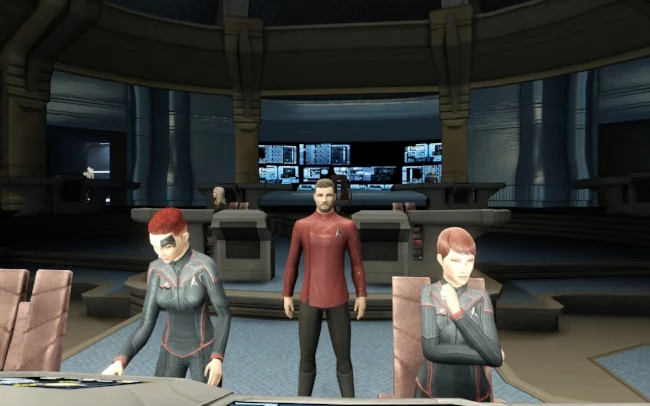
The community itself offers a vast array of involvement and potential sources of fun. For some gamers due to their real-world obligations, it can become a surrogate social life in itself. As I mentioned earlier, this community offers an environment in which they can have a tangible impact and act as a force for good, unlike in the real world. I do not like the term "care bear", as its purpose is ultimately pejorative. However, it cannot be denied that MMOs do attract a lot of people who thrive on the social interaction and are compelled to help and support their fellow players. It is these very factors that defines the point of playing for them.
Because the mainstream success of video games, the gaming industry is naturally chasing the most lucrative demographic group. This is the casual gamer, although exactly what the parameters of that term are, remains hotly debated. However, negative attitudes towards gamers persists as do stereotypes. For many non-gamers, they erroneously think that those that do play MMOs and the like are not engaging with their fellow man. There is also the condescending attitude that because your leisure activity does not take place in a physical environment, that it is devoid of any merit. These are naturally erroneous and flawed ideas, but they often come up, despite the reality being the complete opposite.
To try and compensate against this sort of misinformation, there have been recent studies and reports that try to overstate the benefits of social gaming. I will happily concede the point that gaming does require players to use certain real-life skills, such a team building, communication and organisation, but to hail them as problem solving über talented collectives, that can tackle the world’s problems is a stretch. It is therefore important to keep a sense of perspective on gaming and to pretty much treat it as any other sort of leisure activity. Being a hero in the realm of Tamriel does not make you one in real life. However, nor should it pigeon-hole you as a nut.
So, it in conclusion, it would seem that despite some common factors relating to engagement and enjoyment, it is very difficult to come up with a simple set of rules that define the psychology of an MMO player or indeed any type of gamer. It should also be remembered that gamers often have other interests and mainstream pastimes such as sport, music or art. Gaming is not the sole defining factor of their non-working life. It is simply their leisure activity of choice, and as such should be afforded the same sort or regard as equivalent real world activities such as sport.
Desolation of Mordor and the Blade of Galadriel
Today the latest story DLC unlocked for Middle-earth: Shadow of War. The Desolation of Mordor allows you to play as Captain Baranor, who we now find adventuring in the deserts wastes of Lithlad in Eastern Mordor. Unlike Talion and Eltariel, Baranor does not have any Wraith Powers or the innate gifts and talents of the first born. He is merely a mortal man which subsequently adds an interesting dynamic to the game play. However, Baranor quickly meets up with Dwarven Hunter Torvin, who provides him with a several usefully Numenorean artefacts which fill his “skills gap”. These include a Gauntlet that expands to become a buckler. It also houses a crossbow that fires a variety bolts as well as a grappling hook, thus aiding Baranor with climbing. The other artefact is a kite that is stowed in a back pack. This acts as a parachute and can also be used via the hot thermal vents that litter the landscape, to ascend to vertical vantage points.
Today the latest story DLC unlocked for Middle-earth: Shadow of War. The Desolation of Mordor allows you to play as Captain Baranor, who we now find adventuring in the deserts wastes of Lithlad in Eastern Mordor. Unlike Talion and Eltariel, Baranor does not have any Wraith Powers or the innate gifts and talents of the first born. He is merely a mortal man which subsequently adds an interesting dynamic to the game play. However, Baranor quickly meets up with Dwarven Hunter Torvin, who provides him with a several usefully Numenorean artefacts which fill his “skills gap”. These include a Gauntlet that expands to become a buckler. It also houses a crossbow that fires a variety bolts as well as a grappling hook, thus aiding Baranor with climbing. The other artefact is a kite that is stowed in a back pack. This acts as a parachute and can also be used via the hot thermal vents that litter the landscape, to ascend to vertical vantage points.
The story is relatively straightforward, with Baranor hiring the Easterling mercenary army, The Vanishing Sons and seeking to conquer the regional fortress of Shindram. Due to a quirk of fate (and narrative requirements) The Vanishing Sons are led by Baranor’s older brother Serka. It is the dialogue between the two which makes this story better than average. Both characters are well voice acted respectively by Ike Amadi and Usman Ally. There is a good chemistry between both actors and the narrative strikes the right tone with equal helpings of high adventure and ironic humorous dialogue. It a pleasant surprise to see the Dwarf Torvin return, although his role this time is more of a functional NPC, rather than a major character. The desert environment is a welcome change from the existing Mordor zones, and the Numenorean Fortress that is occupied by Orcs is strikingly different in its architectural style.
All things considered I found Desolation of Mordor to be a superior story expansion than the previous DLC, the Blade of Galadriel. The story of Eltariel is adequate but hardly offers any major difference from playing as Talion. Instead of dominating Orcs, Eltariel destroys them using the Light of Galadriel, although several Uruks do ally themselves with her as they have common goals. In fact, the character of Galadriel come across as martinet in this story and I felt somewhat sorry for Eltariel as she struggles to please such a hard taskmaster. However, Eltariel’s fighting style with twin blades does offer some interesting variations in technique compared to Talion and her quickshot archery ability often proves invaluable. It is the story that is the weakest aspect of this DLC and it is somewhat incredulous even by Middle-earth: Shadow of War standards. There seems to be a never-ending supply of unknown, non-canonical Nazgûl waiting in the wings to act as convenient plot devices. The crowbarring of an Eastern aesthetic into the proceedings is interesting but I’m sure hardcore purists will be having kittens.
If you set aside the biggest weakness of Middle-earth: Shadow of War, which is its loot box and market which somewhat undermines the Nemesis system, you still have an enjoyable RPG which blends a variety of action and stealth gaming mechanics. Developers Monolith Production recently announced that the market would be closing and ultimately removed from the game. As of today, players can no longer buy gold and a later patch will restructure the acquisition of Orcs. No doubt all of this will be done in time for the release of the Game of the Year Edition. However, I do not regret my decision to buy the Gold Edition of Middle-earth: Shadow of War upon its release last October. Irrespective of the games business model flaws, I do feel that I’ve had good value from the entire game. I prefer the Desolation of Mordor to the other DLC and felt that it was wise to release this one last of all, thus ending the game on a high point. It will be interesting to see if this franchise will continue or whether Warner Bros. will create any similar games based on the works of JRR Tolkien.
“Geek Culture” and the Media
During my lifetime, I have seen many niche market hobbies and pastimes become mainstream activities. Much of what is now generically known as “geek culture” use to be the exclusive and esoteric province of hardcore fans back in the seventies. Comic collecting, conventions commemorating obscure TV shows and even gaming were activities that were mainly conducted under the mainstream radar, in minor conventions centres, church halls and out-of-the-way bespoke stores. Forty plus years later and all of the above are now big business, generating staggering sums of money. For example, let’s take a moment to reflect upon Avengers: Infinity War which has so far earned $1,164,106,540 at the box office since its release on April 27th. The notion of a film company investing so heavily in such a genre franchise was virtually unheard during my youth. Sure, that changed with Star Wars but if you’ve read anything about the making of that movie, you’ll know it was both a battle and gamble to get it to the big screen.
During my lifetime, I have seen many niche market hobbies and pastimes become mainstream activities. Much of what is now generically known as “geek culture” use to be the exclusive and esoteric province of hardcore fans back in the seventies. Comic collecting, conventions commemorating obscure TV shows and even gaming were activities that were mainly conducted under the mainstream radar, in minor conventions centres, church halls and out-of-the-way bespoke stores. Forty plus years later and all of the above are now big business, generating staggering sums of money. For example, let’s take a moment to reflect upon Avengers: Infinity War which has so far earned $1,164,106,540 at the box office since its release on April 27th. The notion of a film company investing so heavily in such a genre franchise was virtually unheard during my youth. Sure, that changed with Star Wars but if you’ve read anything about the making of that movie, you’ll know it was both a battle and gamble to get it to the big screen.
Yet despite the commercial viability of “geek culture” and the way it has become subsumed into wider popular culture, it is still something that is often misrepresented in the media, who struggle to understand it. Some argue that it is being wilfully misconstrued to pander to specific demographics and sell newspapers. Perhaps the TV show The Big Bang Theory is the best example of this consumerism versus perception paradox. Despite it’s broad popularity with audiences, some self-identified “geeks” strongly object to it, feeling that the show makes nerds and their associated culture the butt of the jokes, rather than the subject of them. Another objection is that it offers a caricatured vision of “geek culture”. As one Reddit contributor put it “it is a close approximation of nerd culture, but it’s not quite an accurate representation. BBT catches flack because it’s not far enough off the mark to write off, but it’s not close enough to identify with". Subsequently, representation leads to stereotypes, which is seldom a good thing.
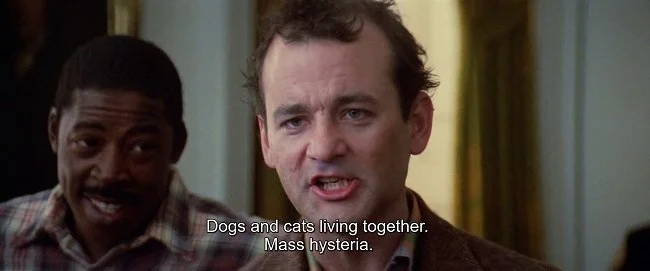
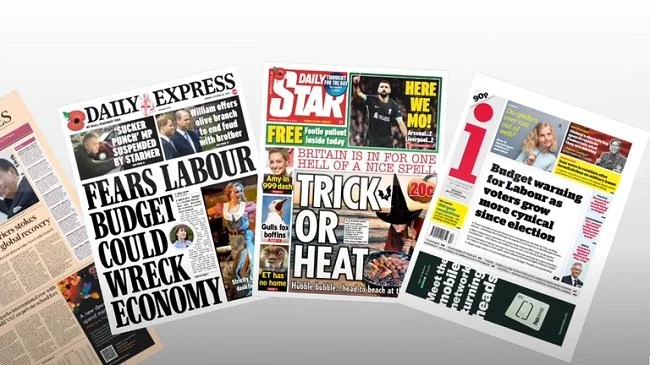
We should also consider the cyclical tabloid hysteria about gaming that regularly appears. At present the UK popular press are running ill-informed and deliberately distorted stories about the popularity of Fortnite, which all sounds tediously familiar. Roll back the clock ten years and you’ll find identical stories about Grand Theft Auto IV. These and other examples seem to indicate that big business and the general public are happy to reap the benefits of “geek culture”, while at the same time looking down upon it and ridiculing it. Some have gone so far as to argue that its just another example of cultural appropriation but as it’s not race based it isn’t deemed to be a “problem” by big business. Yet to some who see themselves as geeks and nerds, the ongoing misrepresentation its considered deeply hurtful. The all too often cliched representation in movies, TV and the press is seen as an attack upon an important cultural part of their life. Some who feel particularly aggrieved have said it comes across as “blackface” for nerds.
Now some will instantly think that those complaining are merely “snowflakes” and that their reactions are overblown. However, I don’t like to dismiss a criticism out of hand and feel that if someone has arrived at a particular conclusion, irrespective of whether it’s erroneous or not, we should determine why they feel that way. Hence the following quote seems relevant. "Butthurt is an inherent, and important part of nerd culture. Some of us got off easy just being “weird kids,” and some of us got beaten up daily, but very few people who were deeply entrenched in typically “nerdy” things had smooth sailing in our younger years, and that, unfortunately, breeds a lot of bitterness. I think a lot of people having grown up under that kind of a weight resent seeing the culture they were mocked for adopting being played for a joke. It wasn’t funny when they got their nose bloodied because they read books during lunch. No one played it as an affable, comedic, good-hearted moment when someone slung their Magic cards off the table and laughed while they picked them up. So, I think a lot of people see this being played out as a comedy being marketed to the demographics that once mocked nerds as being somewhat of an affront, an opening of old wounds". Reddit user j0be
Misrepresentation is not the only complaint about the commercialisation of “geek culture”. An increasing number of people feel that they’ve been “thrown out of your own party”. The documentary Comic-Con Episode IV: A Fan's Hope briefly touches upon this with a few of the long term comic traders commenting on the expanding commercial scope of the event and how traditional aspects such as the buying and selling of comics are being side-lined. I can attest to something similar from my own experience. In the past Contains Moderate Peril covered a lot of UK cosplay events and between 2011 and 2015. During that time a lot of the regular attendees noted that the wider press was becoming far more interested in such events and that as a result a lot of “professional” cosplayers where joining the scene. These were frequently established models catering (or pandering depending upon your perspective) to a “broader demographic”, that tended to monopolise press attention. From subsequent discussions I’ve had with cosplayers since then, it has become far more widespread. Although I resist the concept of “gatekeepers” of “geek culture”, one cannot help but think that press attention will be somewhat skewed for example, by the attendance of “Adult Film” actress Siri at and event, cosplaying as Power Girl.
Contemporary media still embraces and propagates very traditional archetypes. Gamers, cosplayers, comic nerds, Star Wars and Star Trek fans along with many other groups of geeks are still considered to be fair game for the most arbitrary of stereotypes and are happily mocked by the film industry, television and the press. These stereotypes go hand-in-hand with a list of other enduring clichés. Obesity, myopia, sexual inadequacy, social isolation and dysfunction, under achievement and poor personal hygiene are the most common. When Hollywood (or any other platform) wishes to bolster the credentials of a traditional archetype with all their assumed “positive attributes”, within the framework of a story, all they have to do is introduce a stock nerd into the narrative to get the Job done. Everyone laughs at the “loser” (as perceived by the mainstream zeitgeist) and feels better about themselves. Ribbing and satire are one thing, but this sort of lazy writing is neither. As a plot device, geeks are the less politically damaging equivalent of the “dumb Irish” or “jive black” characters (although the latter still prevails). It is always healthy to laugh at yourself. However, too often such introspection is replaced by spite and marginalisation. I’m sure many self-professed geeks are not afraid of humour through shared experience. But instead they find themselves being ridiculed.
In a perfect world, film makers, television shows and the mainstream press should realise that gaming, fandom and general geeky pursuits are now very much part of mainstream culture and reflected that in their coverage fairly. Thirty-something year old, white collar professionals make up a substantial part of “geek culture” now and they do not so obviously conform to entrenched stereotypes. But the problem with stereotypes is that you can always find one or two individual that meet the criteria and then that becomes a disproportionate means of validation. Plus, the media loves being able to pigeon hole and compartmentalise people and groups. So, the reality of the situation is that “Geek culture” is going to continue to be depicted on their terms. Its a case of those who do not self-identify as a geek, looking in upon their world as observers, as opposed to those who are nerds presenting their environment from within. This is the bane of so much reporting on identity politics, in that it often comes from the mainstream, outside of the specific groups being scrutinised, with an inherent baffled air.
The only real way to bring about change by those who feel demeaned or marginalised by the status quo, is to lobby against it. That means challenging every negative depiction and having to endure the slings and arrows of your critics, while you’re doing so. It takes time to bring about change but that is pretty much the only proven way to alter perceptions. However, “geek culture” is not seen as the same as identity or sexual politics, so it may be harder to achieve. Those causing offense will not necessarily take any complaints seriously. Not until it starts impacting upon their bottom line. However, a generation of grown up geeks, nerds and gamers are now making an impact within the world of TV, film making and internet personalities. This does present an opportunity to leverage perceptions and to change the way things are portrayed. Ultimately it is through the normalisation of activities and pastimes that negates any prejudice against them. Over a period of about twenty years the internet has gone from being a curious niche market platform to an everyday, common place aspect of most people’s life. Bearing that in mind perhaps there is a scope for the mainstream media to recalibrate its perception and relationship with “geek culture”.
























Motion Control Gaming
I was reminiscing with a friend the other day about time we spent playing Wii Sports in summer 2007. Golf and bowling were our favourites out of the five games available. Over the period of a year we squandered numerous hours breaking ornaments, frightening the cat and having immense fun, while separating our respective shoulders. Yet, motion control gaming never quite became the phenomenon it was touted to be. It took three years before Microsoft entered the fray with the Kinect and Sony with the PlayStation Move. Once all three platforms had the necessary technology there was much posturing and conjecturing about retrofitting existing franchises and marketing of new bespoke games that would capitalise on the “novelty” of motion control. The addition of physical exercise to a leisure activity traditionally associated with sloth, was going to revolutionise the health of an entire generation. Motion control gaming was also to have a major impact of sports training and medical physiotherapy. Yet none of these “dreams” came true and today it’s merely a curious postscript on the history of gaming.
I was reminiscing with a friend the other day about time we spent playing Wii Sports in summer 2007. Golf and bowling were our favourites out of the five games available. Over the period of a year we squandered numerous hours breaking ornaments, frightening the cat and having immense fun, while separating our respective shoulders. Yet, motion control gaming never quite became the phenomenon it was touted to be. It took three years before Microsoft entered the fray with the Kinect and Sony with the PlayStation Move. Once all three platforms had the necessary technology there was much posturing and conjecturing about retrofitting existing franchises and marketing of new bespoke games that would capitalise on the “novelty” of motion control. The addition of physical exercise to a leisure activity traditionally associated with sloth, was going to revolutionise the health of an entire generation. Motion control gaming was also to have a major impact of sports training and medical physiotherapy. Yet none of these “dreams” came true and today it’s merely a curious postscript on the history of gaming.
If you ever need an example of a novelty concept and a niche market product, then look no further than motion control gaming. It’s integration with Wii Sports was sublime. But beyond that game it’s use ceased to be enjoyable and instead becomes a major headache. The Wii console shipped with a bundle of games on launch; one of which being Call of Duty 3. Let it suffice to say that this game didn’t port well to motion control. Driving with the Nunchuk and Wii remote was manageable but aiming a gun, throwing grenades and interacting with the environment was very chaotic, haphazard and difficult. It was also extremely tiring. A few years later, I got to try Kinect Star Wars at a trade show. It was a horribly sluggish affair and far from the seamless experience that the trailers promoted. It was also very apparent that the NPCs in the game were noticeably nerfed to accommodate those players who were less “agile”. Once the initial fun of “being in Star Wars” dissipated, again plating in this way quickly became a chore. At the time it crossed my mind that games of this nature would never lend themselves to lengthy play sessions, like regular titles.
I can remember watching a video roundabout this time by Clinical Psychologist Albert “Skip” Rizzo. He was a big advocate of the health benefits of motion control gaming and made some bold statements about its application into popular games. He proposed that if a child was playing World of Warcraft for six hours a day, then the parents should insist that at least one of those hours should be done in conjunction with a motion control system. At the time Blizzard did briefly flirt with adapting their flagship MMORPG to this system. Yet again the project ran out of steam as gaming of this kind simply didn’t catch on because people like sitting on their butts while playing. Although there are health issues associated with sedentary gaming, they can be overcome by the application of common sense, rather than a cultural shift to motion control. Selecting an appropriate chair and desk, ensuring they are at the right height along with investing in good quality, ergonomically designed keyboards, mice and game controllers, can contribute significantly towards avoiding RSI, eyestrain and back related issues. Taking breaks, avoiding “snack culture” that often goes hand-n-hand with gaming and generally acting with restraint also helps avoid obesity, social isolation and death. I done it. So have countless others.
Motion control strikes me as being very similar to 3D in movies and TV; being a technology that is only pertinent to niche markets and of no real value or tangible benefit to the mainstream. Hence Wii Sports remains a unique experience. One that I am happy to return to even today (does anyone still own a Nintendo Wii?) But the notion of motion control permeating all other genres has really bitten the dust and the only viable avenue left for it is in conjunction with VR; another concept that has had an equally chequered past. Frankly, motion control gaming is just one of those things that always seems better on paper than in reality. The idea of playing some sort of team deathmatch FPS and having to leap behind the sofa in real life to avoid some threat in the game itself, is as cool as hell, but that’s not how it’s going to play out in real life. Some corpulent child is going to end up a tetraplegic after nose diving through a glass coffee table and then the lawsuits are going to start flying. So, this is why motion control gaming never really took off. Dignity and indolence are other contributory factors. Mind you, if you embrace the concept of the multiverse, somewhere there’s an alternative reality where Twitch TV is a lot more entertaining and the gamers a lot healthier.
The Iniquities of Mobile Gaming
The original title for this post was to be “the unfathomable iniquities of mobile gaming”, but when you pause to think about it, it’s hardly unfathomable from the publisher’s point of view. Mobile games are primarily designed to be money syphons, swathed in a superficial veneer of interactive entertainment. If you want a contemporary example, then look no further to the newly released Harry Potter: Hogwarts Mystery. The game capitalises on a popular franchise and quickly introduces a pay wall which hobbles those players who elect not to spend money. What I find “unfathomable” are those who do not consider this an egregious business model and are happy to sink substantial amounts of cash into this pitiful caricature of a game. Sadly, the core demographic for this and many other mobile titles, are the youth market, who therefore may not even be picking up the tab for the game. As a result, irrespective of my and other gamers disdain and subsequent boycott of mobile gaming, these sorts of products continue to be financially lucrative.
The original title for this post was to be “the unfathomable iniquities of mobile gaming”, but when you pause to think about it, it’s hardly unfathomable from the publisher’s point of view. Mobile games are primarily designed to be money syphons, swathed in a superficial veneer of interactive entertainment. If you want a contemporary example, then look no further to the newly released Harry Potter: Hogwarts Mystery. The game capitalises on a popular franchise and quickly introduces a pay wall which hobbles those players who elect not to spend money. What I find “unfathomable” are those who do not consider this an egregious business model and are happy to sink substantial amounts of cash into this pitiful caricature of a game. Sadly, the core demographic for this and many other mobile titles, are the youth market, who therefore may not even be picking up the tab for the game. As a result, irrespective of my and other gamers disdain and subsequent boycott of mobile gaming, these sorts of products continue to be financially lucrative.
My vocal dislike for mobile games if often met with cries of “why worry about something that doesn’t affect you”, which on a superficial level seems like a legitimate question. Well the answer is that games of this type are monopolising the mobile market, stifling innovation and normalising abhorrent business practises. Again because of the age group of core mobile gaming customers, an entire generation of gamers are growing up in an environment where game play is regularly disrupted by pay restrictions. Normalising such practises is dangerous. 2017 saw the console and PC game market try to adopt similar business practises with games such as Middle-earth: Shadow of War and Star Wars: Battlefront II. Mercifully, the consumer push back was sufficient to stall these initiatives but the cultural shift towards “live services” that Ubisoft and other developers frequently reference, shows that there’s more than one way to skin a cat. I don’t expect the likes of EA to give up so easily on the dream of bringing the mobile gaming business model to the console and PC market.
In 2016, the mobile gaming market was estimated to have taken $38 billion in revenues, compared to $6 billion for the console market and $33 billion for personal computing gaming. By 2017 the mobile gaming market increased to $46 billion. It’s a market with a broad spectrum of quality. Mobile gaming at it’s best can be as engaging and creative as other platforms. The inherent restrictions of the platform often mean that developers have to think outside the box. Yet a precedence has now been set early on as to how these game finance themselves. In a very short space of time this has gone from being an aspect of game development, to its very foundation with game mechanics being driven by the business model. I argued in a recent blog post that the very definition of a “game” needs to be redefined to encompass the variety of genres and the various different approaches to playing them. However, this evolving perception of exactly what is a game is equally open to negative factors. Hence if we are not robust and vocal in our opposition to the iniquities of mobile gaming, they will simply become the norm for all platforms.
Policing Out-of-Game Toxicity
“A game company has no rights or responsibility to police Discord, Reddit, et al. The company should not ban in game someone because they are bad (misogyny, racism, homophobia) about OOG people in OOG public forums. But what about people who are obviously ‘bad’ about in-game people/groups? I get the not wanting to police the world and certainly resist the nanny state more than most. But what if someone says something offensive about players/employees on a very public Reddit or Discord? It’s not a free speech issue; in the US you can say most anything. But the game company certainly can determine who can play its game. Do they make more money by letting these people play? I guess at the end of the day, CCP is correct, but it does not feel quite right.” Sally Bowls MOP Reader.
“A game company has no rights or responsibility to police Discord, Reddit, et al. The company should not ban in game someone because they are bad (misogyny, racism, homophobia) about OOG people in OOG public forums. But what about people who are obviously ‘bad’ about in-game people/groups? I get the not wanting to police the world and certainly resist the nanny state more than most. But what if someone says something offensive about players/employees on a very public Reddit or Discord? It’s not a free speech issue; in the US you can say most anything. But the game company certainly can determine who can play its game. Do they make more money by letting these people play? I guess at the end of the day, CCP is correct, but it does not feel quite right.” Sally Bowls MOP Reader.
This is one of the more intriguing questions that’s been explored of late, over at Massively Overpowered. I find it particularly interesting because it can be considered as part of a wider ongoing cultural change. It is not uncommon these days for employers to check up on potential job candidates beyond their resume. There have been cases of interview boards and HR departments trawling through people’s social media accounts checking for anything “unsavoury” that could potentially embarrass or compromise their company. Traditional notions of privacy are changing and the “joined up” nature of social media platforms means you theoretically have far more data to act upon. This may be checking to see if your new head of PR is a member of the Flat Earth Society or whether a player of an MMO is continuing to be problematic towards the community outside of the game itself. But just because you can do something doesn’t mean that it should be done, as Sally Bowls states in her question.
Whenever someone of some institution raises the spectre of implementing new rules and regulations to address a problem, I always ask about those that are already in place? Are they sufficient and are they being utilised effectively? More often than not the answer to these questions are “yes” and “no”. In the case of policing out-of-game toxicity there is already adequate provision in place through use of existing legislation. Racism, hate crimes, threats of violence, and other forms of intimidation are all criminal offenses and if they can be proven then the culprit can be dealt with accordingly. Depending on where such individual is causing problems outside of a game, there are usually existing provisions to take care of the problem Twitter, Reddit, Facebook and other platforms all have TOS which should cover such behaviour and deal with it. Sadly, these companies are neither quick or consistent in implementing such checks and balances.
However, all the above is based in law and therefore has to be managed within such a framework. If a game developer or publisher is looking to police out-of-game toxicity beyond the confines of the law, then it becomes more problematic. For example, consider a hypothetical disgruntled gamer who fell out of love with their favourite MMO because the developers changed the running animation on the Steampunk Pangolin mount. This fictitious gamer now runs a blog or You Tube channel and regularly posts negative comments about the game, the developers and the wider gaming community. None of it is technically libellous or in breach of the law, but due to the high profile of this angry gamer, it does impact upon community relations and broader perceptions of the game. The publishers may well want to see if they can “contain” or even “shut down” this individual because it may impact upon their bottom line. They may also wish to do so to simply protect their community. However, we now find ourselves faced with a classic freedom of expression conundrum. The allegedly “toxic” gamer may well be an asshole but as far as I’m aware that’s not yet a hanging offense. To try and stifle that individual right to express themselves is wrong. If you want a true democracy and all the benefits it brings, then enduring assholes is the price of admission and ongoing collateral damage. Until this fictional individual breaks the law, as much as it pains me, we have to let them run around and bark at the moon in their own back yard.
Now I’m not advocating that we just throw in the towel at this point. Trolls and such like should not go unchallenged and we should call them out and highlight what we consider to be wrong. However, we must do so in an appropriate manner. If we wish to occupy the moral high ground, then we need to act accordingly. Some folk may well see this as fighting with one hand tied behind your back but again, this is the price that you pay if you want a free and just society. Therefore, challenge any allegations, lies, or straightforward shitty behaviour. But be gracious, factually correct and never get down in the mud with the source of toxicity. A games publisher can certainly refuse an individuals business or ban them from forums. The TOS that accompany most player accounts usually give the publisher the whip hand in such situations.
The main problem with such problems is that they’re seldom binary issues. Games publishers are not always bastions of morality and champions of consumer rights. Business is designed to look after its own needs first. Let us not forget that some games publishers have actively tried to prevent game reviewers from expressing their legitimate opinions. Also “toxicity” is a difficult term to exactly quantify. As gamers I’m sure we could agree on a lot of common ground but there is a lot of scope for grey areas around the periphery. Exactly who should ultimately get to define the exact parameters of the word? And, we shouldn’t forget that the smart troll can always stay one step ahead of any real problem especially if they mask their identity effectively and compartmentalise their various personas. A ban is hardly the most difficult thing to bypass.
Overall, unless an individual is breaking the law, then I’m not in favour of a game developer or publisher attempting to police the wider community outside of the confines of the game itself and its official social media platform. Blizzard announced earlier this year that they would be proactively policing You Tube with regard to their games, as a way of seeking out toxic behaviour in them. Again it is a notion born of an honest intent. But they weren’t specific as to what criteria they were using. At present, Overwatch players can be suspended simply due to the weight of in-game complaints against them. Although genuine toxic players may be identified and sanction, will it all end there. Will we reach a point where players will simply point to external comments and views they do not like and request that Blizzard sanction the author? Furthermore, beyond gaming, we have seen sports pundits and other media personalities fired for things they’ve said and done outside of their employment. Sometimes it has been justified but on other occasions it has been questionable and raise a lot of wider societal issues. So, I believe caution is required in any form of wider policing, be it in gaming or elsewhere in modern life. Sadly, we do not live in enlightened times and reasoned responses are all too often replaced by knee jerk reactions and baying mobs.
LOTRO and Daybreak Game Company
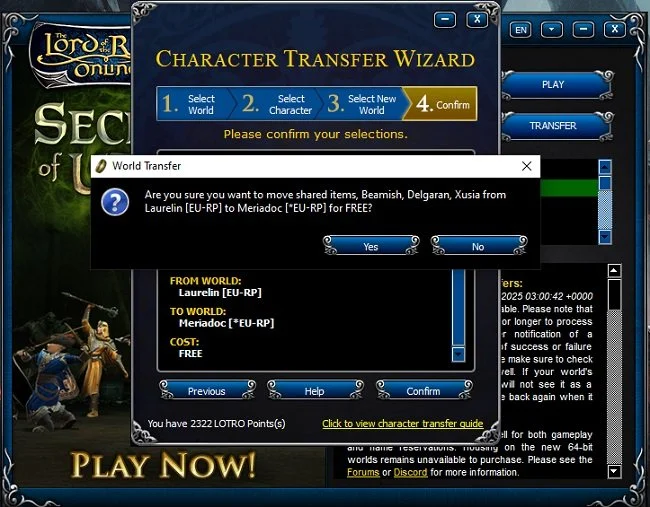
Over the past eleven years The Lord of the Rings Online has faced many business-related issues that has prompted its player base to speculate over the games future. These include the MMOs transition from a subscription to a free to play service, Turbine’s acquisition by Warner Bros. Interactive Entertainment and then there were the issues with the license expiration in 2017. However, all these problems were resolved in one way or another and the game endures. That is not to say that Turbine or Standing Stone Games (SSG) are business geniuses. Absolutely not. They’ve made plenty of mistakes over the years and continue to regularly shoot themselves in the foot with their community relations. LOTRO survives because of its core playerbase who have made this virtual Middle-earth their home and they support the game come hell or high water. A lot of this core group are fully aware of SSGs shortcomings, but they are wedded to this game and hence they sustain it. It’s a curious yet fascinating symbiotic relationship.
Over the past eleven years The Lord of the Rings Online has faced many business-related issues that has prompted its player base to speculate over the games future. These include the MMOs transition from a subscription to a free to play service, Turbine’s acquisition by Warner Bros. Interactive Entertainment and then there were the issues with the license expiration in 2017. However, all these problems were resolved in one way or another and the game endures. That is not to say that Turbine or Standing Stone Games (SSG) are business geniuses. Absolutely not. They’ve made plenty of mistakes over the years and continue to regularly shoot themselves in the foot with their community relations. LOTRO survives because of its core playerbase who have made this virtual Middle-earth their home and they support the game come hell or high water. A lot of this core group are fully aware of SSGs shortcomings, but they are wedded to this game and hence they sustain it. It’s a curious yet fascinating symbiotic relationship.
Two days ago, Massively Overpowered reported on an interesting situation that has potential to impact upon LOTRO (and DDO) as it is to do with SSGs current “publisher” Daybreak Game Company (DGC). On April 6th, the U.S. Department of the Treasury commenced the freezing of assets of several Russian businesses because of alleged “destabilizing activities” such as interference in the 2016 U.S. election. This includes Viktor Vekselberg, who owns the Renova Group conglomerate along with its subsidiary, Columbus Nova. Columbus Nova, is the parent company of DGC. Renova has until June 5th to “wind down operations, contracts, or other agreements” according to The U.S. Office of Foreign Assets Control. Approximately $1.5 and $2 billion assets from Vekselberg have been frozen because of these sanctions. It now remains to be seen whether this process extends to Columbus Nova’s assets and DGC. At present, DGC is trying to distance itself from Columbus Nova. Tweets and press releases are being deleted and Wikipedia entries are being “edited”. Yesterday, DGC’s Chief Publishing Officer and former Senior Vice President, Laura Naviaux, announced she’s left the company.
Naturally, those who play EverQuest II and PlanetSide 2 are “concerned” as to whether this situation will impact upon these games as they are owned by DGC. Which then brings us back to the LOTRO community. It has naturally got wind of the situation and players are asking SSG for clarification on the games official forums. Naturally, SSG are being tight lipped about the matter using marketing speak to brush concerns aside. Putting the potential gravity of the situation aside for the moment, most businesses are smart enough to keep details of their internal machinations behind close door, so it’s highly unlikely the current community manager Jerry “Cordovan” Snook, is going to go public and spill the beans as to what’s going on. Some players are adamant that DGC is simply SSGs publisher and even if there is a problem, it’s just a case of finding a new one. Certainly, on paper DGC is SSGs publisher and further details about the business relationship between the two is not clear. However, history doesn’t always favour the “wait and see” approach and there is nothing wrong with some intelligent and measured speculative analysis of the situation.
The potential for this matter to affect LOTRO depends on two key factors. First off, is DGC directly linked to Columbus Nova and therefore at risk of having its business assets frozen? This is ultimately one for the lawyers to decide but it is curious that DGC’s Chief Publishing Officer has chosen now as a time to make a career move. It could be coincidence. If further senior staff resign, then perhaps that may be a clearer indication that the company is at risk. There is also plenty of company information in the public domain these days that allows even the layman to remain informed. If we see any movement of corporate assets to outside of the US, then again it may be a clear indication that DGC is subject to The U.S. Office of Foreign Assets Control.
The second point to consider is the exact nature of SSGs relationship with DGC. Many games journalists and gaming community commentators have suspected right from the outset, that DGC was more than just a publisher for SSG and that they bankrolled their entire extraction from Turbine/Warner Bros. in late 2016. In a recent interview with with Jean "Druidsfire" Prior for MMO central, LOTRO Executive Producer Rob Ciccolini AKA Severlin stated that Jake Emert is his direct boss. Emert is CEO Daybreak Game Company Austin Texas Studio. Such a statement certainly puts DGCs status with SSG in a different light. When you consider the whole matter of how staff from Turbine set up their own company, then bought the rights for DDO and LOTRO, as well as the infrastructure and then settled all associated legalities, it must have taken a substantial amount of capital. I am not aware of SSG having raised that money themselves, which therefore means there must have been a major investor involved. It is not unreasonable to suggest that DGC was and remains that investor.
If both of these points are correct and that DGC underwrites SSG and is in imminent danger of having its assets frozen, then there is scope for problems in the weeks to come. And it is at this point that there is less data available to speculate upon. What exactly would be the consequences of removing DGC from SSGs business plan. How easy would it be to find a replacement investor? Would there be a one who was interested and readily available? Would there be a disruption of service to both LOTRO or DDO or would it be worse than that? Or are there caveats in the fedral asset freezing regulations to prevent collateral damage such as this hypothetical scenario? At present there is insufficient information for any of us to know definitively what is going on. However, if we reflect upon information that has emerged from former Codemasters employees about the business practices surrounding LOTRO, we can be assured that both the grass roots staff and the playerbase are always the last to know what is really going on. I’m sure in the meantime, LOTRO players will continue with their activities as usual and quite right to. It is however a worrying situation and it would be foolish to ignore the matter out of hand.





Remember Game Stores?
Over the weekend, I was meandering around my local shopping centre while paradoxically pondering the iniquities of consumerism, when I noticed a game retailer. In this particular case it was the chain store ironically (or not) called Game. Now it's been a considerable amount of time since I've been inside a dedicated gaming store, because I buy pretty much anything of this nature online these days. So, in a fit of nostalgia, I decided to go inside and have a look around. The first thing that struck me was how console-centric the store has become with substantial floor space given to both new and previously owned PS4 and Xbox One titles. The PC section was relatively small and focused upon the latest releases. However, there were numerous PC multi-buy offers for older titles. The store also sells a lot of hardware for both consoles and the PC as well a wider gaming and pop culture memorabilia. They also buy and sell consoles, phones, tablet and the like.
Over the weekend, I was meandering around my local shopping centre while paradoxically pondering the iniquities of consumerism, when I noticed a game retailer. In this particular case it was the chain store ironically (or not) called Game. Now it's been a considerable amount of time since I've been inside a dedicated gaming store, because I buy pretty much anything of this nature online these days. So, in a fit of nostalgia, I decided to go inside and have a look around. The first thing that struck me was how console-centric the store has become with substantial floor space given to both new and previously owned PS4 and Xbox One titles. The PC section was relatively small and focused upon the latest releases. However, there were numerous PC multi-buy offers for older titles. The store also sells a lot of hardware for both consoles and the PC as well a wider gaming and pop culture memorabilia. They also buy and sell consoles, phones, tablet and the like.
I had a chat with one of the guys behind the counter and he was quite open about the state of business, describing the regular ebb and flow of customers centred around the release of top titles. PC related sales were obviously not as important as they use to be, although he did indicate that there had been a lot of interest about the PC release of Monster Hunter: World. There is a healthy trade in second hand console games as well as phones, which seems to help business immensely. Big spenders are often parent or grandparents who come in to the store and seek advice regarding what to buy as gifts and birthday presents. Certainly, the company’s core business model has changed radically in recent years and they have had to expand their remit to stay both relevant and profitable. This store was also experimenting with gaming and “geek culture” themed events to try and attract customers.
So as a sign of solidarity for high street retailers, I bought a copy of Assassins Creed (yes, the original game) at the bargain price of £1.99 and a new bog-standard Microsoft keyboard (I get through about one a year) then went about my business. Out of curiosity I noted what other stores in the area sold games and found that both Argos and supermarkets ASDA and Sainsbury’s were aggressively competing with prices. As for the copy of Assassins Creed, this is the first physical copy of a game I've bought in over six years. The last time I bought a game that I installed from media was in December 2011, when I pre-ordered the MMORPG Star War: The Old Republic. I had forgotten about this aspect of gaming. I briefly became nostalgic as I removed the shrink wrap from the packaging. However, installing the game from the DVD-ROM quickly erased any goodwill. I was surprised at how long this process took, having been spoilt by the speed a direct download via Steam over a fibre connection. Once Assassins Creed was installed I consigned the physical media to a cupboard along with Max Payne, Half-Life 2 and TOCA Race Driver 2.
Like many others, I have adapted to the digital age and have outgrown my affinity for physical media. The majority of my film and music collection are now digital and I’ve sold off most of my DVDs and CDs. The only ones that I’ve kept are rarities that cannot be replaced. There’s no nostalgic sentimentality as far as I’m concerned, regarding having something “tangible” and being able to “hold” the media. It’s all gone because I want the space and I hate clutter. However, I fully understand those people who still have a strong bond with hard-copies. I come from a generation that bought vinyl for a while before CDS became the norm and I appreciate the sense of ownership that having a physical copy of an item brings. But I also like the benefits of online services, such as fast downloads and installations as well as the automatic patching. I also like the fact that I can take my music collection with me and access it any time. With this all in mind, I wonder if my local Game store will still be there this time next year?
Game Over, But Not Completed
Over the last few years there has been increasing data that shows that only a small number of gamers are finishing the single player games that they purchase. At present the stats indicate that number to be around 10%. According to Activision production contractor Keith Fuller "What I've been told as a blanket expectation is that 90 percent of players who start your game will never see the end of it unless they watch a video on YouTube”. Furthermore, services such as Raptr, which tracks online playing sessions and achievements are producing equally dismal data. According to the company, only 10% of people who played Rockstar's blockbuster Red Dead Redemption actually finished the game. It’s data such as this that adds grist to EA proverbial mill, when they say that the single player experience is in decline and co-op gaming is the future.
Over the last few years there has been increasing data that shows that only a small number of gamers are finishing the single player games that they purchase. At present the stats indicate that number to be around 10%. According to Activision production contractor Keith Fuller "What I've been told as a blanket expectation is that 90 percent of players who start your game will never see the end of it unless they watch a video on YouTube”. Furthermore, services such as Raptr, which tracks online playing sessions and achievements are producing equally dismal data. According to the company, only 10% of people who played Rockstar's blockbuster Red Dead Redemption actually finished the game. It’s data such as this that adds grist to EA proverbial mill, when they say that the single player experience is in decline and co-op gaming is the future.
There are a number of reasons why this trend is occurring, but much of the blame can probably be attributed to the rise of online multiplayer and co-operative play over recent years. Two decades ago this was an emerging trend. Today it is simply an industry standard. Gamers can now get a quick fix on terms that suits them via co-op play, instead of progressing through a lengthy linear single player experience. Plus, the average gamer is now at 37 years old. Leisure time is a finite commodity competing against jobs, families and other commitments. But regardless of the accuracy of the numbers, I don’t dispute the overall finding of these various reports, because I regularly abandon games if they do not suit my requirements. Yes, I’m guilty as charged and I suspect that many of my peers are to.
I have never considered myself a completist and don’t feel it essential to my enjoyment to achieve every accolade within a game. However, I am a child of the seventies and its prevailing cultural mindset of “soldiering on” and “finishing what you started”. The sort of nonsense that your sports teacher would spout back in your school days. Sadly, it’s an affliction that I’ve laboured under for years. In my youth, if I made a decision to read a book or view film, I stuck with it even if it wasn’t an enjoyable experience. It was a form of social conditioning and to push against it would mean that you were “lazy” or a “quitter. I don’t recollect ever walking out of the cinema if a movie was bad and until recently, can count on one hand the amount of films that I have abandoned while viewing at home.
However, I broke this habit in 1987 when I was reading Clive Barker’s Weaveworld. I simply didn’t like the direction story was taking or the way the central characters were behaving, so I put the book back on the shelf. To this day I have never completed it. And as I broke myself of this habit in the late eighties, it meant that as I got more into gaming during the following decade, I wasn’t burdened by such rigid criteria. For me gaming has always been about the overall experience and participating in a story. Although I enjoy a certain degree of challenge, it is a very relative term. If a game requires that I read copious amounts of websites and watch various You Tube videos to come to terms with its subtleties, then it is not for me. Therefore, you won’t find me tracking data on a spreadsheet just to play a game. I prefer to invest my time and energy into real work, as that yields tangible financial rewards. Games are for my amusement and not a binding contract that demands completion.
As an MMO player, games of this ilk effectively have no end, apart from the quarterly hiatus between new content. I’ve nearly reached the current level cap in LOTRO. At present progress is proving particularly gruelling. However, I can take a break from such games and return at a time of my convenience when I feel more disposed towards whatever challenge that is on offer. If there is something that I currently do not like, then a wait of a few months will always yield some alternative new content. The single player game is not so flexible in this regard. If you buy the Skyrim Special Edition, you will own all the content that was ever produced for that game. You may well play through the main story and reach a point where you are satisfied. There is still plenty more content available but if you’re done, then that’s irrelevant. It’s very much like a buffet in a restaurant. I recently bought the game of the year edition of Lords of the Fallen for the nominal fee of £3.19 in a sale. Suffice to say that despite many good points, the game just wasn’t for me, so I immediately logged out and uninstalled it.
Our gamers becoming lazier? That’s a very difficult question to answers. I would argue that as I get older I am more discerning of what projects I embark on and what I commit to. I also know what I like and am not obliged to endure what I don’t. Gamers of my generation have come to terms with the fact that they cannot do everything and will not jump feet first into a time sink, irrespective of how shiny it appears. The industry also seems to be getting wise to the concept of short and measured bursts of gaming, rather lengthy game play sessions. Also, pricing in a key factor. The sunk cost fallacy can still drive people to stick things out with a game. It does with me and those damn MMOs. And if you’ve pre-ordered a digital deluxe version of the latest triple A game, then you are not going to give up on that sucker easily. However, Lords of the Fallen cost me less that a pint of beer. That is easy to walk away from and therefore budget games are probably abandoned uncompleted more often that newer titles. There is also an abundance of choice these days.
My tastes along with my outlook have changed as I’ve got older. I guess being fifty has made me more conscious of my finite leisure time (and lifespan). So now, if a book, film or indeed a game is not working out and I’m not getting the correct fun to cost ratio from my purchase, I will vote with my feet. This subject is a very interesting one as it opens up so many other points of discussion. Why we game, what we expect from a game and how the developers struggle to satisfy all player’s needs. There’s also a class of gamer that is very judgemental regarding his fellow gamers and they often have much to say about “quitters”. However, they need to remove the beam out of your own eye, before they attempt to remove the speck out of their brother’s eye, to paraphrase the Bible. So, considering all of the factors discussed, I am not surprised that so many games are left unfinished. I’d like to know the numbers for books and movies as well. I suspect that far more leisure-based undertakings are abandoned just as much a single player games for exactly the same core reasons.
Competition or Entertainment?
It becomes apparent when reading the various musings of the gaming cognoscenti, that there are vastly differing views on most key areas of gaming. Take a subject such as “difficulty” which is currently a subject of debate over at Massively Overpowered. A quick perusal of the comments shows a broad range of views with many being at odds with each other. But if we step back from these individual differences of opinion, it becomes clear that the basis of all of these stems from a fundamental disagreement as to what actually constitutes a game and exactly what are its defining attributes. There are those who feel that competition is the foundation of gaming and that this can only be fully realised in a player versus player environment. Success is the measure of achievement and the basis of their personal gratification. However, others beg to differ and feel that collaborative play, social interaction and achieving personal goals are as equally important. I believe this divide clearly shows that the definition of gaming has evolved and may be its time we revised our preconceptions.
It becomes apparent when reading the various musings of the gaming cognoscenti, that there are vastly differing views on most key areas of gaming. Take a subject such as “difficulty” which is currently a subject of debate over at Massively Overpowered. A quick perusal of the comments shows a broad range of views with many being at odds with each other. But if we step back from these individual differences of opinion, it becomes clear that the basis of all of these stems from a fundamental disagreement as to what actually constitutes a game and exactly what are its defining attributes. There are those who feel that competition is the foundation of gaming and that this can only be fully realised in a player versus player environment. Success is the measure of achievement and the basis of their personal gratification. However, others beg to differ and feel that collaborative play, social interaction and achieving personal goals are as equally important. I believe this divide clearly shows that the definition of gaming has evolved and may be its time we revised our preconceptions.
Many of the MMOS that are currently popular are broad churches offering a variety of activities to the player. Furthermore, emergent gameplay offers a wealth of other possibilities beyond traditional competition. Games can be team orientated undertakings or personal adventures based on exploring and interaction. Some games are more interactive novels or mediums to relay a wider concept or idea. All of which strays away from notions of a competition, fail states and league tables. A lot of what currently falls under the umbrella term of “gaming” is actually more of a broader leisure service. Now traditionalists may balk at this and argue about semantics, which is a fair point. However, much of the language we employ changes in meaning over time. Consider such words as “pimp”, “awesome” or “liberal” and their respective evolution. Hence gaming can no longer be rigidly defined in terms of player versus player competition, rules complexity and fail states to determine a winner.
I often find when reading various game commentary, an undercurrent of hostility towards broader gaming criteria such a social interaction and a casual mindset, from those who self-identify as core gamers. The winning and losing mindset usually goes hand-in-hand with other negative attitudes towards “fun” and any sort of less rigorous approach towards gaming. Although those that hold such opinions are entitled to do so, they are not the arbiters of gaming. No one group of gamers really gets to set the agenda. Ultimately, market forces determine what trends get followed and how games evolve to reach the biggest audience. Some may see this as catering to the lowest common denominator where others consider it a form of democratisation. Irrespective of your view, most forms of entertainment are subject to the process. So, it’s inevitable that gaming, especially MMOs have changed from their initial incarnation.
Although MMOs have become somewhat generic in recent years and admittedly lost some of their unique charm, it’s not as if competitive gamers are not being well served by other genres. MOBAs, co-op shooters and Battle Royale games have rapidly grown in popularity and certainly satisfy those with a player versus player itch. Therefore, I would argue that the expansion of gaming in the last two decades so that it has now become a more common place pastime, has not directly denied this old school group anything, although it may have well challenged their personal philosophy. And the foundation of that philosophy is a definition of gaming that is couched in a mindset born of the previous century. The factors that shaped gaming then are different to those that exist today. It’s time to update the definition and reconcile ourselves to the fact it will change again further in the future. Unfortunately, there will always be those that resist change and prefer to mythologise the past.
LOTRO: More Community Nostalgia
A few days ago, I wrote about some aspects of the wider LOTRO community that were no longer with us. These included the podcast A Casual Stroll to Mordor, the rivalry between the official and unofficial LOTRO forums and that curious experiment, the player council. I was quite surprised by the response to this post, which was very positive, and was also interested by some of the comments that followed on social media. Hence, I decided to follow it up with some further examples, based upon reader feedback and further reflection upon the matter. LOTRO has been around for eleven years which is a considerable period of time. To put this into some sort of perspective, it has been part of my leisure time for one fifth of my life. During that time a lot of things have come and gone.
A few days ago, I wrote about some aspects of the wider LOTRO community that were no longer with us. These included the podcast A Casual Stroll to Mordor, the rivalry between the official and unofficial LOTRO forums and that curious experiment, the player council. I was quite surprised by the response to this post, which was very positive, and was also interested by some of the comments that followed on social media. Hence, I decided to follow it up with some further examples, based upon reader feedback and further reflection upon the matter. LOTRO has been around for eleven years which is a considerable period of time. To put this into some sort of perspective, it has been part of my leisure time for one fifth of my life. During that time a lot of things have come and gone.
Let us begin with My LOTRO, which Turbine launched in late 2008. Designed as a social hub the site (which was a subset of the official LOTRO website), tracked characters, kinship and tribe information. It also displayed item information, stats, deed accomplishment and levelling dates. It also included an extensive Lorebook. There was calendar for kinship events, a journal option for keeping notes on your character's progress and even an RSS feed for each journal. It was the latter that made My LOTRO so invaluable as it became the centre of many player blogs, fan fiction and poetry It was quite a unique platform and somewhat ahead of its times. Furthermore, the public data.lotro.com API could be used to power external sites with LOTRO related information. Players tracked server status and could share character data. If fully developed it could have extended much of LOTROs social activities outside of the game and forums.
Sadly, like anything of this nature, there was scope for abuse. As I mentioned in the previous post the onset of the LOTRO culture wars lead to a lot of acrimony on both forums. My LOTRO provided a means for the unscrupulous to identify a player’s alts which lead to trolling. However, despite side issues such as this, My LOTRO remained an important facet of the player community. But like other aspects of the game, it was not developed further. Overtime, Turbine like any other business, saw staff come and go and My LOTRO suffered as a result of lost expertise. 2010 saw the game convert to a hybrid F2P model and then the following year Turbine took back control of the EU service. The forums where subsequently overhauled a year or so later and My LOTRO was deemed unrepairable. It was subsequently closed in 2013, and all the information therein was lost, although players were given time to attempt to back up their data.
Another service provided by My LOTRO, were the lotteries, in which players could sign up to win in-game loot. This varied from minor trinkets and baubles such as silver, gold or skirmish marks to special mounts, rare armaments, relics, unique class quest items. It was all level appropriate and surprisingly, quite a lot of prizes were unbound. Towards the end of the lottery systems lifespan it became far more LOTRO store-centric, but it was overall a generous and popular service. It required little effort on the players behalf and if you were lucky enough to win, then the item arrived via in-game mail. Sadly, this is something else that has bitten the dust and at present there is no equivalent service. Prizes of the same nature are now given out via live stream on Twitch but it’s a lot less equitable.
I would also like to quickly reference several LOTRO podcasts that have “sailed into the west”. My apologies for any that I’ve missed out, but I can remember a time when all of the following would be required listening. LOTRO Reporter, Beneath your Feet, Through the Palantir, Lotrocast, and Secrets of Middle Earth. And of course, it would be most remiss of me not to mention Mordor or Bust which was my personal stepping stone into the world of podcasting. As a blogger, I would also like to touch upon the various LOTRO fan sites from the last decade. Some still endure to this day which is gratifying to see, but many more have either stopped posting or have vanished from the internet once their domain has expired. Here are a few of those that have gone and are sorely missed. All were of a high quality and reflected the passion that still remains a key aspect of the LOTRO community.
Cosmetic Lotro – http://cosmeticlotro.wordpress.com
Fluff and Stuff – http://fluffandstufflotro.wordpress.com
Lotro Fashion – http://lotrofashion.blogspot.de
Darzil’s Crafting Guide – http://www.northshield.co.uk/LOTRO/
Tales of Arda – http://toarda.com
The Elven Tailor – http://theelventailor.blogspot.nl
The Lotro Stylist – https://lotrostylist.wordpress.com
The Starry Mantle – http://starrymantle.wordpress.com
Infectious Madness of Doctor Dekker
Before we start this is not a review of The Infectious Madness of Doctor Dekker, as there are plenty of those about and pretty much all the ones that I’ve read nail exactly all the pros and cons of this game. Here’s one which covers all bases. As for me, I don’t think I’ve got anymore to add to what has already been said about this FMV, text driven questioning, adventure game. It’s enjoyable, experimental but flawed. However, the fact that you type questions to interact with the patients in the game is quite a big deal. Sure, the technology is still evolving but there is scope for this genre to become a lot more complex. Someday the Turing test will get beaten and when it does, it will have a profound effect upon many things, gaming included. But this post is not about The Infectious Madness of Doctor Dekker per se, but what I’ve learned about myself while playing the game.
Before we start this is not a review of The Infectious Madness of Doctor Dekker, as there are plenty of those about and pretty much all the ones that I’ve read nail exactly all the pros and cons of this game. Here’s one which covers all bases. As for me, I don’t think I’ve got anymore to add to what has already been said about this FMV, text driven questioning, adventure game. It’s enjoyable, experimental but flawed. However, the fact that you type questions to interact with the patients in the game is quite a big deal. Sure, the technology is still evolving but there is scope for this genre to become a lot more complex. Someday the Turing test will get beaten and when it does, it will have a profound effect upon many things, gaming included. But this post is not about The Infectious Madness of Doctor Dekker per se, but what I’ve learned about myself while playing the game.
Over the years I learned the value of listening and taking notes the hard way. Anyone who deals with paying clients quickly grasps the need to succinctly ascertain what the bastards want. Because I enjoy the foibles of the English language and the cut and thrust of a good debate, I pride myself that not only do I listen, but I can penetrate and interpret the meaning of words used in a discussion. However, although The Infectious Madness of Doctor Dekker is not a flawless recreation of the conversational process used by Psychiatrists, its not a bad approximation. And I quickly found out that my logic and process driven Q&A approach towards “my patients” was not getting the desired results. I was supposed to be empathising with them in order to treat them, rather than subjecting them to an interrogation. If ever there was an example of a situation that could be improved by soft skills, then this was it.
Video games can often be frustrating. So can people. Therefore, a game predicated on subtle conversation with individuals who are potentially disturbed or deliberately duplicitous, is at some point going to turn into an uphill struggle. It is here that some of the deficiencies of the text parsing software and the branching dialogue trees really add to the problem. To succeed when playing The Infectious Madness of Doctor Dekker you have to listen to the answers and know when to follow through with a simple response or something more specific. Patience is the key and for some people such as myself, this is a big ask. It makes me acutely aware how my temperament makes me eminently unsuitable for certain professions and that we are not all renaissance men and women who can learn anything and succeed at it. It’s good that I don’t have to deal with such people in real life, because my response to their vagueness would be to put a pipe cutter on their leg and expedite the proceedings.
D’Avekki Studios have certainly moved the FMV game genre forward and I shall be keeping an eye on text parsing technology. As this sort of capability becomes better, more common place and cheaper, I would love to see it feature in other gaming genres. It’s presence in an MMO would greatly help with immersion, allowing for more in-depth, nuanced conversations with NPCs. In a wider context this faux conversational software has all sorts of other alternative uses that could be beneficial. From learning the nuances of the English language, improving public speaking skills or experimenting with the dynamics of social situations. Such tech may also have a theraputic application. In the meantime, I shall push on with Infectious Madness of Doctor Dekker as I endeavour to unravel this mystery. I’m going to try a different approach from now on and am I’m glad in a way that I met with initial failure, as it has ultimately presented me with an opportunity for self-improvement.
LOTRO: Community Nostalgia
Next Thursday LOTRO officially starts its 11th anniversary celebrations. It’s an opportunity for “fun and larks” with a wealth of special in-game events to play or grind through, depending on your perspective. Standing Stones Games will no doubt espouse the MMOs achievements and if we’re lucky they may even elaborate further upon the games long term road map. However, anniversaries are also a time for reflection and I would like to take some time to explore several wider aspects of LOTRO and its community that are no longer with us. A lot has happened in eleven years and things are naturally not the same. Change is inevitable and not always bad, but some of the things that have gone from the LOTRO-verse are sorely missed. Others may be not so, but I would still argue that their presence at the time were born of an engaged and motivate playerbase.
Next Thursday LOTRO officially starts its 11th anniversary celebrations. It’s an opportunity for “fun and larks” with a wealth of special in-game events to play or grind through, depending on your perspective. Standing Stones Games will no doubt espouse the MMOs achievements and if we’re lucky they may even elaborate further upon the games long term road map. However, anniversaries are also a time for reflection and I would like to take some time to explore several wider aspects of LOTRO and its community that are no longer with us. A lot has happened in eleven years and things are naturally not the same. Change is inevitable and not always bad, but some of the things that have gone from the LOTRO-verse are sorely missed. Others may be not so, but I would still argue that their presence at the time were born of an engaged and motivate playerbase.
First off, let us start with what was “the definitive” LOTRO podcast and fansite. A Casual Stroll to Mordor was in many was a microcosm of the LOTRO community. It was consistently well written, informative and above all welcoming. It transcended its initial remit to inform and entertain and became a focal point in the games community and an invaluable resource. The husband and wife hosts, Goldenstar and Merric were the antithesis of elite MMO gamers and their down to earth style and enthusiasm made their content extremely accessible. They were also great ambassadors for the game yet even at the height of their success and popularity, there was never a whiff of ego or smugness about them. Furthermore, they used their popularity to help others who wanted to blog or podcast about LOTRO. A Casual Stroll to Mordor was always happy to cross promote and get people involved.
Yet time and tide wait for no man and after four industrious years, Merric and Goldenstar decided to wind things down. Producing content and maintaining standards is hard work and takes its toll, so it was inevitable that both the website and podcast would come to an end sooner or later. Perhaps the biggest losers at the time were then developers Turbine, who relied heavily on both the podcast and blog to disseminate news and promote the game. It was often commented upon within the LOTRO community at the time that A Casual Stroll to Mordor did a better job than Turbines own marketing and promotion teams. I personally consider A Casual Stroll to Mordor to be a text book example of how to do fan generated content right. There are still good sites and contributor out there that are doing a commendable job in supporting LOTRO, but Merric and Goldenstar were part of a perfect storm of factors that mean that they got it 100% right.
The next facet of the LOTRO community that has waned and that I wish to reference, is far less benign one. At the time is was a somewhat problematic “thing” and caused a great deal of consternation within the LOTRO community and for Turbine. Namely, the rivalry and culture war between the Official LOTRO Forums and the LOTROCommunity AKA The Unofficial LOTRO Forums. Initially the unofficial forums were a means to replace the Codemaster forums, after the merging of the US and EU LOTRO servers. Yet the free to play transition, along with the service consolidation were proceeded by difficult times for LOTRO. The game began to move further in to territory that not all players liked, and it is fair to say that Turbine struggled to manage it community relations at the time. Moderation on the official forums was heavy handed and the unofficial forums quickly provided and alternative platform for discussing and critiquing the state of the game.
Eventually this divide descended into a longstanding flame war between both camps and there developed a very polarised “them and us” mentality in certain quarters of the LOTRO community. There were also a small minority of people who used this situation to indulge their desire to troll and hence there was a lot of mud slinging which to this day, some folk still harbour a grudge over. However, despite the bad aspects of this situation, the alternative forums did provide some well researched and articulated commentary at a time when the game needed it. There was a passion there born of a love of a game that to some had lost its direction. Furthermore, some of the unofficial forum members went on to serve on the player council because irrespective of their views. But again, the ebb and flow of time and one’s passions has seen the unofficial forums fall into decline. Some still post there but its intermittent and no longer especially relevant.
Finally, as its been referenced, let us take some time to reflect upon the LOTRO player council. I make no bones about the fact that I thought it was a bad idea at them time and therefore wasn’t surprised by how it subsequently proved to be a bumpy ride both for those who participated and for Turbine yet again. The problem stemmed from false expectations regarding what the player council was able to do. The problem was then compounded by Turbine being vague and then later inconsistent about what they were after. Ultimately, they wanted free market research, where the community and some of those on the council thought they were providing representation and lobbying. And all of this happened during a time when the LOTRO culture wars were still raging. Overall although some members felt that they had contributed towards the MMOs development, I’m not aware of any significant influence or change that the council facilitated.
After eleven years LOTRO is still ticking over and retains a stoic and loyal fan base. There are still blogs and podcasts about the MMO and it maintains a hardcore group of Twitch streamers. The community is still welcoming and engaged but it runs in a noticeably lower gear. Although there are still disputes on the main forums there is nowhere near the level of zealotry within its community divides. LOTRO is far more sedate and civil these days. But in a curious way I miss all of the above that is now absent from the LOTRO-verse. Even the council which was a misplaced experiment belied an active and strongly motivated community. If LOTRO manages to sustain itself for another five years, I wonder what people will look back and reflect upon from this period in the games lifecycle?
The Deliberately Capricious Nature of the Random Number Generator
Although I enjoy Hand of Fate 2, due to the nature of the game’s underlying narrative, you frequently have to pick a card, roll a dice or select yet another card from a spinning wheel, to determine an outcome to an event or an encounter. Hence the game relies heavily on the use of a random number generator mechanic. Sometimes, depending of the speed of the card-based activities you can visually track the one you need to pick. However there reaches a point when you can’t do this. There are either too many cards to keep an eye on or the spinning wheel is simply going to fast. Then it becomes a matter of random chance. And if the odds are unfavourable a matter of repetition. And then frustration. And then a potential abandonment of the game.
Although I enjoy Hand of Fate 2, due to the nature of the game’s underlying narrative, you frequently have to pick a card, roll a dice or select yet another card from a spinning wheel, to determine an outcome to an event or an encounter. Hence the game relies heavily on the use of a random number generator mechanic. Sometimes, depending of the speed of the card-based activities you can visually track the one you need to pick. However there reaches a point when you can’t do this. There are either too many cards to keep an eye on or the spinning wheel is simply going to fast. Then it becomes a matter of random chance. And if the odds are unfavourable a matter of repetition. And then frustration. And then a potential abandonment of the game.
Random number generators are utilised in many genres of games. From MMOs to MOBAs, Action RPGs and FPS. When they favour the player they’re a delight. When you find yourself on the wrong side of the curve, they’re intolerably unfair and can ruin your gaming experience. Furthermore, they’re frequently not true random number generators because computers are notoriously bad at producing truly random outcomes as this quote from Steve Ward, a Professor of Computer Science and Engineering at MIT, explains. “One thing that traditional computer systems aren’t good at is coin flipping. They’re deterministic, which means that if you ask the same question you’ll get the same answer every time. On a completely deterministic machine you can’t generate anything you could really call a random sequence of numbers because the machine is following the same algorithm to generate them. Typically, that means it starts with a common ‘seed’ number and then follows a pattern. They are what we call pseudo-random numbers".
This presents two problems. The first is simply a PR and marketing problem. A pseudo-random number generator is unfair because it is not what it claims to be. Getting screwed over by a true random number generator is far from a fun experience but it is nobody’s fault. Getting stuffed by a crappy outcome via a pseudo-random number generator is not a blameless and unattributable event. It’s ultimately is down to the developer and they will subsequently get the flak from disgruntled gamers as a result. The second issue is that pseudo-random number generators will follow a pattern. It may well be complex, but a pattern can be determined. Hence there is the risk of manipulation and abuse. Certainly, with regard to single player games, a simple google search will produce links to “trainers” and other cheat file that will circumnavigate the random number generator of your game of choice.
The random number generator as a game mechanic is very convenient from the developer’s perspective. They create the illusion of chance which we see in some real-world decisions, which then adds to the game’s immersion. They also bring a degree of longevity to the proceedings by introducing a fail state. Now for those who consider “competition” to be the foundation of gaming, fail states are not necessarily a bad thing. However, failing due to lack of skill or knowledge can both be addressed. Failure due to random chance is something that has to be endured and is a far more egregious barrier to success. However, the random number generator can make other contributions to a game, other than determining outcomes that give rewards. Unit stats, map generation, mob generation can be handled in such a fashion and frequently are without any major controversy.
If you wish to be pedantic, you can cogently argue about the random nature of much of the real world. However, on a more superficial level (which is also the level that most of daily life is conducted), we like to conduct our daily business here in western civilisation within the confines of a relatively organised and contained society. When I go to the supermarket, I assume that as it’s in the business of selling groceries, that it’s shelves will be adequately stocked. As humans we try our best to manage the daily variable of our lives using knowledge and experience. For example, if I needed to build a foot bridge over a small stream, I would research the best way to do this using mathematics and science, and then undertake the task using appropriate materials. I may fail but if I’ve followed a tried and tested process, the chance of that happening is quite low. In gaming we have no data on the variables and thus cannot manage them. Random chance in this instance is therefore far more of a factor, less realistic and inherently unfair.
Regardless of whether you seen gaming as a competitive undertaking, a broader leisure activity, or as a quid pro quo paid service, the ham-fisted use of a random number generator can be a thorn in the gamers flesh. Is there an alternative? I’m sure there is although I am not sufficiently versed in game theory or development to definitively tell you what it is. But I can say with confidence what I don’t like and being hamstrung by random chance at crucial points in a game’s progression is a prime example of this. It’s not a question of “bad luck”, as luck in this context is being bastardised by the application of anthropomorphism. What gamers need to understand is that the random number generator by default predominantly produces negative outcomes because that is its job. It does this not with malice of forethought but purely by design. Furthermore, it’s ubiquity is due to its expediency and cost. What developers need to do is realise that as a mechanic it really doesn’t have any long-term benefits. Try harder, please.
Social Gaming Without the Gaming
Earlier this evening, I logged into my Discord server as I do each week, to catch up with some internet friends while playing The Elder Scrolls Online. For some technical reason, the game was unavailable, so we chatted among ourselves while pursuing other activities. I don’t think any of us actually played another game while we talked. However, despite the absence of any MMO related entertainment, we managed to keep ourselves amused for three hours. For me this anecdote highlights a point I’ve made many times in the past, that games do not create social interaction but merely facilitate it. Furthermore, the social element of the MMO genre is often misunderstood, misrepresented and over sold. Much of the enjoyment that we get from the social aspect gaming is from our interactions with friends. However, this is not solely dependent on the game which is ultimately nothing more than a conduit.
Earlier this evening, I logged into my Discord server as I do each week, to catch up with some internet friends while playing The Elder Scrolls Online. For some technical reason, the game was unavailable, so we chatted among ourselves while pursuing other activities. I don’t think any of us actually played another game while we talked. However, despite the absence of any MMO related entertainment, we managed to keep ourselves amused for three hours. For me this anecdote highlights a point I’ve made many times in the past, that games do not create social interaction but merely facilitate it. Furthermore, the social element of the MMO genre is often misunderstood, misrepresented and over sold. Much of the enjoyment that we get from the social aspect gaming is from our interactions with friends. However, this is not solely dependent on the game which is ultimately nothing more than a conduit.
How often have you done any of the following? Logged into a game not because you have a pressing need to run a dungeon but because you simply wanted to hang out with like minded people and have a chat. Used your guild mates as a form of group therapy because you just got dumped, didn’t get that promotion or have just had a bad day. Decided to just ride around the virtual world for a while and talk shit with friends, rather than go do the dishes or some other chore you don’t feel disposed towards doing. I suspect a lot of people will have done one or more of these? I know I have. Sometimes the most appealing aspect of social gaming is access to people. The world has changed a lot in my lifetime and the close knit social communities I knew in the seventies are not necessarily there for a lot of folks these days. You don’t always know your neighbours or remain friends for life with the people you went to school with these days. MMOs offer an alternative to this in so far as an opportunity to strike up friendships if you so desire.
Gaming can be greatly enhanced by social interaction, especially when it is with friends. I often think that developers lose sight of this subtle distinction. Too often they confuse random grouping in co-op gaming with the social dynamic you find in close-knit guilds and erroneously think it will yield the same results. It does not. I have had some good experiences with random grouping, but they have been few and far between. Too often they are a necessary evil that you have to endure to achieve your goal. On the other hand, gaming with my peers, who I know and respect, has provided some of the most enjoyable experiences I’ve had in recent years. I still regularly talk to people I’ve known via guilds and kinships irrespective of whether we actually play MMOs together. Some of these friendships are over a decade old and have out lived some of the MMOs that spawned them.
Hand of Fate 2
The basic premise of Hand of Fate 2 remains the same as the first game. However, Defiant Development have not just rehashed their action combat, table top inspired, card-based RPG. They’ve improved, refined and embellished the game, seizing upon its best aspects and bringing them to the fore, while beefing up the combat and adding wider features to bolster longevity. The sinister dealer returns but with a subtly different purpose this time. The player’s progression through the game is still filled with familiar fantasy tropes, random dice rolls, double-edged decisions and unexpected encounters. But this time the proceedings are contained within a more sophisticated framing device. There is a world map and a wider backstory to consider as you face 22 card-based challenges.
The basic premise of Hand of Fate 2 remains the same as the first game. However, Defiant Development have not just rehashed their action combat, table top inspired, card-based RPG. They’ve improved, refined and embellished the game, seizing upon its best aspects and bringing them to the fore, while beefing up the combat and adding wider features to bolster longevity. The sinister dealer returns but with a subtly different purpose this time. The player’s progression through the game is still filled with familiar fantasy tropes, random dice rolls, double-edged decisions and unexpected encounters. But this time the proceedings are contained within a more sophisticated framing device. There is a world map and a wider backstory to consider as you face 22 card-based challenges.
The initial tutorial stages, has your token move across a map of cards triggering an encounter on each one it lands upon. At times these are just story text, but others result in a decision or an outcome based upon the roll of a dice. Some encounters will end in combat, where the game adopts a third person Arkham-style fighting perspective. Combat this time round has been beefed up with companions and a greater variety of skills. You can also change the gender of your avatar and make some basic cosmetic changes. Beyond the tutorial, the importance of customising your deck and selecting appropriate cards ahead of the challenge becomes apparent. Picking the right selection leads to greater loot acquisition. Completing challenges and winning tokens provides new cards and new ways to explore and play the game. But you have to be on your toes. If you die in combat or due to a bad run of cards, then you fail and have to replay the entire challenge.
It is the greater depth of Hand of Fate 2 that makes it a superior sequel. The challenges often have sub-requirements that must be met before you progress. The new companions have their own unique backstories as well as engaging personalities. One is not especially bright and is afflicted with a potato fixation. The expansion of the narrative along with the augmented role of the dealer (once again brilliantly voiced by actor Anthony Skordi), means that the game is even more immersive this time round. The new mechanics means that replaying failed challenges is not as repetitious as expected. The in-game combat is still relatively simple compared to games based entirely upon this mechanic, but it is an improvement over the first game. There is more to do and those who are not great twitch gamers have the option of building a deck of buffs and debuffs.
Unlike many contemporary titles, Hand of Fate 2 has a unique quirky charm and character. Both the sound design and a subtle score by Jeff van Dyck enhance the game and contribute to its brooding atmosphere. However, out of all the games embellishments, it is the saturnine soliloquies of the dealer that are the most enjoyable and effective changes. He hints at a broader lore and sinister purpose behind the players progress across the virtual game board. It is these characteristics as well as a credible and balanced use of random chance that makes the game exciting. Overall Hand of Fate 2 is a worthy successor to the previous instalment in the series and a step forward in the games development. Mister Lionel may be absent this time round but there is still plenty of alternative Goblin based mirth to be enjoyed.