
The Stone Tape (1972)
The Stone Tape is a television play directed by Peter Sasdy and starring Michael Bryant, Jane Asher, Michael Bates and Iain Cuthbertson. It was first broadcast on BBC Two at Christmas 1972. Combining aspects of science fiction and horror, the story concerns a team of research scientists who move into their new facility, a renovated Victorian mansion that is allegedly haunted. Upon investigation, they learn that the haunting is a recording of a past event held within the very fabric of the structure. Believing that this may be the key to the development of a new recording medium, they throw all their expertise technology into learning how the stones preserves its recording. However, their investigations lead to more sinister and tragic events.
The Stone Tape is a television play directed by Peter Sasdy and starring Michael Bryant, Jane Asher, Michael Bates and Iain Cuthbertson. It was first broadcast on BBC Two at Christmas 1972. Combining aspects of science fiction and horror, the story concerns a team of research scientists who move into their new facility, a renovated Victorian mansion that is allegedly haunted. Upon investigation, they learn that the haunting is a recording of a past event held within the very fabric of the structure. Believing that this may be the key to the development of a new recording medium, they throw all their expertise technology into learning how the stones preserves its recording. However, their investigations lead to more sinister and tragic events.
The Stone Tape was written by Nigel Kneale, best known as the writer of the Quatermass series. Its juxtaposition of science and superstition is a common theme in much of Kneale's work; in particular, his 1952 radio play "You Must Listen", about a haunted telephone line. The Stone Tape was also influenced by a visit Kneale paid to the BBC's research and development department, which was based in an old Victorian house in Kingswood, Surrey. Critically acclaimed at time, The Stone Tape remains well regarded to this day as one of Kneale's best and most disturbing works. Since its broadcast, the hypothesis that residual hauntings are recordings of past events made by the natural environment, has come to be known as the “Stone Tape Theory”.
Nearly half a century on, certain aspects of The Stone Tape have dated. It's production design and soundtrack reflect seventies pop culture. The imperialist attitudes displayed along with the lead male characters inherent misogyny seem very archaic now. Yet the plot themes and underlying scientific premise are very contemporary. The lack of visual effects enhances the atmosphere as well as the growing tension and unease. It should also be noted that this was a drama made for television in the editorial style of the time. By today’s standards this is a slow burn but frankly all the better for it. The play was obviously an influence on such films as John carpenter’s Prince of Darkness and Tobe Hooper's Poltergeist and is a prime example of Nigel Kneale's best work. In an age when spectacle and aesthetics tend to drown out narrative in genre productions, The Stone Tape remains a true milestone, demonstrating that it is ideas and character that sustain a quality drama.





Doctor Who: BBC Cast Jodie Whittaker
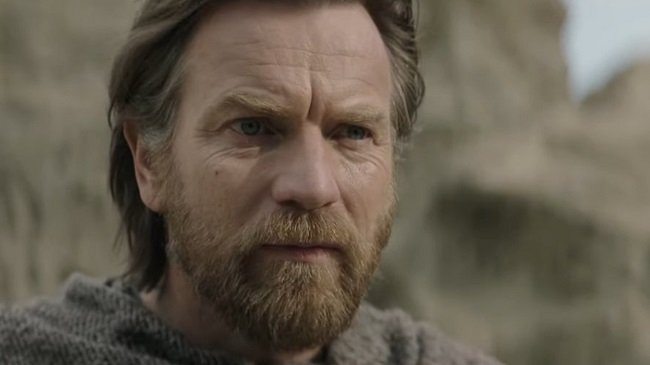
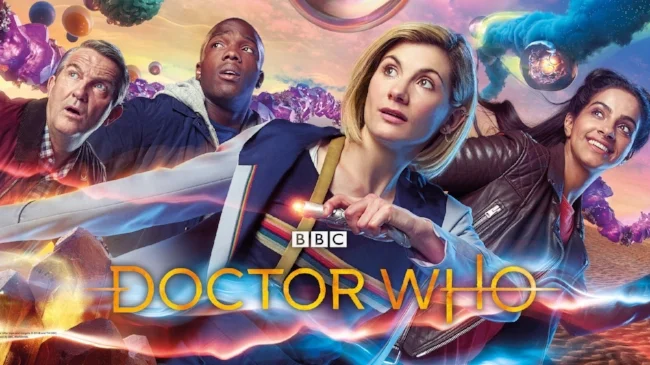
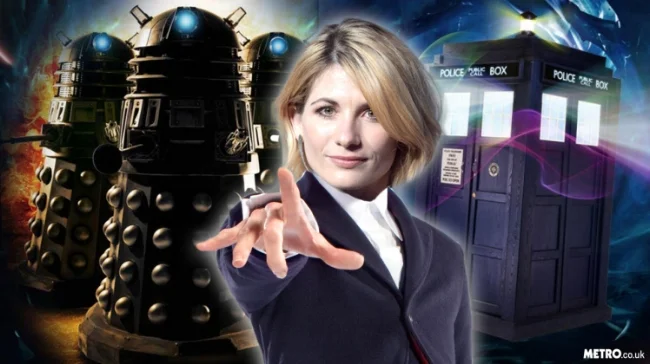
This afternoon, the BBC announced that Jodie Whittaker would be the thirteenth incarnation of the Time Lord, Doctor Who; the first woman to be given the role. Quite predictably, the internet went into meltdown, with cheers from some quarters and howls of derision from others. I make no bones about the fact that I got a great deal of Schadenfreude from this. Why exactly? Well we’ll come back to that point a little later. First off let me say that I really don’t mind about this casting decision. From what I’ve seen, Jodie Whittaker is an extremely competent actor and if given robust and engaging material, will excel as the new Doctor. I have no axe to grind here, either from a lore or a socio-political perspective. If the shit fits, wear it, is what I say.
This afternoon, the BBC announced that Jodie Whittaker would be the thirteenth incarnation of the Time Lord, Doctor Who; the first woman to be given the role. Quite predictably, the internet went into meltdown, with cheers from some quarters and howls of derision from others. I make no bones about the fact that I got a great deal of Schadenfreude from this. Why exactly? Well we’ll come back to that point a little later. First off let me say that I really don’t mind about this casting decision. From what I’ve seen, Jodie Whittaker is an extremely competent actor and if given robust and engaging material, will excel as the new Doctor. I have no axe to grind here, either from a lore or a socio-political perspective. If the shit fits, wear it, is what I say.
What I do find fascinating are some of the objections raised on Twitter and on the comments section of most major online news outlets. As there’s a lot of ground to cover I’ll try and keep it brief. Everyone, as ever, is entitled to their opinion but let us not forget that opinions are not of equal value. First off, if you object to the casting of Jodie Whittaker out of personal preference, IE there’s another actor you’d have rather seen play the role, then fine. That’s a perfectly okay stance to have. I got a Sainbury’s delivery the other day and they substituted toffee and vanilla ice cream cones with chocolate and nut ones. I prefer the former to the latter. Life is all about preferences of some kind, is it not?
However, there are objections being made which betray a mindset that there are clear gender roles within both fiction and real life and that a woman cannot be “The Doctor”. There are also certain fans who feel that the object of their affections should have some sort of protected status, define specifically by them. If they don’t like something, their fan status should be able to veto the offending decision. It is also not uncommon these days to see push back towards any sort of progressive socio-political decision. Culturally and politically, the west seems to be regressing with regard to social change. And let us not forget that incredulous notion, that a much loved worked of fiction can be “ruined” and that your fond memories can be sullied in some way. I guess this is some variant of the IPCRESS process.
All the above are frankly spurious objections. Some are born of sexism, some of fans intransigence or of outdated cultural conditioning and ideological baggage. Some protest are puerile, others mendacious and sadly a percentage are driven by pure hatred of any sort of social progression. What is important to bear in mind at present, is in the UK specifically, there is no clear majority mindset or consensus on political or social issues. We live in a very divided country and there is no prevailing moral stance. Recent political “surprises” such as Brexit have emboldened certain groups, who previously have kept their specific views hidden. Hence, we see claims that casting a woman is pandering to minority, despite the fact that women are hardly such a demographic. Yet sufficient people feel this way and are happy to express such an opinion.
I have no doubt that be it through personal preference, deep help beliefs or good old-fashioned prejudice, the next season of Doctor Who may well see some old school viewers refrain from watching. However, it is also very likely that this Doctor will also attract a new audience. And before we get into a debate about gender specific role models, can I put forward the rather quaint notion that a role model can potentially appeal to all, irrespective of gender, race, religion and shoe size. Yet despite the ongoing positivity in some quarters and the scope to broaden the viewer base for Doctor Who, it would be foolish to ignore certain practical business criteria. The BBC is a unique organisation but it is not immune from market forces. If for whatever reason they fumble the ball on the next season of Doctor Who and we see a substantial drop in global viewing figures and more importantly, sales, then this casting decision may well be reviewed. We do not yet live in an age where doing the right thing exclusively trumps business.
Finally, I want to return to my early point about Schadenfreude. Fellow blogger Syp (AKA Justin Olivetti) and all round nice guy tweeted this evening “It's like some people are genuinely excited that the new Doctor Who will upset others. Can't just be happy for what it is? I am”. I understand where this sentiment comes from and in principle, it is sound. Sadly, I do not think it is so easy to apply to many situations these days. This entire debacle over the thirteenth Doctor is in many ways a microcosm of the ongoing socio-political culture war. There is no overall prevailing ideology for change at present and politics is extremely sectarian. A percentage of the public have no appetite for further equality and would frankly like to see much of the progress of the recent decades rolled back. I do not wish to see this worldview fill the political vacuum. Sometimes you cannot steer the middle course and have to choose a side. You also have to robustly refute those views you feel are counterproductive. That at times means mocking and using humour, as it an effective political tool.
In the meantime, I shall await with a degree of excitement for the new season of Doctor Who that comes in 2018. I’m sure that the there’s a good chance that the current brouhaha will die down and if a good writing standard are maintained, the thirteenth Doctor will find her audience and keep the franchise popular and on course. Success in this instance would be the best way to counter future arguments along similar lines. Life is essentially about change and we need as a species to get better at dealing with it. Because the rancour that stems from resisting it, is frankly damaging to society.
Becoming Bond (2017)
Becoming Bond is a curious documentary in so far as it’s totally dependent on whether the viewer believes the story that George Lazenby tells. Because George is obviously a well-practised raconteur one gets the impression that many of the anecdotes and vignettes he recounts have been embellished for artistic effect. He has that easy going, informal Australian charm and frequently smiles ironically, as director Josh Greenbaum, quizzes him off camera over the voracity of his tale. Mr. Lazenby also treads that fine line between being a likeable rogue and a bit of a dick, especially when he focuses on his youth. Yet he broadly keeps to the right side of this and maintains the audiences’ good will.
Becoming Bond is a curious documentary in so far as it’s totally dependent on whether the viewer believes the story that George Lazenby tells. Because George is obviously a well-practised raconteur one gets the impression that many of the anecdotes and vignettes he recounts have been embellished for artistic effect. He has that easy going, informal Australian charm and frequently smiles ironically, as director Josh Greenbaum, quizzes him off camera over the voracity of his tale. Mr. Lazenby also treads that fine line between being a likeable rogue and a bit of a dick, especially when he focuses on his youth. Yet he broadly keeps to the right side of this and maintains the audiences’ good will.
As he recounts his life story from his impoverished youth in Australia, to his days as a car salesman then a male model, the vignettes play out as an episodic drama. Josh Lawson (Superstore, House of Lies) plays Lazenby and there are several high-profile cameos from the likes of Jeff Garlin as Bond movie producer Harry Saltzman, former Bond Girl Jane Seymour as George's agent. These scenes usually have a comic tone, which at times come dangerously close to undermining the credibility of George’s story. Yet as soon as the narrative approaches such a tipping point, it’s reined in with a smile and a nod from Mr. Lazenby. There’s also a curiously melancholic streak in the proceeding with a reoccurring tale of a love lost.
George Lazenby is certainly not afraid of sharing his faults, making no attempt to dodge some of the less edifying aspects of his life and personality. He is also candid about his perceived arrogance which may be more of a failure by others to understand and appreciate Australian cultural foibles. When the story finally arrives at 1968 when Eon Productions were recasting the role of Bond, things become a lot clearer. Lazenby simply didn’t fully appreciate the consequences of taking onboard the most prodigious movie role of the time. He approached it in good faith and seemed to have fun making the actual film, yet he couldn’t cope with the requirements of stardom both leading up to and after the shoot. Certainly, the slave contract he was offered by Saltzman and Broccoli was iniquitous and would have driven any sane actor mad.
By the end of Becoming Bond, although I cannot say that I was fully conversant with the exact reasons why this man walked away from a six-movie contract and a million pounds in cash, I had a good idea. George Lazenby just wanted to be himself and not forever in the shadow of James Bond. Curiously enough, the late Roger Moore felt quite the opposite but that’s folk for you. No two are exactly alike. I genuinely felt sorry for the way that Lazenby was effectively hounded out of the movie industry, never having been a fan of closed shops or those with a strangle holds over certain businesses. Yet he found contentment in real estate, subsequently raised a family and seems to have come to terms with it all. Whether it all played out the way he tells it is debatable but he certainly offers viewers an entertaining autobiography to consider.



City of Vice (2008)
After recently catching up with Ripper Street, I felt the need for more period set crime drama so decided to revisit City of Vice. This Channel 4 series from 2008 explores the true story of Henry and Sir John Fielding, the crime-fighting magistrate brothers who created Britain’s first police force. Eighteenth century London was a violent den of brothels, murderers and street gangs. The city endured crime rates of epidemic proportion. It fell to Henry Fielding, the author of the novel Tom Jones and his half-brother Sir John, a leading social reformer, to bring order to the streets. In 1749 Parliament permitted the magistrate brothers to put together a small constabulary to clean up London.
After recently catching up with Ripper Street, I felt the need for more period set crime drama so decided to revisit City of Vice. This Channel 4 series from 2008 explores the true story of Henry and Sir John Fielding, the crime-fighting magistrate brothers who created Britain’s first police force. Eighteenth century London was a violent den of brothels, murderers and street gangs. The city endured crime rates of epidemic proportion. It fell to Henry Fielding, the author of the novel Tom Jones and his half-brother Sir John, a leading social reformer, to bring order to the streets. In 1749 Parliament permitted the magistrate brothers to put together a small constabulary to clean up London.
City of Vice luridly shows that the criminal activity of contemporary London is nothing compared to the 18th century. Gangs of cut throats roam the streets, robbing, raping and murdering with impunity. Home invasions are common place. Prostitution and pedophilia are rife. The inequalities between the rich and the poor are starkly shown and crime was an unpleasant reality that many just accepted. Based on Henry Fielding’s diaries and contemporary sources such as the Old Bailey Sessions Papers, City of Vice is designed to provide a lurid counterpoint to rival period dramas. The world of Jane Austen is violently contrasted.

The lead performances by Ian McDiarmid and Iain Glen are strong and carry the stories well. The five episodes are suitably grim and have a very dour tone to them but given the subject matter there's no other viable way to portray them. Yet despite the nature of the series, it found favour with both critics and the UK audience, achieving nearly three million viewers. The Times described it as "an antidote to the current spate of twee costume dramas" and "more likely to resonate with cynical modern audiences". However, the exploration of certain subjects did not find praise from all quarters leading to complaints from Mediawatch-UK.
City of Vice has taken certain historical liberties for the sake of drama, as so many TV shows do but the basic historical premise is sound. It is interesting to see that human vice is universal and that it’s not just the product of the modern world. Furthermore, it is paradoxical that the judicial system of the time is seen to be equally as cruel as the criminal element that it seeks to eradicate. Overall this was a very good show, yet despite both critical acclaim and good ratings, there has not been a second series to date. The production costs were more than likely a contributing factor. Unlike other costume drama's there are no suitable Georgian slums that can be used for filming. So, for those who did not see City of Vice first time round, the DVD is recommended.
Christianity and the Easter TV Schedules
As a child growing up in the seventies, Sundays had a distinctly different feel to the other days of the week. The entire pace was more sedate and there was atmosphere of restraint. My parents would chide me for excessive noise. Activities such as reading or drawing where favoured over playing outside. The TV schedules reflected this as well. At the time, there were three terrestrial channels and only one of them was a commercial business. However, Sunday mornings would always have a televised service and there would often be a show offering some moral or ethical debate around midday. The early evening saw a similar broadcast of worship. Christianity was still an integral part of the television.
As a child growing up in the seventies, Sundays had a distinctly different feel to the other days of the week. The entire pace was more sedate and there was atmosphere of restraint. My parents would chide me for excessive noise. Activities such as reading or drawing where favoured over playing outside. The TV schedules reflected this as well. At the time, there were three terrestrial channels and only one of them was a commercial business. However, Sunday mornings would always have a televised service and there would often be a show offering some moral or ethical debate around midday. The early evening saw a similar broadcast of worship. Christianity was still an integral part of the television.
Unlike the US, the UK does not have (and never has had) a direct separation of Church and State. For centuries the Church has had a direct influence over the political agenda and has shaped the cultural landscape. During the seventies, nothing was open on a Sunday, as the trading laws were still subject to a strong Christian lobby. Obviously due to my age at the time, I didn't see or understand the integral role Christianity played within UK society. Yet it was always there, be it at school, on TV or in the newspapers. Any vox pop at the time would always have a member of the clergy contributing. The ubiquitous presence of Christianity was such that it became reflected in popular culture. Most sitcoms would include a vicar at some point. I have fond memories of The Reverend Timothy Farthing (Frank Williams) in Dad's Army.
Roll on forty years and much has changed. The Church of England is in decline and certainly the lobbying power of the Christian community has diminished. The UK has become a far more secular nation and Sundays feel pretty much like any other day of the week nowadays. As a result of this shift, religious content on terrestrial network TV has similarly been reduced. As it is currently Easter, I made a cursory check of the TV guide for faith based content and apart from a few broadcasts of church services, there is precious little on to celebrate Easter. Even the traditional Hollywood religious epics such as The King of Kings with Jeffrey Hunter or George Stevens’ The Greatest Story Ever Told, with its distinctly Caucasian depiction of the Holy Lands, are missing from the schedules.
Since the advent of digital satellite, cable services, VOD and You Tube, is that faith based programming has moved to these new platforms and has to compete with the sheer volume of alternative TV that is available. Something that many other TV genres has had to do. I will leave it to you to decide whether this is a good or a bad thing. However, I would like to make this point. One of the most important weekly shows for me as a child was Top of the Pops. It featured a selection of artists every Thursday, depending on what was doing well in the UK singles. Due to the lack of alternative shows, viewers would watch thirty minutes of a variety of different music. Not all of it would be to their taste but it exposed the public to a broad cross section of musical genres. Nowadays there are niche market channels that provide audience with just the music they want, thus insulating them from anything else. It is this very proliferation of choice that means that many people are simply no longer exposed to any religious content on TV.
I think that it’s beneficial for people to have a broad knowledge of multiple belief systems. There is a great deal of misinformation about the Christian faith and other faiths. The public as well as a lot of Christians themselves are not very well informed about the doctrines and fundamental underpinnings of Christianity. Perhaps at times such as Easter, rather than just showing traditional TV fodder such as church services or re-enactment of The Passion, perhaps it would be wiser to have more documentaries and current affairs programs that explore what it is to be a Christian in the in the twenty first century. What it can and cannot offer. In the meantime, Happy Easter to all, whether you enjoy it as a public holiday or whether it is the focal point of your religious calendar. As for me, I'm off to watch Martin Scorsese's The Last Temptation of Christ. A challenging and intelligent exploration of Christ's final hours. And don’t forget, chocolate eggs will be half price on Tuesday.










Five Came Back (2017)
Five Came Back is a fascinating documentary about five remarkable Hollywood film directors who put themselves in harm’s way to film World War II for the US War Department. William Wyler, Frank Capra, George Stevens, John Ford and John Huston were in many ways a diverse bunch, yet the all represented a different facet of “America”. Certainly, all were idealists who felt it was their duty to use their talents to create accessible propaganda for the US public and more importantly, the 12 million men who were drafted. Despite the factual accuracy of this three-part documentary, there is an inherent romance to the tale and the way these Hollywood mavericks took on first American Isolationism, then the Third Reich and US military politics.
Five Came Back is a fascinating documentary about five remarkable Hollywood film directors who put themselves in harm’s way to film World War II for the US War Department. William Wyler, Frank Capra, George Stevens, John Ford and John Huston were in many ways a diverse bunch, yet the all represented a different facet of “America”. Certainly, all were idealists who felt it was their duty to use their talents to create accessible propaganda for the US public and more importantly, the 12 million men who were drafted. Despite the factual accuracy of this three-part documentary, there is an inherent romance to the tale and the way these Hollywood mavericks took on first American Isolationism, then the Third Reich and US military politics.
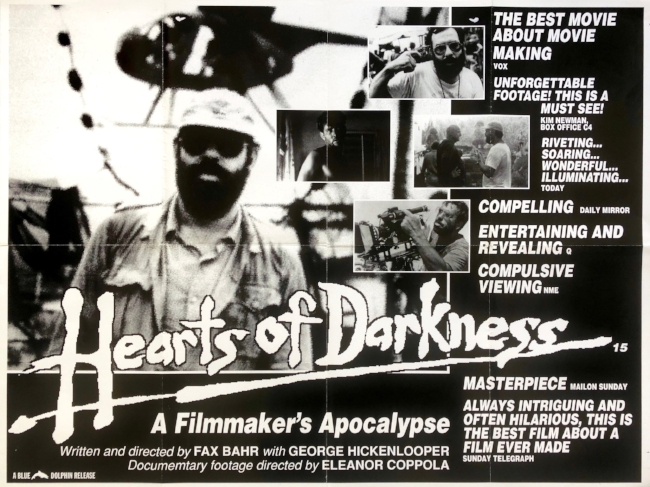
Narrated by Meryl Streep and based upon the Mark Harris Five Came Back: A Story of Hollywood and the Second World War, this Netflix documentary cleverly intercuts the story of these five legendary film makers, with soundbites from contemporary Hollywood luminaries, Steven Spielberg, Paul Greengrass, Guillermo del Toro, Francis Ford Coppola and Laurence Kasdan. It is here that the show excels itself, as these modern film makers clearly have a great deal of love and reverence for their predecessors and how they advanced the craft of film making. Greengrass, who comes from a documentary film making background is especially observant and analytical of John Ford’s urgent style. His genuine use of shaking footage, sprocket jumps and loss of focus has now become a mainstay of film makers trying to capture the authenticity he experienced.
Five Came Back these focuses on how these directors changed the public perception of the war in the US. There personal heritage played heavily on their motivation and creative output. Ford was a traditional American conservative, where Wyler and Capra were both immigrants, yet they all clearly saw the threat of Fascism and wished to contribute to the war effort. It was the fact that they were all old school film directors that gave them their specific edge. They were natural leaders, autocratic and skilled in marshalling logistics and people. George Stevens made films for the US Army Signal Corps and William Wyler made documentaries for the US Air Force. Frank Capra, was tasked with creating the documentary series Why We Fight to boost US troop morale. His master stroke was to take Leni Riefenstahl’s Nazi propaganda film Triumph of the Will and to lampoon and satirise it, making it look foolish and puerile.
Five Came Back explores the nature of propaganda and how cinema and newsreels played a key role during World War II. Over half of the US population went to the movie theatre every week and so the medium became the logical means to convey information and boost morale. Wyler, Ford, Capra, Stevens and Huston all experienced war via some of the most ferocious campaigns. North Africa, the landings in Southern Italy, D-Day and the Battle of Midway. They produced films that still pack an emotional punch today and each came home changed men. Curiously enough it can be argued that their personal experiences fuelled their finest work. Consider Shane (1953), It’s a Wonderful Life (1946), The Searchers (1956), The Best Years of Our Lives (1946) and The Treasure of the Sierra Madre (1948).
How Long Should a TV Show Run For?
Over the course of a year I tend to try five or six new TV shows. Like everyone else I have a finite amount of leisure time and I therefore try to split it evenly among my various interests. Overall, I watch no more than ten shows regularly. I like to do some research before selecting something new to watch and I also consider recommendations from my peers very important. Once I’ve decided upon what I shall try, I tend to give each new show a fighting chance to build up a head of steam. Not all shows hit the mark immediately. Some need at least half a dozen episodes. Some need several seasons. So far Designated Survivor has proven gripping and well-conceived. It also doesn’t make the usual mistake that densely-plotted dramas so often do, in continuously taking one step forward and another two back.
Over the course of a year I tend to try five or six new TV shows. Like everyone else I have a finite amount of leisure time and I therefore try to split it evenly among my various interests. Overall, I watch no more than ten shows regularly. I like to do some research before selecting something new to watch and I also consider recommendations from my peers very important. Once I’ve decided upon what I shall try, I tend to give each new show a fighting chance to build up a head of steam. Not all shows hit the mark immediately. Some need at least half a dozen episodes. Some need several seasons. So far Designated Survivor has proven gripping and well-conceived. It also doesn’t make the usual mistake that densely-plotted dramas so often do, in continuously taking one step forward and another two back.
Another show I’ve started watching on a whim that turned out to be far more entertaining than anticipated is Timeless. Although time travel is a somewhat hackneyed concept dramatically, this show flies in the face of the traditional “non-interference” trope. History is altered regularly in both positive and negative ways. The main characters are also very engaging. However, the show obviously is an expensive production due to the constantly changing period setting. Timeless also has a plot that cannot be indefinitely sustained. There is far too much scope for temporal paradoxes and for the storyline to ties itself in knots. Therefore, I've been pondering the question "how long should a TV show run for"?
I think a shows premise and central plot ultimately determines the overall answer. Police procedural dramas or those set-in Hospitals, Courts or other permanent institutions, have the luxury of being able to carry on ad infinitum. You only have to look at shows like Law and Order SVU or the NCIS franchise for successful examples. Characters and cast members may come and go but the central plot device provides an inexhaustible supply of material. Furthermore, apart from some minor story arcs usually associated with the lead actors, it is not always essential to watch these sorts of shows continuously. You can return to them as and when you like. It is this undemanding quality that often contributes to a shows success.
However, this is not the case with dramas with a more traditional linear storyline. Producers are faced with the dilemma of maintaining an audience and the need to expedite the plot. Lost is a classic example of a show that out stayed its welcome, as far as I'm concerned. I initially enjoyed the convoluted scenario and air of intrigue that was perpetuated but soon I got exhausted by the lack of narrative advancement. I sat through several seasons during which nothing discernible happened to illuminate me as to what was going on. So eventually I abandoned Lost. TV is a time intensive pastime and I don’t like for mine to be wasted. So, I’ll happily abandon any show that fails to meet my viewing criteria. It’s not as if there’s a shortage of competing material.
It is interesting to note that several cable companies are now opting to produce shows with shorter season lengths. Naturally, cost is a factor in this situation but market research seems to indicate that viewers prefer more succinct and concise story arcs. Twenty plus episodes are being replaced with anything between eight and thirteen episodes. The recent trend towards binge viewing may also be a factor in this gradual cultural shift. Netflix and Amazon Prime by their very nature have a great deal of consumer data at their disposal. This has led them to produce some exceptionally good quality shows that seem to have extremely equitable running times and season lengths. Stranger Things, The Crown and The Man in the High Castle are just some examples that came to mind.
Overall, I think for mainstream US network television, a maximum of five to six seasons can sustain a good show to its maximum potential. Person of Interest managed to maintain a complex and entertaining plot, with multiple personal story arcs, for over five years. It also managed to deliver a satisfactory conclusion, without disappointing fans or cutting any narrative corners. Elementary, another show I watched on a whim that’s proved to be well written and topical. It is currently in its six season and doesn’t seem to have boxed itself in or exhausted its creativity. However, for such shows driven by their lead actors the biggest issue is how long will they be content to play the same role? With so many factors to consider, it is extremely difficult know when exactly is the right time to end a TV show. Financial success and ratings are a big incentive to continue but there is a great deal of artistic credibility in quitting while your ahead. There’s also an old adage about leaving your audience wanting more.
New Captain Scarlet (2005-6)
I’m not usually a big fan of “re-boots” and “re-imaginings” of classic material. There have been some successful examples in recent years, such as the Bond franchise and Doctor Who but many others have failed. Jonathan Frakes 2004 feature film Thunderbirds was the epitome of this. It total misjudged the target audience, completely failed to grasp the key aspects that made the original series so appealing and excluded the man himself, Gerry Anderson, from any involvement. It also failed to make use of any of Barry Grays sublime back catalogue of music, apart from the main theme. Conversely, the 2015 TV show Thunderbirds Are Go, managed to not only provide a suitable homage to the original show but successfully update the concept for a contemporary audience.
I’m not usually a big fan of “re-boots” and “re-imaginings” of classic material. There have been some successful examples in recent years, such as the Bond franchise and Doctor Who but many others have failed. Jonathan Frakes 2004 feature film Thunderbirds was the epitome of this. It total misjudged the target audience, completely failed to grasp the key aspects that made the original series so appealing and excluded the man himself, Gerry Anderson, from any involvement. It also failed to make use of any of Barry Grays sublime back catalogue of music, apart from the main theme. Conversely, the 2015 TV show Thunderbirds Are Go, managed to not only provide a suitable homage to the original show but successfully update the concept for a contemporary audience.
Yet Thunderbirds Are Go was not the first of Gerry Anderson’s shows to be remade. Anderson himself created New Captain Scarlet in 2005; a computer animated reworking of his original show Captain Scarlet and the Mysterons. Sadly, due to a catalogue of problems that occurred with the shows distribution, New Captain Scarlet is often overlooked. Twenty-six episodes where made in total and New Captain Scarlet premiered on ITV's children show The Ministry of Mayhem in February 2006. Despite Anderson's long business association with ITV, the programs were not treated with any semblance of respect. They were cut for violence (something Anderson has never shied away from) and each episode was split into three, seven minute segments, to be broadcast during The Ministry of Mayhem three hour running time. The end credits were also conspicuous by their absence. The viewers were not engaged and the critics simply passed on by.
Subsequently the series did not really get the attention or praise it deserved. I recently caught up with the seasons 1 & 2 on DVD and saw them as they were intended to be seen. The results are very good. The series holds true to the 1967 original. All the main members of Spectrum are present, although some such as Lieutenant Green have changed gender. Characters are expanded and their backstories are often quite adult. There are complex love triangles, moral dilemmas and as stated earlier, a surprising amount of violence. The stories are often morally ambiguous and do not always have a happy resolution. Each episode manages to cover a lot of ground in their twenty-five-minute running time. The iconic hardware from the original show has been updated obviously with an eye to the toy franchise. For example, the Spectrum Pursuit Vehicle has now become the Rhino.
My opinions on TV based computer animation are mainly based on the 1999 animated series Roughnecks:Starship Trooper Chronicles. That was a fine show for the times with very good graphics from Foundation Studios. Similarly, New Captain Scarlet, produced by British animators Indestructible Production Company, is also outstanding by the standards of the 2005. The main characters move fluidly due to the use of motion capture and are well rendered with a high level of detail. The action sequences are surprisingly good with a focus on hand to hand combat. Because of the current genre tastes, there is a propensity for the men to be somewhat buff and the female characters tend to be voluptuous. Terrain and lighting are also surprisingly detailed. As ever it is hair that is the major weakness. However, it is not obtrusive enough to spoil the proceedings.
There are a few negatives aspects to the show though. The contemporary soundtrack by Crispin Merrell is adequate but not in the league of the original iconic music by Barry Grey. This reduces the creepy ambience that made the 1967 series such a pleasure. There is also a lot more concessions made to the international market. As a result, there is a slight loss of “Britishness” from the proceedings. But these do not in any way out weight the positive aspects of New Captain Scarlet. All things considered, this is a very enjoyable production that maintains the style and substance of all Gerry Anderson's work. As with the original show the storylines are often a lot more adult than expected and there is a pleasingly dark tone to the narrative. At present New Captain Scarlet is only available on DVD, however the original masters for the show have recently been reclaimed and so fans remain hopeful of a full HD release on Blu-ray in the future.


The Secret Service (1968)
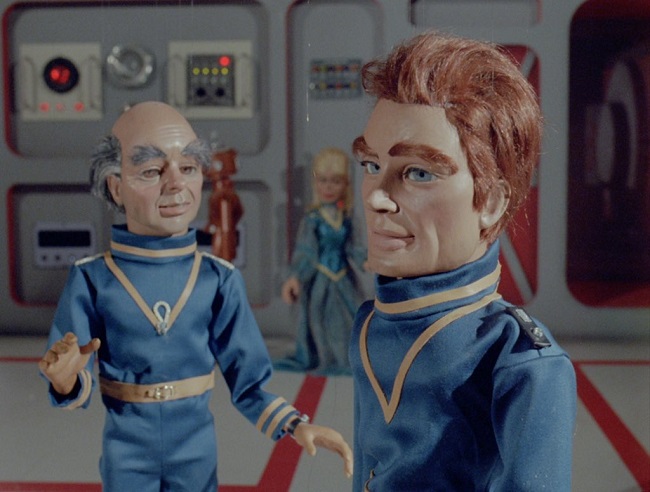
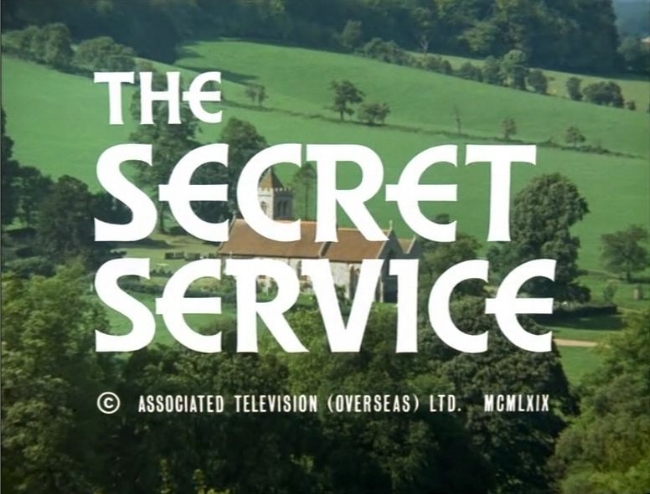
The Secret Service is somewhat of an enigma, being the last Supermarionation show that Gerry Anderson produced. It was poorly received not only by critics but also by its own financier, Sir Lew Grade and was therefore given a limited broadcast upon its initial release. However, it marked the end of an era for Century 21 productions as they turned their creative attentions to film and live action TV after a decade of puppets shows. Subsequently, The Secret Service fell into obscurity over the following years and never gained the same degree of attention from the public, as previous Supermarionation shows had.
The Secret Service is somewhat of an enigma, being the last Supermarionation show that Gerry Anderson produced. It was poorly received not only by critics but also by its own financier, Sir Lew Grade and was therefore given a limited broadcast upon its initial release. However, it marked the end of an era for Century 21 productions as they turned their creative attentions to film and live action TV after a decade of puppets shows. Subsequently, The Secret Service fell into obscurity over the following years and never gained the same degree of attention from the public, as previous Supermarionation shows had.
Having recently caught up with the entire series and being a consummate Gerry Anderson fan, it is hard for me to be excessively critical of the show. I have a lot of love for his earlier work, especially Thunderbirds and Captain Scarlet. The Secret Service has many of the aspect that made previous shows enjoyable and unique. There are quirky and amusing characters, a rich and detailed production design and superb miniature effects by the legendary Derek Meddings. Once again, the score and ambient sounds created by Barry Gray play an integral role in the show. Yet even I must admit that two major flaws standout and validate why this final series was Anderson’s weakest.
Firstly, from Four Feathers Fall to Joe 90, there had always been an element of substituting human footage for material that puppets could not do. This was usually limited to shots of hands. However in The Secret Service this technique was greatly expanded upon. There are long shots of characters walking into building, along with footage of them driving vehicles down country lanes. The central character Reverend Stanley Unwin, is directly modelled on its voice actor Stanley Unwin. Furthermore, live footage of the said actor is frequently intercut into each episode. Although it can be argued that this innovative approach covered some of the puppets technical deficiencies, it also breaks the shows immersion. Is this a puppet or live action drama?
Secondly, Stanley Unwin himself was a comedian who became well known for his use of “Unwinese”, a faux comic language of his own creation. It was an odd choice to cast such an actor with a uniquely English comic trait, namely our love of linguistic humour and word play, into a television show destined for international distribution. Gerry Anderson’s argument was that Stanley Unwin’s occasional lapse into this verbal slapstick was to purposely confound all viewers. However, I think that rather than amuse the viewers it simply perplexed them. It was sufficient for Sir Lew Grade to lose confidence in the production and pull the plug.
If like me you have been raised on Gerry Anderson’s back catalogue, The Secret Service, despite its shortcomings, is still engaging and quality entertainment. It is yet another example of Century 21 Productions refining their process. However, for the more casual viewer, who is broadly familiar with Thunderbirds, this may be a little too niche market and obscure. The show also seems to have a somewhat nebulous view on Christian denominations. Stanley Unwin seems to frequently alternate between the Anglican and Roman Catholic faiths. Therefore, I can really only recommend The Secret Service to hardcore Anderson fans and those who are simply curious and forgiving.
Historically, the failure of The Secret Service although marking the end of Supermarionation ultimately led to Century 21 productions first live action TV series, UFO. A show that was a possibly five years ahead of its time. With regard to The Secret Service, after a consistently successful decade, the concept of the puppet series had run its natural course by the late sixities. One of Gerry Anderson’s great strength from this era was his capacity to experiment. The Secret Service shows us that not all experiment work, but even those which are deemed failures can still be or merit and quality.
The TGEN Tribunal #6
The Gaming and Entertainment Network was set up in 2014 by several podcasters as a way to promote each other’s shows and reach a wider audience. All the networks members have strong views regarding creating and maintaining communities. Hence it was decided to produce a quarterly roundtable podcast made up of network contributors to discuss and explore a wide variety of subjects. The shows are lively and informal in nature, although there’s often a lot of passion when it comes to the topics being discussed. Frequently the shows are based around questions that our network listeners have asked and the idea of the tribunal is to reflect the feedback we receive.
The Gaming and Entertainment Network was set up in 2014 by several podcasters as a way to promote each other’s shows and reach a wider audience. All the networks members have strong views regarding creating and maintaining communities. Hence it was decided to produce a quarterly roundtable podcast made up of network contributors to discuss and explore a wide variety of subjects. The shows are lively and informal in nature, although there’s often a lot of passion when it comes to the topics being discussed. Frequently the shows are based around questions that our network listeners have asked and the idea of the tribunal is to reflect the feedback we receive.
Due to the realities of day to day life, the TGEN tribunal was somewhat irregular in 2016. This is something that we hope to address this year, so here is the first show of 2017. The panel includes myself, Syl, Braxwolf and Brian and was recorded on Saturday 4th February. Despite some technical difficulties during post production, a coherent (well relatively coherent) podcast has been edited together for our listener’s enjoyment. We hope you find the discussions interesting and would welcome feedback or potential questions for the next TGEN Tribunal which is scheduled for April/May.
TV, Streaming & VOD. Starting a new MMO vs returning to an old one. The Warcraft movie, fans & box office returns.
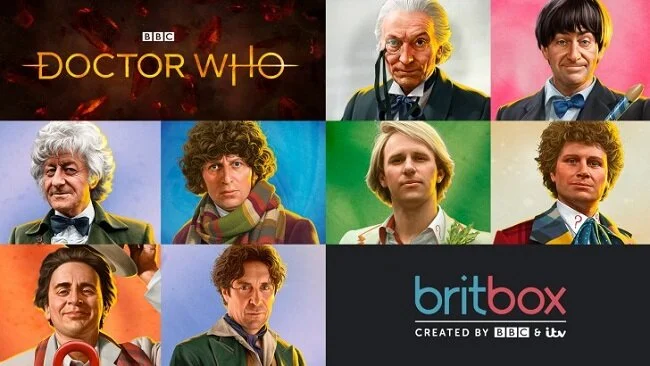
Who Will be the Next Doctor?
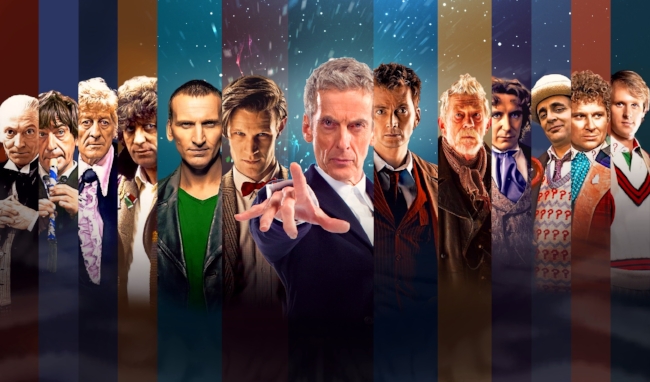
Idle speculation is a national pastime in the UK. Be it about the gender of the next royal baby or who’ll be managing some ailing football club, we’ll happily spend an inordinate amount of time and energy pondering such matters. Is such conjecture based on factually accurate data and a knowledgeable insight of the matter in hand? Unfortunately, not. The only requirements necessary to express an opinion are a rudimentary grasp of the English language, access to a web enabled device and a pulse. The latest matter to arise that offers the public an opportunity to indulge in some fevered speculation, is the news that Peter Capaldi will be quitting the role of Doctor Who at the end of the year. Therefore, who exactly would be the thirteenth incarnation of the Doctor.
Idle speculation is a national pastime in the UK. Be it about the gender of the next royal baby or who’ll be managing some ailing football club, we’ll happily spend an inordinate amount of time and energy pondering such matters. Is such conjecture based on factually accurate data and a knowledgeable insight of the matter in hand? Unfortunately, not. The only requirements necessary to express an opinion are a rudimentary grasp of the English language, access to a web enabled device and a pulse. The latest matter to arise that offers the public an opportunity to indulge in some fevered speculation, is the news that Peter Capaldi will be quitting the role of Doctor Who at the end of the year. Therefore, who exactly would be the thirteenth incarnation of the Doctor.
Now in the past, the pundits and those who work in the industry have favoured rather obvious, existing "stars". This was the case when David Tennant left the show. Such names as James Nesbitt, Catherine Tate, Catherine Zeta Jones and even David Walliams where bandied about. Then the BBC completely wrong footed everyone by casting Mr. Smith. This time round the press are considering a mixture of mainstream contenders as well as a few more obscure and outlandish candidates. So far, the following names seem to come up. Ben Whishaw, Richard Ayoade, David Harewood, Olivia Colman, Maxine Peake, Rory Kinnear, Sacha Dhawan, Emma Watson, Hayley Atwell, Tim Roth, Colin Morgan.
"Well you die and she leaves me and marries Richard Dawkins"
Now many may think that the debate regarding the next Doctor, is nothing more than a discussion about pop culture. It may even be labelled trivial by some. However, I think it also reveals a lot more about society and indicates wider views held by parts of the population. Because some people still find the idea of the Doctor being a woman or non-white unpalatable. It was something that first emerged in 2013 prior to Peter Capaldi getting the role. Similar objections have also surfaced in recent years when speculating about the next James Bond. Because of the current political climate, people are less reticent about expressing such views. Furthermore, such opinions may indicate that not everyone believes in such “shared values” as equality. Perhaps it is time to consider that societal norms are far more fluid.
Now there may well be individuals who object to such things purely for reasons of racism or misogyny. I don’t see the point of dwelling upon the like, because prejudice of this nature is simply irrational and illogical. Call it such and move on. However, I don’t think that all such objections are driven by bigotry. There are other factors in play here. Namely, fan’s misplaced sense of ownership. Fans tend to invest in a franchise, product or concept to the point where they feel that their boundless love gives them a degree of collective involvement or even ownership. This point can be argued philosophically until one is blue in the mouth but the reality of the situation is driven be the law. Fans despite what they may feel, are passive observers and financial donors and nothing more.
"It wasn't my fault, blame John Nathan-Turner"
Doctor Who, like any other intellectual property, belongs to a specific owner. In this case, it is the BBC. Therefore, it is very much their bat and ball to use an old phrase. They hire specific writers who are then given relative creative freedom to develop the character of the Doctor. The process is not driven by the will of the fan base. The self-appointed label of “fan” doesn’t give you any additional status or rights over than that of a casual viewer. If a show such as Doctor Who pursues a narrative direction that some fans do not like or cast an actor that a percentage object to, then it is simply a matter of differing opinions between creator and consumer. To frame such objections in any other way is spurious. Therefore, if don’t like the next actor to play the Doctor and feel that you’ve suffered a personal slight or grievance as a result, may I refer you to the wise words of Marcus Aurelius. “Reject your sense of injury and the injury itself disappears”.
The great thing about Doctor Who is that it's Science fiction. The very nature of the genre affords it a far greater degree of artistic freedom. Effectively, if the show ever paints itself into a corner, they can via the means of some clever pseudo-science, easily produce a get out of jail card and be back on track in no time. Therefore, issues such as race and gender can easily be explained, explored and accommodated by the lore, if there is the political will to do so by the show’s producers. Let us not forget that the biggest issues here are not complex social and philosophical ones but the simple fact that people often struggle with change. Yet it was change that saved Doctor Who to begin with and gave us single episode story-lines, less running up and down corridors and a sexier Doctor himself. The show simply had to evolve to remain relevant.
So, while this matter is being hotly debated, I see no reason why Contains Moderate Peril shouldn't contribute to the speculation and offer some of our own well-conceived suggestions. All our recommended actors have the potential to bring something unique and special to the role. I wonder what odds William Hill are giving?
- Grace Jones. This would see a return to a more eccentric.
- Jason Isaacs. Cool, suave, sexy etc.
- Meera Syal. A fine actress and a funny lady. I’m certain she’d bring something of note to the role.
- Susan Calman. She has already put herself forward on twitter with the caveat that Tom Hardy is her companion.
- Michael Ironside. Because he would just be bat-shit crazy and make the Daleks soil themselves.
Crooked House (2008)
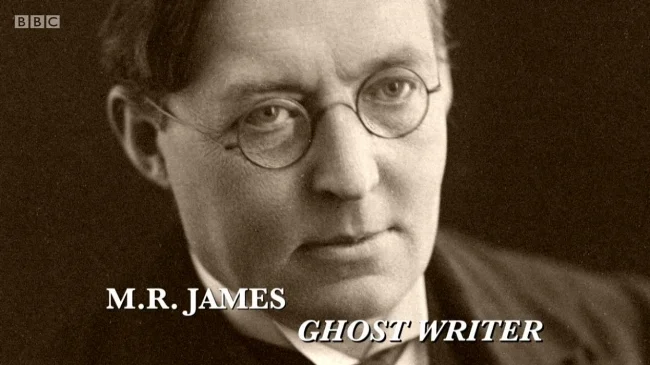
The BBC has a history of supernatural dramas broadcast over the festive season. During the seventies and eighties, they have frequently adapted classic ghost stories by such authors as M. R. James, Charles Dickens, and Hector Hugh Munro aka Saki. In late 2008 BBC Four broadcast Crooked House; a three-part ghost story shown on consecutive nights from 22nd to 24th December. It was written and co-produced by actor and writer Mark Gatiss, of The League of Gentlemen fame. The three inter-linked episodes form a portmanteau story, influenced by the works of M. R. James and Amicus compendium horror films of the seventies.
The BBC has a history of supernatural dramas broadcast over the festive season. During the seventies and eighties, they have frequently adapted classic ghost stories by such authors as M. R. James, Charles Dickens, and Hector Hugh Munro aka Saki. In late 2008 BBC Four broadcast Crooked House; a three-part ghost story shown on consecutive nights from 22nd to 24th December. It was written and co-produced by actor and writer Mark Gatiss, of The League of Gentlemen fame. The three inter-linked episodes form a portmanteau story, influenced by the works of M. R. James and Amicus compendium horror films of the seventies.
The plot centres on the ghostly history of Geap Manor, a recently demolished Tudor mansion. The stories are relayed by local Historian (Mark Gatiss) to local resident Ben (Lee Ingleby), who has discovered an old door knocker from the manor house. The first story, "The Wainscoting", set in the late 18th century, centres around Joseph Bloxham (Philip Jackson), who has boughtand started renovating the Manor. It would appear that he has greatly profited from an investment which ruined his fellow speculators. Strange noises are heard behind the newly installed wainscoting, along spectral blood stains. Is this due to the timber coming from the gallows known as “Tyburn Tree”?
The second vignette, "Something Old", takes place in the twenties, while Geap Manor hosts a decadent costume party. During the evening Felix de Momery announces his engagement to Ruth, much to the surprise and annoyance of his Grandmother (Jean Marsh) and his friends, Billy and Katherine. It is not long before a ghostly bride stalks young Ruth, forcing a long-kept family secret in to the open. In the final contemporary set tale, "The Knocker", Ben foolishly puts the knocker from demolished Geap Manor on his own door. Recently split from his partner, his modern suburban home proves no protection from sinister forces from the past and the spirit of Sir Roger Widdowson.
Writer and actor Mark Gatiss has produced not only a loving homage to the portmanteau genre but constructed a thoroughly creepy and unsettling drama. Crooked House displays a sound knowledge of history with a lot of detail and period slang which embellishing the proceedings. However, unlike other writers, he successfully balances narrative ambiguity with the need to shows enough of the supernatural to appeal to a broader audience. Performances, production design, soundtrack and visual effects are all of the calibre audiences expect from the BBC. Crooked House is a throwback to a genre that has become quite a rarity in recent years. I was strongly reminded of the TV series Hammer House of Horror. Crooked House successfully bridges the divide between old and new producing a drama that is pitched perfectly for a modern audience.
A Year in Multimedia
In the past, I’ve often written a summary of my experiences with gaming, movies and TV at the end of each year. Similarly, I usually reflect upon my activities in podcasting and blogging as well. However, 2016 has been unique in many respects. Political and social tides have changed in the West and there is much to reflect upon in the real world. Certainly, my appetite for creating content has taken a knock and I have at times stopped and wondered if it really is all worth the bother. But after such moments of introspection I still see the benefits of the written word or bellowing in to a microphone, so here we are once again. The only difference this time is rather than multiple posts, I can pretty much distil my thought on 2016 in one simple account.
In the past, I’ve often written a summary of my experiences with gaming, movies and TV at the end of each year. Similarly, I usually reflect upon my activities in podcasting and blogging as well. However, 2016 has been unique in many respects. Political and social tides have changed in the West and there is much to reflect upon in the real world. Certainly, my appetite for creating content has taken a knock and I have at times stopped and wondered if it really is all worth the bother. But after such moments of introspection I still see the benefits of the written word or bellowing in to a microphone, so here we are once again. The only difference this time is rather than multiple posts, I can pretty much distil my thought on 2016 in one simple account.
Gaming:
To things have had a major impact upon my gaming this year. A lack of time and too few new titles that aroused my interest. I started the year playing through Hearts of Stone, the first DLC for The Witcher III: Wild Hunt and continued with the second expansion, Blood and Wine when it was released in May. I waxed lyrical about the quality of this RPG last year and will continue to do so this time. The last DLC not only added yet another superbly crafted narrative but refined the game mechanics and system even further. I think it will be a long time before I find another game from this genre that offers anywhere near a comparable experience.
MMO wise I have continued to regularly log into Star Trek Online during 2016 as it has frequently had new content to explore. This year being the 50th Anniversary of Star Trek, the new expansion, Agents of Yesterday, offered an appropriate homage to the original series. The new lighting system has improved the overall aesthetic of the game and it’s clear that developers Cryptic have plenty more in store for the MMO. It’s recent port to consoles clearly indicates that the game is in a healthy state.
LOTRO has had a curious year. I took a six-month break from the game due to the repetitive and formulaic nature of the new content. Yet the Battle of Pelennor Fields brought me back, being surprisingly well realised given the restrictions of the ageing game engine. Update 19 released in October took the game one step closer to Mordor. As ever the epic central story continues to be written to a high standard and certainly compensates for other more pedestrian regional quests. Recent news that ex Turbine staff have formed a new independent company and taken over the development of the game does seem to have renewed interest in the MMO. I remain cautiously optimistic for LOTRO’s future.
It would be remiss of me if I didn’t mention Overwatch. I played the open beta out of idle curiosity and was greatly surprised by how accessible the game is. It has now become my game of choice whenever I want a quick fix of entertainment. I’m still amazed at how equitable this team based, first person shooter is and how anyone can find a role to play, regardless of the style or abilities. It continues to add content and new characters ensuring longevity. Something that Pokémon Go has failed to do. This was another title that I was drawn to out of nostalgia and curiosity but it quickly became apparent that it was unsustainable.
TV and Movies:
I only went to my local multiplex to see movies upon their release, six time this year, which is unusual for me. This is mainly due to there being precious little of interest for me these days. Cinemas seem choked with Blockbusters and Super Hero movies. A lot of the more niche market, independent films have limited releases and tend to be available on-demand very quickly. Those movies I did see were suitably entertaining. Deadpool provided audiences with exactly what they expected and proved that the R rating could still be economically viable. Star Trek Beyond finally saw the new stories set in the Kelvin Timeline hit their stride. It offered a good character driven story that finally tapped in to the soul of the original series. Fantastic Beast and Where to Find Them also proved to be a crowd pleaser with excellent production values and a decent storyline. I have high hopes for this off shoot of the Wizarding World franchise. Rogue One certainly met with my approval and filled a suitable gap in the Star Wars lore. I almost got as much fun out of the fan driven debates about the story as the film itself.
TV once again proved to be the home of more cerebral and densely plotted drama. Stranger Things was a wonderful homage to eighties genre cinema and popular culture. Finally embracing both Amazon Prime and Netflix certainly afforded our household with more choice and provided a respite from the scourge of advertising which just seems to become increasingly preposterous and crass. The Man in the High Castle provided a suitable bookend to the start and end of the year and continues to be both intriguing and entertaining. It has also been beneficial to have access to all previous series of Star Trek and work my way through those shows I’m less familiar with.
Network TV on both sides of the Atlantic has been entertaining. There are still far too many shows to keep up with and I’m constantly amazed at how many shows bite the dust after one lacklustre season. Elementary still maintains a high standard of writing and the central characters of Holmes and Watson still have engaging story arcs. The final season of Person of Interest was both succinct and fitting, providing a bitter sweet, yet plausible ending for the show. Blindpsot somehow made it to a second season and completely reinvented itself to try and escape the narrative knot it had go itself in to. Back in the UK, Endeavour once again proved to be both superbly acted and well written. It’s sedate pace and introspective themes continue to be captivating.
As a grandparent, I also watch a great deal of children’s television, especially those aimed at the pre-school demographic. Therefore, I would like to praise CBeebies for their continued quality programming and point out that Hey Duggee is a sublime show. If you are thirtysomething, then you’ll love the pop culture references that litter every episode. Plus, in the last few days, I also been caught up in the hype surrounding Guillermo del Toro’s Trollhunters. Let it suffice to say that it is charming and entertaining. It’s curious how some creative talents can handle sentimentality without tipping in to emotional overkill.
Blogging and Podcasting:
I stopped writing daily in 2016. I simply ran out of steam after five years and then real world changes meant that such a schedule was off the table for the immediate future. However, I managed to contribute to this year’s NBI and Blaugust, so I guess content creation wasn’t a complete write off (no pun intended). The Burton & Scrooge Podcast became The Burton & Scrooge Uncut Podcast and followed a somewhat erratic release pattern. I enjoy recording with my co-host Brian but I’m thinking we need to either seriously rethink the show format for 2017 or take a break for a while. I’m determined to get my movie related show in to production next year and I also need to return to writing my book, which ground to a halt this summer.
It would appear that real life and all that it contains caught up with many of my blogging and podcasting colleagues this year. Thus, there was reduced output from certain quarters and some went so far as to take a break. It’s sad but totally understandable. Yet it was not all doom and gloom. Syp over at Bio Break continues to write and podcast with great enthusiasm. The year also saw the launch of the Geek to Geek Podcast with Void and Beej. Their dedication and focus has been a source of inspiration and the show itself is thoroughly entertaining. It also reacquainted me with the concept that you can agree to disagree, cordially. Pam over at Cannot be Tamed also produced lots of quality content via blog post, podcast and You Tube. Joseph (formerly known as the MMO troll) kept creating his own unique brand of content with the Pthppt! podcast. It always raises a wry smile and I’ll happily listen to topics that I usually wouldn’t consider exploring.
Valedictory Remarks:
For me the overwhelming impression that 2016 leaves is ones of change. This has been reflected in politics, world events, within the entertainment industry per se and even my personal life. Yet change is an inherent part of life and cannot be avoided. Therefore, I intend to start 2017 with a positive outlook and rather than focus on what I can’t do, explore what can be achieved with the time and resources that I have. I’m also sure there will still be good content available in all mediums. It may simply be a case of having to broaden one’s search. I recently discovered to my surprise that there’s a fourth instalment of Sniper Elite arriving in spring and I’m still greatly looking forward to Star Trek Discovery. I shall also continue to blog and podcast in my own peculiar way. Perhaps I may even encourage others to do so. After all, you’ve got to have a project.
Westworld (2016)
Considering the pace of technological change since the early seventies, Michael Crichton’s Westworld was ripe for a reboot. Where the original movie simply pondered the notion of robots designed by computers becoming psychotic, HBO’s recent ten-part series has opted for a broader exploration of the subject matter. Show creators Jonathan Nolan and Lisa Joy reflect upon the nature of sentience, the moral ambiguity of an amusement park such as Westworld and whether fictitious emotions created through programming are any less real than those genuinely experienced. Over ten and a half hours Westworld certainly covers a lot of ground. Its $100 million production cost is also very apparent.
Considering the pace of technological change since the early seventies, Michael Crichton’s Westworld was ripe for a reboot. Where the original movie simply pondered the notion of robots designed by computers becoming psychotic, HBO’s recent ten-part series has opted for a broader exploration of the subject matter. Show creators Jonathan Nolan and Lisa Joy reflect upon the nature of sentience, the moral ambiguity of an amusement park such as Westworld and whether fictitious emotions created through programming are any less real than those genuinely experienced. Over ten and a half hours Westworld certainly covers a lot of ground. Its $100 million production cost is also very apparent.
When it was announced in early 2014 that Westworld was to be rebooted by HBO, many media commentators agreed that this was a good match. HBO being free from the content restrictions of network television and enjoying larger production budgets. Due to the scope of the show HBO shared financing with Warner Bros. Television who currently hold the copyright to the franchise. As further details emerged over the following months regarding casting and other production details, Westworld became one of the most eagerly awaited shows of 2016. It was broadly expected by many critics, that a show with such a pedigree was bound to be a hit.
HBO have had a lot of experience with large productions of this nature. Band of Brothers and The Pacific are good examples, both of which maintained a high standard of writing and narrative vision. However, there is also the more recent success of Game of Thrones to consider. This sprawling epic has found an audience not only because of its densely plotted narrative but due to the liberal quantities of violence, nudity and abhorrent behaviour featured in each season. It cannot be denied that the more salacious elements of George R. R. Martin’s fiction are a contributory element to the shows appeal and popularity. Furthermore, these elements may now be considered an integral part of HBOs formula for success because they are also present in Westworld. Whether they are beneficial or not is a hotly debated question.
Westworld is a story that unfolds from the point of view of the hosts, the artificial lifeforms that populate an amusement park owned by the fictitious company Delos. Because the hosts memories and experiences are constantly manipulated, erased or altered by their creators, the narrative is complex and often deliberately confusing. As a concept and a way of telling a story this is a great idea. However, there is a very fine line to tread between intriguing complexity and excessive, even self-indulgent intricacy. There is also a very old maxim regarding telling a story via a visual medium that it’s better to show rather than tell. Westworld seems to struggle to commit to either of these two courses of action over its story arc.
The shows substantial budget can be seen in every facet of the production. The visual effects are very good and the cinematography is well conceived. Costumes, props and locations all contribute to making the Westworld a credible amusement park. The cast is universally good with Evan Rachel Wood, Thandie Newton and Jeffrey Wright especially standing out. Ed Harris is also a very compelling on screen presence. Frequently sub-plots involving these actors are the high point of each episode. The writers should also be commended for some of the philosophical ideas the narrative explores. Television seldom becomes so contemplative. Yet despite so many positive aspects Westworld often slows down as it attempts to tie itself up in unnecessary dramatic Gordian knots. Furthermore, at times it exudes an air of smug satisfaction at its own “cleverness”. A prime example being the weekly use of contemporary songs being played on the Pianola.
A good screenplay can draw on a broad range of dramatic devices if it is well written and the said devices are intelligently used. Thus, physical, psychological and sexual violence can be utilised successfully beyond mere titillation. Because Westworld is a story about an amusement park that allows customers to indulge in such activities, it is natural to assume that they will be depicted. However, I feel that the spectre of Game of Thrones has impacted upon the production. Therefore, on several occasions I felt that the writers were including a degree of profane language or acts of violence because they felt obliged to. Sadly, it did not always work and stood out quite noticeably and the net result was somewhat immersion breaking.
The season finale of Westworld did manage to draw many of the plot element together and upon mature reflection, some of the more esoteric aspects of the previous episodes did now have a clear purpose. Although one should not directly compare HBOs show with the 1973 feature film, as they are very different beasts, there is broadly a comparable story arc. Effectively after ten hours plus of convoluted and at times frustrating drama, Westworld arrived at a point in the narrative that the feature film reached in about forty minutes. The journey has been far from dull but not exactly the rollercoaster ride the producers intended. For every good point of the production there is a negative one. Thought provoking themes give way to arbitrary plot twists and intriguing ideas get lost in a mire of pretentious intellectual posturing. I therefore hope that season two of Westworld manages to keep the cerebral elements of the story but jettisons the pompous tone and the deliberately pedestrian pacing.
The Grand Tour
I don’t drive. Never have done. I don’t hold a driver’s license and have never been behind the wheel of a car. My life has panned out in such a way that driving has never been a necessity. When I was a teenager, there was always someone else in the social group who drove (thanks’ Chris) and as an adult my other half took up the slack. Plus, I happen to live in an area with great public transport links. Driving has been something that I’ve simply bypassed without any major consequences. Furthermore, I don’t feel that I’ve missed out on anything. Therefore, the entire sub-culture associated with cars and driving is somewhat abstract to me (just like sports). Don’t get me wrong, I can understand its appeal but overall, it’s not relevant to my life.
Therefore, you may be forgiven for assuming that the popular culture phenomenon that is Top Gear is of no interest to me. However, that is in fact not the case. For many years now Top Gear has been an “entertainment” show and Mr. Clarkson a consummate performer. So, I’ve never felt my lack of interest in motoring excluded me from viewing. Irrespective of whether you’re a serious “petrolhead” or not, Top Gear is a show that you can just tune in to and enjoy for what it was; dumb fun. Like many others, I was also interested in the debacle that surrounded Messrs Clarkson, May and Hammond’s departure from the BBC and was curious to see where they’d find a new home. The subsequent move to Amazon Prime seemed a logical choice.
I don’t drive. Never have done. I don’t hold a driver’s license and have never been behind the wheel of a car. My life has panned out in such a way that driving has never been a necessity. When I was a teenager, there was always someone else in the social group who drove (thanks’ Chris) and as an adult my other half took up the slack. Plus, I happen to live in an area with great public transport links. Driving has been something that I’ve simply bypassed without any major consequences. Furthermore, I don’t feel that I’ve missed out on anything. Therefore, the entire sub-culture associated with cars and driving is somewhat abstract to me (just like sports). Don’t get me wrong, I can understand its appeal but overall, it’s not relevant to my life.
Therefore, you may be forgiven for assuming that the popular culture phenomenon that is Top Gear is of no interest to me. However, that is in fact not the case. For many years now Top Gear has been an “entertainment” show and Mr. Clarkson a consummate performer. So, I’ve never felt my lack of interest in motoring excluded me from viewing. Irrespective of whether you’re a serious “petrolhead” or not, Top Gear is a show that you can just tune in to and enjoy for what it was; dumb fun. Like many others, I was also interested in the debacle that surrounded Messrs Clarkson, May and Hammond’s departure from the BBC and was curious to see where they’d find a new home. The subsequent move to Amazon Prime seemed a logical choice.
So, today I watched the debut episode of The Grand Tour on Amazon Prime and found the show to be exactly as I expected. Free from the public broadcasting restraints of the BBC and bolstered by the corporate financing of Amazon, The Grand Tour was a loud, self-indulgent, self-assured show that gave fans more of the same. It was extremely entertaining within the parameters of its own remit and was professionally produced. The banter was there along with exotic locations and expensive “boy toys”. The formula had been tweaked sufficiently to avoid any legal issues while still catering to the tastes of the core audience. The Grand Tour is ideal for a medium such as Amazon Prime, being the embodiment of big budget disposable entertainment.
Thus, with such a marriage made in heaven, theoretically The Grand Tour should happily rumble on in its current idiom bringing unbridled joy to its core viewers. However, the shows greatest strength may also prove to be its Achilles Heel. There’s a subtle difference between being knowingly self-referential and self-plagiarising. Clarkson, May and Hammond are at risk of becoming caricatures of themselves. There’s “lads” banter and then there’s just being a bore and it won’t take much for our three leads to step from one side of the line to the other. Then of course there’s the inherent unsustainability of trying to outdo yourself. Each week The Grand Tour is going to have to attempt to better the previous episode. There surely must be limits on the size of explosions you can safely set off and similarly how “outrageous” our hosts can be. Will they eventually outstay their welcomes like the class clown we all new at school?
It’s also worth pondering is populist television entertainment just harmless fun and a convenient means to relax or something more sinister. Is demographic specific programming a subtle way to distract the public from wider social and political issues that may be of concern to them? Are Amazon Prime, Netflix and other online content delivery services just the modern equivalent of bread and circuses? Perhaps that’s a question best left to future historians. In the meantime, it will be interesting to see if The Grand Tour can sustain itself and continue to meet expectations. Or whether it will ultimately implode under the weight of its own excesses; a victim of the old adage, “familiarity breeds contempt”?
Endeavour (2012-present)
The police procedural genre is one of the most flexible in existence. It has an innate quality that allows for continuous reinterpretation and reinvention. Thus it is a perennial mainstay of television drama and shows no sign of losing popularity with the public. Endeavour is a prime example of this, with three seasons under its belt and fourth in production; it’s a polished, intelligent and character driven production. Based upon Colin Dexter’s Inspector Morse, Endeavour explores the detectives early years in the Oxford Police, set against the social and political changes of the sixties. The writing and performances are outstanding, elevating often formulaic stories to greater dramatic level. The use of classical music and the Oxford locations add a layer of sophistication and gravitas to the proceedings.
The police procedural genre is one of the most flexible in existence. It has an innate quality that allows for continuous reinterpretation and reinvention. Thus it is a perennial mainstay of television drama and shows no sign of losing popularity with the public. Endeavour is a prime example of this, with three seasons under its belt and fourth in production; it’s a polished, intelligent and character driven production. Based upon Colin Dexter’s Inspector Morse, Endeavour explores the detective's early years in the Oxford Police, set against the social and political changes of the sixties. The writing and performances are outstanding, elevating often formulaic stories to a greater dramatic level. The use of classical music and the Oxford locations add a layer of sophistication and gravitas to the proceedings.
I could wax lyrical for many a paragraph regarding the lead performances. Both Shaun Evans and Roger Allam are compelling. I could also bang on about the handsome production design and the cunning use of low key digital effects that remove contemporary buildings and structures from the Oxford skyline. Then of course there are Russell Lewis’ superbly crafted screenplays for each feature length episode. The plots are often multi-layered and with each story we see both major and minor characters grow. Difficult issues are explored with intelligence and within the socio-political context of the time.
Yet there is one aspect of Endeavour that I’ve only recently discovered after watching all three seasons for a second time. Showrunner Russell Lewis is obviously a movie buff who likes to smuggle the occasional reference or homage into the proceedings. Classic dialogue is paraphrased or even used openly. Fictional characters are referenced as if they were real. It adds to the enjoyment of the show and I’m certain there may well be more than the ones that I’ve spotted so far. Here are a few examples.
From the episode Fugue (S01E03): When Morse discusses the serial killer with Dr. Daniel Cronyn, his response is very similar to that of the character Ash in the film Alien when he is quizzed about the Xenomorph. Both antagonists have a sneaking regard for their quarry and are thus accused of “admiring” them.
From episode Nocturne (S02E02): After the death of a specialist in heraldry and genealogy, Inspector Thursday and Morse seek the advice of Sir Hilary Bray at the London College of Arms. Sir Hilary is out of the country so his deputy deals with their enquiry. Bray is a character from the James Bond novel (and film adaptation) On Her Majesties Secret Service.
From the episode Prey (S03E03): The MacGuffin in this story is a Tiger that was kept illegally and has subsequently escaped into the Oxfordshire countryside. When a mauled body is pulled from a local river, large sections of the dialogue are taken directly from Jaws. Pathologist De Bryn is emphatic that “this is no boating accident”. Later in the episode when searching for the Tiger, Night of the Demon is referenced when a startled cast member states “"It's in the trees. It's coming”.
These homages that embellish Endeavour are just another example of the attention to detail and love that is lavished upon the production by those involved. They are yet another reason as to why you should watch the show. In an age of fast paced, strident police procedurals with their reliance on technology, it makes for a pleasant change to see a more measured approach to solving crime. A time when enquiries had to be done manually, painstakingly trawling through paper records and interviewing the public. Endeavour focuses on those involved in solving the crime rather than on the crime itself, although the plots are never dull. The period detail, locations and atmosphere are indeed characters in themselves. This is superior television and therefore I highly recommend it. Even more so now I’ve discovered the “hidden” movie references.
Space: 1999 (1975-77)
In late 1975 I was faced with a very difficult choice. Should I watch Doctor Who on BBC1 or the new Gerry Anderson series, Space: 1999 on LWT? I opted for the latter, being seduced by the big budget production with its special effects that were (for the time) streets ahead of the competition. Now if memory serves me rightly, this was broadcast late afternoon or early evening. It was definitely a pre-watershed show by modern standards although there was no concept as such at the time. Yet like Doctor Who, this had me hiding in terror behind the proverbial sofa. Two particular episodes left a marked impression on me. This was because they were both creepy and punctuated by some rather frightening imagery. They were Dragon’s Domain and The Troubled Spirit.
In late 1975 I was faced with a very difficult choice. Should I watch Doctor Who on BBC1 or the new Gerry Anderson series, Space: 1999 on LWT? I opted for the latter, being seduced by the big budget production with its special effects that were (for the time) streets ahead of the competition. Now if memory serves me rightly, this was broadcast late afternoon or early evening. It was definitely a pre-watershed show by modern standards although there was no concept as such at the time. Yet like Doctor Who, this had me hiding in terror behind the proverbial sofa. Two particular episodes left a marked impression on me. This was because they were both creepy and punctuated by some rather frightening imagery. They were Dragon’s Domain and The Troubled Spirit.
I recently had an opportunity to revisit Space 1999. Both seasons of the show have been remastered and are available on Blu-ray. The picture quality is exceptionally good highlighting the fact that this was a big budget production for its time. However nostalgia can sometime cloud ones overall perception. Watching Space 1999 through the prism of my contemporary critical sensibilities proved to be subtly different experience from when I was eight. I found the show to have a far more varied narrative quality than I remember. Some episodes were better than others and a handful were extremely well made and atmospheric. Interestingly, both Dragon’s Domain and The Troubled Spirit were among these.
Dragon’s Domain focuses on discredited astronaut Tony Cellini, the sole survivor of the Ultra Probe Mission. He starts having nightmares about the creature that allegedly killed his crew five years previously. However the enquiry that investigated the probe disaster never found any evidence of such a creature and attributed the deaths to Cellini’s incompetence. When Commander Koenig ignores Cellini’s renewed claims that the creature is near, he steals an Eagle to hunt down his nemesis. Cellini arrives at a space graveyard full of derelict ships and finds the Ultra Probe among them. He docks with his former vessel and seeks out his foe. Koenig arrives in time to see Cellini fight and die at the hands of the creature he confronted years before. It falls to him to avenge his exonerated friend and slay the beast.
This is a very dark and atmospheric episode, punctuated by unpleasant deaths of the supporting cast. The so-called “dragon” has a nasty habit of dragging victims into its mouth and then spitting out a smouldering corpse a few seconds later. As a child this caused me many a sleepless night. The screenplay is tight and offers a modern twist on a traditional storyline. There are shades of Moby Dick and Saint George in the narrative. The ambience of this particular episode is further enhanced by the use of Tomaso Albinoni's "Adagio in G Minor". Although there is a definitive ending to this sad tale, it is very bleak. Tonally this made the show quite unusual for the times. US network television still felt obliged to offer upbeat endings and positive moral messages.
The Troubled Spirit begins with Hydroponics expert Dan Mateo holding a psychic experiment relating to plants. He theorises that human brainwaves may be able to have a positive effect upon plant growth. However something goes wrong and a burnt apparition subsequently appears and stalks Moonbase Alpha. After fatalities occur Commander Koenig decides to hold a second séance. It soon becomes apparent that the ghost is in fact that of Dan Mateo. Killed in an accident that has yet happened the vengeful spirit seeks to kill those he holds accountable for his own death. Doctor Bergman suggests neutralising the psychic powers that Mateo has gained by placing him in a containment field of reverse energy. During the experiment the ghost appears seeking retribution. Mateo wrestles with his dead self and breaks the containment field. Mateo is burnt and dies from his injuries. As he does, his defeated ghost vanishes.
This episode plays out very much in the style and idiom of seventies UK horror films. The editing, the suspense and the way the shocks are implemented are reminiscent of the work of such studios as Hammer, Amicus and Tyburn productions. The use of sitar music adds to the creepy ambience and the whole story is reminiscent of the film The Man who Haunted Himself. Forty one years on I’m still surprised that an episode of a mainstream television from that era could be so frightening. Although the murders of the crew are discrete the burnt apparition that perpetrates them is not. Again the story is very dour and has a plausible yet far from happy conclusion. The blending of the supernatural in a science fiction setting is also a bold juxtaposition of genres that works well.
Returning to a much cherished show can be a double edged sword. I’ve found that a lot of what I’ve watched and enjoyed in the past was dependent on the circumstances of the time. In the UK during the seventies there was less choice as far as channels. Therefore a lot of material was watched in default of anything else. The style of TV shows was different then. Stories were paced decidedly slower. It can also be argued that I was less discerning in my taste. Certainly less sophisticated. To a degree this has coloured my judgement of Space 1999.The two episodes I’ve referenced were above average and have held up remarkably well. There are other instalments from both seasons that are a lot more dated and weaker. Therefore I would only recommend a comprehensive re-watching of the show to fans. The more casual viewer may wish to cherry pick those episodes that have garnered specific acclaim.
My Home Entertainment System
The ongoing changes to the way we consume media is a common subject for discussion these days. In recent years I’ve written about it on this blog and discussed the matter at length with my co-host Brian on the podcast. The focus of these debates has usually been about the cultural shift away from fixed viewing schedules, to watching shows and movies on demand. For many people TV has broadly moved from a shared cultural experience defined by broadcast times, to a more isolated experience. One has to be doubly aware of spoiler etiquette these days, as friends and colleagues may well watch the same show but be a season ahead or behind.
The ongoing changes to the way we consume media is a common subject for discussion these days. In recent years I’ve written about it on this blog and discussed the matter at length with my co-host Brian on the podcast. The focus of these debates has usually been about the cultural shift away from fixed viewing schedules, to watching shows and movies on demand. For many people TV has broadly moved from a shared cultural experience defined by broadcast times, to a more isolated experience. One has to be doubly aware of spoiler etiquette these days, as friends and colleagues may well watch the same show but be a season ahead or behind.
However on this occasion I want to talk about the actual hardware that we use to consume media. My PC, tablet and phone are all used to varying degrees to watch videos and TV shows but the television in the lounge still remains the focal point for shared, family viewing. Today I made some minor changes to our home entertainment setup to try and make it more flexible with regard to our viewing needs. I could have spent several thousand pounds if I wanted to ensure I was at the bleeding edge of home entertainment but frankly I did not see the sense in that. Much of the hardware that’s currently in place is perfectly adequate so there was merely a need to augment rather than replacement. So that is exactly what I did.
The 38 inch Samsung TV that resides on the wall in the lounge is somewhat old but it’s only real deficiency has been up to now, it’s lack of online functionality. The attached BT YouView box provides access to both digital terrestrial television and premium IPTV services. It’s also a DVR and has a range of optional on demand services. Until today a LG Blu-ray/DVD player was the third device in this humble home entertainment system. It’s only additional function was playback of video files via a USB flashdrive. However in recent months a lack of access to You Tube, along with multi-region support for both DVDs and Blu-rays has proven inconvenient. An increased use of .mkv files has highlighted a need for network functionality.
With all this in mind, I decided to replace the LG player with a newer Panasonic model. The DMP-BD83 has the multi-region support I was looking for, as well as internet apps including You Tube. The player has an ethernet port at the rear and also reads external HDD of up to 4TB. As of today the new player has been installed and as a result we can now enjoy multiple forms of entertainment in one location. The only logistical problem was sourcing an additional ethernet cable to the location. The existing one which serves the IPTV box is connected to the internet router via twin powerline adapters. Rather than add more of these I just bought a mini switch and split the existing LAN connection. I even kept the cable management tidy.
I must admit I’m happy with the results of this nominal upgrade. Both items cost a total of £75 and I was fortunate enough to have a spare 1TB portable HDD available to connect to the new Panasonic player. This has allowed be to consolidate all my current TV shows and movies in one place and free up space on my PC. I also linked my phone to the new setup and can now easily search You Tube on my Samsung S6 but view the results via the TV. Overall the ageing Samsung television has now gained full smart TV functionality without incurring the cost of purchasing one. Furthermore the setup is not especially difficult to operate which is beneficial for my significant other, who is not a major fan of technology.
The only weak link left in the current setup is the audio quality. I have toyed with the idea of buying a soundbar but can’t find one that is the right size for the shelves. For the present I’m considering a single all-in-one wireless speaker as an alternative. Perhaps Google Home will offer an appropriate solution when it is launches later this year. In the meantime, what is currently in place is sufficient for our entertainment needs. Perhaps the next television we’ll buy will be 4K compatible. Certainly I’m sure they’ll be more online delivery platforms to consider in the future. However we’ll cross those bridges, as and when we come to them.
A Year in TV
In recent years TV and cinema have effectively exchanged roles. When I was a child, cinema was the home of narrative driven drama, the exploration of complex social issues and at times even art. It attracted the best writer and as a result the best actors; whereas TV was the home of Airwolf. Thirty years on the opposite is now true. Cinema is often choked with bloated, bombastic franchises, largely devoid of any depth or substance. Television produces numerous multi-layered adult dramas that provide both writers and actors with far broader concepts to explore. Of course there are exceptions on both sides but broadly the analogy rings true.
In recent years TV and cinema have effectively exchanged roles. When I was a child, cinema was the home of narrative driven drama, the exploration of complex social issues and at times even art. It attracted the best writer and as a result the best actors; whereas TV was the home of Airwolf. Thirty years on the opposite is now true. Cinema is often choked with bloated, bombastic franchises, largely devoid of any depth or substance. Television produces numerous multi-layered adult dramas that provide both writers and actors with far broader concepts to explore. Of course there are exceptions on both sides but broadly the analogy rings true.
Once again the past twelve months has provided far more quality television than I could possibly keep up with. Therefore I have confined myself to watching a handful of shows that I can apply myself to. Fortunately some content producers are now favouring shorter seasons, so I have managed to binge view some additional series after their initial run along with someone off dramas and miniseries. Here is a selection of some of the material that I have found entertaining and engaging in 2015.
The Blacklist
In spring I had a gap in my viewing schedule and decided to try season one of The Blacklist. I must admit the pilot episode with its strong opening gambit really grabbed my attention. Needless to say I voraciously consumed the first two seasons. So why is this show so good? Well frankly that question needs a blog post in itself but here are a few bullet points:
The Blacklist maintains a good balance between traditional procedural stories and the ongoing mystery of Raymond "Red" Reddington.
The case and the criminals that feature are consistently inventive and provide a great vehicle for guest star appearances.
The long term back story unfolds at a measured pace and doesn’t overwhelm the episodic format.
James Spader is utterly compelling and just excels at these sorts of roles.
Thunderbirds Are Go
Rebooting a show such as Thunderbirds is a tall order. For it to work you need to be inventive and find a way for the format to appeal to both old and new audiences. It’s a balancing act between keeping the heart of the old show and establishing a new identity. However ITV Studios and Pukeko Pictures have manged to do this and do it well. The production is a superb blend of CGI and miniatures, providing the show with as strong visual aesthetic. Yet despite providing a very contemporary technological environment Thunderbirds Are Go still has numerous homages to the original series.
Ultimately Thunderbirds Are Go strength lies in its scripts and characterisations. Despite running half the length of the original shows the Tracey brothers have established their identities over the first season and are extremely likeable. The stories often have a subtle moral subtext that extols the virtues of team work and collaboration. Furthermore the score by Ben and Nick Foster is suitably heroic. Keeping David Graham as the voice of Parker was also an incredibly good call. I’m very pleased that this show has found an audience and that the kids like it. Roll on season two!
The Hunt
The BBC has always been at the cutting edge of documentary film making. They continue to employ the best wildlife photographers in this field and showcase their work to great effect. Obviously the dulcet tones of Sir David Attenborough are an invaluable asset to these productions. His narrations are informative, enthralling and humane. This latter attribute is especially important as The Hunt focuses on the continual struggle between predator and prey in the natural world. It can be quite grim at times but such is the nature of subject. Over the course of its seven episodes viewers are shown Crocodiles ambushing the migrating Wildebeests, Cheetahs stalking Gazelle and Polar Bears climbing a steep cliff face to feed on the eggs and chicks of nesting birds.
The Hunt is a prime example of intelligent and engaging wildlife documentary film making. Too many natural history programs these days seem to be nothing more than “isn’t nature amazing” or “aren’t we clever, we built a Penguincam”. Considering the scope of The Hunt, the show manages to find the right tone. We are shown the predators stalking their prey but the kills are not excessively dwelt upon. That is not to say that the film makers shy away from the very nature of the subject. Instead they show a measured approach, ensuring that the show remains accessible to a broad audience. The behind the scenes footage shown at the end of each episode are also very insightful and informative.
Ash vs Evil Dead
I was sceptical about Ash vs Evil Dead when I first heard about the show. Not because of its pedigree which is outstanding; my concerns where with the thirty minute format, which traditionally is the province of sitcoms. However after having watched most of season one I can say that my fears were unfounded. Ash vs Evil Dead uses this relatively short running time to its benefit. Each week the story is advanced, there is a wealth of amusing banter between the cast and a blood soaked set piece. The creative freedom that cable networks afford is invaluable to this production. This show is profane, violent and has lashings of gallows humour. Sam Raimi’s original tone is still maintained and runs through each episode. Oh and Bruce Campbell is a joy to watch.
The Man in the High Castle
I first found out about this show via a billboard outside a supermarket I regularly use. At first I thought it was an advertisement for a movie, and then I noticed that it was an Amazon Prime production. A little research piqued my curiosity so I took advantage of a free trial for the video on demand service and binged viewed the entire first season. I must admit that although I enjoyed this curious story set in an alternative reality where Germany won World War II, I was somewhat wrong footed by its philosophical and metaphysical subtext and plotlines. However that in many ways is part of the shows charm as it doesn’t just pursue a traditional linear “alternative history” storyline.
As ever with dramas, the most interesting characters are the villains and those who seem to be at the mercy of fate. Both Rufus Sewell as SS Obergruppenführer Smith and Cary-Hiroyuki Tagawa as Trade Minister Nobusuke Tagomi, give robust performances and at times are more interesting than the main protagonists. The production design is also a continuous source of interest with common place items, iconic buildings and everyday technology given a veneer of Nazi aesthetic or Japanese ambience. It should be noted that as this is not a network show so the content is pitched at a more mature audience. The cliffhanger ending of episode ten was very intriguing. I have high expectations for season two.
The Secularisation of Christmas Entertainment
The central theme of this post may well be better suited to a scholarly essay by a noted academic. I'm afraid all you'll get from me are just a few personal observations. But I wanted to raise this subject because I am at an age now where I am very conscious of the changes that have happened in UK society over the course of my life. I'm not advocating one side of the debate over another, just merely collating my thoughts on a broad cultural shift. Christmas has become increasingly secular over recent decades and because I write about popular entertainment that is the medium I viewed this process through.
The central theme of this post may well be better suited to a scholarly essay by a noted academic. I'm afraid all you'll get from me are just a few personal observations. But I wanted to raise this subject because I am at an age now where I am very conscious of the changes that have happened in UK society over the course of my life. I'm not advocating one side of the debate over another, just merely collating my thoughts on a broad cultural shift. Christmas has become increasingly secular over recent decades and because I write about popular entertainment that is the medium I viewed this process through.
As a child of the seventies, I grew up as a cultural Christian. School began each day with a formal assembly in which hymns were sung, Bible passages were often read and a moral lesson was taught by the headmaster/mistress. Shops closed on Sunday, the public broadly attended services and the establishment still showed deference to the Anglican Church and other denominations. Irrespective of my personal beliefs, I was raised in a society that was steeped in Christian tradition (and still is). Remember that church and state have never been truly separate throughout UK history.
As I have previously written about Easter, Christian faith has slowly been driven out of the TV schedules over the years. Faith based content is far from common place on the major TV networks. TV shows and films seem to focus on the secular aspects of the season, such as family, the exchange of gifts and being together. Much of this alternative entertainment is based around the faux mythology of Santa Claus, Kris Kringle or even Dicken's tale of Ebenezer Scrooge's redemption. The Christian message with its fundamental tenets of service to others, giving and personal self-sacrifice do not sit well with a prevailing culture of self-indulgence and hedonism.

In recent years, a new factor has impacted upon the inclusion of Christianity in most forms of Christmas entertainment. Because the debate between religion and the secular has become increasingly polarised the media have naturally focused on extremes on both sides of the debate. Such elements are always good for a cheap binary headline. As a result Christianity is portrayed as the province of killjoys, bigots and the lunatic fringe, despite this not being an accurate or fair representation.
With regard to gaming, trying to dovetail a Christian message into such a medium is a difficult task. The lore and other worldly settings negate any obvious Christmas reference. The fact that games, especially the MMO genre have a global audience, developers are mindful of the diversity of the player base and the multiple faiths they represent. As a result we get Winter Festivals, Yuletide events and other broader concepts. These are more akin to our secular Christmas experiences in the real world. Yet they often come across as somewhat hollow undertakings and somehow fail to capture the sentiment of the season.
At this time of year in the UK, it is traditional for the head of state to broadcast a Christmas message. The Queen is formally the "Defender of the Faith and Supreme Governor of the Church of England" and also comes from a generation that genuinely believe in their Christian faith. Therefore, when she speaks on such matters I believe she does so with utter personal conviction. I respect this in principle. Sadly the concept of a Christmas message has now been adopted by politicians as well as anyone with a media presence and an axe to grind. Seasonal messages from such quarters as these seldom have any credibility.
The secularisation of various facets of UK life is a complex subject and this post is far from a thorough exploration. I've simply collated a few thoughts on the matter. This beggars the question as to whether I have an overall point. If I do, then I believe it to be that the ongoing secularisation of Christmas, especially through the medium of entertainment, has not necessarily been to society's benefit. Although one can never recapture ones experiences of the past, I can honestly say that Christmas as it currently exists, is a somewhat hollow and arbitrary experience for me. It has usurped a festival that had positive moral connotations and replaced it with consumerism and “organized” fun. I don't know what the answers are to this conundrum or whether I am correct in my observations. All I know is that I feel that something has been lost and that makes me a little sad.