
The Christmas Edition of the Radio Times
For those outside of the UK, The Radio Times is one of the most popular TV guide magazines in the country. It was the world's first broadcast listings magazine when it was founded in 1923 by John Reith, then general manager of the BBC. It used to exclusively cover only BBC TV and radio content but over the years has expanded its listing to cover all terrestrial, satellite, cable and internet TV channels. As well as printing the various TV schedules it also contains articles, reviews and interviews associated with most forms of UK media. It is broadly deemed to be in good standing with the population and still boasts a high standard of journalism. However, over recent years The Radio Times has suffered a decline in readership the same way that all traditional print media has. Hence the bulk of its current readership are mainly those who have grown up with it and have a strong bond with it.
For those outside of the UK, The Radio Times is one of the most popular TV guide magazines in the country. It was the world's first broadcast listings magazine when it was founded in 1923 by John Reith, then general manager of the BBC. It used to exclusively cover only BBC TV and radio content but over the years has expanded its listing to cover all terrestrial, satellite, cable and internet TV channels. As well as printing the various TV schedules it also contains articles, reviews and interviews associated with most forms of UK media. It is broadly deemed to be in good standing with the population and still boasts a high standard of journalism. However, over recent years The Radio Times has suffered a decline in readership the same way that all traditional print media has. Hence the bulk of its current readership are mainly those who have grown up with it and have a strong bond with it.
Which leads me nicely on to the point of this post. Every year, The Radio Times publishes a double edition that spans the Christmas and New Year period. It naturally has a seasonal cover and for many people, marks the imminent arrival of Christmas itself. For as long as I can remember, I have always bought or at least had access to this bumper festive publication. Pawing over it, checking the remote and obscure reaches of the TV schedules for hidden gems has always been a Christmas ritual for myself and many others. The significance of this process was especially important during my youth in the seventies. As I have mentioned in previous posts, watching TV as a family, especially films were a major part of our leisure time. It nurtured my love of cinema, film making and broadened my cultural horizons. The Radio Times Christmas edition exemplified this as it represented a two-week period in which I was off from school, most of the shops were closed and the days were cold and short. This presented an ideal opportunity to curl up on the sofa and watch TV (which consisted initially of just three channels).
It’s difficult to convey to a generation that is used to having access to a wide variety of content across multiple platforms and devices, the excitement brought about by the Christmas TV schedules in seventies Britain. There was a far greater quantity and variety of content aged at children as the broadcasters new the schools were closed. Hence you could often start the day with a Disney Classic such as The Aristocats or The Love Bug. There would also be frequent classic films throughout the days, often with a seasonal flavour, such as Alistair Sim as Scrooge. It was also more likely that fantasy films would make the schedules, so movies such as Jason and the Argonauts or At the Earth Core were warmly welcomed. Then as I got older and TV expanded into late night and twenty-four hours programming, I frequently found that my taste for seasonal supernatural content was catered for, with repeats of classic MR James adaptations or by actors of note such as Tom Baker or Christopher Lee reading a spooky tale. For decades, this time of year was also the only chance you would get to see various Laurel and Hardy shorts.
Sadly, the march of time and progress has changed the TV scheduling landscape and the very way we consume television. Gone are the days were the Christmas Special episode of a popular sitcom or variety show would garner audiences of over 20 million viewers. The other major change with respect to films, is that I’ve seen most recent releases long before they reach terrestrial channels in the UK. Unfortunately, the Christmas Edition of The Radio Times, no longer holds any substantial surprises or hidden gems. Naturally there are some new shows of merit to look forward to, but it doesn’t require me to circle titles in the magazine itself anymore. Nor do I have to write a detailed list and program multiple VCRs. If I now miss anything of note I simply watch it via an on-demand player. Or if I see that The Devil Rides Out is showing in the small hours of a commercial station, I simply put on my Blu-ray copy and enjoy it in high definition, in the right aspect ratio and without the annoyance of adverts every ten minutes. Times change and there comes appoint where tradition and ritual are abandoned. I have just read through the latest Christmas Edition of The Radio Times, but the process now serves as an exercise in nostalgia rather than practical necessity. However, I’m not quite ready to let go yet (mainly due to Talking Pictures TV). Perhaps next year or the one after.


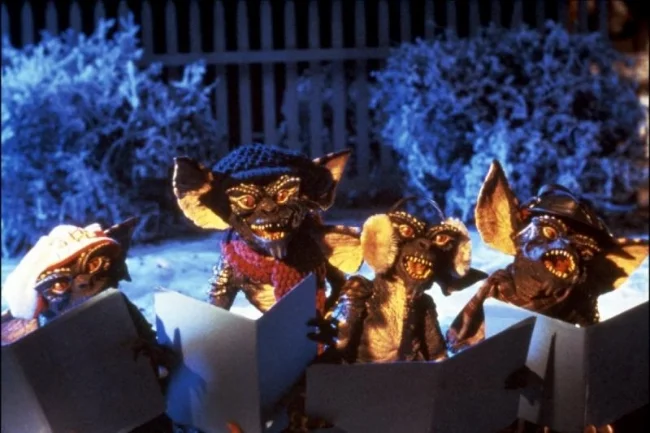

The Secularisation of Christmas Entertainment
The central theme of this post may well be better suited to a scholarly essay by a noted academic. I'm afraid all you'll get from me are just a few personal observations. But I wanted to raise this subject because I am at an age now where I am very conscious of the changes that have happened in UK society over the course of my life. I'm not advocating one side of the debate over another, just merely collating my thoughts on a broad cultural shift. Christmas has become increasingly secular over recent decades and because I write about popular entertainment that is the medium I viewed this process through.
The central theme of this post may well be better suited to a scholarly essay by a noted academic. I'm afraid all you'll get from me are just a few personal observations. But I wanted to raise this subject because I am at an age now where I am very conscious of the changes that have happened in UK society over the course of my life. I'm not advocating one side of the debate over another, just merely collating my thoughts on a broad cultural shift. Christmas has become increasingly secular over recent decades and because I write about popular entertainment that is the medium I viewed this process through.
As a child of the seventies, I grew up as a cultural Christian. School began each day with a formal assembly in which hymns were sung, Bible passages were often read and a moral lesson was taught by the headmaster/mistress. Shops closed on Sunday, the public broadly attended services and the establishment still showed deference to the Anglican Church and other denominations. Irrespective of my personal beliefs, I was raised in a society that was steeped in Christian tradition (and still is). Remember that church and state have never been truly separate throughout UK history.
As I have previously written about Easter, Christian faith has slowly been driven out of the TV schedules over the years. Faith based content is far from common place on the major TV networks. TV shows and films seem to focus on the secular aspects of the season, such as family, the exchange of gifts and being together. Much of this alternative entertainment is based around the faux mythology of Santa Claus, Kris Kringle or even Dicken's tale of Ebenezer Scrooge's redemption. The Christian message with its fundamental tenets of service to others, giving and personal self-sacrifice do not sit well with a prevailing culture of self-indulgence and hedonism.

In recent years, a new factor has impacted upon the inclusion of Christianity in most forms of Christmas entertainment. Because the debate between religion and the secular has become increasingly polarised the media have naturally focused on extremes on both sides of the debate. Such elements are always good for a cheap binary headline. As a result Christianity is portrayed as the province of killjoys, bigots and the lunatic fringe, despite this not being an accurate or fair representation.
With regard to gaming, trying to dovetail a Christian message into such a medium is a difficult task. The lore and other worldly settings negate any obvious Christmas reference. The fact that games, especially the MMO genre have a global audience, developers are mindful of the diversity of the player base and the multiple faiths they represent. As a result we get Winter Festivals, Yuletide events and other broader concepts. These are more akin to our secular Christmas experiences in the real world. Yet they often come across as somewhat hollow undertakings and somehow fail to capture the sentiment of the season.
At this time of year in the UK, it is traditional for the head of state to broadcast a Christmas message. The Queen is formally the "Defender of the Faith and Supreme Governor of the Church of England" and also comes from a generation that genuinely believe in their Christian faith. Therefore, when she speaks on such matters I believe she does so with utter personal conviction. I respect this in principle. Sadly the concept of a Christmas message has now been adopted by politicians as well as anyone with a media presence and an axe to grind. Seasonal messages from such quarters as these seldom have any credibility.
The secularisation of various facets of UK life is a complex subject and this post is far from a thorough exploration. I've simply collated a few thoughts on the matter. This beggars the question as to whether I have an overall point. If I do, then I believe it to be that the ongoing secularisation of Christmas, especially through the medium of entertainment, has not necessarily been to society's benefit. Although one can never recapture ones experiences of the past, I can honestly say that Christmas as it currently exists, is a somewhat hollow and arbitrary experience for me. It has usurped a festival that had positive moral connotations and replaced it with consumerism and “organized” fun. I don't know what the answers are to this conundrum or whether I am correct in my observations. All I know is that I feel that something has been lost and that makes me a little sad.
For those outside of the UK, The Radio Times is one of the most popular TV guide magazines in the country. It was the world's first broadcast listings magazine when it was founded in 1923 by John Reith, then general manager of the BBC. It used to exclusively cover only BBC TV and radio content but over the years has expanded its listing to cover all terrestrial, satellite, cable and internet TV channels. As well as printing the various TV schedules it also contains articles, reviews and interviews associated with most forms of UK media. It is broadly deemed to be in good standing with the population and still boasts a high standard of journalism. However, over recent years The Radio Times has suffered a decline in readership the same way that all traditional print media has. Hence the bulk of its current readership are mainly those who have grown up with it and have a strong bond with it.