The Peril of Leaving Comments
I recently decided to try and comment more on websites and blogs, mainly in a shameless attempt to raise my own writing profile. I live in hope that people will be enamoured with my “puckish epigrams” and follow the breadcrumb trail back here. However, leaving comments takes time because I cannot just post a few succinct words. I always end up typing several paragraphs because brevity often leads to a point being misconstrued. We do after all live in an age where people actively look for offense regardless of whether it’s there or not. However, I digress. What I enjoy about leaving comments on blog posts and website articles, is the chance to exchange ideas and to riff off other people. I also find that by marshalling my thoughts and leaving a comment elsewhere, it can lead to me subsequently expanding on those ideas and developing them into a blog post for Contains Moderate Peril. So overall, I advocate leaving comments and feedback.
I recently decided to try and comment more on websites and blogs, mainly in a shameless attempt to raise my own writing profile. I live in hope that people will be enamoured with my “puckish epigrams” and follow the breadcrumb trail back here. However, leaving comments takes time because I cannot just post a few succinct words. I always end up typing several paragraphs because brevity often leads to a point being misconstrued. We do after all live in an age where people actively look for offense regardless of whether it’s there or not. However, I digress. What I enjoy about leaving comments on blog posts and website articles, is the chance to exchange ideas and to riff off other people. I also find that by marshalling my thoughts and leaving a comment elsewhere, it can lead to me subsequently expanding on those ideas and developing them into a blog post for Contains Moderate Peril. So overall, I advocate leaving comments and feedback.
And of course, as you’ve probably guessed, the previous statement comes with a caveat. Actually, it’s probably not so much of a caveat but more of an element of risk. That being that you have absolutely no control over what happens next. Allow me to give you an example. Earlier in the week, there was a post over at Massively Overpowered regarding how Disney forced EA to temporarily disable the lootboxes in Star Wars Battlefront II. I left a comment to the effect that it was a positive result and that at least we as gamers knew what to do in the future. IE Complain to the licence holder and not just the developer. Use a company’s PR vanity against them. I then ended the comment with a throw away remark about how we needed to figure out exactly what we all wanted. Because there isn’t a “universal dream”. Gamers are a bit like the Judean People’s Front versus the People’s Front of Judea.
What followed next in a way proved my point. Another gamer directly replied with a few ideas regarding the “universal dream”. “Not to be exploited by corrupt and greedy corporations; Not to be physiologically programmed into degenerate gamblers; not to have communist/SJW re-education and propaganda corrupting our games and media. I am sure you can add a few things to this dream list but it’s a start”. Well yes, I do indeed have a few things to add and more importantly, a lot to remove. Like 90% of what they said. The only thing I broadly agree with is there first point, although I wouldn’t couch it in such hyperbolic language. I think EA’s lootbox system is crass and the fact they had the gall to try it, is mildly insulting. However, the rest of the views stated are simply ill conceived and reek of tabloid journalism and the associated mindset. I could have replied but suspected it would lead to on of those circular conversations that achieves nothing other than the raising of blood pressure and an unnecessary expenditure of energy.
This minor event reminded me of a similar situation I had a few years ago while I was waiting for a bus. A random stranger joined me at the bus stop and a brief exchange of words was had regarding the approximate time of the next bus. Then suddenly, out of know where, the guy blurted out a few derogatory comments about a specific ethnic group. It wasn’t a crazy tirade. Just a few sentences, said in a calm and measured way but still overtly racist. I remember at the time thinking, where the hell did that come from and then getting really angry because there was this inherent assumption in his confidence to make such comments, that I too was a bigot. Furthermore, when considering both these anecdotes about random left field statements, I worry that there’s a risk that you can get inadvertently tarred with the “crazy” brush in such situations. Stupidity splash damage is one way to describe it.
Once again, an old adage has proven true. No good deed goes unpunished. Except I’m not sure if I can really define me leaving a comment on a website as a good deed but hey, most analogies don’t stand up to close scrutiny. Guess this is similar to the recent discussion a few of us bloggers had on twitter about how the articles you feel are your best don’t garner the traffic you’d like and that disposable posts can sometimes break big. Similarly, a comment you feel strongly about may only get a reply from some random crazy person and a glib remark can be perceived as being more than the sum of its parts and deeply insightful. I guess both of these first world, social media “dilemmas” are a direct result of daring to interact with other sentient, carbon based life forms. It’s an activity that always comes with an element of risk.




















Black Friday
I have been subject to a continual barrage of emails over the course of the week, promoting Black Friday sales. These have covered everything from power tools to medical supplies, children’s toys and even granite work surfaces. Obviously. there’s also been a lot of promotions for discount games. This eclectic mix reflects the fact that I use my online accounts to purchase items for my entire family. I hate to think what the various analysts and number crunchers make of this. My Amazon recommendations includes both urine bottles and Thomas the Tank Engine paraphernalia. But I digress, I’m sure pretty much all of us have been battered around the head and shoulders this week by various kinds of unsubtle marketing. However, I am happy to report that I have not succumbed to this “encouragement”. The simple fact is that I don’t need anything at present so have bought nothing. Furthermore, I had an epiphany nearly two decades ago, when I discovered that buying stuff really doesn’t make you feel any better, solve any of your problems or fulfil any of the inferred promises of the advertisements.
I have been subject to a continual barrage of emails over the course of the week, promoting Black Friday sales. These have covered everything from power tools to medical supplies, children’s toys and even granite work surfaces. Obviously. there’s also been a lot of promotions for discount games. This eclectic mix reflects the fact that I use my online accounts to purchase items for my entire family. I hate to think what the various analysts and number crunchers make of this. My Amazon recommendations includes both urine bottles and Thomas the Tank Engine paraphernalia. But I digress, I’m sure pretty much all of us have been battered around the head and shoulders this week by various kinds of unsubtle marketing. However, I am happy to report that I have not succumbed to this “encouragement”. The simple fact is that I don’t need anything at present so have bought nothing. Furthermore, I had an epiphany nearly two decades ago, when I discovered that buying stuff really doesn’t make you feel any better, solve any of your problems or fulfil any of the inferred promises of the advertisements.
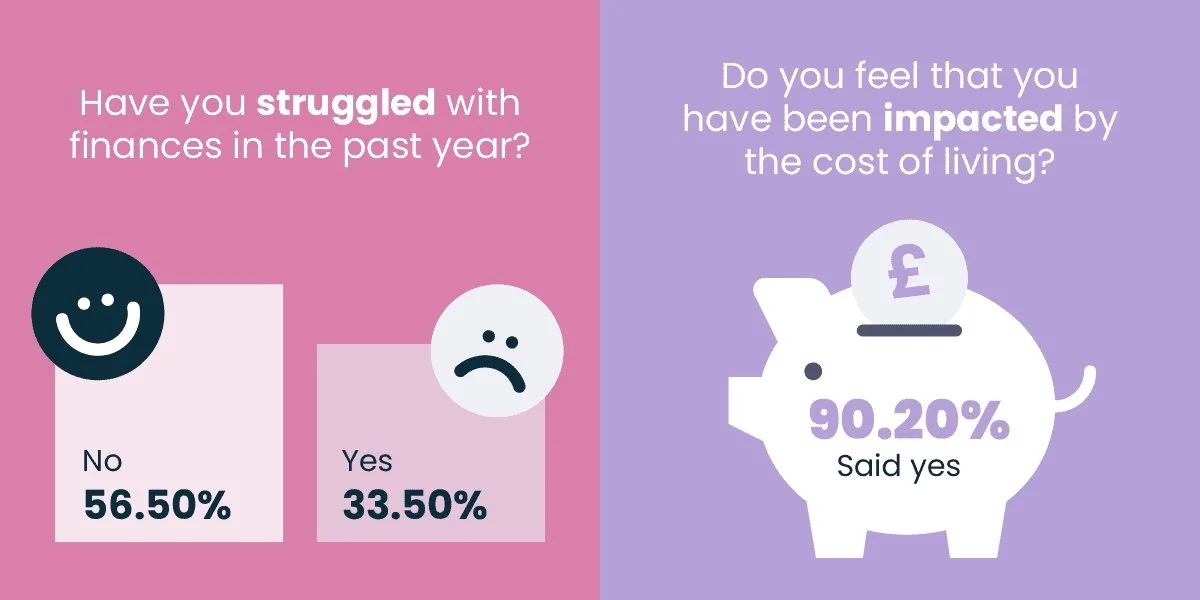
Economically speaking, the Black Friday pre-Christmas sales have become increasingly important to retailers and in the UK are a big indicator of consumer confidence and a litmus test of how well the public feel the country is fairing. So far from the numbers that have filtered through today, it would appear that spending is up 6% over last year. But before we put out the bunting and shout “Yay for the UK economy”, let’s temper our enthusiasm with the fact that consumer debt (mainly unsecured loans via credit cards) is currently £200 billion. That’s for a country with a population of 65 million. And at a time when interest rates are finally rising after a decade. Oh, and let’s not forget that minor political and economic event known colloquially as BREXIT. That may also have a bearing on the situation with regard to the value of the pound, the cost of living and future consumer borrowing.
If you take time to reflect upon the big picture, it’s a very sorry state of affairs. We live in a society where many are trapped in low paid jobs with little chance of opportunity or improvement. Many are deeply unhappy with what they do for a living and see little chance of life getting any better due to a decline in social mobility. Social media has lifted the scales from the public eyes and the divisions between the haves and the have nots are laid bare. The country currently bitterly divided and rational thought is in retreat. The decline in institutions such as the church, along with a waning of a sense of community has resulted in a nation of “individuals” desperately trying to assuage their personal sadness through retail therapy. It’s a recipe for disaster and 2018 is potentially the year when the proverbial chickens come home to roost. I am not optimistic that things are going to get better soon, nor do I have faith in any politicians to fix these problems. But hey, that was a sweat deal you got on an electric haemorrhoid massager.













The Complexity of Socialising
A couple of things have prompted the train of thought that is the basis of this post. The first was the recent BBC television documentary by Chris Packham about autism and how it has shaped his life. The second was a post over at Massively Overpowered regarding “playing alone together”. The reader comments ended up becoming a discussion of the old “introverts versus extroverts” debate. Both of these have got me thinking about the complexity of social interaction and the stress it may or may not cause to various individuals. Social skills and group dynamics are things we learn through osmosis. The prevailing culture allegedly shapes us, yet precious little is taught formally. Our parents have an impact at the beginning of our lives but then we find ourselves at school for the lion share of the day, trying to get along with a wide variety of differing personalities. Simply put, socialising is complex and to be successful at it by societies standards, requires a very specific set of skills.
Courtesy of Socially Awkward Misfit
A couple of things have prompted the train of thought that is the basis of this post. The first was the recent BBC television documentary by Chris Packham about autism and how it has shaped his life. The second was a post over at Massively Overpowered regarding “playing alone together”. The reader comments ended up becoming a discussion of the old “introverts versus extroverts” debate. Both of these have got me thinking about the complexity of social interaction and the stress it may or may not cause to various individuals. Social skills and group dynamics are things we learn through osmosis. The prevailing culture allegedly shapes us, yet precious little is taught formally. Our parents have an impact at the beginning of our lives but then we find ourselves at school for the lion share of the day, trying to get along with a wide variety of differing personalities. Simply put, socialising is complex and to be successful at it by societies standards, requires a very specific set of skills.
When addressing a topic such as this, the first question I had to seriously ask myself was the most obvious. Do I consider myself an introvert or an extrovert? As most regular readers know, I’m not a fan of binary choices when it comes to complex questions. There have been times in my life when I have veered from one extreme to the other. As a teenager, I was the clown of my peer group. I thought it would resolve a lot of issues although all it really did was paint me into a corner. It was not until my thirties that I truly found my social confidence. This mainly came about through working in a field that I enjoyed and felt comfortable in. I also learned how to become a more effective public speaker. Having children also forces you to deal with things and step outside of your comfort zone. However, despite improving my social skills there are still many scenarios and situations I’m not good at. Talking about sport and dancing in public are two that spring to mind. I’m also not a big on “hugging”. But the fact remains, I can be social and deal with such situations. For me, the key to success lies in picking and choosing how and where I do it.
Writing is a form of communication and social interaction that I especially enjoy. Mainly because it’s a medium that a lot easier to manage, rather than a face to face Conversation. I am also confident when it comes to podcasting, for similar reasons. I tend to record with people whose company I enjoy and know quite well. However, despite our best efforts none of us gets to deal with life exclusively on our own terms. Especially if you’re in a relationship, as you have to make concessions to social situations. For example, I have a wedding coming up in December. I’d be lying if I said I was looking forward to it. It’s not a case of I’m bad in these sorts of social situations. It’s a case of I don’t care for them. It’s not as if my presence is essential to the success of proceedings, plus I really don’t dig small talk and the low-key conversation it is best to pursue at these events. It probably sounds a terrible thing to say but these situations bore me. I appreciate that very few people are raconteurs of the calibre of Stephen Fry, Peter Ustinov and Michael Winner. I don’t expect that. I just feel that it would be a far better use of my time if I applied it to something productive, rather than some pointless social banter with strangers.
After watching the aforementioned documentary about autism, I raised the question as to whether I was possibly on the spectrum with my significant other, due to some of my personality foibles. I meant the question genuinely and was certainly not making light of such medical conditions. She said that it was unlikely that I was, because I could cope with all the social things that Chris Packham can’t. The difference was where he is incapable, I am simply unwilling due to my “personality”. So, it would appear that I have no diagnosable conditions that affects my behaviour. I am merely a curmudgeonly git. She further added that despite my reticence to be social and participate in events of that nature, I was very much a product of my generation and broadly culturally conditioned not to be rude. Hence, I do grudgingly participate. On mature reflection I conceded that this is indeed true. However, that doesn’t alter the fact that if I could avoid the entire wedding scenario I would.
Overall, I believe the reality is that I’m neither introvert nor extrovert but somewhere in the middle. I enjoy the company of handpicked friends and when the mood suits, can be quite gregarious. I am also comfortable when left alone. I don’t mind my own company. I guess what I balk at, when considering the wider discussion around this topic, is the usual binary viewpoints. Introversion should not be seen as something that needs to be fixed, especially by extroverts. I believe everyone is somewhere on a scale between those two positions and chooses to deal with the world on their own terms. As for extroverts, they can be a very positive force for good in life. They can often provide a rallying point through the strength of their personalities, be supportive individuals and be good representatives for causes and charities. But they can also be extremely wearing and tedious people, taking up all the oxygen in any given social space. We need as a society to shift the focus away from these two extremes and encourage an understanding of all personality types as well as a recognition that socialising isn’t governed by two approaches.