LOTRO: Solving a Gear “Problem” with Money
Before I crack on, I would like to point out that I’ve put the word “problem” in quotes, to reference the fact that this is an opinion and not a universal fact that confronts all players of the MMORPG, The Lord of the Rings Online. Now that’s out of the way, let me start by saying that the way in which game developers think you should play their products can at times be at odds with how the players like to do things themselves. LOTRO is a classic MMORPG in so far as the player is expected to level their characters playing a variety of PVE content, then play repeatables to obtain intermediate gear, then pursue endgame content such as raiding. Simply put, it means you get the best gear once you’ve arrived at level cap and not while you’re levelling. Usually PVE content is not too problematic if you maintain a relevant build and gear according to level. However, LOTRO does have several zones and expansions that are “wild cards. For example Mounted Combat in Rohan is a nuisance for melee classes. And then there’s the gear check and increase in mob difficulty that occurs in both Mordor and Minas Morgul expansions.
Before I crack on, I would like to point out that I’ve put the word “problem” in quotes, to reference the fact that this is an opinion and not a universal fact that confronts all players of the MMORPG, The Lord of the Rings Online. Now that’s out of the way, let me start by saying that the way in which game developers think you should play their products can at times be at odds with how the players like to do things themselves. LOTRO is a classic MMORPG in so far as the player is expected to level their characters playing a variety of PVE content, then play repeatables to obtain intermediate gear, then pursue endgame content such as raiding. Simply put, it means you get the best gear once you’ve arrived at level cap and not while you’re levelling. Usually PVE content is not too problematic if you maintain a relevant build and gear according to level. However, LOTRO does have several zones and expansions that are “wild cards. For example Mounted Combat in Rohan is a nuisance for melee classes. And then there’s the gear check and increase in mob difficulty that occurs in both Mordor and Minas Morgul expansions.
Now my approach to MMOs has been consistent since I first started playing the genre in 2008. I am not especially enamoured with end game content and tend to enjoy PVE based levelling the most. I don’t harbour any notions about “challenges” or “testing one’s mettle”. Nope, I run on the sound military principle of ensuring that you are as well equipped as possible at all times. For example, when I was levelling an alt in 2019 I used account bound barter currencies to ensure they had the best gear every 10 levels. I was not content with lacklustre drops and found that investing in good skirmish sets increased my overall performance. The bottom line is when playing an MMO I like to be overpowered. Which brings me nicely to my current situation. I am halfway through the latest LOTRO expansion and I have hit level cap. Questing in the Morgul Vale now lies ahead of me and I suspect that it is going to be a slog. Hence I want to be OP so I can negate the purposely contrived slow pace set by the developers.
After completing the first half of the latest expansion, Mordor Besieged, I acquired a new set of Green quality gear. It was superior to that I had earned through the Vales of Anduin but it still felt underwhelming. It offered survivability but no discernible “edge”. So I decided to conduct an experiment to see if I could get better equipment now, rather than waiting to finish the expansion. Having searched my Barter Wallet I had no currency that I could use that would yield superior gear. So I decided to see what I could get via Adventurer's Steel-bound Lootboxes. So I bought £30 worth of LOTRO points (LP) with some Christmas gift money and then proceeded to buy 22 Black Steel Key. These are purchased from the LOTRO Store for 195 LP each, or 5x for 900 LP. I then opened 22 lootboxes which gave mainly Embers of Enchantment along with buffs, boosts, cosmetic items, essences and the occasional item of gear. I then bought further jewellery and gear with the Embers. I also disenchanted old gear and some of the items I obtained that were duplicates or unwanted cosmetics.
This post is not the time or place for a debate on the subject of “pay to win”. I shall leave that for another day. However, I have included in this article two pictures which show my Lore-masters stats before and after I re-equipped using lootboxes. Broadly, I am happy with the results. I have had my stats boosted across the board with only Critical Rating taking a hit. I can adjust this by replacing an essence or two. After I replaced my gear I ran a skirmish (Thievery and Mischief) and certainly didn’t struggle as I have previously. Defeating the encounter bosses was far quicker than before and I never felt I was in any jeopardy. Light armour classes often feel squishy and now I believe that quality has been mitigated. Mobs don’t take so many hits to die and the pace of combat seems to have returned to a more equitable rhythm. Fights no longer seem like a reactive process but a proactive one. I prefer this.
Now, this simple test is far from scientific and I’m sure a more invested player would have produced far more data on the statistical difference between builds. Then there’s the argument that the current gear progression offered by the new expansion is not a problem per se and my outlook is just down to my personal foibles. Something I wouldn’t argue against. I am simply advocating using whatever resources you have available to ensure you are as optimally geared as possible. I’d rather that process didn’t require the spending of additional money and I’m also not asking for raid gear to be available outside of raids themselves. However, regardless of where you stand on such issues, LOTRO is a game that was developed when prevailing MMO trends were a lot different. The genre has changed a lot in ten plus years. I remember when Turbine (now SSG) introduced the long term project of rebuilding the town of Hytbold in Rohan, as a means of earning top tier gear, outside of raiding. It would be nice to have something comparable now. However, I think the developers have discovered that this gap in the gear market that I have highlighted, can be monetised and that is how it will be treated from now on.






Thoughts on the Minas Morgul Expansion
I was afforded some free time this weekend, so I logged in to The Lord of the Rings Online and blitzed through about half of the Minas Morgul expansion and managed to reach the new level cap of 130 ( I was level 128 when I started). I finished the first two new chapters of The Black Book of Mordor and completed Mordor Besieged; the section of the new expansion that is set in the Second Age on the plateau of Gorgoroth. It’s a curious and initially engaging part of the game. In the past LOTRO aficionados have only been able to briefly access iconic events of the past through session play where they get to be someone else, via a short story driven instance. Mordor Besieged offers a revised area of the existing Mordor map; namely Dor Armath. All though a desolate place in the Second Age, this region is not the wasteland we see in the Third Age. The landscape has several active fortresses held by both sides and The Nazgul roam freely. But there is little of real substance to do here (a point I shall return to) and after a while it gets somewhat repetitive.
I was afforded some free time this weekend, so I logged in to The Lord of the Rings Online and blitzed through about half of the Minas Morgul expansion and managed to reach the new level cap of 130 ( I was level 128 when I started). I finished the first two new chapters of The Black Book of Mordor and completed Mordor Besieged; the section of the new expansion that is set in the Second Age on the plateau of Gorgoroth. It’s a curious and initially engaging part of the game. In the past LOTRO aficionados have only been able to briefly access iconic events of the past through session play where they get to be someone else, via a short story driven instance. Mordor Besieged offers a revised area of the existing Mordor map; namely Dor Armath. All though a desolate place in the Second Age, this region is not the wasteland we see in the Third Age. The landscape has several active fortresses held by both sides and The Nazgul roam freely. But there is little of real substance to do here (a point I shall return to) and after a while it gets somewhat repetitive.
But as ever with LOTRO, the “gold” is in the story that Standing Stone Games have crafted. On this occasion there are several interesting interpretations of the lore. Firstly, there is the battle on the slopes of Mount Doom in which Sauron is defeated. Tolkien says in his text “at the last the siege was so strait that Sauron himself came forth; and he wrestled with Gil-galad and Elendil, and they both were slain, and the sword of Elendil broke under him as he fell. But Sauron also was thrown down, and with the hilt-shard of Narsil Isildur cut the Ruling Ring from the hand of Sauron and took it for his own”. This is directly reflected in a cutscene which shows both Gil-galad and Elendil injuring Sauron and then getting burned by the power of the One Ring. However, Sauron himself collapses after expending such power and being wounded twice. Isildur then cuts the ring from a greatly weakened Sauron’s hand. This differs from from Peter Jackson’s adaptation that shows Isildur being the far more proactive in the Dark Lord’s demise.

Secondly, in the Lost Lore of the Last Alliance, if you collect all the pages and read the text in order, it states that Gil-galad uses two of the Elven Rings to destroy the Black Gate by summoning a firestorm. However, wielding two rings nearly kills him and he swears he will not do such a thing again. As dramatic as this may be it contradicts the source text. Tolkien states the following. "But the Elves fled from him; and three of their rings they saved, and bore them away, and hid them. Now these were the Three that had last been made. But Sauron could not discover them, for they were given into the hands of the Wise, who concealed them and never again used them openly while Sauron kept the Ruling Ring". Using two Elven rings to force your way into Mordor doesn’t sound much like “concealing” to me. But LOTRO is an adaptation of Tolkien’s work, designed to accommodate the needs of the MMORPG genre. It’s best not to be too picky about lore or as you’ll find that a lot of the game doesn’t hold up to close scrutiny.
Usually in LOTRO, the Epic Story moves events forward and regional quests support or embellish the wider ongoing narrative. In Mordor Besieged, it doesn’t quite feel that way. There’s a lot of “treading water”. Some parts of the Epic are just superfluous exposition and only about half is of any importance. Most of the zone quests are of the “fetch” or “slayer” variety despite some fun lore references (such as the inclusion of Hobbits from the Gladden Fields in The Last Alliance). Overall, the entire first half of this expansion seems to be somewhat drawn out and could have been a free update in its own right. Which begs the question is Minas Morgul really a true expansion. Or is it two updates? Or a hybrid made of material left over from the Mordor expansion from two years ago, that has been retooled and padded out so as to be called an “expansion”? I hope the next half offers more. I have enjoyed my experience so far but on a critical level Minas Morgul has been lacking in depth of content.
LOTRO: Catching Up With Content
I regularly fall behind the latest content release for The Lord of the Rings Online. So it is not uncommon for me to “binge play” in an attempt to catch up with others in my kinship. The November release of the Minas Morgul expansion (which I have now grudgingly purchased) raised the level cap to 130. I managed to gain nearly 5 levels recently by repeating the Yule Festival daily quests and supplementing them with skirmishes. I used a lot of rested XP and bought a lot of progression perks with Destiny Points. However, as I mentioned in a previous blog post, I was struggling in the skirmishes as I was geared for level 120, so I decided to return to playing PVE content in the Vales of Anduin. As this content is designed for players at level 120, it has proven a more equitable player experience; especially as I was level 125 when I returned to the Wolf-denes. I was able to progress through the zone, focusing on the various quests stories and not having to continuously worry about being underpowered and at risk of defeat. Last night I completed Update 24 and have managed to reach level 128 with my Lore-master. I now feel that I am adequately prepared for the new expansion.
I regularly fall behind the latest content release for The Lord of the Rings Online. So it is not uncommon for me to “binge play” in an attempt to catch up with others in my kinship. The November release of the Minas Morgul expansion (which I have now grudgingly purchased) raised the level cap to 130. I managed to gain nearly 5 levels recently by repeating the Yule Festival daily quests and supplementing them with skirmishes. I used a lot of rested XP and bought a lot of progression perks with Destiny Points. However, as I mentioned in a previous blog post, I was struggling in the skirmishes as I was geared for level 120, so I decided to return to playing PVE content in the Vales of Anduin. As this content is designed for players at level 120, it has proven a more equitable player experience; especially as I was level 125 when I returned to the Wolf-denes. I was able to progress through the zone, focusing on the various quests stories and not having to continuously worry about being underpowered and at risk of defeat. Last night I completed Update 24 and have managed to reach level 128 with my Lore-master. I now feel that I am adequately prepared for the new expansion.
There are certain advantages to “binge playing” an MMO. First you get a far clearer picture of how your progress through the game impacts upon your character’s abilities. Virtues, reputation and LI progression have all notably increased as I have comprehensively played through the Epic Story and all regional quest hubs. I have maxed out the virtue of Wisdom and have now set Honesty to benefit from the ongoing XP gain. These longer, lengthier play sessions allow you to make specific decisions about your character’s stats and then tangibly see them grow. It does feel different to intermittent game play and gives you a sense that you’re in more control. Plus having spent more time becoming re-acquainted with the subtleties of my main alt, I have subsequently been able to trawl through my vault and make informed decisions about what to keep and what to dispense with. I have numerous essences that are no longer relevant so they have gone to other alts. The ongoing questing has also provided some useful new intermediate gear. I’ll take any statistical boost no matter how big or small. Anything that makes proceeding through Minas Morgul as frictionless as possible is a boon.
The second bonus that I find comes from “binge playing” is that I get to focus far more on the quest narratives. The regional quests often link and underpin the main story line, providing subtle lore references and interesting vignettes. The Vales of Anduin has been exceptionally beneficial in this way. It was a pleasure to return to Goblin Town and I like the concept of the various post fall-of-Mordor power struggles that occur all over Middle-earth. The incursion of Gundabad Orcs into the Misty Mountains was very plausible as well as fun. I also liked the story of Old Mad Ubb and his legend among the Woodmen of the region. His true identity was not too difficult to discern but was a nice canonical reference. The expansion of Radagast’s role in the game was also welcome and I was even prepared to go along with the expansion of the lore to explain the Ungoledain. However, developer’s Standing Stone Games also include a lot of “filler” quests in the zone. For every good story mission, there will be several or more “fetch” or “kill” quests. The Gladden Fields is a prime example of this. Sometimes there’s a fine line between enjoying an area and then feeling that you just want to leave because its has outstayed its welcome, due to the ponderous list of chores you are offered.
So the next step for my Lore-master will be to head off to the Morgul Vale and continue with the Black Book of Mordor story. I have spoken to fellow LOTRO players and my kin mates and have received mixed views and opinions about the latest expansion. The story is supposed to be good but the reality of questing in this zone is a bit of a grind. There are a lot of repetitive journeys to specific areas to carry out the most arbitrary of tasks. Mob density is also quite high, making travel from A to B a chore. Plus it is a dark and dour zone as the lore dictates but that doesn’t always make for a good experience. The memory of Mordor and its “testing” nature still lingers in the back of my mind. I hope that Minas Morgul is not cut from exactly the same cloth. However, if that is the case, I can always focus my attention on other endeavours. I can return to previous zones and finish various deeds to increase my virtues. I can also focus on featured instances and roving threats and see if I can earn sufficient barter currencies for new gear. Or I could even focus on levelling my High Elf Guardian who remains on the slag hills outside the Black Gate. Who knows, we may even get a Producer’s Letter at some point with a road map for LOTRO in 2020. That would be most welcome.
The Pace of Combat in MMOs
This is going to be a very subjective post because much of what I am about describe isn’t based upon measurable data (although I’m sure there are players who would do so) but more how something feels. Ironically, due to my nature I’m usually more disposed towards fact-based analyses but even I have to recognise that humans are driven by emotions and other esoteric factors. And with regard to this subject matter I hate to say it but how I feel greatly shapes my opinion. So let me begin by referring back to the MMO The Secret World, which has evolved into Secret World Legends. One of the main reasons I stopped playing the original version of the game was because the combat was tedious. By which I mean it took too long. I would use an assault rifle and blast away at a mob, only for it to pursue me as its health meter slowly went down. Hence, I would have to reverse while attacking and slowly back peddle until the mob died. As a method it worked but it was extremely unsatisfactory. The weapon felt under powered and the style of attack lacked grandeur. The revised iteration of the game failed to address this so I didn’t stick with playing that either.
This is going to be a very subjective post because much of what I am about describe isn’t based upon measurable data (although I’m sure there are players who would do so) but more how something feels. Ironically, due to my nature I’m usually more disposed towards fact-based analyses but even I have to recognise that humans are driven by emotions and other esoteric factors. And with regard to this subject matter I hate to say it but how I feel greatly shapes my opinion. So let me begin by referring back to the MMO The Secret World, which has evolved into Secret World Legends. One of the main reasons I stopped playing the original version of the game was because the combat was tedious. By which I mean it took too long. I would use an assault rifle and blast away at a mob, only for it to pursue me as its health meter slowly went down. Hence, I would have to reverse while attacking and slowly back peddle until the mob died. As a method it worked but it was extremely unsatisfactory. The weapon felt under powered and the style of attack lacked grandeur. The revised iteration of the game failed to address this so I didn’t stick with playing that either.
Although combat in MMOs is about damage, control and tactics there are also more nebulous factors involved. These being rhythm, pacing and a sense on being in control of your actions so you can read and adjust to the ebb and flow of the fight. There is a sweet spot somewhere between both the technical facets of combat and the more enigmatic matter of how it “feels”. When a game get’s it right, it often something you discern subconsciously first, rather than by number crunching your combat log. And when a game get’s it wrong fighting crosses the line from being a challenging but enjoyable task to simply being a drag. However, we have to temper this outlook with the fact that no two players share exactly the same view on what “feels” right. Let me further add that I always like to gear my characters in any MMO to be overpowered. I want every single buff, boost and boon I can get because to my mind why would you not want that? I don’t look at combat in this genre of games to be some sort of Marquess of Queensberry rules, even-handed, battle of skill to find out who is the better “chap”. No, I want to be able to crush all before me quickly and efficiently.
Which brings me nicely on to my current situation in The Lord of the Rings Online. I worked my primary character through Update 23: Where Dragons Dwell and came out the other side, well geared and able to hold my own in combat. I continued with Update 24: Vales of Anduin and had no issues making progress. And then along came the Minas Morgul expansion in November 2019 with an increase in level cap to 130 and new gear to grind. If you buy the expansion and follow the Epic story you will be provided with adequate gear from quest rewards to move forward. If however, you have not bought the expansion you will find that doing level 120 plus skirmishes or instances is tricky because you are now behind the gear curve. Also you may find that your Legendary Items are wanting and will need to acquire Anfalas Scrolls of Empowerment to unlock additional tiers on your LI legacies. Collectively these factors have conspired and I am now distinctly underpowered and struggling to progress through skirmishes and group content due to being gimped by not purchasing the latest expansion. Combat is now a slog to wear down mobs. For me this goes beyond challenging and strays into the realm of the tedious.
I did some calculations today and I need about 140-150 Anfalas Scrolls of Empowerment to keep my LI viable and unlock all possible upgrades. I can either grind these items via the game, buy them on Auction House or purchase from the in-game store. The latter will cost about £150 so that is not an option. Neither is grinding towards a goal. It will take between one and two months and I don’t relish doing the same old quests for that period of time. I do not have the gold required to buy these items from the in-game auction, so the immediate future is one of performing under requirement. This makes combat slow and ponderous which brings me neatly to my original point about once combat ceases to be “fun”, it pretty much kills my interest in a game. This also highlights a problem with a lot of the older MMOs that still exist. To play in an optimal fashion you have to be wedded to the game, play through all content regularly and ensure that you keep on top of all new systems and mechanics. If you in any way take time out and fall behind, then you are potentially disadvantaging yourself. This is not something that occurs in more recent MMOs such as The Elder Scrolls Online.
Despite my grumblings at perceived shortcomings in LOTRO, I have a strong connection to the game as it was my point of entry to this genre. Therefore I shall persevere with the situation and see if I can devise a plan to re-equip my character by the path of least resistance. I am also fortunate to be in a kinship that is very generous and resources are often shared. However, it is interesting that I find myself in exactly the same position as I was when the Mordor expansion launched and I arrived late to that particular party. I believe it proves my theory that LOTRO requires a degree of fidelity and regular participation to be experienced in the best way in terms of gear, jewellery and effective DPS. I see now why many players choose to avoid this “trap” by continuously rolling new alts and restricting their game play to specific content, as to not find themselves in the position of having to continuously chase end content. Of course I could make this problem go away by just buying the latest expansion and playing though it but that flies in the face of the old school MMO philosophy of doing things your own way. Perhaps the reality is that’s just not a thing anymore
A Year in Gaming
Life is often cyclical, if you don’t believe me go watch The Lion King. I started 2018 playing The Lord of the Rings Online and by writing a post about how gamers collectively seem to repeat the same mistakes. And as the year and indeed the decade ends, I find myself once again playing the Yule Festival in LOTRO and reflecting upon how some games that garnered criticism over their egregious business models, have ended up as huge hits. It would appear that gamers are their own worst enemy. I shall leave the psychological analysis of paradox to others. From my perspective, irrespective of the iniquities of the video game industry and certain quarters of the gaming community, it has been a good year, gaming wise. I have enjoyed my time playing MMOs such as Star Trek Online, The Elder Scrolls Online and the aforementioned LOTRO. These and other titles have entertained me, provided me with an opportunity to unwind as well as affording me some much-needed social interaction. I particularly enjoy Wednesday evenings when I log into my Discord server and then chat and play collaboratively with longstanding gaming friends.
Life is often cyclical, if you don’t believe me go watch The Lion King. I started 2018 playing The Lord of the Rings Online and by writing a post about how gamers collectively seem to repeat the same mistakes. And as the year and indeed the decade ends, I find myself once again playing the Yule Festival in LOTRO and reflecting upon how some games that garnered criticism over their egregious business models, have ended up as huge hits. It would appear that gamers are their own worst enemy. I shall leave the psychological analysis of paradox to others. From my perspective, irrespective of the iniquities of the video game industry and certain quarters of the gaming community, it has been a good year, gaming wise. I have enjoyed my time playing MMOs such as Star Trek Online, The Elder Scrolls Online and the aforementioned LOTRO. These and other titles have entertained me, provided me with an opportunity to unwind as well as affording me some much-needed social interaction. I particularly enjoy Wednesday evenings when I log into my Discord server and then chat and play collaboratively with longstanding gaming friends.
In many ways, 2019 was just the same as any other year. If I may quote myself, I wrote on January 1st "it does not seem unreasonable to expect more shitty video games and questionable business practises in 2019” and broadly that has proven true. The video game industry shovelled out yet more substandard products such as Mario Kart Tour, Tom Clancy's Ghost Recon Breakpoint and NBA 2K20. All of which are essentially the bare bones games with further content gated behind paywalls and microtransaction. Yet despite the inherent dishonesty of the “pay to start” business model, these titles sold and sold well, thus reminding us that people are the fundamental problem and as a result we get the gaming industry that we deserve. And as for the video game industry itself, it hardly covered itself in glory (again). The latest “trick” seems to be to release a game, get it reviewed and rated and then add an in-game store at a later date. Thus you can avoid any negative publicity during the initial launch window. And then of course there was the Blizzard debacle which raised the inherent dilemma in doing business with an authoritarian country such as China. Oh and “crunch” culture, institutionalised misogyny and general male centric douche baggery still seems to prevail in the industry.
However, 2019 wasn’t all doom and gloom. There are always good titles to be found if you look hard enough. The Untitled Goose Game was an utter joy and certainly seemed to touch a cultural never but in a good way. The Outer Worlds found popular acclaim and seemed to compensate for Fallout 76 as a spiritual successor to that franchise. I personally was very pleased by the arrival of Red Dead Redemption 2 on the PC. Yes, the launch was somewhat farcical and I had to downgrade my PC’s BIOS to play the damn thing but the game certainly lived up to my expectations, with its complex and nuanced narrative. And not all video game developers are corporate monstrosities. Compare 2K or EA to Rebellion Developments and the contrast is obvious. The latter is a company that I don’t feel the need to take a shower after buying one of their games. Plus, 2019 proved that there are still plenty of game bloggers, streamers and podcasters who are interested in producing content in a thoughtful, constructive and engaging manner. Too many subreddits are insular, angry communities that “shit in their own watering hole”. Who needs that when you can find honest and genuine content from gamers who enjoy what they play, rather than recriminate over how they think the community and industry should be?
For me video games continue to provide an entertaining, social and economic leisure activity. They certainly dove tail neatly into my lifestyle and real-world commitments. And so as I await the arrival of 2020, I shall enter the new decade (when framed in such terms it sounds somewhat depressing) pretty much doing the same as I did twelve months ago. I see no reason to stop playing the three MMOs that have been the mainstay of my gaming activities for so long. They are functional and provide both long and short gameplay sessions as well as clear goals. As all these games are relatively healthy from a business perspective, there is regular new content throughout the year. No doubt I will try several single player games in 2020; some of which will be planned purchases where others will be bought on a whim. I may even investigate some of the free titles I’ve acquired from the Epic Store or some of the obscure games I’ve collected in discount bundles over the years. I’m certainly no expecting myself or the video game industry to have any sort of epiphany over the next twelve months. I shall just anticipate more of the same, which after all is life’s default position.














LOTRO: Levelling via the Yule Festival
As I haven’t yet bought the recently released Minas Morgul expansion for The Lord of the Rings Online, I am presently faced with the problem of looking for alternative ways to gain ten levels, now that the cap has been increased to 130. The most obvious answer is to play the various skirmishes that exist within the game, however I noticed that at level 120 I’m somewhat under geared and not doing as much DPS as I would like. Consequently, skirmishes have ceased for the present to be a cake walk and are more of a strategic undertaking, requiring attention to one’s skills rotation and a generally cautious strategy. I could also just return to the Vales of Anduin and clear some of the outstanding story quests but due to the time of year, I prefer shorter play sessions, rather than get bogged down in lengthy narrative chains. Hence, the current Yule Festival presents the most practical solution to my needs.
As I haven’t yet bought the recently released Minas Morgul expansion for The Lord of the Rings Online, I am presently faced with the problem of looking for alternative ways to gain ten levels, now that the cap has been increased to 130. The most obvious answer is to play the various skirmishes that exist within the game, however I noticed that at level 120 I’m somewhat under geared and not doing as much DPS as I would like. Consequently, skirmishes have ceased for the present to be a cake walk and are more of a strategic undertaking, requiring attention to one’s skills rotation and a generally cautious strategy. I could also just return to the Vales of Anduin and clear some of the outstanding story quests but due to the time of year, I prefer shorter play sessions, rather than get bogged down in lengthy narrative chains. Hence, the current Yule Festival presents the most practical solution to my needs.
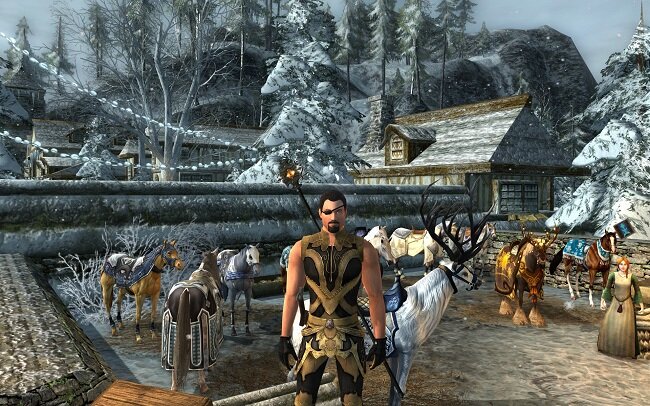
Frostbluff, where the LOTRO Yule Festival takes place, is an atmospheric, self-contained zone with a selection of repeatable quests. If you take the time and give the matter some thought, you can come up with an optimal rotation of quests that allows you to undertake them in the most efficient manner. I try to deal with all those based in the town first, then head West to collect the wood via the Wood-trolls, then East to deal with the Frost Grims and cheer the Snowbeasts. Finally I pick the mushrooms and head back into Frostbluff for the various hand ins. All of these quests can be completed within twenty minutes of so. If you choose a time of day when there are less players about, then you’ll not have to worry about queuing for NPCs to respawn and can possibly finish all these tasks in half the time. Furthermore, you soon learn where all the various items you need are and the entire process becomes second nature.
If you use XP boosters or take advantage of rested XP and other perks, you can receive a healthy amount of XP per quest. If you then undertake 10 repeatable quests each day, then the experience points soon racks up. I’m hoping that by the end of the Yule Festival on Thursday 9th January to have gained three to four levels and be somewhere around 124. I think I’ll then return to the Wolf-denes and finish all of the last update before finally considering buying and starting Minas Morgul. And then it will be back on the gear grind once again and unlocking further tiers on the Legacies of Legendary Weapon. I think my days of being at the cutting edge of LOTRO are now behind me as over for the last few years I’ve found myself playing catch up with most content. However, this is through my own choice. LOTRO is a known quantity and the gaming equivalent of a comfortable pair of shoes. It serves a purpose by scratching a very specific itch but I doubt if its going to reinvent itself in 2020.
Login Incentives in MMORPGS
A major challenge for any MMO is to keep players logging in to the game. Obviously, regularly adding content and ensuring that there are sufficient quests, activities and tasks for players to undertake is essential. However, experience has shown that no matter how much content developers add to an MMORPG, players will always veraciously consume it and want more. Hence you need an additional “carrot on a stick”. Something that get’s player sufficiently interested to log into a game, even when they don’t have anything especially compelling to do. Login incentives are designed to do exactly that. They offer of some bauble or trinket that motivates you to log into a game once a day. Hopefully once you login, you may then find something to occupy yourself, either on your own or with fellow guild members. And of course the player who is actively playing may well even purchase something from the in-game store. At the very least, a successful login incentive contributes towards active player statistics. If those figures are presented in the right fashion on paper, they can bolster a declining population.
A major challenge for any MMO is to keep players logging in to the game. Obviously, regularly adding content and ensuring that there are sufficient quests, activities and tasks for players to undertake is essential. However, experience has shown that no matter how much content developers add to an MMORPG, players will always veraciously consume it and want more. Hence you need an additional “carrot on a stick”. Something that get’s player sufficiently interested to log into a game, even when they don’t have anything especially compelling to do. Login incentives are designed to do exactly that. They offer of some bauble or trinket that motivates you to log into a game once a day. Hopefully once you login, you may then find something to occupy yourself, either on your own or with fellow guild members. And of course the player who is actively playing may well even purchase something from the in-game store. At the very least, a successful login incentive contributes towards active player statistics. If those figures are presented in the right fashion on paper, they can bolster a declining population.
Hobbit Presents were added to The Lords of the Rings Online as part of Update 11: Treachery of the White Hand in May of 2013. Like any other login incentives, they do guarantee that players actively play the game but they provide another reason for LOTRO players to at least login and collect their “reward”. Broadly speaking these rewards are adequate. Silver presents are available daily and gold rewards once every seven days. Upon clicking on the Hobbit Presents interface, players receive a random in-game item. This can range from food, potions, XP, reputation and slayer deed buffs all the way to high-end armour and jewellery. All rewards are account bound so boxes containing level appropriate items can be transferred among players various alts. More often than not, most of the regards are trivial especially for level cap characters. However, they can be sold to vendors, so at the very least they can provide a small stream of revenue on a daily basis. Sometimes items such as the Universal Toolkit can be very beneficial.
Similarly, Daily Rewards were added to The Elder Scrolls Online with Update 18 in May 2018. At the start of each month, a calendar displaying rewards for each day becomes available and items can be claimed in chronological order. Again most of the items tend to be food and other consumables that provide a buff. There are also XP scrolls and modest stipends of the games various currencies. However, non-combat cosmetic pets are also included and there are usually free samples of the latest Crown Crates. These contain a broad spectrum of rewards and on several occasions, I have obtained a new mount just by using these free samples. The gold stipends are also a welcome top up to one’s overall in-game currency reserves. Like other MMOS these free rewards are not character bound so can be swapped between alts or they go into an account shared currency wallet. The Daily Rewards, like Hobbit Presents, can only be claimed by one alt a day.
The question remains, are these login incentives genuinely sufficient to get an indifferent player to log into a game? If you have become burnt out on a particular MMORPG, then I’d say no. I think you have to have some sort of ongoing commitment to a game to begin with. Then such incentives can be enough to give you a little nudge and sign into a game. Of the two systems I have mentioned, I personally prefer that found in ESO. I prefer to know in advance what rewards are available for the entire month. At present the December schedule shows that there are some free Crown Crates available on December 21st. I must therefore not skip too many days of logging in, or else I’ll find that the reward is inaccessible. If you fail to login each day, a reward is deducted from the end of the monthly schedule. The random nature of Hobbit Presents in LOTRO is less compelling system. The allocation of rewards is a lottery. However, there is potential to win something of note, so there is still a degree of motivation to login. Yet regardless of the quality of login incentives, they are still no substitute for having tangible activities to do in a game and should never bee seen as anything more than what they are.



International Picture Posting Month: The Lord of the Rings Online
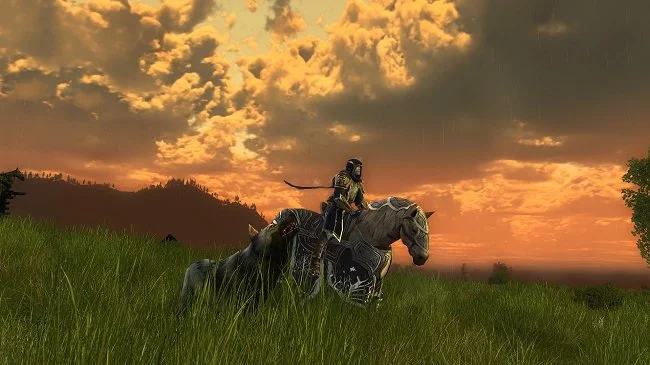
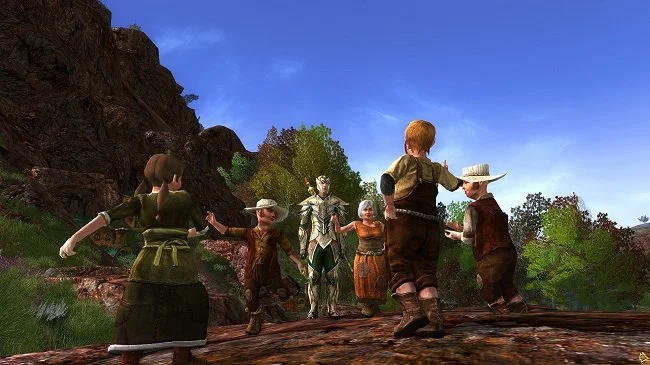
The Lord of the Rings Online is unique in so far as there are no other Tolkien based MMORPGs available at present (although another is currently in development). I have played LOTRO since 2008 and what I have discovered during that time, is that although the game attracts MMO players, it also attracts dedicated Tolkien aficionados. Many of those who play LOTRO do not play other games or even consider themselves as gamers. The intellectual property is a magnet for fans and frequently a steppingstone into the world of gaming. Hence you have a player base that is heavily invested and forgiving, because of their affection for the source material. Few other MMOs have this sort of community. LOTRO offers an opportunity to immerse yourself in Middle-earth. For many, the game’s vision of Tolkien’s world is superior to Peter Jackson’s movie adaptations. LOTRO has its own original aesthetic and style. Furthermore, after twelve years there is a prodigious amount of Middle-earth to explore. No other MMO can offer players access to The Shire, or Rohan or the Dead Marshes. So, in many respects LOTRO is an MMO occupying a unique niche in the video games market.
The Lord of the Rings Online is unique in so far as there are no other Tolkien based MMORPGs available at present (although another is currently in development). I have played LOTRO since 2008 and what I have discovered during that time, is that although the game attracts MMO players, it also attracts dedicated Tolkien aficionados. Many of those who play LOTRO do not play other games or even consider themselves as gamers. The intellectual property is a magnet for fans and frequently a steppingstone into the world of gaming. Hence you have a player base that is heavily invested and forgiving, because of their affection for the source material. Few other MMOs have this sort of community. LOTRO offers an opportunity to immerse yourself in Middle-earth. For many, the game’s vision of Tolkien’s world is superior to Peter Jackson’s movie adaptations. LOTRO has its own original aesthetic and style. Furthermore, after twelve years there is a prodigious amount of Middle-earth to explore. No other MMO can offer players access to The Shire, or Rohan or the Dead Marshes. So, in many respects LOTRO is an MMO occupying a unique niche in the video games market.
Another aspect of LOTRO in which the game excels is the story structure and quest lines. All are driven by strong narratives and couched in the lore of Middle-earth. The writers have always shown an abiding love for the work of Professor Tolkien and this is reflected in both the main epic storyline, right down to the smallest regional quest. You’ll often find references both big and small to various events found in the original books, as well as links to tales dating further back in the history of Middle-earth. For example, there’s a minor quest in the South Farthing of The Shire, in which a young Hobbit falls asleep onboard a small covered wagon. He subsequently recounts a tale of travelling to a tower in a circle of rock and a scary old man dressed in white. It would appear that he has unwittingly hitched a ride to Isengard, via one the supply wagons Lotho Sackville-Baggins is sending to Saruman. It is minor asides such as these that embellish LOTRO and delight those who enjoy the source texts upon which they’re based.
Although some may argue that the halcyon days of the MMORPG are gone, there are still several enduring titles that can offer new players an engaging virtual world to explore and quest in. LOTRO is definitely one of these. Not only can it satisfy your MMO itch but also provide a franchise specific experience that no other game can directly compete with. Furthermore, after celebrating its twelfth anniversary this year, the developers have plans to expand the game further, adding yet more of Middle-earth to the game. Mount Gundabad is currently in development and will be available in 2020. So, if you’re looking for an original and immersive depiction of Tolkien’s world, with a narrative driven story and a welcoming community, then look no further than LOTRO. Just remember the wise words of Bilbo Baggins. “It's a dangerous business, going out your door. You step onto the road, and if you don't keep your feet, there's no knowing where you might be swept off to.”
In addition to the pictures in this post, here is a link to a gallery of screenshots from LOTRO via Google Photos. All are available at the original screen resolution of 1920 x 1200.
LOTRO: The Calm Before the Storm
I have been absent from The Lord of the Rings Online for several month, only checking in intermittently. When I do, I still tend to focus on levelling my High Elf Guardian who is currently tentatively progressing through the dour and grindy Mordor expansion. Since July my primary character, a level cap Lore-master, has been standing outside Beorninghús idly staring at Grimbeorn with only a few quests in the Vale of Anduin completed. However, because The Elder Scrolls Online was down for emergency maintenance today, I decided to return to LOTRO and see if I could make inroads into this outstanding update in preparation for the release of the Minas Morgul expansion on November 5th. As a zone, the vales of the Anduin and is the polar opposite of the grim, rocky environment of the Grey Mountains. It is verdant, spacious and often has clear blue skies. Yes there are fog banks and areas of shaded woodlands but it is far from a brooding and oppressive region.
I have been absent from The Lord of the Rings Online for several month, only checking in intermittently. When I do, I still tend to focus on levelling my High Elf Guardian who is currently tentatively progressing through the dour and grindy Mordor expansion. Since July my primary character, a level cap Lore-master, has been standing outside Beorninghús idly staring at Grimbeorn with only a few quests in the Vale of Anduin completed. However, because The Elder Scrolls Online was down for emergency maintenance today, I decided to return to LOTRO and see if I could make inroads into this outstanding update in preparation for the release of the Minas Morgul expansion on November 5th. As a zone, the vales of the Anduin and is the polar opposite of the grim, rocky environment of the Grey Mountains. It is verdant, spacious and often has clear blue skies. Yes there are fog banks and areas of shaded woodlands but it is far from a brooding and oppressive region.
However, when returning to LOTRO from another game, it is very noticeable how the quest system is a product of its time, built upon the prevailing MMO systems and concepts of 2007. The first half dozen activities I was offered around Beorninghús were just the usual fetch and kill quests. Although these take place in a pleasant area and the ambient soundtrack by Bill Champagne is exceeding atmospheric, there is a distinctly old school vibe to these sorts of activities. If the quest narratives aren’t sufficiently compelling in justifying such undertakings then it can all feel somewhat arbitrary. However, and there always tends to be a however with LOTRO, the wrap up at the end of this quest chain is very satisfying. You enjoy a feast in Grimbeorn’s lodge and recount tales of valour. It serves as a great way of reminding the player who some of the NPCs are. LOTRO often brings back characters that you’ve previously met but after 12 years of content, it can be hard to keep track of who’s who. The quest also reflects a great deal of narrative continuity with Gandalf still having to “manage” diplomatic relations between The Beornings and the other factions.
Moving on to the Wolf-denes, I’ve started to notice that there is gradual increase in mob difficulty. Purple quality gear that is being given as quest rewards have a noticeable increase in stats compared to the Teal items that I earned from the previous Where Dragons Dwell update. I find the perfunctory nature of level cap increases a little frustrating and we are looking at one with the Minas Morgul expansion. That means all the gear that I worked hard to earn will be redundant and furthermore, makes all that I’m currently obtaining in the Anduin region, equally as superfluous and transient. Whenever you are “late to the party” and have content to catch up with in LOTRO, so much becomes unnecessary. Why grind out Beorning rep as the gear it will reward will serve me no purpose moving forward? In fact, it may be wiser for me to play another alt at present and wait for the expansion to be launched. Because once it has, playing through prior zones such as Vales of Anduin will earn me XP, where at present it does not. Hence, I’ll reach the Morgul Vale in a more robust state somewhere around level 125, rather than starting at 120. I like to be as robust as possible when doing new content.
Having spent some time on the test server inspecting the next expansion, it may be prudent to enjoy the aesthetic and atmospheric benefits of the regions between Mirkwood and the Misty Mountains, while one can. The Morgul Vale and Minas Morgul itself are singularly oppressive. I fully understand that this is narratively justified but questing and navigating such an environment can be taxing. Due to the lighting in LOTRO, I often struggle to physically see what is happening in darker areas. Despite altering some of the video settings I often have to pull the curtains in my office so no external light source interferes with the onscreen visuals. It’s not a problem I have with other MMOs. Also, as I’m not exactly excited by the forthcoming expansion, I doubt if I’ll be playing it at launch. Standing Stone Games have picked the same day to launch Minas Morgul as the release of the PC version of Red Dead Redemption 2. I always enjoy LOTRO but it really can’t compete with a western themed RPG. I suspect I shall visit the Tower of Sorcery in late December in the post-Christmas lull.
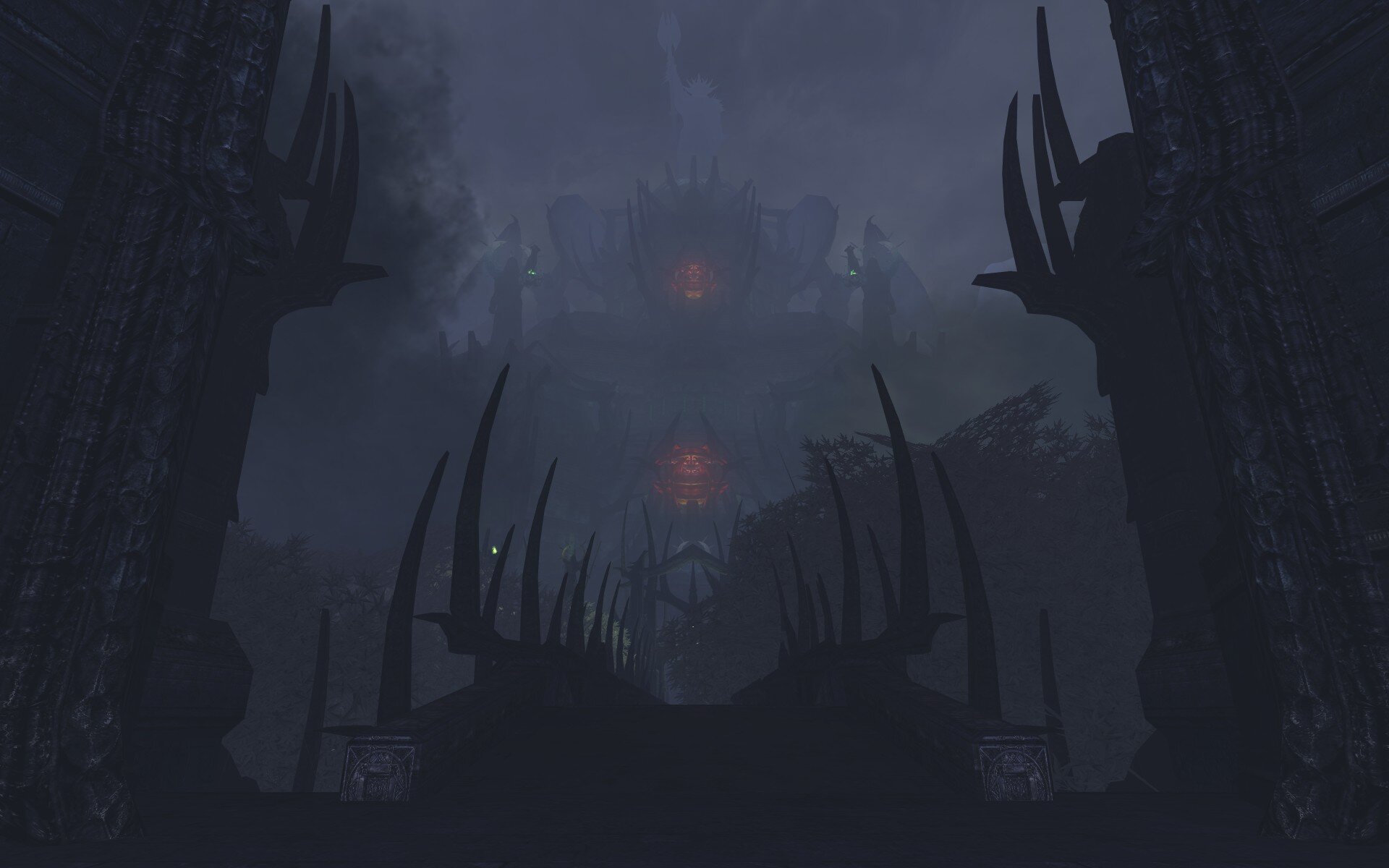
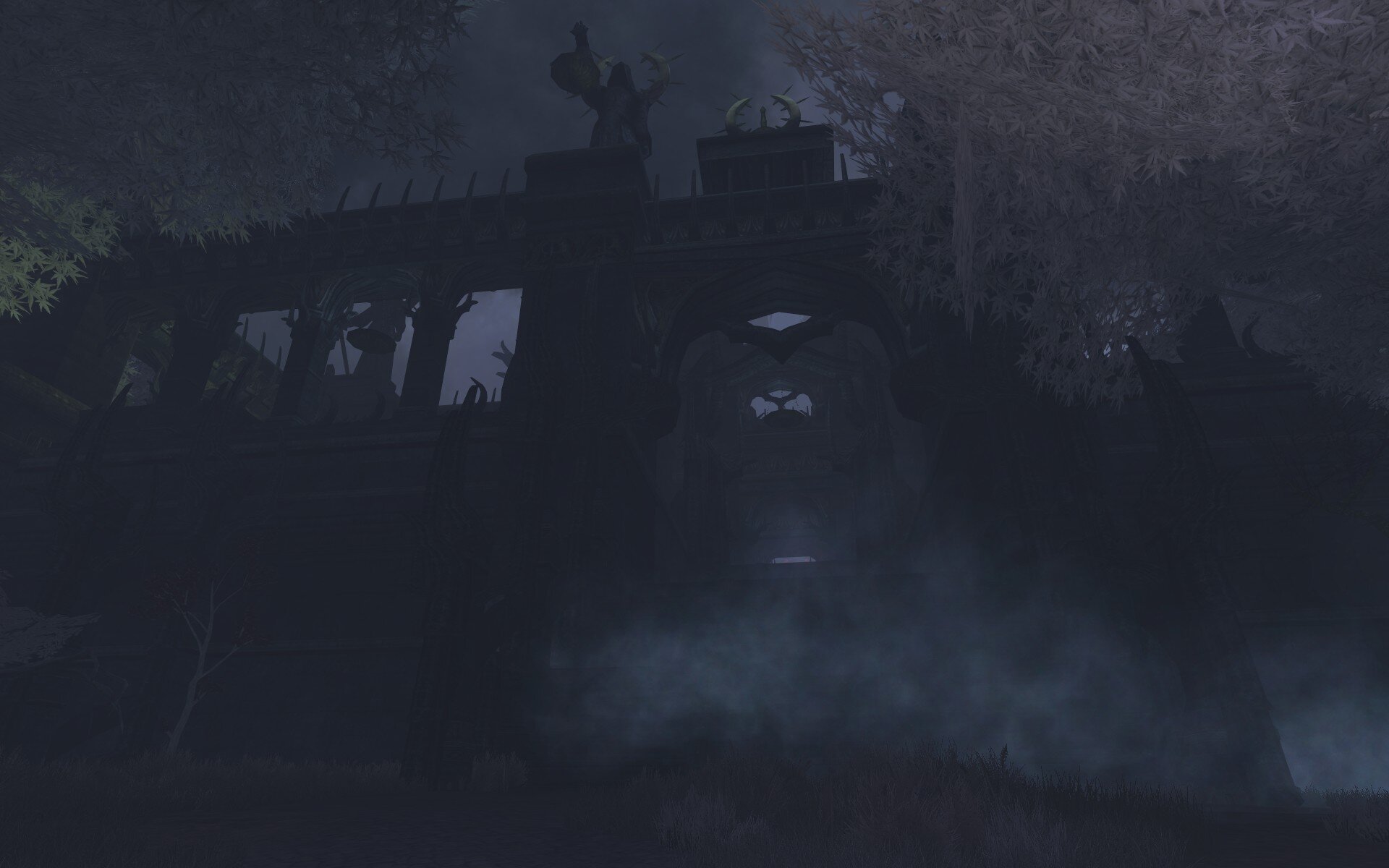
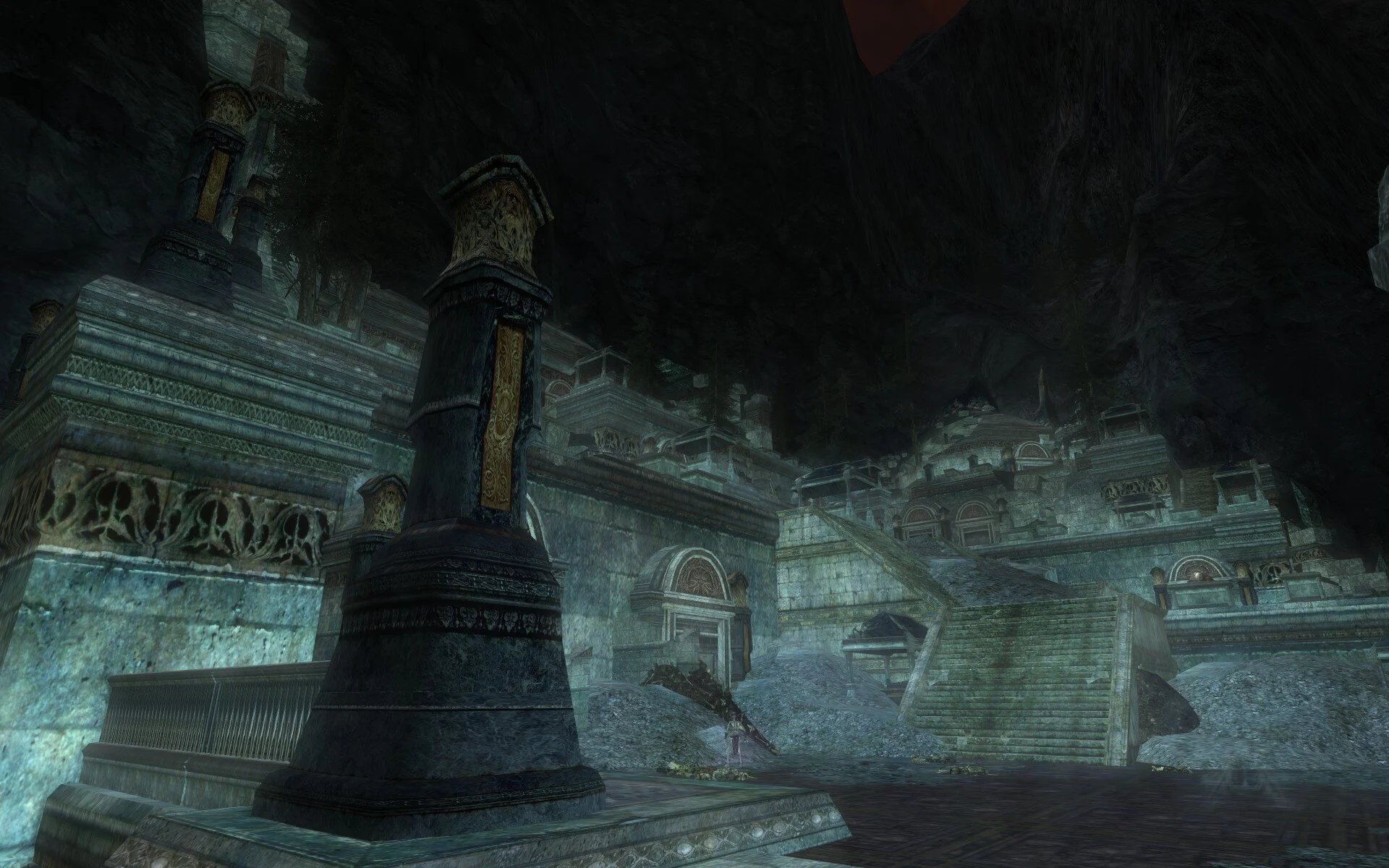
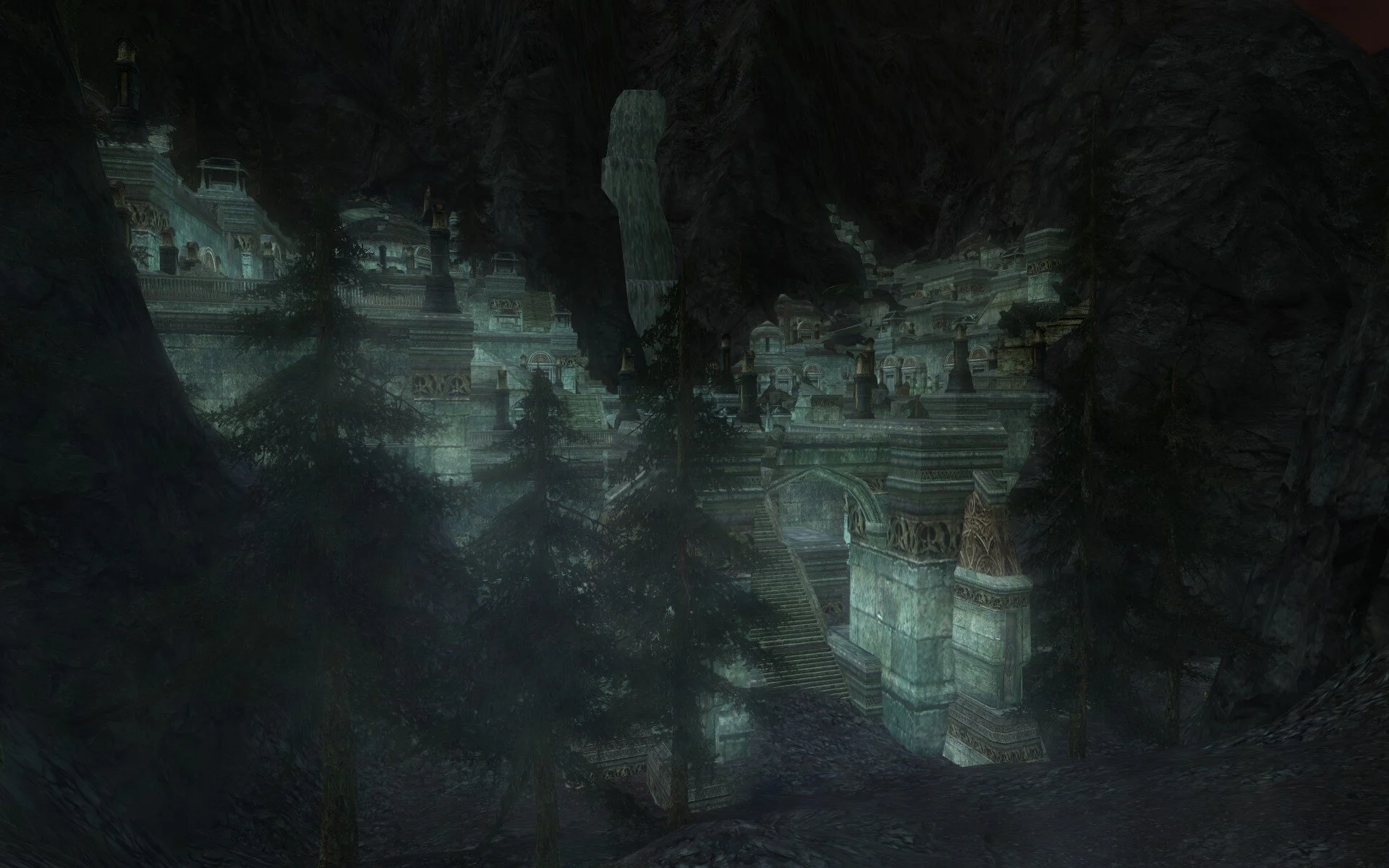
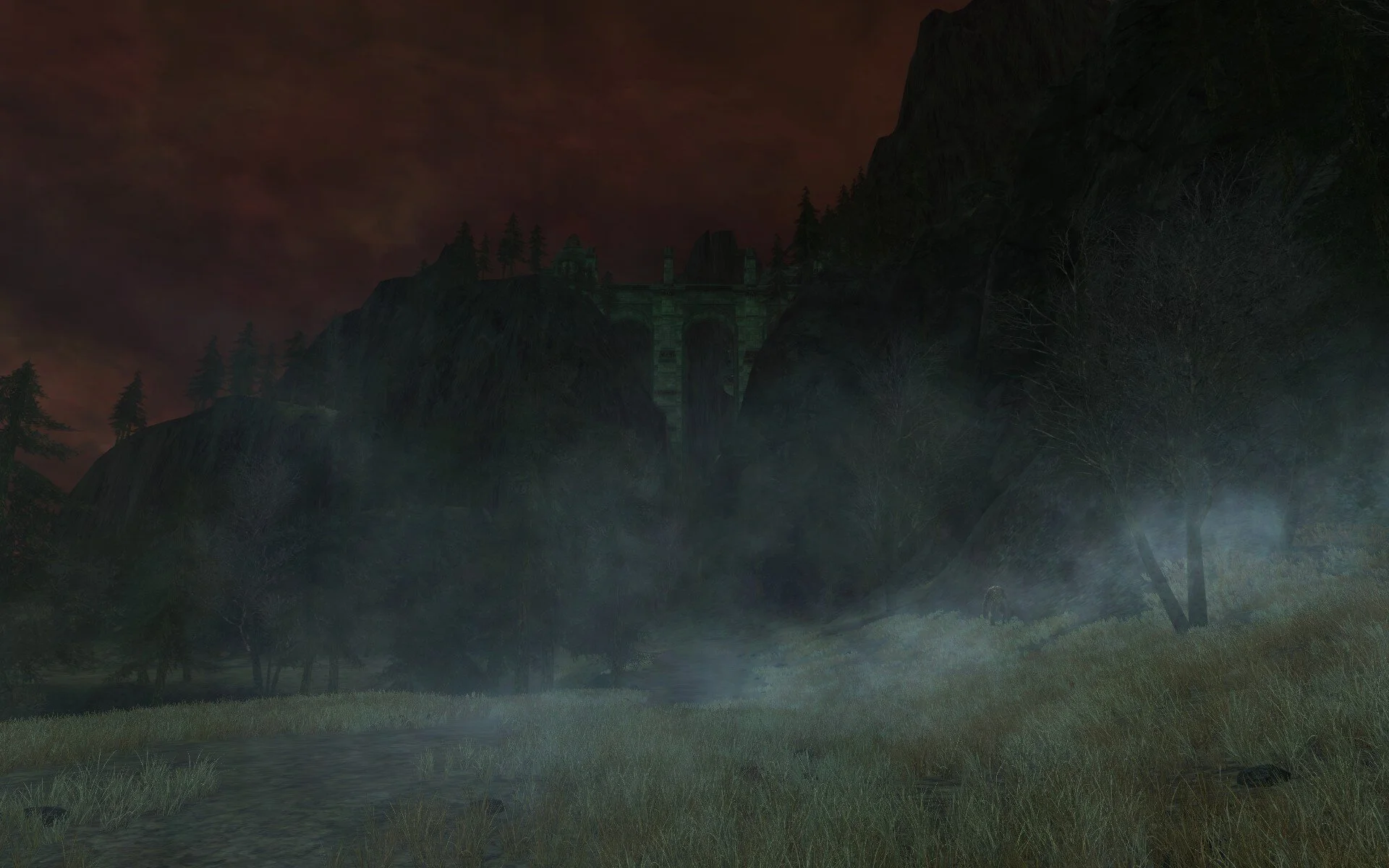
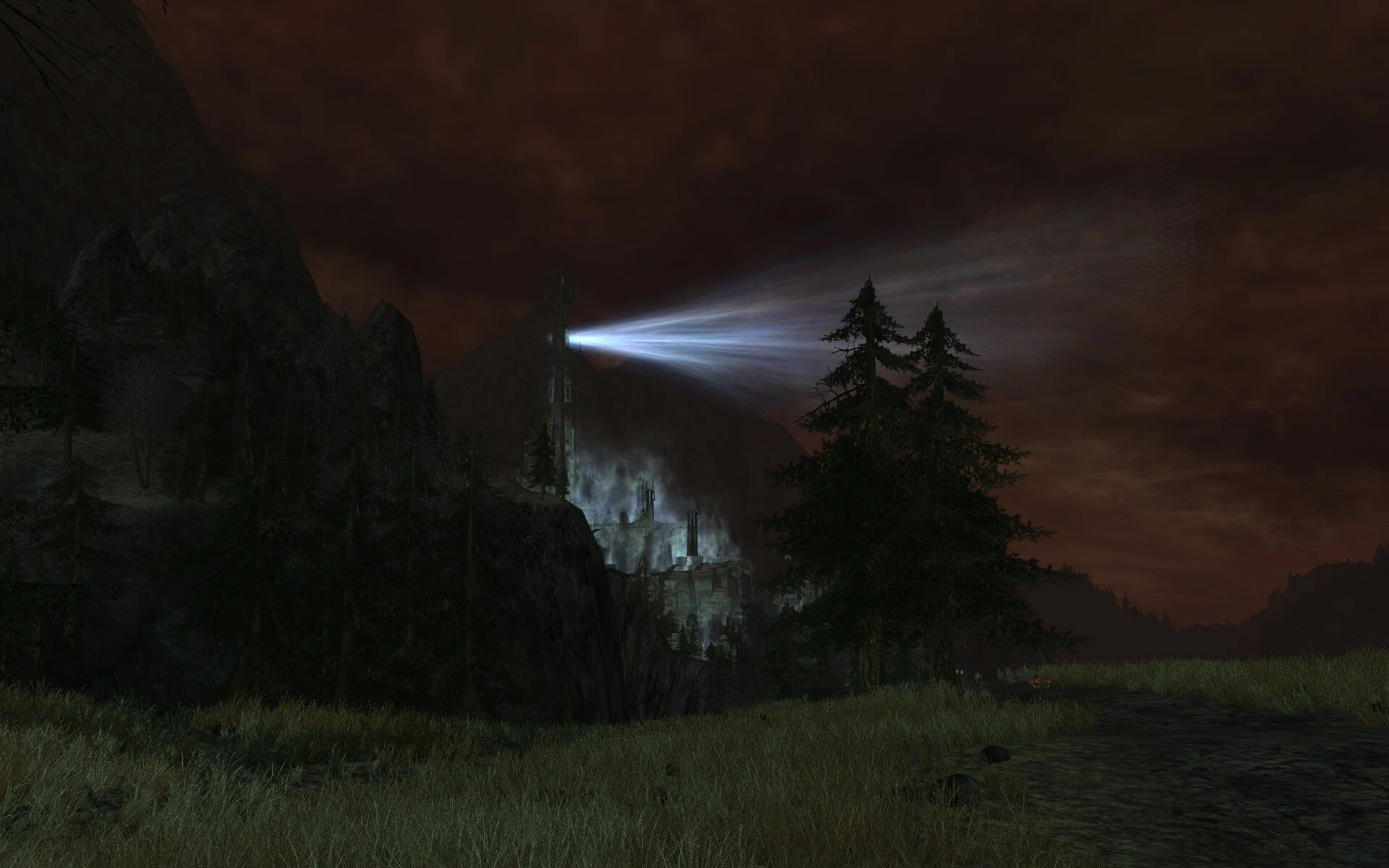
Minas Morgul Preview
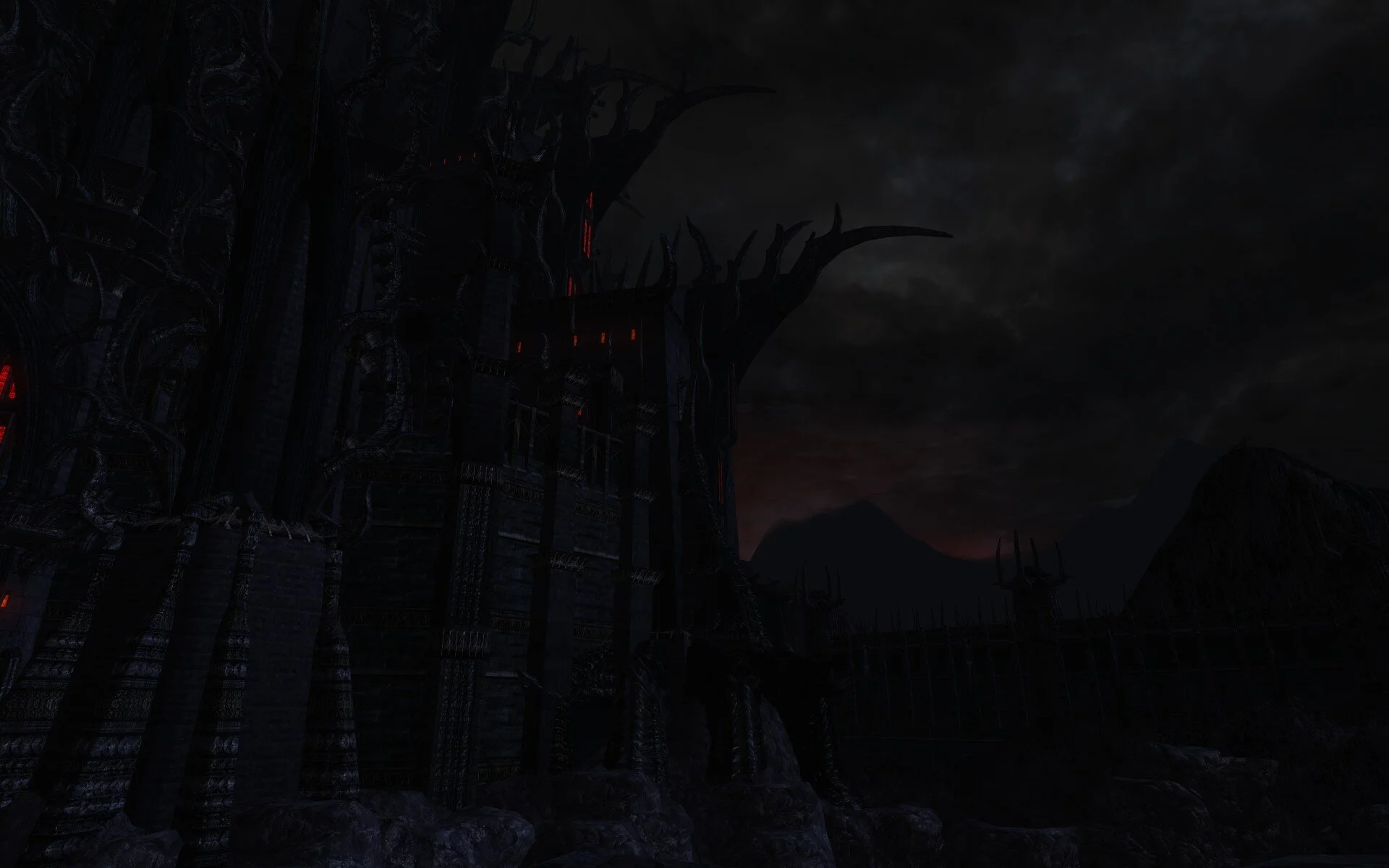
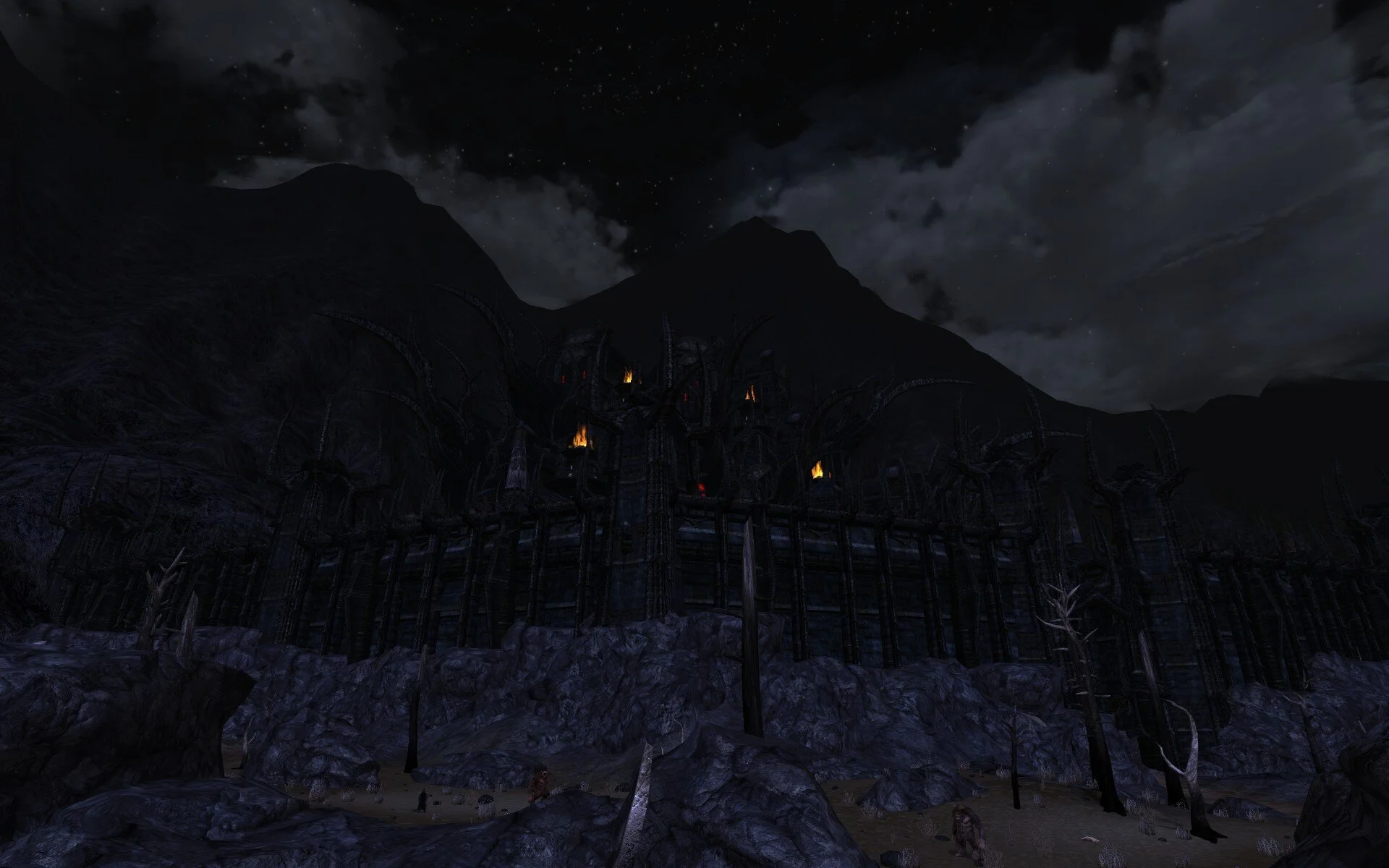
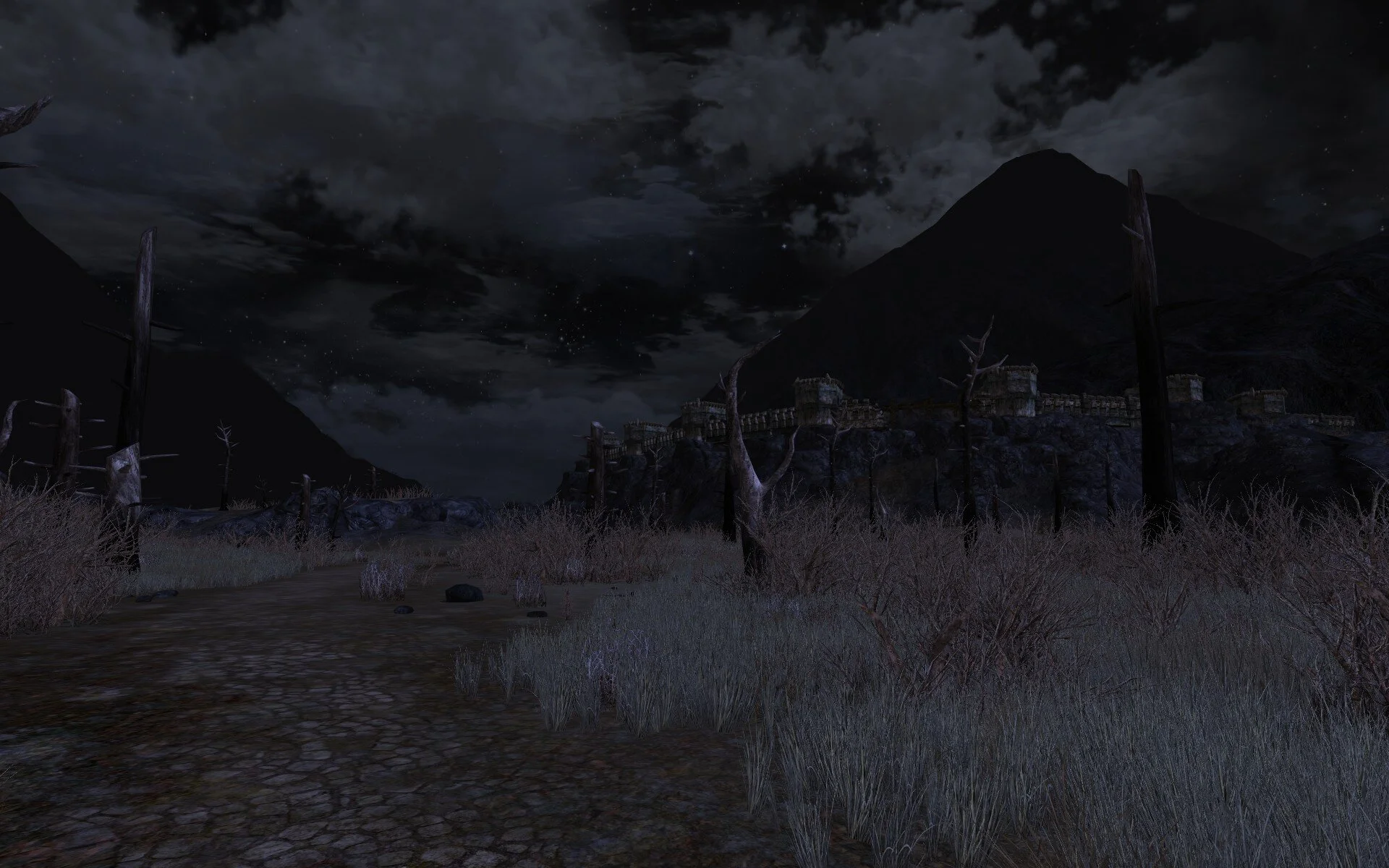
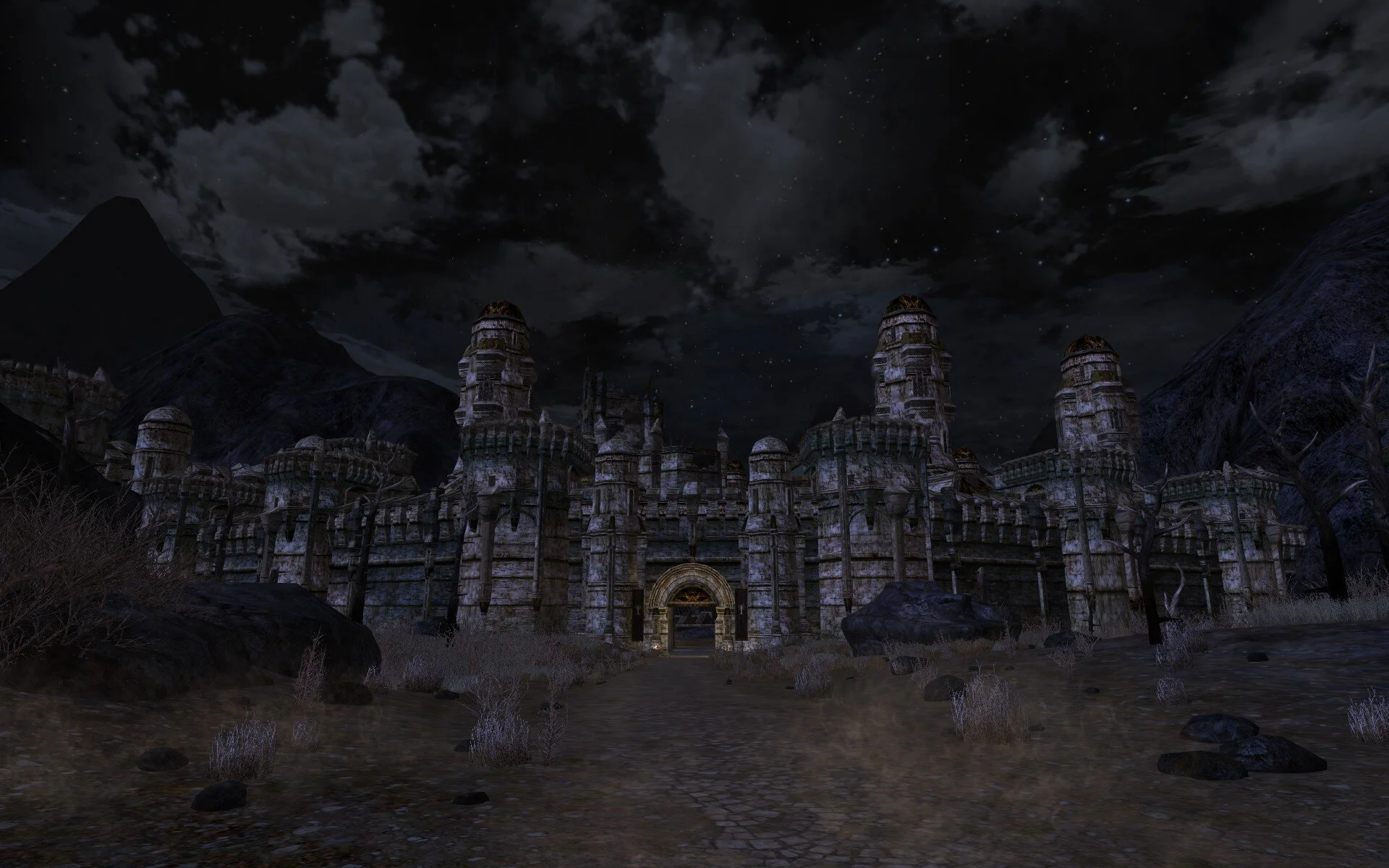
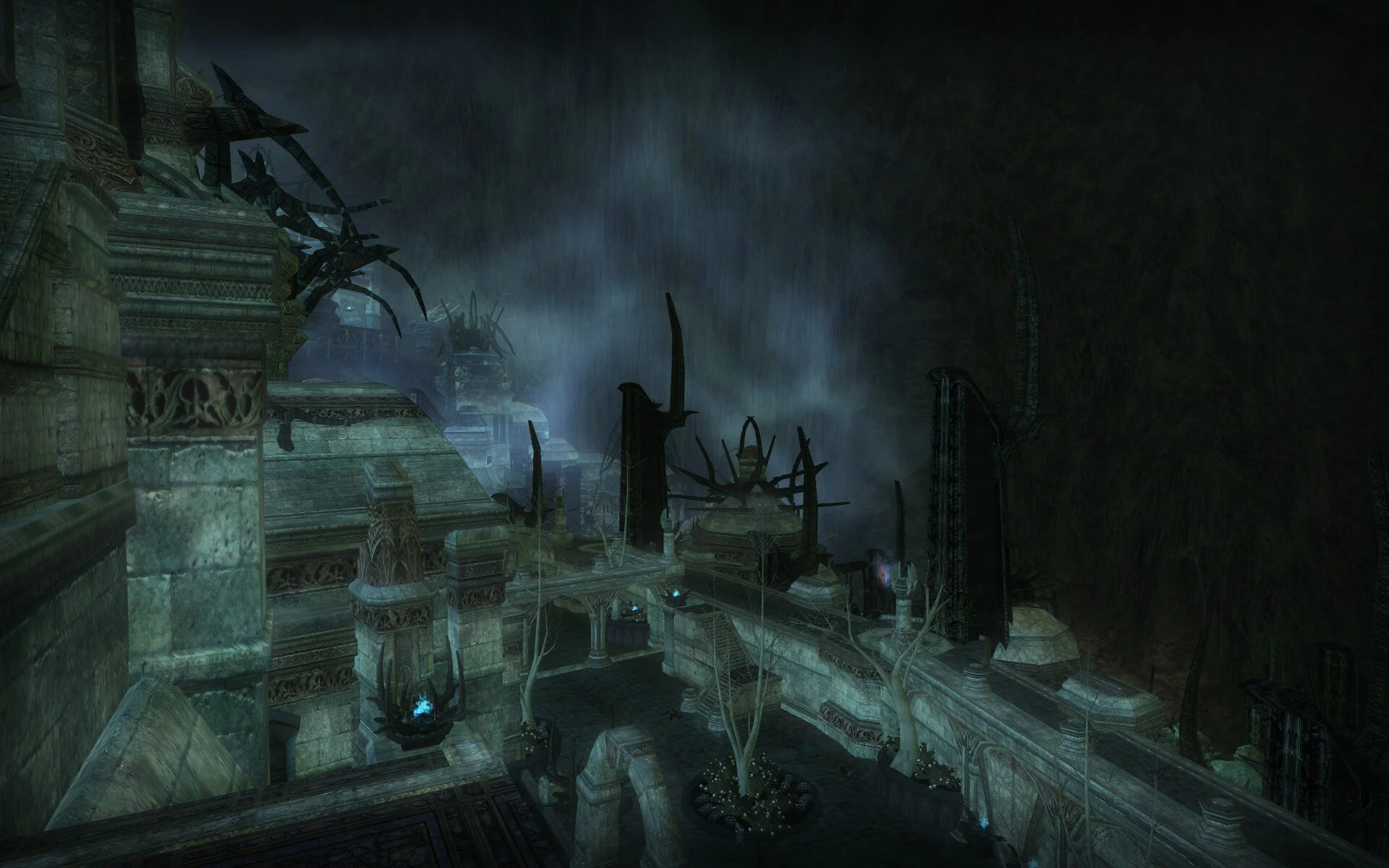
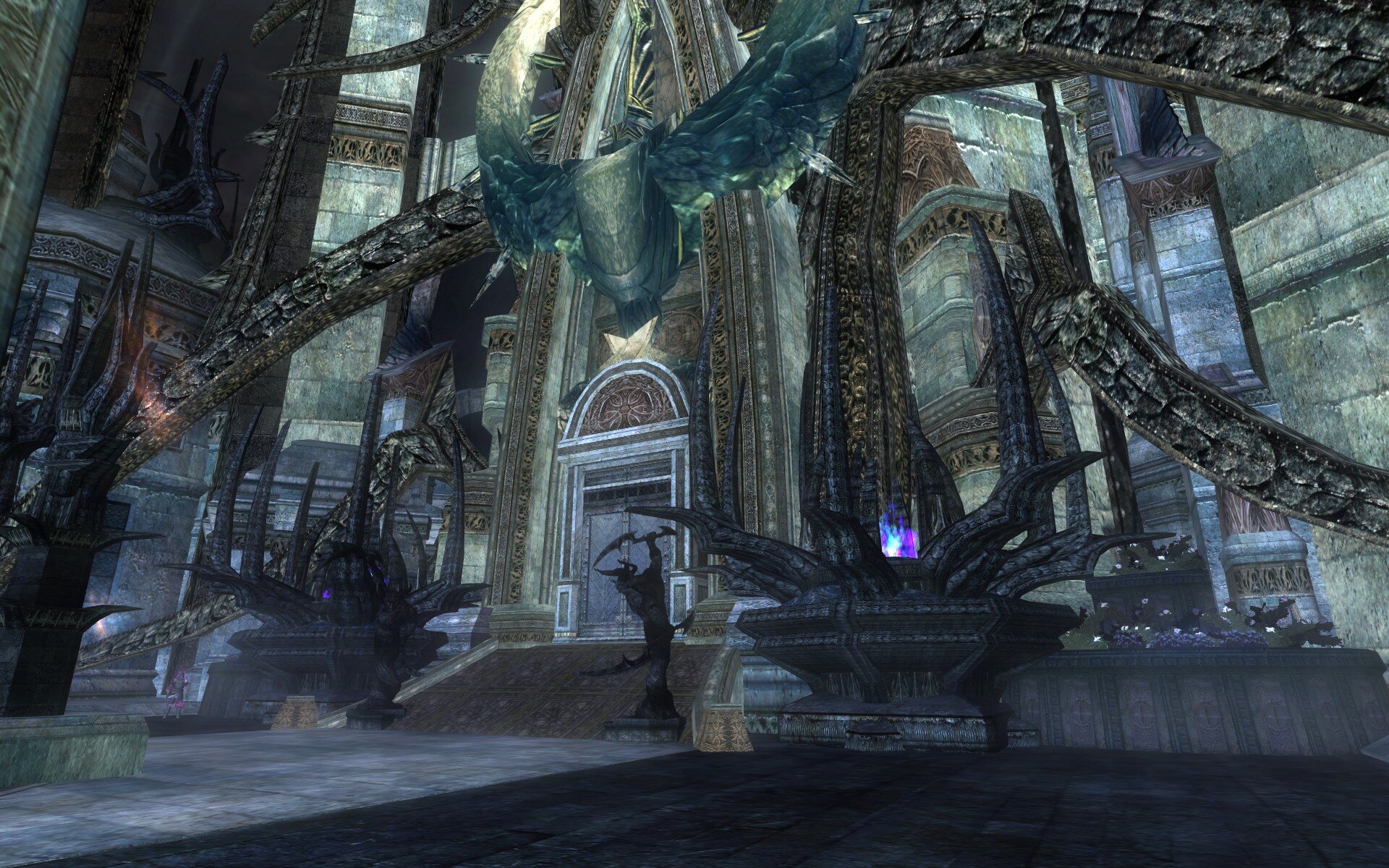
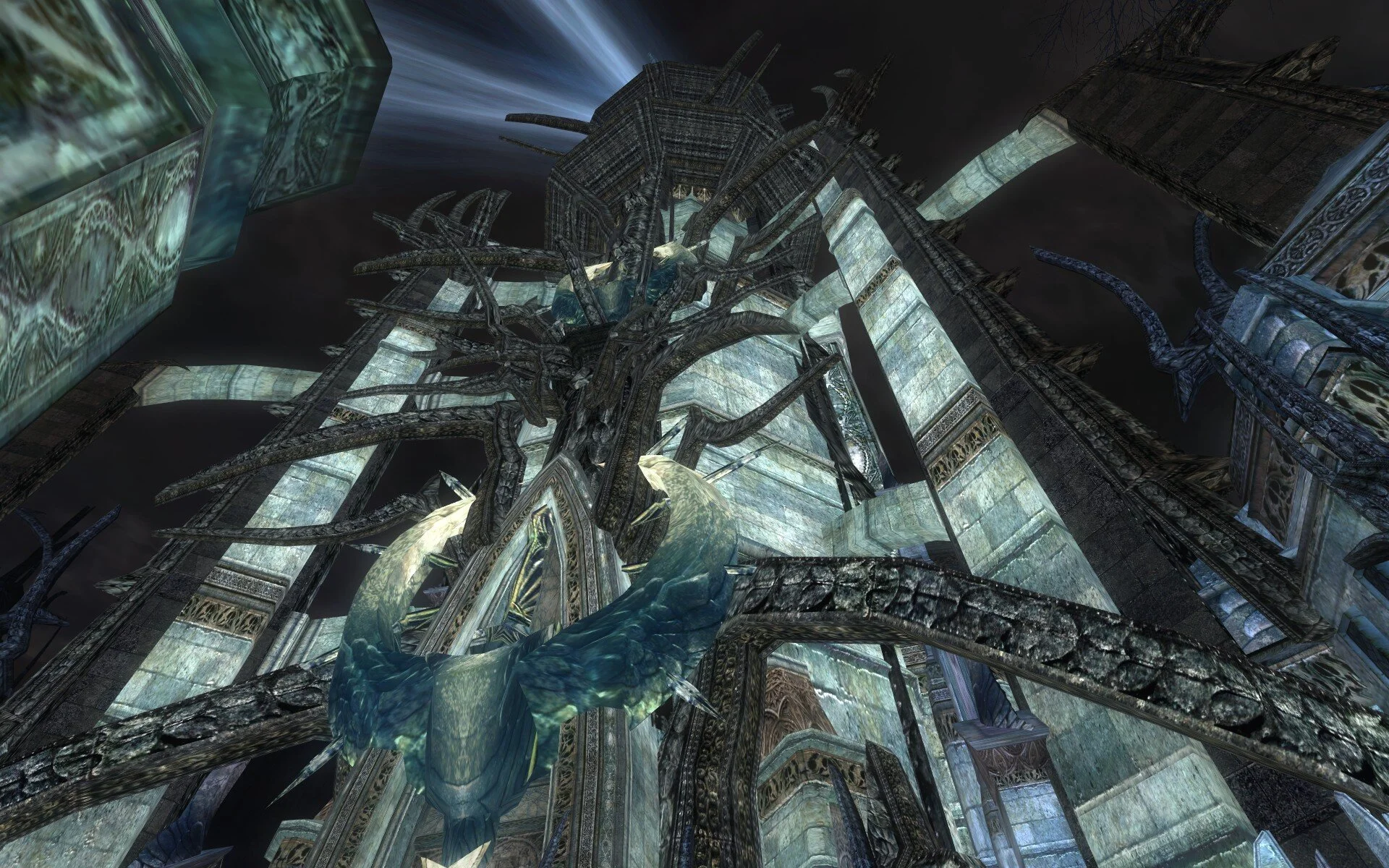
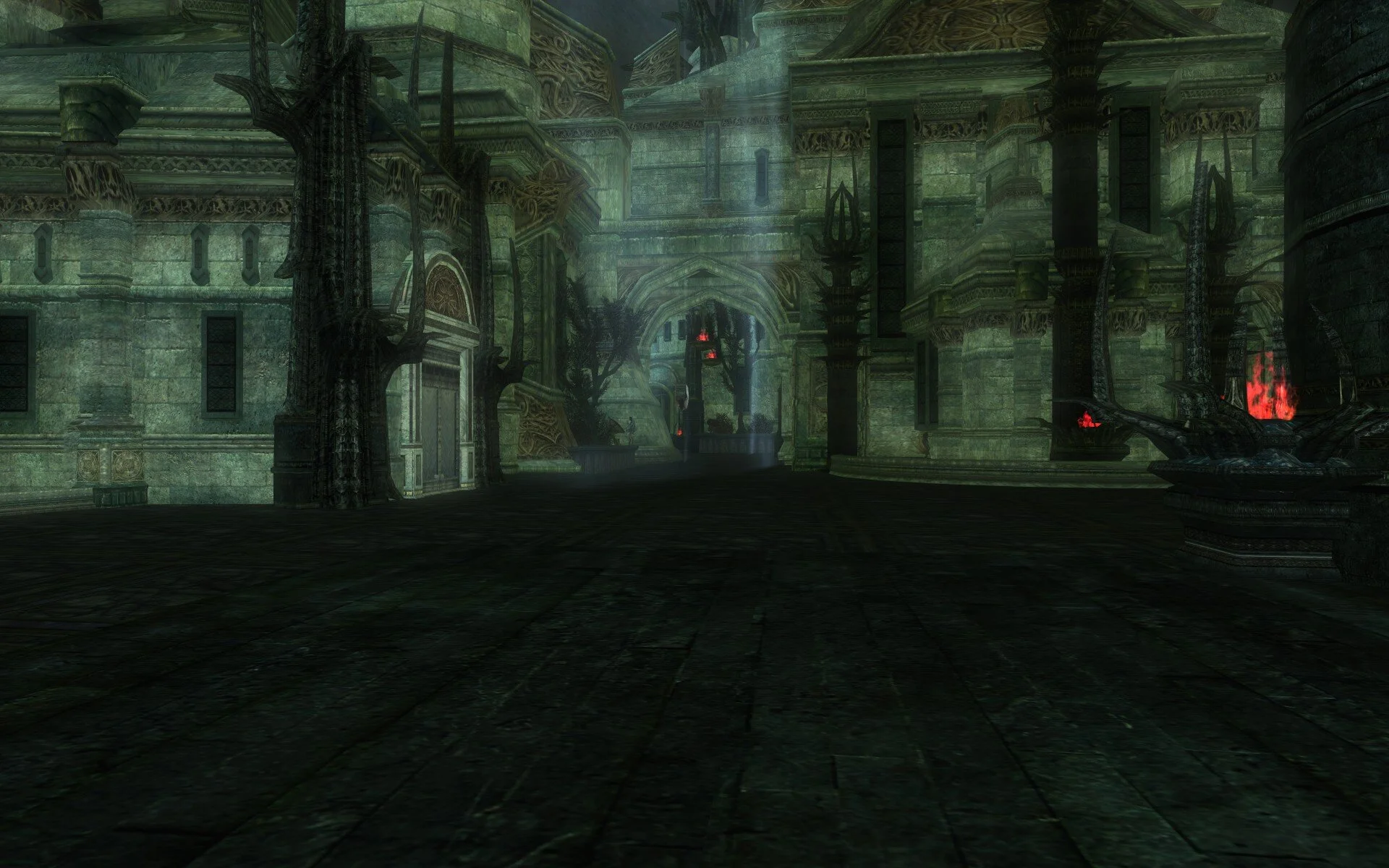
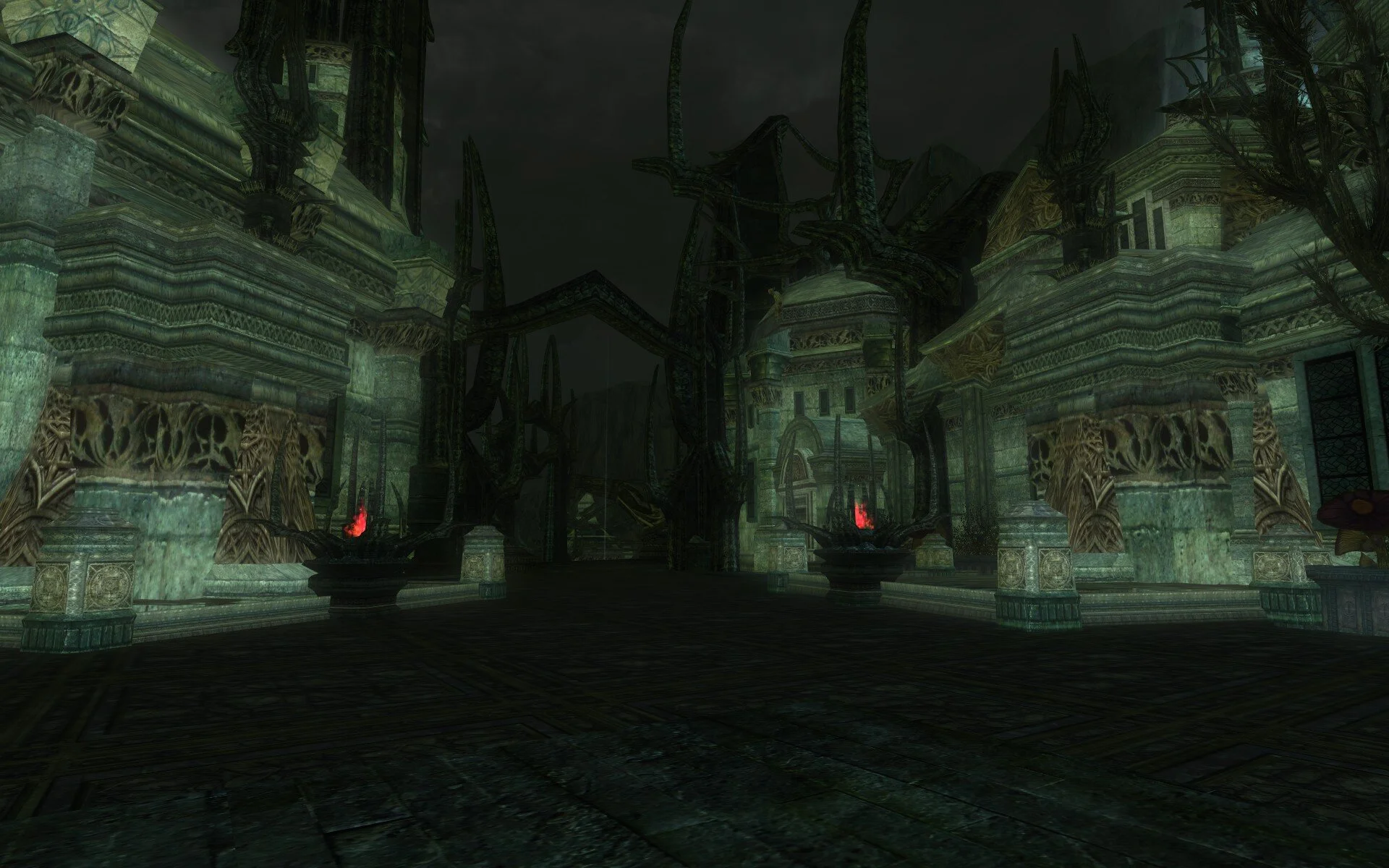
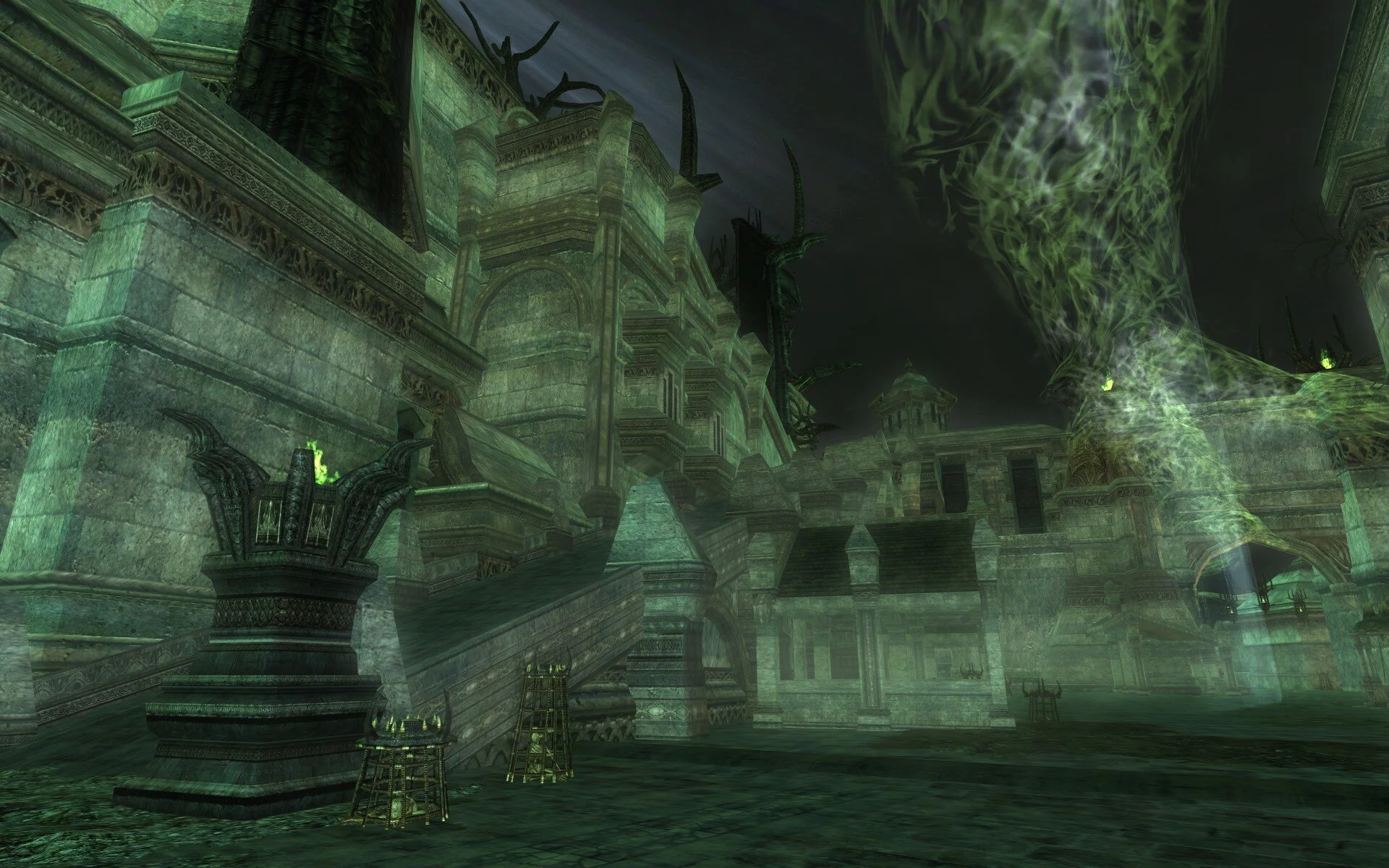
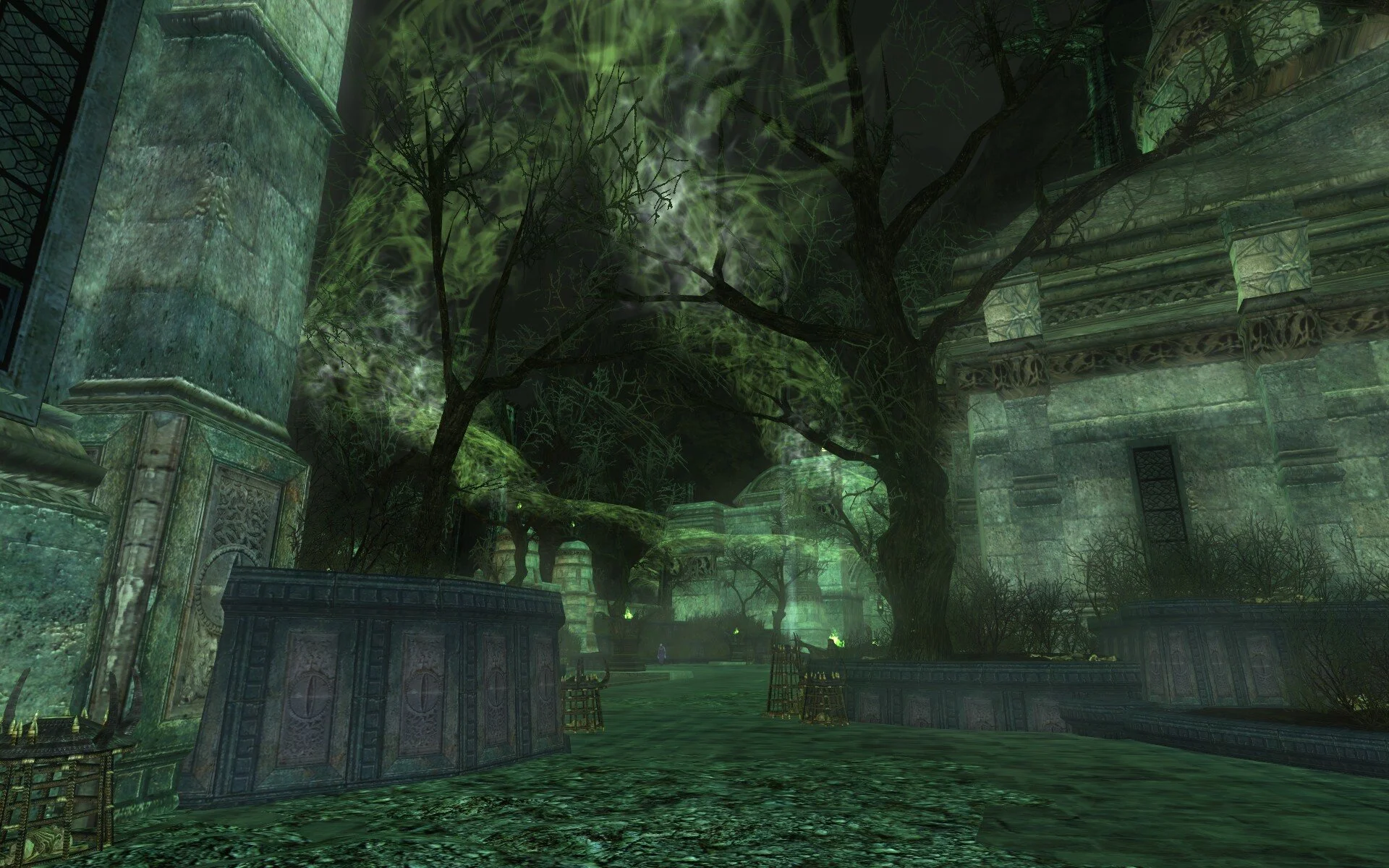
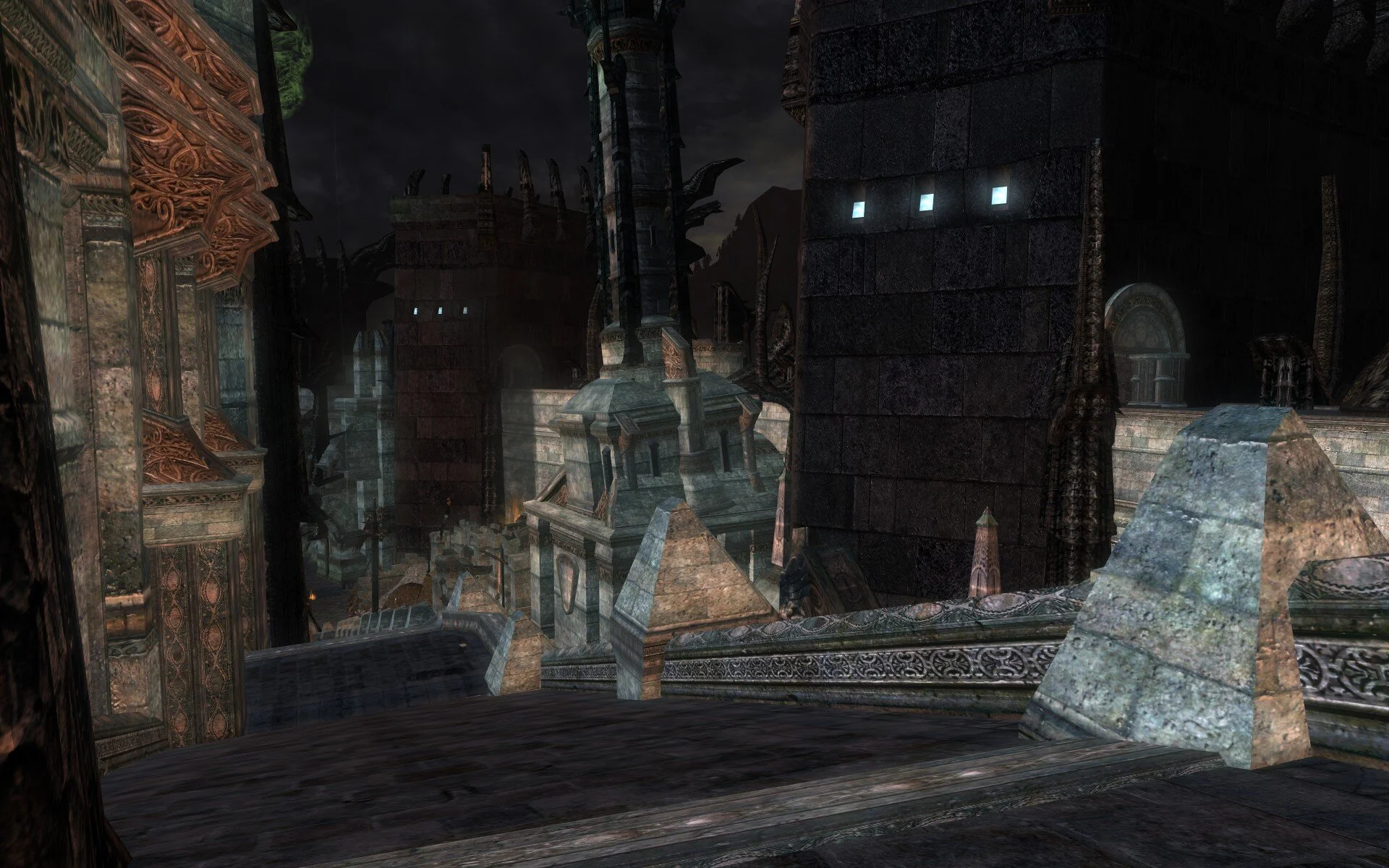
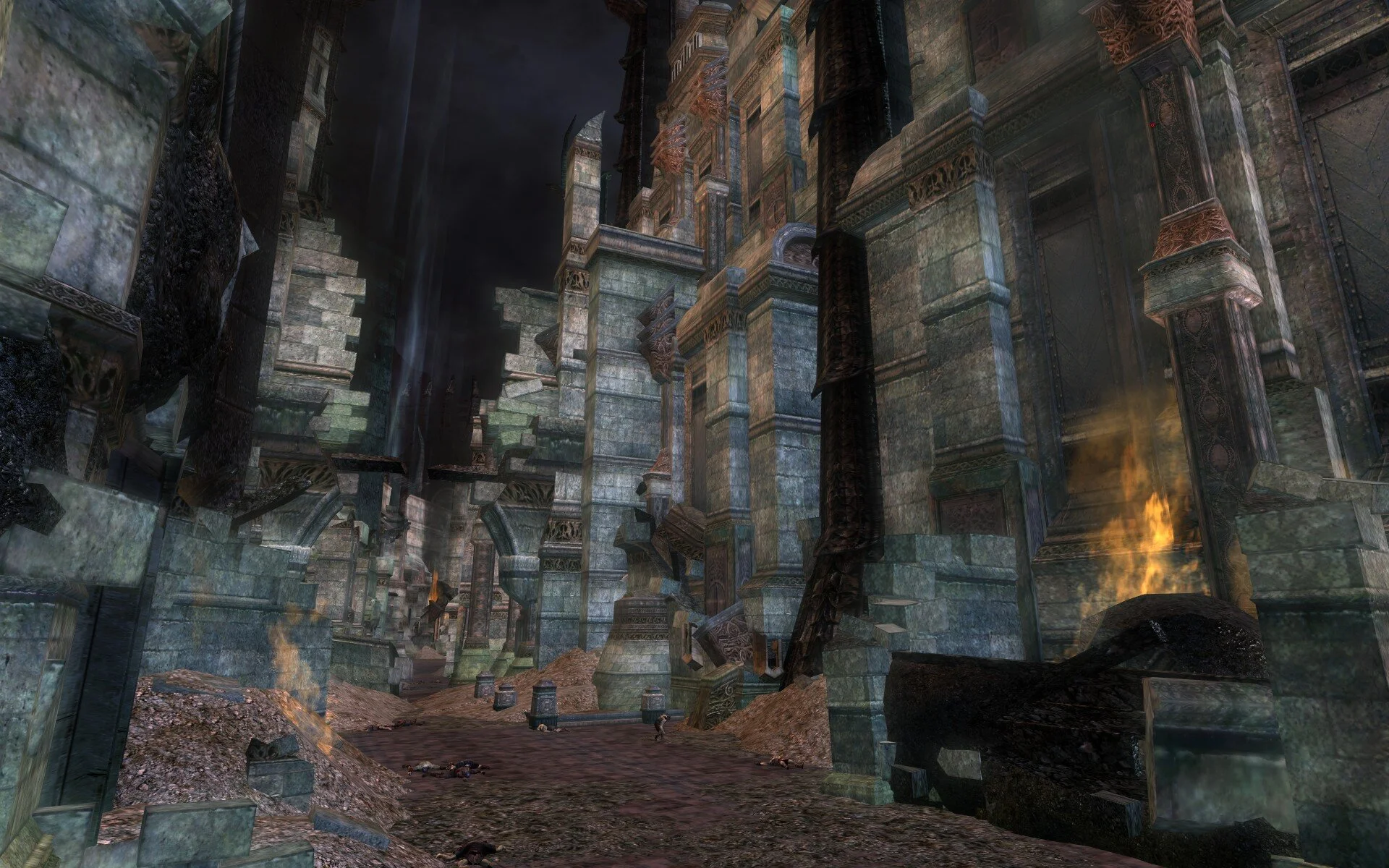
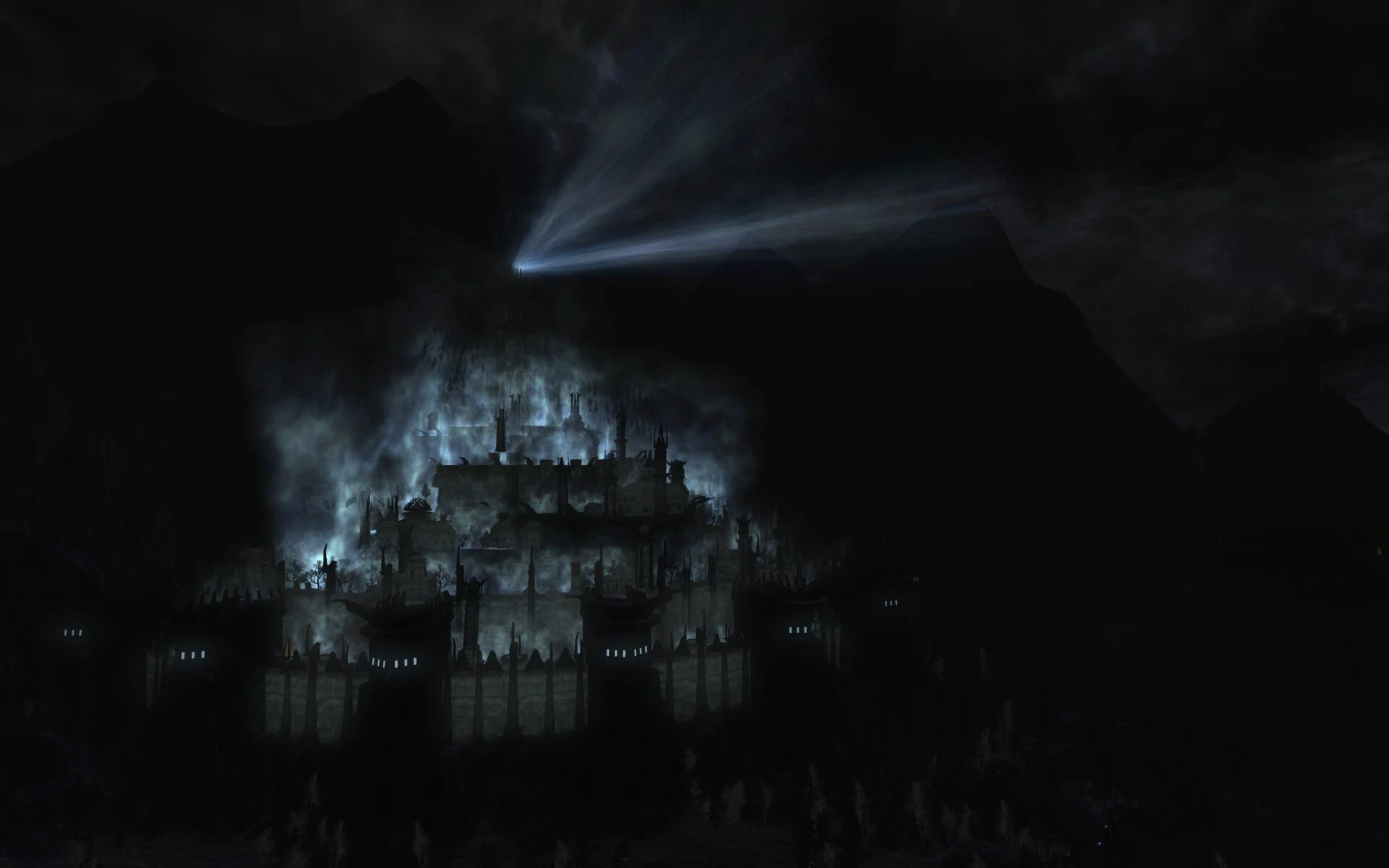
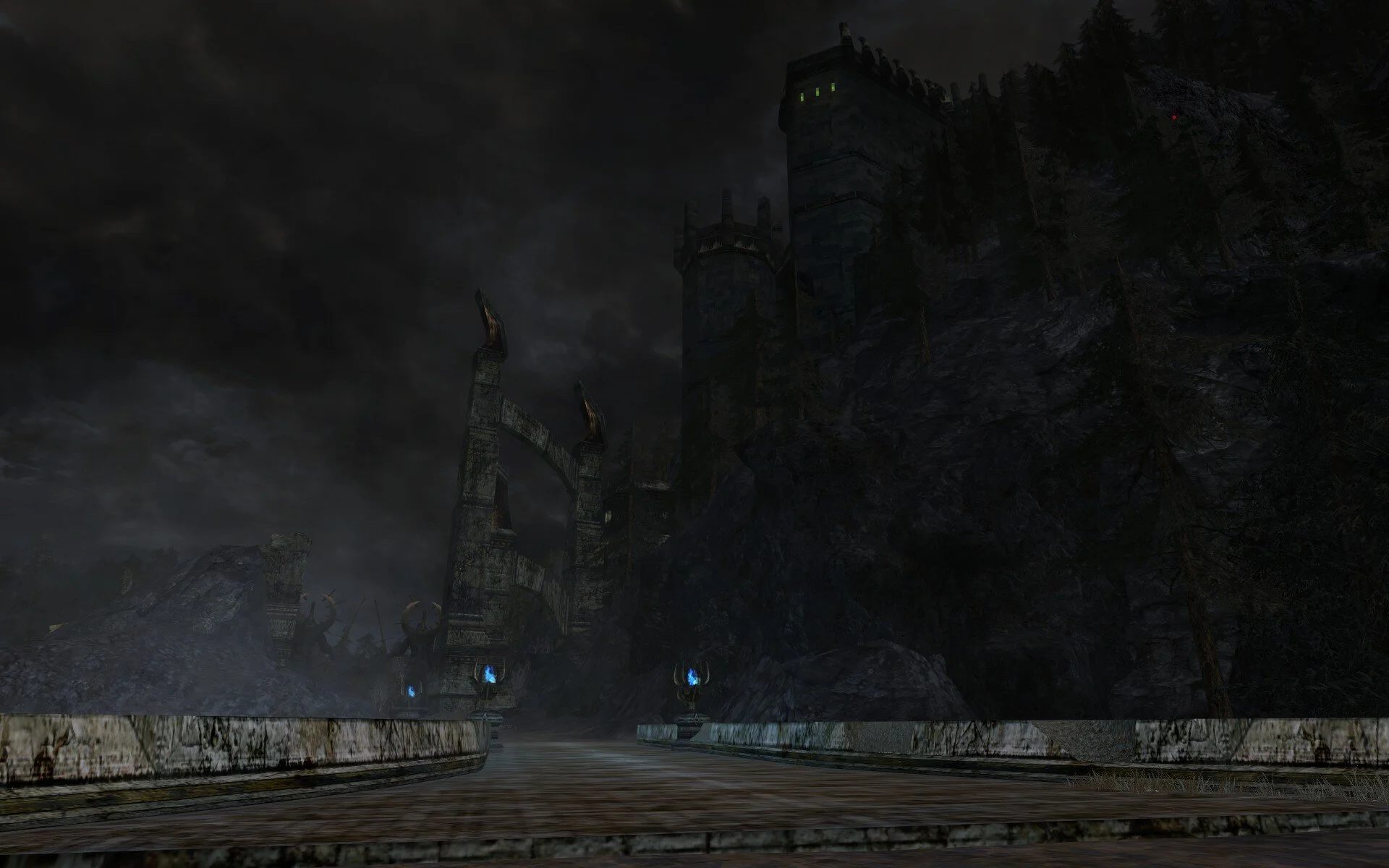
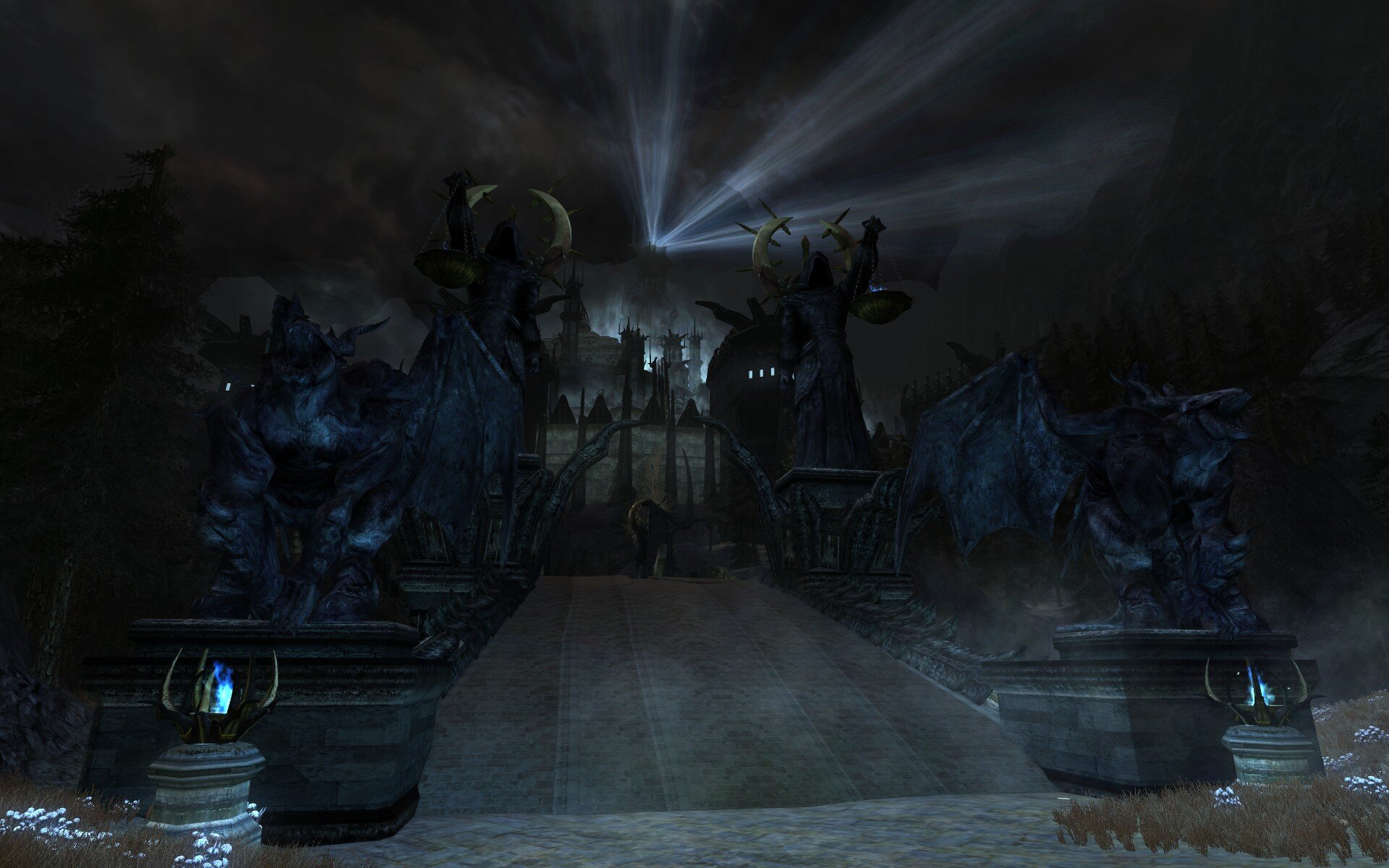
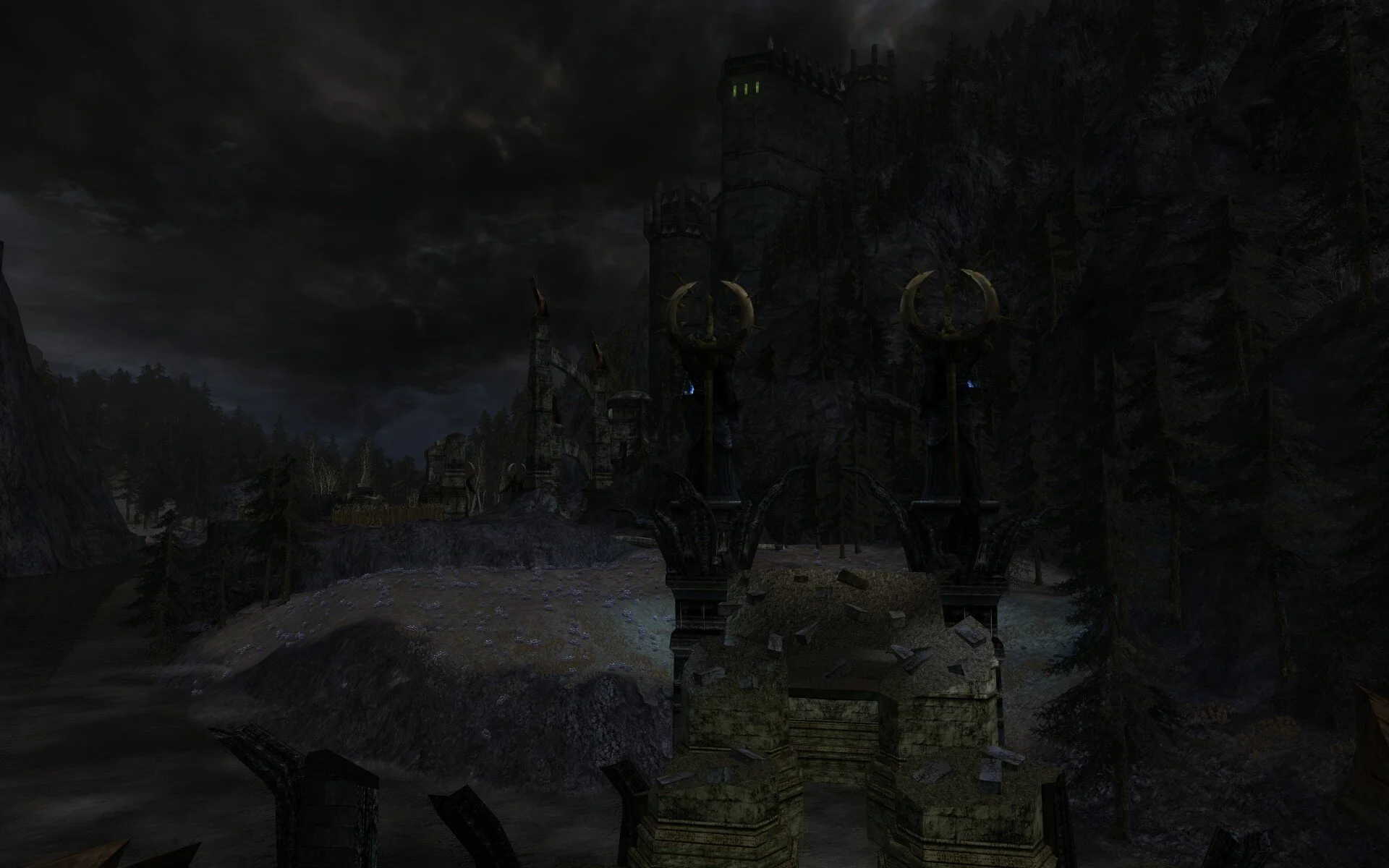
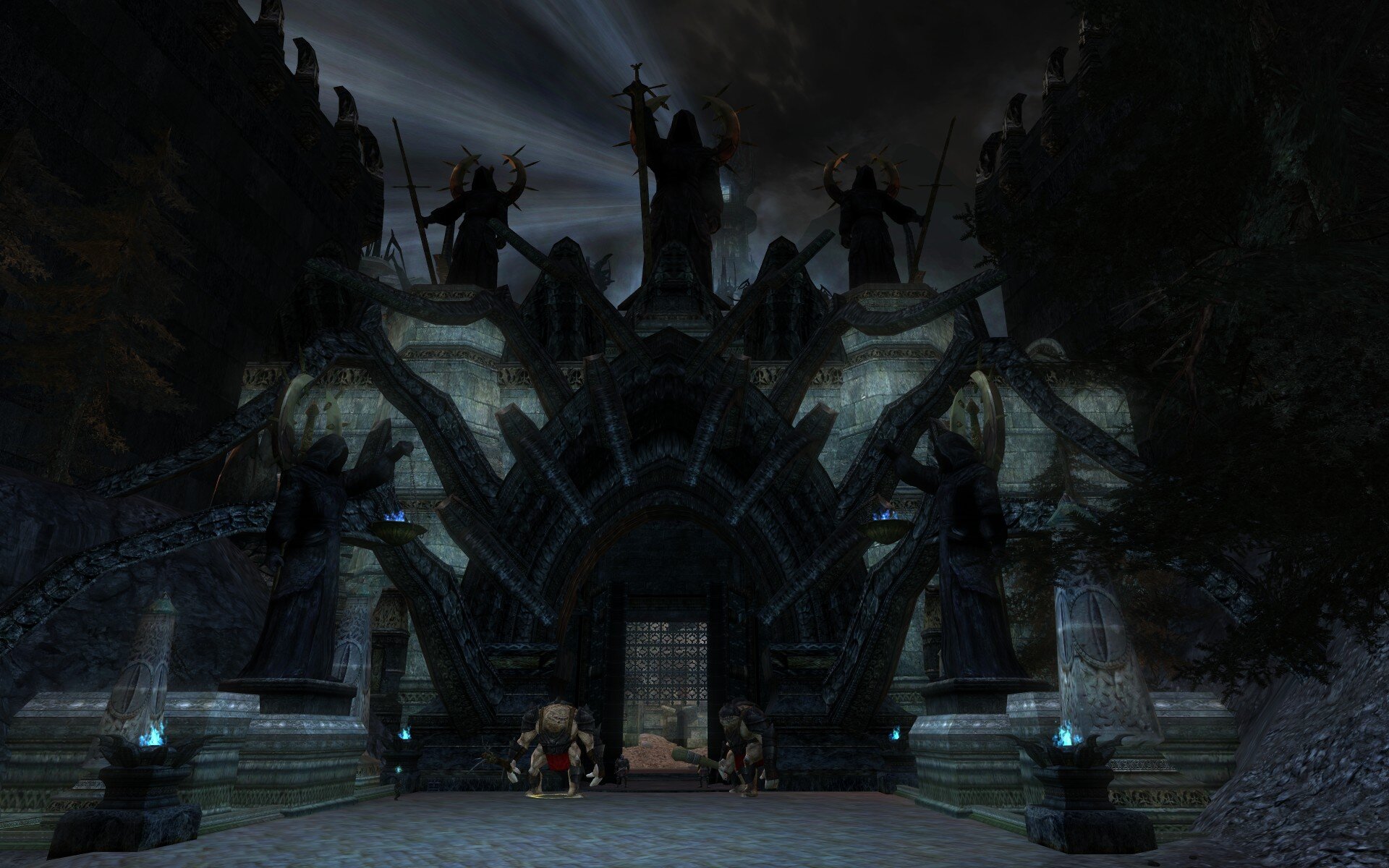
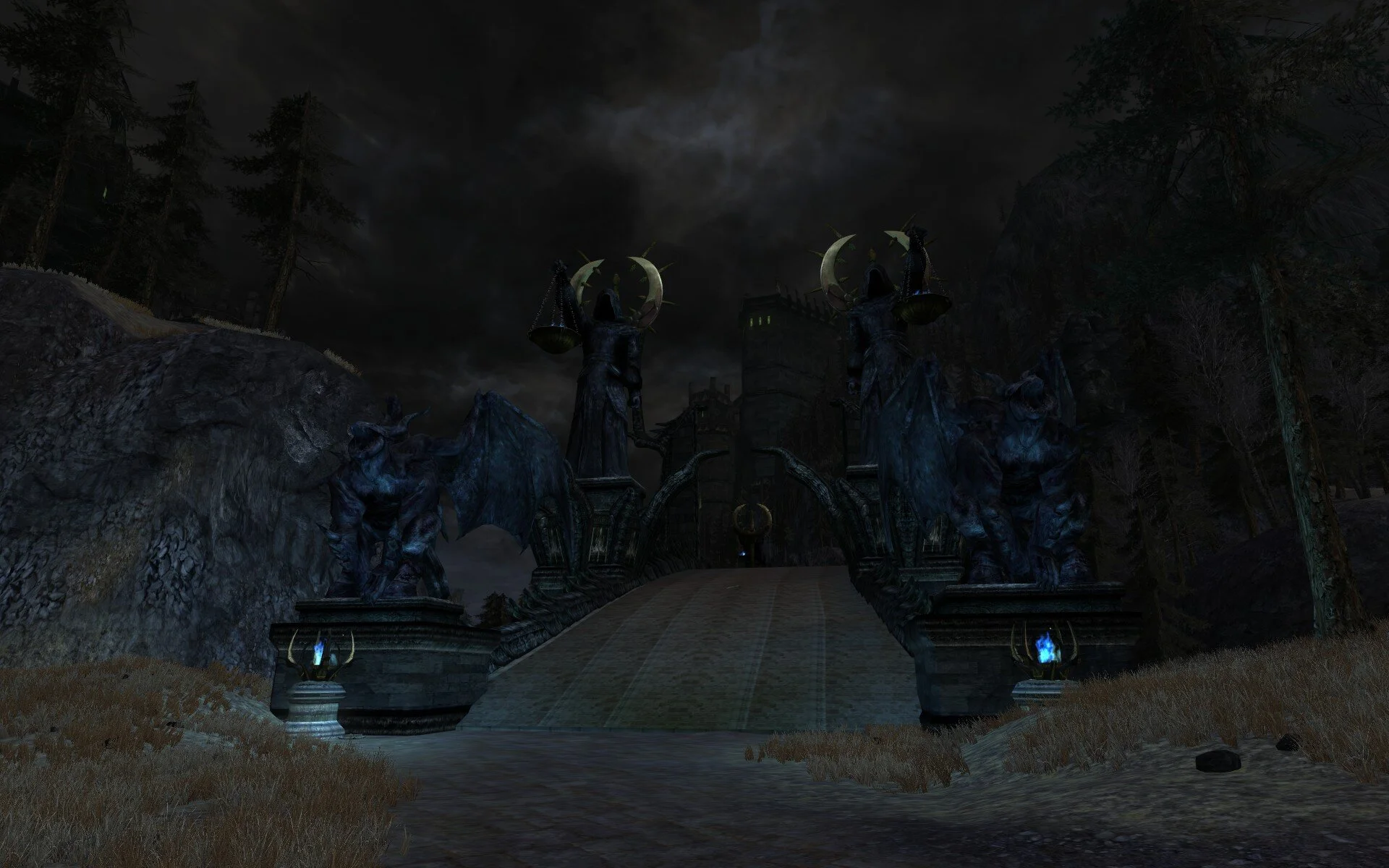
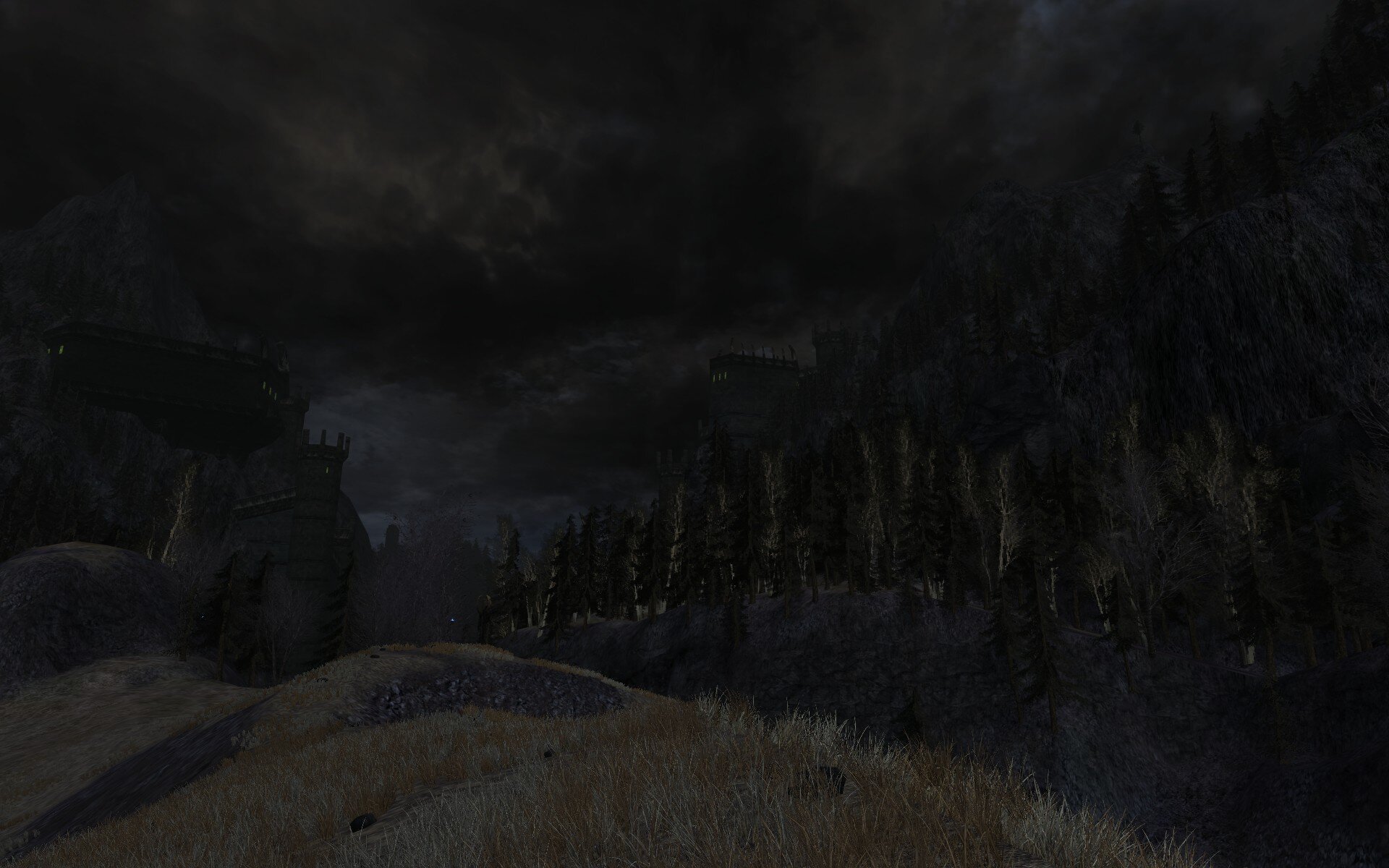
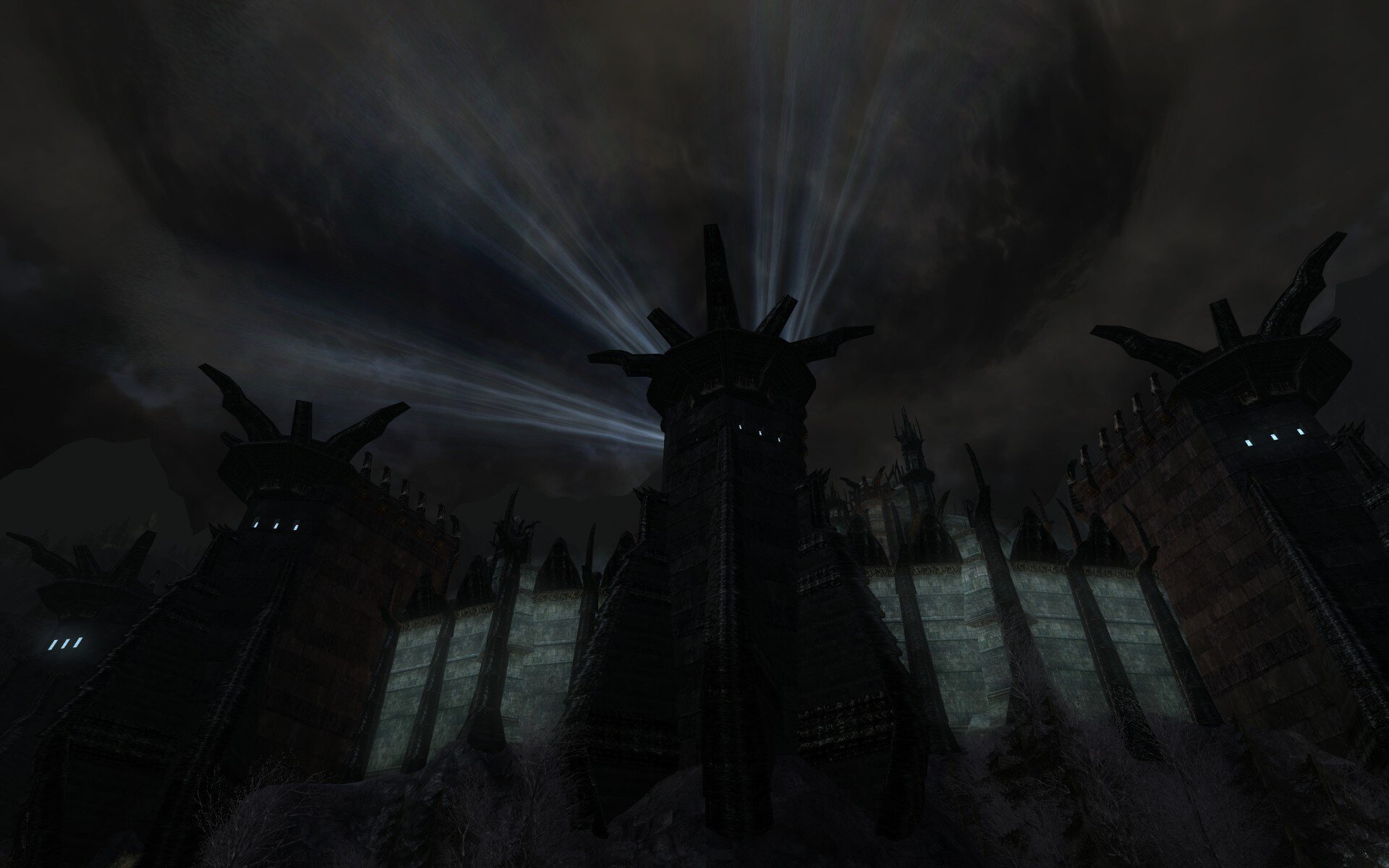
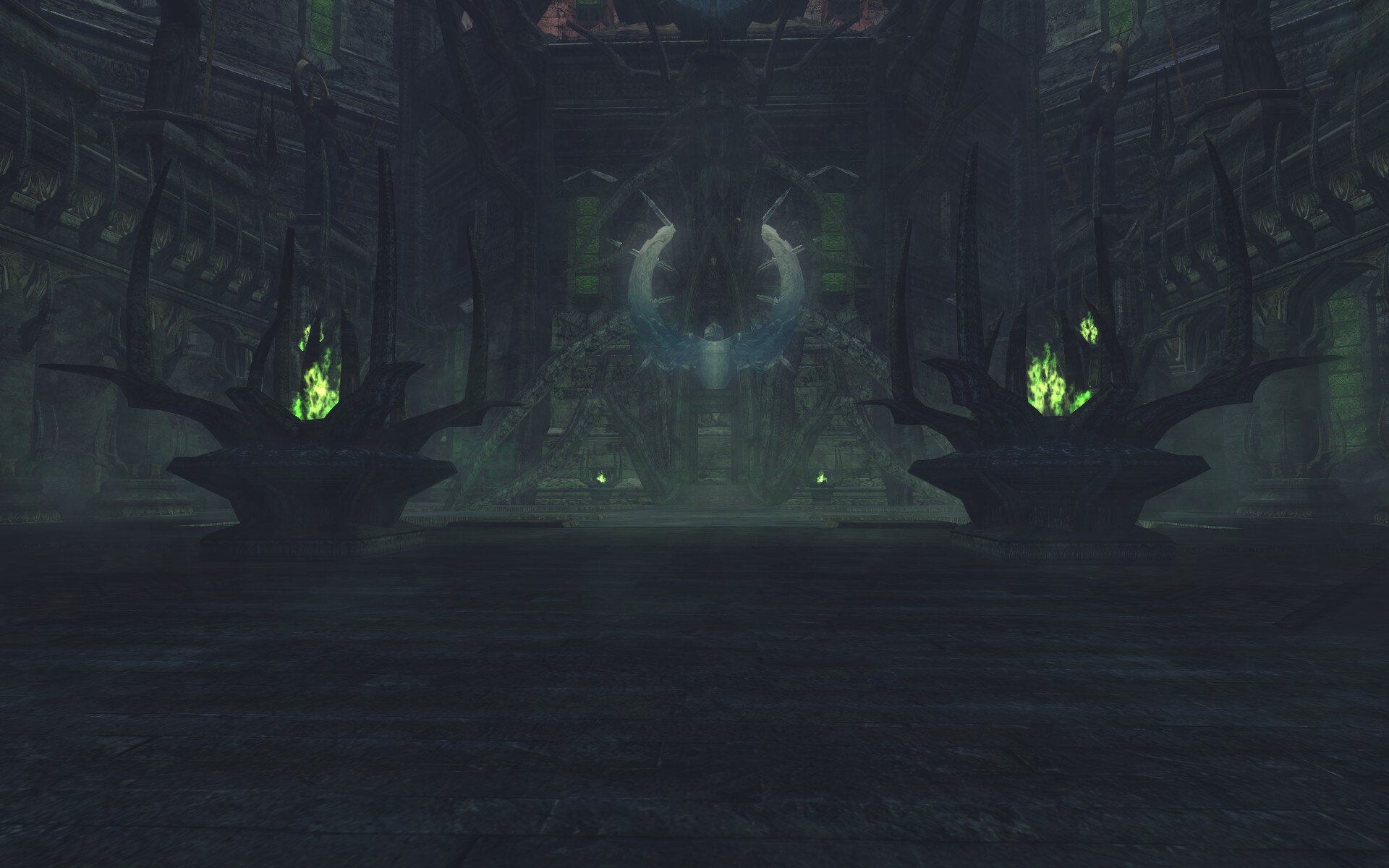
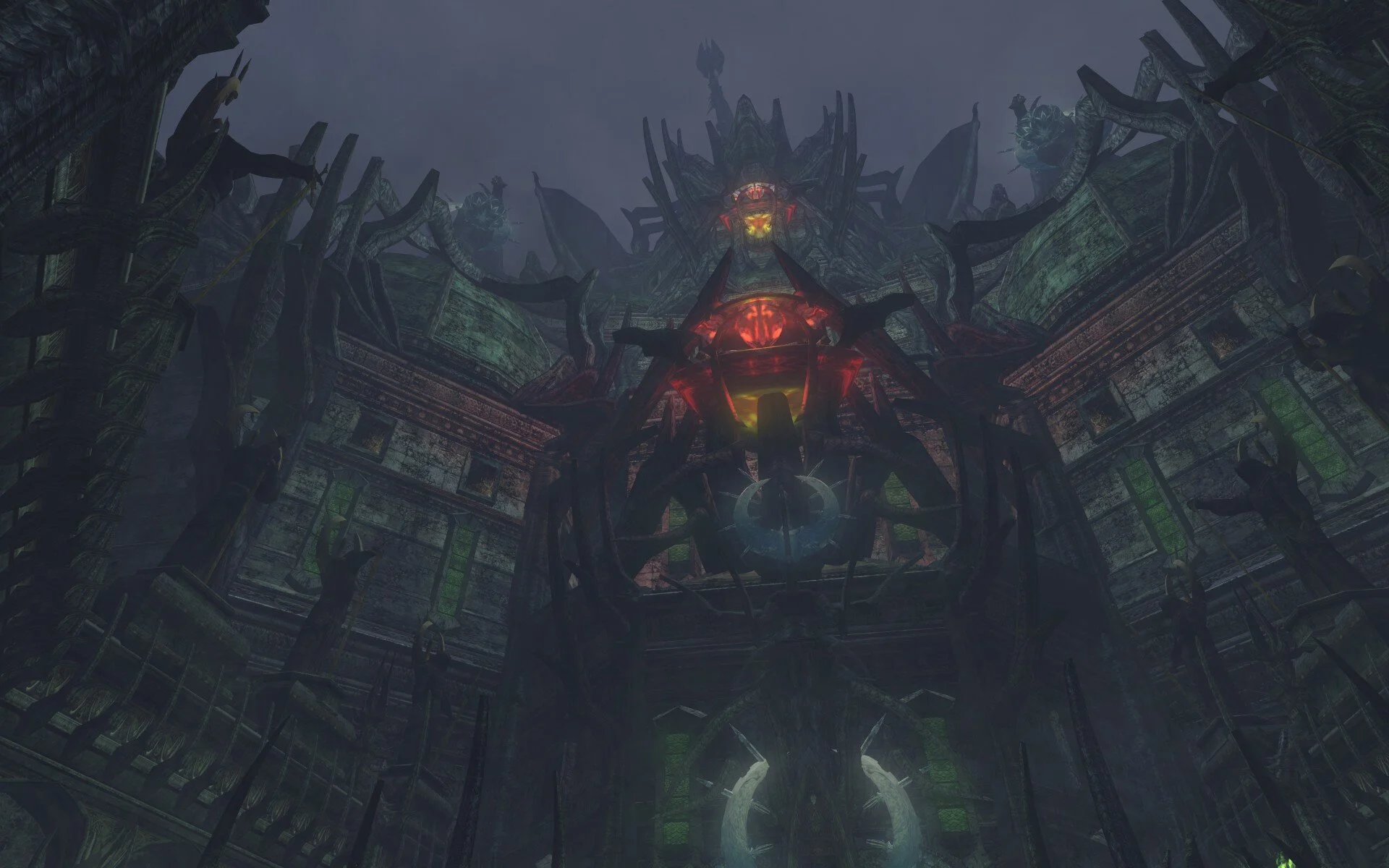
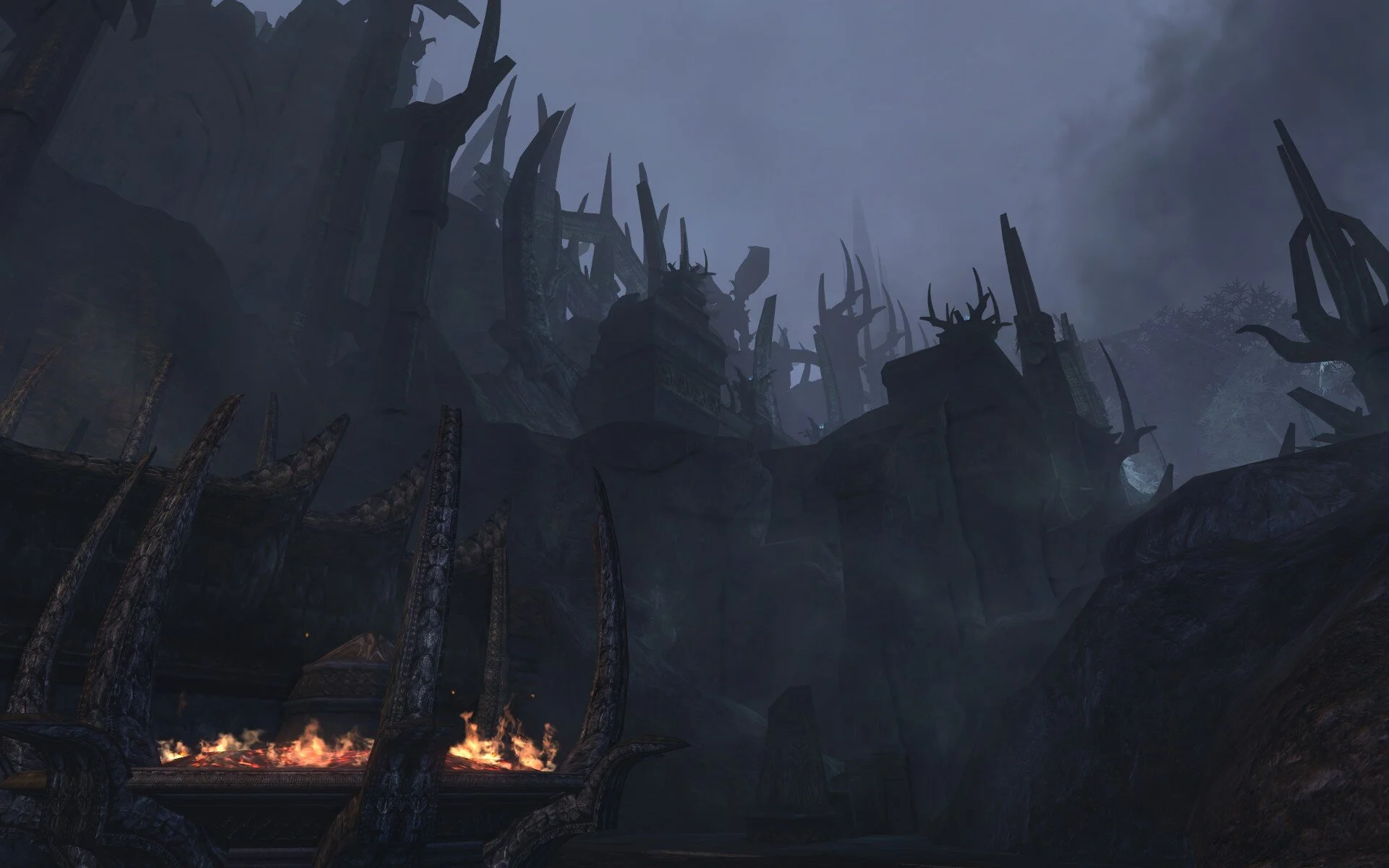
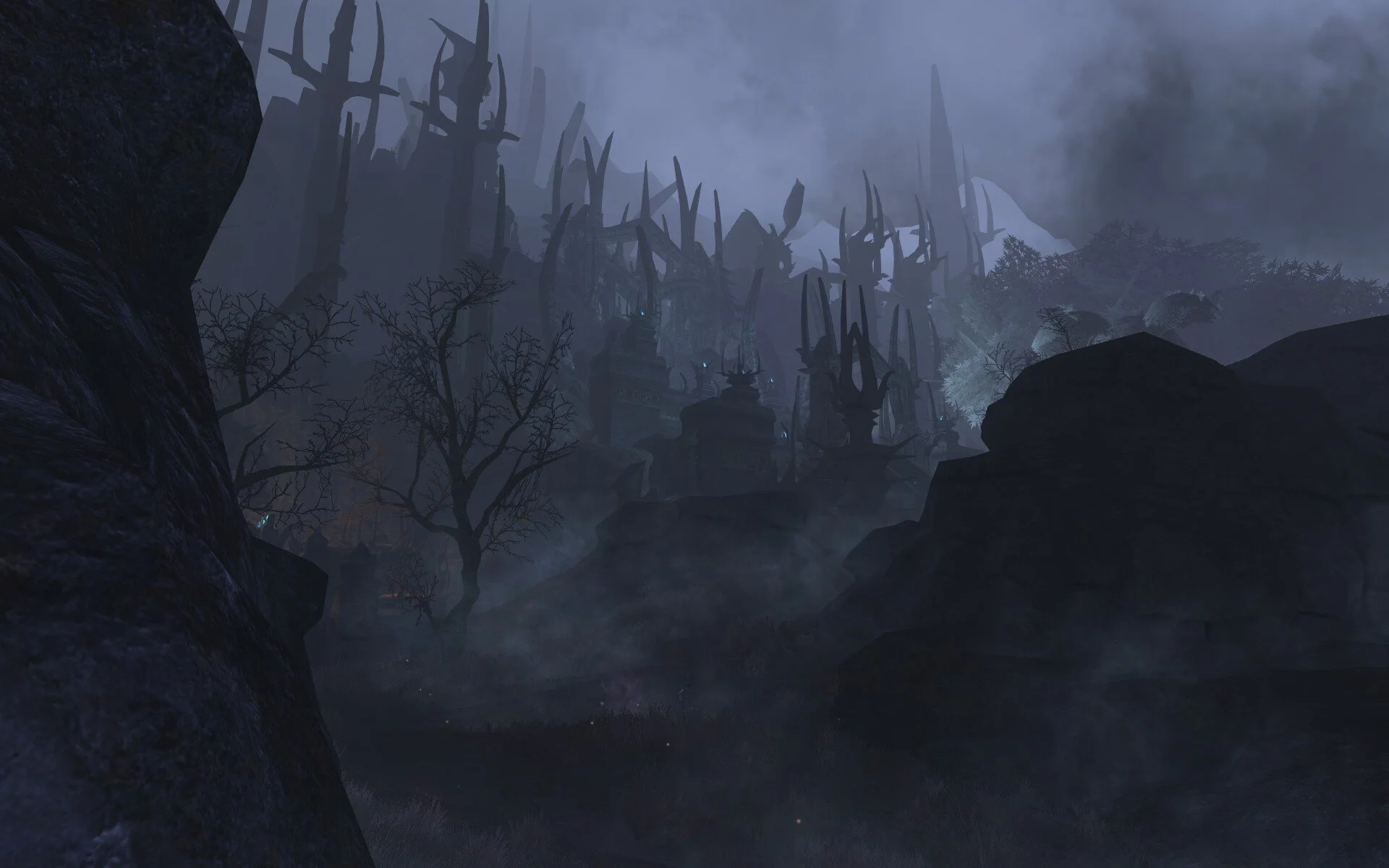
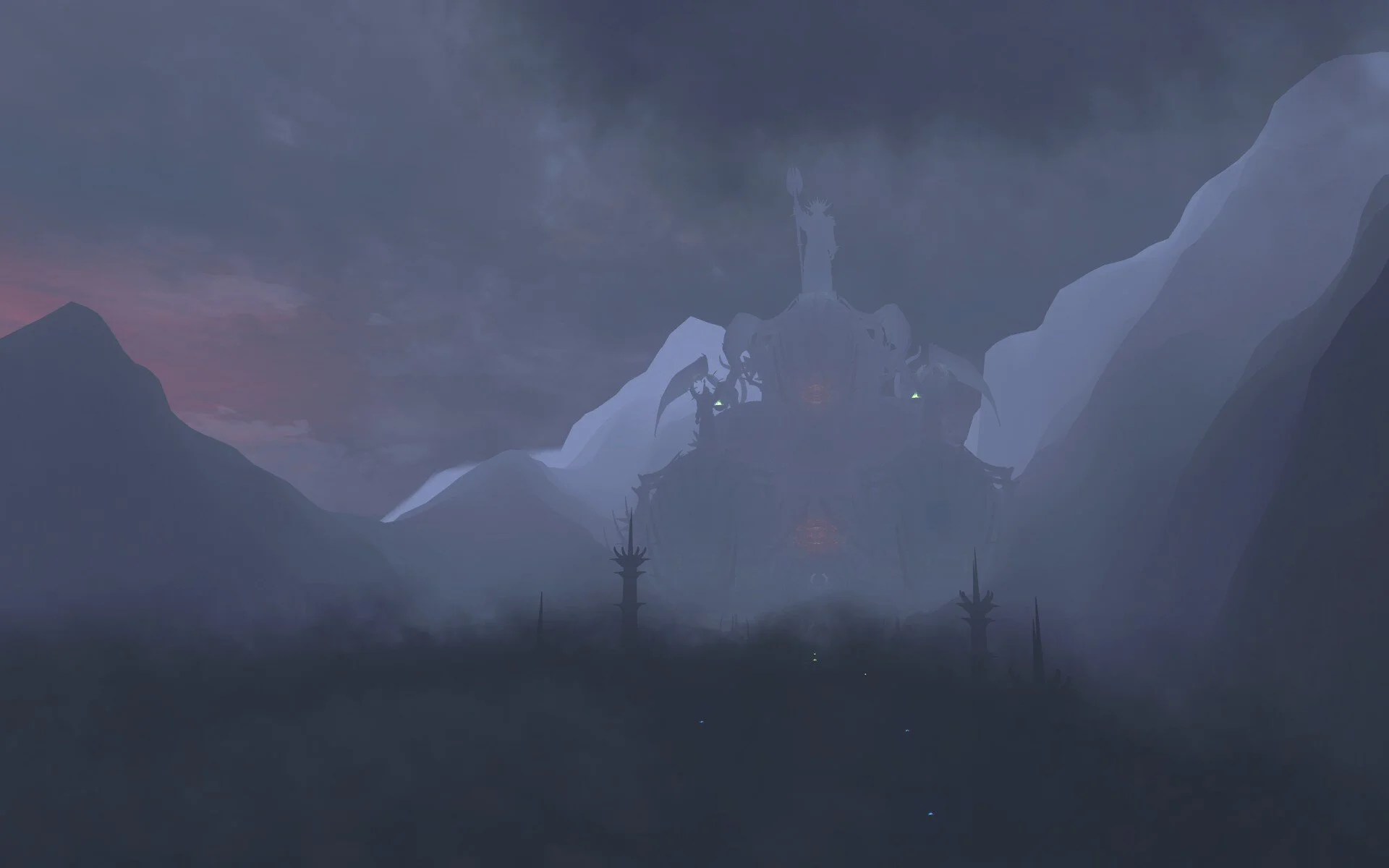
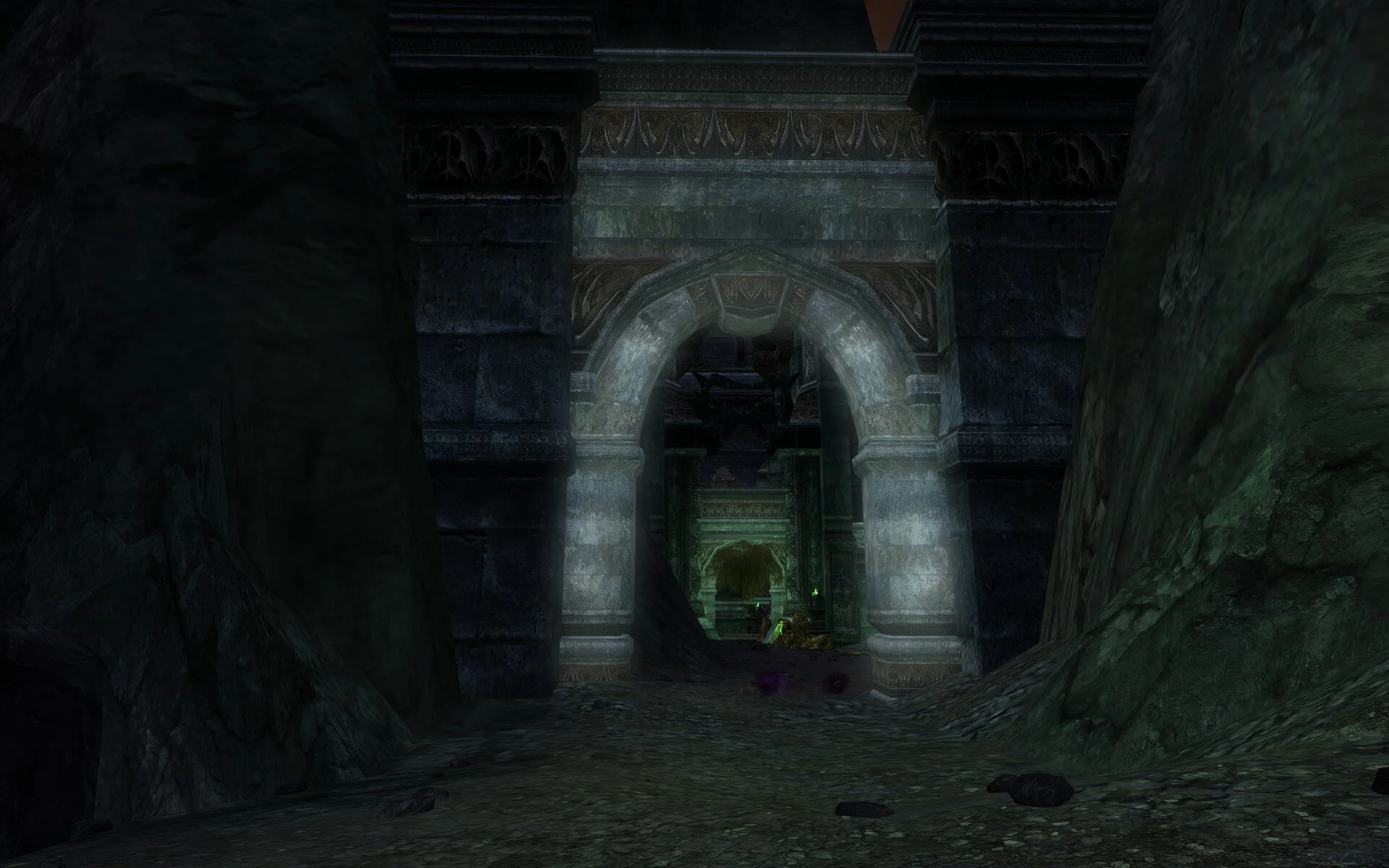
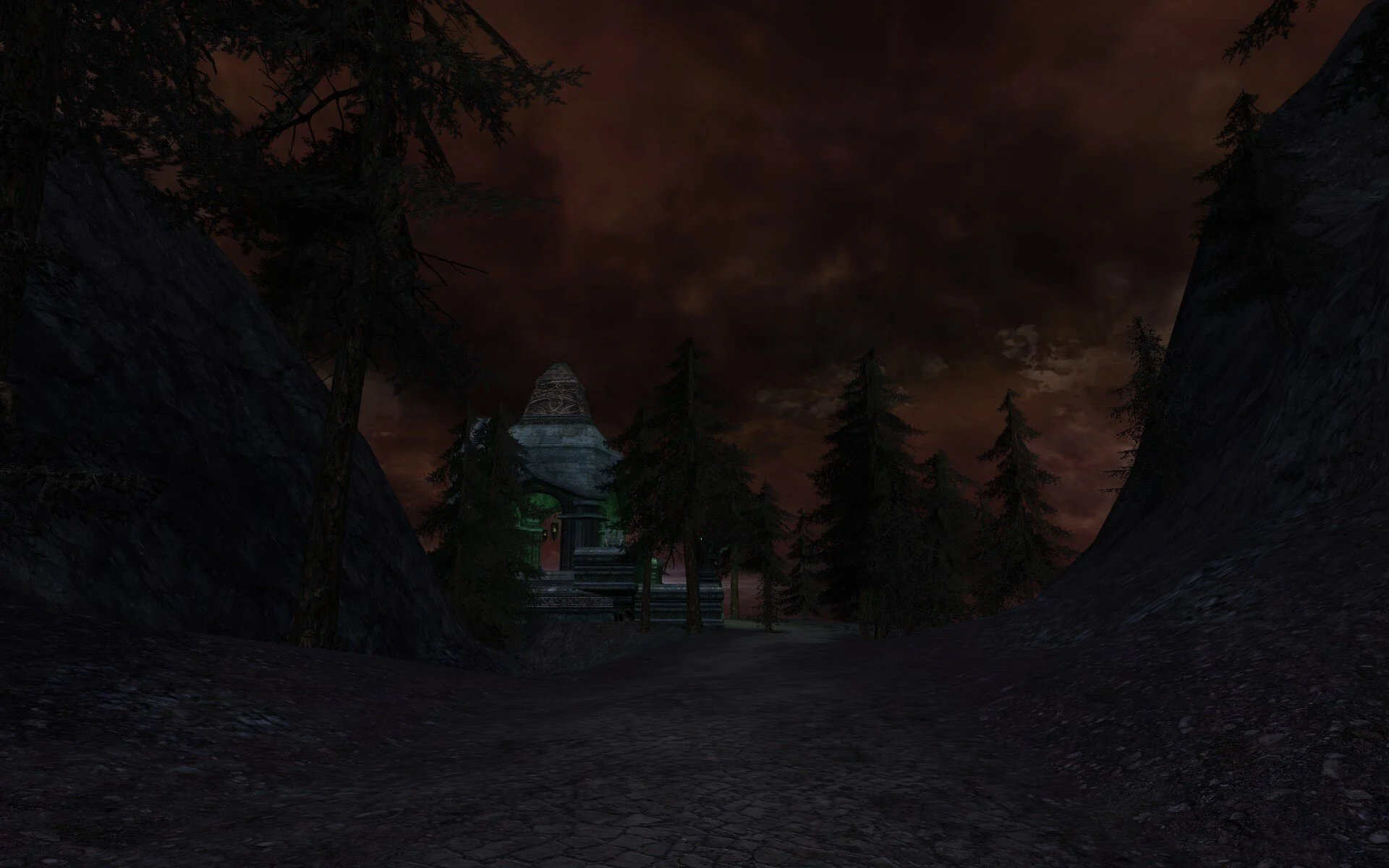
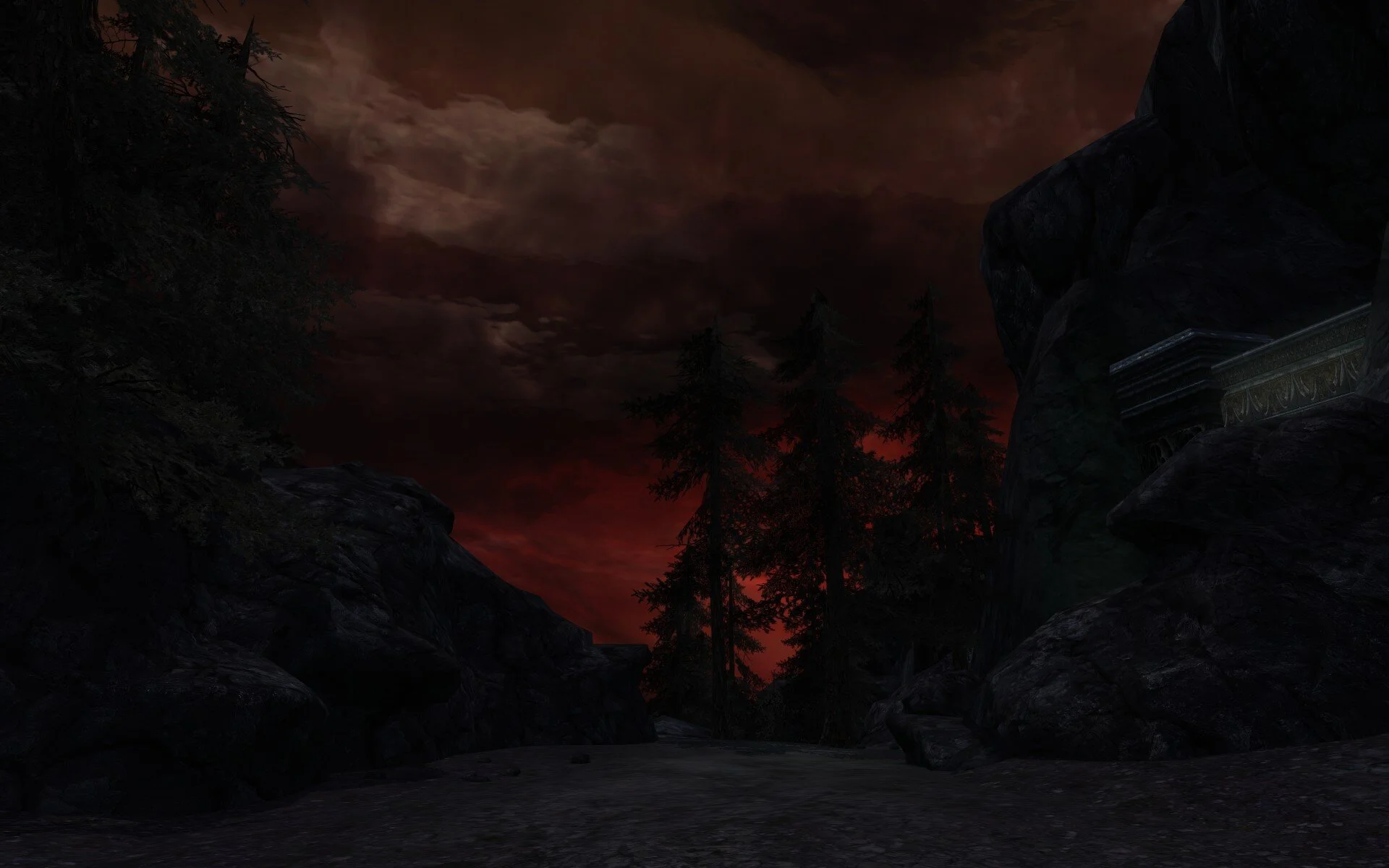
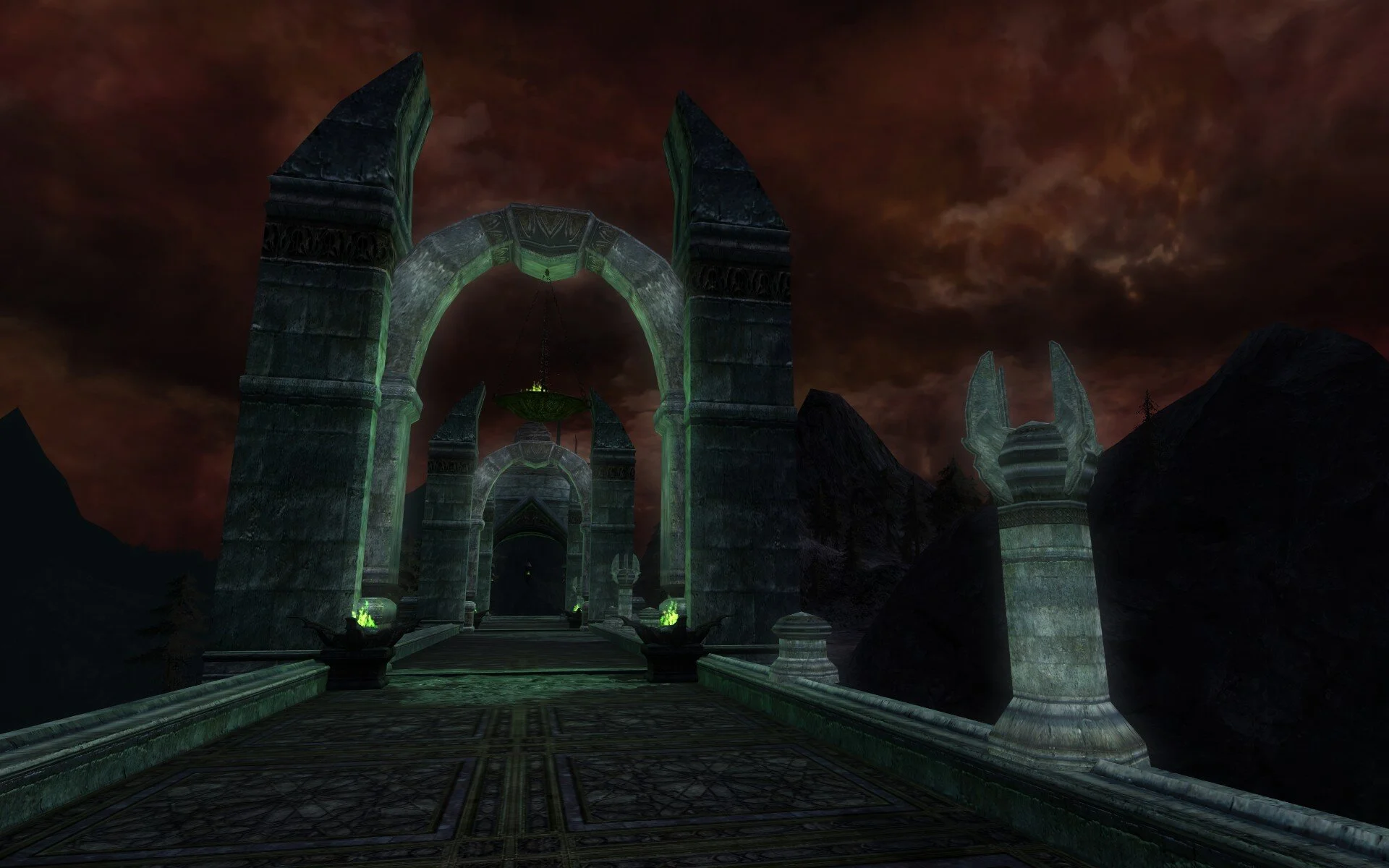
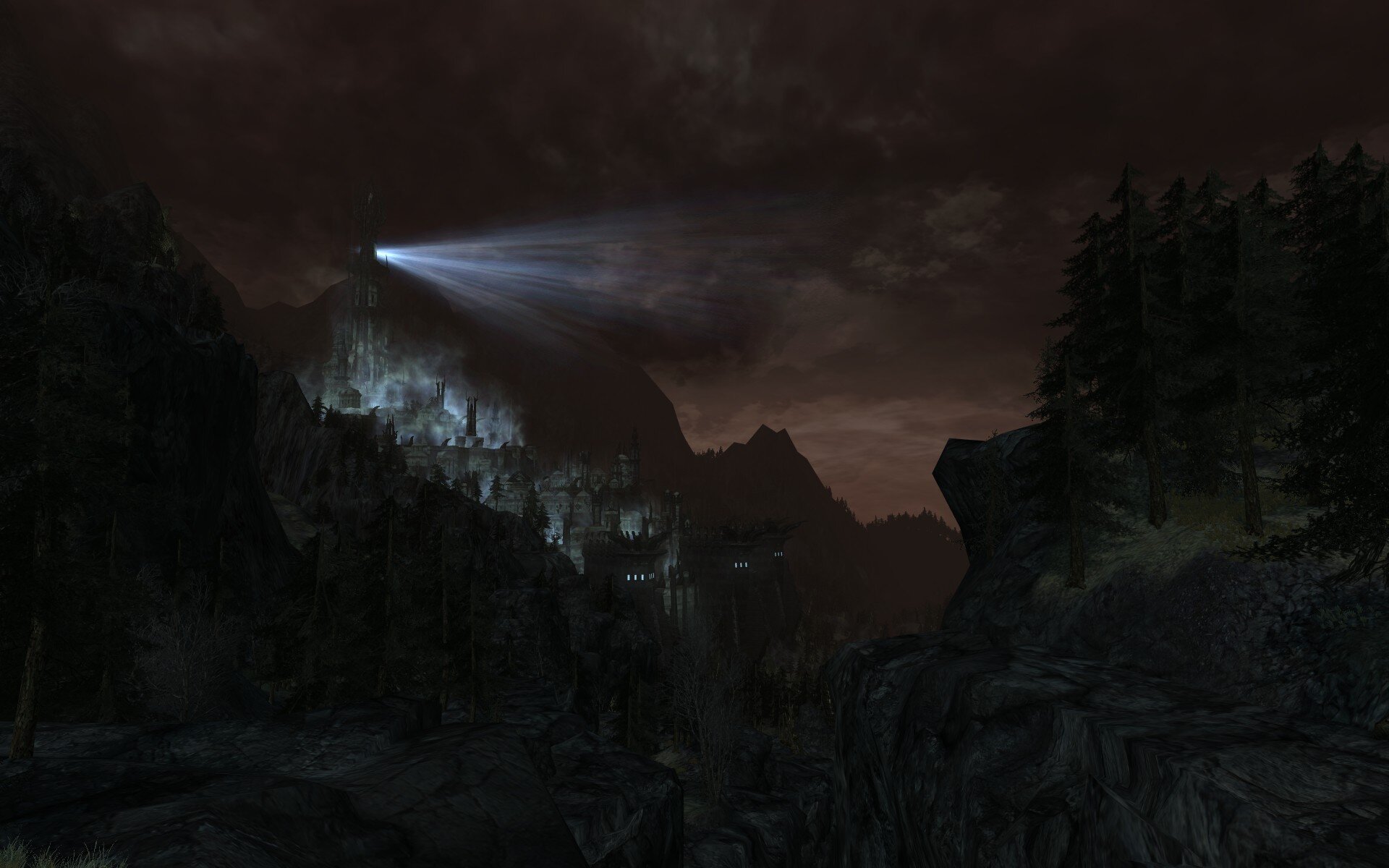
I spent several hours today on the Bullroarer test server, checking out the preview of the forthcoming Minas Morgul expansion for The Lord of the Rings Online. From a lore perspective this is a great zone and it neatly fills the geographical gap between Morgul Vale in North Ithilien and Gorgoroth in Mordor. As ever the visual style and sense of continuity is very good and Standing Stone Games have gone all in on atmosphere and ambience. The new area is often dimly lit, filled with fog and Minas Morgul itself has an eerie supernatural phosphorescence. Once again, I simply contented myself with just exploring the area and did not attempt any quests (apart from one to access a new instanced area). Let us not forget that this is a preview and therefore there is always potential for change. The new areas at present appear to be relatively clear of mobs and other sundry threats, so initially navigation between stables was relatively straight forward. However, the main fortresses of Minas Morgul and Bar Nirnaeth are densely populated with robust mobs.
I spent several hours today on the Bullroarer test server, checking out the preview of the forthcoming Minas Morgul expansion for The Lord of the Rings Online. From a lore perspective this is a great zone and it neatly fills the geographical gap between Morgul Vale in North Ithilien and Gorgoroth in Mordor. As ever the visual style and sense of continuity is very good and Standing Stone Games have gone all in on atmosphere and ambience. The new area is often dimly lit, filled with fog and Minas Morgul itself has an eerie supernatural phosphorescence. Once again, I simply contented myself with just exploring the area and did not attempt any quests (apart from one to access a new instanced area). Let us not forget that this is a preview and therefore there is always potential for change. The new areas at present appear to be relatively clear of mobs and other sundry threats, so initially navigation between stables was relatively straight forward. However, the main fortresses of Minas Morgul and Bar Nirnaeth are densely populated with robust mobs.
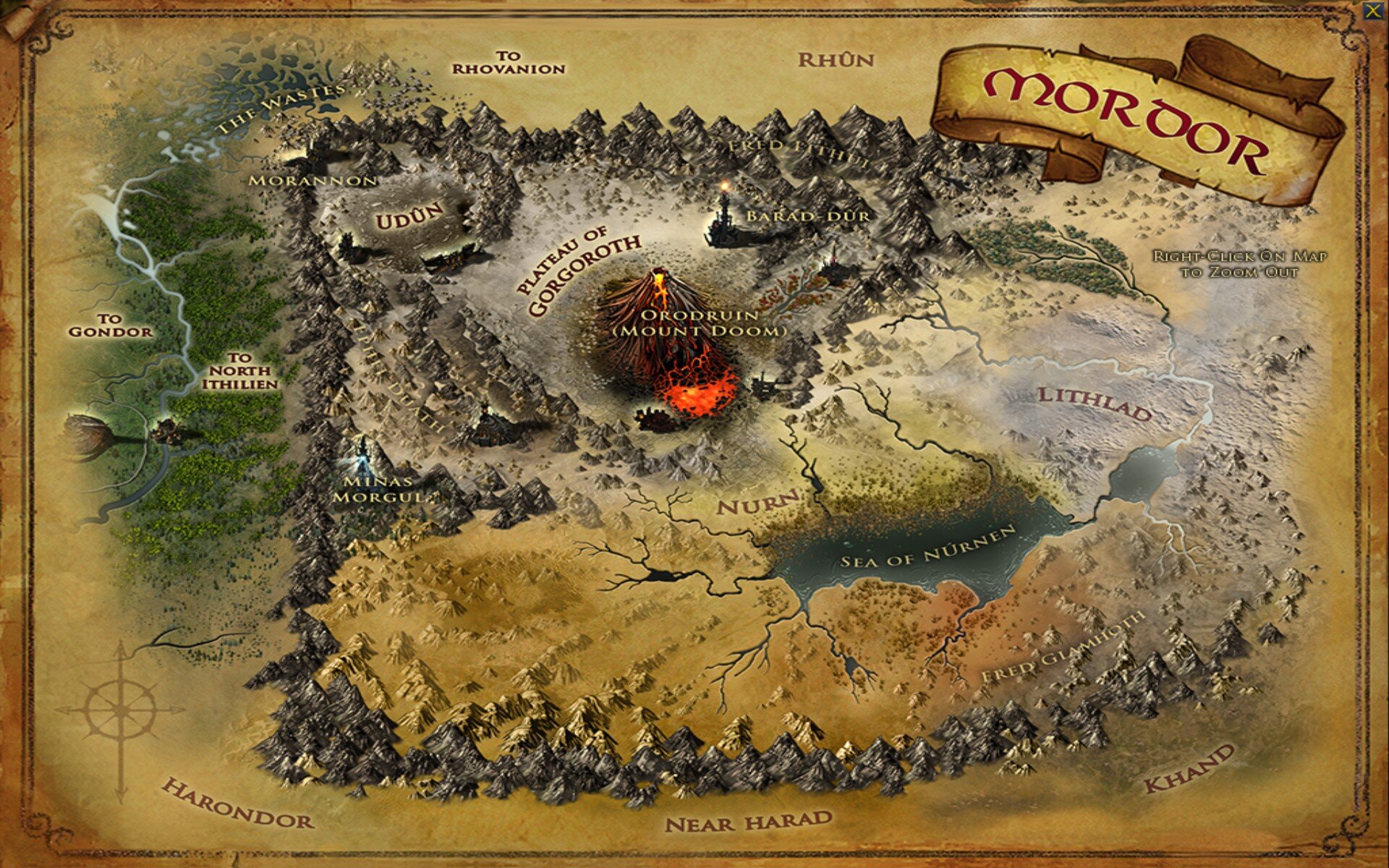
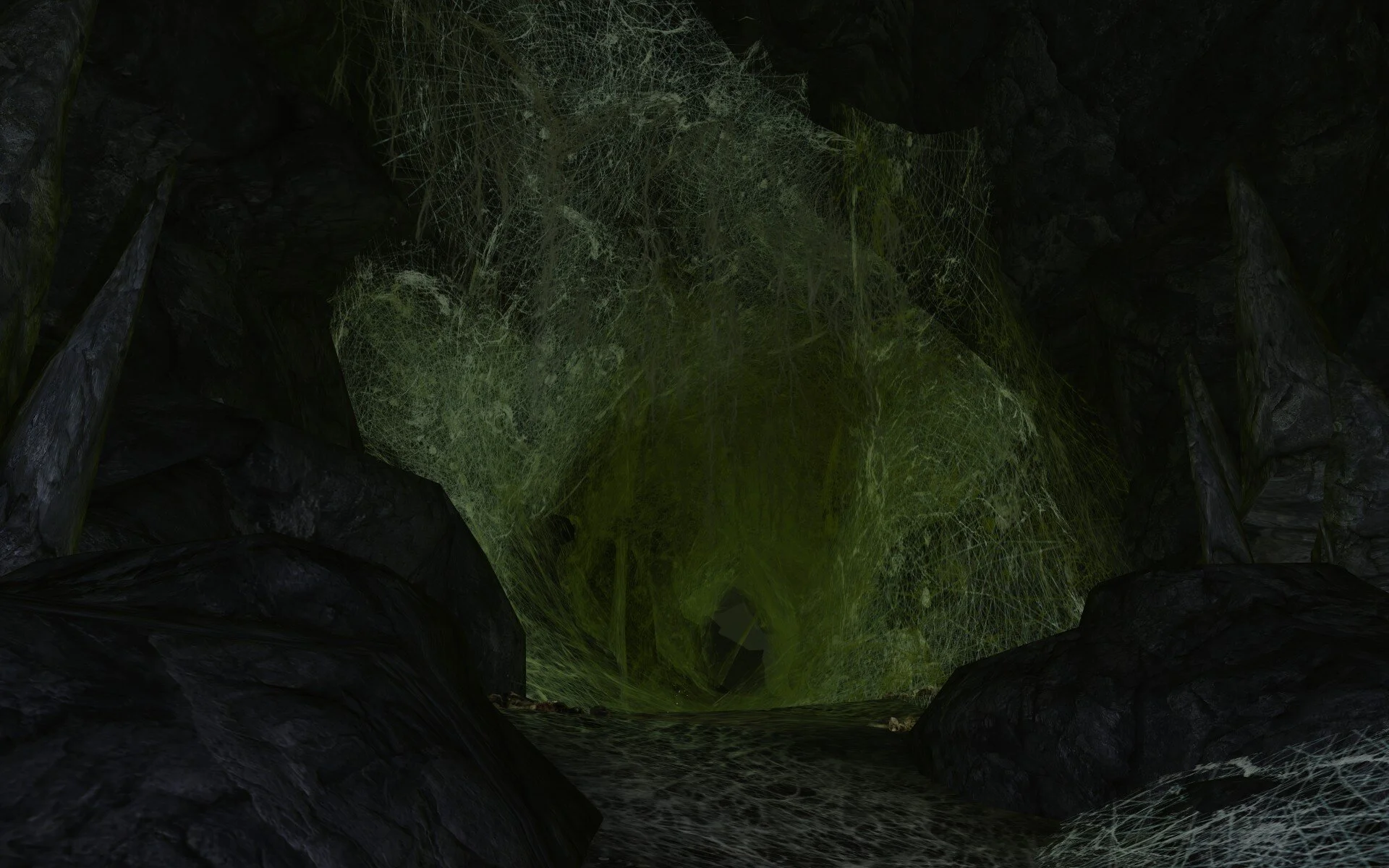
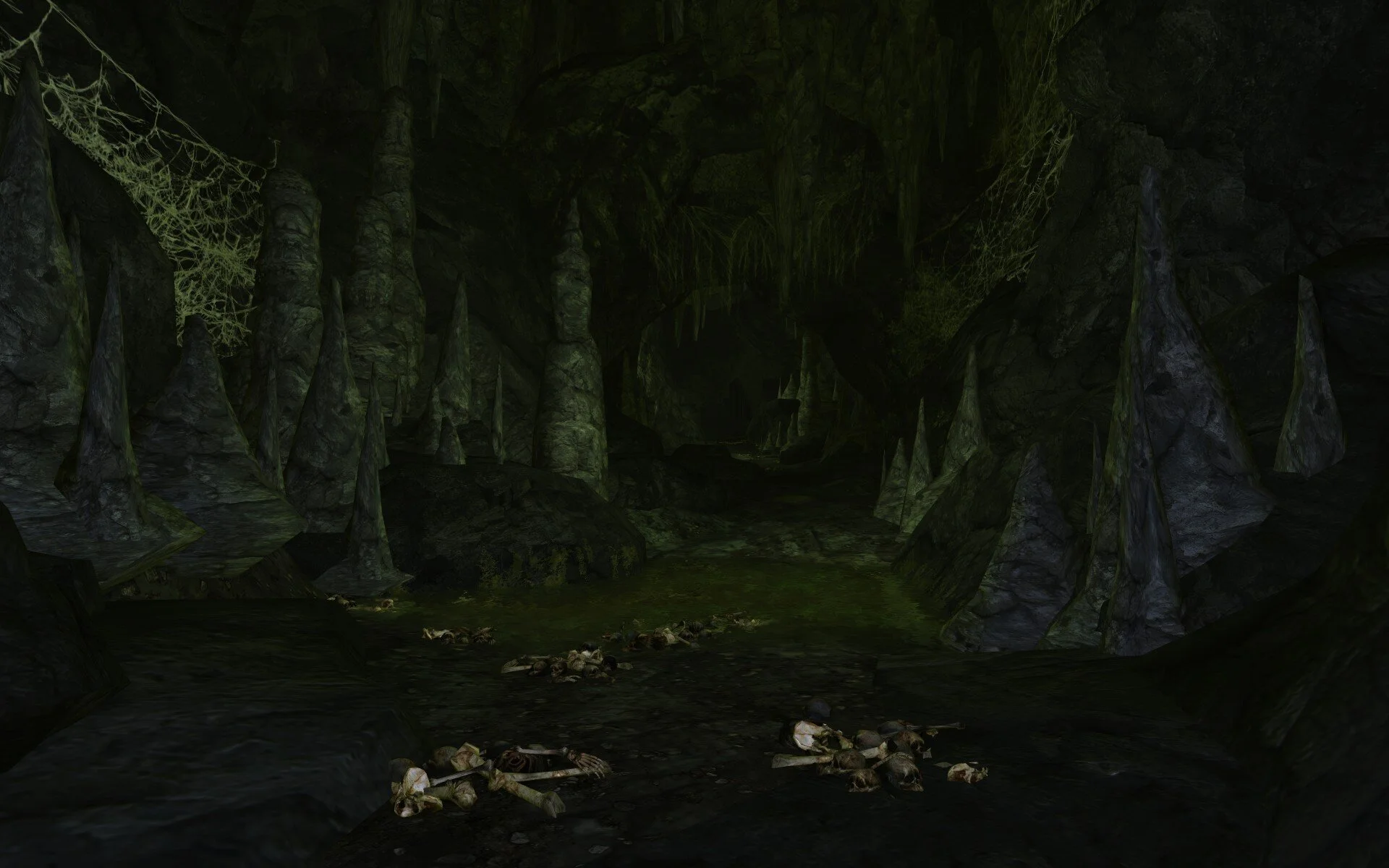
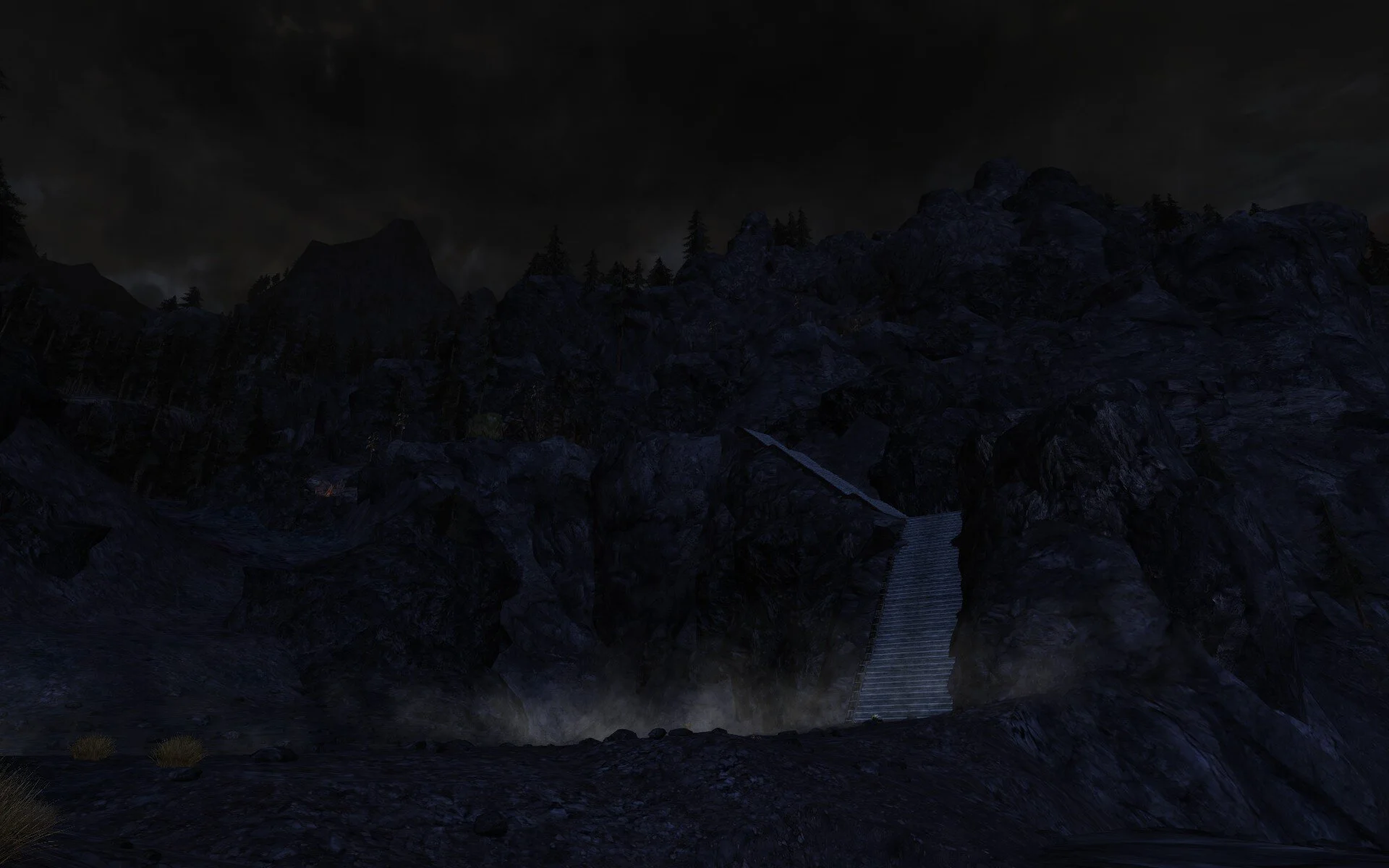
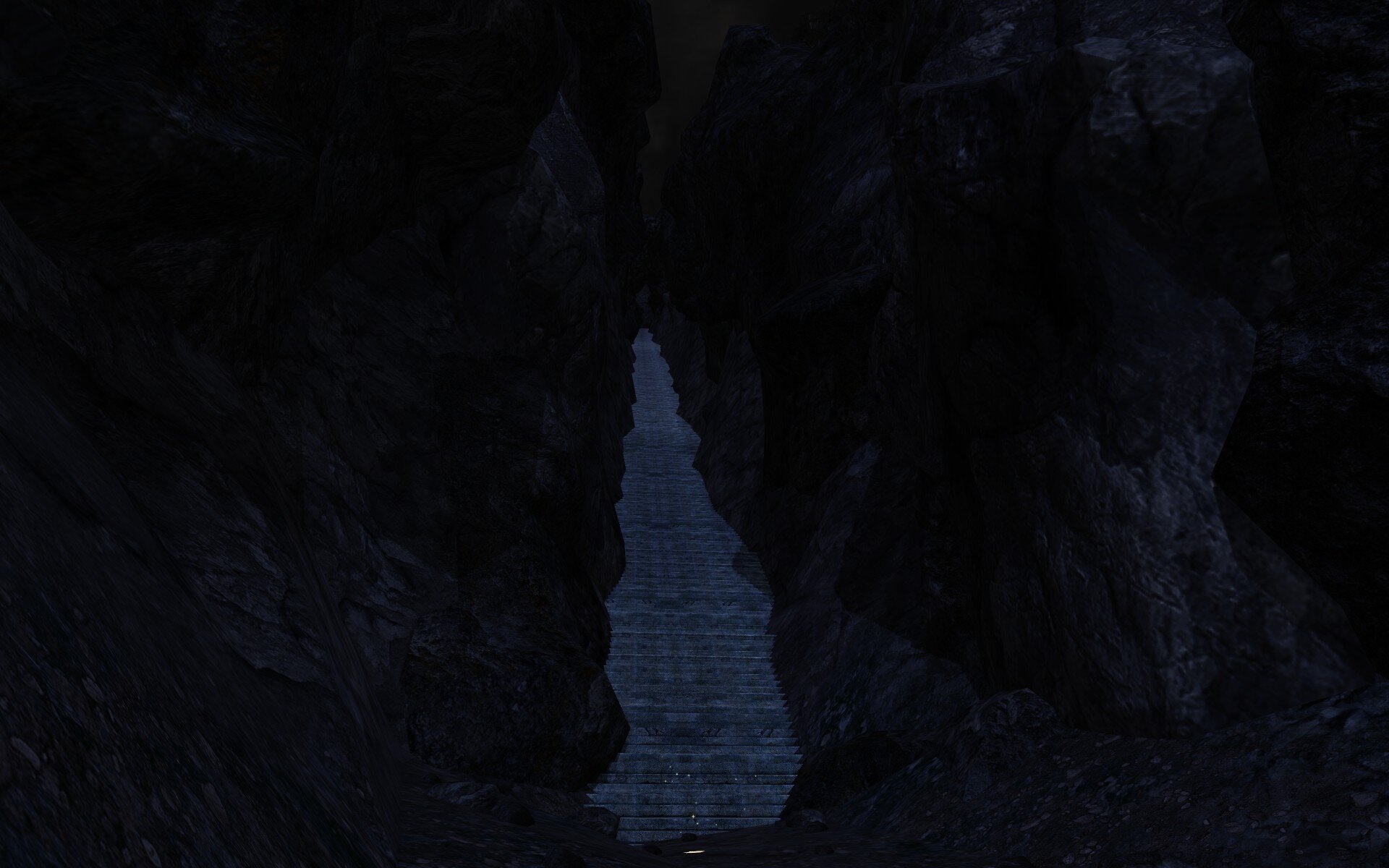
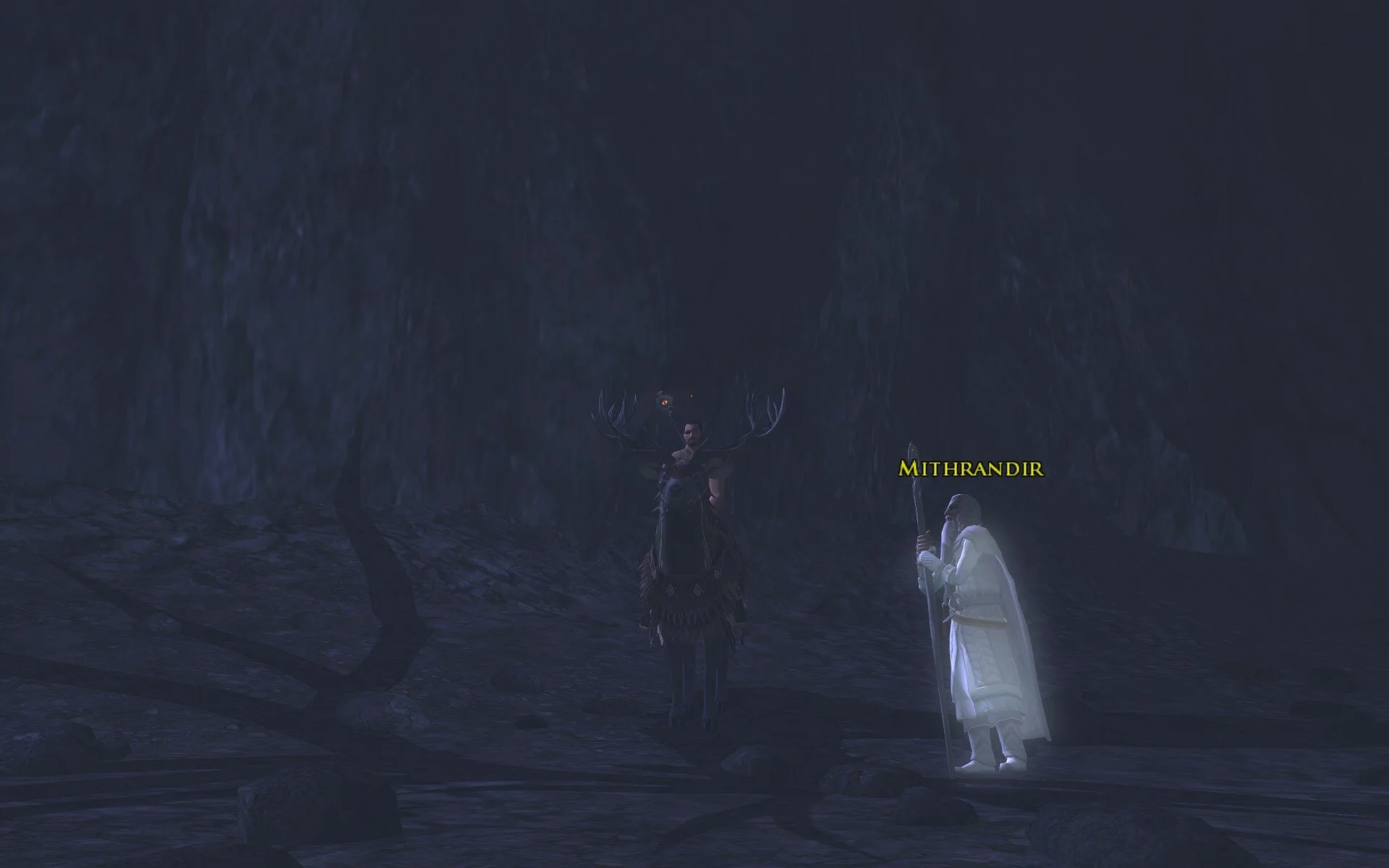
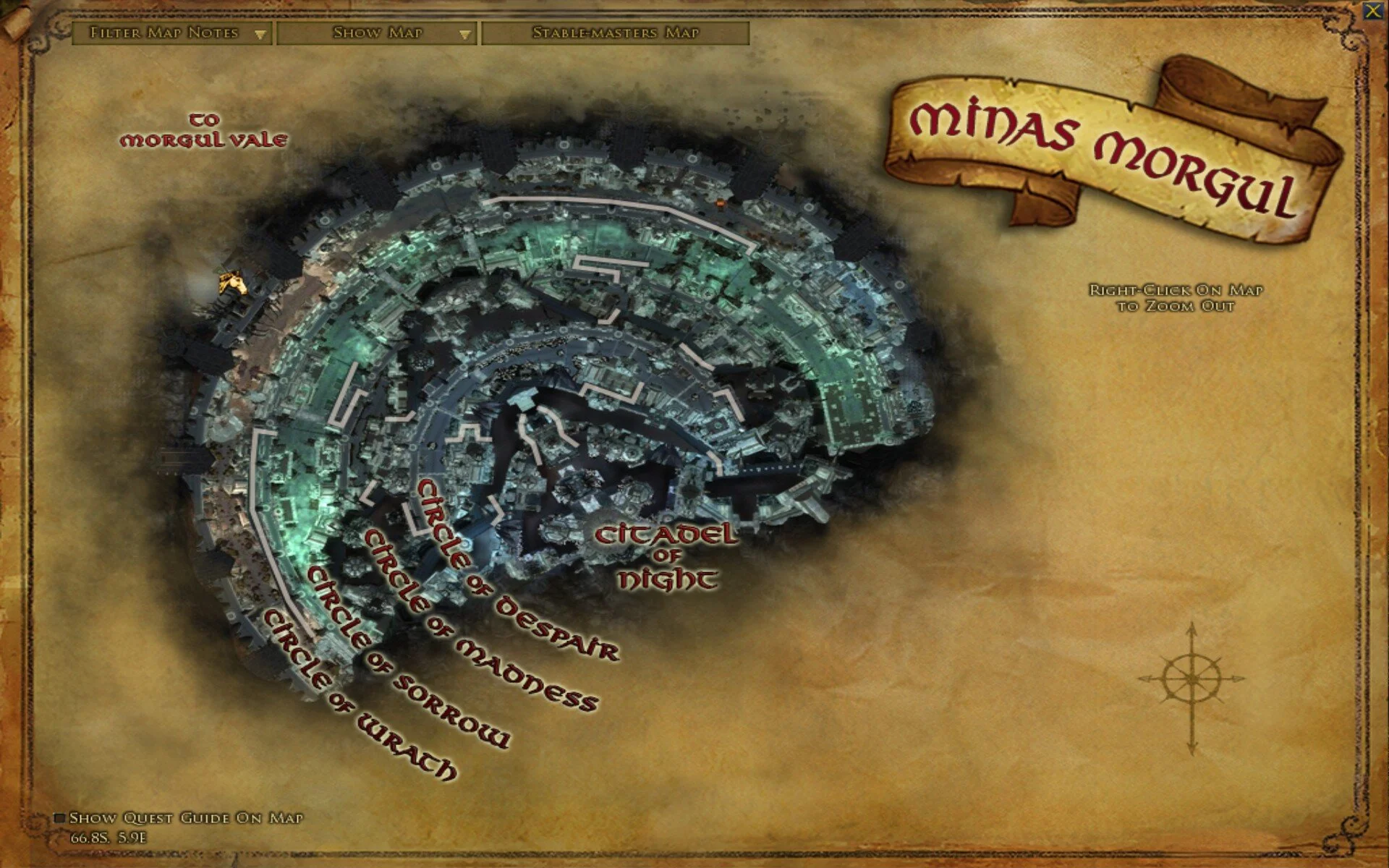
Yet despite the commendably brooding feel to the region, it is quite small and compact. Due to the fact that this zone is set in the Ephel Duath (Mountains of Shadow) many of the roads and trails twist and turn around the cliff face. Subsequently the Straight Stair and the Winding Stair, North of Minas Morgul, live up to their name. Torech Ungol (Shelob’s Lair) has several branching passages but the main path leads to an instance entrance. I wasn’t able to go right through the tunnel and didn’t have time to try and approach it from the Gorgoroth etrance. Minas Mogul itself, is a multi-tiered city, similar to Minas Tirith. Mercifully there are only four “circles”, each with a different supernatural theme. At the top is the Tower of the Crescent Moon, which will more than likely be home to a major instance or raid. It should also be noted that part of the new expansion, is set in the Second Age. “Mordor Besieged” takes place during the original siege of Barad-dûr by the Last Alliance. This is contained within a variation of the existing Dor Amarth map in Mordor. Accessing this area requires a quest from Gandalf and speaking with the shade of Isildur in the Gladden Fields.
I suspect that for many LOTRO players, their respective enjoyment of the pending Minas Morgul expansion will depend very much upon how they felt about Mordor. Minas Morgul looks like being an atmospheric but tough zone. Because of its canonical nature it will probably be demonstrably harder than the recent Vales of Anduin. The dour ambience may also determine people’s opinion, after the lush and verdant nature of the previous update. There’s also the issue of the cost of the new expansion. As stated earlier, the new zone seems small and “Mordor Besieged” is just a variation of a region we’ve already experienced. Although the Stout-Axe race is bundled with all of the three versions of the expansion, I think that the most expensive version doesn’t seem particularly good value for money. Let’s hope that the story line is sufficiently engaging. Mordor had numerous questionable points but its robust narrative did much to redress the balance.
In fairness, considering the lore-based confines of setting an expansion in and around Minas Morgul, one cannot expect a massive amount of ecological diversity in the new zone. We effectively have fortresses, mountain paths, web covered tunnels and foggy woodland. I also think a lot of the relative value of this expansion will lie in the instances and raids. But if you are a casual, solo PVE player then you may not experience any of this. So as I write this post, the Siege of Mirkwood expansion comes to mind, which upon its release, also felt somewhat low key in scope when compared to its predecessor, the Mines of Moria. Naturally, LOTRO players are very loyal to their MMO of choice, so I suspect this expansion will sell well. But how well it’s received is another issue altogether. I shall definitely only buy the base version of the game and I don’t think this expansion will be my first priority over November and December. I do hope that my suspicions are unfounded and Minas Morgul doesn’t turn out to be a chore similar to Mordor.



Skills Rotation
While conducting some general housekeeping in The Lord of the Rings Online, I decided upon streamlining my “quickslots” as developers Standing Stone Games refers to them. Being an MMORPG from well over a decade ago, the game has a multitude of skills. By the time your character reaches level cap of 120, it is entirely possible to have filled all 72 of the available slots. If you have a combat pet, then you’ll receive another 11 buttons to “mash”. Now this situation got me thinking. I recollect a conversation I had about a year ago, when I was doing some group content in LOTRO. It wasn’t going especially well so there was a discussion about tactics and what specific skills to use. To cut a long story short, it became apparent that many players (including myself) did not know the exact name of all the skills that adorned their quickslots. Furthermore not everyone was au fait with the nature and purpose of each skill and how one could trigger another. Similarly not all were aware that some skills could be augmented by the use of another.
While conducting some general housekeeping in The Lord of the Rings Online, I decided upon streamlining my “quickslots” as developers Standing Stone Games refers to them. Being an MMORPG from well over a decade ago, the game has a multitude of skills. By the time your character reaches level cap of 120, it is entirely possible to have filled all 72 of the available slots. If you have a combat pet, then you’ll receive another 11 buttons to “mash”. Now this situation got me thinking. I recollect a conversation I had about a year ago, when I was doing some group content in LOTRO. It wasn’t going especially well so there was a discussion about tactics and what specific skills to use. To cut a long story short, it became apparent that many players (including myself) did not know the exact name of all the skills that adorned their quickslots. Furthermore not everyone was au fait with the nature and purpose of each skill and how one could trigger another. Similarly not all were aware that some skills could be augmented by the use of another.
Naturally there will be high end players who will read this and scoff “well I know what every skill is and what it does”, to which I say, “good for you”. But putting aside the moral judgement that always seems to go hand in hand with these sorts of discussions, I suspect that there are many players, not only in LOTRO but many other MMORPGs, who do not use their skills in an optimal fashion. They simply select what works for them. I also think its safe to assume that some player have the skills on their quickslots in the order that they were acquired. When they play, the simply work through them from left to right. In more contemporary MMOs such as The Elder Scrolls Online, you get to pick what skills are on you hotbar and the number is restricted to six (5 regular and 1 ultimate) which makes things easier to manage compared to the skills bloat that you find in LOTRO. But I suspect that many ESO players still do not pay as much to attention to the specific details of their skills as the developer’s would like.
When the average player (and that in itself is a hotly debated term) starts a new MMO, they are faced with finding a suitable path between learning the game’s mechanics and progressing as well as having fun. At lower levels, skills in many MMOs are simple and straightforward to understand. But as you progress skills can become more complex and interconnected. In ESO there is the extra dimension of morphing skills and choosing between two subtle variations. It is often round about here that players may start skipping over such information. For everyone that loves number crunching, understanding the maths behind each skill and min-maxing, there are two other players that don’t want their leisure activity to become a job or a school lecture. I have at times been guilty of this, although now I am very aware that the wrong choice can mean that I gimp myself. But this mindset exists and manifests itself in many curious ways. I know players who will never use food or potions because it just “over complicates things”. Such systems means you have to carry more stuff in you bags and worry about when not use them.
I recently did some research regarding ESO because I was finding melee combat difficult with a my Dragonknight. Turns out my choice of skill wasn’t the issue and that I just needed to be more mobile in combat. Having cut my teeth playing older MMOs such as LOTRO, I still find myself at times remaining static when in combat, instead of moving around the target. I have also discovered the importance of a lot of the passive skills and how they can boost stats and augment combat. Again, I’m sure I’m not alone in being nominally oblivious to the depths of the games systems. Yet despite these gaps I both my and other players knowledge, it doesn’t seem to be as much an impediment to our enjoyment of the game as some would think. Although we may not be killing mobs as efficiently as we can, we’re having fun doing things our way and on our terms. If it ain’t broke, then don’t fix it. Until we reach a point in the game when we can’t beat a boss due to our poor grasp of the game mechanics and our own skills. Then it will be everyone else’s fault.
LOTRO: Minas Morgul Pre-Order
The forthcoming Minas Morgul expansion for The Lord of the Rings Online, became available for pre-order today. Furthermore, Update 24.3 was also released, making the new race of Stout-Axe Dwarves immediately available for those who have purchased the aforementioned expansion. Minas Morgul will provisionally be launched on Tuesday 29th of October, although Standing Stones Games have stated that this may be delayed for a few days should there be any technical issues. As with the previous expansion, Mordor, there are three versions of the game with a variety of additional baubles and trinkets available. These are mainly cosmetic items and sundry buffs and boosts. The pricing ranges from $40 for the Basic Edition, $80 for the Collector’s Edition and $130 for the Ultimate Fan Bundle. Again, as with the last expansion, the respective value of the most expensive tier is currently being “disputed” by players, although having logged into the game, it is already clear that many people have already bought it.
The forthcoming Minas Morgul expansion for The Lord of the Rings Online, became available for pre-order today. Furthermore, Update 24.3 was also released, making the new race of Stout-Axe Dwarves immediately available for those who have purchased the aforementioned expansion. Minas Morgul will provisionally be launched on Tuesday 29th of October, although Standing Stones Games have stated that this may be delayed for a few days should there be any technical issues. As with the previous expansion, Mordor, there are three versions of the game with a variety of additional baubles and trinkets available. These are mainly cosmetic items and sundry buffs and boosts. The pricing ranges from $40 for the Basic Edition, $80 for the Collector’s Edition and $130 for the Ultimate Fan Bundle. Again, as with the last expansion, the respective value of the most expensive tier is currently being “disputed” by players, although having logged into the game, it is already clear that many people have already bought it.
All editions of Minas Morgul come with the following content. Over 250 New Quests. 7 New Instances. Updated Crafting Guilds. Further instalments in the Black Book of Mordor Storyline. A new Shelob Raid and “more”. It should be noted that the instances and raid will follow in patches after launch of the expansion. Furthermore, according to developer’s Stand Stone Games “Minas Morgul will take you on an expedition deep into the Morgul Vale in search of answers to a mystery that spans three thousand years. The words of the shade of Isildur will unearth secrets and visions of the Second Age that have remained untold until now, revealing playable landscape and new adventures from a crucial time in Middle-earth’s history”. There is also yet another increase in the game’s level cap from 120 to 130. Thus creating a new gear check for those who wish to have appropriately levelled armour and jewellery.
For long term LOTRO players, SSG’s announcement and overall marketing strategy for this new expansion holds no surprises. This is pretty much exactly what they did when they launched Mordor in late 2017. The appeal of Minas Morgul is aimed predominantly at core players, although the Character Level Boost to 120 may be of interest to new players who wish to join and play with friends at cap. SSG seem to have found a content release schedule that works well for them, offering an ongoing diet of “same meat, different gravy” which satisfies core players. For those who do not feel the need to pre-order the expansion, it will be available for purchase via the in-game store with LOTRO points in March 2020. Base Edition (includes the Minas Morgul Region & Instances only) is priced at 2495 Points. For those who just want to unlock the Stout-Axe Dwarf race, it will cost 1000 Points.
Stout-Axe Dwarf Preview
As Standing Stone Games successfully “got away” with adding High Elves to The Lord of the Rings Online as a playable race in late 2017, then it is only logical that they expect to do exactly the same with Stout-Axe Dwarves this year. Furthermore, as High Elves were introduced with the Mordor expansion, it’s not unreasonable to assume that Stout-Axe Dwarves will similarly be tied to the forthcoming Minas Morgul expansion. Just remember that Mordor came in three varieties and the base edition did not include the High Elf class. So keep an eye out for the various versions of Minas Morgul, when it is announced. But let’s not kid ourselves, core LOTRO players are usually lore enthusiasts and eager to support the game that they love, so I see no reason for this new race to be rejected by the playerbase. Dwarves have their fans, so I’m sure that Stout-Axe Dwarves will be welcomed into the game and find their niche.
As Standing Stone Games successfully “got away” with adding High Elves to The Lord of the Rings Online as a playable race in late 2017, then it is only logical that they expect to do exactly the same with Stout-Axe Dwarves this year. Furthermore, as High Elves were introduced with the Mordor expansion, it’s not unreasonable to assume that Stout-Axe Dwarves will similarly be tied to the forthcoming Minas Morgul expansion. Just remember that Mordor came in three varieties and the base edition did not include the High Elf class. So keep an eye out for the various versions of Minas Morgul, when it is announced. But let’s not kid ourselves, core LOTRO players are usually lore enthusiasts and eager to support the game that they love, so I see no reason for this new race to be rejected by the playerbase. Dwarves have their fans, so I’m sure that Stout-Axe Dwarves will be welcomed into the game and find their niche.
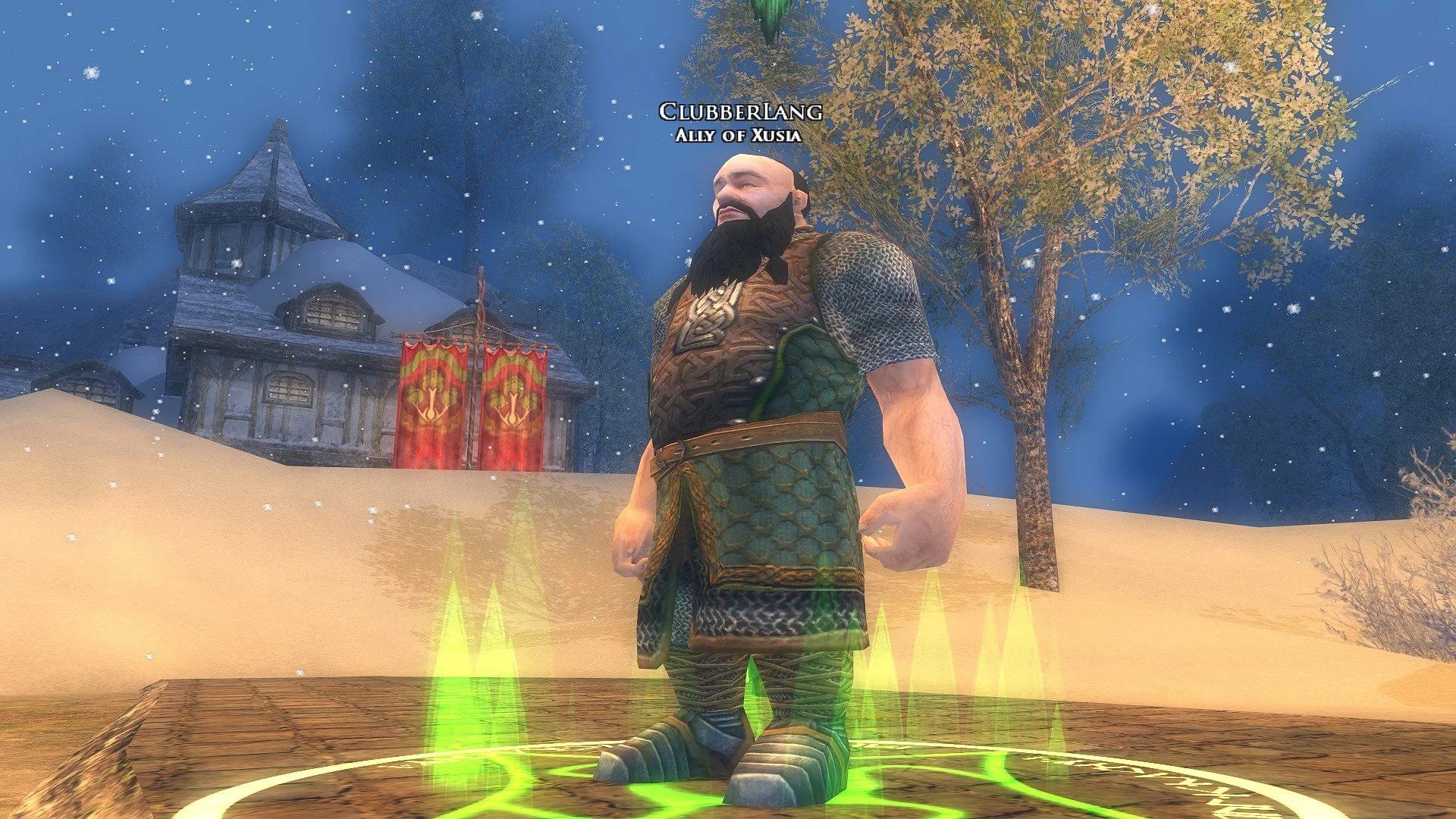
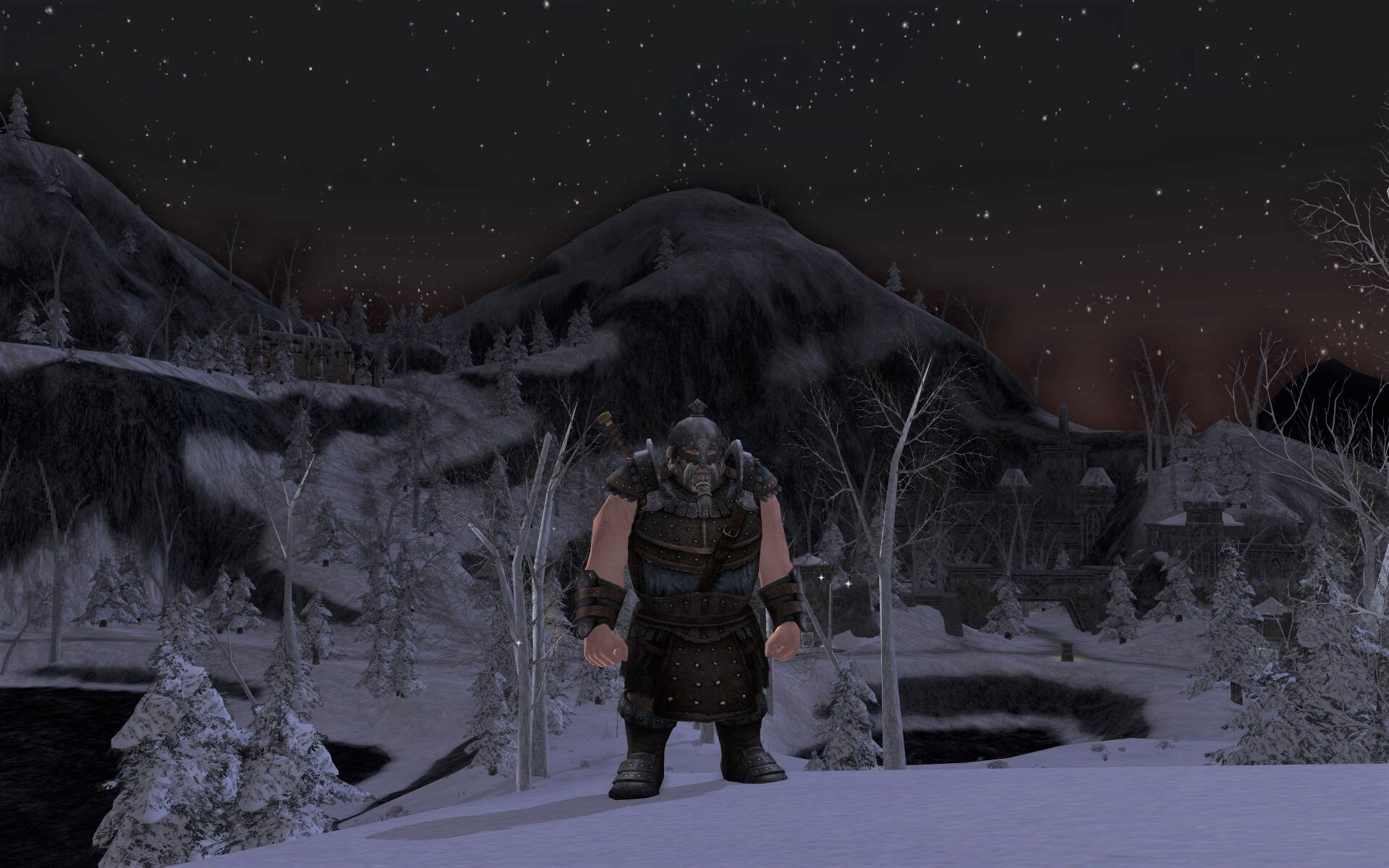
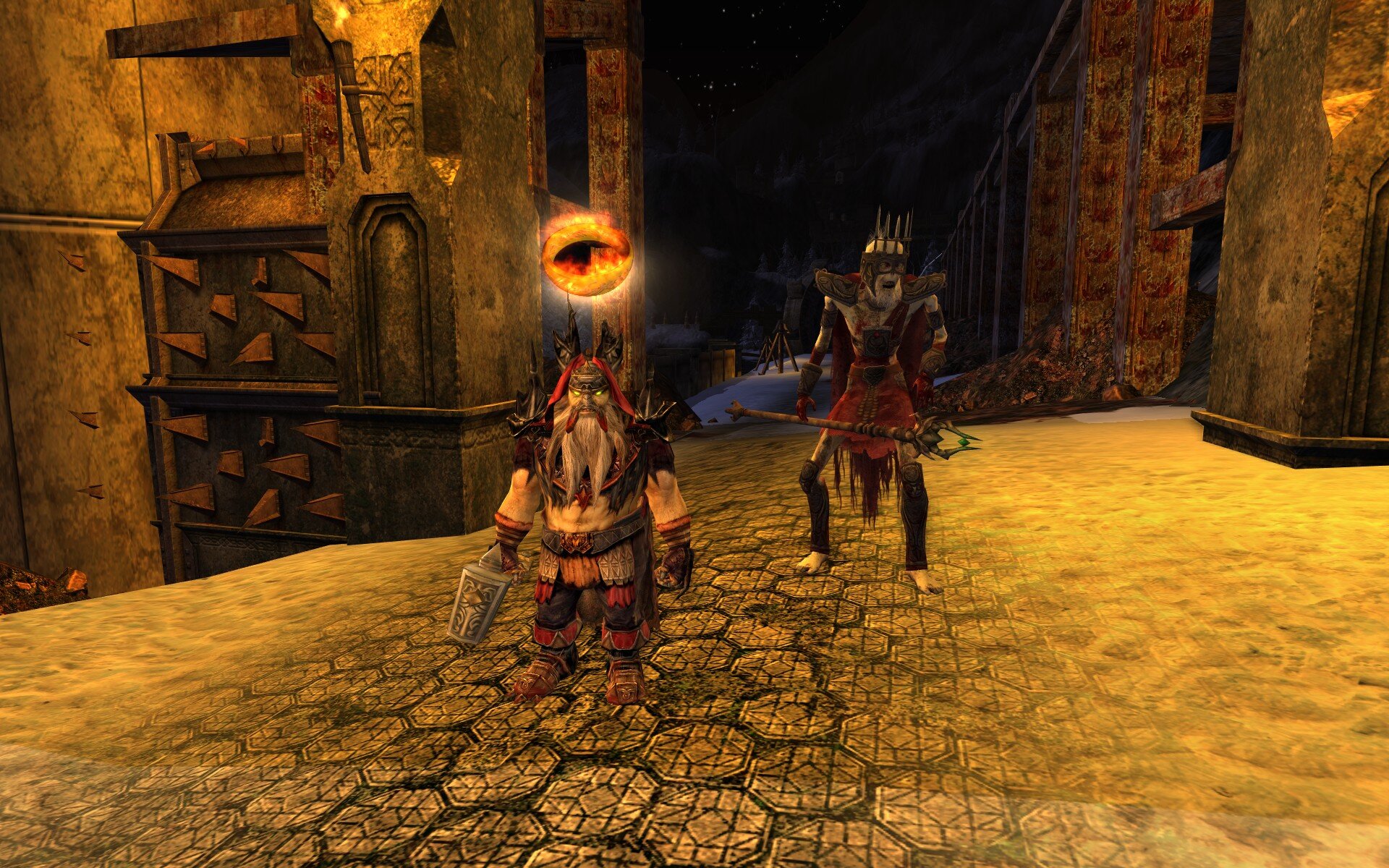
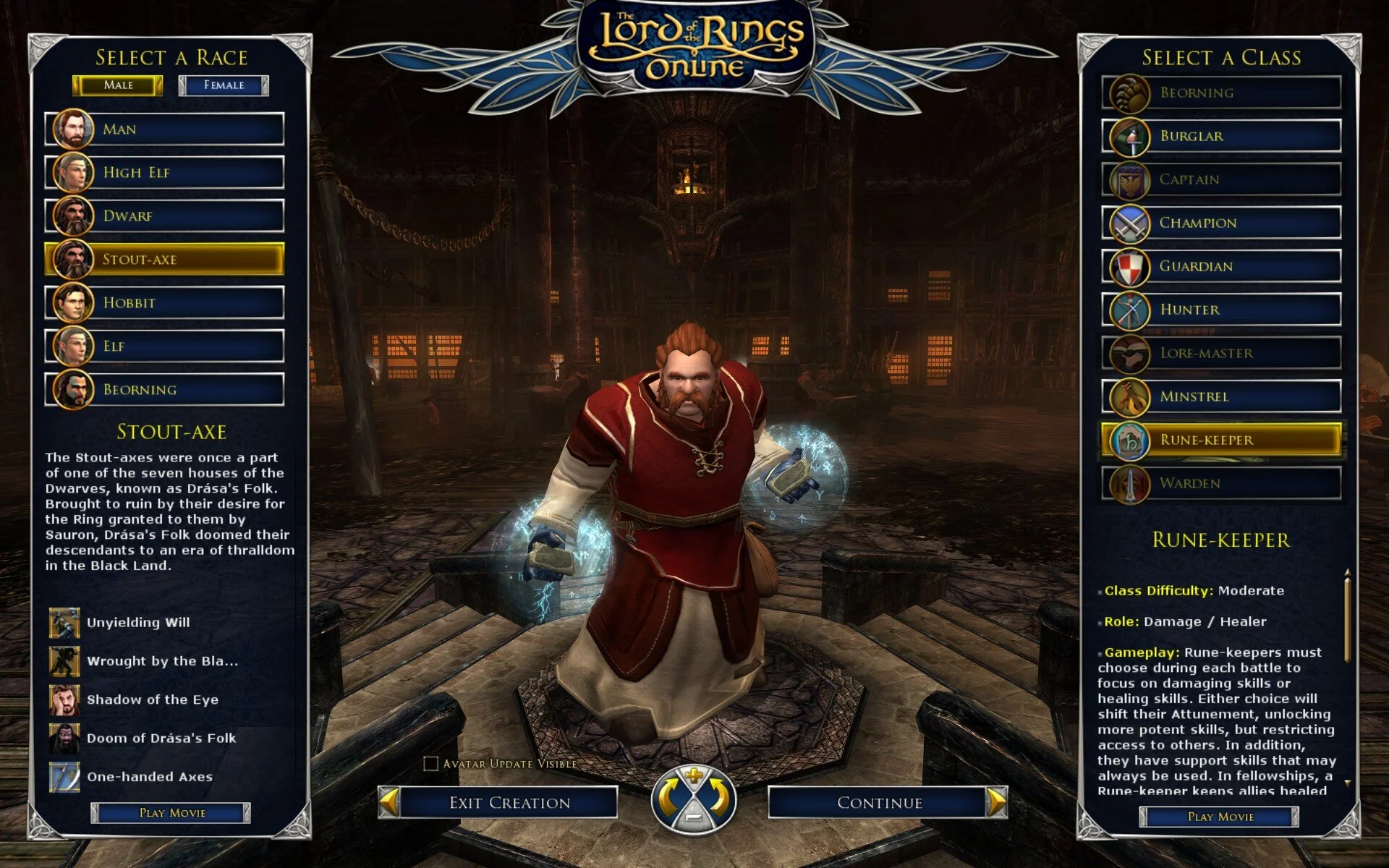
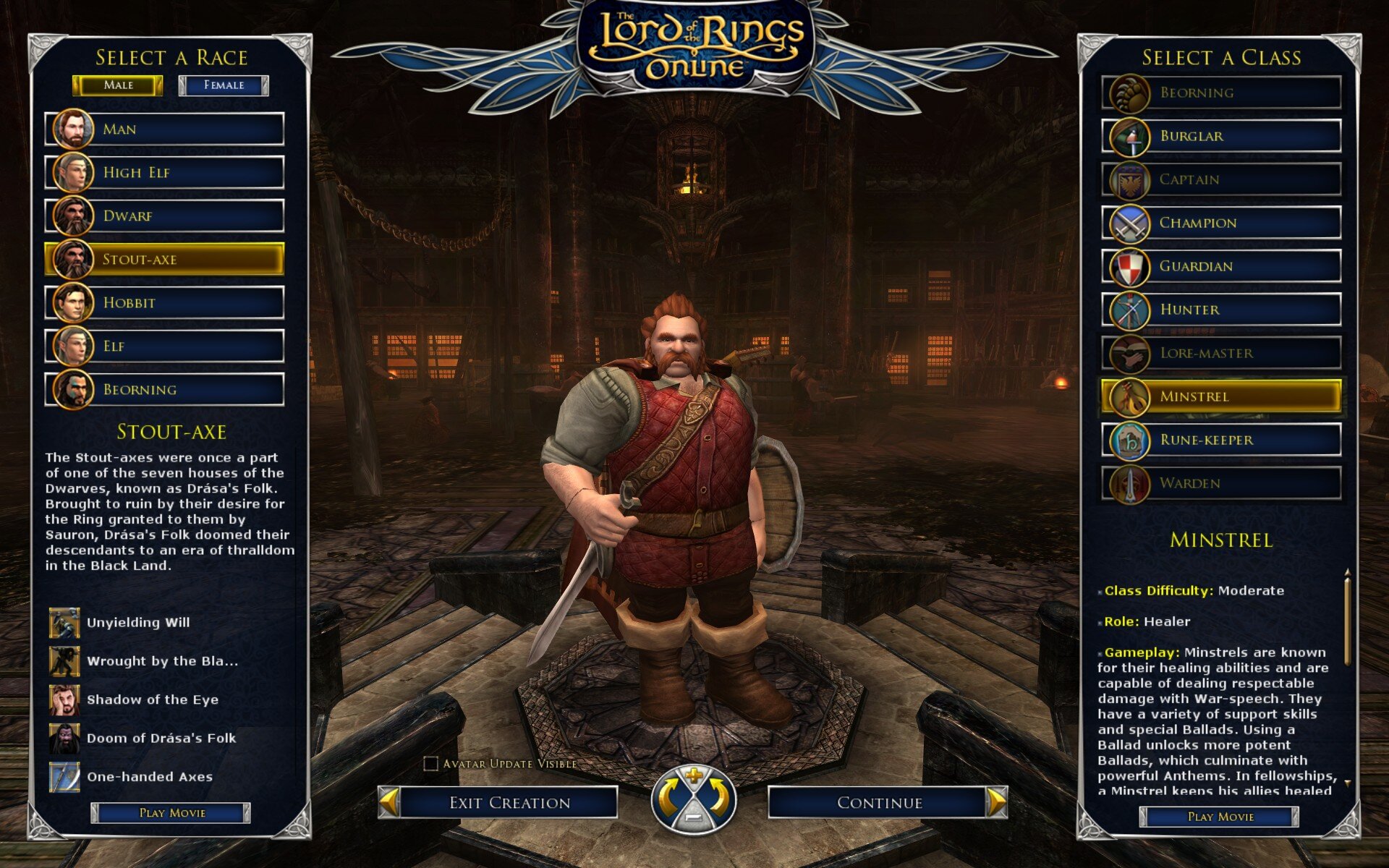
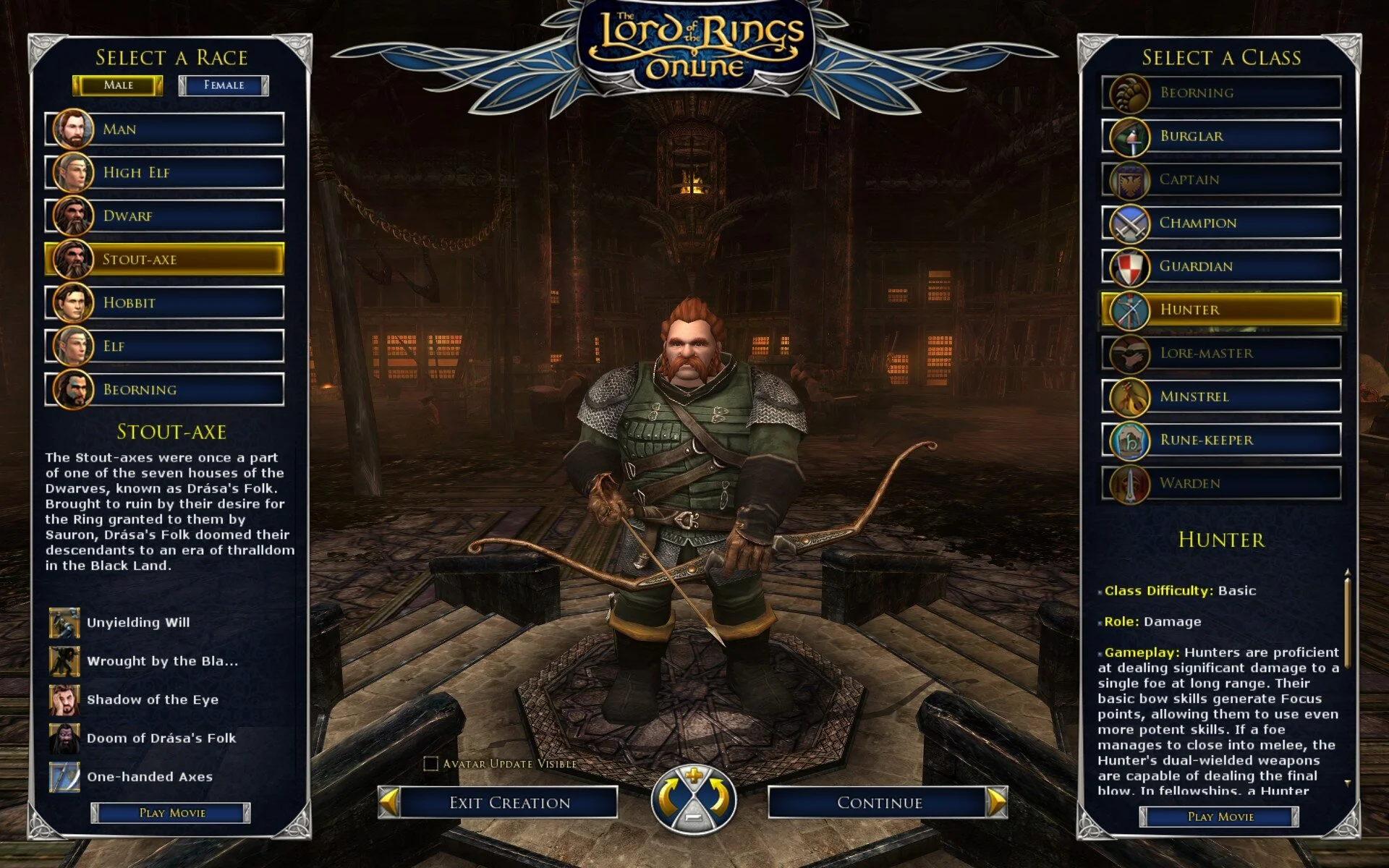
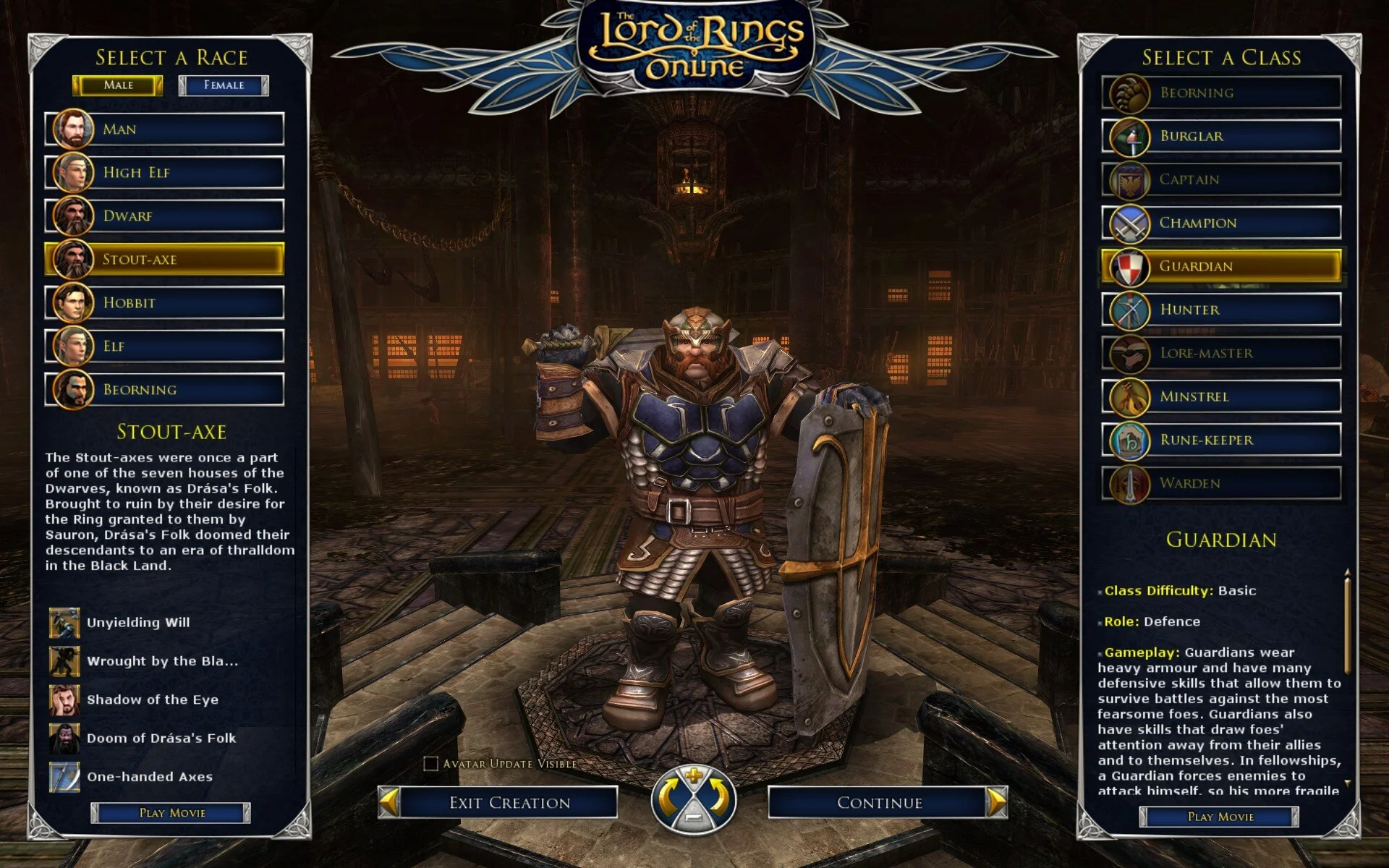
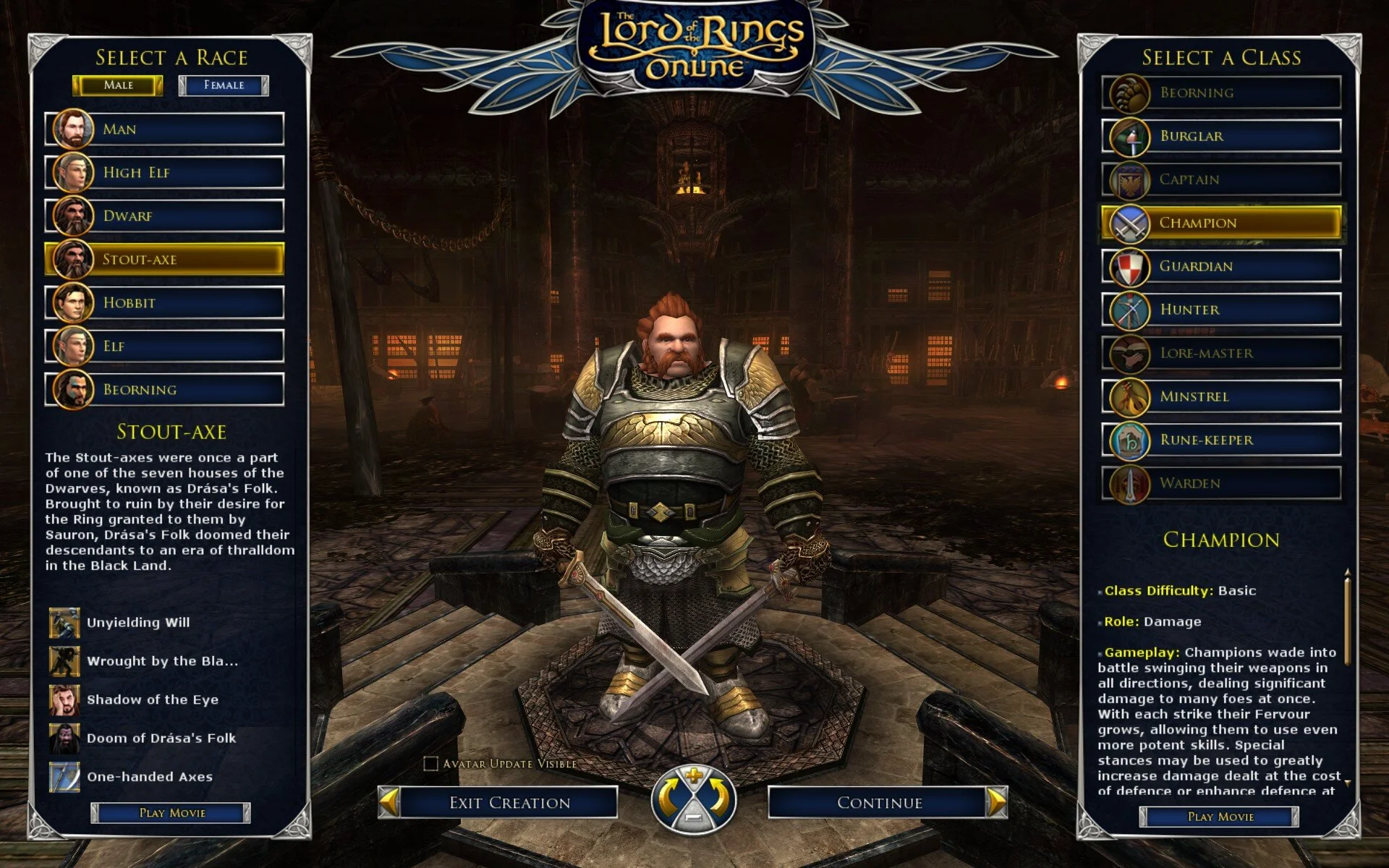
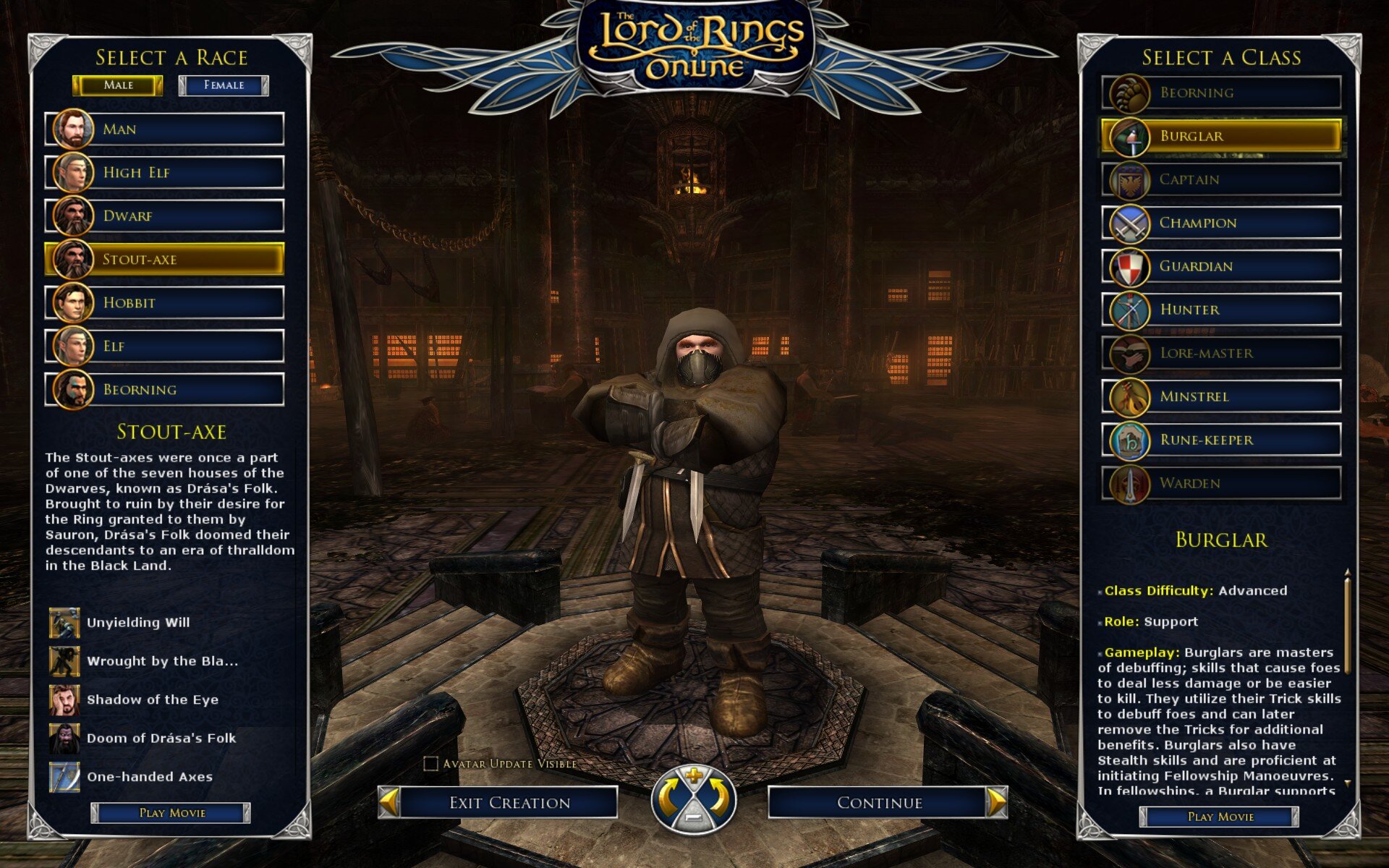
Bullroarer test server currently has an early preview of the Stout-Axe Dwarf class. As ever, it’s a beta test so there is scope for change. There are some subtle aesthetic differences between the Stout-Axe and the Longbeards. Their beards are shorter and often braided, along with their hair. The passive skills for the new race also vary from traditional Dwarves. Unyielding Will gives a will, vitality and mitigations boost. Wrought by the Black Lands gives a shadow mitigation buff. This makes sense as the race hails from Mordor. Shadow of the Eye reduces vitality. Doom of Dràsa’s Folk reduces fate. Again the lore justifys this as the Stout-Axes are a subjugated people. And like regular Dwarves there is a One-Handed Axes passive trait. It should also be noted that it looks like SSG have overhauled the character creation screen, as the default models appear to have been updated.
SPOILER ALERT:
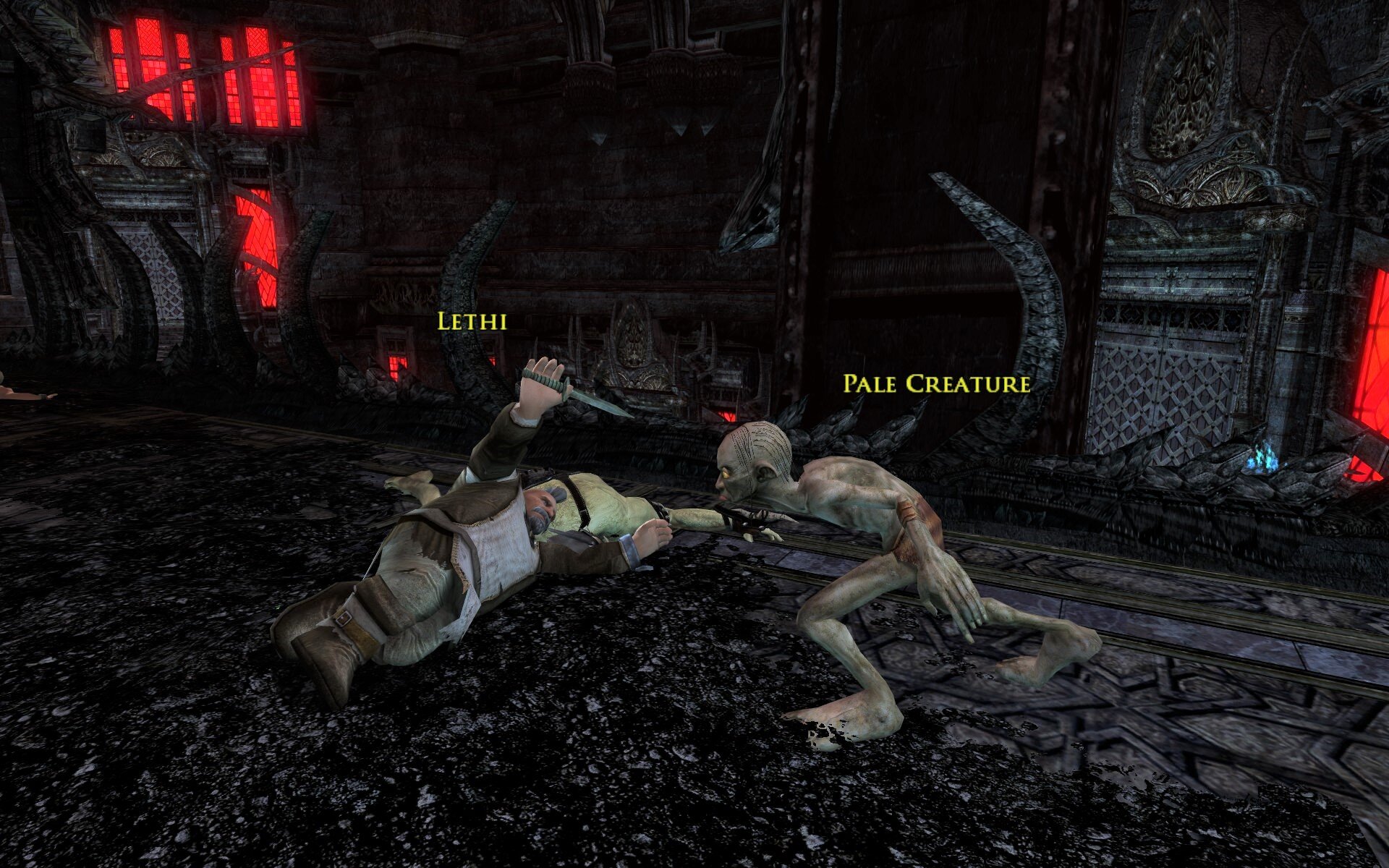
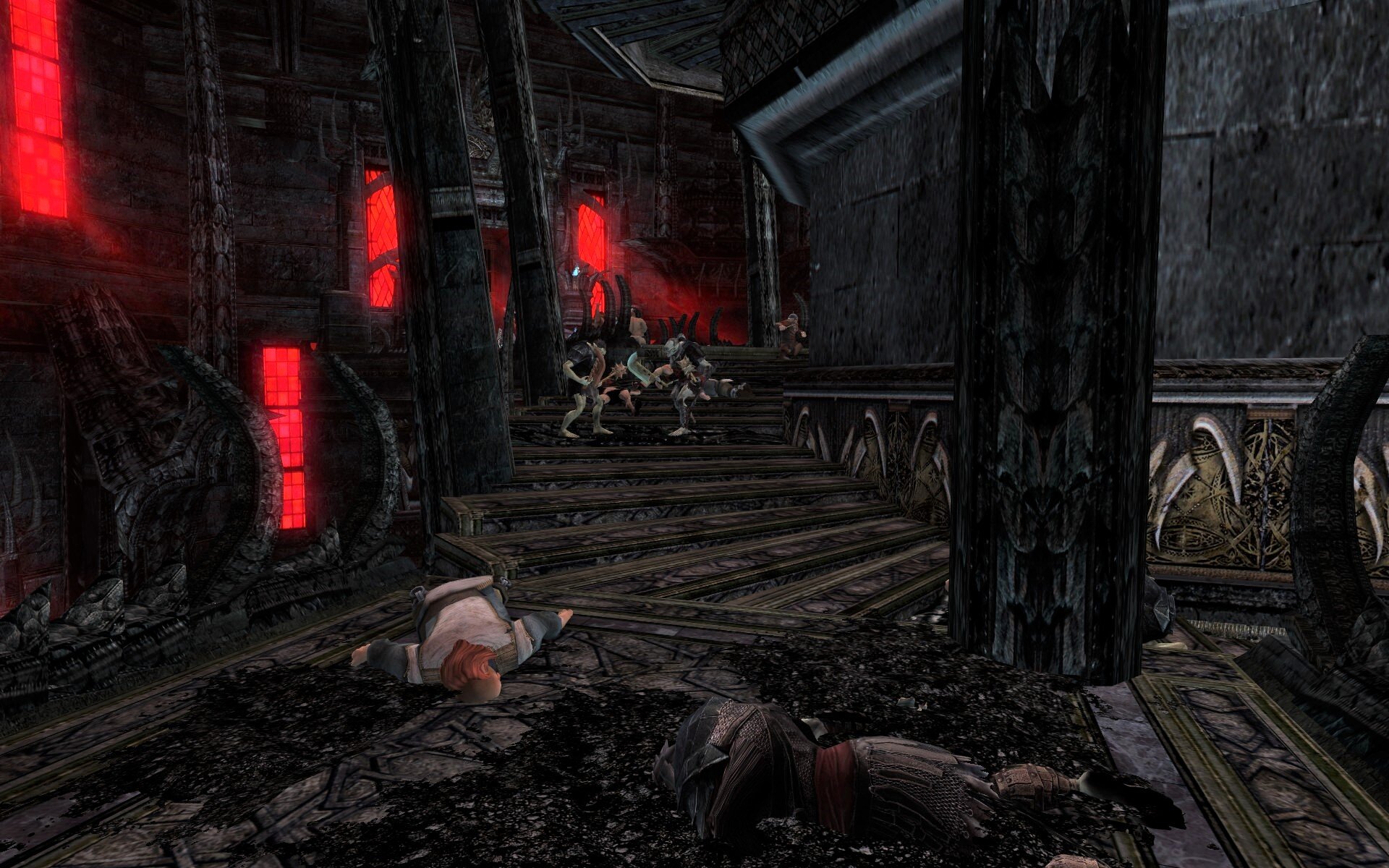
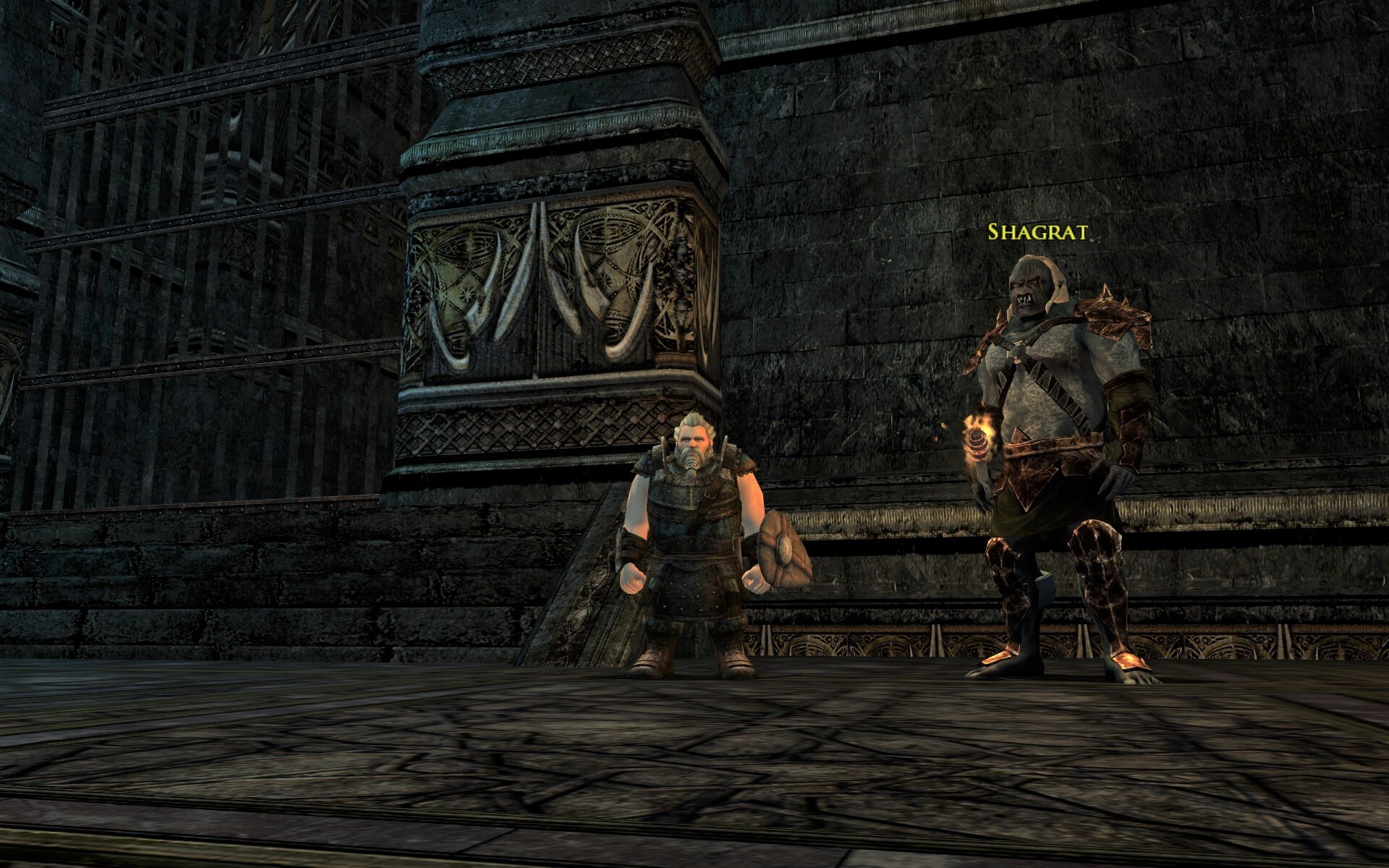
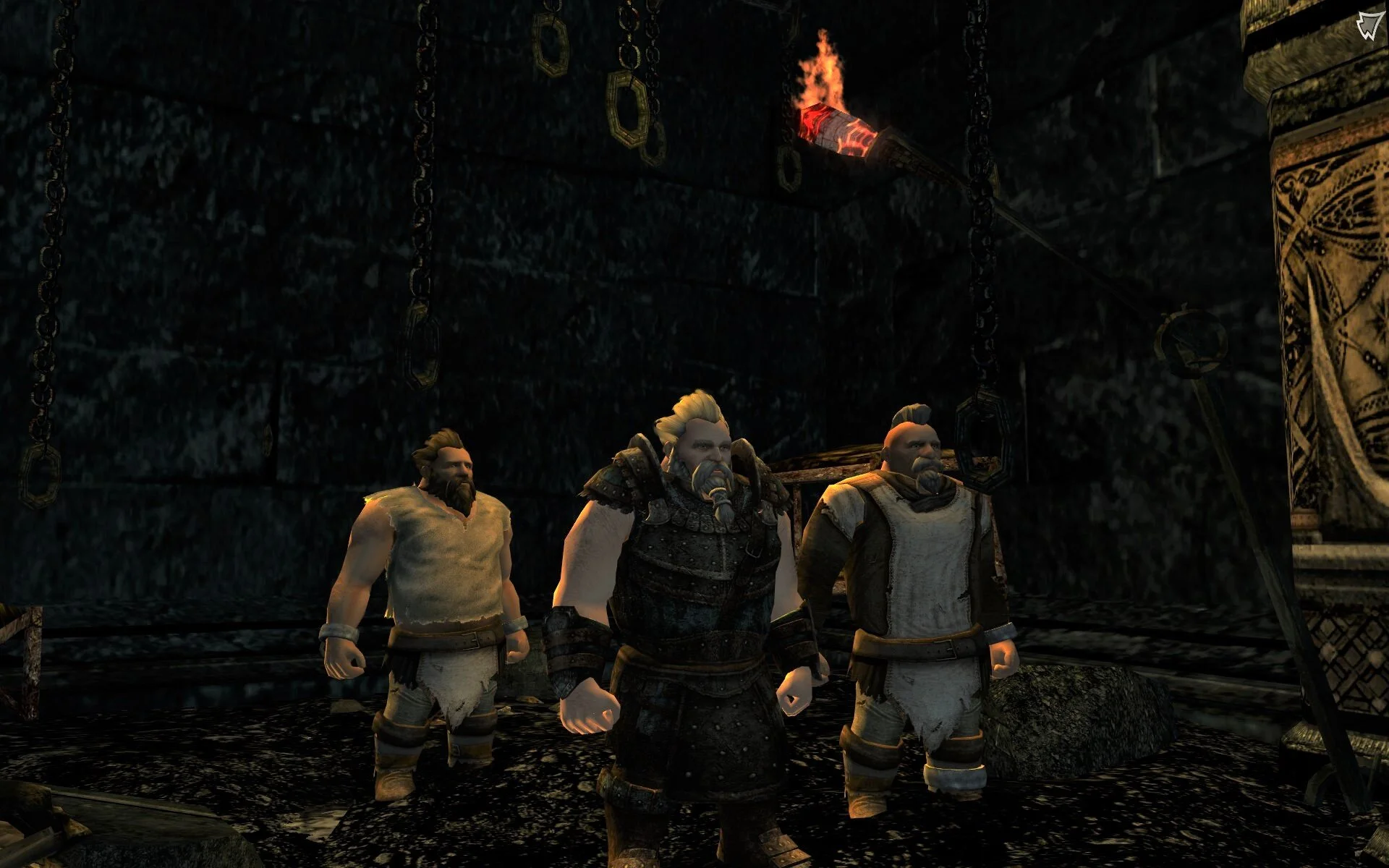
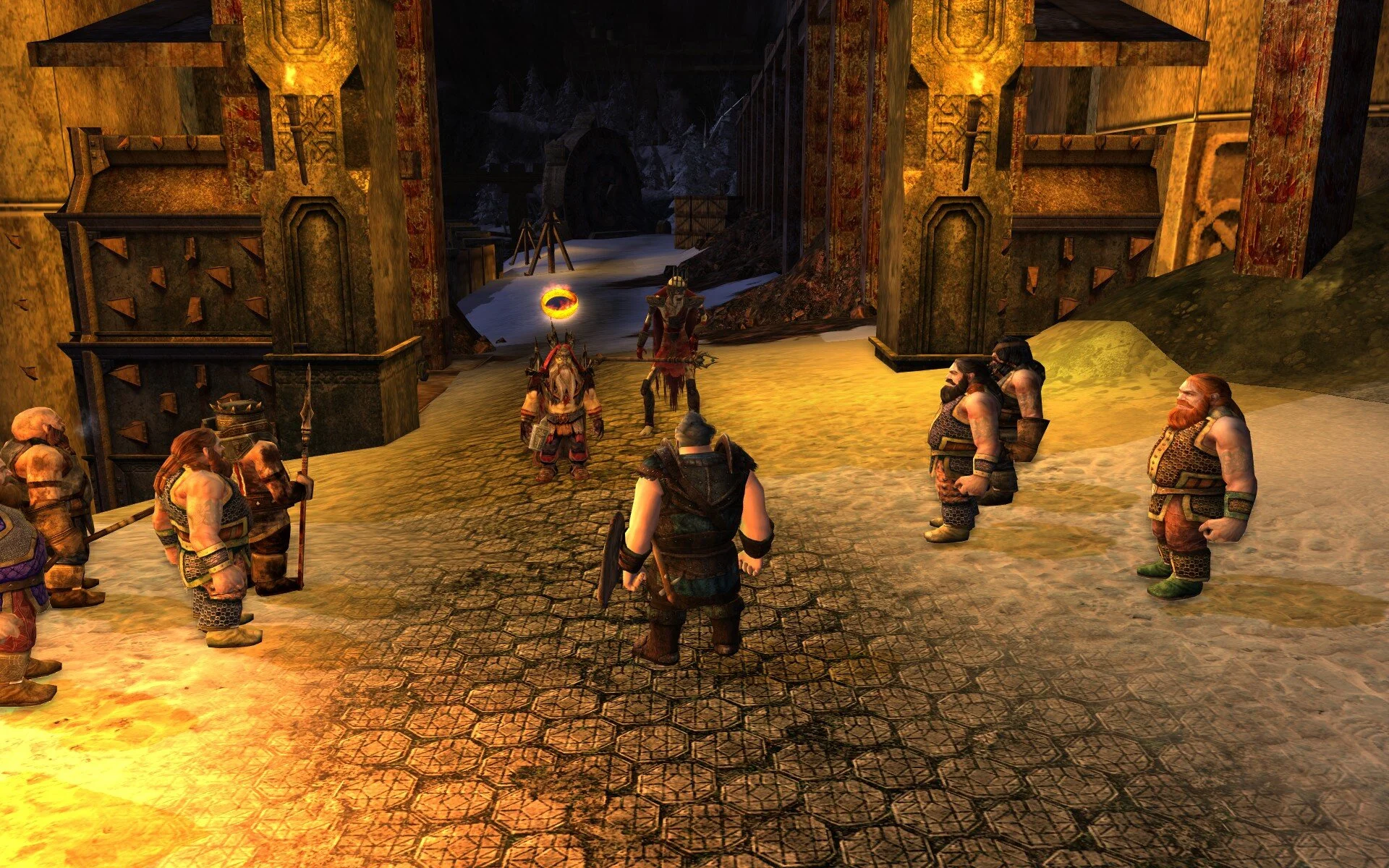
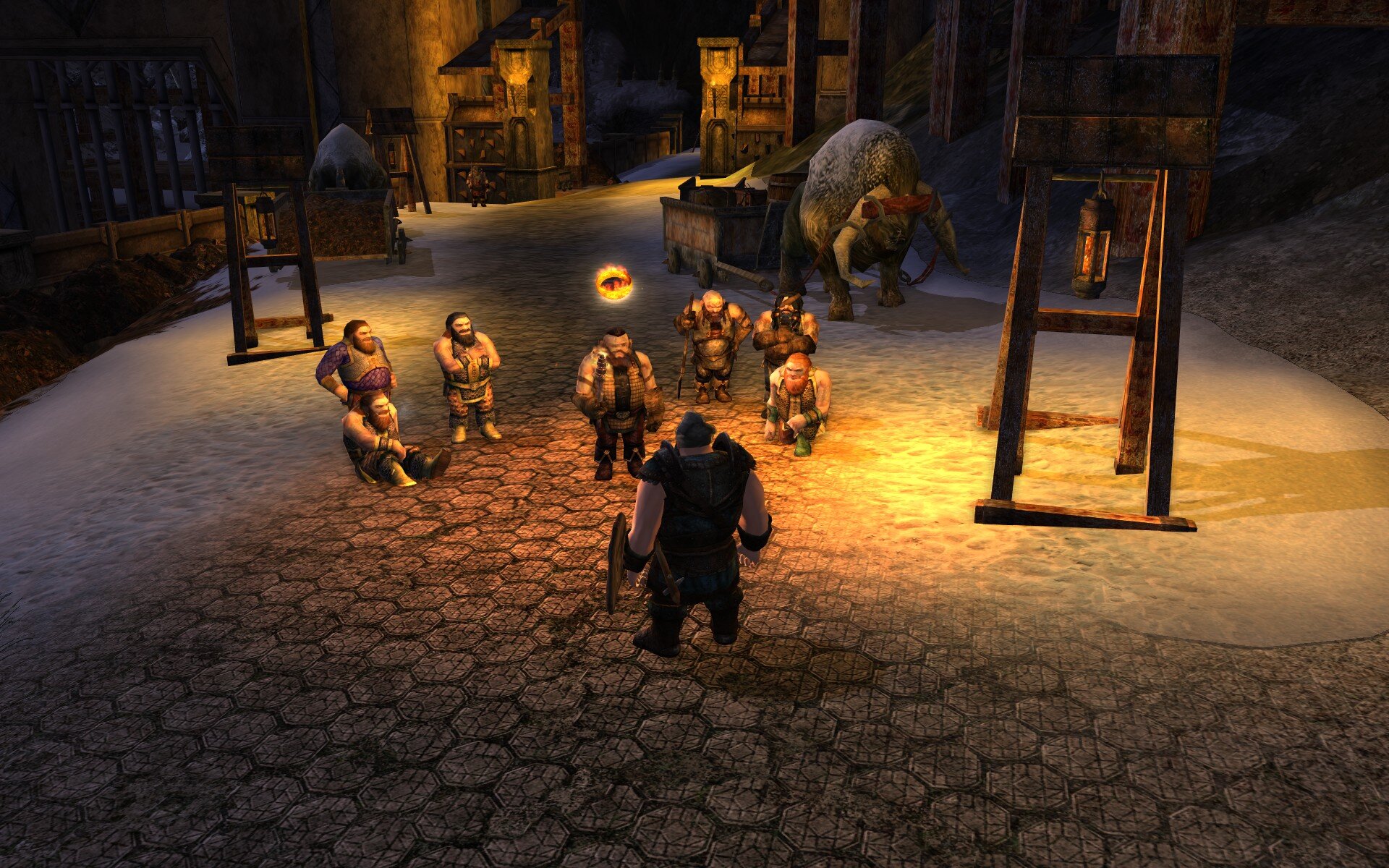
The introductory story for the Stout-Axe Dwarves is set in Mordor circa T.A. 3017. The plot conceit being that Dràsa’s Folk where one of the seven Dwarven Houses. When Sauron sought to take their ring of power, they resisted and were subsequently enslaved and taken to Mordor. After creating your Stout-Axe character you find yourself, labouring in the depth of Barad-dûr. There are rumours that Sauron is to release one of his captives and one of your eager companions wants to use this opportunity to mutiny and escape. After some arbitrary task involving cleaning and working, you find yourself amid an uprising. During the ensuing pandemonium you break out of the Black Fortress. The scene then changes to Ered Luin. Obviously, your character has traversed much of Middle-earth only to encounter the Dourhands. When you recognise that Skorgrím Dourhand and Ivar the Blood-hand are allied to the same evil that you have fled, you seek out the Longbeards at Thorin’s Hall to warn them. It is at this point the story joins the existing storyline for that region.
Once again, SSG have managed to craft an intriguing tale that embellishes the lore without breaking it. Or does it? I seem to recall during the Mordor quest line that Gimli had no specific knowledge of Dwarves hailing from Mordor. Dialogue from the quest “A Land of Ash and Shadow” appear to support this. Legolas: “Gimli has found old tools of dwarf-make in this ruin, and though he will not speak of it, unease has crept into his mind. If ever dwarves dwelt within Mordor, it seems their fate was not a pleasant one and that their line is long ended”. Furthermore, when you complete that quest and find a Stout-Axe body Gimli exclaims "So dwarves still dwell in Mordor, but where have they made their home”. But as the Stout-Axe story has your character introduce themselves to Dwalin, there is a contradiction here. Also the Epic Story has you interact with Gimli on numerous occasions as you level up thus causing further narrative issues.
Now there is a good chance I may have overlooked a story element or am misremembering things. Or perhaps SSG intend to revise the various story elements. They have done so in the past. Remember how “The Assault on Archet” originally featured the Angmarim Commander Éogan arriving in the burning town to claim Amdir. And how this was later changed to feature a more sinister Cargûl and the Blackwold villain Calder Cob. Perhaps they have something similar in mind to address this. But regardless of the potential lore disparities, the new Stout-Axe story is a surprising good addition to the game. I suspect it will appeal more to long term players with a penchant for alts, rather than new players who may want a less lore heavy start to their adventures in LOTRO. It will be interesting to see how SSG polish this new starter experience in the weeks ahead.
The Problem with MMO Economies Part 2
A few years ago, STO developers Cryptic, added a new system to the game that allowed players to re-engineer gear and alter the various modifiers associated with each item. One of the reasons behind this move was to reduce the hyperinflation associated with high end gear that has the most desirable statistics. If players could re-engineer the items that they desired it would undermine the trade in such items on the exchange. Needless to say this plan didn’t succeed and the market did not radically alter. The overall cost of the resources required to successfully re-engineer a piece of equipment ended up being comparable or even more than the price of a similar item being sold on the exchange. Similarly, the legendary progression servers in LOTRO had a brief period of economic stability and fiscal prudence when they were launched. Initially, no one section of the playerbase had more resources than others. A year on and now the same issues of inflation and excessive prices have happened with a tedious sense of inevitability. Can anything be done to stabilise MMO economies?
A few years ago, STO developers Cryptic, added a new system to the game that allowed players to re-engineer gear and alter the various modifiers associated with each item. One of the reasons behind this move was to reduce the hyperinflation associated with high end gear that has the most desirable statistics. If players could re-engineer the items that they desired it would undermine the trade in such items on the exchange. Needless to say this plan didn’t succeed and the market did not radically alter. The overall cost of the resources required to successfully re-engineer a piece of equipment ended up being comparable or even more than the price of a similar item being sold on the exchange. Similarly, the legendary progression servers in LOTRO had a brief period of economic stability and fiscal prudence when they were launched. Initially, no one section of the playerbase had more resources than others. A year on and now the same issues of inflation and excessive prices have happened with a tedious sense of inevitability. Can anything be done to stabilise MMO economies?
If MMO developers wanted to seriously address this matter, it would require designing a game with a far more controlled and regulated in-game economy. It would also require a far more interventionist approach in managing the ebb and flow of in-game resources. IE controlling the availability of specific resources and items, as well as imposing taxes and fees upon auction house transactions. Such an approach would certainly be perceived as “political” from certain quarters of the gaming community and would not be well received. Given the levels of political and socioeconomic illiteracy among some players, it would more than likely play into the ongoing culture wars we see across all levels of society in western democracies. And it can also be argued that “trading” is one of the few social elements left in the MMO genre. Plus it’s also a “game within a game” for many players. If this is fundamentally altered or regulated to the point of “no fun”, then its effectively just another nail in the coffin of the old school concept of the MMORPG. I’m not too sure how many nails the playerbase can endure.
Grinding out rewards and obtaining rare and unique items is a fundamental motivator for many MMO players. For those without the time to pursue such goals, buying these things from the in-game auction house is a credible alternative. There are still a few ships in STO that are demonstrably superior to others. If you are unable or unwilling to spend real world money on multiple loot boxes to get one of these ships, then there is always the exchange and the option to buy what you desire for energy credits. It may well be an immense uphill struggle but it can be done. If you remove such an avenue from the game you are effectively barring certain players from achieving their goal. That sends very clear message to the playerbase and not a positive one. There are already enough obstacles for new players of long established MMOs. If a player feels that they cannot reach their full potential then why should they continue to play. Life isn’t a meritocracy but we broadly seem to like the illusion of one.
Conversely, if resources and rewards are too readily available and easily acquired, it does much to mitigate a great deal of the challenge and motivation to play. It is always fun to log into a MMO test server and instantly receive all the gear you desire from the live server. But the novelty soon wears off. Players like to have goals to work towards and if you negate that you really are pulling the carpet out from under them. I don’t agree with the philosophy that things given freely have no inherent value but I do agree that familiarity breeds contempt. The optimal path is somewhere in between, so let players earn their rewards but make the journey credible. Overall, I don’t know what the long-term solution to this chicken and egg conundrum is, as it requires that developers and players alike must “unlearn what they have learned”. Perhaps it will fall to a small developer to make a bold experiment one day and create a game with an economy that breaks the existing mould. In the meantime I’m sure this problem will persist and we’ll still see regular articles decrying the status quo and asking for something to be done. Gaming like any other aspect of human culture is cyclical.
The Problem with MMO Economies Part 1
I have a very mixed relationship with MMO economies. In The Lord of the Rings Online I have adequate supplies of in-game gold but most of the items I seek to buy on Auction House are insanely overpriced. In Star Trek Online, earning energy credits is so problematic, the developers have had to add them as part of the daily personal endeavour rewards. Again, there is runaway inflation and the most desirable items such as Tier 6 ships are ridiculously priced. And in The Elder Scrolls Online, the gold slowly builds up over time but the lack of a server wide auction system means that finding and purchasing quality gear at credible prices is an arcane undertaking. There was a point a few years ago when I use to play the LOTRO economy and as a result, I had sufficient means to buy what I wanted. But maintaining that level of wealth and financial leverage is time consuming and requires adhering to a strategy. As I do not play the game, or indeed any other MMO, to that level anymore, my personal wealth in all of them has declined accordingly.
I have a very mixed relationship with MMO economies. In The Lord of the Rings Online I have adequate supplies of in-game gold but most of the items I seek to buy on Auction House are insanely overpriced. In Star Trek Online, earning energy credits is so problematic, the developers have had to add them as part of the daily personal endeavour rewards. Again, there is runaway inflation and the most desirable items such as Tier 6 ships are ridiculously priced. And in The Elder Scrolls Online, the gold slowly builds up over time but the lack of a server wide auction system means that finding and purchasing quality gear at credible prices is an arcane undertaking. There was a point a few years ago when I use to play the LOTRO economy and as a result, I had sufficient means to buy what I wanted. But maintaining that level of wealth and financial leverage is time consuming and requires adhering to a strategy. As I do not play the game, or indeed any other MMO, to that level anymore, my personal wealth in all of them has declined accordingly.
Over the years there have been many articles written about the iniquities of MMO economies and whether anything can be done to run them in a more equitable fashion. For example, last Wednesday, there was an interesting post by Ben Griggs over at Massively Overpowered about the short comings of the Guild Trade system in ESO. Then today, there was a further article about how to acquire in-game wealth in Guild Wars 2, by Bree Royce. Both highlight the recurring problems and complaints that MMO economies regularly generate. A cursory look at the comments on both posts show that there isn’t a prevailing consensus among gamers, as to which is the best way to run an MMO economy. Furthermore, game developers seem to all too often throw in the towel when a games economy starts to get out of control and hyperinflation sets in. It’s as if it is just assumed that this is an inevitable course of events and simply something endemic to the MMORPG genre. And I’m beginning to think that perhaps they are right.
Video games are commercial products. Yes, they can be art as well but MMORPGs are not developed by altruistic, Franciscan monks out of a sense of social obligation. All the resources required to create a game come with a cost. In many ways video games are the ultimate expression of consumerism in western, capitalist countries. The controversies surrounding the monetisation of a leisure activity such as video games, is the epitome of a “first world problem”. However, when you consider the economic factors that determine the creation and sales of video games, it is hardly surprising to find the same dogma perpetuated within the virtual worlds they offer. Therefore, there is little or no will to create a game with a radically different economy to that of the real world to begin with. The mantra that “time is money” has always been the under-pinning ideology of game economies. Those with any advantage in this respect will always find themselves succeeding more than those who have a time deficit. And any MMO that has existed for several years or more, will have a core player base that owns superior resources to that of any newcomers.
Over time MMO developers have often tried a variety of methods to try and mollify these problems. Tinkering with drop rates of valuable items or reducing how often resource nodes spawn. Then there’s binding items to account or to characters. Some games have even put a specific cap on how much in-game gold a player can own. But players always seem to be one step ahead and all too often such restrictions are circumnavigated. Hence, we see bots and scripts implemented by players to farm resources. I’ve even subcontracted out my own resource gathering in LOTRO in the past. You can also find third party websites where rare items are traded for real money. Player in ESO will use the gifting mechanic to achieve sales that can’t be facilitated by traditional means. And if the developers are too vociferous with the bind to character mechanic, then people will just sell accounts. It’s a blunt tool but it works. All of these issues persist because neoliberalism that exists in real life economies, bleeds into the MMO games design.
Do MMOs Have a Specific Window of Opportunity?
World of Warcraft was the MMO that broke the mould. The reasons for its success are too numerous and complex for this blog post, so let it suffice to say that it rode a perfect storm of factors and has maintained a strong presence for fifteen years. And as a result, subsequent developers have often sought to duplicate its success. Yet frequently the opposite has happened. In fact several MMOs have launched and experienced a brief time “in the sun” only for things to come crashing down thereafter. Perhaps the most well-known example of this was SWTOR which experienced a triumphant launch in December 2011, yet within three months the majority of players had left for pastures new. It took the game going F2P and a lot of hard work by BioWare to claw back the playerbase. It has also been argued that many MMOs have grown too big for their own good? It is true that a new player starting a game such as LOTRO today has a long slog ahead of them and some may simply find that too daunting.
World of Warcraft was the MMO that broke the mould. The reasons for its success are too numerous and complex for this blog post, so let it suffice to say that it rode a perfect storm of factors and has maintained a strong presence for fifteen years. And as a result, subsequent developers have often sought to duplicate its success. Yet frequently the opposite has happened. In fact several MMOs have launched and experienced a brief time “in the sun” only for things to come crashing down thereafter. Perhaps the most well-known example of this was SWTOR which experienced a triumphant launch in December 2011, yet within three months the majority of players had left for pastures new. It took the game going F2P and a lot of hard work by BioWare to claw back the playerbase. It has also been argued that many MMOs have grown too big for their own good? It is true that a new player starting a game such as LOTRO today has a long slog ahead of them and some may simply find that too daunting.
The reason I mention these two points is because I think they are linked and reflect a shift in mindset towards MMOs. Many of the older MMOs were originally based around group content and the formation of guilds. As a result many titles have a sizeable community of players that have reached level cap with multiple alts. Players such as this have played through pretty much all the content that the game has to offer. They play within guilds that have lasted years and have strong social bounds. Now consider a new player that has just started playing LOTRO for example. They have a prodigious amount of content to play through before they reach level cap. Furthermore because many players now prefer to play solo, they have an even more arduous task ahead of them.
Now I know some will argue that it's not about racing to level cap but the journey itself. This is a fair point if you are a player who is content to work through content in this fashion. However many games developers are still focused on the so-called endgame and creating new content for those at level cap. If you start playing LOTRO today, the only way you can reach Western Gondor or The Grey Mountains is if another player summons you there. It's a shame that so many of the older titles are hindered by such a linear approach to landmass and content but that's the way these titles were created. I personally would like to see more of an open world approach like The Elder Scrolls Online where content scaled according to your level and you are broadly free to go where you want.
So considering these points, I am beginning to think that for many MMOs there is an initial window of opportunity as to when it is most favourable to start playing the game. I started playing LOTRO in late 2008, just after The Mines of Moria expansion launched. As I was playing through The Shire, Bree and The Lonelands, senior members of my guild were levelling from fifty to sixty in Moria. However because I was very invested in the game at the time (it was my first MMO) I managed to catch up within nine months. I am now part of the group of players permanently at level cap and I can therefore immediately enjoy whatever new content Standing Stone Games develops for the game.
The Elder Scrolls Online and Guild Wars 2 are both relatively new titles, so I think one could start playing these games and still be participating during the optimum window of opportunity. Plus they do not have such a difficult levelling curve or level cap that is extremely high. Is this the same case with EVE Online, Final Fantasy XIV or Black Dessert Online? I'm not so sure. These are games where the key to success is the investment of time. Some MMOs have mechanics or store items that will allow you to level quickly but does that really solve the issue? There is an inherent contradiction in selling an item to boost your level, hence paying money to bypass playable content. But levelling through intermediate level content can be a lonely process sometimes. Zones can be devoid of other players. At least in Guild Wars 2 the game downscales players to the zones specific level thus providing an incentive for the veteran player to return. Sadly many other titles do nothing to encourage players at cap to revisit lower level areas.
I also think this window of opportunity may be tied to wider factors, other than the games progression system. Many MMOs experience a period when the fan base thrives and produces a wealth of content. This can be blogs, guides, podcasts, You Tube videos or livestreams. However this tends to be cyclical. Due to the rise of the casual player and their migratory nature, this if often more pronounced. I remember sites like the LOTRO Combo Blog that used to aggregate fan related blogs. It has long since gone. Another example you can see is the way your Twitter timeline may be awash with content regarding a new title and then over time it simply fades away. Twitch TV is also another interesting litmus test. A look at the homepage will quickly tell you what is popular and what is not. Is the window of opportunity for MMOs therefore not only verifiable but also clearly getting shorter?
There are other genres and franchises that experience similar optimum windows of opportunity. Harry Potter and Friday the 13th are two examples from the movie industry. There was a clear period in time when both were immensely successful franchises. However, their transition from silver screen to multiplayer game took a lot longer and perhaps the proverbial boat was missed. The Wizarding World eventually found a home in the mobile gaming market and not as an MMO. Friday the 13th fared slightly better as a multiplayer game and captured a nostalgia wave. Yet it was ultimately hamstrung by legal issues surrounding the rights to the franchise. MMOs take a lot of time to develop and the market trends can change during that time. Amazon Game Studio appears to have halted the development of New World. Is this game now going to be repurposed to tie in with their Middle-earth themed TV show. If that is the case the game may launch during the optimum window of interest.
Finally there is an odd codicil to this question. We have seen recently a trend towards “Classic” servers which strive to serve up a broadly comparable experience to that of launch and the first year of an MMO. Is nostalgia the key to successfully creating a second window of opportunity for a game. Is it sustainable? Or is it going to have an even shorter arc? So far, the LOTRO Legendary Servers seem to be ticking over and I have not at present seen any data pointing to a decline in population. Perhaps the launch of World of Warcraft Classic on the 27th August will provide a greater insight into the longevity of nostalgia. In the meantime there is much to reflect upon, as the points raised here have barely scratched the surface of the matter. Because when we talk of a window of opportunity for an MMO, there is the player perspective and then there’s the business perspective. For all the market research and data analysis, I suspect that there are also some other factors that are much harder to quantify.
Quest Bestowal in MMOs
When playing a massively multiplayer online role-playing game, such as The Lord of the Rings Online, acquiring quests is a very straightforward process. Key locations such as towns, villages or anywhere with a stable are usually quest hubs. Non-playable characters denote that they have quest(s) available by having a glowing ring icon above their heads. It’s not subtle but you’d have to have a bag over your head to miss such an obvious clue. Most MMOs have some version of this bestowal system. A clearly visible means to show that an NPC or object is the starting point for a quest. It’s a rather unsophisticated system but it gets the job done. Hence it has been around for quite a while in the genre (silence, dissenting old school gamers, blathering on about how in the good old days, MMOs didn’t have quests).
When playing a massively multiplayer online role-playing game, such as The Lord of the Rings Online, acquiring quests is a very straightforward process. Key locations such as towns, villages or anywhere with a stable are usually quest hubs. Non-playable characters denote that they have quest(s) available by having a glowing ring icon above their heads. It’s not subtle but you’d have to have a bag over your head to miss such an obvious clue. Most MMOs have some version of this bestowal system. A clearly visible means to show that an NPC or object is the starting point for a quest. It’s a rather unsophisticated system but it gets the job done. Hence it has been around for quite a while in the genre (silence, dissenting old school gamers, blathering on about how in the good old days, MMOs didn’t have quests).
Now this functional process has limitations. Quest giving NPCs tend to be static for practical reasons. You don’t want them perambulating around the town, making you have to search them out. So while those not bestowing quests can have all sorts of fancy animations to try and bring the illusion of life to area, quest giving NPCs just stand around, breaking the immersion that other aspects of the game have worked so hard to build. Plus in LOTRO, there is seldom any voice acting beyond the first line of the quest bestowal text. Therefore, it’s a somewhat dull process. In the MMO Star Trek Online, NPCs will sometime hail you while you’re in-sector space, as a means to imparting a mission. It certainly seems more natural and is totally in the correct idiom of the intellectual property. Plus, as a gamer, if you find this process intrusive, you can turn it off. Hence, different developers have tried to polish this quest giving system and make it more dynamic and feel more natural. ZeniMax have certainly tried a different approach with The Elder Scrolls Online. But it comes with its own consequences.
Even if you own just the base version of ESO, you notice that not all quest bestowals come via the traditional NPC, lounging around and lollygagging in the various towns and ports of Tamriel (although the game certainly has these). You may be riding past a farm, only for an NPC to come running out and declare that “Brother Numpsie* has been kidnapped by the foul Myrmidons” or some such standard fantasy-based reason. This mixture of proactive solicitation, along with voice acting is initially quite compelling. You may find yourself diverging from your current course of action to rescue the imperilled individual. Certainly this approach to quest bestowals suits an open world where players my just want to go out and explore, rather than follow a clearly delineated plan. However, this process can become a nuisance. At present, whenever I enter the Mages Guild, I am greeted by Arch-Mage Shalidor who invites me to participate in the next part of a quest line. I am frequently pursued in most towns by an Orc courier named Stuga, who tells me how long she’s been looking for me. Nag, nag, nag.
Joking aside, this interactive game mechanic can get a little wearisome. If you accept some quests it will remedy the problem of the quest givers overt diligence. But on occasions this can lead to immediate instanced content, so you may not wish to accept them. I am currently looking into the various game’s settings in ESO to see if there is a way of disabling or at least controlling this process. I bet there’s an addon to address it, somewhere. Oddly enough, ESO has another alternative way of starting quests or at least the main storylines of all major DLC. Wrapper missions can be launched from the Collections tab in-game. You don’t have to be in a zone and seek out the NPC who starts things. However, it would seem that no game has yet managed to design a creative quest bestowal system that doesn’t have some sort of drawback, limitation or even nuisance factor. Again I can hear the true sandbox devotees shouting about the why there has to even be a requirement of quests per se? But I like narrative driven content and don’t want to put my faith in emergent content. So until the developers improve the situation, I’ll continue to ask Billy No-Mates in LOTRO if they have any quests, and get chased round Tamriel, Benny Hill style, by the Prophet and Abnur Tharn.
*There seems to be a conspicuous lack of consensus with regard to how you spell Numpsie.
Can LOTRO Modernise Any Further?
A while back Syp wrote a blog post over on his personal website Bio Break, in which he discussed how The Lord of the Rings Online had avoided the “complexity trap” he feels affects other MMORPGs over time. It’s a sentiment I broadly concur with. The 12-year-old game has now reached a point where it has a fixed set of systems. Developers Standing Stone Games continue to produce regular PVE content in the form of quests, instances and raids. But they haven’t added a major new component to the game since the introductions of Epic Battles. Instead they have refined and fine-tuned existing facets of the game. Consider the recent overhaul of the Virtue Trait system. The basic functionality remains but the way a player advances their chosen virtues has been streamlined and now provides more tangible benefits. Overall, LOTRO has settled into a comfortable niche. New content is forthcoming but is very much a case of “same meat, different gravy”.
Has the Lord of the Rings Online avoided the “complexity trap”?
A while back Syp wrote a blog post over on his personal website Bio Break, in which he discussed how The Lord of the Rings Online had avoided the “complexity trap” he feels affects other MMORPGs over time. It’s a sentiment I broadly concur with. The 12-year-old game has now reached a point where it has a fixed set of systems. Developers Standing Stone Games continue to produce regular PVE content in the form of quests, instances and raids. But they haven’t added a major new component to the game since the introductions of Epic Battles. Instead they have refined and fine-tuned existing facets of the game. Consider the recent overhaul of the Virtue Trait system. The basic functionality remains but the way a player advances their chosen virtues has been streamlined and now provides more tangible benefits. Overall, LOTRO has settled into a comfortable niche. New content is forthcoming but is very much a case of “same meat, different gravy”.
Now Syp’s post logically raises the question could LOTRO be more complex? Is it possible to add a radical new mechanic to the game at this stage in its lifecycle? Because LOTRO is an old game by industry standards. It may have launched in 2007 but the code is older due to the games longwinded development process. As a developer, SSG has two main problems as a result of this. Can the game technically be altered in a major capacity and is there the expertise in house to undertake such a project. Because that latter is a regular issue for many companies. Staff come and go and that means expertise can be lost. It is a major reason why Cryptic closed The Foundry in Star Trek Online. I believe it is also why no new skirmishes were forthcoming in LOTRO for a long time. Something the developers have now addressed through the hiring of new staff. Furthermore, SSG have surprised their playerbase by successfully managing to produce a 64-bit client for the game. Although it remains a work in progress, considering the technical hurdles, this was quite a coup.
But before we embark upon this thought experiment, let us take a moment to reflect upon what LOTRO does that is quite advanced by the standards of the genre. It is the only MMO that I play that has auto-looting direct to your bags. All the other’s want me to press at least one key to select lootable items. LOTRO just hoovers them up. The game also has vendors that you can add to your house. There is also a tinker that can be summoned to a campfire to fix broken armour. Both of these services set a precedence that could potentially be expanded. LOTRO also offers a thorough personal transportation system. The reputation based “return” skills cover a surprisingly wide percentage of the game’s zones. However, I don’t think the game could accommodate a loss or consolidation of skills to become more of an action combat-based game. I think this would be a far too controversial. Rather than changing class and race attributes, it would be better to focus more on what you can done in the “wider world”.
So exactly what new systems or mechanics would be beneficial to a MMORPG such as LOTRO? My immediate answer is dynamic, public events in relevant zones, that can be justified from a lore perspective. Next it would be good to see some sort of scaling content system. A mechanic that allows a max level player to revisit older zones and adjust to the right level. This is something The Elder Scrolls Online does very well. The levelling of content is seamless and there are plenty of World Bosses, Dungeons and Dolmen to complete. Furthermore, they are all clearly marked on the zone map. LOTRO is halfway there with some similar systems, such as roving threats for example. But they need to be easier to find. Similarly too many instances in LOTRO are tied to discovery or specific quest lines. Accessibility and promotion are lacking. And let us not overlook the state of housing in LOTRO, which remains mainly a glorified storage service. The Cape of Belfalas housing has some pleasant leisurely quests but they are not repeatable. Housing needs to offer players a reason to spend time in the neighbourhood. I would also advocate improving the skirmish soldier system, to make them more versatile companions, rather than the blunt tool that they currently are.
Zone Guides in The Elder Scrolls Online offer more than just a simple map
Naturally I have barely scratched the surface, with regard to ideas to improve LOTRO and expand its scope and complexity. But I believe there is a focal point, that if addressed properly, would potentially lead to further improvements. A lot of the game’s existing functionality is hidden or too esoteric. The UI needs to be made “smarter”. To be able to provide more information, make suggestions be more proactive. Again I’d say look to ESO and its zone guides. Something similar in LOTRO would ensure that players got the most out of the content they’ve purchased. An optional list that let’s players know if there are any quests or places of interest that they haven’t completed or discovered. A lore book of some kind may also be useful. The existing skill trees need to do more than just inform a player of what they can earn. I would welcome suggestions regarding specific class builds based upon player preferences. I know that a great deal of useful information exists outside of many MMOs, curated by fans. But I’ve always felt that tabbing out of a game is counterproductive. Can this information not be brought in-game?
Finally, as we’re considering complexity, let us reflect upon social interaction. It is still a regular lament from certain quarters that the MMO genre is losing its social element. So why not address this issue by incentivising kinships with some additional perks. STO has gear and other items that are only accessible by joining a fleet and running fleet projects. Again, the more you think about it, the more it becomes clear that this is an aspect of LOTRO that could be expanded and improved. However, if there ever was a concerted move to broaden the complexity and scope of LOTRO it would have to be done within specific parameters. Or else there would come a point where it would be easier to just create a new game. So bearing all of this in mind, is any of this likely to happen? Well if you had asked me a few years ago, I would have said “no”. But the pipe dream of the 64-bit client has now become a reality, so who can say? Perhaps, there is hope after all. But perhaps the biggest obstacle to any potential change to LOTRO would be the playerbase itself. Trying to find a consensus would be extremely difficult. So may be SSG have decided on a policy of “if it isn’t broke, don’t fix it”. I wouldn’t blame them.
Stout-Axe Dwarves and Race Changes Coming to LOTRO
Some interesting news came out of Gen Con 2019, where Standing Stone Games recently held their Dungeons & Dragons Online/The Lord of the Rings Online “meet up”. According to Draculetta who attended the social event, Severlin AKA Rob Ciccolini, Lead Producer for LOTRO stated that Stout-Axe Dwarves were to be added to the game as a new playable race. Furthermore, the ability to change the race of existing characters was also coming to the game. It was later clarified that the race change ability was subject to the existing class restrictions. Hence an existing Hobbit Guardian could become an Elf if the player so desires. But races such as Hobbits and Dwarves are still excluded from certain classes such as Captain or Lore-master. Although this was a very informal setting, the statement has been seen as a formal announcement and SSG have not said anything to the contrary so far.
Some interesting news came out of Gen Con 2019, where Standing Stone Games recently held their Dungeons & Dragons Online/The Lord of the Rings Online “meet up”. According to Draculetta who attended the social event, Severlin AKA Rob Ciccolini, Lead Producer for LOTRO stated that Stout-Axe Dwarves were to be added to the game as a new playable race. Furthermore, the ability to change the race of existing characters was also coming to the game. It was later clarified that the race change ability was subject to the existing class restrictions. Hence an existing Hobbit Guardian could become an Elf if the player so desires. But races such as Hobbits and Dwarves are still excluded from certain classes such as Captain or Lore-master. Although this was a very informal setting, the statement has been seen as a formal announcement and SSG have not said anything to the contrary so far.
The ability to change race, once you have created a character, is not anything unusual by genre standards. Many other MMORPG offer such a service but it is certainly a useful facility to have. New players may find that a certain race is not to their liking and the ability to change rather than start from scratch is therefore welcome. High end players may also wish to change race if it gives them a statistical improvement or tactical bonus. And then there will be some players who may simply want to change just to see what difference it makes. However, regardless of how this ability is used, it goes without saying that this is going to be a chargeable premium store item. I wouldn’t be surprised if a “race change token” is included in one or two of the different permutations of the next LOTRO expansion. SSG is a creature of habit so I don’t think its unreasonable to assume that previous business practises established with Mordor, will continue next Minas Morgul themed expansion.
As for the merits of adding Stout-Axe Dwarves to LOTRO, I’m not so sure. I thought the edition of High Elves didn’t really add any major value to the game. If you’re a lore enthusiast, then the distinction between Elves and High Elves may well be of interest but for many players, it really is a case of “same meat, different gravy”. I suspect the same may be so regarding the Stout-Axe Dwarves. They already exist as characters in the game, having been introduced with the Mordor expansion in July 2017. The Dwarves were enslaved by Sauron after they refused to relinquish one of the Seven Rings of Power. They were subsequently liberated by Gimli and have returned to Erebor to try and find their place in Middle-earth. It’s a great story line, but I’m not sure what this playable race can offer that isn’t already available via the regular Dwarves. However, you should never underestimate the Dwarf enthusiast LOTRO player. Perhaps this race may prove popular.
I am curious as to how SSG are going to integrate this new race into the game. At present the Stout-Axes enter the LOTRO storyline at level 105. Their history is unknown outside of Mordor up until this point, so I’m not sure if SSG can cunningly and seamlessly dove tail the Stout-Axes into the existing starter areas of the game. Perhaps they may be a race that starts at level 105 and aren’t intended to be retrofitted into older content. I’m also curious about the availability of this new race as its accessibility is bound to be gated financially. Again I suspect that they may be bundled with the middle tier and top tier of the next expansion. At a later date, they may well be sold in the store for LOTRO points. If this supposition is correct, there may well be an outcry form the LOTRO playerbase. Similar to when High Elves weren’t included in the Standard Edition of Mordor. No doubt a more definitive press release will be forthcoming soon.
The Changing Face of MMOs
The above promotional video for Guild Wars 2 (dated July 19th, 2011) came up in an online discussion recently. The game as it exists today is radically different to this eight-year-old marketing presentation. It got me thinking about MMOs, how they evolve and those that have fallen from grace. Naturally the spectre of World of Warcraft looms large in such a discussion, because for many years this was the game to beat. Subsequently the market was awash with clones, which proved to be an unwise business tactic. The tumultuous life of Star Wars: The Old Republic along with the closure of Warhammer: Online, Vanguard and recently WildStar indicates that more of the same is not necessarily what players want or at the least, insufficient to keep them engaged. Guild Wars 2 initially deviated noticeably from the perceived wisdom but then contradicted its own ideology out of necessity to remain financially viable. Subsequent expansions have proven far more “traditional”. A decade on from the MMO boom, the genre has had to become far more niche to survive. MMOs exist and make money, but the are no longer seen as cash cows.
The promotional video for Guild Wars 2 (dated July 19th, 2011) featured below, came up in an online discussion recently. The game as it exists today is radically different to this eight-year-old marketing presentation. It got me thinking about MMOs, how they evolve and those that have fallen from grace. Naturally the spectre of World of Warcraft looms large in such a discussion, because for many years this was the game to beat. Subsequently the market was awash with clones, which proved to be an unwise business tactic. The tumultuous life of Star Wars: The Old Republic along with the closure of Warhammer: Online, Vanguard and recently WildStar indicates that more of the same is not necessarily what players want or at the least, insufficient to keep them engaged. Guild Wars 2 initially deviated noticeably from the perceived wisdom but then contradicted its own ideology out of necessity to remain financially viable. Subsequent expansions have proven far more “traditional”. A decade on from the MMO boom, the genre has had to become far more niche to survive. MMOs exist and make money, but the are no longer seen as cash cows.
So what has changed? Well for a broad overview, I’d recommend watching a selection of episodes of The Jimquisition; Jim Sterling’s show that critiques the video games industry. He regularly explores the main problems that are endemic with mainstream, triple A games publishing. But one particular issue seems to be the root cause. Although game developers may well have artistic intentions and want to create a content that delights audiences, such motives are subordinate to the commercial requirements of the publisher and their shareholders. The industry is primarily focused on what sells and how to monetise any new product to ensure increasing financial growth. Hence after numerous efforts to make a WoW clone, most companies have discovered that such projects take too long to develop, cost to much up front and don’t have the adequate return on investment in the short term. Hence you seldom see such grandiose projects in development anymore. But what about Star Citizen, I hear you say. Yes indeed, what about it, I say in return? I’ll let you know when there’s an open beta and a release date on the horizon.
Now to clarify, the MMO market does have regional differences. In the China and South Korea large budget titles are still produced and prove viable, but this is due to major differences in the core market. The player base often embrace mechanics rejected in the West and monetisation is perceived differently. Hence many titles remain conspicuously absent from the North American and Europeans markets. Therefore, in recent years MMOs have had to adapt in the West to such an extent that the term itself is now being redefined. Older notions about persistent, immersive worlds, filled with group activities and nurturing communities have been replaced with more flexible concepts. Such as any game that supports a large body of players in an open world or instanced set of maps. Thus GTA Online, The Division 1 and 2, as well as the Destiny franchise find themselves as part of ever growing MMO Venn Diagram. Naturally old school purest protest, but from the industry perspective, “money talks and bullshit walks”.
Therefore, I am not optimistic about there ever being any weighty IP based MMORPG projects that are of a traditional nature. Perhaps the last big MMO was indeed The Elder Scrolls Online. The website Massively Overpowered lists numerous MMOs in development but the reality is that many of these are doomed to failure. Crowd funded vanity projects or indulgences by gifted fans or old school development staff who haven’t quite adjusted to the realities of the contemporary market. Titan after all got canned and parts of it became Overwatch. Amazon Game Studio’s New World may not get beyond its recent Alpha Test and could be augmented into something else with a more marketable IP. Hence, we are left with a handful of titles that are established and survive purely on the whims of their playerbase. New content costs money to develop but will bring in some profit. But to reduce content output risks bored players who’ll go elsewhere. If a publisher is content with the realities of their projected revenue, then games can tick over. However, if they seek all the money in Christendom, then things may go ill.
Perhaps the MMORPG has had its day in the sun. A cursory look at other leisure industries shows that trends come and go. Different genres of movies and music rise and fall, proving lucrative for a while and then fading away. When you compare the likes of Ultima Online with Guild Wars 2 there is a considerable gulf in mechanics and systems. Would the former sell well today? Fifteen years of changing consumer tastes may well put pay to such time-consuming games. With time being such a precious commodity these days, is there room for such a genre as the old school MMO? I played The Lord of the Rings Online heavily between 2008 and 2011, mainly because it was a period of my life where I was available to do so. I simply cannot do something comparable today. Furthermore older players who lived through the era of subscription models are often averse to modern monetisation methods. Live services are not embraced by this demographic, where younger players who prefer the quick fix nature of competitive multiplayer games are not so concerned. All of which leaves me increasingly disposed towards the idea that the MMO genre is going to be relegated to the sidelines in the years to come. A few will exist in their own bubbles of fandom, but they will be a relic of the past. Just like cinematic musicals, westerns and “poodle perm” rock.