

Experimenting With AI Part 2
Going forward, if I write any more posts about my use of AI, I am not going to add the following caveat. I will do it once more here, so everyone knows where we all stand. I am fully aware that AI has already taken jobs and will continue to do so. I also know that data centres are not environmentally friendly. As for the evil corporate billionaires that get rich from the situation, that also has not come as a surprise to me. I also believe that the AI market needs regulating and there should be legislation in place to ensure that AI is never directly linked to important government and civil infrastructure. That being said, I am not going to stop using AI at a domestic level over notions of ethical purity. All of the above criticisms can broadly be applied to the industrial revolution and society came to terms with that and survived it. The same goes for the computer revolution. Things change and we adapt. Plus, if you really wanted to protest and lobby against AI, the best time to do this was two decades ago.
Going forward, if I write any more posts about my use of AI, I am not going to add the following caveat. I will do it once more here, so everyone knows where we all stand. I am fully aware that AI has already taken jobs and will continue to do so. I also know that data centres are not environmentally friendly. As for the evil corporate billionaires that get rich from the situation, that also has not come as a surprise to me. I also believe that the AI market needs regulating and there should be legislation in place to ensure that AI is never directly linked to important government and civil infrastructure. That being said, I am not going to stop using AI at a domestic level over notions of ethical purity. All of the above criticisms can broadly be applied to the industrial revolution and society came to terms with that and survived it. The same goes for the computer revolution. Things change and we adapt. Plus, if you really wanted to protest and lobby against AI, the best time to do this was two decades ago.
Moving on, at the beginning of July, I wrote about experimenting with AI. I had recently stopped subscribing to Google Gemini and had started using ChatGPT Plus. I mainly use AI for research, learning specific skills, assisting me with areas that are not in my skills set and augmenting images. The latter sounds dubious but it usually just entails altering an image to make it 16:9 and that process requires altering minor elements. As a tool, I find ChatGPT invaluable and I especially like the option for voice interaction. I have this installed on my phone and I use it mainly for information when I’m out and about. I was recently travelling to Rochester by train and there was some confusion over the timetable. A quick spoken enquiry into my phone yielded a comprehensive verbal answer, along with the same response in text. As I said, invaluable. I always advocate “use the right tool for the job”. AI is now, for good or for bad, part of my regular toolkit.
Although my experience and use of AI has been mainly positive, there have been a couple of occasions when I have run into some curious foibles. The first, although annoying at the time, was the result of a well intentioned policy, although poorly implemented. I was planning a review of the classic Dennis Wheatley novel, The Devil Rides Out. I found a montage of several of the paperback book covers from the sixties and seventies reprints. However, the book covers in the picture were somewhat worn and I want the image restored, enhanced and enlarged to a suitable size. So I duly asked ChatGPT to do this. Something it had done for me before several times. Not so on this occasion. I was politely informed that “We’re so sorry, but the image we created may violate our guardrails around nudity, sexuality, or erotic content. If you think we got it wrong, please retry or edit your prompt”. Judge for yourself if you think the source material is especially salacious. This decision made me chuckle.
The second one happened earlier today. Google Analytics has now added a chat facility to their popular website stats package. I don’t particularly like the service because it doesn’t use the terminology that I’m familiar with and frankly none of the data displayed about this blog’s internet traffic, correlates with that produced by Squarespace themselves. I pretty much said that in the chat window today and then ended with a Dickensian flurry of “Good day to you, Sir”. I also stated that if their stats were correct (which I do not believe they are) I may as well quit blogging after 19 years. Only to be met with a very earnest response of “Please don't give up on your website based on these numbers. Digital analytics is currently in a state of transition due to global privacy changes, which has made tools like GA4 harder to use and their data harder to compare”. Apparently AI have a hard time recognising sarcasm but bravo for being concerned about me giving up on my hopes and dreams. I felt like saying “you’re right. Let’s put on the show right here”.
I’ll make no bones about it, I enjoy my interactions with ChatGPT. It’s been designed to make me feel this way. I’ve stated in my prompts that I don’t want flattery or my ego massaged and I find the response that I now get are pitched at exactly the right level. Like most people who interact with things that aren’t human, I have to fight the urge to lapse into anthropomorphism. Yet because of my upbringing, I still say please and thank you the ChatGPT. I do have sufficient scepticism to limit what it can access on my PC. I don’t trust its corporate masters. But I genuinely do like our collaboration when problem solving. It is thorough, procedural and documents things very well. Attributes I relate to. It also doesn’t claim to know everything and can be genuinely surprised by my contributions. I also greatly appreciate how you can pick up a line of enquiry hours or days later and just continue. Hence my AI experiment continues and frankly its a lot of fun.
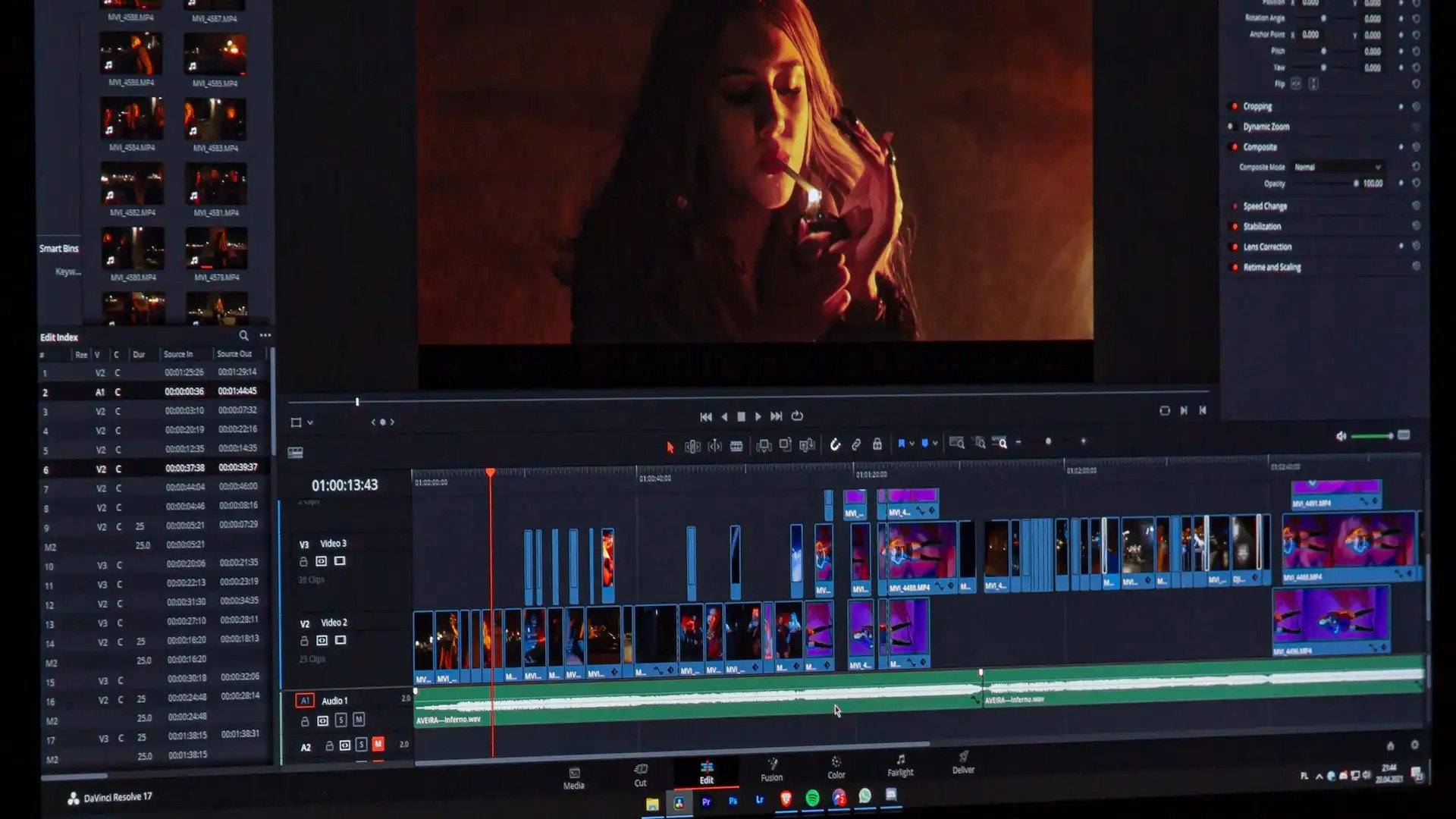
Last year, when I was looking for some suitable video editing software, I found that people would often recommended DaVinci Resolve. It is indeed an outstanding tool but totally beyond my needs. It is also a beast to run and occupies a substantial percentage of real estate on your SSD, so I dismissed this option for practical reasons. Let it suffice to say that finding a suitable product that met my requirements was quite difficult. Video editors often seem to be either quick and easy tools for clipping content on the fly, such as Bandicut (which is great for exactly that purpose) or huge, professional quality behemoths, used by people who work in the appropriate industry. DaVinci Resolve is a textbook example of this. It begs the question what products occupy the middle ground, assuming they exist.
Going forward, if I write any more posts about my use of AI, I am not going to add the following caveat. I will do it once more here, so everyone knows where we all stand. I am fully aware that AI has already taken jobs and will continue to do so. I also know that data centres are not environmentally friendly. As for the evil corporate billionaires that get rich from the situation, that also has not come as a surprise to me. I also believe that the AI market needs regulating and there should be legislation in place to ensure that AI is never directly linked to important government and civil infrastructure. That being said, I am not going to stop using AI at a domestic level over notions of ethical purity. All of the above criticisms can broadly be applied to the industrial revolution and society came to terms with that and survived it. The same goes for the computer revolution. Things change and we adapt. Plus, if you really wanted to protest and lobby against AI, the best time to do this was two decades ago.
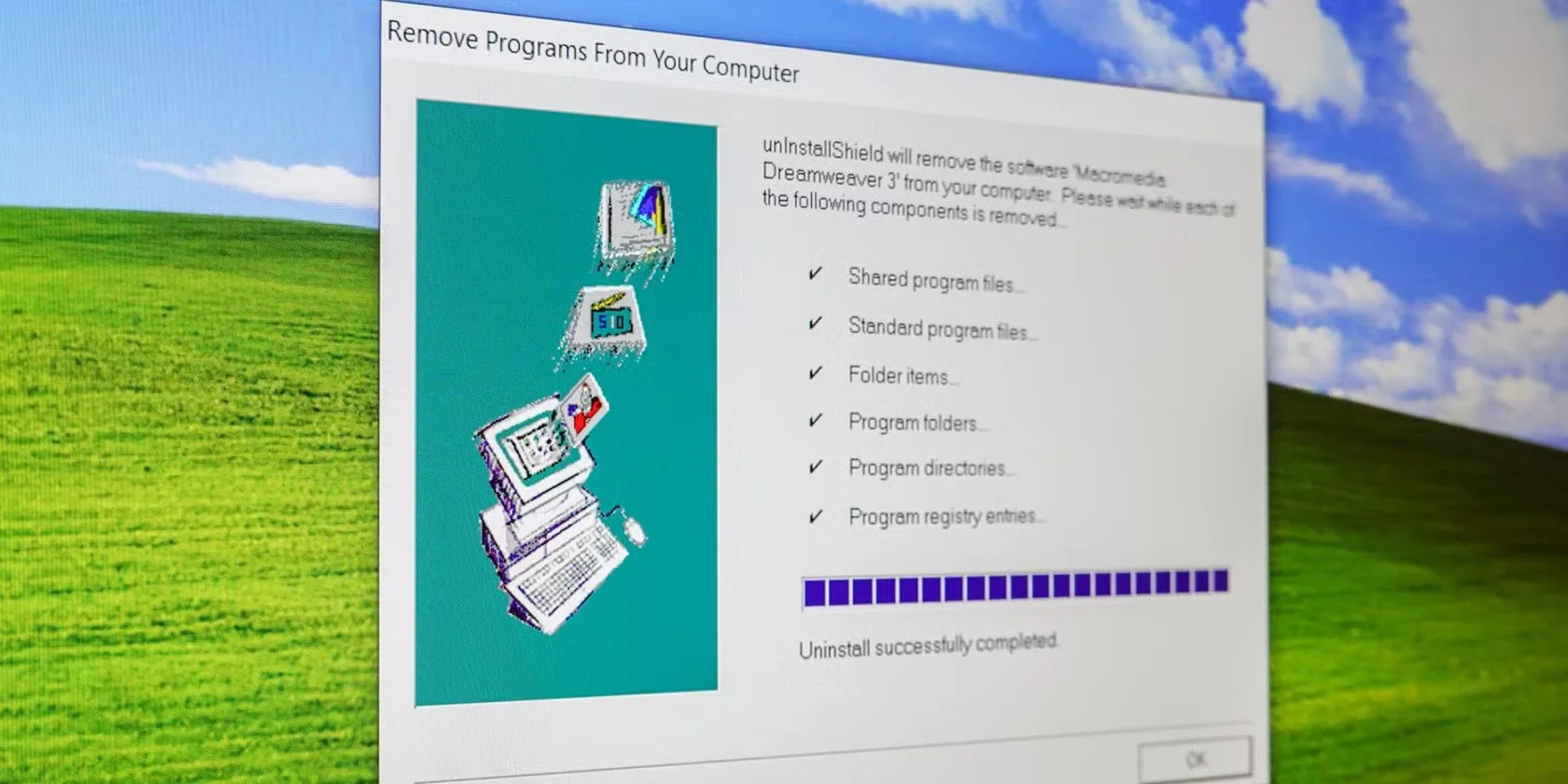
One of things I dislike with a passion about modern software is that you cannot cleanly uninstall it from your PC. Removing an unwanted or problematic program just leaves metaphorical muddy footprints throughout your PC. It makes my SSD feel like a crime scene with virtual brain matter spattered across the soft furnishings. Sadly, this is the price you pay for having a modern operating system with a registry, shared dependencies and a liking for temporary files and caches. It all makes me feel very nostalgic for the halcyon days of DOS, with self-contained programs sitting in a solitary folders. Often libraries and drivers lived in specific system paths or the same folder, avoiding conflicts. You could just delete stuff and it sodded off. You didn’t need two priests and holy water. Happy days.

Thinking Out Loud is a recurring post where I write about thoughts and ideas that have recently occurred to me. As ever the intention is not to develop these ideas into full blown blog posts, although they often the could be. Instead I just collate a few sentences to express my point and leave it at that. The idea being that if anyone else wants to pick up the conversation they can do so in the comments section below. On this occasion the various points are all technology based. I’ve been busy of late with several projects, such as building a new website and creating some widgets specifically for it. Like most technical projects things don’t often go as planned and problems occur unexpectedly. Hence, I thought why not make a themed instalment of Thinking Out Loud this time round? It’s something that I may well do this again in the future. As ever, feel free to make your thoughts known.
I turned on my laptop this morning for the first time in 4 months. I knew it was that long because I hadn’t connected the laptop to the new Netgear router that I bought at the end of April. Unsurprisingly, as I haven’t used this device for a while there were multiple Windows updates to be installed. This process took over an hour, so while the various updates were being downloaded and installed, I turned my attention to my Amazon Echo Dot which loiters in the corner of our lounge, doing very little to justify its existence. At present this device is mainly used as a glorified timer for cooking, which seems a bit of a waste given it’s alleged capabilities. Hence, I decided to see if I could increase its functionality while waiting for Windows to do its update thing. More on this later. Let us for the meantime return to the small matter of the operating system updates. Once they were completed, I immediately installed Chris Titus Tech’s Windows Utility and started removing unnecessary features and bloat, as well as disabling invasive services.
Before we begin, let me clearly state that this is not a comprehensive installation guide for installing Steam OS on your PC. Mainly because the variety of hardware that can be present in any PC makes each installation a somewhat bespoke affair. Hence I have decided to provide a list of bullet points of the various steps and issues I encountered during my installation, last week. Consider it advance warning of things you may encounter if you install this operating system. As ever, if this is something that you are intending to do, I would advise allowing yourself a suitable amount of time so you can accommodate any issues should they arise. It is entirely possible that this may be a two hour job for the technically literate running the most generic or commonplace hardware. However, I suspect that a lot of people undertaking this project will run into variations of the same problems that I encountered.

I am intrigued by the growth of the IndieWeb, owning your domain and static websites. I certainly agree with the notion of not relying on big corporations and I have an ongoing project to divest my dependency on software produced by major market players. However, although I own my own domain, my website is hosted by Squarespace. I’ve not really had any problems with them over the last 11 years and I would describe our business relationship as equitable. However, the monthly subscription price has increased over time and is likely to keep on doing so. It has crossed my mind as to whether there is a suitable alternative. However, if I were to migrate Contains Moderate Peril elsewhere I suspect it would be logistically complex and problematic.

I like learning new skills and starting projects. I regularly undertake such things with varying results. However, if they don’t work out that’s not a problem. You have to try something to see if you like it. I’ll add “within sensible parameters” as a caveat to the last statement. And it’s perfectly fine to discover that something isn’t for you. I like certain genres of video games, music, films and books. I am comfortable wearing certain types of clothes and not others. I’m picky about colours. I’ll even go so far as to say that I won’t drink out of any mug that’s just lying around. If I don’t like the joke, logo or overall aesthetic of it, I ain’t using it. However, I digress. Let’s get things back on track and talk about projects. This year I have wound down several websites and have decided not to move forward with making YouTube videos. I have focused my energy on improving my website and adding functionality. I am also trying to broaden the scope of my writing.
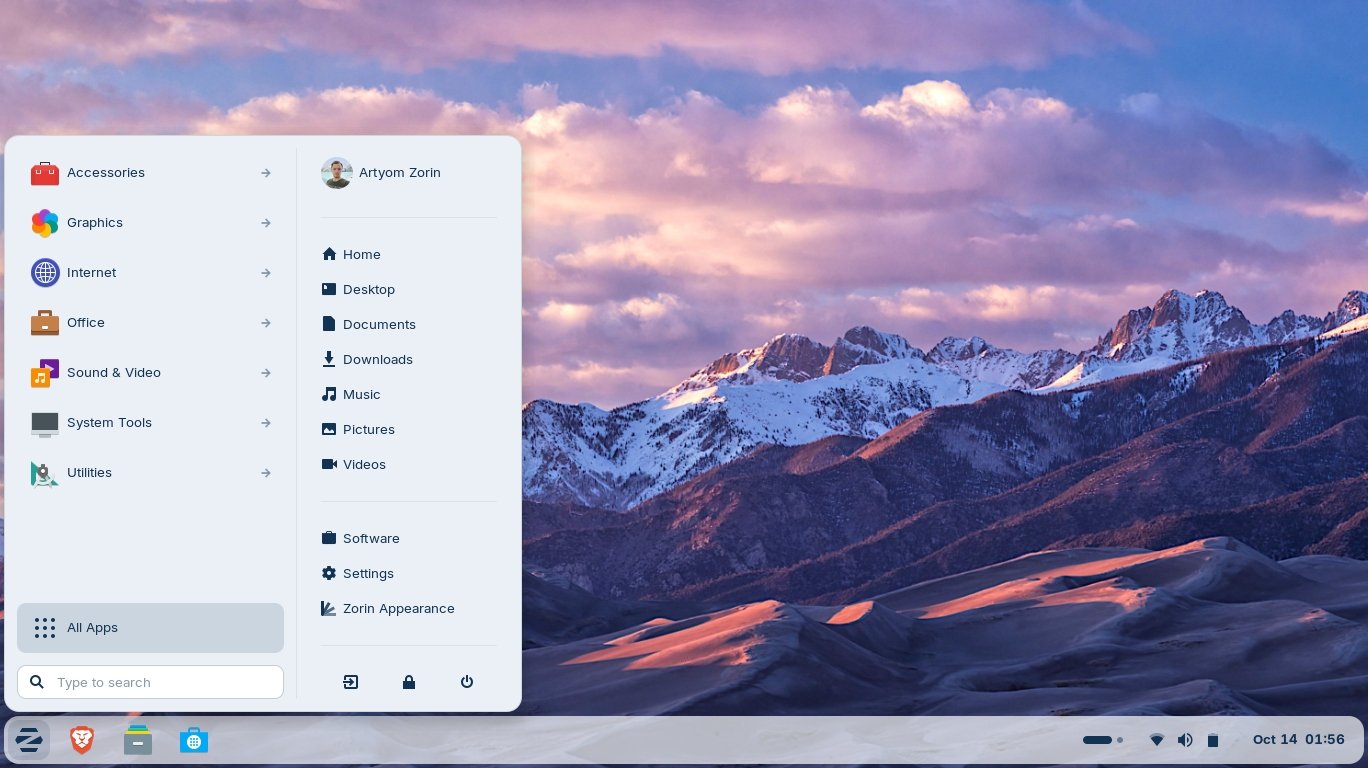
It’s funny how it is often the little things that become the proverbial straw that breaks the Camel’s back. I have been struggling for a while with the overall performance and functionality of my Windows 11 PC. The operating system is bloated, slow and buggy. It all too often commits that unpardonable sin of trying to do my thinking for me and enables some stupid feature by default. Despite having good specifications, my PC takes too long to boot up for my liking and is becoming too much of a wild card with regard to whether it will co-operate or not when I try and undertake a simple task. As someone who is very particular in their PC habits, IE I see my PC as a tool that I use on the terms that suit me. Hence, I find the faux enthusiasm that accompanies each uncalled for “improvement” that results in me losing agency, singularly antagonising. Then a minor issue arose recently that escalated into a thorn in my flesh and I decided that it was time that something must be done.

This is a post about the power of nostalgia and how sometimes, interacting with something from your past, be it physically or mentally, can produce a very strong and tangible emotional reaction. In some instances, this can be the result of something that you have specifically set out to do. On other occasions you can wander into a sense of nostalgia purely by chance. Today I experienced a very strong sense of nostalgia while watching a YouTube video and then again when I sought to replicate what I had seen. The video showed someone installing Windows 95 on to an old 486 PC from that era. The Window’s start up sound really touched a nerve (but in a good way) and then when the guy in the video launched Space Cadet 3D Pinball, a game that shipped with the operating system, I felt a strong compulsion to track down a copy and install the game myself, thus revisiting something that was an integral part of my life in 1995.

For the last few months I have being using Google Gemini. I subscribed so I could access a wider spectrum of services and evaluate it effectively. I also wanted to dispel some of the hysteria that accompanies any conversation about Large Language Models and Artificial Intelligence. The results were initially interesting and Google Gemini proved useful when researching material for blog posts. It is good at providing summaries about well documented subjects. I wrote a post about food banks recently and it distilled a lot of data into a manageable amount, which was ideal for my article. Google Gemini has also produced some visual basic scripting and simple batch files that have allowed me to automate processes on my PC. Such as changing the default monitor, or screen resolution at the click of an icon. However, I found this AI struggled with in-depth software troubleshooting and that its ability to create images varies greatly depending on the subject.

The UK Government has formerly announced its intention to ban under-16s from using social media. This is due to increasing public pressure that “something must be done” about the perceived iniquities of many online platforms. However, as with most complex social problems of this nature, no one has any clear or practical ideas as to what that “something” is. It remains a nebulous, non-specific panacea and clearly someone else’s job to identify and implement. As ever, why choose a nuanced and multifaceted solution to a complex problem, when it is far easier and politically expedient to just “ban” something. The former requires effort and a degree of thinking. If such an approach fails it also means that those who came up with it now carry the can. The latter dumps the problem in the lap of various third parties, who can then be conveniently blamed when the ill conceived policy fails.

Yesterday we changed internet service providers. We moved from EE (formerly BT) to Plusnet. The transition went surprisingly well, mainly due to the existing infrastructure remaining the same. We’ve had fibre to the premises (FTTP) since 2022 so this was essentially an administrative change. The previous ISP terminated their service at 1:30 AM in the morning, while I was playing Star Trek Online. By 6:30 AM I received a message from Plusnet that the new service was live. It took about an hour to configure the new Netgear Nighthawk RS100 router (I bought my own) and get all our household devices attached to the new network. The connection is running at exactly the same speed and stability as it had under the previous supplier. At present a 1Gbps connection is sufficient for our needs. The main factor that has driven this change is cost. We are currently paying £28 per month for internet access which is a competitive price in the UK.

In 1990 I was working at the DWP (Department for Work and Pensions). I had just taken the role of Computer Support Officer where I administered user access to the mainframe and provided first line support to staff using the terminals. That summer the office moved to a PC based network and the project was undertaken by the newly formed Siemens Nixdorf company. To cut a long story short I befriended one of the contract engineers and over the next 9 months he became an unofficial mentor to me. Technically he was only supposed to train me in the most basic of fashions but he liked the fact that I was always asking questions and effectively ended up schooling me in PC and server architecture, network administration and the associated protocols. For me this was the best way to learn. It was not a case of coming to grips with theory in a classroom environment. It was learning by doing and having direct and exclusive access to a source of knowledge and experience.

My Windows 11 PC is a cobbled together mess of upgrades, customisations and workarounds. It seems okay at first glance, mainly because my desktop is well organised and I don’t allow too many apps to start on boot up. But beneath this superficial veneer of efficiency and optimisation is a bloated mess. Every Windows update adds yet more spurious features which slows performance and tries to harvest your data. Windows is no longer a user friendly operating system that you buy and use without impediment. It is now a sprawling live service that actively gets in the way of your productivity so that it can make a buck off your inconvenience. There was a time when you could quickly learn its processes and foibles, so you could customise it into the tool you needed. Nowadays I have to continuously use third party tools to get Windows to do many of the things I want, or to access functionality that Microsoft has obtusely decided to restrict.

As the New Year is still young, I have embarked upon several new projects that I’ve been planning since Autumn last year. These undertakings have gone beyond the planning stage and are currently being implemented. The fun thing about the phrase “implemented” in this context is that it implies that it is by far the easiest and most straightforward part of the process. The initial brainstorming of ideas has been completed. A cogent and detailed plan has been written. The costing of materials and time required have been determined. These are the hard parts. All that remains is to “just do it”. It should be a piece of piss (a British phrase indicating that something is easy). It virtually “implements” itself. However, that is a load of bollocks. Because there is always scope for something to go wrong. It may well start as something minor and innocuous but it all too often ends in a “problem cascade”.

This time last year I made a decision to replace Microsoft Office or Office 365 as it is currently known. Mainly because I only use Outlook out of the entire suite of software. This project stalled because I couldn't easily import my existing email archive into Mozilla Thunderbird. Hence the status quo has been perpetuated. However, there is an ongoing cost associated with this software as well as some wider considerations about ethics and privacy which is why I have returned to this matter. Although this time I wish to replace not only Office 365 but all the other "production tools" I use to write and browse the internet. I have managed to make some progress towards this goal but it has been hard to adapt. Mainly because I had everything set up to my liking. Although alternatives are available, they're never exactly alike and require a lot of fine tuning to be deemed satisfactory.
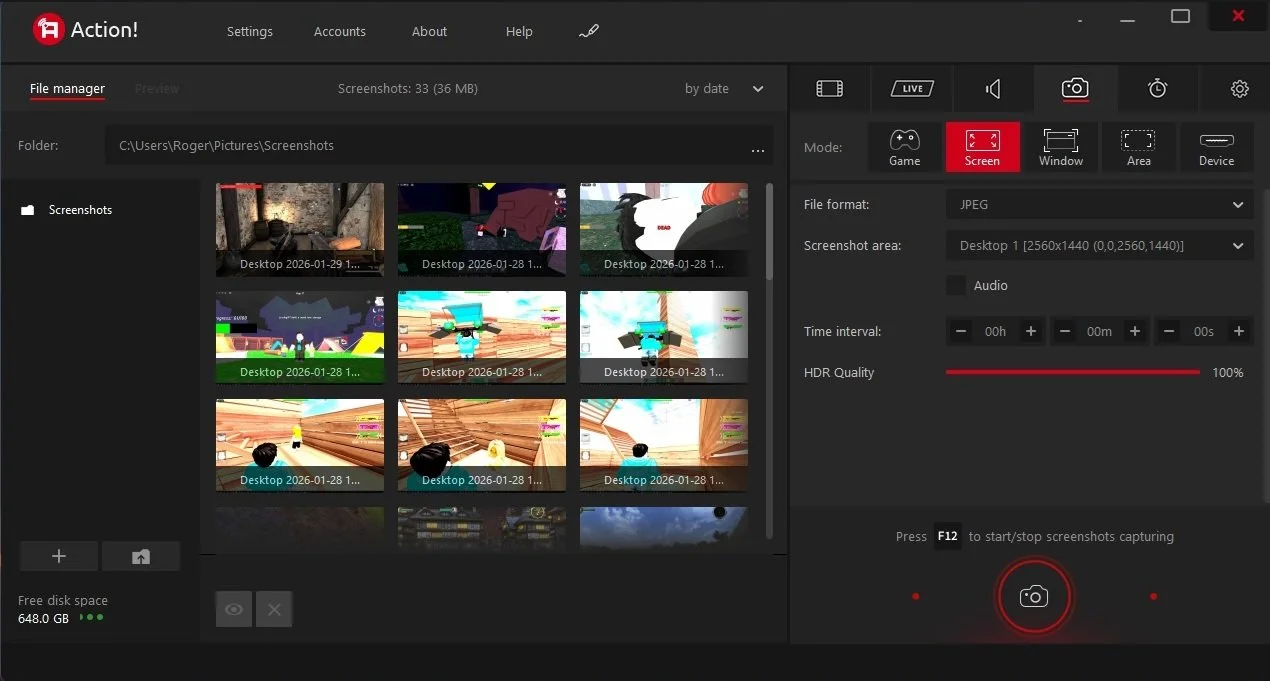
Last summer I wrote a post about my experiences using various screen capture software. At the time I was using Bandicam which suited all my needs. I had configured the software to launch at Windows start-up and had a hotkey assigned to capture images from my primary monitor. Hence I could quickly grab a screenshot from my desktop or when playing a game. However, this changed in November 2025, when I bought two new monitors. Both of which supported HDR (High Dynamic Range). Although they provide superior picture quality, HDR has a knock-on effect on Bandicam. Screen capture images and video look over exposed. Hence I had to stop using the software and find an alternative. Fortunately the same company has been developing an alternative product with HDR support; Bandi Camera. So I swapped to this software. The screenshots were far better but the functionality of the app was lacking.
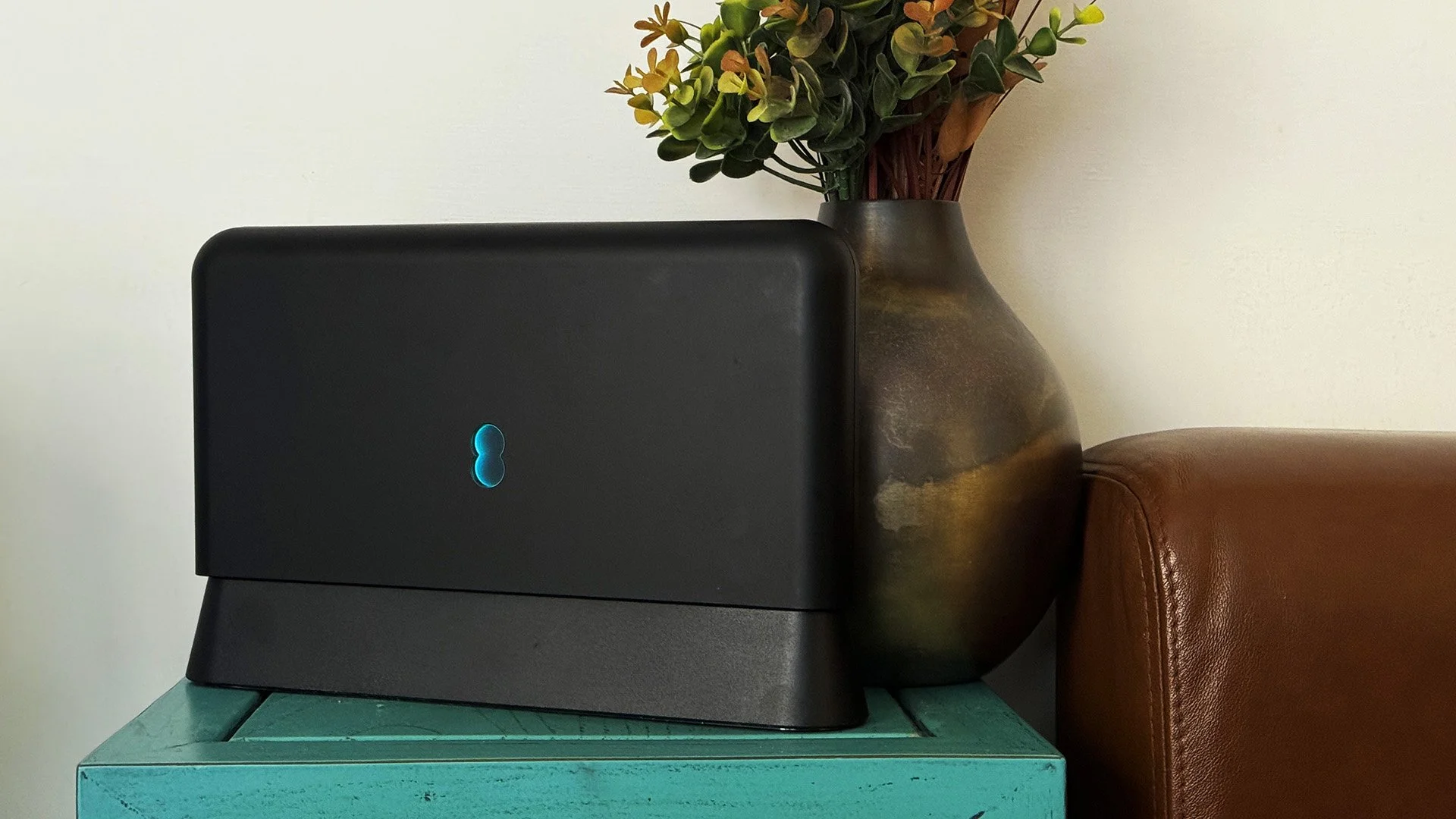
Our home has a 1 Gbps “fibre to the premises” internet connection. It has proven reliable since it was installed in June 2022. Our internet service provider EE (part of the BT group) are neither the best of worst suppliers. The monthly cost is not especially competitive and so we may be looking to move providers next Easter. However, that is a matter for the future. For the present there is a more immediate issue. Starting on Friday 21st November, our internet connection has started randomly dropping. Furthermore, both the Wi-Fi extender in the lounge and the wireless printer in my office have become disconnected from the network. It was as if their details had been erased from the router. I suspected that a recent firmware upgrade may be the culprit although EE denies it. However there are posts online from other customers with similar technical issues.

A couple of times a year, Mrs P asks me to copy onto her laptop, all the pictures that I’ve taken over recent months, as well as those that have been shared with us via WhatsApp. She then diligently whittles them down into a manageable amount which we then print off and put in our photo album. Yes we’re of the generation that still likes to print off hard copies of photos and from time to time look at them nostalgically. We have several albums with photographs in chronological order and numerous frames placed around the house, filled with pictures of family. The bulk of the photos are 4x6 inches (10x15 cm). We use an online photo printing service for the majority of our pictures and visit a local store with a self-service photographic department to print off specific pictures for bespoke frames. The original photos, now neatly organised, are backed up and archived.
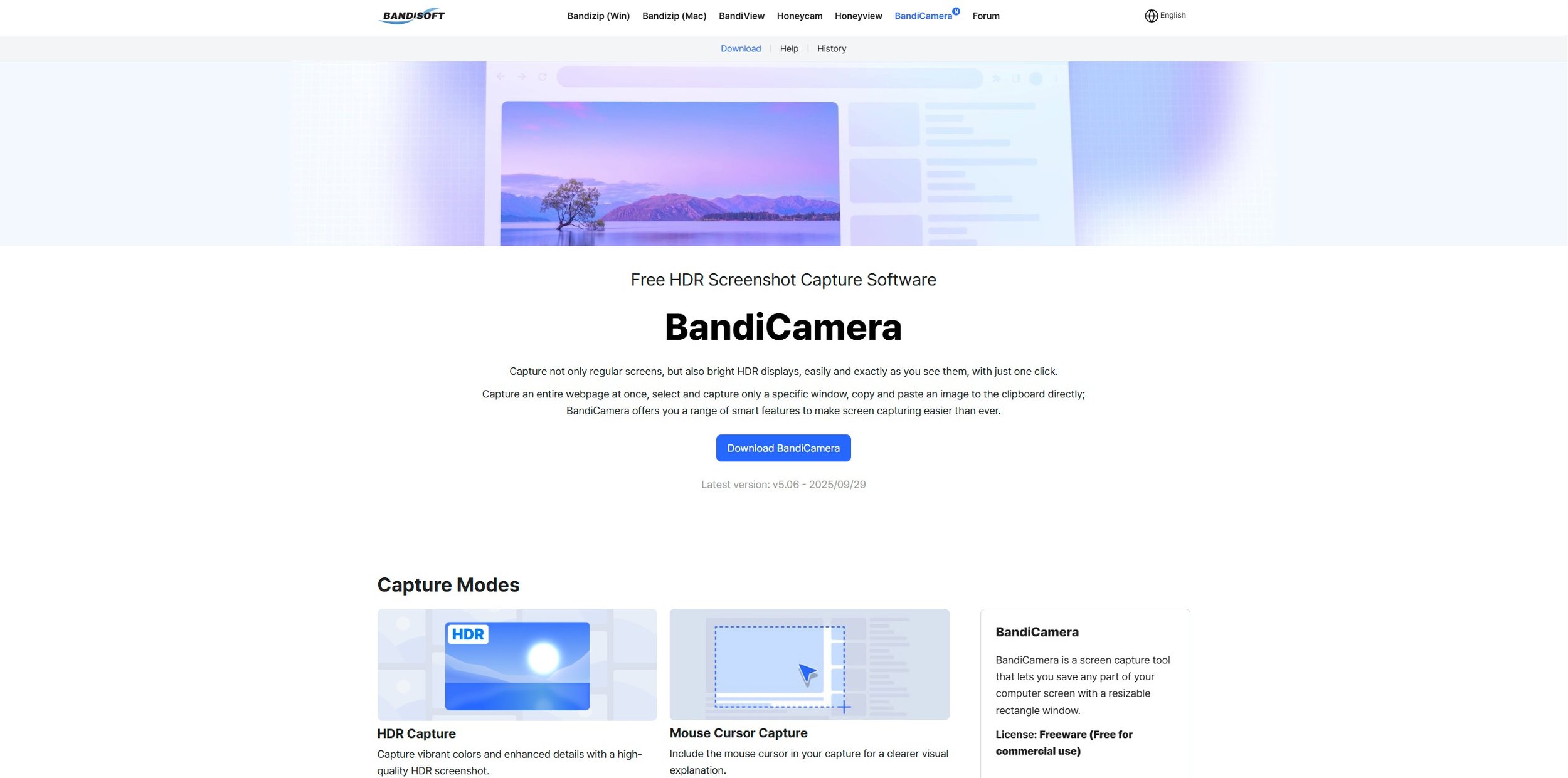
I take a lot of screen captures of video games and Windows apps, usually for blog posts. I use both Bandicam and Windows Snipping Tool to do this and have set up various hotkeys to make the process easy. Of late, the screen captures that I’ve taken have all suffered from washed out colours, regardless what tool I used to take them. I checked to see if both these apps needed to be updated but they are running the latest versions. Hence I was initially stumped as to why this problem had started happening. After some thought, I deduced that the only new elements in my PC hardware were my two new monitors. Both of which support HDR. Google Gemini quickly informed me that this was a known issue and taking screen captures from an HDR enabled device resulted in an excessively bright image that looked over exposed.
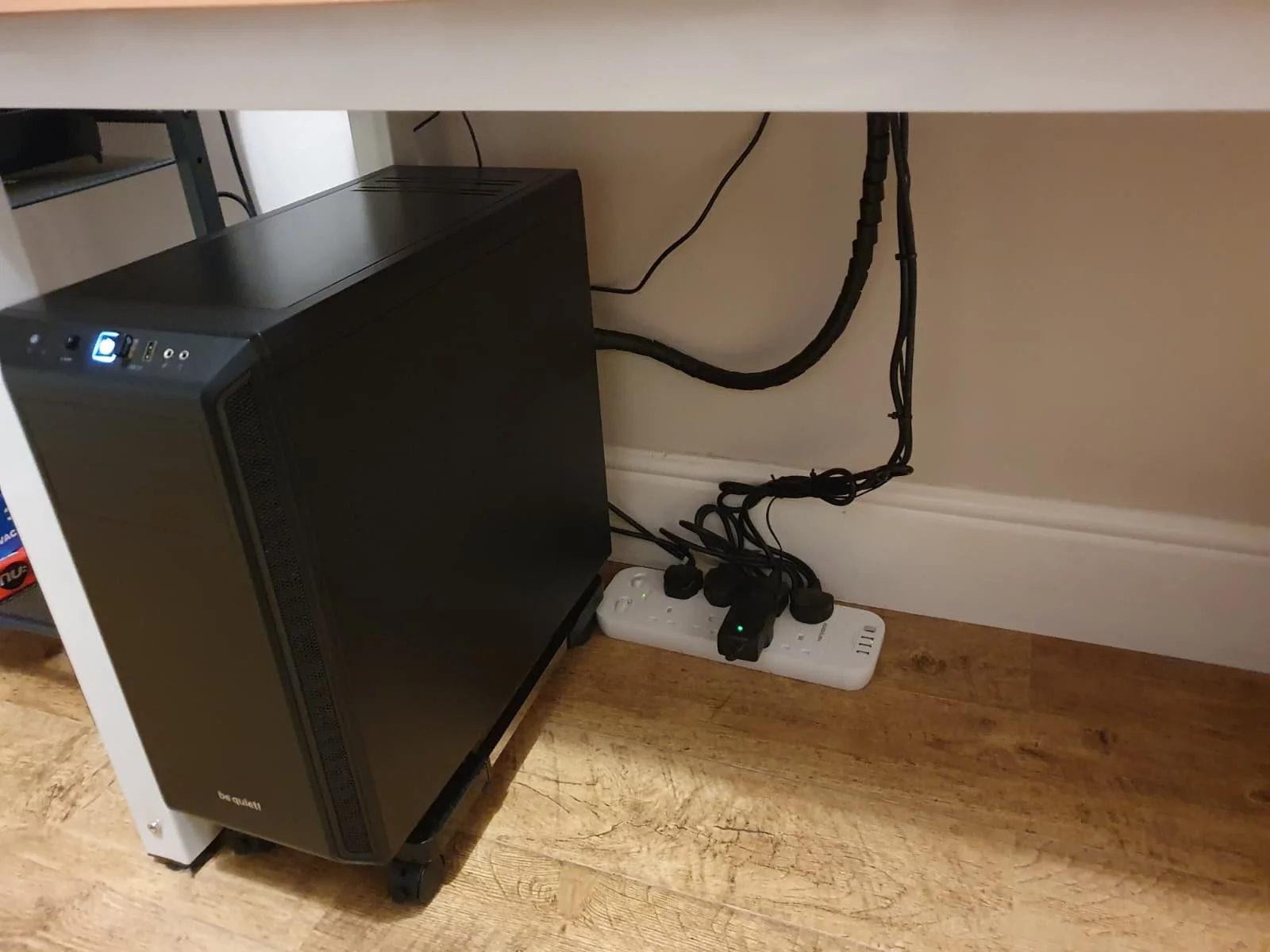
I recently bought two new monitors and a stand for my PC tower case. Today I thought I’d take the opportunity to disconnect every peripheral, clear my desk and then after a thorough clean, reassemble everything ensuring good cable management. I even went so far as to buy a new power extension lead so I could reorganise where everything was plugged in and therefore be able to isolate specific hardware. It seemed such a simple, straightforward task on paper. The reality was much different. It took me over three hours to sort out, mainly due to the fact that I don’t “bend” so well these days. During this Herculean task, my watch kept on notifying me that my heart rate was “high”. However, I regularly took breaks and fortified myself with gin for medicinal reasons. I am pleased with the results of this task.
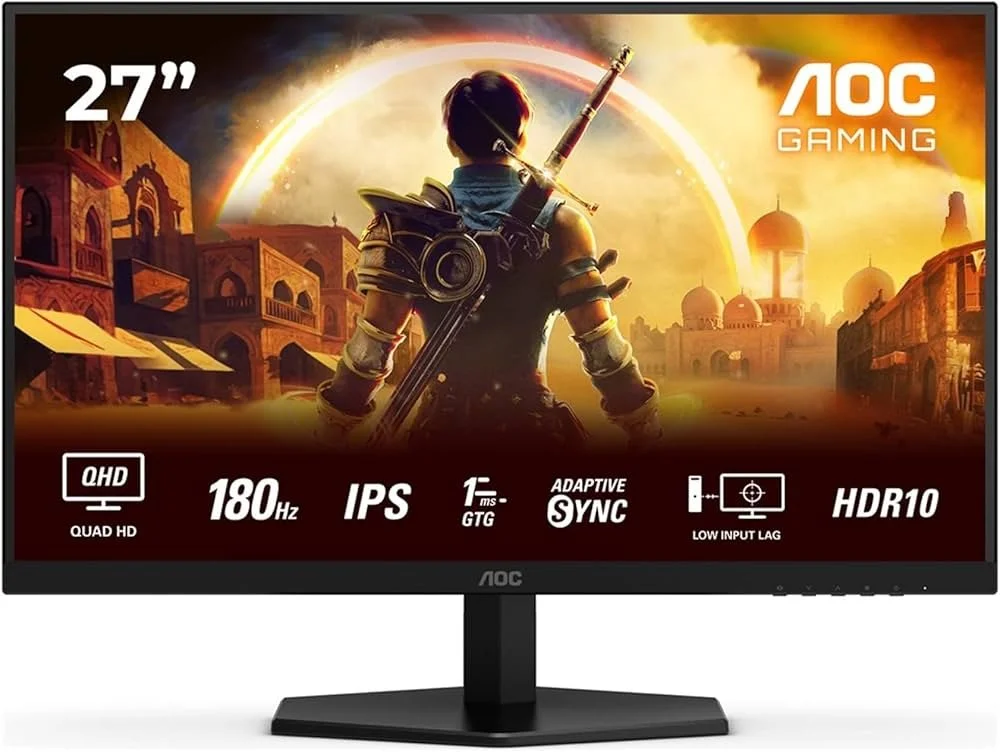
I use two monitors with my PC, as I find having the additional screen “real estate” invaluable when writing or playing games. Both monitors that I’ve been using up to now are somewhat old and they are not exactly the same size or resolution, although both are FHD. I have previously written about the problems I’ve had trying to get certain games and programs to display on specific monitors and the lengths I’ve had to go to to resolve this issue. To cut a long story short, I recently decided to replace both monitors with larger models with a higher resolution. Mainly because my eyesight is not what it used to be. I see best when working with a bright screen that can produce clear text. New monitors would also address my ongoing screen output problem. Hence, I set myself a reasonable budget and began researching appropriate replacements.

In July the UK Government introduced the Online Safety Act which requires age checks for accessing sexually explicit content online. As a result of this, Pornhub, the 19th most visited site on the internet, has reported a 77% decline in UK traffic. Furthermore, according to the UK regulatory body, OFCOM (The Office of Communications), overall visits to pornographic websites from the UK have fallen by 33%. Naturally, those who championed this legislation are claiming a moral and political victory. However, once you consider what these facts actually mean, they paint a somewhat different and potentially more worrying picture. It would be staggeringly naïve to think that UK visitors to Pornhub have ceased visiting such sites due to the age verification requirements. The more likely explanation is that UK porn consumers are now using VPNs to circumnavigate these restrictions and that this traffic to Pornhub is now recorded as coming from elsewhere.

It may be a case of preaching to the Choir but dust contamination in your PC causes overheating, decreased performance, and potential hardware failure. This mainly occurs due to dust restricting airflow, impeding components such as heat sinks and creating short circuits from conductive particles. Fluff builds up and restricts cooling fans, forcing them to work harder. Heat build can lead to issues like system crashes, lagging, and even permanent damage to the motherboard and CPU. Over time, it can shorten the lifespan of the computer and in severe cases, poses a fire hazard. When I used to work in IT contracting, I used to see the effects of dust contamination all the time. PC placed on carpet tiles or on top of desks and surrounded by other objects. I remember one PC replacement project I was working on where we found an old PC with a dead mouse in it. It was desiccated by the heat.

Usually I don’t have a problem with internet access when Mrs P and I are travelling. My phone data plan is sufficient for Google Maps and social media usage. Once we reach our hotel, it’s just a question of connecting to the free Wi-Fi or if need be, buying upgraded access. It’s seldom that expensive. When I went on holiday to Croatia this summer, I bought a bespoke data plan before arriving that granted me extra internet access. Our hotel in Makarska also had very robust internet access. Hence, regardless of being out and about or by the pool, I never had any issues getting online. The ubiquity of internet access means we often take it for granted. I seldom go to places in the UK or abroad that don’t have advanced IT infrastructure. Until this week.
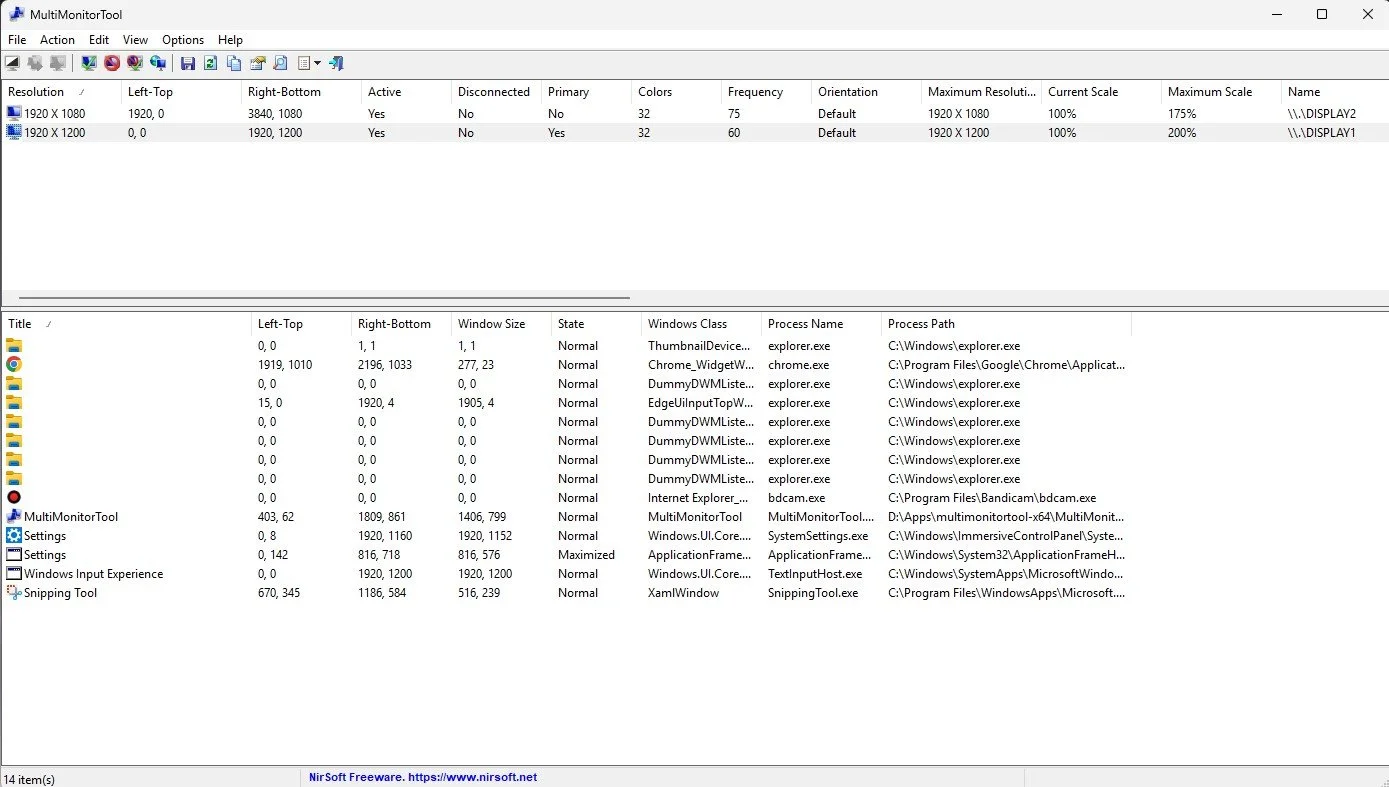
Back in January, I was very pleased because I had finally found some open source software, DisplayMagician, which allowed me to quickly and easily alter my display profile and run specific games and applications on my second monitor. Prior to this I would find that some programs just wouldn’t stay put, once they were dragged or otherwise cajoled to display on the monitor of my choice. They would continuously snap back to the primary display, regardless of my actions. DisplayMagician solved this issue and did so with aplomb. Or it did, until last weekend when I upgraded my PC from Windows 10 to 11. Then it stopped working. I therefore did some digging online and it became apparent that this is a known issue that is currently being addressed by its creator, Terry McDonald.

As part of our increasing dependency upon software, we have also grown accustomed to its associated foibles, especially the negative ones. Today, I upgraded my blog from Squarespace 7.0 to 7.1 and my PC operating system from Windows 10 to 11. I started early in the morning and ensured that all my personal data was backed up. My default expectation was that both processes would go wrong in some way, shape or form. Let’s take a moment to consider this mindset, which is born out of experience. It is now taken as read that whatever you upgrade, be it an app on your phone or a program on your PC, that it’s going to be problematic. It won’t be a seamless transition and you’ll end up having to do some sort of troubleshooting. Despite our lives becoming more dependent on such software, the quality of these products seems to be deteriorating. What a sorry state of affairs.
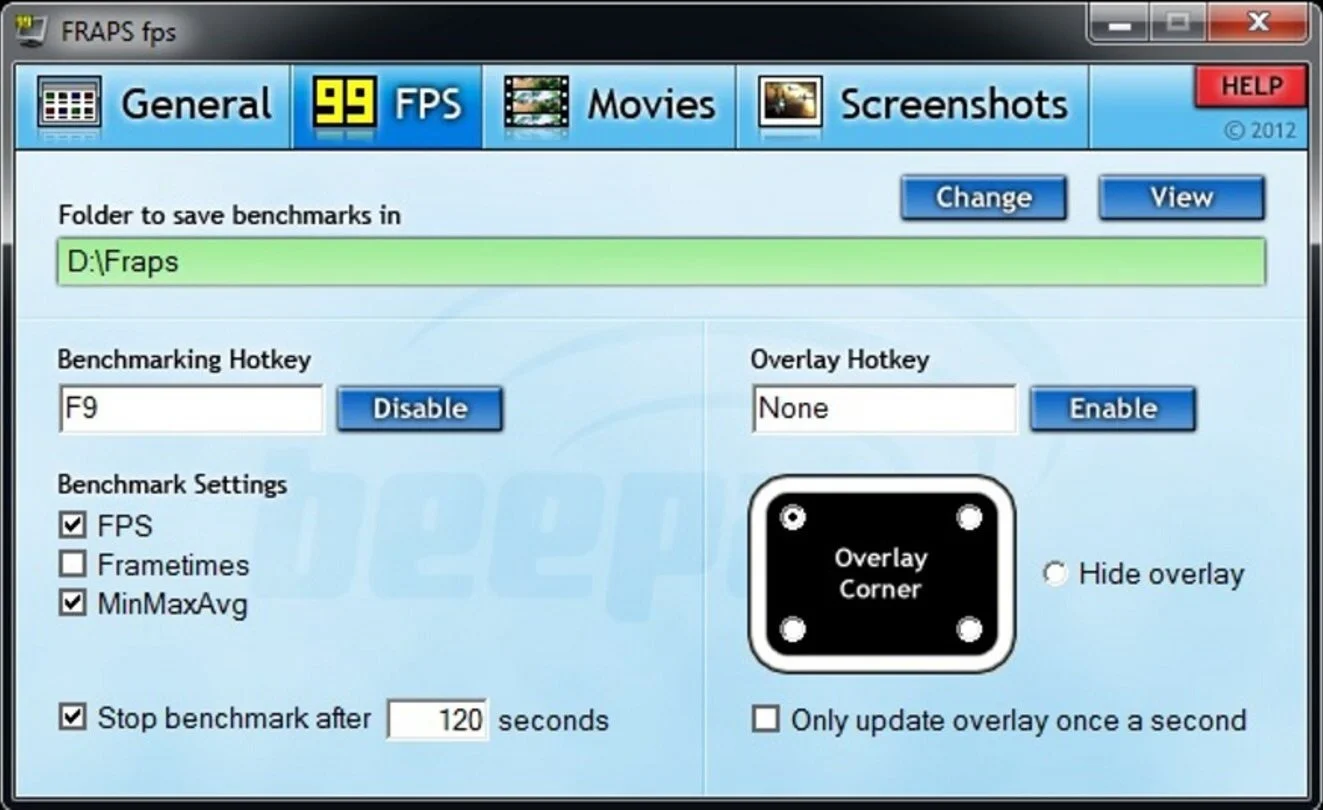
The ability to take a screen capture of a video game that you’re playing, or an open application or browser tab, is just something we take for granted. Windows 10/11 have a built-in tool called Snip & Sketch that is simple to use. Most of the games that I play have a specific hotkey for taking screenshots and a default directory to store them. Similarly, the latest builds of Windows also include the Xbox Game Bar software, which allows you to capture video from any application that you’re running on your PC. You can then edit via Clipchamp which is the successor to the old Windows Movie Maker. I believe the macOS comes with comparable default software. The absence of such apps today would be noticeable. However, there was a time when such things were not considered standard features.
Experimenting With AI
For the last few months I have being using Google Gemini. I subscribed so I could access a wider spectrum of services and evaluate it effectively. I also wanted to dispel some of the hysteria that accompanies any conversation about Large Language Models and Artificial Intelligence. The results were initially interesting and Google Gemini proved useful when researching material for blog posts. It is good at providing summaries about well documented subjects. I wrote a post about food banks recently and it distilled a lot of data into a manageable amount, which was ideal for my article. Google Gemini has also produced some visual basic scripting and simple batch files that have allowed me to automate processes on my PC. Such as changing the default monitor, or screen resolution at the click of an icon. However, I found this AI struggled with in-depth software troubleshooting and that its ability to create images varies greatly depending on the subject.
For the last few months I have being using Google Gemini. I subscribed so I could access a wider spectrum of services and evaluate it effectively. I also wanted to dispel some of the hysteria that accompanies any conversation about Large Language Models and Artificial Intelligence. The results were initially interesting and Google Gemini proved useful when researching material for blog posts. It is good at providing summaries about well documented subjects. I wrote a post about food banks recently and it distilled a lot of data into a manageable amount, which was ideal for my article. Google Gemini has also produced some visual basic scripting and simple batch files that have allowed me to automate processes on my PC. Such as changing the default monitor, or screen resolution at the click of an icon. However, I found this AI struggled with in-depth software troubleshooting and that its ability to create images varies greatly depending on the subject.
The first major adjustment I had to make while using Google Gemini is that I needed to be very specific in how I phrased my question. Google Gemini is not intuitive and doesn’t always proactively ask you for additional data. It will take the prompt provided and doggedly work within its confines. You then realise that it needs more information and thus end up micromanaging the process, as it attempts to solve your problem. It would get to the right solution eventually but the amount of time and effort I would have to make with my continuous interventions and data updates, some what took the shine off the end results. This became very apparent when I tried to finally solve a long term problem regarding intermittent connectivity issues between my PC and Fire HD10 tablet, when using a USB cable. Appraising me of the failings of Microsoft Media Transfer Protocol without giving any useful suggestions within the parameters I’ve asked isn’t helpful.
A rather generic fantasy image depicting Ecthelion Versus Gothmog, created via Google Gemini
Another issue that quickly became noticeable was that of image generation and the disparity in quality between specific types. On one occasion I asked Google Gemini to create an image specifically for a blog post, because I couldn’t find a comparable one online. I wanted a picture of a group of demonstrators outside parliament talking to a news reporter and crew. I eventually gave a detailed prompt and found this replication of a common place event to be satisfactory. However, when I gave detailed instructions for a fantasy based image, I found the results to be somewhat formulaic and lacklustre. Google Gemini seems to work best when drawing from established data and images. When called upon to do something inherently creative it doesn’t fare so well. Furthermore, if you draw attention to any mistake or confusion arising from your interactions with Google Gemini, the AI becomes excessively apologetic to the point of obsequiousness.
It was ultimately this lack of intuition and proactivity that made me cancel my subscription to Google Gemini. Using it was too labour intensive and required me to constantly oversee the proceedings. For me that mitigated some of the benefits inherent in using such a tool. Hence I moved on to ChatGPT and decided to proactively determine if it had the same failings as it competitor. I asked it whether it felt it was intuitive and likely to seek clarification on its own accord rather than just colour “within the lines”. It confidently stated that it was a more intuitive by default and immediately proved so when I set it the same problem that Google Gemini had laboured over to no avail. ChatGPT not only solved the problem with my tablet but gave me multiple solutions. It also displays its thinking process as it works through a problem, which is both useful and intriguing. Its creative artwork is superior, or has at least proven so for the present.
A map of Númenor created via ChatGPT
AI in various shapes and forms is a reality that is no going to go away. That being said, I do not think it is the universal solution that many think that it is at present and I suspect that there will be several high profile failures in the months to come that will do much to reset both business and the public’s expectations. Sadly, I also think there will have to be an adjustment around the wider issue of those who directly affected by the use of AI. If I ever have to commission any further design work for my website or the branding associated with it, I will always hire a professional. However, for minor work, AI will suffice. For example I wanted a detailed, high resolution map of Númenor and gave the task to ChatGPT. The results were fine. However, this never was a paying job to begin with. A few years ago, before AI became commonly available, I would have just gone without or drawn it myself. The fact that a tool now exists to do it for me, means I will use it.
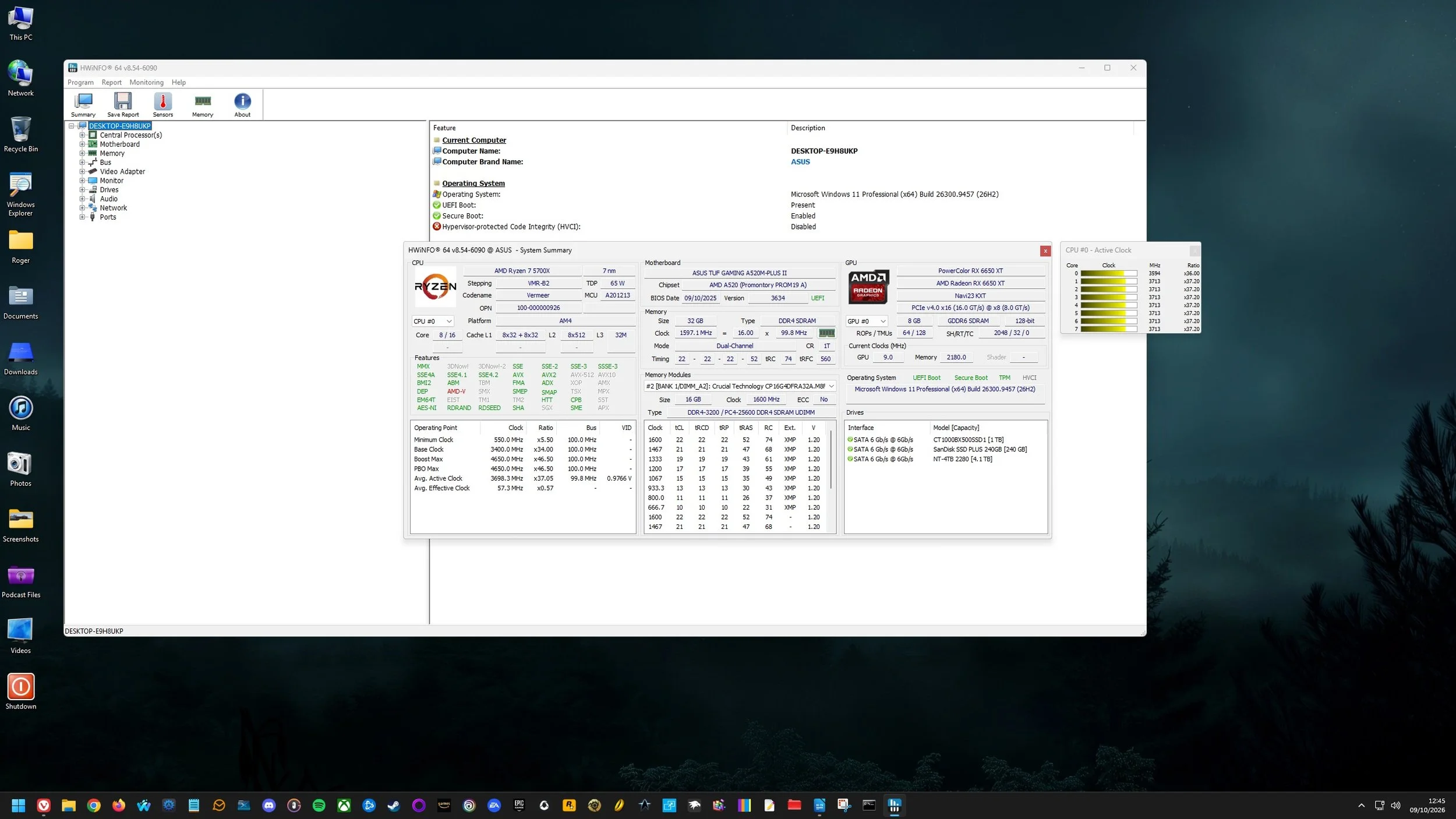
Until fairly recently, I have maintained a somewhat casual approach to the system maintenance of my PC. “Casual” in this context is a subjective term. What I consider to be “casual” others may think to be robust or even rigorous. But I digress. I regularly undertake minor housekeeping such a clearing my web browser data, removing temporary or unwanted files and updating software. I also make sure that only essential services and programs start when I turn on my PC. I keep an orderly desktop and an intuitive filing system. However, I do very little with respect to maintaining the hardware inside my PC. I clean inside the case a couple of times a year and ensure that the fans are free from dust contamination but that’s about it. I have no idea if the installed RAM is running optimally or whether the processor is operating within the appropriate heat threshold. Does the thermal paste between it and the heat sink need replacing? Are all the cores enabled?
Last year, when I was looking for some suitable video editing software, I found that people would often recommended DaVinci Resolve. It is indeed an outstanding tool but totally beyond my needs. It is also a beast to run and occupies a substantial percentage of real estate on your SSD, so I dismissed this option for practical reasons. Let it suffice to say that finding a suitable product that met my requirements was quite difficult. Video editors often seem to be either quick and easy tools for clipping content on the fly, such as Bandicut (which is great for exactly that purpose) or huge, professional quality behemoths, used by people who work in the appropriate industry. DaVinci Resolve is a textbook example of this. It begs the question what products occupy the middle ground, assuming they exist.
Going forward, if I write any more posts about my use of AI, I am not going to add the following caveat. I will do it once more here, so everyone knows where we all stand. I am fully aware that AI has already taken jobs and will continue to do so. I also know that data centres are not environmentally friendly. As for the evil corporate billionaires that get rich from the situation, that also has not come as a surprise to me. I also believe that the AI market needs regulating and there should be legislation in place to ensure that AI is never directly linked to important government and civil infrastructure. That being said, I am not going to stop using AI at a domestic level over notions of ethical purity. All of the above criticisms can broadly be applied to the industrial revolution and society came to terms with that and survived it. The same goes for the computer revolution. Things change and we adapt. Plus, if you really wanted to protest and lobby against AI, the best time to do this was two decades ago.
One of things I dislike with a passion about modern software is that you cannot cleanly uninstall it from your PC. Removing an unwanted or problematic program just leaves metaphorical muddy footprints throughout your PC. It makes my SSD feel like a crime scene with virtual brain matter spattered across the soft furnishings. Sadly, this is the price you pay for having a modern operating system with a registry, shared dependencies and a liking for temporary files and caches. It all makes me feel very nostalgic for the halcyon days of DOS, with self-contained programs sitting in a solitary folders. Often libraries and drivers lived in specific system paths or the same folder, avoiding conflicts. You could just delete stuff and it sodded off. You didn’t need two priests and holy water. Happy days.
Thinking Out Loud is a recurring post where I write about thoughts and ideas that have recently occurred to me. As ever the intention is not to develop these ideas into full blown blog posts, although they often the could be. Instead I just collate a few sentences to express my point and leave it at that. The idea being that if anyone else wants to pick up the conversation they can do so in the comments section below. On this occasion the various points are all technology based. I’ve been busy of late with several projects, such as building a new website and creating some widgets specifically for it. Like most technical projects things don’t often go as planned and problems occur unexpectedly. Hence, I thought why not make a themed instalment of Thinking Out Loud this time round? It’s something that I may well do this again in the future. As ever, feel free to make your thoughts known.
I turned on my laptop this morning for the first time in 4 months. I knew it was that long because I hadn’t connected the laptop to the new Netgear router that I bought at the end of April. Unsurprisingly, as I haven’t used this device for a while there were multiple Windows updates to be installed. This process took over an hour, so while the various updates were being downloaded and installed, I turned my attention to my Amazon Echo Dot which loiters in the corner of our lounge, doing very little to justify its existence. At present this device is mainly used as a glorified timer for cooking, which seems a bit of a waste given it’s alleged capabilities. Hence, I decided to see if I could increase its functionality while waiting for Windows to do its update thing. More on this later. Let us for the meantime return to the small matter of the operating system updates. Once they were completed, I immediately installed Chris Titus Tech’s Windows Utility and started removing unnecessary features and bloat, as well as disabling invasive services.
Before we begin, let me clearly state that this is not a comprehensive installation guide for installing Steam OS on your PC. Mainly because the variety of hardware that can be present in any PC makes each installation a somewhat bespoke affair. Hence I have decided to provide a list of bullet points of the various steps and issues I encountered during my installation, last week. Consider it advance warning of things you may encounter if you install this operating system. As ever, if this is something that you are intending to do, I would advise allowing yourself a suitable amount of time so you can accommodate any issues should they arise. It is entirely possible that this may be a two hour job for the technically literate running the most generic or commonplace hardware. However, I suspect that a lot of people undertaking this project will run into variations of the same problems that I encountered.
I am intrigued by the growth of the IndieWeb, owning your domain and static websites. I certainly agree with the notion of not relying on big corporations and I have an ongoing project to divest my dependency on software produced by major market players. However, although I own my own domain, my website is hosted by Squarespace. I’ve not really had any problems with them over the last 11 years and I would describe our business relationship as equitable. However, the monthly subscription price has increased over time and is likely to keep on doing so. It has crossed my mind as to whether there is a suitable alternative. However, if I were to migrate Contains Moderate Peril elsewhere I suspect it would be logistically complex and problematic.
I like learning new skills and starting projects. I regularly undertake such things with varying results. However, if they don’t work out that’s not a problem. You have to try something to see if you like it. I’ll add “within sensible parameters” as a caveat to the last statement. And it’s perfectly fine to discover that something isn’t for you. I like certain genres of video games, music, films and books. I am comfortable wearing certain types of clothes and not others. I’m picky about colours. I’ll even go so far as to say that I won’t drink out of any mug that’s just lying around. If I don’t like the joke, logo or overall aesthetic of it, I ain’t using it. However, I digress. Let’s get things back on track and talk about projects. This year I have wound down several websites and have decided not to move forward with making YouTube videos. I have focused my energy on improving my website and adding functionality. I am also trying to broaden the scope of my writing.
It’s funny how it is often the little things that become the proverbial straw that breaks the Camel’s back. I have been struggling for a while with the overall performance and functionality of my Windows 11 PC. The operating system is bloated, slow and buggy. It all too often commits that unpardonable sin of trying to do my thinking for me and enables some stupid feature by default. Despite having good specifications, my PC takes too long to boot up for my liking and is becoming too much of a wild card with regard to whether it will co-operate or not when I try and undertake a simple task. As someone who is very particular in their PC habits, IE I see my PC as a tool that I use on the terms that suit me. Hence, I find the faux enthusiasm that accompanies each uncalled for “improvement” that results in me losing agency, singularly antagonising. Then a minor issue arose recently that escalated into a thorn in my flesh and I decided that it was time that something must be done.
This is a post about the power of nostalgia and how sometimes, interacting with something from your past, be it physically or mentally, can produce a very strong and tangible emotional reaction. In some instances, this can be the result of something that you have specifically set out to do. On other occasions you can wander into a sense of nostalgia purely by chance. Today I experienced a very strong sense of nostalgia while watching a YouTube video and then again when I sought to replicate what I had seen. The video showed someone installing Windows 95 on to an old 486 PC from that era. The Window’s start up sound really touched a nerve (but in a good way) and then when the guy in the video launched Space Cadet 3D Pinball, a game that shipped with the operating system, I felt a strong compulsion to track down a copy and install the game myself, thus revisiting something that was an integral part of my life in 1995.
For the last few months I have being using Google Gemini. I subscribed so I could access a wider spectrum of services and evaluate it effectively. I also wanted to dispel some of the hysteria that accompanies any conversation about Large Language Models and Artificial Intelligence. The results were initially interesting and Google Gemini proved useful when researching material for blog posts. It is good at providing summaries about well documented subjects. I wrote a post about food banks recently and it distilled a lot of data into a manageable amount, which was ideal for my article. Google Gemini has also produced some visual basic scripting and simple batch files that have allowed me to automate processes on my PC. Such as changing the default monitor, or screen resolution at the click of an icon. However, I found this AI struggled with in-depth software troubleshooting and that its ability to create images varies greatly depending on the subject.
The UK Government has formerly announced its intention to ban under-16s from using social media. This is due to increasing public pressure that “something must be done” about the perceived iniquities of many online platforms. However, as with most complex social problems of this nature, no one has any clear or practical ideas as to what that “something” is. It remains a nebulous, non-specific panacea and clearly someone else’s job to identify and implement. As ever, why choose a nuanced and multifaceted solution to a complex problem, when it is far easier and politically expedient to just “ban” something. The former requires effort and a degree of thinking. If such an approach fails it also means that those who came up with it now carry the can. The latter dumps the problem in the lap of various third parties, who can then be conveniently blamed when the ill conceived policy fails.
Yesterday we changed internet service providers. We moved from EE (formerly BT) to Plusnet. The transition went surprisingly well, mainly due to the existing infrastructure remaining the same. We’ve had fibre to the premises (FTTP) since 2022 so this was essentially an administrative change. The previous ISP terminated their service at 1:30 AM in the morning, while I was playing Star Trek Online. By 6:30 AM I received a message from Plusnet that the new service was live. It took about an hour to configure the new Netgear Nighthawk RS100 router (I bought my own) and get all our household devices attached to the new network. The connection is running at exactly the same speed and stability as it had under the previous supplier. At present a 1Gbps connection is sufficient for our needs. The main factor that has driven this change is cost. We are currently paying £28 per month for internet access which is a competitive price in the UK.
In 1990 I was working at the DWP (Department for Work and Pensions). I had just taken the role of Computer Support Officer where I administered user access to the mainframe and provided first line support to staff using the terminals. That summer the office moved to a PC based network and the project was undertaken by the newly formed Siemens Nixdorf company. To cut a long story short I befriended one of the contract engineers and over the next 9 months he became an unofficial mentor to me. Technically he was only supposed to train me in the most basic of fashions but he liked the fact that I was always asking questions and effectively ended up schooling me in PC and server architecture, network administration and the associated protocols. For me this was the best way to learn. It was not a case of coming to grips with theory in a classroom environment. It was learning by doing and having direct and exclusive access to a source of knowledge and experience.
My Windows 11 PC is a cobbled together mess of upgrades, customisations and workarounds. It seems okay at first glance, mainly because my desktop is well organised and I don’t allow too many apps to start on boot up. But beneath this superficial veneer of efficiency and optimisation is a bloated mess. Every Windows update adds yet more spurious features which slows performance and tries to harvest your data. Windows is no longer a user friendly operating system that you buy and use without impediment. It is now a sprawling live service that actively gets in the way of your productivity so that it can make a buck off your inconvenience. There was a time when you could quickly learn its processes and foibles, so you could customise it into the tool you needed. Nowadays I have to continuously use third party tools to get Windows to do many of the things I want, or to access functionality that Microsoft has obtusely decided to restrict.
As the New Year is still young, I have embarked upon several new projects that I’ve been planning since Autumn last year. These undertakings have gone beyond the planning stage and are currently being implemented. The fun thing about the phrase “implemented” in this context is that it implies that it is by far the easiest and most straightforward part of the process. The initial brainstorming of ideas has been completed. A cogent and detailed plan has been written. The costing of materials and time required have been determined. These are the hard parts. All that remains is to “just do it”. It should be a piece of piss (a British phrase indicating that something is easy). It virtually “implements” itself. However, that is a load of bollocks. Because there is always scope for something to go wrong. It may well start as something minor and innocuous but it all too often ends in a “problem cascade”.
This time last year I made a decision to replace Microsoft Office or Office 365 as it is currently known. Mainly because I only use Outlook out of the entire suite of software. This project stalled because I couldn't easily import my existing email archive into Mozilla Thunderbird. Hence the status quo has been perpetuated. However, there is an ongoing cost associated with this software as well as some wider considerations about ethics and privacy which is why I have returned to this matter. Although this time I wish to replace not only Office 365 but all the other "production tools" I use to write and browse the internet. I have managed to make some progress towards this goal but it has been hard to adapt. Mainly because I had everything set up to my liking. Although alternatives are available, they're never exactly alike and require a lot of fine tuning to be deemed satisfactory.
Last summer I wrote a post about my experiences using various screen capture software. At the time I was using Bandicam which suited all my needs. I had configured the software to launch at Windows start-up and had a hotkey assigned to capture images from my primary monitor. Hence I could quickly grab a screenshot from my desktop or when playing a game. However, this changed in November 2025, when I bought two new monitors. Both of which supported HDR (High Dynamic Range). Although they provide superior picture quality, HDR has a knock-on effect on Bandicam. Screen capture images and video look over exposed. Hence I had to stop using the software and find an alternative. Fortunately the same company has been developing an alternative product with HDR support; Bandi Camera. So I swapped to this software. The screenshots were far better but the functionality of the app was lacking.
Our home has a 1 Gbps “fibre to the premises” internet connection. It has proven reliable since it was installed in June 2022. Our internet service provider EE (part of the BT group) are neither the best of worst suppliers. The monthly cost is not especially competitive and so we may be looking to move providers next Easter. However, that is a matter for the future. For the present there is a more immediate issue. Starting on Friday 21st November, our internet connection has started randomly dropping. Furthermore, both the Wi-Fi extender in the lounge and the wireless printer in my office have become disconnected from the network. It was as if their details had been erased from the router. I suspected that a recent firmware upgrade may be the culprit although EE denies it. However there are posts online from other customers with similar technical issues.
A couple of times a year, Mrs P asks me to copy onto her laptop, all the pictures that I’ve taken over recent months, as well as those that have been shared with us via WhatsApp. She then diligently whittles them down into a manageable amount which we then print off and put in our photo album. Yes we’re of the generation that still likes to print off hard copies of photos and from time to time look at them nostalgically. We have several albums with photographs in chronological order and numerous frames placed around the house, filled with pictures of family. The bulk of the photos are 4x6 inches (10x15 cm). We use an online photo printing service for the majority of our pictures and visit a local store with a self-service photographic department to print off specific pictures for bespoke frames. The original photos, now neatly organised, are backed up and archived.
I take a lot of screen captures of video games and Windows apps, usually for blog posts. I use both Bandicam and Windows Snipping Tool to do this and have set up various hotkeys to make the process easy. Of late, the screen captures that I’ve taken have all suffered from washed out colours, regardless what tool I used to take them. I checked to see if both these apps needed to be updated but they are running the latest versions. Hence I was initially stumped as to why this problem had started happening. After some thought, I deduced that the only new elements in my PC hardware were my two new monitors. Both of which support HDR. Google Gemini quickly informed me that this was a known issue and taking screen captures from an HDR enabled device resulted in an excessively bright image that looked over exposed.
I recently bought two new monitors and a stand for my PC tower case. Today I thought I’d take the opportunity to disconnect every peripheral, clear my desk and then after a thorough clean, reassemble everything ensuring good cable management. I even went so far as to buy a new power extension lead so I could reorganise where everything was plugged in and therefore be able to isolate specific hardware. It seemed such a simple, straightforward task on paper. The reality was much different. It took me over three hours to sort out, mainly due to the fact that I don’t “bend” so well these days. During this Herculean task, my watch kept on notifying me that my heart rate was “high”. However, I regularly took breaks and fortified myself with gin for medicinal reasons. I am pleased with the results of this task.
I use two monitors with my PC, as I find having the additional screen “real estate” invaluable when writing or playing games. Both monitors that I’ve been using up to now are somewhat old and they are not exactly the same size or resolution, although both are FHD. I have previously written about the problems I’ve had trying to get certain games and programs to display on specific monitors and the lengths I’ve had to go to to resolve this issue. To cut a long story short, I recently decided to replace both monitors with larger models with a higher resolution. Mainly because my eyesight is not what it used to be. I see best when working with a bright screen that can produce clear text. New monitors would also address my ongoing screen output problem. Hence, I set myself a reasonable budget and began researching appropriate replacements.
In July the UK Government introduced the Online Safety Act which requires age checks for accessing sexually explicit content online. As a result of this, Pornhub, the 19th most visited site on the internet, has reported a 77% decline in UK traffic. Furthermore, according to the UK regulatory body, OFCOM (The Office of Communications), overall visits to pornographic websites from the UK have fallen by 33%. Naturally, those who championed this legislation are claiming a moral and political victory. However, once you consider what these facts actually mean, they paint a somewhat different and potentially more worrying picture. It would be staggeringly naïve to think that UK visitors to Pornhub have ceased visiting such sites due to the age verification requirements. The more likely explanation is that UK porn consumers are now using VPNs to circumnavigate these restrictions and that this traffic to Pornhub is now recorded as coming from elsewhere.
It may be a case of preaching to the Choir but dust contamination in your PC causes overheating, decreased performance, and potential hardware failure. This mainly occurs due to dust restricting airflow, impeding components such as heat sinks and creating short circuits from conductive particles. Fluff builds up and restricts cooling fans, forcing them to work harder. Heat build can lead to issues like system crashes, lagging, and even permanent damage to the motherboard and CPU. Over time, it can shorten the lifespan of the computer and in severe cases, poses a fire hazard. When I used to work in IT contracting, I used to see the effects of dust contamination all the time. PC placed on carpet tiles or on top of desks and surrounded by other objects. I remember one PC replacement project I was working on where we found an old PC with a dead mouse in it. It was desiccated by the heat.
Usually I don’t have a problem with internet access when Mrs P and I are travelling. My phone data plan is sufficient for Google Maps and social media usage. Once we reach our hotel, it’s just a question of connecting to the free Wi-Fi or if need be, buying upgraded access. It’s seldom that expensive. When I went on holiday to Croatia this summer, I bought a bespoke data plan before arriving that granted me extra internet access. Our hotel in Makarska also had very robust internet access. Hence, regardless of being out and about or by the pool, I never had any issues getting online. The ubiquity of internet access means we often take it for granted. I seldom go to places in the UK or abroad that don’t have advanced IT infrastructure. Until this week.
Back in January, I was very pleased because I had finally found some open source software, DisplayMagician, which allowed me to quickly and easily alter my display profile and run specific games and applications on my second monitor. Prior to this I would find that some programs just wouldn’t stay put, once they were dragged or otherwise cajoled to display on the monitor of my choice. They would continuously snap back to the primary display, regardless of my actions. DisplayMagician solved this issue and did so with aplomb. Or it did, until last weekend when I upgraded my PC from Windows 10 to 11. Then it stopped working. I therefore did some digging online and it became apparent that this is a known issue that is currently being addressed by its creator, Terry McDonald.
As part of our increasing dependency upon software, we have also grown accustomed to its associated foibles, especially the negative ones. Today, I upgraded my blog from Squarespace 7.0 to 7.1 and my PC operating system from Windows 10 to 11. I started early in the morning and ensured that all my personal data was backed up. My default expectation was that both processes would go wrong in some way, shape or form. Let’s take a moment to consider this mindset, which is born out of experience. It is now taken as read that whatever you upgrade, be it an app on your phone or a program on your PC, that it’s going to be problematic. It won’t be a seamless transition and you’ll end up having to do some sort of troubleshooting. Despite our lives becoming more dependent on such software, the quality of these products seems to be deteriorating. What a sorry state of affairs.
The ability to take a screen capture of a video game that you’re playing, or an open application or browser tab, is just something we take for granted. Windows 10/11 have a built-in tool called Snip & Sketch that is simple to use. Most of the games that I play have a specific hotkey for taking screenshots and a default directory to store them. Similarly, the latest builds of Windows also include the Xbox Game Bar software, which allows you to capture video from any application that you’re running on your PC. You can then edit via Clipchamp which is the successor to the old Windows Movie Maker. I believe the macOS comes with comparable default software. The absence of such apps today would be noticeable. However, there was a time when such things were not considered standard features.
10 Questions from ChatGPT and Cosmopolitan
Great, it’s internet question time once again. Regular readers will already know that I really like these sorts of things. Unlike Sparks, I do have the time to answer questionnaires. Despite the fact that such articles are often considered lightweight writing, I do believe that even the most vacuous line of enquiry can yield an interesting post. This time round I have a diverse set of questions from two very different sources. The first five are courtesy of ChatGPT, which seems just as capable of asking sublimely asinine questions as real people. The next five come from Cosmopolitan. A publication and website that you wouldn’t immediately associate with me. However, out of the various questions available on both sites, I have chosen ten that I think have scope for reasoned debate and interesting answers. Thanks very much to UltrViolet and Hamatti for providing the aforementioned lines of enquiry.
Great, it’s internet question time once again. Regular readers will already know that I really like these sorts of things. Unlike Sparks, I do have the time to answer questionnaires. Despite the fact that such articles are often considered lightweight writing, I do believe that even the most vacuous line of enquiry can yield an interesting post. This time round I have a diverse set of questions from two very different sources. The first five are courtesy of ChatGPT, which seems just as capable of asking sublimely asinine questions as real people. The next five come from Cosmopolitan. A publication and website that you wouldn’t immediately associate with me. However, out of the various questions available on both sites, I have chosen ten that I think have scope for reasoned debate and interesting answers. Thanks very much to UltrViolet and Hamatti for providing the aforementioned lines of enquiry.
Q: If you could teleport to any place on Earth right now, where would you go and what adventures would you have there?
A: I am a very bad traveller. I dislike the hassle and discomfort associated with modern travel. I hate being confined in a car for more than 3 hours and I simply am not wealthy enough to travel by any other means in the manner I would like. IE First class. The idea of a Star Trek transporter to travel around the world really appeals to me. The inconvenience associated with travel is instantly negated. You could visit somewhere exotic first thing in the morning and then return home within hours if it suited you. Instant access to the culture of the world. Some people may argue that the hardships of travel are part of the experience but I say “go piss up a rope”.
Q: You're given the ability to rewrite the ending of your favourite movie or book – how would you change it, and what new twists would you introduce?
A: I would change the first act of 2001: A Space Odyssey. When the ape picks up the bone, instead of using it as a club, it would have been far more amusing if he’d fashioned it into a primitive flute and regaled the other group of apes at the watering hole with a jaunty folk tune. Then from that point on, the entire film became a musical.
Q: If you were granted the ability to talk to animals for a day, which animal would you choose to converse with first, and what would you ask them?
A: Considering how abominably we treat animals, both wild and domesticated, I think it would be staggeringly arrogant to assume that they would wish to talk to us in the first place. As a society our relationship with nature is utterly broken and we have also infantilised our interactions with pets. I think it would be far more beneficial to all concerned if we left animals alone, rather than subject them to our garrulous inanities.
Q: If you could swap lives with any celebrity for a week, who would it be and how would you handle their fame and responsibilities?
A: I would swap lives with the most egregious but wealthy celebrity I could find and during my week, speak out and support the sort of social and political issues that would normally be an anathema to them. I would also give huge sums of money to charities and invest substantially in the sort of lobbying that they usually revile. It makes me smile just thinking about it.
Q: What's the most adventurous dish you've ever tried, and how did your taste buds react to this bold culinary experience?
A: In the early 2000s, I went to the Coq d'Argent restaurant in the City of London (which is the financial district of London). It serves traditional French dishes alongside bespoke and innovative dishes by Executive Head Chef, Damien Rigollet. It is the embodiment of high end dining and the fanciest restaurant I’ve been to in my life. For my starter I had Escargots de Bourgogne, which is snails from Burgundy served in garlic and parsley butter. The snails were served in their shells and I was handed what looked like a set of tools used by a gynaecologist. If you’ve had seafood before such as oysters or mussels, then snails are very similar. They are all molluscs. Overall it was very nice and the only hassle was getting the blighters out of the shells.
Q: Before making a telephone call, do you ever rehearse what you are going to say? Why?
A: I do this with complex phone enquiries, such as querying a bill with a utility company. I try to ensure that I keep my inquiry short, factually correct and easy to understand. On the occasions when I call a radio phone in show, I again work out and rehearse the basics of what I am going to say, so I don’t sound like a confused, incoherent, rambling asshole.
Q: Do you have a secret hunch about how you will die?
A: I have more than a hunch. My Dad’s side of the family tends to live long but die of cancer. My Mum’s side mainly suffers from heart disease. I have already been diagnosed with such and I suspect from my cavalier attitude to drinking and dining well, that my fate will be similar.
Q: Is there something that you’ve dreamed of doing for a long time? Why haven’t you done it?
A: The older I have become, the more passionate I have become about politics in the UK. The country is broken and unequal, with an unfair, non representative voting system. People have often said of late, “you seem very motivated and engaged, why don’t you get involved?” to which I reply, sadly, “no”. I approach socioeconomic and cultural problems from a basis of rationality, critical thought and practicality. Politics does not accommodate these at present. It is tribal, ideological and far too self serving. I would simply crash and burn if I tried to become engaged with the system as it currently exists.
Q: How do you feel about your relationship with your mother?
A: I had a very good relationship with my late mother. We were very similar, which is why we could clash at times but similarly, we could appreciate each other’s perspective. She had an excellent sense of humour and I admired her ability to constantly lift herself up, when she was down. The last few years of her life were tragic and it broke my heart that she had to endure such a physical and mental decline. I miss her laughter and singing. And the way her cheeks would always go red when she had a drop of whisky. She’d say “look at me. I’ve got a face like a fireman’s arse”.
Q: What, if anything, is too serious to be joked about?
A: Easy one this. Nothing. Context and motive are everything. That’s not to say that we should wade into any subject that we have no first hand experience of and think we have a free pass. But if a salient point can be made about a heinous subject via the medium of humour, from someone who knows about it, then that is okay with me. Offence can be the collateral damage of free speech and it’s a price worth paying. The easily offended should remember the words of stoic philosophers that being offended is actually a choice you make and if you choose not to be, then it has no sway over you.

The 25 Questions Food Tag is a popular, light-hearted Q&A widely used by lifestyle and food bloggers. I discovered it while perusing the internet for a new questionnaire, as I’ve done a great deal of substantive writing of late and I wanted to tackle something a lot less involved. As ever, having read through the questions on offer, there is plenty of scope for some interesting answers and a modicum of levity. Food per se, is also a good subject to write about as eating is something we all do. This questionnaire has also made me consider whether writing about food is something I should do more often. Would there be an audience for sharing recipes, for example? I would say that’s “food for thought” but I won’t because puns are annoying. However, I digress. Here for your edifications and my blogging convenience, are my answers to “The 25 Questions Food Tag “.

This movie questionnaire was originally created by Alexander from Cinemaniac Reviews. Sadly, I believe that website is now defunct. However, that doesn’t in anyway invalidate the questionnaire itself which has some very good questions about your relationship with cinema. Some of my answers to the questions posed are about films that I enjoy, as opposed to those that are considered cinematic classics. However, I have answered some questions more seriously than others, especially the one about undeserving recipients of the Best Film Oscar. I struggled with a couple of questions because I no longer go the cinema as frequently as I did 10 years ago. This is mainly due to the fact that a lot of the films I find interesting end up going straight to streaming after very brief theatrical releases. Some do not even get shown in cinemas. Hence I view far more at home. But I digress. On with the questions and answers. Feel free to comment below and share your views.

Usually, during the Blaugust Festival of Blogging event, I like to tackle an internet questionnaire. I do these because they’re fun and they’re a break from standard blog posts. The only problem is that I’ve completed a lot of the more popular ones over the years. You’ll find my previous answers for these below, in the “Related Posts” section. I was certain there still had to be some questionnaires available that I haven’t completed and after searching online, I discovered the Bernard Pivot Questionnaire. It is a set of ten quick questions which French TV host Bernard Pivot would asked his guests at the end of his cultural show Bouillon de culture. He based his list of questions on the older Proust Questionnaire, which itself is derived from Victorian parlour games. Later, TV host James Lipton made a version of the Bernard Pivot Questionnaire famous, on Inside the Actors Studio. So with out further ado, here are my answers to the Bernard Pivot Questionnaire.
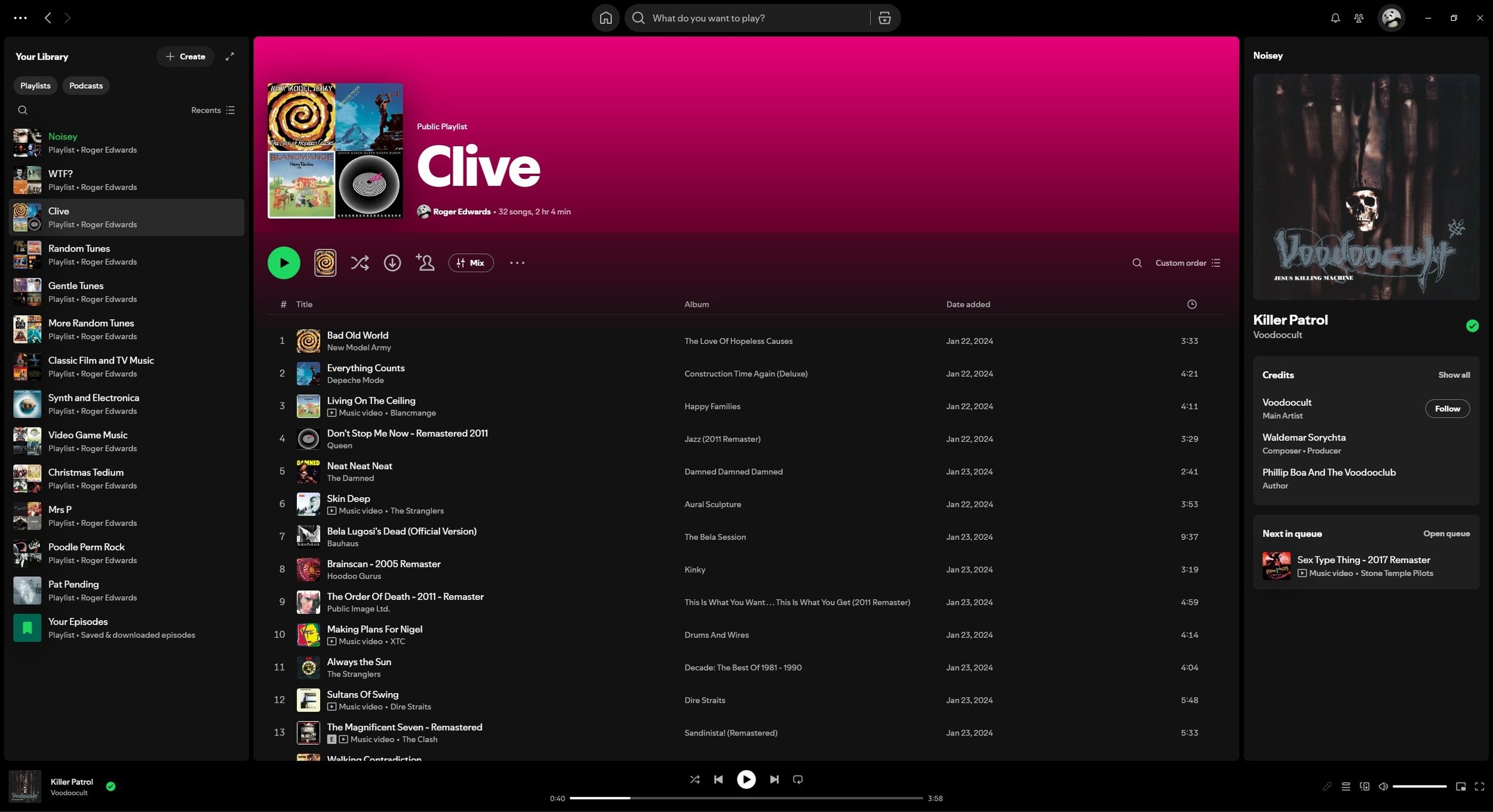
The Guardian news website have a recurring feature in their “culture” section called Honest Playlist where they ask various celebrities about their music listening habits. There are a dozen or so stock questions that they use to grill their guest, although they don’t always use the same ones. I think it makes for interesting reading so its a column that I often visit. As I haven’t published a post based upon an internet questionnaire for a while, I thought I poach this particular line of questioning and have a crack at it myself. I have chosen the ten questions that I think are the best and by that I mean, they have the most scope for interesting answers. I didn’t include the one about karaoke because it’s not something I especially like. Each to their own. Feel free to similarly purloin this set of questions and write your own responses. I’m always fascinated by these sort of things.

This post is inspired by Axxuy, who recently replied to an open post by Forking Mad. It’s a simple set of questions and a convenient writing prompt for those occasional slow days. Now some folk can get quite “sniffy” about these sorts of posts. Perhaps they think they’re too insubstantial or too easy or something. Irrespective of whether such assertions are true or not, I would like to point out that one of the most popular posts on Contains Moderate Peril is a similar sort of internet questionnaire, titled “Would You Rather - The Gaming Edition”. Originally posted in late August 2021, it has been read over 18,000 times. Now I’m not advocating shameless “ambulances chasing” and “jumping on bandwagons” but I am reminded of the old adage, “if the shit fits, wear it”. Hence, you’ll find no prejudice against internet questionnaires on this blog. Here are ten pointless facts about me.

If you’re familiar with this blog then you know that I like an internet questionnaire. A little bit of introspection can be quite a useful thing. This particular questionnaire, the “Blog Questions Challenge”, was originally created for users of Bear Blog. However, the questions have subsequently been adapted to make them applicable to other blogging platforms and therefore accessible to a wider audience. I recently discovered this particular questionnaire over at Alvan’s Digital Garden and thought the selection of questions to be interesting. Hence I have decided to tackle them. If you’re a blogger yourself, feel free to follow suit and use this set of questions, as I think that it’s always interesting to know what inspires people to write and what path brought them online.

I spent some time today, looking for a new internet questionnaire as they make for fun and quirky blog posts (by which I mean lazy and easy ones). Sadly, most of the search results that Google found were ones I’ve done already. So I thought why not ask the online AI, ChatGenie, to provide the questions? Surely it can’t be that difficult to come up with some interesting talking points? Well it turns out it is, because the 10 questions that the AI has provided are not especially inspired. However, I did find it amusing how ChatGenie justified itself, explaining where the mirth and hilarity lie in each of its questions. Therefore, here are my answers to what I am officially calling the ChatGenie Questionnaire. Feel free to complete it yourself.

Using his prodigious experience as a chat show host, Stephen Colbert (of the eponymous The Late Show with Stephen Colbert fame) has crafted 15 hard-hitting, probing and perceptive questions, as a means to dissect and analyse his celebrity guests. These include such insightful inquiries as “What is the scariest animal?”, “What do you think happens when we die?” and “Apples or oranges?”. So far these questions have been successfully used by Mr Colbert to interrogate the likes of Keanu Reeves, Jeff Goldblum and Sandra Bullock. Hilarity naturally ensued, or at least by the standard of US network television. I’m not really a fan of the “celebrity talk show” because it doesn’t really exist as such anymore. What we now have instead is the “celebrity with something to sell show” but that gripe is best addressed in a separate blog post.

Great, it’s internet question time once again. Regular readers will already know that I really like these sorts of things. Unlike Sparks, I do have the time to answer questionnaires. Despite the fact that such articles are often considered lightweight writing, I do believe that even the most vacuous line of enquiry can yield an interesting post. This time round I have a diverse set of questions from two very different sources. The first five are courtesy of ChatGPT, which seems just as capable of asking sublimely asinine questions as real people. The next five come from Cosmopolitan. A publication and website that you wouldn’t immediately associate with me. However, out of the various questions available on both sites, I have chosen ten that I think have scope for reasoned debate and interesting answers. Thanks very much to UltrViolet and Hamatti for providing the aforementioned lines of enquiry.

I’m not sure where it came from but I have a page of allegedly philosophical questions bookmarked in Google Chrome. As it’s filed under “blogging” I suspect that these may have been saved as an emergency source of inspiration if I were in need of a writing prompt. Well I’m not exactly brimming with ideas today, so I’ve decided to avail myself of this list. I selected 10 questions randomly and shall now proceed to answer them. I am not claiming that my answers are as philosophical as the questions. I shall no doubt be flippant, sarcastic and possibly a little scathing, but I’ll endeavour to answer the questions properly (if they merit it). As I’ve said before about previous internet questionnaires that I’ve completed, sometimes what at first glance looks like lightweight material can inadvertently lead to some interesting discussions.

I’ve said it before and I’ll say it again, I’m a sucker for an internet questionnaire. Yes, I know such things are considered in some quarters as somewhat lightweight content. But not every blog post needs to be an insightful analysis of crop rotation in the 14th century or a searing indictment of the latest internet outrage. Sometimes answering a few simple questions in a light hearted fashion can be quite illuminating. Plus readers like to get to know something about the bloggers that they follow and internet questionnaires are a means to that. So without further ado, here is a set of questions known as “The Blogger Tag”. I first encountered this over at A Geek Girl's Guide care of Michelle. Do go and check out her take on these. Also feel free to use them yourself, as that is the idea behind answering them.

Ah, there’s nothing like an internet questionnaire to help you out when you’re scratching your head, desperately trying to think of something to write about. I don’t consider Blaugust to be complete unless there’s at least one of these “question and answer” style blog posts doing the rounds. This one is courtesy of Krikket over at Nerd Girl Thoughts. Do go and have a look at their unique take on the various questions. Naithin has also tackled this line of enquiry and you can find his answers at Time to Loot. As ever I tend to deviate from the somewhat binary nature of the questions but that’s the whole point, isn’t it? To open up the scope of the discussion and potentially encourage others to join in. This is why I like these sorts of internet questionnaires and think they contribute much to Blaugust.

Oh look, another internet questionnaire blog post. By now you must be aware of my weakness for these sorts of things (if not then take a look at the links to related posts at the bottom of this article). It would appear that the “never have I ever” format has been adapted and we now have a “have you ever” set of questions specifically aimed at gamers. As usual some of the questions are trivial but others offer scope for quite interesting responses. Etiquette dictates that I credit those who have already participated and answered these questions. They are as follows. Michelle over at A Geek Girl’s Guide. Pix1001 from Shoot The Rookie. Joseph Skyrim’s post can be found at JVT Workshop and pkudude99 share their thoughts at Nomadic Gamers. Do check out their take on the questions as there are some interesting replies. On to the questions and answers.

“The Mystery Blogger Award is an award for amazing bloggers with ingenious posts. Their blog not only captivates; it inspires and motivates. They are one of the best out there, and they deserve every recognition they get. This award is also for bloggers who find fun and inspiration in blogging, and they do it with so much love and passion”. Okoto Enigma
The Rules:
Ensure the award logo is used in your post.
List the rules.
Thank whoever nominated you and provide a link to their blog.
Mention the original creator of the award and provide a link to their site.
Tell your readers 3 things about yourself.
You have to nominate 10 – 20 people.
Notify your nominees by commenting on their blog.
Ask your nominees any 5 questions of your choice.
Share a link to your best post(s).

“The Mystery Blogger Award is an award for amazing bloggers with ingenious posts. Their blog not only captivates; it inspires and motivates. They are one of the best out there, and they deserve every recognition they get. This award is also for bloggers who find fun and inspiration in blogging, and they do it with so much love and passion”. Okoto Enigma
The Rules:
Ensure the award logo is used in your post.
List the rules.
Thank whoever nominated you and provide a link to their blog.
Mention the original creator of the award and provide a link to their site.
Tell your readers 3 things about yourself.
You have to nominate 10 – 20 people.
Notify your nominees by commenting on their blog.
Ask your nominees any 5 questions of your choice.
Share a link to your best post(s).

As some of you may know, I have a weakness for internet questionnaires. Yes, they can be looked upon as self indulgent filler that you post on a day when you’re strapped for inspiration, if you want to be snippy about them. But I find them quite insightful as I like to know about the people whose blogs I read. Sometimes it’s just as much about the person as it is about the blog post. “You are your own brand” and all that. But I digress. I saw this particular questionnaire over at Ace Asunder. Solarayo borrowed it from Quietschisto of RNG, who in turn purloined it from Chrisse of Vamp It Up Manchester who created the questions. There’s a broad spectrum of enquiries and scope for some informative and entertaining answers. So let us begin.

I got tagged by fellow blogger, Magimos, as part of the Real Neat Blogger Awards. Now I’m not entirely sure what that is. It’s one of those things where you get asked a bunch of questions, then get to set some yourself and then tag other people to answer them. I certainly don’t mind answering questions. I’ve already written in previous posts how I’m a sucker for internet surveys. But I’m not keen on tagging people. It’s a little invasive for my liking and I’m a stickler for etiquette. By all means ask people if they’d like to participate but never inflict things on people without consent. To me it’s the same as random people cold calling and trying to sell you stuff. Or religious types, knocking on your front door and asking if you’d like to join a Cthulhu cult. So I’ll just write my responses to Magimos questions and then write a few questions of my own, which I’ll leave for other to reflect upon and answer if they see fit.

Naithin over at Time to Loot has compiled a Blaugust related internet questionnaire. As I’ve made clear in the past, I have a weakness for these sorts of things and will happily indulge the most peculiar enquiries. I’m not really sure why I like to do questionnaires. Perhaps I feel at some level that even the crassest or vacuous of questions can yield a good or at least entertaining answer. Not that I’m saying that Naithin’s questions are any of those things. In fact I think they are quite engaging. The other thing about questionnaires is that I can make a really obscure and impenetrable pop culture reference about the band Sparks. So here are my responses to the all of them in full. An unedited stream of consciousness or load of bollocks, depending upon your perspective. I hope some of the other Blaugust participants also take part. It will be interesting to compare notes, so to speak.

At the beginning of November, I started to answer the various questions set out in The Proust Questionnaire, mainly because at some level I do like the occasional insight that “internet questions” can provide. Although most of my answers are frequently tinged with a degree of levity and at times even scorn, every now and then the right question can provoke a sincere response. So here are my measured replies to the remaining interrogative enquiries, for your consideration and edification. If you do not agree with them or find yourself at odds with my mindset, please address any complaints care of the late Marcel Proust (10th July 1871 - 18th November 1922).

The Proust Questionnaire was popularized by Marcel Proust, the French essayist and novelist, who believed that, in answering the questions, an individual provides an insight into his or her true nature. Whether that is true is debatable, but I do find the internets fondness for Q&A sessions, curiously fascinating. And as this very questionnaire has been recently resurrected by Vanity Fair magazine and has also been utilised on the Ricky Gervais is Deadly Sirius podcast, I though I’d jump on the same bandwagon, as I’m behind in my writing and this is an easy post. As there are thirty-five questions, I thought I’d tackle them over two days. So, without further ado, here are my considered and measured thought on the first seventeen.

Despite having written a blog posts claiming that there’s always something to write about, even I have days when I’m lacking inspiration. Or more to the point lacking in motivation to write. And today is a prime example. I’d much rather be doing something else, but I made a promise to myself to keep the blog content flowing. However, I discovered a selection of questions that have been doing the rounds, via Marathal over at Deez Words and decided to answer them. I’m sure you know the form. They’re a selection of “touchy-feely”, non-threatening questions designed to give the reader a simple thumbnail sketch of your “personality”. So, I thought to myself, “there’s today’s blog post”. I will try my best to answer sensibly and give as relevant answers as I can, but you know me.

Many of my fellow bloggers regularly posts details of what they’ve been reading of late. I must admit that although I received several books and graphic novels as Christmas presents, I’ve yet to start any of them. The bulk of my reading is done via my PC or Tablet and usually tends to be news articles, blog posts and research for my writing. The last book that I physically read was Titus Crow, Volume 3: In the Moons of Borea & Elysia by Brian Lumley and that was last November. So, I’ve decided to get back into reading in the traditional sense and as ever have allotted time in my schedule and set myself goals. As a carer I have numerous appointments to attend throughout the week with my parents. Rather than waste time on my phone perusing twitter and gawping at the internet, I shall use these periods to read.
Until fairly recently, I have maintained a somewhat casual approach to the system maintenance of my PC. “Casual” in this context is a subjective term. What I consider to be “casual” others may think to be robust or even rigorous. But I digress. I regularly undertake minor housekeeping such a clearing my web browser data, removing temporary or unwanted files and updating software. I also make sure that only essential services and programs start when I turn on my PC. I keep an orderly desktop and an intuitive filing system. However, I do very little with respect to maintaining the hardware inside my PC. I clean inside the case a couple of times a year and ensure that the fans are free from dust contamination but that’s about it. I have no idea if the installed RAM is running optimally or whether the processor is operating within the appropriate heat threshold. Does the thermal paste between it and the heat sink need replacing? Are all the cores enabled?