
The Problem with Housing in MMORPGs
Housing in the MMORPG genre continuously fails to reach its potential. Despite the scope it offers both in functionality and gameplay, it has seldom progressed beyond offering storage and some arbitrary customisation. Hence this is a perennial subject of debate for many MMO communities. Given the popularity of this subject, it would appear to indicate that there’s a potential market for expanded housing functionality. And yet many MMO developers still display a blindspot for this issue. You’d think that the scope for monetisation would prove a big enough incentive but housing just doesn’t seem to be especially high on their priority list. It is odd considering that the MMORPG genre is a fundamentally social one. Housing in theory offers so much scope to capitalise and explore this aspect of gaming. Yet it remains a cul-de-sac and an afterthought.
Housing in the MMORPG genre continuously fails to reach its potential. Despite the scope it offers both in functionality and gameplay, it has seldom progressed beyond offering storage and some arbitrary customisation. Hence this is a perennial subject of debate for many MMO communities. Given the popularity of this subject, it would appear to indicate that there’s a potential market for expanded housing functionality. And yet many MMO developers still display a blindspot for this issue. You’d think that the scope for monetisation would prove a big enough incentive but housing just doesn’t seem to be especially high on their priority list. It is odd considering that the MMORPG genre is a fundamentally social one. Housing in theory offers so much scope to capitalise and explore this aspect of gaming. Yet it remains a cul-de-sac and an afterthought.
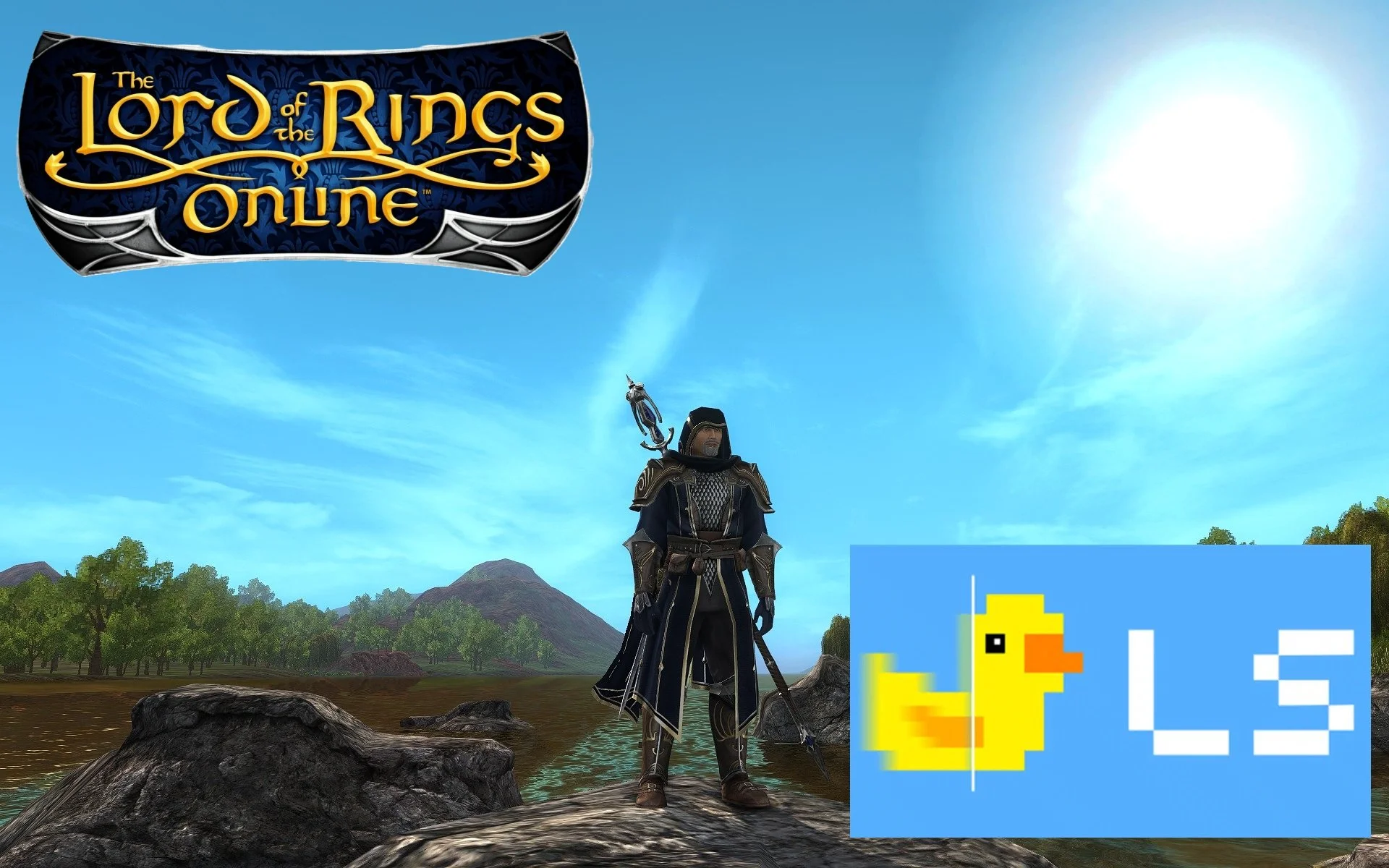
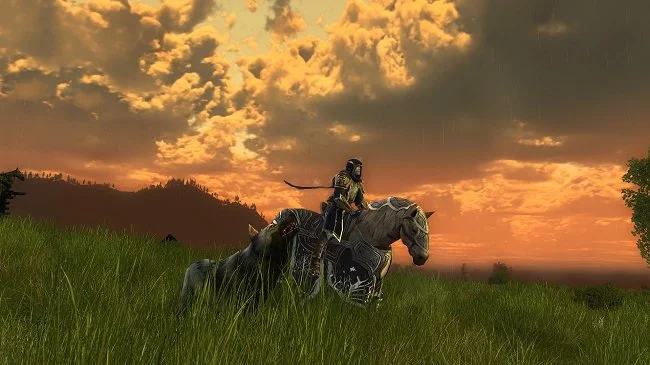
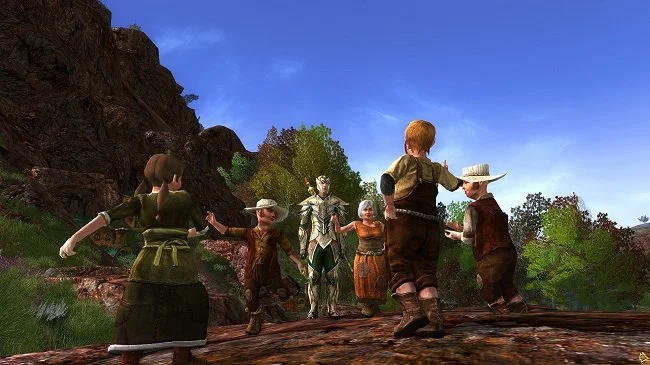
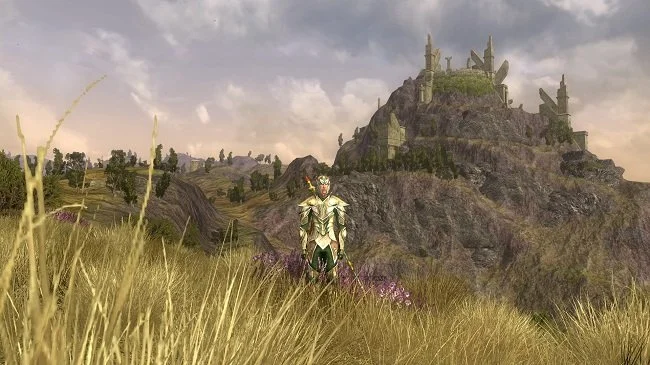
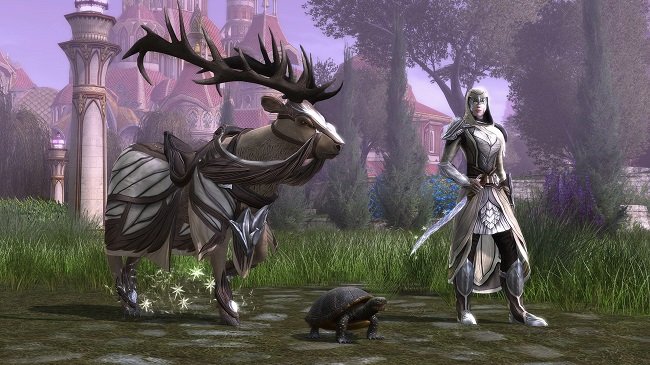
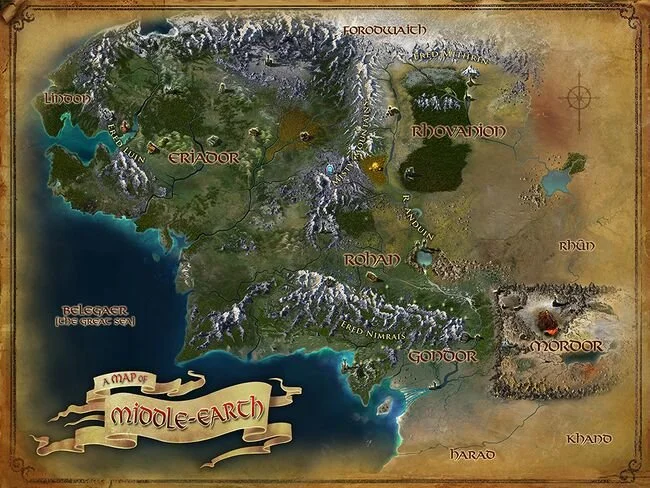
I have a Deluxe Premium House in The Lord of the Rings Online. It has crafting stations, storage, a “visiting banker” and a summoning horn which calls a vendor NPC. I have made an attempt to decorate it stylishly but beyond that I seldom visit it as it doesn’t offer anything else. There are some minor quests in the Cape of Belfalas housing zone but they are not repeatable. This is a real shame as they are quite enjoyable. Especially the one where you take an old and faithful dog out for a walk. The only real advantage my house offers is a fast travel skill that has a 1 minute cool down. I specifically chose a house at Bay Road as it is the nearest to a cluster of NPCs offering Auction House, Provisioner and Stable services. So my house mainly provides a travel hub service and nothing else. It all seems such a waste of resources. I suspect that the new Rohan based housing coming with Update 26 is not going to be anything radically different.
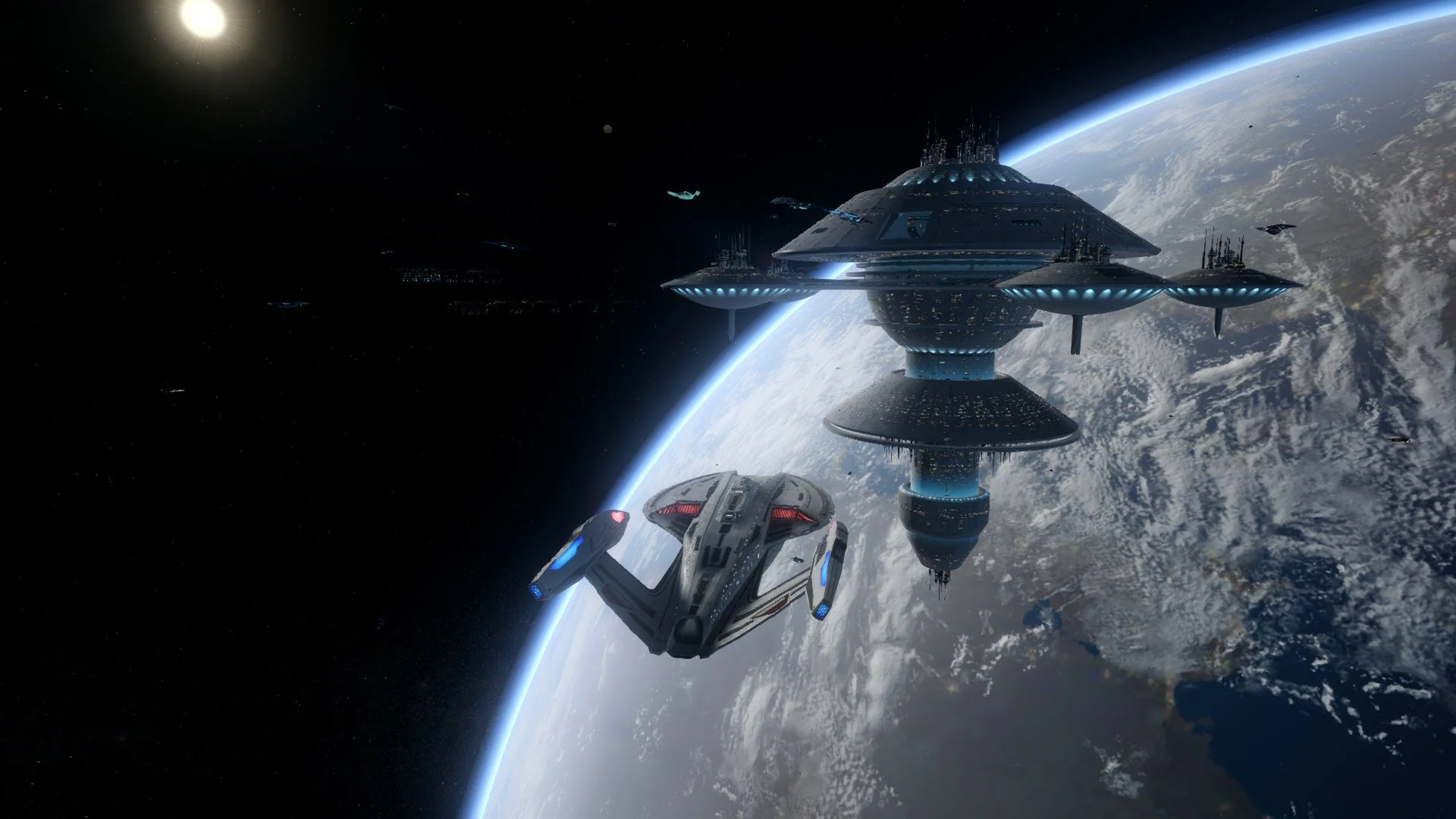
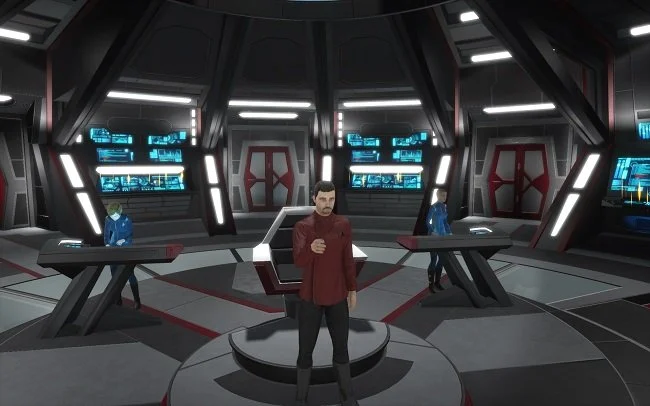
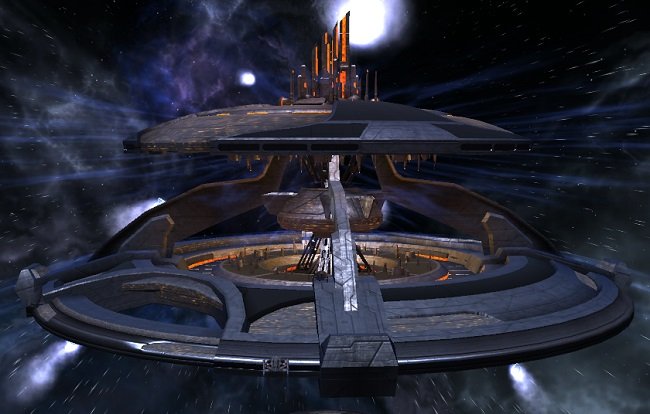
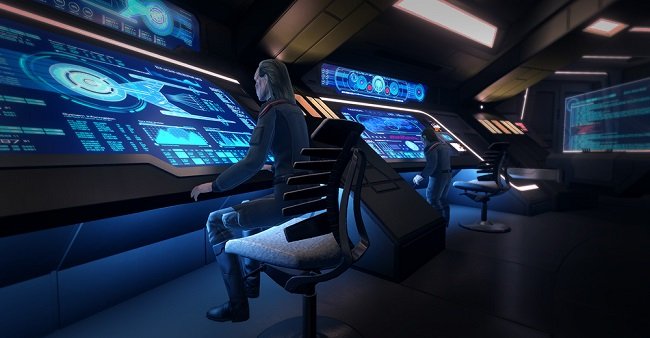
Star Trek Online deals with housing in a somewhat different way but ultimately still faces the same issues. Your ship is your house to all intents and purposes, providing shared storage and in some cases, access to the Exchange (auction house). You can visit Engineering, Sick Bay and your ship’s councillor and the NPCs will provide Duty Officer Missions. But again, there’s not much on offer beyond this. You can place trophies in the Captain’s Quarters and in the communal lounge. And you can also visit the bridge of your ship, although there’s only so many times you can sit in the Captain's chair and hit the “engage” emote before it gets old. Again this feels like a major missed opportunity. Some vessels offer minor variations on these services, such as bespoke Duty Officer Missions but it’s hardly a major selling point. Considering the amount of customisation you can do to your build and gear in STO, it would be nice to see the same ethos extended toward your ship interior.
If you ask a hundred MMO players what they want from housing in their game of choice, you’ll get 100 different answers. Perhaps that is one of the reasons why developers are reticent to tackle anything housing related. Personally, I’d like to see in LOTRO some sort of collective undertaking, similar to the Fleet Projects in STO. A system that allowed those living in a specific housing phase to contribute to group endeavours that would upgrade community resources. I’d like to see quests and tasks in housing areas. Why not give players a reason to visit their house and interact with their neighbours. Offering unique items can certainly be an incentive. In STO I’d like to see some quest content that offered you a chance to customise and augment your ship’s interior. Rather than just duty officer assignments, it would be nice to have some bespoke missions that involved the crew of your vessel. Something that would make your frequenting your ships various departments more than just a cosmetic exercise. It would certainly be useful to have all resources you find on Earth Spacedock available on your ship.
Although I never really warmed to the rebuilding of Hytbold in LOTRO, some of the systems found in that part of the game could be augmented and used in a housing scenario. Any form of interactivity is an improvement over just functionality. Perhaps a housing area could also have some sort of bespoke story quest line. Something that gives some character to an area, so it isn’t just a glorified storage service. What I don’t want to see is just an increase of cosmetic items. Although it is fun to be able to personalise the look of your virtual house, there needs to be more to it than just another collection to grind for. If customising leads to unlocking content then that would certainly add more depth. But I suspect that many developers simply prioritise PVE content development over everything else, for practical reasons. Although you can argue that taking a risk with housing could well pay off. But I suspect that it will remain an untap resource and all we’re likely to see in any new MMOs will be the straightforward “by and collect” approach we see in The Elder Scrolls Online.






Making Your Own Fun
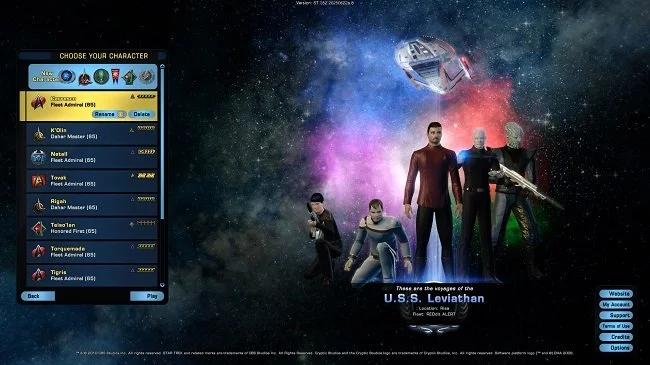
I’ve yet to read a cogent definition of the term “emergent gameplay”, so it won’t feature in this post because I’m not sure if I fully grasp the concept. It seems to be a very elastic term. However, what I will say is that sometimes you run out of officially sanctioned tasks to do, when playing an MMO. You find yourself having completed all quests and missions, languishing at level cap with acceptable gear and kicking your virtual heels. It is at this point one of two things happens. You either find a means of keeping yourself engaged with the game, or you logout and find something else to play. Too often have I done the latter. At present, I’m currently at the “what should I do now” stage both in The Lord of the Rings Online and Star Trek Online. This time rather than just temporarily abandoning these games, I intend to set myself some new goals and effectively make my own fun. It may or may not work. But at the least it will make for a couple of blog posts.
I’ve yet to read a cogent definition of the term “emergent gameplay”, so it won’t feature in this post because I’m not sure if I fully grasp the concept. It seems to be a very elastic term. However, what I will say is that sometimes you run out of officially sanctioned tasks to do, when playing an MMO. You find yourself having completed all quests and missions, languishing at level cap with acceptable gear and kicking your virtual heels. It is at this point one of two things happens. You either find a means of keeping yourself engaged with the game, or you logout and find something else to play. Too often have I done the latter. At present, I’m currently at the “what should I do now” stage both in The Lord of the Rings Online and Star Trek Online. This time rather than just temporarily abandoning these games, I intend to set myself some new goals and effectively make my own fun. It may or may not work. But at the least it will make for a couple of blog posts.
I still have a hankering for a Tier 6 Constitution Class ship in STO. Specifically one from the TOS era, rather than the Kelvin Timeline or DISCO period. However, to get one I’ve either got to buy the 10th Anniversary Legendary Ship Bundle (which requires selling a kidney) or open a ton of Infinity Promotion Research & Development Packs. You can either buy these for Zen (real money) or Energy Credits (ingame currency) via the Exchange. Occasionally a reward pack containing one of these ships does come up for sale on the Exchange but this is usually between 1.5 and 2 billion Energy Credits. Which leads me neatly on to the subject of earning this in-game currency. Some MMOs are laid back when it comes to generating revenue. STO is not one of them. Something that Cryptic has tried to address over the years. So I thought it would be interesting to see how many Energy Credits I could earn in a fixed period of time. This would then be an interesting litmus test to see if a player could realistically raise the necessary funds to buy one of these ridiculously expensive vessels. So having blown all my in-game cash, I’m going to see how much I can raise over the next 28 days. Watch this space for further details.
Meanwhile in LOTRO, I’m going to grasp the nettle and see what I can do to improve my Legendary Items. There has got to be another way to earn Anfalas Scrolls of Empowerment, other than just running the same old Minas Tirith dailies. I shall search through all my festival and rep related barter currencies and see if there’s anything that can be cashed in. This reminds me of yet another promise that Turbine/Standing Stone Games have yet to make good on; a decent currency exchange program or a universal barter currency. And if grinding chores for LI improvement fails to excite me (and I suspect it that it will) there is always completing deeds to raise the level of slotted virtue traits. The level cap has now been raised to 68, so there’s scope for statistical improvement if these are maxed out. And if both these options are a washout, I may just do some buying and selling on the auction house. Playing the markets in an MMO has always been a fun way to enjoy commodities trading without any of the risk of its real world counterpart.
Many of my gamer friends and colleagues make their own fun when playing MMOs. Some will set themselves “iron man” criteria for their ongoing gameplay, playing within fixed builds or specific gear sets. Others confine themselves to specific expansions or just continuously roll new alts. I often find players in my kinship/fleet/guild busy achieving accolades, completing obscure deeds and generally pursuing that game in an unconventional manner. Thankfully the MMO genre lends itself to these kinds of extracurricular activities. There can be pleasure and enjoyment found in many obscure aspects of the virtual worlds we visit. For example, I will sometimes log into LOTRO and just ride around where my fancy takes me, enjoy the aesthetics of the world. If the MMO genre didn’t offer these kind of adaptable freedoms I think a lot of these games would soon lose their audience once they had exhausted traditional content. So here’s to making your own fun and doing things your way. The fact that this annoys certain types of gamers makes it all the more enjoyable.
Star Trek Online: The Admiralty System and Farming Dilithium
Dilithium is one of the major currencies that can be earned in the MMORPG Star Trek Online. It is given as a reward for playing through Story Missions, Task Force Operations (group PVE content), Duty Officer Assignments and other aspects of the game. Dilithium is initially awarded as ore. The player then has to refine it to be able to spend it. Furthermore, there is a cap of 8,000 Dilithium ore refined per day. Once refined, players can use Dilithium to purchase various items and services ranging from new ships, as well as space and ground equipment. Dilithium is also used in upgrading or re-engineering equipment. Another benefit of Dilithium is that it can be exchanged for Zen, STO’s premium currency. Although Zen is primarily bought with real money, Cryptic provides an in-game exchange service in which players can trade surplus Dilithium for Zen. The exchange rate can fluctuate and has steadily risen over the last ten years. Yet despite this, Dilithium continues to be a tangible and much desired resource.
Dilithium is one of the major currencies that can be earned in the MMORPG Star Trek Online. It is given as a reward for playing through Story Missions, Task Force Operations (group PVE content), Duty Officer Assignments and other aspects of the game. Dilithium is initially awarded as ore. The player then has to refine it to be able to spend it. Furthermore, there is a cap of 8,000 Dilithium ore refined per day. Once refined, players can use Dilithium to purchase various items and services ranging from new ships, as well as space and ground equipment. Dilithium is also used in upgrading or re-engineering equipment. Another benefit of Dilithium is that it can be exchanged for Zen, STO’s premium currency. Although Zen is primarily bought with real money, Cryptic provides an in-game exchange service in which players can trade surplus Dilithium for Zen. The exchange rate can fluctuate and has steadily risen over the last ten years. Yet despite this, Dilithium continues to be a tangible and much desired resource.
Due to the value players place upon Dilithium, many create multiple alts so that they can farm it on a daily basis. The easiest means to do this are Duty Officer Assignments and the Admiralty System. Both are card based mini games, involving assigning Duty Officers or Ships with appropriate statistics to a specific mission. These virtual tasks are time based and if completed with a positive outcome, yield a modest supply of Dilithium as a reward. Now with any such undertaking, the merits of the time to cost ratio are subjective. If you have two or three alts, it will take about 5 to 10 minutes to log in and set up the various tasks that will net you the Dilithium you require. However, there are players that farm across dozens of alts, spending up to an hour or more setting up the appropriate missions. A long time favourite has been the Klingon Admiralty campaign as it yields the most Dilithium. Dedicated players can easily gain a 70K plus of Dilithium across a dozen alts. And STO has lots of very dedicated players. Hence, many have built up substantial stock piles of Dilithium over time.
It is this glut of Dilithium that has prompted STO’s developers, Cryptic, to once again take action. In the past cosmetic items have been made available for purchase with Dilithium to try and absorb some of the surplus stock. Then the much coveted Phoenix Prize Pack would from time to time appear, again purchasable for Dilithium only. But the problem persists and for Cryptic it is indeed a problem. As a developer and a business, they would prefer players to buy Zen with real money, rather than stockpiled Dilithium. However, simply removing the Dilithium exchange service would be a PR nightmare, so they have just announced plans to alter the Klingon Admiralty Campaign, so that instead of rewarding players with actual Dilithium ore, it will instead give them a voucher for Dilithium that can be used on Fleet Projects. Essentially, this is a form of Dilithium that cannot be exchanged and can only be used for one specific purpose. Naturally, this “revision” has been met with a somewhat mixed response among the STO community. Casual players such as myself, tend not to farm Dilithium beyond what can be acquired on just one character. I gain enough each time I play to upgrade gear but have never raised sufficient to buy tangible amounts of Zen. But there are a substantial amount of players that run Dilithium farming as a cottage industry and this change will set them back.
Cryptic’s “reset” is not quite as catastrophic as some players would have you believe. It is a nuisance to those who farm and will impact upon how much Dilithium they can obtain a day. But it didn’t take long for some rather comprehensive actions plans to emerge on the official STO subreddit. Knowledgeable players have already suggested alternative means of farming Dilithium. Specific Duty Officer Assignment chains have been recommended, along with trading Duty Officers themselves. Then there is creating new alts, leveling and claiming account wide rewards from previous Delta, Gamma and Temporal events. The bottom line is resourceful players will find a way to continue farming Dilithium. It may even have the positive side effect of seeing players return to previously ignored parts of the game, such as the Ground Battlezone in the Solanae Dyson Sphere. Currency adjustments are always tricky to implement both logistically and “politically”. On this occasion I think Cryptic have managed to find the right path between both.

Star Trek Online: Keeping Busy
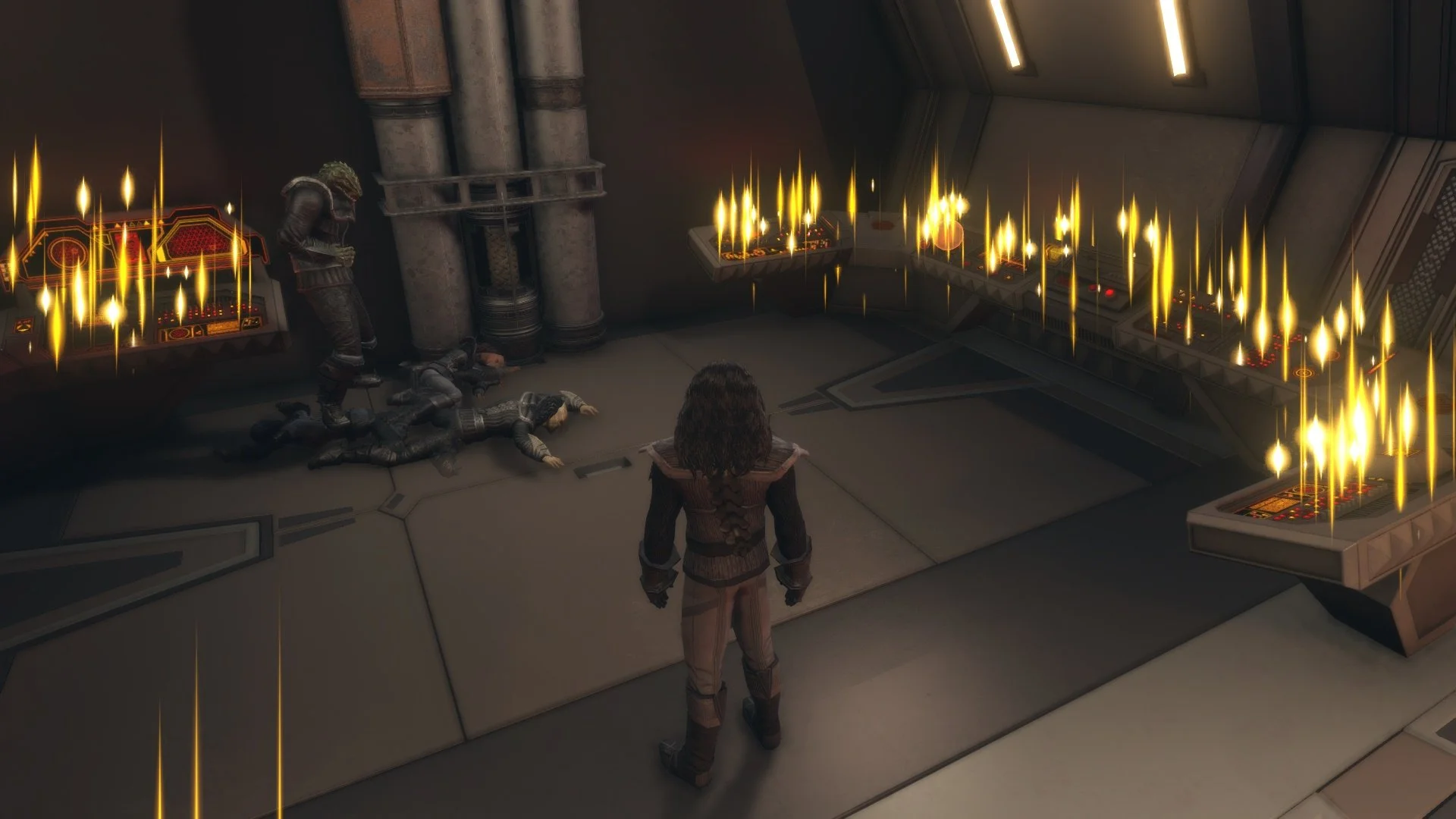
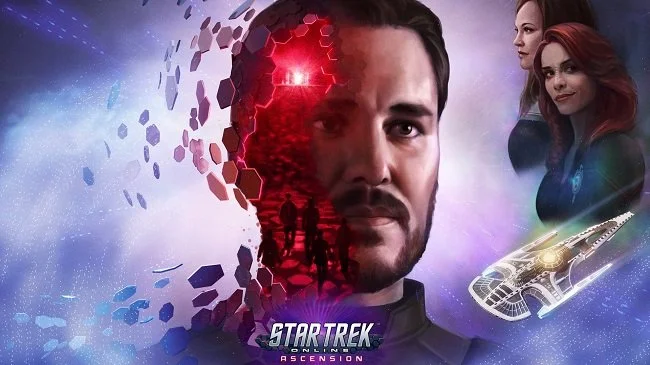
Although the 10th anniversary event is still ongoing in Star Trek Online, the overall excitement seems to be ebbing. I have played the new two part Feature Episode and it is indeed a thoroughly enjoyable fan service. Cryptic hit exactly the right tone with this story and it has re-invigorated my enthusiasm for the Star Trek franchise as a whole. I have managed to organise things so that I can complete the Omega Molecule Stabilisation anniversary event early each morning. This way I can complete this quick 15 minute task before I leave the house. I’m hoping to be able to claim the new ship early next week. However, overall I have little to do in the game at present. I did some housekeeping and deleted some unused alts, after asset stripping them of anything of note. I also cleaned up my personal bank and either “salvaged” or sold numerous items that weren’t currently being used. I have placed all my Tier 5U ships into Dry Dock and rationalised my active Tier 6 vessels. I am now setting myself some minor goals, as a means of keeping busy, until further new content is released.
Although the 10th anniversary event is still ongoing in Star Trek Online, the overall excitement seems to be ebbing. I have played the new two part Feature Episode and it is indeed a thoroughly enjoyable fan service. Cryptic hit exactly the right tone with this story and it has re-invigorated my enthusiasm for the Star Trek franchise as a whole. I have managed to organise things so that I can complete the Omega Molecule Stabilisation anniversary event early each morning. This way I can complete this quick 15 minute task before I leave the house. I’m hoping to be able to claim the new ship early next week. However, overall I have little to do in the game at present. I did some housekeeping and deleted some unused alts, after asset stripping them of anything of note. I also cleaned up my personal bank and either “salvaged” or sold numerous items that weren’t currently being used. I have placed all my Tier 5U ships into Dry Dock and rationalised my active Tier 6 vessels. I am now setting myself some minor goals, as a means of keeping busy, until further new content is released.
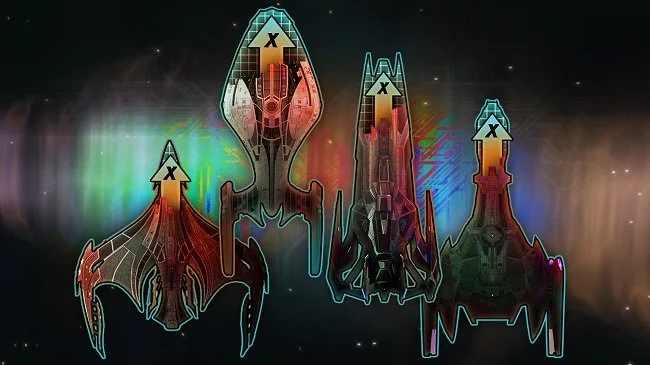
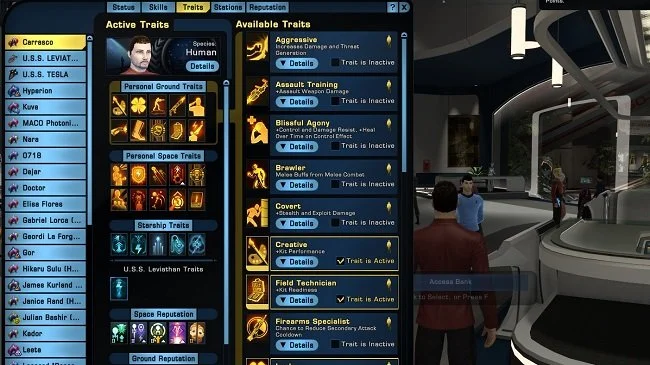
Whilst organising my ships, I noticed that several had not reached full Starship Mastery. This is a simple five tier experience system for each individual T5U/T6 ship. Each level unlocks a trait relevant to that ship and full mastery offers a unique starship trait which can then be slotted regardless of what ship you are using. Some ships have especially desirable top tier traits. So I’ve been rotating through a variety of vessels and taking part in various Task Force Operations and Battlezones to gain the necessary mastery XP. It is worth doing some research beforehand as some of these activities offer more XP than others and there are a few that offer no XP at all. One of the benefits of alternating between a wide variety of vessels in a short period of time, is that you quickly get a feel for their respective strengths and weaknesses. It is also a great way of determining what suits your play style and then deciding what would be your best choice in the long run.
Something else that I’m doing to keep busy, is completing various Duty Officer Assignment Chains, although it is not exactly “enthralling”. I’ve never really been that invested in the entire Duty Officer sub-game in STO and have only done what is immediately available to me. As I’m by default usually hanging out at Earth Spacedock, I have run mainly the assignments that are presented there or at Starfleet Academy. Over time I have achieved Rank 4 in all commendation categories but have ignored the assignment chains associated with Sector Space. Hence, I am currently rotating between the Delta Volanis Cluster, the Eridan Belt and the Khazan Cluster. Once these are complete I’ll just progress through the others assignment nodes in each Sector. It does provide a useful alternative means to earn further Dilithium and bespoke Duty Officers.
After having watched a few YouTube videos, I’ve been replaying selected missions to earn various items that are still deemed to be of benefit. Over the last decade a lot of gear sets have fallen out of favour as the prevailing optimal combat meta has moved on. Several years ago, Antiproton weapons were “king”, but once the Embassy Consoles that enhanced them were nerfed, they were quickly superseded as the go to weapon of choice. I personally always like to use Phaser weapons with my Federation ships, so I tend to just find a practical build that enhances their use. I do not have the best traits and gear as much of these are tied to specific ships that can only be obtained from lootboxes. So I use my common sense and work with what I can obtain from the Reputation System and Fleet Resources. It can be fun to try different permutations of equipment and as I’m between major projects at present, this is a good time for a little experimentation. Hopefully, these relatively low key activities can keep me busy and engaged with STO for the immediate future.
5 of My Favourite Quality-of-Life Mechanics in MMOs
Over the years I’ve played numerous MMOs (to varying degrees of success). As a genre there are certain game mechanics that are standard and common to most games. Initially during the “golden age” of the MMORPG, there was a focus on collaborative team player. This meant that successfully undertaking group content required a spectrum of players in specific roles. This particular mechanic has diminished over the years but the genre still has numerous common tropes. Quest hubs, reputation factions, gear grinds and vertical levelling are just some that spring to mind. However, many developers in this field attempt to polish and refine these “default” systems, often with interesting results. So I thought I’d cite some specific examples of what I call “quality-of-life mechanics”. Frequently these are bog standard facets common to the MMO genre, that have been polished and refined in a particular game. Small things that just make a game more manageable and provoke a positive reaction as well.
Over the years I’ve played numerous MMOs (to varying degrees of success). As a genre there are certain game mechanics that are standard and common to most games. Initially during the “golden age” of the MMORPG, there was a focus on collaborative team player. This meant that successfully undertaking group content required a spectrum of players in specific roles. This particular mechanic has diminished over the years but the genre still has numerous common tropes. Quest hubs, reputation factions, gear grinds and vertical levelling are just some that spring to mind. However, many developers in this field attempt to polish and refine these “default” systems, often with interesting results. So I thought I’d cite some specific examples of what I call “quality-of-life mechanics”. Frequently these are bog standard facets common to the MMO genre, that have been polished and refined in a particular game. Small things that just make a game more manageable and provoke a positive reaction as well.
Neverwinter: Quest Path.
It frankly annoys me the way some game designers go out of their way to make navigating around their virtual world so damn difficult. Cities are often complex with non-linear road layouts and there are frequently esoteric quirks that you just have to figure out the hard way. I’m sure somewhere there’s a self satisfied dev whose smirking at how clever they’ve been, as you run around a major quest hub in an increasingly frustrated state, looking for a particular NPC or item. However Cryptic have addressed this matter head on with the Quest Path facility in the MMO Neverwinter. If you want a helping hand this game mechanic provides a sparkly trail that takes you directly to your next quest location. It is simple, functional and also purely optional. Purists can learn their way around if they prefer. Where as casual players, those with a poor sense of direction or individuals who prefer to focus on other aspects of the game can opt to avail themselves of this service. I really wish this was available in more MMOs.
The Elder Scrolls Online: Content Scaling.
Many older MMOs suffer from a common problem. Increases in level cap, along with an ever growing catalogue of content, lead to older material becoming redundant. There is no incentive to play older, lower level quests once you have reached level cap nor to revisit completed regions and instances. Furthermore, new players cannot play with veteran friends due to their obvious level differences. This is just poor game design and it also antagonises players. However, two years after its initial release, The Elder Scrolls Online tackled this very issue in late 2016 with the One Tamriel update. This allowed players of any level, in any faction, to travel to any other PvE zone and tackle appropriately-scaled content. Hence a veteran player can now group a newbie and both will equally benefit with regard to XP and loot drops. It is literally a “game changing” achievement that makes the game far more inclusive and open ups a wealth of previously gated content. Should this not be a default system in every MMO?
Star Trek Online: Upgrading Gear and The Exchange.
Cryptic’s MMO ode to the Star Trek franchise is far from perfect. Even after 10 years it still sports numerous bugs and as a game has never really hit its full potential. However, it does get a lot right and exudes an appropriate Trek vibe. It also includes not one but two straightforward systems that improve the game immensely. The first is the opportunity to upgrade gear and even change the statistical modifiers on it. Therefore if you take a liking to a Mark I item at the start of the game, you can retain it and upgrade it as your character progresses through the 65 levels. Yes, this can be quite a costly process with regard to using in-game resources but does means that not every item is doomed to obsolescence. You don’t have to unceremoniously ditch something you’ve worked hard to obtain. And the other thing that I feel STO does very well is its own unique version of “auction house” or The Exchange as it’s known in this case. Firstly STO runs on one shard, so there is a substantial customer base to interact with. Secondly, there are no listing fees at all. Thirdly, the moment an item sells you are notified and the cash (Energy Credits) go straight into your virtual wallet. Although hyperinflation is a thing (as it is in most MMOs), at least you don’t have to worry about selling items quickly and efficiently.
The Lord of the Rings Online: Auto Loot.
I find it ironic that one of the most old school and somewhat dated MMOs around, still manages to have a game system in place that is still lacking from more recent titles. The Lord of the Rings Online added auto loot to the game with the Rise of Isengard expansion back in 2011. Until then, you had to approach a defeated foe and manually collect your loot on a per item basis or as a whole. At the most you could assign this process to a specific key and hoover everything up within a small AoE but it was a pain. Sifting through loot at source always has been and remains so a potential problem. But auto loot changed this and did so in a radical fashion. The moment you now defeat an enemy, all loot is directly placed in your bags. Again for those who wish to sift manually, this setting can be toggled off but for us busy, lesser mortals, we can just blast through an area indulging in mass slaughter, safe in the knowledge that all loot has been collected. The only thing you have to be aware of is your respective bag space, and if you screw that up there’s a very generous overflow system. Again, shouldn’t this be the norm?
So these are five examples of “quality-of-life mechanics in MMOs” that I find invaluable. I’m sure there are plenty of others out there that can be referenced. Feel free to leave comments below of examples that you enjoy and would like to mention.
Star Trek Online: Ten Years On
Star Trek Online had a troubled development. Originally the rights to develop an MMORPG based upon the Star Trek franchise were held by Perpetual Entertainment. However, the company ran into financial difficulties and the project subsequently stalled in 2007. The license, as well as any game content were subsequently transferred to Cryptic in early 2008 but this did not include any existing game code. Hence, after gaining little more than some concept art, Cryptic had to create an entirely new game from scratch. Furthermore as part of the deal in acquiring this coveted license, they were tied to the launch date that had been set for the previous developers.Therefore when Star Trek Online was released in early 2010 it was far from perfect. The game was weighted towards Federation characters and the Klingon faction could only be unlocked once you had taken a Starfleet Officer to the then level cap of 40. However, the game at launch did feature voice acting from Zachary Quinto, Chase Masterson and Leonard Nimoy.
Star Trek Online had a troubled development. Originally the rights to develop an MMORPG based upon the Star Trek franchise were held by Perpetual Entertainment. However, the company ran into financial difficulties and the project subsequently stalled in 2007. The license, as well as any game content were subsequently transferred to Cryptic in early 2008 but this did not include any existing game code. Hence, after gaining little more than some concept art, Cryptic had to create an entirely new game from scratch. Furthermore as part of the deal in acquiring this coveted license, they were tied to the launch date that had been set for the previous developers.Therefore when Star Trek Online was released in early 2010 it was far from perfect. The game was weighted towards Federation characters and the Klingon faction could only be unlocked once you had taken a Starfleet Officer to the then level cap of 40. However, the game at launch did feature voice acting from Zachary Quinto, Chase Masterson and Leonard Nimoy.
The following few years were difficult as Cryptic attempted to polish the game in subsequent updates. Throughout 2010 that game was patched for known bugs, new playable species were added, along with Featured Episodes (story based quests that made up a long term, narrative arc). Cryptic also released a set of tools for players to create their own content and the Foundry subsequently became an integral part of the game. Yet despite their hard work, Cryptic found their immediate future in peril when parent company Atari decided to “divest” its various business interests. However, in May 2011, Chinese developer and publisher Perfect World stepped in and acquired Cryptic as a studio, its existing licenses and development team. By summer the game was having a UI overhaul, a revision to ground combat and the Klingon First City on Qo’noS. The new owners investment lead to an expansion of the development team which then produced the Defera Adventure Zone, Duty Officer system and a skill revamp. There was also a shift in business model and so in early 2012 STO went Free-to-play.
The period between 2012 and 2016 was in many ways a boom time for STO. There were regular story content updates, three free of charge expansions (Legacy of Romulus, Delta Rising and Agents of Yesterday) and numerous new game systems. These included Captain Specialisations, an overhaul of sector space to make it less “instanced” and several new Fleet resources. Reputation factions were also added, along with further playable races. STO always had new content in development and scheduled. Furthermore, more and more actors from the various TV shows were returning to voice their characters in game. Despite the gaming public being sceptical of the F2P business model at the time, it subsequently proved to be one of the more equitable examples. The game was ported to consoles by late 2016, something that was originally intended when the STO was conceived. Yet despite the growth and expansion during this period, STO still had to play catch up as a result of the initially rushed development. Bugs have been fixed but many still prevail. Due to the ebb and flow of staff and development priorities, many facets of the game have been abandoned. The Mac client was decommissioned, as was the Star Trek Online Gateway which allowed players to access stats and data, outside of the game.
Since 2017, although there was the release of a fourth, Deep Space Nine themed expansion (which really encapsulated the idiom of the show), much of the new content produced for the game has been co-operative PVE based material, repeatable daily missions and event based projects that reward the player with gear. A lot of this has been linked Star Trek: Discovery. There have been some new traditional story based missions but they have been fewer and far between. Cryptic are still remastering older content and although I must admit they’re doing it well, the pace is somewhat slow. Several iconic missions are still conspicuously absent and the game has had so many overhauls and restructurings, the narrative content is somewhat fragmented and difficult to follow due to plot holes caused by absent material. STO still has an issue with a lot of story and game systems being buried in more esoteric portions of the user interface. And then there is the game economy; the bane of many an MMO. Inflation for high end items and ships is rife.
And so to the present. STO is fast approaching its 10th anniversary. Naturally, Cryptic are making noises about there being major celebrations. No doubt there will be a new Tier 6 ship giveaway and the usual baubles and trinkets one expects with MMOs. But at present there has not been any clarification of the long term “road map” for the game. STO has a healthy and more to the point, loyal core player base. Like The Lord of the Rings Online, the intellectual property attracts fans and keeps them simply because there is no other comparable game. But if you visit the official STO subreddit you will find that players have a wide variety of desires and expectations from the game. Crafting is a neglected area, as it exploration and diplomatic themed content. Cryptic have brought patrols back to the game but considering the number of planetary systems that exist in the game, there are still insufficient numbers. Players are concerned about the lack of variety in builds and how optimal loadouts continue to prevail. STO is also a game that has no imperative to play collaboratively. Task Force Operations require weight of numbers but not players playing specific roles. Notions of the traditional MMO trinity have long since vanished. There is also no meaningful endgame as such. Chasing maximum DPS seems to be the only viable pursuit at level cap. That or a focus on cosmetic appearance, known in-game as “Space Barbie”.
Again, I return to the comparison with fellow MMORPG LOTRO. The reason that the Middle-earth based game has survived over a dozen years is because the developers always focus on the core requirement of its players; namely the regular provision of new narrative content that explores the source material’s lore. Turbine and now Standing Stone Games have added much to the game over the years but they have always ensured, even during lean periods, that there was an additional story driven quests to undertake. People come to STO because it is Star Trek. They want access to a virtual version of Gene Roddenberry’s vision so they can explore the worlds and themes that Star Trek has created over fifty years. Stories that touch upon iconic episodes or reference obscure aspects of canonical lore are always appreciated and warmly welcomed. Yet this sort of content appears to be in decline as Cryptic dither over whether to make the game meet its potential or simply exploit the latest iteration of the show to contribute towards STO just being another “live service”. The 10th anniversary is the perfect opportunity to put STO back on track and for the game to be all it can be. Let us see what happens next.
A Year in Gaming
Life is often cyclical, if you don’t believe me go watch The Lion King. I started 2018 playing The Lord of the Rings Online and by writing a post about how gamers collectively seem to repeat the same mistakes. And as the year and indeed the decade ends, I find myself once again playing the Yule Festival in LOTRO and reflecting upon how some games that garnered criticism over their egregious business models, have ended up as huge hits. It would appear that gamers are their own worst enemy. I shall leave the psychological analysis of paradox to others. From my perspective, irrespective of the iniquities of the video game industry and certain quarters of the gaming community, it has been a good year, gaming wise. I have enjoyed my time playing MMOs such as Star Trek Online, The Elder Scrolls Online and the aforementioned LOTRO. These and other titles have entertained me, provided me with an opportunity to unwind as well as affording me some much-needed social interaction. I particularly enjoy Wednesday evenings when I log into my Discord server and then chat and play collaboratively with longstanding gaming friends.
Life is often cyclical, if you don’t believe me go watch The Lion King. I started 2018 playing The Lord of the Rings Online and by writing a post about how gamers collectively seem to repeat the same mistakes. And as the year and indeed the decade ends, I find myself once again playing the Yule Festival in LOTRO and reflecting upon how some games that garnered criticism over their egregious business models, have ended up as huge hits. It would appear that gamers are their own worst enemy. I shall leave the psychological analysis of paradox to others. From my perspective, irrespective of the iniquities of the video game industry and certain quarters of the gaming community, it has been a good year, gaming wise. I have enjoyed my time playing MMOs such as Star Trek Online, The Elder Scrolls Online and the aforementioned LOTRO. These and other titles have entertained me, provided me with an opportunity to unwind as well as affording me some much-needed social interaction. I particularly enjoy Wednesday evenings when I log into my Discord server and then chat and play collaboratively with longstanding gaming friends.
In many ways, 2019 was just the same as any other year. If I may quote myself, I wrote on January 1st "it does not seem unreasonable to expect more shitty video games and questionable business practises in 2019” and broadly that has proven true. The video game industry shovelled out yet more substandard products such as Mario Kart Tour, Tom Clancy's Ghost Recon Breakpoint and NBA 2K20. All of which are essentially the bare bones games with further content gated behind paywalls and microtransaction. Yet despite the inherent dishonesty of the “pay to start” business model, these titles sold and sold well, thus reminding us that people are the fundamental problem and as a result we get the gaming industry that we deserve. And as for the video game industry itself, it hardly covered itself in glory (again). The latest “trick” seems to be to release a game, get it reviewed and rated and then add an in-game store at a later date. Thus you can avoid any negative publicity during the initial launch window. And then of course there was the Blizzard debacle which raised the inherent dilemma in doing business with an authoritarian country such as China. Oh and “crunch” culture, institutionalised misogyny and general male centric douche baggery still seems to prevail in the industry.
However, 2019 wasn’t all doom and gloom. There are always good titles to be found if you look hard enough. The Untitled Goose Game was an utter joy and certainly seemed to touch a cultural never but in a good way. The Outer Worlds found popular acclaim and seemed to compensate for Fallout 76 as a spiritual successor to that franchise. I personally was very pleased by the arrival of Red Dead Redemption 2 on the PC. Yes, the launch was somewhat farcical and I had to downgrade my PC’s BIOS to play the damn thing but the game certainly lived up to my expectations, with its complex and nuanced narrative. And not all video game developers are corporate monstrosities. Compare 2K or EA to Rebellion Developments and the contrast is obvious. The latter is a company that I don’t feel the need to take a shower after buying one of their games. Plus, 2019 proved that there are still plenty of game bloggers, streamers and podcasters who are interested in producing content in a thoughtful, constructive and engaging manner. Too many subreddits are insular, angry communities that “shit in their own watering hole”. Who needs that when you can find honest and genuine content from gamers who enjoy what they play, rather than recriminate over how they think the community and industry should be?
For me video games continue to provide an entertaining, social and economic leisure activity. They certainly dove tail neatly into my lifestyle and real-world commitments. And so as I await the arrival of 2020, I shall enter the new decade (when framed in such terms it sounds somewhat depressing) pretty much doing the same as I did twelve months ago. I see no reason to stop playing the three MMOs that have been the mainstay of my gaming activities for so long. They are functional and provide both long and short gameplay sessions as well as clear goals. As all these games are relatively healthy from a business perspective, there is regular new content throughout the year. No doubt I will try several single player games in 2020; some of which will be planned purchases where others will be bought on a whim. I may even investigate some of the free titles I’ve acquired from the Epic Store or some of the obscure games I’ve collected in discount bundles over the years. I’m certainly no expecting myself or the video game industry to have any sort of epiphany over the next twelve months. I shall just anticipate more of the same, which after all is life’s default position.











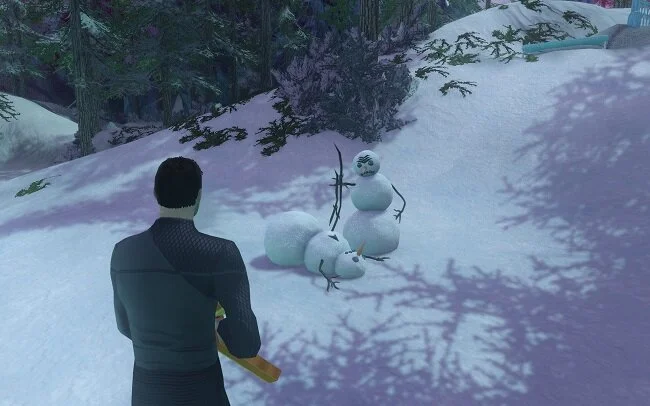





International Picture Posting Month: Star Trek Online
Although I pre-ordered Star Trek Online in early 2010, I was initially disappointed with the game. It took three attempts over several years for me to warm to this MMORPG and make it a mainstay of my gaming activities. STO was a mess when it launched. The game had switched game studios during its development and its new owners Cryptic, were legally obliged to abide by the existing release date. Hence the game was incomplete and somewhat lacking. Furthermore there were systems and mechanics in place that were geared towards a more traditional MMO methodology. Many of these were subsequently sidelined as Cryptic endeavoured to tidy up and refine the game. The MMO went F2P in January 2012 and it proved beneficial in so far as providing the developers with a stable business environment. Over the next three years, Cryptic made the game more coherent and orderly. Long term story arcs were presented in episodic feature episodes, reputation and gear procedures were refined and eventually the skills system was overhauled into a simpler “tree” format. By 2015, STO was finally the game it should have been at launch.
Although I pre-ordered Star Trek Online in early 2010, I was initially disappointed with the game. It took three attempts over several years for me to warm to this MMORPG and make it a mainstay of my gaming activities. STO was a mess when it launched. The game had switched game studios during its development and its new owners Cryptic, were legally obliged to abide by the existing release date. Hence the game was incomplete and somewhat lacking. Furthermore there were systems and mechanics in place that were geared towards a more traditional MMO methodology. Many of these were subsequently sidelined as Cryptic endeavoured to tidy up and refine the game. The MMO went F2P in January 2012 and it proved beneficial in so far as providing the developers with a stable business environment. Over the next three years, Cryptic made the game more coherent and orderly. Long term story arcs were presented in episodic feature episodes, reputation and gear procedures were refined and eventually the skills system was overhauled into a simpler “tree” format. By 2015, STO was finally the game it should have been at launch.
It was during the 2015 Delta Recruitment event that I finally got bitten by the STO bug. I created characters from all three of the faction then available, as each has a unique story for the first third of the game’s narrative. Playing Federation, Klingon and Romulan alts also offers a different perspective on the central story. The game has grown since then and a further three factions have been added. But although it is enjoyable to play such diverse characters, the greatest strength of STO lies in the lore. Set after the events of Star Trek: The Next Generation the story line explores some very interesting themes. The peace treaty with the Klingon Empire breaks down and leads to war. The destruction of the Romulan home world causes a schism in the Star Empire, leading to a Romulan Republic born out of the Vulcan reunification movement and the Reman Resistance. And being Star Trek there is naturally time travel resulting in the player visiting past era’s and even the alternative Kelvin Timeline. It is quite convoluted at times but the stories are frequently marbled with references to classic Trek lore.
STO lacks some of the polish of other MMOs. Its character models are somewhat dated and there are bugs in the game that have persisted for years. But its space combat is dynamic, engaging and satisfying. It also has a wealth of options for short, targeted gameplay, if you do not want to play through the various major story arcs. Plus the game regularly has events throughout the year, which unlike other MMOs offer more than just cosmetic rewards. There are Tier 6 ships to be earned along with other items that enhance gameplay. But the jewel in the crown of STO is its official support from rights holders CBS and the involvement of so many of the cast of the various TV shows. Interacting with such characters as Odo, Weyoun, Worf and Seven of Nine and having them voiced by René Auberjonois, Jeffrey Combs, Michael Dorn and Jeri Ryan is an absolute joy for Trek fans. Plus any game that has pet Hortas and allows you to use a Lirpa or Bat'leth in melee combat has to be doing something right. But as I’m a Trek fan and a lifetime account holder in STO, I guess I’m somewhat bias.
In addition to the pictures in this post, here is a link to a gallery of screenshots from STO via Google Photos. All are available at the original screen resolution of 1920 x 1200.
The Problem with MMO Economies Part 2
A few years ago, STO developers Cryptic, added a new system to the game that allowed players to re-engineer gear and alter the various modifiers associated with each item. One of the reasons behind this move was to reduce the hyperinflation associated with high end gear that has the most desirable statistics. If players could re-engineer the items that they desired it would undermine the trade in such items on the exchange. Needless to say this plan didn’t succeed and the market did not radically alter. The overall cost of the resources required to successfully re-engineer a piece of equipment ended up being comparable or even more than the price of a similar item being sold on the exchange. Similarly, the legendary progression servers in LOTRO had a brief period of economic stability and fiscal prudence when they were launched. Initially, no one section of the playerbase had more resources than others. A year on and now the same issues of inflation and excessive prices have happened with a tedious sense of inevitability. Can anything be done to stabilise MMO economies?
A few years ago, STO developers Cryptic, added a new system to the game that allowed players to re-engineer gear and alter the various modifiers associated with each item. One of the reasons behind this move was to reduce the hyperinflation associated with high end gear that has the most desirable statistics. If players could re-engineer the items that they desired it would undermine the trade in such items on the exchange. Needless to say this plan didn’t succeed and the market did not radically alter. The overall cost of the resources required to successfully re-engineer a piece of equipment ended up being comparable or even more than the price of a similar item being sold on the exchange. Similarly, the legendary progression servers in LOTRO had a brief period of economic stability and fiscal prudence when they were launched. Initially, no one section of the playerbase had more resources than others. A year on and now the same issues of inflation and excessive prices have happened with a tedious sense of inevitability. Can anything be done to stabilise MMO economies?
If MMO developers wanted to seriously address this matter, it would require designing a game with a far more controlled and regulated in-game economy. It would also require a far more interventionist approach in managing the ebb and flow of in-game resources. IE controlling the availability of specific resources and items, as well as imposing taxes and fees upon auction house transactions. Such an approach would certainly be perceived as “political” from certain quarters of the gaming community and would not be well received. Given the levels of political and socioeconomic illiteracy among some players, it would more than likely play into the ongoing culture wars we see across all levels of society in western democracies. And it can also be argued that “trading” is one of the few social elements left in the MMO genre. Plus it’s also a “game within a game” for many players. If this is fundamentally altered or regulated to the point of “no fun”, then its effectively just another nail in the coffin of the old school concept of the MMORPG. I’m not too sure how many nails the playerbase can endure.
Grinding out rewards and obtaining rare and unique items is a fundamental motivator for many MMO players. For those without the time to pursue such goals, buying these things from the in-game auction house is a credible alternative. There are still a few ships in STO that are demonstrably superior to others. If you are unable or unwilling to spend real world money on multiple loot boxes to get one of these ships, then there is always the exchange and the option to buy what you desire for energy credits. It may well be an immense uphill struggle but it can be done. If you remove such an avenue from the game you are effectively barring certain players from achieving their goal. That sends very clear message to the playerbase and not a positive one. There are already enough obstacles for new players of long established MMOs. If a player feels that they cannot reach their full potential then why should they continue to play. Life isn’t a meritocracy but we broadly seem to like the illusion of one.
Conversely, if resources and rewards are too readily available and easily acquired, it does much to mitigate a great deal of the challenge and motivation to play. It is always fun to log into a MMO test server and instantly receive all the gear you desire from the live server. But the novelty soon wears off. Players like to have goals to work towards and if you negate that you really are pulling the carpet out from under them. I don’t agree with the philosophy that things given freely have no inherent value but I do agree that familiarity breeds contempt. The optimal path is somewhere in between, so let players earn their rewards but make the journey credible. Overall, I don’t know what the long-term solution to this chicken and egg conundrum is, as it requires that developers and players alike must “unlearn what they have learned”. Perhaps it will fall to a small developer to make a bold experiment one day and create a game with an economy that breaks the existing mould. In the meantime I’m sure this problem will persist and we’ll still see regular articles decrying the status quo and asking for something to be done. Gaming like any other aspect of human culture is cyclical.
The Problem with MMO Economies Part 1
I have a very mixed relationship with MMO economies. In The Lord of the Rings Online I have adequate supplies of in-game gold but most of the items I seek to buy on Auction House are insanely overpriced. In Star Trek Online, earning energy credits is so problematic, the developers have had to add them as part of the daily personal endeavour rewards. Again, there is runaway inflation and the most desirable items such as Tier 6 ships are ridiculously priced. And in The Elder Scrolls Online, the gold slowly builds up over time but the lack of a server wide auction system means that finding and purchasing quality gear at credible prices is an arcane undertaking. There was a point a few years ago when I use to play the LOTRO economy and as a result, I had sufficient means to buy what I wanted. But maintaining that level of wealth and financial leverage is time consuming and requires adhering to a strategy. As I do not play the game, or indeed any other MMO, to that level anymore, my personal wealth in all of them has declined accordingly.
I have a very mixed relationship with MMO economies. In The Lord of the Rings Online I have adequate supplies of in-game gold but most of the items I seek to buy on Auction House are insanely overpriced. In Star Trek Online, earning energy credits is so problematic, the developers have had to add them as part of the daily personal endeavour rewards. Again, there is runaway inflation and the most desirable items such as Tier 6 ships are ridiculously priced. And in The Elder Scrolls Online, the gold slowly builds up over time but the lack of a server wide auction system means that finding and purchasing quality gear at credible prices is an arcane undertaking. There was a point a few years ago when I use to play the LOTRO economy and as a result, I had sufficient means to buy what I wanted. But maintaining that level of wealth and financial leverage is time consuming and requires adhering to a strategy. As I do not play the game, or indeed any other MMO, to that level anymore, my personal wealth in all of them has declined accordingly.
Over the years there have been many articles written about the iniquities of MMO economies and whether anything can be done to run them in a more equitable fashion. For example, last Wednesday, there was an interesting post by Ben Griggs over at Massively Overpowered about the short comings of the Guild Trade system in ESO. Then today, there was a further article about how to acquire in-game wealth in Guild Wars 2, by Bree Royce. Both highlight the recurring problems and complaints that MMO economies regularly generate. A cursory look at the comments on both posts show that there isn’t a prevailing consensus among gamers, as to which is the best way to run an MMO economy. Furthermore, game developers seem to all too often throw in the towel when a games economy starts to get out of control and hyperinflation sets in. It’s as if it is just assumed that this is an inevitable course of events and simply something endemic to the MMORPG genre. And I’m beginning to think that perhaps they are right.
Video games are commercial products. Yes, they can be art as well but MMORPGs are not developed by altruistic, Franciscan monks out of a sense of social obligation. All the resources required to create a game come with a cost. In many ways video games are the ultimate expression of consumerism in western, capitalist countries. The controversies surrounding the monetisation of a leisure activity such as video games, is the epitome of a “first world problem”. However, when you consider the economic factors that determine the creation and sales of video games, it is hardly surprising to find the same dogma perpetuated within the virtual worlds they offer. Therefore, there is little or no will to create a game with a radically different economy to that of the real world to begin with. The mantra that “time is money” has always been the under-pinning ideology of game economies. Those with any advantage in this respect will always find themselves succeeding more than those who have a time deficit. And any MMO that has existed for several years or more, will have a core player base that owns superior resources to that of any newcomers.
Over time MMO developers have often tried a variety of methods to try and mollify these problems. Tinkering with drop rates of valuable items or reducing how often resource nodes spawn. Then there’s binding items to account or to characters. Some games have even put a specific cap on how much in-game gold a player can own. But players always seem to be one step ahead and all too often such restrictions are circumnavigated. Hence, we see bots and scripts implemented by players to farm resources. I’ve even subcontracted out my own resource gathering in LOTRO in the past. You can also find third party websites where rare items are traded for real money. Player in ESO will use the gifting mechanic to achieve sales that can’t be facilitated by traditional means. And if the developers are too vociferous with the bind to character mechanic, then people will just sell accounts. It’s a blunt tool but it works. All of these issues persist because neoliberalism that exists in real life economies, bleeds into the MMO games design.
Star Trek Online: Awakening
The new story arc Awakening, launched this week in Star Trek Online. The first instalment, Beneath the Skin, saw Star Trek: Discovery actor Anthony Rapp, returning as Commander Paul Stamets in an adventure that takes the player back into the Mycelial Realm. Cryptic have also added a new Task Force Operation, several patrols and numerous of “quality of life” fixes. The event system has now been removed from the reputation panel and added to the mission journal and now tracks progress in a single experience bar. Furthermore there is a new ongoing event which when completed rewards players with an Elachi Qulash Frigate [T6]. The developers have also revised yet another Tier 6 ship skin. This time round they have improved the aesthetics of the Kelvin-Timeline Intel Dreadnought Cruiser (AKA U.S.S. Vengeance from Star Trek Into Darkness).
The new story arc Awakening, launched this week in Star Trek Online. The first instalment, Beneath the Skin, saw Star Trek: Discovery actor Anthony Rapp, returning as Commander Paul Stamets in an adventure that takes the player back into the Mycelial Realm. Cryptic have also added a new Task Force Operation, several patrols and numerous of “quality of life” fixes. The event system has now been removed from the reputation panel and added to the mission journal and now tracks progress in a single experience bar. Furthermore there is a new ongoing event which when completed rewards players with an Elachi Qulash Frigate [T6]. The developers have also revised yet another Tier 6 ship skin. This time round they have improved the aesthetics of the Kelvin-Timeline Intel Dreadnought Cruiser (AKA U.S.S. Vengeance from Star Trek Into Darkness).
It’s been a while since we had a story update in STO. Although I have enjoyed the various narrative threads of each previous mission set in the Discovery era, they have been somewhat disjointed. Finally in Awakening, the various dots are connected and I suspect that the arc will be concluded. Beneath the Skin sees an assault in Andorian space by rogue 23rd Klingon Matriarch, J’Ula. This results in the creation of a rift between space time and the Mycelial Network. As all data regarding this realm is classified, the player has to call upon the expertise of a holographic Commander Paul Stamets and enter the rift. Probes sent by J’Ula have leaked Hargh'peng radiation and are causing sickness and corruption throughout the Mycelial Realm. Furthermore, in a surprise twist, we discover that the Elachi where native to the fungal zone prior to being subsumed into Iconian servitude.
As ever with STO, the new story is inventive and draws heavily upon multiple threads of established in-game and canonical lore. There are numerous elements to the plot but complexity is not always a stumbling block, if handled well. Cryptic are aware that not all players may be familiar with all the elements from Star Trek: Discovery so there are several instances of characters pausing to deliver substantial quantities of expositionary dialogue. It does at time slow things down but it’s a necessary evil. The presence of Anthony Rapp is a big bonus to the proceedings. He maintains his acerbic, passive aggressive demeanour and at appropriate points delivers some great quips. As ever with Cryptic, they excel with the little things that add to the ambience. The baby Tardigrades are great as they scamper around the Mycelial Network. And the Elachi who was previously a Romulan was a great call back to an earlier story line.
There is sufficient new content to be getting on with for the present. My concerns about a decline in narrative material has been somewhat tempered. The new patrols are more complex than expected and it’s nice to see the return of characters such as the rogue Ferengi entrepreneur Madran and Lukari Captain Kuumaarke. Plus a major bonus to all this is the fact that the latest mission Beneath the Skin rewards the player with an Elachi Bridge Officer, which is the best news I’ve had since I acquired my Holographic James Kurland. And as developers Cryptic are still working on bug fixes and “quality of life” improvements, I shall patiently wait for classic content such as the classic mission “City on the Edge of Never” to be returned to the game. In the meantime, gaming peripherals vendor Steelseries currently have a Star Trek Online giveaway to celebrate the launch of Awakening. Just create a user account and you can claim a free Ferengi Bridge Officer for the Klingon faction, along with a B’Rotlh Bird of Prey Ship [1]. Free stuff is always welcome and its nice to see the KDF getting some love.
Further Changes Coming to Star Trek Online
A decade ago the MMO genre tended to favour quite complex game systems. It is what the playerbase expected and allegedly preferred. But tastes and prevailing trends change over time. Plus game developers often see a change in staff and alterations in their creative visions. Hence over time, game systems can become unwieldy, esoteric and frankly annoying. So when a decision is made to refine, rationalise and improve these systems, it can be a complex task to undertake. Furthermore not only are there the practical and logistical realities of having to tackle ageing code, there is also the choppy waters of community relations to navigate. Because regardless whatever you seek to change, there will always be those who will oppose it and consider it an outrage perpetrated upon them, comparable to the Peterloo Massacre.
A decade ago the MMO genre tended to favour quite complex game systems. It is what the playerbase expected and allegedly preferred. But tastes and prevailing trends change over time. Plus game developers often see a change in staff and alterations in their creative visions. Hence over time, game systems can become unwieldy, esoteric and frankly annoying. So when a decision is made to refine, rationalise and improve these systems, it can be a complex task to undertake. Furthermore not only are there the practical and logistical realities of having to tackle ageing code, there is also the choppy waters of community relations to navigate. Because regardless whatever you seek to change, there will always be those who will oppose it and consider it an outrage perpetrated upon them, comparable to the Peterloo Massacre.
For years a common facet of the MMO genre has been factions. A new player made a choice when creating their character to affiliate to a specific faction which would permanently separate them from those who were aligned differently. It makes narrative sense in some respects and certainly suited the prevailing genre attitudes of twenty years ago. But thing change and although some people really dislike that fact, nowadays such dogmatic attitudes towards factions have softened. The One Tamriel update did away with the faction driven regional boundaries in The Elder Scrolls Online in October 2016 and the game is arguably better for it. However, one of the biggest obstacles facing the removal of factions in other games is often lore. And that lore becomes even more immutable when it derives from a third party, licensed intellectual property. Which brings us to the case in question, namely Star Trek Online.
When Star Trek Online launched in 2010, you could play as Federation officers and once you hit level 20, it unlocked the option to play as a Klingon. However, that Klingon alt was by default at level 20. It took a while before this changed so that players could level a Klingon allied character and play though a unique backstory. Over the years other factions have been added to the game including the Romulan Republic. Although there has been a degree of sharing assets and resources, lines of demarcation have remained. Romulan ships can only be used by Romulan characters. The same policy has been maintained for the Klingon Empire. However, Cryptic have decided to remove this restriction from the Romulan faction, as part of their ongoing updating and modernising the game. Cryptic are also overhauling the events service within the game, which up until now has been part of the wider reputation system. The UI is to be amended and event progress is to be tracked as a subset of the mission journal. Instead of working like reputation projects which require daily input, the new interface will display an experience bar. Progress will also be account wide for those players with multiple alts.
Both of these changes seem very reasonable at first glance. The first question most people have asked is whether this restriction will also happen with Klingon ships? Sadly, it would appear that rights holders CBS, have some very particular caveats in their license arrangement, so the answer is “no” for the present. However, being able to fly a Romulan ship on my Federation character, is an interesting proposition, as they have some stout vessels with good stats. From a financial point of view (some would argue Cryptic’s default position) it opens up a whole new range of ships to buy. This change is also a shot in the arm to the Admiralty system, as I can now add more Romulan vessels to my deck. But some players would argue this change comes at the expense of class identity and the relevance of factions per se. STO was initially created around the traditional trinity of DPS, Tank and Healer with its Tactical, Engineering and Science classes. But this has long been abandoned in any meaningful sense. The additions of factions in recent years has also been half hearted. None are truly independent and at some point in levelling, have to ally with either Starfleet or The Empire.
You can argue that there’s a lot to put right in STO. The game still has a lot of bugs, many of which have persisted for years. Cryptic seem to be tackling matters in a somewhat erratic fashion. The current streamlining of the game has seen the loss of The Foundry, older missions “temporarily” removed from the game for updating and Tier 6 ships level scaling so they can be used immediately. Some of these things work, other do not or are a loss to the game. I have never felt that there has been adequate promotion of the Romulan, Klingon or other faction storylines in STO. The game is very much focused on the Starfleet perspective. Cryptic has stated that the numbers show that most players are overwhelmingly Federation orientated but if more effort had been made to promote and maintain the other faction’s storylines and resources, would things have been better? I’d argue that the Romulan Republic story arc is the best in the game from a narrative and lore perspective.
I cannot help but feel that Cryptic have pursued whatever can be added to the game, at the expense of what is already present. The Kelvin Timeline is not exactly popular with core Trek fans yet it was dovetailed into the game. And no sooner had they released the superb Deep Space Nine themed expansion, Victory is Life, it was dismissed and they went hell for leather with the integration of Star Tre: Discovery related content into the narrative. I suspect that they may have a rabbit to pull out of the hat regarding Star Trek: Picard. But that doesn’t bode well for the return of classic missions like City on the Edge of Never and others, which are awaiting a makeover. I applaud Cryptic for trying to bring STO up to the standards of modern MMOs but I’m not sure about the route they’re taking and whether they be able to achieve their goals with their “tinkering”. I also would like to see more narrative content delivered more regularly. As ever, time will tell. Unhappy players vote with their feet sooner or later.
Quest Bestowal in MMOs
When playing a massively multiplayer online role-playing game, such as The Lord of the Rings Online, acquiring quests is a very straightforward process. Key locations such as towns, villages or anywhere with a stable are usually quest hubs. Non-playable characters denote that they have quest(s) available by having a glowing ring icon above their heads. It’s not subtle but you’d have to have a bag over your head to miss such an obvious clue. Most MMOs have some version of this bestowal system. A clearly visible means to show that an NPC or object is the starting point for a quest. It’s a rather unsophisticated system but it gets the job done. Hence it has been around for quite a while in the genre (silence, dissenting old school gamers, blathering on about how in the good old days, MMOs didn’t have quests).
When playing a massively multiplayer online role-playing game, such as The Lord of the Rings Online, acquiring quests is a very straightforward process. Key locations such as towns, villages or anywhere with a stable are usually quest hubs. Non-playable characters denote that they have quest(s) available by having a glowing ring icon above their heads. It’s not subtle but you’d have to have a bag over your head to miss such an obvious clue. Most MMOs have some version of this bestowal system. A clearly visible means to show that an NPC or object is the starting point for a quest. It’s a rather unsophisticated system but it gets the job done. Hence it has been around for quite a while in the genre (silence, dissenting old school gamers, blathering on about how in the good old days, MMOs didn’t have quests).
Now this functional process has limitations. Quest giving NPCs tend to be static for practical reasons. You don’t want them perambulating around the town, making you have to search them out. So while those not bestowing quests can have all sorts of fancy animations to try and bring the illusion of life to area, quest giving NPCs just stand around, breaking the immersion that other aspects of the game have worked so hard to build. Plus in LOTRO, there is seldom any voice acting beyond the first line of the quest bestowal text. Therefore, it’s a somewhat dull process. In the MMO Star Trek Online, NPCs will sometime hail you while you’re in-sector space, as a means to imparting a mission. It certainly seems more natural and is totally in the correct idiom of the intellectual property. Plus, as a gamer, if you find this process intrusive, you can turn it off. Hence, different developers have tried to polish this quest giving system and make it more dynamic and feel more natural. ZeniMax have certainly tried a different approach with The Elder Scrolls Online. But it comes with its own consequences.
Even if you own just the base version of ESO, you notice that not all quest bestowals come via the traditional NPC, lounging around and lollygagging in the various towns and ports of Tamriel (although the game certainly has these). You may be riding past a farm, only for an NPC to come running out and declare that “Brother Numpsie* has been kidnapped by the foul Myrmidons” or some such standard fantasy-based reason. This mixture of proactive solicitation, along with voice acting is initially quite compelling. You may find yourself diverging from your current course of action to rescue the imperilled individual. Certainly this approach to quest bestowals suits an open world where players my just want to go out and explore, rather than follow a clearly delineated plan. However, this process can become a nuisance. At present, whenever I enter the Mages Guild, I am greeted by Arch-Mage Shalidor who invites me to participate in the next part of a quest line. I am frequently pursued in most towns by an Orc courier named Stuga, who tells me how long she’s been looking for me. Nag, nag, nag.
Joking aside, this interactive game mechanic can get a little wearisome. If you accept some quests it will remedy the problem of the quest givers overt diligence. But on occasions this can lead to immediate instanced content, so you may not wish to accept them. I am currently looking into the various game’s settings in ESO to see if there is a way of disabling or at least controlling this process. I bet there’s an addon to address it, somewhere. Oddly enough, ESO has another alternative way of starting quests or at least the main storylines of all major DLC. Wrapper missions can be launched from the Collections tab in-game. You don’t have to be in a zone and seek out the NPC who starts things. However, it would seem that no game has yet managed to design a creative quest bestowal system that doesn’t have some sort of drawback, limitation or even nuisance factor. Again I can hear the true sandbox devotees shouting about the why there has to even be a requirement of quests per se? But I like narrative driven content and don’t want to put my faith in emergent content. So until the developers improve the situation, I’ll continue to ask Billy No-Mates in LOTRO if they have any quests, and get chased round Tamriel, Benny Hill style, by the Prophet and Abnur Tharn.
*There seems to be a conspicuous lack of consensus with regard to how you spell Numpsie.
Star Trek Online: The Problem with the Latest Roadmap
Game developers enjoy a “roadmap”, don’t they? I always get snippy about marketing speak as it’s an industry I have zero respect or tolerance for. Perhaps such a position is a cliché? But I digress. Cryptic recently released their latest roadmap for Star Trek Online, after their successful appearance at the Star Trek: Las Vegas convention. At first glance it promises a lot of content which is its purpose. But if you take a minute or two to digest the list of forthcoming material, it soon becomes clear that it is predominantly group Task Force Operations. Apart from one new story episode, Awakening, it is decidedly light on narrative material. Now Cryptic have constantly tinkered with the story arc of STO over the years and have also experimented with the format in which its presented. Hence terms such as “featured episode” have become ambiguous. But if you look beyond the semantics, there seems to have been fewer story driven missions being this year.
Game developers enjoy a “roadmap”, don’t they? I always get snippy about marketing speak as it’s an industry I have zero respect or tolerance for. Perhaps such a position is a cliché? But I digress. Cryptic recently released their latest roadmap for Star Trek Online, after their successful appearance at the Star Trek: Las Vegas convention. At first glance it promises a lot of content which is its purpose. But if you take a minute or two to digest the list of forthcoming material, it soon becomes clear that it is predominantly group Task Force Operations. Apart from one new story episode, Awakening, it is decidedly light on narrative material. Now Cryptic have constantly tinkered with the story arc of STO over the years and have also experimented with the format in which its presented. Hence terms such as “featured episode” have become ambiguous. But if you look beyond the semantics, there seems to have been fewer story driven missions being this year.
For me, the appeal of STO is centred upon the IP and the way Cryptic has successfully continued stories and themes from the various television shows. When I returned to the game during the Delta Recruit Event of 2015, the story was building up to the Iconian War. Content came thick and fast and the plot was gripping. The post war narrative of New Dawn was also regularly added to. But the pace has slowed noticeably. Although I am pleased to see Star Trek: Discovery themed storylines the release schedule has been ponderous. I had virtually forgotten about Ju’la the renegade Klingon and her theft of mycelium technology. This dearth of story content is further compounded by the fact that several stories have been removed from the game for “retooling” and Cryptic have still not put them back. It’s a little frustrating because new players do not get the full story arcs that were present in the game 18 months ago.
Although I welcome new content, Task Force Operations are not full stories. They are repeatable events with just a wrapper of dialogue and a smattering of cutscenes. They may well offer an opportunity to earn tokens for a specific item but they eventually run the risk of becoming repetitive and dull after a time. They’re supposed to be an addition to the big story arcs, not a substitute for them. Therefore I hope that the current roadmap is a temporary holding pattern and that at some point soon, they’ll be an announcement regarding a new expansion with a lot more narrative content. Or at the very least, the missing content will be returned to the game, with new wrappers and subtle tweaks, so that the various story arcs are fully restored. I am not hopeful that STO will tie in with the new Star Trek: Picard show. I suspect that certain members of the Star Trek alumni are either too expensive to hire or just won’t play ball.
In the meantime, I am slowly winding down my activities in the game, now that I’ve finished the Summer festival and got the ship. I shall just be checking in a few times a week. Last night I started the Arena of Sompek event mainly because I’m interested in the reward, the Section 31 Heavy Phaser Rifle. However, I’m not sure if I’ll be able to stay the course due to waning interest. If I fail to earn the requisite number of tokens in time, I can buy 10 from the C-Store. It’s a curious business model that seems to undermine the point of playing the repeatable event. But all these minor niggles notwithstanding, it is clear that I’m running out of things to do in STO. Phoenix Prize Packs are currently available for the next seven days. Having earned sufficient Dilitium (400,000 refined) over the last few months, I purchased 100 packs yesterday. All I wanted from these were the Phoenix Tech Upgrades. I ended up with 175 of them and applied them to my current build. Now all items are Mark XV and Epic (Gold) quality.
It is common for content to ebb and flow in the MMORPG genre and for players to come and go accordingly. I have argued in the past that STO usually has sufficient to keep one busy but it does feel that things are slowing to a degree. If you roll an alt, then three of the factions available have a partially bespoke storyline. Therefore you will get some different content before you find yourself playing missions that are universal to all. There are still residual patrol missions dotted about the various sectors of the galaxy and if you investigate via the STO Wiki, you’ll find some interesting minor missions tucked away in the game. But I think I may be heading for a break, as I don’t know if I want to create a seventh character. I have never played STO socially, although I am in the Reddit Alert Fleet. Hence there are no ties with friends to keep me logging in. Perhaps that is part of the problem.
Star Trek Online: Lohlunat Festival 2019 Controversy
Yesterday Cryptic posted details of the forthcoming summer event, known in Star Trek Online parlance as the Lohlunat Festival 2019. As usual there’s a Tier 6 ship to be earned through daily missions along with a ton of cosmetic items. Emotes are popular with players and so this event also includes several that can be used in space via your starship, giving “Captains” further means of expressing themselves. At first glance, there’s nothing exceptional about this bundle of goodies. Nor nothing controversial. However, the devil is in the detail, as developer’s Cryptic subsequently found out.
Yesterday Cryptic posted details of the forthcoming summer event, known in Star Trek Online parlance as the Lohlunat Festival 2019. As usual there’s a Tier 6 ship to be earned through daily missions along with a ton of cosmetic items. Emotes are popular with players and so this event also includes several that can be used in space via your starship, giving “Captains” further means of expressing themselves. At first glance, there’s nothing exceptional about this bundle of goodies. Nor nothing controversial. However, the devil is in the detail, as developer’s Cryptic subsequently found out.
One of the emotes that was included in this year’s event was the “Dixies Horn”, just like in The Dukes of Hazard (for those old enough to remember that TV show). I say “was” because Cryptic have now removed that particular emote as a reward, having been made aware of the socio-political connotations associated with the song it is based upon. A post made by Vesta 3312 prompted a debate on the STO subreddit and it soon became clear that this was a matter that needed to be resolved promptly. Below is the original post which makes it point very clearly.
As ever with such online debates, not all participants “covered themselves in glory” and there were several comments removed by moderators for obvious transgressions of the subreddit rules. As ever, many of those who have never faced any sort of discrimination in their life, displayed an empathic blind spot and there were the usual arguments based around false equivalence. “I’m not offended, so why are you” still seems to be the go-to argument of choice, despite being logically flawed and emotionally tone deaf. However, Cryptic have acted promptly, addressed the matter and issued an apology. The official STO website has been edited accordingly and hopefully things can move on without too much loss of goodwill.
Yet, it is still a valid point to ask as to how such a blunder could have been made. Star Trek is an intellectual property couched in liberal, progressive attitudes. It is about diversity, inclusion and social issues. Over the years the various shows have explored many different aspects of human failing but they certainly haven’t endorsed any of them. It is sad that such a mistake was made, especially in light of the existing political climate that has become more partisan in recent years. Hopefully lessons can be learned from this incident and that no lasting harm has been done.
Hoard It or Spend It?
This posts stems from a recent experience I had in Star Trek Online but it is not a matter that is exclusive to that MMO. This is a subject that is pertinent to any multiplayer game that has an in-game currency and an economy driven by player activity. I’m not referring to single player games where you can use a console command to give you infinite wealth, such as Skyrim. This is about currencies that are earned in-game through grinding missions, selling gear and other assets to NPCs and trading via the auction house. It’s about how we as player perceive that virtual money and our relationship with it.
This posts stems from a recent experience I had in Star Trek Online but it is not a matter that is exclusive to that MMO. This is a subject that is pertinent to any multiplayer game that has an in-game currency and an economy driven by player activity. I’m not referring to single player games where you can use a console command to give you infinite wealth, such as Skyrim. This is about currencies that are earned in-game through grinding missions, selling gear and other assets to NPCs and trading via the auction house. It’s about how we as player perceive that virtual money and our relationship with it.
I’ve been playing STO regularly since 2015 when a recruitment event enticed me to return to this MMO. I have a primary character, a Tactical Federation Fleet Admiral and five other alts from various other factions. I play through all new content on my main “Captain” (as the developers like to refer to them) and harvest resources with the alts. Therefore over time I have built up a fair stock of the games two main currencies; Energy Credits and Dilithium. The former is quite hard to acquire unless you proactively follow an established course of action. Grind out Dilithium, refine it, sell it for Zen (the in-game store currency), buy lockbox keys and then sell them via the Exchange (auction house). Raising capital any other way is a long and laborious process. Generating Dilithium is not so difficult, but players are limited to refining 8,000 ore per 20 hours. Hence farming via alts is a necessity if you want to speed this process up. However, if you log in regularly and follow a daily routine, you can keep your account solvent with both currencies.
And so onto the crux of this post. There I was logged into my main alt a few days ago, toying with the idea of tinkering with my ship build on my main character, because that is a major part of the “endgame” (yes, I rolled my eyes as I said it) in STO. To cut a long story short I bought 6 Pulse Phaser Beam Arrays from the Exchange. I chose to buy “rare” quality to keep the costs down although this may have been a false economy as I then had to use a lot of resources to upgrade the weapons to “epic” quality and Mark XV level. I won’t bore you with all the details but I ended up using 100 Phoenix Universal Tech Upgrades, several hundred Superior Beam Weapons Tech Upgrades, about 250,000 Dilithium and spending 60,000,000 Energy Credits. Furthermore, the above process described was not undertaken casually. I spent hours perusing what was available for sale, trying to work out the potential upgrade costs and agonising over whether to make such major inroads into accumulated in-game wealth.
And there you have it in a nutshell. The curious paradox that arises from accruing resources that exist to be spent yet hesitating to do so, because you don’t like the idea of using it and being left with significantly less. I’m no psychiatrist but I suspect this reticence may stem from the investment of time it takes to gain in-game currencies and the fact that once spent, the clock is reset. Yet considering the fact that so much other progression is time gated in these sorts of game, why should this be any less palatable than say spending skills points or grinding reputation XP? Probably because its money. It may only be virtual cash but players tend to treat it in a similar fashion to the real thing. If gaining wealth comes easy to you in real life, you may well take a cavalier approach to spending it because there’ll always be more rolling in. If, however, you only earn a moderate wage and saving is an uphill struggle, then spending is subject to more scrutiny and certainly not done on a whim. Perhaps people bring these mindsets into the games they play?
I really procrastinated over this recent “investment of funds” in STO. I eventually got quite cross with myself for worrying so much about something that exists purely to facilitate a leisure activity and that getting vexed to such an extent was actually contradicting the entire point of playing this game. However, it certainly gave me food for thought. And again, this is not something that is unique to me or to this specific MMO. I’m sure similar dilemmas happen to those playing LOTRO, ESO, Guild Wars and the like. It’s an odd phenomenon and I’m not sure how it can be addressed because it stems from us rather than the game. Developers could use all sorts of inventive methods to disguise a currency in a game but as soon as players determine its function, they’ll approach it like money. Then they’ll either hoard it, spend it or dither over what they should do.
Bits and Pieces
I have multiple blog articles outstanding in my “draft posts” folder. But time has not been on my side of late, so very little of these are going to be completed and see the light of day, any time soon. However, there are always alternative strategies. If you’re in doubt about what to write, or more likely just pushed for time, simply create an eclectic post that allows you to reference multiple subjects and news stories without having to write a thousand words on each and then make it a regular feature. If you also want to raise a wry smile with an older demographic, make the title of this new recurring piece a particularly bad pun about a popular sixties’ song by a well-known “beat combo”. With this now explained, let’s get on with things.
I have multiple blog articles outstanding in my “draft posts” folder. But time has not been on my side of late, so very little of these are going to be completed and see the light of day, any time soon. However, there are always alternative strategies. If you’re in doubt about what to write, or more likely just pushed for time, simply create an eclectic post that allows you to reference multiple subjects and news stories without having to write a thousand words on each and then make it a regular feature. If you also want to raise a wry smile with an older demographic, make the title of this new recurring piece a particularly bad pun about a popular sixties’ song by a well-known “beat combo”. With this now explained, let’s get on with things.
There was an interesting episode of The Jimquisition that was posted on Monday 15th April. It was about PC Gamer journalist James Davenport who wrote a detailed article about how used a mod to complete the game Sekiro and its extremely tough final boss fight. The point of his post was to discuss the subject of difficulty and its wider culture. However, fundamentalist gamers didn't see things his way and were vocal in their criticism. A somewhat theatrical comment was tweeted by Fetusberry 'Ass Bastard' Crunch, which then became a meme. Ironically, this negative comment was subsequently usurped by Jim Sterling and his comic character, Duke Amiel du H'ardcore, to mock its supporters. For those who are not aware of the original tweet, here it is in all its hyperbolic glory. “You cheated not only the game, but yourself. You didn't grow. You didn't improve. You took a shortcut and gained nothing. You experienced a hollow victory. Nothing was risked and nothing was gained. It's sad that you don't know the difference”.
Like Jim Sterling, I find this perennial argument extremely tedious. I wrote a post about two years ago which covers pretty much the same ground. Back then it was the claim that people were playing MMOs “wrong”. The assumption being that there is only one orthodox way to play this genre of games and if you fail to do so, not only are you a fool to yourself, you’re somehow causing harm to others and the gaming industry. Hence self-appointed gatekeepers feel obliged to “hold the line” or something to that effect. This argument, like the latest example above, is founded upon several completely false axioms. With regard to Fetusberry’s assertions, it is not a mandatory for a player to grow, improve, or risk anything. Games are no entirely founded upon notions of self-improvement and are not primarily conduits for personal realisation. In short, some games can provide these and some gamers will seek such things but other don’t and are not mandated to do so. Games are multi-faceted mediums than can provide numerous things and serve multiple purposes to those who play them. Sadly, many still fail to comprehend this and therefore I think this “debate” is going to regularly return like a bout of malaria.
Another gaming debacle that has held my interest has been the ongoing tale of the unofficial resurrection of City of Heroes via a public server. It has been a rollercoaster of a story with copies of the defunct game’s core code publicly disseminated, alleged legal threats from the copyright holders and fans arguing among themselves. For me the matter that stands out the most is not the bellicose, emotionally dysfunctional nature of some aspects of the gaming community as that’s been a known quantity for quite a while. It’s the fact that people are still very excited, passionate and invested in an MMORPG that has been unavailable for seven years. It’s an interesting contrast to the general levels of indifference and ambivalence shown towards games in development and pending release.
In other news, Gimli has proven to be politically incorrect (insert smiley face). Hyperbole aside, the actor John Rhys-Davies recently appeared on the popular political BBC panel show Question Time. This long-standing program is based around a selection of guests, mostly politicians, journalist, and broadcasters (and in recent years the pop stars, comedians and actors) being quizzed on “hot topics” by members of the public. The panel are not aware of the questions in advance and therefore have to rely on their knowledge, ideologies and public speaking skills to address each topic. Sadly, in recent years as the quality of UK politics and public discourse has declined, so has the show. Rather than an orderly, rational and intelligent debate, it has simply become a bear pit for the worst sort of Punch and Judy politics. The audience shows evidence of being contrived and too many representatives from the fringes of politics are given the oxygen of publicity. It can be cogently argued that the show has contributed to the normalisation of extreme concepts and its associated unsavoury discourse, that would have been laughed off any respectable platform a decade ago.
Returning to the matter of Mr Rhys-Davies, he clashed with Green Party MP Caroline Lucas over President Trumps visit to the UK this summer. “He’s elected head of state of a great democracy, the last best hope for mankind of course”, he said. “He represents the American people”. Mrs Lucas pointed out that Trump lost the popular vote by 3 million, which prompted a rather unseemly outburst from Mr Rhys-Davies. The controversy is mainly due to the manner in which he expressed himself and no so much about what views were espoused. The phrases, “patronising, condescending and bombastic” spring to mind. But should we really be surprised that a man of his age group, social demographic and known political views and affiliations chooses to conduct himself in such a fashion? What has subsequently proven interesting is that the manner in which this story has been reported both online and in traditional media. Ones position on the political spectrum naturally plays a role in how you interpret this.
Star Trek Online continues to focus upon the popularity and success of Star Trek: Discovery with the release of the forthcoming update Rise of Discovery on May 14th. Actors Rehka Sharma, and Jason Issacs will be joining the already prestigious voice cast, by reprising their respective roles as Commander Ellen Landry and Captain Gabriel Lorca. Developer’s Cryptic have also announced that Tier 6 ships will become useable at any level and will scale accordingly. This is an interesting development that addresses the perennial MMO paradox of the trivialisation of gear while progressing towards level cap. It will be interesting to see how this system works in reality and whether it will be applicable to all vessels in the game or simply those bought in the in-game store for Zen. Oh and “hello to Jason Isaacs”.
Star Trek Online: City on the Edge of Never
Out of the original seventy-nine episodes of Star Trek, one of the most respected and beloved is The City of the Edge of Forever. Written by Harlan Ellison the story is one of the more thoughtful and tragic in Trek Canon. It was also the first episode to feature a temporal plotline. Doctor Leonard McCoy (DeForest Kelley) accidently receives an overdose of medication and flees the Enterprise while in a delusional state. Beaming down to an alien planet he uses a temporal gateway (The Guardian of Forever) to travels back in time to earth during the Great Depression. By doing so he accidentally changes history. Captain Kirk (William Shatner) and Spock (Leonard Nimoy) follow him through the gateway to New York in hope of correcting the timeline. While awaiting the arrival of McCoy, Kirk falls in love with Edith Keeler (Joan Collins) who runs the 21st Street Mission. However he and Spock soon determine that to restore the timeline they must allow her to die.
Out of the original seventy-nine episodes of Star Trek, one of the most respected and beloved is The City of the Edge of Forever. Written by Harlan Ellison the story is one of the more thoughtful and tragic in Trek Canon. It was also the first episode to feature a temporal plotline. Doctor Leonard McCoy (DeForest Kelley) accidently receives an overdose of medication and flees the Enterprise while in a delusional state. Beaming down to an alien planet he uses a temporal gateway (The Guardian of Forever) to travels back in time to earth during the Great Depression. By doing so he accidentally changes history. Captain Kirk (William Shatner) and Spock (Leonard Nimoy) follow him through the gateway to New York in hope of correcting the timeline. While awaiting the arrival of McCoy, Kirk falls in love with Edith Keeler (Joan Collins) who runs the 21st Street Mission. However he and Spock soon determine that to restore the timeline they must allow her to die.
One of the most enjoyable elements of the MMORPG Star Trek Online, are the various game missions that reference plot lines and characters from all of the Star Trek franchises. One such mission is City on the Edge of Never which involves the player character travelling to the Gateway system and using the Guardian of Forever to travel through time to 2270 to stop Klingons intent on altering history. The episode has the Guardian projecting a time portal into space, allowing the player to take their vessel through to the past. It also features voice acting by Nimoy which adds further to the sense of nostalgia. City on the Edge of Never is a part of the Klingon War story arc and is certainly one of the more engaging missions. Due to its iconic nature it was well received by reviewers upon the release of STO back in 2010. Kotaku writer Mike Fahey said "This mission might have just made the entire game for me. Everything about it was simply perfect. If Star Trek Online fails for some reason, this mission will always be remembered”.
Sadly this mission, along with several others has been temporarily removed from the game as part of an ongoing content revamp. Cryptic mentioned in a previous Priory One podcast interview that the missions were supposed to get revamped before the end of 2018, but the developer who was undertaking the task is on leave. However, it was still their intention to see the content restored to the game. At present the absence of these missions, especially City on the Edge of Never, does have an impact upon the overall story arc of the Klingon War. The storyline is somewhat briefer and lacking in its original impact. For fans who feel that TOS era specific content is a little thin on the ground in STO, the swift return of these missions couldn’t come sooner. It would also be interesting if Cryptic could expand further upon use of the Guardian of Forever. Some additional scientific research missions under the Vulcan Science Council would be a welcome addition to the game and a pleasant addition to the non-combat related content.
Cryptic to Close the Foundry
Cryptic have announced that they will be removing the Foundry from both Star Trek Online and Neverwinter on April 11th. The Foundry was first introduced to STO back in 2011 and has proven a popular means for players to create and share their own missions, using in-game assets. Cryptic state in their press release that “the legacy knowledge required to maintain the Foundry at our quality standards is no longer available”. This is a roundabout way of saying that the member of staff responsible for curating and quality testing the service has no left the company. Naturally, Cryptic has stated that they will acknowledge those players who have contributed to the Foundry over the years by handing out various virtual trinkets and baubles. There has been quite a strong reaction of the STO subreddit as no one like to see content removed from a game. However, the isn’t a black and white as it first appears, because the Foundry has been broken for a while.
Cryptic have announced that they will be removing the Foundry from both Star Trek Online and Neverwinter on April 11th. The Foundry was first introduced to STO back in 2011 and has proven a popular means for players to create and share their own missions, using in-game assets. Cryptic state in their press release that “the legacy knowledge required to maintain the Foundry at our quality standards is no longer available”. This is a roundabout way of saying that the member of staff responsible for curating and quality testing the service has no left the company. Naturally, Cryptic has stated that they will acknowledge those players who have contributed to the Foundry over the years by handing out various virtual trinkets and baubles. There has been quite a strong reaction of the STO subreddit as no one like to see content removed from a game. However, the isn’t a black and white as it first appears, because the Foundry has been broken for a while.
I personally haven’t played a Foundry mission for at least two years and have often only tried those I’ve specifically read about. One of the systems biggest faults is poor indexing and curation. Finding good player created content beyond the most popular missions that has been voted to the top of the list, has always been a challenge. Then for several years now every time Cryptic have revised STO in some way or simply added a new feature episode, it has always resulted in the Foundry going offline. Yes there have been some standout player created missions over the years that reflect the passionate nature of the STO community and that of Trek fans per se. But for every good mission you also get three indifferent ones. Often the latter have been created by opportunists trying to facilitate some sort of in-game benefit or provide a fast path to advancement. And on a narrative level, many of these missions are just further examples of poor fan fiction.
The recent introduction of the Personal Endeavor system in STO, pretty much the last nail in the coffin for the Foundry. Endeavors are essentially daily missions that earn statistical upgrade points and are designed to encourage players to try Task Force Operations (group PVE content) and repeat old missions. However, many players looked to Foundry content to try and clear Endeavors as quickly as possible. Why spend thirty minutes in a structured TFO that runs to a timed script, when you can run a player created mission that allows you to achieve your goal far quicker? Naturally, Cryptic were not going to allow this to continue. So when you consider this along with the flaky nature of the system to begin with, and the fact that no one is available to maintain it, it’s surprising that the plug wasn’t pulled earlier.
The Foundry in STO is one of those concepts that looks great on paper and seems like an invaluable community service when discussed. But the reality is that it never delivered as much good content as hoped for and its curation and cataloguing further hindered “the cream from rising to the top”. It can also be argued that Cryptic never promoted the service as much as they could. But irrespective of the quality of content and its accessibility, this is still a case of something being taken out of both STO and Neverwinter and that is never an easy sell. If content is taken out, one naturally feels that something else should replace it. Whether Cryptic does this remains to be seen and I won’t hold my breath. As for the Foundry, I suspect it’s a bit like the concept of “shopping locally”. It’s something we all like in principle but seldom do in reality, therefore we as players, have actively contributed to its demise.
Death in MMOs
There was a post today over at Keen and Graev’s Gaming Blog, which raised the subject of “corpse runs” in old school MMOS such as Ultima Online. In-game death came with penalties back then and there was the prospect of XP loss or that your corpse could be looted, and you could potentially lose rare gear. It got me thinking because I’ve never played an MMO that has had, to my mind, such harsh sanctions. In fact game mechanics such as permadeath, corpse runs, and the loss of equipment will put me off playing any such game that has them. I suspect that unless you’re a player who is particularly motivated by achievement, competitiveness and challenge, then such systems are seen mainly as an inconvenience and impediment.
There was a post today over at Keen and Graev’s Gaming Blog, which raised the subject of “corpse runs” in old school MMOS such as Ultima Online. In-game death came with penalties back then and there was the prospect of XP loss or that your corpse could be looted, and you could potentially lose rare gear. It got me thinking because I’ve never played an MMO that has had, to my mind, such harsh sanctions. In fact game mechanics such as permadeath, corpse runs, and the loss of equipment will put me off playing any such game that has them. I suspect that unless you’re a player who is particularly motivated by achievement, competitiveness and challenge, then such systems are seen mainly as an inconvenience and impediment.
Death in MMOs and the function it is supposed to serve, is just another aspect of the genre that has changed over time. The genre is not the same time sink it used to be and an ageing player base has meant that many core mechanics have had to become more flexible and accommodating to shorter periods of gameplay. Many players who played MMOs because of the raiding, competitive PVP and the culture of league tables and results have moved on to other games that still focus on such systems. For me, MMOs are about the narrative, levelling and occasional social gameplay. Death is mainly an inconvenience and not something I wish to have any greater impact than it does already. Gaming is for me a primarily a leisure activity.
In STO, death means just respawning and mainly serves as a warning to change your strategy or to consider revising your build. If you play the TFOs at a higher level, then your ship will get damaged if destroyed, but the cost of repair is hardly prohibitive. In LOTRO defeat is again not a major setback. If you’re playing in a group, then your team mates can revive you and the only cost incurred is your armour repairs. However, reviving yourself is limited to once per 2 hours, which means that if you cannot do so, you must retreat to a Rally Circle. This is a nuisance in the more recent zones as SSG doesn’t seem to be so generous with the quantity of rally circles in the game. Also being kicked from an instance can mean a major journey back to the entrance. ESO has a similar mechanic with either self-resurrection via Soul Gems or retreating to a Wayshrine. However, I found that stockpiling Soul Gems is an easy undertaking, therefore easily mitigating death.
I’ve mention in the past that as games have become more mainstream and more monetised, players have subsequently revised their own perspective on death mechanics. If you aren’t interested in the challenge of planning a carefully considered strategy to avoid death, its presence just becomes a source of annoyance. Especially if you see video games more as a leisure service, rather than means of testing yourself. Being inconvenienced by a mechanic in a game that you are paying for is a difficult line to tread. An incentive that shapes your gameplay is one thing. A penalty that wastes your time is something entirely different. Hence, I think it is something we will continue to see diminished in mainstream MMOs, yet I suspect it will linger as a key component of more challenging games.