
Lockout (2012)
Let's cut to the chase. Lockout is derivative, clichéd, has some dodgy CGI FX work and has nothing new to add to the Sci-Fi sub-genre of future prison action movies. However, that does not mean that the movie is not enjoyable. On the contrary, if approached with the right mind set, then Lockout can be an entertaining experience, which will have you chuckling as it ticks boxes in a knowing fashion and offers some budget action and hard-boiled dialogue. It certainly isn't going to win any awards, but is does everything that a B movie should do. If you treat it as such then you won't be misled.
Let's cut to the chase. Lockout is derivative, clichéd, has some dodgy CGI FX work and has nothing new to add to the Sci-Fi sub-genre of future prison action movies. However, that does not mean that the movie is not enjoyable. On the contrary, if approached with the right mind set, then Lockout can be an entertaining experience, which will have you chuckling as it ticks boxes in a knowing fashion and offers some budget action and hard-boiled dialogue. It certainly isn't going to win any awards, but is does everything that a B movie should do. If you treat it as such then you won't be misled.
For starters, think Escape from New York, then No Escape and then finally Fortress. Follow that order to find the appropriate level. Where John Carpenter made Snake Plissken a Clint Eastwood/John Wayne hybrid, Guy Pearces' Snow is more of a John McClane/Han Solo crossover. Lockout never strays into being a total rip-off of Carpenter's work, but it sails close to bounderies of what can be labelled "a homage". Guy Pearce, armed with pumped biceps and an arsenal of waggish badinage plays Snow, a former government agent who must single-handedly rescue the President’s daughter (Maggie Grace), from a space prison to escape (for some particular reason as Homer Simpson said). The prisoners are the usual collection of cinematic sociopaths, although Hydell (Joseph Gilgun), the psychotic brother of the prisoner’s leader, has all the best lines and is immense fun to watch. Stuff gets blown up, fist fights ensue, the laws of physics are conveniently bent to suit the plot as you expect from such movies.
When Luc Besson initially started putting his name to broader action productions, it was a pleasant alternative to mainstream Hollywood fodder. The European vibe brought something new to familiar action material. However, these movies are now plagiarising the very material they seek to be different to and the distinction is not so great now. Written and directed by relative newcomers James Mather and Stephen St. Leger, Lockout perhaps needed a more experienced pair of hands at the helm. The movie was shot on location in Belgrade but also had extensive green screen footage shot in post-production. The movie struggles to integrate both elements. However, it's quirky continental pedigree, tongue in cheek approach, along with its fast pace does allow the directors to effectively "blag it".
I was in an unusually forgiving mood when I saw Lockout in the movie theatre on its release and chose to ignore its faults and simply dealt with it like a DTV action title from the eighties. I even smirked when Snow balked at being beaten by a guy called Rupert. However, this is the sort of movie that plays a lot better in the home entertainment market. It’s something that goes well with a few beers and a curry. If you are a casual film viewer, you may wish to give this one a miss as it lacks some of the polish of bigger budget releases. For those who have a deeper love for the action genre and have sat through Freejack and Fortress 2: Re-Entry, then you can take this one on the chin easily.






The Raven (2012)
The Raven is a high concept movie in which author Edgar Allan Poe discovers that a serial killer is copying his literary work. It mixes a traditional Gothic sense of style with postmodern depictions of violence and has a quirky, erudite and fun screenplay. The film has a strong streak of gallows humour running through it and a solid cast. It is however an unbalanced production that never quite hits its stride, despite its fast pace. Like director James McTeigue's earlier film V for Vendetta I suspect that The Raven may be another slow burner, finding its audience over time rather than initially.
The Raven is a high concept movie in which author Edgar Allan Poe discovers that a serial killer is copying his literary work. It mixes a traditional Gothic sense of style with postmodern depictions of violence and has a quirky, erudite and fun screenplay. The film has a strong streak of gallows humour running through it and a solid cast. It is however an unbalanced production that never quite hits its stride, despite its fast pace. Like director James McTeigue's earlier film V for Vendetta I suspect that The Raven may be another slow burner, finding its audience over time rather than initially.
The cast is strong with Luke Evans, Alice Eve and John Cusack as Poe. Brendan Gleeson sports a splendid pair of sideburns (grips) and as usual provides an assured performance as Poe's father-in-law. The cinematography is reminiscent of Hammer's baroque style with a hint of Argento thrown in, courtesy of DP Danny Ruhlmann. The dialogue is equally whippy and writers Ben Livingston and Hannah Shakespeare script is not without merit. Poe fans will enjoy spotting the many homages both great and small. Yet despite its virtues The Raven still doesn't quite reach the heights of the material it references.
A lot of the films shortcomings stem from the character of Poe himself. John Cusack’s performances is strong and he is very watchable but is perhaps a little too good looking compared to the alcoholic, drug addicted, dissipated reality of the author. Furthermore, the film pits Poe as a foil to Detective Emmett Fields, rather than making him the lead in the investigation. The dynamic although well-structured seems wrong. Shouldn't Poe, the creator of the great fictional detective Monsieur Dupin, not be taking the lead in the solving the ongoing crimes? The denouement when the killer is unmasked in true Scooby Doo fashion, also doesn't come as a major surprise.
The Raven, despite its uneven nature is still an enjoyable film and it is nice to see period set costume horror making a welcome return. If you liked V for Vendetta, I suspect that you may also embrace this movie. It has many of the former's strengths and weaknesses. Those who favour the current vogue of horror film making, as seen in the likes of Paranormal Activity or any of the recent reboots, may be disappointed. The Raven may well improve with a second viewing and I intend to do so at a later date. I shall not say anything further less I give in to my urge to say "nevermore" or make a reference to the Teletubbies.







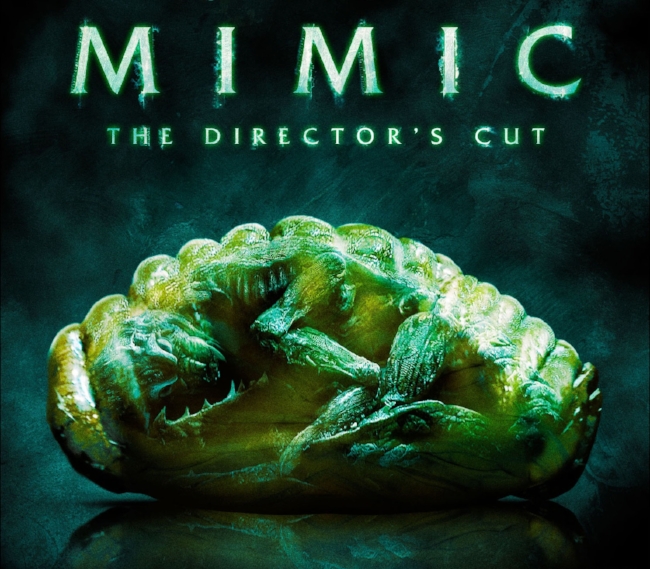
H. P. Lovecraft's The Shadow Out of Time (2012)
The writings of H. P. Lovecraft have been an inspiration for many a film maker. Their brooding atmosphere along with intriguing blend of science and the occult, offers a wealth of themes to be explored. Unfortunately, there have been very few movies that have come anywhere near to capturing the spirit of the author. So, it was with great interest that I watched the fifteen-minute short film The Shadow Out of Time. This low budget production made by independent film makers Richard Svensson, Daniel Lennéer and Christopher Johansson, succinctly distils a classic Lovecraftian tale without losing any of the ambience of the source text. It puts to shame some of the hand-fisted adaptations that have preceded it.
The writings of H. P. Lovecraft have been an inspiration for many a film maker. Their brooding atmosphere along with intriguing blend of science and the occult, offers a wealth of themes to be explored. Unfortunately, there have been very few movies that have come anywhere near to capturing the spirit of the author. So, it was with great interest that I watched the fifteen-minute short film The Shadow Out of Time. This low budget production made by independent film makers Richard Svensson, Daniel Lennéer and Christopher Johansson, succinctly distils a classic Lovecraftian tale without losing any of the ambience of the source text. It puts to shame some of the hand-fisted adaptations that have preceded it.
The plot follows an academic, Nathaniel Wingate Peaslee who collapses during a lecture to find that he has exchanged bodies with an extraterrestrial life form from Earth's past history. His own body is occupied by the alien who spend the next two years studying the present era. Eventually the process is reversed and Peaslee attributes the events to a mental collapse. However, it becomes apparent that he is not the only one to have had this experience. His resulting investigation leads him to Australia and an uncomfortable truth emerges. The story touches upon the experiences of both individuals and hints at a further menace that threatens the future of both species. Told via narration, the film is set in the 1900s and reflects the cinematic style of the time.
The period setting along with its stylised format really enhances the unfolding story. Åke Rosén performance is very much in the appropriate idiom and John Hutch narration embellishes without descending into melodramatics. Overall this is a polished production when you consider the budgetary and the logistical constraints imposed upon the film makers. It never ceases to amaze me the dedication and love that fans can muster to create such outstanding work using just “over the counter” hardware and software. Therefore, I thoroughly recommend The Shadow Out of Time and would urge readers to check out the creators You Tube channel for further H. P. Lovecraft adaptations.
Parents and Movie Ratings
Movie ratings in the UK are overseen by the British Board of Film Classification. A movie legally requires certification to be shown theatrically or released on DVD or Blu-ray. Ratings are governed by guidelines that have been determined through public consultation, expert advice and peer review. In recent years the BBFC has become a measured, informed and progressive body that broadly reaches appropriate decisions that are mainly agreed with by cinema audiences. UK ratings, unlike their US counterparts, are exclusionary. Films rated 15 or 18 prohibit the admission of those below that age. With regard to home media, it is illegal to rent or sell DVD or Blu-ray discs rated similarly.
Movie ratings in the UK are overseen by the British Board of Film Classification. A movie legally requires certification to be shown theatrically or released on DVD or Blu-ray. Ratings are governed by guidelines that have been determined through public consultation, expert advice and peer review. In recent years the BBFC has become a measured, informed and progressive body that broadly reaches appropriate decisions that are mainly agreed with by cinema audiences. UK ratings, unlike their US counterparts, are exclusionary. Films rated 15 or 18 prohibit the admission of those below that age. With regard to home media, it is illegal to rent or sell DVD or Blu-ray discs rated similarly.
In the past the BBFC has made poor decisions and policies have varied under various directors. However a far more level headed attitude has prevailed of late and I believe the organisation now makes sound decisions. More importantly the organisation remains independent and free from political interference and industry lobbying. The BBFC has a wealth of resources available on its website and provides great detail about how it has arrived at a rating. They even go so far as to give readers spoiler warnings, when discussing the content of a movie. Strong language, drug use and violence as well as adult themes are listed if they feature in the film.
As a parent that has raised a child, I applaud such rigour and in-depth information. Being a movie fan, I have always had an immense love of cinema. Naturally my son was exposed to a lot of films while growing up. However personal fandom was never allowed to trump common sense and both my wife and I always took time to consider the suitability of any material we watched with our son. It is something I encourage all parents to do. Ratings are there to inform and an assist. We currently live in an age where there is a wealth of information available. Therefore making an informed decision about family viewing need not be difficult.
Sadly despite the wealth of resources available parents still remain oblivious to ratings and I have often seen children in theatres watching movies that are patently unsuitable for them. Furthermore they are frequently distressed and I do wonder about the long term harm that can be done by such ill-considered parenting. Two such examples from 2015 were Jurassic World and SPECTRE. On both occasions I sat next to families with children under the age of ten who were far from happy about certain scenes. It should be noted that both these movies were rated 12A which is broadly equivalent to the US PG-13 rating. In recent years, it has become the most common rating in the UK film industry and potentially the most misunderstood.
The most common problem associated with the UK 12A rating, is the fact that is an advisory rating. According to the BBFC website “Films classified 12A and video works classified 12 contain material that is not generally suitable for children aged under 12. No one younger than 12 may see a 12A film in a cinema unless accompanied by an adult. Adults planning to take a child under 12 to view a 12A film should consider whether the film is suitable for that child”. Therefore, as a parent, if you’re planning to take children under the age of 12 to see a movie such as Kong: Skull Island, it is incumbent upon you to determine if the film is suitable and whether the child in question is mature enough to enjoy the film without becoming upset or distressed. The 12A rating is not by default a guarantee that a movie is child friendly, nor does it mean that the movie in question is exclusively marketed towards children per se.
At present mainstream film making loves the PG-13/12A rating. It makes a film accessible to the broadest of audiences, thus maximising box office takings, while still accommodating a degree of sex, violence and strong language. The rating can also encompass a variety of adult themes and material that is dour, bleak and even threatening. This is specifically why the advisory nature of the rating needs to be acted upon. Just because younger children can be admitted to see films with this rating, doesn’t by default mean that they should. Cinema, like TV should not be used as a convenient babysitting service. Perhaps some parents would be wise to reflect upon this and take more time to research a movie before allowing their children to watch it. The BBFC website like so many others can be easily accessed by phone. Continued failure by lax parents to adhere to rating correctly, could potentially lead to a more draconian system being implemented.
Mrs. Brown, You've Got a Lovely Daughter (1968)
I was channel surfing a while back when I stumbled across Mrs. Brown, You've Got a Lovely Daughter, a feature film starring none other than Herman's Hermits! Now I was aware that after the success of the Fab Four's A Hard Day’s Night and Help, several popular bands tried to follow in their wake. The Dave Clark Five made Catch Us If You Can (directed by John Boorman) and there were numerous vehicles for Cliff Richard. But apparently, Herman's Hermits were signed to MGM records in the US and it was standard marketing practice to make at least one feature film vehicle for their bestselling artists. Apparently, this included Hank Williams, Connie Francis and Roy Orbison although I’m not familiar with the movies they made. Hence there’s nothing really that unusual about this film’s existence.
I was channel surfing a while back when I stumbled across Mrs. Brown, You've Got a Lovely Daughter, a feature film starring none other than Herman's Hermits! Now I was aware that after the success of the Fab Four's A Hard Day’s Night and Help, several popular bands tried to follow in their wake. The Dave Clark Five made Catch Us If You Can (directed by John Boorman) and there were numerous vehicles for Cliff Richard. But apparently, Herman's Hermits were signed to MGM records in the US and it was standard marketing practice to make at least one feature film vehicle for their bestselling artists. Apparently, this included Hank Williams, Connie Francis and Roy Orbison although I’m not familiar with the movies they made. Hence there’s nothing really that unusual about this film’s existence.
So on to the plot. When Herman Tulley inherits his Grandfather's most prized possession, a greyhound named Mrs. Brown, he and his friends (Barry, Keith, Karl, and Derek) decide to make their fortune racing the dog. After the animal has won the Manchester heat of the National Greyhound Derby, Herman meets wealthy Londoners Mr. and Mrs. Brown and their daughter Judy, a model. Hoping to see Judy again, Herman and his friends decide to take the dog to London for the derby finals and to see if they can find fame with their band. Hijinks, misadventures and sundry shenanigans promptly ensue, along with a handful of contrived song and dance numbers. You know the form.
Sounds harmless enough, doesn't it? Well so you would think. But the plot doesn't follow the usual path you'd expect from such films. The hero doesn't get the girl of his dreams at the end. The dog doesn't win the race it's been entered for. The guys do not find fame with their band. The songs are very eclectic, with one, "The World Is for the Young" verging on suicidal melancholy. There are also some seriously outdated social attitudes displayed, particularly towards women. A young lady is told that if she doesn't stop following them (the band) she'll get "sloshed". When Herman's girlfriend expresses and interest in accompanying them to London, she is told that it's fine as long as she doesn't mind "Cooking and cleaning for five guys". There is also a lot of violent pub brawls and market fights that seem out of step with the rest of the film.
Frankly, this film really threw me. It's just so bizarre and incongruous. The concept of using a film to promote a band seems to have died out these days. I'm sure this comes down to simple financial costs and the fragmentation of the music industry. The last movie of this ilk that I’m familiar with being Spice World and that was an event for the time. Overall, Mrs. Brown, You've Got a Lovely Daughter is not a complete dog’s dinner. It’s more of a curiosity than an outright failure, right up there with Slade in Flame. It’s lack of the inherent “chumminess” you expect with sixties pop is its main selling point. Best recommended to completist music fans and hardcore cinema aficionados. File under "Right turn, Clyde".
Skyline (2010)
When I first saw the initial trailers for Skyline, I was not overly impressed. Once again, here was a film that appeared to offer a great deal of spectacle but was there any substance? Would there be a good script, engaging performances, likeable characters? Call me old fashioned but I do consider these to be important attributes to any film. Well I finally caught up with Skyline, in the comfort of my own lounge, an environment that is often more forgiving that the cinema itself. As I suspected, Skyline turned out exactly as I predicted and once again I was left thinking "so what?" It’s an all too common refrain these days.
When I first saw the initial trailers for Skyline, I was not overly impressed. Once again, here was a film that appeared to offer a great deal of spectacle but was there any substance? Would there be a good script, engaging performances, likeable characters? Call me old fashioned but I do consider these to be important attributes to any film. Well I finally caught up with Skyline, in the comfort of my own lounge, an environment that is often more forgiving that the cinema itself. As I suspected, Skyline turned out exactly as I predicted and once again I was left thinking "so what?" It’s an all too common refrain these days.
Skyline is technically well made. The film opens with a startling event, then lapses into flashback to introduce the characters and set the scene. The story exposition is executed efficiently and within fifteen minutes the film moves on to the action. The cast, drawn mainly from a TV background are competent. These include Eric Balfour, Scottie Thompson and Donald Faisson. The story follows a traditional arc climaxing in what the writers obviously consider a twist. The ending leaves the door firmly open for a sequel should the need arise (Alleged a second movie is being considered starring Iko Uwais). The visual effects are very high quality but they did constitute over 90% of the films overall budget.
Despite all the above, Skyline is derivative, clichéd, predictable and utterly disposable. It is not dull but conversely it is not especially engaging. You can happily watch it whilst performing another task such as gaming, reading or plucking a chicken. The characters are not unlikeable as they were in Cloverfield but they are not sufficiently developed to merit any serious emotional investment. For instance, David Zayas plays an intriguing concierge who seems to be the only practical member of the group. Yet his back story is never explored and apart from a pithy "kiss off" line, his role doesn't really go anywhere.
Directors of Skyline, The Brothers Strause, have a technical background in the industry and own the visual FX studio Hydraulx. Their pedigree in this field speaks for itself. Yet ninety minutes of CGI does not a good film make. Frankly, the proliferation of visual effects in films, TV and advertising these days has somewhat jaded the public's attitude to them. Although they are an expected facet of any production, they are paradoxically diminishing as a major point of interest. How many times have we seen a major US city demolished. In the seventies, this was a rare event but now days it’s as common as politicians lies. Apart from Mad Max: Fury Road, I cannot think of any recent film that got by mainly because of its visuals.
In many respects Skyline is like a fifties B film. It tries very hard to follow the path of larger budget predecessors. You only have to look at the imagery that is used, such as the spaceships over Los Angeles or the squid like harvesting drones. The familiarity of these visuals reflects a sort of cinematic fast food culture. Sadly, it has the same overall results. After an innocuous viewing experience akin to a drive-thru meal, the audience soon forgets the inherently bland movie experience they’ve just partaken off. Without the substance of a genuinely good script or an original idea, alleged big spectacles, such as Skyline, become no more than a hollow one.
Train to Busan (2016)
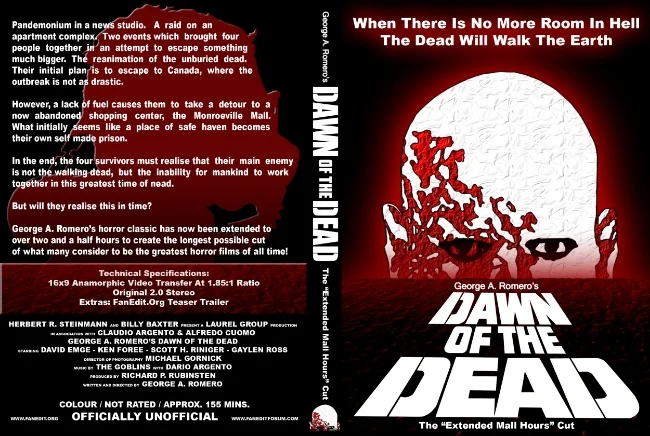
The horror genre has more than its fair share of bad movies. It’s the nature of the beast (no pun intended). Films of this type can be made quickly and cheaply but have the potential to make a tidy profit. Therefore, they attract not only burgeoning talent but those bereft of any as well. Furthermore, traditional formulas work, so any new innovative production is often followed by a wealth of copycats and knockoff films. To say that the genre is self-plagiarising is an understatement. Yet, from time to time, horror movies can surpass mainstream cinema with regard to social commentary, satire and intelligent adult narratives. Look no further than Dawn of the Dead, The Thing and The Descent if you want three solid examples. Horror is a versatile and malleable genre that can facilitate great stories and reflections upon the human condition.
The horror genre has more than its fair share of bad movies. It’s the nature of the beast (no pun intended). Films of this type can be made quickly and cheaply but have the potential to make a tidy profit. Therefore, they attract not only burgeoning talent but those bereft of any as well. Furthermore, traditional formulas work, so any new innovative production is often followed by a wealth of copycats and knockoff films. To say that the genre is self-plagiarising is an understatement. Yet, from time to time, horror movies can surpass mainstream cinema with regard to social commentary, satire and intelligent adult narratives. Look no further than Dawn of the Dead, The Thing and The Descent if you want three solid examples. Horror is a versatile and malleable genre that can facilitate great stories and reflections upon the human condition.
Although Train to Busan starts with a very tried and tested premise, it quickly establishes itself as more than just a standard horror offering. The emphasis is upon characters with credible foibles and traits. The film presents us with an interesting overview of South Korean socio-economic culture. Class, etiquette and morality are all touched upon in the screenplay but organically, not clumsily. Nor are viewers bludgeoned with any obvious social messages. What the film does well is show us how humans deal with adversity and come to terms with extraordinary circumstances. Unlike so many US horror movies, the protagonists are not obnoxious and as the cast is inevitably culled over the course of the film, we genuinely mourn each loss. Another interesting cultural difference is how the disposal of zombies becomes more complex when firearms are not common place.
Like so many zombie movies, the most engaging scenes are those that happen as the emerging apocalypse unfolds. Despite living in a world surrounded by the media, it’s fascinating how we can remain oblivious while being immersed in it. Something else that Train to Busan does very well is accurately catalogue human reactions to the totally incongruous. Often passengers look on utterly dumfounded, as zombies bite into people’s neck. However, once the magnitude of the situation finally registers, the passengers are innovative as they seek to save themselves. Wet newspaper is stuck on the windows to obscure them. Cell phone ringtones are used to distract the undead.
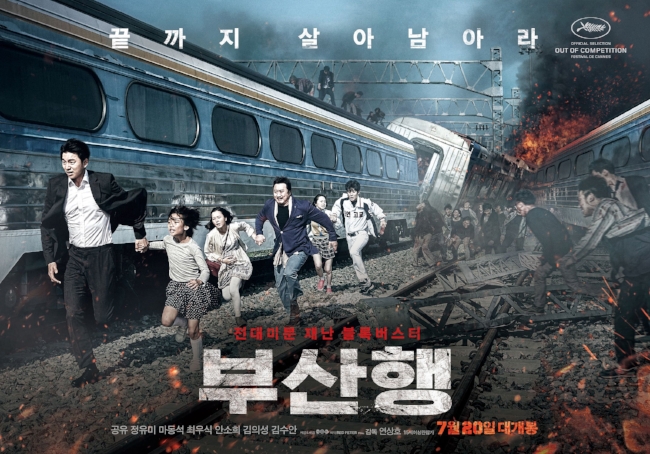
There are obvious stylistic similarities between Train to Busan and World War Z. The fast moving, aggressive zombies that transform their prey in seconds are again seen in this film. However, director Yeon Sang-ho does more with his smaller budget, making his undead horde far more threatening than the boiling CGI-fest of Word War Z. The zombies in this instance go semi dormant when cut off from the light. They are predominantly attracted to sound and seem to have lost most of their higher reasoning abilities. A closed sliding door is enough to outwit them and they do not use tools or their environment to their advantage. Train to Busan although tense and atmospheric, is not excessively gory. There are blood spurts and the bone crunching zombie transformations are ghoulish but the film does not rely on the extremely grotesque. Tension stems from the viewers concern for the casts wellbeing.
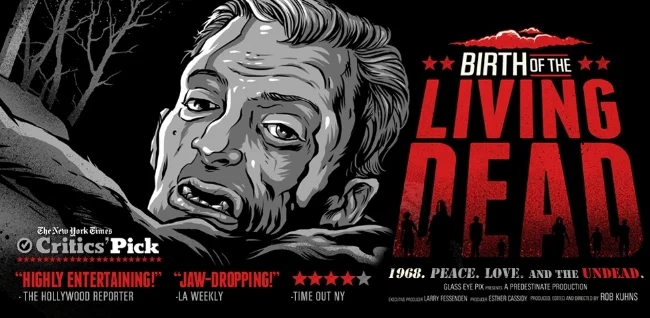
Performances are universally good in Train to Busan, although it would be remiss of me not to single out Kim Su-an as Soo-an. This young actress acquits herself extremely well as the young daughter of work obsessed fund manager. The film takes several bleak turns during the course of its story and I was concerned that it may end in a downbeat manner, similar to Romero’s Night of the Living Dead. However, the final resolution to the tale is poignant and certainly within the idiom of the proceeding one hundred minutes. Overall Train to Busan is an infinitely superior genre outing than most contemporary US mainstream horror films. It is engaging due to its international setting, moral integrity and cultural differences. Sadly, all these positive aspects will more than likely be lost when the US remake is released in 2018.



World War Z Unrated Cut (2013)
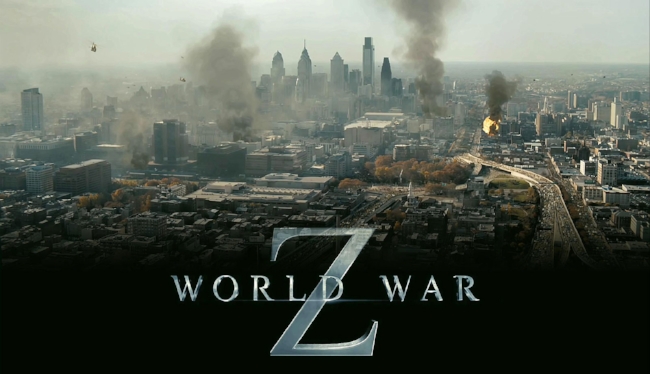
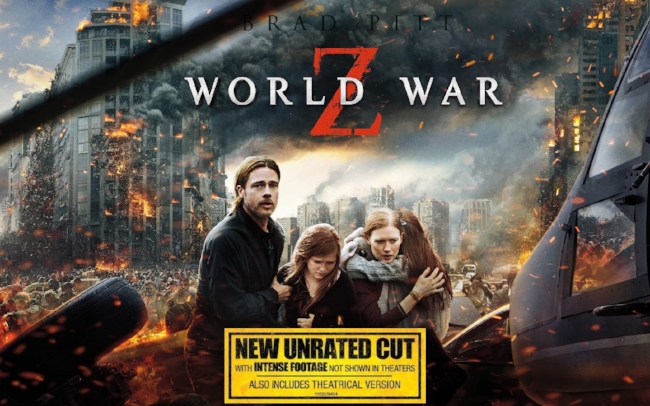
World War Z Unrated Cut runs seven minutes longer than the theatrical version of the movie and contains "intense footage not shown in theaters". The material consists of more violent alternative takes of existing action scenes and features mainly CGI effects work. There is no additional plot, although there may be some nominal changes to dialogue. Overall the unrated cut is an improvement over the theatrical print in so far it offers a more traditional zombie movie experience. However, compared to other examples of the genre, the unrated version of World War Z still remains relatively sedate in terms of violence. The movie focuses on the scale of the zombie outbreak, rather than the visceral mayhem of a George Romero film.
World War Z Unrated Cut runs seven minutes longer than the theatrical version of the movie and contains "intense footage not shown in theaters". The material consists of more violent alternative takes of existing action scenes and features mainly CGI effects work. There is no additional plot, although there may be some nominal changes to dialogue. Overall the unrated cut is an improvement over the theatrical print in so far it offers a more traditional zombie movie experience. However, compared to other examples of the genre, the unrated version of World War Z still remains relatively sedate in terms of violence. The movie focuses on the scale of the zombie outbreak, rather than the visceral mayhem of a George Romero film.
I thought it may be useful to post a selection of screen captures highlighting the major differences between the two versions of World War Z. Again, it is not in any way a comprehensive list but it broadly shows the major differences. If you require further details Movie-Censorship.com has produced a more thorough breakdown. My original opinion of the film itself still stands. World War Z is flawed but has good performances and explores some interesting concepts. The unrated cut of the movie certainly addresses one of the many criticisms levelled at the PG-13 theatrical release; namely that it was too tame. If you have yet to see World War Z, then this is the cut of the film I would recommend.
During the initial zombie outbreak in Philadelphia, we see more blood when people are bitten. Unfortunately, due to the colour palette that is currently in vogue with many film makers it is still not very clear.
Gerry shoots a zombie in the head while trying to find safety in the tenements of Newark. It is the only major head shot depicted in the movie.
Gerry is covered in more blood from the zombie he bayoneted in the stairwell.
In the unrated cut the camera clearly shows that it is Tommy that shoots the zombie attacking Gerry.
When Fassbach trips and accidentally shoots himself, we see the aftermath more clearly.
The imprisoned CIA operative pulls out one of his front teeth, while explaining how North Korea did this to its entire population in twenty four hours, to prevent the spread of the disease.
He then adds the tooth to a collection of others he has removed.
As the zombies overrun Jerusalem, we see more bullet hits as they are shot by Israeli soldiers.
Most of the gunshot wounds have been added in post production by CGI.
When an Israeli soldier uses his grenade, we see more explicit carnage caused by the explosion.
Further CGI blood and gunshot wounds are seen as the zombies are shot through the closed gate and railings.
A further grenade explosion shows more destruction to the zombies.
Segen's hand amputation is more graphic. Unlike the theatrical print it is obvious what Gerry has done.
Gerry binds Segen's wrist and waits to see if she becomes infected or not.
The zombie attack aboard the plane has a lot more CGI blood when victims are bitten.
Again due to lighting and editing, even the more explicit scenes are difficult to see clearly.
Another victim is bitten, prior to the plane explosively decompressing due to a grenade explosion.
Gerry's impalement injury is shown more clearly.
Gerry dodges the attacking zombie and hits it at the base of the spine with a crowbar.
He subsequently stamps on the zombie's face, crushing it.
Classic Movie Themes: Mackenna's Gold
Mackenna's Gold is a perfect example of the Western at its most decadent. Made at a time when the genre was becoming increasingly tired and facing strong competition from the Italian market, Hollywood decided that the way to renew public interest was to turn everything up to eleven and turn the Western into a multimillion dollar spectacle. The movie cost Columbia Pictures $14 million in 1969 and boasted an all-star cast, as well as action and special effects. However, it was not a smooth production and the studio seemed to get cold feet prior to its release. The Three hour running time was reduced to one hundred and twenty-eight minutes, leaving the final cut feeling somewhat uneven. Overall, the public were indifferent and the box office takings were low.
Mackenna's Gold is a perfect example of the Western at its most decadent. Made at a time when the genre was becoming increasingly tired and facing strong competition from the Italian market, Hollywood decided that the way to renew public interest was to turn everything up to eleven and turn the Western into a multimillion dollar spectacle. The movie cost Columbia Pictures $14 million in 1969 and boasted an all-star cast, as well as action and special effects. However, it was not a smooth production and the studio seemed to get cold feet prior to its release. The Three hour running time was reduced to one hundred and twenty-eight minutes, leaving the final cut feeling somewhat uneven. Overall, the public were indifferent and the box office takings were low.
Despite the movies flaws there is still much to like about Mackenna's Gold, although one’s enjoyment is frequently linked to the preposterous nature of the screenplay and the varying quality of the visual effects. One such aspect is the rather cool and groovy soundtrack by Quincy Jones. It has all his usual hallmarks such as crescendo's and tone colour shifts. Even within the confines of the Western idiom he manages to include a hint of his jazz and blues roots. The movie also features Jose Feliciano singing "Ole Turkey Buzzard", a song that re-occurs throughout the film. The cautionary lyrics regarding men killing each other in their lust for gold, mirror the on-screen story and change as the narrative progresses. It's catchy nature and somewhat incongruous inclusion in the movie’s score has earned it a somewhat cult reputation.







Dark City: Director's Cut (1998)
There are many directors who have cut their teeth working in the music industry. They have often fashioned their cinematic style and technique from the music videos they’ve made. Unfortunately, I am not a fan of this school of movie making. McG, for example represents to me the epitome of style over substance. I also detest this current trend for fast editing. It may well be pertinent for the music industry but I believe it is to the detriment of the narrative cinema. But there is one director from this background who has risen above his roots and exhibits true creative talent and a fundamental grasp of film. Alex Proyas, director of The Crow and I, Robot.
There are many directors who have cut their teeth working in the music industry. They have often fashioned their cinematic style and technique from the music videos they’ve made. Unfortunately, I am not a fan of this school of movie making. McG, for example represents to me the epitome of style over substance. I also detest this current trend for fast editing. It may well be pertinent for the music industry but I believe it is to the detriment of the narrative cinema. But there is one director from this background who has risen above his roots and exhibits true creative talent and a fundamental grasp of film. Alex Proyas, director of The Crow and I, Robot.
Dark City is an often-overlooked film, lost in the wake of the media hype surrounding The Matrix. Both have plot similarities and common themes. However, Dark City displays a deeper level of thought which is perhaps t why it lost favour with mainstream audiences not adequately equipped for its cerebral rigour. There is also a lack of a mainstream A list actor. Instead the film relies upon an international cast of established character actors. In 2008, director Alex Proyas re-edited the film, removing the original opening narration, adding additional material and some extra FX footage. The results are quite startling and have had quite an impact on the way the story is presented and which themes and motifs are emphasised.
Dark City starts off as a stylised film noir, with Rufus Sewel waking up in a motel with a dead prostitute. He's soon on the run from hard boiled cop, William Hurt. Can he trust his estranged wife Jennifer Connelly? Is he really mentally ill as his Doctor (Kiefer Sutherland) describes or is there something more sinister going on? Who are the trio of tall strangers dressed in black, who are pursuing him over the ersatz 1950s city? A postcard hints at possible clues that can be found at shell beach, an out of town resort. But despite being clearly sign posted, no underground train seems to go there. Matters just seem to get stranger, as peoples identities change along with streets and buildings. Why is it perpetually night time? As the story soon descends into a disturbing dystopian nightmare it becomes clear that there are sinister forces at work.
This director's cut of Dark City, turns a flawed but accomplished film into one that finally reaches its full potential. The detective story soon gives way to darker plot elements and expands into a gothic vision. The final act reveals an intriguing science fiction style dénouement. To say more would spoil the plot for those who have yet to see it. Let it suffice to say that Dark City is one of a handful of movies that successfully straddles multiple genres. The production design is striking mixing expressionism, art nouveau and fifties Americana. The story is reminiscent of Philip K. Dick work and has more than a hint of Kafka about it.
The cast is very eclectic (and international), featuring the talents of Ian Richardson, Richard O' Brien, Colin Friels, Bruce Spence and even John Bluthal (Frank Pickles from The Vicar of Dibley). Trevor Jones provides an evocative soundtrack. Proyas directs stylishly with a good grasp for story and character. This new cut, removes the voice over at the beginning which clumsily telegraphed the plot and places a more nuanced focus on the initial mystery. The theme of awaking from a perceived reality into a bleaker and more sinister alternative one, as mentioned earlier draws comparisons with The Matrix. However, the messianic allegory of that film is exchanged here for a more Nietzschian subtext.
Dark City by its very nature was always destined to become a cult film. Yet it actually is more than that, working on several levels. It can be viewed as a baroque science fantasy film or as a deeper commentary on the shallow and contrived nature of modern society. It is certainly a visually arresting and thoughtful if sombre film. It is not excessively violent, though it is somewhat grotesque and brooding. The ending may spark a further debate when you consider the implications.
Apollo 18 (2011)
A fundamental requirement of cinema is that the audience suspends their sense of disbelief. Anything that breaks this will immediately has a negative impact upon the viewing experience. There are many things can severe this connection but the two most common seem to be obvious plot holes and Scooby Doo behaviour IE “Let’s split up…”. If these are the result of simply poor film making, then they can perhaps be forgiven. Every director has to learn their craft. However, if these two factors are present by design, then that is an unpardonable sin. Assuming that your audience is stupid, is insulting and the worse sort of hypocrisy.
A fundamental requirement of cinema is that the audience suspends their sense of disbelief. Anything that breaks this will immediately has a negative impact upon the viewing experience. There are many things can severe this connection but the two most common seem to be obvious plot holes and Scooby Doo behaviour IE “Let’s split up…”. If these are the result of simply poor film making, then they can perhaps be forgiven. Every director has to learn their craft. However, if these two factors are present by design, then that is an unpardonable sin. Assuming that your audience is stupid, is insulting and the worse sort of hypocrisy.
Apollo 18 has a strong start for a movie built around the found footage concept. It plays very nicely into the current appetite for conspiracy theories. The first thirty minutes where we meet the cast and learn of their covert mission to place monitoring equipment on the moon, is credible and intriguing. The cold war setting and the post-Watergate back drop do a lot to fuel the narrative. During this initial third of the movie, Apollo 18 plays more like a political thriller rather than a sci-fi shocker. But then director Gonzalo Lopez-Gallego goes and jumps the shark and all the previous good work goes out the window. It’s a common problem with contemporary film making. I remember having exactly the same thoughts when I saw Paranormal Activity.
After a string of anomalous events a key character makes the most illogical leap of thought and as a result the credibility simply melts away. You see, I take the attitude that NASA astronauts are trained professional, hand picked because of their skills and analytical mindset. Maintaining rational under extreme circumstances must surely feature in their training. So, I simply do not buy into the idea that, because they’ve found an abandoned Russian Lunar Module, a dead cosmonaut, picked up radio interference, had the flag that they planted removed and found some unidentified marking in the lunar soil, naturally concluded that it must be extraterrestrials. Scientists simply do not think this way.
The rest of the film is arbitrary and derivative bug hunt, with obviously telegraphed jumps. The conclusion involving complicit government agencies is predictable and uninspired. This is a shame because the film is very well made from a technical perspective. But once again we have a production that demonstrates a clear understanding of visuals but not plot construction. Furthermore, Apollo 18 also seems to forget that it is a found footage movie, with scenes and dialogue that are contrived to be more cinematic and come dangerously close to breaking the fourth wall.
With reference to the plot holes, I unlike other critics was not particularly bothered about the nebulous nature of the alien life forms featured in the film. I am happy to watch movies without every answer being given to me on a plate. Life is seldom clear cut, is it? However, I do balk at the fundamental flaw that permeates Apollo 18. The film comprises of 16 mm & 35 mm cine footage along with video material from external cameras. Now the latter may well have been broadcasted and thus been received and recorded back on earth. But the cine film had to be collected and developed. Does the film not hinge on the premise that no mission has subsequently returned to the moon? Also, the Russian Lunar Module and US Command module where both destroyed, therefore eliminating any footage they may have had. No, this is simply bad screen writing and brings me neatly full circle to my original point that I started with.
Godzilla (2014)
Gareth Edwards directing debut Monsters, was a clever, subtle and genuinely moving human drama that just happened to be set against the background of alien lifeforms in a quarantine zone. He also managed to imbue the monsters of the title with a sense of depth. They were intriguing with their bio-luminescent communication and curious vocalisations. They were not simply an arbitrary MacGuffin and hinted at something far more complex. I was therefore very surprised and pleased that he has managed to maintain these qualities in his second feature film Godzilla. Despite being a massive studio undertaking his reboot of the classic franchise has a depth of soul that you seldom find in such mainstream material.
Gareth Edwards directing debut Monsters, was a clever, subtle and genuinely moving human drama that just happened to be set against the background of alien lifeforms in a quarantine zone. He also managed to imbue the monsters of the title with a sense of depth. They were intriguing with their bio-luminescent communication and curious vocalisations. They were not simply an arbitrary MacGuffin and hinted at something far more complex. I was therefore very surprised and pleased that he has managed to maintain these qualities in his second feature film Godzilla. Despite being a massive studio undertaking his reboot of the classic franchise has a depth of soul that you seldom find in such mainstream material.
Ishirō Honda's original Godzilla movie in its uncut Japanese format is a tragic and melancholic tale, as well as a clever metaphor for the nuclear age. Garth Edwards maintain this theme but also adds an environmental element, as well as a philosophical concept with Godzilla being a "force of nature". This is more than an exercise in spectacle and the movie has a genuine sense of awe as it shows us an apocalypse brought about by the natural world, that we are powerless to deal with. The monsters in this movie are more than just caricatures. They are living, breathing entities with complex lifecycles. They are also very much part of the world, a theme that the author Clive Barker was always keen to explore.
The human elements of Godzilla are also handled in a different fashion to the standard formula. We are not saddled with heroes that have all the answers and who can miraculously save the world. As with Monsters there is a domestic drama being played out between Joe Brody (Bryan Cranston) a scientist grieving for his dead wife and his son Lieutenant Ford Brody (Aaron Taylor-Johnson) of the USN. Ford has to constantly bail out his Father from his conspiracy theory driven misadventures. This in turn places a strain on his own domestic relations with his Wife Elle Brody (Elizabeth Olsen) and their son. These simple narrative themes, work well against the catastrophic big picture.
Steven Spielberg has always been good at finding the right balance between the everyday and the incredible, both visually and thematically. There are traces of that approach here in Gareth Edwards directorial style. He elects to be extremely measured in what he shows, very much like Jaws, until the third act. This is a decision that I thoroughly approve of, although it will not be to everyone's liking. Some people have already complained that there is not enough Godzilla in the movie. However, I suspect they are more fans of spectacle and not necessarily interested in the director’s wider vision. I would also argue that the English dialogue version of many of the original Godzilla movies often robbed them of the finer plot points and simply focused on man-in-suit action, thus changing expectations of the US market.
Visually Godzilla is an outstanding experience. Seldom has such destruction been depicted with such gravitas. The movie takes a bleak tone so don't go looking for any witty quips or banter. It’s all played very straight faced. The visual effects give Godzilla an immense sense of scale as well as the M.U.T.O.S. This is one occasion when 3D does help the proceedings. There is also a tangible sense of the human cost to all the mayhem, without resorting to cliché. Furthermore, composer Alexandre Desplat has managed to craft the right sort of soundtrack for the proceedings. It has clear thematic influences from the original Japanese movies and is suitable sombre. Pretty much every aspect of this production seems to have been thought about in an intelligent manner.
Godzilla is a rare beast these days, in so far as it’s a blockbuster with a far greater amount of thought behind it. Not everything works. Sometimes the script follows the less interesting characters about and a few of them drop out of the proceedings without logical real reason. But the movie maintains a sense of integrity about its subject matter. Furthermore, considering that director Gareth Edwards has managed to produce a movie of this type, via the studio system and still managed to stamp his personal style upon it, is a major achievement. This is one of those rare times where I eagerly await a sequel, as long as it maintains the high standard that has been established by the first instalment.
Pacific Rim (2013)
At first glance Pacific Rim may appear to be yet another exercise in Hollywood excess. Another bloated, vacuous spectacle made by cynics who have no other motive than to part the unwary cinemagoer from their hard-earned cash. Fortunately, it is not one of those movies. It is big and certainly visually impressive but it also has a plot, likeable characters, a global overview and a sense of integrity regarding the genre it lovingly references. In every respect, this is a superior example of the summer blockbuster genre and it can all be attributed to the unique talents of Guillermo del Toro.
At first glance Pacific Rim may appear to be yet another exercise in Hollywood excess. Another bloated, vacuous spectacle made by cynics who have no other motive than to part the unwary cinemagoer from their hard-earned cash. Fortunately, it is not one of those movies. It is big and certainly visually impressive but it also has a plot, likeable characters, a global overview and a sense of integrity regarding the genre it lovingly references. In every respect, this is a superior example of the summer blockbuster genre and it can all be attributed to the unique talents of Guillermo del Toro.
Del Toro is a man of passion, intelligence and an inherent understanding of the subtleties of cinema. His diverse portfolio of work shows how he is equally at home with the cerebral and the spectacular. Pacific Rim is very much an example of the latter but it has far more substance than many movies of this kind. The director's clever nuances and flair for creativity are present throughout the movie. Although this a homage to the great Toho productions of the sixties and seventies, Pacific Rim is far from a conceit or an indulgence. It is a very public and accessible ode to a genre that shaped the director's childhood.
So, what makes Pacific Rim head and shoulders above the competition? The fresh perspective that Guillermo del Toro brings to the proceedings. It is not the US that saves the world but people from all nations. The focus of events has a very far eastern flavour and an international cast, all of whom have well developed characters and backstories (by genre standards). There is humour provided by two bickering scientists which not only entertains but is a clear reference to Japanese monster movie tropes. The visuals are both original and creative providing a genuine sense of scale and threat. Yet the Kaiju's still have Godzilla-esque quirks and mannerisms. Ramin Djawadi score also echoes iconic themes from the Toho glory days.
Pacific Rim also eschews the usual broad strokes of Hollywood. The female lead Mako Mori (Rinko Kikuchi) is a far more interesting protagonist than we usually see. The cultural differences between East and West are touched upon but not in any clichéd fashion. As ever the director has a scene in which a small child is terrified and it is a very potent sequence. Yet it has significance to the plot and is far more sophisticated means of explaining motivation. Films so often these days simply think they can define a character’s actions in the most arbitrary manner.
Pacific Rim is not without some shortcomings and the biggest is possibly the length of some of the action scenes. Where younger viewers may delight in an unleavened diet of CGI, the more mature viewer may grow a little tired during the third act. However, there it can be argued that when you get a major studio to bankroll a project such as this for $190 Million, then there is a requirement to indulge them. The 3D process also impacts upon the elegance of Guillermo Navarro cinematography and at times darkens the image too much.
Simply put Pacific Rim puts the Transformers franchise to shame and shows them up for the disposable and hollow products that they are. The movie also showcases the powerful presence of Idris Elba and once again has an American lead character, played by a Brit (Charlie Hunnam). Del Toro regular, Ron Perlman, has an extended cameo and a lot of fun with a rather quirky role. Production designer Andrew Neskoromny gives a very convincing wartime feel to the movie, especially the Jaegers themselves. Under Guillermo del Toro's guidance all these strands come together to make a movie that is far more than the sum of its parts. I'm left pondering how different and potentially better The Hobbit may have been under his creative auspices.
The Expendables 3 Unrated Edition (2014)
The theatrical release of The Expendables 3 in 2014 was severely hamstrung by the producer’s decision to court a wider audience with a PG-13 rating. The film although profitable, still fell short of its predecessor’s box office taking. Many fans of the franchise subsequently looked to the DVD and Blu-ray release to provide a harder cut of the movie, similar to the previous R rated instalments.
Sadly, this was not the case. The Expendables 3 Unrated Edition does include some additional action content and one new expositionary scene but overall there is nothing that radically improves the film or makes it stronger in content than the theatrical release.
The theatrical release of The Expendables 3 in 2014 was severely hamstrung by the producer’s decision to court a wider audience with a PG-13 rating. The film although profitable, still fell short of its predecessor’s box office taking. Many fans of the franchise subsequently looked to the DVD and Blu-ray release to provide a harder cut of the movie, similar to the previous R rated instalments.
Sadly, this was not the case. The Expendables 3 Unrated Edition does include some additional action content and one new expositionary scene but overall there is nothing that radically improves the film or makes it stronger in content than the theatrical release.
What Unrated Edition of the movie offers is five minutes of extra material, including an additional scene of dialogue between the younger member of the mercenary team. It should be noted that it makes no significant difference to the film’s narrative. The remainder of new content consists of additional action sequences in the movie’s climatic battle. This is predominantly expanded knife work by Doc (Wesley Snipes) and Lee Christmas (Jason Statham). There is also a smattering of additional profanity throughout the proceedings. Although this new material would have pushed the movie into an R rating if it had been included in the theatrical release, it still wouldn't have made it comparable to the first two films.
So, to clarify the situation, the first two major action scenes in the The Expendables 3 Unrated Edition are the same as the theatrical release. The train rescue and the dock shootout remain relatively bloodless, although they are well constructed. I was especially saddened that nothing was added to the scene in which a steel cable was strung across the rail track. I was hoping for some decapitations and bisections but no such luck. It is not until about fifty minutes into the movie we get the first new content. An additional scene aboard the transport plane where the new team of Expendables discuss Stonebanks (Mel Gibson). It neither enhances nor detracts from the theatrical version and just reinforces the established group dynamics.
It is during the final battle in the ruined hotel, that the bulk of the new material is added. However this is mainly longer edits of fights and the use of alternative takes. For example there is a scene where Jason Statham uses a soldier as a meat shield that I don't recollect being in the theatrical release.
The changes to the various knife fights are as follows. There are more stabbings with an emphasis upon sound effects. Wesley Snipes knifes a group of soldiers in more detail and Jason Statham dispatches a particularly large foe by stabbing down into his shoulder with a large blade.
Other differences include more physical blows during the hand to hand combat and possibly more bullet impacts (although these remain conspicuously bloodless). Because the changes are so minor it is hard to tell without doing a direct side by side comparison between theatrical and unrated edition. I suspect there may be some nominal CGI blood spray and bullet holes added to the Mel Gibson's demise. I'm sure a more comprehensive analysis between versions will eventually appear over at Movie-Censorship.com in due course.
Sadly, The Expendables 3 Unrated Edition does not fundamentally change my opinion of the overall movie. It was a mistake by the film makers to make such a tonal shift and although the longer cut can offer some solid action entertainment, it lacks the bombast and excess of its two prequels. If a fourth movie is forthcoming let us hope it returns to a format that appeals to the core demographic.






Into the Storm (2014)
When I first saw the trailers for Into the Storm back in 2014, I was far from impressed. I thought to myself, I bet that's just a CGI FX show reel with some second-rate plot tacked on as an afterthought. So, I elected not to see the movie upon release and forgot about it. The other night I was in the mood for some easy entertainment. Nothing heavy, just something that would provide an amusing diversion for an hour and a half or so. I wasn't setting the bar particularly high. Then I remembered Into the Storm and as I’ve always had a weakness for the Disaster Movie genre, I thought to myself, that may do the trick. Sadly, it didn't. This is far from a dumb but fun, popcorn movie like San Andreas. Into the Storm is an insultingly stupid piece of cinema that left me feeling angry and slightly unclean due to watching something so crass.
When I first saw the trailers for Into the Storm back in 2014, I was far from impressed. I thought to myself, I bet that's just a CGI FX show reel with some second-rate plot tacked on as an afterthought. So, I elected not to see the movie upon release and forgot about it. The other night I was in the mood for some easy entertainment. Nothing heavy, just something that would provide an amusing diversion for an hour and a half or so. I wasn't setting the bar particularly high. Then I remembered Into the Storm and as I’ve always had a weakness for the Disaster Movie genre, I thought to myself, that may do the trick. Sadly, it didn't. This is far from a dumb but fun, popcorn movie like San Andreas. Into the Storm is an insultingly stupid piece of cinema that left me feeling angry and slightly unclean due to watching something so crass.
Usually I won't take the bait and allow my buttons to be pushed when confronted by such contrived film making. However, Into the Storm actually succeeded in making me angry. It is appallingly written, with a paper-thin plot, filled with the most singularly tedious stereotypes and clichés. There's a Father estranged from his sons, a Mother who may be putting her work before her daughter and a documentary film maker who'll do anything to get the scoop, yet ultimately sacrifices himself to save the day. Then we have a wealth of teenagers designed to represent all the various different subsets of youth culture. The film also includes a quota of "Red Shirts" characters that conveniently die at strategic points in the narrative. However, the jewel in the crown of Into the Storm has to be the pair of comedy Redknecks. They're excruciatingly embarrassing to watch.
What is so offensive about this movie is that fact that it’s obviously the product of a committee meeting, where a bunch of suits had a brainstorming session. Such people are devoid of any artistic creativity or personal integrity and to them film making is just a process. A means to an end, devoid of anything else other than a desire to make money. They have nothing but contempt for their audience, the same way drug dealers has nothing but loathing for their customers. Forget the apocryphal notion of a film being so bad, it’s good. Into the Storm is just an awful, cynical, crass piece of film making. Utterly hollow, soulless and devoid of any joy. Do not dignify this cinematic insult with either your time or money.
30 Days of Night (2007)
Every once in while an established genre will get a new interpretation that gives it fresh impetus. 30 Days of Night did exactly that to the Vampire mythos ten years ago and is a very good horror film as well. Based on a well-known series of graphic novels by Steve Niles and Ben Templesmith, it tells how a remote Alaskan town falls under siege by a group of the undead, during the extended period of darkness that comes in winter; the thirty days of night of the title. Local Sheriff Josh Hartnett suspects something is wrong when the remote towns transport and telecommunications are sabotaged. Is the vagrant arrested for these crimes a lunatic or a “familiar” for more sinister forces?
Every once in while an established genre will get a new interpretation that gives it fresh impetus. 30 Days of Night did exactly that to the Vampire mythos ten years ago and is a very good horror film as well. Based on a well-known series of graphic novels by Steve Niles and Ben Templesmith, it tells how a remote Alaskan town falls under siege by a group of the undead, during the extended period of darkness that comes in winter; the thirty days of night of the title. Local Sheriff Josh Hartnett suspects something is wrong when the remote towns transport and telecommunications are sabotaged. Is the vagrant arrested for these crimes a lunatic or a “familiar” for more sinister forces?
What is refreshing in this instance is the fact that the Vampires back story is left suitably vague. There is also a complete omission of any religious inference. There are no crucifixes wielded here. The human characters are also likeable. The themes of death and how we face it are explored with people you have sympathy for. The production also has some solid special effects. Be warned, there is a lot of brutal violence. Heads are hacked off rather than swept of the neck with a single blow. 30 Days of Night also attempts to join that exclusive cinematic club of showing a child killing on screen. However, as the child is a Vampire, it does not quite have the same impact.
I haven't enjoyed a film of this kind as much since Blade 1 and 2 and the seminal Near Dark, which is the revisionist vampire film by which all others must be judged. It is good to see the undead treated in a way other than the traditional Eastern European idiom with all the psycho-sexual connotations. No capes, no bats or camp accents. In this instance, they are simply a force of nature that needs to be endured like the winter nights themselves. Be warned, if you are a fan of traditional romantic conclusions, then you may balk at 30 Days of Night ending. The film is hard edged and doesn't pull its punches. Don't say I didn't tell you.
Classic Movie Themes: Coogan’s Bluff
Coogan's Bluff was the first of many movie collaborations between Clint Eastwood and legendary director Don Siegel. The film is a traditional “fish out of water” tale that still rings true today. Arizona cop, Coogan, is sent to New York to collect a prisoner. Unfortunately, he escapes, forcing Coogan to search through the weirdest and most dangerous place he's ever experienced; New York in 1968.
Lalo Schifrin's score for Coogan's Bluff, is a hip contemporary score (for its time) that has all the composer's trademark funk material. The music encompasses a variety of idioms from western to eastern, with elements of jazz, rock and funk. It really captures the mood of the times tapping into the sixties motif, with use of such instruments as tabla and sitar.
Coogan's Bluff was the first of many movie collaborations between Clint Eastwood and legendary director Don Siegel. The film is a traditional “fish out of water” tale that still rings true today. Arizona cop, Coogan, is sent to New York to collect a prisoner. Unfortunately, he escapes, forcing Coogan to search through the weirdest and most dangerous place he's ever experienced; New York in 1968.
Lalo Schifrin's score for Coogan's Bluff, is a hip contemporary score (for its time) that has all the composer's trademark funk material. The music encompasses a variety of idioms from western to eastern, with elements of jazz, rock and funk. It really captures the mood of the times tapping into the sixties motif, with use of such instruments as tabla and sitar.
One of the most memorable scenes in the movie is Coogan's visit to a night club. Nothing dates a film more than the inclusion of popular music or concert footage. Coogan's Bluff exemplifies this with its depiction of late sixties counter-culture. Viewers are treated to liquid light shows, psychedelic music, sexual liberation and drugs. The icing on the cake is the song played by the band, Pigeon-Toed Orange Peel. It’s a formulaic number that somehow manages to tread a fine line between cliché and satire, whilst still being devilishly catchy.
The Asphyx (1973)
The Asphyx (AKA The Horror of Death) was released in 1973, just as the as the horror genre was about to be totally redefined by The Exorcist forever. William Friedkin’s magnum opus moved the genre away from its traditional Gothic based, literate and low budget roots and took the horror movie into the realm of the blockbuster. Special effects and shock proved to be more bankable than the old school approach of studios such as Hammer. That's one of the reasons why The Asphyx was a box-office flop. Fondly remembered by a few as a "thinking man's horror film" this cinematic curiosity’s greatest asset is also its Achilles Heel. The movie is perhaps too plot heavy and cerebral, failing to give even the most patient of audiences the shocks that they craved. Since its release this film has been seldom seen on television and has often been poorly treated on home media.
The Asphyx (AKA The Horror of Death) was released in 1973, just as the as the horror genre was about to be totally redefined by The Exorcist forever. William Friedkin’s magnum opus moved the genre away from its traditional Gothic based, literate and low budget roots and took the horror movie into the realm of the blockbuster. Special effects and shock proved to be more bankable than the old school approach of studios such as Hammer. That's one of the reasons why The Asphyx was a box-office flop. Fondly remembered by a few as a "thinking man's horror film" this cinematic curiosity’s greatest asset is also its Achilles Heel. The movie is perhaps too plot heavy and cerebral, failing to give even the most patient of audiences the shocks that they craved. Since its release this film has been seldom seen on television and has often been poorly treated on home media.
The film’s premise is simple but intriguing. A nineteenth century British philanthropist and amateur psychic researcher embarks on a fateful quest for immortality. Sir Hugo Cunningham (nicely played by Robert Stephens) after experimenting with taking photographs of dying people, discovers the presence of a nebulous spirit of the dead, known in mythology as the Asphyx. It appears at the moment of an individual’s death and is only visible via photographic plate. Sir Hugo becomes obsessed with capturing his own Asphyx and thus ensuring his immortality, so he can pursue a life of science. However, this enterprise does not progress as Sir Hugo expects and there are consequences both for himself and his family.
With its verbose, literate script, well defined characters and fascinating themes, The Asphyx is the epitome of the low budget style and creativity that became passé in the early to mid- seventies. The chills are subtle but effective under the direction of Peter Newbrook and the widescreen cinematography by Freddie Young adds polish as well as elegance to the proceedings. Filled with fa oreboding atmosphere and an accurate period production design, this is an intelligently conceived horror film that relies more on story than shocks. There is little violence and the only visual effects are those of the screaming Asphyx as Sir Hugo attempts to capture it. These are simplistic and brief.
The plot and themes of this film reflect the thinking of many psychic researchers of this period. Vaguely similar ideas were explored in the film Flatliners, however, one cannot compare the two in any other fashion. The Asphyx has a creative plot that avoids some of the usual cinematic and genre clichés. The drama between the central characters is well conceived and holds the audience's attention. The final codicil is haunting, memorable and somewhat sad. Overall The Asphyx is a minor horror classic that deserves far wider recognition. I therefore wholeheartedly recommended it to more discerning viewers that prefer plot driven narratives over cheap scares.
Kingsman: The Secret Service (2015)
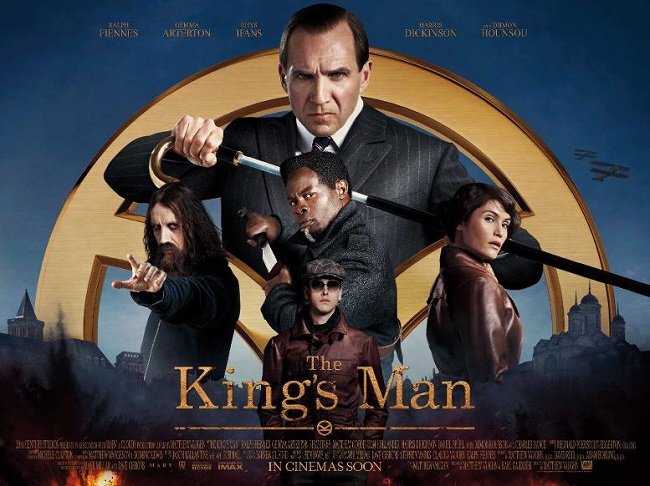
As a sequel is due out in September, I thought I’d revisit Kingsman: The Secret Service. Contrary to the movies titles and the implied homage seen in the various trailers, the film is not as clichéd as the genre it's set in. Nor does it draw too heavily from its graphic novel source material. As with Kick Ass director Matthew Vaughn has managed to smooth over the rough edges of this films antecedents and create a rather unique, stylised and extremely entertaining hybrid. It is a somewhat niche market undertaking and won't appeal to all audiences but if you like all out action, knowing satire and a liberal dose of gallows humour then this movie is most likely for you.
As a sequel is due out in September, I thought I’d revisit Kingsman: The Secret Service. Contrary to the movies titles and the implied homage seen in the various trailers, the film is not as clichéd as the genre it's set in. Nor does it draw too heavily from its graphic novel source material. As with Kick Ass director Matthew Vaughn has managed to smooth over the rough edges of this films antecedents and create a rather unique, stylised and extremely entertaining hybrid. It is a somewhat niche market undertaking and won't appeal to all audiences but if you like all out action, knowing satire and a liberal dose of gallows humour then this movie is most likely for you.
Kingsman is an independent international agency specialising in the elimination of global terrorist threats; something they like to do with as much panache and class as possible. After the death of one of their operatives, Kingsman agent Harry Heart (Colin Firth) decides to replace him with a rather disreputable, unemployed youth called Eggsy (Egerton), whose father was in fact a fellow Kingsman. Thus, follows a fish out of water tale, as Eggsy has to pass the rigours of the Kingsman training program, while the agency has to counter the machinations of multi-billionaire entrepreneur Richmond Valentine (Jackson) and his obligatory plan for world domination.
Now this is all very contrived and certainly there's a lot of plot themes that we've seen before but the movie has an incredible sense of style and some of the most dynamic and fluid action scenes of recent years. Let me stress that this is really over the top gratuitous stuff, yet it works perfectly within its own internal logic. Colin Firth is a pleasure to watch playing against type and adapting to the material effortlessly. The set piece in which single handedly slays an entire church congregation that has become psychotic, is very impressive. Michael Caine, Mark Strong and Samuel L. Jackson also greatly elevate the proceedings. I thought that Taron Egerton as Eggsy would be the movie weakest link but he surprisingly makes the role his own.
Sadly, the movie does have a flaw running through it and it's based around the institutionalised sexism that has always been prevalent in this genre. Consider any Connery Bond movie and you'll get the idea. Matthew Vaughn and Jane Goldman strive to satirise this theme but it ends out having the reverse effect and somewhat derails the final act. The gag at the end of the film in which Princess Tilde gives Eggsy his “reward” is somewhat tasteless. It's a shame because I'm pretty sure that was not the intention but tonally this doesn't work. Yet this isn't an enough of a defect to spoil the entire movie, which in other respects has quite a moral undertone.
Kingsman: The Secret Service was a surprise hit for Twentieth Century Fox back in 2015. The film had a production cost of $81 million but saw a total box office gross of $414,351,546, which is a handsome return by Hollywood standards. Therefore a sequel was inevitable and so we have Kingsman: The Golden Circle hitting the UK cinemas on 29th September. The budget has now increased to $140 million but the writing and directing talent remains the same. Hopefully, audiences will be given a similarly stylised and satirical take on the international spy genre, that will prove as entertaining as the first. I’m happy to give the movie the benefit of the doubt, because after all “manners maketh man”.
The Objective (2008)
Daniel Myrick has experience when it comes to low-budget productions, having co-written The Blair Witch Project. The Objective offers a promising science fiction story set in contemporary Afghanistan, hinting at both supernatural and extraterrestrial plot themes. The spartan, low budget production along with minimal use of special effects allows the story to be the focus of the movie. As with Pontypool, many questions are raised throughout the course of the plot and the attentive viewer is required to listen and consider what is presented, rather than just blindly accept everything on face value.
Daniel Myrick has experience when it comes to low-budget productions, having co-written The Blair Witch Project. The Objective offers a promising science fiction story set in contemporary Afghanistan, hinting at both supernatural and extraterrestrial plot themes. The spartan, low budget production along with minimal use of special effects allows the story to be the focus of the movie. As with Pontypool, many questions are raised throughout the course of the plot and the attentive viewer is required to listen and consider what is presented, rather than just blindly accept everything on face value.
It is the ambiguity of the story (which mixes Djinn mythology, British colonial history with elements of Erich von Däniken) and the way the protagonists struggle to come to grips with the ongoing events that proves so intriguing. A re-occurring theme throughout The Objective is how one’s personal frame of reference can sometimes limit how you interpret and quantify any new experience. Director Daniel Myrick utilises a classic plot device, in which the establishment tries to suppress events, fearing they will cause social unrest, if made known to the general public.
Although far from perfect, with average performances, clunky dialogue and a rather artificial narration, The Objective still manages to absorb and entertain. The low budget works to the films advantage, with action scenes feeling more like news footage. Instead of shocks there is an increasing atmosphere of disquiet which builds well over the ninety-minute running time. The mixture of genres works rather well and the films conclusion is suitably open ended and will definitely provoke debate. Overall, it’s best to file The Objective under “interesting curiosity”.