
Hoard It or Spend It?
This posts stems from a recent experience I had in Star Trek Online but it is not a matter that is exclusive to that MMO. This is a subject that is pertinent to any multiplayer game that has an in-game currency and an economy driven by player activity. I’m not referring to single player games where you can use a console command to give you infinite wealth, such as Skyrim. This is about currencies that are earned in-game through grinding missions, selling gear and other assets to NPCs and trading via the auction house. It’s about how we as player perceive that virtual money and our relationship with it.
This posts stems from a recent experience I had in Star Trek Online but it is not a matter that is exclusive to that MMO. This is a subject that is pertinent to any multiplayer game that has an in-game currency and an economy driven by player activity. I’m not referring to single player games where you can use a console command to give you infinite wealth, such as Skyrim. This is about currencies that are earned in-game through grinding missions, selling gear and other assets to NPCs and trading via the auction house. It’s about how we as player perceive that virtual money and our relationship with it.
I’ve been playing STO regularly since 2015 when a recruitment event enticed me to return to this MMO. I have a primary character, a Tactical Federation Fleet Admiral and five other alts from various other factions. I play through all new content on my main “Captain” (as the developers like to refer to them) and harvest resources with the alts. Therefore over time I have built up a fair stock of the games two main currencies; Energy Credits and Dilithium. The former is quite hard to acquire unless you proactively follow an established course of action. Grind out Dilithium, refine it, sell it for Zen (the in-game store currency), buy lockbox keys and then sell them via the Exchange (auction house). Raising capital any other way is a long and laborious process. Generating Dilithium is not so difficult, but players are limited to refining 8,000 ore per 20 hours. Hence farming via alts is a necessity if you want to speed this process up. However, if you log in regularly and follow a daily routine, you can keep your account solvent with both currencies.
And so onto the crux of this post. There I was logged into my main alt a few days ago, toying with the idea of tinkering with my ship build on my main character, because that is a major part of the “endgame” (yes, I rolled my eyes as I said it) in STO. To cut a long story short I bought 6 Pulse Phaser Beam Arrays from the Exchange. I chose to buy “rare” quality to keep the costs down although this may have been a false economy as I then had to use a lot of resources to upgrade the weapons to “epic” quality and Mark XV level. I won’t bore you with all the details but I ended up using 100 Phoenix Universal Tech Upgrades, several hundred Superior Beam Weapons Tech Upgrades, about 250,000 Dilithium and spending 60,000,000 Energy Credits. Furthermore, the above process described was not undertaken casually. I spent hours perusing what was available for sale, trying to work out the potential upgrade costs and agonising over whether to make such major inroads into accumulated in-game wealth.
And there you have it in a nutshell. The curious paradox that arises from accruing resources that exist to be spent yet hesitating to do so, because you don’t like the idea of using it and being left with significantly less. I’m no psychiatrist but I suspect this reticence may stem from the investment of time it takes to gain in-game currencies and the fact that once spent, the clock is reset. Yet considering the fact that so much other progression is time gated in these sorts of game, why should this be any less palatable than say spending skills points or grinding reputation XP? Probably because its money. It may only be virtual cash but players tend to treat it in a similar fashion to the real thing. If gaining wealth comes easy to you in real life, you may well take a cavalier approach to spending it because there’ll always be more rolling in. If, however, you only earn a moderate wage and saving is an uphill struggle, then spending is subject to more scrutiny and certainly not done on a whim. Perhaps people bring these mindsets into the games they play?
I really procrastinated over this recent “investment of funds” in STO. I eventually got quite cross with myself for worrying so much about something that exists purely to facilitate a leisure activity and that getting vexed to such an extent was actually contradicting the entire point of playing this game. However, it certainly gave me food for thought. And again, this is not something that is unique to me or to this specific MMO. I’m sure similar dilemmas happen to those playing LOTRO, ESO, Guild Wars and the like. It’s an odd phenomenon and I’m not sure how it can be addressed because it stems from us rather than the game. Developers could use all sorts of inventive methods to disguise a currency in a game but as soon as players determine its function, they’ll approach it like money. Then they’ll either hoard it, spend it or dither over what they should do.
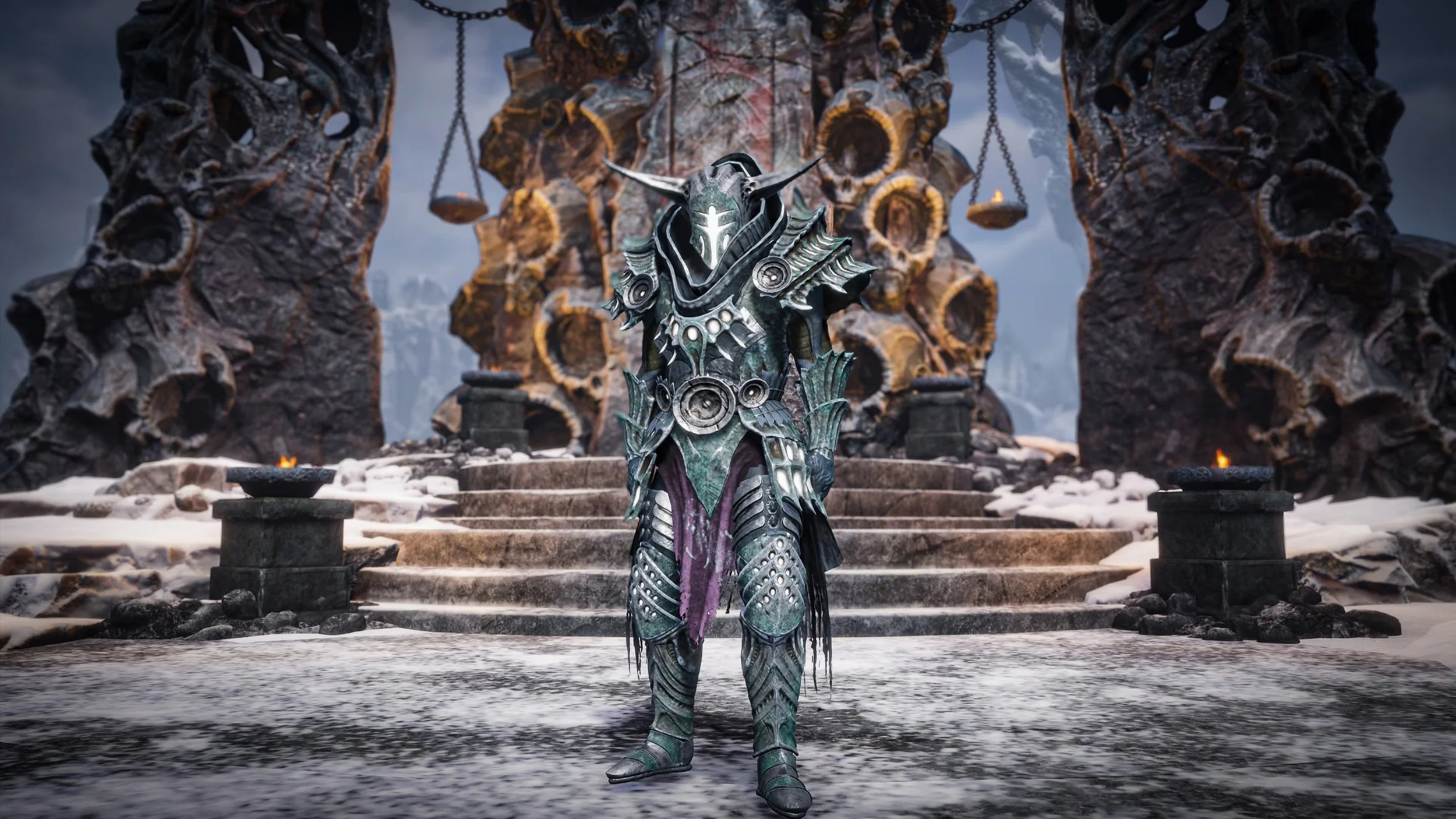
I recently completed the main story in Tainted Grail: The Fall of Avalon. In total I spent about sixty hours playing the game. I began at the start of the year, then took a break for a while but returned to it recently because I wanted to see if I could unlock a specific ending. I did manage to do this. Like so many other RPGs, Tainted Grail: the Fall of Avalon has a central storyline, along with a wealth of side quests, based around factions in specific zones. I think I possibly completed about a two thirds of these. However, once I finished the main story, my interest in the game began to wane. I finally left my character in the last major quest hub in case I wish to return at a future date. I then logged out of the game and uninstalled it from my PC to free up space for whatever I was to play next. In this case its The Sinking City 2. None of this is a negative reflection on Tainted Grail: the Fall of Avalon. I enjoyed the time I spent playing this quirky RPG. I simply had my fill and left to play something else.

On Tuesday 11th April, Aspyr Media rather surprisingly re-released The Lord of the Rings: War in the North, a co-op action-RPG from 2011. This game was delisted in late 2019, possibly due to changing rights ownership or a license expiring. Hence, I was somewhat discombobulated by the return of this title to all major gaming platforms. Mind you, the Embracer Group (through its subsidiary Middle-earth Enterprises) still controls the worldwide commercial and video game licensing rights for The Lord of the Rings and The Hobbit. Furthermore they have explicitly stated that they have plans for more games. It would appear this also means re-releasing and updating old favourites. It is also worth noting that they own Aspyr Media, which is also a bit of a giveaway. Let it suffice to say that this re-release and sparked enthusiastic online debate as to whether any other he Lord of the Rings themed games from the same era will receive a similar makeover. Judging by the internet chatter, there’s potentially a market for them.
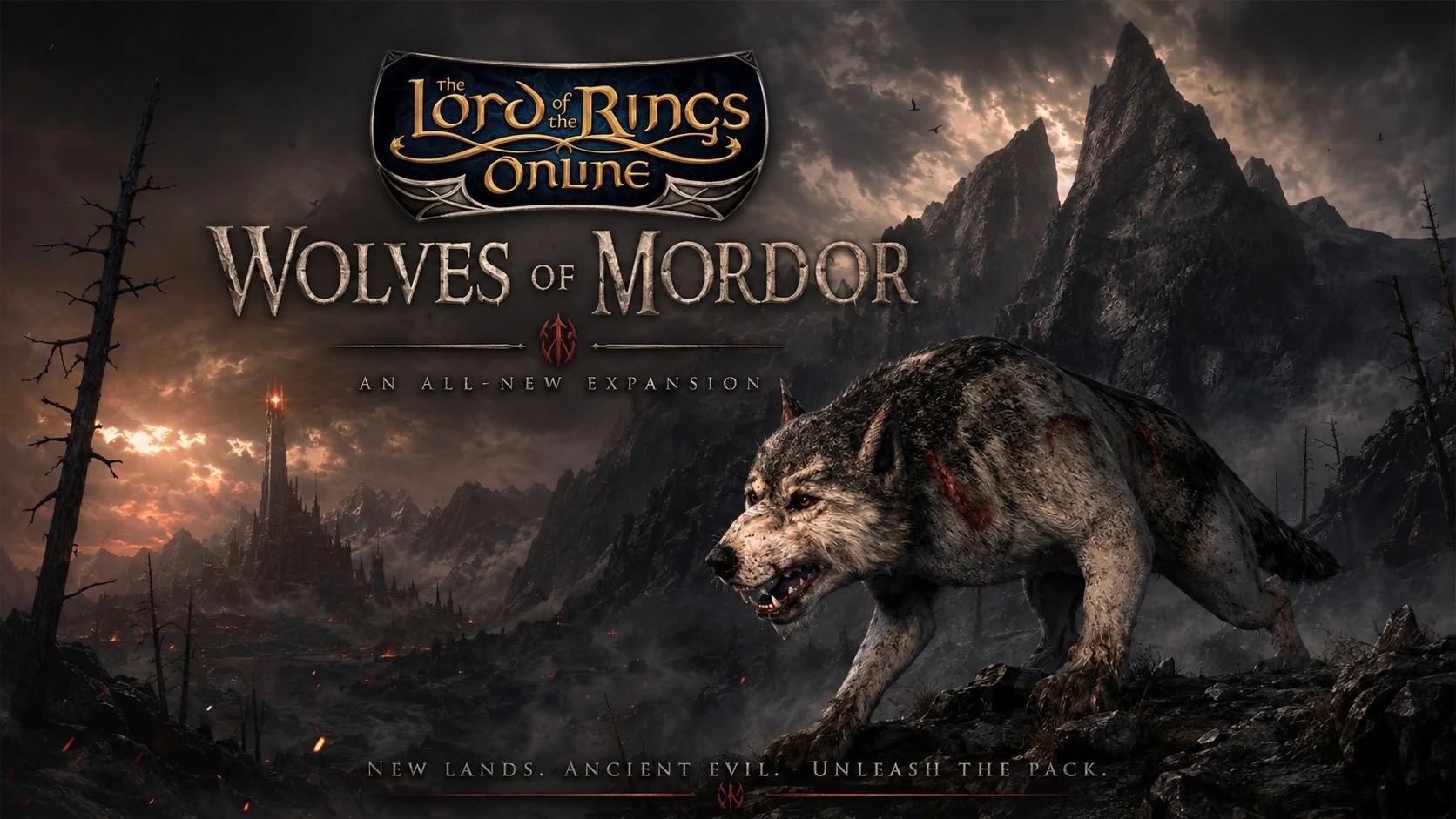
The next expansion for the MMORG, The Lord of the Rings Online, was announced on the 1st August, via the gaming website MMORPG.The Wolves of Mordor, which will launch later in the year, appears ambitious in scope as it will include two new game systems as well as the obligatory story update. This expansion takes place in Draugardh located in the North East of Mordor, beyond the Plateau of Gorgoroth. It includes the new zones of Heledhris, Parth Rhavas and Nan Ogol. These vary environmentally ranging from the arid, volcanic and semi-tropical. Players will encounter the Daugrim in these regions, Werewolves but not in the modern sense. This is not the lycanthropy of Eastern European legends but in the established Tolkien idiom of fell spirits inhabiting the bodies of Wolves. The region also sees the return of the Woses and players can expect to encounter Elves and scouts from Gondor. As ever with LOTRO expansions, there will be new instances as well as a raid.
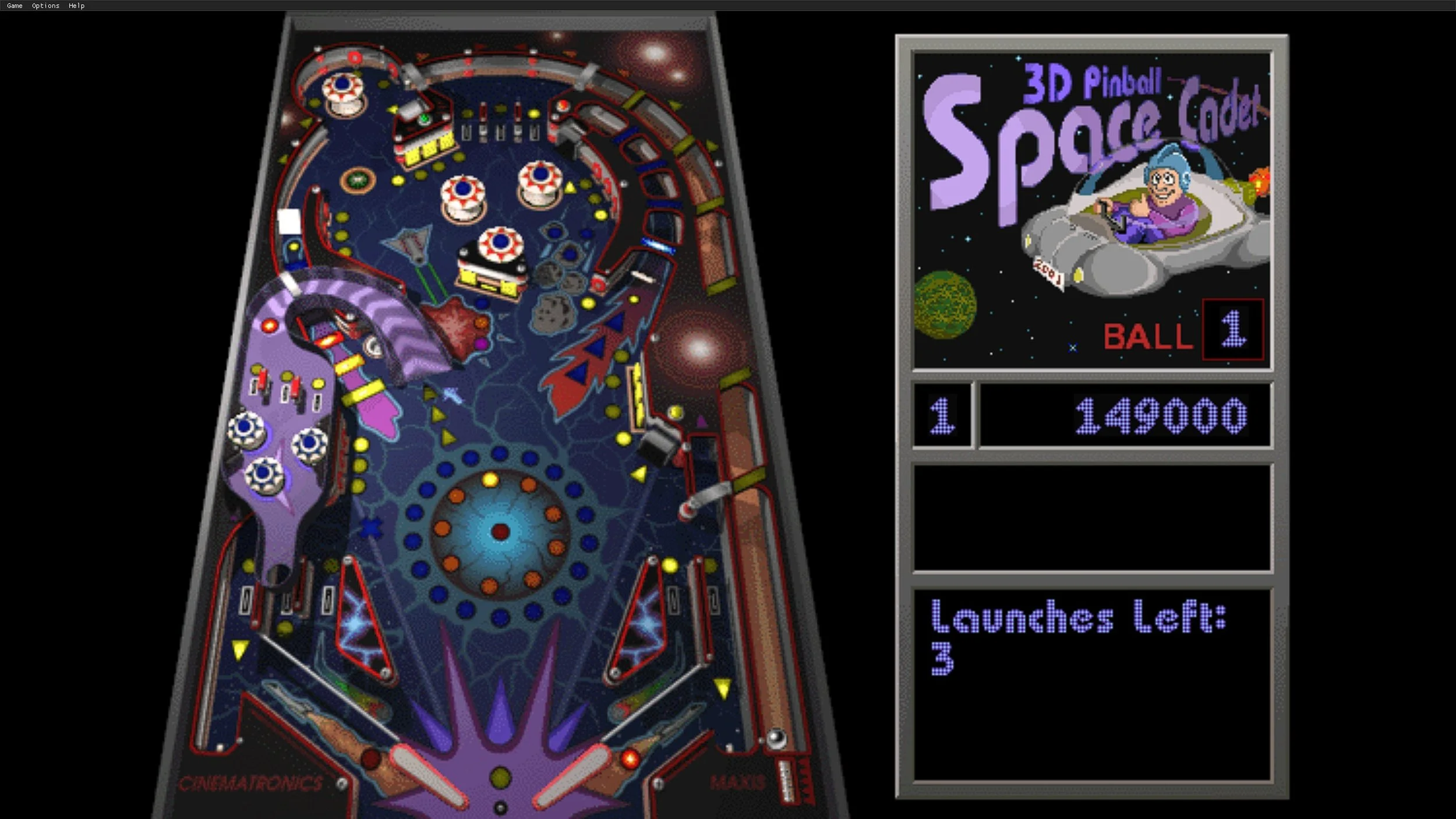
This is a post about the power of nostalgia and how sometimes, interacting with something from your past, be it physically or mentally, can produce a very strong and tangible emotional reaction. In some instances, this can be the result of something that you have specifically set out to do. On other occasions you can wander into a sense of nostalgia purely by chance. Today I experienced a very strong sense of nostalgia while watching a YouTube video and then again when I sought to replicate what I had seen. The video showed someone installing Windows 95 on to an old 486 PC from that era. The Window’s start up sound really touched a nerve (but in a good way) and then when the guy in the video launched Space Cadet 3D Pinball, a game that shipped with the operating system, I felt a strong compulsion to track down a copy and install the game myself, thus revisiting something that was an integral part of my life in 1995.
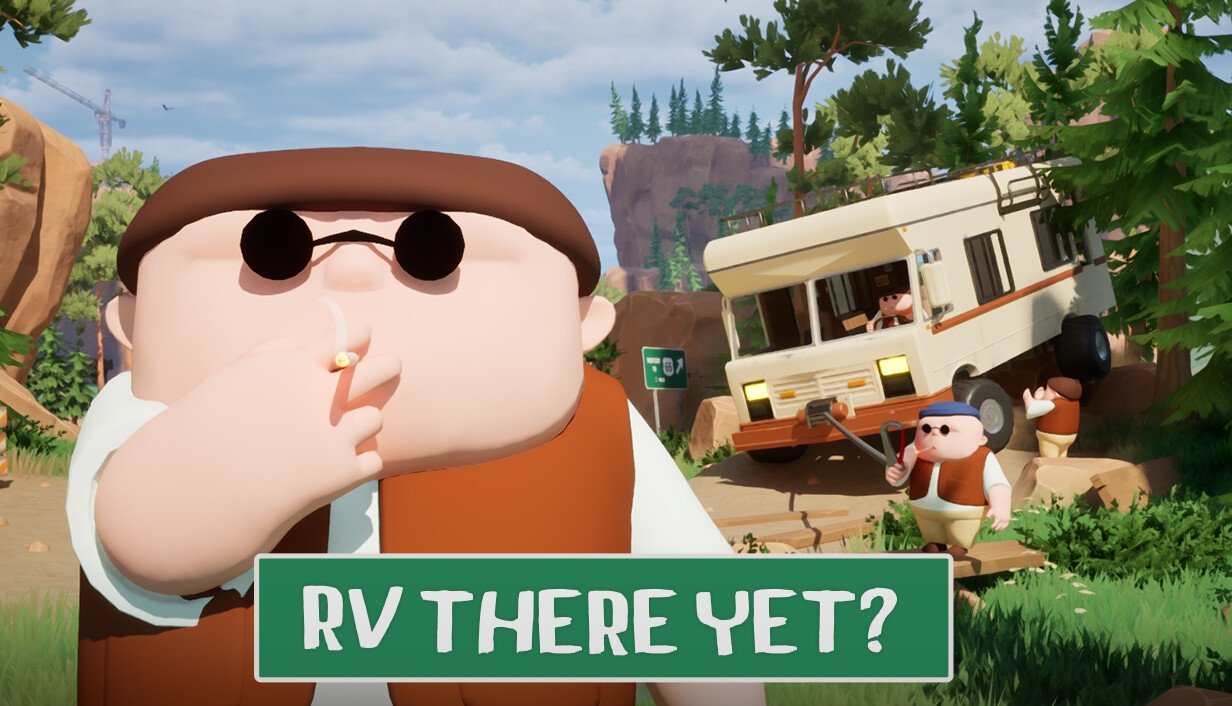
RV There Yet? is possibly the most entertaining game I’ve never played. My vicarious pleasure regarding this title has come exclusively from watching two popular YouTubers, JackFrags and WillFromWork, play through the game over a series of videos. It has been immensely amusing to watch and I have empathised a great deal as the group of four players has struggled with the game’s unpredictable mechanics and their own team’s dynamic. I could go and buy RV There Yet? myself but I doubt if I would ever have a gaming experience anywhere close to what I’ve watched online recently. So in some respects watching these videos has been an interesting alternative as I’ve been entertained, which ultimately is the point of video games. Perhaps there is a deeper philosophical point here that the game developers should reflect upon, as they’ve lost a potential sale. However, that is separate discussion for another day.
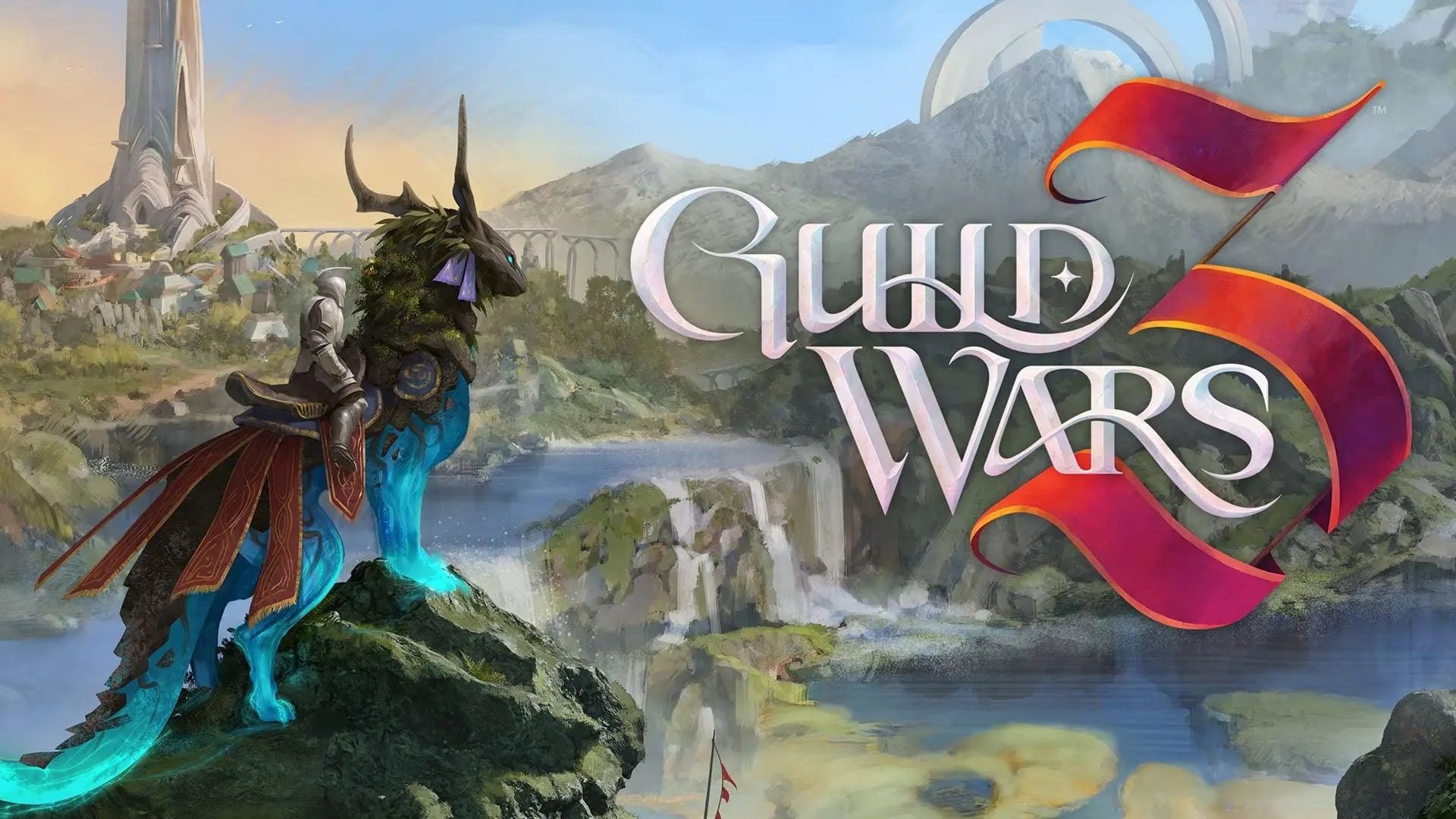
I don’t keep up with gaming news as much as I use to but several noteworthy announcement have come to my attention of late. Firstly, there’s an expansion, Songs of the Past, coming for the Witcher III: Wild Hunt in 2027. No doubt this is to pave the way for the Witcher IV. Next, I also found out about Hand of Fate: Horde. I liked this franchise and was saddened to learn that the original studio, Defiant Development, closed. Hence is was a pleasant surprise to see this new game being developed by members of the original studio. The third announcement was regarding Guild Wars 3. A new MMORPG in active development by a major studio is no small feat and is certainly good news for fans of this franchise and the genre per se. However, once you look beyond this news this announcement raises several questions and has certainly given me pause for thought. Let us take a few moments to consider them.
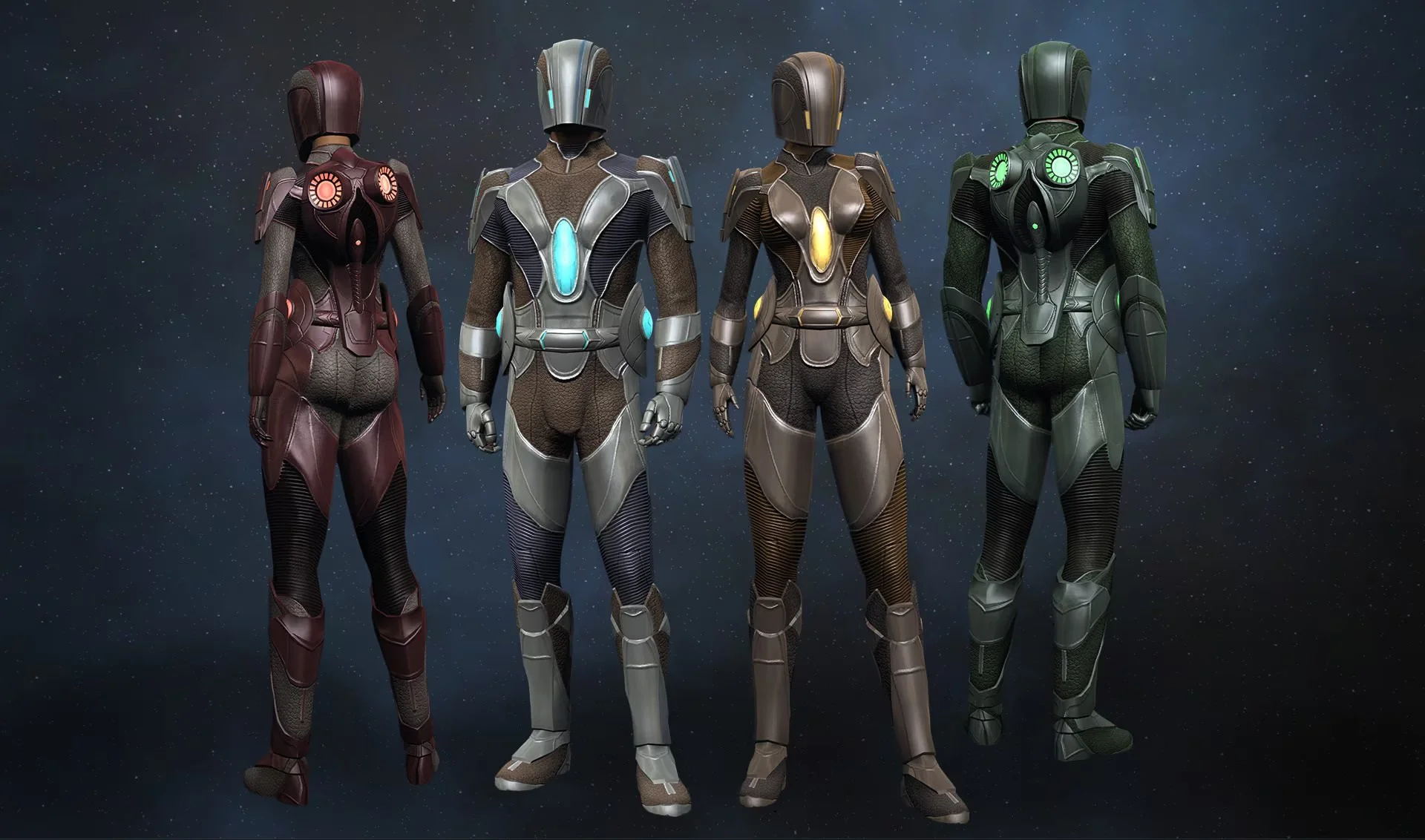
Star Trek Online has many in-game systems that are common to the MMORPG genre. The reputation system is one such example. In STO there are 13 reputation factions. Once a player has reached level 50 they may start progressing through the 6 reputation tiers of each one. Players gain progression through daily projects (20 hours in duration). Hourly projects are also available though they yield less reputation advancement and are limited to three times a day. Hence 20 hour projects are consider by default the most efficient way to gain rep. Projects require 30 Faction Specific Marks (earned via various activities in-game), 15,000 Energy Credits (standard in-game currency) and 2000 Expertise points. The most efficient way to tackle the reputation grind is to build up the necessary resources in advance and then at a designated time each day, start all 13 respective projects. Upon completion projects yield a player bound lockbox containing a random space or ground weapon, a console or Elite Marks which can be used to acquire faction gear.
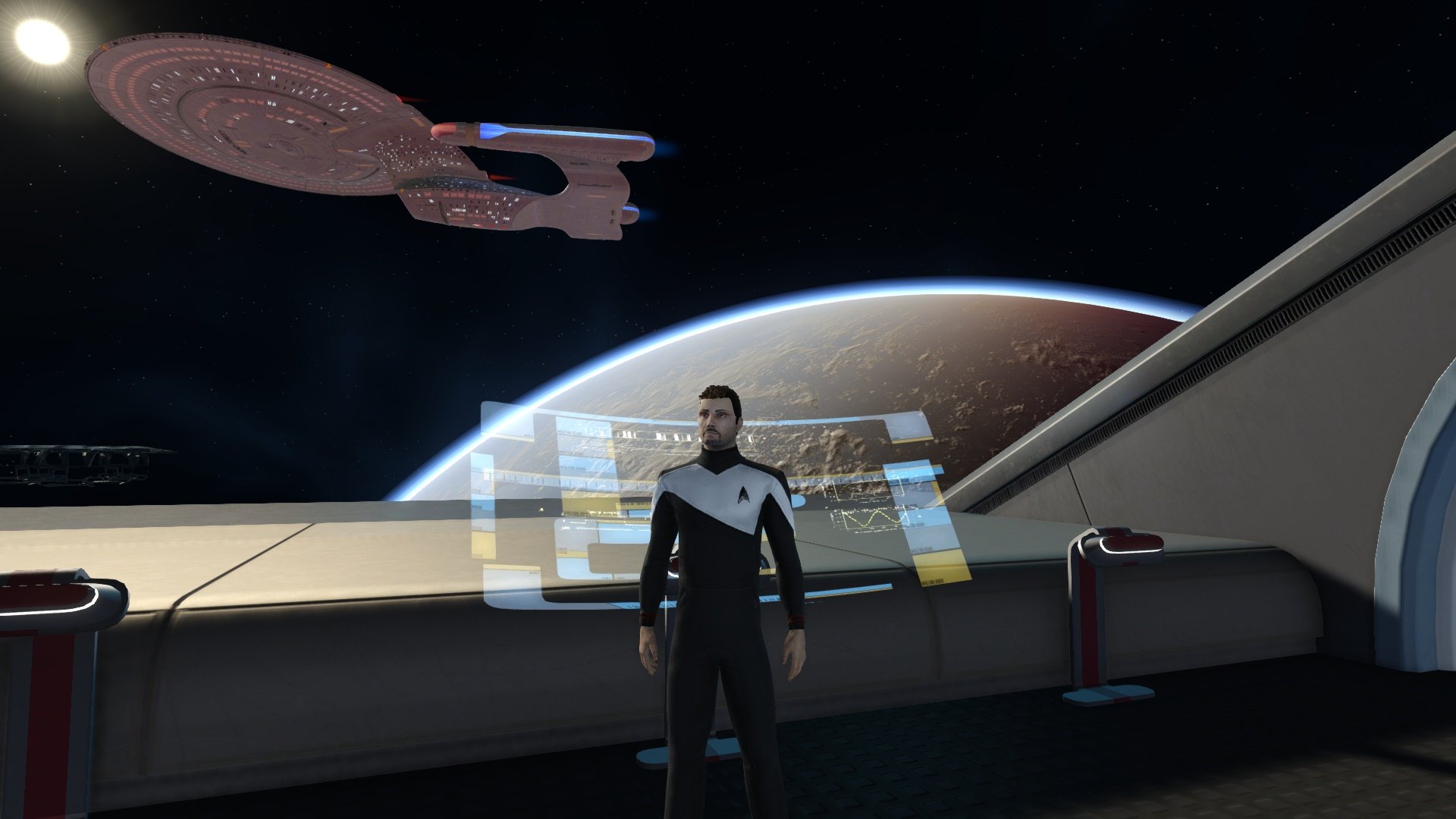
I was recently perusing my archive of old blog posts, when it struck me how much I’ve written about the MMORPG genre over the years. Naturally, there was far more material from between 2008 and 2012 as that was period when I immersed myself in the genre and was very enthusiastic about it. I was at a point in my life when I had the time to dedicate to such games and I was happy to participate in the social aspect of they offered. I would regularly play through group content and spend time socialising online with fellow guild members. My experience remains a textbook example of how online games can be more than the sum of their parts and that where you are at in your life has a major impact upon your overall enjoyment. As I read though various old posts it became clear that my experiences where specific to this particular part of my life and that they cannot be repeated. My relationship with the genre is very different now and that’s fine.
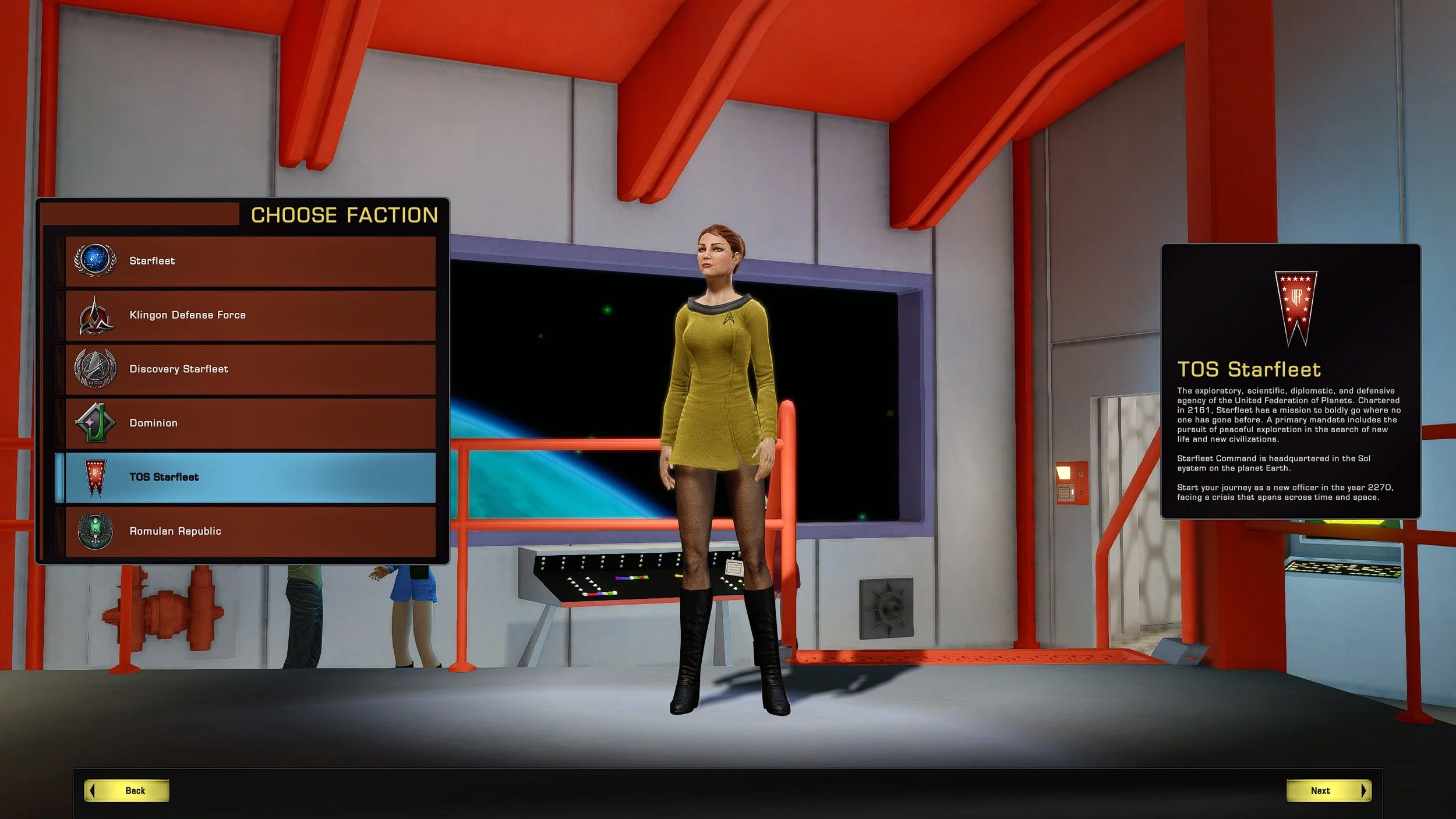
Creating alts is an integral aspect of the MMORPG genre. Many players will create a character of a specific class or faction, play it for a while, lose interest in it or they may decide that it is just not for them. Fortunately it is no effort at all to simply re-roll a new alt and set off once again. Furthermore, lots of players never reach level cap of the MMORPG that there playing. When the going get’s tough, so to speak, you can either soldier on for another 50 levels or simply create a new alt and return to the comfort of tried and tested content. Alts also give you the chance to secure an accolade or achievement that you previously missed. They are also of great benefit to the genres social aspects. Creating a new alt so you can play along with a friend who is just starting is great fun. Developer’s love them too as it means you’re still playing the game.
I recently took a break from Crimson Desert choosing instead to to play something familiar and easy going. As I’ve been logging into Star Trek Online daily to participate in the anniversary event, I decided to look through my various alts and see how far they had progressed through the game and what resources they had. At present I have twelve alts. My primary Captain was created in 2015 during the original Delta Recruit Event. I had previously played STO intermittently since its release in January 2010 but I never kept any of those characters. Hence this decade old Tactical Federation Captain has been my main focus when playing. The other eleven alts are the result of other recruitment events or whenever I wanted to try something different, such as playing a specific class or faction. I obviously played a lot of STO during the lockdown as several alts date from that period. Several had maximum reputation across all factions.
The action, open world RPG Crimson Desert has been patched five times since it launched on March 19th and there have also been multiple hotfixes. At first glance this isn’t anything unusual. New games have bugs and issues arise once a game is released and played across a much wider variety of hardware than in QA testing. However, if you read the patch notes that accompany these sizeable downloads it quickly becomes apparent that developer’s Pearl Abyss are not just addressing bugs and software glitches. They are actively engaging with their player base and responding to suggestions and requests from that community. Although this is not a unique approach, what is surprising is the speed and quantity in which these player driven changes are happening. There seems to be an active ongoing process to refine the game and eliminate some of its “rough edges” and the players are contributing to this process with their feedback.
According to my Steam statistics, I last played Starfield on 19th December 2023. I bought the game upon its release in September of that year and played in total for 136 hours. Starfield held my interest for three and a half month and I wrote seven blog posts about various aspects of the game. Although there were some engaging aspects to Starfield, I did feel that that the game was somewhat lacking in systems and content, at that point in its lifecycle. I also think that the marketing and player expectations associated with Starfield were overblown and unrealistic. The shadow of Skyrim looms large over all new Bethesda releases and they don’t seem able to quite recapture that magic. Hence, I inevitably drifted away from Starfield and to another game and was effectively “done” with it. I have not played the game since which seems to validate the theory that game are becoming increasingly more ephemeral.
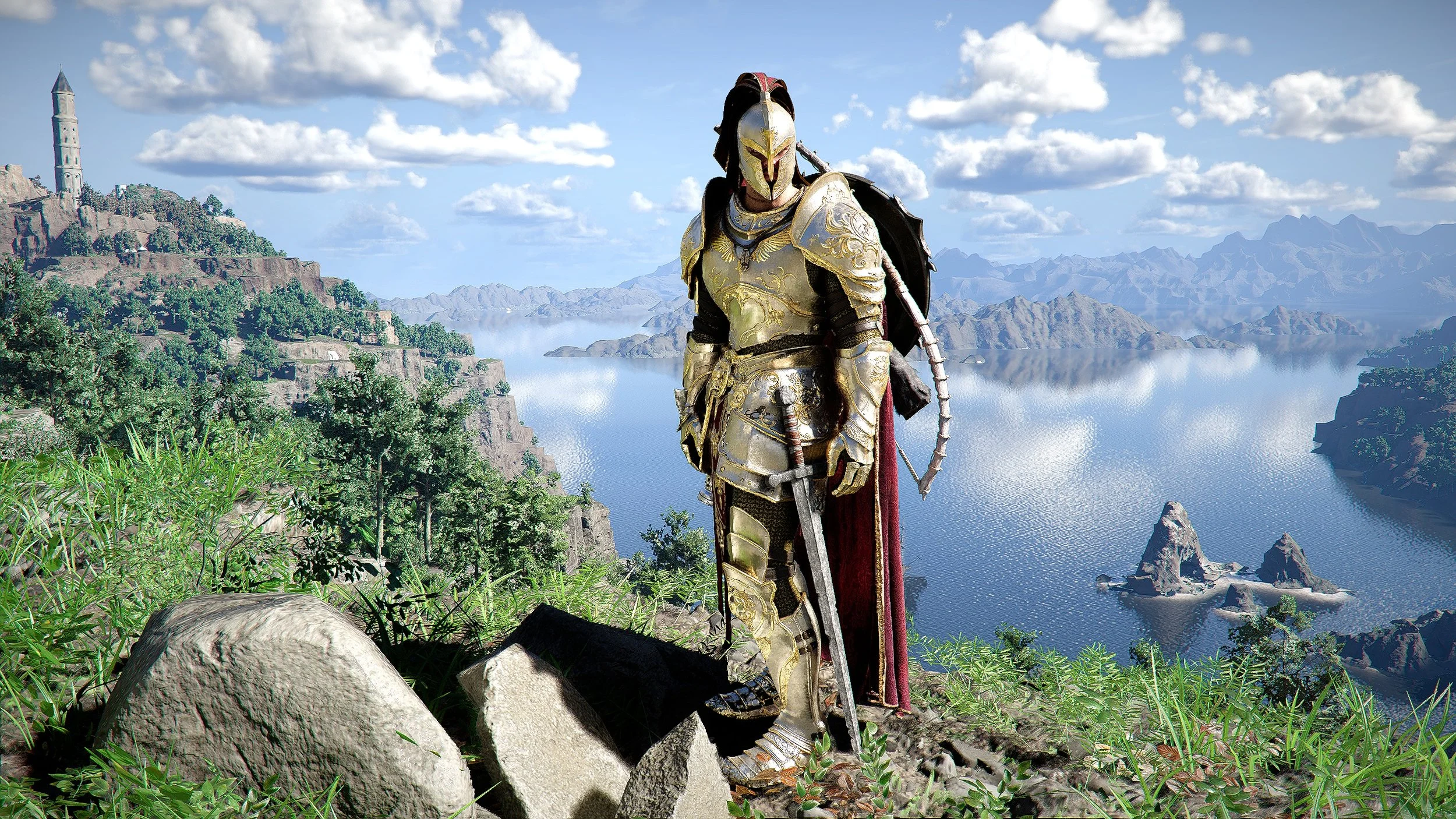
13 days after its release, market analysts estimate that Crimson Desert has already earned $200 million across the four main platforms (PC, PlayStation 5, and Xbox Series X and S). The game is certainly proving popular among gamers with the internet awash with live streams and “let’s play” videos. However, reviews are mixed both among gaming journalists and YouTube influencers. Common complaints about the game include that it is slow to start, the controls are poorly laid out on all platforms and that developer’s Pearl Abyss have done a poor job of explaining most aspects of the game to new players. Although such criticisms are true to a degree, I think these complaints highlight how many gamers are conditioned to expect new titles to follow a specific pattern with regard to pacing, narrative exposition and learning in-game systems. A pattern that Pearl Abyss has chosen to ignore, instead favouring an old school approach.
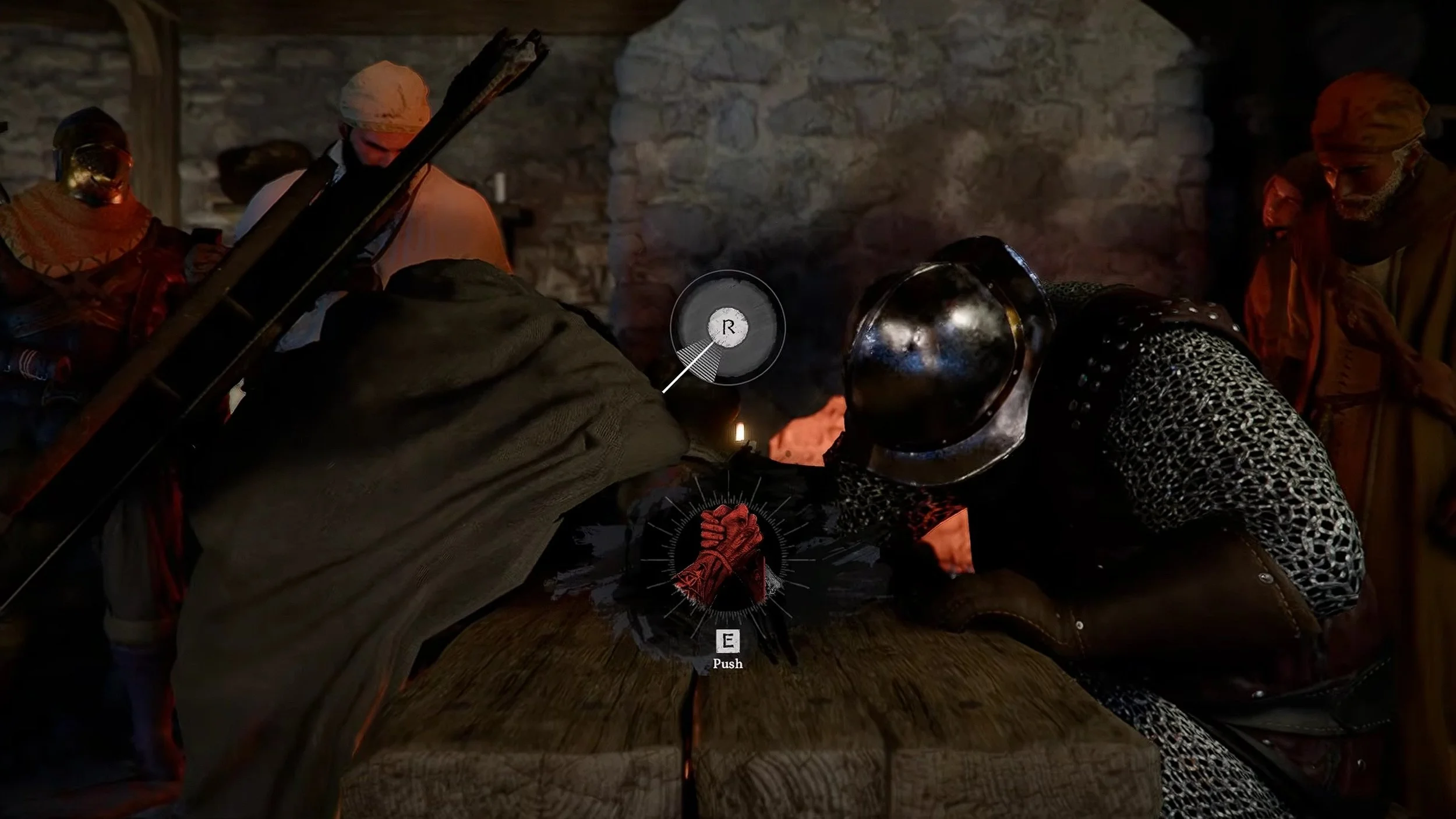
Early on Crimson Desert, the main quest requires the player to enter a tavern and arm wrestle a particularly strong guard. The arm wrestling match consists of a quick time event. If playing on PC you have to rapidly press the “E” key which turns a power meter from white to red. Then a white dial appears above the meter with a rotating hand. When the hand passes over a segment of the dial that is marked by hatching, the player must press the “R” key. The idea being the meter filling with red is you strength building (or waning) and the “R” key prompt indicates when to try and force your opponent’s arm. You will need to to continuously press the “E” key throughout the arm wrestling match and the “R” key about 4 times to win.
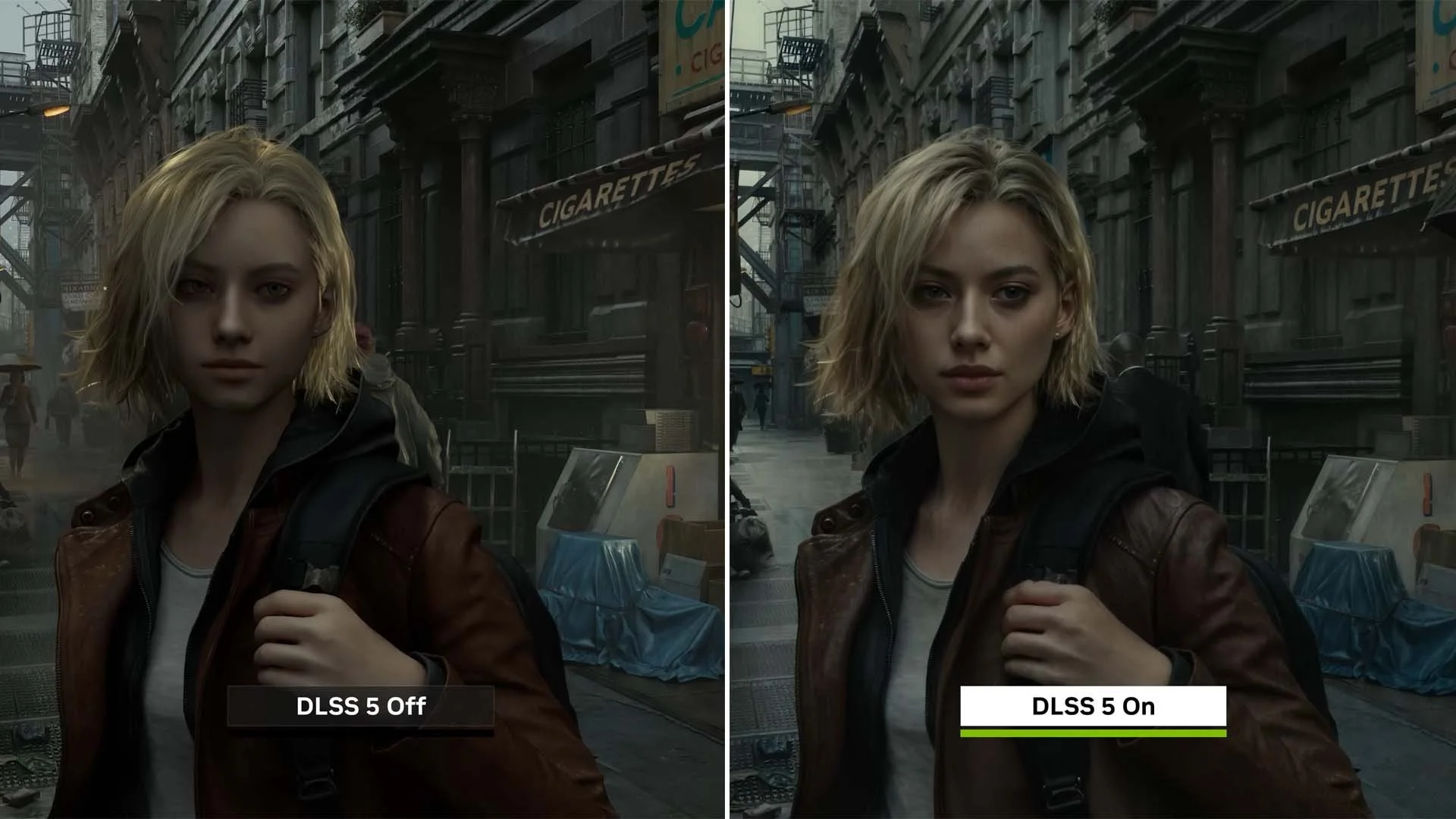
Earlier this week, Nvidia posted a video featuring their latest iteration of DLSS technology (Deep learning super sampling). DLSS 5 is an AI-powered “real-time neural rendering” process and unlike previous versions that focused on improving frame rates through upscaling or frame generation, DLSS 5 uses generative AI to “infuse” frames with photorealistic lighting and material details that the game engine never actually calculated. Let us pause for a moment and consider these words. Material detail that the game engine never actually calculated. Therein lies the rub. If you watch the aforementioned video or peruse the images posted here, it is abundantly clear what the technology does.
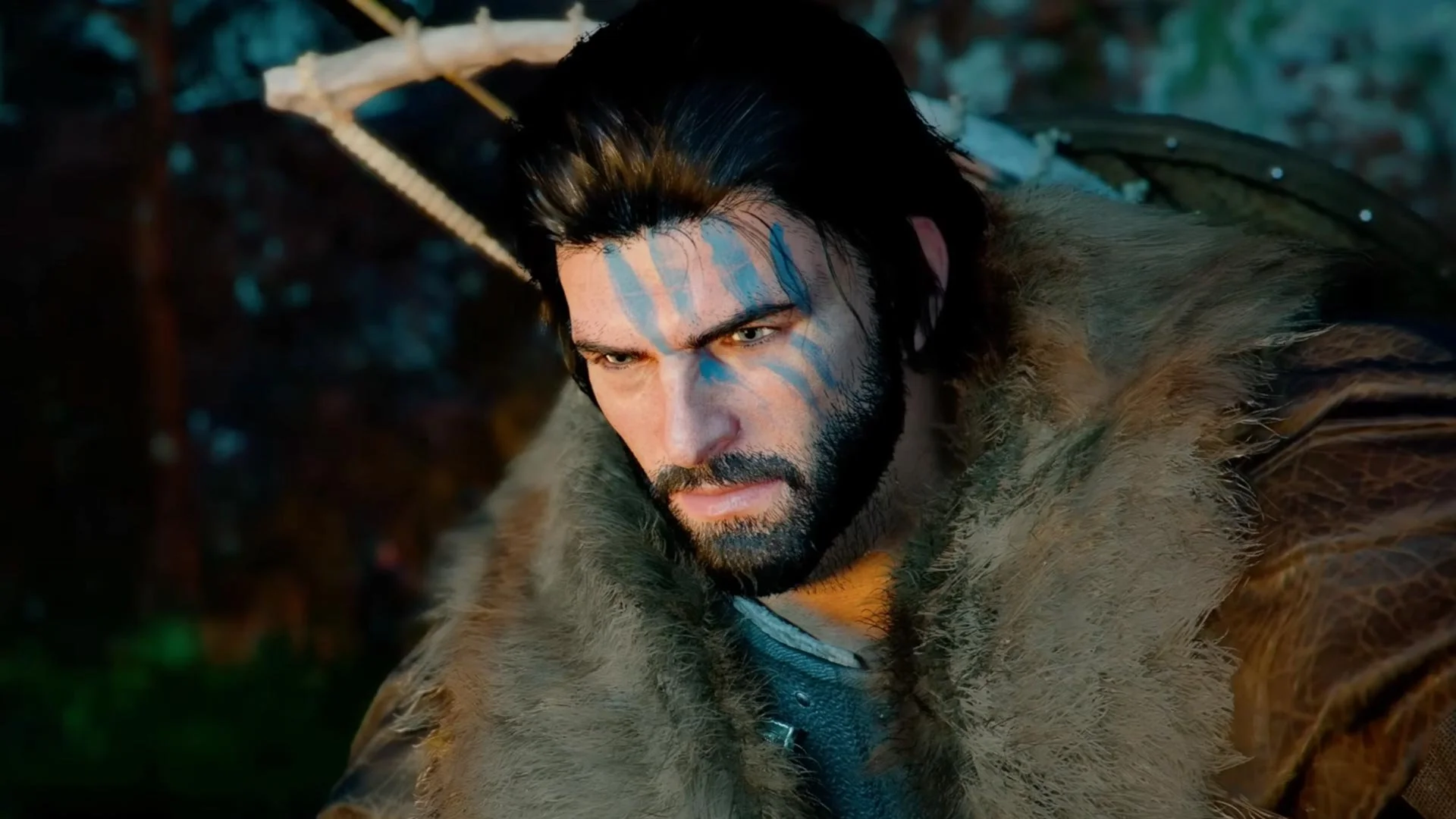
Last night, I spent the first 45 minutes after the launch of Crimson Desert, watching the 92GB pre-downloaded game files slowly decompressing and installing. I finally launched the game at about 10:50 PM GMT. I then waited a further 5 minutes while shaders were downloaded. It took me about 15 minutes or so to read through the various game settings and choose those that are optimal for my PC. I suspect even if you have a beast of a computer, you’re still going to have to spend some time tweaking settings. As for those players like myself with a gaming rig that is somewhere in the middle of the game’s specifications, be prepared to do a lot of fine tuning both within Crimson Desert itself and your Windows settings.
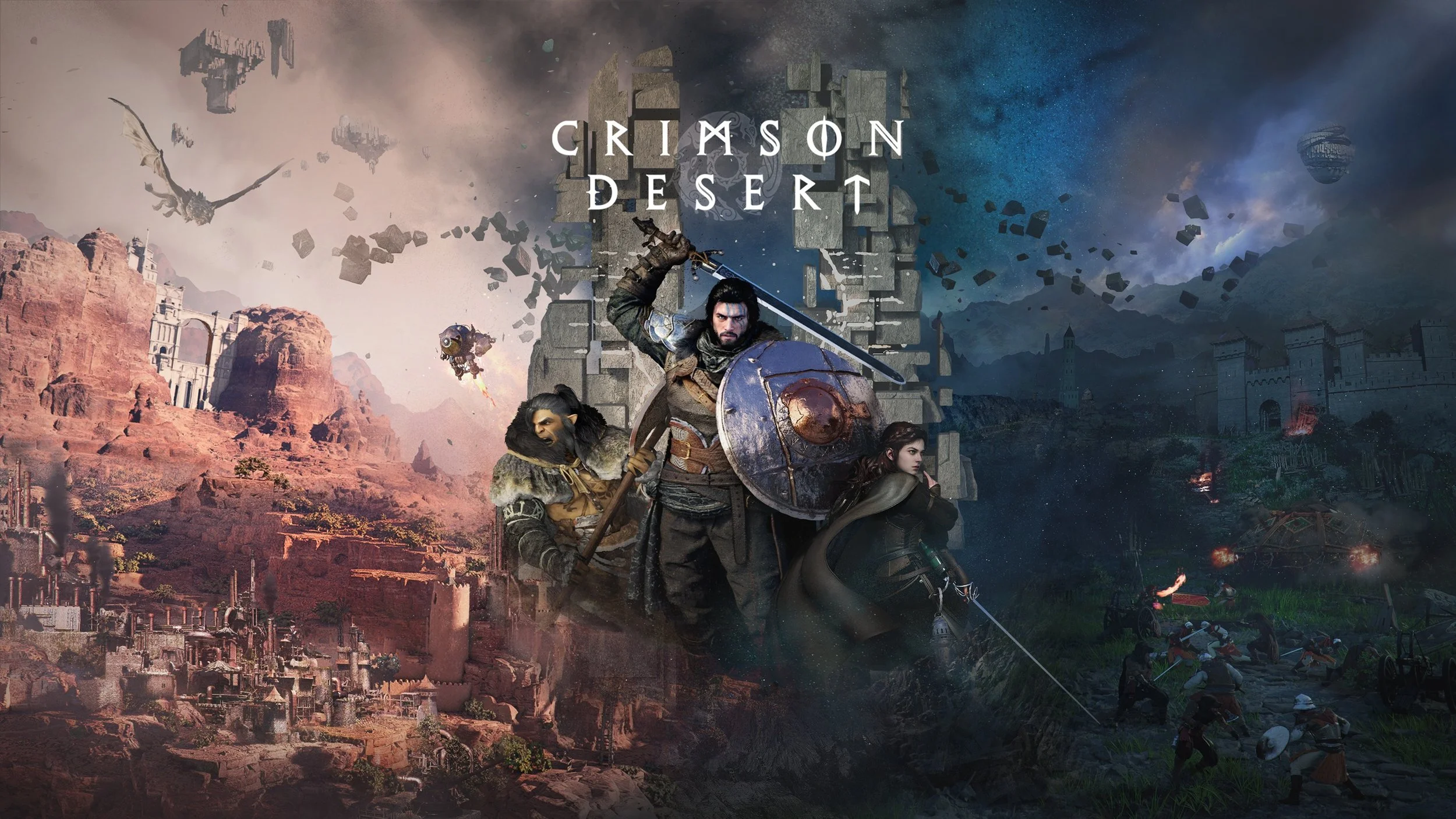
I have been aware of the online interest around the open world action game Crimson Desert for a while now. One of the things that has intrigued me about it is the scope of the game. The word “hype” has been bandied about by a few gaming websites. However, from what I have observed, developers Pearl Abyss have not been excessively hyperbolic themselves, with regard to the manner in which the game’s systems and mechanics have been marketed. Now that the press embargo has been lifted, the pre-release reviews seem to confirm that everything we’ve seen in promotional videos in the run up to the launch, is in fact present in the game. So far the initial critical response has been very positive and it has been hinted that the game may well be a genre milestone. Perhaps Crimson Desert is just a rare example of a game that has not had a rushed development and isn’t launching prematurely for business reasons.
Video games as a genre are extremely poor at explaining themselves. When you buy a new game you’ll often find little or no information regarding the basic systems and mechanics. The industry assumes that their customers are by default familiar with the fundamentals of playing a modern video game. Hence if a game has a tutorial, it is often based around videos rather than detailed verbal instructions. You are are briefly shown a clip of a specific move being successfully undertaken but it is seldom shown in a wider context. The industry also expects the fan community to take on the role of curating and disseminating information about its games. The move away from forums and bespoke websites to Discord highlights this. Discord is a primarily a real time communication tool and not good at maintaining a historical data archive. If you want an answer to a specific gaming question, you’ll more than likely find it on YouTube in a video made by a fellow gamer.
I have written in the past about the video games we cannot play. The ones that require a keen understanding of a game’s mechanics, along with a strong degree of manual dexterity and situational awareness. Being 58 years old, I tend to have neither the co-ordination necessary to succeed or the patience to master such complex skill requirements. With this in mind, I recently watched a YouTube video for Chivalry 2 and thought, that looks like fun. The fact that it showed someone picking up a chicken and throwing it at an opponent is neither here nor there. However, after watching a few more videos I realised that combat in the game was complex and that, as usual, the reality of playing such a game would be different from my expectations. Hence, I came very close to not buying Chivalry 2. However, I eventually decided that I would, so I bought it for just under £10 from an online vendor.
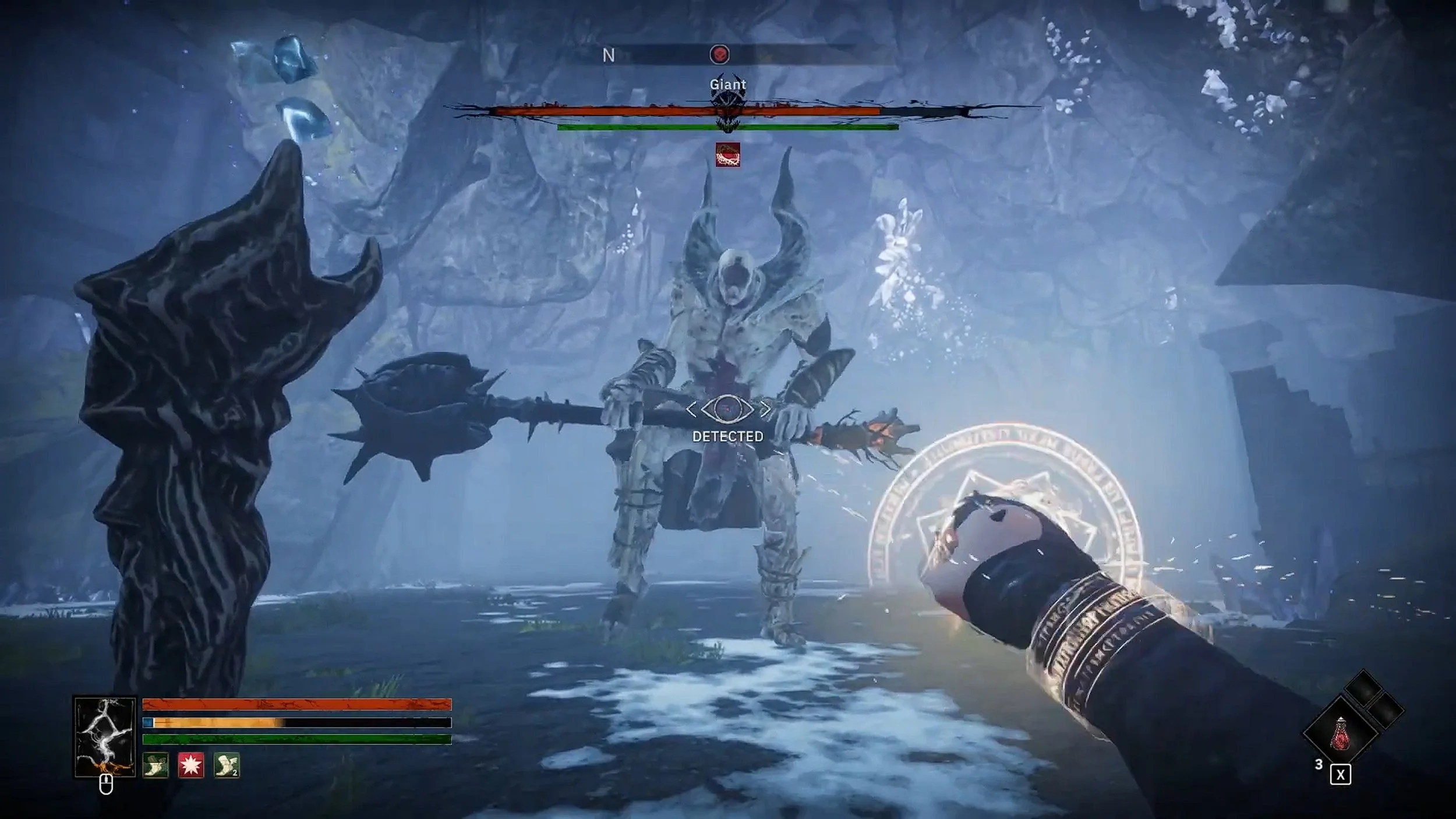
I decided to pursue a magic and spellcasting build in the RPG Tainted Grail: The Fall of Avalon after the story prologue. During the opening section of the game, the player is presented with a sufficient range of weapons to determine which type suits them best, although you can change at any time during the game. For me, casting spells feels right and is fun. Plus I have fond memories of the magic system in Two Worlds II and Skyrim. So once I started playing through the first zone, I started putting attribute and skill points into the appropriate trees to bolster my spells strengths and frequency. I also chose gear that would bolster those statistics further. The results have been surprising, as magic and spellcasting is not presented in the usual “glass cannon” style you find in some other RPGs. Here it offers robust DPS output and with the right gear and spell combination, a strong degree of survivability.
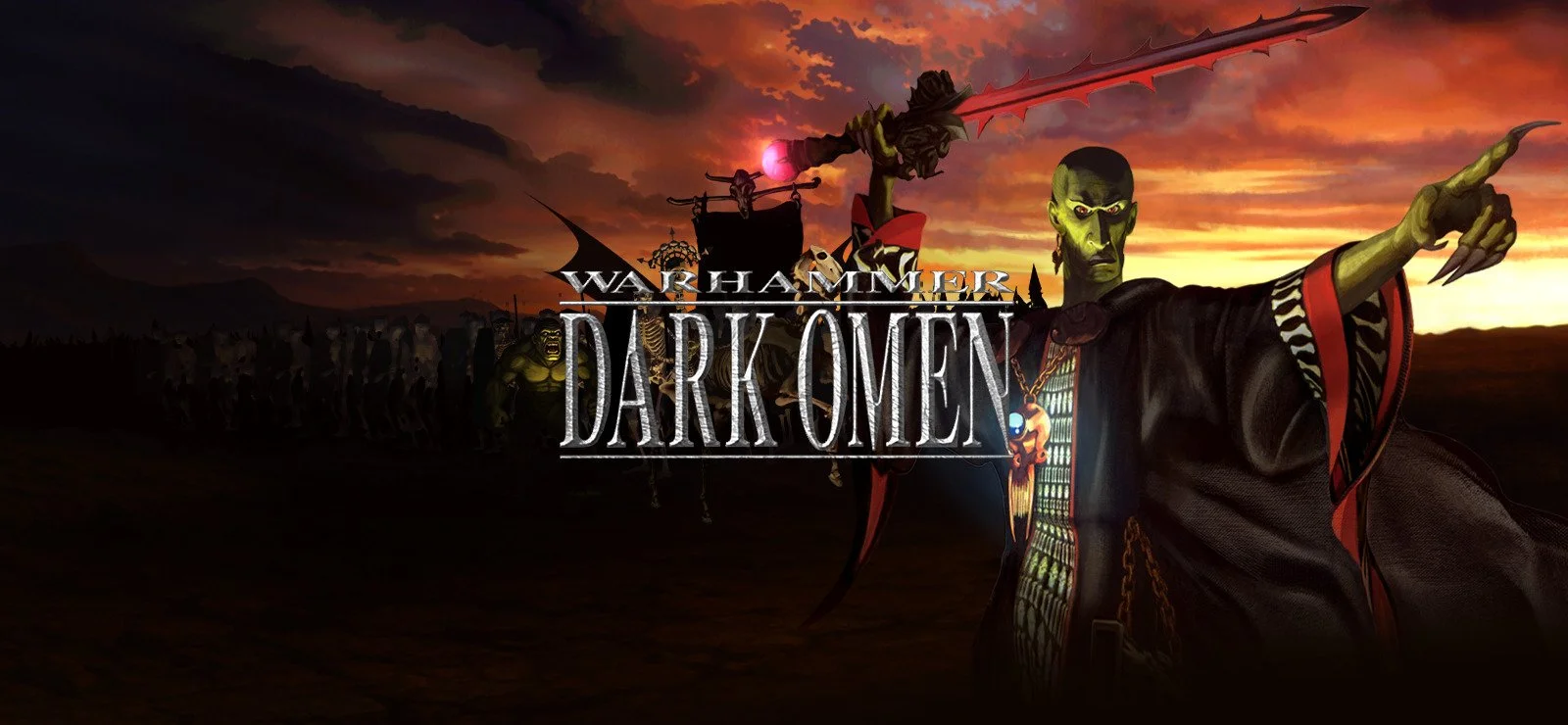
I originally bought Warhammer: Dark Omen in the summer of 1998. I played a demo copy via a magazine cover disc, which was a common means of promotion and marketing back then. Although I was at that point, unfamiliar with the Warhammer Universe, I found this game to be an excellent point of entry. The story did an excellent job of introducing players to “The Old World”, the political and power structure and major characters. I instantly liked both the aesthetic and the lore. Warhammer: Dark Omen was also the first real-time tactical wargame that I played and I spent numerous hours playing through the campaign. Overall, the game was a critical success, particularly on PC, but it struggled commercially upon its initial release and didn’t quite find the audience that it deserved. However, it has achieved status as a “cult classic” among gamers, leading to a recent re-release on GOG in late 2025.
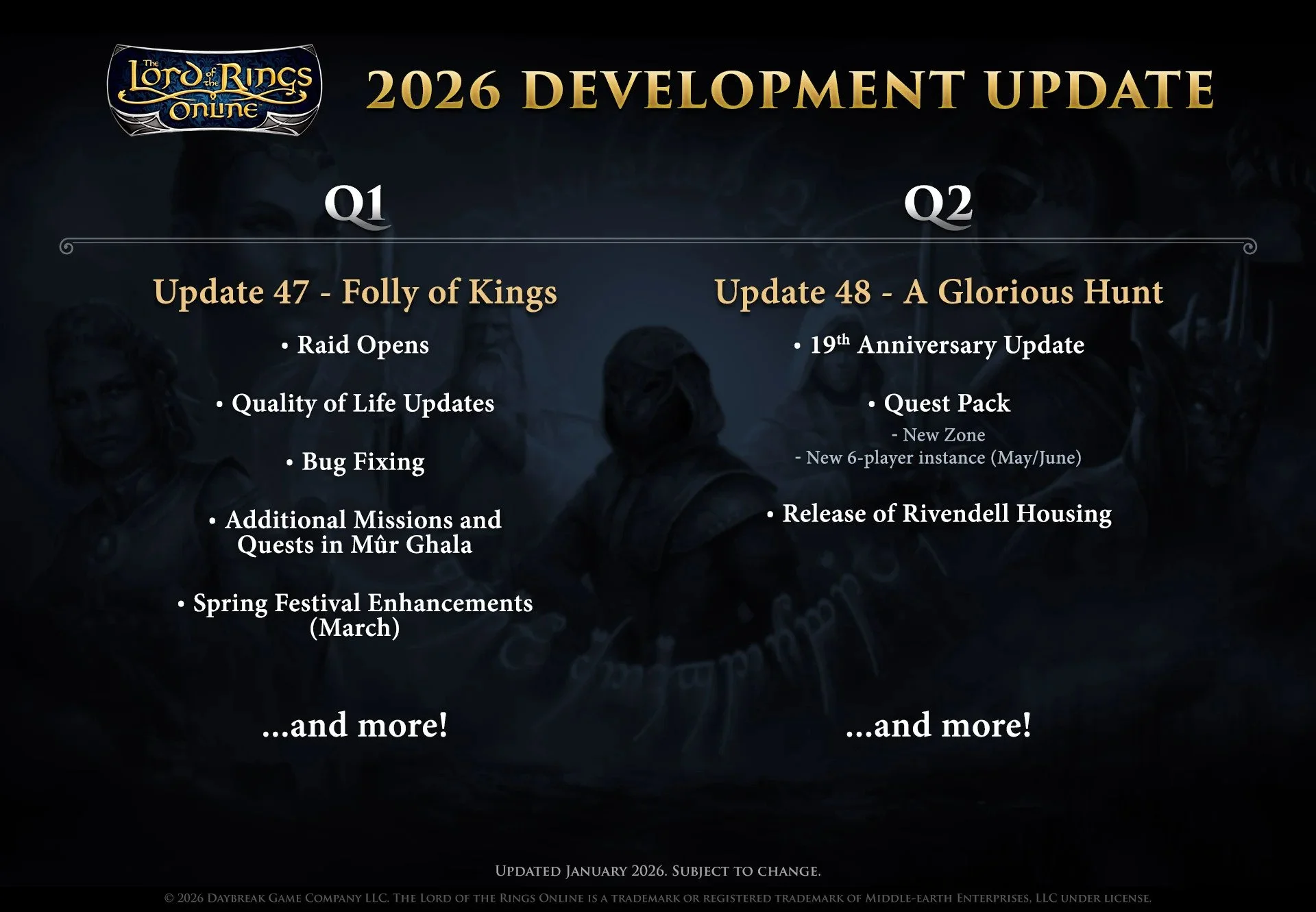
According to the recent “letter to the players”, Standing Stone Games will be adding a new zone to the MMORPG The Lord of the Rings Online in the second quarter of this year. Possibly around May or June. Having spent the last three expansions in the South of Middle-earth exploring the tropical Umbar and the deserts of Harad, I would certainly welcome a change of location. I have gradually warmed to these zones over the last eighteen months but I do find them so incongruous. They are so radically different to the European style content that has been the mainstay of the game for so long. Tolkien’s source text has plenty of detail regarding Eriador and Rhovanion. Information regarding Harad is scarce, hence it has afforded the developers a great deal of artistic freedom. Although exceedingly well realised these tropical zones have taken a while for me to get used to.
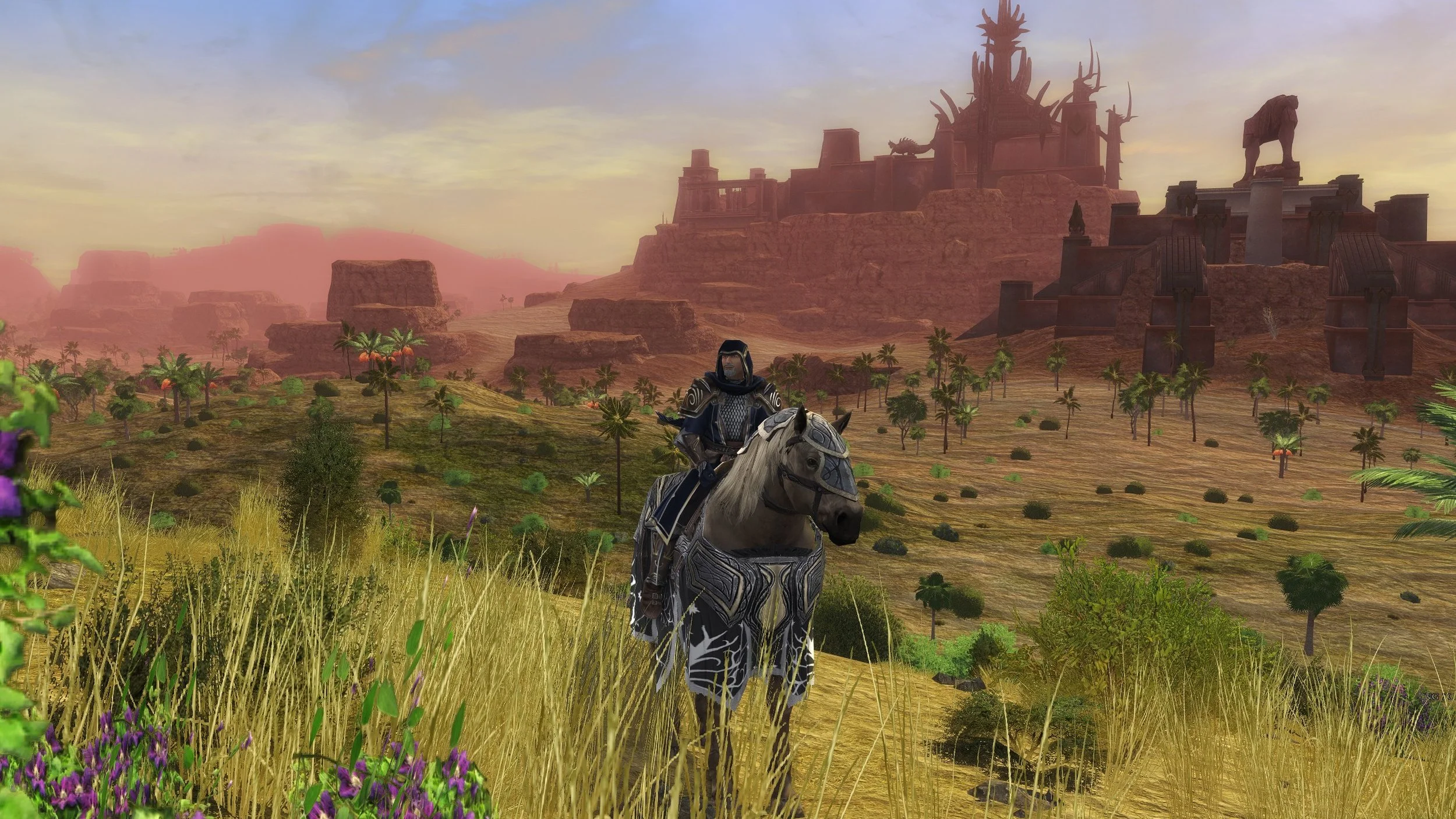
I’m not sure exactly when it started but I’ve recently noticed a graphical bug within the MMORPG The Lord of the Rings Online. This problem often occurs within caves or in areas where there are a lot of rocky surfaces. Hence it has become very apparent in the latest two expansions, set in Umbar and Harad. This graphical glitch causes some surface textures to appear to flash from light to dark intermittently. The resulting strobe effect is hard to ignore and very distracting. Fortunately, a quick online search showed that this is not a problem unique to my installation of LOTRO and is a known problem. Furthermore, there is a very simple workaround, which is to go into the Advanced Graphics setting and uncheck “Per Pixel Lighting”, which immediately remedies the problem. I have no idea why this has recently started to happen but at least it can be resolved.
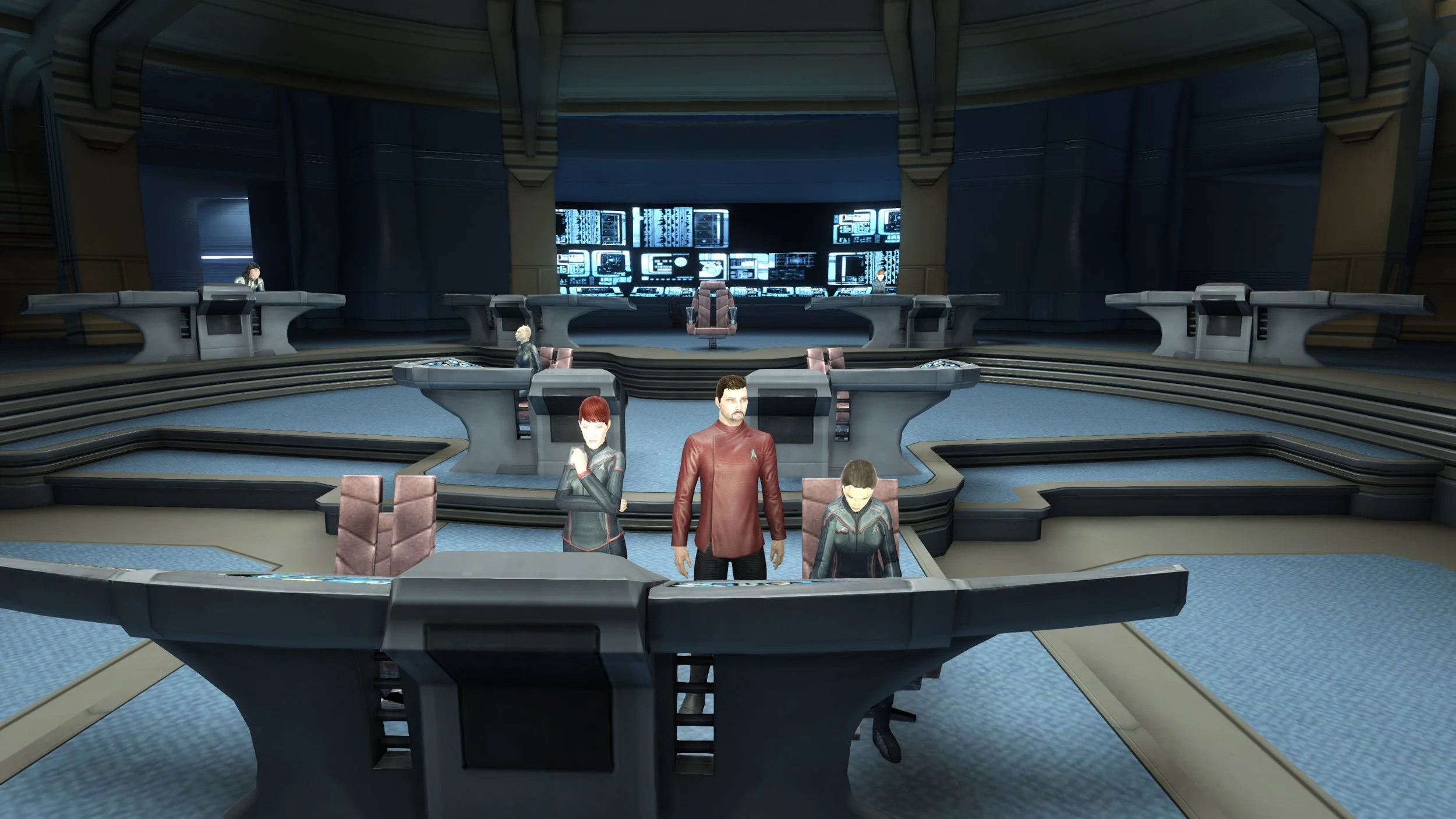
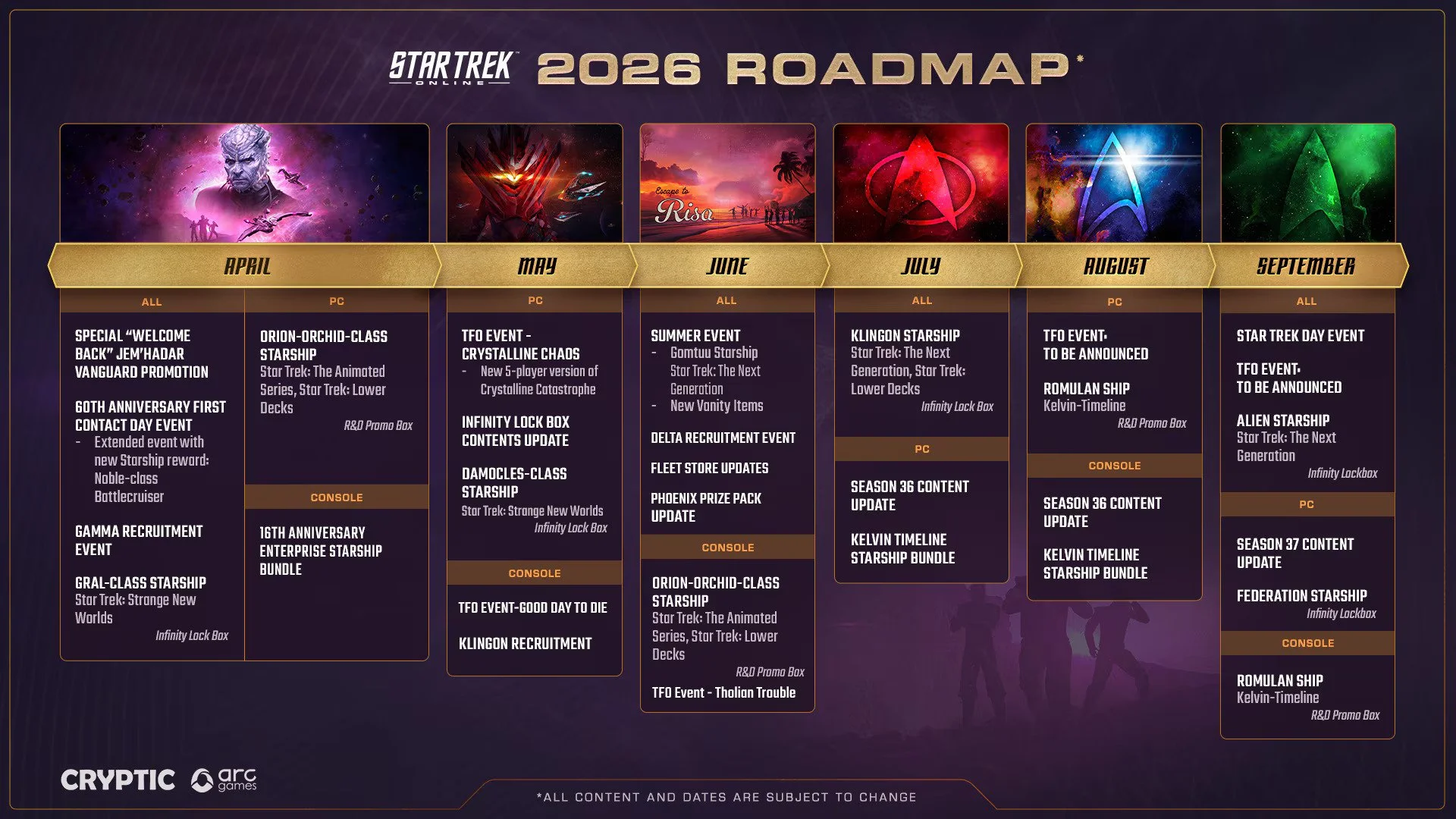
This year is the 60th anniversary of Star Trek. The original TV show was first broadcast in the US on September 8th 1966. If you search online you’ll find details of lots of related events. There are documentaries, conventions, new TV shows and even some video games in development. However, what you won’t find are any details regarding what will be happening with the MMORPG Star Trek Online. So far no road map for 2026 has been posted online by the developers but it is still quite early in the New Year. That being the case, I am not especially optimistic about there being any major plans waiting to be revealed. It is not as if DECA Games have demonstrated or stated any major ambitions for STO beyond keeping the endless events treadmill going and regularly adding content to the in-game store, during their development tenure. The ongoing story arc drags on inexorably and is as dull as ditchwater.
I first played The Elder Scrolls V: Skyrim in June 2013. This was over 18 months after the game’s initial release and the base game and DLC were bundled together in a “Legendary” edition. Although a seasoned gamer at the time, familiar with the RPG genre with such titles as Mass Effect and Grand Theft Auto IV, I had not played a game from this franchise before. It only took a few hours of gameplay to realise that this was a special title. The scope of the story, the art design and the size of the world were immediately notable. Tamriel was immersive in a way I had not experienced with other titles. Often simply traversing the terrain and watching the dawn break while the game soundtrack swelled, was sufficient to hold my attention. I instantly picked up on the voice acting of Christopher Plummer and Max Von Sydow. All of which indicated that this was a gaming landmark.
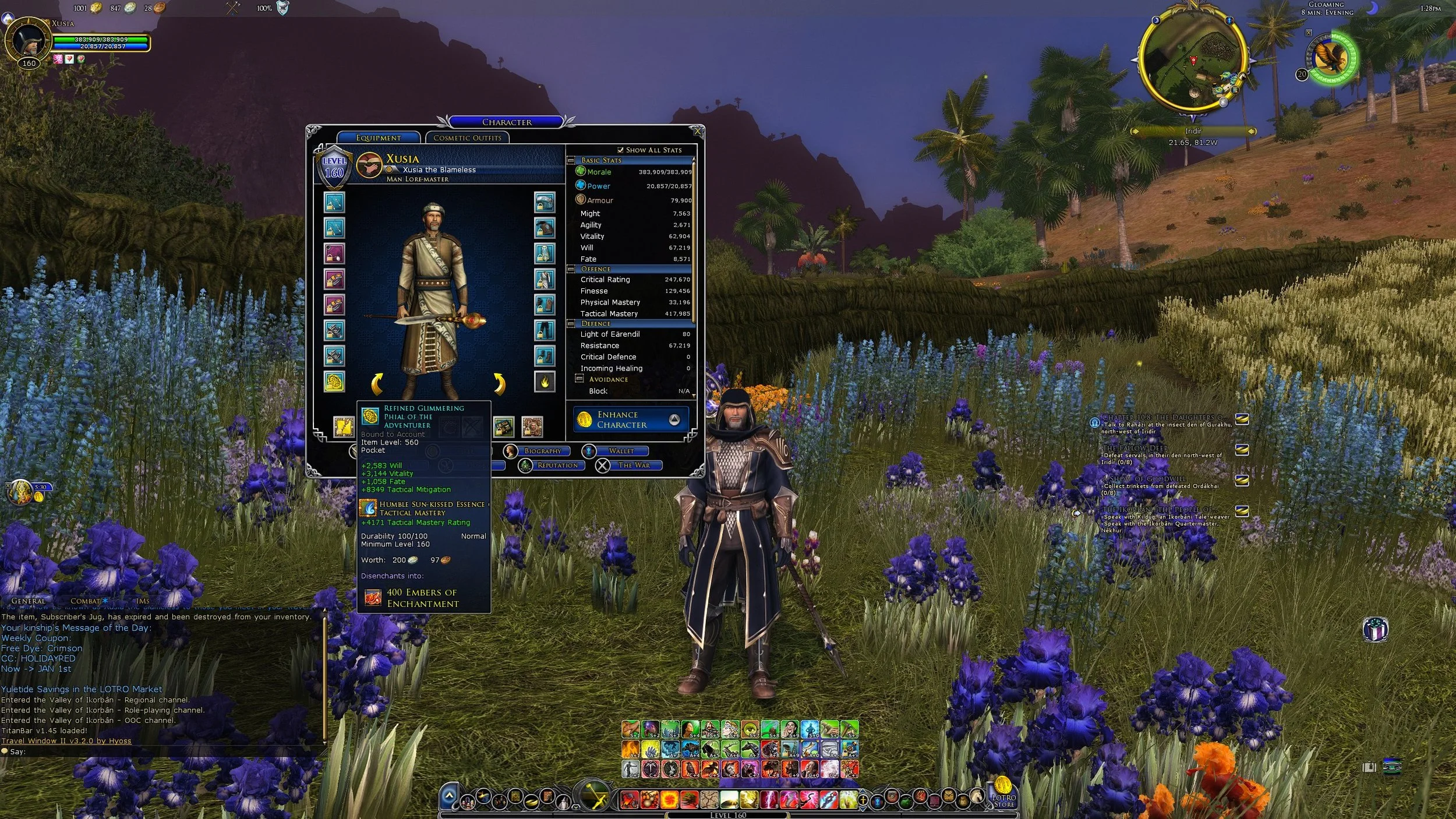
The latest expansion for the MMORPG The Lord of the Rings Online, Kingdoms of Harad, launched on December 3rd. With this release the level cap was raised from 150 to 160. It should also be noted that the cap for virtue traits was also raised from 96 to 100. Naturally these changes meant that there is a requirement to replace all armour and jewellery once the new cap is reached. Similarly Legendary Items have to be reforged and any traceries upgraded or replaced. If you follow the Epic Story it will lead you from quest hub to quest hub. The main quest rewards, along with those from side quests will provide adequate gear as you slowly progress towards the new level cap. The new raids, instances and missions/delvings then provide a means to acquire higher quality level 160 gear. LOTRO and indeed, many other MMOs are consistent in this methodology.
It is customary in a post such as this to list the various games that I’ve played over the last twelve months and share my thoughts on them. Wider analysis of the video game industry is also de rigeur. Unfortunately, I don’t really feel disposed to do either of those two things. My thoughts on the games I’ve played have already been published and can easily be accessed via the links at the bottom of this post. As for the video game industry, it suffers the same flaws as music, TV and cinema. There is creativity and innovation out there but it is often drowned out by mainstream products which are demonstrably inferior due to their inherent mediocrity. As for the business side of things, we once again clearly see the failings of the corporate management class. Sadly, they do not face the consequences of the mistakes that they make.
Bits and Pieces
I have multiple blog articles outstanding in my “draft posts” folder. But time has not been on my side of late, so very little of these are going to be completed and see the light of day, any time soon. However, there are always alternative strategies. If you’re in doubt about what to write, or more likely just pushed for time, simply create an eclectic post that allows you to reference multiple subjects and news stories without having to write a thousand words on each and then make it a regular feature. If you also want to raise a wry smile with an older demographic, make the title of this new recurring piece a particularly bad pun about a popular sixties’ song by a well-known “beat combo”. With this now explained, let’s get on with things.
I have multiple blog articles outstanding in my “draft posts” folder. But time has not been on my side of late, so very little of these are going to be completed and see the light of day, any time soon. However, there are always alternative strategies. If you’re in doubt about what to write, or more likely just pushed for time, simply create an eclectic post that allows you to reference multiple subjects and news stories without having to write a thousand words on each and then make it a regular feature. If you also want to raise a wry smile with an older demographic, make the title of this new recurring piece a particularly bad pun about a popular sixties’ song by a well-known “beat combo”. With this now explained, let’s get on with things.
There was an interesting episode of The Jimquisition that was posted on Monday 15th April. It was about PC Gamer journalist James Davenport who wrote a detailed article about how used a mod to complete the game Sekiro and its extremely tough final boss fight. The point of his post was to discuss the subject of difficulty and its wider culture. However, fundamentalist gamers didn't see things his way and were vocal in their criticism. A somewhat theatrical comment was tweeted by Fetusberry 'Ass Bastard' Crunch, which then became a meme. Ironically, this negative comment was subsequently usurped by Jim Sterling and his comic character, Duke Amiel du H'ardcore, to mock its supporters. For those who are not aware of the original tweet, here it is in all its hyperbolic glory. “You cheated not only the game, but yourself. You didn't grow. You didn't improve. You took a shortcut and gained nothing. You experienced a hollow victory. Nothing was risked and nothing was gained. It's sad that you don't know the difference”.
Like Jim Sterling, I find this perennial argument extremely tedious. I wrote a post about two years ago which covers pretty much the same ground. Back then it was the claim that people were playing MMOs “wrong”. The assumption being that there is only one orthodox way to play this genre of games and if you fail to do so, not only are you a fool to yourself, you’re somehow causing harm to others and the gaming industry. Hence self-appointed gatekeepers feel obliged to “hold the line” or something to that effect. This argument, like the latest example above, is founded upon several completely false axioms. With regard to Fetusberry’s assertions, it is not a mandatory for a player to grow, improve, or risk anything. Games are no entirely founded upon notions of self-improvement and are not primarily conduits for personal realisation. In short, some games can provide these and some gamers will seek such things but other don’t and are not mandated to do so. Games are multi-faceted mediums than can provide numerous things and serve multiple purposes to those who play them. Sadly, many still fail to comprehend this and therefore I think this “debate” is going to regularly return like a bout of malaria.
Another gaming debacle that has held my interest has been the ongoing tale of the unofficial resurrection of City of Heroes via a public server. It has been a rollercoaster of a story with copies of the defunct game’s core code publicly disseminated, alleged legal threats from the copyright holders and fans arguing among themselves. For me the matter that stands out the most is not the bellicose, emotionally dysfunctional nature of some aspects of the gaming community as that’s been a known quantity for quite a while. It’s the fact that people are still very excited, passionate and invested in an MMORPG that has been unavailable for seven years. It’s an interesting contrast to the general levels of indifference and ambivalence shown towards games in development and pending release.
In other news, Gimli has proven to be politically incorrect (insert smiley face). Hyperbole aside, the actor John Rhys-Davies recently appeared on the popular political BBC panel show Question Time. This long-standing program is based around a selection of guests, mostly politicians, journalist, and broadcasters (and in recent years the pop stars, comedians and actors) being quizzed on “hot topics” by members of the public. The panel are not aware of the questions in advance and therefore have to rely on their knowledge, ideologies and public speaking skills to address each topic. Sadly, in recent years as the quality of UK politics and public discourse has declined, so has the show. Rather than an orderly, rational and intelligent debate, it has simply become a bear pit for the worst sort of Punch and Judy politics. The audience shows evidence of being contrived and too many representatives from the fringes of politics are given the oxygen of publicity. It can be cogently argued that the show has contributed to the normalisation of extreme concepts and its associated unsavoury discourse, that would have been laughed off any respectable platform a decade ago.
Returning to the matter of Mr Rhys-Davies, he clashed with Green Party MP Caroline Lucas over President Trumps visit to the UK this summer. “He’s elected head of state of a great democracy, the last best hope for mankind of course”, he said. “He represents the American people”. Mrs Lucas pointed out that Trump lost the popular vote by 3 million, which prompted a rather unseemly outburst from Mr Rhys-Davies. The controversy is mainly due to the manner in which he expressed himself and no so much about what views were espoused. The phrases, “patronising, condescending and bombastic” spring to mind. But should we really be surprised that a man of his age group, social demographic and known political views and affiliations chooses to conduct himself in such a fashion? What has subsequently proven interesting is that the manner in which this story has been reported both online and in traditional media. Ones position on the political spectrum naturally plays a role in how you interpret this.
Star Trek Online continues to focus upon the popularity and success of Star Trek: Discovery with the release of the forthcoming update Rise of Discovery on May 14th. Actors Rehka Sharma, and Jason Issacs will be joining the already prestigious voice cast, by reprising their respective roles as Commander Ellen Landry and Captain Gabriel Lorca. Developer’s Cryptic have also announced that Tier 6 ships will become useable at any level and will scale accordingly. This is an interesting development that addresses the perennial MMO paradox of the trivialisation of gear while progressing towards level cap. It will be interesting to see how this system works in reality and whether it will be applicable to all vessels in the game or simply those bought in the in-game store for Zen. Oh and “hello to Jason Isaacs”.
Some video games lend themselves to being set aside and resumed at a later date with zero consequences. These are often casual games with no major goals other than having fun while playing them. Fall Guys is a great example of this. You have a cartoony avatar that participates in zany group races, filled with obstacles. You run, jump, climb but the controls are far from difficult. You may well become skilled but such things are mitigated by the other players as they stumble around. You’re not at the mercy of apex players or “try hards”. It is not a game about winning and mastering techniques. The fun comes from playing it and the unique experience you have each time. I’ve been playing this game, on and off, since it’s launch in 2020 and in that time I have only ever won once (winning requires you to win a series of 4 to six individual races). However, whenever I pick up my controller and play Fall Guys, I have fun and the game lifts my spirits.
I recently completed the main story in Tainted Grail: The Fall of Avalon. In total I spent about sixty hours playing the game. I began at the start of the year, then took a break for a while but returned to it recently because I wanted to see if I could unlock a specific ending. I did manage to do this. Like so many other RPGs, Tainted Grail: the Fall of Avalon has a central storyline, along with a wealth of side quests, based around factions in specific zones. I think I possibly completed about a two thirds of these. However, once I finished the main story, my interest in the game began to wane. I finally left my character in the last major quest hub in case I wish to return at a future date. I then logged out of the game and uninstalled it from my PC to free up space for whatever I was to play next. In this case its The Sinking City 2. None of this is a negative reflection on Tainted Grail: the Fall of Avalon. I enjoyed the time I spent playing this quirky RPG. I simply had my fill and left to play something else.
On Tuesday 11th April, Aspyr Media rather surprisingly re-released The Lord of the Rings: War in the North, a co-op action-RPG from 2011. This game was delisted in late 2019, possibly due to changing rights ownership or a license expiring. Hence, I was somewhat discombobulated by the return of this title to all major gaming platforms. Mind you, the Embracer Group (through its subsidiary Middle-earth Enterprises) still controls the worldwide commercial and video game licensing rights for The Lord of the Rings and The Hobbit. Furthermore they have explicitly stated that they have plans for more games. It would appear this also means re-releasing and updating old favourites. It is also worth noting that they own Aspyr Media, which is also a bit of a giveaway. Let it suffice to say that this re-release and sparked enthusiastic online debate as to whether any other he Lord of the Rings themed games from the same era will receive a similar makeover. Judging by the internet chatter, there’s potentially a market for them.
The next expansion for the MMORG, The Lord of the Rings Online, was announced on the 1st August, via the gaming website MMORPG.The Wolves of Mordor, which will launch later in the year, appears ambitious in scope as it will include two new game systems as well as the obligatory story update. This expansion takes place in Draugardh located in the North East of Mordor, beyond the Plateau of Gorgoroth. It includes the new zones of Heledhris, Parth Rhavas and Nan Ogol. These vary environmentally ranging from the arid, volcanic and semi-tropical. Players will encounter the Daugrim in these regions, Werewolves but not in the modern sense. This is not the lycanthropy of Eastern European legends but in the established Tolkien idiom of fell spirits inhabiting the bodies of Wolves. The region also sees the return of the Woses and players can expect to encounter Elves and scouts from Gondor. As ever with LOTRO expansions, there will be new instances as well as a raid.
This is a post about the power of nostalgia and how sometimes, interacting with something from your past, be it physically or mentally, can produce a very strong and tangible emotional reaction. In some instances, this can be the result of something that you have specifically set out to do. On other occasions you can wander into a sense of nostalgia purely by chance. Today I experienced a very strong sense of nostalgia while watching a YouTube video and then again when I sought to replicate what I had seen. The video showed someone installing Windows 95 on to an old 486 PC from that era. The Window’s start up sound really touched a nerve (but in a good way) and then when the guy in the video launched Space Cadet 3D Pinball, a game that shipped with the operating system, I felt a strong compulsion to track down a copy and install the game myself, thus revisiting something that was an integral part of my life in 1995.
RV There Yet? is possibly the most entertaining game I’ve never played. My vicarious pleasure regarding this title has come exclusively from watching two popular YouTubers, JackFrags and WillFromWork, play through the game over a series of videos. It has been immensely amusing to watch and I have empathised a great deal as the group of four players has struggled with the game’s unpredictable mechanics and their own team’s dynamic. I could go and buy RV There Yet? myself but I doubt if I would ever have a gaming experience anywhere close to what I’ve watched online recently. So in some respects watching these videos has been an interesting alternative as I’ve been entertained, which ultimately is the point of video games. Perhaps there is a deeper philosophical point here that the game developers should reflect upon, as they’ve lost a potential sale. However, that is separate discussion for another day.
I don’t keep up with gaming news as much as I use to but several noteworthy announcement have come to my attention of late. Firstly, there’s an expansion, Songs of the Past, coming for the Witcher III: Wild Hunt in 2027. No doubt this is to pave the way for the Witcher IV. Next, I also found out about Hand of Fate: Horde. I liked this franchise and was saddened to learn that the original studio, Defiant Development, closed. Hence is was a pleasant surprise to see this new game being developed by members of the original studio. The third announcement was regarding Guild Wars 3. A new MMORPG in active development by a major studio is no small feat and is certainly good news for fans of this franchise and the genre per se. However, once you look beyond this news this announcement raises several questions and has certainly given me pause for thought. Let us take a few moments to consider them.
Star Trek Online has many in-game systems that are common to the MMORPG genre. The reputation system is one such example. In STO there are 13 reputation factions. Once a player has reached level 50 they may start progressing through the 6 reputation tiers of each one. Players gain progression through daily projects (20 hours in duration). Hourly projects are also available though they yield less reputation advancement and are limited to three times a day. Hence 20 hour projects are consider by default the most efficient way to gain rep. Projects require 30 Faction Specific Marks (earned via various activities in-game), 15,000 Energy Credits (standard in-game currency) and 2000 Expertise points. The most efficient way to tackle the reputation grind is to build up the necessary resources in advance and then at a designated time each day, start all 13 respective projects. Upon completion projects yield a player bound lockbox containing a random space or ground weapon, a console or Elite Marks which can be used to acquire faction gear.
I was recently perusing my archive of old blog posts, when it struck me how much I’ve written about the MMORPG genre over the years. Naturally, there was far more material from between 2008 and 2012 as that was period when I immersed myself in the genre and was very enthusiastic about it. I was at a point in my life when I had the time to dedicate to such games and I was happy to participate in the social aspect of they offered. I would regularly play through group content and spend time socialising online with fellow guild members. My experience remains a textbook example of how online games can be more than the sum of their parts and that where you are at in your life has a major impact upon your overall enjoyment. As I read though various old posts it became clear that my experiences where specific to this particular part of my life and that they cannot be repeated. My relationship with the genre is very different now and that’s fine.
Creating alts is an integral aspect of the MMORPG genre. Many players will create a character of a specific class or faction, play it for a while, lose interest in it or they may decide that it is just not for them. Fortunately it is no effort at all to simply re-roll a new alt and set off once again. Furthermore, lots of players never reach level cap of the MMORPG that there playing. When the going get’s tough, so to speak, you can either soldier on for another 50 levels or simply create a new alt and return to the comfort of tried and tested content. Alts also give you the chance to secure an accolade or achievement that you previously missed. They are also of great benefit to the genres social aspects. Creating a new alt so you can play along with a friend who is just starting is great fun. Developer’s love them too as it means you’re still playing the game.
I recently took a break from Crimson Desert choosing instead to to play something familiar and easy going. As I’ve been logging into Star Trek Online daily to participate in the anniversary event, I decided to look through my various alts and see how far they had progressed through the game and what resources they had. At present I have twelve alts. My primary Captain was created in 2015 during the original Delta Recruit Event. I had previously played STO intermittently since its release in January 2010 but I never kept any of those characters. Hence this decade old Tactical Federation Captain has been my main focus when playing. The other eleven alts are the result of other recruitment events or whenever I wanted to try something different, such as playing a specific class or faction. I obviously played a lot of STO during the lockdown as several alts date from that period. Several had maximum reputation across all factions.
The action, open world RPG Crimson Desert has been patched five times since it launched on March 19th and there have also been multiple hotfixes. At first glance this isn’t anything unusual. New games have bugs and issues arise once a game is released and played across a much wider variety of hardware than in QA testing. However, if you read the patch notes that accompany these sizeable downloads it quickly becomes apparent that developer’s Pearl Abyss are not just addressing bugs and software glitches. They are actively engaging with their player base and responding to suggestions and requests from that community. Although this is not a unique approach, what is surprising is the speed and quantity in which these player driven changes are happening. There seems to be an active ongoing process to refine the game and eliminate some of its “rough edges” and the players are contributing to this process with their feedback.
According to my Steam statistics, I last played Starfield on 19th December 2023. I bought the game upon its release in September of that year and played in total for 136 hours. Starfield held my interest for three and a half month and I wrote seven blog posts about various aspects of the game. Although there were some engaging aspects to Starfield, I did feel that that the game was somewhat lacking in systems and content, at that point in its lifecycle. I also think that the marketing and player expectations associated with Starfield were overblown and unrealistic. The shadow of Skyrim looms large over all new Bethesda releases and they don’t seem able to quite recapture that magic. Hence, I inevitably drifted away from Starfield and to another game and was effectively “done” with it. I have not played the game since which seems to validate the theory that game are becoming increasingly more ephemeral.
13 days after its release, market analysts estimate that Crimson Desert has already earned $200 million across the four main platforms (PC, PlayStation 5, and Xbox Series X and S). The game is certainly proving popular among gamers with the internet awash with live streams and “let’s play” videos. However, reviews are mixed both among gaming journalists and YouTube influencers. Common complaints about the game include that it is slow to start, the controls are poorly laid out on all platforms and that developer’s Pearl Abyss have done a poor job of explaining most aspects of the game to new players. Although such criticisms are true to a degree, I think these complaints highlight how many gamers are conditioned to expect new titles to follow a specific pattern with regard to pacing, narrative exposition and learning in-game systems. A pattern that Pearl Abyss has chosen to ignore, instead favouring an old school approach.
Early on Crimson Desert, the main quest requires the player to enter a tavern and arm wrestle a particularly strong guard. The arm wrestling match consists of a quick time event. If playing on PC you have to rapidly press the “E” key which turns a power meter from white to red. Then a white dial appears above the meter with a rotating hand. When the hand passes over a segment of the dial that is marked by hatching, the player must press the “R” key. The idea being the meter filling with red is you strength building (or waning) and the “R” key prompt indicates when to try and force your opponent’s arm. You will need to to continuously press the “E” key throughout the arm wrestling match and the “R” key about 4 times to win.
Earlier this week, Nvidia posted a video featuring their latest iteration of DLSS technology (Deep learning super sampling). DLSS 5 is an AI-powered “real-time neural rendering” process and unlike previous versions that focused on improving frame rates through upscaling or frame generation, DLSS 5 uses generative AI to “infuse” frames with photorealistic lighting and material details that the game engine never actually calculated. Let us pause for a moment and consider these words. Material detail that the game engine never actually calculated. Therein lies the rub. If you watch the aforementioned video or peruse the images posted here, it is abundantly clear what the technology does.
Last night, I spent the first 45 minutes after the launch of Crimson Desert, watching the 92GB pre-downloaded game files slowly decompressing and installing. I finally launched the game at about 10:50 PM GMT. I then waited a further 5 minutes while shaders were downloaded. It took me about 15 minutes or so to read through the various game settings and choose those that are optimal for my PC. I suspect even if you have a beast of a computer, you’re still going to have to spend some time tweaking settings. As for those players like myself with a gaming rig that is somewhere in the middle of the game’s specifications, be prepared to do a lot of fine tuning both within Crimson Desert itself and your Windows settings.
I have been aware of the online interest around the open world action game Crimson Desert for a while now. One of the things that has intrigued me about it is the scope of the game. The word “hype” has been bandied about by a few gaming websites. However, from what I have observed, developers Pearl Abyss have not been excessively hyperbolic themselves, with regard to the manner in which the game’s systems and mechanics have been marketed. Now that the press embargo has been lifted, the pre-release reviews seem to confirm that everything we’ve seen in promotional videos in the run up to the launch, is in fact present in the game. So far the initial critical response has been very positive and it has been hinted that the game may well be a genre milestone. Perhaps Crimson Desert is just a rare example of a game that has not had a rushed development and isn’t launching prematurely for business reasons.
Video games as a genre are extremely poor at explaining themselves. When you buy a new game you’ll often find little or no information regarding the basic systems and mechanics. The industry assumes that their customers are by default familiar with the fundamentals of playing a modern video game. Hence if a game has a tutorial, it is often based around videos rather than detailed verbal instructions. You are are briefly shown a clip of a specific move being successfully undertaken but it is seldom shown in a wider context. The industry also expects the fan community to take on the role of curating and disseminating information about its games. The move away from forums and bespoke websites to Discord highlights this. Discord is a primarily a real time communication tool and not good at maintaining a historical data archive. If you want an answer to a specific gaming question, you’ll more than likely find it on YouTube in a video made by a fellow gamer.
I have written in the past about the video games we cannot play. The ones that require a keen understanding of a game’s mechanics, along with a strong degree of manual dexterity and situational awareness. Being 58 years old, I tend to have neither the co-ordination necessary to succeed or the patience to master such complex skill requirements. With this in mind, I recently watched a YouTube video for Chivalry 2 and thought, that looks like fun. The fact that it showed someone picking up a chicken and throwing it at an opponent is neither here nor there. However, after watching a few more videos I realised that combat in the game was complex and that, as usual, the reality of playing such a game would be different from my expectations. Hence, I came very close to not buying Chivalry 2. However, I eventually decided that I would, so I bought it for just under £10 from an online vendor.
I decided to pursue a magic and spellcasting build in the RPG Tainted Grail: The Fall of Avalon after the story prologue. During the opening section of the game, the player is presented with a sufficient range of weapons to determine which type suits them best, although you can change at any time during the game. For me, casting spells feels right and is fun. Plus I have fond memories of the magic system in Two Worlds II and Skyrim. So once I started playing through the first zone, I started putting attribute and skill points into the appropriate trees to bolster my spells strengths and frequency. I also chose gear that would bolster those statistics further. The results have been surprising, as magic and spellcasting is not presented in the usual “glass cannon” style you find in some other RPGs. Here it offers robust DPS output and with the right gear and spell combination, a strong degree of survivability.
I originally bought Warhammer: Dark Omen in the summer of 1998. I played a demo copy via a magazine cover disc, which was a common means of promotion and marketing back then. Although I was at that point, unfamiliar with the Warhammer Universe, I found this game to be an excellent point of entry. The story did an excellent job of introducing players to “The Old World”, the political and power structure and major characters. I instantly liked both the aesthetic and the lore. Warhammer: Dark Omen was also the first real-time tactical wargame that I played and I spent numerous hours playing through the campaign. Overall, the game was a critical success, particularly on PC, but it struggled commercially upon its initial release and didn’t quite find the audience that it deserved. However, it has achieved status as a “cult classic” among gamers, leading to a recent re-release on GOG in late 2025.
According to the recent “letter to the players”, Standing Stone Games will be adding a new zone to the MMORPG The Lord of the Rings Online in the second quarter of this year. Possibly around May or June. Having spent the last three expansions in the South of Middle-earth exploring the tropical Umbar and the deserts of Harad, I would certainly welcome a change of location. I have gradually warmed to these zones over the last eighteen months but I do find them so incongruous. They are so radically different to the European style content that has been the mainstay of the game for so long. Tolkien’s source text has plenty of detail regarding Eriador and Rhovanion. Information regarding Harad is scarce, hence it has afforded the developers a great deal of artistic freedom. Although exceedingly well realised these tropical zones have taken a while for me to get used to.
I’m not sure exactly when it started but I’ve recently noticed a graphical bug within the MMORPG The Lord of the Rings Online. This problem often occurs within caves or in areas where there are a lot of rocky surfaces. Hence it has become very apparent in the latest two expansions, set in Umbar and Harad. This graphical glitch causes some surface textures to appear to flash from light to dark intermittently. The resulting strobe effect is hard to ignore and very distracting. Fortunately, a quick online search showed that this is not a problem unique to my installation of LOTRO and is a known problem. Furthermore, there is a very simple workaround, which is to go into the Advanced Graphics setting and uncheck “Per Pixel Lighting”, which immediately remedies the problem. I have no idea why this has recently started to happen but at least it can be resolved.
This year is the 60th anniversary of Star Trek. The original TV show was first broadcast in the US on September 8th 1966. If you search online you’ll find details of lots of related events. There are documentaries, conventions, new TV shows and even some video games in development. However, what you won’t find are any details regarding what will be happening with the MMORPG Star Trek Online. So far no road map for 2026 has been posted online by the developers but it is still quite early in the New Year. That being the case, I am not especially optimistic about there being any major plans waiting to be revealed. It is not as if DECA Games have demonstrated or stated any major ambitions for STO beyond keeping the endless events treadmill going and regularly adding content to the in-game store, during their development tenure. The ongoing story arc drags on inexorably and is as dull as ditchwater.
I first played The Elder Scrolls V: Skyrim in June 2013. This was over 18 months after the game’s initial release and the base game and DLC were bundled together in a “Legendary” edition. Although a seasoned gamer at the time, familiar with the RPG genre with such titles as Mass Effect and Grand Theft Auto IV, I had not played a game from this franchise before. It only took a few hours of gameplay to realise that this was a special title. The scope of the story, the art design and the size of the world were immediately notable. Tamriel was immersive in a way I had not experienced with other titles. Often simply traversing the terrain and watching the dawn break while the game soundtrack swelled, was sufficient to hold my attention. I instantly picked up on the voice acting of Christopher Plummer and Max Von Sydow. All of which indicated that this was a gaming landmark.
The latest expansion for the MMORPG The Lord of the Rings Online, Kingdoms of Harad, launched on December 3rd. With this release the level cap was raised from 150 to 160. It should also be noted that the cap for virtue traits was also raised from 96 to 100. Naturally these changes meant that there is a requirement to replace all armour and jewellery once the new cap is reached. Similarly Legendary Items have to be reforged and any traceries upgraded or replaced. If you follow the Epic Story it will lead you from quest hub to quest hub. The main quest rewards, along with those from side quests will provide adequate gear as you slowly progress towards the new level cap. The new raids, instances and missions/delvings then provide a means to acquire higher quality level 160 gear. LOTRO and indeed, many other MMOs are consistent in this methodology.
It is customary in a post such as this to list the various games that I’ve played over the last twelve months and share my thoughts on them. Wider analysis of the video game industry is also de rigeur. Unfortunately, I don’t really feel disposed to do either of those two things. My thoughts on the games I’ve played have already been published and can easily be accessed via the links at the bottom of this post. As for the video game industry, it suffers the same flaws as music, TV and cinema. There is creativity and innovation out there but it is often drowned out by mainstream products which are demonstrably inferior due to their inherent mediocrity. As for the business side of things, we once again clearly see the failings of the corporate management class. Sadly, they do not face the consequences of the mistakes that they make.
Star Trek Online: City on the Edge of Never
Out of the original seventy-nine episodes of Star Trek, one of the most respected and beloved is The City of the Edge of Forever. Written by Harlan Ellison the story is one of the more thoughtful and tragic in Trek Canon. It was also the first episode to feature a temporal plotline. Doctor Leonard McCoy (DeForest Kelley) accidently receives an overdose of medication and flees the Enterprise while in a delusional state. Beaming down to an alien planet he uses a temporal gateway (The Guardian of Forever) to travels back in time to earth during the Great Depression. By doing so he accidentally changes history. Captain Kirk (William Shatner) and Spock (Leonard Nimoy) follow him through the gateway to New York in hope of correcting the timeline. While awaiting the arrival of McCoy, Kirk falls in love with Edith Keeler (Joan Collins) who runs the 21st Street Mission. However he and Spock soon determine that to restore the timeline they must allow her to die.
Out of the original seventy-nine episodes of Star Trek, one of the most respected and beloved is The City of the Edge of Forever. Written by Harlan Ellison the story is one of the more thoughtful and tragic in Trek Canon. It was also the first episode to feature a temporal plotline. Doctor Leonard McCoy (DeForest Kelley) accidently receives an overdose of medication and flees the Enterprise while in a delusional state. Beaming down to an alien planet he uses a temporal gateway (The Guardian of Forever) to travels back in time to earth during the Great Depression. By doing so he accidentally changes history. Captain Kirk (William Shatner) and Spock (Leonard Nimoy) follow him through the gateway to New York in hope of correcting the timeline. While awaiting the arrival of McCoy, Kirk falls in love with Edith Keeler (Joan Collins) who runs the 21st Street Mission. However he and Spock soon determine that to restore the timeline they must allow her to die.
One of the most enjoyable elements of the MMORPG Star Trek Online, are the various game missions that reference plot lines and characters from all of the Star Trek franchises. One such mission is City on the Edge of Never which involves the player character travelling to the Gateway system and using the Guardian of Forever to travel through time to 2270 to stop Klingons intent on altering history. The episode has the Guardian projecting a time portal into space, allowing the player to take their vessel through to the past. It also features voice acting by Nimoy which adds further to the sense of nostalgia. City on the Edge of Never is a part of the Klingon War story arc and is certainly one of the more engaging missions. Due to its iconic nature it was well received by reviewers upon the release of STO back in 2010. Kotaku writer Mike Fahey said "This mission might have just made the entire game for me. Everything about it was simply perfect. If Star Trek Online fails for some reason, this mission will always be remembered”.
Sadly this mission, along with several others has been temporarily removed from the game as part of an ongoing content revamp. Cryptic mentioned in a previous Priory One podcast interview that the missions were supposed to get revamped before the end of 2018, but the developer who was undertaking the task is on leave. However, it was still their intention to see the content restored to the game. At present the absence of these missions, especially City on the Edge of Never, does have an impact upon the overall story arc of the Klingon War. The storyline is somewhat briefer and lacking in its original impact. For fans who feel that TOS era specific content is a little thin on the ground in STO, the swift return of these missions couldn’t come sooner. It would also be interesting if Cryptic could expand further upon use of the Guardian of Forever. Some additional scientific research missions under the Vulcan Science Council would be a welcome addition to the game and a pleasant addition to the non-combat related content.
Star Trek Online has many in-game systems that are common to the MMORPG genre. The reputation system is one such example. In STO there are 13 reputation factions. Once a player has reached level 50 they may start progressing through the 6 reputation tiers of each one. Players gain progression through daily projects (20 hours in duration). Hourly projects are also available though they yield less reputation advancement and are limited to three times a day. Hence 20 hour projects are consider by default the most efficient way to gain rep. Projects require 30 Faction Specific Marks (earned via various activities in-game), 15,000 Energy Credits (standard in-game currency) and 2000 Expertise points. The most efficient way to tackle the reputation grind is to build up the necessary resources in advance and then at a designated time each day, start all 13 respective projects. Upon completion projects yield a player bound lockbox containing a random space or ground weapon, a console or Elite Marks which can be used to acquire faction gear.
I was recently perusing my archive of old blog posts, when it struck me how much I’ve written about the MMORPG genre over the years. Naturally, there was far more material from between 2008 and 2012 as that was period when I immersed myself in the genre and was very enthusiastic about it. I was at a point in my life when I had the time to dedicate to such games and I was happy to participate in the social aspect of they offered. I would regularly play through group content and spend time socialising online with fellow guild members. My experience remains a textbook example of how online games can be more than the sum of their parts and that where you are at in your life has a major impact upon your overall enjoyment. As I read though various old posts it became clear that my experiences where specific to this particular part of my life and that they cannot be repeated. My relationship with the genre is very different now and that’s fine.
Creating alts is an integral aspect of the MMORPG genre. Many players will create a character of a specific class or faction, play it for a while, lose interest in it or they may decide that it is just not for them. Fortunately it is no effort at all to simply re-roll a new alt and set off once again. Furthermore, lots of players never reach level cap of the MMORPG that there playing. When the going get’s tough, so to speak, you can either soldier on for another 50 levels or simply create a new alt and return to the comfort of tried and tested content. Alts also give you the chance to secure an accolade or achievement that you previously missed. They are also of great benefit to the genres social aspects. Creating a new alt so you can play along with a friend who is just starting is great fun. Developer’s love them too as it means you’re still playing the game.
I recently took a break from Crimson Desert choosing instead to to play something familiar and easy going. As I’ve been logging into Star Trek Online daily to participate in the anniversary event, I decided to look through my various alts and see how far they had progressed through the game and what resources they had. At present I have twelve alts. My primary Captain was created in 2015 during the original Delta Recruit Event. I had previously played STO intermittently since its release in January 2010 but I never kept any of those characters. Hence this decade old Tactical Federation Captain has been my main focus when playing. The other eleven alts are the result of other recruitment events or whenever I wanted to try something different, such as playing a specific class or faction. I obviously played a lot of STO during the lockdown as several alts date from that period. Several had maximum reputation across all factions.
This year is the 60th anniversary of Star Trek. The original TV show was first broadcast in the US on September 8th 1966. If you search online you’ll find details of lots of related events. There are documentaries, conventions, new TV shows and even some video games in development. However, what you won’t find are any details regarding what will be happening with the MMORPG Star Trek Online. So far no road map for 2026 has been posted online by the developers but it is still quite early in the New Year. That being the case, I am not especially optimistic about there being any major plans waiting to be revealed. It is not as if DECA Games have demonstrated or stated any major ambitions for STO beyond keeping the endless events treadmill going and regularly adding content to the in-game store, during their development tenure. The ongoing story arc drags on inexorably and is as dull as ditchwater.
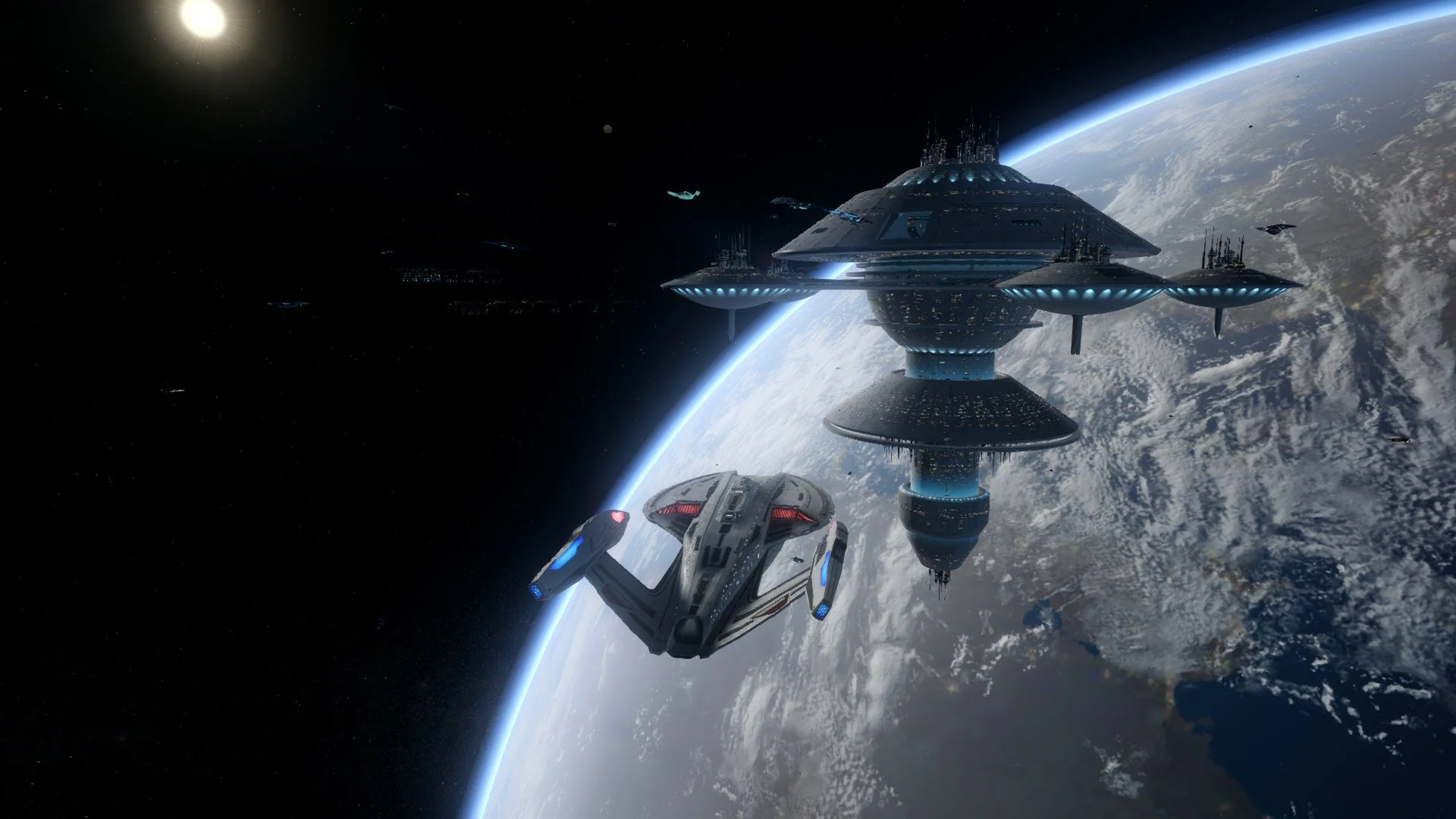
I recently read a post on Massively Overpowered about skills rotation in the MMORPG genre. I found the subsequent discussion in the comments fascinating. Mainly because I have never used a fixed rotation of skills in any of the MMORPGs that I play. I understand the reasoning behind such things and why some players want to optimise their combat performance. Using one’s skills in a specific order to maximise damage and manage their subsequent cooldown has a logical appeal. In Star Trek Online, some players go so far as to create keybinds for their rotations and assign it to a specific hotkey, which is then continuously pressed throughout combat. However, rotations are a blunt tool that lack flexibility, often being geared towards dealing with a single target or using an area of effect skill against a larger group. They may not be the optimal approach to combat when things do not go to plan.

If you check the Star Trek Online Wiki, you’ll find that there has been a steady stream of new content added to the MMORPG over the last 15 years. However, it doesn’t quite feel that way, mainly because more recent material seems weaker and less memorable. The last two major story arcs in STO have been somewhat lacklustre and demonstrably inferior to those that went before. Both Terran Gambit and Kings & Queens suffer from uninspired, repetitive ideas as well as an infrequent release schedule. Effectively weak stories have been dragged out over too much time. No doubt changes among the STO writing team have had an impact on content but it also seems that some of the newer stories have been tailored around whatever former Star Trek cast members that are available. As a result there has been a somewhat “square pegs in a round holes” aspect to both story arcs, where the pieces just don’t seem to fit together well.
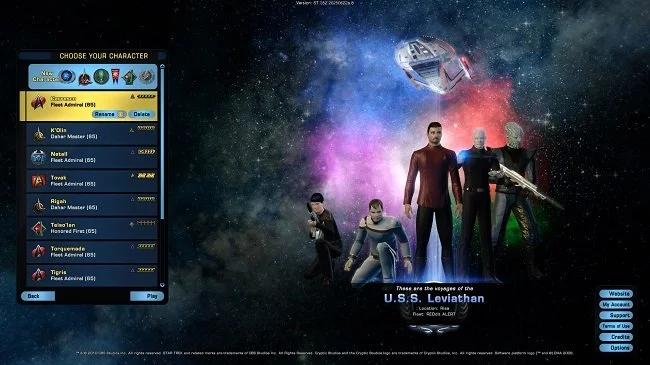
In massively multiplayer online games (MMOs), alts (short for alternate characters), are new characters created by a player in addition to their primary character (often called the “main”). Alts are often encouraged by developers as a means to keep players engaged with their game(s). Sometimes an MMO will actively reward the creation of alts either with access to exclusive content, or with additional skills or items previously unlocked by primary characters. As the myth that an MMO really begins at endgame still persists in gaming culture, some games sell boosts that will instantly raise the level of an alt to that of the current level cap. Creating alts is such a key aspect of the MMO genre, that some games will sell additional character slots, so that players can create further alts beyond the default amount allowed. There are many reasons why players create alts. Let us consider some.
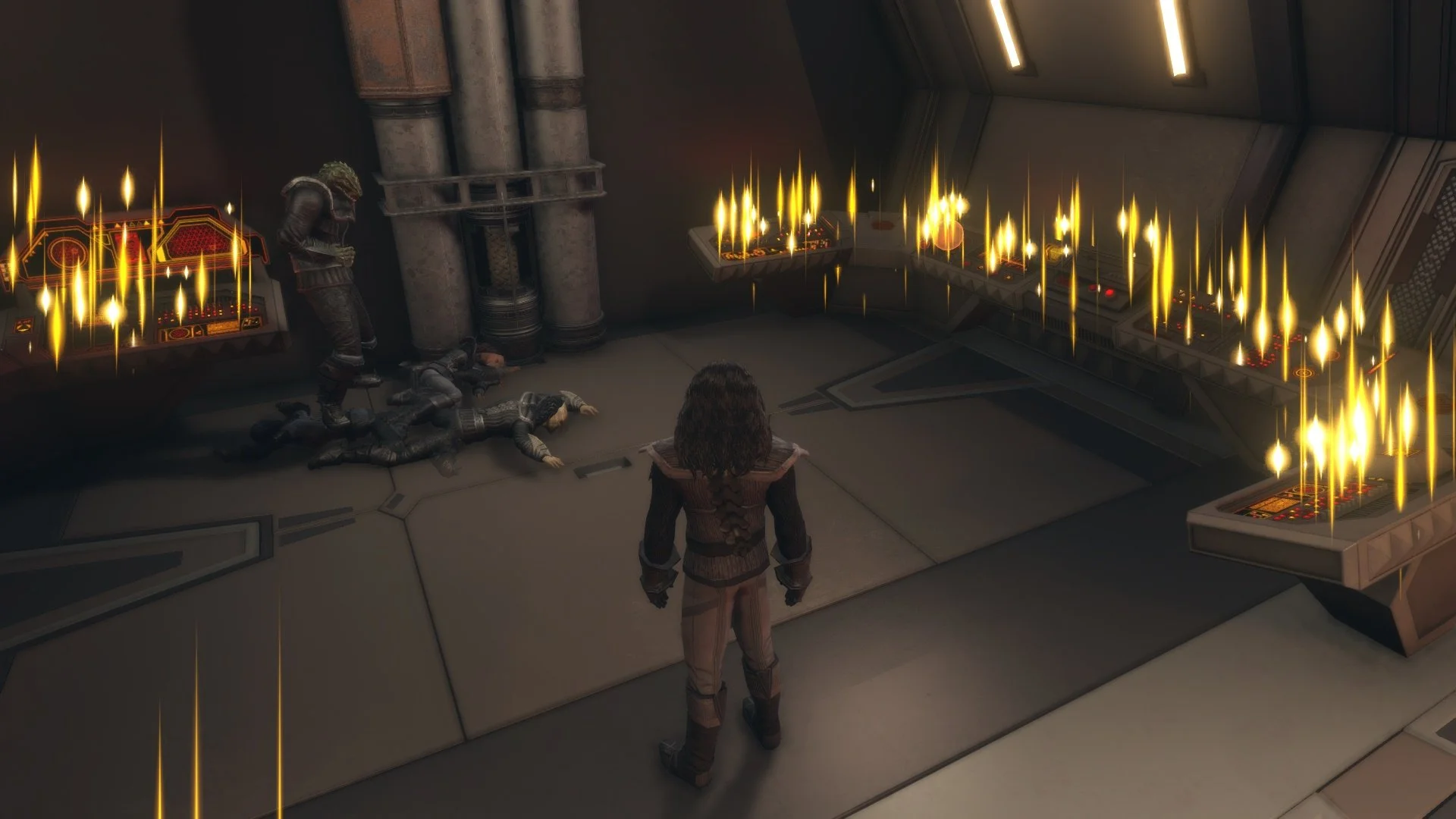
Star Trek Online is currently running its yearly Klingon Recruitment Event for PC players. Characters created from January 21st to February 11th gain additional rewards and account wide unlocks while levelling. It is a particularly useful way to orientate new and returning players. I created a Klingon Engineer during the 2021 Klingon Recruitment Event which I previously levelled to the current cap. However, I hadn’t taken this character through all the episodic missions, so I thought the current event would be a good time to resume their progress. Therefore today I resumed playing through the Romulan Mystery story arc. It was during the course of the final part of the episode, “Mine Enemy”, that I encountered a curious bug. It amused me sufficiently to prompt this blog post and make a lazy pop culture reference.
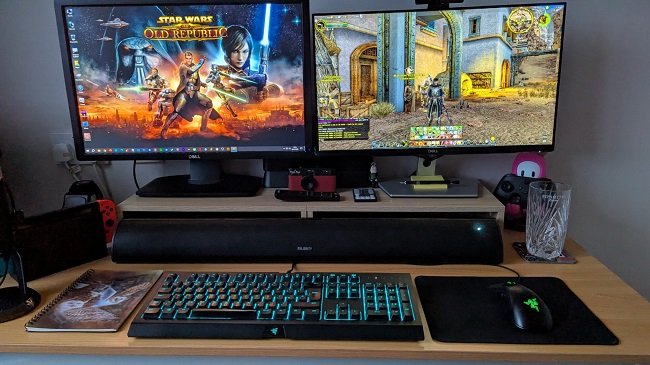
I have two monitors on my desk. The first (which is the primary monitor as far as my PC is concerned), is on the left and the second is on the right. The primary monitor is a 24 Dell U2412M, which has a resolution of 1920 x 1200. It therefore has an aspect ratio of 16:10 which adds a little extra desktop real estate, which I prefer when writing. The second monitor is a 24 inch Dell S2421H with a screen resolution of 1920 x 1080. It has an aspect ratio of 16:9 which is standard FHD. My chair is adjacent to the middle of my desk and I can turn according to each monitor I’m using. I tend to use the primary, larger monitor on the left for tasks such as writing via Google Docs and emails. The second monitor on the right is used for YouTube and gaming. This is because of its FHD format. I also have a Nintendo Switch connected to the second monitor for the same reason.
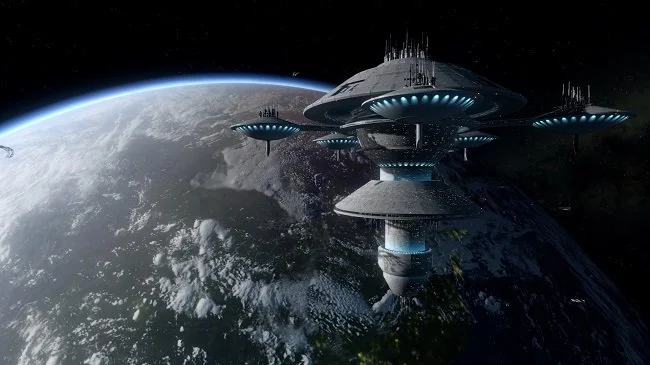
Yesterday the MMORPG Star Trek Online updated Earth Spacedock for the PC version of the game. The console version will be released a little later on. This replacement impacts upon Sol system space, the entire exterior model of ESD and elements of the interior. The outgoing model was somewhat old with several anomalies that linked to aspects of the game that have changed over the years. Perhaps the biggest reason for the change is a canon update to ESD as seen in the third season of Star Trek: Picard. The TV show features a new Earth Spacedock, also known as Probert Station, which boasts a larger superstructure designed to meet the demand of Starfleet in 2401. It would appear that this update is the first substantial release from the developers at DECA Games and may potentially indicate the quality of future content.
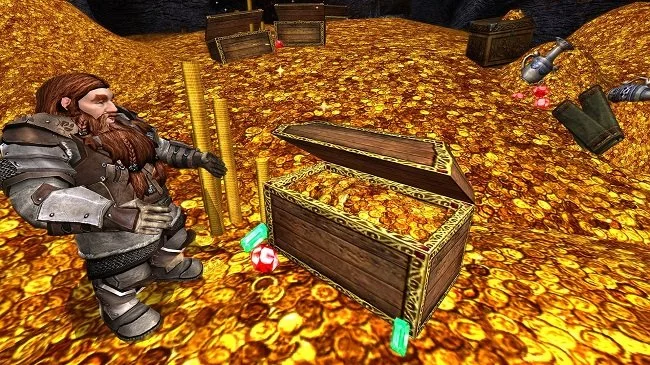
Bree Royce, editor-in chief at Massively Overpowered, recently asked the question “what is the most expensive MMORPG right now”. My first thought was to search through my old draft blog posts and track down an MMO cost analysis I wrote circa 2019. It includes data such as subscription rates and the price of current expansions. There was also information on what were the most popular cash shop items at the time. However, I then read some of the comments that had been left on Bree’s post and I quickly realised that this wasn’t just a matter of financial expenditure. Whether or not an MMO is expensive is also determined by one’s disposable income, respective wealth and personal relationship with money. The latter is perhaps the most important, irrespective whether you consider yourself rich or poor.
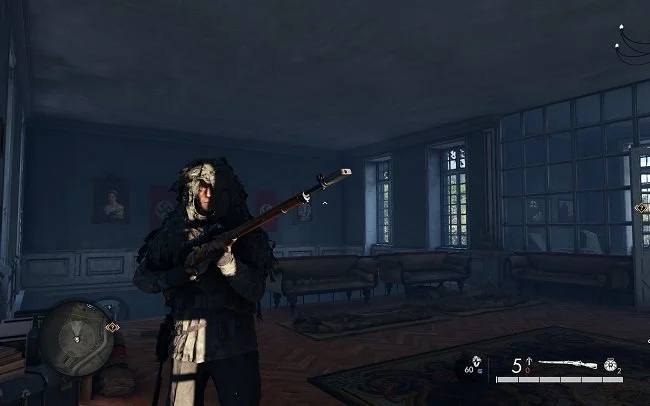
It is customary for me to write an end of year summary of my gaming activities but I suspect that on this occasion it will be somewhat short. For me, 2024 has really hammered home the notion of the ephemeral nature of video games as well as their commercial ubiquity. The moment a game fails to satisfy for whatever reason, rather than complain or worry about it, I just move on to something else. It’s not as if there’s a shortage of games out there. I have a substantial back catalogue of games that Epic and Amazon prime regularly giveaway. I have bought numerous discounted bundles in the past, in the pious hope that I’ll play one of the games included, at some point in the future. Games may well be enjoyable and engaging but many are also disposable. That’s not to say they’re bad. While playing them you are indeed “entertained”. However, when you’re “done”, it’s amazing how you quickly find another and forget what you were previously playing.
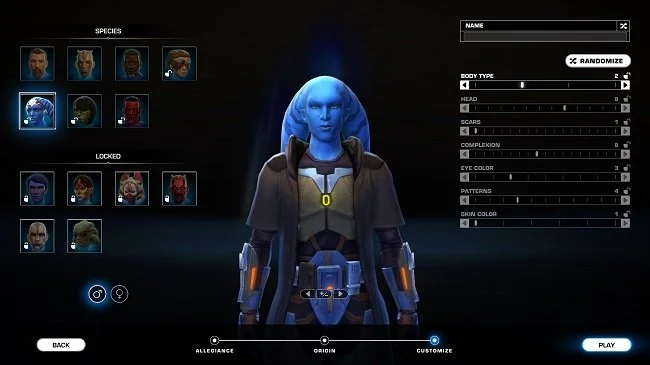
If you’ve ever played an MMORPG, then you have more than likely encountered this problem. Especially if you start playing a game that has been long established. You diligently create your character and spend time and effort customising them to suit your needs. All you’ve got to do next is choose a name, so you type in a pithy and droll title only to find that it has already been taken. So you quickly come up with another and that too is rejected. Next you try the same name but with some “alternative” spelling but the game resolutely tells you that even that permutation is already in use. I have found that even with a list of names that I’ve drawn up prior to playing the game, it can still take anything from 5 to 30 minutes to find one that is available. Naturally, this process is very frustrating, which is hardly the ideal user experience for a new player.

It would appear that one of the reasons potential new players avoid the MMORPG genre is due to the perception that they are all time sinks. I wouldn’t argue against this assumption because the reality is that it’s true. However any game that you enjoy, irrespective of genre, can become a time sink. That being said, the main difference between other genres and MMOs is as follows. A new player can jump straight into a FPS game and within minutes enjoy some multiplayer action, whereas in an MMO, a new player has to play through a tutorial and several hours of a starter zone before they start making headway in the game. This distinction does not have to be a deal breaker. An FPS can provide a quick fix of gaming and as such fulfils a need. MMORPGs can provide long term entertainment which scratches an ongoing gaming itch. Both are valid ways to enjoy gaming.
Cryptic Studios appear to have started a new round of layoffs, following those made last November. Although the developers of Star Trek Online and Neverwinter have not formally commented on the situation, it is more than likely that this is a continuation of their owners, the Embracer Group, ongoing restructuring program. So far, the Swedish company has laid off over 1,500 employees since June 2023, in an attempt to address its ill considered over expansion in recent years. At present development of Star Trek Online and other titles are being transitioned from Cryptic to DECA. The German developers are mainly known for mobile games and have recently positioned themselves as “breathing life into old games”. Their intent is to keep developing content for STO and to maintain a working relationship with the owners of the intellectual property.
If you are a new player, then Star Trek Online has 14 years of content to play through. It is all story driven and is frequently couched in existing lore from the various Star Trek TV shows. It also benefits from many of the original actors reprising their respective roles within the game. This provides an additional air of authenticity to the proceedings as well as being a spectacular fan service. Furthermore, much of that content is faction specific, hence there is a great deal of replay value to be had from this MMO. Apart from The Lord of the Rings Online, I cannot think of another game that manages to successfully tap into the style and idiom of its source intellectual property. Simply put, Star Trek Online looks and feels “very “Star Trek”. Which is why it has a robust and loyal player base and still proves to be a viable financial asset to its owners, DECA Games.
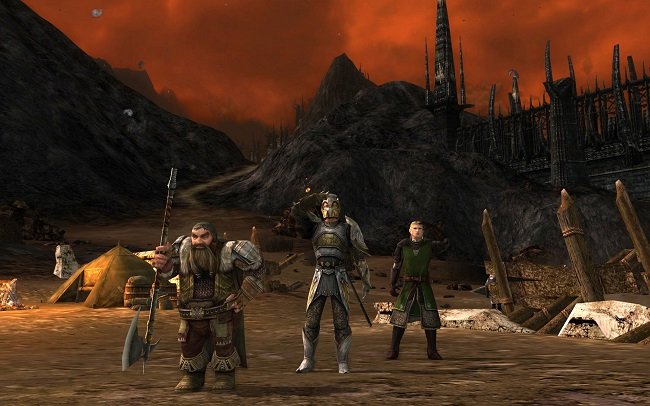
“The MMO genre is rife with its own set of tropes; recurring themes and motifs that have become established and ubiquitous. All of which are ideal material for a hastily produced, lazily conceived, recurring blog post”. One of the integral game mechanics of the MMORPG genre is the acquisition of loot. As you travel your virtual world of choice, committing random murder against all forms of flora and fauna, you acquire miscellaneous items by looting the corpses of the slain or stealing from houses and NPCs. Oh it’s a glamorous genre, the MMORPG. These random items can be crafting resources such as hides or ore. They may be food items or healing potions that provide some kind of statistical buff. If you’re fortunate, they may be gear that corresponds with your class or specific build, providing a much needed upgrade. Loot may also be the in-game currency, thus boosting your respective wealth. As you can see, loot comes in all shapes and sizes but how important is it?
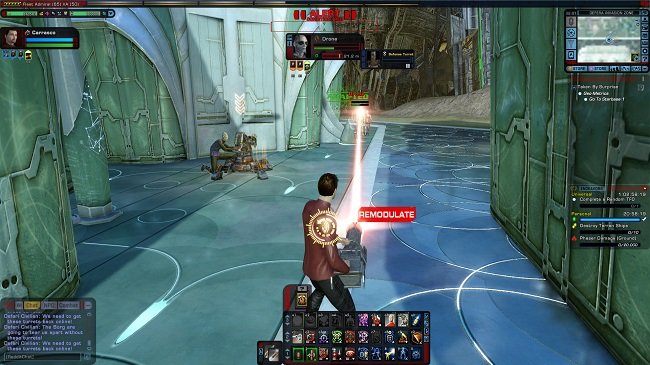
Ever since the Borg have been part of the MMORPG Star Trek Online, players have had to equip a Frequency Remodulator. The Borg adapt to damage from beam weapons after a few minutes and so players have to recalibrate their rifles or pistols, accordingly, using a Frequency Remodulator. This takes 5 seconds to perform and so has to be timed carefully to ensure that the player is not vulnerable to attack during this period. An upgraded version called a Fractal Remodulator, has been available from Federation and Klingon vendors in the Base Camp of the Defera Invasion Zone. It can be crafted for 50 Nanopower Capacitors, 50 Fibro-Neural Interface Cabling and 50 Cybernetic Armatures. It is quicker than the standard model, taking 3 seconds to apply new frequencies. Kinetic weapons do not require remodulation and the Borg cannot adapt to them.
Cryptic used the same statement on their recent news release. Except they ended it with an exclamation mark whereas I’ve chosen a question mark instead. Because I really do question the wisdom of expanding the Experimental Ship Upgrade path and the benefits of applying additional tokens to your ships, unlocking further device, console and trait slots. This is a classic example of doing something because you can, as opposed because you should. Do players at level cap who have already upgraded their ship(s) from Tier 6 to Tier 6-X really need to augment it further? Beyond the immediate stats boost, does it offer any significant benefit to the player or the game in the long run? Or does this situation simply boil down to the fact that it’s another cynically contrived excuse for Star Trek Online developers, Cryptic, to sell you something. For the record, Experimental Ship Upgrade tokens are available for sale in the Zen Store (for money) or can be purchased via Phoenix Prize Pack (for dilithium).
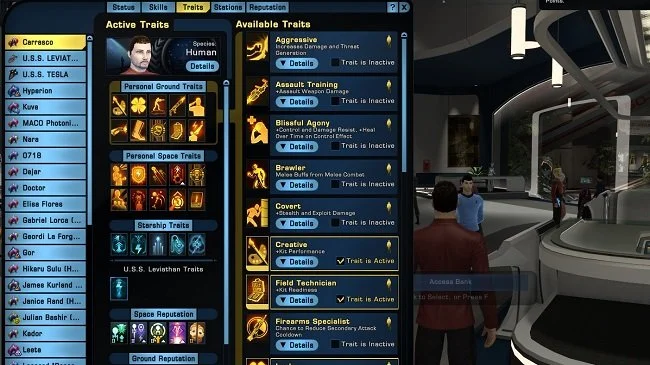
All MMORPGs have bugs. It is a certainty in life, just like death and taxes. However, some have more than others. I’m sure we could argue for hours as to which particular game has the most but I’ll leave that discussion to others. Star Trek Online has its share, many of which have persisted for years. But there is one that stands out, due to its longevity and sheer annoyance. To be specific, the “trait bug”. Like many MMO’s STO has a trait system that offers a range of passive or active buffs, skill boosts and statistical tweaks. STO is very much a number game, especially if you are chasing a high DPS output, which lots of players do. The trait bug is the random “unslotting” of some of your characters traits. It can affect any of the seven categories of traits but tends to most often happen to Personal Space Traits and Starship Traits. Unless you regularly check, most players will not immediately know this has happened.
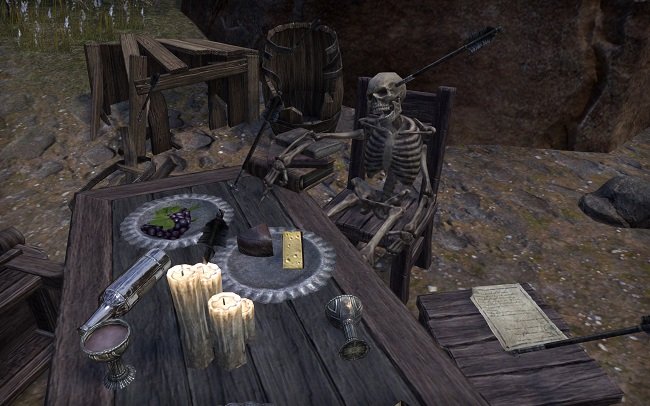
“The MMO genre is rife with its own set of tropes; recurring themes and motifs that have become established and ubiquitous. All of which are ideal material for a hastily produced, lazily conceived, recurring blog post”. Dying in an Massively Multiplayer Online Role-Playing Game is a clear and unambiguous fail state. A means by which to teach the player that they’re doing something wrong and that they need to rethink their strategy. IE Don’t mess with the foul Marmydons unless you have back up and are wielding the Sword of Kagnazax. Dying is a reminder to not get overconfident and maintain situational awareness. It teaches us to ensure you have the right gear and consumables, to be au fait with the mechanics of any fight you’re about to get into and that winning is not a given. Any enterprise that offers a tangible reward will come with potential risks and consequences. If you’re playing in a group then death provides a timely reminder not to rely on Colin.
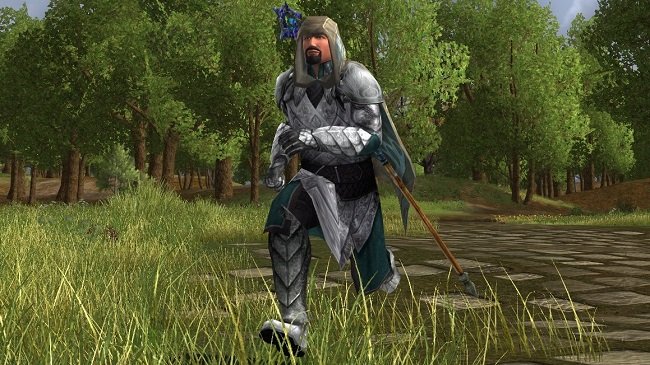
“The MMO genre is rife with its own set of tropes; recurring themes and motifs that have become established and ubiquitous. All of which are ideal material for a hastily produced, lazily conceived, recurring blog post”. I was in London recently, idly walking to the Natural History Museum in South Kensington, when a group of tourists started running for no discernable reason. Someone I was with asked “ I wonder why they’re running” and I replied “perhaps they think they’re in an MMO”. The quips fell on deaf ears but that is a cross I often have to bear. This anecdote highlights one of the points of this post. Namely, why do our avatars in the MMORPG genre run by default? I would also like to discuss the manner in which MMOs address the issue of travel around an ever expanding virtual world. Is fast travel lazy? Our mounts a boon or a bane?
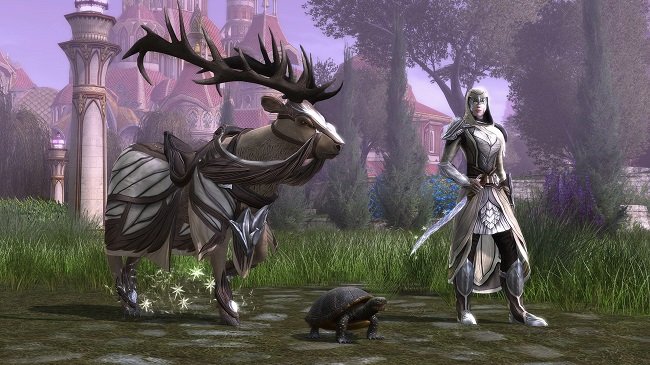
Here we are again with another summary of my gaming activities in recent months. Or in this case since last September. It’s been a while but I’ve been on a blogging hiatus until recently. However, I’ve kept myself busy gaming wise and often I find the hunt for news video games, just as entertaining as I do playing them. Perhaps that could be a future blog post. Back to the matter in hand. Gaming wise, pretty much all things related to the MMORPG genre are currently on the back burner. I’ll give specifics later but I am taking a break from these for the present. I am currently looking at trying games outside my usual comfort zone and also trying to test whether you can or cannot teach an old dog new tricks. Fortunately, the answer appears to be yes you can. Enough summation, on to the specifics.
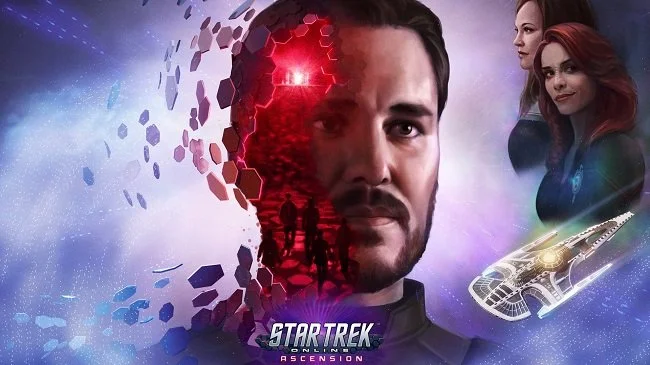
This afternoon Cryptic launched the latest season update, Ascension, for the MMORPG Star Trek Online. Furthermore, I’m sure it will not come as a shock to long term players that it was broken and an emergency patch had to be applied. Oh how we all laughed. Even after being “fixed” players are still experiencing bugs with the new content, especially the ground mission part of the update, but this sadly is just par for the course. Personally speaking, it is not the bugs that I have a problem with as they are just part of the overall gaming experience when playing STO. What I am saddened about is the actual gameplay found in Ascension. The space combat section of the game is simply “more of the same”. Destroy some specific vessels and once the goal has been met, watch the cutscene. But the ground combat is especially uninspired and repetitive, despite its interesting setting.
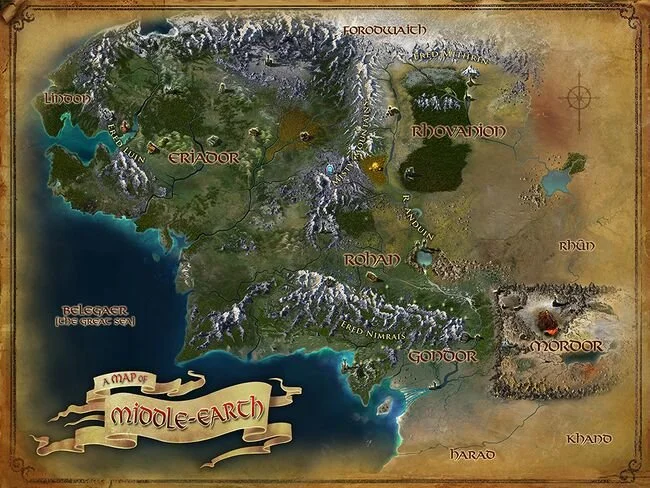
The Lord of the Rings Online was my first major MMORPG. I started playing in late 2008 and quickly discovered that there was a necessity to become familiar with the game world. Although the game provides quick travel options they were not ubiquitous at that point and often a player would simply travel on foot to travel costs down and to take the most direct route. Back in 2008 you could not own a mount until level 30. Hence I began “learning the maps” in the game and to this day still remember how to travel from one side of Moria, to another. The maps in the base game remain clear in my mind as they were so well trodden. Not so those in the regions. There are far more stables with fast mounts present in the game now and so convenience trumps any requirement to become so familiar with newly added zones. Nowadays Standing Stone Games designs new zones that tend to funnel players through them from quest hub to quest hub.
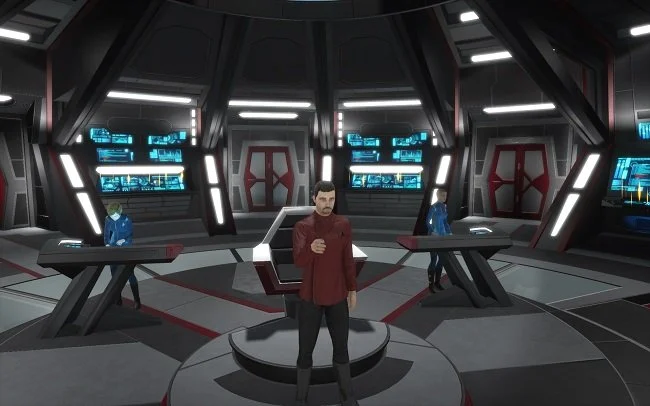
I’ve been playing Star Trek Online on and off for about 8 years. During that time I read a lot of Wikis and watched a lot of videos on YouTube that explore the game’s various systems and mechanics. I find a lot of the recommendations made by “expert” players to be impractical. The commonest being builds that include traits and consoles that you can only obtain from buying specific ships. Or using resources in quantities that take months of grinding to build up. This is hardly what I’d call handy advice for a new player. So I thought I’d give five tips of my own in no particular order, that I feel are useful. Some are glaringly obvious. Others not so. But hopefully they will prove useful to both new and returning players.
Cryptic are once again running the Temporal Agent Recruitment event in Star Trek Online from Tuesday 6th September 2022. Players who create a TOS (The original series) era character during this time are eligible for bonus dilithium, equipment and special traits as they play through the game. Progression also unlocks rewards for existing alts which can prove very useful. There are also unique tasks associated with Temporal Agents such as finding and unlocking Temporal Probes, which are hidden throughout the game’s story content. Once a player has created a 23rd century Starfleet character, completed the tutorial and received their special Temporal Agent transceiver device, they will gain the title Temporal Agent. The goals and bonus content associated with the event can be completed anytime, even after it ends on October 4th.
Cryptic to Close the Foundry
Cryptic have announced that they will be removing the Foundry from both Star Trek Online and Neverwinter on April 11th. The Foundry was first introduced to STO back in 2011 and has proven a popular means for players to create and share their own missions, using in-game assets. Cryptic state in their press release that “the legacy knowledge required to maintain the Foundry at our quality standards is no longer available”. This is a roundabout way of saying that the member of staff responsible for curating and quality testing the service has no left the company. Naturally, Cryptic has stated that they will acknowledge those players who have contributed to the Foundry over the years by handing out various virtual trinkets and baubles. There has been quite a strong reaction of the STO subreddit as no one like to see content removed from a game. However, the isn’t a black and white as it first appears, because the Foundry has been broken for a while.
Cryptic have announced that they will be removing the Foundry from both Star Trek Online and Neverwinter on April 11th. The Foundry was first introduced to STO back in 2011 and has proven a popular means for players to create and share their own missions, using in-game assets. Cryptic state in their press release that “the legacy knowledge required to maintain the Foundry at our quality standards is no longer available”. This is a roundabout way of saying that the member of staff responsible for curating and quality testing the service has no left the company. Naturally, Cryptic has stated that they will acknowledge those players who have contributed to the Foundry over the years by handing out various virtual trinkets and baubles. There has been quite a strong reaction of the STO subreddit as no one like to see content removed from a game. However, the isn’t a black and white as it first appears, because the Foundry has been broken for a while.
I personally haven’t played a Foundry mission for at least two years and have often only tried those I’ve specifically read about. One of the systems biggest faults is poor indexing and curation. Finding good player created content beyond the most popular missions that has been voted to the top of the list, has always been a challenge. Then for several years now every time Cryptic have revised STO in some way or simply added a new feature episode, it has always resulted in the Foundry going offline. Yes there have been some standout player created missions over the years that reflect the passionate nature of the STO community and that of Trek fans per se. But for every good mission you also get three indifferent ones. Often the latter have been created by opportunists trying to facilitate some sort of in-game benefit or provide a fast path to advancement. And on a narrative level, many of these missions are just further examples of poor fan fiction.
The recent introduction of the Personal Endeavor system in STO, pretty much the last nail in the coffin for the Foundry. Endeavors are essentially daily missions that earn statistical upgrade points and are designed to encourage players to try Task Force Operations (group PVE content) and repeat old missions. However, many players looked to Foundry content to try and clear Endeavors as quickly as possible. Why spend thirty minutes in a structured TFO that runs to a timed script, when you can run a player created mission that allows you to achieve your goal far quicker? Naturally, Cryptic were not going to allow this to continue. So when you consider this along with the flaky nature of the system to begin with, and the fact that no one is available to maintain it, it’s surprising that the plug wasn’t pulled earlier.
The Foundry in STO is one of those concepts that looks great on paper and seems like an invaluable community service when discussed. But the reality is that it never delivered as much good content as hoped for and its curation and cataloguing further hindered “the cream from rising to the top”. It can also be argued that Cryptic never promoted the service as much as they could. But irrespective of the quality of content and its accessibility, this is still a case of something being taken out of both STO and Neverwinter and that is never an easy sell. If content is taken out, one naturally feels that something else should replace it. Whether Cryptic does this remains to be seen and I won’t hold my breath. As for the Foundry, I suspect it’s a bit like the concept of “shopping locally”. It’s something we all like in principle but seldom do in reality, therefore we as players, have actively contributed to its demise.
Star Trek Online has many in-game systems that are common to the MMORPG genre. The reputation system is one such example. In STO there are 13 reputation factions. Once a player has reached level 50 they may start progressing through the 6 reputation tiers of each one. Players gain progression through daily projects (20 hours in duration). Hourly projects are also available though they yield less reputation advancement and are limited to three times a day. Hence 20 hour projects are consider by default the most efficient way to gain rep. Projects require 30 Faction Specific Marks (earned via various activities in-game), 15,000 Energy Credits (standard in-game currency) and 2000 Expertise points. The most efficient way to tackle the reputation grind is to build up the necessary resources in advance and then at a designated time each day, start all 13 respective projects. Upon completion projects yield a player bound lockbox containing a random space or ground weapon, a console or Elite Marks which can be used to acquire faction gear.
I was recently perusing my archive of old blog posts, when it struck me how much I’ve written about the MMORPG genre over the years. Naturally, there was far more material from between 2008 and 2012 as that was period when I immersed myself in the genre and was very enthusiastic about it. I was at a point in my life when I had the time to dedicate to such games and I was happy to participate in the social aspect of they offered. I would regularly play through group content and spend time socialising online with fellow guild members. My experience remains a textbook example of how online games can be more than the sum of their parts and that where you are at in your life has a major impact upon your overall enjoyment. As I read though various old posts it became clear that my experiences where specific to this particular part of my life and that they cannot be repeated. My relationship with the genre is very different now and that’s fine.
Creating alts is an integral aspect of the MMORPG genre. Many players will create a character of a specific class or faction, play it for a while, lose interest in it or they may decide that it is just not for them. Fortunately it is no effort at all to simply re-roll a new alt and set off once again. Furthermore, lots of players never reach level cap of the MMORPG that there playing. When the going get’s tough, so to speak, you can either soldier on for another 50 levels or simply create a new alt and return to the comfort of tried and tested content. Alts also give you the chance to secure an accolade or achievement that you previously missed. They are also of great benefit to the genres social aspects. Creating a new alt so you can play along with a friend who is just starting is great fun. Developer’s love them too as it means you’re still playing the game.
I recently took a break from Crimson Desert choosing instead to to play something familiar and easy going. As I’ve been logging into Star Trek Online daily to participate in the anniversary event, I decided to look through my various alts and see how far they had progressed through the game and what resources they had. At present I have twelve alts. My primary Captain was created in 2015 during the original Delta Recruit Event. I had previously played STO intermittently since its release in January 2010 but I never kept any of those characters. Hence this decade old Tactical Federation Captain has been my main focus when playing. The other eleven alts are the result of other recruitment events or whenever I wanted to try something different, such as playing a specific class or faction. I obviously played a lot of STO during the lockdown as several alts date from that period. Several had maximum reputation across all factions.
This year is the 60th anniversary of Star Trek. The original TV show was first broadcast in the US on September 8th 1966. If you search online you’ll find details of lots of related events. There are documentaries, conventions, new TV shows and even some video games in development. However, what you won’t find are any details regarding what will be happening with the MMORPG Star Trek Online. So far no road map for 2026 has been posted online by the developers but it is still quite early in the New Year. That being the case, I am not especially optimistic about there being any major plans waiting to be revealed. It is not as if DECA Games have demonstrated or stated any major ambitions for STO beyond keeping the endless events treadmill going and regularly adding content to the in-game store, during their development tenure. The ongoing story arc drags on inexorably and is as dull as ditchwater.
I recently read a post on Massively Overpowered about skills rotation in the MMORPG genre. I found the subsequent discussion in the comments fascinating. Mainly because I have never used a fixed rotation of skills in any of the MMORPGs that I play. I understand the reasoning behind such things and why some players want to optimise their combat performance. Using one’s skills in a specific order to maximise damage and manage their subsequent cooldown has a logical appeal. In Star Trek Online, some players go so far as to create keybinds for their rotations and assign it to a specific hotkey, which is then continuously pressed throughout combat. However, rotations are a blunt tool that lack flexibility, often being geared towards dealing with a single target or using an area of effect skill against a larger group. They may not be the optimal approach to combat when things do not go to plan.
If you check the Star Trek Online Wiki, you’ll find that there has been a steady stream of new content added to the MMORPG over the last 15 years. However, it doesn’t quite feel that way, mainly because more recent material seems weaker and less memorable. The last two major story arcs in STO have been somewhat lacklustre and demonstrably inferior to those that went before. Both Terran Gambit and Kings & Queens suffer from uninspired, repetitive ideas as well as an infrequent release schedule. Effectively weak stories have been dragged out over too much time. No doubt changes among the STO writing team have had an impact on content but it also seems that some of the newer stories have been tailored around whatever former Star Trek cast members that are available. As a result there has been a somewhat “square pegs in a round holes” aspect to both story arcs, where the pieces just don’t seem to fit together well.
In massively multiplayer online games (MMOs), alts (short for alternate characters), are new characters created by a player in addition to their primary character (often called the “main”). Alts are often encouraged by developers as a means to keep players engaged with their game(s). Sometimes an MMO will actively reward the creation of alts either with access to exclusive content, or with additional skills or items previously unlocked by primary characters. As the myth that an MMO really begins at endgame still persists in gaming culture, some games sell boosts that will instantly raise the level of an alt to that of the current level cap. Creating alts is such a key aspect of the MMO genre, that some games will sell additional character slots, so that players can create further alts beyond the default amount allowed. There are many reasons why players create alts. Let us consider some.
Star Trek Online is currently running its yearly Klingon Recruitment Event for PC players. Characters created from January 21st to February 11th gain additional rewards and account wide unlocks while levelling. It is a particularly useful way to orientate new and returning players. I created a Klingon Engineer during the 2021 Klingon Recruitment Event which I previously levelled to the current cap. However, I hadn’t taken this character through all the episodic missions, so I thought the current event would be a good time to resume their progress. Therefore today I resumed playing through the Romulan Mystery story arc. It was during the course of the final part of the episode, “Mine Enemy”, that I encountered a curious bug. It amused me sufficiently to prompt this blog post and make a lazy pop culture reference.
I have two monitors on my desk. The first (which is the primary monitor as far as my PC is concerned), is on the left and the second is on the right. The primary monitor is a 24 Dell U2412M, which has a resolution of 1920 x 1200. It therefore has an aspect ratio of 16:10 which adds a little extra desktop real estate, which I prefer when writing. The second monitor is a 24 inch Dell S2421H with a screen resolution of 1920 x 1080. It has an aspect ratio of 16:9 which is standard FHD. My chair is adjacent to the middle of my desk and I can turn according to each monitor I’m using. I tend to use the primary, larger monitor on the left for tasks such as writing via Google Docs and emails. The second monitor on the right is used for YouTube and gaming. This is because of its FHD format. I also have a Nintendo Switch connected to the second monitor for the same reason.
Yesterday the MMORPG Star Trek Online updated Earth Spacedock for the PC version of the game. The console version will be released a little later on. This replacement impacts upon Sol system space, the entire exterior model of ESD and elements of the interior. The outgoing model was somewhat old with several anomalies that linked to aspects of the game that have changed over the years. Perhaps the biggest reason for the change is a canon update to ESD as seen in the third season of Star Trek: Picard. The TV show features a new Earth Spacedock, also known as Probert Station, which boasts a larger superstructure designed to meet the demand of Starfleet in 2401. It would appear that this update is the first substantial release from the developers at DECA Games and may potentially indicate the quality of future content.
Bree Royce, editor-in chief at Massively Overpowered, recently asked the question “what is the most expensive MMORPG right now”. My first thought was to search through my old draft blog posts and track down an MMO cost analysis I wrote circa 2019. It includes data such as subscription rates and the price of current expansions. There was also information on what were the most popular cash shop items at the time. However, I then read some of the comments that had been left on Bree’s post and I quickly realised that this wasn’t just a matter of financial expenditure. Whether or not an MMO is expensive is also determined by one’s disposable income, respective wealth and personal relationship with money. The latter is perhaps the most important, irrespective whether you consider yourself rich or poor.
It is customary for me to write an end of year summary of my gaming activities but I suspect that on this occasion it will be somewhat short. For me, 2024 has really hammered home the notion of the ephemeral nature of video games as well as their commercial ubiquity. The moment a game fails to satisfy for whatever reason, rather than complain or worry about it, I just move on to something else. It’s not as if there’s a shortage of games out there. I have a substantial back catalogue of games that Epic and Amazon prime regularly giveaway. I have bought numerous discounted bundles in the past, in the pious hope that I’ll play one of the games included, at some point in the future. Games may well be enjoyable and engaging but many are also disposable. That’s not to say they’re bad. While playing them you are indeed “entertained”. However, when you’re “done”, it’s amazing how you quickly find another and forget what you were previously playing.
If you’ve ever played an MMORPG, then you have more than likely encountered this problem. Especially if you start playing a game that has been long established. You diligently create your character and spend time and effort customising them to suit your needs. All you’ve got to do next is choose a name, so you type in a pithy and droll title only to find that it has already been taken. So you quickly come up with another and that too is rejected. Next you try the same name but with some “alternative” spelling but the game resolutely tells you that even that permutation is already in use. I have found that even with a list of names that I’ve drawn up prior to playing the game, it can still take anything from 5 to 30 minutes to find one that is available. Naturally, this process is very frustrating, which is hardly the ideal user experience for a new player.
It would appear that one of the reasons potential new players avoid the MMORPG genre is due to the perception that they are all time sinks. I wouldn’t argue against this assumption because the reality is that it’s true. However any game that you enjoy, irrespective of genre, can become a time sink. That being said, the main difference between other genres and MMOs is as follows. A new player can jump straight into a FPS game and within minutes enjoy some multiplayer action, whereas in an MMO, a new player has to play through a tutorial and several hours of a starter zone before they start making headway in the game. This distinction does not have to be a deal breaker. An FPS can provide a quick fix of gaming and as such fulfils a need. MMORPGs can provide long term entertainment which scratches an ongoing gaming itch. Both are valid ways to enjoy gaming.
Cryptic Studios appear to have started a new round of layoffs, following those made last November. Although the developers of Star Trek Online and Neverwinter have not formally commented on the situation, it is more than likely that this is a continuation of their owners, the Embracer Group, ongoing restructuring program. So far, the Swedish company has laid off over 1,500 employees since June 2023, in an attempt to address its ill considered over expansion in recent years. At present development of Star Trek Online and other titles are being transitioned from Cryptic to DECA. The German developers are mainly known for mobile games and have recently positioned themselves as “breathing life into old games”. Their intent is to keep developing content for STO and to maintain a working relationship with the owners of the intellectual property.
If you are a new player, then Star Trek Online has 14 years of content to play through. It is all story driven and is frequently couched in existing lore from the various Star Trek TV shows. It also benefits from many of the original actors reprising their respective roles within the game. This provides an additional air of authenticity to the proceedings as well as being a spectacular fan service. Furthermore, much of that content is faction specific, hence there is a great deal of replay value to be had from this MMO. Apart from The Lord of the Rings Online, I cannot think of another game that manages to successfully tap into the style and idiom of its source intellectual property. Simply put, Star Trek Online looks and feels “very “Star Trek”. Which is why it has a robust and loyal player base and still proves to be a viable financial asset to its owners, DECA Games.
“The MMO genre is rife with its own set of tropes; recurring themes and motifs that have become established and ubiquitous. All of which are ideal material for a hastily produced, lazily conceived, recurring blog post”. One of the integral game mechanics of the MMORPG genre is the acquisition of loot. As you travel your virtual world of choice, committing random murder against all forms of flora and fauna, you acquire miscellaneous items by looting the corpses of the slain or stealing from houses and NPCs. Oh it’s a glamorous genre, the MMORPG. These random items can be crafting resources such as hides or ore. They may be food items or healing potions that provide some kind of statistical buff. If you’re fortunate, they may be gear that corresponds with your class or specific build, providing a much needed upgrade. Loot may also be the in-game currency, thus boosting your respective wealth. As you can see, loot comes in all shapes and sizes but how important is it?
Ever since the Borg have been part of the MMORPG Star Trek Online, players have had to equip a Frequency Remodulator. The Borg adapt to damage from beam weapons after a few minutes and so players have to recalibrate their rifles or pistols, accordingly, using a Frequency Remodulator. This takes 5 seconds to perform and so has to be timed carefully to ensure that the player is not vulnerable to attack during this period. An upgraded version called a Fractal Remodulator, has been available from Federation and Klingon vendors in the Base Camp of the Defera Invasion Zone. It can be crafted for 50 Nanopower Capacitors, 50 Fibro-Neural Interface Cabling and 50 Cybernetic Armatures. It is quicker than the standard model, taking 3 seconds to apply new frequencies. Kinetic weapons do not require remodulation and the Borg cannot adapt to them.
Cryptic used the same statement on their recent news release. Except they ended it with an exclamation mark whereas I’ve chosen a question mark instead. Because I really do question the wisdom of expanding the Experimental Ship Upgrade path and the benefits of applying additional tokens to your ships, unlocking further device, console and trait slots. This is a classic example of doing something because you can, as opposed because you should. Do players at level cap who have already upgraded their ship(s) from Tier 6 to Tier 6-X really need to augment it further? Beyond the immediate stats boost, does it offer any significant benefit to the player or the game in the long run? Or does this situation simply boil down to the fact that it’s another cynically contrived excuse for Star Trek Online developers, Cryptic, to sell you something. For the record, Experimental Ship Upgrade tokens are available for sale in the Zen Store (for money) or can be purchased via Phoenix Prize Pack (for dilithium).
All MMORPGs have bugs. It is a certainty in life, just like death and taxes. However, some have more than others. I’m sure we could argue for hours as to which particular game has the most but I’ll leave that discussion to others. Star Trek Online has its share, many of which have persisted for years. But there is one that stands out, due to its longevity and sheer annoyance. To be specific, the “trait bug”. Like many MMO’s STO has a trait system that offers a range of passive or active buffs, skill boosts and statistical tweaks. STO is very much a number game, especially if you are chasing a high DPS output, which lots of players do. The trait bug is the random “unslotting” of some of your characters traits. It can affect any of the seven categories of traits but tends to most often happen to Personal Space Traits and Starship Traits. Unless you regularly check, most players will not immediately know this has happened.
“The MMO genre is rife with its own set of tropes; recurring themes and motifs that have become established and ubiquitous. All of which are ideal material for a hastily produced, lazily conceived, recurring blog post”. Dying in an Massively Multiplayer Online Role-Playing Game is a clear and unambiguous fail state. A means by which to teach the player that they’re doing something wrong and that they need to rethink their strategy. IE Don’t mess with the foul Marmydons unless you have back up and are wielding the Sword of Kagnazax. Dying is a reminder to not get overconfident and maintain situational awareness. It teaches us to ensure you have the right gear and consumables, to be au fait with the mechanics of any fight you’re about to get into and that winning is not a given. Any enterprise that offers a tangible reward will come with potential risks and consequences. If you’re playing in a group then death provides a timely reminder not to rely on Colin.
“The MMO genre is rife with its own set of tropes; recurring themes and motifs that have become established and ubiquitous. All of which are ideal material for a hastily produced, lazily conceived, recurring blog post”. I was in London recently, idly walking to the Natural History Museum in South Kensington, when a group of tourists started running for no discernable reason. Someone I was with asked “ I wonder why they’re running” and I replied “perhaps they think they’re in an MMO”. The quips fell on deaf ears but that is a cross I often have to bear. This anecdote highlights one of the points of this post. Namely, why do our avatars in the MMORPG genre run by default? I would also like to discuss the manner in which MMOs address the issue of travel around an ever expanding virtual world. Is fast travel lazy? Our mounts a boon or a bane?
Here we are again with another summary of my gaming activities in recent months. Or in this case since last September. It’s been a while but I’ve been on a blogging hiatus until recently. However, I’ve kept myself busy gaming wise and often I find the hunt for news video games, just as entertaining as I do playing them. Perhaps that could be a future blog post. Back to the matter in hand. Gaming wise, pretty much all things related to the MMORPG genre are currently on the back burner. I’ll give specifics later but I am taking a break from these for the present. I am currently looking at trying games outside my usual comfort zone and also trying to test whether you can or cannot teach an old dog new tricks. Fortunately, the answer appears to be yes you can. Enough summation, on to the specifics.
This afternoon Cryptic launched the latest season update, Ascension, for the MMORPG Star Trek Online. Furthermore, I’m sure it will not come as a shock to long term players that it was broken and an emergency patch had to be applied. Oh how we all laughed. Even after being “fixed” players are still experiencing bugs with the new content, especially the ground mission part of the update, but this sadly is just par for the course. Personally speaking, it is not the bugs that I have a problem with as they are just part of the overall gaming experience when playing STO. What I am saddened about is the actual gameplay found in Ascension. The space combat section of the game is simply “more of the same”. Destroy some specific vessels and once the goal has been met, watch the cutscene. But the ground combat is especially uninspired and repetitive, despite its interesting setting.
The Lord of the Rings Online was my first major MMORPG. I started playing in late 2008 and quickly discovered that there was a necessity to become familiar with the game world. Although the game provides quick travel options they were not ubiquitous at that point and often a player would simply travel on foot to travel costs down and to take the most direct route. Back in 2008 you could not own a mount until level 30. Hence I began “learning the maps” in the game and to this day still remember how to travel from one side of Moria, to another. The maps in the base game remain clear in my mind as they were so well trodden. Not so those in the regions. There are far more stables with fast mounts present in the game now and so convenience trumps any requirement to become so familiar with newly added zones. Nowadays Standing Stone Games designs new zones that tend to funnel players through them from quest hub to quest hub.
I’ve been playing Star Trek Online on and off for about 8 years. During that time I read a lot of Wikis and watched a lot of videos on YouTube that explore the game’s various systems and mechanics. I find a lot of the recommendations made by “expert” players to be impractical. The commonest being builds that include traits and consoles that you can only obtain from buying specific ships. Or using resources in quantities that take months of grinding to build up. This is hardly what I’d call handy advice for a new player. So I thought I’d give five tips of my own in no particular order, that I feel are useful. Some are glaringly obvious. Others not so. But hopefully they will prove useful to both new and returning players.
Cryptic are once again running the Temporal Agent Recruitment event in Star Trek Online from Tuesday 6th September 2022. Players who create a TOS (The original series) era character during this time are eligible for bonus dilithium, equipment and special traits as they play through the game. Progression also unlocks rewards for existing alts which can prove very useful. There are also unique tasks associated with Temporal Agents such as finding and unlocking Temporal Probes, which are hidden throughout the game’s story content. Once a player has created a 23rd century Starfleet character, completed the tutorial and received their special Temporal Agent transceiver device, they will gain the title Temporal Agent. The goals and bonus content associated with the event can be completed anytime, even after it ends on October 4th.
Death in MMOs
There was a post today over at Keen and Graev’s Gaming Blog, which raised the subject of “corpse runs” in old school MMOS such as Ultima Online. In-game death came with penalties back then and there was the prospect of XP loss or that your corpse could be looted, and you could potentially lose rare gear. It got me thinking because I’ve never played an MMO that has had, to my mind, such harsh sanctions. In fact game mechanics such as permadeath, corpse runs, and the loss of equipment will put me off playing any such game that has them. I suspect that unless you’re a player who is particularly motivated by achievement, competitiveness and challenge, then such systems are seen mainly as an inconvenience and impediment.
There was a post today over at Keen and Graev’s Gaming Blog, which raised the subject of “corpse runs” in old school MMOS such as Ultima Online. In-game death came with penalties back then and there was the prospect of XP loss or that your corpse could be looted, and you could potentially lose rare gear. It got me thinking because I’ve never played an MMO that has had, to my mind, such harsh sanctions. In fact game mechanics such as permadeath, corpse runs, and the loss of equipment will put me off playing any such game that has them. I suspect that unless you’re a player who is particularly motivated by achievement, competitiveness and challenge, then such systems are seen mainly as an inconvenience and impediment.
Death in MMOs and the function it is supposed to serve, is just another aspect of the genre that has changed over time. The genre is not the same time sink it used to be and an ageing player base has meant that many core mechanics have had to become more flexible and accommodating to shorter periods of gameplay. Many players who played MMOs because of the raiding, competitive PVP and the culture of league tables and results have moved on to other games that still focus on such systems. For me, MMOs are about the narrative, levelling and occasional social gameplay. Death is mainly an inconvenience and not something I wish to have any greater impact than it does already. Gaming is for me a primarily a leisure activity.
In STO, death means just respawning and mainly serves as a warning to change your strategy or to consider revising your build. If you play the TFOs at a higher level, then your ship will get damaged if destroyed, but the cost of repair is hardly prohibitive. In LOTRO defeat is again not a major setback. If you’re playing in a group, then your team mates can revive you and the only cost incurred is your armour repairs. However, reviving yourself is limited to once per 2 hours, which means that if you cannot do so, you must retreat to a Rally Circle. This is a nuisance in the more recent zones as SSG doesn’t seem to be so generous with the quantity of rally circles in the game. Also being kicked from an instance can mean a major journey back to the entrance. ESO has a similar mechanic with either self-resurrection via Soul Gems or retreating to a Wayshrine. However, I found that stockpiling Soul Gems is an easy undertaking, therefore easily mitigating death.
I’ve mention in the past that as games have become more mainstream and more monetised, players have subsequently revised their own perspective on death mechanics. If you aren’t interested in the challenge of planning a carefully considered strategy to avoid death, its presence just becomes a source of annoyance. Especially if you see video games more as a leisure service, rather than means of testing yourself. Being inconvenienced by a mechanic in a game that you are paying for is a difficult line to tread. An incentive that shapes your gameplay is one thing. A penalty that wastes your time is something entirely different. Hence, I think it is something we will continue to see diminished in mainstream MMOs, yet I suspect it will linger as a key component of more challenging games.
Some video games lend themselves to being set aside and resumed at a later date with zero consequences. These are often casual games with no major goals other than having fun while playing them. Fall Guys is a great example of this. You have a cartoony avatar that participates in zany group races, filled with obstacles. You run, jump, climb but the controls are far from difficult. You may well become skilled but such things are mitigated by the other players as they stumble around. You’re not at the mercy of apex players or “try hards”. It is not a game about winning and mastering techniques. The fun comes from playing it and the unique experience you have each time. I’ve been playing this game, on and off, since it’s launch in 2020 and in that time I have only ever won once (winning requires you to win a series of 4 to six individual races). However, whenever I pick up my controller and play Fall Guys, I have fun and the game lifts my spirits.
I recently completed the main story in Tainted Grail: The Fall of Avalon. In total I spent about sixty hours playing the game. I began at the start of the year, then took a break for a while but returned to it recently because I wanted to see if I could unlock a specific ending. I did manage to do this. Like so many other RPGs, Tainted Grail: the Fall of Avalon has a central storyline, along with a wealth of side quests, based around factions in specific zones. I think I possibly completed about a two thirds of these. However, once I finished the main story, my interest in the game began to wane. I finally left my character in the last major quest hub in case I wish to return at a future date. I then logged out of the game and uninstalled it from my PC to free up space for whatever I was to play next. In this case its The Sinking City 2. None of this is a negative reflection on Tainted Grail: the Fall of Avalon. I enjoyed the time I spent playing this quirky RPG. I simply had my fill and left to play something else.
On Tuesday 11th April, Aspyr Media rather surprisingly re-released The Lord of the Rings: War in the North, a co-op action-RPG from 2011. This game was delisted in late 2019, possibly due to changing rights ownership or a license expiring. Hence, I was somewhat discombobulated by the return of this title to all major gaming platforms. Mind you, the Embracer Group (through its subsidiary Middle-earth Enterprises) still controls the worldwide commercial and video game licensing rights for The Lord of the Rings and The Hobbit. Furthermore they have explicitly stated that they have plans for more games. It would appear this also means re-releasing and updating old favourites. It is also worth noting that they own Aspyr Media, which is also a bit of a giveaway. Let it suffice to say that this re-release and sparked enthusiastic online debate as to whether any other he Lord of the Rings themed games from the same era will receive a similar makeover. Judging by the internet chatter, there’s potentially a market for them.
The next expansion for the MMORG, The Lord of the Rings Online, was announced on the 1st August, via the gaming website MMORPG.The Wolves of Mordor, which will launch later in the year, appears ambitious in scope as it will include two new game systems as well as the obligatory story update. This expansion takes place in Draugardh located in the North East of Mordor, beyond the Plateau of Gorgoroth. It includes the new zones of Heledhris, Parth Rhavas and Nan Ogol. These vary environmentally ranging from the arid, volcanic and semi-tropical. Players will encounter the Daugrim in these regions, Werewolves but not in the modern sense. This is not the lycanthropy of Eastern European legends but in the established Tolkien idiom of fell spirits inhabiting the bodies of Wolves. The region also sees the return of the Woses and players can expect to encounter Elves and scouts from Gondor. As ever with LOTRO expansions, there will be new instances as well as a raid.
This is a post about the power of nostalgia and how sometimes, interacting with something from your past, be it physically or mentally, can produce a very strong and tangible emotional reaction. In some instances, this can be the result of something that you have specifically set out to do. On other occasions you can wander into a sense of nostalgia purely by chance. Today I experienced a very strong sense of nostalgia while watching a YouTube video and then again when I sought to replicate what I had seen. The video showed someone installing Windows 95 on to an old 486 PC from that era. The Window’s start up sound really touched a nerve (but in a good way) and then when the guy in the video launched Space Cadet 3D Pinball, a game that shipped with the operating system, I felt a strong compulsion to track down a copy and install the game myself, thus revisiting something that was an integral part of my life in 1995.
RV There Yet? is possibly the most entertaining game I’ve never played. My vicarious pleasure regarding this title has come exclusively from watching two popular YouTubers, JackFrags and WillFromWork, play through the game over a series of videos. It has been immensely amusing to watch and I have empathised a great deal as the group of four players has struggled with the game’s unpredictable mechanics and their own team’s dynamic. I could go and buy RV There Yet? myself but I doubt if I would ever have a gaming experience anywhere close to what I’ve watched online recently. So in some respects watching these videos has been an interesting alternative as I’ve been entertained, which ultimately is the point of video games. Perhaps there is a deeper philosophical point here that the game developers should reflect upon, as they’ve lost a potential sale. However, that is separate discussion for another day.
I don’t keep up with gaming news as much as I use to but several noteworthy announcement have come to my attention of late. Firstly, there’s an expansion, Songs of the Past, coming for the Witcher III: Wild Hunt in 2027. No doubt this is to pave the way for the Witcher IV. Next, I also found out about Hand of Fate: Horde. I liked this franchise and was saddened to learn that the original studio, Defiant Development, closed. Hence is was a pleasant surprise to see this new game being developed by members of the original studio. The third announcement was regarding Guild Wars 3. A new MMORPG in active development by a major studio is no small feat and is certainly good news for fans of this franchise and the genre per se. However, once you look beyond this news this announcement raises several questions and has certainly given me pause for thought. Let us take a few moments to consider them.
Star Trek Online has many in-game systems that are common to the MMORPG genre. The reputation system is one such example. In STO there are 13 reputation factions. Once a player has reached level 50 they may start progressing through the 6 reputation tiers of each one. Players gain progression through daily projects (20 hours in duration). Hourly projects are also available though they yield less reputation advancement and are limited to three times a day. Hence 20 hour projects are consider by default the most efficient way to gain rep. Projects require 30 Faction Specific Marks (earned via various activities in-game), 15,000 Energy Credits (standard in-game currency) and 2000 Expertise points. The most efficient way to tackle the reputation grind is to build up the necessary resources in advance and then at a designated time each day, start all 13 respective projects. Upon completion projects yield a player bound lockbox containing a random space or ground weapon, a console or Elite Marks which can be used to acquire faction gear.
I was recently perusing my archive of old blog posts, when it struck me how much I’ve written about the MMORPG genre over the years. Naturally, there was far more material from between 2008 and 2012 as that was period when I immersed myself in the genre and was very enthusiastic about it. I was at a point in my life when I had the time to dedicate to such games and I was happy to participate in the social aspect of they offered. I would regularly play through group content and spend time socialising online with fellow guild members. My experience remains a textbook example of how online games can be more than the sum of their parts and that where you are at in your life has a major impact upon your overall enjoyment. As I read though various old posts it became clear that my experiences where specific to this particular part of my life and that they cannot be repeated. My relationship with the genre is very different now and that’s fine.
Creating alts is an integral aspect of the MMORPG genre. Many players will create a character of a specific class or faction, play it for a while, lose interest in it or they may decide that it is just not for them. Fortunately it is no effort at all to simply re-roll a new alt and set off once again. Furthermore, lots of players never reach level cap of the MMORPG that there playing. When the going get’s tough, so to speak, you can either soldier on for another 50 levels or simply create a new alt and return to the comfort of tried and tested content. Alts also give you the chance to secure an accolade or achievement that you previously missed. They are also of great benefit to the genres social aspects. Creating a new alt so you can play along with a friend who is just starting is great fun. Developer’s love them too as it means you’re still playing the game.
I recently took a break from Crimson Desert choosing instead to to play something familiar and easy going. As I’ve been logging into Star Trek Online daily to participate in the anniversary event, I decided to look through my various alts and see how far they had progressed through the game and what resources they had. At present I have twelve alts. My primary Captain was created in 2015 during the original Delta Recruit Event. I had previously played STO intermittently since its release in January 2010 but I never kept any of those characters. Hence this decade old Tactical Federation Captain has been my main focus when playing. The other eleven alts are the result of other recruitment events or whenever I wanted to try something different, such as playing a specific class or faction. I obviously played a lot of STO during the lockdown as several alts date from that period. Several had maximum reputation across all factions.
The action, open world RPG Crimson Desert has been patched five times since it launched on March 19th and there have also been multiple hotfixes. At first glance this isn’t anything unusual. New games have bugs and issues arise once a game is released and played across a much wider variety of hardware than in QA testing. However, if you read the patch notes that accompany these sizeable downloads it quickly becomes apparent that developer’s Pearl Abyss are not just addressing bugs and software glitches. They are actively engaging with their player base and responding to suggestions and requests from that community. Although this is not a unique approach, what is surprising is the speed and quantity in which these player driven changes are happening. There seems to be an active ongoing process to refine the game and eliminate some of its “rough edges” and the players are contributing to this process with their feedback.
According to my Steam statistics, I last played Starfield on 19th December 2023. I bought the game upon its release in September of that year and played in total for 136 hours. Starfield held my interest for three and a half month and I wrote seven blog posts about various aspects of the game. Although there were some engaging aspects to Starfield, I did feel that that the game was somewhat lacking in systems and content, at that point in its lifecycle. I also think that the marketing and player expectations associated with Starfield were overblown and unrealistic. The shadow of Skyrim looms large over all new Bethesda releases and they don’t seem able to quite recapture that magic. Hence, I inevitably drifted away from Starfield and to another game and was effectively “done” with it. I have not played the game since which seems to validate the theory that game are becoming increasingly more ephemeral.
13 days after its release, market analysts estimate that Crimson Desert has already earned $200 million across the four main platforms (PC, PlayStation 5, and Xbox Series X and S). The game is certainly proving popular among gamers with the internet awash with live streams and “let’s play” videos. However, reviews are mixed both among gaming journalists and YouTube influencers. Common complaints about the game include that it is slow to start, the controls are poorly laid out on all platforms and that developer’s Pearl Abyss have done a poor job of explaining most aspects of the game to new players. Although such criticisms are true to a degree, I think these complaints highlight how many gamers are conditioned to expect new titles to follow a specific pattern with regard to pacing, narrative exposition and learning in-game systems. A pattern that Pearl Abyss has chosen to ignore, instead favouring an old school approach.
Early on Crimson Desert, the main quest requires the player to enter a tavern and arm wrestle a particularly strong guard. The arm wrestling match consists of a quick time event. If playing on PC you have to rapidly press the “E” key which turns a power meter from white to red. Then a white dial appears above the meter with a rotating hand. When the hand passes over a segment of the dial that is marked by hatching, the player must press the “R” key. The idea being the meter filling with red is you strength building (or waning) and the “R” key prompt indicates when to try and force your opponent’s arm. You will need to to continuously press the “E” key throughout the arm wrestling match and the “R” key about 4 times to win.
Earlier this week, Nvidia posted a video featuring their latest iteration of DLSS technology (Deep learning super sampling). DLSS 5 is an AI-powered “real-time neural rendering” process and unlike previous versions that focused on improving frame rates through upscaling or frame generation, DLSS 5 uses generative AI to “infuse” frames with photorealistic lighting and material details that the game engine never actually calculated. Let us pause for a moment and consider these words. Material detail that the game engine never actually calculated. Therein lies the rub. If you watch the aforementioned video or peruse the images posted here, it is abundantly clear what the technology does.
Last night, I spent the first 45 minutes after the launch of Crimson Desert, watching the 92GB pre-downloaded game files slowly decompressing and installing. I finally launched the game at about 10:50 PM GMT. I then waited a further 5 minutes while shaders were downloaded. It took me about 15 minutes or so to read through the various game settings and choose those that are optimal for my PC. I suspect even if you have a beast of a computer, you’re still going to have to spend some time tweaking settings. As for those players like myself with a gaming rig that is somewhere in the middle of the game’s specifications, be prepared to do a lot of fine tuning both within Crimson Desert itself and your Windows settings.
I have been aware of the online interest around the open world action game Crimson Desert for a while now. One of the things that has intrigued me about it is the scope of the game. The word “hype” has been bandied about by a few gaming websites. However, from what I have observed, developers Pearl Abyss have not been excessively hyperbolic themselves, with regard to the manner in which the game’s systems and mechanics have been marketed. Now that the press embargo has been lifted, the pre-release reviews seem to confirm that everything we’ve seen in promotional videos in the run up to the launch, is in fact present in the game. So far the initial critical response has been very positive and it has been hinted that the game may well be a genre milestone. Perhaps Crimson Desert is just a rare example of a game that has not had a rushed development and isn’t launching prematurely for business reasons.
Video games as a genre are extremely poor at explaining themselves. When you buy a new game you’ll often find little or no information regarding the basic systems and mechanics. The industry assumes that their customers are by default familiar with the fundamentals of playing a modern video game. Hence if a game has a tutorial, it is often based around videos rather than detailed verbal instructions. You are are briefly shown a clip of a specific move being successfully undertaken but it is seldom shown in a wider context. The industry also expects the fan community to take on the role of curating and disseminating information about its games. The move away from forums and bespoke websites to Discord highlights this. Discord is a primarily a real time communication tool and not good at maintaining a historical data archive. If you want an answer to a specific gaming question, you’ll more than likely find it on YouTube in a video made by a fellow gamer.
I have written in the past about the video games we cannot play. The ones that require a keen understanding of a game’s mechanics, along with a strong degree of manual dexterity and situational awareness. Being 58 years old, I tend to have neither the co-ordination necessary to succeed or the patience to master such complex skill requirements. With this in mind, I recently watched a YouTube video for Chivalry 2 and thought, that looks like fun. The fact that it showed someone picking up a chicken and throwing it at an opponent is neither here nor there. However, after watching a few more videos I realised that combat in the game was complex and that, as usual, the reality of playing such a game would be different from my expectations. Hence, I came very close to not buying Chivalry 2. However, I eventually decided that I would, so I bought it for just under £10 from an online vendor.
I decided to pursue a magic and spellcasting build in the RPG Tainted Grail: The Fall of Avalon after the story prologue. During the opening section of the game, the player is presented with a sufficient range of weapons to determine which type suits them best, although you can change at any time during the game. For me, casting spells feels right and is fun. Plus I have fond memories of the magic system in Two Worlds II and Skyrim. So once I started playing through the first zone, I started putting attribute and skill points into the appropriate trees to bolster my spells strengths and frequency. I also chose gear that would bolster those statistics further. The results have been surprising, as magic and spellcasting is not presented in the usual “glass cannon” style you find in some other RPGs. Here it offers robust DPS output and with the right gear and spell combination, a strong degree of survivability.
I originally bought Warhammer: Dark Omen in the summer of 1998. I played a demo copy via a magazine cover disc, which was a common means of promotion and marketing back then. Although I was at that point, unfamiliar with the Warhammer Universe, I found this game to be an excellent point of entry. The story did an excellent job of introducing players to “The Old World”, the political and power structure and major characters. I instantly liked both the aesthetic and the lore. Warhammer: Dark Omen was also the first real-time tactical wargame that I played and I spent numerous hours playing through the campaign. Overall, the game was a critical success, particularly on PC, but it struggled commercially upon its initial release and didn’t quite find the audience that it deserved. However, it has achieved status as a “cult classic” among gamers, leading to a recent re-release on GOG in late 2025.
According to the recent “letter to the players”, Standing Stone Games will be adding a new zone to the MMORPG The Lord of the Rings Online in the second quarter of this year. Possibly around May or June. Having spent the last three expansions in the South of Middle-earth exploring the tropical Umbar and the deserts of Harad, I would certainly welcome a change of location. I have gradually warmed to these zones over the last eighteen months but I do find them so incongruous. They are so radically different to the European style content that has been the mainstay of the game for so long. Tolkien’s source text has plenty of detail regarding Eriador and Rhovanion. Information regarding Harad is scarce, hence it has afforded the developers a great deal of artistic freedom. Although exceedingly well realised these tropical zones have taken a while for me to get used to.
I’m not sure exactly when it started but I’ve recently noticed a graphical bug within the MMORPG The Lord of the Rings Online. This problem often occurs within caves or in areas where there are a lot of rocky surfaces. Hence it has become very apparent in the latest two expansions, set in Umbar and Harad. This graphical glitch causes some surface textures to appear to flash from light to dark intermittently. The resulting strobe effect is hard to ignore and very distracting. Fortunately, a quick online search showed that this is not a problem unique to my installation of LOTRO and is a known problem. Furthermore, there is a very simple workaround, which is to go into the Advanced Graphics setting and uncheck “Per Pixel Lighting”, which immediately remedies the problem. I have no idea why this has recently started to happen but at least it can be resolved.
This year is the 60th anniversary of Star Trek. The original TV show was first broadcast in the US on September 8th 1966. If you search online you’ll find details of lots of related events. There are documentaries, conventions, new TV shows and even some video games in development. However, what you won’t find are any details regarding what will be happening with the MMORPG Star Trek Online. So far no road map for 2026 has been posted online by the developers but it is still quite early in the New Year. That being the case, I am not especially optimistic about there being any major plans waiting to be revealed. It is not as if DECA Games have demonstrated or stated any major ambitions for STO beyond keeping the endless events treadmill going and regularly adding content to the in-game store, during their development tenure. The ongoing story arc drags on inexorably and is as dull as ditchwater.
I first played The Elder Scrolls V: Skyrim in June 2013. This was over 18 months after the game’s initial release and the base game and DLC were bundled together in a “Legendary” edition. Although a seasoned gamer at the time, familiar with the RPG genre with such titles as Mass Effect and Grand Theft Auto IV, I had not played a game from this franchise before. It only took a few hours of gameplay to realise that this was a special title. The scope of the story, the art design and the size of the world were immediately notable. Tamriel was immersive in a way I had not experienced with other titles. Often simply traversing the terrain and watching the dawn break while the game soundtrack swelled, was sufficient to hold my attention. I instantly picked up on the voice acting of Christopher Plummer and Max Von Sydow. All of which indicated that this was a gaming landmark.
The latest expansion for the MMORPG The Lord of the Rings Online, Kingdoms of Harad, launched on December 3rd. With this release the level cap was raised from 150 to 160. It should also be noted that the cap for virtue traits was also raised from 96 to 100. Naturally these changes meant that there is a requirement to replace all armour and jewellery once the new cap is reached. Similarly Legendary Items have to be reforged and any traceries upgraded or replaced. If you follow the Epic Story it will lead you from quest hub to quest hub. The main quest rewards, along with those from side quests will provide adequate gear as you slowly progress towards the new level cap. The new raids, instances and missions/delvings then provide a means to acquire higher quality level 160 gear. LOTRO and indeed, many other MMOs are consistent in this methodology.
It is customary in a post such as this to list the various games that I’ve played over the last twelve months and share my thoughts on them. Wider analysis of the video game industry is also de rigeur. Unfortunately, I don’t really feel disposed to do either of those two things. My thoughts on the games I’ve played have already been published and can easily be accessed via the links at the bottom of this post. As for the video game industry, it suffers the same flaws as music, TV and cinema. There is creativity and innovation out there but it is often drowned out by mainstream products which are demonstrably inferior due to their inherent mediocrity. As for the business side of things, we once again clearly see the failings of the corporate management class. Sadly, they do not face the consequences of the mistakes that they make.
Star Trek Online: Non-Combat Missions
One of the commonest laments you’ll hear from Star Trek Online devotees is that the game is too orientated around confrontation and combat; there aren’t enough diplomatic, exploration and general non-combat missions in the game. It’s a matter I have mixed feelings about, because if you watch Star Trek TOS, then Kirk and the crew of the Enterprise didn’t always live up to the ideals that The Federation extols. However, this did change in later shows. I certainly wouldn’t be averse to having more non-combat missions in the game, although they would have to be of some substance to merit my interest. The removal of the Exploration Cluster missions from STO, in July summer 2014 was justified in my opinion, as they were somewhat arbitrary. However, if you take content out of a game, then it would be preferable to see something else put back in its place.
One of the commonest laments you’ll hear from Star Trek Online devotees is that the game is too orientated around confrontation and combat; there aren’t enough diplomatic, exploration and general non-combat missions in the game. It’s a matter I have mixed feelings about, because if you watch Star Trek TOS, then Kirk and the crew of the Enterprise didn’t always live up to the ideals that The Federation extols. However, this did change in later shows. I certainly wouldn’t be averse to having more non-combat missions in the game, although they would have to be of some substance to merit my interest. The removal of the Exploration Cluster missions from STO, in July summer 2014 was justified in my opinion, as they were somewhat arbitrary. However, if you take content out of a game, then it would be preferable to see something else put back in its place.
Having recently created a new Star Trek: Discovery era alt, I’m playing through the games content once again and have noted that a lot of it has been revised and streamlined. However, despite the removal of some content deemed sub-par or no longer relevant to the narrative, there are still some odd missions here and there that vary from the standard design. One of which is “Trade Deal” which can be found on Starbase 39 via Lt. Commander Brocal. She is trying to broker a trade deal between the Federation, Ferengi, Rigelians and the Deferi. Naturally there’s a snag and an impasse has been reached so the player has to visit each Ambassador and listen to their side of the story. Depending on how you respond, additional dialogue options then appear which give you a greater insight into the matter so you can successfully resolve the matter. Despite its somewhat linear design it is an enjoyable change from the standard “pew pew” missions.
Success in “Trade Deal” comes from reading all the dialogue and not rushing to what obviously appears to be the next stage. However, the fact that it requires reading, and playing at a measured pace will not endear it to some STO players. However, it does provide a hint as to what more non-combat missions could be like. There is also a diplomatic mission on Vulcan called “Ancestral Sin” where the player has to solve a threat made against a visiting Romulan Ambassador. Again the successful resolution of this mission comes down to the sequence of events that the player pursues and although a little dry, it does make for a welcome change from simply taking aggressive action against the latest Federation enemy. If Cryptic are going to ever integrate more of these sorts of activities in to STO then they would have to try and make them narratively engaging and possibly add a puzzle element to them to give them some added interest.
As for exploration, to make such a mechanic have any real depth other than the superficial, you’d need to have a lot of hidden mission chains placed in new map areas. Simply exploring an area and getting an accolade for cataloguing what is physically there is not something I’d want to do for too long. Going to a star system and making first contact with a race and then establishing trade or diplomatic relations is an interesting prospect, but then you’re effectively creating full blown feature episodes. The choice for Cryptic would then be do they create new narrative based around exploration or continue to write missions around established lore and canonical material. I’d personally like to have both, but I get the impression that the developers tend to stick with what has proven to work. However, as Star Trek Online seems to be faring well due to the current interest in Star Trek: Discovery, may be further resources will be allocated to expanding non-combat content in the game in the future.
Star Trek Online has many in-game systems that are common to the MMORPG genre. The reputation system is one such example. In STO there are 13 reputation factions. Once a player has reached level 50 they may start progressing through the 6 reputation tiers of each one. Players gain progression through daily projects (20 hours in duration). Hourly projects are also available though they yield less reputation advancement and are limited to three times a day. Hence 20 hour projects are consider by default the most efficient way to gain rep. Projects require 30 Faction Specific Marks (earned via various activities in-game), 15,000 Energy Credits (standard in-game currency) and 2000 Expertise points. The most efficient way to tackle the reputation grind is to build up the necessary resources in advance and then at a designated time each day, start all 13 respective projects. Upon completion projects yield a player bound lockbox containing a random space or ground weapon, a console or Elite Marks which can be used to acquire faction gear.
I was recently perusing my archive of old blog posts, when it struck me how much I’ve written about the MMORPG genre over the years. Naturally, there was far more material from between 2008 and 2012 as that was period when I immersed myself in the genre and was very enthusiastic about it. I was at a point in my life when I had the time to dedicate to such games and I was happy to participate in the social aspect of they offered. I would regularly play through group content and spend time socialising online with fellow guild members. My experience remains a textbook example of how online games can be more than the sum of their parts and that where you are at in your life has a major impact upon your overall enjoyment. As I read though various old posts it became clear that my experiences where specific to this particular part of my life and that they cannot be repeated. My relationship with the genre is very different now and that’s fine.
Creating alts is an integral aspect of the MMORPG genre. Many players will create a character of a specific class or faction, play it for a while, lose interest in it or they may decide that it is just not for them. Fortunately it is no effort at all to simply re-roll a new alt and set off once again. Furthermore, lots of players never reach level cap of the MMORPG that there playing. When the going get’s tough, so to speak, you can either soldier on for another 50 levels or simply create a new alt and return to the comfort of tried and tested content. Alts also give you the chance to secure an accolade or achievement that you previously missed. They are also of great benefit to the genres social aspects. Creating a new alt so you can play along with a friend who is just starting is great fun. Developer’s love them too as it means you’re still playing the game.
I recently took a break from Crimson Desert choosing instead to to play something familiar and easy going. As I’ve been logging into Star Trek Online daily to participate in the anniversary event, I decided to look through my various alts and see how far they had progressed through the game and what resources they had. At present I have twelve alts. My primary Captain was created in 2015 during the original Delta Recruit Event. I had previously played STO intermittently since its release in January 2010 but I never kept any of those characters. Hence this decade old Tactical Federation Captain has been my main focus when playing. The other eleven alts are the result of other recruitment events or whenever I wanted to try something different, such as playing a specific class or faction. I obviously played a lot of STO during the lockdown as several alts date from that period. Several had maximum reputation across all factions.
This year is the 60th anniversary of Star Trek. The original TV show was first broadcast in the US on September 8th 1966. If you search online you’ll find details of lots of related events. There are documentaries, conventions, new TV shows and even some video games in development. However, what you won’t find are any details regarding what will be happening with the MMORPG Star Trek Online. So far no road map for 2026 has been posted online by the developers but it is still quite early in the New Year. That being the case, I am not especially optimistic about there being any major plans waiting to be revealed. It is not as if DECA Games have demonstrated or stated any major ambitions for STO beyond keeping the endless events treadmill going and regularly adding content to the in-game store, during their development tenure. The ongoing story arc drags on inexorably and is as dull as ditchwater.
I recently read a post on Massively Overpowered about skills rotation in the MMORPG genre. I found the subsequent discussion in the comments fascinating. Mainly because I have never used a fixed rotation of skills in any of the MMORPGs that I play. I understand the reasoning behind such things and why some players want to optimise their combat performance. Using one’s skills in a specific order to maximise damage and manage their subsequent cooldown has a logical appeal. In Star Trek Online, some players go so far as to create keybinds for their rotations and assign it to a specific hotkey, which is then continuously pressed throughout combat. However, rotations are a blunt tool that lack flexibility, often being geared towards dealing with a single target or using an area of effect skill against a larger group. They may not be the optimal approach to combat when things do not go to plan.
If you check the Star Trek Online Wiki, you’ll find that there has been a steady stream of new content added to the MMORPG over the last 15 years. However, it doesn’t quite feel that way, mainly because more recent material seems weaker and less memorable. The last two major story arcs in STO have been somewhat lacklustre and demonstrably inferior to those that went before. Both Terran Gambit and Kings & Queens suffer from uninspired, repetitive ideas as well as an infrequent release schedule. Effectively weak stories have been dragged out over too much time. No doubt changes among the STO writing team have had an impact on content but it also seems that some of the newer stories have been tailored around whatever former Star Trek cast members that are available. As a result there has been a somewhat “square pegs in a round holes” aspect to both story arcs, where the pieces just don’t seem to fit together well.
In massively multiplayer online games (MMOs), alts (short for alternate characters), are new characters created by a player in addition to their primary character (often called the “main”). Alts are often encouraged by developers as a means to keep players engaged with their game(s). Sometimes an MMO will actively reward the creation of alts either with access to exclusive content, or with additional skills or items previously unlocked by primary characters. As the myth that an MMO really begins at endgame still persists in gaming culture, some games sell boosts that will instantly raise the level of an alt to that of the current level cap. Creating alts is such a key aspect of the MMO genre, that some games will sell additional character slots, so that players can create further alts beyond the default amount allowed. There are many reasons why players create alts. Let us consider some.
Star Trek Online is currently running its yearly Klingon Recruitment Event for PC players. Characters created from January 21st to February 11th gain additional rewards and account wide unlocks while levelling. It is a particularly useful way to orientate new and returning players. I created a Klingon Engineer during the 2021 Klingon Recruitment Event which I previously levelled to the current cap. However, I hadn’t taken this character through all the episodic missions, so I thought the current event would be a good time to resume their progress. Therefore today I resumed playing through the Romulan Mystery story arc. It was during the course of the final part of the episode, “Mine Enemy”, that I encountered a curious bug. It amused me sufficiently to prompt this blog post and make a lazy pop culture reference.
I have two monitors on my desk. The first (which is the primary monitor as far as my PC is concerned), is on the left and the second is on the right. The primary monitor is a 24 Dell U2412M, which has a resolution of 1920 x 1200. It therefore has an aspect ratio of 16:10 which adds a little extra desktop real estate, which I prefer when writing. The second monitor is a 24 inch Dell S2421H with a screen resolution of 1920 x 1080. It has an aspect ratio of 16:9 which is standard FHD. My chair is adjacent to the middle of my desk and I can turn according to each monitor I’m using. I tend to use the primary, larger monitor on the left for tasks such as writing via Google Docs and emails. The second monitor on the right is used for YouTube and gaming. This is because of its FHD format. I also have a Nintendo Switch connected to the second monitor for the same reason.
Yesterday the MMORPG Star Trek Online updated Earth Spacedock for the PC version of the game. The console version will be released a little later on. This replacement impacts upon Sol system space, the entire exterior model of ESD and elements of the interior. The outgoing model was somewhat old with several anomalies that linked to aspects of the game that have changed over the years. Perhaps the biggest reason for the change is a canon update to ESD as seen in the third season of Star Trek: Picard. The TV show features a new Earth Spacedock, also known as Probert Station, which boasts a larger superstructure designed to meet the demand of Starfleet in 2401. It would appear that this update is the first substantial release from the developers at DECA Games and may potentially indicate the quality of future content.
Bree Royce, editor-in chief at Massively Overpowered, recently asked the question “what is the most expensive MMORPG right now”. My first thought was to search through my old draft blog posts and track down an MMO cost analysis I wrote circa 2019. It includes data such as subscription rates and the price of current expansions. There was also information on what were the most popular cash shop items at the time. However, I then read some of the comments that had been left on Bree’s post and I quickly realised that this wasn’t just a matter of financial expenditure. Whether or not an MMO is expensive is also determined by one’s disposable income, respective wealth and personal relationship with money. The latter is perhaps the most important, irrespective whether you consider yourself rich or poor.
It is customary for me to write an end of year summary of my gaming activities but I suspect that on this occasion it will be somewhat short. For me, 2024 has really hammered home the notion of the ephemeral nature of video games as well as their commercial ubiquity. The moment a game fails to satisfy for whatever reason, rather than complain or worry about it, I just move on to something else. It’s not as if there’s a shortage of games out there. I have a substantial back catalogue of games that Epic and Amazon prime regularly giveaway. I have bought numerous discounted bundles in the past, in the pious hope that I’ll play one of the games included, at some point in the future. Games may well be enjoyable and engaging but many are also disposable. That’s not to say they’re bad. While playing them you are indeed “entertained”. However, when you’re “done”, it’s amazing how you quickly find another and forget what you were previously playing.
If you’ve ever played an MMORPG, then you have more than likely encountered this problem. Especially if you start playing a game that has been long established. You diligently create your character and spend time and effort customising them to suit your needs. All you’ve got to do next is choose a name, so you type in a pithy and droll title only to find that it has already been taken. So you quickly come up with another and that too is rejected. Next you try the same name but with some “alternative” spelling but the game resolutely tells you that even that permutation is already in use. I have found that even with a list of names that I’ve drawn up prior to playing the game, it can still take anything from 5 to 30 minutes to find one that is available. Naturally, this process is very frustrating, which is hardly the ideal user experience for a new player.
It would appear that one of the reasons potential new players avoid the MMORPG genre is due to the perception that they are all time sinks. I wouldn’t argue against this assumption because the reality is that it’s true. However any game that you enjoy, irrespective of genre, can become a time sink. That being said, the main difference between other genres and MMOs is as follows. A new player can jump straight into a FPS game and within minutes enjoy some multiplayer action, whereas in an MMO, a new player has to play through a tutorial and several hours of a starter zone before they start making headway in the game. This distinction does not have to be a deal breaker. An FPS can provide a quick fix of gaming and as such fulfils a need. MMORPGs can provide long term entertainment which scratches an ongoing gaming itch. Both are valid ways to enjoy gaming.
Cryptic Studios appear to have started a new round of layoffs, following those made last November. Although the developers of Star Trek Online and Neverwinter have not formally commented on the situation, it is more than likely that this is a continuation of their owners, the Embracer Group, ongoing restructuring program. So far, the Swedish company has laid off over 1,500 employees since June 2023, in an attempt to address its ill considered over expansion in recent years. At present development of Star Trek Online and other titles are being transitioned from Cryptic to DECA. The German developers are mainly known for mobile games and have recently positioned themselves as “breathing life into old games”. Their intent is to keep developing content for STO and to maintain a working relationship with the owners of the intellectual property.
If you are a new player, then Star Trek Online has 14 years of content to play through. It is all story driven and is frequently couched in existing lore from the various Star Trek TV shows. It also benefits from many of the original actors reprising their respective roles within the game. This provides an additional air of authenticity to the proceedings as well as being a spectacular fan service. Furthermore, much of that content is faction specific, hence there is a great deal of replay value to be had from this MMO. Apart from The Lord of the Rings Online, I cannot think of another game that manages to successfully tap into the style and idiom of its source intellectual property. Simply put, Star Trek Online looks and feels “very “Star Trek”. Which is why it has a robust and loyal player base and still proves to be a viable financial asset to its owners, DECA Games.
“The MMO genre is rife with its own set of tropes; recurring themes and motifs that have become established and ubiquitous. All of which are ideal material for a hastily produced, lazily conceived, recurring blog post”. One of the integral game mechanics of the MMORPG genre is the acquisition of loot. As you travel your virtual world of choice, committing random murder against all forms of flora and fauna, you acquire miscellaneous items by looting the corpses of the slain or stealing from houses and NPCs. Oh it’s a glamorous genre, the MMORPG. These random items can be crafting resources such as hides or ore. They may be food items or healing potions that provide some kind of statistical buff. If you’re fortunate, they may be gear that corresponds with your class or specific build, providing a much needed upgrade. Loot may also be the in-game currency, thus boosting your respective wealth. As you can see, loot comes in all shapes and sizes but how important is it?
Ever since the Borg have been part of the MMORPG Star Trek Online, players have had to equip a Frequency Remodulator. The Borg adapt to damage from beam weapons after a few minutes and so players have to recalibrate their rifles or pistols, accordingly, using a Frequency Remodulator. This takes 5 seconds to perform and so has to be timed carefully to ensure that the player is not vulnerable to attack during this period. An upgraded version called a Fractal Remodulator, has been available from Federation and Klingon vendors in the Base Camp of the Defera Invasion Zone. It can be crafted for 50 Nanopower Capacitors, 50 Fibro-Neural Interface Cabling and 50 Cybernetic Armatures. It is quicker than the standard model, taking 3 seconds to apply new frequencies. Kinetic weapons do not require remodulation and the Borg cannot adapt to them.
Cryptic used the same statement on their recent news release. Except they ended it with an exclamation mark whereas I’ve chosen a question mark instead. Because I really do question the wisdom of expanding the Experimental Ship Upgrade path and the benefits of applying additional tokens to your ships, unlocking further device, console and trait slots. This is a classic example of doing something because you can, as opposed because you should. Do players at level cap who have already upgraded their ship(s) from Tier 6 to Tier 6-X really need to augment it further? Beyond the immediate stats boost, does it offer any significant benefit to the player or the game in the long run? Or does this situation simply boil down to the fact that it’s another cynically contrived excuse for Star Trek Online developers, Cryptic, to sell you something. For the record, Experimental Ship Upgrade tokens are available for sale in the Zen Store (for money) or can be purchased via Phoenix Prize Pack (for dilithium).
All MMORPGs have bugs. It is a certainty in life, just like death and taxes. However, some have more than others. I’m sure we could argue for hours as to which particular game has the most but I’ll leave that discussion to others. Star Trek Online has its share, many of which have persisted for years. But there is one that stands out, due to its longevity and sheer annoyance. To be specific, the “trait bug”. Like many MMO’s STO has a trait system that offers a range of passive or active buffs, skill boosts and statistical tweaks. STO is very much a number game, especially if you are chasing a high DPS output, which lots of players do. The trait bug is the random “unslotting” of some of your characters traits. It can affect any of the seven categories of traits but tends to most often happen to Personal Space Traits and Starship Traits. Unless you regularly check, most players will not immediately know this has happened.
“The MMO genre is rife with its own set of tropes; recurring themes and motifs that have become established and ubiquitous. All of which are ideal material for a hastily produced, lazily conceived, recurring blog post”. Dying in an Massively Multiplayer Online Role-Playing Game is a clear and unambiguous fail state. A means by which to teach the player that they’re doing something wrong and that they need to rethink their strategy. IE Don’t mess with the foul Marmydons unless you have back up and are wielding the Sword of Kagnazax. Dying is a reminder to not get overconfident and maintain situational awareness. It teaches us to ensure you have the right gear and consumables, to be au fait with the mechanics of any fight you’re about to get into and that winning is not a given. Any enterprise that offers a tangible reward will come with potential risks and consequences. If you’re playing in a group then death provides a timely reminder not to rely on Colin.
“The MMO genre is rife with its own set of tropes; recurring themes and motifs that have become established and ubiquitous. All of which are ideal material for a hastily produced, lazily conceived, recurring blog post”. I was in London recently, idly walking to the Natural History Museum in South Kensington, when a group of tourists started running for no discernable reason. Someone I was with asked “ I wonder why they’re running” and I replied “perhaps they think they’re in an MMO”. The quips fell on deaf ears but that is a cross I often have to bear. This anecdote highlights one of the points of this post. Namely, why do our avatars in the MMORPG genre run by default? I would also like to discuss the manner in which MMOs address the issue of travel around an ever expanding virtual world. Is fast travel lazy? Our mounts a boon or a bane?
Here we are again with another summary of my gaming activities in recent months. Or in this case since last September. It’s been a while but I’ve been on a blogging hiatus until recently. However, I’ve kept myself busy gaming wise and often I find the hunt for news video games, just as entertaining as I do playing them. Perhaps that could be a future blog post. Back to the matter in hand. Gaming wise, pretty much all things related to the MMORPG genre are currently on the back burner. I’ll give specifics later but I am taking a break from these for the present. I am currently looking at trying games outside my usual comfort zone and also trying to test whether you can or cannot teach an old dog new tricks. Fortunately, the answer appears to be yes you can. Enough summation, on to the specifics.
This afternoon Cryptic launched the latest season update, Ascension, for the MMORPG Star Trek Online. Furthermore, I’m sure it will not come as a shock to long term players that it was broken and an emergency patch had to be applied. Oh how we all laughed. Even after being “fixed” players are still experiencing bugs with the new content, especially the ground mission part of the update, but this sadly is just par for the course. Personally speaking, it is not the bugs that I have a problem with as they are just part of the overall gaming experience when playing STO. What I am saddened about is the actual gameplay found in Ascension. The space combat section of the game is simply “more of the same”. Destroy some specific vessels and once the goal has been met, watch the cutscene. But the ground combat is especially uninspired and repetitive, despite its interesting setting.
The Lord of the Rings Online was my first major MMORPG. I started playing in late 2008 and quickly discovered that there was a necessity to become familiar with the game world. Although the game provides quick travel options they were not ubiquitous at that point and often a player would simply travel on foot to travel costs down and to take the most direct route. Back in 2008 you could not own a mount until level 30. Hence I began “learning the maps” in the game and to this day still remember how to travel from one side of Moria, to another. The maps in the base game remain clear in my mind as they were so well trodden. Not so those in the regions. There are far more stables with fast mounts present in the game now and so convenience trumps any requirement to become so familiar with newly added zones. Nowadays Standing Stone Games designs new zones that tend to funnel players through them from quest hub to quest hub.
I’ve been playing Star Trek Online on and off for about 8 years. During that time I read a lot of Wikis and watched a lot of videos on YouTube that explore the game’s various systems and mechanics. I find a lot of the recommendations made by “expert” players to be impractical. The commonest being builds that include traits and consoles that you can only obtain from buying specific ships. Or using resources in quantities that take months of grinding to build up. This is hardly what I’d call handy advice for a new player. So I thought I’d give five tips of my own in no particular order, that I feel are useful. Some are glaringly obvious. Others not so. But hopefully they will prove useful to both new and returning players.
New Ships, Keybinds and Voice Acting
There has been a degree of controversy over the Discovery Operation Pack that has recently been made available for purchase in Star Trek Online. The bundle featuring ships, bridge officers, cosmetic items and more is displeasing some core players who feel that it is over priced and lacks anything relevant for Romulan and Klingon races. Personally, I’m only interested in two specific items from the pack, such as the Tier 6 Gagarin Miracle Worker Battlecruiser and the combat pet Tardigrade but at present they cannot be purchased separately. So, I shall not be parting with any money at present. The Gagarin Miracle Worker Battlecruiser is relatively similar to the Tucker Tactical Miracle Worker Cruiser, which I already own. However, it is an improvement aesthetically speaking (a subjective point, admittedly), so for me the obvious compromise is to purchase the fleet version and forgo the unique space trait and settle for an additional console slot. As I’m not a high-end player, the look and feel of a ship has as much appeal to me as its stats.
There has been a degree of controversy over the Discovery Operation Pack that has recently been made available for purchase in Star Trek Online. The bundle featuring ships, bridge officers, cosmetic items and more is displeasing some core players who feel that it is over priced and lacks anything relevant for Romulan and Klingon races. Personally, I’m only interested in two specific items from the pack, such as the Tier 6 Gagarin Miracle Worker Battlecruiser and the combat pet Tardigrade but at present they cannot be purchased separately. So, I shall not be parting with any money at present. The Gagarin Miracle Worker Battlecruiser is relatively similar to the Tucker Tactical Miracle Worker Cruiser, which I already own. However, it is an improvement aesthetically speaking (a subjective point, admittedly), so for me the obvious compromise is to purchase the fleet version and forgo the unique space trait and settle for an additional console slot. As I’m not a high-end player, the look and feel of a ship has as much appeal to me as its stats.
Although not as bad as some MMOs, STO does suffer from a degree of skills bloat, which means that space combat can be somewhat of a “clickfest” at times. Therefore, a lot of players, especially those who pursue high DPS, use keybinds to facilitate the efficient activation of skills. There are third party tools that allow multiple abilities to be assigned to a single hotkey. Most people tend to use the spacebar for this, which can then be quickly used to activate each skill, one after the other. It certainly removes extraneous mouse movement and furious clicking but after some recent experimentation, I have decided return to the old school approach. Manually picking skills and making tactical decisions is half of the fun of space combat and automating this process robs the game of some of its allure, or at least for me it does. Oddly enough, while doing some research as to how to use keybinds and what software to use, I discovered that the console version of STO allows players to automate skills use, as well as weapons fire. On the PC version, only the latter is available. I wonder if Cryptic intend to address this disparity?
Finally, I read this week about allegations of sexual misconduct made against voice artists and actor Vic Mignogna. I am only familiar with the man through Star Trek Continues and his voice work in STO as Captain Isaac Garrett and was not aware that he was well known in the Anime community for his vocal talents. A few contributors to the STO subreddit have raised the question as to whether his dialogue should now be removed and replaced with an alternative actor. It certainly made me stop and think. I am by no means an advocate of kneejerk reactions, but I can also understand why companies, especially those based in leisure industries would want to distance themselves from such a situation until due process has run its course. It will be interesting to see what (if anything) developers Cryptic decided to do. Irrespective of Vic Mignogna’s respective innocence or guilt, the entire matter is escalating and potentially getting subsumed into the wider ongoing culture wars. #Animegate is sadly now a thing and as such I wouldn’t want to see that anywhere near STO or take root in its community.
Star Trek Online has many in-game systems that are common to the MMORPG genre. The reputation system is one such example. In STO there are 13 reputation factions. Once a player has reached level 50 they may start progressing through the 6 reputation tiers of each one. Players gain progression through daily projects (20 hours in duration). Hourly projects are also available though they yield less reputation advancement and are limited to three times a day. Hence 20 hour projects are consider by default the most efficient way to gain rep. Projects require 30 Faction Specific Marks (earned via various activities in-game), 15,000 Energy Credits (standard in-game currency) and 2000 Expertise points. The most efficient way to tackle the reputation grind is to build up the necessary resources in advance and then at a designated time each day, start all 13 respective projects. Upon completion projects yield a player bound lockbox containing a random space or ground weapon, a console or Elite Marks which can be used to acquire faction gear.
I was recently perusing my archive of old blog posts, when it struck me how much I’ve written about the MMORPG genre over the years. Naturally, there was far more material from between 2008 and 2012 as that was period when I immersed myself in the genre and was very enthusiastic about it. I was at a point in my life when I had the time to dedicate to such games and I was happy to participate in the social aspect of they offered. I would regularly play through group content and spend time socialising online with fellow guild members. My experience remains a textbook example of how online games can be more than the sum of their parts and that where you are at in your life has a major impact upon your overall enjoyment. As I read though various old posts it became clear that my experiences where specific to this particular part of my life and that they cannot be repeated. My relationship with the genre is very different now and that’s fine.
Creating alts is an integral aspect of the MMORPG genre. Many players will create a character of a specific class or faction, play it for a while, lose interest in it or they may decide that it is just not for them. Fortunately it is no effort at all to simply re-roll a new alt and set off once again. Furthermore, lots of players never reach level cap of the MMORPG that there playing. When the going get’s tough, so to speak, you can either soldier on for another 50 levels or simply create a new alt and return to the comfort of tried and tested content. Alts also give you the chance to secure an accolade or achievement that you previously missed. They are also of great benefit to the genres social aspects. Creating a new alt so you can play along with a friend who is just starting is great fun. Developer’s love them too as it means you’re still playing the game.
I recently took a break from Crimson Desert choosing instead to to play something familiar and easy going. As I’ve been logging into Star Trek Online daily to participate in the anniversary event, I decided to look through my various alts and see how far they had progressed through the game and what resources they had. At present I have twelve alts. My primary Captain was created in 2015 during the original Delta Recruit Event. I had previously played STO intermittently since its release in January 2010 but I never kept any of those characters. Hence this decade old Tactical Federation Captain has been my main focus when playing. The other eleven alts are the result of other recruitment events or whenever I wanted to try something different, such as playing a specific class or faction. I obviously played a lot of STO during the lockdown as several alts date from that period. Several had maximum reputation across all factions.
This year is the 60th anniversary of Star Trek. The original TV show was first broadcast in the US on September 8th 1966. If you search online you’ll find details of lots of related events. There are documentaries, conventions, new TV shows and even some video games in development. However, what you won’t find are any details regarding what will be happening with the MMORPG Star Trek Online. So far no road map for 2026 has been posted online by the developers but it is still quite early in the New Year. That being the case, I am not especially optimistic about there being any major plans waiting to be revealed. It is not as if DECA Games have demonstrated or stated any major ambitions for STO beyond keeping the endless events treadmill going and regularly adding content to the in-game store, during their development tenure. The ongoing story arc drags on inexorably and is as dull as ditchwater.
I recently read a post on Massively Overpowered about skills rotation in the MMORPG genre. I found the subsequent discussion in the comments fascinating. Mainly because I have never used a fixed rotation of skills in any of the MMORPGs that I play. I understand the reasoning behind such things and why some players want to optimise their combat performance. Using one’s skills in a specific order to maximise damage and manage their subsequent cooldown has a logical appeal. In Star Trek Online, some players go so far as to create keybinds for their rotations and assign it to a specific hotkey, which is then continuously pressed throughout combat. However, rotations are a blunt tool that lack flexibility, often being geared towards dealing with a single target or using an area of effect skill against a larger group. They may not be the optimal approach to combat when things do not go to plan.
If you check the Star Trek Online Wiki, you’ll find that there has been a steady stream of new content added to the MMORPG over the last 15 years. However, it doesn’t quite feel that way, mainly because more recent material seems weaker and less memorable. The last two major story arcs in STO have been somewhat lacklustre and demonstrably inferior to those that went before. Both Terran Gambit and Kings & Queens suffer from uninspired, repetitive ideas as well as an infrequent release schedule. Effectively weak stories have been dragged out over too much time. No doubt changes among the STO writing team have had an impact on content but it also seems that some of the newer stories have been tailored around whatever former Star Trek cast members that are available. As a result there has been a somewhat “square pegs in a round holes” aspect to both story arcs, where the pieces just don’t seem to fit together well.
In massively multiplayer online games (MMOs), alts (short for alternate characters), are new characters created by a player in addition to their primary character (often called the “main”). Alts are often encouraged by developers as a means to keep players engaged with their game(s). Sometimes an MMO will actively reward the creation of alts either with access to exclusive content, or with additional skills or items previously unlocked by primary characters. As the myth that an MMO really begins at endgame still persists in gaming culture, some games sell boosts that will instantly raise the level of an alt to that of the current level cap. Creating alts is such a key aspect of the MMO genre, that some games will sell additional character slots, so that players can create further alts beyond the default amount allowed. There are many reasons why players create alts. Let us consider some.
Star Trek Online is currently running its yearly Klingon Recruitment Event for PC players. Characters created from January 21st to February 11th gain additional rewards and account wide unlocks while levelling. It is a particularly useful way to orientate new and returning players. I created a Klingon Engineer during the 2021 Klingon Recruitment Event which I previously levelled to the current cap. However, I hadn’t taken this character through all the episodic missions, so I thought the current event would be a good time to resume their progress. Therefore today I resumed playing through the Romulan Mystery story arc. It was during the course of the final part of the episode, “Mine Enemy”, that I encountered a curious bug. It amused me sufficiently to prompt this blog post and make a lazy pop culture reference.
I have two monitors on my desk. The first (which is the primary monitor as far as my PC is concerned), is on the left and the second is on the right. The primary monitor is a 24 Dell U2412M, which has a resolution of 1920 x 1200. It therefore has an aspect ratio of 16:10 which adds a little extra desktop real estate, which I prefer when writing. The second monitor is a 24 inch Dell S2421H with a screen resolution of 1920 x 1080. It has an aspect ratio of 16:9 which is standard FHD. My chair is adjacent to the middle of my desk and I can turn according to each monitor I’m using. I tend to use the primary, larger monitor on the left for tasks such as writing via Google Docs and emails. The second monitor on the right is used for YouTube and gaming. This is because of its FHD format. I also have a Nintendo Switch connected to the second monitor for the same reason.
Yesterday the MMORPG Star Trek Online updated Earth Spacedock for the PC version of the game. The console version will be released a little later on. This replacement impacts upon Sol system space, the entire exterior model of ESD and elements of the interior. The outgoing model was somewhat old with several anomalies that linked to aspects of the game that have changed over the years. Perhaps the biggest reason for the change is a canon update to ESD as seen in the third season of Star Trek: Picard. The TV show features a new Earth Spacedock, also known as Probert Station, which boasts a larger superstructure designed to meet the demand of Starfleet in 2401. It would appear that this update is the first substantial release from the developers at DECA Games and may potentially indicate the quality of future content.
Bree Royce, editor-in chief at Massively Overpowered, recently asked the question “what is the most expensive MMORPG right now”. My first thought was to search through my old draft blog posts and track down an MMO cost analysis I wrote circa 2019. It includes data such as subscription rates and the price of current expansions. There was also information on what were the most popular cash shop items at the time. However, I then read some of the comments that had been left on Bree’s post and I quickly realised that this wasn’t just a matter of financial expenditure. Whether or not an MMO is expensive is also determined by one’s disposable income, respective wealth and personal relationship with money. The latter is perhaps the most important, irrespective whether you consider yourself rich or poor.
It is customary for me to write an end of year summary of my gaming activities but I suspect that on this occasion it will be somewhat short. For me, 2024 has really hammered home the notion of the ephemeral nature of video games as well as their commercial ubiquity. The moment a game fails to satisfy for whatever reason, rather than complain or worry about it, I just move on to something else. It’s not as if there’s a shortage of games out there. I have a substantial back catalogue of games that Epic and Amazon prime regularly giveaway. I have bought numerous discounted bundles in the past, in the pious hope that I’ll play one of the games included, at some point in the future. Games may well be enjoyable and engaging but many are also disposable. That’s not to say they’re bad. While playing them you are indeed “entertained”. However, when you’re “done”, it’s amazing how you quickly find another and forget what you were previously playing.
If you’ve ever played an MMORPG, then you have more than likely encountered this problem. Especially if you start playing a game that has been long established. You diligently create your character and spend time and effort customising them to suit your needs. All you’ve got to do next is choose a name, so you type in a pithy and droll title only to find that it has already been taken. So you quickly come up with another and that too is rejected. Next you try the same name but with some “alternative” spelling but the game resolutely tells you that even that permutation is already in use. I have found that even with a list of names that I’ve drawn up prior to playing the game, it can still take anything from 5 to 30 minutes to find one that is available. Naturally, this process is very frustrating, which is hardly the ideal user experience for a new player.
It would appear that one of the reasons potential new players avoid the MMORPG genre is due to the perception that they are all time sinks. I wouldn’t argue against this assumption because the reality is that it’s true. However any game that you enjoy, irrespective of genre, can become a time sink. That being said, the main difference between other genres and MMOs is as follows. A new player can jump straight into a FPS game and within minutes enjoy some multiplayer action, whereas in an MMO, a new player has to play through a tutorial and several hours of a starter zone before they start making headway in the game. This distinction does not have to be a deal breaker. An FPS can provide a quick fix of gaming and as such fulfils a need. MMORPGs can provide long term entertainment which scratches an ongoing gaming itch. Both are valid ways to enjoy gaming.
Cryptic Studios appear to have started a new round of layoffs, following those made last November. Although the developers of Star Trek Online and Neverwinter have not formally commented on the situation, it is more than likely that this is a continuation of their owners, the Embracer Group, ongoing restructuring program. So far, the Swedish company has laid off over 1,500 employees since June 2023, in an attempt to address its ill considered over expansion in recent years. At present development of Star Trek Online and other titles are being transitioned from Cryptic to DECA. The German developers are mainly known for mobile games and have recently positioned themselves as “breathing life into old games”. Their intent is to keep developing content for STO and to maintain a working relationship with the owners of the intellectual property.
If you are a new player, then Star Trek Online has 14 years of content to play through. It is all story driven and is frequently couched in existing lore from the various Star Trek TV shows. It also benefits from many of the original actors reprising their respective roles within the game. This provides an additional air of authenticity to the proceedings as well as being a spectacular fan service. Furthermore, much of that content is faction specific, hence there is a great deal of replay value to be had from this MMO. Apart from The Lord of the Rings Online, I cannot think of another game that manages to successfully tap into the style and idiom of its source intellectual property. Simply put, Star Trek Online looks and feels “very “Star Trek”. Which is why it has a robust and loyal player base and still proves to be a viable financial asset to its owners, DECA Games.
“The MMO genre is rife with its own set of tropes; recurring themes and motifs that have become established and ubiquitous. All of which are ideal material for a hastily produced, lazily conceived, recurring blog post”. One of the integral game mechanics of the MMORPG genre is the acquisition of loot. As you travel your virtual world of choice, committing random murder against all forms of flora and fauna, you acquire miscellaneous items by looting the corpses of the slain or stealing from houses and NPCs. Oh it’s a glamorous genre, the MMORPG. These random items can be crafting resources such as hides or ore. They may be food items or healing potions that provide some kind of statistical buff. If you’re fortunate, they may be gear that corresponds with your class or specific build, providing a much needed upgrade. Loot may also be the in-game currency, thus boosting your respective wealth. As you can see, loot comes in all shapes and sizes but how important is it?
Ever since the Borg have been part of the MMORPG Star Trek Online, players have had to equip a Frequency Remodulator. The Borg adapt to damage from beam weapons after a few minutes and so players have to recalibrate their rifles or pistols, accordingly, using a Frequency Remodulator. This takes 5 seconds to perform and so has to be timed carefully to ensure that the player is not vulnerable to attack during this period. An upgraded version called a Fractal Remodulator, has been available from Federation and Klingon vendors in the Base Camp of the Defera Invasion Zone. It can be crafted for 50 Nanopower Capacitors, 50 Fibro-Neural Interface Cabling and 50 Cybernetic Armatures. It is quicker than the standard model, taking 3 seconds to apply new frequencies. Kinetic weapons do not require remodulation and the Borg cannot adapt to them.
Cryptic used the same statement on their recent news release. Except they ended it with an exclamation mark whereas I’ve chosen a question mark instead. Because I really do question the wisdom of expanding the Experimental Ship Upgrade path and the benefits of applying additional tokens to your ships, unlocking further device, console and trait slots. This is a classic example of doing something because you can, as opposed because you should. Do players at level cap who have already upgraded their ship(s) from Tier 6 to Tier 6-X really need to augment it further? Beyond the immediate stats boost, does it offer any significant benefit to the player or the game in the long run? Or does this situation simply boil down to the fact that it’s another cynically contrived excuse for Star Trek Online developers, Cryptic, to sell you something. For the record, Experimental Ship Upgrade tokens are available for sale in the Zen Store (for money) or can be purchased via Phoenix Prize Pack (for dilithium).
All MMORPGs have bugs. It is a certainty in life, just like death and taxes. However, some have more than others. I’m sure we could argue for hours as to which particular game has the most but I’ll leave that discussion to others. Star Trek Online has its share, many of which have persisted for years. But there is one that stands out, due to its longevity and sheer annoyance. To be specific, the “trait bug”. Like many MMO’s STO has a trait system that offers a range of passive or active buffs, skill boosts and statistical tweaks. STO is very much a number game, especially if you are chasing a high DPS output, which lots of players do. The trait bug is the random “unslotting” of some of your characters traits. It can affect any of the seven categories of traits but tends to most often happen to Personal Space Traits and Starship Traits. Unless you regularly check, most players will not immediately know this has happened.
“The MMO genre is rife with its own set of tropes; recurring themes and motifs that have become established and ubiquitous. All of which are ideal material for a hastily produced, lazily conceived, recurring blog post”. Dying in an Massively Multiplayer Online Role-Playing Game is a clear and unambiguous fail state. A means by which to teach the player that they’re doing something wrong and that they need to rethink their strategy. IE Don’t mess with the foul Marmydons unless you have back up and are wielding the Sword of Kagnazax. Dying is a reminder to not get overconfident and maintain situational awareness. It teaches us to ensure you have the right gear and consumables, to be au fait with the mechanics of any fight you’re about to get into and that winning is not a given. Any enterprise that offers a tangible reward will come with potential risks and consequences. If you’re playing in a group then death provides a timely reminder not to rely on Colin.
“The MMO genre is rife with its own set of tropes; recurring themes and motifs that have become established and ubiquitous. All of which are ideal material for a hastily produced, lazily conceived, recurring blog post”. I was in London recently, idly walking to the Natural History Museum in South Kensington, when a group of tourists started running for no discernable reason. Someone I was with asked “ I wonder why they’re running” and I replied “perhaps they think they’re in an MMO”. The quips fell on deaf ears but that is a cross I often have to bear. This anecdote highlights one of the points of this post. Namely, why do our avatars in the MMORPG genre run by default? I would also like to discuss the manner in which MMOs address the issue of travel around an ever expanding virtual world. Is fast travel lazy? Our mounts a boon or a bane?
Here we are again with another summary of my gaming activities in recent months. Or in this case since last September. It’s been a while but I’ve been on a blogging hiatus until recently. However, I’ve kept myself busy gaming wise and often I find the hunt for news video games, just as entertaining as I do playing them. Perhaps that could be a future blog post. Back to the matter in hand. Gaming wise, pretty much all things related to the MMORPG genre are currently on the back burner. I’ll give specifics later but I am taking a break from these for the present. I am currently looking at trying games outside my usual comfort zone and also trying to test whether you can or cannot teach an old dog new tricks. Fortunately, the answer appears to be yes you can. Enough summation, on to the specifics.
This afternoon Cryptic launched the latest season update, Ascension, for the MMORPG Star Trek Online. Furthermore, I’m sure it will not come as a shock to long term players that it was broken and an emergency patch had to be applied. Oh how we all laughed. Even after being “fixed” players are still experiencing bugs with the new content, especially the ground mission part of the update, but this sadly is just par for the course. Personally speaking, it is not the bugs that I have a problem with as they are just part of the overall gaming experience when playing STO. What I am saddened about is the actual gameplay found in Ascension. The space combat section of the game is simply “more of the same”. Destroy some specific vessels and once the goal has been met, watch the cutscene. But the ground combat is especially uninspired and repetitive, despite its interesting setting.
The Lord of the Rings Online was my first major MMORPG. I started playing in late 2008 and quickly discovered that there was a necessity to become familiar with the game world. Although the game provides quick travel options they were not ubiquitous at that point and often a player would simply travel on foot to travel costs down and to take the most direct route. Back in 2008 you could not own a mount until level 30. Hence I began “learning the maps” in the game and to this day still remember how to travel from one side of Moria, to another. The maps in the base game remain clear in my mind as they were so well trodden. Not so those in the regions. There are far more stables with fast mounts present in the game now and so convenience trumps any requirement to become so familiar with newly added zones. Nowadays Standing Stone Games designs new zones that tend to funnel players through them from quest hub to quest hub.
I’ve been playing Star Trek Online on and off for about 8 years. During that time I read a lot of Wikis and watched a lot of videos on YouTube that explore the game’s various systems and mechanics. I find a lot of the recommendations made by “expert” players to be impractical. The commonest being builds that include traits and consoles that you can only obtain from buying specific ships. Or using resources in quantities that take months of grinding to build up. This is hardly what I’d call handy advice for a new player. So I thought I’d give five tips of my own in no particular order, that I feel are useful. Some are glaringly obvious. Others not so. But hopefully they will prove useful to both new and returning players.
Cryptic are once again running the Temporal Agent Recruitment event in Star Trek Online from Tuesday 6th September 2022. Players who create a TOS (The original series) era character during this time are eligible for bonus dilithium, equipment and special traits as they play through the game. Progression also unlocks rewards for existing alts which can prove very useful. There are also unique tasks associated with Temporal Agents such as finding and unlocking Temporal Probes, which are hidden throughout the game’s story content. Once a player has created a 23rd century Starfleet character, completed the tutorial and received their special Temporal Agent transceiver device, they will gain the title Temporal Agent. The goals and bonus content associated with the event can be completed anytime, even after it ends on October 4th.
Star Trek Online: Ninth Anniversary and Stuff
I have suffixed the title of this post “and stuff” so I can address several Star Trek Online related thoughts in a single blog post. Despite the fact that I frequently play STO it is does oddly get neglected in my writing. So, let us start with the issue of the ninth anniversary. As ever Q is back with the anniversary event and once again, we are stabilising Omega Molecules. This year’s reward is a Tier 6 Vulcan T’Pau Scout Ship. There are also emotes and sundry other items to earn during the duration of the festivities, but I more interested in the anniversary itself. Not many MMOs make it to nine years and if they do, they aren’t necessarily in as good shape as STO. The game has a stable and loyal playerbase and is currently tied-in to Star Trek: Discovery. Further established Trek actors are supplying voice acting and the game seems to be doing well across both PC and consoles. Like LOTRO, STO uses the IP well and seems to “fill in the gaps” in the existing lore as well as expand and extrapolate established canon. One of the best things about STO is that there’s always something to do in-game as well as new content in the pipeline. Perhaps this along with the handling of the IP is why the game endures.
I have suffixed the title of this post “and stuff” so I can address several Star Trek Online related thoughts in a single blog post. Despite the fact that I frequently play STO it is does oddly get neglected in my writing. So, let us start with the issue of the ninth anniversary. As ever Q is back with the anniversary event and once again, we are stabilising Omega Molecules. This year’s reward is a Tier 6 Vulcan T’Pau Scout Ship. There are also emotes and sundry other items to earn during the duration of the festivities, but I more interested in the anniversary itself. Not many MMOs make it to nine years and if they do, they aren’t necessarily in as good shape as STO. The game has a stable and loyal playerbase and is currently tied-in to Star Trek: Discovery. Further established Trek actors are supplying voice acting and the game seems to be doing well across both PC and consoles. Like LOTRO, STO uses the IP well and seems to “fill in the gaps” in the existing lore as well as expand and extrapolate established canon. One of the best things about STO is that there’s always something to do in-game as well as new content in the pipeline. Perhaps this along with the handling of the IP is why the game endures.
In October last year, Cryptic released a new Star Trek: Discovery themed “starting experience” that allows players to create characters from 2256. As ever there’s a fairly involved narrative which references Klingon lore from that era and the war with the Federation. There’s the added bonus of Jeffrey Combs playing Captain Thy'kir Shran, the great-grandson of Thy'lek Shran from Star Trek: Enterprise. However, due to the main story of STO being set in 2409, the writers have to once again fall back on that old tried and tested Trek “get out of jail card”, time travel. Hence, Agent Daniels makes a further appearance and uses more temporal shenanigans to bridge the timelines. It’s an acceptable plot device if you’re new to the game, but it’s already been previously used in 2016 in the Agents of Yesterday expansion. Plus, if you don’t create a new character and play through this specific tutorial, the follow up story set in the twenty fifth century that is available to established alts, is a little confusing to say the least.
Now I happen to enjoy Star Trek: Discovery and am therefore happy to have content from this era along with voice acting from Mary Wiseman added to the game. But there is a downside to this. In an attempt to streamline and coherently curate all the previous episodes of STO, Cryptic have had to alter their running order. Some stories have been taken out of the chronological sequence and categorised as Side Content: The Galaxy at Large. If you are a dedicated trek fan who starts playing the MMO from scratch, you may have to play a fair amount of content across multiple factions before everything falls into place. After nine years that game does seem to be sagging under its irregular narrative growth. But despite these occasional quirks the stories available do all have a strong Trek feel to them. Last summers Victory is Life expansion contained some of the best written material outside of the shows themselves. It certainly tapped into the best elements of Star Trek: Deep Space Nine. It’s a shame it is not officially canonical.
Another issue that Cryptic have been trying to address of late is encouraging players to participate more in the various group PVE missions or Task Force Operations as they have been renamed. This content provides among other rewards, rep tokens which are required for reputation faction advancement. In the past it would be difficult for players to find a group for some of the less popular TFOs, so the developers came up with the Universal Endeavor system. This offers daily TFO challenges along with bespoke rewards. They also added a facility to join a random TFO with enhanced loot. As of the 23rd January and the start of the 16th STO season, Personal Endeavors have been added to the game, offering three random tasks that can be completed by replaying missions, running TFO or visiting the various battlezones in the game. If you are presented with a task that is not to your liking, you can reroll another using tokens that are given as part of the Personal Endeavors rewards. The system also provides perk points that can be spent to unlock account-wide bonuses that apply to all characters equally. For the casual player this offers an enjoyable challenge, where the dedicated min-maxer will have yet a further set of options to tweak their build.
After a year of trying a variety of ships in STO I have returned to my Tucker Tactical Miracle Worker Cruiser. The prevailing game meta has changed once again and frankly I’m not quite au fait with the latest popular theories, so I have opted for a lore-based phaser beam weapons and selected gear for a standard Auxiliary to Battery build. Everything equipped is Mark XV and upgraded to Epic level. As I no longer have any DPs parsers installed and I’m not inclined to go down the rabbit hole, I have no idea what my “official numbers” are like, but stuff dies and dies quickly, and I no longer fly like a complete fool which helps a lot. Overall, I find myself well placed at present to enjoy STO. I bought the game on launch and it took both me and Cryptic a while to find our respective feet. I played the game on and off during it’s first four years and it wasn’t until the launch of the Delta Recruitment Event in May 2015 that it fully got a hold on me. By then a lot had been done to file down the rough edges. STO still has some that need attention but I’m glad that nine years on the game is still alive and kicking. I mean what other MMO has Horta combat pets or Gorn’s in Hawaiian shirts?
Star Trek Online has many in-game systems that are common to the MMORPG genre. The reputation system is one such example. In STO there are 13 reputation factions. Once a player has reached level 50 they may start progressing through the 6 reputation tiers of each one. Players gain progression through daily projects (20 hours in duration). Hourly projects are also available though they yield less reputation advancement and are limited to three times a day. Hence 20 hour projects are consider by default the most efficient way to gain rep. Projects require 30 Faction Specific Marks (earned via various activities in-game), 15,000 Energy Credits (standard in-game currency) and 2000 Expertise points. The most efficient way to tackle the reputation grind is to build up the necessary resources in advance and then at a designated time each day, start all 13 respective projects. Upon completion projects yield a player bound lockbox containing a random space or ground weapon, a console or Elite Marks which can be used to acquire faction gear.
I was recently perusing my archive of old blog posts, when it struck me how much I’ve written about the MMORPG genre over the years. Naturally, there was far more material from between 2008 and 2012 as that was period when I immersed myself in the genre and was very enthusiastic about it. I was at a point in my life when I had the time to dedicate to such games and I was happy to participate in the social aspect of they offered. I would regularly play through group content and spend time socialising online with fellow guild members. My experience remains a textbook example of how online games can be more than the sum of their parts and that where you are at in your life has a major impact upon your overall enjoyment. As I read though various old posts it became clear that my experiences where specific to this particular part of my life and that they cannot be repeated. My relationship with the genre is very different now and that’s fine.
Creating alts is an integral aspect of the MMORPG genre. Many players will create a character of a specific class or faction, play it for a while, lose interest in it or they may decide that it is just not for them. Fortunately it is no effort at all to simply re-roll a new alt and set off once again. Furthermore, lots of players never reach level cap of the MMORPG that there playing. When the going get’s tough, so to speak, you can either soldier on for another 50 levels or simply create a new alt and return to the comfort of tried and tested content. Alts also give you the chance to secure an accolade or achievement that you previously missed. They are also of great benefit to the genres social aspects. Creating a new alt so you can play along with a friend who is just starting is great fun. Developer’s love them too as it means you’re still playing the game.
I recently took a break from Crimson Desert choosing instead to to play something familiar and easy going. As I’ve been logging into Star Trek Online daily to participate in the anniversary event, I decided to look through my various alts and see how far they had progressed through the game and what resources they had. At present I have twelve alts. My primary Captain was created in 2015 during the original Delta Recruit Event. I had previously played STO intermittently since its release in January 2010 but I never kept any of those characters. Hence this decade old Tactical Federation Captain has been my main focus when playing. The other eleven alts are the result of other recruitment events or whenever I wanted to try something different, such as playing a specific class or faction. I obviously played a lot of STO during the lockdown as several alts date from that period. Several had maximum reputation across all factions.
This year is the 60th anniversary of Star Trek. The original TV show was first broadcast in the US on September 8th 1966. If you search online you’ll find details of lots of related events. There are documentaries, conventions, new TV shows and even some video games in development. However, what you won’t find are any details regarding what will be happening with the MMORPG Star Trek Online. So far no road map for 2026 has been posted online by the developers but it is still quite early in the New Year. That being the case, I am not especially optimistic about there being any major plans waiting to be revealed. It is not as if DECA Games have demonstrated or stated any major ambitions for STO beyond keeping the endless events treadmill going and regularly adding content to the in-game store, during their development tenure. The ongoing story arc drags on inexorably and is as dull as ditchwater.
I recently read a post on Massively Overpowered about skills rotation in the MMORPG genre. I found the subsequent discussion in the comments fascinating. Mainly because I have never used a fixed rotation of skills in any of the MMORPGs that I play. I understand the reasoning behind such things and why some players want to optimise their combat performance. Using one’s skills in a specific order to maximise damage and manage their subsequent cooldown has a logical appeal. In Star Trek Online, some players go so far as to create keybinds for their rotations and assign it to a specific hotkey, which is then continuously pressed throughout combat. However, rotations are a blunt tool that lack flexibility, often being geared towards dealing with a single target or using an area of effect skill against a larger group. They may not be the optimal approach to combat when things do not go to plan.
If you check the Star Trek Online Wiki, you’ll find that there has been a steady stream of new content added to the MMORPG over the last 15 years. However, it doesn’t quite feel that way, mainly because more recent material seems weaker and less memorable. The last two major story arcs in STO have been somewhat lacklustre and demonstrably inferior to those that went before. Both Terran Gambit and Kings & Queens suffer from uninspired, repetitive ideas as well as an infrequent release schedule. Effectively weak stories have been dragged out over too much time. No doubt changes among the STO writing team have had an impact on content but it also seems that some of the newer stories have been tailored around whatever former Star Trek cast members that are available. As a result there has been a somewhat “square pegs in a round holes” aspect to both story arcs, where the pieces just don’t seem to fit together well.
In massively multiplayer online games (MMOs), alts (short for alternate characters), are new characters created by a player in addition to their primary character (often called the “main”). Alts are often encouraged by developers as a means to keep players engaged with their game(s). Sometimes an MMO will actively reward the creation of alts either with access to exclusive content, or with additional skills or items previously unlocked by primary characters. As the myth that an MMO really begins at endgame still persists in gaming culture, some games sell boosts that will instantly raise the level of an alt to that of the current level cap. Creating alts is such a key aspect of the MMO genre, that some games will sell additional character slots, so that players can create further alts beyond the default amount allowed. There are many reasons why players create alts. Let us consider some.
Star Trek Online is currently running its yearly Klingon Recruitment Event for PC players. Characters created from January 21st to February 11th gain additional rewards and account wide unlocks while levelling. It is a particularly useful way to orientate new and returning players. I created a Klingon Engineer during the 2021 Klingon Recruitment Event which I previously levelled to the current cap. However, I hadn’t taken this character through all the episodic missions, so I thought the current event would be a good time to resume their progress. Therefore today I resumed playing through the Romulan Mystery story arc. It was during the course of the final part of the episode, “Mine Enemy”, that I encountered a curious bug. It amused me sufficiently to prompt this blog post and make a lazy pop culture reference.
I have two monitors on my desk. The first (which is the primary monitor as far as my PC is concerned), is on the left and the second is on the right. The primary monitor is a 24 Dell U2412M, which has a resolution of 1920 x 1200. It therefore has an aspect ratio of 16:10 which adds a little extra desktop real estate, which I prefer when writing. The second monitor is a 24 inch Dell S2421H with a screen resolution of 1920 x 1080. It has an aspect ratio of 16:9 which is standard FHD. My chair is adjacent to the middle of my desk and I can turn according to each monitor I’m using. I tend to use the primary, larger monitor on the left for tasks such as writing via Google Docs and emails. The second monitor on the right is used for YouTube and gaming. This is because of its FHD format. I also have a Nintendo Switch connected to the second monitor for the same reason.
Yesterday the MMORPG Star Trek Online updated Earth Spacedock for the PC version of the game. The console version will be released a little later on. This replacement impacts upon Sol system space, the entire exterior model of ESD and elements of the interior. The outgoing model was somewhat old with several anomalies that linked to aspects of the game that have changed over the years. Perhaps the biggest reason for the change is a canon update to ESD as seen in the third season of Star Trek: Picard. The TV show features a new Earth Spacedock, also known as Probert Station, which boasts a larger superstructure designed to meet the demand of Starfleet in 2401. It would appear that this update is the first substantial release from the developers at DECA Games and may potentially indicate the quality of future content.
Bree Royce, editor-in chief at Massively Overpowered, recently asked the question “what is the most expensive MMORPG right now”. My first thought was to search through my old draft blog posts and track down an MMO cost analysis I wrote circa 2019. It includes data such as subscription rates and the price of current expansions. There was also information on what were the most popular cash shop items at the time. However, I then read some of the comments that had been left on Bree’s post and I quickly realised that this wasn’t just a matter of financial expenditure. Whether or not an MMO is expensive is also determined by one’s disposable income, respective wealth and personal relationship with money. The latter is perhaps the most important, irrespective whether you consider yourself rich or poor.
It is customary for me to write an end of year summary of my gaming activities but I suspect that on this occasion it will be somewhat short. For me, 2024 has really hammered home the notion of the ephemeral nature of video games as well as their commercial ubiquity. The moment a game fails to satisfy for whatever reason, rather than complain or worry about it, I just move on to something else. It’s not as if there’s a shortage of games out there. I have a substantial back catalogue of games that Epic and Amazon prime regularly giveaway. I have bought numerous discounted bundles in the past, in the pious hope that I’ll play one of the games included, at some point in the future. Games may well be enjoyable and engaging but many are also disposable. That’s not to say they’re bad. While playing them you are indeed “entertained”. However, when you’re “done”, it’s amazing how you quickly find another and forget what you were previously playing.
If you’ve ever played an MMORPG, then you have more than likely encountered this problem. Especially if you start playing a game that has been long established. You diligently create your character and spend time and effort customising them to suit your needs. All you’ve got to do next is choose a name, so you type in a pithy and droll title only to find that it has already been taken. So you quickly come up with another and that too is rejected. Next you try the same name but with some “alternative” spelling but the game resolutely tells you that even that permutation is already in use. I have found that even with a list of names that I’ve drawn up prior to playing the game, it can still take anything from 5 to 30 minutes to find one that is available. Naturally, this process is very frustrating, which is hardly the ideal user experience for a new player.
It would appear that one of the reasons potential new players avoid the MMORPG genre is due to the perception that they are all time sinks. I wouldn’t argue against this assumption because the reality is that it’s true. However any game that you enjoy, irrespective of genre, can become a time sink. That being said, the main difference between other genres and MMOs is as follows. A new player can jump straight into a FPS game and within minutes enjoy some multiplayer action, whereas in an MMO, a new player has to play through a tutorial and several hours of a starter zone before they start making headway in the game. This distinction does not have to be a deal breaker. An FPS can provide a quick fix of gaming and as such fulfils a need. MMORPGs can provide long term entertainment which scratches an ongoing gaming itch. Both are valid ways to enjoy gaming.
Cryptic Studios appear to have started a new round of layoffs, following those made last November. Although the developers of Star Trek Online and Neverwinter have not formally commented on the situation, it is more than likely that this is a continuation of their owners, the Embracer Group, ongoing restructuring program. So far, the Swedish company has laid off over 1,500 employees since June 2023, in an attempt to address its ill considered over expansion in recent years. At present development of Star Trek Online and other titles are being transitioned from Cryptic to DECA. The German developers are mainly known for mobile games and have recently positioned themselves as “breathing life into old games”. Their intent is to keep developing content for STO and to maintain a working relationship with the owners of the intellectual property.
If you are a new player, then Star Trek Online has 14 years of content to play through. It is all story driven and is frequently couched in existing lore from the various Star Trek TV shows. It also benefits from many of the original actors reprising their respective roles within the game. This provides an additional air of authenticity to the proceedings as well as being a spectacular fan service. Furthermore, much of that content is faction specific, hence there is a great deal of replay value to be had from this MMO. Apart from The Lord of the Rings Online, I cannot think of another game that manages to successfully tap into the style and idiom of its source intellectual property. Simply put, Star Trek Online looks and feels “very “Star Trek”. Which is why it has a robust and loyal player base and still proves to be a viable financial asset to its owners, DECA Games.
“The MMO genre is rife with its own set of tropes; recurring themes and motifs that have become established and ubiquitous. All of which are ideal material for a hastily produced, lazily conceived, recurring blog post”. One of the integral game mechanics of the MMORPG genre is the acquisition of loot. As you travel your virtual world of choice, committing random murder against all forms of flora and fauna, you acquire miscellaneous items by looting the corpses of the slain or stealing from houses and NPCs. Oh it’s a glamorous genre, the MMORPG. These random items can be crafting resources such as hides or ore. They may be food items or healing potions that provide some kind of statistical buff. If you’re fortunate, they may be gear that corresponds with your class or specific build, providing a much needed upgrade. Loot may also be the in-game currency, thus boosting your respective wealth. As you can see, loot comes in all shapes and sizes but how important is it?
Ever since the Borg have been part of the MMORPG Star Trek Online, players have had to equip a Frequency Remodulator. The Borg adapt to damage from beam weapons after a few minutes and so players have to recalibrate their rifles or pistols, accordingly, using a Frequency Remodulator. This takes 5 seconds to perform and so has to be timed carefully to ensure that the player is not vulnerable to attack during this period. An upgraded version called a Fractal Remodulator, has been available from Federation and Klingon vendors in the Base Camp of the Defera Invasion Zone. It can be crafted for 50 Nanopower Capacitors, 50 Fibro-Neural Interface Cabling and 50 Cybernetic Armatures. It is quicker than the standard model, taking 3 seconds to apply new frequencies. Kinetic weapons do not require remodulation and the Borg cannot adapt to them.
Cryptic used the same statement on their recent news release. Except they ended it with an exclamation mark whereas I’ve chosen a question mark instead. Because I really do question the wisdom of expanding the Experimental Ship Upgrade path and the benefits of applying additional tokens to your ships, unlocking further device, console and trait slots. This is a classic example of doing something because you can, as opposed because you should. Do players at level cap who have already upgraded their ship(s) from Tier 6 to Tier 6-X really need to augment it further? Beyond the immediate stats boost, does it offer any significant benefit to the player or the game in the long run? Or does this situation simply boil down to the fact that it’s another cynically contrived excuse for Star Trek Online developers, Cryptic, to sell you something. For the record, Experimental Ship Upgrade tokens are available for sale in the Zen Store (for money) or can be purchased via Phoenix Prize Pack (for dilithium).
All MMORPGs have bugs. It is a certainty in life, just like death and taxes. However, some have more than others. I’m sure we could argue for hours as to which particular game has the most but I’ll leave that discussion to others. Star Trek Online has its share, many of which have persisted for years. But there is one that stands out, due to its longevity and sheer annoyance. To be specific, the “trait bug”. Like many MMO’s STO has a trait system that offers a range of passive or active buffs, skill boosts and statistical tweaks. STO is very much a number game, especially if you are chasing a high DPS output, which lots of players do. The trait bug is the random “unslotting” of some of your characters traits. It can affect any of the seven categories of traits but tends to most often happen to Personal Space Traits and Starship Traits. Unless you regularly check, most players will not immediately know this has happened.
“The MMO genre is rife with its own set of tropes; recurring themes and motifs that have become established and ubiquitous. All of which are ideal material for a hastily produced, lazily conceived, recurring blog post”. Dying in an Massively Multiplayer Online Role-Playing Game is a clear and unambiguous fail state. A means by which to teach the player that they’re doing something wrong and that they need to rethink their strategy. IE Don’t mess with the foul Marmydons unless you have back up and are wielding the Sword of Kagnazax. Dying is a reminder to not get overconfident and maintain situational awareness. It teaches us to ensure you have the right gear and consumables, to be au fait with the mechanics of any fight you’re about to get into and that winning is not a given. Any enterprise that offers a tangible reward will come with potential risks and consequences. If you’re playing in a group then death provides a timely reminder not to rely on Colin.
“The MMO genre is rife with its own set of tropes; recurring themes and motifs that have become established and ubiquitous. All of which are ideal material for a hastily produced, lazily conceived, recurring blog post”. I was in London recently, idly walking to the Natural History Museum in South Kensington, when a group of tourists started running for no discernable reason. Someone I was with asked “ I wonder why they’re running” and I replied “perhaps they think they’re in an MMO”. The quips fell on deaf ears but that is a cross I often have to bear. This anecdote highlights one of the points of this post. Namely, why do our avatars in the MMORPG genre run by default? I would also like to discuss the manner in which MMOs address the issue of travel around an ever expanding virtual world. Is fast travel lazy? Our mounts a boon or a bane?
Here we are again with another summary of my gaming activities in recent months. Or in this case since last September. It’s been a while but I’ve been on a blogging hiatus until recently. However, I’ve kept myself busy gaming wise and often I find the hunt for news video games, just as entertaining as I do playing them. Perhaps that could be a future blog post. Back to the matter in hand. Gaming wise, pretty much all things related to the MMORPG genre are currently on the back burner. I’ll give specifics later but I am taking a break from these for the present. I am currently looking at trying games outside my usual comfort zone and also trying to test whether you can or cannot teach an old dog new tricks. Fortunately, the answer appears to be yes you can. Enough summation, on to the specifics.
This afternoon Cryptic launched the latest season update, Ascension, for the MMORPG Star Trek Online. Furthermore, I’m sure it will not come as a shock to long term players that it was broken and an emergency patch had to be applied. Oh how we all laughed. Even after being “fixed” players are still experiencing bugs with the new content, especially the ground mission part of the update, but this sadly is just par for the course. Personally speaking, it is not the bugs that I have a problem with as they are just part of the overall gaming experience when playing STO. What I am saddened about is the actual gameplay found in Ascension. The space combat section of the game is simply “more of the same”. Destroy some specific vessels and once the goal has been met, watch the cutscene. But the ground combat is especially uninspired and repetitive, despite its interesting setting.
The Lord of the Rings Online was my first major MMORPG. I started playing in late 2008 and quickly discovered that there was a necessity to become familiar with the game world. Although the game provides quick travel options they were not ubiquitous at that point and often a player would simply travel on foot to travel costs down and to take the most direct route. Back in 2008 you could not own a mount until level 30. Hence I began “learning the maps” in the game and to this day still remember how to travel from one side of Moria, to another. The maps in the base game remain clear in my mind as they were so well trodden. Not so those in the regions. There are far more stables with fast mounts present in the game now and so convenience trumps any requirement to become so familiar with newly added zones. Nowadays Standing Stone Games designs new zones that tend to funnel players through them from quest hub to quest hub.
I’ve been playing Star Trek Online on and off for about 8 years. During that time I read a lot of Wikis and watched a lot of videos on YouTube that explore the game’s various systems and mechanics. I find a lot of the recommendations made by “expert” players to be impractical. The commonest being builds that include traits and consoles that you can only obtain from buying specific ships. Or using resources in quantities that take months of grinding to build up. This is hardly what I’d call handy advice for a new player. So I thought I’d give five tips of my own in no particular order, that I feel are useful. Some are glaringly obvious. Others not so. But hopefully they will prove useful to both new and returning players.
Cryptic are once again running the Temporal Agent Recruitment event in Star Trek Online from Tuesday 6th September 2022. Players who create a TOS (The original series) era character during this time are eligible for bonus dilithium, equipment and special traits as they play through the game. Progression also unlocks rewards for existing alts which can prove very useful. There are also unique tasks associated with Temporal Agents such as finding and unlocking Temporal Probes, which are hidden throughout the game’s story content. Once a player has created a 23rd century Starfleet character, completed the tutorial and received their special Temporal Agent transceiver device, they will gain the title Temporal Agent. The goals and bonus content associated with the event can be completed anytime, even after it ends on October 4th.
Screenshots
There is a strong social element to video games, regardless of the genre. Gamers like to share their thoughts and opinions with others via forums, blogs and videos because of their common interest. So, it is hardly surprising that video game enthusiasts like to take screenshots and preserve a record of their activities. Subsequently, the ability to capture an image from a game has now become an integral aspect of gaming culture and many titles now have a dedicated screenshot facility. This may range from a simple screenshot key to a comprehensive photo mode in which you can pause the game and pan the camera around the game environment. It’s a far cry from two decades ago when players would often have to rely on bespoke third-party programs such as FRAPS to take screenshots, or simply use the PrtScn button and then paste the image into a photo editor.
There is a strong social element to video games, regardless of the genre. Gamers like to share their thoughts and opinions with others via forums, blogs and videos because of their common interest. So, it is hardly surprising that video game enthusiasts like to take screenshots and preserve a record of their activities. Subsequently, the ability to capture an image from a game has now become an integral aspect of gaming culture and many titles now have a dedicated screenshot facility. This may range from a simple screenshot key to a comprehensive photo mode in which you can pause the game and pan the camera around the game environment. It’s a far cry from two decades ago when players would often have to rely on bespoke third-party programs such as FRAPS to take screenshots, or simply use the PrtScn button and then paste the image into a photo editor.
The MMO genre, with their rich persistent worlds, lends itself greatly to screenshots. Often the environments and the graphical design is reason enough to capture images. I have done this often in games such as LOTRO and STO and have folders filled with pictures of landscapes, vistas or battles. Screen captures also provide a convenient means to document achievements and social activities. Players will often take a group picture after a successful raid or at in-game events such as festivals. The convenience of this system also makes it ideal for collating data regarding builds and equipment. Taking a screenshot of your skills tree and how you’ve spent your points is so much easier than meticulously transcribing the details. And as game preservation and history becomes a more important subject, images taken over a period of years can be invaluable in documenting change. I have several hundred LOTRO screenshots taken over a period of nine years. Many show features and systems that have been altered or replaced.
There are specific aspects that contribute to a good screenshot. Like photography, these are based in composition, lighting and creativity. Furthermore, such images can be enhanced using standard photo editing software. Tweaking the brightness or contrast can make a difference and improve the overall presentation. However, in recent years, some games have gone a stage further and introduced a far more comprehensive photo mode that does more than just capture what is initially apparent. I first encountered this facility in Middle-earth: Shadow of Mordor. The player can pause the game at any time during proceedings, and then move the “camera” around the environment to either see the subject form an alternative angle, or as a means to explore aspects of the world not immediately clear. Different elements can be made the focus, while others reduced in clarity. The game UI can be removed, and the finished image framed with specific borders if chosen. There is a similar functionality in Assassin’s Creed: Odyssey and it produces some compelling screenshots.
However, there can be some problems associated with taking screenshots. Some contemporary triple A games have started using anti-tamper software that blocks third party apps such as FRAPS. I have experienced this with such titles as Star Wars: Battlefront II and Ghost Recon: Wildlands. One solution is to take a screen capture using the in-game overlay that is built into the client launcher, such as Origins or Uplay. The down side to this is that you have to customise settings of each launcher if you want to use a standard screen capture key. Alternatively, if you have a Nvidia graphics card then GeForce Experience software offers a universal screenshot facility. This not only works for games but can capture images from your desktop as well as videos played via VLC Player or similar software. But regardless of the technicalities as to how you take your screenshots, ultimately, they are a distillation of all the reasons why we game. Like conventional photographs they are a means of capturing a moment for posterity, that can later be shared and reflected upon.
Some video games lend themselves to being set aside and resumed at a later date with zero consequences. These are often casual games with no major goals other than having fun while playing them. Fall Guys is a great example of this. You have a cartoony avatar that participates in zany group races, filled with obstacles. You run, jump, climb but the controls are far from difficult. You may well become skilled but such things are mitigated by the other players as they stumble around. You’re not at the mercy of apex players or “try hards”. It is not a game about winning and mastering techniques. The fun comes from playing it and the unique experience you have each time. I’ve been playing this game, on and off, since it’s launch in 2020 and in that time I have only ever won once (winning requires you to win a series of 4 to six individual races). However, whenever I pick up my controller and play Fall Guys, I have fun and the game lifts my spirits.
I recently completed the main story in Tainted Grail: The Fall of Avalon. In total I spent about sixty hours playing the game. I began at the start of the year, then took a break for a while but returned to it recently because I wanted to see if I could unlock a specific ending. I did manage to do this. Like so many other RPGs, Tainted Grail: the Fall of Avalon has a central storyline, along with a wealth of side quests, based around factions in specific zones. I think I possibly completed about a two thirds of these. However, once I finished the main story, my interest in the game began to wane. I finally left my character in the last major quest hub in case I wish to return at a future date. I then logged out of the game and uninstalled it from my PC to free up space for whatever I was to play next. In this case its The Sinking City 2. None of this is a negative reflection on Tainted Grail: the Fall of Avalon. I enjoyed the time I spent playing this quirky RPG. I simply had my fill and left to play something else.
On Tuesday 11th April, Aspyr Media rather surprisingly re-released The Lord of the Rings: War in the North, a co-op action-RPG from 2011. This game was delisted in late 2019, possibly due to changing rights ownership or a license expiring. Hence, I was somewhat discombobulated by the return of this title to all major gaming platforms. Mind you, the Embracer Group (through its subsidiary Middle-earth Enterprises) still controls the worldwide commercial and video game licensing rights for The Lord of the Rings and The Hobbit. Furthermore they have explicitly stated that they have plans for more games. It would appear this also means re-releasing and updating old favourites. It is also worth noting that they own Aspyr Media, which is also a bit of a giveaway. Let it suffice to say that this re-release and sparked enthusiastic online debate as to whether any other he Lord of the Rings themed games from the same era will receive a similar makeover. Judging by the internet chatter, there’s potentially a market for them.
The next expansion for the MMORG, The Lord of the Rings Online, was announced on the 1st August, via the gaming website MMORPG.The Wolves of Mordor, which will launch later in the year, appears ambitious in scope as it will include two new game systems as well as the obligatory story update. This expansion takes place in Draugardh located in the North East of Mordor, beyond the Plateau of Gorgoroth. It includes the new zones of Heledhris, Parth Rhavas and Nan Ogol. These vary environmentally ranging from the arid, volcanic and semi-tropical. Players will encounter the Daugrim in these regions, Werewolves but not in the modern sense. This is not the lycanthropy of Eastern European legends but in the established Tolkien idiom of fell spirits inhabiting the bodies of Wolves. The region also sees the return of the Woses and players can expect to encounter Elves and scouts from Gondor. As ever with LOTRO expansions, there will be new instances as well as a raid.
This is a post about the power of nostalgia and how sometimes, interacting with something from your past, be it physically or mentally, can produce a very strong and tangible emotional reaction. In some instances, this can be the result of something that you have specifically set out to do. On other occasions you can wander into a sense of nostalgia purely by chance. Today I experienced a very strong sense of nostalgia while watching a YouTube video and then again when I sought to replicate what I had seen. The video showed someone installing Windows 95 on to an old 486 PC from that era. The Window’s start up sound really touched a nerve (but in a good way) and then when the guy in the video launched Space Cadet 3D Pinball, a game that shipped with the operating system, I felt a strong compulsion to track down a copy and install the game myself, thus revisiting something that was an integral part of my life in 1995.
RV There Yet? is possibly the most entertaining game I’ve never played. My vicarious pleasure regarding this title has come exclusively from watching two popular YouTubers, JackFrags and WillFromWork, play through the game over a series of videos. It has been immensely amusing to watch and I have empathised a great deal as the group of four players has struggled with the game’s unpredictable mechanics and their own team’s dynamic. I could go and buy RV There Yet? myself but I doubt if I would ever have a gaming experience anywhere close to what I’ve watched online recently. So in some respects watching these videos has been an interesting alternative as I’ve been entertained, which ultimately is the point of video games. Perhaps there is a deeper philosophical point here that the game developers should reflect upon, as they’ve lost a potential sale. However, that is separate discussion for another day.
I don’t keep up with gaming news as much as I use to but several noteworthy announcement have come to my attention of late. Firstly, there’s an expansion, Songs of the Past, coming for the Witcher III: Wild Hunt in 2027. No doubt this is to pave the way for the Witcher IV. Next, I also found out about Hand of Fate: Horde. I liked this franchise and was saddened to learn that the original studio, Defiant Development, closed. Hence is was a pleasant surprise to see this new game being developed by members of the original studio. The third announcement was regarding Guild Wars 3. A new MMORPG in active development by a major studio is no small feat and is certainly good news for fans of this franchise and the genre per se. However, once you look beyond this news this announcement raises several questions and has certainly given me pause for thought. Let us take a few moments to consider them.
Star Trek Online has many in-game systems that are common to the MMORPG genre. The reputation system is one such example. In STO there are 13 reputation factions. Once a player has reached level 50 they may start progressing through the 6 reputation tiers of each one. Players gain progression through daily projects (20 hours in duration). Hourly projects are also available though they yield less reputation advancement and are limited to three times a day. Hence 20 hour projects are consider by default the most efficient way to gain rep. Projects require 30 Faction Specific Marks (earned via various activities in-game), 15,000 Energy Credits (standard in-game currency) and 2000 Expertise points. The most efficient way to tackle the reputation grind is to build up the necessary resources in advance and then at a designated time each day, start all 13 respective projects. Upon completion projects yield a player bound lockbox containing a random space or ground weapon, a console or Elite Marks which can be used to acquire faction gear.
I was recently perusing my archive of old blog posts, when it struck me how much I’ve written about the MMORPG genre over the years. Naturally, there was far more material from between 2008 and 2012 as that was period when I immersed myself in the genre and was very enthusiastic about it. I was at a point in my life when I had the time to dedicate to such games and I was happy to participate in the social aspect of they offered. I would regularly play through group content and spend time socialising online with fellow guild members. My experience remains a textbook example of how online games can be more than the sum of their parts and that where you are at in your life has a major impact upon your overall enjoyment. As I read though various old posts it became clear that my experiences where specific to this particular part of my life and that they cannot be repeated. My relationship with the genre is very different now and that’s fine.
Creating alts is an integral aspect of the MMORPG genre. Many players will create a character of a specific class or faction, play it for a while, lose interest in it or they may decide that it is just not for them. Fortunately it is no effort at all to simply re-roll a new alt and set off once again. Furthermore, lots of players never reach level cap of the MMORPG that there playing. When the going get’s tough, so to speak, you can either soldier on for another 50 levels or simply create a new alt and return to the comfort of tried and tested content. Alts also give you the chance to secure an accolade or achievement that you previously missed. They are also of great benefit to the genres social aspects. Creating a new alt so you can play along with a friend who is just starting is great fun. Developer’s love them too as it means you’re still playing the game.
I recently took a break from Crimson Desert choosing instead to to play something familiar and easy going. As I’ve been logging into Star Trek Online daily to participate in the anniversary event, I decided to look through my various alts and see how far they had progressed through the game and what resources they had. At present I have twelve alts. My primary Captain was created in 2015 during the original Delta Recruit Event. I had previously played STO intermittently since its release in January 2010 but I never kept any of those characters. Hence this decade old Tactical Federation Captain has been my main focus when playing. The other eleven alts are the result of other recruitment events or whenever I wanted to try something different, such as playing a specific class or faction. I obviously played a lot of STO during the lockdown as several alts date from that period. Several had maximum reputation across all factions.
The action, open world RPG Crimson Desert has been patched five times since it launched on March 19th and there have also been multiple hotfixes. At first glance this isn’t anything unusual. New games have bugs and issues arise once a game is released and played across a much wider variety of hardware than in QA testing. However, if you read the patch notes that accompany these sizeable downloads it quickly becomes apparent that developer’s Pearl Abyss are not just addressing bugs and software glitches. They are actively engaging with their player base and responding to suggestions and requests from that community. Although this is not a unique approach, what is surprising is the speed and quantity in which these player driven changes are happening. There seems to be an active ongoing process to refine the game and eliminate some of its “rough edges” and the players are contributing to this process with their feedback.
According to my Steam statistics, I last played Starfield on 19th December 2023. I bought the game upon its release in September of that year and played in total for 136 hours. Starfield held my interest for three and a half month and I wrote seven blog posts about various aspects of the game. Although there were some engaging aspects to Starfield, I did feel that that the game was somewhat lacking in systems and content, at that point in its lifecycle. I also think that the marketing and player expectations associated with Starfield were overblown and unrealistic. The shadow of Skyrim looms large over all new Bethesda releases and they don’t seem able to quite recapture that magic. Hence, I inevitably drifted away from Starfield and to another game and was effectively “done” with it. I have not played the game since which seems to validate the theory that game are becoming increasingly more ephemeral.
13 days after its release, market analysts estimate that Crimson Desert has already earned $200 million across the four main platforms (PC, PlayStation 5, and Xbox Series X and S). The game is certainly proving popular among gamers with the internet awash with live streams and “let’s play” videos. However, reviews are mixed both among gaming journalists and YouTube influencers. Common complaints about the game include that it is slow to start, the controls are poorly laid out on all platforms and that developer’s Pearl Abyss have done a poor job of explaining most aspects of the game to new players. Although such criticisms are true to a degree, I think these complaints highlight how many gamers are conditioned to expect new titles to follow a specific pattern with regard to pacing, narrative exposition and learning in-game systems. A pattern that Pearl Abyss has chosen to ignore, instead favouring an old school approach.
Early on Crimson Desert, the main quest requires the player to enter a tavern and arm wrestle a particularly strong guard. The arm wrestling match consists of a quick time event. If playing on PC you have to rapidly press the “E” key which turns a power meter from white to red. Then a white dial appears above the meter with a rotating hand. When the hand passes over a segment of the dial that is marked by hatching, the player must press the “R” key. The idea being the meter filling with red is you strength building (or waning) and the “R” key prompt indicates when to try and force your opponent’s arm. You will need to to continuously press the “E” key throughout the arm wrestling match and the “R” key about 4 times to win.
Earlier this week, Nvidia posted a video featuring their latest iteration of DLSS technology (Deep learning super sampling). DLSS 5 is an AI-powered “real-time neural rendering” process and unlike previous versions that focused on improving frame rates through upscaling or frame generation, DLSS 5 uses generative AI to “infuse” frames with photorealistic lighting and material details that the game engine never actually calculated. Let us pause for a moment and consider these words. Material detail that the game engine never actually calculated. Therein lies the rub. If you watch the aforementioned video or peruse the images posted here, it is abundantly clear what the technology does.
Last night, I spent the first 45 minutes after the launch of Crimson Desert, watching the 92GB pre-downloaded game files slowly decompressing and installing. I finally launched the game at about 10:50 PM GMT. I then waited a further 5 minutes while shaders were downloaded. It took me about 15 minutes or so to read through the various game settings and choose those that are optimal for my PC. I suspect even if you have a beast of a computer, you’re still going to have to spend some time tweaking settings. As for those players like myself with a gaming rig that is somewhere in the middle of the game’s specifications, be prepared to do a lot of fine tuning both within Crimson Desert itself and your Windows settings.
I have been aware of the online interest around the open world action game Crimson Desert for a while now. One of the things that has intrigued me about it is the scope of the game. The word “hype” has been bandied about by a few gaming websites. However, from what I have observed, developers Pearl Abyss have not been excessively hyperbolic themselves, with regard to the manner in which the game’s systems and mechanics have been marketed. Now that the press embargo has been lifted, the pre-release reviews seem to confirm that everything we’ve seen in promotional videos in the run up to the launch, is in fact present in the game. So far the initial critical response has been very positive and it has been hinted that the game may well be a genre milestone. Perhaps Crimson Desert is just a rare example of a game that has not had a rushed development and isn’t launching prematurely for business reasons.
Video games as a genre are extremely poor at explaining themselves. When you buy a new game you’ll often find little or no information regarding the basic systems and mechanics. The industry assumes that their customers are by default familiar with the fundamentals of playing a modern video game. Hence if a game has a tutorial, it is often based around videos rather than detailed verbal instructions. You are are briefly shown a clip of a specific move being successfully undertaken but it is seldom shown in a wider context. The industry also expects the fan community to take on the role of curating and disseminating information about its games. The move away from forums and bespoke websites to Discord highlights this. Discord is a primarily a real time communication tool and not good at maintaining a historical data archive. If you want an answer to a specific gaming question, you’ll more than likely find it on YouTube in a video made by a fellow gamer.
I have written in the past about the video games we cannot play. The ones that require a keen understanding of a game’s mechanics, along with a strong degree of manual dexterity and situational awareness. Being 58 years old, I tend to have neither the co-ordination necessary to succeed or the patience to master such complex skill requirements. With this in mind, I recently watched a YouTube video for Chivalry 2 and thought, that looks like fun. The fact that it showed someone picking up a chicken and throwing it at an opponent is neither here nor there. However, after watching a few more videos I realised that combat in the game was complex and that, as usual, the reality of playing such a game would be different from my expectations. Hence, I came very close to not buying Chivalry 2. However, I eventually decided that I would, so I bought it for just under £10 from an online vendor.
I decided to pursue a magic and spellcasting build in the RPG Tainted Grail: The Fall of Avalon after the story prologue. During the opening section of the game, the player is presented with a sufficient range of weapons to determine which type suits them best, although you can change at any time during the game. For me, casting spells feels right and is fun. Plus I have fond memories of the magic system in Two Worlds II and Skyrim. So once I started playing through the first zone, I started putting attribute and skill points into the appropriate trees to bolster my spells strengths and frequency. I also chose gear that would bolster those statistics further. The results have been surprising, as magic and spellcasting is not presented in the usual “glass cannon” style you find in some other RPGs. Here it offers robust DPS output and with the right gear and spell combination, a strong degree of survivability.
I originally bought Warhammer: Dark Omen in the summer of 1998. I played a demo copy via a magazine cover disc, which was a common means of promotion and marketing back then. Although I was at that point, unfamiliar with the Warhammer Universe, I found this game to be an excellent point of entry. The story did an excellent job of introducing players to “The Old World”, the political and power structure and major characters. I instantly liked both the aesthetic and the lore. Warhammer: Dark Omen was also the first real-time tactical wargame that I played and I spent numerous hours playing through the campaign. Overall, the game was a critical success, particularly on PC, but it struggled commercially upon its initial release and didn’t quite find the audience that it deserved. However, it has achieved status as a “cult classic” among gamers, leading to a recent re-release on GOG in late 2025.
According to the recent “letter to the players”, Standing Stone Games will be adding a new zone to the MMORPG The Lord of the Rings Online in the second quarter of this year. Possibly around May or June. Having spent the last three expansions in the South of Middle-earth exploring the tropical Umbar and the deserts of Harad, I would certainly welcome a change of location. I have gradually warmed to these zones over the last eighteen months but I do find them so incongruous. They are so radically different to the European style content that has been the mainstay of the game for so long. Tolkien’s source text has plenty of detail regarding Eriador and Rhovanion. Information regarding Harad is scarce, hence it has afforded the developers a great deal of artistic freedom. Although exceedingly well realised these tropical zones have taken a while for me to get used to.
I’m not sure exactly when it started but I’ve recently noticed a graphical bug within the MMORPG The Lord of the Rings Online. This problem often occurs within caves or in areas where there are a lot of rocky surfaces. Hence it has become very apparent in the latest two expansions, set in Umbar and Harad. This graphical glitch causes some surface textures to appear to flash from light to dark intermittently. The resulting strobe effect is hard to ignore and very distracting. Fortunately, a quick online search showed that this is not a problem unique to my installation of LOTRO and is a known problem. Furthermore, there is a very simple workaround, which is to go into the Advanced Graphics setting and uncheck “Per Pixel Lighting”, which immediately remedies the problem. I have no idea why this has recently started to happen but at least it can be resolved.
This year is the 60th anniversary of Star Trek. The original TV show was first broadcast in the US on September 8th 1966. If you search online you’ll find details of lots of related events. There are documentaries, conventions, new TV shows and even some video games in development. However, what you won’t find are any details regarding what will be happening with the MMORPG Star Trek Online. So far no road map for 2026 has been posted online by the developers but it is still quite early in the New Year. That being the case, I am not especially optimistic about there being any major plans waiting to be revealed. It is not as if DECA Games have demonstrated or stated any major ambitions for STO beyond keeping the endless events treadmill going and regularly adding content to the in-game store, during their development tenure. The ongoing story arc drags on inexorably and is as dull as ditchwater.
I first played The Elder Scrolls V: Skyrim in June 2013. This was over 18 months after the game’s initial release and the base game and DLC were bundled together in a “Legendary” edition. Although a seasoned gamer at the time, familiar with the RPG genre with such titles as Mass Effect and Grand Theft Auto IV, I had not played a game from this franchise before. It only took a few hours of gameplay to realise that this was a special title. The scope of the story, the art design and the size of the world were immediately notable. Tamriel was immersive in a way I had not experienced with other titles. Often simply traversing the terrain and watching the dawn break while the game soundtrack swelled, was sufficient to hold my attention. I instantly picked up on the voice acting of Christopher Plummer and Max Von Sydow. All of which indicated that this was a gaming landmark.
The latest expansion for the MMORPG The Lord of the Rings Online, Kingdoms of Harad, launched on December 3rd. With this release the level cap was raised from 150 to 160. It should also be noted that the cap for virtue traits was also raised from 96 to 100. Naturally these changes meant that there is a requirement to replace all armour and jewellery once the new cap is reached. Similarly Legendary Items have to be reforged and any traceries upgraded or replaced. If you follow the Epic Story it will lead you from quest hub to quest hub. The main quest rewards, along with those from side quests will provide adequate gear as you slowly progress towards the new level cap. The new raids, instances and missions/delvings then provide a means to acquire higher quality level 160 gear. LOTRO and indeed, many other MMOs are consistent in this methodology.
It is customary in a post such as this to list the various games that I’ve played over the last twelve months and share my thoughts on them. Wider analysis of the video game industry is also de rigeur. Unfortunately, I don’t really feel disposed to do either of those two things. My thoughts on the games I’ve played have already been published and can easily be accessed via the links at the bottom of this post. As for the video game industry, it suffers the same flaws as music, TV and cinema. There is creativity and innovation out there but it is often drowned out by mainstream products which are demonstrably inferior due to their inherent mediocrity. As for the business side of things, we once again clearly see the failings of the corporate management class. Sadly, they do not face the consequences of the mistakes that they make.
Star Trek Online: The Other MMO
It’s a curious thing that despite having played the MMORPG Star Trek Online, fairly regularly since its launch in 2010, I don’t write about it consistently. This realisation has given me pause for thought because I’ve spent a of lot of time playing my primary character over the years. I enjoy the fundamentals of this game. It is very lore friendly, with strong narratives and themes. As a hybrid free-to-play game it is very accessible, especially to new players. There are regularly events and activities scheduled throughout the year, outside of the core game content. And yes, if you want to sink a fortune buying ships from the cash store, you certainly can do so but it is not essential to have a positive game experience. Yet despite many positive points, looking back over my written output this year, STO doesn’t get as much attention from me as LOTRO. Which I guess is the reason for this post. I feel “obliged” to say something about the game.
It’s a curious thing that despite having played the MMORPG Star Trek Online, fairly regularly since its launch in 2010, I don’t write about it consistently. This realisation has given me pause for thought because I’ve spent a of lot of time playing my primary character over the years. I enjoy the fundamentals of this game. It is very lore friendly, with strong narratives and themes. As a hybrid free-to-play game it is very accessible, especially to new players. There are regularly events and activities scheduled throughout the year, outside of the core game content. And yes, if you want to sink a fortune buying ships from the cash store, you certainly can do so but it is not essential to have a positive game experience. Yet despite many positive points, looking back over my written output this year, STO doesn’t get as much attention from me as LOTRO. Which I guess is the reason for this post. I feel “obliged” to say something about the game.
At present in Star Trek Online, the seasonal festival Q’s Winter Wonderland, is in full swing. As ever it is packed to the gunwales with activities. Players can battle the Kramp’lhri, enjoy a snowball fight, try Klingon fishing as well as take part in a pie eating competition. The daily “Fastest Game on Ice” contributes towards claiming a new, shiny Fek’Ihri S’torr Warship (T6). If you earn this on one character it unlocks across your entire account for other alts. Compared to other Winter Festivals, the one in STO doesn’t quite feel as false and contrived. Having the bizarre variety of events pan out as part of a scheme cooked up by Q works quite well lore-wise. The events themselves are also enjoyable and there is plenty of scope to earn the respective yuletide barter currency. After all, who doesn’t want a Christmas sweater for their Gorn captain?
The episodic nature of much of the narrative content of STO means that it‘s a game that can be tackled in either bite size chunks or at length, depending on your preference. I often play in fits and starts, when I’m between other games. At present I’m slowly advancing some alts through older content and bringing them all slowly up to speed with the various reputation factions. I have sufficient ships at present and have a build that I am happy with, that gets things done. So, there’s no need for any major tweaking for the moment. STO certainly provides me with a healthy fix of MMO excitement but unlike other games such as LOTRO, it doesn’t blow me away with its community and wider social component. I converse and exchange ideas with other in Reddit Alert chat when I log into the game, but I don’t “know” other players as I do in other games. And I miss that to a degree but the community although friendly is very insular and self-sufficient. If you want more, then you have to seek it out. It doesn’t proactively come to you.
Unlike some MMOs that have struggled in recent years, STO seems to be ticking over quite well at present. It is currently tied-in to season 2 of Star Trek: Discovery and has voice acting credits from Mary Wiseman, reprising her role as Starfleet Cadet Sylvia Tilley. A road map for the year ahead has already been published, indicating that the game has further feature episodes, epic events and taskforce operations to come in 2019. Admittedly a lot of this will be more of the same, but for an MMO that is coming up to nine years old, the addition of new content is always welcome. If Cryptic could also spend some time on “quality of life” improvements and polishing some of the game’s rough edges, then that would certainly improve community relations. They’ve been strained of late. But overall, I am pleased to have this MMO at my disposal as it has proven, over yet another twelve months, to be a dependable game. Whether filling the gaps in my leisure schedule or being its focus.
Star Trek Online has many in-game systems that are common to the MMORPG genre. The reputation system is one such example. In STO there are 13 reputation factions. Once a player has reached level 50 they may start progressing through the 6 reputation tiers of each one. Players gain progression through daily projects (20 hours in duration). Hourly projects are also available though they yield less reputation advancement and are limited to three times a day. Hence 20 hour projects are consider by default the most efficient way to gain rep. Projects require 30 Faction Specific Marks (earned via various activities in-game), 15,000 Energy Credits (standard in-game currency) and 2000 Expertise points. The most efficient way to tackle the reputation grind is to build up the necessary resources in advance and then at a designated time each day, start all 13 respective projects. Upon completion projects yield a player bound lockbox containing a random space or ground weapon, a console or Elite Marks which can be used to acquire faction gear.
I was recently perusing my archive of old blog posts, when it struck me how much I’ve written about the MMORPG genre over the years. Naturally, there was far more material from between 2008 and 2012 as that was period when I immersed myself in the genre and was very enthusiastic about it. I was at a point in my life when I had the time to dedicate to such games and I was happy to participate in the social aspect of they offered. I would regularly play through group content and spend time socialising online with fellow guild members. My experience remains a textbook example of how online games can be more than the sum of their parts and that where you are at in your life has a major impact upon your overall enjoyment. As I read though various old posts it became clear that my experiences where specific to this particular part of my life and that they cannot be repeated. My relationship with the genre is very different now and that’s fine.
Creating alts is an integral aspect of the MMORPG genre. Many players will create a character of a specific class or faction, play it for a while, lose interest in it or they may decide that it is just not for them. Fortunately it is no effort at all to simply re-roll a new alt and set off once again. Furthermore, lots of players never reach level cap of the MMORPG that there playing. When the going get’s tough, so to speak, you can either soldier on for another 50 levels or simply create a new alt and return to the comfort of tried and tested content. Alts also give you the chance to secure an accolade or achievement that you previously missed. They are also of great benefit to the genres social aspects. Creating a new alt so you can play along with a friend who is just starting is great fun. Developer’s love them too as it means you’re still playing the game.
I recently took a break from Crimson Desert choosing instead to to play something familiar and easy going. As I’ve been logging into Star Trek Online daily to participate in the anniversary event, I decided to look through my various alts and see how far they had progressed through the game and what resources they had. At present I have twelve alts. My primary Captain was created in 2015 during the original Delta Recruit Event. I had previously played STO intermittently since its release in January 2010 but I never kept any of those characters. Hence this decade old Tactical Federation Captain has been my main focus when playing. The other eleven alts are the result of other recruitment events or whenever I wanted to try something different, such as playing a specific class or faction. I obviously played a lot of STO during the lockdown as several alts date from that period. Several had maximum reputation across all factions.
This year is the 60th anniversary of Star Trek. The original TV show was first broadcast in the US on September 8th 1966. If you search online you’ll find details of lots of related events. There are documentaries, conventions, new TV shows and even some video games in development. However, what you won’t find are any details regarding what will be happening with the MMORPG Star Trek Online. So far no road map for 2026 has been posted online by the developers but it is still quite early in the New Year. That being the case, I am not especially optimistic about there being any major plans waiting to be revealed. It is not as if DECA Games have demonstrated or stated any major ambitions for STO beyond keeping the endless events treadmill going and regularly adding content to the in-game store, during their development tenure. The ongoing story arc drags on inexorably and is as dull as ditchwater.
I recently read a post on Massively Overpowered about skills rotation in the MMORPG genre. I found the subsequent discussion in the comments fascinating. Mainly because I have never used a fixed rotation of skills in any of the MMORPGs that I play. I understand the reasoning behind such things and why some players want to optimise their combat performance. Using one’s skills in a specific order to maximise damage and manage their subsequent cooldown has a logical appeal. In Star Trek Online, some players go so far as to create keybinds for their rotations and assign it to a specific hotkey, which is then continuously pressed throughout combat. However, rotations are a blunt tool that lack flexibility, often being geared towards dealing with a single target or using an area of effect skill against a larger group. They may not be the optimal approach to combat when things do not go to plan.
If you check the Star Trek Online Wiki, you’ll find that there has been a steady stream of new content added to the MMORPG over the last 15 years. However, it doesn’t quite feel that way, mainly because more recent material seems weaker and less memorable. The last two major story arcs in STO have been somewhat lacklustre and demonstrably inferior to those that went before. Both Terran Gambit and Kings & Queens suffer from uninspired, repetitive ideas as well as an infrequent release schedule. Effectively weak stories have been dragged out over too much time. No doubt changes among the STO writing team have had an impact on content but it also seems that some of the newer stories have been tailored around whatever former Star Trek cast members that are available. As a result there has been a somewhat “square pegs in a round holes” aspect to both story arcs, where the pieces just don’t seem to fit together well.
In massively multiplayer online games (MMOs), alts (short for alternate characters), are new characters created by a player in addition to their primary character (often called the “main”). Alts are often encouraged by developers as a means to keep players engaged with their game(s). Sometimes an MMO will actively reward the creation of alts either with access to exclusive content, or with additional skills or items previously unlocked by primary characters. As the myth that an MMO really begins at endgame still persists in gaming culture, some games sell boosts that will instantly raise the level of an alt to that of the current level cap. Creating alts is such a key aspect of the MMO genre, that some games will sell additional character slots, so that players can create further alts beyond the default amount allowed. There are many reasons why players create alts. Let us consider some.
Star Trek Online is currently running its yearly Klingon Recruitment Event for PC players. Characters created from January 21st to February 11th gain additional rewards and account wide unlocks while levelling. It is a particularly useful way to orientate new and returning players. I created a Klingon Engineer during the 2021 Klingon Recruitment Event which I previously levelled to the current cap. However, I hadn’t taken this character through all the episodic missions, so I thought the current event would be a good time to resume their progress. Therefore today I resumed playing through the Romulan Mystery story arc. It was during the course of the final part of the episode, “Mine Enemy”, that I encountered a curious bug. It amused me sufficiently to prompt this blog post and make a lazy pop culture reference.
I have two monitors on my desk. The first (which is the primary monitor as far as my PC is concerned), is on the left and the second is on the right. The primary monitor is a 24 Dell U2412M, which has a resolution of 1920 x 1200. It therefore has an aspect ratio of 16:10 which adds a little extra desktop real estate, which I prefer when writing. The second monitor is a 24 inch Dell S2421H with a screen resolution of 1920 x 1080. It has an aspect ratio of 16:9 which is standard FHD. My chair is adjacent to the middle of my desk and I can turn according to each monitor I’m using. I tend to use the primary, larger monitor on the left for tasks such as writing via Google Docs and emails. The second monitor on the right is used for YouTube and gaming. This is because of its FHD format. I also have a Nintendo Switch connected to the second monitor for the same reason.
Yesterday the MMORPG Star Trek Online updated Earth Spacedock for the PC version of the game. The console version will be released a little later on. This replacement impacts upon Sol system space, the entire exterior model of ESD and elements of the interior. The outgoing model was somewhat old with several anomalies that linked to aspects of the game that have changed over the years. Perhaps the biggest reason for the change is a canon update to ESD as seen in the third season of Star Trek: Picard. The TV show features a new Earth Spacedock, also known as Probert Station, which boasts a larger superstructure designed to meet the demand of Starfleet in 2401. It would appear that this update is the first substantial release from the developers at DECA Games and may potentially indicate the quality of future content.
Bree Royce, editor-in chief at Massively Overpowered, recently asked the question “what is the most expensive MMORPG right now”. My first thought was to search through my old draft blog posts and track down an MMO cost analysis I wrote circa 2019. It includes data such as subscription rates and the price of current expansions. There was also information on what were the most popular cash shop items at the time. However, I then read some of the comments that had been left on Bree’s post and I quickly realised that this wasn’t just a matter of financial expenditure. Whether or not an MMO is expensive is also determined by one’s disposable income, respective wealth and personal relationship with money. The latter is perhaps the most important, irrespective whether you consider yourself rich or poor.
It is customary for me to write an end of year summary of my gaming activities but I suspect that on this occasion it will be somewhat short. For me, 2024 has really hammered home the notion of the ephemeral nature of video games as well as their commercial ubiquity. The moment a game fails to satisfy for whatever reason, rather than complain or worry about it, I just move on to something else. It’s not as if there’s a shortage of games out there. I have a substantial back catalogue of games that Epic and Amazon prime regularly giveaway. I have bought numerous discounted bundles in the past, in the pious hope that I’ll play one of the games included, at some point in the future. Games may well be enjoyable and engaging but many are also disposable. That’s not to say they’re bad. While playing them you are indeed “entertained”. However, when you’re “done”, it’s amazing how you quickly find another and forget what you were previously playing.
If you’ve ever played an MMORPG, then you have more than likely encountered this problem. Especially if you start playing a game that has been long established. You diligently create your character and spend time and effort customising them to suit your needs. All you’ve got to do next is choose a name, so you type in a pithy and droll title only to find that it has already been taken. So you quickly come up with another and that too is rejected. Next you try the same name but with some “alternative” spelling but the game resolutely tells you that even that permutation is already in use. I have found that even with a list of names that I’ve drawn up prior to playing the game, it can still take anything from 5 to 30 minutes to find one that is available. Naturally, this process is very frustrating, which is hardly the ideal user experience for a new player.
It would appear that one of the reasons potential new players avoid the MMORPG genre is due to the perception that they are all time sinks. I wouldn’t argue against this assumption because the reality is that it’s true. However any game that you enjoy, irrespective of genre, can become a time sink. That being said, the main difference between other genres and MMOs is as follows. A new player can jump straight into a FPS game and within minutes enjoy some multiplayer action, whereas in an MMO, a new player has to play through a tutorial and several hours of a starter zone before they start making headway in the game. This distinction does not have to be a deal breaker. An FPS can provide a quick fix of gaming and as such fulfils a need. MMORPGs can provide long term entertainment which scratches an ongoing gaming itch. Both are valid ways to enjoy gaming.
Cryptic Studios appear to have started a new round of layoffs, following those made last November. Although the developers of Star Trek Online and Neverwinter have not formally commented on the situation, it is more than likely that this is a continuation of their owners, the Embracer Group, ongoing restructuring program. So far, the Swedish company has laid off over 1,500 employees since June 2023, in an attempt to address its ill considered over expansion in recent years. At present development of Star Trek Online and other titles are being transitioned from Cryptic to DECA. The German developers are mainly known for mobile games and have recently positioned themselves as “breathing life into old games”. Their intent is to keep developing content for STO and to maintain a working relationship with the owners of the intellectual property.
If you are a new player, then Star Trek Online has 14 years of content to play through. It is all story driven and is frequently couched in existing lore from the various Star Trek TV shows. It also benefits from many of the original actors reprising their respective roles within the game. This provides an additional air of authenticity to the proceedings as well as being a spectacular fan service. Furthermore, much of that content is faction specific, hence there is a great deal of replay value to be had from this MMO. Apart from The Lord of the Rings Online, I cannot think of another game that manages to successfully tap into the style and idiom of its source intellectual property. Simply put, Star Trek Online looks and feels “very “Star Trek”. Which is why it has a robust and loyal player base and still proves to be a viable financial asset to its owners, DECA Games.
“The MMO genre is rife with its own set of tropes; recurring themes and motifs that have become established and ubiquitous. All of which are ideal material for a hastily produced, lazily conceived, recurring blog post”. One of the integral game mechanics of the MMORPG genre is the acquisition of loot. As you travel your virtual world of choice, committing random murder against all forms of flora and fauna, you acquire miscellaneous items by looting the corpses of the slain or stealing from houses and NPCs. Oh it’s a glamorous genre, the MMORPG. These random items can be crafting resources such as hides or ore. They may be food items or healing potions that provide some kind of statistical buff. If you’re fortunate, they may be gear that corresponds with your class or specific build, providing a much needed upgrade. Loot may also be the in-game currency, thus boosting your respective wealth. As you can see, loot comes in all shapes and sizes but how important is it?
Ever since the Borg have been part of the MMORPG Star Trek Online, players have had to equip a Frequency Remodulator. The Borg adapt to damage from beam weapons after a few minutes and so players have to recalibrate their rifles or pistols, accordingly, using a Frequency Remodulator. This takes 5 seconds to perform and so has to be timed carefully to ensure that the player is not vulnerable to attack during this period. An upgraded version called a Fractal Remodulator, has been available from Federation and Klingon vendors in the Base Camp of the Defera Invasion Zone. It can be crafted for 50 Nanopower Capacitors, 50 Fibro-Neural Interface Cabling and 50 Cybernetic Armatures. It is quicker than the standard model, taking 3 seconds to apply new frequencies. Kinetic weapons do not require remodulation and the Borg cannot adapt to them.
Cryptic used the same statement on their recent news release. Except they ended it with an exclamation mark whereas I’ve chosen a question mark instead. Because I really do question the wisdom of expanding the Experimental Ship Upgrade path and the benefits of applying additional tokens to your ships, unlocking further device, console and trait slots. This is a classic example of doing something because you can, as opposed because you should. Do players at level cap who have already upgraded their ship(s) from Tier 6 to Tier 6-X really need to augment it further? Beyond the immediate stats boost, does it offer any significant benefit to the player or the game in the long run? Or does this situation simply boil down to the fact that it’s another cynically contrived excuse for Star Trek Online developers, Cryptic, to sell you something. For the record, Experimental Ship Upgrade tokens are available for sale in the Zen Store (for money) or can be purchased via Phoenix Prize Pack (for dilithium).
All MMORPGs have bugs. It is a certainty in life, just like death and taxes. However, some have more than others. I’m sure we could argue for hours as to which particular game has the most but I’ll leave that discussion to others. Star Trek Online has its share, many of which have persisted for years. But there is one that stands out, due to its longevity and sheer annoyance. To be specific, the “trait bug”. Like many MMO’s STO has a trait system that offers a range of passive or active buffs, skill boosts and statistical tweaks. STO is very much a number game, especially if you are chasing a high DPS output, which lots of players do. The trait bug is the random “unslotting” of some of your characters traits. It can affect any of the seven categories of traits but tends to most often happen to Personal Space Traits and Starship Traits. Unless you regularly check, most players will not immediately know this has happened.
“The MMO genre is rife with its own set of tropes; recurring themes and motifs that have become established and ubiquitous. All of which are ideal material for a hastily produced, lazily conceived, recurring blog post”. Dying in an Massively Multiplayer Online Role-Playing Game is a clear and unambiguous fail state. A means by which to teach the player that they’re doing something wrong and that they need to rethink their strategy. IE Don’t mess with the foul Marmydons unless you have back up and are wielding the Sword of Kagnazax. Dying is a reminder to not get overconfident and maintain situational awareness. It teaches us to ensure you have the right gear and consumables, to be au fait with the mechanics of any fight you’re about to get into and that winning is not a given. Any enterprise that offers a tangible reward will come with potential risks and consequences. If you’re playing in a group then death provides a timely reminder not to rely on Colin.
“The MMO genre is rife with its own set of tropes; recurring themes and motifs that have become established and ubiquitous. All of which are ideal material for a hastily produced, lazily conceived, recurring blog post”. I was in London recently, idly walking to the Natural History Museum in South Kensington, when a group of tourists started running for no discernable reason. Someone I was with asked “ I wonder why they’re running” and I replied “perhaps they think they’re in an MMO”. The quips fell on deaf ears but that is a cross I often have to bear. This anecdote highlights one of the points of this post. Namely, why do our avatars in the MMORPG genre run by default? I would also like to discuss the manner in which MMOs address the issue of travel around an ever expanding virtual world. Is fast travel lazy? Our mounts a boon or a bane?
Here we are again with another summary of my gaming activities in recent months. Or in this case since last September. It’s been a while but I’ve been on a blogging hiatus until recently. However, I’ve kept myself busy gaming wise and often I find the hunt for news video games, just as entertaining as I do playing them. Perhaps that could be a future blog post. Back to the matter in hand. Gaming wise, pretty much all things related to the MMORPG genre are currently on the back burner. I’ll give specifics later but I am taking a break from these for the present. I am currently looking at trying games outside my usual comfort zone and also trying to test whether you can or cannot teach an old dog new tricks. Fortunately, the answer appears to be yes you can. Enough summation, on to the specifics.
This afternoon Cryptic launched the latest season update, Ascension, for the MMORPG Star Trek Online. Furthermore, I’m sure it will not come as a shock to long term players that it was broken and an emergency patch had to be applied. Oh how we all laughed. Even after being “fixed” players are still experiencing bugs with the new content, especially the ground mission part of the update, but this sadly is just par for the course. Personally speaking, it is not the bugs that I have a problem with as they are just part of the overall gaming experience when playing STO. What I am saddened about is the actual gameplay found in Ascension. The space combat section of the game is simply “more of the same”. Destroy some specific vessels and once the goal has been met, watch the cutscene. But the ground combat is especially uninspired and repetitive, despite its interesting setting.
The Lord of the Rings Online was my first major MMORPG. I started playing in late 2008 and quickly discovered that there was a necessity to become familiar with the game world. Although the game provides quick travel options they were not ubiquitous at that point and often a player would simply travel on foot to travel costs down and to take the most direct route. Back in 2008 you could not own a mount until level 30. Hence I began “learning the maps” in the game and to this day still remember how to travel from one side of Moria, to another. The maps in the base game remain clear in my mind as they were so well trodden. Not so those in the regions. There are far more stables with fast mounts present in the game now and so convenience trumps any requirement to become so familiar with newly added zones. Nowadays Standing Stone Games designs new zones that tend to funnel players through them from quest hub to quest hub.
I’ve been playing Star Trek Online on and off for about 8 years. During that time I read a lot of Wikis and watched a lot of videos on YouTube that explore the game’s various systems and mechanics. I find a lot of the recommendations made by “expert” players to be impractical. The commonest being builds that include traits and consoles that you can only obtain from buying specific ships. Or using resources in quantities that take months of grinding to build up. This is hardly what I’d call handy advice for a new player. So I thought I’d give five tips of my own in no particular order, that I feel are useful. Some are glaringly obvious. Others not so. But hopefully they will prove useful to both new and returning players.
Cryptic are once again running the Temporal Agent Recruitment event in Star Trek Online from Tuesday 6th September 2022. Players who create a TOS (The original series) era character during this time are eligible for bonus dilithium, equipment and special traits as they play through the game. Progression also unlocks rewards for existing alts which can prove very useful. There are also unique tasks associated with Temporal Agents such as finding and unlocking Temporal Probes, which are hidden throughout the game’s story content. Once a player has created a 23rd century Starfleet character, completed the tutorial and received their special Temporal Agent transceiver device, they will gain the title Temporal Agent. The goals and bonus content associated with the event can be completed anytime, even after it ends on October 4th.
Pick-up Groups and MMOs
Star Trek Online has recently revamped group PVE activities and rebranded them Task Force Operations. These are just instanced events designed for five players, that have a handful of objectives and a boss fight at the end. Players can group with friends or use the auto-grouping tool that is available, to play through TFO of their own choosing. Alternatively, there is the option to join a pick-up group and play a random TFO for greater rewards. Now although not unduly complex, TFOs usually have a basic set of rules to follow if you want to complete them quickly and efficiently. For example, closing dimensional portals reduces the number of trash mobs joining the TFO, so it makes sense for at least one of the five players to focus on this activity. However, PUGs are open to all players and therefore there is always a chance that you may group with an inexperienced player or someone who wants to do things “their way”. Either way, if you are seeking optimal gameplay, then PUGs may not be the best place to look.
Star Trek Online has recently revamped group PVE activities and rebranded them Task Force Operations. These are just instanced events designed for five players, that have a handful of objectives and a boss fight at the end. Players can group with friends or use the auto-grouping tool that is available, to play through TFO of their own choosing. Alternatively, there is the option to join a pick-up group and play a random TFO for greater rewards. Now although not unduly complex, TFOs usually have a basic set of rules to follow if you want to complete them quickly and efficiently. For example, closing dimensional portals reduces the number of trash mobs joining the TFO, so it makes sense for at least one of the five players to focus on this activity. However, PUGs are open to all players and therefore there is always a chance that you may group with an inexperienced player or someone who wants to do things “their way”. Either way, if you are seeking optimal gameplay, then PUGs may not be the best place to look.
Now, you may well ask “why are you stating the bleedin’ obvious about PUGs?” Well the reason I’ve chosen to succinctly distil and reiterate their respective pros and cons is because I continuously come across gamers regularly lamenting the iniquities of PUGs, as if they’re supposed to function in a fashion that is contrary to their nature. It’s a bit like complaining about a compass for pointing north or a politician for lying. Joking aside, pick-up groups are not intended to be efficient. They are designed to facilitate group play in an expedient manner. Many MMOs have players who either cannot find a guild, do not want to be in a guild or simply have time restrictions that impede grouping with regular friends and online colleagues. PUGs and auto grouping tools are a means to facilitate such players in accessing instances and other content designed to be played as a group. It’s not as if game developers are oblivious to the potential shortcomings of such systems. Hence in STO and other MMOs, players will receive a bonus reward for playing via auto grouping.
The key to successfully using any PUG mechanic in an MMO is to greatly temper your expectations and to use auto grouping tactically. For example, I recently used LFF chat in LOTRO to run a particular 6-man instance. I did not expect to successfully complete everything but was simply tagging along to see if we could defeat the first boss, which I needed for a deed. The group performed poorly, and it was a struggle to progress, but we did get to the end. Not only did I complete the deed, but I also got the benefit of some loot that I wasn’t anticipating on getting. For me this was an added bonus, so I was not discouraged by the multiple wipes that the group endured. Where some players felt we’d performed poorly, I was pleasantly surprised because I had been realistic about what we could achieve as a group, right from the start.
PUGs are not always a bad experience and there are many factors that determine their outcome. Some groups in certain games require very little direct interaction. The TFOs in Star Trek Online can be undertaken without any need for chat. I personally always say “hello” and “good game” but it’s not essential. Quitting a group for whatever reason usually doesn’t involve too big a penalty. It may result in a thirty-minute sanction or reduced rewards but nothing more. Depending on the game, some will offer rewards even if the primary goals of an instance aren’t even achieved. This alone can make the use of auto grouping viable for some players. As the MMO genre has been around for over two decades, it has developed several universal foibles. One of these is the capricious nature of collaborating with random strangers. Would you expect five random people in the real world to work extremely efficiently together after just meeting? Of course not. So why should something as frivolous as a game be any different? Frankly excessive criticism of the PUG system with regard to MMOs is redundant. PUGs in other genres of games is a separate matter.
Some video games lend themselves to being set aside and resumed at a later date with zero consequences. These are often casual games with no major goals other than having fun while playing them. Fall Guys is a great example of this. You have a cartoony avatar that participates in zany group races, filled with obstacles. You run, jump, climb but the controls are far from difficult. You may well become skilled but such things are mitigated by the other players as they stumble around. You’re not at the mercy of apex players or “try hards”. It is not a game about winning and mastering techniques. The fun comes from playing it and the unique experience you have each time. I’ve been playing this game, on and off, since it’s launch in 2020 and in that time I have only ever won once (winning requires you to win a series of 4 to six individual races). However, whenever I pick up my controller and play Fall Guys, I have fun and the game lifts my spirits.
I recently completed the main story in Tainted Grail: The Fall of Avalon. In total I spent about sixty hours playing the game. I began at the start of the year, then took a break for a while but returned to it recently because I wanted to see if I could unlock a specific ending. I did manage to do this. Like so many other RPGs, Tainted Grail: the Fall of Avalon has a central storyline, along with a wealth of side quests, based around factions in specific zones. I think I possibly completed about a two thirds of these. However, once I finished the main story, my interest in the game began to wane. I finally left my character in the last major quest hub in case I wish to return at a future date. I then logged out of the game and uninstalled it from my PC to free up space for whatever I was to play next. In this case its The Sinking City 2. None of this is a negative reflection on Tainted Grail: the Fall of Avalon. I enjoyed the time I spent playing this quirky RPG. I simply had my fill and left to play something else.
On Tuesday 11th April, Aspyr Media rather surprisingly re-released The Lord of the Rings: War in the North, a co-op action-RPG from 2011. This game was delisted in late 2019, possibly due to changing rights ownership or a license expiring. Hence, I was somewhat discombobulated by the return of this title to all major gaming platforms. Mind you, the Embracer Group (through its subsidiary Middle-earth Enterprises) still controls the worldwide commercial and video game licensing rights for The Lord of the Rings and The Hobbit. Furthermore they have explicitly stated that they have plans for more games. It would appear this also means re-releasing and updating old favourites. It is also worth noting that they own Aspyr Media, which is also a bit of a giveaway. Let it suffice to say that this re-release and sparked enthusiastic online debate as to whether any other he Lord of the Rings themed games from the same era will receive a similar makeover. Judging by the internet chatter, there’s potentially a market for them.
The next expansion for the MMORG, The Lord of the Rings Online, was announced on the 1st August, via the gaming website MMORPG.The Wolves of Mordor, which will launch later in the year, appears ambitious in scope as it will include two new game systems as well as the obligatory story update. This expansion takes place in Draugardh located in the North East of Mordor, beyond the Plateau of Gorgoroth. It includes the new zones of Heledhris, Parth Rhavas and Nan Ogol. These vary environmentally ranging from the arid, volcanic and semi-tropical. Players will encounter the Daugrim in these regions, Werewolves but not in the modern sense. This is not the lycanthropy of Eastern European legends but in the established Tolkien idiom of fell spirits inhabiting the bodies of Wolves. The region also sees the return of the Woses and players can expect to encounter Elves and scouts from Gondor. As ever with LOTRO expansions, there will be new instances as well as a raid.
This is a post about the power of nostalgia and how sometimes, interacting with something from your past, be it physically or mentally, can produce a very strong and tangible emotional reaction. In some instances, this can be the result of something that you have specifically set out to do. On other occasions you can wander into a sense of nostalgia purely by chance. Today I experienced a very strong sense of nostalgia while watching a YouTube video and then again when I sought to replicate what I had seen. The video showed someone installing Windows 95 on to an old 486 PC from that era. The Window’s start up sound really touched a nerve (but in a good way) and then when the guy in the video launched Space Cadet 3D Pinball, a game that shipped with the operating system, I felt a strong compulsion to track down a copy and install the game myself, thus revisiting something that was an integral part of my life in 1995.
RV There Yet? is possibly the most entertaining game I’ve never played. My vicarious pleasure regarding this title has come exclusively from watching two popular YouTubers, JackFrags and WillFromWork, play through the game over a series of videos. It has been immensely amusing to watch and I have empathised a great deal as the group of four players has struggled with the game’s unpredictable mechanics and their own team’s dynamic. I could go and buy RV There Yet? myself but I doubt if I would ever have a gaming experience anywhere close to what I’ve watched online recently. So in some respects watching these videos has been an interesting alternative as I’ve been entertained, which ultimately is the point of video games. Perhaps there is a deeper philosophical point here that the game developers should reflect upon, as they’ve lost a potential sale. However, that is separate discussion for another day.
I don’t keep up with gaming news as much as I use to but several noteworthy announcement have come to my attention of late. Firstly, there’s an expansion, Songs of the Past, coming for the Witcher III: Wild Hunt in 2027. No doubt this is to pave the way for the Witcher IV. Next, I also found out about Hand of Fate: Horde. I liked this franchise and was saddened to learn that the original studio, Defiant Development, closed. Hence is was a pleasant surprise to see this new game being developed by members of the original studio. The third announcement was regarding Guild Wars 3. A new MMORPG in active development by a major studio is no small feat and is certainly good news for fans of this franchise and the genre per se. However, once you look beyond this news this announcement raises several questions and has certainly given me pause for thought. Let us take a few moments to consider them.
Star Trek Online has many in-game systems that are common to the MMORPG genre. The reputation system is one such example. In STO there are 13 reputation factions. Once a player has reached level 50 they may start progressing through the 6 reputation tiers of each one. Players gain progression through daily projects (20 hours in duration). Hourly projects are also available though they yield less reputation advancement and are limited to three times a day. Hence 20 hour projects are consider by default the most efficient way to gain rep. Projects require 30 Faction Specific Marks (earned via various activities in-game), 15,000 Energy Credits (standard in-game currency) and 2000 Expertise points. The most efficient way to tackle the reputation grind is to build up the necessary resources in advance and then at a designated time each day, start all 13 respective projects. Upon completion projects yield a player bound lockbox containing a random space or ground weapon, a console or Elite Marks which can be used to acquire faction gear.
I was recently perusing my archive of old blog posts, when it struck me how much I’ve written about the MMORPG genre over the years. Naturally, there was far more material from between 2008 and 2012 as that was period when I immersed myself in the genre and was very enthusiastic about it. I was at a point in my life when I had the time to dedicate to such games and I was happy to participate in the social aspect of they offered. I would regularly play through group content and spend time socialising online with fellow guild members. My experience remains a textbook example of how online games can be more than the sum of their parts and that where you are at in your life has a major impact upon your overall enjoyment. As I read though various old posts it became clear that my experiences where specific to this particular part of my life and that they cannot be repeated. My relationship with the genre is very different now and that’s fine.
Creating alts is an integral aspect of the MMORPG genre. Many players will create a character of a specific class or faction, play it for a while, lose interest in it or they may decide that it is just not for them. Fortunately it is no effort at all to simply re-roll a new alt and set off once again. Furthermore, lots of players never reach level cap of the MMORPG that there playing. When the going get’s tough, so to speak, you can either soldier on for another 50 levels or simply create a new alt and return to the comfort of tried and tested content. Alts also give you the chance to secure an accolade or achievement that you previously missed. They are also of great benefit to the genres social aspects. Creating a new alt so you can play along with a friend who is just starting is great fun. Developer’s love them too as it means you’re still playing the game.
I recently took a break from Crimson Desert choosing instead to to play something familiar and easy going. As I’ve been logging into Star Trek Online daily to participate in the anniversary event, I decided to look through my various alts and see how far they had progressed through the game and what resources they had. At present I have twelve alts. My primary Captain was created in 2015 during the original Delta Recruit Event. I had previously played STO intermittently since its release in January 2010 but I never kept any of those characters. Hence this decade old Tactical Federation Captain has been my main focus when playing. The other eleven alts are the result of other recruitment events or whenever I wanted to try something different, such as playing a specific class or faction. I obviously played a lot of STO during the lockdown as several alts date from that period. Several had maximum reputation across all factions.
The action, open world RPG Crimson Desert has been patched five times since it launched on March 19th and there have also been multiple hotfixes. At first glance this isn’t anything unusual. New games have bugs and issues arise once a game is released and played across a much wider variety of hardware than in QA testing. However, if you read the patch notes that accompany these sizeable downloads it quickly becomes apparent that developer’s Pearl Abyss are not just addressing bugs and software glitches. They are actively engaging with their player base and responding to suggestions and requests from that community. Although this is not a unique approach, what is surprising is the speed and quantity in which these player driven changes are happening. There seems to be an active ongoing process to refine the game and eliminate some of its “rough edges” and the players are contributing to this process with their feedback.
According to my Steam statistics, I last played Starfield on 19th December 2023. I bought the game upon its release in September of that year and played in total for 136 hours. Starfield held my interest for three and a half month and I wrote seven blog posts about various aspects of the game. Although there were some engaging aspects to Starfield, I did feel that that the game was somewhat lacking in systems and content, at that point in its lifecycle. I also think that the marketing and player expectations associated with Starfield were overblown and unrealistic. The shadow of Skyrim looms large over all new Bethesda releases and they don’t seem able to quite recapture that magic. Hence, I inevitably drifted away from Starfield and to another game and was effectively “done” with it. I have not played the game since which seems to validate the theory that game are becoming increasingly more ephemeral.
13 days after its release, market analysts estimate that Crimson Desert has already earned $200 million across the four main platforms (PC, PlayStation 5, and Xbox Series X and S). The game is certainly proving popular among gamers with the internet awash with live streams and “let’s play” videos. However, reviews are mixed both among gaming journalists and YouTube influencers. Common complaints about the game include that it is slow to start, the controls are poorly laid out on all platforms and that developer’s Pearl Abyss have done a poor job of explaining most aspects of the game to new players. Although such criticisms are true to a degree, I think these complaints highlight how many gamers are conditioned to expect new titles to follow a specific pattern with regard to pacing, narrative exposition and learning in-game systems. A pattern that Pearl Abyss has chosen to ignore, instead favouring an old school approach.
Early on Crimson Desert, the main quest requires the player to enter a tavern and arm wrestle a particularly strong guard. The arm wrestling match consists of a quick time event. If playing on PC you have to rapidly press the “E” key which turns a power meter from white to red. Then a white dial appears above the meter with a rotating hand. When the hand passes over a segment of the dial that is marked by hatching, the player must press the “R” key. The idea being the meter filling with red is you strength building (or waning) and the “R” key prompt indicates when to try and force your opponent’s arm. You will need to to continuously press the “E” key throughout the arm wrestling match and the “R” key about 4 times to win.
Earlier this week, Nvidia posted a video featuring their latest iteration of DLSS technology (Deep learning super sampling). DLSS 5 is an AI-powered “real-time neural rendering” process and unlike previous versions that focused on improving frame rates through upscaling or frame generation, DLSS 5 uses generative AI to “infuse” frames with photorealistic lighting and material details that the game engine never actually calculated. Let us pause for a moment and consider these words. Material detail that the game engine never actually calculated. Therein lies the rub. If you watch the aforementioned video or peruse the images posted here, it is abundantly clear what the technology does.
Last night, I spent the first 45 minutes after the launch of Crimson Desert, watching the 92GB pre-downloaded game files slowly decompressing and installing. I finally launched the game at about 10:50 PM GMT. I then waited a further 5 minutes while shaders were downloaded. It took me about 15 minutes or so to read through the various game settings and choose those that are optimal for my PC. I suspect even if you have a beast of a computer, you’re still going to have to spend some time tweaking settings. As for those players like myself with a gaming rig that is somewhere in the middle of the game’s specifications, be prepared to do a lot of fine tuning both within Crimson Desert itself and your Windows settings.
I have been aware of the online interest around the open world action game Crimson Desert for a while now. One of the things that has intrigued me about it is the scope of the game. The word “hype” has been bandied about by a few gaming websites. However, from what I have observed, developers Pearl Abyss have not been excessively hyperbolic themselves, with regard to the manner in which the game’s systems and mechanics have been marketed. Now that the press embargo has been lifted, the pre-release reviews seem to confirm that everything we’ve seen in promotional videos in the run up to the launch, is in fact present in the game. So far the initial critical response has been very positive and it has been hinted that the game may well be a genre milestone. Perhaps Crimson Desert is just a rare example of a game that has not had a rushed development and isn’t launching prematurely for business reasons.
Video games as a genre are extremely poor at explaining themselves. When you buy a new game you’ll often find little or no information regarding the basic systems and mechanics. The industry assumes that their customers are by default familiar with the fundamentals of playing a modern video game. Hence if a game has a tutorial, it is often based around videos rather than detailed verbal instructions. You are are briefly shown a clip of a specific move being successfully undertaken but it is seldom shown in a wider context. The industry also expects the fan community to take on the role of curating and disseminating information about its games. The move away from forums and bespoke websites to Discord highlights this. Discord is a primarily a real time communication tool and not good at maintaining a historical data archive. If you want an answer to a specific gaming question, you’ll more than likely find it on YouTube in a video made by a fellow gamer.
I have written in the past about the video games we cannot play. The ones that require a keen understanding of a game’s mechanics, along with a strong degree of manual dexterity and situational awareness. Being 58 years old, I tend to have neither the co-ordination necessary to succeed or the patience to master such complex skill requirements. With this in mind, I recently watched a YouTube video for Chivalry 2 and thought, that looks like fun. The fact that it showed someone picking up a chicken and throwing it at an opponent is neither here nor there. However, after watching a few more videos I realised that combat in the game was complex and that, as usual, the reality of playing such a game would be different from my expectations. Hence, I came very close to not buying Chivalry 2. However, I eventually decided that I would, so I bought it for just under £10 from an online vendor.
I decided to pursue a magic and spellcasting build in the RPG Tainted Grail: The Fall of Avalon after the story prologue. During the opening section of the game, the player is presented with a sufficient range of weapons to determine which type suits them best, although you can change at any time during the game. For me, casting spells feels right and is fun. Plus I have fond memories of the magic system in Two Worlds II and Skyrim. So once I started playing through the first zone, I started putting attribute and skill points into the appropriate trees to bolster my spells strengths and frequency. I also chose gear that would bolster those statistics further. The results have been surprising, as magic and spellcasting is not presented in the usual “glass cannon” style you find in some other RPGs. Here it offers robust DPS output and with the right gear and spell combination, a strong degree of survivability.
I originally bought Warhammer: Dark Omen in the summer of 1998. I played a demo copy via a magazine cover disc, which was a common means of promotion and marketing back then. Although I was at that point, unfamiliar with the Warhammer Universe, I found this game to be an excellent point of entry. The story did an excellent job of introducing players to “The Old World”, the political and power structure and major characters. I instantly liked both the aesthetic and the lore. Warhammer: Dark Omen was also the first real-time tactical wargame that I played and I spent numerous hours playing through the campaign. Overall, the game was a critical success, particularly on PC, but it struggled commercially upon its initial release and didn’t quite find the audience that it deserved. However, it has achieved status as a “cult classic” among gamers, leading to a recent re-release on GOG in late 2025.
According to the recent “letter to the players”, Standing Stone Games will be adding a new zone to the MMORPG The Lord of the Rings Online in the second quarter of this year. Possibly around May or June. Having spent the last three expansions in the South of Middle-earth exploring the tropical Umbar and the deserts of Harad, I would certainly welcome a change of location. I have gradually warmed to these zones over the last eighteen months but I do find them so incongruous. They are so radically different to the European style content that has been the mainstay of the game for so long. Tolkien’s source text has plenty of detail regarding Eriador and Rhovanion. Information regarding Harad is scarce, hence it has afforded the developers a great deal of artistic freedom. Although exceedingly well realised these tropical zones have taken a while for me to get used to.
I’m not sure exactly when it started but I’ve recently noticed a graphical bug within the MMORPG The Lord of the Rings Online. This problem often occurs within caves or in areas where there are a lot of rocky surfaces. Hence it has become very apparent in the latest two expansions, set in Umbar and Harad. This graphical glitch causes some surface textures to appear to flash from light to dark intermittently. The resulting strobe effect is hard to ignore and very distracting. Fortunately, a quick online search showed that this is not a problem unique to my installation of LOTRO and is a known problem. Furthermore, there is a very simple workaround, which is to go into the Advanced Graphics setting and uncheck “Per Pixel Lighting”, which immediately remedies the problem. I have no idea why this has recently started to happen but at least it can be resolved.
This year is the 60th anniversary of Star Trek. The original TV show was first broadcast in the US on September 8th 1966. If you search online you’ll find details of lots of related events. There are documentaries, conventions, new TV shows and even some video games in development. However, what you won’t find are any details regarding what will be happening with the MMORPG Star Trek Online. So far no road map for 2026 has been posted online by the developers but it is still quite early in the New Year. That being the case, I am not especially optimistic about there being any major plans waiting to be revealed. It is not as if DECA Games have demonstrated or stated any major ambitions for STO beyond keeping the endless events treadmill going and regularly adding content to the in-game store, during their development tenure. The ongoing story arc drags on inexorably and is as dull as ditchwater.
I first played The Elder Scrolls V: Skyrim in June 2013. This was over 18 months after the game’s initial release and the base game and DLC were bundled together in a “Legendary” edition. Although a seasoned gamer at the time, familiar with the RPG genre with such titles as Mass Effect and Grand Theft Auto IV, I had not played a game from this franchise before. It only took a few hours of gameplay to realise that this was a special title. The scope of the story, the art design and the size of the world were immediately notable. Tamriel was immersive in a way I had not experienced with other titles. Often simply traversing the terrain and watching the dawn break while the game soundtrack swelled, was sufficient to hold my attention. I instantly picked up on the voice acting of Christopher Plummer and Max Von Sydow. All of which indicated that this was a gaming landmark.
The latest expansion for the MMORPG The Lord of the Rings Online, Kingdoms of Harad, launched on December 3rd. With this release the level cap was raised from 150 to 160. It should also be noted that the cap for virtue traits was also raised from 96 to 100. Naturally these changes meant that there is a requirement to replace all armour and jewellery once the new cap is reached. Similarly Legendary Items have to be reforged and any traceries upgraded or replaced. If you follow the Epic Story it will lead you from quest hub to quest hub. The main quest rewards, along with those from side quests will provide adequate gear as you slowly progress towards the new level cap. The new raids, instances and missions/delvings then provide a means to acquire higher quality level 160 gear. LOTRO and indeed, many other MMOs are consistent in this methodology.
It is customary in a post such as this to list the various games that I’ve played over the last twelve months and share my thoughts on them. Wider analysis of the video game industry is also de rigeur. Unfortunately, I don’t really feel disposed to do either of those two things. My thoughts on the games I’ve played have already been published and can easily be accessed via the links at the bottom of this post. As for the video game industry, it suffers the same flaws as music, TV and cinema. There is creativity and innovation out there but it is often drowned out by mainstream products which are demonstrably inferior due to their inherent mediocrity. As for the business side of things, we once again clearly see the failings of the corporate management class. Sadly, they do not face the consequences of the mistakes that they make.
LOTRO: The Return of Lifetime Subscriptions?
Please note the question mark in the title. This is not a news post announcing that Standing Stone Games are offering lifetime subscriptions for The Lord of the Rings Online once again. Don’t go getting over excited. I am simply raising the question as to why they haven’t chosen to do this since they announced their “acquisition” of both LOTRO and DDO back in December 2016. Because broadly speaking, it would appear that LOTRO is doing well under the auspices of SSG as opposed to Turbine. The game had a much-needed expansion, Mordor, added a new race and has a clear road map for what is beyond the recently released Update 23: Where Dragons Dwell. Furthermore, we have the imminent launch of a new progression server on the 8th of November. The licensing issue has been laid to rest and changes at Middle-earth Enterprises and the Tolkien Estate have surely had beneficial results. The game may not have the player base of some MMOs, but its core audience appears to be loyal and stable. Surely, with LOTRO enjoying a gaming renaissance, now would be a good period to capitalise upon?
Please note the question mark in the title. This is not a news post announcing that Standing Stone Games are offering lifetime subscriptions for The Lord of the Rings Online once again. Don’t go getting over excited. I am simply raising the question as to why they haven’t chosen to do this since they announced their “acquisition” of both LOTRO and DDO back in December 2016. Because broadly speaking, it would appear that LOTRO is doing well under the auspices of SSG as opposed to Turbine. The game had a much-needed expansion, Mordor, added a new race and has a clear road map for what is beyond the recently released Update 23: Where Dragons Dwell. Furthermore, we have the imminent launch of a new progression server on the 8th of November. The licensing issue has been laid to rest and changes at Middle-earth Enterprises and the Tolkien Estate have surely had beneficial results. The game may not have the player base of some MMOs, but its core audience appears to be loyal and stable. Surely, with LOTRO enjoying a gaming renaissance, now would be a good period to capitalise upon?
Some people will argue that lifetime subscriptions are not necessarily good for the MMO genre. It raises capital for the developers in the short term but may discourage further expenditure from players in the future. Certainly, in the days of subscription only MMOs, that may have been plausible. However, as most games of this type now have a F2P hybrid model with additional tiers of payment, I’m not sure if such an argument holds true. Lifetime accounts may well offer a monthly stipend of in-game store currency, but it doesn’t cover expansions packs and such like. Furthermore, stipends accrue at a fixed rate and sometimes having only half of the cost of an in-store item may encourage the player to avoid waiting and buy further currency. Simply put, you could write multiple posts about the psychology of MMO players and what determines their personal spending habits. Hence binary statements about the effectiveness of lifetime subscriptions are not so relevant.
Star Trek Online, another MMO with a hybrid business model, still offers lifetime subscriptions. They currently have a sale where the price for such an account has been discounted from $299.99 to $199.99 (sale ends 6th December). The game no longer offers monthly subscriptions (which was $14.99) and has replaced them with a “starter pack” that allows you to permanently unlock most of the same perpetual benefits for a one-time fee. However, when you add up the cost of all the services and features that are contained with the lifetime subscription, there is still a substantial discount compared to purchasing them individually. I bought such a subscription back in April 2015 and consider it to be excellent value. In recent months I have begun to feel that it was a mistake not to have done the same with LOTRO back in the Codemasters days. The irony is that I tracked down a Collector Edition, complete with a lifetime account code, earlier this year. Sadly, the grace period in which SSG honoured such products has long expired.
SSG have experimented with various methods of monetising LOTRO over the last two years. The Mordor expansion saw an increase in lootboxes within the game that has subsequently been dialled back, possibly due to their unpopularity and the changes in the law in specific European countries. The new Legendary Server which launches soon requires a VIP subscription for access. Then there is the outstanding issue of a new class being added to the game, that will naturally require purchasing. Surely offering lifetime subscriptions or something of a similar nature is the next logical step. There are many LOTRO players who already have them, but there are equally players like me, who missed the boat or were reticent to buy last time they were available. Because a lot of the doubts about the games long term future have now been addressed, I would welcome the opportunity to purchase such a service. LOTRO has a very dedicated playerbase, many of whom are “altaholics”. I suspect that the demand for a new lifetime subscription offer would be surprisingly high. I hope that SSG therefore considers this option.
The next expansion for the MMORG, The Lord of the Rings Online, was announced on the 1st August, via the gaming website MMORPG.The Wolves of Mordor, which will launch later in the year, appears ambitious in scope as it will include two new game systems as well as the obligatory story update. This expansion takes place in Draugardh located in the North East of Mordor, beyond the Plateau of Gorgoroth. It includes the new zones of Heledhris, Parth Rhavas and Nan Ogol. These vary environmentally ranging from the arid, volcanic and semi-tropical. Players will encounter the Daugrim in these regions, Werewolves but not in the modern sense. This is not the lycanthropy of Eastern European legends but in the established Tolkien idiom of fell spirits inhabiting the bodies of Wolves. The region also sees the return of the Woses and players can expect to encounter Elves and scouts from Gondor. As ever with LOTRO expansions, there will be new instances as well as a raid.
I was recently perusing my archive of old blog posts, when it struck me how much I’ve written about the MMORPG genre over the years. Naturally, there was far more material from between 2008 and 2012 as that was period when I immersed myself in the genre and was very enthusiastic about it. I was at a point in my life when I had the time to dedicate to such games and I was happy to participate in the social aspect of they offered. I would regularly play through group content and spend time socialising online with fellow guild members. My experience remains a textbook example of how online games can be more than the sum of their parts and that where you are at in your life has a major impact upon your overall enjoyment. As I read though various old posts it became clear that my experiences where specific to this particular part of my life and that they cannot be repeated. My relationship with the genre is very different now and that’s fine.
Video games as a genre are extremely poor at explaining themselves. When you buy a new game you’ll often find little or no information regarding the basic systems and mechanics. The industry assumes that their customers are by default familiar with the fundamentals of playing a modern video game. Hence if a game has a tutorial, it is often based around videos rather than detailed verbal instructions. You are are briefly shown a clip of a specific move being successfully undertaken but it is seldom shown in a wider context. The industry also expects the fan community to take on the role of curating and disseminating information about its games. The move away from forums and bespoke websites to Discord highlights this. Discord is a primarily a real time communication tool and not good at maintaining a historical data archive. If you want an answer to a specific gaming question, you’ll more than likely find it on YouTube in a video made by a fellow gamer.
According to the recent “letter to the players”, Standing Stone Games will be adding a new zone to the MMORPG The Lord of the Rings Online in the second quarter of this year. Possibly around May or June. Having spent the last three expansions in the South of Middle-earth exploring the tropical Umbar and the deserts of Harad, I would certainly welcome a change of location. I have gradually warmed to these zones over the last eighteen months but I do find them so incongruous. They are so radically different to the European style content that has been the mainstay of the game for so long. Tolkien’s source text has plenty of detail regarding Eriador and Rhovanion. Information regarding Harad is scarce, hence it has afforded the developers a great deal of artistic freedom. Although exceedingly well realised these tropical zones have taken a while for me to get used to.
I’m not sure exactly when it started but I’ve recently noticed a graphical bug within the MMORPG The Lord of the Rings Online. This problem often occurs within caves or in areas where there are a lot of rocky surfaces. Hence it has become very apparent in the latest two expansions, set in Umbar and Harad. This graphical glitch causes some surface textures to appear to flash from light to dark intermittently. The resulting strobe effect is hard to ignore and very distracting. Fortunately, a quick online search showed that this is not a problem unique to my installation of LOTRO and is a known problem. Furthermore, there is a very simple workaround, which is to go into the Advanced Graphics setting and uncheck “Per Pixel Lighting”, which immediately remedies the problem. I have no idea why this has recently started to happen but at least it can be resolved.
The latest expansion for the MMORPG The Lord of the Rings Online, Kingdoms of Harad, launched on December 3rd. With this release the level cap was raised from 150 to 160. It should also be noted that the cap for virtue traits was also raised from 96 to 100. Naturally these changes meant that there is a requirement to replace all armour and jewellery once the new cap is reached. Similarly Legendary Items have to be reforged and any traceries upgraded or replaced. If you follow the Epic Story it will lead you from quest hub to quest hub. The main quest rewards, along with those from side quests will provide adequate gear as you slowly progress towards the new level cap. The new raids, instances and missions/delvings then provide a means to acquire higher quality level 160 gear. LOTRO and indeed, many other MMOs are consistent in this methodology.
It is customary in a post such as this to list the various games that I’ve played over the last twelve months and share my thoughts on them. Wider analysis of the video game industry is also de rigeur. Unfortunately, I don’t really feel disposed to do either of those two things. My thoughts on the games I’ve played have already been published and can easily be accessed via the links at the bottom of this post. As for the video game industry, it suffers the same flaws as music, TV and cinema. There is creativity and innovation out there but it is often drowned out by mainstream products which are demonstrably inferior due to their inherent mediocrity. As for the business side of things, we once again clearly see the failings of the corporate management class. Sadly, they do not face the consequences of the mistakes that they make.
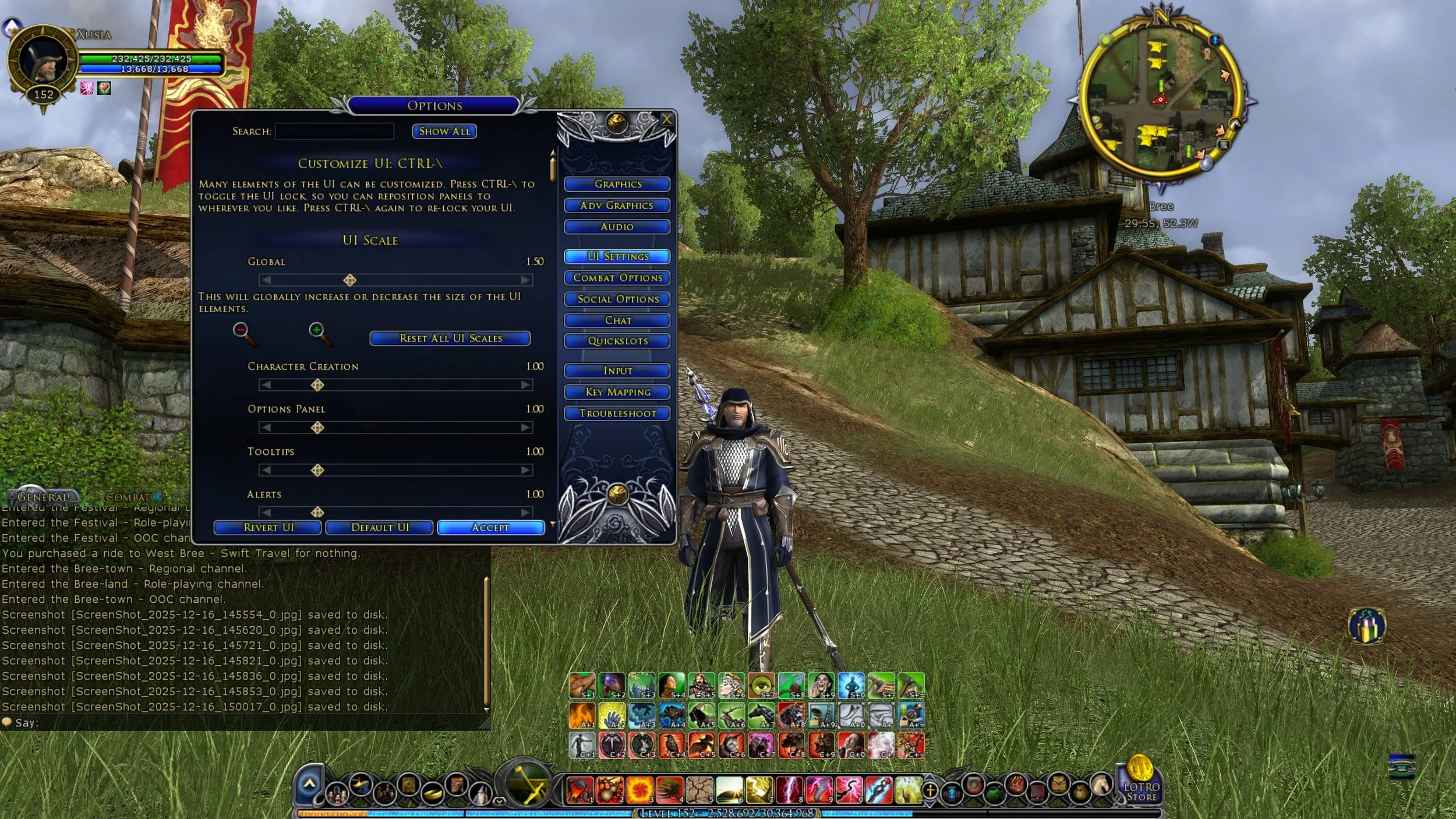
Today Standing Stone Games began beta testing Update 46.1 for the MMORPG The Lord of the Rings Online. The current preview on the Bullroarer test server is mainly for the new instance cluster that comes with the Kingdoms of Harad expansion which launched a few weeks ago. However, it would appear that this latest preview has another feature or note. One that should please LOTRO players. Contrary to what a lot of people thought, myself included, SSG have been working on a scaling UI for 2K and 4K monitors and the results are now available for testing from today Monday 15th through to Friday 19th December. Until now the main workaround to the lack of UI scaling has been to use either Nvidia or AMD graphics software to upscale the game from 1920 x 1080, or a third party app such as LosslessScaling. Having an official solution is a far better option.
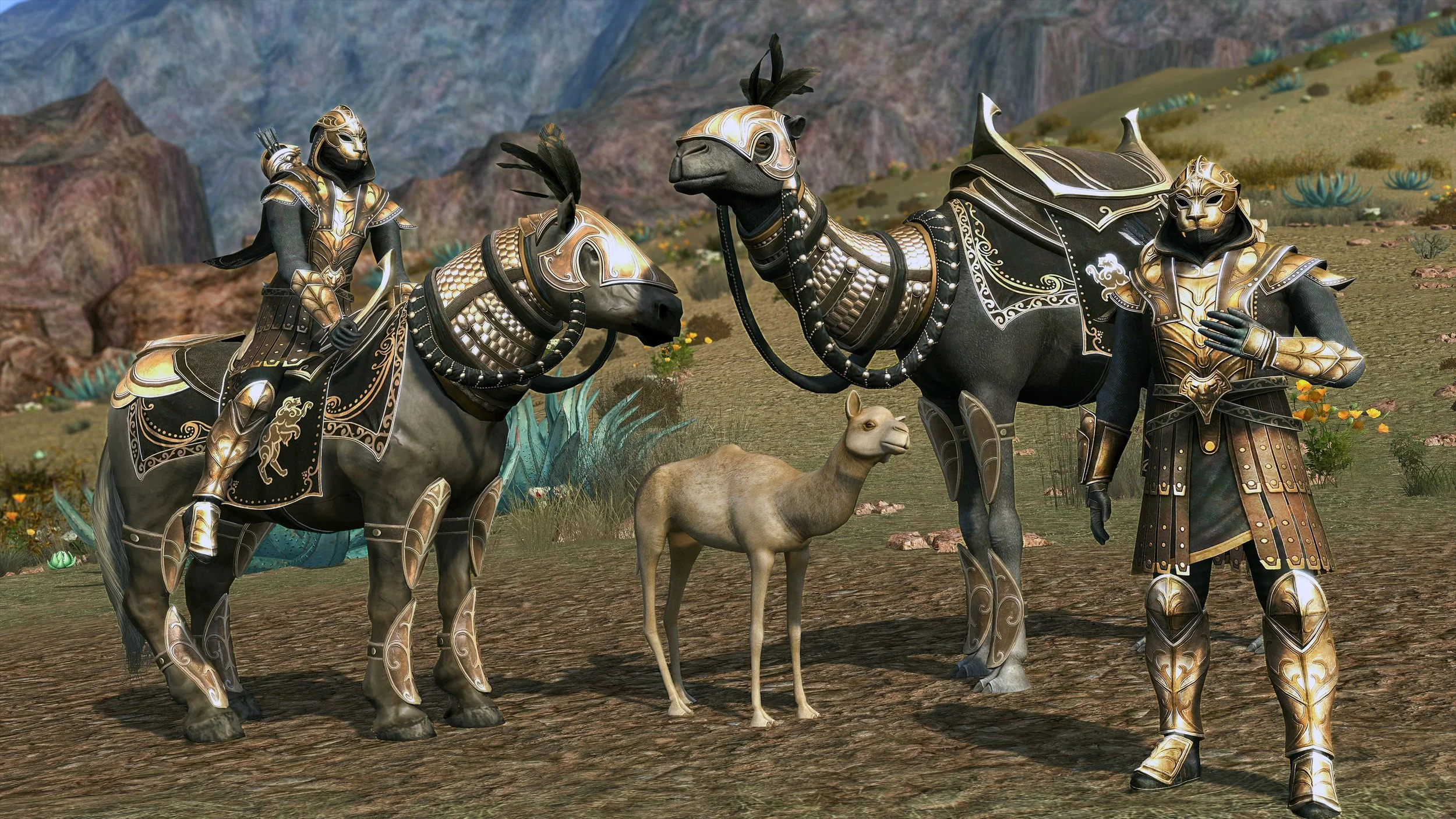
Kingdoms of Harad, the 13th expansion for the MMORPG The Lord of the Rings Online, was released today. Highlighting developer’s Standing Stone Games continuing commitment to this eighteen year old game. As 2025 draws to a close, I thought it would be prudent to reflect upon the current state of LOTRO and to consider what may come next year. Two words that I associated with this MMO are stable and consistent. The playerbase is loyal and dependable. Player numbers never greatly decline nor do they notably expand. LOTRO fills a very specific gaming niche and one of the reasons it retains its players is that there is no suitable alternative game. Although there is not a great deal of data in the public domain, it is generally accepted that LOTRO has an older player demographic and that many are consummate Tolkien fans.
The MMORPG The Lord of the Rings Online runs on a broad spectrum of PCs. From archaic laptops to high end gaming rigs, although it may require a bit of tweaking. At present, the optimal way to play the MMO is at a resolution of 1920x1080 (FHD) with the graphics setting maxed out. The graphics are sharp and the UI is readable. However, a growing number of gamers are now using 2K and 4K monitors. You can play LOTRO at higher resolutions such as 2560×1440 (QHD) and 3840x2160 (UHD) and the game looks great. However, the UI does not scale and so is very small on 2K and 4K monitors. The skill icons on the quickslots (shortcut bars) and the in-game text become difficult to see at these resolutions, which deters some players from using them. It is a known issue that Standing Stone Games are attempting to address but it is unlikely to be resolved any time soon.
I recently read a post on Massively Overpowered about skills rotation in the MMORPG genre. I found the subsequent discussion in the comments fascinating. Mainly because I have never used a fixed rotation of skills in any of the MMORPGs that I play. I understand the reasoning behind such things and why some players want to optimise their combat performance. Using one’s skills in a specific order to maximise damage and manage their subsequent cooldown has a logical appeal. In Star Trek Online, some players go so far as to create keybinds for their rotations and assign it to a specific hotkey, which is then continuously pressed throughout combat. However, rotations are a blunt tool that lack flexibility, often being geared towards dealing with a single target or using an area of effect skill against a larger group. They may not be the optimal approach to combat when things do not go to plan.
Tolkien enthusiasts may recollect Athlon Games, a subsidiary of Leyou Technologies, announcing that it was developing a new MMORPG, based upon The Lord of the Rings, back in September 2018. The following summer, it was revealed that Amazon Game Studios was the partner developer for the project. In late 2020, Leyou Technologies (a Hong Kong-based company), was acquired by the Chinese conglomerate Tencent. This triggered a contract clause with the license holder, Middle-earth Enterprises, allowing them to terminate the existing arrangement if a new deal could not be met. Amazon and Tencent were unable to agree upon how to proceed with the project, leading Amazon to withdraw from negotiations. The project was subsequently scrapped. No details or images of the MMO have been released.
After a six month migration period, Standing Stone Games formally closed all their legacy 32-bit game servers for the MMORPG, The Lord of the Rings Online, on the 31st August 2025. Despite this planned closure being widely discussed via the game’s official forums, professional video game websites and fan blogs, many LOTRO players were unaware of this deadline. Hence many were unable to migrate their respective alts to the new 64-bit servers. Naturally those affected by these closures were upset, especially those with longstanding characters who didn’t relish the prospect of starting from scratch with a new alt. Thankfully, SSG have been true to their word and as of today, have re-opened these “dark worlds” to character transfers. If you have an alt trapped on one of the older game worlds, then now is the time to use the transfer wizard and move them to a new active game world.
MMORPG announced earlier today and it was subsequently confirmed by Standing Stone games, that the new expansion for The Lord of the Rings Online will be Kingdoms of Harad and that it will launch later in the year. The expansion will see the conclusion of the epic Song of Waves and Wind storyline and the level cap raised from 150 to 160. There will be a new region to explore, Mûr Ghala, comprising four zones. Adagîm, Idagâl, An Shêru and Kighân. The latter contains the main trading hub of Zajâna. Players will travel into the region with Gandalf the White, along with allies of the Kindred of Coins and Mizadi as they seek to counter the regional power struggle brought about by the fall of Sauron. Canonically, this takes place three months after the destruction of the ring, hence King Elessar and Eomer are busy with domestic affairs in their respective kingdoms.
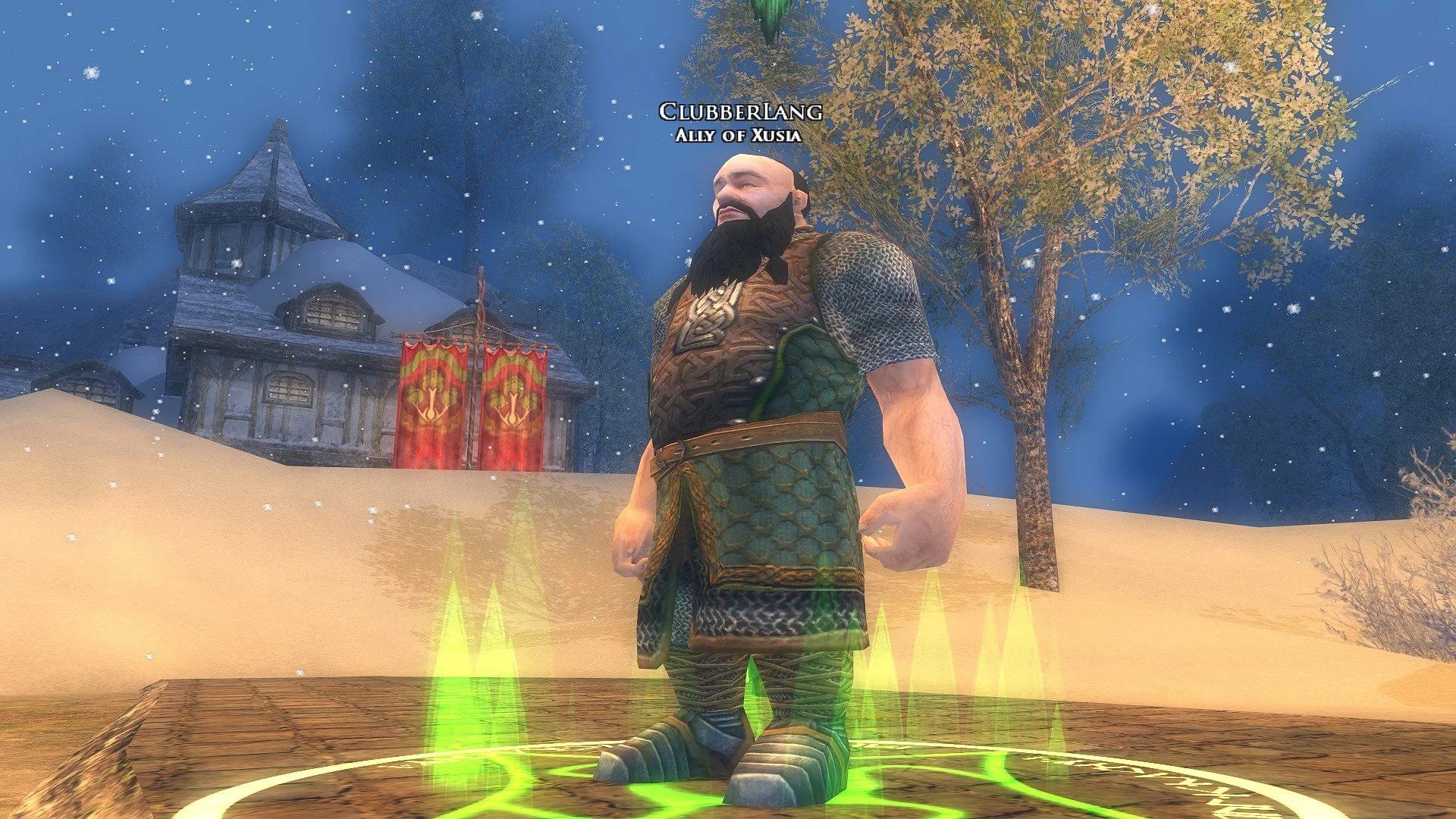
Skirmishes were added to the MMORPG The Lord of the Rings Online, in 2009 with the release of the Siege of Mirkwood expansion. Skirmishes are a repeatable and scalable combat system that allows players to access various instances for solo or group play from anywhere in the in-game world. Players can choose a Skirmish Soldier from a variety of classes to accompany them and provide healing, tank or additional DPS. On paper it’s a great system which is why many other MMOs offer something similar. I recently decided to tinker with my Skirmish Soldier build on my main character to see if I could optimise their performance. As my primary alt is a Lore-master, for the last few years I have had a Warrior as their Skirmish Soldier, to take some of the aggro from attacking mobs. I used the excellent guide by FibroJedi and swapped over a few Training and Personal Traits.
On 2nd August 2025, I was playing the MMORPG The Lord of the Rings Online, on my primary character, a level cap Lore-master. I decided to continue with one of the Allegiance Quest lines, specifically Durin’s Folk. I played through several quests and earned the appropriate tokens that advance the Allegiance system. I then handed these in to the NPC in the Hall Under the Mountain, expecting the next quest in the series “Chapter 3: Gimli’s Request” to be unlocked. An item appeared in my inventory that I then clicked on, which should have bestowed the quest. Unfortunately, nothing happened. Furthermore, the item vanished from my bag and therefore I could not attempt to click it again. I checked the LOTRO Wiki and then looked around the Hall Under the Mountain to see if any NPC had a ring icon above their head. As they did not, I surmised that this was a software glitch and logged a support ticket with Standing Stone Games.
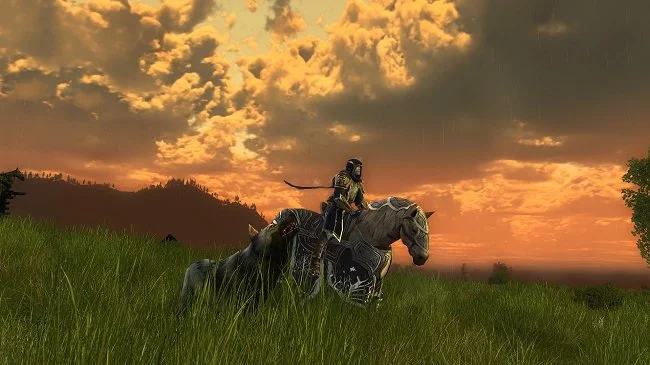
Let’s start with a quote from a classic Walter Hill film, The Warriors. “Can you count, suckers?” says Sirus. The gang leader was referring to the number of Police in New York City at the time. Whereas, for the purpose of this post, I am referencing how many Delving Writs a player needs to acquire 6 pieces of level cap armour in LOTRO. Because, next to the gear you get from endgame instances and raids, Delving gear is a good alternative.. It is marginally better than the items you can get from lootboxes. Hence, Delving armour is a good source of high end gear for the solo player. Through the miracle of mathematics, the number of Delving writs required to acquire a full set of this armour is 9,000. At first glance, that seems like a lot. If you then do some further research to put the number in context, you realise it is indeed a lot and a substantial undertaking.
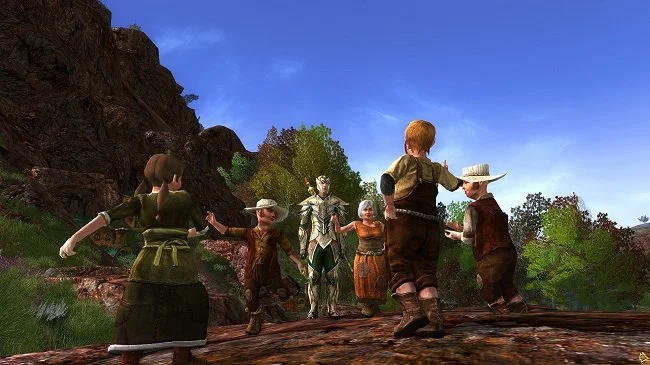
I am currently enjoying a renewed interest in the MMORPG The Lord of the Rings Online since I migrated all my characters from the old 32-bit servers to the new 64-bit replacements. I’ve created a new High Elf Lore-master on Peregrin server and am currently levelling them in a targeted play through of the Epic Story, supplemented by curated side quests. While playing recently, I realised the game UI on this alt wasn’t as I usually have it laid out. So I checked through the various documents on my PC and found a text file I had created many years ago that had a few hints and tips written down. I’ve added a few more and decided to share them as a blog post. I’m sure veteran players will be familiar with many of them but a lot of them are worth repeating. They may prove useful to those new to LOTRO or returning to the game after a long hiatus.
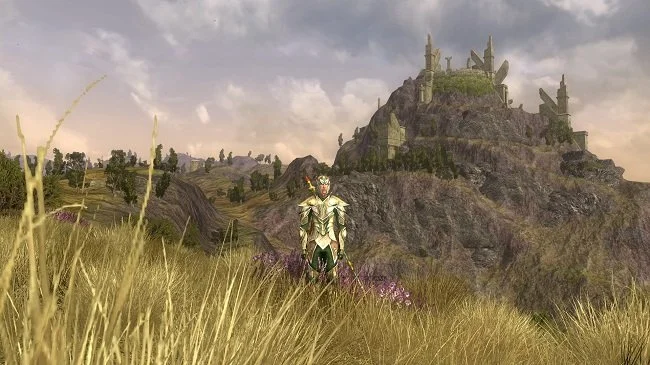
In mid-March, while the server migration debacle raged, I created a new alt for the MMORPG, The Lord of the Rings Online, on Peregrin server. The idea was to play casually through content focusing on enjoyment, rather than worrying about progression. I was to level at a pace that suited me and had no specific plans to develop my alt in any particular way. I have been playing LOTRO since 2008 and have a primary level-cap character that has been my main focus over the years. Hence I have previously experienced all story content from all the expansions and am therefore very familiar with what the game has to offer. Which is why I thought I’d do things differently this time. So I started my new Lore-master in Mossward in Swanfleet, the new starting area added to the game in 2022.
In massively multiplayer online games (MMOs), alts (short for alternate characters), are new characters created by a player in addition to their primary character (often called the “main”). Alts are often encouraged by developers as a means to keep players engaged with their game(s). Sometimes an MMO will actively reward the creation of alts either with access to exclusive content, or with additional skills or items previously unlocked by primary characters. As the myth that an MMO really begins at endgame still persists in gaming culture, some games sell boosts that will instantly raise the level of an alt to that of the current level cap. Creating alts is such a key aspect of the MMO genre, that some games will sell additional character slots, so that players can create further alts beyond the default amount allowed. There are many reasons why players create alts. Let us consider some.
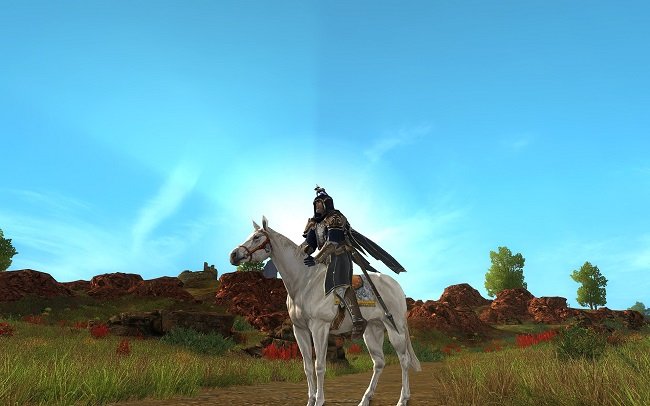
I wrote a while ago that a lot of kinships from the MMORPG, The Lord of the Rings Online, would probably not survive the recent server migration. MMOs are social endeavours by nature, often with strong emotional ties but a lot of kinships (or guilds) have already fallen into decline, simply due to gaming entropy. Hence the migration has seen players leave existing kinships to move to the superior 64-bit servers, resulting in a lot of people who may be potentially looking for a new home. This is exactly what happened to me. I opted to move to Meriadoc server promptly, at the cost of leaving a kinship I have been a member of since 2009. However, the move presented me with an opportunity to remedy this problem myself. I subsequently set up my own kinship and decided to make it available to others.

The dust appears to have settled for the MMORPG The Lord of the Rings Online, after last month’s server transfer debacle. Despite the technical issues arising and subsequent delays to the migration timetable as well as the procurement of in-game housing, LOTRO seems to be enjoying a minor resurgence. Many former players are returning to the game and moving retired alts to new servers, due to the superior performance. The migration issues have also brought a lot of attention to this 18 year old game and it would appear there are many new players trying this Tolkien themed MMO. I was pleasantly surprised to see that a further two 64-bit servers, Grond (EU) and Sting (US), are to be added to the game to meet demand. As I predicted in my previous posts, LOTRO has a habit of bouncing back due to its unique niche in the gaming ecosystem.
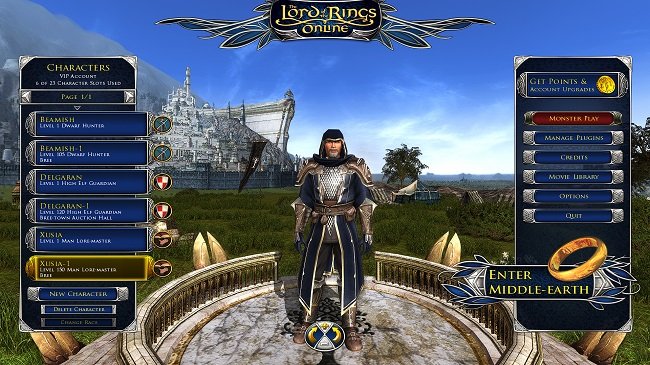
It has not been a good week for the MMORPG, The Lord of the Rings Online and its developer Standing Stone Games. The migration from legacy 32-bit servers to 64-bit servers has not gone smoothly. The transfer queue was overwhelmed by the sheer number of accounts and it has taken far longer than expected to process the backlog of requests. Today has been the fifth day of waiting to see if my 3 main characters from Laurelin server have successfully migrated to their new home on Meriadoc. When I checked this morning, the transfer wizard indicated that my characters were back where they originally came from. I therefore considered repeating the entire process. However, around midday, Community Manager Cordovan indicated that SSG had caught up with transfer requests made around 8:00 AM EST on Sunday 9th March. So I decided to be patient and wait a little longer.
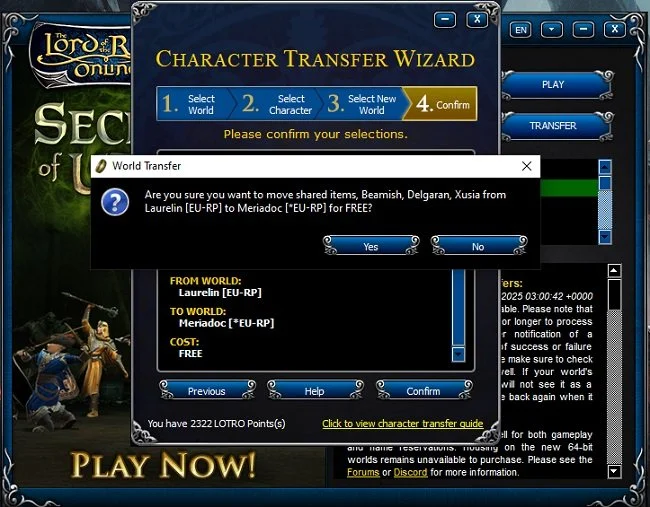
I’ve been busy this weekend, so it wasn’t until late afternoon today that I found time to sit down and attempt to migrate my characters from the old 32-bit server Laurelin, to the new 64-bit server Meriadoc. The “Great Server Migration” has not gone smoothly and the week has been a litany of changing deadlines and unfulfilled expectations. However, developer’s Standing Stone Games, have been “firefighting” issues on a daily basis and communicating regularly with the player base of the MMORPG, The Lord of the Rings Online. Sadly, a lot of players have not responded well to the ongoing technical difficulties and there is subsequently a lot of ill feeling on the official forums. I have chosen to adopt a more pragmatic outlook and to let events run their course.
Standing Stone Games were scheduled to open their new 64-bit servers for the MMORPG, The Lord of the Rings Online, today. However, when the free transfer service went live yesterday, it was quickly overwhelmed by the sheer number of players trying to migrate their alts from the older 32-bit servers to the new ones. Eventually SSG had to disable the transfer facility so that they could process the backlog. Hence today’s launch of the new servers has been postponed till tomorrow. In the meantime, the official LOTRO forum’s have gone into meltdown with irate players berating the developers for handling the migration poorly. True to form, SSG have been somewhat defensive and prickly in response to what they see as unjust criticism. Let it suffice to say that neither party has covered themselves in glory and there is a good chance that the technical problems will persist a while longer.

What Massively Overpowered calls LOTRO’s “Great Server Migration” began today. The MMORPG The Lord of the Rings Online has opened 4 new 64-bit servers in conjunction with the 2 existing 64-bit legendary servers and the long term plan is to migrate all current players over to them. Eventually, the 32-bit legacy servers will be shut down, however that is a long way off at present. As of today, VIP players can select a new server, log into it and create new characters with their desired names. These placeholder characters cannot be played at present but can be used to reserve names. Tomorrow, if all goes well, the new servers formally open and free transfers begin. Players can then delete placeholder characters and rename alts that they have migrated, thus restoring desired names. It should be noted that none of this is mandatory and players can remain on the old servers for the present.
I have many pleasant memories associated with playing the MMORPG The Lord of the Rings Online during its first decade. A lot of them are due to the kinship (guild) that I have been a member of since 2009. I started playing LOTRO in December 2008 and it took me a while to find a suitable kinship but once I did, it made logging into the game a real pleasure. I was at a point in my life where I had sufficient time to play the game regularly and take part in kinship organised raids. It was also an added bonus to be able to spend some time and chat with some like minded people. I’m sure such an experience is not unique to me and that many LOTRO players have enjoyed similar periods of time. The lucky ones may still be enjoying a comparable kinship experience today.
I have two monitors on my desk. The first (which is the primary monitor as far as my PC is concerned), is on the left and the second is on the right. The primary monitor is a 24 Dell U2412M, which has a resolution of 1920 x 1200. It therefore has an aspect ratio of 16:10 which adds a little extra desktop real estate, which I prefer when writing. The second monitor is a 24 inch Dell S2421H with a screen resolution of 1920 x 1080. It has an aspect ratio of 16:9 which is standard FHD. My chair is adjacent to the middle of my desk and I can turn according to each monitor I’m using. I tend to use the primary, larger monitor on the left for tasks such as writing via Google Docs and emails. The second monitor on the right is used for YouTube and gaming. This is because of its FHD format. I also have a Nintendo Switch connected to the second monitor for the same reason.
Re-installing MMOs
Having replaced my hard drive with a solid-state drive, I’ve had to re-install various games, along with all the other apps and programs I use. However, the smaller size of the new SSD has meant I’ve had to think long and hard about which title I choose. At present, I’ve limited myself to the two MMOs that I regularly play; namely The Lord of the Rings Online and Star Trek Online. Both have improved loading times as a result of running via a SSD and are performing a lot better than previously. I also prefer clean installations, rather than long term game setups that have been through numerous patches and updates. It was interesting to note that LOTRO now installs into a Standing Stone Games folder, rather than one marked Turbine. Sadly, STO required using either Steam or Arc as a means of installing the game. I opted for Arc, purely because it has a useful facility for redeeming game codes build into the launcher. Plus, you can bypass Arc and launch the game client directly if you want.
Having replaced my hard drive with a solid-state drive, I’ve had to re-install various games, along with all the other apps and programs I use. However, the smaller size of the new SSD has meant I’ve had to think long and hard about which title I choose. At present, I’ve limited myself to the two MMOs that I regularly play; namely The Lord of the Rings Online and Star Trek Online. Both have improved loading times as a result of running via a SSD and are performing a lot better than previously. I also prefer clean installations, rather than long term game setups that have been through numerous patches and updates. It was interesting to note that LOTRO now installs into a Standing Stone Games folder, rather than one marked Turbine. Sadly, STO required using either Steam or Arc as a means of installing the game. I opted for Arc, purely because it has a useful facility for redeeming game codes build into the launcher. Plus, you can bypass Arc and launch the game client directly if you want.
LOTRO being the older of the two games and still saddled with only a 32-bit client, proved to be the more problematic to download and install. The Akamai service that handles this process is very slow, irrespective of your internet connection. Despite having a 65MB fibre connection it took over four hours to install LOTRO, which is presently a 28GB download. STO being more of a space-centric game is a smaller 14GB install and was done in under ninety minutes. Due to the instanced nature of many of the zones, you can start playing the game while it downloads. With LOTRO you have to simply watch and wait as the blue bar slowly inches across the screen. Let us hope that SSG address this installation issue if we ever see the alleged 64-bit version of the game they’re developing. I also had to update my Nvidia graphic drivers and install Direct X 11 to get both games up and running. Something I shall prepare for in advance if I have to re-install any of these games again any time soon.
Here’s a tip if you find yourself in a similar position with either of these two MMOs. You may wish to back up the various files in “The Lord of the Rings Online” folder, which is usually a sub-folder of “Documents” on a standard Windows installation of LOTRO. These have details of minor UI customisations such as the order of your bags on the quickslot bar and what chat channels you utilise. It also has all your personal settings regarding screen resolution and general game preferences. It’s not essential that you do this, but it can save you some time tweaking your new installation once its complete. Similarly, with STO, you may also wish to copy your screenshots folder (usually located here: {Local path to program}\Star Trek Online_en\Star Trek Online\Live\screenshots\). Not only does it contain your previous screen captures, but more importantly it has details of any custom outfits you may have created for your characters.
I recently completed the main story in Tainted Grail: The Fall of Avalon. In total I spent about sixty hours playing the game. I began at the start of the year, then took a break for a while but returned to it recently because I wanted to see if I could unlock a specific ending. I did manage to do this. Like so many other RPGs, Tainted Grail: the Fall of Avalon has a central storyline, along with a wealth of side quests, based around factions in specific zones. I think I possibly completed about a two thirds of these. However, once I finished the main story, my interest in the game began to wane. I finally left my character in the last major quest hub in case I wish to return at a future date. I then logged out of the game and uninstalled it from my PC to free up space for whatever I was to play next. In this case its The Sinking City 2. None of this is a negative reflection on Tainted Grail: the Fall of Avalon. I enjoyed the time I spent playing this quirky RPG. I simply had my fill and left to play something else.
The next expansion for the MMORG, The Lord of the Rings Online, was announced on the 1st August, via the gaming website MMORPG.The Wolves of Mordor, which will launch later in the year, appears ambitious in scope as it will include two new game systems as well as the obligatory story update. This expansion takes place in Draugardh located in the North East of Mordor, beyond the Plateau of Gorgoroth. It includes the new zones of Heledhris, Parth Rhavas and Nan Ogol. These vary environmentally ranging from the arid, volcanic and semi-tropical. Players will encounter the Daugrim in these regions, Werewolves but not in the modern sense. This is not the lycanthropy of Eastern European legends but in the established Tolkien idiom of fell spirits inhabiting the bodies of Wolves. The region also sees the return of the Woses and players can expect to encounter Elves and scouts from Gondor. As ever with LOTRO expansions, there will be new instances as well as a raid.
I don’t keep up with gaming news as much as I use to but several noteworthy announcement have come to my attention of late. Firstly, there’s an expansion, Songs of the Past, coming for the Witcher III: Wild Hunt in 2027. No doubt this is to pave the way for the Witcher IV. Next, I also found out about Hand of Fate: Horde. I liked this franchise and was saddened to learn that the original studio, Defiant Development, closed. Hence is was a pleasant surprise to see this new game being developed by members of the original studio. The third announcement was regarding Guild Wars 3. A new MMORPG in active development by a major studio is no small feat and is certainly good news for fans of this franchise and the genre per se. However, once you look beyond this news this announcement raises several questions and has certainly given me pause for thought. Let us take a few moments to consider them.
Star Trek Online has many in-game systems that are common to the MMORPG genre. The reputation system is one such example. In STO there are 13 reputation factions. Once a player has reached level 50 they may start progressing through the 6 reputation tiers of each one. Players gain progression through daily projects (20 hours in duration). Hourly projects are also available though they yield less reputation advancement and are limited to three times a day. Hence 20 hour projects are consider by default the most efficient way to gain rep. Projects require 30 Faction Specific Marks (earned via various activities in-game), 15,000 Energy Credits (standard in-game currency) and 2000 Expertise points. The most efficient way to tackle the reputation grind is to build up the necessary resources in advance and then at a designated time each day, start all 13 respective projects. Upon completion projects yield a player bound lockbox containing a random space or ground weapon, a console or Elite Marks which can be used to acquire faction gear.
I was recently perusing my archive of old blog posts, when it struck me how much I’ve written about the MMORPG genre over the years. Naturally, there was far more material from between 2008 and 2012 as that was period when I immersed myself in the genre and was very enthusiastic about it. I was at a point in my life when I had the time to dedicate to such games and I was happy to participate in the social aspect of they offered. I would regularly play through group content and spend time socialising online with fellow guild members. My experience remains a textbook example of how online games can be more than the sum of their parts and that where you are at in your life has a major impact upon your overall enjoyment. As I read though various old posts it became clear that my experiences where specific to this particular part of my life and that they cannot be repeated. My relationship with the genre is very different now and that’s fine.
Creating alts is an integral aspect of the MMORPG genre. Many players will create a character of a specific class or faction, play it for a while, lose interest in it or they may decide that it is just not for them. Fortunately it is no effort at all to simply re-roll a new alt and set off once again. Furthermore, lots of players never reach level cap of the MMORPG that there playing. When the going get’s tough, so to speak, you can either soldier on for another 50 levels or simply create a new alt and return to the comfort of tried and tested content. Alts also give you the chance to secure an accolade or achievement that you previously missed. They are also of great benefit to the genres social aspects. Creating a new alt so you can play along with a friend who is just starting is great fun. Developer’s love them too as it means you’re still playing the game.
I recently took a break from Crimson Desert choosing instead to to play something familiar and easy going. As I’ve been logging into Star Trek Online daily to participate in the anniversary event, I decided to look through my various alts and see how far they had progressed through the game and what resources they had. At present I have twelve alts. My primary Captain was created in 2015 during the original Delta Recruit Event. I had previously played STO intermittently since its release in January 2010 but I never kept any of those characters. Hence this decade old Tactical Federation Captain has been my main focus when playing. The other eleven alts are the result of other recruitment events or whenever I wanted to try something different, such as playing a specific class or faction. I obviously played a lot of STO during the lockdown as several alts date from that period. Several had maximum reputation across all factions.
13 days after its release, market analysts estimate that Crimson Desert has already earned $200 million across the four main platforms (PC, PlayStation 5, and Xbox Series X and S). The game is certainly proving popular among gamers with the internet awash with live streams and “let’s play” videos. However, reviews are mixed both among gaming journalists and YouTube influencers. Common complaints about the game include that it is slow to start, the controls are poorly laid out on all platforms and that developer’s Pearl Abyss have done a poor job of explaining most aspects of the game to new players. Although such criticisms are true to a degree, I think these complaints highlight how many gamers are conditioned to expect new titles to follow a specific pattern with regard to pacing, narrative exposition and learning in-game systems. A pattern that Pearl Abyss has chosen to ignore, instead favouring an old school approach.
Last night, I spent the first 45 minutes after the launch of Crimson Desert, watching the 92GB pre-downloaded game files slowly decompressing and installing. I finally launched the game at about 10:50 PM GMT. I then waited a further 5 minutes while shaders were downloaded. It took me about 15 minutes or so to read through the various game settings and choose those that are optimal for my PC. I suspect even if you have a beast of a computer, you’re still going to have to spend some time tweaking settings. As for those players like myself with a gaming rig that is somewhere in the middle of the game’s specifications, be prepared to do a lot of fine tuning both within Crimson Desert itself and your Windows settings.
Video games as a genre are extremely poor at explaining themselves. When you buy a new game you’ll often find little or no information regarding the basic systems and mechanics. The industry assumes that their customers are by default familiar with the fundamentals of playing a modern video game. Hence if a game has a tutorial, it is often based around videos rather than detailed verbal instructions. You are are briefly shown a clip of a specific move being successfully undertaken but it is seldom shown in a wider context. The industry also expects the fan community to take on the role of curating and disseminating information about its games. The move away from forums and bespoke websites to Discord highlights this. Discord is a primarily a real time communication tool and not good at maintaining a historical data archive. If you want an answer to a specific gaming question, you’ll more than likely find it on YouTube in a video made by a fellow gamer.
According to the recent “letter to the players”, Standing Stone Games will be adding a new zone to the MMORPG The Lord of the Rings Online in the second quarter of this year. Possibly around May or June. Having spent the last three expansions in the South of Middle-earth exploring the tropical Umbar and the deserts of Harad, I would certainly welcome a change of location. I have gradually warmed to these zones over the last eighteen months but I do find them so incongruous. They are so radically different to the European style content that has been the mainstay of the game for so long. Tolkien’s source text has plenty of detail regarding Eriador and Rhovanion. Information regarding Harad is scarce, hence it has afforded the developers a great deal of artistic freedom. Although exceedingly well realised these tropical zones have taken a while for me to get used to.
I’m not sure exactly when it started but I’ve recently noticed a graphical bug within the MMORPG The Lord of the Rings Online. This problem often occurs within caves or in areas where there are a lot of rocky surfaces. Hence it has become very apparent in the latest two expansions, set in Umbar and Harad. This graphical glitch causes some surface textures to appear to flash from light to dark intermittently. The resulting strobe effect is hard to ignore and very distracting. Fortunately, a quick online search showed that this is not a problem unique to my installation of LOTRO and is a known problem. Furthermore, there is a very simple workaround, which is to go into the Advanced Graphics setting and uncheck “Per Pixel Lighting”, which immediately remedies the problem. I have no idea why this has recently started to happen but at least it can be resolved.
This year is the 60th anniversary of Star Trek. The original TV show was first broadcast in the US on September 8th 1966. If you search online you’ll find details of lots of related events. There are documentaries, conventions, new TV shows and even some video games in development. However, what you won’t find are any details regarding what will be happening with the MMORPG Star Trek Online. So far no road map for 2026 has been posted online by the developers but it is still quite early in the New Year. That being the case, I am not especially optimistic about there being any major plans waiting to be revealed. It is not as if DECA Games have demonstrated or stated any major ambitions for STO beyond keeping the endless events treadmill going and regularly adding content to the in-game store, during their development tenure. The ongoing story arc drags on inexorably and is as dull as ditchwater.
The latest expansion for the MMORPG The Lord of the Rings Online, Kingdoms of Harad, launched on December 3rd. With this release the level cap was raised from 150 to 160. It should also be noted that the cap for virtue traits was also raised from 96 to 100. Naturally these changes meant that there is a requirement to replace all armour and jewellery once the new cap is reached. Similarly Legendary Items have to be reforged and any traceries upgraded or replaced. If you follow the Epic Story it will lead you from quest hub to quest hub. The main quest rewards, along with those from side quests will provide adequate gear as you slowly progress towards the new level cap. The new raids, instances and missions/delvings then provide a means to acquire higher quality level 160 gear. LOTRO and indeed, many other MMOs are consistent in this methodology.
It is customary in a post such as this to list the various games that I’ve played over the last twelve months and share my thoughts on them. Wider analysis of the video game industry is also de rigeur. Unfortunately, I don’t really feel disposed to do either of those two things. My thoughts on the games I’ve played have already been published and can easily be accessed via the links at the bottom of this post. As for the video game industry, it suffers the same flaws as music, TV and cinema. There is creativity and innovation out there but it is often drowned out by mainstream products which are demonstrably inferior due to their inherent mediocrity. As for the business side of things, we once again clearly see the failings of the corporate management class. Sadly, they do not face the consequences of the mistakes that they make.
Today Standing Stone Games began beta testing Update 46.1 for the MMORPG The Lord of the Rings Online. The current preview on the Bullroarer test server is mainly for the new instance cluster that comes with the Kingdoms of Harad expansion which launched a few weeks ago. However, it would appear that this latest preview has another feature or note. One that should please LOTRO players. Contrary to what a lot of people thought, myself included, SSG have been working on a scaling UI for 2K and 4K monitors and the results are now available for testing from today Monday 15th through to Friday 19th December. Until now the main workaround to the lack of UI scaling has been to use either Nvidia or AMD graphics software to upscale the game from 1920 x 1080, or a third party app such as LosslessScaling. Having an official solution is a far better option.
Kingdoms of Harad, the 13th expansion for the MMORPG The Lord of the Rings Online, was released today. Highlighting developer’s Standing Stone Games continuing commitment to this eighteen year old game. As 2025 draws to a close, I thought it would be prudent to reflect upon the current state of LOTRO and to consider what may come next year. Two words that I associated with this MMO are stable and consistent. The playerbase is loyal and dependable. Player numbers never greatly decline nor do they notably expand. LOTRO fills a very specific gaming niche and one of the reasons it retains its players is that there is no suitable alternative game. Although there is not a great deal of data in the public domain, it is generally accepted that LOTRO has an older player demographic and that many are consummate Tolkien fans.
The MMORPG The Lord of the Rings Online runs on a broad spectrum of PCs. From archaic laptops to high end gaming rigs, although it may require a bit of tweaking. At present, the optimal way to play the MMO is at a resolution of 1920x1080 (FHD) with the graphics setting maxed out. The graphics are sharp and the UI is readable. However, a growing number of gamers are now using 2K and 4K monitors. You can play LOTRO at higher resolutions such as 2560×1440 (QHD) and 3840x2160 (UHD) and the game looks great. However, the UI does not scale and so is very small on 2K and 4K monitors. The skill icons on the quickslots (shortcut bars) and the in-game text become difficult to see at these resolutions, which deters some players from using them. It is a known issue that Standing Stone Games are attempting to address but it is unlikely to be resolved any time soon.
I recently read a post on Massively Overpowered about skills rotation in the MMORPG genre. I found the subsequent discussion in the comments fascinating. Mainly because I have never used a fixed rotation of skills in any of the MMORPGs that I play. I understand the reasoning behind such things and why some players want to optimise their combat performance. Using one’s skills in a specific order to maximise damage and manage their subsequent cooldown has a logical appeal. In Star Trek Online, some players go so far as to create keybinds for their rotations and assign it to a specific hotkey, which is then continuously pressed throughout combat. However, rotations are a blunt tool that lack flexibility, often being geared towards dealing with a single target or using an area of effect skill against a larger group. They may not be the optimal approach to combat when things do not go to plan.
Tolkien enthusiasts may recollect Athlon Games, a subsidiary of Leyou Technologies, announcing that it was developing a new MMORPG, based upon The Lord of the Rings, back in September 2018. The following summer, it was revealed that Amazon Game Studios was the partner developer for the project. In late 2020, Leyou Technologies (a Hong Kong-based company), was acquired by the Chinese conglomerate Tencent. This triggered a contract clause with the license holder, Middle-earth Enterprises, allowing them to terminate the existing arrangement if a new deal could not be met. Amazon and Tencent were unable to agree upon how to proceed with the project, leading Amazon to withdraw from negotiations. The project was subsequently scrapped. No details or images of the MMO have been released.
After a six month migration period, Standing Stone Games formally closed all their legacy 32-bit game servers for the MMORPG, The Lord of the Rings Online, on the 31st August 2025. Despite this planned closure being widely discussed via the game’s official forums, professional video game websites and fan blogs, many LOTRO players were unaware of this deadline. Hence many were unable to migrate their respective alts to the new 64-bit servers. Naturally those affected by these closures were upset, especially those with longstanding characters who didn’t relish the prospect of starting from scratch with a new alt. Thankfully, SSG have been true to their word and as of today, have re-opened these “dark worlds” to character transfers. If you have an alt trapped on one of the older game worlds, then now is the time to use the transfer wizard and move them to a new active game world.
MMORPG announced earlier today and it was subsequently confirmed by Standing Stone games, that the new expansion for The Lord of the Rings Online will be Kingdoms of Harad and that it will launch later in the year. The expansion will see the conclusion of the epic Song of Waves and Wind storyline and the level cap raised from 150 to 160. There will be a new region to explore, Mûr Ghala, comprising four zones. Adagîm, Idagâl, An Shêru and Kighân. The latter contains the main trading hub of Zajâna. Players will travel into the region with Gandalf the White, along with allies of the Kindred of Coins and Mizadi as they seek to counter the regional power struggle brought about by the fall of Sauron. Canonically, this takes place three months after the destruction of the ring, hence King Elessar and Eomer are busy with domestic affairs in their respective kingdoms.
Skirmishes were added to the MMORPG The Lord of the Rings Online, in 2009 with the release of the Siege of Mirkwood expansion. Skirmishes are a repeatable and scalable combat system that allows players to access various instances for solo or group play from anywhere in the in-game world. Players can choose a Skirmish Soldier from a variety of classes to accompany them and provide healing, tank or additional DPS. On paper it’s a great system which is why many other MMOs offer something similar. I recently decided to tinker with my Skirmish Soldier build on my main character to see if I could optimise their performance. As my primary alt is a Lore-master, for the last few years I have had a Warrior as their Skirmish Soldier, to take some of the aggro from attacking mobs. I used the excellent guide by FibroJedi and swapped over a few Training and Personal Traits.
On 2nd August 2025, I was playing the MMORPG The Lord of the Rings Online, on my primary character, a level cap Lore-master. I decided to continue with one of the Allegiance Quest lines, specifically Durin’s Folk. I played through several quests and earned the appropriate tokens that advance the Allegiance system. I then handed these in to the NPC in the Hall Under the Mountain, expecting the next quest in the series “Chapter 3: Gimli’s Request” to be unlocked. An item appeared in my inventory that I then clicked on, which should have bestowed the quest. Unfortunately, nothing happened. Furthermore, the item vanished from my bag and therefore I could not attempt to click it again. I checked the LOTRO Wiki and then looked around the Hall Under the Mountain to see if any NPC had a ring icon above their head. As they did not, I surmised that this was a software glitch and logged a support ticket with Standing Stone Games.
If you check the Star Trek Online Wiki, you’ll find that there has been a steady stream of new content added to the MMORPG over the last 15 years. However, it doesn’t quite feel that way, mainly because more recent material seems weaker and less memorable. The last two major story arcs in STO have been somewhat lacklustre and demonstrably inferior to those that went before. Both Terran Gambit and Kings & Queens suffer from uninspired, repetitive ideas as well as an infrequent release schedule. Effectively weak stories have been dragged out over too much time. No doubt changes among the STO writing team have had an impact on content but it also seems that some of the newer stories have been tailored around whatever former Star Trek cast members that are available. As a result there has been a somewhat “square pegs in a round holes” aspect to both story arcs, where the pieces just don’t seem to fit together well.
Let’s start with a quote from a classic Walter Hill film, The Warriors. “Can you count, suckers?” says Sirus. The gang leader was referring to the number of Police in New York City at the time. Whereas, for the purpose of this post, I am referencing how many Delving Writs a player needs to acquire 6 pieces of level cap armour in LOTRO. Because, next to the gear you get from endgame instances and raids, Delving gear is a good alternative.. It is marginally better than the items you can get from lootboxes. Hence, Delving armour is a good source of high end gear for the solo player. Through the miracle of mathematics, the number of Delving writs required to acquire a full set of this armour is 9,000. At first glance, that seems like a lot. If you then do some further research to put the number in context, you realise it is indeed a lot and a substantial undertaking.
I am currently enjoying a renewed interest in the MMORPG The Lord of the Rings Online since I migrated all my characters from the old 32-bit servers to the new 64-bit replacements. I’ve created a new High Elf Lore-master on Peregrin server and am currently levelling them in a targeted play through of the Epic Story, supplemented by curated side quests. While playing recently, I realised the game UI on this alt wasn’t as I usually have it laid out. So I checked through the various documents on my PC and found a text file I had created many years ago that had a few hints and tips written down. I’ve added a few more and decided to share them as a blog post. I’m sure veteran players will be familiar with many of them but a lot of them are worth repeating. They may prove useful to those new to LOTRO or returning to the game after a long hiatus.
In mid-March, while the server migration debacle raged, I created a new alt for the MMORPG, The Lord of the Rings Online, on Peregrin server. The idea was to play casually through content focusing on enjoyment, rather than worrying about progression. I was to level at a pace that suited me and had no specific plans to develop my alt in any particular way. I have been playing LOTRO since 2008 and have a primary level-cap character that has been my main focus over the years. Hence I have previously experienced all story content from all the expansions and am therefore very familiar with what the game has to offer. Which is why I thought I’d do things differently this time. So I started my new Lore-master in Mossward in Swanfleet, the new starting area added to the game in 2022.
What’s in a Name?
“What's in a name? That which we call a rose by any other name would smell as sweet”. William Shakespeare, Romeo and Juliet.
There are two types of MMO players (actually there aren’t but I’m invoking a figure of speech as an opening gambit for the overall thrust of this post, so there). Those who meander through the character creation screens only to be taken by surprise by the fact that at the end, they now have to provide their avatar with a name of some kind. And then there are those who have a complete dossier compiled in advance, shedding light on the entire back story and life history of their new alt. Naturally, the latter group will already have a name prepared with much love and care. It will be relevant, appropriate and most importantly of all, it will afford them a much greater degree of connection with their in-game character. Because names are an integral part of identity and that is a much bigger aspect of MMO player psychology than some imagine. Would you simply want an index number instead of a character name?
Tee-hee, chortle and guffaw
“What's in a name? That which we call a rose by any other name would smell as sweet”. William Shakespeare, Romeo and Juliet.
There are two types of MMO players (actually there aren’t but I’m invoking a figure of speech as an opening gambit for the overall thrust of this post, so there). Those who meander through the character creation screens only to be taken by surprise by the fact that at the end, they now have to provide their avatar with a name of some kind. And then there are those who have a complete dossier compiled in advance, shedding light on the entire back story and life history of their new alt. Naturally, the latter group will already have a name prepared with much love and care. It will be relevant, appropriate and most importantly of all, it will afford them a much greater degree of connection with their in-game character. Because names are an integral part of identity and that is a much bigger aspect of MMO player psychology than some imagine. Would you simply want an index number instead of a character name?
I take a fairly hard line when it comes to character naming in the MMO genre. If a game has specific guidelines to begin with then they should be respected. I’m all for player freedom but an MMO is by its very nature shared space and so that means (or at least should in principle) that other players are due a degree of consideration. So, let us take it as read that inflammatory names, racial abuse, religious trolling and like have no place and should not be tolerated. In a game such a LOTRO, there is a great deal of lore that impacts upon names. The game goes so far as to make suggestions depending on race and region etc, which can be helpful. However, if you simply wish to give your character a generic fantasy sounding name, I don’t have a problem with that. What I do find tedious are the endless permutations of known character names, such as Legolas (in LOTRO) and James T Kirk (in STO). But for me, the greatest sin in naming after this, is giving your character your own name. Is there anything that screams “I have had the capacity to think creatively surgically removed” more than a Hunter running about the major quest hubs named “Colin Peters” or “Jacinda Barrington-Humphries”?
They drink it in the Congo…
Now joking aside, not everyone is equally creative, which is why there are plenty of online name generators that can assist you when it comes to the right name. Another strategy if you run multiple alts is to follow a naming convention and use various permutations thereof. This is a useful workaround and certainly is helpful to friends and colleagues who loose track of who is and who isn’t online within the guild. I have used name generators for inspiration in the past. However, I also think it’s important to find a name that suits your character (especially if you’re of a role-playing bent) and that is also user friendly and pronounceable. It’s all very well coming up with a cunning, lore appropriate name for your High Elf window dresser, but if everyone subsequently mangles said name every time you’re on Discord (because you always end up being known to your guild mates by your primary characters name and not your own), it gets very old fast.
Isn’t there a hat company there, on Bagel Street?
One of the things I use to get frustrated with about LOTRO was that it would suggest names, irrespective of whether they had been taken or not. Thus, you’d find a cool name for your shiny new Dwarf Quantity Surveyor only to discover there were already a dozen or so variants already on the server. More recent MMOs have addressed this issue by having an account name that suffixes your chosen name, thus accommodating duplicates. The issues still persists in LOTRO, but I have solved it for myself by not creating any alts. Overall, I think that as character customisation becomes more complex in gaming, then there needs to be scope and support for equally complex naming conventions. I know that jarring, trivial and puerile names can spoil the immersion of some players in MMOs. So why can’t phasing technology be used to remove those that bother us, or at least allow you to rename the offenders from your own perspective? Because it’s clear that despite the various changes and trends that have come and gone in the MMO genre over the last decade, names remain a very important facet of player engagement.
I recently completed the main story in Tainted Grail: The Fall of Avalon. In total I spent about sixty hours playing the game. I began at the start of the year, then took a break for a while but returned to it recently because I wanted to see if I could unlock a specific ending. I did manage to do this. Like so many other RPGs, Tainted Grail: the Fall of Avalon has a central storyline, along with a wealth of side quests, based around factions in specific zones. I think I possibly completed about a two thirds of these. However, once I finished the main story, my interest in the game began to wane. I finally left my character in the last major quest hub in case I wish to return at a future date. I then logged out of the game and uninstalled it from my PC to free up space for whatever I was to play next. In this case its The Sinking City 2. None of this is a negative reflection on Tainted Grail: the Fall of Avalon. I enjoyed the time I spent playing this quirky RPG. I simply had my fill and left to play something else.
The next expansion for the MMORG, The Lord of the Rings Online, was announced on the 1st August, via the gaming website MMORPG.The Wolves of Mordor, which will launch later in the year, appears ambitious in scope as it will include two new game systems as well as the obligatory story update. This expansion takes place in Draugardh located in the North East of Mordor, beyond the Plateau of Gorgoroth. It includes the new zones of Heledhris, Parth Rhavas and Nan Ogol. These vary environmentally ranging from the arid, volcanic and semi-tropical. Players will encounter the Daugrim in these regions, Werewolves but not in the modern sense. This is not the lycanthropy of Eastern European legends but in the established Tolkien idiom of fell spirits inhabiting the bodies of Wolves. The region also sees the return of the Woses and players can expect to encounter Elves and scouts from Gondor. As ever with LOTRO expansions, there will be new instances as well as a raid.
I don’t keep up with gaming news as much as I use to but several noteworthy announcement have come to my attention of late. Firstly, there’s an expansion, Songs of the Past, coming for the Witcher III: Wild Hunt in 2027. No doubt this is to pave the way for the Witcher IV. Next, I also found out about Hand of Fate: Horde. I liked this franchise and was saddened to learn that the original studio, Defiant Development, closed. Hence is was a pleasant surprise to see this new game being developed by members of the original studio. The third announcement was regarding Guild Wars 3. A new MMORPG in active development by a major studio is no small feat and is certainly good news for fans of this franchise and the genre per se. However, once you look beyond this news this announcement raises several questions and has certainly given me pause for thought. Let us take a few moments to consider them.
Star Trek Online has many in-game systems that are common to the MMORPG genre. The reputation system is one such example. In STO there are 13 reputation factions. Once a player has reached level 50 they may start progressing through the 6 reputation tiers of each one. Players gain progression through daily projects (20 hours in duration). Hourly projects are also available though they yield less reputation advancement and are limited to three times a day. Hence 20 hour projects are consider by default the most efficient way to gain rep. Projects require 30 Faction Specific Marks (earned via various activities in-game), 15,000 Energy Credits (standard in-game currency) and 2000 Expertise points. The most efficient way to tackle the reputation grind is to build up the necessary resources in advance and then at a designated time each day, start all 13 respective projects. Upon completion projects yield a player bound lockbox containing a random space or ground weapon, a console or Elite Marks which can be used to acquire faction gear.
I was recently perusing my archive of old blog posts, when it struck me how much I’ve written about the MMORPG genre over the years. Naturally, there was far more material from between 2008 and 2012 as that was period when I immersed myself in the genre and was very enthusiastic about it. I was at a point in my life when I had the time to dedicate to such games and I was happy to participate in the social aspect of they offered. I would regularly play through group content and spend time socialising online with fellow guild members. My experience remains a textbook example of how online games can be more than the sum of their parts and that where you are at in your life has a major impact upon your overall enjoyment. As I read though various old posts it became clear that my experiences where specific to this particular part of my life and that they cannot be repeated. My relationship with the genre is very different now and that’s fine.
Creating alts is an integral aspect of the MMORPG genre. Many players will create a character of a specific class or faction, play it for a while, lose interest in it or they may decide that it is just not for them. Fortunately it is no effort at all to simply re-roll a new alt and set off once again. Furthermore, lots of players never reach level cap of the MMORPG that there playing. When the going get’s tough, so to speak, you can either soldier on for another 50 levels or simply create a new alt and return to the comfort of tried and tested content. Alts also give you the chance to secure an accolade or achievement that you previously missed. They are also of great benefit to the genres social aspects. Creating a new alt so you can play along with a friend who is just starting is great fun. Developer’s love them too as it means you’re still playing the game.
I recently took a break from Crimson Desert choosing instead to to play something familiar and easy going. As I’ve been logging into Star Trek Online daily to participate in the anniversary event, I decided to look through my various alts and see how far they had progressed through the game and what resources they had. At present I have twelve alts. My primary Captain was created in 2015 during the original Delta Recruit Event. I had previously played STO intermittently since its release in January 2010 but I never kept any of those characters. Hence this decade old Tactical Federation Captain has been my main focus when playing. The other eleven alts are the result of other recruitment events or whenever I wanted to try something different, such as playing a specific class or faction. I obviously played a lot of STO during the lockdown as several alts date from that period. Several had maximum reputation across all factions.
13 days after its release, market analysts estimate that Crimson Desert has already earned $200 million across the four main platforms (PC, PlayStation 5, and Xbox Series X and S). The game is certainly proving popular among gamers with the internet awash with live streams and “let’s play” videos. However, reviews are mixed both among gaming journalists and YouTube influencers. Common complaints about the game include that it is slow to start, the controls are poorly laid out on all platforms and that developer’s Pearl Abyss have done a poor job of explaining most aspects of the game to new players. Although such criticisms are true to a degree, I think these complaints highlight how many gamers are conditioned to expect new titles to follow a specific pattern with regard to pacing, narrative exposition and learning in-game systems. A pattern that Pearl Abyss has chosen to ignore, instead favouring an old school approach.
Last night, I spent the first 45 minutes after the launch of Crimson Desert, watching the 92GB pre-downloaded game files slowly decompressing and installing. I finally launched the game at about 10:50 PM GMT. I then waited a further 5 minutes while shaders were downloaded. It took me about 15 minutes or so to read through the various game settings and choose those that are optimal for my PC. I suspect even if you have a beast of a computer, you’re still going to have to spend some time tweaking settings. As for those players like myself with a gaming rig that is somewhere in the middle of the game’s specifications, be prepared to do a lot of fine tuning both within Crimson Desert itself and your Windows settings.
Video games as a genre are extremely poor at explaining themselves. When you buy a new game you’ll often find little or no information regarding the basic systems and mechanics. The industry assumes that their customers are by default familiar with the fundamentals of playing a modern video game. Hence if a game has a tutorial, it is often based around videos rather than detailed verbal instructions. You are are briefly shown a clip of a specific move being successfully undertaken but it is seldom shown in a wider context. The industry also expects the fan community to take on the role of curating and disseminating information about its games. The move away from forums and bespoke websites to Discord highlights this. Discord is a primarily a real time communication tool and not good at maintaining a historical data archive. If you want an answer to a specific gaming question, you’ll more than likely find it on YouTube in a video made by a fellow gamer.
According to the recent “letter to the players”, Standing Stone Games will be adding a new zone to the MMORPG The Lord of the Rings Online in the second quarter of this year. Possibly around May or June. Having spent the last three expansions in the South of Middle-earth exploring the tropical Umbar and the deserts of Harad, I would certainly welcome a change of location. I have gradually warmed to these zones over the last eighteen months but I do find them so incongruous. They are so radically different to the European style content that has been the mainstay of the game for so long. Tolkien’s source text has plenty of detail regarding Eriador and Rhovanion. Information regarding Harad is scarce, hence it has afforded the developers a great deal of artistic freedom. Although exceedingly well realised these tropical zones have taken a while for me to get used to.
I’m not sure exactly when it started but I’ve recently noticed a graphical bug within the MMORPG The Lord of the Rings Online. This problem often occurs within caves or in areas where there are a lot of rocky surfaces. Hence it has become very apparent in the latest two expansions, set in Umbar and Harad. This graphical glitch causes some surface textures to appear to flash from light to dark intermittently. The resulting strobe effect is hard to ignore and very distracting. Fortunately, a quick online search showed that this is not a problem unique to my installation of LOTRO and is a known problem. Furthermore, there is a very simple workaround, which is to go into the Advanced Graphics setting and uncheck “Per Pixel Lighting”, which immediately remedies the problem. I have no idea why this has recently started to happen but at least it can be resolved.
This year is the 60th anniversary of Star Trek. The original TV show was first broadcast in the US on September 8th 1966. If you search online you’ll find details of lots of related events. There are documentaries, conventions, new TV shows and even some video games in development. However, what you won’t find are any details regarding what will be happening with the MMORPG Star Trek Online. So far no road map for 2026 has been posted online by the developers but it is still quite early in the New Year. That being the case, I am not especially optimistic about there being any major plans waiting to be revealed. It is not as if DECA Games have demonstrated or stated any major ambitions for STO beyond keeping the endless events treadmill going and regularly adding content to the in-game store, during their development tenure. The ongoing story arc drags on inexorably and is as dull as ditchwater.
The latest expansion for the MMORPG The Lord of the Rings Online, Kingdoms of Harad, launched on December 3rd. With this release the level cap was raised from 150 to 160. It should also be noted that the cap for virtue traits was also raised from 96 to 100. Naturally these changes meant that there is a requirement to replace all armour and jewellery once the new cap is reached. Similarly Legendary Items have to be reforged and any traceries upgraded or replaced. If you follow the Epic Story it will lead you from quest hub to quest hub. The main quest rewards, along with those from side quests will provide adequate gear as you slowly progress towards the new level cap. The new raids, instances and missions/delvings then provide a means to acquire higher quality level 160 gear. LOTRO and indeed, many other MMOs are consistent in this methodology.
It is customary in a post such as this to list the various games that I’ve played over the last twelve months and share my thoughts on them. Wider analysis of the video game industry is also de rigeur. Unfortunately, I don’t really feel disposed to do either of those two things. My thoughts on the games I’ve played have already been published and can easily be accessed via the links at the bottom of this post. As for the video game industry, it suffers the same flaws as music, TV and cinema. There is creativity and innovation out there but it is often drowned out by mainstream products which are demonstrably inferior due to their inherent mediocrity. As for the business side of things, we once again clearly see the failings of the corporate management class. Sadly, they do not face the consequences of the mistakes that they make.
Today Standing Stone Games began beta testing Update 46.1 for the MMORPG The Lord of the Rings Online. The current preview on the Bullroarer test server is mainly for the new instance cluster that comes with the Kingdoms of Harad expansion which launched a few weeks ago. However, it would appear that this latest preview has another feature or note. One that should please LOTRO players. Contrary to what a lot of people thought, myself included, SSG have been working on a scaling UI for 2K and 4K monitors and the results are now available for testing from today Monday 15th through to Friday 19th December. Until now the main workaround to the lack of UI scaling has been to use either Nvidia or AMD graphics software to upscale the game from 1920 x 1080, or a third party app such as LosslessScaling. Having an official solution is a far better option.
Kingdoms of Harad, the 13th expansion for the MMORPG The Lord of the Rings Online, was released today. Highlighting developer’s Standing Stone Games continuing commitment to this eighteen year old game. As 2025 draws to a close, I thought it would be prudent to reflect upon the current state of LOTRO and to consider what may come next year. Two words that I associated with this MMO are stable and consistent. The playerbase is loyal and dependable. Player numbers never greatly decline nor do they notably expand. LOTRO fills a very specific gaming niche and one of the reasons it retains its players is that there is no suitable alternative game. Although there is not a great deal of data in the public domain, it is generally accepted that LOTRO has an older player demographic and that many are consummate Tolkien fans.
The MMORPG The Lord of the Rings Online runs on a broad spectrum of PCs. From archaic laptops to high end gaming rigs, although it may require a bit of tweaking. At present, the optimal way to play the MMO is at a resolution of 1920x1080 (FHD) with the graphics setting maxed out. The graphics are sharp and the UI is readable. However, a growing number of gamers are now using 2K and 4K monitors. You can play LOTRO at higher resolutions such as 2560×1440 (QHD) and 3840x2160 (UHD) and the game looks great. However, the UI does not scale and so is very small on 2K and 4K monitors. The skill icons on the quickslots (shortcut bars) and the in-game text become difficult to see at these resolutions, which deters some players from using them. It is a known issue that Standing Stone Games are attempting to address but it is unlikely to be resolved any time soon.
I recently read a post on Massively Overpowered about skills rotation in the MMORPG genre. I found the subsequent discussion in the comments fascinating. Mainly because I have never used a fixed rotation of skills in any of the MMORPGs that I play. I understand the reasoning behind such things and why some players want to optimise their combat performance. Using one’s skills in a specific order to maximise damage and manage their subsequent cooldown has a logical appeal. In Star Trek Online, some players go so far as to create keybinds for their rotations and assign it to a specific hotkey, which is then continuously pressed throughout combat. However, rotations are a blunt tool that lack flexibility, often being geared towards dealing with a single target or using an area of effect skill against a larger group. They may not be the optimal approach to combat when things do not go to plan.
Tolkien enthusiasts may recollect Athlon Games, a subsidiary of Leyou Technologies, announcing that it was developing a new MMORPG, based upon The Lord of the Rings, back in September 2018. The following summer, it was revealed that Amazon Game Studios was the partner developer for the project. In late 2020, Leyou Technologies (a Hong Kong-based company), was acquired by the Chinese conglomerate Tencent. This triggered a contract clause with the license holder, Middle-earth Enterprises, allowing them to terminate the existing arrangement if a new deal could not be met. Amazon and Tencent were unable to agree upon how to proceed with the project, leading Amazon to withdraw from negotiations. The project was subsequently scrapped. No details or images of the MMO have been released.
After a six month migration period, Standing Stone Games formally closed all their legacy 32-bit game servers for the MMORPG, The Lord of the Rings Online, on the 31st August 2025. Despite this planned closure being widely discussed via the game’s official forums, professional video game websites and fan blogs, many LOTRO players were unaware of this deadline. Hence many were unable to migrate their respective alts to the new 64-bit servers. Naturally those affected by these closures were upset, especially those with longstanding characters who didn’t relish the prospect of starting from scratch with a new alt. Thankfully, SSG have been true to their word and as of today, have re-opened these “dark worlds” to character transfers. If you have an alt trapped on one of the older game worlds, then now is the time to use the transfer wizard and move them to a new active game world.
MMORPG announced earlier today and it was subsequently confirmed by Standing Stone games, that the new expansion for The Lord of the Rings Online will be Kingdoms of Harad and that it will launch later in the year. The expansion will see the conclusion of the epic Song of Waves and Wind storyline and the level cap raised from 150 to 160. There will be a new region to explore, Mûr Ghala, comprising four zones. Adagîm, Idagâl, An Shêru and Kighân. The latter contains the main trading hub of Zajâna. Players will travel into the region with Gandalf the White, along with allies of the Kindred of Coins and Mizadi as they seek to counter the regional power struggle brought about by the fall of Sauron. Canonically, this takes place three months after the destruction of the ring, hence King Elessar and Eomer are busy with domestic affairs in their respective kingdoms.
Skirmishes were added to the MMORPG The Lord of the Rings Online, in 2009 with the release of the Siege of Mirkwood expansion. Skirmishes are a repeatable and scalable combat system that allows players to access various instances for solo or group play from anywhere in the in-game world. Players can choose a Skirmish Soldier from a variety of classes to accompany them and provide healing, tank or additional DPS. On paper it’s a great system which is why many other MMOs offer something similar. I recently decided to tinker with my Skirmish Soldier build on my main character to see if I could optimise their performance. As my primary alt is a Lore-master, for the last few years I have had a Warrior as their Skirmish Soldier, to take some of the aggro from attacking mobs. I used the excellent guide by FibroJedi and swapped over a few Training and Personal Traits.
On 2nd August 2025, I was playing the MMORPG The Lord of the Rings Online, on my primary character, a level cap Lore-master. I decided to continue with one of the Allegiance Quest lines, specifically Durin’s Folk. I played through several quests and earned the appropriate tokens that advance the Allegiance system. I then handed these in to the NPC in the Hall Under the Mountain, expecting the next quest in the series “Chapter 3: Gimli’s Request” to be unlocked. An item appeared in my inventory that I then clicked on, which should have bestowed the quest. Unfortunately, nothing happened. Furthermore, the item vanished from my bag and therefore I could not attempt to click it again. I checked the LOTRO Wiki and then looked around the Hall Under the Mountain to see if any NPC had a ring icon above their head. As they did not, I surmised that this was a software glitch and logged a support ticket with Standing Stone Games.
If you check the Star Trek Online Wiki, you’ll find that there has been a steady stream of new content added to the MMORPG over the last 15 years. However, it doesn’t quite feel that way, mainly because more recent material seems weaker and less memorable. The last two major story arcs in STO have been somewhat lacklustre and demonstrably inferior to those that went before. Both Terran Gambit and Kings & Queens suffer from uninspired, repetitive ideas as well as an infrequent release schedule. Effectively weak stories have been dragged out over too much time. No doubt changes among the STO writing team have had an impact on content but it also seems that some of the newer stories have been tailored around whatever former Star Trek cast members that are available. As a result there has been a somewhat “square pegs in a round holes” aspect to both story arcs, where the pieces just don’t seem to fit together well.
Let’s start with a quote from a classic Walter Hill film, The Warriors. “Can you count, suckers?” says Sirus. The gang leader was referring to the number of Police in New York City at the time. Whereas, for the purpose of this post, I am referencing how many Delving Writs a player needs to acquire 6 pieces of level cap armour in LOTRO. Because, next to the gear you get from endgame instances and raids, Delving gear is a good alternative.. It is marginally better than the items you can get from lootboxes. Hence, Delving armour is a good source of high end gear for the solo player. Through the miracle of mathematics, the number of Delving writs required to acquire a full set of this armour is 9,000. At first glance, that seems like a lot. If you then do some further research to put the number in context, you realise it is indeed a lot and a substantial undertaking.
I am currently enjoying a renewed interest in the MMORPG The Lord of the Rings Online since I migrated all my characters from the old 32-bit servers to the new 64-bit replacements. I’ve created a new High Elf Lore-master on Peregrin server and am currently levelling them in a targeted play through of the Epic Story, supplemented by curated side quests. While playing recently, I realised the game UI on this alt wasn’t as I usually have it laid out. So I checked through the various documents on my PC and found a text file I had created many years ago that had a few hints and tips written down. I’ve added a few more and decided to share them as a blog post. I’m sure veteran players will be familiar with many of them but a lot of them are worth repeating. They may prove useful to those new to LOTRO or returning to the game after a long hiatus.
In mid-March, while the server migration debacle raged, I created a new alt for the MMORPG, The Lord of the Rings Online, on Peregrin server. The idea was to play casually through content focusing on enjoyment, rather than worrying about progression. I was to level at a pace that suited me and had no specific plans to develop my alt in any particular way. I have been playing LOTRO since 2008 and have a primary level-cap character that has been my main focus over the years. Hence I have previously experienced all story content from all the expansions and am therefore very familiar with what the game has to offer. Which is why I thought I’d do things differently this time. So I started my new Lore-master in Mossward in Swanfleet, the new starting area added to the game in 2022.
Numbers, Spreadsheets and Calculations
Over the last few days, I’ve been working towards achieving “ally” reputation status with the Men of Dale while playing LOTRO. There were two particular armour pieces that I desired, which would enhance my statistics, that were gated behind this achievement. I’ve been also grinding for several jewellery items, which require 5,000 Motes of Enchantment. I was sufficiently close last night that I actually took the time to work out exactly how much XP was outstanding and what was the optimal way to earn it. I made a few notes on paper and determined that three repeatable quests and five tasks would be sufficient to reach the target. As of today, the calculation proved right, and I now have the two armour pieces equipped. The jewellery is proving more difficult as Motes of Enchantment are a lot harder to come by. That project remains an ongoing concern.
Over the last few days, I’ve been working towards achieving “ally” reputation status with the Men of Dale while playing LOTRO. There were two particular armour pieces that I desired, which would enhance my statistics, that were gated behind this achievement. I’ve been also grinding for several jewellery items, which require 5,000 Motes of Enchantment. I was sufficiently close last night that I actually took the time to work out exactly how much XP was outstanding and what was the optimal way to earn it. I made a few notes on paper and determined that three repeatable quests and five tasks would be sufficient to reach the target. As of today, the calculation proved right, and I now have the two armour pieces equipped. The jewellery is proving more difficult as Motes of Enchantment are a lot harder to come by. That project remains an ongoing concern.
Now an odd thing occurred as I did the mental arithmetic last night and figured out exactly what permutation was required to get the required rep. Just for a moment I had this brief flash of insight in which the arbitrary nature of MMO mechanics became very clear. And for an instance it spoilt my fun. Luckily this was a fleeting experience, and, in a few moments, I was back to killing spiders in Lhingris for spiny carapaces and chatting on Discord to friends. It is the social element of MMOs that helps mitigate the mundane nature of some of the basic mechanics of the genre. It is a curious thing though because where as I find all the number crunching, min-maxing and esoteric formulas somewhat dull, others consider learning all this data and becoming an expert as part of the games allure. I have a basic grasp in LOTRO of the various stats and which ones are relevant for Lore-masters. However, the intricate details are lost on me. I choose not to know because in doing so, it diminishes my enjoyment of the game.
Star Trek Online is another MMO that has a player base that delve deep into the mathematics behind the game. You will find endless discussions on the games sub-reddit regarding builds and how best to maximise DPS or survivability. It is surprisingly complex and at first glance quite captivating. I have flirted with DPS parsers and tweaked my build in the past. However, it quickly becomes clear that a lot of people’s preferences are subjective and not just based on data. Weapon type, class and play styles determine various schools of thought. Also, if you want to pursue the “best builds” you frequently need access to a lot of rare items and traits, which are really only the province of the long term and heavily invested player. That’s fine and I certainly don’t begrudge those players that play so diligently, but for us who are somewhere between the shallow and the deep end, such tinkering is not applicable to us.
When thinking of the “spreadsheet” culture that goes hand-in-hand with some games, I suppose the most obvious example is EVE Online. I never got any further than four days into a two-week trial with that niche product and I learned very quickly that the realities of that MMO were far removed from what I had assumed. For me, the selling points of the two MMOs that I play the most are their narrative, intellectual property and the provision of goal orientated achievements. The social aspect is also a strong consideration. Although both LOTRO and STO require an element of analysis and technical understanding, it never overshadows the leisure that they provide. A quick skirmish or random task force can satisfy my urge for combat. Riding around Middle-earth or meandering round the promenade on Deep Space Nine helps me relax after a tough day. A game that requires me to track everything, weigh up every pro and con and maintain a complex inventory simply doesn’t strike me as fun. However, it is very much a question of “horses for courses”.
Some video games lend themselves to being set aside and resumed at a later date with zero consequences. These are often casual games with no major goals other than having fun while playing them. Fall Guys is a great example of this. You have a cartoony avatar that participates in zany group races, filled with obstacles. You run, jump, climb but the controls are far from difficult. You may well become skilled but such things are mitigated by the other players as they stumble around. You’re not at the mercy of apex players or “try hards”. It is not a game about winning and mastering techniques. The fun comes from playing it and the unique experience you have each time. I’ve been playing this game, on and off, since it’s launch in 2020 and in that time I have only ever won once (winning requires you to win a series of 4 to six individual races). However, whenever I pick up my controller and play Fall Guys, I have fun and the game lifts my spirits.
I recently completed the main story in Tainted Grail: The Fall of Avalon. In total I spent about sixty hours playing the game. I began at the start of the year, then took a break for a while but returned to it recently because I wanted to see if I could unlock a specific ending. I did manage to do this. Like so many other RPGs, Tainted Grail: the Fall of Avalon has a central storyline, along with a wealth of side quests, based around factions in specific zones. I think I possibly completed about a two thirds of these. However, once I finished the main story, my interest in the game began to wane. I finally left my character in the last major quest hub in case I wish to return at a future date. I then logged out of the game and uninstalled it from my PC to free up space for whatever I was to play next. In this case its The Sinking City 2. None of this is a negative reflection on Tainted Grail: the Fall of Avalon. I enjoyed the time I spent playing this quirky RPG. I simply had my fill and left to play something else.
On Tuesday 11th April, Aspyr Media rather surprisingly re-released The Lord of the Rings: War in the North, a co-op action-RPG from 2011. This game was delisted in late 2019, possibly due to changing rights ownership or a license expiring. Hence, I was somewhat discombobulated by the return of this title to all major gaming platforms. Mind you, the Embracer Group (through its subsidiary Middle-earth Enterprises) still controls the worldwide commercial and video game licensing rights for The Lord of the Rings and The Hobbit. Furthermore they have explicitly stated that they have plans for more games. It would appear this also means re-releasing and updating old favourites. It is also worth noting that they own Aspyr Media, which is also a bit of a giveaway. Let it suffice to say that this re-release and sparked enthusiastic online debate as to whether any other he Lord of the Rings themed games from the same era will receive a similar makeover. Judging by the internet chatter, there’s potentially a market for them.
The next expansion for the MMORG, The Lord of the Rings Online, was announced on the 1st August, via the gaming website MMORPG.The Wolves of Mordor, which will launch later in the year, appears ambitious in scope as it will include two new game systems as well as the obligatory story update. This expansion takes place in Draugardh located in the North East of Mordor, beyond the Plateau of Gorgoroth. It includes the new zones of Heledhris, Parth Rhavas and Nan Ogol. These vary environmentally ranging from the arid, volcanic and semi-tropical. Players will encounter the Daugrim in these regions, Werewolves but not in the modern sense. This is not the lycanthropy of Eastern European legends but in the established Tolkien idiom of fell spirits inhabiting the bodies of Wolves. The region also sees the return of the Woses and players can expect to encounter Elves and scouts from Gondor. As ever with LOTRO expansions, there will be new instances as well as a raid.
This is a post about the power of nostalgia and how sometimes, interacting with something from your past, be it physically or mentally, can produce a very strong and tangible emotional reaction. In some instances, this can be the result of something that you have specifically set out to do. On other occasions you can wander into a sense of nostalgia purely by chance. Today I experienced a very strong sense of nostalgia while watching a YouTube video and then again when I sought to replicate what I had seen. The video showed someone installing Windows 95 on to an old 486 PC from that era. The Window’s start up sound really touched a nerve (but in a good way) and then when the guy in the video launched Space Cadet 3D Pinball, a game that shipped with the operating system, I felt a strong compulsion to track down a copy and install the game myself, thus revisiting something that was an integral part of my life in 1995.
RV There Yet? is possibly the most entertaining game I’ve never played. My vicarious pleasure regarding this title has come exclusively from watching two popular YouTubers, JackFrags and WillFromWork, play through the game over a series of videos. It has been immensely amusing to watch and I have empathised a great deal as the group of four players has struggled with the game’s unpredictable mechanics and their own team’s dynamic. I could go and buy RV There Yet? myself but I doubt if I would ever have a gaming experience anywhere close to what I’ve watched online recently. So in some respects watching these videos has been an interesting alternative as I’ve been entertained, which ultimately is the point of video games. Perhaps there is a deeper philosophical point here that the game developers should reflect upon, as they’ve lost a potential sale. However, that is separate discussion for another day.
I don’t keep up with gaming news as much as I use to but several noteworthy announcement have come to my attention of late. Firstly, there’s an expansion, Songs of the Past, coming for the Witcher III: Wild Hunt in 2027. No doubt this is to pave the way for the Witcher IV. Next, I also found out about Hand of Fate: Horde. I liked this franchise and was saddened to learn that the original studio, Defiant Development, closed. Hence is was a pleasant surprise to see this new game being developed by members of the original studio. The third announcement was regarding Guild Wars 3. A new MMORPG in active development by a major studio is no small feat and is certainly good news for fans of this franchise and the genre per se. However, once you look beyond this news this announcement raises several questions and has certainly given me pause for thought. Let us take a few moments to consider them.
Star Trek Online has many in-game systems that are common to the MMORPG genre. The reputation system is one such example. In STO there are 13 reputation factions. Once a player has reached level 50 they may start progressing through the 6 reputation tiers of each one. Players gain progression through daily projects (20 hours in duration). Hourly projects are also available though they yield less reputation advancement and are limited to three times a day. Hence 20 hour projects are consider by default the most efficient way to gain rep. Projects require 30 Faction Specific Marks (earned via various activities in-game), 15,000 Energy Credits (standard in-game currency) and 2000 Expertise points. The most efficient way to tackle the reputation grind is to build up the necessary resources in advance and then at a designated time each day, start all 13 respective projects. Upon completion projects yield a player bound lockbox containing a random space or ground weapon, a console or Elite Marks which can be used to acquire faction gear.
I was recently perusing my archive of old blog posts, when it struck me how much I’ve written about the MMORPG genre over the years. Naturally, there was far more material from between 2008 and 2012 as that was period when I immersed myself in the genre and was very enthusiastic about it. I was at a point in my life when I had the time to dedicate to such games and I was happy to participate in the social aspect of they offered. I would regularly play through group content and spend time socialising online with fellow guild members. My experience remains a textbook example of how online games can be more than the sum of their parts and that where you are at in your life has a major impact upon your overall enjoyment. As I read though various old posts it became clear that my experiences where specific to this particular part of my life and that they cannot be repeated. My relationship with the genre is very different now and that’s fine.
Creating alts is an integral aspect of the MMORPG genre. Many players will create a character of a specific class or faction, play it for a while, lose interest in it or they may decide that it is just not for them. Fortunately it is no effort at all to simply re-roll a new alt and set off once again. Furthermore, lots of players never reach level cap of the MMORPG that there playing. When the going get’s tough, so to speak, you can either soldier on for another 50 levels or simply create a new alt and return to the comfort of tried and tested content. Alts also give you the chance to secure an accolade or achievement that you previously missed. They are also of great benefit to the genres social aspects. Creating a new alt so you can play along with a friend who is just starting is great fun. Developer’s love them too as it means you’re still playing the game.
I recently took a break from Crimson Desert choosing instead to to play something familiar and easy going. As I’ve been logging into Star Trek Online daily to participate in the anniversary event, I decided to look through my various alts and see how far they had progressed through the game and what resources they had. At present I have twelve alts. My primary Captain was created in 2015 during the original Delta Recruit Event. I had previously played STO intermittently since its release in January 2010 but I never kept any of those characters. Hence this decade old Tactical Federation Captain has been my main focus when playing. The other eleven alts are the result of other recruitment events or whenever I wanted to try something different, such as playing a specific class or faction. I obviously played a lot of STO during the lockdown as several alts date from that period. Several had maximum reputation across all factions.
The action, open world RPG Crimson Desert has been patched five times since it launched on March 19th and there have also been multiple hotfixes. At first glance this isn’t anything unusual. New games have bugs and issues arise once a game is released and played across a much wider variety of hardware than in QA testing. However, if you read the patch notes that accompany these sizeable downloads it quickly becomes apparent that developer’s Pearl Abyss are not just addressing bugs and software glitches. They are actively engaging with their player base and responding to suggestions and requests from that community. Although this is not a unique approach, what is surprising is the speed and quantity in which these player driven changes are happening. There seems to be an active ongoing process to refine the game and eliminate some of its “rough edges” and the players are contributing to this process with their feedback.
According to my Steam statistics, I last played Starfield on 19th December 2023. I bought the game upon its release in September of that year and played in total for 136 hours. Starfield held my interest for three and a half month and I wrote seven blog posts about various aspects of the game. Although there were some engaging aspects to Starfield, I did feel that that the game was somewhat lacking in systems and content, at that point in its lifecycle. I also think that the marketing and player expectations associated with Starfield were overblown and unrealistic. The shadow of Skyrim looms large over all new Bethesda releases and they don’t seem able to quite recapture that magic. Hence, I inevitably drifted away from Starfield and to another game and was effectively “done” with it. I have not played the game since which seems to validate the theory that game are becoming increasingly more ephemeral.
13 days after its release, market analysts estimate that Crimson Desert has already earned $200 million across the four main platforms (PC, PlayStation 5, and Xbox Series X and S). The game is certainly proving popular among gamers with the internet awash with live streams and “let’s play” videos. However, reviews are mixed both among gaming journalists and YouTube influencers. Common complaints about the game include that it is slow to start, the controls are poorly laid out on all platforms and that developer’s Pearl Abyss have done a poor job of explaining most aspects of the game to new players. Although such criticisms are true to a degree, I think these complaints highlight how many gamers are conditioned to expect new titles to follow a specific pattern with regard to pacing, narrative exposition and learning in-game systems. A pattern that Pearl Abyss has chosen to ignore, instead favouring an old school approach.
Early on Crimson Desert, the main quest requires the player to enter a tavern and arm wrestle a particularly strong guard. The arm wrestling match consists of a quick time event. If playing on PC you have to rapidly press the “E” key which turns a power meter from white to red. Then a white dial appears above the meter with a rotating hand. When the hand passes over a segment of the dial that is marked by hatching, the player must press the “R” key. The idea being the meter filling with red is you strength building (or waning) and the “R” key prompt indicates when to try and force your opponent’s arm. You will need to to continuously press the “E” key throughout the arm wrestling match and the “R” key about 4 times to win.
Earlier this week, Nvidia posted a video featuring their latest iteration of DLSS technology (Deep learning super sampling). DLSS 5 is an AI-powered “real-time neural rendering” process and unlike previous versions that focused on improving frame rates through upscaling or frame generation, DLSS 5 uses generative AI to “infuse” frames with photorealistic lighting and material details that the game engine never actually calculated. Let us pause for a moment and consider these words. Material detail that the game engine never actually calculated. Therein lies the rub. If you watch the aforementioned video or peruse the images posted here, it is abundantly clear what the technology does.
Last night, I spent the first 45 minutes after the launch of Crimson Desert, watching the 92GB pre-downloaded game files slowly decompressing and installing. I finally launched the game at about 10:50 PM GMT. I then waited a further 5 minutes while shaders were downloaded. It took me about 15 minutes or so to read through the various game settings and choose those that are optimal for my PC. I suspect even if you have a beast of a computer, you’re still going to have to spend some time tweaking settings. As for those players like myself with a gaming rig that is somewhere in the middle of the game’s specifications, be prepared to do a lot of fine tuning both within Crimson Desert itself and your Windows settings.
I have been aware of the online interest around the open world action game Crimson Desert for a while now. One of the things that has intrigued me about it is the scope of the game. The word “hype” has been bandied about by a few gaming websites. However, from what I have observed, developers Pearl Abyss have not been excessively hyperbolic themselves, with regard to the manner in which the game’s systems and mechanics have been marketed. Now that the press embargo has been lifted, the pre-release reviews seem to confirm that everything we’ve seen in promotional videos in the run up to the launch, is in fact present in the game. So far the initial critical response has been very positive and it has been hinted that the game may well be a genre milestone. Perhaps Crimson Desert is just a rare example of a game that has not had a rushed development and isn’t launching prematurely for business reasons.
Video games as a genre are extremely poor at explaining themselves. When you buy a new game you’ll often find little or no information regarding the basic systems and mechanics. The industry assumes that their customers are by default familiar with the fundamentals of playing a modern video game. Hence if a game has a tutorial, it is often based around videos rather than detailed verbal instructions. You are are briefly shown a clip of a specific move being successfully undertaken but it is seldom shown in a wider context. The industry also expects the fan community to take on the role of curating and disseminating information about its games. The move away from forums and bespoke websites to Discord highlights this. Discord is a primarily a real time communication tool and not good at maintaining a historical data archive. If you want an answer to a specific gaming question, you’ll more than likely find it on YouTube in a video made by a fellow gamer.
I have written in the past about the video games we cannot play. The ones that require a keen understanding of a game’s mechanics, along with a strong degree of manual dexterity and situational awareness. Being 58 years old, I tend to have neither the co-ordination necessary to succeed or the patience to master such complex skill requirements. With this in mind, I recently watched a YouTube video for Chivalry 2 and thought, that looks like fun. The fact that it showed someone picking up a chicken and throwing it at an opponent is neither here nor there. However, after watching a few more videos I realised that combat in the game was complex and that, as usual, the reality of playing such a game would be different from my expectations. Hence, I came very close to not buying Chivalry 2. However, I eventually decided that I would, so I bought it for just under £10 from an online vendor.
I decided to pursue a magic and spellcasting build in the RPG Tainted Grail: The Fall of Avalon after the story prologue. During the opening section of the game, the player is presented with a sufficient range of weapons to determine which type suits them best, although you can change at any time during the game. For me, casting spells feels right and is fun. Plus I have fond memories of the magic system in Two Worlds II and Skyrim. So once I started playing through the first zone, I started putting attribute and skill points into the appropriate trees to bolster my spells strengths and frequency. I also chose gear that would bolster those statistics further. The results have been surprising, as magic and spellcasting is not presented in the usual “glass cannon” style you find in some other RPGs. Here it offers robust DPS output and with the right gear and spell combination, a strong degree of survivability.
I originally bought Warhammer: Dark Omen in the summer of 1998. I played a demo copy via a magazine cover disc, which was a common means of promotion and marketing back then. Although I was at that point, unfamiliar with the Warhammer Universe, I found this game to be an excellent point of entry. The story did an excellent job of introducing players to “The Old World”, the political and power structure and major characters. I instantly liked both the aesthetic and the lore. Warhammer: Dark Omen was also the first real-time tactical wargame that I played and I spent numerous hours playing through the campaign. Overall, the game was a critical success, particularly on PC, but it struggled commercially upon its initial release and didn’t quite find the audience that it deserved. However, it has achieved status as a “cult classic” among gamers, leading to a recent re-release on GOG in late 2025.
According to the recent “letter to the players”, Standing Stone Games will be adding a new zone to the MMORPG The Lord of the Rings Online in the second quarter of this year. Possibly around May or June. Having spent the last three expansions in the South of Middle-earth exploring the tropical Umbar and the deserts of Harad, I would certainly welcome a change of location. I have gradually warmed to these zones over the last eighteen months but I do find them so incongruous. They are so radically different to the European style content that has been the mainstay of the game for so long. Tolkien’s source text has plenty of detail regarding Eriador and Rhovanion. Information regarding Harad is scarce, hence it has afforded the developers a great deal of artistic freedom. Although exceedingly well realised these tropical zones have taken a while for me to get used to.
I’m not sure exactly when it started but I’ve recently noticed a graphical bug within the MMORPG The Lord of the Rings Online. This problem often occurs within caves or in areas where there are a lot of rocky surfaces. Hence it has become very apparent in the latest two expansions, set in Umbar and Harad. This graphical glitch causes some surface textures to appear to flash from light to dark intermittently. The resulting strobe effect is hard to ignore and very distracting. Fortunately, a quick online search showed that this is not a problem unique to my installation of LOTRO and is a known problem. Furthermore, there is a very simple workaround, which is to go into the Advanced Graphics setting and uncheck “Per Pixel Lighting”, which immediately remedies the problem. I have no idea why this has recently started to happen but at least it can be resolved.
This year is the 60th anniversary of Star Trek. The original TV show was first broadcast in the US on September 8th 1966. If you search online you’ll find details of lots of related events. There are documentaries, conventions, new TV shows and even some video games in development. However, what you won’t find are any details regarding what will be happening with the MMORPG Star Trek Online. So far no road map for 2026 has been posted online by the developers but it is still quite early in the New Year. That being the case, I am not especially optimistic about there being any major plans waiting to be revealed. It is not as if DECA Games have demonstrated or stated any major ambitions for STO beyond keeping the endless events treadmill going and regularly adding content to the in-game store, during their development tenure. The ongoing story arc drags on inexorably and is as dull as ditchwater.
I first played The Elder Scrolls V: Skyrim in June 2013. This was over 18 months after the game’s initial release and the base game and DLC were bundled together in a “Legendary” edition. Although a seasoned gamer at the time, familiar with the RPG genre with such titles as Mass Effect and Grand Theft Auto IV, I had not played a game from this franchise before. It only took a few hours of gameplay to realise that this was a special title. The scope of the story, the art design and the size of the world were immediately notable. Tamriel was immersive in a way I had not experienced with other titles. Often simply traversing the terrain and watching the dawn break while the game soundtrack swelled, was sufficient to hold my attention. I instantly picked up on the voice acting of Christopher Plummer and Max Von Sydow. All of which indicated that this was a gaming landmark.
The latest expansion for the MMORPG The Lord of the Rings Online, Kingdoms of Harad, launched on December 3rd. With this release the level cap was raised from 150 to 160. It should also be noted that the cap for virtue traits was also raised from 96 to 100. Naturally these changes meant that there is a requirement to replace all armour and jewellery once the new cap is reached. Similarly Legendary Items have to be reforged and any traceries upgraded or replaced. If you follow the Epic Story it will lead you from quest hub to quest hub. The main quest rewards, along with those from side quests will provide adequate gear as you slowly progress towards the new level cap. The new raids, instances and missions/delvings then provide a means to acquire higher quality level 160 gear. LOTRO and indeed, many other MMOs are consistent in this methodology.
It is customary in a post such as this to list the various games that I’ve played over the last twelve months and share my thoughts on them. Wider analysis of the video game industry is also de rigeur. Unfortunately, I don’t really feel disposed to do either of those two things. My thoughts on the games I’ve played have already been published and can easily be accessed via the links at the bottom of this post. As for the video game industry, it suffers the same flaws as music, TV and cinema. There is creativity and innovation out there but it is often drowned out by mainstream products which are demonstrably inferior due to their inherent mediocrity. As for the business side of things, we once again clearly see the failings of the corporate management class. Sadly, they do not face the consequences of the mistakes that they make.
Where is the Community?
The title to this post is rhetorical. I’ve figured out where the specific community in question is. As regular readers know, my first MMORPG was The Lord of the Rings online back in 2008. It had back then an active blogging community, which still exists today to a degree. The official forums are active and continue to be useful for information, but for me the primary source of news, guides and general analysis of the game is written content that is maintained by individual players. There are also lots of active streamers and video on You Tube, but I find I can locate and digest the information I require far quicker when it is presented as text. I guess I am simply a product of my generation and prefer the written word as my primary source of data for most things. However, more recent MMOs have developed communities around different platforms. As a result, it can take a while to determine where they are and get used to their habits and ways.
The title to this post is rhetorical. I’ve figured out where the specific community in question is. As regular readers know, my first MMORPG was The Lord of the Rings online back in 2008. It had back then an active blogging community, which still exists today to a degree. The official forums are active and continue to be useful for information, but for me the primary source of news, guides and general analysis of the game is written content that is maintained by individual players. There are also lots of active streamers and video on You Tube, but I find I can locate and digest the information I require far quicker when it is presented as text. I guess I am simply a product of my generation and prefer the written word as my primary source of data for most things. However, more recent MMOs have developed communities around different platforms. As a result, it can take a while to determine where they are and get used to their habits and ways.
I also play Star Trek Online and have a lifetime subscription. This MMO has an active official forum but the biggest community associated with the game is based on reddit. There are several individuals who regularly post STO related content to You Tube, although the majority are focused upon ship builds and DPS parsing. Sadly, the game does not seem to have a major blogging community. Yes, there are some but that is not where the major interaction and discussion around the game takes place. So, if you want to stay abreast of developments in STO and keep an eye on community opinion, then you have to embrace the appropriate sub-reddit. And therein lies the rub. I don’t find this platform especially useful. It’s greats for informal discussions, but not so good at collating and indexing detailed content in an easily accessible fashion. I often have to tab out of the reddit and use Google to search it effectively.
Blog posts broadly have the advantage of being clear and unambiguous “chunks” of information. Reddit by its conversational nature tends to explore a topic in a very episodic fashion. You have to sift a thread to remove the irrelevant and superfluous and then try and collate and distil that which is left for the detail you require. Plus, although, lore and wider aspects of the game are discussed, the STO community is very much fixated upon the prevailing meta, builds and number crunching. I have a passing interest in these subjects but would like to see more material based around player experience, lore and general community activities and such like. Or is it a case that these elements are simply not what most STO players want? Is it a game that is predominantly driven by the intellectual property and player min-maxing? I’m still not entirely sure, so I’ll continue to look. Perhaps there are still STO blogs to be found, out there in the “final frontier” beyond reddit.
Star Trek Online has many in-game systems that are common to the MMORPG genre. The reputation system is one such example. In STO there are 13 reputation factions. Once a player has reached level 50 they may start progressing through the 6 reputation tiers of each one. Players gain progression through daily projects (20 hours in duration). Hourly projects are also available though they yield less reputation advancement and are limited to three times a day. Hence 20 hour projects are consider by default the most efficient way to gain rep. Projects require 30 Faction Specific Marks (earned via various activities in-game), 15,000 Energy Credits (standard in-game currency) and 2000 Expertise points. The most efficient way to tackle the reputation grind is to build up the necessary resources in advance and then at a designated time each day, start all 13 respective projects. Upon completion projects yield a player bound lockbox containing a random space or ground weapon, a console or Elite Marks which can be used to acquire faction gear.
I was recently perusing my archive of old blog posts, when it struck me how much I’ve written about the MMORPG genre over the years. Naturally, there was far more material from between 2008 and 2012 as that was period when I immersed myself in the genre and was very enthusiastic about it. I was at a point in my life when I had the time to dedicate to such games and I was happy to participate in the social aspect of they offered. I would regularly play through group content and spend time socialising online with fellow guild members. My experience remains a textbook example of how online games can be more than the sum of their parts and that where you are at in your life has a major impact upon your overall enjoyment. As I read though various old posts it became clear that my experiences where specific to this particular part of my life and that they cannot be repeated. My relationship with the genre is very different now and that’s fine.
Creating alts is an integral aspect of the MMORPG genre. Many players will create a character of a specific class or faction, play it for a while, lose interest in it or they may decide that it is just not for them. Fortunately it is no effort at all to simply re-roll a new alt and set off once again. Furthermore, lots of players never reach level cap of the MMORPG that there playing. When the going get’s tough, so to speak, you can either soldier on for another 50 levels or simply create a new alt and return to the comfort of tried and tested content. Alts also give you the chance to secure an accolade or achievement that you previously missed. They are also of great benefit to the genres social aspects. Creating a new alt so you can play along with a friend who is just starting is great fun. Developer’s love them too as it means you’re still playing the game.
I recently took a break from Crimson Desert choosing instead to to play something familiar and easy going. As I’ve been logging into Star Trek Online daily to participate in the anniversary event, I decided to look through my various alts and see how far they had progressed through the game and what resources they had. At present I have twelve alts. My primary Captain was created in 2015 during the original Delta Recruit Event. I had previously played STO intermittently since its release in January 2010 but I never kept any of those characters. Hence this decade old Tactical Federation Captain has been my main focus when playing. The other eleven alts are the result of other recruitment events or whenever I wanted to try something different, such as playing a specific class or faction. I obviously played a lot of STO during the lockdown as several alts date from that period. Several had maximum reputation across all factions.
This year is the 60th anniversary of Star Trek. The original TV show was first broadcast in the US on September 8th 1966. If you search online you’ll find details of lots of related events. There are documentaries, conventions, new TV shows and even some video games in development. However, what you won’t find are any details regarding what will be happening with the MMORPG Star Trek Online. So far no road map for 2026 has been posted online by the developers but it is still quite early in the New Year. That being the case, I am not especially optimistic about there being any major plans waiting to be revealed. It is not as if DECA Games have demonstrated or stated any major ambitions for STO beyond keeping the endless events treadmill going and regularly adding content to the in-game store, during their development tenure. The ongoing story arc drags on inexorably and is as dull as ditchwater.
I recently read a post on Massively Overpowered about skills rotation in the MMORPG genre. I found the subsequent discussion in the comments fascinating. Mainly because I have never used a fixed rotation of skills in any of the MMORPGs that I play. I understand the reasoning behind such things and why some players want to optimise their combat performance. Using one’s skills in a specific order to maximise damage and manage their subsequent cooldown has a logical appeal. In Star Trek Online, some players go so far as to create keybinds for their rotations and assign it to a specific hotkey, which is then continuously pressed throughout combat. However, rotations are a blunt tool that lack flexibility, often being geared towards dealing with a single target or using an area of effect skill against a larger group. They may not be the optimal approach to combat when things do not go to plan.
If you check the Star Trek Online Wiki, you’ll find that there has been a steady stream of new content added to the MMORPG over the last 15 years. However, it doesn’t quite feel that way, mainly because more recent material seems weaker and less memorable. The last two major story arcs in STO have been somewhat lacklustre and demonstrably inferior to those that went before. Both Terran Gambit and Kings & Queens suffer from uninspired, repetitive ideas as well as an infrequent release schedule. Effectively weak stories have been dragged out over too much time. No doubt changes among the STO writing team have had an impact on content but it also seems that some of the newer stories have been tailored around whatever former Star Trek cast members that are available. As a result there has been a somewhat “square pegs in a round holes” aspect to both story arcs, where the pieces just don’t seem to fit together well.
In massively multiplayer online games (MMOs), alts (short for alternate characters), are new characters created by a player in addition to their primary character (often called the “main”). Alts are often encouraged by developers as a means to keep players engaged with their game(s). Sometimes an MMO will actively reward the creation of alts either with access to exclusive content, or with additional skills or items previously unlocked by primary characters. As the myth that an MMO really begins at endgame still persists in gaming culture, some games sell boosts that will instantly raise the level of an alt to that of the current level cap. Creating alts is such a key aspect of the MMO genre, that some games will sell additional character slots, so that players can create further alts beyond the default amount allowed. There are many reasons why players create alts. Let us consider some.
Star Trek Online is currently running its yearly Klingon Recruitment Event for PC players. Characters created from January 21st to February 11th gain additional rewards and account wide unlocks while levelling. It is a particularly useful way to orientate new and returning players. I created a Klingon Engineer during the 2021 Klingon Recruitment Event which I previously levelled to the current cap. However, I hadn’t taken this character through all the episodic missions, so I thought the current event would be a good time to resume their progress. Therefore today I resumed playing through the Romulan Mystery story arc. It was during the course of the final part of the episode, “Mine Enemy”, that I encountered a curious bug. It amused me sufficiently to prompt this blog post and make a lazy pop culture reference.
I have two monitors on my desk. The first (which is the primary monitor as far as my PC is concerned), is on the left and the second is on the right. The primary monitor is a 24 Dell U2412M, which has a resolution of 1920 x 1200. It therefore has an aspect ratio of 16:10 which adds a little extra desktop real estate, which I prefer when writing. The second monitor is a 24 inch Dell S2421H with a screen resolution of 1920 x 1080. It has an aspect ratio of 16:9 which is standard FHD. My chair is adjacent to the middle of my desk and I can turn according to each monitor I’m using. I tend to use the primary, larger monitor on the left for tasks such as writing via Google Docs and emails. The second monitor on the right is used for YouTube and gaming. This is because of its FHD format. I also have a Nintendo Switch connected to the second monitor for the same reason.
Yesterday the MMORPG Star Trek Online updated Earth Spacedock for the PC version of the game. The console version will be released a little later on. This replacement impacts upon Sol system space, the entire exterior model of ESD and elements of the interior. The outgoing model was somewhat old with several anomalies that linked to aspects of the game that have changed over the years. Perhaps the biggest reason for the change is a canon update to ESD as seen in the third season of Star Trek: Picard. The TV show features a new Earth Spacedock, also known as Probert Station, which boasts a larger superstructure designed to meet the demand of Starfleet in 2401. It would appear that this update is the first substantial release from the developers at DECA Games and may potentially indicate the quality of future content.
Bree Royce, editor-in chief at Massively Overpowered, recently asked the question “what is the most expensive MMORPG right now”. My first thought was to search through my old draft blog posts and track down an MMO cost analysis I wrote circa 2019. It includes data such as subscription rates and the price of current expansions. There was also information on what were the most popular cash shop items at the time. However, I then read some of the comments that had been left on Bree’s post and I quickly realised that this wasn’t just a matter of financial expenditure. Whether or not an MMO is expensive is also determined by one’s disposable income, respective wealth and personal relationship with money. The latter is perhaps the most important, irrespective whether you consider yourself rich or poor.
It is customary for me to write an end of year summary of my gaming activities but I suspect that on this occasion it will be somewhat short. For me, 2024 has really hammered home the notion of the ephemeral nature of video games as well as their commercial ubiquity. The moment a game fails to satisfy for whatever reason, rather than complain or worry about it, I just move on to something else. It’s not as if there’s a shortage of games out there. I have a substantial back catalogue of games that Epic and Amazon prime regularly giveaway. I have bought numerous discounted bundles in the past, in the pious hope that I’ll play one of the games included, at some point in the future. Games may well be enjoyable and engaging but many are also disposable. That’s not to say they’re bad. While playing them you are indeed “entertained”. However, when you’re “done”, it’s amazing how you quickly find another and forget what you were previously playing.
If you’ve ever played an MMORPG, then you have more than likely encountered this problem. Especially if you start playing a game that has been long established. You diligently create your character and spend time and effort customising them to suit your needs. All you’ve got to do next is choose a name, so you type in a pithy and droll title only to find that it has already been taken. So you quickly come up with another and that too is rejected. Next you try the same name but with some “alternative” spelling but the game resolutely tells you that even that permutation is already in use. I have found that even with a list of names that I’ve drawn up prior to playing the game, it can still take anything from 5 to 30 minutes to find one that is available. Naturally, this process is very frustrating, which is hardly the ideal user experience for a new player.
It would appear that one of the reasons potential new players avoid the MMORPG genre is due to the perception that they are all time sinks. I wouldn’t argue against this assumption because the reality is that it’s true. However any game that you enjoy, irrespective of genre, can become a time sink. That being said, the main difference between other genres and MMOs is as follows. A new player can jump straight into a FPS game and within minutes enjoy some multiplayer action, whereas in an MMO, a new player has to play through a tutorial and several hours of a starter zone before they start making headway in the game. This distinction does not have to be a deal breaker. An FPS can provide a quick fix of gaming and as such fulfils a need. MMORPGs can provide long term entertainment which scratches an ongoing gaming itch. Both are valid ways to enjoy gaming.
Cryptic Studios appear to have started a new round of layoffs, following those made last November. Although the developers of Star Trek Online and Neverwinter have not formally commented on the situation, it is more than likely that this is a continuation of their owners, the Embracer Group, ongoing restructuring program. So far, the Swedish company has laid off over 1,500 employees since June 2023, in an attempt to address its ill considered over expansion in recent years. At present development of Star Trek Online and other titles are being transitioned from Cryptic to DECA. The German developers are mainly known for mobile games and have recently positioned themselves as “breathing life into old games”. Their intent is to keep developing content for STO and to maintain a working relationship with the owners of the intellectual property.
If you are a new player, then Star Trek Online has 14 years of content to play through. It is all story driven and is frequently couched in existing lore from the various Star Trek TV shows. It also benefits from many of the original actors reprising their respective roles within the game. This provides an additional air of authenticity to the proceedings as well as being a spectacular fan service. Furthermore, much of that content is faction specific, hence there is a great deal of replay value to be had from this MMO. Apart from The Lord of the Rings Online, I cannot think of another game that manages to successfully tap into the style and idiom of its source intellectual property. Simply put, Star Trek Online looks and feels “very “Star Trek”. Which is why it has a robust and loyal player base and still proves to be a viable financial asset to its owners, DECA Games.
“The MMO genre is rife with its own set of tropes; recurring themes and motifs that have become established and ubiquitous. All of which are ideal material for a hastily produced, lazily conceived, recurring blog post”. One of the integral game mechanics of the MMORPG genre is the acquisition of loot. As you travel your virtual world of choice, committing random murder against all forms of flora and fauna, you acquire miscellaneous items by looting the corpses of the slain or stealing from houses and NPCs. Oh it’s a glamorous genre, the MMORPG. These random items can be crafting resources such as hides or ore. They may be food items or healing potions that provide some kind of statistical buff. If you’re fortunate, they may be gear that corresponds with your class or specific build, providing a much needed upgrade. Loot may also be the in-game currency, thus boosting your respective wealth. As you can see, loot comes in all shapes and sizes but how important is it?
Ever since the Borg have been part of the MMORPG Star Trek Online, players have had to equip a Frequency Remodulator. The Borg adapt to damage from beam weapons after a few minutes and so players have to recalibrate their rifles or pistols, accordingly, using a Frequency Remodulator. This takes 5 seconds to perform and so has to be timed carefully to ensure that the player is not vulnerable to attack during this period. An upgraded version called a Fractal Remodulator, has been available from Federation and Klingon vendors in the Base Camp of the Defera Invasion Zone. It can be crafted for 50 Nanopower Capacitors, 50 Fibro-Neural Interface Cabling and 50 Cybernetic Armatures. It is quicker than the standard model, taking 3 seconds to apply new frequencies. Kinetic weapons do not require remodulation and the Borg cannot adapt to them.
Cryptic used the same statement on their recent news release. Except they ended it with an exclamation mark whereas I’ve chosen a question mark instead. Because I really do question the wisdom of expanding the Experimental Ship Upgrade path and the benefits of applying additional tokens to your ships, unlocking further device, console and trait slots. This is a classic example of doing something because you can, as opposed because you should. Do players at level cap who have already upgraded their ship(s) from Tier 6 to Tier 6-X really need to augment it further? Beyond the immediate stats boost, does it offer any significant benefit to the player or the game in the long run? Or does this situation simply boil down to the fact that it’s another cynically contrived excuse for Star Trek Online developers, Cryptic, to sell you something. For the record, Experimental Ship Upgrade tokens are available for sale in the Zen Store (for money) or can be purchased via Phoenix Prize Pack (for dilithium).
All MMORPGs have bugs. It is a certainty in life, just like death and taxes. However, some have more than others. I’m sure we could argue for hours as to which particular game has the most but I’ll leave that discussion to others. Star Trek Online has its share, many of which have persisted for years. But there is one that stands out, due to its longevity and sheer annoyance. To be specific, the “trait bug”. Like many MMO’s STO has a trait system that offers a range of passive or active buffs, skill boosts and statistical tweaks. STO is very much a number game, especially if you are chasing a high DPS output, which lots of players do. The trait bug is the random “unslotting” of some of your characters traits. It can affect any of the seven categories of traits but tends to most often happen to Personal Space Traits and Starship Traits. Unless you regularly check, most players will not immediately know this has happened.
“The MMO genre is rife with its own set of tropes; recurring themes and motifs that have become established and ubiquitous. All of which are ideal material for a hastily produced, lazily conceived, recurring blog post”. Dying in an Massively Multiplayer Online Role-Playing Game is a clear and unambiguous fail state. A means by which to teach the player that they’re doing something wrong and that they need to rethink their strategy. IE Don’t mess with the foul Marmydons unless you have back up and are wielding the Sword of Kagnazax. Dying is a reminder to not get overconfident and maintain situational awareness. It teaches us to ensure you have the right gear and consumables, to be au fait with the mechanics of any fight you’re about to get into and that winning is not a given. Any enterprise that offers a tangible reward will come with potential risks and consequences. If you’re playing in a group then death provides a timely reminder not to rely on Colin.
“The MMO genre is rife with its own set of tropes; recurring themes and motifs that have become established and ubiquitous. All of which are ideal material for a hastily produced, lazily conceived, recurring blog post”. I was in London recently, idly walking to the Natural History Museum in South Kensington, when a group of tourists started running for no discernable reason. Someone I was with asked “ I wonder why they’re running” and I replied “perhaps they think they’re in an MMO”. The quips fell on deaf ears but that is a cross I often have to bear. This anecdote highlights one of the points of this post. Namely, why do our avatars in the MMORPG genre run by default? I would also like to discuss the manner in which MMOs address the issue of travel around an ever expanding virtual world. Is fast travel lazy? Our mounts a boon or a bane?
Here we are again with another summary of my gaming activities in recent months. Or in this case since last September. It’s been a while but I’ve been on a blogging hiatus until recently. However, I’ve kept myself busy gaming wise and often I find the hunt for news video games, just as entertaining as I do playing them. Perhaps that could be a future blog post. Back to the matter in hand. Gaming wise, pretty much all things related to the MMORPG genre are currently on the back burner. I’ll give specifics later but I am taking a break from these for the present. I am currently looking at trying games outside my usual comfort zone and also trying to test whether you can or cannot teach an old dog new tricks. Fortunately, the answer appears to be yes you can. Enough summation, on to the specifics.
This afternoon Cryptic launched the latest season update, Ascension, for the MMORPG Star Trek Online. Furthermore, I’m sure it will not come as a shock to long term players that it was broken and an emergency patch had to be applied. Oh how we all laughed. Even after being “fixed” players are still experiencing bugs with the new content, especially the ground mission part of the update, but this sadly is just par for the course. Personally speaking, it is not the bugs that I have a problem with as they are just part of the overall gaming experience when playing STO. What I am saddened about is the actual gameplay found in Ascension. The space combat section of the game is simply “more of the same”. Destroy some specific vessels and once the goal has been met, watch the cutscene. But the ground combat is especially uninspired and repetitive, despite its interesting setting.
The Lord of the Rings Online was my first major MMORPG. I started playing in late 2008 and quickly discovered that there was a necessity to become familiar with the game world. Although the game provides quick travel options they were not ubiquitous at that point and often a player would simply travel on foot to travel costs down and to take the most direct route. Back in 2008 you could not own a mount until level 30. Hence I began “learning the maps” in the game and to this day still remember how to travel from one side of Moria, to another. The maps in the base game remain clear in my mind as they were so well trodden. Not so those in the regions. There are far more stables with fast mounts present in the game now and so convenience trumps any requirement to become so familiar with newly added zones. Nowadays Standing Stone Games designs new zones that tend to funnel players through them from quest hub to quest hub.
I’ve been playing Star Trek Online on and off for about 8 years. During that time I read a lot of Wikis and watched a lot of videos on YouTube that explore the game’s various systems and mechanics. I find a lot of the recommendations made by “expert” players to be impractical. The commonest being builds that include traits and consoles that you can only obtain from buying specific ships. Or using resources in quantities that take months of grinding to build up. This is hardly what I’d call handy advice for a new player. So I thought I’d give five tips of my own in no particular order, that I feel are useful. Some are glaringly obvious. Others not so. But hopefully they will prove useful to both new and returning players.
Cryptic are once again running the Temporal Agent Recruitment event in Star Trek Online from Tuesday 6th September 2022. Players who create a TOS (The original series) era character during this time are eligible for bonus dilithium, equipment and special traits as they play through the game. Progression also unlocks rewards for existing alts which can prove very useful. There are also unique tasks associated with Temporal Agents such as finding and unlocking Temporal Probes, which are hidden throughout the game’s story content. Once a player has created a 23rd century Starfleet character, completed the tutorial and received their special Temporal Agent transceiver device, they will gain the title Temporal Agent. The goals and bonus content associated with the event can be completed anytime, even after it ends on October 4th.
Star Trek Online: Red Alert Controversy
Developer’s Cryptic announced this week that the various Red Alerts that are currently available continuously in Star Trek Online would hence forward, only be available to players on the weekend. Their official explanations was as follows. Starting this weekend, Red Alerts are moving from being always available to being special weekend events, with improved rewards! When these Red Alerts are live, you’ll be able to earn 35 Marks of your choice every time you play, with no cooldowns to prevent you from getting back into the action. These Task Force Operations will return to the galaxy regularly, as the groups of invaders do their best to take control of the four quadrants of the galaxy. As with any change of this nature, it has not been met with open arms by the STO reddit community and the official forums.
Developer’s Cryptic announced this week that the various Red Alerts that are currently available continuously in Star Trek Online would hence forward, only be available to players on the weekend. Their official explanations was as follows. Starting this weekend, Red Alerts are moving from being always available to being special weekend events, with improved rewards! When these Red Alerts are live, you’ll be able to earn 35 Marks of your choice every time you play, with no cooldowns to prevent you from getting back into the action. These Task Force Operations will return to the galaxy regularly, as the groups of invaders do their best to take control of the four quadrants of the galaxy. As with any change of this nature, it has not been met with open arms by the STO reddit community and the official forums.
Red Alerts are spaced based, five player PVE events that can be joined either through the in-game queue listing facility or via an onscreen “distress call” while travelling is certain areas of sector space. They have a simple set of objectives, culminating in a capital ship fight, that have to be achieved in a ten-minute period. There are several varieties of Red Alert, themed around the Borg, Elachi, Tholians and the Tzenkethi. Once completed the player received 480 Dilithium ore and a reputation mark package that allows them to choose from a selection of factions. Red Alerts up until this change have been on a 30 minutes cooldown. However, many players consider them a quick and convenient facet of the game. If you are pushed for time they provide a quick fix of gameplay, they are also convenient for testing a gear build, and naturally they are a very useful means of earning marks for full reputation and rep related gear projects.
It has been noted by the STO community that this change to Red Alerts has come shortly after a recent announcement via the Priority One podcast, that PVE queues per se are having a random Task Force Operation added to them. One of the biggest problems with these group PVE activities available in STO is that some, unlike the Red Alerts, only offer a specific kind of reputation mark as a reward. There is a very strong game meta in STO with regard to builds, leading to certain reputation gear being more popular than others. Hence some group PVE events available in the queue manager are continuously busy and finding a five-man team is not a problem. Conversely, for the others the opposite is true. You can join a PVE queue for Battle for Procyon V, which only offers Fleet and Temporal marks as a reward and wait all evening for another 4 players to join. Because of this Cryptic feel that introducing an optional random Task Force Operation that offers enhanced rewards and quicker cooldowns will help resolve the problem.
Unfortunately, there are cogent arguments to be made that such a facility will have quite the opposite effect. Those players with more time available may well be happy to endure the caprices of random queues. After all, reputation marks of all types are useful. However, those who have less time at their disposal, seeking specific rep marks will find themselves even less likely to find a group in a timely fashion. Plus, there is the issue of the reduction of choice. Although the proposed random queues are optional let us not forget the removal of the convenient Red Alerts. And players are also concerned about the commercial ramifications that could come with this change. The reputation mechanic in STO is getting an additional sixth tier added to it in the months ahead. Naturally this will require further rep marks to achieve. Yet it is being added at a time when the opportunity for earning such marks is being altered; or as some players see it, restricted. Will the in-game store be offering purchasable rep marks in the foreseeable future?
As ever with F2P games, there is scope for game content and systems to be subordinate to revenue generation, rather than putting quality and player experience first. I can see how developers Cryptic do not want to introduce the expanded rep system only to see veteran players complete it too quickly due to stockpiled assets. However, I as a player do not want to find my progress in the game go from an equitable pace to a tedious grind. The potential of a cash store workaround also concerns me. It remains to be seen whether this debacle will encourage Cryptic to change their current course of action. The game is still in a very good place overall at the moment with both console and PC versions doing well. The tie-in with Star Trek: Discovery is certainly a marketing boon, so it would be a shame to see the game commit an act of self-harm. As ever with the MMO genre, it’s a question of wait and see, although I think a response from Cryptic and some clarity would go a long way.
Star Trek Online has many in-game systems that are common to the MMORPG genre. The reputation system is one such example. In STO there are 13 reputation factions. Once a player has reached level 50 they may start progressing through the 6 reputation tiers of each one. Players gain progression through daily projects (20 hours in duration). Hourly projects are also available though they yield less reputation advancement and are limited to three times a day. Hence 20 hour projects are consider by default the most efficient way to gain rep. Projects require 30 Faction Specific Marks (earned via various activities in-game), 15,000 Energy Credits (standard in-game currency) and 2000 Expertise points. The most efficient way to tackle the reputation grind is to build up the necessary resources in advance and then at a designated time each day, start all 13 respective projects. Upon completion projects yield a player bound lockbox containing a random space or ground weapon, a console or Elite Marks which can be used to acquire faction gear.
I was recently perusing my archive of old blog posts, when it struck me how much I’ve written about the MMORPG genre over the years. Naturally, there was far more material from between 2008 and 2012 as that was period when I immersed myself in the genre and was very enthusiastic about it. I was at a point in my life when I had the time to dedicate to such games and I was happy to participate in the social aspect of they offered. I would regularly play through group content and spend time socialising online with fellow guild members. My experience remains a textbook example of how online games can be more than the sum of their parts and that where you are at in your life has a major impact upon your overall enjoyment. As I read though various old posts it became clear that my experiences where specific to this particular part of my life and that they cannot be repeated. My relationship with the genre is very different now and that’s fine.
Creating alts is an integral aspect of the MMORPG genre. Many players will create a character of a specific class or faction, play it for a while, lose interest in it or they may decide that it is just not for them. Fortunately it is no effort at all to simply re-roll a new alt and set off once again. Furthermore, lots of players never reach level cap of the MMORPG that there playing. When the going get’s tough, so to speak, you can either soldier on for another 50 levels or simply create a new alt and return to the comfort of tried and tested content. Alts also give you the chance to secure an accolade or achievement that you previously missed. They are also of great benefit to the genres social aspects. Creating a new alt so you can play along with a friend who is just starting is great fun. Developer’s love them too as it means you’re still playing the game.
I recently took a break from Crimson Desert choosing instead to to play something familiar and easy going. As I’ve been logging into Star Trek Online daily to participate in the anniversary event, I decided to look through my various alts and see how far they had progressed through the game and what resources they had. At present I have twelve alts. My primary Captain was created in 2015 during the original Delta Recruit Event. I had previously played STO intermittently since its release in January 2010 but I never kept any of those characters. Hence this decade old Tactical Federation Captain has been my main focus when playing. The other eleven alts are the result of other recruitment events or whenever I wanted to try something different, such as playing a specific class or faction. I obviously played a lot of STO during the lockdown as several alts date from that period. Several had maximum reputation across all factions.
This year is the 60th anniversary of Star Trek. The original TV show was first broadcast in the US on September 8th 1966. If you search online you’ll find details of lots of related events. There are documentaries, conventions, new TV shows and even some video games in development. However, what you won’t find are any details regarding what will be happening with the MMORPG Star Trek Online. So far no road map for 2026 has been posted online by the developers but it is still quite early in the New Year. That being the case, I am not especially optimistic about there being any major plans waiting to be revealed. It is not as if DECA Games have demonstrated or stated any major ambitions for STO beyond keeping the endless events treadmill going and regularly adding content to the in-game store, during their development tenure. The ongoing story arc drags on inexorably and is as dull as ditchwater.
I recently read a post on Massively Overpowered about skills rotation in the MMORPG genre. I found the subsequent discussion in the comments fascinating. Mainly because I have never used a fixed rotation of skills in any of the MMORPGs that I play. I understand the reasoning behind such things and why some players want to optimise their combat performance. Using one’s skills in a specific order to maximise damage and manage their subsequent cooldown has a logical appeal. In Star Trek Online, some players go so far as to create keybinds for their rotations and assign it to a specific hotkey, which is then continuously pressed throughout combat. However, rotations are a blunt tool that lack flexibility, often being geared towards dealing with a single target or using an area of effect skill against a larger group. They may not be the optimal approach to combat when things do not go to plan.
If you check the Star Trek Online Wiki, you’ll find that there has been a steady stream of new content added to the MMORPG over the last 15 years. However, it doesn’t quite feel that way, mainly because more recent material seems weaker and less memorable. The last two major story arcs in STO have been somewhat lacklustre and demonstrably inferior to those that went before. Both Terran Gambit and Kings & Queens suffer from uninspired, repetitive ideas as well as an infrequent release schedule. Effectively weak stories have been dragged out over too much time. No doubt changes among the STO writing team have had an impact on content but it also seems that some of the newer stories have been tailored around whatever former Star Trek cast members that are available. As a result there has been a somewhat “square pegs in a round holes” aspect to both story arcs, where the pieces just don’t seem to fit together well.
In massively multiplayer online games (MMOs), alts (short for alternate characters), are new characters created by a player in addition to their primary character (often called the “main”). Alts are often encouraged by developers as a means to keep players engaged with their game(s). Sometimes an MMO will actively reward the creation of alts either with access to exclusive content, or with additional skills or items previously unlocked by primary characters. As the myth that an MMO really begins at endgame still persists in gaming culture, some games sell boosts that will instantly raise the level of an alt to that of the current level cap. Creating alts is such a key aspect of the MMO genre, that some games will sell additional character slots, so that players can create further alts beyond the default amount allowed. There are many reasons why players create alts. Let us consider some.
Star Trek Online is currently running its yearly Klingon Recruitment Event for PC players. Characters created from January 21st to February 11th gain additional rewards and account wide unlocks while levelling. It is a particularly useful way to orientate new and returning players. I created a Klingon Engineer during the 2021 Klingon Recruitment Event which I previously levelled to the current cap. However, I hadn’t taken this character through all the episodic missions, so I thought the current event would be a good time to resume their progress. Therefore today I resumed playing through the Romulan Mystery story arc. It was during the course of the final part of the episode, “Mine Enemy”, that I encountered a curious bug. It amused me sufficiently to prompt this blog post and make a lazy pop culture reference.
I have two monitors on my desk. The first (which is the primary monitor as far as my PC is concerned), is on the left and the second is on the right. The primary monitor is a 24 Dell U2412M, which has a resolution of 1920 x 1200. It therefore has an aspect ratio of 16:10 which adds a little extra desktop real estate, which I prefer when writing. The second monitor is a 24 inch Dell S2421H with a screen resolution of 1920 x 1080. It has an aspect ratio of 16:9 which is standard FHD. My chair is adjacent to the middle of my desk and I can turn according to each monitor I’m using. I tend to use the primary, larger monitor on the left for tasks such as writing via Google Docs and emails. The second monitor on the right is used for YouTube and gaming. This is because of its FHD format. I also have a Nintendo Switch connected to the second monitor for the same reason.
Yesterday the MMORPG Star Trek Online updated Earth Spacedock for the PC version of the game. The console version will be released a little later on. This replacement impacts upon Sol system space, the entire exterior model of ESD and elements of the interior. The outgoing model was somewhat old with several anomalies that linked to aspects of the game that have changed over the years. Perhaps the biggest reason for the change is a canon update to ESD as seen in the third season of Star Trek: Picard. The TV show features a new Earth Spacedock, also known as Probert Station, which boasts a larger superstructure designed to meet the demand of Starfleet in 2401. It would appear that this update is the first substantial release from the developers at DECA Games and may potentially indicate the quality of future content.
Bree Royce, editor-in chief at Massively Overpowered, recently asked the question “what is the most expensive MMORPG right now”. My first thought was to search through my old draft blog posts and track down an MMO cost analysis I wrote circa 2019. It includes data such as subscription rates and the price of current expansions. There was also information on what were the most popular cash shop items at the time. However, I then read some of the comments that had been left on Bree’s post and I quickly realised that this wasn’t just a matter of financial expenditure. Whether or not an MMO is expensive is also determined by one’s disposable income, respective wealth and personal relationship with money. The latter is perhaps the most important, irrespective whether you consider yourself rich or poor.
It is customary for me to write an end of year summary of my gaming activities but I suspect that on this occasion it will be somewhat short. For me, 2024 has really hammered home the notion of the ephemeral nature of video games as well as their commercial ubiquity. The moment a game fails to satisfy for whatever reason, rather than complain or worry about it, I just move on to something else. It’s not as if there’s a shortage of games out there. I have a substantial back catalogue of games that Epic and Amazon prime regularly giveaway. I have bought numerous discounted bundles in the past, in the pious hope that I’ll play one of the games included, at some point in the future. Games may well be enjoyable and engaging but many are also disposable. That’s not to say they’re bad. While playing them you are indeed “entertained”. However, when you’re “done”, it’s amazing how you quickly find another and forget what you were previously playing.
If you’ve ever played an MMORPG, then you have more than likely encountered this problem. Especially if you start playing a game that has been long established. You diligently create your character and spend time and effort customising them to suit your needs. All you’ve got to do next is choose a name, so you type in a pithy and droll title only to find that it has already been taken. So you quickly come up with another and that too is rejected. Next you try the same name but with some “alternative” spelling but the game resolutely tells you that even that permutation is already in use. I have found that even with a list of names that I’ve drawn up prior to playing the game, it can still take anything from 5 to 30 minutes to find one that is available. Naturally, this process is very frustrating, which is hardly the ideal user experience for a new player.
It would appear that one of the reasons potential new players avoid the MMORPG genre is due to the perception that they are all time sinks. I wouldn’t argue against this assumption because the reality is that it’s true. However any game that you enjoy, irrespective of genre, can become a time sink. That being said, the main difference between other genres and MMOs is as follows. A new player can jump straight into a FPS game and within minutes enjoy some multiplayer action, whereas in an MMO, a new player has to play through a tutorial and several hours of a starter zone before they start making headway in the game. This distinction does not have to be a deal breaker. An FPS can provide a quick fix of gaming and as such fulfils a need. MMORPGs can provide long term entertainment which scratches an ongoing gaming itch. Both are valid ways to enjoy gaming.
Cryptic Studios appear to have started a new round of layoffs, following those made last November. Although the developers of Star Trek Online and Neverwinter have not formally commented on the situation, it is more than likely that this is a continuation of their owners, the Embracer Group, ongoing restructuring program. So far, the Swedish company has laid off over 1,500 employees since June 2023, in an attempt to address its ill considered over expansion in recent years. At present development of Star Trek Online and other titles are being transitioned from Cryptic to DECA. The German developers are mainly known for mobile games and have recently positioned themselves as “breathing life into old games”. Their intent is to keep developing content for STO and to maintain a working relationship with the owners of the intellectual property.
If you are a new player, then Star Trek Online has 14 years of content to play through. It is all story driven and is frequently couched in existing lore from the various Star Trek TV shows. It also benefits from many of the original actors reprising their respective roles within the game. This provides an additional air of authenticity to the proceedings as well as being a spectacular fan service. Furthermore, much of that content is faction specific, hence there is a great deal of replay value to be had from this MMO. Apart from The Lord of the Rings Online, I cannot think of another game that manages to successfully tap into the style and idiom of its source intellectual property. Simply put, Star Trek Online looks and feels “very “Star Trek”. Which is why it has a robust and loyal player base and still proves to be a viable financial asset to its owners, DECA Games.
“The MMO genre is rife with its own set of tropes; recurring themes and motifs that have become established and ubiquitous. All of which are ideal material for a hastily produced, lazily conceived, recurring blog post”. One of the integral game mechanics of the MMORPG genre is the acquisition of loot. As you travel your virtual world of choice, committing random murder against all forms of flora and fauna, you acquire miscellaneous items by looting the corpses of the slain or stealing from houses and NPCs. Oh it’s a glamorous genre, the MMORPG. These random items can be crafting resources such as hides or ore. They may be food items or healing potions that provide some kind of statistical buff. If you’re fortunate, they may be gear that corresponds with your class or specific build, providing a much needed upgrade. Loot may also be the in-game currency, thus boosting your respective wealth. As you can see, loot comes in all shapes and sizes but how important is it?
Ever since the Borg have been part of the MMORPG Star Trek Online, players have had to equip a Frequency Remodulator. The Borg adapt to damage from beam weapons after a few minutes and so players have to recalibrate their rifles or pistols, accordingly, using a Frequency Remodulator. This takes 5 seconds to perform and so has to be timed carefully to ensure that the player is not vulnerable to attack during this period. An upgraded version called a Fractal Remodulator, has been available from Federation and Klingon vendors in the Base Camp of the Defera Invasion Zone. It can be crafted for 50 Nanopower Capacitors, 50 Fibro-Neural Interface Cabling and 50 Cybernetic Armatures. It is quicker than the standard model, taking 3 seconds to apply new frequencies. Kinetic weapons do not require remodulation and the Borg cannot adapt to them.
Cryptic used the same statement on their recent news release. Except they ended it with an exclamation mark whereas I’ve chosen a question mark instead. Because I really do question the wisdom of expanding the Experimental Ship Upgrade path and the benefits of applying additional tokens to your ships, unlocking further device, console and trait slots. This is a classic example of doing something because you can, as opposed because you should. Do players at level cap who have already upgraded their ship(s) from Tier 6 to Tier 6-X really need to augment it further? Beyond the immediate stats boost, does it offer any significant benefit to the player or the game in the long run? Or does this situation simply boil down to the fact that it’s another cynically contrived excuse for Star Trek Online developers, Cryptic, to sell you something. For the record, Experimental Ship Upgrade tokens are available for sale in the Zen Store (for money) or can be purchased via Phoenix Prize Pack (for dilithium).
All MMORPGs have bugs. It is a certainty in life, just like death and taxes. However, some have more than others. I’m sure we could argue for hours as to which particular game has the most but I’ll leave that discussion to others. Star Trek Online has its share, many of which have persisted for years. But there is one that stands out, due to its longevity and sheer annoyance. To be specific, the “trait bug”. Like many MMO’s STO has a trait system that offers a range of passive or active buffs, skill boosts and statistical tweaks. STO is very much a number game, especially if you are chasing a high DPS output, which lots of players do. The trait bug is the random “unslotting” of some of your characters traits. It can affect any of the seven categories of traits but tends to most often happen to Personal Space Traits and Starship Traits. Unless you regularly check, most players will not immediately know this has happened.
“The MMO genre is rife with its own set of tropes; recurring themes and motifs that have become established and ubiquitous. All of which are ideal material for a hastily produced, lazily conceived, recurring blog post”. Dying in an Massively Multiplayer Online Role-Playing Game is a clear and unambiguous fail state. A means by which to teach the player that they’re doing something wrong and that they need to rethink their strategy. IE Don’t mess with the foul Marmydons unless you have back up and are wielding the Sword of Kagnazax. Dying is a reminder to not get overconfident and maintain situational awareness. It teaches us to ensure you have the right gear and consumables, to be au fait with the mechanics of any fight you’re about to get into and that winning is not a given. Any enterprise that offers a tangible reward will come with potential risks and consequences. If you’re playing in a group then death provides a timely reminder not to rely on Colin.
“The MMO genre is rife with its own set of tropes; recurring themes and motifs that have become established and ubiquitous. All of which are ideal material for a hastily produced, lazily conceived, recurring blog post”. I was in London recently, idly walking to the Natural History Museum in South Kensington, when a group of tourists started running for no discernable reason. Someone I was with asked “ I wonder why they’re running” and I replied “perhaps they think they’re in an MMO”. The quips fell on deaf ears but that is a cross I often have to bear. This anecdote highlights one of the points of this post. Namely, why do our avatars in the MMORPG genre run by default? I would also like to discuss the manner in which MMOs address the issue of travel around an ever expanding virtual world. Is fast travel lazy? Our mounts a boon or a bane?
Here we are again with another summary of my gaming activities in recent months. Or in this case since last September. It’s been a while but I’ve been on a blogging hiatus until recently. However, I’ve kept myself busy gaming wise and often I find the hunt for news video games, just as entertaining as I do playing them. Perhaps that could be a future blog post. Back to the matter in hand. Gaming wise, pretty much all things related to the MMORPG genre are currently on the back burner. I’ll give specifics later but I am taking a break from these for the present. I am currently looking at trying games outside my usual comfort zone and also trying to test whether you can or cannot teach an old dog new tricks. Fortunately, the answer appears to be yes you can. Enough summation, on to the specifics.
This afternoon Cryptic launched the latest season update, Ascension, for the MMORPG Star Trek Online. Furthermore, I’m sure it will not come as a shock to long term players that it was broken and an emergency patch had to be applied. Oh how we all laughed. Even after being “fixed” players are still experiencing bugs with the new content, especially the ground mission part of the update, but this sadly is just par for the course. Personally speaking, it is not the bugs that I have a problem with as they are just part of the overall gaming experience when playing STO. What I am saddened about is the actual gameplay found in Ascension. The space combat section of the game is simply “more of the same”. Destroy some specific vessels and once the goal has been met, watch the cutscene. But the ground combat is especially uninspired and repetitive, despite its interesting setting.
The Lord of the Rings Online was my first major MMORPG. I started playing in late 2008 and quickly discovered that there was a necessity to become familiar with the game world. Although the game provides quick travel options they were not ubiquitous at that point and often a player would simply travel on foot to travel costs down and to take the most direct route. Back in 2008 you could not own a mount until level 30. Hence I began “learning the maps” in the game and to this day still remember how to travel from one side of Moria, to another. The maps in the base game remain clear in my mind as they were so well trodden. Not so those in the regions. There are far more stables with fast mounts present in the game now and so convenience trumps any requirement to become so familiar with newly added zones. Nowadays Standing Stone Games designs new zones that tend to funnel players through them from quest hub to quest hub.
I’ve been playing Star Trek Online on and off for about 8 years. During that time I read a lot of Wikis and watched a lot of videos on YouTube that explore the game’s various systems and mechanics. I find a lot of the recommendations made by “expert” players to be impractical. The commonest being builds that include traits and consoles that you can only obtain from buying specific ships. Or using resources in quantities that take months of grinding to build up. This is hardly what I’d call handy advice for a new player. So I thought I’d give five tips of my own in no particular order, that I feel are useful. Some are glaringly obvious. Others not so. But hopefully they will prove useful to both new and returning players.
Cryptic are once again running the Temporal Agent Recruitment event in Star Trek Online from Tuesday 6th September 2022. Players who create a TOS (The original series) era character during this time are eligible for bonus dilithium, equipment and special traits as they play through the game. Progression also unlocks rewards for existing alts which can prove very useful. There are also unique tasks associated with Temporal Agents such as finding and unlocking Temporal Probes, which are hidden throughout the game’s story content. Once a player has created a 23rd century Starfleet character, completed the tutorial and received their special Temporal Agent transceiver device, they will gain the title Temporal Agent. The goals and bonus content associated with the event can be completed anytime, even after it ends on October 4th.
Dailies
Broadly speaking, dailies are repeatable quests or activities that are designed to keep you engaged and busy within the MMO genre. They are a supplement to main story quests and often offer a long-term goal and reward or provide barter tokens for a range of gear. They can sometimes be used as an alternative means of gaining high-end gear for players who cannot or will not raid. Dailies also offer an additional means to level an alt, for players who are tired of repeating primary content that they are over familiar with. Along with log-in rewards, dailies are designed to entice players into regular play. They offer quick, repeatable content along with a clearly defined bauble or trinket, making them ideal for players who have a limited amount of game time. Hence, you’ll find variations thereof present in most MMOs.
Broadly speaking, dailies are repeatable quests or activities that are designed to keep you engaged and busy within the MMO genre. They are a supplement to main story quests and often offer a long-term goal and reward or provide barter tokens for a range of gear. They can sometimes be used as an alternative means of gaining high-end gear for players who cannot or will not raid. Dailies also offer an additional means to level an alt, for players who are tired of repeating primary content that they are over familiar with. Along with log-in rewards, dailies are designed to entice players into regular play. They offer quick, repeatable content along with a clearly defined bauble or trinket, making them ideal for players who have a limited amount of game time. Hence, you’ll find variations thereof present in most MMOs.
Dailies are more often than not, just busy work. By their nature they are additional game content and not mission critical to the player. The central narrative of an MMO usually only links to dailies tangentially, so if you elect not to do them you’re not missing out on a major plot point. Skipping a day means you simply postpone your reward date by another 24 hours, but as the dailies often feed into a long-term goal, such delays are not deal breakers. In some cases, dailies are simply a means of generating specific currencies and once you have maxed out a particular skills line you can still repeat the content and gain the designated reward. Furthermore, in some MMOs, dailies do not even require your alt to undertake any direct task. They are carried out by companions, crew or automated resources. You simply assign the correct assets to the task in hand and return at a later date to see if they successfully completed it.
Due to limited leisure time, I am currently only playing Star Trek Online and doing so by logging in across five alts and undertaking dailies. This involves either sending duty officer on time-based mission or ships on admiralty missions. Both sets of dailies draw upon card-based assets and can be set and forgotten. By choosing specific missions that offer Dilithium as a reward, I am using five alts to farm this resource and in-game currency. Dilithium can then be stockpiled and spent next time Cryptic make Phoenix Prize Pack available in the game. The Prize Packs offer a range of rewards, many of which can be bartered and traded in so that the player can get specifically what they want. For me the most valuable item obtainable is the Phoenix Tech Upgrade Kit. Upgrading gears sets is a key aspect of STO and these upgrades apply 51,200 Technology Points and have not further Dilithium costs. With the recent increase in gear cap from Mark XIV to XV, I conservatively estimate I need about 200 or so to fully upgrade my ground and space gear to Gold level.
Dailies are often viewed in most MMOs as arbitrary, dull and repetitious. It is fair to say that they don’t always have the depth of writing as other main quests but let us not fool ourselves as to their purpose. Dailies are to a degree filler. A way of stretching game content by providing a relatively simplistic task with an extended deadline. The MMO genre has proven time and time again, that the player base always consumes content quicker than it can be produced and so dailies are one of many ways of providing content that slows player progression while still providing them with something to do. Dailies, love them or loathe them, are a necessary evil. One we all too often bitch about while paradoxically still carrying out. They are the gaming equivalent of the clip show, which were a convenient way of padding the length of a season on TV, back in the sixties and seventies. They’re also a way of keeping you connected to a game, during times when your patience is running thin. I’m sure they could be replaced with something better, but until that comes around this is all we have and sometimes that’s just enough to keep you playing.
Some video games lend themselves to being set aside and resumed at a later date with zero consequences. These are often casual games with no major goals other than having fun while playing them. Fall Guys is a great example of this. You have a cartoony avatar that participates in zany group races, filled with obstacles. You run, jump, climb but the controls are far from difficult. You may well become skilled but such things are mitigated by the other players as they stumble around. You’re not at the mercy of apex players or “try hards”. It is not a game about winning and mastering techniques. The fun comes from playing it and the unique experience you have each time. I’ve been playing this game, on and off, since it’s launch in 2020 and in that time I have only ever won once (winning requires you to win a series of 4 to six individual races). However, whenever I pick up my controller and play Fall Guys, I have fun and the game lifts my spirits.
I recently completed the main story in Tainted Grail: The Fall of Avalon. In total I spent about sixty hours playing the game. I began at the start of the year, then took a break for a while but returned to it recently because I wanted to see if I could unlock a specific ending. I did manage to do this. Like so many other RPGs, Tainted Grail: the Fall of Avalon has a central storyline, along with a wealth of side quests, based around factions in specific zones. I think I possibly completed about a two thirds of these. However, once I finished the main story, my interest in the game began to wane. I finally left my character in the last major quest hub in case I wish to return at a future date. I then logged out of the game and uninstalled it from my PC to free up space for whatever I was to play next. In this case its The Sinking City 2. None of this is a negative reflection on Tainted Grail: the Fall of Avalon. I enjoyed the time I spent playing this quirky RPG. I simply had my fill and left to play something else.
On Tuesday 11th April, Aspyr Media rather surprisingly re-released The Lord of the Rings: War in the North, a co-op action-RPG from 2011. This game was delisted in late 2019, possibly due to changing rights ownership or a license expiring. Hence, I was somewhat discombobulated by the return of this title to all major gaming platforms. Mind you, the Embracer Group (through its subsidiary Middle-earth Enterprises) still controls the worldwide commercial and video game licensing rights for The Lord of the Rings and The Hobbit. Furthermore they have explicitly stated that they have plans for more games. It would appear this also means re-releasing and updating old favourites. It is also worth noting that they own Aspyr Media, which is also a bit of a giveaway. Let it suffice to say that this re-release and sparked enthusiastic online debate as to whether any other he Lord of the Rings themed games from the same era will receive a similar makeover. Judging by the internet chatter, there’s potentially a market for them.
The next expansion for the MMORG, The Lord of the Rings Online, was announced on the 1st August, via the gaming website MMORPG.The Wolves of Mordor, which will launch later in the year, appears ambitious in scope as it will include two new game systems as well as the obligatory story update. This expansion takes place in Draugardh located in the North East of Mordor, beyond the Plateau of Gorgoroth. It includes the new zones of Heledhris, Parth Rhavas and Nan Ogol. These vary environmentally ranging from the arid, volcanic and semi-tropical. Players will encounter the Daugrim in these regions, Werewolves but not in the modern sense. This is not the lycanthropy of Eastern European legends but in the established Tolkien idiom of fell spirits inhabiting the bodies of Wolves. The region also sees the return of the Woses and players can expect to encounter Elves and scouts from Gondor. As ever with LOTRO expansions, there will be new instances as well as a raid.
This is a post about the power of nostalgia and how sometimes, interacting with something from your past, be it physically or mentally, can produce a very strong and tangible emotional reaction. In some instances, this can be the result of something that you have specifically set out to do. On other occasions you can wander into a sense of nostalgia purely by chance. Today I experienced a very strong sense of nostalgia while watching a YouTube video and then again when I sought to replicate what I had seen. The video showed someone installing Windows 95 on to an old 486 PC from that era. The Window’s start up sound really touched a nerve (but in a good way) and then when the guy in the video launched Space Cadet 3D Pinball, a game that shipped with the operating system, I felt a strong compulsion to track down a copy and install the game myself, thus revisiting something that was an integral part of my life in 1995.
RV There Yet? is possibly the most entertaining game I’ve never played. My vicarious pleasure regarding this title has come exclusively from watching two popular YouTubers, JackFrags and WillFromWork, play through the game over a series of videos. It has been immensely amusing to watch and I have empathised a great deal as the group of four players has struggled with the game’s unpredictable mechanics and their own team’s dynamic. I could go and buy RV There Yet? myself but I doubt if I would ever have a gaming experience anywhere close to what I’ve watched online recently. So in some respects watching these videos has been an interesting alternative as I’ve been entertained, which ultimately is the point of video games. Perhaps there is a deeper philosophical point here that the game developers should reflect upon, as they’ve lost a potential sale. However, that is separate discussion for another day.
I don’t keep up with gaming news as much as I use to but several noteworthy announcement have come to my attention of late. Firstly, there’s an expansion, Songs of the Past, coming for the Witcher III: Wild Hunt in 2027. No doubt this is to pave the way for the Witcher IV. Next, I also found out about Hand of Fate: Horde. I liked this franchise and was saddened to learn that the original studio, Defiant Development, closed. Hence is was a pleasant surprise to see this new game being developed by members of the original studio. The third announcement was regarding Guild Wars 3. A new MMORPG in active development by a major studio is no small feat and is certainly good news for fans of this franchise and the genre per se. However, once you look beyond this news this announcement raises several questions and has certainly given me pause for thought. Let us take a few moments to consider them.
Star Trek Online has many in-game systems that are common to the MMORPG genre. The reputation system is one such example. In STO there are 13 reputation factions. Once a player has reached level 50 they may start progressing through the 6 reputation tiers of each one. Players gain progression through daily projects (20 hours in duration). Hourly projects are also available though they yield less reputation advancement and are limited to three times a day. Hence 20 hour projects are consider by default the most efficient way to gain rep. Projects require 30 Faction Specific Marks (earned via various activities in-game), 15,000 Energy Credits (standard in-game currency) and 2000 Expertise points. The most efficient way to tackle the reputation grind is to build up the necessary resources in advance and then at a designated time each day, start all 13 respective projects. Upon completion projects yield a player bound lockbox containing a random space or ground weapon, a console or Elite Marks which can be used to acquire faction gear.
I was recently perusing my archive of old blog posts, when it struck me how much I’ve written about the MMORPG genre over the years. Naturally, there was far more material from between 2008 and 2012 as that was period when I immersed myself in the genre and was very enthusiastic about it. I was at a point in my life when I had the time to dedicate to such games and I was happy to participate in the social aspect of they offered. I would regularly play through group content and spend time socialising online with fellow guild members. My experience remains a textbook example of how online games can be more than the sum of their parts and that where you are at in your life has a major impact upon your overall enjoyment. As I read though various old posts it became clear that my experiences where specific to this particular part of my life and that they cannot be repeated. My relationship with the genre is very different now and that’s fine.
Creating alts is an integral aspect of the MMORPG genre. Many players will create a character of a specific class or faction, play it for a while, lose interest in it or they may decide that it is just not for them. Fortunately it is no effort at all to simply re-roll a new alt and set off once again. Furthermore, lots of players never reach level cap of the MMORPG that there playing. When the going get’s tough, so to speak, you can either soldier on for another 50 levels or simply create a new alt and return to the comfort of tried and tested content. Alts also give you the chance to secure an accolade or achievement that you previously missed. They are also of great benefit to the genres social aspects. Creating a new alt so you can play along with a friend who is just starting is great fun. Developer’s love them too as it means you’re still playing the game.
I recently took a break from Crimson Desert choosing instead to to play something familiar and easy going. As I’ve been logging into Star Trek Online daily to participate in the anniversary event, I decided to look through my various alts and see how far they had progressed through the game and what resources they had. At present I have twelve alts. My primary Captain was created in 2015 during the original Delta Recruit Event. I had previously played STO intermittently since its release in January 2010 but I never kept any of those characters. Hence this decade old Tactical Federation Captain has been my main focus when playing. The other eleven alts are the result of other recruitment events or whenever I wanted to try something different, such as playing a specific class or faction. I obviously played a lot of STO during the lockdown as several alts date from that period. Several had maximum reputation across all factions.
The action, open world RPG Crimson Desert has been patched five times since it launched on March 19th and there have also been multiple hotfixes. At first glance this isn’t anything unusual. New games have bugs and issues arise once a game is released and played across a much wider variety of hardware than in QA testing. However, if you read the patch notes that accompany these sizeable downloads it quickly becomes apparent that developer’s Pearl Abyss are not just addressing bugs and software glitches. They are actively engaging with their player base and responding to suggestions and requests from that community. Although this is not a unique approach, what is surprising is the speed and quantity in which these player driven changes are happening. There seems to be an active ongoing process to refine the game and eliminate some of its “rough edges” and the players are contributing to this process with their feedback.
According to my Steam statistics, I last played Starfield on 19th December 2023. I bought the game upon its release in September of that year and played in total for 136 hours. Starfield held my interest for three and a half month and I wrote seven blog posts about various aspects of the game. Although there were some engaging aspects to Starfield, I did feel that that the game was somewhat lacking in systems and content, at that point in its lifecycle. I also think that the marketing and player expectations associated with Starfield were overblown and unrealistic. The shadow of Skyrim looms large over all new Bethesda releases and they don’t seem able to quite recapture that magic. Hence, I inevitably drifted away from Starfield and to another game and was effectively “done” with it. I have not played the game since which seems to validate the theory that game are becoming increasingly more ephemeral.
13 days after its release, market analysts estimate that Crimson Desert has already earned $200 million across the four main platforms (PC, PlayStation 5, and Xbox Series X and S). The game is certainly proving popular among gamers with the internet awash with live streams and “let’s play” videos. However, reviews are mixed both among gaming journalists and YouTube influencers. Common complaints about the game include that it is slow to start, the controls are poorly laid out on all platforms and that developer’s Pearl Abyss have done a poor job of explaining most aspects of the game to new players. Although such criticisms are true to a degree, I think these complaints highlight how many gamers are conditioned to expect new titles to follow a specific pattern with regard to pacing, narrative exposition and learning in-game systems. A pattern that Pearl Abyss has chosen to ignore, instead favouring an old school approach.
Early on Crimson Desert, the main quest requires the player to enter a tavern and arm wrestle a particularly strong guard. The arm wrestling match consists of a quick time event. If playing on PC you have to rapidly press the “E” key which turns a power meter from white to red. Then a white dial appears above the meter with a rotating hand. When the hand passes over a segment of the dial that is marked by hatching, the player must press the “R” key. The idea being the meter filling with red is you strength building (or waning) and the “R” key prompt indicates when to try and force your opponent’s arm. You will need to to continuously press the “E” key throughout the arm wrestling match and the “R” key about 4 times to win.
Earlier this week, Nvidia posted a video featuring their latest iteration of DLSS technology (Deep learning super sampling). DLSS 5 is an AI-powered “real-time neural rendering” process and unlike previous versions that focused on improving frame rates through upscaling or frame generation, DLSS 5 uses generative AI to “infuse” frames with photorealistic lighting and material details that the game engine never actually calculated. Let us pause for a moment and consider these words. Material detail that the game engine never actually calculated. Therein lies the rub. If you watch the aforementioned video or peruse the images posted here, it is abundantly clear what the technology does.
Last night, I spent the first 45 minutes after the launch of Crimson Desert, watching the 92GB pre-downloaded game files slowly decompressing and installing. I finally launched the game at about 10:50 PM GMT. I then waited a further 5 minutes while shaders were downloaded. It took me about 15 minutes or so to read through the various game settings and choose those that are optimal for my PC. I suspect even if you have a beast of a computer, you’re still going to have to spend some time tweaking settings. As for those players like myself with a gaming rig that is somewhere in the middle of the game’s specifications, be prepared to do a lot of fine tuning both within Crimson Desert itself and your Windows settings.
I have been aware of the online interest around the open world action game Crimson Desert for a while now. One of the things that has intrigued me about it is the scope of the game. The word “hype” has been bandied about by a few gaming websites. However, from what I have observed, developers Pearl Abyss have not been excessively hyperbolic themselves, with regard to the manner in which the game’s systems and mechanics have been marketed. Now that the press embargo has been lifted, the pre-release reviews seem to confirm that everything we’ve seen in promotional videos in the run up to the launch, is in fact present in the game. So far the initial critical response has been very positive and it has been hinted that the game may well be a genre milestone. Perhaps Crimson Desert is just a rare example of a game that has not had a rushed development and isn’t launching prematurely for business reasons.
Video games as a genre are extremely poor at explaining themselves. When you buy a new game you’ll often find little or no information regarding the basic systems and mechanics. The industry assumes that their customers are by default familiar with the fundamentals of playing a modern video game. Hence if a game has a tutorial, it is often based around videos rather than detailed verbal instructions. You are are briefly shown a clip of a specific move being successfully undertaken but it is seldom shown in a wider context. The industry also expects the fan community to take on the role of curating and disseminating information about its games. The move away from forums and bespoke websites to Discord highlights this. Discord is a primarily a real time communication tool and not good at maintaining a historical data archive. If you want an answer to a specific gaming question, you’ll more than likely find it on YouTube in a video made by a fellow gamer.
I have written in the past about the video games we cannot play. The ones that require a keen understanding of a game’s mechanics, along with a strong degree of manual dexterity and situational awareness. Being 58 years old, I tend to have neither the co-ordination necessary to succeed or the patience to master such complex skill requirements. With this in mind, I recently watched a YouTube video for Chivalry 2 and thought, that looks like fun. The fact that it showed someone picking up a chicken and throwing it at an opponent is neither here nor there. However, after watching a few more videos I realised that combat in the game was complex and that, as usual, the reality of playing such a game would be different from my expectations. Hence, I came very close to not buying Chivalry 2. However, I eventually decided that I would, so I bought it for just under £10 from an online vendor.
I decided to pursue a magic and spellcasting build in the RPG Tainted Grail: The Fall of Avalon after the story prologue. During the opening section of the game, the player is presented with a sufficient range of weapons to determine which type suits them best, although you can change at any time during the game. For me, casting spells feels right and is fun. Plus I have fond memories of the magic system in Two Worlds II and Skyrim. So once I started playing through the first zone, I started putting attribute and skill points into the appropriate trees to bolster my spells strengths and frequency. I also chose gear that would bolster those statistics further. The results have been surprising, as magic and spellcasting is not presented in the usual “glass cannon” style you find in some other RPGs. Here it offers robust DPS output and with the right gear and spell combination, a strong degree of survivability.
I originally bought Warhammer: Dark Omen in the summer of 1998. I played a demo copy via a magazine cover disc, which was a common means of promotion and marketing back then. Although I was at that point, unfamiliar with the Warhammer Universe, I found this game to be an excellent point of entry. The story did an excellent job of introducing players to “The Old World”, the political and power structure and major characters. I instantly liked both the aesthetic and the lore. Warhammer: Dark Omen was also the first real-time tactical wargame that I played and I spent numerous hours playing through the campaign. Overall, the game was a critical success, particularly on PC, but it struggled commercially upon its initial release and didn’t quite find the audience that it deserved. However, it has achieved status as a “cult classic” among gamers, leading to a recent re-release on GOG in late 2025.
According to the recent “letter to the players”, Standing Stone Games will be adding a new zone to the MMORPG The Lord of the Rings Online in the second quarter of this year. Possibly around May or June. Having spent the last three expansions in the South of Middle-earth exploring the tropical Umbar and the deserts of Harad, I would certainly welcome a change of location. I have gradually warmed to these zones over the last eighteen months but I do find them so incongruous. They are so radically different to the European style content that has been the mainstay of the game for so long. Tolkien’s source text has plenty of detail regarding Eriador and Rhovanion. Information regarding Harad is scarce, hence it has afforded the developers a great deal of artistic freedom. Although exceedingly well realised these tropical zones have taken a while for me to get used to.
I’m not sure exactly when it started but I’ve recently noticed a graphical bug within the MMORPG The Lord of the Rings Online. This problem often occurs within caves or in areas where there are a lot of rocky surfaces. Hence it has become very apparent in the latest two expansions, set in Umbar and Harad. This graphical glitch causes some surface textures to appear to flash from light to dark intermittently. The resulting strobe effect is hard to ignore and very distracting. Fortunately, a quick online search showed that this is not a problem unique to my installation of LOTRO and is a known problem. Furthermore, there is a very simple workaround, which is to go into the Advanced Graphics setting and uncheck “Per Pixel Lighting”, which immediately remedies the problem. I have no idea why this has recently started to happen but at least it can be resolved.
This year is the 60th anniversary of Star Trek. The original TV show was first broadcast in the US on September 8th 1966. If you search online you’ll find details of lots of related events. There are documentaries, conventions, new TV shows and even some video games in development. However, what you won’t find are any details regarding what will be happening with the MMORPG Star Trek Online. So far no road map for 2026 has been posted online by the developers but it is still quite early in the New Year. That being the case, I am not especially optimistic about there being any major plans waiting to be revealed. It is not as if DECA Games have demonstrated or stated any major ambitions for STO beyond keeping the endless events treadmill going and regularly adding content to the in-game store, during their development tenure. The ongoing story arc drags on inexorably and is as dull as ditchwater.
I first played The Elder Scrolls V: Skyrim in June 2013. This was over 18 months after the game’s initial release and the base game and DLC were bundled together in a “Legendary” edition. Although a seasoned gamer at the time, familiar with the RPG genre with such titles as Mass Effect and Grand Theft Auto IV, I had not played a game from this franchise before. It only took a few hours of gameplay to realise that this was a special title. The scope of the story, the art design and the size of the world were immediately notable. Tamriel was immersive in a way I had not experienced with other titles. Often simply traversing the terrain and watching the dawn break while the game soundtrack swelled, was sufficient to hold my attention. I instantly picked up on the voice acting of Christopher Plummer and Max Von Sydow. All of which indicated that this was a gaming landmark.
The latest expansion for the MMORPG The Lord of the Rings Online, Kingdoms of Harad, launched on December 3rd. With this release the level cap was raised from 150 to 160. It should also be noted that the cap for virtue traits was also raised from 96 to 100. Naturally these changes meant that there is a requirement to replace all armour and jewellery once the new cap is reached. Similarly Legendary Items have to be reforged and any traceries upgraded or replaced. If you follow the Epic Story it will lead you from quest hub to quest hub. The main quest rewards, along with those from side quests will provide adequate gear as you slowly progress towards the new level cap. The new raids, instances and missions/delvings then provide a means to acquire higher quality level 160 gear. LOTRO and indeed, many other MMOs are consistent in this methodology.
It is customary in a post such as this to list the various games that I’ve played over the last twelve months and share my thoughts on them. Wider analysis of the video game industry is also de rigeur. Unfortunately, I don’t really feel disposed to do either of those two things. My thoughts on the games I’ve played have already been published and can easily be accessed via the links at the bottom of this post. As for the video game industry, it suffers the same flaws as music, TV and cinema. There is creativity and innovation out there but it is often drowned out by mainstream products which are demonstrably inferior due to their inherent mediocrity. As for the business side of things, we once again clearly see the failings of the corporate management class. Sadly, they do not face the consequences of the mistakes that they make.
The Problem with Giveaways
Cryptic are currently running a promotional giveaway for Star Trek Online, in which the top prize is an exclusive ORIGIN Millennium Gaming Desktop themed PC with artwork from Star Trek Online: Victory is Life. It’s worth $3, 272, looks spiffy and has robust specifications. There all also various other runner up prizes, such as the Gamma Vanguard and Gamma Vanguard Starter Pack. If you enjoy STO then this is a good value giveaway with a fair selection of rewards. Or at least it is at first glance. If you read the ubiquitous small print that comes with any sort of endeavour such as this, you’ll quickly spot that you can only enter the giveaway if you’re resident of North America. And therein lies the problem with so many competitions these days. Despite games having a global market, giveaways are frequently hamstrung by regional restrictions, rules and regulations.
Cryptic are currently running a promotional giveaway for Star Trek Online, in which the top prize is an exclusive ORIGIN Millennium Gaming Desktop themed PC with artwork from Star Trek Online: Victory is Life. It’s worth $3, 272, looks spiffy and has robust specifications. There all also various other runner up prizes, such as the Gamma Vanguard and Gamma Vanguard Starter Pack. If you enjoy STO then this is a good value giveaway with a fair selection of rewards. Or at least it is at first glance. If you read the ubiquitous small print that comes with any sort of endeavour such as this, you’ll quickly spot that you can only enter the giveaway if you’re resident of North America. And therein lies the problem with so many competitions these days. Despite games having a global market, giveaways are frequently hamstrung by regional restrictions, rules and regulations.
Let us not kid ourselves about the purpose of giveaways, competitions and prize draws that are common place to the gaming industry. They are marketing and promotional tools primarily designed to attract new customers and secondly to placate existing players. One of the biggest challenges any service industries has to face is churn; the attrition or turnover of customers. MMOs suffer this continuously. Therefore, they need to keep players engaged, enamoured and involved. Giving away in-game trinkets and baubles can only go so far. However, offering a tangible physical prize that is both exclusive and high-value is one way to attract attention. As human beings we tend to like the thrill and excitement of competitions and the chance of winning a prize. Often, the logical part of our brain which calmly tell us to consider the odds, is completely ignored by our emotions who want feel special and win something shiny. This is why companies such as Cryptic run giveaways. The buzz they create gets results.
But competitions of this kind are an administrative nightmare. Every country has its own bespoke set of rules regarding competitions, the prizes they offer and the age of those who can enter. Then there are issues pertaining to tax, physically shipping the prize to the winner and ensuring that the entire process is administered in a transparent and fair way. And those are a bunch of very difficult dots to join. Hence companies such as Cryptic often elect to limit the scope of the giveaway to a specific region. However, where such action may solve one problem, it causes another because those parties that are excluded are left feeling like second class customers. You may get a similar feeling when you see advertisements for some great deal that is only applicable to new customers of a service that you already use. I’ve phoned British Telecom several times in the past and berated some poor schmuck in customer services because I can’t have a shiny new router despite twenty-five years of loyal custom. You only have to go and visit the STO Reddit and you’ll find complaints about this PC giveaway already.
This problem seems to stem from the gap between global markets and regional bureaucracy as well as supply chains. I’m sure at present, it not an easy hurdle to overcome, but I certainly think that it needs to be addressed. Perhaps there is a compromise to be had. Can a high value prize such as a PC be sourced to other parts of the globe by local business partners? Can alternative prizes be offered to those who enter outside of North America? A solution will no doubt increase the level of administration required and all too often in business, it is the bottom line that dictates decisions. But sometimes if you’re trying to gain goodwill you have to go the extra mile. And before anyone trots out arguments about “entitlement”, this is not a matter of hurt feelings or anything as trite. It’s a matter of being publicly seen to treat all your customers the same, which is a sound business practise.
Some video games lend themselves to being set aside and resumed at a later date with zero consequences. These are often casual games with no major goals other than having fun while playing them. Fall Guys is a great example of this. You have a cartoony avatar that participates in zany group races, filled with obstacles. You run, jump, climb but the controls are far from difficult. You may well become skilled but such things are mitigated by the other players as they stumble around. You’re not at the mercy of apex players or “try hards”. It is not a game about winning and mastering techniques. The fun comes from playing it and the unique experience you have each time. I’ve been playing this game, on and off, since it’s launch in 2020 and in that time I have only ever won once (winning requires you to win a series of 4 to six individual races). However, whenever I pick up my controller and play Fall Guys, I have fun and the game lifts my spirits.
I recently completed the main story in Tainted Grail: The Fall of Avalon. In total I spent about sixty hours playing the game. I began at the start of the year, then took a break for a while but returned to it recently because I wanted to see if I could unlock a specific ending. I did manage to do this. Like so many other RPGs, Tainted Grail: the Fall of Avalon has a central storyline, along with a wealth of side quests, based around factions in specific zones. I think I possibly completed about a two thirds of these. However, once I finished the main story, my interest in the game began to wane. I finally left my character in the last major quest hub in case I wish to return at a future date. I then logged out of the game and uninstalled it from my PC to free up space for whatever I was to play next. In this case its The Sinking City 2. None of this is a negative reflection on Tainted Grail: the Fall of Avalon. I enjoyed the time I spent playing this quirky RPG. I simply had my fill and left to play something else.
On Tuesday 11th April, Aspyr Media rather surprisingly re-released The Lord of the Rings: War in the North, a co-op action-RPG from 2011. This game was delisted in late 2019, possibly due to changing rights ownership or a license expiring. Hence, I was somewhat discombobulated by the return of this title to all major gaming platforms. Mind you, the Embracer Group (through its subsidiary Middle-earth Enterprises) still controls the worldwide commercial and video game licensing rights for The Lord of the Rings and The Hobbit. Furthermore they have explicitly stated that they have plans for more games. It would appear this also means re-releasing and updating old favourites. It is also worth noting that they own Aspyr Media, which is also a bit of a giveaway. Let it suffice to say that this re-release and sparked enthusiastic online debate as to whether any other he Lord of the Rings themed games from the same era will receive a similar makeover. Judging by the internet chatter, there’s potentially a market for them.
The next expansion for the MMORG, The Lord of the Rings Online, was announced on the 1st August, via the gaming website MMORPG.The Wolves of Mordor, which will launch later in the year, appears ambitious in scope as it will include two new game systems as well as the obligatory story update. This expansion takes place in Draugardh located in the North East of Mordor, beyond the Plateau of Gorgoroth. It includes the new zones of Heledhris, Parth Rhavas and Nan Ogol. These vary environmentally ranging from the arid, volcanic and semi-tropical. Players will encounter the Daugrim in these regions, Werewolves but not in the modern sense. This is not the lycanthropy of Eastern European legends but in the established Tolkien idiom of fell spirits inhabiting the bodies of Wolves. The region also sees the return of the Woses and players can expect to encounter Elves and scouts from Gondor. As ever with LOTRO expansions, there will be new instances as well as a raid.
This is a post about the power of nostalgia and how sometimes, interacting with something from your past, be it physically or mentally, can produce a very strong and tangible emotional reaction. In some instances, this can be the result of something that you have specifically set out to do. On other occasions you can wander into a sense of nostalgia purely by chance. Today I experienced a very strong sense of nostalgia while watching a YouTube video and then again when I sought to replicate what I had seen. The video showed someone installing Windows 95 on to an old 486 PC from that era. The Window’s start up sound really touched a nerve (but in a good way) and then when the guy in the video launched Space Cadet 3D Pinball, a game that shipped with the operating system, I felt a strong compulsion to track down a copy and install the game myself, thus revisiting something that was an integral part of my life in 1995.
RV There Yet? is possibly the most entertaining game I’ve never played. My vicarious pleasure regarding this title has come exclusively from watching two popular YouTubers, JackFrags and WillFromWork, play through the game over a series of videos. It has been immensely amusing to watch and I have empathised a great deal as the group of four players has struggled with the game’s unpredictable mechanics and their own team’s dynamic. I could go and buy RV There Yet? myself but I doubt if I would ever have a gaming experience anywhere close to what I’ve watched online recently. So in some respects watching these videos has been an interesting alternative as I’ve been entertained, which ultimately is the point of video games. Perhaps there is a deeper philosophical point here that the game developers should reflect upon, as they’ve lost a potential sale. However, that is separate discussion for another day.
I don’t keep up with gaming news as much as I use to but several noteworthy announcement have come to my attention of late. Firstly, there’s an expansion, Songs of the Past, coming for the Witcher III: Wild Hunt in 2027. No doubt this is to pave the way for the Witcher IV. Next, I also found out about Hand of Fate: Horde. I liked this franchise and was saddened to learn that the original studio, Defiant Development, closed. Hence is was a pleasant surprise to see this new game being developed by members of the original studio. The third announcement was regarding Guild Wars 3. A new MMORPG in active development by a major studio is no small feat and is certainly good news for fans of this franchise and the genre per se. However, once you look beyond this news this announcement raises several questions and has certainly given me pause for thought. Let us take a few moments to consider them.
Star Trek Online has many in-game systems that are common to the MMORPG genre. The reputation system is one such example. In STO there are 13 reputation factions. Once a player has reached level 50 they may start progressing through the 6 reputation tiers of each one. Players gain progression through daily projects (20 hours in duration). Hourly projects are also available though they yield less reputation advancement and are limited to three times a day. Hence 20 hour projects are consider by default the most efficient way to gain rep. Projects require 30 Faction Specific Marks (earned via various activities in-game), 15,000 Energy Credits (standard in-game currency) and 2000 Expertise points. The most efficient way to tackle the reputation grind is to build up the necessary resources in advance and then at a designated time each day, start all 13 respective projects. Upon completion projects yield a player bound lockbox containing a random space or ground weapon, a console or Elite Marks which can be used to acquire faction gear.
I was recently perusing my archive of old blog posts, when it struck me how much I’ve written about the MMORPG genre over the years. Naturally, there was far more material from between 2008 and 2012 as that was period when I immersed myself in the genre and was very enthusiastic about it. I was at a point in my life when I had the time to dedicate to such games and I was happy to participate in the social aspect of they offered. I would regularly play through group content and spend time socialising online with fellow guild members. My experience remains a textbook example of how online games can be more than the sum of their parts and that where you are at in your life has a major impact upon your overall enjoyment. As I read though various old posts it became clear that my experiences where specific to this particular part of my life and that they cannot be repeated. My relationship with the genre is very different now and that’s fine.
Creating alts is an integral aspect of the MMORPG genre. Many players will create a character of a specific class or faction, play it for a while, lose interest in it or they may decide that it is just not for them. Fortunately it is no effort at all to simply re-roll a new alt and set off once again. Furthermore, lots of players never reach level cap of the MMORPG that there playing. When the going get’s tough, so to speak, you can either soldier on for another 50 levels or simply create a new alt and return to the comfort of tried and tested content. Alts also give you the chance to secure an accolade or achievement that you previously missed. They are also of great benefit to the genres social aspects. Creating a new alt so you can play along with a friend who is just starting is great fun. Developer’s love them too as it means you’re still playing the game.
I recently took a break from Crimson Desert choosing instead to to play something familiar and easy going. As I’ve been logging into Star Trek Online daily to participate in the anniversary event, I decided to look through my various alts and see how far they had progressed through the game and what resources they had. At present I have twelve alts. My primary Captain was created in 2015 during the original Delta Recruit Event. I had previously played STO intermittently since its release in January 2010 but I never kept any of those characters. Hence this decade old Tactical Federation Captain has been my main focus when playing. The other eleven alts are the result of other recruitment events or whenever I wanted to try something different, such as playing a specific class or faction. I obviously played a lot of STO during the lockdown as several alts date from that period. Several had maximum reputation across all factions.
The action, open world RPG Crimson Desert has been patched five times since it launched on March 19th and there have also been multiple hotfixes. At first glance this isn’t anything unusual. New games have bugs and issues arise once a game is released and played across a much wider variety of hardware than in QA testing. However, if you read the patch notes that accompany these sizeable downloads it quickly becomes apparent that developer’s Pearl Abyss are not just addressing bugs and software glitches. They are actively engaging with their player base and responding to suggestions and requests from that community. Although this is not a unique approach, what is surprising is the speed and quantity in which these player driven changes are happening. There seems to be an active ongoing process to refine the game and eliminate some of its “rough edges” and the players are contributing to this process with their feedback.
According to my Steam statistics, I last played Starfield on 19th December 2023. I bought the game upon its release in September of that year and played in total for 136 hours. Starfield held my interest for three and a half month and I wrote seven blog posts about various aspects of the game. Although there were some engaging aspects to Starfield, I did feel that that the game was somewhat lacking in systems and content, at that point in its lifecycle. I also think that the marketing and player expectations associated with Starfield were overblown and unrealistic. The shadow of Skyrim looms large over all new Bethesda releases and they don’t seem able to quite recapture that magic. Hence, I inevitably drifted away from Starfield and to another game and was effectively “done” with it. I have not played the game since which seems to validate the theory that game are becoming increasingly more ephemeral.
13 days after its release, market analysts estimate that Crimson Desert has already earned $200 million across the four main platforms (PC, PlayStation 5, and Xbox Series X and S). The game is certainly proving popular among gamers with the internet awash with live streams and “let’s play” videos. However, reviews are mixed both among gaming journalists and YouTube influencers. Common complaints about the game include that it is slow to start, the controls are poorly laid out on all platforms and that developer’s Pearl Abyss have done a poor job of explaining most aspects of the game to new players. Although such criticisms are true to a degree, I think these complaints highlight how many gamers are conditioned to expect new titles to follow a specific pattern with regard to pacing, narrative exposition and learning in-game systems. A pattern that Pearl Abyss has chosen to ignore, instead favouring an old school approach.
Early on Crimson Desert, the main quest requires the player to enter a tavern and arm wrestle a particularly strong guard. The arm wrestling match consists of a quick time event. If playing on PC you have to rapidly press the “E” key which turns a power meter from white to red. Then a white dial appears above the meter with a rotating hand. When the hand passes over a segment of the dial that is marked by hatching, the player must press the “R” key. The idea being the meter filling with red is you strength building (or waning) and the “R” key prompt indicates when to try and force your opponent’s arm. You will need to to continuously press the “E” key throughout the arm wrestling match and the “R” key about 4 times to win.
Earlier this week, Nvidia posted a video featuring their latest iteration of DLSS technology (Deep learning super sampling). DLSS 5 is an AI-powered “real-time neural rendering” process and unlike previous versions that focused on improving frame rates through upscaling or frame generation, DLSS 5 uses generative AI to “infuse” frames with photorealistic lighting and material details that the game engine never actually calculated. Let us pause for a moment and consider these words. Material detail that the game engine never actually calculated. Therein lies the rub. If you watch the aforementioned video or peruse the images posted here, it is abundantly clear what the technology does.
Last night, I spent the first 45 minutes after the launch of Crimson Desert, watching the 92GB pre-downloaded game files slowly decompressing and installing. I finally launched the game at about 10:50 PM GMT. I then waited a further 5 minutes while shaders were downloaded. It took me about 15 minutes or so to read through the various game settings and choose those that are optimal for my PC. I suspect even if you have a beast of a computer, you’re still going to have to spend some time tweaking settings. As for those players like myself with a gaming rig that is somewhere in the middle of the game’s specifications, be prepared to do a lot of fine tuning both within Crimson Desert itself and your Windows settings.
I have been aware of the online interest around the open world action game Crimson Desert for a while now. One of the things that has intrigued me about it is the scope of the game. The word “hype” has been bandied about by a few gaming websites. However, from what I have observed, developers Pearl Abyss have not been excessively hyperbolic themselves, with regard to the manner in which the game’s systems and mechanics have been marketed. Now that the press embargo has been lifted, the pre-release reviews seem to confirm that everything we’ve seen in promotional videos in the run up to the launch, is in fact present in the game. So far the initial critical response has been very positive and it has been hinted that the game may well be a genre milestone. Perhaps Crimson Desert is just a rare example of a game that has not had a rushed development and isn’t launching prematurely for business reasons.
Video games as a genre are extremely poor at explaining themselves. When you buy a new game you’ll often find little or no information regarding the basic systems and mechanics. The industry assumes that their customers are by default familiar with the fundamentals of playing a modern video game. Hence if a game has a tutorial, it is often based around videos rather than detailed verbal instructions. You are are briefly shown a clip of a specific move being successfully undertaken but it is seldom shown in a wider context. The industry also expects the fan community to take on the role of curating and disseminating information about its games. The move away from forums and bespoke websites to Discord highlights this. Discord is a primarily a real time communication tool and not good at maintaining a historical data archive. If you want an answer to a specific gaming question, you’ll more than likely find it on YouTube in a video made by a fellow gamer.
I have written in the past about the video games we cannot play. The ones that require a keen understanding of a game’s mechanics, along with a strong degree of manual dexterity and situational awareness. Being 58 years old, I tend to have neither the co-ordination necessary to succeed or the patience to master such complex skill requirements. With this in mind, I recently watched a YouTube video for Chivalry 2 and thought, that looks like fun. The fact that it showed someone picking up a chicken and throwing it at an opponent is neither here nor there. However, after watching a few more videos I realised that combat in the game was complex and that, as usual, the reality of playing such a game would be different from my expectations. Hence, I came very close to not buying Chivalry 2. However, I eventually decided that I would, so I bought it for just under £10 from an online vendor.
I decided to pursue a magic and spellcasting build in the RPG Tainted Grail: The Fall of Avalon after the story prologue. During the opening section of the game, the player is presented with a sufficient range of weapons to determine which type suits them best, although you can change at any time during the game. For me, casting spells feels right and is fun. Plus I have fond memories of the magic system in Two Worlds II and Skyrim. So once I started playing through the first zone, I started putting attribute and skill points into the appropriate trees to bolster my spells strengths and frequency. I also chose gear that would bolster those statistics further. The results have been surprising, as magic and spellcasting is not presented in the usual “glass cannon” style you find in some other RPGs. Here it offers robust DPS output and with the right gear and spell combination, a strong degree of survivability.
I originally bought Warhammer: Dark Omen in the summer of 1998. I played a demo copy via a magazine cover disc, which was a common means of promotion and marketing back then. Although I was at that point, unfamiliar with the Warhammer Universe, I found this game to be an excellent point of entry. The story did an excellent job of introducing players to “The Old World”, the political and power structure and major characters. I instantly liked both the aesthetic and the lore. Warhammer: Dark Omen was also the first real-time tactical wargame that I played and I spent numerous hours playing through the campaign. Overall, the game was a critical success, particularly on PC, but it struggled commercially upon its initial release and didn’t quite find the audience that it deserved. However, it has achieved status as a “cult classic” among gamers, leading to a recent re-release on GOG in late 2025.
According to the recent “letter to the players”, Standing Stone Games will be adding a new zone to the MMORPG The Lord of the Rings Online in the second quarter of this year. Possibly around May or June. Having spent the last three expansions in the South of Middle-earth exploring the tropical Umbar and the deserts of Harad, I would certainly welcome a change of location. I have gradually warmed to these zones over the last eighteen months but I do find them so incongruous. They are so radically different to the European style content that has been the mainstay of the game for so long. Tolkien’s source text has plenty of detail regarding Eriador and Rhovanion. Information regarding Harad is scarce, hence it has afforded the developers a great deal of artistic freedom. Although exceedingly well realised these tropical zones have taken a while for me to get used to.
I’m not sure exactly when it started but I’ve recently noticed a graphical bug within the MMORPG The Lord of the Rings Online. This problem often occurs within caves or in areas where there are a lot of rocky surfaces. Hence it has become very apparent in the latest two expansions, set in Umbar and Harad. This graphical glitch causes some surface textures to appear to flash from light to dark intermittently. The resulting strobe effect is hard to ignore and very distracting. Fortunately, a quick online search showed that this is not a problem unique to my installation of LOTRO and is a known problem. Furthermore, there is a very simple workaround, which is to go into the Advanced Graphics setting and uncheck “Per Pixel Lighting”, which immediately remedies the problem. I have no idea why this has recently started to happen but at least it can be resolved.
This year is the 60th anniversary of Star Trek. The original TV show was first broadcast in the US on September 8th 1966. If you search online you’ll find details of lots of related events. There are documentaries, conventions, new TV shows and even some video games in development. However, what you won’t find are any details regarding what will be happening with the MMORPG Star Trek Online. So far no road map for 2026 has been posted online by the developers but it is still quite early in the New Year. That being the case, I am not especially optimistic about there being any major plans waiting to be revealed. It is not as if DECA Games have demonstrated or stated any major ambitions for STO beyond keeping the endless events treadmill going and regularly adding content to the in-game store, during their development tenure. The ongoing story arc drags on inexorably and is as dull as ditchwater.
I first played The Elder Scrolls V: Skyrim in June 2013. This was over 18 months after the game’s initial release and the base game and DLC were bundled together in a “Legendary” edition. Although a seasoned gamer at the time, familiar with the RPG genre with such titles as Mass Effect and Grand Theft Auto IV, I had not played a game from this franchise before. It only took a few hours of gameplay to realise that this was a special title. The scope of the story, the art design and the size of the world were immediately notable. Tamriel was immersive in a way I had not experienced with other titles. Often simply traversing the terrain and watching the dawn break while the game soundtrack swelled, was sufficient to hold my attention. I instantly picked up on the voice acting of Christopher Plummer and Max Von Sydow. All of which indicated that this was a gaming landmark.
The latest expansion for the MMORPG The Lord of the Rings Online, Kingdoms of Harad, launched on December 3rd. With this release the level cap was raised from 150 to 160. It should also be noted that the cap for virtue traits was also raised from 96 to 100. Naturally these changes meant that there is a requirement to replace all armour and jewellery once the new cap is reached. Similarly Legendary Items have to be reforged and any traceries upgraded or replaced. If you follow the Epic Story it will lead you from quest hub to quest hub. The main quest rewards, along with those from side quests will provide adequate gear as you slowly progress towards the new level cap. The new raids, instances and missions/delvings then provide a means to acquire higher quality level 160 gear. LOTRO and indeed, many other MMOs are consistent in this methodology.
It is customary in a post such as this to list the various games that I’ve played over the last twelve months and share my thoughts on them. Wider analysis of the video game industry is also de rigeur. Unfortunately, I don’t really feel disposed to do either of those two things. My thoughts on the games I’ve played have already been published and can easily be accessed via the links at the bottom of this post. As for the video game industry, it suffers the same flaws as music, TV and cinema. There is creativity and innovation out there but it is often drowned out by mainstream products which are demonstrably inferior due to their inherent mediocrity. As for the business side of things, we once again clearly see the failings of the corporate management class. Sadly, they do not face the consequences of the mistakes that they make.
Victory is Life
Star Trek Online is a curious beast compared to other MMOs. Although the characters that you create have gear, skills and traits to advance, it is your ship that is the real focus of in game min-maxing. The game also has several strong narrative arcs that dovetail superbly into existing Trek lore. The fact that numerous actors from the original TV shows have returned to voice their characters in the game, is another feather in the hat for Cryptic, the games developers. STO recently had a major lighting and game engine overhaul to accommodate it’s launch on the console market. Yet despite many very positive factors, there are still times when STO feels a little clunky and lacking in polish. Cutscenes can be problematic and the game has some persistent bugs and glitches. However, despite some flaws the MMO has a strong and loyal fanbase who play actively and pay prodigiously. This is also a game with a large number of whales in its wider community.
Star Trek Online is a curious beast compared to other MMOs. Although the characters that you create have gear, skills and traits to advance, it is your ship that is the real focus of in game min-maxing. The game also has several strong narrative arcs that dovetail superbly into existing Trek lore. The fact that numerous actors from the original TV shows have returned to voice their characters in the game, is another feather in the hat for Cryptic, the games developers. STO recently had a major lighting and game engine overhaul to accommodate it’s launch on the console market. Yet despite many very positive factors, there are still times when STO feels a little clunky and lacking in polish. Cutscenes can be problematic and the game has some persistent bugs and glitches. However, despite some flaws the MMO has a strong and loyal fanbase who play actively and pay prodigiously. This is also a game with a large number of whales in its wider community.
This year is the 25th anniversary of Star Trek: Deep Space Nine. Subsequently, Cryptic decided to base their latest expansion Victory if Life around the show. Released on 5th June, the new content features the voice talents of Alexander Siddig, Andrew Robinson, Armin Shimerman, Aron Eisenberg, Jeffrey Combs, J.G. Hertzler, Nana Visitor, René Auberjonois, Chase Masterson, Max Grodénchik, Bumper Robinson and Salome Jens. I won’t list all their respective characters but for fans and aficionados, this is a big deal. Star Trek Online is an officially sanctioned product and has the full support of CBS. As a result, the game enjoys a level of continuity and lore compliancy seldom seen in other MMOs with licensed intellectual properties. Although STO has as mentioned, suffered from lapses in QA from time to time, the standard of writing has never been poor and with regard to Victory if Life, I believe that it has surpassed its own high standard.
There have been some complaints that Victory if Life is more of an update in scope and size, rather than a full-blown expansion, such as Delta Rising from 2014. And I think that it there a degree of truth to in some of the criticism levelled at the release. The additional five levels are trifling and make no real tangible difference to your character. The increase in gear upgrade cap from Mark XIV to Mark XV again only really have an impact on min-maxers seeking a nominal percentage gain in DPS. Then there are the three bespoke Jem’Hadar missions that are more like tutorials. Yes, they’re fun but they don’t really feel any different to the starter missions for the other races. In fact, these ones seem even light in content. And then there are the six missions that make up the Victory if Life story arc. Technically it’s seven but one was held back until 28th June, as a feature episode to keep the sense of engagement going. Yes, compared to other arcs it is a rather compact series. Yet I am prepared to overlook all these points, purely because this arc finally feels like STO has finally met it full narrative potential.
Victory is Life addresses the issue of what has happened in the Gamma Quadrant since the end of the Dominion War. Odo returns as an Ambassador for the Changelings, bearing ill news of the ravages of Hur’q. Seeking an alliance proves difficult with the Klingon’s particularly ill-disposed towards helping a recent enemy. Yet the Iconian war has granted many worlds a new sense of perspective, so it is interesting to see more diplomatic overtures from Cardassia and even Ferenginar. Naturally Odo crosses the pass of Kira Nerys and we get to see how the years and current affairs have affected their relationship. Elim Garak once again proves that there’s more to his role in the proceeding than immediately meets the eye. And as ever Quark proves that he has a heart of latinum as well as an eye to the main chance. Victory if Life succeeds in taking the characters we know and love from the TV show and giving them an equally viable story within the frame work of STO.
What becomes abundantly clear while playing Victory if Life is the presence of multiple original cast members. We have seen returning cast members interact before in STO but never on this scale. And the cast of Star Trek: Deep Space Nine remains exceptional. Listening to the precise and measured delivery of Andrew Robinson as Elim Garak, along with gruff yet emotional resonance of René Auberjonois as Odo is an absolute joy for fans. But I believe of all the six missions that feature in the expansion it is “Quark’s Lucky Seven” that is the jewel in the crown. This wonderfully conceived caper story plays out like a Ferengi version of Oceans Eleven. Quark, Rom, Nog, Leck and Brunt join forces to steal a priceless artefact, located in possibly the most dangerous place in the galaxy. Superbly written, wonderfully acted by a much beloved cast, it totally nails the essence of the Star Trek: Deep Space Nine. The bar has just been raised and this is the standard by which all future STO content will now be judged by. That’s a big ask but it’s only what the franchise deserves. Well done Cryptic. More please.
Star Trek Online has many in-game systems that are common to the MMORPG genre. The reputation system is one such example. In STO there are 13 reputation factions. Once a player has reached level 50 they may start progressing through the 6 reputation tiers of each one. Players gain progression through daily projects (20 hours in duration). Hourly projects are also available though they yield less reputation advancement and are limited to three times a day. Hence 20 hour projects are consider by default the most efficient way to gain rep. Projects require 30 Faction Specific Marks (earned via various activities in-game), 15,000 Energy Credits (standard in-game currency) and 2000 Expertise points. The most efficient way to tackle the reputation grind is to build up the necessary resources in advance and then at a designated time each day, start all 13 respective projects. Upon completion projects yield a player bound lockbox containing a random space or ground weapon, a console or Elite Marks which can be used to acquire faction gear.
I was recently perusing my archive of old blog posts, when it struck me how much I’ve written about the MMORPG genre over the years. Naturally, there was far more material from between 2008 and 2012 as that was period when I immersed myself in the genre and was very enthusiastic about it. I was at a point in my life when I had the time to dedicate to such games and I was happy to participate in the social aspect of they offered. I would regularly play through group content and spend time socialising online with fellow guild members. My experience remains a textbook example of how online games can be more than the sum of their parts and that where you are at in your life has a major impact upon your overall enjoyment. As I read though various old posts it became clear that my experiences where specific to this particular part of my life and that they cannot be repeated. My relationship with the genre is very different now and that’s fine.
Creating alts is an integral aspect of the MMORPG genre. Many players will create a character of a specific class or faction, play it for a while, lose interest in it or they may decide that it is just not for them. Fortunately it is no effort at all to simply re-roll a new alt and set off once again. Furthermore, lots of players never reach level cap of the MMORPG that there playing. When the going get’s tough, so to speak, you can either soldier on for another 50 levels or simply create a new alt and return to the comfort of tried and tested content. Alts also give you the chance to secure an accolade or achievement that you previously missed. They are also of great benefit to the genres social aspects. Creating a new alt so you can play along with a friend who is just starting is great fun. Developer’s love them too as it means you’re still playing the game.
I recently took a break from Crimson Desert choosing instead to to play something familiar and easy going. As I’ve been logging into Star Trek Online daily to participate in the anniversary event, I decided to look through my various alts and see how far they had progressed through the game and what resources they had. At present I have twelve alts. My primary Captain was created in 2015 during the original Delta Recruit Event. I had previously played STO intermittently since its release in January 2010 but I never kept any of those characters. Hence this decade old Tactical Federation Captain has been my main focus when playing. The other eleven alts are the result of other recruitment events or whenever I wanted to try something different, such as playing a specific class or faction. I obviously played a lot of STO during the lockdown as several alts date from that period. Several had maximum reputation across all factions.
This year is the 60th anniversary of Star Trek. The original TV show was first broadcast in the US on September 8th 1966. If you search online you’ll find details of lots of related events. There are documentaries, conventions, new TV shows and even some video games in development. However, what you won’t find are any details regarding what will be happening with the MMORPG Star Trek Online. So far no road map for 2026 has been posted online by the developers but it is still quite early in the New Year. That being the case, I am not especially optimistic about there being any major plans waiting to be revealed. It is not as if DECA Games have demonstrated or stated any major ambitions for STO beyond keeping the endless events treadmill going and regularly adding content to the in-game store, during their development tenure. The ongoing story arc drags on inexorably and is as dull as ditchwater.
I recently read a post on Massively Overpowered about skills rotation in the MMORPG genre. I found the subsequent discussion in the comments fascinating. Mainly because I have never used a fixed rotation of skills in any of the MMORPGs that I play. I understand the reasoning behind such things and why some players want to optimise their combat performance. Using one’s skills in a specific order to maximise damage and manage their subsequent cooldown has a logical appeal. In Star Trek Online, some players go so far as to create keybinds for their rotations and assign it to a specific hotkey, which is then continuously pressed throughout combat. However, rotations are a blunt tool that lack flexibility, often being geared towards dealing with a single target or using an area of effect skill against a larger group. They may not be the optimal approach to combat when things do not go to plan.
If you check the Star Trek Online Wiki, you’ll find that there has been a steady stream of new content added to the MMORPG over the last 15 years. However, it doesn’t quite feel that way, mainly because more recent material seems weaker and less memorable. The last two major story arcs in STO have been somewhat lacklustre and demonstrably inferior to those that went before. Both Terran Gambit and Kings & Queens suffer from uninspired, repetitive ideas as well as an infrequent release schedule. Effectively weak stories have been dragged out over too much time. No doubt changes among the STO writing team have had an impact on content but it also seems that some of the newer stories have been tailored around whatever former Star Trek cast members that are available. As a result there has been a somewhat “square pegs in a round holes” aspect to both story arcs, where the pieces just don’t seem to fit together well.
In massively multiplayer online games (MMOs), alts (short for alternate characters), are new characters created by a player in addition to their primary character (often called the “main”). Alts are often encouraged by developers as a means to keep players engaged with their game(s). Sometimes an MMO will actively reward the creation of alts either with access to exclusive content, or with additional skills or items previously unlocked by primary characters. As the myth that an MMO really begins at endgame still persists in gaming culture, some games sell boosts that will instantly raise the level of an alt to that of the current level cap. Creating alts is such a key aspect of the MMO genre, that some games will sell additional character slots, so that players can create further alts beyond the default amount allowed. There are many reasons why players create alts. Let us consider some.
Star Trek Online is currently running its yearly Klingon Recruitment Event for PC players. Characters created from January 21st to February 11th gain additional rewards and account wide unlocks while levelling. It is a particularly useful way to orientate new and returning players. I created a Klingon Engineer during the 2021 Klingon Recruitment Event which I previously levelled to the current cap. However, I hadn’t taken this character through all the episodic missions, so I thought the current event would be a good time to resume their progress. Therefore today I resumed playing through the Romulan Mystery story arc. It was during the course of the final part of the episode, “Mine Enemy”, that I encountered a curious bug. It amused me sufficiently to prompt this blog post and make a lazy pop culture reference.
I have two monitors on my desk. The first (which is the primary monitor as far as my PC is concerned), is on the left and the second is on the right. The primary monitor is a 24 Dell U2412M, which has a resolution of 1920 x 1200. It therefore has an aspect ratio of 16:10 which adds a little extra desktop real estate, which I prefer when writing. The second monitor is a 24 inch Dell S2421H with a screen resolution of 1920 x 1080. It has an aspect ratio of 16:9 which is standard FHD. My chair is adjacent to the middle of my desk and I can turn according to each monitor I’m using. I tend to use the primary, larger monitor on the left for tasks such as writing via Google Docs and emails. The second monitor on the right is used for YouTube and gaming. This is because of its FHD format. I also have a Nintendo Switch connected to the second monitor for the same reason.
Yesterday the MMORPG Star Trek Online updated Earth Spacedock for the PC version of the game. The console version will be released a little later on. This replacement impacts upon Sol system space, the entire exterior model of ESD and elements of the interior. The outgoing model was somewhat old with several anomalies that linked to aspects of the game that have changed over the years. Perhaps the biggest reason for the change is a canon update to ESD as seen in the third season of Star Trek: Picard. The TV show features a new Earth Spacedock, also known as Probert Station, which boasts a larger superstructure designed to meet the demand of Starfleet in 2401. It would appear that this update is the first substantial release from the developers at DECA Games and may potentially indicate the quality of future content.
Bree Royce, editor-in chief at Massively Overpowered, recently asked the question “what is the most expensive MMORPG right now”. My first thought was to search through my old draft blog posts and track down an MMO cost analysis I wrote circa 2019. It includes data such as subscription rates and the price of current expansions. There was also information on what were the most popular cash shop items at the time. However, I then read some of the comments that had been left on Bree’s post and I quickly realised that this wasn’t just a matter of financial expenditure. Whether or not an MMO is expensive is also determined by one’s disposable income, respective wealth and personal relationship with money. The latter is perhaps the most important, irrespective whether you consider yourself rich or poor.
It is customary for me to write an end of year summary of my gaming activities but I suspect that on this occasion it will be somewhat short. For me, 2024 has really hammered home the notion of the ephemeral nature of video games as well as their commercial ubiquity. The moment a game fails to satisfy for whatever reason, rather than complain or worry about it, I just move on to something else. It’s not as if there’s a shortage of games out there. I have a substantial back catalogue of games that Epic and Amazon prime regularly giveaway. I have bought numerous discounted bundles in the past, in the pious hope that I’ll play one of the games included, at some point in the future. Games may well be enjoyable and engaging but many are also disposable. That’s not to say they’re bad. While playing them you are indeed “entertained”. However, when you’re “done”, it’s amazing how you quickly find another and forget what you were previously playing.
If you’ve ever played an MMORPG, then you have more than likely encountered this problem. Especially if you start playing a game that has been long established. You diligently create your character and spend time and effort customising them to suit your needs. All you’ve got to do next is choose a name, so you type in a pithy and droll title only to find that it has already been taken. So you quickly come up with another and that too is rejected. Next you try the same name but with some “alternative” spelling but the game resolutely tells you that even that permutation is already in use. I have found that even with a list of names that I’ve drawn up prior to playing the game, it can still take anything from 5 to 30 minutes to find one that is available. Naturally, this process is very frustrating, which is hardly the ideal user experience for a new player.
It would appear that one of the reasons potential new players avoid the MMORPG genre is due to the perception that they are all time sinks. I wouldn’t argue against this assumption because the reality is that it’s true. However any game that you enjoy, irrespective of genre, can become a time sink. That being said, the main difference between other genres and MMOs is as follows. A new player can jump straight into a FPS game and within minutes enjoy some multiplayer action, whereas in an MMO, a new player has to play through a tutorial and several hours of a starter zone before they start making headway in the game. This distinction does not have to be a deal breaker. An FPS can provide a quick fix of gaming and as such fulfils a need. MMORPGs can provide long term entertainment which scratches an ongoing gaming itch. Both are valid ways to enjoy gaming.
Cryptic Studios appear to have started a new round of layoffs, following those made last November. Although the developers of Star Trek Online and Neverwinter have not formally commented on the situation, it is more than likely that this is a continuation of their owners, the Embracer Group, ongoing restructuring program. So far, the Swedish company has laid off over 1,500 employees since June 2023, in an attempt to address its ill considered over expansion in recent years. At present development of Star Trek Online and other titles are being transitioned from Cryptic to DECA. The German developers are mainly known for mobile games and have recently positioned themselves as “breathing life into old games”. Their intent is to keep developing content for STO and to maintain a working relationship with the owners of the intellectual property.
If you are a new player, then Star Trek Online has 14 years of content to play through. It is all story driven and is frequently couched in existing lore from the various Star Trek TV shows. It also benefits from many of the original actors reprising their respective roles within the game. This provides an additional air of authenticity to the proceedings as well as being a spectacular fan service. Furthermore, much of that content is faction specific, hence there is a great deal of replay value to be had from this MMO. Apart from The Lord of the Rings Online, I cannot think of another game that manages to successfully tap into the style and idiom of its source intellectual property. Simply put, Star Trek Online looks and feels “very “Star Trek”. Which is why it has a robust and loyal player base and still proves to be a viable financial asset to its owners, DECA Games.
“The MMO genre is rife with its own set of tropes; recurring themes and motifs that have become established and ubiquitous. All of which are ideal material for a hastily produced, lazily conceived, recurring blog post”. One of the integral game mechanics of the MMORPG genre is the acquisition of loot. As you travel your virtual world of choice, committing random murder against all forms of flora and fauna, you acquire miscellaneous items by looting the corpses of the slain or stealing from houses and NPCs. Oh it’s a glamorous genre, the MMORPG. These random items can be crafting resources such as hides or ore. They may be food items or healing potions that provide some kind of statistical buff. If you’re fortunate, they may be gear that corresponds with your class or specific build, providing a much needed upgrade. Loot may also be the in-game currency, thus boosting your respective wealth. As you can see, loot comes in all shapes and sizes but how important is it?
Ever since the Borg have been part of the MMORPG Star Trek Online, players have had to equip a Frequency Remodulator. The Borg adapt to damage from beam weapons after a few minutes and so players have to recalibrate their rifles or pistols, accordingly, using a Frequency Remodulator. This takes 5 seconds to perform and so has to be timed carefully to ensure that the player is not vulnerable to attack during this period. An upgraded version called a Fractal Remodulator, has been available from Federation and Klingon vendors in the Base Camp of the Defera Invasion Zone. It can be crafted for 50 Nanopower Capacitors, 50 Fibro-Neural Interface Cabling and 50 Cybernetic Armatures. It is quicker than the standard model, taking 3 seconds to apply new frequencies. Kinetic weapons do not require remodulation and the Borg cannot adapt to them.
Cryptic used the same statement on their recent news release. Except they ended it with an exclamation mark whereas I’ve chosen a question mark instead. Because I really do question the wisdom of expanding the Experimental Ship Upgrade path and the benefits of applying additional tokens to your ships, unlocking further device, console and trait slots. This is a classic example of doing something because you can, as opposed because you should. Do players at level cap who have already upgraded their ship(s) from Tier 6 to Tier 6-X really need to augment it further? Beyond the immediate stats boost, does it offer any significant benefit to the player or the game in the long run? Or does this situation simply boil down to the fact that it’s another cynically contrived excuse for Star Trek Online developers, Cryptic, to sell you something. For the record, Experimental Ship Upgrade tokens are available for sale in the Zen Store (for money) or can be purchased via Phoenix Prize Pack (for dilithium).
All MMORPGs have bugs. It is a certainty in life, just like death and taxes. However, some have more than others. I’m sure we could argue for hours as to which particular game has the most but I’ll leave that discussion to others. Star Trek Online has its share, many of which have persisted for years. But there is one that stands out, due to its longevity and sheer annoyance. To be specific, the “trait bug”. Like many MMO’s STO has a trait system that offers a range of passive or active buffs, skill boosts and statistical tweaks. STO is very much a number game, especially if you are chasing a high DPS output, which lots of players do. The trait bug is the random “unslotting” of some of your characters traits. It can affect any of the seven categories of traits but tends to most often happen to Personal Space Traits and Starship Traits. Unless you regularly check, most players will not immediately know this has happened.
“The MMO genre is rife with its own set of tropes; recurring themes and motifs that have become established and ubiquitous. All of which are ideal material for a hastily produced, lazily conceived, recurring blog post”. Dying in an Massively Multiplayer Online Role-Playing Game is a clear and unambiguous fail state. A means by which to teach the player that they’re doing something wrong and that they need to rethink their strategy. IE Don’t mess with the foul Marmydons unless you have back up and are wielding the Sword of Kagnazax. Dying is a reminder to not get overconfident and maintain situational awareness. It teaches us to ensure you have the right gear and consumables, to be au fait with the mechanics of any fight you’re about to get into and that winning is not a given. Any enterprise that offers a tangible reward will come with potential risks and consequences. If you’re playing in a group then death provides a timely reminder not to rely on Colin.
“The MMO genre is rife with its own set of tropes; recurring themes and motifs that have become established and ubiquitous. All of which are ideal material for a hastily produced, lazily conceived, recurring blog post”. I was in London recently, idly walking to the Natural History Museum in South Kensington, when a group of tourists started running for no discernable reason. Someone I was with asked “ I wonder why they’re running” and I replied “perhaps they think they’re in an MMO”. The quips fell on deaf ears but that is a cross I often have to bear. This anecdote highlights one of the points of this post. Namely, why do our avatars in the MMORPG genre run by default? I would also like to discuss the manner in which MMOs address the issue of travel around an ever expanding virtual world. Is fast travel lazy? Our mounts a boon or a bane?
Here we are again with another summary of my gaming activities in recent months. Or in this case since last September. It’s been a while but I’ve been on a blogging hiatus until recently. However, I’ve kept myself busy gaming wise and often I find the hunt for news video games, just as entertaining as I do playing them. Perhaps that could be a future blog post. Back to the matter in hand. Gaming wise, pretty much all things related to the MMORPG genre are currently on the back burner. I’ll give specifics later but I am taking a break from these for the present. I am currently looking at trying games outside my usual comfort zone and also trying to test whether you can or cannot teach an old dog new tricks. Fortunately, the answer appears to be yes you can. Enough summation, on to the specifics.
This afternoon Cryptic launched the latest season update, Ascension, for the MMORPG Star Trek Online. Furthermore, I’m sure it will not come as a shock to long term players that it was broken and an emergency patch had to be applied. Oh how we all laughed. Even after being “fixed” players are still experiencing bugs with the new content, especially the ground mission part of the update, but this sadly is just par for the course. Personally speaking, it is not the bugs that I have a problem with as they are just part of the overall gaming experience when playing STO. What I am saddened about is the actual gameplay found in Ascension. The space combat section of the game is simply “more of the same”. Destroy some specific vessels and once the goal has been met, watch the cutscene. But the ground combat is especially uninspired and repetitive, despite its interesting setting.
The Lord of the Rings Online was my first major MMORPG. I started playing in late 2008 and quickly discovered that there was a necessity to become familiar with the game world. Although the game provides quick travel options they were not ubiquitous at that point and often a player would simply travel on foot to travel costs down and to take the most direct route. Back in 2008 you could not own a mount until level 30. Hence I began “learning the maps” in the game and to this day still remember how to travel from one side of Moria, to another. The maps in the base game remain clear in my mind as they were so well trodden. Not so those in the regions. There are far more stables with fast mounts present in the game now and so convenience trumps any requirement to become so familiar with newly added zones. Nowadays Standing Stone Games designs new zones that tend to funnel players through them from quest hub to quest hub.
I’ve been playing Star Trek Online on and off for about 8 years. During that time I read a lot of Wikis and watched a lot of videos on YouTube that explore the game’s various systems and mechanics. I find a lot of the recommendations made by “expert” players to be impractical. The commonest being builds that include traits and consoles that you can only obtain from buying specific ships. Or using resources in quantities that take months of grinding to build up. This is hardly what I’d call handy advice for a new player. So I thought I’d give five tips of my own in no particular order, that I feel are useful. Some are glaringly obvious. Others not so. But hopefully they will prove useful to both new and returning players.
Cryptic are once again running the Temporal Agent Recruitment event in Star Trek Online from Tuesday 6th September 2022. Players who create a TOS (The original series) era character during this time are eligible for bonus dilithium, equipment and special traits as they play through the game. Progression also unlocks rewards for existing alts which can prove very useful. There are also unique tasks associated with Temporal Agents such as finding and unlocking Temporal Probes, which are hidden throughout the game’s story content. Once a player has created a 23rd century Starfleet character, completed the tutorial and received their special Temporal Agent transceiver device, they will gain the title Temporal Agent. The goals and bonus content associated with the event can be completed anytime, even after it ends on October 4th.
Some video games lend themselves to being set aside and resumed at a later date with zero consequences. These are often casual games with no major goals other than having fun while playing them. Fall Guys is a great example of this. You have a cartoony avatar that participates in zany group races, filled with obstacles. You run, jump, climb but the controls are far from difficult. You may well become skilled but such things are mitigated by the other players as they stumble around. You’re not at the mercy of apex players or “try hards”. It is not a game about winning and mastering techniques. The fun comes from playing it and the unique experience you have each time. I’ve been playing this game, on and off, since it’s launch in 2020 and in that time I have only ever won once (winning requires you to win a series of 4 to six individual races). However, whenever I pick up my controller and play Fall Guys, I have fun and the game lifts my spirits.