
Holidays
In 1939 legislation was passed in the UK so that all employees had one week’s annual paid holiday per year. By the 1950s this had become two weeks and by the 1980s most people had at least 4 weeks of annual holiday. On top of this paid leave allocation, the UK currently has 8 bank holidays which provides further time off for employees. This culture of increasing amounts of annual leave also broadly coincided with air travel becoming more accessible. The first UK passenger jet service began in 1952. However, its cost excluded most people. However, as larger airliners with increased range became available, cheaper foreign holidays became more and more economically viable. European holidays became a reality in the 1960s and 1970s. By the 1980s long-distance holidays to other continents became ubiquitous and the package holiday became king. It is also worth noting that the Channel Tunnel opened in 1994, making car travel from Britain to Europe easier and more popular.
“We’ve gone on holiday by mistake”
In 1939 legislation was passed in the UK so that all employees had one week’s annual paid holiday per year. By the 1950s this had become two weeks and by the 1980s most people had at least 4 weeks of annual holiday. On top of this paid leave allocation, the UK currently has 8 bank holidays which provides further time off for employees. This culture of increasing amounts of annual leave also broadly coincided with air travel becoming more accessible. The first UK passenger jet service began in 1952. However, its cost excluded most people. However, as larger airliners with increased range became available, cheaper foreign holidays became more and more economically viable. European holidays became a reality in the 1960s and 1970s. By the 1980s long-distance holidays to other continents became ubiquitous and the package holiday became king. It is also worth noting that the Channel Tunnel opened in 1994, making car travel from Britain to Europe easier and more popular.
After that potted history of the growth of holidays in the UK, allow me to move onto the main point of this post. Whether you actually like holidays and their respective importance in your life. I grew up in the seventies and early eighties. As a child, going away for a holiday was not a yearly event. I can vaguely remember three major holidays that occurred up to the age of ten. One was in Cornwall when I was about 4 or 5 years old. The other two were both to the Isle of Wight, in 1975 and 1977. All were self catering holidays in rented cottages. We dined in for most of the time we were away. I believe there was one or two meals in a restaurant, which was a rare treat. I believe all holidays were due to my father getting a tax rebate, as he did a lot of contract work as well as teaching. I recollect talking to friends at school at the time and holidays within the UK were very much the norm. International travel did not become commonplace within my peer group, until the eighties.
Sandown, Isle of Wight. Circa early 1970s
Hence, because holidays were not a regular occurrence during my youth, I have reached adulthood without considering them an essential part of my life. My son, his wife and all their friends who are all in their late twenties and early thirties, take a contrary view. They think their civil rights have been violated if they don’t have at least two holidays abroad a year. But this is the culture of today. The average UK household spent £2000 on holidays in 2023. For context, the average UK salary is £34,963 per annum. From the various enquiries that I have made of friends and families, as to why they consider holidays so essential, it seems to come down to three main reasons. For rest, to experience new places and to be indulged. The latter is the one that intrigues me the most. I believe that social media is a major factor here. We see how the rich and famous live and we not only want but expect that life too. Many people believe “they’re worth it”.
I take a far more measured view towards holidays, as I’m sure you expected. I like travelling within the UK, staying in hotels and visiting places of interest, taking in the sights and enjoying local cuisine. I am happy to do that abroad, in principle. But the main impediment to that is travelling by plane. It is not something that I enjoy at all mainly because the type of travel that I can afford is not to my liking. I could travel in a more comfortable manner but that would make travelling as expensive as the holiday itself. I am also very “particular” about where I go. I am cognisant of the UK’s global historical legacy as well as the fact that certain elements of our society do not make a good impression abroad. Current geopolitical problems also determine where I will or won’t travel to. Then there is my own personal comfort zone. I’m not good at languages so I tend to rely heavily on nations that choose to speak English for the benefit of tourists.
Dalmatian Coast, Croatia
Which brings me to the root of this blog post. Mrs P declared recently she wants to go abroad next year. Somewhere where it’s sunny but not excessively so. Humidity as well as insects that feast on your flesh are also a consideration. Once these requirements are met she is happy to relax by a pool and spend the majority of time within the hotel or resort if need be. Sadly, I find the prospect of a week of doing just this extremely dull. Furthermore, if I am going to spend £1,500 plus per person to travel abroad, I have much higher expectations of its entertainment prospects. However, due to the sheer variety of holidays available these days, a suitable compromise that pleases both parties is possible. So far we have decided to travel in June, prior to the school term ending. We have found a hotel which meets Mrs P’s criteria and also has a lot of culture and points of interest nearby. Tours are available from the hotel, which means I then have to do very little apart from travel from A to B. As for the destination, it looks like we’re going to the Dalmatian Coast in Croatia.
Travel does broaden the mind. There are many places in Europe and the wider world that I’d love to visit. However travelling is a pain in the butt. I would happily choose to be anaesthetised, if it meant I could avoid the prospect of enduring several hours on a plane but this is not a service that airlines offer at present. Sometimes for reasons of diplomacy, you have to go somewhere which isn’t your first choice and possibly do some stuff you’re not really that invested in. Such is the nature of holidays. I can at least take my laptop as wifi is ubiquitous these days. I’d be interested to hear your thoughts on holidays and travel, as where you live has an impact on where you tend to go. Neighbouring countries are convenient by nature. Then there is the matter of the US which is so vast, negates the need to travel abroad. Feel free to leave comments.
















Selling My Parents House: Part 3
Last month, my sister and I finally sold our parents house. Our late mother’s will has now been fully administered, all funds have been distributed and I finally signed off the “executor’s approval” document and returned it to the solicitors. A line has finally been drawn under a process that has taken about 15 months. Dealing with an estate (in the legal sense of the word) and selling a family home is not something that you do everyday. It’s usually something that comes up maybe once or twice in your life. Few people (myself included) are fully prepared for such an undertaking when it occurs. Hence I have some observations to share about my experience of dealing with the esoteric world of estate agents and solicitors.
Last month, my sister and I finally sold our parents house. Our late mother’s will has now been fully administered, all funds have been distributed and I finally signed off the “executor’s approval” document and returned it to the solicitors. A line has finally been drawn under a process that has taken about 15 months. Dealing with an estate (in the legal sense of the word) and selling a family home is not something that you do everyday. It’s usually something that comes up maybe once or twice in your life. Few people (myself included) are fully prepared for such an undertaking when it occurs. Hence I have some observations to share about my experience of dealing with the esoteric world of estate agents and solicitors.
It really pays to do some research and find an estate agent that is right for you. Selling a house is a unique process because it is very personal. Therefore you want to be dealing with people you can trust, who listen to you and who aren’t just going through the motions. So read reviews and ask other people for recommendations.
Some estate agents are very obliging. Others do very little for their fee (which is substantial). Do not add to the stress of selling a house by having to constantly chase your estate agents to do things. It is their job to arrange viewings, answer the questions that potential buyers raise and to liaise with your solicitors. If they’re asking you to do any of these things then tell them politely to do it themselves.
You also have to harden your heart. The house you are selling should not be viewed as your home but an asset being professionally marketed. You may not like the manner in which your home is described in the marketing material but it is wise to defer to those who do this for a living. A feature that you may think is quaint and quirky may be an absolute eyesore to others. Those viewing your home may not like your choice of decor and might be vocal about it. Simply put, don’t take things personally. Remain detached from the process and elsewhere when there are viewings.
With regards to solicitors and conveyancing, despite a superficial veneer of modernity, this process is still quite archaic in the UK. The language used is frequently very old fashioned and therefore hard to penetrate. Many of the procedures seem to take purely arbitrary amounts of time. Solicitors also tend to play their card close to their chest and communication between them can be vague at times.
Never make the mistake of using an online company for your conveyancing needs as you’ll often find that their postal address is miles away from where you live. Considering the amount of paperwork this process generates, it’s best to find one that is local.
Also, ensure that you are aware of all the fees involved in this process in advance. Selling a house is expensive. The greater the value of the property, the more it costs. The last thing you need is a final invoice with lots of additional costs, eating into your profits.
Don’t be afraid to ask, if you’re not sure about something or do not understand the legalities. This industry is rife with jargon. However, the answers to many of the obscure questions that arise are often very simple. Therefore, seek clarity from those you are paying.
Finally, be patient. Selling a house can be a lengthy and time consuming process. Use this time to your advantage. Don’t just accept the first offer that’s made. A slightly lower offer from a cash buyer may be a far safer bet than a higher offer from someone who hasn’t sold their own property yet, or has a mortgage offer that’s due to expire. It is also worth remembering that until you’ve signed anything, you can always change your mind. I’m not advocating being difficult for the sake of being, but if you feel that a buyer may be problematic or that something just isn’t working, then vote with your feet.
Overall, my own experience of selling my parents home hasn’t been too problematic or traumatic. I am glad that it is now done and that the house has a new family living in it. I think that my parents would be pleased that my sister and I have dealt with the matter and are now moving on. If I ever have to deal with such a process again, I think I am better prepared now. However, I am hoping that nothing of the kind arises in the immediate future.
Selling My Parents House: Part 2
I wasn’t planning on writing a second post about the sale of my late parents’ home but the entire process has been so different from what I expected, I thought there may be some interest in exploring some of the aspects that have come up. The last time I had any dealings in buying and selling property was back in 2003 when Mrs P and I moved from one home to another, to gain more space. It was at a time when the UK economy was booming, and the banks were taking a “relaxed attitude” (some would say cavalier) toward mortgages. The flat that we were selling found buyers very quickly, who offered the full price. Mrs P and I similarly found a bungalow that we liked, and it didn’t take long to secure its purchase. Due to the chain involved it took 8 months to move but the paperwork was handled efficiently, and I don’t recall the bureaucracy being excessively complex. Perhaps due to the busy nature of our lives, I didn’t notice. Plus, memory can be deceptive.
I wasn’t planning on writing a second post about the sale of my late parents’ home but the entire process has been so different from what I expected, I thought there may be some interest in exploring some of the aspects that have come up. The last time I had any dealings in buying and selling property was back in 2003 when Mrs P and I moved from one home to another, to gain more space. It was at a time when the UK economy was booming, and the banks were taking a “relaxed attitude” (some would say cavalier) toward mortgages. The flat that we were selling found buyers very quickly, who offered the full price. Mrs P and I similarly found a bungalow that we liked, and it didn’t take long to secure its purchase. Due to the chain involved it took 8 months to move but the paperwork was handled efficiently, and I don’t recall the bureaucracy being excessively complex. Perhaps due to the busy nature of our lives, I didn’t notice. Plus, memory can be deceptive.
Twenty years later and the UK housing market is very different. My parent’s house was listed (to use an American phrase) on June 19th and interest has been slow, with only a dozen viewings in three months. The house was originally listed at £30,000 more than its probate valuation but due to the housing market, we had to drop the price after two months by £25,000. The reasoning behind this being that the two major housing websites in the UK, list prices in increments of £25,000. If you wish for a property to appear in search results for those who may not have previously seen it, you have to drop the price by that amount. Furthermore, it is very much a buyers’ market at present. Interest rates are high and therefore mortgages are harder to secure. Many currently buying are upsizing and as there is not so much “competition” the pace of selling has slowed. Buyers are also negotiating hard and often not offering the “asking price”.
Fortunately, two weeks ago an acceptable offer was made on the house by a buyer with an uncomplicated property chain. Due to these factors my sister and I agreed to it. This naturally had a tangible impact upon the ongoing sales process. After weeks of everything moving at a glacial pace, things have suddenly accelerated. I asked our family solicitors to handle the conveyancing work and within hours I was inundated with emails with multiple PDF attachments. Although the process of selling a house in the UK appears to have embraced modernity, there are occasional moments when it betrays its arcane and archaic origins. For example, I was sent a document called “Overriding Interests Questionnaire” that included the following questions about the property for sale. “Is there a liability to pay corn rent”. “Are there rights of fishing, shooting or grazing”. “Is there a liability to repair the chancel of any church”.
There are plenty of online guides and FAQs that provide a detailed overview to selling a house. I have found that both my estate agents and solicitors have been very helpful in explaining processes and procedures. However, this is ultimately a legal matter and that means there is a degree of complexity which makes it somewhat daunting regardless of the support you may get. I think there is a psychological element to it all, as the selling or buying of property is potentially the most expensive transaction that most people undertake during the course of their lives. It also bears repeating that selling and buying a property is not cheap. There are additional costs on top of the property price. Estate agents have fees and there are conveyancing charges to cover. Then there is stamp duty to be paid (effectively a tax on the property purchase) unless you’re a first-time buyer. You may also incur costs from having to survey a property. Finally moving or clearing a property add to the total cost.
Having completed all the paperwork regarding the sale and conveyancing of my parent’s house, the process once again returns to a waiting game. Although we are not in a large chain, we still have to wait for our buyers to sell their home. Like any sale, no matter how well organised all parties may be, there is always scope for some unforeseen problems to delay or derail the process. However, the matter is now beyond my control, so I am content to just let things run their course. I would be happy if the sale went through by December with a moving day scheduled for the early New year. That would give my sister one more Christmas in the family home before moving into her new house. If it happens earlier, then that would be an added bonus. Due to the professional manner in which this process has proceeded, so far this is not as stressful as I had thought it would be. I hope it remains that way.
“Trial by Media” and the Court of Public Opinion
On Friday 15th September the former actor and comedian turned internet social commentator, Russell Brand, released a video on his YouTube channel addressing allegations about his personal life, ahead of a forthcoming UK current affairs documentary. Brand vehemently denied what he described as “very serious criminal allegations”. The following day Channel Four broadcast “Russell Brand: In Plain Sight”. During the course of the program Brand was accused by one woman of rape and by three others of sexual assaults, and emotional abuse between 2006 and 2013. During the course of the week, further claims have been made against him and that his “predatory” behaviour was an open secret within the TV industry. Furthermore, women would warn each other in advance if they had any dealing with him. All of which has played out against a mixture of broadsheet analysis, tabloid hyperbole, performative politics and internet bluster.
On Friday 15th September the former actor and comedian turned internet social commentator, Russell Brand, released a video on his YouTube channel addressing allegations about his personal life, ahead of a forthcoming UK current affairs documentary. Brand vehemently denied what he described as “very serious criminal allegations”. The following day Channel Four broadcast “Russell Brand: In Plain Sight”. During the course of the program Brand was accused by one woman of rape and by three others of sexual assaults, and emotional abuse between 2006 and 2013. During the course of the week, further claims have been made against him and that his “predatory” behaviour was an open secret within the TV industry. Furthermore, women would warn each other in advance if they had any dealing with him. All of which has played out against a mixture of broadsheet analysis, tabloid hyperbole, performative politics and internet bluster.
Is this debacle becoming the 21st century version of “l’affaire Dreyfus” It certainly makes you wonder. Another historical phrase that springs to mind is “Star Chamber”. Because contemporary discourse around political and social issues has become so emotionally (and not intellectually) partisan, it has become increasingly difficult to address topical matters of this kind in a measured and intelligent manner. Plus Brand himself is a polarising figure, that the mainstream media has actively cultivated in an odd, symbiotic or even a parasitic relationship over the years. The man generates headlines due to his behaviour and the press then perpetuates “interest” in such matters in the way they choose to report and depict such behaviour. However, now it seems expedient to turn on the proverbial goose that lays the golden egg and join the opprobrium and censure because that is now a superior business model.
At present, there is a growing amount of information in the public domain to suggest that Brand’s behaviour in the past has been unacceptable and has been indulged by those who should not have allowed it. Possibly because it was good business and irrespective of the consequences, which is a sad but familiar story. As members of the public, we are entitled to consider the information presented, seek out further data and then reflect upon its authenticity and relevance. We can then determine if the information has a moral and ethical dimension in comparison to our own personal standards. However, what happens next seems to be the point of dispute. To what extent (if any) should public opinion have any impact upon the individual at the centre of the allegations? In the case of Russell Brand should public opprobrium have a direct influence upon his life? We may judge his behaviour, lifestyle and morality but should public opinion be allowed to directly or indirectly levy sanctions?
Transgressions of the law are dealt with by the legal system, which is independent, accountable and transparent. Cases can be presented and punished if a conviction is secured. If a case cannot be proven, then the accused can consider themselves absolved. If need be, they can seek restitution. At some point, Russell Brand may well appear in court if charges are made, and the CPS deem it in the public interest to prosecute. However, successfully securing a conviction is notoriously difficult when it comes to sexual offences. Procedural, cultural and personal biases impede the process and juries are reluctant to convict when evidence ultimately comes down to contradictory, personal testimony. Hence a legal resolution is difficult, despite the fact it is the preferential route. But what happens if there is no legal approach to resolve the situation? We are left in a state of limbo where nothing has been formally resolved but remains nebulous and unproven. It can be damaging to all concerned parties.
As mentioned previously, the public are entitled to consider matters and withdraw support if they see fit to do so. Hence people who previously followed Russell Brand on social media can unsubscribe and cease any payments if they wish. With regard to YouTube demonetising his channel, this is nothing more than standard business practice. It is common protocol for companies to distance themselves from anyone when serious allegations are made against them. It is not so much a moral sanction against the one accused, but more a question of ensuring that the business, in this case YouTube, does not incur any legal entanglements in a wider context and to avoid negative PR. However, do not attribute such corporate behaviour as something driven by morality, as YouTube seems to enforce its terms and conditions very selectively.
However, what is thoroughly questionable is the chair of the UK Culture, Media and Sport Committee, Dame Caroline Dinneage, writing to the video hosting service Rumble requesting that Russell Brand’s channel there is demonetised. “We would be grateful if you could confirm whether Mr Brand is able to monetise his content, including his videos relating to the serious accusations against him. If so, we would like to know whether Rumble intends to join YouTube in suspending Mr Brand’s ability to earn money on the platform”. It should be noted that Caroline Dinneage, although a peer, does not represent the UK government and that the committee has no authority outside of the UK. Publicly assuming that unproven criminal accusations are true and then “championing” them for political gain, undermines trust and the assumption of good faith of politicians and national institutions. However, politicians can seldom resist the gravitational pull of a passing bandwagon.
With all these things in mind, it would appear that the Russell Brand situation is currently at an impasse. Allegations have been made but as of yet, no criminal proceedings are being undertaken. The polarising nature of Russell Brand, the complaints and the tone of public discourse around them has led to this whole matter becoming part of the wider, ongoing culture wars. Women’s groups and other sociopolitical lobby groups do not feel obliged to maintain a position of “innocent until proven guilty”. And libertarians and other groups leaning towards Brand’s stance on conspiracy theories and the “deep state”, are rallying to his support as they see what is happening to him as part of a larger crackdown on dissent. Elon Musk, Joe Rogan and GB News are not allies some would wish to be associated with. The recent addition of support from former comedian Michael Barrymore seems to imply that anyone with a beef against the media may be a potential ally.
Hence, while this impasse remains, the so-called “court of public opinion” and “trial by media” are left unchecked and unchallenged. I have my own opinions about Russell Brand, but I am reticent to voice them as they contribute to the ongoing drip effect of speculation and personal bias that makes resolving the matter legally more difficult. It is possible that I could be called for jury service and find myself participating in his trial. Yet we live in an age of celebrity tittle-tattle and gossip. Many of us wag our finger disapprovingly but such content is voraciously consumed. People wear their bias openly on their sleeve these days, where in the past they tried to hide it. They are quick to pass judgement regardless of what facts later emerge. Let us not forget the case of singer Cliff Richard. Sadly, until events move forward all we are left with is the “court of public opinion” which is unfair, unreliable and unsanctioned. It is also open to manipulation. From both sides. In the days to come it would be wise to keep an eye on Brand supporters. I suspect some pushback is due.








Linus Tech Tips: What Did You Expect?
Another week, another internet “drama”. I don’t actively seek this shit out. It just bleeds through into my social media timeline with tedious regularity. This latest debacle is regarding the popular (by which I mean over 15 million subscribers) technology product review YouTube channel, Linus Tech Tips. There have been claims of factual inaccuracies in recent reviews and a focus in getting content produced quickly at the expense of quality. Then a former employee made allegations of a toxic work environment and sexual harassment. As a result there has been a great deal of “online outrage” from those who assumed up until now that Linus Tech Tips was a bastion of integrity. Then there was the formal reply video from Linus Tech Tips about the allegations, which made matters worse by joking about the situation and running ads. As a result the YouTube channel has suspended video production for a week. You can read more details on this situation on the Forbes website.
Another week, another internet “drama”. I don’t actively seek this shit out. It just bleeds through into my social media timeline with tedious regularity. This latest debacle is regarding the popular (by which I mean over 15 million subscribers) technology product review YouTube channel, Linus Tech Tips. There have been claims of factual inaccuracies in recent reviews and a focus in getting content produced quickly at the expense of quality. Then a former employee made allegations of a toxic work environment and sexual harassment. As a result there has been a great deal of “online outrage” from those who assumed up until now that Linus Tech Tips was a bastion of integrity. Then there was the formal reply video from Linus Tech Tips about the allegations, which made matters worse by joking about the situation and running ads. As a result the YouTube channel has suspended video production for a week. You can read more details on this situation on the Forbes website.
The allegations made against Linus Tech Tips are serious. I therefore hope that due process is followed and if the claims are substantiated, then appropriate action is taken. Setting these specific matters aside, I would like to discuss the wider and more commonplace phenomenon of businesses (especially those in traditional and new media industries) going rogue. If you are in anyway shocked by the revelations about Linus Tech Tips my question to you is “what the fuck did you expect”? And if your reply is “honesty, integrity and professionalism” then please excuse the howls of derision from the galleries. YouTube is a commercial enterprise that is “self regulating”. It has precious few external checks and balances brought to bear against it, compared to mainstream media. Why do so many people still equate the immediate and informal nature of YouTube with somehow being a sign of trust and even friendship?
Once again we find ourselves at the “something, something, capitalism bad” part of the post. You may well roll your eyes at this old cliche but when will people fucking learn? The internet is no longer the utopian frontier, free from the grasp of corporate interests that it aspired to be decades ago. Just like the real world, small businesses have been squeezed out and monopolies have been established. Any successful YouTube channel that is dependent upon ad revenue to survive has a clear hierarchy of needs. One where the viewer is not necessarily the priority and ethics are an obstacle. Capitalism has been around long enough that it has been established that if you expect big business to do the right thing, it won’t. Business doesn’t like rules or being told “no”. Which is why we have regulations in most industries. The internet seems to have escaped these for the present.
When you have an environment where there is no fear of sanction, you’ll continuously get debacles like the one facing Linus Tech Tips. So instead of naively throwing up your hands in horror when such stories break, why not lobby for change instead? Because change is needed. As a society we’re becoming too dependent on information, tools and resources that are controlled by corporate entities that are broadly outside the sphere of governmental control and regulation. Look at how Twitter/X has changed for the worse in the last twelve months. So once again I reiterate, YouTube is not your friend. Neither are the big players who have successful channels. Game developers and publishers aren’t in their line of work for the betterment of humanity and your wellbeing. We really need to stop seeing the internet as something different from other industries and being surprised when the metaphorical bear defecates in its own habitat.
Taxis and Minicabs
In case you don’t know already, I don’t drive. Haven’t got a licence or taken a test. Never have and never will. The post I’ve linked to explains why, so we won’t be discussing that any further here. Mrs P is our household’s designated driver. Not that she minds as she has always enjoyed driving. However, she is currently immobile due to a fracture in her right leg. Hence we aren’t using the car at present which causes a few problems. Firstly, as Mrs P’s leg injury is still being treated, there is the travel to the various outpatients clinics at the hospital. Then there are our grocery shopping requirements. The latter is easily addressed by home deliveries. The former is more of a problem. Although London has good public transport, travelling while in a wheelchair is far from ideal. Hence we won’t use buses to get to hospital. Which means using taxis or minicabs, which presents its own unique challenges.
In case you don’t know already, I don’t drive. Haven’t got a licence or taken a test. Never have and never will. The post I’ve linked to explains why, so we won’t be discussing that any further here. Mrs P is our household’s designated driver. Not that she minds as she has always enjoyed driving. However, she is currently immobile due to a fracture in her right leg. Hence we aren’t using the car at present which causes a few problems. Firstly, as Mrs P’s leg injury is still being treated, there is the travel to the various outpatients clinics at the hospital. Then there are our grocery shopping requirements. The latter is easily addressed by home deliveries. The former is more of a problem. Although London has good public transport, travelling while in a wheelchair is far from ideal. Hence we won’t use buses to get to hospital. Which means using taxis or minicabs, which presents its own unique challenges.
To begin with, let me clarify the terms being used, as I shall be referring to the UK definitions. By taxis, I mean the iconic black cabs or hackney carriage. In Greater London, these vehicles are licensed by The Taxi and Private Hire office under the auspices of TFL (Transport for London). Taxi drivers have to pass “The Knowledge”, an “in-depth study of a number of pre-set London street routes and all places of interest in the capital”. Taxi drivers do not rely upon satnav. There are also various security checks required before a licence is issued. Taxis can be hailed in the street or booked online, via apps. Minicabs is the term used to cover any other form of private vehicle hire. From big companies such as Addison Lee, local firms and of course Uber. These vary greatly in quality.
I won’t use Uber because on several occasions the driver has simply abandoned the job and failed to turn up, which is singularly inconvenient to put it mildly. Similarly, local minicabs are equally unreliable, often taking the booking but failing to arrive in time. Also most vehicles are not wheelchair friendly and the drivers will do little or nothing to assist the passenger(s). Hence, if I have to use a minicab, I use Addison Lee which has higher standards for their drivers and a good online booking and tracking system. However, by choice I will always use a taxi as the vehicles are by design wheelchair friendly, with a ramp allowing easy access. The drivers are always helpful and considerate taking routes with the minimal amount of “traffic calming measures” AKA speed bumps. The booking apps such as Gett are efficient and reliable.
What has become apparent over the last two and half weeks since Mrs P had her accident and we’ve had to rely on taxis and minicabs, is how the cost of travelling by such means has increased. This is due to the cost of living crisis as well as several other factors. It takes 20 minutes to drive to the hospital at Woolwich and that journey cost £30 including tip. Hence a cost of £60 per round visit. However, there are two other factors that complicate the situation. Since the pandemic, approximately 5,000 London based taxi drivers are no longer active. This shortfall means that booking on the fly is a lot harder. Conversely, some apps will only allow booking one hour in advance. Also, a lot of taxis are reluctant to take shorter journeys, instead favouring longer trips that pay more. It’s a classic consequence of the free market. Like many situations in life, you only become familiar with them when there is a need to. Until recently, taxis and minicabs have been an occasional requirement. However, I count us fortunate that we are in a position to use such services, rather than the alternative.
Accidents
Accidents will happen, as Elvis Costello astutely pointed out. Furthermore they often occur in the most innocuous of fashions, as I shall now tell. Myself and Mrs P were over our local park today with our two and a half year old grandson Oscar. It is located directly behind our home and has a small children’s play area as well as various adult exercise equipment. One of these items is a low, wooden ramp whose highest end is no more than eighteen inches off the ground. Oscar likes to climb on this, run to the end and jump. Naturally, he did this today when we visited. Mrs P then followed suit (at his request) and stepped off onto the soft, child safe surface. Her right knee gave way and she fell over. Despite the short distance and the soft surface, the fall was sufficient to injure her knee, as there was an audible crack. She subsequently could not get up on her own and I had to assist her so she could sit on the aforementioned ramp.
Accidents will happen, as Elvis Costello astutely pointed out. Furthermore they often occur in the most innocuous of fashions, as I shall now tell. Myself and Mrs P were over our local park today with our two and a half year old grandson Oscar. It is located directly behind our home and has a small children’s play area as well as various adult exercise equipment. One of these items is a low, wooden ramp whose highest end is no more than eighteen inches off the ground. Oscar likes to climb on this, run to the end and jump. Naturally, he did this today when we visited. Mrs P then followed suit (at his request) and stepped off onto the soft, child safe surface. Her right knee gave way and she fell over. Despite the short distance and the soft surface, the fall was sufficient to injure her knee, as there was an audible crack. She subsequently could not get up on her own and I had to assist her so she could sit on the aforementioned ramp.
Due to the swelling and the fact that she couldn’t put any weight on her right leg, I had to go to my parents house which is nearby and fetch my late mother’s wheelchair. This proved invaluable. To cut a long story short, we went to the Urgent Care Centre at our local hospital. It is not a full A&E but this is exactly the sort of injury that they deal with. The knee was x-rayed and found to have no bone injuries. However, due to the obvious damage to the soft tissue, Mrs P has been referred to the fracture clinic. In the meantime, her entire right leg from the top of the thigh to the ankle is in a splint. She cannot put weight on it and the pain is intense, even when sitting or lying down. As she cannot move, she requires assistance with visits to the toilet. At present she is taking paracetamol for pain relief but it is proving insufficient. I shall call our local GP tomorrow to see if something more robust can be prescribed. This matter is complicated by Mrs P’s heart condition.
When I reflect on this and other accidents that have befallen my family and friends over the years, I am constantly surprised by their mundane and banal nature. My mother slipped over in the bathroom in November 2019 and broke her upper right arm. She was reaching for a towel to dry her hands. The break was so bad that it had to be pinned. My father hit himself in the face with a spanner while trying to unscrew a particularly difficult engine bolt, resulting in him knocking out a tooth. This was in the seventies when tinkering with your car was an quintessential weekend ritual in suburbia. I sprained my ankle in 2002, when stepping off the curb in Great Newport Street. My foot went black within minutes and I was out of action for at least five days. All of these minor incidents seem to have disproportionate outcomes or long term aftereffects that you wouldn’t immediately associate with such low key beginnings.
Another consideration that springs to mind, is how modern homes and public spaces are far from accommodating if you are not 100% able. Something that the disabled encounter everyday. At present, Mrs P is using a wheelchair for practical reasons. When we were leaving the hospital today, the paving stones outside were in a shocking state making wheelchair use uncomfortable and dangerous. Furthermore, at home when travelling from her bed to the bathroom, the standard doorways in the UK can barely accommodate the width of a wheelchair. We are both grateful that we live in a bungalow and do not have any stairs to navigate. Then there is the issue of care, which often follows in the aftermath of an accident. Both I and Mrs P are retired so we don’t have to worry about taking time off work to look after someone. Not everyone is in such a position or has a partner or family available to help, to begin with.
It would appear that the rule of thumb associated with these sorts of accidents is that they can occur anywhere and at any time. On a personal note I feel that they often go hand-in-hand with the mantra “no good deed goes unpunished”, because such accidents frequently stem from trying to help someone else or doing some kind of favour for another. In a curious validation of this speculation about the banality of accidents, while Mrs P was waiting to be seen in the Urgent Care Centre, one of our neighbours arrived with a cut thumb that required stitches. He sustained his injury as he was ringing his son’s front door. A loose tile caused him to slip and fall into a flower pot. To add insult to injury, the entire incident was caught on his son’s CCTV which overlooks the drive. All of which makes me think there may be something in M.R. James’ short story “The Malice of Inanimate Objects”.
London
You would think that writing about London would be easy. It’s the capital of the United Kingdom after all. However, like so many things in life the devil is in the detail. London is a more complex beast. For example you have the City of London that is the ceremonial county and local government district. Nowadays the City of London is mainly used in reference to the central business district that resides there, similar to Wall Street in the US. Then you have London as it exists within the tourist industry, which encompasses the Borough of Westminster and such iconic attractions as Buckingham Palace, The UK Parliament and Tower Bridge. However, for the benefit of this post, I shall be using the term Greater London. It contains thirty two London Boroughs and is governed by The Greater London Authority. If this is still confusing, then this area is surrounded by the M25 London orbital Motorway. Anywhere inside that area is considered Greater London.
You would think that writing about London would be easy. It’s the capital of the United Kingdom after all. However, like so many things in life the devil is in the detail. London is a more complex beast. For example you have the City of London that is the ceremonial county and local government district. Nowadays the City of London is mainly used in reference to the central business district that resides there, similar to Wall Street in the US. Then you have London as it exists within the tourist industry, which encompasses the Borough of Westminster and such iconic attractions as Buckingham Palace, The UK Parliament and Tower Bridge. However, for the benefit of this post, I shall be using the term Greater London. It contains thirty two London Boroughs and is governed by The Greater London Authority. If this is still confusing, then this area is surrounded by the M25 London orbital Motorway. Anywhere inside that area is considered Greater London.
According to Wikipedia, Greater London has an area of 1,569 km2 (606 sq mi) and a population of 8,889,375. Over time the various towns and villages have grown and expanded to the point where the entire area is almost entirely urbanised. I live in Sidcup in the south east of Greater London. Bexleyheath, Chislehurst and Bromley are neighbouring districts but if you drive through all these areas, there are no obvious lines of demarcation. Such divisions exist only on maps or manifest in themselves more esoterically via the price of housing. Although Greater London is an expansive urban area, the density of population varies throughout and outlying suburban areas are less hectic. Despite the expanse of housing, Greater London has a substantial amount of parks and areas of natural outstanding beauty. The river Thames flows from west to east through the middle of Greater London.
Greater London in many respects can be considered a city state and certainly is unique in comparison to other UK cities. It is the centre of the UK’s wealth, political power and culture. Greater London is home to 12.5% of the UK population and creates 22% of the country’s Gross Domestic Product (GDP). Roughly £500 billion a year. Greater London has an allegedly educated population with 60% of workers having a degree. It is also a very multicultural and diverse place. Over 300 different languages are spoken and there are cultural influences from around the world. All of which, when added to the history and pageantry associated with the capital, contribute to making Greater London an exciting and vibrant place. If you are seeking entertainment, culture, the arts, good food, open spaces or just to explore a place that is simultaneously modern as well as old, then Greater London can offer it all.
Although I genuinely believe all these positive things about Greater London, it is a very polarised place. Wealth is far from spread equally with rich boroughs residing next door with the most deprived. Property prices are very high and as the population increases, insufficient new housing is being built. Despite having a very efficient public transport system, Greater London still struggles to deal with the daily commute as workers travel from the suburbs to the city centre. There is increasing demand upon all local resources, such as roads, schools and hospitals. Life expectations and healthcare is not consistent across the various boroughs and it all comes down to wealth. Plus where there is poverty, there is more crime. Aside from these weighty issues, there are smaller concerns that can also change your perspective. Every part of Greater London is getting busier. The growth in population in the outlying suburban areas means more cars, more congestion and more noise.
The problems confronting Greater London are far from unique. Most major cities in the UK and possibly Europe face the same issues. There never seems to be a comprehensive plan to deal and facilitate inevitable growth. I travel up to central London two or three times a year and although I always enjoy myself, I am always amazed by the sheer number of people going about their business. Yet for some, it is that very quality that they find invigorating. The hustle and bustle of the city and its nightlife are part of its allure. Which is why I was happy to work and play in central London 20 years ago. Age, however, changes one’s perspective. As a result, I am beginning to tire of the excessive traffic in my own street. The ambient noise produced by so many people that persist wells into the night. The delays that incur when trying to get a doctor’s appointment. Again I return to the possibility of moving out of Greater London and finding a new home in a more rural setting. Time will tell.
Going to the Supermarket
When I was a child growing up in the seventies, my parents used local shops such as the grocers, butchers and bakers for their regular shopping needs. All were small, independent, family run businesses. Sadly, those days are long gone. Nowadays, most of us go to a supermarket or local store of some kind, for our respective shopping requirements. The frequency of such visits may depend on your pay cycle and whether you prefer to shop daily, weekly or monthly. In the UK, store loyalty has been an important factor for many years. More recently, because of the cost of living crisis, many shoppers are now going to stores where it is more economical. Store and brand loyalty are being tested and not necessarily winning. The march of online shopping has also stalled, as convenience is no longer trumping cost. Things are changing and changing fast. Who said retail was dull?
Sainsbury’s Crayford
When I was a child growing up in the seventies, my parents used local shops such as the grocers, butchers and bakers for their regular shopping needs. All were small, independent, family run businesses. Sadly, those days are long gone. Nowadays, most of us go to a supermarket or local store of some kind, for our respective shopping requirements. The frequency of such visits may depend on your pay cycle and whether you prefer to shop daily, weekly or monthly. In the UK, store loyalty has been an important factor for many years. More recently, because of the cost of living crisis, many shoppers are now going to stores where it is more economical. Store and brand loyalty are being tested and not necessarily winning. The march of online shopping has also stalled, as convenience is no longer trumping cost. Things are changing and changing fast. Who said retail was dull?
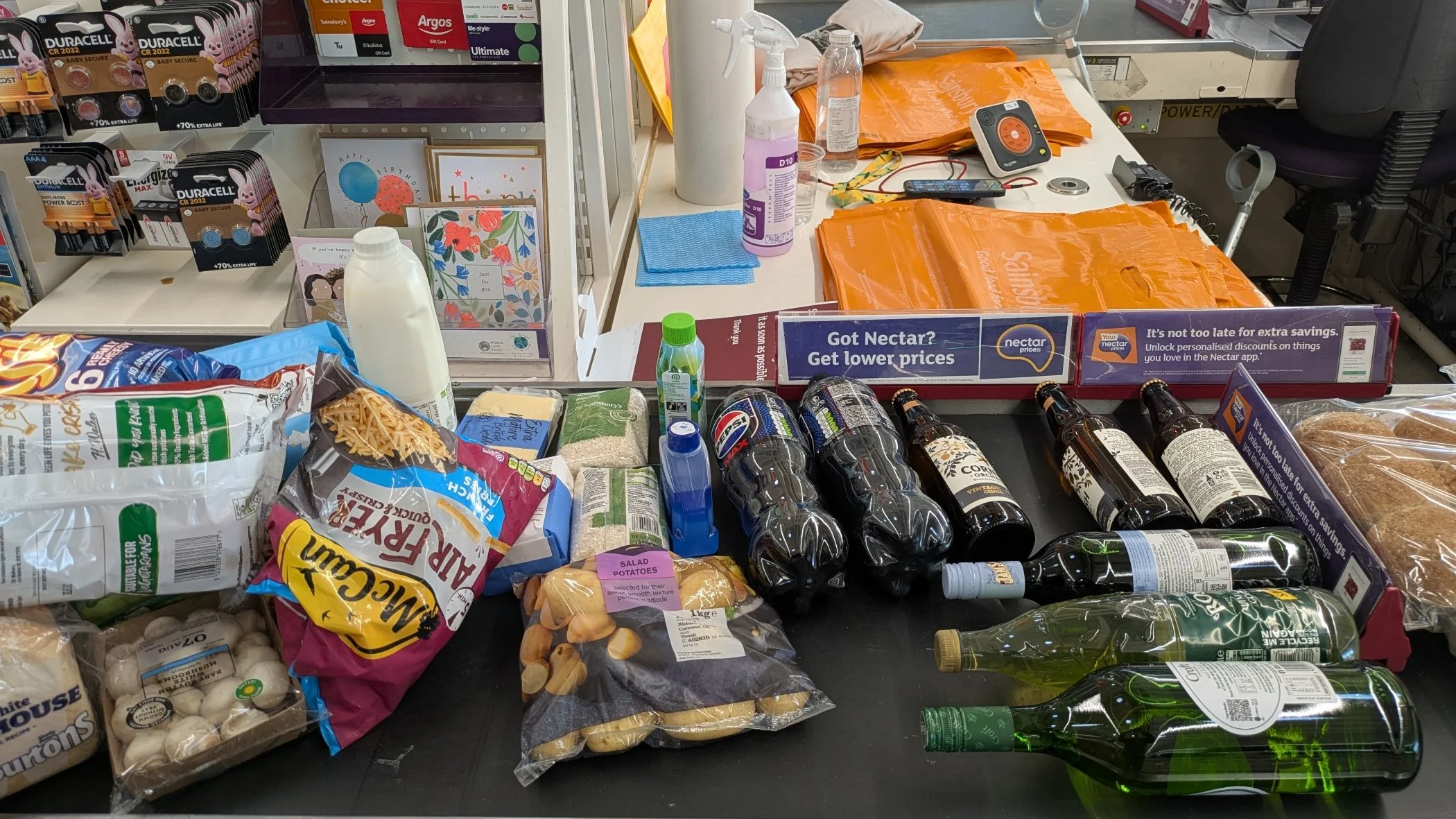
Mrs P and I go to Sainsbury’s at Crayford twice a month. We supplement these major shopping expeditions with additional ad hoc visits to smaller, local stores. Sainsbury’s is the second biggest supermarket chain in the UK with an annual turnover of £33 billion. It occupies the top tier of the UK supermarket industry, although its appeal has broadened in recent years as it has aggressively expanded its discount policy. We usually shop at the Crayford branch because it is the biggest store in the area and the largest in the UK of this particular chain. There are several advantages to using this particular store. It does not require a pound coin to unlock the shopping trolley. More importantly, due to its size the Crayford Sainsbury’s carries a much broader range of stock than smaller local stores, which focus mainly on what sells the most.
A selection of mushrooms
Like many people, we have a shopping routine. We go armed with a list of items we know that we require but we also investigate most isles to find any interesting special offers. We work our way through the store in a logical fashion so unlike The Clash, we’re never lost in the supermarket. There are some products that we always buy a specific brand of, such as coffee, sausages, eggs. However, in recent years we have become less entrenched in such practices and experiment a lot. Stores own brands have improved greatly both at the luxury and “value” end of the market. We therefore buy a lot of products that are Sainsbury’s own brand. As a retired couple, we prepare about two thirds of our weekly meals from scratch. The rest tend to be ready meals or frozen foods for convenience. Quality is a key factor when we shop. We would rather pay a little more for something that is good, than endure a cheaper and potentially inferior product.
After we finish perusing the shelves we will sometimes go to the mezzanine floor of Crayford Sainsbury’s, as it has a clothing department. This is especially good for children’s clothes and school uniforms. Again a lot of the products are exclusive to Sainsbury’s who have their own clothing range by Tu. I often buy t-shirts, socks, fleeces and hoodies here as the prices are significantly cheaper than branded names, yet the quality is good. There is also a substantial home section in the Caryford store which sells bedding, towels, kitchenware and electrical goods. I often find myself drifting towards the stationary much to Mrs P’s chagrin. When we finally have everything we need, we opt to use the traditional checkouts manned by a member of staff, rather than self service, which I strongly oppose. We have a specific bag packing regime that I still have yet to fully master, again much to Mrs P’s annoyance. It is somewhere between atomic weight and the Dewey Decimal system.
Cheese
Store snobbery and store loyalty are major factors in the UK supermarket hierarchy. The UK is a country riven by social distinctions and it permeates everything including where you shop and what you buy. We go to Sainsbury’s mainly because of food quality and choice. There is a wide variety of fresh fruit and vegetables available. Often this extends into multiple choices of specific items, such as mushrooms. I have a liking for cheese and the store stocks many types from all over the UK and Europe. The meat and fish is sourced mainly from the UK and is excellent quality. Another factor that is important to us is the range of product sizes. Smaller households do not always require the same quantity of a product and it is nice to be able to buy the amount that you need and no more. In the past Sainsbury’s used to charge a premium for its upmarket standing but in recent years they have attempted to price match other stores. Customers with store loyalty cards often can buy popular products at noticeably cheaper prices.
However, although I don’t mind going shopping at the store in person, I do find that the volume of customers can be an impediment at times. But then again the human factor is the Achilles Heel of most business enterprises. Hence Mrs P and I tend to go early in the morning in the middle of the week, when crowds are less. Also, during the pandemic, I very much enjoyed the convenience of home deliveries and still use them to bulk buy specific items like 2 litre bottles of carbonated drinks, wine and beer. Although the latter items do greatly increase the cost of shopping. On average a couple in the UK spend about £280 - £300 a month on food shopping. We spend nearer £450 a month, although that total is higher due to alcohol which is currently increasing in price. We also buy more than two people need due to ad hoc visits by grandchildren.
Red wine
Although it is customary to talk about quality and choice with regard to supermarkets, in reality most people in the UK shop where they can afford, as opposed to where they’d actually like. However, German chains Aldi and Lidl have recently upset the status quo by courting the discount market, yet still providing good quality products. In the seventies, where you shopped was very much a social marker. This is no longer the case and stores such as Aldi have a very eclectic customer base. We go there exclusively for household cleaning products, with their own brands of washing detergent and fabric conditioner being excellent but far more economical than leading brands. The UK is also at a turning point with regard to food supply, having left the EU. Just in time supply chains are no longer just in time and the country is having to rethink its sourcing strategy. In the meantime food inflation is high. As a result customers are being a lot more canny about what they buy and where from.
The Full English Breakfast
One of the pleasures I enjoy in life, especially when I’m dining out or staying in a hotel, is having a Full English Breakfast. I like the fact that each one is unique, with potential additional ingredients and regional variations. But then there is the comfort of the familiar and knowing that key aspects of the dish will be present. It is also nice when elements are locally sourced which often means that they stand out. In Norfolk recently, the sausages included in my Full English Breakfast were exceptional. When in Hampshire, I find that the bacon is thicker cut and cured in a manner unique to the county. It is these aspects that make the Full English Breakfast such a pleasant and interesting dish. I also find that having such a robust and substantive breakfast is a great way to start the day and keeps me energised until mid-afternoon.
The Crown, Lyndhurst
One of the pleasures I enjoy in life, especially when I’m dining out or staying in a hotel, is having a Full English Breakfast. I like the fact that each one is unique, with potential additional ingredients and regional variations. But then there is the comfort of the familiar and knowing that key aspects of the dish will be present. It is also nice when elements are locally sourced which often means that they stand out. In Norfolk recently, the sausages included in my Full English Breakfast were exceptional. When in Hampshire, I find that the bacon is thicker cut and cured in a manner unique to the county. It is these aspects that make the Full English Breakfast such a pleasant and interesting dish. I also find that having such a robust and substantive breakfast is a great way to start the day and keeps me energised until mid-afternoon.
The "traditional" Full English Breakfast, if there is such a thing, is more of a dish than a specific meal. It includes fried bacon (traditionally back bacon but streaky is acceptable), poached, fried or scrambled eggs, fried or grilled tomatoes, fried mushrooms, and sausages. Black pudding, baked beans and “bubble and squeak” are also often included. Sauté potatoes or Hash browns and even chips have been added in recent years. Fried bread or toast is served as well. In the North of England, fried or grilled oatcakes sometimes replace fried bread. The breakfast is usually served with tea or coffee, as well as fruit juices. Breakfast cereals are an optional entrée, as are croissants. In the past, alternative main dishes such as kippers, kedgeree and devilled kidneys were often included. Like many popular dishes, there are many variations, however the core elements remain constant.
The Old Railway Station, Petworth
The Full English Breakfast is a mainstay of British cuisine. The fried and substantive nature of the dish has not always found favour internationally where lighter breakfasts are often favoured. However, in the UK, this “fry-up” has grown in popularity and is viewed with cultural pride, similar to fish and chips and curry. It can be found almost anywhere in the country, from the humblest of local cafés to high end hotels and restaurants. It is that ubiquity that has rehabilitated its reputation. The roots of the dish date back to at least the 18th century and the essential elements have been consumed one way or another further back than then. However, the Full English Breakfast only began to gain traction as a popular start to the day, in the 20th century.
Some of its constituent elements found in the Full English Breakfast date back to the Bronze Age. Bread, for example, was a staple in Egypt and Sumeria as well as ancient Greece and Rome. However, tomatoes and potatoes were only introduced to the UK, from the New World, in the 1500s. By the mid 1700s hot bacon and eggs was established as a breakfast staple among the middle classes. Travel writer Patrick Brydone first referred to eating “an English breakfast at his lordship’s” while visiting a peer of the realm. Sir Kenelm Digby mentions in a recipe how “two poached eggs with a few fine dry-fryed collops of pure Bacon, are not bad for break-fast”. At the time, eggs were regarded as luxury items on a par with chicken itself. It was not until the early 20th century when animal farming increased that eggs became part of Victorians breakfast. The eating of eggs and bacon grew in popularity as the urban population sought to imitate the lifestyle of a country estate.
The Crab and Lobster, Bembridge
The spread of the Full English Breakfast after World War I may be due to the increase in popularity in cookery columns in newspapers and in books. Contrary to modern dietary advice, the Full English Breakfast was advocated as “healthy eating”.The actual name became popular after World War II as British Army general Bernard Montgomery was said to have started every day with such a dish during the campaign in North Africa. By the late 1950s, after the end of rationing in the UK, it became the basic breakfast on offer in most UK hotels. Over the following decades additional elements were added such as leftover potatoes, which were fried. Mushrooms, tomatoes, baked beans and black pudding similarly became regular additions. A few items such as kidneys as well as gravy, fell out of favour over time and have vanished from the dish.
The Full English Breakfast is now perceived not only as an essential aspect of British cuisine but part of the UK’s culture. It is one of the few British meals to have found favour with non-Brits and as a nation, we are proud and protective of it. It was once a meal reserved for the affluent but is now a dish accessible and enjoyed by people from all walks of life. Furthermore it continues to evolve, as Hash browns are now a regular addition to the existing classic elements. There are also vegan and vegetarian variants served, however contradictory that may seem. In many ways, the Full English Breakfast is a microcosm of the UK itself and a reflection of its diverse identity. As the nation continues to change, so does the dish. Hence, the Full English Breakfast of the next century may be very different from the one we enjoy now.
British Slang Words and Phrases
After receiving critical acclaim in the UK, the 1980 gangster film The Long Good Friday was revised to make the dialogue more accessible to American audiences. A few lines of dialogue were re-recorded to tone down the East End slang. A glossary of terms was also added at the start of the film, including such phrases as “manor” (precinct, area, patch, turf) and “ponce” (pimp or fool). Conversely, this has seldom happened with regard to American TV shows and films exported around the world, due to the ubiquitous nature of US pop culture. Nowadays, you would think the internet would have bridged this linguistic divide but it would appear not. I still see a lot of YouTube videos explaining British slang and traditional phrases. Never being one to pass up the opportunity to jump on a passing bandwagon, I thought I’d tackle 15 British slang words and phrases for your edification and the sake of an easy blog post.
After receiving critical acclaim in the UK, the 1980 gangster film The Long Good Friday was revised to make the dialogue more accessible to American audiences. A few lines of dialogue were re-recorded to tone down the East End slang. A glossary of terms was also added at the start of the film, including such phrases as “manor” (precinct, area, patch, turf) and “ponce” (pimp or fool). Conversely, this has seldom happened with regard to American TV shows and films exported around the world, due to the ubiquitous nature of US pop culture. Nowadays, you would think the internet would have bridged this linguistic divide but it would appear not. I still see a lot of YouTube videos explaining British slang and traditional phrases. Never being one to pass up the opportunity to jump on a passing bandwagon, I thought I’d tackle 15 British slang words and phrases for your edification and the sake of an easy blog post.
A Few Sandwiches Short of a Picnic: A lighthearted but ultimately pejorative term for someone who may be below average intelligence or who has a bonafide mental health issue. “You must forgive Colin, he’s a few sandwiches short of a picnic”.
Anorak: An anorak is a lightweight, waterproof jacket with a hood. The kind you may take if you go hiking. In the UK it is often associated with geeks, nerds or those with niche market interests. Hence “anorak” is used as a collective term for such individuals. Especially if there is any sort of obsession over details or data. “Colin is a bit of an anorak. He spots trains”.
Blag: To obtain something, be it an object or service, by persuasion, craftiness or guile. “Colin’s brother is a booking agent so we managed to blag some free tickets”. Blag can also mean to steal. “Colin got arrested. He blagged the local post office”.
Bog standard: Basic, entry level, ordinary. “Colin’s phone is a bog standard model”.
Butchers: An example of traditional Cockney rhyming slang. Butcher’s hook = Look. “Colin, go outside and have a butchers and see if the coast is clear”. The phrase is comparable to “look-see”.
Cheeky: As well as its formal definition, cheeky can mean to do something in an unplanned and somewhat self-indulgent fashion. “On the way back from the sales meeting, Colin and I stopped off for a cheeky pint”.
Chugger: A contraction of “charity mugger”. IE someone who represents a charity and engages in conversation with you in a public place, to try and convince you to sign up to some sort of monthly recurring donations. “Me and Colin got rushed by a chugger outside the kebab shop”. These bastards even knock on your front door, in the UK.
Doddle: An undertaking that you initially thought would be complex, difficult or arduous that subsequently proves to be easy and simple. “I thought it was going to be hard getting rid of Colin’s body, but we just threw it in the lake. It was a doddle”.
Dog's Dinner: A location, situation or undertaking that is either messy, chaotic, or poorly planned ending in disaster. “Colin’s desk is a total dog’s dinner”. Alternatively “Colin totally messed up the hotel booking, the menu and the evening’s entertainment. The convention was a total dog’s dinner”.
Gutted: To be bitterly disappointed or upset about something. “Colin was gutted that his favourite Kabaddi team had lost the regional final”.
Minging: Foul smelling. It can also mean that someone is not very attractive. “Colin’s kitchen was minging after he had cooked kippers for breakfast”. Alternatively “Who’s that with Colin? They’re minging”.
Pear Shaped: A plan or situation has gone awry. “It’s all gone pear-shaped. Colin has served red wine with the fish and we haven’t got enough cake forks”.
Shirty: To get annoyed, bellicose or bombastic with someone or something. “Colin got shirty with the Police Officer when he asked him why he was naked”.
Throw Your Toys Out of the Pram: To lose your temper. This can range from a childish tantrum to finally losing your cool after constant provocation. It is a verbal metaphor of a toddler throwing its toys out of a stroller when it can’t get its own way. “I borrowed Colin’s pen to get wax out of my ear. When he found out he really threw his toys out of the pram”.
Wind Up: To tease, goad or provoke someone. Usually just for fun. “We spent the morning winding Colin up until he tried to stab us”.
I hope this has proved informative and useful. Coming up in the next instalment of British Slang Words and Phrases, I will explain the significance and problems associated with thinking you’re “Jake the Peanut”. I’ll also explore exactly what is involved in getting “Leo Sayer’d”. We will also stray North of the border to clarify the differences between a “Wee Stooshie” and a “Wee Rammie”. Feel free to leave any comments below, especially if you have your own regional variation of any of the terms and phrases featured in this post. Or you wish to try and use any of them in a sentence of your own contrivance. Until next time, TTFN.
Gossip and Schadenfreude: A National Pastime
If you are in a British pub and someone drops a pint or better still an entire tray of drinks, then most people within the immediate vicinity will cheer. A few years ago I was in a pub near London ComicCon and some wag shouted “Fus Ro Dah”. But I digress. The thing is, in these situations no one will go to help. Nope, we’re too busy laughing. Laughing at someone else's misery, embarrassment and inconvenience. Does this say something about British culture and our national psychology? We seem to like other people’s failures. There has always been a fascination with celebrity culture, especially with the rise and fall of such individuals but it seems to have become more unpleasant of late. Do we revel too much in other people’s misery due to some major shift in our national psyche? Is the combative and aggressive nature of contemporary political discourse to blame?
If you are in a British pub and someone drops a pint or better still an entire tray of drinks, then most people within the immediate vicinity will cheer. A few years ago I was in a pub near London ComicCon and some wag shouted “Fus Ro Dah”. But I digress. The thing is, in these situations no one will go to help. Nope, we’re too busy laughing. Laughing at someone else's misery, embarrassment and inconvenience. Does this say something about British culture and our national psychology? We seem to like other people’s failures. There has always been a fascination with celebrity culture, especially with the rise and fall of such individuals but it seems to have become more unpleasant of late. Do we revel too much in other people’s misery due to some major shift in our national psyche? Is the combative and aggressive nature of contemporary political discourse to blame?
The recent debacle regarding BBC News presenter Huw Edwards is in many ways a microcosm of this malady. The Sun, a questionable tabloid with a history of rabble rousing and lying, claimed it had evidence of a “household name” indulging in criminal behaviour with a minor by soliciting explicit pictures. The BBC, the UK public funded broadcaster which is currently suffering from an identity crisis after making several high profile mistakes, then made matters worse by failing to address the claims promptly. Huw Edwards is very much the public face of the BBC, having been the main news anchor for so many era-defining news stories. The public relish for this story when it broke, was palpable. I realise that people like gossip but there was more to this than mere tittle-tattle. Even I wanted to know who the “household name” was before it was finally announced. It would appear that someone's ruin is morbidly enthralling.
Exactly why do we like gossip so much? Especially the salacious or malicious kind. In this case was it a particular dislike of Mr Edwards or the fact that he is in many ways an avatar for the BBC? Was it an example of watching someone who has reached the proverbial top, then fall from grace. A form of bespoke schadenfreude? Or was it a more politically motivated experience? A manifestation of the tribalistic nature of modern social discourse and a facet of the culture war? There was a similar amount of hysteria and delight recently over ITV presenter Phillip Schofield and his downfall, although that was more about moral judgement and possibly homophobia. Looking at such things in a wider context, there certainly seems to be a lot more spite driving peoples love for malicious gossip. You only have to read people's comments on tabloid news websites. They are mean spirited, unempathetic and riddled with assumptions, bias and prejudice.
There has been a growing culture of judgement running through tabloid newsprint and websites in recent years. Articles about sporting events which focus more on the audience, their manners and behaviour. Or reports about hot weather and the crowds on the beach. Aren’t they overweight and shocking? And then there’s the young people going out clubbing. Look, they’ve had too much to drink and should they really be wearing that? All too often such articles hide behind a superficial level of reporting, when in fact they are simply encouraging readers to pass judgement upon another socioeconomic group. Now it is a fact of human nature to dislike other people and for groups to segregate themselves. But we also have to also function as a cohesive society, so encouraging us to hate one another only increases tribalism. You only have to look to the US and wonder where it may all end.
The Huw Edwards story also raises such subjects as press regulation, UK libel laws and media ownership. The traditional UK press is predominantly right wing and does not reflect the political and social views held by the majority of the UK population. Yet it spreads discontent daily, slowly increases division and pushes its owners political agenda. We are now reaping the consequences of this growing disharmony. The UK is becoming cruel, lacking in empathy and very divided. It will end up becoming socially and politically ungovernable like the US. The population is also partly to blame with its insatiable appetite for gossip, scandal and schadenfreude. Does this ultimately boil down to the fact that many people feel their own lives are so utterly bleak and awful that they want others to suffer the same fate? What a chilling thought. A nation suffering an existential crisis that would prefer to burn everything down, rather than fix the situation.
Selling My Parents House
Last August my mother died at the age of 91. Since last September, her will has slowly been processed by our family solicitors. To cut a long story short we received the Grant of Probate in March this year. Three months on and my sister and I have finally put the family home up for sale. My sister still resides at the property and has done so all her life. Hence not only are we looking to sell our parents house but also find my sister a flat or maisonette. Both of us agreed when we embarked upon this process not to rush and to let things run at their own pace. The last few years of caring for our parents was a very difficult and exhausting experience. Hence, both of us have taken some time out to rest, recuperate and take stock of our lives. My sister has recently retired and it was important to get that matter resolved first, before addressing the sale of the family home.
Last August my mother died at the age of 91. Since last September, her will has slowly been processed by our family solicitors. To cut a long story short we received the Grant of Probate in March this year. Three months on and my sister and I have finally put the family home up for sale. My sister still resides at the property and has done so all her life. Hence not only are we looking to sell our parents house but also find my sister a flat or maisonette. Both of us agreed when we embarked upon this process not to rush and to let things run at their own pace. The last few years of caring for our parents was a very difficult and exhausting experience. Hence, both of us have taken some time out to rest, recuperate and take stock of our lives. My sister has recently retired and it was important to get that matter resolved first, before addressing the sale of the family home.
One of the most challenging aspects of this process has been the house clearance. This has involved going through all our parents’ possessions and deciding what to do with them. It is a very sobering experience to be confronted with all the personal items and clothing that a person has amassed during the course of their life. At times it feels like you are complicit in erasing that person’s identity. But you can’t hang on to everything although it would appear that my parents came from a generation that did exactly that. Some of the things that my mother and father hoarded beggar belief but they grew up during World War II and were accustomed to hardship. Rampant consumerism and disposability were not the foundations of society back then, so I will forgive their compulsion to hang onto everything.
Once the clearance was completed, we commissioned a local Estate Agents and formally put the house up for sale. A photographer came and took multiple pictures of the house and gardens. It was scrupulously measured and categorised. The final sales description is honest and accurate. It is a three bedroom, end of terrace house in a desirable residential area and has a 110 foot south facing garden. There are two reception rooms, two bathrooms and a kitchen extension. The house has “potential to extend and modernise” which is the polite way of saying it needs a complete refurbishment. This is fair as it was last redecorated in the eighties and done so according to the prevailing tastes and styles of the time. The asking price reflects the current housing market in Greater London. However, sales take longer at present, so we’ve been told to be patient.
There are many milestones during the course of one’s life. The purchase and then years later, the sale of a family home are certainly among them. In the UK, home ownership is still considered a major aspirational goal, although it is currently becoming increasingly difficult. The concept of a “house of your own” is a significant political issue and a major part of the UK’s cultural identity. Whereas in Europe, renting is far more commonplace. My parent’s generation saw buying a home as a major achievement. The provision of a safe and welcoming home environment to raise a family was the foundation of a marriage. Your home,once paid for, became an asset and a source of financial security. In their later years it brought a sense of comfort to both my parents, that they had something of value that their children could inherit. Hence a house is often more than just “bricks and mortar”.
For me the house still holds a lot of memories, although I moved out over three decades ago. My sister’s perspective is a little different as she has lived there all her life. Although she shares a broadly similar sentimental outlook regarding the house, it is now unsuitable for a single person. She is looking forward to downsizing and moving somewhere new. Plus, during our parents illnesses I always had the luxury of going to my own home at the end of the day, where she did not. I understand how the home may not offer as much nostalgia for her. Overall, we are both in accord with the sale and although it is the end of an era, we are happy for the house to find new owners. It was designed in the 1930s to be a family home and it would be nice to see it serve that purpose once again.
Housework and Chores
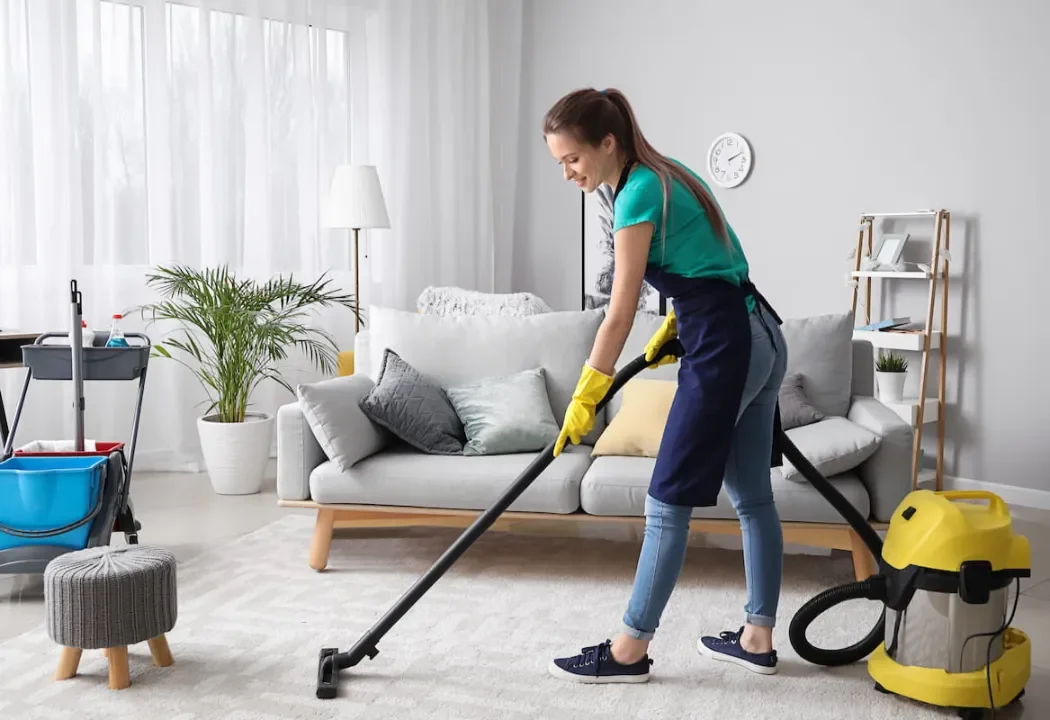
I was going to start this blog post by saying that, just like death and taxes, housework and chores are something we all have in common. But I have decided to withdraw that statement having been reminded of some houses I’ve visited during the course of my career. Also Twitch can sometimes reveal all and frequently provides a fascinating, if unknowing window into other people’s homes. Hence it is patently obvious that some folk are indifferent to the concept of housekeeping, basic hygiene and human decency. So instead I shall say that for many of us, housework and chores are yet another set of obstacles that stand between us and our leisure time. Something that has to be addressed, more often than not, out of necessity rather than a willing desire.
Doing housework is just like this
I was going to start this blog post by saying that, just like death and taxes, housework and chores are something we all have in common. But I have decided to withdraw that statement having been reminded of some houses I’ve visited during the course of my career. Also Twitch can sometimes reveal all and frequently provides a fascinating, if unknowing window into other people’s homes. Hence it is patently obvious that some folk are indifferent to the concept of housekeeping, basic hygiene and human decency. So instead I shall say that for many of us, housework and chores are yet another set of obstacles that stand between us and our leisure time. Something that has to be addressed, more often than not, out of necessity rather than a willing desire.
Homes get dirty and messy by dint of people living in them. To what degree depends on the numbers of individuals, where they live and how messy or tidy they respectively are. Children and pets compound the matter. The former being akin to a biblical plague of locusts. Therefore, the housework that I and Mrs P face, living in our bungalow is not the same as a family with two or three children and a pet. However, some things are universal. We all have to wash and dry clothes, use the vacuum cleaner, clean work surfaces, mop the bathroom floor, bleach the toilet, empty bins and take out the rubbish. We tend to do general cleaning once a week and then every month do a far more comprehensive clean. Both Mrs P and I have a similar outlook regarding these things so tend to work well as a team, when tackling such tasks. We are not messy people and if something isn’t being used it gets put away.
I am a big fan of labour saving devices that genuinely make life easier. I feel the same way about my dishwasher that Americans do about their “right to bear arms”. For me the notion of hand washing a greasy metal tray that has had a leg of lamb roasting in it for several hours is hell on earth. Dishwashers do such tasks far more efficiently than I ever could and effortlessly make everything appear shiny and new. Loading and unloading a dishwasher is a far more straightforward task than individually washing items, rinsing them and then drying them. It also doesn’t give you dishpan hands. Mind you there are also a lot of alleged labour saving devices that do nothing of the sort. Perhaps the universal white elephant of kitchen appliances is the sandwich toaster. A great concept for making hot snacks that in reality is a weapons grade delivery platform for third degree burns. The subsequent cleaning of the hot plates after use is a bane.
In recent years there has been a cultural shift that has seen housework and chores become a means of therapy in certain quarters. Cleaning, organising and decluttering are hailed as acts of catharsism and take on a more metaphorical meaning. If that works for you, so be it. Reality television has certainly discovered that there is a rich vein of material to be mined with regard to people who have unkempt homes or a penchant for hoarding things. As for me and Mrs P, we consider housework to be nothing more than a functional act and we don’t think that we live in a dung heap that merits scrutiny by TV celebrities. So in the meantime, we soldier on doing the various chores in our own way. However, age and health are an increasing factor and so ironing, for example, is now being relegated to only essential items. I wouldn’t be surprised if we end up hiring cleaners at some point. We already pay for a gardener.
Loneliness
I was consulting my list of blog topics, when I spotted the subject of loneliness among the various talking points I’ve collated. “Hah”, I thought. “That will do”, hoping to quickly write four or more paragraphs off the top of my head. However, during the course of some lightning research I discovered the following website, Campaign to End Loneliness and realised that this may not be a subject one can easily extemporise about without being too general or indeed, insensitive. Loneliness exists on a spectrum and is highly subjective. Some of the examples cited by Campaign to End Loneliness, may well sound quite trivial while others are truly heart breaking. All of which highlights, like so many things in life, that the subject is nuanced, subjective and one needs to avoid generalisation. Which raises the point, what can I contribute to such a discussion? My own experiences.
Loneliness
I was consulting my list of blog topics, when I spotted the subject of loneliness among the various talking points I’ve collated. “Hah”, I thought. “That will do”, hoping to quickly write four or more paragraphs off the top of my head. However, during the course of some lightning research I discovered the following website, Campaign to End Loneliness and realised that this may not be a subject one can easily extemporise about without being too general or indeed, insensitive. Loneliness exists on a spectrum and is highly subjective. Some of the examples cited by Campaign to End Loneliness, may well sound quite trivial while others are truly heart breaking. All of which highlights, like so many things in life, that the subject is nuanced, subjective and one needs to avoid generalisation. Which raises the point, what can I contribute to such a discussion? My own experiences.
When I was a teenager, I had a wide circle of friends. I found that being humorous was an easy means to ensure that I was socially engaged. However, as I grew older and wiser, I discovered and began to enjoy the merit of more serious friendships. All too often in life, we find that our social activities are driven by the practical realities of our lives. Hence you become friends with people that you work with, or with other parents or with the family of your partner. Such friendships are subject to change and it is not unusual to find yourself at a point in life where your social circle has shrunk. The matter is compounded by the fact that men are especially poor at maintaining friendships in later life, especially once they’re in a relationship. Hence I now find myself with a reduced social circle. This is not necessarily a complaint but undoubtedly it is a fact.
Shared interests
Now I live with Mrs P who I have known since 1990. We get on well and have shared interests. But we do not live in each other's pockets to coin a phrase and pursue other hobbies and pastimes outside of those that we both enjoy. No matter how much we love and respect our respective partners, most people cannot get by exclusively with one person’s company. This is where friends meet our other needs and if they are absent, they are sorely missed. I have several long term friends but not all of them live immediately to hand. We meet up every quarter and when we do, simply pick up where we left off. But in day-to-day life, I have found that I speak to less and less people. I am not much on small talk and lots of people don’t care for weighty philosophical talking points as an opening gambit when striking up a casual conversation.
I used to find that the internet was a great way of filling this social and conversational gap. Blogging and becoming part of a community certainly has many social aspects to it. When I started podcasting, that meant maintaining a weekly recording schedule and having regular conversations about the subjects I was passionate about with my co-host Brian and guests. I felt engaged and very content. But nothing lasts forever and despite numerous attempts to kickstart the habit, the podcasting community that we belonged to has come to an end. I still enjoy social media and use Twitter but that too has become fragmented. Many of the people I followed have moved to Mastodon, which doesn’t have the same reach. Another factor is that many friends I have met online have chosen to step away from online engagement, as it comes with as many negative connotations as it does positive.
My local pub
So I find myself at the age of 55 feeling at times somewhat lonely. It isn’t a constant feeling and it is certainly not debilitating. However, I do feel there are gaps in my social interactions and it feels at times quite tangible. I profoundly miss my father who was excellent company and a knowledgeable man. He had a knack of hoarding data and could often surprise you with the things that he knew about. He also wasn’t afraid of modernity and would like to know about new technology and social trends. I also occasionally miss the cut and thrust of the work environment. But overall it is just the lack of intelligent company. All too often I’ll read something that I find intriguing and worthy of comment, only to realise that there’s no one around to share the anecdote with. Similarly, if I wanted to nip down the pub and just talk bollocks over a beer, that is something that has to be prearranged.
Naturally, I don’t compare my nominal experiences of loneliness with those who live alone and have no friends or human contact. The relative nature of loneliness per se, means you shouldn’t really try and set one person’s experience against another. What may seem minor to you may be crippling to another. Plus, being a retired man, I certainly have the means to improve my situation. If I want company, to stop feeling removed or isolated, then I need to seek out appropriate social groups. It’s not as if there’s a shortage of such things these days. Problems don’t put themselves right and you sometimes have to step outside of your comfort or indolence zone. Who knows, trying to resolve this matter itself may well be worthy of a blog post. Perhaps such a foray into socialising will remedy the issue or prove that friendships are harder to find and keep these days. Time will tell.
Falling Out Over Politics
For those who live outside of the UK, let me categorically state that Brexit has broken British politics. Prior to 2016, national politics still broadly functioned along traditional party political lines, with income and class substantially determining voter allegiance. The big three cities (London, Birmingham and Liverpool) maintained their liberal dispositions and Scotland, Northern Ireland and Wales were dominated by their regional politics. Brexit changed all this creating fault lines that fell outside of the existing political status quo. Opinions differed based upon where you lived, how politically literate you were and even education. Your party political allegiance no longer indicated what stance you took on this matter. Furthermore, the discourse around this complex subject was quickly debased into a bipartisan culture war that was toxic and dangerous.
“You cannot reason a person out of a position he did not reason himself into in the first place.” Jonathan Swift
For those who live outside of the UK, let me categorically state that Brexit has broken British politics. Prior to 2016, national politics still broadly functioned along traditional party political lines, with income and class substantially determining voter allegiance. The big three cities (London, Birmingham and Liverpool) maintained their liberal dispositions and Scotland, Northern Ireland and Wales were dominated by their regional politics. Brexit changed all this creating fault lines that fell outside of the existing political status quo. Opinions differed based upon where you lived, how politically literate you were and even education. Your party political allegiance no longer indicated what stance you took on this matter. Furthermore, the discourse around this complex subject was quickly debased into a bipartisan culture war that was toxic and dangerous.
Seven years on, party politics are now fractured by factionalism and public discourse per se has taken on a more emotive and contentious tone. Brexit has divided not only politics but family and friends. The nature of the debate both in parliament and the national media has been far from convivial and has shown that many ideas and concepts that many thought were universally embraced, are in fact not. The COVID-19 pandemic and subsequent lockdown, the economic impact of the war in Ukraine and the rise of social media culture has further exacerbated political and societal divides. So I find it somewhat risible when I read such naive comments as “it’s amazing that people fall out over political opinions”, as I did on a national news website recently. The days of politely agreeing to disagree are long gone as UK politics becomes more like that of the US.
The generic nature of the two main UK political parties
To many observers outside of the UK, for decades our national politics has been a bland and somewhat predictable fight that took place in the centre ground. Extremes on both sides of the political divide have been confined to the wings. For anyone over a certain income, politics could be ignored because it did not appear to directly impact upon your life. It may well be a different matter for those on low incomes or marginalised minorities but as such groups did not have a substantive voice in political terms, the perception of a broad status quo that simply changed its custodian every 4 years, has endured. I have spoken many times to European friends who have struggled to discern any major political difference between the modern Conservative and Labour parties.
Hence during these times, if you differed with your friends, family or colleagues over fiscal policy, education or national infrastructure you could easily shrug it off. Even those invested in the distinct political ideology of a particular party tended to treat it more as an academic debate, rather than a religious credo. Obviously there would be some individuals who were diametrically opposed to others due to hardline political views but this was the exception and not the rule. Ultimately, any problems arising from political policy were the governments fault and not ours. All we have to do is turn up and vote every so many years and then complain during the intervening period. The Brexit referendum changed that due to its inherent nature and consequences. A referendum is a very direct form of politics which bypasses governmental policy and responsibility. The consequences therefore lie directly with the electorate, whether or not they understand and recognise this.
The realities of Brexit
As a result of the 2016 referendum the UK has left the European Union and there have been direct economic, sociopolitical and practical consequences, irrespective of one’s opinion of the rectitude of that decision. Businesses have subsequently closed, jobs have been lost and migrant employees have left the UK resulting in a labour shortage. The economy is stagnating and the cost of living is going up. Travelling to Europe has become more complex and costly. The consequences of Brexit are tangible and we all feel them. Hence it does not come as any surprise that friends, family and colleagues will come into conflict over this. Unlike a general election where the actions of the government can be blamed on its party membership that set policy, the ramifications of Brexit can be attributed to those who directly voted for it.
The UK is currently suffering from a stagnating economy, high inflation and labour shortages. Problems that have been exacerbated by nearly thirteen years of government by the same political party. Although the next election is not due until 2024, the Conservative Party are suffering greatly in the polls. The majority of the electorate attribute a lot of the aforementioned woes to their policies. However, due to the nature of the First Past the Post electoral system there is a chance that a targeted campaign of fear mongering and misinformation in the right marginal constituencies may well see them return to office. Despite having an electorate of 46.5 million, ultimately it is approximately 350,000 voters in swing seats that determine the outcome of UK General Elections. Such a clear disparity in the importance of an individual vote, makes the outcome of an election profoundly personal.
UK Doctors Demonstrating for increased pay
Some political journalists have suggested that politics may well “settle down” and return to being “remote” when the UK becomes economically stable once again. However, I think those days are gone, now that politics has embraced the culture wars and detached itself from facts, data, expertise and reasoned argument. The notion of doing what is collectively the best for all has been replaced with attacking and punishing groups that have been successfully “othered”. However, a growing part of the electorate have realised this, finding themselves on the wrong side of the dividing line. This shift in perception renders the voting habits of others highly personal. If your neighbour openly admits to voting for a party that subsequently limits your rights, taxes you further, or seeks to criminalise your actions then they are complicit in such outcomes.
I therefore suspect that falling out over politics is going to increase in the next decade. Politics in the UK is becoming more populist and less based in reality. Extreme policies are harmful to people and have real world consequences. Hence voting for such things is not something one can just shrug off. You will be judged by your actions. Such a sociopolitical climate will just further entrench tribalism. Your political views and affiliations will increasingly impact upon the decisions you make in life and shape your social circle, where you work and how you’re perceived by others. The notion of “I don’t date (insert political party here)” being part of your biography on a dating app, will no longer be some niche concept. It may even become a standard. If living in such a world worries you, then we need to make politics less partisan and return to agreeing to disagree. Sadly, I suspect that it is too late to put that particular genie back into the bottle.
The Problem With Ever Changing Band Lineups
I was reminiscing about the music of my youth the other day which led me to listen to a track by Pro-Pain. The band formed in NYC in 1991 and their debut album Foul Taste of Freedom got some traction in the UK. I lost track of them after the next album and moved on musically. However, because of my recent fit of nostalgia, I looked the band up on Wikipedia and discovered that they were still going. Now thirty years is quite a long period of time and nothing stays the same forever but even I was surprised to see that the lineup of Pro-Pain had changed over a dozen times. The only original artist in the band today is bass player, lead vocalists and founder member, Gary Meskil. As ever this started a train of thought about the subject. How so many bands have made substantial changes in their lineup over the course of their careers and the respective pros and cons of such decisions.
Pro-Pain Gary Meskil
I was reminiscing about the music of my youth the other day which led me to listen to a track by Pro-Pain. The band formed in NYC in 1991 and their debut album Foul Taste of Freedom got some traction in the UK. I lost track of them after the next album and moved on musically. However, because of my recent fit of nostalgia, I looked the band up on Wikipedia and discovered that they were still going. Now thirty years is quite a long period of time and nothing stays the same forever but even I was surprised to see that the lineup of Pro-Pain had changed over a dozen times. The only original artist in the band today is bass player, lead vocalists and founder member, Gary Meskil. As ever this started a train of thought about the subject. How so many bands have made substantial changes in their lineup over the course of their careers and the respective pros and cons of such decisions.
Being in a band is a stressful work environment. Creative differences, the amount of time you spend in each other's company and the constant travelling take their toll. Change is an inevitability. But when you change the line up of a band, how much of an impact does it have? Well that depends upon who is leaving and what contribution they made overall. If the outgoing member defined the band’s sound, wrote most of their material or had the biggest personality, then their absence is significant. Think Michael Jackson and The Jackson 5. If their contribution was more arbitrary, then replacing them may not be such an issue. Pete Best “leaving” The Beatles springs to mind. Sometimes the departure of a band member creates an opportunity for a band to reinvent themselves. In the case of Adam and the Ants, the entire band bar Adam left to form Bow Wow Wow. Adam then found new Ants and moved from Punk to New Wave.
Adam and the Ants “Ridicule is nothing to be scared of”
Another problem that arises from bands that have enjoyed great longevity and numerous changes in their line up, is that they will end up with a canon of work that is rich and varied. Fans therefore may not necessarily share the same point of entry into this oeuvre, or enjoy the same material. In such a case, do fans even like the same band? Is there an unbridgeable gulf between Dexy’s Midnight Runner fans who favour the 1980 album Searching for the Young Soul Rebels and those who preferred Too-Rye-Ay, two years later? And to complicate matters further, sometimes a successful band will not just see multiple lineup changes but will split into multiple iterations of the same band, due to legal and financial wranglings. At one point there were two versions of the popular English Reggae band UB40. One using the original name and the other being known as UB40 featuring Ali Campbell and Astro. That’s just weird.
The music industry has always been a battleground between art and business. Bands can be a collective of evolving musical artists, trying to produce art, as well as an established commercial product providing an ongoing service. Sometimes one trumps the other but it more often than not seems to be the latter. But music provides many things beyond artistic appreciation. Music nostalgia is a major psychological comfort blanket. If you see an iconic band like The Rolling Stones, do you really want to listen to their latest musings or just their greatest hits? It does seem like the provision of a service. However, due to the line up changes over the years, how authentic is that experience? Following a similar train of thought, can you really ever truly experience Queen any more, since the death of Freddie Mercury? However, Judging by ticket sales, this may not be an issue.
The Stranglers
The Stranglers are down to their last original member, Jean-Jacques Burnel. Whether the band will produce any more albums or tour remains to be seen but it does seriously raise the question: are The Stranglers really The Stranglers any more? You can argue from a logical, semantical or emotional perspective and I’m not entirely sure if there is a right or wrong answer. You can have a band where all the original members are dead or retired, so what do people do? They form a bloody tribute act. Again, we return to the power of nostalgia and the money that it can generate. Regarding the original point of the post about the ever changing lineups that some bands have, I suppose you decide for yourself what, if any, lines in the sand you personally draw. I guess music has become like the film and TV industry. When talking to someone, if you state that you like such and such a band, you then have to clarify which version, or which period of their work you enjoy. That’s “fun”.






Adulthood
When I was a child I often dreamt about the “wonders” of the “grown up” world. I would muse upon this while in bed, peeved by the fact that the adults were now indulging in some magnificent activity that was beyond my comprehension and that I was excluded from. What exactly did adults do during the time I was at school or asleep? It was obvious there were gaps in my knowledge and in my naivety, I had the most fanciful speculations. Life for a child in the UK during the seventies was a very regimented process. School dominated the day. This was followed by a short period of “freedom” upon returning home, a meal, homework, some TV and then bed. Furthermore you were constantly reminded by adults to be content being a child. “You don’t want to grow up too quickly” I was told on many occasions. Apparently this part of my life was the best bit. So I rolled with the situation and got on with my childhood. Yet the adult world was still there, like something on the horizon that was always out of reach. Hence my nocturnal flights of fancy.
A simple visual metaphor
When I was a child I often dreamt about the “wonders” of the “grown up” world. I would muse upon this while in bed, peeved by the fact that the adults were now indulging in some magnificent activity that was beyond my comprehension and that I was excluded from. What exactly did adults do during the time I was at school or asleep? It was obvious there were gaps in my knowledge and in my naivety, I had the most fanciful speculations. Life for a child in the UK during the seventies was a very regimented process. School dominated the day. This was followed by a short period of “freedom” upon returning home, a meal, homework, some TV and then bed. Furthermore you were constantly reminded by adults to be content being a child. “You don’t want to grow up too quickly” I was told on many occasions. Apparently this part of my life was the best bit. So I rolled with the situation and got on with my childhood. Yet the adult world was still there, like something on the horizon that was always out of reach. Hence my nocturnal flights of fancy.
Five decades later the reality of adult life is abundantly clear to me as I have followed my parents down a similar path of employment, marriage and raising a family. I realise now that while I was a child in bed, my parents were not having a “fantastic adventure”. They were simply sitting exhausted, watching something on TV, trying to catch a few minutes respite from the rigours of their busy lives. I understand this now because I have done the very same myself. At some point in my midteens I suddenly realised that I wasn’t going to be ushered into a secret “adults club” upon becoming 18, where I would be given the “adults guidebook to life”. I realised that my parents were just “winging it”. Buying a home, getting a mortgage and enrolling your children in school were all things that they had to address as they came up. Cooking, cleaning and running a home were also skills learnt on the fly.
A Dickensian Treadmill
Being a grown up is essentially a combination of routine, obligation and managed stress, punctuated with brief moments of joy. I cannot emphasise the latter enough. I fear that modern society far too often pedals the myth to teenagers that adulthood is all about fun, enjoyment and doing the stuff that you want. Social media compounds this misconception further, fooling people into thinking that the staged managed and curated images they see are what adulthood is really like. The reality is that for most people, life as an adult is not a continuous cavalcade of fun but a functional and repetitive process, dominated by work. Perhaps the most beneficial thing that an adult can have in their life is stability. A stable job that you know inside out makes the working day more manageable. Less stress at work often leads to less stress at home. Stress is the societal blight of this century.
Another defining aspect of adulthood is embracing, or at least accepting, the concept of personal responsibility. When you move out of the family home for the first time, you suddenly realise that it’s down to you to ensure there’s food on the table and that you pay your rent or mortgage each month. Clothes don’t magically wash and iron themselves. The recycling doesn’t teleport itself to the curb awaiting collection. If you don’t do these arbitrary tasks, then there are consequences. Some may be minor inconveniences. Others such as failure to pay your utility bills or taxes will leave you seriously at risk of sanction. But all of these things are framed as “boring” or a “drag” if you’ll pardon my sixties hip-speak. People all too often want the pleasures and freedoms of adult life but without the baggage that goes with it such as responsibility and accountability.
A Victorian family photo
However, I don’t believe it is all doom and gloom. Modern adulthood is not the same as it used to be. My parents lived in a society that was very formal and rigidly structured. There were three stages to life. Childhood, middle-age and old age. The notion of a teenager was yet to be constructed by the advertising industry. Each age group had its own modes of behaviour and even dress. I look at pictures of UK society during the seventies and people often appear to look older than they actually were. Plus doing something “inappropriate for your age” was a common criticism. Once you became an adult you were expected to put away “childish things”. Comics were replaced by reading “the classics”. Romance and relationships were indulged for a short window of time then you were expected to settle down and put such things behind you. Old age was for gardening, voluntary work and awaiting death.
Nowadays such rigid social conventions have faded. The way one dresses, behaves and what social activities you pursue are no longer defined within strict age based parameters. There’s still ageism but it’s nowhere near as bad as it used to be. No people embrace new hobbies and pastimes in old age, seek new relationships and even have families. You can still indulge the same interests from your childhood into adult life. Maybe this is why I am comfortable being an adult. Unlike my parents, I am doing it slightly on my own terms. I certainly don’t envy the young, especially teenagers. They are growing up in a rapidly changing and less stable world. Oh and before I go, let’s lay to rest that awful phrase “adulting”. Being an adult isn’t a mode that you turn on and off. It is a personal epiphany, an acceptance of a social contract and the adopting of a philosophical lifestyle. Either you are or you aren’t an adult. Biological maturity and society’s chosen age of majority are not the same thing.
Refugees, Gary Lineker and the UK Culture Wars
Okay, keep up as there’s a lot of ground to cover. The UK government is currently suffering in the opinion polls and after 13 years in office, is facing potential oblivion at the next general election. In an attempt to shore up support among the party faithful, the Prime Minister, Rishi Sunak, is currently pursuing a hardline with regard to immigration. According to Ipsos, as a political issue about 29% of the electorate consider immigration to be a major problem. The remainder either think current levels are manageable or have no substantive view on the matter. However, as a “culture war” issue that can be weaponized by the tabloid press, which often has direct links to the Conservative Party in the UK, immigration is a hill to die upon. Hence you will find a lot of rhetoric that is anti-immigration and any contrary view is tarred with trite pejorative terms such as “lefty”, “liberal” and “woke”.
Okay, keep up as there’s a lot of ground to cover. The UK government is currently suffering in the opinion polls and after 13 years in office, is facing potential oblivion at the next general election. In an attempt to shore up support among the party faithful, the Prime Minister, Rishi Sunak, is currently pursuing a hardline with regard to immigration. According to Ipsos, as a political issue about 29% of the electorate consider immigration to be a major problem. The remainder either think current levels are manageable or have no substantive view on the matter. However, as a “culture war” issue that can be weaponized by the tabloid press, which often has direct links to the Conservative Party in the UK, immigration is a hill to die upon. Hence you will find a lot of rhetoric that is anti-immigration and any contrary view is tarred with trite pejorative terms such as “lefty”, “liberal” and “woke”.
Which brings us to the new Illegal Migration Bill, which is intended to “take back control of our borders, once and for all”, according to PM Rishi Sunak. The proposed legislation is specifically designed to target the small boats that cross the English Channel from France to the UK. Under the new law, asylum claims by those who travel to the UK via illegal means will be rendered inadmissible. The migrants will be detained, deported and banned from returning, Furthermore, the Illegal Migration Bill will be applied retrospectively, impacting on those already awaiting an asylum claim while being “housed” at immigration processing centres. However, the proposed bill risks breaching the Human Rights Act. Furthermore, UNHCR (UN Refugee Agency) is “profoundly concerned” by the proposed plan which it sees as a “clear breach” of the 1951 Refugee Convention. Conversely, the UK Home Secretary, Suella Braverman, believes the bill is “compatible with international law.”
UK Home Secretary Suella Braverman
As the UK government indulges in what is essentially performative politics which do not address the real issues around immigration, there has been a degree of pushback and condemnation of the proposed legislation across the political spectrum of the commentariat. Enter Gary Lineker, retired professional football player, sports pundits and presenter of Match of the Day, the BBC’s flagship football program with an audience in excess of 20 million viewers. Gary is an active participant on Twitter and other social media and has expressed opinions in the past on politics and social issues. He is broadly left leaning and is well liked among both sports fans and the general public. The tabloid press and those on the political right loath him. On Tuesday March 7th Mr Lineker made the following tweet while discussing the Illegal Migration Bill with others online.
“This is just an immeasurably cruel policy directed at the most vulnerable people in language that is not dissimilar to that used by Germany in the '30s, and I'm out of order?”
Needless to say as UK political discourse is becoming very much like that of the US, a storm of “outrage” and “indignation” has ensued over the last 4 days. The tabloid press and some Conservative MPs are “offended” at being labelled “Nazis”, although this was not actually done. Demands have been made upon the BBC to take action against Mr Lineker. Hours of spittle flecked invective has spewed from the right of the commentariat and the story has dominated the mainstream news cycle. Sadly, an intelligent and rigorous debate over the rectitude of the Illegal Migration Bill has not taken place and instead we have endured a cavalcade of “pearl clutching” over a member of the electorate having the gall and the temerity to express an opinion. An opinion that is critical of the government and that some have chosen to take offence at.
UK Tabloid The Daily Mail reacts accordingly to Gary Lineker’s Tweet
I suspect that after Gary Lineker made his comments, those who see him as a political and cultural foe probably thought that this was a golden opportunity to attack and neutralise him. Especially if an apology or a suspension could be forced. However, events have not panned out as some have expected. Yesterday, the BBC after growing political pressure took action against Gary Lineker. Initially they had asked him to temporarily step back from presenting Match of the Day while they clarified their policy regarding employees and social media. However, when he refused to apologise for his comments on Twitter they suspended him. This course of action has raised serious questions about the impartiality and independence of the BBC. Have they caved in to political pressure from the government? Then there is the fundamental issue of freedom of speech and Mr Lineker’s right to express an opinion.
The matter has become further complicated by a show of solidarity for Mr Lineker by professional colleagues. Fellow Match of the Day presenters Ian Wright, Alan Shearer and Alex Scott have all declined to be on Saturday night’s show. Match of the Day commentator Steve Wilson has also decided not to take part on the show. Furthermore, a spokesman for the Professional Footballers Association said “We have been informed that players involved in today's games will not be asked to participate in interviews with Match of the Day”. And it would appear that Football Focus, another BBC sports show scheduled for Saturday, has been cancelled as staff have chosen to withdraw in support of Mr Lineker’s suspension. It appears that this turn of events has left the BBC without an exit strategy with regard to the overall situation.
BBC Sport Match of the Day
If one looks beyond the obvious culture war hyperbole of this debacle there are several serious points to consider. Firstly there’s the matter of whether Gary Lineker can express a personal opinion while employed by the BBC. If he were a journalist then he would not be able to do so but as a pundit and presenter, employed in a freelance capacity he is not bound by such rules. The rules are somewhat ambiguous, although he is expected broadly not to court controversy. But there have been many other individuals employed by the BBC that have not done so, such as the journalist Andrew Neil. As to the matter of the BBC’s impartiality to the government, this seems to have wavered recently with several political appointments. The current chairman of the BBC, Richard Sharp, donated £400,000 to the Conservative Party and helped to arrange an £800,000 loan for the former Prime Minister Boris Johnson. Another member of the BBC board, Sir Robbie Gibb, was the former communications director for ex-PM Theresa May.
Beyond the contortions of the BBC as it ties itself in knots, there is the wider issue of those in the government who are “offended” by Gary Lineker’s comments. Many of those currently “outraged” are railing against things that have not been said. Mr Lineker did not use the phrase Nazi or directly invoke the Holocaust in a casual fashion. He succinctly pointed out that the rhetoric surrounding the proposed new legislation and the wider debate regarding immigration was couched in the sort of language used in Germany during the 1930s and that this was divisive and problematic. A point that was recently made by 83 year old Holocaust survivor Joan Salter to Home Secretary, Suella Braverman. Such wilful ignorance and deliberate misinterpretation by some MPs is another example of the performative nature of modern politics. It also highlights the lack of self awareness of certain politicians who remain oblivious or indifferent to the offence their actions have caused to many voters.
Conservative MP Lee Anderson, known for his performative outrage, has a TV show on “news” channel GB News
The question on many people’s lips is how this matter will resolve itself. If Gary Lineker stays true to his principles he may end up terminating his association with the BBC and Match of the Day. The show may even fold entirely which would be a crushing blow to the BBC, whereas I’m sure Mr Lineker would quickly find alternative employment. As to the political pressure and the ire of the tabloid press, this may soon be directed elsewhere as the government lurches from one scandal to another. On March 20th former prime Minister Boris Johnson will be giving evidence to the Committee of Privileges as to whether he misled parliament. Plus there are the ongoing revelations being serialised in The Times newspaper regarding the leaked cabinet WhatsApp messages. Hence I suspect that this particular battle in the UK culture wars is not going to yield the results that some hope it will. I’m not even sure if the majority of the UK electorate have an appetite for such things.
UK Voter ID
Last April, the Election Act 2022 became law within the UK. The Act introduced a requirement for all those voting in-person to produce photo identification when attending a polling station. This is the first time that such an ID has been required. Prior to this, voters could either bring their polling card to verify their identity at the polling station, or confirm their registered address from the electoral roll with staff. Now a UK driving licence or passport are considered the primary means of identity. A list of additional photo identification that has been deemed acceptable, is available on the UK government website. For those members of the electorate who do not have any of the qualifying ID, there is a Voter Authority Certificate available, which can be applied for online. This photo ID is linked to the applicants National Insurance Number. For further impartial information on photo ID and registering to vote, visit the The Electoral Commission website.
Last April, the Election Act 2022 became law within the UK. The Act introduced a requirement for all those voting in-person to produce photo identification when attending a polling station. This is the first time that such an ID has been required. Prior to this, voters could either bring their polling card to verify their identity at the polling station, or confirm their registered address from the electoral roll with staff. Now a UK driving licence or passport are considered the primary means of identity. A list of additional photo identification that has been deemed acceptable, is available on the UK government website. For those members of the electorate who do not have any of the qualifying ID, there is a Voter Authority Certificate available, which can be applied for online. This photo ID is linked to the applicants National Insurance Number. For further impartial information on photo ID and registering to vote, visit the The Electoral Commission website.
At first glance, the Election Act 2022 will come as no surprise to those living in Europe. Many countries have a requirement for formal ID to be able to vote. However, many European countries have national identity cards schemes making voter ID easy and non-discriminatory. The UK does not currently have a national identity card scheme and has instead chosen to base its voter ID requirement upon documents that are purely optional and not universal among the electorate. Although the Voter Authority Certificate provides a photo ID that is acceptable it is not issued to voters by default and instead has to be personally applied for. In light of this, exactly why has the UK government made changes to a process that has existed and functioned in an acceptable manner for decades? Furthermore are these changes to the UK voting system for the better?
Previously your polling card or just confirming your name and address was sufficient evidence to allow you to vote in the UK
The central argument for the Elections Act 2022, as made by the UK government , is to address alleged voter fraud, especially with postal votes. Due to an ageing population and a workforce that increasingly works outside of traditional “office hours”, there has been an increase in postal voting in recent years. In the 2019 General election 18% of the UK electorate voted by post. However, in-depth analysis by The Electoral Commision and other independent bodies have found little evidence of any kind of voter fraud. Between 2015 and 2019, during which three general elections were held and 153 million in-person votes were cast, only 88 allegations were made of voter fraud. Between 2010 and 2018, there were just two convictions for voter fraud. Due to the size of the UK electorate and the manner in which ballot papers are manually counted, the process does not easily lend itself to fraud. Hence the government's arguments underpinning the Elections Act 2022 are spurious.
It seems to be an inevitable and logical conclusion that the primary reason for the Elections Act 2022 is to marginalise the 1.1 million voters that currently do not hold a UK passport or driving licence. This group is mainly made up of the long term sick, the disabled, those in low income jobs or unemployed. All of which are socioeconomic groups that statistically tend not to vote for the Conservative Party, which has been in office for the last 13 years. Another group who will be impacted by the new legislation are those between the ages of 18 and 25. In the 2019 United Kingdom general election 56% of voters aged 18–24 voted Labour, whereas 67% of 70+ voters voted Conservative, according to polling by YouGov. Upon considering these facts, the Elections Act 2022 is nothing more than a deliberate move to try and disenfranchise a specific part of the UK electorate for political reasons. It is no different from traditional gerrymandering in its insidious nature.
The Oyster card, which allows travel on the tube (metro) in London, is sufficient photo ID for the over 60s to vote, but insufficient ID for anyone under that age
Sadly, although the Elections Act 2022 is a poor and dishonest piece of legislation, it is a reality that has to be endured at the present. Perhaps if there is a change of government in the next election, this legislation will be amended or repealed. Perhaps it is time for the UK to finally have a mature and measured debate about national identity cards. However, those are matters for another day. In the meantime I urge everyone who is eligible to vote in the UK and who does not possess any of the requisite photo ID, to apply and obtain the Voter Authority Certificate. Due to the volatile nature of UK politics at present, there may well be an election sooner rather than later. Because of the nature of the First Past the Post voting system, it is important to ensure as large a voter turnout as possible, especially in marginal constituencies. Voting is a fundamental right of UK citizens and should not be interfered with by any party or institution.