
Should You Have Expectations of Other Players?
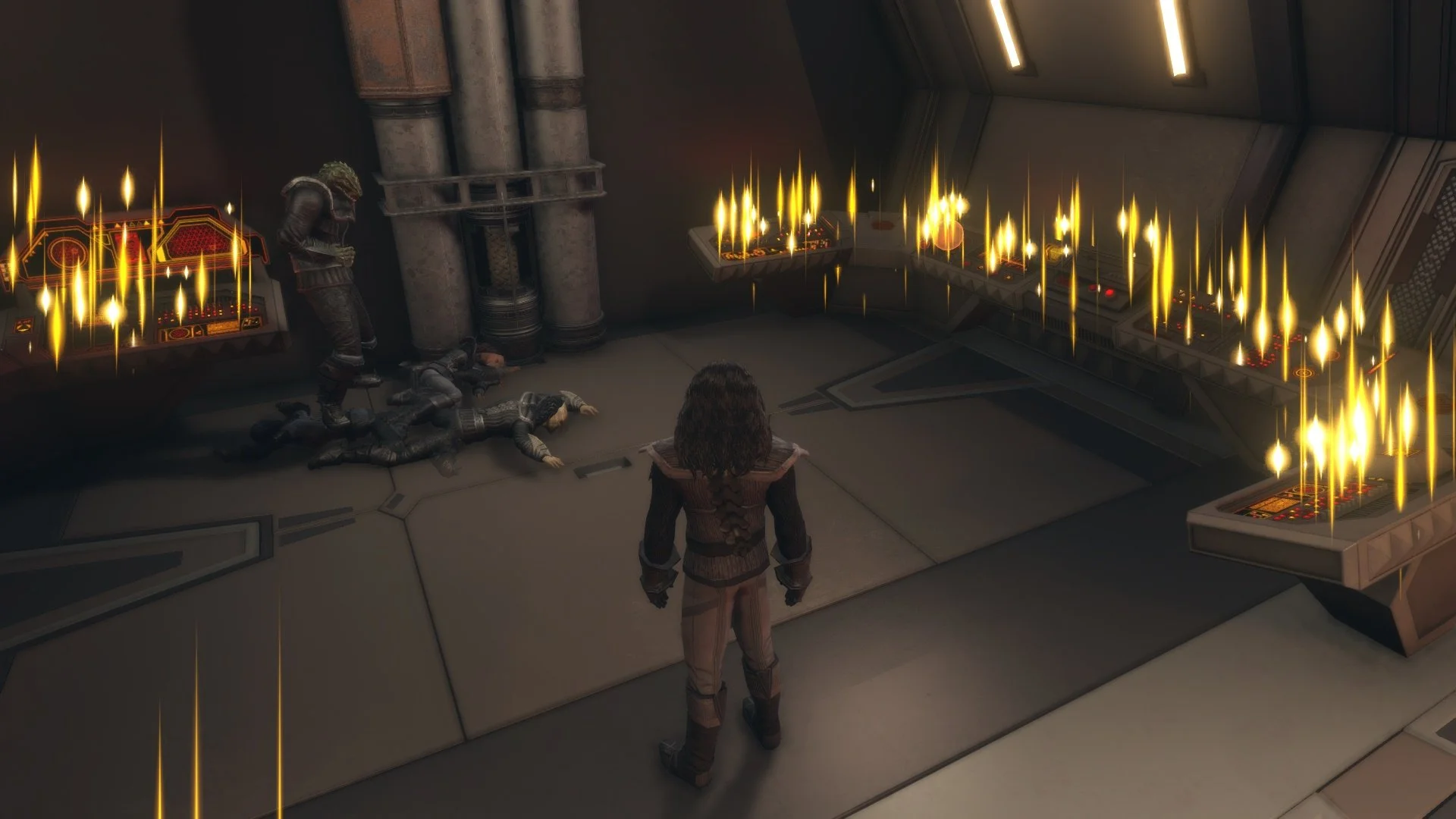
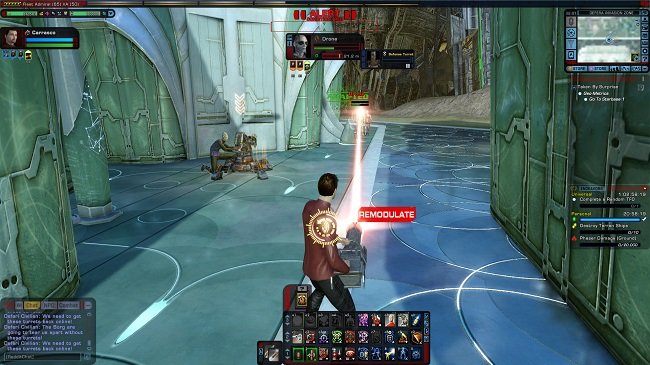
Just for a change, Star Trek Online has another event. “Best Served Cold” is a Task Force Operation in which the 5 players must prevent a prison break from the Klingon gulag Rura Penthe. Complete this TFO 14 times and you can earn rewards including a Nanopulse Targ Combat Pet. If you feel disposed to do so, you can set up a private group and complete this with friends. However, most players simply use the auto-group facility that the game offers. As the interdependency of all classes has diminished in STO, there is no obstacle to quickly joining a pick up group. More often or not, there is little or no criteria for failure for these TFO’s so some players will group and do as little as possible. In some events in STO it is possible to join a group and go AFK. The activity will complete regardless of player participation and all then receive the designated reward.
Just for a change, Star Trek Online has another event. “Best Served Cold” is a Task Force Operation in which the 5 players must prevent a prison break from the Klingon gulag Rura Penthe. Complete this TFO 14 times and you can earn rewards including a Nanopulse Targ Combat Pet. If you feel disposed to do so, you can set up a private group and complete this with friends. However, most players simply use the auto-group facility that the game offers. As the interdependency of all classes has diminished in STO, there is no obstacle to quickly joining a pick up group. More often or not, there is little or no criteria for failure for these TFO’s so some players will group and do as little as possible. In some events in STO it is possible to join a group and go AFK. The activity will complete regardless of player participation and all then receive the designated reward.
Now the reason I mention all this is because I had an interesting experience today while playing STO. As ever, although specifically related to this MMORPG, the wider sentiments discussed here are applicable to many others and indeed any game that features collaborative multiplay. The “Best Served Cold” event is far from difficult and easy to complete. As far as I’m aware your team’s score doesn’t even impact on the rewards. However (and there is always a however in gaming), some players want to complete this daily event to the best of their ability, achieving all the various goals. And to do that all players participating have a part to play. Needless to say that didn’t happen in the TFO in which I was participating and someone had a meltdown in team chat as a result. This raises an interesting question. Exactly what do you expect from a PUG, assuming that you should expect anything in the first place?
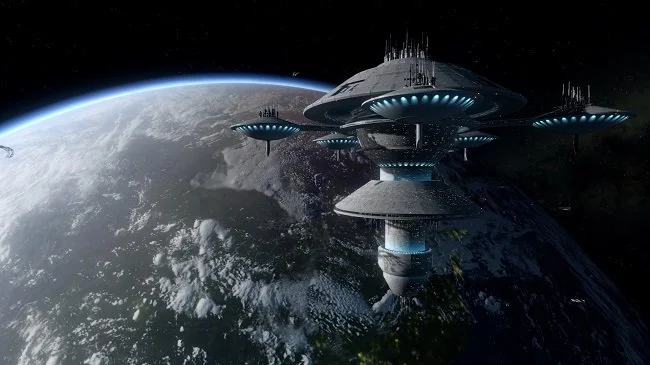
After playing the aforementioned TFO several times, a clear pattern of game play emerges. There are three satellites to defend from enemy attack, then there are transports to subdue and capture. Finally, each satellite needs to be protected from freighter being used as suicide bombers. Five ships can handle this easily. Three vessels can cover the satellites while the other two can cover the transports and eliminate the explosive freighters. But of course this seldom happens. Some players meander about, while others go AFK. Often you’ll finish the event with a percentage of transports escaped and may be a satellite damaged or even destroyed. Sometimes a player will attempt to “school” others, via the Team Chat. This is usually a recipe for disaster and abuse. Others will log out of the TFO if they feel that some players are “doing it wrong”. I simply focus on what I’m doing and reconcile myself to the fact that whatever happens, at least I get my daily reward and inch closer to completing the event.
There is a lot to reflect upon here. When someone joins a random group do they have any obligation to the other players. Do they need to learn the mechanics of the event or group undertaking? Is it presumptuous of others to expect that those that they group with come with adequate provisions such as health potions etc. Is it realistic to expect other players to be as prepared as you? Well if the group activity is organised with friends or through your guild, then I’d argue that there is some sort of social contract in place. But I just cannot argue that there is a similar code of conduct for PUGs. I’d think that basic good manners and a degree of social etiquette still exists, as we see it from time to time. The person who says “Hi” in team chat. The player that tries to do multiple tasks in the group event to compensate for those who cannot or will not. Those that say “good game” before leaving the group. But sadly this sort of positive behaviour is in decline both in and outside of games.
The problem with PUGs is that they do not foster any group identity or encourage any social interaction. It is simply a means of bringing a group of players together in an expedient fashion to complete a task. No one knows anyone and most do not talk. It is an impersonal system that just reinforces that sense of anonymity so often associated with the internet. A means to an end to get what you want. Sadly most game developers don’t make any attempt to address this. A simple way to foster good behaviour and more proactive gameplay is to incentivise and reward those who do more than just show up. But until this is done, I suspect it is simply unrealistic to expect anything of other players. Encouraging behavioural change requires diplomacy and needs to be handled sensitively because many players do not take “instruction” well. A proposed change in attitudes and habits will appear to some as a personal attack. Such is the world we live in at present. Therefore, for the present it is best to expect nothing from your fellow players by default. If anything beyond occurs, then it is a bonus.
"Why Am I Doing This?"
In-depth story quests, complex systems and incrementable progression are the foundation of the MMORPG genre. The player explores the virtual world, undertakes quests, earns gear and advances through various systems that improve their stats. It’s a formula that has been tried and tested over more than two decades. It works and keeps millions of players engaged with their MMO of choice. However, no matter how much new content developers add to an MMO, there are always a percentage of players that quickly complete it and demand more. The genre is a time sink by nature and many players are happy to do exactly that. Therefore, the most practical way to address this dilemma is to attempt to slow player progression. Hence time gating, making required items “rare” and making content repeatable are just some of the ways developer’s can extend a game’s longevity. And so “grinding” has also become an integral aspect of these games.
In-depth story quests, complex systems and incrementable progression are the foundation of the MMORPG genre. The player explores the virtual world, undertakes quests, earns gear and advances through various systems that improve their stats. It’s a formula that has been tried and tested over more than two decades. It works and keeps millions of players engaged with their MMO of choice. However, no matter how much new content developers add to an MMO, there are always a percentage of players that quickly complete it and demand more. The genre is a time sink by nature and many players are happy to do exactly that. Therefore, the most practical way to address this dilemma is to attempt to slow player progression. Hence time gating, making required items “rare” and making content repeatable are just some of the ways developer’s can extend a game’s longevity. And so “grinding” has also become an integral aspect of these games.
I have mentioned in previous posts that with a little bit of creativity, you can mask grind with a veneer of narrative and panache to make it more palatable. If you put some icing on top of a plain sponge cake and you make it marginally more interesting. However, sometimes game developers dispense with even this, leaving the player facing a lengthy, unenjoyable task that is presented purely as a lengthy, unenjoyable task. And it is at this point the players ask themselves the question, “why am I doing this?” Something that developer’s should never want their paying customers thinking. Because most gamers have a set of criteria that they measure a game against. These are usually on a scale. As long as one or two of these criteria are being met then the player will get some sense of enjoyment out of their gaming activities. The moment “why am I doing this?” arises it often means that the player has reached a point where the game isn’t providing any stimulation for them.
So what are these criteria, expectations or measurements by which an MMO is judged by the player? Rather than list lots of niche and subjective examples perhaps defining three broad categories would be more appropriate? I think that at least one of these categories have to be met for an individual to want to continue playing a specific game.
“Fun”: This is a broad generalisation and a very subjective term. I use it here to mean some sort of emotional engagement that the player experiences while playing. The “fun” may be PVP, participating in a raid, undertaking a story quest, crafting, roleplaying or just riding around a virtual world on your mount. Some people also go all in on the social element of MMOs. And because all these experiences are positive and enjoyable, players are happy to continue these and similar activities.
Quid pro quo (Something for something): Sometimes an activity in an MMO may not be especially enjoyable and therefore may not fall into the “fun” category. But if it offers something in exchange for your time and effort then the player may overlook and endure the activity’s shortcomings and do it purely for the reward. The reward can be both literal or figurative. An item or a title. As long as it satisfies the player then they will keep playing. I find that a lot of my gaming is of this transactional nature. I am at times ambivalent towards what I am doing and instead focused on what it will yield.
Passing the time: This is a nebulous category but also a very common one. Many gamers will log into a game after a day’s work simply to unwind. Games per se offer a convenient and effective means of relaxing from stress and anxiety. Often the quality of the game or the complexity of the task being carried out do not matter that much. Undertaking simple, repetitive tasks such as crafting allow people to focus and destress. This is similar to putting the TV or listening to background music, just to “kill some time”. No matter how arbitrary the task or action may be, if it provides a restful distraction then it is serving a purpose. However, this is a fine line to tread.
If a game fails to satisfy any of the three aforementioned categories then the question “why am I doing this?” is bound to occur. And when it does it is often an epiphany. The MMO genre is one that fosters a culture of dedication and even obligation. The sunk cost fallacy also has a part to play. But gamers need to remember that video games are a leisure activity and service. If you don’t like your meal in a restaurant then you send it back. If you’re not enjoying the book you’re reading then stop doing so. TV shows that don’t engage can be turned off. Why should an MMO be any different? The rhetorical question “why am I doing this?” should be a major alarm bell for any MMO game developer. It should be something ever present in their mind, especially when testing content. It is unreasonable for gamers to expect all content to be an enthralling rollercoaster ride. In fact there are cogent arguments for providing content that give players some “down time”. But content should never be so dull that players question while they even bothered doing it in the first place. That is gamer Kryptonite.
LOTRO: Revisiting Landscape Soldiers
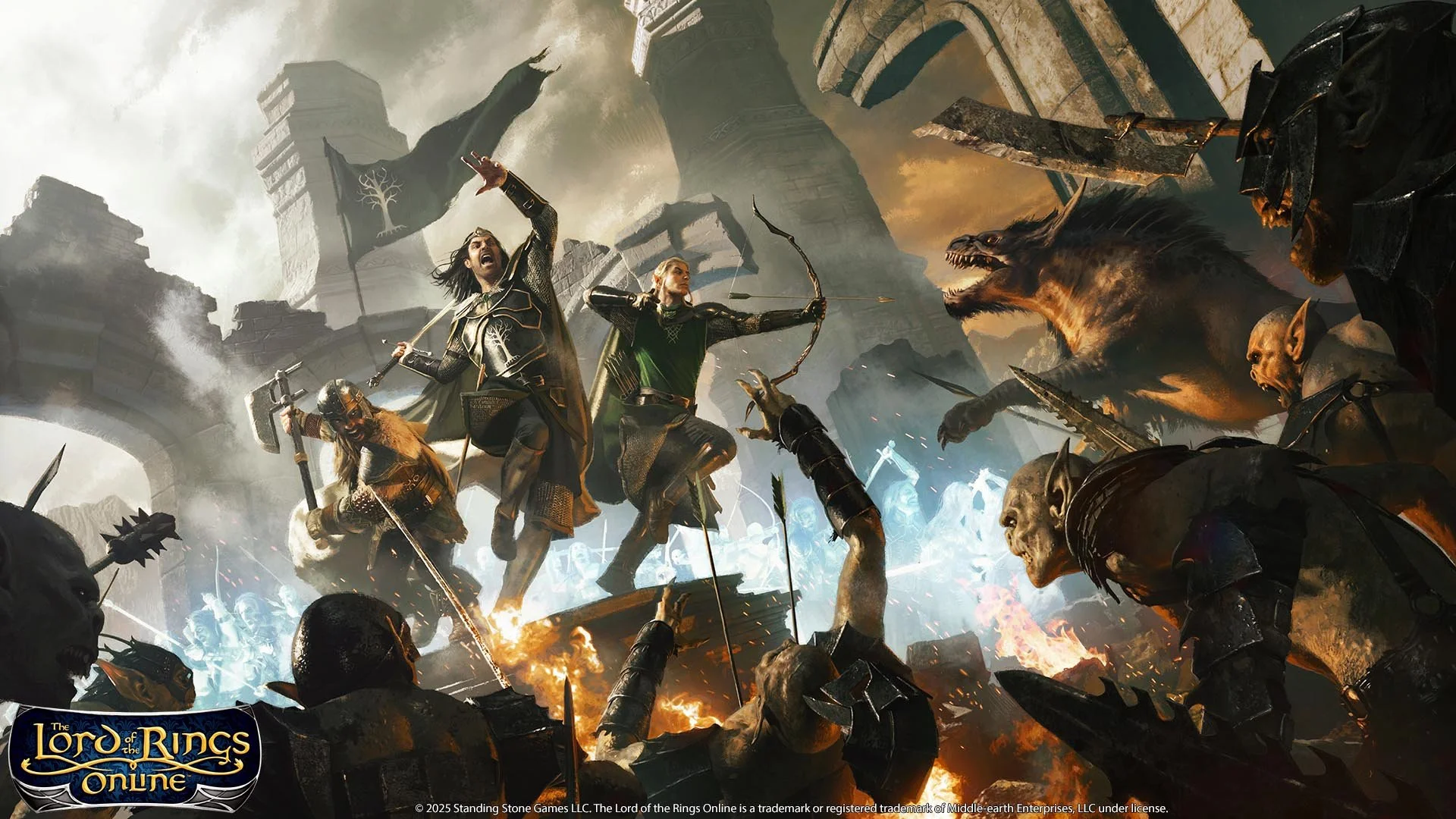
In March 2012 Turbine released Update 6: Shores of the Great River for The Lord of the Rings Online. This included the ability to summon your Skirmish Soldiers while playing PVE content. Prior to this you only had access to your soldier when playing skirmishes. Whether this was done to compete with other MMOs that have companions or crew such as Star Wars: The Old Republic or Star Trek Online is not clear. It may have been a purely financial decision, as tokens offering an hour’s access to your skirmish soldier soon appeared in the LOTRO store. Like all changes made regarding LOTRO, opinions were divided at the time. Where I saw this as an increase in player choice, others perceived it to be another step away from the spirit of an MMO and further evidence of the solofication of the genre. Eight years later, one thing is certain. Having access to Skirmish Soldiers throughout the game in general, is not the same as having a full blown companion that single player games and some MMOs offer.
In March 2012 Turbine released Update 6: Shores of the Great River for The Lord of the Rings Online. This included the ability to summon your Skirmish Soldiers while playing PVE content. Prior to this you only had access to your soldier when playing skirmishes. Whether this was done to compete with other MMOs that have companions or crew such as Star Wars: The Old Republic or Star Trek Online is not clear. It may have been a purely financial decision, as tokens offering an hour’s access to your skirmish soldier soon appeared in the LOTRO store. Like all changes made regarding LOTRO, opinions were divided at the time. Where I saw this as an increase in player choice, others perceived it to be another step away from the spirit of an MMO and further evidence of the solofication of the genre. Eight years later, one thing is certain. Having access to Skirmish Soldiers throughout the game in general, is not the same as having a full blown companion that single player games and some MMOs offer.
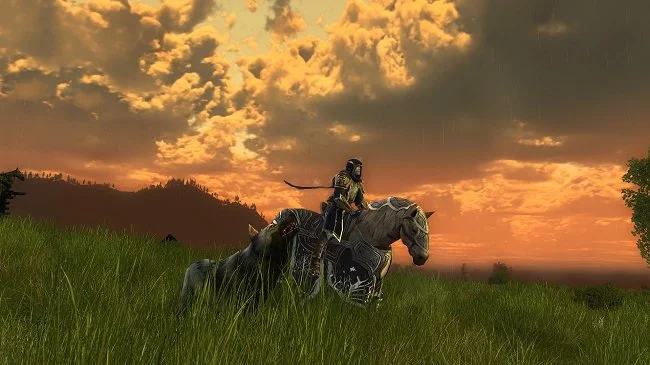
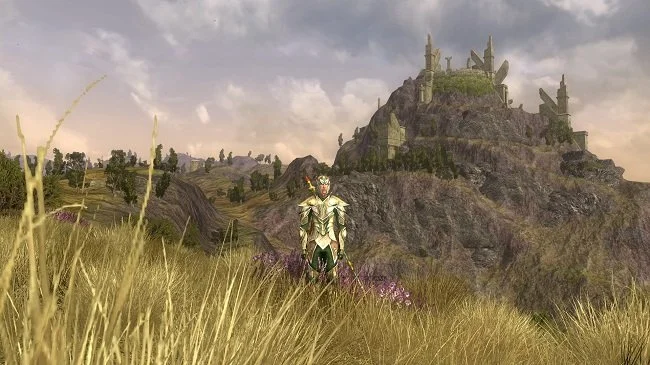
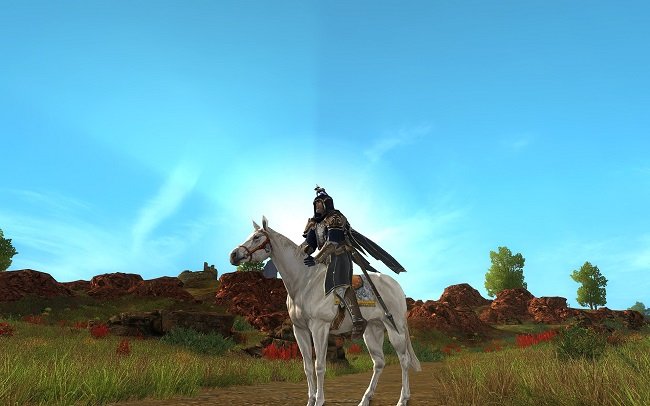
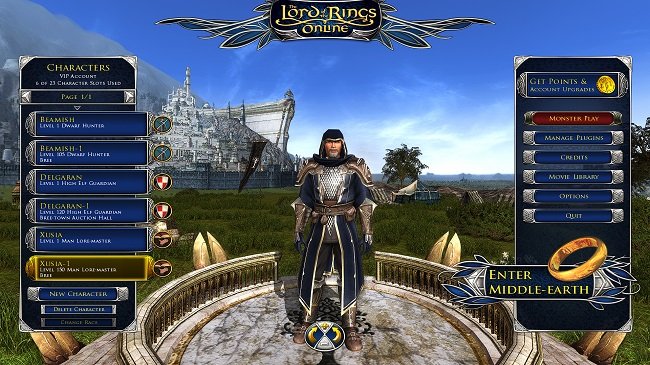
The reason I raise this subject now, is because I’m currently grinding through the War of Three Peaks phase in the new “mini expansion” and it is a litany of kill and fetch quests in a zone densely populated by enemy mobs. Some areas are best tackled by a small fellowship. As it is not much fun, so I decided to see if I could progress quicker by using my Landscape/Skirmish Soldier. I currently have a Warrior that is maxed out. Sadly this tactic has not proven especially beneficial because the Landscape/Skirmish Soldier is nothing more than a blunt tool. It has very limited functionality and certainly doesn't compete with the flexibility of the Captain's Herald and Lore-master's pets. You can direct it to fight a specific target but the cooldown on that skill takes too long to be of tactical use. It also doesn’t seem to do much damage when fighting an enemy. Having levelled a second character in the last 18 months I have noticed that the Landscape/Skirmish Soldier seems to be more effective at lower levels.
Hence I have toyed with the idea of retraining my Landscape/Skirmish Soldier from a Warrior to another type. However, after some research on the official forums and the LOTRO subreddit, it would appear that most folk choose either a Sage or Herbalist. This is because they can provide debuffs and healing, effectively. Archers, Bannerguards and Protectors (as well as the Warrior that I currently have) all suffer from the same problems; chaotic AI, a penchant for getting lost or stuck in the environment and generally not being able to hold enemies and kill them quickly enough. Plus, if I do decide to retrain my Landscape/Skirmish Soldier, there is the cost to consider. It would appear it takes about 60,000 Skirmish Marks to buy a new role and max out the allotted skills. I currently have 23,000 Skirmish Marks and that took a while to build up. So potentially, this could be a lengthy and costly process, which may still not yield the results I seek.
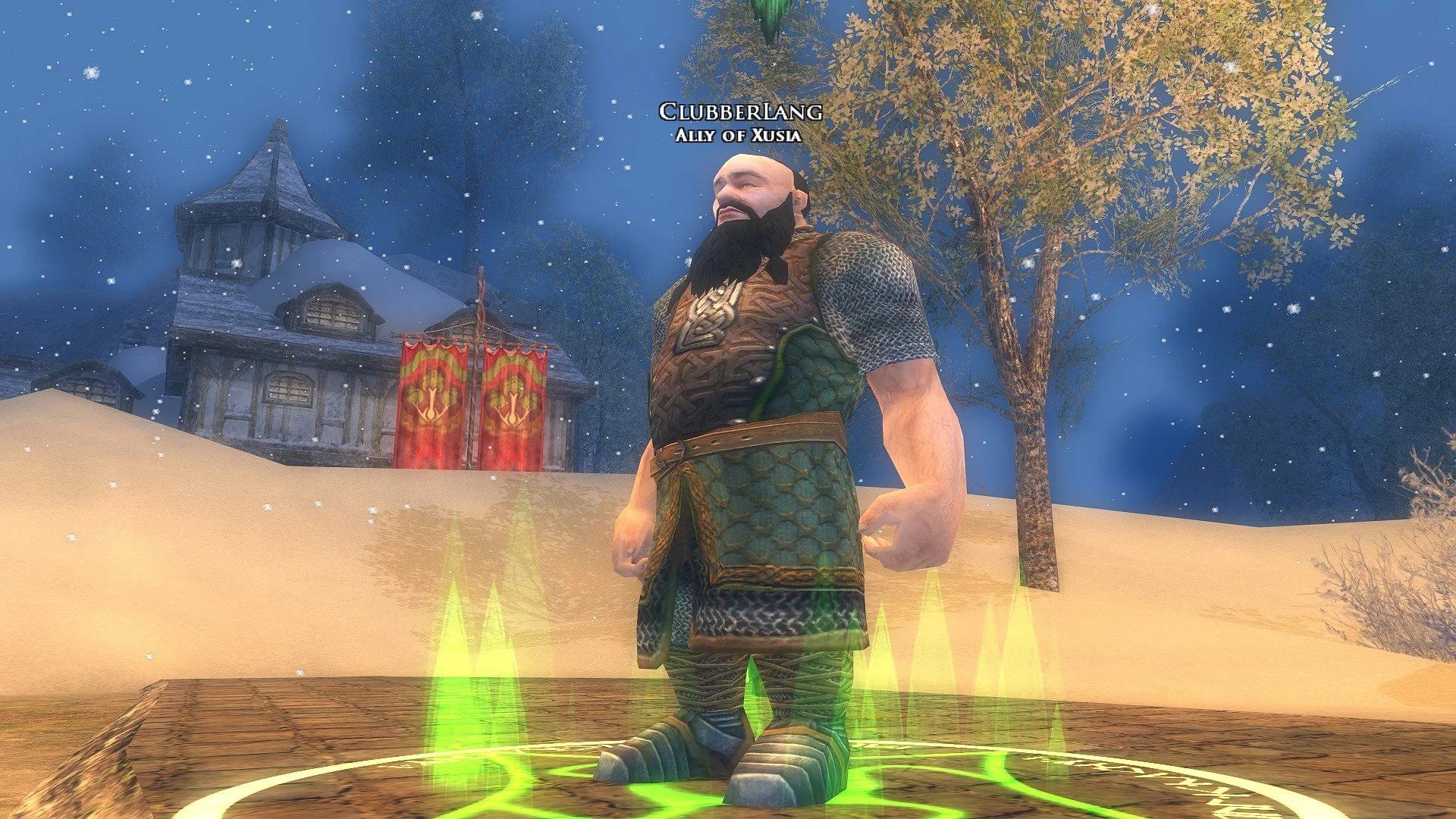
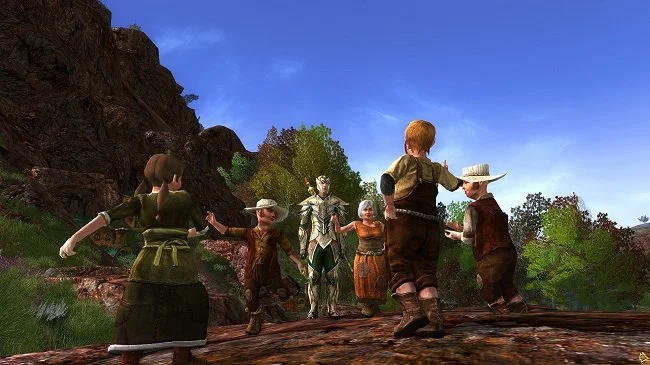
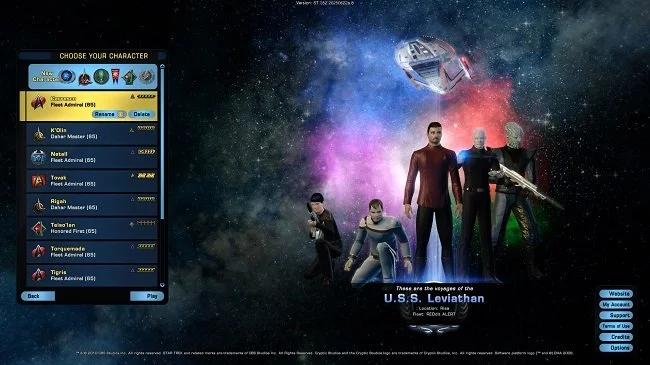
Another disappointing aspect of the Landscape/Skirmish Soldier is that they have no associated backstory and therefore I have no emotional connection or investment in them. They are no more than a meat shield. However, companions in SWTOR have bespoke stories, personalities and a varied set of skills. As there are multiple companions available in the game, you use whichever one is appropriate to your circumstances. Their dialogue and sundry banter can be both endearing and annoying. Either way, at least you care about them. And in Star Trek Online, although your away team do not have individual stories, you can at least customise their skills and gear. Having four NPCs providing support with a small degree of tactical control can be a real asset. It would therefore be nice to see something comparable in LOTRO. You should be able to use your Landscape/Skirmish Soldier in the same way you can your pet. However, I don’t think this is on SSGs priority list. It’s just another facet of LOTRO that has fallen by the wayside. Like hobbies, Epic Battles and mounted combat.



LOTRO Classic
In the last month or so, I’ve spent some time perusing the official forums for the MMORPG The Lord of the Rings Online. It suffers from many of the shortcomings you find on fan driven gaming forums, insofar as it’s monopolised by a small cadre of partisan minded players that are not an especially broad cross section of the LOTRO community. However, a wide range of thoughts and ideas about the game are discussed on these forums. Sometimes, if the planets are in the correct alignment, staff from Standing Stone Games will even deign to reply. Recently, a particularly interesting question that has frequently been raised by players finally got addressed by SSG developer Jeff Libby (AKA MadeOfLions). Namely, will there ever be a release of LOTRO Classic? An “old school” server with the game as it was when it launched in 2007. The fact that they actually answered is the main surprise here. Everything else about the actual reply is par for the course and embodies everything that is wrong with SSG and their community relations. Here is the original question and the subsequent answer.
In the last month or so, I’ve spent some time perusing the official forums for the MMORPG The Lord of the Rings Online. It suffers from many of the shortcomings you find on fan driven gaming forums, insofar as it’s monopolised by a small cadre of partisan minded players that are not an especially broad cross section of the LOTRO community. However, a wide range of thoughts and ideas about the game are discussed on these forums. Sometimes, if the planets are in the correct alignment, staff from Standing Stone Games will even deign to reply. Recently, a particularly interesting question that has frequently been raised by players finally got addressed by SSG developer Jeff Libby (AKA MadeOfLions). Namely, will there ever be a release of LOTRO Classic? An “old school” server with the game as it was when it launched in 2007. The fact that they actually answered is the main surprise here. Everything else about the actual reply is par for the course and embodies everything that is wrong with SSG and their community relations. Here is the original question and the subsequent answer.
Question by LotroVidz: Also most of the devs seem to not be original devs from 2007, so how can they know without asking the player base? MOL didn't even understand why players ask for a classic version of the game. He doesn't seem to understand how much of a different game the original Lotro was.
Answer by Made of Lions: Hi there, original dev from 2007 here. No, I understand it. I also love a lot of the games I played years ago (the amount of money I've spent buying digital versions of the games I loved from the 90s is downright embarrassing), so I know what it is to look back at something and miss it. I would personally love to see a version of LOTRO from launch, to run around in old-timey Eriador and see it in all of its 2007 glory. I stood in line at my local Gamestop on launch day to buy the strategy guide I also helped compile, and I remember running around Breeland listening to players be... stumped... about the location of the Hanging Tree, which was harder to find back then. There's just something about a brand-new MMO, when it's a vast and undiscovered world of mystery and full of promise. You won't find a bigger fan than me, and I would have a great time running around Original Recipe LOTRO. That would be a great afternoon.
But it doesn't have the longevity you remember. It's a snapshot, frozen in time, and from our perspective it's a snapshot that would remove tens of thousands of fixes, some minor, but many serious. "But I liked it better before!" you say. "I want a version that only has what I like, and doesn't have anything that I don't! I want you to restore Frodo's Burden to the slow and frustrating experience it started as." I hear you, and I understand, but our Engineers have plenty on their plates already without being tasked to revert LOTRO to the years-old state that best suits your taste. Engineers in particular are allergic to undoing their own fixes, since those tend to be the most important when compared to the kind of things Content usually has to fix. Frodo's Burden, alas, will remain in its adjusted state. MoL
It can be difficult sometimes to accurately interpret the tone that may or not be present within any written response. Some people believe that there is a degree of condescension present in Jeff Libby’s reply and that again we see SSG dealing with customer questions as if they’re an inconvenience or nuisance. Whether that is true or not is something that we have to decide for ourselves. Semantics and diplomacy aside, the statement does raise some interesting points.
Does the original code for the Shadows of Angmar version of LOTRO still exist? Are there backups of previous server builds or would all previous patches and content updates have to be manually “unpicked”?
Assuming that an earlier version of LOTRO could be made available, exactly how would SSG monetise it? This is an important question as there would naturally be costs incurred when running LOTRO Classic. Would the VIP subscription yield enough revenue to make such a venture viable? There was no store present in LOTRO in 2007 and the game as it was then has no immediate means of running store based transactions in-game.
Would producing and maintaining LOTRO Classic be a wise division of SSGs development resources? Is SSG just too small a gaming developer to be able to sustain multiple servers with multiple iterations of the same product?
Would LOTRO and the player community be better served by SSG focusing their finite resources on a major bug fixing project? Would the overhauling of problematic systems and developing new kinds of innovative content attract new and lapsed players back to the MMO and extend the games lifespan?
But I think the biggest issue with Jeff Libby’s response is his point that players may well think they’d like to play LOTRO Classic but they don’t really want it, because their judgement is being clouded by nostalgia. I consider this to be a patently false axiom. A similar argument was perpetuated by Blizzard for years, when players asked for World of Warcraft Classic. It proved totally wrong and we now have such an iteration of that game and it appears to be doing fine. Many LOTRO players would love to get their hands on some of the older systems that have now been replaced, or play through some of the instances and raids before they were nerfed and split up. One of the major appeals for roleplayers is simply being able to exist in a virtual Middle-earth. The game as it was in 2007, although technically smaller, felt bigger than it does now. Travelling around originally took longer and players did not immediately have access to mounts. LOTRO Classic may even tempt some newer players to come and see how much the games changed over time.
The LOTRO Community can be myopic and even a little partisan. But many have grown old with the game and are fully aware of what they’d be getting if a version of LOTRO Classic became available. They are fans but not necessarily fools and it is disingenuous for anyone at SSG to patronise them. I’m of the opinion that SSG could, if they wanted too, produce a form of LOTRO Classic. They just don’t want to as I’m sure it will be a lot of hard work and that the issue of integrating the in-game store is a major problem for them. But because of the way that SSG handles communication and interacts with its community, this question is never going to go away. If they clearly, politely and categorically said that they can’t or won’t produce a form of LOTRO Classic and then gave a sound reason, then the player base may well move on. But candid and direct communication is not their style. However, there may be a small ray of hope. Ultimately, the decision regarding LOTRO Classic may not be SSGs to make. If their “publisher” Daybreak Game Company felt that there was money in such a project, there could be a complete U-turn on this subject.
MMO Nostalgia
Every now and then, when I log into The Lord of the Rings Online, as I ride through a new zone and drink in the vividly realised landscape and sumptuous ambient music, I am smitten by a wave of nostalgia. Just for a few seconds, I recall the emotional excitement of being in a virtual Middle-earth for the first time. I also remember the camaraderie and good company I experienced when I started playing this MMO in 2008. It is a powerful experience but sadly very short lived. Something subsequently happens to take me out of my reverie and bring me back to the current state of the game with a bump. This can be hitching, a major lag spike or a Dwarf irritatingly jumping up and down in my peripheral vision as I peruse the Auction House. Hence my present relationship with LOTRO and indeed the MMORPG genre is one based upon nostalgia and a hint of sadness. I still enjoy LOTRO mainly because of the stories and lore, as well as my friends in our kinship. But I no longer experience the game, as I did over a decade ago. And I miss that.
Every now and then, when I log into The Lord of the Rings Online, as I ride through a new zone and drink in the vividly realised landscape and sumptuous ambient music, I am smitten by a wave of nostalgia. Just for a few seconds, I recall the emotional excitement of being in a virtual Middle-earth for the first time. I also remember the camaraderie and good company I experienced when I started playing this MMO in 2008. It is a powerful experience but sadly very short lived. Something subsequently happens to take me out of my reverie and bring me back to the current state of the game with a bump. This can be hitching, a major lag spike or a Dwarf irritatingly jumping up and down in my peripheral vision as I peruse the Auction House. Hence my present relationship with LOTRO and indeed the MMORPG genre is one based upon nostalgia and a hint of sadness. I still enjoy LOTRO mainly because of the stories and lore, as well as my friends in our kinship. But I no longer experience the game, as I did over a decade ago. And I miss that.
LOTRO was my introduction to the MMORPG genre. And when I started playing, “multiplayer” was still an integral aspect of such games. It was clear right from the get go that much of the content was designed for groups and if you wished to progress through the game, you’d be dependent on playing with others. However, I was at a point in my life where I had the time available to sink into such a game, mainly because I was living alone. Furthermore, this kind of gaming experience was still novel for me and I enjoyed the company of other gamers. I fortunately hooked up with some like minded gamers who were loitering around a particularly nasty enemy and necessity brought us together to defeat it. Names were subsequently added to a friends lists and shortly thereafter I found myself joining a kinship (guild) with the same people. Circumstances, along with a lack of exposure to games of this kind meant that for the next few years this MMO was my game of choice.
Between 2008 and the present, I have played most major MMOs at some point. Each new game has always promised something “different”. Sometimes this has been the case. Rift brought “dynamic content” to the mainstream. However, over time trends have changed. Tab targeting and skill rotations have given way to action combat and greater situational awareness. The reliance on the traditional “trinity” of classes has been replaced by more flexible builds. But if you can heal yourself and adapt to different situations, then the need to group is negated. Social game play has become optional and for many players unnecessary. Other genres have successfully adopted elements from the MMO. Hence, many cooperative games have poached former MMO players. Thus, several decades on from the halcyon days of Ultima Online and EverQuest, the MMO genre has now become a distinctly niche market product. It retains loyal gamers but is no longer seen by the video games industry as the “future of gaming (AKA cash cow) they once thought it to be.
It can be argued that the MMORPG genre has never reached its full potential. The right balance of features and game mechanics has never quite been implemented in any game. Players cannot make any lasting changes upon the virtual world that they play in. Housing has never really progressed beyond a cosmetic storage zone. Linear progression and grinding for gear is still the primary focus of many games. The social aspect of these types of games have all too often diminished and the developers seldom do anything to incentivise such activities. And many players never fully experience the majority of the content that a game has to offer. Twelve years on, I often get this sense of a missed opportunity whenever I log into LOTRO. It’s a somewhat saddening feeling. The game get’s content updates but it tends to be just more of the same and there’s no innovation from developers Standing Stone Games. The same can be said for other MMOs to a greater or lesser degree. They seldom do anything radically different from their competitor and once established, just continue doing things in the same idiom. It may be that this is part of the genre’s appeal. It certainly isn’t too difficult to migrate from one MMO to another, as they all broadly do the same thing.
Nostalgia is a powerful emotion and the video games industry has wisely chosen not to ignore it. Hence in recent years we have seen “classic” iterations of various MMOs where early versions of a game are made available again. The growth in rogue servers of games that have long been officially shutdown is another interesting development. The evolution of MMOs has not been to everyone’s liking and some gamers hanker for “how things used to be”. For me, my relationship with MMOs peaked between 2008 and 2011. A perfect storm of events contributed to this genre being the apple of my eye. But change is an inherent part of life. MMOs and I are no longer what we used to be. Yet I still play them in memory of what was and for those occasional, fleeting moments when I briefly reconnect with the past. And then it briefly feels like going home. One day I shall finally part company with this genre and move on. But not yet.
LOTRO: Update 28 - War of Three Peaks
Players of the popular MMORPG The Lord of the Rings Online were informed just 24 hours ago by developers Standing Stone Games, that the new “mini expansion” would be released today. Under normal circumstances, Update 28 - War of Three Peaks would have just been marketed as a content update and have been free to VIP subscribers, lifetime account holders and purchasable with LOTRO points by F2P players. However, these are far from normal circumstances. From March to May this year, LOTRO enjoyed a major renaissance as the lockdown brought players back to the game. SSG felt so confident in this surge in the playerbase that they made all previous updates available for free. However throughout June, July and August the game suffered major technical problems that lead to the majority of game servers being down for weeks. During that time many players took their business elsewhere or at the very least deferred subscribing until the technical issues were resolved. This left a major hole in SSG’s finances, hence the latest update miraculously became a chargeable “mini expansion”.
Players of the popular MMORPG The Lord of the Rings Online were informed just 24 hours ago by developers Standing Stone Games, that the new “mini expansion” would be released today. Under normal circumstances, Update 28 - War of Three Peaks would have just been marketed as a content update and have been free to VIP subscribers, lifetime account holders and purchasable with LOTRO points by F2P players. However, these are far from normal circumstances. From March to May this year, LOTRO enjoyed a major renaissance as the lockdown brought players back to the game. SSG felt so confident in this surge in the playerbase that they made all previous updates available for free. However throughout June, July and August the game suffered major technical problems that lead to the majority of game servers being down for weeks. During that time many players took their business elsewhere or at the very least deferred subscribing until the technical issues were resolved. This left a major hole in SSG’s finances, hence the latest update miraculously became a chargeable “mini expansion”.
A month ago the new update was previewed on the Bullroarer test server and it became clear that it was just more of the same. IE Just another zone with multiple quest hubs. Essentially the same sort of material that SSG have been producing for the last few years. So if this was to be sold as a “mini expansion” then there would have to be some additional content included as well to justify selling it. Hence, the LOTRO community braced themselves as they awaited the pricing details for the War of Three Peaks, as Update 28 has been formally named. SSG usually sells three versions of an expansion. A Standard Edition, a Collector’s Edition and an Ultimate Fan Bundle. It should be noted there have been controversies in the past over previous legitimate expansions and their respective value for money. Oddly enough, SSG decided not to announce the price or exact content of all three editions until today when the “mini expansion” formally launched. However, marketing emails were sent out to some players so the pricing of the three editions became known by midday.
As you can see, the pricing for this mini expansion” is broadly comparable to the previous full expansion Minas Morgul. Considering that War of Three Peaks is just the size of a regular content update, the prices are exorbitant. The Standard Edition is the only one that I will even consider buying as there are insufficient extras in the other two versions to justify their cost. There has already been a degree of “pushback” over on the official LOTRO forums as players voice their displeasure at the pricing and the entire way this situation has been handled. I suspect that if the outcry is big enough, you may find SSG adding additional content to the Collector’s Edition and Ultimate Fan Bundle to try and redress the balance. But there are wider issues here beyond the mere price of this “mini expansion”. Are we about to see a major restructuring of the games business model? If so, is this change in policy down to SSG or their publisher (and potentially owners) Daybreak Game Company?
Charging all LOTRO players for future content updates may well become the “new normal”. Up until now, content updates have been free to subscribers and lifetime account holders. F2P players would purchase Quest Packs for new zones. However this may not have proven especially profitable. When I play LOTRO I subscribe a month at a time. The monthly fee is £9. Quest Packs cost on average 795 LOTRO points (approximately £8). During the course of a month I could play through two or three zones, making a subscription a lot more economical than buying all the respective Quest Packs. Furthermore, lifetime account holders have always received (up to now) access to all new content updates free of charge, so SSG has never made any revenue of this type from this section of the LOTRO community. It has often been argued that lifetime accounts for LOTRO were sold too prolifically during the game’s early years and as a result there is a large percentage of players that do not have to spend any money except for major expansions. If these current practises cease and everyone who plays has to buy new content three times a year then there is scope for SSG to increase their revenue.
However, if the sale of all new content became mandatory, it would invalidate the need for a monthly subscription. At present the only real advantage of subbing is free access to new content and the following additional services. Mailbox Field Access. Custom character portrait frame. Access All Character Trait Slots. Daily +100% XP*. 500 LOTRO Points per month. Free weekly Gold Hobbit Present.Access All Quest Packs and Skirmishes*. Access All Monster Classes. Many of these could be sold individually via the LOTRO store or bundled into a “starter pack” or something similar. The stipend of LOTRO points is a nice bonus and one that I enjoy but it is totally dependent on a subscription. It therefore isn’t really “free” but more of a quid pro quo. It should be noted that the MMORPG Star Trek Online removed subscriptions as of Spring 2018. Many of the benefits that came with subbing to that game simply became one off purchases.
All things considered, perhaps the release of War of Three Peaks as a “mini expansion” is more than just a short term fiscal adjustment, designed to fill a shortfall in the quarterly balance sheet. It may be part of a complete recalibration of the business model for LOTRO and a way to ensure that all players pay equally for the new future content that comes to the game. If that is the case then SSG needs to ensure that all updates meet a high standard. The LOTRO community is very supportive of the game and has more than its share of “whales” who buy cosmetic items prodigiously. However, potential changes such as these indeed to be implemented carefully and require adept community relations, marketing and PR to effectively sell them to the players. Skills that SSG are not renown for. It will be interesting to see how things pan out in the weeks to come. Firstly with the immediate reception of the new “mini expansion” and its respective value for money. Secondly, whether SSG formally announce a revision of the game’s business model. All of which could be a turning point for LOTRO but whether for good or ill remains to be seen.
LOTRO: Even More Community Management Problems
Video games are a somewhat unique consumer product, in so far that we, the customers, broadly seem to have a far more personal relationship with them compared to other recreational activities. For example, I subscribed to several online streaming services that produce TV and film content. However, I never worry about how well their business model is performing, nor do I particularly concern myself with their public relations image. I simply “pay and consume” and as long as I have no technical problems that impede my access, then that is the extent of my relationship with them. I also enjoy Hendrick’s Gin but I don’t worry about the manufacturer, William Grant & Sons. But for some reason, my relationship with video games is different. I am far more au fait with the activities of both the developers and publishers, as well as their overall corporate standing. I suppose it’s because video games are an interactive activity and that make things more personal.
Video games are a somewhat unique consumer product, in so far that we, the customers, broadly seem to have a far more personal relationship with them compared to other recreational activities. For example, I subscribed to several online streaming services that produce TV and film content. However, I never worry about how well their business model is performing, nor do I particularly concern myself with their public relations image. I simply “pay and consume” and as long as I have no technical problems that impede my access, then that is the extent of my relationship with them. I also enjoy Hendrick’s Gin but I don’t worry about the manufacturer, William Grant & Sons. But for some reason, my relationship with video games is different. I am far more au fait with the activities of both the developers and publishers, as well as their overall corporate standing. I suppose it’s because video games are an interactive activity and that make things more personal.
Hence, as a long time player and supporter of the MMORPG The Lord of the Rings Online I worry about the games long term future. It can be cogently argued (and I have done so myself in the past many times) that it is pointless adopting such a stance but I think this ultimately is just a foible of the human condition. It is in our nature to form communities around the things we love irrespective of whether such communities genuinely have any impact and traction. So bearing this in mind, I think that LOTRO is at a crossroads and that a triumvirate of problems could coalesce and have a very negative impact. The first of these three are technical issues that stem from the fact that LOTRO is a 13 year old game. If a subscription game doesn’t run reliably and consistently then some players take their business elsewhere. The next problem is the business model and the way that Daybreak Game Company is squeezing too hard. Update 28 becoming a “mini expansion” is a succinct example of this. And finally there’s the community relations and communications. They’re poor and often conducted in a very peremptory tone.
There has been a conspicuous lack of information regarding The War of Three Peaks since the preview on the Bullroarer test server on 23rd September. I don’t think the player base was especially impressed with what is essentially just another content update. However, SSG recently stated that the “mini expansion” would be coming in the next week or so. But when asked for further details community manager Jerry Snook stated that SSG would not reveal details of the three different versions of the new content update until the day of its release. If this were any other developer I would’ve been surprised by such a response but after years of such indifferences from SSG, I simply shrugged. They’ve always been shocking at marketing their own content. In recent years, teaser videos have always been hastily produced and hardly make the new content look exciting. Information has always been confined to the forums and never shouted from the rooftops. So the fact that SSG feels disinclined to market The War of Three Peaks is frankly par for the course. I used to think they were just bad at this stuff. I now think they just take their customers for granted.
In the past decade there have been several occasions where the future of LOTRO has appeared to be in doubt. Whether this was the case or not is another matter. However, due to the lack of communication that habitually blights this games community management, we’ve worried about license renewals, corporate takeovers and server relocations over the game’s lifespan. Ultimately, LOTRO has survived and continues to so due to its devoted community. They love the game and its realisation of Middle-earth. The fact that there is no alternative is another major factor. Yet SSG seem to be oblivious to this and have basically given a key role that is supposed to act as a conduit between consumer and vendor to a very grumpy man who always gives the impression he’d much rather be doing something else. They need to fix this problem, along with the technical issues and the business model. God help them if The War of Three Peaks is a dog’s dinner. You can’t keep kicking your community indefinitely, because eventually it will turn on you and leave.
Star Trek Online: Beginners Guide Part 2 - Careers, Factions and Species
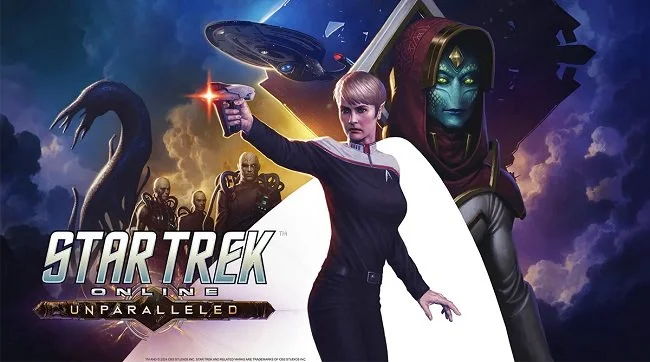
Welcome to the second part of my Star Trek Online: Beginners Guide. I thought it may be useful to write a series of posts, offering practical information for those who are just starting out in STO. Nothing fancy or in any way definitive. Just a few basic tips that may help orientate the new player. I’ve been playing STO since its launch in 2010 and this MMO has seen a lot of changes. The game features a lot of systems and mechanics that are not always immediately intuitive to grasp. So I’ll be doing my best to cover a selection of these in each post and try to provide a broad overview. Like a lot of advice, it can be subjective. Ultimately it comes down to each player how they wish to play. In this instalment, I shall be writing about career paths, factions and races.
Welcome to the second part of my Star Trek Online: Beginners Guide. I thought it may be useful to write a series of posts, offering practical information for those who are just starting out in STO. Nothing fancy or in any way definitive. Just a few basic tips that may help orientate the new player. I’ve been playing STO since its launch in 2010 and this MMO has seen a lot of changes. The game features a lot of systems and mechanics that are not always immediately intuitive to grasp. So I’ll be doing my best to cover a selection of these in each post and try to provide a broad overview. Like a lot of advice, it can be subjective. Ultimately it comes down to each player how they wish to play. In this instalment, I shall be writing about career paths, factions and species.
Q: Which career is best for new players?
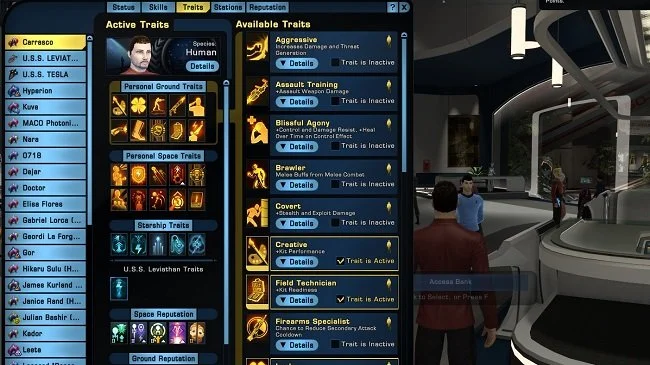
A: The answer to this conundrum really comes down to playstyle and personal choice. There is no optimal path as such in STO. Yes some builds can deliver higher DPS but game skill also plays a part. Having the so-called “best” doesn’t mean you’ll perform in a comparable fashion. So to begin with there are three career paths in STO. A Tactical Captain deals damage, an Engineering Captain is designed to absorb damage and is thus a tank and a Science Captain focuses on buffs, debuffs, energy drain, hold and heals. All three careers have their own strengths and weaknesses. However, these can be tempered by your choice of traits, skills, ground and space gear and ship. And this is where the enjoyment lies; creating your own hybrid build. IE an Engineer using a heavy cruiser to tank, or a Science Captain focusing on healing while using a fast tactical escort.
Q: What faction should I choose?
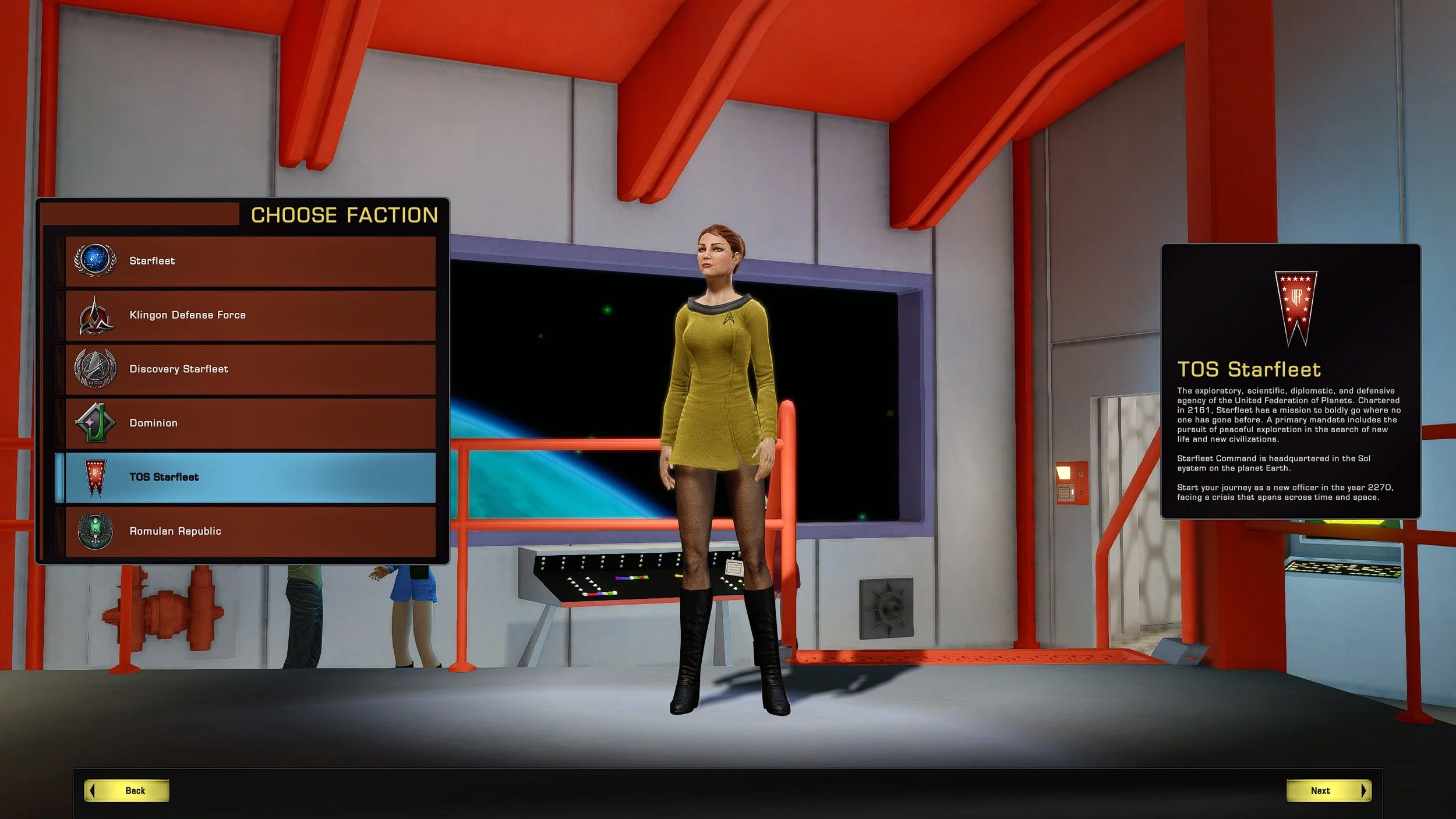
A: At present there are six factions in Star Trek Online.
Starfleet (the 25th century Federation faction).
Klingon Defence Force.
Romulan Republic.
TOS Starfleet (the 23rd century Federation faction).
Dominion.
DSC Starfleet (the 23rd century Federation faction, Discovery era and pre-TOS).
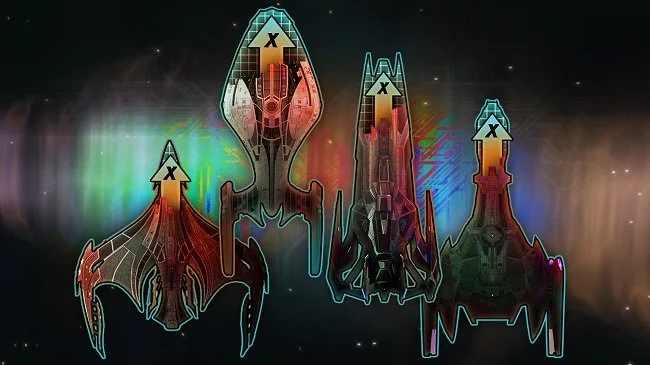
All of which offer levelling from 1 to 65 (the present level cap) apart from the Dominion which starts at 60 and extends to 65. Each faction has bespoke traits and offer an initially unique storyline for approximately a third of the game. There then comes a point when certain missions are completed, the main story becomes centralised and applicable to all factions. At this juncture, Dominion faction players and Romulan Republic players must decide whether to ally themselves with either Starfleet or the KDF. Once this choice is made, it cannot be changed. However, at this point, as the story is the same to all factions, the only major differences are the NPCs who bestow missions and more importantly what vessels you have access to. The latter is an important consideration.
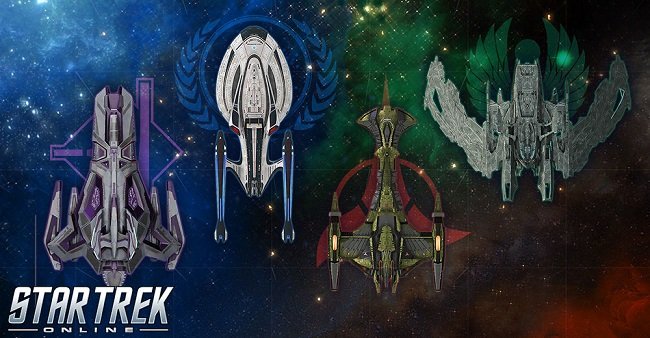
Personally, I don’t think any faction has a superior story arc. All have been overhauled over the years and are now very well realised. I think most players choose a faction based upon their personal relationship with Star Trek. I was raised on reruns of Star Trek TOS, so the TOS Starfleet faction certainly provided a great “fan service”. If you love Klingon culture then the KDF faction is an ideal choice. Remember that STO has a wealth of voice acting from original cast members which greatly adds to the game’s ambience. It can be argued that the Dominion faction and DSC Starfleet faction storylines are a little shorter than others but such brevity may suit some players. It should also be noted that developers Cryptic have been pragmatic and created the most ships for the most popular faction in the game, which is Starfleet. There are not quite as many vessels available for some factions. However, the allegiance system has addressed this. Plus there are some unique crossfaction vessels.
Q: What species should I pick?
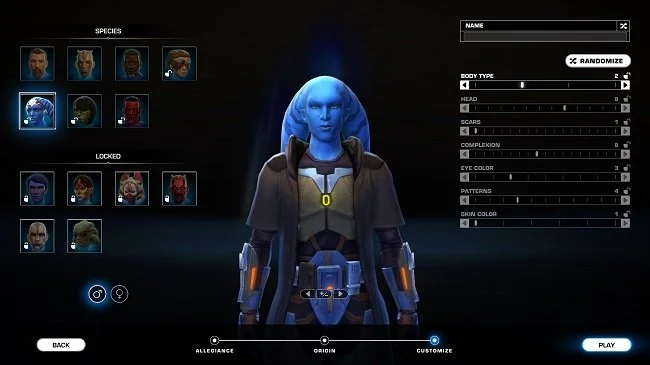
A: Again, there is no single species that has a definite advantage over others in STO, although some have desirable unique traits. But as I previously mentioned, there are many other factors that affect your build and its viability, so it is ultimately a matter of choice. Each faction has a variety of races available. Lore dictates that certain races cannot be accessed by certain factions but Cryptic have been quite inventive with regard to fudging this to a degree. At present the following species are available to the following factions.
Starfleet: Andorian, Bajoran, Benzite, Betazoid, Bolian, Caitian*, Cardassian*, Ferengi, Human, Klingon*, Liberated Borg**, Pakled, Rigelian, Saurian, Talaxian**, Tellarite, Trill, Trill (Joined)*, Vulcan, Alien.
Klingon Defense Force: Cardassian*, Ferasan*, Gorn, Klingon, Lethean, Liberated Borg**, Nausicaan, Orion, Talaxian**, Trill (Joined)*, Alien.
Romulan Republic: Romulan, Reman, Liberated Borg**, Alien
TOS Starfleet: Andorian, Human, Tellarite, Vulcan.
Dominion: Jem’Hadar, Jem’Hadar Vanguard*.
DSC Starfleet: Human, Vulcan, Alien.
* Purchasable from C-Store
** Requires lifetime subscription
If you cannot make up your mind or because of your choice cannot access a specific species, then consider picking “alien” as a race. It has the most visual customisation options available in the game and hence you can create an avatar that looks Human, Vulcan, Andorian etc. You can also create faux Cardassians and replicate a passable facsimile of many other races in the game. Another advantage of the “alien” is that it doesn’t have fixed racial traits and the player can choose an additional ground and space trait instead.


A Month in Gaming
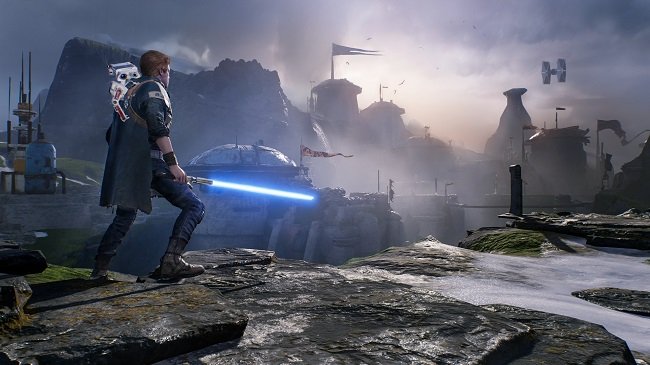
September has been a difficult month. A family crisis and subsequent bereavement meant that gaming got pushed down the daily agenda. However, after the various chores and duties were done I did need some downtime and means to relax. Hence I did play some games in a limited fashion. Nothing fancy, just stuff like Fall Guys: Ultimate Knockout and Gang Beasts, which are light-hearted and undemanding. I also took the time to log on to The Lord of the Rings Online test server and check out the preview of the forthcoming “mini-expansion”. Not only was this informative but it provided material for a blog post. But overall I didn’t really achieve anything substantial with my gaming throughout September. Gaming was relegated to being just a convenient diversion from the immediate problems I’ve been facing but as such, it did fulfil that role well.
September has been a difficult month. A family crisis and subsequent bereavement meant that gaming got pushed down the daily agenda. However, after the various chores and duties were done I did need some downtime and means to relax. Hence I did play some games in a limited fashion. Nothing fancy, just stuff like Fall Guys: Ultimate Knockout and Gang Beasts, which are light-hearted and undemanding. I also took the time to log on to The Lord of the Rings Online test server and check out the preview of the forthcoming “mini-expansion”. Not only was this informative but it provided material for a blog post. But overall I didn’t really achieve anything substantial with my gaming throughout September, apart from finishing the main story in The Sinking City . Gaming was relegated to being just a convenient diversion from the immediate problems I’ve been facing but as such, it did fulfil that role well.
At present, Call of Duty Modern Warfare/Warzone continues to provide what I call “quick fix” gaming. I’ve been playing since April and every new season, developer’s Infinity Ward continue to add new features to keep the game engaging. Season Six started on 29th September and came with some interesting new maps and weapons to unlock. At present there appears to be a glitch with the SP-R-208 marksman rifle, as there is no bullet drop. Hence it has temporarily become the weapon of choice of all “wannabe” snipers. Even I can hit things with this weapon. There’s also another glitch with the AS VAL silenced assault rifle. When converted to use SPP ammunition, these armour piercing rounds penetrate everything with no reduction in bullet velocity. You can effectively shoot through an entire building and hit a target. I suspect that a patch will quickly eliminate these issues.
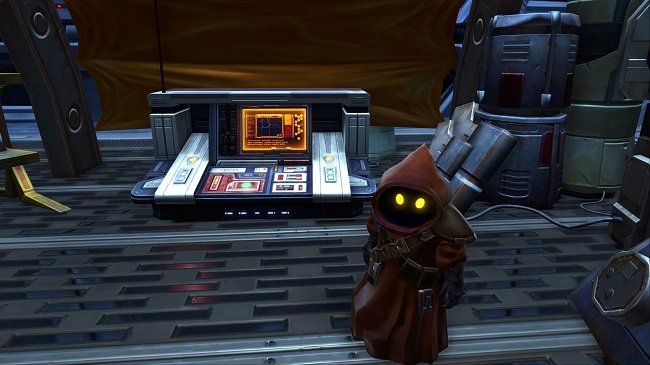
Despite my lack of time for in-depth gameplay during September, I did acquire four new games, which came as a surprise to me given the circumstances. Firstly, I was gifted Spiritfarer via Steam. This is a charming and thoughtful game. You play as Stella, (accompanied by her pet cat Daffodil), who takes over from the mythological Charon as the new Spiritfarer. As a ferrymaster you must sail the sea to find spirits, grant their last wishes and finally take them to the Everdoor, the gateway to the afterlife. This is a game that provides relaxation and an opportunity to reflect on the nature of life and death. I also bought two new RPGs. Elex and Horizon Zero Dawn. The latter is a known quantity and a recent console conversion. The former is a smaller title developed by Piranha Bytes who previously made the Gothic and Risen franchises. Elex mixes futuristic and medieval locations, in which the player can use guns, swords and magic against enemies. Finally Toren is an action adventure puzzle game from a small independent Brazillian developer. I found the basic premise of a baby girl protagonist who grows up as she progresses through a trap filled tower intriguing.
In October, I plan to start playing one of the above RPGs and try again to see if I can catch up with content in The Lord of the Rings Online. I’m hoping that there will be an improvement in server performance. It will also be interesting to see how the community responds to the “mini-expansion”. I may return to Star Trek Online but that is more of a question of conducting research for a series of blog posts. What I crave the most from my gaming at present is something different. Hence I have tried content outside of my usual genres during the lockdown. I cannot find any compelling reason to return to The Elder Scrolls Online at present. That is a game I like to apply myself to, due to the richness of the lore. I don’t want to just dabble with it, so I think I’ll keep it in reserve for later. I suspect it may well be a difficult autumn and winter so perhaps an MMO such as this, will be the ideal solution to the dark nights.

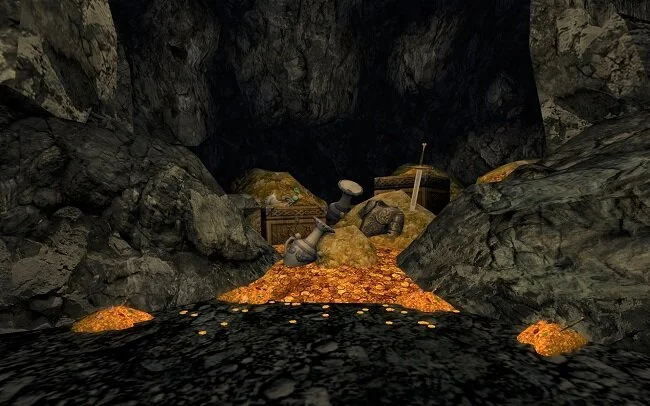
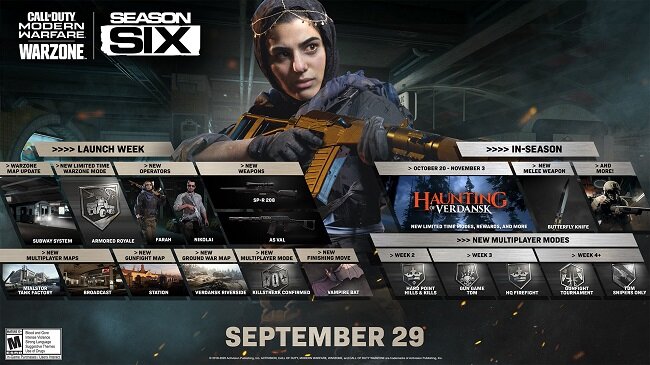
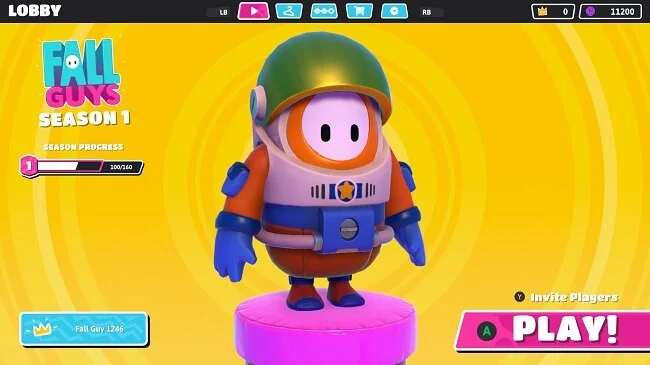
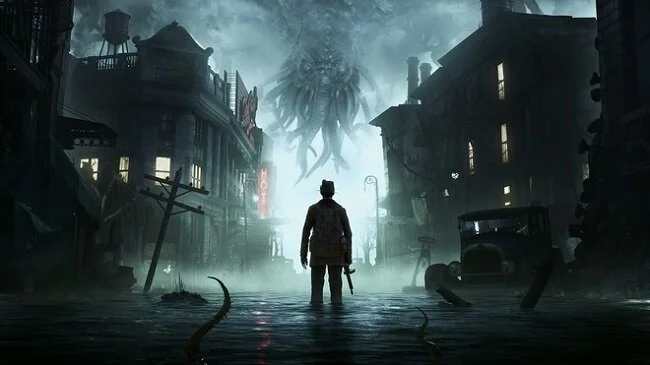

Star Trek Online: Buying Reputation
It would appear that Standing Stone Games isn’t the only MMORPG developer making controversial business decisions at present. Cryptic announced yesterday that they were introducing a means to purchase reputation tiers in Star Trek Online. A move that was met with much virtual eye rolling over on the games unofficial subreddit and more angry comments on the Massively Overpowered website about “pay to win”. The main issue isn’t the adding of this particular mechanic to the game. STO is no stranger to adding services that allow you to bypass “the grind” by spending money. Monetisation has been built into the game since it went F2P in spring 2012. The primary objection to this rep buyout system is the price which is about £20. Furthermore this only buys reputation up to Tier 5. Tier 6 still has to be earned and it’s a particularly arduous chore. There are also 13 reputation factions to complete.
It would appear that Standing Stone Games isn’t the only MMORPG developer making controversial business decisions at present. Cryptic announced yesterday that they were introducing a means to purchase reputation tiers in Star Trek Online. A move that was met with much virtual eye rolling over on the games unofficial subreddit and more angry comments on the Massively Overpowered website about “pay to win”. The main issue isn’t the adding of this particular mechanic to the game. STO is no stranger to adding services that allow you to bypass “the grind” by spending money. Monetisation has been built into the game since it went F2P in spring 2012. The primary objection to this rep buyout system is the price which is about £20. Furthermore this only buys reputation up to Tier 5. Tier 6 still has to be earned and it’s a particularly arduous chore. There are also 13 reputation factions to complete.
The reputation system in STO becomes available at level 50 (there are currently a level cap of 65 in the game). Players can undertake various repeatable PVE group content and earn reputation marks. These are then used on reputation projects which unlock the various tiers. As each tier is completed the player can then access specific reputation based traits, armour weapons and ship consoles. These sets offer significant statistical improvements over standard gear and some have become part of the current game build meta. Hence unlocking all 13 factional reputations is desirable. If you log into the game daily and earn marks for all factions, it will take about two month or so to complete all. However, such an undertaking requires a lot of dedication and would monopolise a players activity in-game significantly. So it is hardly surprising that Cryptic have decided to “ease” this process for players.
The problem lies in the cost and the fact that STO is becoming more focused upon catering to “whales”. I am a member of the Reddit Alert fleet and it has a large amount of players that invest heavily in the game. The net result is a very clear financial divide in the games community. There are still plenty of free options available to players as long as they’re prepared to grind for them. But all too often you’ll find players from opposite ends of the spectrum when playing PVE group Task Force Operations. Those who have a standard ship with gear dropped from missions or bought from the Exchange. And those with lock box vessels and maxed out gear from the reputation system and colony suppliers. Naturally this causes a disparity in combat performance, which then leads to players not wanting to auto group. And if you can’t group then you can’t easily earn the rep tokens. And so the divide in the community increases further.
A Month in Gaming
I’m still somewhat shocked that August has been and gone. Even by 2020 standards it’s been an odd month. Due to illness in the family, my schedule has been turned on its head and subsequently there has not been as much time for gaming as I’ve previously enjoyed. However, I tried to put what time I had to good use. I attempted to return to the MMORPG The Lord of the Rings Online once again, to see if I could continue through the epic story. Sadly, the game has run into further server related issues, just as it did last month. Standing Stone Games community manager Jerry Snook was a little “snippy” in responding to players' concerns and at present there are no details regarding what the problem is and when it will be resolved. If this issue persists I suspect that it is going to do some genuine harm to both the player base and community relations. I hope matters improve for SSG and LOTRO over September.
I’m still somewhat shocked that August has been and gone. Even by 2020 standards it’s been an odd month. Due to illness in the family, my schedule has been turned on its head and subsequently there has not been as much time for gaming as I’ve previously enjoyed. However, I tried to put what time I had to good use. I attempted to return to the MMORPG The Lord of the Rings Online once again, to see if I could continue through the epic story. Sadly, the game has run into further server related issues, just as it did last month. Standing Stone Games community manager Jerry Snook was a little “snippy” in responding to players' concerns and at present there are no details regarding what the problem is and when it will be resolved. If this issue persists I suspect that it is going to do some genuine harm to both the player base and community relations. I hope matters improve for SSG and LOTRO over September.
However, it hasn’t been all doom and gloom. I decided to buy Fall Guys: Ultimate Knockout, partially due to the wealth of positive reviews and feedback surrounding the game. It is great fun and often very amusing but I do seem to have developed a love hate relationship with the gameplay. I’ve failed to qualify for more than four games in a row and hence have not experienced much variety in races and challenges so far. I’m also not a fan of the team games, as I hate losing due to others, rather than my own actions. Hence progressing through the season pass is a grind. However, I occasionally have some good fortune and no matter how poorly you play, there’s always someone worse than yourself. The large number of “Tryhards” in the game are also a drag at times, as are players using the “grab” function in a negative fashion. But then it’s hard to stay pissed off with a game that lets you dress as a Triceratops.
I have made good progress through the Season Five Battle Pass in Call of Duty Modern Warfare/Warzone. As I suspected, players were initially quite happy to swamp the train that’s been added to the game. But a month on, no one seems interested anymore and it is substantially less dangerous to investigate now. The new FiNN Light Machine Gun has proven useful to players like me. I use the XRK LongShot Adverse barrel which provides not only an increase in range but an insane rate of fire. If you’re not especially accurate with your aiming, then these factors are a real boon. There is a degree of recoil to deal with but this can be compensated by firing in rapid bursts, rather than just holding down the trigger and hosing the gun around. Plunder continues to provide the best of both worlds with regard to play styles, so once again CoDMW/WZ has managed to hold my interest for yet another calendar month.
Over the next month, I shall be making a concerted effort to complete The Sinking City. I find that if I get sidetracked with too many other games, it is always the RPG that I’m playing that suffers. This is probably due to the fact that they need a more substantial time investment, so you can absorb the narrative. I have enjoyed this Lovecraft inspired game, despite its foibles and flaws. It certainly nailed the main themes of the Cthulhu Mythos. I think that I shall replace it with yet another RPG, as I like games with open worlds and dense lore that I can lose myself in. So I may purchase GreedFall next. It bears quite a few similarities to Amazon Game Studios forthcoming MMORPG, New World. However, after several beta tests, I have decided that the latter is not to my liking and think that the former will be a more suitable alternative. I hope that September doesn’t prove to be as tumultuous as August and that I can find the time to accommodate a new game.
Thoughts on the New World Preview
I, like many of my fellow bloggers, have been afforded an opportunity to try Amazon Game Studios forthcoming MMO New World, three times over the last 18 months. I did so twice, playing the two previous private tests. As a result of these experiences I have opted not to explore the latest public preview. I haven’t said anything prior to today regarding the game due to the NDA but as that has now been lifted I can express my opinions. Simply put, New World is not for me. It is certainly not a bad MMO and the developers have made some radical changes in the game’s design as they’ve responded to player feedback. The initial alpha test showcased an open world PVPcentric game. The second release tempered that with more PVE content. However for me, New World just doesn’t offer the things that I specifically enjoy about the MMORPG genre. I think with continued polish and fine tuning, it will be a solid game upon release and I’m sure it will find its particular niche.
I, like many of my fellow bloggers, have been afforded an opportunity to try Amazon Game Studios forthcoming MMO New World, three times over the last 18 months. I did so twice, playing the two previous private tests. As a result of these experiences I have opted not to explore the latest public preview. I haven’t said anything prior to today regarding the game due to the NDA but as that has now been lifted I can express my opinions. Simply put, New World is not for me. It is certainly not a bad MMO and the developers have made some radical changes in the game’s design as they’ve responded to player feedback. The initial alpha test showcased an open world PVPcentric game. The second release tempered that with more PVE content. However for me, New World just doesn’t offer the things that I specifically enjoy about the MMORPG genre. I think with continued polish and fine tuning, it will be a solid game upon release and I’m sure it will find its particular niche.
As I mentioned in a somewhat cryptic fashion in a prior post, New World sets out its stall quite clearly in the initial cutscenes, offering a standard story about the colonisation of a new island called Aternum. Set in the mid 17th century, the aesthetic of the game is of British America from that era, with a heavy dose of the supernatural and arcane thrown into the mix. During the test that I participated in my character woke up on the shore after a shipwreck; a very traditional MMO trope. The initial levels as I battled across the beach were designed to introduce the new player to the combat system, inventory and skills trees. All of which are very standard and intuitive. The action combat felt very fluid and it was not difficult to understand and implement blocking with a shield, flanking an enemy and then striking with a sword with light or strong attacks. There are then special skills with substantial cooldowns that can then be used tactically. I felt that this was one of the best aspects of the game and is one of the better implementations of action combat that I’ve experienced.
Sadly, I was less enamoured with the meat and potatoes of the rest of the game. The game engine, character realisations and environments are well designed. But there are no classes or specific roles as such. You choose armour and weapons types to suit your own preferences. This flexibility plays into the game’s original sandbox remit, which has now been augmented. The quests are somewhat arbitrary and clearly show how that they’ve been added at a later date to facilitate a change in the game’s direction. These mainly act as a means to send you to different parts of the island and gather resources. There is no complex, overarching narrative that I am aware of. The player gleans information about the island’s lore through exploration and what they find. The NPCs offer only text interactions and there is no voice acting. The game’s economy is driven by players via Trading Posts so you won’t be getting rich by selling trash loot to NPCs. You can salvage loot and repurpose the resources they yield for crafting.
Eventually after earning new gear and familiarising yourself with the games systems, a new player will eventually progress on to one of the major settlements in a region. These are held by varying factions and at this point you get to choose who you wish to ally with. Naturally it is here that the games PVP systems come into play. And it was at this point that I decided that I didn’t wish to play any further as the game had nothing further to offer me. I like complex narratives and storylines that twist and turn. I like voice acting and NPC with personalities, especially when they become recurring characters. I also enjoy the communities that spring up around MMOs. I suspect because New World still heavily leans towards PVP, rather than roleplay and story telling, its community will again not be for me. Beyond this, I can’t really say much more about this MMO. I haven’t played it to any great degree. Just enough to know that it’s not too my liking. But that does not make it a bad game and I look forward to observing how the game progresses and is received at launch.
Never the Twain Shall Meet?
Video games can offer a great opportunity for personal growth. If you are the sort of player who likes to prove themselves and continuously test one’s mettle, then some titles can provide the challenge required to be the best of the best. Hence many games are competitive, have league tables and other formal structures for measuring success. It is one of the reasons why esports have become so popular. But this desire to excel and master a particular play style extends beyond competitive games. For some players part of a games allure is understanding the numbers and stats that drive the game mechanics. Because these are often the key to optimising your build and maximising DPS output. Hence you will find skilled and learned players in a variety of games across multiple genres. Although they are often motivated for different reasons, they all strive to be elite players.
Video games can offer a great opportunity for personal growth. If you are the sort of player who likes to prove themselves and continuously test one’s mettle, then some titles can provide the challenge required to be the best of the best. Hence many games are competitive, have league tables and other formal structures for measuring success. It is one of the reasons why esports have become so popular. But this desire to excel and master a particular play style extends beyond competitive games. For some players part of a games allure is understanding the numbers and stats that drive the game mechanics. Because these are often the key to optimising your build and maximising DPS output. Hence you will find skilled and learned players in a variety of games across multiple genres. Although they are often motivated for different reasons, they all strive to be elite players.
I have been playing video games in some shape or form since the coin-op days of the eighties. But I have never been anything more than an average player. Plus I am motivated primarily by having fun and have never seen any game as some sort of personal trial or path to spiritual enlightenment. That’s not to say that I don’t try and attempt to improve. I just know that I won’t progress beyond a certain level of ability because the fun to work ratio will no longer be to my liking. And I’m not alone in this and have written before about how I believe the majority of gamers are “average” with regard to skill. Which brings me to my point. If you look at the skilled, top tier gamers and the average players in terms of a venn diagram, then there’s not a lot of overlap. Depending on the genre of game, I think that overlap reduces even further.
I joined a kinship (guild) in The Lord of the Rings Online in 2009 and I’m still in it. It has some extremely knowledgeable players who are skilled at multiple classes. Occasionally we will do group content and these players will “coach” (or even carry) the less able players. They are often already familiar with the dungeon or raid in question because they’ve completed it numerous time’s with their skilled peers. They spend the majority of their time with players of comparable abilities. When they do help out with what I shall politely call “The B Team”, I often become acutely aware of the disparity in skill and DPS. Hence the Ralph Wiggum meme at the top of this post. And once the group content is done they politely withdraw and go back to “swimming at the deep end of the pool”. The social panel in LOTRO tells players where their friends and colleagues are and whether they’re in a group. These folk are always busy doing the “hard stuff”.
At least in the MMO genre, you may occasionally encounter top tier players. I find that in other genres such as FPS games, there is clear segregation based on skill. When I play Call of Duty Modern Warfare Multiplayer, I will frequently play game styles and specific maps that do much to level the playing field. The small confined space of the “Shipment” map means that there’s scope to get by on luck and sporting a loadout that allows you to fire from the hip. Although I do encounter good players who are well versed in tactics and have good reactions, there is a chance to counter them. But I find that the players I encounter in Battle Royale and Plunder mode are broadly comparable to myself. Let it suffice to say that the quality of players I see in the various YouTube clip shows that I watch, have never crossed my path. Not that I’m complaining. Players should be grouped with those of similar skill.
Now I’m not advocating that this naturally occurring segregation of gamers based upon skill is a bad thing. Skilled players mainly prefer the company of their peers. Average players do not like being “target practise” and “cannon fodder” for the elite. And both groups are paying customers and as such should be afforded an experience that they enjoy. But it is curious how gaming is often spoken of as a shared experience and something that a wide variety of people have in common, when the reality is far more compartmentalised. Most MMO players have never participated in a raid. Many of those who enjoy the Battle Royale genre have yet to win a game. The reality is that a lot of video game content is never played, exotic weapons remain locked and achievements, accolades and deeds are left incomplete. Although we are united by the fact that we all play video games, that is where the common ground both starts and ends.
LOTRO: Over a Week of Downtime
The MMORPG The Lord of the Rings Online has been plagued by technical problems for over a week now, resulting in multiple servers being offline. The game’s official forums have also been intermittently affected by these ongoing issues, as has Standing Stone Games other MMO, Dungeon and Dragons Online. The problems initially started on Wednesday the 15th of July with severe lag, rubberbanding and random client disconnections. LOTRO has had ongoing issues with all of these problems in the past and developers SSG have attempted to address them numerous times. It was hoped that the release of a 64 bit client last summer would improve matters and initially there were indications of performance improvements. However, the specific poor server performance that was identified last week has allegedly “cascaded” throughout SSG’s infrastructure.
The MMORPG The Lord of the Rings Online has been plagued by technical problems for over a week now, resulting in multiple servers being offline. The game’s official forums have also been intermittently affected by these ongoing issues, as has Standing Stone Games other MMO, Dungeon and Dragons Online. The problems initially started on Wednesday the 15th of July with severe lag, rubberbanding and random client disconnections. LOTRO has had ongoing issues with all of these problems in the past and developers SSG have attempted to address them numerous times. It was hoped that the release of a 64 bit client last summer would improve matters and initially there were indications of performance improvements. However, the specific poor server performance that was identified last week has allegedly “cascaded” throughout SSG’s infrastructure.
At present the specific nature of the “problem” remains unknown and somewhat nebulous. Furthermore it is likely to remain that way as SSG and prior to them Turbine, have never felt the need to provide details of technical outages. Now that is not exactly an unusual position to take as most companies do not feel the need to discuss infrastructure failings with their customer base. The matter may well be complicated by SLAs with 3rd party vendors etc. Businesses also have to deal with a great deal or internal politics and legal obligations. In this case SSG may well be constrained by policies set by their publishers (and pay masters) Daybreak Games. However, what is customary in such situations is for the “problem” to be handled by whatever internal departments handle communications and community management. Difficult situations like this become a “PR opportunity”.
The “problem” has come back…
Sadly, community management, interacting with the player base and providing reassurance is not SSGs strong point. In the past nine days there have been a litany of Twitter and Facebook posts about servers going on and offline. There have also been a few short messages apologising for the inconvenience. This is certainly civil but it really does seem like the bare minimum. The LOTRO player community is both seasoned and loyal. They are also extremely forgiving of these sorts of technical issues because they endured them before on more than one occasion. To use an old British colloquialism SSG and Turbine before them, have “form”. But it is a mistake for the game’s developers to rely too heavily on players' good will. 2020 has not been a “good year” so far and gamers per se may not be as “affable” as they usually are. At this point a little more transparency and frankly credible customer relations would be useful.
Are players asking for rash promises regarding technical solutions? No. Are they asking SSG to breach rules regarding disclosure and confidentiality? No. They’re looking for a simple, concise explanation as to the broad nature of the “problem”. They’re also looking for a reason to get behind the technical staff who I’m sure are working extremely hard under pressured circumstances. We appreciate that a bullet proof ETA on a solution is not practical. But regular, sincere updates on progress would be very reassuring. Everyone knows what’s at stake. We know that downtime means no one is playing and if no one is playing, then no one is paying. A drop in revenues is not good for any MMO. But SSG need to realise that the immense goodwill of their players that they have benefitted from for the last decade is not an infinite commodity. They need to communicate and keep everyone onboard, rather than push players away due to perceived indifference.
I have often reiterated the point that the LOTRO community should not overlook that they are consumers, as well as ardent fans. They may not immediately see both DDO and LOTRO as services but ultimately they are, the same as gas, electricity or your cell phone. So its is reasonable to have consumer expectations. Another point to consider is that good will needs to be maintained on both sides. A loss of revenue seldom pleases those who control the purse strings but if community relations are good, then the bean counters may well feel positive about the community returning and spending. If community relations sour, then a gap in the balance sheet and concerns over players not investing in the game, could contribute to more detrimental decisions being made. I therefore hope that SSG improves its PR and that LOTRO players keep their heads. The downtime is a frustration for all. I wish SSG staff well with the “problem”. But sometimes it’s not just about solving a problem but also how you handle it.
Busy Doing Nothing
As I mentioned recently in my monthly gaming roundup, I’ve currently stopped playing the three MMORPGs that are my usual gaming mainstay. Namely The Lord of the Rings Online, The Elder Scrolls Online and Star Trek Online. It’s something that I do from time to time when I’m tired of the repetition this genre offers. At present none of these titles has anything on offer that motivates me to play them enthusiastically. Especially LOTRO. I find weddings tedious and self indulgent in real life, so I’m hardly going to get “excited” about a virtual one set in Middle-earth. However, that’s not to say that I’ve lost interest in the MMO genre. I’m merely temporarily burned out at present. I find that after a few months or so, either new content is released that lures me back to these games or I tire of what I’ve been playing in their stead. It’s a cyclical process that I go through from time to time and nothing to worry about.
If you’ve figured out this tenuous movie reference then give yourself a pat on the back
As I mentioned recently in my monthly gaming roundup, I’ve currently stopped playing the three MMORPGs that are my usual gaming mainstay. Namely The Lord of the Rings Online, The Elder Scrolls Online and Star Trek Online. It’s something that I do from time to time when I’m tired of the repetition this genre offers. At present none of these titles has anything on offer that motivates me to play them enthusiastically. Especially LOTRO. I find weddings tedious and self indulgent in real life, so I’m hardly going to get “excited” about a virtual one set in Middle-earth. However, that’s not to say that I’ve lost interest in the MMO genre. I’m merely temporarily burned out at present. I find that after a few months or so, either new content is released that lures me back to these games or I tire of what I’ve been playing in their stead. It’s a cyclical process that I go through from time to time and nothing to worry about.
However, despite the fact I’m not actively playing these games, it’s surprising how they still manage to keep me busy. How do they keep me busy, I hear you ask? Have I not deleted them from my hard drive? Of course not, that’s crazy talk. Before I move on to the various tasks involved in not playing a game, let me first address this ludicrous assumption that if you’re not playing a game you can delete it from your hard drive and reinstall it later. Because we all have fast internet connections nowadays? Well for starters let me list the current installation size of these three MMOs. LOTRO 30.1GB, ESO 71.7GB and STO 35.5GB respectively. Those are not “small beer” and irrespective of your internet connection speed, if you wish to install these games from scratch you’re at the mercy of three separate game clients and three sets of patching servers. All of which are painfully slow and temperamental. So unless you desperately need to reclaim the space on your SSD or HDD, never delete a game just co’s you’re not playing it at present. Don’t even get me started on customisations and addons.
Moving on, these unplayed MMOs need constant tending. There’s constant patching, especially for ESO who seem to release new content based on two criteria; when it’s raining and when it’s not. Rather than be inconvenienced when I finally decide to return to these games by finding a ton of updates to download, it’s best to keep the client current just in case. And then there’s the login presents and rewards. Both LOTRO and ESO giveaway daily incentives or “free shit” as it’s called in marketing parlance, to encourage consumer loyalty. I may not be playing at present but FOMO is a real thing. I’d hate to pass up on a one off opportunity to claim the “Sword of Kagnazax” or a cosmetic Humboldt Squid pet. I’m also a member of at least one guild that regularly kicks players if they don’t log into the game after a set period of time. So I have to show a face, so to speak, at least once a week or I’ll be given my “marching orders”.
Blogging about these games also adds to the every growing list of chores. Just because I’m not actively playing through current content doesn’t mean that I have nothing to say on the state of any of these three titles or regarding any breaking story or development associated with them. Which leads me to my next point, I often find myself without a suitable screen capture that I can use to illustrate a post. So I have to quickly log into the game in question and grab a few images. And of course you don’t get to just “log on and then log off”. There’s invariably someone online who spots you and decides to engage you in lengthy conversation regarding your health, what you’ve been up to and that wretched bird on Mrs Coltart’s roof (yet again). So as you can see, it can be quite exhausting not playing games. Talk about busy doing nothing. It’s amazing I find time for the games I actually am engaged with at present.
The Social Etiquette of Quitting a Multiplayer Game
I was watching a YouTube video recently of someone trying the new Fennec SMG in Call of Duty Modern Warfare Multiplayer. It was a 5 versus 5 game and the player who made the video was clearly quite skilled. After quickly racking up multiple kills, 3 of the enemy team left mid game. He laughed and pointed out that they had “rage quit”, although that is just conjecture. They may have left the game for a multitude of reasons (a point I shall return to later). As ever this video began a train of thought which I would now like to explore. Multiplayer games often go hand in hand with a lot of informal social etiquette. Much of which stems from the original MMOs from two decades ago. However, these conventions are not in any way mandatory or enshrined in any games terms of service. Yet quitting in the middle of a multiplayer game is still frowned upon in certain quarters, often being seen as an act of selfishness and childish anger. However, like everything in life, I think it’s not as simple as that.
I was watching a YouTube video recently of someone trying the new Fennec SMG in Call of Duty Modern Warfare Multiplayer. It was a 5 versus 5 game and the player who made the video was clearly quite skilled. After quickly racking up multiple kills, 3 of the enemy team left mid game. He laughed and pointed out that they had “rage quit”, although that is just conjecture. They may have left the game for a multitude of reasons (a point I shall return to later). As ever this video began a train of thought which I would now like to explore. Multiplayer games often go hand in hand with a lot of informal social etiquette. Much of which stems from the original MMOs from two decades ago. However, these conventions are not in any way mandatory or enshrined in any games terms of service. Yet quitting in the middle of a multiplayer game is still frowned upon in certain quarters, often being seen as an act of selfishness and childish anger. However, like everything in life, I think it’s not as simple as that.
Firstly, let’s consider the rectitude of quitting a multiplayer game halfway through. If the game you are playing has a fail state that is dependent on a full team, or requires players of a certain class to be successfully completed, then leaving will definitely inconvenience others. Raids, dungeons and other complex group content often require planning and a degree of organisation. If you have committed to such an undertaking then it is not unreasonable to be expected to honour it. If the group content is not going to plan then the “problem” should be discussed within the group. However, if genuine external factors mean that you must leave the group, then it is best to inform your colleagues and then depart at the most appropriate juncture. Simply quitting because things are not going well or because something potentially more entertaining presents itself, does strike as inconsiderate. The Healer or Tank leaving a group will often make specific tasks impossible.
However, as previously mentioned, group situations are frequently nuanced. If you are taking part in a multiplayer game and subject to abuse of any kind, then leaving is most certainly an option. Events and activities organised via friends or a guild hopefully reduce the risk of such behaviour but many games now include auto grouping tools. “Pick Up Groups” are potentially far more problematic due to their random nature. I personally will not tolerate any sort of prejudicial abuse and will leave if I encounter such. Unless it is essential to talk, I mute voice chat with strangers and communicate via preset ingame commands. More often than not I find that people leave PUGS if the task in hand is not being completed in an optimal fashion. Another issue is joining a full group but finding that several players have deliberately gone AFK. This is usually done so that an achievement or reward can be gained. Some games will detect such activities and sanction the player by kicking them from the group or applying a time penalty preventing further auto grouping.
But not all group situations come with the same stakes. In the FPS genre auto grouping is a common practise used to assemble players quickly and conveniently. Furthermore, players are not always interdependent upon each other. Irrespective of whether your team wins or loses a Deathmatch you’ll still be rewarded XP and weapons will unlock. Due to the popularity of certain genres, there are a wealth of players to draw upon when forming groups. Hence if players leave in the middle of a multiplayer game, they are seamlessly replaced. And players do leave often. Circling back to the original anecdotes about the players leaving the 5 versus 5 game on CoD MW, this is frequently due to the inadequacy of the “Skill Based Matchmaking”. It is beneficial to all concerned if players are grouped with others of a broadly comparable ability. Nothing kills your enjoyment quicker in these sorts of games than one or several players dominating events. Hence players will simply remove themselves from a situation that is not conducive to their enjoyment.
The MMO genre is still predominantly a social one, filled with guilds that run on player interaction and association. People build up relationships overtime and as such social rules and cultural norms often come into play when undertaking group content. Activities that are arranged and managed directly by multiple people logically require a different level of social commitment from those participating. The more impersonal game mechanic of autogrouping for content with less complex fail states (and therefore fewer consequences), requires a lower social dynamic. And let us not forget that paying to play a game can considerably alter one's relationship with it. The moment money is involved players often adopt a more transactional mentality. Anything that impedes enjoyment or progression is seen as a failure of service delivery and not necessarily in terms of the capricious nature of gaming.
Therefore, quitting a multiplayer game halfway through is not a binary issue (I wish I had £1 every time I’ve written that over the years). It is very much a contextual matter. I do not see an auto grouped undertaking in a FPS or similar game as commensurate with a pre-planned raid in an MMO with people I know. Leaving halfway through has different consequences in both scenarios and should be treated accordingly. Raiding and similar events in the MMO genre are a far more logistically and socially complex endeavour than joining a PUG in a Team Deathmatch. If a raid isn’t working there may well be planning issues to address or social problems within the group. But these are human failings and not always attributable to the game content. Competing with players of greater skill is not something that an individual can so easily address, apart from the obvious solution of leaving. But cultural attitudes and societal baggage towards what are your “social obligations” vary among gamers. So there is no definitive answer beyond the one you fathom for yourself.
A Month in Gaming
I stopped subscribing to The Lord of the Rings Online in June. I’ve always had a very cyclical relationship with this MMO and at present I feel I need a break from the games somewhat linear formula. Plus the new content scheduled for release centred around the wedding of Aragorn and Arwen doesn’t exactly sound enthralling. So I’ve left my primary character in Langflood and will return to the game later in the year when I feel the need to catch up with content. I have also abandoned the ongoing events in Star Trek Online as they’re getting too repetitive. I would like to see a new longterm story arc rather than just a continuous cycle of short term events and repeatable content. I don’t mind working towards a goal but it has to be something I want and the rewards offered in this MMO are getting a little too generic for my liking. I shall return to the game at some point as I’m a lifetime account holder and I’m curious to see how developer’s Cryptic overhauls the Klingon story arc.
I stopped subscribing to The Lord of the Rings Online in June. I’ve always had a very cyclical relationship with this MMO and at present I feel I need a break from the games somewhat linear formula. Plus the new content scheduled for release centred around the wedding of Aragorn and Arwen doesn’t exactly sound enthralling. So I’ve left my primary character in Langflood and will return to the game later in the year when I feel the need to catch up with content. I have also abandoned the ongoing events in Star Trek Online as they’re getting too repetitive. I would like to see a new longterm story arc rather than just a continuous cycle of short term events and repeatable content. I don’t mind working towards a goal but it has to be something I want and the rewards offered in this MMO are getting a little too generic for my liking. I shall return to the game at some point as I’m a lifetime account holder and I’m curious to see how developer’s Cryptic overhauls the Klingon story arc.
I found a good deal on the latest expansion for The Elder Scrolls Online and so I purchased the Digital Upgrade Edition of Greymoor. I mainly wanted to see what the new Harrowstorms events were like and was pleasantly surprised by their difficulty. Dolmen become easier when more players are present but that is not necessarily the case with Harrowstorms. I have so far refrained from playing any of the story content in this new zone as I’m still committed to playing the narrative content in ESO in order. I like to keep the installation of ESO on my PC up to date as my twin granddaughters enjoy this game. They will often ask to see what the “lady with the burnt face and big boobies” is doing (their description, not mine) when they come round and visit. They also like the exotic cosmetic pets and the Khajit “cat people”. The recurring dragon events in Southern Elsweyr is also a source of entertainment for them.
June also saw several games uninstalled from my PC, as I had either completed them or had reached a point where I wasn’t going to return to them any time soon. So I removed Red Dead Redemption 2 as it really is a title you need to apply yourself to. To get the best out of the game it helps if you play for several hours at a time and immerse yourself in the story. I haven’t done this for a while and so my connection to the narrative was lost. Another thing I’ve noticed when playing these densely plotted RPGs is that I sometimes spend too much time pondering over decisions. Games with branching narratives are interesting but I occasionally find myself worrying that I will somehow “hobble” myself at some point in the future, if I make a “bad” choice. It’s a curious paradox as these decision making mechanics are designed to provide a sense of immersion but the “worry” they can produce can sometimes have the opposite effect.
Overall, Call of Duty Modern Warfare is still keeping me engaged after two and a half months. I do find it frustrating the way various game modes come and go. I was just beginning to learn the layout and foibles of the “Trench” map in 5 versus 5 battles when this was taken out of the game menu. However, Plunder Mode has proven to be a good alternative to the standard Battle Royale Mode in Warzone. The object is to collect cash from various stashes around the main map and then airlift it out. There are several prime landing zones in the Downtown area that are always heavily contested. However, for the more cautious player, you can explore and accrue money in the outlying areas and bank it by regularly buying Cash Deposit Balloons from Buy Stations. Combat is not so frenetic in this permutation of the game, although you do still have to keep your eyes open for players doing exactly the same as you. Auto Grouping is also not so problematic in Plunder Mode either. Players seem to take a more casual attitude to proceedings so you can play collaboratively or do your own thing if you prefer. This mode also provides a lot of XP if you’re levelling through the Battle pass.
I’ve been toying with the idea of buying Ghost Recon Breakpoint. I initially declined to do so due to the broken nature of the game upon its release and the conspicuous lack of AI teammates. They were present in Wildlands, the previous iteration of the franchise and were a boon for anyone who didn’t have a copiously populated friends list. However, Ubisoft is finally adding AI Squad functionality to Breakpoint this month so I may see if I can get a deal. A lot of the game’s problems have been fixed and there’s now over a year’s worth of content to be played through including a guest appearance by Sam Fisher from Splinter Cell. Furthermore he’s voiced once again by Michael Ironside. I may also see if there are any smaller games I can try in July to take my mind off the fact that the video game industry and associated culture just seems to be a continuous dumpster fire. It’s going to be a long uphill struggle to see these institutions evolve and adapt into something vaguely equitable and ethical.
ESO: Animation Cancelling and Weaving
Whenever you use a skill on your hotbar in The Elder Scrolls Online, there is an associated animation as it is inducted and utilised. These animations may vary in length from one to several seconds depending upon their nature. Although these animations add to the ambience of the game, they do come with a direct consequence. The player has to wait for the animation of one skill to complete before they can use another. For those seeking to optimise their performance or DPS output, these delays are an impediment. However, they can be negated through animation cancelling and weaving. Animation cancelling is as it states the stopping of a skill related animated sequence by the use of a follow up action such as bash/tap block/dodgeroll. Weaving is slightly different, in so far as instead of stopping the inducted animation immediately, it allows for the process to be cut short as another animation is started. Typically this is done by using a light attack and then immediately using a skill.
Whenever you use a skill on your hotbar in The Elder Scrolls Online, there is an associated animation as it is inducted and utilised. These animations may vary in length from one to several seconds depending upon their nature. Although these animations add to the ambience of the game, they do come with a direct consequence. The player has to wait for the animation of one skill to complete before they can use another. For those seeking to optimise their performance or DPS output, these delays are an impediment. However, they can be negated through animation cancelling and weaving. Animation cancelling is as it states the stopping of a skill related animated sequence by the use of a follow up action such as bash/tap block/dodgeroll. Weaving is slightly different, in so far as instead of stopping the inducted animation immediately, it allows for the process to be cut short as another animation is started. Typically this is done by using a light attack and then immediately using a skill.
There are 5 main types of weaving and animation cancelling that can be done in the ESO.
Light Attack Based Weaving:
Light Attack > Skill
Dodge Based Animation Cancelling:
Light Attack > Dodge
Skill > Dodge
Light Attack > Skill > Dodge
Block Based Animation Cancelling:
Light Attack > Block
Skill > Block
Light Attack > Skill > Block
Bash Based Animation Cancelling:
Light Attack > Bash
Skill > Bash
Light Attack > Skill > Bash
Weapon Swap Based Animation Cancelling:
Light Attack > Swap
Skill > Swap
Light Attack > Skill > Swap
Like most explanations, this may seem straightforward in principle. However, to be able to effectively undertake these attack chains requires a great deal of practise. Players may also wish to reconsider the order in which some skills appear on their hotbar and remap some keyboard functions. If you’re in a Guild, then the best way to practise is to go to the Guild Hall and use the training dummies there. Advance players may wish to set up macros or use addons that show skill cooldown timers etc. Animation cancelling and weaving is essential in PVP and when playing advanced dungeons. But is it necessary for the casual player? No. You can play PVE content without using this technique. But it is certainly advantageous for new players to learn the most basic weaving skill of using a light attack immediately followed by a skill. It allows you to do damage more quickly and efficiently.
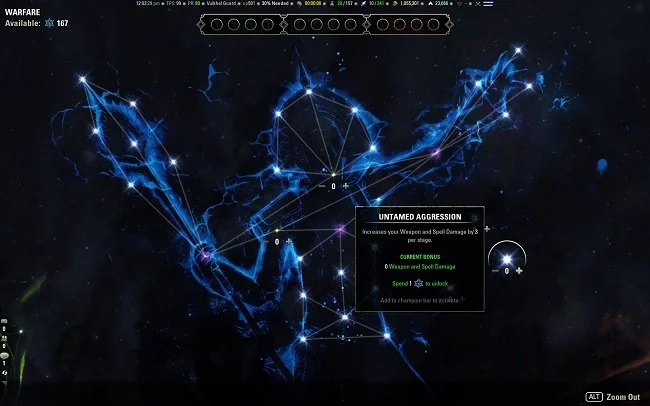
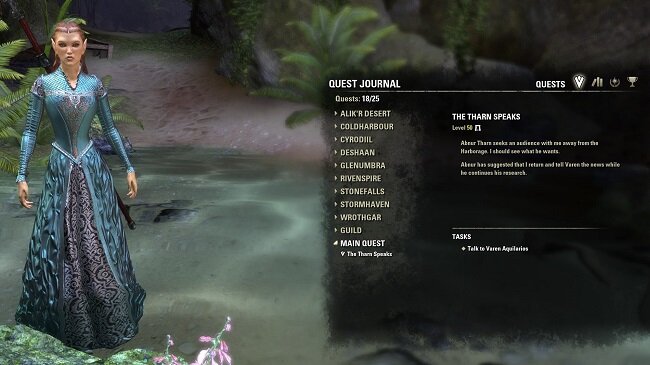
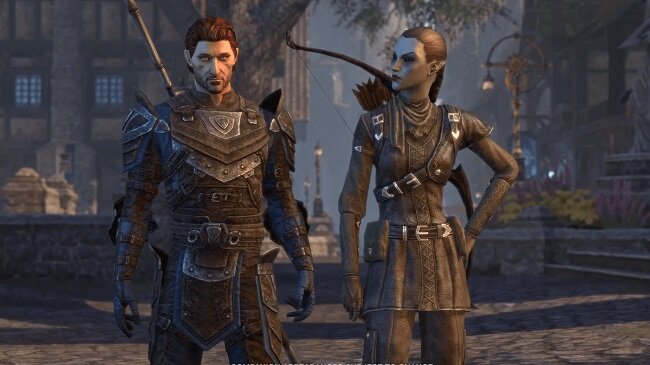
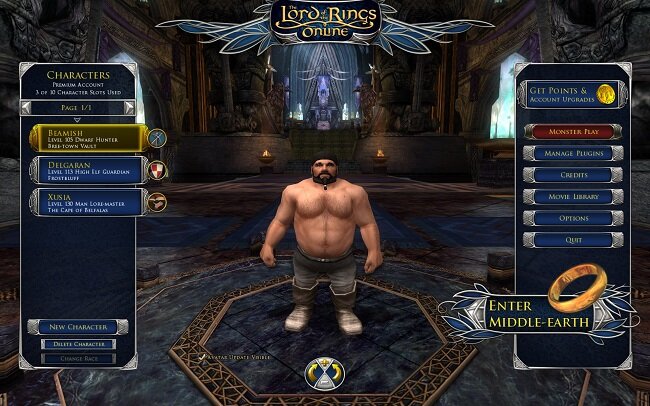
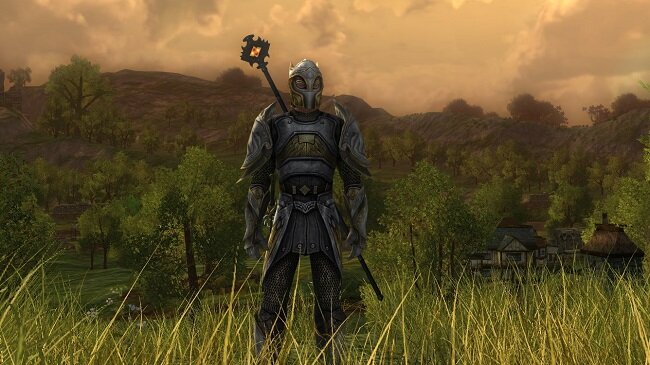
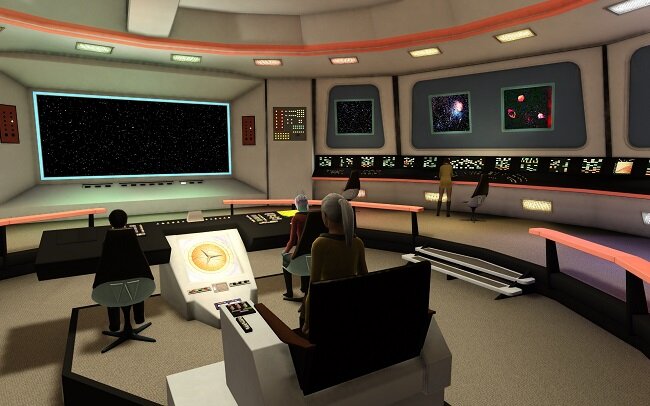


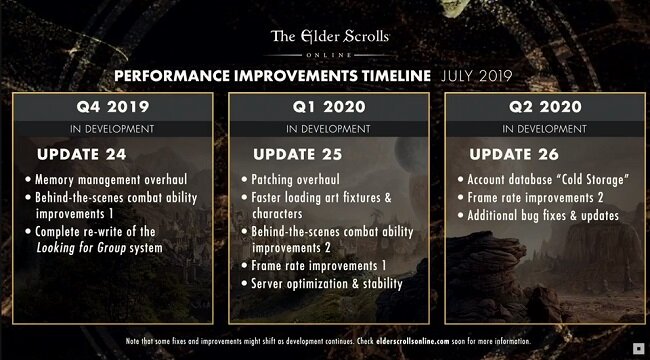
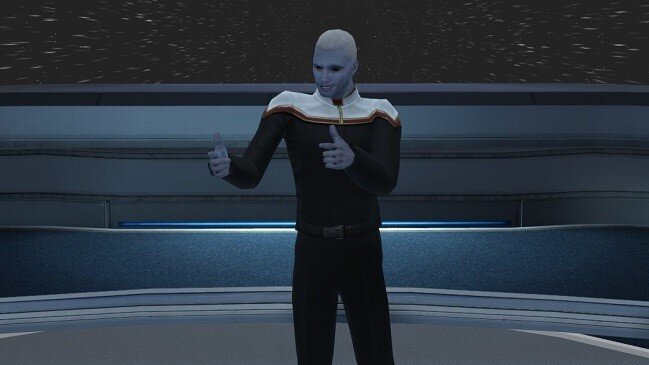
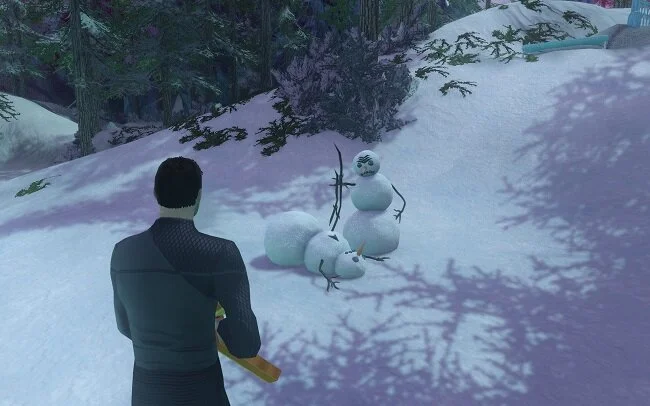
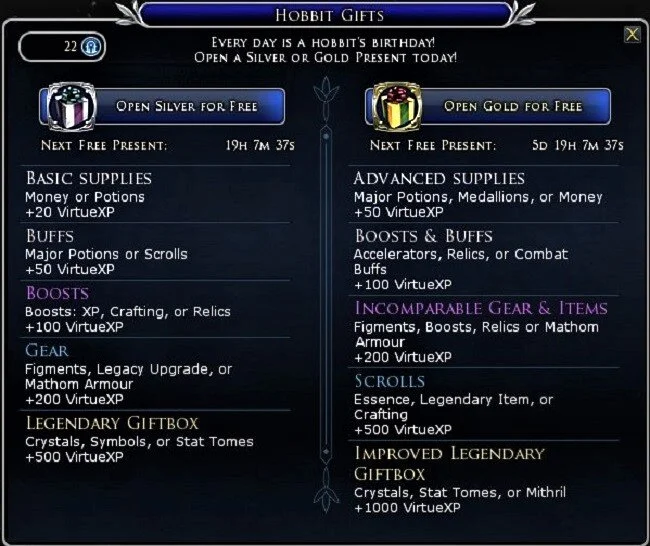
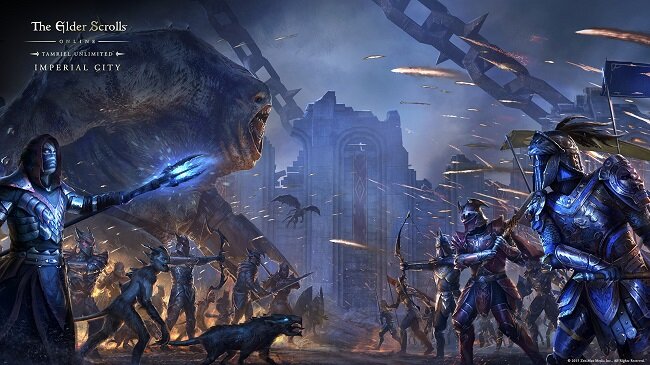

Star Trek Online: Beginners Guide Part 1 - The Cost of Playing
I’ve mentioned in the past that a lot of important information regarding the MMORPG Star Trek Online is centralised within the official subreddit. That’s fine if you enjoy using this platform but it’s not for everyone. I’ve always found Reddit somewhat esoteric and I don’t really like the way it visually displays information. I have to use a browser addon to make it more user friendly. Unlike other communities, STO does not seem to have that many fan produced blogs. However, I may be wrong regarding this, so feel free to correct me (and provide URLs). In the meantime, I thought it may be useful to write a series of simple guides, offering practical information for those who are new to STO. Nothing fancy or in any way definitive. Just a few basic tips that may help orientate the new player. This time we’re going to look at the business model for STO and the cost of playing the game.

I’ve mentioned in the past that a lot of important information regarding the MMORPG Star Trek Online is centralised within the official subreddit. That’s fine if you enjoy using this platform but it’s not for everyone. I’ve always found Reddit somewhat esoteric and I don’t really like the way it visually displays information. I have to use a browser addon to make it more user friendly. Unlike other communities, STO does not seem to have that many fan produced blogs. However, I may be wrong regarding this, so feel free to correct me (and provide URLs). In the meantime, I thought it may be useful to write a series of simple guides, offering practical information for those who are new to STO. Nothing fancy or in any way definitive. Just a few basic tips that may help orientate the new player. This time we’re going to look at the business model for STO and the cost of playing the game.
Q: What is the business model for STO?
A: STO is a free to play game. Unlike some other MMOs there are no major impediments to new players. Story based content is not locked behind any sort of paywall. Once a player has completed the tutorial and reached level 10 (which is easy to do) they can play the latest material. Some content is scalable. STO has several earnable in-game currencies; Energy Credits, Dilithium and Lobi Crystals. You can also purchase Zen for real money. This currency is used to buy in-game store items such as ships, character slots and bank space etc. If you don’t want to spend any real money, you can grind Dilithium and exchange it for Zen, legitimately within the game.
Q: Is there a subscription?
A: STO used to have a subscription option but this was removed from the game in December 2018. If you play for free, you have Silver account status. This applies a degree of limitations upon the game, such as an Energy Credit cap of 15 million and your overall number of character slots, bank slots, Bridge Officer and ship slots. None of these are a deal breaker for new players. If you enjoy the game and wish to create multiple alts or feel that you need more space, you can purchase all these additional resources via the store. Gold account status used to be gained by subscribing but now it is only available by the purchase of a lifetime account.
Q: Are there any essential items to purchase?
A: Although I wouldn’t define it as “essential” the Elite Services Starter Pack does offer a lot of benefits to a new player. It costs 1,000 Zen and can be found in the C-Store. It includes 36 bank slots and 36 inventory spaces, two Bridge Officer slots and three retrain tokens (for reallocating your skill points). If these items were bought separately it would cost the player 2,250 Zen. Hence, the Elite Services Starter Pack is a real bargain working out at less than $10. Again if you don’t want to buy any Zen with real money, you can grind Dilithium by playing game content and exchange it for Zen. It will take about one week to earn sufficient Zen for the Elite Services Starter Pack.
Q: Is the Lifetime subscription worth it ?
A: This very much depends on how often you play STO. I would not encourage new players to contemplate such a purchase until they have played STO for a while and determined how invested they are in the game. If it becomes your MMO of choice and you log on several times a week or more, then it does offer value for money. Upon purchase you immediately unlock Veteran Rewards which include unique ships, uniforms and other game rewards. But perhaps the biggest incentive is a monthly stipend of 500 Zen. A Lifetime subscription retails at $299 but there are often sales throughout the year when the price is dropped to $199.
Q: Should I buy a ship straight away?
A: Unless you have your heart set on a specific ship and are happy to pay real money, once again I would advise those just starting out to not do so. The game provides the player with 5 free ships as they progress through the game. This occurs at levels 10, 20, 30, 40 and 61. The ships are level specific. If you follow the story, then a free shuttle is also available. STO holds several events throughout the year which also allow players to earn a Tier 6 ship. However, part of the appeal of STO is its expansive collection of iconic ships. Developer’s Cryptic rely on the sale of these for much of their revenue. They recently made many Tier 6 ships scalable, so they can be used by new players and will level with them. So it ultimately comes down to your personal choice and budget. However, a free player will not be penalised for not spending money. They simply have less choice. Again, if you’re prepared to invest the time then you can earn the appropriate currencies to obtain a Tier 6 ship at no financial cost.
MMO Tropes: Shipwrecked
I have played more than “a few” MMORPGs over the years. It’s an enjoyable (and accessible) genre of video games. But like any other type of game, MMOs have a fairly standard formula based on a handful of game mechanics. There is levelling, gaining experience and the acquisition of skills and points. Gear such as armour, jewellery and weapons come and go as you progress through the game. Then there’s crafting, trading and gaining “gold”. Another key aspect is the social dynamic. Often there’s content specifically designed for groups to complete. But this homogeneity also extends beyond the systems that underpin the games. The MMO genre is rife with its own set of tropes; recurring themes and motifs that have become established and ubiquitous. All of which are ideal material for a hastily produced, lazily conceived, recurring blog post.
I have played more than “a few” MMORPGs over the years. It’s an enjoyable (and accessible) genre of video games. But like any other type of game, MMOs have a fairly standard formula based on a handful of game mechanics. There is levelling, gaining experience and the acquisition of skills and points. Gear such as armour, jewellery and weapons come and go as you progress through the game. Then there’s crafting, trading and gaining “gold”. Another key aspect is the social dynamic. Often there’s content specifically designed for groups to complete. But this homogeneity also extends beyond the systems that underpin the games. The MMO genre is rife with its own set of tropes; recurring themes and motifs that have become established and ubiquitous. All of which are ideal material for a hastily produced, lazily conceived, recurring blog post.
So where to begin? Ah yes,let us start with a commonly used trope that conveniently affords game developers with a means to orientate new players. Because it should never be assumed that a player is by default familiar with the basics of the game that they are playing. Hence many MMOs need a simple plot device at the start of a game that can justify or accommodate the need to explain everything. And one of the most common of these is the “shipwreck” trope. It covers all bases from a narrative perspective and is convenient. The new player finds themselves washed up on the beach, which is often a starter area and then has to go through some basic tasks that orientate them. These include movement via WASD keys, obtaining a weapon and combat, gaining XP, using consumables and interacting with NPCs. At first glance it’s a perfectly good idea and it achieves what it sets out to do. But if you encounter it too often it gets old very quickly.
I first ran into this particular MMO trope when I played Age of Conan, circa 2009. The game had (and unless it has changed still does) a character creation process that starts on a ship in which you are a galley slave. As expected the ship sinks in a storm and your character is subsequently washed up on a beach on the island of Tortage. Cue the game tutorial. Then in 2013 when I played the Beta Test of Neverwinter, I encountered this trope for a second time. This time foul beasties destroy the ship you’re on and you wash up on the shore to again start a tutorial. If you play The Elder Scrolls Online, this plot device is used at the start of the Ebonheart Pact storyline. There is currently an ongoing Beta Test for another MMO (due to an NDA I cannot mention by name) that begins with yet another shipwreck and integrates it into the tutorial. This trope is also commonplace outside of the MMO genre and can be found in other games such as Monster Hunter: World and Risen and The Legend of Zelda: Link's Awakening.
Some old adages are themselves cliches but I still consider that there is some truth in “familiarity breeds contempt”. While playing this new MMO that cannot be named (go on, guess, it’s hardly difficult) I was somewhat disappointed when this trope was trotted out, as it further reinforced my opinion that this particular title doesn’t offer anything new. However, it is important to remember new players and that this title may well attract a lot of people who haven’t played an MMO before. Considering the marketing clout of the company that owns the developers, this game when released on August 25th, may well gain some initial traction. Bearing that in mind, the “shipwrecked” trope that I find hackneyed may well be an innovative and useful plot device to those who have not experienced it before.