
ESO: Harrowstorms
I managed to find a very good deal on the Digital Upgrade version of Greymoor for The Elder Scrolls Online, so I bought it. The key included a pre-order bonus as well as a few other “trinkets and baubles” which clinched the deal. I wasn’t planning on returning to ESO this month plus I still have a bee in my bonnet about playing through the game in narrative order. However, after speaking to friends about the new expansion, I was curious about the new Harrowstorm events that occur in the new zone of Western Skyrim. So I logged into the game and after the obligatory “let’s spend 30 minutes fixing broken addons”, headed over to Solitude and waited for the next Harrowstorm to appear. As ever, Zone Chat is invaluable for determining what is happening and where, so it wasn’t long before I was riding headlong towards the Black Morass Ritual Site ready for my first Harrowstorm.
According to the official blurb, “Harrowstorms are giant supernatural confluxes which plague Western Skyrim. Much like Dark Anchors, Abyssal Geysers and Dragonscours, Harrowstorms function as group events, where a number of players must work together to shut the Harrowstorm ritual down. You must destroy the three Witch Pikes in the midst of the storm, which are drawing in Lost Souls”. And that is pretty much it. Harrowstorms are very much a case of “same meat, different gravy”. That’s not to say that they aren’t fun but they don’t offer a radically different experience from Abyssal Geysers and Dragonscours. If there are sufficient players present, they can be dealt with quite efficiently, although you need to maintain a lot of situation awareness as the summoned enemies use a lot of AoE and DOT attacks. As ever with PVE events of this kind, the players break down into three groups. The foolhardy, the experienced and the cautious. I fall into the latter category, preferring to skirt around the perimeter firing my bow.
Harrowstorm appear at the following locations. I’ve included details of which is the nearest wayshrine, although like in Northern Elsweyr, ZeniMax hasn’t exactly gone out of it’s way to make it easy to traverse the zone and reach these events.
Black Morass Ritual Site - West-northwest of Morthal (Nearest wayshrine Solitude Docks).
Chilblain Peak Ritual Site - Southwest of Dragon Bridge (Nearest wayshrine Dragon Bridge).
Giant's Coast Ritual Site - Northwest coast of Western Skyrim (Nearest wayshrine Mor Khazgur).
Hailstone Valley Ritual Site - East of Morthal in eastern part of Western Skyrim (Nearest wayshrine Morthal).
Northern Watch Ritual Site - Northeast coast of Western Skyrim (Nearest wayshrine Kilkreath Temple).
Old Karth Ritual Site - East of Karthwatch (Nearest wayshrine Southern Watch).
Dwarf's Bane Ritual Site - Dusktown (Nearest wayshrine Dusktown).
Gloomforest Ritual Site - Lightless Hollow (Nearest wayshrine Lightless Hollow).
Miner's Lament Ritual Site - SouthEast Greymoor Cavern (Nearest wayshrine Dusktown).
Nightstone Ritual Site - Dark Moon Grotto (Nearest wayshrine Dark Moon Grotto).
So far I have not determined if Harrowstorms in Western Skyrim follow a particular rotation or whether they appear where the most players are located. Often you’ll find that the event is over by the time you reach it, due to the location of the nearest wayshrine and the nature of the surrounding terrain. So far, I’ve found waiting in the vicinity of the Hjaalmarch Great Lift allows you to get to the four nearest Ritual Sites (Black Morass, Hailstone Valley, Old Karth and Chilblain Peak). I haven’t yet found a similar solution for Blackreach. However, despite the somewhat over familiar nature of these events, they are still a great way to farm “fat loot” (and hence make a ton of in-game gold), complete dailies and achievements as well as get a quick fix of action.
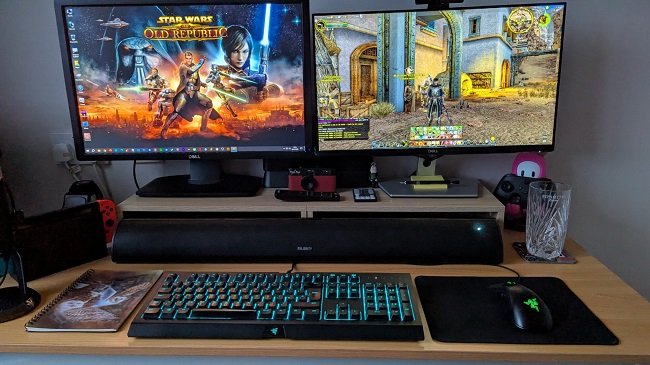
I have two monitors on my desk. The first (which is the primary monitor as far as my PC is concerned), is on the left and the second is on the right. The primary monitor is a 24 Dell U2412M, which has a resolution of 1920 x 1200. It therefore has an aspect ratio of 16:10 which adds a little extra desktop real estate, which I prefer when writing. The second monitor is a 24 inch Dell S2421H with a screen resolution of 1920 x 1080. It has an aspect ratio of 16:9 which is standard FHD. My chair is adjacent to the middle of my desk and I can turn according to each monitor I’m using. I tend to use the primary, larger monitor on the left for tasks such as writing via Google Docs and emails. The second monitor on the right is used for YouTube and gaming. This is because of its FHD format. I also have a Nintendo Switch connected to the second monitor for the same reason.
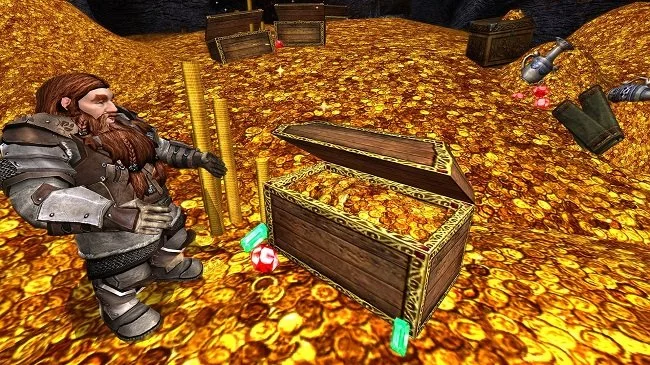
Bree Royce, editor-in chief at Massively Overpowered, recently asked the question “what is the most expensive MMORPG right now”. My first thought was to search through my old draft blog posts and track down an MMO cost analysis I wrote circa 2019. It includes data such as subscription rates and the price of current expansions. There was also information on what were the most popular cash shop items at the time. However, I then read some of the comments that had been left on Bree’s post and I quickly realised that this wasn’t just a matter of financial expenditure. Whether or not an MMO is expensive is also determined by one’s disposable income, respective wealth and personal relationship with money. The latter is perhaps the most important, irrespective whether you consider yourself rich or poor.
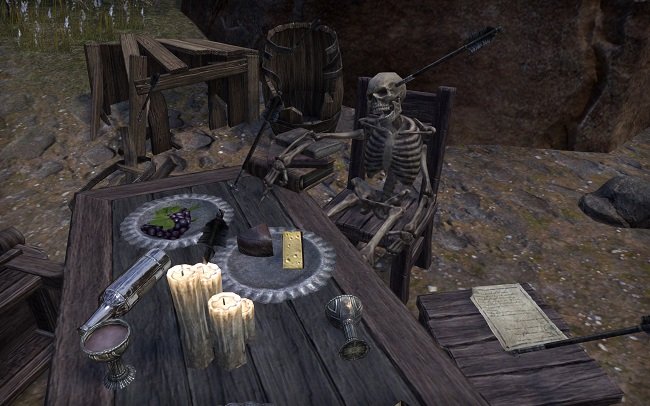
“The MMO genre is rife with its own set of tropes; recurring themes and motifs that have become established and ubiquitous. All of which are ideal material for a hastily produced, lazily conceived, recurring blog post”. Dying in an Massively Multiplayer Online Role-Playing Game is a clear and unambiguous fail state. A means by which to teach the player that they’re doing something wrong and that they need to rethink their strategy. IE Don’t mess with the foul Marmydons unless you have back up and are wielding the Sword of Kagnazax. Dying is a reminder to not get overconfident and maintain situational awareness. It teaches us to ensure you have the right gear and consumables, to be au fait with the mechanics of any fight you’re about to get into and that winning is not a given. Any enterprise that offers a tangible reward will come with potential risks and consequences. If you’re playing in a group then death provides a timely reminder not to rely on Colin.
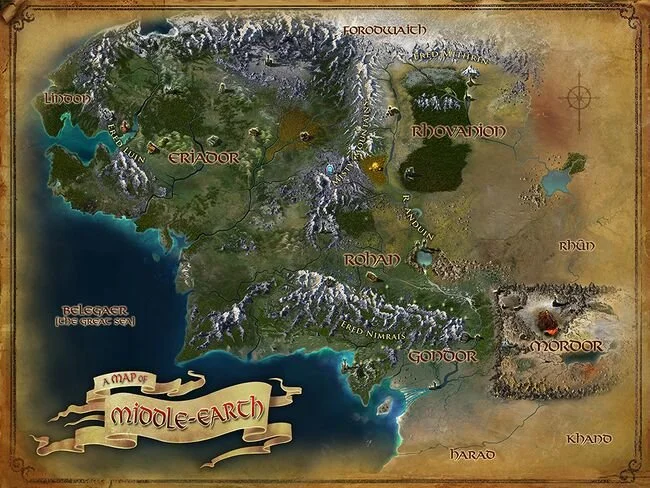
The Lord of the Rings Online was my first major MMORPG. I started playing in late 2008 and quickly discovered that there was a necessity to become familiar with the game world. Although the game provides quick travel options they were not ubiquitous at that point and often a player would simply travel on foot to travel costs down and to take the most direct route. Back in 2008 you could not own a mount until level 30. Hence I began “learning the maps” in the game and to this day still remember how to travel from one side of Moria, to another. The maps in the base game remain clear in my mind as they were so well trodden. Not so those in the regions. There are far more stables with fast mounts present in the game now and so convenience trumps any requirement to become so familiar with newly added zones. Nowadays Standing Stone Games designs new zones that tend to funnel players through them from quest hub to quest hub.
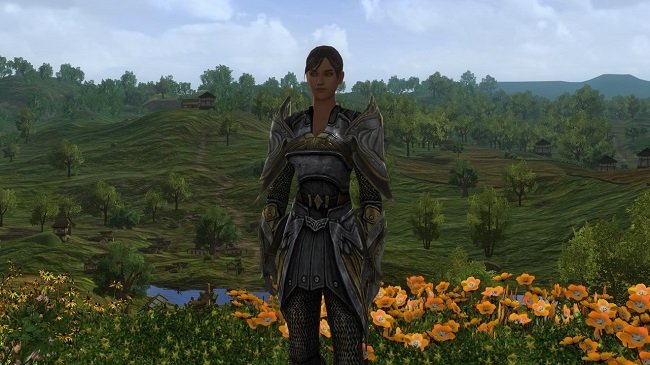
There was a perennial question being discussed over at Massively Overpowered recently. Justin Olivetti asked “why do you play MMOs solo” and as you would expect, there was a wide variety of answers. I have written about this myself in the past, as when I first started playing MMOs, I was very enamoured by the social element and therefore very disposed towards group content. However, that experience between 2008 and 2011, when I played The Lord of the Rings Online most days and dedicated Friday and Saturday nights to raiding, was very much down to circumstances. I had the time and inclination to spend hours online. That is something that I don’t have now. Plus the novelty of the social element has worn a little thin over the years. Nowadays, I do not have the luxury of waiting for a raid group to assemble, nor do I have the tolerance for the inevitable delays that always stem from any kind of human interaction.
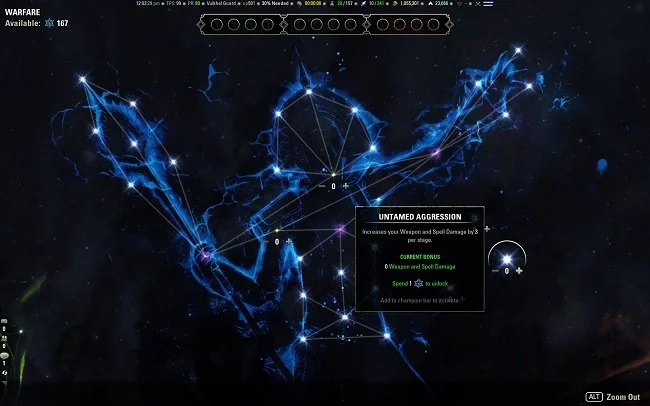
I’m sure I’ve mentioned this issue before in previous video game related posts. But I don’t think I’ve devoted an entire article to the matter, which is what I’m going to do today. So to provide some context, I logged into The Elder Scrolls Online today as I’m fast approaching that point in the year where I spend a few months subscribing to the game. Due to some recent patch, once again all my Champion Points have been refunded. Judging by the change in graphics, it may be that the entire Champion Point system has been updated. Whatever the reason, I have to re-allocate 501points into three skill trees. I wasn’t au fait with the last system, so I followed a build I found online. Now that it has changed, I’ll have to find a new one and copy it. Until I do, my character will be gimped. Shame the game doesn’t offer a selection of generic builds that can be easily implemented at the press of a button.
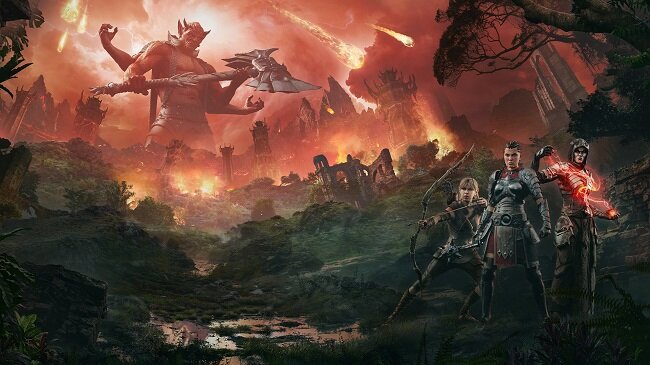
The last installment of A Month in Gaming was at the end of April. I have decided to update this recurring post less often to ensure that I have more to write about than just cataloguing my generic activities in The Lord of the Rings Online and Star Trek Online. The only downside of such an approach is that it invalidates the title but that can’t be helped. Fortunately, I have done more than usual over the last two months. My daily schedule has changed temporarily and I now have a little more leisure time available. Hence I’ve dabbled with several new games as well as using my Nintendo Switch more often. I also took part in a “tag team” playthrough of XCOM 2, which was a very interesting experience. And I finally took the time to go through all my games libraries on the various different platforms to catalogue exactly what I have. I found a few hidden gems but the majority is just “filler” that you find in most video game bundles.
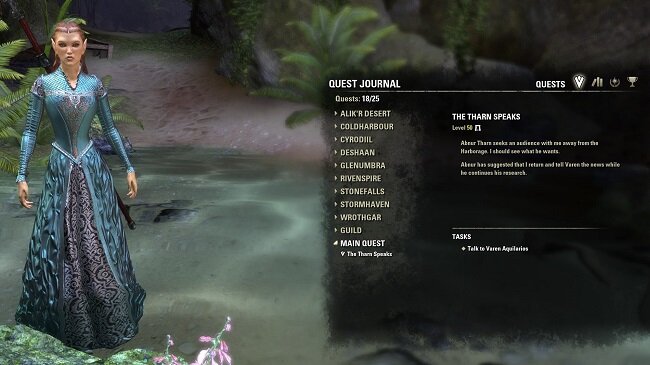
The other day, I was undertaking a daily mission for the Undaunted in The Elder Scrolls Online. I do these to level my companion’s associated skills line. The mission required me to go to a particular delve, set some soul traps and defeat the boss. Nothing unusual there, so off I went. Whenever I go into a delve in ESO, I usually do the quest associated with it. It provides a story and some additional experience points. Thus I arrived in the vicinity of the delve in question and found a note not far away. I read it and accepted the quest assuming it to be the one associated with the delve. To cut a long and confusing story short, it turns out it wasn’t. I discovered this about 20 minutes later when I found myself running around, confused with three separate lots of quest markers on my in-game map. Not for the first time I found myself pondering “where am I and what am I doing”.
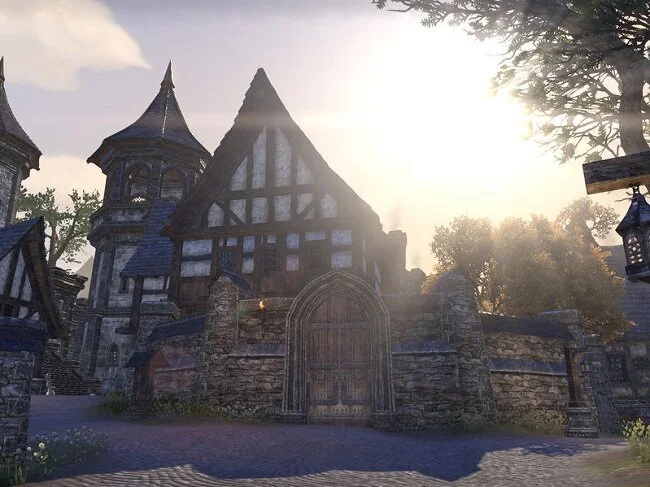
This post is not intended as a player housing guide. There are plenty of those available already. Instead, it is my personal musings on the various factors that have determined my choice of player house in The Elder Scrolls Online. In fact, at the time of writing, I have not yet purchased the house in question. It is dependent not only on a large sum of in-game gold but also a substantial achievement. The house in question is Gardner House in Wayrest. As it is a large player house it costs 1,015,000 gold. Alternatively, it can be bought for 5,700 Crowns, unfurnished. If you want it furnished it will cost 7,100 Crowns. I shall not be buying this property with Crowns as it works out at about £36 or so. I think that price is a little exorbitant especially in light of what I want the house for.
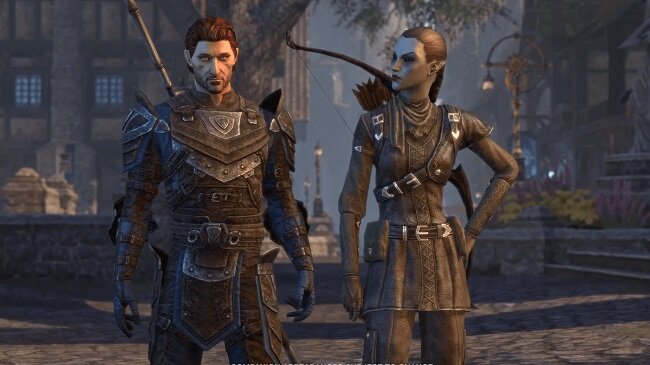
The Blackwood expansion for The Elder Scrolls Online launched a little over a fortnight ago. During that time I have become accustomed to having an AI companion. Not only are they an enjoyable new addition to the MMO, they also have quite a significant impact upon PVE gameplay. Both Mirri Elendis and Bastian Hallix can provide robust support and cover a variety of roles. This is down to the flexibility of the skills system associated with companions. Gear requirements are simpler and a lot easier to manage compared to that of your main character. Levelling is driven by XP gained from combat. Thus, if you go questing with either one of your companions they will level accordingly. They also have personal quests associated with them, ensuring that both companions have an appropriate backstory. The rapport system means that it is prudent to be nice to your AI chum or they’ll leave you for a time.
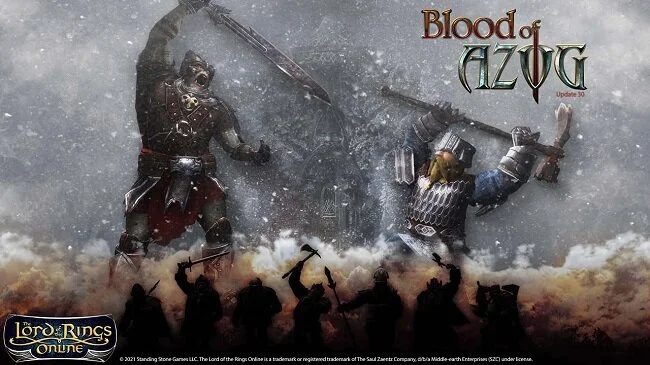
Justin Olivetti posed an honest question on Massively Overpowered yesterday. “Do you have any clue what’s going on in your MMO’s storyline?” he asked and I must admit that my answer varies greatly according to what I’m playing. Yet before I give a more comprehensive response, let me make clear that one of the aspects of the MMO genre that I enjoy the most is its penchant for complex and sprawling narratives. Both The Lord of the Rings Online and Star Trek Online are based upon intellectual properties with in-depth lore and an established canon. I was also drawn to the RPG Skyrim due to its enigmatic story which linked into a much wider history. It was one of the reasons I started playing The Elder Scrolls Online, as every quest seems to have a story that is connected to another. My enjoyment of these dense plots found in the MMO genre stems from my love of reading as a child.
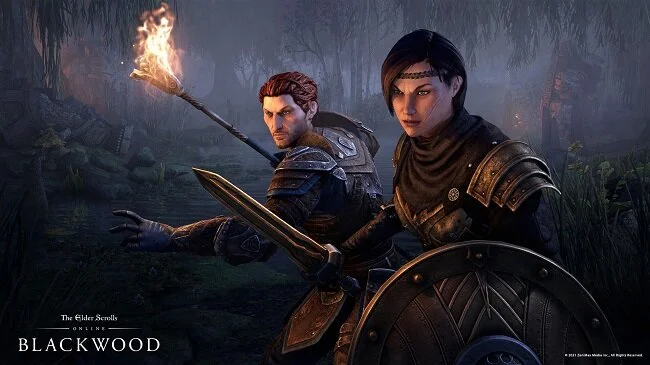
Last night, I finally had sufficient time to log into The Elder Scrolls Online and check out the new Blackwood expansion. The plan was to go straight to the new zone and complete the relevant quests to obtain the two companions that have been added to the game. Unfortunately, life seldom goes to plan as Robert Burns alluded to in his famous quotation. As I haven’t played ESO for a while, I’ve missed several major game updates. Consequently all my champion points have been reset, along with all my skills. So, I had to spend some time trying to remember how my Dragonknight was previously set up. I checked a few screenshots to see what skills were on the hotbars but as they don’t display the name, plus the icons change after morphing a skill, it was tricky trying to reverse engineer my prior build. Eventually I just winged it and managed to blag my way through the two quests.
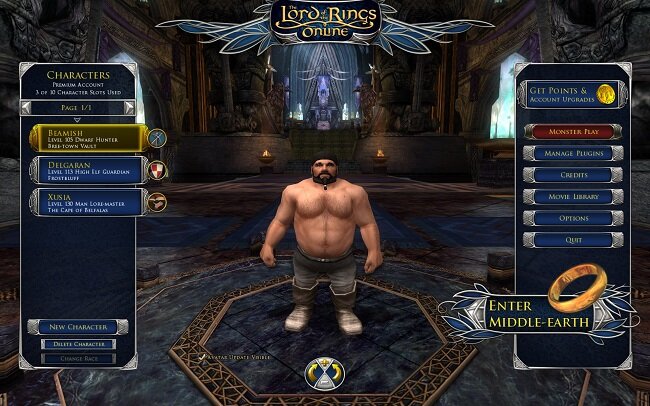
There are many factors that can add to an MMORPGs replayability. Multiple races, classes and factions can all potentially offer a new experience to the player. Some games even have unique stories associated with different types of characters, ensuring that rolling a new alt means that the player doesn’t repeat material they’ve already completed. Many gamers enjoy this aspect of the genre and will experiment with different builds, resulting in a character selection screen filled with numerous alts in various states of progress. However, irrespective of whether you get to experience a new story or if you indeed like the new character you’ve created, there comes a point when you look at your new alts progression and reflect upon the long, long journey to level cap. It is at this point that many alts fall by the wayside. The aforementioned character selection screen is often populated with unfulfilled potential.
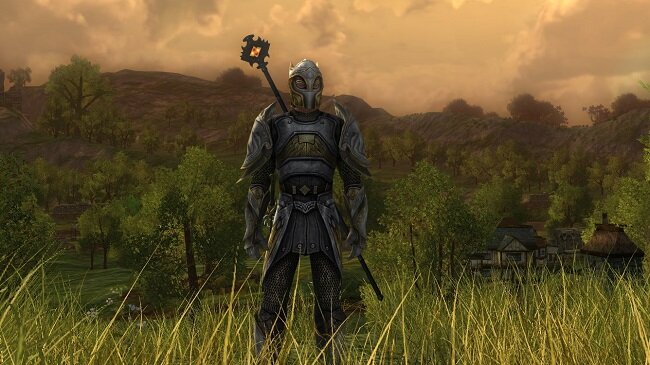
If I may quote myself “The MMO genre is rife with its own set of tropes; recurring themes and motifs that have become established and ubiquitous. All of which are ideal material for a hastily produced, lazily conceived, recurring blog post”. This time round, I would like to discuss the following. The Hero, the Chosen One, the Übermensch. As that is the role that we so often are assigned in this genre. Developers broadly assume that most players want a power fantasy and precious little else is on offer. Hence we find ourselves in a story in which we are destined to do great deeds in a virtual world, whether we wish to or not. I can see the superficial appeal of such a conceit. Most of us are not such overachievers in real life. So a game in which we get to do stuff to the world, instead of the world doing stuff to us has an inherent allure. But like most MMO tropes, unless it is implemented with some panache and creativity, it quickly becomes a tiresome cliche.
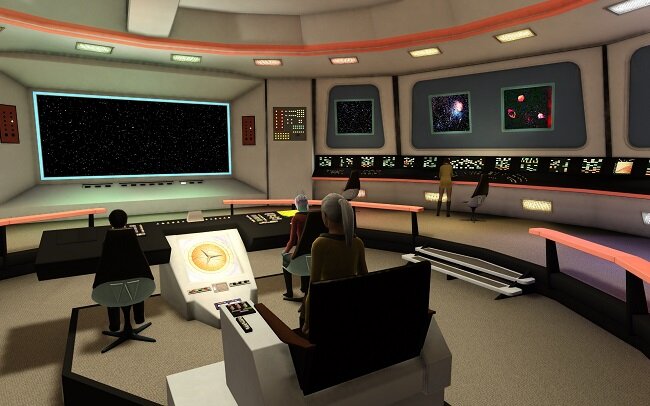
Last year I wrote a post about several “quality-of-life mechanics” found in MMOs. Systems and functionality that just make a game more manageable or convenient. Despite having many features in common, MMOs are far from identical in their interface and controls. If you’re a genre aficionado, then you can usually bluff your way through a new game and decipher how to play it. But for new players, often just trying to figure out how to do a simple thing, like find your skill points, can be an uphill struggle. However, every now and then, you’ll come across some simple functionality in a game that is useful and makes a task much easier. So I have collated another five “quality-of-life mechanics” that I feel are significant and beneficial to the player. Some are very minor but that does not diminish their value. Sometimes, less can indeed be more.
As I mentioned recently in my monthly gaming roundup, I’ve currently stopped playing the three MMORPGs that are my usual gaming mainstay. Namely The Lord of the Rings Online, The Elder Scrolls Online and Star Trek Online. It’s something that I do from time to time when I’m tired of the repetition this genre offers. At present none of these titles has anything on offer that motivates me to play them enthusiastically. Especially LOTRO. I find weddings tedious and self indulgent in real life, so I’m hardly going to get “excited” about a virtual one set in Middle-earth. However, that’s not to say that I’ve lost interest in the MMO genre. I’m merely temporarily burned out at present. I find that after a few months or so, either new content is released that lures me back to these games or I tire of what I’ve been playing in their stead. It’s a cyclical process that I go through from time to time and nothing to worry about.
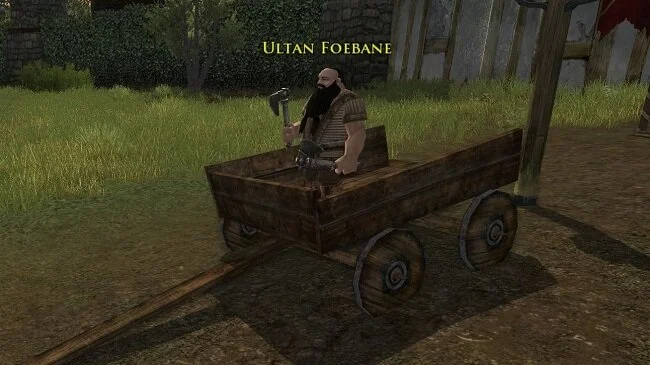
I stopped subscribing to The Lord of the Rings Online in June. I’ve always had a very cyclical relationship with this MMO and at present I feel I need a break from the games somewhat linear formula. Plus the new content scheduled for release centred around the wedding of Aragorn and Arwen doesn’t exactly sound enthralling. So I’ve left my primary character in Langflood and will return to the game later in the year when I feel the need to catch up with content. I have also abandoned the ongoing events in Star Trek Online as they’re getting too repetitive. I would like to see a new longterm story arc rather than just a continuous cycle of short term events and repeatable content. I don’t mind working towards a goal but it has to be something I want and the rewards offered in this MMO are getting a little too generic for my liking. I shall return to the game at some point as I’m a lifetime account holder and I’m curious to see how developer’s Cryptic overhauls the Klingon story arc.

Whenever you use a skill on your hotbar in The Elder Scrolls Online, there is an associated animation as it is inducted and utilised. These animations may vary in length from one to several seconds depending upon their nature. Although these animations add to the ambience of the game, they do come with a direct consequence. The player has to wait for the animation of one skill to complete before they can use another. For those seeking to optimise their performance or DPS output, these delays are an impediment. However, they can be negated through animation cancelling and weaving. Animation cancelling is as it states the stopping of a skill related animated sequence by the use of a follow up action such as bash/tap block/dodgeroll. Weaving is slightly different, in so far as instead of stopping the inducted animation immediately, it allows for the process to be cut short as another animation is started. Typically this is done by using a light attack and then immediately using a skill.

I managed to find a very good deal on the Digital Upgrade version of Greymoor for The Elder Scrolls Online, so I bought it. The key included a pre-order bonus as well as a few other “trinkets and baubles” which clinched the deal. I wasn’t planning on returning to ESO this month plus I still have a bee in my bonnet about playing through the game in narrative order. However, after speaking to friends about the new expansion, I was curious about the new Harrowstorm events that occur in the new zone of Western Skyrim. So I logged into the game and after the obligatory “let’s spend 30 minutes fixing broken addons”, headed over to Solitude and waited for the next Harrowstorm to appear. As ever, Zone Chat is invaluable for determining what is happening and where, so it wasn’t long before I was riding headlong towards the Black Morass Ritual Site ready for my first Harrowstorm.
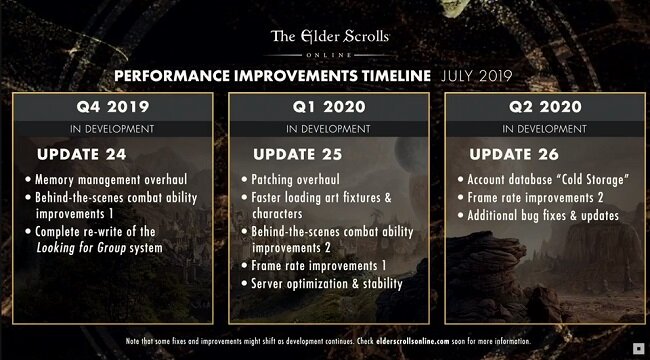
ZeniMax are allegedly addressing some major performance issues with the forthcoming Update 25 for The Elder Scrolls Online. If this latest patch improves loading times, the game’s overall performance and makes updating the client faster, then it will be well received by players. However, Update 25 requires players to reinstall the entire game client due to technical reasons. Furthermore, the patch is not going to be available prior to release on Monday February 24th, so player’s cannot download the necessary files in advance. Unfortunately, as soon as the patch server comes online, all players will have to reinstall the full ESO client and wait accordingly. Considering the disparity between internet connections in the US and Europe, player experience will vary greatly. Some will download the client in hours where others will have to simply leave their PC running and wait all day. Considering the popularity of ESO and the estimated size of its player base, I wouldn’t be surprised if there are queues or connectivity issues.

Over the years I’ve played numerous MMOs (to varying degrees of success). As a genre there are certain game mechanics that are standard and common to most games. Initially during the “golden age” of the MMORPG, there was a focus on collaborative team player. This meant that successfully undertaking group content required a spectrum of players in specific roles. This particular mechanic has diminished over the years but the genre still has numerous common tropes. Quest hubs, reputation factions, gear grinds and vertical levelling are just some that spring to mind. However, many developers in this field attempt to polish and refine these “default” systems, often with interesting results. So I thought I’d cite some specific examples of what I call “quality-of-life mechanics”. Frequently these are bog standard facets common to the MMO genre, that have been polished and refined in a particular game. Small things that just make a game more manageable and provoke a positive reaction as well.
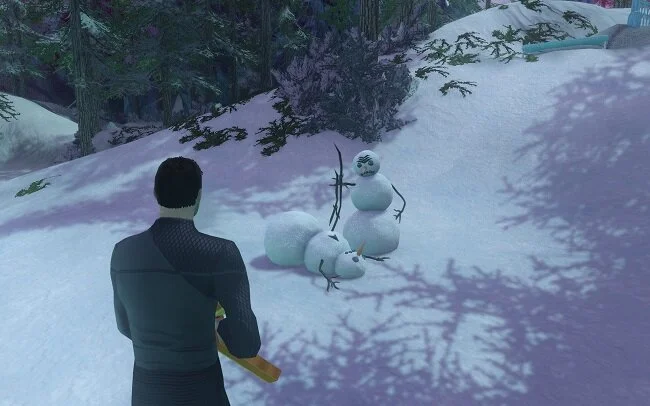
Life is often cyclical, if you don’t believe me go watch The Lion King. I started 2018 playing The Lord of the Rings Online and by writing a post about how gamers collectively seem to repeat the same mistakes. And as the year and indeed the decade ends, I find myself once again playing the Yule Festival in LOTRO and reflecting upon how some games that garnered criticism over their egregious business models, have ended up as huge hits. It would appear that gamers are their own worst enemy. I shall leave the psychological analysis of paradox to others. From my perspective, irrespective of the iniquities of the video game industry and certain quarters of the gaming community, it has been a good year, gaming wise. I have enjoyed my time playing MMOs such as Star Trek Online, The Elder Scrolls Online and the aforementioned LOTRO. These and other titles have entertained me, provided me with an opportunity to unwind as well as affording me some much-needed social interaction. I particularly enjoy Wednesday evenings when I log into my Discord server and then chat and play collaboratively with longstanding gaming friends.
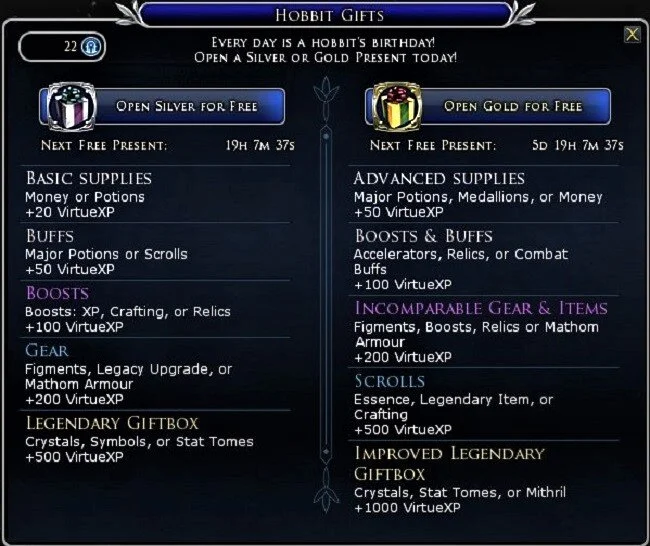
A major challenge for any MMO is to keep players logging in to the game. Obviously, regularly adding content and ensuring that there are sufficient quests, activities and tasks for players to undertake is essential. However, experience has shown that no matter how much content developers add to an MMORPG, players will always veraciously consume it and want more. Hence you need an additional “carrot on a stick”. Something that get’s player sufficiently interested to log into a game, even when they don’t have anything especially compelling to do. Login incentives are designed to do exactly that. They offer of some bauble or trinket that motivates you to log into a game once a day. Hopefully once you login, you may then find something to occupy yourself, either on your own or with fellow guild members. And of course the player who is actively playing may well even purchase something from the in-game store. At the very least, a successful login incentive contributes towards active player statistics. If those figures are presented in the right fashion on paper, they can bolster a declining population.
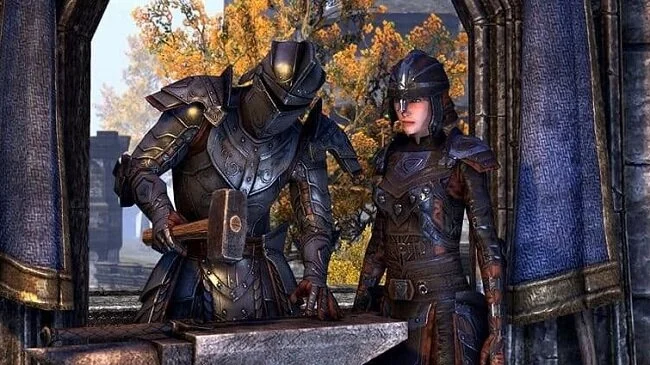
I was initially going to call this post “crafting can fuck right off” but I felt that was a somewhat bellicose opening gambit and a little hyperbolic. So I’ve toned it down to “the esoteric nature of crafting in MMORPGS”. Now to begin with, I tend not to craft when playing MMORPGs. The effort to reward ratio is often insufficient and I have yet to find a crafting system that is engaging and fun. However, for me the biggest sin that crafting can commit is being deliberately arcane and obtuse “with malice of forethought”, if I may invoke legal analogy. Don’t get me wrong, I have no problem with game systems and mechanics being complicated. Intricacy can be both intriguing and rewarding if presented correctly. However, all too often game developers cross over the line, stepping from “complexity” to “fucking annoying”. For example some card games such as Poker can have complex rules but mastering them transforms the proceedings from random chance into a game of skill. But at the other end of the spectrum there’s Fizzbin, which was invented purely to be frustrating due to its arcane nature. I frequently find that crafting in MMOs is just like Fizzbin. Except they’re not amusing or ironic, just tedious and irritating.
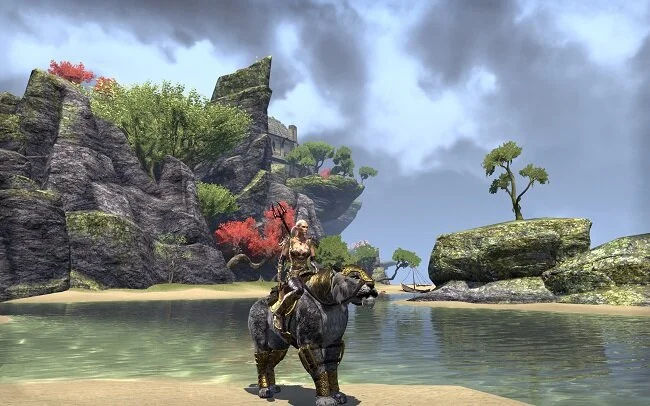
As my first post for International Picture Posting Month, I have decided to share some pictures and thoughts on the MMORPG, The Elder Scrolls Online. Out of the three games from this genre that I currently play, it’s the one that I’m currently enjoying the most. It has plenty of content to play through, the virtual world is immersive and the stories, characters and lore are very detailed and satisfying. As a more recent MMO, the game engine is robust and the visuals are far from dated. The game mechanics are multi-layered but combat is straightforward. There is no obvious skills bloat as you choose what you want on your hotbar. I also greatly enjoy the ambient music and recurring themes that play throughout the game. ESO is both solo and group friendly. You can also greatly augment your UI and the way you interact with the various systems, through the use of addons if you like. Alternatively, if you feel bold enough, then you can go with the default layout. From my perspective, ESO offers a great deal and ticks many of the boxes I favour. Yes it can have its foibles but name me an MMO that doesn’t?
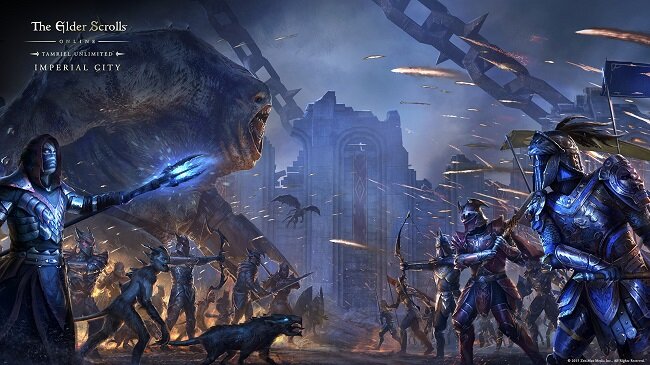
I raised the question in a previous post as to what’s the best way to follow the various stories in The Elder Scrolls Online in an orderly, coherent fashion. After some further research, it would appear that the most practical solution is to play through all the games DLC and chapters in release order. Hence, after finishing the main and faction storylines (in my case the Daggerfall Covenant), the next place to go is The Imperial City. Now I was under the impression that Cyrodiil was just a pure PVP zone but it would appear that there are 8 PVE quests that have a narrative arc. I was most pleased to learn this as I don’t like to miss out on content, especially if it sheds light on the lore and advances existing plot and themes. However, the problem with this series of quests is that despite being PVE content that requires you to kill Daedra mobs, you are still operating within an PVP zone. So you’re at risk of getting picked off by other players of differing factions while undertaking these quests.

Whenever I start a new MMO I tend to research the various classes and make an informed decision about which one to choose as my primary character. This policy has worked out well over the years and therefore compared to other players, I don’t have multiple alts across numerous games. That’s not to say that I’m averse to creating a new character, I simply need a good reason to do so. When I do, its usually because there’s an option to experience a different story. Hence, I currently have three alts in The Elder Scrolls Online. Last night I reached the current level cap of 50 with my Imperial Dragonknight, having recently completed the Daggerfall Covenant storyline. I have now experienced all three faction stories (which I have enjoyed) and more importantly, have learned what is the best way for me to progress through the game. ESO offers players the chance to play the MMO in a manner that suits them. If you want to simply travel Tamriel and do things as you go along, then you may. It’s a very flexible in this respect. But if you want to play in a more structured way, it can be a little confusing navigating a linear path. So here are a few tips I’ve learned the hard way.
 Roger Edwards
I was recently perusing my archive of old blog posts, when it struck me how much I’ve written about the MMORPG genre over the years. Naturally, there was far more material from between 2008 and 2012 as that was period when I immersed myself in the genre and was very enthusiastic about it. I was at a point in my life when I had the time to dedicate to such games and I was happy to participate in the social aspect of they offered. I would regularly play through group content and spend time socialising online with fellow guild members. My experience remains a textbook example of how online games can be more than the sum of their parts and that where you are at in your life has a major impact upon your overall enjoyment. As I read though various old posts it became clear that my experiences where specific to this particular part of my life and that they cannot be repeated. My relationship with the genre is very different now and that’s fine.