
Scream and Scream Again (1970)
I first saw Scream and Scream Again as a teenager while watching late night television. I was expecting the usual sort of lurid, seventies, exploitation horror and much to my surprise was met with something quite different. The film left a marked impression upon me and so I decided to re-watch it recently. This second viewing only further compounded my sense of surprise. Scream and Scream Again was clearly marketed as a horror film upon release but it strays more into the science fiction genre. I was reminded of Don Siegel’s Invasion of the Body Snatchers and there is a further hint of conspiracy thrillers such as The Parallax View. Although a low budget film, quickly made to meet production schedule and fill a gap in the market, Scream and Scream Again has an intriguing premise and is presented in an engaging format, with three seemingly separate stories coming together to form a rather sinister conclusion. There are more ideas here than you’ll find in many big budget contemporary movies.
I first saw Scream and Scream Again as a teenager while watching late night television. I was expecting the usual sort of lurid, seventies, exploitation horror and much to my surprise was met with something quite different. The film left a marked impression upon me and so I decided to re-watch it recently. This second viewing only further compounded my sense of surprise. Scream and Scream Again was clearly marketed as a horror film upon release but it strays more into the science fiction genre. I was reminded of Don Siegel’s Invasion of the Body Snatchers and there is a further hint of conspiracy thrillers such as The Parallax View. Although a low budget film, quickly made to meet production schedule and fill a gap in the market, Scream and Scream Again has an intriguing premise and is presented in an engaging format, with three seemingly separate stories coming together to form a rather sinister conclusion. There are more ideas here than you’ll find in many big budget contemporary movies.
A jogger running through suburban London collapses in the street. He wakes up in a hospital bed, tended by a mute nurse. He lifts the bed sheets to discover his right leg has been amputated. He starts to scream. Elsewhere, in an unidentified Eastern European totalitarian state, intelligence operative Konratz (Marshall Jones) returns home for a debriefing with his superior, Captain Schweitz (Peter Sallis). During the meeting Konratz reveals some information he isn’t supposed to know, arousing Schweitz’s suspicion. Konratz calmly kills him by placing his hand on his shoulder, paralysing him. In London Detective Superintendent Bellaver (Alfred Marks) investigates the rape and murder of a young woman, Eileen Stevens. Supt. Bellaver and forensic pathologist Dr. David Sorel (Christopher Matthews) interview her employer Dr. Browning (Vincent Price) who is unable to provide any information. Meanwhile another young woman, Sylvia (Judy Huxtable), is picked up by a tall man named Keith (Michael Gothard) at a nightclub. She later found dead and completely drained of blood
Scream and Scream Again has a strong cast featuring horror stalwarts such as Vincent Price, Christopher Lee and Peter Cushing. However due to the three distinct story lines they do not often cross paths or share much screen time together. Performances are solid with British character actors such as Peter Sallis and Julian Holloway filling minor roles. The screenplay by Christopher Wicking is fast paced and handles the complexity of the different plot threads well. Alfred Marks has some suitably droll and cynical dialogue that is becoming of a senior and cynical career police officer. Again I must mention that the proceedings feel far more like a thriller. There’s a particularly well staged car chase in a rural setting, culminating at a chalk quarry, which has a real sense of speed and inertia. The night club scene briefly features the Welsh psychedelic rock group Amen Corner who also provide a song which plays over the end credits.
For those who are expecting a bonafide horror film, then there’s little on screen violence. The storyline featuring the jogger who has his limbs amputated one by one is disconcerting but far from graphic as you only ever see him recovering in bed. The nightclub serial killer is similarly far from graphic with the emphasis on him chasing his prey. Yet despite the absence of overt violence, there is a very unsettling undertone to Scream and Scream Again and it builds to a suitably grim climax. The film’s modest budget does let it down in some areas. The make up and practical special effects are somewhat cheap, especially the acid bath which appears mainly to be dishwashing detergent. Yet despite these minor shortcomings, the film is a prime example of low budget innovation and how good ideas can carry a production. Scream and Scream Again stands out because it is not afraid to do something different. It is not only a genre anomaly but also a rather interesting and enjoyable film.










The Mezzotint (2021)
In 1922, middle-aged University Don Edward Williams (Rory Kinnear), is sent a somewhat “indifferent” mezzotint (a monochrome print made from an engraved copper or steel plate) on approval from one of his regular art dealers. On arrival the mezzotint features an unidentified English country house and has no distinguishing features to merit its price. Later that day, Williams shows the print to Binks (John Hopkins), a colleague he plays golf with. He comments that the moonlight is quite well done and there appears to be a figure just on the right of the image. Williams is puzzled that he hadn’t noticed it before. That evening Garwood (Robert Bathurst), a fellow academic, studies the picture and comments on a “grotesque” figure. When Williams checks again before going to bed there is now clearly a shroud covered shape crawling across the lawn in the mezzotint. Williams confers with his friends as to what they have seen, as it becomes clear that the picture is trying to show them something.
In 1922, middle-aged University Don Edward Williams (Rory Kinnear), is sent a somewhat “indifferent” mezzotint (a monochrome print made from an engraved copper or steel plate) on approval from one of his regular art dealers. On arrival the mezzotint features an unidentified English country house and has no distinguishing features to merit its price. Later that day, Williams shows the print to Binks (John Hopkins), a colleague he plays golf with. He comments that the moonlight is quite well done and there appears to be a figure just on the right of the image. Williams is puzzled that he hadn’t noticed it before. That evening Garwood (Robert Bathurst), a fellow academic, studies the picture and comments on a “grotesque” figure. When Williams checks again before going to bed there is now clearly a shroud covered shape crawling across the lawn in the mezzotint. Williams confers with his friends as to what they have seen, as it becomes clear that the picture is trying to show them something.
The Mezzotint is part of the A Ghost Story for Christmas series of short television films, produced by the BBC somewhat intermittently since 1971. More recently, writer, director and actor Mark Gatiss has resurrected this franchise and produced several adaptations of short stories by the great M. R. James. The Mezzotint is his latest production and was broadcast on Christmas Eve 2021. Running for just 30 minutes Gatiss builds an unsettling atmosphere as the story progresses.The changes that take place in the print are not dwelt upon onscreen but instead he focuses upon the impression they make on those who are looking. Rory Kinnear excels as the befuddled bachelor who begins to feel a sense of impending doom. There is also a strong cameo appearance by Frances Barber as Mrs. Ambrigail, an amateur historian. Scottish composer Blair Mowat provides a succinct and creepy score which adds to the overall ambience.
The original short story is set in 1904 and takes place mainly in the rooms of the various protagonists at the University. Although it is a sinister tale, it lacks a suitably strong ending, hence Mark Gatiss has chosen to expand the storyline. The drama is now set in 1922 and the staff of the University are debating whether to allow women students to study for degrees. To make the story a little less male-centric some characters have been changed to women; a University Porter becomes a Housekeeper. The most significant addition to the story is a subplot regarding William’s ongoing investigations into his family tree. Hence Mrs. Ambrigail, the Vicar’s wife, searches through the various parish records. This thread has a major impact upon the climax of The Mezzotint which in this adaptation ends with a substantial “Jamesian wallop” (the unofficial term for a shock or surprise twist in the stories of M. R. James).
Some purists have balked at the embellishments and changes that have been made to this adaptation. If you’re of a similar mind, then you may be better off listening to an audiobook version of the original short story. There is a very good collection read by David Collings available. However, I am of the view that the story requires expanding to lend itself to the requirements of television and I feel that the widening of the plot and additional ending are to the drama’s overall benefit. Mark Gatiss is clearly a consummate fan of M. R. James and I feel his screenplay is very sympathetic to the source text. As for the “Jamesian wallop” at the story’s denouement, I believe this is consistent with the author’s style which often featured a grotesque and eldritch flourish at the end of a story. I hope that the BBC has the good sense to commission further adaptations from Mark Gatiss so that the A Ghost Story for Christmas series can continue.

Resident Evil: Welcome to Raccoon City (2021)
I have seen 2 of the 6 films in the Resident Evil cinematic franchise. Beyond the actor Colin Salmon getting diced into cubes by some laser grid, I cannot recollect anything specific about those movies. That is how much of an impression they made upon me. My interest in the first film came from George A. Romero’s initial association with the production. However, when he left the project my attention waned. I eventually saw Resident Evil (2002) when it was released to the home media market and that was the end of the matter. It was an adequate, quick fix of entertainment and nothing more. As I had no major association with the video game franchise beyond playing Resident Evil: Code Veronica on the Dreamcast, I subsequently didn’t keep up with the subsequent movie beyond the first sequel. However, the franchise went on to gross $1.25 billion at the box office over the next 14 years.
I have seen 2 of the 6 films in the Resident Evil cinematic franchise. Beyond the actor Colin Salmon getting diced into cubes by some laser grid, I cannot recollect anything specific about those movies. That is how much of an impression they made upon me. My interest in the first film came from George A. Romero’s initial association with the production. However, when he left the project my attention waned. I eventually saw Resident Evil (2002) when it was released to the home media market and that was the end of the matter. It was an adequate, quick fix of entertainment and nothing more. As I had no major association with the video game franchise beyond playing Resident Evil: Code Veronica on the Dreamcast, I subsequently didn’t keep up with the subsequent movie beyond the first sequel. However, the franchise went on to gross $1.25 billion at the box office over the next 14 years.
So it comes as no surprise that after a gap of 5 years that the film series has now been rebooted with Resident Evil: Welcome to Raccoon City. I’m sure that the success of new video games as well as remakes of earlier instalments have highlighted to the cinematic rights holders that “there's gold in them thar hills”. Like it’s predecessors Resident Evil: Welcome to Raccoon City is what is broadly termed as a “medium budget” production (between $2 - 80 million). The cast is largely made up of television actors and the majority of the film takes place in building interiors. Despite it’s $25 million production costs Resident Evil: Welcome to Raccoon City does not look cheap. The location photography is suitably convincing and sells the idea of a remote, snowbound industrial town in the midwest American mountains. Compared to earlier films, this reboot seems to draw far more heavily upon the story and the atmosphere of the first two video games. It is this aspect that is the film’s best asset but also its weakness.
In 1998, Claire Redfield (Kaya Scodelario) travels back to her childhood town of Raccoon City, in the mountains of the midwest. She gets a lift from a trucker who subsequently runs over a woman who appears to just step out into the road. When the pair get out to investigate, the body mysteriously vanishes leaving only a pool of blood. On arrival in Raccoon City, Claire visits her estranged brother Chris (Robbie Amell), a cop in the RPD. The police department consists of a skeleton crew as the town is being closed by its owners, the Umbrella Corporation, who are relocating their business interests elsewhere. It is not long until police officers go missing and the town inhabitants start exhibiting signs of a dangerous contagion. Claire soon discovers that Dr. William Birkin (Neal McDonough), a sinister physician from the orphanage in which she was raised, is involved in secret experiments on behalf of the Umbrella Corporation.
Movies based upon video game franchises do not have the most impressive track record with regard to being creative and innovative cinematic endeavours. My expectations for Resident Evil: Welcome to Raccoon City were very low. However, upon viewing I found the film to be satisfactory. I know this sounds very much like damning with faint praise but this is a perfectly adequate horror movie which offers an acceptable experience for those unfamiliar with the source material, as well as a reasonable interpretation of the first two games in the series. There are some clever references such as a scene where Chris is in a darkened room trying to illuminate it with a faulty zippo lighter. Each time it briefly lights it shows zombies getting closer. As the story takes place in the nineties there are some nice pop culture references such as data being held on a PalmPilot. Cinematographer, Maxime Alexandre, lights the proceedings in the style of Mario Bava. Johannes Roberts directs with enthusiasm.
To put things in perspective when I say adequate, I mean moderately entertaining. Resident Evil: Welcome to Raccoon City does not reinvent the wheel in any way, shape or form. Characters are painted with broad strokes and some function purely as Redshirts. Performances are okay but this is not really a film driven by acting prowess but by action set pieces and gore. The latter is present and sufficiently entertaining. Although there are CGI bullet hits and blood spray, there are also some quite good physical effects. As I previously mentioned the story focuses upon the claustrophobic elements of the video games and has a very straightforward narrative arc. Hence the story is somewhat simplistic. It may give those familiar with Resident Evil what they want but casual viewers only get a fairly basic linear story. However, it provides enough action and gore to suffice along with a modicum of wit and style. There are far worse horror films to invest your time in.
Halloween Kills (2021)
Director and co-writer David Gordon Green scored a major hit with his direct sequel to John Carpenter’s 1978 masterpiece, Halloween. He managed to bring a fresh perspective and modern sensibilities to the slasher genre and furthermore gave us a very entertaining and tense horror film. It was a superb bookend to the original film and the only real criticism that could be levelled at it was the confusing decision to call it Halloween, just like the original, rather than something that clearly indicated that it was a sequel. Irrespective of this the film fared very well both with critics and audiences, becoming a box office hit. However, financial success all too often begets further demand. Hence a film that was originally intended to be a standalone and definitive sequel, suddenly morphed into the first instalment of a new trilogy. Halloween Kills is the second instalment of this new story arc and compared to its predecessor it is far less coherent and relevant.
Director and co-writer David Gordon Green scored a major hit with his direct sequel to John Carpenter’s 1978 masterpiece, Halloween. He managed to bring a fresh perspective and modern sensibilities to the slasher genre and furthermore gave us a very entertaining and tense horror film. It was a superb bookend to the original film and the only real criticism that could be levelled at it was the confusing decision to call it Halloween, just like the original, rather than something that clearly indicated that it was a sequel. Irrespective of this the film fared very well both with critics and audiences, becoming a box office hit. However, financial success all too often begets further demand. Hence a film that was originally intended to be a standalone and definitive sequel, suddenly morphed into the first instalment of a new trilogy. Halloween Kills is the second instalment of this new story arc and compared to its predecessor it is far less coherent and relevant.
Halloween Kills picks up immediately after the events of the previous film. Laurie Strode (Jamie Lee Curtis), her daughter Karen (Judie Greer) and her granddaughter Allyson (Andi Matichak) escape from Laurie’s house which they’ve set on fire with Michael Myers trapped inside. As they travel to hospital, firefighters attempt to put out the blaze and in doing so, accidentally set Michael free from the basement. He subsequently murders them all and heads into town. Meanwhile, a group of survivors from Michael’s original killing spree are commemorating their experience in a bar. This consists of Tommy Doyle (Anthony Michael Hall), Marion Chambers (Nancy Stephens), Lindsey Wallace (Kyle Richards) and Lonnie Elam (Robert Longstreet). After seeing news reports on Michael’s escape they decide that they can no longer live their life in fear and decide to go out and hunt him down. Back at the hospital Laurie undergoes emergency surgery. Karen is happy to leave matters to the authorities but Allyson wishes to join Tommy Doyle and seek revenge.
Halloween Kills has a strong pre-credit sequence in which an injured Officer Hawkins (Will Patton) is found after being attacked in the previous film. Hawkins then has a flashback to 1978 when he was a rookie officer and encountered Michael Myers for the first time. The continuity with John Carpenter’s original film is outstanding. The seventies aesthetic is strong and there are numerous references to events in the first film, such as the dead dog in the Myers house and the fact that Dr. Loomis shot Michael “six times”. The Dr. also makes an appearance courtesy of a double and not CGI. It is a gripping opening gambit with a sad subplot which sets the bar quite high. Unfortunately, this level of tension and narrative intrigue is not maintained throughout the remainder of the film. After the flashback events return to Haddonfield on 31st October 2018 and the film follows three story elements. Tommy Doyle searching for Michael, events in the hospital as Laurie recovers and of course Michael’s renewed murder spree.
Often horror films are guilty of not trying hard enough with regard to their story and characters. In the case of Halloween Kills, it is the opposite. It is clear that writers Scott Teems, Danny McBride and David Gordon Green want to imbue the proceedings with a sense of continuity and lore. This is a laudable endeavour but the net results are scenes that often feel like they are extremely contrived and elaborate set pieces that are designed to mirror a sequence from Carpenter’s original. We see this when Marion Chambers finds herself once again trapped in a car with Michael Myers on the roof, reaching for her through the windows. The early scene in the bar where the survivors of Michael’s first rampage meet up each year is filled with expository dialogue that just serves to bring the casual viewer up to speed with events.
Halloween Kills also reflects contemporary audience tastes and hence the set pieces and kills are not only violent but dwelt upon. Although creative and gory they are far removed from Carpenter’s original which was more focused on suspense. One series of murders features an amusing reference to Halloween III: Season of the Witch with the victims wearing Silver Shamrock masks. Yet despite many good ideas and call backs to the franchise’s lore, the story doesn’t fit together seamlessly. It often feels episodic and that it’s overreaching itself. The film’s main idea that fear is infectious and succumbing to it eventually turns us into monsters is never really developed beyond its initial premise. Late in the story arc, Officer Hawkins and Laurie (who is underused throughout the film) contemplate the nature of evil and exactly what Michael Myers is. But it comes far too late and again seems to have been introduced just so the writers can crowbar the story to fit a specific scene that the director decided to end on.
Halloween Kills is not a bad film. It is handsomely made and all involved in the production are obviously invested in trying to do the best that they can (the score is again outstanding). Instead I think over ambitious is a farer and more accurate label. If you are a casual viewer and not invested in this franchise, then you will get an adequate horror film with some strong shocks. But when viewed in comparison with the 2018 film, this instalment undoes much of its good work in revitalising the story and finding new angles to explore. Hence fans of the first movie are inevitably going to be disappointed. Essentially Halloween Kills feels like it is treading water until its next instalment Halloween Ends; a problem that can sometimes blight the middle film in a trilogy. Therefore some viewers may prefer to dispense with this new story arc and simply view the 1978 film as a standalone story. If you seek a definitive conclusion, perhaps you can find that in Halloween II (1981).
Bloodbath at the House of Death (1984)
During the early eighties Kenny Everett was one of the most popular comedians on UK television. His mix of “zany” characters, slapstick and innuendo filled the gap between traditional comedians and their sketch show format and the anarchy of the new alternative comedy scene. Therefore his foray into feature films in 1984 was a logical progression of his growing success. Bloodbath at the House of Death was conceived as a satire on the Hammer Horror genre, although the script by Barry Cryer and Ray Cameron touched upon everything from An American Werewolf in London, Alien, The Amityville Horror, The Legend of Hell House and The Entity. Featuring a solid cast of British character actors and a cameo appearance by the great Vincent Price, on paper the film had all the trappings of a potential box office success. Sadly, it failed to meet expectations and was savaged by the UK press who used it as a means to attack Kenny Everett for his perceived transgressions.
During the early eighties Kenny Everett was one of the most popular comedians on UK television. His mix of “zany” characters, slapstick and innuendo filled the gap between traditional comedians and their sketch show format and the anarchy of the new alternative comedy scene. Therefore his foray into feature films in 1984 was a logical progression of his growing success. Bloodbath at the House of Death was conceived as a satire on the Hammer Horror genre, although the script by Barry Cryer and Ray Cameron touched upon everything from An American Werewolf in London, Alien, The Amityville Horror, The Legend of Hell House and The Entity. Featuring a solid cast of British character actors and a cameo appearance by the great Vincent Price, on paper the film had all the trappings of a potential box office success. Sadly, it failed to meet expectations and was savaged by the UK press who used it as a means to attack Kenny Everett for his perceived transgressions.
In 1975 Headstone Manor, a "businessman's weekend retreat and girls summer camp", is waylaid by a group of satanic monks who kill all 18 residents. Eight years later, Doctor Lukas Mandeville (Kenny Everett) and Doctor Barbara Coyle (Pamela Stephenson) are sent to investigate radioactive readings in the area that have been traced to Headstone Manor. The manor is known by locals as the House of Death. Along with fellow scientists Elliot Broome (Gareth Hunt), Stephen Wilson (Don Warrington), John Harrison (Jone Fortune), Sheila Finch (Sheila Steafel), Henry Noland (John Stephen Hill) and Deborah Kedding (Cleo Rocos), Mandeville and Coyle set up their equipment in the house and await any developments. Meanwhile the Sinister Man (Vincent Price), a 700-year-old Satanic priest, prepares a rite in the nearby woods to purge the house of its unwanted guests.
The most obvious flaw in Bloodbath at the House of Death is its poor script, which is a surprise considering the involvement of veteran writer and comedian Barry Cryer. A satire of this nature needs a constant barrage of visual and verbal gags, as well as the humour derived from the main story. Blazing Saddles achieves this perfectly. Here there just aren’t enough jokes and out of those on offer, many fail to land. There are a few scenes that show promise. Mandeville and Coyle visit a local pub which is very much in the idiom of The Slaughtered Lamb from An American Werewolf in London. He gets into an argument with the barmaid regarding exactly how many people were murdered at Headstone Manor. More and more people join in, calculators are used and the confusion grows. It all culminates in a drunken song in which the entire pub recounts the murders to the tune of The 12 Days of Christmas. Sadly these sort of well conceived vignettes are few and far between.
All too often Bloodbath at the House of Death falls back on easy gags. Doctor Coyle encounters an amorous poltergeist which provides an opportunity for some nudity. There are also some cheap gore effects which are presented more for amusement than shock, such as a decapitation by can opener. The presence of Vincent Price (telling one of his underlings to “piss off”) does a little to elevate the proceedings but he is gone too quickly. And of course, this being the eighties we have two upper class comedy homosexual scientists, because that is “funny” by default. Why Kenny Everett, a gay man himself, accommodated such a pointless embellishment is somewhat odd. The final twenty minutes of the film in which doppelgängers of all the scientists attempt to kill and replace the originals leads to a lot of confusion and at one point a major continuity error. The head of the BBFC at the time, James Ferman, thought the reels had been shown out of order.
Hence, with the greatest will in the world, Bloodbath at the House of Death cannot be held up as an overlooked classic. This low budget production seems to have been made rather quickly to capitalize upon Kenny Everett’s success and therein probably explains the lacklustre screenplay. However, as mentioned earlier, the film was pilloried by the UK press far beyond it’s obvious failings. This is due to Kenny’s appearance in 1983 at the Young Conservatives Conference, prior to the general election held later that year. Goaded by Michael Winner, Kenny made several quips that although funny, were not really appropriate for such an event. Poe faced members of the establishment then deliberately took them out of context and turned upon him. The film provided a further opportunity to continue this public scolding the following year. Thus, Bloodbath at the House of Death was quickly withdrawn from UK cinemas due to poor performance. It now serves as an interesting cinematic curiosity. An example of how success on TV doesn’t always translate to the big screen.
Night of the Animated Dead (2021)
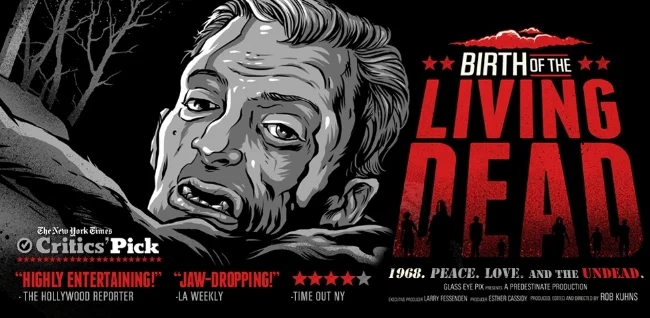
George A. Romero’s Night of the Living Dead is a true genre milestone that is praised not only by horror film fans but mainstream critics alike. If you are interested in watching an intelligent, well researched and entertaining documentary about the film’s provenance and cultural impact then I thoroughly recommend Birth of the Living Dead (2013) by Rob Kuhn. It tells you pretty much all you need to know about why this classic film is so important. As for Night of the Living Dead itself, it still holds up well after 53 years. It is the immediacy and relatability of the premise and overall story that still makes the film relevant. The zombies are purely a “MacGuffin” and the real focus of the plot is how people behave under pressure in life threatening situations. It’s a film about how we can react to the same situation differently and how cultural baggage and the need for people to be “right”, hinders co-operation and thwarts progress.
George A. Romero’s Night of the Living Dead is a true genre milestone that is praised not only by horror film fans but mainstream critics alike. If you are interested in watching an intelligent, well researched and entertaining documentary about the film’s provenance and cultural impact then I thoroughly recommend Birth of the Living Dead (2013) by Rob Kuhn. It tells you pretty much all you need to know about why this classic film is so important. As for Night of the Living Dead itself, it still holds up well after 53 years. It is the immediacy and relatability of the premise and overall story that still makes the film relevant. The zombies are purely a “MacGuffin” and the real focus of the plot is how people behave under pressure in life threatening situations. It’s a film about how we can react to the same situation differently and how cultural baggage and the need for people to be “right”, hinders co-operation and thwarts progress.
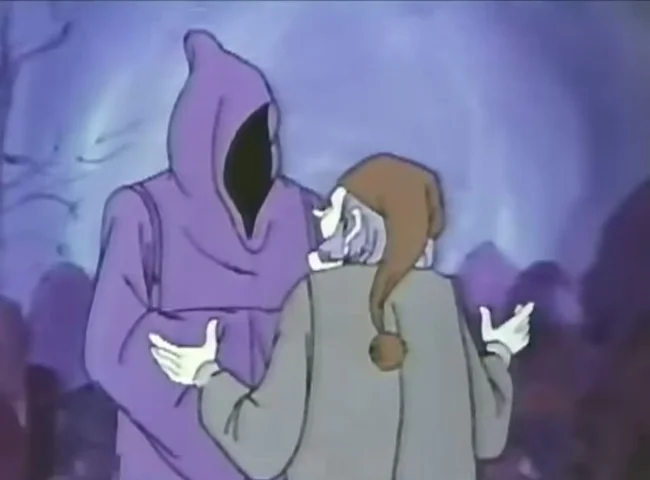
The legacy of Night of the Living Dead is far reaching. It turned zombies from a minor horror subset into an entire genre of their own and propagated the idea of the “zombie apocalypse”. A plot device that can be used to scrutinise and explore all the various facets of the human condition or to provide an endless litany of gore and body horror. The central premise of Romero’s film lends itself to reinvention and interpretation. It has already been officially “remade” in 1990 which added an interesting feminist angle to the story. And there have been numerous unofficial remakes and variations on the same theme from all over the globe. All add something to the basics of the story. Which brings me on to Night of the Animated Dead (2021). The title clearly sets out the film’s pitch. This is an animated feature film remake which closely follows the narrative structure of the original.
According to director Jason Axxin “This is a remake of the original movie. It’s essentially a way to make a classic more accessible to modern audiences. This is in color and there’s a lot more gore and violence. If you were ever hesitant to watch the original film, this is the version to see. It’s a fast-paced roller coaster ride of violence”. Frankly I find this statement and its premise somewhat spurious. Is Night of the Living Dead really outside of a modern audience's frame of reference? If so, that doesn’t say a lot for the average cinema goer. However, if we are to take Axxin’s comments in good faith, the only credible comparison I can come up with is that this version of Night of the Living Dead is intended to be the cinematic equivalent of a Reader’s Digest Condensed Books. A streamlined and somewhat lurid distillation of Romero’s vision. It is also devoid of any character and is possibly the most redundant film I’ve seen since Gus Van Sant’s remake of Psycho in 1998.
Despite having a competent voice cast, featuring Dulé Hill, Katharine Isabelle, Josh Duhamel, Nancy Travis, James Roday Rodriguez, Jimmi Simpson and Will Sasso, the animation style lacks any distinction or innovation. Classic scenes are lovingly recreated but the overall design slavishly adheres to that of the 1968 film and therefore fails to add anything new and say anything different. The minimalist style doesn’t really bring the story or themes into sharp relief and the character designs are somewhat lacking. The screenplay is credited to John A. Russo who wrote the original, as it is a verbatim summary of the 1968 version. The score by Nima Fakhrara is used sparingly and is evocative of the library music that Romero used. As for the “gore” it lacks any real impact due to its rather crude realisation. It comes off as a rather unnecessary embellishment.
I appreciate that there were probably budgetary restrictions that had an impact on the production. Setting aside such considerations, Night of the Animated Dead provides a simplified, less nuanced version of Night of the Living Dead. It hits all the essential beats of Romero’s classic but offers nothing beyond that other than its own inherent novelty. The animation is functional but far from accomplished. That said, Night of the Animated Dead is not an utter disaster. It manages to hold your interest. However, a film being mildly engaging due to its pointlessness is not really a great selling point. If you are a diehard horror fan who is curious to see an ill conceived project, then by all means watch Night of the Animated Dead. But I cannot recommend it in any way as a substitute to the original. At best it is just a minor footnote that serves to highlight the merits of the 1968 version and the talent of George A. Romero.








The Legend of Hell House (1973)
There is a school of thought that the key to crafting a good horror or supernatural film lies with creating an atmosphere that impacts upon the viewer’s mind and emotions, rather than relying solely upon visual effects, gore and spectacle. Director Robert Wise clearly demonstrated this in his 1963 film The Haunting, based upon Shirley Jackson’s book The Haunting of Hill House. In many ways the film is seen as vindicating this particular theory. The Legend Of Hell House, made a decade later, is another example of this approach to genre film making. Directed by John Hough and written by Twilight Zone veteran and cult author Richard Matheson, it is another meticulously crafted piece of cinema with a focus on increasing tension and a sense of disquiet. Rather than intermittently scalding the viewer with jump scares, the film’s atmosphere is more akin to placing the audience in water and slowly bringing them to a boil.
There is a school of thought that the key to crafting a good horror or supernatural film lies with creating an atmosphere that impacts upon the viewer’s mind and emotions, rather than relying solely upon visual effects, gore and spectacle. Director Robert Wise clearly demonstrated this in his 1963 film The Haunting, based upon Shirley Jackson’s book The Haunting of Hill House. In many ways the film is seen as vindicating this particular theory. The Legend Of Hell House, made a decade later, is another example of this approach to genre film making. Directed by John Hough and written by Twilight Zone veteran and cult author Richard Matheson, it is another meticulously crafted piece of cinema with a focus on increasing tension and a sense of disquiet. Rather than intermittently scalding the viewer with jump scares, the film’s atmosphere is more akin to placing the audience in water and slowly bringing them to a boil.
Physicist Dr. Lionel Barrett (Clive Revill) is contracted by eccentric millionaire Mr. Deutsch to make an investigation into "survival after death". He must conduct his experiment in "the one place where it has yet to be refuted". The Belasco House, the "Mount Everest of haunted houses", originally owned by the notorious "Roaring Giant" Emeric Belasco. A six-foot-five perverted millionaire and alleged murderer, who disappeared soon after a massacre was discovered at his home. The house is believed to be haunted by numerous spirits, all victims of Belasco's twisted and sadistic desires. Accompanying Barrett are his wife, Ann (Gayle Hunnicutt), as well as two mediums. The first is mental medium and spiritualist minister Florence Tanner (Pamela Franklin) and the second is physical medium Benjamin Franklin "Ben" Fischer (Roddy McDowell). Ben is the only survivor of a previous investigation conducted 20 years before. All others involved either died or subsequently went mad.
British TV and film director John Hough had a very eclectic background prior to making this film. Yet despite only making one previous horror film (Twins of Evil for Hammer studios) he certainly shows a flair for the genre here. Using a very direct style bordering on a faux documentary, The Legend Of Hell House moves efficiently through its story. The Pre-credits sequence clearly sets out the film’s remit and then wastes no time in exploring it. It is not long before there is a seance with ectoplasm manifesting around Florence. And then both Florence and Ann are subject to nocturnal disturbances and whisperings. The spirit activity also plays heavily upon their sexual desires, especially Ann who is repressed. There are some intermittent jump scares and sudden jolts but Hough focuses more upon the characters reaction to the increasingly malevolent atmosphere, as the house itself preys upon each of the four researcher’s weaknesses.
Underpinning the proceedings is a discordant and sinister electronic score from former BBC Radiophonic workshop pioneers Delia Derbyshire and Brian Hodgson. It is composed mainly of sounds and rhythms rather than traditional music and motifs and it works incredibly well. The cast are all on top form and acquit themselves well, especially McDowell. His calm demeanour hides the true horror of his previous experience at the Belasco House. There is a disquieting scene in which he finally lowers his psychic barriers to the evil presence. The camera spends several seconds holding McDowell in a close shot only for him to scream directly into the camera. Gayle Hunnicutt also gives a very sympathetic performance, as the spirit exploits her latent desires. Screenwriter Richard Matheson, who adapted his own novel, has toned down the sexual content and it is handled intelligently rather than explicitly. Viewers are made abundantly aware how human lust becomes a point of leverage by the force inhabiting the house.
The Legend Of Hell House remains a genuinely creepy and undeniably uneasy viewing experience. It explores the conflicts between traditional spiritualism and scientific enquiry into the so-called supernatural with an honest eye. The two make for curious bedfellows but this idea works well with the confines of this story. The ending is a curious blend of both methodologies which I felt was genuinely innovative. I would also like to note how the Blu-ray release of The Legend Of Hell House benefits greatly by having subtitles. They show what many of the inaudible whispering voices are saying which greatly enhances the story. Over the years The Legend Of Hell House has grown in reputation. It received mixed reviews upon its theatrical release in 1973 but has garnered more attention over time by critics who see it as a more cerebral work, rather than standard horror exploitation fodder. Discerning genre fans with an interest in noteworthy films should certainly add it to their watch list.
Army of the Dead (2021)
One of the biggest issues associated with modern film production is creative interference by the studios financing them. Despite employing known writers and directors who have an established track record and creative style, all too often control is taken from these individuals and changes are imposed upon the production, usually to the detriment of the overall film. Hence, you can understand why more and more filmmakers are taking their work to Netflix and similar platforms. Streaming services are apparently far more accommodating and understanding. Martin Scorsese himself made his last film The Irishman, for Netflix. However, such creative freedom can be a double edged sword. Some directors need to be tempered, the same way that some writers need a good editor. There is often a fine line between creative freedom and self indulgence.
One of the biggest issues associated with modern film production is creative interference by the studios financing them. Despite employing known writers and directors who have an established track record and creative style, all too often control is taken from these individuals and changes are imposed upon the production, usually to the detriment of the overall film. Hence, you can understand why more and more filmmakers are taking their work to Netflix and similar platforms. Streaming services are apparently far more accommodating and understanding. Martin Scorsese himself made his last film The Irishman, for Netflix. However, such creative freedom can be a double edged sword. Some directors need to be tempered, the same way that some writers need a good editor. There is often a fine line between creative freedom and self indulgence.
Following an zombie outbreak due to a military “accident”, Las Vegas has been wall off to contain the walking dead. Former decorated soldier Scott Ward (Dave Bautista), who led the initial evacuation, is employed by casino owner Bly Tanaka (Hiroyuki Sanada) to break into the quarantine zone and recover $200 million from his casino vault, before the US military obliterates the city with a tactical nuclear warhead. Ward has mixed feelings about returning to Vegas as he had to kill his wife during the evacuation when she was bitten by a zombie. He recruits his former teammates Maria Cruz and Vanderohe, along with helicopter pilot Marianne Peters, German safecracker Ludwig Dieter, and Chicano sharpshooter Mikey Guzman, who brings along his associate Chambers. Tanaka sends his right hand man Martin to provide access to the casino vault. Enroute Ward encounters his estranged daughter Kate (Ella Purnell); a volunteer in the Vegas refugee camp.
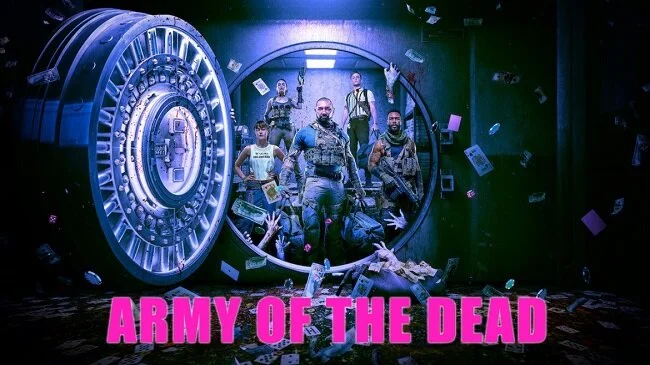
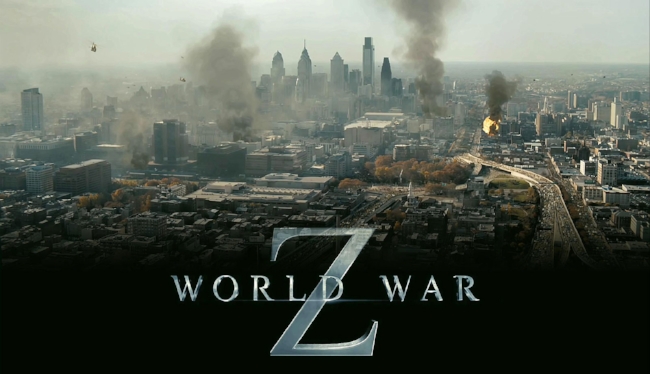
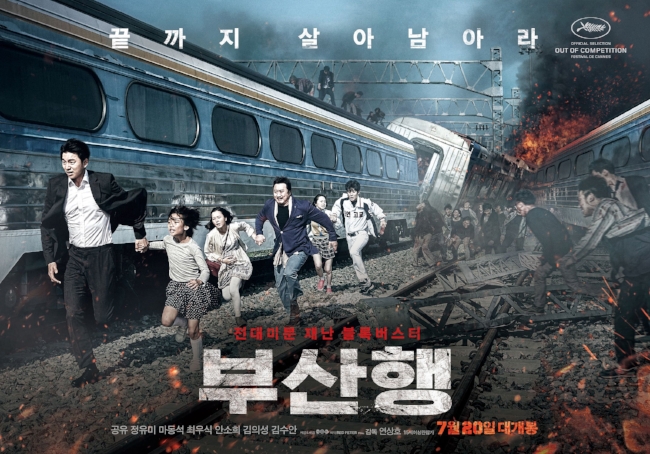
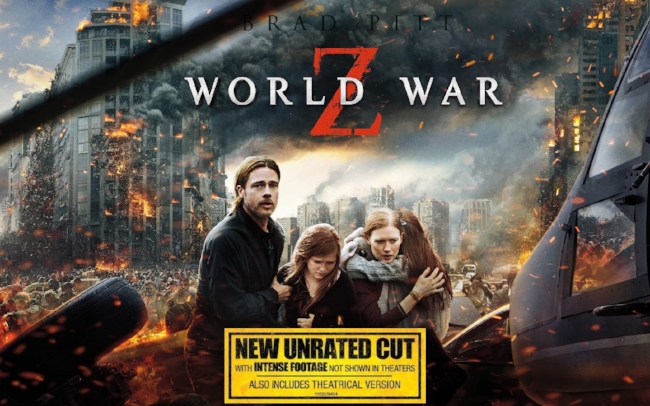
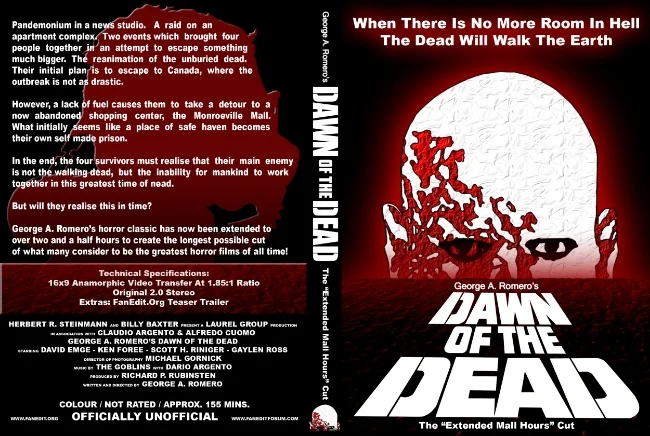
Zack Snyder’s latest film, Army of the Dead, is a textbook example of “indulging” a filmmaker and not legitimately questioning any of their creative decisions. As a result the handful of innovative ideas get lost among the bloated set pieces and mitigated by the crass screenplay with its puerile dialogue. I was raised on classic zombie movies and therefore am more disposed by default to favour the “Romero rules” governing zombie behaviour. However, I am open to alternative ideas and was not averse to the rather threatening fast moving zombies in Snyder’s previous remake of Dawn of the Dead. Sadly, the inclusion of the so-called “Alpha” zombies in Army of the Dead does more harm than good. By making zombies less mysterious and giving them more specific human cognitive abilities, it essentially robs them of their mystique. They become a far more rationalised threat and hence less of the enigmatic metaphor for wider social issues as in other films.
Army of the Dead is overlong, too dependent on CGI rather than physical effects and is filled with characters who are woefully undeveloped or even interesting. It lacks the narrative subtly of Romero’s work and the cast carry out their duties in a perfunctory manner. Zack Snyder has an eye for visuals and certainly can produce better work (as his extended version of Justice League proves). However, I feel that he needs a creative partner who can curb his excesses and nurture his valid ideas. As it stands Army of the Dead is a ponderous viewing experience, with no hardboiled action movie cliché left unturned. It wastes the presence of Dave Bautista, who has proven he can be a personable lead and saddles us with a dull, obvious narrative. Rather than advance or reinvigorate the zombie horror movie subgenre, it succinctly demonstrates why it has fallen by the wayside by doing absolutely nothing new of note during it’s 148 minute running time.


Flight of the Living Dead (2007)
Sometimes just the name of a film is sufficient to sell it to you. I originally discovered this zombie crossover movie thanks to film critic Mark Kermode's video blog from the 2008 Cannes Film Festival. He reported on how the film festival was also a major marketplace for independent movie makers trying to find international distribution for their products. Flight of the Living Dead was one of the lurid flyers he was given. Writer and director Scott Thomas claimed at the time that despite the obvious plot similarities with Snakes on a Plane, his film was not intended to be a quick cash-in on Samuel L. Jackson’s sleeper hit from 2006. The basic concept and the pre-production phase of Flight of the Living Dead supposedly pre-dates the aforementioned exploitation movie. Considering how long it can take for a small independently funded movie to find a distributor this may well be true.
Sometimes just the name of a film is sufficient to sell it to you. I originally discovered this zombie crossover movie thanks to film critic Mark Kermode's video blog from the 2008 Cannes Film Festival. He reported on how the film festival was also a major marketplace for independent movie makers trying to find international distribution for their products. Flight of the Living Dead was one of the lurid flyers he was given. Writer and director Scott Thomas claimed at the time that despite the obvious plot similarities with Snakes on a Plane, his film was not intended to be a quick cash-in on Samuel L. Jackson’s sleeper hit from 2006. The basic concept and the pre-production phase of Flight of the Living Dead supposedly pre-dates the aforementioned exploitation movie. Considering how long it can take for a small independently funded movie to find a distributor this may well be true.
Dr. Bennett (Erick Avari) and his team of scientists are en route to Paris, transporting a cryogenically frozen coffin in the hold of the plane. The flight crew are unsettled not only by the presence of a cadaver but by the fact there's an armed guard securing it. The plane finds itself in the middle of a violent storm, which inevitably leads to the coffin accidentally being opened. It contains a mysterious woman, who doesn't appear to be quite dead. After attacking the guard she soon starts to spread her contagion among the rest of the crew and passengers. The survivors, including a policeman and prisoner as well as a golf pro and his wife, make a desperate last stand against the zombies and try to land a damaged plane. However, the authorities have other ideas and a military option soon becomes apparent.
Director Scott Thomas does not leave a single horror cliché left unturned in what is a surprisingly enjoyable tongue in cheek "B" horror movie. There is a capable cast of TV and genre actors such as David Chisum, Kristen Kerr, Kevin J. O'Connor, Richard Tyson and Raymond J. Barry. Furthermore Thomas has crafted a professional looking production despite the limited budget at his disposal. The make-up FX's are perfectly acceptable and the CGI work is better than what you usually see in such low budget movies. The script is the weakest aspect of the film and could have been tighter and a little more satirical. It struggles at times to decide what direction it wants to take. Overall the cast has a great time despite these shortcomings and I couldn't help but enjoy the film, as it has no pretensions to be anything other than what it is.
Flight of the Living Dead is the very essence of direct-to-video filmmaking and "high concept" movie and that's meant as a compliment. Long time horror fans have a highly attuned grading system when it comes to these sorts of movies. This movie is a cut above your standard cash-in bullshit. It puts a grin on your face with the sheer gall of its title and manages to maintain that goodwill for the remaining ninety minutes. Sometimes these DTV titles have a candour about them that is absent in the bigger budget and often more pretentious cousins. It is not as gory as it could be and the scope of the story pretty much remains within the confines of the title but if you want 90 minutes of zombie mayhem set on a plane then Flight of the Living Dead meets that requirement.
Harry Price: Ghost Hunter (2015)
I was somewhat perplexed by this curious, one off, TV drama from 2015. Firstly, this is not a biography of the well known and controversial British psychic researcher. Secondly, despite being based upon a novel by Neil Spring, Harry Price: Ghost Hunter doesn’t follow the source text. Instead we are offered an original story in which Harry Price is requested to investigate a series of alleged supernatural events, surrounding a politician’s wife. If judged purely upon its own merits this is quite an enjoyable ninety minutes drama. The production benefits from strong performances, subtle period detail and a story that doesn’t overreach itself. I suspect that Harry Price: Ghost Hunter was intended to be a pilot for a TV series that was never commissioned, which is a shame. There’s a lot of potential in the material and the period setting is ideal for exploring the supernatural, as there was a surge of public interest in spiritualism in the wake of World War I.
I was somewhat perplexed by this curious, one off, TV drama from 2015. Firstly, this is not a biography of the well known and controversial British psychic researcher. Secondly, despite being based upon a novel by Neil Spring, Harry Price: Ghost Hunter doesn’t follow the source text. Instead we are offered an original story in which Harry Price is requested to investigate a series of alleged supernatural events, surrounding a politician’s wife. If judged purely upon its own merits this is quite an enjoyable ninety minutes drama. The production benefits from strong performances, subtle period detail and a story that doesn’t overreach itself. I suspect that Harry Price: Ghost Hunter was intended to be a pilot for a TV series that was never commissioned, which is a shame. There’s a lot of potential in the material and the period setting is ideal for exploring the supernatural, as there was a surge of public interest in spiritualism in the wake of World War I.
Paranormal investigator Harry Price (Rafe Spall) is not averse to faking supernatural activity to solve a case. However he ceases his work after a tragedy occurs on his own doorstep. However, he is visited by senior politician Sir Charles Harwood (Michael Byrne) who wishes him to discreetly investigate a case involving an MP, Edward Goodwin (Tom Ward). Goodwin’s wife, Grace (Zoe Boyle) was recently found walking the streets naked and in a trance. She has also experienced disturbances in her new home. Fearing a scandal Harwood wants the matter resolved. Price is at first reluctant to take the case but when he realises the alternative is for Grace to be committed, he relents. Initially, Edward Goodwin is ambivalent about the investigation and refers Price to the house maid Sarah Grey (Cara Theobald) for any assistance. Sarah doubts Price’s intentions and their working relationship is at first fractious. However, as the investigation proceeds the pair experience further disturbances and discover that the modern residence used to be a Victorian workhouse with a sinister history.
The relationship between Harry Price and Sarah Grey is core to this drama and it works very well. Sarah has a dim view of mediums as her Mother spends money she can ill afford, consorting with them and seeking comfort over the death of her husband. Hence she is initially unhappy with having to accommodate Price. However, matters become more cordial when she discovers that Harry’s wife was committed and that he will not allow a similar fate to befall Grace Goodwin. The screenplay by Jack Lothian touches upon the psychological damage done to an entire nation as a result of World War I and how many sought reassurance in spiritualism. His depiction of emerging gender politics is robust as Sarah chafes at the restrictions placed upon women in the post Edwardian era. She is an intelligent woman who is forced into domestic service out of necessity and a lack of a husband.
There are several plot elements in Harry Price: Ghost Hunter that are somewhat under used. Perhaps these were to be addressed further if a full series had been commissioned. Price is aided by Albert Ogoro (Richie Campbell) in his investigations. When we first meet him he is playing upon his African heritage and performing a fertility ritual for a childless couple. Again we touch upon the theme that purveyors of the supernatural are providing a service for the British public at a time of need. Ogoro is an interesting character but we are left wanting more. Plus those hoping for a more overtly supernatural conclusion may be disappointed. After several red herrings, the story’s conclusion is as one would expect, grounded in human failings, although there is some leeway in attributing Grace Goodwin’s visions to a more ghostly source. Overall, Harry Price: Ghost Hunter provides an entertaining and setup for a show that has sadly not yet emerged. Considering what does get given a greenlight these days this is a sad omission.





His House (2020)
If you are labouring under the erroneous assumption that the horror films are apolitical and devoid of wider social commentary, then I suggest you go and watch Dawn of the Dead, Get Out or Pan’s Labyrinth. The horror genre has for many years been addressing social issues and cultural foibles. So the timely arrival of His House comes as no major surprise. Immigration has become more than a point of debate in recent years, having been usurped and subverted by tabloid hyperbole and populist rhetoric. However, this horror thriller film written and directed by Remi Weekes indulges in none of the negative traits associated with the subject. It intelligently weaves social themes into an atmospheric and disquieting genre tale. Although in many ways the ground that His House treads is classic ghost story territory, it is both the perspective of Sudanese culture and the trauma of their migrant journey that make this such a fresh and engaging film.
If you are labouring under the erroneous assumption that the horror films are apolitical and devoid of wider social commentary, then I suggest you go and watch Dawn of the Dead, Get Out or Pan’s Labyrinth. The horror genre has for many years been addressing social issues and cultural foibles. So the timely arrival of His House comes as no major surprise. Immigration has become more than a point of debate in recent years, having been usurped and subverted by tabloid hyperbole and populist rhetoric. However, this horror thriller film written and directed by Remi Weekes indulges in none of the negative traits associated with the subject. It intelligently weaves social themes into an atmospheric and disquieting genre tale. Although in many ways the ground that His House treads is classic ghost story territory, it is both the perspective of Sudanese culture and the trauma of their migrant journey that make this such a fresh and engaging film.
Bol (Sope Dirisu) and Rial (Wunmi Mosaku) are refugees fleeing from the civil war in South Sudan. While crossing the Mediterranean, a sudden storm causes their overcrowded boat to sink. Many drown including Bol and Rial’s daughter Nyagak. After spending 3 months in a UK refugee centre the couple are granted probational asylum. They are assigned a dilapidated inner city house and given strict instructions not to move or seek employment or they face potential deportation. Their case worker Mark (Matt Smith), tells them the house is “better than what he got” and how he hopes the couple are one of "the good ones". However, soon after moving in nocturnal disturbances, noises and bad dreams afflict Bol and Rial. Bol desperately wants to fit in and stubbornly refuses to acknowledge the presence of the supernatural. But Rial wants to return home and feels there is no place for them in the UK. Has something followed them from South Sudan and are the couple harbouring a secret?
His House covers a lot of ground and works on multiple levels. If you’re just looking for a tense horror then it provides exactly that and has the added bonus of referencing non-european superstitions and supernatural folklore. The digital effects are surprisingly creative and most effective during several dream sequences depicting Bol and Rial’s dangerous sea crossing. There is a strong sense of unease to be found both inside and outside of the house as the story progresses. When the scare’s come they hit home effectively and the film has a very strong sound design. Also throughout the story there is a robust streak of real social horror but it is intelligently explored. Bol is automatically followed by security when he visits a discount department store. The UK immigration service is depicted as indifferent to the couple’s emotional trauma. And in a very bold move, Rial is racial abused by a black British youth and told to “go back to Africa”. His House also works as a tale exploring the loss of a child and the conflict it causes between the grieving couple.
But at the heart of the story, driving it forward are the compelling performances by Sope Dirisu and Wunmi Mosaku. They are a plausible, vulnerable and very likeable couple. British writer-director Remi Weekes handles the proceeding assuredly and delivers a well timed curveball two thirds into the film, which puts the events in a different perspective. The story’s conclusion manages to avoid being overtly bleak but instead reflects upon reconciliation and coming to terms with the past. It has been a while since I have seen such a universally strong directing debut and I am eager to learn what Remi Weekes’ next project is going to be. His House is a fine example of how the horror genre can deftly explore more than just the supernatural. It also provides some robust and innovative scares, as well as a very timely contemporary storyline that leaves you thinking long after you’ve finished viewing.
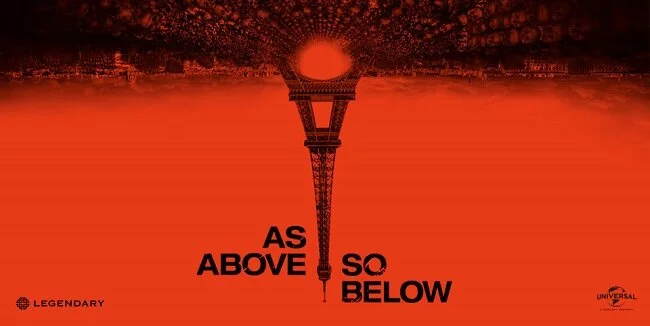
As Above, So Below (2014)
The found footage genre is predicated on the concept that the material the audience watches is supposed to be filmed from real life. This therefore presents a challenge for actors as their performances have to appear like everyday social interactions. Most people are not great orators with extensive vocabularies, in real life. Watch any wedding video or vox pop on a news broadcast and you’ll quickly become aware of the gulf between how people express themselves in reality and the stylised, contrived manner in which actors deliver dialogue. Hence, during the first act of As Above, So Below I became aware that the cast were “acting”. They were using dramatic techniques commonly used in conventional film but which stands out far more in this genre. This changed as the film progressed and the story became more deliberately chaotic. But it was noticeable during the initial set up to the story. It’s not something I’ve noticed before with other found footage movies. But in many ways, As Above, So Below is quite different compared to other genre examples
The found footage genre is predicated on the concept that the material the audience watches is supposed to be filmed from real life. This therefore presents a challenge for actors as their performances have to appear like everyday social interactions. Most people are not great orators with extensive vocabularies, in real life. Watch any wedding video or vox pop on a news broadcast and you’ll quickly become aware of the gulf between how people express themselves in reality and the stylised, contrived manner in which actors deliver dialogue. Hence, during the first act of As Above, So Below I became aware that the cast were “acting”. They were using dramatic techniques commonly used in conventional film but which stands out far more in this genre. This changed as the film progressed and the story became more deliberately chaotic. But it was noticeable during the initial set up to the story. It’s not something I’ve noticed before with other found footage movies. But in many ways, As Above, So Below is quite different compared to other genre examples
Archaeologist Scarlett Marlowe (Perdita Weeks) is obsessed with finding Nicholas Flamel's alchemical Philosopher's Stone. After finding an inscription in a cave in Iran, written in Aramaic, she travels to Paris along with her documentary cameraman Benji (Edwin Hodge). She meets with her former boyfriend George (Ben Feldman) who is an expert in ancient languages. After deciphering the inscription and using it to find hidden information on the back of Nicholas Flamel's gravestone, they discover that the Philosopher's Stone is located in the Parisian Catacombs. The team then finds a group of unofficial guides, Papillon, Siouxie and Zed, who are experienced exploring the parts of the Catacombs not open to the public. They enter the subterranean necropolis and when a tunnel collapses, are forced to take a route that has previously not been explored. Papillon is nervous as a close friend of his La Taupe vanished here, despite his knowledge. As the group travel further they become aware that all is not as it seems and that they’re all being haunted by their own past.
Once the cast are trapped in the Parisian Catacombs the plot draws heavily from Dante's Inferno. Given the scope of the story and the nature of themes therein, I would argue that maybe it would have been preferable to have made As Above, So Below a standard horror film, rather than in the found footage format. However, writers Paco Plaza, Luis A. Berdejo and Jaume Balagueró certainly are innovative with regards to pushing the boundaries of this genre. There are several noticeable scenes which have a palpable sense of claustrophobia that I’ve only seen previously in The Borderlands (2013) and The Descent (2005). The characters are at times somewhat annoying with their bickering and squabbling but that is a reflection of their personalities. There is a tipping point in the story where events veer from the strange into the pure eldritch. Stone faces appear in the walls and attack people, hooded figures charge at the unwary and the narrow corridors of the necropolis fill with blood. By this point the viewer either goes with the proceedings or emotionally checks out.
Most found footage films do not hold up to close scrutiny. The most common criticism is that there often comes a point in the story where most people would stop filming and run. And this argument can certainly be levelled at As Above, So Below. However, because the story is so ambitious with its use of nonlinear time, visions of hell and exploration of alchemy, it seems pedantic to focus on minor contradictions of the format and the film’s own internal logic. There’s also an off kilter ambience to the proceedings. Simple things like finding a piano amid the dust and confines of the tunnel are disquieting. Papillon coming across one of his own graffiti tags which he claims he hasn’t done is similarly bothersome. Plus the Parisian Catacombs themselves are just plain sinister. I suspect there may be no middle ground with As Above, So Below. You’ll either embrace its ambition and enjoy it or dismiss it out right. I chose the former.

Tales That Witness Madness (1973)
I have a soft spot for portmanteau horror films, especially those made in the UK during the seventies. They often have an impressive cast of character actors and offer a snapshot of fashion, culture and sensibilities from the times. However, their weakness often lies with the inconsistency of the various stories. These can range from the outstanding, to what can best be described as filler. Furthermore, although the latter category have just as short a running time as the other vignettes, it is always the poor ones that seem to drag and disrupt the flow of the film. Tales That Witness Madness does not suffer too badly from this problem. Out of the four stories that are featured two stand out and two others are just average and not overtly bad. However, irrespective of potential narrative inconsistencies, there are some good ideas and a ghoulish streak running throughout the fill’s ninety minute running time.
I have a soft spot for portmanteau horror films, especially those made in the UK during the seventies. They often have an impressive cast of character actors and offer a snapshot of fashion, culture and sensibilities from the times. However, their weakness often lies with the inconsistency of the various stories. These can range from the outstanding, to what can best be described as filler. Furthermore, although the latter category have just as short a running time as the other vignettes, it is always the poor ones that seem to drag and disrupt the flow of the film. Tales That Witness Madness does not suffer too badly from this problem. Out of the four stories that are featured two stand out and two others are just average and not overtly bad. However, irrespective of potential narrative inconsistencies, there are some good ideas and a ghoulish streak running throughout the fill’s ninety minute running time.
Tales That Witness Madness is not an Amicus production but instead made by World Film Services. Efficiently directed by Freddie Francis, the framing story set in a high security psychiatric hospital sets an interesting tone. It is a brightly lit, modern environment and a far cry from the typical gothic asylums that are de rigueur in the horror genre. Jack Hawkins (dubbed by Charles Gray) and Donald Pleasance effortlessly navigate through their respective roles as two Doctors discussing cases. The first story, “Mr.Tiger”, is by far the weakest and is no more than the sum of its parts. A young boy has an imaginary friend who happens to be a tiger. It subsequently kills his parents who are constantly bickering. No explanation or deeper motive is provided. The second tale, “Penny Farthing”, packs a lot more into its duration including time travel, murder and a fiery denouement. It doesn’t make a lot of sense when thought about but it is a creepy vignette.
“Mel” is by far the oddest and most interesting story on offer. While out running Brian (Michael Jayston) finds a curious tree that has been cut down. He brings it home and places it in his lounge, much to his wife Bella’s annoyance (Joan Collins). Fascinated by the tree, which has the name Mel carved into it, he lavishes it with attention. Bella becomes jealous and decides to get rid of her rival. Naturally the story has a twist. There’s also a lurid dream sequence featuring Mel attacking Bella that predates The Evil Dead. The final story “Luau” about Auriol Pageant (Kim Novak) whose new client Kimo (Michael Petrovich) has designs on her daughter Ginny (Mary Tamm) is formulaic. The finale featuring a feast to appease a Hawaiian god is somewhat obvious. The climax of the framing story is also somewhat perfunctory but it does neatly conclude the proceedings.
The portmanteau horror sub genre has on occasions surpassed itself with such films as Dead of Night and Creepshow. But the inherent risk of providing a “visual buffet”, is that like the culinary equivalent, they’ll always be something you don’t like or that has been added because it’s cheap and easy. There is an element of this in Tales That Witness Madness. However, when reflecting upon not only British horror films from the seventies but other genres as well, one must remember that cinema was still a major source of entertainment and that a lot of the material was quickly produced to fill gaps in the market that TV could not provide at the time. With this in mind, Tales That Witness Madness may not be especially entertaining to the casual viewer. The more dedicated horror fan may find it more entertaining and of interest as an example of a specific sub genre that has fallen into decline in recent years.
Wake Wood (2009)
Sometimes when making a film, less can indeed be more. Practical things like keeping the scope of your story simple, working within your budget and not feeling obliged to justify or explain every aspect of the plot can prove invaluable. If you can do all of these things with a robust cast, intelligent direction, while maintaining your viewers attention, then you have achieved something that many studios and independent filmmakers usually cannot do. Director David Keating has managed to do this with the 2009 horror film Wake Wood. Along with Brendan McCarthy who he co-wrote the screenplay with him, Wake Wood efficiently and charismatically tells its tale. It is well paced, with relatable characters and good performances. The atmosphere builds and there are some jolting moments of horror. Furthermore, it is both unusual and rewarding to see pagan rituals portrayed as an extension of rural life, in the same way as farming and animal husbandry. It is neither malevolent or benign but just an ever present force.
Sometimes when making a film, less can indeed be more. Practical things like keeping the scope of your story simple, working within your budget and not feeling obliged to justify or explain every aspect of the plot can prove invaluable. If you can do all of these things with a robust cast, intelligent direction, while maintaining your viewers attention, then you have achieved something that many studios and independent filmmakers usually cannot do. Director David Keating has managed to do this with the 2009 horror film Wake Wood. Along with Brendan McCarthy who he co-wrote the screenplay with him, Wake Wood efficiently and charismatically tells its tale. It is well paced, with relatable characters and good performances. The atmosphere builds and there are some jolting moments of horror. Furthermore, it is both unusual and rewarding to see pagan rituals portrayed as an extension of rural life, in the same way as farming and animal husbandry. It is neither malevolent or benign but just an ever present force.
Vet Patrick Daley (Aiden Gillen) and his wife Louise (Eva Birthistle), a pharmacist, move to the rural village called Wake Wood, after their daughter Alice (Ella Connolly) is mauled to death by a dog. Louise struggles to come to terms with her loss and the fact she can have no further children. One evening after their car breaks down, Patrick and Louise go to the nearby house of Patrick's veterinary colleague, Arthur (Timothy Spall), for assistance. Louise witnesses Arthur conducting a pagan ritual but says nothing to Patrick. Lousie becomes increasingly aware that something is not quite right with the village and that Arthur saw her observing the ritual. Soon afterwards a farmer is killed by his own bull while Patrick is tending to it. Horrified by another accidental death the couple plan to leave, but Arthur convinces them to stay. He claims he can bring their daughter back but only for three days and only if she has been dead for less than a year. The conflicted couple agree to his offer on the understanding that they must remain in Wake Wood forever.
If you are familiar with The Wicker Man, Don’t Look Now or any of the adaptations of Stephen King’s Pet Sematary then you’ll find several similar themes present in Wake Wood. This is a film about loss, how people cope with bereavement and what personal sacrifices you would make just to see your loved one again. Fortunately for such a character driven story, performances are universally good. Aiden Gillen is very plausible as a man throwing himself into his work to avoid his feelings. Eva Birthistle excels as a Mother who cannot move on after the death of her only child. Timothy Spall compliments the cast as retired veterinarian Arthur. He brings an air of normalcy to the pagan elements of the plot and his performance is quietly understated rather than overtly theatrical.The Irish setting and cultural heritage gives a uniquely Celtic feel to the proceedings and provides sufficient difference from other genre movies that have trodden a similar path. Overall, Wake Watch does not overreach itself and contains some rather flamboyant Fulci-eque violence to boot. Hence it is a superior genre movie. Competitors should take note.
The Man Who Could Cheat Death (1959)
The stories of Hammer films “horsetrading” with the British Board of Film Censorship (as the BBFC were called at the time) make for some interesting reading. If you're interested in the history of the studio I thoroughly recommend the book A New Heritage of Horror: The English Gothic Cinema by David Pirie. However, the BBFC felt that they’d been hoodwinked after the release of The Curse of Frankenstein in 1957, which had managed to smuggle additional unpleasantries into the final theatrical edit. Henceforth the board took a more formidable stance when dealing with Hammer and all subsequent releases. Hence The Man Who Could Cheat Death feels somewhat tame compared to earlier Hammer films. Although cuts were made to the final edit of the movie, one gets the impression that maybe the more salacious and graphic content was possibly reduced when writing the screenplay. However, with that all said, The Man Who Could Cheat Death is still a handsome, performance driven Hammer horror.
The stories of Hammer films “horsetrading” with the British Board of Film Censorship (as the BBFC were called at the time) make for some interesting reading. If you're interested in the history of the studio I thoroughly recommend the book A New Heritage of Horror: The English Gothic Cinema by David Pirie. However, the BBFC felt that they’d been hoodwinked after the release of The Curse of Frankenstein in 1957, which had managed to smuggle additional unpleasantries into the final theatrical edit. Henceforth the board took a more formidable stance when dealing with Hammer and all subsequent releases. Hence The Man Who Could Cheat Death feels somewhat tame compared to earlier Hammer films. Although cuts were made to the final edit of the movie, one gets the impression that maybe the more salacious and graphic content was possibly reduced when writing the screenplay. However, with that all said, The Man Who Could Cheat Death is still a handsome, performance driven Hammer horror.
In 1890, Dr. Georges Bonnet (Anton Diffring) is the talk of the Parisian art scene due to his lifelike sculptures and his ongoing affair with his model Margo Philippe (Delphi Lawrence). At a party to unveil his latest work, Bonnet meets Dr. Pierre Gerrard (Christopher Lee) and his companion Janine Du Bois (Hazel Court). Janine had a torrid romance with Dr. Bonnet ten years ago in Italy. Against his better judgement Bonnet resumes his affair with Janine, although he refuses to explain why he vanished a decade prior. In the meantime, Bonnet awaits the arrival of his lifelong friend, Dr. Ludwig Weiss (Arnold Marlé) from Switzerland. Weiss is a pioneer in his medical field and Bonner is dependent upon him to perform a unique operation that he needs to stay alive. However, when Weiss finally arrives he has suffered a stroke and can no longer use his right hand. Perhaps Dr. Gerrard can be persuaded to perform the procedure. However, matters are further complicated not only by the love triangle between Bonner, Janine and Gerrard but by a visit from Inspector Legriss (Franics De Wolff), who is investigating the sudden disappearance of Margo Phillippe.
The Man Who Could Cheat Death is a typical Hammer production in so far as it is studio based with little or no exterior shots. The sets are suitably atmospheric and gothic, though some were redressed from the previous production, The Hound of the Baskervilles. Cinematographer Jack Asher used pastel coloured filters when lighting the more sinister scenes, especially when Dr. Bonnet is in his laboratory, drinking his elixir or suffering the ill effects of his medical condition. As ever with Hammer films, the lead cast do much to carry the plot and distract the viewer from the shortcomings of the screenplay. Sadly, as mentioned previously, the horror content is rather light in this film. Several murders happen either offscreen or with the killer blocking the audience's view. There was some additional nudity shot for the European and Asian markets but no such material made it into the UK and US release. The most ghoulish scene occurs at the film’s denouement and also features some interesting stunt work.
The Man Who Could Cheat Death is neither the best example of Hammer Film Productions output from the fifties nor the worst. Anton Diffring does well in the lead role which was originally intended for Peter Cushing. The film does not out stay its welcome with a running time of 83 minutes, although it is rather verbose with the emphasis upon narrative drama, rather than action. Naturally judged by today’s standards it is all rather tame but films such as this were causing quite a stir at the time and there was a lot of critical disdain for these lurid, technicolor horror stories. However Hammer chose to focus on the box office returns and so continued producing to a tried and tested formula. They had a knack for making their films look more sumptuous than they really were due to clever production design and inventive photography. They also new that sex sells and were not averse to focusing on the moral corruption that usually goes hand in hand with violence and horror.
The Reptile (1966)
After his brother Charles dies in mysterious circumstances, Harry Spaulding (Ray Barrett) inherits his cottage in the Clagmoor Heath, Cornwall. He quickly moves in with his new bride, Valerie (Jenifer Daniel), with a view to finding out what happened. However, he is shunned by the locals apart from the village publican, Tom Bailey (Michael Ripper), who befriends him. The only other resident in the vicinity of the cottage is Dr. Franklyn (Noel Willman), the owner of the nearby Well House. He lives with his daughter Anna (Jacqueline Pearce), who is attended by a silent Malay servant (Marne Maitland). Anna is a strange girl who seems to be harbouring a secret. Her father treats her contemptuously and does his utmost to keep her confined to Well House. When the local village eccentric, Mad Peter (John Laurie), dies in a similar fashion to Charles Spaulding, both Harry and Tom decide to take matters into their own hands and to investigate further.
After his brother Charles dies in mysterious circumstances, Harry Spaulding (Ray Barrett) inherits his cottage in the Clagmoor Heath, Cornwall. He quickly moves in with his new bride, Valerie (Jenifer Daniel), with a view to finding out what happened. However, he is shunned by the locals apart from the village publican, Tom Bailey (Michael Ripper), who befriends him. The only other resident in the vicinity of the cottage is Dr. Franklyn (Noel Willman), the owner of the nearby Well House. He lives with his daughter Anna (Jacqueline Pearce), who is attended by a silent Malay servant (Marne Maitland). Anna is a strange girl who seems to be harbouring a secret. Her father treats her contemptuously and does his utmost to keep her confined to Well House. When the local village eccentric, Mad Peter (John Laurie), dies in a similar fashion to Charles Spaulding, both Harry and Tom decide to take matters into their own hands and to investigate further.
Filmed simultaneously with The Plague of Zombies with which it shared several sets, The reptile is a slower paced, more thoughtful film that prefers to focus on the psychological collapse of its central characters, rather than set pieces. It is one of the best Hammer movies from the sixties which blends traditional horror elements with more mainstream period costume dramas. The production design is stylish and captures the atmosphere of a claustrophobic Cornish village. The interiors of Well House are an interesting juxtaposition to this, with Dr. Franklyn’s exotic flowers and penchant for Indian culture. As for the Reptile makeup by Roy Ashton, it works well by the standards of the time. Director John Gilling wisely keeps scenes featuring the transformed Anna, to a minimum and lights them favourably. Another ghoulish embellishment is the way the victims turn black and purple after being bitten.
However, it is the central performance by Jaqueline Pearce which is the standout feature of The Reptile. She gives a haunting performance often relying purely on her demeanour, rather than dialogue to express her torment. Noel Willman, who was a substitute for Peter Cushing, is also notable as Anna’s guilt wracked father. He is the architect of both his own and his daughter’s ruin while also being a victim of her curse. Another enjoyable aspect of The Reptile is seeing Hammer stalwart Michael Ripper in an expanded role and not meeting a grisly demise. Sadly, some cuts originally made to the film by the BBFC for its theatrical release, still persist and the material has not been found or restored to the current Blu-ray release. Yet The Reptile remains a superior example of Hammer’s work from this era, before they felt compelled to make their content more salacious to stay competitive.
The Woman in Black (1989)
They say that “absence makes the heart grow fonder”. Well until recently the 1989 UK television adaptation of Susan Hill’s ghost story, The Woman in Black has been conspicuously unavailable. There was a limited VHS release exclusive to the store WHSmith in 1990. This was followed by a Region 1 DVD release in 2000 which was a relatively small pressing of the media. Since then rights issues have dogged this TV movie, turning it into a genre classic among horror fans, which has often been discussed in hushed tones by those who saw the original TV broadcast and were left traumatised by “that scene”. However, Network Distribution have finally released a remastered Blu-ray (and DVD), complete with commentary from such luminaries as Mark Gatiss, Kim Newman and Andy Nyman (who appears in this adaptation). It can be viewed in a reframed 16:9 widescreen format or in its original 4:3 aspect ratio.
They say that “absence makes the heart grow fonder”. Well until recently the 1989 UK television adaptation of Susan Hill’s ghost story, The Woman in Black has been conspicuously unavailable. There was a limited VHS release exclusive to the store WHSmith in 1990. This was followed by a Region 1 DVD release in 2000 which was a relatively small pressing of the media. Since then rights issues have dogged this TV movie, turning it into a genre classic among horror fans, which has often been discussed in hushed tones by those who saw the original TV broadcast and were left traumatised by “that scene”. However, Network Distribution have finally released a remastered Blu-ray (and DVD), complete with commentary from such luminaries as Mark Gatiss, Kim Newman and Andy Nyman (who appears in this adaptation). It can be viewed in a reframed 16:9 widescreen format or in its original 4:3 aspect ratio.
In 1925, London solicitor Arthur Kidd (Adrian Rawlins) travels to the coastal market town of Crythin Gifford in North East England to attend the funeral and settle the estate of a reclusive widow, Alice Drablow. Upon exiting the train, Kidd meets Sam Toovey (Bernard Hepton), a local landowner who is unsettled by his prospective dealings in the affairs of the late Mrs Drablow. Kidd finds the townspeople reluctant to talk about either the Drablow's home, Eel Marsh House and the family in general. When Kidd attends the funeral with local solicitor Pepperell, he notices a woman in black in the church and then again standing among the gravestones. He mentions the woman to Pepperell who seems most perturbed by the sighting. While travelling through the village, Kidd witnesses a lumber truck shed its load, hitting and crippling a Romani child. He rescues her, while the villagers watch on, preventing her from being crushed to death by further falling logs. Later as he goes through Mrs Drablows papers at Eel Marsh House, Kidd experiences disturbances of a supernatural nature. Are several voice recordings made on wax cylinders by Mrs Drablow the key to the mystery?
Based upon the 1983 novel, this made for television adaptation was written by genre stalwart Nigel Kneale. It is broadly faithful to the source text (unlike the 2012 remake) but makes some subtle changes. The ending in this instance is bleaker than that of the book but all the better for it. Kneale, a writer with a knack for atmosphere and dialogue, creates a delicious, slow burn ghost story with several disquieting scenes and an iconic jump scare that has now entered the annals of horror fame. Although he touches upon many familiar tropes of the genre he brings a fresh eye to them. The way the locals close ranks and balk at the mention of the Drablow family is quite palpable and the appearances of the woman in black herself are deftly handled. Initially the viewer doesn’t even realise she is a spectre. The production also uses sound effectively to build tension such as the clatter of hoofbeats on the misty causeway outside Eel Marsh House.
The Woman in Black is perfectly paced, building a sense of portentous ambience. Performances are spot on and the production is polished with a lot of period detail. The subject matter of infanticide is bleak but well handled. There is little violence or overt unpleasantness. Just a sense of growing menace in which a child ball can suddenly become an object of terror. Director Herbert Wise understood that less is more in certain instances and he cleverly executes simple and immediate set pieces. Like all good ghost stories, just enough information is provided to hold the supernatural elements together. The notion that a spirit over time loses all facets of their personality leaving behind only an all consuming rage, is thought provoking. And rather than offering a story of spiritual redemption or of laying a ghost to rest, The Woman in Black is more of a cautionary tale. The moral being that no good deed goes unpunished.
White Noise (2005)
Successful writer Anna Rivers (Chandra West) goes missing prior to the launch of her new book. Shortly after, her car is found abandoned by the roadside and her body is discovered in the harbour. The Police conclude that there's been a tragic accident. Her husband, architect Jonathan Rivers (Michael Keaton), is devastated by her loss. When he is approached by Raymond Price (Ian McNeice), who claims he has recorded messages from Anna through electronic voice phenomena (EVP), Jonathan is both sceptical and angry. However, his curiosity eventually gets the better of him and he meets with Raymond and quickly becomes immersed in EVP phenomenon. As Jonathan experiments with EVP recording he begins to discern messages from the dead. However, it soon becomes apparent that these communications are of a precognitive nature and that there are more sinister forces at work.
Successful writer Anna Rivers (Chandra West) goes missing prior to the launch of her new book. Shortly after, her car is found abandoned by the roadside and her body is discovered in the harbour. The Police conclude that there's been a tragic accident. Her husband, architect Jonathan Rivers (Michael Keaton), is devastated by her loss. When he is approached by Raymond Price (Ian McNeice), who claims he has recorded messages from Anna through electronic voice phenomena (EVP), Jonathan is both sceptical and angry. However, his curiosity eventually gets the better of him and he meets with Raymond and quickly becomes immersed in EVP phenomenon. As Jonathan experiments with EVP recording he begins to discern messages from the dead. However, it soon becomes apparent that these communications are of a precognitive nature and that there are more sinister forces at work.
White Noise is a slick and glossy production, sporting a modern clean aesthetic that reflects the world of its central character. Much of the story takes place in Jonathan’s home which is a brightly lit, glass palace. The visual style along with the use of what was contemporary technology effectively juxtapose the arcane nature of the supernatural. In this film the shadowy forms of the dead appear on TV screens and monitors, instead of dimly lit corridors. It’s an interesting divergence from typical ghost story tropes but it alone cannot sustain the story. Pretty much everything else about White Noise is formulaic and predictable. That’s not to say that the production is poorly constructed. Director Geoffrey Sax keeps proceedings on track and the story doesn’t out stay its welcome. It’s just that there’s very little that’s different on offer. Keaton and the rest of the cast rely on their acting personas to keep the audience engaged, as all characters are not especially well defined.
It is not easy to quickly and efficiently establish a loving relationship in the first act of a film, and make it seem natural. It requires subtle writing and a talent for focusing on the little things that we share daily with our loved one, to imbue such scenes with a sense of credibility. You’ll find it in Poltergeist (1982) and its depiction of the Freeling family. In White Noise, the opening scenes that try and convey the love between Anne and Jonathan just seem contrived and perfunctory. Hollywood’s predilection for alway making successful, white, middle class men the protagonist in most films, is also an impediment when it comes to generating emotional investment. Beyond the superficial, IE a man who is grieving, it is not difficult to warm to Jonathan Rivers. He’s not a bad man, just a bland one. The way he sidelines his young son due to his growing obsession is hardly endearing either.
Fifteen years on, despite its visual style, White Noise already seems somewhat dated. The continual advance of technology being every film’s Achilles’ heel. It’s quite nostalgic to return to a world filled with CRT TVs and monitors, MiniDiscs, Nokia phones, audio cassettes and VHS tapes. But beyond this minor appeal, the film is underdeveloped and lacking in distinguishing attributes. The story as it is, would be better suited as an episode of The Twilight Zone. The scares are mainly of the “quiet, quiet, loud” variety and any unpleasantness falls squarely into the shallow end of the PG-13 rating. If you want a straight forward, uncomplicated, horror-lite supernatural tale, then White Noise may well scratch that itch. But for genre enthusiasts, this is a somewhat indifferent film, which is possibly a bigger failing than being a bad one.
I, Monster (1971)
I, Monster is a low budget Amicus production and a cunning retelling of Robert Louis Stevenson’s “The Strange Case of Dr. Jekyll and Mr. Hyde”. Due to copyright reasons, these names are not used in the film and are replaced with new characters, Marlowe and Blake respectively. However, despite the modest budget and the aforementioned legal issues, this is a very faithful adaptation of the original gothic novella. Milton Subotsky’s screenplay incorporates all the essential elements of the source text which is both a boon and a bane. A boon because it really does capture the essence of Stevenson’s concept, which has been drastically misrepresented by previous adaptations. And a bane in so far that the original novella is a little too insubstantial to sustain a feature film. Even at a modest 75 minutes running time I, Monster feels somewhat “thin”.
I, Monster is a low budget Amicus production and a cunning retelling of Robert Louis Stevenson’s “The Strange Case of Dr. Jekyll and Mr. Hyde”. Due to copyright reasons, these names are not used in the film and are replaced with new characters, Marlowe and Blake respectively. However, despite the modest budget and the aforementioned legal issues, this is a very faithful adaptation of the original gothic novella. Milton Subotsky’s screenplay incorporates all the essential elements of the source text which is both a boon and a bane. A boon because it really does capture the essence of Stevenson’s concept, which has been drastically misrepresented by previous adaptations. And a bane in so far that the original novella is a little too insubstantial to sustain a feature film. Even at a modest 75 minutes running time I, Monster feels somewhat “thin”.
Psychologist Charles Marlowe (Christopher Lee), a strong advocate of Sigmund Freud, argues about man’s capacity for evil with his colleagues at his Gentlemen’s club. Dr. Lanyon (Richard Hurndall) refutes his assertions on medical grounds. Enfield (Mike Raven) reflects on a life based upon self gratification. Utterson (Peter Cushing), Marlowe’s Lawyer argues that human civilisation is based upon governing our passions. But Marlowe feels that research in this field could reduce patient’s inhibitions, which are often the root cause of their problems. He subsequently uses a drug he has created on two of his patients. It seems to either make the subject docile or facilitate their secret urges. As he ethically cannot risk any further tests, he takes the drug himself, releasing his alter ego Edward Blake. At first Blake is content with the most obvious worldly pleasures but over time he becomes more violent and uncontrollable. Marlowe’s friends are unaware of his experiments and fear that Blake is simply a ruffian that is blackmailing the doctor.
I, Monster is a somewhat set bound production with a few locations scenes. As the screenplay is true to the novella, a lot of Blake’s crimes are discussed retrospectively by the main cast and not shown on screen. There is a knife fight and a chase scene that culminates in a murder but overall, the film is some what light on unpleasantries for a horror film. It isn’t especially long either which is another issue. However, Christopher Lee’s performance is compelling and does much to mitigate the production’s shortcomings. Unlike other film adaptations there are no overly theatrical transformation scenes. When Lee initially “releases” his alter ego, we simply see his stern Victorian demeanour relax into a rather sinister and lascivious smile. Over time Blake’s features become coarser. His rictus smile is like that of a slavering beast and his complexion reflects his debauched lifestyle. Simple make-up is effectively used to reinforce Lee’s physical performance.
The rest of the cast provide robust support, with Peter Cushing as ever bringing dignity, gravitas and conviction to his modest role. There is a simple fight scene at the end of the film which takes place within a small room. Filmed through the exterior windows, it does “quite a lot with very little” and works well. It makes the conflict between Utterson and Blake very personal. This is where the film’s budget provides some creativity and innovation. Sadly, despite practical cinematography by Moray Grant, the film has an unpleasant colour palette with an emphasis on greens and yellow. This may be due to a 3D process that was originally intended but subsequently abandoned prior to release. Ultimately I, Monster did not perform well at the box office. Its brevity and lack of scope couldn’t compete with bigger budget, more contemporary horror movies that were replacing the gothic genre. However, the film has seen a critical reassessment in recent years, mainly due to Lee’s strong performance.
I Walked With a Zombie (1943)
Until today, I have never seen the iconic horror movie, I walked With a Zombie. Some classic titles just seem to fall through your “movie net”, as it were. However, BBC iPlayer has a selection of RKO films available to watch for free (sadly, only for UK viewers), so as I had a convenient gap in my schedule, I finally caught up with this seminal title today. As expected it was visually an utter delight. Other aspects of the movie are more subtle and require some reflection to determine their virtue. The lurid title, doesn’t in any way do the film justice and was forced upon the production by studio executives. Essentially this is a romantic drama fused with the supernatural and set in an exotic location. The Caribbean setting and culture along with the voodoo element add an undercurrent of sexual tension to the central love, cleverly augmenting what is essentially a gothic tale by placing it in an alien setting.
Until today, I have never seen the iconic horror movie, I walked With a Zombie. Some classic titles just seem to fall through your “movie net”, as it were. However, BBC iPlayer has a selection of RKO films available to watch for free (sadly, only for UK viewers), so as I had a convenient gap in my schedule, I finally caught up with this seminal title today. As expected it was visually an utter delight. Other aspects of the movie are more subtle and require some reflection to determine their virtue. The lurid title, doesn’t in any way do the film justice and was forced upon the production by studio executives. Essentially this is a romantic drama fused with the supernatural and set in an exotic location. The Caribbean setting and culture along with the voodoo element add an undercurrent of sexual tension to the central love, cleverly augmenting what is essentially a gothic tale by placing it in an alien setting.
Betsy Connell (Frances Dee), a young Canadian nurse travels to an island in the West Indies to care for Jessica Holland (Christine Gordon), the wife of plantation manager Paul Holland (Tom Conway). Jessica has been diagnosed by Dr Maxwell (James Bell) as suffering from a form of mental paralysis as a result of tropical fever. Betsy finds Paul Holland aloof and dour, yet strangely compelling. Wesley Rand (James Ellison), the plantation overseer and Paul’s half brother implies that Jessica’s condition is due to something Paul has done. Mrs Rand (Edith Barrett), mother to both sons, befriends Jessica. She runs the local pharmacy and has a deep understanding of local customs. Betsy suspects she may well know more than she says regarding the enmity between Wesley and Paul and the reason for Jessica’s condition. Eventually Betsy realises that modern medicine cannot provide a solution to Jessica’s malady and begins to suspect that the island’s voodoo heritage may provide an answer.
I walked With a Zombie was the second collaboration between producer Val Lewton and director Jaques Tourneur. The high concept of transposing the plot of Charlotte Brontë’s Jane Eyre to the West Indies and juxtaposing the traditional love triangle (or in this case more of a love square) with the more sensational and salacious aspects of voodoo works very well. The traditional gothic beats played out against prophetic calypso songs and pagan customs add to the atmosphere and create a subtly different supernatural experience compared to traditional Hollywood fare of the time. Director of cinematography J. Roy Hunt uses light and shade to great effect. Traditional european architecture and graveyards are replaced by heavily backlit sugar cane fields and colonial plantation houses steeped in shadows. It is a remarkably eerie environment. The highlight of the film being Betsy and Jessica’s night time journey through the canefields, as they pass voodoo talismans and animal offerings, eventually ending in their iconic meeting with the towering somnambulist Carre-Four.
Jacques Tourneur's direction creates a palpable sense of fear and the film uses its 69 minute running time most efficiently. The film does not feel the need to explain all aspects of the island’s culture and its voodoo rituals. It provides just enough details to allow a degree of ambiguity to remain. Nor does the script shy away from the iniquities of slavery and it’s lasting effect on the population. There is also an element of religious symbolism with a ship's figurehead that is fashioned to represent Saint Sabastian. Performances are acceptable, although the gender roles and period attitudes may seem “dated” to modern viewers. The film reaches a suitably melodramatic climax which concludes the story in the only credible fashion possible. However, the film uses narration from the perspective of Betsy Connell to frame the story and the closing codicil suddenly introduces a degree of previously absent moral judgment. I found this a little incongruous.
After watching I walked With a Zombie, it is clear where many of the tropes and mainstays of the horror genre come from. The movie doesn’t really offer a zombie in the modern sense, preferring to let the viewer decide if Jessica Holland is the victim of a bona fide medical condition, whether she’s been drugged and left virtually catatonic by esoteric native drugs, or if she has been truly cursed through the use of voodoo. The imperfections and character flaws of the two half brothers and their respective love for Jessica, is presented surprisingly even handedly. The moral sentiments that are espoused at the story’s climax strike me as an afterthought, forced upon the studio by the moral lobbyists of the time. Oddly, this is just another aspect of the film that makes it fascinating. If watched superficially, I walked With a Zombie offers a ghoulish love story with a supernatural subtext. But if one pays attention to detail there is a great deal of social commentary and existential angst to be found. Things seldom touched upon by contemporary horror movies.