
Jason vs. Bots
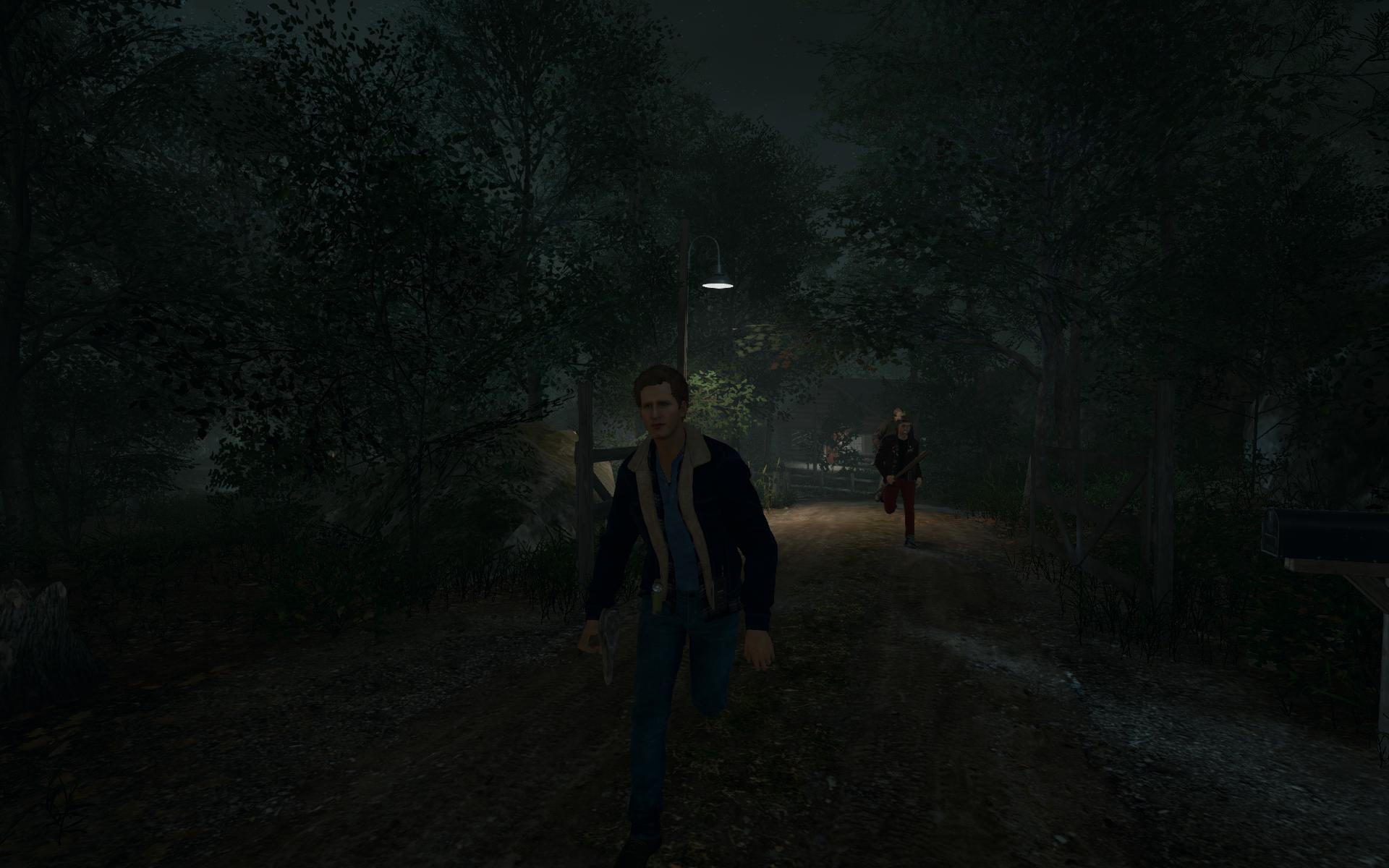
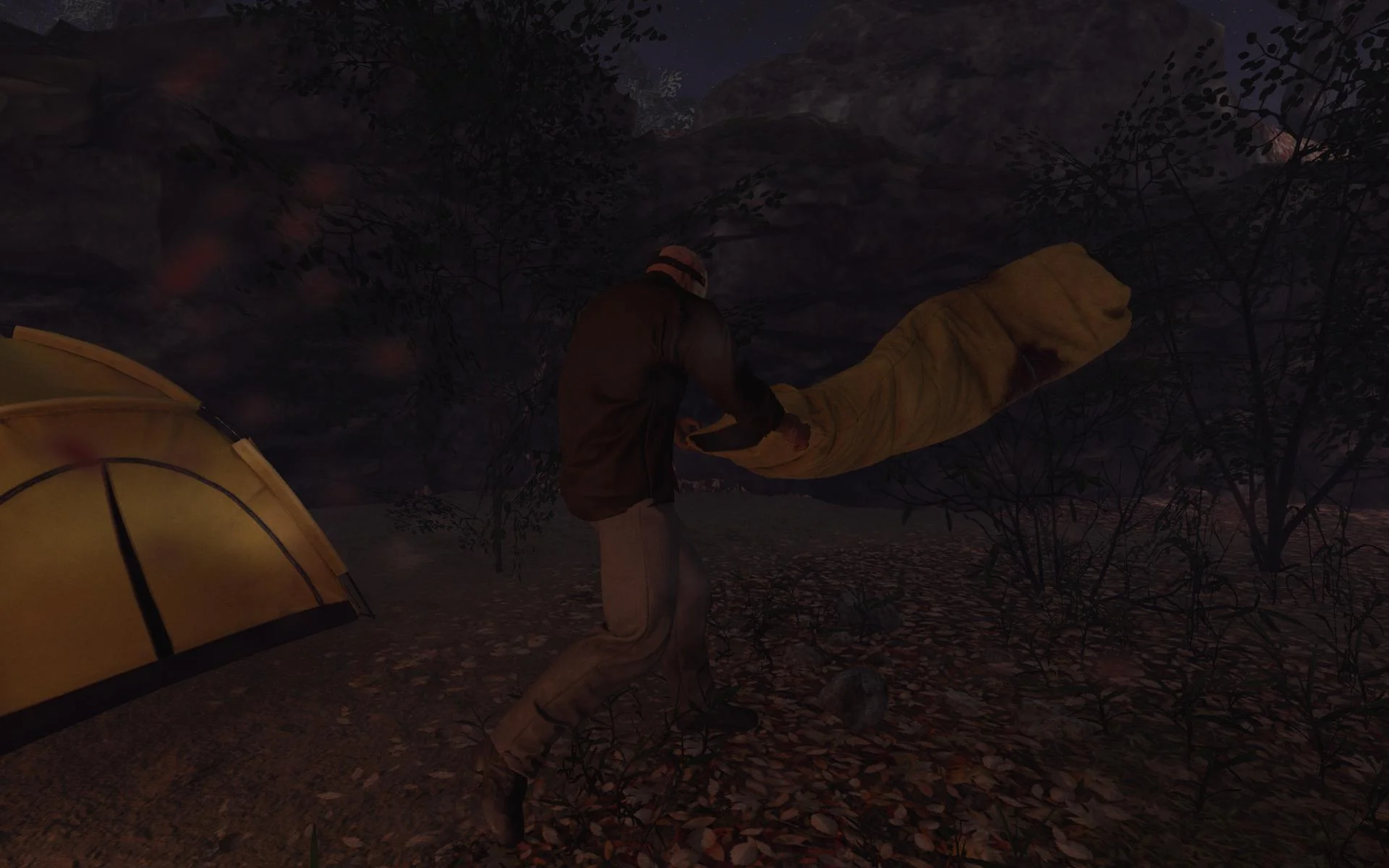
I returned to Friday the 13th: The Game today, only to find a substantial 3GB patch waiting to be downloaded. I last played in late December when I bought the game in a Steam sale. I stated in a blog post at the time, that the game was flawed and very much a work in progress. The patch has addressed several issues with the game; the most important one being offline play. You can now play Friday the 13th: The Game offline as Jason Voorhees against seven bot camp counsellors. It should be noted that you cannot play offline as a counsellor against a bot Jason. However, playing as Jason has a more complex learning curve, whereas playing as one of his potential victims is a lot easier to figure out. So I can understand why the developers opted for this arrangement. Hence, I spent a few hours this evening, fooling around offline, slicing and dicing various camp counsellors and trying to master the basics of playing a Jason. It did prove quite useful and I found myself far more prepared for online play as a result.
I returned to Friday the 13th: The Game today, only to find a substantial 3GB patch waiting to be downloaded. I last played in late December when I bought the game in a Steam sale. I stated in a blog post at the time, that the game was flawed and very much a work in progress. The patch has addressed several issues with the game; the most important one being offline play. You can now play Friday the 13th: The Game offline as Jason Voorhees against seven bot camp counsellors. It should be noted that you cannot play offline as a counsellor against a bot Jason. However, playing as Jason has a more complex learning curve, whereas playing as one of his potential victims is a lot easier to figure out. So I can understand why the developers opted for this arrangement. Hence, I spent a few hours this evening, fooling around offline, slicing and dicing various camp counsellors and trying to master the basics of playing a Jason. It did prove quite useful and I found myself far more prepared for online play as a result.
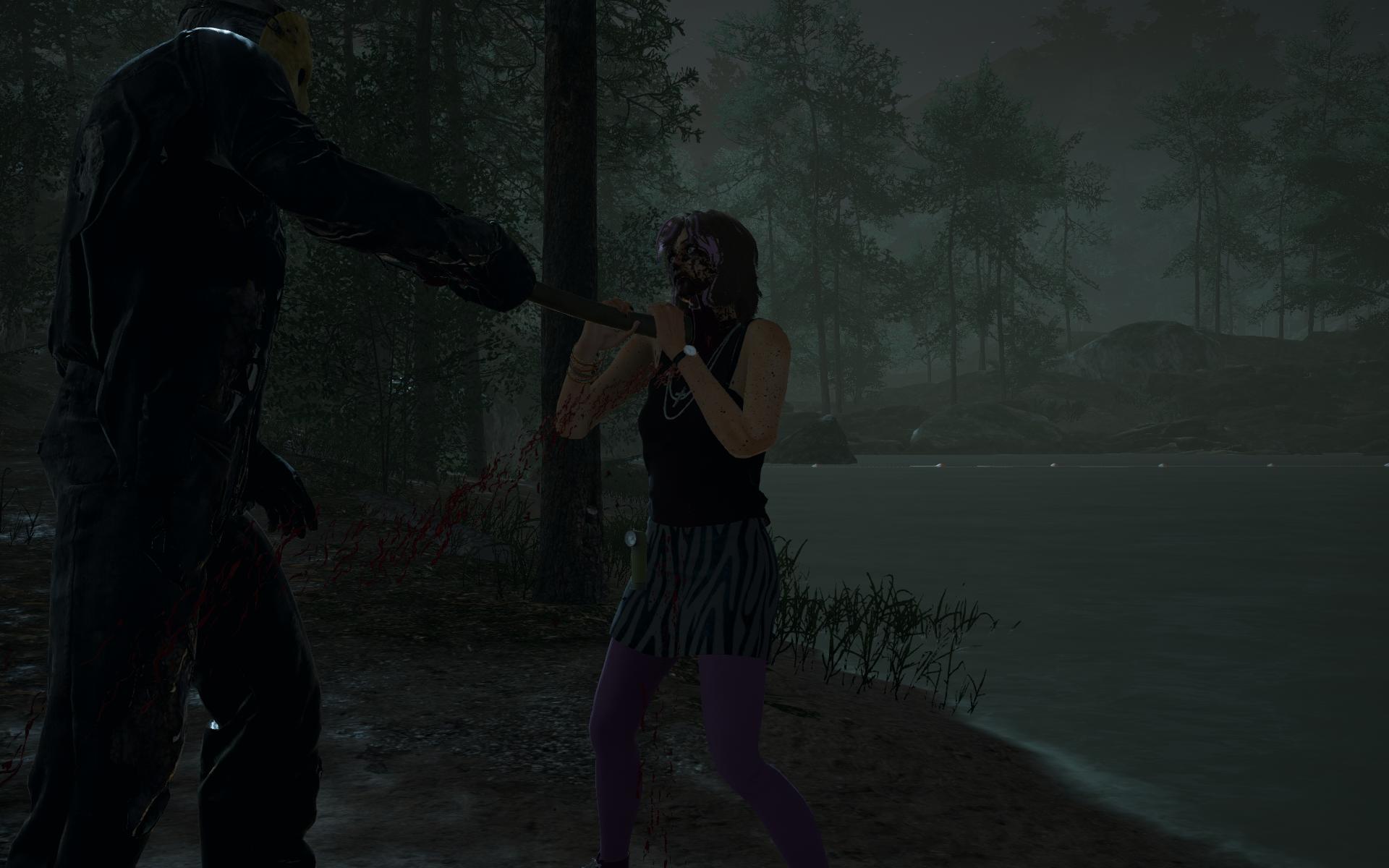
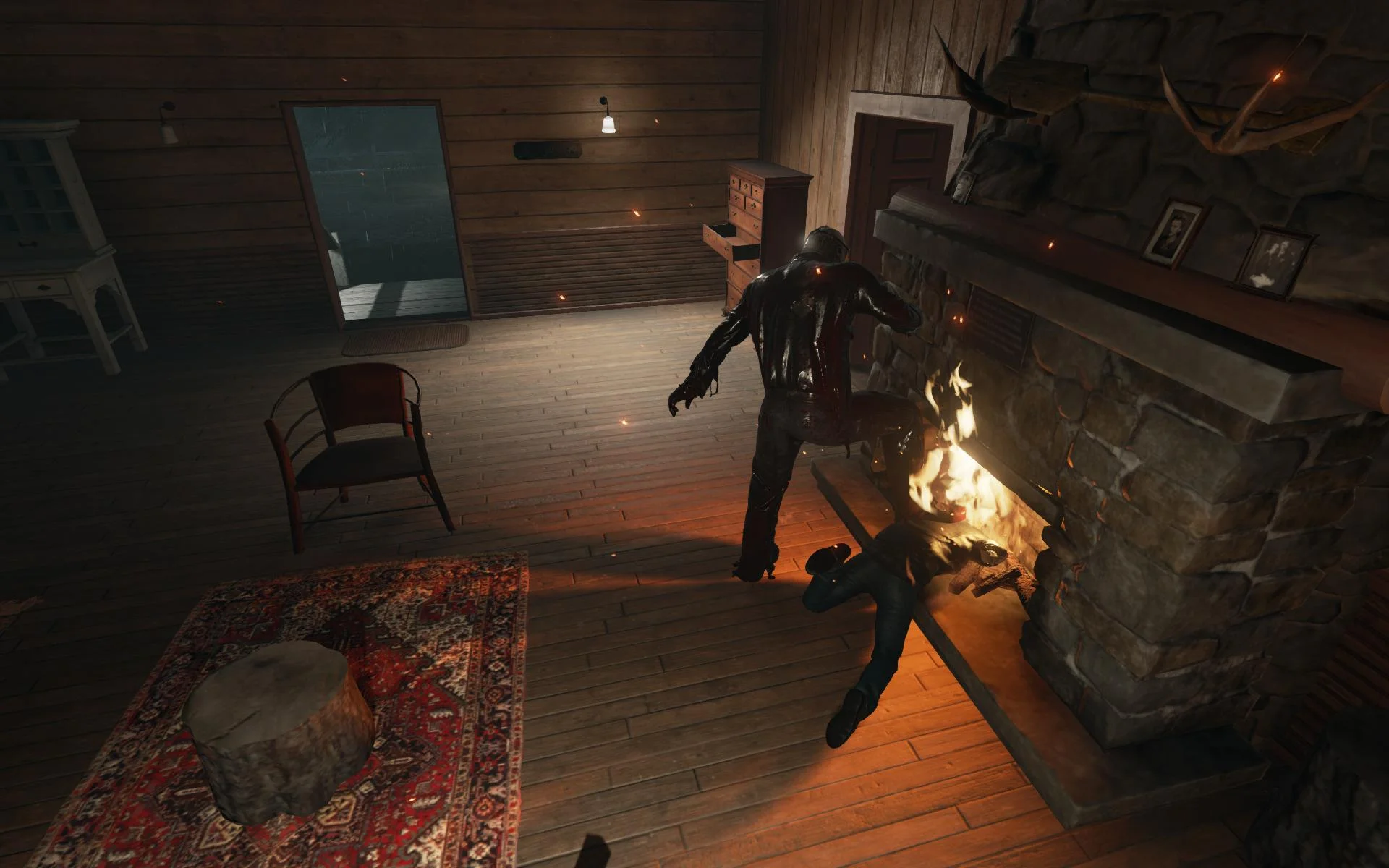
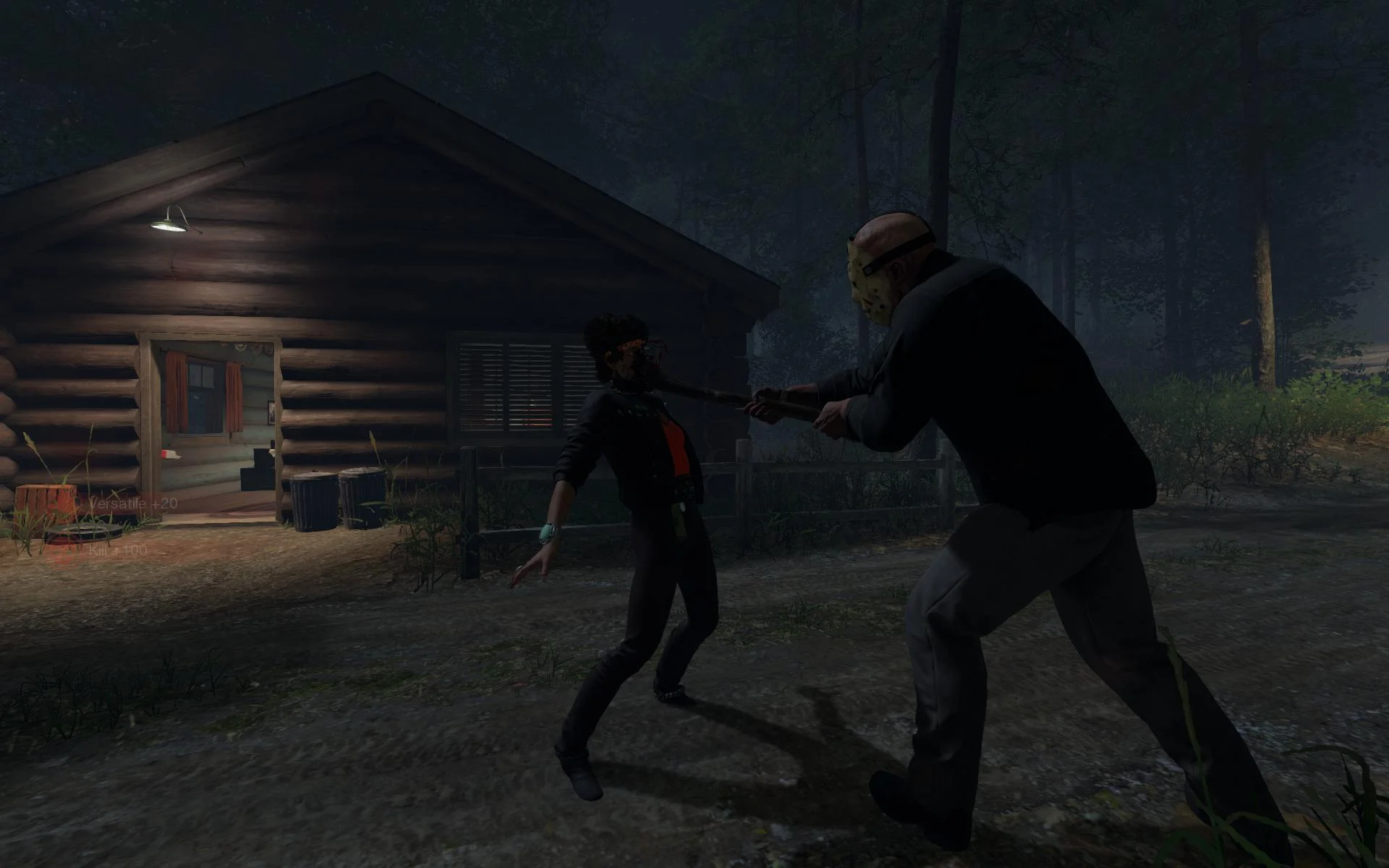
The bots have three settings, which broadly scale. On easy mode the bot counsellors tend to panic and run around ineptly. They’re often oblivious to Jason until he’s really close. On hard mode the bots are more proactive and will actively defend themselves. However, regardless of the settings, the bots at times can get stuck in loops or simply make incredibly poor decisions. On one occasion a counsellor threw themselves through a window to avoid Jason, only to then exit the hut and run straight back into him. I allowed this cycle to repeat a few times before I dispatched them. At present as I haven’t played much of the game, I only have a few Jason skins unlocked. I’m currently using the Jason from Friday the 13th: Part III. One of the advantages of this skin is that Jason has improved run skills. The bots on easy setting allowed me to experiment with the various grab kills such as Jaw Rip, Crotch Chop, Head Chop and Heart Punch. All were quite satisfying but there was no real challenge at this level. Hard mode facilitated a more credible gameplay experience. Offline play also affords you a great opportunity to learn the maps which is key to being successful in the game.
I was also surprised that offline play counted towards your levelling and progression in the game. You can therefore unlock new counsellors and Jason skins by playing in this mode. But playing with bots does have its limitations. The AI is still somewhat erratic, so you never get a 100% comparable experience to playing with other people. However, Friday the 13th: The Game attracts a lot of pubescent imbeciles which can make online play a little tedious. You find yourself having to mute everyone by default and abandoning games where players are more interested in pursuing their own agenda. Bots offer a welcome alternative to this. I suspect that later this year when this game finds its way into a discount bundle of some kind, the overall player population may be a lot lower. Thus, offline play may well prove to be a god send for those in time zones outside North America and Europe. Hopefully, the developers will expand this functionality further in future patches. It would certainly improve the longevity of a game that is essentially a one-trick pony at present.


A Lack of Consensus
One of the things that stands out about the reader comments over at Massively Overpowered is that there is seldom any sort of consensus. Regardless of the subject it become quickly apparent that views differ greatly and clearly reflect the fact that gamers do not want the same things. The only point that most agree upon in principle is that everyone wants “good” games. However, this is a nebulous term, devoid of a universally agreed definition. What one gamer deems as being a good or an essential mechanic, another will consider a complete anathema, leaving us with a divided player base. In fact, the gaming community seems to reflect a wider trend that manifests itself in politics, religion and other social issues at present. There simply isn’t a prevailing majority consensus. A lot of the assumed sacred cows and alleged shared values associated with all these communities are either waning or have proven to be bogus. Naturally, many would argue that such differences are simply human nature and a foible of the human condition. However, it does present a difficult problem for the games industry.
One of the things that stands out about the reader comments over at Massively Overpowered is that there is seldom any sort of consensus. Regardless of the subject it become quickly apparent that views differ greatly and clearly reflect the fact that gamers do not want the same things. The only point that most agree upon in principle is that everyone wants “good” games. However, this is a nebulous term, devoid of a universally agreed definition. What one gamer deems as being a good or an essential mechanic, another will consider a complete anathema, leaving us with a divided player base. In fact, the gaming community seems to reflect a wider trend that manifests itself in politics, religion and other social issues at present. There simply isn’t a prevailing majority consensus. A lot of the assumed sacred cows and alleged shared values associated with all these communities are either waning or have proven to be bogus. Naturally, many would argue that such differences are simply human nature and a foible of the human condition. However, it does present a difficult problem for the games industry.
Gaming, like the music and film industry, is frequently driven by established formulas and pursuing known quantities that work. Hence, most major triple A developers tend to not stray from the known path when dealing with high budget projects. As a result, the market is subsequently dominated by sequels, remasters and variations on proven themes. Now this approach doesn’t necessarily please everyone, but it undeniably keeps the money rolling in. However, one of the commonest complaints you’ll hear from gamers is a lack of innovation and it is justified to a degree. Theoretically, there should be a big enough market of gamers seeking new experiences to merit some experimentation. Sadly, the big dogs of the industry are not too keen on taking such risks. In the past there have been a few high-profile games that have sought to cater for this gap in the market, but it never seems to be the roaring success that was expected. Thus, like the music and movie business, experimentation and straying from the accepted norm in games development is the prerogative of smaller, independent producers.
It is ironic that as gamers, we find ourselves at this point. Because, as in contemporary politics, there is a broad appetite for something different at present, or at the least a rejection of the status quo. Surely such an atmosphere should be conducive towards change. But history shows us that change is seldom embraced by those with vested interests and only a few ever have the courage or vision seize the day. This is why in gaming (and in politics), the public will gravitate toward that which appears to be different, or superficially wears the trappings of change and innovation. Games like PlayerUnknown's Battlegrounds are currently having their moment in the sun, but sooner or later the player-base will see through its “alternative appeal” and see it for simply a variation on a theme. Again, social ideas and politicians also risk the same fate. Gamers may not know exactly what they want, but they do at times know what they do not. EA is still nursing it wounds after the recent loot crate debacle. They may even lose their license as a result, which will certainly put a dent in their bottom line.
The reality of the situation is that simply wanting something different is not enough. It is not incumbent solely on the games industry to read our minds and come up with the next big thing exclusively on their own. We as gamers need to figure out about what we want and then be realistic as to whether it’s achievable. The latter requires compromise, which is sadly a quality that is absent from most mindsets at the present. If the triple A gaming sector is dragging its heels, or more to the point is opposed to change, then surely this is the time for the independent sector to step up. Where is the video games industries equivalent of Punk Rock? And by that, I mean proper Punk like The Clash and Dead Kennedys (please insert appropriate and equivalent game developers into this metaphor). Or has rampant consumerism and the commodification of all leisure activities extinguished the idea and possibility of organic, real change. Is the next big thing or any new approach, simply another product to be assimilated by market forces to be bought and sold? If that is true, can there be any sort of consensus ever again?
LOTRO: Bullroarer Update 22 Build #2
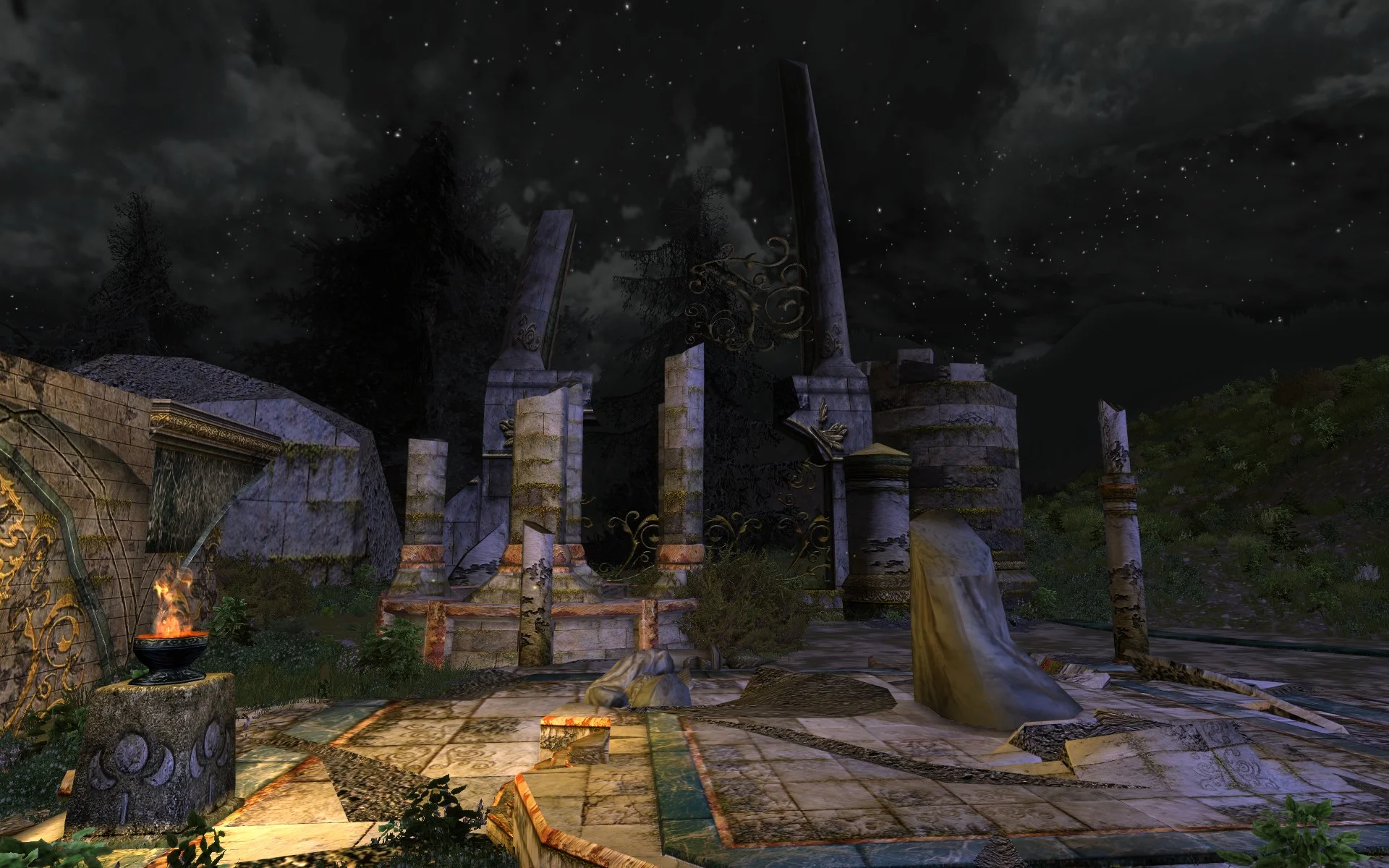
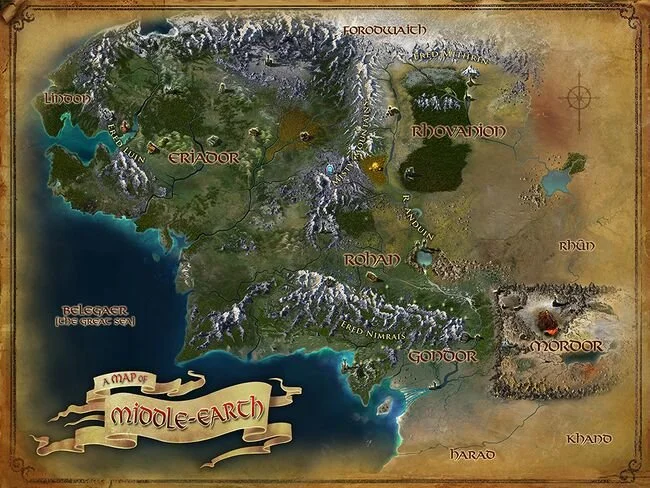
A week on and Standing Stone Games have revised the latest test iteration of Update 22 for LOTRO, on the Bullroarer server. Build #2 now has a proper map that explains exactly where I went last Sunday. It seems that I visited all locations of note apart from Caras Tilion, a deserted Elven stronghold to the South of Eryn Lasgalen, at the foot of the Mountains of Mirkwood. So, I promptly went there tonight and found it inhabited by Fell Spirits and such like. I suspect that this will be the location for a group event as the mobs all seem high level. Like other areas in the test build, the terrain is unstable, and you can find yourself falling through what are supposed to be solid surfaces. Although there are roads marked on the map, trying to find them on the ground and follow them is somewhat harder. However, I suspect that this is meant to reflect the source text of The Hobbit in which the path through Mirkwood was often overgrown and difficult to track, hence the Dwarves got lost.
A week on and Standing Stone Games have revised the latest test iteration of Update 22 for LOTRO, on the Bullroarer server. Build #2 now has a proper map that explains exactly where I went last Sunday. It seems that I visited all locations of note apart from Caras Tilion, a deserted Elven stronghold to the South of Eryn Lasgalen, at the foot of the Mountains of Mirkwood. So, I promptly went there tonight and found it inhabited by Fell Spirits and such like. I suspect that this will be the location for a group event as the mobs all seem high level. Like other areas in the test build, the terrain is unstable, and you can find yourself falling through what are supposed to be solid surfaces. Although there are roads marked on the map, trying to find them on the ground and follow them is somewhat harder. However, I suspect that this is meant to reflect the source text of The Hobbit in which the path through Mirkwood was often overgrown and difficult to track, hence the Dwarves got lost.
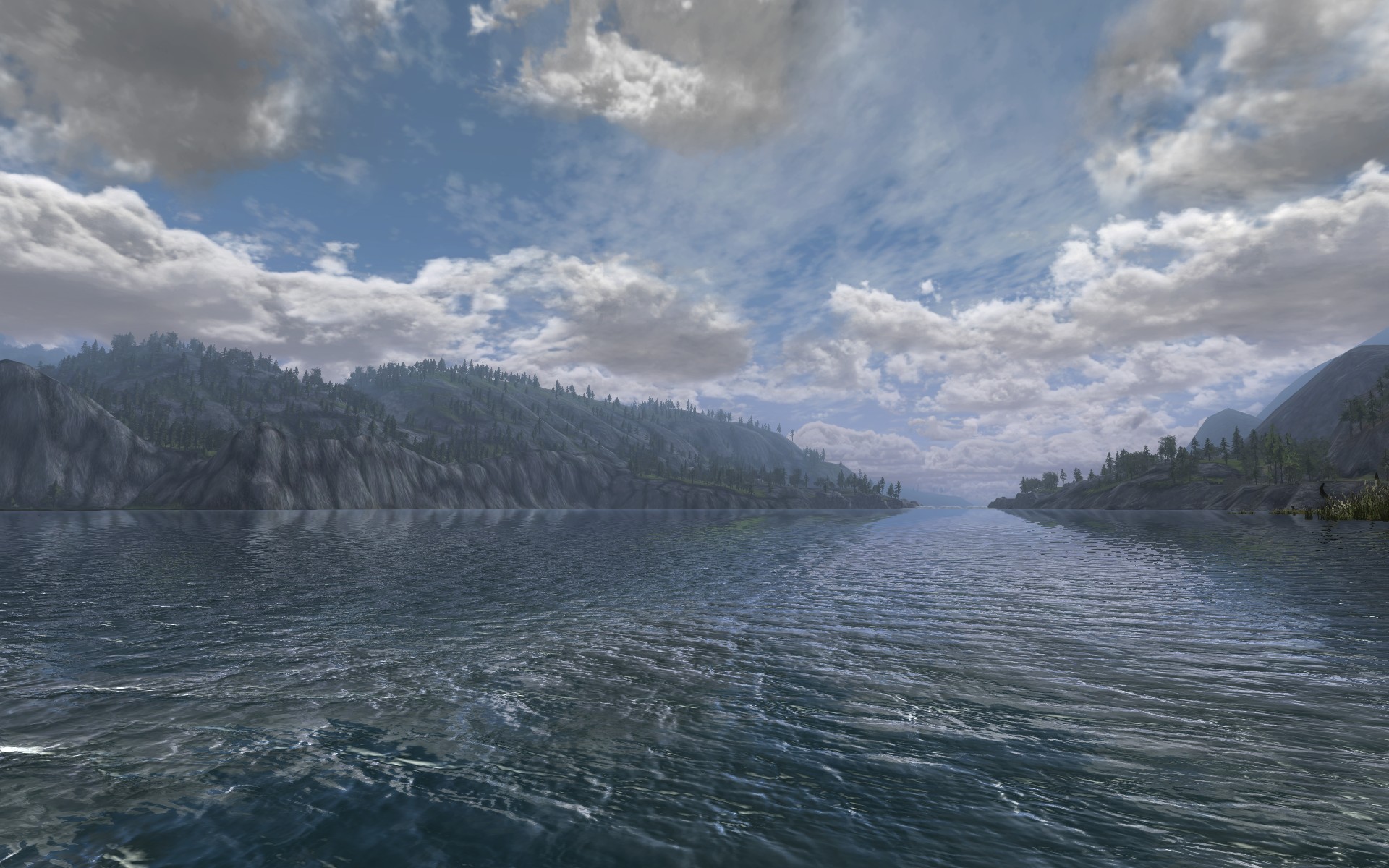
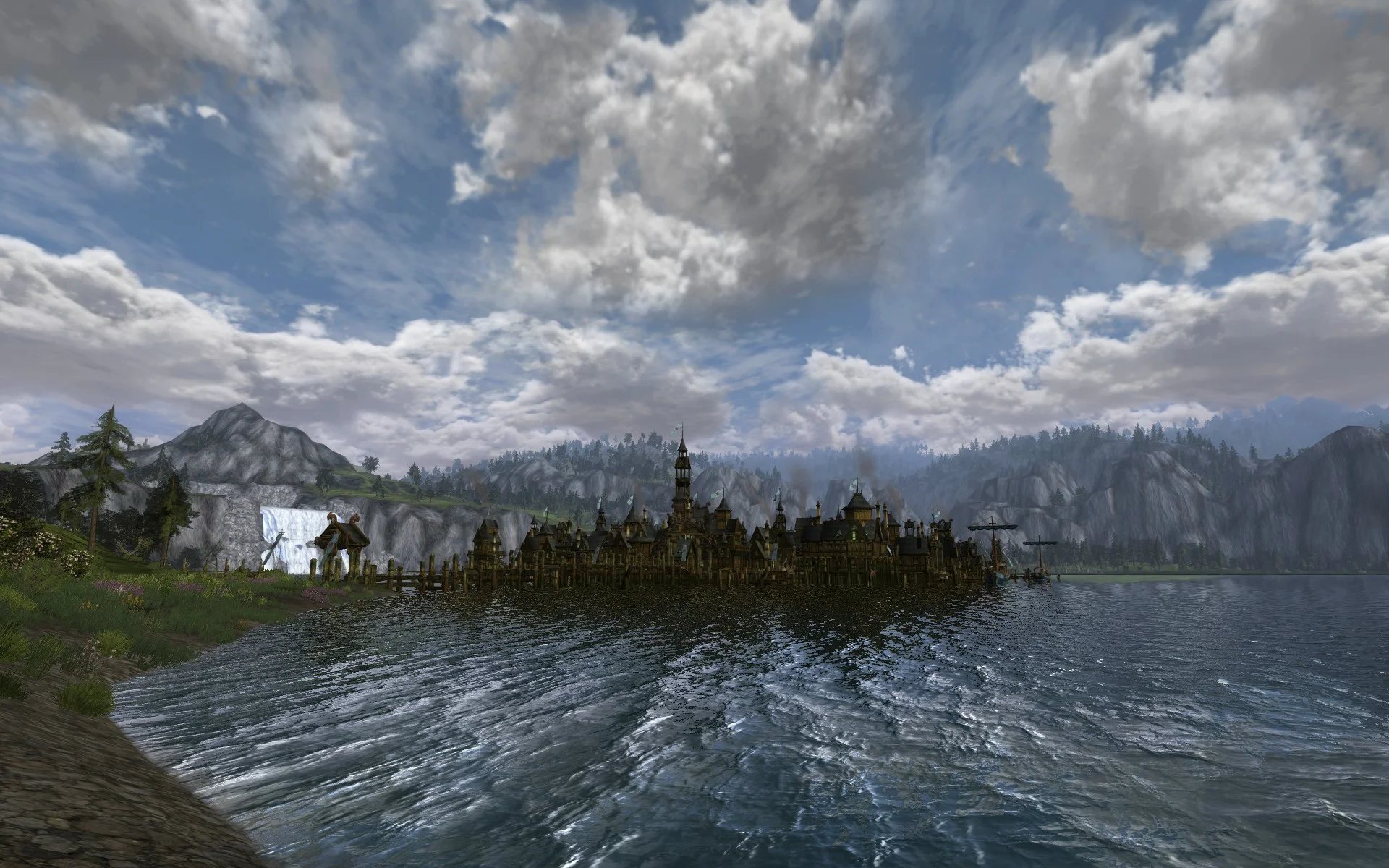
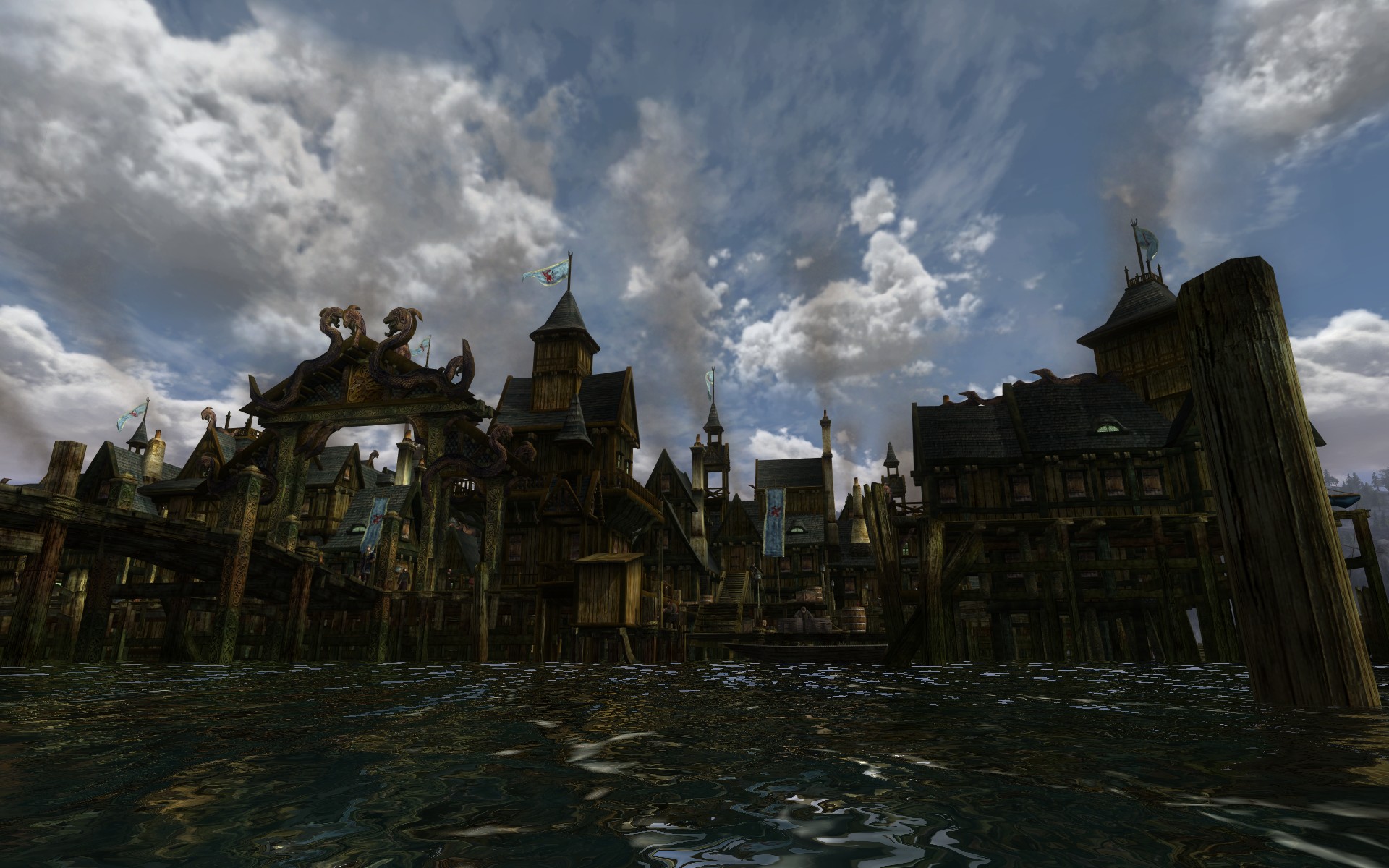
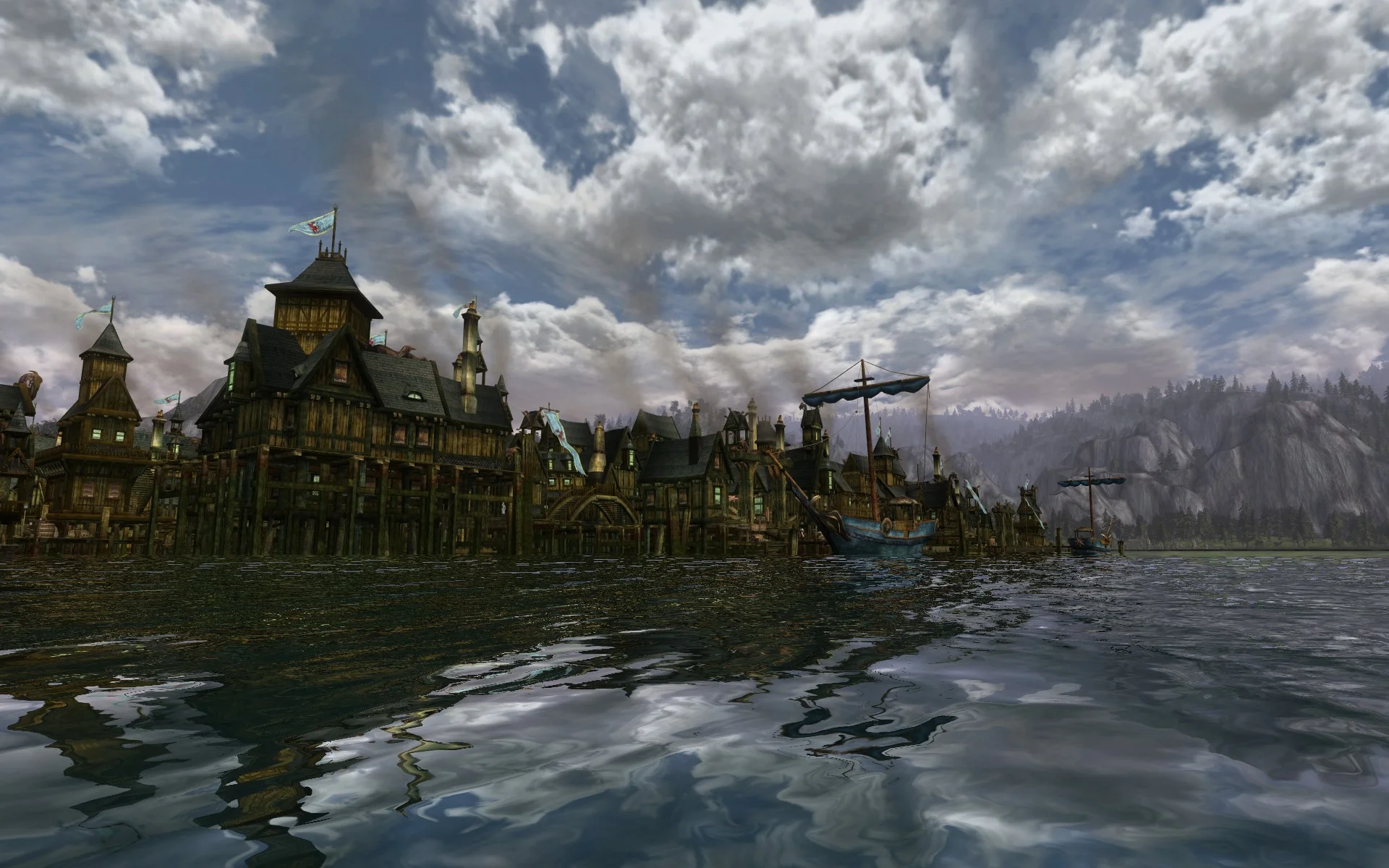
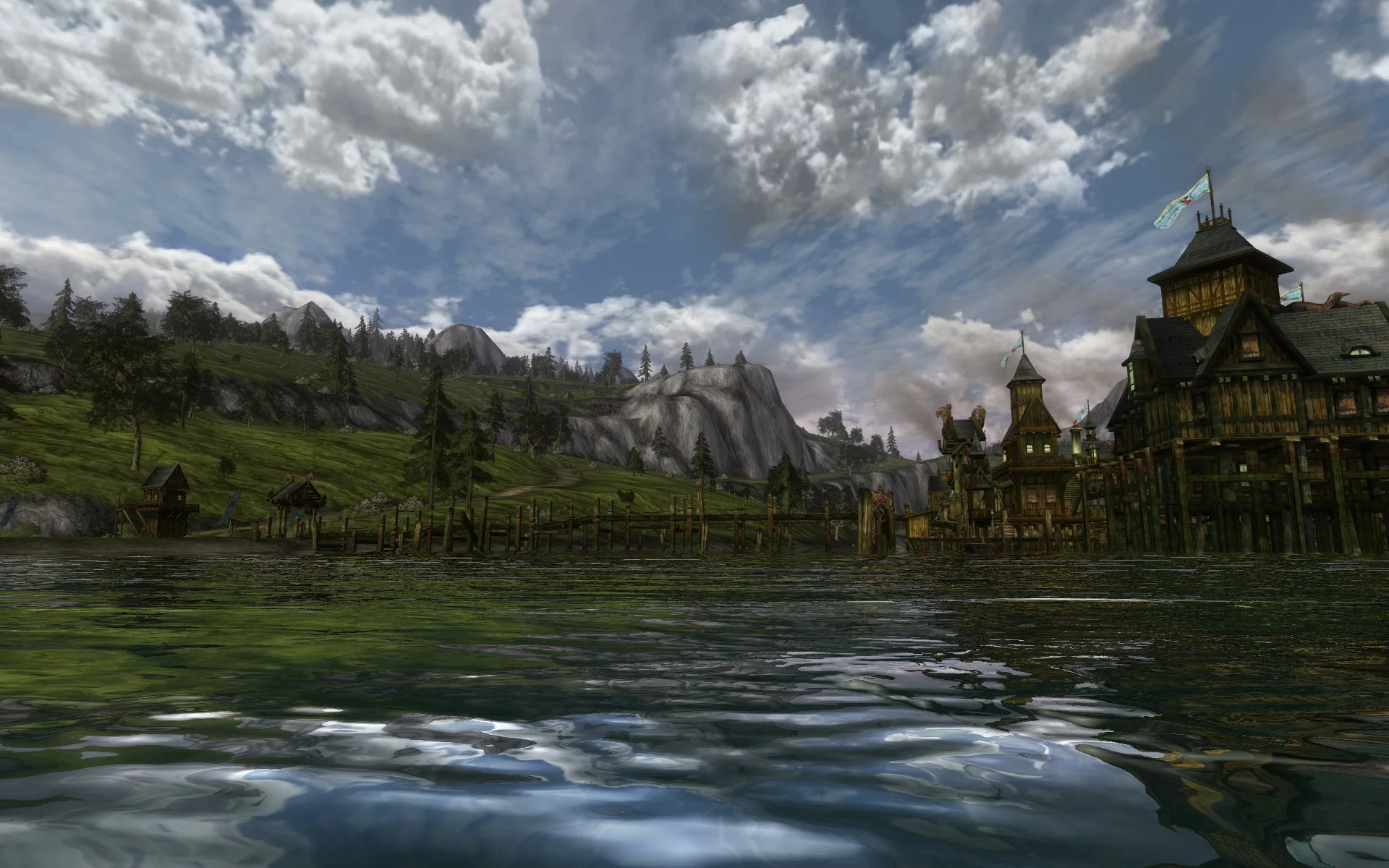
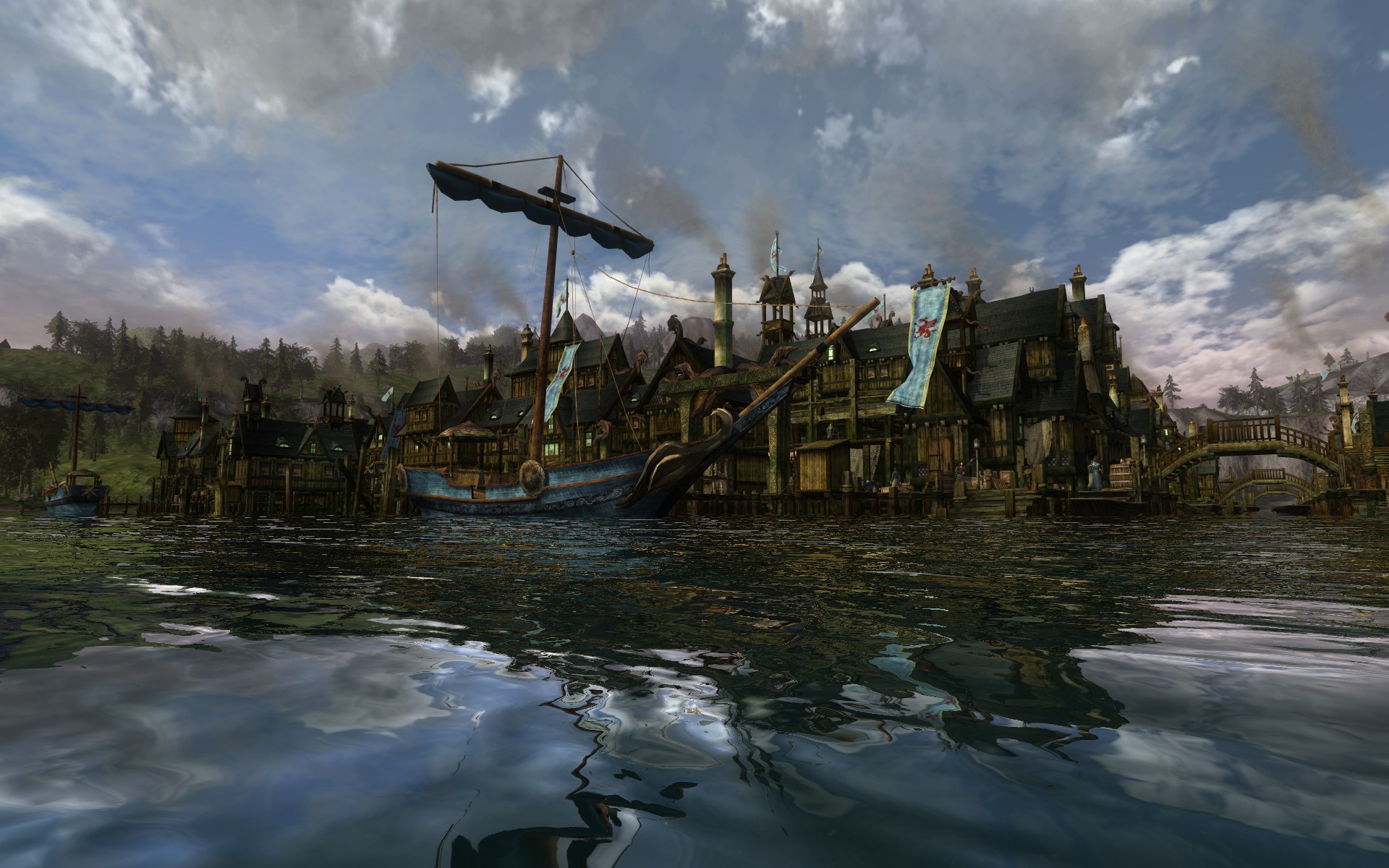
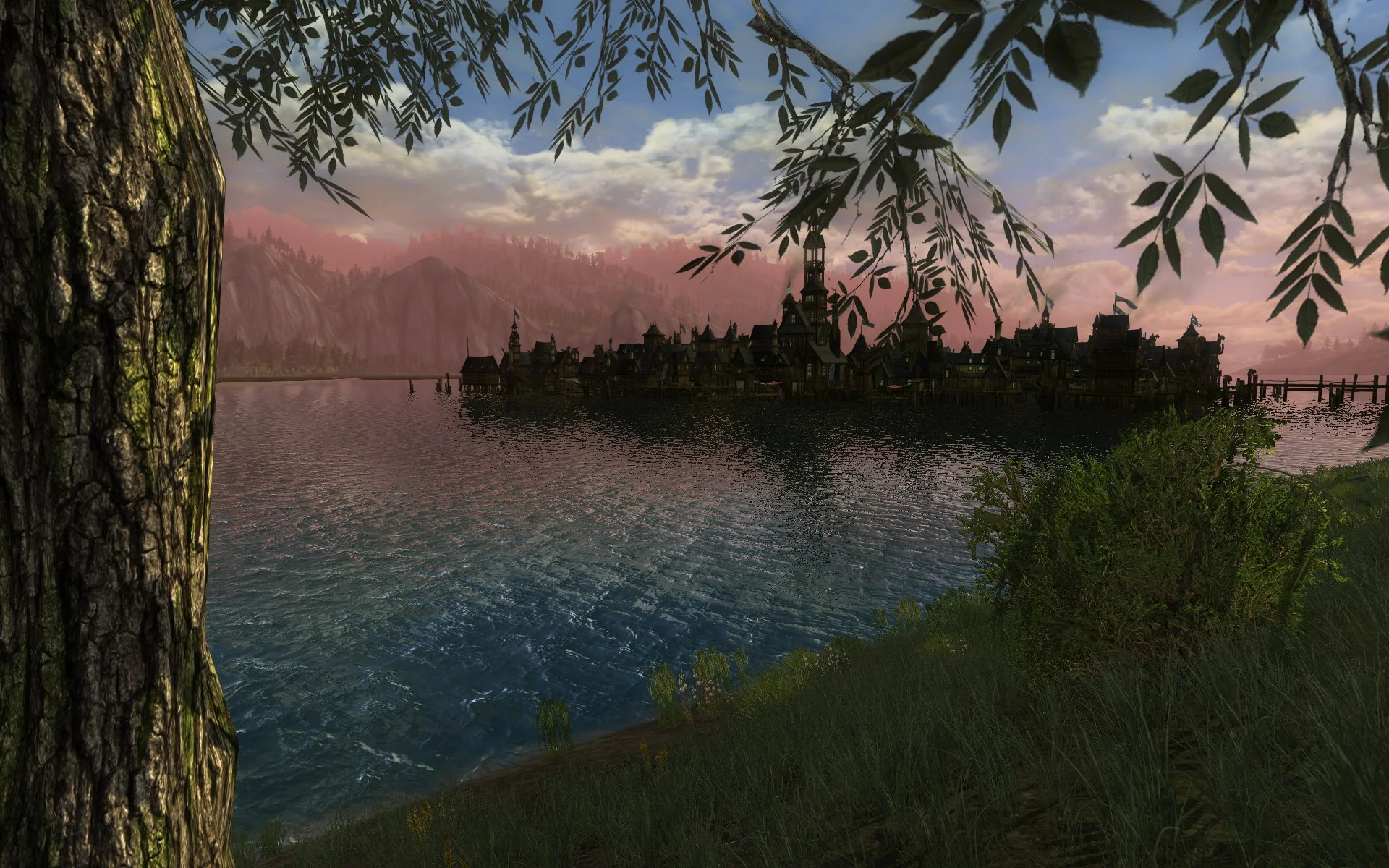
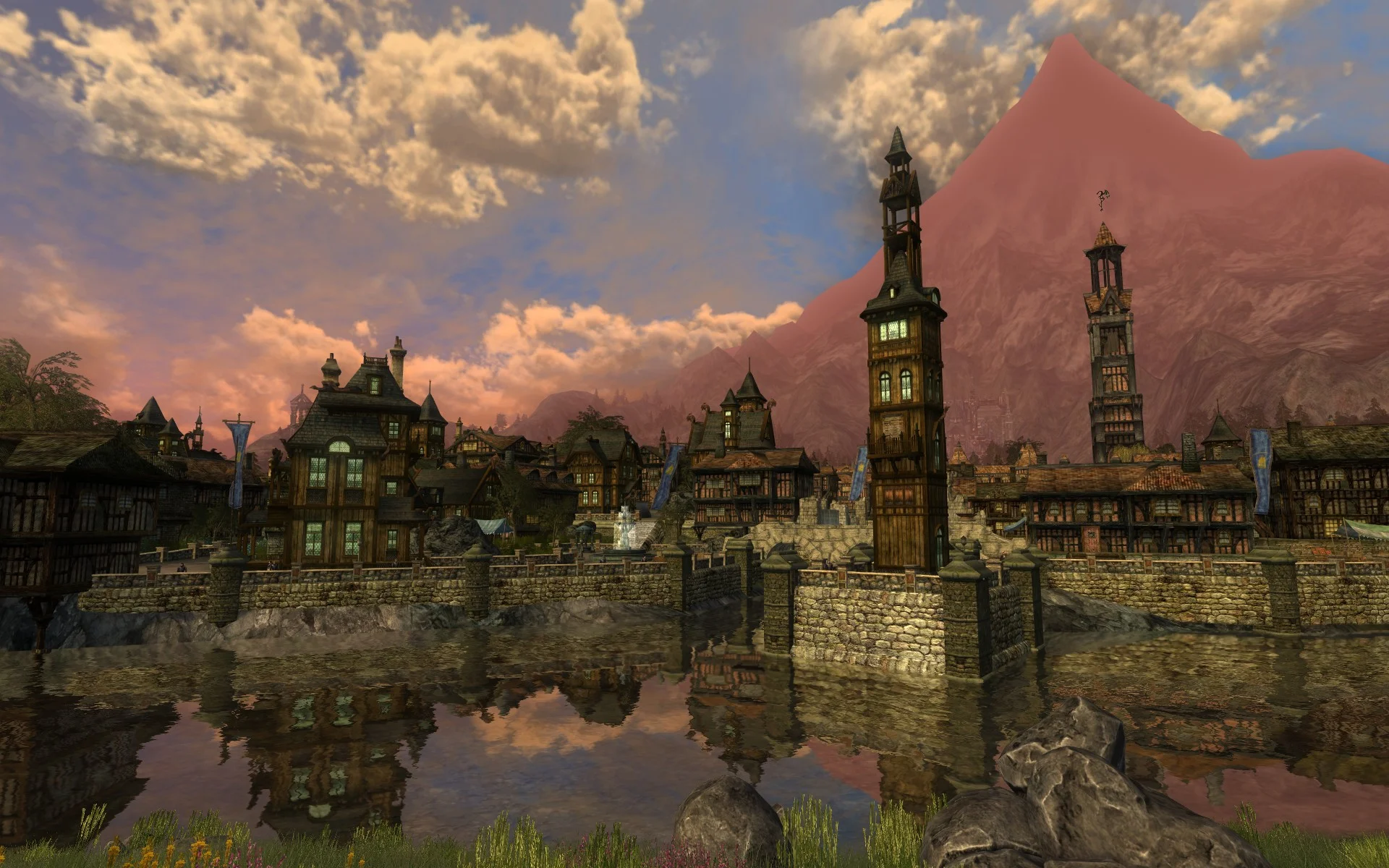
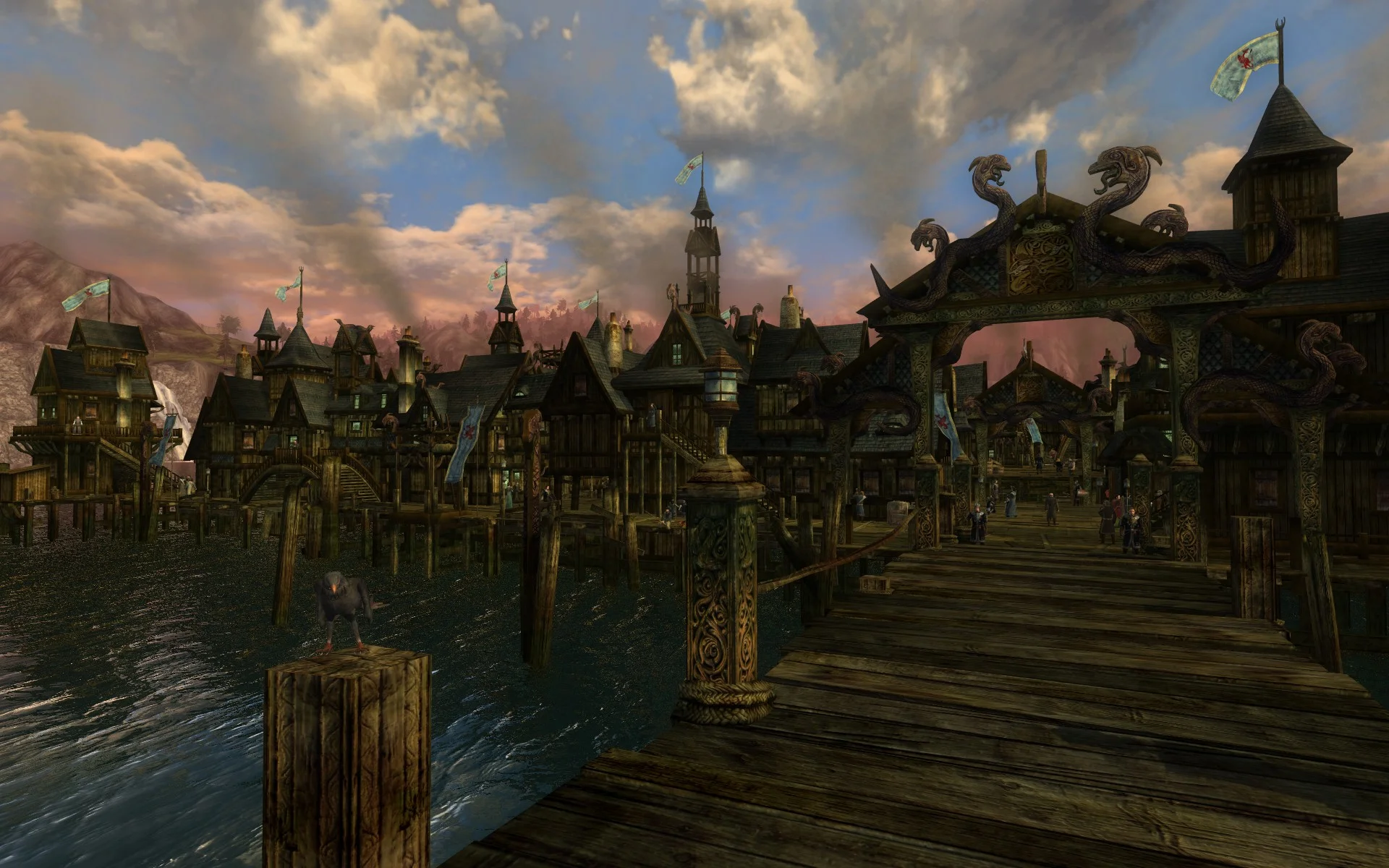
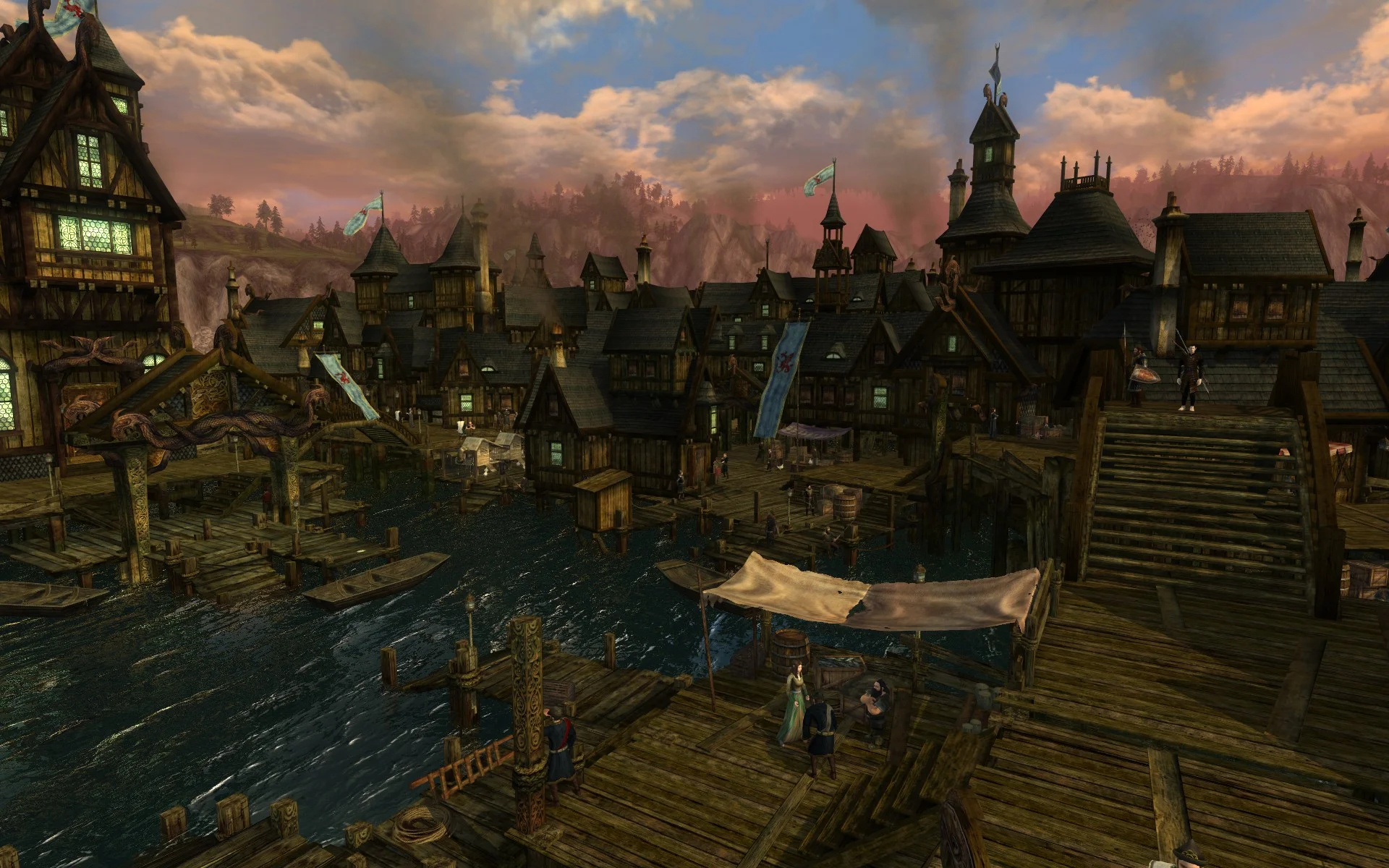
I revisited Lake-town and found that there are now more NPCs and sundry embellishments. On the end of some of the piers, you will find locals queuing to use the privies, which I found rather amusing. The only other’s I’ve ever seen in LOTRO are in Rohan and are indirectly involved in a quest. It would also appear that I was broadly correct in my assumptions about the three entrances on the map and where they lead. The eastern door is now clearly marked opening to the Iron Hills and the Forest Gate to the west does lead to Beorning-land. The third entry (or exit point) to the South of Lake-town lead to an area called the Fields of Celduin. Celduin is the Elven name for the Running River, which flow ultimately to the sea of Sea of Rhûn. Perhap SSG have plans to develop Dorwinion as part of LOTRO. Dorwinion, was a land in the vales of the Celduin, northwest of the Sea of Rhûn. It was famous for its great gardens and as the home of the finest wines in all of Middle-earth. Its people were descendants of the Edain, and they had close ties to the Northmen of Dale in genealogy as well as Avari Elves.
Again, I spent my time this evening simply investigating the immediate area in this latest test build and have not undertaken any of the quests in the region. I prefer to wait for the final release of the update, so as not to spoil my enjoyment of it all. My overall opinion of Eryn Lasgalen and the Dale-lands remains the same as I stated in my previous post. This is a well realised and quite striking zone and Lake-town is a stand out location. It certainly is a welcome relief after the dour and oppressive atmosphere of Mordor. I hope that the quests featured in update 22 are as equally creative as the area itself. It just remains to see when SSG intends to release this update. If past events have any bearing on the matter, we may well see a formal release of this area within a few weeks of three or four test builds. Therefore, we may have a live version of this new area by the middle of March.



Levelling and Gear Progression in ESO
One of the most trying old adages associated with the MMORPG genre is “endgame is where the real game begins”, or some variation thereof. It’s a stupid dogma that is happily negates all that the player has done while levelling. It usually goes hand in hand with the mindset that the only worthwhile pursuit at level cap is raiding, but I digress. For many MMOs, it’s a real challenge to make the levelling experience feel tangible and relevant, so players don’t get the impression that their just treading water when it comes to gear and skill points. However, some games do manage to get this right. LOTRO has several sets of armour that you can acquire at early stages in the game that are worth holding onto for at least ten levels. The Armour of Fém is a good example. It can be obtained at level 42 in Aughaire and can last the player right into Moria, ten levels later, before it needs to be replaced. STO proactively negates this problems by allowing gear to be upgraded but again I digress. My point is, much of what we acquire and use as we progress through an MMO is transient, but if the developers have done their job properly, it doesn’t seem that way.
One of the most trying old adages associated with the MMORPG genre is “endgame is where the real game begins”, or some variation thereof. It’s a stupid dogma that is happily negates all that the player has done while levelling. It usually goes hand in hand with the mindset that the only worthwhile pursuit at level cap is raiding, but I digress. For many MMOs, it’s a real challenge to make the levelling experience feel tangible and relevant, so players don’t get the impression that their just treading water when it comes to gear and skill points. However, some games do manage to get this right. LOTRO has several sets of armour that you can acquire at early stages in the game that are worth holding onto for at least ten levels. The Armour of Fém is a good example. It can be obtained at level 42 in Aughaire and can last the player right into Moria, ten levels later, before it needs to be replaced. STO proactively negates this problems by allowing gear to be upgraded but again I digress. My point is, much of what we acquire and use as we progress through an MMO is transient, but if the developers have done their job properly, it doesn’t seem that way.
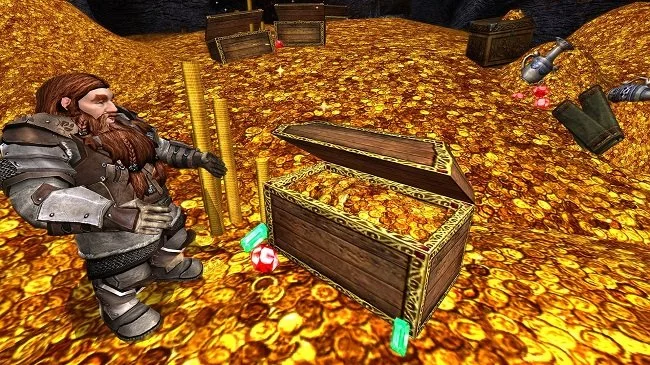
Sadly, this is not the case in The Elder Scrolls Online. The game has many virtues and selling points, but the gear grind is clearly an irrelevance until you reach a specific point in the game. Namely level 50 with 160 champion points. Until then, finding adequate gear is very difficult and players are “encouraged” by the prevailing dogma of the game, to just slum it with items from quest drops, irrespective as to whether they’re optimum for your characters build. The alternative is to simply buy armour and jewellery from vendors and to apply glyphs to enchant it to your chosen specifications, but this is an expensive option and the gear itself is of the lowest tier of quality. Of course, there is the option of running delves to find suitable gear, but the task is made more difficult by the fact that your character will frequently be underpowered, due to the lack of quality gear they have equipped. As you can see, it’s a chicken and egg situation. The only other alternative is Dolmen farming but then this is not always the most enjoyable way to play ESO. Plus, if you do it for a few hours at a time, you’ll find you’ve out levelled half of what you’ve acquired.
In other MMOs, there are often several alternative ways of acquiring gear sets, other than depending on standard quest rewards. LOTRO has the skirmish system which provides the player with barter currency to buy specific sets. Furthermore, the sets are available to a variety of levels. The reputation system in STO also allows you to buy a variety of gear sets for your ship. And of course, most games also have an auction house system that allow for the buying and selling of all non-bound items. This is where most players look first to fill the gaps in their build or to buy something passable while levelling. Sadly, there is no server wide auction house system in ESO. Individual guilds buy and sell gear. They have store fronts littered round Tamriel. The range of items they sell is dependent upon the guild size, how prodigiously they craft or farm quests. More often than not, most guild traders only have smattering of items below level 50 with 160 champion points because that’s not where the money and market is. Due to there being multiple outlets, checking stock is time consuming. The only option left therefore is to craft gear yourself. However, like everything else in ESO, this only becomes a viable option at level cap.
Exactly how did ESO arrive at this point? Well the One Tamriel Update removed the level restriction on content, scaling everything according to the player, which obviously didn’t help the gear situation. With delves and story quests scaling to your level, there isn’t the surplus of gear generated by content fixed at a specific level. The lack of a server wide auction system is also a major contributor. Finding specific gear, even with addons to help the search process, is time consuming task that requires you to visit a multitude of outlets. Joining a guild may help and there is the chance that fellow guildmates will help you out with gear acquisition. But ESO strikes me as a game with a substantial player population with alts at level cap. Levelling is not seen as a journey in itself but more of an obstacle to be overcome. It’s a shame. This issue certainly doesn’t mitigate the positive aspects of ESO as an MMO, but it does impact upon the way you play until you approach the level cap. Now that I’ve reached level 50 and have amassed over 100 champion points, I can certainly play more effectively. I can now focus on what gear I would like; something I couldn’t do at the start of the game. Perhaps ZeniMax will address this issue in a future update.
LOTRO: Bullroarer Update 22 Build #1
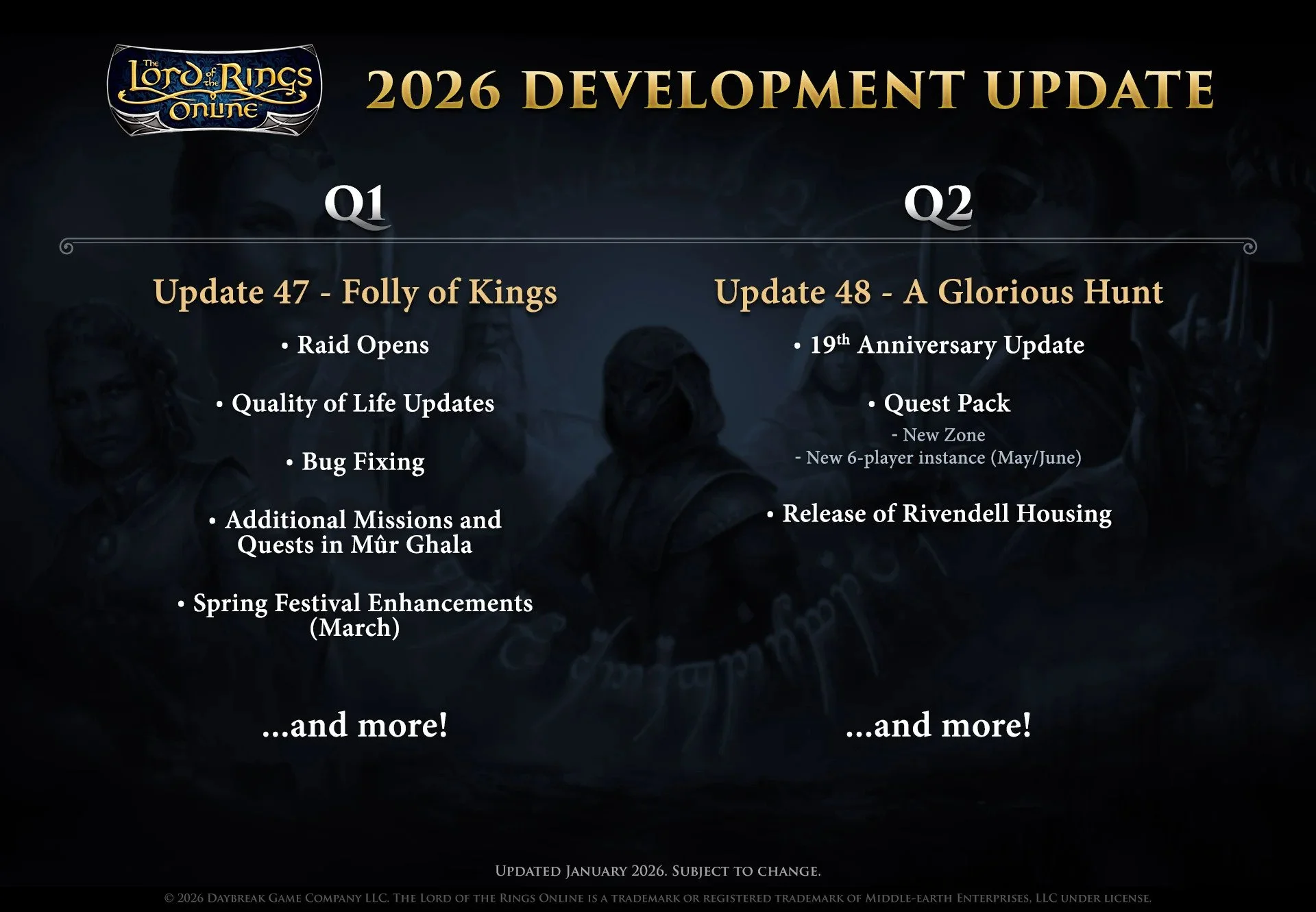
A beta version of the latest update for LOTRO is currently available on the Bullroarer test server this weekend. Update 22 (Build #1) or Strongholds of the North, features Northern Mirkwood or Eryn Lasgalen as it known since the fall of Sauron and the destruction of Dol Guldur, as well as the Dale-lands. The area includes such iconic locations as The Halls of the Elven King, Lake Town, Dale and Erebor. As this is an early build, players cannot continue the epic story The Black Book of Mordor. At present, the map for the zone is simply a placeholder and serves little navigational purpose. At times the player marker vanishes from the map entirely. However, as Bullroarer is a test server, players can collect a free stipend of Mithril Coins from the Eyes and Guard Tavern and thus use swift travel to all five new stable locations.
A beta version of the latest update for LOTRO is currently available on the Bullroarer test server this weekend. Update 22 (Build #1) or Strongholds of the North, features Northern Mirkwood or Eryn Lasgalen as it known since the fall of Sauron and the destruction of Dol Guldur, as well as the Dale-lands. The area includes such iconic locations as The Halls of the Elven King, Lake Town, Dale and Erebor. As this is an early build, players cannot continue the epic story The Black Book of Mordor. At present, the map for the zone is simply a placeholder and serves little navigational purpose. At times the player marker vanishes from the map entirely. However, as Bullroarer is a test server, players can collect a free stipend of Mithril Coins from the Eyes and Guard Tavern and thus use swift travel to all five new stable locations.
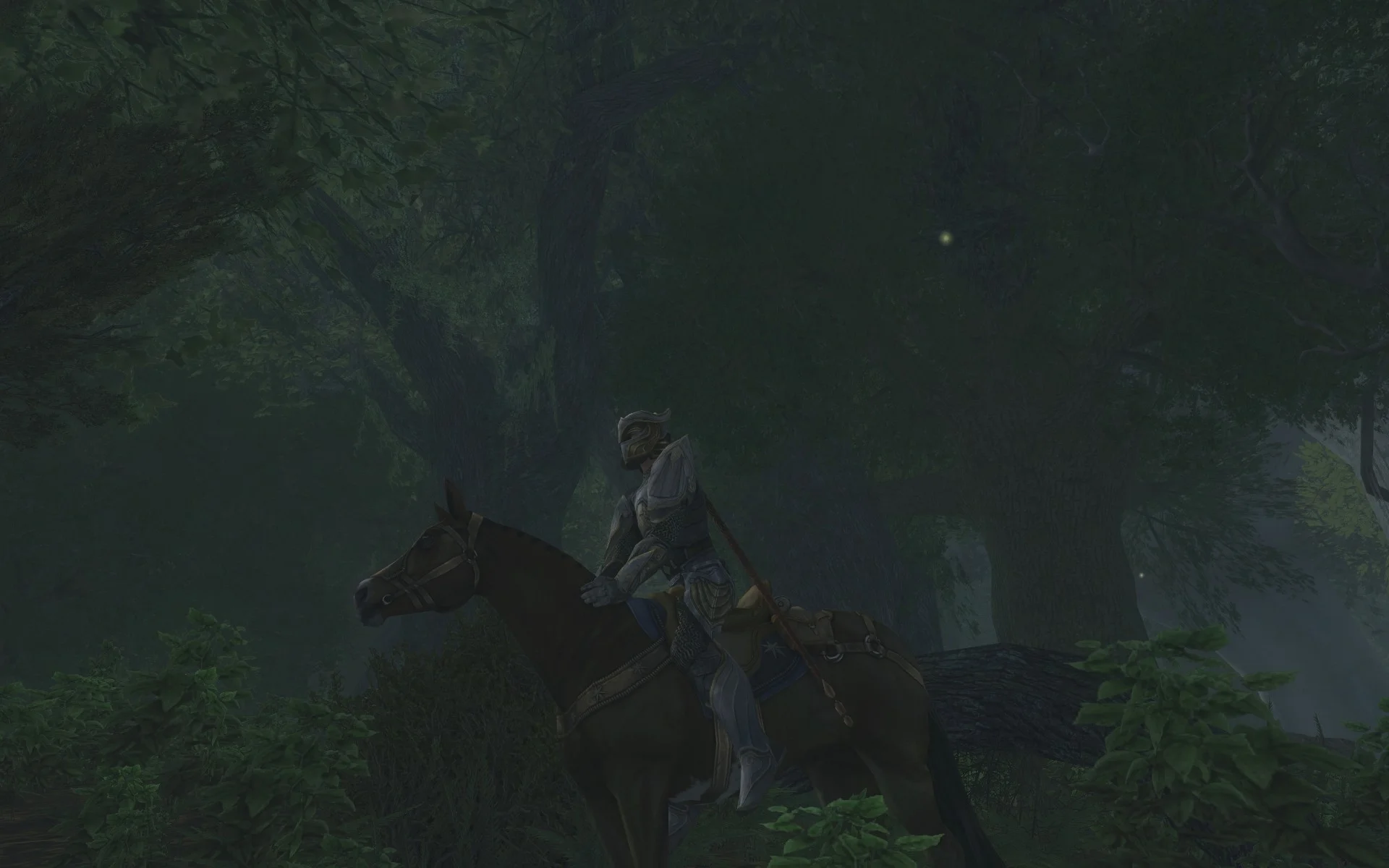
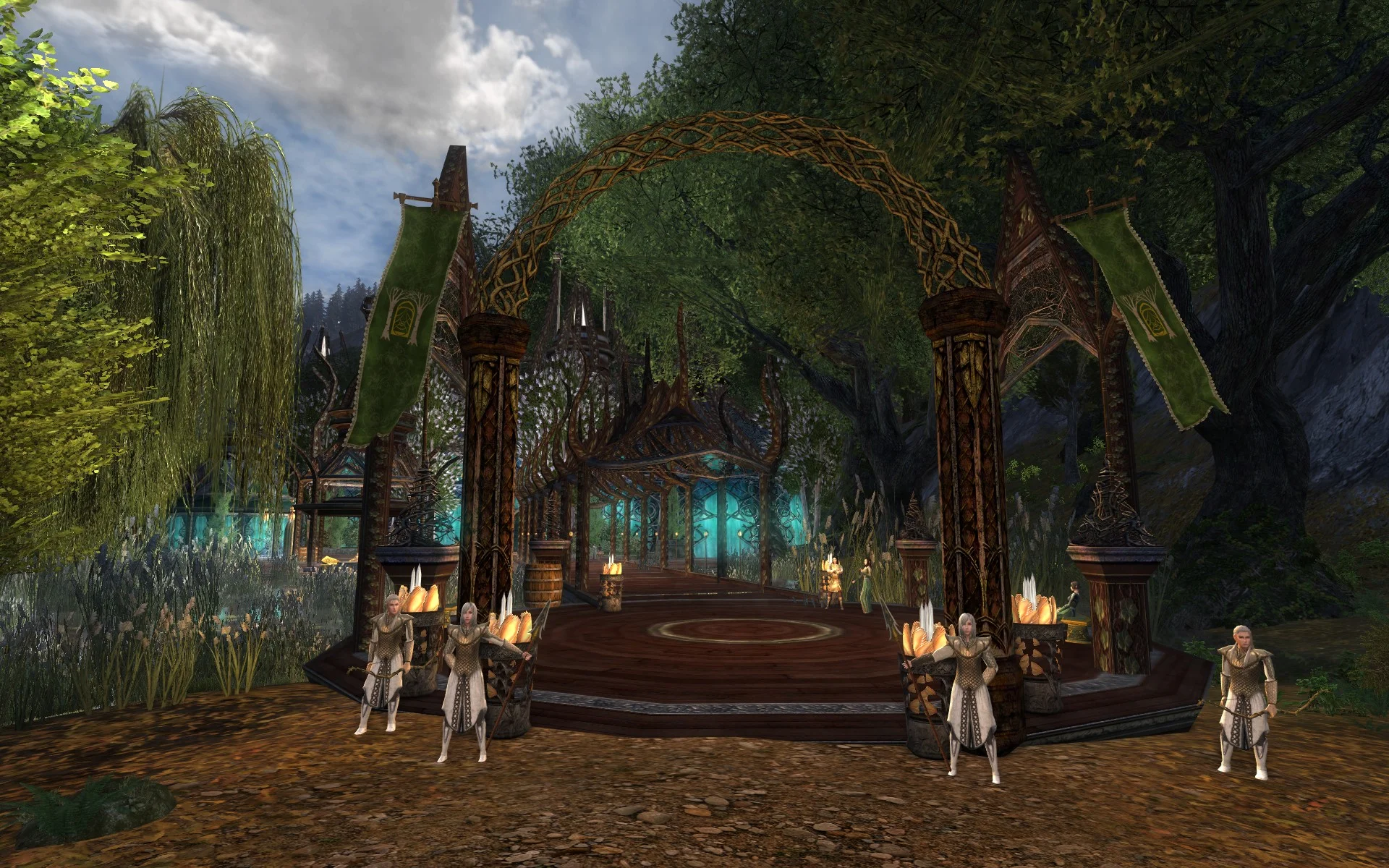
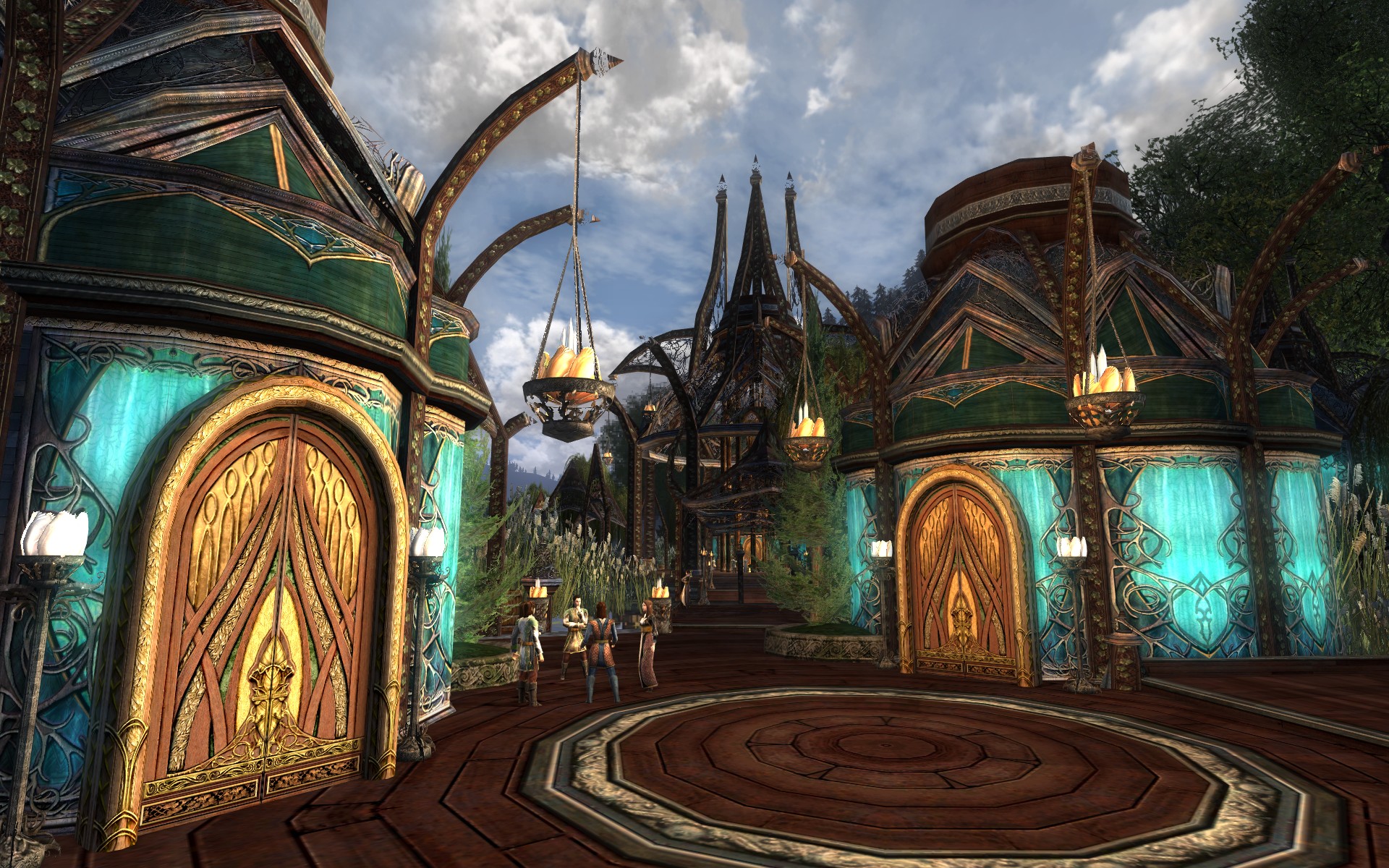
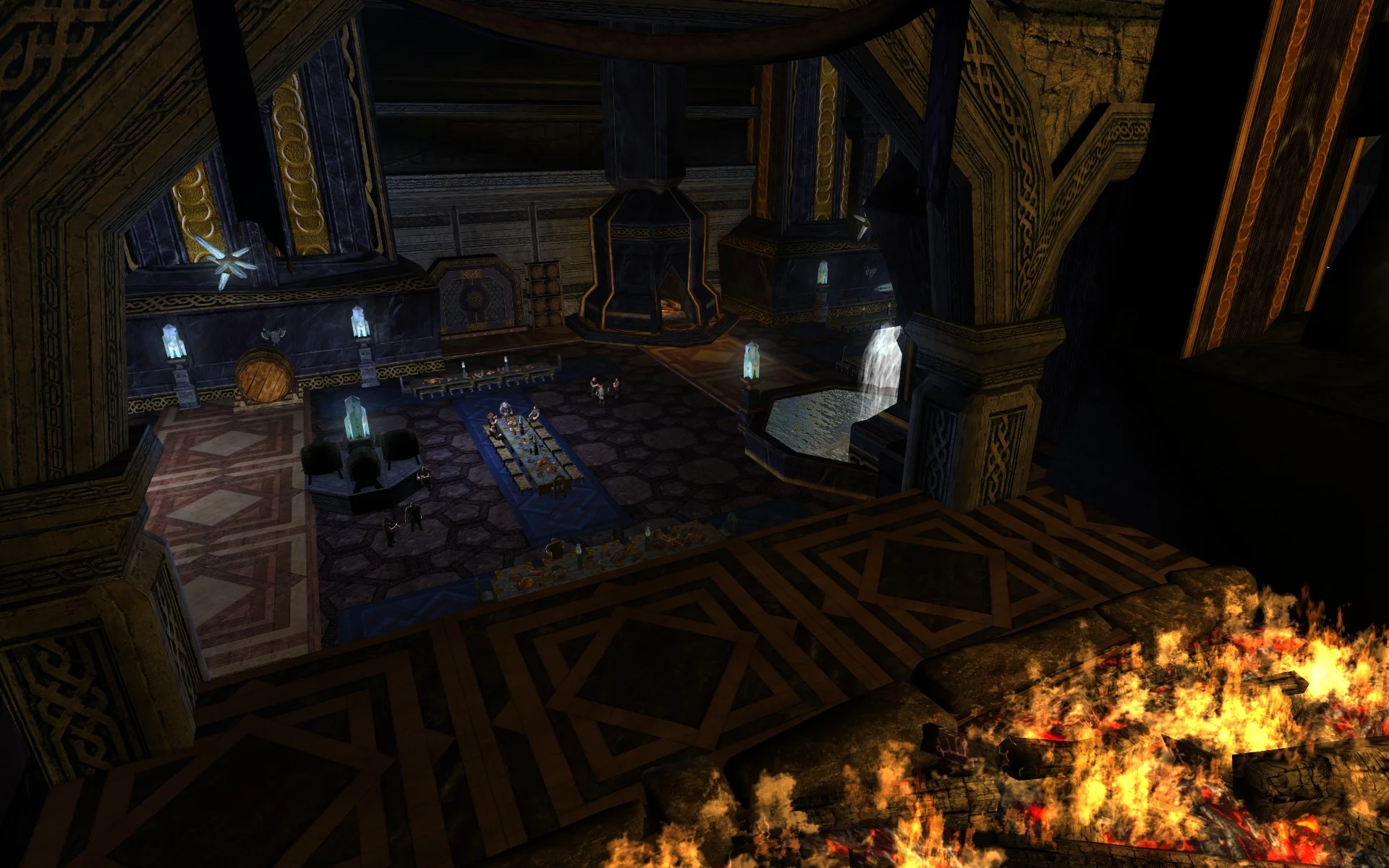
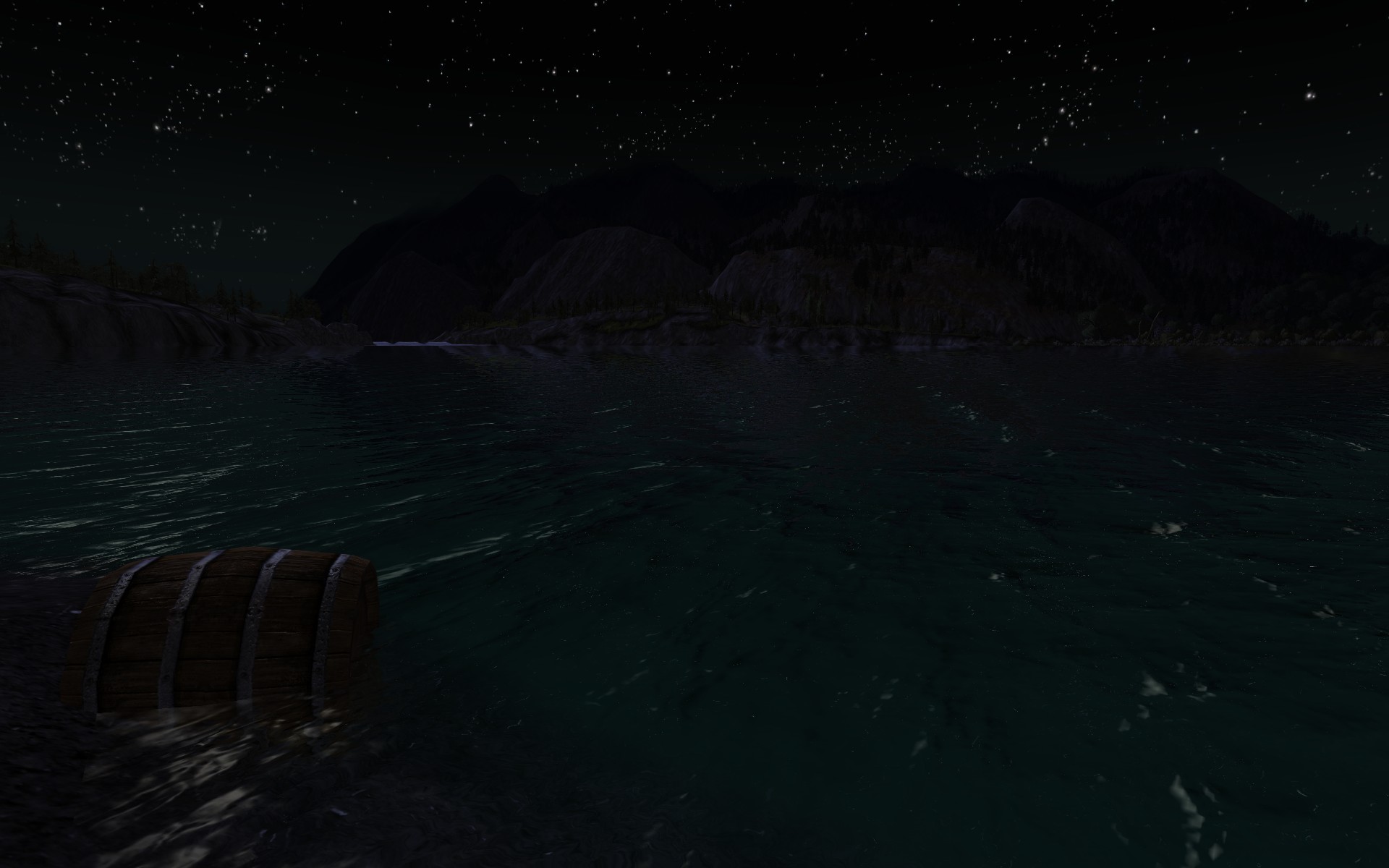
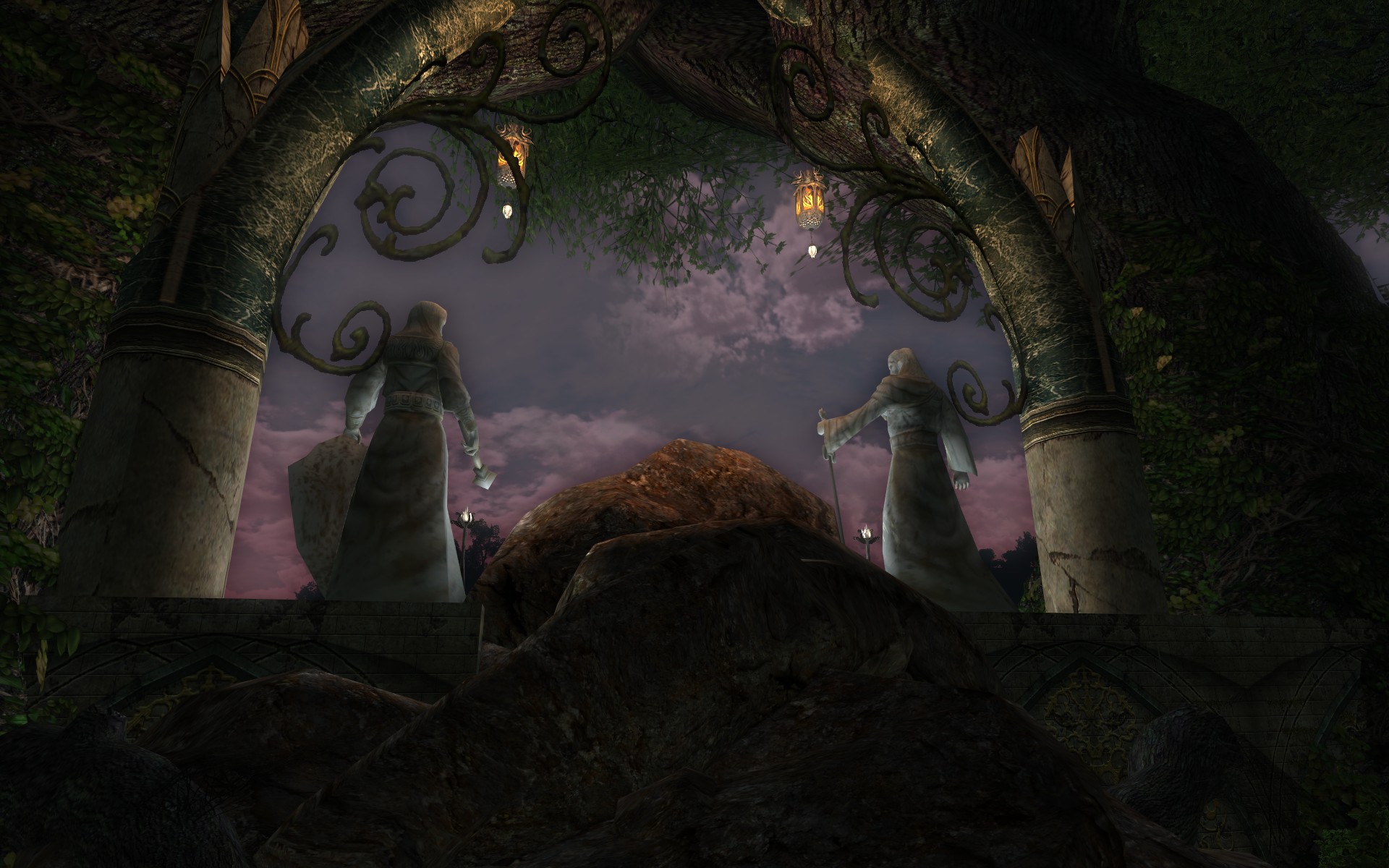
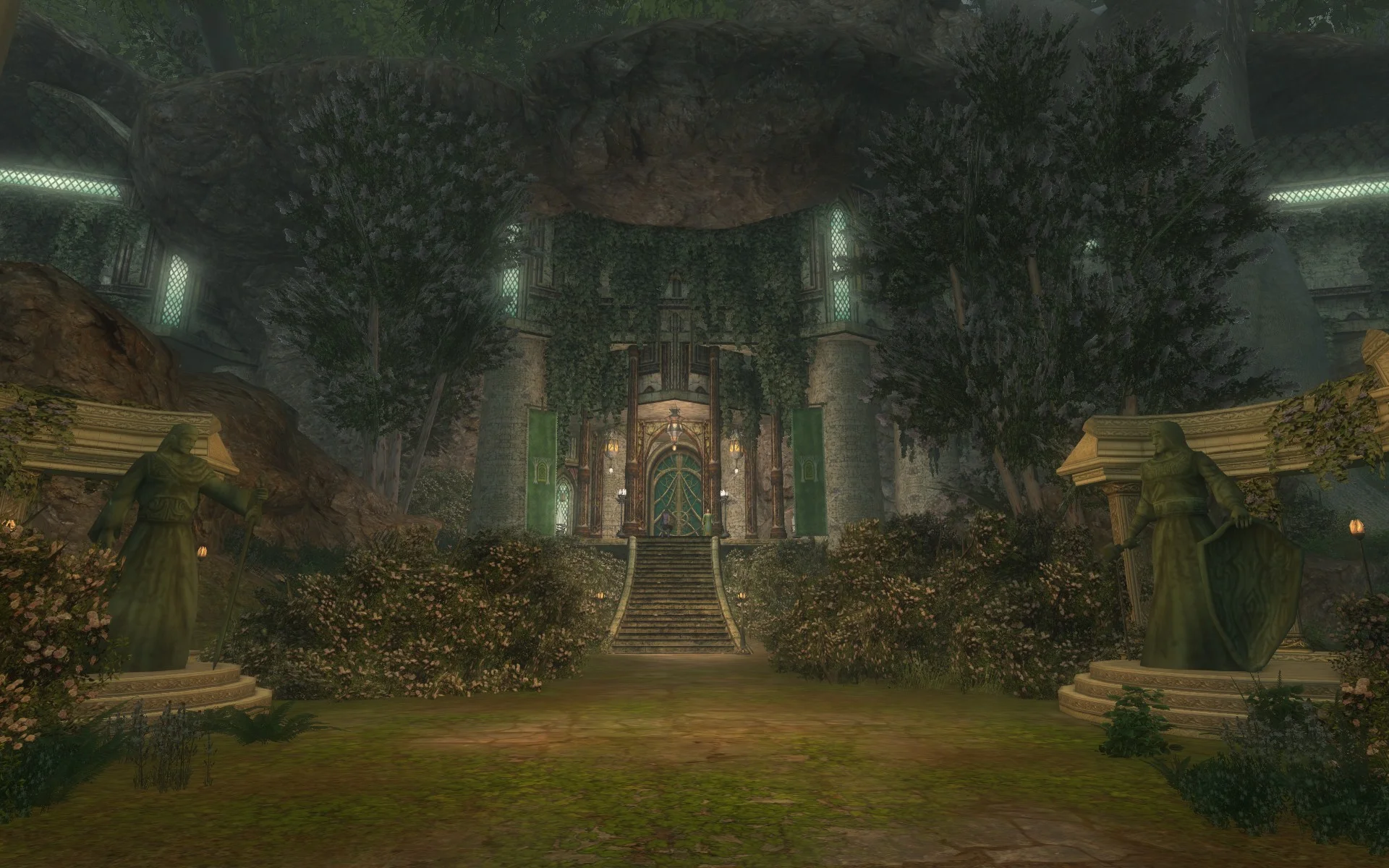
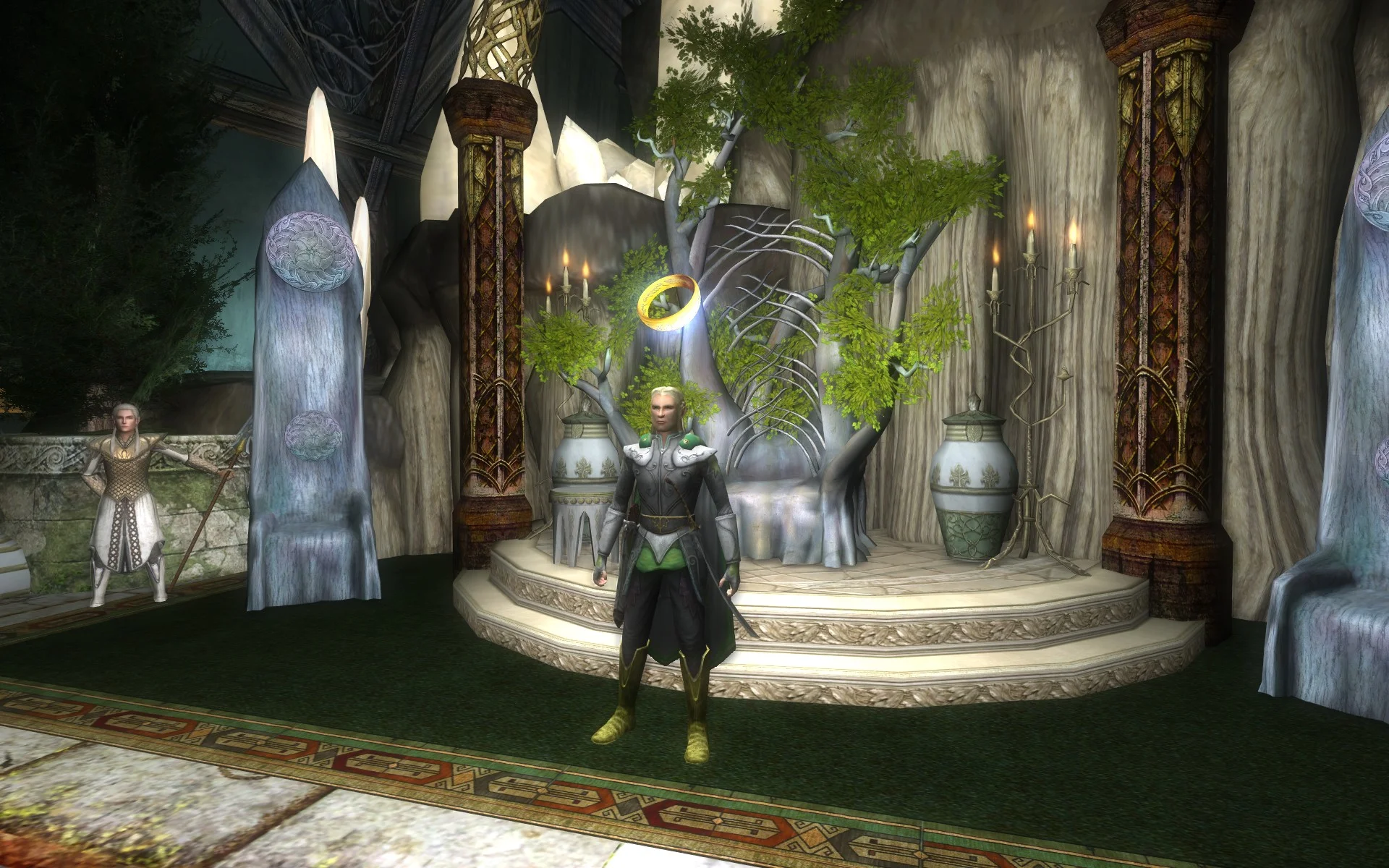
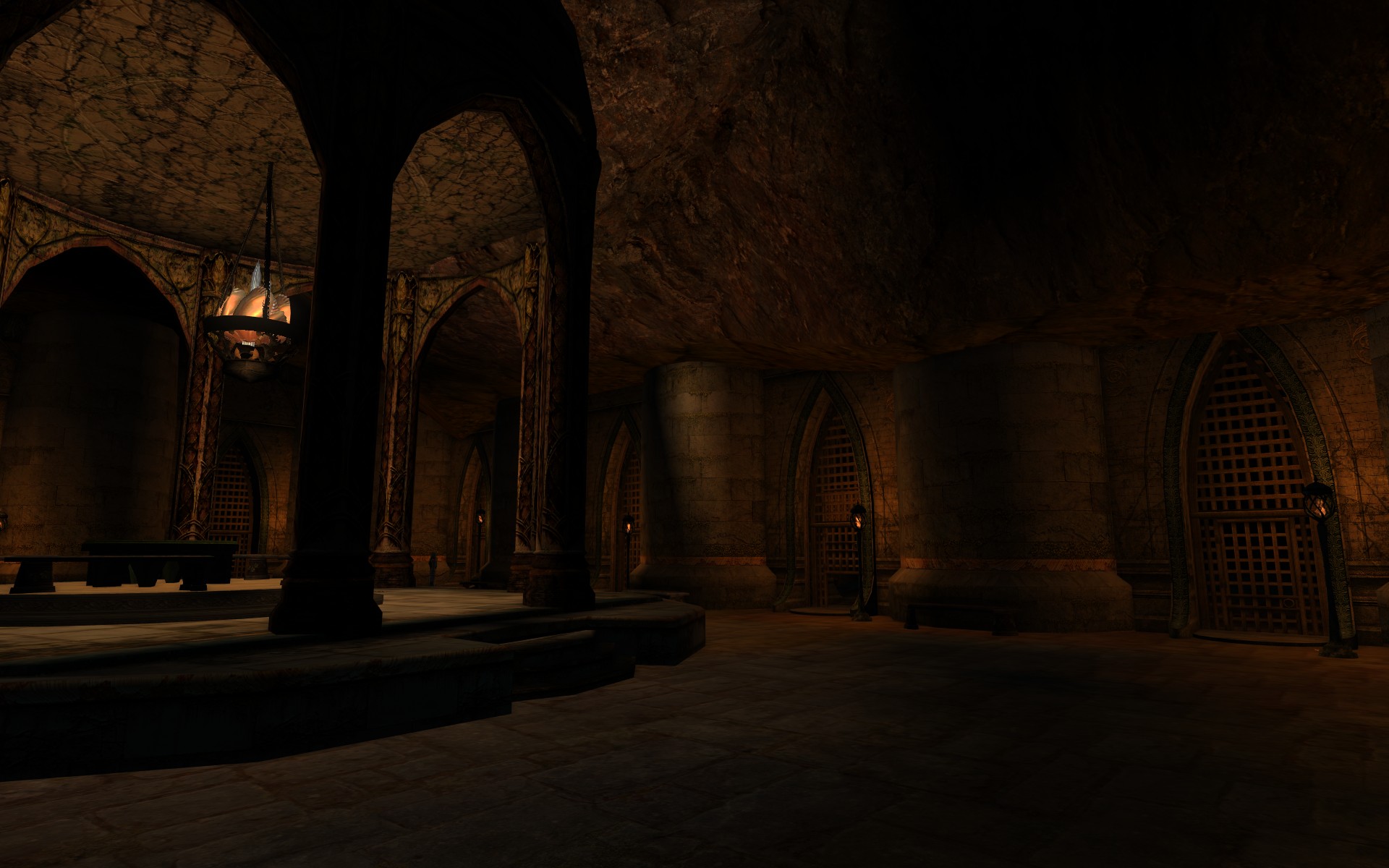
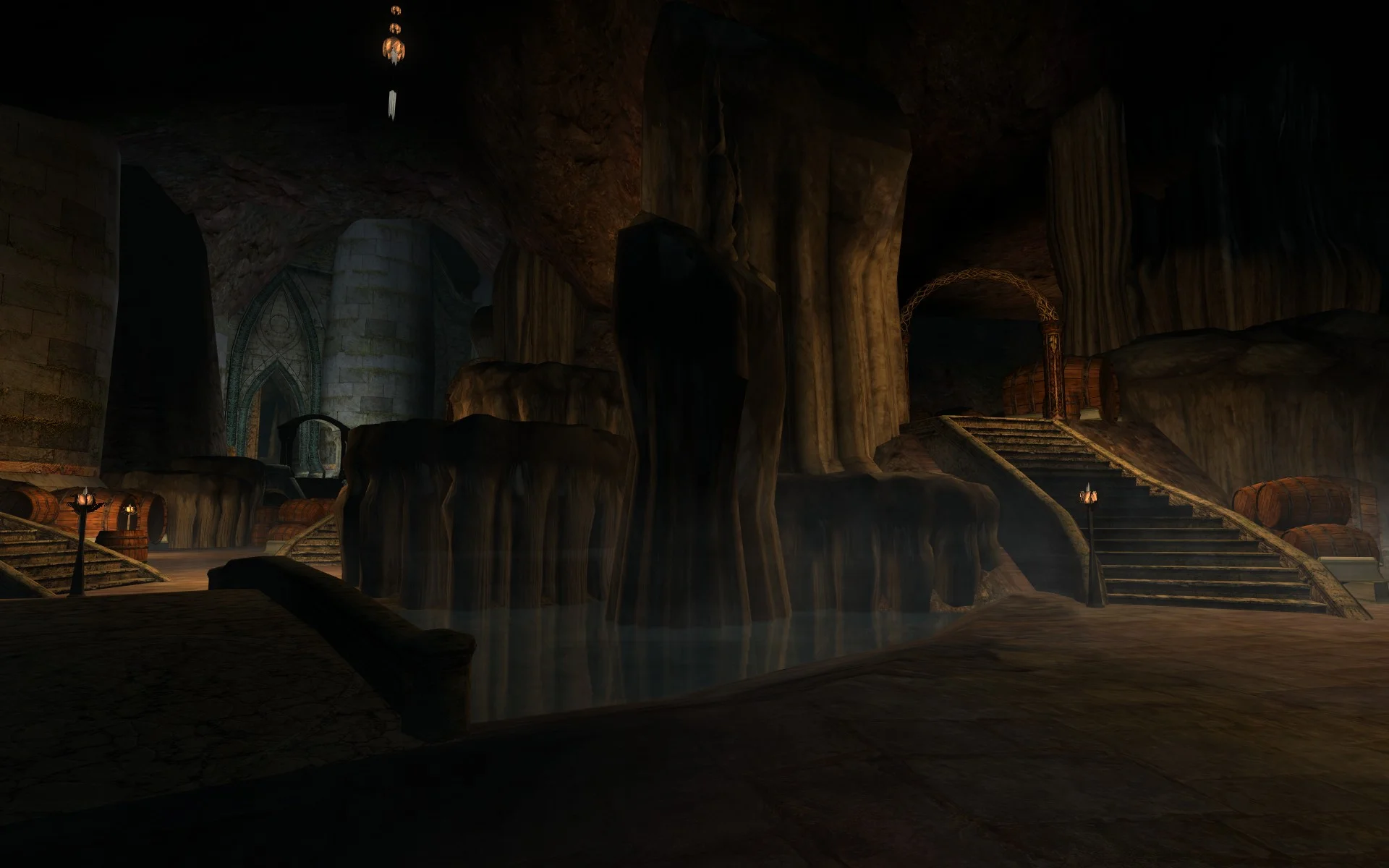
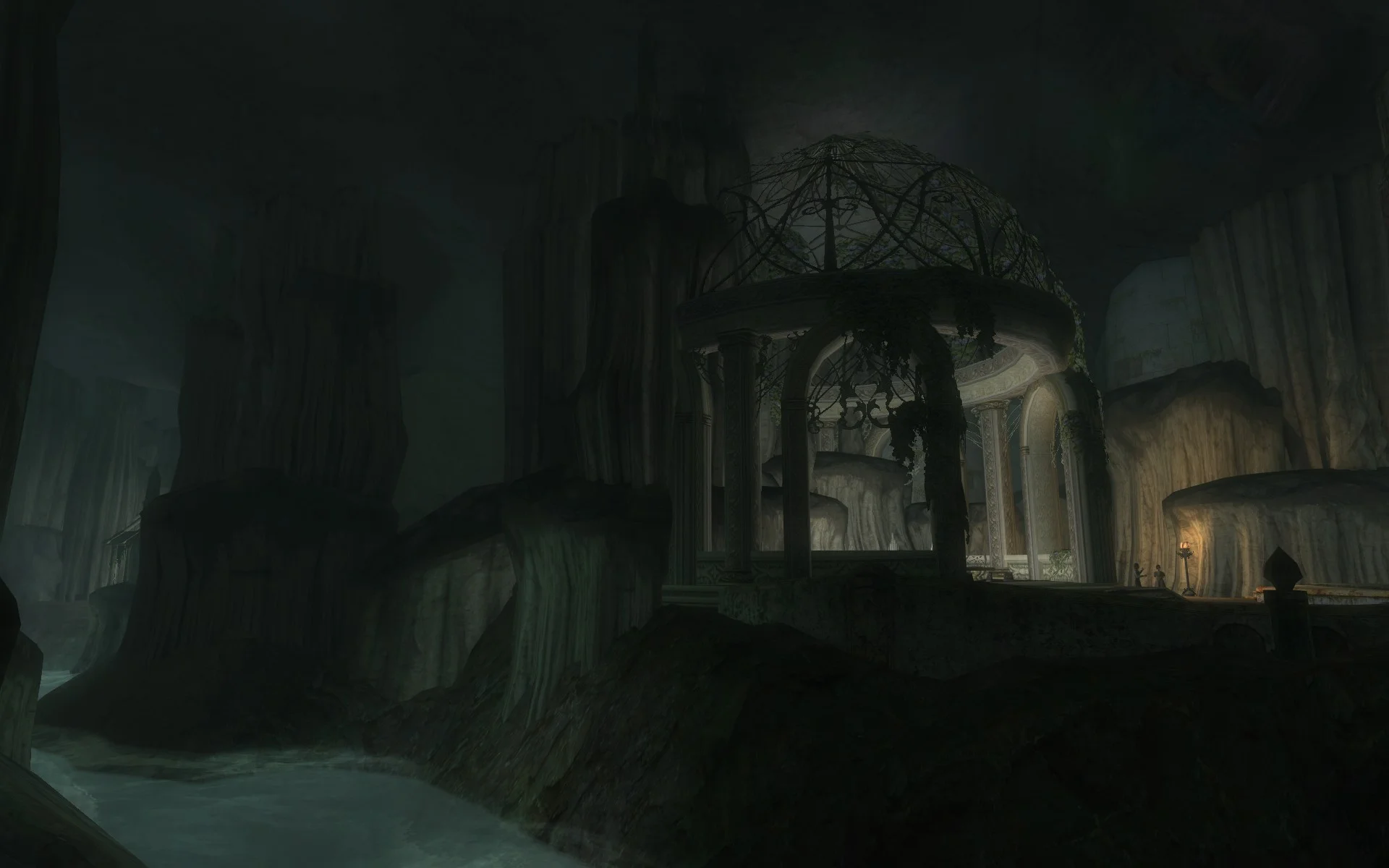
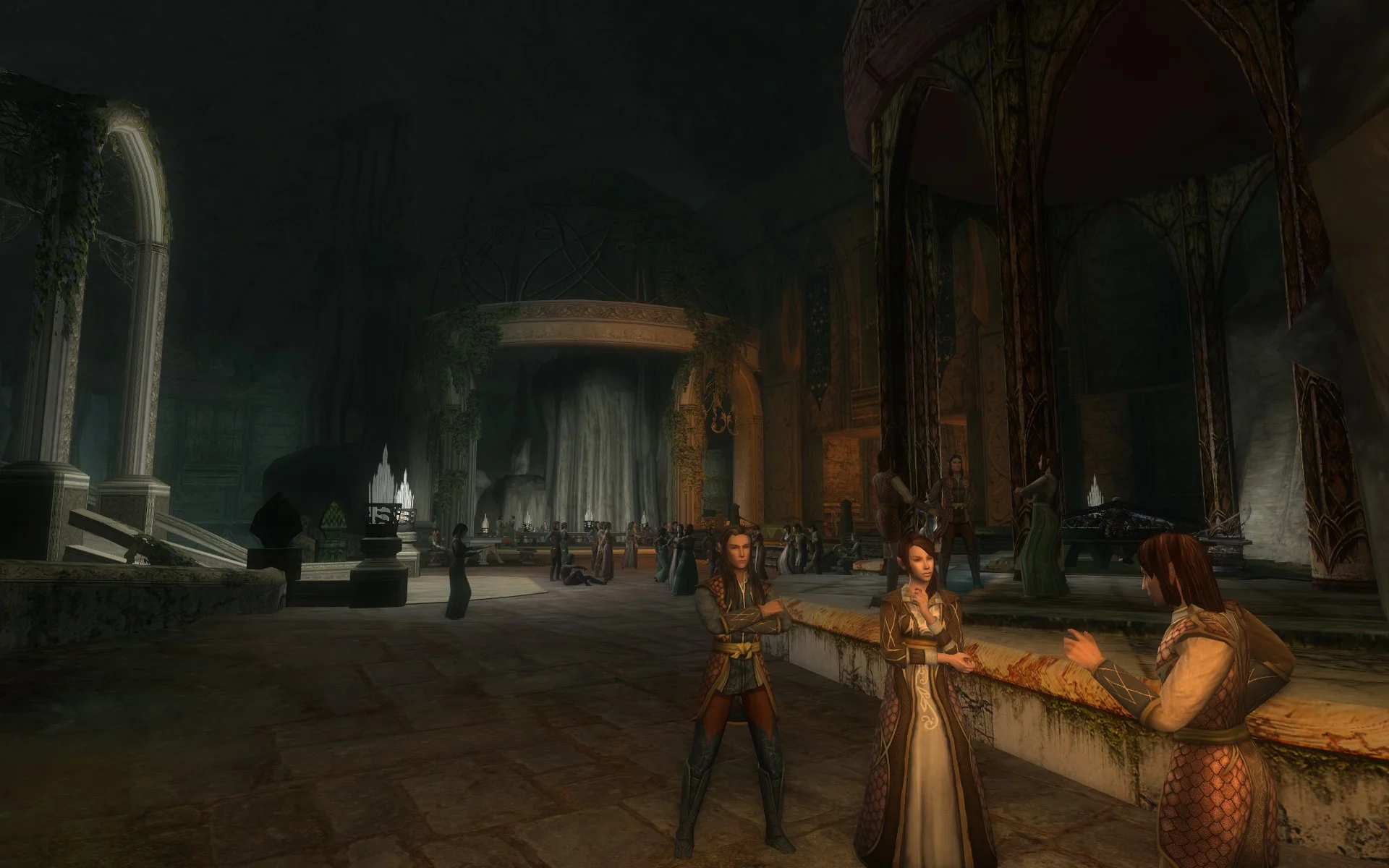
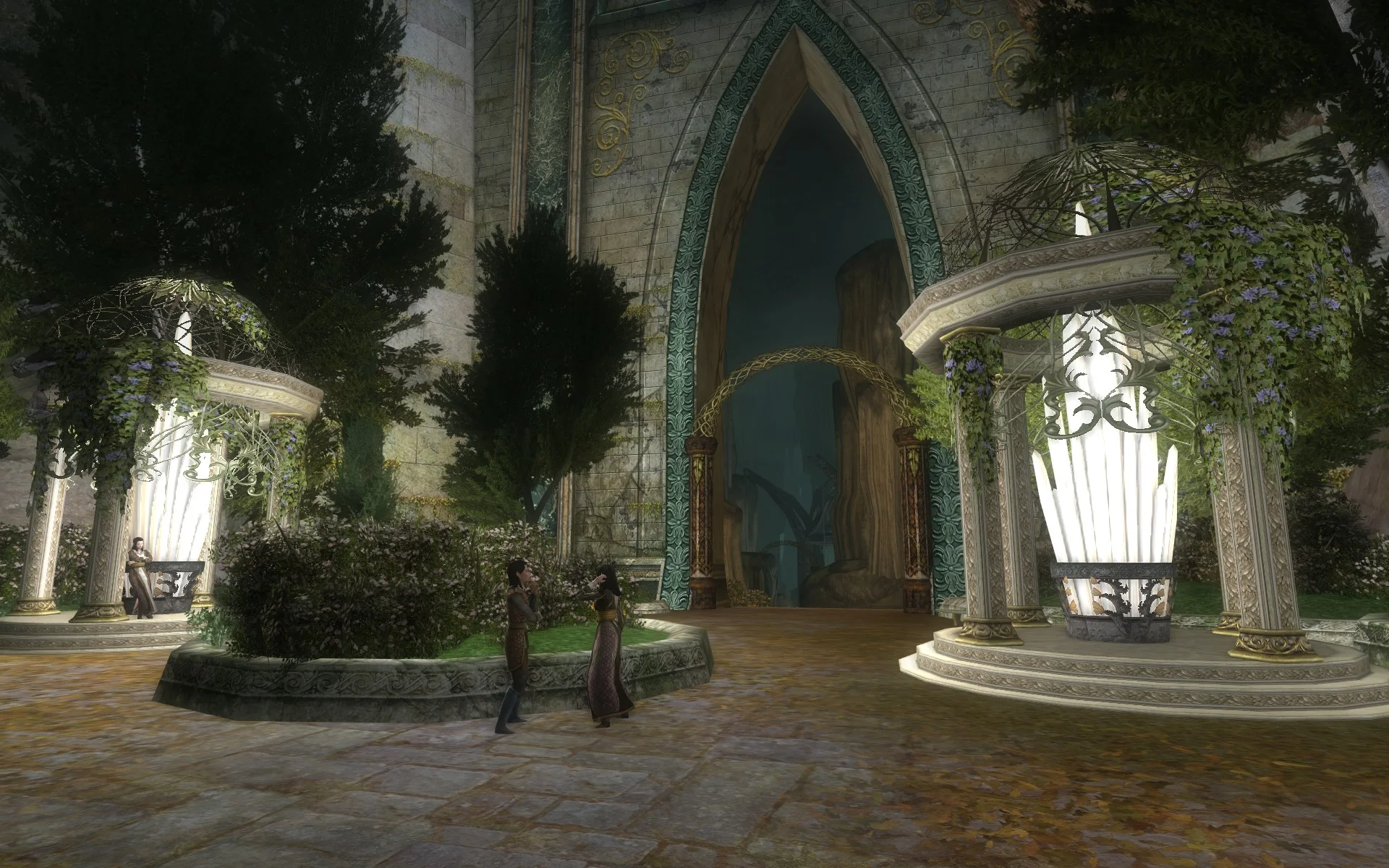
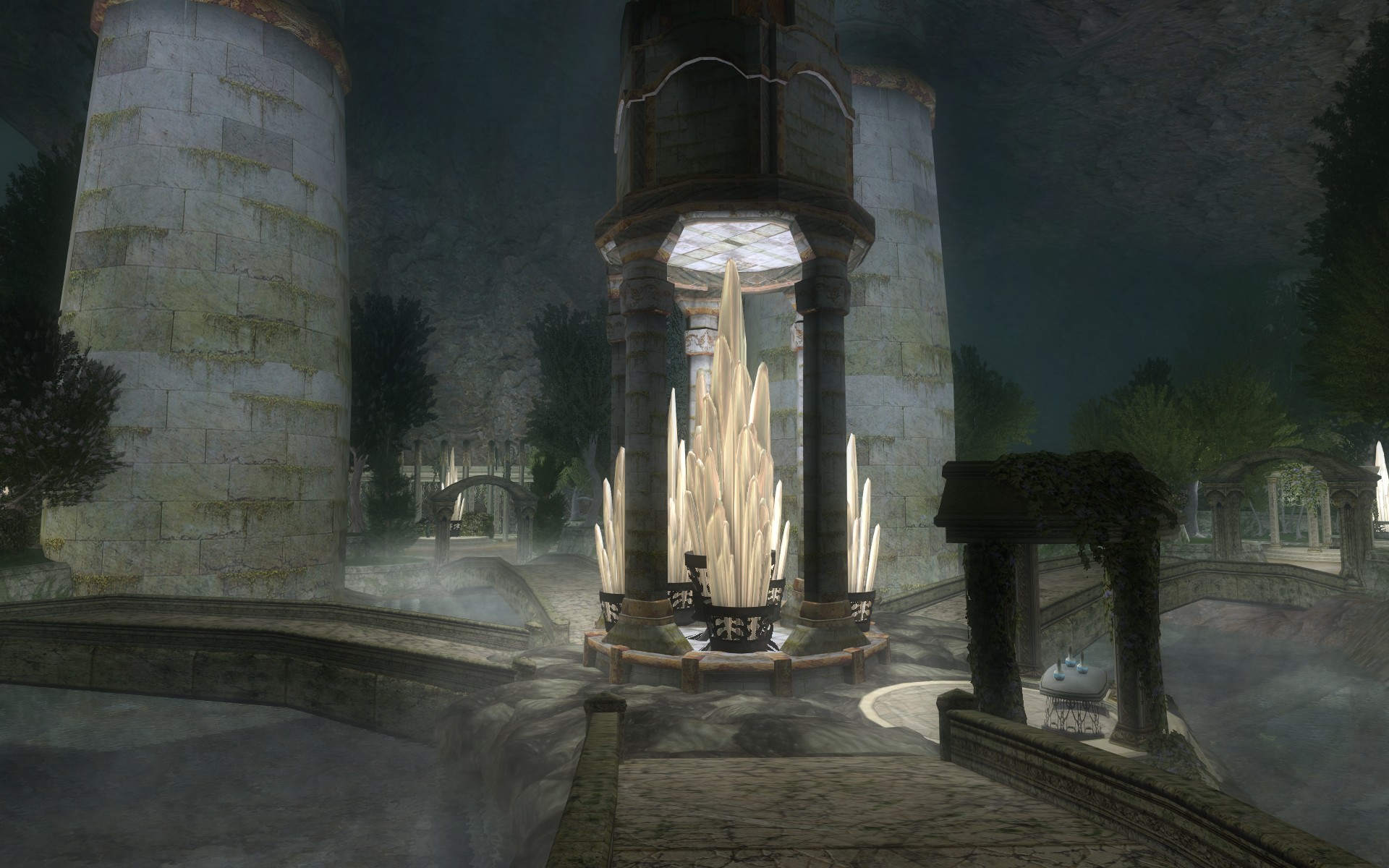
Bearing this all-in mind, I spent a few hours this afternoon exploring the new area. I have not finished the Mordor expansion yet (mainly because I didn’t enjoy the area) so was careful when travelling around as my primary alt is still only level 109. Porting directly from the Eyes and Guard Tavern takes you to Felegoth, the Halls of the Wood Elves. As you would expect, the traditional Elven motif has been maintained in the art design, although there are subtle differences to other Elven enclaves. Because the Halls are mainly underground, the cavernous expanses are filled with stalagmites and stalactites. Yet unlike Dwarven delves, this area is brightly illuminated and has gardens and areas of natural beauty. The keen explorer will also find the dungeon cells where Thorin and his companions were held. There’s also a cellar with a substantial trap door and numerous barrels. One in particular is worth investigating.
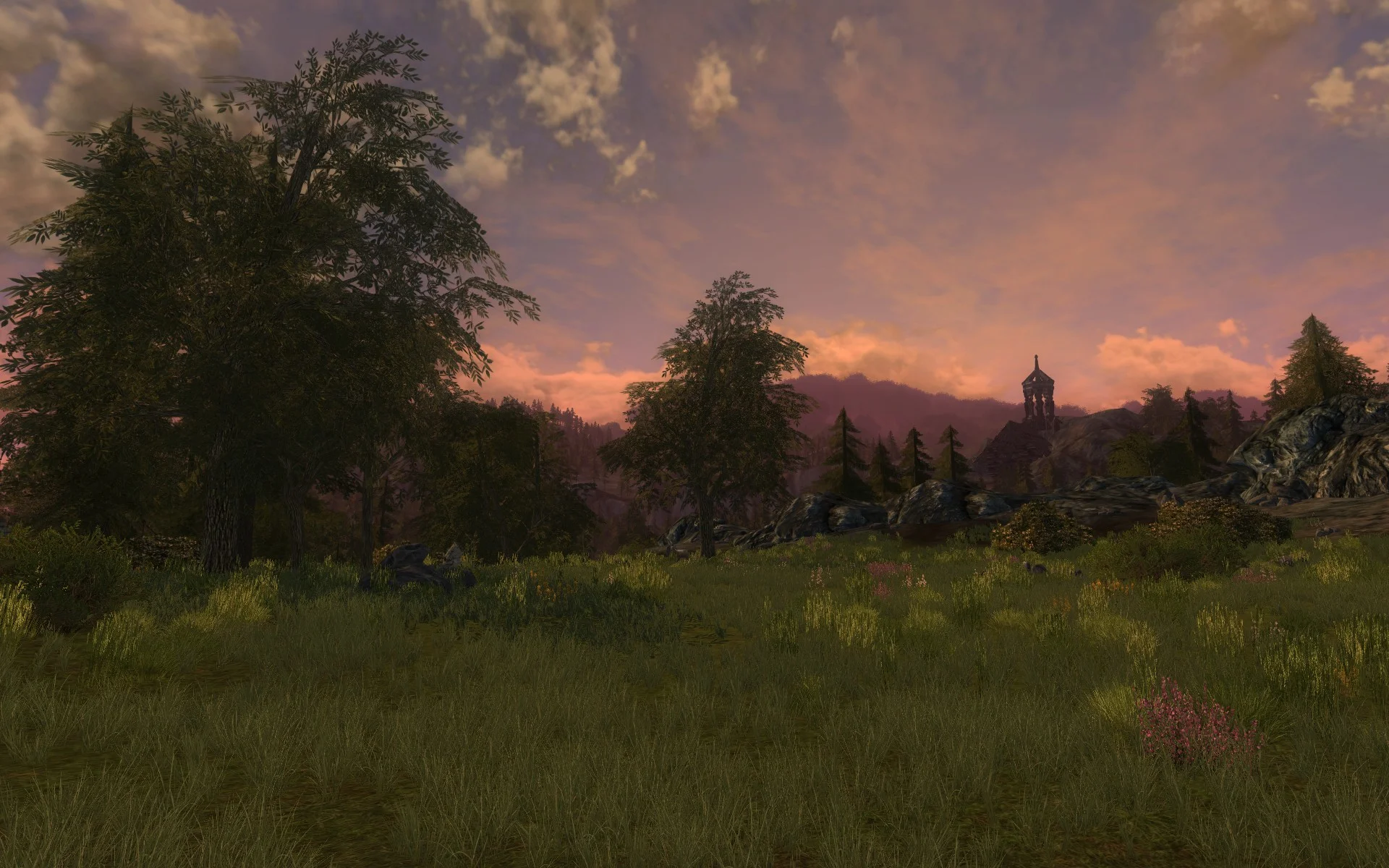
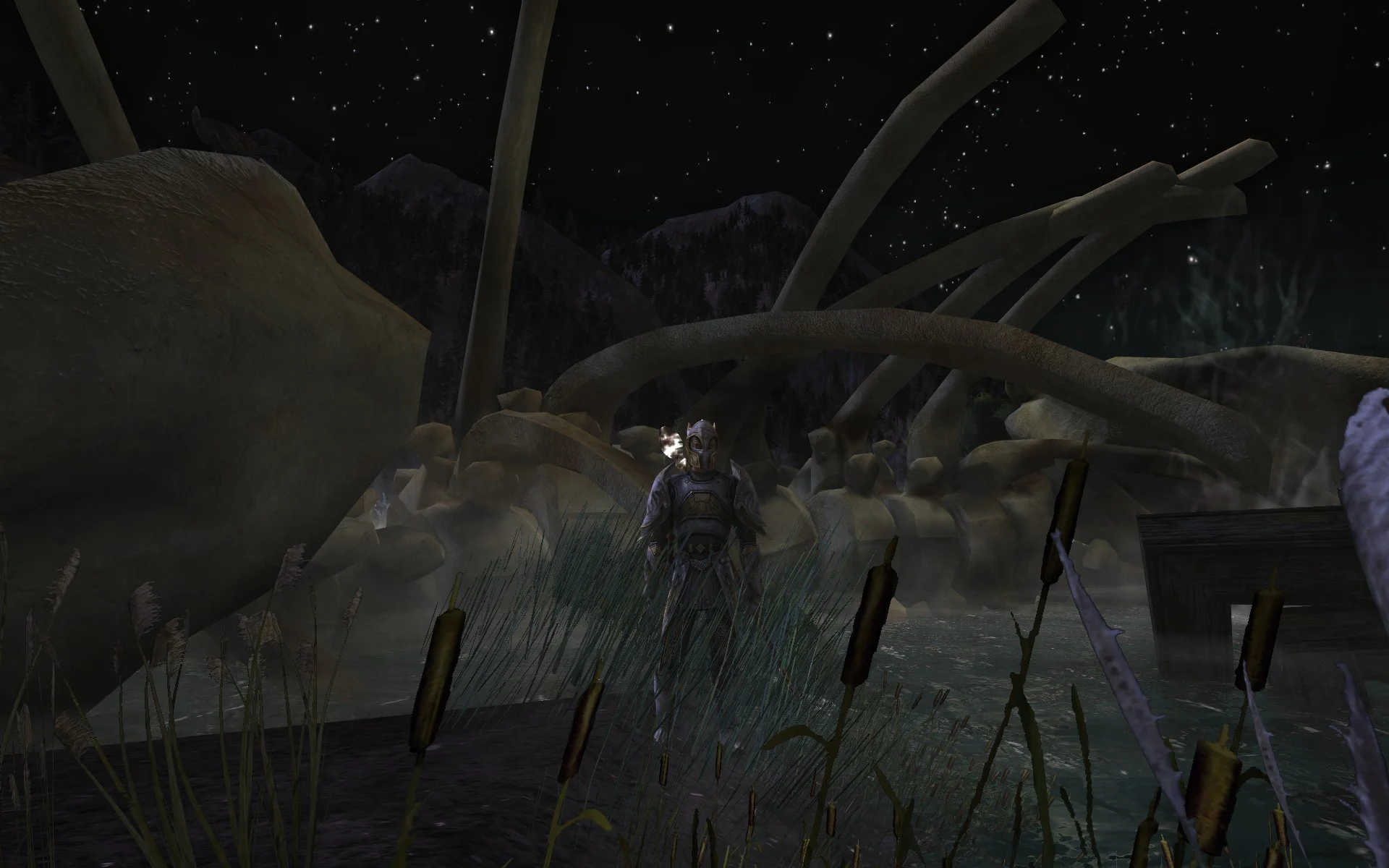
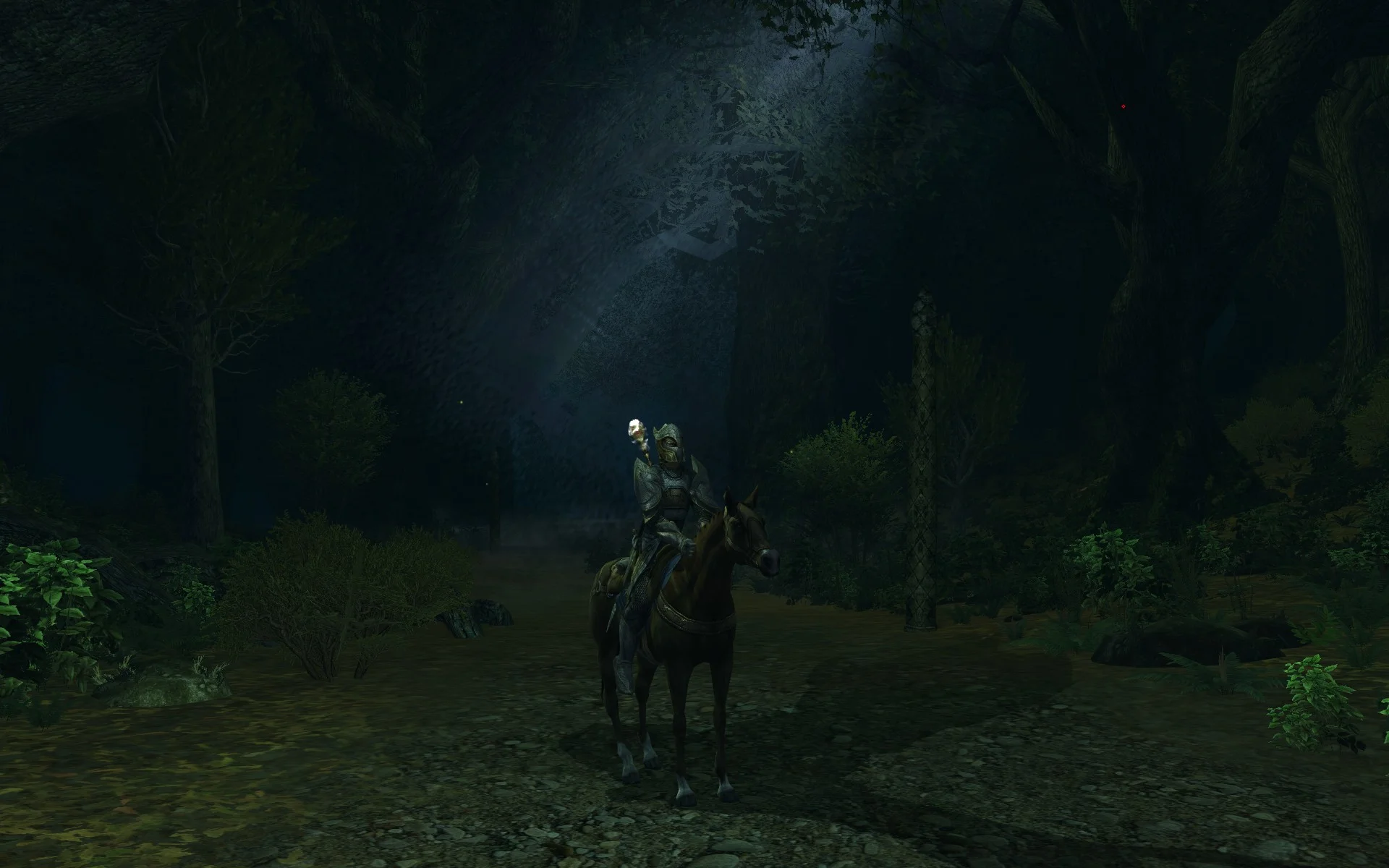
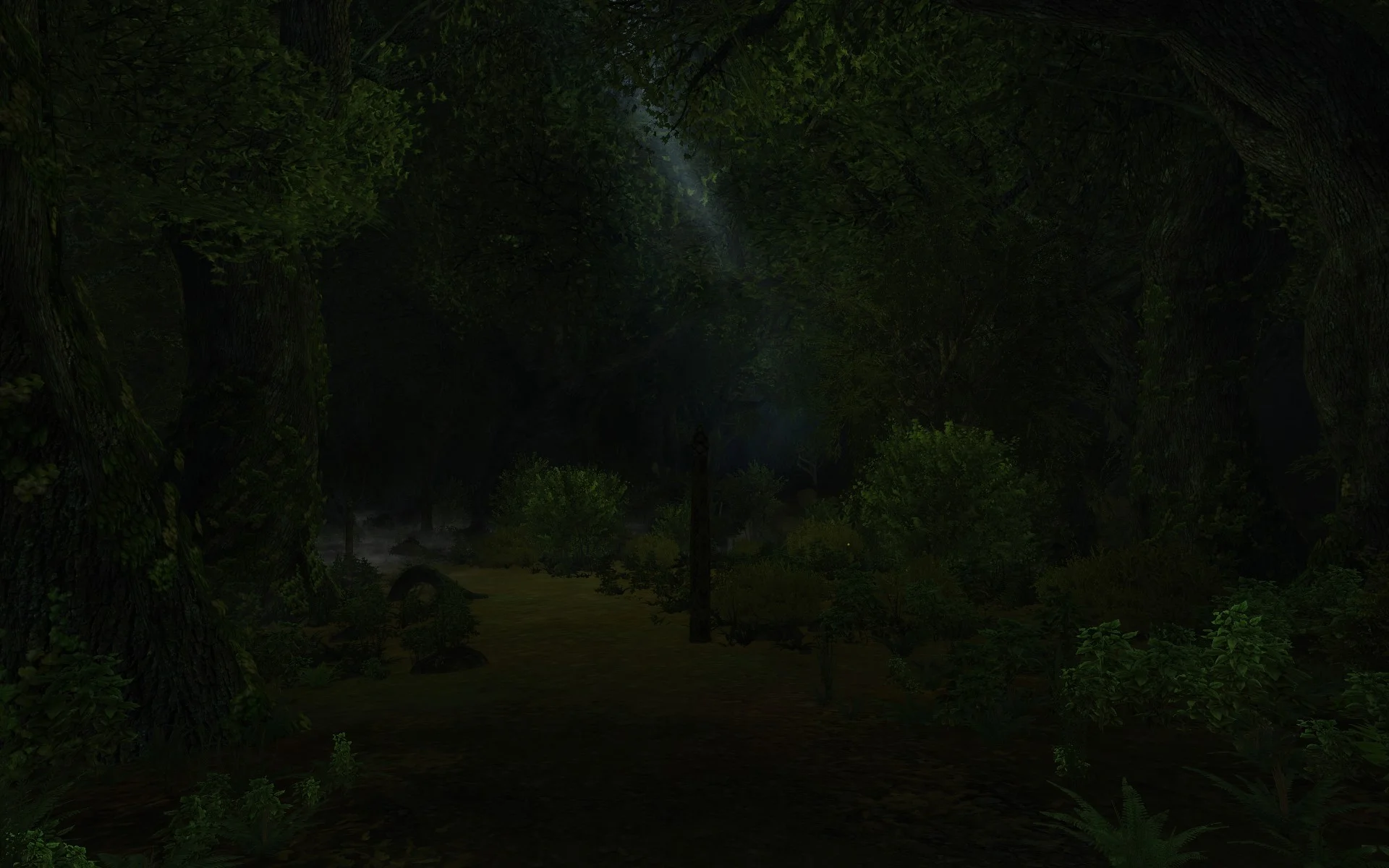
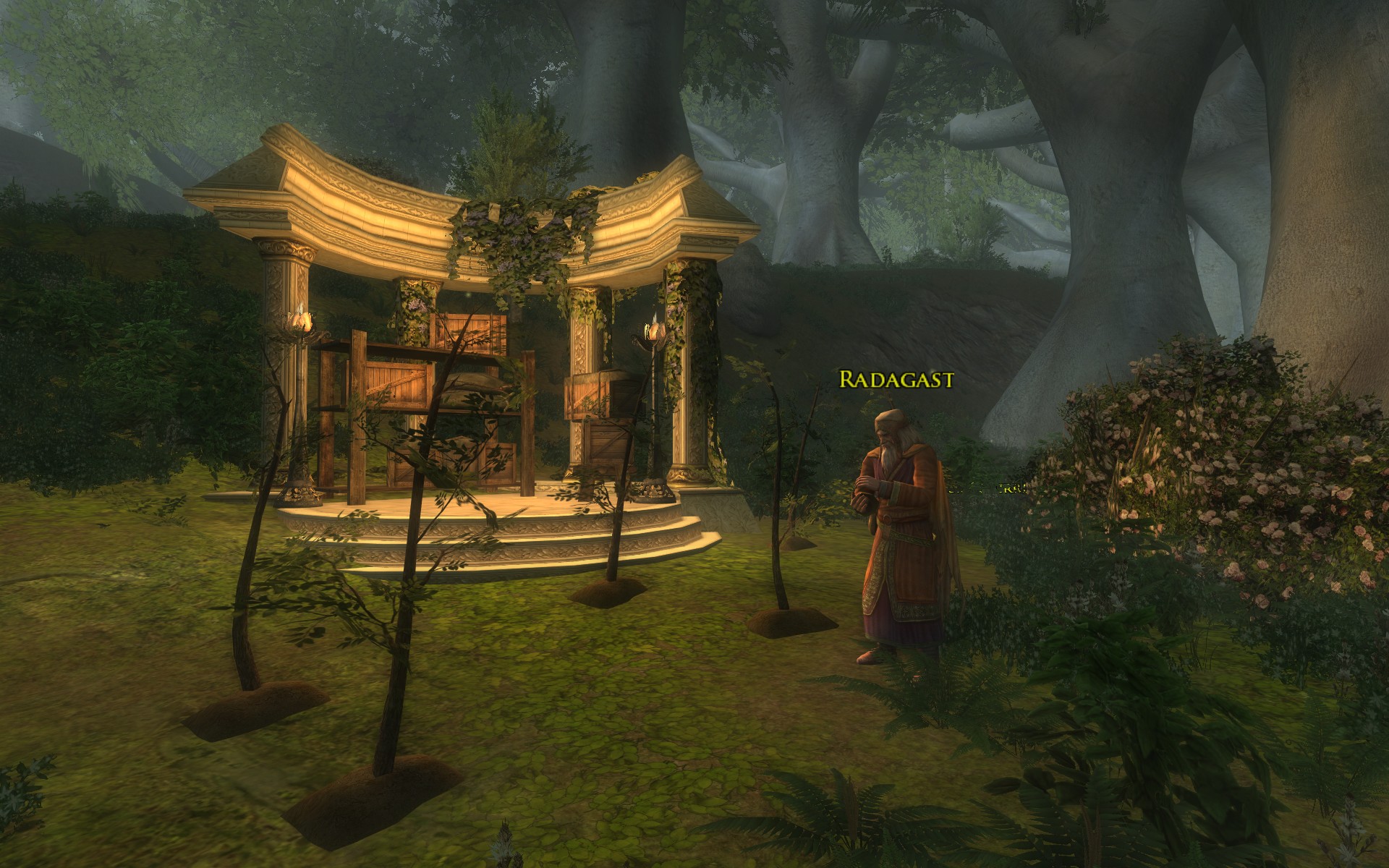
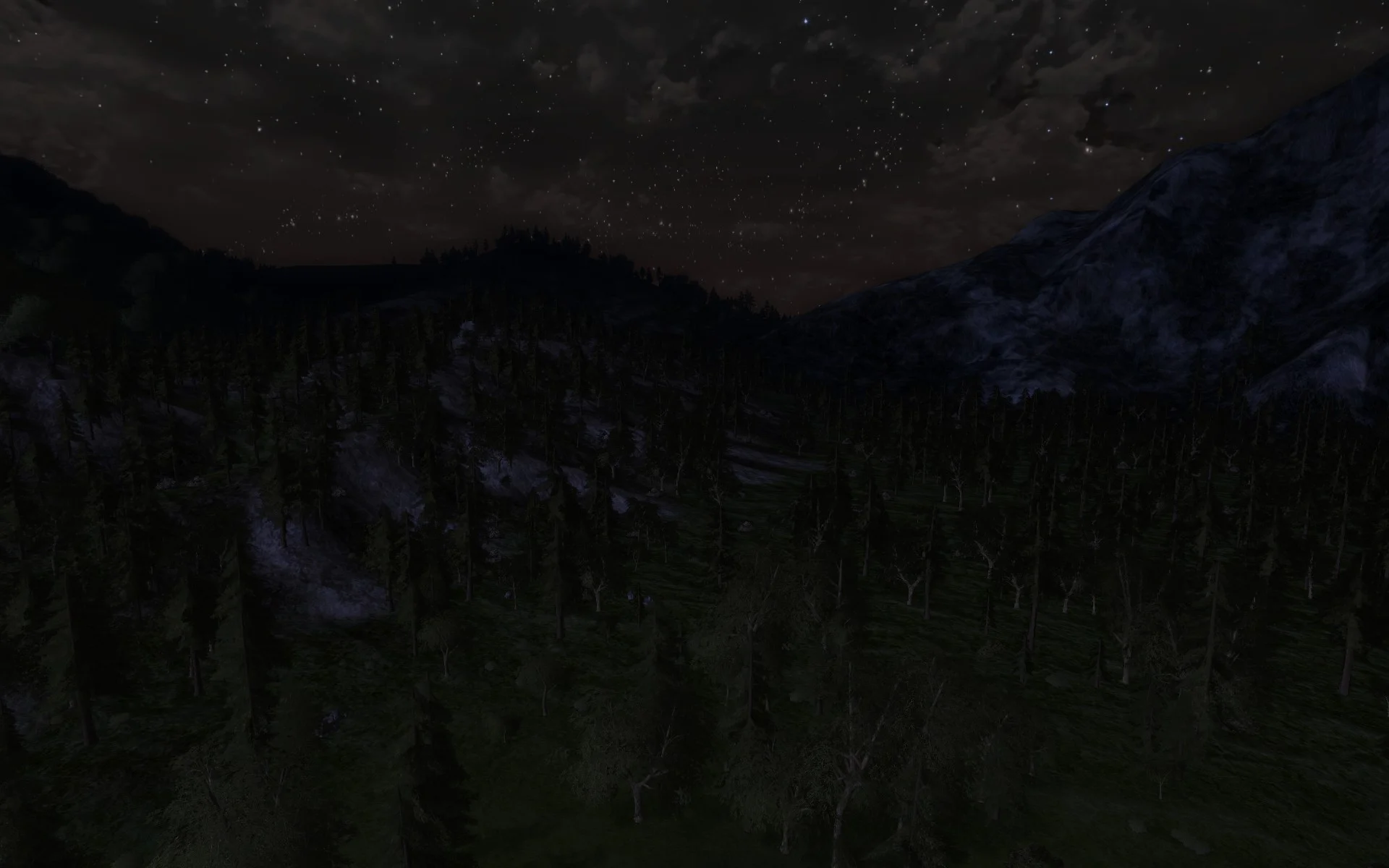
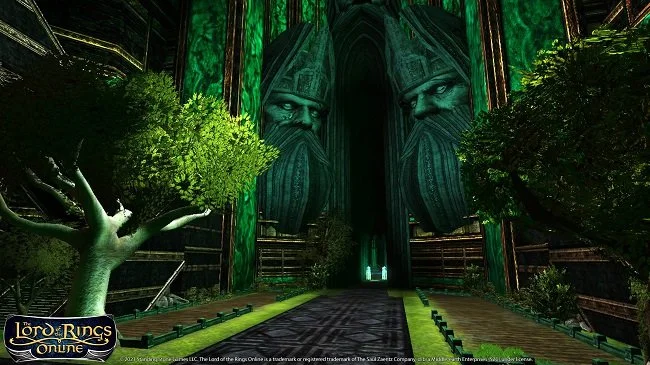
Northern Mirkwood itself is a dark and dismal place, similar to its existing Southern counterpart. The light soon vanishes once you travel beyond the Elven King’s territory and the path twists and turns. Luckily, they’re wooden posts marking the trail, but it is important to stay vigilant or you can get lost. Places of interest in the immediate area include an encounter with Radagast and the Elven trading post of Loeglond on the edge of Long Lake. Upon exiting Eyn Ladgalen you enter Dale-land and discover a newly rebuilt and thriving Lake-town. This is very well realised and certainly captures the spirit of Tolkien’s original description from The Hobbit. If you travel downstream you come to the ruins of the old Lake-town and the remains of Smaug. It is a nice embellishment, similar to the remains of the Bridge of Khazad-dûm in the Foundations of Stone.
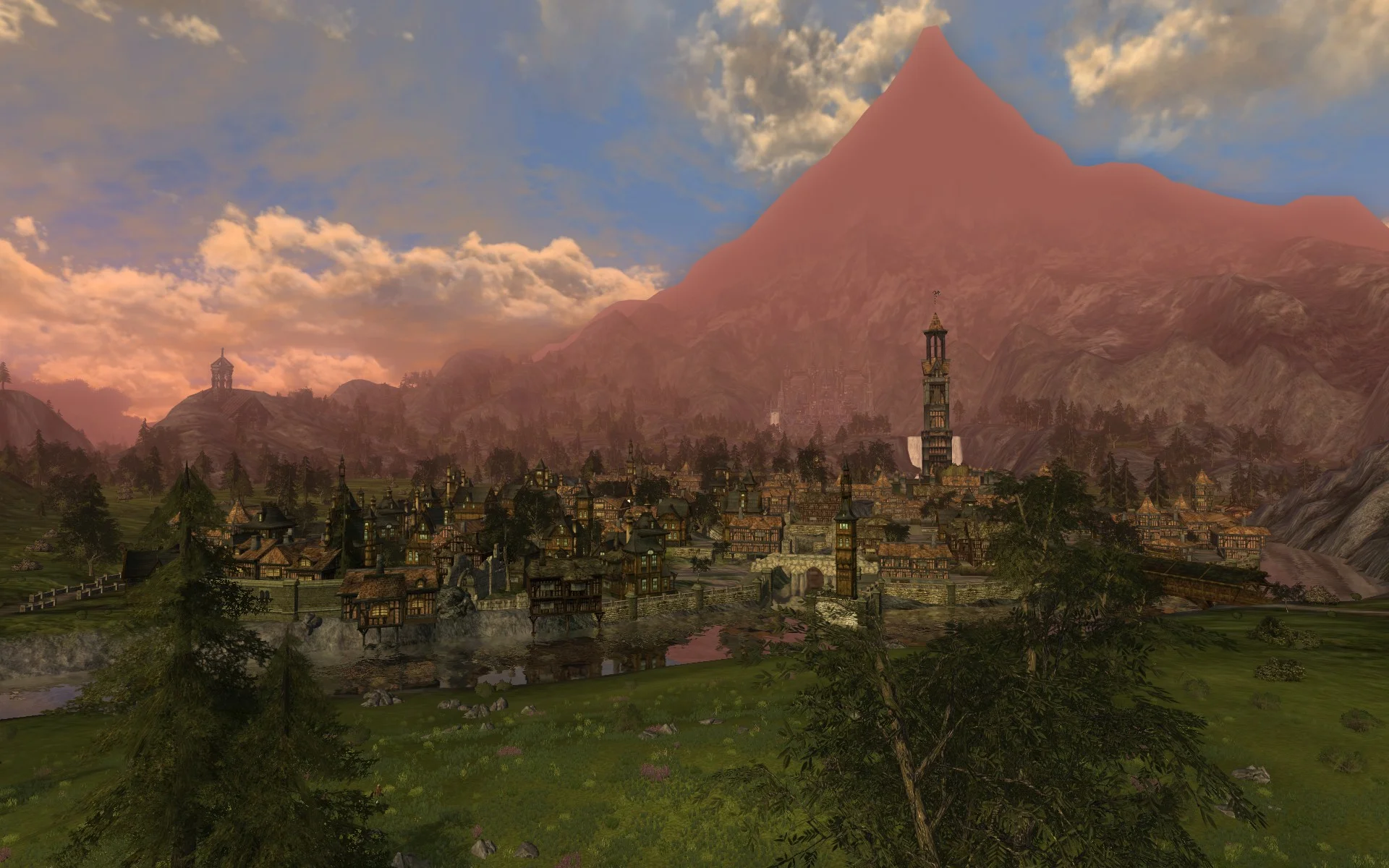
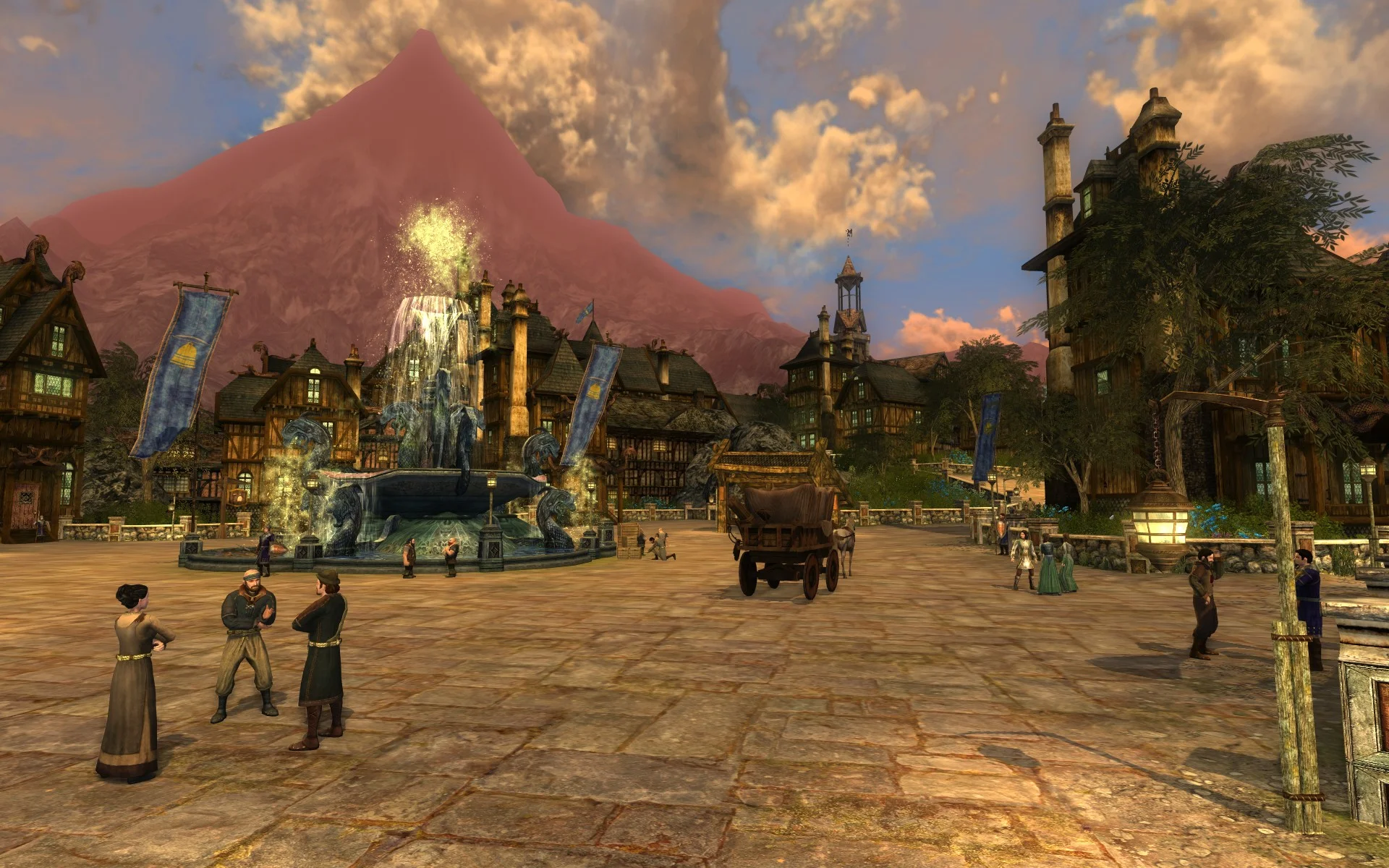
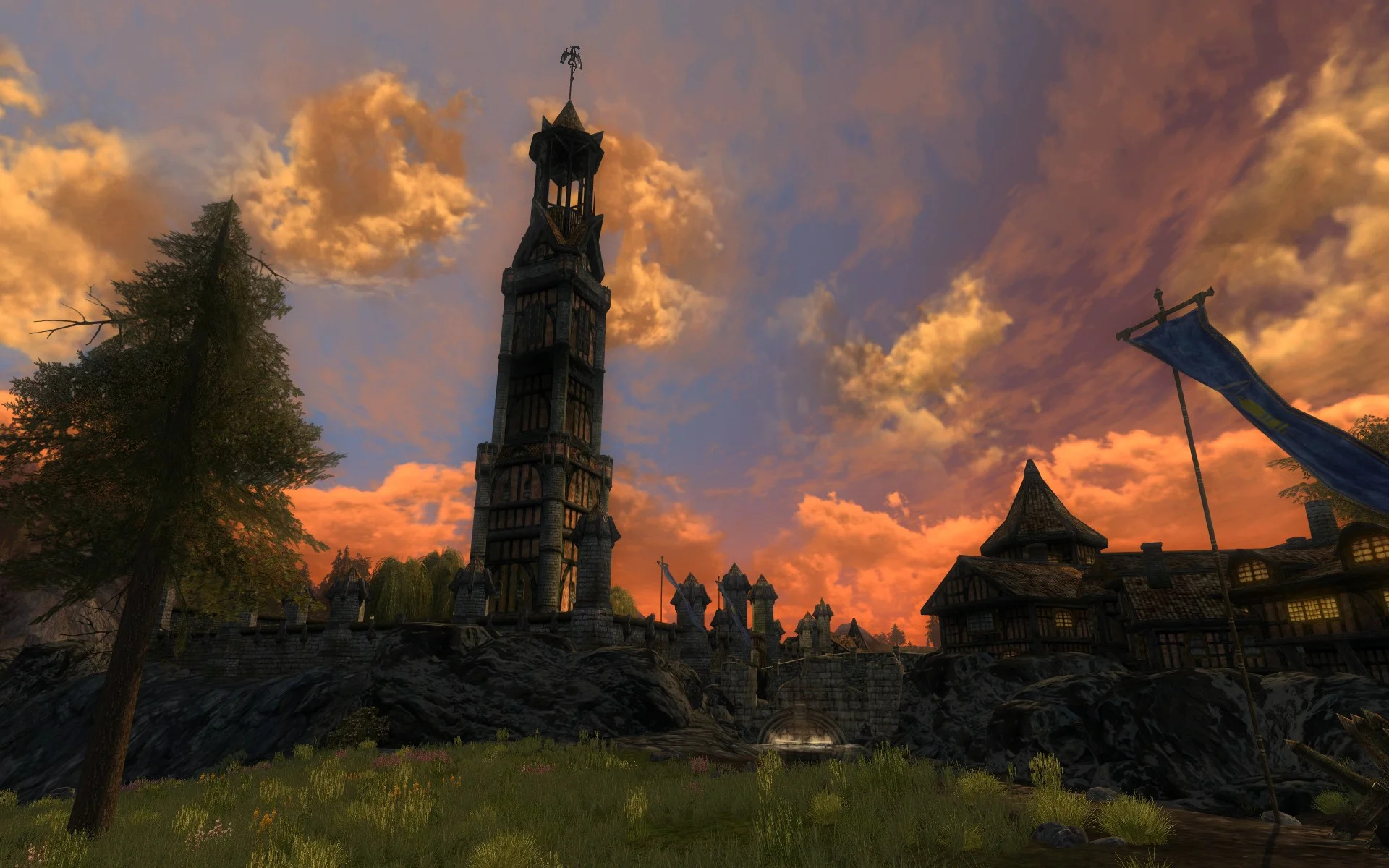
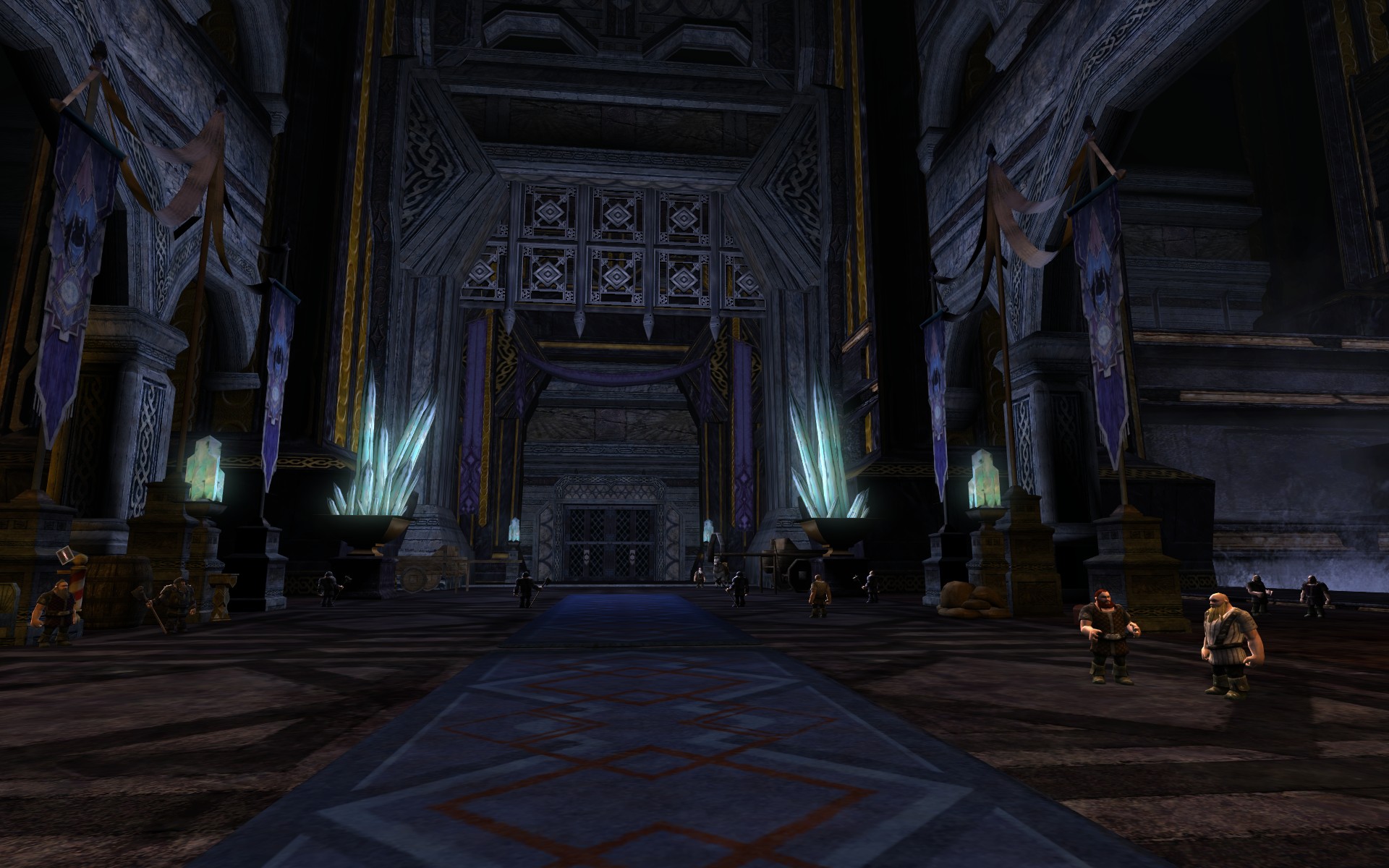
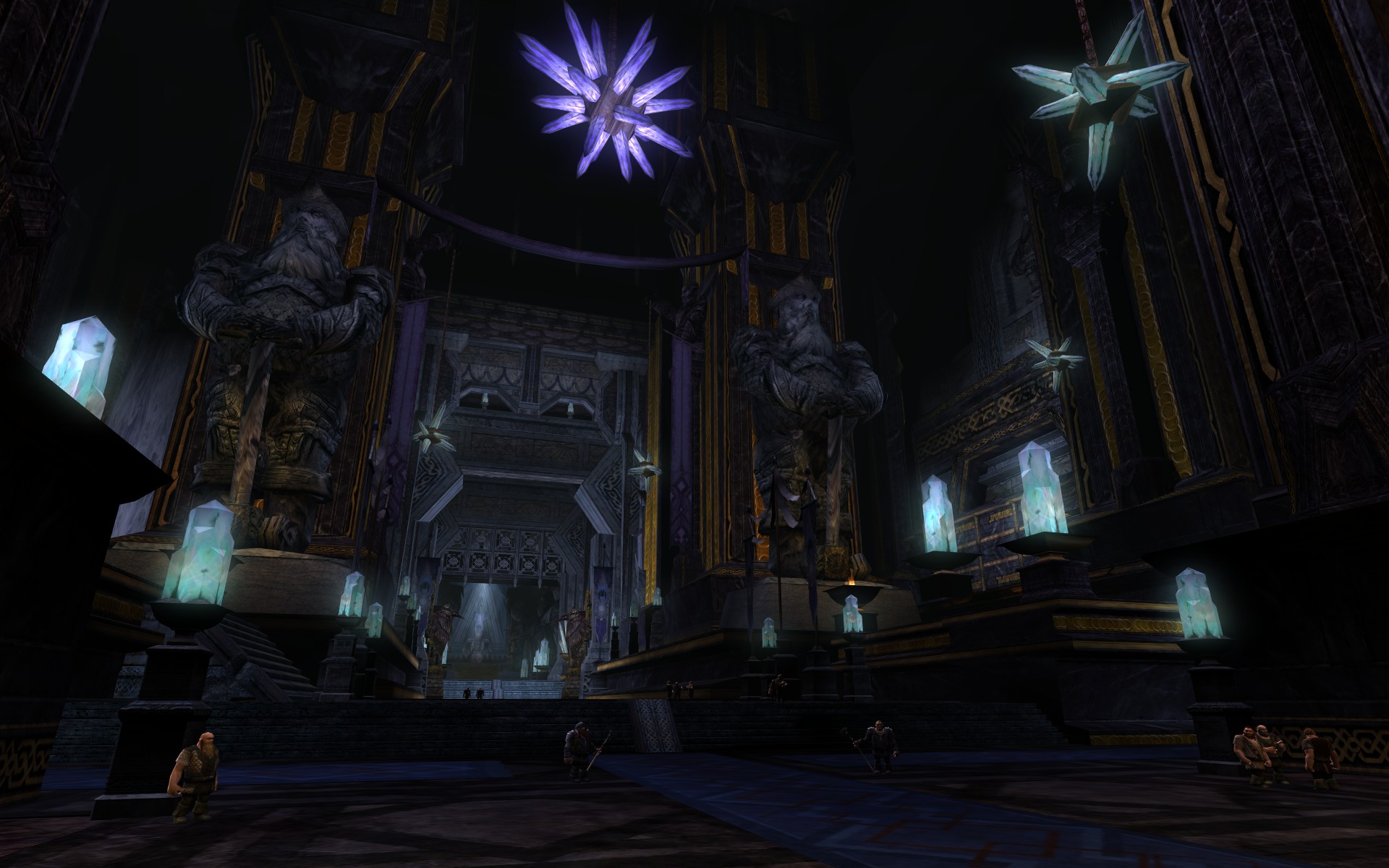
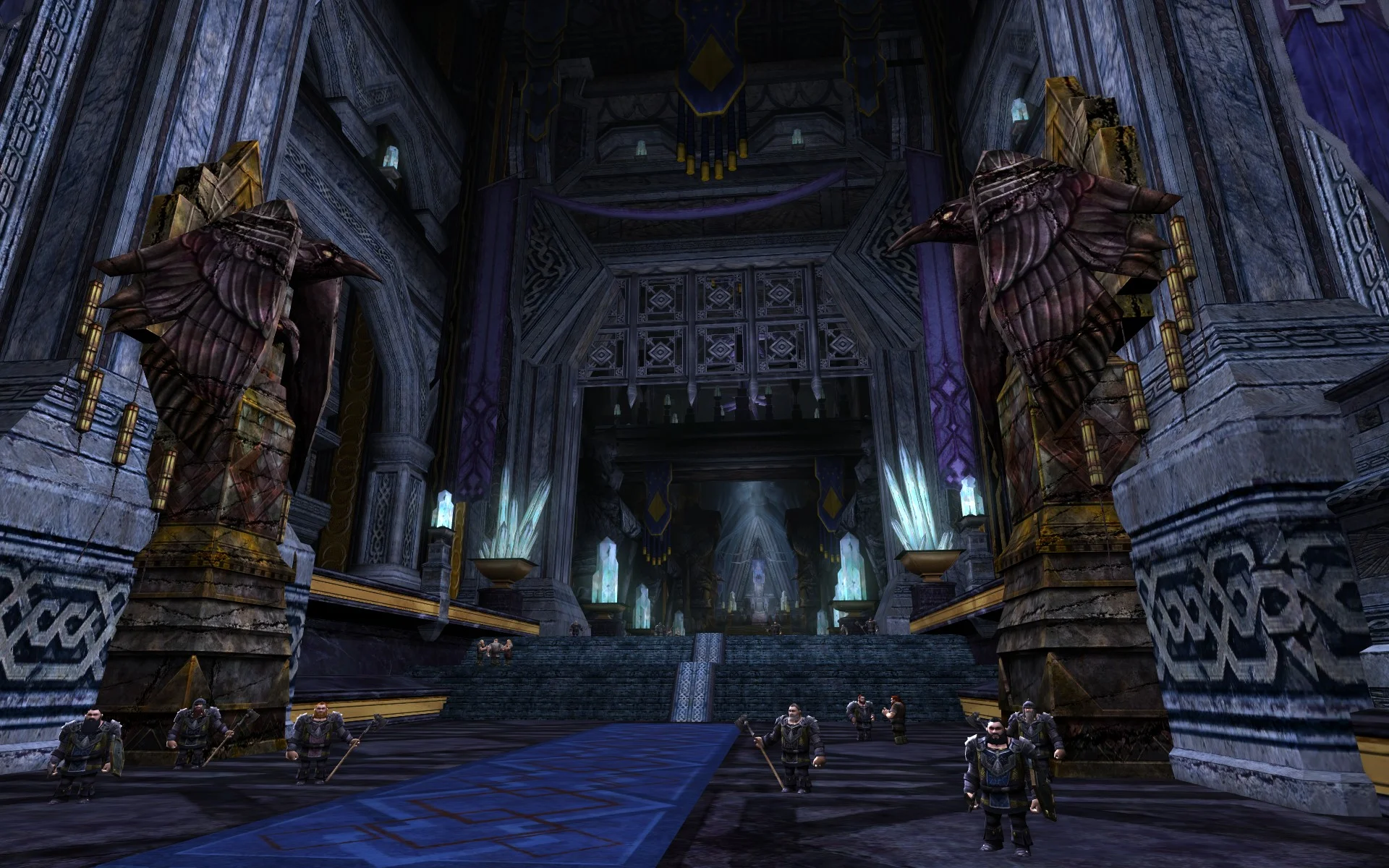
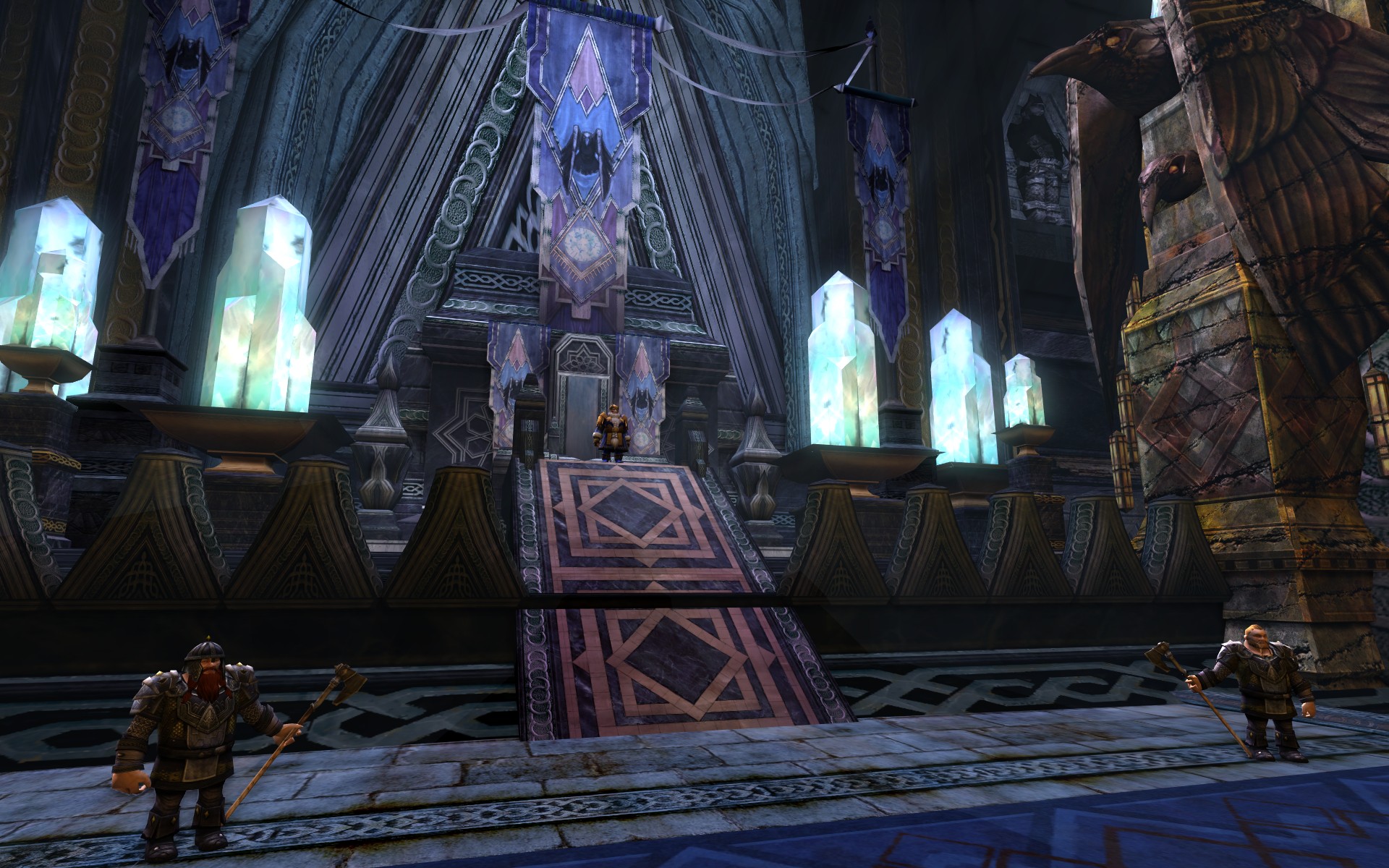
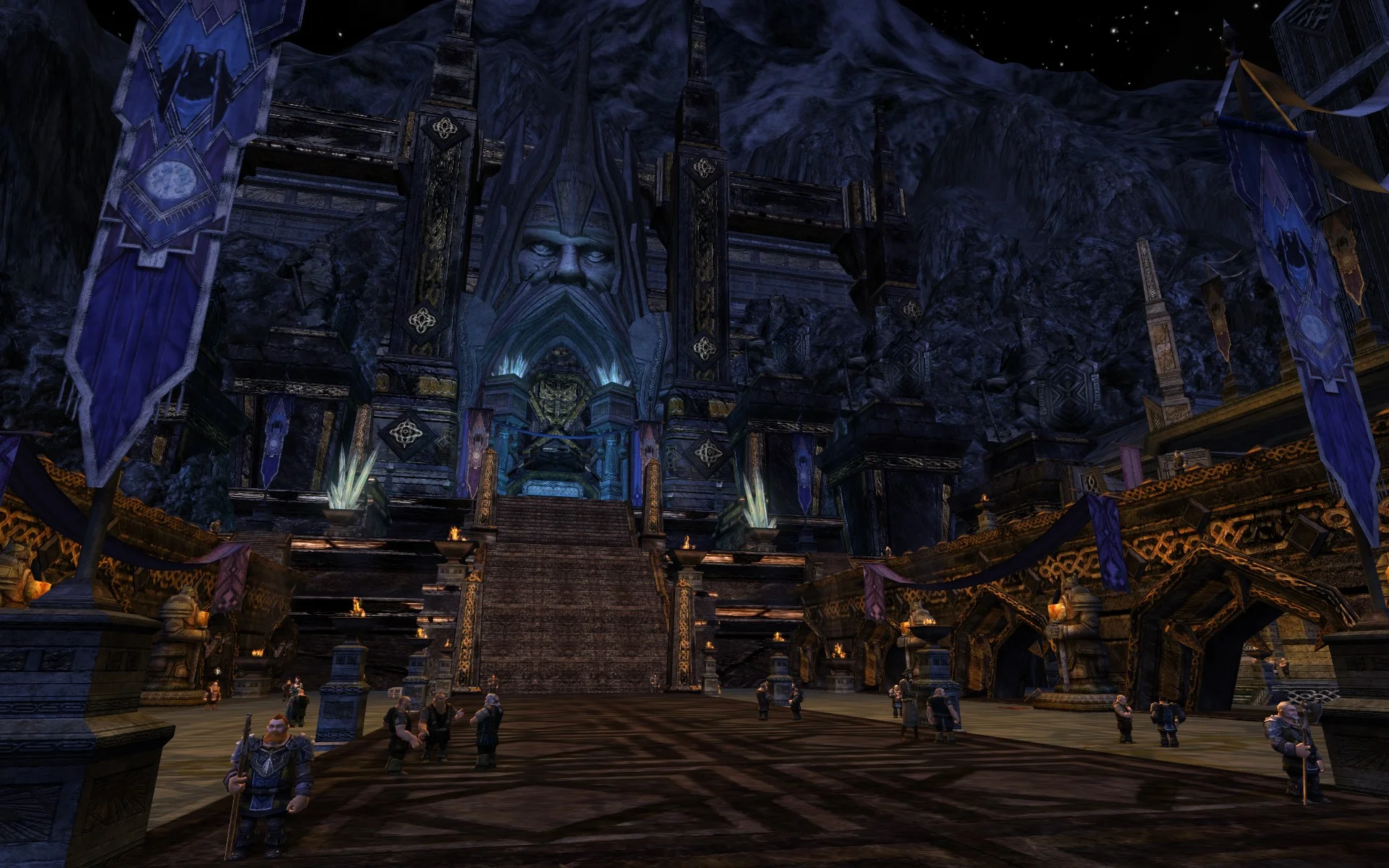
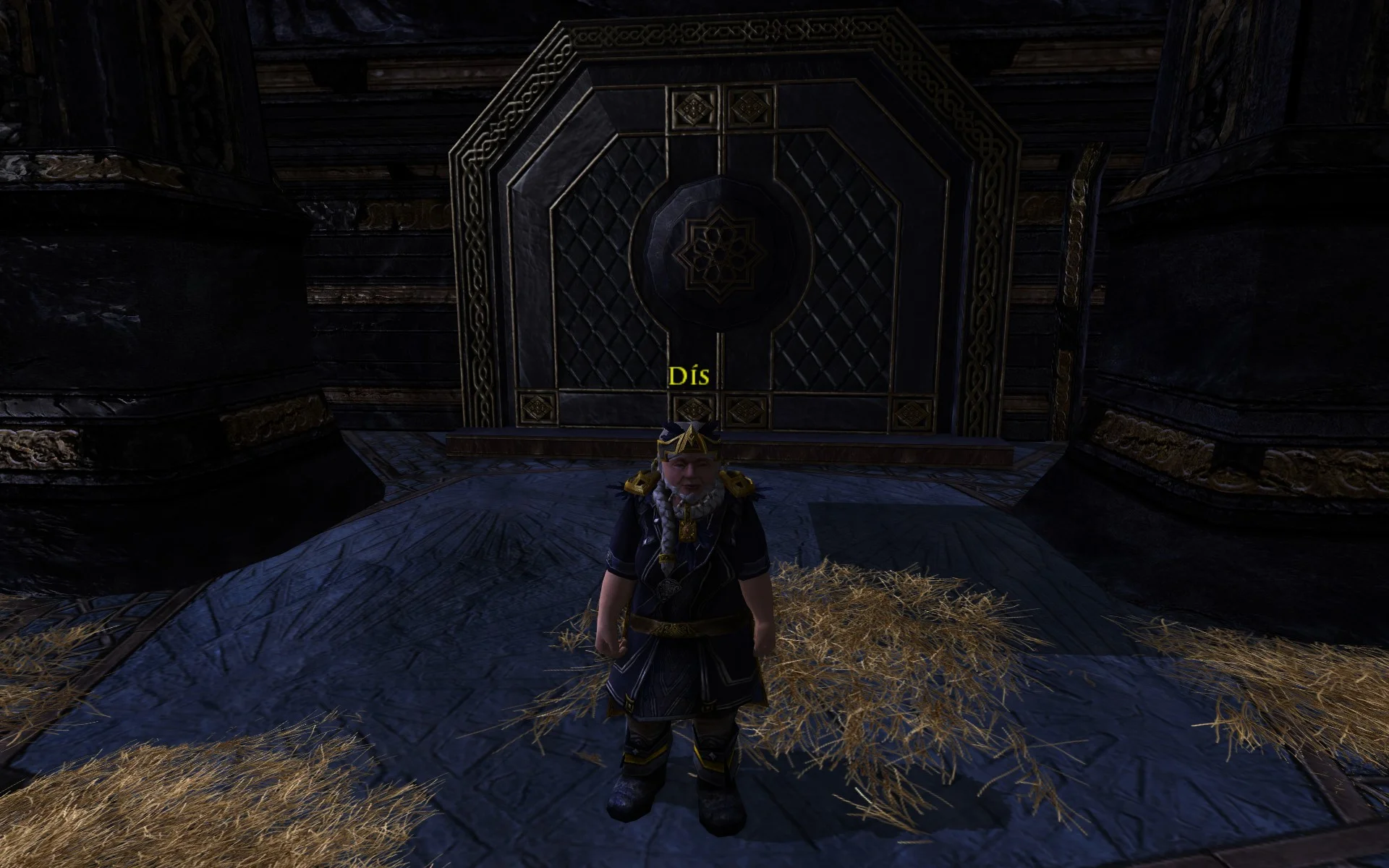
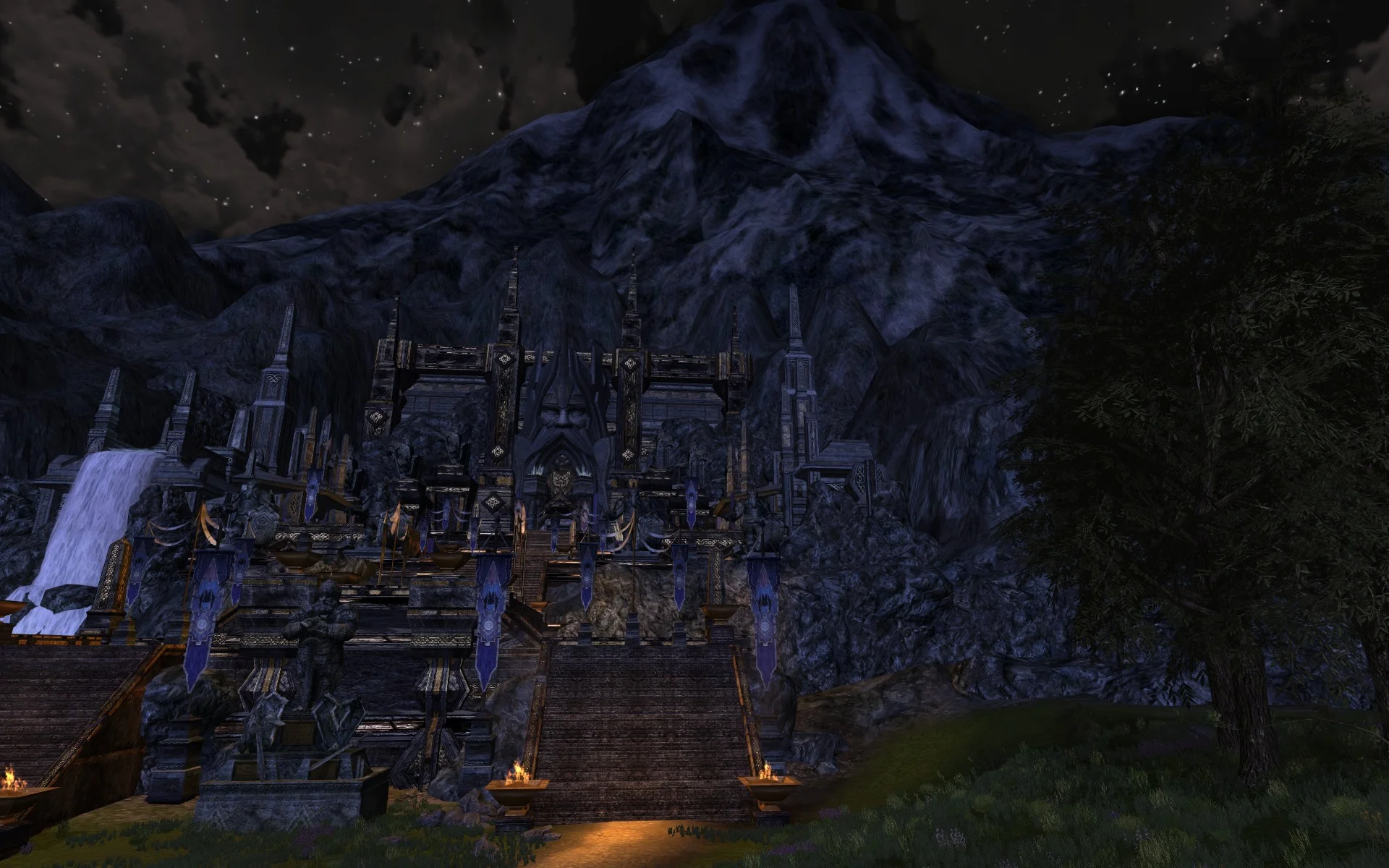
North of Lake-town the road leads to Dale which is a broader iteration of what already exists in LOTRO in the instance The Bells of Dale. I like the way the town straddle the tributaries of Long Lake and that water and fountains are a major feature of the design and architecture. Beyond Dale to the Northwest lies the guard post of Ravenhill. Within the small Dwarven edifice is Dís, mother of Fíli and Kíli. There is an entrance behind here, which for the present remains closed and suitably enigmatic. But the jewel in the crown in Erebor. It is large, impressive and gloriously Dwarven. Unlike other Dwarven hubs in Middle-earth, this one is quite linear in its layout and easy to navigate. You can also climb to the western spur of Erebor and survey the land below on the other side, although invisible walls hem you in at present.
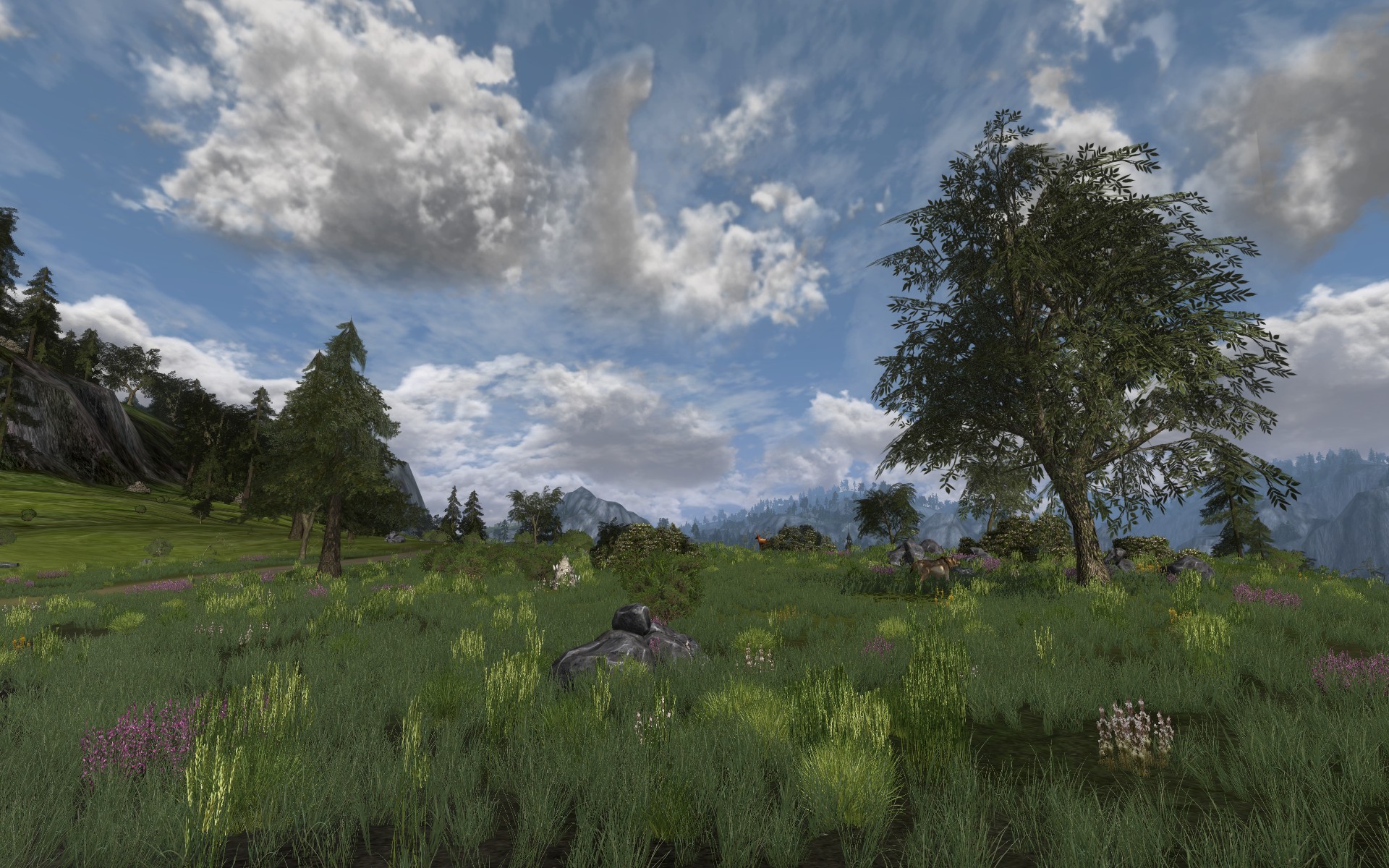
I always like to explore I LOTRO and make it my business to investigate an area or region as thoroughly as I can. I like to follow the mountain ranges and other topographical features that Standing Stone Games use to funnel players from quest hub to quest hub. What seems to have become a habit in recent years, is that the areas in free updates are often expansive, but not necessarily functional. I got this impression again in parts of Northern Mirkwood and Dale-Land. However, this does not in any way mitigate the time and effort SSG has put into the design of this area. I also found three entrances/exists to the area. One to the South West that may lead to Southern Mirkwood. Another to the North East that may lead to the Iron Hills. I also discovered the Forest Gate which leads from Carrock. All of these “doorways” are currently blocked. Hopefully the next test build will have a more detailed map and will allow for a more accurate appraisal of the area. In the meantime, as ever, I like what I see and it’s reassuring to see the SSG are still maintaining their high standard of world building.
Shadow of War: Blade of Galadriel DLC
Warner Bros released a new story expansion for Middle-earth: Shadow of War on Tuesday as well as a patch that expands and “improves” the core game. Blade of Galadriel DLC, follows the adventures of Eltariel, an elite Elven warrior who is sent to Mordor to hunt the Nazgûl. As a playable character Eltariel wields dual blades and the uses the Light of Galadriel instead of a Ring of Power. There are also another eight unique Legendary Orcs added to main story campaign that can be recruited. The Nemesis System has been tweaked, introducing new traits and behaviours to Orc Captains. These include “Tunnel Rat” which lets Orcs burrow into the ground and summon Ghûls, and “Sniper Shot”, which causes archers to fire from great distances with pinpoint accuracy. “Tremor”, makes Ologs concussively hit the ground, staggering nearby foes and damaging structures. The “Gifts of Treasure” offers an alternate way to earn Gems and Mirian.
Warner Bros released a new story expansion for Middle-earth: Shadow of War on Tuesday as well as a patch that expands and “improves” the core game. Blade of Galadriel DLC, follows the adventures of Eltariel, an elite Elven warrior who is sent to Mordor to hunt the Nazgûl. As a playable character Eltariel wields dual blades and the uses the Light of Galadriel instead of a Ring of Power. There are also another eight unique Legendary Orcs added to main story campaign that can be recruited. The Nemesis System has been tweaked, introducing new traits and behaviours to Orc Captains. These include “Tunnel Rat” which lets Orcs burrow into the ground and summon Ghûls, and “Sniper Shot”, which causes archers to fire from great distances with pinpoint accuracy. “Tremor”, makes Ologs concussively hit the ground, staggering nearby foes and damaging structures. The “Gifts of Treasure” offers an alternate way to earn Gems and Mirian.
Photo Mode has also been upgraded, adding new filters, frames, styles, adjustable expressions, and stickers. I always enjoy this facility when it appears in a game and would like to see it available in more titles. Taking screen captures of alts has always been a major part of the fun of any RPG or MMORPG and developers should not overlook this. The latest DLC and patch have also added new Talion or Eltariel player skins for use in the main story campaign. There's also a new stat page, making it easier to keep track of your progress through the game. Plus, a Field of View option has been added which is something that players have regularly asked for. In any game where situational awareness is important, having a broad FOV in invaluable.
I played Middle-earth: Shadow of War heavily when it was released last October. It’s the sort of game that lends itself to intensive play and forging ahead through the storyline. The main selling point is the ridiculous, lore breaking narrative that takes substantial liberties with established canon. Yet if you’re prepared to suspend your sense of disbelief, it is an entertaining game. What becomes very clear after playing the new Blade of Galadriel DLC for about twenty minutes or so, is that apart from a new character skin and a few alternative skills, you’re doing exactly the same as what you did initially with Talion. It’s a classic example of same meat, different gravy which is fine if you can’t get enough of murdering Orcs. However, if you grew tired of this last time round, it’s not going to get any better this time.
Needless to say, as I have other games available at present that I’m more interested in pursuing, I decide to postpone exploring the Blade of Galadriel for the immediate future. Another reason to put it on hold is the simple fact that I’ve already forgotten most of the keyboard combinations for the special attacks and powers. Something that seems to happen a lot these days if I stop playing a game for too long. However, I will give credit where credit is due, because Monolith Studios have certainly provided a substantial amount of new content in this DLC. Furthermore, as a season pass holder there is still more to come later this year. I suspect that I will enjoy this new story at a later date when I want something a little less demanding than the MMOs I am currently involved with.
Game Complexity
While perusing You Tube, I watched the following video, boldly titled “The Top MMOs to Play This Year”. I found it to be quite informative and felt that the creator made their case well. However, one thing struck me about the five new MMOs that were referenced. All of these titles seem to be stepping away from the “business as usual” approach of the genre and pursuing an increase in complexity with respect to their game systems and mechanics. Now that’s not to say that existing MMORPGs are not complex. Some are, but I usually find that this is born out of skills or systems bloat and a games growth over time. On paper many of LOTROs mechanics are straightforward, but it is their implementation that is esoteric. This is not the same sort of complexity I saw referenced in the video. Many of these new MMOs will feature systems that need to be monitored, maintained or augmented by the player, because they have a direct impact upon the gameplay experience and the very environment of the virtual world they’ll inhabit.
While perusing You Tube, I watched the following video, boldly titled “The Top MMOs to Play This Year”. I found it to be quite informative and felt that the creator made their case well. However, one thing struck me about the five new MMOs that were referenced. All of these titles seem to be stepping away from the “business as usual” approach of the genre and pursuing an increase in complexity with respect to their game systems and mechanics. Now that’s not to say that existing MMORPGs are not complex. Some are, but I usually find that this is born out of skills or systems bloat and a games growth over time. On paper many of LOTROs mechanics are straightforward, but it is their implementation that is esoteric. This is not the same sort of complexity I saw referenced in the video. Many of these new MMOs will feature systems that need to be monitored, maintained or augmented by the player, because they have a direct impact upon the gameplay experience and the very environment of the virtual world they’ll inhabit.
The weather, the economy, faction feuds, coupled with mechanics such as ageing, permadeath and full corpse looting means that those playing Chronicles of Elyria will have to be cognisant of what is happening around, both at an in-game and community level. And it is this very level of complexity that will be a major selling point of the game. You will always find comments on gaming forums or websites such as Massively Overpowered, from some old school gamers lamenting the level of “hand holding” you find in contemporary MMOs. The industry shift in the last ten years to accommodate the so-called “casual” player has not been universally embraced. Therefore, any new title that dispenses with quest trackers, mini-maps and any of the other quality of life improvements must surely appeal to such advocates. Having to think and reason, as well as play collaboratively must surely offer an experience closer to that found in the golden age of MMOs; something such player always extol. Surely the element of risk presented by playing in such an environment, will be to their liking?
One thing is certain. If you wish to effectively play these new MMOs with their additional layers of complexity, then you will need to invest a substantial amount of time not only to progress through the actual game, but to track and master the various systems and variables that can impact upon your experience. You must also cultivate a mindset that accepts that external factors beyond your control will impact upon your time in-game. You may lose valuable resources, or your avatar may even die, effectively mitigating the time and effort you’ve spent. And therein lies the rub. Although on paper I find a lot of the complex parameters featured in these upcoming MMOs interesting, I wouldn’t choose to endure them. A decade ago I had the time and the dedication to invest in MMOs. I do not now and certainly wouldn’t choose to play a game with such a specific rule set. I play for amusement and leisure, not competition and bragging rights (as some seem to define gaming by). I simply don’t want a game that becomes a “job”.
What remains to be seen is whether these new MMOs with their complex and punitive rule set, find a sufficiently big enough player base to sustain themselves financially. I believe that there are gamers out there that will embrace such an approach and we’ve seen successful games of this nature in the past. It simply comes down to whether there is a viable market or not. I suspect that not all of these titles such as Chronicles of Elyria, Pantheon: Rise of The Fallen, Crowfall and Ashes of Creation will survive. When looking back at early MMOs, we must not overlook the context of the era that spawned them. Many factors such as internet connection speed, graphics quality, server technology shaped their design. Gaming itself was also not so common place an activity and pitching to a player base then, was radically different from the market we see today. So, I think that possibly only a few of these new titles will be commercially successful and the others will end up as interesting but ultimately failed experiments. As ever time will tell.
Looking For a Bargain in ESO
My recent return to The Elder Scrolls Online has been an enjoyable experience. Like STO, it has taken three attempts for the game to chime with me but this time round, everything has fallen into place. I have managed to install just the right number of add-ons to enhance my experience. I’ve also discovered a class which suits my play style and am currently pursuing a specific build. The quest stories are well written and involving which means I don’t feel like I’m simply undertaking arbitrary tasks for XP. Overall ESO seems to be in a much better place than it was upon its launch in early 2014. Because my progress through the game is going well, I’m considering my options with regard to DLC. I bought the digital collector’s upgrade edition of the Morrowind expansion for £17.99 which is a competitive price. However, I’m interested in the Dark Brotherhood story line because I enjoyed it in Skyrim, so I’ve been trying to find a similar bargain.
My recent return to The Elder Scrolls Online has been an enjoyable experience. Like STO, it has taken three attempts for the game to chime with me but this time round, everything has fallen into place. I have managed to install just the right number of add-ons to enhance my experience. I’ve also discovered a class which suits my play style and am currently pursuing a specific build. The quest stories are well written and involving which means I don’t feel like I’m simply undertaking arbitrary tasks for XP. Overall ESO seems to be in a much better place than it was upon its launch in early 2014. Because my progress through the game is going well, I’m considering my options with regard to DLC. I bought the digital collector’s upgrade edition of the Morrowind expansion for £17.99 which is a competitive price. However, I’m interested in the Dark Brotherhood story line because I enjoyed it in Skyrim, so I’ve been trying to find a similar bargain.
At present, ZeniMax have a deal on the Guilds and Glory Mega Pack DLC in the Crown store. This contains Dark Brotherhood, Imperial City, Orsinium and the Thieves Guild and costs 5,500 Crowns (£29.99). At first glance this looks like an adequate discount as individual DLC usually costs between 2,000 and 4,500 Crowns. However, if you shop around and check some of the game key websites, you can find the Gold Edition of ESO, which contains the base game and the above four DLC for £16.06 which is nearly half the price. This naturally is a better option for both an existing or a new player. The latter get’s the benefits of a 500 Crowns, although that won’t buy much at present prices. Then of course there is the option to buy neither of these “bundles” and to subscribed to ESO Plus which will unlock all current DLC. However, access to all new content is dependent on remaining a ESO Plus member, which doesn’t suit everyone.
Furthermore, it would appear that pre-paid subscription cards for ESO have been withdrawn since the changes in the games business model in 2015. There may still be some residual stock in circulation, although whether they still work or not remains to be seen. In the US Gamestop sell six-month ESO Plus time cards that come with a crate allowance. These are purchased online and provide a redeemable code. These are not however available in Europe. Therefore, I’d advise caution to anyone searching through the third-party websites that sell CD keys and game consumables. Ensure that any pre-paid cards are not those for older versions of ESO. Unless the product directly references ESO Plus, then the cards in question are more than likely obsolete.
As ESO is a buy-to-play game, the selling of additional DLC, expansions and cosmetics is the primary source of revenue. ESO Plus offers a further line of capital, although have no data as to how popular the subscription is. Therefore, it is logical that the developers ZeniMax will endeavour to control prices of all their products. Naturally there are sales and discounts to be had from time-to -time, to encourage player spending. But beyond these there is not a lot of scope to obtain a “bargain” for ESO, outside of official channels. Apart from seeking a deal on the Gold or Imperial Editions of the base game, along with the Morrowind Expansion, players are at the mercy of the in-game store prices. However, I do not find the existing business model for ESO to be too egregious and I’m certainly getting a lot value from my initial expenditure at the moment. So, for the present, the cost of playing ESO is seems equitable. Let’s hope it remains that way.
Twitch.tv
Until recently I’ve been somewhat sceptical of Twitch. I’ve tried in the past to find both content and personalities that chime with me but have seldom had much success. Sadly, all too often I find the humour and general banter of some streamers to be not to my liking. Then there is the issue of channel monetisation. I appreciate that streaming is a business for some and that there is a requirement to attract subscribers and encourage donations, but I do feel that it’s not always approached in an appropriate fashion. Twitch and streaming culture is often aimed towards the younger viewer. Being of an older age group, the light and casual approach to presentation and interaction is not always to my taste. However, I have now managed to find some streamers who are more to my liking and have subsequently reviewed my opinion on the medium.
Until recently I’ve been somewhat sceptical of Twitch. I’ve tried in the past to find both content and personalities that chime with me but have seldom had much success. Sadly, all too often I find the humour and general banter of some streamers to be not to my liking. Then there is the issue of channel monetisation. I appreciate that streaming is a business for some and that there is a requirement to attract subscribers and encourage donations, but I do feel that it’s not always approached in an appropriate fashion. Twitch and streaming culture is often aimed towards the younger viewer. Being of an older age group, the light and casual approach to presentation and interaction is not always to my taste. However, I have now managed to find some streamers who are more to my liking and have subsequently reviewed my opinion on the medium.
For me, Twitch is as much about the audience viewing as it is about the individual streaming. Part of the attraction of the platform is the scope for interaction between streamer and viewers. I find that streams that attract substantial audiences lose this quality quite quickly. The text chat scrolls up at a prodigious rate and the moderators will often struggle to separate appropriate questions and banter from general shenanigans and trolling. I also find that some of the commercial streams and official channels of known corporations to be as bland and as hollow as mainstream television. However, a when you put an entertaining and gregarious streamer together with a small but enthused audience, you’ll often be rewarded with a very enjoyable two-way conversation.
Fortunately, my concerns over being able to find suitable content and streamers has benefitted recently by Twitch adding a “communities” option to their browse feature. In the past you had to search for material you like by game only. The addition of this button (although it is still in beta) means that it is easier to track down streamers with similar interests and aspirations. At present is somewhat rough and ready, lacking somewhat in variety. However, there are some promising categories such as tabletop, painting and fitness. It is reassuring to see this side of Twitch, which for to long seems to have been dominated my core gamers, focused on achievement, speed runs and competitive gaming. If handled properly, there is scope for it to become a much broader media platform, which is possibly what its owner, Amazon is considering.
Finally, it would be remiss of me not to mention the Twitch community that I’ve recently discovered. The Moogle’s Pom Tavern is a collective of streamers “who focus on chill streams where we share positivity and of course, video games”, to quote their website. What I like the most about this friendly group, is their upbeat and laid-back perspective on gaming. It all done for fun, rather than any other motivation. The streams are engaging, with a lot of banter. You soon get to know everyone and it’s very much like a social evening down the pub with mates. A lot of the participant do other creative projects, so they’re an invaluable source of information as well. Overall, it’s a great place to hang out, away from the some of the more brash and bellicose aspects of Twitch. So, if you feel so inclined, do checkout their schedule and come along and have a chat. It may make you revise your opinion on streaming, as it did with me.
Guilds, Kinships and Fleets
I’ve been in the same LOTRO kinship (a.k.a. guild) since 2009. It’s relatively small in size, made up of a core group of about 20 players and their various alts. Everyone knows each other, and we all get along. There’s a broad spectrum of members from across the UK and Europe and the average age is about 35 plus. We’ve had some drama in the past from a few individuals, but they’ve either left or stopped playing. I don’t recollect there ever being an occasion when someone was. After ten years the kinship is at a point where it just ticks over without any major problems. There are events and activities for those who wish to participate, or if you prefer to simply potter about Middle-earth, then you’ll be left to do so. In the past we’ve had our own kinship website and forums, along with TeamSpeak server and other external support facilities. Bu all of these have fallen by the wayside as the Kinship has evolved. We now just focus on playing the game. Overall, the kinship is a friendly bunch and a good fit for my casual style of gameplay, which is why I’ve remained a member for nine years.
I’ve been in the same LOTRO kinship (a.k.a. guild) since 2009. It’s relatively small in size, made up of a core group of about 20 players and their various alts. Everyone knows each other, and we all get along. There’s a broad spectrum of members from across the UK and Europe and the average age is about 35 plus. We’ve had some drama in the past from a few individuals, but they’ve either left or stopped playing. I don’t recollect there ever being an occasion when someone was. After ten years the kinship is at a point where it just ticks over without any major problems. There are events and activities for those who wish to participate, or if you prefer to simply potter about Middle-earth, then you’ll be left to do so. In the past we’ve had our own kinship website and forums, along with TeamSpeak server and other external support facilities. Bu all of these have fallen by the wayside as the Kinship has evolved. We now just focus on playing the game. Overall, the kinship is a friendly bunch and a good fit for my casual style of gameplay, which is why I’ve remained a member for nine years.
LOTRO was my first MMO and when I started playing in 2008, co-operative play was the key to progression. Much of the games content was not solo friendly, therefore joining a kinship would at that point, greatly enhance a player’s experience. However, over time things have changed. Not just for LOTRO but for many other games from the MMO genre. Despite having played Guild Wars 2, The Secret World, Rift and SWTOR, I’ve never joined a guild for any of these games. There was (and remains for me) no compelling reason to do so. When I started playing LOTRO, part of the charm of the game and indeed the genre, was the social aspect. For me the notion of playing online with others was still a novel experience. However, as newer MMOs emerged, I found that I was more concerned with their gameplay and narrative, rather than cultivating new friendships. Furthermore, due to the increase in casual gaming, more recent MMOs are far more casual friendly.
There are always exceptions to the rules, though. The Fleet system in Star Trek Online offers a wealth of benefits and a player is potentially limiting their options if they do not join one. Fleet holdings such as the Starbases and dilithium mines are maintained by players contributing resources. Once holdings reach optimal capacity, they can provide gear, weapons and consumables, all of which are of a superior quality to that from standard vendors. It’s a relatively similar situation in The Elder Scrolls Online. Being in a guild allows access to quality crafted items which are not so readily available elsewhere. Hence in both these games I have joined guilds, simply to gain access to these facilities. In STO I am a member of REDdit Alert Fleet and although they are a friendly bunch, I am not socially active within it. I maintain a level of civility and ensure I contribute to the fleet projects but beyond that I tend to keep myself to myself and pursue my own goals within the game.
Playing any MMO successfully requires a substantial investment of time. The same can be said about joining a guild. A guild is more than just a collective designed to facilitate group content. It is often a closely knit social group in which members become firm friends, get to know each other and provide mutual support. They can become very intimate environments, sometimes doubling as group therapy or a virtual pub in which players can blow off steam after a tough day at work. For me, my best experience in a guild coincided with my best experience with an MMO. It was during a two-year period of my life in which I had the time and inclination to dedicate to both a leisure activity and a social group. It was a time that I enjoyed immensely. Now, although I like the social aspects of guilds in STO and ESO, they are mainly a means to an end. However, if I ever get nostalgic, all I have to do is return to my LOTRO kinship to be reminded of prior good times.
Star Trek Online: New Ships, Old Prices
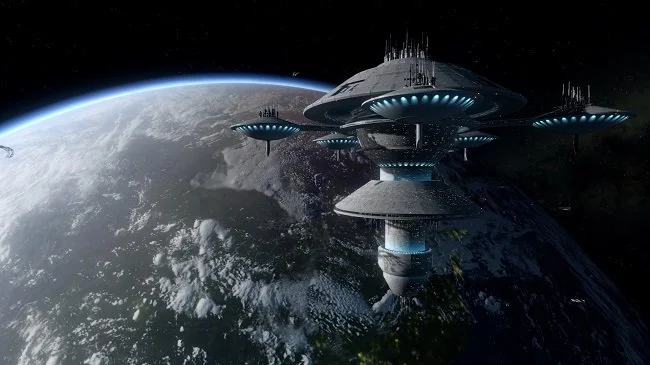
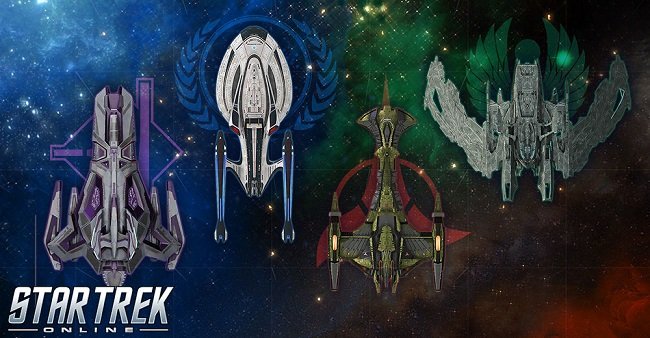
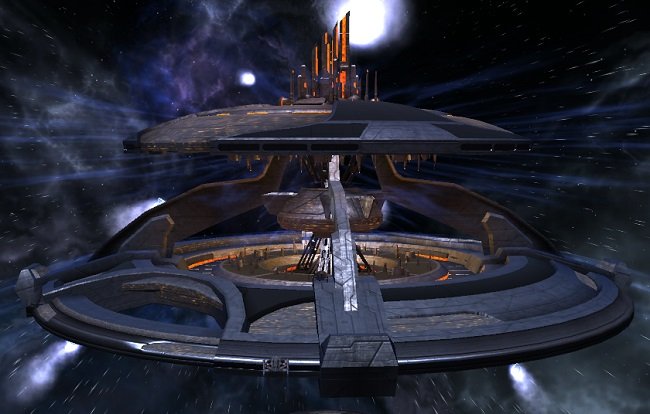
Yesterday saw a lot of new content come to Star Trek Online. First off, we saw the start of the eighth anniversary event and the opportunity to earn a Bajoran Interceptor. There’s also a new featured episode; Scylla and Charybdis which further explores the Tzenkethi story line. And then there’s the release of the new Discovery lock box, which ties STO into the new Star Trek: Discovery television show. New lock boxes, means new ships. This time round there’s an opportunity to win a Tier 6 Crossfield-class Science Vanguard which boasts a formidable array of stats. Judging by the discussion on the official STO subreddit, the new vessel seems to have been very well received by the player community. The universal console, Mycelium Ambush, when activated temporarily disables ships weapons and transports the vessel forward. It then releases an energy pulse, impeding the engines of nearby enemy vessels while enhancing your own starship's weapons. After a few seconds, multiple torpedoes are launched, and your starship's weapons are disabled again in order to transport back to the original position.
Yesterday saw a lot of new content come to Star Trek Online. First off, we saw the start of the eighth anniversary event and the opportunity to earn a Bajoran Interceptor. There’s also a new featured episode; Scylla and Charybdis which further explores the Tzenkethi story line. And then there’s the release of the new Discovery lock box, which ties STO into the new Star Trek: Discovery television show. New lock boxes, means new ships. This time round there’s an opportunity to win a Tier 6 Crossfield-class Science Vanguard which boasts a formidable array of stats. Judging by the discussion on the official STO subreddit, the new vessel seems to have been very well received by the player community. The universal console, Mycelium Ambush, when activated temporarily disables ships weapons and transports the vessel forward. It then releases an energy pulse, impeding the engines of nearby enemy vessels while enhancing your own starship's weapons. After a few seconds, multiple torpedoes are launched, and your starship's weapons are disabled again in order to transport back to the original position.
Now considering that the new Discovery lock boxes have only been available for 24 hours, it would appear that many players have been stockpiling keys in preparation for its launch. Subsequently, despite being a rare drop many players have acquired the new Crossfield-class Science Vanguard and they are readily available on the exchange. The price is currently around 620 million energy credits, which is a tidy sum. The ship has also turned up for sale on third party websites available for sale at $125. Furthermore, the arrival of new ships has not depressed the prices of older vessels. Both Kelvin timeline ships are still holding steady at 260 million energy credit and the jewel in the crown of STO, the Tier 6 Constitution class Cruiser remians over 1.5 billion energy credits. So far, the economy adjustment that was anticipated by the introduction of the re-engineering system has yet to happen, although it is still only early days.
The problems STO faces with its in-game economy are really no different from many other MMOs. Frequently, the accumulation of wealth becomes a meta game in its own right. LOTRO has a similarly skewed game economy with everyday items that can be easily gathered, priced extremely high. This is not through supply and demand, but simply because such prices can be charged and paid for. Because gold is simply created in MMOs, rather than linked to any other sort of economic resource to base its levels, it doesn’t take long for hyperinflation to occur. Hyperinflation is detrimental to new and returning players. It can often lead to the auction service becoming the exclusive province of the virtually super rich. Hence we see the introduction of money sinks to try and remove surplus capital from games. These may be auction house fees, non-craftable consumables or housing fees. However money sinks seldom return a game’s economy back to a state of normality.
Cryptic have adjusted the in-game economy of STO several times over the last eight years. It is now far harder to earn energy credits, the games primary currency, than it was four years ago However, the damage is already done and there’s an immense amount of currency in circulation, often stockpiled by power players. The game’s crafting and upgrade system is also a contributory factor to hyperinflation. Until recently, if you craft and upgrade a ships weapon for example, there has been no control over which modifiers are added to it. Hence players would sell on items that didn’t meet their expectations. These items then flood the in-game auction house at inflated prices, as players seek gear with the attributes they require. The new re-engineering system is supposed to make obtaining the modifiers that you desire easier. It will allegedly level the playing field and make players less reliant on crafted items for sale on the exchange. Cryptic hope that this system will ultimately depress prices and eventually lead to less superfluous items entering the game’s financial ecosystem.
MMO economies are strange and esoteric beasts. Despite external factors created by developers, designed to slow and divert wealth creation, it is frequently impossible to slow player progression and dampen their enthusiasm. MMO gamers often rise to the occasion and embrace grind rather than capitulate to it. I suspect that it will take a considerable amount of time before we see any major change in the STO economy. Furthermore, the re-engineering system may well remove the surplus of crated items on the exchange, but I cannot see it impacting upon the prices of rare Tier 6 vessels. If someone is prepared to pay 1.5 billion energy credits for the latest and rarest of ships then the prices will remain as they are. The only other alternative is to make such items bound which would then incur a new set of problems, along with a great deal of player outrage. So for the meantime it is simply a question of watching and waiting to see in what direction the STO market goes.


Alik’r Desert Dolmen Farming
Back in 2014 when I was still regularly playing Guild Wars 2 a popular way to level up quickly, as well as grind various rewards, was to join the Queensdale Champion Train. The region was home to multiple Champion level bosses and groups would farm these for hours on end. On arriving in Queensdale, if you wished to join the “train” and farm the various bosses, it was customary to ask “choo choo” in zone chat. You’d then be informed where the “zerg” was and you could catch up with it accordingly. Such are the quaint and esoteric customs associated with the MMO genre. The Queensdale Champion Train eventually got nerfed by ArenaNet and the bosses downgraded, so that it ceased being a viable undertaking. The reason I mention this is because I recently discovered a very similar set up in The Elder Scrolls online. Namely Alik’r Desert Dolmen Farming.
Back in 2014 when I was still regularly playing Guild Wars 2 a popular way to level up quickly, as well as grind various rewards, was to join the Queensdale Champion Train. The region was home to multiple Champion level bosses and groups would farm these for hours on end. On arriving in Queensdale, if you wished to join the “train” and farm the various bosses, it was customary to ask “choo choo” in zone chat. You’d then be informed where the “zerg” was and you could catch up with it accordingly. Such are the quaint and esoteric customs associated with the MMO genre. The Queensdale Champion Train eventually got nerfed by ArenaNet and the bosses downgraded, so that it ceased being a viable undertaking. The reason I mention this is because I recently discovered a very similar set up in The Elder Scrolls online. Namely Alik’r Desert Dolmen Farming.
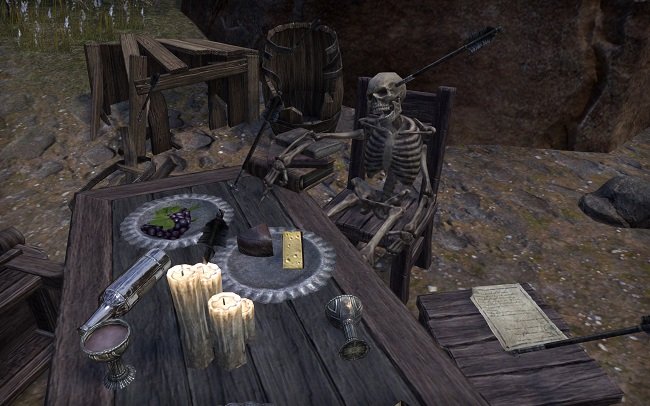
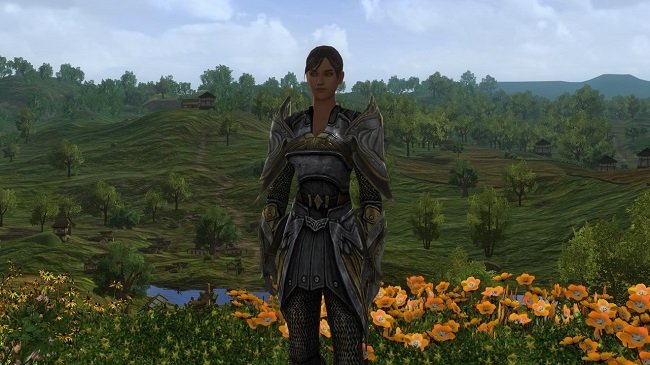
For those who don’t know, here is a brief explanation of how this player driven event works. Dark Anchors or Dolmens are specific places where the forces of Molag Bal set an "anchor" point to pull Tamriel into Coldharbour. Each zone has 3 Dolmens (except Cyrodiil). The Dark Anchors are activated when fanatical cultists spawn around the Dolmen and begin incantations to open them. Once active these become world events. You can see the effects and hear the incantations from far away, and a horn will sound when the portal is opened. Evil forces then mount an incursion which has to be repelled. Once the event has finished and the Dark Anchors closed, a chest spawns with various rewards. Naturally Dolmens can be used as a means to gain XP quickly and level up.
The reason the Alik’r Desert is popular for Dolmen farming is because there are wayshrines (quick travel teleporters) conveniently close to each location. The Aswala Stables Wayshrine is near to the Hollow Waste Dolmen, Goat's Head Oasis Wayshrine is well placed for the Myrkwasa Dolmen and Shrikes Aerie Wayshrine is at the foot of the hill of the Tigonus Dolmen. Furthermore, the Dolmen respawn quickly in this region and it is not to difficult to complete each and swiftly travel to the next. As with Guild Wars 2, if you enquire in zone chat, you can ascertain where the current “zerg” is. If you type “+ Dolmen” in chat you can potentially join any group farming in the area. Grouping increases XP gain by 10% and also shows the location of the group leader on the map.
I have spent some time recently farming Dolmen in this fashion and it certainly does allow you to level quite quickly. Because content scales in ESO, it’s not as if you out level the regular story quests in the game. Naturally some purist players will pooh-pooh this play style. There’s also the possibility that ZeniMax might nerf this situation in the future if they choose to. One of the reasons ArenaNet nerfed the Champion farming in Guild Wars 2 was because they felt that the “zerg” disrupted new players in what was essentially a low-level area. Whether a similar situation occurs in ESO remains to be seen. In the meantime, I’m going to “make hay while the suns shines” and continue to supplement my regular progression through ESO with such Dolmen farming.
Beta Testing Dauntless
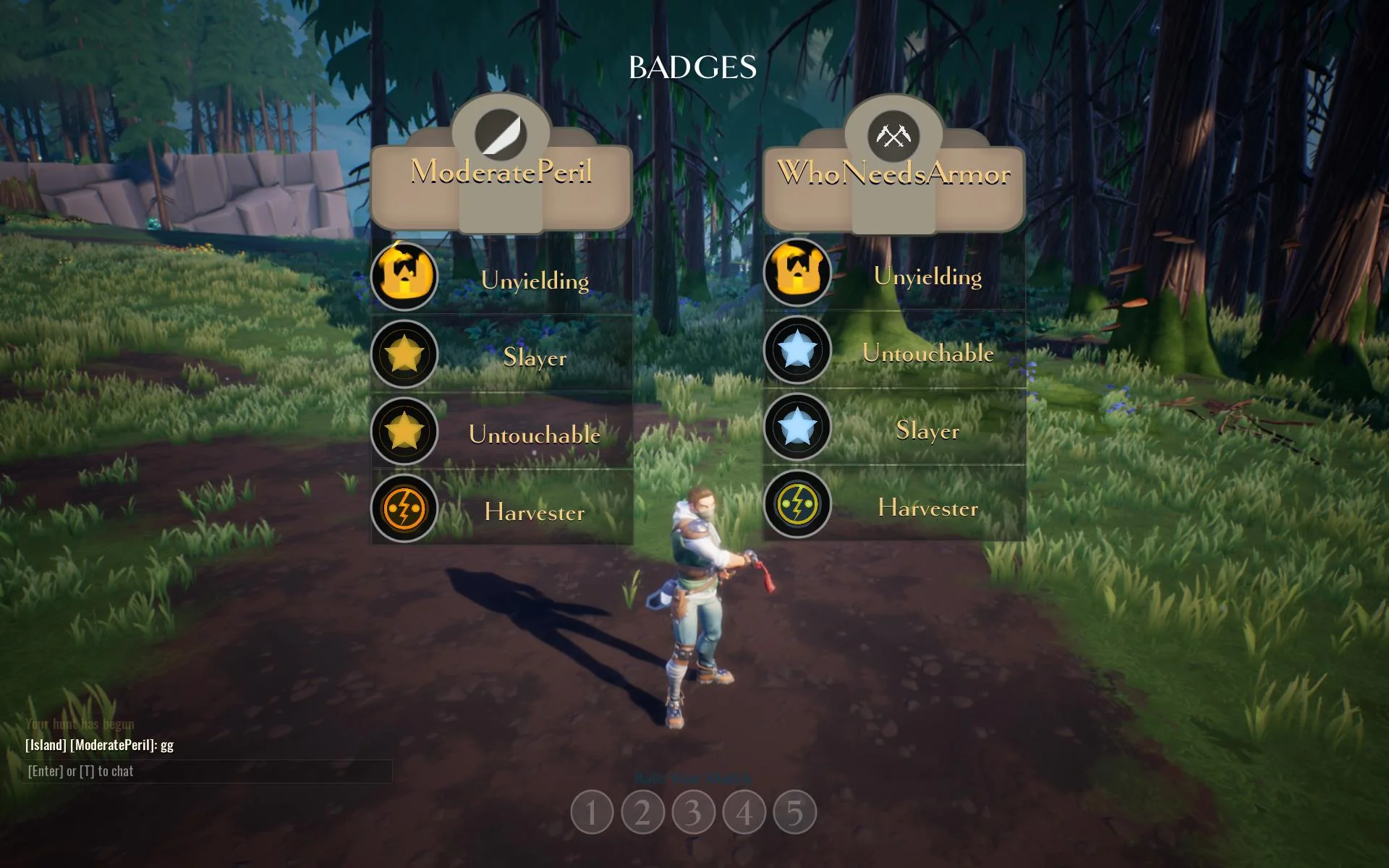
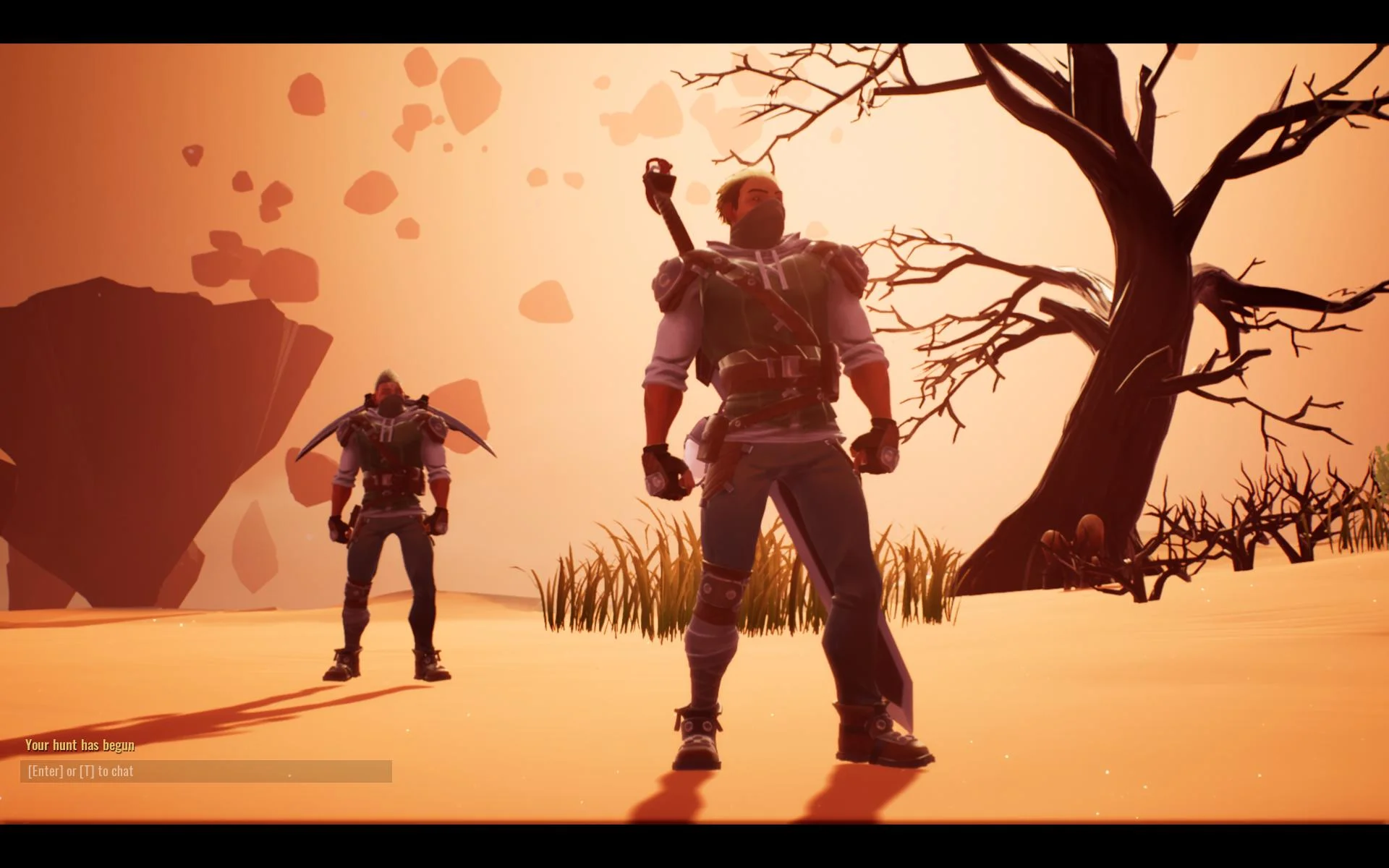
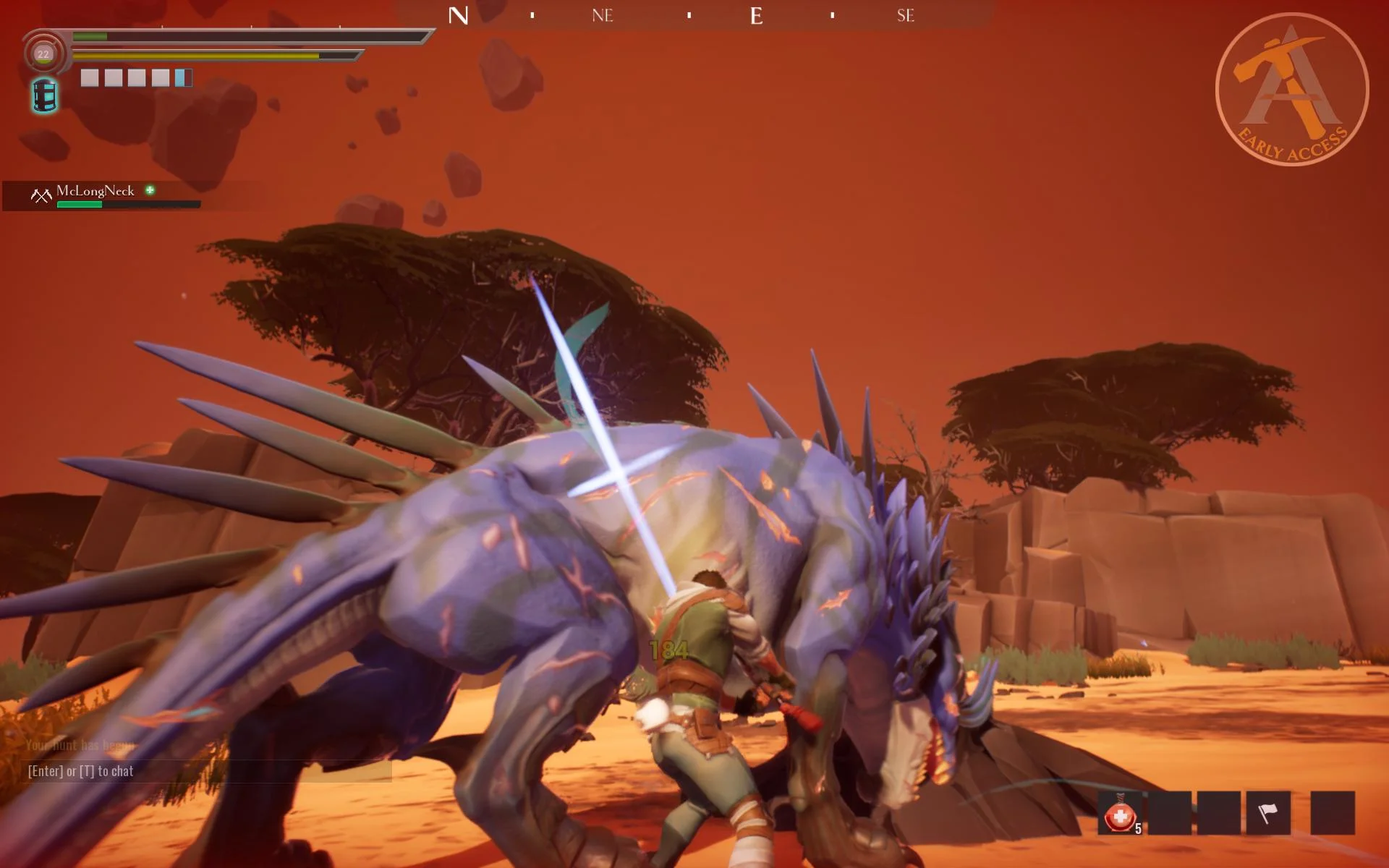
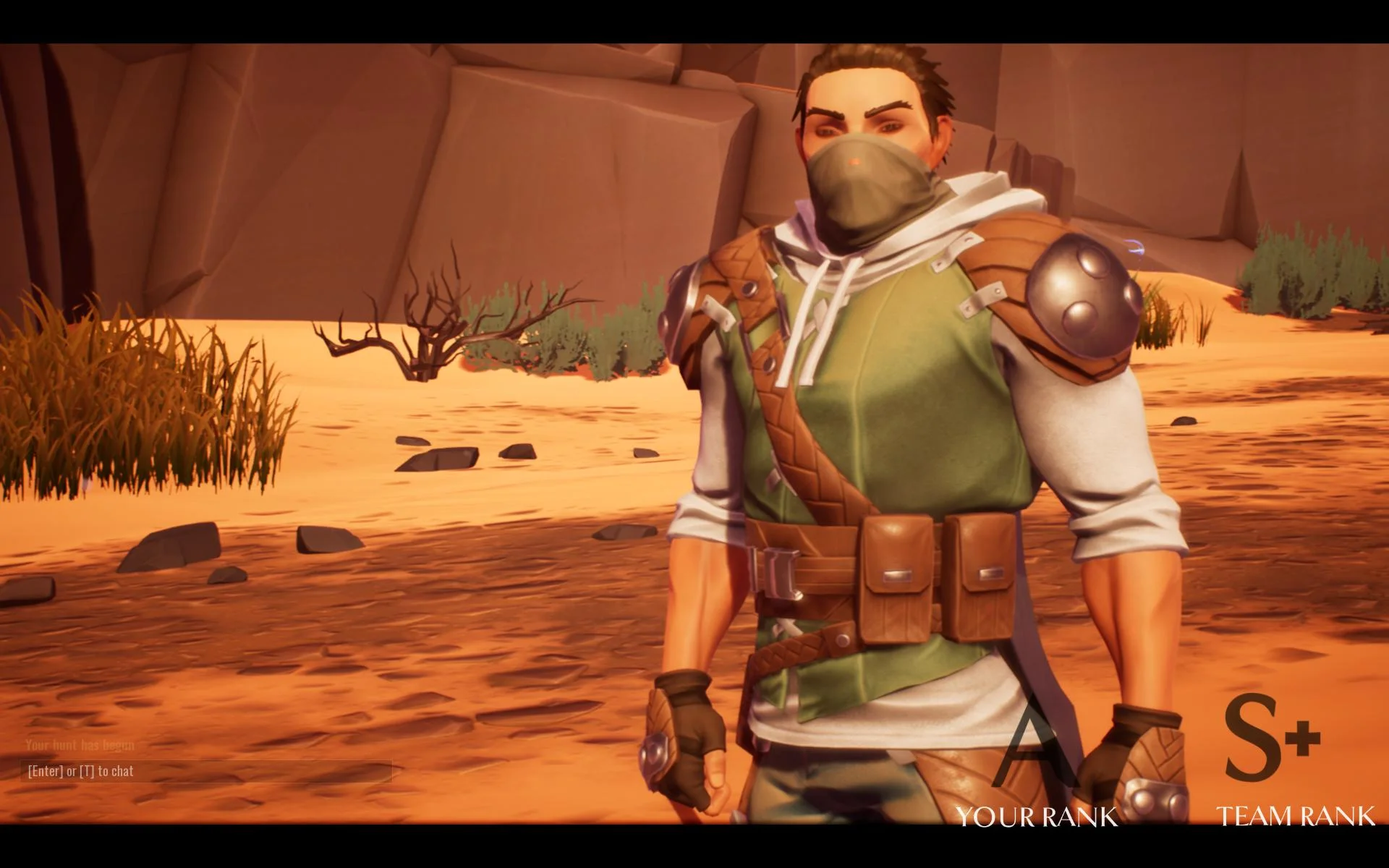
Dauntless is a game based on reading the signs and reacting quickly. If you prefer to simply mash buttons then you’ll find yourself on a hiding to nothing. This co-operative fantasy-based RPG is set in a time when cataclysmic event has torn the world apart, releasing gigantic beasts that prey on the surviving humans. Players take on the role of Slayers who hunt these Behemoths, collecting loot that they use to craft and upgrade weapons. When hunting, the game plays as a third-person action game with players using a combo system to attack, while monitoring their own health and stamina gauge. Such hunts can take upwards of twenty minutes of in-game time to complete. The game can be played both as single player or co-operatively with up to four people. If your team works collaboratively, has the right gear and is au fait with reading the Behemoths body language, then Dauntless is an immensely enjoyable endeavour.
Dauntless is a game based on reading the signs and reacting quickly. If you prefer to simply mash buttons then you’ll find yourself on a hiding to nothing. This co-operative fantasy-based RPG is set in a time when cataclysmic event has torn the world apart, releasing gigantic beasts that prey on the surviving humans. Players take on the role of Slayers who hunt these Behemoths, collecting loot that they use to craft and upgrade weapons. When hunting, the game plays as a third-person action game with players using a combo system to attack, while monitoring their own health and stamina gauge. Such hunts can take upwards of twenty minutes of in-game time to complete. The game can be played both as single player or co-operatively with up to four people. If your team works collaboratively, has the right gear and is au fait with reading the Behemoths body language, then Dauntless is an immensely enjoyable endeavour.
Dauntless is currently in beta and is still a work in progress. However, it is regularly updated and the version that I played this afternoon is by far the most complete game experience I’ve had so far. It still lacks things like a mini map but the developers, Phoenix Labs, have certainly been busy focusing on the nuts and bolts of the game, such a weapon damage and the various combination moves. I also feel that there’s a more tangible difference between the various weapon types. They’re becoming more distinctive with their special second attacks, and making a choice now seems less arbitrary. The Chain Blades with their evasive grapple and teleport-dash are now a good choice for players who don’t favour such a full-on melee style of combat. There are potions and other boosts to craft which you can utilise to your tactical advantage. However, Dauntless does not have the excessive intricacies of other games of this genre.
Obviously, since it was announced Dauntless has been constantly compared to Monster Hunter: World. However as ever with games, this is was a classic apple versus orange scenario. Dauntless is easier to solo, for one thing, though the developer is still working on the best way to optimise the single player experience. I believe there was an experiment with bots in the closed alpha but it proved unpopular. As it stands in the current iteration of the game Dauntless scales according to group size. There are also certain weapons that are more effective against specific Behemoths. Yet conversely, there are no support only weapons and success in the game is no dependent solely on having a balanced team. Dauntless takes a flexible approach to consumables which are mainly focused on AOE heals, buffs and debuffs rather than the precise use of special ammunition or traps. There is also no risk of friendly fire.
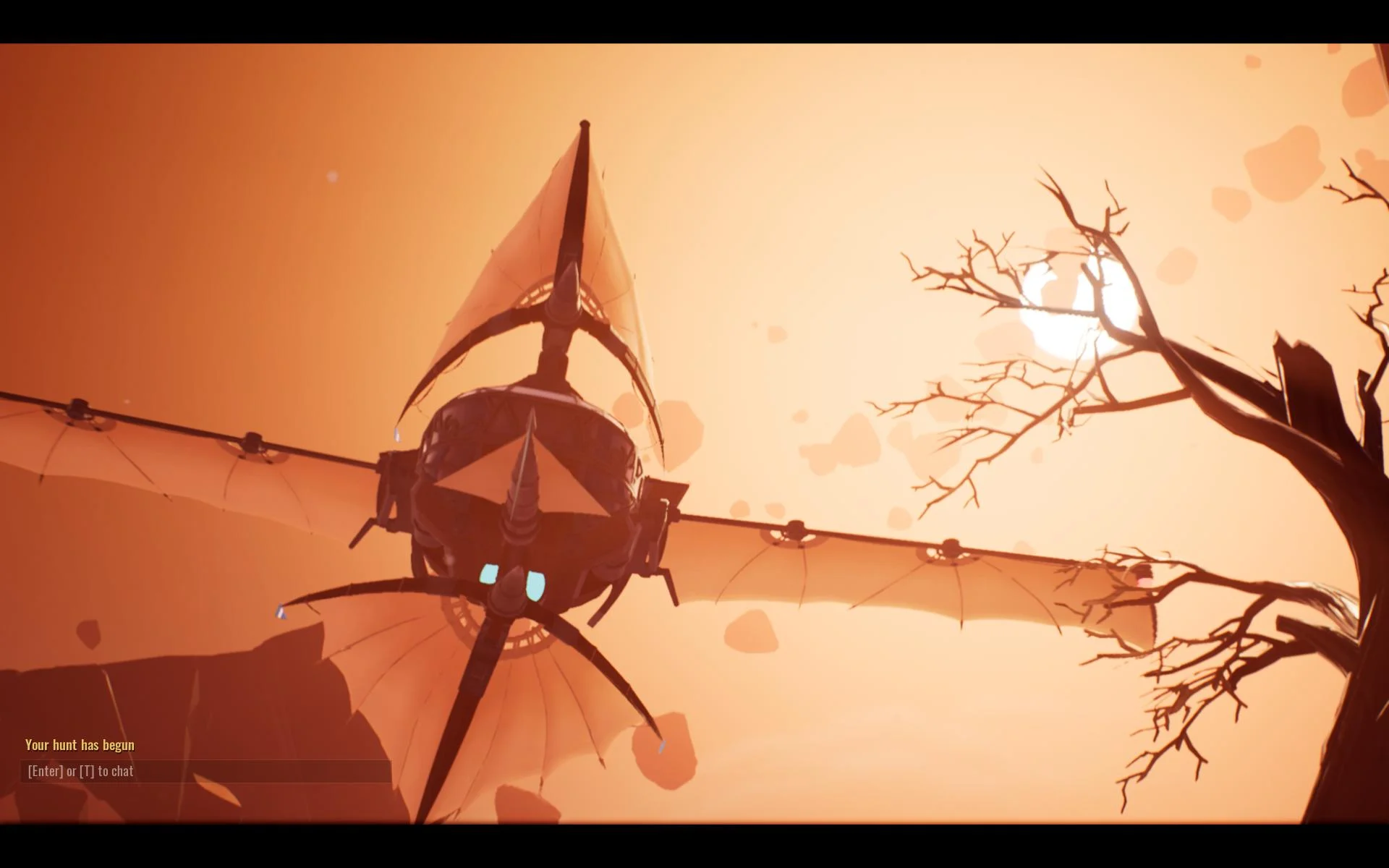
At present Dauntless does not feature an enthralling storyline. What’s in place is functional and serves a purpose, guiding the player to the appropriate quests. The only major decision the story offers in this build is what faction to join. But I don’t see narrative being a primary selling point for Dauntless. This is a game about going head-to-head with beats with nasty sharp pointy teeth. The Behemoths are the stars of the game, particularly the Shrike, which conjures up the memory of Ori and the Blind Forest. The minimalist art style actually suits the needs of the game and the procedurally generate landscapes are also creative. Usually the fantasy genre is flamboyant in its use of colour but Dauntless favour a very organic use of pastel shades. There is one trade off when using procedurally generated environment and that is it negates any facility to explore, beyond simply doing so to gather.
As a F2P game, Phoenix Labs has to find an appropriate means to monetise Dauntless. Since the Star Wars: Battlefront II debacle, the developers have decided to remove loot boxes from the game Phoenix Labs said that this isn’t “entirely reactive” to the recent turn against the free-to-play system but admit they’re “not deaf” to the backlash. Across the industry, developers and organisations like PEGI, the FTC, and the UK Gambling Commission, are being asked to take a stand for or against loot boxes. Phoenix Labs have indicated they wish to follow a model similar to Warframe and Path of Exiles “where you choose the things that you're purchasing.” The developers describe this approach as “a lot more player-first.” Obviously, it is prudent to reserve judgement until the final release of the game, which should be later this year. However, so far developers Phoenix Labs do seem to be responding to their players needs in an equitable manner.
Video Games and Business Models
A recent roundtable podcast from Massively OP, along with a post over at MMO Bro, have both touched upon the thorny issue of business models for the MMO genre. Things have changed a great deal over the last two decades and we’ve come a long way from the days of the monthly subscription. Back then, purchasing a game and a subscription provided unfettered access to all content that was currently available. There were no cash shops, selling cosmetic items and convenience based items. You just paid, played and pursued your gaming. And because MMOs were a somewhat niche market pastime at this stage, this business model proved sufficient to sustain the market. However, improvements in graphics and processing power facilitated a new generation of MMOs, which coupled with the growth in home internet access, meant that the genre gained a wider popularity. However, gaining more customers and expanding your consumer base comes with its own set of problems and success can be a double edged sword.
A recent roundtable podcast from Massively OP, along with a post over at MMO Bro, have both touched upon the thorny issue of business models for the MMO genre. Things have changed a great deal over the last two decades and we’ve come a long way from the days of the monthly subscription. Back then, purchasing a game and a subscription provided unfettered access to all content that was currently available. There were no cash shops, selling cosmetic items and convenience based items. You just paid, played and pursued your gaming. And because MMOs were a somewhat niche market pastime at this stage, this business model proved sufficient to sustain the market. However, improvements in graphics and processing power facilitated a new generation of MMOs, which coupled with the growth in home internet access, meant that the genre gained a wider popularity. However, gaining more customers and expanding your consumer base comes with its own set of problems and success can be a double edged sword.
Early MMOs often lacked clearly delineated quests and quest hubs per se, relying upon players to figure out many of the logistical requirements to level themselves. This open world, sandbox approach along with a lack of hand holding meant that players had to be patient and prepared to invest time when playing. Increased popularity led to an influx of new players who weren’t necessarily as disposed to participate under such parameters. Hence the MMO became, for better or for worse, more casual friendly and progressing through content became more streamlined and procedural. As a result, developers soon found that some players would voraciously consume content and that new material could not be created to meet demand. Suddenly the subscription business model proved to be an Achilles Heel for the industry, as players with nothing to do unsubscribe.
Is this the only reason for the demise of the subscription business model? Over at the MMO Bro it is viewed with a distinct lack of nostalgia. They even argue that it perpetuated grind in game design. Yet grind is often present in all games of this genre regardless of the business model because developers simply cannot produce content fast enough. The example of WoW cited in the post may be true, but it isn’t necessarily applicable to other games. I have revisited my notes and blog posts from the days when LOTRO, STO and SWTOR were subscription games and they didn’t strike me as excessively grindy at the time. The amount of content available in an MMO is also dependent on your point of entry into a game. I have recently started playing ESO again, and there is plenty of material for me to explore. However, if you have been playing continuously since launch, then that may not be the case.
As for the “spit in the face of loyalty” allegation, it’s sadly no different from other subscription services and is frankly a reality of life, regardless of moral rectitude. If you stop paying for Netflix, then you cease to have access to the service. People don’t quibble about this, so what makes MMOs so different? The F2P business model theoretically allows you to technically keep playing a game after you cease paying, but often the reduction of service will hobble the player. It also depends on the game and their particular approach. Although I agree that customer loyalty should count for something, we live in a world where more often than not is doesn’t, so complaining about it in these circumstances seems somewhat illogical. I also think that the argument that subscribing to an MMO locks you in, thus reducing the likelihood of you trying other titles is purely subjective. I cannot effectively play more than three MMOs simultaneously and frankly the notion of a subscription focusing me on a single title is possibly a good thing, due to the good old “sunk cost” fallacy.
I have never seen the purpose of a subscription or any particular business model to provide customers with a level playing field. I consider it merely as a fee to access content. The whole level playing field concept was born from a time when MMOs were niche market products and more imbued with the egalitarian motives of some of their developers. This philosophy is often incompatible with business needs. Furthermore, I come from a generation that bought products and considered a sense of ownership to be important. However, times change whether we like them or not, and now the notion of selling a product to the customer just once and not receiving any additional revenue is no longer favoured. Hence we face the age of “everything as a service” with add-ons and upgrades to suit your needs. But there are consequences to changing your approach to business. The subscription business model discouraged transient players or those who only wish to troll and disrupt. Removing barriers may increase revenue but can impact upon the quality of a player base and community. F2P viewed from certain perspectives can be compared to removing security from the night club door.
I believe the main reason the subscription model was replaced wasn’t due to any ethical, moral or philosophical failings. It was simply due to economics. All business models are usually conceived for the benefit of the shareholders first and the customer second. Subscriptions didn’t die due to gamers campaigning against them. The model failed due to the old conundrum of supply and demand. F2P and B2P hybrids with cash stores and optional subs with benefit, simply buy the developers more time by attracting a wider client base. One that isn’t as hardcore as some old school subscribers. Overall this is a tale of changing economics and not much else. New technology is another culprit in forcing business to radically overhaul long established practices. The digital age is slowly replacing ownership of physical items with the provision of services. Subscriptions were merely a convenient solution for the games of the time. To ascribe them any further attributes or view them with more sinister motives is possibly a mistake.
Why Does the Games Industry Seem So Dysfunctional?
Write here...If you take a look at video game industry at present, it isn’t exactly enjoying universally good PR. 2017 saw numerous damaging revelations such as the “loot box” debacle, several high-profile studios going to the wall (and not just because of financial mismanagement), and more recently there have been serious allegations of bullying and sexual harassment within several high-profile studios. Despite being a “modern” industry it seems to have all the flaws of those that have existed for centuries with respect to abuses of power and financial skulduggery. This raises the question "why does this industry seem so dysfunctional?" Just because gaming is a multi-billion-dollar business we naturally assume that successful companies are efficiently run, by competent captains of industry as well as skilled and professional staff. It is therefore confusing when this illusion is shattered due to evidence to the contrary. This begs the question, why do these institutions so often have metaphorical feet of clay?
If you take a look at video game industry at present, it isn’t exactly enjoying universally good PR. 2017 saw numerous damaging revelations such as the “loot box” debacle, several high-profile studios going to the wall (and not just because of financial mismanagement), and more recently there have been serious allegations of bullying and sexual harassment within several high-profile studios. Despite being a “modern” industry it seems to have all the flaws of those that have existed for centuries with respect to abuses of power and financial skulduggery. This raises the question "why does this industry seem so dysfunctional?" Just because gaming is a multi-billion-dollar business we naturally assume that successful companies are efficiently run, by competent captains of industry as well as skilled and professional staff. It is therefore confusing when this illusion is shattered due to evidence to the contrary. This begs the question, why do these institutions so often have metaphorical feet of clay?
To start let me declare my own background as my own experiences are relevant to this discussion. I have worked in IT for over twenty-five years in both the private and public sector. I started in first line support and worked my way up to running my own consultancy, from which I retired in 2016. I have worked for companies such as HP, Symbian and government departments such as the NHS as well as the DWP. I have been directly involved in several national projects, some of which have been successful while others have failed miserably. None of these situations are identical to the gaming industry, but I believe there are a lot of similarities between the way big businesses work and make decisions. I also read a lot about the gaming industry and at times find it a lot more interesting than the actual products that they develop. This has often been the focus of our discussions here at Contains Moderate Peril both in posts and on the podcast. Therefore, when I read stories about the iniquities of the gaming industry, I often view them through the prism of business, rather than fandom.
So, returning to the initial question of dysfunction, I would argue that the gaming industry is no different from any other major business or governmental entity. Politics, big business and the entertainment industry are as equally rife with the same problems you will find with smaller employers. In fact, I think a lot of people would be surprised at the similarities. Both ends of the spectrum have issues with under qualified staff, office politics, feedback loops, laziness and that social phenomenon that is “square pegs in round holes”. The latter group seems to be subject to a quota system that no company is excused from. Despite rigorous recruitment processes, there always seem to be a small percentage of wildcards that somehow seem to slip through the intense screening. Or alternatively, we later discover that the screening isn’t that thorough to begin with. Then of course there is the Dunning-Kruger effect which impacts on all social groups both in and outside of business. It is possibly one of the commonest problems of our time.
The problem is that the general public erroneously assumes that successful big companies have gained their status through efficiency and vision; that their internal business structure is a model of the best methodologies and practises. Sadly, this is often not the case. Corporations suffer from the same flaws as smaller enterprises but have the advantage of monopolies, more effective marketing and sheer momentum due to their monolithic size. Then there is of course the concept of being "too big to fail". Often a major business will be granted a lot more leeway by during difficult times because of their overall potential. Creative accounting is also a factor, as having a legion of financial experts and financiers at your beck and call, means that you can present a positive financial image, whether there is one or not. Smaller companies cannot hide behind such smokes screens as easily.
As consumers, need to take a lot of people and companies off the pedestals on which we've been placed them. This is especially relevant to gamers where the cult of personality and brand loyalty still hold sway. We also have to make a clear distinction between the creative staff within a business and those in senior management. One group may well care more for the end product, while the other has a totally different agenda and more financially orientated goals. It is also prudent to consider the issue of size. I have found that the successful management of people decreases exponentially as the size of that group grows. There is also a wealth of data available on all the inherent flaws of managing staff via a traditional business hierarchy. Ironically, a lot of the attributes that are encouraged to be successful in modern business, actually seem contrary to the moral and ethical behaviour we expect in a civilised society. It is this paradox that seems to be the Achilles heel of all business, regardless of their nature or size.
So next time we find ourselves surprised by some example of big business making bad decisions, take a moment to reflect upon the following. The launch of “New Coke” in 1985, Kodak’s failure to market digital cameras despite being a leader in its development, and Blockbusters rejection of a buyout by Netflix in 2000. In light of these, it is hardly surprising when you discover that the developer of your favourite MMO has clumsily handled a PR situation, or not listened to player feedback. It’s not gaming as an industry that is dysfunctional per se, but the fact that so many gamers have a skewed perspective of it. We make judgements with our hearts and fail to use whatever sense of business acumen we may have. We also tend to romanticise certain jobs because the end product is “cool”. Yet, if you visited a game developer’s offices, you’d probably find a work environment not that different from your own. Staff are more than likely grumbling about pay, the failings of the boss and Tim in HR. Ultimately it is that random human factor that breeds dysfunction, so it is inevitable that it spreads everywhere. So why should the games industry be any different?
Indie Game: The Movie (2012)
Indie Game: The Movie is a genuinely fascinating documentary not only about the machinations video games industry but also the blood, sweat and tears that go into any creative process. It is a film that really does give you pause for thought and encourages you to reflect upon what you may want in life. It clearly shows the true cost and the star reality of any labour of love. It should be required viewing in schools and colleges for any wannabe who dreams of being on a reality shows and achieving a fast path to their perceived heart’s desire. Such is the impact of the documentary’s message.
Indie Game: The Movie is a genuinely fascinating documentary not only about the machinations video games industry but also the blood, sweat and tears that go into any creative process. It is a film that really does give you pause for thought and encourages you to reflect upon what you may want in life. It clearly shows the true cost and the star reality of any labour of love. It should be required viewing in schools and colleges for any wannabe who dreams of being on a reality shows and achieving a fast path to their perceived heart’s desire. Such is the impact of the documentary’s message.
Indie Game: The Movie focuses on four independent game developers. One, Jonathan Blow has already achieved success via his game Braid. This thoughtful, introspective man who has fulfilled his dream, still feels that his work has not been fully understood by the wider public. It becomes very clear that the creation of his game was not a purely financial undertaking and that he sees it as a wider artistic endeavour. His experiences are subsequently cross referenced against three other developers, labouring to bring their magnum opus to the commercial markets.
Edward McMillen and Tommy Refenes, the creators of Super Meat Boy (which has subsequently proven very successful) are shown burning the midnight oil and moving heaven and earth to meet the rigorous timetable set for them by Microsoft. It becomes very clear that although they want their game to do well commercially, the main thing is to create something akin to the games they grew up with. That is by far the most important thing to them. It is a very personal statement and it should resonate with any writer, musician or film maker.
Phil Fish is shown taking his game Fez to the PAX trade show. Four years in the making and still incomplete, he has to deal with the legal fallout of failed business partnership, along with impatient fans who have gone from eager consumers to rabid, disaffected trolls. The stress is very evident with both sets of developers, although they face different issues. One has the immediate problem of his family getting into debt to keep his dream afloat, another face potential legal action. All stare failure directly in the eyes. These aren't corporate executives with alleged nerves of steel. These are real people like you and I and it is quite traumatic watch.
Indie Game: The Movie depicts the independent gaming world as being equally blighted by corporate bullshit as any other industry. There are deadlines, small print and ever-changing goal posts. The work required is prodigious and there is little or no advance funding. Tommy Refenes, a diabetic to begin with, does not look well for a great deal of this documentary. The reality of the situation is back breaking work, a crappy diet, no social life, and the only light at the end of the tunnel being the possibility of scoring a hit. It is not glamorous, hip or a bohemian lifestyle choice. It certainly makes the mundane nature a lot of nine to five jobs look a lot more appealing.
On a side note this is a beautifully crafted piece of film making. It is handsomely shot and well edited, presenting the material in a palatable story arc. It is not overtly biased and although it references the developer’s views on the mainstream commercial gaming industry, it does not offer any overt soap boxes. Overall Indie Game: The Movie is about people making a personal creative and artistic statement and the consequences of doing so. In that respects the documentary has appeal beyond the confines of gaming. It is one of the most emotionally engaging documentarys that I have seen, and I heartedly recommend it.





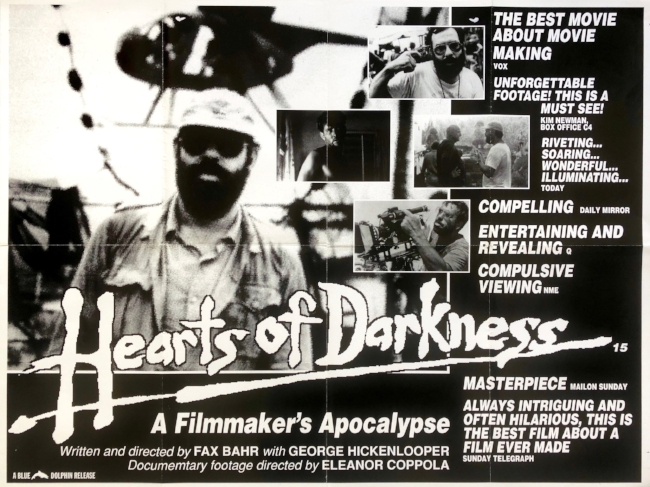



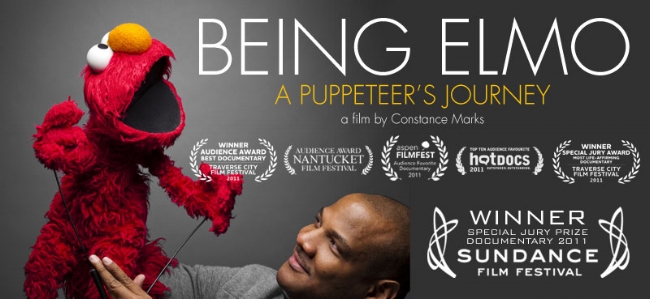


World of Warcraft: Looking for Group (2014)
Despite having played a broad spectrum of games in my time, I've never really had much dealings with the Blizzard. Beyond owning Overwatch, a game I’ve long stopped playing and trying a free trial of both World of Warcraft and Hearthstone, I have little personal experience of their games. However, I am fully aware of their product range and their reputation within the gaming industry. Overwatch has taught me how well-conceived and polished their games can be. Blizzard may not be incredibly innovative, but they learn from others and produce titles with all the elements that work well. Sadly, I have no real affinity to their flagship MMORPG, as my point of entry with that genre was LOTRO. My interest in World of Warcraft mainly stems from a business perspective and the place it holds in gaming history. Overall my curiosity about the game, its community and culture is mainly academic. So, I finally got around to watching the documentary World of Warcraft: Looking for Group that showcased at Blizzcon in 2014 and was subsequently released on You Tube thereafter.
Despite having played a broad spectrum of games in my time, I've never really had much dealings with the Blizzard. Beyond owning Overwatch, a game I’ve long stopped playing and trying a free trial of both World of Warcraft and Hearthstone, I have little personal experience of their games. However, I am fully aware of their product range and their reputation within the gaming industry. Overwatch has taught me how well-conceived and polished their games can be. Blizzard may not be incredibly innovative, but they learn from others and produce titles with all the elements that work well. Sadly, I have no real affinity to their flagship MMORPG, as my point of entry with that genre was LOTRO. My interest in World of Warcraft mainly stems from a business perspective and the place it holds in gaming history. Overall my curiosity about the game, its community and culture is mainly academic. So, I finally got around to watching the documentary World of Warcraft: Looking for Group that showcased at Blizzcon in 2014 and was subsequently released on You Tube thereafter.
Despite being three years old and there being major changes to the game in that period, I was hoping that the hour-long film would be relatively informative about the MMO. Sadly, World of Warcraft: Looking for Group is a curious mix of marketing, nostalgia, talking heads and self-congratulation rather than an in-depth analysis of a financially successful game and cultural phenomenon. If you are looking for a rigorous dissection of how Blizzard created one of the most financially lucrative games ever and the way it changed the gaming landscape, then look elsewhere. This is not an independent analysis but more of an ode to the community and the fans. That in itself is not without merit and certainly it’s nice to see the community recognised. But it means that the discussion is somewhat partisan and contains all the tropes and memes one associates with modern day public relations. Viewers may well learn something of the game’s history, but it's not as thorough as some may hope and a lot of the sound bites from the players are somewhat generic. They are often applicable to any MMO.
Overall, I think that World of Warcraft: Looking for Group is ultimately meant as a tribute to the games player base, as a friendly “attaboy” or virtual high five for their loyalty and support over the years. Sometimes a bit of mutual back slapping goes a long way in buying good will. One thing is for certain; there aren't any other Western MMORPGs that warrant or could justify having such a documentary of this nature made about them. Blizzard's ongoing success with World of Warcaft is a prodigious feat and is attributal an esoteric mixture of skill, business acumen and being in the right place at the right time. The latter quality is possibly a reason why they haven’t seen fit to create a second game of this nature. Although metaphors about lightning striking twice are technically inaccurate, they certainly applicable in this case. So, if you have a history with World of Warcraft then you may wish to watch World of Warcraft: Looking for Group for a fix of nostalgia. For those seeking a more nuanced analysis, you may wish to try another gaming documentary, which appears to be a growing genre.
Keeping Busy in Star Trek Online
Unlike other MMOs, there are always plenty of events scheduled in the Star Trek Online. The game includes a handy calendar which provides information on what is planned for the months ahead. It’s a clever way to keep the players engaged and occupied and as a result, STO is the game that I tire with the least and dabble with most. Where other games will often end the year with a nebulous Producer’s letter which offers a road map hinting at what lies ahead over the next twelve months, STO just gets on with things. Q’s Winter Wonderland event is drawing to a close next Thursday, but already we have two new events that have launched today. The Arena of Sompek makes a welcome return with its five-man survival battle against endless waves of mobs. Then we have a Featured Episode Replay, offering an opportunity to repeat specific missions and receive rewards that have been previously retired, such Breen and Romulan Bridge Officers and Epic Ground devices such as The Shard of Possibilities and the Ophidian Cane.
Unlike other MMOs, there are always plenty of events scheduled in the Star Trek Online. The game includes a handy calendar which provides information on what is planned for the months ahead. It’s a clever way to keep the players engaged and occupied and as a result, STO is the game that I tire with the least and dabble with most. Where other games will often end the year with a nebulous Producer’s letter which offers a road map hinting at what lies ahead over the next twelve months, STO just gets on with things. Q’s Winter Wonderland event is drawing to a close next Thursday, but already we have two new events that have launched today. The Arena of Sompek makes a welcome return with its five-man survival battle against endless waves of mobs. Then we have a Featured Episode Replay, offering an opportunity to repeat specific missions and receive rewards that have been previously retired, such Breen and Romulan Bridge Officers and Epic Ground devices such as The Shard of Possibilities and the Ophidian Cane.
There’s another change on the horizon for STO. At present upgrading gear is very much a lottery as you have no control over the modifiers that you receive. However, this will soon change with the games new re-engineering system. Players will be able to alter the mods that don’t suit their build or are deemed as sub-optimal to their game play. Re-engineering will utilise a new currency, salvage, a resource granted through the recycling of unwanted gear. Cryptic are currently working on the specifics of the system and it will soon be tested on Tribble server. Re-engineering will also showcase some new epic mods as an incentive. In a recent blog post Cryptic said “We hope re-engineering will be a way for neophyte and veteran Captains alike to better create equipment that matches their particular playstyles and builds.” The new mechanic will hopefully have a knock-on effect on the games economy, reducing Energy Credit creation and the existing surplus of unwanted gear on the exchange.
Star Trek Online is also due an expansion in 2018. So far, all we know about it is that it will be focused on Deep Space Nine, the Dominion, and possibly the Gamma Quadrant. As the TV show Star Trek: Deep Space Nine is twenty-five years old this year, it makes sense to return to this region and explore the story further. Cryptic have previously made all new content for the game free of charge, so unless they have a radical change of policy, the next expansion should follow suite. Then in February we have the eighth anniversary of STO. This will mean a special project that will offer a new ship as a reward. Perhaps Cryptic may take the opportunity to tie the game into Star Trek: Discovery? And as well as all this, we can expect regular events such as First Contact Day and the Summer and Winter Festivals. If there’s a Friday the 13th in the year, we’ll also see the episode Hearts and Minds make an appearance. As you can see STO has a busy schedule for 2018, with plenty to do. Unlike other examples of the genre, STO appears to be in a good place at present with a lot of content lined up. Hence it remains my go to MMO for the fourth year.
LOTRO: Alternative Ways to Reach Level Cap
I managed to gain a level and a half in LOTRO today, bringing my primary alt to 108. It was a somewhat protracted task as many of the quests that I was undertaking were between level 102 and 105. Despite several attempts and a concerted effort to persevere, I have concluded that I don’t care for the Mordor expansion for LOTRO. Levelling up in that region is a chore, due to the difficulty and density of the mobs. So, I have decided to work my way towards the current level cap elsewhere in the game and then return to the region to clear the Epic Story. I may, or may not work through the regional quest hubs, depending on my attitude towards the game at that point. I will make do with any gear that drops via the Epic Story and will not concern myself with the current endgame content and rewards. By the time I’ve worked through my plan, they’ll be a new update on the horizon with new gear anyway.
I managed to gain a level and a half in LOTRO today, bringing my primary alt to 108. It was a somewhat protracted task as many of the quests that I was undertaking were between level 102 and 105. Despite several attempts and a concerted effort to persevere, I have concluded that I don’t care for the Mordor expansion for LOTRO. Levelling up in that region is a chore, due to the difficulty and density of the mobs. So, I have decided to work my way towards the current level cap elsewhere in the game and then return to the region to clear the Epic Story. I may, or may not work through the regional quest hubs, depending on my attitude towards the game at that point. I will make do with any gear that drops via the Epic Story and will not concern myself with the current endgame content and rewards. By the time I’ve worked through my plan, they’ll be a new update on the horizon with new gear anyway.
Because LOTRO has been streamlined and updated over the years to accommodate the various increases to the level cap, it is quite easy in the early stages of the game to pursue multiple levelling paths. New players will often find that they out level a zone long before they finish all the content it offers. Hence there are options when it comes to progressing. You can pursue the Epic Story or remain in a region and follow a completest approach to the game. As soon as skirmishes become available they can significantly contribute to your level progression. Crafting also offers XP and can be used as a supplement. We should not forget the Destiny Points perk system that can be used to boost XP as well. However, some of these benefits reduce as you progress through the game. At present, there are no alternative locations available in the game that offers quests at a comparable level of XP to those found in Mordor. So, for the present, I am working through lower level, residual regional quests in Taur Drúadan, The Beacon Hills, Minis Tirith, North Ithilien and Dagorlad.
The upside of this approach is that I’ve focused on several quest lines that have proven most enjoyable. Although there are always a percentage of arbitrary quests in any new content that comes to LOTRO, there are often some interesting, well-conceived quests with lore based stories. One such quest chain had my Lore-master running errands for Ioreth in the Houses of Healing. This culminated in Aragorn healing Éowyn, Faramir and Peregrin Took. I frequently find that when Standing Stone Games offers a perspective upon iconic scenes from the source text, they do so in a very creative fashion. Another quest chain that I completed was to retake Cair Andros. It is something only referenced in the book and it was agreeable to see the idea fleshed out into a slightly more substantive narrative. Another positive aspect of pursuing regional quests is that they sometimes offer interesting rewards, such as unique housing items or alternative gear to that provided by the primary Epic Story.
My Lore-master is an Explorer by profession, although I have never really pursued any of the associated skills to any degree. Within the disciplines of Forester and Prospector, I simply gather resources then refine them to a sufficient level to unlock the next tier. Farming and refining is mainly done to generate gold via the auction house. I have neglected this process for several updates, so can certainly gain some XP by crafting resources from older regions. As for the Tailor skill, I have never really used this. Perhaps, now is the time to do so as an additional means to levelling, although the actual process of crafting in LOTRO is somewhat dull. I shall at least look into the process in the next few days and see what it has to offer. Perhaps I should consider my dislike for Mordor to be a positive thing, as it is at least encouraging me to revisit aspects of LOTRO that I have previously ignored. Certainly, todays time spent in-game was both fun and rewarding. Overall it has left me in a good humour and currently well disposed towards the MMO for the present.
Regulating the Gaming Industry
2017 was the year that microtransactions, loot boxes and other egregious business models common to gaming finally came to the attention of the mainstream. The debacle that surrounded the launch of Star Wars: Battlefront II finally dragged this matter into the limelight and subsequently put in on the radar of various global, legislative and regulatory bodies. The genie is now well and truly out of the bottle and it’s now a question of waiting to see what happens next. I suspect that the EU may likely be one of the first regions to tackle the issue and that it may well be the mobile game industry that is first to fall upon its sword. If there’s a change in government in the UK, then there is scope for matter to be tackled here. There is already a strong lobby against current gambling legislation and it doesn’t take much of an imagination to envisage a tabloid led campaign against the iniquities of smartphone game addiction and it’s pay-to-win culture. Then there’s the issue of virtual items resold for real money via auction websites and the question of whether loot boxes are or are not gambling. Apples recent statement about games publicly declaring the odds of winning in advance, shows that the world is indeed slowly turning against this business model.
2017 was the year that microtransactions, loot boxes and other egregious business models common to gaming finally came to the attention of the mainstream. The debacle that surrounded the launch of Star Wars: Battlefront II finally dragged this matter into the limelight and subsequently put in on the radar of various global, legislative and regulatory bodies. The genie is now well and truly out of the bottle and it’s now a question of waiting to see what happens next. I suspect that the EU may likely be one of the first regions to tackle the issue and that it may well be the mobile game industry that is first to fall upon its sword. If there’s a change in government in the UK, then there is scope for matter to be tackled here. There is already a strong lobby against current gambling legislation and it doesn’t take much of an imagination to envisage a tabloid led campaign against the iniquities of smartphone game addiction and it’s pay-to-win culture. Then there’s the issue of virtual items resold for real money via auction websites and the question of whether loot boxes are or are not gambling. Apples recent statement about games publicly declaring the odds of winning in advance, shows that the world is indeed slowly turning against this business model.
Therefore, I welcome in principle the idea of sensible, measured regulation of this aspect of the game industry, seeing it as a logical extension of existing consumer legislation that protects the public. I suspect that the major game publishers will not see it this way and would not be surprised to see an army of lawyers mobilised to slow and impede the process. There is also the risk that this matter will get tackled by the worse sort of politicians in the most knee-jerk fashion, like the UK Video Recording Act of 1984. If that is the case, then the fallout could be quite substantial and could lead to some studios closing down or games being unavailable in some regions. Certainly, we may well see the implosion of triple A gaming as we currently know it, as developers struggle to generate what they see as a satisfactory return on investment. However, for every bloated tired and lazy big budget game, there are dozens of smaller, innovative and original titles. It can be cogently argued that a major industry shakeup would in the long term instigate a return to focusing on creativity, rather than following “established” trends. It is also not unrealistic to imagine that such a transitionary period would be met with a great deal of hyperbole, hysterics and bile from certain quarters of the fan community.
When political and economic change threatens the status quo, those with a vested interested will always reach for the worst possible scenario as a means to try and derail the process. For example, whenever tax avoidance comes under public scrutiny, companies such as Starbucks always imply that if the financial climate turns against them they’ll withdraw from the UK. I’ve always considered this argument rather puerile and similar to the child who threatens to take their ball home, if they can’t win. If the triple A game industry vanished overnight, we would not find ourselves in a world devoid of quality titles. Smaller, smarter and more importantly more ambitious companies would simply step in and fill the gap. Some franchises may well go to the wall only to be replaced by other comparable but more economically viable products. Hellblade: Senua's Sacrifice by Ninja Theory rather succinctly proved that you can produce a triple A equivalent game without the associated season pass, DLC and bloated cost. Therefore, I am cautiously optimistic regarding what lies ahead. Change can be painful and there may be some to be endured while the industry adapts. But as a blogger with a more than passing interest in games, I suspect that happens next will certainly provide numerous talking points and material to write about along the way.