
Unstoppable (2010)
Tony Scott seemed to specialise in loud, bombastic, high octane action films. He was the master of the hi-tech set piece. His body of work succinctly encapsulated what commercial Hollywood is about. Why understate, when you can overstate. Why circumnavigate, when you can blow it up. Why talk when, you can shout. Yet despite these qualities, he often managed to walk the fine line between entertainment and sensory overload. Through strong casting and hardboiled yet dry screenplays, his overblown tales were frequently engaging and would prove a hit with both the audience and critics alike. It’s quite an achievement to when you think about, maintaining commercial success and retaining public goodwill.
Tony Scott seemed to specialise in loud, bombastic, high octane action films. He was the master of the hi-tech set piece. His body of work succinctly encapsulated what commercial Hollywood is about. Why understate, when you can overstate. Why circumnavigate, when you can blow it up. Why talk when, you can shout. Yet despite these qualities, he often managed to walk the fine line between entertainment and sensory overload. Through strong casting and hardboiled yet dry screenplays, his overblown tales were frequently engaging and would prove a hit with both the audience and critics alike. It’s quite an achievement to when you think about, maintaining commercial success and retaining public goodwill.
So, bearing this in mind, I decided to watch Unstoppable, the last movie that Scott directed. We can dispense with a detailed plot analysis of Unstoppable. This is a runaway train movie. Every cliché you can think off associated with this situation and the disaster genre per se, is thrown into the mix. Chris Pine and Denzel Washington play the blue-collar heroes. It is the standard sensei and pupil relationship. Kevin Dunn is the corporate lickspittle for the train owners. Rosario Dawson, the feisty rail traffic controller. Shame they couldn't work Helen Hayes in somewhere. Breaks slip, trains race out of control, shouting ensues. It’s all exactly as you’d expect and what modern budgets and contemporary FXs will allow.
It serves no purpose to start picking holes in the plot, which are numerous. This is Hollywood and therefore the screenplay is not designed to be scrutinised rigorously. The film is allegedly based on real life events, but the similarity ends at the inclusion of a train and two members of staff. Beyond that, it all comes down to artistic license. Why have a rigorous, character driven narrative when you can drive a train into every conceivable obstacle imaginable. Such as other trains, fuel storage depots, school kids, the disabled, kittens. Okay it's not quite as bad as that but you get the idea. Of course, all of these threats result in people shouting at each other. Nothing telegraphs danger, angst and conflict more than raised voices. Right?
I'm sure it comes as no surprise to you, that it all ends as one would expect. Why wouldn't it? It would be box office suicide with this sort of product to spring some sort of left field plot device in the final act. Furthermore, the film does not out stay its welcome. The navigate their way through their performances with ease and are still good for this sort of film. Let's face it, Denzel Washington is seldom bad. So, in a nutshell, Unstoppable is the cinematic equivalent to a can of Red Bull. It's fine in small doses and provides a superficial, exhilarating jolt. There's nothing wrong with that, although I wouldn't want it all the time. I couldn't cope with all the shouting and I’m sure I’d go deaf in the long run.







Raid on Entebbe (1977)
Raid on Entebbe was one of several movies (Victory at Entebbe, Operation Thunderbolt) to be made about the rescue of the hostages from Air France Flight 139, by Israeli Commandos in 1976. The film was initially made for US television, but was considered to be of sufficient quality to be released theatrically for the international market. Competently and efficiently directed by Irvin Kershner (The Empire Strikes Back, Eyes of Laura Mars), with a solid cast of quality character actors, it offers a broadly accurate summation of the events from the initial hijacking to the raid at Entebbe airport, Uganda. It does not attempt to explore the complexities of the geo-political situation of the Middle East at the time, although it does give a brief overview of Israeli diplomacy and internal government. Raid on Entebbe is a solid linear action movie based upon what were, at the time of the production, topical events.
Raid on Entebbe was one of several movies (Victory at Entebbe, Operation Thunderbolt) to be made about the rescue of the hostages from Air France Flight 139, by Israeli Commandos in 1976. The film was initially made for US television, but was considered to be of sufficient quality to be released theatrically for the international market. Competently and efficiently directed by Irvin Kershner (The Empire Strikes Back, Eyes of Laura Mars), with a solid cast of quality character actors, it offers a broadly accurate summation of the events from the initial hijacking to the raid at Entebbe airport, Uganda. It does not attempt to explore the complexities of the geo-political situation of the Middle East at the time, although it does give a brief overview of Israeli diplomacy and internal government. Raid on Entebbe is a solid linear action movie based upon what were, at the time of the production, topical events.
Raid on Entebbe exhibits a lot of the hallmarks of seventies action films. It takes a plain and straight forward approach to its action scenes which are not excessively edited. Rather than today’s fluid style of set pieces, the movie portarys events in a quasi-documentary fashion. Violence is depicted candidly without stylisation or sensationalism and there’s a clear respect for the subject matter. The cast of high profile actors does not overwhelm the story, but work in its favour, helping to guide the viewer through the ranks of Israeli Government and Military. The screenplay by Barry Beckerman is functional and without fuss. Key characters are defined, where others remain functional. Again, this lean approach works to the films benefit. Furthermore, Raid on Entebbe is not excessively politicised and doesn’t seek to hammer home any major moral or ethical points.
Although Charles Bronson is given prominent billing on the poster, he is not on screen as long as you may think. He does however put in a credible and measured performance, rather than his default tough guys persona. Martin Balsam, Jack Warden and the ubiquitous John Saxon are all up to their usual high standards, as you expect. Stephen Macht gives a sensitive and thoughtful portrayal of Yoni Netanyahu, the only Israeli military casualty from the raid. James Woods has a small role as a soldier on the assault team. But the film is stolen by Yaphet Kotto's inspired portrayal of “Field Marshall” Idi Amin, which he plays complete with all of the man’s bombastic eccentricities and underlying menace. David Shire's score is also a major asset to Raid on Entebbe, especially with his use and arrangement of traditional Hebrew hymns.
Forty years on, history takes a less romanticised view of the events in Uganda. Although, a military and more importantly a political success for the Israeli government, there were long term repercussions. The death of Dora Bloch led to the UK breaking off diplomatic relations with Uganda. Jews worldwide subsequently faced increased terrorist attacks by Pro-Palestinian forces. It will be interesting to see whether the new film, 7 Days in Entebbe, which is due for a release in March, will explore any of these wider issues. Will it be a contemporary action movie or a more cerebral revisionist depiction of a major event in a troubling era. In the meantime, if you want a functional and entertaining overview of “Operation Thunderbolt” then Raid on Entebbe can provide you with a suitable two-hour summary.
Kingsman: The Golden Circle (2017)
Matthew Vaughn’s sequel to his hit 2015 movie is a curious affair. At times it hits the same heights of its predecessor, but it also frequently misses the mark and lapses into self-indulgence. The stylised approach of the first movie is maintained and again the spy genre is skewered and satirised with a keen eye. Yet as this is a sequel there’s a requirement to be bigger than before and it is this exponential growth that at times tips the balance between keeping the audience on board with the joke and simply over egging the entire concept. A clever cameo featuring Elton John, later becomes an extended joke that then drags on to be a clumsy vignette that out stays its welcome. This succinctly highlights the flaw that runs throughout the film. It’s a real shame that Kingsman: The Golden Circle is so uneven because it has moments of great potential and an absolute superb score.
Matthew Vaughn’s sequel to his hit 2015 movie is a curious affair. At times it hits the same heights of its predecessor, but it also frequently misses the mark and lapses into self-indulgence. The stylised approach of the first movie is maintained and again the spy genre is skewered and satirised with a keen eye. Yet as this is a sequel there’s a requirement to be bigger than before and it is this exponential growth that at times tips the balance between keeping the audience on board with the joke and simply over egging the entire concept. A clever cameo featuring Elton John, later becomes an extended joke that then drags on to be a clumsy vignette that out stays its welcome. This succinctly highlights the flaw that runs throughout the film. It’s a real shame that Kingsman: The Golden Circle is so uneven because it has moments of great potential and an absolute superb score.
Plot wise it’s all somewhat arbitrary. After an unexpected encounter with failed Kingsman initiate Charlie Hesketh (Edwards Holcroft), Eggsy (Taron Egerton) finds that the Kingsman organisation has been virtually wiped out. Along with Merlin (Mark Strong), the pair follow the Doomsday protocol, which leads them to Statesman, a secret American organisation posing as a Bourbon whiskey distillery in Kentucky. They soon learn that the attack upon them was made by Poppy Adams (Julianne Moore) head of the Golden Circle drug cartel who is now blackmailing the US government through the use of poison drugs, to legalise and regulate the sale of proscribed substances. Eggsy also discovers that his former partner and mentor Harry Hart is alive but has lost all memory of his time working for Kingsman. Over the top action, CGI violence and laddish dialogue ensues.
There are some very entertaining ideas featured within Kingsman: The Golden Circle. Poppy Adams’ jungle lair sports an enjoyably kitsch fifties aesthetic, featuring gleaming bowling alleys, diners and nail salons. Because she trusts technology more than people the film features a pair of sinister robot dogs. Then there’s the fun idea of Statesmen, the US equivalent of the Kingsman organisation who sell fine liquor rather than hide behind a Saville row tailors. It boats a quality cast featuring the likes of Jeff Bridges, Pedro Pascal, Halle Berry and a somewhat underused Channing Tatum. There also a clever homage to 007 and On Her Majesties Secret Service, with an amusing set piece in a cable car and mountain Alpine lair. Yet in-between such promising scenes there are several less involving subplots such as the ongoing relationship between Eggsy and Princess Tilde. Also, the laddish humour strays from lampooning to endorsing at times and again there is an ill judged “joke” involving intimately placing a tracking device on a female suspect.
The extended limb-breaking, CGI assisted fight scenes feel even more procedural than last time around, but they fail to top Harry’s church massacre from the previous movie. Thus, we end up with a movie that feels flabby and could easily have fifteen minutes being excised from it’s running time. I must admit, I did like the bold and somewhat controversial idea of the US President secretly facilitating Poppy Adams drug based epidemic, as it would win the war on drugs in one go. But for every good idea in Kingsman: The Golden Circle there are others that fail to engage. I get the impression that writer/director Michael Vaughn perhaps spent too much time servicing fans needs at the expense of focusing on what made the first film witty, knowing and on point. Kingsman: The Golden Circle is not an out and out failure, but it is annoyingly uneven and as a result somewhat unsatisfying. I expect such problems from mainstream Hollywood blockbusters but not from more independently minded film makers. If we must have a third instalment, let us hope Mr Vaughn keeps his eye firmly on the ball next time.
The Protector (1985)
During the course of the eighties Jackie Chan made several attempts to break into the US film market and show case his unique talent to American audiences. However, all of these movies failed both critically and at the box office. The US producers had a poor grasp of how best utilise his abilities and market him appropriately. Chan’s work up unto this point had been mainly comedy action movies, with liberal amounts of slapstick and Eastern humour. US film makers simply wanted to shoehorn his prodigious stunt and martial arts abilities into the standard US action movie formula of the time. It was a classic example of trying to mix oil with water and to this day, none of Jackie Chan's US films from this period can hold a candle to his Hong Kong based output. However, The Protector has an interesting production history and although far from a great film, had a impact upon Chan’s career.
During the course of the eighties Jackie Chan made several attempts to break into the US film market and show case his unique talent to American audiences. However, all of these movies failed both critically and at the box office. The US producers had a poor grasp of how best utilise his abilities and market him appropriately. Chan’s work up unto this point had been mainly comedy action movies, with liberal amounts of slapstick and Eastern humour. US film makers simply wanted to shoehorn his prodigious stunt and martial arts abilities into the standard US action movie formula of the time. It was a classic example of trying to mix oil with water and to this day, none of Jackie Chan's US films from this period can hold a candle to his Hong Kong based output. However, The Protector has an interesting production history and although far from a great film, had a impact upon Chan’s career.
![The Protector.mp4_snapshot_01.21.07_[2017.12.10_21.58.03].jpg](https://images.squarespace-cdn.com/content/v1/54e310f0e4b0f4a6ba3ac899/1512943132612-4V5VI8KQBNVSKN7NG8EA/The+Protector.mp4_snapshot_01.21.07_%5B2017.12.10_21.58.03%5D.jpg)
The Protector is a prime example of not getting Jackie Chan. It contains many elements that you do not usually see in his films, such as excessive violence, nudity and profanity. The film's director, James Glikenhaus (The Exterminator, The Soldier) had thrashed out a water tight contract that gave him strict creative control. Possibly his aim was to create an Eastern Clint Eastwood? But this sort of street cop action flick would have better suited Chuck Norris or another established star. Chan seems to be very uncomfortable in the role and it certainly does not reflect his established style. The set pieces and stunt work are adequate by US standards but failed to achieve the levels of his back catalogue. Apparently, Glickenhaus would be satisfied after as little as eight takes, which was heresy by Jackie Chan's standard. The dialogue is especially clumsy and makes no concessions to the fact that Mr Chan's English was poor at the time. Despite robust support from character actor Danny Aiello, the entire proceedings are somewhat stilted.
Subsequently, Jackie Chan refused to release the finished film in the far east in its original version and shot new scenes and re-edited the movie. After reducing the violence and all of the profanity and nudity, a new subplot was added with extra characters. New action sequences were also filmed and they were inserted to compliment the original. However, because of this bad experience, Chan eventually went on to make Police Story which is a seminal film and one of his finest works. The Protector in its US format is therefore not recommended to anyone other than diehard fans. There is the added irony of Jackie Chan singing the excruciating end title song, which again belies the fact that the man has had considerable success as a singer in Hong Kong. For the more curious see if you can track down the expanded Hong Kong version which Chan re-crafted from this mess. It is far from his best material but is a very interesting experience when viewed knowing its production history.
The Rambo Phenomenon (1982 - 2008)
The cinematic character of John J Rambo is heavily associated with the politics of the eighties and the ascending right-wing attitudes of the era. His name has entered the popular sub culture and means different things to different people. His name is used as a pejorative term by certain political lobbies, who see him as stereotypical incarnation of blind patriotism and “might is right” minsdet. It is a name also sadly linked to the Hungerford Massacre in the UK by Michael Ryan in 1987. It was alleged, particularly by tabloid newspapers, that Ryan was inspired by the film Rambo: First Blood Part II, with some claiming he wore armed-forces style clothing. Rambo was cited as an example of a negative media influence, which was particularly relevant in the wake of the controversy over video nasties in the UK at that time. It is now claimed that Ryan had never seen the film, but the allegations provided sensationalist headlines and imagery and so the label stuck.
The cinematic character of John J Rambo is heavily associated with the politics of the eighties and the ascending right-wing attitudes of the era. His name has entered the popular sub culture and means different things to different people. His name is used as a pejorative term by certain political lobbies, who see him as stereotypical incarnation of blind patriotism and “might is right” minsdet. It is a name also sadly linked to the Hungerford Massacre in the UK by Michael Ryan in 1987. It was alleged, particularly by tabloid newspapers, that Ryan was inspired by the film Rambo: First Blood Part II, with some claiming he wore armed-forces style clothing. Rambo was cited as an example of a negative media influence, which was particularly relevant in the wake of the controversy over video nasties in the UK at that time. It is now claimed that Ryan had never seen the film, but the allegations provided sensationalist headlines and imagery and so the label stuck.
US President Ronald Reagan made reference to the character on several occasions during his two terms in office. Upon the release of 39 American hostages in June 1985 said, “after seeing Rambo last night, I know what to do next time this happens”. Hardly diplomatic words. Several months later, pleading for tax reform, Reagan said, “Let me tell you, in the spirit of Rambo, we're going to win this thing”. These extraordinary references by an American president attest to the power and ubiquity of the Rambo phenomenon. That fact that a contrived cinematic character could become a powerful political metaphor is still intriguing. Even today Rambo remains a name that gets a reaction and invokes an emotional response. However, often people’s perceptions are erroneous, based around popular headlines rather than an awareness of the central character himself. If we look at the history of the character, it is not as black and white as it first appears.
The first film featuring John Rambo was First Blood, released in 1982 and directed by Ted Kotcheff. It took David Morrell's traumatised twenty-year-old character and turned him into a 36, melancholic and philosophical veteran. The film also made some subtle plot alterations to negate any moral ambiguity that featured in the novel. Stallone is put upon and although violently breaks out of the Police station, does not kill first. Where as in the book, Rambo, instinctively reacts to provocation due to his military training and guts one of the police officers. Kotcheff's tried to tackle the wider issue of how a nation treats it war veterans, especially in light of a military defeat, whereas the book focused on a generation of youth that had been rendered dysfunctional and homicidal due to their training and experience. It is a surprisingly thoughtful film and very much a horse of a different colour, compared to what followed.
Rambo: First Blood Part II was released in 1985 and rather than reflecting on America's historical wounds, offered a populist fantasy in which John Rambo got to re-write history and rescue a group of POWs from Vietnam. It was a massive commercial success and succinctly reflected the social and political mood of the US at the times. There is absolutely no attempt to objectively look at the complex issues that lead to the failure of the Vietnam war. We are instead presented with arbitrary bad guy stereotypes, whose evil status is denoted by their penchant for looking through binoculars fiendishly and speaking in hackneyed foreign accents. School boy politics aside, the film was a solid action vehicle for Stallone and sealed his action star status. It was competently directed by George P. Cosmatos and superbly shot by legendary cinematographer Jack Cardiff. The body count is ludicrously high and Rambo special forces skills go from the credible to the incredible.
By 1988 the world was changing rapidly. The Cold War was slowly coming to an end as Russia entered a new period of Gasnost and Perestroika. Due to production delays, the plot of Rambo III centring around rescuing Colonel Trautman from Afghanistan, seemed somewhat out of step with current affairs. However, the basic premise of the bond of friendship between student and master was sound and the film directed by veteran second unit director Peter MacDonald, supplied copious amount of action. However, due to the backlash in the UK against the franchise by the tabloid press, allegedly over the Hungerford massacre, the film was heavily censored. This arbitrary knee jerk reaction achieved nothing tangible and in subsequent years, all cuts have been waived by the BBFC. This entry is perhaps the most underrated in the series and curiously enough adds a slightly more flippant and humorous facet to Rambo's character.
In Rambo, the fourth instalment of the franchise, directed in 2008 by Stallone himself, finds our protagonist rescuing a group of Christian missionaries, from the Burmese military. Unlike the previous two sequels, there is far less of a political dimension to the story. The Burmese army are simply a catalyst for the action and are not explored in any depth. This time Rambo presents us with the age-old dilemma about the use of violence against violence. The Burmese Army brutally shoot, blow up, bayonet, burn, mutilate, and rape the innocent villagers. Yet exactly the same retribution is visited upon them. One of the Christians muses that it is never justifiable to use violence or to kill. Ironically (or predictably) he beats a soldier to death with a stone at the films climax. Is this an effective illustration of the inevitability of violence? Other films have argued otherwise. Ghandi depicts the destiny of a nation, changed through nonviolent protest. However, he was not faced with the prospect of genocide.
Film critic Mark Kermode slated Rambo as totally morally bankrupt, a claim also made against the 1985 instalment. Stallone counters this argument by stating that violence is simply human nature. It is what we are. A point that is often unpalatable to some intellectual quarters, possibly because it is so near to the truth. The writer Robert A. Heinlein proposed that violence has settled more issues in history than has any other factor and that all actions in human society are governed by force. The very act of voting is a manifestation of exerting one’s dominance. Also, there is the debate that violence can be justified if the cause is morally valid. It is intriguing that the Christians depicted in the 2008 film Rambo, are at odds with their faiths historical legacy on this very issue.
Debating the wider moral and philosophical aspects of this franchise is not as easy a question as one would expect. Is the entire Rambo phenomenon broad escapist entertainment or a politically incorrect cinematic slaughter house? Is it a revisionist western or nihilistic sanguinary pornography? Despite initial statements that a fifth film may manifest itself, Stallone appears to have put that idea to bed. It would seem that the final images of part four, with John Rambo returning to his family home is indeed to be the definitive ending. For good or ill, Rambo has become an integral part of 20th century pop culture and the name has assumed a wider meaning and become part of the contemporary lexicon. Some argue that cinema does not set the cultural agenda but merely reflects it. If that is so, then don’t shoot the messenger, especially when he's an ex Green Beret.
Finally, it would be impossible to write about the Rambo series without mentioning the work of composer Jerry Goldsmith. He provided the score for the first three films and after his death, Brian Tyler continued with his main themes for the fourth movie. Goldsmith's music for the franchise is very accomplished and adds an additional layer to the central character. His various cues especially for the action sequences demonstrates how a musical score can enhance a film. Posted below is the main theme for the first film, which is has become synonymous with the Rambo character and encapsulates the late composer’s immense talent.
Wanted: Dead or Alive (1987)
Wanted: Dead or Alive was a popular western TV show from the fifties starring Steve McQueen. It told the story of Josh Randall, a Confederate war veteran and bounty hunter. It ran for three seasons and is mainly notable for launching the career of its star. The 1987 action movie, Wanted Dead or Alive, starring Rutger Hauer, tenuously links to the television show, however that’s where the similarities end. Ex-CIA operative turned bounty hunter Nick Randall (Hauer) at one point shares a brief anecdote about a Grandfather who used to tell him tall tales of the old west. That is the only reference to the television show that the movie makes. Beyond that, Wanted: Dead or Alive is pretty much a standard eighties action film with a better than average script and cast of supporting actors. It also features the decades most ubiquitous plot device, the stereotypical group of fanatical Arab terrorists.
Wanted: Dead or Alive was a popular western TV show from the fifties starring Steve McQueen. It told the story of Josh Randall, a Confederate war veteran and bounty hunter. It ran for three seasons and is mainly notable for launching the career of its star. The 1987 action movie, Wanted Dead or Alive, starring Rutger Hauer, tenuously links to the television show, however that’s where the similarities end. Ex-CIA operative turned bounty hunter Nick Randall (Hauer) at one point shares a brief anecdote about a Grandfather who used to tell him tall tales of the old west. That is the only reference to the television show that the movie makes. Beyond that, Wanted: Dead or Alive is pretty much a standard eighties action film with a better than average script and cast of supporting actors. It also features the decades most ubiquitous plot device, the stereotypical group of fanatical Arab terrorists.
Director Gary Sherman has made some interesting films during his career. This includes such cult classics as Death Line, Vice Squad and Dead and Buried. All are low budget features that manage to offer a different take on stock movie tropes and story lines. Here he assembles some good character actors such as Robert Guillaume, Jerry Hardin and Hugh Gillin, playing an assortment of duplicitous company men. The plot has a little more depth than most brainless action films of the time. Not only is there the excitement of a straight forward man hunt but an extra political layer showing the divisions within the various security services, each with their own agenda. This perhaps compensates for the celebrity miscasting of Gene Simmons of KISS fame, as the terrorist Malak Al Rahim. His performance is questionable and yet it’s also the sort of eye rolling, scenery chewing excess that fans of this genre like.
The modern audience may find the action scenes somewhat low key but that’s the way it was back then in the eighties. Large budgets and excess were not as abundant as they are now and there is a cogent argument to be made for more minimalist vehicles of this kind today. At least all the stunt work and prosthetics are genuine in-camera effects. It is also fun to see what passed as cutting-edge technology backing the mid-eighties, with car phones and non-windows based computers. Rutger Hauer provides a suitably laid-back performance and his presence lifts the movie above the mundane. The witty one liners and banter do not mitigate the story's point. Wanted Dead or Alive also benefits from a bravura ending with one of the best pay off lines of the decade. Watch if you are an eighties action film fan or a Rutger Hauer aficionado.








The Living Daylights (1987)
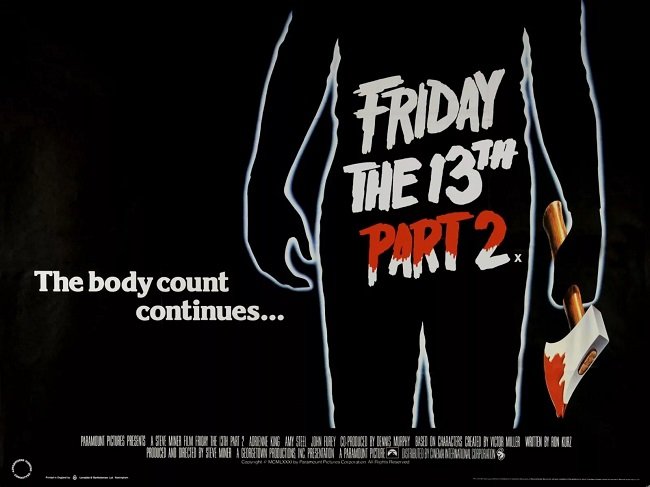
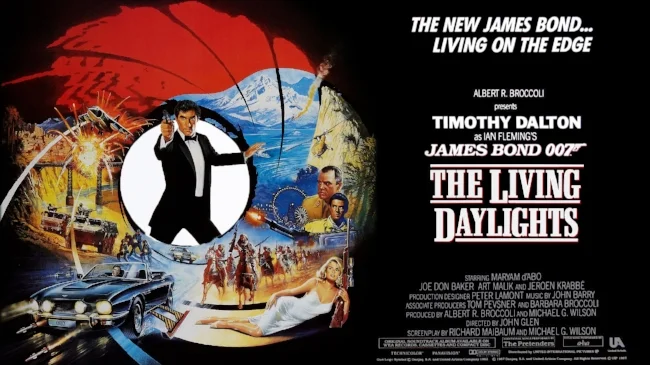
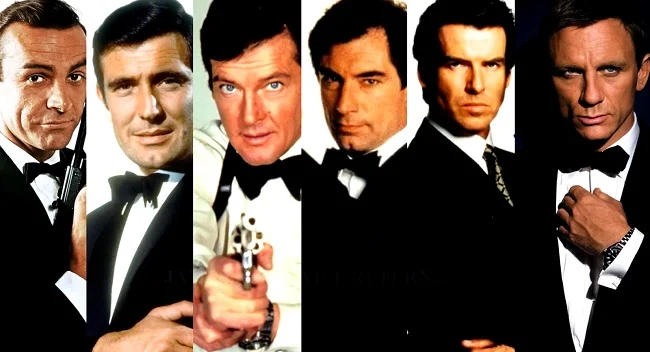
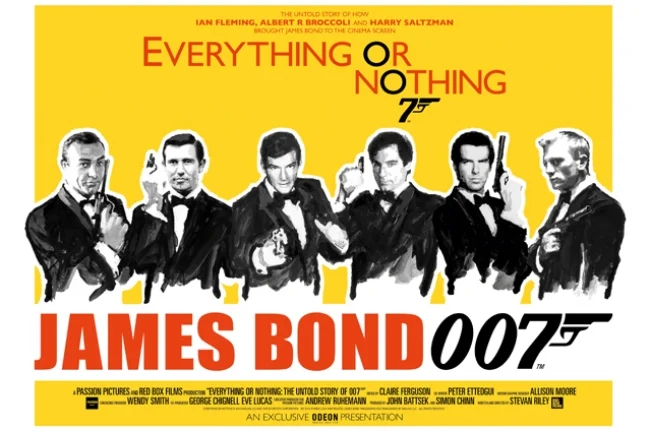
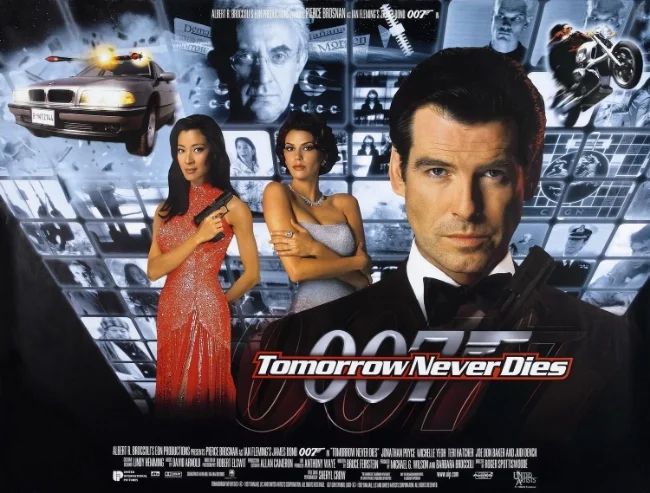
Timothy Dalton is possibly the most technically accomplished and prestigious actor to have played the iconic MI5 agent, James Bond. He was in fact asked by Cubby Broccoli to play the role back in 1969 shortly after Connery's departure from the franchise. Broccoli had been impressed by Dalton’s performance in The Lion in Winter. However, Dalton himself felt he was too young for the job at the time. After Roger Moore retired from the role in 1985 it looked like Pierce Brosnan would certainly to get the part. However, due to contractual reasons and prior commitments, he was not unable to fulfil the proposed shooting schedule. So, Dalton landed what was at the time, the most prestigious action role in film making, by default.
Timothy Dalton is possibly the most technically accomplished and prestigious actor to have played the iconic MI5 agent, James Bond. He was in fact asked by Cubby Broccoli to play the role back in 1969 shortly after Connery's departure from the franchise. Broccoli had been impressed by Dalton’s performance in The Lion in Winter. However, Dalton himself felt he was too young for the job at the time. After Roger Moore retired from the role in 1985 it looked like Pierce Brosnan would certainly to get the part. However, due to contractual reasons and prior commitments, he was not unable to fulfil the proposed shooting schedule. So, Dalton landed what was at the time, the most prestigious action role in film making, by default.
By 1987 there had been a major shift in the production of action movies. The traditional spy genre was in decline. "Cop Buddy" films were becoming increasingly popular and relying more on the major set pieces to bolster their appeal. The ubiquitous action hero was being transformed by such films as Lethal Weapon, Die Hard and Rambo. The expensive and complex action sequences that had for over a decade had been the exclusive province of the Bond franchise, were now becoming common place in many other movies. The competition was raising their game, so Bond needed to modernise and shake off some of the more archaic aspects of his heritage if he wished to remain a viable franchise. The change of actor presented the production with an ideal opportunity to address this very issue.
Director John Glenn decided to use Daltons acting skills as an opportunity to go back to basics and return Bond to the character found in the Fleming’s books. Out went the one liners to soft pedal the violence, that Moore had made his own during his tenure. The screenplay by Ricard Maibaum and Michael J. Wilson therefore maintained the charm along with the panache but it also introduced a ruthless and somewhat cold edge to Bond’s personality. Furthermore, the plot was dialled back from previous extremes to tell a more grounded story set in against the contemporary issues of the time. As a result, Bond this time round, finds himself up against rogue KGB officer, General Georgi Koskov (Jeroen Krabbé), who rekindles an old feud between the two governments respective security services, as a cover for his illegal arms and drugs trafficking in Afghanistan. As another concession to changing times was a subtle reduction in Bond’s promiscuity and a female lead (Maryam d'Abo) who had more depth than usual.
The Living Daylights is therefore a revisionist entry into the series. It stands out along with On Her Majesties Secret Service and For Your Eyes Only as being closer in spirit to the source text. As ever with the franchise this instalment has some very good action sequences and the hand to hand fights scenes are gritty and tough. This was the first film where Bond head butts an opponent, a move that had previously deemed “out of character”. The villainous Necros (Andreas Wisniewski) has a particularly vicious fight with a MI5 agent and at a one point, holds his face against a hot grill. It is a notable change of tone from the camper Roger Moore era. The Living Daylights also has less reliance on the ubiquitous gadgets of "Q" branch. They are present but not quite as preposterous. The overall effect of all these changes was to bring the series back in touch with reality after decades of excess and comic banter.
The Living Daylights also marks the last soundtrack in the Bond franchise to be scored by the great John Barry. He had up until this point written the score for eleven of the Bond films. His contribution to Bond per se is invaluable and certainly his unique lush style helped shaped the image and perception of the character. The title song for the movie, by Swedish band A-ha (Co-written by Barry) works very well as a signature motif throughout the film. The music cues used during Bonds roof top escape in Tangiers and the airfield battle in Afghanistan make use of clever variations of this theme. The film also features two songs by The Pretenders, who at one point were contracted to provide the title theme. However, the producers felt that A-ha were more commercially viable and hoped to repeat the success that they’d had with Duran Duran in the previous film. As ever the material from The Pretenders is of a high standard and Barry manages to work instrumental arrangements of both songs into both the romantic and action scenes. However, it is the piece Barry composed for the "Mujahadin" that stands out the most in the film. Its simplistic beauty encapsulates his talent and remains an example of his finest work.
The pre-digital visual effects work in The Living Daylights are also of note. Industry veteran John Richardson does wonders with traditional methods and techniques. The scale model Lockheed C-130 Hercules used at various points in the film is utterly convincing and the destruction of the Afghan trestle bridge at the film climax, is achieved by the use of a foreground miniature. The aerial sequences featuring stuntmen BJ Worth and Jake Lombard still impress thirty years on. Once again this proves how physical effects and genuine stunts have a great sense of credibility over their computer-generated counterparts. The climactic battle between Bond and Necros in the open cargo bay of a Hercules transporter is a benchmark in eighties action sequences.
Despite changes in public tastes and attitudes The Living Daylights still performed well at the box office. Critically the new bond movie met with a mixed reception but by and large Timothy Dalton was praised. His performance it tonally spot on and his acting range is more than adequate for the scope of the role. As an action movie it is well structured, involving with first class production values. As a Bond movie The Living Daylights has enjoyed a reassessment in recent years and is now seen as a wise change in the franchise’s game plan. However, as the eighties were drawing to a close, the producers were becoming increasingly concerned about the future of the franchise. They decided to tackle the competition head on with the next entry but the radical change in tone along with poor marketing ended up putting James Bond on hiatus for the next six years. It’s a shame because Dalton was never given an adequate chance to build a relationship with fans. I suspect he could have gone on to have made at least two more compelling movies but sadly he fell victim to production delays that ensued.

Hitman (2007)
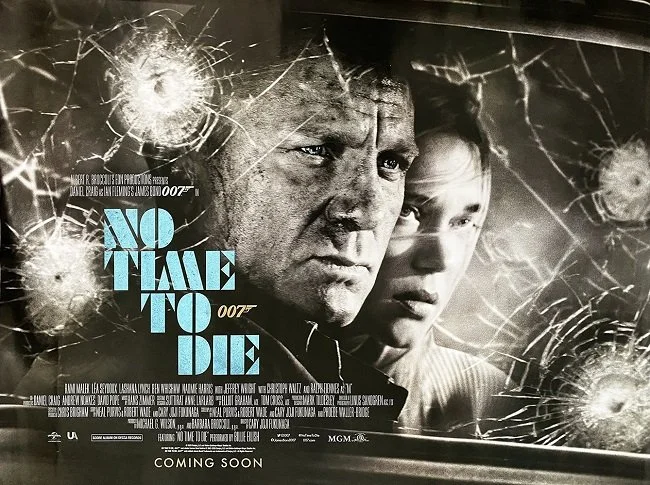
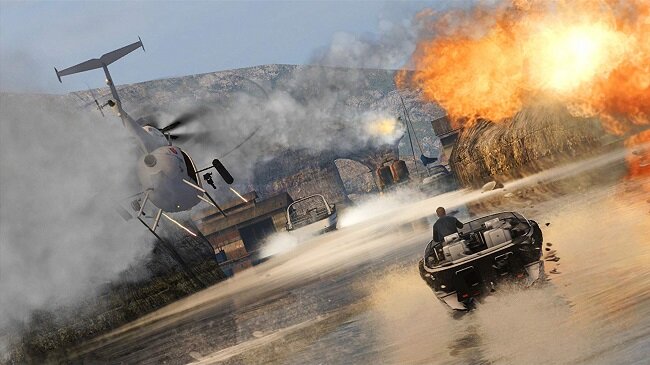
Hitman apparently had a troubled production and it took several years for Eidos and IO Interactive to find studios that were prepared to finance and distribute the project. It was originally intended as a vehicle for Vin Diesel and he is still credited as an executive producer on the film. Various directors were associated with the project until Xavier Gens finally took the role. Gens was riding high at the time in France due to the critical success of his previous movie Frontier. However, stepping into mainstream corporate film making was a baptism of fire. The movie was subject to numerous re-writes and a lot of his material was reshot at the studios request. Locations were changed and plot devices were altered resulting in a very chaotic production. However, considering all these problems, the theatrical release of Hitman was not the disaster that some expected or claimed it to be. It’s actually a well-paced action film with good set pieces, a competent cast and an unusual setting. Is it high art? No. Is it satisfactory entertainment? Yes. However, I speak as someone who has no major attachment to the video game franchise that inspired it. Fans may differ.
Hitman apparently had a troubled production and it took several years for Eidos and IO Interactive to find studios that were prepared to finance and distribute the project. It was originally intended as a vehicle for Vin Diesel and he is still credited as an executive producer on the film. Various directors were associated with the project until Xavier Gens finally took the role. Gens was riding high at the time in France due to the critical success of his previous movie Frontier. However, stepping into mainstream corporate film making was a baptism of fire. The movie was subject to numerous re-writes and a lot of his material was reshot at the studios request. Locations were changed and plot devices were altered resulting in a very chaotic production. However, considering all these problems, the theatrical release of Hitman was not the disaster that some expected or claimed it to be. It’s actually a well-paced action film with good set pieces, a competent cast and an unusual setting. Is it high art? No. Is it satisfactory entertainment? Yes. However, I speak as someone who has no major attachment to the video game franchise that inspired it. Fans may differ.
I have often said that the action genre was in many ways, at its peak during the eighties. Although contemporary films can offer more sophisticated production values, back then movies had superior editing, physical stunts and most importantly, no requirement to pander to prevailing social trends or political dogma. As a genre they ran on their own internal logic and that was sufficient to sustain them. In this respect Hitman is a throwback to that era. It does not feel the need to provide the protagonists with an in-depth back story. It is simply not important to know the complexities of the title characters background. This is a genre movie and not a human drama. The esoteric nature of agent 47 is part of the character’s appeal. To explore it too far would be to negate his enigma. Mercifully, the film does not make this mistake. The dialogue is spartan and functional. There are hints at there being hidden depths to agent 47 but they are not dwelt on. The primary focus on the movie is the action, which is what fans expect from this sort of material.
Timothy Olyphant is suitably remote in the central role, yet still accessible and credible to viewers. He establishes a good rapport with Olga Kurylenko, who plays a material witness to a complex plot of subterfuge. He also acquits himself well in the action sequences, particularly the four-man sword fight, which is very well choreographed. The use of Eastern European locations, the involvement of Luc Besson and international pedigree of the film crew makes the film more exotic than usual. Hitman has quite a different look and feel than that of your typical US based action film. The globe spanning story line further broadens the appeal. The stunt coordination is solid and delivers the level of carnage associated with the franchise. However, it should be noted that like so many modern films of this genre, there are multiple versions available. The R rated theatrical print is quite strong but the unrated version certainly increases the levels of onscreen violence. It is this version that is currently available on Blu-ray in most regions.
The critics were not kind to Hitman upon its release, finding it hard to see any virtue in it. I personally can think of numerous other films based on video games that have been a lot worse. However, if you have a strong emotional connection to this particular series, then this may be a little too superficial for you. But that is the nature of screen adaptations of popular gaming franchises. They take the major themes, or aesthetic trappings of the source material and try to explore in a different way. Therefore, if you are a more forgiving action film aficionado, Hitman is a perfectly adequate genre offering. This mainly due to the respective performances by Timothy Olyphant and Olga Kurylenko. As ever, out of the two edits of the film, my recommendation is with the unrated version. It does gives the action scenes a more visceral edge. Sadly, the respective virtues of Hitman were not present in the 2015 reboot, Hitman Agent 47. That curious movie reeks of film making by focus group.
Orc Wars (2013)
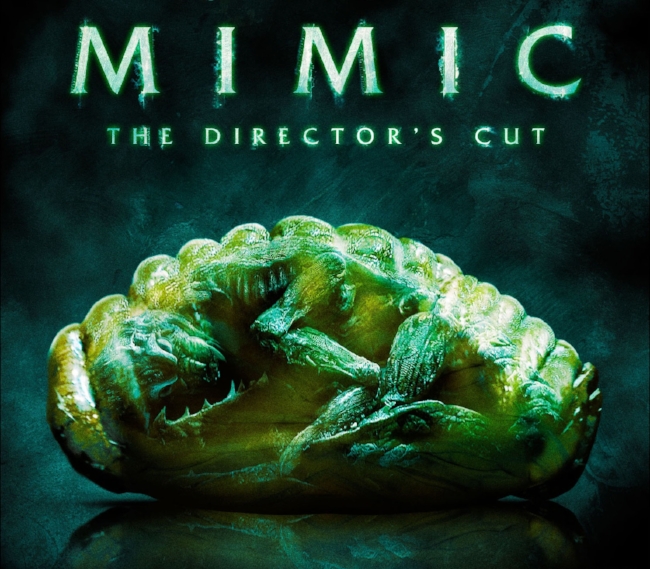
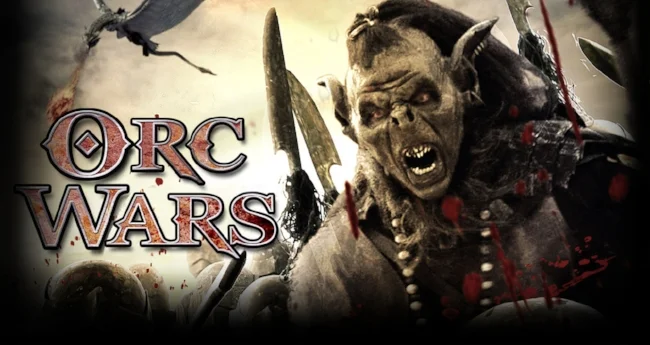
Having recently sat through Orcs! I decided to take a further chance and watch Orc Wars. It too is a very low budget film, although this time the finances were raised through crowdfunding. Sadly, it is not the fun, tongue in cheek, independent adventure movie the trailer and associated marketing implies. There is very little merit in this production. It's cheap, cheerful and although harmless, it clearly demonstrates that not all fan funded projects are good cinema. Some are just indulgences. The problem is in the title itself, which tries to sell an idea that the movie production is incapable of delivering. Instead of the spectacle of an army of a thousand Orcs pitted against the technological might of the US war machine, we get a few extras in ill-fitting costumes, running skirmishes against no-name actors on quad bikes and a few old Army Surplus vehicles. It's all rather lacklustre and underwhelming.
Having recently sat through Orcs! I decided to take a further chance and watch Orc Wars. It too is a very low budget film, although this time the finances were raised through crowdfunding. Sadly, it is not the fun, tongue in cheek, independent adventure movie the trailer and associated marketing implies. There is very little merit in this production. It's cheap, cheerful and although harmless, it clearly demonstrates that not all fan funded projects are good cinema. Some are just indulgences. The problem is in the title itself, which tries to sell an idea that the movie production is incapable of delivering. Instead of the spectacle of an army of a thousand Orcs pitted against the technological might of the US war machine, we get a few extras in ill-fitting costumes, running skirmishes against no-name actors on quad bikes and a few old Army Surplus vehicles. It's all rather lacklustre and underwhelming.
Ex-Marine John Norton (Rusty Joiner) buys a ranch in the remote American West hoping to escape from his troubled past. He subsequently encounters Elven Princess Aleya (Masiela Lusha) who has fled her home world via an interdimensional portal and is marooned on Earth. A convenient blind Native America Mystic called Whitefeather (Wesley John) informs Norton that he is the appointed guardian. He must defend the Princess from a marauding army of Orcs who wish to use her power to release their dragon god. After the simplistic narrative has been clumsily explained there then follows a series of low budget action scenes involving plastic replica guns with CGI muzzle flashes, along with some indifferently choreographed and poorly edited fight scenes.
The main saving grace of Orc Wars, is the fact that the Orcs themselves look pretty good. It’s clear that the producers spent most of the films meagre budget on the costumes and prosthetic effects. If you think that Orcs look and feel very similar to those seen in Peter Jackson’s The Lord of the Rings Trilogy, there's a specific reason for that. Apparently, props and costumes can be rented from Weta studios when not in use. However, the Orcs themselves cannot save this movie. The dialogue is poor as is the acting but there is a degree of convictions from the cast and director Kohl Glass. However, enthusiasm will only carry afilm so far. The cheeky homage to Zulu at the end of the movie made me spit my drink across the room. If you buy in to the notion of "it's so bad, it's good" then Orc Wars is an amusing ninety-minute diversion. Otherwise, best avoid it.
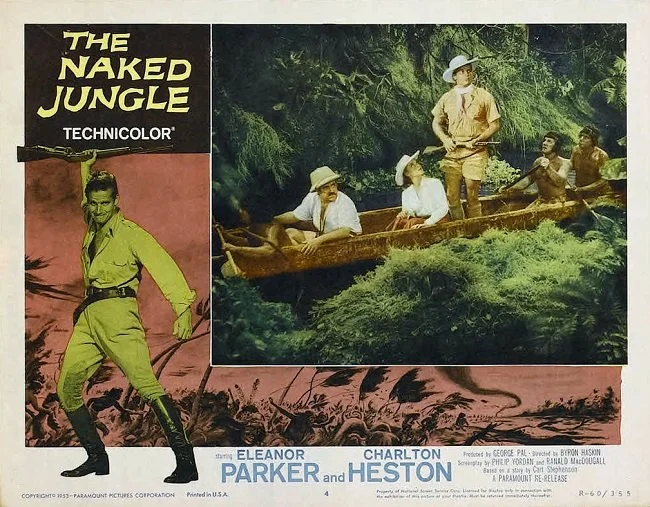
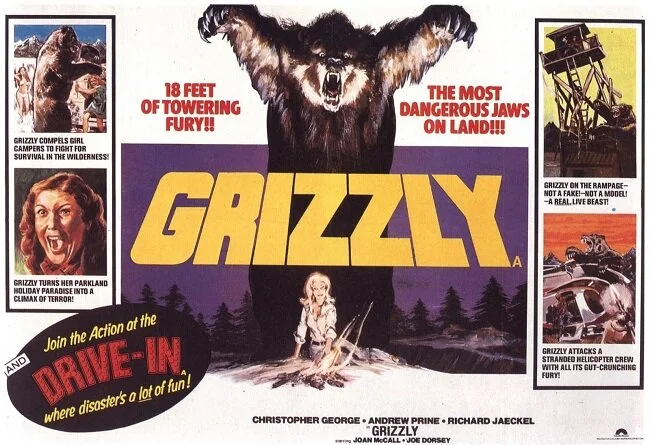
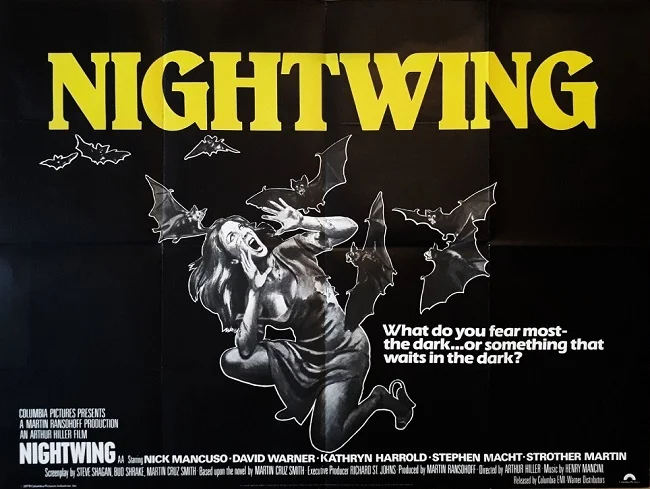
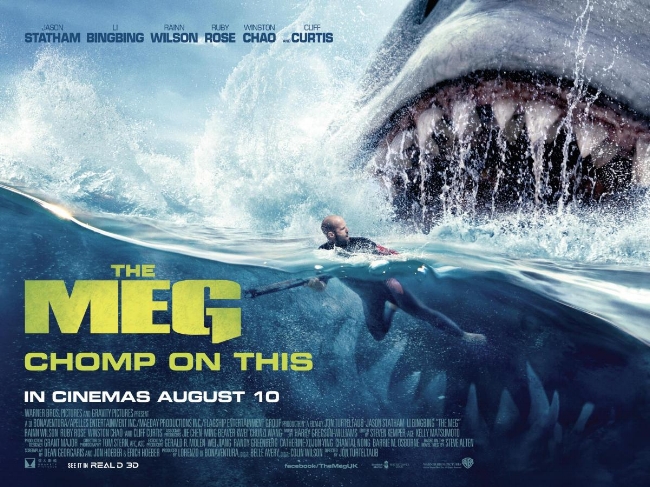
Orcs! (2011)
As a fan of the horror genre I’ve sat through numerous low budget films in my time. This has usually been at festivals or conventions. Sometimes watching something as part of a group, with likeminded individuals, makes a difference. You find yourself groaning in unison and the shared experience helps compensate for potential deficiencies. Watching questionable material in the comfort of your own home, purely on your own can be a lot tougher. However, due to my abiding love of the genre, I am prepared to cut a lot of cheap ass indie flicks considerably more slack than I would others. So, I'll endeavour to review Orcs! with as much impartiality as possible. Oh, and before we start, let us clarify the term Orcs. Although Middle-earth is not referenced in any way, this film is definitely about Tolkien's creations. Or at least their depiction in another well-known series of films.
As a fan of the horror genre I’ve sat through numerous low budget films in my time. This has usually been at festivals or conventions. Sometimes watching something as part of a group, with likeminded individuals, makes a difference. You find yourself groaning in unison and the shared experience helps compensate for potential deficiencies. Watching questionable material in the comfort of your own home, purely on your own can be a lot tougher. However, due to my abiding love of the genre, I am prepared to cut a lot of cheap ass indie flicks considerably more slack than I would others. So, I'll endeavour to review Orcs! with as much impartiality as possible. Oh, and before we start, let us clarify the term Orcs. Although Middle-earth is not referenced in any way, this film is definitely about Tolkien's creations. Or at least their depiction in another well-known series of films.
Orcs! is a modestly budgeted, independent comedy horror film, set in the fictitious Balancing Rock National Park. Ranger Cal (Adam Johnson) along with Cadet Ranger Hobart (the well-cast Maclain Nelson), discover that the parks visitors and staff are being brutally slain by an unseen force. Aided by Cal's ex-girlfriend and militant environmentalist, Katie (Renny Grames), the trio incompetently investigate the situation. It soon becomes apparent that the spate of deaths is not the work of rogue bears or bigfoot but a band marauding of Orcs (who have arrived and started killing folk for “some particular reason”). Cut off and enable to escape the park, our heroes make a last stand, vowing to make the Orcs sorry they messed with the US Parks Service. Low budget mayhem ensues.
Orcs! is very much a mixed bag. It starts with some fairly broad humour, setting up the central characters. I did find myself warming to the two leads. The action scenes and violence is not to strong and is often mitigated with a wry joke or quip. The Orcs themselves are fairly well realised. Considering the budget, the costumes and armour are well designed. The films greatest assets are several rather clever homages to Peter Jackson's trilogy. Hobart lampoon's Aragorn's tracking skills in a clever pastiche. There are also parallels with the battle of Helm's Deep. The use of drums to denote the massing of the orcs is another clever cinematic homage. Director James MacPherson, even manages to include nods to John Carpenter's Assault on Precinct 13 and James Cameron's Aliens. As is so common in indie flicks of this nature, the film makers do like to heap praise upon their cinematic idols.
But despite these endearing qualities, there are major plot holes and a lack of quality material to adequately fill the eighty-minute running time. Now, with this genre of film, it is not wise to de-construct the plot too much. Genre movies often run on their own unique internal logic. Yet a glaring mistake is made and perpetuated throughout the film. Towards the end, as the Orcs lay siege to the Rangers Headquarters, our heroes discover that the enemy hates the light. Yet for the previous thirty-five minutes, the Orcs have happily been running about in broad daylight. The final battle is also far too long and insufficiently action packed to merit its ponderous running time. I appreciate that financial constraints may well have been an impediment to the director’s vision, yet a more adept production would have been a little more innovative with the resources they had.
By and large I did enjoy Orcs! as I’ve always had a supportive streak towards this sort of production. Irrespective of the film deficiencies, I applaud all involved for at least attempting to do something different. It could be argued that with a larger budget and more involved script, the film would have been superior. Ten minutes of the running time could have been taken from the ending and used earlier on in the film to the productions overall advantage. It certainly would have helped to have explored the Orcs back story some more. As it stands, Orcs! is a flawed but creative low budget genre movie. If you have a broad liking for such movies and enquiring nature, then give it a go. If you like mainstream material and have a low threshold of tolerance for anything that isn’t slick, polished and “Hollywood” then you’d best give it a miss.
Centurion (2010)
I have enjoyed Neil Marshall's body of work since his debut film Dog Soldiers back in 1999. Both it and his follow up movie The Descent were exceptional genre pieces. Doomsday was more of an indulgence, being a homage to similar such movies from the eighties. However, as I’m from the same generation as the director, I forgave this. Marshall is one of the few British film makers whose work maintains an inherent English perspective. Centurion continues to reflect this, tackling the enduring mystery of the demise of the Ninth Legion and offering an inventive explanation. Making good use of forest locations both in Surrey and Scotland, the film is a violent survivalist tale, with a few twists along the way.
I have enjoyed Neil Marshall's body of work since his debut film Dog Soldiers back in 1999. Both it and his follow up movie The Descent were exceptional genre pieces. Doomsday was more of an indulgence, being a homage to similar such movies from the eighties. However, as I’m from the same generation as the director, I forgave this. Marshall is one of the few British film makers whose work maintains an inherent English perspective. Centurion continues to reflect this, tackling the enduring mystery of the demise of the Ninth Legion and offering an inventive explanation. Making good use of forest locations both in Surrey and Scotland, the film is a violent survivalist tale, with a few twists along the way.

One again the director returns to the tried and tested theme of small group of individuals pit against a superior foe. After an efficient opening sequence which establishes the back story and sets the scene, we are presented with a Pictish assault upon the Ninth Legion. The battle is swift and decisive, leaving most of the men dead and the legion commander Gratus (Dominic West) captured by Celtic chieftain Gorlacon (Ulrich Thomsen). The plot then shifts its focus to an eclectic group of survivors led by Centurion Quintus Dias (Michael Fassbender) as they try to escape to the English border to warn the Roman forces of an impending attack. They are doggedly pursued by a Pict hunting party led by Etain (Olga Kurylenko), a mute woman seeks revenge for her murdered family who died at the hands of Imperial forces.
Centurion makes a school boy error in so far that it peaks in the first act of the film with its gritty ambush sequence. The plot fails to maintain exactly the same degree of intensity for the remainder of the movie. As a result, Centurion becomes noticeably less exciting as it progresses, slowing in the middle, to accommodate a romantic interlude between Quintus and a Pictish women (Imogen Poot) exiled for witchcraft. Like Doomsday before it, Marshall’s Centurion is more of a sequence of strong set-pieces rather than a cohesive linear story. The production design by Simon Bowles and cinematography by Sam McCurdy do however help compensate for the weakness of the narrative. Perhaps if the director had worked with an additional screen writer, the script may well have reached its full potential and had a greater depth.
Despite a strong cast, many of the support characters fail to meet their potential. West’s arrogant performance as a Roman officer counter balances Fassbender’s stalwart resolve. The pair easily carry the central roles well. Yet little is done with Olga Kurylenko's mute character beyond her superficial feral characteristics. It is a real shame because such a role has scope for a very interesting backstory. With a stronger screenplay, this could have been a superior action film, rather than simply a competent one. As it stands, Centurion is an acceptably entertaining historical action movie with solid set pieces and a steady pace. It is not the director’s strongest work but it is certainly with merit.
The Dark Tower (2017)
Stephen King’s body of work has proven to be an invaluable source of material for film and television over the last forty years. The results have often been as varied as the books themselves. Because of the inherent differences between the respective mediums, sometimes the complexity and sheer scope of King’s work can be lost in translation from one to the other. It’s happened before with several high-profile adaptations and it will no doubt happen again. The Dark Tower is a classic example failing to capture the essence of King’s work. Trying to distil and convey a mythos that is spread over eight volumes, into a single movie is a tall order for any director and screen writer. It can be cogently argued that material of this sort is better suited to television where lengthy, complex story arcs can be indulged and characters can be explored at leisure. In fact, during it’s time in development hell, The Dark Tower was at one point destined to be adapted for the small screen. However, the desire to create a lucrative film franchise ultimately prevailed.
Stephen King’s body of work has proven to be an invaluable source of material for film and television over the last forty years. The results have often been as varied as the books themselves. Because of the inherent differences between the respective mediums, sometimes the complexity and sheer scope of King’s work can be lost in translation from one to the other. It’s happened before with several high-profile adaptations and it will no doubt happen again. The Dark Tower is a classic example failing to capture the essence of King’s work. Trying to distil and convey a mythos that is spread over eight volumes, into a single movie is a tall order for any director and screen writer. It can be cogently argued that material of this sort is better suited to television where lengthy, complex story arcs can be indulged and characters can be explored at leisure. In fact, during it’s time in development hell, The Dark Tower was at one point destined to be adapted for the small screen. However, the desire to create a lucrative film franchise ultimately prevailed.
As an action fantasy, The Dark Tower is rather traditional in its themes, use of archetypes and narrative structure. Teenager Jake Chambers (Tom Taylor) has recurring dreams involving a Man in Black (Matthew McConaughey) who seeks to destroy a Tower and bring ruin to the universe. He also sees a Gunslinger (Indris Elba) who opposes him. Jake's mother (Katheryn Winnick) and stepfather believe that he has been traumatised by his father's death the previous year and arrange for him to be taken into psychiatric care. However, Jake recognizes the Doctor and her staff from his visions. They are in fact monsters wearing human skin, so he subsequently escapes. Finding a portal in an abandoned house, Jake travel to Mid-World where he meets the legendary Gunslinger Roland Deschain. However, Deschain is a broken man who only seeks revenge for the death of his father (Dennis Haysbert). Can Jake convince him to save the Dark Tower and universe that it protects?
Although I have read many of Stephen King’s book, I am not familiar with the source material in this instance, beyond its initial premise. Therefore, I approached The Dark Tower with little or no preconceptions and a distinct lack of fan based baggage. What became very apparent while watching the film, was the pacing of the story and the flow of the narrative, which were very fast. Characters were introduced, plot points were explained and the story arc was propelled forward at an unusually quick pace. All of which smacks of a movie that has been excessively re-edited and retooled. I suspect the original vision of the movie was changed in post-production and revised for a different demographic.The film as it currently stands has a very simplistic and linear trajectory. There is little or no depth to any of the central characters and no insight into Mid-World beyond what we are shown. As a result, the film lacks any tension or dramatic hold over the audience. The Dark Tower does look like a high budget movie but its overall narrative has precious little substance. Its ninety-five-minute running time is far too short and the film needs at least another twenty to thirty minutes to expand upon its themes.
There are only three action sequences of note in The Dark Tower but they lack impact due to their arbitrary nature. The movie is also somewhat shy of violence and I suspect that a lot material was edited out. The camera moves way from such content, rather than substituting it with more bloodless material, as is the norm with PG-13 rated movies. The devil is in the detail. At one point a sniper is shot through the telescopic sight of his rifle. The optics shatter, his head whips back and then there is a fast cut to the next step in the action scene. It feels like there is a specific bullet hit missing and the rhythm of the scene just feels off. The net result of this lack of gritty action, as well as the condensed narrative, is that the entire film is somewhat indifferent. Rather than feeling enthused by the characters and their fate, there’s a distinct air of “so what” when the film ends. It’s a shame because The Dark Tower could have been a welcome change to the usual fantasy and super hero driven franchises. However, it looks increasingly unlikely that we’ll see a sequel to this movie in the immediate future due to its poor box office and critical reception.
Unlocked (2017)
CIA specialist interrogator Alice Rancine (Noomi Rapace) is on secondment to MI5 while she nurses her guilt over a previously failed operation that left civilians dead. Her old boss Eric Lasch (Michael Douglas) thinks it’s time she returned to what she does best. Rancine then receives a request from the CIA London Station to crack a terrorist courier who can provide access to a major cell. However, it soon becomes clear that the operation has not been officially sanctioned and Rancine has been duped by rogue elements within the Agency. Alone and on the run from the CIA, MI5 and independent contractors, Alice finds an unexpected ally in ex-Marine Jack Alcott (Orlando Bloom) who she finds robbing her apartment. Together, the pair pursue the lead she obtained while interrogating the courier and attempt to stop a biological attack from happening on UK soil.
CIA specialist interrogator Alice Rancine (Noomi Rapace) is on secondment to MI5 while she nurses her guilt over a previously failed operation that left civilians dead. Her old boss Eric Lasch (Michael Douglas) thinks it’s time she returned to what she does best. Rancine then receives a request from the CIA London Station to crack a terrorist courier who can provide access to a major cell. However, it soon becomes clear that the operation has not been officially sanctioned and Rancine has been duped by rogue elements within the Agency. Alone and on the run from the CIA, MI5 and independent contractors, Alice finds an unexpected ally in ex-Marine Jack Alcott (Orlando Bloom) who she finds robbing her apartment. Together, the pair pursue the lead she obtained while interrogating the courier and attempt to stop a biological attack from happening on UK soil.
Unlocked, despite having the veneer of a contemporary story is a somewhat old school thriller. That is not in itself a bad thing. It is directed by veteran film maker Michael Apted in a workman like fashion and is functionally entertaining. It contains all the usual tropes found in the espionage genre, yet the screenplay written by Peter O’Brien manages to add sufficient difference to keep viewers interest. For example, Alice Rancine works as a legal advisor, doing pro-bono work among London’s immigrant community. Her work allows her to do “some good” as well as gather intelligence. Subsequently Unlocked features some interesting location filming in some of the poorer parts of London. It is welcome break from the usual US-centric material we’ve come to expect from thriller of this kind. The film is bolstered by a solid and reliable cast, featuring the likes of Toni Collette and John Malkovitch. Their presence makes the narrative a little more plausible and palatable.
Critics were not so impressed by Unlocked upon release and it garnered mix reviews. Some accused director Michael Apted of being out of touch. His last foray into the traditional spy film genre was Gorky Park, back in 1983. The main handicap with a film of this nature trying to find a fresh perspective or approach. Sadly, the Middle-east narrative has been done to death over the last twenty-five years and it’s worn a little thin. However, despite this flaw Unlocked does compensate in other areas. The UK and European settings do add a different narrative perspective and visual aesthetic. Unlocked benefits greatly from Noomi Rapace’s performance. Female leads are still not so common place in this genre. Furthermore, Unlocked is yet another of a handful of recently released action movies that have not sought the box office comfort of the PG-13 rating. Bad things happen in the world of espionage and Unlocked is happy to show them.
Baby Driver (2017)
There’s rhythm in every scene of Baby Driver. And Michael Mann may want to consider early retirement because Edgar Wright lights his movies better. These are just some of the thoughts that crossed my mind during the films 113-minute running time. It becomes very apparent when watching Baby Driver that it’s not just a standard heist movie with car stunts and hard-boiled dialogue. This film is definitely something special and totally deserving of all the praise that has been heaped upon it. But then again, it’s not every day you get a story that bears all the hallmarks of a Hollywood musical, slickly and intelligently transplanted into a hybrid of the road and caper genres.
There’s rhythm in every scene of Baby Driver. And Michael Mann may want to consider early retirement because Edgar Wright lights his movies better. These are just some of the thoughts that crossed my mind during the films 113-minute running time. It becomes very apparent when watching Baby Driver that it’s not just a standard heist movie with car stunts and hard-boiled dialogue. This film is definitely something special and totally deserving of all the praise that has been heaped upon it. But then again, it’s not every day you get a story that bears all the hallmarks of a Hollywood musical, slickly and intelligently transplanted into a hybrid of the road and caper genres.
Ansel Elgort’s stars as the eponymous getaway driver, who uses music to continuously drown out the tinnitus he suffers from as a result of a childhood accident. Being on the spectrum he meticulously organises his life around his iPod playlists and records random sounds and dialogue on a Dictaphone which he then mixes with music. He is also a formidable driver who is indebted to local Atlanta criminal Doc (Kevin Spacey). Hence Baby is always “one more job” away from freedom. In his spare time Baby cares for his deaf foster father Joseph (CJ Jones) who worries about whether he’ll ever be able to get away from his obligation to Doc. Baby dreams of escaping with his waitress lover Debora (Lily James) but his plans are foiled when he called upon to drive for one more major robbery. He finds himself in the company of a worrying psychotic crew consisting of Buddy and Darling (Jon Hamm and Eiza González), a latter-day Bonnie and Clyde as well as Bats (Jamie Foxx), a career criminal who favours shooting first and asking questions later.
Baby Driver has it all. A classic boy meets girl narrative, troubled by all the usual cinematic relationship problems. Quirky characters with hard boiled dialogue and some of the most impressive car chases and stunt work I’ve seen in two decades. There’s precious little CGI on display as the Edgar Wright chose to do as much in camera as possible with his stunt co-ordination team (Darrin Prescott, Robert Nagle, Jeremy Fry). Director of photography Bill Pope lights each scene creatively and uses a vivid colour pallet. Furthermore, Baby Driver is comfortable in its own skin and make no concessions to ratings or wider commercial interests. Hence the movie is R rated (15 in UK) which it rightly should be considering its themes and settings.
![Baby Driver.mkv_snapshot_00.04.44_[2017.09.13_13.12.51].jpg](https://images.squarespace-cdn.com/content/v1/54e310f0e4b0f4a6ba3ac899/1505305131884-6JIPQQXD0YMSWRCCOM6V/Baby+Driver.mkv_snapshot_00.04.44_%5B2017.09.13_13.12.51%5D.jpg)
Music and sound are integral to Baby Driver and a great deal of love and attention has been invested in the sound design. Characters, tracking shots and even gun fire are syncopated to the various songs that play throughout the film. And what an intelligent and eclectic selection of classic and original material it is. The opening titles playout across Bob & Earl’s Harlem Shuffle, with the lyrics to the song appearing on walls and street signs. A major getaway after a bank job utilises The Damned’s Neat, Neat, Neat, which for me was a blast from the past and fun to see in a US studio production. And for those who are really anal about homages and obscure references, the soundtrack even sports some classic seventies Morricone lounge music, as the protagonists enter an elevator. Furthermore, the audience gets to share Baby’s tinnitus when he gets stressed and is unplugged from his iPod.
Often when directors set out to try and create a cult movie, their deliberate contrivances are painfully obvious, usually to the films detriments (I’m looking at you The Boondock Saints). Edgar Wright comfortably and confidently allows pop culture references to bleed through into his work, because they are an intrinsic part of who he is. He can dovetail dialogue such as “Don’t feed me any more lines from Monsters Inc… it pisses me off!” into the screenplay without it raising an eyebrow from viewers. An argument by the cast over the right sort of Michael Myers Halloween mask delights rather than rankles. The reason Baby Driver works so well is because it is filled with genuine creativity, genre love and geek passion from a film maker who is honestly trying to entertain, rather than indulge his ego. Do yourself a favour and watch Baby Driver and remind yourself how good cinema is when it’s fuelled by talent and wit.
Mad Max: Fury Road (2015)
There was a degree of collective hysteria among critics upon the release of George Miller's Mad Max: Fury Road. Phrases such as "genius" and "masterpiece" were being banded around willy nilly, mainly due to the overwhelming nature of the movie. Make no mistake, Mad Max: Fury Road is very much a case of film making turned up to eleven. The sheer sensory overload that one experiences over the two-hour running time makes for a jaw dropping experience. However, the movie does have a few minor flaws, which are more apparent upon second viewing, so perhaps some of the praise and superlatives that have been heaped upon the film need to be taken with a pinch of salt.
There was a degree of collective hysteria among critics upon the release of George Miller's Mad Max: Fury Road. Phrases such as "genius" and "masterpiece" were being banded around willy nilly, mainly due to the overwhelming nature of the movie. Make no mistake, Mad Max: Fury Road is very much a case of film making turned up to eleven. The sheer sensory overload that one experiences over the two-hour running time makes for a jaw dropping experience. However, the movie does have a few minor flaws, which are more apparent upon second viewing, so perhaps some of the praise and superlatives that have been heaped upon the film need to be taken with a pinch of salt.
That being said, if you can endure Mad Max: Fury Road and its exquisite assault upon your senses, it offers an extremely entertaining action movie with an interesting philosophical subtext. It also has something to say about gender politics, although this is not in any way a lecture. The films visual aesthetics and female casting does somewhat fly in the face of the alleged message. Therefore, one can consider the film’s deeper meaning as an optional extra. If you’re not in the market for sociopolitical subtexts, then ignore it and simply focus on the ongoing visual and the cinematic pandemonium. Please note that's two hours of continuous pandemonium. A potential chore for some.
The plot is simple and for those unfamiliar with the main character and the movies setting, there is a brief exposition at the start of the film that puts everything in perspective. The plot essentially is a continuous chase as Max escapes "The Citadel" with the five wives of local despot Immortan Joe (played by Hugh Keays-Byrne, Toecutter from the original movie). Tom Hardy handles the role of Max Rockatansky exceedingly well through his verbal and physical performance. However, this is a movie with minimal dialogue and often it is more about what is not said than what is. An exchanged glance or a particular stance speak volumes here. In many ways it is Furiosa, played by Charlize Theron, who drives the story with the force of her tangible screen presence.
Perhaps where director Geroge Miller excels the most is in the way he turns the complex action sequences from a mechanical process and elevates them into an elaborate form of visual opera. The production design, costumes and overall visual aesthetic of Mad Max: Fury Road goes beyond the term sumptuous. It is a physical experience. The nearest I can get to summarising it is that it's like being beaten around the head and shoulders with the collected works of Hieronymus Bosch, while being screamed at and set alight. When I saw this movie at the cinema, I needed a stiff drink when it ended because I genuinely felt that I had experienced everything that happened on screen. Even when viewed at home it is an immersive experience.
Be warned Mad Max: Fury Road is not your standard action movie, meticulously designed by a soulless committee and scrupulously edited to meet the requirements of the sanitised PG-13 rating. This is a raw and grotesque movie set in a neo-feudal world and it's a far from pleasant one. Yet despite the jarring nature of Goerge Miller's post-apocalyptic vision, it still has characters that you care for and there's a positive moral under current. Irrespective of its beautiful visual cacophony, Mad Max: Fury Road is ultimately a film about people and a very telling one at that. Something that is a rare commodity in contemporary Hollywood and something that many would not expect to find in this genre of movie.
Licence to Kill (1989)
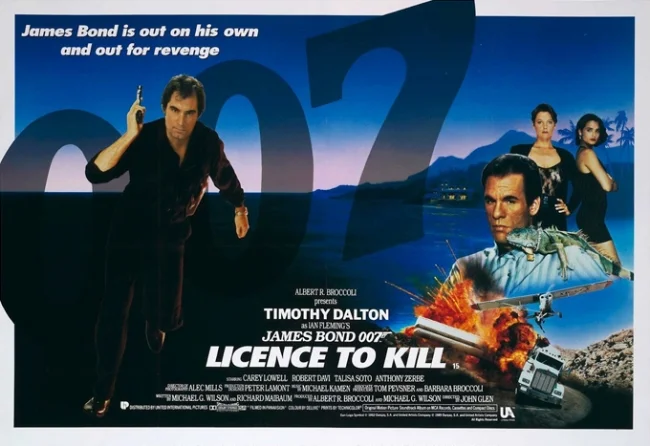
Licence to Kill was the sixteenth instalment in the James Bond series and the last to star Timothy Dalton as MI6 agent James Bond. He sadly only made two and remains an underrated Bond. Licence to Kill was also the first official James Bond film to use a title not derived from either an Ian Fleming novel or a short story. However, it does contain characters and elements from Fleming's novel "Live and Let Die" and the short story "The Hildebrand Rarity". The film follows Bond's dismissal from MI6 and his vendetta against a South American drug baron. The film was originally due to be called "Licence Revoked" but was changed allegedly to avoid confusion with American audience
Licence to Kill is the sixteenth instalment in the James Bond series and the last to star Timothy Dalton as MI6 agent James Bond. He sadly only made two movies and remains an underrated Bond. Licence to Kill was also the first official James Bond film to use a title not derived from either an Ian Fleming novel or a short story. However, it does contain characters and elements from Fleming's novel "Live and Let Die" and the short story "The Hildebrand Rarity". The film follows Bond's dismissal from MI6 and his vendetta against a South American drug baron after an attack on his friend Felix Leiter. The film was originally due to be called "Licence Revoked" but was changed allegedly to avoid confusion with American audiences.
Licence to Kill was one of the least commercially successful Bond films. It had production costs of approximately $36 million and made only $156 million back at the box office. The previous Bond outing, The Living Daylights had made over $196 million. This drop can be attributed to the decision to release the film in the summer, in direct competition with Lethal Weapon 2, Indiana Jones and the Last Crusade (starring former Bond Sean Connery) and Batman. Bond films have traditionally been Autumn releases. Due to the death of screenwriter Richard Maibaum and subsequent legal battles over the ownership of the James Bond series, there was a subsequent six year hiatus until the next Bond movie Goldeneye in 1995. Licence to Kill has many unique factors that make it a milestone within the Bond franchise.
Licence to Kill has many unique factors that make it a milestone within the Bond franchise. It the first Bond film to be rated PG-13 in the US and 15 in the UK; all previous films were PG. Violent scenes still had to be trimmed in both the UK and US to avoid a higher classification. Director John Glen decided to make the film stronger in tone to directly compete with the contemporary competition. Action films had become more prevalent during the eighties and often included expensive and elaborate set pieces. These had been in the past the exclusive province of the Bond films. However, the release of the James Bond "Ultimate Editions" on DVD in 2006, restored all previously cut material. The fully uncut print was also sourced for the more recent Blu-ray disc in 2009.
Licence to Kill featured another major change for the franchise. Veteran Bond composer, John Barry was not available at the time of the post production, as he was undergoing throat surgery. Therefore, the soundtrack was composed and conducted by Michael Kamen, a British composer who had already scored several action films such as Lethal weapon and Die hard. Licence to Kill, despite poor financial returns, did perform well with numerous critics. It is still a source of division among fans. It is hard edged, minimalist and reflects the tone of Fleming's early novels very well. Dalton's performance, the lack of fanciful gadgets and glib one liners, is a radical change in style from the self-parodying excesses of Moonraker. Director John Glen deemed it to be the best of his five Bond films. On reflection, the market at the time was simply not ready for such a radical shift in the franchise. It is ironic that Casino Royale successfully managed to make such a change seventeen years later.
Lockout (2012)
Let's cut to the chase. Lockout is derivative, clichéd, has some dodgy CGI FX work and has nothing new to add to the Sci-Fi sub-genre of future prison action movies. However, that does not mean that the movie is not enjoyable. On the contrary, if approached with the right mind set, then Lockout can be an entertaining experience, which will have you chuckling as it ticks boxes in a knowing fashion and offers some budget action and hard-boiled dialogue. It certainly isn't going to win any awards, but is does everything that a B movie should do. If you treat it as such then you won't be misled.
Let's cut to the chase. Lockout is derivative, clichéd, has some dodgy CGI FX work and has nothing new to add to the Sci-Fi sub-genre of future prison action movies. However, that does not mean that the movie is not enjoyable. On the contrary, if approached with the right mind set, then Lockout can be an entertaining experience, which will have you chuckling as it ticks boxes in a knowing fashion and offers some budget action and hard-boiled dialogue. It certainly isn't going to win any awards, but is does everything that a B movie should do. If you treat it as such then you won't be misled.
For starters, think Escape from New York, then No Escape and then finally Fortress. Follow that order to find the appropriate level. Where John Carpenter made Snake Plissken a Clint Eastwood/John Wayne hybrid, Guy Pearces' Snow is more of a John McClane/Han Solo crossover. Lockout never strays into being a total rip-off of Carpenter's work, but it sails close to bounderies of what can be labelled "a homage". Guy Pearce, armed with pumped biceps and an arsenal of waggish badinage plays Snow, a former government agent who must single-handedly rescue the President’s daughter (Maggie Grace), from a space prison to escape (for some particular reason as Homer Simpson said). The prisoners are the usual collection of cinematic sociopaths, although Hydell (Joseph Gilgun), the psychotic brother of the prisoner’s leader, has all the best lines and is immense fun to watch. Stuff gets blown up, fist fights ensue, the laws of physics are conveniently bent to suit the plot as you expect from such movies.
When Luc Besson initially started putting his name to broader action productions, it was a pleasant alternative to mainstream Hollywood fodder. The European vibe brought something new to familiar action material. However, these movies are now plagiarising the very material they seek to be different to and the distinction is not so great now. Written and directed by relative newcomers James Mather and Stephen St. Leger, Lockout perhaps needed a more experienced pair of hands at the helm. The movie was shot on location in Belgrade but also had extensive green screen footage shot in post-production. The movie struggles to integrate both elements. However, it's quirky continental pedigree, tongue in cheek approach, along with its fast pace does allow the directors to effectively "blag it".
I was in an unusually forgiving mood when I saw Lockout in the movie theatre on its release and chose to ignore its faults and simply dealt with it like a DTV action title from the eighties. I even smirked when Snow balked at being beaten by a guy called Rupert. However, this is the sort of movie that plays a lot better in the home entertainment market. It’s something that goes well with a few beers and a curry. If you are a casual film viewer, you may wish to give this one a miss as it lacks some of the polish of bigger budget releases. For those who have a deeper love for the action genre and have sat through Freejack and Fortress 2: Re-Entry, then you can take this one on the chin easily.
The Expendables 3 Unrated Edition (2014)
The theatrical release of The Expendables 3 in 2014 was severely hamstrung by the producer’s decision to court a wider audience with a PG-13 rating. The film although profitable, still fell short of its predecessor’s box office taking. Many fans of the franchise subsequently looked to the DVD and Blu-ray release to provide a harder cut of the movie, similar to the previous R rated instalments.
Sadly, this was not the case. The Expendables 3 Unrated Edition does include some additional action content and one new expositionary scene but overall there is nothing that radically improves the film or makes it stronger in content than the theatrical release.
The theatrical release of The Expendables 3 in 2014 was severely hamstrung by the producer’s decision to court a wider audience with a PG-13 rating. The film although profitable, still fell short of its predecessor’s box office taking. Many fans of the franchise subsequently looked to the DVD and Blu-ray release to provide a harder cut of the movie, similar to the previous R rated instalments.
Sadly, this was not the case. The Expendables 3 Unrated Edition does include some additional action content and one new expositionary scene but overall there is nothing that radically improves the film or makes it stronger in content than the theatrical release.
What Unrated Edition of the movie offers is five minutes of extra material, including an additional scene of dialogue between the younger member of the mercenary team. It should be noted that it makes no significant difference to the film’s narrative. The remainder of new content consists of additional action sequences in the movie’s climatic battle. This is predominantly expanded knife work by Doc (Wesley Snipes) and Lee Christmas (Jason Statham). There is also a smattering of additional profanity throughout the proceedings. Although this new material would have pushed the movie into an R rating if it had been included in the theatrical release, it still wouldn't have made it comparable to the first two films.
So, to clarify the situation, the first two major action scenes in the The Expendables 3 Unrated Edition are the same as the theatrical release. The train rescue and the dock shootout remain relatively bloodless, although they are well constructed. I was especially saddened that nothing was added to the scene in which a steel cable was strung across the rail track. I was hoping for some decapitations and bisections but no such luck. It is not until about fifty minutes into the movie we get the first new content. An additional scene aboard the transport plane where the new team of Expendables discuss Stonebanks (Mel Gibson). It neither enhances nor detracts from the theatrical version and just reinforces the established group dynamics.
It is during the final battle in the ruined hotel, that the bulk of the new material is added. However this is mainly longer edits of fights and the use of alternative takes. For example there is a scene where Jason Statham uses a soldier as a meat shield that I don't recollect being in the theatrical release.
The changes to the various knife fights are as follows. There are more stabbings with an emphasis upon sound effects. Wesley Snipes knifes a group of soldiers in more detail and Jason Statham dispatches a particularly large foe by stabbing down into his shoulder with a large blade.
Other differences include more physical blows during the hand to hand combat and possibly more bullet impacts (although these remain conspicuously bloodless). Because the changes are so minor it is hard to tell without doing a direct side by side comparison between theatrical and unrated edition. I suspect there may be some nominal CGI blood spray and bullet holes added to the Mel Gibson's demise. I'm sure a more comprehensive analysis between versions will eventually appear over at Movie-Censorship.com in due course.
Sadly, The Expendables 3 Unrated Edition does not fundamentally change my opinion of the overall movie. It was a mistake by the film makers to make such a tonal shift and although the longer cut can offer some solid action entertainment, it lacks the bombast and excess of its two prequels. If a fourth movie is forthcoming let us hope it returns to a format that appeals to the core demographic.
Kingsman: The Secret Service (2015)
As a sequel is due out in September, I thought I’d revisit Kingsman: The Secret Service. Contrary to the movies titles and the implied homage seen in the various trailers, the film is not as clichéd as the genre it's set in. Nor does it draw too heavily from its graphic novel source material. As with Kick Ass director Matthew Vaughn has managed to smooth over the rough edges of this films antecedents and create a rather unique, stylised and extremely entertaining hybrid. It is a somewhat niche market undertaking and won't appeal to all audiences but if you like all out action, knowing satire and a liberal dose of gallows humour then this movie is most likely for you.
As a sequel is due out in September, I thought I’d revisit Kingsman: The Secret Service. Contrary to the movies titles and the implied homage seen in the various trailers, the film is not as clichéd as the genre it's set in. Nor does it draw too heavily from its graphic novel source material. As with Kick Ass director Matthew Vaughn has managed to smooth over the rough edges of this films antecedents and create a rather unique, stylised and extremely entertaining hybrid. It is a somewhat niche market undertaking and won't appeal to all audiences but if you like all out action, knowing satire and a liberal dose of gallows humour then this movie is most likely for you.
Kingsman is an independent international agency specialising in the elimination of global terrorist threats; something they like to do with as much panache and class as possible. After the death of one of their operatives, Kingsman agent Harry Heart (Colin Firth) decides to replace him with a rather disreputable, unemployed youth called Eggsy (Egerton), whose father was in fact a fellow Kingsman. Thus, follows a fish out of water tale, as Eggsy has to pass the rigours of the Kingsman training program, while the agency has to counter the machinations of multi-billionaire entrepreneur Richmond Valentine (Jackson) and his obligatory plan for world domination.
Now this is all very contrived and certainly there's a lot of plot themes that we've seen before but the movie has an incredible sense of style and some of the most dynamic and fluid action scenes of recent years. Let me stress that this is really over the top gratuitous stuff, yet it works perfectly within its own internal logic. Colin Firth is a pleasure to watch playing against type and adapting to the material effortlessly. The set piece in which single handedly slays an entire church congregation that has become psychotic, is very impressive. Michael Caine, Mark Strong and Samuel L. Jackson also greatly elevate the proceedings. I thought that Taron Egerton as Eggsy would be the movie weakest link but he surprisingly makes the role his own.
Sadly, the movie does have a flaw running through it and it's based around the institutionalised sexism that has always been prevalent in this genre. Consider any Connery Bond movie and you'll get the idea. Matthew Vaughn and Jane Goldman strive to satirise this theme but it ends out having the reverse effect and somewhat derails the final act. The gag at the end of the film in which Princess Tilde gives Eggsy his “reward” is somewhat tasteless. It's a shame because I'm pretty sure that was not the intention but tonally this doesn't work. Yet this isn't an enough of a defect to spoil the entire movie, which in other respects has quite a moral undertone.
Kingsman: The Secret Service was a surprise hit for Twentieth Century Fox back in 2015. The film had a production cost of $81 million but saw a total box office gross of $414,351,546, which is a handsome return by Hollywood standards. Therefore a sequel was inevitable and so we have Kingsman: The Golden Circle hitting the UK cinemas on 29th September. The budget has now increased to $140 million but the writing and directing talent remains the same. Hopefully, audiences will be given a similarly stylised and satirical take on the international spy genre, that will prove as entertaining as the first. I’m happy to give the movie the benefit of the doubt, because after all “manners maketh man”.
Spooks: The Greater Good (2015)
I'm not the first to say it but there is a distinct John Buchanesque streak running through Spooks: The Greater Good. Despite all the high-tech trappings we have grown accustomed to in modern day thrillers, this is still at its heart a “hero on the run” movie with sinister unseen forces hot in pursuit. This modest production never feels cheap, although it does lack a degree of polish and panache that we see in its contemporary. Yet it's sub John le Carré narrative provides a pleasant counterbalance to the budget action set pieces.
I'm not the first to say it but there is a distinct John Buchanesque streak running through Spooks: The Greater Good. Despite all the high-tech trappings we have grown accustomed to in modern day thrillers, this is still at its heart a “hero on the run” movie with sinister unseen forces hot in pursuit. This modest production never feels cheap, although it does lack a degree of polish and panache that we see in its contemporary. Yet it's sub John le Carré narrative provides a pleasant counterbalance to the budget action set pieces.
Director, Bharat Nalluri, shows off the London locations extremely well with scenes set in such locations as Heathrow, Waterloo Bridge, the West End and the ubiquitous Whitehall. There are plenty of sweeping panoramic shots of the city, highlighting the sharp contrast between old and new architecture. This plays well into the unfolding storyline which pits the old guard of the intelligence service against those forces that seek a different role within the modern world. These may not be the most original of themes but they play out well within the context of this franchise.
Kit Harington plays Will Holloway, a former operative who left the services under dubious circumstances. When a high-value terrorist, Qasim (Elyes Gabel) escapes custody during a routine handover, Will must team with disgraced MI5 Intelligence Chief Harry Pearce (Peter Firth) to track him down before an imminent terrorist attack on London. Pearce hints that all is not be as it may seem and that the entire situation may be subject to external manipulation. A stream of double crosses soon implies that Pearce is indeed right.
What surprised me the most about Spooks: The Greater Good was the producers decision not to pander to the mainstream and create yet more generic PG-13 rated action fodder. Spooks: The Greater Good has some tightly edited action sequences, complete with bullet hits and bloodshed. It may not be a return to the gritty era of The 3 Days of the Condor but it's a lot more satisfying than the sanitised content that passes for the Thriller genre these days. Then again Spooks (AKA MI-5) the TV show was not known for being tame. The Deep Fat Fryer incident from the original series still looms large in fans memories.
As with most quality spy films, the ambiguity of the government forces and the undercurrent of constant duplicity that makes the story engaging. It is pleasing to see Peter Firth, who appeared in every episode of the series, return as spy master Sir Harry Pearce, who suspects that British intelligence may well have gone rogue. He has always been the most compelling asset of the original franchise. Spooks: The Greater Good may not be a A-list movie but is far from disappointment. It entertains, without re-inventing the wheel and provides an acceptable appendix to the original show. I can think of worse legacies to leave.