
Lifeless Planet
When I first saw the trailer for Lifeless Planet, I found its initial premise very intriguing. It put me in mind of seventies science fiction movies, especially the idea of travelling to a distant planet only to find evidence of human culture. Its minimalist approach also seemed a positive factor, as I tire of games with an excess of controls. So, I placed the title on my wishlist and waited for a suitable sale. It appeared recently as part of a bundle, so I ended up buying it for £4.12 which is ridiculously cheap. Now many of the reviews that I have read seem to be upset by the lack of game play within Lifeless Planet. It is fair to say that navigating the world and solving the puzzles certainly does take second place to the narrative. In fact, it may be better to classify Lifeless Planet as an interactive story. However, I am more than happy with this approach and do not feel that every title should be an arduous struggle of skill and twitch gaming. Things do get a little more taxing as you progress through the levels and advance through the story.
When I first saw the trailer for Lifeless Planet, I found its initial premise very intriguing. It put me in mind of seventies science fiction movies, especially the idea of travelling to a distant planet only to find evidence of human culture. Its minimalist approach also seemed a positive factor, as I tire of games with an excess of controls. So, I placed the title on my wishlist and waited for a suitable sale. It appeared recently as part of a bundle, so I ended up buying it for £4.12 which is ridiculously cheap. Now many of the reviews that I have read seem to be upset by the lack of game play within Lifeless Planet. It is fair to say that navigating the world and solving the puzzles certainly does take second place to the narrative. In fact, it may be better to classify Lifeless Planet as an interactive story. However, I am more than happy with this approach and do not feel that every title should be an arduous struggle of skill and twitch gaming. Things do get a little more taxing as you progress through the levels and advance through the story.
The game follows an Astrobiologist on a trip to a remote planet that is supposed to be rich with life. After a fifteen-year journey the ship unexpectedly crashes on the planet surface. Our protagonist awakes to find his crew missing and the new world a wasteland. As he journeys through the wilderness he finds traces of a Soviet Colony that appears to have been deserted decades ago. Is it all part of some sort of psychological test or has he sustained a head injury? Furthermore, is he alone on the planet or is the elusive female he keeps glimpsing, more than just a hallucination?
Beyond running, jumping and navigating environmental hazards, Lifeless Planet asks very little from the player. Occasionally there are puzzles to solve but they are far from taxing. Obstructions mean that explosives are often nearby. Power cores for the alien generators are never too hard to find. Jumping in the low gravity requires some judgement but is quickly learned. From time to time your jet pack gets a minor boost but it is somewhat perfunctory. As is using the robot arm, which turns up midway through the game. The controls can be a little sluggish at times but rather than this be a deal breaker, I just consider it part of the ambience. Your avatar is after all wearing a cumbersome space suit.
The main selling point of this game is the story, ambience, soundtrack and vistas. Lifeless Planet is more interested in playing with your emotions than taxing your gaming skills. There is no combat, dismemberment or overpowered melee skills. Just a atmospheric tale that slowly builds the intrigue over time. The minimalist dialogue, mainly from flash backs and computer log entries are strangely melancholic. The game's use of music is sparing and often arrives to bolster the drama. However, it does not telegraph or mitigate the plot. The environment itself is also a major character. Although the right path is often easy to find, players are constantly drawn away by an urge to explore.
Lifeless Planet provides five or so hours of entertainment if you take a leisurely approach. The story is enjoyable and despite having a somewhat obvious message, it is earnest and relevant. This is a game to be experienced, rather than franticly "played" through. It oozes atmosphere and is satisfactorily different from standard indie fodder. If you are only interested in the traditional definition of a game, then it may well not be for you. For those that like the science fiction genre and strong narratives that make you think, then Lifeless Planet may well prove to be a very entertaining experience.
Star Trek Into Darkness (2013)
After a prodigious marketing campaign and a great deal of internet speculation about one specific character, Star Trek Into Darkness was released to broadly strong reviews and solid box office returns in early May 2013. Finally, all the questions that had kept fans and website pundits endlessly theorising, were answered. For a second time running, Paramount Pictures managed to produce an action-filled blockbuster which still offered a strong plot, with complex and adult themes, explored by well-rounded characters. Batman Begins seems to have set a trend of framing material from a traditional pulp background, within broader intellectual parameters. Star Trek: Into Darkness managed to do this while cleverly re-imagining iconic material from its own lore. However, as with any substantial franchise movies, not everyone was satisfied or pleased. Many fans railed against the new Kelvin Timeline and continue to do so.
After a prodigious marketing campaign and a great deal of internet speculation about one specific character, Star Trek Into Darkness was released to broadly strong reviews and solid box office returns in early May 2013. Finally, all the questions that had kept fans and website pundits endlessly theorising, were answered. For a second time running, Paramount Pictures managed to produce an action-filled blockbuster which still offered a strong plot, with complex and adult themes, explored by well-rounded characters. Batman Begins seems to have set a trend of framing material from a traditional pulp background, within broader intellectual parameters. Star Trek: Into Darkness managed to do this while cleverly re-imagining iconic material from its own lore. However, as with any substantial franchise movies, not everyone was satisfied or pleased. Many fans railed against the new Kelvin Timeline and continue to do so.
After breaking the prime directive whilst rescuing Spock (Zachary Quinto), Captain Kirk finds himself demoted to first officer and the command of the Enterprise is returned to Christopher Pike (Bruce Greenwood). A Terrorist attack by a former section 31 agent, John Harrison (Benedict Cumberbatch), sees him promptly reinstated. Yet Kirk's propensity for headstrong decisions and his obstinate refusal to accept "no win" scenarios quickly puts his crew at risk. He soon finds out that there is more to John Harrison than meets the eye. And is the new science officer, Carol Marcus (Alice Eve) the daughter of Starfleet Admiral Marcus, to be trusted?
There are strong moral themes explored in Star Trek Into Darkness. Seeing the emotional growth of Jim Kirk is very intriguing as he learns first hand that there are direct consequences to his devil may care attitude. Spock also struggles with his human and emotional heritage, but this handled in a subtly different fashion to how it has been in the past. All other major characters are given roles to explore and broadly they work. Checkov seems to come off worst in this instalment but Simon Pegg's Scotty has improved no end. The friendship that exists between the classic trilogy is strengthened remains the foundation of the story. Spock’s brief interaction with his older self is intelligently explored and as ever a highlight of the movie. His love interest works surprisingly well with Uhura (Zoe Saldana). McCoy has as ever a monopoly on dry quips and Karl Urban delivers them with aplomb. His casting is truly sublime.
It is fair to say that a familiarity with the existing canon helps in getting the most from Star Trek Into Darkness. Where The Hobbit movies diluted their source material to make them accessible to a wider audience, Star Trek Into Darkness does the opposite and is aimed squarely at fans first. Although Benedict Cumberbatch fairs well as Khan there should have been a further exposition of the importance of character and his place in History. As it is, the situation does lead to some gaps the plot. Also references to Section 31 and its significance are glossed over. Perhaps, like so many movies these days, the narrative was pruned to accommodate a focus on action. There are certainly lines in all three trailers that are not in the final cut of the movie.
I believe the movies greatest asset is its ability to turn existing lore completely on its head, yet it does so in a manner that isn't disrespectful or undermines it. Towards the end of Star Trek Into Darkness the plot parallels some very iconic scenes from Star Trek II: The Wrath of Khan. Yet because we know what happened in that context, it cannot be replicated in this new time stream. Writers Roberto Orci, Alex Kurtzman and Damon Lindelof manage to come up with an innovative new spin on proceedings. They succeed in raising a wry smile and touching an emotional nerve simultaneously. It is this approach along with the traditional focus on character and story that elevates this second movie above standard multiplex fare.
It would be wrong of me not to mention Michael Giacchino's score, which is exceptionally good. The main theme that was introduced in the 2009 movie is back and works well with multiple arrangements. It stands on its own two feet and is the equal of Jerry Goldsmith's classic motif. It is also beautifully interwoven with Alexander Courage's original Star Trek theme over the end credits. The piano piece London Calling, played during the introduction of Thomas Harewood (Noel Clarke) and his sick child, is beautiful and underpins the silent montage perfectly. This is how cinematic scoring should be done and demonstrates its clear contribution to the movie.
For those looking forward to a major Klingon subplot, there may be some disappointment. Their involvement with the proceedings is brief but action packed. They have also been subject to a makeover of their traditional iconic appearance. It is changes such this as well as alterations to the Enterprise's design that purists balk at. The fact that director J. J. Abrams does not claim to be a fully-fledged fan boy but simply has a grounded appreciation of the franchise, has both positive and negative aspects to it. It gives him freedom to experiment but the potential to tread on toes as well. Yet all these matters of debate are mainly window dressing for core fans to argue over. Overall, I do not think any harm was been done to the central themes we expect from Star Trek.





![Star Trek Discovery S01E01 The Vulcan Hello.mkv_snapshot_07.19_[2017.09.25_17.54.13].jpg](https://images.squarespace-cdn.com/content/v1/54e310f0e4b0f4a6ba3ac899/1506359625650-D976K1OBW47HSSSFN2S2/Star+Trek+Discovery+S01E01+The+Vulcan+Hello.mkv_snapshot_07.19_%5B2017.09.25_17.54.13%5D.jpg)



Star Trek (2009)
The reinvention of any popular franchise certainly comes with many risks. Twelve years ago, Casino Royale was hailed as a triumph in rebooting the 007 brand. It was hard edged, back to basics movie that made the spy genre relevant to a contemporary audience, without diluting its source material excessively. Yet this process went a step too far with Quantum of Solace, with a film that simply didn't feel Bond enough. Needless to say, the rights holders corrected this error. The success of the BBC's relaunch of Doctor Who hinged on making the formula accessible to modern viewers. Yet the new format of standalone episodes, celebrity guest stars and an emphasis on action over story, can be difficult to maintain and requires the involvement of top writers to keep the momentum going. Then of course there are the fans.
The reinvention of any popular franchise certainly comes with many risks. Twelve years ago, Casino Royale was hailed as a triumph in rebooting the 007 brand. It was hard edged, back to basics movie that made the spy genre relevant to a contemporary audience, without diluting its source material excessively. Yet this process went a step too far with Quantum of Solace, with a film that simply didn't feel Bond enough. Needless to say, the rights holders corrected this error. The success of the BBC's relaunch of Doctor Who hinged on making the formula accessible to modern viewers. Yet the new format of standalone episodes, celebrity guest stars and an emphasis on action over story, can be difficult to maintain and requires the involvement of top writers to keep the momentum going. Then of course there are the fans.
Considering these points, the 2009 reboot of the Star Trek franchise was a substantial risk. Yet a recent third viewing has verified my initial assessment of a job well done. I personally thought that writers Roberto Orci and Alex Kurtzman, were quite inventive in finding a way to circumnavigate the enormous wealth of existing lore and sundry baggage associated with the iconic franchise. The alternative time line concept certainly allows future sequels to wipe the slate clean if they so choose. Yet reinventing the wheel can be a double-edged sword and although purist fans do not determine the box office success of a movie, they can prove to be a very vocal and negative group to deal with. Hence despite a worldwide gross of $385,680,446 and broad mainstream critical approval, Star Trek has a clear group of detractors.
J.J. Abram certainly succeeded in casting actors that do more than just mimic the performances of the original series. The cast find the right balance between homage to the original cast and defining their own roles and making their own mark. This aspect of the production seems the least disputed and has managed to satisfy a lot of fans expectations. I personally felt that Karl Urban's Leornard "Bones"McCoy, was perhaps the most successful performance getting the tone exactly right. Zachary Quinto was a solid match fro Spock and I could not fault his interpretation of the role. However, the late Leonard Nimoy still remains the focus of every scene he is in. I don't know if it because the man and the character have become so interwoven, or because Spock is simply one of the most intriguing, well written and iconic fictional creations of the last forty years.
One of the outstanding aspects of the previous films in the franchise has been the superb scores, by such great composers as Jerry Goldsmith and James Horner. Michael Giacchino new soundtrack is bold and different but compliments the film exceptionally. He defies the obvious pitfall of utilising Alexander Courage's iconic original theme, too frequently in the movie and chooses to use it at the end. His new main theme is both dignified and portentous. It reinforces the sense of starting anew. The audio design for the entire film is very modern, yet veteran sound engineer Ben Burt still managed to ensure that certain aspects maintained a retro quality.
Star Trek is an integral part of popular culture and it its remarkable that the franchise has been revived so successfully, when you consider how much scope there was to get it wrong. However, the frenetic style of modern cinema is quite evident and the there’s predilection towards resolving conflicts by violence, which potentially flies in the face of Gene Roddenberry's original ideology. But the underlying theme of relationships, friendships, discovering ourselves though others and finding our place in the world still remain. I'm sure in the weeks to come the internet will be filled with information, dissections and pondering over the latest entry in the series, currently being developed by Quentin Tarantino. In the meantime, I am very pleased that something I have always enjoyed has so far been treated with respect and has remained thoroughly entertaining.
Battle: Los Angeles (2011)
I recently decided to catch up with Battle: Los Angeles. I didn’t bother to see this film upon its initial release, because it struck me as just another generic, sci-fi action movie and I didn’t feel that merited the price of a cinema ticket. However, there are times when you want some easy entertainment, so tracked the film down on one of the VOD platforms I subscribed to. As I suspected, Battle: Los Angeles is a broad, mainstream, big budget action film that requires you to check your brain and sense of incredulity at the door. If you do so, you will be presented with two hours of formulaic entertainment that has the occasional flash of inspiration. I won't bother to list the by the numbers characters and plot line. You can more than likely predict these yourself. I will in the spirit of fairness focus on what I think are the good points.
I recently decided to catch up with Battle: Los Angeles. I didn’t bother to see this film upon its initial release, because it struck me as just another generic, sci-fi action movie and I didn’t feel that merited the price of a cinema ticket. However, there are times when you want some easy entertainment, so tracked the film down on one of the VOD platforms I subscribed to. As I suspected, Battle: Los Angeles is a broad, mainstream, big budget action film that requires you to check your brain and sense of incredulity at the door. If you do so, you will be presented with two hours of formulaic entertainment that has the occasional flash of inspiration. I won't bother to list the by the numbers characters and plot line. You can more than likely predict these yourself. I will in the spirit of fairness focus on what I think are the good points.
In the early stages of the film there is a great deal of plot exposition regarding the invasion, done via faux news footage. This is far from a new idea but it works quite well in this instance. TV is the means by which most people become aware and experience major catastrophes these days and this angle certainly added some realism. Director Jonathan Liebesman's decision to focus on the story from the ground forces point of view is a smart one. Despite the films large budget, this approach makes the story far more small scale and intimate. There is also a rather clever scene where the Marines find a wounded invader and rather than go down the clichéd route of trying to communicate with it, they simply try to find its weak spots and major organs. They subsequently butcher it. Irrespective of moral and ethics, this is a credible plot development.
Unfortunately, these engaging elements of Battle: Los Angeles are somewhat spread out among less creative material. The reticence to show the invaders is taken a little too far and the PG-13 rating means that the action lacks any real threat or shock. There is also the recurring Hollywood predilection to depict soldiers in a somewhat ill-disciplined light. I'm sure this isn’t the case in reality, especially in the prestigious and select units such as the US Marine Corp. It is also probably best to not start listing the major plot holes especially with regard to the invaders tactics. I would also like to point out that the whole "shaky cam" technique is well past its sell by date. Yes, it can on occasions create an artificial sense of reality but if it is used to the extent where observing what is actually happening is impossible, then it has patently failed as a cinematic technique.
Battle: Los Angeles is the embodiment of disposable entertainment. A few novel ideas help make the whole experience a little more palatable. Aaron Eckhart is a sufficiently robust actor to be able to carry the story and Michelle Rodriguez is far less bellicose than here usual screen persona. The main selling point is the films focus on experiencing the alien invasion from a front-line soldier’s point of view. However, it can be argued that the opening and closing scenes of Gareth Edwards Monsters did an equally comparable job of a tenth of the budget. Battle: Los Angeles is adequate filler if you have a few hours to kill and you want some dynamic, visual effects driven entertainment that requires little or no thought. If you want more than this then best look elsewhere.







Paul (2011)
Critics were somewhat split over Paul when it was released in the UK in spring 2011. The absence of director Edgar Wright from the production, was cited as a weakness. Critics also felt the film was generally too mainstream and did not play sufficiently to Simon Pegg and Nick Frost's strengths. There were the usual claims of the whole premise being a self-indulgence. However, rather than cross reference Paul against similar films or compare it to material from the stars back catalogue of work, it should be judged on its own merit. On reflection, it is nowhere near as week as some claim it to be. You don’t often get big studio comedies that happily explores what is still considered a niche market genre. If approached with the right outlook, then Paul can be an entertaining diversion with plenty of laughs.
Critics were somewhat split over Paul when it was released in the UK in Spring 2011. The absence of director Edgar Wright from the production, was cited as a weakness. Critics also felt the film was generally too mainstream and did not play sufficiently to Simon Pegg and Nick Frost's strengths. There were the usual claims of the whole premise being a self-indulgence. However, rather than cross reference Paul against similar films or compare it to material from the stars back catalogue of work, it should be judged on its own merit. On reflection, it is nowhere near as week as some claim it to be. You don’t often get big studio comedies that happily explores what is still considered a niche market genre. If approached with the right outlook, then Paul can be an entertaining diversion with plenty of laughs.
Paul succeeds because it takes a very broad approach to its themes and subjects. Popular culture has absorbed enough sci-fi references to make a lot of the gags very accessible to the general public. Yet there is still much to satisfy the inner geek of the more hardcore fans. Frost and Pegg's natural chemistry together carries the film greatly, along with the traditional transatlantic culture clash. There are some clever references to convention culture and fandom itself, especially with a scene when our pair of heroes meets their favourite author. Paul himself is very well realised and perfectly voiced by Seth Rogen. He provides the sort of wise cracking cynicism audiences expect. The film's running time is ideal with seldom a lull in the pace. This is important with comedy as so many get it wrong.
Paul does have a few weaknesses though. There are more obvious concessions to the mainstream, such as clichéd gay jokes, generic car chases and a somewhat contrived and unconvincing romantic sub-plot. Luckily, these minor aspects are not enough to spoil the overall production and are minor quibbles rather than cardinal sins. Plus, a killer cameo performance by Sigourney Weaver, is more than enough to rectify and other deficiencies in the narrative. The visual FX are more than adequate, and the film looks fine for a mid-budget production. The final act is formulaic but not annoyingly so. You get pretty much what you expect from Paul and that’s not a bad thing. Sometime when viewing at home you want a easy choice and some undemanding viewing.
Ultimately, it is the basic plot device that is the films greatest asset. Paul an alien, finds himself reliant on two guys who are essentially aliens themselves within the country they're touring and society itself. The movie also explores the pros and cons of "geekdom" rather well and gently ribs the culture, rather than openly mocks. This is often a difficult thing to do, but director Greg Mottola gets the tone right. Paul certainly provides a platform for the English's love affair with profanity. Although it is not gratuitous, the choice words do come thick and fast at times. But overall, Paul proves to be a genuinely funny, well observed, accessible sci-fi comedy and I think that this film’s reputation will improve over the years to come.
Cowboys & Aliens: Extended Edition (2011)
Jon Favreau’s genre mashup Cowboys & Aliens embodies Hollywood’s current penchant for the high concept movie. I imagine when this film was pitched to the executive board at the studio, it was only a matter of seconds before it was given the green light. The western in recent years has become a commercially viable genre once again. Plus, anything with aliens usually strikes gold at the box office. Put them together with a director who has a track record of producing commercial successful material (Iron Man, The Jungle Book) along with several bankable box office stars (Daniel Craig, Harrison Ford) and you’ll definitely have a winner on your hands? Except on this occasion the movie was received poorly by both the critics and the public alike. With a production cost of $163 million, Cowboys & Aliens only made $178 million worldwide. So what exactly went wrong?
Jon Favreau’s genre mashup Cowboys & Aliens embodies Hollywood’s current penchant for the high concept movie. I imagine when this film was pitched to the executive board at the studio, it was only a matter of seconds before it was given the green light. The western in recent years has become a commercially viable genre once again. Plus, anything with aliens usually strikes gold at the box office. Put them together with a director who has a track record of producing commercial successful material (Iron Man, The Jungle Book) along with several bankable box office stars (Daniel Craig, Harrison Ford) and you’ll definitely have a winner on your hands? Except on this occasion the movie was received poorly by both the critics and the public alike. With a production cost of $163 million, Cowboys & Aliens only made $178 million worldwide. So what exactly went wrong?
Cowboys & Aliens is a flawed movie. The two genres actually intersect far less on screen that you expect. The explanation for the alien incursion on earth is somewhat weak, even by the standard of these sorts of movies, involving their requirement for gold. Furthermore, as the story proceeds it gets diverted on side issues associated with secondary cast members. However, instead of embellishing the story, it tends to slow the pace and adds nothing of substance to the narrative. There are sequences when the blending of the sci-fi and westerns genres works well but they are mainly action scenes. Obviously with a film of this budget you cannot fault the technical aspects of the production. The alien design and associated culture is very well realised. Yet the movie ultimately doesn’t meet one’s expectations. If you think about other western crossover movies like Red Sun, which featured cowboys and samurai, that too fell down in the same fashion as this one. Both films fail to balance the elements of their respective genres and spend to much time setting up the narrative rather than pursuing it.
The cast are one of Cowboys & Aliens greatest assets, although some are somewhat squandered. Daniel Craig and Harrison Ford carry the production by their screen presence. One smoulders in a minimalist fashion, while the other exudes that gruff cynicism that seniority brings. The remainder of the quality cast are not quite so lucky as they’re given precious little to work with. They serve to expedite the story and no more. This is a criminal waste of fine character actors such as Keith Carradine, Clancy Brown and Sam Rockwell. And when we are presented with a scene that should be pivotal to the story arc and the emotional development of the characters, it tends to fall flat rather than resonate with any dramatic impact. Favreau seems to be far too interested in all aspects of the production, bar the performances. When you consider the writing credits, consisting of Roberto Orci, Alex Kurtzman, Damon Lindelof, Mark Fergus and Hawk Ostby, it does indicate that the screenplay has gone through numerous iterations and revisions. Certainly, the movie seems to have strayed from the source graphic novel.
Those who will get the most out of Cowboys & Aliens will be viewers who are less familiar with the sci-fi genre. So many of the ideas and concepts present in the film have been done before and unfortunately for this movie, done better. So many questions and ideas are raised by the story but go unexplored or are just glossed over. What it does provide is adequate genre movie making in the modern idiom, that is sufficiently entertaining for those who are undemanding. It sadly does nothing more which is a damn shame, as this could have been a far better movie in the hands of more experienced film makers. Someone with a track record of taking common ideas in new directions. Someone like Alex Cox, Walter Hill, or even Duncan Jones. What would they have brought to the proceedings? Sadly, at present Hollywood has too many directors who understand the mechanics of film making and can manage a complex effects driven production, but who seem to have lost a fundamental connection to the narrative cinema.
The theatrical version of Cowboys & Aliens ran for 119 minutes. The Extended Edition or Extended Director’s Cut at it was marketed in Europe, adds a further 16 minutes of material. This is mostly minor plot embellishments and character interactions. There are two additional scenes where wounds are treated but they are far from explicit. This longer version still falls within the parameters of a 12/PG-13 rating. Further details can be found at movie-censorship.com along with screen captures of the new material.
Highlander 2: The Quickening (1991)
I remember the abject disappointment I felt after seeing the 1991 release of Highlander 2: The Quickening. It was narratively disjointed and totally contradicted the premise of the original film. This was all courtesy of the completion bond company pulling the plug on the original production, due to spiralling costs and economic problems in Argentina where the movie was filmed. They then edited the film without the involvement of director Russell Mulcahy, allowing them to make a prompt release in an attempt to recoup their investment. The only flaw in this plan was that this version was universally reviled. Fans were outraged at the transgression of lore. Critics were confused. The only winner appeared to be Sean Connery who was allegedly paid $3.5 million for nine days of filming.
I remember the abject disappointment I felt after seeing the 1991 release of Highlander 2: The Quickening. It was narratively disjointed and totally contradicted the premise of the original film. This was all courtesy of the completion bond company pulling the plug on the original production, due to spiralling costs and economic problems in Argentina where the movie was filmed. They then edited the film without the involvement of director Russell Mulcahy, allowing them to make a prompt release in an attempt to recoup their investment. The only flaw in this plan was that this version was universally reviled. Fans were outraged at the transgression of lore. Critics were confused. The only winner appeared to be Sean Connery who was allegedly paid $3.5 million for nine days of filming.
Subsequently, after some complex legal chicanery, Mulcahy secured control of the film rights and brought out the Highlander II: Renegade Version in 1995. This removed the contradictory plot themes, re-instated previously removed footage and revamped effects shots. This resulted in a more coherent and enjoyable film that jettisoned the extraterrestrial elements of Brian Clemens screenplay and returned to the original concepts of the previous instalment. Despite these major changes the producers, Bill Panzer and Peter Davis still felt there were improvements to be made and brought out a further revised edit of the film in 2004, simply titled, Highlander 2: Special Edition. This included some minor scene alterations and focused more on improving the key visual effects sequences. Rather than catalogue the specific details of the differences between Highlander 2: The Quickening, Highlander II: Renegade Version and Highlander 2: Special Edition I've included a link to the IMDB. This more than adequately analyses all the various versions and their respective idiosyncrasies.
Highlander 2: The Quickening not only has an interesting development history, but a distinguished production pedigree. It’s very British affair, with many members of the crew being Bond veterans. There’s Second Unit Direction by Arthur Wooster, along with visual effects by John Richardson and Chris Corbould. The production design is very striking and there is excellent use of locations in Argentina. The studio work is also very impressive. The petrol tanker jack knife/explosion and freight train fight are all meticulously created. Most importantly, the chemistry between Lambert and Connery is still present in the film. The troubled production history is also a story in itself. If you get the chance to watch the documentary Highlander II: Seduced by Argentina, which is included on various DVD and Blu-ray releases, you get a good insight into the way independent films are financed. What exactly a completion bond is and what happens when the money men take steps to protect their investment, all becomes very apparent.
A lot of Highlander fans ignore this instalment in the franchise as they do not consider it to be canon. Personally, I think the next entry in the franchise is far worse and has a comparable amount of lore contradictions. Yet despite the troubled production, Highlander 2: The Quickening was one of the biggest earners of the series, pulling in three times as much as the original in the US. Its international sales were even higher. Furthermore, these box office returns are based on the initial theatrical print with all its plot flaws and contradictory elements. It is often a curious fact that a film may well be panned by the critics yet still manage to make a respectable financial return, often based on international market and not US box office earnings. Ultimately, Highlander 2: The Quickening regardless of its troubled production still proved lucrative to spawn further entries in the series.
Out of all the various incarnations, I would recommend the 2004 Highlander 2: Special Edition version of the film, as it’s the most polished version available. Hardcore fans may prefer the 1995 Highlander II: Renegade Version as it has a few additional scenes for the completists. I like this film series although I never felt the same way about the TV series and its subsequent move spinoffs. If like me you have a wider interest into the murky world of film production and the politics of movie making, then I would also urge you to watch this film along with the associated documentaries and extras that accompany it, as they are most insightful. Also, any film with a Stewart Copeland soundtrack cannot be bereft of merit. If all other arguments fail, then watch one version of this movie just to see Michael Ironside chewing the scenery. It is a thing of beauty.





Elysium (2013)
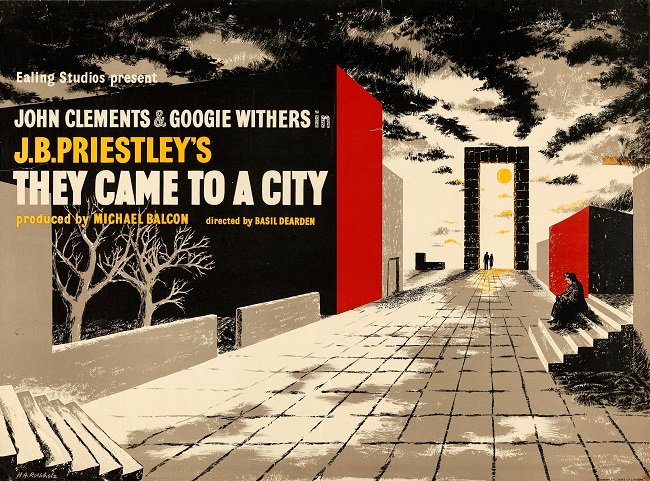
Dystopian futures, oppressive regimes and the inequalities between the haves and have nots, have been the mainstay of science fiction for decades. The political dimensions of such narratives are usually glossed over and seldom garner any attention from critics as they are simply plot devices, designed to set up a more specific story. Yet for some reason Neill Blomkamp's Elysium, seems to have been labelled "sci-fi socialism" upon its release by certain institutions. In today's unsophisticated language is meant to have negative connotations. Such comments should be dismissed as they frequently come from quarters that have a poor understanding of what exactly socialism is and little interest in genuine film reviews.
Dystopian futures, oppressive regimes and the inequalities between the haves and have nots, have been the mainstay of science fiction for decades. The political dimensions of such narratives are usually glossed over and seldom garner any attention from critics as they are simply plot devices, designed to set up a more specific story. Yet for some reason Neill Blomkamp's Elysium, seems to have been labelled "sci-fi socialism" upon its release by certain institutions. In today's unsophisticated language is meant to have negative connotations. Such comments should be dismissed as they frequently come from quarters that have a poor understanding of what exactly socialism is and little interest in genuine film reviews.
Elysium is simply a movie about inequality and the consequences that arise from such a state of affairs. It touches upon such weighty themes as faith, private healthcare and immigration. Yet rather than preach about these issues they are mainly plot devices to be explored cinematically. So, Elysium is filled with imagery such as a Los Angeles reduced to a favela and public services outsourced to robots. The depiction of poverty, segregation and crime is worryingly plausible as it is so clearly based upon contemporary news footage that we can see on any TV channels at any time of day. This is vividly contrast by the clinical beauty and corporate order of orbiting space station of Elysium, were the wealthy reside.
Enter Max De Costa (Matt Damon), a paroled professional thief, struggling to stay upon the straight and narrow. After an industrial accident renders him in need of healthcare that can only be found on Elysium, he reluctantly takes a job to kidnap an industrialist (William Fitchner). The plan is to steal data directly from his head that will allow earth-bound citizens access to Elysium. However, head of defence Secretary Delacourt (Jodie Foster) has no intention of seeing her exclusive community overwhelmed by illegal immigrants and dispatches sleeper agent Kruger (Sharlto Copley) to clear up any loose ends. What starts as a personal journey for Max, with his own life hanging in the balance, soon becomes a mission with far wider implications and much higher stakes.
Neill Blomkamp excels at setting up a vision of the future that is credible, despite showing quite little. There are some wide CGI shots of a decaying city but he mainly manages to reinforce the concept by the finer details of the production design. Litter strewn streets, smothered in graffiti, hospitals with precious few resources, overwhelmed by patients. Civic offices populated with automated machines dealing with endless lines of the public. Think of a downbeat version of Johnny Cab from Paul Verhoeven's Total Recall and you'll get the idea. The depiction of military technology is also based upon ongoing contemporary research, with a focus on drones and VTOL based weapons platforms. The CGI is particularly cutting edge, making the law enforcement robots worryingly realistic.
Although there are many familiar tropes and conventions used in Elysium, Neill Blomkamp brings a fresh eye to interpreting them. This is a pleasantly non-US-centric movie, with an international cast adding flavour to the plot. Los Angeles is shown to be predominantly Hispanic with a use of both English and Spanish. Elysium itself is also multicultural, with its President Patel reflecting the growing wealth of India. The final act does to a degree paint the story into a corner and leads to an outcome that is fairly predictable. Yet the ending raises a great many questions and certainly doesn't give the audience a convenient conclusion to all plot strands. It is worth reflecting upon Secretary Delacourt's final dialogue for example, as well as the potential corporate response to events in the final act.
Director Neill Blomkamp again proves that he is a film maker to keep an eye on. If you have not seen his previous Movie District 9, then do so. It is equally as innovative, international and thought provoking. Although far from perfect, with some instances of curious editing, Elysium still provides an above average character and plot driven science fiction movie. It also eschews the current trend for bland PG-13 rated action with a robust R rating. It certainly has the most memorable cinematic villain we’ve seen for a while.
The Darkest Hour (2011)
The Darkest Hour should have been more appropriately titled The Stupidest Hour, or Darwinian Natural Selection in Action. It really is a microcosm of all that is wrong with mainstream Hollywood at present and it saddens me that this film was made by director Chris Gorak. His previous movie Right at You Door was the exact opposite of The Darkest Hour, being intelligent, well scripted and focused. Prior to directing Gorak has had a successful career as an art director, working for such luminaries as David Fincher, the Coen brothers, and Terry Gilliam. His flair for the visual is present in The Darkest Hour but it would appear that the production design and visual effects were given priority over a good script. I shall endeavour to summarise the plot and provide a brief overview of the films respective merits, although there are precious little.
The Darkest Hour should have been more appropriately titled The Stupidest Hour, or Darwinian Natural Selection in Action. It really is a microcosm of all that is wrong with mainstream Hollywood at present and it saddens me that this film was made by director Chris Gorak. His previous movie Right at You Door was the exact opposite of The Darkest Hour, being intelligent, well scripted and focused. Prior to directing Gorak has had a successful career as an art director, working for such luminaries as David Fincher, the Coen brothers, and Terry Gilliam. His flair for the visual is present in The Darkest Hour but it would appear that the production design and visual effects were given priority over a good script. I shall endeavour to summarise the plot and provide a brief overview of the films respective merits, although there are precious little.
Americans Ben and Sean (Max Minghella and Emile Hirsch), a pair of two dimensional, uninteresting software engineers go to Moscow to look for investment in their smartphone app (oh how very modern). However, their Swedish business partner (Joel Kinnaman) and singularly unpleasant representative of humanity steals their intellectual property. Subsequently Ben and Sean seek comfort in a night club and meet two equally unedifying examples of womankind; Natalie (Olivia Thirlby), an American, and her Australian friend Anne (Rachael Taylor). It is at this point in the proceeding’s that invisible aliens decide to pop down to earth for a bit of an invasion and some global asset stripping, which proves to be a bit of an inconvenience. This unprepossessing bunch then lurch from cliché to cliché, continuously making bad choices. Imagine an episode of Scooby Doo in which all of the characters are recovering from major head trauma and you'll get the picture.
So, where to start? Well The Darkest Hour has a fundamentally bland and uninspired screenplay. The basic idea of energy beings is in principle better than the usual bipedal aliens that we see in such films. However, the idea runs out of steam quickly, especially when we see one outside of its invisible shield. They give the creatures anthropomorphic faces which immediately kills off any credibility. There is also no attempt to flesh out characters back story, beyond the functional. The Moscow setting although striking, doesn’t offer any new perspective on such standard genre material nor do the Russian characters. The films major flaw is that the plot is so unremittingly stupid it beggars belief. I appreciate that people do not always make the wisest decisions while under pressure but the most basic notions of rational thinking are jettisoned to create faux drama. The only innovation shown throughout the films eighty-nine-minute running time are the visual effects and the way the energy being are depicted. Apart from this, The Darkest Hour is pure dot to dot movie making.
The Darkest Hour feels like focus group film making. You can imagine someone standing at a whiteboard taking notes, as a room full of studio executives brainstormed what are the essential tropes of a PG-13 rated action sci-fi movie. As a result, the movie feels like it is working through a list of narrative points and lacks any personal connection of wider depth. What could have been an interesting variation on a theme, is simply an exercise in insincerity and stupidity. If a studio is happy to sell such a product then it doesn’t say much about what they think about their target audience. I hope in the future, director Chris Gorak distances himself from such companies and returns to producing material of the quality of his previous movie, Right at Your Door. Films such as The Darkest Hour do nothing for the genre apart from accelerate the pace of the race to the bottom.
Children of Men (2006)
I missed Children of Men on its original release in 2006 and only caught up with recently. If memory serves, the reason the film wasn’t on my radar when it came out was due to the misleading advertising campaign which attempted to pigeon hole and market the film as a sort of post-apocalyptic thriller. Although Alfonso Cuarón's Children of Men explores a violent and dystopian future, it’s cerebral film, grounded in a tangible depiction of a future England and certainly bears little relation to the Mad Max subgenre that the publicity campaign alluded to. A similar mistake was made with the marketing of The Road in 2009 which was sold by Miramax as a post-apocalyptic action film, when it patently isn’t.
I missed Children of Men on its original release in 2006 and only caught up with recently. If memory serves, the reason the film wasn’t on my radar when it came out was due to the misleading advertising campaign which attempted to pigeon hole and market the film as a sort of post-apocalyptic thriller. Although Alfonso Cuarón's Children of Men explores a violent and dystopian future, it’s cerebral film, grounded in a tangible depiction of a future England and certainly bears little relation to the Mad Max subgenre that the publicity campaign alluded to. A similar mistake was made with the marketing of The Road in 2009 which was sold by Miramax as a post-apocalyptic action film, when it patently isn’t.
In 2027, in a socially decaying world in which women have become somehow infertile, a former activist Theo Faron (Clive Owen) agrees to help transport pregnant woman Kee (Clare-Hope Ashitey) to a sanctuary. They are pursued by both the UK government and revolutionaries who seek the baby for political gain. Intelligently written and credibly depicted Children of Men is a worryingly plausible tale. As the wider world crumbles, immigrants flock to the few remaining functional countries resulting in an increasingly authorisation government. Children of Men feels very contemporary indeed. The cast are capable and have ample material to work with. Michael Caine's performance was very engaging and it’s a shame that his character does not a have more screen time. It’s always good to see established actors playing against type. Caine allegedly drew on his experiences and friendship with John Lennon.
Cinema often uses the depiction of technology to establish its futuristic credentials. In the case of Children of Men implies that the technological advance of recent years has ground to a halt, due to the ongoing economic and political decline. What is shown in the way of futuristic technology is subtle and effective. The heads up display on car windscreens is both plausible and non-invasive. The use of small form factor PCs and screens is also credible. Much of this aspect of the production design is a clever extrapolation of hardware that we currently have at our disposal. The overall effect helps create a more convincing and grounded depiction of the near future.
Similarly, the depiction of urban decay in Children of Men is particularly well done. The images of a graffiti ridden, boarded up and burnt out Greater London has an uncomfortable similarity to Gaza or the shanty towns of Zimbabwe. The resulting lawlessness of the disenfranchised was also very well done, especially in light of the London riots of 2011. The trains and buses with wire mesh over the windows, along with the banditry of the Kent countryside have their roots in current global civil unrest. There was similar imagery of social decline in the 1979 TV series Quatermass.
The much praised "single take shots" are suitably engaging, although to facilitate such scenes, a high degree of digital post production work was required. However, in other respects the visual effects work is very low key and does not overwhelm the story, as so often is the case these days. The military assault on the refugee camp at Bexhill looks like a news report, shot on the move complete with shaky cam. It is a fascinatingly chaotic set piece and a welcome change to the usual overblown kind of Hollywood action sequence. The subsequent bombing of the camp by the RAF is seen through fog at a distant and is far more dramatic for it. Presenting the drama in such stark terms and avoiding spectacle, further elevates the movie from simple entertainment to serious drama.
As you would expect from serious movies of this nature that chooses to pursue a more grounded approach to the subject matter, there are few concessions made to populist conventions such as the “happy ending” or good prevailing over evil. Therefore, the ending does not come as a major surprise and is not out of place. Considering the large amount of religious symbolism and imagery in the film, it would have been erroneous to expect anything else under the circumstances. There's sufficient information supplied in the final five minutes of the film for the viewer to draw their own conclusion as to the chain of events that would potentially follow after the films ending. Cuarón is not a fan of excessive plot exposition and comprehensive back story. A philosophy that I often agree within the context of cinema.
Lucy (2014)
Lucy (Scarlett Johansson), a student studying in Taiwan, find herself an unwilling drug mule for crime boss Mr. Jang (Choi Min-sik). When she accidentally ingests the synthetic CPH4 which has been surgically implanted in her abdomen, she rapidly develops advance physical and mental abilities as the drug unlocks the unused parts of her brain. However, this process also puts her life in peril and she soon realises that she requires further doses of the CPH4 to stay alive. Striving to reconcile herself to her situation Lucy reaches out to Professor Samuel Norman (Morgan Freeman), a neuroscientist and expert in the hidden capabilities of the mind. Meanwhile, Mr.Jang does not take kindly to interference in his drug trafficking and sets out to hunt down Lucy.
Lucy (Scarlett Johansson), a student studying in Taiwan, find herself an unwilling drug mule for crime boss Mr. Jang (Choi Min-sik). When she accidentally ingests the synthetic CPH4 which has been surgically implanted in her abdomen, she rapidly develops advance physical and mental abilities as the drug unlocks the unused parts of her brain. However, this process also puts her life in peril and she soon realises that she requires further doses of the CPH4 to stay alive. Striving to reconcile herself to her situation Lucy reaches out to Professor Samuel Norman (Morgan Freeman), a neuroscientist and expert in the hidden capabilities of the mind. Meanwhile, Mr.Jang does not take kindly to interference in his drug trafficking and sets out to hunt down Lucy.
At first glance, the story for Lucy seems somewhat formulaic, based upon the popular misconception about the untapped potential of the human mind and how we as a species only use a small percentage of our brain capacity. However, Lucy is a movie, written and directed by Luc Besson, who brings a distinctly European aesthetic along with his own unique style to the proceedings. The exotic locations, the vivid colour palette and an eclectic international cast results in a curious ninety-minute genre hybrid that may polarise audiences. You will either buy into the far-fetched concept and enjoy the resulting cinematic journey or simply scoff in derision at the preposterous narrative. I happily chose the former option.
It takes a confident director to draw from such movies as Kubrick's 2001: A Space Odyssey and Terrence Malick’s The Tree of Life. Combining philosophical musings about the nature of consciousness with martial arts and gun play is another bold step. Yet it's all done with such aplomb that it broadly works. In an interesting plot twist, Lucy does not descend into megalomania when confronted with her god like powers. Instead the film explores her melancholic attitude towards the impending loss of her "humanity". There are parallels with character of Doctor Manhattan in Watchmen, who faces a similar crisis. Lucy also addresses modern day society's dependence upon the internet and social media, which is another timely theme. Especially in light of Stephen Hawking recent comments about AI and the potential impact it may have upon the world.
Lucy hinges upon the lead performance by Scarlett Johansson and she is extremely watchable as she slows down time, shoots sundry henchmen with pinpoint accuracy and merges with the digital world. The visual effects are striking and the entire film benefits from its rapid pace and overall French sense of panache. It is also pleasant to see such a storyline of this nature based around a female lead and I enjoyed the reference to Lucy sharing her name with the first human being. I feel it is a superior film to Bradley Cooper's 2011 movie, Limitless that shared a similar theme. Lucy also addresses the perennial (and tedious) question about whether a female lead can carry a modern action movie. The answer is a resounding yes.
The World's End (2013)
I was quite surprised by Edgar Wright's The World's End. Not by the fact that it is very funny, impeccably made, cinematically literate, with a cast of Britain's finest character actors. But by its very melancholic tone and sense of introspection. Behind the clever comedy and science fiction trappings, there is a rather pertinent examination of nostalgia and that fortysomething obsession with recapturing one’s youth. In some respects, the concept can be broadened into a wider notion of a nation that is still obsessed with its glory days. It should also be noted that this is not a romantic or rose-tinted exploration of the aforementioned themes.
I was quite surprised by Edgar Wright's The World's End. Not by the fact that it is very funny, impeccably made, cinematically literate, with a cast of Britain's finest character actors. But by its very melancholic tone and sense of introspection. Behind the clever comedy and science fiction trappings, there is a rather pertinent examination of nostalgia and that fortysomething obsession with recapturing one’s youth. In some respects, the concept can be broadened into a wider notion of a nation that is still obsessed with its glory days. It should also be noted that this is not a romantic or rose-tinted exploration of the aforementioned themes.
The story centres around a group of school friends who reunite to reattempt a failed pub crawl they undertook twenty years earlier. Right from the outset, director Edgar Wright does something different to his last two instalments of the "Cornetto Trilogy". This time the central characters of Gary (Simon Pegg) and Andy (Nick Frost) are not best buddies and in fact have quite a prickly relationship. Gary is also not an especially likeable individual (but he is funny), having never moved on from his adolescence. The rest of the group consists of a superb ensemble cast of estate agent Oliver (Martin Freeman), car salesman Peter (Eddie Marsan) and Steven (Paddy Considine) who has a "26-year-old girl friend".
The ill-conceived reunion takes a very different turn when it becomes apparent that the village of Newton Haven, has been taken over by android replicants. This provides the production a wealth of opportunities to reference classic science fiction movies and novels (often with a very British slant). This includes John Wyndham's The Midwich Cuckoos, Don Siegel's Invasion of the Bodysnatchers and Doctor Who. The more you look the more you'll find. However, it is at this point in the plot when the movie changes direction, that The World's End becomes a little less polished and a bit more hit and miss. The action scenes work fine, especially the bar stool fight sequence, yet there is a sense that may be the movie is trying a little too hard.
Although the popularity of Pegg and Frost will make this movie accessible to an international market, this is still a very British movie. Where Rosamund Pike has made Hollywood productions such as Jack Reacher, the same cannot be said of the wonderful Mark Heap. Brits will recognise many a face. I'm not so sure the rest of the world will. Yet to have tried to avoid the foibles of British culture, such as roundabouts, social drinking, and English slang would have made for a weaker film. Although this is a movie with substantial amounts of CGI and set pieces, it is also a work of thoughtful self-examination through the prism of British self-deprecation. The codacil at the end of The World's End may not to all liking but is worth pondering upon.
The final part in any series, be it one as tenuous as the “Cornetto Trilogy", is always hamstrung to a degree of repetition, potential over familiarity and the practical restrictions a conclusion brings. The World's End is still a quality piece of film making from a genuinely talented team. It manages to avoid most of those pitfalls. Be warned there is some very choice language banded about including that particular word that some folk deem to be the worse. The frenetic nature of the final act does not diminish the movie which is still exceedingly and consistently funny. Finally, full marks to the writers for referencing the "Starbucking" of the UK pub industry. At least it is a malady that hasn't affected Edgar Wright's film making.
Dark Skies (2013)
Consider the Bourbon biscuit. It comprises of two dark chocolate biscuits sandwiching a chocolate fondant. It is a straight forward recipe made from standard elements. Yet multiple companies manufacture the Bourbon biscuit and they're all slightly different in texture and taste due to minor variations in the base ingredients. You can make the same point about baked beans. Dark Skies is the cinematic equivalent of these products. It is competently made, offers what you know and expect in a slightly different fashion. That doesn't sound such a bad thing, does it? Well let me put it another way. It's generic and predictable.
Consider the Bourbon biscuit. It comprises of two dark chocolate biscuits sandwiching a chocolate fondant. It is a straight forward recipe made from standard elements. Yet multiple companies manufacture the Bourbon biscuit and they're all slightly different in texture and taste due to minor variations in the base ingredients. You can make the same point about baked beans. Dark Skies is the cinematic equivalent of these products. It is competently made, offers what you know and expect in a slightly different fashion. That doesn't sound such a bad thing, does it? Well let me put it another way. It's generic and predictable.
Please ignore the movie poster. Dark Skies is certainly not a new horror phenomenon. It simply dovetails a home-invasion plot-line into a wider alien menace story and punctuates the proceedings with some neat but rather obviously telegraphed jolts. Furthermore, a lot of the best scenes are very derivative of existing genre classics. I suspect that once again it will come down to the viewers age or genre familiarity as to whether they spot them. The "vegetable" incident in the kitchen for example is not a million miles away from the fridge scene in Close Encounters and the geometric crockery stacking, is very reminiscent of the chairs in Poltergeist. Need I go on? Okay I will. They did the thing with the birds flying into the windows in Red Lights.
There are flashes of inspiration from Director Scott Stewart. The central family within the plot seem to be a microcosm of American Middle-Class angst, particularly in the current economic climate. Josh Hamilton’s performance as the marginalised head of the household is very plausible. Keri Russell has a more conventional role as his estate agent wife and traditional protective mother figure. But as always with such movies these days, the production seems to be far more concerned about making clever set pieces and smart twists, which despite the effort are not entirely successful. It beggars belief that when dealing with the subject of aliens and the infinite possibilities that such a theme offers, Hollywood is still locked in this arbitrary depiction of all extraterrestrial life as "greys".
So, we return to the Bourbon biscuit analogy once again. Despite their inherent culinary shortcomings, they do serve a purpose and are adequate in default of anything else. That pretty much sums up Dark Skies. If you watch this movie at home, when you are in an undemanding mood, accompanied by a cup of [insert beverage of choice here] then it may satisfy. However, the more familiar you become with a specific genre and with all its associated tropes and memes, the more it becomes apparent that Dark Skies is distinctly average and no more.






Lockout (2012)
Let's cut to the chase. Lockout is derivative, clichéd, has some dodgy CGI FX work and has nothing new to add to the Sci-Fi sub-genre of future prison action movies. However, that does not mean that the movie is not enjoyable. On the contrary, if approached with the right mind set, then Lockout can be an entertaining experience, which will have you chuckling as it ticks boxes in a knowing fashion and offers some budget action and hard-boiled dialogue. It certainly isn't going to win any awards, but is does everything that a B movie should do. If you treat it as such then you won't be misled.
Let's cut to the chase. Lockout is derivative, clichéd, has some dodgy CGI FX work and has nothing new to add to the Sci-Fi sub-genre of future prison action movies. However, that does not mean that the movie is not enjoyable. On the contrary, if approached with the right mind set, then Lockout can be an entertaining experience, which will have you chuckling as it ticks boxes in a knowing fashion and offers some budget action and hard-boiled dialogue. It certainly isn't going to win any awards, but is does everything that a B movie should do. If you treat it as such then you won't be misled.
For starters, think Escape from New York, then No Escape and then finally Fortress. Follow that order to find the appropriate level. Where John Carpenter made Snake Plissken a Clint Eastwood/John Wayne hybrid, Guy Pearces' Snow is more of a John McClane/Han Solo crossover. Lockout never strays into being a total rip-off of Carpenter's work, but it sails close to bounderies of what can be labelled "a homage". Guy Pearce, armed with pumped biceps and an arsenal of waggish badinage plays Snow, a former government agent who must single-handedly rescue the President’s daughter (Maggie Grace), from a space prison to escape (for some particular reason as Homer Simpson said). The prisoners are the usual collection of cinematic sociopaths, although Hydell (Joseph Gilgun), the psychotic brother of the prisoner’s leader, has all the best lines and is immense fun to watch. Stuff gets blown up, fist fights ensue, the laws of physics are conveniently bent to suit the plot as you expect from such movies.
When Luc Besson initially started putting his name to broader action productions, it was a pleasant alternative to mainstream Hollywood fodder. The European vibe brought something new to familiar action material. However, these movies are now plagiarising the very material they seek to be different to and the distinction is not so great now. Written and directed by relative newcomers James Mather and Stephen St. Leger, Lockout perhaps needed a more experienced pair of hands at the helm. The movie was shot on location in Belgrade but also had extensive green screen footage shot in post-production. The movie struggles to integrate both elements. However, it's quirky continental pedigree, tongue in cheek approach, along with its fast pace does allow the directors to effectively "blag it".
I was in an unusually forgiving mood when I saw Lockout in the movie theatre on its release and chose to ignore its faults and simply dealt with it like a DTV action title from the eighties. I even smirked when Snow balked at being beaten by a guy called Rupert. However, this is the sort of movie that plays a lot better in the home entertainment market. It’s something that goes well with a few beers and a curry. If you are a casual film viewer, you may wish to give this one a miss as it lacks some of the polish of bigger budget releases. For those who have a deeper love for the action genre and have sat through Freejack and Fortress 2: Re-Entry, then you can take this one on the chin easily.
Skyline (2010)
When I first saw the initial trailers for Skyline, I was not overly impressed. Once again, here was a film that appeared to offer a great deal of spectacle but was there any substance? Would there be a good script, engaging performances, likeable characters? Call me old fashioned but I do consider these to be important attributes to any film. Well I finally caught up with Skyline, in the comfort of my own lounge, an environment that is often more forgiving that the cinema itself. As I suspected, Skyline turned out exactly as I predicted and once again I was left thinking "so what?" It’s an all too common refrain these days.
When I first saw the initial trailers for Skyline, I was not overly impressed. Once again, here was a film that appeared to offer a great deal of spectacle but was there any substance? Would there be a good script, engaging performances, likeable characters? Call me old fashioned but I do consider these to be important attributes to any film. Well I finally caught up with Skyline, in the comfort of my own lounge, an environment that is often more forgiving that the cinema itself. As I suspected, Skyline turned out exactly as I predicted and once again I was left thinking "so what?" It’s an all too common refrain these days.
Skyline is technically well made. The film opens with a startling event, then lapses into flashback to introduce the characters and set the scene. The story exposition is executed efficiently and within fifteen minutes the film moves on to the action. The cast, drawn mainly from a TV background are competent. These include Eric Balfour, Scottie Thompson and Donald Faisson. The story follows a traditional arc climaxing in what the writers obviously consider a twist. The ending leaves the door firmly open for a sequel should the need arise (Alleged a second movie is being considered starring Iko Uwais). The visual effects are very high quality but they did constitute over 90% of the films overall budget.
Despite all the above, Skyline is derivative, clichéd, predictable and utterly disposable. It is not dull but conversely it is not especially engaging. You can happily watch it whilst performing another task such as gaming, reading or plucking a chicken. The characters are not unlikeable as they were in Cloverfield but they are not sufficiently developed to merit any serious emotional investment. For instance, David Zayas plays an intriguing concierge who seems to be the only practical member of the group. Yet his back story is never explored and apart from a pithy "kiss off" line, his role doesn't really go anywhere.
Directors of Skyline, The Brothers Strause, have a technical background in the industry and own the visual FX studio Hydraulx. Their pedigree in this field speaks for itself. Yet ninety minutes of CGI does not a good film make. Frankly, the proliferation of visual effects in films, TV and advertising these days has somewhat jaded the public's attitude to them. Although they are an expected facet of any production, they are paradoxically diminishing as a major point of interest. How many times have we seen a major US city demolished. In the seventies, this was a rare event but now days it’s as common as politicians lies. Apart from Mad Max: Fury Road, I cannot think of any recent film that got by mainly because of its visuals.
In many respects Skyline is like a fifties B film. It tries very hard to follow the path of larger budget predecessors. You only have to look at the imagery that is used, such as the spaceships over Los Angeles or the squid like harvesting drones. The familiarity of these visuals reflects a sort of cinematic fast food culture. Sadly, it has the same overall results. After an innocuous viewing experience akin to a drive-thru meal, the audience soon forgets the inherently bland movie experience they’ve just partaken off. Without the substance of a genuinely good script or an original idea, alleged big spectacles, such as Skyline, become no more than a hollow one.
Apollo 18 (2011)
A fundamental requirement of cinema is that the audience suspends their sense of disbelief. Anything that breaks this will immediately has a negative impact upon the viewing experience. There are many things can severe this connection but the two most common seem to be obvious plot holes and Scooby Doo behaviour IE “Let’s split up…”. If these are the result of simply poor film making, then they can perhaps be forgiven. Every director has to learn their craft. However, if these two factors are present by design, then that is an unpardonable sin. Assuming that your audience is stupid, is insulting and the worse sort of hypocrisy.
A fundamental requirement of cinema is that the audience suspends their sense of disbelief. Anything that breaks this will immediately has a negative impact upon the viewing experience. There are many things can severe this connection but the two most common seem to be obvious plot holes and Scooby Doo behaviour IE “Let’s split up…”. If these are the result of simply poor film making, then they can perhaps be forgiven. Every director has to learn their craft. However, if these two factors are present by design, then that is an unpardonable sin. Assuming that your audience is stupid, is insulting and the worse sort of hypocrisy.
Apollo 18 has a strong start for a movie built around the found footage concept. It plays very nicely into the current appetite for conspiracy theories. The first thirty minutes where we meet the cast and learn of their covert mission to place monitoring equipment on the moon, is credible and intriguing. The cold war setting and the post-Watergate back drop do a lot to fuel the narrative. During this initial third of the movie, Apollo 18 plays more like a political thriller rather than a sci-fi shocker. But then director Gonzalo Lopez-Gallego goes and jumps the shark and all the previous good work goes out the window. It’s a common problem with contemporary film making. I remember having exactly the same thoughts when I saw Paranormal Activity.
After a string of anomalous events a key character makes the most illogical leap of thought and as a result the credibility simply melts away. You see, I take the attitude that NASA astronauts are trained professional, hand picked because of their skills and analytical mindset. Maintaining rational under extreme circumstances must surely feature in their training. So, I simply do not buy into the idea that, because they’ve found an abandoned Russian Lunar Module, a dead cosmonaut, picked up radio interference, had the flag that they planted removed and found some unidentified marking in the lunar soil, naturally concluded that it must be extraterrestrials. Scientists simply do not think this way.
The rest of the film is arbitrary and derivative bug hunt, with obviously telegraphed jumps. The conclusion involving complicit government agencies is predictable and uninspired. This is a shame because the film is very well made from a technical perspective. But once again we have a production that demonstrates a clear understanding of visuals but not plot construction. Furthermore, Apollo 18 also seems to forget that it is a found footage movie, with scenes and dialogue that are contrived to be more cinematic and come dangerously close to breaking the fourth wall.
With reference to the plot holes, I unlike other critics was not particularly bothered about the nebulous nature of the alien life forms featured in the film. I am happy to watch movies without every answer being given to me on a plate. Life is seldom clear cut, is it? However, I do balk at the fundamental flaw that permeates Apollo 18. The film comprises of 16 mm & 35 mm cine footage along with video material from external cameras. Now the latter may well have been broadcasted and thus been received and recorded back on earth. But the cine film had to be collected and developed. Does the film not hinge on the premise that no mission has subsequently returned to the moon? Also, the Russian Lunar Module and US Command module where both destroyed, therefore eliminating any footage they may have had. No, this is simply bad screen writing and brings me neatly full circle to my original point that I started with.
Conquest of the Planet of the Apes - Unrated Version (1972)
I have always been a fan of the Planet of the Apes films since I saw them on TV as a child. At the time I enjoyed them on a very superficial level, where upon later viewing I became aware of their political and sociological subtext. I recently caught up with the alternative version of Conquest of the Planet of the Apes that is available on Blu-ray. Director J. Lee Thompson's original cut of the film was considered too bleak and was re-edited into the theatrical version that most viewers are familiar with. The differences were mainly substitutions hence both versions have the same running time.
I have always been a fan of the Planet of the Apes films since I saw them on TV as a child. At the time I enjoyed them on a very superficial level, where upon later viewing I became aware of their political and sociological subtext. I recently caught up with the alternative version of Conquest of the Planet of the Apes that is available on Blu-ray. Director J. Lee Thompson's original cut of the film was considered too bleak and was re-edited into the theatrical version that most viewers are familiar with. The differences were mainly substitutions hence both versions have the same running time.
The 2008 Blu-ray release includes both the theatrical version and an Unrated version with an alternate opening credits sequence as well as an alternate ending sequence. These were both re-edited and re-shot due to a poor test audience reaction. The studio also wished to secure a lower theatrical rating and thus maximize the potential box office returns. The subsequent changes make substantial impact upon the tone of the film and certainly take the narrative in a different direction.
In the opening, a police patrol tracks and kills a gorilla, which is shown to have numerous cuts and welts through maltreatment. Governor Breck later refers to a gorilla who turned on his master and was killed. In the ending, Caesar allows the apes to beat Breck and the other human’s prisoners to death. Breck does not cower, but faces his executioners. The Chimpanzee Lisa does not say "No" and Caesar makes no speech counselling compassion. There are also additional shots of apes and humans bleeding from gunshots, and apes stacking bodies of dead riot police.
Such violent material and a downbeat ending where not uncommon to seventies cinema. In fact you only have to look back three years prior to Beneath the Planet of the Apes for a prime example. However, Twentieth Century Fox were aware of the diminishing box office returns of the franchise and did not want to further harm profits with excessive political content that could further alienate an audience. In some respects this entry in the series is perhaps the most cerebral. Certainly this alternate version makes quite a powerful statement, has greater credibility and is Roddy Mc Dowall's best performance in the series.
Yet this cut of the film cannot stand as the definitive version as it effectively contradicts the premise for the next instalment. Battle for the Planet of the Apes begins with both apes and the human survivors attempting to live in peace. Something that could have hardly take place if there had been a massacre as depicted in the unrated version of Conquest of the Planet of the Apes. Therefore, this alternative version remains an interesting companion piece, rather than a replacement for the established theatrical
The Enigma of 2001: A Space Odyssey
"2001: A Space Odyssey. Stanley Kubrick’s philosophically ambitious, technically innovative and visually stunning cinematic milestone". BFI November 2014.
You will often find this sort of language associated with Kubrick's work, especially 2001: A Space Odyssey. It is considered by many to be his finest production and one of the greatest science fiction feature films ever made. In fact 2001: A Space Odyssey has become one of those cinematic sacred cows that regularly features in most film buffs top ten movies of all time. It's a curious thing because a little research will show that critical opinion was split right down the middle on its release in spring 1968. It is only over the course of the last five decades that the movie has grown in artistic stature and garnered the acclaim it now enjoys.
"2001: A Space Odyssey. Stanley Kubrick’s philosophically ambitious, technically innovative and visually stunning cinematic milestone". BFI November 2014.
You will often find this sort of language associated with Kubrick's work, especially 2001: A Space Odyssey. It is considered by many to be his finest production and one of the greatest science fiction feature films ever made. In fact 2001: A Space Odyssey has become one of those cinematic sacred cows that regularly features in most film buffs top ten movies of all time. It's a curious thing because a little research will show that critical opinion was split right down the middle on its release in spring 1968. It is only over the course of the last five decades that the movie has grown in artistic stature and garnered the acclaim it now enjoys.
When movies achieve such status, it becomes very difficult to objectively critique them. Many viewers feel obliged to add their voice to the consensus. "If everyone thinks this film is great then so must I" seems to be the prevailing mentality. There is also an erroneous assumption that if a film is truly great, it will automatically be accessible to all potential audiences. That is often not the case. For every person who watches 2001: A Space Odyssey for the first time and comes away feeling profoundly inspired, there will be another who leaves confused, mislead or just plain bored. 2001: A Space Odyssey is ultimately an acquired taste and although I enjoy and admire the film for many reasons; I would not say that it is for everyone. In fact I would actually discourage some viewers from seeing it.
The first thing I would say to anyone intending to watch his movie for the first time is to be patient. It has a deliberately slow and measured pace. The lack of dialogue in the first act, which focuses on the "dawn of man", requires you to pay extra attention to the subtleties of the story and performances. As ever with Kubrick’s work there's a focus upon imagery and emphasis placed upon visual composition. In the second act the characters are somewhat cold and clinically defined. The production design and the technology is by far the larger player at this stage. The denouement with is allegorical content will be especially hard to digest by those viewers that like their narrative linear and presented in an easily digestible format. If you are not a fan of classical music then the movie’s soundtrack may also be a major stumbling block.
There is however, much to be praised about the movie. The visual effects still hold up well today and there is little technologically to date the proceedings. The computer graphic and GUIs that are depicted are still quite pertinent. Despite its somewhat somber tone the story is a very positive one. Perhaps mankind's future isn't as bleak as some would think. It may be that the movies greatest achievement is its ability to make you think and reflect. Due to the somewhat nebulous ending, viewers are encouraged to interpret matters for themselves. I have known 2001: A Space Odyssey to inspire debates about religion, determinism and many other philosophical concepts.
2001: A Space Odyssey is more than just a conventional piece of cinematic story telling. It is a conduit for ideas and concepts. It is far from just a passive experience and requires viewers to participate in the experience with an open and enquiring mind. Kubrick has fashioned a puzzle that you can either admired for what it is, or you can go a stage further and attempt to solve it. As long as you realise that there is no single correct solution. Ultimately viewing this movie is a very unique and personal experience; 2001: A Space Odyssey doesn't necessarily offer the same thing to everyone. Perhaps that is why some viewers do not enjoy watching it. However that doesn't prove that either they or Kubrick is somehow wrong. It simply demonstrates the subjective nature of art.
There is still an enigma associated with 2001: A Space Odyssey. It will never truly disappear because the themes that Kubrick explores are ultimately timeless. So if you are tempted to see this movie at any other point, take time to consider whether it really is for you. There has been so much written about it that you shouldn't have any difficulty making such a choice. If the answer is no then that is fine. Film cannot be everything to everyone and that is especially true of 2001: A Space Odyssey. It is not always essential to join the consensus about a movie and it is perfectly acceptable to say that something is not to your liking due to differing taste. One should never feel obliged to like something because of the prevailing culture. That is something Kubrick himself would have eschewed.
Space: 1999 (1975-77)
In late 1975 I was faced with a very difficult choice. Should I watch Doctor Who on BBC1 or the new Gerry Anderson series, Space: 1999 on LWT? I opted for the latter, being seduced by the big budget production with its special effects that were (for the time) streets ahead of the competition. Now if memory serves me rightly, this was broadcast late afternoon or early evening. It was definitely a pre-watershed show by modern standards although there was no concept as such at the time. Yet like Doctor Who, this had me hiding in terror behind the proverbial sofa. Two particular episodes left a marked impression on me. This was because they were both creepy and punctuated by some rather frightening imagery. They were Dragon’s Domain and The Troubled Spirit.
In late 1975 I was faced with a very difficult choice. Should I watch Doctor Who on BBC1 or the new Gerry Anderson series, Space: 1999 on LWT? I opted for the latter, being seduced by the big budget production with its special effects that were (for the time) streets ahead of the competition. Now if memory serves me rightly, this was broadcast late afternoon or early evening. It was definitely a pre-watershed show by modern standards although there was no concept as such at the time. Yet like Doctor Who, this had me hiding in terror behind the proverbial sofa. Two particular episodes left a marked impression on me. This was because they were both creepy and punctuated by some rather frightening imagery. They were Dragon’s Domain and The Troubled Spirit.
I recently had an opportunity to revisit Space 1999. Both seasons of the show have been remastered and are available on Blu-ray. The picture quality is exceptionally good highlighting the fact that this was a big budget production for its time. However nostalgia can sometime cloud ones overall perception. Watching Space 1999 through the prism of my contemporary critical sensibilities proved to be subtly different experience from when I was eight. I found the show to have a far more varied narrative quality than I remember. Some episodes were better than others and a handful were extremely well made and atmospheric. Interestingly, both Dragon’s Domain and The Troubled Spirit were among these.
Dragon’s Domain focuses on discredited astronaut Tony Cellini, the sole survivor of the Ultra Probe Mission. He starts having nightmares about the creature that allegedly killed his crew five years previously. However the enquiry that investigated the probe disaster never found any evidence of such a creature and attributed the deaths to Cellini’s incompetence. When Commander Koenig ignores Cellini’s renewed claims that the creature is near, he steals an Eagle to hunt down his nemesis. Cellini arrives at a space graveyard full of derelict ships and finds the Ultra Probe among them. He docks with his former vessel and seeks out his foe. Koenig arrives in time to see Cellini fight and die at the hands of the creature he confronted years before. It falls to him to avenge his exonerated friend and slay the beast.
This is a very dark and atmospheric episode, punctuated by unpleasant deaths of the supporting cast. The so-called “dragon” has a nasty habit of dragging victims into its mouth and then spitting out a smouldering corpse a few seconds later. As a child this caused me many a sleepless night. The screenplay is tight and offers a modern twist on a traditional storyline. There are shades of Moby Dick and Saint George in the narrative. The ambience of this particular episode is further enhanced by the use of Tomaso Albinoni's "Adagio in G Minor". Although there is a definitive ending to this sad tale, it is very bleak. Tonally this made the show quite unusual for the times. US network television still felt obliged to offer upbeat endings and positive moral messages.
The Troubled Spirit begins with Hydroponics expert Dan Mateo holding a psychic experiment relating to plants. He theorises that human brainwaves may be able to have a positive effect upon plant growth. However something goes wrong and a burnt apparition subsequently appears and stalks Moonbase Alpha. After fatalities occur Commander Koenig decides to hold a second séance. It soon becomes apparent that the ghost is in fact that of Dan Mateo. Killed in an accident that has yet happened the vengeful spirit seeks to kill those he holds accountable for his own death. Doctor Bergman suggests neutralising the psychic powers that Mateo has gained by placing him in a containment field of reverse energy. During the experiment the ghost appears seeking retribution. Mateo wrestles with his dead self and breaks the containment field. Mateo is burnt and dies from his injuries. As he does, his defeated ghost vanishes.
This episode plays out very much in the style and idiom of seventies UK horror films. The editing, the suspense and the way the shocks are implemented are reminiscent of the work of such studios as Hammer, Amicus and Tyburn productions. The use of sitar music adds to the creepy ambience and the whole story is reminiscent of the film The Man who Haunted Himself. Forty one years on I’m still surprised that an episode of a mainstream television from that era could be so frightening. Although the murders of the crew are discrete the burnt apparition that perpetrates them is not. Again the story is very dour and has a plausible yet far from happy conclusion. The blending of the supernatural in a science fiction setting is also a bold juxtaposition of genres that works well.
Returning to a much cherished show can be a double edged sword. I’ve found that a lot of what I’ve watched and enjoyed in the past was dependent on the circumstances of the time. In the UK during the seventies there was less choice as far as channels. Therefore a lot of material was watched in default of anything else. The style of TV shows was different then. Stories were paced decidedly slower. It can also be argued that I was less discerning in my taste. Certainly less sophisticated. To a degree this has coloured my judgement of Space 1999.The two episodes I’ve referenced were above average and have held up remarkably well. There are other instalments from both seasons that are a lot more dated and weaker. Therefore I would only recommend a comprehensive re-watching of the show to fans. The more casual viewer may wish to cherry pick those episodes that have garnered specific acclaim.
Edge of Tomorrow (2014)
Edge of Tomorrow is based upon Hiroshi Sakurazaka book All You Need Is Kill, from 2004 and it's a shame that the movie did not retain that title. Edge of Tomorrow is a somewhat bland and generic moniker. Mercifully the film itself is a cut above your usual blockbuster Sci-fi release. The screenplay written by Christopher McQuarrie (The Usual Suspects) and Jez Butterworth (Jerusalem) offers a tight and gripping narrative which quickly establishes its premise and makes it continuously engaging. Dubbed "Groundhog D-Day" by certain pundits, the story of history repeating itself is presented in such a fashion as to be intriguing rather than repetitive.
Edge of Tomorrow is based upon Hiroshi Sakurazaka book All You Need Is Kill, from 2004 and it's a shame that the movie did not retain that title. Edge of Tomorrow is a somewhat bland and generic moniker. Mercifully the film itself is a cut above your usual blockbuster Sci-fi release. The screenplay written by Christopher McQuarrie (The Usual Suspects) and Jez Butterworth (Jerusalem) offers a tight and gripping narrative which quickly establishes its premise and makes it continuously engaging. Dubbed "Groundhog D-Day" by certain pundits, the story of history repeating itself is presented in such a fashion as to be intriguing rather than repetitive.
Tom Cruise plays a reluctant military officer William Cage who find himself leading a major offensive against a group of what appear to be bio-mechanical Cephalopoda, who are attacking worldwide. He is not a seasoned soldier, coming from a military PR background and subsequently dies in combat. However through a curious side effect of being exposed to the dead aliens precious bodily fluids, he find himself in a time loop in which he continuously repeats his final day. Furthermore he is cognisant of this temporal anomaly and tries to learn from his mistakes and change the outcome of the time line.
The first two thirds of Edge of Tomorrow are inventive and absorbing. The production design and overall ambience are well conceived. The battles look authentic as various global landmarks are reduced to rubble. It is also nice to see Tom Cruise play against type. He does not start the story as a generic hero and is in fact somewhat unlikeable. It is in the final act that the narrative becomes a little less logical and more contradictory. Prior to this point, Cage and his cohorts have persevered through meticulously learning from their prior mistakes. Suddenly their approach changes to one of greater improvisation, which does seem somewhat incongruous.
However director Doug Liman handles the film with sufficient originality making Edge of Tomorrow his best picture since The Bourne Identity (2002). The supporting cast featuring such quality character actors as Brendan Gleeson and Bill Paxton adds immensely to the proceedings. Furthermore Edge of Tomorrow is not just a cinematic vehicle for Tom Cruise. Emily Blunt more than holds her own in the role of Rita Vrataski, the seasoned veteran who he continuously learns from.
Overall Edge of Tomorrow is happy to be a smartly contrived Sci-fi action movie, that sticks to its own remit. Therefore viewers shouldn’t expect the wider social themes of films such a Minority Report and Starship Troopers. What you do get with Edge of Tomorrow is a surprisingly superior action movie featuring quality set pieces, good performances and an engaging narrative. Time travel can be a tricky plot device if poorly handled but that’s not a mistake that Edge of Tomorrow makes.