
Wilderness (2006)
Independent British Horror films often showcase some of the best up and coming talent about. Neil Marshall was a prime example of this back in 2002 with his debut film Dog Soldiers. He has subsequently produced an interesting body of work in both cinema and television. Independent horror films offer a great deal of flexibility to writes and directors, affording them an opportunity to explore themes that larger studios simply will not touch. Happy endings, moral subtexts, glamorous leads are not de rigueur. In fact, they are potentially a hindrance. The genre is a platform for gritty and often unpleasant tales that explore the darker side of human nature. Michael J. Bassett's Wilderness falls squarely into this category, offering a grim but gripping story.
Independent British Horror films often showcase some of the best up and coming talent about. Neil Marshall was a prime example of this back in 2002 with his debut film Dog Soldiers. He has subsequently produced an interesting body of work in both cinema and television. Independent horror films offer a great deal of flexibility to writes and directors, affording them an opportunity to explore themes that larger studios simply will not touch. Happy endings, moral subtexts, glamorous leads are not de rigueur. In fact, they are potentially a hindrance. The genre is a platform for gritty and often unpleasant tales that explore the darker side of human nature. Michael J. Bassett's Wilderness falls squarely into this category, offering a grim but gripping story.
The somewhat lurid UK DVD packaging calls this film “Predator, meets Scum, meets Lord of the Flies” which rather succinctly breakdowns the story. There is also a major spoiler photo on the back sleeve which ruins the plot. However, considering the film features Sean Pertwee, an actor who always seems to meet a painful and unpleasant end in whatever he appears, may be this is not such a giveaway after all. The story follows a group of young offenders, with a list of unpleasant criminal traits, as they travel to a remote island for an outward-bound course and “team building” exercise. One by one they fall victim to a hidden homicidal manic. Is this merely a cruel chance of fate, or is there a more sinister motive behind these events.
On first look, Wilderness is hardly brimming with original ideas and director Michael J. Bassett treats us to numerous homages to famous genre films. However, what viewers do get as a bonus are some well-defined characters that you can actually identify with. So often these days we have to endure films exclusively populated by people we could not careless about. Not so here. The sociopath and the sex offender are particularly interesting roles with a surprising amount of depth. Performances are good all round and it’s that inherent British quality I mentioned earlier that gives this film a little more credibility and vitality. This is not a slick glossy production. Being so would be counterproductive. The stark quality to the production design means we focus on the narrative.
Be warned, this film has a “15” rating in the UK and it's a particularly strong one at that. The killer uses a crossbow, knife and hunting dogs to kill his prey. There is one death scene that stands out and may well make the casual viewer flinch. There is also some staged animal violence which may not be well received by dog lovers. The dialogue includes liberal doses of British colloquialism throughout the film but this is not out of step with the story or the characters. Wilderness is also well paced, balancing both plot exposition and shocks. Overall the one hundred minutes plus running time is used very well. It would also be remiss of me if I didn’t mention the excellent use of location photography in Scotland, Northern Ireland and the Republic of Ireland.
At a time when the US market seems incapable of making anything other than substandard remakes of classic films, foreign movies or just uninspired jump scare horror films; it is refreshing to find a British production that shows some creativity and difference. Yes, Wilderness is derivative in its basic premise but the formula provides an opportunity to present some valid characters and credible dialogue. It chooses to avoid arbitrary distinctions between good and bad, instead offering more nuanced ideas as to why people do terrible things. There is also a sincere approach to the entire film, showing the love of a genuine genre fan and not the cynical, contrived workmanship of a studio hack. Therefore, I would recommended Wilderness to anyone who enjoyed Dog Soldiers.














The Hunting Party (1971)
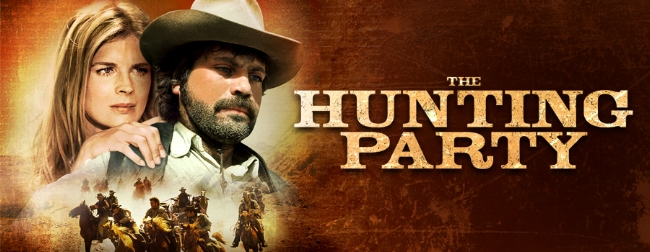
The Hunting Party is a curious Western, made at a time when the genre was struggling to maintain its popularity with the viewing public. Melissa Ruger (Candice Bergen) is a school teacher married to wealthy Cattle Baron, Brandt Ruger (Gene Hackman). When she is abducted by outlaw Frank Calder (Oliver Reed) and his gang, he husband is naturally incensed. He quickly arranges a posse of business associates and uses his personal fortune to equips them all with the latest long-range hunting rifles with telescopic sights. He then sets off in pursuit of Calder's trail before they can cross the border. However, it soon becomes apparent to Ruger’s associates that he may have other motives than just rescuing his wife.
The Hunting Party is a curious Western, made at a time when the genre was struggling to maintain its popularity with the viewing public. Melissa Ruger (Candice Bergen) is a school teacher married to wealthy Cattle Baron, Brandt Ruger (Gene Hackman). When she is abducted by outlaw Frank Calder (Oliver Reed) and his gang, he husband is naturally incensed. He quickly arranges a posse of business associates and uses his personal fortune to equips them all with the latest long-range hunting rifles with telescopic sights. He then sets off in pursuit of Calder's trail before they can cross the border. However, it soon becomes apparent to Ruger’s associates that he may have other motives than just rescuing his wife.
Shot on location in Almería Spain, this gritty western has a strong cast and an intriguing premise. Calder kidnaps Melissa so she can teach him to read. Ruger, a brutal, sadistic and sexually impotent man, is more concerned about maintaining his reputation and demonstrating that no one touches his property. Melissa is drawn to Calder despite his outlaw persona and hopes to save him from himself. However, director Don Medford fails to develop any of these story lines and instead opts to shock with sexual violence and brutal slow-motion shootouts. Ruger’s long-range rifles allow him and his posse to conveniently pick off Calder's men from a great distance.
Despite the films shortcoming it is very interesting to see Oliver Reed in a western and as ever, he acquits himself as well despite the flaws in the screenplay. There is an solid soundtrack by Riz Ortolani and good make up effects by José Antonio Sánchez. The seventies produced many hybrid westerns as the genre strived to maintain its relevance. Sadly, The Hunting Party ultimately fails to make its mark. The themes of Stockholm Syndrome and self-fulfilment are left undeveloped. The film tries to emulate Peckinpah but falls short of his narrative standards. Perhaps director Don Medford, thought the bleak ending was making a broader point. As it stands it simply ends a story that has nowhere else to go.

Dracula Untold (2014)
I passed on opportunity of seeing Dracula Untold at the cinema in late 2014, as I was not overly impressed by what I had seen from the trailers. I finally caught up with Universal's reboot of the franchise, hoping that a home viewing and tempered expectations would make me more cordially disposed towards the film. Sadly, the movie turned out exactly as I had surmised, proving to be a superficial under taking with no narrative depth. Furthermore, is was a bloodless action film, rather than a true horror movie, resulting in a very unsatisfying compromise. The fact that this movie made over $200 million globally at the box office saddens me.
I passed on opportunity of seeing Dracula Untold at the cinema in late 2014, as I was not overly impressed by what I had seen from the trailers. I finally caught up with Universal's reboot of the franchise, hoping that a home viewing and tempered expectations would make me more cordially disposed towards the film. Sadly, the movie turned out exactly as I had surmised, proving to be a superficial under taking with no narrative depth. Furthermore, is was a bloodless action film, rather than a true horror movie, resulting in a very unsatisfying compromise. The fact that this movie made over $200 million globally at the box office saddens me.
Dracula Untold benefits from the presence of Luke Evans as Vlad the Impaler. He is a likeable actor with old fashioned good looks. Sadly, there's is precious little for him to do during the films somewhat brief ninety-two-minute running time. The plot, dialogue and character development are perfunctory to say the least. Writers Matt Sazama and Burk Sharpless script offers no depth or sophistication, rendering everything binary and simplistic. Dominic Cooper has zero credibility as the villainous Turkish Sultan, Mehmed the Conqueror. He is simply "bad" because that's what we are told in the most pedestrian fashion. Similarly, the passionate relationship between Vlad and his wife, Mirena (Sarah Gadon) lacks any dramatic conviction.
As usual these days with movies that hope to start a teen friendly franchise, the entire production seems far more concerned with visual style and overall ambience. The effects are impressive but cannot ultimately sustain a movie of this nature. The lack of emotional content meant that I was fundamentally indifferent to the central character’s plight. Furthermore, I couldn't even take comfort in the action sequences as they're meticulously edited to the requirements of the rating. This is a bloodless vampire movie and with little or no suspense and unpleasantness. Not even the scenes with Charles Dance as the master vampire can save things. This is a woefully anaemic tale about the undead, which is contradictory in itself.
Perhaps the most saddening thing about Dracula Untold is the fact that I can't even summon the energy to get angry about what a poor movie it is. This is simply par for the course. The movie was conceived and pitched with a very specific market in mind. One that is young and unfamiliar with the superior cinematic heritage that exists. The tone, pacing and superficial nature of the film is tailor made for an audience that loves to consume such material. While this demographic continues to robustly support such material then the studios will naturally continue to churn it out. It will be interesting to see if Universal Studios reboot of The Mummy this summer is any improvement cinematically.
Classic Movie Themes: The Taking of Pelham One Two Three
The Taking of Pelham One Two Three, is possibly one of the best thrillers of the Seventies. Not only does this underground heist movie have a well-crafted screenplay filled with hard-boiled dialogue and dry quips, it also features a cast of quality character actors, such as Walther Matthau, Robert Shaw and Martin Balsam. It also boasts a superb score by composer David Shire. This embellishes the film, underpinning the key dramatic and action sequences. Over the years The Taking of Pelham One Two Three soundtrack has become very popular with collectors and fans.
The Taking of Pelham One Two Three, is possibly one of the best thrillers of the Seventies. Not only does this underground heist movie have a well-crafted screenplay filled with hard-boiled dialogue and dry quips, it also features a cast of quality character actors, such as Walther Matthau, Robert Shaw and Martin Balsam. It also boasts a superb score by composer David Shire. This embellishes the film, underpinning the key dramatic and action sequences. Over the years The Taking of Pelham One Two Three soundtrack has become very popular with collectors and fans.
Shire uses serial techniques and a funky multicultural rhythm section for the main theme. The twelve-tone composition method creates an unusual, somewhat dissonant melody. It is brass heavy with a healthy dose of electric piano. This was often the instrument of choice of that other great composer of the time, Lalo Schifrin. The overall style is intended to evoke the bustle and diversity of New York City, with it pounding rhythm. Shire received two Grammy nominations for his work on the film. Here are both the opening and closing variations of the central theme from the film, for your enjoyment.







Spooks: The Greater Good (2015)
I'm not the first to say it but there is a distinct John Buchanesque streak running through Spooks: The Greater Good. Despite all the high-tech trappings we have grown accustomed to in modern day thrillers, this is still at its heart a “hero on the run” movie with sinister unseen forces hot in pursuit. This modest production never feels cheap, although it does lack a degree of polish and panache that we see in its contemporary. Yet it's sub John le Carré narrative provides a pleasant counterbalance to the budget action set pieces.
I'm not the first to say it but there is a distinct John Buchanesque streak running through Spooks: The Greater Good. Despite all the high-tech trappings we have grown accustomed to in modern day thrillers, this is still at its heart a “hero on the run” movie with sinister unseen forces hot in pursuit. This modest production never feels cheap, although it does lack a degree of polish and panache that we see in its contemporary. Yet it's sub John le Carré narrative provides a pleasant counterbalance to the budget action set pieces.
Director, Bharat Nalluri, shows off the London locations extremely well with scenes set in such locations as Heathrow, Waterloo Bridge, the West End and the ubiquitous Whitehall. There are plenty of sweeping panoramic shots of the city, highlighting the sharp contrast between old and new architecture. This plays well into the unfolding storyline which pits the old guard of the intelligence service against those forces that seek a different role within the modern world. These may not be the most original of themes but they play out well within the context of this franchise.
Kit Harington plays Will Holloway, a former operative who left the services under dubious circumstances. When a high-value terrorist, Qasim (Elyes Gabel) escapes custody during a routine handover, Will must team with disgraced MI5 Intelligence Chief Harry Pearce (Peter Firth) to track him down before an imminent terrorist attack on London. Pearce hints that all is not be as it may seem and that the entire situation may be subject to external manipulation. A stream of double crosses soon implies that Pearce is indeed right.
What surprised me the most about Spooks: The Greater Good was the producers decision not to pander to the mainstream and create yet more generic PG-13 rated action fodder. Spooks: The Greater Good has some tightly edited action sequences, complete with bullet hits and bloodshed. It may not be a return to the gritty era of The 3 Days of the Condor but it's a lot more satisfying than the sanitised content that passes for the Thriller genre these days. Then again Spooks (AKA MI-5) the TV show was not known for being tame. The Deep Fat Fryer incident from the original series still looms large in fans memories.
As with most quality spy films, the ambiguity of the government forces and the undercurrent of constant duplicity that makes the story engaging. It is pleasing to see Peter Firth, who appeared in every episode of the series, return as spy master Sir Harry Pearce, who suspects that British intelligence may well have gone rogue. He has always been the most compelling asset of the original franchise. Spooks: The Greater Good may not be a A-list movie but is far from disappointment. It entertains, without re-inventing the wheel and provides an acceptable appendix to the original show. I can think of worse legacies to leave.
Valkyrie (2008)
In terms of its production values, Valkyrie is a throwback to the big budget war films of the sixties and seventies. However, that is where the similarities end. This is not a stylised action movie with the Nazis simply as a dramatic foil. Valkyrie focuses on facts, narrative and performances. Director Bryan Singer ensures that the true story that the film depicts is driven by the central characters. Overall Valkyrie is a very laudable production and although not an outstanding feature film, it is competently made, broadly historically accurate whilst and entertaining.
In terms of its production values, Valkyrie is a throwback to the big budget war films of the sixties and seventies. However, that is where the similarities end. This is not a stylised action movie with the Nazis simply as a dramatic foil. Valkyrie focuses on facts, narrative and performances. Director Bryan Singer ensures that the true story that the film depicts is driven by the central characters. Overall Valkyrie is a very laudable production and although not an outstanding feature film, it is competently made, broadly historically accurate whilst and entertaining.
The story manages to be genuinely suspenseful and conveys the magnitude of the plotter’s intentions. It efficiently follows the facts and is not side-tracked by superfluous sub plots or needless human drama. It clearly shows the real threat to families of the protagonists and conveys the paranoia of the German High command. Valkyrie assumes that the audience has an adequate knowledge of wartime events and does not make the mistake of trying to show why Hitler should be killed. Nor does it make the traditional Hollywood mistake of trying to render the complexities of wartime politics, down to “good Germans versus Bad Nazi”.
With regard to Tom Cruise, I’m not at all interested in his star status, his personal life or his religious beliefs. I have enjoyed his performances in several films in the past and he does not disappoint as Klaus von Stauffenberg. The rest of the ensemble cast works very well. Bill Nighy, Tom Wilkinson and the dignified Terence Stamp are all on top form, although a little underused. Eddie Izzard further demonstrates his acting talents. It should be noted that the mainly British cast do not attempt any stereotypical German accent but rather opt for neutral dialogue delivery.
Technically, the production design is accurate and authentic. The film manages to convey an atmosphere of a nation losing a war and an “ideology” that has become tarnished. The dilemma of whether to hedge your bets or endeavour to change an impossible situation, is explored efficiently and in a thought provoking way. Valkyrie remains as politically neutral as it can and strives to show career soldiers unhappy with the regime they see as betraying their country. They wish to prove that Germany and Hitler are not the same thing.
It is interesting to see a studio tackle a story that, despite its inherent drama, has an outcome that is a forgone conclusion. Like Ron Howard’s Apollo 13, the need to engage the audience with the fate of the characters is the key to the film’s success. I must admit that I was engrossed in Valkyrie and managed to disconnect my mind from the inevitable ending. However, due to the lack of historical knowledge among so many of today’s viewing public, perhaps this isn’t such an issue. May due to the march of time, the events depicted in Valkyrie may well have less impact. None the less Valkyrie is a competent and polished movie as well as a welcome change from standard multiplex fodder.
The Silmarillion Movie
When Peter Jackson finished filming The Hobbit trilogy, there was some idle speculation by fans as to the possibility of a movie adaptation of The Silmarillion. It was meant mainly as a talking point, rather than a serious proposition and there certainly was an enthusiastic response from some quarters. Three years on, the fantasy genre is still a commercially successful genre both at Cinemas and on TV. Furthermore, production studios are regularly looking to existing literary properties that they can convert into viable long term franchises. Bearing all this in mind, is it possible that Tolkien’s complex mythopoeic work could be adapted for either the big or little screen?
When Peter Jackson finished filming The Hobbit trilogy, there was some idle speculation by fans as to the possibility of a movie adaptation of The Silmarillion. It was meant mainly as a talking point, rather than a serious proposition and there certainly was an enthusiastic response from some quarters. Three years on, the fantasy genre is still a commercially successful genre both at Cinemas and on TV. Furthermore, production studios are regularly looking to existing literary properties that they can convert into viable long term franchises. Bearing all this in mind, is it possible that Tolkien’s complex mythopoeic work could be adapted for either the big or little screen?
Although it is theoretically possible to make either a movie of TV show from the source material, the likelihood of such a project coming to pass is very remote. Hollywood studios are very risk averse, especially towards material that cannot be easily defined and pitched at the broadest demographic. Even if The Silmarillion were to be championed by a major director, there is no guarantee that such a project would be immediately green lit. Hollywood heavy weights such as Steven Spielberg and Martin Scorsese have fallen foul of this policy recently. However, if a Silmarillion adaptation could secure financing, let us consider some of the other potential obstacles that would have to be addressed before the project could move forward.
First, there is the fundamental issue of the rights to The Silmarillion, which are not included in those currently held by Middle-earth Enterprises. I think the Tolkien estate would move heaven and earth to block such a project from progressing, as Christopher Tolkien has made his views very clear on the existing movie adaptations of his father's work. He abhors what he sees as the Disneyfication of the source material. Therefore, this is an issue that cannot be addressed during his lifetime. Whether the heirs to the estate would think differently remains to be seen.
Then there is the source text of The Silmarillion itself, which would be would be extremely difficult to adapt and market to a mainstream audience. It would require considerable restructuring and frankly a lot of dumbing down to make an accessible narrative. It is episodic by nature with an excess of characters and explores a great deal of abstract concepts. There are certainly passages of the text that would make epic set pieces but overall the narrative does not support the traditional three act story arc that cinema prefers.
This then raises the question, rather than a series of movies, would a high budget cable show such as Game of Thrones, be a more suitable medium to showcase The Silmarillion. Either way, a live action adaptation would require a prodigious budget. Considering the philosophical and theological elements to the text, perhaps live action is not the best approach to adapting the work. Would the medium of animation be more appropriate? By this I do not mean mainstream CGI but something more traditional such as cel animation or perhaps some experimental stop motion method?
Then there is the risk that any adaptation may be usurped and extrapolated into something very different from Tolkien’s vision. Tolkien was a devout Catholic although this is not immediately obvious in his works. He also deplored the use of allegory as a literary device. There is a chance that whoever adapts The Silmarillion could colour it with their own personal religious, moral and philosophical baggage and make it into something that it is not. I would hate to see something as cerebral as this book, distilled into a clumsy and misplaced metaphor to be championed by the wrong sort of Christian institutions. The Silmarillion deserves better than that.
If we still consider such a project in movie terms, then it would require director of immense cinematic skill and vision. Peter Jackson, although visually talented, is not the film maker he was a decade or two ago. He is too big a name, too commercial and now appears to exhibit a degree of self-indulgence that often comes when directors become celebrities. Personally, I think his better work is now behind him. A true visionary would be required for The Silmarillion movie but these are a scarce commodity these days. Kubrick, Kurosawa and their like are long dead, so who exactly does that leave? Guillermo del Toro, Bong Joon-ho or Alfonso Cuarón?
As you can see, these are just a few potential problems that would plague such a project. Furthermore, it can be cogently argued that just because you can do something, it doesn't mean that you should. The Silmarillion may well be unfilmable in any meaningful way and to attempt to do so may well be disrespectful to the source text. Unfortunately, film makers and especially their financiers seldom understand such concepts and often end up debasing great literary works in pursuit of the lowest common denominator and box office gold. The Silmarillion was intended by its author to be a book and nothing more. Does it really need to exist in any other way?
Classic Movie Themes: The Bride of Frankenstein
Franz Waxman's score for James Whale's The Bride of Frankenstein is as iconic as the movie itself. It has a weird and haunting quality to it with its three distinctive themes: one for the Monster; one for the Bride; and another for Pretorius. With only a modest twenty two piece orchestra , the score was recorded in a single nine hour session. Universal recycled many elements of the music in other productions over the years, most notably in Flash Gordon's Trip to Mars. This has led to it becoming an accepted part of popular culture and synonymous with spooky castles and baroque electrical equipment. It has aged remarkably well over the years and is still very evocative.
Franz Waxman's score for James Whale's The Bride of Frankenstein is as iconic as the movie itself. It has a weird and haunting quality to it with its three distinctive themes: one for the Monster; one for the Bride; and another for Pretorius. With only a modest twenty two piece orchestra , the score was recorded in a single nine hour session. Universal recycled many elements of the music in other productions over the years, most notably in Flash Gordon's Trip to Mars. This has led to it becoming an accepted part of popular culture and synonymous with spooky castles and baroque electrical equipment. It has aged remarkably well over the years and is still very evocative.
Filled with strange, sweeping yet disquieting melodies and unusual timbres, it was an extremely ambitious soundtrack for a movie at the time. Waxman's music for The Bride of Frankenstein provided the movie with the impact and sweep of a Wagnerian opera, although the finale recalls the Mahler "Symphony No. 2". The "crucifixion" of the monster, the homunculii of Doctor Pretorius and the "birth" of the Bride are magnificently embellished by the subtleties of the score. Seldom has a movie score been so integral to the overall success of the film. Franz Waxman's score remains the epitome of atmosphere and craftmanship.
Death Sentence Unrated (2007)
Urban vigilantes have always been a mainstay of exploitation cinema. Then in 1974, the commercial success of Death Wish brought the revenge thriller sub-genre in to the mainstream. It succinctly tapped into the public's fear of urban decay, escalating crime rates and an impotent justice system. However, in recent years the tide of lawlessness has broadly turned and the public's views on crime and punishment have been tempered. Subsequently the appeal and relevance of vigilante genre has waned. However, a decade ago there was brief resurgence of movies that tackled this thorny issue, although they did so in different ways. Neil Jordan's The Brave One (2007) pursued a more cerebral approach to the genre, attempting to intellectually or philosophically justify its themes of revenge. Then in 2009, Law Abiding Citizen, took the theme of retribution to extreme levels, with a farfetched plot and outrageously contrived death scenes. Sitting in-between these two movies was James Wan’s Death Sentence, which put a contemporary spin on what was essentially a very eighties style of movie. Sadly, the film did not garner much attention at the time, with the press quick to dismiss it as exploitation fodder dressed up in studio trappings. Yet the film is more than that mainly due to the lead performance by Kevin Bacon.
Urban vigilantes have always been a mainstay of exploitation cinema. Then in 1974, the commercial success of Death Wish brought the revenge thriller sub-genre in to the mainstream. It succinctly tapped into the public's fear of urban decay, escalating crime rates and an impotent justice system. However, in recent years the tide of lawlessness has broadly turned and the public's views on crime and punishment have been tempered. Subsequently the appeal and relevance of vigilante genre has waned. However, a decade ago there was brief resurgence of movies that tackled this thorny issue, although they did so in different ways. Neil Jordan's The Brave One (2007) pursued a more cerebral approach to the genre, attempting to intellectually or philosophically justify its themes of revenge. Then in 2009, Law Abiding Citizen, took the theme of retribution to extreme levels, with a farfetched plot and outrageously contrived death scenes. Sitting in-between these two movies was James Wan’s Death Sentence, which put a contemporary spin on what was essentially a very eighties style of movie. Sadly, the film did not garner much attention at the time, with the press quick to dismiss it as exploitation fodder dressed up in studio trappings. Yet the film is more than that mainly due to the lead performance by Kevin Bacon.
Loosely based on the Brian Garfield novel, Death Sentence starts with successful risk analyst Nick Hume (Kevin Bacon) taking his eldest son to his Hockey match. A chance stop at a Gas Station on the wrong side of town, ends with his son being murdered by a gang. The impact upon the Hume family is immediate and as the parents grieve for their eldest, they seem to overlook the needs of their youngest son. When the perpetrator is arrested, the DA feels that he cannot secure a life time conviction and aims to plea bargain for a shorter sentence. Furthermore, it becomes apparent that robbery was incidental and the murder of Hume’s son was a gang initiation ritual. At the pre-trial hearing, Hume deliberately implies uncertainty in his own evidence, securing a dismissal for the prime suspect. Hume then rashly plots and hastily carries out his revenge, only to make matters far worse for himself and his family.
Although Death Sentence is a thriller with strong action scenes, it does not totally capitulate to the baser needs of the genre and tries to explore the subject matter with a degree of rigour. Kevin Bacon is credible as a man whose job is based around numbers, risk and statistical balance. Although he may not know how to fight, his intelligence makes him a dangerous wild card. Yet, where other movies would simply have him glibly triumphing over his foes, director James Wan shows that there are consequences to his actions. Hume makes several errors that allow the gang to identify him. Tragedy begets tragedy and retributions comes with little satisfaction. It is here that Bacon excels, delivering a credible and sympathetic performance as a man out of his depth, driven purely by his convictions.
Technically, Death Sentence is well constructed. There is a notable chase scene that takes the audience through litter strewn alley ways, a restaurant kitchen, ending in a multi-storey carpark. There is a superb three-minute tracking shot by cinematographer John R. Leonetti, that really places the viewer in to the middle of the action. The set pieces are also well conceived and gritty. Nick Hume is an academic, not a fighter, yet he’s smart enough to use what is available as make shift weapons. In one scene, he literally pulls the rug out from under a gang member pointing a gun at him. The violence is relatively realistic and grim, which is appropriate given the subject matter. There is a particularly nasty shotgun amputation, which trumps a similar scene in Steven Seagal's Out for Justice. An obvious homage to Taxi Driver is also crow barred into the proceedings. One particular aside amused me, where our Hume familiarises himself with the firearms he bought by reading the manual. It not as preposterous as it initially seems.
Death Sentence also benefits from an interesting supporting performance from John Goodman, playing against established preconceptions, as a sleazy gun dealer. His slow and measured delivery of his lines is entertaining and he has an amusing soliloquy about the death, revenge and cash paying customers. Garrett Hedlund has less to do as the story’s main antagonists, Billy Darley. The complex relationship he has with John Goodman is only hinted at and would have been an interesting angle to explore further. Too often, genres such as this coast somewhat when defining their villains. It is easy and convenient to establish a character’s evil intent simply by them committing an act of violence. Similarly, most of the gang are merely cannon fodder. Also, Detective Jessica Wallis (Aisha Tyler), who is investigating the Hume case, is more of a expositionary device than a fully rounded character.
However, despite some rough edges and lazy trappings from the exploitation genre, Death Sentence still manages to do something sufficiently different. It certainly is not meant to be a serious social or political study of crime and punishment. Conversely, it’s not a tacit endorsement of personal justice, like Michael winner’s movies. It offers a contemporary entry point into the vigilante genre for a whole generation of viewers who are unfamiliar with movies such as Death Wish or The Exterminator. It also showcases a change of direction for James Wan, who is usually associated with horror movies. Out of the two cuts of the film that are available, I would suggest that the unrated version is better than the theatrical cut. In this instance, there is no extra action or violence. Just five minutes of additional scenes that bolster the narrative. A nominal change made to the final scene also offers a definitive and sombre ending.
Tape 407 (2012)
I really won't be sad to see the back of the found footage sub-genre because it really is becoming an over saturated market at present. For example, at the last count there were six Paranormal Activity movies, with their respective quality inversely proportional to their number in the franchise. Yes, there are the occasional good ones, such as the recent Operation Avalanche, which tackled conspiracy theories and the Moon Landing. But broadly speaking, this genre has become a dumping ground for cheap and uninspired movies, by mediocre film makers, out to make a fast buck. Take for example Tape 407 (AKA Area 407). It’s chosen twist on the genre is the inclusion of included dinosaurs. I was hoping that this would make the film sufficiently different to others and offers something new. Predictably it did not.
I really won't be sad to see the back of the found footage sub-genre because it really is becoming an over saturated market at present. For example, at the last count there were six Paranormal Activity movies, with their respective quality inversely proportional to their number in the franchise. Yes, there are the occasional good ones, such as the recent Operation Avalanche, which tackled conspiracy theories and the Moon Landing. But broadly speaking, this genre has become a dumping ground for cheap and uninspired movies, by mediocre film makers, out to make a fast buck. Take for example Tape 407 (AKA Area 407). It’s chosen twist on the genre is the inclusion of included dinosaurs. I was hoping that this would make the film sufficiently different to others and offers something new. Predictably it did not.
Tape 407 starts aboard a plane with a motley collection of passengers travelling from New York back to Los Angeles. We meet film student Jessie (Samantha Lester) and her annoying younger sister Trish (Abigail Schrader), Journalist Jimmy (James Lyons) and irritable passenger from hell Charlie (Brendan Patrick Connor). After some rather pedestrian back story and character exposition the plane crashes in a somewhat remote desert region along its route. The survivors bicker and squabble and continuously talk across each other as they try to thrash out a survival strategy. One passenger goes looking for the other half of the plane. Screams and animal noises are later heard in the night. It quickly becomes clear that there are multiple predators on the loose.
There are brief flashes of inspiration in Tape 407, as well as a great deal of shouting and strident arguments conducted in a very American manner. It’s annoying and grating on the ear but certainly has a note of realism about it. The survivors slowly put aside their differences as they finally realise the magnitude of their predicament and attempt to work collaboratively. However, this aspect of the storyline is under developed and further hampered by a cast of characters I didn't really care for. Futhermore, the shocks are somewhat obvious, surprisingly understated and tame. As for the dinosaurs, which appear to be the result of a government experiment, precious little is seen. You simply can't skimp on plot device like this if it’s the movies selling point.
There's a fine line between being ambiguous and letting the audience fill in the blanks as opposed to allowing gaping plot holes. By the time I reached the end of Tape 407, I was annoyed by the lack of information, disappointed by the absence of carnivorous reptiles and thoroughly pissed off with the protagonists. The only worthy character, Air Marshall Laura (Melanie Lyons), was dispatched in a very mean spirited way. Mercifully the director opted for an appropriately downbeat dénouement so the remaining cast where subsequently killed off, offering an unexpected highpoint to a formulaic and unremarkable ninety-minute pot boiler.
I don't know whether budgetary restraints or simply the notion that less is more, where the reason the production was so shy of showing the dinosaur antagonists. If it was, then directors (Dale Fabrigar and Everette Wallin) intention to sideline them so they could focus on the human dynamics, was a very poor decision. Overall the slow pacing, noisy performances and frustrating characters as well as lack of action, torpedoes Tape 407. Viewers are left with a rather dull, predictable and lacklustre movie. I'd like to say that this will be the last found footage I'll be watching for a while but I have a suspicion that due to the cost effective nature of the format, they’ll be churning them out for a while yet.
The A-Team Unrated Extended Cut (2010)
Despite an excess of CGI driven action scenes, Joe Carnahan's reboot of the iconic eighties TV show The A-Team, still manages to capture elements of the original. The plans are complex but come together and there are improvised devices and munitions made from sundry items. Due to the strong cast, there is also a good dynamic between the lead characters. It's all very loud, incredibly stupid, yet surprisingly entertaining. Don't get me wrong, this far from a hidden gem. Merely an enjoyable, bombastic exercise in cinematic self-indulgence,
Despite an excess of CGI driven action scenes, Joe Carnahan's reboot of the iconic eighties TV show The A-Team, still manages to capture elements of the original. The plans are complex but come together and there are improvised devices and munitions made from sundry items. Due to the strong cast, there is also a good dynamic between the lead characters. It's all very loud, incredibly stupid, yet surprisingly entertaining. Don't get me wrong, this far from a hidden gem. Merely an enjoyable, bombastic exercise in cinematic self-indulgence,
The A-Team are now Iraq War veterans but the essential traits of the main characters are still there. Bradley Cooper takes to the roll Templeton Peck like a duck to water. Liam Neeson is suitably gruff as Hannibal Smith. But I actually found Sharlto Copley and Quinton Jackson as Mad Murdock and Bosco B.A. Baracus, to be the most absorbing protagonists. Although the script is hardly a masterpiece its greatest strength is the interplay among the team itself. Copley performance is strong and more than just arbitrarily quirky. Jackson also had more to do than just be a bad ass and I warmed to his storyline and personal conflict.
Another aspect of The A-Team that I enjoyed was at how at times, it felt like a throwback to sixties caper movies and a variation on the heist sub-genre. The humourous undertone also did a lot to make the over the top nature of some of the set pieces a little more palatable. The plot regarding stolen plates for printing bank notes, inter-governmental department duplicity and international globetrotting is self-indulgent and at times clumsily telegraphed for those who may have been napping. But when one considers the original TV show, that to was hardly an exercise in subtlety and restraint. Overall The A-Team is sufficiently different enough not to be just straight forward PG-13 action fodder.
The Unrated Extended cut of the movie runs eighteen minutes longer than the theatrical version and mainly contains longer scenes of plot exposition and dialogue, rather than violence. One action sequence does feature some additional footage of contract soldiers being shot whilst in their car, but it happens at night and is light on detail. There are some a few more instance of stronger language, as well. Full details of the differences can be found over at Movie-Censorship.com along with screen captures. The longer running time does make The A-Team a more rounded picture and therefore this is the cut I would recommend.
Ex Machina (2015)
At the heart of Alex Garland's provocative movie Ex Machina, is the concept of the Turing Test and the notion that giving an emerging AI a gender identity is potentially the only way to pass it. It's a very bold concept but it's bolstered by the fact that nature hinges upon our biological imperatives driven by our respective sex. Set within a claustrophobic environment and laced with a more than a hint of Joseph Conrad's Heart of Darkness, Ex Machina is an intelligent and challenging science fiction movie that taps into several very topical themes.
At the heart of Alex Garland's provocative movie Ex Machina, is the concept of the Turing Test and the notion that giving an emerging AI a gender identity is potentially the only way to pass it. It's a very bold concept but it's bolstered by the fact that nature hinges upon our biological imperatives driven by our respective sex. Set within a claustrophobic environment and laced with a more than a hint of Joseph Conrad's Heart of Darkness, Ex Machina is an intelligent and challenging science fiction movie that taps into several very topical themes.
IT savant Caleb (Domhnall Gleeson) find himself the recipient of a unique opportunity to meet with his elusive employer Nathan (Oscar Isaac) and partake in a secret project. After being flown to a remote luxurious estate, Caleb is tasked with determining if Nathan's latest creation, a robot named Ava (Alicia Vikander) can pass the Turing Test. It's a simple premise that writer and director Alex Garland explores on multiple levels. Has Nathan's isolation honed his unique talents or corrupted them? Does Ava reciprocate Caleb's naive infatuation or is she manipulating him? Is it morally right to deny an AI the freedoms that we enjoy. Is it even possible to constrain any intelligent lifeforms?
Seldom do we see movies these days that are prepared to tackle such subjects in a frank and adult fashion. Performances are universally superb and the subtle effects work by Double Negative enhance the credibility of Ava's character. Oscar Isaac is very much the man of the moment and he excels in this role. He exudes the self-aggrandising and bullish nature that comes with success in big business. Alicia Vikander provides both an emotional and very physical performance with her nuanced use of body language. Domhnall Gleeson show us the vulnerable side of his geeky character without descending into caricature. This is acting at its best and a fine example of why strong writing is essential to narrative cinema.
Alex Garland's directorial debut is both confident and bold, candidly reflecting on the nature of humans and how often great deeds are driven by baser motives. Beautifully packaged within a handsome aesthetic that at times even borders on homage to Kubrick's obsession with visual composition, Ex Machina is a robust and thoughtful piece of film making. It reflects the fundamental nature of science fiction, which is to examine the rather fixed nature of the human condition against the ever-changing world of science, moral and ethical change. As for the theme of emerging AI, it would seem that Garland like many writers believes that whatever the circumstances, life finds a way and does whatever is required to perpetuate itself.
Run All Night (2015)
Run All Night is a neo-noir with an above average cast (Neeson, Ed Harris, Vincent D'Onofrio and even Nick Nolte). The screenplay by Brad Ingelsby (who co-wrote the similarly hyperbolic Out of the Furnace) is based around the perennial theme of family feuds in the New York's gangster community. It's a plot device that’s been the mainstay of many a movie over the years but few of any outstanding quality. However, Run All Night has the benefits of two strong leads and an exceptional visual aesthetic, that elevate it above the mundane. Narrative weakness is countered with strong performances and the inherent charisma of Neeson and Harris.
Run All Night is a neo-noir with an above average cast (Neeson, Ed Harris, Vincent D'Onofrio and even Nick Nolte). The screenplay by Brad Ingelsby (who co-wrote the similarly hyperbolic Out of the Furnace) is based around the perennial theme of family feuds in the New York's gangster community. It's a plot device that’s been the mainstay of many a movie over the years but few of any outstanding quality. However, Run All Night has the benefits of two strong leads and an exceptional visual aesthetic, that elevate it above the mundane. Narrative weakness is countered with strong performances and the inherent charisma of Neeson and Harris.
Neeson once again slips into ageing celtic alpha male routine as Jimmy Conlon, a veteran Brooklyn hitman. Hard drinking and estranged from his family, Jimmy is haunted by the memories of his victims and seeks redemption. Ed Harris plays Shawn Maguire, the local Crime Boss and Jimmy's friend for many years. He too is reflecting upon his choices and trying to go straight. Both men are fathers. Neeson's boy Mike (Joel Kinnaman) hates his dad and wants nothing to do with him or his lifestyle. Maguire's son Danny (Boyd Holbrook) is the opposite and is attracted to the criminal lifestyle and seeks personal advancement among the criminal fraternity. When circumstances lead to Jimmy killing Danny to protect Mike, friendships are set aside, resulting in a life or death chase across the city at night.
Visually, Run All Night is stunning. The director Jaume Collet-Serra has an aptitude for capturing New York at night. Director of photography Martin Ruhe creates an atmosphere of fear and trepidation with his lighting and framing of high-rise buildings, subways, diners and railway tracks. It most certainly revitalises what is a somewhat tired and over used visual convention. The fluid and mobile cinematography greatly adds to the narrative and the sense of tension. Sadly the screenplay is not so consistent. The first two acts of the movie are tonally geared towards a more philosophical drama. The third act changes tack and settles for an action based approach.
When you stop to analyse various character’s behaviour in Run All Night, very little of it makes any sense. However, the story moves at such a fast pace that it's only after viewing the film that it’s deficiencies become apparent. Harris and Neeson save the movie from some of its failing. Both actors are always interesting to watch and Harris is under appreciated by his peers, in my book. Run All Night ultimately plays out like a variation of Road to Perdition, although it lacks the polish and depth of that movie. Overall it is a cut above the increasingly lacklustre Taken franchise and it’s at least nice to see a thriller come action movie, that doesn't back pedal and seek the mass market appeal of a PG-13 rating.
The Woman in Black: Angel of Death (2015)
The Woman in Black: Angel of Death is set forty years after the events of the first movie and despite the outbreak of World War II, malevolent spirit Jennet Humfrye is still haunting Eel Marsh House. The decaying mansion is now home to a group of evacuee children from London and it's not long before staff become aware of a ghostly presence. A mute child named Edward, who is bullied by the other children, seems to be the focal point of Jennet's supernatural interests. One of the teachers, Eve Parkins (Phoebe Fox) is protective towards the boy and subsequently incurs the wrath of the woman in black.
The Woman in Black: Angel of Death is set forty years after the events of the first movie and despite the outbreak of World War II, malevolent spirit Jennet Humfrye is still haunting Eel Marsh House. The decaying mansion is now home to a group of evacuee children from London and it's not long before staff become aware of a ghostly presence. A mute child named Edward, who is bullied by the other children, seems to be the focal point of Jennet's supernatural interests. One of the teachers, Eve Parkins (Phoebe Fox) is protective towards the boy and subsequently incurs the wrath of the woman in black.
The Woman in Black had the advantage of a central star driving the movie forward, but the producers compensate for the absence of Daniel Radcliffe by setting this sequel in a strong period setting. The cast drawn mainly from UK television is robust and appropriate. Phoebe Fox sustains the story as the plucky heroine and Jeremy Irvine is competent as a RAF pilot and romantic interest. The younger actors are equally convincing, enduring some grim shocks as they’re menace by the vengeful spirit. The production captures the era well and maintains a suitably brooding atmosphere.
Cinematographer George Steel creates a sombre and bleak aesthetic, working within a very dark colour scheme. The fog bound woods and tidal beaches are genuinely chilling and provide a ghoulish setting for the story to unfold. The Woman in Black: Angel of Death is not a gory film, instead relying upon a brooding atmosphere of fear and some well contrived jump scares. The absence of a major box office star meant that the distributors did not indulge in any horse trading over the rating this time round. In the UK the movie has subsequently been rated 15 due to its very dark tone and subject matter.
The Woman in Black: Angel of Death is a solid and professionally crafted movie that acquits itself well in the current sub-genre of “jump scare” based horror movies. It is not quite as good as the first movie, mainly because it doesn't do much more than provide viewers with more of the same. However, what it sets out to do, it does well. The change of setting and inventive sound design enhance the proceeding, making it superior to many of its contemporary set rivals. The movies greatest strength is still its bold subject matter. Infanticide is still a theme that many studios shy away from.
Jack Ryan: Shadow Recruit (2014)
When I was first introduced to the character of Jack Ryan, twenty-seven years ago, I liked the fact that he wasn't the usual sort of Hollywood hero. The emphasis on analysis rather than action in The Hunt for the Red October (1990) was very engaging. The fact that Jack Ryan is a retired Marine who was desk bound made him far more credible and interesting. However, even back then the movie industry struggled in bringing Tom Clancy's work to the big screen in an effective manner. Alec Baldwin was replaced by the more likable Harrison Ford, yet the two sequels Patriot Games and Clear and Present Danger struggled to find the right tone. The last entry with Ben Afleck, The Sum of All Fears (2002), fell awkwardly between two stools trying to be both an action movie and a complex thriller.
When I was first introduced to the character of Jack Ryan, twenty-seven years ago, I liked the fact that he wasn't the usual sort of Hollywood hero. The emphasis on analysis rather than action in The Hunt for the Red October (1990) was very engaging. The fact that Jack Ryan is a retired Marine who was desk bound made him far more credible and interesting. However, even back then the movie industry struggled in bringing Tom Clancy's work to the big screen in an effective manner. Alec Baldwin was replaced by the more likable Harrison Ford, yet the two sequels Patriot Games and Clear and Present Danger struggled to find the right tone. The last entry with Ben Afleck, The Sum of All Fears (2002), fell awkwardly between two stools trying to be both an action movie and a complex thriller.
Kenneth Branagh's reboot Jack Ryan: Shadow Recruit, initially smacks of a somewhat contrived undertaking. Casting a notably younger actor, Chris Pine, seems like an obvious pitch to the youth audience. I suppose you can't blame the producers for trying to create a successful mainstream franchise similar to the Jason Bourne movies. However, the film does feel a little artificial at times as if it were carefully put together to meet the requirements of a focus group, rather than a film that was made because everyone was invested in it. Don't get me wrong, that is not to say that Jack Ryan: Shadow Recruit is a soulless undertaking. It is professionally made, with a strong cast and perfectly serviceable entertainment. Yet it is nothing more than that.
The latest incarnation of Jack Ryan (Chris Pine) depicts him as a former marine now working as an economist. He is recruited into the CIA by senior operative Thomas Harper (Kevin Costner) to keep an eye out for irregular financial matters globally. He subsequently uncovers a plot by Russian businessman Viktor Cherevin (director Kenneth Branagh) to destabilize the US and Chinese economies bringing about a global financial depression. Realising that the CIA are close on his heels Cherevin kidnaps Jack's fiancée Cathy (Keia Knightley). Jack has to adjust to his new field operative status if he wishes to rescue Cathy and thwart the Russian nationalists plan.
The main problem with Jack Ryan: Shadow Recruit is the movie's specific genre. Those over a certain age will remember the Cold War and will identify with the traditional spy plot elements. Thus, a third of the audience during the film’s opening weekends were over fifty. However, the youth market that the studio was specifically seeking, were not sufficiently engaged and conspicuous by their absence. Box office performance was adequate but no more, so future sequels now hang in the balance. It’s a shame as Jack Ryan: Shadow Recruit is not a bad film and there is still mileage in Jack Ryan as a character. If the production had focused on the correct audience for such a movie, delivering a more complex and possibly R rated picture, it may well have fared better.
Non-Stop (2014)
I don't know what it is about the planes but they do seem to lend a certain "je ne sais quoi" to movies. Whether it's the claustrophobic environment with its shared intimacy or our general familiarity with air travel, staging a film on a commercial flight can often improve its chances to entertain. Zombies, snakes and terrorists have all benefited from this plot device, with varying degrees of success. So bearing this in mind, if you put Liam Neeson on a plane, you know that there's going to be more than just some in-flight turbulence. That is exactly what director Jaume Collet-Serra and writers Chris Roach and John Richardson have done with Non-Stop; a surprisingly entertaining action movie.
I don't know what it is about the planes but they do seem to lend a certain "je ne sais quoi" to movies. Whether it's the claustrophobic environment with its shared intimacy or our general familiarity with air travel, staging a film on a commercial flight can often improve its chances to entertain. Zombies, snakes and terrorists have all benefited from this plot device, with varying degrees of success. So bearing this in mind, if you put Liam Neeson on a plane, you know that there's going to be more than just some in-flight turbulence. That is exactly what director Jaume Collet-Serra and writers Chris Roach and John Richardson have done with Non-Stop; a surprisingly entertaining action movie.
I say surprisingly because on paper the plot does seems rather workmanlike. Federal Air Marshall Bill Marks (Liam Neeson) is a burnt out drunk, still grieving over the death of his child. Whilst on an international flight to London he starts receiving text message threats from an anonymous source, claiming that a passenger will die very twenty minutes unless one hundred and fifty million dollars is paid into a specific bank account. His colleagues and immediate superiors quickly become skeptical when it is discovered that the account is in his name. Marks soon finds that he is the main suspect and that the passengers and crew are turning against him. Throw a bomb into the mix and you have a very contemporary but far from unusual narrative.
However, Non-Stop ups it's game in several ways and proves to be a very enjoyable one hundred and six minutes. First off Liam Neeson is incredibly watchable and carries movies such as this. His soft but assertive voice is compelling and he has a genuine screen presence. He also acquits himself very well with the movies physical demands. Non-Stop has some very good hand to hand fight scene, the standout one taking place in a toilet. The supporting cast is very competent with Julianne Moore playing a supportive passenger who backs Bill Marks when things start going south. There is also an eclectic collection of characters aboard the plane and it is pleasant to see the writers play with the concept of stereotypes and try to do something different.
Non-Stop also manages to bring a curious "whodunnit" vibe to the proceedings. Although the plot does become increasingly convoluted and fanciful, it doesn't lose the audience. In some ways, there is an element of Agatha Christie to the story as viewers ponder who on the plane is the villain of the piece. After all there's been a poisoning by this point (just not in the library). The bomb is another plot device that is handled with difference. "Isn't there a wire to cut" one of the passengers remarks. Not this time round and Mr. Neeson elects for a controlled explosion introducing one of Alfred Hitchcock's basic tenets about film making.
Despite the terrorism motif of the story, Non-Stop avoids anything more than a brief reference to 9/11. This is fast paced action movie and not an in-depth study in geopolitics. The speed of the narrative does have some down sides. Some of the cast have little to do beyond the functional and there are the usual logical plot flaws and willful ignorance of the laws of aerodynamics and physics. "It doesn't make any sense" laments Bill Marks as matters go from bad to worse. The thing is it doesn't always have to, as long as it's done with conviction. The primary motivation of Non-Stop is to entertain. Because it offers sufficient difference and the presence of Liam Neeson, who has become a seriously bankable action star, it achieves its goal.
Classic Movie Themes: I Hate You (From Star Trek IV The Voyage Home)
Leonard Rosenman's soundtrack for Star Trek IV The Voyage Home, is a subtly different beast to James Horner's or Jerry Goldsmith's scores. But it is not Mr. Rosenman's work that I wish to discuss in this post. Instead I’d like to focus on the unforgettable faux punk rock song "I Hate You", that was specifically written for the movie by actor and associate producer Kirk Thatcher. The scene with the punk on the bus has become a seminal part of both Star Trek lore and pop culture. It still raises a wry smile, over thirty-one years later Yet according to Kirk Thatcher, the song that was originally going to be used was quite different.
Leonard Rosenman's soundtrack for Star Trek IV The Voyage Home, is a subtly different beast to James Horner's or Jerry Goldsmith's scores. But it is not Mr. Rosenman's work that I wish to discuss in this post. Instead I’d like to focus on the unforgettable faux punk rock song "I Hate You", that was specifically written for the movie by actor and associate producer Kirk Thatcher. The scene with the punk on the bus has become a seminal part of both Star Trek lore and pop culture. It still raises a wry smile, over thirty-one years later Yet according to Kirk Thatcher, the song that was originally going to be used was quite different.
We shot the scene with no sound – there was no music playing. I was just miming to a beat. After we wrapped the movie, the music department was coming to us, and they were playing...like...Duran Duran, or whoever Paramount had some deal with. I said, "That isn't punk rock music. Punk rock is really raw and gritty and dirty." They said, "Well, we don't really deal with the Sex Pistols and stuff." I said to Leonard, "You know, let me write you a song. I can do a song."
Luckily common sense prevailed so Kirk Thatcher hastily formed a band, The Edge of Etiquette and "I Hate You" was recorded and used in the final edit of the movie. The song also featured a year later in the 1987 Frankie Avalons and Annette Funicello beach party comedy Back To The Beach. Allegedly Mr. Thatcher earned more from the rights than he did for his work on the Star Trek movie.
What makes "I Hate You" so enjoyable is that it manages to achieve a tongue in cheek approach to the punk genre without descending into total parody. It has an undercurrent of erudition with its articulate lyrics. "I hate you and I berate you" roll off the tongue. As does "I eschew you and I say screw you". Then again, good satire is always smart. The song was unavailable until recently, when it was included in the 2011 expanded release of the movie soundtrack album.
Guardians of the Galaxy Vol 2 (2017)
First off let us take a moment to reflect upon this movie’s very title. Guardians of the Galaxy Vol 2 has a very episodic ring to it and gives the audience the impression that we are experiencing another tale from an epic series rather than a just another humdrum sequel. Semantics are at times a big deal and I think it’s relevant that Guardians of the Galaxy is marketed this way. It really seems to tie in with the franchises comic book roots.
First off let us take a moment to reflect upon this movie’s very title. Guardians of the Galaxy Vol 2 has a very episodic ring to it and gives the audience the impression that we are experiencing another tale from an epic series rather than a just another humdrum sequel. Semantics are at times a big deal and I think it’s relevant that Guardians of the Galaxy is marketed this way. It really seems to tie in with the franchises comic book roots.
As for the movie itself, well once again we find that seventies and eighties popular music dominate not only the soundtrack but seem to actively shape the narrative. I’d even go so far as to say that the writers and director may have a deliberately picked the songs in question and then reversed engineered the narrative around them. Not that I’m complaining, as it all works incredibly well. There’s an opening battle with a space Cephalopod set against Mr Blue Sky by the Electric Light Orchestra which pretty much sets the tone. The soundtrack then goes on to feature Fleetwood Mac, Glen Campbell and even David Hasselhoff. Brandy by Looking Glass, is also used liberally in key scenes.
The plot is somewhat arbitrary because it’s merely a vehicle to develop the central characters. Marvel press releases have managed to distil it down to the following. The Guardians must fight to keep their newfound family together as they unravel the mysteries of Peter Quill's true parentage. Old foes become new allies and fan-favorite characters from the classic comics will come to our heroes' aid as the Marvel cinematic universe continues to expand. Let it suffice to say that the main plot device is the Starlord AKA Peter Quill (Chris Pratt) discovering that his father is none other than a Celestial being called Ego (Kurt Russell). Cue Mr Russel revisiting Snake Plissken’s greatest hits. They even use digital effect to de-age him for flashback sequences.
The movie then proceeds with what appears to be two distinct storylines One feature Quill, Gamora (Zoe Saldana) and Drax (Dave Bautista) and another set around Baby Groot, Rocket Raccoon and Nebula (Karen Gillan) as they fall foul of space pirate Taserface (Chris Sullivan). The return of Yondu (Michael Rooker), Quill’s blue-skinned mentor from the first movie brings the various strands together. I was actually surprised by the genuinely nuanced and dare I say, moving story arc director James Gunn brings to the table. But then again it was the depth of character and the credibility of their friendship that made the first movie so good. It’s all here once again.
Jaems Gunn cut his teeth in the movie industry as a protégé of Lloyd Kaufman, at Troma Entertainment. Thus, he has a knack for low budget creativity. Yet none of these skills are lost when translated to a $200 million franchise driven blockbuster. Throwaways scenes, small character foibles and telling dialogue elevate Guardians of the Galaxy Vol 2 above the usual sterile and dry narratives of other entries in the Marvel Cinematic Universe. Gun gives us not only the thrill and action we crave but does it in a far more colourful and playful universe. It is such a breath of fresh air to dispense with the flawed and brooding anti-hero and to have them replaced by the chipper and likeable Peter Quill.
It would be remiss of me if I didn’t take a moment to mention Dave Bautista and his incredibly strong performance as Drax. As a character with no sense of sarcasm, or understanding of verbal metaphor there is great scope for humour. Yet because Bautista seems to have an innate sense of comic timing many throwaways gags grow to become much more. I cannot remember the last time I last out loud so much in a cinema. Baby Groot is also a source of great amusement, despite his single line of dialogue. As with the first movie the balance between action, humour and pathos is skilfully handled.
Guardians of the Galaxy Vol 2 is certainly a robust and entertaining second instalment and shows the flexibility of the MCU, when skilled film makers take the reins. The vivid production design, with its explosion of colour and the playful use of popular music, paints a vibrant universe, despite the peril and impending doom of the story. The movie at times looks like the artwork you’d find on a seventies progressive rock album. If there is a weakness in the production it would be in the film’s final act, where the surfeit of characters do seem to slow the proceeding a little.
Yet, at its heart Guardians of the Galaxy Vol 2 is a further exploration of the complexity and importance of family and identity. It explores themes that are common to all viewers and does it so honestly and with a great deal of affection. As a result, I was thoroughly entertained and uplifted. It’s been a while since a movie has done that for me. So, I wholeheartedly hope that all concerned can maintain this emotional momentum for the next instalment of Guardians of the Galaxy.
Guardians of the Galaxy (2014)
I had my doubts about Guardians of the Galaxy when I first saw it back in 2014, mainly because it's a franchise that I wasn’t familiar with. Also, because the movie is a throwback to a genre that has been conspicuously absent for several decades; namely the “space opera”. Readers over a certain age group may well have fond memories of movies such a Battle Beyond the Stars or The Last Starfighter. They may also have bad memories regarding Ice Pirates and Lorca and the Outlaws. The other thing that was a talking point about Guardians of the Galaxy upon its release, was the fact that it represented a somewhat of a gamble for Marvel Studios (Disney) and the MCU (Marvel Cinematic Universe). Taking a punt on a lesser known franchise at a cost of $170,000,000 is not something you do lightly.
I had my doubts about Guardians of the Galaxy when I first saw it back in 2014, mainly because it's a franchise that I wasn’t familiar with. Also, because the movie is a throwback to a genre that has been conspicuously absent for several decades; namely the “space opera”. Readers over a certain age group may well have fond memories of movies such a Battle Beyond the Stars or The Last Starfighter. They may also have bad memories regarding Ice Pirates and Lorca and the Outlaws. The other thing that was a talking point about Guardians of the Galaxy upon its release, was the fact that it represented a somewhat of a gamble for Marvel Studios (Disney) and the MCU (Marvel Cinematic Universe). Taking a punt on a lesser known franchise at a cost of $170,000,000 is not something you do lightly.
Director James Gunn is an interesting film maker who until this movie has not achieved the level of success he deserves. Slither, an enjoyable and quirky horror/sci-fi movie, was somewhat overlooked on its release. Mercifully, Guardians of the Galaxy rectifies this situation. Gunn along with co-writer Nicole Periman, find a great balance between action, drama and humour. The script is full of amusing banter, pop culture references and unabashed nerd bait. The characters are actually likeable and accessible, while the story has a strong positive message about the power of friendship. Deliberately avoiding big names in the lead roles works very well and the cast acquits themselves admirably. Chris Pratt and Zoë Saldana fulfil their roles but don't overwhelm them as some "A" list actors do.
Bradley Cooper and Vin Diesel provide voice and motion capture for their CGI characters, while wrestler Dave Bautista is surprising good as Drax, a warrior who takes all comment literally. Then with a second tier of character actors such as John C. Reilly, Michael Rooker and Glenn Close, the movie is more than equipped to tackle its initially complex storyline. Establishing who's who takes a while but the pieces soon fall in to place. Furthermore, Guardians of the Galaxy has a great sense of pace and moves forward through the narrative with assured ease. The visual FXs are outstanding and the production design is inventive and different but it never relegates the story or dialogue to the passenger seat.
Perhaps directors Gunn's best trick is managing to entertain on multiple levels. It's something the animation industry has managed for decades but it’s more difficult to achieve in a live action movie. There is plenty of spectacle, hardware and explosions to appeal to the young, where older viewers will revel in the pop culture references of mix tapes, Footloose and dance offs. Gun also uses sentiment wisely and to good effect. Groot and Rocket have an especially good dynamic. The more mature members of the audience will know that they're getting their emotional buttons pushed with Pavlovian mastery but it's all part of the ride.
Overall, there's not a huge amount to complain about with Guardians of the Galaxy. It is a well-conceived, polished example of a summer blockbuster. Lee Pace fans may be a little disappointed as he spends his time on screen swathed in cowl and under a lot of heavy make-up. I would also point out that younger children may find this movie quite scary. A person’s face crumbling in a cloud of purple hued plasma is still quite a potent image, so parents be warned. The screenplay is also liberally laced with minor profanity, which although I found quite amusing, I was somewhat surprised by.
What I took away the most from Guardians of the Galaxy was the feeling of being thoroughly entertained. There is a good ethical foundation to the story as it wrestles themes such as loyalty, redemption and self-sacrifice, yet they are presented in an engaging fashion with humour and wit. I laughed a great deal which seldom happens when watching movies these days. If we must have a steady diet of big budget blockbusters can we not have more like this, created by people such as James Gunn? Who knows, we may even see a return of the space opera genre. Would that be such a bad thing? I think not, as long as Michael Bay isn't involved.
NB The post credit scene with The Collector (Benicio Del Toro) still raises some interesting possibilities (even after my second viewing). I hope it means what I think it means regarding a certain iconic character.
Grave Encounters 2 (2012)
Sometimes you have to admire persistence. I really didn't think that Grave Encounters merited a sequel but apparently, it's financial returns indicated otherwise. So today I found myself watching Grave Encounters 2 with a certain sense of déjà vu because like the first movie, it tries to do something different and only partially succeeds. Once again, the writers (The Vicious Brothers) manage to jump the shark at the midway point and the movie ceases to innovate and just ticks boxes. The only major difference this time round is we get a little more of everything, because it is a sequel. So, there's more jumps, more ghosts and more violence. Is there more entertainment? May be.
Sometimes you have to admire persistence. I really didn't think that Grave Encounters merited a sequel but apparently, it's financial returns indicated otherwise. So today I found myself watching Grave Encounters 2 with a certain sense of déjà vu because like the first movie, it tries to do something different and only partially succeeds. Once again, the writers (The Vicious Brothers) manage to jump the shark at the midway point and the movie ceases to innovate and just ticks boxes. The only major difference this time round is we get a little more of everything, because it is a sequel. So, there's more jumps, more ghosts and more violence. Is there more entertainment? May be.
The movie starts with a series of faux YouTube reviews of the original Grave Encounters. This is a fun way to start proceedings because not all the vloggers give favourable opinions. Then we meet indie horror film maker Alex (Richard Harmon) and his respective crew, who is convinced that the movie is in fact true. The more he digs for clues, the more his theory is validated. It is this first half of the story that works the best. Alex receives anonymous tip-offs via text and email from Deathawaits6. He also tracks down the producer of the first film and via a hidden camera, uncovers a chilling secret. As with the first movie, although the cast is mainly comprised of a bunch of unpleasant characters, they do all ring true.
It takes thirty-eight minutes before the action arrives at the asylum. Curiously enough as the spooky stuff starts my interest in the movie took a sharp dip. The gadgets, cameras and technological paraphernalia used by such reality shows are all present here and this does embellish the proceedings to a degree. A thermal imaging camera is used this time, introduced via a rather obvious and crass gag. There are also some further explorations of the building's ability to change shape and alter its layout. Whilst running in panic, one character turns a corner into a corridor but their friends take the same turn only to find a brick wall.
However there reaches a point in the story, not unlike the original, where the writers take too many liberties with the audience’s suspension of disbelief. Again, the first-person narrative give ways to material that feels much more like conventional third person cinema. The moment that happens the main selling point for the production is lost and mediocrity sets in. Grave Encounters 2 also ends with a rather more violent incident that seems a little out of place with what has previously transpired. It's rather gloating and mean spirited. The final resolution of the plot is somewhat obvious and worryingly paves the way for a third instalment.
I found myself reminded of Book of Shadows: Blair Witch 2 when watching Grave Encounters 2. Both sequels attempt to do something tangential to their predecessors, rather than rinse and repeat but both seem to get lost after initial bursts of creativity. Overall I would say that I enjoyed Grave Encounters 2, more than the first part, mainly because of its self-referential and self-deprecating first act. As I said at the beginning, persistence can be an endearing quality. Although I really am getting exasperated with the found footage sub-genre, one should acknowledge effort, even if it is misplaced. The Vicious Brothers have tried more so than other film makers to experiment and even managed to raise a wry smile. Their tongue must have been planted firmly in their cheek when one of the characters describes Hollywood as "the film Mecca of the world".