
LOTRO: Legendary Servers Launch
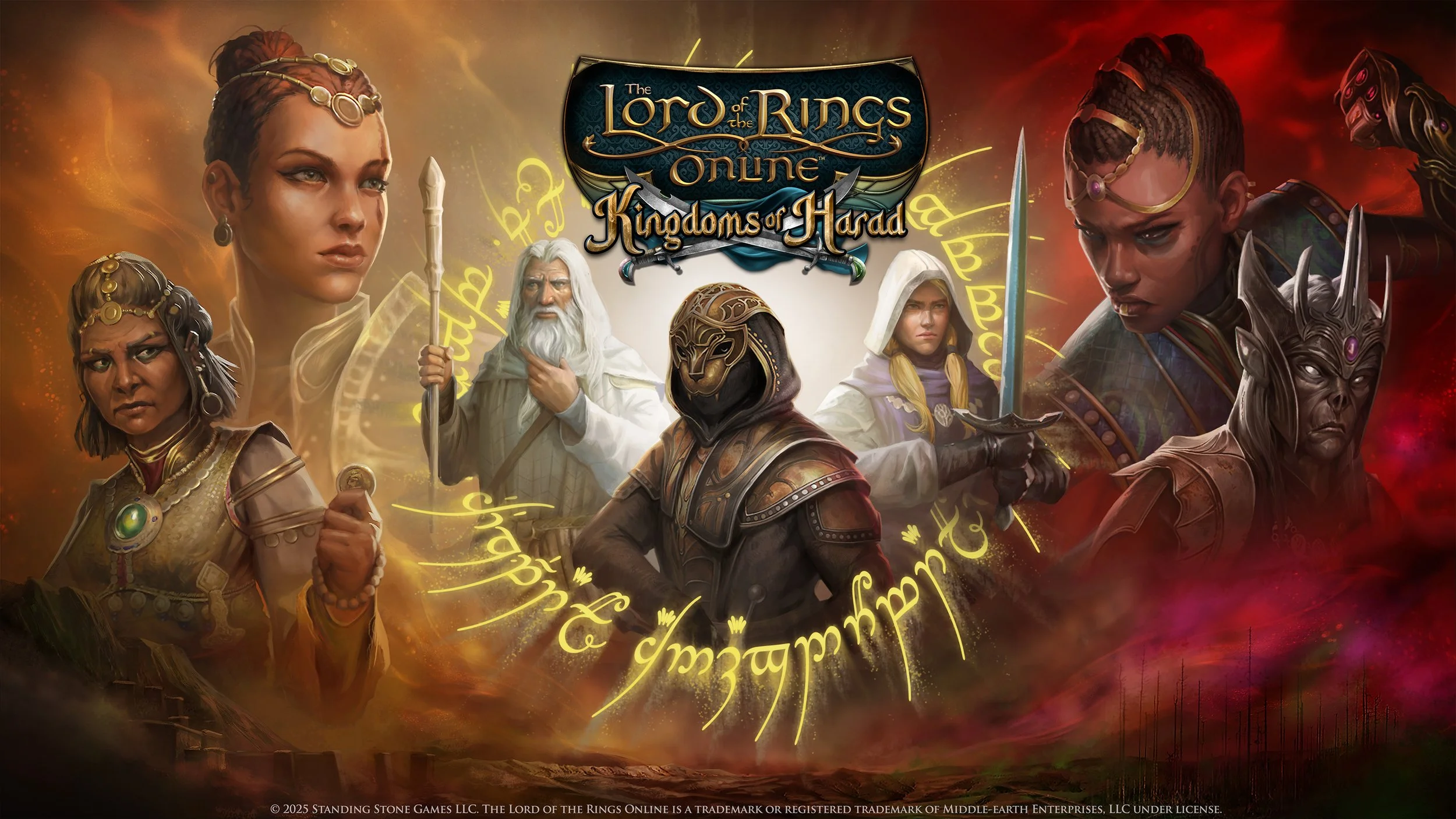
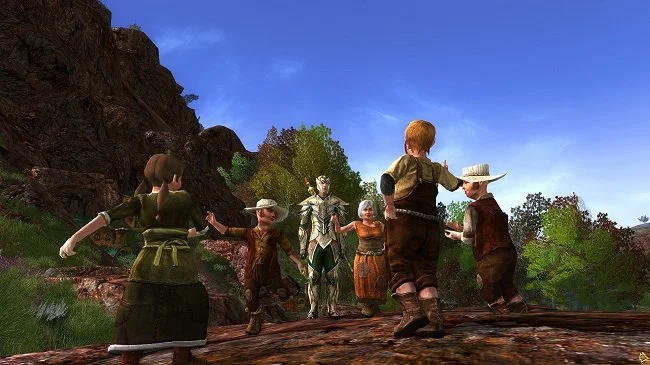
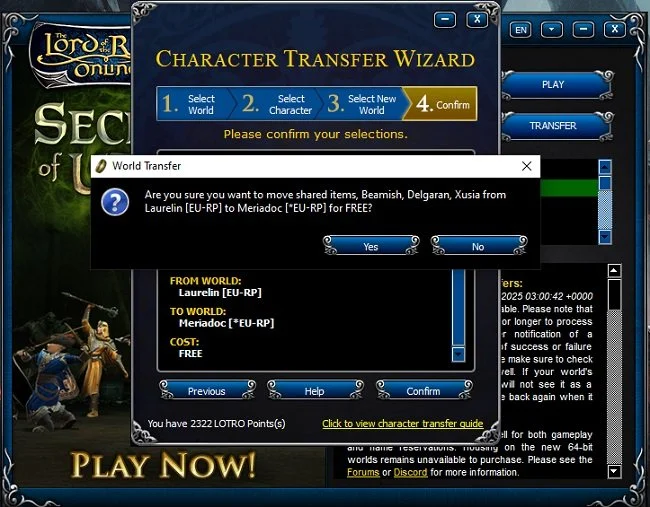
First off, fellow blogger Wilhelm Arcturus wrote a blog post that predicted pretty much everything that happened today, with regard of the launch of the new Legendary Servers. Yes, you read that right. Servers, plural. Apparently, there was so much interest in Anor, it led to massive login queues, so Standing Stone Games very quickly set up a second Legendary Server named Ithil to deal with the over flow. To ensure that folks get to be with their friends and kinmates, there’s also a free transfer grace period. I guess there’s no such thing as a smooth launch, be it a new game or a variation of it. The more cynical among us, may even go so far as to postulate that the server queues were planned to generate a “buzz” and the “need” for a second server. However, it’s more likely that SSG just miscalculated and had to think on their feet. There could well be server merges ahead when the excitement, queues and possibly player numbers die down. Either way, the job is now done and LOTRO now has two progression servers.
First off, fellow blogger Wilhelm Arcturus wrote a blog post that predicted pretty much everything that happened today, with regard of the launch of the new Legendary Servers. Yes, you read that right. Servers, plural. Apparently, there was so much interest in Anor, it led to massive login queues, so Standing Stone Games very quickly set up a second Legendary Server named Ithil to deal with the over flow. To ensure that folks get to be with their friends and kinmates, there’s also a free transfer grace period. I guess there’s no such thing as a smooth launch, be it a new game or a variation of it. The more cynical among us, may even go so far as to postulate that the server queues were planned to generate a “buzz” and the “need” for a second server. However, it’s more likely that SSG just miscalculated and had to think on their feet. There could well be server merges ahead when the excitement, queues and possibly player numbers die down. Either way, the job is now done and LOTRO now has two progression servers.
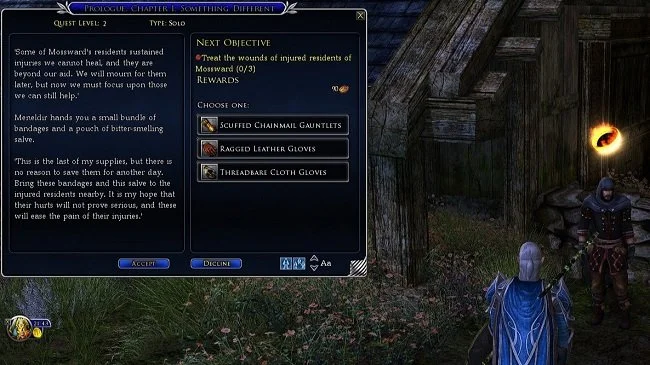
I logged into Anor shortly after 5:00 PM GMT today. The launcher initially showed that I was some ridiculous number in a queue and it quickly became apparent that it wasn’t decreasing, and the client had indeed stalled (Ctrl-Alt-Delete and Task Manager are your friend). So, I started multiple copies of the launcher and logged in the game and eventually one connected with the new server. I knew what class I was going to play and what my character name was in advance, so setting up a new avatar was not an issue. I skipped the tutorial, loaded my saved custom UI and then pushed ahead with the intro quests. Needless to say, the starter zone was heavily populated, and it took a while to kill the standard number of Boars or Wolves as required. However, the zerg had its benefits and tricky areas like the spider filled basement under Sprigley’s Farm was easy to navigate.
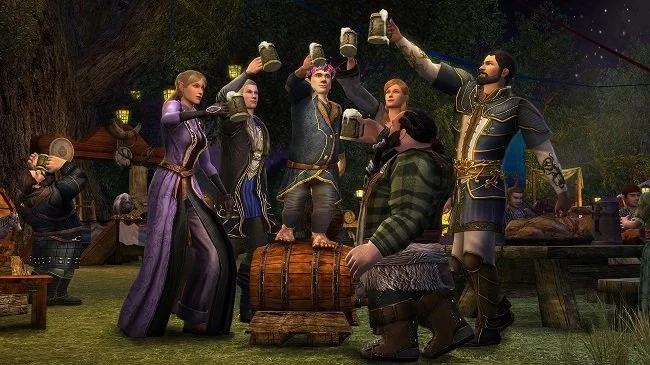
World chat was very active and relatively civilised, and players broadly seem to accommodate each other. Orderly queues formed to kill the likes of Jagger Jack and people were happy to group to make clearing quests easier. Eight hours on from launch and there was already crafted items appearing on Auction House for sale. Despite the “all about the journey” mantra your often see banded around on the official forums by many traditionalist LOTRO players, by the time I logged off there were already people approaching level 30 or so. It was also pleasant to see a lot of Kinships recruiting. Judging from world chat, there are a lot of retuning players who have been absent for quite a while. I have set up a Contains Moderate Peril kin, mainly just for fun and larks but if players stay the course, I see no reason not to run some of the endgame content.
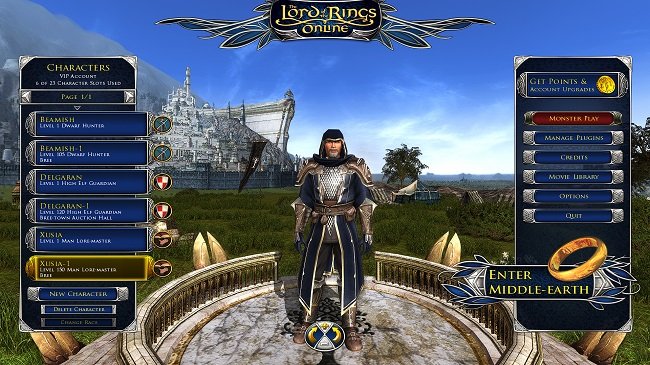
Nostalgia is a curious thing. I liked the way the SSG has re-instated the original music at the character select screen. Playing with a low-level character is pleasingly uncomplicated with only a handful of skills. There is also a very re-assuring sense of familiarity with the game when it’s presented like this. The sheer volume of players bustling about also reminded me what the original allure of the MMO genre was; a thriving living world or at least the appearance of one. More than a decade on simply being online with others has lost its mystique and is something you just take for granted. This evening gave me a pleasant reminder of how exciting it was back in 2008 to see a town filled with other people. However, there are a few things that bring you back down to earth, such as the absence of all the items you have purchased on your regular server. Vault space was quickly filled and at present there is no kinship or personal house to use as an overflow. I also just couldn’t get used to wondering around without my standard cosmetic outfit, so I’ve already put my hand in my pocket and bought it again, which was probably SSG’s motivation all along.
It will be interesting to see if player numbers are sustained before the release of new content to Anor and Ithil in four months’ time. There’s is no real reason to leave if you’re a returning player because they are not burdened with over familiarity with the content or harbour a grudge over previous changes to game mechanics. But there will be an inevitable decrease of player as some get bored and kinships find it harder to run content due to a lack of “bums on seats”. Personally, I don’t see any problems getting to level 50. I always liked this part of the Epic Story and I tend to level quite fast due to structured and planned sessions. It’s what comes next that is a stumbling block for many. Even a revamped Moria is still a big ask for some players. However, the LOTRO community is very tenacious and often flies in the face of established wisdom. So, I shall simply wait and see how things pan out on the Legendary Servers, while having fun progressing through Bree-land and beyond.






LOTRO: The Return of Lifetime Subscriptions?
Please note the question mark in the title. This is not a news post announcing that Standing Stone Games are offering lifetime subscriptions for The Lord of the Rings Online once again. Don’t go getting over excited. I am simply raising the question as to why they haven’t chosen to do this since they announced their “acquisition” of both LOTRO and DDO back in December 2016. Because broadly speaking, it would appear that LOTRO is doing well under the auspices of SSG as opposed to Turbine. The game had a much-needed expansion, Mordor, added a new race and has a clear road map for what is beyond the recently released Update 23: Where Dragons Dwell. Furthermore, we have the imminent launch of a new progression server on the 8th of November. The licensing issue has been laid to rest and changes at Middle-earth Enterprises and the Tolkien Estate have surely had beneficial results. The game may not have the player base of some MMOs, but its core audience appears to be loyal and stable. Surely, with LOTRO enjoying a gaming renaissance, now would be a good period to capitalise upon?
Please note the question mark in the title. This is not a news post announcing that Standing Stone Games are offering lifetime subscriptions for The Lord of the Rings Online once again. Don’t go getting over excited. I am simply raising the question as to why they haven’t chosen to do this since they announced their “acquisition” of both LOTRO and DDO back in December 2016. Because broadly speaking, it would appear that LOTRO is doing well under the auspices of SSG as opposed to Turbine. The game had a much-needed expansion, Mordor, added a new race and has a clear road map for what is beyond the recently released Update 23: Where Dragons Dwell. Furthermore, we have the imminent launch of a new progression server on the 8th of November. The licensing issue has been laid to rest and changes at Middle-earth Enterprises and the Tolkien Estate have surely had beneficial results. The game may not have the player base of some MMOs, but its core audience appears to be loyal and stable. Surely, with LOTRO enjoying a gaming renaissance, now would be a good period to capitalise upon?
Some people will argue that lifetime subscriptions are not necessarily good for the MMO genre. It raises capital for the developers in the short term but may discourage further expenditure from players in the future. Certainly, in the days of subscription only MMOs, that may have been plausible. However, as most games of this type now have a F2P hybrid model with additional tiers of payment, I’m not sure if such an argument holds true. Lifetime accounts may well offer a monthly stipend of in-game store currency, but it doesn’t cover expansions packs and such like. Furthermore, stipends accrue at a fixed rate and sometimes having only half of the cost of an in-store item may encourage the player to avoid waiting and buy further currency. Simply put, you could write multiple posts about the psychology of MMO players and what determines their personal spending habits. Hence binary statements about the effectiveness of lifetime subscriptions are not so relevant.
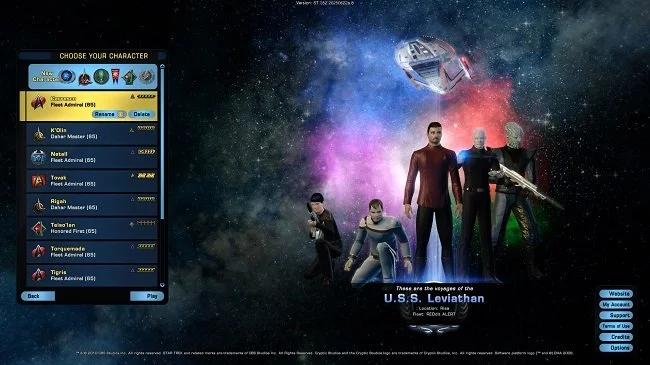
Star Trek Online, another MMO with a hybrid business model, still offers lifetime subscriptions. They currently have a sale where the price for such an account has been discounted from $299.99 to $199.99 (sale ends 6th December). The game no longer offers monthly subscriptions (which was $14.99) and has replaced them with a “starter pack” that allows you to permanently unlock most of the same perpetual benefits for a one-time fee. However, when you add up the cost of all the services and features that are contained with the lifetime subscription, there is still a substantial discount compared to purchasing them individually. I bought such a subscription back in April 2015 and consider it to be excellent value. In recent months I have begun to feel that it was a mistake not to have done the same with LOTRO back in the Codemasters days. The irony is that I tracked down a Collector Edition, complete with a lifetime account code, earlier this year. Sadly, the grace period in which SSG honoured such products has long expired.
SSG have experimented with various methods of monetising LOTRO over the last two years. The Mordor expansion saw an increase in lootboxes within the game that has subsequently been dialled back, possibly due to their unpopularity and the changes in the law in specific European countries. The new Legendary Server which launches soon requires a VIP subscription for access. Then there is the outstanding issue of a new class being added to the game, that will naturally require purchasing. Surely offering lifetime subscriptions or something of a similar nature is the next logical step. There are many LOTRO players who already have them, but there are equally players like me, who missed the boat or were reticent to buy last time they were available. Because a lot of the doubts about the games long term future have now been addressed, I would welcome the opportunity to purchase such a service. LOTRO has a very dedicated playerbase, many of whom are “altaholics”. I suspect that the demand for a new lifetime subscription offer would be surprisingly high. I hope that SSG therefore considers this option.
Re-installing MMOs
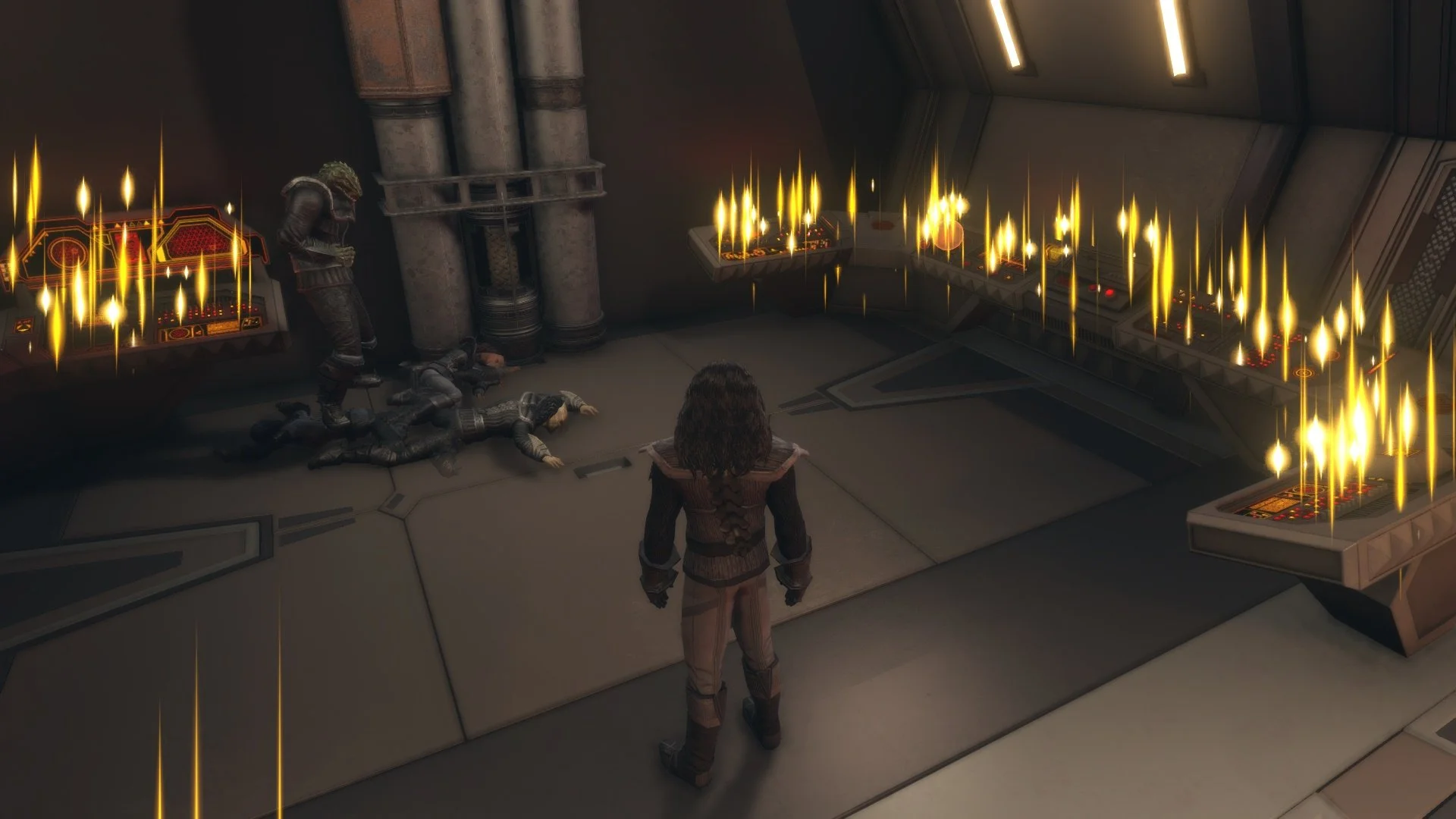
Having replaced my hard drive with a solid-state drive, I’ve had to re-install various games, along with all the other apps and programs I use. However, the smaller size of the new SSD has meant I’ve had to think long and hard about which title I choose. At present, I’ve limited myself to the two MMOs that I regularly play; namely The Lord of the Rings Online and Star Trek Online. Both have improved loading times as a result of running via a SSD and are performing a lot better than previously. I also prefer clean installations, rather than long term game setups that have been through numerous patches and updates. It was interesting to note that LOTRO now installs into a Standing Stone Games folder, rather than one marked Turbine. Sadly, STO required using either Steam or Arc as a means of installing the game. I opted for Arc, purely because it has a useful facility for redeeming game codes build into the launcher. Plus, you can bypass Arc and launch the game client directly if you want.
Having replaced my hard drive with a solid-state drive, I’ve had to re-install various games, along with all the other apps and programs I use. However, the smaller size of the new SSD has meant I’ve had to think long and hard about which title I choose. At present, I’ve limited myself to the two MMOs that I regularly play; namely The Lord of the Rings Online and Star Trek Online. Both have improved loading times as a result of running via a SSD and are performing a lot better than previously. I also prefer clean installations, rather than long term game setups that have been through numerous patches and updates. It was interesting to note that LOTRO now installs into a Standing Stone Games folder, rather than one marked Turbine. Sadly, STO required using either Steam or Arc as a means of installing the game. I opted for Arc, purely because it has a useful facility for redeeming game codes build into the launcher. Plus, you can bypass Arc and launch the game client directly if you want.
LOTRO being the older of the two games and still saddled with only a 32-bit client, proved to be the more problematic to download and install. The Akamai service that handles this process is very slow, irrespective of your internet connection. Despite having a 65MB fibre connection it took over four hours to install LOTRO, which is presently a 28GB download. STO being more of a space-centric game is a smaller 14GB install and was done in under ninety minutes. Due to the instanced nature of many of the zones, you can start playing the game while it downloads. With LOTRO you have to simply watch and wait as the blue bar slowly inches across the screen. Let us hope that SSG address this installation issue if we ever see the alleged 64-bit version of the game they’re developing. I also had to update my Nvidia graphic drivers and install Direct X 11 to get both games up and running. Something I shall prepare for in advance if I have to re-install any of these games again any time soon.
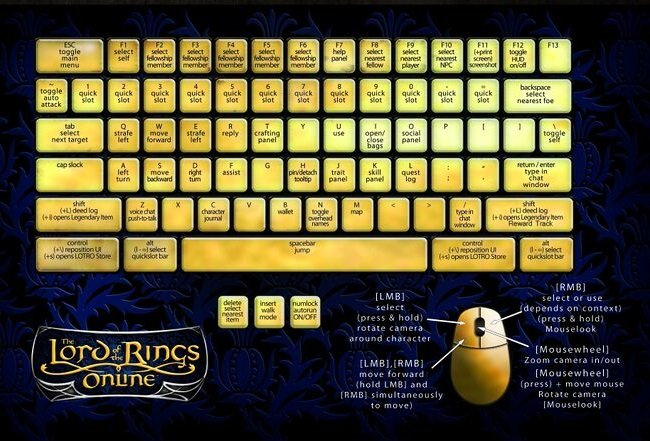
Here’s a tip if you find yourself in a similar position with either of these two MMOs. You may wish to back up the various files in “The Lord of the Rings Online” folder, which is usually a sub-folder of “Documents” on a standard Windows installation of LOTRO. These have details of minor UI customisations such as the order of your bags on the quickslot bar and what chat channels you utilise. It also has all your personal settings regarding screen resolution and general game preferences. It’s not essential that you do this, but it can save you some time tweaking your new installation once its complete. Similarly, with STO, you may also wish to copy your screenshots folder (usually located here: {Local path to program}\Star Trek Online_en\Star Trek Online\Live\screenshots\). Not only does it contain your previous screen captures, but more importantly it has details of any custom outfits you may have created for your characters.

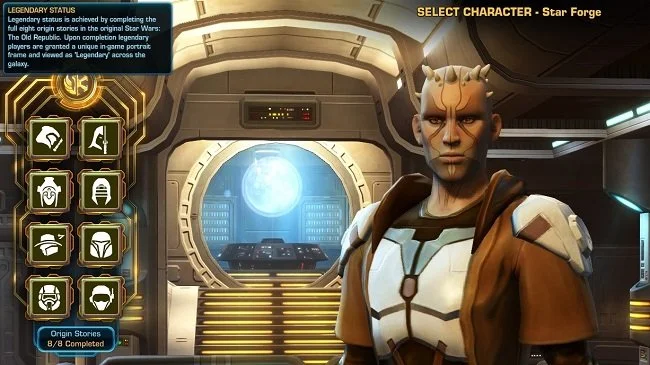

What’s in a Name?
“What's in a name? That which we call a rose by any other name would smell as sweet”. William Shakespeare, Romeo and Juliet.
There are two types of MMO players (actually there aren’t but I’m invoking a figure of speech as an opening gambit for the overall thrust of this post, so there). Those who meander through the character creation screens only to be taken by surprise by the fact that at the end, they now have to provide their avatar with a name of some kind. And then there are those who have a complete dossier compiled in advance, shedding light on the entire back story and life history of their new alt. Naturally, the latter group will already have a name prepared with much love and care. It will be relevant, appropriate and most importantly of all, it will afford them a much greater degree of connection with their in-game character. Because names are an integral part of identity and that is a much bigger aspect of MMO player psychology than some imagine. Would you simply want an index number instead of a character name?
Tee-hee, chortle and guffaw
“What's in a name? That which we call a rose by any other name would smell as sweet”. William Shakespeare, Romeo and Juliet.
There are two types of MMO players (actually there aren’t but I’m invoking a figure of speech as an opening gambit for the overall thrust of this post, so there). Those who meander through the character creation screens only to be taken by surprise by the fact that at the end, they now have to provide their avatar with a name of some kind. And then there are those who have a complete dossier compiled in advance, shedding light on the entire back story and life history of their new alt. Naturally, the latter group will already have a name prepared with much love and care. It will be relevant, appropriate and most importantly of all, it will afford them a much greater degree of connection with their in-game character. Because names are an integral part of identity and that is a much bigger aspect of MMO player psychology than some imagine. Would you simply want an index number instead of a character name?
I take a fairly hard line when it comes to character naming in the MMO genre. If a game has specific guidelines to begin with then they should be respected. I’m all for player freedom but an MMO is by its very nature shared space and so that means (or at least should in principle) that other players are due a degree of consideration. So, let us take it as read that inflammatory names, racial abuse, religious trolling and like have no place and should not be tolerated. In a game such a LOTRO, there is a great deal of lore that impacts upon names. The game goes so far as to make suggestions depending on race and region etc, which can be helpful. However, if you simply wish to give your character a generic fantasy sounding name, I don’t have a problem with that. What I do find tedious are the endless permutations of known character names, such as Legolas (in LOTRO) and James T Kirk (in STO). But for me, the greatest sin in naming after this, is giving your character your own name. Is there anything that screams “I have had the capacity to think creatively surgically removed” more than a Hunter running about the major quest hubs named “Colin Peters” or “Jacinda Barrington-Humphries”?
They drink it in the Congo…
Now joking aside, not everyone is equally creative, which is why there are plenty of online name generators that can assist you when it comes to the right name. Another strategy if you run multiple alts is to follow a naming convention and use various permutations thereof. This is a useful workaround and certainly is helpful to friends and colleagues who loose track of who is and who isn’t online within the guild. I have used name generators for inspiration in the past. However, I also think it’s important to find a name that suits your character (especially if you’re of a role-playing bent) and that is also user friendly and pronounceable. It’s all very well coming up with a cunning, lore appropriate name for your High Elf window dresser, but if everyone subsequently mangles said name every time you’re on Discord (because you always end up being known to your guild mates by your primary characters name and not your own), it gets very old fast.
Isn’t there a hat company there, on Bagel Street?
One of the things I use to get frustrated with about LOTRO was that it would suggest names, irrespective of whether they had been taken or not. Thus, you’d find a cool name for your shiny new Dwarf Quantity Surveyor only to discover there were already a dozen or so variants already on the server. More recent MMOs have addressed this issue by having an account name that suffixes your chosen name, thus accommodating duplicates. The issues still persists in LOTRO, but I have solved it for myself by not creating any alts. Overall, I think that as character customisation becomes more complex in gaming, then there needs to be scope and support for equally complex naming conventions. I know that jarring, trivial and puerile names can spoil the immersion of some players in MMOs. So why can’t phasing technology be used to remove those that bother us, or at least allow you to rename the offenders from your own perspective? Because it’s clear that despite the various changes and trends that have come and gone in the MMO genre over the last decade, names remain a very important facet of player engagement.
Numbers, Spreadsheets and Calculations
Over the last few days, I’ve been working towards achieving “ally” reputation status with the Men of Dale while playing LOTRO. There were two particular armour pieces that I desired, which would enhance my statistics, that were gated behind this achievement. I’ve been also grinding for several jewellery items, which require 5,000 Motes of Enchantment. I was sufficiently close last night that I actually took the time to work out exactly how much XP was outstanding and what was the optimal way to earn it. I made a few notes on paper and determined that three repeatable quests and five tasks would be sufficient to reach the target. As of today, the calculation proved right, and I now have the two armour pieces equipped. The jewellery is proving more difficult as Motes of Enchantment are a lot harder to come by. That project remains an ongoing concern.
Over the last few days, I’ve been working towards achieving “ally” reputation status with the Men of Dale while playing LOTRO. There were two particular armour pieces that I desired, which would enhance my statistics, that were gated behind this achievement. I’ve been also grinding for several jewellery items, which require 5,000 Motes of Enchantment. I was sufficiently close last night that I actually took the time to work out exactly how much XP was outstanding and what was the optimal way to earn it. I made a few notes on paper and determined that three repeatable quests and five tasks would be sufficient to reach the target. As of today, the calculation proved right, and I now have the two armour pieces equipped. The jewellery is proving more difficult as Motes of Enchantment are a lot harder to come by. That project remains an ongoing concern.
Now an odd thing occurred as I did the mental arithmetic last night and figured out exactly what permutation was required to get the required rep. Just for a moment I had this brief flash of insight in which the arbitrary nature of MMO mechanics became very clear. And for an instance it spoilt my fun. Luckily this was a fleeting experience, and, in a few moments, I was back to killing spiders in Lhingris for spiny carapaces and chatting on Discord to friends. It is the social element of MMOs that helps mitigate the mundane nature of some of the basic mechanics of the genre. It is a curious thing though because where as I find all the number crunching, min-maxing and esoteric formulas somewhat dull, others consider learning all this data and becoming an expert as part of the games allure. I have a basic grasp in LOTRO of the various stats and which ones are relevant for Lore-masters. However, the intricate details are lost on me. I choose not to know because in doing so, it diminishes my enjoyment of the game.
Star Trek Online is another MMO that has a player base that delve deep into the mathematics behind the game. You will find endless discussions on the games sub-reddit regarding builds and how best to maximise DPS or survivability. It is surprisingly complex and at first glance quite captivating. I have flirted with DPS parsers and tweaked my build in the past. However, it quickly becomes clear that a lot of people’s preferences are subjective and not just based on data. Weapon type, class and play styles determine various schools of thought. Also, if you want to pursue the “best builds” you frequently need access to a lot of rare items and traits, which are really only the province of the long term and heavily invested player. That’s fine and I certainly don’t begrudge those players that play so diligently, but for us who are somewhere between the shallow and the deep end, such tinkering is not applicable to us.
When thinking of the “spreadsheet” culture that goes hand-in-hand with some games, I suppose the most obvious example is EVE Online. I never got any further than four days into a two-week trial with that niche product and I learned very quickly that the realities of that MMO were far removed from what I had assumed. For me, the selling points of the two MMOs that I play the most are their narrative, intellectual property and the provision of goal orientated achievements. The social aspect is also a strong consideration. Although both LOTRO and STO require an element of analysis and technical understanding, it never overshadows the leisure that they provide. A quick skirmish or random task force can satisfy my urge for combat. Riding around Middle-earth or meandering round the promenade on Deep Space Nine helps me relax after a tough day. A game that requires me to track everything, weigh up every pro and con and maintain a complex inventory simply doesn’t strike me as fun. However, it is very much a question of “horses for courses”.


LOTRO: Legendary Server
Standing Stone Games announced today the launch of a new LOTRO "Legendary Server" later this autumn. This is essentially a progression server by any other name. It will be accessible to VIP monthly and lifetime subscribers allowing access initially to core content from levels 1 to 50 via The Shadow of Angmar story. It should be noted that this is not “classic” LOTRO as it existed back in 2007. The new server will offer the game as it is now with all its revised systems. Hence High Elves and Beorning classes will be available as will the skills tree system. SSG intend to update content every four months but will keep it all within the parameters of the level cap on the"Legendary Server". The developers have also made it clear that this new service does not come at the expense of regular new content for the existing game. “We have no intention of adjusting our frequent, regular, and active development of the non-Legendary game worlds, and have plans for them well into the future”.
Standing Stone Games announced today the launch of a new LOTRO "Legendary Server" later this autumn. This is essentially a progression server by any other name. It will be accessible to VIP monthly and lifetime subscribers allowing access initially to core content from levels 1 to 50 via The Shadow of Angmar story. It should be noted that this is not “classic” LOTRO as it existed back in 2007. The new server will offer the game as it is now with all its revised systems. Hence High Elves and Beorning classes will be available as will the skills tree system. SSG intend to update content every four months but will keep it all within the parameters of the level cap on the"Legendary Server". The developers have also made it clear that this new service does not come at the expense of regular new content for the existing game. “We have no intention of adjusting our frequent, regular, and active development of the non-Legendary game worlds, and have plans for them well into the future”.
I have never been a great one for alts and replaying old content. The most I’ve managed in ten years of playing LOTRO, is to get one new character to level 55 and then used the Aria of the Valar booster that that came with the Mordor expansion, to auto level to 105. Oh, the countless alts that I’ve created to try other classes, only to delete roundabout level 30 or so. However, I can see the appeal of running through the game with both old and new friends. I guess that is one of the major obstacles for a lot of lapsed players or those who want to start playing but are put off by the immense level gap. As have purchased all expansions and I’m currently a VIP and will likely remain so for the immediate future, I may well consider the new server if friends intend to do the same. That for me is the main appeal of this service. It’s been a long time since I’ve group consistently. I played essentially the first 60 levels of the game with friends. How things have changed.
It remains to be seen if this new service will attract much interest, although I suspect that it may. Its appeal may well attract players of all kind and its subscription only option means that it should eliminate any problem element. I’m interested to see how well the actual levelling works because many of the early zones in LOTRO such as Evendim and The Lone Lands have been revised several times and progression from 1 to 30 is quite rapid then changes pace again from 31 to 50. Stepping back from this new service and considering the wider changes that have come to LOTRO of late, it certainly appears that developers SSG are trying to maximise the flow of revenue into the game. The recent experimentation with lockboxes that came with the Mordor expansion appears to have been dialled back, possibly due to the ongoing legal scrutiny such mechanics are currently coming under. There was talk not so long ago of a new class, which has subsequently been down played. But when it does arrive, it will doubtless be chargeable. In light of the news about the "Legendary Server" I wonder if SSG will make any further announcements of this kind before the year ends?
LOTRO: Improvements and Suggestions
I returned to LOTRO in August and have been playing continuously since then, working my way through the last expansion and Update 22. The upside to this ongoing commitment has meant that I have really applied myself to the unfolding narrative and have absorbed a lot more of the story than previously. It is very enjoyable to see the way various strands of different plots all tie together. I have also taken the time to revise my Lore-master build and attempt to optimise it to reflect the prevailing game meta. Broadly speaking, I have been successful so far. But there have been a few negative aspects to returning to the game. Many of them are actually issues that have always be present and have been compounded by the games age. LOTRO lacks some of the modern convenience and functionality we take for granted in more recent MMOs. So, I thought I’d take time out to list a few helpful suggestions that Standing Stone Games can then promptly ignore.
I returned to LOTRO in August and have been playing continuously since then, working my way through the last expansion and Update 22. The upside to this ongoing commitment has meant that I have really applied myself to the unfolding narrative and have absorbed a lot more of the story than previously. It is very enjoyable to see the way various strands of different plots all tie together. I have also taken the time to revise my Lore-master build and attempt to optimise it to reflect the prevailing game meta. Broadly speaking, I have been successful so far. But there have been a few negative aspects to returning to the game. Many of them are actually issues that have always be present and have been compounded by the games age. LOTRO lacks some of the modern convenience and functionality we take for granted in more recent MMOs. So, I thought I’d take time out to list a few helpful suggestions that Standing Stone Games can then promptly ignore.
Auto-pathing. This subject was raised recently by fellow blogger Telwyn over at GamingSF. Unlike other MMOs, LOTRO relies mainly on the player when it comes to navigating their way around the map and travelling from quest to quest. Telwyn is indeed right that you can click on an object a small distance away such as a resource node or a quest item and your avatar will auto-path to it. But you cannot set a waypoint and safely auto-travel to it, nor are you given a visual bread crumb trail to help travel to especially esoteric locations. SSG and Turbine before them seem to delight in making navigating a real chore in LOTRO. The developers seem to have a real aversion to straight lines and intuitive paths. Try getting from one side of Dale, Moria or Galtrev easily.
Naturally I would like to see changes to this current state of affairs. In towns and safe areas, it would be nice to see auto-pathing on a practical level. For example, if you arrive at South Bree Entrance and click on Lalia’s Market, it would be convenient to simply automatically ride there without hinderance. It would also be useful to do the same out in quest zones, although to make things equitable I think players should maintain the risk of aggravating mobs they stray to close to. In default of this, I happily accept a visual route marker around some of the more esoteric areas, especially when it comes to reaching quest rings displayed on the mini map.
Landscape Soldiers. Back in 2012 when Update 6: Shores of the Great River was released, we gained the ability to summon our skirmish soldiers while PVE questing. I have often used this facility over the years as I like having backup in tricky areas and being “overpowered” (or at least robustly equipped). Broadly this tactic works but it can be like herding cats at time. Landscape soldiers are a somewhat blunt tool with little or no navigational control. You often have to dismiss them or re-summon them to avoid pulling all mobs in a given area. Having recently played Ghost Recon: Wildlands, I have learned what good AI companions can be like. So, if LOTRO could add some simple controls to landscape soldiers (just like Lore-master pets for example) then that would be really helpful.
Barter Currencies. There are simply too many of these in the game and many of them end up becoming redundant very quickly. In a previous post I mentioned that it’s worthwhile revisiting old currencies and seeing what you can trade them in for, but there comes a point when there’s nothing else useful and they just end up as being baggage. What I would like to see is some kind of currency exchange system that would allow you to hand in the old in return for new. It’s something that’s already available in-game for skirmish marks and to a degree within some of the barter currencies themselves. So, there’s no real technical reason why SSG cannot implement such a system, it’s just that the devil would be in the detail. Trying to find a fair and equitable exchange rate would be the real challenge.
Instance Finder. Ten years on, LOTRO is still a very social game. People do help and are surprisingly generous. However, try using the in-game instance finder and you’ll know the true meaning of loneliness. I don’t know whether it’s the times that I play, but I have never got the instance finder to successfully form a PUG. Usually, I run instances via my kinship but that’s not always convenient, so having a functional auto-grouping instance finding tool would be a real boon. SSG should take a leaf out of fellow developers Cryptic’s book, who have just added enhanced rewards to incentivise PUG and random queues. I don’t believe in coercing players into collaborating and favour instead the tried and tested method of providing a “carrot on the end of the stick”. If I could gain quality gear by running random or under represented instances, I’d certainly give it a try.
These are just four suggestions to improve LOTRO that I’ve quickly thought about. They’re not in any order or preference. They literally just came to mind as I was drafting this post. I’m sure most players have a comparable amount they can quickly bring “to the table”. As ever, I’d be very interested to hear reader suggestions, so feel free to leave suggestions in the comments. If LOTRO wishes to continue to move forward it would be wise for SSG to at least consider some changes. Yes, the age of the game and its respective code does impact upon what can and cannot be done, but simply expanding some of the existing functionality in to other areas of the game would be a good starting place. As ever time will tell.
LOTRO: The State of the Game
I am fast approaching my ten-year anniversary of playing the MMORPG The Lord of the Rings Online. So, I thought I write a few thoughts about how I find the current state of the game. I returned to LOTRO this August and finally decided to tackle all the outstanding content that I had allowed to build up. Because I initially had issues with the Mordor expansion when it first was released, I had started to level up elsewhere in the game. Thus, when I resumed playing I was two levels or so above the designated rank of most quests. The final region of Mordor, Talath Úrui, I completed last night at level 118. I have always preferred to play this way and like to ensure that I am adequately equipped for a zone. If you are underpowered combat becomes a chore. I am currently finishing off the final stages of Update 22: Legacy of the Necromancer, having worked my way through Northern Mirkwood, Lake-town, Dale on to Erebor. I always attempt content in a linear fashion, so I can stay conversant with the various storylines. By the time I finish the Erebor quests and start the new content in Update 23: Where Dragons Dwell, I shall probably be at the new level cap of 125.
I am fast approaching my ten-year anniversary of playing the MMORPG The Lord of the Rings Online. So, I thought I write a few thoughts about how I find the current state of the game. I returned to LOTRO this August and finally decided to tackle all the outstanding content that I had allowed to build up. Because I initially had issues with the Mordor expansion when it first was released, I had started to level up elsewhere in the game. Thus, when I resumed playing I was two levels or so above the designated rank of most quests. The final region of Mordor, Talath Úrui, I completed last night at level 118. I have always preferred to play this way and like to ensure that I am adequately equipped for a zone. If you are underpowered combat becomes a chore. I am currently finishing off the final stages of Update 22: Legacy of the Necromancer, having worked my way through Northern Mirkwood, Lake-town, Dale on to Erebor. I always attempt content in a linear fashion, so I can stay conversant with the various storylines. By the time I finish the Erebor quests and start the new content in Update 23: Where Dragons Dwell, I shall probably be at the new level cap of 125.
The Story. A year on after the release of Mordor and LOTRO has begun to forge ahead into quasi non-canonical territory, effectively fictionalising the events that are referenced in the appendix of The Lord of the Rings. There have been times in the past when I have found the underlying narrative of LOTRO too convoluted and frankly uninteresting. I remember little of Enedwaith and Dunland and felt that the stories based around the inter-tribal Dunlending feuds were a distraction. Beyond their function of giving further insight into the treason of Isengard they were not the most gripping of tales. I also lost track of many of the Thanes of Rohan and their respective stories during the Riders of Rohan expansion. Yet broadly, the Epic Story that runs through the entire game has been gripping and from time to time, memorable characters do stand out.
I felt that the Mordor storyline was very good, offering a plausible depiction of a ruined but not necessarily beaten realm. The notion of former acolytes of Sauron vying for dominance in a power vacuum was explored well. I also felt the plight of the Stout-axes was an interesting tale. Recent updates have also seen a more honed style of narrative, where wider issues are seen through the experience of a handful of relevant characters. The refugee quests in Dale was well handled and struck a contemporary chord. Although I usually tend to be ambivalent towards Elven focused narratives, I enjoyed the cleansing of Mirkwood and the way Thranduil’s story tied into the High Elf starter storyline. From what I’ve seen so far SSG are doing well with their post downfall of Sauron adaptations. I’m looking forward to seeing what happens next in Ered Mithrin.
Gear, statistics and combat. I’ve recently started using the Raven as my regular Lore-master pet. I’m currently using the Red Line Trait Build with a Legendary Weapon tweaked towards optimal fire-based damage, so using a combat pet that enhances this is common sense. At present I have mainly Teal and Purple armour purchased via the High Elf Enchanter along with all Teal Jewellery. Hence PVE outside of Ered Mithrin is not proving problematic. I have also adjusted my skill rotation, as Ring of Fire was nerfed in the latest update and now has become invaluable. I find there’s a fine line in any MMO between challenging combat and fights simply taking too long. At present I feel the balance is just right in LOTRO. I’m not a serious number cruncher when it comes to my characters statistics. I noticed that my moral levels have dropped since the last patch, but other adjustments to enemy stats mean that combat is not quite so grindy.
Abandoned systems and obsolete content. I briefly wanted to mention one of the inevitable consequences of a decade old MMO. LOTRO has several game systems that have either fallen by the wayside, or that remain as “work in progress”. I recently revisited Epic Battles and feel that the main flaw they have is the intial lack of agency you have as a player, on what is going on around you. You need to put a lot of points into the various “promotions” before you actually start impacting upon the flow of battle. Too me that’s simply bad design. I don’t expect to slog away for a month before something finally becomes compelling. It needs to be so right from the start. Then there are skirmishes, which are thoroughly entertaining and a great way to level outside of traditional quests. Sadly, we haven’t seen any new skirmishes in the game since 2010 or so. Hobbies and housing are other aspects of the game that have much potential but remain underdeveloped.
Due to LOTRO’s ever growing level cap, there are several gear related systems at various points in the game that are now obsolete. If you create a new alt, many of these systems can now be bypassed with alternative gear provided elsewhere. The Hytbold quest line was an involving diversion upon its initial release but it is highly unlikely that you’d ever revisited it with another character. More recently, the Allegiance system was introduced to the game. In the space of two updates it has become obsolete. I am currently level 22 with The Kingdom of Gondor, but as my primary character in now 118, none of the gear it can offer is of any use. I bought three items recently which had lower stats to what I was using, so I simply destroyed the items for Motes of Enchantment. LOTRO more than other MMOs that I play seems to have an excess of game systems that have to be experienced on level or else they end up redundant (except to the completionist player).
Lore, ambience and music. After ten years Standing Stone Games realisation of Middle-earth still captures the essential essence of Tolkien’s work. The game engine is some what old now and the graphic are very much of the era that created the game, but the world reflects the source text and the stories regularly tap into the lore in both obvious and subtle ways. I often find myself intrigued by a minor aside in the narrative or a reference to a character or place. When I subsequently research these on the internet or via my various Tolkien reference books, I always find that the writers have drawn upon genuine lore. Bar practical changes, adaptations and embellishments that are designed to facilitate the MMO genre, I have never found the stories in LOTRO objectional or taking excessive liberties with accepted canon.
Finally, I would like to reference the soundtrack of LOTRO which has grown prodigiously over the years. It remains an integral facet of the games appeal, and a means of giving an older MMO with minimal dialogue, the emotional impetus the narrative needs. There are some wonderful new (relatively speaking) themes that play around Lake-town, Dale and Erebor that suit the environment perfectly. The game also has several motifs associated with the different races, although I must say those pertaining to Dwarves are by far the best. They simply nail the cultural and philosophical idiom of the race. I know SSG have made music from the game available, but I feel they should release more. Hopefully that is something they can address in the future.
LOTRO remains for me my go to MMO and despite its flaws, it still offers me an interesting diversion in my leisure time and a rich narrative experience based upon one of my favourite intellectual properties. As long as it continues to operate within these parameters, I shall continue to support the game. I do not think I am alone in this philosophy and believe that many players have made their peace with the games foibles and embraced it for what is actually is and the needs it fulfils. Certainly, the game have provided me with a great deal of enjoyment and entertainment over the last decade and has been great value for money. Therefore, I wholeheartedly hope that it continues to grow and move the story forward in the years to come.
LOTRO: An Unnecessary Increase in Level Cap?
I’ve logged into the Bullroarer test server and looked around several of the preview builds of Update 23 for LOTRO recently. So far what I’ve seen has broadly met with my approval. It’s pretty much more of the same, with the main selling point being the story and a new area of Middle-earth to explore. However, there’s one aspect of the soon to be released Update 23: Where Dragons Dwell that does strike me as a little odd. The level cap is being increased from 115 to 120. Last summer’s Mordor expansion raised the cap by ten to 115, so this new increase does feel a little too soon to me. However, if you look at the LOTRO Wiki, it would appear that increases tend to occur regularly every eighteen months to two years, so it can be argued that this pending change isn’t anything unusual. Yet, it somehow feels “off” to me, which I shall now endeavour to explain.
I’ve logged into the Bullroarer test server and looked around several of the preview builds of Update 23 for LOTRO recently. So far what I’ve seen has broadly met with my approval. It’s pretty much more of the same, with the main selling point being the story and a new area of Middle-earth to explore. However, there’s one aspect of the soon to be released Update 23: Where Dragons Dwell that does strike me as a little odd. The level cap is being increased from 115 to 120. Last summer’s Mordor expansion raised the cap by ten to 115, so this new increase does feel a little too soon to me. However, if you look at the LOTRO Wiki, it would appear that increases tend to occur regularly every eighteen months to two years, so it can be argued that this pending change isn’t anything unusual. Yet, it somehow feels “off” to me, which I shall now endeavour to explain.
The Mordor expansion presented players with a major statistical and gear adjustment. More so than at other points in the game. The in-game quest rewards gave players a helping hand but to secure a full set of equipment to successfully traverse the rigours of the zone, you needed to repeat content, run instances and raids. Lootboxes and keys also initially dropped in-game and provided a supplement to the above. Then of course there was the LOTRO store that could provide keys instantly for a price. However, in the past year there has been various tinkering by the developers and keys drops are now less common place. To date there are still a lot of players working through the expansion as well as Dale-lands, attempting to earn enough barter rewards to acquire the right gear set. The coming level cap increase will effectively bring that process to a halt and negate any ongoing hard work by introducing a new rep faction and barter reward system.
Is a new gear grind really required so soon after the last expansion? It’s a debatable point. For every high-end achiever who wants the “best of the best”, there are two laid back players who are running a new alt through Ered Luin once again, just for the fun of it. LOTRO has a very diverse player base. Which is why I think that this decision to raise the level cap is somewhat of divisive. I have felt in recent years that the gear progression system has become a little too endgame focused. Although I appreciate that raid gear should not be given out on a whim and should be gated behind high end content, I often feel that intermediate players spend too much time levelling in under specified armour and jewellery. Once a player has finished a zone such as Mordor or similar, they may well find themselves adequately equipped for their level, but if they don’t run endgame content regularly, they don’t see any major benefit from it.
I have vivid memories of running group content back in the Moria expansion days, trying to earn First Age Lore-master Staff. I finally obtained one about ten days prior to the Siege of Mirkwood expansion that immediately made it obsolete. I find it similarly saddening that by the time I perfect my level 115 build it will be negated by the availability of new 120 items. For me if SSG could make a mid-tier of gear available that could be used for those players between casual and hardcore, that would be a good compromise. They’ve done this before. The floral barter system in Ithilien which came with Update 19: March of the King provided a satisfactory alternative to gear gained from endgame content. May be something similar will be made available in future level 120 content. In the meantime, I remain sceptical of the pending level cap raise. I do not like being under powered in MMOs and like to be able to earn items that improve my stats while I’m still levelling.
LOTRO: The Maps of Middle-earth
I logged into the third preview of Update 23 on Bullroarer test server this evening and perused the various changes that Standing Stone Games have made. For a lot of the “serious” LOTRO players, the focus of this latest build are the statistical changes to all the various classes. As I am not so au fait with this aspect of the game, I shall leave the matter until it is finalised then discuss it with my kinship who are more learned in these matters. My primary motivation for using the preview server is to get an advance look at any new region and to explore the environment. Standing Stone Games continue to do a sound job of realising the Third Age of Middle-earth and I enjoy the attention to detail they provide along with their adherence to the lore. One of the aspects of LOTRO that I’ve always enjoyed are the regional maps. In this latest preview build, all maps for the new region of Ered Mithrin are now available and the temporary placeholders for Erebor and The Steel Keep have been removed.
I logged into the third preview of Update 23 on Bullroarer test server this evening and perused the various changes that Standing Stone Games have made. For a lot of the “serious” LOTRO players, the focus of this latest build are the statistical changes to all the various classes. As I am not so au fait with this aspect of the game, I shall leave the matter until it is finalised then discuss it with my kinship who are more learned in these matters. My primary motivation for using the preview server is to get an advance look at any new region and to explore the environment. Standing Stone Games continue to do a sound job of realising the Third Age of Middle-earth and I enjoy the attention to detail they provide along with their adherence to the lore. One of the aspects of LOTRO that I’ve always enjoyed are the regional maps. In this latest preview build, all maps for the new region of Ered Mithrin are now available and the temporary placeholders for Erebor and The Steel Keep have been removed.
One of the things that attracted me to The Lord of the Rings when I first read it in the early eighties was the fact that the books came with maps. The hardback editions that I read via my local library had sumptuous fold out maps that clearly detailed the various regions. They help convey the sense of history of Middle-earth and depth of culture and lore that existed. The maps also gave a sense of scale to the Fellowship’s journey as well as context. They were integral to maintaining the illusion that Middle-earth was a living and ancient world. Hence the maps that feature in LOTRO serve a similar purpose beyond their immediate practical functionality. They don’t just provide a means of navigating from point A to point B but further embellish the games sense of immersion by showing a world populated by people in a broad variety of geographical locations. They also often reflect interesting details of lore, or minor comments from the source text.
Over the years, due to changes in the game and the streamlining of earlier zones, some maps have been replaced resulting in two distinct art styles. The contrast can be quite jarring at times. For example, the Bree-land map is one of the oldest in the game and is somewhat cluttered. However, if you then cross into the Barrow-downs the map was redesigned and sports a clearer style and breaks the zone up into two. As new content is added to the game, the newer map style naturally prevails. From an aesthetic point of view, I prefer the this to old. The maps are more functional and convey their respective information efficiently. Overall, I think they are an improvement, although I do still think they have some flaws. As to whether SSG intends to standardise all maps and thus replace those that have the older design remains to be scene.
Although the more contemporary LOTRO maps exude an appropriate art style and are easier to read, some still have a flaw with regard to conveying navigational data. Some of the maps do not always clearly show what route a player should take to enter a specific region. The other day, I decided on a whim to do some of the quests in Entwood. From memory I vaguely knew I could access the region from either Broadacres or Stonedean in West Rohan. Sadly, the maps lacked sufficient detail to give me a clear course to follow. Thus, I had to spend some time riding around the various hills that separate zones, until I found the right route. I believe access to Wildermore is similarly esoteric. Another problem are instance maps. They only become fully visible as you explore. If you leave and subsequently return to an instance, the process has to be repeated. Surely the logical thing would be to make it permanently available once the player had initially unlocked it.
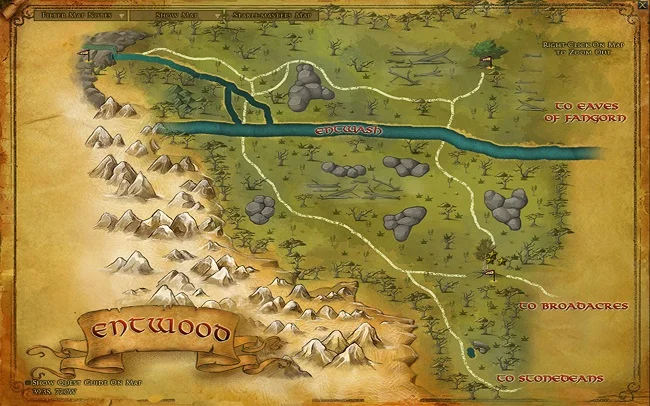
The maps in LOTRO are also poor at conveying data for regions that are set on multiple levels. Top down representations do not adequately express three-dimensional data, which can lead to confusion and frustration, especially in instances such as the Grand Stair in Moria. In the past when running this instance, I would have to rely on third party diagrams, outside of the game itself. Another map within LOTRO that is notoriously unintuitive when it comes to travelling around is the Misty Mountains. It displays what appear to be clear linear routes between key locations but fails to convey the topographical features that will impede you. Again, it is steep slopes or crevasses that bar your way. Now there may well be players who will take the view that these maps are not supposed to make things that easy for you and that their deliberate vagaries are designed to force the player to explore. That may well be true, but I find premeditated inconvenience to be poor game design choice. A map that doesn’t impart the necessary data you need to successfully navigate the area it represents, has fundamentally failed in its purpose as far as I’m concerned.
The key to success in getting the most out of the various regional maps in LOTRO is to familiarise yourself with both the pictorial representation of each zone and cross reference that with practical first-hand experience. Basically, learn your way around the physical foibles of an area and use that knowledge in conjunction with the map. The only downside of this strategy is that LOTRO is a big game so that’s a lot of information to commit to memory. Overall, I’m mainly familiar with the zone I’m currently questing through or those that I have a special affinity to. I haven’t really spent any time in South Mirkwood or parts of Rohan since those regions were released. Therefore, I often cannot immediately recall their subtleties or quirks. May be this is something else that can be added to the list of “bug” fixes and “quality of life improvements that SSG need to address. Clearer, more intuitive maps are only going to become more essential as the game continues to expand.
Financing LOTRO
Back in December 2008, I bought a “compilation pack” that contained both the The Lord of the Rings Online: Shadow of Angmar base game, along with the newly released Mines of Moria expansion. I paid £20 for the lot. After the obligatory free months access, I then became a regular subscriber right up until about summer 2012. Since then I’ve subscribed and played whenever new content is released, meaning that for about six months of the year, I’m paying for the “luxury” of playing LOTRO. I’ve also purchased all the expansions over the years. Because I enjoy the game, I am not averse to buying additional LOTRO points when my monthly stipend doesn’t cover the cost of the items I want. I never availed myself of the opportunity to become a lifetime account holder, which is something I regret. It certainly would have been very good value for money, considering that LOTRO is over a decade old.
Back in December 2008, I bought a “compilation pack” that contained both the The Lord of the Rings Online: Shadow of Angmar base game, along with the newly released Mines of Moria expansion. I paid £20 for the lot. After the obligatory free months access, I then became a regular subscriber right up until about summer 2012. Since then I’ve subscribed and played whenever new content is released, meaning that for about six months of the year, I’m paying for the “luxury” of playing LOTRO. I’ve also purchased all the expansions over the years. Because I enjoy the game, I am not averse to buying additional LOTRO points when my monthly stipend doesn’t cover the cost of the items I want. I never availed myself of the opportunity to become a lifetime account holder, which is something I regret. It certainly would have been very good value for money, considering that LOTRO is over a decade old.
Although F2P games offer the benefit of reaching a wider market, I do believe that the business model is troublesome and causes more problems than it solves. Lootboxes similarly can break a game, as content is retrofitted to accommodate monetisation, rather than serve the exclusive needs of the customer. The monetisation per se of the gaming industry remains a perennial debate and one that is not going to be solved anytime soon to every one’s satisfaction. It is certainly a matter that is causing Standing Stone Games to tie themselves in knot at present. Lootboxes have been present in LOTRO for a while but they were never integral to progression through the game until the release of the Mordor expansion. Let it suffice to say that there has been a great deal of player push back against this decision and that SSG have been trying to address this matter in Update 23, which is due for release soon. However, the current proposals are complex and are very much a work in progress. They also seem to be causing a great deal of consternation among players.
I won’t attempt to summarise the latest “plan” at present as it’s being continuously “revised”. If you’re feeling stoic, then read the current thread on the official forums and you’ll see how difficult this matter is to sort out. However, I think the overall problem comes down to a fundamental difference in outlook over the financing of LOTRO, between the players, the publishers and lastly the developers SSG. LOTRO has a mature playerbase. A hardcore of thirty to fifty plus year olds, who all cut their teeth in an era where game monetisation was clear. You bought a game and paid for any additional expansions. In the MMO world, you bought the base game and subscribed. It was a simple “quid pro quo”. You paid money and got content. However, microtransactions, in-game currencies, season passes, paid DLC, lootboxes and “live services” have evolved over the last decade or so and have migrated from the mobile games market, over to console and PC gaming. Younger players who have grown up with mobile games has become “acclimatised” to such business practices. LOTRO players by and large don’t care for them.
And therein lies the rub for SSG or more to the point, their financial backers Daybreak Game Company. I suspect that there are financial targets set for LOTRO each quarter and that these are proving “challenging”. Because of the dedicated nature of many core LOTRO players it would appear that there are significant whales in the community. Yet it is the nature of the current games industry to seek whatever revenue that can possibly be generated and that the fate of a game will often come down to whether or not it yields the financial projections. Hence it become extremely difficult for SSG to find the right balance. Simply removing loot boxes and the LOTRO store from the game is not going to happen. The game is just too heavily dependent upon that business model. Some players have suggested cutting out the “middle man” of loot boxes and keys and just have a store where you buy everything that is offered. Sadly, whatever course of action is taken, it is bound to please one group and offend another. However, gating content or progression in LOTRO behind some kind of pay mechanic could well prove to be the straw that breaks the camel’s back. But I’m sure SSG knows this, so it will be interesting to see what compromise they arrive at by the time Update 23 launches.
LOTRO: Tales from the Barter Wallet
One of the fun things about LOTRO is the way each player evolves their own personal way of navigating around Middle-earth. Although there is an extensive “stable” network throughout the game, I often find it quicker to use the various “Return to” skills, to get where I need to go. Turns out there’s a lot more in LOTRO than I realised. One of the most beneficial is “Return to Minas Tirith” which places you in the city before the Battle of the Pelennor Fields. The main advantage is that you arrive close to the stable-master who has an extensive list of travel destinations throughout Gondor. More so than his counterpart in the Minas Tirith after the battle. The skill “Return to Minas Tirith” is obtained from the Quartermaster (Defenders of Minas Tirith) at the Great Gate of Minas Tirith for 30 Minas Tirith Silver Pieces.
One of the fun things about LOTRO is the way each player evolves their own personal way of navigating around Middle-earth. Although there is an extensive “stable” network throughout the game, I often find it quicker to use the various “Return to” skills, to get where I need to go. Turns out there’s a lot more in LOTRO than I realised. One of the most beneficial is “Return to Minas Tirith” which places you in the city before the Battle of the Pelennor Fields. The main advantage is that you arrive close to the stable-master who has an extensive list of travel destinations throughout Gondor. More so than his counterpart in the Minas Tirith after the battle. The skill “Return to Minas Tirith” is obtained from the Quartermaster (Defenders of Minas Tirith) at the Great Gate of Minas Tirith for 30 Minas Tirith Silver Pieces.
Now you may wonder why I mention something that has existed in the game since October 2017 when Update 17 - The Siege of Minas Tirith was released. Well the above stemmed from me digging around in my in-game barter wallet and wondering whether any of the older reputation reward tokens were still of any practical use. I have one primary alt that I’ve invested a fair amount of time into. I usually end up doing all quests in each zone, so tend to have maximum rep with all factions and a surfeit of barter tokens. Naturally, armour from Enedwaith or Dunland is no longer relevant at current endgame and it is the nature of MMOs to produce gear that has its day in the sun, only to be consigned to oblivion twelve months later. So, it’s par for the course that LOTRO generates a wealth of tokens that simply fills up your barter wallet only to be forgotten. However, there is “gold” to be found if you take the time to look.
Pet, mount and cosmetic collectors would be well recommended to do some research. For example, the Bingo Boffin episodic quest chain yields a wealth of cosmetic pets. Who doesn’t want an Umber Goat? Again, the Defenders of Minas Tirith can supply a Striped Pelennor Pig for 50 Minas Tirith Silver Pieces. Then there’s a Rohirric Follower if you have full rep with the Riders of Rohan. Then there are the respective “Return to” skills to such places as Galtrev, Mirkwood and Snowbourn. If you purchase the right skill from the LOTRO store you can reduce the cooldown time on all of these to 30 minutes. And although I said that a lot of the faction gear becomes statistically obsolete as you progress through the game, you can still equip items cosmetically if you like the look of them.
A lot of items in your barter wallet can also be traded in for practical commodities like Scrolls of Empowerment and Essence and Relic removal Scrolls. These are always of use and it never does any harm to stockpile them. Also, some of the items that you can obtain via your barter wallet can then be sold via the Auction House. And then there are the skirmish marks. I’ve always enjoyed this particular aspect of LOTRO and have often used skirmishes as an alternative means of levelling. They offer short and convenient challenges and it’s surprising how you can build a large fortune of marks and medallions over time. I still use my Landscape Soldier and it’s easy and convenient to buy the tokens for their use, from the skirmish vendors.
If like me, you’ve been playing LOTRO for a while, you may well have equally built up a supply of rep tokens and sundry barter currencies. It is certainly worthwhile investigating what you can actually trade them for and enhance your game. Because of the way LOTRO has grown over the years, many of its game systems are somewhat esoteric and are often overlooked by all but the most dedicated player. However, there’s no real quick or convenient way to really discover what you can or cannot get, other than by visiting the vendors of each particular rep faction and simply trawling through their inventory. Alternatively, you can search through the LOTRO Wiki and just see what’s available in game. All things considered it’s well worthwhile investigating the far reaches of your barter wallet. It may well offer you something unexpected and convenient.
6 Months, 1 Day and 16 Hours
6 months, 1 day and 16 hours. Or put another way that’s 4504 hours. In total, 270,240 minutes. That is the total amount of time to date, that I’ve invested in my primary character in LOTRO. I have had several other alts over the years, many of which are now deleted, so for the sake of accuracy you can probably add another 20 hours or so to that total. That is a sizeable investment of time over an eight-year period. But that is the nature of the MMO genre. They are essentially time sinks. However, that is not what this post is about. I’m not here to dissect whether 4504 hours has been a good use of my time or not. As far as I’m concerned, I’ve gained a commensurate amount of entertainment in return. Plus, those 2504 hours were specifically leisure time, so if I hadn’t of played LOTRO they would have been spent watching TV or on some other pastime. Therefore, I’m not going to claim that in different circumstance I could have learned to play the Sousaphone with that time. This post is about reflecting upon LOTRO and the MMO genre.
6 months, 1 day and 16 hours. Or put another way that’s 4504 hours. In total, 270,240 minutes. That is the total amount of time to date, that I’ve invested in my primary character in LOTRO. I have had several other alts over the years, many of which are now deleted, so for the sake of accuracy you can probably add another 20 hours or so to that total. That is a sizeable investment of time over an eight-year period. But that is the nature of the MMO genre. They are essentially time sinks. However, that is not what this post is about. I’m not here to dissect whether 4504 hours has been a good use of my time or not. As far as I’m concerned, I’ve gained a commensurate amount of entertainment in return. Plus, those 2504 hours were specifically leisure time, so if I hadn’t of played LOTRO they would have been spent watching TV or on some other pastime. Therefore, I’m not going to claim that in different circumstance I could have learned to play the Sousaphone with that time. This post is about reflecting upon LOTRO and the MMO genre.
Over the past eleven years LOTRO has waxed and waned and subsequently stabilised with regard to its playerbase and its place in the hall of MMO fame. Despite regular claims of its imminent demise (some even by myself), the game has doggedly soldiered on. It is my belief that the game is sustained and perpetuated by the loyal support of a group of core gamers who have decided to make LOTRO their online “home”. They may not like every aspect of the game or the way the developers, Standing Stone Games, runs things, but they’ve gotten used to the way things are. The other major factor is that there is no alternative game for the present. The recent news that Athlon Games is developing a new Middle-earth based MMO, doesn’t really have much bearing on the situation. The game doesn’t exist yet and will more than likely be a completely different beast to LOTRO. I can’t see LOTRO players jumping ship any time soon.
So for those who play LOTRO (I won’t use the term “gamers”, because many don’t identify as such or play any other title), it remains simply a fixed constant in their leisure activities. A social hub for staying in touch with friends, an immersive game with ten years’ worth of content to play and a source of inspiration for wider activities such as writing, role play or fan fiction. As for the game itself, it has a wealth quests and activities to undertake, ranging from the Epic Story to the most arbitrary of “busy work”. Therefore, there’s always something to do in LOTRO. Hence that number of 4504 hours. And that time investment is a really big factor for me. One of the reasons I keep coming back to LOTRO is the fact that I have committed a great deal of my own personal life to the game and that is not something that you casually disregard. Such an investment engenders a sense of loyalty and commitment. For some players it even fosters a sense of “ownership”. I may not necessarily agree with such a perspective, but I can see how it occurs.
Although I am not an especially emotional individual, I think it is fair to say that after ten years of playing LOTRO, I have developed some sort of sentimental attachment to the game. One that I have not found elsewhere with any other MMO. I have an abiding love of the Star Trek franchise, but STO doesn’t quite generate the same emotional response from me as LOTRO does. A lot of that is down to LOTRO’s intellectual property. Middle-earth and the writings of Professor Tolkien have a profound effect upon those that love and identify with his work. Then there’s the context of the time that I discovered and initially started playing the game. It filled a large gap in my leisure and social activities back in 2008. Another important point to consider, is that it was my first MMO and major experience of online communities. It’s a variation of the “first love” concept and how your initial experience of something greatly shapes your future outlook. So overall, I think that there’s no real surprise to be had by the revelation that I’ve spent over half a year of my time on LOTRO. Until something happens to change things, that number will continue to increase.
Your First Mistake Was Having Expectations
Two stories have broken today regarding a pair of established and much-loved pop culture franchises. The first is the news that actor Henry Cavill has been cast as Geralt of Rivia, in the forthcoming Witcher TV show currently in production by Netflix. The second is regarding how newly established games developers Athlon Games are currently working on a new F2P Middle-earth based MMO. Considering there is no further details on either of these two points beyond what has already been stated, one could be tempted to say rhetorically “nothing to see here, move along”. However, this is the age of social media, so let it suffice to say that both these announcements have caused a degree of consternation in certain quarters. Namely fans of those already established iterations of The Witcher and The Lord of the Rings.
Two stories have broken today regarding a pair of established and much-loved pop culture franchises. The first is the news that actor Henry Cavill has been cast as Geralt of Rivia, in the forthcoming Witcher TV show currently in production by Netflix. The second is regarding how newly established games developers Athlon Games are currently working on a new F2P Middle-earth based MMO. Considering there is no further details on either of these two points beyond what has already been stated, one could be tempted to say rhetorically “nothing to see here, move along”. However, this is the age of social media, so let it suffice to say that both these announcements have caused a degree of consternation in certain quarters. Namely fans of those already established iterations of The Witcher and The Lord of the Rings.
As I get older and therefore less sentimental and less invested in fandom per se, I do find the sort of complaints, criticism and sundry “brouhaha” that has accompanied both of these developments, somewhat irrelevant. All are based on a misplaced assumption that existing fans needs are the primary force driving both projects. But they are not. Yes, I agree that the look, feel and voice of Geralt of Rivia where honed to perfection in CD Projekt Red’s video games. This will naturally determine a lot of people’s conception of the character, the same way that a handful of artists such as John Howe and Alan Lee have shaped the popular opinion of what Tolkien’s characters should look like. Another example that is age dependent, is who you consider to be the best incarnation of James Bond. But artistic interpretation as a concept tends to “pooh-pooh” such dogmatic ideas as “the definitive version”.
From what I’ve gleaned from the information that’s available about Netflix’s The Witcher TV show, it is not intended to be merely a fan service to those that enjoyed the three video games. It is a broader adaptation of the original source material by by Polish writer Andrzej Sapkowski, intended to reach as wide an audience as possible. Fantasy as a genre is very popular and marketable at present. Thus, casting a known quantity such as Henry Cavill, who has experience of genre productions along with matinee idol good looks is hardly surprising. The objections of a minority of “core fans” is frankly just standard operational collateral damage when adapting such a franchise. Frankly, when you consider the current trend for remakes, reboots, altering race, gender and generally repurposing any franchise or brand if it is deemed profitable to do so, complaining about the casting of Henry Cavill is somewhat redundant.
As for there being a new Tolkien based MMORPG that is set at some point in The Lord of the Rings timeline, I really don’t see it being a major issue for the existing ten-year-old LOTRO. It’s hardly uncommon for multiple licensed products to share a specific market place at the same time. Look at Neverwinter and DDO for example. Furthermore, it is highly likely that both games will be very different from each other and therefore not in direct competition. I recently wrote about the possibility of a LOTRO 2.0 and how those players “joined at the hip” with the existing iteration of the game are not necessarily disposed towards migrating to a new and more modern game. A new title with contemporary bells and whistles would seek a new audience who favour such mechanics. I see it very much as an “apples and orange” situation. Plus, the point has already been raised as to whether the new Middle-earth based MMO is going to be linked in someway to the TV show that is currently under development for Amazon Prime.
Both of these examples reflect once again the inherent myopia that seems to accompany contemporary fandom. They represent a failure to see both of these franchises for what they are; products. And as such they can be augmented by the rights holder in whatever way they see fit. That doesn’t mean that fans can’t have an opinion. They are of course free to like or not like something. But considering the nature of the global market that all products must compete in these days, the uniquely subjective needs of fans only makes up a small percentage of potential customers. Therefore, these bespoke “requirements” are far from paramount. If you want a more specific example, then consider how the Marvel Cinematic Universe has “adapted” the source material to make it accessible to a wider audience. Lore has been altered and known box-office names have been cast to ensure a wide reach. Yes, some fans have disliked what they’ve seen, but in business terms Disney have struck gold. In a world where hype, following trends and number crunching dictates policy, it’s hardly surprising that the Henry Cavill has been cast as Geralt of Rivia and that a new Middle-earth based MMO is going to embrace the current foibles of the F2P business model. To those bemused by all this, your first mistake was having expectations.
LOTRO: Fishing
Many MMOs have “hobbies” as part of the activities they have on offer. These are usually leisurely undertakings done for their own inherent fun, rather than providing a tangible in-game benefit. In LOTRO the only hobby that is currently available (despite the game existing for over decade) is fishing. It’s a relatively simple affair that’s been further refined (dumbed down, some may argue) over time. When I started playing LOTRO in 2008, fishing had an extra component to its underlying mechanic. There were various types of bait (consumables) that provided a bonus to your fishing skill. These included Leech Bait, Nightcrawler Bait and Red Wiggler Bait. However, this mechanic was removed possibly around the time of the “free to play” conversion. As it currently stands, fishing now just requires accepting the hobby from the Hobby Master NPC (Simon Quinlank would be proud), buying a basic fishing rod and finding a body of water. You equip the rod instead of a weapon and add the fishing skill to your quick slot bar. If you click the skill it will cause a casting animation. You then wait for the fish to bite, which is signified buy your rod bending and twitching. The player then clicks the skill again to land whatever they’ve caught.
Many MMOs have “hobbies” as part of the activities they have on offer. These are usually leisurely undertakings done for their own inherent fun, rather than providing a tangible in-game benefit. In LOTRO the only hobby that is currently available (despite the game existing for over decade) is fishing. It’s a relatively simple affair that’s been further refined (dumbed down, some may argue) over time. When I started playing LOTRO in 2008, fishing had an extra component to its underlying mechanic. There were various types of bait (consumables) that provided a bonus to your fishing skill. These included Leech Bait, Nightcrawler Bait and Red Wiggler Bait. However, this mechanic was removed possibly around the time of the “free to play” conversion. As it currently stands, fishing now just requires accepting the hobby from the Hobby Master NPC (Simon Quinlank would be proud), buying a basic fishing rod and finding a body of water. You equip the rod instead of a weapon and add the fishing skill to your quick slot bar. If you click the skill it will cause a casting animation. You then wait for the fish to bite, which is signified buy your rod bending and twitching. The player then clicks the skill again to land whatever they’ve caught.
Like any activity in a game of this nature, fishing is subject to a levelling mechanic. The maximum rating is level 200 and the player can gain 10 points per day (the "clock" resets at midnight EST). There are currently seven different types of rod available in LOTRO, ranging from the aforementioned basic rod and the latest Exquisite Elven Fishing Rod which adds +10 Fishing. However, these rods are gated behind reputation factions in level specific regions, so you can’t buy a fancy rod and expect to fast path to level cap. It should also be noted that there are multiple deeds associated with fishing (hardly a surprise as LOTRO is rife with deeds) and some of the fancier fish that you can catch can be taken to a taxidermist and turned into trophies and used as housing items. As stated earlier, fishing is mainly a recreational activity which may also appeal to the goal orientated completionist who likes to do everything for personal satisfaction.
Standing Stone Games are obviously not conversent with UK slang.
I started fishing when I first subscribed to LOTRO. At that point in time, MMOs were new to me and I found all of the games foibles endearing. I’ve never pursued fishing seriously and have mainly used it as it was intended, just as something easy to do in-game while unwinding. As you can fish pretty much from any body of water in the game, I’ve often done fishing while waiting for colleagues to log in or while I’m on Discord chatting to friends. It’s something I’ve done casually over eight years and not something I’ve ever monitored. Recently, while fishing in Long Lake, I noticed a notification telling me I was level 183. So, I investigated a little further and determined I was not far from the cap. As a result, I decided to actually complete this deed, mainly due to a “why not” mindset and the want of anything else more significant to do. So, I toured various regions of Middle-earth and spent an hour here and there, slowly working towards my goal. Needless to say, a few days ago I hit level 200 hundred after a decade of not especially trying to do so. It gave me a moments satisfaction and a reason for a blog post, so I guess I shouldn’t “pooh-pooh” this achievement. I wonder whether Standing Stone Games have any new plans to add further hobbies to the game. If they do perhaps I’ll complete them as well in another ten years’ time.
The Eyes and Guard Tavern
LOTRO like many other MMOs has a test server. Players can transfer existing characters to Bullroarer when it is available and preview all aspects of any new content that is being beta tested. If you do not wish to or do not have a level appropriate character available to transfer, you can create a new one and then visit The Eyes and Guard Tavern in Archet. This hostelry hosts a range of NPCs that can advance your alt through content, bestow deeds as well as upgrade virtues and traits. Effectively, you can gain everything that is available in the game from level 1 to the new cap of 120. It is therefore an invaluable in-game facility. If you wish to visit the latest zone, then you can jump to level cap and port directly to the region. Min-maxers and those who have a penchant for build experimentation can spend hours perusing new gear and such like. However, despite being a beneficial facility, The Eyes and Guard Tavern is a somewhat blunt tool.
LOTRO like many other MMOs has a test server. Players can transfer existing characters to Bullroarer when it is available and preview all aspects of any new content that is being beta tested. If you do not wish to or do not have a level appropriate character available to transfer, you can create a new one and then visit The Eyes and Guard Tavern in Archet. This hostelry hosts a range of NPCs that can advance your alt through content, bestow deeds as well as upgrade virtues and traits. Effectively, you can gain everything that is available in the game from level 1 to the new cap of 120. It is therefore an invaluable in-game facility. If you wish to visit the latest zone, then you can jump to level cap and port directly to the region. Min-maxers and those who have a penchant for build experimentation can spend hours perusing new gear and such like. However, despite being a beneficial facility, The Eyes and Guard Tavern is a somewhat blunt tool.
First off, if you transfer a character from the live server that is already progressing towards level cap you cannot use the appropriate NPC at The Eyes and Guard Tavern to advance straight to 120. I spent an hour tinkering with my build tonight with a level 40 hunter, before I realised my predicament. You can only take advantage of level advancement if you create a completely new character. Starting from scratch then comes with further problems. Adding all the games’ different aspects to your build, such as reputation and completion of the Epic Story, takes time. A lot of time. Furthermore, if you decide to flag all of the Epic Story as completed, the NPC will often port you to different locations in Middle-earth as part of that process. You then have to make your way back from Angmar, Edoras, or Anorien to the The Eyes and Guard Tavern, multiple times.
Creating new legendary weapons and fine tuning them is another very complex and time-consuming process. As is selecting your gear and applying appropriate essences. Re-learning all your crafting skills adds further time to this “work in progress”. Simply put, if you wish to create a level cap character with the best of the best gear, that has all rep and has progressed through all of the game’s story, then you can expect to spend three hours or more on such an undertaking. Again, I would like to make it clear that for some players, this prospect is a pleasure and not a chore. But for others, who simply want to visit the new region and may be try some of the new quests, such an investment of time is prohibitive. Another consideration is that to access the Bullroarer test server, you have to download and install a completely separate client. For those on slow internet connections or with data caps, that is another hurdle to overcome.
I have written in the past about the “average LOTRO player” and fully understand that those who play casually are not necessarily the core demographic of those accessing the Bullroarer test server. Hence the services available in The Eyes and Guard Tavern although lengthy and convoluted, are tailored to the liking of a more “involved” group. However, it would be beneficial if Standing Stone Games could add some additional facilities that met the needs of intermediate players who primarily want to visit Bullroarer test server to access the new zones and their respective quests. The provision of cookie-cutter endgame builds, that could be applied with a single click via an NPC is one example I can think of. Or if a player wants to be just a “virtual tourist”, perhaps some sort of temporary invincible mode could be made available, where you do not aggro the mobs and can explore freely. This facility already exists in (to a degree) when you use the stable service to travel between zones.
Overall, The Eyes and Guard Tavern is a functional and multi-layered service. To get the most out of it, be prepared to invest an considerable amount of time. If you are interested in accessing the Bullroarer test server and have not transferred an alt before or used the The Eyes and Guard Tavern, then I would recommend reading the official LOTRO guide that is buried within the official LOTRO forums or alternatively, read the helpful FAQ over at LOTRO Players website. As SSG is endeavouring to tidy up numerous outstanding “loose ends” in LOTRO, perhaps this service will have some “quick” options added to it in the future or they’ll find a way to streamline the services provided.
Bullroarer Update 23 Preview #2
Despite some set backs and the loss of time, I did manage to create a new alt that was sufficiently specified to visit the Grey Mountains and The Iron Hills. The second preview of Update 23 has made further revisions to the new zone. I explored the Withered Heath and the expanded areas of Erebor more thoroughly this time and returned to The Iron Hills during daylight. The new region looks detailed and more populous this time round. The gallery below has a selection of images from the new areas. As ever, remember that this is still content that is under development and it may be subject to change.
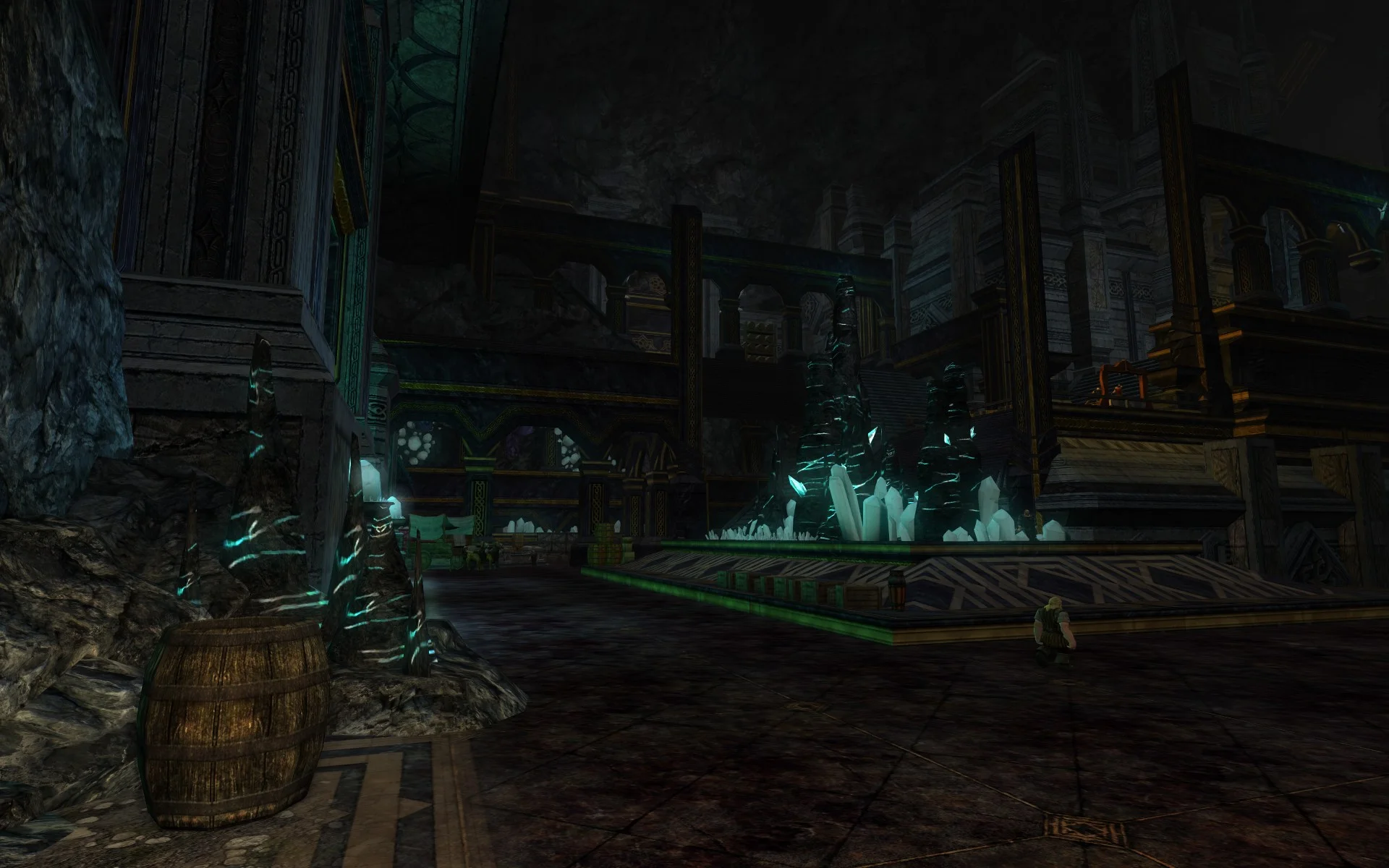
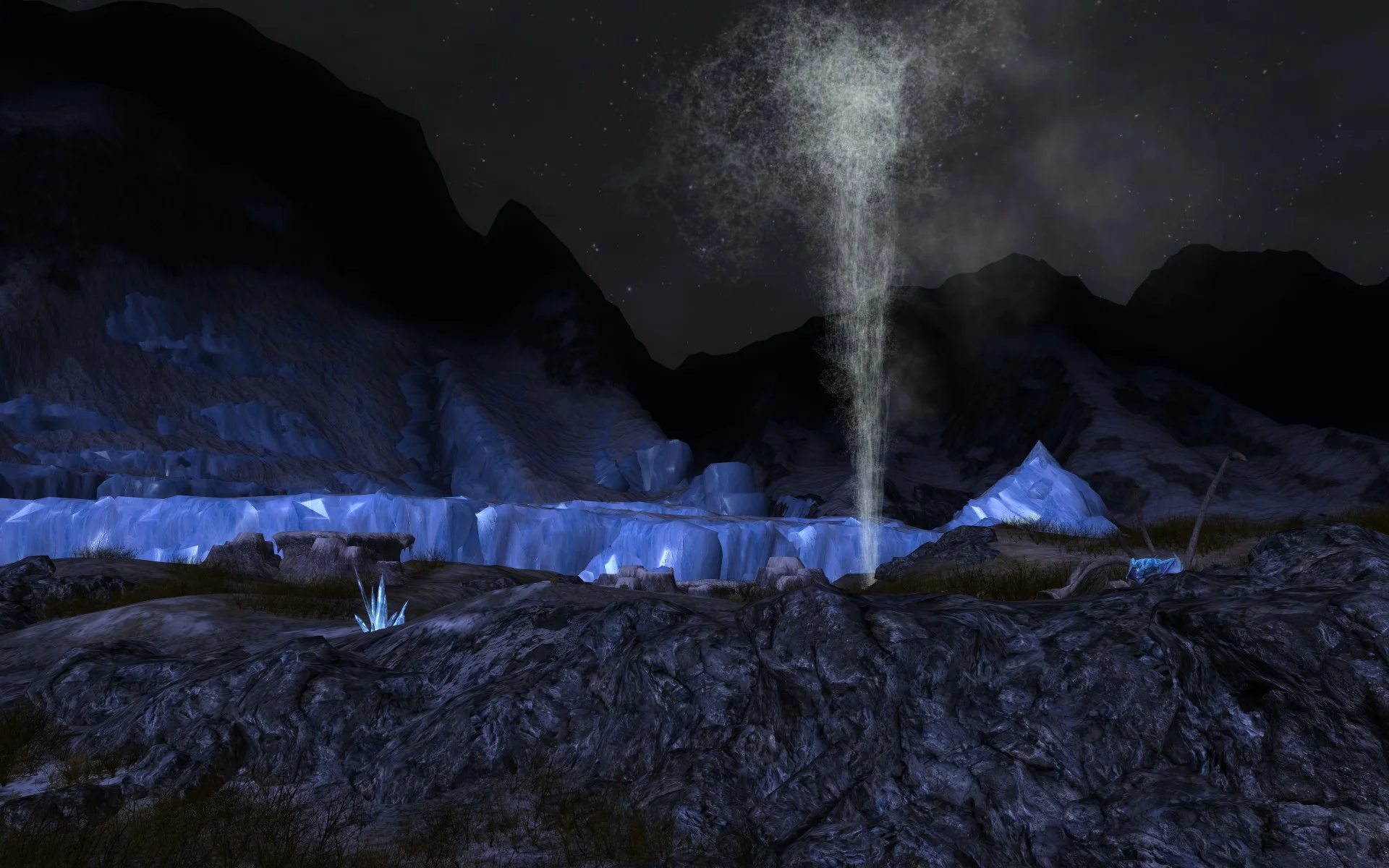
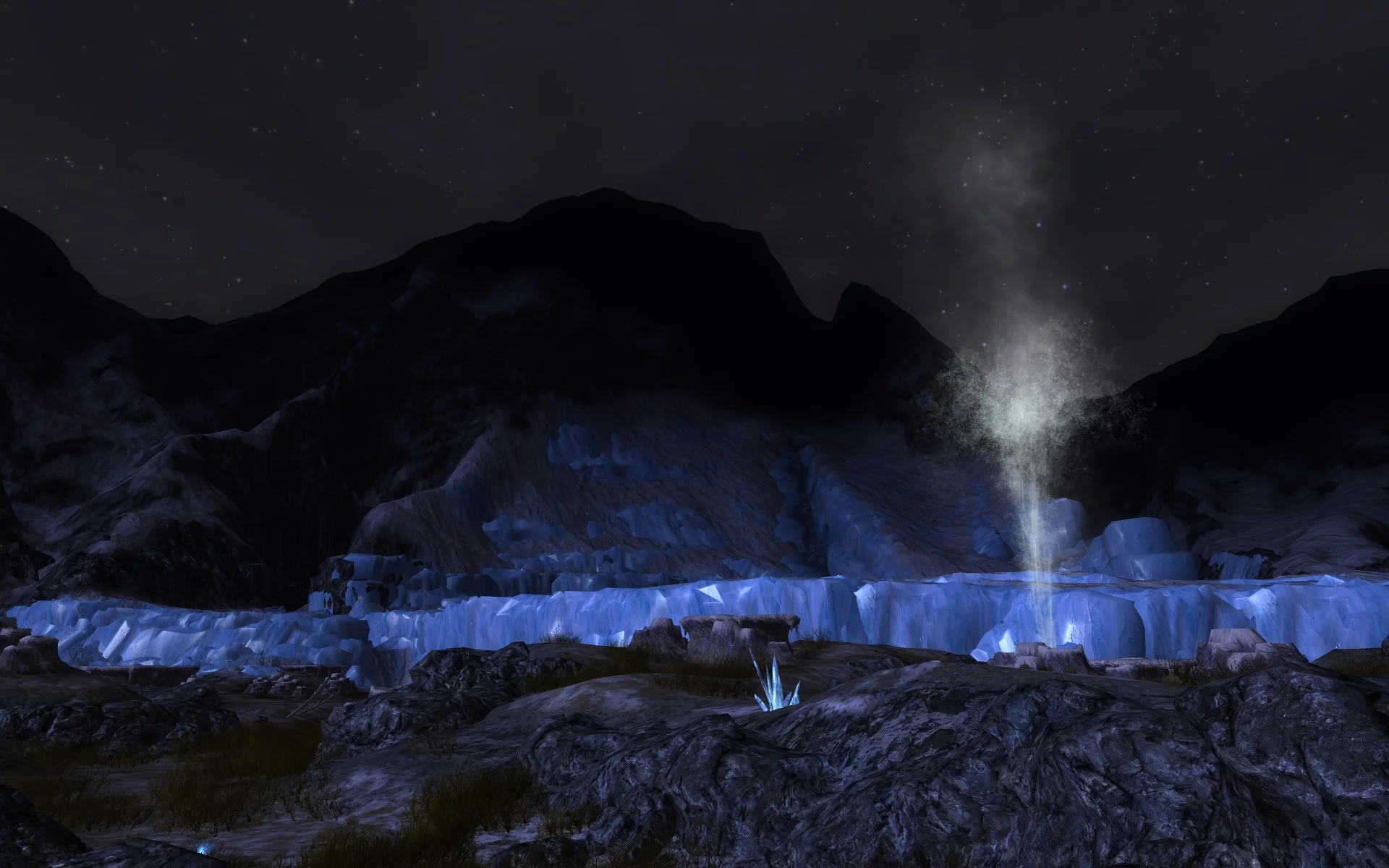
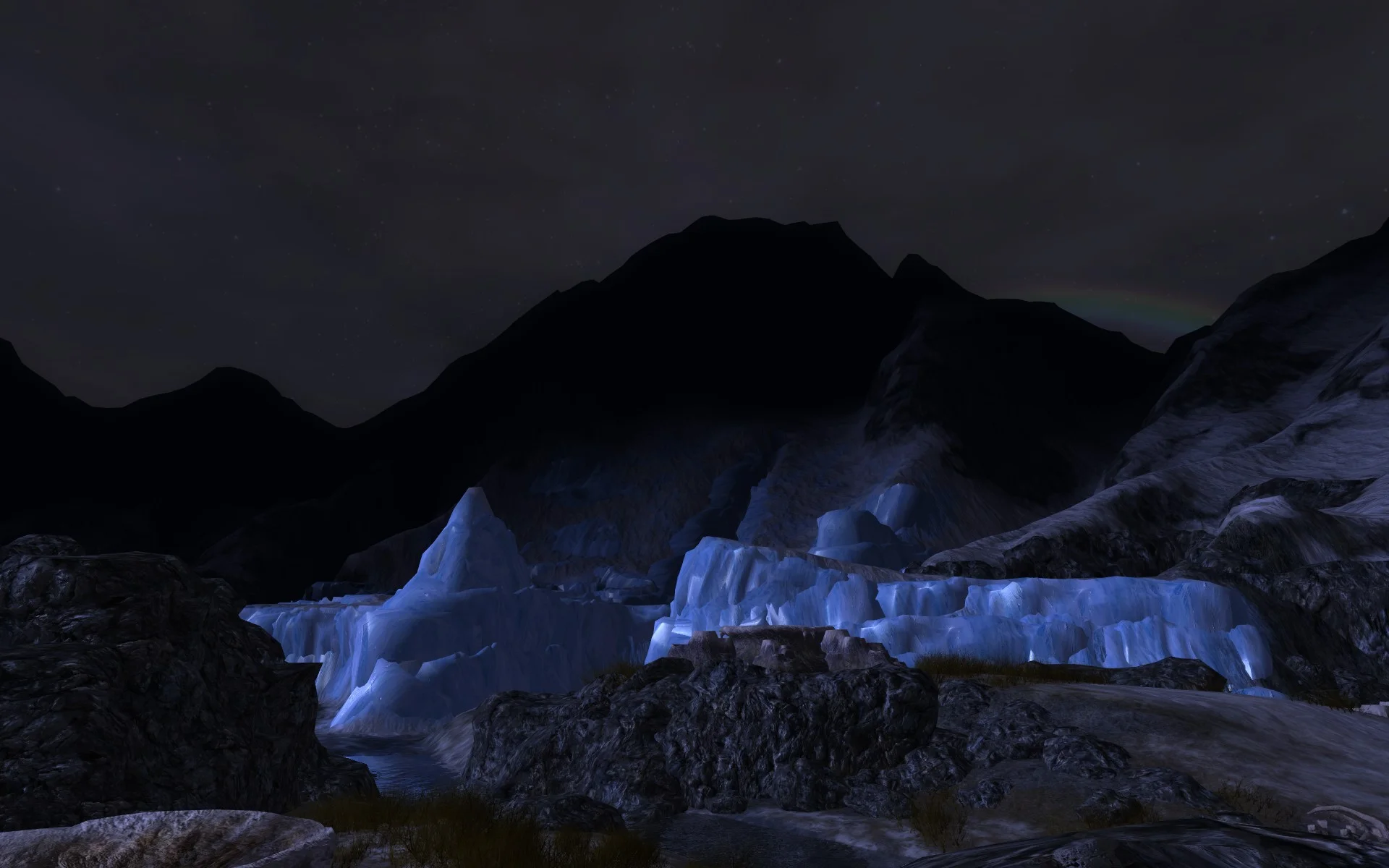
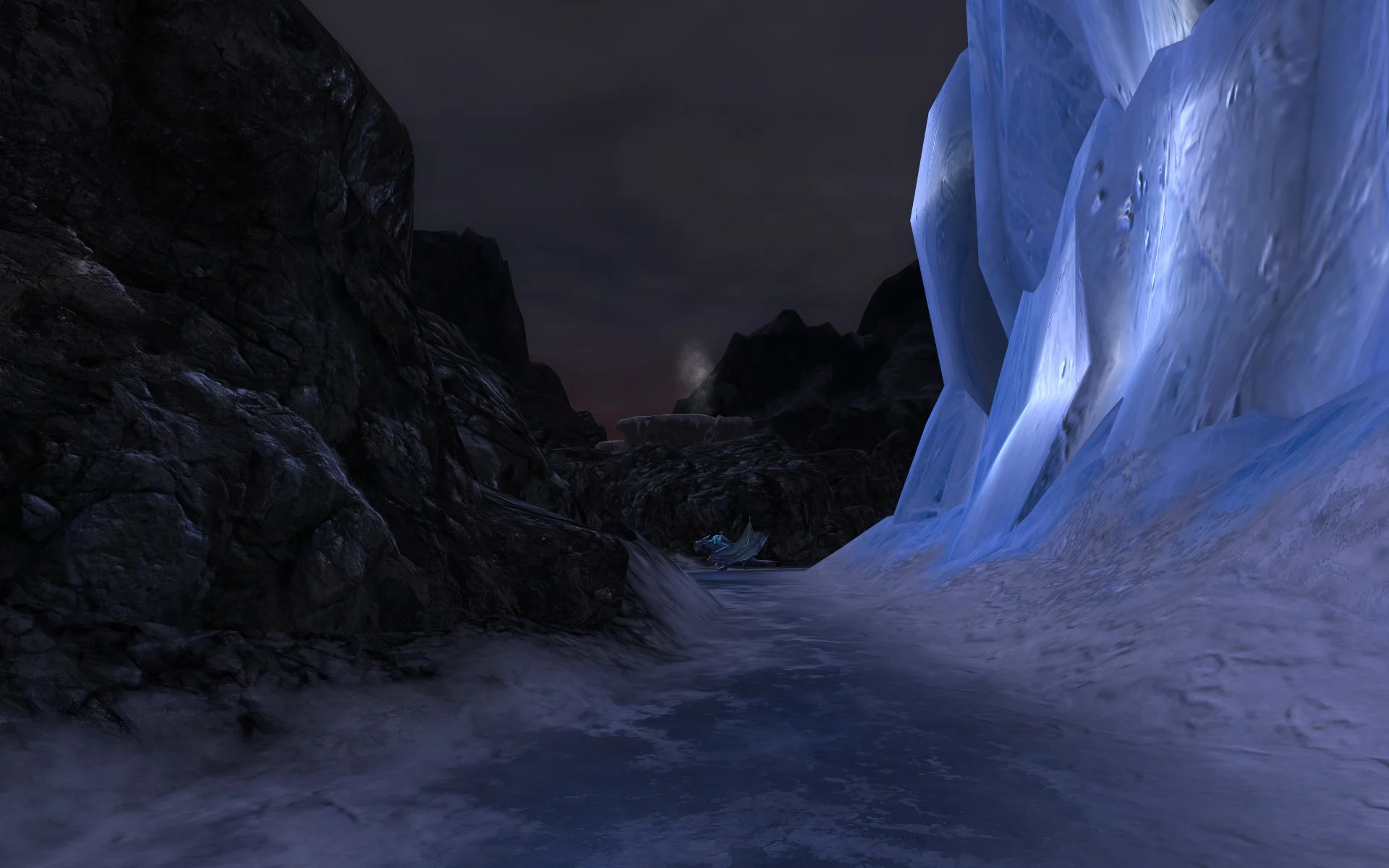
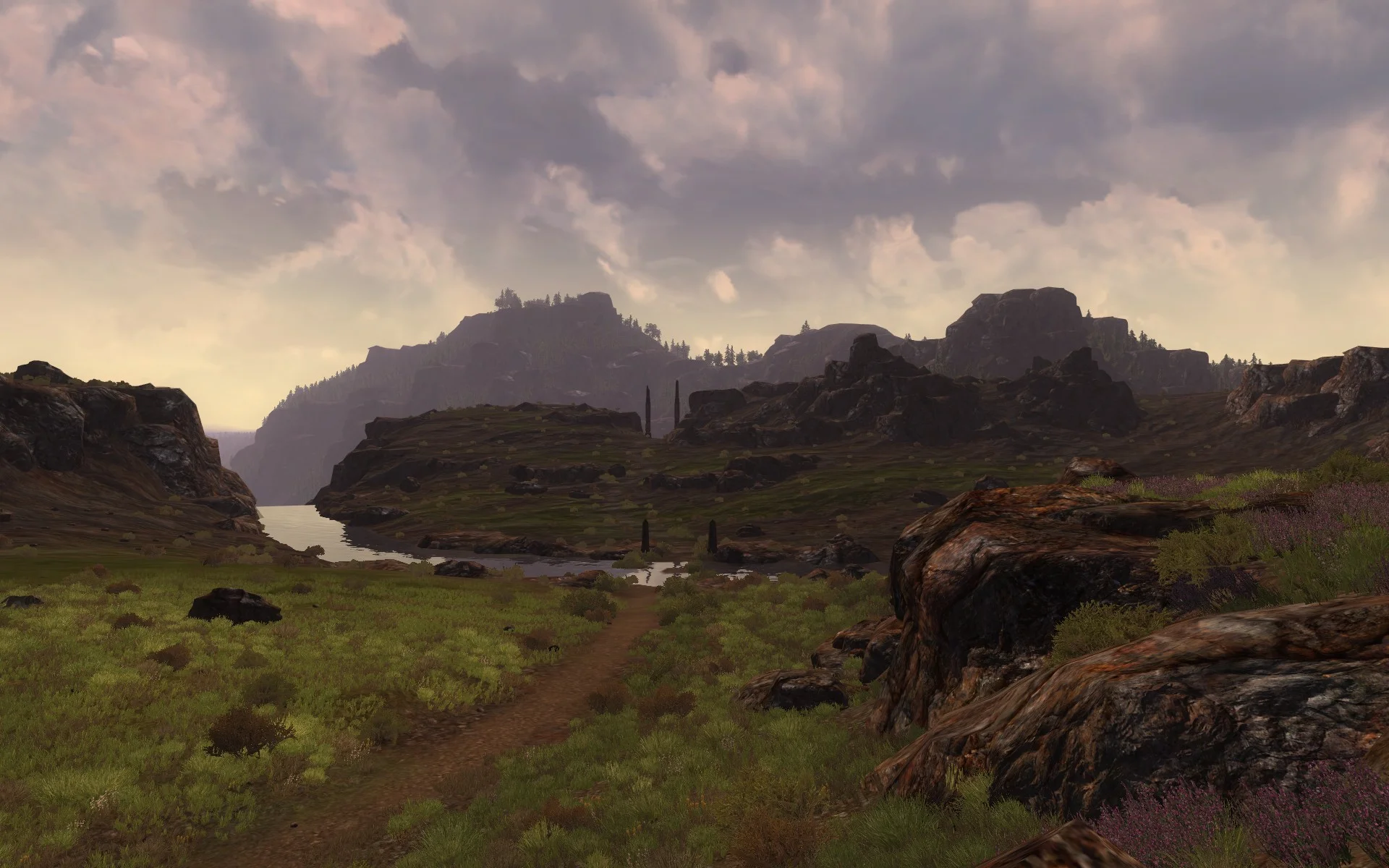
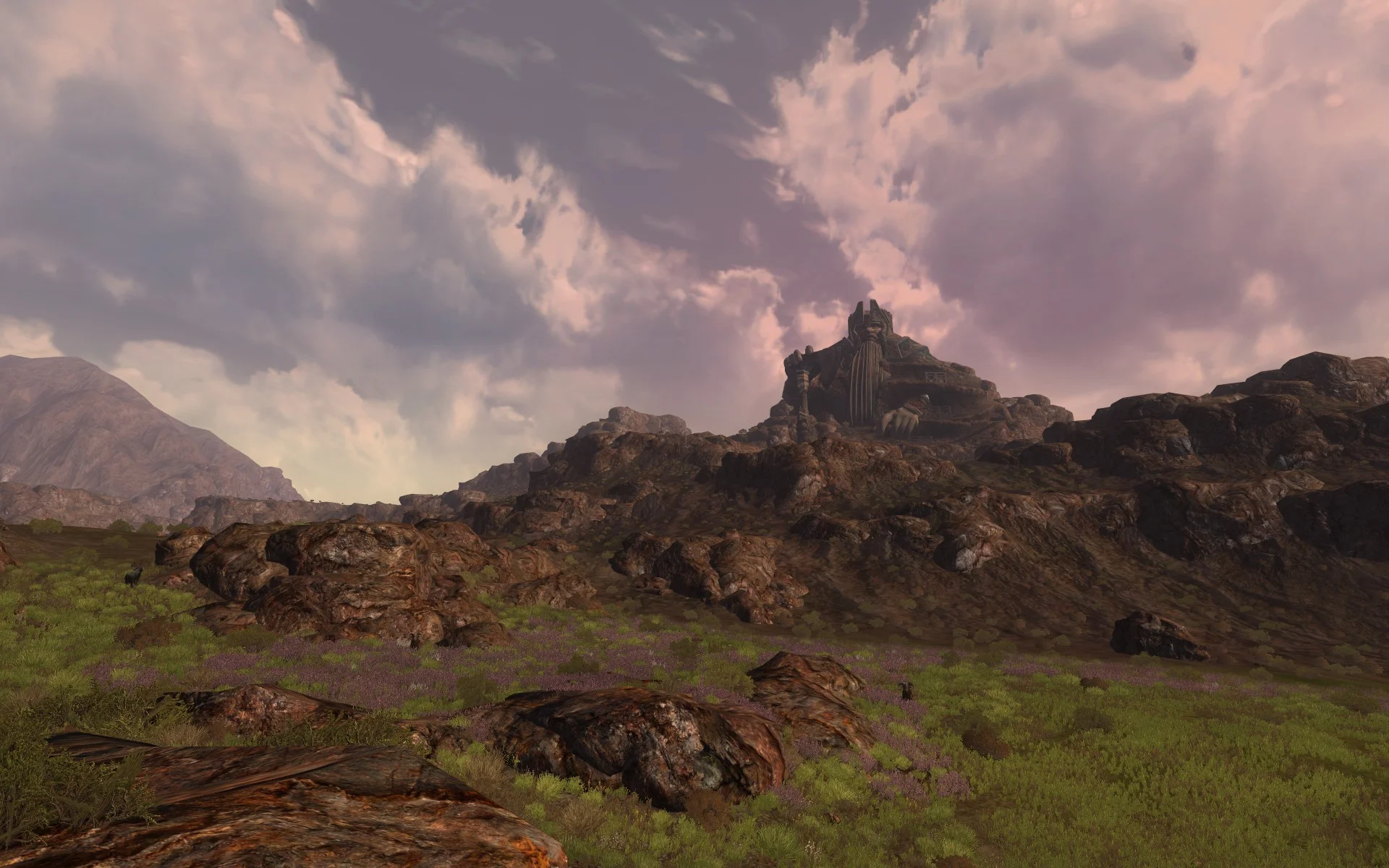
LOTRO: Progressing Through Mordor
It was in May that I last subscribed to LOTRO and attempted to progress through the Mordor expansion. I was under geared and under powered and the initial zone of Udûn was proving to be an up-hill struggle. So, I decided to level elsewhere in the game and managed to get as far as 111 (the current level cap is 115). I still couldn’t improve my gear so there was no point bypassing Mordor and going straight to the Dale-lands which were released in June in Update 22. So, I decided to spend my gaming time elsewhere and left LOTRO. However, the recent Bullroarer preview of Update 23 rekindled my interest in the MMO. Surely Mordor wasn’t the immovable obstacle that I thought? So, I subscribed once again, and returned to the game on Friday evening. Luckily, there were several kinship members online and they generously helped me until I reached the “tipping point” of the Mordor expansion. Two days later and I’ve nearly hit level cap and the game although challenging, it’s no longer the grind that it was a few months ago.
It was in May that I last subscribed to LOTRO and attempted to progress through the Mordor expansion. I was under geared and under powered and the initial zone of Udûn was proving to be an up-hill struggle. So, I decided to level elsewhere in the game and managed to get as far as 111 (the current level cap is 115). I still couldn’t improve my gear so there was no point bypassing Mordor and going straight to the Dale-lands which were released in June in Update 22. So, I decided to spend my gaming time elsewhere and left LOTRO. However, the recent Bullroarer preview of Update 23 rekindled my interest in the MMO. Surely Mordor wasn’t the immovable obstacle that I thought? So, I subscribed once again, and returned to the game on Friday evening. Luckily, there were several kinship members online and they generously helped me until I reached the “tipping point” of the Mordor expansion. Two days later and I’ve nearly hit level cap and the game although challenging, it’s no longer the grind that it was a few months ago.
In a nutshell the key to success in Mordor is gear. Specifically gear that has the “Light of Eärendil” defensive stats. This is designed to counteract a cumulative debuff known as the “Shadow of Mordor”. This is simply a new version of the Radiance stat that was found on Moria and Mirkwood raid sets back in the day. Without “Light of Eärendil” a player is severely gimped. Mordor is essentially a major gear check for LOTRO. You start getting random pieces of new armour by clearing regional quests but it’s all very piecemeal. Hence the initial few levels above 105 are a slog. However, once you get to level 112, you become eligible to buy gear sets via the High-enchanter NPC, using the “Ash of Enchantment” barter currency. Players obtain this currency by deconstructing surplus gear they’ve obtained via quest, loot drops or Gorgoroth Steel-bound Lootboxes. Any item that has the “Light of Eärendil” can be broken down into “Ash of Enchantment” by using “Flame of Ancalamír” crystal.
To cut a long story short, I was given several lootboxes and keys which provided me with enough “Ash of Enchantment” to buy a level appropriate gear set. I chose the “Light Tower Set” which favours DPS builds. Upon equipping the gear, my stats were significantly boosted, thus making questing in Mordor significantly easier. I have subsequently progressed through the Epic Story and some of the regional quests and expect to hit 115 in the next day or so. I have even gone so far as to plan ahead and determine which set I shall buy next. I estimate that to obtain all armour and jewellery for the “Light Expedition's Vanguard Incomparable Set” will cost about 4,800 “Ash of Enchantment”. The irony is however, that I shall only enjoy the benefits of this set for about a month or so, because once Update 23 is released the level cap is increased to 120 and they’ll be new gear.
Now what has become apparent to me as I’ve progressed through Mordor over the weekend is the way that lootboxes have become more significant in LOTRO and I suspect that this may only get worse in future updates. A player can grind quests to get gear to convert to ash, but lootboxes offer a “far quicker solution”. I suspect that we are now finally seeing the consequences of Standing Stone Games “business relationship” with the Daybreak Game Company. However, that is a different blog post entirely. For the meantime, I’m back in LOTRO, making progress and having fun. Now that I’m no longer fixed upon the grind of the game, I must say that the various storylines in the Mordor expansion are very good. I like the way the SSG draws upon characters we’ve seen before in the game. It was a pleasant surprise to see Alti Spider-bane again. So, to those of you who have also fallen victim to the Mordor grind, there is a solution available, although it is not necessarily one that benefits the solo player. Being in a supportive guild and having access to shared resources helps immensely. Good luck.
LOTRO: Update 23 Preview
I managed to spend an hour or so today, exploring the latest preview of Update 23 for LOTRO, that is currently being beta tested on the Bullroarer server. Sadly, due to my schedule, I did not get to spend as much time as I would like, exploring the new zones, and by the time I reached the Withered Heath, the server closed. However, I did see sufficient for me to be able to gauge progress. Overall this is an interesting zone which offers new iterations of Dwarven culture. Standing Stone Games once again have found the right balance between using established in-game assets and integrating them with newer designs. The results are two regions that are bright, roomy and distinctly Dwarven. However, it should be noted that as ever with these beta previews, the build is subject to change.
I managed to spend an hour or so today, exploring the latest preview of Update 23 for LOTRO, that is currently being beta tested on the Bullroarer server. Sadly, due to my schedule, I did not get to spend as much time as I would like, exploring the new zones, and by the time I reached the Withered Heath, the server closed. However, I did see sufficient for me to be able to gauge progress. Overall this is an interesting zone which offers new iterations of Dwarven culture. Standing Stone Games once again have found the right balance between using established in-game assets and integrating them with newer designs. The results are two regions that are bright, roomy and distinctly Dwarven. However, it should be noted that as ever with these beta previews, the build is subject to change.
Update 23 focuses on the Longbeards, descendants of Durin the Deathless. To begin with, there is an expanded version of Erebor, which adds far more to this Dwarven capital. There are now ornamental gardens, Gemcutter’s court and even a theatre. It certainly feels more like a thriving community. SSG have also added the legendary mines where the Arkenstone of Thrain was found. For those expecting tunnels and diggings like those seen in Peter Jackson’s The Hobbit movies, we’ll you’re in for a disappointment. They are depicted here in the same way as they are elsewhere in LOTRO, IE in a functional and practical fashion, with linear tunnels and mine car tracks. It may not look as opulent as other depictions, but it feels authentic.
East of Dale, SSG have created the fabled Iron Hills. This zone is spacious with a mixture of green plains and brown “hills” filled with iron ore. Hammerstead is the major Dwarven settlement of the region and there is ongoing conflict with the Easterlings, who have occupied one of the other towns in the area. It should be noted that there is a clear influence of Easterling culture on Dwarven armour and weapons in this region. This is also apparent in the Grey Mountains to the North of Erebor. Here we find another Dwarven enclave, Skarhald. This area has clearly suffered under the depravations of Dragons and the zone is littered with their ancient bones. There is a nearby mine, Glimmerdeep, that has fallen to Orcs from Mount Gundabad. This delving is very reminiscent of the Silvertine Lodes in Moria. The Witherted Heath is an interesting addition to the game, featuring bleak and fire blasted steppe region with a large glacier extending down from the mountains. It is also populated with drakes and worms.
As well as new zones and Epic Story content, there are two new Instances for up to three players, and one new Instance for up to six players, in development. There are also ongoing changes to the Hobbit avatars, to bring them in line with the updates made to the other races in recent months. It should be noted that Update 23 will bring an increase in level cap, from 115 to 120. Naturally, the chnage will bring about new gear and cosmetics items, and no doubt there will be yet more factions to gain rep with. Overall, it seems very much like business as usual for LOTRO with this forthcoming update, but as this seems to be what players enjoy, then it is by no means a problem. Certainly, these new zones are a welcome addition to the game and an uplifting alternative to Mordor that still remains a crossroad (or dare I say stumbling block) in the game for some players.
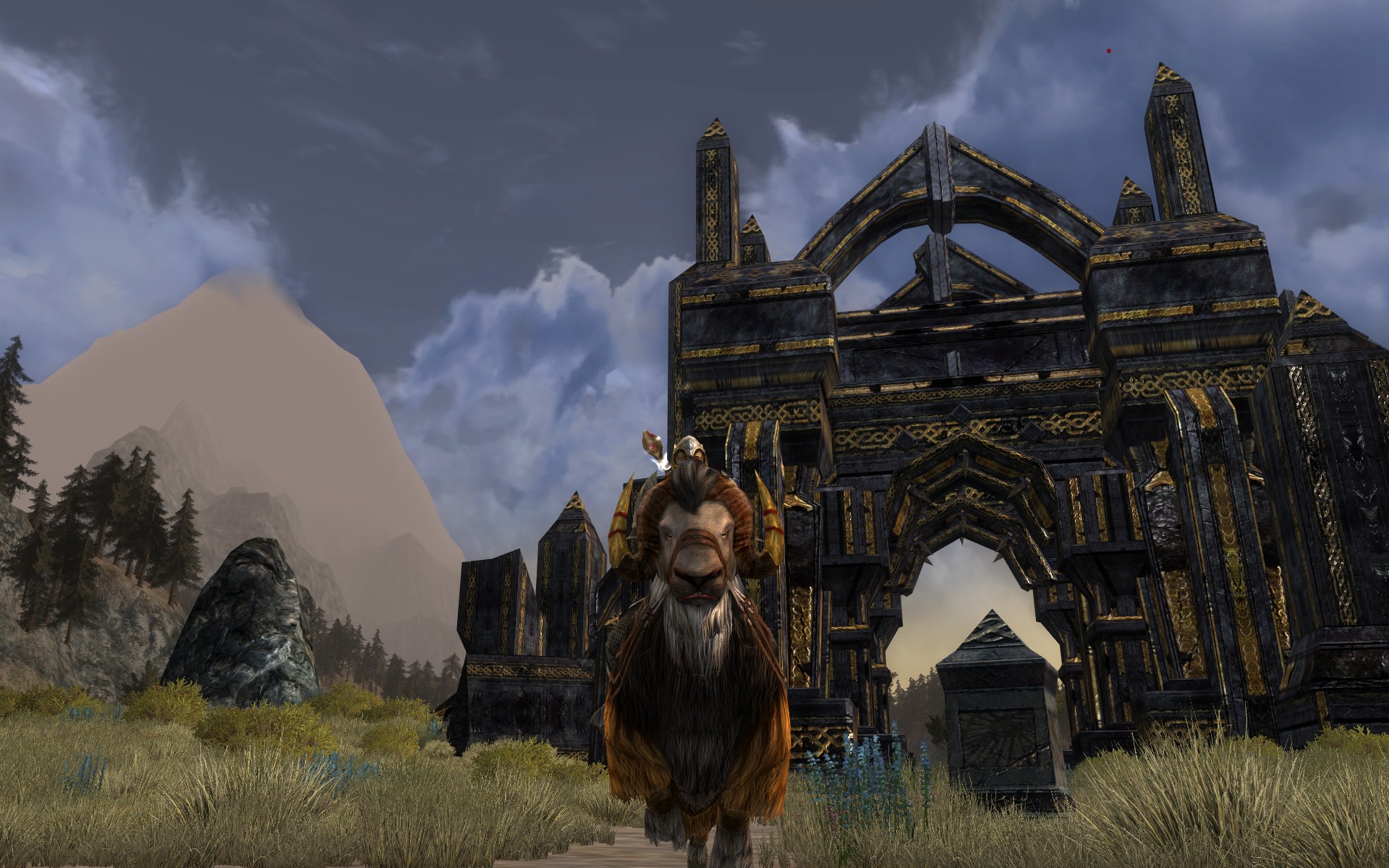
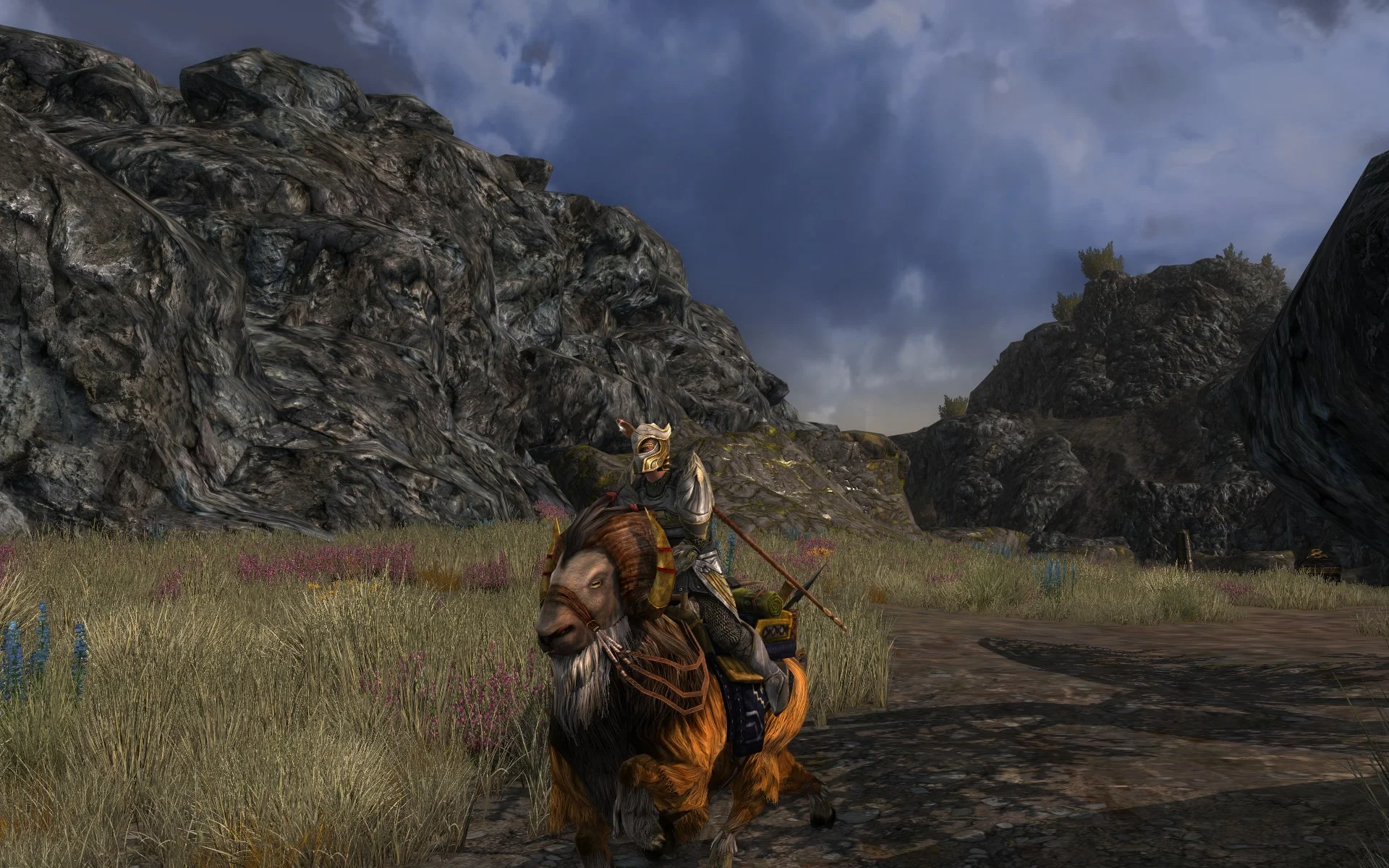
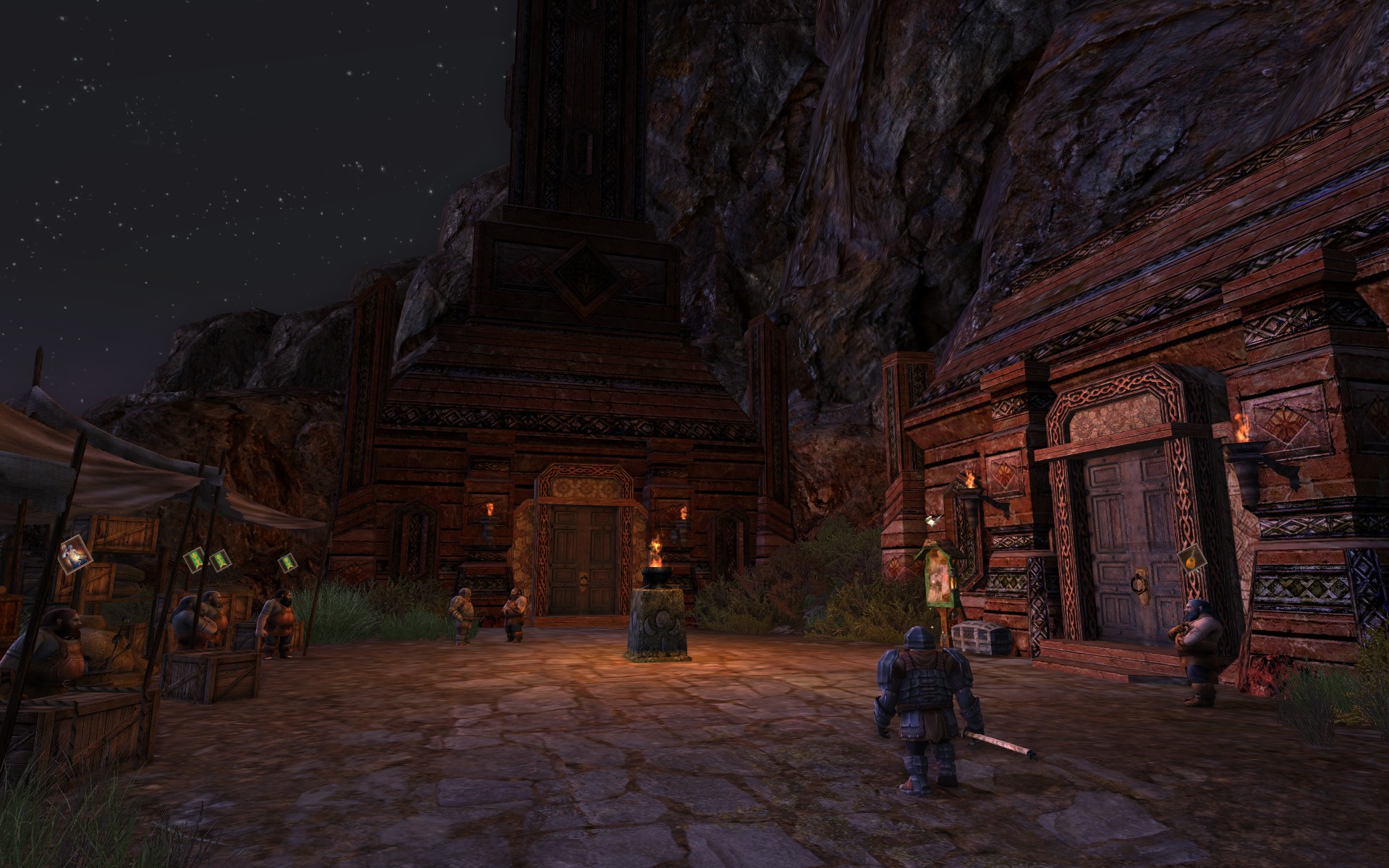
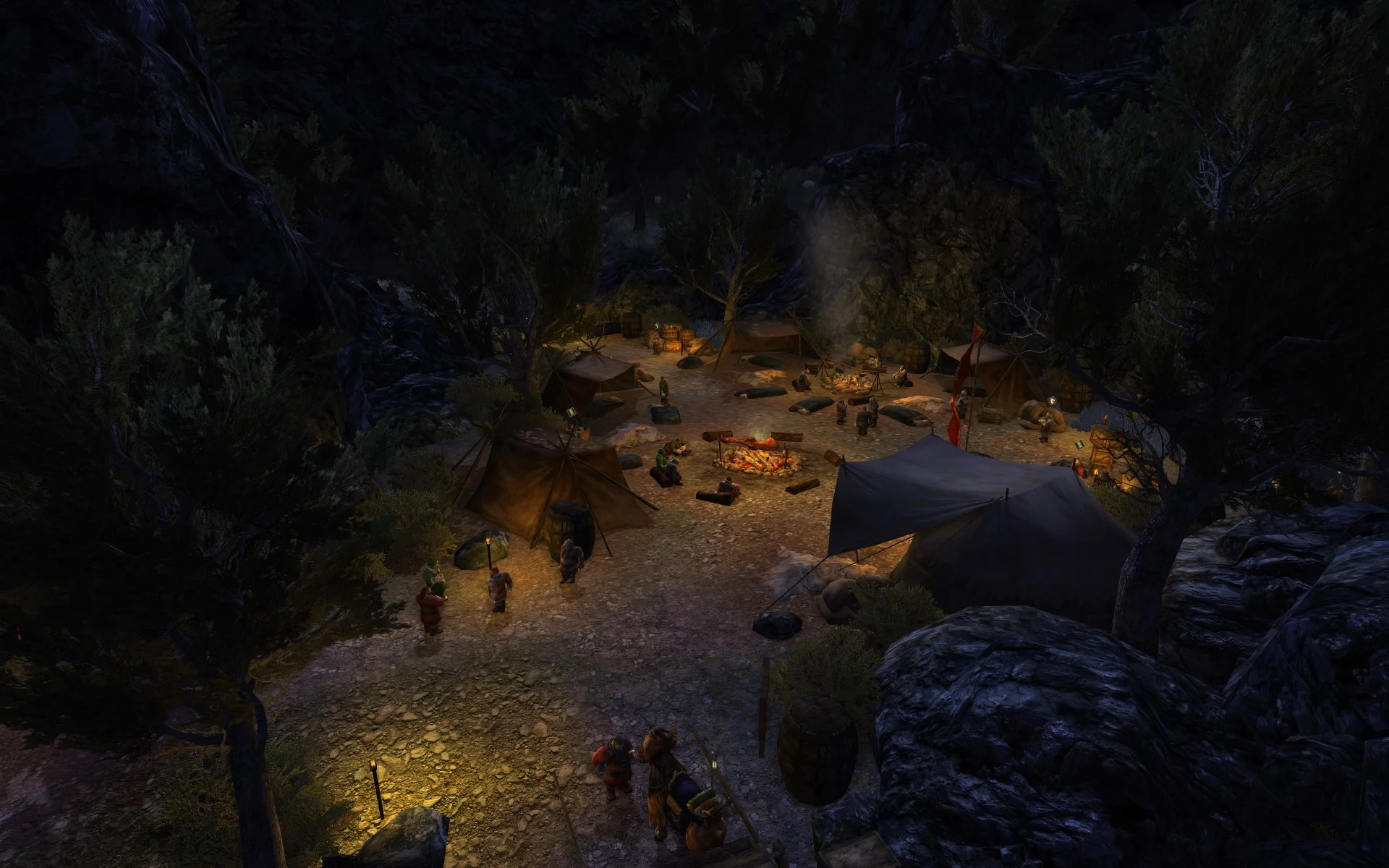
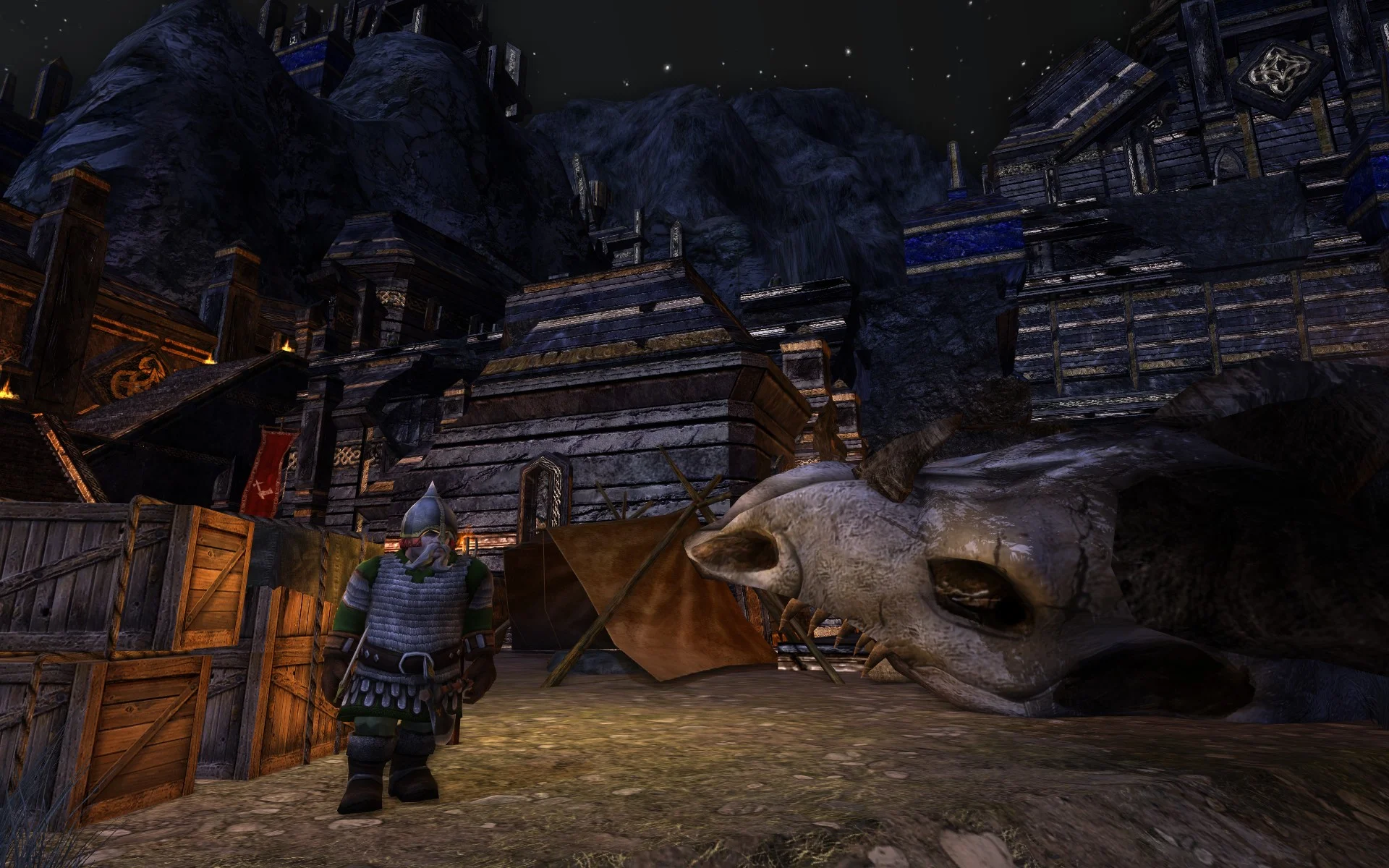
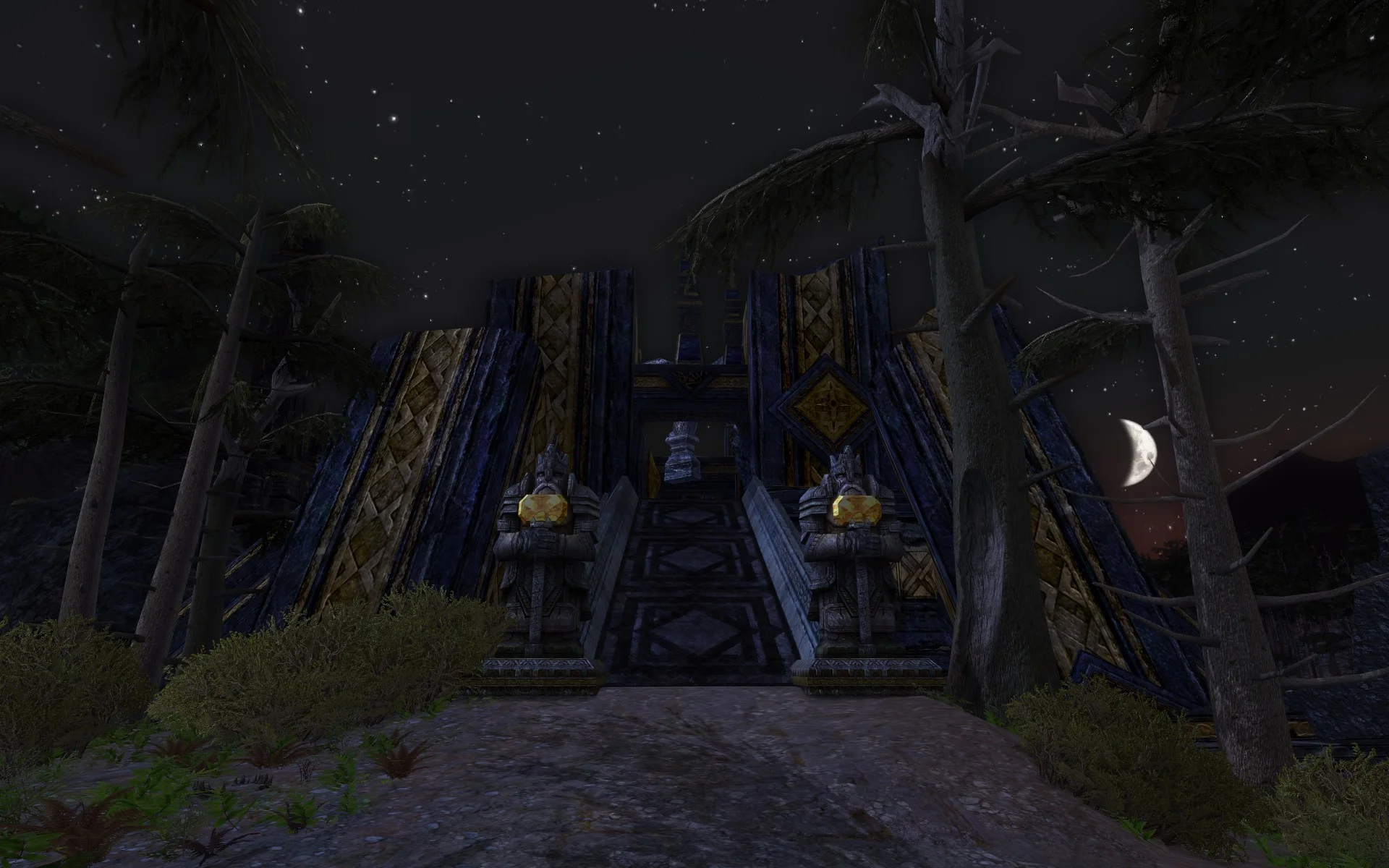
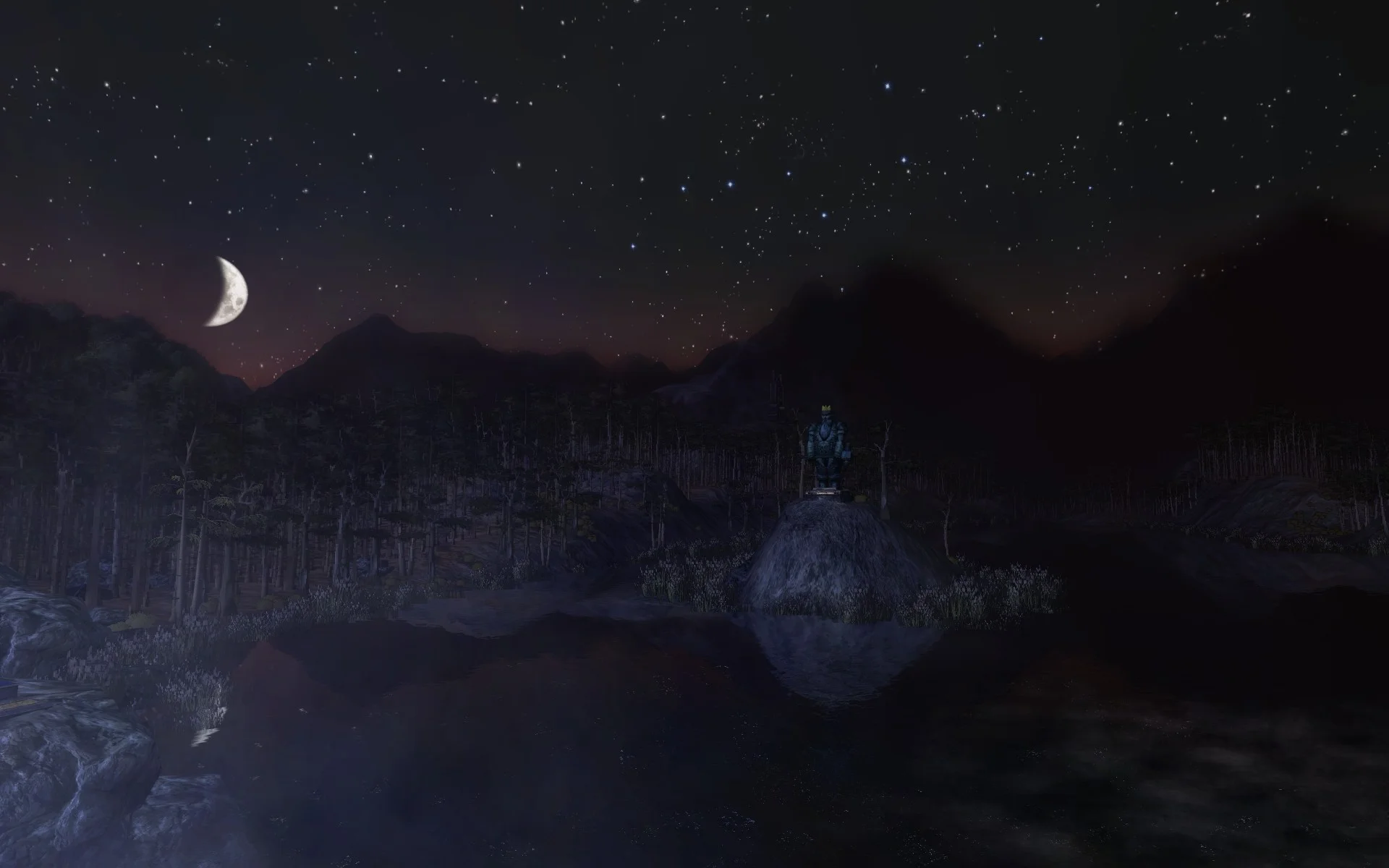
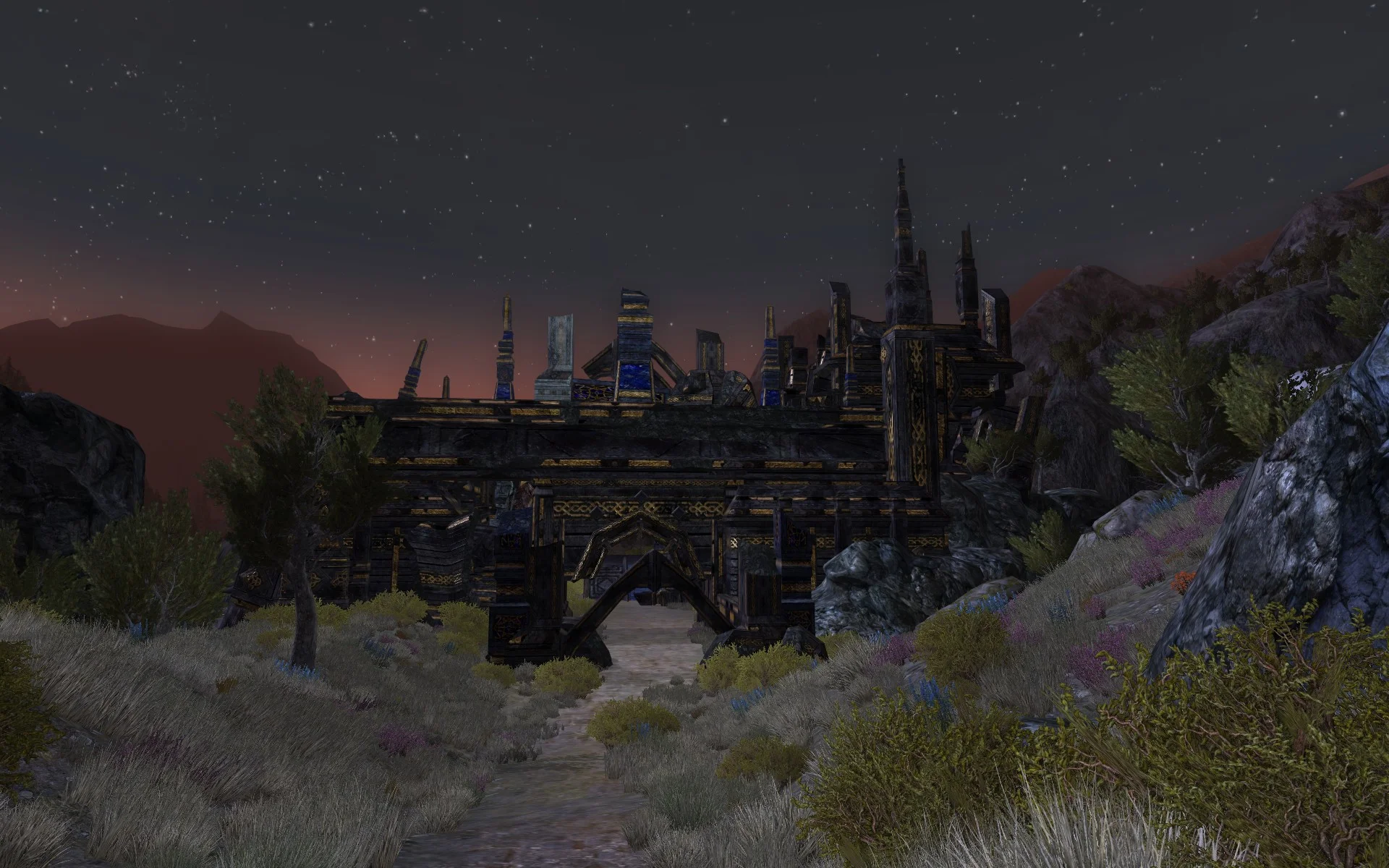
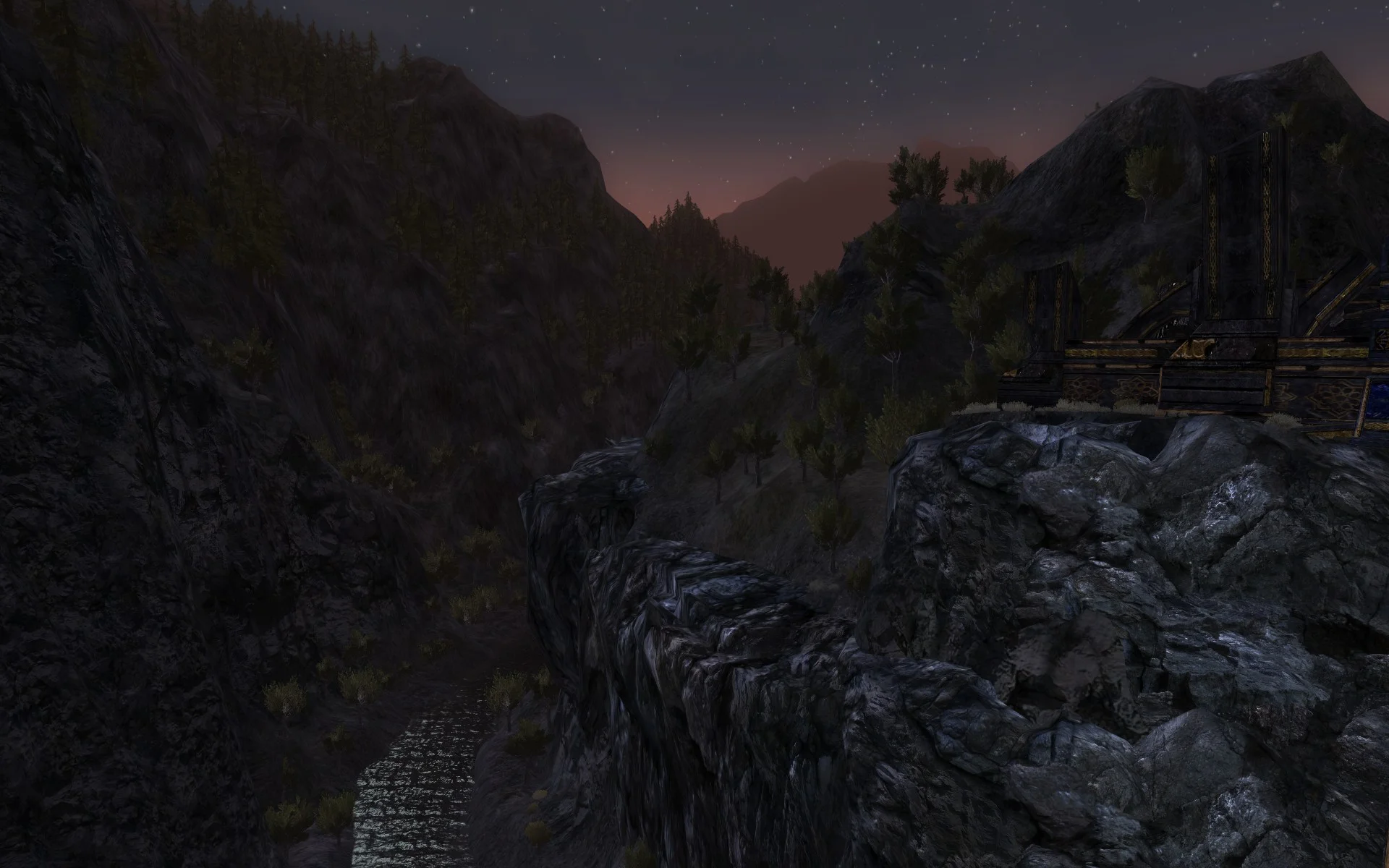
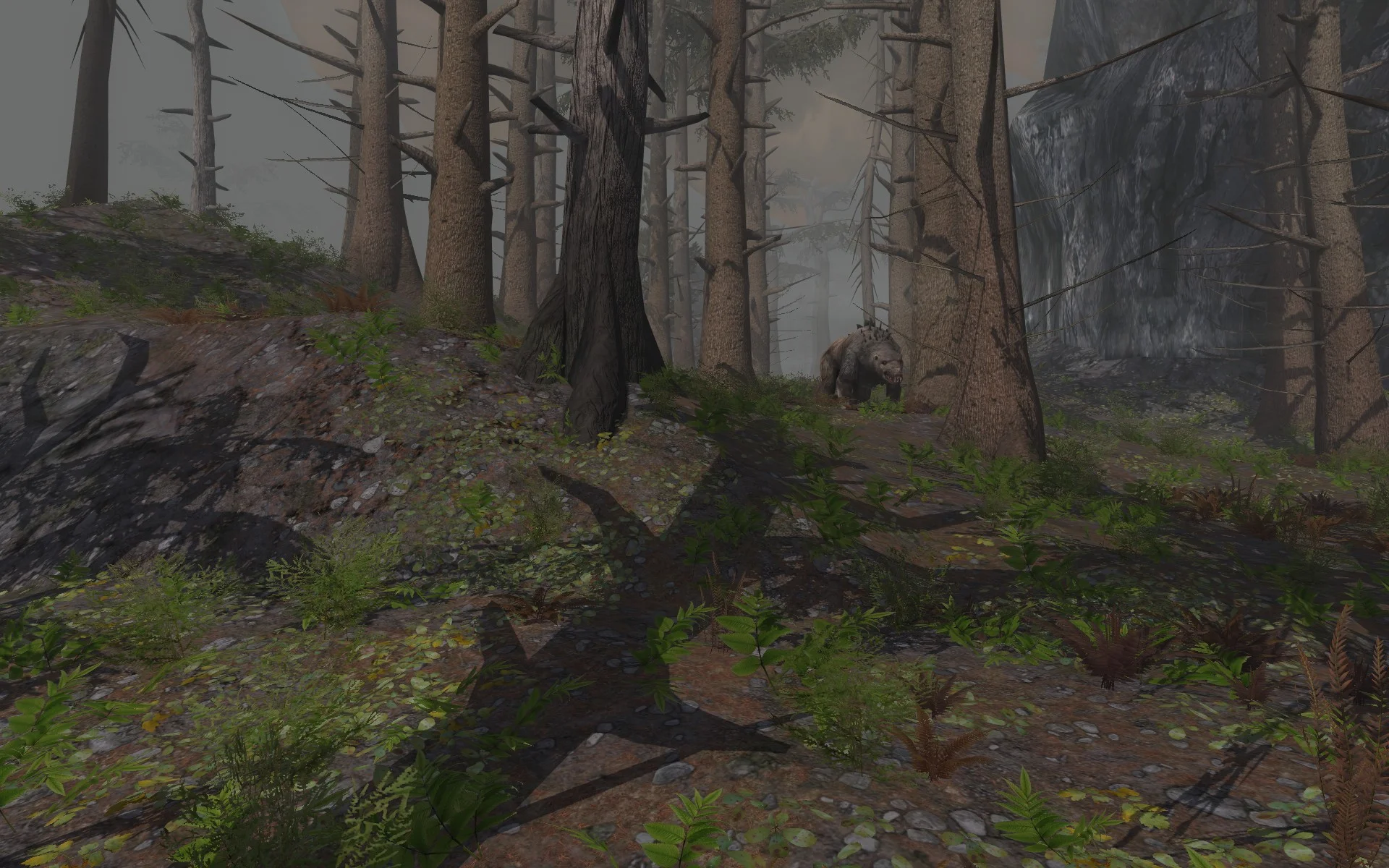
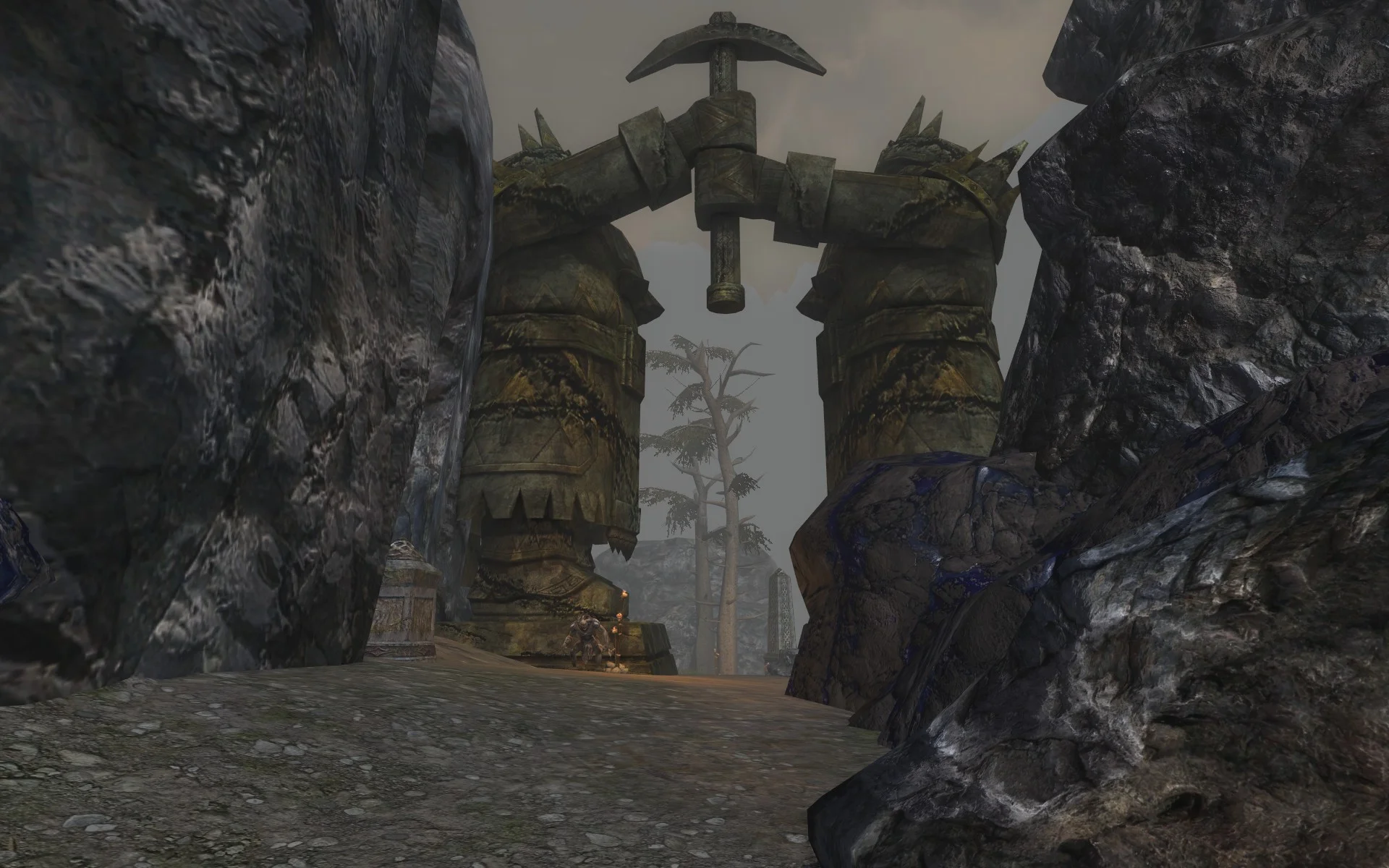
The Lord of the Rings Online 2.0
“I’d love to see LOTRO reimagined in a new engine with a certain modernization of gameplay". So said Koshelkin, in a recent comment made over at the Massively Overpowered website. It’s a common sentiment that often expressed by the LOTRO community and I must admit, I have a similar curiosity. But the more I ponder this idea, the more I find myself thinking “be careful what you wish for”. Because LOTRO as it currently exists, embodies the MMO ethos of the time that spawned it. Long-term players love it because of its foibles. As I’ve mentioned before in previous blog posts many LOTRO players are not gamers per se and therefore have no exposure to modern MMOs along with contemporary game mechanics. Thus, if Standing Stone Games were to radically redesign their virtual Middle-earth to include action combat and a truly open world, they may find themselves alienating a great many current LOTRO players, who would be all at sea in a modern iteration of the game.
“I’d love to see LOTRO reimagined in a new engine with a certain modernization of gameplay". So said Koshelkin, in a recent comment made over at the Massively Overpowered website. It’s a common sentiment that often expressed by the LOTRO community and I must admit, I have a similar curiosity. But the more I ponder this idea, the more I find myself thinking “be careful what you wish for”. Because LOTRO as it currently exists, embodies the MMO ethos of the time that spawned it. Long-term players love it because of its foibles. As I’ve mentioned before in previous blog posts many LOTRO players are not gamers per se and therefore have no exposure to modern MMOs along with contemporary game mechanics. Thus, if Standing Stone Games were to radically redesign their virtual Middle-earth to include action combat and a truly open world, they may find themselves alienating a great many current LOTRO players, who would be all at sea in a modern iteration of the game.
I recently revisited LOTRO to check out the new seasonal instance The Perfect Picnic. Penny the Pony trotted off in true LOTRO NPC fashion and made no effort to avoid the various mobs that plague The Shire during a summer heatwave. However, a decade of playing LOTRO has prepared me for such situations. As a seasoned Lore-master, I sent my pet ahead to occupy the oncoming threat, while I languidly went through my skills rotation. I tend to move in parallel with whoever or whatever I have to escort and seldom shift position while in combat. LOTRO being an older MMO does not support action combat and moving will stop your skill induction. Movement is thus limited to simply removing yourself from AoE effects and such like. It’s a tried and tested method and SSG have ensured that it doesn’t limit your combat experience. Just because fighting is static, it doesn’t mean it is devoid of nuance and tactic. However, many LOTRO players are totally conditioned to deal with this style. The fluid combat of The Elder Scrolls Online may not suit everyone or fit with their abilities as a player.
LOTRO is also very linear in its story structure and quest hubs. Since the game reached the regions of Dunland and Rohan, zones tend to funnel players from A to B very efficiently. It’s convenient but it is not very flexible if you want to do things “your way”. Stray too far ahead and you’ll either find yourself in a zone to high for your level or you’ll miss the start of the “breadcrumb” trail. Because there is no auto levelling beyond the Epic Battle system, it is not always safe to explore too far and no incentive to revisit lower level regions with friends. Again, bringing the narrative and regional freedom that we find in The Elder Scrolls Online, may well completely wrong foot traditional LOTRO players. I remember reading a thread on the Guild Wars 2 forums when the game first launched in 2012, by a player who felt completely lost as to what to do and where to go within the game. The open regional quests and timed events were also a stumbling block for some, who felt they lack direct instruction.
Another aspect of LOTRO that dates it, is its lack of voice acting. Yes, there is some but far less compared to other MMOs. Text boxes filled with written exposition that requires little user interaction are somewhat dull. Although the definition of an MMO has changed and continues to do so, we should not forget that they’re also a variant of the RPG genre. Hence it would be nice to see far more detailed voice acting, branching dialogue options and a greater variety of narrative outcomes. However, providing “choice” can cut both ways. Some players do not like too many options and can find such a mechanic a cause of stress. What happens if you make the “wrong” decision? This however, has been a dilemma of the MMO genre for a long time. It can apply to how you spend your skills points and what faction you join. Plus, voice acting also raises the additional spectre of lore and canon. Middle-earth is blessed with an especially hard lexicon. Most languages have a complex structure and there is plenty of scope for additional spoken dialogue to incur the wrath of the “pronunciation police”.
I think completely rebuilding LOTRO to embrace the best elements of the modern MMO genre would be a big and risky undertaking. I think that the finished product would not necessarily appeal to all current players and many would not make the transition to LOTRO 2.0 successfully. Middle-earth: Shadow of Mordor and its sequel Shadow of War feature beautifully realised environments which hint at the visual potential of a new version of LOTRO. I would certainly like to see a new vision of Middle-earth more akin to the structure of The Elder Scrolls Online, as that game serves the needs of the solo player and the group well. But the cost and risk in developing such a project make it highly unlikely that such a game will come to pass. I think after a decade, the most we can honestly expect rom SSG is a revamp of the game engine, similar to that seen in STO a few years ago. It would also be nice to see a 64-bit client and an elimination of the lag and stuttering that plagues the game. Beyond that I think LOTRO 2.0 in the true sense, will just remain a talking point.
LOTRO: Update 22.2
When I first started playing LOTRO in late 2008, I actually read the manual that came with my box copy, before I decided which class I was going to play. I chose the Lore-master as it sounded and interesting mixture of both ranged attacks and the use of pets. Being new to the MMO genre at the time, I didn’t realise that it was actually quite a complex class to play. Although I have dabbled with alts over the years I have stuck with this single character and until 2017, kept them relatively up to date with regard to content and respective skills. Mordor greatly dampened what enthusiasm for LOTRO and as a result I have fallen behind the curve. My gear is poor as I haven’t really progressed far into the lastest expansion. Combat has become a tedious grind, leaving me with a paradoxical situation. Poor gear makes progression slower, but bypassing Mordor leaves my character gimped. Bearing this in mind, I’ve been eagerly awaiting the Lore-master class changes that have come with Update 22.2 in the hope they will improve my situation. Sadly, I don’t think that today’s changes are the solution I’m looking for.
When I first started playing LOTRO in late 2008, I actually read the manual that came with my box copy, before I decided which class I was going to play. I chose the Lore-master as it sounded and interesting mixture of both ranged attacks and the use of pets. Being new to the MMO genre at the time, I didn’t realise that it was actually quite a complex class to play. Although I have dabbled with alts over the years I have stuck with this single character and until 2017, kept them relatively up to date with regard to content and respective skills. Mordor greatly dampened what enthusiasm for LOTRO and as a result I have fallen behind the curve. My gear is poor as I haven’t really progressed far into the lastest expansion. Combat has become a tedious grind, leaving me with a paradoxical situation. Poor gear makes progression slower, but bypassing Mordor leaves my character gimped. Bearing this in mind, I’ve been eagerly awaiting the Lore-master class changes that have come with Update 22.2 in the hope they will improve my situation. Sadly, I don’t think that today’s changes are the solution I’m looking for.
I am not a min-maxer per se and have never been a serious number cruncher when it comes to LOTRO. I broadly know what my skills do and have adopted a rotation that is common to many other LOTRO players who favour the Lore-master class. For me I define my combat effectiveness by the amount of time it takes to kill a single mob, along with how many skills I have to use or how many times I have to repeat my rotation. This may not be the most scientific method, but it works for me. I then temper combat effectiveness with another very subjective factor. Is the combat satisfying or is it a chore? Too often of late in LOTRO combat is the latter. For me, and possibly many other MMO players, there is a very personal tipping point between a credible and engaging fight and a dull, ponderous slog. For me it may be so many seconds, for another player it may be double or triple that time. What I do find with older MMOs is that combat does seem to take a lot longer, compared to modern titles. The Secret World suffered terribly from this problem and it still wasn’t adequately addressed for my liking, when the game was revised into Secret World Legends.
In LOTRO I predominantly follow the red skills line, looking to do maximum DPS. Therefore, the recent upgrade to Burning Embers (applying Gust of Wind to augment it into Searing Embers) is a “interesting” addition. However, the induction animation is a real nuisance and needs to be shortened. Lightning Strike has been tweaked and its cooldown has been shortened. I noticed I was hitting higher critical hits as a result. However, the initial heal from Water-lore has been removed so only the HoT component remains. Thus, you’ll only get the first heal after four seconds. Plus, Ring of Fire is currently broken which is a bit of an inconvenience as its use regularly features in my play style. However, I am concerned that by making the Lore-master’s single target DPS stronger, that our AoE has suffered. Also, the removal of the Wizards Fire component and its replacement with something that is essentially not commensurate, does strike me as an over simplification of gameplay.
After running several skirmishes today, I did conclude that my overall DPS had improved but that was only in specific circumstances. For the casual, PVE-centric player, who plays cautiously, pulling mobs individually or using crowd control to make fights sequential, then this update is an adequate improvement to the class. But for those who do like to group and contribute to a communal fight, then it there isn’t so much on offer. Lore-masters are not so able to deal DoTS and their AoE skills have been reduced. And irrespective of all of these changes, I still find that combat is too slow for my liking. It’s difficult to articulate without the use of numbers, but when fighting I expect at least one skill to do 15 to 20% damage to my opponent’s moral. It still feels too much like an uphill. But this is the conundrum of combat in gaming, especially the MMO genre. Trying to find that right balance that pleases the majority of players, or at least allowing them to augment their effectiveness by accessing the right sort of gear. I’m beginning to feel that the more LOTRO is updated, the gap between what you can achieve and what I currently have, is growing wider and wider. I don’t know if I ever will catch up.