
Are You Not Entertained?
I distinctly remember when I finished the main story in Saints Row the Third and had completed the majority of the content available. I’d bought the game as part of a bundle for a mere £3.99 and had spent over sixty hours in-game, so overall, I considered this money well spent. But what made the experience particularly memorable, as I logged out of the game knowing that I was effectively done with it, there was an overwhelming sense of satisfaction. Not only was there the sheer value for money that I have mentioned, but I felt that I had been entertained (hence the Russell Crowe reference in the title of this post). This happened again recently when I completed the final DLC for Sniper Elite 4 and also when I finished the main story in Tom Clancy’s Ghost Recon: Wildlands. Although there was a sense of achievement, I predominantly felt pleased by the fact that I had fun. The latest expansion for Star Trek Online, Victory is Life made me feel this way too.
I distinctly remember when I finished the main story in Saints Row the Third and had completed the majority of the content available. I’d bought the game as part of a bundle for a mere £3.99 and had spent over sixty hours in-game, so overall, I considered this money well spent. But what made the experience particularly memorable, as I logged out of the game knowing that I was effectively done with it, there was an overwhelming sense of satisfaction. Not only was there the sheer value for money that I have mentioned, but I felt that I had been entertained (hence the Russell Crowe reference in the title of this post). This happened again recently when I completed the final DLC for Sniper Elite 4 and also when I finished the main story in Tom Clancy’s Ghost Recon: Wildlands. Although there was a sense of achievement, I predominantly felt pleased by the fact that I had fun. The latest expansion for Star Trek Online, Victory is Life made me feel this way too.
Subsequently, these ruminations have got me thinking about such issues as satisfaction, entertainment and public declarations that a game has been an overall positive experience. The latter is especially of interest to me because it is something I seldom see in my news feeds, twitter time line, or featured in the blogs I read. It could be a case of I'm looking in the wrong places, but I can't help but think that the notion of “entertainment” as a selling point is in some way overlooked. Too often criteria such as game mechanics or visual aesthetics are focused upon and deemed to be a game’s selling point. Is there an underlying message to the narrative or does the title in question have a killer new feature? Entertainment seems to be erroneously associated with perfection. Or dependent on mastering the skills to succeed when playing a game. Sometimes, trying to pin down exactly why a game in entertaining is difficult. But if it’s lacking in a title, it won’t be long before I put it aside and look elsewhere.
There are many things in life that when scrutinised, measured and analysed are judged not to be of the highest standard. However, that does not mean that they cannot be entertaining. A pop song may well be uninspired musically but can still infectious. A meal at a fast food chain may not be the most nutritious but it can be extremely satisfying. Movies often recycle the same old ideas and themes, but a new spin can lead to an entertaining diversion. Have lost sight of this with regard to games? I'm not averse to criticism so if a game is lacking in some capacity, then by all mean draw attention to it. But surely, if a flawed product has proven entertaining, then surely that needs to be reported and reflected upon. I think this issue is somewhat akin to the post I wrote recently about the use of the word “adequate”. I get the impression that is some quarters terms such “fun” and “entertaining” are considered superficial.
Gaming is very much about hype, marketing and "the next big thing" these days. Sometimes the public is let down by the developers failing to deliver on their promises and on other occasions the players themselves have unrealistic expectations. Yet despite both perceived and actual problems, titles still sell, and players spend substantial amounts of their money and time. Surely, they must derive some pleasure from these games and gain a modicum of enjoyment from their overall experience? Or do people play through titles, enduring an uninspired games inadequacies and inherent mediocrity with stoic fortitude? I certainly think the price that you’ve paid has some bearing on the matter. I recently bought No Man’s Sky at a considerable discount. I’ve subsequently discovered that it’s not really for me, but I’ve still had some fun messing around within its procedurally generated worlds. I suspect though that I would have enjoyed it less if I had paid the full price at launch.
I do see some of my fellow bloggers writing about games they’ve enjoyed and clearly exploring why they had fun and found it entertaining. But I do not see such sentiment as often within professional games journalism. It seems to be an aspect of gaming that is overlooked. Reviews will breakdown many facets of a game but neglect to state clearly whether it is fun or not. I'm not advocating mandatory evangelising about games, but I don't think we should be reticent about publicly declaring if a game has entertained us. Even if a game has flaws, that doesn't mitigate the fun we had while playing it. Perhaps that is why it is something that is dwelt on less. The subjective and nebulous nature of fun and entertainment are hard to quantify. And we do so live in an age that likes to render everything in to statistics and neatly label it. However, I think we need to eschew the binary and the penchant for taxonomy. A bit of honesty about whether we did enjoy a game may even help future development. After all, as Mr. Crowe said, "Is this not why you're here"?



Not Playing World of Warcraft
World of Warcraft is still the biggest western MMO around and despite the ebb and flow of its player base, it remains a powerful presence within the gaming community. With the release of the pre-patch for the next expansion Battle of Azeroth yesterday, naturally there has been a wealth of blog posts as players dust off their subscriptions and return to the game. It’s a timely reminder that WoW was the MMO that made the genre more mainstream and commercially viable. For many gamers it was their stepping stone into other titles and sub-genres. The importance of World of Warcraft in gaming history and its place within pop culture is significant. The games success has bled through in to the mainstream. WoW is a known quantity outside of gaming circles and is social reference point, in the same way as Dungeons and Dragons, Batman or Star Trek.
World of Warcraft is still the biggest western MMO around and despite the ebb and flow of its player base, it remains a powerful presence within the gaming community. With the release of the pre-patch for the next expansion Battle of Azeroth yesterday, naturally there has been a wealth of blog posts as players dust off their subscriptions and return to the game. It’s a timely reminder that WoW was the MMO that made the genre more mainstream and commercially viable. For many gamers it was their stepping stone into other titles and sub-genres. The importance of World of Warcraft in gaming history and its place within pop culture is significant. The games success has bled through in to the mainstream. WoW is a known quantity outside of gaming circles and is social reference point, in the same way as Dungeons and Dragons, Batman or Star Trek.
However, as a gamer, if you do not play WoW or at least have some sort of history with it, you can find yourself in some kind of quasi MMO community minority group. It’s an "odd" phenomenon. Fellow blogger UltrViolet from EndgameViable goes so far as to say, “WoW expansions always make me feel like I just don't belong in the MMO genre”. Such is the status and ubiquity of the MMO. I wrote a while back about how “not liking sport”, especially football in the UK, can be a social impediment of sorts. In some respects, not playing WoW is the gaming equivalent of that. Often when talking to fellow gamers, especially those who enjoy the MMORPG genre, it is pretty much taken as read that you will have played the game at some point. Beyond a short trial, I’ve never really spent any major time playing WoW. It simply didn’t click with me. I didn’t and still don’t care for the aesthetics of the game, and I found the overall narrative tone to be a little too “knowing”.
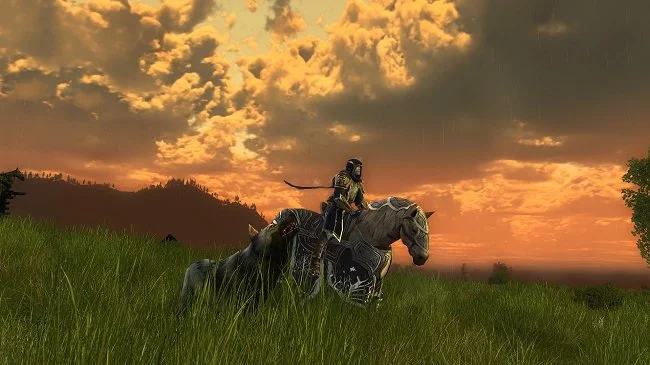
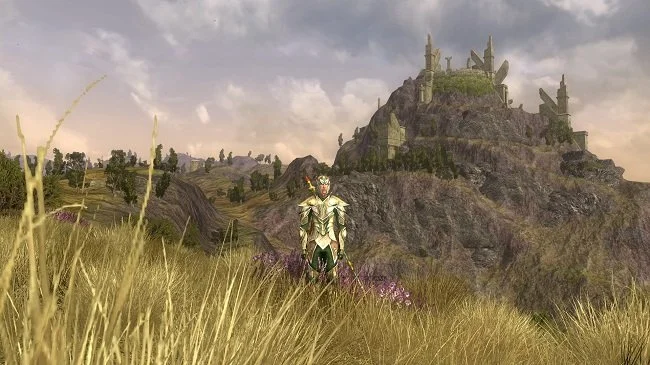
My gateway MMO was LOTRO back in 2008 and right from the outset I liked the cut of its proverbial jib. I spent some time over the following years trying various other MMOs as they launched. Star Trek Online, Rift, The Secret World, Guild Wars 2 and SWOTR, to name but a few. However, for many gamers that was not the usual MMO route. Virtually every other gamer I know has a WoW background of some kind. Furthermore, the game is often further lionised due to it being associated with a particularly significant time in the gamers personal life. People have discovered the joys or gaming through WOW. Or had met the best friends of partners via it. WoW remains today, a safe and familiar haven for gamers going through tough times. Like a loyal pet or a much-loved book, WoW appears to at times transcend mere gaming to be a Mary Poppins-like presence that impacts upon gamers lives.
Overall, the current wave of excitement regarding Patch 8.0 does leave me feeling like a bemused spectator. To quote that great fictional character Ned Seagoon “Breakfast had just been served at Beauleigh Manor. I was at the window…looking in”. That is at least how WoW makes me feel sometimes. It’s like something quite “important” is going on but it always seems to be happening to somebody else. Now it is at this point that some may draw a similar parallel with EVE Online. That too is a monolithic game that casts a large shadow in the gaming community, allegedly. However, I feel that not playing WoW and not playing EVE, is an apples and oranges situation. Being outside of the current WoW hype makes me at times feel like I am missing out on something potentially fun. Observing EVE is more like rubbernecking a major road traffic accident. Either way, I am not sufficiently motivated to change my habits and start playing WoW. We exist as separate entities and never the twain shall meet. Like politicians and the truth, Love Island and human dignity or Star Wars fans and self-awareness.
Once again, an interesting talking point was raised over Massively Overpowered, but that’s hardly surprising as that is their schtick, so to speak. This time round the subject being dissected was Reddit and what happens when a gaming community finds more traction there than anywhere else. The thing is with Reddit is that it’s nowhere near as moderated as official forums and can in certain circumstances become a thorn in the flesh of a games developer, rather than an invaluable community resource. It was an engaging talking point that eventually started expanding into the more nebulous question of “how do you solve a problem like Reddit?” or thereabouts. I think this latter conundrum if worth pondering because Reddit as a platform isn’t going anywhere fast. Most games will have an official or unofficial presence there and love it or loathe it, such places are often a useful repository of information, if you can navigate the choppy waters therein.
Once again, an interesting talking point was raised over Massively Overpowered, but that’s hardly surprising as that is their schtick, so to speak. This time round the subject being dissected was Reddit and what happens when a gaming community finds more traction there than anywhere else. The thing is with Reddit is that it’s nowhere near as moderated as official forums and can in certain circumstances become a thorn in the flesh of a games developer, rather than an invaluable community resource. It was an engaging talking point that eventually started expanding into the more nebulous question of “how do you solve a problem like Reddit?” or thereabouts. I think this latter conundrum if worth pondering because Reddit as a platform isn’t going anywhere fast. Most games will have an official or unofficial presence there and love it or loathe it, such places are often a useful repository of information, if you can navigate the choppy waters therein.
From my own perspective, I find Reddit a nightmare to navigate, compared to bog-standard forums. I have the Reddit Enhancement Suite installed in my web browser, but I still struggle to find threads and keep up with them. I often have to use an external search facility to track down what I’m looking for. However, regardless of my personal likes and dislikes, Reddit seems to be the go to platform for online interaction and establishing communities. It’s appeal with the gaming community lies in the fact that it can provide an independent forum for debate, although some games publishers have elected to officially maintain a presence there. This freedom from corporate moderation is a double-edged sword and the source of many of Reddits problems. Contributors can be as measured or excessive in their discourse. If the majority choose to turn their online portal into a virtual latrine, then that is their prerogative. However, the matter becomes more complex when irrespective of its tone, a sub-reddit becomes the de facto place to go for news and information on a particular game. Some gamers will consider this a Hobson’s choice.
From what I’ve seen of Reddit based moderation, it all too often seems to be couched in going along with the perceived consensus of the site, rather than being impartial and fair. But then again, what can you expect from volunteers, drawn from a fan base who by nature are myopic about that which they love. Thus, the risk of creating a prevailing group think is high. That is why you will find sub-reddits that have become “echo chambers” although I do consider this a problematic term in itself. However, it will suffice for the broad point being made. Conversely, those official gaming presences on Reddit can be equally problematic. The need to control the narrative and temper an excess of criticism can effectively create the same problem only pointing towards the opposite end of the spectrum of views. Then you have the problem of the zealotry of the party faithful instead of that of the heretics.
For those people who do take a firmer moral stance, the other main issue associated with a presence on Reddit, is that even if you support just one particular sub-reddit, you are by association supporting the platform itself per se and thus all the unseemly content that it contains. As this puts some folk in an impossible moral position they effectively end up having to boycott the platform and so again miss out on a wealth of practical resources. It can also be argued that the Reddit community potentially misses out on their participation as well, and the moderating influence they could supply. Irrespective of whether it is true or not, Reddit has a reputation that proceeds itself and some folk who are ambivalent about forums to begin with, will just elect not to get involved in a community if they see that Reddit is the online portal of choice.
It is also worth considering that there may be a bigger issue here and Reddit actually may only be a symptom, rather than a cause. Rather than looking at the issue of partisan environments such a Reddit as being the thing that needs to be changed, perhaps we should take a step back and reflect upon whether its actually gamers that need fixing? Gamers are an ageing population who have had their views and opinions shaped by the times they’ve lived through. A lot has changed in my personal gaming lifetime. Business models, content delivery as well as gamer demographics themselves. Where I may recognise that things have moved on, market forces drive content creation and the basic fact that gaming is not my personal “bat and ball”, a lot of others haven’t. Change is not always popular or welcome and history shows there is always some form of pushback. Perhaps the unpleasant quarters of Reddit are simply manifestations of that? May be the entire phenomenon of angry sub-reddits (at least of the gaming kind) will dwindle in time, as the player base becomes filled with a new generation who less emotional baggage and prejudices?
Dailies
Broadly speaking, dailies are repeatable quests or activities that are designed to keep you engaged and busy within the MMO genre. They are a supplement to main story quests and often offer a long-term goal and reward or provide barter tokens for a range of gear. They can sometimes be used as an alternative means of gaining high-end gear for players who cannot or will not raid. Dailies also offer an additional means to level an alt, for players who are tired of repeating primary content that they are over familiar with. Along with log-in rewards, dailies are designed to entice players into regular play. They offer quick, repeatable content along with a clearly defined bauble or trinket, making them ideal for players who have a limited amount of game time. Hence, you’ll find variations thereof present in most MMOs.
Broadly speaking, dailies are repeatable quests or activities that are designed to keep you engaged and busy within the MMO genre. They are a supplement to main story quests and often offer a long-term goal and reward or provide barter tokens for a range of gear. They can sometimes be used as an alternative means of gaining high-end gear for players who cannot or will not raid. Dailies also offer an additional means to level an alt, for players who are tired of repeating primary content that they are over familiar with. Along with log-in rewards, dailies are designed to entice players into regular play. They offer quick, repeatable content along with a clearly defined bauble or trinket, making them ideal for players who have a limited amount of game time. Hence, you’ll find variations thereof present in most MMOs.
Dailies are more often than not, just busy work. By their nature they are additional game content and not mission critical to the player. The central narrative of an MMO usually only links to dailies tangentially, so if you elect not to do them you’re not missing out on a major plot point. Skipping a day means you simply postpone your reward date by another 24 hours, but as the dailies often feed into a long-term goal, such delays are not deal breakers. In some cases, dailies are simply a means of generating specific currencies and once you have maxed out a particular skills line you can still repeat the content and gain the designated reward. Furthermore, in some MMOs, dailies do not even require your alt to undertake any direct task. They are carried out by companions, crew or automated resources. You simply assign the correct assets to the task in hand and return at a later date to see if they successfully completed it.
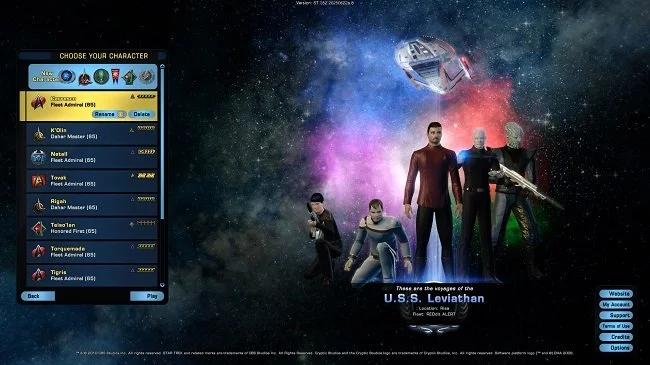
Due to limited leisure time, I am currently only playing Star Trek Online and doing so by logging in across five alts and undertaking dailies. This involves either sending duty officer on time-based mission or ships on admiralty missions. Both sets of dailies draw upon card-based assets and can be set and forgotten. By choosing specific missions that offer Dilithium as a reward, I am using five alts to farm this resource and in-game currency. Dilithium can then be stockpiled and spent next time Cryptic make Phoenix Prize Pack available in the game. The Prize Packs offer a range of rewards, many of which can be bartered and traded in so that the player can get specifically what they want. For me the most valuable item obtainable is the Phoenix Tech Upgrade Kit. Upgrading gears sets is a key aspect of STO and these upgrades apply 51,200 Technology Points and have not further Dilithium costs. With the recent increase in gear cap from Mark XIV to XV, I conservatively estimate I need about 200 or so to fully upgrade my ground and space gear to Gold level.
Dailies are often viewed in most MMOs as arbitrary, dull and repetitious. It is fair to say that they don’t always have the depth of writing as other main quests but let us not fool ourselves as to their purpose. Dailies are to a degree filler. A way of stretching game content by providing a relatively simplistic task with an extended deadline. The MMO genre has proven time and time again, that the player base always consumes content quicker than it can be produced and so dailies are one of many ways of providing content that slows player progression while still providing them with something to do. Dailies, love them or loathe them, are a necessary evil. One we all too often bitch about while paradoxically still carrying out. They are the gaming equivalent of the clip show, which were a convenient way of padding the length of a season on TV, back in the sixties and seventies. They’re also a way of keeping you connected to a game, during times when your patience is running thin. I’m sure they could be replaced with something better, but until that comes around this is all we have and sometimes that’s just enough to keep you playing.
The Lord of the Rings Online 2.0
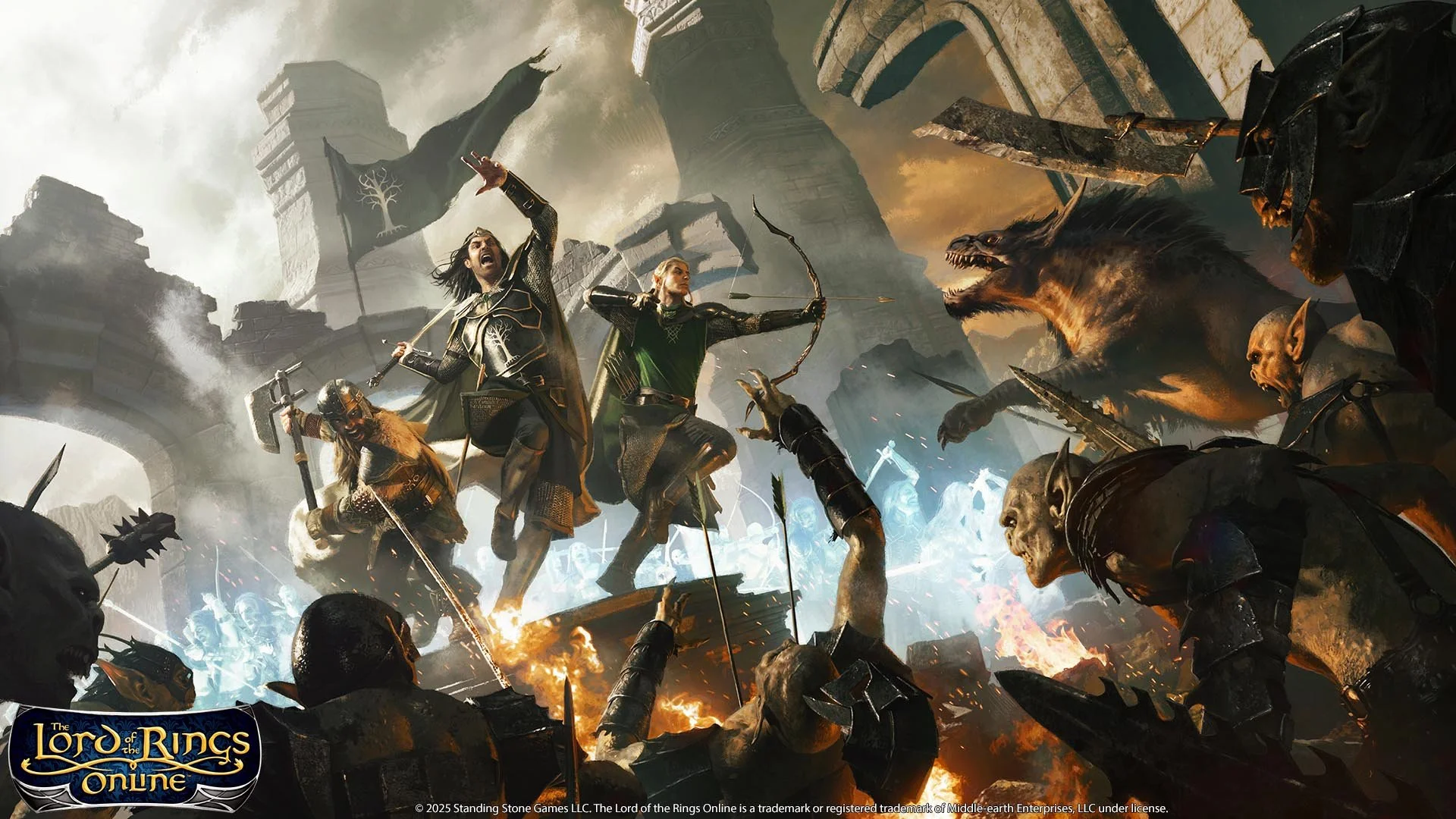
“I’d love to see LOTRO reimagined in a new engine with a certain modernization of gameplay". So said Koshelkin, in a recent comment made over at the Massively Overpowered website. It’s a common sentiment that often expressed by the LOTRO community and I must admit, I have a similar curiosity. But the more I ponder this idea, the more I find myself thinking “be careful what you wish for”. Because LOTRO as it currently exists, embodies the MMO ethos of the time that spawned it. Long-term players love it because of its foibles. As I’ve mentioned before in previous blog posts many LOTRO players are not gamers per se and therefore have no exposure to modern MMOs along with contemporary game mechanics. Thus, if Standing Stone Games were to radically redesign their virtual Middle-earth to include action combat and a truly open world, they may find themselves alienating a great many current LOTRO players, who would be all at sea in a modern iteration of the game.
“I’d love to see LOTRO reimagined in a new engine with a certain modernization of gameplay". So said Koshelkin, in a recent comment made over at the Massively Overpowered website. It’s a common sentiment that often expressed by the LOTRO community and I must admit, I have a similar curiosity. But the more I ponder this idea, the more I find myself thinking “be careful what you wish for”. Because LOTRO as it currently exists, embodies the MMO ethos of the time that spawned it. Long-term players love it because of its foibles. As I’ve mentioned before in previous blog posts many LOTRO players are not gamers per se and therefore have no exposure to modern MMOs along with contemporary game mechanics. Thus, if Standing Stone Games were to radically redesign their virtual Middle-earth to include action combat and a truly open world, they may find themselves alienating a great many current LOTRO players, who would be all at sea in a modern iteration of the game.
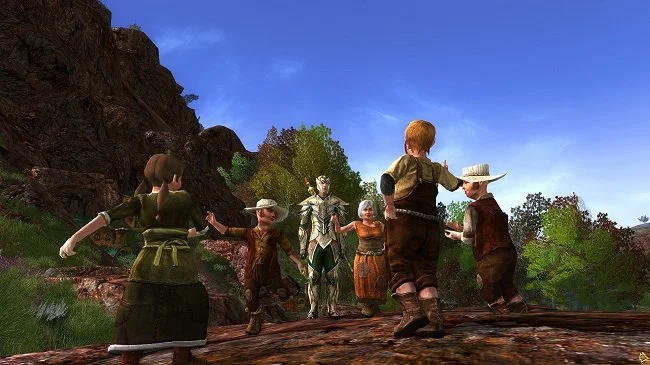
I recently revisited LOTRO to check out the new seasonal instance The Perfect Picnic. Penny the Pony trotted off in true LOTRO NPC fashion and made no effort to avoid the various mobs that plague The Shire during a summer heatwave. However, a decade of playing LOTRO has prepared me for such situations. As a seasoned Lore-master, I sent my pet ahead to occupy the oncoming threat, while I languidly went through my skills rotation. I tend to move in parallel with whoever or whatever I have to escort and seldom shift position while in combat. LOTRO being an older MMO does not support action combat and moving will stop your skill induction. Movement is thus limited to simply removing yourself from AoE effects and such like. It’s a tried and tested method and SSG have ensured that it doesn’t limit your combat experience. Just because fighting is static, it doesn’t mean it is devoid of nuance and tactic. However, many LOTRO players are totally conditioned to deal with this style. The fluid combat of The Elder Scrolls Online may not suit everyone or fit with their abilities as a player.
LOTRO is also very linear in its story structure and quest hubs. Since the game reached the regions of Dunland and Rohan, zones tend to funnel players from A to B very efficiently. It’s convenient but it is not very flexible if you want to do things “your way”. Stray too far ahead and you’ll either find yourself in a zone to high for your level or you’ll miss the start of the “breadcrumb” trail. Because there is no auto levelling beyond the Epic Battle system, it is not always safe to explore too far and no incentive to revisit lower level regions with friends. Again, bringing the narrative and regional freedom that we find in The Elder Scrolls Online, may well completely wrong foot traditional LOTRO players. I remember reading a thread on the Guild Wars 2 forums when the game first launched in 2012, by a player who felt completely lost as to what to do and where to go within the game. The open regional quests and timed events were also a stumbling block for some, who felt they lack direct instruction.
Another aspect of LOTRO that dates it, is its lack of voice acting. Yes, there is some but far less compared to other MMOs. Text boxes filled with written exposition that requires little user interaction are somewhat dull. Although the definition of an MMO has changed and continues to do so, we should not forget that they’re also a variant of the RPG genre. Hence it would be nice to see far more detailed voice acting, branching dialogue options and a greater variety of narrative outcomes. However, providing “choice” can cut both ways. Some players do not like too many options and can find such a mechanic a cause of stress. What happens if you make the “wrong” decision? This however, has been a dilemma of the MMO genre for a long time. It can apply to how you spend your skills points and what faction you join. Plus, voice acting also raises the additional spectre of lore and canon. Middle-earth is blessed with an especially hard lexicon. Most languages have a complex structure and there is plenty of scope for additional spoken dialogue to incur the wrath of the “pronunciation police”.
I think completely rebuilding LOTRO to embrace the best elements of the modern MMO genre would be a big and risky undertaking. I think that the finished product would not necessarily appeal to all current players and many would not make the transition to LOTRO 2.0 successfully. Middle-earth: Shadow of Mordor and its sequel Shadow of War feature beautifully realised environments which hint at the visual potential of a new version of LOTRO. I would certainly like to see a new vision of Middle-earth more akin to the structure of The Elder Scrolls Online, as that game serves the needs of the solo player and the group well. But the cost and risk in developing such a project make it highly unlikely that such a game will come to pass. I think after a decade, the most we can honestly expect rom SSG is a revamp of the game engine, similar to that seen in STO a few years ago. It would also be nice to see a 64-bit client and an elimination of the lag and stuttering that plagues the game. Beyond that I think LOTRO 2.0 in the true sense, will just remain a talking point.





The Problem with Giveaways
Cryptic are currently running a promotional giveaway for Star Trek Online, in which the top prize is an exclusive ORIGIN Millennium Gaming Desktop themed PC with artwork from Star Trek Online: Victory is Life. It’s worth $3, 272, looks spiffy and has robust specifications. There all also various other runner up prizes, such as the Gamma Vanguard and Gamma Vanguard Starter Pack. If you enjoy STO then this is a good value giveaway with a fair selection of rewards. Or at least it is at first glance. If you read the ubiquitous small print that comes with any sort of endeavour such as this, you’ll quickly spot that you can only enter the giveaway if you’re resident of North America. And therein lies the problem with so many competitions these days. Despite games having a global market, giveaways are frequently hamstrung by regional restrictions, rules and regulations.
Cryptic are currently running a promotional giveaway for Star Trek Online, in which the top prize is an exclusive ORIGIN Millennium Gaming Desktop themed PC with artwork from Star Trek Online: Victory is Life. It’s worth $3, 272, looks spiffy and has robust specifications. There all also various other runner up prizes, such as the Gamma Vanguard and Gamma Vanguard Starter Pack. If you enjoy STO then this is a good value giveaway with a fair selection of rewards. Or at least it is at first glance. If you read the ubiquitous small print that comes with any sort of endeavour such as this, you’ll quickly spot that you can only enter the giveaway if you’re resident of North America. And therein lies the problem with so many competitions these days. Despite games having a global market, giveaways are frequently hamstrung by regional restrictions, rules and regulations.
Let us not kid ourselves about the purpose of giveaways, competitions and prize draws that are common place to the gaming industry. They are marketing and promotional tools primarily designed to attract new customers and secondly to placate existing players. One of the biggest challenges any service industries has to face is churn; the attrition or turnover of customers. MMOs suffer this continuously. Therefore, they need to keep players engaged, enamoured and involved. Giving away in-game trinkets and baubles can only go so far. However, offering a tangible physical prize that is both exclusive and high-value is one way to attract attention. As human beings we tend to like the thrill and excitement of competitions and the chance of winning a prize. Often, the logical part of our brain which calmly tell us to consider the odds, is completely ignored by our emotions who want feel special and win something shiny. This is why companies such as Cryptic run giveaways. The buzz they create gets results.
But competitions of this kind are an administrative nightmare. Every country has its own bespoke set of rules regarding competitions, the prizes they offer and the age of those who can enter. Then there are issues pertaining to tax, physically shipping the prize to the winner and ensuring that the entire process is administered in a transparent and fair way. And those are a bunch of very difficult dots to join. Hence companies such as Cryptic often elect to limit the scope of the giveaway to a specific region. However, where such action may solve one problem, it causes another because those parties that are excluded are left feeling like second class customers. You may get a similar feeling when you see advertisements for some great deal that is only applicable to new customers of a service that you already use. I’ve phoned British Telecom several times in the past and berated some poor schmuck in customer services because I can’t have a shiny new router despite twenty-five years of loyal custom. You only have to go and visit the STO Reddit and you’ll find complaints about this PC giveaway already.
This problem seems to stem from the gap between global markets and regional bureaucracy as well as supply chains. I’m sure at present, it not an easy hurdle to overcome, but I certainly think that it needs to be addressed. Perhaps there is a compromise to be had. Can a high value prize such as a PC be sourced to other parts of the globe by local business partners? Can alternative prizes be offered to those who enter outside of North America? A solution will no doubt increase the level of administration required and all too often in business, it is the bottom line that dictates decisions. But sometimes if you’re trying to gain goodwill you have to go the extra mile. And before anyone trots out arguments about “entitlement”, this is not a matter of hurt feelings or anything as trite. It’s a matter of being publicly seen to treat all your customers the same, which is a sound business practise.
Narco Road
Overall, I enjoyed the base game of Ghost Recon: Wildlands. I have no major investment in the franchise and so judged the game on its story, mechanics and accessibility. As the concept of a Narco State is not beyond the realms of possibility, the story although stylised was acceptable. All games require the suspension of disbelief and as long as they don’t break their own internal logic and dramatic conceit, they tend to successfully tread the path of their narrative fantasy. Sadly, Narco Road the first DLC for Ghost Recon: Wildlands tries to take the game down a more bombastic and excessive path, filled monster trucks, extreme sports and villains that have crossed the line from the melodramatic, to caricature. Most players discovered this last April when the DLC was released. I have only discovered this now, over a year later and it’s a little disappointing.
Overall, I enjoyed the base game of Ghost Recon: Wildlands. I have no major investment in the franchise and so judged the game on its story, mechanics and accessibility. As the concept of a Narco State is not beyond the realms of possibility, the story although stylised was acceptable. All games require the suspension of disbelief and as long as they don’t break their own internal logic and dramatic conceit, they tend to successfully tread the path of their narrative fantasy. Sadly, Narco Road the first DLC for Ghost Recon: Wildlands tries to take the game down a more bombastic and excessive path, filled monster trucks, extreme sports and villains that have crossed the line from the melodramatic, to caricature. Most players discovered this last April when the DLC was released. I have only discovered this now, over a year later and it’s a little disappointing.
Narco Road begins with an interesting concept. You’re tasked with infiltrating yet another dangerous cartel that is affiliated to Santa Blanca. You have to earn the trust of three high ranking lieutenants, to learn the identity of the overall mastermind, El Invisible. There are distinct differences this time round. Large scale faction-based gun battles can frequently erupt around and if wisely exploited they can facilitate your plans However, a careless engagement causing ally and civilian collateral damage may well blow your cover. As you need to impress the various lieutenants, you’re required to indulge in various stunts and extreme sports to build up your reputation. It will also amass you an army of followers who will wade into any fight to support you. Overall this time round, you spend less time playing tactically and are frequently required to jump feet first into the fray This means blowing up gas stations, piloting damaged helicopter while dodging SAMs, and then there are the monster trucks. Yes, you get to ride trucks off massive ramps, race up mountain sides and carry out various other vehicular stunts.
Now all the above is great fun in principle but it’s not what I expected as DLC for what is otherwise a quite serious game. This tonal shift is not to my liking and I find it undermines the point of Ghost Recon: Wildlands overall. Some game journalists consider Narco Road to be a form of satire, tweaking the nose of adrenaline junkie culture and expanding upon the base game’s exploration of the world of social media. However, I don’t buy that. There may be an element of that present, but I am of the opinion that Narco Road is simply trying to appeal to the Grand Theft Auto V crowd. However, it feels to much like an afterthought. Where games like GTAV are specifically designed from the ground up to be raucous, sly and excessive, Narco Road smacks of just trying to cash in on such themes. As a result, it fails to satisfy and falls between two stools. It should also be noted that this DLC dispenses with your AI squad. If you don’t want to go down the road of internet co-op play, then you’ll find yourself dying a lot more frequently because there’s no one around to revive you when things get chaotic. So far, I’ve been playing Narco Road for about three days. If I’m still doing so in a week time, then I’ll be surprised.
Fans, Community Management and Social Media
When I first read about the furore caused by Jessica Price’s comments yesterday, I knew it wouldn’t end well. There’s a tedious inevitability to the outcome of most video game related “outrages” these days. For example, a senior member of staff from a major developer will same something crass, double down, dig a hole and then finally after being bitten on the ass by reality, will put out a mealy-mouthed half ass apology. The other scenario is that an employee affiliated to a studio says something completely left field, is presented with short window of opportunity to retract it and blame it on over the counter flu medication, before they get fired due to the ensuing PR shit storm. This particular controversy falls into the latter category. However, if you take a step back from the Jessica Price debacle you quickly notice it raises a lot of questions beyond her obvious transgression. Namely, the problem of always being “on the clock” when you work in certain professions, the need to separate your work and personal social media presence and the place “influencers have in the video games industry.
When I first read about the furore caused by Jessica Price’s comments yesterday, I knew it wouldn’t end well. There’s a tedious inevitability to the outcome of most video game related “outrages” these days. For example, a senior member of staff from a major developer will same something crass, double down, dig a hole and then finally after being bitten on the ass by reality, will put out a mealy-mouthed half ass apology. The other scenario is that an employee affiliated to a studio says something completely left field, is presented with short window of opportunity to retract it and blame it on over the counter flu medication, before they get fired due to the ensuing PR shit storm. This particular controversy falls into the latter category. However, if you take a step back from the Jessica Price debacle you quickly notice it raises a lot of questions beyond her obvious transgression. Namely, the problem of always being “on the clock” when you work in certain professions, the need to separate your work and personal social media presence and the place “influencers have in the video games industry.
First up, let’s deal with the most obvious things that standout from this “wee stooshie”. The moment you have your employers name in your twitter biography, you rightly or wrongly are now an ambassador for that company. This is a problematic foible of working in an age dominated by social media. I also think it is further exacerbated by the US work ethic which is curiously more zealous than its European counterpart. Work is more of defining factor in American culture to begin with. Irrespective of this, if you work for a major games developer and cite that in your profile then the fans will take it as read that you’re accessible 24/7 and they’ll cross examine you at every opportunity. It’s ironic but the term “emotional courtesan” that Jessica Price refutes in one of her tweets, is not a bad definition of the role that is thrust upon such employees. A company’s reputation and standing with its customers is one of its most prized assets. Questions regarding the capricious nature of fans and the fact that some totally lack any filter are ultimately irrelevant. You don’t upset the gravy train.
Next there’s the need to compartmentalise. If you work for a big player in any type of industry and feel that there are constraints placed upon your freedom of expression online as a result of that, then simply create separate social media accounts. Apply common sense to your work-related platforms and if need be follow a clear set of rules with regard to your customer interactions. As for your personal accounts, keep them separate and don’t make the mistake of getting drawn into needless arguments. Use mute or block judiciously if need be. And remember that Twitter is a public space and is therefore governed by rules of speech in such an environment. Ultimately if you want privacy in your discussion then use What’s App or something similar. Also, manners have declined in the last fifty years. Some people either lack a filter or simply refuse to use one for their own dysfunctional reasons. You have very little say or control over who decides to interject in any ongoing conversation. The sad reality is that your work related social media account forces you to do your job with one hand tied behind your back. It’s not a level playing field but if that’s place you’ve chosen to set up your stall, then that is how you have to roll with things.
Then there is the whole thorny issue of influencers. In this case, I’m not aware that You Tuber and Streamer Deroir has ever been considered a difficult or controversial individual. From what I’ve gleaned from the internet, they are a relatively benign community conduit. He’s even got an NPC named after him in the Mistlock Observatory. Therefore, it is not unreasonable for Deroir to want to interact with an ArenaNet employee such as Jessica Price. His comments were not in any way rude, so he really didn’t deserve the response he received. However, the wider gaming dependency upon influencers is a questionable practice. Not all are as measured as Deroir. It should not be forgotten that many influencers are not directly employed by the games developers and therefore not subject to the same scrutiny and security checks as regular staff. It’s a powerful position to be in and people are flawed. There have been instances of influencers going rogue in the past, although again I say this is clearly not one.
Finally, I am becoming increasingly sceptical of overt fandom of any kind. Pop culture, like politics and sports, is losing all semblance of measure and introspection and slowly becoming far more zealous. Everybody seems to have a stake or a personal claim on some part of the internet or aspect of fandom, regardless of whether it is legitimate or justified. Fandom isn’t collective ownership, although that is fast becoming a minority view. Dealing with such communities is becoming increasing hard. Who wants to navigate a daily diet of anger, accusations and bile? In the case of Jessica Price, her ill-conceived comments were wrong, and she has been sanctioned by her employers (The degree of which is subject to debate). However, what is worrying is the increasing trend that sees justifiable anger and complaint from legitimate quarters, being subsequently hi-jacked by those who simply smell blood in the water. The internet lynch mob is an extremely blunt tool and the dirty footprints of its affiliate members who often have their own agenda, ultimately just end up muddying the waters of measured and reasoned criticism. Thus, gaming culture declines further and it’s more mature and measured members find themselves moving ever further to its periphery, so as not be tarred with the same brush.
Victory is Life
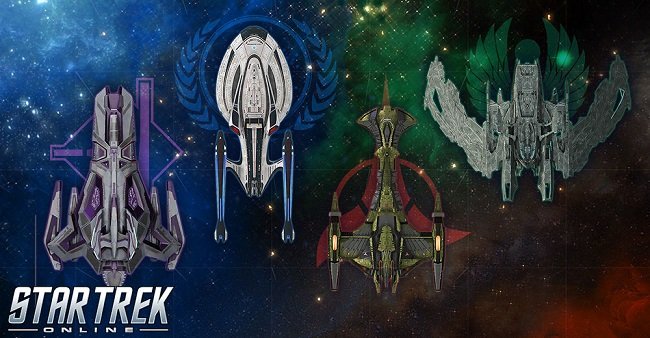
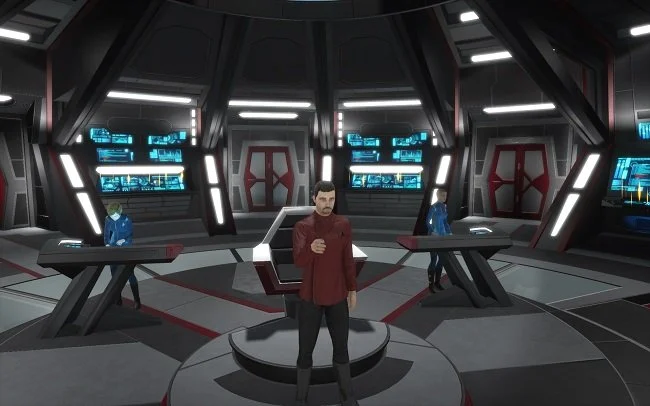
Star Trek Online is a curious beast compared to other MMOs. Although the characters that you create have gear, skills and traits to advance, it is your ship that is the real focus of in game min-maxing. The game also has several strong narrative arcs that dovetail superbly into existing Trek lore. The fact that numerous actors from the original TV shows have returned to voice their characters in the game, is another feather in the hat for Cryptic, the games developers. STO recently had a major lighting and game engine overhaul to accommodate it’s launch on the console market. Yet despite many very positive factors, there are still times when STO feels a little clunky and lacking in polish. Cutscenes can be problematic and the game has some persistent bugs and glitches. However, despite some flaws the MMO has a strong and loyal fanbase who play actively and pay prodigiously. This is also a game with a large number of whales in its wider community.
Star Trek Online is a curious beast compared to other MMOs. Although the characters that you create have gear, skills and traits to advance, it is your ship that is the real focus of in game min-maxing. The game also has several strong narrative arcs that dovetail superbly into existing Trek lore. The fact that numerous actors from the original TV shows have returned to voice their characters in the game, is another feather in the hat for Cryptic, the games developers. STO recently had a major lighting and game engine overhaul to accommodate it’s launch on the console market. Yet despite many very positive factors, there are still times when STO feels a little clunky and lacking in polish. Cutscenes can be problematic and the game has some persistent bugs and glitches. However, despite some flaws the MMO has a strong and loyal fanbase who play actively and pay prodigiously. This is also a game with a large number of whales in its wider community.
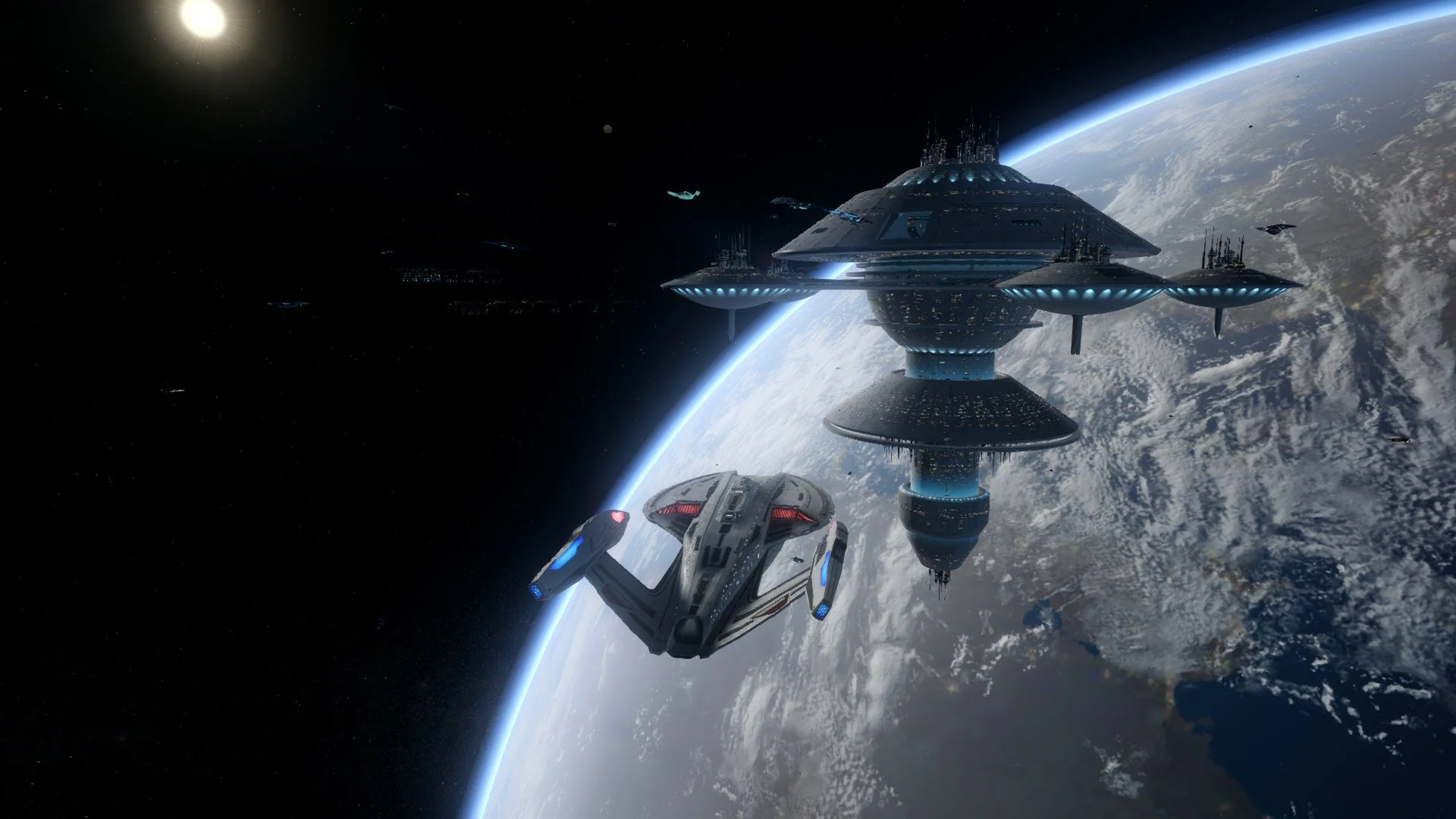
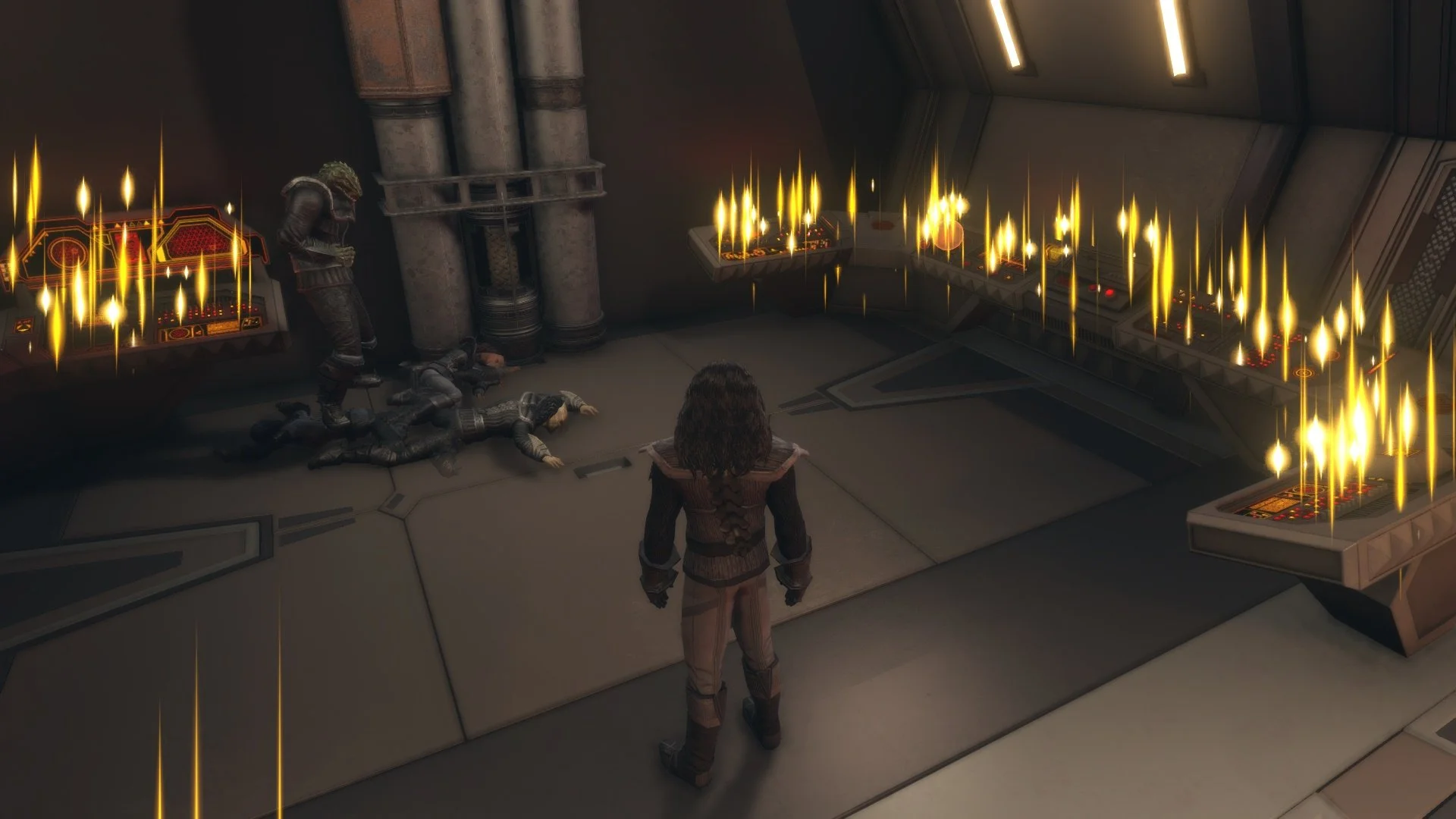
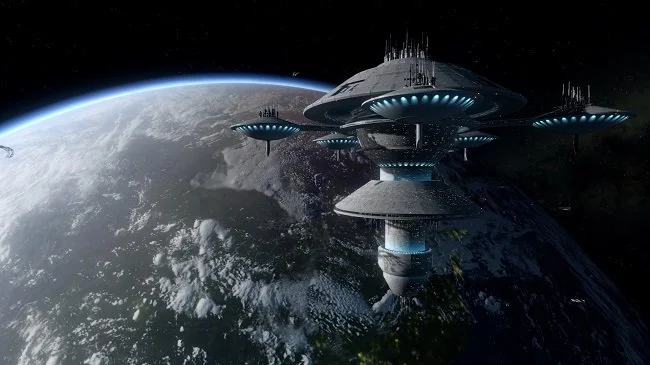
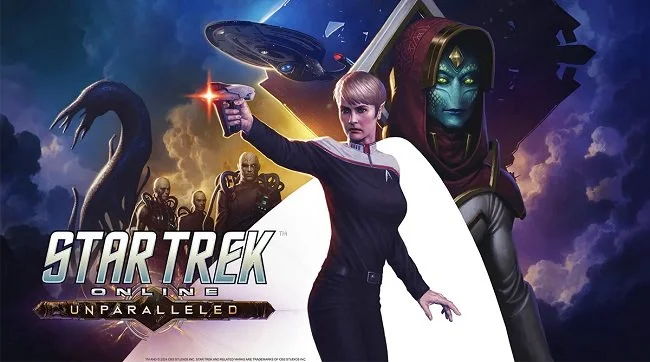
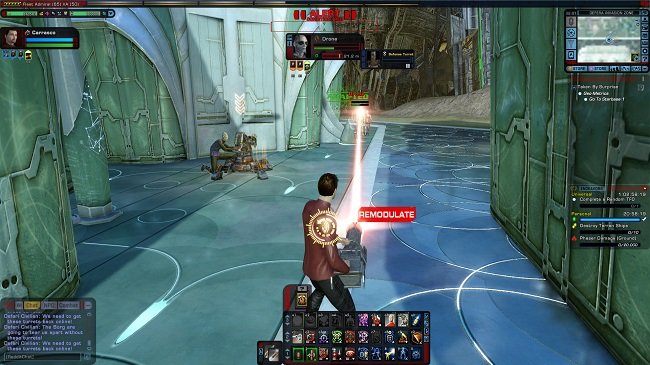
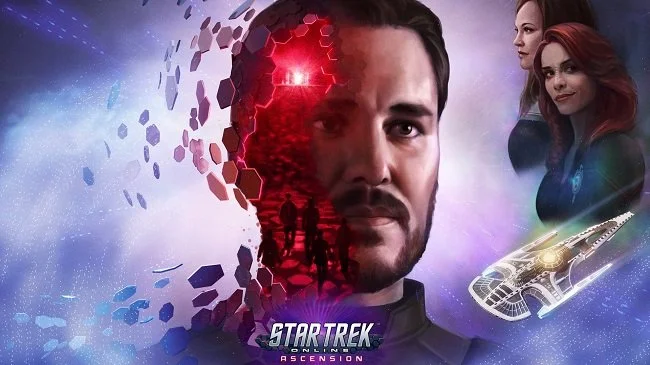
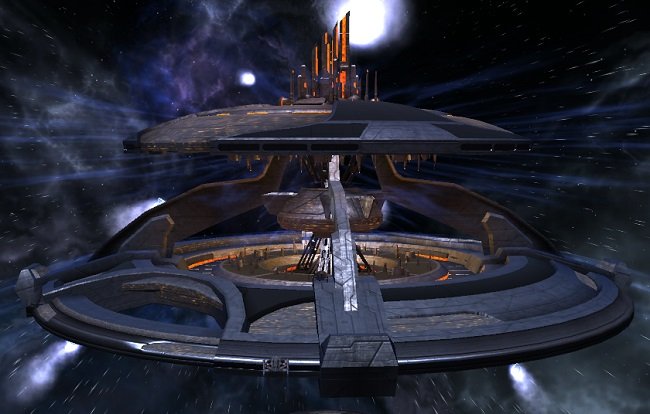
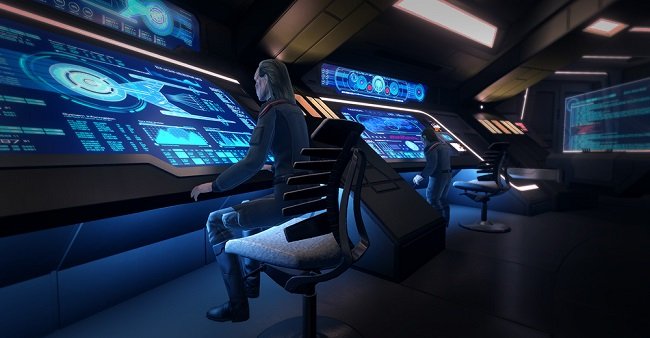
This year is the 25th anniversary of Star Trek: Deep Space Nine. Subsequently, Cryptic decided to base their latest expansion Victory if Life around the show. Released on 5th June, the new content features the voice talents of Alexander Siddig, Andrew Robinson, Armin Shimerman, Aron Eisenberg, Jeffrey Combs, J.G. Hertzler, Nana Visitor, René Auberjonois, Chase Masterson, Max Grodénchik, Bumper Robinson and Salome Jens. I won’t list all their respective characters but for fans and aficionados, this is a big deal. Star Trek Online is an officially sanctioned product and has the full support of CBS. As a result, the game enjoys a level of continuity and lore compliancy seldom seen in other MMOs with licensed intellectual properties. Although STO has as mentioned, suffered from lapses in QA from time to time, the standard of writing has never been poor and with regard to Victory if Life, I believe that it has surpassed its own high standard.
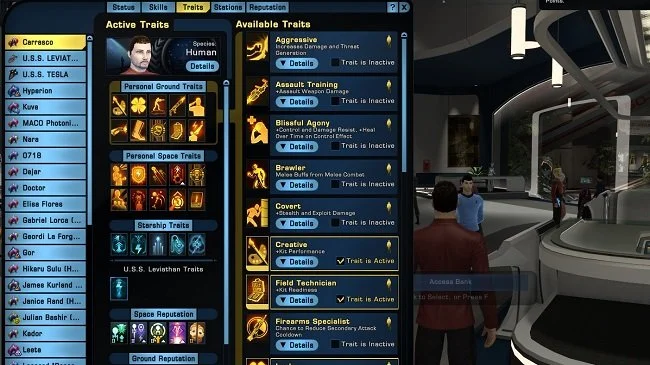
There have been some complaints that Victory if Life is more of an update in scope and size, rather than a full-blown expansion, such as Delta Rising from 2014. And I think that it there a degree of truth to in some of the criticism levelled at the release. The additional five levels are trifling and make no real tangible difference to your character. The increase in gear upgrade cap from Mark XIV to Mark XV again only really have an impact on min-maxers seeking a nominal percentage gain in DPS. Then there are the three bespoke Jem’Hadar missions that are more like tutorials. Yes, they’re fun but they don’t really feel any different to the starter missions for the other races. In fact, these ones seem even light in content. And then there are the six missions that make up the Victory if Life story arc. Technically it’s seven but one was held back until 28th June, as a feature episode to keep the sense of engagement going. Yes, compared to other arcs it is a rather compact series. Yet I am prepared to overlook all these points, purely because this arc finally feels like STO has finally met it full narrative potential.
Victory is Life addresses the issue of what has happened in the Gamma Quadrant since the end of the Dominion War. Odo returns as an Ambassador for the Changelings, bearing ill news of the ravages of Hur’q. Seeking an alliance proves difficult with the Klingon’s particularly ill-disposed towards helping a recent enemy. Yet the Iconian war has granted many worlds a new sense of perspective, so it is interesting to see more diplomatic overtures from Cardassia and even Ferenginar. Naturally Odo crosses the pass of Kira Nerys and we get to see how the years and current affairs have affected their relationship. Elim Garak once again proves that there’s more to his role in the proceeding than immediately meets the eye. And as ever Quark proves that he has a heart of latinum as well as an eye to the main chance. Victory if Life succeeds in taking the characters we know and love from the TV show and giving them an equally viable story within the frame work of STO.
What becomes abundantly clear while playing Victory if Life is the presence of multiple original cast members. We have seen returning cast members interact before in STO but never on this scale. And the cast of Star Trek: Deep Space Nine remains exceptional. Listening to the precise and measured delivery of Andrew Robinson as Elim Garak, along with gruff yet emotional resonance of René Auberjonois as Odo is an absolute joy for fans. But I believe of all the six missions that feature in the expansion it is “Quark’s Lucky Seven” that is the jewel in the crown. This wonderfully conceived caper story plays out like a Ferengi version of Oceans Eleven. Quark, Rom, Nog, Leck and Brunt join forces to steal a priceless artefact, located in possibly the most dangerous place in the galaxy. Superbly written, wonderfully acted by a much beloved cast, it totally nails the essence of the Star Trek: Deep Space Nine. The bar has just been raised and this is the standard by which all future STO content will now be judged by. That’s a big ask but it’s only what the franchise deserves. Well done Cryptic. More please.
Video Games and Lawyers
Some gamers tend to forget that the video games they play are primarily commercial products. They romanticise the video game industry per se, along with their own “relationship” with the developers. There is also a tendency to forget that they are “customers. Nothing bursts this delusional bubble more efficiently than the involvement of lawyers. Lawyers tend to cut to the chase as time is money etc. Community Managers dissemble, marketing and PR companies hype and misdirect, but the moment lawyers are involved in any way, it means that something unequivocal is going to happen. Sadly, the involvement of the legal profession in a video games life cycle is often a bad sign. Something that became quite apparent this week, when developers Gun Media made an announcement about the future of Friday the 13th: The Game.
Some gamers tend to forget that the video games they play are primarily commercial products. They romanticise the video game industry per se, along with their own “relationship” with the developers. There is also a tendency to forget that they are “customers. Nothing bursts this delusionary bubble more efficiently than the involvement of lawyers. Lawyers tend to cut to the chase as time is money etc. Community Managers dissemble, marketing and PR companies hype and misdirect, but the moment lawyers are involved in any way, it means that something unequivocal is going to happen. Sadly, the involvement of the legal profession in a video games life cycle is often a bad sign. Something that became quite apparent this week, when developers Gun Media made an announcement about the future of Friday the 13th: The Game.
At present there is an ongoing dispute between the two co-creators of the original Friday the 13th film. Sean Cunningham produced and directed the movie, while Victor Miller wrote the sceenplay. Miller is attempting to gain control of the rights to the intellectual property under a provision of U.S. copyright law that allows writers to withdraw a grant of rights to their existing work. Such a step is key to claiming ownership to the content. However, Cunningham who currently holds all the IP rights has argued that Miller wrote the script on a “work-for-hire” basis and therefore has no claim on the IP. There is a lot of scrutiny on this case as it’s outcome may well set an industry precedent with far reaching implications. In the meantime, the ongoing litigation means that Gun Media have to cease any further development on their game.
Sadly, this means that a sizeable amount of new content that was scheduled to be added to Friday the 13th: The Game, now goes on indefinite hold. Gun Media cannot commit resources to the creation of material that they ultimately may not be able to use. Nor can they afford to just tread water. Thus, staff will now have to focus on work for other titles for practical business reasons. The downside of this means that even if the legal obstacles are removed at a later date, the company may not be in a position to resume development of the game. In a nutshell, the lawyers have indirectly stopped the development of Friday the 13th: The Game dead in its tracks and the game as it is now, is pretty much how it will remain. It’s a shame because if the developers had continued to refine this game and address its co-op failings then it could have been much more and met its potential.
Such is the nature of legal entanglements. Unlike other disputes these have a habit of being sudden and definitive. The moment a game such as an MMO reaches the end date of its licensing agreement then it closes. It’s not subject to any sort of argument or negotiation. If a renewal hasn’t been agreed then that game is over and done with, as with Warhammer Online. Similarly, Disney recently decided to “end” its business relationship with developers Gazillion Entertainment and as a result the guillotine fell on Marvel Heroes very promptly. All of which goes to show that gaming is a business and as such, is subject to all the usual risks and caprices of the “free market”. I’m not advocating that gamers should live in fear or trepidation regarding the future of their favourite title, but it is wise to reflect upon the fact that a lifetime account refers to the life of the game and not the owner. Games likes other forms of entertainment, are ultimately are ephemeral.
Congratulations. Now Spend More Money
Video games are many things to different people. For some they are art, for others they’re a social platform. Others see games a means to compete and challenge themselves. Others use them as a medium to bolster their self-esteem. And in some quarters, games are a retreat and a safe space from all the things in life that are threatening, such as women, equality and human decency. For me, they provide an amusing diversion and a writing opportunity. But let us not forget what the primary purpose of the video games industry is. Namely, to make money. Video games are not a social service or a similar altruistic medium, although many gamers still delude themselves that they are. They’re a product to be packaged, marketed and sold. And I was given a timely reminder of this today.
Video games are many things to different people. For some they are art, for others they’re a social platform. Others see games a means to compete and challenge themselves. Others use them as a medium to bolster their self-esteem. And in some quarters, games are a retreat and a safe space from all the things in life that are threatening, such as women, equality and human decency. For me, they provide an amusing diversion and a writing opportunity. But let us not forget what the primary purpose of the video games industry is. Namely, to make money. Video games are not a social service or a similar altruistic medium, although many gamers still delude themselves that they are. They’re a product to be packaged, marketed and sold. And I was given a timely reminder of this today.
I’ve recently been playing Tom Clancy's Ghost Recon: Wildlands and slowly progressing through the games central campaign for the last three weeks or so. Last night I finally met the criteria to take down the game’s central villain, El Sueño. On my second attempt I finally made it to the mountain top mausoleum in time and triggered the cutscene which gives the game’s primary ending. This conclusion has been dubbed the “bad ending” by some players and if you then repeat the final mission, you are granted access to a second alternative outcome. Both story denouements are plausible, but I actually preferred the first. To hell with cutting deals and geo-politics. As far as I’m concerned, El Sueño had to die. However, irrespective of which ending I favoured, once he was dispensed with, I simply moved on to mopping up a few residual quests around the game map. Once this is done, then I’ll start the DLC.
This morning, I opened Microsoft Outlook to discover the following email sitting in my inbox. “El Sueño is dead!” was the stark message. Naturally I opened it and read the following. “Congrats for defeating El Sueño. You worked hard, Ghost, fired at the enemy, roamed the dusty roads of Bolivia and flew over with helicopters. Need another challenge? Exchange 100 units to get a 20% discount on a new Ubisoft game!”. It’s hardly the most heavy-handed marketing message I’ve come across in nearly thirty years of gaming, but it is unique, in so far as it was sent directly to me by email after reaching a specific achievement in-game. Effectively, the publishers are saying congratulations, now go spend more money please. Again, this entire situation initially seems very innocuous, but the more I think upon it, the more significant it appears.
I’ve not played a great deal of Ubisoft games over the years and I’ve only recently discovered how the company does it utmost to extend the lifecycle of their products and monetise them to the maximum. I recently found that they have sperate season passes for each year a game has content released. They also lock a great deal of cosmetic items, as well as practical game content such as weapons, behind pay walls. Compared to other companies they are far more “vociferous” in pursuing the content of their players wallets. So in within this context, I guess receiving an email congratulating me on my success while simultaneously encouraging me to contribute further to their shareholders pension fund, is hardly surprising. I found the whole experience to be just “odd”. I wonder if some players find such messages flattering? I also wonder if anyone actually did go straight to the store and start spending. I guess the very existence of such emails indicates that they do.
The Failings of Co-op Gameplay
It would appear that Anthem will have a campaign mode that can be played solo or co-op. This is hardly surprising because such a mechanic is pretty much de rigueur these day in gaming. On paper the ability to play through content collaboratively is a great idea. Small groups of four people or so are theoretically easier to manage and co-ordinate, unlike large unwieldy raids in the MMO genre. Discord (and such like) provides a quick and easy way for people to communicate. And despite ongoing improvements in AI technology, playing with other people often provides a superior experience. Mutually agreed tactics are more likely to succeed and if things take a turn for the worse, real players can improvise more effectively. Hence co-op play seems to be industry darling at present and is seriously putting a dent in the MMO market.
It would appear that Anthem will have a campaign mode that can be played solo or co-op. This is hardly surprising because such a mechanic is pretty much de rigueur these day in gaming. On paper the ability to play through content collaboratively is a great idea. Small groups of four people or so are theoretically easier to manage and co-ordinate, unlike large unwieldy raids in the MMO genre. Discord (and such like) provides a quick and easy way for people to communicate. And despite ongoing improvements in AI technology, playing with other people often provides a superior experience. Mutually agreed tactics are more likely to succeed and if things take a turn for the worse, real players can improvise more effectively. Hence co-op play seems to be industry darling at present and is seriously putting a dent in the MMO market.
However, the reality of co-op play is often quite different from its notional benefits. I have dabbled with this functionality via several games in the last twelve months and have had decidedly mixed results. First off, finding a group is very much dependent on the popularity of the game. If the game is a new release, then this is not an immediate problem. But if you’re playing the game of the year edition, twelve months after launch you may well find the player base has greatly diminished. Then there’s the age-old problem of player behaviour, that seems to have become exacerbated of late. I have encountered little or no communication from fellow players, as well as the ubiquitous malcontents who sound off at everyone and everything when things don’ go their way. Which leads to the other major problem that co-op regularly presents. Namely fellow group members leaving because things are not going the way they want. It is by far the most frequent failing of co-op play, in my experience.
Sadly, because online behaviour per se seems to be a race to the bottom nowadays, I cannot advocate the automated group finding tools that many games now have. Last year, I found that Sniper Elite 4 and For Honor could deliver an adequate co-op experience about two thirds of the time. One in every three games was impeded by another member of the group. Twelve months later I find that the opposite is true. Two out of three co-op games are either blighted by player behaviour or suffer due to team members abandoning the group. This is particularly true of Friday the 13th: The Game and as a result the developers are currently working on implementing a penalty system for habitual offenders. When I do find myself in a PUG I frequently find there is a distinct reticence towards communication. It’s as if there’s an assumption that everyone knows what to do and that the task in hand needs to be undertaken as quickly as possible. Sadly, the only people disposed towards talking are those who have little of worth to say.
Perhaps it’s a generational thing and I am unreasonable in expecting both courtesy and a willingness to work together when playing co-operatively. But I am now at an age where my tolerance for the socially dysfunctional, the trite shenanigans of youth and general ill manners are virtually non-existent. So auto grouping is fast becoming a waste of time for me. Which leads me neatly into the only alternative; playing with friends. Simply put, as you get older is common to find your social circle reduce in size. Jobs, relationships and family mainly account for this. Hence a lot of people that I would play with collaboratively a decade ago are not available anymore. From what I’ve seen from You Tube, those players who regularly play co-op games are often half my age. Of my friends who are available, there is the further complexity of time zones and the simple fact that not everyone has the same gaming tastes. More often than not I find that my Steam friends simply don’t play the same games as me. And as I’ve moved away from the MMO genre I find that I really miss the practical benefits of guilds.
Once again, we see something that on paper should be a major boon to the gaming community, being usurped by the lowest common denominator and rendered ineffective as a result. It seems to be the fate of all online social tools these days. Perhaps that’s why many game developers still include a solo mode with AI bots in their games, because they know in advance that a substantial element of their customer base is going to be “problematic”. May be the solution to the co-op play is to make the auto grouping tools more sophisticated and use them in a way to facilitate a good experience. This could be through incentivising acceptable behaviour and rewarding a team if they deem the experience to be positive. Conversely, providing a means to highlight and sanction poor behaviour would also be a positive step. However, such facilities require time and money to develop and policing a community requires human agency. All of which ultimately contribute to a games bottom line, so I won’t hold my breath that this issue is going to be solved any time soon. In the meantime, I’ll just continue to rely upon AI bots and come to terms with the fact the co-op play doesn’t appear to cater for my requirements.
LOTRO: Update 22.2
When I first started playing LOTRO in late 2008, I actually read the manual that came with my box copy, before I decided which class I was going to play. I chose the Lore-master as it sounded and interesting mixture of both ranged attacks and the use of pets. Being new to the MMO genre at the time, I didn’t realise that it was actually quite a complex class to play. Although I have dabbled with alts over the years I have stuck with this single character and until 2017, kept them relatively up to date with regard to content and respective skills. Mordor greatly dampened what enthusiasm for LOTRO and as a result I have fallen behind the curve. My gear is poor as I haven’t really progressed far into the lastest expansion. Combat has become a tedious grind, leaving me with a paradoxical situation. Poor gear makes progression slower, but bypassing Mordor leaves my character gimped. Bearing this in mind, I’ve been eagerly awaiting the Lore-master class changes that have come with Update 22.2 in the hope they will improve my situation. Sadly, I don’t think that today’s changes are the solution I’m looking for.
When I first started playing LOTRO in late 2008, I actually read the manual that came with my box copy, before I decided which class I was going to play. I chose the Lore-master as it sounded and interesting mixture of both ranged attacks and the use of pets. Being new to the MMO genre at the time, I didn’t realise that it was actually quite a complex class to play. Although I have dabbled with alts over the years I have stuck with this single character and until 2017, kept them relatively up to date with regard to content and respective skills. Mordor greatly dampened what enthusiasm for LOTRO and as a result I have fallen behind the curve. My gear is poor as I haven’t really progressed far into the lastest expansion. Combat has become a tedious grind, leaving me with a paradoxical situation. Poor gear makes progression slower, but bypassing Mordor leaves my character gimped. Bearing this in mind, I’ve been eagerly awaiting the Lore-master class changes that have come with Update 22.2 in the hope they will improve my situation. Sadly, I don’t think that today’s changes are the solution I’m looking for.
I am not a min-maxer per se and have never been a serious number cruncher when it comes to LOTRO. I broadly know what my skills do and have adopted a rotation that is common to many other LOTRO players who favour the Lore-master class. For me I define my combat effectiveness by the amount of time it takes to kill a single mob, along with how many skills I have to use or how many times I have to repeat my rotation. This may not be the most scientific method, but it works for me. I then temper combat effectiveness with another very subjective factor. Is the combat satisfying or is it a chore? Too often of late in LOTRO combat is the latter. For me, and possibly many other MMO players, there is a very personal tipping point between a credible and engaging fight and a dull, ponderous slog. For me it may be so many seconds, for another player it may be double or triple that time. What I do find with older MMOs is that combat does seem to take a lot longer, compared to modern titles. The Secret World suffered terribly from this problem and it still wasn’t adequately addressed for my liking, when the game was revised into Secret World Legends.
In LOTRO I predominantly follow the red skills line, looking to do maximum DPS. Therefore, the recent upgrade to Burning Embers (applying Gust of Wind to augment it into Searing Embers) is a “interesting” addition. However, the induction animation is a real nuisance and needs to be shortened. Lightning Strike has been tweaked and its cooldown has been shortened. I noticed I was hitting higher critical hits as a result. However, the initial heal from Water-lore has been removed so only the HoT component remains. Thus, you’ll only get the first heal after four seconds. Plus, Ring of Fire is currently broken which is a bit of an inconvenience as its use regularly features in my play style. However, I am concerned that by making the Lore-master’s single target DPS stronger, that our AoE has suffered. Also, the removal of the Wizards Fire component and its replacement with something that is essentially not commensurate, does strike me as an over simplification of gameplay.
After running several skirmishes today, I did conclude that my overall DPS had improved but that was only in specific circumstances. For the casual, PVE-centric player, who plays cautiously, pulling mobs individually or using crowd control to make fights sequential, then this update is an adequate improvement to the class. But for those who do like to group and contribute to a communal fight, then it there isn’t so much on offer. Lore-masters are not so able to deal DoTS and their AoE skills have been reduced. And irrespective of all of these changes, I still find that combat is too slow for my liking. It’s difficult to articulate without the use of numbers, but when fighting I expect at least one skill to do 15 to 20% damage to my opponent’s moral. It still feels too much like an uphill. But this is the conundrum of combat in gaming, especially the MMO genre. Trying to find that right balance that pleases the majority of players, or at least allowing them to augment their effectiveness by accessing the right sort of gear. I’m beginning to feel that the more LOTRO is updated, the gap between what you can achieve and what I currently have, is growing wider and wider. I don’t know if I ever will catch up.
Gaming and Outrage Culture
I've written a thousand or so gaming related posts since I started blogging in 2008. I mention this to indicate that I have more than a passing interest in this particular leisure activity. However, that interest has waned somewhat over recent years. As I get older and allegedly wiser, I find that the two things that I like the most about gaming culture IE the actual games and the community, are becoming slowly yet inexorably less appealing. Commercial factors are turning games development into a mirror of the movie and music industry, driven by focus groups and metrics. The broadening of gaming’s mainstream appeal has also led to an angry backlash from alleged "core" fans. The net results are a stagnation of innovation within games development and a slavish adherence to proven formula, as well as an increase in tiresome bickering from specific groups of gamers. Both groups seem to fear change and tend to look backwards rather than forwards.
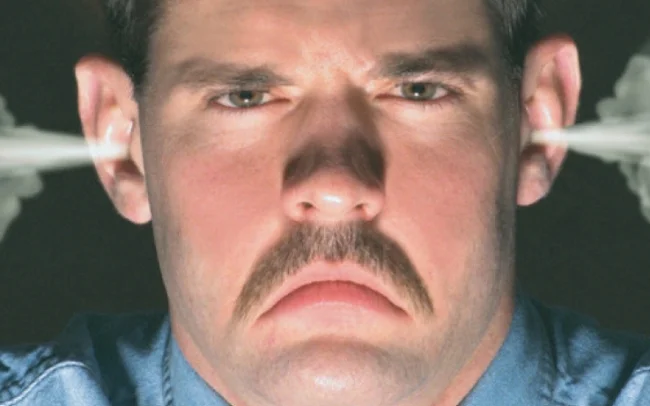
I've written a thousand or so gaming related posts since I started blogging in 2008. I mention this to indicate that I have more than a passing interest in this particular leisure activity. However, that interest has waned somewhat over recent years. As I get older and allegedly wiser, I find that the two things that I like the most about gaming culture IE the actual games and the community, are becoming slowly yet inexorably less appealing. Commercial factors are turning games development into a mirror of the movie and music industry, driven by focus groups and metrics. The broadening of gaming’s mainstream appeal has also led to an angry backlash from alleged "core" fans. The net results are a stagnation of innovation within games development and a slavish adherence to proven formula, as well as an increase in tiresome bickering from specific groups of gamers. Both groups seem to fear change and tend to look backwards rather than forwards.
As I do not work in the videos games industry, I can only lobby for change and apply whatever leverage I can as a customer and consumer. The gaming community is another matter altogether. I have as much as a stake in it as anyone else and hence an equal voice. Or at least that’s the theory. There are fellow gamers that dislike such philosophies and cleave to their own criteria as to who should have a say and who shouldn’t. Hence the gaming community has fallen victim to that blight which has spread across all online public spaces and social interactions, namely outrage culture. That curiously twenty-first century malady that appears to be the adult equivalent of having a tantrum because you can’t get your own way, or you have to share with others. However, outrage culture sometimes serves a more sinister purpose. It acts as a surrogate for expressing and disseminating more controversial ideas.
Two such examples of this are the recent reveal for Battlefield V and the furore over the game Active Shooter. The first is an instance where a debate about the alleged historical accuracy of depicting women as combat soldiers in World War II, has been hijacked to express displeasure once again at any sort of equal gender representation. The second is about how a cheap and deliberately tawdry game with an exploitative premise, is being championed by a specific group of gamers because they see it as a “fuck you” to the progressive, socially liberal politics that they feel are “taking their games away”. Both points of view are factually, logically and morally questionable, but they are becoming all too common place these days. They reflect a broader infantilisation in the thinking of certain quarters of society, who have dispensed facts and now focus on how they feel, regardless of whether such feelings are justified. It also links into a growing form of zealous fandom that mistakenly equates enjoyment of something with some sort of ownership.
Both of these recent gaming stories are just further examples of ongoing exercises in community-based self-harm. As someone who enjoys being part of that community, I find it utterly depressing. I wonder how many of the participants in these ongoing controversies have stopped for a moment, taken a step back and considered how it looks to the wider world? Precious few I would hazard a guess. Furthermore, the net result of this dispute is that more and more reasonable and level-headed gamers withdraw from engaging with the wider community. This is particularly relevant to female, ethnic minority and LGBT gamers. I consider the marginalisation of any group folly and counterproductive. The net result of ceasing engagement is that is appears to imply that those who shout the loudest have “won” the culture war. Also, as controversy can be bad for business, it often forces game developers to further eschew creativity and experimentation, leading them to double down on tedious tried and tested formulas.
What is becoming clear from these outbursts of gamer outrage, as with wider societal pushback against the status quo, is that western society has not made as much social progression in the last fifty plus years as it may have thought. It has been postulated by many academics that this is the century of "self" and that Western culture has effectively given upon wider socio-political ideologies now. Rather than work cohesively as a collective whole for mutual benefit, we simply apply our consumerist outlook to all situations. We equate our personal expenditure as means of gaining individual representation. Everything is viewed and considered primarily through the prism of how it affects us personally, rather than as a group. This principle manifests itself in all aspects of our life, including gaming. Couple this with a decline in critical thinking and the ability to effectively debate and you end up with outrage, segregation and ongoing culture wars. Thus, by our own hands we fashion the very wedges that divide our community. What was that quote again about why we can't have nice things?
Season Passes
If you are a gamer over a certain age, your interest will have spanned several decades of industry change. By the time I moved from console gaming to the PC, during the mid-nineties, there was already a precedence for expansions to single player games. For example, I was bought Star Trek: Starfleet Academy back in 1998, a few months after its initial release. The game had an adequate amount of content that justified its retail price. A year later publisher Interplay released an expansion pack called Chekov's Lost Missions, featured seven new missions, two new multiplayer games, and various improvements to the game interface. If memory serves this cost half the price of the full game and by the standards of the time was broadly deemed an acceptable. Despite the title of the expansion, this was not content culled from the original game and was purely an optional extra. That was the nature of expansions at the time. They provided new material to enhance a game at a reasonable cost.
If you are a gamer over a certain age, your interest will have spanned several decades of industry change. By the time I moved from console gaming to the PC, during the mid-nineties, there was already a precedence for expansions to single player games. For example, I was bought Star Trek: Starfleet Academy back in 1998, a few months after its initial release. The game had an adequate amount of content that justified its retail price. A year later publisher Interplay released an expansion pack called Chekov's Lost Missions, featured seven new missions, two new multiplayer games, and various improvements to the game interface. If memory serves this cost half the price of the full game and by the standards of the time was broadly deemed an acceptable. Despite the title of the expansion, this was not content culled from the original game and was purely an optional extra. That was the nature of expansions at the time. They provided new material to enhance a game at a reasonable cost.
Today, expansions fall under the broader marketing term of DLC (downloadable content) and the definition is not as black and white as it was two decades ago. DLC can be anything from cosmetic skins, weapons or armour. Then there are PVP and multiplayer maps as well as new missions. In certain cases, the capacity to have further game saves, inventory space or character slots is dressed up as DLC. Nowadays, there are times when a game feels that it’s been gutted of key content that is then withheld and sold back to the player. This can be bought piecemeal as and when required, or pre-ordered through the “miracle” of the season pass, which can add a further £25 or £30 cost on top of the price of the base game. Like or not, the season pass is an established part of a games lifecycle and an integral part of the business model of most major games publishers. It’s a bitter pill to swallow but once done, it should ensure that you’ve got all a games future content in the bag. Or so I foolishly thought.
Usually the lifecycle for a new triple A game is 12 to 18 months and the DLC is released every three months or so. That has mainly been my experience of things with games such as The Witcher 3: Wild Hunt. However, I’ve recently bought some titles from Ubisoft, who seem to drag out their products life cycle far longer. I got a deal on Ghost Recon Wildlands recently which was initially released in March 2017. The Gold Edition included a season pass for DLC, which I assumed (wrongly) covered everything. It would appear not. I noticed last week that there was available in the Uplay store what Ubisoft called a Year 2 pass. Yes, they had released a smattering of further content and wanted me to pay more money for the pleasure of accessing it, as I wasn’t covered by my previous season pass. Suffice to say I wasn’t impressed by this. Furthermore, I've subsequently spotted that Ubisoft have just released a Year 3 pass for further DLC for Tom Clancy's Rainbow Six Siege. A further example of striving to extend a games life and hence its financial yield.
So, it would appear that "games as a service" is slowly becoming a reality. Buying the Gold Edition of a premium new game these days does not guarantee all future content. Yearly DLC passes are a thing and if you want to access further content regardless of how superficial it may be, you have to keep paying. And although I am not alone in being critical of this egregious business approach, it would appear that sufficient numbers of gamers are happy to open their wallets, thus making this practise bear fruit. I would not be surprised if this approach continues to grow and greater functionality will be excised from games and gated behind a paywall. The free-to-play business model of mobile gaming, MMOs and co-op genres could eventually become the de facto industry standard. Ownership as a concept is slowly be erased from gaming and the product is evolving into a continuous service. What times we live in.
"Adequate"
“Why re-release a game that’s perfectly adequate but doesn’t do anything particularly noteworthy or special?” Rogue Trooper Redux review by Tom McShea. Here we have in a nutshell the ill-conceived attitude that plagues contemporary gaming reviews, although it is also applicable to other mediums. Too often these days, I find myself reading critiques of games, movies and TV shows where the author feels that the product has failed because it is not exceptional. Such reviews will frequently cite numerous positive factors or attributes and reference how the product has been competently assembled. Yet in the final summation, the author will then full back upon the stock criticism that in spite of all this, the game does not “re-invent the wheel” or set a new “benchmark”. It is just “adequate”. However, I believe that this is a much misunderstood and frequently misused word. And that its reoccurring use stems from a culture of unrealistic expectations.
“Why re-release a game that’s perfectly adequate but doesn’t do anything particularly noteworthy or special?” Rogue Trooper Redux review by Tom McShea. Here we have in a nutshell the ill-conceived attitude that plagues contemporary gaming reviews, although it is also applicable to other mediums. Too often these days, I find myself reading critiques of games, movies and TV shows where the author feels that the product has failed because it is not exceptional. Such reviews will frequently cite numerous positive factors or attributes and reference how the product has been competently assembled. Yet in the final summation, the author will then full back upon the stock criticism that in spite of all this, the game does not “re-invent the wheel” or set a new “benchmark”. It is just “adequate”. However, I believe that this is a much misunderstood and frequently misused word. And that its reoccurring use stems from a culture of unrealistic expectations.
The Oxford Dictionary defines the word “adequate” as follows. Satisfactory or acceptable in quality or quantity. The word has its origin in the early 17th century and derives from Latin adaequatus meaning "made equal to", being the past participle of the verb adaequare. Now we have a clear definition, let us consider in what context we would use the word in day-to-day life. Often, when I am hungry I will avail myself of specific chains of restaurants or fast food outlets. They provide satisfactory meals, conveniently at an acceptable price. Therefore, they are adequate. If I was unhappy with any aspect of the food or the service that was provided, then I would not use the word adequate to begin with. If you have to qualify somethings adequacy, then it is not adequate. So, with this in mind there are many things that can be classified as adequate; food, drink, a book, music, a box girder bridge or a drunken sexual dalliance. The moment you apply the term to something, you are clearly stating that it is “not shit”. If you are using the word to mean anything other than its dictionary definition, then you’re using it using it incorrectly.
Contrary to what certain quarters of the media and pop culture may tell you, life isn’t a never-ending series of high octane, boisterous, spiritually fulfilling events that engage all your senses and leave you sated. Day-to-day living is mainly routine, predictable and yes, you’ve guessed it, adequate (if you’re lucky). In fact, for an ever-growing group of the population adequacy is giving way to shit. The reason fun and enjoyable events stand out is because they are not frequent and the punctuate the mundane with brief periods of joy. Any addict will tell you that too much of your “drug of choice” ultimately negates the high you gain from it. Hence not only is adequate a functional and succinct word, it also represents a state of being that is integral too our lives. Like oxygen, it can be argued that humans need a specific amount of adequacy in their lives. An excess either way is not desirable but the right amount in your life provides a context and a scale against which other experiences can be measured and quantified.
So, returning from philosophical musings to the thrust of this post about gaming, I think people should think long and hard before they decided to label a game adequate. If you are trying to crowbar the word into your review as a pejorative, then simply dispense with it and clearly state what you think is wrong. The reality of the situation is that many game releases each year are adequate. Those like Tom McShea who seem to expect the “noteworthy and special” need to recalibrate their personal desires. It is impossible for the video game industry or indeed any other, to continuously innovate and perpetuate a market where every new title pushes boundaries. This why for every L.A Noire there is a Vendetta: Curse of Raven's Cry. Therefore, let us as a gaming community, look to our personal lexicon and start using the English language properly when framing out thoughts. I believe that it is important to precisely say what we mean, or else how can we mean what we say?
Open World Games
The Virtual Bolivia that Ubisoft have created for Tom Clancy’s Ghost Recon Wildlands is truly stunning. This massive open world is approximately 576 square kilometres (222.4 square miles) and features 21 regions and 11 distinct ecosystems. Furthermore, the world is seamless without any loading screens or phasing. You can travel from one end of the map to the other without any immersion breaking transitions. The main story missions and the regional counterparts can be tackled in any order, affording players the freedom to explore and play through content however they want. The game can be played cop-operatively via PUGS or through bespoke custom teams. Tom Clancy’s Ghost Recon Wildlands takes the textbook concept of the “open world” and augments it sufficiently to hang a narrative on. But beyond the overall task of dismantling a sprawling national drugs cartel, the player is given a superbly crafted sandbox and is left to determine their own agenda and play style.
The Virtual Bolivia that Ubisoft have created for Tom Clancy’s Ghost Recon Wildlands is truly stunning. This massive open world is approximately 576 square kilometres (222.4 square miles) and features 21 regions and 11 distinct ecosystems. Furthermore, the world is seamless without any loading screens or phasing. You can travel from one end of the map to the other without any immersion breaking transitions. The main story missions and the regional counterparts can be tackled in any order, affording players the freedom to explore and play through content however they want. The game can be played cop-operatively via PUGS or through bespoke custom teams. Tom Clancy’s Ghost Recon Wildlands takes the textbook concept of the “open world” and augments it sufficiently to hang a narrative on. But beyond the overall task of dismantling a sprawling national drugs cartel, the player is given a superbly crafted sandbox and is left to determine their own agenda and play style.
This is the inherent appeal of the open world game. The provision of a functional environment that provides a setting for events, rather than a means of corralling them. One only has to look at popular MMOs such as ESO and LOTRO and you will often find that their lavishly created regions, despite their aesthetic appeal, are primarily designed to funnel the player from quest hub to quest hub. In LOTRO, especially in the more recent zone such as Gondor and Mordor, large swathes of a map are frequently inaccessible due to topographical constraints or the old mechanic of invisible walls. Hence it not unusual to spot and interesting feature on the horizon or even in the near vicinity, only to find that it is inaccessible. The Argonath is a classic example of this. Conversely in an open world game such as Tom Clancy’s Ghost Recon Wildlands, the open world design along with the ability to travel by helicopter and land directly to remote locations ensures that nothing is out of a player’s reach. Exploring becomes an entire meta game in itself.
The first open world game that really altered my perception of gaming was The Elder Scrolls V: Skyrim. Although I had experienced well designed environments before in the MMO genre, phasing and zone mechanics always broke immersion to a degree. Skyrim with its Scandinavian style climate and terrain was a revelation and simply traversing the region with it’s ambient music and changeable climate was and remains a delight. But it was The Witcher 3: Wild Hunt that really show cased the full potential of the open world concept, with a beautifully realised, diverse yet totally credible environment. The player can walk, ride or sail across the green and verdant, war-torn lands of the South or sail between the monster-islands of Skellige in the North. They have total freedom to discover various places of interest, hunt monster, or simply gather resources and enjoy the world. It is this latter idea of being “at large” in a huge, living and thriving ecosystem is perhaps the biggest selling point of the open world concept. But it is also its potential weakness.
Not all gamers like to be presented with a huge expanse of non-linear content and told “off you go”. Some find such a system and environment daunting and confusing. Both of which are perfectly acceptable opinions. The “theme park” approach provides a means of guiding players through content, ensuring that nothing is potentially missed and providing structure. It should be remembered that some see gaming as escapism from the complexities of modern life and therefore do not wish to see it capricious randomness mirrored in their leisure activities. On a technical note, open world games are also extremely resource hungry and to enjoy them to their fullest, you do need a robust gaming PC. It is because of this issue that we do not see the same technology used in the MMO genre. The rich world of Tom Clancy’s Ghost Recon Wildlands can happily support co-operative play between 4 versus 4 players but sustaining a population of 100 is a very different matter. Yet if the rapid change in gaming hardware over the last decade teaches us anything, then there will eventually come a time when MMO genre will be able to fully embrace a fuller, truer version of the open world concept than we have now.
Looking For a New Game (Yet Again)
I’m between games at the moment, having just cancelled a couple of MMO subscriptions (ESO and LOTRO) and just finished Desolation of Mordor DLC for Middle-earth: Shadow of War. There’s a new expansion, Victory is Life, coming up in June for STO but there’s no reason to rush straight into that on launch. I may keep that as my summer gaming project. So, I have about three to four weeks to fill at present and I’ve been scratching my head as to what will best suit this gaming gap. I’ve started The Witcher 2: Assassins of Kings, but I’m not committed to it in the same way as Witcher 3: Wild Hunt. It is a far more contained and “on rails” experience. I’m mainly playing it for the narrative and to fill in the gaps in the lore. To facilitate this, I’m playing through on the easiest difficulty setting and the linear story lends itself to targeted, time specific sessions of about an hour or so at a time. However, I’m still looking for something else to scratch my current gaming itch. Something “different” by my own personal tastes and standards. At least once a year, I like to tackle a game that falls outside of my usual comfort zone.
I’m between games at the moment, having just cancelled a couple of MMO subscriptions (ESO and LOTRO) and just finished Desolation of Mordor DLC for Middle-earth: Shadow of War. There’s a new expansion, Victory is Life, coming up in June for STO but there’s no reason to rush straight into that on launch. I may keep that as my summer gaming project. So, I have about three to four weeks to fill at present and I’ve been scratching my head as to what will best suit this gaming gap. I’ve started The Witcher 2: Assassins of Kings, but I’m not committed to it in the same way as Witcher 3: Wild Hunt. It is a far more contained and “on rails” experience. I’m mainly playing it for the narrative and to fill in the gaps in the lore. To facilitate this, I’m playing through on the easiest difficulty setting and the linear story lends itself to targeted, time specific sessions of about an hour or so at a time. However, I’m still looking for something else to scratch my current gaming itch. Something “different” by my own personal tastes and standards. At least once a year, I like to tackle a game that falls outside of my usual comfort zone.
Bearing this in mind, I spent some time this evening looking at recent releases to see if any grabbed my attention. Nothing really stands out at present. I certainly don’t want to spend £60 plus on a triple A title at present, such a Far Cry 5 and Monster Hunter: World isn’t available for the PC at present. Also, currently popular games such as PUBG and Fortnite aren’t really my kind of thing. I’m not looking for anything hectic. Plus, why spend money, when I have dozens of games sitting in my Steam library that I’ve never touched, as well a numerous unredeemed game keys from budget bundles. However, despite all these resources at my disposal I still failed to find anything that “floated my boat”. I was going to install Ryse: Son of Rome as the setting is unusual, but felt it was too similar to Middle-earth: Shadow of War in its combat mechanic so decided against it. I also have a farming simulator of some kind, kicking around but wasn’t sufficiently motivated to track it down. Perhaps now is a good time to finally play Alien: Isolation? Oh, the agony of choice and other first world problems, I hear you cry.
Well to cut a long story short, I managed to pick up a bargain in the Green Man Gaming 8th Birthday Sale. I was toying with the idea of buying Tom Clancy's Ghost Recon: Wildlands but as I’m not familiar with the franchise, I thought it may be prudent to buy an earlier instalment in the franchise, so if it isn’t to my liking, it won’t be a costly mistake. So, I bought the Digital Deluxe version of Tom Clancy's Ghost Recon: Future Soldier for £5.78 which is a bargain. Over this games lifecycle there have been three lots of DLC. Two of those have were multiplayer maps, but as the online community has been and gone for this game, I bought just one which expanded the solo campaign. Raven Strike cost me a further £4.25 which again hasn’t put a hole in my financial portfolio. It’s been a while since I’ve played a tactical squad based, third person shooter of this kind. The last one was Hidden & Dangerous 2 back in 2003. Hopefully Future Soldier will prove to be a positive experience. Being a five-year-old game, it shouldn’t offer any performance issues on my PC and from the various You Tube videos I’ve watched it doesn’t look and feel too dated. Let’s see if this keeps me occupied as planned.
"Grinding"
According to Wikipedia, “grinding” is defined as “performing repetitive tasks for gameplay advantage. In MMORPG, for instance, it can be advantageous to repeatedly kill AI-controlled monsters, using basically the same strategy over and over again to advance one's character level and to unlock content. Grinding may be required by some games to unlock additional features such as level progression or additional items”. Although I broadly agree with this summation, I feel that “grinding” is one of those terms that can also be very subjective. Repetitious content has a specific purpose in video games, especially the MMO genre. Not all of it is tedious or egregious. Therefore, it is a question of degrees. Killing 25 mobs of a specific species may be a tolerable number. A challenge but not a task that out stays its welcome. However, double that amount a suddenly a line has been crossed. The entire undertaking now feels like it has been inflated simply to slow player progress down, which is more than likely the exact purpose of the task.
According to Wikipedia, “grinding” is defined as “performing repetitive tasks for gameplay advantage. In MMORPG, for instance, it can be advantageous to repeatedly kill AI-controlled monsters, using basically the same strategy over and over again to advance one's character level and to unlock content. Grinding may be required by some games to unlock additional features such as level progression or additional items”. Although I broadly agree with this summation, I feel that “grinding” is one of those terms that can also be very subjective. Repetitious content has a specific purpose in video games, especially the MMO genre. Not all of it is tedious or egregious. Therefore, it is a question of degrees. Killing 25 mobs of a specific species may be a tolerable number. A challenge but not a task that out stays its welcome. However, double that amount a suddenly a line has been crossed. The entire undertaking now feels like it has been inflated simply to slow player progress down, which is more than likely the exact purpose of the task.
I’m sure we can all think of specific instances of “grinding”. I’ve always found the reputation system in LOTRO to be a ponderous slog and have not bothered with it in recent updates. The Delta Quadrant remains a gruelling zone to progress through in STO. Sadly, the MMO genre gates a lot of interesting rewards using this mechanic, which places the player in a difficult position. Endure something that you do not enjoy, which for many people mitigates the point of playing. Grinding does fly in the face of fun, leisure and enjoyment. Or bypass the content and potentially gimp yourself in some capacity. It’s a bit of a Hobson’s choice. The other option is to stop playing which raises the fundamental Achilles Heel of “grinding”. Developers often cannot create content fast enough for players to consume. So “grinding” is seen as a legitimate means to slow progression or return a player to a specific zone. It also presents useful cash shop opportunities. However, if this fine line is over stepped, it often results in players looking elsewhere for their leisure activities. I have temporarily stopped subscribing to LOTRO, specifically because of the Mordor “grind”.
According to games blogger Gevlon, all playable content is “grinding” and therefore any complaint against it is essentially a complaint against the very game itself. However, this is a flawed definition born of an erroneous binary view. “Grinding” is as I’ve previously stated both a subjective term and an activity that is perceptibly different from standard questing. For example, a repetitive activity may facilitate a scaled set of rewards. 50 kills may provide a bronze reward at tier 1, 100 kills provide a silver reward at tier 2 and finally 150 kills result in a gold reward at the final 3rd tier. Because the player can discern the maths in advanced and it is shown to be an equitable progression, they will undertake this arduous task but not necessarily perceive it as “grind”. However, if the developers decide to make the criteria for tier 3 to be 500 kills, then that cannot be quantified as a logically fair progression compared to the previous two tiers. Hence, the task will be seen as a grind to many players.
Gaming has developed a broad and esoteric lexicon over the last thirty years. Many of the terms are nebulous and interpreted differently. Gaming has become an increasingly broad church and I don’t see that changing in the future. Quite the opposite is likely. There are many mature gamers whose early experiences have shaped their perception of what exactly constitutes as gaming per se. However, times change and not everyone is subsequently exposed to the same conditions. Hence “grinding” is not a fixed and immutable term. One man’s “grind” is another man’s engaging gameplay. Be that as it may, I am prepared to suggest that there is a degree of commonality in the terms meaning. I actually think that the following definition by fellow game enthusiast and blogger Bhagpuss is possibly the most likely definition at present. He sees “grind” as “any repeatable activity you don’t want to do. “Gameplay” is any repeatable activity you do want to do”. And upon mature reflection, I concur.
The “Psychology” of an MMO Player
Before we start I’d like to make it clear that I do not have any formal qualifications in psychology. If you want specific details of research into MMO player psychology, the I would urge you to look to more academic source. For the sake of this post, I shall be using the term “psychology” figuratively. As people do in everyday parlance. In this case it is meant to refer to the motivations and foibles of the MMO gamer. Okay, that's the legal disclaimer out of the way. Let us continue with a finely-honed dissection of the topic in hand, bolstered by that impeachable source of verification, namely anecdotal evidence.
Before we start I’d like to make it clear that I do not have any formal qualifications in psychology. If you want specific details of research into MMO player psychology, the I would urge you to look to more academic source. For the sake of this post, I shall be using the term “psychology” figuratively. As people do in everyday parlance. In this case it is meant to refer to the motivations and foibles of the MMO gamer. Okay, that's the legal disclaimer out of the way. Let us continue with a finely-honed dissection of the topic in hand, bolstered by that impeachable source of verification, namely anecdotal evidence.
If you ask people what motivates them to play an MMO you will receive a multitude of different answers. Here are a few that are fairly common. I'm sure you could all add more to the list.
- The social interaction and the community. Be it friends or a kinship/guild.
- Grouping, raiding and completing content communally.
- Competitive play, PVP and league tables.
- The persistent worlds and the opportunity to explore and be immersed.
- The franchise associated with the MMO in question.
- Helping others and contributing to the general community.
Players bring a lot of passion to the games they play and the MMO genre is no exception. You only have to look at the postings on most MMO related forums and subreddits to see how seriously some players take it. The amount of dedication that is poured in to fansites, blogs and podcasts is staggering at times. I know of individuals that see the games they play as vehicles for their own personal values, ethics and ideologies. They organise, nurture and try to engage with all. Yet despite these noble aspirations, the two most fundamental driving forces for most players are either to have fun or to play competitively.
Let’s start with fun. It sounds like a very simple concept. However, we all experience it in a different fashion and it is a conduit to other emotions and motivations which are also unique to the individual. For me, I see games as an amusing diversion. However, that is not to say I see them as trivial. I complete tasks for a reward or I simply compete against myself or others. I also enjoy a good narrative. These are all essential sources of fun for me. I take a very straight forward "quid pro quo" attitude towards gaming. However, for others, fun may be derived from more complex motivations.
Competition is a very strong human trait. Western culture focuses on it heavily and often enshrines it in all aspects of society. It is therefore a prevalent facet of many MMOs and attracts a substantial player base. However, the pleasure of competing is often overshadowed by the perceived benefits of succeeding and on occasions public displays of pride. For some players there is the “winning at all costs” mindsets and the idea that it says something very specific about you as an individual. Ego and vanity are very strong motivators. This is endemic in the FPS and co-op genres and also manifests itself in MMOs, especially in the PVP side of any game. Bragging rights and posing requires another important ingredient. An audience. Something that the communal nature of MMOs provides.
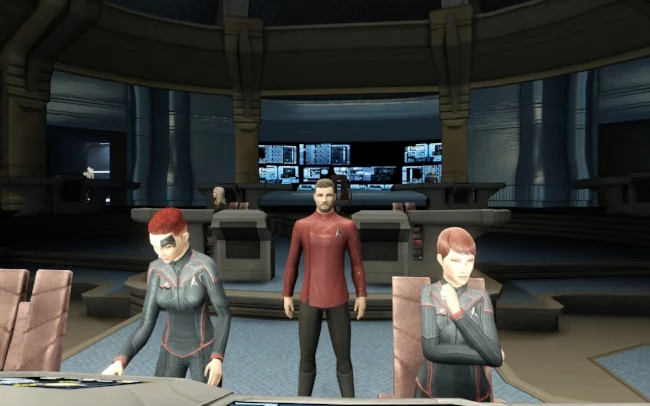
The community itself offers a vast array of involvement and potential sources of fun. For some gamers due to their real-world obligations, it can become a surrogate social life in itself. As I mentioned earlier, this community offers an environment in which they can have a tangible impact and act as a force for good, unlike in the real world. I do not like the term "care bear", as its purpose is ultimately pejorative. However, it cannot be denied that MMOs do attract a lot of people who thrive on the social interaction and are compelled to help and support their fellow players. It is these very factors that defines the point of playing for them.
Because the mainstream success of video games, the gaming industry is naturally chasing the most lucrative demographic group. This is the casual gamer, although exactly what the parameters of that term are, remains hotly debated. However, negative attitudes towards gamers persists as do stereotypes. For many non-gamers, they erroneously think that those that do play MMOs and the like are not engaging with their fellow man. There is also the condescending attitude that because your leisure activity does not take place in a physical environment, that it is devoid of any merit. These are naturally erroneous and flawed ideas, but they often come up, despite the reality being the complete opposite.
To try and compensate against this sort of misinformation, there have been recent studies and reports that try to overstate the benefits of social gaming. I will happily concede the point that gaming does require players to use certain real-life skills, such a team building, communication and organisation, but to hail them as problem solving über talented collectives, that can tackle the world’s problems is a stretch. It is therefore important to keep a sense of perspective on gaming and to pretty much treat it as any other sort of leisure activity. Being a hero in the realm of Tamriel does not make you one in real life. However, nor should it pigeon-hole you as a nut.
So, it in conclusion, it would seem that despite some common factors relating to engagement and enjoyment, it is very difficult to come up with a simple set of rules that define the psychology of an MMO player or indeed any type of gamer. It should also be remembered that gamers often have other interests and mainstream pastimes such as sport, music or art. Gaming is not the sole defining factor of their non-working life. It is simply their leisure activity of choice, and as such should be afforded the same sort or regard as equivalent real world activities such as sport.