
The Stone Killer (1973)
In many respects, Michael Winner's 1973 hard-boiled cop movie, The Stone Killer contains pretty much all the obligatory tropes and memes associated with both the genre and the decade. Hippies, black militants, casual racism and of course disgruntled Vietnam veterans. In the absence of any no computers, Detective Lou Torrey (the ubiquitous Charles Bronson) favoured method of solving crimes is to beat, threaten and shoot everyone who may be a suspect. Obviously remembering to read people their Miranda rights is far too much like hard work. This is how cop movies were in the seventies and the public ate them up.
In many respects, Michael Winner's 1973 hard-boiled cop movie, The Stone Killer contains pretty much all the obligatory tropes and memes associated with both the genre and the decade. Hippies, black militants, casual racism and of course disgruntled Vietnam veterans. In the absence of any no computers, Detective Lou Torrey (the ubiquitous Charles Bronson) favoured method of solving crimes is to beat, threaten and shoot everyone who may be a suspect. Obviously remembering to read people their Miranda rights is far too much like hard work. This is how cop movies were in the seventies and the public ate them up.
The Stone Killers has an unnecessarily complex plot about a group of Sicilian Dons, led by Martin Balsam, hiring a group of ex-soldiers (The Stone Killer of the title) to eliminate the current heads of a national crime syndicate and right a wrong from forty years ago. Mr. Bronson stumbles across the plot and effectively kills everyone until the mystery is solved. He's aided by Ralph Waites who plays a racist redneck cop and rookie patrolman John Ritter. The movie is casually racist, misogynist and shows the seventies for the utterly shit decade that they were aesthetically. As ever the great Michael Winner directs with glee and revels in the seedier aspect of the plot. The movie also benefits from a get-down-funky, Roy Budd score that has a superb psychedelic vibe running through it. There are several well shot car chase which were essential action sequences at the time. It's quite nostalgic to watch the gas guzzling, unaerodynamic cars lumbering through the harsh cityscapes.
The movie also contrast great wealth with great poverty with some excellent shots of inner city decay. There is also some interesting attention to detail with regard to the mercenaries’ military tactics. Having gunned down their targets at the movies climax, the leader goes around all the bodies and shoots them with a pistol to ensure all are dead. The Stone Killer also has a dated penchant for the use of dummies in several high falls; the results are hilarious rather than shocking.
The Stone Killer is an interesting example of the sort of bleak, mainstream action fodder that was prevalent in the movie theatres at the time. As ever Bronson is compelling to watch, despite not playing an especially likeable character. Then again, there are no especially nice ones either. Despite being an action thriller, the viewer still has to think about the plot. Something that seems to have fallen by the wayside in modern equivalent movies. The film ends on a curiously philosophical note, with Bronson alluding to the fact that the bad guys may well have got away with things and be untouchable by the law, but it's only a matter of time before their own community turns on them. The Stone Killer is not up to the standards of Dirty Harry or The Mechanic but it is still a good example of an old-school genre film making.
Acquainting Yourself with Classics Films
Let us take a moment to consider those movie lists you often come across on websites and in magazines. Why? Because there’s a lot of them about. You know the sort, one hundred movies that you must see before you go senile, according to some well-known critic or august institution like the BFI. Or if you prefer something more hip and eclectic then here’s another one collated by British filmmaker Edgar Wright. Furthermore, these lists are often somewhat homogeneous, containing a mixture of bonafide yet ubiquitous classics, a percentage of obscure arty-farty bollocks and a few wild cards that they put in for a laugh. These will be either so-called cult movies or examples from the “it’s so bad, it’s good” school of film making.
Let us take a moment to consider those movie lists you often come across on websites and in magazines. Why? Because there’s a lot of them about. You know the sort, one hundred movies that you must see before you go senile, according to some well-known critic or august institution like the BFI. Or if you prefer something more hip and eclectic then here’s another one collated by British filmmaker Edgar Wright. Furthermore, these lists are often somewhat homogeneous, containing a mixture of bonafide yet ubiquitous classics, a percentage of obscure arty-farty bollocks and a few wild cards that they put in for a laugh. These will be either so-called cult movies or examples from the “it’s so bad, it’s good” school of film making.
Bearing that all-in mind, I thought it would be interesting to see what someone's reaction would be when watching one of these titles for the first time. Classic films such as Stanley Kubrick's 2001: A Space Odyssey, Vittorio De Sica's The Bicycle Thieves or Orson Welles' Citizen Kane. All of these examples have established and prodigious reputations as well as a lot of artistic and cultural baggage attached to them. Would a first-time viewer feel obliged to follow herd and add their voice to the prevailing consensus? Or if they did not enjoy the movie and felt it had specific flaws would they have the courage of their convictions to call a spade a spade?
Well to cut a long story short, if you want something done properly, then do it yourself. Therefore, I shall be kicking the process off by watching that classic sixties Bullitt. Yes, I have never seen this alleged defining point in Steve McQueen’s acting career, so I thought it would be a great example to begin with. Bullitt is a movie I’ve only ever seen snatches of. The sort of movie you find while channel surfing and watch a few minutes of before turning over yet again. Each time, I say to myself, I must get around to watching that and then I never do. Oddly enough I do own the Lalo Schifrin soundtrack which is extremely cool in that sixties movie idiom. So, I’ve secured a nice high definition copy of the film and shall endeavour to watch it and review it this week. It will be interesting to see the famous ten-minute car chase within it’s right context and make a measured judgement about it.
Now I make no bones about the fact that I like some specific types of movies more so than others. I would much rather watch a film about a serial killer murdering a bunch of teenagers by sticking a Dyson up their wazoo, than some tedious, worthy human drama about a Bolivian praegustator coming to terms with the death of their next-door neighbour’s budgie, during the Boer War. However, I also feel that it is important to be well versed in all aspects of cinema, if you wish to have an informed opinion on the subject. Therefore, the next couple of months could be very interesting as I work my way through the following films. You can also expect some eclectic reviews. If you have any interesting suggestions, feel free to leave a comment and I’ll see what I can do about adding them to the list.
Bullitt (1968)
Rashômon (1950)
Les Vacances de Monsieur Hulot (1953)
Wake in Fright (1971)
Freaks (1932)
Solaris (1972)
Thief (1981)
Sorcerer (1977)
Metropolis (1927)
M (1931)
Along Came a Spider (2001)
Along Came a Spider, the second Alex Cross story to be adapted in to a feature film, once again takes a very procedural approach to its plot and keeps the action low key. As with Kiss the Girls, this reflects the intellectual nature of the central character, once again played by Morgan Freeman. This is a thriller where the focus is on using deductive reasoning and psychology to solve a crime rather than kicking down doors and breaking heads. The sequel is not quite as dark in tone as its predecessor and is more accessible with its traditional kidnapping plot about a congressman's daughter being abducted by her teacher. Naturally the case is far from black and white and Alex Cross soon discovers more complicated motives.
Along Came a Spider, the second Alex Cross story to be adapted in to a feature film, once again takes a very procedural approach to its plot and keeps the action low key. As with Kiss the Girls, this reflects the intellectual nature of the central character, once again played by Morgan Freeman. This is a thriller where the focus is on using deductive reasoning and psychology to solve a crime rather than kicking down doors and breaking heads. The sequel is not quite as dark in tone as its predecessor and is more accessible with its traditional kidnapping plot about a congressman's daughter being abducted by her teacher. Naturally the case is far from black and white and Alex Cross soon discovers more complicated motives.
The opening set piece in which Detective Cross loses his partner features an appalling CGI car crash, which does somewhat diminish the drama of the scene. However, the plot soon picks up speed with a well-conceived and executed kidnapping. Michael Wincott's performance as the sociopath Mr. Soneji is robust and he works well under the prosthetics he has to wear in the in the movies first act. Mika Boorem performs convincingly as the abductee Megan Rose. I find that child actors can frequently be a little too worldly and slip into precociousness but that is not the case here. The character is both likeable and plausible.
The interaction between Alex Cross and Secret Service agent Jezzie Flanagan is credible and Monica Potter puts in a suitably world weary performance. The plot twist that inevitably arrives in the third act is adequate, being neither too incredible or underwhelming. The script fumbles the ball a few times with its reliance upon media coverage of the kidnapping and the internet as a plot device to advance the story. Movies seldom get technology right and even by the standard of the time, they vastly over play what is achievable using online resources. However, this is usually something that audiences can overlook as it has simply become an accepted cinematic trope.
Along Came a Spider benefits from a Jerry Goldsmith soundtrack which is suitably distinguished. The movie is purposely restrained so it can focus upon the actual detective work. Director Lee Tamahori is usually known for more overt action movies such as Die Another Day and Next, yet adapts to a more minimalist approach on this occasion. The few action scenes that are featured such as the ransom money delivery and initial kidnap itself are well realised. Along Came a Spider may not have the same gritty edge that Kiss the Girls had but in some respects, it is more mainstream movie. Sadly, a third entry was not made in this series and the 2012 reboot, Alex Cross, was a misfire due to its focus on action rather than character.



Kiss the Girls (1997)
I recently re-watched Alex Cross, the 2012 movie based upon author James Patterson's character. My opinion on the movie has not changed and I still consider it to be a cinematic misfire. The main flaw being trying to take a cerebral character away from the procedural nature of their work and retrofit them into a modern action movie. It simply doesn't work and subsequently the film studio failed to reboot the franchise. However, because Cross himself is such an interesting creation, being a former FBI agent and psychologist, I thought I would take a look at the two previous movie adaptations starring Morgan Freeman. The first of which, Kiss the Girls (1997) I review here. The latter, Along Came A Spider (2001) I will write about in a separate post
I recently re-watched Alex Cross, the 2012 movie based upon author James Patterson's character. My opinion on the movie has not changed and I still consider it to be a cinematic misfire. The main flaw being trying to take a cerebral character away from the procedural nature of their work and retrofit them into a modern action movie. It simply doesn't work and subsequently the film studio failed to reboot the franchise. However, because Cross himself is such an interesting creation, being a former FBI agent and psychologist, I thought I would take a look at the two previous movie adaptations starring Morgan Freeman. The first of which, Kiss the Girls (1997) I review here. The latter, Along Came A Spider (2001) I will write about in a separate post.
Kiss the Girls is cut from the same cloth as other cat and mouse style serial killer dramas. Unlike The Silence of the Lambs and Se7en, it is quite low key and avoids the more sensational aspects of the plot. Murders take place off screen and the ubiquitous mortuary scenes are avoided. This works strongly in the films favour allowing the narrative to focus on Dr. Alex Cross (Morgan Freeman), his methods and his nature. Freeman brings a very humane quality to the character and fits the role comfortably. The emphasis in this movie is on his investigation skills and mental processes. He's also a skilled politician and knows how to handle people and when to take risks.
The plot focuses on a serial abductor who is "collecting" beautiful and talented women. When his niece is taken, Cross decides to head down to North Carolina and lend a hand to the local Police. A major break occurs in the case when the latest kidnap victim, intern Doctor Kate McTiernan (Ashley Judd), escapes from captivity. It soon becomes apparent that the kidnapper, known as Casanova, may well be working in conjunction with a similar West Coast predator called the Gentleman Caller. Will the pursuit of either serial killers lead back to where the adducted women are held?
The main strength of Kiss the Girls lies in the dynamic between Cross and McTiernan. There is a strong rapport between the two as they mutually support each other. McTiernan needs Cross so that she can rise above her perceived victim status. Cross needs McTiernan so he can find and save his niece. The movie also explores the practical detective work that is done in solving the case, rather than relying on doors being kicked down and suspects being beaten senseless. It is unfortunate that the one weak link in the film's plot chain is the character of Casanova. Although a satisfactory conclusion is arrived at, it would have been nice to have learned more about his past, his collaboration with the Gentleman Caller and his exact motivations.
Kiss the Girls is an interesting first attempt at bring Alex Cross to the big screen. It handles a very troubling subject with a degree of skill and director Gary Fleder is to be applauded for not lapsing into sensationalism. It is interesting to see that special make-up effects artist Steve Johnson is credited although very little of his work makes it into the final cut of the movie. It is also rewarding to see a different take on the savant detective. Overall the movie is a cut above the average, due to performances, solid script and directorial focus. It is also content to be about detection and solving crimes, rather than crossover needlessly into other genres.
Alex Cross (2012)
The last time we saw F.B.I. profiler Alex Cross on the big screen, he was played by Morgan Freeman in both Kiss the Girls (1997) and Along Came a Spider (2001). The franchise, inspired by novels of author James Patterson, were subsequently rebooted in 2012 with Tyler Perry in the lead role. Alex Cross attempts to establish the origins of the character and explore a pivotal case he investigated while a detective in Detroit. Alex Cross and his partners Tommy Kane (Edward Burns) and Monica Ashe (Rachel Nichols) cross swords with a serial killer they dub Picasso (Matthew fox), who is murdering the business associates of French Industrialist Mercier (Jean Reno). During the course of the investigation it becomes clear that the killer has a specific interest in Cross himself.
The last time we saw F.B.I. profiler Alex Cross on the big screen, he was played by Morgan Freeman in both Kiss the Girls (1997) and Along Came a Spider (2001). The franchise, inspired by novels of author James Patterson, were subsequently rebooted in 2012 with Tyler Perry in the lead role. Alex Cross attempts to establish the origins of the character and explore a pivotal case he investigated while a detective in Detroit. Alex Cross and his partners Tommy Kane (Edward Burns) and Monica Ashe (Rachel Nichols) cross swords with a serial killer they dub Picasso (Matthew fox), who is murdering the business associates of French Industrialist Mercier (Jean Reno). During the course of the investigation it becomes clear that the killer has a specific interest in Cross himself.
Alex Cross is based upon a central protagonist whose primary skills are his mental and analytical abilities. By nature, the character is first and foremost a thinker. Unfortunately, this element is quickly abandoned in the movie which opts for a pure action approach to the material. Suspense and drama are replaced with more obvious visual cues. Matthew Fox despite looking the part has an ill-defined role. The weak script by Marc Moss and Kerry Williamson is content to establish him as an evil character simply by the violent act he commits. Furthermore, Tyler Perry's overtly theatrical performance somewhat smothers the subtleties of Alex Cross.
Director Rob Cohen uses a great deal of visual gimmickry and cranks the pace, editing and volume up to eleven. It is his signature approach that works well with certain types of movies but seem jarringly inappropriate with this material. The same could also be said for Ricardo Della Rosa's under-lit cinematography with its muted colour palette. The movies tone puts it at odds with its PG-13 rating. Alex Cross therefore cannot fully explore its own strong themes and seems more to titillate than shock. The entire movie reeks of contemporary board room film making in the way that the source material has been so obviously misunderstood. Talk about trying to put a square peg in a round hole.
Alex Cross is a stilted endeavour and a missed opportunity. The central roles are miscast and the directing is in the wrong idiom. The movie needs to decide what it exactly wants to be. As it is, it sits awkwardly between a psychological thriller and a generic action movie. Its faults are further compounded by its mean-spirited nature. As a result Alex Cross did not kickstart a lucrative franchise, despite the threat of a sequel. For a closer approximation of the central character revisit the earlier adaptations. They are not without flaw but are better than this.
Classic Movie Themes: Theatre of Blood
Theatre of Blood is a rather unique horror movie about crazed egotistical thespian named Edward Lionheart. Played by the great Vincent Price, this Shakespeare-obsessed actor commits suicide rather publicly, after being allegedly "cheated" out of an award. However when a spate of murders targeting theatre critics occurs, with each victim dispatched in an homage to the Bard, Scotland Yard begins to suspect the actor may have faked his death. This hilariously baroque revenge picture directed by Douglas Hickox, benefits from a great cast of some of Britain's finest character actors. The film also serves as a wonderful window in to the mid-seventies Britain.
Theatre of Blood is a rather unique horror movie about crazed egotistical thespian named Edward Lionheart. Played by the great Vincent Price, this Shakespeare-obsessed actor commits suicide rather publicly, after being allegedly "cheated" out of an award. However when a spate of murders targeting theatre critics occurs, with each victim dispatched in an homage to the Bard, Scotland Yard begins to suspect the actor may have faked his death. This hilariously baroque revenge picture directed by Douglas Hickox, benefits from a great cast of some of Britain's finest character actors. The film also serves as a wonderful window in to the mid-seventies Britain.
The proceeding are greatly enhanced by a fantastic score by Welsh composer Michael J. Lewis. For the Theatre of Blood soundtrack, composer Lewis crafts a sumptuous orchestral score, the main title theme being the most succinct example. From its gentle beginnings it grows in power reflecting the tumultuous disposition of the actor Edward Lionheart. Yet it maintains a melancholic quality that is very apt to the movie. Overall it's a fine example of the composers craft. It is also one of Vincent Price's better movies from this era.




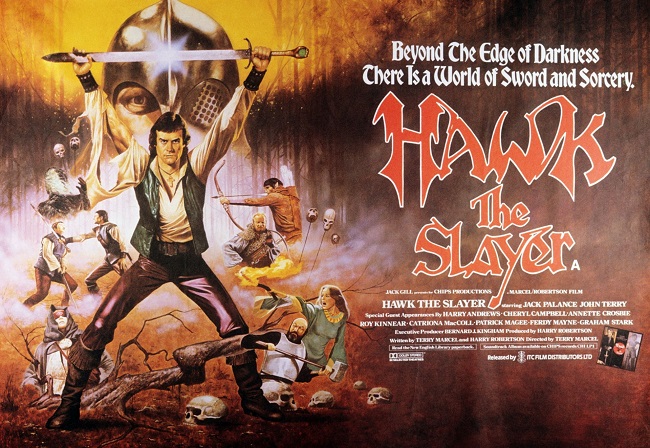
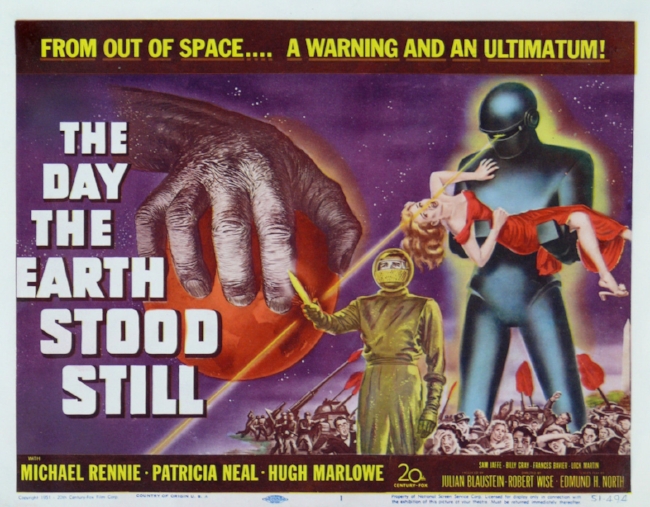
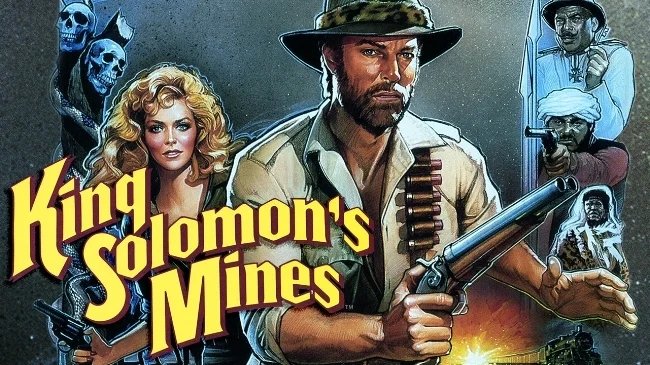
10 Sad Movie Death Scenes Part 2
Up (2009). The opening scenes of Up are a beautiful distillation of the life of Carl Fredricksen (Ed Asner), the movies main character. Comprising of a montage, we are shown him meeting his childhood sweatheart Ellie and there subsequent marriage. The narrative then explores the major events of their life together. The couple are not blessed with children and also have to sideline their ambitions to travel the world, due to the realities of work and married life. Ellie grows sick in her autumn years and dies leaving Carl a widower. The sequence plays out wordlessly against a winsome and understated score by Michel Giacchino. The emotional depth and craftsmanship apparent in these scenes are of a quality seldom seen in modern film making. They validate the skills of Pixar Animation Studios and the medium of animation.
Up (2009). The opening scenes of Up are a beautiful distillation of the life of Carl Fredricksen (Ed Asner), the movies main character. Comprising of a montage, we are shown him meeting his childhood sweatheart Ellie and there subsequent marriage. The narrative then explores the major events of their life together. The couple are not blessed with children and also have to sideline their ambitions to travel the world, due to the realities of work and married life. Ellie grows sick in her autumn years and dies leaving Carl a widower. The sequence plays out wordlessly against a winsome and understated score by Michel Giacchino. The emotional depth and craftsmanship apparent in these scenes are of a quality seldom seen in modern film making. They validate the skills of Pixar Animation Studios and the medium of animation.
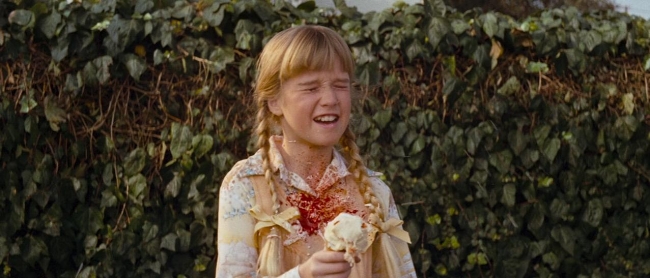
Assault on Precinct 13 (1976). The killing of a child on screen is still very much a cinematic taboo and very few film makers have the nerve to do it. The murder of Kathy (Kim Richards) as she buys an ice cream in Assault on Precinct 13 is still very shocking to this day. Yet director John Carpenter handles the scene in a very measured fashion and although he shows the shooting quite calmly he avoids excessive melodrama or voyeurism. The subsequent sequence where the girl's Father returns from the pay phone to find his child dead on the sidewalk is very powerful. The way actor Martin West blankly stares blankly ahead trying to make sense of what he sees is disturbingly plausible. I've always found the way he takes off his jacket and covers his daughters corpse very touching.
Red Sun (1971). Former Bond director Terence Young struggles with an international cast, bland screenplay and slipshod editing in the 1971 Western Red Sun. Starring Charles Bronson and Toshiro Mifune, beyond its initial appeal of mixing the genres, the film fails to meet it's potential. It is none the less still entertaining mainly through the performances of the two leads. Toshiro Mifune had an inherent gravitas that made him a compelling actor. As a child I was fascinated by the skill and dexterity of the Samurai Kuroda, along with his cultural sophistication. It was a stark contrast to the rather two dimensional caricature that Mr. Bronson was saddled with. Yet despite the obvious shortcomings of the screenplay the relationship that grows between the two is engaging. Kuroda's rather obvious death at the movies denouement always upset and annoyed me. It was unjust and simply just lazy writing.
Enemy Mine (1985). If you've ever seen John Boorman's Hell in the Pacific, then you'll quickly get the measure of Enemy Mine. Director Wolfgang Peterson does a competent job of crafting a tale of inter species conciliation, set against a science fiction back story. The movie had a very problematic production history and it is to everyone involved credit that it turned out as well as it did. Dennis Quaid and Louis Gossett Jr. deliver strong performances as Willis "Will" Davidge and Jeriba Shigan. Chris Walas does stirling work with the alien Drac prosthetic effects. There is a poignant duality to Jeriba Shigan's death scene as he dies in childbirth (Dracs reproduce asexually) and Davidge has to come to terms with promise he made to raise the child Zammis and return him to his homeworld.
The Mist (2007). Frank Darabont is a very astute director and he strongly resisted studio pressure to change the ending of The Mist. Based on a Stephen King novella, the movie centres around an eclectic group of survivors trapped in a supermarket by an mysterious mist. Once you look beyond the standard trappings of a creature feature, you'll find a rich and compelling character study of people desperately trying to cope and rationalise inconceivable events. The cast and performances are outstanding, especially Thomas Jane, Toby Jones and Marcia Gay Harden. Darabont skilfully shows how the superficial trappings of civilised society are quickly dispelled in a crisis. He also holds his nerve and offers the audience a terribly bleak yet compelling ending. Desperate, lost and out of hope survivor David Drayton, by mutual consent, turns his gun on his fellow companions (including his own son) to spare them a slow death. Out of ammunition and unable to kill himself, he contemplates the magnitude of what he has done. It is at this point that the mist clears and rescue is at hand. It is one of the most powerful and heartbreaking movie endings I have ever seen.
10 Sad Movie Death Scenes Part 1
The Black Hole (1979). Like many Disney's movies, The Black Hole has hidden depth and is more than just a late seventies Space Opera. The relationship between the anthropomorphic robots Bob and V.I.N.CE.N.T. has an interesting metaphysical subtext. The voice casting of Slim Pickens and Roddy McDowall is sublime and provides the audiences with an immediate connection to the characters. Bob's death scene rises above the contrived as a result of this and has genuine pathos. It is further enhanced by the skill of the animatronics effect work and the subtleties of their physical performances. The way V.I.N.CE.N.T. lowers his eyes when Bob shuts down is wonderful embellishment. The sequence is completed by John Barry's beautiful and dignified music cue.
The Black Hole (1979). Like many Disney's movies, The Black Hole has hidden depth and is more than just a late seventies Space Opera. The relationship between the anthropomorphic robots Bob and V.I.N.CE.N.T. has an interesting metaphysical subtext. The voice casting of Slim Pickens and Roddy McDowall is sublime and provides the audiences with an immediate connection to the characters. Bob's death scene rises above the contrived as a result of this and has genuine pathos. It is further enhanced by the skill of the animatronics effect work and the subtleties of their physical performances. The way V.I.N.CE.N.T. lowers his eyes when Bob shuts down is wonderful embellishment. The sequence is completed by John Barry's beautiful and dignified music cue.
The Fly 2 (1989). Our emotional connection with our pets has always provided film makers with a rich vein of material to explore or exploit, depending on your point of view. The death of a canine companion has become a established cinematic trope. Consider Mad Max 2, The Beastmaster and Big Jake for example and you'll find exemplars of the "Martyr Dog" concept. In The Fly 2, Martin Brundle (Eric Stoltz) discovers that his childhood pet dog, which he thought had died in a failed teleportation experiment, is still alive and suffering as a result of its horrific transformation. Martin pets the decrepit animal who recognises him and feebly tries to greet him. He finally puts the poor creature out of its misery with chloroform. It can be argued that this is just a Palovian exercise in emotional button pushing but I find that there is an sense of honesty to the scene and the manner in which it is presented.
The Wild Geese (1978). The cultural complexities and hierarchy of the British military are a microcosm of the class distinctions that run through the United Kingdom. This is superbly highlighted in Victor McLaglens's 1978 movie The Wild Geese, which centres around a group of mercenaries and their attempt to rescue a deposed African political leader. Regimental Sergeant Major Sandy Young (Jack Watson) is a very traditional soldier and extremely deferential to his friend and superior, Colonel Alan Faulkner (Richard Burton). In a scene establishing the mutual respect between the two men, Faulkner jokingly quips that RSM Young can call him by his first name if he wishes. Ironically the only time he does this is when he is fatally shot at the movies climax. It's a genuinely moving vignette mainly due to the credibility of Jack Watson's performance.
The Plague Dogs (1982). If you were shocked as a child by the content of Martin Rosen's animated film Watership Down, then prepare yourself for an even more gruelling experience with The Plague Dogs. This is an intelligent but incredibly sad exploration of man's exploitation of animals. Upon it's initial release many people including the distributors were not expecting such a bleak and hard hitting story from an animated feature film. As a result the movie was cut from one hundred and three minutes to eighty two. The story follows two dogs, Snitter (John Hurt) and Rowf (Christopher Benjamin), who escape from a government research laboratory and are pursued by the military. A reoccurring theme throughout the film is that the pair may find safety on a secluded island away from the "whitecoats". After several harrowing adventures The Plague Dogs ends with the dogs on the point of utter exhaustion, swimming towards an island that may not exist. It is never established whether they survive or not.
On Her Majesty's Secret Service (1969). Often considered the most controversial of all the Bond movies, due to its replacement of Sean Connery and radical change in tone, On Her Majesty's Secret Service has enjoyed a renaissance in popular opinion in recent years. Directors such as Steven Soderbergh consider it to be an underrated classic. I've always enjoyed the movie and its core theme of Bond (George Lazenby) finding meaningful love and fulfilment with Contessa Teresa "Tracy" di Vicenzo (Diana Rigg). Unfortunately a happily married Bond was not exactly what the producers were looking for back in 1969. Therefore there is a rather sad inevitability to the abrupt death of Mrs. Bond just minutes after the pairs wedding. Fans have drawn parallels with 2006 reboot, Casino Royale and the death of Vesper Lynd (Eva Green), although the relationship between the two leads in that instance is not so closely defined.
To be continued.
Doomsday (2008)
Neil Marshall's third film is fast paced action movie, which pays homage to the "Post Apocalypse" genre and much more. It is a text book example of a film in three acts and is also pretty much the sum of its parts. The dialogue is minimalist, the acting adequate and the action frenetic and violent. Be warned, this film has earned it's 18 certificate for its UK release. However, none of these attributes are bad things. Doomsday makes its intention clear right from the beginning. If you want any further clues, take a look at the UK theatrical poster. The club with spikes is a fair indication that subtlety is not this movie’s strong point.
Neil Marshall's third film is fast paced action movie, which pays homage to the "Post Apocalypse" genre and much more. It is a text book example of a film in three acts and is also pretty much the sum of its parts. The dialogue is minimalist, the acting adequate and the action frenetic and violent. Be warned, this film has earned it's 18 certificate for its UK release. However, none of these attributes are bad things. Doomsday makes its intention clear right from the beginning. If you want any further clues, take a look at the UK theatrical poster. The club with spikes is a fair indication that subtlety is not this movie’s strong point.
A deadly plague, known as the “Reaper Virus,” has killed hundreds of thousands and left Scotland devastated. In desperation, the British Government evacuates as many survivors as it can out of the infected area, and then builds a wall, preventing the remainder from escaping. Thirty years later, with the wall still up and the victims all but forgotten, the virus appears to breaks out again in London. The Government decides to send a crack team of operatives, led by Major Eden Sinclair, into the hot zone behind the wall, to investigate the possibility of a cure.
Neil Marshall’s previous two films, Dog Soldiers and The Descent were very well received by both the public and critics. The latter was tightly written and directed and stood out compared to the usual contrived commercial studio fodder. Doomsday is a far more main stream affair and does not have the same level of tension and sophistication. It is a high octane action film that deliberately pays tribute to such pictures as Escape From New York, The Medieval Dead and Mad Max 2. However, the story unfolds at such a fast pace and lurid fashion, it is easy to overlook the plot flaws and inherent silliness of the premise.
The first act showing the outbreak of the reaper virus, the isolation of Scotland and then the subsequent raid into the forbidden territory, is by far the most engaging. Acts two and three are a series of action sequences in two different environments. They serve to expedite and close some plot lines and whittle down the cast. The production values are good and the film is littered with visual jokes and references. Performances are exactly the kind you need in such a movie. Bob Hoskins gives it plenty of "South London", Malcolm McDowell is suitably sinister and Craig Conway is cheerfully psychotic. Rhona Mitra proves that women can happily take on the role of action hero.
Doomsday is very entertaining on a "what you see is what you get" basis. It may particularly appeal to people of the director’s age group. Those who can remember the "Post Apocalypse" direct-to-video releases that saturated the market in the eighties. The soundtrack by Tyler Bates reflects this with its use of synthesisers and songs by "Adam and the Ants" and "Frankie Goes To Hollywood". The car chases and pyrotechnics are good for the films budgetary limitations. Be warned, as I said earlier, this film is violent. Bodies are crushed, limbs hacked off and there's even cannibalism.
My only criticism relating to Doomsday is the modern, rapid fire editing, that seems to be so fashionable these days. This actually dilutes some of the action sequences, rather than enhance them, which is a shame as some of the combat scenes have been well choreographed. But apart from this issue, I consider Doomsday to be a solid and affectionate tribute to the action genre of the eighties and nineties. Viewers get a professionally crafted action vehicle, that is tonally spot on for such genre material. It may not be the director’s best work but it’s possibly the most fun.
Village of the Damned (1995)
The original 1960 version of Village of the Damned is regarded as a classic of science fiction film genre and it remains one of the creepiest movies of its kind. The mixture of nuclear age paranoia and “evil children” reflect the social concerns of the decade. The 1995 remake directed by John Carpenter, trades subtlety for more explicit chills and violence. That is not to say it doesn’t show the director’s usual creative flair and the basic premise of the story remains effective, drawing on the original 1960 screenplay and John Wyndham’s novel, The Midwich Cuckoos. However, despite being stronger in content than the original film, Carpenter’s movie actually has a softer tone overall and opts for a less bleak and somewhat incongruous ending.
The original 1960 version of Village of the Damned is regarded as a classic of science fiction film genre and it remains one of the creepiest movies of its kind. The mixture of nuclear age paranoia and “evil children” reflect the social concerns of the decade. The 1995 remake directed by John Carpenter, trades subtlety for more explicit chills and violence. That is not to say it doesn’t show the director’s usual creative flair and the basic premise of the story remains effective, drawing on the original 1960 screenplay and John Wyndham’s novel, The Midwich Cuckoos. However, despite being stronger in content than the original film, Carpenter’s movie actually has a softer tone overall and opts for a less bleak and somewhat incongruous ending.
In the tiny, idyllic town of Midwich, a strange mist causes the entire population to fall asleep, and when everyone awakes the town physician (Christopher Reeve) discovers that ten women, including his wife and a local teenage virgin, have mysteriously become pregnant. Their children are all born on the same day, with matching white hair and strange glowing eyes. They grow at an accelerated rate, thus raising Reeve's suspicion that they are not of earthly origin. The children can control minds and wreak havoc with the power of their thoughts, so of course they must be destroyed. Now before you shout "xenophobia", it should be noted that attempts to communicate with the aliens are made, yet prove fruitless. The alien children wish to dominate over man.
Village of the Damned is driven by a measured cast of character actors, such as Kirstie Alley, Mark Hamill and Peter Jason. The depiction of a close-knit community is credible as the town inhabitants struggle to understand what has happened to them. There are some superficial updates to the narrative, one of which alludes to the government doing more harm than good during their clumsy intervention with the aliens. The effects work by the KNB EFX group is relatively minimal and the emphasis is still very much on tone and atmosphere. Sadly, despite several well-conceived ideas Village of the Damned never seems to assert itself in any particular way. It struggles to find its tone, which is unusual for John Carpenter.
Ultimately it is Christopher Reeve who dominates this somewhat superfluous remake with sufficient credibility to hold the viewer's attention. Once his character establishes how to break the alien children’s mind control there is a genuine sense of tension. This was his last major role before the tragic accident that led to his paralysis. As mentioned previously there’s a concession towards a more mainstream ending than the original film, which is a little weak. Yet despite its flaws, Carpenters version of Village of the Damned is still intriguing and shows the occasional flash of innovation. However, if you want chills of a subtler nature, check out the original version. It runs twenty minutes shorter and is twice as spooky.
Outlander (2008)
Sometimes a movie can have a premise that is sufficient to carry the proceedings. If you then add some quality character actors and ensure that the production values are high, then you can bluff your way to the end credits before the audience realises they're watching something really dumb. Outlander achieves this prodigious feat. It is an incredibly stupid film yet perversely entertaining. It boasts beautiful cinematography, a cast that is more than capable and perfectly acceptable CGI. At times, you feel like the entire production is challenging you to shout out loud quite how dumb the plot is. However the audience blinks first and director Howard McCain gets away with it.
Sometimes a movie can have a premise that is sufficient to carry the proceedings. If you then add some quality character actors and ensure that the production values are high, then you can bluff your way to the end credits before the audience realises they're watching something really dumb. Outlander achieves this prodigious feat. It is an incredibly stupid film yet perversely entertaining. It boasts beautiful cinematography, a cast that is more than capable and perfectly acceptable CGI. At times, you feel like the entire production is challenging you to shout out loud quite how dumb the plot is. However the audience blinks first and director Howard McCain gets away with it.
After his spaceship crashes, Kainan (Jim Vaviezel) finds himself the sole survivor of his crew and marooned in Norway circa 709 AD. Furthermore, a dangerous and intelligent beast called Moorwen who was a prisoner aboard his ship, has escaped. While pursuing the creature he is captured by Wulfric (Jack Huston), a Viking warrior and brought before King Hrothgar (John Hurt). His claims that he is hunting "a dragon" are mocked but as the body count grows the Vikings begin to take his story more seriously. After saving the King's life Kainan finds himself accepted by his captors. Can he fashion a suitable weapon to defeat Moorwen who has established a den and is now breeding?
Yes, this is a movie about a spaceman, Vikings and a beast with nasty big pointed teeth. The storyline is predictable and formulaic. Enemies becoming friends, important lessons about life are learned and minor characters die in the finest Red Shirt tradition. There is an arbitrary romantic sub-plot involving the King's daughter Freya (Sophia Myles) and an orphan child who becomes a surrogate for Kainan's own lost family. The dialogue is functional and nothing more, taking the movie from A to B. The action is violent and perfunctory. Yet the movie still works irrespective of its own logical flaws and inherent stupidity.
When a bad movie still proves to be entertaining, it's often comes down to tone and the underlying conviction of those involved with it. I believe that Outlander was made with the genuine goal of entertaining the public. Unlike a movie like Brick Mansions which just oozes contempt for the viewer, Outlander is laughing along with the audience and not at them. It's also better than the other Viking themed action movie Pathfinder, starring Karl Urban, which explored the lofty concept of Vikings versus Native Americans. Outlander also has a modicum of sympathy for the main antagonist, Moorwen. If that angle had been explored further then this may well have been a better movie. As it stands its acceptably crass and is best enjoyed with a beverage. Please note this film may offend Norwegians.
Classic Movie Themes: The Black Hole
The Black Hole was a major gamble for Disney back in 1979 as they tried to capitalise of the post Star Wars sci-fi boom. Although audiences are still split over the strange mix of anthropomorphic robots, armchair philosophising and the one of the most metaphysical endings ever filmed, John Barry's score is universally praised. It features all his hallmark musical signatures and greatly embellishes the on-screen action with its stately and portentous style. There is also a substantial amount of music, with over an hour of cues for the ninety eight minute running time. This was the second space themed score that Barry wrote that year, the first being Moonraker, the eleventh Bond film.
The Black Hole was a major gamble for Disney back in 1979 as they tried to capitalise of the post Star Wars sci-fi boom. Although audiences are still split over the strange mix of anthropomorphic robots, armchair philosophising and the one of the most metaphysical endings ever filmed, John Barry's score is universally praised. It features all his hallmark musical signatures and greatly embellishes the on-screen action with its stately and portentous style. There is also a substantial amount of music, with over an hour of cues for the ninety eight minute running time. This was the second space themed score that Barry wrote that year, the first being Moonraker, the eleventh Bond film.
The "main title" theme for The Black Hole is in some ways one of the most compelling and grand themes crafted by veteran composer John Barry. It has an ominous majesty to it with its off-kilter waltz. It’s a skillful blending of orchestra with synthesisers which was quite an innovative style at the time. It has an altogether eerie ambience that neatly sets the tone for the movie, which was quite a bold experimental piece of studio cinema. Barry did not make the mistake of simply trying to replicate the grandeur of John Williams Star Wars theme but instead constructs something far more Gothic.
“Durant is Dead,” is a major shift in musical cue and it clearly signals the start of the movies climatic third act. Its pounding brass and substantial rhythm is unmistakably Barry. Once again the piece has a sinister overtone, forcing the audience to contemplate the fact that the heroes may not be able to avert disaster and events may not end well. It is important to remember that this was a Disney production so the target audience more than likely came to the theatre with clear preconceptions regarding style and tone. Barry's skill as a composer contributed to standing those notions on their head.
Mad Mad 2 (1982)
Mad Max 2, or The Road Warrior, as it is known in the US, is a milestone in the action film genre. For many this was their first exposure to Australian cinema, other than art house material from the likes of Peter Weir. It certainly put Mel Gibson on the map. It also started an entire sub-genre in its own right, branching off from the established post apocalypse formula. Drawing on the traditional western, the seventies anti-hero and the road movie, Mad Max 2 creates interesting (and at times camp) characters and has some of the best action sequences committed to film. Despite being 35 years old, it has recently been given a new lease of life through its Blu-ray release.
Mad Max 2, or The Road Warrior, as it is known in the US, is a milestone in the action film genre. For many this was their first exposure to Australian cinema, other than art house material from the likes of Peter Weir. It certainly put Mel Gibson on the map. It also started an entire sub-genre in its own right, branching off from the established post apocalypse formula. Drawing on the traditional western, the seventies anti-hero and the road movie, Mad Max 2 creates interesting (and at times camp) characters and has some of the best action sequences committed to film. Despite being 35 years old, it has recently been given a new lease of life through its Blu-ray release.
The Blu-ray disc features the original uncut Australian version of the film, as director George Miller intended. The opening narration and montage provide all the relevant back story required to bring new viewers up to speed. In fact, Mad Max 2 can easily be viewed as a standalone film. The plot is straight forward, the dialogue minimalist and the characters larger than life. The costume and production design our somewhat outrageous. Yet it works perfectly and starts at a terrific pace and never lets up during its ninety six minute running time. Performances are good. Gibson excels as the titular character. Established Australian actors such as Bruce Spence and Mike Preston provide sterling support. Composer Brain May (no, not that one) provides a fine score.
However it is the action scenes and car stunts that stand out the most. They seem even better today, by virtue of the fact that they are all genuine. Watch Mad Max 2 and then compare it to a recent release such as Death Race. The influences of the former on the latter are obvious. The violence and bleak ending also reflect the underlying sentiments of the time. The lack of any major studio involvement allowed producer and directer George Miller to remain true to his creativity. Unfortunately, this was not the case of the woeful sequel, which we shall not discuss here. Mad Max 2 remains an outstanding and iconic film, although a second viewing highlights the obvious influences of the times that spawned it. It’s curious how such a raw, visceral and dynamic film could be created by the director of Happy Feet and Babe.
Doctor Strange (2016)
Visually creative and sporting an ensemble cast, the 14th entry in the Marvel Cinematic universe is a curious yet satisfying blend of pseudo-science, eastern philosophy and soul searching boat load of vivid CGI. Despite being somewhat confined by the narrative framework of the “origin movie”, Doctor Strange is subtly different entry in to the Marvel pantheon, with it nods to Christopher Nolan’s Inception and the magic versus reality themes of the Harry Potter series. It effectively juggles the evolution of a flawed central character in to an equally flawed hero with the eye-popping visuals and set pieces. There’s a lot of intense brooding, witty quips and action. Furthermore, it has a great deal of flair and strikes an appropriate tone for such material. It comes close to being camp without stepping over the line.
Visually creative and sporting an ensemble cast, the 14th entry in the Marvel Cinematic universe is a curious yet satisfying blend of pseudo-science, eastern philosophy and soul searching boat load of vivid CGI. Despite being somewhat confined by the narrative framework of the “origin movie”, Doctor Strange is subtly different entry in to the Marvel pantheon, with it nods to Christopher Nolan’s Inception and the magic versus reality themes of the Harry Potter series. It effectively juggles the evolution of a flawed central character in to an equally flawed hero with the eye-popping visuals and set pieces. There’s a lot of intense brooding, witty quips and action. Furthermore, it has a great deal of flair and strikes an appropriate tone for such material. It comes close to being camp without stepping over the line.
Considering how such a movie could have gone drastically wrong, Doctor Strange is a very unique flower: visually arresting with quite a complex set of themes and undercurrents. Director Scott Derrickson, who also co-wrote the screenplay, makes the transition from his horror movie roots to this more flamboyant affair with considerable ease. The screenplay is surprisingly droll without negating the genuine drama as Doctor Steven Strange comes to terms with his own failings, ego and transgressions. Yet the director’s real achievement is in handling the mystical elements of the story in way where they don’t just come across as childish or the ramblings of one of your stoner friends from college.
The casting is certainly one of strongest assets of Doctor Strange. Benedict Cumberbatch is ideal as the brilliant and arrogant neurosurgeon whose career is brought to an abrupt end after a devastating car accident. Unlike Tony Stark who is equally as egotistical and self-absorbed, he lacks the interpersonal skills and humanity that the other inherently has. It’s quite a gamble to have a hero who is so unlikable, yet it is these very flaws that make him so interesting and unpredictable. Strange’s despair over the loss of his surgeon’s hands leads him to Nepal and to the secretive enclave headed by a guru known as the Ancient One (Tilda Swinton). It is here we slowly re-invents himself as he learns of a world of magic, that is equally as complex as his world of science.
Swinton delivers a solid performance as Strange’s mentor in the art of magic. She is both wise, practical and even a little cruel in her teaching methodology. She also has a more complex set of motives than the viewer first perceives. There is also robust support from Chiwetel Ejiofor as Mordo and Benedict Wong as Wong, who bring some emotional depth and dry banter to the story. If there is a flaw in the cast, its sadly Danish actor Mads Mikkelsen as Kaecilius. As a somewhat formulaic, renegade disciple he doesn’t really have as much to do as the rest of the characters and his story arc is somewhat linear. Doctor Strange’s trademark cloak also proves to be an amusing minor protagonist in itself, as it chooses to bond with Strange and robustly defends him. It is a pivotal part of one action scene and has by far the best gags.
Overall Doctor Strange is a strong and very different super hero movie. The performances and the focus on character development counter balance the striking yet very bombastic visual effects. They are very creative and psychedelic, yet for older and less patient viewers they do at times feel like you’re being beaten around the head with a kaleidoscope. And it would be most remiss of me not to mention Stan Lee’s latest cameo as a bus passenger perusing a copy of Aldous Huxley’s Doors of Perception. Well played whoever thought that one up. As ever there are several cinematic postscripts hinting at where Doctor Strange will be going next. Luckily, on the strength of this outing, I’m am well-disposed to towards the character and would welcome the opportunity to see more of his adventures.
Conan the Barbarian (2011)
On a superficial level the 2011 reboot of Conan the Barbarian provides two hours of perfunctory blood and thunder. For those seeking a quick fix of such material, who aren’t burdened by a strong affection of Robert E. Howard’s source material, the film will prove adequate. I suspect that Marcus Nispel’s offering will find a home with a younger viewers. Sadly, with regard to purists or those who have fond memories of John Milius’s 1982 version, then this is not the film you are looking for. Move along. To be honest, considering the directors track record, does this really come as any surprise? For those with a long memory, cast you mind back to Nispel’s 2007 movie Pathfinder. That Vikings versus Native Americans high concept movie had a lot of potential but was sadly chronically mishandled.
On a superficial level the 2011 reboot of Conan the Barbarian provides two hours of perfunctory blood and thunder. For those seeking a quick fix of such material, who aren’t burdened by a strong affection of Robert E. Howard’s source material, the film will prove adequate. I suspect that Marcus Nispel’s offering will find a home with a younger viewers. Sadly, with regard to purists or those who have fond memories of John Milius’s 1982 version, then this is not the film you are looking for. Move along. To be honest, considering the directors track record, does this really come as any surprise? For those with a long memory, cast you mind back to Nispel’s 2007 movie Pathfinder. That Vikings versus Native Americans high concept movie had a lot of potential but was sadly chronically mishandled.
This re-imagining of Conan loosely draws upon Robert E. Howard’s source material, as well as Schwarzenegger’s portrayal. The opening scenes focusing on Conan’s youth are by far the most engaging. They make an attempt at a narrative and character development. The brief insight into Cimmerian warrior culture makes for a strong start. But immediately after the death of Conan’s Father (Ron Perlman) it all lapses into by the numbers story telling. Evil Khalar Zym (Stephen Lang) along with sorceress daughter Marique (Rose McGowan), seek ancient an relic to facilitate their fiendish (and formulaic) plans. Throw in a plucky warrior monk named Tamara (Rachel Nichols) and the generic story is complete. Conan’s motivation is purely one of revenge but without the philosophical musings of the 1982 movie. Jason Momoa has sufficient charm and presence to hold an audience but the screenplay offers his character none of the depth you would hope.
Ultimately it is the script which lets the movie down. Jason Momoa’s mono-syllabic dialogue is purely reactive, serving as nothing more than an expositionary device. It is also delivered in a contemporary fashion. Nothing kills immersion for me more than period set dramas (be they based in fact or fantasy) utilising contemporary American parlance. Furthermore, potentially interesting characters are neglected and given little to do. Rachel Nichols is introduced as a strong female lead but is quickly sidelined as a damsel in distress. Both Stephen Lang and Rose McGowan fail to engage as antagonists. Both characters establish their evil nemesis credential simply by doing bad things. It’s a shame as their curious and dysfunctional relationship had scope to be far more interesting.
Overall Conan the Barbarian is totally the sum of its parts. And as those respective parts are bland, hollow and uninspired, that’s exactly the sort of movie that you get. For those just seeking some casual violence and bloodshed, then Conan the Barbarian may well prove sufficient. However, it is subject to an excess of CGI like so many films these days and the contemporary editing techniques rob the action scenes of any sense of wonder. The sequences with the sand spirits and under water creature, along with the films climax, fail to offer any real tension. Compared to the physical effects and sword play of the 1982 movie, this reboot simply can’t compete. When will those crafting action scenes learn that real threats, be they physical stunts or monsters that actually interact with actors, are infinitely superior to post production eye candy.
If Conan the Barbarian had simply been marketed under a different title and not linked to the franchise, perhaps critics would have been more forgiving. Had it just been “Wolgang Rippling Buttocks and the Sword of Kagnazax”, then it may well have been deemed acceptable. However, as it fails so notably to do any justice to Robert E. Howard’s work, it quite rightly merits harsher criticism. Furthermore, the points of failure are abundantly apparent. Director Nispel and the screen writers Thomas Dean Donnelly, Joshua Oppenheimer and Sean Hood are simply not up to the job. As a result, I think they may well have killed off any studio interest in this intellectual property for the immediate future
Classic Movie Themes: The 7th Voyage of Sinbad
The 7th Voyage of Sinbad (1958) directed by Nathan Juran, was the first of three Sinbad feature films produced by Columbia Pictures. The other two being The Golden Voyage of Sinbad (1974) and Sinbad and the Eye of the Tiger (1977). All three Sinbad films were a showcase for Ray Harryhausen’s stop motion animation special effects works, which was marketed as “Dynamation”. The 7th Voyage of Sinbad was the first of Harryhausen’s work to be filmed in colour. The somewhat arbitrary story has Captain Sinbad (Kerwin Mathews) returning to the island of Colossa to find a way to release Princess Parisa (Kathryn Grant) from a magic spell that has caused her to shrink. As ever with such movies, there is much chewing of the scenery and overwrought dialogue. However, the two elements of the film that excel are the excellent monsters and a superb score composed by Bernard Herrmann.
The 7th Voyage of Sinbad (1958) directed by Nathan Juran, was the first of three Sinbad feature films produced by Columbia Pictures. The other two being The Golden Voyage of Sinbad (1974) and Sinbad and the Eye of the Tiger (1977). All three Sinbad films were a showcase for Ray Harryhausen’s stop motion animation special effects works, which was marketed as “Dynamation”. The 7th Voyage of Sinbad was the first of Harryhausen’s work to be filmed in colour. The somewhat arbitrary story has Captain Sinbad (Kerwin Mathews) returning to the island of Colossa to find a way to release Princess Parisa (Kathryn Grant) from a magic spell that has caused her to shrink. As ever with such movies, there is much chewing of the scenery and overwrought dialogue. However, the two elements of the film that excel are the excellent monsters and a superb score composed by Bernard Herrmann.
The main opening theme (Overture as it’s titled on the soundtrack album) for The 7th Voyage of Sinbad is a bold and exciting fanfare. It’s features that dramatic mixture of brass and strings that only Herrmann could do. The fanfare has hints of Herrmann’s future work with its alternating sections of bombastic horns and soft, lyrical strings (think North by Northwest and even Psycho). Overall it is an extremely strong opening gambit and certainly builds expectations for the epic tale that follows. The second part of the cue The Fog is both ominous and mysterious. Once again it showcases Bernard Herrmann’s ability to exactly capture the mood and tone of a scene.
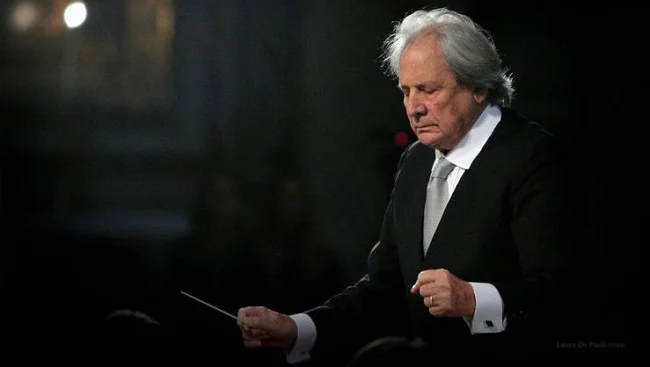
Over the years there have been several notable re-recordings of the soundtrack for The 7th Voyage of Sinbad, yet few have managed to fully capture the spirit of the cues used on the film itself. However, the original session tapes were recently rediscovered and remastered and are now available on CD. These recordings were made directly from the sheet music written by Herrmann himself, and arranged and conducted by Muir Mathieson. Here is the opening Overture followed by The Fog.
The Yakuza (1974)
Japan, its culture and heritage have always been a source of fascination for Hollywood. The Yakuza is a thriller that plays upon the fact that the West at the time was still broadly ignorant of life in post war Japan. As a result, it makes an excellent setting for a story of revenge and honour with its vivid landscape and contrasting culture. This character driven movie encompasses all the best aspects of a mature Hollywood. There are many who consider the period between 1964 – 1976 to be a golden age of American film making. It’s an idea that I find myself hard pressed to argue with as The Yakuza is a prime example of quality film making from that era.
Japan, its culture and heritage have always been a source of fascination for Hollywood. The Yakuza is a thriller that plays upon the fact that the West at the time was still broadly ignorant of life in post war Japan. As a result, it makes an excellent setting for a story of revenge and honour with its vivid landscape and contrasting culture. This character driven movie encompasses all the best aspects of a mature Hollywood. There are many who consider the period between 1964 – 1976 to be a golden age of American film making. It’s an idea that I find myself hard pressed to argue with as The Yakuza is a prime example of quality film making from that era.
The film portrays the clash of traditional Japanese values during the transition from the US occupation to the country’s economic success in the early 1970s. The story's themes are of moral indebtedness, obligation, loyalty, and personal sacrifice. Eastern and Western cultural values are starkly contrasted, in particular the notion of tradition versus modernity; a dilemma that was prevalent in post war industrial Japan. The film is driven by an incisive and thoughtful script by Paul Schrader and Robert Towne as well as excellent performances by Takakura Ken and Robert Mitchum. The pacing and editing are subtly different from contemporary movie making and reflect a slower more thoughtful pace.
The production is lavish for the times and portrays Japan as a beautiful but alien nation. There are dramatic contrasts between the traditional villages with their shrines and the harsh new modern industrial business centres. Similar themes were explored later by John Frankenheimer in The Challenge (1982). The Yakuza also showcases some succinct and well-choreographed action sequences but they never overwhelm the film or upstage the narrative. The ending is appropriate and credible. Hollywood often ensured at the time that plot realism was not outweighed by commercial demands. The films conclusion features a great deal of moral ambiguity and none of the central characters walks away with a guilt free conscience.
In the hands of such a skilled director such as Sydney Pollack, The Yakuza appeals on many levels. It should not be seen just as a Japanese based action vehicle. Instead it is a well-crafted and poignant character study that explores the meeting of two very different worlds. Forty-three years on its themes of cultural divides are still relevant. Hence, The Yakuza remains fine example of the cerebral film making that was prevalent at the time. A time when the concept of a good story was paramount. Action was simply a means of advancing or complementing the narrative and not the raison d'être of the film itself. Above all this was era when studios still credited the audience with some intelligence.
Classic Movie Themes: Krull
After the success of his nautically themed score for Star Trek II: The Wrath of Khan, composer James Horner was very much in demand. Columbia pictures subsequently hired him over the likes of John Williams and Jerry Goldsmith to compose the soundtrack for Krull (1983). The movie was to be the studios flagship fantasy title and their most expensive production to date, costing $50 million. Unfortunately, the curious mixture of science fiction and fantasy failed to find an audience and was a box office failure. The film most certainly does have flaws. The screenplay was constantly re-written and the lead actor, Ken Marshall is somewhat underwhelming. Yet the production and costume design are outstanding and the movie is beautifully shot.
After the success of his nautically themed score for Star Trek II: The Wrath of Khan, composer James Horner was very much in demand. Columbia pictures subsequently hired him over the likes of John Williams and Jerry Goldsmith to compose the soundtrack for Krull (1983). The movie was to be the studios flagship fantasy title and their most expensive production to date, costing $50 million. Unfortunately, the curious mixture of science fiction and fantasy failed to find an audience and was a box office failure. The film most certainly does have flaws. The screenplay was constantly re-written and the lead actor, Ken Marshall is somewhat underwhelming. Yet the production and costume design are outstanding and the movie is beautifully shot.
The film score composed by James Horner and performed by The London Symphony Orchestra and the Ambrosian Singers, is vibrant and rousing. It's swashbuckling approach is very reminiscent of the works of Erich Wolfgang Korngold. It features vibrant fanfares, a sumptuous love theme and an avant-garde use of string instruments to represent some of the more fantastical elements of the story. Krull represents some of the composers finest work from his early years with its rich and exuberant motifs. It is certainly one of the movies greatest assets and again shows the importance a films soundtrack in underpinning and reflecting the on-screen narrative.
Wrath of the Titans (2012)
A decade after his heroic defeat of the monstrous Kraken, Perseus-the demigod, son of Zeus, is attempting to live a quieter life. Meanwhile, a struggle for supremacy rages between the gods and the Titans. Dangerously weakened by humanity's lack of devotion, the gods are losing control of the imprisoned Titans and their ferocious leader, Kronos. Enlisting the help of the warrior Queen Andromeda, Poseidon's demigod son Argenor and fallen god Hephaestus, Perseus bravely embarks on a treacherous quest into the underworld to overthrow the Titans and save mankind. Or so Warner Bros. Pictures say in their 2012 press release for Wrath of the Titans.
A decade after his heroic defeat of the monstrous Kraken, Perseus-the demigod, son of Zeus, is attempting to live a quieter life. Meanwhile, a struggle for supremacy rages between the gods and the Titans. Dangerously weakened by humanity's lack of devotion, the gods are losing control of the imprisoned Titans and their ferocious leader, Kronos. Enlisting the help of the warrior Queen Andromeda, Poseidon's demigod son Argenor and fallen god Hephaestus, Perseus bravely embarks on a treacherous quest into the underworld to overthrow the Titans and save mankind. Or so Warner Bros. Pictures say in their 2012 press release for Wrath of the Titans.
Like so many of my age group, the works of Ray Harryhausen had a profound impact upon me. Films such as Jason and the Agronauts (1963) and Clash of the Titans (1981) although having very little basis in the classical literature, inspired me to read Homer’s the Iliad and The Odyssey. The myths of the ancient world offer rich veins of material that explore the fundamental aspects of life. Like the Western, this is a genre that can be adapted to reflect a multitude of themes. Yet despite this, director Jonathan Liebesman has managed craft a turgid melodrama which beyond the superficial contains very little narrative substance.
You would have thought that the basic premise of the Gods of Olympus facing death through a lack of human devotion would make for a strong and compelling storyline. Sadly it is underdeveloped and once the basic idea is clumsily telegraphed Wrath of the Titans simply lurches from action scene to action scene. A similar fate befell its predecessor, Clash of the Titans, which excised a substantial amount of content about the Gods relationship with man, from its final edit. Once again with Wrath of the Titans we see a movie edited in favour of spectacle at the expense of story and character development. An extra ten to fifteen minutes of dialogue, interspersed through the movie would have added more weight to the proceedings. It certainly would have made us care more.
Bill Nighy as Hephaestus briefly enlivens the movie, with his one sided conversations with a broken mechanical owl. Yes, at least the production got one thing right with another reference to Bubo from the original Clash of the Titans. It is also fair to say that the depiction of the Titan Kronos, as a behemoth made from cooling molten rock, is impressive. Yet beyond the fact that we are told that he is “bad” he really is nothing more than an arbitrary plot device. It’s a shame because I remember a time when cinematic bad guys use to be such fun.
I often feel that I am writing in an echo chamber as my complaints about Wrath of the Titans are the same that I’ve made about so many other contemporary mainstream studio pictures. However, irrespective of my concerns it would seem that there’s an audience for such things as Wrath of the Titans. So if you have a hankering to watch quality actors such as Ralph Fiennes and Liam Neeson ham it up in front of green screens then knock yourself out. Whether films such as these sustainable, well it’s difficult to say. Wrath of the Titans made a profit at the box office but it was down by over $150 million compared to the previous movie. To date a third instalment has not yet appeared.
Clash of the Titans (2010)
When I initially heard that Clash of the Titans was to be remade, I had mixed feelings. I grew up watch Ray Harryhausen movies and have a great affection for them. However, it can be argued that the 1981 original movie has hardly Harryhausens finest work. It was saddled with an uninspired script, a wooden lead and seemed very dated compared to comparable fantasy movies at the time, such as Dragonslayer. So, I chose to give the 2010 remake the benefit of the doubt. I was even prepared to overlook the fact that the movie had been retrofitted in to 3D during post-production. A pointless embellishment. Upon my first viewing, which I saw on a big screen West End theatre, I was left with mixed feelings. I recently decided to watch Clash of the Titans again to see if there were any aspects of the film that I had overlooked. Sadly, my conclusions remained the same.
When I initially heard that Clash of the Titans was to be remade, I had mixed feelings. I grew up watch Ray Harryhausen movies and have a great affection for them. However, it can be argued that the 1981 original movie has hardly Harryhausens finest work. It was saddled with an uninspired script, a wooden lead and seemed very dated compared to comparable fantasy movies at the time, such as Dragonslayer. So, I chose to give the 2010 remake the benefit of the doubt. I was even prepared to overlook the fact that the movie had been retrofitted in to 3D during post-production. A pointless embellishment. Upon my first viewing, which I saw on a big screen West End theatre, I was left with mixed feelings. I recently decided to watch Clash of the Titans again to see if there were any aspects of the film that I had overlooked. Sadly, my conclusions remained the same.
Clash of the Titans has a somewhat turgid script, loaded with lots of contemporary dialogue. I’m not a fan of this sort of screenplay. Not that I want faux Old English as that would be as equally lazy. I just feel that some modern terms and idioms should be absent and that dialogue should reflect the social norms of the time. As a result of the somewhat generic narrative, we have several A-list actors (Ralph Fiennes and Liam Neeson) chewing the scenery and generally giving the screenplay the Vincent Price treatment. Then we have Sam Worthington, who at this point hadn’t quite found his comfort zone with regard to his choice of film roles. As a result, he is a singularly uninteresting hero.
As for the visual effects work and digital creations, they’re very competent, yet the way they are implement means that they’re often overbearing rather than engaging. Clash of the Titans is also a very noisy film. Once again contemporary film makers fall in to the trap of thinking that rapid edits, excessive camera motion and sheer volume, are an easy way to create tension and excitement. Then there is the casual brutality instead of suspense that is so often casually thrown in to movies of this rating (PG-13), irrespective of whether its needed or not. Unfortunately Clash of the Titans has precious little to do with the source legends that allegedly inspire it. Even with generous concessions to artistic licence, this bears little relationship to the ancient world.
Yet despite all these obvious flaws, I still enjoyed Clash of the Titans on a simplistic level. It is exactly what it claims to be, IE a big budget popcorn movie made in the modern idiom. Actors such as Pete Postleswaite and Mads Mikkelsen are always watchable and effectively carry the movie. Liam Cunningham has some suitably dry quips and frequently raises a wry smile. The location photography is vivid and production design surprisingly inventive. Most importantly of all, the character "Bubo" from the 1981 original, has been omitted from the storyline. There is one self-referential scene that touches on this matter, in a very funny way (or at least I thought so). As a result this one aspect did much to redress the films other failings.
It is very easy to get disproportionately nostalgic about the past and make sacred cows out of films that have a special place in our hearts. But we have to check our emotional baggage at the door of the cinema (or lounge) and go in focused on judging a remake on its own merit. There are many factors that shape a film. We must consider not only the technical abilities of those involved in the production but the prevailing social attitudes and trends of the time. Often, to compare both old and new is a bit like comparing apples and pears. Clash of the Titans is a prime example of studio blockbuster fodder, tailored to today's market. But if you accept that from the outset, it can still be enjoyed despite what it is.