
ESO: Companions
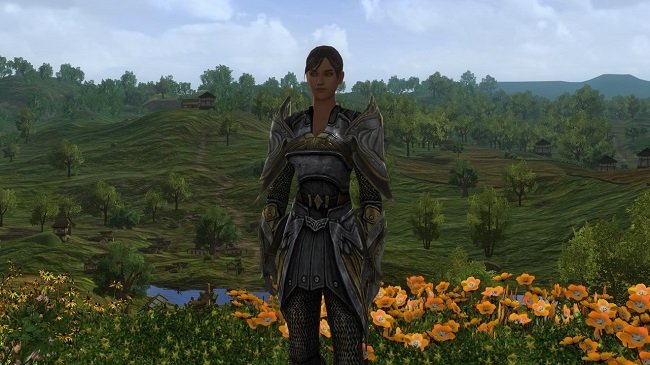
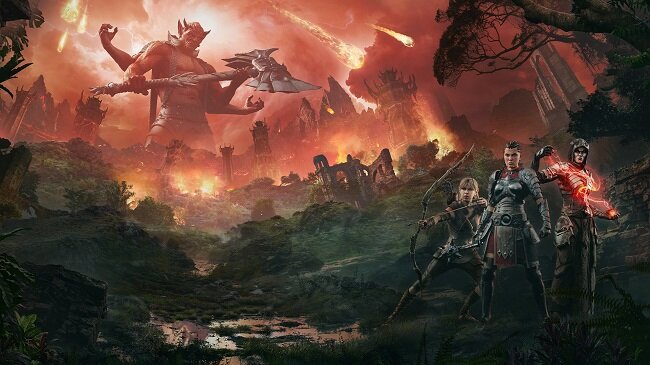
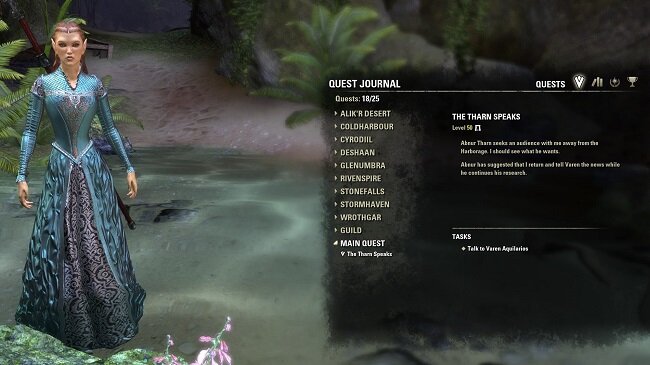
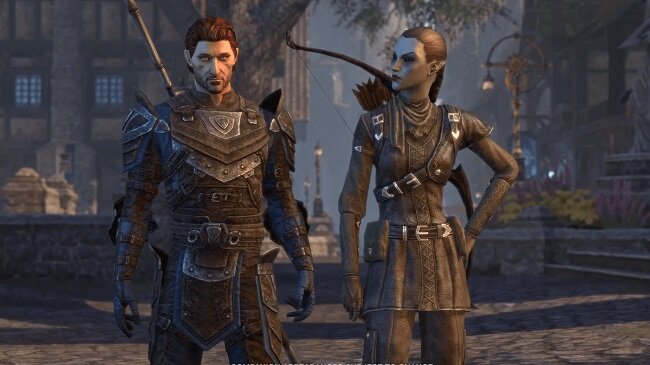
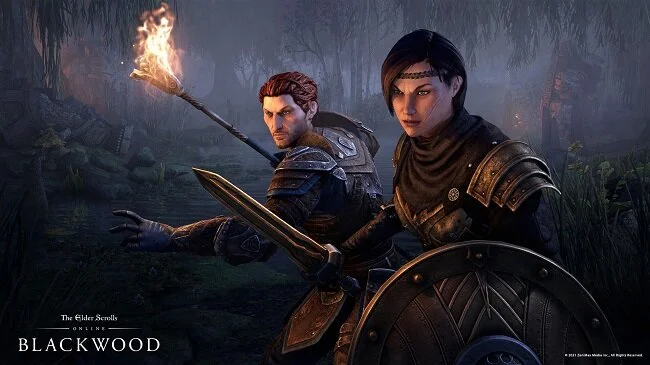
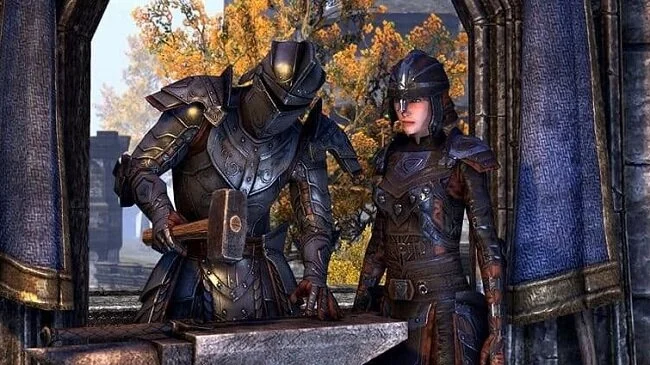
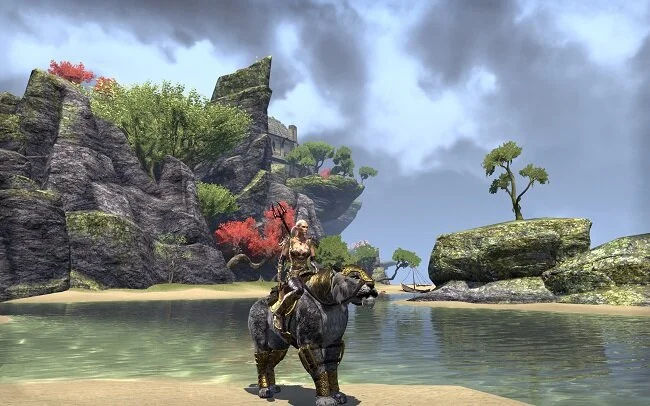
The Blackwood expansion for The Elder Scrolls Online launched a little over a fortnight ago. During that time I have become accustomed to having an AI companion. Not only are they an enjoyable new addition to the MMO, they also have quite a significant impact upon PVE gameplay. Both Mirri Elendis and Bastian Hallix can provide robust support and cover a variety of roles. This is down to the flexibility of the skills system associated with companions. Gear requirements are simpler and a lot easier to manage compared to that of your main character. Levelling is driven by XP gained from combat. Thus, if you go questing with either one of your companions they will level accordingly. They also have personal quests associated with them, ensuring that both companions have an appropriate backstory. The rapport system means that it is prudent to be nice to your AI chum or they’ll leave you for a time.
The Blackwood expansion for The Elder Scrolls Online launched a little over a fortnight ago. During that time I have become accustomed to having an AI companion. Not only are they an enjoyable new addition to the MMO, they also have quite a significant impact upon PVE gameplay. Both Mirri Elendis and Bastian Hallix can provide robust support and cover a variety of roles. This is down to the flexibility of the skills system associated with companions. Gear requirements are simpler and a lot easier to manage compared to that of your main character. Levelling is driven by XP gained from combat. Thus, if you go questing with either one of your companions they will level accordingly. They also have personal quests associated with them, ensuring that both companions have an appropriate backstory. The rapport system means that it is prudent to be nice to your AI chum or they’ll leave you for a time.
One of the great ironies of the MMO genre has been the sea change in social gameplay. Over two decades the focus has shifted from group content to solo. Apart from The Lord of the Rings Online, I play most other MMOs conspicuously on my own. However, in recent years there have been occasions when I miss playing with others. The companion system in ESO offers the best of both worlds. There are the practical benefits of having a support character available as well as the advantages of being able to play at a single player’s pace. Whenever I group with other players in any MMO, I always feel obliged to hurry things along and progress from A to B as efficiently as possible. When playing ESO with either Mirri or Bastian, I still get to read the quest bestowal dialogue, pay attention to what is going on around me and potter about in a manner I like. Companions also don’t have to go and “empty their bags” or get their armour repaired.
I also enjoy the various quips that these companions make when you’re out in Tamriel questing. Both have a selection of ambient dialogue, which although somewhat limited at present, break the monotony of combat. I was a little nonplussed when I initially misheard something that Mirri says from time to time. After a fight, she’ll occasionally remark “whew, that was a bit of a warm up”, which I heard as “whew, that was a bit of a wombat”. It took me a while to realise that I had made a mistake and that there weren't any marsupials in the vicinity. But beyond this minor confusion, I don’t have too many complaints about companions per se. They do that thing that all pets do in the MMO genre and every now and then will stand right on top of the thing you’re trying to interact with. But this may well get addressed in a future patch.
It would appear that the current iteration of companions in ESO is not the finished version. Developer’s ZeniMax intend to add further functionality in the future. Many players hope that the companion systems will eventually be as comprehensive and in depth as those found in single player RPGs. Some certainly want the romance options common to BioWare games. I would certainly like more interaction and story content associated with them. For the present, I am content to have the company of both Mirri and Bastian as well as their practical assistance. Bastian I am using mainly as a tank with sword and shield. Mirri is currently using her default bow, although I may use her as a healer for when I go into full melee mode. Finally, I have one small but invaluable pro-tip regarding companions. Change their outfit to something noticeable, as you’ll find dozens of Mirris and Bastians at Dolmens and world bosses. This way you can easily spot yours.




“Do Try and Keep Up”
Justin Olivetti posed an honest question on Massively Overpowered yesterday. “Do you have any clue what’s going on in your MMO’s storyline?” he asked and I must admit that my answer varies greatly according to what I’m playing. Yet before I give a more comprehensive response, let me make clear that one of the aspects of the MMO genre that I enjoy the most is its penchant for complex and sprawling narratives. Both The Lord of the Rings Online and Star Trek Online are based upon intellectual properties with in-depth lore and an established canon. I was also drawn to the RPG Skyrim due to its enigmatic story which linked into a much wider history. It was one of the reasons I started playing The Elder Scrolls Online, as every quest seems to have a story that is connected to another. My enjoyment of these dense plots found in the MMO genre stems from my love of reading as a child.
Justin Olivetti posed an honest question on Massively Overpowered yesterday. “Do you have any clue what’s going on in your MMO’s storyline?” he asked and I must admit that my answer varies greatly according to what I’m playing. Yet before I give a more comprehensive response, let me make clear that one of the aspects of the MMO genre that I enjoy the most is its penchant for complex and sprawling narratives. Both The Lord of the Rings Online and Star Trek Online are based upon intellectual properties with in-depth lore and an established canon. I was also drawn to the RPG Skyrim due to its enigmatic story which linked into a much wider history. It was one of the reasons I started playing The Elder Scrolls Online, as every quest seems to have a story that is connected to another. My enjoyment of these dense plots found in the MMO genre stems from my love of reading as a child.
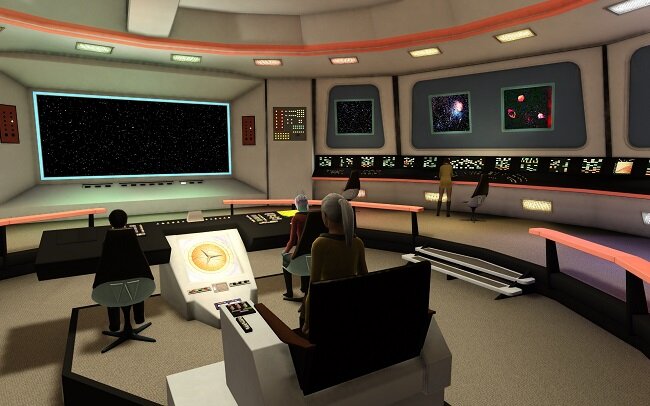
So with this in mind, I believe I am currently on top of the ongoing plot and story elements found both in LOTRO and STO. I tend to have a primary alt in most MMOs that I play and work my way through a game’s content in narrative order. I must admit, at times it has been hard to keep up with LOTRO and I have refreshed my memory regarding the plot and especially characters by referring to the games well maintained Wiki. The game has a habit of bringing back protagonists from early stories. STO is far more episodic in its approach to stories and arcs frequently end in a definitive manner. Furthermore, expansions tend to be themed and frequently dovetail into lore from specific shows. So for example, if you’re familiar with Star Trek: Voyager then it’s far easier to keep up with the storyline featured in the Delta Rising expansion. It also helps with both LOTRO and STO that I play these games regularly throughout the year. Keeping your hand in, so to speak, helps immensely in this respect.
Keeping abreast of the major plotlines in ESO is a more difficult undertaking. Firstly, I don’t tend to play the game with the same regularity as both LOTRO and STO. I return mainly when the yearly expansion launches and then I stick around for a month or two. I came back to the game two weeks ago when Blackwood launched and immediately struggled to recall the various reasons for my quest in Vvardenfell. Fortunately some characters, such as the put upon manservant Stibbons, stick in the mind. However, in my defence it is fair to say that many of the sidequest plotlines featured in ESO centre around the shenanigans of various Daedric Princes. At times it does come across as somewhat repetitive to the casual player. The main stories tend to be far more accessible and have plenty of exposition. Indeed there is even a mechanism in the game where NPCs will give you a plot summary if you need to know exactly what your motivation is.
But let us not forget that my approach to the MMO genre is far from universal. For every player that loves the intricacies and nuances of the story there are those who are totally disinterested by it. They will dismiss cutscenes (where possible) and dialogue windows as soon as they appear. It is also fair to say that not every MMORPG has a good story to begin with. I quickly lost track of what was going on in Rift as the plot seemed very formulaic. I also struggled to “keep up” in Neverwinter for similar reasons. Plus I had no prior knowledge of the franchise associated with that game and I believe having some advance personal investment certainly helps. Overall, I find that persistence is perhaps the best way of following a plot in a game. But as I vary what I play regularly, it can be an issue at times. Judging by the comments left on Justin’s original post, I suspect this is a common issue among gamers.
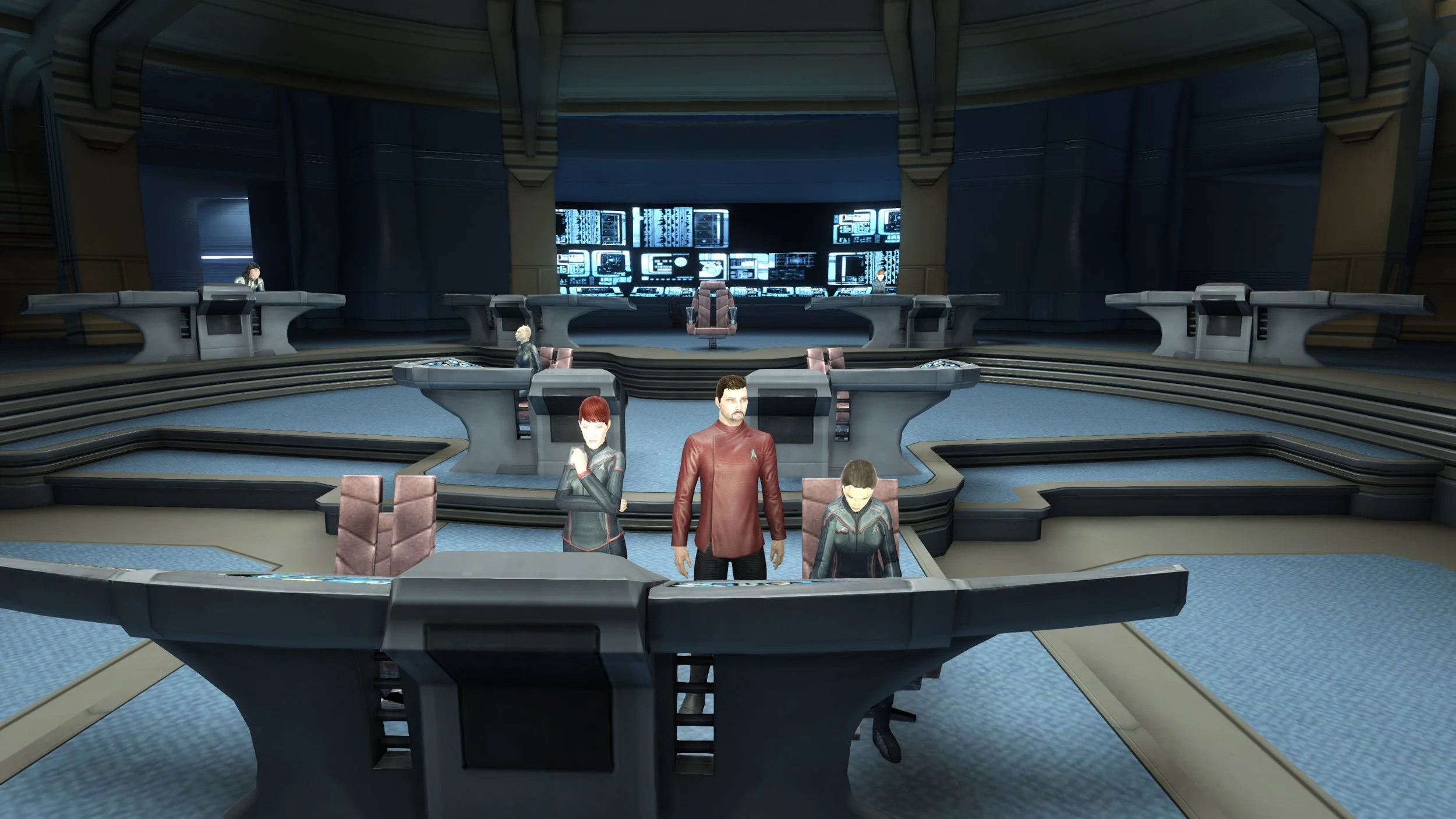


Enjoying LOTRO Through Others
When you’ve been doing any leisure activity for a long time, there comes a point where over familiarity does become an issue. It tempers one’s enjoyment and impacts upon the way you experience that particular pastime. I’ve written about this situation before with regard to my relationship with cinema and films. More recently it has started to occur with my gaming activities, especially with the MMORPG The Lord of the Rings Online. I have been playing this game since December 2008 and I’ve had a long and complicated relationship with it over the course of twelve years. The game was a mainstay of my life at a time when I was living alone and doing contract work. Hence I had a lot of leisure time to sink into LOTRO and few other obligations whenever I wasn’t working. It was in many ways the perfect time to enjoy an MMO as I could “commit” to it. And so I embarked upon the same gaming journey that many others have taken.
When you’ve been doing any leisure activity for a long time, there comes a point where over familiarity does become an issue. It tempers one’s enjoyment and impacts upon the way you experience that particular pastime. I’ve written about this situation before with regard to my relationship with cinema and films. More recently it has started to occur with my gaming activities, especially with the MMORPG The Lord of the Rings Online. I have been playing this game since December 2008 and I’ve had a long and complicated relationship with it over the course of twelve years. The game was a mainstay of my life at a time when I was living alone and doing contract work. Hence I had a lot of leisure time to sink into LOTRO and few other obligations whenever I wasn’t working. It was in many ways the perfect time to enjoy an MMO as I could “commit” to it. And so I embarked upon the same gaming journey that many others have taken.
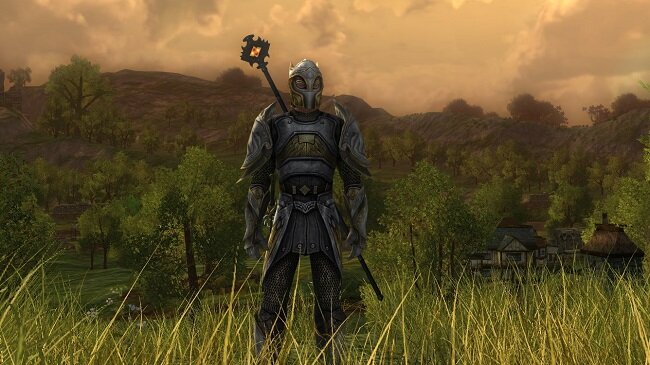
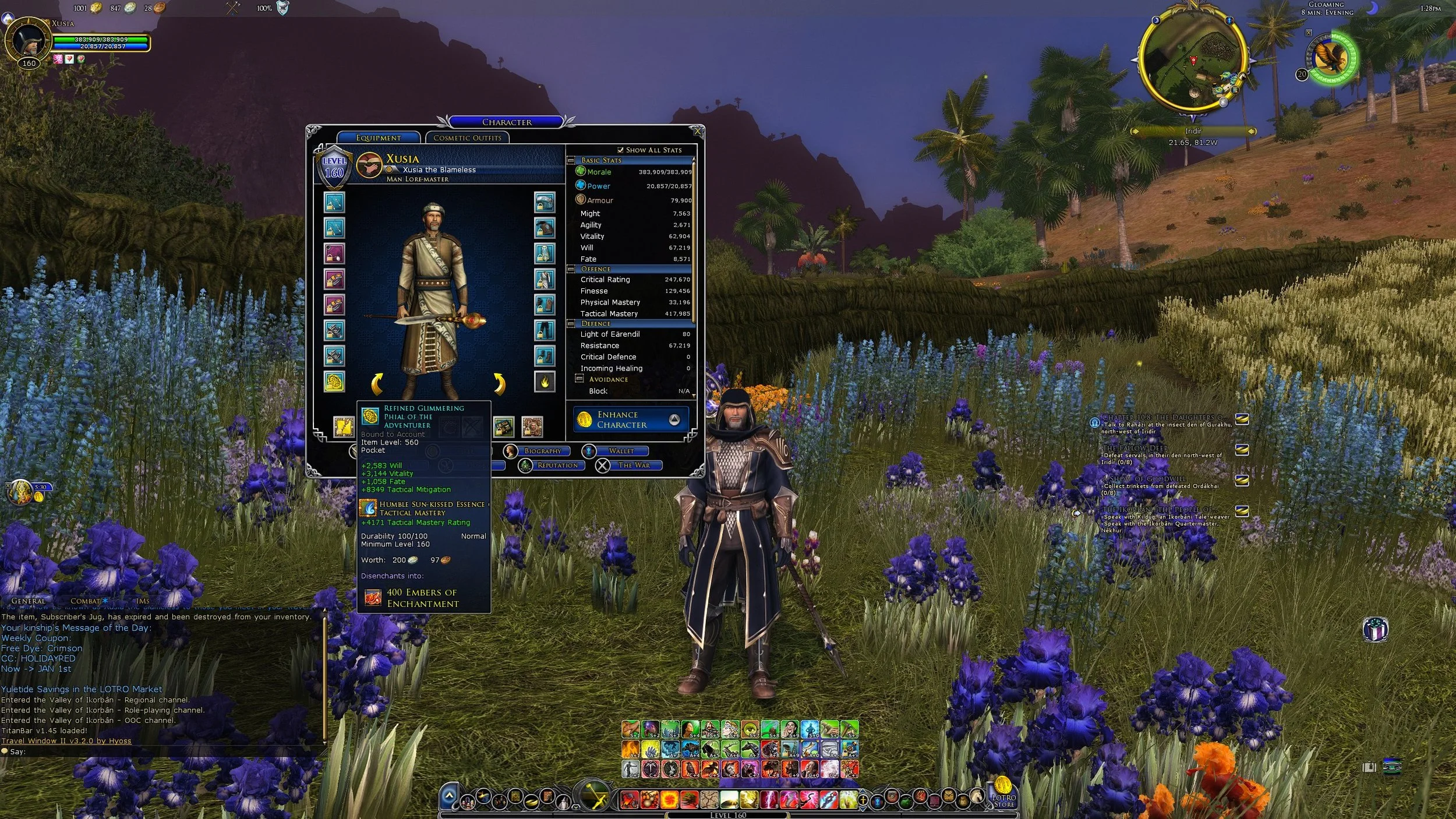
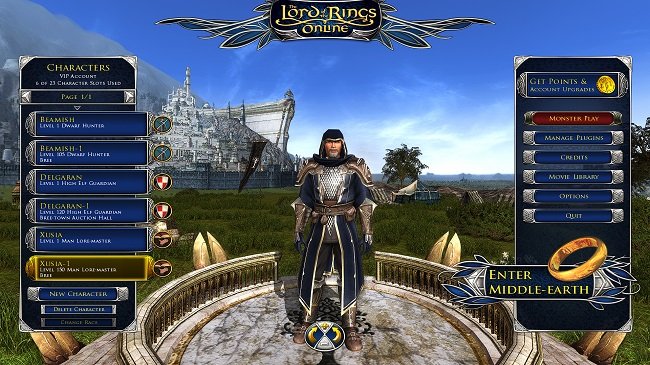
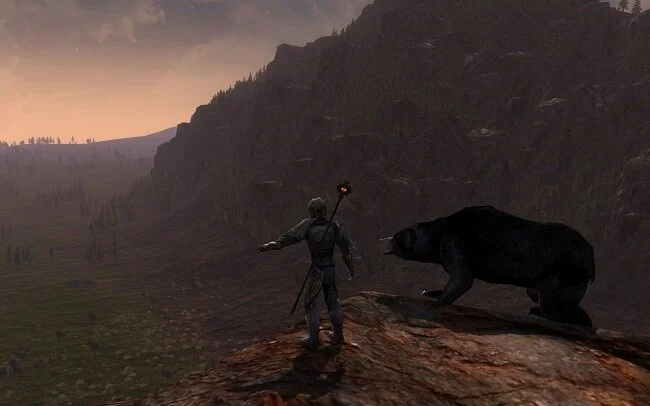
Nowadays, LOTRO is very much a game that I have placed on the back burner, so to speak. Having experimented with various alts over the years, I now play a single, primary character (a level cap Lore-master) and only return to the game when there is new content to experience. I enjoy my time in-game but LOTRO is no longer my gaming obsession. Many of my fellow gaming bloggers have invoked an analogy about video games being like relationships, as they do often share a similar course. Nowadays, LOTRO is a trusted friend whom I meet up with several times a year and spend some time together. We tend to cover the same old ground but it is still fun to do. As for recapturing that sense of excitement I felt in 2008, well we all know the expression about how “you can never go home again”. It is certainly relevant here.
However, sometimes what is needed to revitalise a situation such as this, is a fresh set of eyes or a new perspective. And that is exactly what I inadvertently discovered yesterday. During the afternoon, I had my Twitter client open and I noticed that someone was just about to go-live on Twitch TV and that they were playing LOTRO for the first time. This piqued my interest so I joined their stream and then spent the next three or so hours watching them discover the game for themselves. The streamer in question Omar, is obviously a fan of Tolkien and it was therefore doubly enjoyable as he picked a class and race, logged into the game and undertook the initial stages of LOTRO. It was nice to be able to experience this MMO from a new player perspective, especially when he recognised lore references or realised that it was Strider himself who was leading him through the initial quest stages.
I was one of several existing LOTRO players present in the chat channel and hopefully we made ourselves useful with our advice, as opposed to being a nuisance. Sometimes you have to curb your enthusiasm and let people find their own feet. In fact that adds to the vicarious enjoyment that I felt, as I watched someone navigating a new game and the complexities of LOTRO’s systems and mechanics. Omar also comes from a console background and has only recently come to PC gaming. So in many respects he really has jumped into the proverbial deep end. However, he did well and clearly had a good time, which in itself was a timely reminder of how I used to feel when playing LOTRO. And that was a major shot in the arm for my own gaming enthusiasm. It was like when you watch a classic film with someone who hasn’t seen it before and they really enjoy it. Perhaps I should watch more streams like this.



When the Game Stops You From Playing
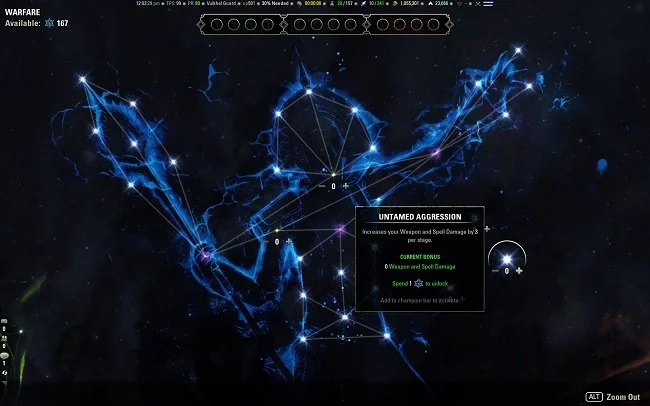
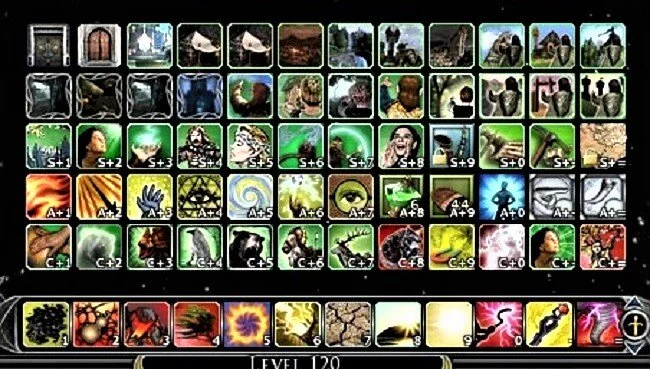
Last night, I finally had sufficient time to log into The Elder Scrolls Online and check out the new Blackwood expansion. The plan was to go straight to the new zone and complete the relevant quests to obtain the two companions that have been added to the game. Unfortunately, life seldom goes to plan as Robert Burns alluded to in his famous quotation. As I haven’t played ESO for a while, I’ve missed several major game updates. Consequently all my champion points have been reset, along with all my skills. So, I had to spend some time trying to remember how my Dragonknight was previously set up. I checked a few screenshots to see what skills were on the hotbars but as they don’t display the name, plus the icons change after morphing a skill, it was tricky trying to reverse engineer my prior build. Eventually I just winged it and managed to blag my way through the two quests.
Last night, I finally had sufficient time to log into The Elder Scrolls Online and check out the new Blackwood expansion. The plan was to go straight to the new zone and complete the relevant quests to obtain the two companions that have been added to the game. Unfortunately, life seldom goes to plan as Robert Burns alluded to in his famous quotation. As I haven’t played ESO for a while, I’ve missed several major game updates. Consequently all my champion points have been reset, along with all my skills. So, I had to spend some time trying to remember how my Dragonknight was previously set up. I checked a few screenshots to see what skills were on the hotbars but as they don’t display the name, plus the icons change after morphing a skill, it was tricky trying to reverse engineer my prior build. Eventually I just winged it and managed to blag my way through the two quests.
Today, I spent some time researching a DPS Stamina build for solo PVE play using a Dragonknight. I further had to refine my search to ensure it was intended for two handed weapons and a bow. Eventually I found something appropriate and copied it as best as I could. Some of the skills recommended I don’t have morphed as of yet. I then made sure I had an appropriate buff from a Mundus Stone, as well as some food that gave my character a stamina boost. All in all, this process took about 90 minutes or so to sort out. I also had to tweak a few addons as these had inevitably got out of date since I last played a year ago. Finally now that these changes have been implemented, I finally feel that I’m in a position to play through the new content. I have had to print out a key map to refer to as I’m struggling to remember what skills are assigned where.
This is the great paradox that comes with the MMO genre. The games are often predicated on complex systems and arcane mechanics. For many players, this is part of their appeal. If you are the sort of gamer that relishes intricate processes and likes to master complicated rules, then good luck to you. Players such as I rely on the likes of you to produce the sort of guides that I referred to today to get my Dragonknight up and running. But not everyone enjoys this aspect of MMOs. MMO monogamy is a thing of the past these days. People come and go, flitting between games depending upon their likes and dislikes. Hence many players will return to a game such as ESO after a period of time away only to find that they’ve forgotten how to play their class or that they’ve fallen foul of a system reset like the one I encountered. In such cases the game often does nothing to help these players, which upon reflection seems counterproductive.
Elite, competent and knowledgeable players do not make up the majority of the player base in ESO or any other MMO. Over the years it has been clearly established that many players do not visit forums, read wikis, research their builds or focus on getting the best gear for their class. They just log into the game and play in a manner that suits them, often just using gear that is given as quest rewards. Skill points are assigned via guess work or random choice. Simply put these gamers are content to potter about in a laid back fashion. Hence if confronted with a major barrier to progress when returning to a game, they will often take the path of least resistance to bypass it. Which is why so many players just roll a new alt when revisiting an MMO after a lengthy absence, as the game does not make it easy to pick up where you left off. The other option is that the player just becomes frustrated that they can’t do the thing they wish to do, logs off and goes and plays something else. Which is not good for business.
If game developers and publishers want to reduce player churn, then they should try and address the needs of the returning players. Often the solutions to the problems that they face are simple. Sometimes a player just needs a brief refresher course in their class skills and such like. This could be solved by having a tutorial that can be repeated at any point in the game. Alternatively having an interactive advisory service associated with all the games systems and mechanics would be beneficial. Something that could be toggled on and off that gives a simple overview when you hover your mouse over an active window. ESO currently provides build and skills advice. Having preset builds that could be applied at the click of a mouse would be the logical next step. They don’t have to be optimal, just sufficient to allow the player to undertake PVE content in the manner they prefer.
Now there will be a small percentage of MMOs players who will balk at my suggestions but I find “git gud” culture and the self flagellating mindset of such gamers both tiresome and irrelevant. If you want to impose some self improvement ideology onto a game for your own enjoyment, that’s fine. But you have no authority to impose your competitive and self aggrandising dogma on anyone else. Video games are ultimately consumer products and as such need to be accessible and accommodating. The player who is not playing due to the games systems effectively blocking them, is a player who is not happy or more importantly not spending money. If they leave in frustration, then that’s effectively a lost sale and in today’s competitive market, that’s an error you can afford to keep making.
EG7 to Consolidate All Titles on its 4Game Platform
EG7 is very slick when it comes to corporate communications. Earlier today the company posted their Q1 Report Presentation and Q&A on YouTube. Although specifically designed for the company’s investors, CEO Robin Flodin stated that he was aware that many gamers watch these presentations and are welcome. However, he did point out that any major game related news would always come via their appropriate outlets, thus making it clear that there was not any consumer information in his briefing. He then went on to discuss how well EG7 was faring financially and even to the layperson, it is clear that the company did very well last year. However, there were two nuggets of information that were interesting from a gamer’s perspective. The first was that EG7 is going to consolidate all of its games on their current 4game platform. The second was that the company was developing a new AAA MMO linked to a major intellectual property.
EG7 is very slick when it comes to corporate communications. Earlier today the company posted their Q1 Report Presentation and Q&A on YouTube. Although specifically designed for the company’s investors, CEO Robin Flodin stated that he was aware that many gamers watch these presentations and are welcome. However, he did point out that any major game related news would always come via their appropriate outlets, thus making it clear that there was not any consumer information in his briefing. He then went on to discuss how well EG7 was faring financially and even to the layperson, it is clear that the company did very well last year. However, there were two nuggets of information that were interesting from a gamer’s perspective. The first was that EG7 is going to consolidate all of its games on their current 4game platform. The second was that the company was developing a new AAA MMO linked to a major intellectual property.
For those who may not be aware, most game publishers have a bespoke platform that allows customers to install and manage all the titles that the company produces. Activision Blizzard has Battle.net, EA has Origins, Ubisoft has Uplay and Good Old Games has Galaxy. Then there are the big digital stores such as Steam and Epic Games which similarly have their own “launchers” as they are known. So it makes sense the EG7 is to add all the titles it acquired when it bought the Daybreak Game Company. When and how this change will happen is not yet known. Will players be required to reinstall LOTRO or DDO also remains to be seen. However, Standing Stone Games’ existing launcher for LOTRO is dated and painfully slow. The other advantages of consolidating all products on a single platform are more effective marketing and dissemination of information. As and when LOTRO is added to 4games, it may well lead to an influx of new players.
The news of an AAA MMO being developed is very intriguing although somewhat vague. Robin Flodin referred to it being based upon “one of the greatest brands in the world”. Whether he was referring to franchises that EG7 already hold or something that they’ve recently acquired is a matter for speculation. As fellow blogger Wilhelm Arcturus pointed out in his post, Daybreak currently has a license for a Marvel game. Or has the recent closure of Amazon Game Studios Middle-earth based MMO, cleared the way for another? Are EG7 considering a LOTRO 2.0 or something similar? Whatever the outcome, things have certainly gotten a lot more interesting since the company acquired DGC. In the meantime let us see how both these two items of news are received by the LOTRO community. The consolidation of LOTRO, DDO and other titles onto the 4games launcher is an especially interesting development and needs to be handled well.
LOTRO: Bullroarer Update 30 - Preview #1
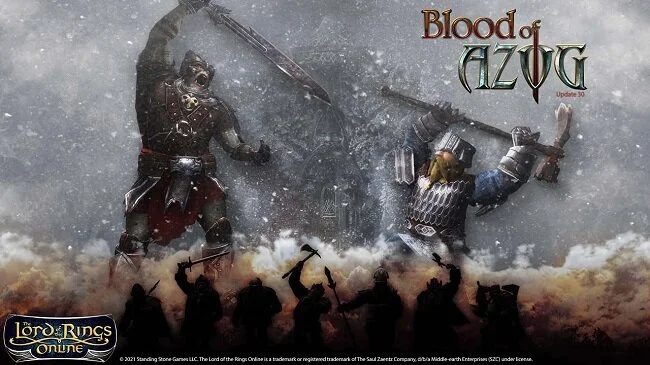
On Wednesday evening, Standing Stone Games made Update 30 The Blood of Azog for the Lord of the Rings Online available on the Bullroarer test server. The preview includes the forthcoming raid The Fall of Khazad-dûm and the continuation of the Epic Story from War of Three Peaks. They are also testing some balance changes to all classes in the game. According to community manager Cordovan “we've had to reconsider the balance of certain major group buffs and debuffs that were overpowered in the context of large fellowships. This has led to the reduction of several of these effects in order to hopefully allow for a wider breadth of class compositions in such content. We are balancing this work by not just focusing on nerfs, but DPS increases and other buffs as well”. As ever with content on Bullroarer, it is subject to change and may be altered further before final release.
On Wednesday evening, Standing Stone Games made Update 30 The Blood of Azog for the Lord of the Rings Online available on the Bullroarer test server. The preview includes the forthcoming raid The Fall of Khazad-dûm and the continuation of the Epic Story from War of Three Peaks. They are also testing some balance changes to all classes in the game. According to community manager Cordovan “we've had to reconsider the balance of certain major group buffs and debuffs that were overpowered in the context of large fellowships. This has led to the reduction of several of these effects in order to hopefully allow for a wider breadth of class compositions in such content. We are balancing this work by not just focusing on nerfs, but DPS increases and other buffs as well”. As ever with content on Bullroarer, it is subject to change and may be altered further before final release.
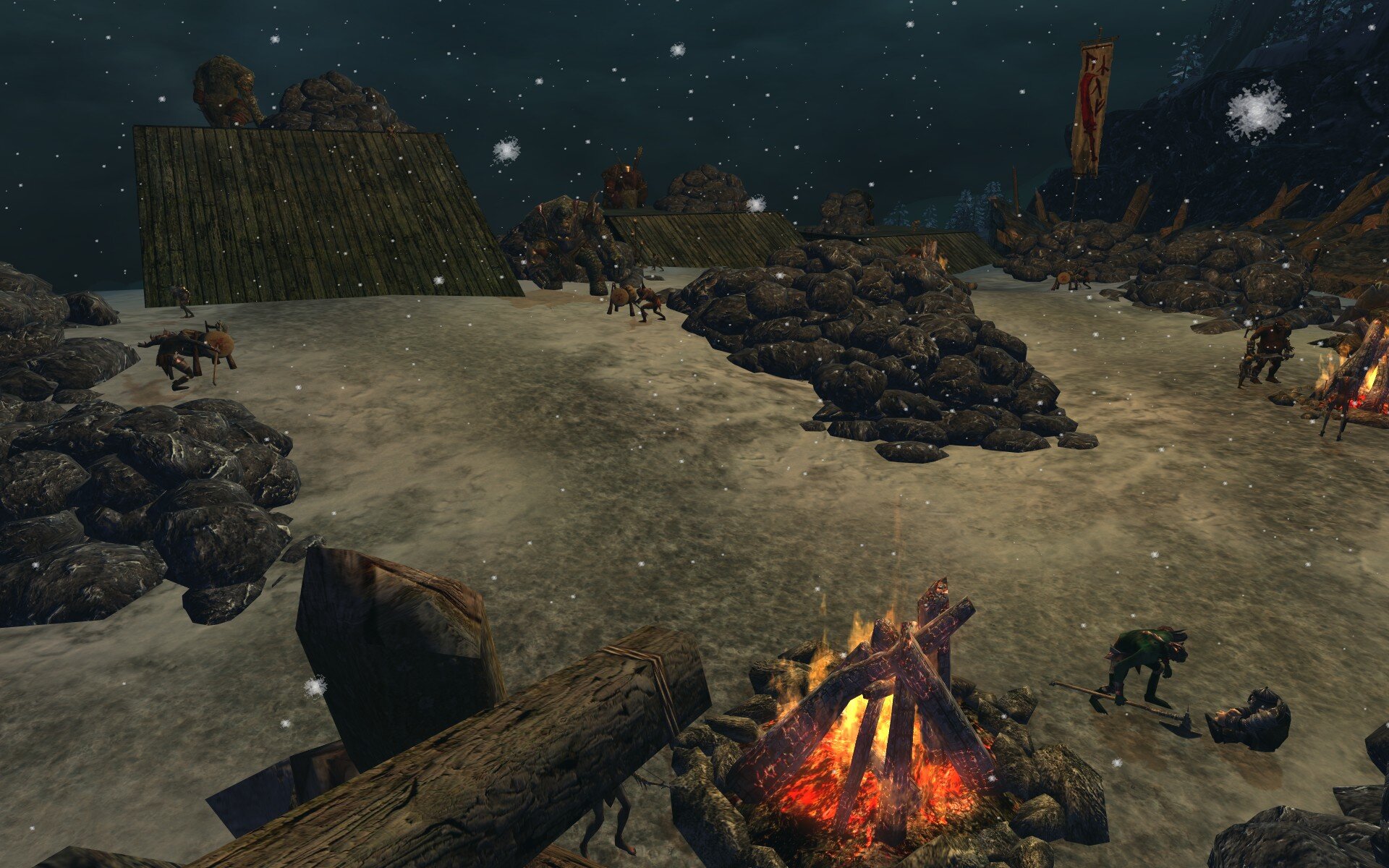
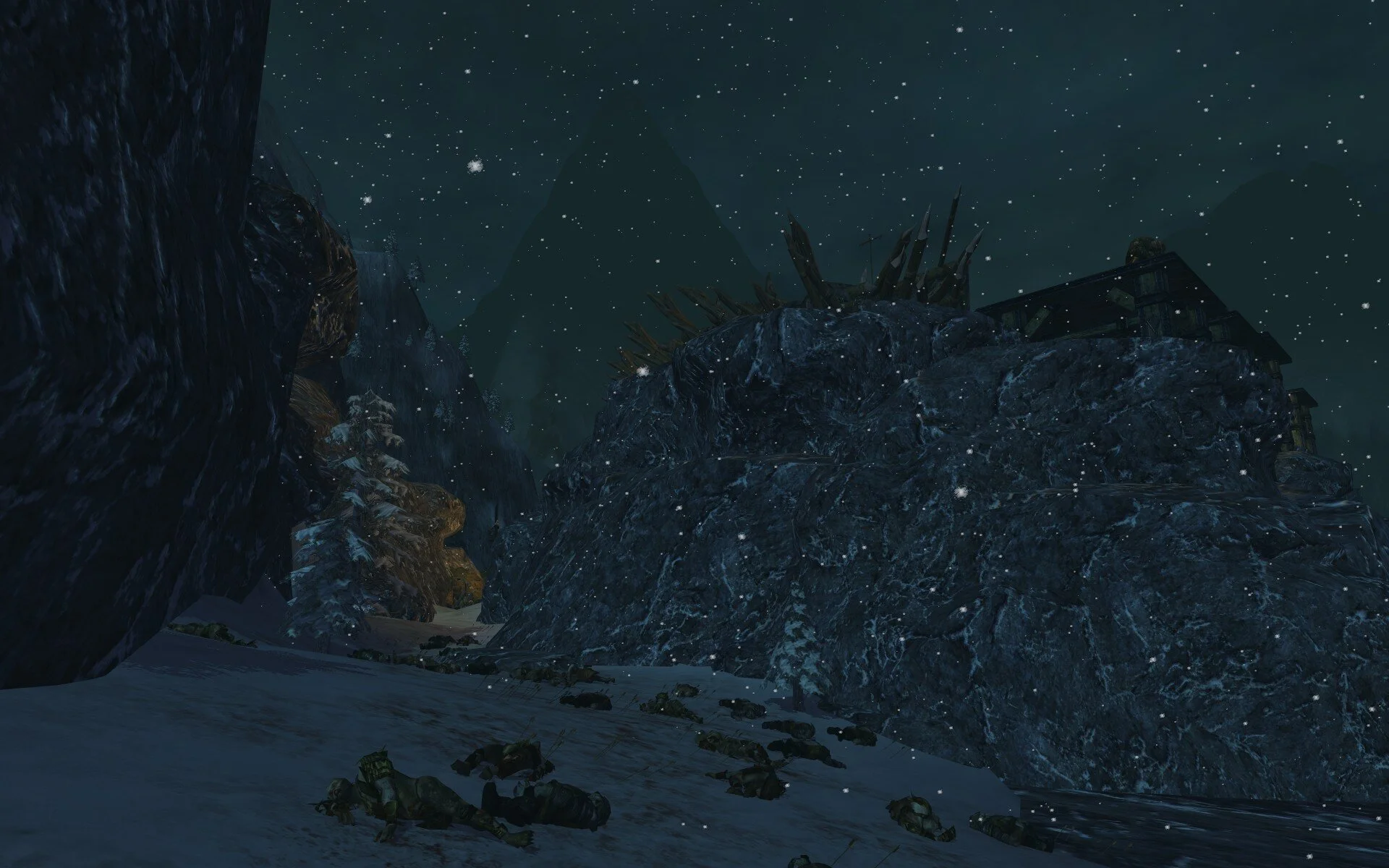
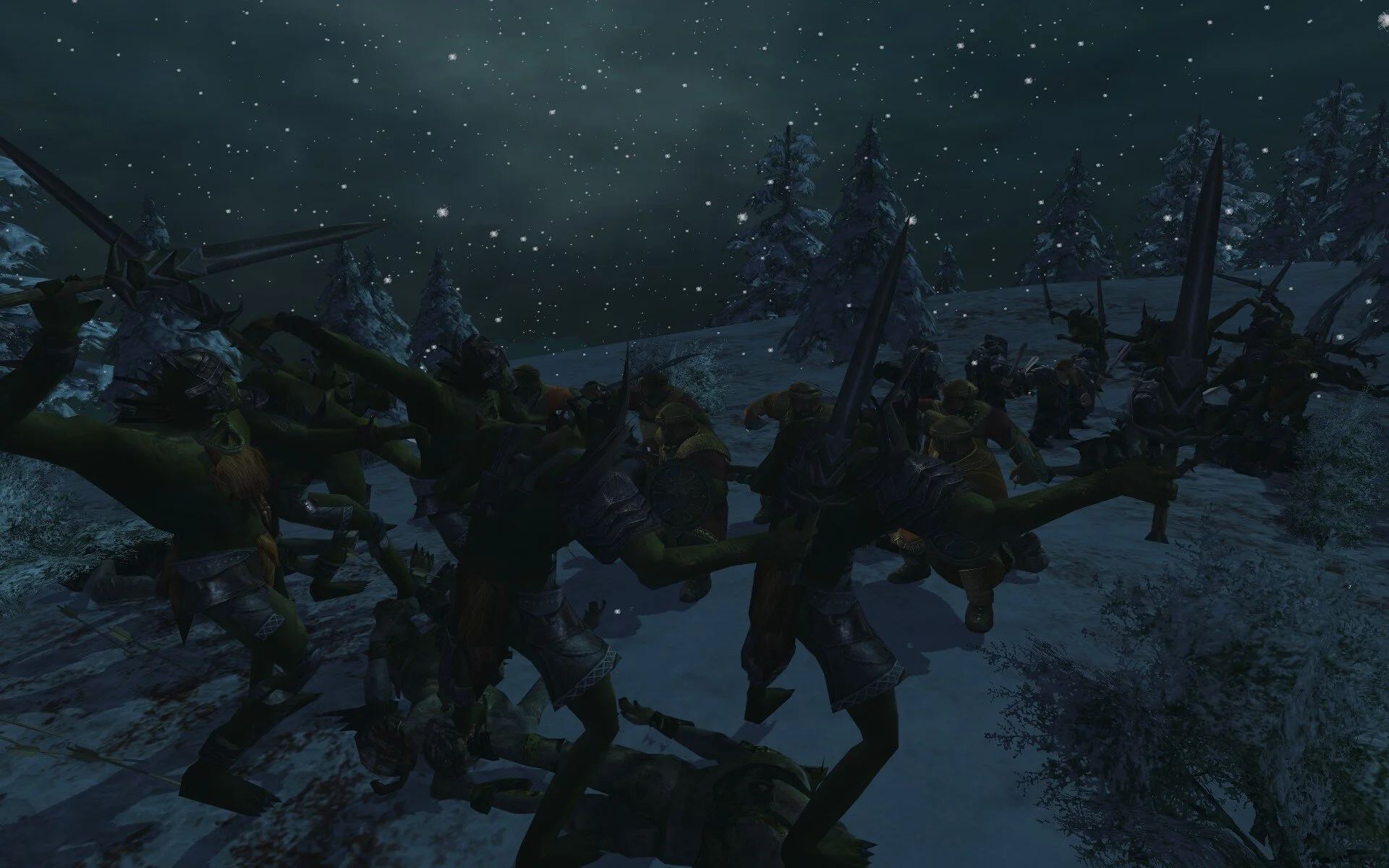
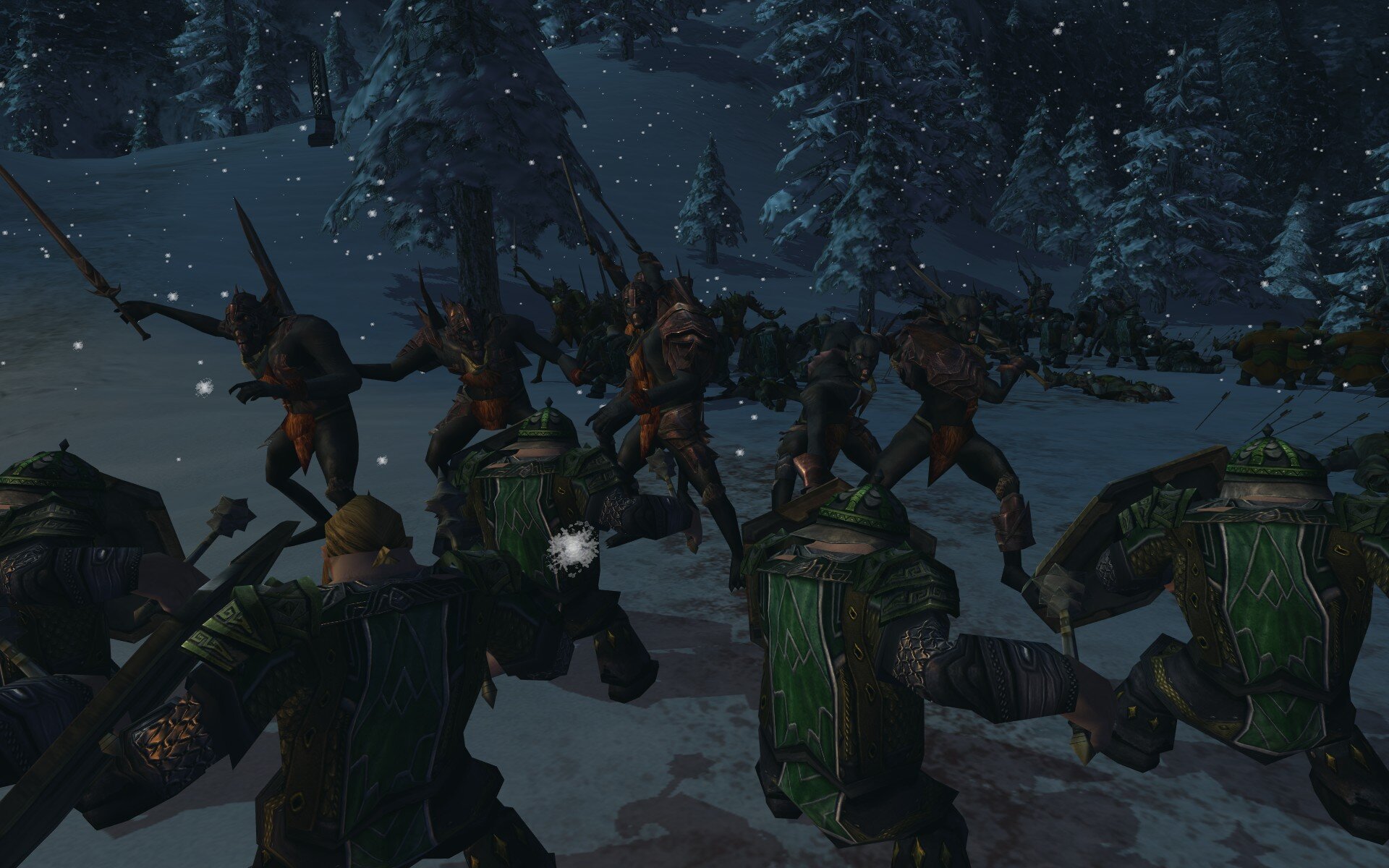
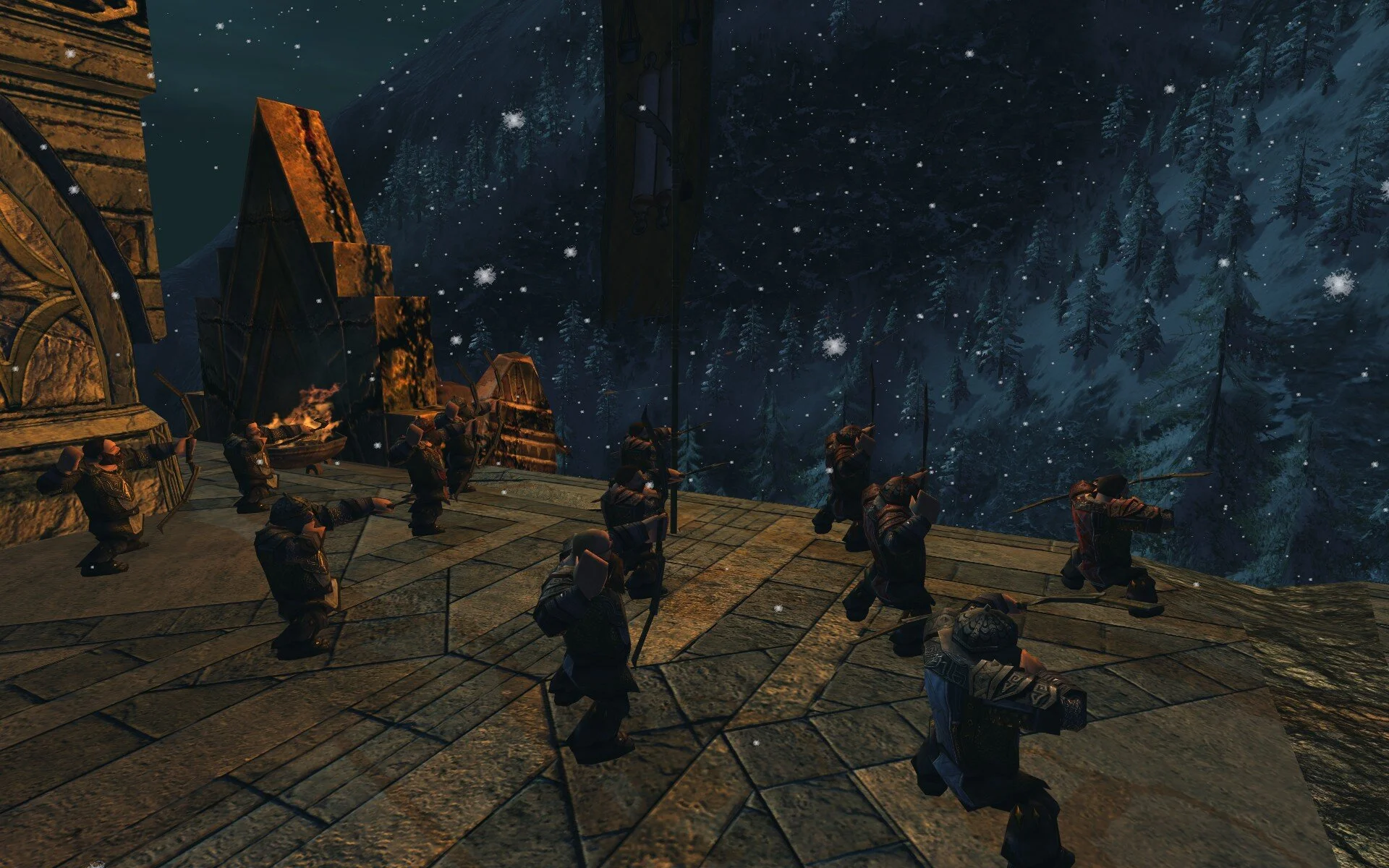
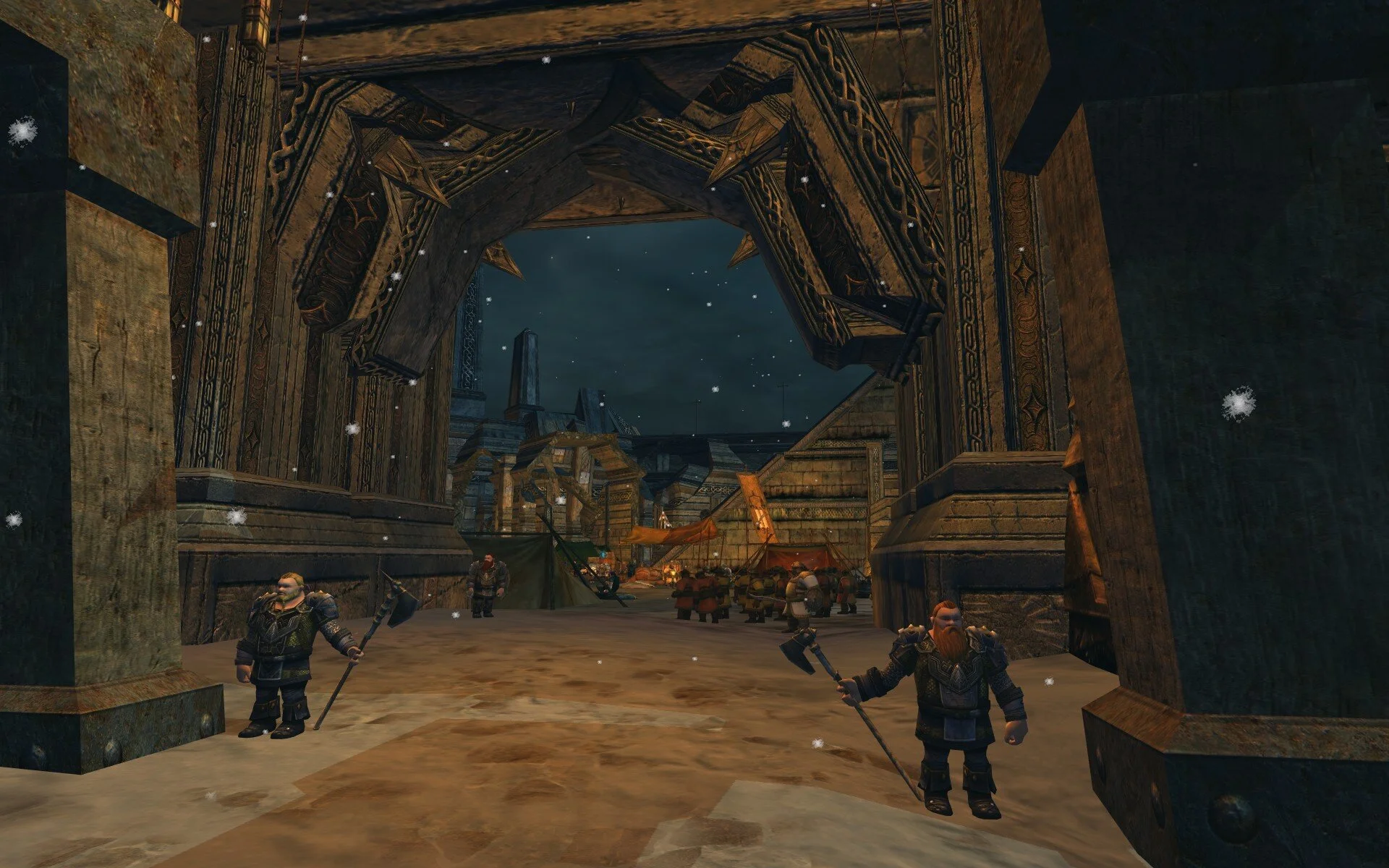
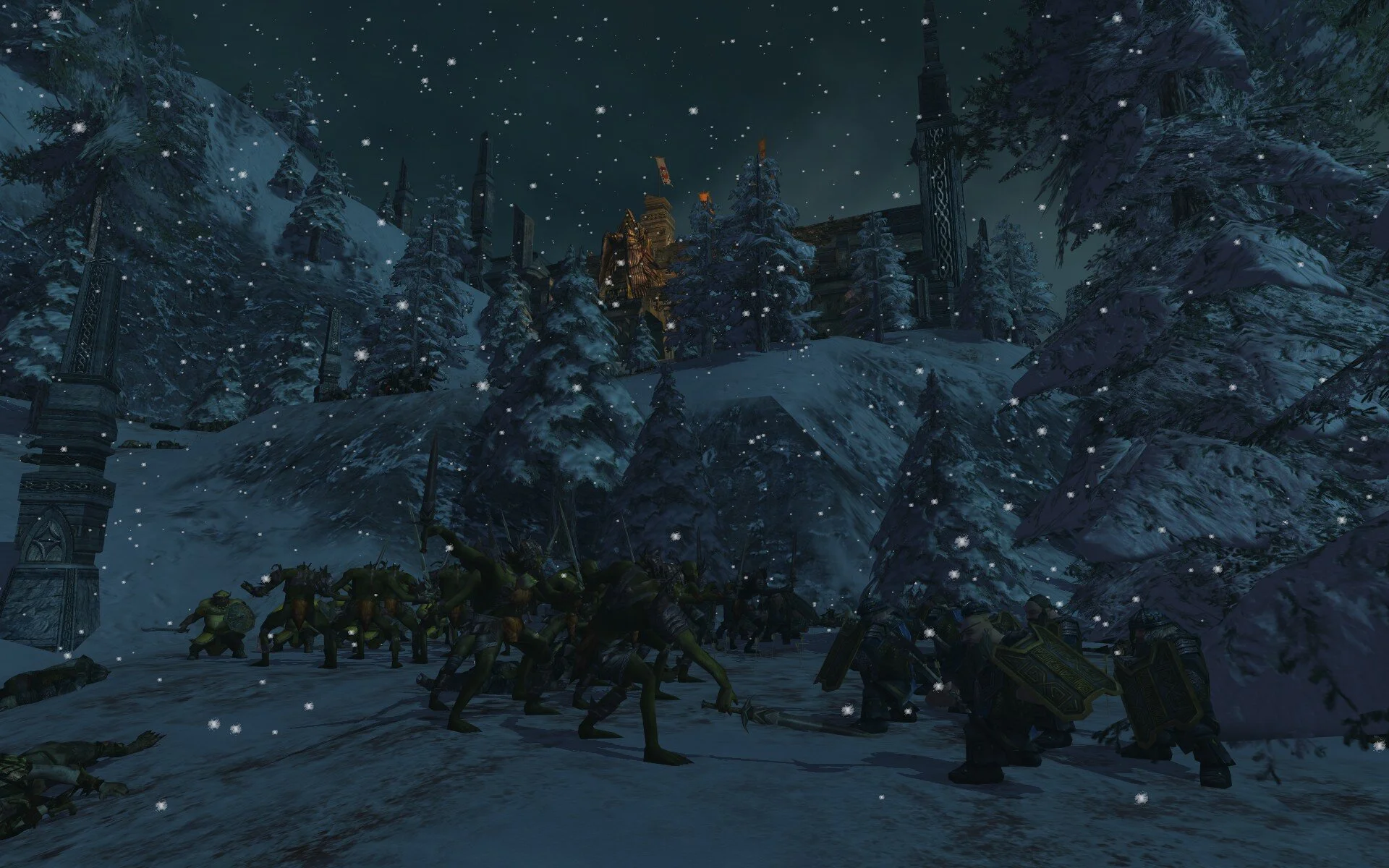
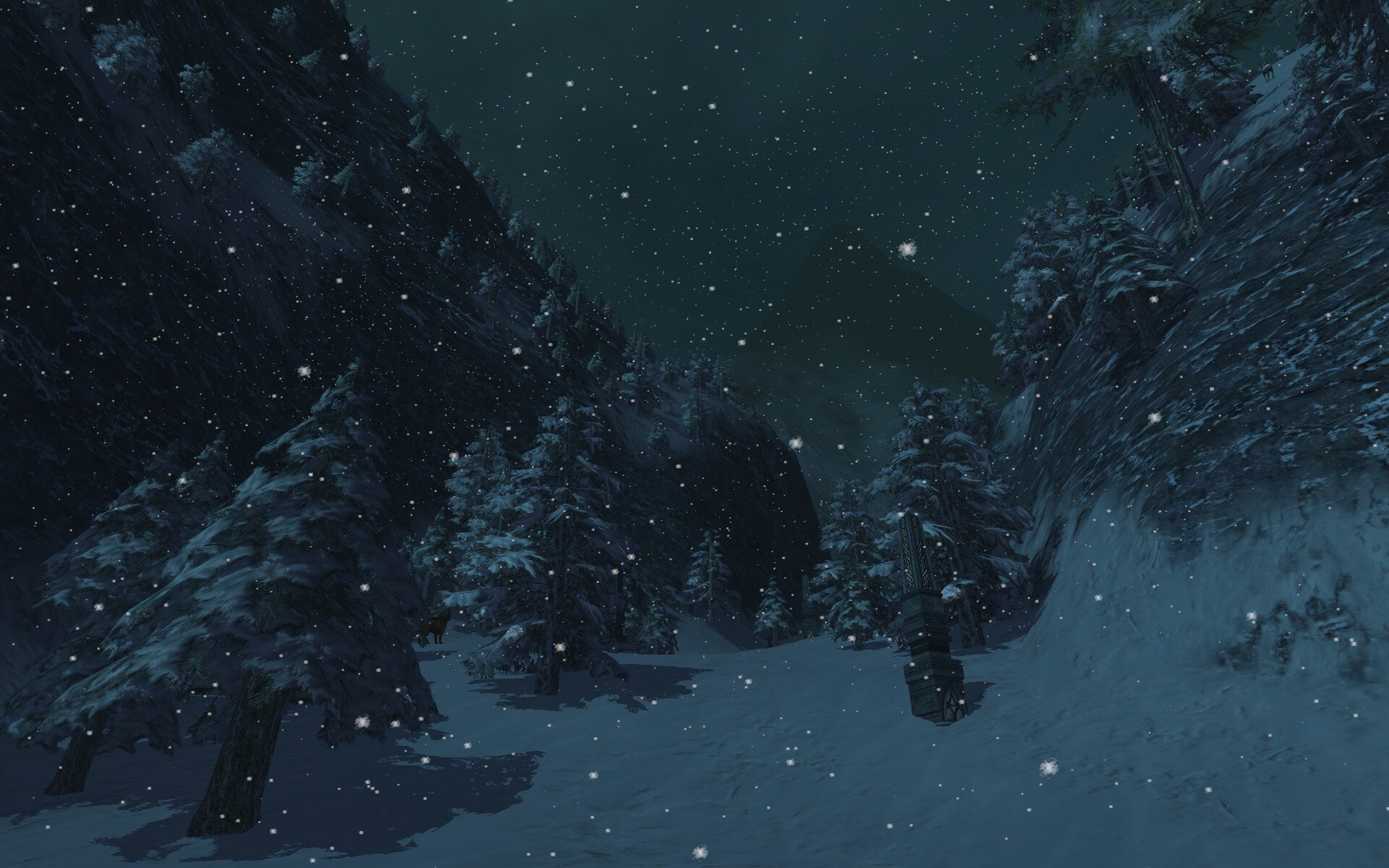
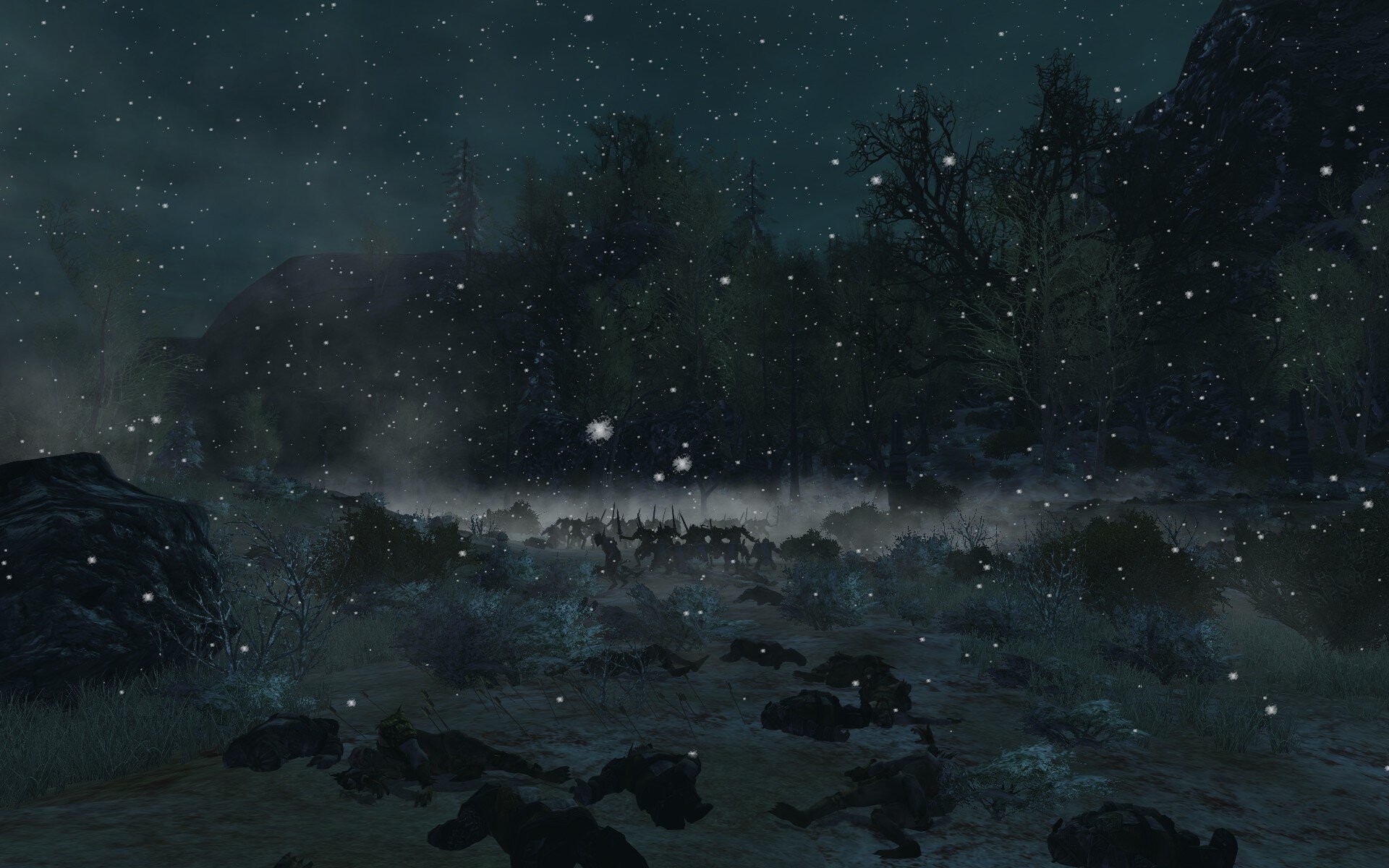
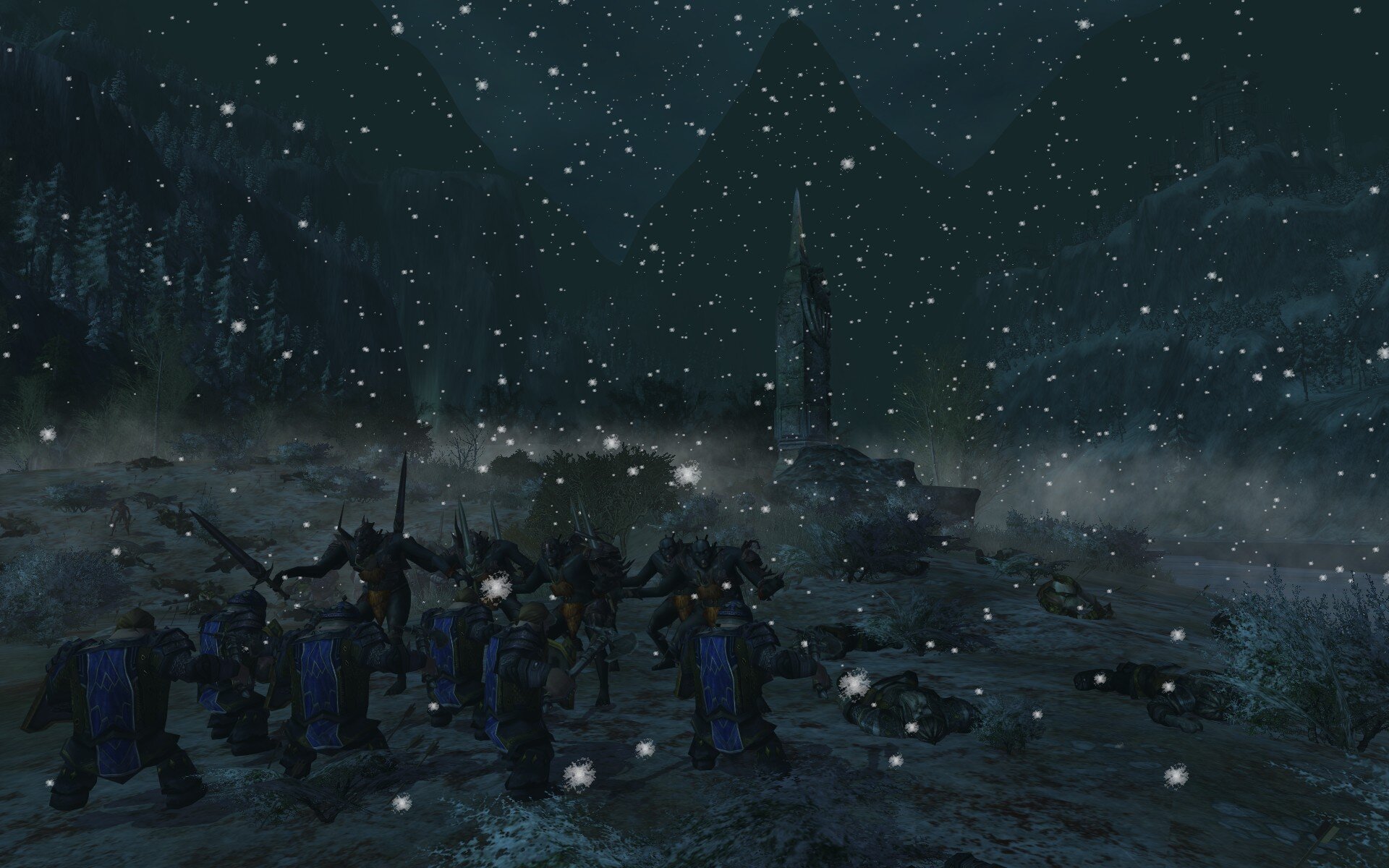
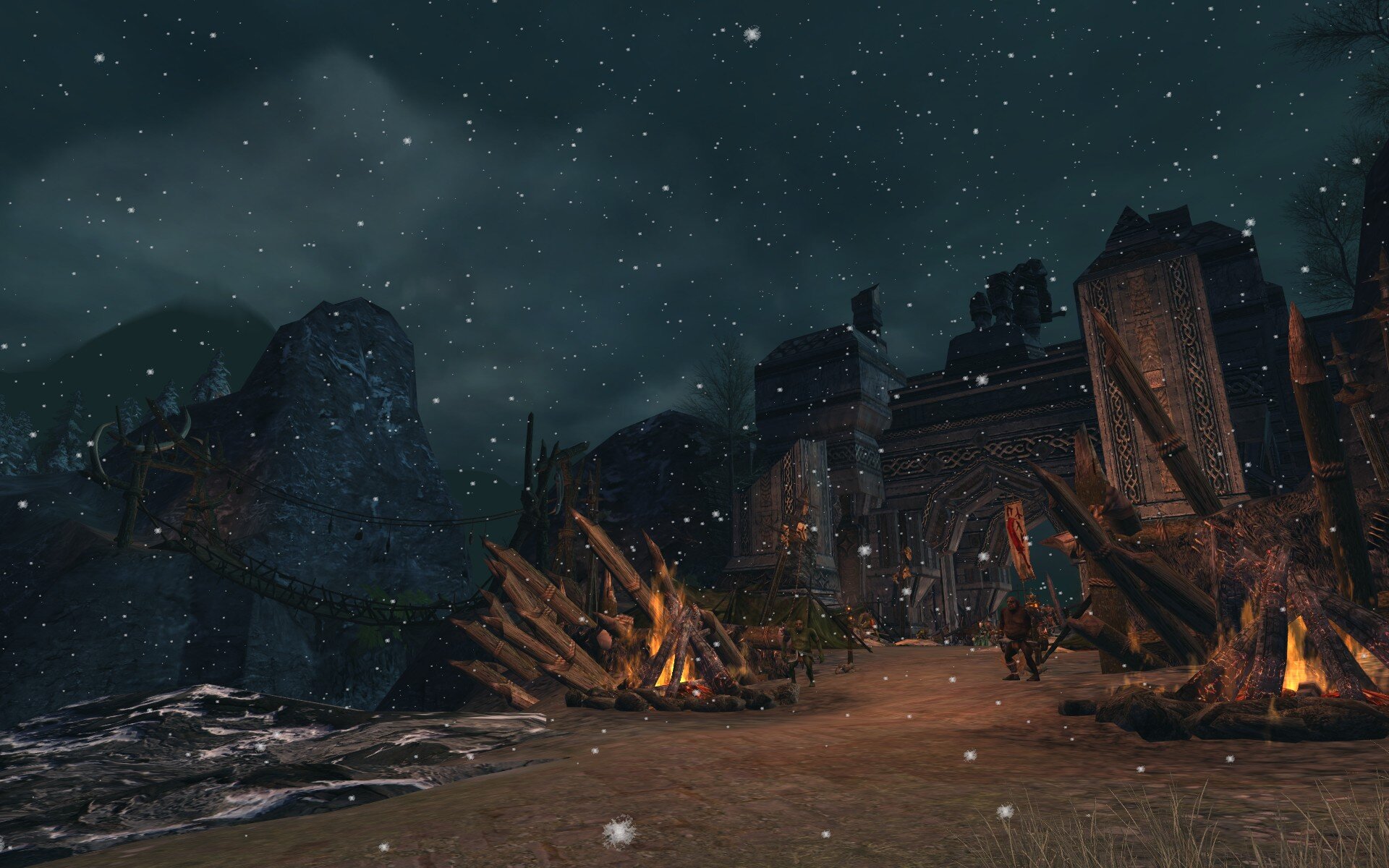
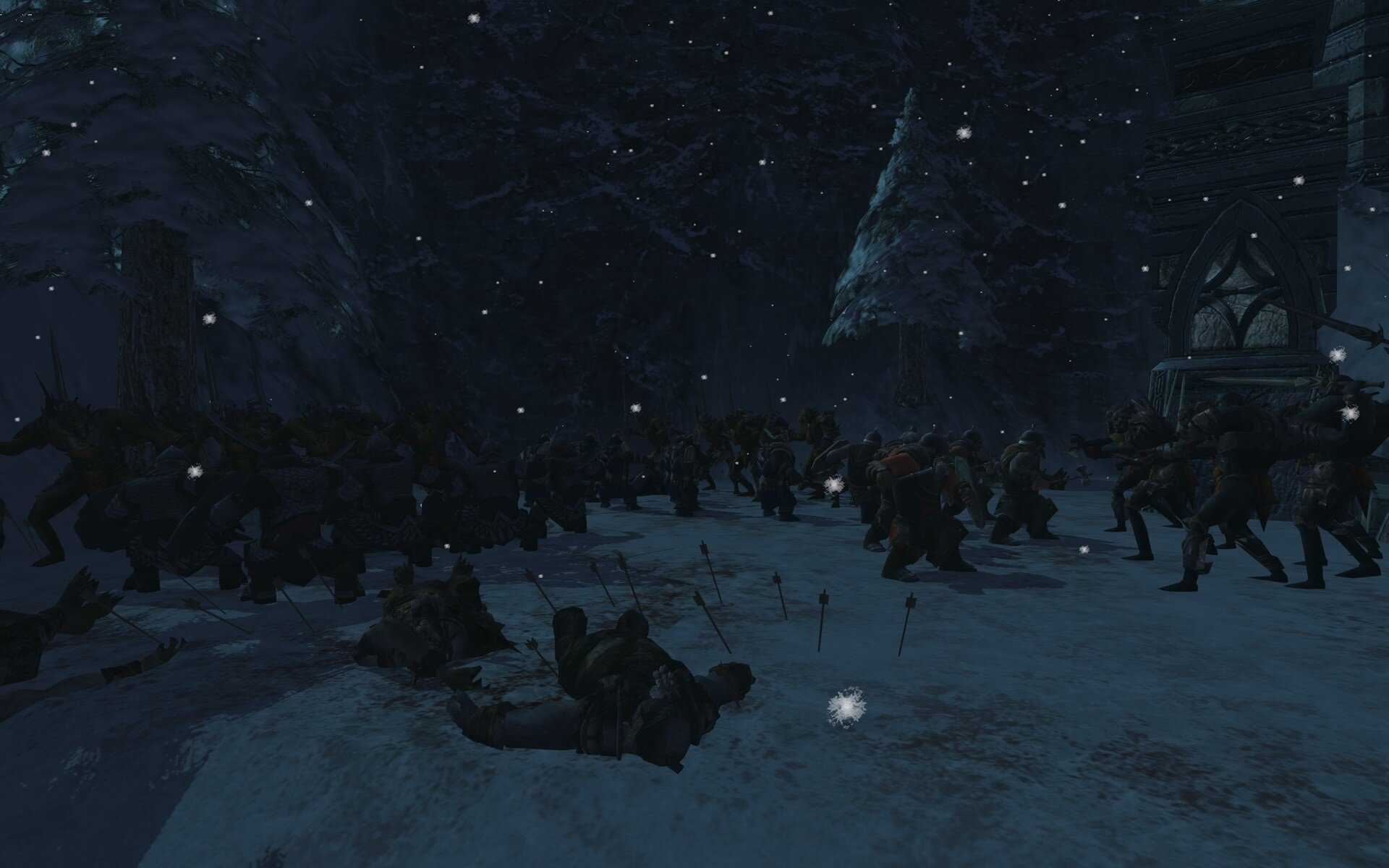
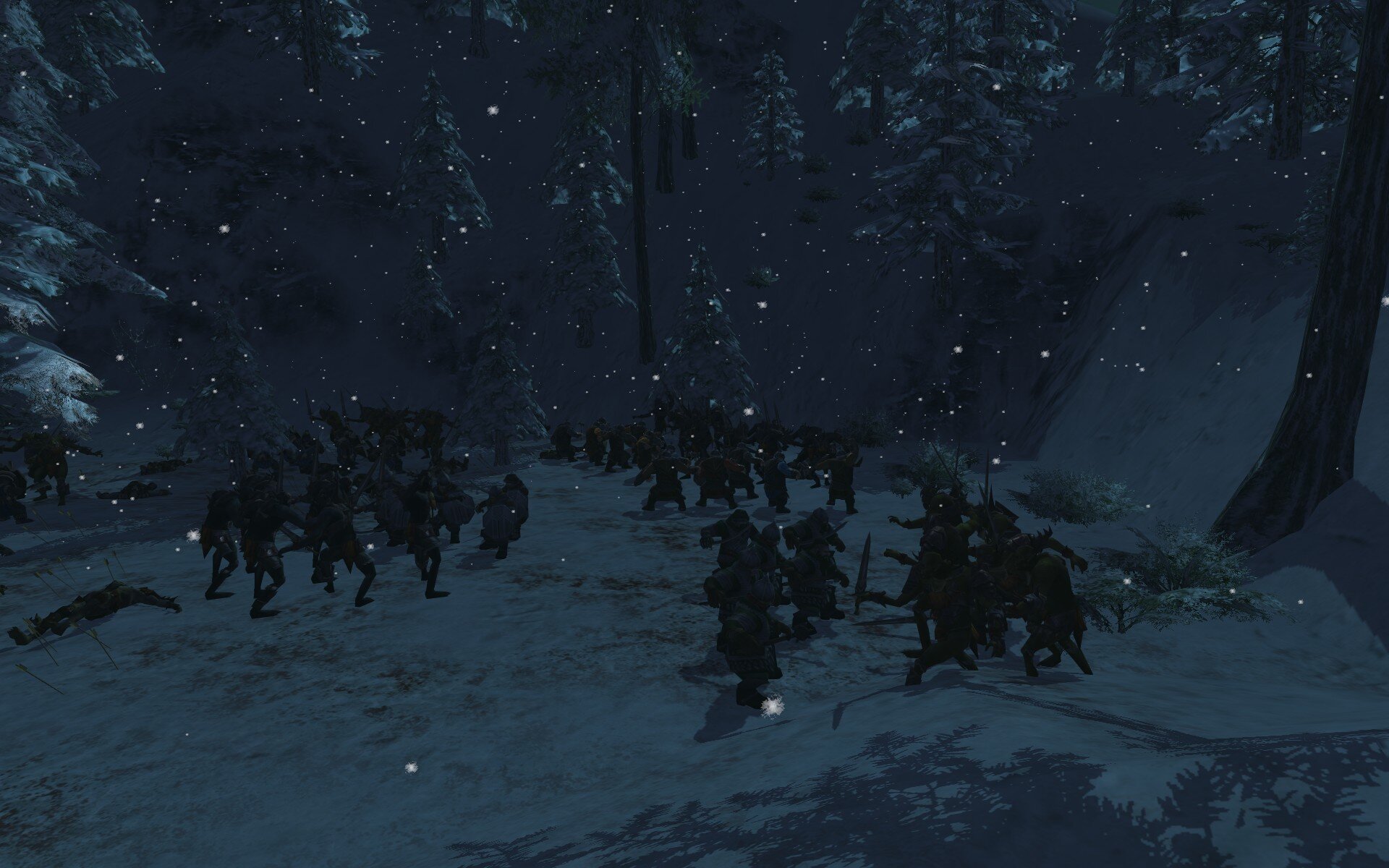
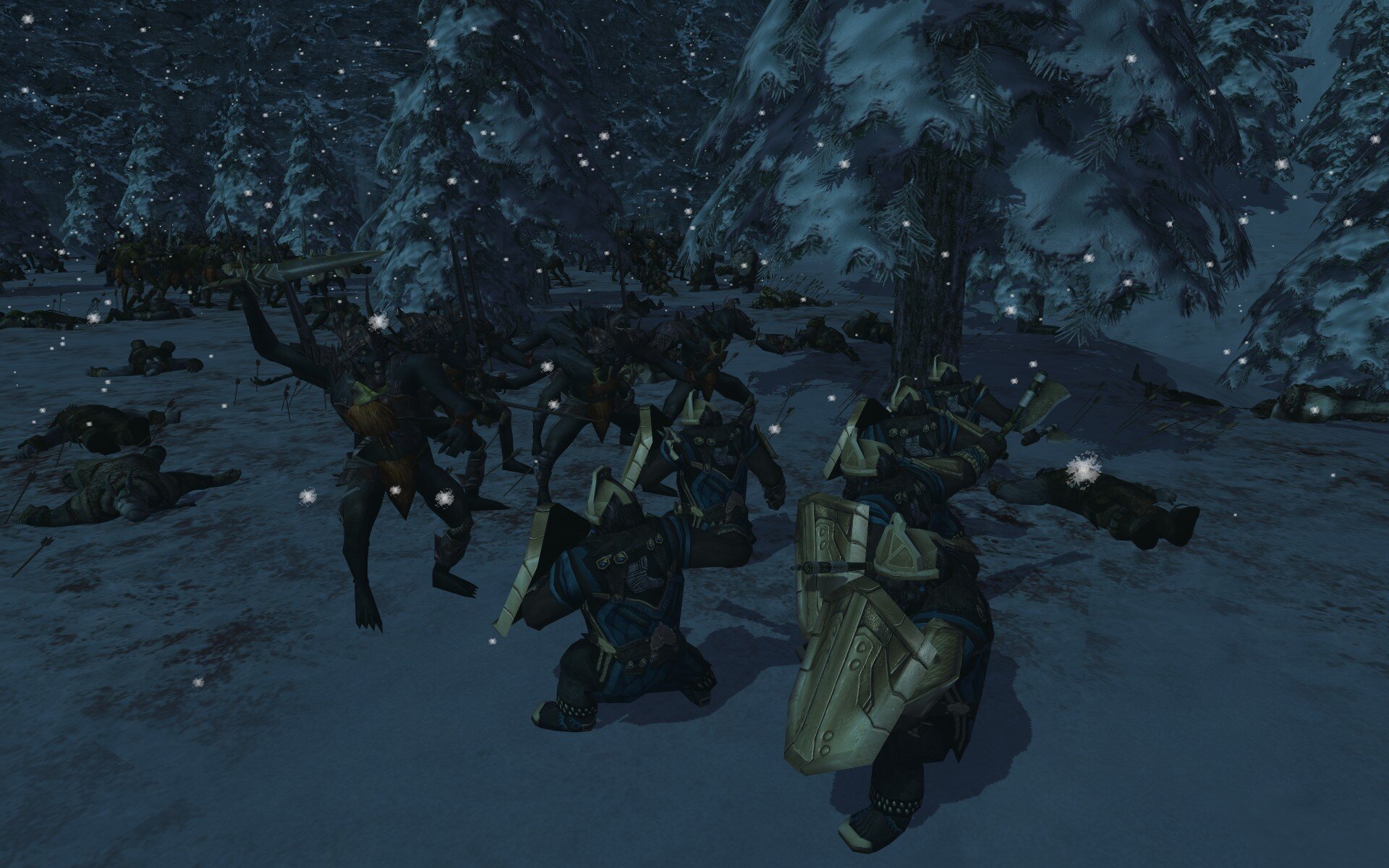
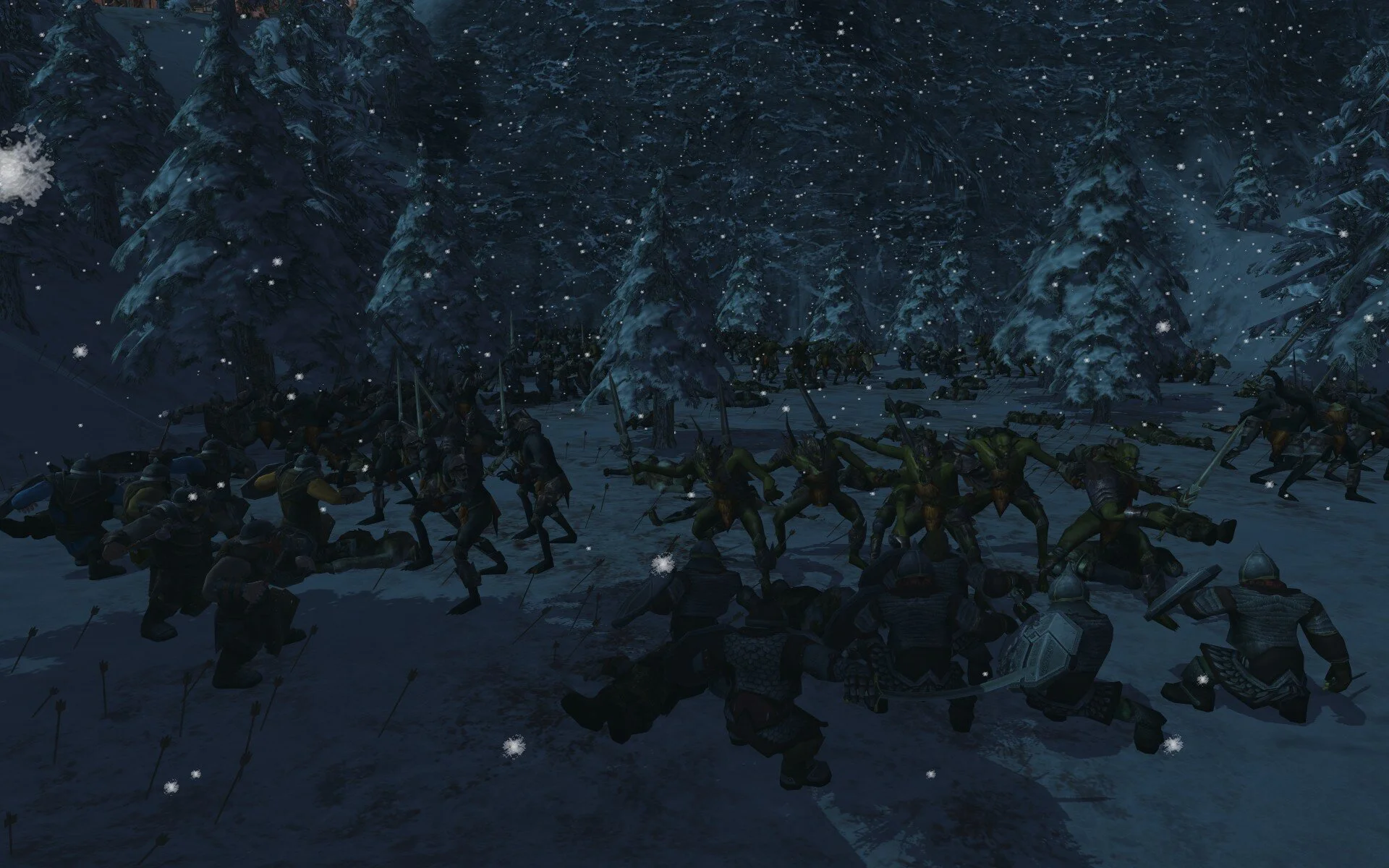
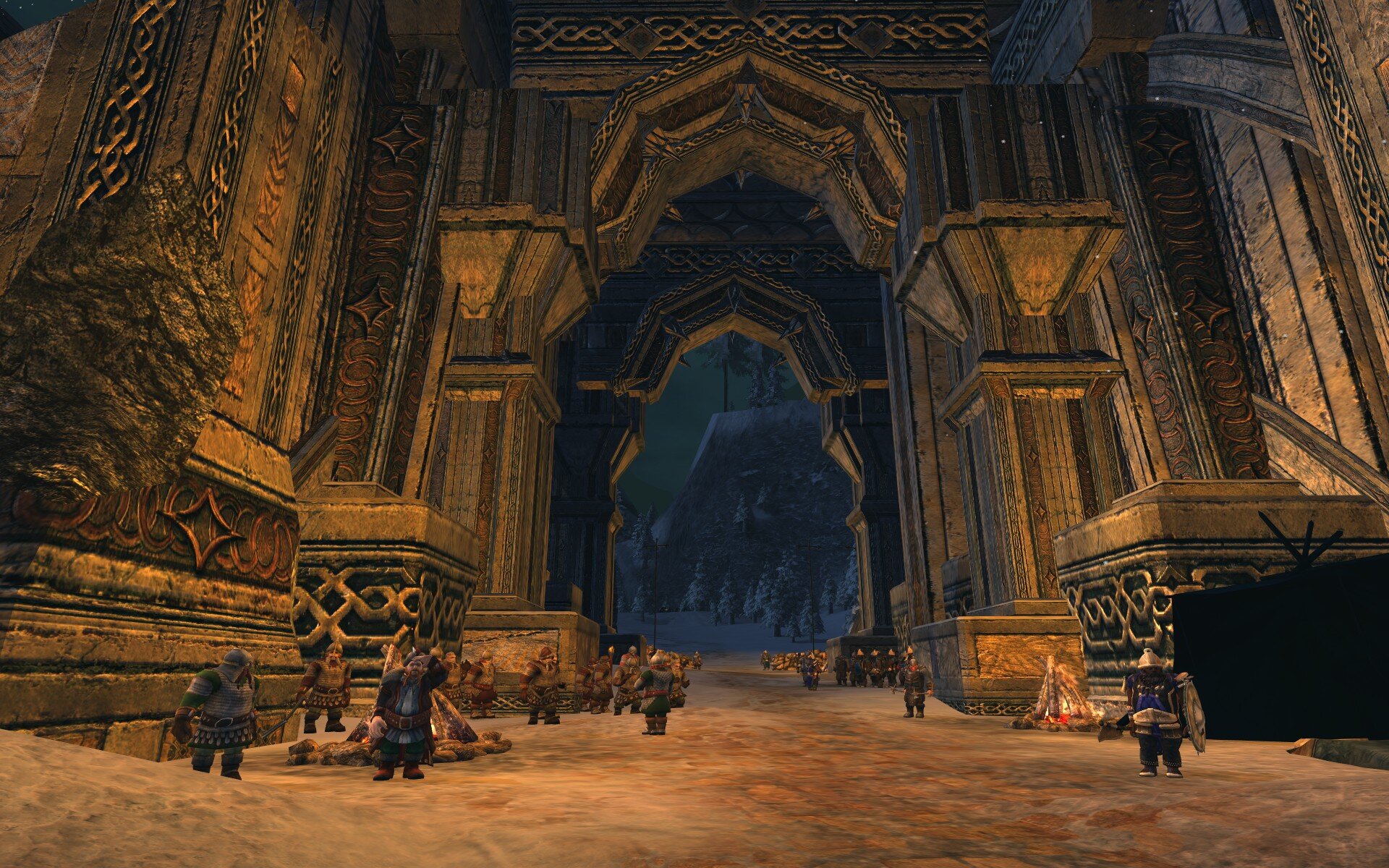
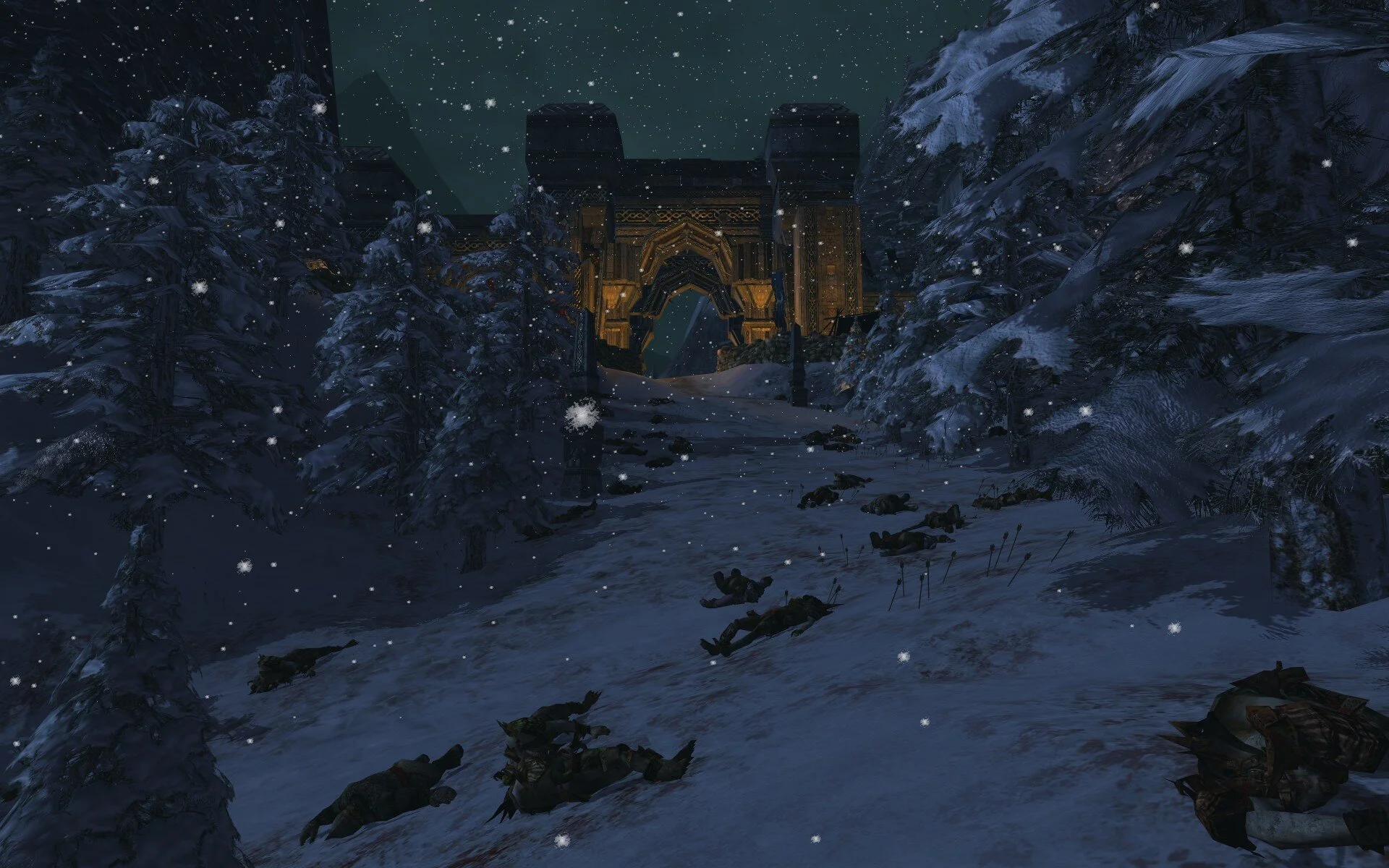
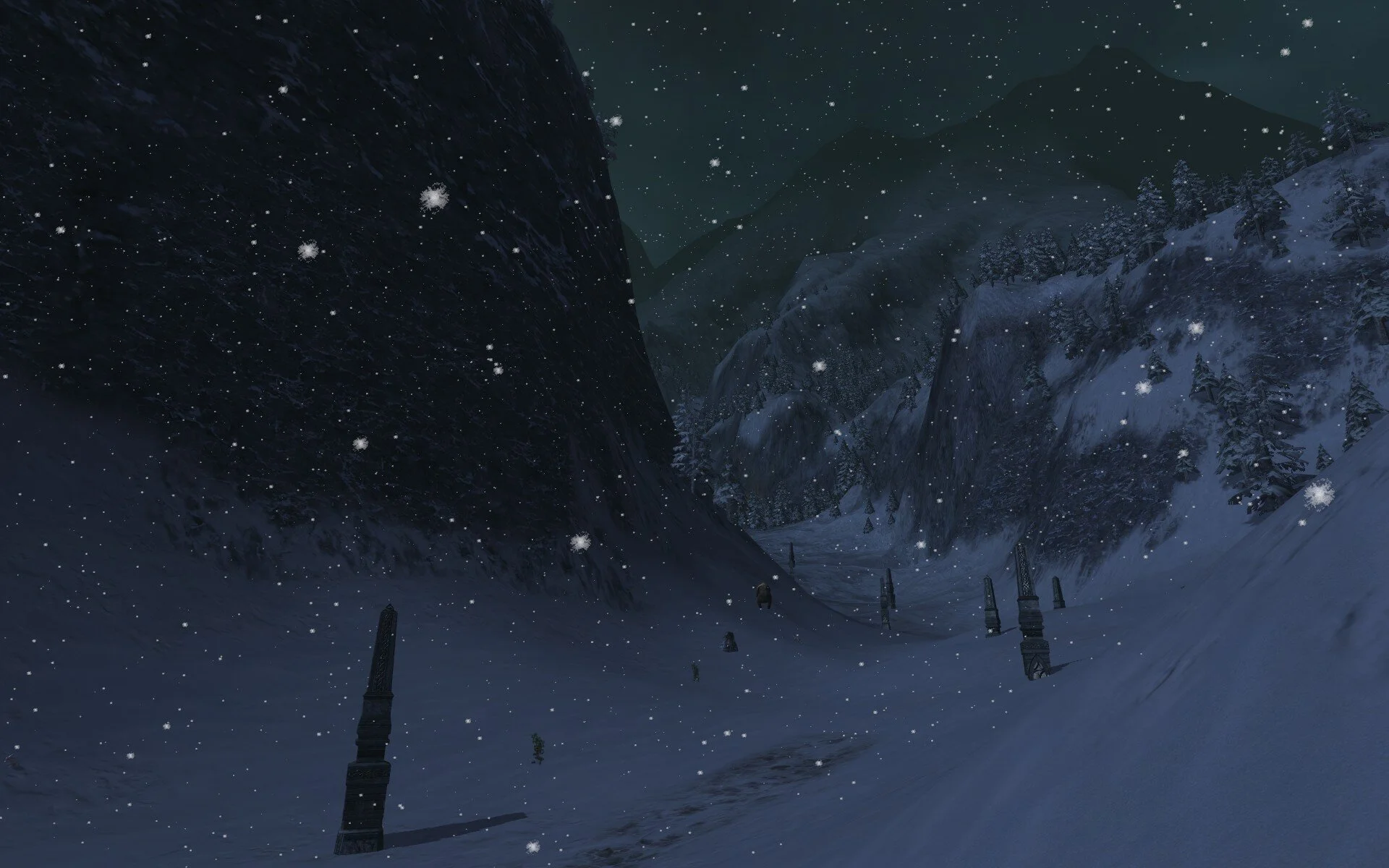
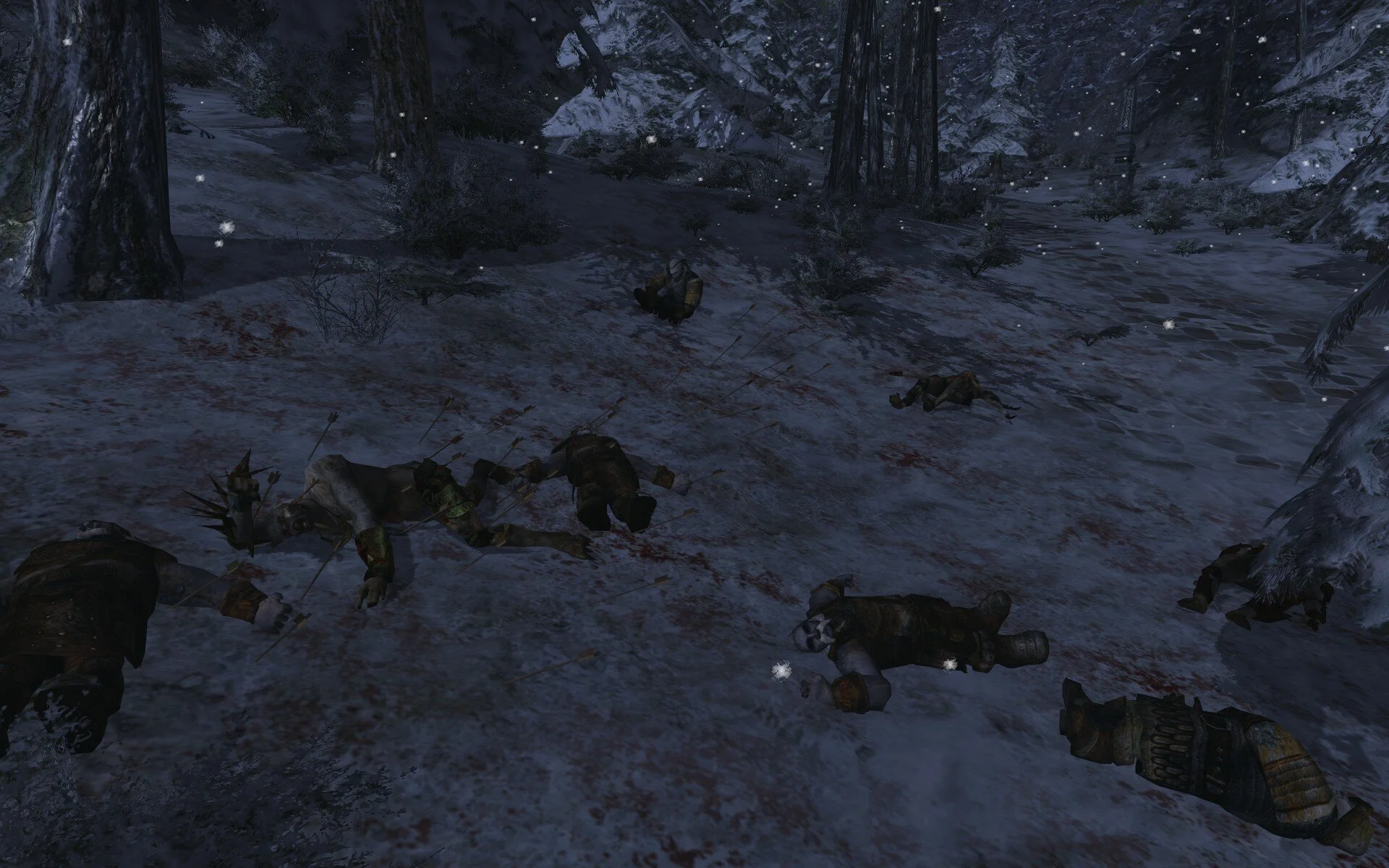
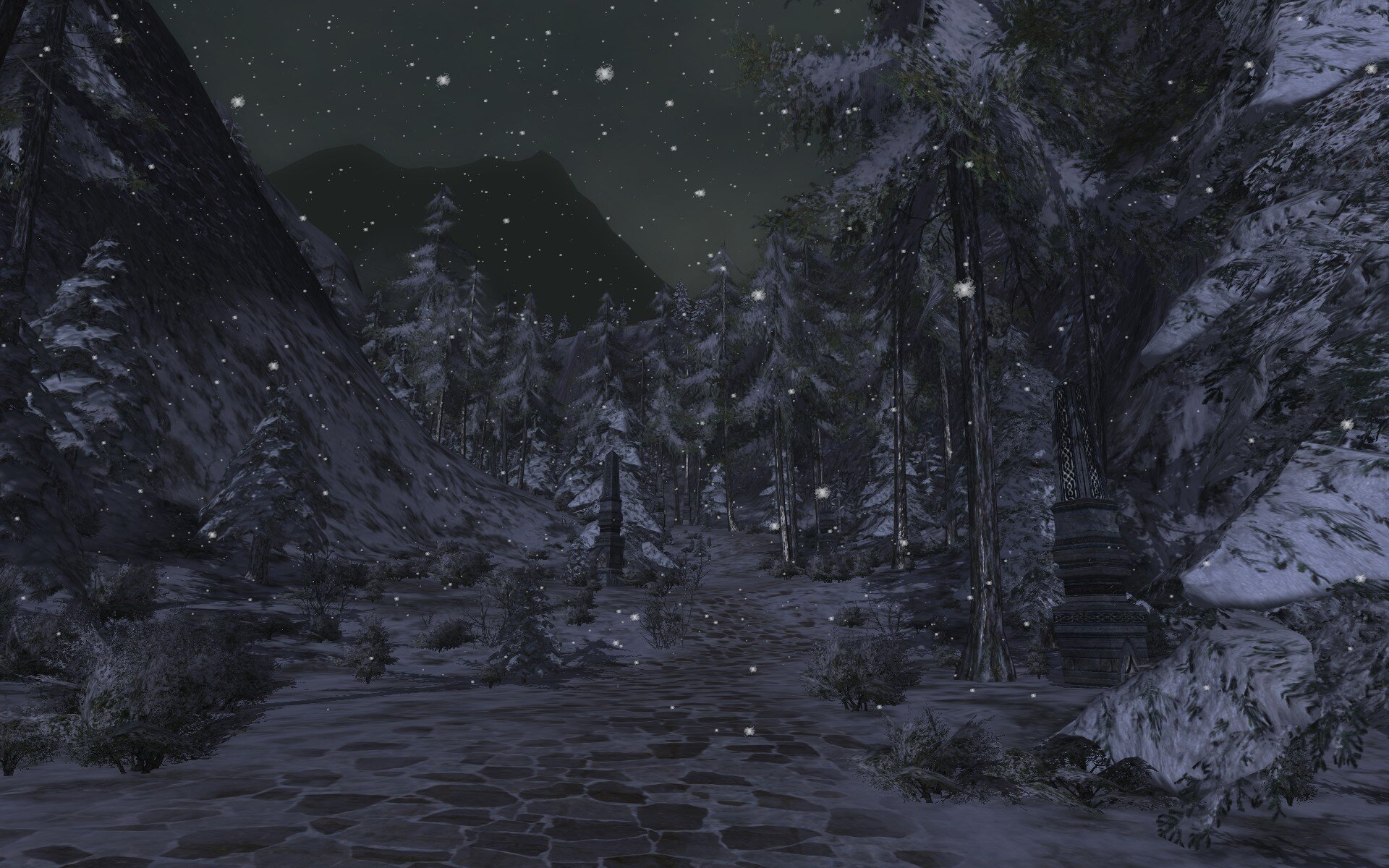
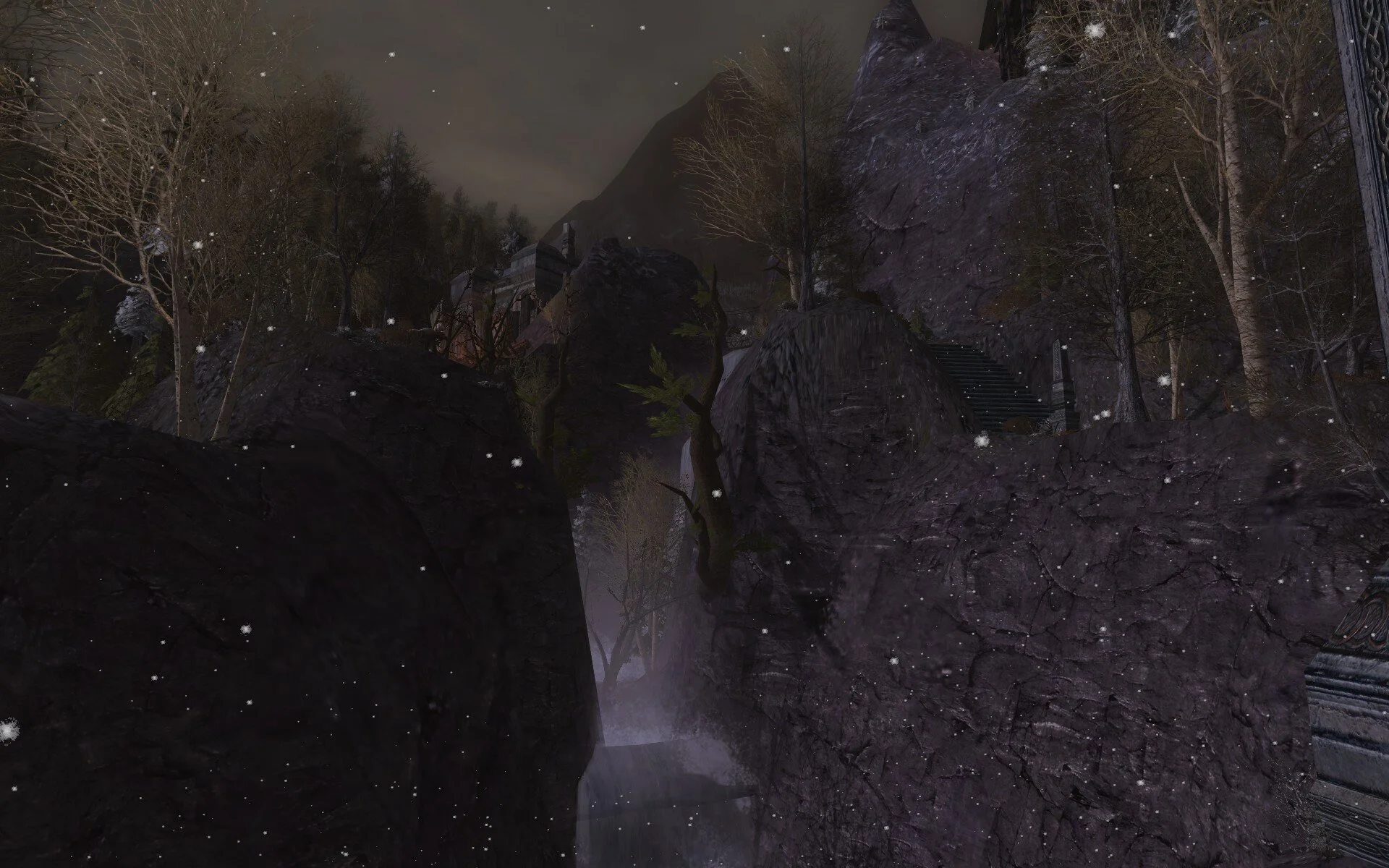
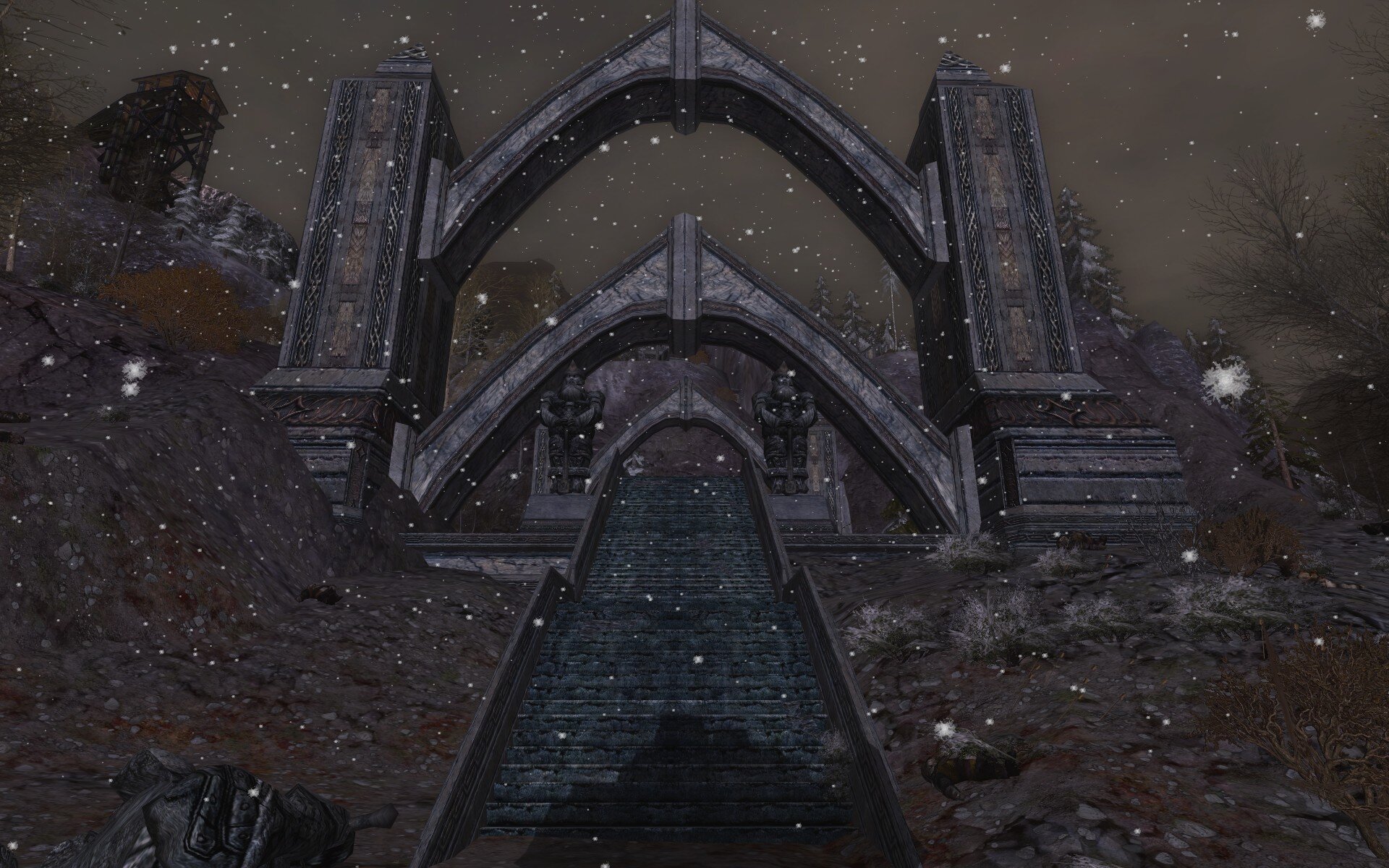
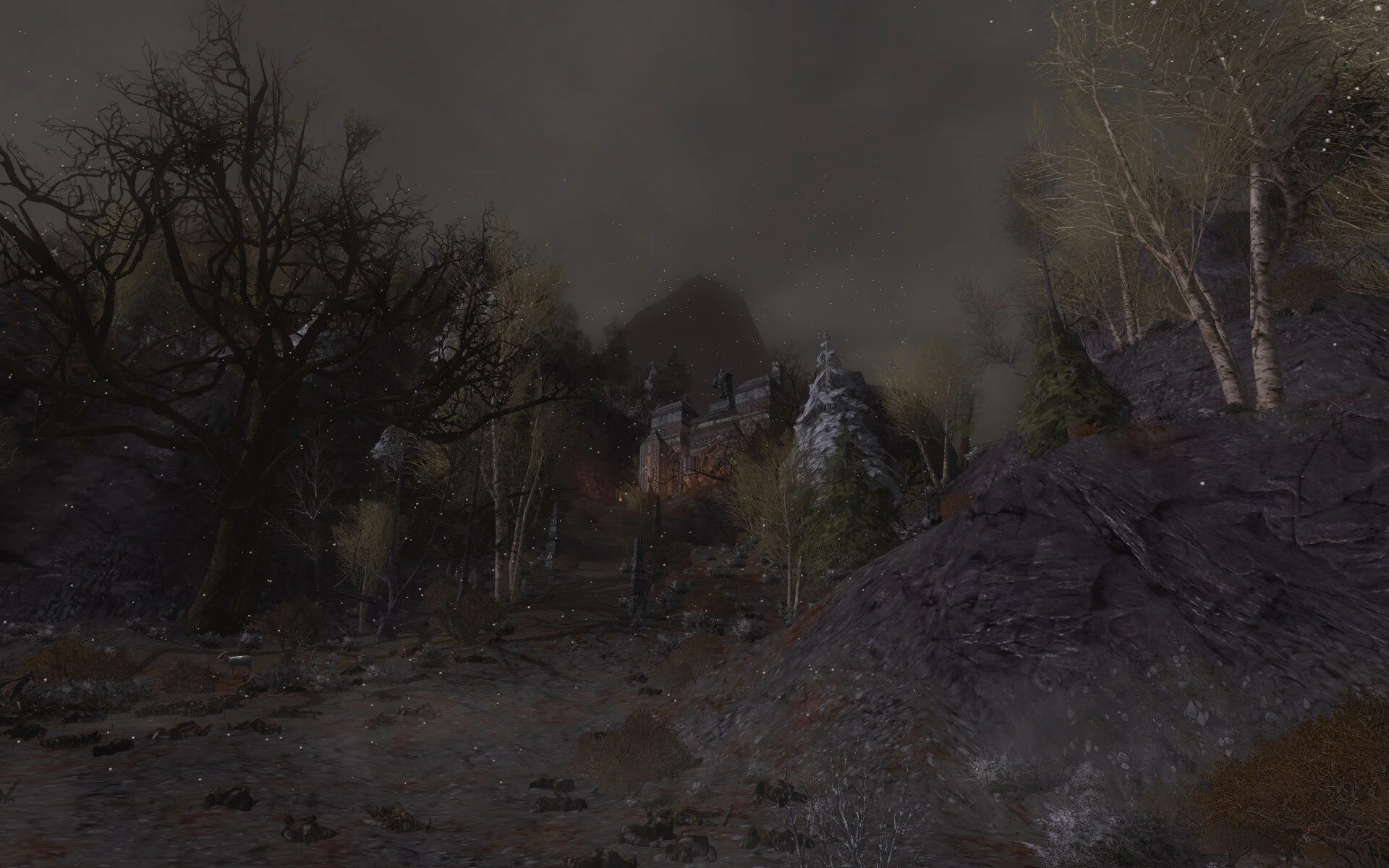
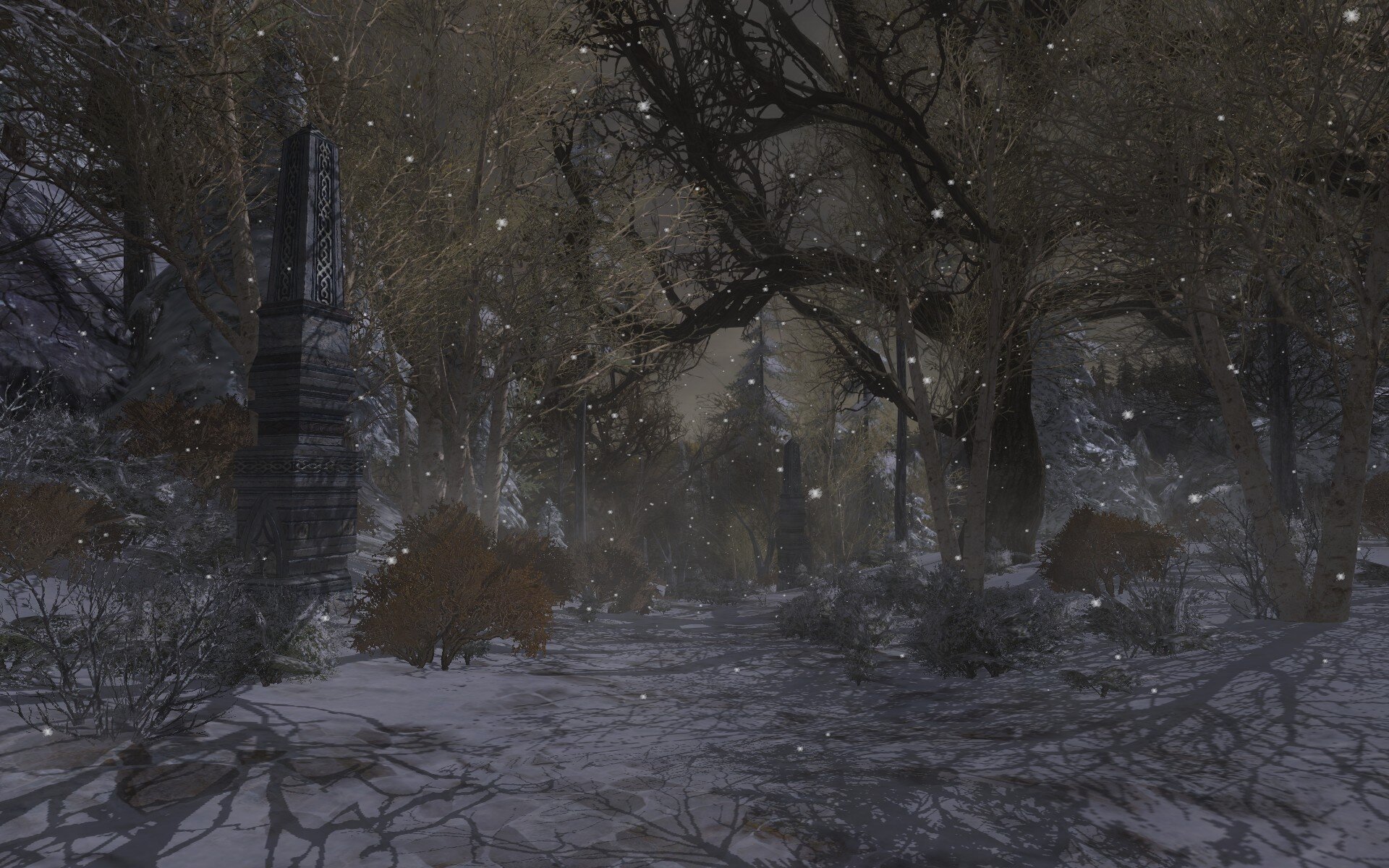
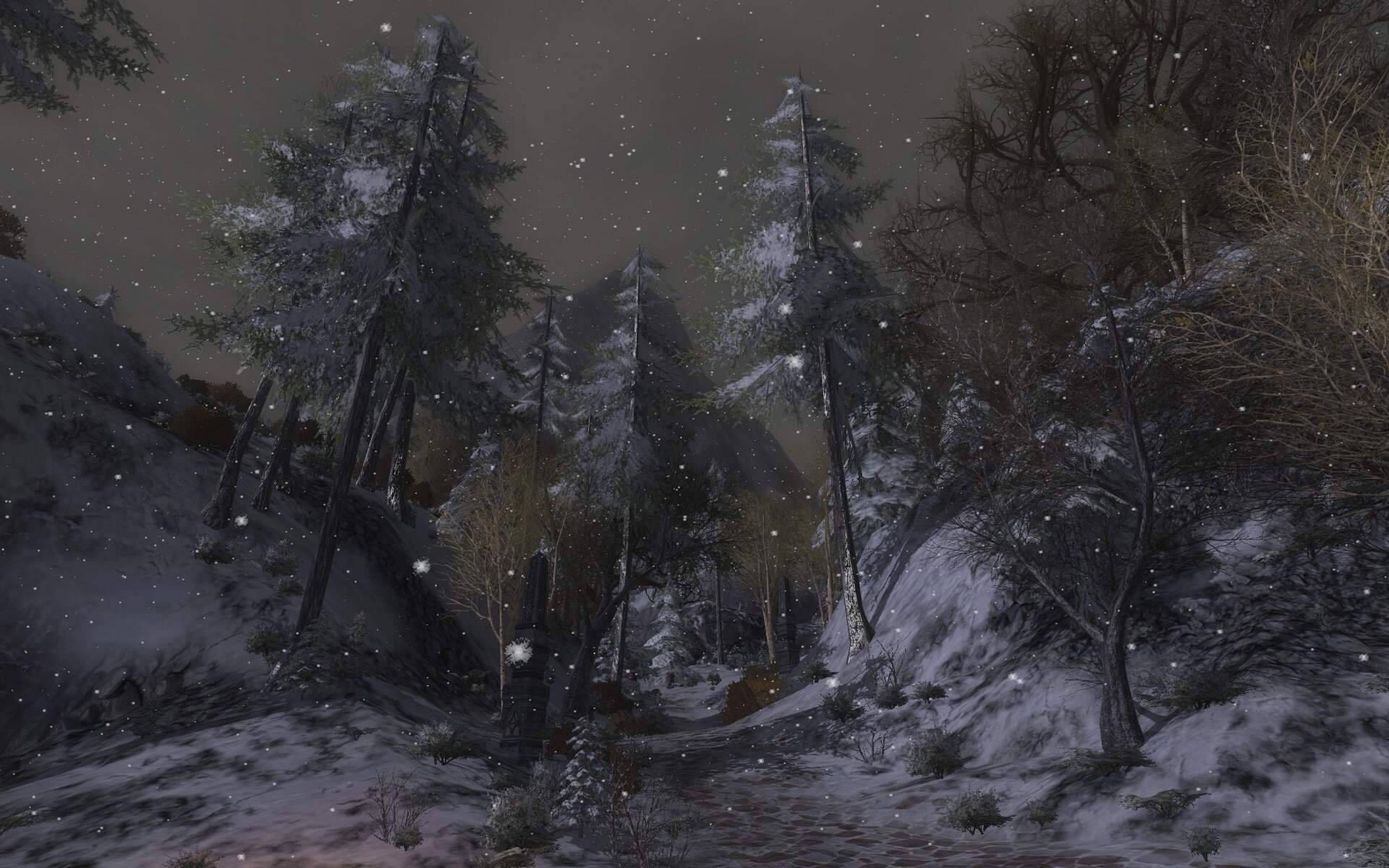
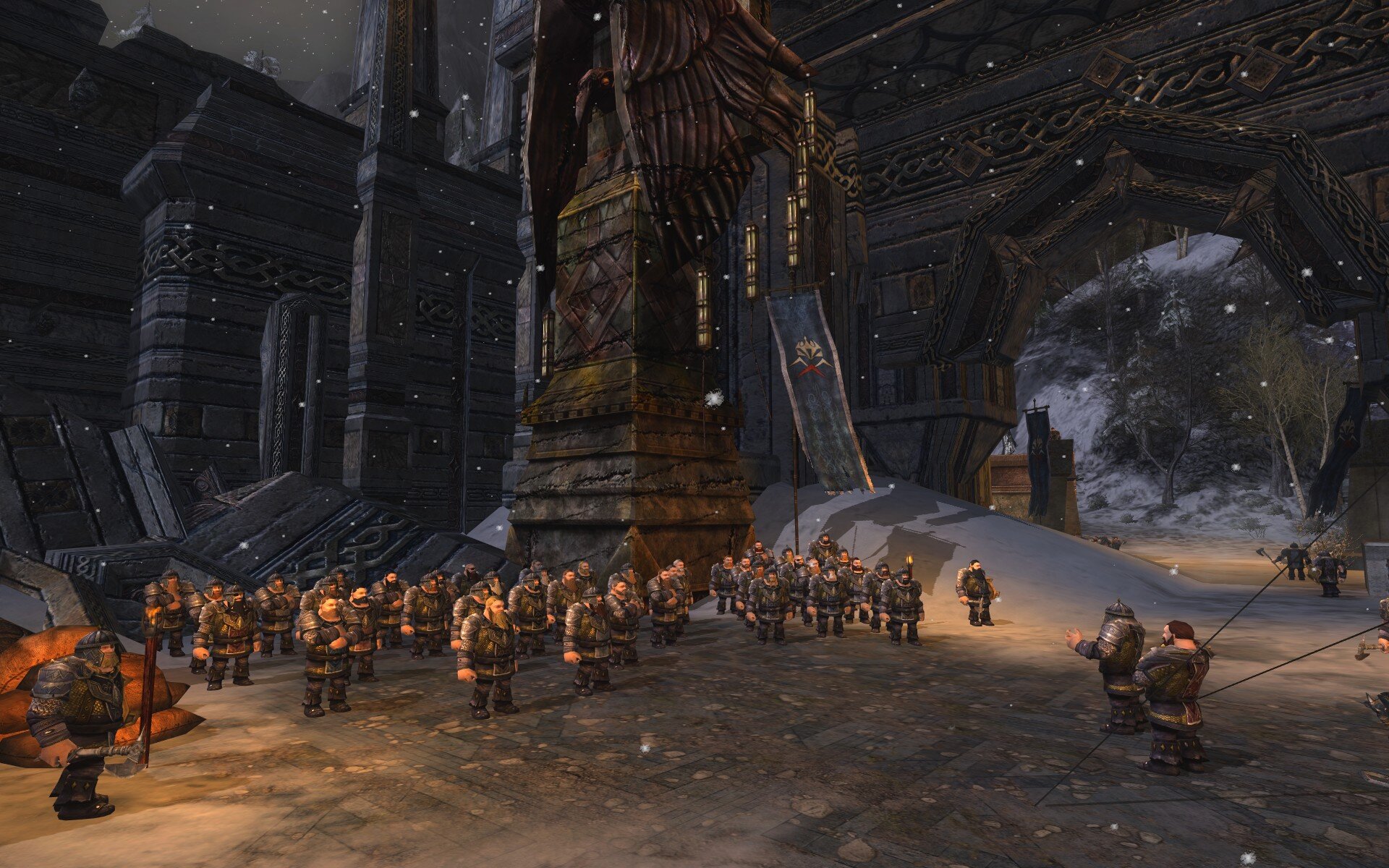
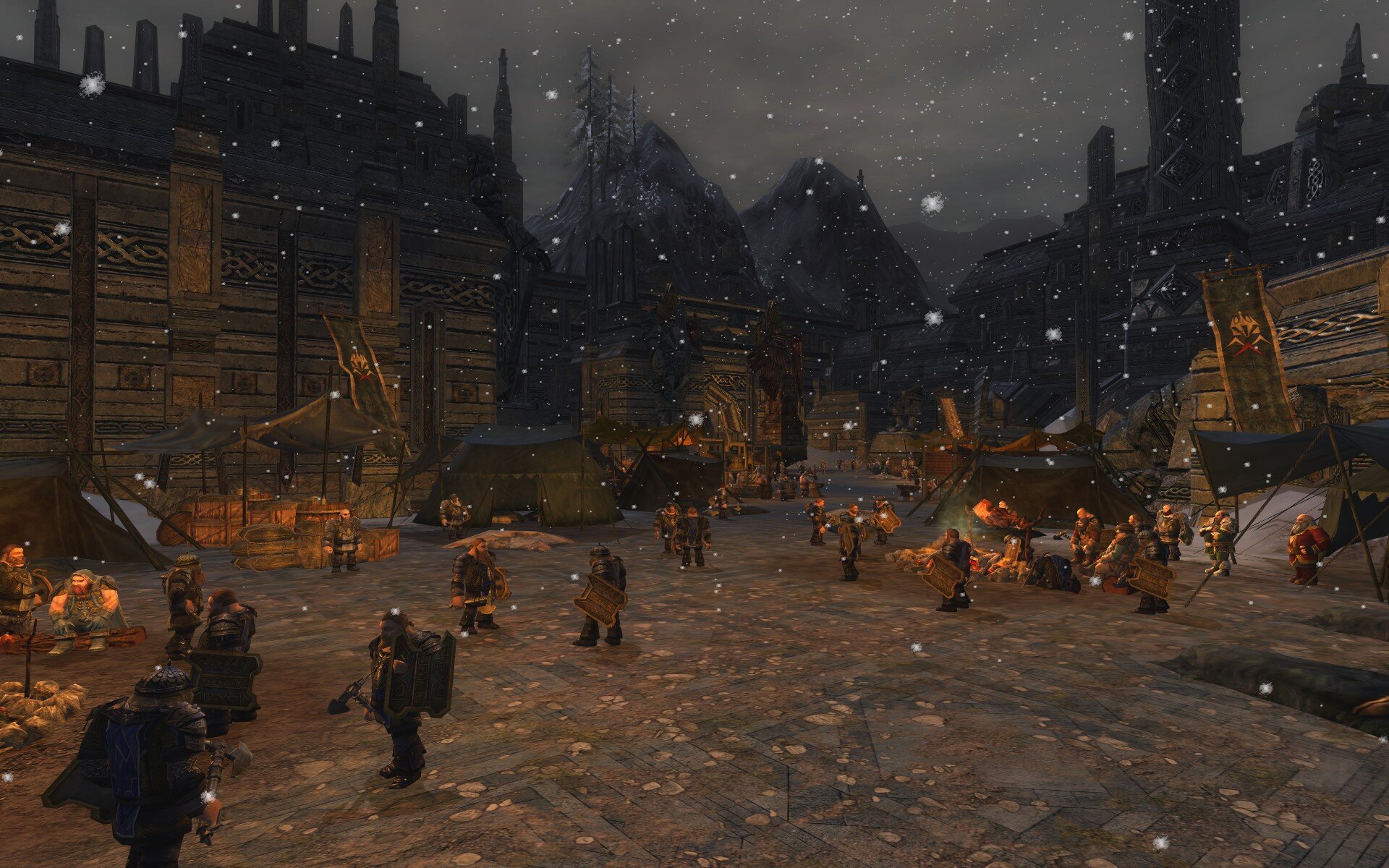
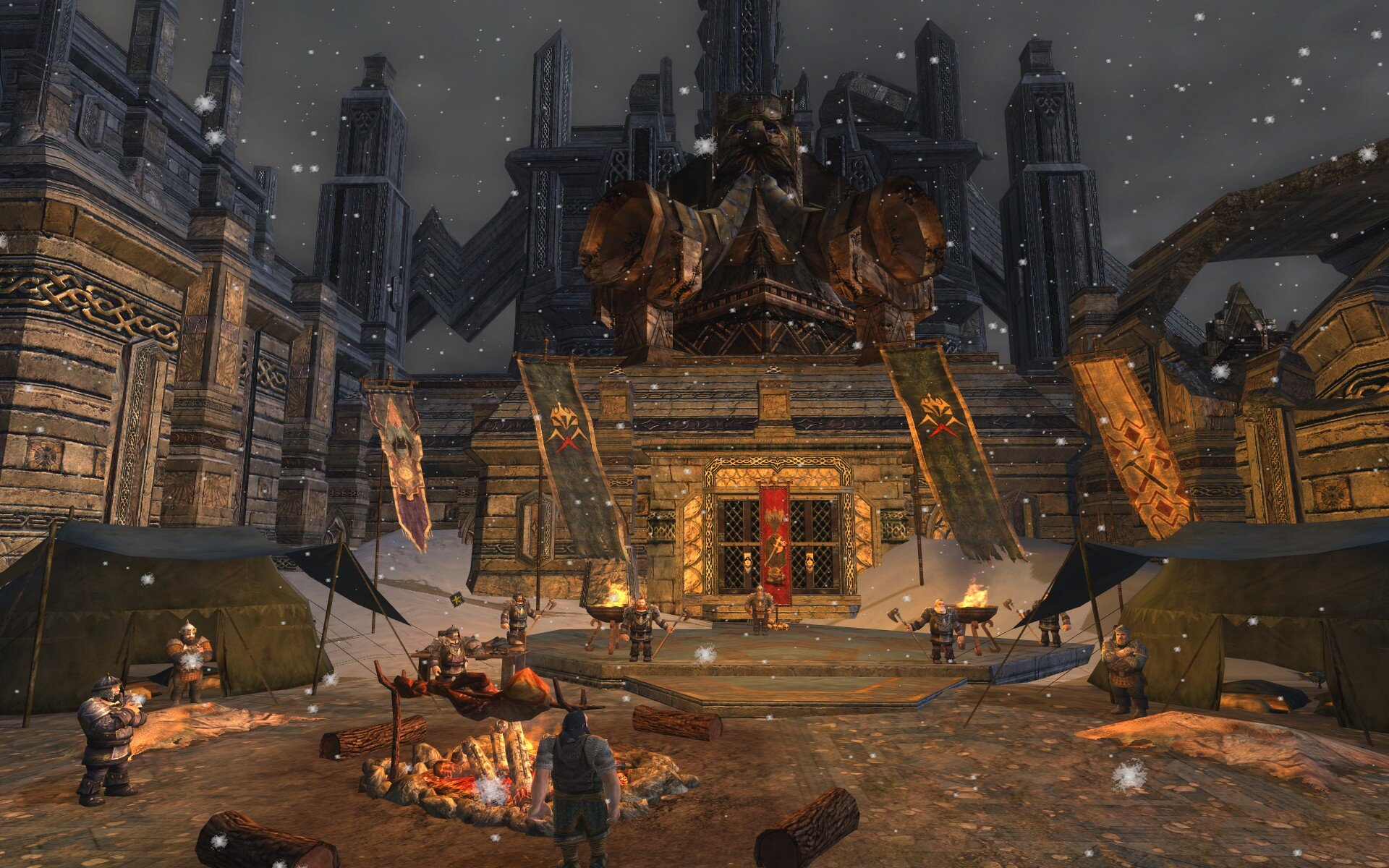
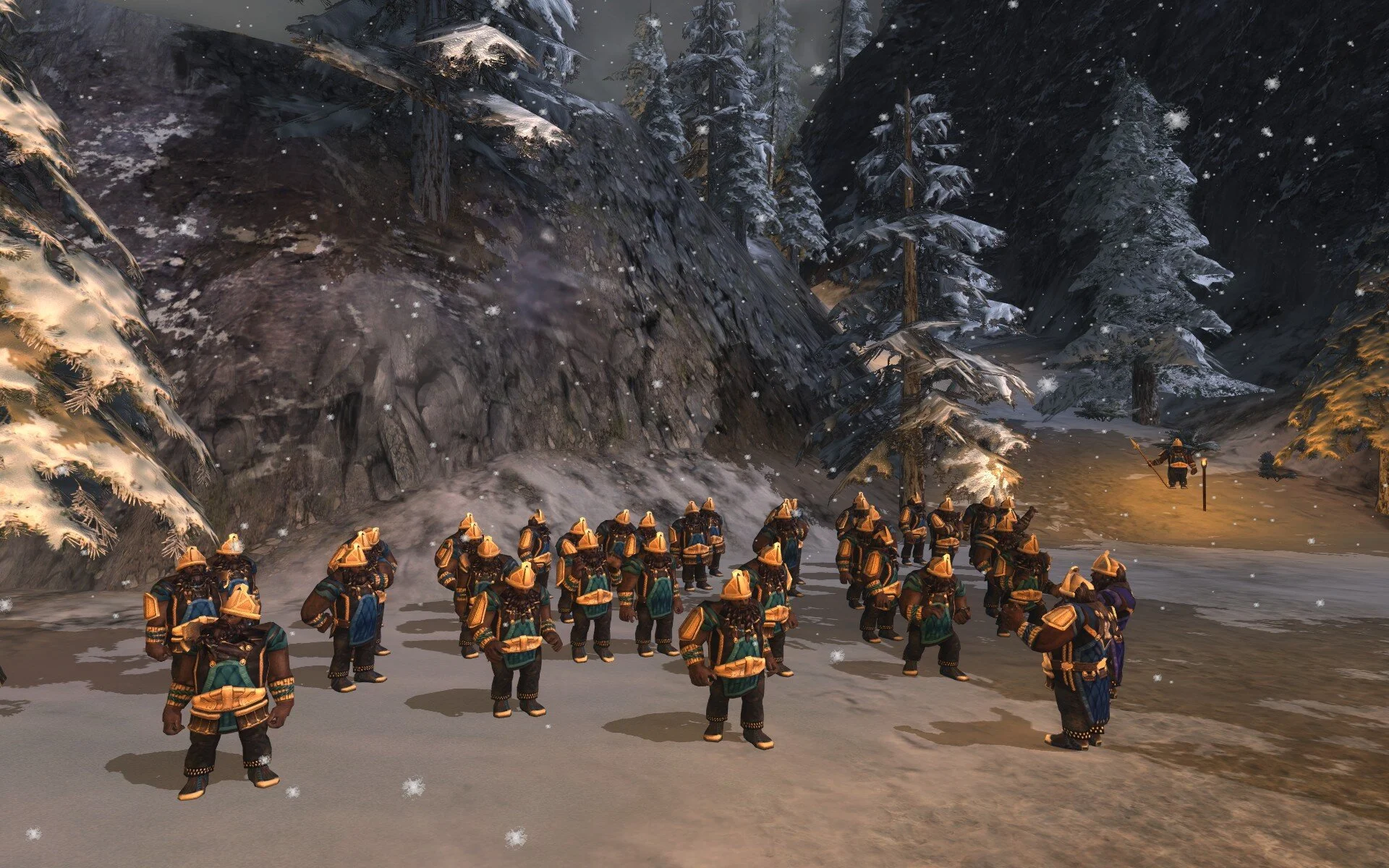
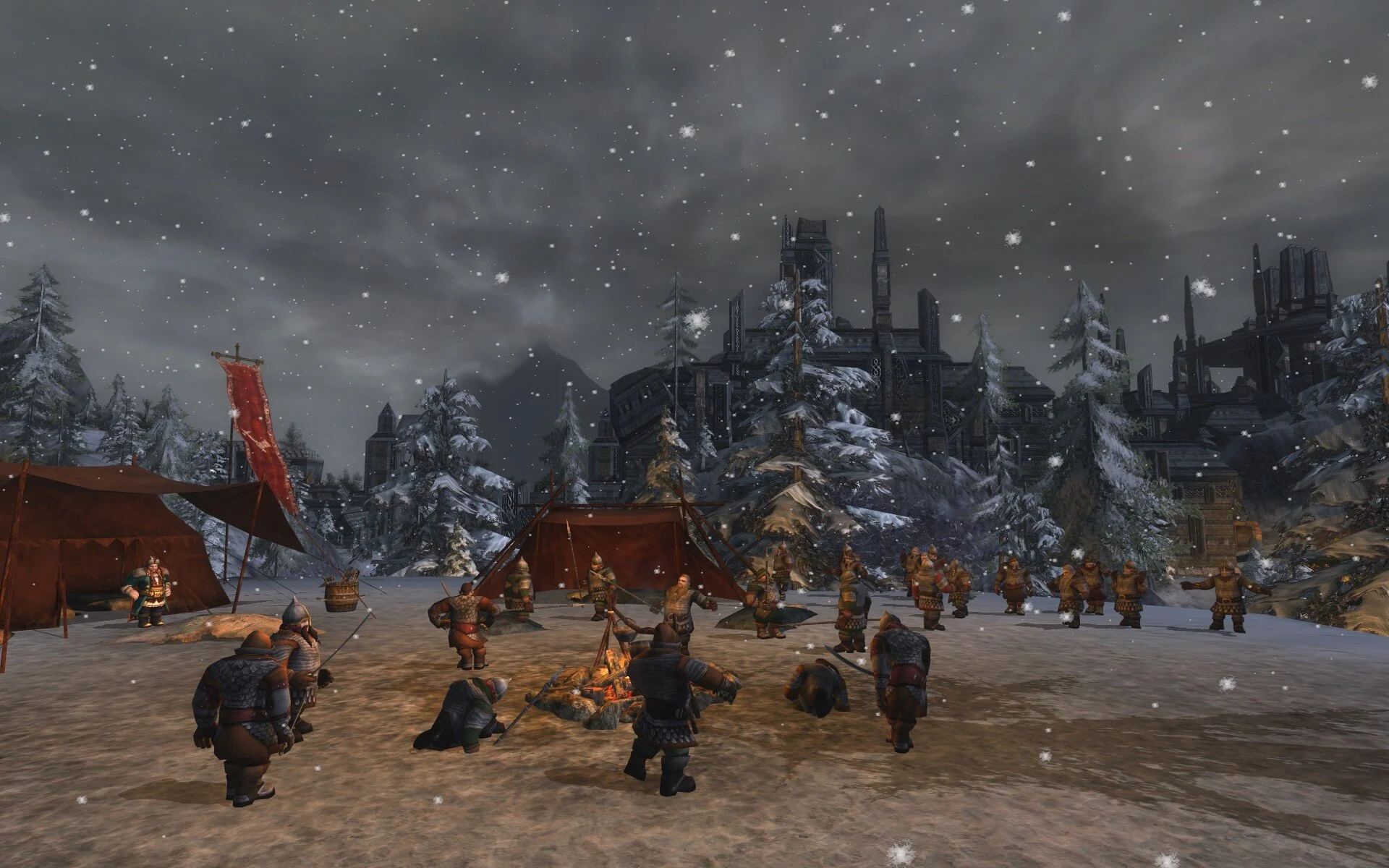
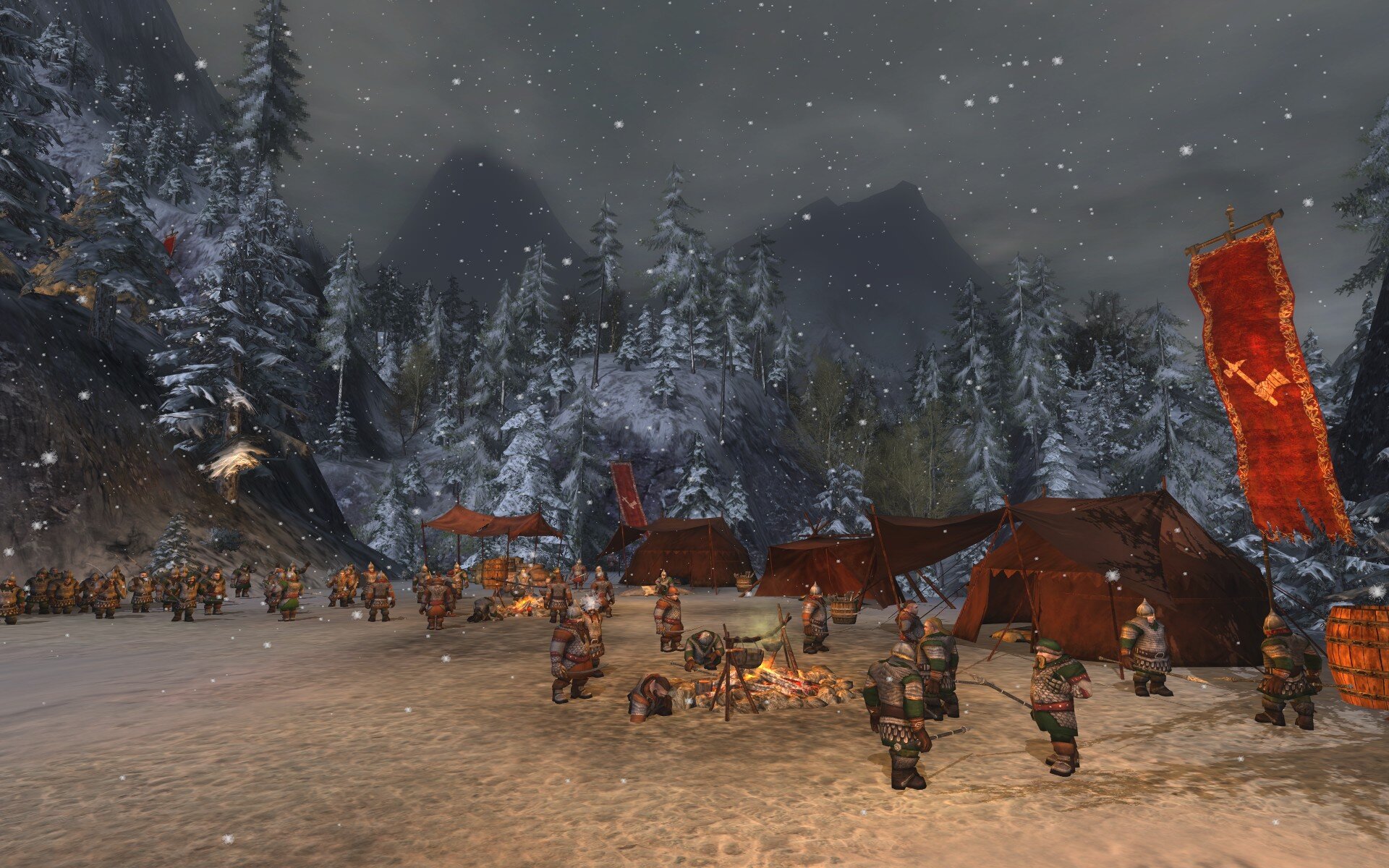
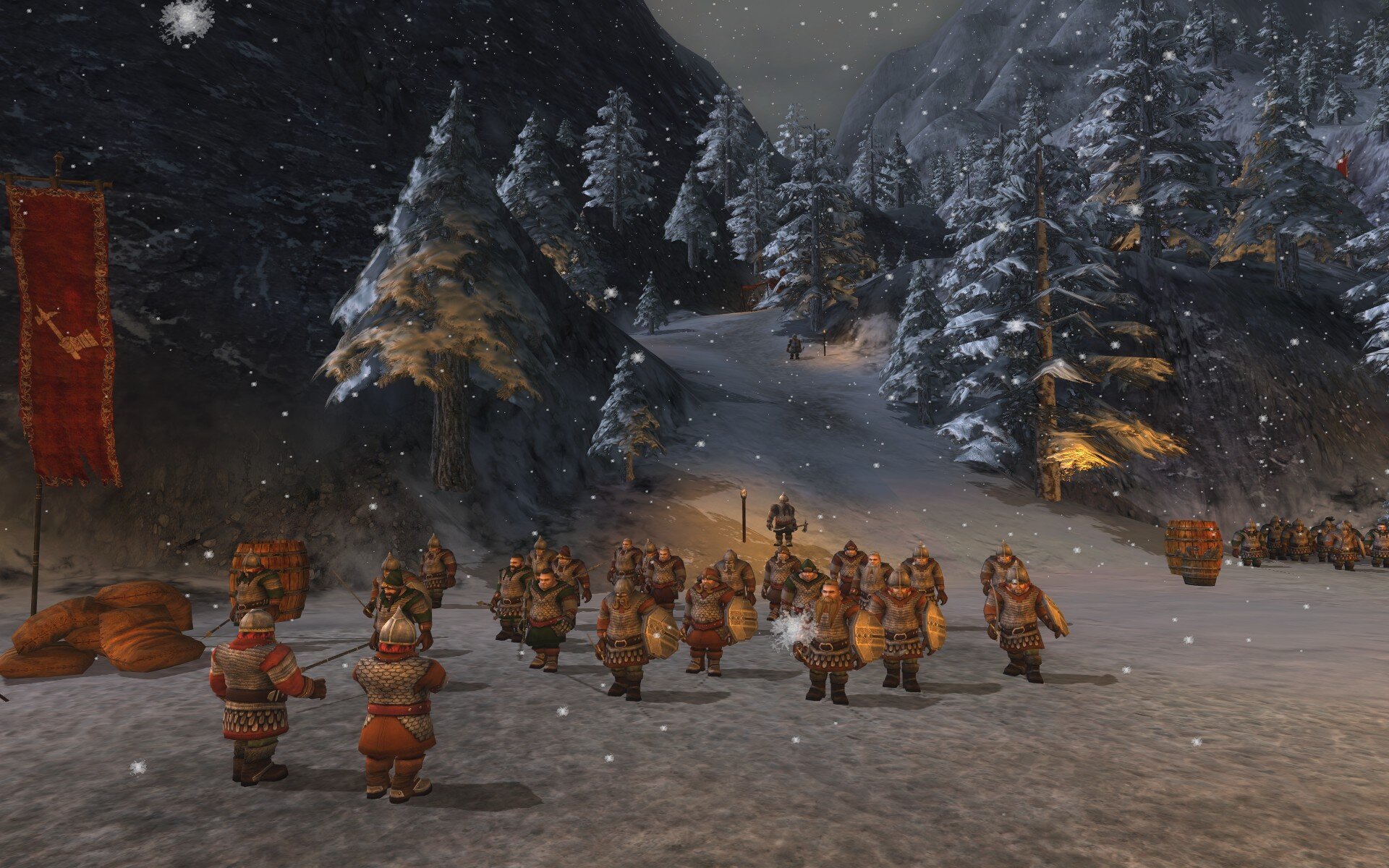
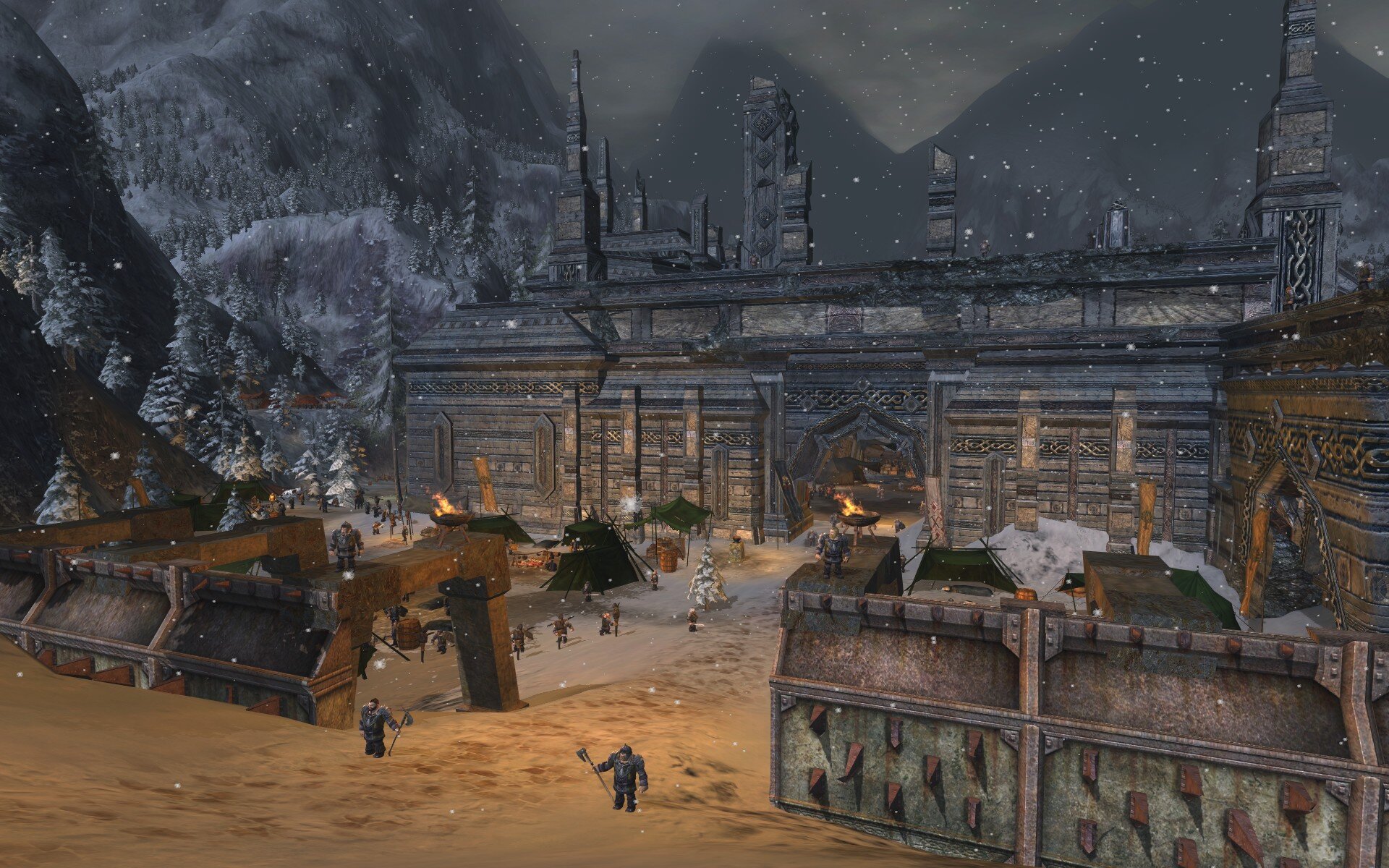
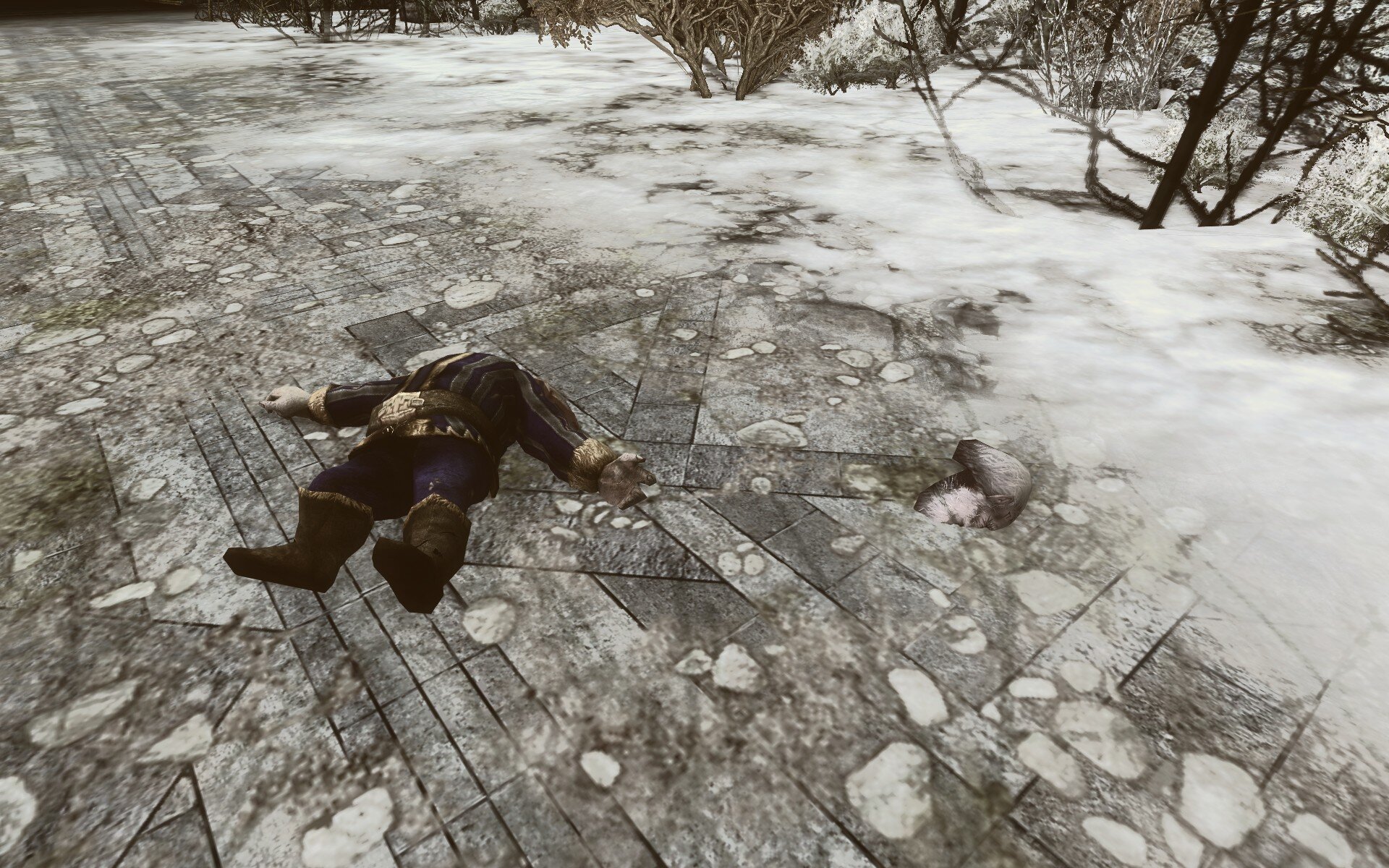
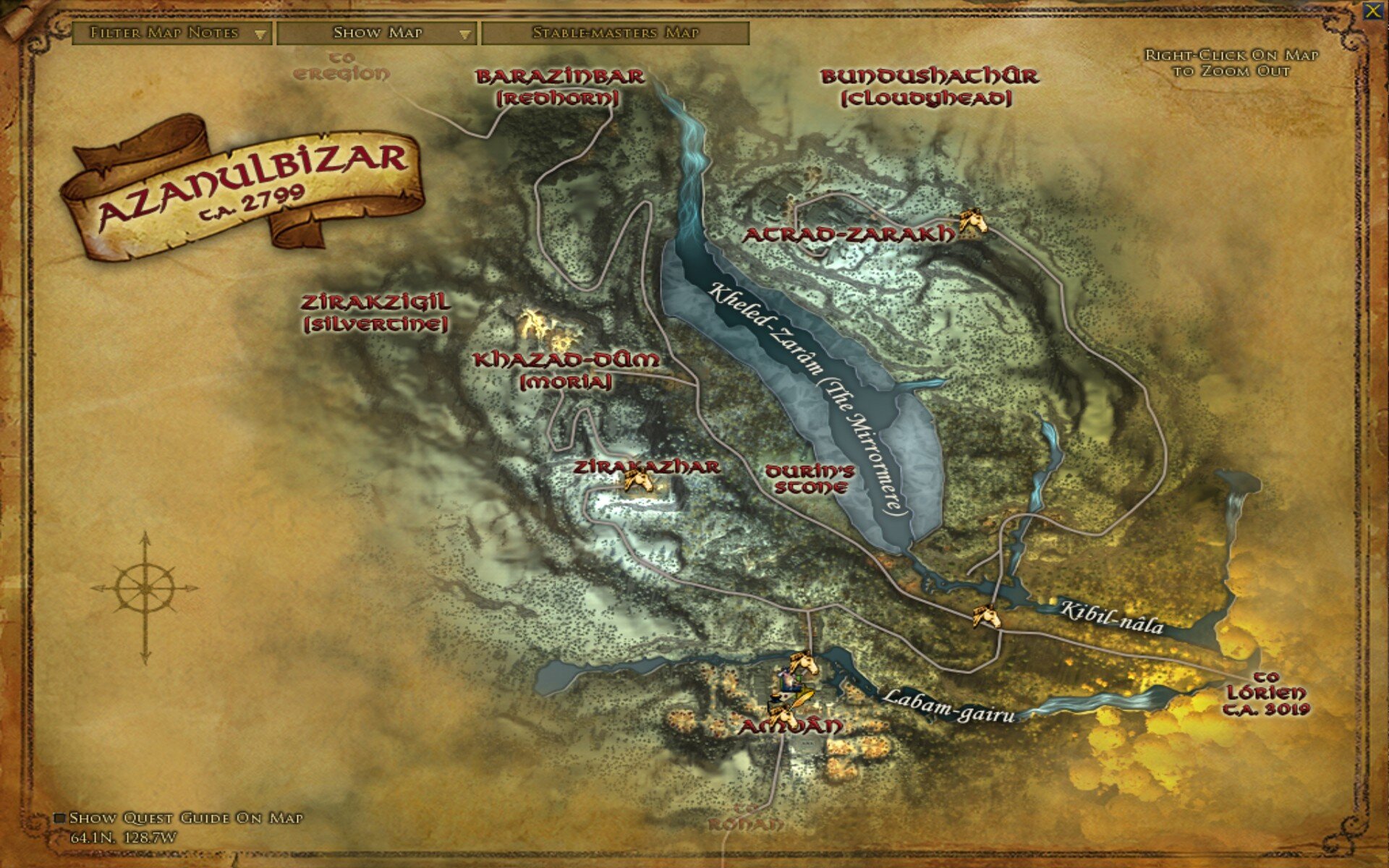
As I am not part of an active raiding guild, I specifically logged on to Bullroarer to look at the next instalment of the main story. Prince Durin is unhappy with the escape of Gorgar, son of Bolg and the sealing of the gates of Mount Gundabad by Hrímil Frost-heart. He is keen to launch a further assault against his foes, however Glóin hopes that a lesson in history might temper the Prince’s plan. Hence through a clever narrative contrivance, the player experiences the Battle of Azanulbizar in 2799 of the Third Age, through the eyes of Hermáth Stormhammer, a hero of Durin’s Folk. Effectively this is like Mordor Besieged in Update 25 Minas Morgul. This revised map of Dimrill Dale is a cold and harsh zone where the snow falls heavier the higher you climb toward Moria and the Redhorn Pass. As well as PVE quests there are also missions set in Azanulbizar (T.A. 2799).
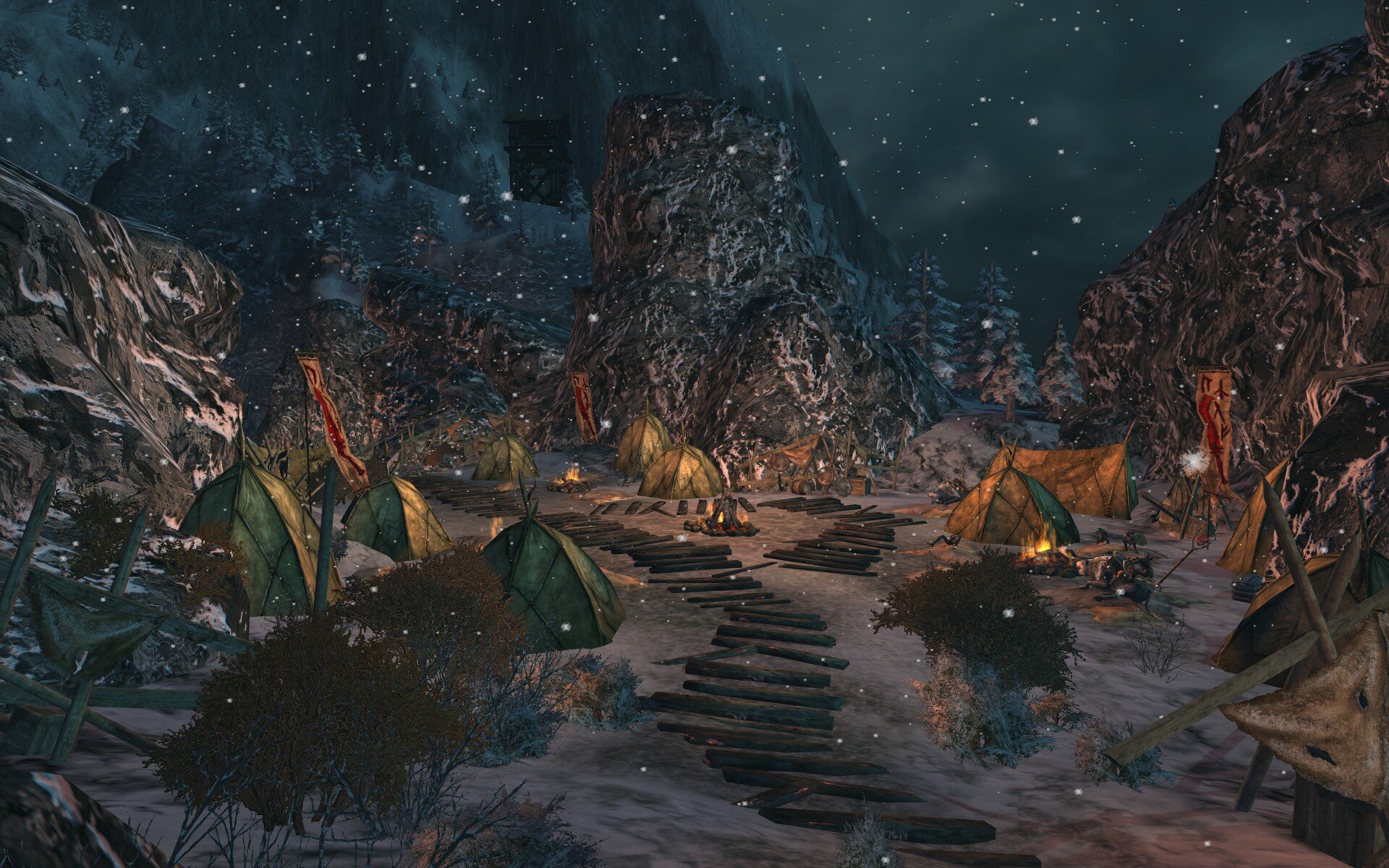
The new zone extends from the Misty Mountains in the North West to the borders of Lorien in the South East. The entrance to Khazad-dûm is heavily fortified by Azog’s Orcs. A central road runs diagonally through Dimrill Dale, running parallel to the Mirrormere. A further two paths can be found hugging the mountain walls on either side of Dimrill Dale. There are six Dwarven camps in the area, four of which have stables. The major camp is Amdân to the South, on the road that leads to Rohan. You will find Dwarves of many different clans here. Within a short distance of all of these Dwarven camps there are comparable Orc fortifications, which block the roads. There are ongoing battles between both factions in strategic places such as Zirakazhar and Atrad-Zarakh. There are a few wild animals such as wolves, bears and birds in the area. Attempting to pass through the Orc encampments is problematic due to mob density.
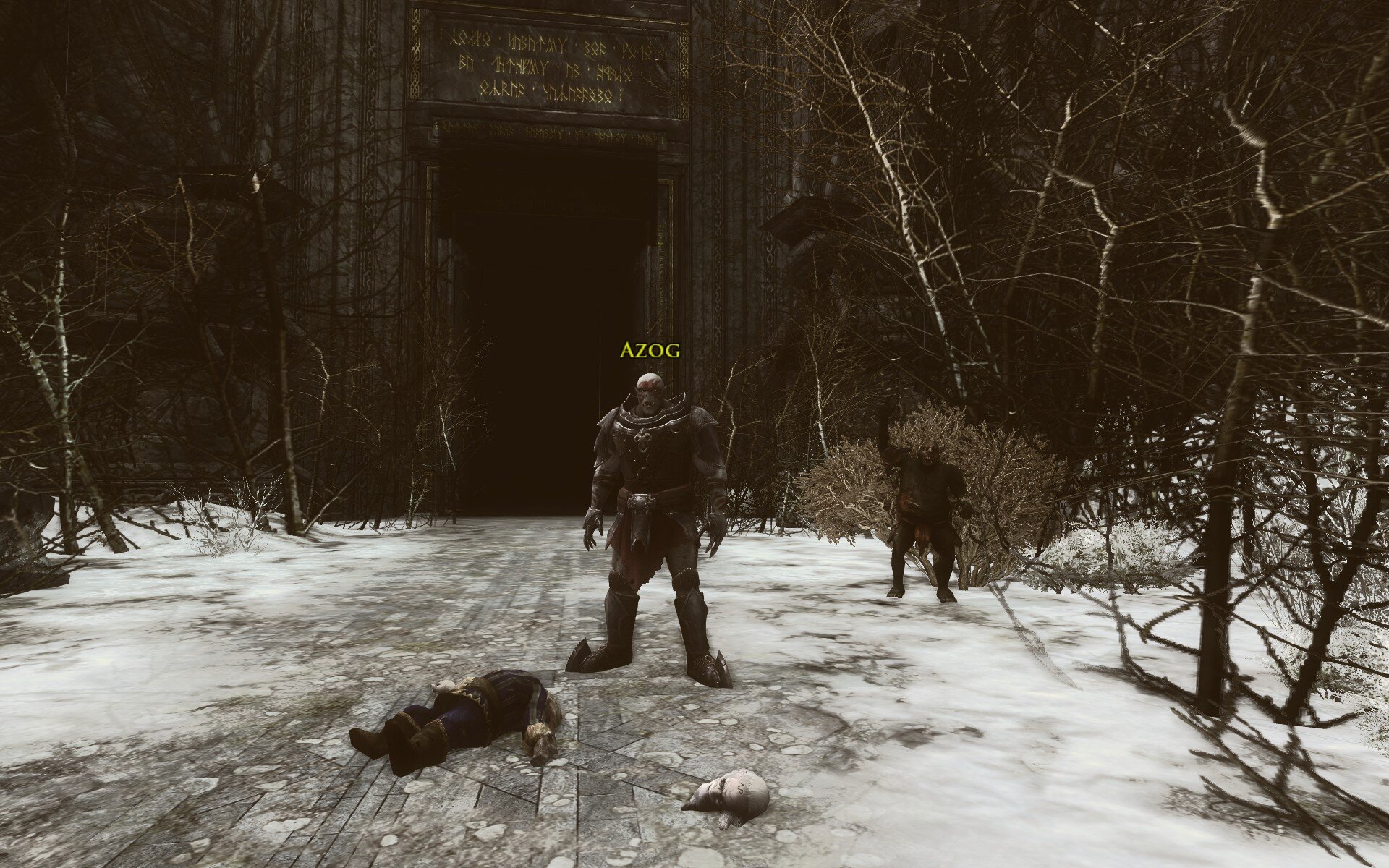
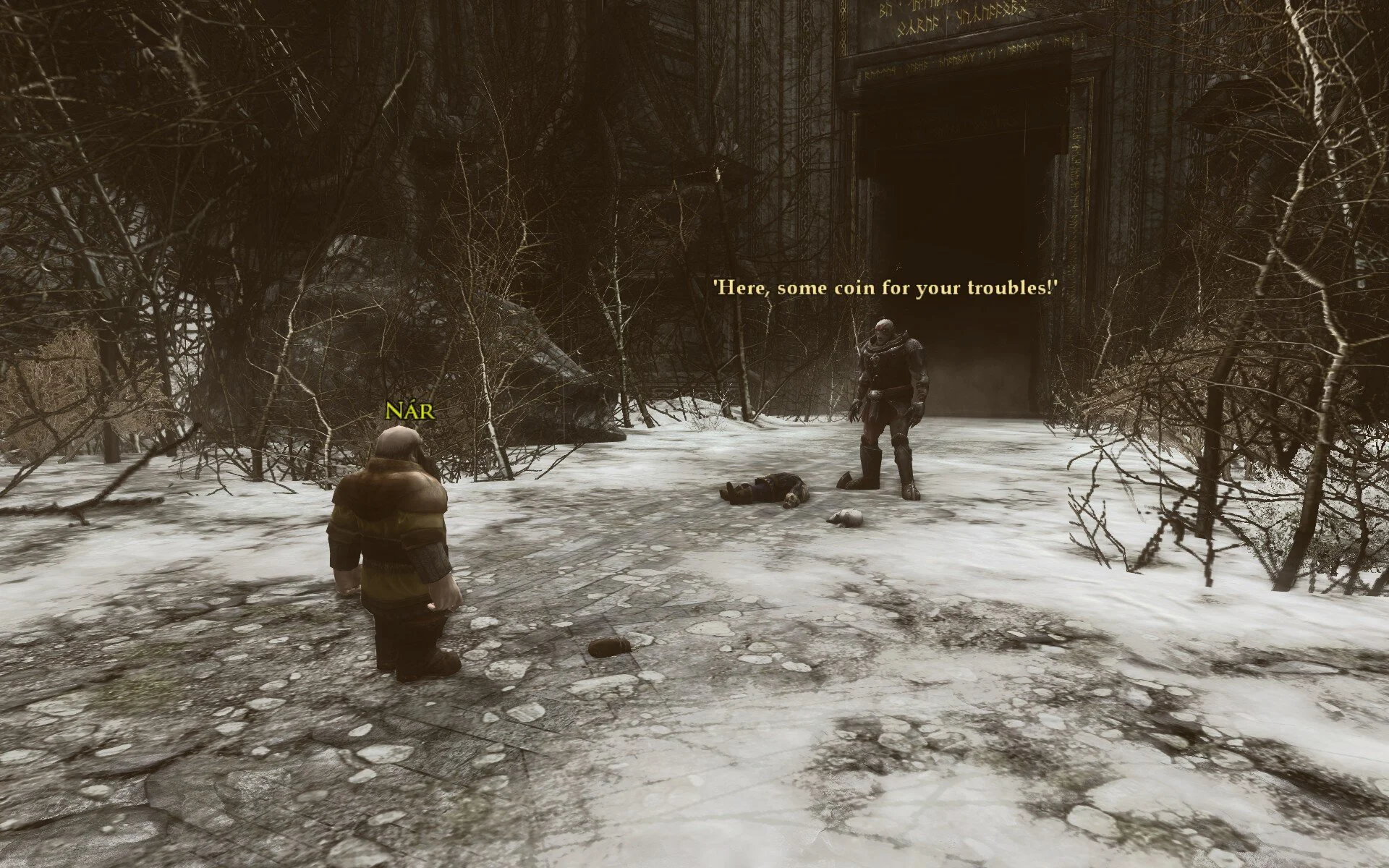
As ever, the new zone has a great atmosphere and a suitably rousing soundtrack. There is a rather good preface to the new area in which we witness the history of Thror and Nár and their ill-fated quest to reclaim Khazad-dûm. Thror meets a suitably unpleasant fate at the hands of Azog which then leads to the Sixth War of the Dwarves and Orcs. I tend not to play too much content during these Bullroarer previews but from what I’ve seen the PVE quests are structurally very similar to those in the previous mini expansion. I’m sure that SSG will supply a good story as ever but I am concerned that many of the quests will be repeatable and of the “kill so many things” variety. There will naturally be a new reputation faction to complete and barter rewards. From what I’ve seen, Update 30 The Blood of Azog seems to be standard new LOTRO content. That is not a value judgement but a statement of fact. SSG continues to follow their established formula.
The Alts We Do Not Level
There are many factors that can add to an MMORPGs replayability. Multiple races, classes and factions can all potentially offer a new experience to the player. Some games even have unique stories associated with different types of characters, ensuring that rolling a new alt means that the player doesn’t repeat material they’ve already completed. Many gamers enjoy this aspect of the genre and will experiment with different builds, resulting in a character selection screen filled with numerous alts in various states of progress. However, irrespective of whether you get to experience a new story or if you indeed like the new character you’ve created, there comes a point when you look at your new alts progression and reflect upon the long, long journey to level cap. It is at this point that many alts fall by the wayside. The aforementioned character selection screen is often populated with unfulfilled potential.
There are many factors that can add to an MMORPGs replayability. Multiple races, classes and factions can all potentially offer a new experience to the player. Some games even have unique stories associated with different types of characters, ensuring that rolling a new alt means that the player doesn’t repeat material they’ve already completed. Many gamers enjoy this aspect of the genre and will experiment with different builds, resulting in a character selection screen filled with numerous alts in various states of progress. However, irrespective of whether you get to experience a new story or if you indeed like the new character you’ve created, there comes a point when you look at your new alts progression and reflect upon the long, long journey to level cap. It is at this point that many alts fall by the wayside. The aforementioned character selection screen is often populated with unfulfilled potential.
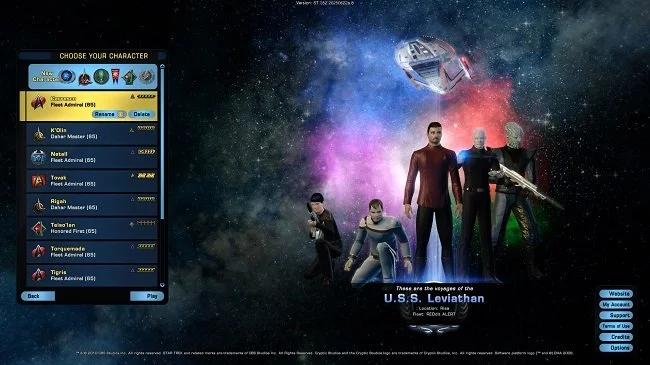
Some MMOs make levelling a new alt a relatively easy experience. Star Trek Online is very generous with experience points and a player can level a new character to level cap (65) over a weekend if they’re diligent. The Elder Scrolls Online similarly does not make levelling an alt to 50 a chore. Dolmen farming in the Alik’r Desert is an expedient alternative to playing through story content. The Lord of the Rings Online is a horse of a different colour and even though much of the early content in the game has been streamlined for fast levelling, progression can slow down once the player arrives in Rohan. At present the biggest levelling bottleneck is Mordor, which has a massive change in difficulty compared to previous content. However, MMOs are not just about the journey to level cap. As and when you arrive there is the issue of obtaining appropriate gear. Depending on the game this may mean working your way through various reputation progressions to get your hands on what you need or spending a fortune on the auction house. Further reasons why so many alts never arrive at cap.
However, many game developers have a “solution” to these levelling issues. Rather than seeing a mid level alt, languishing in the doldrums as an indictment of their game design, they prefer to interpret it as a business opportunity to sell the player a boost to level cap. Needless to say, such “services” divide the player base. Some see this as a convenience and a way to quickly get a new alt to level cap without the grind. Others see it as a game breaking anathema and a personal slight against their entire life and value system. And then there are those who don’t really give a shit either way. More often than not, if an alt has been abandoned then there are usually good reasons for it. It’s play style may not be to our taste or it may have failed to meet our expectations. Perhaps we didn’t like the associated story. Whatever the reason, once sidelined, abandoned alts are seldom returned to.
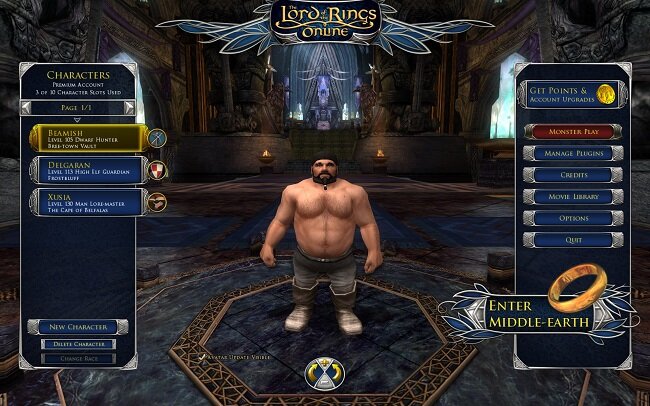
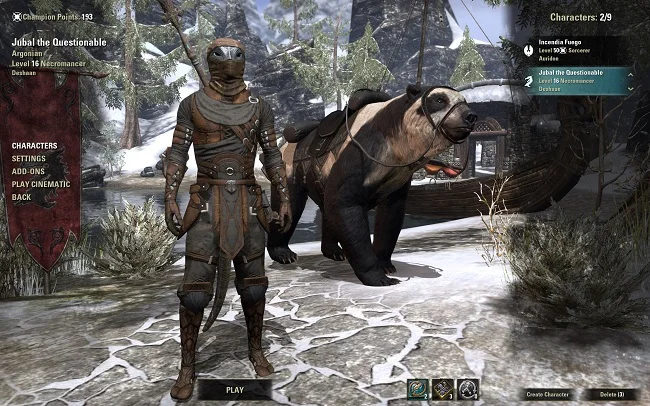
So what of my superfluous alts? Well I tend not to have that many. Once I find a class in an MMO that I like, I tend to go all in and focus on it. However, I do from time to time experiment. Currently in ESO I have an Argonian Necromancer, who is just kicking his heels in Shadowfen. I decided to create a new Dragonkinght and take them through the game’s entire story in narrative order. Hence the Necromancer got sidelined. In LOTRO my Dwarf Hunter is loitering around the crafting hall in Bree. Crafting eventually became too complex and so he remains a fixture next to the forge, doomed to stay at level 105. However, things are more fortunate for my new Gorn Captain in STO. He is permanently stationed in the Vlugta Asteroid Field, mining and refining Dilithium ore. It may not be the most glorious of destinies but it beats not being used at all. Such is the fate of the alts we do not level. What do you do with yours?
LOTRO: Password Reset for Dormant Accounts
Here’s a nugget of information that passed under the radar, or at least it passed under mine. The following post appeared on the official LOTRO forums last week regarding resetting password on dormant player accounts. “As part of our effort to keep people's game accounts secure we have reset the passwords for all game accounts that have not been logged into in more than two years. Your game account and all of its data remains intact! In order to log in, you will need to reset your password through the Forgot My Password? reset procedure. To further help protect your account, we also recommend that you regularly update your password details, and never share your password with anyone. If you need further assistance, please contact Account Support”. Cordovan (Community Manager).
“Is it secret? Is it safe?”
Here’s a nugget of information that passed under the radar, or at least it passed under mine. The following post appeared on the official LOTRO forums last week regarding resetting password on dormant player accounts. “As part of our effort to keep people's game accounts secure we have reset the passwords for all game accounts that have not been logged into in more than two years. Your game account and all of its data remains intact! In order to log in, you will need to reset your password through the Forgot My Password? reset procedure. To further help protect your account, we also recommend that you regularly update your password details, and never share your password with anyone. If you need further assistance, please contact Account Support”. Cordovan (Community Manager).
I am not directly affected by this situation as I regularly log in to The Lord of the Rings Online, regardless of whether I am actively playing or not. I do so to take screen captures for posts, check on new content added to the game or to see if there have been any messages left by kinship members. However, I know lots of people who have not logged into the game for 24 months but do not consider themselves “done” with the game. From a players perspective, two years may not seem like an especially long period of time to be absent from LOTRO. Real world events may mean that they can’t play at present or they may be awaiting a specific expansion or some new content. However, from a game developer’s point of view, an account that has been inactive for two years is not only not playing the game but not spending money. Such data must be very telling and certainly must give SSG food for thought.
Dormant, not Dormouse…
I understand why SSG has decided to reset the passwords on such accounts from a security perspective. But I also think that this situation presents a golden opportunity to do some proactive public relations work and marketing. In the past Cryptic, developers of the MMORPG Star Trek Online, would email players with dormant accounts and offer them incentives to return to the game. This would sometimes be a rare ship that wasn't available elsewhere. I’m not sure how effective this approach was but you would see these unique ships in-game and know that it belonged to a returning player. Would it really be too much to ask for SSG to adopt a similar approach and to offer an incentive to those players who have drifted away from LOTRO to return? Alternatively, if targeting lapsed players is too controversial (as there would naturally be complaints from some current players), why not run a welcome back event with benefits available to all? As ever with LOTRO and SSG, such obvious ideas remain conspicuously absent.
LOTRO to End Support for Windows XP
"The Lord of the Rings Online will be deprecating support for Windows XP and earlier operating systems as of June 8th, 2021. All of your characters and progress will remain, and you can continue to play the game by running LOTRO on a Windows 7 or newer operating system. Players who need to can contact Account Support at help.standingstonegames.com. Thank you" Cordovan. If my time working in IT has taught me anything, it’s that once someone has found a computer setup that works for them and that they’re comfortable with, they’ll move heaven and earth to keep it. Not everyone is an early adopter. Not everyone upgrades just because an upgrade is available. Money is also a major factor. £100 may be a trivial amount to one person but a month’s wages to another. Bearing all this in mind, it is fair to say that not everyone upgrades their hardware or software willy-nilly. Hence it is not unusual to find PC’s running Windows XP in peoples homes.
"The Lord of the Rings Online will be deprecating support for Windows XP and earlier operating systems as of June 8th, 2021. All of your characters and progress will remain, and you can continue to play the game by running LOTRO on a Windows 7 or newer operating system. Players who need to can contact Account Support at help.standingstonegames.com. Thank you" Cordovan. If my time working in IT has taught me anything, it’s that once someone has found a computer setup that works for them and that they’re comfortable with, they’ll move heaven and earth to keep it. Not everyone is an early adopter. Not everyone upgrades just because an upgrade is available. Money is also a major factor. £100 may be a trivial amount to one person but a month’s wages to another. Bearing all this in mind, it is fair to say that not everyone upgrades their hardware or software willy-nilly. Hence it is not unusual to find PC’s running Windows XP in peoples homes.
However, Microsoft officially ended support for Windows XP on April 8th, 2014. So I am quite surprised that Standing Stone Games has still been supporting LOTRO on this operating system for so long after it was formally retired by the manufacturer. Considering there have been four further iterations of Windows since XP, SSG are certainly justified in their decision to draw a line under this particular version. Certainly, if the game is to evolve and have the graphical upgrade that has been suggested, along with a port to the current generation of consoles, it cannot be restricted by a requirement to run on older hardware and software. I doubt if they’ll do it but I would be very interested to know exactly what percentage of LOTRO players are still running the game on this operating system. I suspect it may be more than what many people think.
This raises the question as to what players affected by this change will do. A license key for Windows 10 can cost anything from £35 to £140. There are deals to be had from grey market vendors if you search online. However, if you have a PC that came with Windows XP installed, it will be between 12 and 20 years old. Are the hardware specifications of such systems going to cope with the latest iteration of Windows 10? If so, the need to upgrade an operating system could end up as a need to buy a new PC. Will people do that just to play LOTRO? Linux enthusiasts will happily inform anyone with a pulse that it will run on an abacus and that it also supports LOTRO. But not everyone wants to go down such an alternative route. In the meantime, I’ll be keeping an eye on the LOTRO forums to see what sort of feedback this announcement generates and how supportive SSG are of those affected by this imminent change.
LOTRO: Five Things I Do Not Use Anymore
I logged into The Lord of the Rings Online today and started sorting through my inventory and vault on my primary character, which is a level cap Lore-master. After 14 years and a great deal of change, it’s hardly surprising that an MMO such as LOTRO generates so much bric-a-brac and superfluous items. Much of which is obsolete or only of use for a very short period of time while levelling. Much of this junk is linked to wider systems and mechanics in the game that are no longer relevant or at the least are no longer as important to the game as it has grown and expanded. In fact, off the top of my head, here are five aspects of LOTRO that were a big deal at one point during the games lifecycle (indeed some were major selling points) but now are not essential as you progress through the game. Certainly they don’t necessarily have any major bearing upon the average LOTRO player (follow the link for a discussion about this particular definition) with an alt at level cap.
I logged into The Lord of the Rings Online today and started sorting through my inventory and vault on my primary character, which is a level cap Lore-master. After 14 years and a great deal of change, it’s hardly surprising that an MMO such as LOTRO generates so much bric-a-brac and superfluous items. Much of which is obsolete or only of use for a very short period of time while levelling. Much of this junk is linked to wider systems and mechanics in the game that are no longer relevant or at the least are no longer as important to the game as it has grown and expanded. In fact, off the top of my head, here are five aspects of LOTRO that were a big deal at one point during the games lifecycle (indeed some were major selling points) but now are not essential as you progress through the game. Certainly they don’t necessarily have any major bearing upon the average LOTRO player (follow the link for a discussion about this particular definition) with an alt at level cap.
Mounted Combat, War-steed and War Wolf. I can remember when the Riders of Rohan expansion was being touted by then developer Turbine and the concept of mounted combat was referenced as being the alleged Holy Grail among players. All I could think of at the time was that I hadn't asked for it. When it finally arrived it was clunky, with steering your War-steed especially difficult with heavier mounts. For some classes, being on horseback was utterly absurd and far from fun. But what cannot be cured must be endured, so many players just got on with it. However once the expansion was completed I and others never touched this mechanic ever again. Hence I have never bought any further cosmetic items for my War-steed because why would I do that for something I don’t use? My only regret is that I didn’t get much use out of the War Wolf companion that the Lore-master gets through traiting in a specific fashion.
Cosmetic Items. I’ve said it before and I will say it again and again. Cosmetic outfit options for the Lore-master class in LOTRO are very limited. You can either look like Ming the Merciless or Rick Wakeman during his cape fetish era from when he was in Yes. Neither look appeals to me. Despite the fact that the developers added the ability to wear non-class related items cosmetically, a long time ago, there is precious little that looks sartorially appropriate for the Lore-master. So after finding about three outfits that I can live with, I don’t believe I’ve altered my primary alts appearance for over half a decade.
Landscape Soldier. Due to power creep and finally having obtained some good quality gear, I no longer use my Landscape Soldier any more in LOTRO, unless there is a unique situation that requires it. PVE content is manageable (to say the least) and introducing a third party after my pet is unnecessary as far as I can see. Plus, due to their chaotic AI and poor handling, Landscape Soldiers are an extremely blunt tool. Considering how useful (and fun) companions are in Star WarsThe Old Republic as well as your away team in Star Trek Online, it’s a shame that LOTRO got saddled with such a less versatile equivalent.
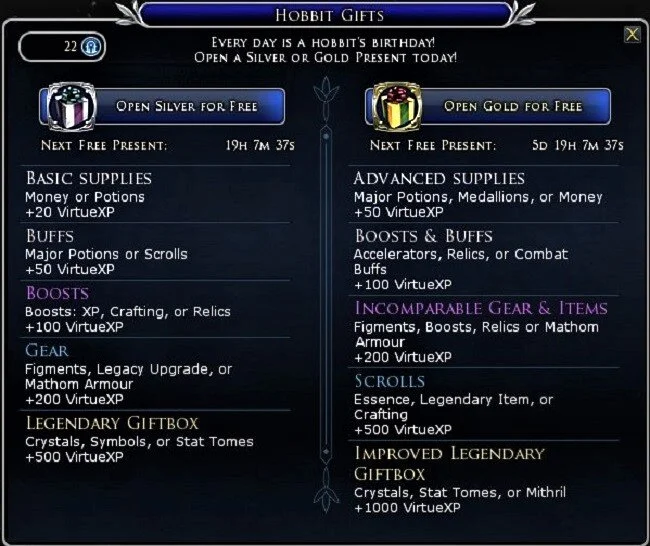
Food, potions and other consumables. For most PVE content in LOTRO, my current stats are sufficient to see me through. Occasionally an instance may require a boost of some kind. If that is the case, the consumables that come from Hobbit Presents will do the job. Older iterations of food, potions and such like become obsolete rather quickly due to the speed of levelling and it is easy to clutter your bag with items you don’t need. For me and the manner in which I play LOTRO at, these items are not required. Raids are a different matter but again, is that really an issue for the average LOTRO player?
Crafting. Most of the people that I know who craft regularly in LOTRO, do so for pleasure. They enjoy the process as a relaxing experience. Crafting used to be quite a lucrative activity as well. Sadly, the crafting system in the game today is bloated, so those who have kept up to date and reached the required level of competence can just about stay on top of it and create gear for themselves. You simply don’t see much low level crafted gear on the auction house anymore. I will craft during the early levels of the game as it can provide a good additional source of XP. But sooner or later, it becomes too much of an unwieldy mechanic to maintain. Again, for a player such as I, avoiding crafting at the endgame is not in any way an impediment. Good gear is available elsewhere in her game.
Now I fully expect many people reading this to disagree and extol a contrary opinion. That’s fine with me if that is the case. In some respects it means that you’re getting more value out of this ageing MMORPG than I am. However, I’m sure I am not unique in my outlook. Perhaps the longevity of LOTRO is indeed part of the problem, along with a development team that always has more work than staff. Hence, older reputation faction currencies are left to languish in player’s barter wallets, effectively worthless beyond their designated level. The enjoyment of fishing becomes somewhat strained by level cap and the other hobbies touted to be added to the game remain conspicuously absent. I live in hope that Standing Stone Games will address these issues but I suspect that as time goes by yet more items will be added to the list of “things I do not use anymore”.
LOTRO: EG7 Community Update
Last December EG7 announced that it had purchased Daybreak Game Company and its portfolio. It subsequently became apparent that DGC was not just the publisher for Standing Stone Games but in fact their owner. Something that many players had suspected for a while. After an investor briefing was published, it became clear that EG7 were not just another corporate body out to asset strip and make a fast buck but were in fact genuinely interested in growing and improving the games that they now owned. For players of the MMORPG The Lord of the Rings Online, a wave of cautious optimism spread throughout the community. Hints at a graphical overhaul for the game and a potential console conversion were well received. Further news and specific details have been eagerly anticipated.
Last December EG7 announced that it had purchased Daybreak Game Company and its portfolio. It subsequently became apparent that DGC was not just the publisher for Standing Stone Games but in fact their owner. Something that many players had suspected for a while. After an investor briefing was published, it became clear that EG7 were not just another corporate body out to asset strip and make a fast buck but were in fact genuinely interested in growing and improving the games that they now owned. For players of the MMORPG The Lord of the Rings Online, a wave of cautious optimism spread throughout the community. Hints at a graphical overhaul for the game and a potential console conversion were well received. Further news and specific details have been eagerly anticipated.
Yesterday, EG7 published a press release as well as a YouTube video, in which CEO Robin Flodin discusses what the company has been doing for the last 4 month in relation to its current portfolio of games. The written statement is somewhat broad in its scope and conciliatory in its tone. Robin Flodin uses a lot of management speak. That is not necessarily a bad thing. We all use the terminology of the industry that we work in. However, it is far from vague and does indicate how EG7 see their role and what their future remit is. “Many of these games, while successful and continually supported, have had their unique challenges. Many of these challenges are long standing and important, but due to their scope or other situations, haven’t been feasible to address. All of us want this to change”. He then further states “I want to assure you that this effort is a priority for me, EG7, and Daybreak. We have been listening to the community feedback and to all of your questions and concerns. This is an ongoing effort and as we make progress, the goal is to develop specific plans to create an even better game experience for all of our players”.
The video is a little more specific and proves illuminating as to the company’s policy and approach. Here Robin Flodin makes some direct comments about the company's intent. “We’re trying to make these companies better. We’re trying to help them improve in areas where we think we can create value”. He admits where they feel DGC has gone wrong which is a candid and unexpected statement of fact. He references mistakes made with the handling of H1Z1 and Planetside 2 and it would appear that the code for H1Z1 is currently being audited to see what can be done with it. Possibilities range from revamping the game and rolling it back to the iteration players liked best or to repurpose the code into another title. This is an interesting development because it shows that EG7 are not just going to arbitrarily dismiss and close games that they own. It would appear that they have a far more long term business mindset than DGC.
So what does this mean for LOTRO? Well both these statements, although not specific to the game, do inspire a degree of hope. It seems to me that EG7 see themselves as troubleshooters and facilitators who wish to invest, encourage and empower the various companies that develop their portfolio of games. The idea seems to be to foster improvement and growth, based on consumer feedback. If we are to take such policies at face value, the I think the most practical thing to do is to give EG7 a year and see if there are any noticeable changes. With regard to LOTRO let us see if they can encourage Standing Stone Games to be more innovative. I don't expect to see any major change in content design immediately but it is not unreasonable to expect a wider discussion about future development and an improvement in community relations from SSG.
EG7 doesn't strike me as corporate pirates. They seem to want to improve the titles they own and keep both customers and their investors happy. However, their position is very much one of enabling and supporting the existing developers. This approach is fine if the only previous problems a developer has experienced were a lack of funding and confidence from their owners. What concerns me with regard to encouraging and enabling SSG, is that they don’t strike me as being the most imaginative thinkers at senior level and appear to be somewhat entrenched in their views. Therefore there is still potential that they may steer LOTRO off a cliff if left unchecked. Perhaps what SSG requires is an injection of fresh talent and for LOTRO to be put in the hands of those who have a more aspirational view of its future potential. As ever, only time will tell but it is pleasant to have some hope in the interim.
A Month in Gaming
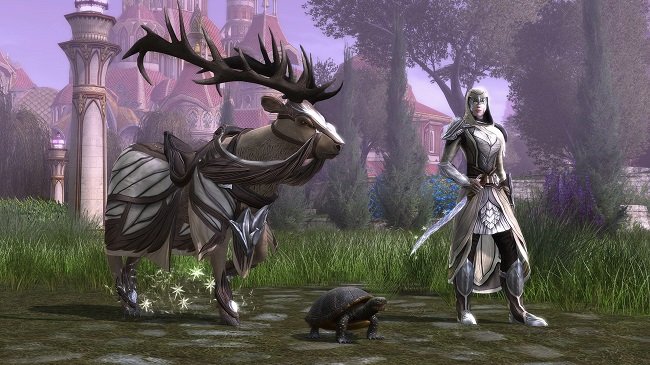
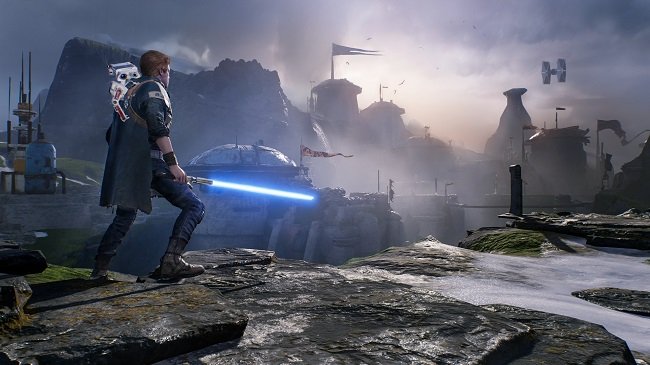
I usually write this recurring post at the beginning of each month, reflecting upon my gaming activities over the previous thirty odd days. I refrained from writing an instalment at the beginning of April as I really didn’t feel I had much to say. However, now that a further month has elapsed, I believe sufficient has happened for me to continue. I do worry that these posts get repetitive and simply writing “ I played MMO A or B” is not sufficiently engaging. Luckily, I do feel that I have more to say this time round as I’ve broadened my gaming horizons recently and feel that I’ve done more, compared to other months. So let me begin with my return to console gaming. Something I haven’t done since 1999 when I purchased a Sega Dreamcast. After some procrastination, I’ve finally bought a Nintendo Switch and it has proven quite a hit not only with me but my grandchildren.
I usually write this recurring post at the beginning of each month, reflecting upon my gaming activities over the previous thirty odd days. I refrained from writing an instalment at the beginning of April as I really didn’t feel I had much to say. However, now that a further month has elapsed, I believe sufficient has happened for me to continue. I do worry that these posts get repetitive and simply writing “ I played MMO A or B” is not sufficiently engaging. Luckily, I do feel that I have more to say this time round as I’ve broadened my gaming horizons recently and feel that I’ve done more, compared to other months. So let me begin with my return to console gaming. Something I haven’t done since 1999 when I purchased a Sega Dreamcast. After some procrastination, I’ve finally bought a Nintendo Switch and it has proven quite a hit not only with me but my grandchildren.
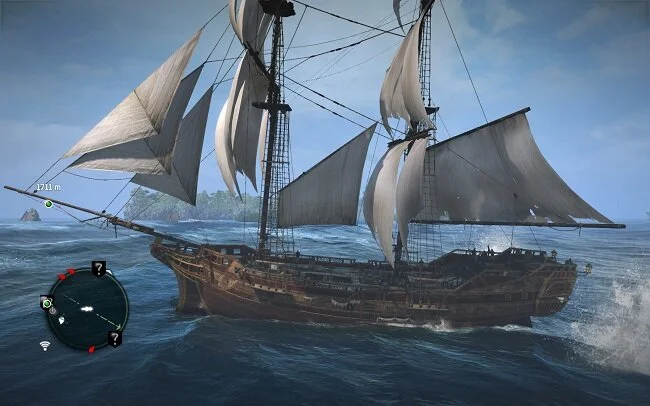
At present, I have three games for the Switch. Mario Kart 8 Deluxe, Yono And The Celestial Elephants and Assassin's Creed: The Rebel Collection. Essentially, any Mario based game is a joy to play and Mario Kart is an exemplar for the Nintendo brand’s virtues. It offers both fun and a challenge but it’s warm friendly graphics and inherent charm mollify the competitive elements that come with such a driving game. Yono is a A Legend of Zelda-esque adventure/puzzle game starring an elephant. Despite its child friendly aesthetic and design, there is a degree of depth to the gameplay. Due to it’s linear world design and narrative, it lends itself to short bursts of gameplay. Assassin’s Creed offers a different type of challenge, mainly because it requires mastering an action RPG using a controller, rather than keyboard and mouse. This is a very good port and I must admit I am impressed that the Switch can handle an open world environment so well.
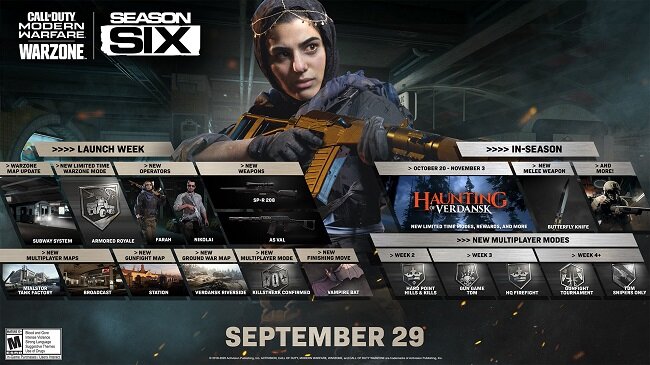
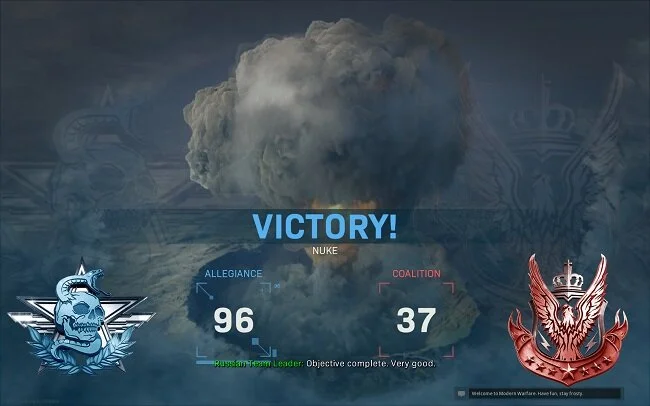
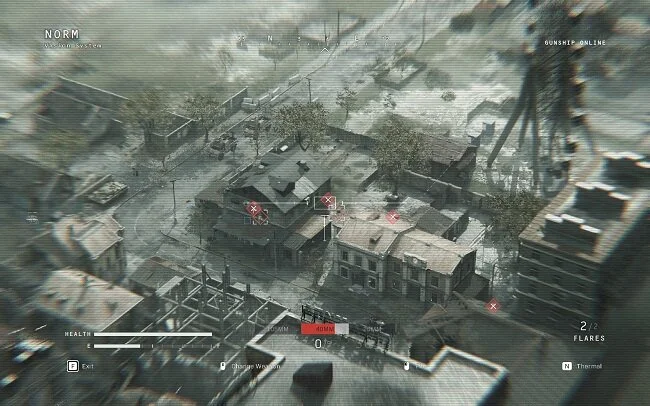
I returned briefly to Call of Duty: Warzone recently, mainly to see the new map of Verdansk. When the game launched in early 2020 the story associated with Warzone was linked to events tied to the 2019 soft reboot of Modern Warfare. But because CoD is a yearly franchise, a new iteration was released in September and story elements began being integrated into Warzone. The only problem being that Call of Duty: Black Ops Cold War is set in 1984 thus requiring the most tortuous and convoluted plot devices to square the ongoing narrative circle. From my perspective, bringing weapons from an older period into a game set in the present was problematic to say the least, causing balance issues. Furthermore the inclusion of Black Ops content brought zombies into the game. Hence Warzone is now a sprawling mess of differing types of gameplay. A recent nuclear blast has “conveniently” destroyed the contemporary iteration of Verdansk and replaced it with a version of the zone from 1984. Simply put I just don’t like the cumulative changes that have come to the game, so once again I’m taking a break from it.
Sadly, I have spent precious little time playing The Lord of the Rings Online, returning briefly to check out the latest content update which proved to be very disappointing. I do worry that this game is just treading water with regard to its growth and that developer’s Standing Stone Games are limited in the scope of their vision. The anniversary festival is currently live in the game but it really isn’t doing anything new. Yes, the various events can be fun if you are playing them for the first time but the various trinkets and baubles that you can obtain are purely cosmetic. If you are not enamoured with collectibles there is a substantial amount of content currently available that is of no interest or use to you. Furthermore, at present I own all the content available in LOTRO. Hence if there’s very little reason for me to subscribe to the game. I find it odd that SSG don’t seem to be offering any broader incentives to become a VIP.
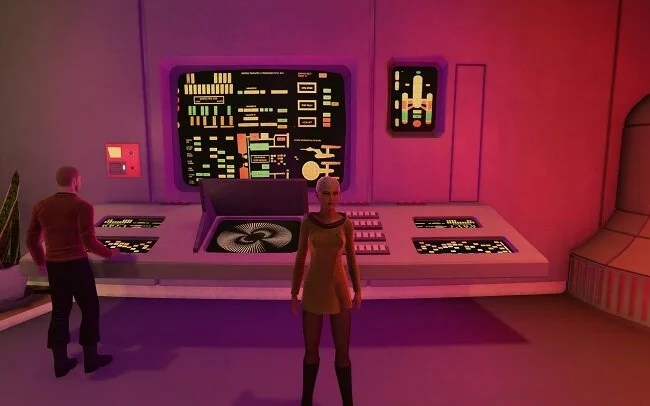
Star Trek Online, which has some similarities to LOTRO with regard to its age and the fact that it’s based on a popular intellectual property, seems to perpetually have events and goals for players to pursue. I created a new Klingon alt in late January due to the then recruitment event. By the end of March I had brought the character to level cap and had gotten as far as level 5 with all reputation factions. I also bought a Legendary D7 ship and have spent time trying to equip it with the best gear that I can. One of the best aspects of STO is that there’s always something to do. Since January the game has had the Klingon Recruitment event with the storyline revamped, it’s celebrated First Contact Day and there have been two Red Alert events which are great for earning reputation marks. The game is currently running a revised version of the Delta Recruitment event, so if you’re thinking of playing STO, I’d urge you to roll a new character before May 13th. I now have three new alts making a total of nine altogether. Most unusual for me.
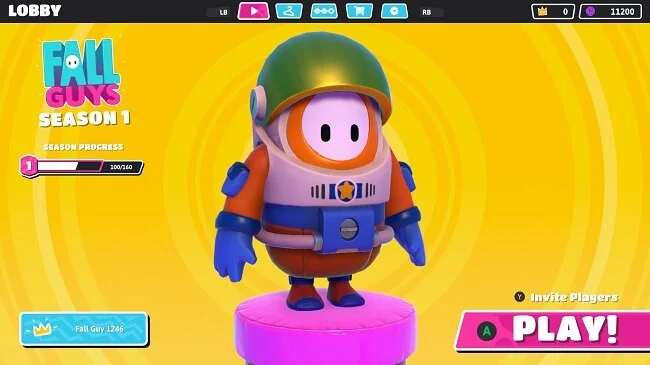
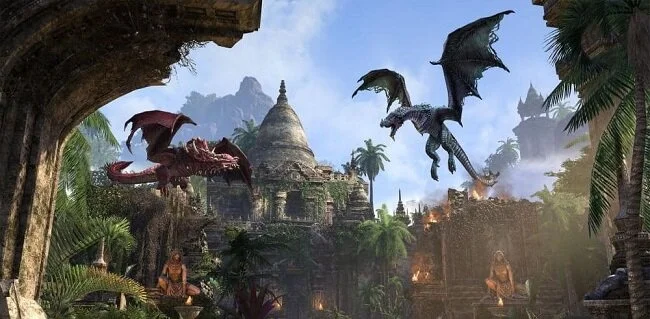
There are a few other games I’ve been intermittently playing over the last two months. Fall Guys: Ultimate Knockout is something I regularly return to and is fun in small doses. As I’ve mentioned before, I keep The Elder Scrolls Online up to date as I will more than likely return to the game once the next expansion launches. As for immediate gaming goals I have none of any significance at present. Naturally I’ll continue with STO and keep a weather eye on LOTRO. I want to come to grips with Assassin's Creed: The Rebel Collection and finally complete a game from this franchise (I’ve started Black Flag). The convenience of the Switch is a big selling point and I seem to evenly spend my time (at least for the meantime) using it as a handheld device as well as docked to the TV. It certainly has reinvigorated my attitude towards gaming which had become increasingly indifferent of late. I hope that this positive outlook continues over May and beyond.


LOTRO: The Further Adventures of Bilbo Baggins
I was hoping that 2021 would be a good year for the MMORPG, The Lord of the Rings Online. New owners, along with hints at a revised community relations policy and a recent roadmap for future content have all been positively received by the game’s stoic community. Furthermore, the recent demise of the LOTR based MMO by Amazon Game Studios has eliminated any immediate competition. Sadly, two things have occurred recently indicating that developer’s Standing Stone Games are still tone deaf to the player feedback and lacking in any tangible long term vision for the game. The first was a statement made by Executive Producer, Rob “Severlin” Ciccolini, regarding Legendary Items in the game and the subject of grind. The second was the new “Further Adventures” quest arcs, as described in February’s Executive Producer’s Letter, which uses the “missions” system that was added to the game in Update 28.
I was hoping that 2021 would be a good year for the MMORPG, The Lord of the Rings Online. New owners, along with hints at a revised community relations policy and a recent roadmap for future content have all been positively received by the game’s stoic community. Furthermore, the recent demise of the LOTR based MMO by Amazon Game Studios has eliminated any immediate competition. Sadly, two things have occurred recently indicating that developer’s Standing Stone Games are still tone deaf to the player feedback and lacking in any tangible long term vision for the game. The first was a statement made by Executive Producer, Rob “Severlin” Ciccolini, regarding Legendary Items in the game and the subject of grind. The second was the new “Further Adventures” quest arcs, as described in February’s Executive Producer’s Letter, which uses the “missions” system that was added to the game in Update 28.
According to Mr. Ciccolini you cannot remove Legendary Items from LOTRO for the following reasons. “We want players to have things to do while they are leveling. I know that some players are ‘Oh, this is too grindy and sometimes we overdo it,’ but ‘grindy’ doesn’t scare me as much as ‘I don’t have enough to do.’ ‘I don’t have enough to do’ is worse because players want to play the game but they don’t really have goals to pursue. [If the LI system is removed], a couple things happen: One, players become much more reliant on weapon drops and if they don’t get the weapon drop they want, their DPS will lag […], and two, a weapon drop is one-and-done; we want to make sure that when [players] get a weapon they can then develop it”. (This quote was taken from Q&A with Severlin live stream on Friday April 16th)
There’s a lot to unpack in that statement and none of it is good. LOTRO players can be very innovative with regards to finding things to do in the game. Levelling alts, crafting, role playing, completing deeds, trading on the auction house, furnishing their homes, min-maxing, exploring the world, enjoying the festivals and hanging out with friends are but a few I can think of. So claiming that without grind there would be no “goals to pursue” is spurious to say the least or alternatively a statement of unparalleled ignorance of one’s own game. However, even if we accept this statement, offering grind instead or real content is hardly laudable. Plus as fellow blogger Wilhelm Arcturus said in comments left on the YouTube Q&A video, if SSG pursue a course of action justified by this erroneous supposition, it simply proves that they’re “committed to bad game design”.
Frankly, I often get the impression that SSG simply does not understand what attracts people to the MMO genre per se. They seem to see their own games as far more of a live service rather than an example of a massively multiplayer online game, in the classic sense. I also feel that the major decision makers over at SSG are somewhat behind the curve with regards to modern developments and changes in the MMO genre and are possibly very entrenched in their ways. Their attitude toward community relations certainly seems archaic. It may also be a case that the ebb and flow of staff over the years has left them with serious skills gaps. All the new content that is added to the game has a tendency to be very formulaic and simply variations on existing themes. I don’t think that the staff actually know how to create certain content anymore and integrate it into the game.
Which sadly leads me to “The Further Adventures of Bilbo Baggins”. This is the first of a series of self-contained, episodic story arcs that use the “missions” system. Launched yesterday and currently available free using the redeem code SAVEBILBO, this new content is simply underwhelming and lacklustre. It is entirely built upon existing game assets and offers nothing new other than the very simple narrative. Each instalment requires the player to port to an instanced section of the existing game world and kill a few waves of standard mobs. It is not especially difficult or fun to be honest. It’s all somewhat disappointing and mundane. I find it most concerning that SSG intends to charge for this content after the promotional period ends and have more material of this kind in development. Overall this is a very inauspicious content update and does not bode well for the remainder of the year. Let us hope that the imminent 14th anniversary celebrations are more creative.
LOTRO: A Golden Opportunity
Back in Summer 2019, Amazon Game Studios announced it was co-developing a new free-to-play MMO set in Middle-earth, along with Athlon Games. The latter was at the time a subsidiary of Chinese publisher Leyou Technologies. However, in December 2020, Tencent bought Leyou Technologies which led to a series of contract renegotiations and reviews of ongoing projects. According to Bloomberg these negotiations did not go well and as a result, the new MMO has been cancelled. A spokesperson for Amazon recently stated that “we have been unable to secure terms to proceed with this title at this time. We love the Lord of the Rings IP, and are disappointed that we won't be bringing this game to customers”. Hence, Amazon will not have a complimentary game for their upcoming $1bn Lord of the Rings television series. At this point, possibly the only people who are happy with this outcome are Standing Stone Games, the developers of The Lord of the Rings Online.
Back in Summer 2019, Amazon Game Studios announced it was co-developing a new free-to-play MMO set in Middle-earth, along with Athlon Games. The latter was at the time a subsidiary of Chinese publisher Leyou Technologies. However, in December 2020, Tencent bought Leyou Technologies which led to a series of contract renegotiations and reviews of ongoing projects. According to Bloomberg these negotiations did not go well and as a result, the new MMO has been cancelled. A spokesperson for Amazon recently stated that “we have been unable to secure terms to proceed with this title at this time. We love the Lord of the Rings IP, and are disappointed that we won't be bringing this game to customers”. Hence, Amazon will not have a complimentary game for their upcoming $1bn Lord of the Rings television series. At this point, possibly the only people who are happy with this outcome are Standing Stone Games, the developers of The Lord of the Rings Online.
LOTRO still exists today, 14 years after its launch, for several reasons but a major factor is that it is the only Tolkien based MMO in existence at present. Players endure the game’s numerous rough edges and age because of their dedication as fans and the simple fact that there's nowhere else to go. I, as well as many other LOTRO players, were curious to see what sort of game Amazon Game Studios could produce. If it had provided certain key elements of game play, along with a good artistic interpretation of Middle-earth, then I would have definitely considered playing it. But that is no longer an option. LOTRO remains the only MMO of its kind for the present and as a result I’m sure the current player base will remain loyal. However, I don’t think that SSG should be too complacent. The current situation is a bit like living in a small town which only has one mall to hang out at and one night club to go to. No matter how poor or inadequate they are, they'll get a degree of patronage purely by default. Hardly an edifying business model.
If you’re familiar with my gaming history, you’ll know I enjoy LOTRO but I clearly recognise it is far from perfect. It's age is one reason as the game was conceived and designed to serve the needs of the MMO genre of 2007. Over the years it has been revised and augmented. It has reached a point in its life cycle where it has an established player base and sufficient revenue to continue producing content. However, possibly due to staff changes and a reticence to tinker with fundamental aspects of the game, we have reached a point where nothing radically new is being added to LOTRO. To invoke a food based analogy, if the MMO genre is comparable to the fast food industry, then LOTRO is a sandwich shop. Its sandwiches are different to its competitors but beyond that, all it can offer its customers are different fillings. If you want a tea cake, forget it.
With the immediate competition out of the picture for the present and new owners EG7 genuinely interested in developing and supporting LOTRO, SSG appear to have a golden opportunity to refine and improve LOTRO. By developing some of the features that have been put on hold over the years and removing those that have proven unpopular, arcane and unwieldy, much could be done to increase the game’s longevity. Furthermore, a renaissance in their communication strategy could be instrumental in rebuilding community bridges and getting the player base onboard with a long term plan. Yet my past experiences with LOTRO leads me to believe that such an opportunity is likely to be squandered. I have seen no evidence thus far that SSG have a plan and even if they do, their continuing Johnny Tightlips routine is counterproductive. If Amazon’s new MMO hadn’t been cancelled, I wonder if things would be any different?
Star Trek Online: Delta Recruitment Event
Consider any MMORPG that has been around for a few years or more and you'll often find a game that is weighted towards the endgame and the players at level cap. New content often overlooks or even excludes players just starting out or those at intermediate levels. Furthermore, players that have drifted away from a game are often faced with the dilemma of returning to a character that they have forgotten how to play. The most practical solution to this is to simply create a new alt and start from scratch. However for a lot of players this is not a particularly inviting option. Repeating old content can be dull and singularly unrewarding. And for the new player, starting out and trying to catch up with the rest of the community or their friends who are at level cap, can frequently feel like an uphill struggle. It can be very frustrating when friends, colleagues and guild mates are playing the latest missions and you’re still mixing it down in the starter zones.
Consider any MMORPG that has been around for a few years or more and you'll often find a game that is weighted towards the endgame and the players at level cap. New content often overlooks or even excludes players just starting out or those at intermediate levels. Furthermore, players that have drifted away from a game are often faced with the dilemma of returning to a character that they have forgotten how to play. The most practical solution to this is to simply create a new alt and start from scratch. However for a lot of players this is not a particularly inviting option. Repeating old content can be dull and singularly unrewarding. And for the new player, starting out and trying to catch up with the rest of the community or their friends who are at level cap, can frequently feel like an uphill struggle. It can be very frustrating when friends, colleagues and guild mates are playing the latest missions and you’re still mixing it down in the starter zones.
Cryptic have come up with an interesting solution to this conundrum with their Delta Recruitment event for Star Trek Online. This is the third time they have run this incentive scheme. The Delta Recruitment event is a promotion by which players creating new 2409 Starfleet, Klingon Defense Force or Romulan Republic characters and replaying through existing content are offered a variety of rewards and bonuses. These include enhanced XP, a bespoke Delta Recruit Trait and the ability to earn additional Dilithium Ore with each NPC defeated. There are also account wide benefits to be had. Each time a Delta Recruit completes a particular task an Account-Wide Reward is unlocked, which is claimable once by every other character on that account. There are many other positive benefits associated with the event, which can be found on the Arc Games website. The Delta Recruitment event runs from April 15th on PC and May 13th. Any character created during the Event will remain a Delta Recruit indefinitely, allowing players to progress through objectives at their own pace.
Star Trek Online has come a long way over the past eleven years and the game has been continuously streamlined and refined. The story missions are very well conceived and certainly capture the essence of all the various Trek shows. It is also one of the few MMORPG with an equitable business model. Hence,The Delta Recruitment presents a perfect opportunity to start playing Star Trek Online or to return to the game if you’ve played in the past. This isn't just a case of offering a few superfluous baubles and trinkets. It is a comprehensive scheme to engage with players and offer them an enhanced experience as they journey to level cap. Furthermore, the influx of new players makes playing socially and grouping very accessible. There are plenty of friendly Fleets (guilds) that are happy to welcome new players. Alternatively, you may wish to create one of your own and establish a starbase and other resources with your friends.
The Star Trek franchise is booming at present, with further seasons of Picard and Discovery on the way and Strange New Worlds currently in development. I have always had a soft spot for Star Trek Online, not only because of my love of the IP but because of the way it continuously reinvents itself and refines its game systems. Cryptic make blunders from time to time as many games developers do but they seem to have a genuine philosophy of self improvement. Plus so many MMORPGs are set in a generic sword and sorcery environment. Star Trek Online is founded upon an IP that has a track record of providing good quality, intelligent and challenging narratives. Not many games have such a distinguished pedigree. Therefore if you are considering returning to STO or playing for the first time, now is a great time to do so. The Delta Recruitment event runs from April 15th until May 13th.

Same Meat, Different Gravy
Seeing Raph Koster back in the gaming news headlines has proven a timely reminder that no matter how things change, they remain the same. The video games industry has moved on in many ways with regard to technology and now enjoys mainstream appeal. However there are also areas where virtually no progress has been made. Hence Mr Koster’s protestations that the MMO genre has not yet reached its full potential. I started blogging about MMOs and other games around 15 years ago. I have an archive of my previous posts and spent some time recently looking at material I wrote back in 2007 and 2008. The subjects ranged from bad game launches, broken mechanics, staff redundancies, questionable business models, poor community relations and that perennial favourite, toxic communities. Many of which were written from the perspective of someone who was very invested in the genre and who had a degree of optimism for the future. Silly me to quote Paul Chuckle.
This is in fact Yorkshire Pudding with gravy, rather than meat but the analogy still stands…
Seeing Raph Koster back in the gaming news headlines has proven a timely reminder that no matter how things change, they remain the same. The video games industry has moved on in many ways with regard to technology and now enjoys mainstream appeal. However there are also areas where virtually no progress has been made. Hence Mr Koster’s protestations that the MMO genre has not yet reached its full potential. I started blogging about MMOs and other games around 15 years ago. I have an archive of my previous posts and spent some time recently looking at material I wrote back in 2007 and 2008. The subjects ranged from bad game launches, broken mechanics, staff redundancies, questionable business models, poor community relations and that perennial favourite, toxic communities. Many of which were written from the perspective of someone who was very invested in the genre and who had a degree of optimism for the future. Silly me to quote Paul Chuckle.
If you peruse any of the major video game news websites today, you’ll find that there’s still plenty of issues with bad game launches, broken mechanics, staff redundancies, questionable business models, poor community relations and asshole gamers. In fact the growth of social media has in some ways magnified these problems, bringing them to a wider audience’s attention, therefore intensifying any argument that may stem from them. The bottom line is its 2021 and nothing much appears to have changed. Magic Legends has had a broken soft launch. Outriders has had server issues. Dare I mention Cyberpunk 2077? Warzone continuously has to patch content that the previous patch has broken. Activision-Blizzard just made 190 staff redundant while their CEO got a $200 million bonus. Standing Stone Games have to be put in a virtual half nelson to talk to their customers. And just like a rat, you’re never more than six feet away from a douchebag gamer.
“Boo”…
So why haven’t some things changed? Why are the usual suspects still pulling the same old shit? Why haven’t we reached the gaming “promised land”? Well there are numerous contributory factors that have led to the current outcome but perhaps the two biggest of these are the way capitalism functions and how consumers respond to this. Contrary to what some may believe, capitalism isn’t about giving consumers what they want but maintaining a financial status quo. The video game industry’s raison d'être is to make money for the shareholders and executive staff. The creation of a video game that is fit for purpose is a secondary consideration. And a large percentage of consumers continuously enable the worst practises of the big publishers. Buying into damaging business practises such as pre-order culture, early access, soft launches, road maps and live services. Like Joseph de Maistre’s quote about getting the government we deserve, the same can be said about triple A games.
“Yay” etc.
Logically, it is not all doom and gloom. There are smaller game developers who have business relationships with less predatory publishers and between them good quality games are produced and sold. But not everyone has exposure to such products and companies. All too often it’s the wealthiest companies that have the biggest reach and thus dominate the market, despite selling flawed, broken and incomplete products. I may no longer be buying such games but I’m just one person. Sales data in the public domain shows that lots of other people are. Therefore, despite a growing degree of consumer pushback, I don’t think a critical mass is anywhere near being yet reached, which is why I don’t expect an industry wide sea change anytime soon. Hence I wouldn’t be at all surprised to find Mr. Koster is still evangelising the same ideas and concepts, a decade from now and that the MMO genre still hasn’t met its full potential. The only thing I am certain about is that Bobby Kotick will still be raking it in.
Do We Really Need "Living Worlds"?
There is a cogent argument to be had that the MMORPG genre has never really hit its full potential. Too many of them do the same thing and there is a long list of features that are conspicuously absent, that players habitually complain about. The debate is further “complicated” (like so many pop culture “debates” are) by one’s own relationship with the genre and what is best described as “personal baggage. Some players will eulogise about older games such as Ultima Online and EverQuest, extolling their lack of features and grindy nature as some sort of character building form of gaming self flagellation. Players with a more contemporary experience of MMOs are subsequently ambivalent towards social interaction and content gating. Hence if you ask a broad spectrum of MMO gamers what features they’d like to see in a new game, you’ll get a commensurate broad spectrum of answers. After 15 years of playing MMOs I’m not sure that I can adequately articulate my own thoughts on improving the genre. We all seem to want some sort of change but beyond that it all gets rather vague.
There is a cogent argument to be had that the MMORPG genre has never really hit its full potential. Too many of them do the same thing and there is a long list of features that are conspicuously absent, that players habitually complain about. The debate is further “complicated” (like so many pop culture “debates” are) by one’s own relationship with the genre and what is best described as “personal baggage. Some players will eulogise about older games such as Ultima Online and EverQuest, extolling their lack of features and grindy nature as some sort of character building form of gaming self flagellation. Players with a more contemporary experience of MMOs are subsequently ambivalent towards social interaction and content gating. Hence if you ask a broad spectrum of MMO gamers what features they’d like to see in a new game, you’ll get a commensurate broad spectrum of answers. After 15 years of playing MMOs I’m not sure that I can adequately articulate my own thoughts on improving the genre. We all seem to want some sort of change but beyond that it all gets rather vague.
Furthermore, it’s not just a question of what players desire. Let us not forget that the video game industry has its pioneers, grandees and sacred cows who still have plenty to say on the state of the genre and the lofty heights it has still not reached. Such luminaries as Raph Koster and Richard Garriott. Although their contributions to the genre cannot be denied, are they really as relevant nowadays as they were a quarter of a century ago? (Wilhelm Arcturus explores this very subject in more depth in a recent post). Whenever I read an interview with such individuals, although they will broadly allude to notions of a future MMO being a truly “living world”, they are always somewhat light on detail. Plus it often comes across that there is an element of age based and institutionalized bias against current trends. I am reminded of old rock stars decrying the state of contemporary music or Martin Scorsese being nonplussed by the popularity of superhero films.
Therefore, as per usual with most matters of debate, it’s not all black and white. However, let us for the sake of argument focus on a common mantra (and one that Mr Koster still evangelises about), the notion of an MMO that is a “living world”. A virtual world in which player actions have a tangible impact. Communities would have to be built from scratch and maintained. Players would be free to pursue any career path they wished. The environment would be seasonal and subject to the caprices of nature. Its ecosystem would have to be managed. The game would develop an economy and a degree of self governance. A living microcosm of our own world that could be accessed from a desktop PC, a console or mobile device. It all sounds both exciting and alluring. Initially. And then when one takes the time to ponder how all of this would pan out, it quickly begins to fall apart. Because some people when free from the restraints of social convention and consequence go native. Hence an unfettered “living world” would possibly soon become a “living hell”.
The sad reality is that any proposed “living world” would have to be heavily regulated and moderated if it wanted to survive in any viable way. More rules would lead to more constraints and so the dream diminishes exponentially as the regulations grow. Furthermore, I’m not sure if providing a complex, virtual alternative to reality is actually a healthy thing for society to begin with. If real life is too bleak, crushing and depressing to cope with, that vast swathes of the population seek to escape from it, then it is indicative that our system of government has failed outright. It may be somewhat melodramatic but a faux world that presents itself as an escape could well end up being a gilded cage. And if we step back for a moment from the theoretical, the Holy Grail of a “living world” is predicated on the fact that people reject what is currently on offer from the MMO genre. Oddly, enough the numbers and revenue generated from existing games seem to fly in the face of such a supposition. Therefore, perhaps the best place to start with improving the MMO genre is to add some desirable yet practical new functionality, rather than jumping off at the deep end and trying to create a virtual Shangri-la. And even if such an environment could be created, do any of us have the time to invest in such a world? I think not.
Choosing a New Game
I want to talk about how we choose a new game from the countless titles that are currently available. I am going to be candid about how I do this as well as my own personal biases and prejudices. Because I am not open to playing any type of game. Like so many other aspects of life, I have very clear likes and dislikes that can only be tempered so far with logic and rational thinking. Video games as far as I’m concerned are supposed to be engaging, entertaining and inherently enjoyable. I don’t mind a degree of challenge and I’ll grind to achieve a specific goal, if I feel the reward to effort ratio is acceptable. I will on occasions attempt to step tentatively out of my comfort zone. However, there are some things that I simply don’t like, so they will not be considered. I think the best analogy for this is food. There are certain meals that I have tried (sometimes several times) and disliked, so they won’t ever be eaten again. Then there are other meals that contain ingredients I dislike or that are cooked in a style that I don’t enjoy. These are also off the proverbial table (no pun intended).
I want to talk about how we choose a new game from the countless titles that are currently available. I am going to be candid about how I do this as well as my own personal biases and prejudices. Because I am not open to playing any type of game. Like so many other aspects of life, I have very clear likes and dislikes that can only be tempered so far with logic and rational thinking. Video games as far as I’m concerned are supposed to be engaging, entertaining and inherently enjoyable. I don’t mind a degree of challenge and I’ll grind to achieve a specific goal, if I feel the reward to effort ratio is acceptable. I will on occasions attempt to step tentatively out of my comfort zone. However, there are some things that I simply don’t like, so they will not be considered. I think the best analogy for this is food. There are certain meals that I have tried (sometimes several times) and disliked, so they won’t ever be eaten again. Then there are other meals that contain ingredients I dislike or that are cooked in a style that I don’t enjoy. These are also off the proverbial table (no pun intended).
So what games do I like? Well both the NES and SNES have had an impact upon my tastes. I consider the Mario Kart franchise to be nearly perfect. It is accessible and yet challenging. It also makes competitive gaming far more palatable as it is not bombastic or bellicose in either defeat or victory. I also enjoy a well balanced FPS and will certainly recommend CoD Warzone as the epitome of encapsulating that genre well. But my heart belongs to narrative driven RPGs and MMORPGs. I like involving and challenging stories, set in detailed worlds. I also like to have access to games based around major franchises that I revere, which is why I enjoy Star Trek Online and the Lord of the Rings Online so much. I’ve also dabbled with the strategy genre on occasions, along with deck-building games and point and click adventures. I even have a few simulator games in my extensive game selection. However, it should be noted that possibly 80% of said collection remains unplayed.
I can be just as specific about the game genres that I don’t like as I am about the ones I do. I am not a fan of PVP. Although I enjoy the FPS genre as this can be a far more balanced PVP environment. However, too often PVP is predatory and an uphill struggle for new players. I pay money to game developers to be entertained and not to be served up as canon fodder for established players. I don’t care for the mindset and elitist culture that also goes hand in hand with PVP and many other competitive games. Games that are couched in self aggrandisement and vanity are often breeding grounds for the most toxic aspects of gaming culture. I also eschew certain games on aesthetic grounds. The human experience is driven greatly by visual data and the way we interpret the world by how we see it. So to deny that we make decisions about games based upon how they look and the way they’re visually presented is crass. Hence I don’t like the isometric style. Nor do I like the anime visual aesthetic found in many games. I broadly prefer realistic graphics over cartoons, although stylisations can be very appropriate at times.
Therefore, when trawling through YouTube videos advertising forthcoming game releases, it is quite easy for me to quickly and efficiently assess what is and isn’t of interest to me. Plus its important to add that all the above rules are open to occasional contradictions. Hand of Fate and its sequel drew me into a genre that normally I wouldn’t have considered. More interestingly, sometimes there will be a new game that is broadly outside of what I like but it is getting a lot of traction among my peer group. So despite being a mature and grounded 53 year old, I am not immune to FOMO and a lot of other curious psychological phenomena. Naturally, there is an allure to joining your friends and being part of the current “in thing”. I recently succumbed to this and bought Cyberpunk 2077 and the reality of the game quickly shattered the hype and mystique that had prevailed up until launch. I have also written before about how odd it is to have missed the entire World of Warcraft “boat” over the years.
Earlier on I used a food based analogy to describe my likes and dislikes and equate this to video games. Once I have established that I don’t like something it is added to a prescribed list. However, most analogies don’t hold up to close scrutiny and although the part about my process for establishing a preference is accurate, I am far more willing to try new foods than I am video games. Upon mature reflection we all have our own bespoke assessment of what we want and don’t want from a video game because we all have a subjective definition of what actually equates to a game per se. I broadly agree with the notion that it is good to challenge yourself and step outside of one’s personal comfort zone. But you don’t have to do this habitually or else you’ll end up playing more games you dislike than like. I think it’s important to be self aware of one’s tastes and to be realistic about them. Yet the vast amount of free of heavily discounted games available do allow for greater experimentation. As ever there is a middle ground for each of us to find that offers us the best path forward.
Need or Greed?
In the dim and distant past when the world was young and the MMORPG genre still focused on the social element of multiplayer online gaming, there was a curious social etiquette associated with the acquisition of loot, enforced by the “need or greed” rule. This rule works as follows. When an item of loot drops after an enemy mob is killed, all members of the group that killed it have the option to claim the item. Upon doing so, they are presented with a choice of “need or greed”. If one or more persons in a group selects "need", they roll a virtual dice and the person with the highest roll gets the loot. If you choose "greed" when the majority of other players have chosen “need” you are effectively forfeiting any claim upon the loot item. If everyone selects "greed" then again, then there is a virtual dice roll and the player with the highest score receives the item. This system is intended to encourage players not to roll on items that they didn’t need (IE a ranged weapon for a melee character) and to foster an atmosphere of fair play and equanimity.
In the dim and distant past when the world was young and the MMORPG genre still focused on the social element of multiplayer online gaming, there was a curious social etiquette associated with the acquisition of loot, enforced by the “need or greed” rule. This rule works as follows. When an item of loot drops after an enemy mob is killed, all members of the group that killed it have the option to claim the item. Upon doing so, they are presented with a choice of “need or greed”. If one or more persons in a group selects "need", they roll a virtual dice and the person with the highest roll gets the loot. If you choose "greed" when the majority of other players have chosen “need” you are effectively forfeiting any claim upon the loot item. If everyone selects "greed" then again, then there is a virtual dice roll and the player with the highest score receives the item. This system is intended to encourage players not to roll on items that they didn’t need (IE a ranged weapon for a melee character) and to foster an atmosphere of fair play and equanimity.
However, over the years, the social aspect of MMOs has diminished and the validity of the “need or greed” rule is now in question. Gaming has become a lot more transactional and simply put, many players will expect something shiny as a reward after completing group content. Quid pro quo and all that. Hence it is nowadays common practice to roll “need” by default in all looting situations. If an item is not specifically relevant to you but can be sold to a vendor for in-game currency then that is a big incentive. Logically, any opportunity that increases your in-game wealth is desirable, especially in light of how hard it can be to obtain “gold” in some MMORPGs. Furthermore, with the proliferation of auto grouping in games, there is little or no personal connection to the other players. This results in a reduced sense of social obligation as you are not potentially denying a fellow guild mate but just competing against a random stranger.
Therefore, all things considered, isn’t it time that this particular game mechanic was sidelined and replaced with something more functional and socially appropriate? Perhaps the simplest solution (at least with regard to low level loot drops) is to allow them to be claimed by all parties. In the same way that some game developers have now made “ore nodes” and other environmental resources “shared” and non-competitive. Perhaps it may even be time to reconsider the entire game mechanic of “trash loot” within the MMO genre. In the meantime, continuously having to roll on loot in group content is simply a tedious reality that has to be endured. Especially in games that don’t support addons that can discreetly automate the process. However, we live in hope that sooner or later, the MMORPG will finally join the rest of gaming in the 21st century and that “need or greed” will be consigned to the history books.
LOTRO: Day, Night and Weather Cycle
I don’t know about you guys but whenever I log into The Lord of the Rings Online, it’s usually night in the game. This is a curious anomaly that can be somewhat frustrating if it’s the test server and I want to take some screenshots of new content. I put this down to the fact that I usually log in to LOTRO in the evening, here in the UK and I am unfortunately in sync with the Laurelin server night time phase. Sadly, there are no third party addons that can track the in-game time and server reboots always reset the game’s internal clock. However, I do like the fact that the game has a clear day and night cycle, which adds greatly to the overall ambience of LOTRO. Both of these phases have subcategories, all of which persist for specific times. Here is the cycle as it stands at present in the game.
I don’t know about you guys but whenever I log into The Lord of the Rings Online, it’s usually night in the game. This is a curious anomaly that can be somewhat frustrating if it’s the test server and I want to take some screenshots of new content. I put this down to the fact that I usually log in to LOTRO in the evening, here in the UK and I am unfortunately in sync with the Laurelin server night time phase. Sadly, there are no third party addons that can track the in-game time and server reboots always reset the game’s internal clock. However, I do like the fact that the game has a clear day and night cycle, which adds greatly to the overall ambience of LOTRO. Both of these phases have subcategories, all of which persist for specific times. Here is the cycle as it stands at present in the game.
Day Time lasts 1 hour 42 minutes 20 seconds
Dawn = 9 minutes 32 seconds
Morning = 28 minutes 42 seconds
Noon = 17 minutes 47 seconds
Afternoon = 27 minutes 58 seconds
Dusk = 18 minutes 21 seconds
Night Time lasts 1 hour 23 minutes 40 seconds
Gloaming = 9 minutes 30 seconds
Evening = 27 minutes 59 seconds
Midnight = 8 minutes 59 seconds
Late Watches = 19 minutes 1 second
Foredawn = 18 minutes 11 seconds
Apart from giving the virtual Middle-earth a greater sense of realism, could this game mechanic be used for quests? Well initially it was. In an earlier iteration of LOTRO (circa 2007 - 2008) there were several quests that were night time specific. The ghost in Bree was nocturnal and one story arc had you meeting a Brigand infiltrator, again only at night. However, despite this time mechanic adding ambience to the proceedings, it was a nuisance if you received such quests at the wrong time of day. You could find yourself having to wait 90 minutes which is not a lot of fun in an MMO. Unlike single player games that use this mechanic, you cannot advance time in a shared world. Hence these quests were altered to allow access all of the time. It is also why we don’t see NPC and vendors keeping working hours and returning to their homes at night. So sadly, the day and night cycle is purely cosmetic in LOTRO as it now stands.
There are also random weather changes in LOTRO although there is nothing that can be clearly defined as a cycle. Sometimes I’ll log into a zone and it will be raining or overcast but broadly speaking the weather in a place such as Bree is predominantly temperate. Some zones have differing weather for geographical reasons. Naturally, the Misty Mountains are snow covered and the snow fall becomes heavier the higher you climb along the cliff top paths. Other parts of Middle-earth have bespoke weather for thematic reasons. Angmar has a sickly green coloured, overcast sky, reflecting the evil that blights the region. Allegedly the darkened sky is to accommodate the passage of Orcs, who have an aversion to daylight. Again, it would be nice in principle to have some weather themed or dependent quests but gating content behind a mechanic you may have to wait on, is not going to be well received.
The MMORPG genre is filled with game systems and mechanics that have been tentatively introduced and then left unfinished by the developers. Often because of the complexity inherent in such systems or because the idea being “tested” was not liked by all players. Weather cycles and the passage of time are such examples. Both of these could play a more active role if the developers of games such as LOTRO felt so inclined. I would be happy to see the return of quests that were time dependent. It would be nice to have some aesthetic details that only happened at certain times or dates. Such as Elves camping out beneath the stars. Or NPCs that come and go in towns such as Bree. Perhaps even animals that graze in fields by day and are then rounded up and taken to barn at night. Such things would add a lot to a game. But at this point in LOTRO’s lifecycle it is unlikely that resources would be used to develop such content.