
The Lord of the Rings Online 2.0
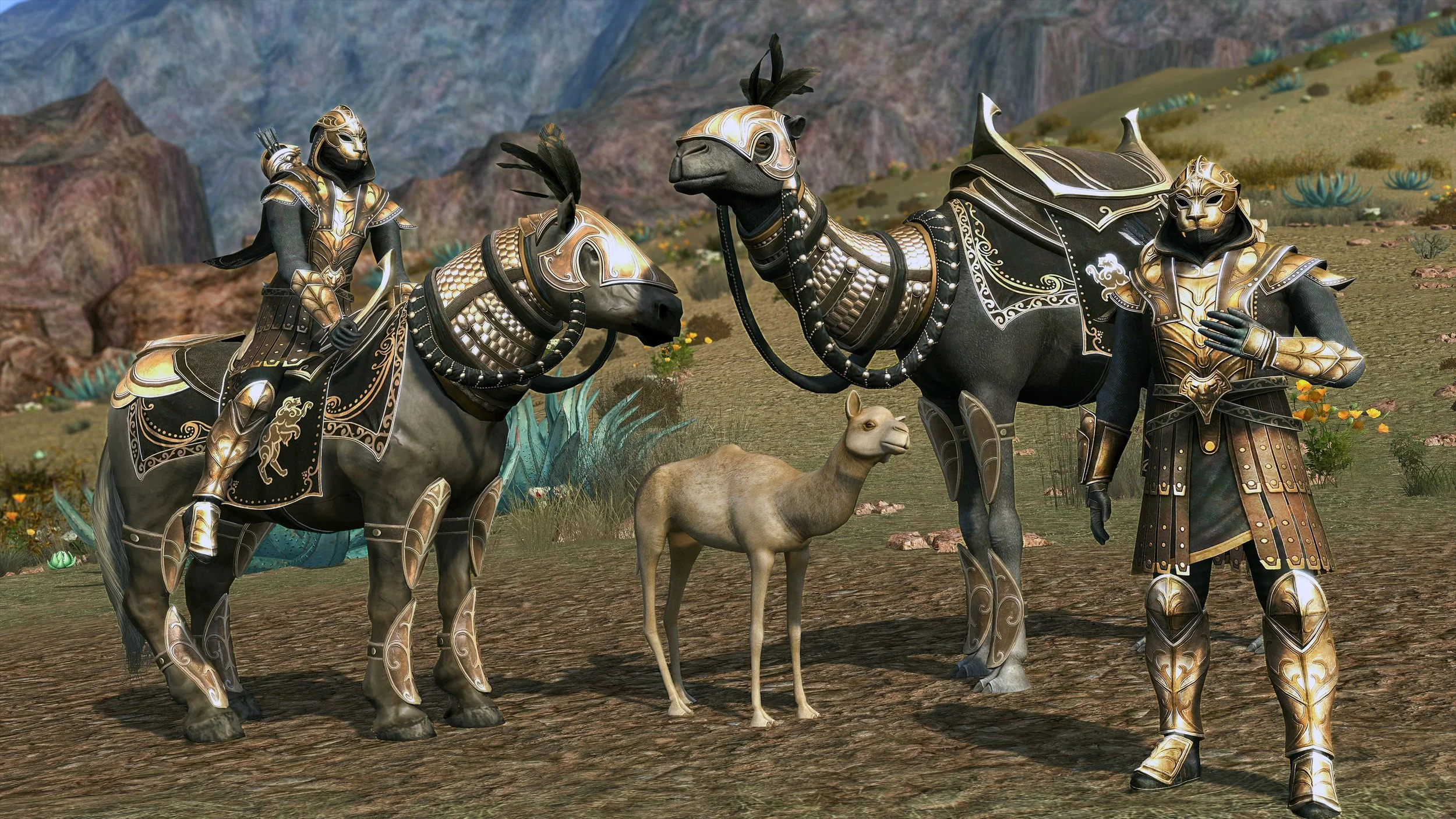
“I’d love to see LOTRO reimagined in a new engine with a certain modernization of gameplay". So said Koshelkin, in a recent comment made over at the Massively Overpowered website. It’s a common sentiment that often expressed by the LOTRO community and I must admit, I have a similar curiosity. But the more I ponder this idea, the more I find myself thinking “be careful what you wish for”. Because LOTRO as it currently exists, embodies the MMO ethos of the time that spawned it. Long-term players love it because of its foibles. As I’ve mentioned before in previous blog posts many LOTRO players are not gamers per se and therefore have no exposure to modern MMOs along with contemporary game mechanics. Thus, if Standing Stone Games were to radically redesign their virtual Middle-earth to include action combat and a truly open world, they may find themselves alienating a great many current LOTRO players, who would be all at sea in a modern iteration of the game.
“I’d love to see LOTRO reimagined in a new engine with a certain modernization of gameplay". So said Koshelkin, in a recent comment made over at the Massively Overpowered website. It’s a common sentiment that often expressed by the LOTRO community and I must admit, I have a similar curiosity. But the more I ponder this idea, the more I find myself thinking “be careful what you wish for”. Because LOTRO as it currently exists, embodies the MMO ethos of the time that spawned it. Long-term players love it because of its foibles. As I’ve mentioned before in previous blog posts many LOTRO players are not gamers per se and therefore have no exposure to modern MMOs along with contemporary game mechanics. Thus, if Standing Stone Games were to radically redesign their virtual Middle-earth to include action combat and a truly open world, they may find themselves alienating a great many current LOTRO players, who would be all at sea in a modern iteration of the game.
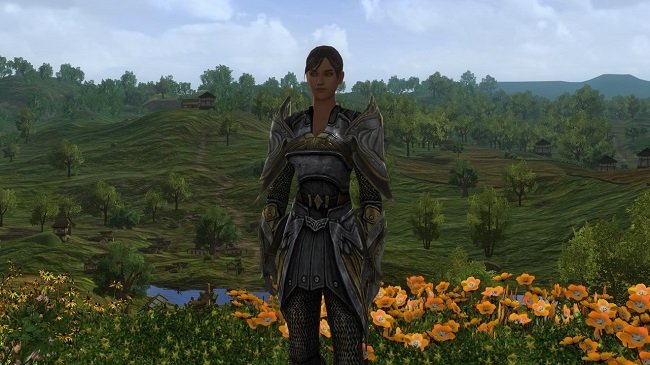
I recently revisited LOTRO to check out the new seasonal instance The Perfect Picnic. Penny the Pony trotted off in true LOTRO NPC fashion and made no effort to avoid the various mobs that plague The Shire during a summer heatwave. However, a decade of playing LOTRO has prepared me for such situations. As a seasoned Lore-master, I sent my pet ahead to occupy the oncoming threat, while I languidly went through my skills rotation. I tend to move in parallel with whoever or whatever I have to escort and seldom shift position while in combat. LOTRO being an older MMO does not support action combat and moving will stop your skill induction. Movement is thus limited to simply removing yourself from AoE effects and such like. It’s a tried and tested method and SSG have ensured that it doesn’t limit your combat experience. Just because fighting is static, it doesn’t mean it is devoid of nuance and tactic. However, many LOTRO players are totally conditioned to deal with this style. The fluid combat of The Elder Scrolls Online may not suit everyone or fit with their abilities as a player.
LOTRO is also very linear in its story structure and quest hubs. Since the game reached the regions of Dunland and Rohan, zones tend to funnel players from A to B very efficiently. It’s convenient but it is not very flexible if you want to do things “your way”. Stray too far ahead and you’ll either find yourself in a zone to high for your level or you’ll miss the start of the “breadcrumb” trail. Because there is no auto levelling beyond the Epic Battle system, it is not always safe to explore too far and no incentive to revisit lower level regions with friends. Again, bringing the narrative and regional freedom that we find in The Elder Scrolls Online, may well completely wrong foot traditional LOTRO players. I remember reading a thread on the Guild Wars 2 forums when the game first launched in 2012, by a player who felt completely lost as to what to do and where to go within the game. The open regional quests and timed events were also a stumbling block for some, who felt they lack direct instruction.
Another aspect of LOTRO that dates it, is its lack of voice acting. Yes, there is some but far less compared to other MMOs. Text boxes filled with written exposition that requires little user interaction are somewhat dull. Although the definition of an MMO has changed and continues to do so, we should not forget that they’re also a variant of the RPG genre. Hence it would be nice to see far more detailed voice acting, branching dialogue options and a greater variety of narrative outcomes. However, providing “choice” can cut both ways. Some players do not like too many options and can find such a mechanic a cause of stress. What happens if you make the “wrong” decision? This however, has been a dilemma of the MMO genre for a long time. It can apply to how you spend your skills points and what faction you join. Plus, voice acting also raises the additional spectre of lore and canon. Middle-earth is blessed with an especially hard lexicon. Most languages have a complex structure and there is plenty of scope for additional spoken dialogue to incur the wrath of the “pronunciation police”.
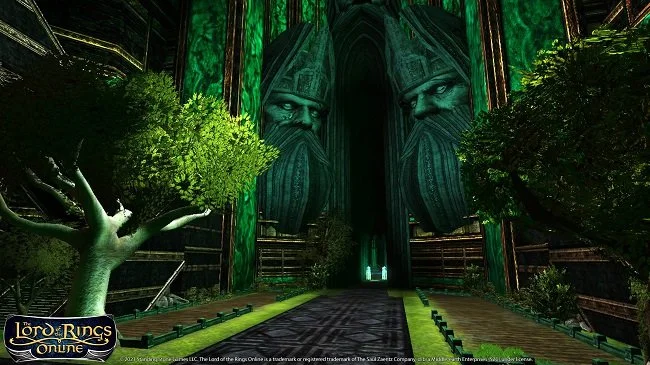
I think completely rebuilding LOTRO to embrace the best elements of the modern MMO genre would be a big and risky undertaking. I think that the finished product would not necessarily appeal to all current players and many would not make the transition to LOTRO 2.0 successfully. Middle-earth: Shadow of Mordor and its sequel Shadow of War feature beautifully realised environments which hint at the visual potential of a new version of LOTRO. I would certainly like to see a new vision of Middle-earth more akin to the structure of The Elder Scrolls Online, as that game serves the needs of the solo player and the group well. But the cost and risk in developing such a project make it highly unlikely that such a game will come to pass. I think after a decade, the most we can honestly expect rom SSG is a revamp of the game engine, similar to that seen in STO a few years ago. It would also be nice to see a 64-bit client and an elimination of the lag and stuttering that plagues the game. Beyond that I think LOTRO 2.0 in the true sense, will just remain a talking point.





Fans, Community Management and Social Media
When I first read about the furore caused by Jessica Price’s comments yesterday, I knew it wouldn’t end well. There’s a tedious inevitability to the outcome of most video game related “outrages” these days. For example, a senior member of staff from a major developer will same something crass, double down, dig a hole and then finally after being bitten on the ass by reality, will put out a mealy-mouthed half ass apology. The other scenario is that an employee affiliated to a studio says something completely left field, is presented with short window of opportunity to retract it and blame it on over the counter flu medication, before they get fired due to the ensuing PR shit storm. This particular controversy falls into the latter category. However, if you take a step back from the Jessica Price debacle you quickly notice it raises a lot of questions beyond her obvious transgression. Namely, the problem of always being “on the clock” when you work in certain professions, the need to separate your work and personal social media presence and the place “influencers have in the video games industry.
When I first read about the furore caused by Jessica Price’s comments yesterday, I knew it wouldn’t end well. There’s a tedious inevitability to the outcome of most video game related “outrages” these days. For example, a senior member of staff from a major developer will same something crass, double down, dig a hole and then finally after being bitten on the ass by reality, will put out a mealy-mouthed half ass apology. The other scenario is that an employee affiliated to a studio says something completely left field, is presented with short window of opportunity to retract it and blame it on over the counter flu medication, before they get fired due to the ensuing PR shit storm. This particular controversy falls into the latter category. However, if you take a step back from the Jessica Price debacle you quickly notice it raises a lot of questions beyond her obvious transgression. Namely, the problem of always being “on the clock” when you work in certain professions, the need to separate your work and personal social media presence and the place “influencers have in the video games industry.
First up, let’s deal with the most obvious things that standout from this “wee stooshie”. The moment you have your employers name in your twitter biography, you rightly or wrongly are now an ambassador for that company. This is a problematic foible of working in an age dominated by social media. I also think it is further exacerbated by the US work ethic which is curiously more zealous than its European counterpart. Work is more of defining factor in American culture to begin with. Irrespective of this, if you work for a major games developer and cite that in your profile then the fans will take it as read that you’re accessible 24/7 and they’ll cross examine you at every opportunity. It’s ironic but the term “emotional courtesan” that Jessica Price refutes in one of her tweets, is not a bad definition of the role that is thrust upon such employees. A company’s reputation and standing with its customers is one of its most prized assets. Questions regarding the capricious nature of fans and the fact that some totally lack any filter are ultimately irrelevant. You don’t upset the gravy train.
Next there’s the need to compartmentalise. If you work for a big player in any type of industry and feel that there are constraints placed upon your freedom of expression online as a result of that, then simply create separate social media accounts. Apply common sense to your work-related platforms and if need be follow a clear set of rules with regard to your customer interactions. As for your personal accounts, keep them separate and don’t make the mistake of getting drawn into needless arguments. Use mute or block judiciously if need be. And remember that Twitter is a public space and is therefore governed by rules of speech in such an environment. Ultimately if you want privacy in your discussion then use What’s App or something similar. Also, manners have declined in the last fifty years. Some people either lack a filter or simply refuse to use one for their own dysfunctional reasons. You have very little say or control over who decides to interject in any ongoing conversation. The sad reality is that your work related social media account forces you to do your job with one hand tied behind your back. It’s not a level playing field but if that’s place you’ve chosen to set up your stall, then that is how you have to roll with things.
Then there is the whole thorny issue of influencers. In this case, I’m not aware that You Tuber and Streamer Deroir has ever been considered a difficult or controversial individual. From what I’ve gleaned from the internet, they are a relatively benign community conduit. He’s even got an NPC named after him in the Mistlock Observatory. Therefore, it is not unreasonable for Deroir to want to interact with an ArenaNet employee such as Jessica Price. His comments were not in any way rude, so he really didn’t deserve the response he received. However, the wider gaming dependency upon influencers is a questionable practice. Not all are as measured as Deroir. It should not be forgotten that many influencers are not directly employed by the games developers and therefore not subject to the same scrutiny and security checks as regular staff. It’s a powerful position to be in and people are flawed. There have been instances of influencers going rogue in the past, although again I say this is clearly not one.
Finally, I am becoming increasingly sceptical of overt fandom of any kind. Pop culture, like politics and sports, is losing all semblance of measure and introspection and slowly becoming far more zealous. Everybody seems to have a stake or a personal claim on some part of the internet or aspect of fandom, regardless of whether it is legitimate or justified. Fandom isn’t collective ownership, although that is fast becoming a minority view. Dealing with such communities is becoming increasing hard. Who wants to navigate a daily diet of anger, accusations and bile? In the case of Jessica Price, her ill-conceived comments were wrong, and she has been sanctioned by her employers (The degree of which is subject to debate). However, what is worrying is the increasing trend that sees justifiable anger and complaint from legitimate quarters, being subsequently hi-jacked by those who simply smell blood in the water. The internet lynch mob is an extremely blunt tool and the dirty footprints of its affiliate members who often have their own agenda, ultimately just end up muddying the waters of measured and reasoned criticism. Thus, gaming culture declines further and it’s more mature and measured members find themselves moving ever further to its periphery, so as not be tarred with the same brush.

Victory is Life
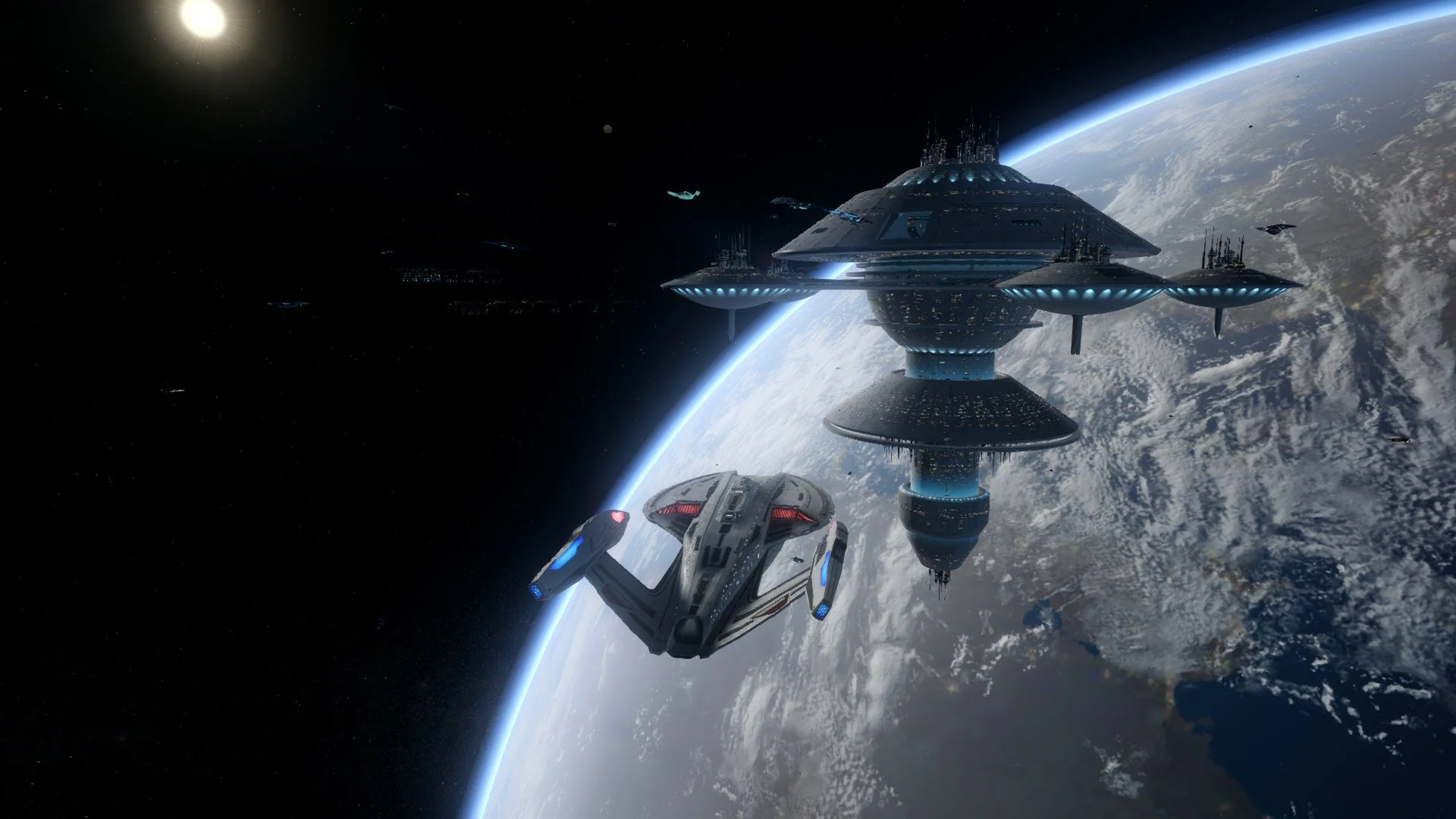
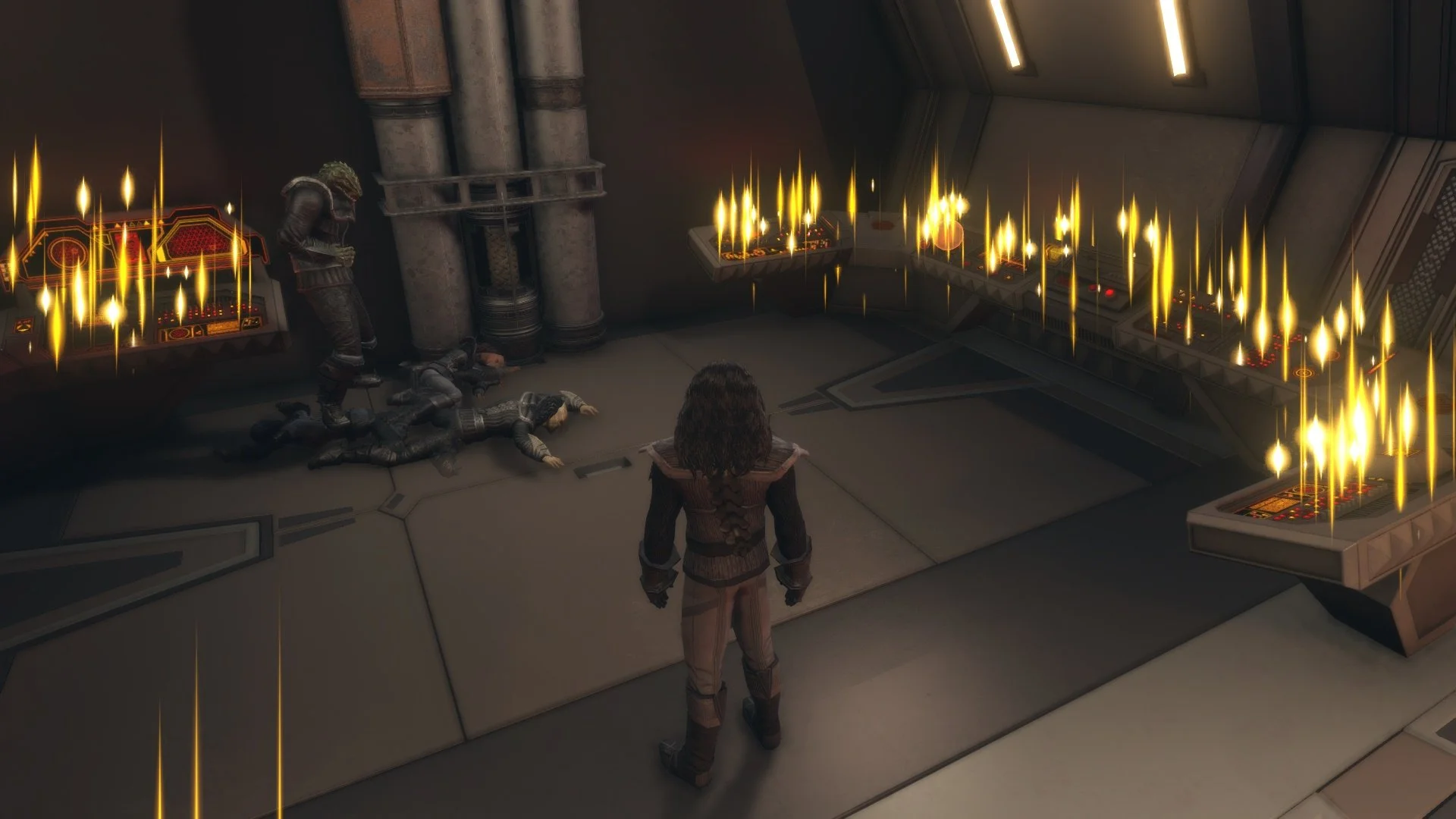
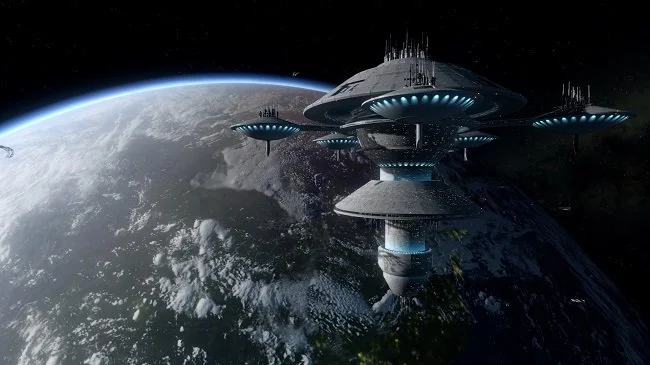
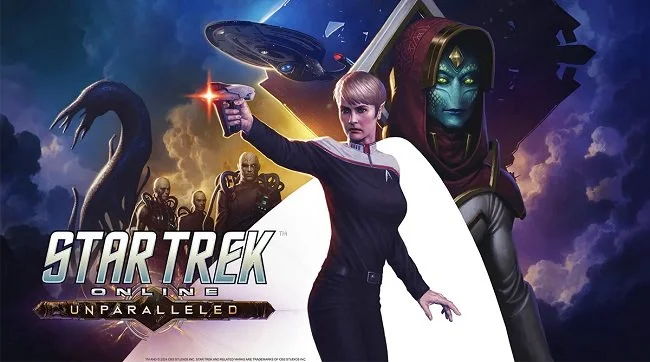
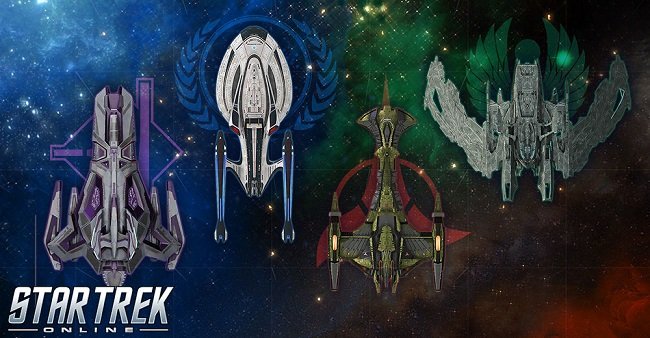
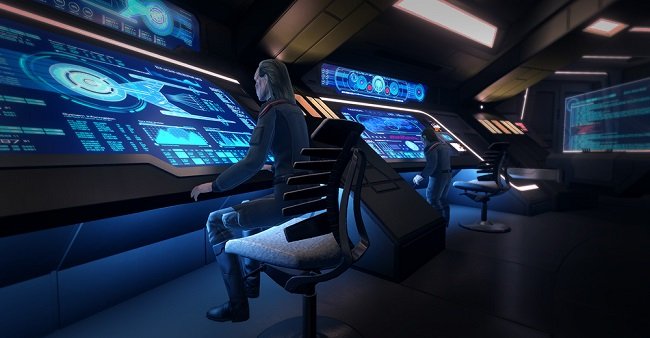
Star Trek Online is a curious beast compared to other MMOs. Although the characters that you create have gear, skills and traits to advance, it is your ship that is the real focus of in game min-maxing. The game also has several strong narrative arcs that dovetail superbly into existing Trek lore. The fact that numerous actors from the original TV shows have returned to voice their characters in the game, is another feather in the hat for Cryptic, the games developers. STO recently had a major lighting and game engine overhaul to accommodate it’s launch on the console market. Yet despite many very positive factors, there are still times when STO feels a little clunky and lacking in polish. Cutscenes can be problematic and the game has some persistent bugs and glitches. However, despite some flaws the MMO has a strong and loyal fanbase who play actively and pay prodigiously. This is also a game with a large number of whales in its wider community.
Star Trek Online is a curious beast compared to other MMOs. Although the characters that you create have gear, skills and traits to advance, it is your ship that is the real focus of in game min-maxing. The game also has several strong narrative arcs that dovetail superbly into existing Trek lore. The fact that numerous actors from the original TV shows have returned to voice their characters in the game, is another feather in the hat for Cryptic, the games developers. STO recently had a major lighting and game engine overhaul to accommodate it’s launch on the console market. Yet despite many very positive factors, there are still times when STO feels a little clunky and lacking in polish. Cutscenes can be problematic and the game has some persistent bugs and glitches. However, despite some flaws the MMO has a strong and loyal fanbase who play actively and pay prodigiously. This is also a game with a large number of whales in its wider community.
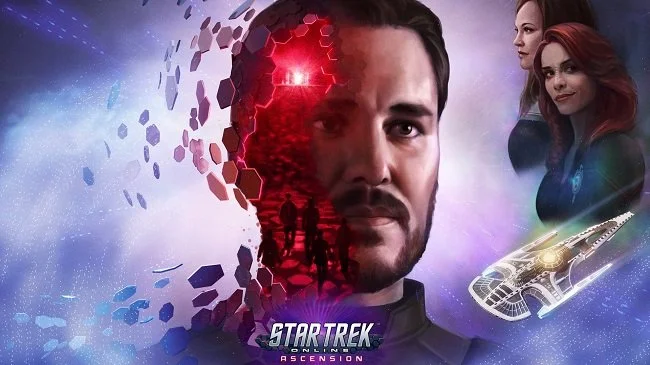
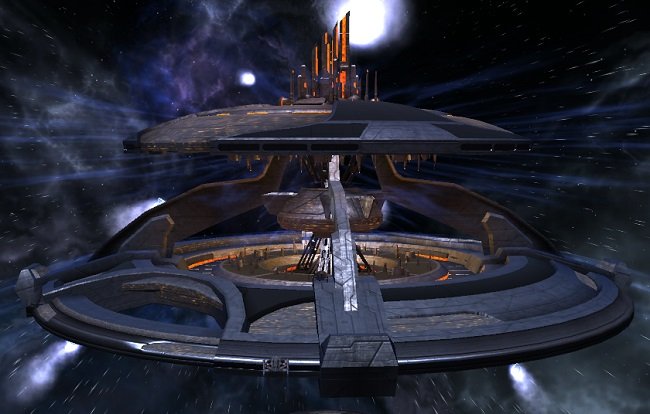
This year is the 25th anniversary of Star Trek: Deep Space Nine. Subsequently, Cryptic decided to base their latest expansion Victory if Life around the show. Released on 5th June, the new content features the voice talents of Alexander Siddig, Andrew Robinson, Armin Shimerman, Aron Eisenberg, Jeffrey Combs, J.G. Hertzler, Nana Visitor, René Auberjonois, Chase Masterson, Max Grodénchik, Bumper Robinson and Salome Jens. I won’t list all their respective characters but for fans and aficionados, this is a big deal. Star Trek Online is an officially sanctioned product and has the full support of CBS. As a result, the game enjoys a level of continuity and lore compliancy seldom seen in other MMOs with licensed intellectual properties. Although STO has as mentioned, suffered from lapses in QA from time to time, the standard of writing has never been poor and with regard to Victory if Life, I believe that it has surpassed its own high standard.
There have been some complaints that Victory if Life is more of an update in scope and size, rather than a full-blown expansion, such as Delta Rising from 2014. And I think that it there a degree of truth to in some of the criticism levelled at the release. The additional five levels are trifling and make no real tangible difference to your character. The increase in gear upgrade cap from Mark XIV to Mark XV again only really have an impact on min-maxers seeking a nominal percentage gain in DPS. Then there are the three bespoke Jem’Hadar missions that are more like tutorials. Yes, they’re fun but they don’t really feel any different to the starter missions for the other races. In fact, these ones seem even light in content. And then there are the six missions that make up the Victory if Life story arc. Technically it’s seven but one was held back until 28th June, as a feature episode to keep the sense of engagement going. Yes, compared to other arcs it is a rather compact series. Yet I am prepared to overlook all these points, purely because this arc finally feels like STO has finally met it full narrative potential.
Victory is Life addresses the issue of what has happened in the Gamma Quadrant since the end of the Dominion War. Odo returns as an Ambassador for the Changelings, bearing ill news of the ravages of Hur’q. Seeking an alliance proves difficult with the Klingon’s particularly ill-disposed towards helping a recent enemy. Yet the Iconian war has granted many worlds a new sense of perspective, so it is interesting to see more diplomatic overtures from Cardassia and even Ferenginar. Naturally Odo crosses the pass of Kira Nerys and we get to see how the years and current affairs have affected their relationship. Elim Garak once again proves that there’s more to his role in the proceeding than immediately meets the eye. And as ever Quark proves that he has a heart of latinum as well as an eye to the main chance. Victory if Life succeeds in taking the characters we know and love from the TV show and giving them an equally viable story within the frame work of STO.
What becomes abundantly clear while playing Victory if Life is the presence of multiple original cast members. We have seen returning cast members interact before in STO but never on this scale. And the cast of Star Trek: Deep Space Nine remains exceptional. Listening to the precise and measured delivery of Andrew Robinson as Elim Garak, along with gruff yet emotional resonance of René Auberjonois as Odo is an absolute joy for fans. But I believe of all the six missions that feature in the expansion it is “Quark’s Lucky Seven” that is the jewel in the crown. This wonderfully conceived caper story plays out like a Ferengi version of Oceans Eleven. Quark, Rom, Nog, Leck and Brunt join forces to steal a priceless artefact, located in possibly the most dangerous place in the galaxy. Superbly written, wonderfully acted by a much beloved cast, it totally nails the essence of the Star Trek: Deep Space Nine. The bar has just been raised and this is the standard by which all future STO content will now be judged by. That’s a big ask but it’s only what the franchise deserves. Well done Cryptic. More please.

LOTRO: Update 22.2
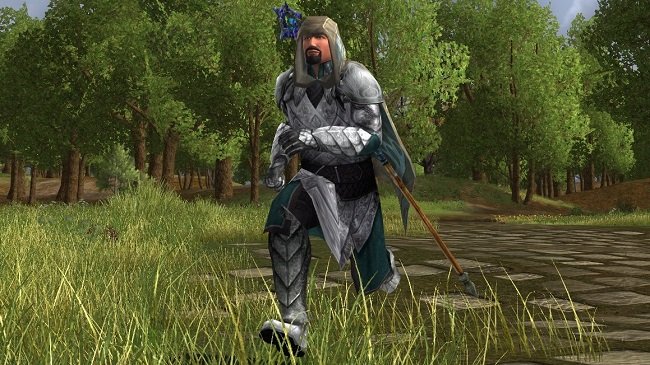
When I first started playing LOTRO in late 2008, I actually read the manual that came with my box copy, before I decided which class I was going to play. I chose the Lore-master as it sounded and interesting mixture of both ranged attacks and the use of pets. Being new to the MMO genre at the time, I didn’t realise that it was actually quite a complex class to play. Although I have dabbled with alts over the years I have stuck with this single character and until 2017, kept them relatively up to date with regard to content and respective skills. Mordor greatly dampened what enthusiasm for LOTRO and as a result I have fallen behind the curve. My gear is poor as I haven’t really progressed far into the lastest expansion. Combat has become a tedious grind, leaving me with a paradoxical situation. Poor gear makes progression slower, but bypassing Mordor leaves my character gimped. Bearing this in mind, I’ve been eagerly awaiting the Lore-master class changes that have come with Update 22.2 in the hope they will improve my situation. Sadly, I don’t think that today’s changes are the solution I’m looking for.
When I first started playing LOTRO in late 2008, I actually read the manual that came with my box copy, before I decided which class I was going to play. I chose the Lore-master as it sounded and interesting mixture of both ranged attacks and the use of pets. Being new to the MMO genre at the time, I didn’t realise that it was actually quite a complex class to play. Although I have dabbled with alts over the years I have stuck with this single character and until 2017, kept them relatively up to date with regard to content and respective skills. Mordor greatly dampened what enthusiasm for LOTRO and as a result I have fallen behind the curve. My gear is poor as I haven’t really progressed far into the lastest expansion. Combat has become a tedious grind, leaving me with a paradoxical situation. Poor gear makes progression slower, but bypassing Mordor leaves my character gimped. Bearing this in mind, I’ve been eagerly awaiting the Lore-master class changes that have come with Update 22.2 in the hope they will improve my situation. Sadly, I don’t think that today’s changes are the solution I’m looking for.
I am not a min-maxer per se and have never been a serious number cruncher when it comes to LOTRO. I broadly know what my skills do and have adopted a rotation that is common to many other LOTRO players who favour the Lore-master class. For me I define my combat effectiveness by the amount of time it takes to kill a single mob, along with how many skills I have to use or how many times I have to repeat my rotation. This may not be the most scientific method, but it works for me. I then temper combat effectiveness with another very subjective factor. Is the combat satisfying or is it a chore? Too often of late in LOTRO combat is the latter. For me, and possibly many other MMO players, there is a very personal tipping point between a credible and engaging fight and a dull, ponderous slog. For me it may be so many seconds, for another player it may be double or triple that time. What I do find with older MMOs is that combat does seem to take a lot longer, compared to modern titles. The Secret World suffered terribly from this problem and it still wasn’t adequately addressed for my liking, when the game was revised into Secret World Legends.
In LOTRO I predominantly follow the red skills line, looking to do maximum DPS. Therefore, the recent upgrade to Burning Embers (applying Gust of Wind to augment it into Searing Embers) is a “interesting” addition. However, the induction animation is a real nuisance and needs to be shortened. Lightning Strike has been tweaked and its cooldown has been shortened. I noticed I was hitting higher critical hits as a result. However, the initial heal from Water-lore has been removed so only the HoT component remains. Thus, you’ll only get the first heal after four seconds. Plus, Ring of Fire is currently broken which is a bit of an inconvenience as its use regularly features in my play style. However, I am concerned that by making the Lore-master’s single target DPS stronger, that our AoE has suffered. Also, the removal of the Wizards Fire component and its replacement with something that is essentially not commensurate, does strike me as an over simplification of gameplay.
After running several skirmishes today, I did conclude that my overall DPS had improved but that was only in specific circumstances. For the casual, PVE-centric player, who plays cautiously, pulling mobs individually or using crowd control to make fights sequential, then this update is an adequate improvement to the class. But for those who do like to group and contribute to a communal fight, then it there isn’t so much on offer. Lore-masters are not so able to deal DoTS and their AoE skills have been reduced. And irrespective of all of these changes, I still find that combat is too slow for my liking. It’s difficult to articulate without the use of numbers, but when fighting I expect at least one skill to do 15 to 20% damage to my opponent’s moral. It still feels too much like an uphill. But this is the conundrum of combat in gaming, especially the MMO genre. Trying to find that right balance that pleases the majority of players, or at least allowing them to augment their effectiveness by accessing the right sort of gear. I’m beginning to feel that the more LOTRO is updated, the gap between what you can achieve and what I currently have, is growing wider and wider. I don’t know if I ever will catch up.
Open World Games
The Virtual Bolivia that Ubisoft have created for Tom Clancy’s Ghost Recon Wildlands is truly stunning. This massive open world is approximately 576 square kilometres (222.4 square miles) and features 21 regions and 11 distinct ecosystems. Furthermore, the world is seamless without any loading screens or phasing. You can travel from one end of the map to the other without any immersion breaking transitions. The main story missions and the regional counterparts can be tackled in any order, affording players the freedom to explore and play through content however they want. The game can be played cop-operatively via PUGS or through bespoke custom teams. Tom Clancy’s Ghost Recon Wildlands takes the textbook concept of the “open world” and augments it sufficiently to hang a narrative on. But beyond the overall task of dismantling a sprawling national drugs cartel, the player is given a superbly crafted sandbox and is left to determine their own agenda and play style.
The Virtual Bolivia that Ubisoft have created for Tom Clancy’s Ghost Recon Wildlands is truly stunning. This massive open world is approximately 576 square kilometres (222.4 square miles) and features 21 regions and 11 distinct ecosystems. Furthermore, the world is seamless without any loading screens or phasing. You can travel from one end of the map to the other without any immersion breaking transitions. The main story missions and the regional counterparts can be tackled in any order, affording players the freedom to explore and play through content however they want. The game can be played cop-operatively via PUGS or through bespoke custom teams. Tom Clancy’s Ghost Recon Wildlands takes the textbook concept of the “open world” and augments it sufficiently to hang a narrative on. But beyond the overall task of dismantling a sprawling national drugs cartel, the player is given a superbly crafted sandbox and is left to determine their own agenda and play style.
This is the inherent appeal of the open world game. The provision of a functional environment that provides a setting for events, rather than a means of corralling them. One only has to look at popular MMOs such as ESO and LOTRO and you will often find that their lavishly created regions, despite their aesthetic appeal, are primarily designed to funnel the player from quest hub to quest hub. In LOTRO, especially in the more recent zone such as Gondor and Mordor, large swathes of a map are frequently inaccessible due to topographical constraints or the old mechanic of invisible walls. Hence it not unusual to spot and interesting feature on the horizon or even in the near vicinity, only to find that it is inaccessible. The Argonath is a classic example of this. Conversely in an open world game such as Tom Clancy’s Ghost Recon Wildlands, the open world design along with the ability to travel by helicopter and land directly to remote locations ensures that nothing is out of a player’s reach. Exploring becomes an entire meta game in itself.
The first open world game that really altered my perception of gaming was The Elder Scrolls V: Skyrim. Although I had experienced well designed environments before in the MMO genre, phasing and zone mechanics always broke immersion to a degree. Skyrim with its Scandinavian style climate and terrain was a revelation and simply traversing the region with it’s ambient music and changeable climate was and remains a delight. But it was The Witcher 3: Wild Hunt that really show cased the full potential of the open world concept, with a beautifully realised, diverse yet totally credible environment. The player can walk, ride or sail across the green and verdant, war-torn lands of the South or sail between the monster-islands of Skellige in the North. They have total freedom to discover various places of interest, hunt monster, or simply gather resources and enjoy the world. It is this latter idea of being “at large” in a huge, living and thriving ecosystem is perhaps the biggest selling point of the open world concept. But it is also its potential weakness.
Not all gamers like to be presented with a huge expanse of non-linear content and told “off you go”. Some find such a system and environment daunting and confusing. Both of which are perfectly acceptable opinions. The “theme park” approach provides a means of guiding players through content, ensuring that nothing is potentially missed and providing structure. It should be remembered that some see gaming as escapism from the complexities of modern life and therefore do not wish to see it capricious randomness mirrored in their leisure activities. On a technical note, open world games are also extremely resource hungry and to enjoy them to their fullest, you do need a robust gaming PC. It is because of this issue that we do not see the same technology used in the MMO genre. The rich world of Tom Clancy’s Ghost Recon Wildlands can happily support co-operative play between 4 versus 4 players but sustaining a population of 100 is a very different matter. Yet if the rapid change in gaming hardware over the last decade teaches us anything, then there will eventually come a time when MMO genre will be able to fully embrace a fuller, truer version of the open world concept than we have now.

"Grinding"
According to Wikipedia, “grinding” is defined as “performing repetitive tasks for gameplay advantage. In MMORPG, for instance, it can be advantageous to repeatedly kill AI-controlled monsters, using basically the same strategy over and over again to advance one's character level and to unlock content. Grinding may be required by some games to unlock additional features such as level progression or additional items”. Although I broadly agree with this summation, I feel that “grinding” is one of those terms that can also be very subjective. Repetitious content has a specific purpose in video games, especially the MMO genre. Not all of it is tedious or egregious. Therefore, it is a question of degrees. Killing 25 mobs of a specific species may be a tolerable number. A challenge but not a task that out stays its welcome. However, double that amount a suddenly a line has been crossed. The entire undertaking now feels like it has been inflated simply to slow player progress down, which is more than likely the exact purpose of the task.
According to Wikipedia, “grinding” is defined as “performing repetitive tasks for gameplay advantage. In MMORPG, for instance, it can be advantageous to repeatedly kill AI-controlled monsters, using basically the same strategy over and over again to advance one's character level and to unlock content. Grinding may be required by some games to unlock additional features such as level progression or additional items”. Although I broadly agree with this summation, I feel that “grinding” is one of those terms that can also be very subjective. Repetitious content has a specific purpose in video games, especially the MMO genre. Not all of it is tedious or egregious. Therefore, it is a question of degrees. Killing 25 mobs of a specific species may be a tolerable number. A challenge but not a task that out stays its welcome. However, double that amount a suddenly a line has been crossed. The entire undertaking now feels like it has been inflated simply to slow player progress down, which is more than likely the exact purpose of the task.
I’m sure we can all think of specific instances of “grinding”. I’ve always found the reputation system in LOTRO to be a ponderous slog and have not bothered with it in recent updates. The Delta Quadrant remains a gruelling zone to progress through in STO. Sadly, the MMO genre gates a lot of interesting rewards using this mechanic, which places the player in a difficult position. Endure something that you do not enjoy, which for many people mitigates the point of playing. Grinding does fly in the face of fun, leisure and enjoyment. Or bypass the content and potentially gimp yourself in some capacity. It’s a bit of a Hobson’s choice. The other option is to stop playing which raises the fundamental Achilles Heel of “grinding”. Developers often cannot create content fast enough for players to consume. So “grinding” is seen as a legitimate means to slow progression or return a player to a specific zone. It also presents useful cash shop opportunities. However, if this fine line is over stepped, it often results in players looking elsewhere for their leisure activities. I have temporarily stopped subscribing to LOTRO, specifically because of the Mordor “grind”.
According to games blogger Gevlon, all playable content is “grinding” and therefore any complaint against it is essentially a complaint against the very game itself. However, this is a flawed definition born of an erroneous binary view. “Grinding” is as I’ve previously stated both a subjective term and an activity that is perceptibly different from standard questing. For example, a repetitive activity may facilitate a scaled set of rewards. 50 kills may provide a bronze reward at tier 1, 100 kills provide a silver reward at tier 2 and finally 150 kills result in a gold reward at the final 3rd tier. Because the player can discern the maths in advanced and it is shown to be an equitable progression, they will undertake this arduous task but not necessarily perceive it as “grind”. However, if the developers decide to make the criteria for tier 3 to be 500 kills, then that cannot be quantified as a logically fair progression compared to the previous two tiers. Hence, the task will be seen as a grind to many players.
Gaming has developed a broad and esoteric lexicon over the last thirty years. Many of the terms are nebulous and interpreted differently. Gaming has become an increasingly broad church and I don’t see that changing in the future. Quite the opposite is likely. There are many mature gamers whose early experiences have shaped their perception of what exactly constitutes as gaming per se. However, times change and not everyone is subsequently exposed to the same conditions. Hence “grinding” is not a fixed and immutable term. One man’s “grind” is another man’s engaging gameplay. Be that as it may, I am prepared to suggest that there is a degree of commonality in the terms meaning. I actually think that the following definition by fellow game enthusiast and blogger Bhagpuss is possibly the most likely definition at present. He sees “grind” as “any repeatable activity you don’t want to do. “Gameplay” is any repeatable activity you do want to do”. And upon mature reflection, I concur.
The “Psychology” of an MMO Player
Before we start I’d like to make it clear that I do not have any formal qualifications in psychology. If you want specific details of research into MMO player psychology, the I would urge you to look to more academic source. For the sake of this post, I shall be using the term “psychology” figuratively. As people do in everyday parlance. In this case it is meant to refer to the motivations and foibles of the MMO gamer. Okay, that's the legal disclaimer out of the way. Let us continue with a finely-honed dissection of the topic in hand, bolstered by that impeachable source of verification, namely anecdotal evidence.
Before we start I’d like to make it clear that I do not have any formal qualifications in psychology. If you want specific details of research into MMO player psychology, the I would urge you to look to more academic source. For the sake of this post, I shall be using the term “psychology” figuratively. As people do in everyday parlance. In this case it is meant to refer to the motivations and foibles of the MMO gamer. Okay, that's the legal disclaimer out of the way. Let us continue with a finely-honed dissection of the topic in hand, bolstered by that impeachable source of verification, namely anecdotal evidence.
If you ask people what motivates them to play an MMO you will receive a multitude of different answers. Here are a few that are fairly common. I'm sure you could all add more to the list.
- The social interaction and the community. Be it friends or a kinship/guild.
- Grouping, raiding and completing content communally.
- Competitive play, PVP and league tables.
- The persistent worlds and the opportunity to explore and be immersed.
- The franchise associated with the MMO in question.
- Helping others and contributing to the general community.
Players bring a lot of passion to the games they play and the MMO genre is no exception. You only have to look at the postings on most MMO related forums and subreddits to see how seriously some players take it. The amount of dedication that is poured in to fansites, blogs and podcasts is staggering at times. I know of individuals that see the games they play as vehicles for their own personal values, ethics and ideologies. They organise, nurture and try to engage with all. Yet despite these noble aspirations, the two most fundamental driving forces for most players are either to have fun or to play competitively.
Let’s start with fun. It sounds like a very simple concept. However, we all experience it in a different fashion and it is a conduit to other emotions and motivations which are also unique to the individual. For me, I see games as an amusing diversion. However, that is not to say I see them as trivial. I complete tasks for a reward or I simply compete against myself or others. I also enjoy a good narrative. These are all essential sources of fun for me. I take a very straight forward "quid pro quo" attitude towards gaming. However, for others, fun may be derived from more complex motivations.
Competition is a very strong human trait. Western culture focuses on it heavily and often enshrines it in all aspects of society. It is therefore a prevalent facet of many MMOs and attracts a substantial player base. However, the pleasure of competing is often overshadowed by the perceived benefits of succeeding and on occasions public displays of pride. For some players there is the “winning at all costs” mindsets and the idea that it says something very specific about you as an individual. Ego and vanity are very strong motivators. This is endemic in the FPS and co-op genres and also manifests itself in MMOs, especially in the PVP side of any game. Bragging rights and posing requires another important ingredient. An audience. Something that the communal nature of MMOs provides.
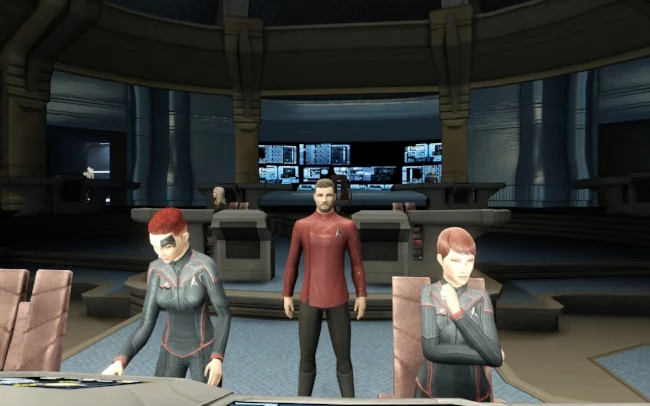
The community itself offers a vast array of involvement and potential sources of fun. For some gamers due to their real-world obligations, it can become a surrogate social life in itself. As I mentioned earlier, this community offers an environment in which they can have a tangible impact and act as a force for good, unlike in the real world. I do not like the term "care bear", as its purpose is ultimately pejorative. However, it cannot be denied that MMOs do attract a lot of people who thrive on the social interaction and are compelled to help and support their fellow players. It is these very factors that defines the point of playing for them.
Because the mainstream success of video games, the gaming industry is naturally chasing the most lucrative demographic group. This is the casual gamer, although exactly what the parameters of that term are, remains hotly debated. However, negative attitudes towards gamers persists as do stereotypes. For many non-gamers, they erroneously think that those that do play MMOs and the like are not engaging with their fellow man. There is also the condescending attitude that because your leisure activity does not take place in a physical environment, that it is devoid of any merit. These are naturally erroneous and flawed ideas, but they often come up, despite the reality being the complete opposite.
To try and compensate against this sort of misinformation, there have been recent studies and reports that try to overstate the benefits of social gaming. I will happily concede the point that gaming does require players to use certain real-life skills, such a team building, communication and organisation, but to hail them as problem solving über talented collectives, that can tackle the world’s problems is a stretch. It is therefore important to keep a sense of perspective on gaming and to pretty much treat it as any other sort of leisure activity. Being a hero in the realm of Tamriel does not make you one in real life. However, nor should it pigeon-hole you as a nut.
So, it in conclusion, it would seem that despite some common factors relating to engagement and enjoyment, it is very difficult to come up with a simple set of rules that define the psychology of an MMO player or indeed any type of gamer. It should also be remembered that gamers often have other interests and mainstream pastimes such as sport, music or art. Gaming is not the sole defining factor of their non-working life. It is simply their leisure activity of choice, and as such should be afforded the same sort or regard as equivalent real world activities such as sport.
LOTRO and Daybreak Game Company
Over the past eleven years The Lord of the Rings Online has faced many business-related issues that has prompted its player base to speculate over the games future. These include the MMOs transition from a subscription to a free to play service, Turbine’s acquisition by Warner Bros. Interactive Entertainment and then there were the issues with the license expiration in 2017. However, all these problems were resolved in one way or another and the game endures. That is not to say that Turbine or Standing Stone Games (SSG) are business geniuses. Absolutely not. They’ve made plenty of mistakes over the years and continue to regularly shoot themselves in the foot with their community relations. LOTRO survives because of its core playerbase who have made this virtual Middle-earth their home and they support the game come hell or high water. A lot of this core group are fully aware of SSGs shortcomings, but they are wedded to this game and hence they sustain it. It’s a curious yet fascinating symbiotic relationship.
Over the past eleven years The Lord of the Rings Online has faced many business-related issues that has prompted its player base to speculate over the games future. These include the MMOs transition from a subscription to a free to play service, Turbine’s acquisition by Warner Bros. Interactive Entertainment and then there were the issues with the license expiration in 2017. However, all these problems were resolved in one way or another and the game endures. That is not to say that Turbine or Standing Stone Games (SSG) are business geniuses. Absolutely not. They’ve made plenty of mistakes over the years and continue to regularly shoot themselves in the foot with their community relations. LOTRO survives because of its core playerbase who have made this virtual Middle-earth their home and they support the game come hell or high water. A lot of this core group are fully aware of SSGs shortcomings, but they are wedded to this game and hence they sustain it. It’s a curious yet fascinating symbiotic relationship.
Two days ago, Massively Overpowered reported on an interesting situation that has potential to impact upon LOTRO (and DDO) as it is to do with SSGs current “publisher” Daybreak Game Company (DGC). On April 6th, the U.S. Department of the Treasury commenced the freezing of assets of several Russian businesses because of alleged “destabilizing activities” such as interference in the 2016 U.S. election. This includes Viktor Vekselberg, who owns the Renova Group conglomerate along with its subsidiary, Columbus Nova. Columbus Nova, is the parent company of DGC. Renova has until June 5th to “wind down operations, contracts, or other agreements” according to The U.S. Office of Foreign Assets Control. Approximately $1.5 and $2 billion assets from Vekselberg have been frozen because of these sanctions. It now remains to be seen whether this process extends to Columbus Nova’s assets and DGC. At present, DGC is trying to distance itself from Columbus Nova. Tweets and press releases are being deleted and Wikipedia entries are being “edited”. Yesterday, DGC’s Chief Publishing Officer and former Senior Vice President, Laura Naviaux, announced she’s left the company.
Naturally, those who play EverQuest II and PlanetSide 2 are “concerned” as to whether this situation will impact upon these games as they are owned by DGC. Which then brings us back to the LOTRO community. It has naturally got wind of the situation and players are asking SSG for clarification on the games official forums. Naturally, SSG are being tight lipped about the matter using marketing speak to brush concerns aside. Putting the potential gravity of the situation aside for the moment, most businesses are smart enough to keep details of their internal machinations behind close door, so it’s highly unlikely the current community manager Jerry “Cordovan” Snook, is going to go public and spill the beans as to what’s going on. Some players are adamant that DGC is simply SSGs publisher and even if there is a problem, it’s just a case of finding a new one. Certainly, on paper DGC is SSGs publisher and further details about the business relationship between the two is not clear. However, history doesn’t always favour the “wait and see” approach and there is nothing wrong with some intelligent and measured speculative analysis of the situation.
The potential for this matter to affect LOTRO depends on two key factors. First off, is DGC directly linked to Columbus Nova and therefore at risk of having its business assets frozen? This is ultimately one for the lawyers to decide but it is curious that DGC’s Chief Publishing Officer has chosen now as a time to make a career move. It could be coincidence. If further senior staff resign, then perhaps that may be a clearer indication that the company is at risk. There is also plenty of company information in the public domain these days that allows even the layman to remain informed. If we see any movement of corporate assets to outside of the US, then again it may be a clear indication that DGC is subject to The U.S. Office of Foreign Assets Control.
The second point to consider is the exact nature of SSGs relationship with DGC. Many games journalists and gaming community commentators have suspected right from the outset, that DGC was more than just a publisher for SSG and that they bankrolled their entire extraction from Turbine/Warner Bros. in late 2016. In a recent interview with with Jean "Druidsfire" Prior for MMO central, LOTRO Executive Producer Rob Ciccolini AKA Severlin stated that Jake Emert is his direct boss. Emert is CEO Daybreak Game Company Austin Texas Studio. Such a statement certainly puts DGCs status with SSG in a different light. When you consider the whole matter of how staff from Turbine set up their own company, then bought the rights for DDO and LOTRO, as well as the infrastructure and then settled all associated legalities, it must have taken a substantial amount of capital. I am not aware of SSG having raised that money themselves, which therefore means there must have been a major investor involved. It is not unreasonable to suggest that DGC was and remains that investor.
If both of these points are correct and that DGC underwrites SSG and is in imminent danger of having its assets frozen, then there is scope for problems in the weeks to come. And it is at this point that there is less data available to speculate upon. What exactly would be the consequences of removing DGC from SSGs business plan. How easy would it be to find a replacement investor? Would there be a one who was interested and readily available? Would there be a disruption of service to both LOTRO or DDO or would it be worse than that? Or are there caveats in the fedral asset freezing regulations to prevent collateral damage such as this hypothetical scenario? At present there is insufficient information for any of us to know definitively what is going on. However, if we reflect upon information that has emerged from former Codemasters employees about the business practices surrounding LOTRO, we can be assured that both the grass roots staff and the playerbase are always the last to know what is really going on. I’m sure in the meantime, LOTRO players will continue with their activities as usual and quite right to. It is however a worrying situation and it would be foolish to ignore the matter out of hand.
Competition or Entertainment?
It becomes apparent when reading the various musings of the gaming cognoscenti, that there are vastly differing views on most key areas of gaming. Take a subject such as “difficulty” which is currently a subject of debate over at Massively Overpowered. A quick perusal of the comments shows a broad range of views with many being at odds with each other. But if we step back from these individual differences of opinion, it becomes clear that the basis of all of these stems from a fundamental disagreement as to what actually constitutes a game and exactly what are its defining attributes. There are those who feel that competition is the foundation of gaming and that this can only be fully realised in a player versus player environment. Success is the measure of achievement and the basis of their personal gratification. However, others beg to differ and feel that collaborative play, social interaction and achieving personal goals are as equally important. I believe this divide clearly shows that the definition of gaming has evolved and may be its time we revised our preconceptions.
It becomes apparent when reading the various musings of the gaming cognoscenti, that there are vastly differing views on most key areas of gaming. Take a subject such as “difficulty” which is currently a subject of debate over at Massively Overpowered. A quick perusal of the comments shows a broad range of views with many being at odds with each other. But if we step back from these individual differences of opinion, it becomes clear that the basis of all of these stems from a fundamental disagreement as to what actually constitutes a game and exactly what are its defining attributes. There are those who feel that competition is the foundation of gaming and that this can only be fully realised in a player versus player environment. Success is the measure of achievement and the basis of their personal gratification. However, others beg to differ and feel that collaborative play, social interaction and achieving personal goals are as equally important. I believe this divide clearly shows that the definition of gaming has evolved and may be its time we revised our preconceptions.
Many of the MMOS that are currently popular are broad churches offering a variety of activities to the player. Furthermore, emergent gameplay offers a wealth of other possibilities beyond traditional competition. Games can be team orientated undertakings or personal adventures based on exploring and interaction. Some games are more interactive novels or mediums to relay a wider concept or idea. All of which strays away from notions of a competition, fail states and league tables. A lot of what currently falls under the umbrella term of “gaming” is actually more of a broader leisure service. Now traditionalists may balk at this and argue about semantics, which is a fair point. However, much of the language we employ changes in meaning over time. Consider such words as “pimp”, “awesome” or “liberal” and their respective evolution. Hence gaming can no longer be rigidly defined in terms of player versus player competition, rules complexity and fail states to determine a winner.
I often find when reading various game commentary, an undercurrent of hostility towards broader gaming criteria such a social interaction and a casual mindset, from those who self-identify as core gamers. The winning and losing mindset usually goes hand-in-hand with other negative attitudes towards “fun” and any sort of less rigorous approach towards gaming. Although those that hold such opinions are entitled to do so, they are not the arbiters of gaming. No one group of gamers really gets to set the agenda. Ultimately, market forces determine what trends get followed and how games evolve to reach the biggest audience. Some may see this as catering to the lowest common denominator where others consider it a form of democratisation. Irrespective of your view, most forms of entertainment are subject to the process. So, it’s inevitable that gaming, especially MMOs have changed from their initial incarnation.
Although MMOs have become somewhat generic in recent years and admittedly lost some of their unique charm, it’s not as if competitive gamers are not being well served by other genres. MOBAs, co-op shooters and Battle Royale games have rapidly grown in popularity and certainly satisfy those with a player versus player itch. Therefore, I would argue that the expansion of gaming in the last two decades so that it has now become a more common place pastime, has not directly denied this old school group anything, although it may have well challenged their personal philosophy. And the foundation of that philosophy is a definition of gaming that is couched in a mindset born of the previous century. The factors that shaped gaming then are different to those that exist today. It’s time to update the definition and reconcile ourselves to the fact it will change again further in the future. Unfortunately, there will always be those that resist change and prefer to mythologise the past.
LOTRO: More Community Nostalgia
A few days ago, I wrote about some aspects of the wider LOTRO community that were no longer with us. These included the podcast A Casual Stroll to Mordor, the rivalry between the official and unofficial LOTRO forums and that curious experiment, the player council. I was quite surprised by the response to this post, which was very positive, and was also interested by some of the comments that followed on social media. Hence, I decided to follow it up with some further examples, based upon reader feedback and further reflection upon the matter. LOTRO has been around for eleven years which is a considerable period of time. To put this into some sort of perspective, it has been part of my leisure time for one fifth of my life. During that time a lot of things have come and gone.
A few days ago, I wrote about some aspects of the wider LOTRO community that were no longer with us. These included the podcast A Casual Stroll to Mordor, the rivalry between the official and unofficial LOTRO forums and that curious experiment, the player council. I was quite surprised by the response to this post, which was very positive, and was also interested by some of the comments that followed on social media. Hence, I decided to follow it up with some further examples, based upon reader feedback and further reflection upon the matter. LOTRO has been around for eleven years which is a considerable period of time. To put this into some sort of perspective, it has been part of my leisure time for one fifth of my life. During that time a lot of things have come and gone.
Let us begin with My LOTRO, which Turbine launched in late 2008. Designed as a social hub the site (which was a subset of the official LOTRO website), tracked characters, kinship and tribe information. It also displayed item information, stats, deed accomplishment and levelling dates. It also included an extensive Lorebook. There was calendar for kinship events, a journal option for keeping notes on your character's progress and even an RSS feed for each journal. It was the latter that made My LOTRO so invaluable as it became the centre of many player blogs, fan fiction and poetry It was quite a unique platform and somewhat ahead of its times. Furthermore, the public data.lotro.com API could be used to power external sites with LOTRO related information. Players tracked server status and could share character data. If fully developed it could have extended much of LOTROs social activities outside of the game and forums.
Sadly, like anything of this nature, there was scope for abuse. As I mentioned in the previous post the onset of the LOTRO culture wars lead to a lot of acrimony on both forums. My LOTRO provided a means for the unscrupulous to identify a player’s alts which lead to trolling. However, despite side issues such as this, My LOTRO remained an important facet of the player community. But like other aspects of the game, it was not developed further. Overtime, Turbine like any other business, saw staff come and go and My LOTRO suffered as a result of lost expertise. 2010 saw the game convert to a hybrid F2P model and then the following year Turbine took back control of the EU service. The forums where subsequently overhauled a year or so later and My LOTRO was deemed unrepairable. It was subsequently closed in 2013, and all the information therein was lost, although players were given time to attempt to back up their data.
Another service provided by My LOTRO, were the lotteries, in which players could sign up to win in-game loot. This varied from minor trinkets and baubles such as silver, gold or skirmish marks to special mounts, rare armaments, relics, unique class quest items. It was all level appropriate and surprisingly, quite a lot of prizes were unbound. Towards the end of the lottery systems lifespan it became far more LOTRO store-centric, but it was overall a generous and popular service. It required little effort on the players behalf and if you were lucky enough to win, then the item arrived via in-game mail. Sadly, this is something else that has bitten the dust and at present there is no equivalent service. Prizes of the same nature are now given out via live stream on Twitch but it’s a lot less equitable.
I would also like to quickly reference several LOTRO podcasts that have “sailed into the west”. My apologies for any that I’ve missed out, but I can remember a time when all of the following would be required listening. LOTRO Reporter, Beneath your Feet, Through the Palantir, Lotrocast, and Secrets of Middle Earth. And of course, it would be most remiss of me not to mention Mordor or Bust which was my personal stepping stone into the world of podcasting. As a blogger, I would also like to touch upon the various LOTRO fan sites from the last decade. Some still endure to this day which is gratifying to see, but many more have either stopped posting or have vanished from the internet once their domain has expired. Here are a few of those that have gone and are sorely missed. All were of a high quality and reflected the passion that still remains a key aspect of the LOTRO community.
Cosmetic Lotro – http://cosmeticlotro.wordpress.com
Fluff and Stuff – http://fluffandstufflotro.wordpress.com
Lotro Fashion – http://lotrofashion.blogspot.de
Darzil’s Crafting Guide – http://www.northshield.co.uk/LOTRO/
Tales of Arda – http://toarda.com
The Elven Tailor – http://theelventailor.blogspot.nl
The Lotro Stylist – https://lotrostylist.wordpress.com
The Starry Mantle – http://starrymantle.wordpress.com
LOTRO: Community Nostalgia
Next Thursday LOTRO officially starts its 11th anniversary celebrations. It’s an opportunity for “fun and larks” with a wealth of special in-game events to play or grind through, depending on your perspective. Standing Stones Games will no doubt espouse the MMOs achievements and if we’re lucky they may even elaborate further upon the games long term road map. However, anniversaries are also a time for reflection and I would like to take some time to explore several wider aspects of LOTRO and its community that are no longer with us. A lot has happened in eleven years and things are naturally not the same. Change is inevitable and not always bad, but some of the things that have gone from the LOTRO-verse are sorely missed. Others may be not so, but I would still argue that their presence at the time were born of an engaged and motivate playerbase.
Next Thursday LOTRO officially starts its 11th anniversary celebrations. It’s an opportunity for “fun and larks” with a wealth of special in-game events to play or grind through, depending on your perspective. Standing Stones Games will no doubt espouse the MMOs achievements and if we’re lucky they may even elaborate further upon the games long term road map. However, anniversaries are also a time for reflection and I would like to take some time to explore several wider aspects of LOTRO and its community that are no longer with us. A lot has happened in eleven years and things are naturally not the same. Change is inevitable and not always bad, but some of the things that have gone from the LOTRO-verse are sorely missed. Others may be not so, but I would still argue that their presence at the time were born of an engaged and motivate playerbase.
First off, let us start with what was “the definitive” LOTRO podcast and fansite. A Casual Stroll to Mordor was in many was a microcosm of the LOTRO community. It was consistently well written, informative and above all welcoming. It transcended its initial remit to inform and entertain and became a focal point in the games community and an invaluable resource. The husband and wife hosts, Goldenstar and Merric were the antithesis of elite MMO gamers and their down to earth style and enthusiasm made their content extremely accessible. They were also great ambassadors for the game yet even at the height of their success and popularity, there was never a whiff of ego or smugness about them. Furthermore, they used their popularity to help others who wanted to blog or podcast about LOTRO. A Casual Stroll to Mordor was always happy to cross promote and get people involved.
Yet time and tide wait for no man and after four industrious years, Merric and Goldenstar decided to wind things down. Producing content and maintaining standards is hard work and takes its toll, so it was inevitable that both the website and podcast would come to an end sooner or later. Perhaps the biggest losers at the time were then developers Turbine, who relied heavily on both the podcast and blog to disseminate news and promote the game. It was often commented upon within the LOTRO community at the time that A Casual Stroll to Mordor did a better job than Turbines own marketing and promotion teams. I personally consider A Casual Stroll to Mordor to be a text book example of how to do fan generated content right. There are still good sites and contributor out there that are doing a commendable job in supporting LOTRO, but Merric and Goldenstar were part of a perfect storm of factors that mean that they got it 100% right.
The next facet of the LOTRO community that has waned and that I wish to reference, is far less benign one. At the time is was a somewhat problematic “thing” and caused a great deal of consternation within the LOTRO community and for Turbine. Namely, the rivalry and culture war between the Official LOTRO Forums and the LOTROCommunity AKA The Unofficial LOTRO Forums. Initially the unofficial forums were a means to replace the Codemaster forums, after the merging of the US and EU LOTRO servers. Yet the free to play transition, along with the service consolidation were proceeded by difficult times for LOTRO. The game began to move further in to territory that not all players liked, and it is fair to say that Turbine struggled to manage it community relations at the time. Moderation on the official forums was heavy handed and the unofficial forums quickly provided and alternative platform for discussing and critiquing the state of the game.
Eventually this divide descended into a longstanding flame war between both camps and there developed a very polarised “them and us” mentality in certain quarters of the LOTRO community. There were also a small minority of people who used this situation to indulge their desire to troll and hence there was a lot of mud slinging which to this day, some folk still harbour a grudge over. However, despite the bad aspects of this situation, the alternative forums did provide some well researched and articulated commentary at a time when the game needed it. There was a passion there born of a love of a game that to some had lost its direction. Furthermore, some of the unofficial forum members went on to serve on the player council because irrespective of their views. But again, the ebb and flow of time and one’s passions has seen the unofficial forums fall into decline. Some still post there but its intermittent and no longer especially relevant.
Finally, as its been referenced, let us take some time to reflect upon the LOTRO player council. I make no bones about the fact that I thought it was a bad idea at them time and therefore wasn’t surprised by how it subsequently proved to be a bumpy ride both for those who participated and for Turbine yet again. The problem stemmed from false expectations regarding what the player council was able to do. The problem was then compounded by Turbine being vague and then later inconsistent about what they were after. Ultimately, they wanted free market research, where the community and some of those on the council thought they were providing representation and lobbying. And all of this happened during a time when the LOTRO culture wars were still raging. Overall although some members felt that they had contributed towards the MMOs development, I’m not aware of any significant influence or change that the council facilitated.
After eleven years LOTRO is still ticking over and retains a stoic and loyal fan base. There are still blogs and podcasts about the MMO and it maintains a hardcore group of Twitch streamers. The community is still welcoming and engaged but it runs in a noticeably lower gear. Although there are still disputes on the main forums there is nowhere near the level of zealotry within its community divides. LOTRO is far more sedate and civil these days. But in a curious way I miss all of the above that is now absent from the LOTRO-verse. Even the council which was a misplaced experiment belied an active and strongly motivated community. If LOTRO manages to sustain itself for another five years, I wonder what people will look back and reflect upon from this period in the games lifecycle?
The Deliberately Capricious Nature of the Random Number Generator
Although I enjoy Hand of Fate 2, due to the nature of the game’s underlying narrative, you frequently have to pick a card, roll a dice or select yet another card from a spinning wheel, to determine an outcome to an event or an encounter. Hence the game relies heavily on the use of a random number generator mechanic. Sometimes, depending of the speed of the card-based activities you can visually track the one you need to pick. However there reaches a point when you can’t do this. There are either too many cards to keep an eye on or the spinning wheel is simply going to fast. Then it becomes a matter of random chance. And if the odds are unfavourable a matter of repetition. And then frustration. And then a potential abandonment of the game.
Although I enjoy Hand of Fate 2, due to the nature of the game’s underlying narrative, you frequently have to pick a card, roll a dice or select yet another card from a spinning wheel, to determine an outcome to an event or an encounter. Hence the game relies heavily on the use of a random number generator mechanic. Sometimes, depending of the speed of the card-based activities you can visually track the one you need to pick. However there reaches a point when you can’t do this. There are either too many cards to keep an eye on or the spinning wheel is simply going to fast. Then it becomes a matter of random chance. And if the odds are unfavourable a matter of repetition. And then frustration. And then a potential abandonment of the game.
Random number generators are utilised in many genres of games. From MMOs to MOBAs, Action RPGs and FPS. When they favour the player they’re a delight. When you find yourself on the wrong side of the curve, they’re intolerably unfair and can ruin your gaming experience. Furthermore, they’re frequently not true random number generators because computers are notoriously bad at producing truly random outcomes as this quote from Steve Ward, a Professor of Computer Science and Engineering at MIT, explains. “One thing that traditional computer systems aren’t good at is coin flipping. They’re deterministic, which means that if you ask the same question you’ll get the same answer every time. On a completely deterministic machine you can’t generate anything you could really call a random sequence of numbers because the machine is following the same algorithm to generate them. Typically, that means it starts with a common ‘seed’ number and then follows a pattern. They are what we call pseudo-random numbers".
This presents two problems. The first is simply a PR and marketing problem. A pseudo-random number generator is unfair because it is not what it claims to be. Getting screwed over by a true random number generator is far from a fun experience but it is nobody’s fault. Getting stuffed by a crappy outcome via a pseudo-random number generator is not a blameless and unattributable event. It’s ultimately is down to the developer and they will subsequently get the flak from disgruntled gamers as a result. The second issue is that pseudo-random number generators will follow a pattern. It may well be complex, but a pattern can be determined. Hence there is the risk of manipulation and abuse. Certainly, with regard to single player games, a simple google search will produce links to “trainers” and other cheat file that will circumnavigate the random number generator of your game of choice.
The random number generator as a game mechanic is very convenient from the developer’s perspective. They create the illusion of chance which we see in some real-world decisions, which then adds to the game’s immersion. They also bring a degree of longevity to the proceedings by introducing a fail state. Now for those who consider “competition” to be the foundation of gaming, fail states are not necessarily a bad thing. However, failing due to lack of skill or knowledge can both be addressed. Failure due to random chance is something that has to be endured and is a far more egregious barrier to success. However, the random number generator can make other contributions to a game, other than determining outcomes that give rewards. Unit stats, map generation, mob generation can be handled in such a fashion and frequently are without any major controversy.
If you wish to be pedantic, you can cogently argue about the random nature of much of the real world. However, on a more superficial level (which is also the level that most of daily life is conducted), we like to conduct our daily business here in western civilisation within the confines of a relatively organised and contained society. When I go to the supermarket, I assume that as it’s in the business of selling groceries, that it’s shelves will be adequately stocked. As humans we try our best to manage the daily variable of our lives using knowledge and experience. For example, if I needed to build a foot bridge over a small stream, I would research the best way to do this using mathematics and science, and then undertake the task using appropriate materials. I may fail but if I’ve followed a tried and tested process, the chance of that happening is quite low. In gaming we have no data on the variables and thus cannot manage them. Random chance in this instance is therefore far more of a factor, less realistic and inherently unfair.
Regardless of whether you seen gaming as a competitive undertaking, a broader leisure activity, or as a quid pro quo paid service, the ham-fisted use of a random number generator can be a thorn in the gamers flesh. Is there an alternative? I’m sure there is although I am not sufficiently versed in game theory or development to definitively tell you what it is. But I can say with confidence what I don’t like and being hamstrung by random chance at crucial points in a game’s progression is a prime example of this. It’s not a question of “bad luck”, as luck in this context is being bastardised by the application of anthropomorphism. What gamers need to understand is that the random number generator by default predominantly produces negative outcomes because that is its job. It does this not with malice of forethought but purely by design. Furthermore, it’s ubiquity is due to its expediency and cost. What developers need to do is realise that as a mechanic it really doesn’t have any long-term benefits. Try harder, please.
Social Gaming Without the Gaming
Earlier this evening, I logged into my Discord server as I do each week, to catch up with some internet friends while playing The Elder Scrolls Online. For some technical reason, the game was unavailable, so we chatted among ourselves while pursuing other activities. I don’t think any of us actually played another game while we talked. However, despite the absence of any MMO related entertainment, we managed to keep ourselves amused for three hours. For me this anecdote highlights a point I’ve made many times in the past, that games do not create social interaction but merely facilitate it. Furthermore, the social element of the MMO genre is often misunderstood, misrepresented and over sold. Much of the enjoyment that we get from the social aspect gaming is from our interactions with friends. However, this is not solely dependent on the game which is ultimately nothing more than a conduit.
Earlier this evening, I logged into my Discord server as I do each week, to catch up with some internet friends while playing The Elder Scrolls Online. For some technical reason, the game was unavailable, so we chatted among ourselves while pursuing other activities. I don’t think any of us actually played another game while we talked. However, despite the absence of any MMO related entertainment, we managed to keep ourselves amused for three hours. For me this anecdote highlights a point I’ve made many times in the past, that games do not create social interaction but merely facilitate it. Furthermore, the social element of the MMO genre is often misunderstood, misrepresented and over sold. Much of the enjoyment that we get from the social aspect gaming is from our interactions with friends. However, this is not solely dependent on the game which is ultimately nothing more than a conduit.
How often have you done any of the following? Logged into a game not because you have a pressing need to run a dungeon but because you simply wanted to hang out with like minded people and have a chat. Used your guild mates as a form of group therapy because you just got dumped, didn’t get that promotion or have just had a bad day. Decided to just ride around the virtual world for a while and talk shit with friends, rather than go do the dishes or some other chore you don’t feel disposed towards doing. I suspect a lot of people will have done one or more of these? I know I have. Sometimes the most appealing aspect of social gaming is access to people. The world has changed a lot in my lifetime and the close knit social communities I knew in the seventies are not necessarily there for a lot of folks these days. You don’t always know your neighbours or remain friends for life with the people you went to school with these days. MMOs offer an alternative to this in so far as an opportunity to strike up friendships if you so desire.
Gaming can be greatly enhanced by social interaction, especially when it is with friends. I often think that developers lose sight of this subtle distinction. Too often they confuse random grouping in co-op gaming with the social dynamic you find in close-knit guilds and erroneously think it will yield the same results. It does not. I have had some good experiences with random grouping, but they have been few and far between. Too often they are a necessary evil that you have to endure to achieve your goal. On the other hand, gaming with my peers, who I know and respect, has provided some of the most enjoyable experiences I’ve had in recent years. I still regularly talk to people I’ve known via guilds and kinships irrespective of whether we actually play MMOs together. Some of these friendships are over a decade old and have out lived some of the MMOs that spawned them.
The Tedium of April Fool's Day
Many of the traditions that we maintain as a society, started off with honest intentions. Such things as public holidays, religious observance or the simple celebration of a particular group or ideal are prime examples. Inevitably the meaning of these traditions becomes diluted over time and they more often than not become exercises in marketing or tedious institutions perpetuated by those with a specific agenda. For me April Fool's Day is the embodiment of this concept. An exquisitely unfunny ritual that is inflicted upon us by those who don't realise (or care) that the activity is totally arbitrary. I hate the concept of organised fun. And that it’s something to be martialled and stage managed by self-appointed arbiters. Furthermore, I despise the accompanying mindset that if you somehow don't enjoy yourself, or wish to participate in the ensuing charade, you are somehow lacking or a "killjoy". Both concepts are flawed and morally oppressive. For me fun is something that occurs organically, and its dynamic nature eschews control and shepherding. It should not be at someone else’s expense either.
Many of the traditions that we maintain as a society, started off with honest intentions. Such things as public holidays, religious observance or the simple celebration of a particular group or ideal are prime examples. Inevitably the meaning of these traditions becomes diluted over time and they more often than not become exercises in marketing or tedious institutions perpetuated by those with a specific agenda. For me April Fool's Day is the embodiment of this concept. An exquisitely unfunny ritual that is inflicted upon us by those who don't realise (or care) that the activity is totally arbitrary. I hate the concept of organised fun. And that it’s something to be martialled and stage managed by self-appointed arbiters. Furthermore, I despise the accompanying mindset that if you somehow don't enjoy yourself, or wish to participate in the ensuing charade, you are somehow lacking or a "killjoy". Both concepts are flawed and morally oppressive. For me fun is something that occurs organically and its dynamic nature eschews control and shepherding. It should not be at someone else’s expense either.
However, the video game industry loves a bandwagon and any event that they can crow bar into a game (and monetise if possible). April Fool’s Day has become yet another of these arbitrary occasions. Thus, we have everything from bogus or “prank” press releases, novelty tweets from community managers, “humorous videos” and even themed events. So far, I’ve encountered the following. An “fun” email from Niantic about a graphical upgrade coming to Pokémon GO. A press release about the upcoming Black Desert Online theme park. And a tweet from the official Path of Exile twitter account stating that they’re abandoning the development of their game as an action RPG and that it will be repurposed as a 100 player Battle Royale experience. However, it should be noted that all the above, although annoying, are things that can be avoided. But the developers of the MMORPG Rift, have decided to go so far as to have a little April Fool’s humour at their players expense. The game usually has no fall damage but today they’ve turned it on. Oh, the endless joy.
There are many things in life that are inflicted upon us, often against our will and without any form of redress. Governments, taxes, kids playing music on their phones out loud and the iniquities of [insert name of tediously predictable You Tuber here], to name but a few. So, I really don't want to see more of the same in gaming. If developers do feel the need to “join in the fun” of the season and insert some joke or novelty event (as with the example from Rift), then they should at least give players the option to disable it. The same way that SSG allows players to opt out of forced emotes from other players in LOTRO. That would cover all bases and buy the devs a lot of goodwill. Those who like this sort of thing can split their sides with mirth and the rest of us can be left in peace. The reason I mention this is because it’s never a good idea to upset paying customers. As for April Fool's Day, well it’s a tradition that really needs laying to rest. Does it promote comic genius or simply perpetuate uninspired, thoughtless, ubiquitous mediocrity? (No shouting out, hands up, please). If you want another cogent argument as to why this annual celebration is a cultural blight, then watch the video below by comedian and satirist John Oliver.
The Next Big Thing
I was chatting with a few fellow gamers recently and was asked if I had pre-ordered any new up and coming titles, such as The Crew 2 and Anthem. They seemed surprised when I responded "no". I subsequently explained that I had reached a stage in my life where I was beginning to tire of hype, false expectations, the continual internet chatter and the crap that accompanies being an early adopter. I think that the whole Star Wars: Battlefront II debacle pretty much put it all into perspective for me and I just don't see the point in going through all that again. Then the subject of early access and soft launches came up and I similarly pointed out that I wouldn’t be jumping on the Sea of Thieves bandwagon either. I like to buy a game when it’s finished and therefore get an entire product. I don’t have to be part of the crowd that’s playing any game on day one of launch.
I was chatting with a few fellow gamers recently and was asked if I had pre-ordered any new up and coming titles, such as The Crew 2 and Anthem. They seemed surprised when I responded "no". I subsequently explained that I had reached a stage in my life where I was beginning to tire of hype, false expectations, the continual internet chatter and the crap that accompanies being an early adopter. I think that the whole Star Wars: Battlefront II debacle pretty much put it all into perspective for me and I just don't see the point in going through all that again. Then the subject of early access and soft launches came up and I similarly pointed out that I wouldn’t be jumping on the Sea of Thieves bandwagon either. I like to buy a game when it’s finished and therefore get an entire product. I don’t have to be part of the crowd that’s playing any game on day one of launch.
I’m frequently unimpressed with the pre-order bonus items associated with buying in advance, as they’re seldom of any real benefit and often smack too much of a cash grab. I appreciate that game developers need to get cash up front, but if I am to spend money prior to a game’s release I want a tangible incentive, not just baubles and trinkets. Plus linking beta testing to pre-orders strikes me too much like hedging your bets. I think it is important to try before you buy these days, as gaming often requires a sizeable cash outlay if you want the full product. To gate beta testing behind a pre-order does seem counter intuitive, potentially alienating many of those who would under other circumstances, be happily testing your product for free. $60 (or more if you want a season pass as well) is a lot to spend on a product that may not eventually be to your liking. I beta tested many MMOs in the past and didn’t buy all of them.
I also have doubts over the future of the MMO genre, so would rather wait a while before purchasing any of the new titles currently in early access. Hence Project: Gorgon and Crowfall remain on my radar through news feeds rather than first-hand experience. I want to see if they succeed or fail and what sort of community grows around them. In the meantime, there are plenty of smaller releases that I am interested in. However, these are not MMOs so do not have the any of the potential risks or problems. I am eagerly awaiting Frogware’s The Sinking City, for example. It won't have the any of the hype and marketing impetus of any of the major studio releases this year, but it will arrive on time and in good order, doing hopefully everything that it's more measured sales campaign promises. I find that many of the smaller game developers still have a sense of perspective and tend not to over sell their products.
The cult of "the next big thing" and the early adopter is really a state of mind. I recently spent some time perusing old titles via Steam and Origin, looking at established games that were over two years old. Such products have usually been patched and fine-tuned, eliminating any bugs. There is also a wealth of online resources should a player require any assistance. Then of course there is the massive price differential. The latter is a very important factor. The net result of my search was that I found the RPG The Witcher 3: Wild Hunt GOTY Edition available via for £15, if you shop around online. Let it suffice to say that unless you need to be at the cutting edge of gaming, you can avoid the respective baggage that accompanies “the next big thing” and find comfort and satisfaction with last year’s titles. Sadly, too many people still are enamoured by pre-order culture and “being there” on day one. Until this culture changes, the egregious bonuses and tat that come with premium pre-orders will continue to blight the industry.
Let the Gamer Beware
Gaming is a very interesting and unique industry. It has evolved a great deal over the last three decades and now deals in virtual products. It’s a far cry from traditional notions of business. Yet despite its modern trappings it is still driven by the same processes and imperatives of any other sector. Therefore, should a customer really treat it any differently? The reason I ask is because it seems to me that gamers have a very different relationship with their respective vendors, compared to other groups of consumers. It is a relationship that I believe to be somewhat skewed and therefore detrimental to both parties.
Gaming is a very interesting and unique industry. It has evolved a great deal over the last three decades and now deals in virtual products. It’s a far cry from traditional notions of business. Yet despite its modern trappings it is still driven by the same processes and imperatives of any other sector. Therefore, should a customer really treat it any differently? The reason I ask is because it seems to me that gamers have a very different relationship with their respective vendors, compared to other groups of consumers. It is a relationship that I believe to be somewhat skewed and therefore detrimental to both parties.
Whether you are buying a house, a new TV or loaf of bread at the supermarket, all business transactions are governed by a basic contract. Goods or services are exchanged for money. Furthermore, those goods and services must abide by a set of pre-agreed criterion. If these are not met, then the goods or services are not fit for purpose and the contract is null and void. The transaction is subsequently cancelled. If funds were paid in advance, then they are returned. There is a logical purity to the process. As a consumer this procedure should be your abiding philosophy and caveat emptor (“let the buyer beware”) your personal mantra. Obviously, consumer legislation has layers of complexity and may vary from region to region, but the basic tenets are universal.
Bearing this in mind let us turn our attention to the gaming genre, specifically MMOs. They are a curious product to begin with. Until recently, initial payment only allowed you to use the client software for first thirty days. To continue using it, a subscription was required. This has changed recently, and the basic product is now given away free, with revenue coming from the sale of enhancements and premium services. Yet despite all this, the business model is still subject to the traditional contract. Therefore, if the vendor defaults in anyway on their obligations, then the buyer has appropriate legal recourse, within the terms and conditions of the service.
Unfortunately, gamers do not simply buy a product and view the transaction with dispassionate and logical legal acumen. Gamers bring enthusiasm and fandom to the equation. Games evolve, and player participation and feedback contribute to that process. The love and time that gamers invest into an MMO elevates the process above a simple business transaction. This is a very big factor in shaping the way gamers perceive their business relationship with the developers. In fact, some lose sight that it is an actual business relationship and see it more as some sort of reciprocal partnership. This is where the problems begin.
Because MMOs are so dependent on customer feedback there is a requirement for forums and an overall dialogue with the player base. This in some ways transcends traditional customer services and takes on a broader role. There is a practical need for a centralised point of information and therefore the role of community manager arises. I consider this to be a contributory factor to the blurring of customer, vendor relationship. Most other businesses have customer service or support. They serve their purpose in providing paying customers with the ancillary service they are due, but they do not alter the dynamics of the relationship. A community manager by their very title infers a community that needs to be "managed", which in turn changes customers with statutory rights into a different group altogether.
Communities in the wider world have a voice. Often, they are solicited by politicians and as such, have power as a lobby group. When this sort of terminology is used with regards to gamers, there is the risk of that they will assume a wider degree of involvement and of their own importance. It is this misinterpretation of what each respective group’s role is, that causes problems. Now consider the gamers above average emotional investment into the products that they are buying. People seldom have a comparable bond with the company that manufactured their fridge. Some fans therefore confuse support and interaction with a vicarious form of co-ownership. Because of roles like community manager and the personalities associated with them, the business relationship then blurs and a more personal one replaces it. It may be well meant initially, but it distorts matters and not for the better. Game developers are commercial entities and making money is their raison d'etre. This should never be forgotten. Ultimately "community management" and other "soft skills" are done out of necessity. They are not driven by altruistic notions and are not providing some sort of benevolent social service for the "greater good". They want your money and will do whatever is required to get it. The vendor is not a friend.
If you use a supermarket and get poor service, you will either complain or more than likely just vote with your feet and never return there again. If you buy a high value electrical item from an established company and find the product faulty as well as the customer support wanting, again you will probably just refrain from purchasing from them in future. As a consumer you may tell others of your bad experience, but you will ultimately get over the matter. After all it is a question of maintaining a degree of perspective. Exactly how much damage has this negative experience done too your life? It not as if your family or a Shaolin Temple has been offended? Now obviously with gaming it is important to consider the time that is invested by the players into the product. This does mean that the consumer has possibly more invested and at stake than the casual shopper that I previously described. However, ultimately the personal investment is something the consumer has brought to the proceedings of their own free will. It has no bearing on the basic business contract that both groups of customers are governed by.
The closure of City of Heroes by NCSoft back in 2012, clearly illustrates this situation. Naturally fans of the game were up in arms and far from happy with its demise. There was a great deal of vocal protest and I have read such statements as "I will never by another NCSoft product" or "they'll never see a red cent of my money again". Emotions were extremely high and some of the opinions expressed seemed to be disproportionate with regard to what had actually happened. It is this type of reaction that I see all too often manifest itself across numerous fans bases. Terms like "betrayal" and "traitor" are used. I have seen these in relation to LOTRO for example. Authors such as George R. R. Martin and Jean M. Auel get hectored by fans who are far from happy with the direction the writers have taken their own creations and work. Again, this all stems from the fact that fans feel that they have some sort of collective ownership or claim to the material they love. Dare I even mention Star Wars?
Passion, fandom and a love of a particular thing can be very positive experience. Ask any scientist, musician or film makers and you'll often find that they were influenced by popular culture. Star Trek has inspired a wealth of our best current achievers. But fandom can also lead to a false entitlement and a very blinkered view of the customer, vendor relationship. Consumers are not the same as creative consultants, nor do they share equal status to those that make the products. This is especially relevant for gamers. The recent launch of Sea of Thieves is a perfect opportunity to reflect upon this matter. If you purchase this game at this point in it's lifecycle, then you need to consider the following.
The game has a finite lifespan, which is governed by its capacity to make money and what other future products the manufacturer has in its portfolio. Buying and playing the game, sinking hours of time and passion into it guarantees nothing. Being active within the wider scene, running a website, hanging out with the community manager at PAX or whatever, does not mean you have more say or clout. Your consumer rights have not altered from what they were on day one. It is very depressing to do so, but my advice is to read the terms and conditions that accompany any MMO (or any other genre of game). They often succinctly tell you exactly where you stand, which is not necessarily where you think. Therefore, let the gamer beware.
A Question of Time and Patience
Every couple of days or so, I log into Dauntless and spend an hour or two hunting beasties. I really enjoy the monster hunting but certainly feel that the quests, crafting and the general ancillary mechanics of the game still need working on. From what I can see the EU server appears to be pretty busy and there are certainly a lot of players in the main quest hub area. Yet despite this, I struggle at times in finding a group. It’s not that other player aren’t available. It’s that they seem unable to endure the five minutes it takes to form a four-man team. Often other players will join the group and immediately indicate that they’re good to go. However, I like to wait to see if we can get at least three players out of four, to improve the odds of combat going well. And it is this short period of waiting that seems to be a massive stumbling block for some. Hence it is all too common that some players will disappear within seconds of joining, if the game is not launched immediately.
Every couple of days or so, I log into Dauntless and spend an hour or two hunting beasties. I really enjoy the monster hunting but certainly feel that the quests, crafting and the general ancillary mechanics of the game still need working on. From what I can see the EU server appears to be pretty busy and there are certainly a lot of players in the main quest hub area. Yet despite this, I struggle at times in finding a group. It’s not that other player aren’t available. It’s that they seem unable to endure the five minutes it takes to form a four-man team. Often other players will join the group and immediately indicate that they’re good to go. However, I like to wait to see if we can get at least three players out of four, to improve the odds of combat going well. And it is this short period of waiting that seems to be a massive stumbling block for some. Hence it is all too common that some players will disappear within seconds of joining, if the game is not launched immediately.
As ever, this has got me pondering the nature of countdown timers, as well as time penalties and the whole matter of player patience in gaming. Despite the fact that match making software has to parse huge quantities of data simultaneously and still manages to collate groups within a reasonable amount of time (five minutes), players just don’t seem to have any patience. I’ve noticed the same phenomenon in other games such as Friday the 13th: The Game and Overwatch. Players will quit a group because it isn’t filling up quick enough for them, only to return a few seconds later when they hit “auto group” again and the software reconnects them. It’s curious the way that even a short wait is considered an anathema to some gamers. Often these will be the same individuals that will abandon a game, once they’re dead and unable to respawn. They’re obviously happy to forgo the XP they’ll receive at the end of the round, if they can get straight back into another alternative game. I worry that such an impatient attitude is a contributory factor towards the fractious nature of co-op games.
However, I cannot claim a position of moral rectitude on this subject as I’m far from a big fan of time penalties in games. Although I understand the logic of not instantly respawning a player back at the exact same location of where they just died, I always tend to grind my teeth while waiting to return to a game. I guess it’s comes down to the fact that the adrenaline is flowing, and you’re fired up to get back into combat. In such circumstances, measured and reasonable attitudes seldom prevail. Mercifully, I have mainly avoided most MMORPGs that have any sort of corpse run, death mechanic as I consider this to be an egregious waste of time and an unnecessary delay. There is a fine line between a sensible penalty brought about by specific events and pissing your player base off. LOTRO has a hybrid system that mixes the new with old school mechanics. If you are “defeated” you get one free “rez” on the spot which has an hour cool down. If it happens again you can either respawn using in-game currency or at the nearest rally point on the map. These have become few and far between in recent updates, resulting in further lost time as you ride back to your desired location.
Because time is the key to success in most multiplayer or co-op games as well as a finite commodity for most gamers, I guess that’s why its something that people are sensitive about. I often feel that if I only have a ninety-minute window to play an MMO, I want to use that time efficiently and ensure that it yields some results, or I achieve some goal. However, I am aware that such a mindset can slowly turn a leisure activity into a chore and leech all the pleasure from it. I’m also sufficiently old enough to have had the old adage “time is money” drummed into me. To a certain degree that is the case with the MMO genre if you subscribe or pay in some other fashion. However, as a carer and a grandparent, I like to think I can counter these feeling with a degree of patience that I’ve had to cultivate in recent years for practical reasons. It’s at this point I usually end a blog post with a quip such as “only time will tell”. However, in light of the discussion, I shall decline in this instance.
Gold!
I shall be using the term “Gold” in this post for two reasons. First off, it’s a catch-all, generic phrase that encompasses the primary currency used in most MMOs (irrespective of whether it really is called gold or not). Secondly, it means I can gratuitously crow bar Spandau Ballet references into the proceedings if I see fit. Moving on, I currently have four traditional MMOs installed on my PC, all of which have a main currency that is earned through completing quests and the vendoring of loot. Some of these games make the acquisition of gold relatively easy and others do not. Furthermore, like real life, there are rich and poor players in any MMO and usually for the same reasons. IE Investment of time, at which point you enter the economy, fiscal prudence and the old adage of money going to money. Once you’ve accumulated wealth in an MMO it’s a lot easier to maintain the flow of revenue.
I shall be using the term “Gold” in this post for two reasons. First off, it’s a catch-all, generic phrase that encompasses the primary currency used in most MMOs (irrespective of whether it really is called gold or not). Secondly, it means I can gratuitously crow bar Spandau Ballet references into the proceedings if I see fit. Moving on, I currently have four traditional MMOs installed on my PC, all of which have a main currency that is earned through completing quests and the vendoring of loot. Some of these games make the acquisition of gold relatively easy and others do not. Furthermore, like real life, there are rich and poor players in any MMO and usually for the same reasons. IE Investment of time, at which point you enter the economy, fiscal prudence and the old adage of money going to money. Once you’ve accumulated wealth in an MMO it’s a lot easier to maintain the flow of revenue.
Back in 2008 when I started playing LOTRO, earning gold was a relatively slow but balanced process. Progressing through the game, collecting quest rewards and selling your loot brought in a slow but steady stream of revenue. Occasionally obtaining a rare drop would help increase your personal wealth, once it was sold via the auction house. Furthermore, crafting gear and selling it on could prove lucrative. Then there was playing the in-game economy. One such example would involve buying health potions cheap during the middle of the week only to sell them late on Friday or Saturday evening, when players were busy raiding and demand was high. I’m sure broadly similar scenarios are applicable to other MMOs. However, these processes are not always sustainable because game economies evolve, and dedicated players end up accumulating immense in-game wealth. All of which have a knock-on effect.
In STO, the ability to earn energy credits, the games equivalent of gold, has diminished over time. Vendoring the content of your bags after running several Red Alerts (group instances), does not yield much these days. Yet because the game has a core player base that have maintained multiple alts over the last eight years, there is a lot of concentrated wealth among high achievement players. Many lockbox items are not bound and so desirable items such as ships, weapons and traits are sold at massively inflated prices on the exchange (auction house). If a new player wants a rare Tier 6 vessel they will be looking at a price of 200 to 300 million energy credits. To raise such capital would take a strategy of logging in daily on multiple alts, to run specific events. It may possibly take a year to earn such a sum. Again, you’ll find similar situations in other MMOs. It’s also the reason why gold sellers are still a thing. One year versus a few hours waiting for “Tommy” to drop off your cash.
Interestingly, I did not have any issues earning gold in ESO. I recently created a new character and spent about a month progressing to level cap. During that time, I was able to generate over 150,000 gold which is a tidy sum. It will not kit a player out in legendary quality gear, but it will cover the cost of buying equipment from the next tier down and make them ready to start grinding better gear from the endgame. Although I haven’t played Guild Wars 2 for a while, gold was not in short supply in that game, mainly due to the fact that you could buy a specific in-game currency, gems, with real world money and then convert it back into gold. Obviously, such a system does discriminate against players who don’t wish to or can’t afford to spend real money, but the exchange rate is not especially egregious. Other MMOs have a similar system that let’s player effectively buy gold legitimately. Although some would argue it cures one problem and creates another.
My last point is based more upon a hunch and a feeling, rather than something I can tangibly measure; therefore, I won’t frame it as a fact. When I started playing MMOs a decade or more ago, having a lot of gold was a demonstrable benefit. It was often (not always) a key to getting something that you needed to improve your build or something that aided your gameplay. Nowadays, the in-game store seems to be of more importance and in-game gold is not the currency you need to worry about. The role of gold seems to have diminished because its function cannot easily be monetised in an ageing game economy. Hence the focus on convenience items that can be bought for real money via purchasable currencies. Turns out that maybe gold isn’t necessarily “indestructible” and we shouldn’t “always believe in” it, now we have “the power to know”. Cue Steve Norman saxophone break and accompanying bongos.
The Importance of Bots
The inclusion of AI bots in any multiplayer game is always an added bonus. Playing against bots is a great way of learning the basics of a game and practising your strategy. It also provides a welcome break from the human element of any game, which can become wearisome at times. It’s also a good insurance policy for the future, when a games popularity may have waned and finding an online game may prove difficult. Therefore, I am pleased to see this facility present in titles such as Call of Duty: Black Ops franchise, Overwatch, For Honor, and Friday the 13th: The Game. Bots are also present within the MMO genre. For example, these include your skirmish soldier in LOTRO or your away team in STO. When I played SWTOR I found that some companions were invaluable due to their role as a healer. And let us not forget combat pets. They may well be fluffy and cute or have large pointy teeth, but they’re bots no less.
The inclusion of AI bots in any multiplayer game is always an added bonus. Playing against bots is a great way of learning the basics of a game and practising your strategy. It also provides a welcome break from the human element of any game, which can become wearisome at times. It’s also a good insurance policy for the future, when a games popularity may have waned and finding an online game may prove difficult. Therefore, I am pleased to see this facility present in titles such as Call of Duty: Black Ops franchise, Overwatch, For Honor, and Friday the 13th: The Game. Bots are also present within the MMO genre. For example, these include your skirmish soldier in LOTRO or your away team in STO. When I played SWTOR I found that some companions were invaluable due to their role as a healer. And let us not forget combat pets. They may well be fluffy and cute or have large pointy teeth, but they’re bots no less.
As an advocate of bots, I would like to see them present in a lot more games. One of the main reasons for this, is that I see them as a solution to player toxicity. At least half of all the games I experience in Friday the 13th: The Game are unsatisfactory due to my fellow players fooling around, trolling or simply trying to pursue their own agenda. I stopped playing Overwatch because too many players have become self-appointed arbiters of how to do things “correctly”. And I ceased playing For Honor online due to the proliferation of “lag switch” cheating. Bots resolve all these issues and conspicuously lack a propensity for continuous garrulous inanities. Obviously, if you are a top tier player you may find bots an unsatisfactory opponent. Plus, there’s little fun to be had crowing or taunting a defeated AI opponent. But for the average player, bots can offer an entertaining and enjoyable experience free from stupidity and annoyance.
I would also like to see a greater presence of bots in the MMO genre. Often due to the culture of racing to level cap, if you’re absent from a game for a while, you’ll find yourself in a level appropriate region devoid of other players. If you’re part of a big enough and helpful guild, you’ll may find others to help you through instances and dungeons. But that isn’t always the case and personally, I don’t want to have to be dependent on the good will of other players. I would like to have access to multiple AI companions from different classes that would allow me to tackle what is usually group content. Now some players would consider this an anathema, stating that it mitigates the point of an MMO. However, the Achilles Heel of the genre is the very inter-dependency upon other players. Irrespective of ideological arguments, from a business perspective it is not wise to inconvenience your player base. If I cannot progress, then I will go find something else to do.
I believe that bots may well become more common place in gaming because they ultimately fit into the “live services” mindset that is currently on the rise within the industry. Bots offer convenience and convenience is a marketable commodity. Unlocking a bot healer, DPS class or tank that would allow me to clear content in MMOs that I currently cannot currently do or more to the point, clear more quickly, is something I would pay for. AI technology is also something that is constantly improving, so may be existing prejudice against it will diminish over time. Certainly, the inclusion of AI bots in a game increases its longevity and that therefore impacts positively upon its financial lifecycle. And if we’ve learned anything from the games industry in recent years is that fiscal imperatives drive the market. So, don’t be surprised if the next big thing is the proliferation of bots. I for one will welcome it.
LOTRO: Out of the Frying Pan, Into the Fire
Considering that the Mordor expansion for LOTRO was released on August 2nd last year, I’ve made precious little progress. I don’t like the zone for reasons I’ve mentioned in a previous blog post, yet I now find myself in a position where I need to clear through its content, so I can move on to the new regions that have become available with Update 22 – Legacy of the Necromancer. So, I decided to see if I could just get away with just completing the central Epic Story and ignoring the secondary quest lines. However, I have once again ground to a halt due to what I consider to be excessive grind. Having entered the fortress of Durthang, I found that rather than offer any sort of meaningful tactical challenge, I was instead just confronted with a series of rooms which are all densely packed with mobs. Furthermore, as the Mordor is effectively a gear check due to the additional ten levels that Standing Stone Games have added to the MMO, all mobs in Mordor have been arbitrarily adjusted. As a result, they are demonstrably harder to kill than those in the Dagorlad Waste or North Ithilien.
Considering that the Mordor expansion for LOTRO was released on August 2nd last year, I’ve made precious little progress. I don’t like the zone for reasons I’ve mentioned in a previous blog post, yet I now find myself in a position where I need to clear through its content, so I can move on to the new regions that have become available with Update 22 – Legacy of the Necromancer. So, I decided to see if I could just get away with just completing the central Epic Story and ignoring the secondary quest lines. However, I have once again ground to a halt due to what I consider to be excessive grind. Having entered the fortress of Durthang, I found that rather than offer any sort of meaningful tactical challenge, I was instead just confronted with a series of rooms which are all densely packed with mobs. Furthermore, as the Mordor is effectively a gear check due to the additional ten levels that Standing Stone Games have added to the MMO, all mobs in Mordor have been arbitrarily adjusted. As a result, they are demonstrably harder to kill than those in the Dagorlad Waste or North Ithilien.
Gear checks and difficulty adjustments are frequently necessary in the MMO genre and I have no problem in principle as to what SSG have done with Mordor. You can justify making the region more difficult just on lore alone. However, the developers have not upped the ante through a new mechanic or by grouping particular types of mobs together to offer a tactical challenge. It would appear that enemies have simply had their moral and defensive attributes “turned up”. The net result is that combat isn’t any more taxing in so far as planning and skill. It just takes longer to burn down an enemy. Therein lies the rub. All players have different tolerance levels and degrees of patience when it comes to combat, as it is such a fundamental aspect of the MMO genre. There is a fine and subjective line between what is challenging and what is tedious. Combat in Mordor doesn’t require a new strategy, it just requires time. A lot of time. And as regular readers know, I tend to view my gaming through the prism of an equation. Time and effort plus sundry other variables offset against the expected results. In a nutshell, Mordor is taking too long and thus negating any enjoyment.
I wrote a post about alternative ways of levelling recently but ultimately it solves one problem only to cause another. It is possible to hit the new level cap outside of Mordor, however such a strategy will leave you without any suitable new gear. I received a new pair of Gloves as a quest reward and although they are only uncommon quality, they have an 100% increase in armour value to those I had equipped. The stats are not to be sneezed at either. What this demonstrates is that SSG expect players to progress through Mordor to acquire more robust gear. If you then play through the endgame content, you’ll receive top tier items to further improve your build. Furthermore, Dale, Erebor and the other new areas in Update 22 are of a comparable difficulty to Mordor. Hence if you go directly to the new region without acquiring any new Mordor related gear, you’ll have seriously gimped yourself. Thus, it presents players struggling to catch up with an interesting dilemma. Do you gird your loins and “endure” the grind of Mordor, or go to new zone and slog through quests there in an underpowered state? It does seem a case of “out of the frying pan, into the fire”. However, there is also a third option. Go play something else, which is what I shall do while I considering a solution to this current problem.