
Pick Up Groups
Out of all my recent gaming, Sniper Elite 4 has proved the most entertaining. The engaging mechanics and stealthy gameplay have held my attention and kept me engaged. So far, I spent over seventy-two hours playing through the campaign and DLC. After watching several You Tube videos I was tempted to try the co-operative mode, something that I don’t always do in these sorts of games. Overwatch allows two players to work together as sniper and spotter respectively, to complete objectives within a custom map. It requires communication and co-ordination. It should also be noted that multiplayer in Sniper Elite 4, is dependent on peer-to-peer connection rather than dedicated servers, with the players hosting the games themselves.
Out of all my recent gaming, Sniper Elite 4 has proved the most entertaining. The engaging mechanics and stealthy gameplay have held my attention and kept me engaged. So far, I spent over seventy-two hours playing through the campaign and DLC. After watching several You Tube videos I was tempted to try the co-operative mode, something that I don’t always do in these sorts of games. Overwatch allows two players to work together as sniper and spotter respectively, to complete objectives within a custom map. It requires communication and co-ordination. It should also be noted that multiplayer in Sniper Elite 4, is dependent on peer-to-peer connection rather than dedicated servers, with the players hosting the games themselves.
So far, I’ve found that my enjoyment of co-op mode has been significantly less than that of the campaign due to the human factor. None of my Steam friends own Sniper Elite 4, so I’ve have been dependent on the grouping service built in to the game. You either host a game yourself and wait to be assigned a partner or join an existing game. Therein lies the proverbial rub. Pick up group mechanics have no scope for quality control. So far, I’ve grouped with players who have refused to communicate, have no concept of teamwork and who quit when things don’t go their way. Furthermore, if they’re hosting the game then you find yourself kicked back to the lobby with nothing to show for your work. It’s an old story. One that will be very familiar to anyone who has ever played an MMORPG and used the instance finder tool.
Pick up groups can often bring out the worst in human nature. You are randomly grouped with complete strangers who are anonymous and are driven by their own need for gain. Manners, decorum and social etiquette are purely optional as the system has no means to impose them. Thus, we encounter players that do not know how to play the instance they have joined, or those who are happy to just go AFK and wait for the end reward. Abuse and unpleasantness are common place in chat and if the group undertaking is unsuccessful, then blame is often thrown about. Even if your PUG manages to avoid these problems, they are often extremely soulless experiences. The auto grouping in Guild Wars 2 and the PVE queues in Star Trek Online simply facilitate tasks and require minimal or even zero social interaction.
Now some players will argue that the frictionless grouping that PUGs provide with no need to communicate directly, is a boon rather than a bane. I will concede that this really is a matter of personal preference. However, mechanics that allow you to abandon a game that you are hosting at the expense of others, or quit a group thus leaving the rest of the players in the lurch, are problematic. For Honor had a major problem with the this. If you or your team are losing then there is no imperative to stick around. There is often no penalty or sanction for abandoning an ongoing game that you may be hosting and no recompense for the other players. This is something I also regularly encounter in Overwatch, which seems to have more than its fair share of petulant and bellicose players.
Justin Olivetti referenced the group finding tool in LOTRO recently and discussed how compared to other MMOs, it was an underused facility. Group content seems to more driven by Kinships in that game so players tend to look directly to their colleagues and friends to run group content. Using the instance finder will seldom provide you with a group. STO has a similar problem. Featured group content or that which provides tangible rewards attracts players. However, older and less popular content doesn’t fair so well therefore you can spend hours looking for a group. I also think there is a particular type of troll in that game that delights in joining group queues and then waiting to the last moment to decline the launch invitation, thus consigning the remaining players back to the lobby again.
Sadly, many of the flawed mechanics we encounter in online games exist because they are the most practical way to address a logistical issue. Player hosted games negates the need for dedicated servers and their associated cost. Group finding tools do exactly that, yet offer no further options. The burden to police the group’s activities falls to the players themselves and there’s precious little they can do if things go pear shaped. But what are the alternatives? If grouping with other players is problematic, then bots are really the only immediate alternative. This is an option in games such as Overwatch, For Honor and some of the Call of Duty franchise. However, it is not necessarily an ideal solution as bots do not provide a comparable experience to human interaction. Their use also doesn’t address the root cause of this problem, namely human behaviour.
Like many things in life, the lowest common denominator disproportionately shapes the experience for the majority. Returning to Sniper Elite 4, although I did have some poor co-operative games due to bad grouping, I also had some thoroughly enjoyable interactions. It’s just a shame that PUGs are such a lottery. Ultimately, it is down to the developers of games to maintain community standards. What is the point of having strict terms and conditions if you have no intention of enforcing them? Furthermore, if I cannot enjoy aspects of a game due to others, I am effectively being excluded from experiencing the entire product. Considering the cost of premium titles these days, why should I pay the full price for a game I can only partially play?



Strange Brigade Reveal
Rebellion, the creators of the Sniper Elite series and the Zombie Army Trilogy, announced on Wednesday a new game called Strange Brigade. The trailer shows the game to be a four-player co-op third-person shooter. The rather droll video, shot as a faux newsreel, appears to show a story set in the pre-war era with a group of quirky characters indulging in Indiana Jones style shenanigans on behalf of the British Empire.
Rebellion, the creators of the Sniper Elite series and the Zombie Army Trilogy, announced on Wednesday a new title called Strange Brigade. The trailer shows the game to be a four-player, co-op, third-person shooter. The rather droll video, shot as a faux newsreel, appears to show a story set in the pre-war era with a group of quirky characters indulging in Indiana Jones style shenanigans on behalf of the British Empire.
Rebellion has been cagey about this title until now. In fact, no rumours or hints about this game existed before today. Frequently, the games press get wind of upcoming titles early in their development, often because of leaks from the developers themselves. Not so with this game so its announcement was pleasant surprise. Strange Brigade appears to be beyond initial production, with developers Rebellion aiming to show some gameplay footage at E3
I have to admit that I am a big fan of the Sniper Elite series, so the announcement of Strange Brigade intrigues me. The lead characters are at first look, unusual and diverse. The supernatural element and period setting also delight me. I hope they are as equally creative with the game mechanics, with each character having a bespoke role. I, unlike many others, actually enjoy the campaign mode in titles such as these, as online multiplay never quite lives up to expectations due to the "human" element.
Strange Brigade will be available on PC, Xbox One, and PlayStation 4, although Rebellion have not at present specified a release date yet. Since they are promising to showcase further footage at E3, hopefully more information will become available soon.
Two Worlds II: New DLC After Seven Years
I bought a bundle of games in August 2014, which included the RPG Two Worlds II and its expansion, Pirates of the Flying Fortress. With such purchases, there is a tendency to adjust your expectations in accordance to your financial investment. However, I pleasantly surprised to find Two Worlds II a quirky and enjoyable role-playing game. The animations and combat are somewhat clunky but the loot system that allows you to break down every item into upgrade components, is useful. The game also boasts a customisable spell system, that utilises collectable cards as modifiers. It is quite an innovative mechanic and certainly allows players to create builds that suit their tastes. Two Worlds II benefits from a pleasing soundtrack and a standalone expansion that offers a superior story to the base game. Not every RPG can be a Skyrim or Witcher 3. Two Worlds II is an acceptable genre title to play between such releases.
I bought a bundle of games in August 2014, which included the RPG Two Worlds II and its expansion, Pirates of the Flying Fortress. With such purchases, there is a tendency to adjust your expectations in accordance to your financial investment. However, I pleasantly surprised to find Two Worlds II a quirky and enjoyable role-playing game. The animations and combat are somewhat clunky but the loot system that allows you to break down every item into upgrade components, is useful. The game also boasts a customisable spell system, that utilises collectable cards as modifiers. It is quite an innovative mechanic and certainly allows players to create builds that suit their tastes. Two Worlds II benefits from a pleasing soundtrack and a standalone expansion that offers a superior story to the base game. Not every RPG can be a Skyrim or Witcher 3. Two Worlds II is an acceptable genre title to play between such releases.
After playing through Two Worlds II and the subsequent expansion I deleted the game from my hard drive. After all, this was a title that was originally released in late 2010 and as far as I was concerned the game’s life cycle had come to an end. Turns out I was wrong. Not only about the games life cycle but in my assumptions about the franchises popularity. Because over the weekend I received a marketing email from publishers TopWare regarding new DLC for Two Worlds II. Here is some of the promotional blurb. “After the blockbuster success of Two Worlds II: Pirates of the Flying Fortress, TopWare Interactive and Reality Pump Studios have created a brand new chapter in the phenomenal RPG series! With an all new HD graphics engine, new enemies, weapons and a completely revamped alchemy system, Two Worlds II: Call of the Tenebrae will take you on yet another immersive adventure through the world of Antaloor! But the adventure doesn’t stop there for season pass holders! The Season Pass also includes the follow-up DLC, Two Worlds II, Shattered Embrace, which will launch during Q4 of 2017. Don’t miss out on the chance to continue the fight in Antaloor!”
The first thing that ran through my mind was “who resurrects a game after six years” but the more I thought about it, the more I realised that there are examples of this happening before. Star Wars: Knights of the Old Republic 2 and Anarchy Online are two that immediately spring to mind. Then of course there is the vogue for "remasters" with older titles being given graphical overhauls. Modern warfare, Bio-Shock and Skyrim have all had such revisions made to them. Then there is the issue of sales and the dreaded “number of units sold”. It turns out that Two Worlds II has quite a following in Europe and has shifted over two million copies. North American and international sales add a further million to the total. As developers and publishers are not known for their charitable tendencies, one must assume that the new DLC has viable sales potential.
As I’m between RPGs at present and still mourning the end (for the immediate future) of The Witcher franchise, I decided that developers Reality Pump have sufficient goodwill in my eyes, for me to take a punt on the new content for Two Worlds II. So, I bought a season pass at the discounted price of €29.99 as I’m apparently such a “loyal customer”. Although I’ve read some marketing material, I’m going to try and dive in to this game relatively blind upon its release on June 15th. Hopefully the DLC will be as unusual and fun as the previous content. Furthermore, in light of this development, perhaps my hopes for a third instalment of the World War II co-op shooter, Hidden & Dangerous, are not as misplaced as I initially thought.
Fans and Communities
Over the years I have been a participant in several fan based communities. These have ranged from running film clubs, to creating and publishing fanzines in the pre-internet days. More recently this has included running websites, blogging and creating podcasts. It’s a curious thing the way fandom is cyclical and one’s involvement with such communities seems to ebb and flow. It’s something I’ve been thinking about a lot of late. Several of the You Tube channels I enjoy have reduced their output or stopped due, to changes in advertising policy and monetisation. The Newbie Blogger Initiative failed to manifest itself this year and many of my immediate colleagues in blogging and podcasting have also begun to fade away or moved on to pastures new. The sad thing is, the true value of many community contributors is never really realised until after they’ve gone.
Over the years I have been a participant in several fan based communities. These have ranged from running film clubs, to creating and publishing fanzines in the pre-internet days. More recently this has included running websites, blogging and creating podcasts. It’s a curious thing the way fandom is cyclical and one’s involvement with such communities seems to ebb and flow. It’s something I’ve been thinking about a lot of late. Several of the You Tube channels I enjoy have reduced their output or stopped due, to changes in advertising policy and monetisation. The Newbie Blogger Initiative failed to manifest itself this year and many of my immediate colleagues in blogging and podcasting have also begun to fade away or moved on to pastures new. The sad thing is, the true value of many community contributors is never really realised until after they’ve gone.
So where to start regarding fans and communities? Well fans are far more than just mere customers. Sadly, not all of the gaming industry understands this or more importantly, appreciates it. The distinction is quite clear, though. I am a customer of Vodafone. I use their services for a monthly fee and that is the extent of my relationship with them. I do not write about my experiences using their products, nor do I create guides regarding their use. Neither do I arrange social events around their services. Fans conversely do a lot of these sort of thing and more for the games that they love. Furthermore, they are not the sole beneficiaries of such undertakings. A vibrant community is a great marketing and promotional asset for any games developer. Being free, it also has the best price.
Often the debates about community are applicable beyond gaming and relevant to wider social activities. Communities often arise organically, with fans creating a site and tweeting about what they enjoy. Soon bridges are built with other likeminded individuals and an informal network manifests itself. Often specific groups or individuals gain prominence within these social groups, through their own hard work and dedication to the things that they love. More often than not these figureheads have not actively sought such a position. It simply occurs through the dynamics of human interaction.
Now this raises some interesting questions. I read a reddit post recently in which someone thought that there was a burden of responsibility upon high profile community participants (IE popular You Tubers) or websites. To a degree, I believe that they are right, although I think it is very dependent upon what the said individual or site does within the community. Providing guides, sharing experiences or collating data is usually benign and neutral. Providing news or opinion is more complex and possibly does require a degree of responsibility and self-moderation. However, readers of specific sites or followers of certain individuals also have a duty to exercise their own common sense. It is a mistake to put people on pedestals.
Something I have mentioned before with regard to MMO communities is that in the past they have usually formed and grown outside of the influence of the commercial entities that run the games. For more recent titles such as SWTOR and especially Guild Wars 2, this process has been more centralised under the auspices of the developers. Both of those games have a wealth of information created by players but it is more often than not it is found within the official forums for that title. I may be wrong but I have never been aware of either SWTOR or Guild Wars 2 having the same sort of independent community as such titles as LOTRO or WoW. Communities can be a great asset but when it is not directly under any form of centralised control by the developers or publishers, then it can be a "problem". It will be interesting to observe what sort of online societies develops around future MMOs.
Moving away from gaming and looking at other areas of fandom, a common problem that occurs is the impact that increased public interest can have upon a community. This usually happens when an activity or pastime gains mainstream attention and becomes more widely accessible. Cosplay is something that in recent years has become increasingly popular. It is no longer perceived as the prerogative of a small niche group and is beginning to become quite a major marketing and promotional tool. Some perceive this process as democratisation, where others see something they love being usurped by those that simply wish to exploit it for financial gain. Is the community simply growing or is it being reinvented at the expense of some and the advantage of others?
Ultimately, fans, communities and their resulting social interaction are a complex and fluid situation. With regard to gaming there most certainly is an expiry date for most communities. The natural attrition we see as a game wanes in popularity is a perfectly normal thing, linked to factors such as lifespan and individuals ongoing engagement. Most fans directly or indirectly benefit from the services that arise from healthy communities. Although those that form the foundations of these communities seldom seek any praise it is often due. However, it is wise to note that the opposite can occur sometimes, when certain quarters turn bad and seek to disrupt, divide and destroy.
So where does Contains Moderate Peril fit into all this? Well I'm not entirely sure. I've always liked to maintain a tangential relationship to most traditional hierarchies, neither leading or following but simply contributing. Yet to my own surprise I've found myself involved pro-actively in several group projects in recent years, mainly because I wanted to see them succeed, not only for my benefit but for others. Some have proven to be an invaluable undertaking and have introduced myself and others to a wealth of new and talented writers. Furthermore, I put a lot more stock in the ideas, opinions and views of those who walk the walk, rather than the information that comes solely from a corporate PR department.
Involvement in any community has its ups and downs and can be very hard work. But the rewards and the pleasure that it brings by far outweigh any negatives in my view. So, I advocate involvement and participation. This can take all manner of forms and every little helps. You don't have to selflessly give up your time with big undertakings. Give what you can afford to give. Just reading, supporting and expressing an opinion is a positive contribution. Also, don't become too emotionally attached to things. Communities never stand still. Situations move on and change. As for those who become high profile, or go the extra mile; be reasonable when they decide to hang up their spurs. They’ve probably earned it.
Junior Officer Appreciation Weekend: A Tale of Competitive Nodes
This is a tale about Star Trek Online but as competitive nodes are a common game mechanic in numerous MMORPGs, it is pertinent to many gamers. From today till Monday 5th June, it’s Junior Officer Appreciation Weekend, an in-game event that allows players to earn a rare duty officer. Strange particles can be found around the grounds of Starfleet Academy. If these are scanned with a tricorder, they either disappear, become stable or summon a combat hologram that attacks you. The particles then drop fragments that can be exchanged for event rewards. Collecting the particles is fun but hardly anything groundbreaking. I’m sure that most MMOs have a comparable activity.
This is a tale about Star Trek Online but as competitive nodes are a common game mechanic in numerous MMORPGs, it is pertinent to many gamers. From today till Monday 5th June, it’s Junior Officer Appreciation Weekend, an in-game event that allows players to earn a rare duty officer. Strange particles can be found around the grounds of Starfleet Academy. If these are scanned with a tricorder, they either disappear, become stable or summon a combat hologram that attacks you. The particles then drop fragments that can be exchanged for event rewards. Collecting the particles is fun but hardly anything groundbreaking. I’m sure that most MMOs have a comparable activity.
However, the particles that appear during this event are competitive nodes. Despite fairly generous respawn rates, due to the volume of players in the vicinity, getting to the particles in time to scan and claim them becomes a race. And like any game mechanic that forces players to directly compete with each other, there is scope for rancor and unpleasantness. It took me all of twenty minutes tonight, before I ran into my first ill-tempered player who seemed to think that whatever they saw was immediately theirs. This particular individual after losing out on a particle to me, decided to follow me around for the next ten minutes to try and “avenge” himself upon me, for the heinous outrage I had perpetrated against them. Zone chat also revealed several players arguing over similar incidents.
Now I tend not to rush through events such as these, preferring to go about them at a steady pace. If I spot a particle that is available, I try to ensure that there isn’t a crowd of other players heading towards it. If it does end up in a race, I tend to let the matter go and allow the other party to claim the item. The advancing years have taught me a degree of patience that others seem to lack. However, I don’t concede every race and will compete for a particle, if the fancy takes me. Yet, this entire situation could be avoided if Cryptic simply did away with the competitive node mechanic. In fact, it’s something I’d like to see go from the entire MMORPG genre. ArenaNet have eliminated it from Guild Wars 2 and it is a massive “quality of life” improvement for the game.
Over the last decade, I have gone from being an ardent opponent of egregious behaviour in online games, to just accepting the fact that any gathering of humans will include a tangible percentage of idiots, malcontents and trolls. Developers habitually demonstrate that they have no real interest in dealing with this problems through community policing but some do sometimes use game mechanics as a means to limit shenanigans, tomfoolery and general douchbaggery. Changing competitive nodes to shared one, is a prime example of this. It eliminates a potential avenue for griefing and general bad behaviour. Sure, you can argue that making such a change is allowing a small percentage of players to dictate policy but frankly it’s a small price to pay for a change that inherently improves players in-game experience and overall perception of the community.
Star Trek Online: Life After the Balance Changes
There has been a great deal of discussion on the STO subreddit about the recent balance changes. The subject has also been explored on numerous Tube videos over the last four weeks. As with any game, there’s a lot of technical jargon associated with the various systems and mechanics. Players also use a lot of acronyms and bespoke phrases when referencing content. Subsequently, there can be a steep learning curve to min-maxing and pursuing DPS in STO. Despite having regularly played since the Delta Recruit Event of May 2015, I still struggle to absorb all the subtleties of this MMOs. Certainly, the minutiae of the balance change are lost on me. However, I understand the obvious alterations and have no doubt in my mind that Space combat “feels” different.
There has been a great deal of discussion on the STO subreddit about the recent balance changes. The subject has also been explored on numerous Tube videos over the last four weeks. As with any game, there’s a lot of technical jargon associated with the various systems and mechanics. Players also use a lot of acronyms and bespoke phrases when referencing content. Subsequently, there can be a steep learning curve to min-maxing and pursuing DPS in STO. Despite having regularly played since the Delta Recruit Event of May 2015, I still struggle to absorb all the subtleties of this MMOs. Certainly, the minutiae of the balance change are lost on me. However, I understand the obvious alterations and have no doubt in my mind that Space combat “feels” different.
Unlike some players who go to extremes to experiment, I have broadly taken the path of least resistance with my ship builds in STO. I followed the recommended skills point allocation by the DPS league for tactical officers after that system was revised last year. I also stuck to the prevailing meta of Antiproton Beam Arrays when it came to weapons choice. I ensured that I used the most commonly referenced, consoles, traits and Bridge Officer skills. Overall this has served me well and I managed to reach a DPS parse of 34K. However, the recent thirty percent reduction in power of “Fire at Will” and the obsolescence of Embassy Plasma consoles has reduced my DPS by nearly half. Combat takes longer now and forces the player to think more strategically. I can no longer just rely upon brute force and ignorance.
Furthermore, the balance changes have been universal so NPCs are now more robust. Red Alerts can be more challenging, especially the Tholian invasion. On several occasions, I’ve been in a low DPS PUG which has resulted in the countdown timer expiring before the team has cleared all enemy vessels. The current Mirror Invasion Event can also be a bit of a slog, especially if the portals aren’t closed quickly and there’s an excess of Terran ships to dispose of. Due to the drop in DPS, I’ve been swapping out consoles and ship sets to see if I can improve the situation. So far, tactical and Lobi consoles seem to have a positive impact. Basically, anything that can boost damage, critical chance and severity is beneficial. However, on a positive note Beam Overload and Energy Siphon have been boosted. Pets now feel like they’re pulling their weight. I may also return to a torpedo or cannon based build, although success with these is still very much dependent on piloting skills.
In all fairness, I can’t really complain about the balance changes that Cryptic have implemented. STO has endured a set of meta builds for too long, resulting in a substantially overpowered player base. Those with very high DPS records, pursuing minmax excellence, have not been handicapped by this rebalance but instead have been present with an opportunity to explore a wider variety of builds. PVE remains relatively easy, allowing casual players to advance through the story arcs. Furthermore, the rebalance has meant that previously side-lined gear and equipment may well prove viable again. For players such as myself, I can continue with my low-level experimentation or simply wait for some generic builds to become established.

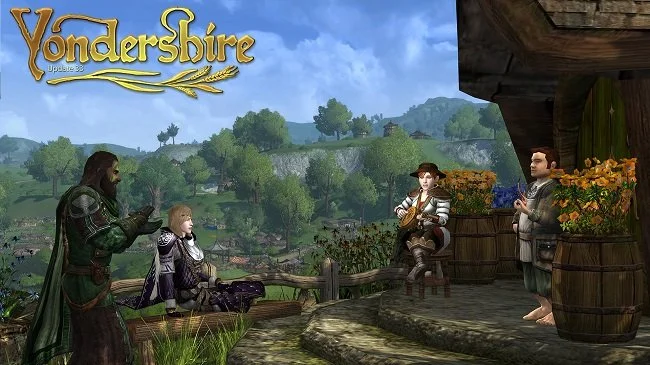
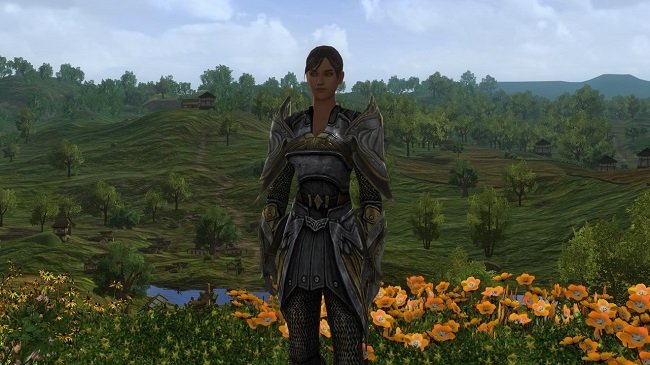
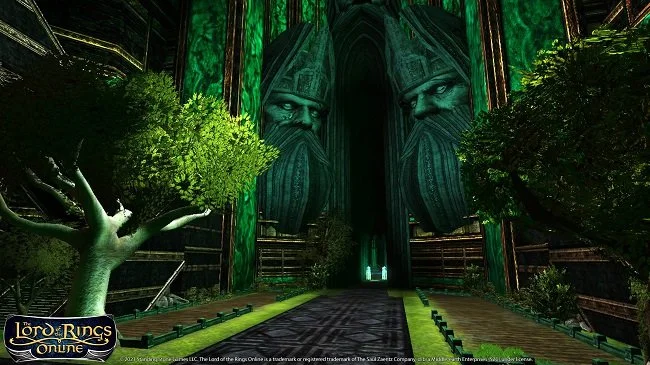
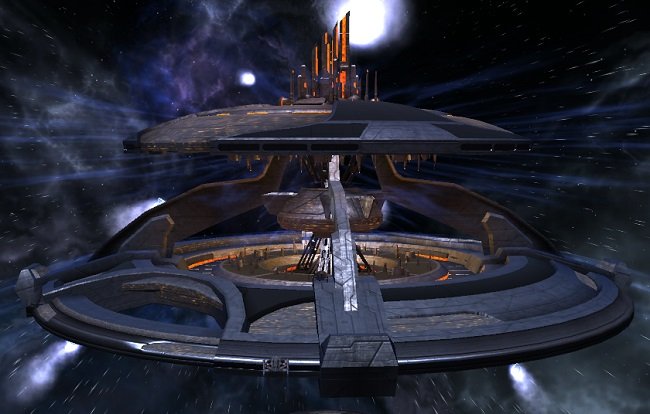
LOTRO: Going Off Map
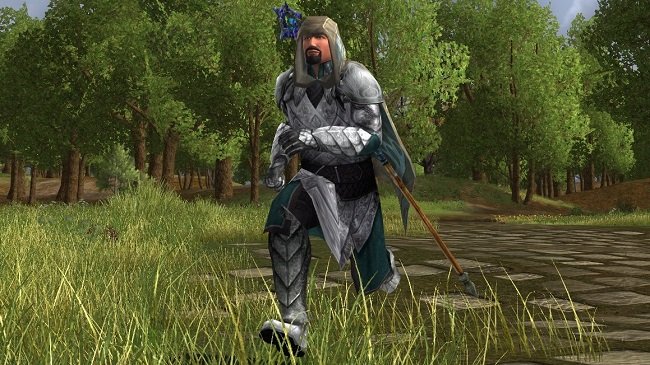
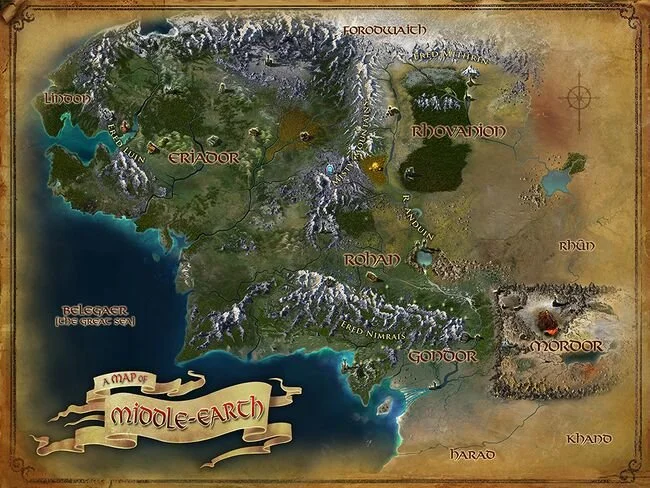
One of the greatest attractions of LOTRO is the opportunity to explore Middle-Earth. Standing Stone Games have done a very good job of interpreting Tolkien's world, offering a rich and diverse environment. I often like to cross reference the in-game environment against such books as Journeys of Frodo by Barbara Strachey and The Atlas of Middle-Earth by Karen Wynn Fonstad. Whenever a new region becomes available, I always like to see what lore based references I can find there. Overall the Middle-earth featured in LOTRO is remarkably faithful to the source text, given the practical compromises regarding scale that have to be made.
One of the greatest attractions of LOTRO is the opportunity to explore Middle-Earth. Standing Stone Games have done a very good job of interpreting Tolkien's world, offering a rich and diverse environment. I often like to cross reference the in-game environment against such books as Journeys of Frodo by Barbara Strachey and The Atlas of Middle-Earth by Karen Wynn Fonstad. Whenever a new region becomes available, I always like to see what lore based references I can find there. Overall the Middle-earth featured in LOTRO is remarkably faithful to the source text, given the practical compromises regarding scale that have to be made.
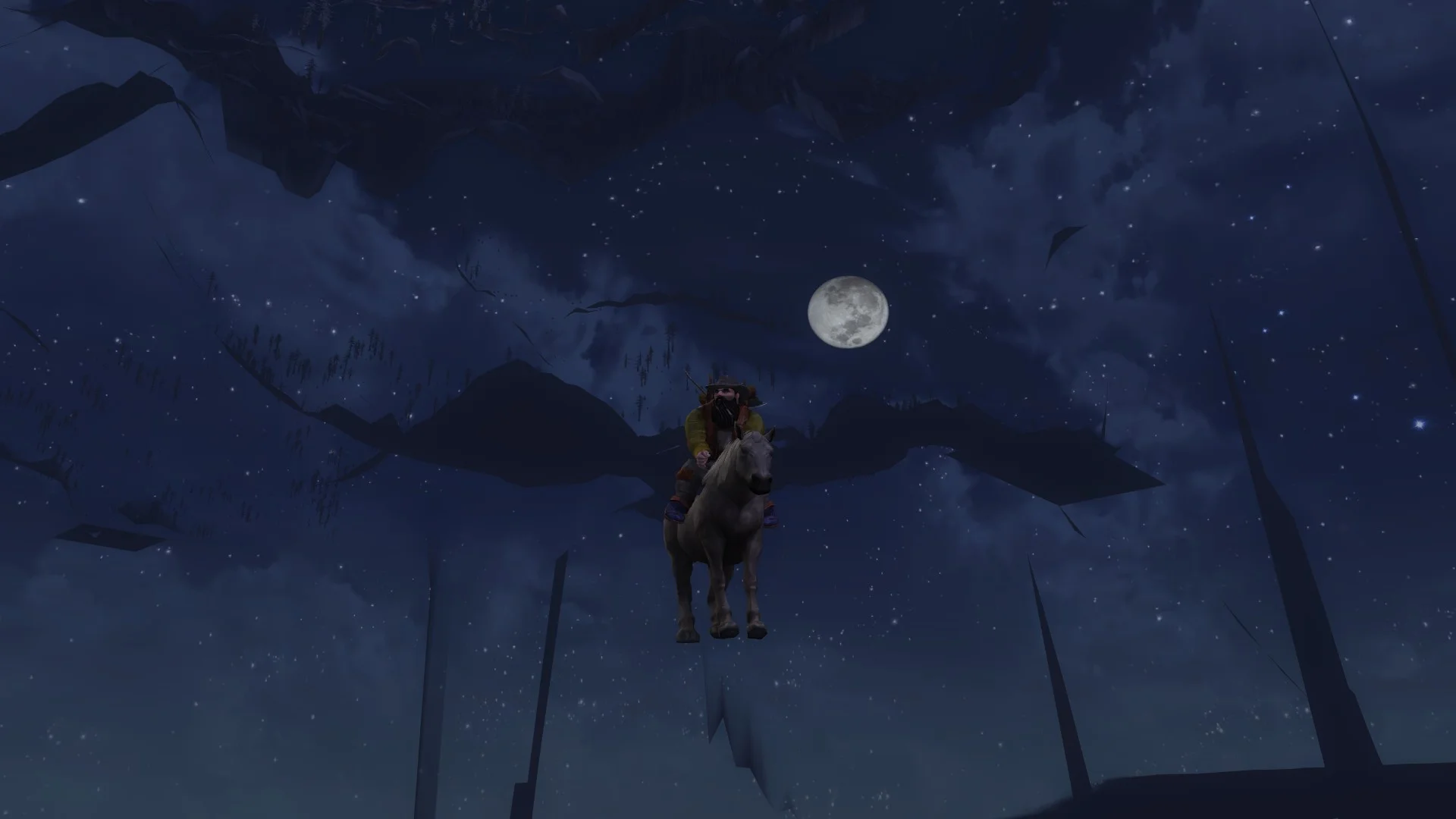
Exploring is an integral part of LOTRO. The game itself offers a wealth of deeds rewarding the finding specific locations. In many respects exploration is a sub-game in its own right. Therefore, we should not be surprised that this particular aspect of LOTRO has its enthusiasts, who take their curiosity to the next level. The invisible walls, rivers and mountains ranges that the developers use to enclose regions and zone that are under development, are seen purely as challenges. Nothing more than obstacles to be overcome by some players, so they can access these obscure and off map places. There is always the hope that a secret will be discovered therein.
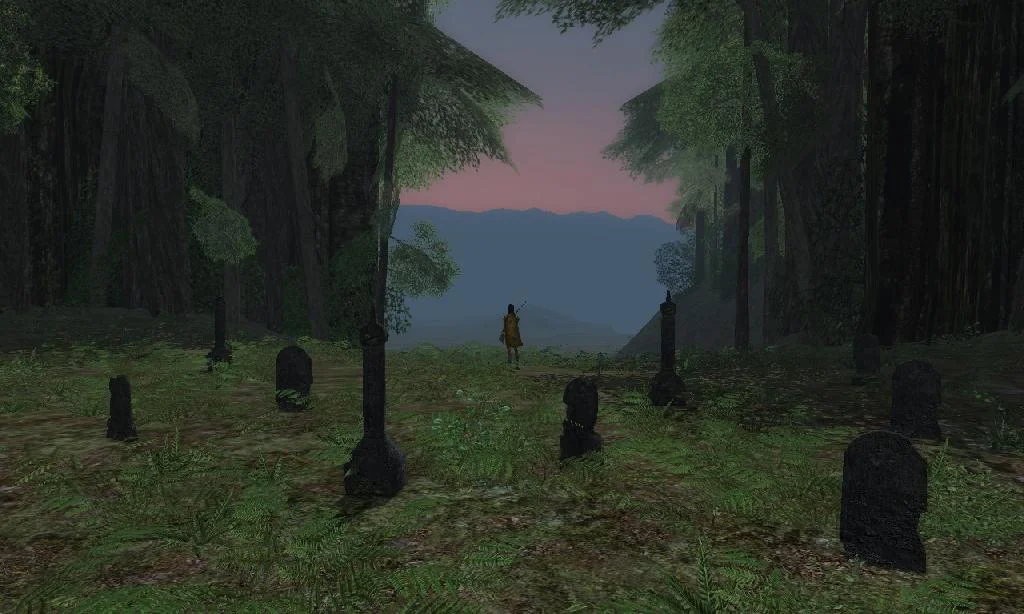
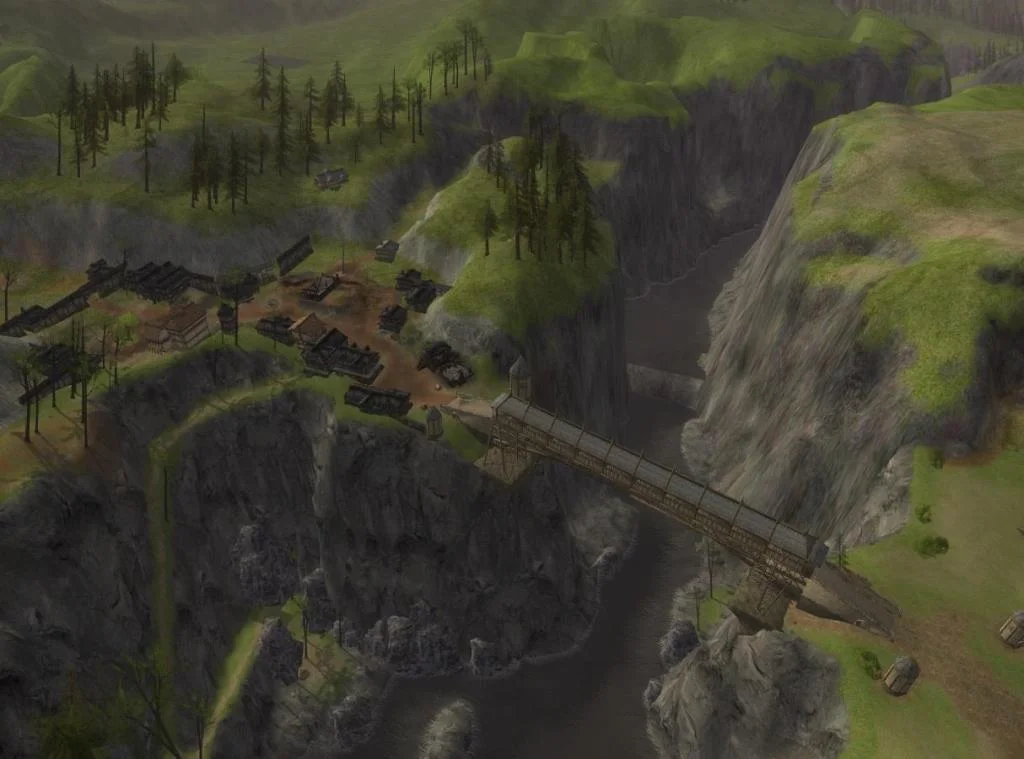
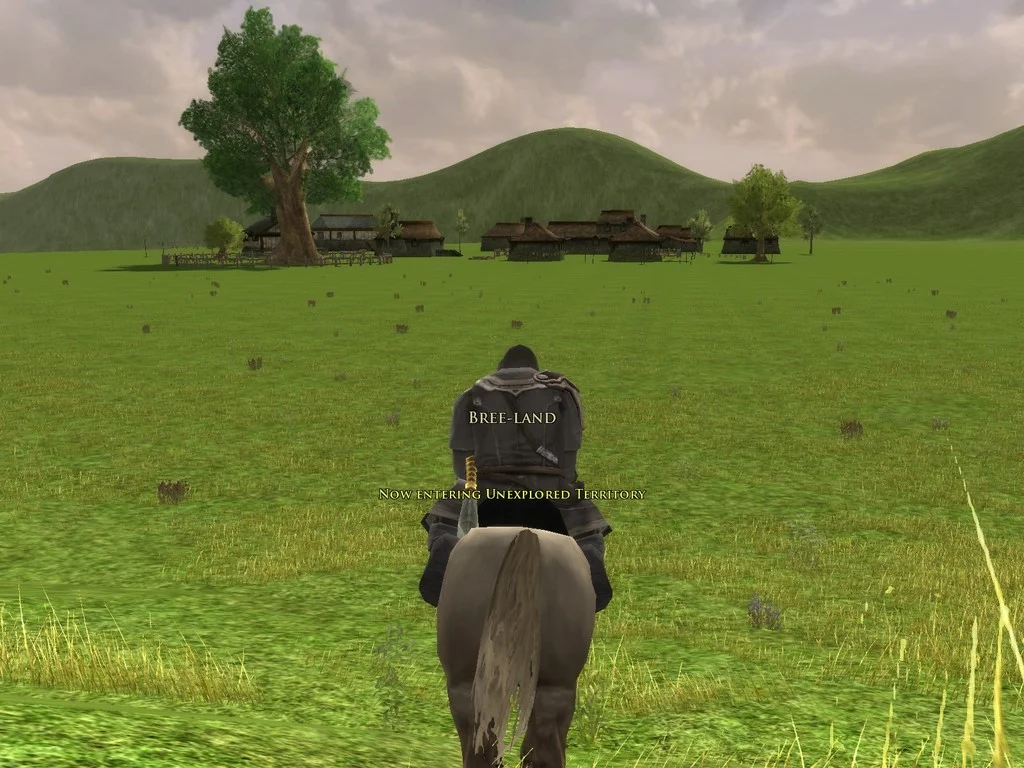
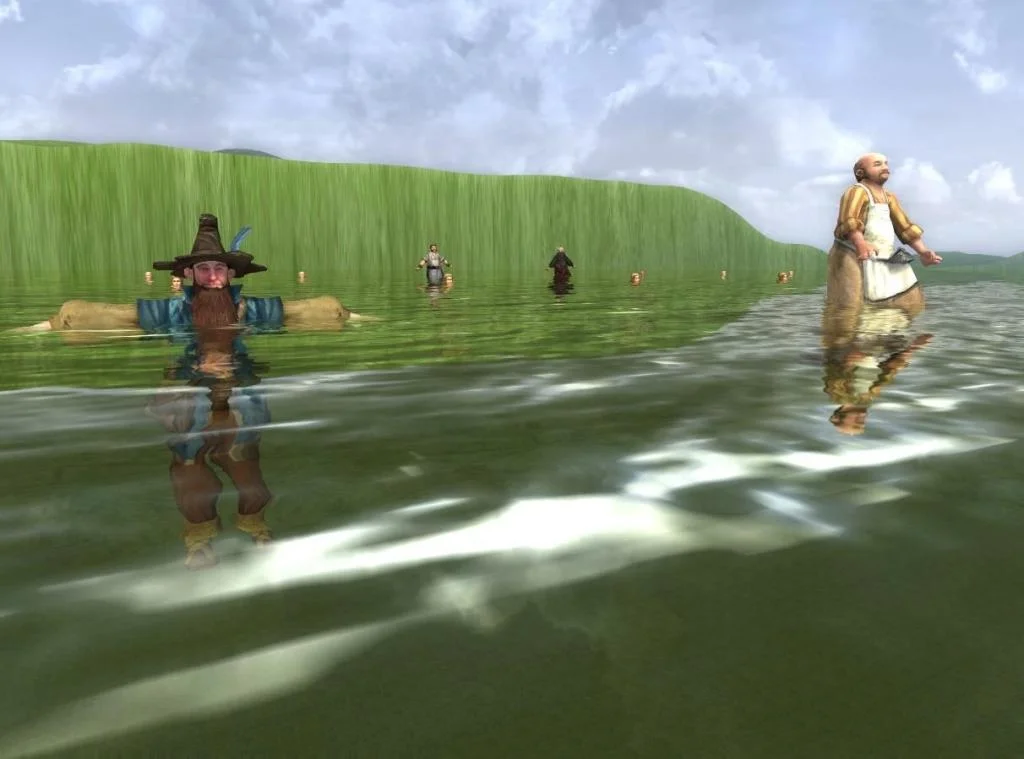
I wrote a recently about the abandoned graveyard near Bree and how it’s an example of a storyline that was dropped from the final release of Shadows of Angmar. Over its ten-year lifespan, LOTRO has gained several test areas as well as locations for quest lines that have been omitted from the game. Often these are behind obstacles or hidden from direct line of sight. I'm sure many of you may be familiar with the infamous (and now totally inaccessible) hidden hobbit village, west of the Ered Luin gate. There was a time when such places could be reached quite easily but over the years the Devs have taken steps to put them out of reach. Posts on the official forums, referencing going "off map" are closed promptly and such activities are discouraged.
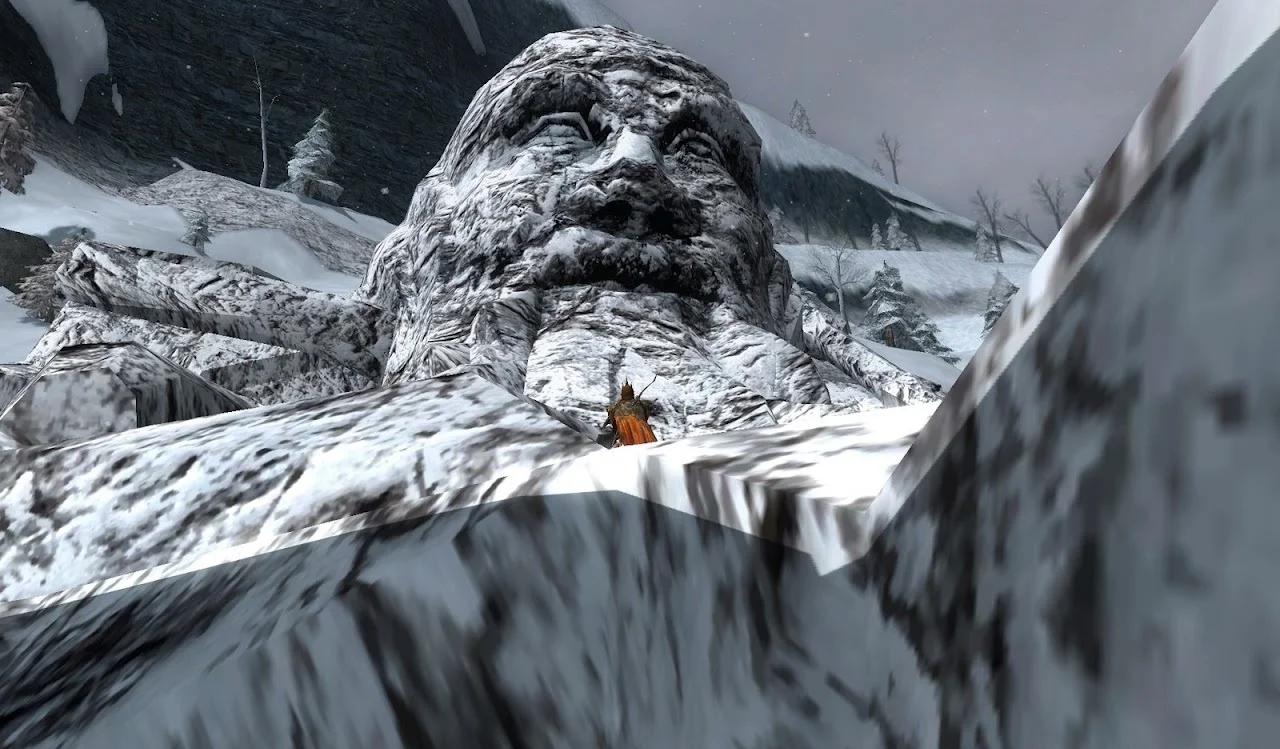
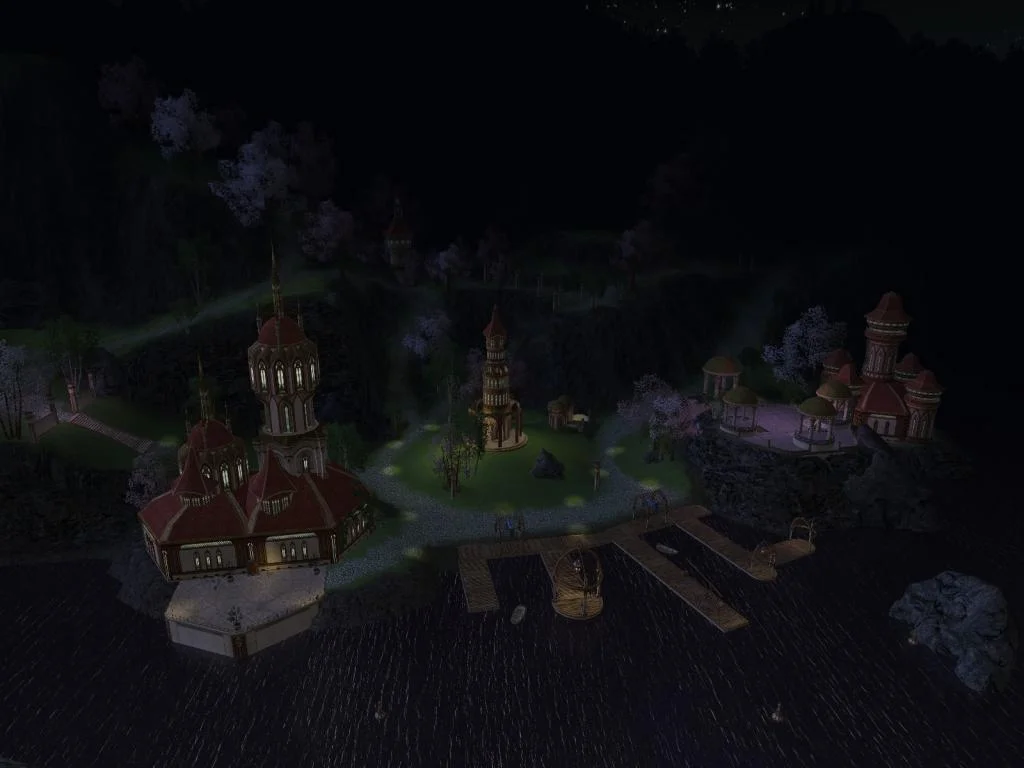
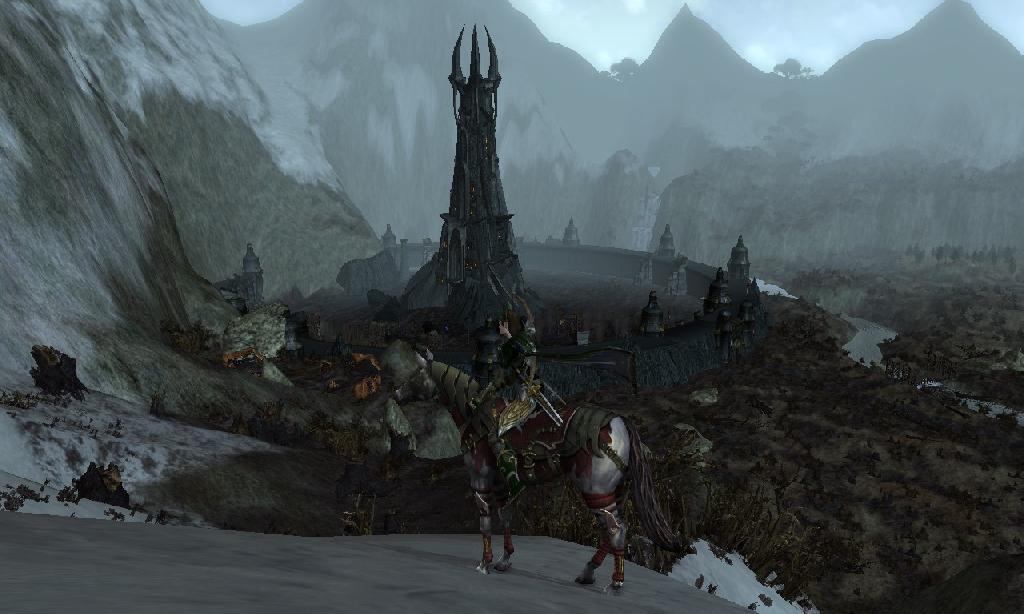
Initially, back in the day of the Isengard test program, participants were encouraged by Turbine to test the maps boundaries and log any faults. This policy was never formally extended to the live servers. However, players being the curious bunch that they are, have naturally continued to do so and a sub culture has built up around it. Thus, there are players who will try and go anywhere, if it is possible, regardless of the complexity. I’ve heard of complex sequences of jumping that can take hours. Yet, the practice of going "off map" is not without consequence. Characters straying into these areas can become permanently stuck. There have also been instances of such incursions affecting the servers and localised roll backs having to be carried out.
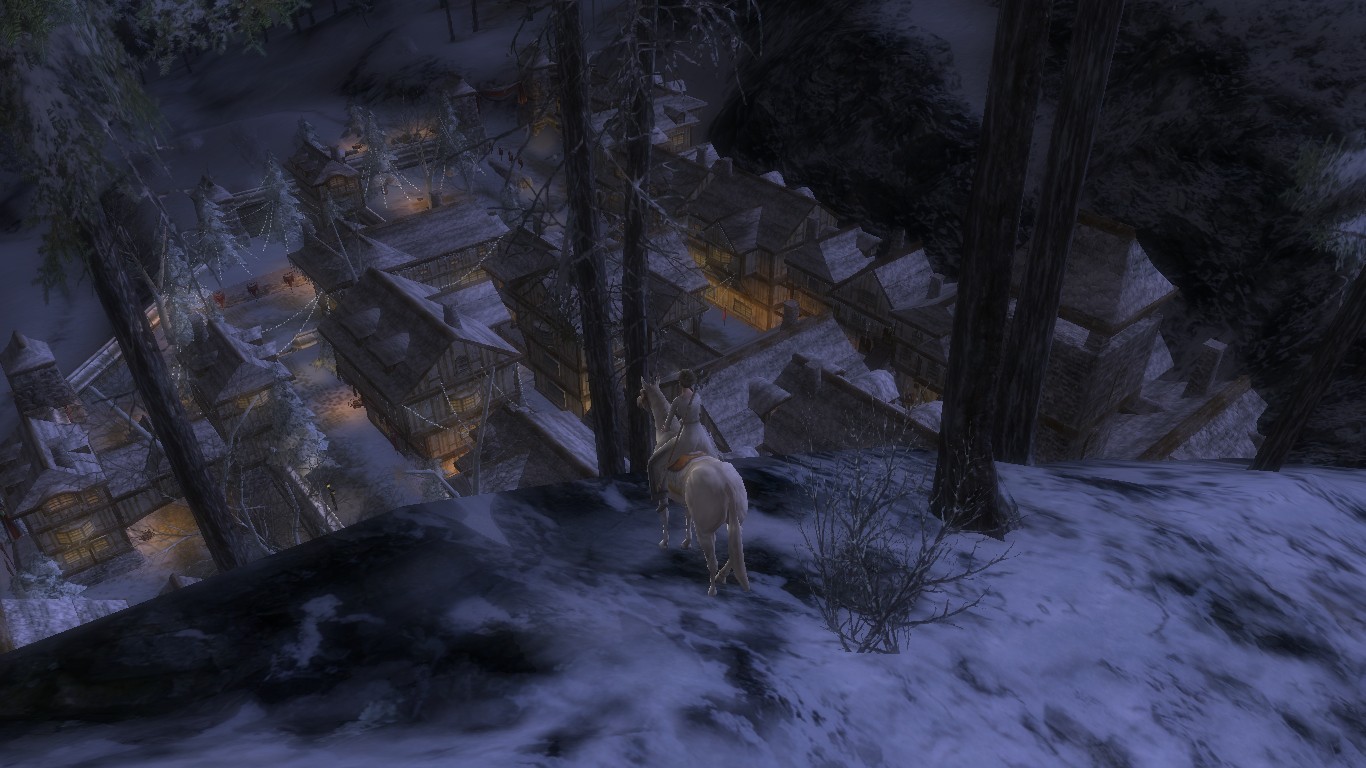
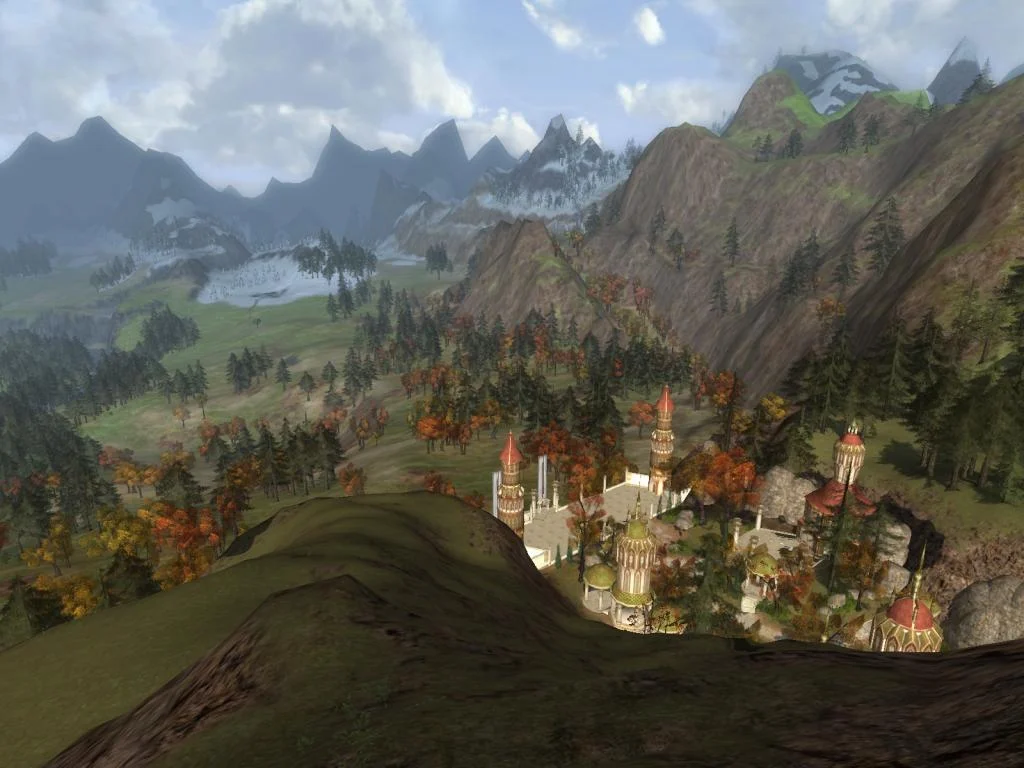
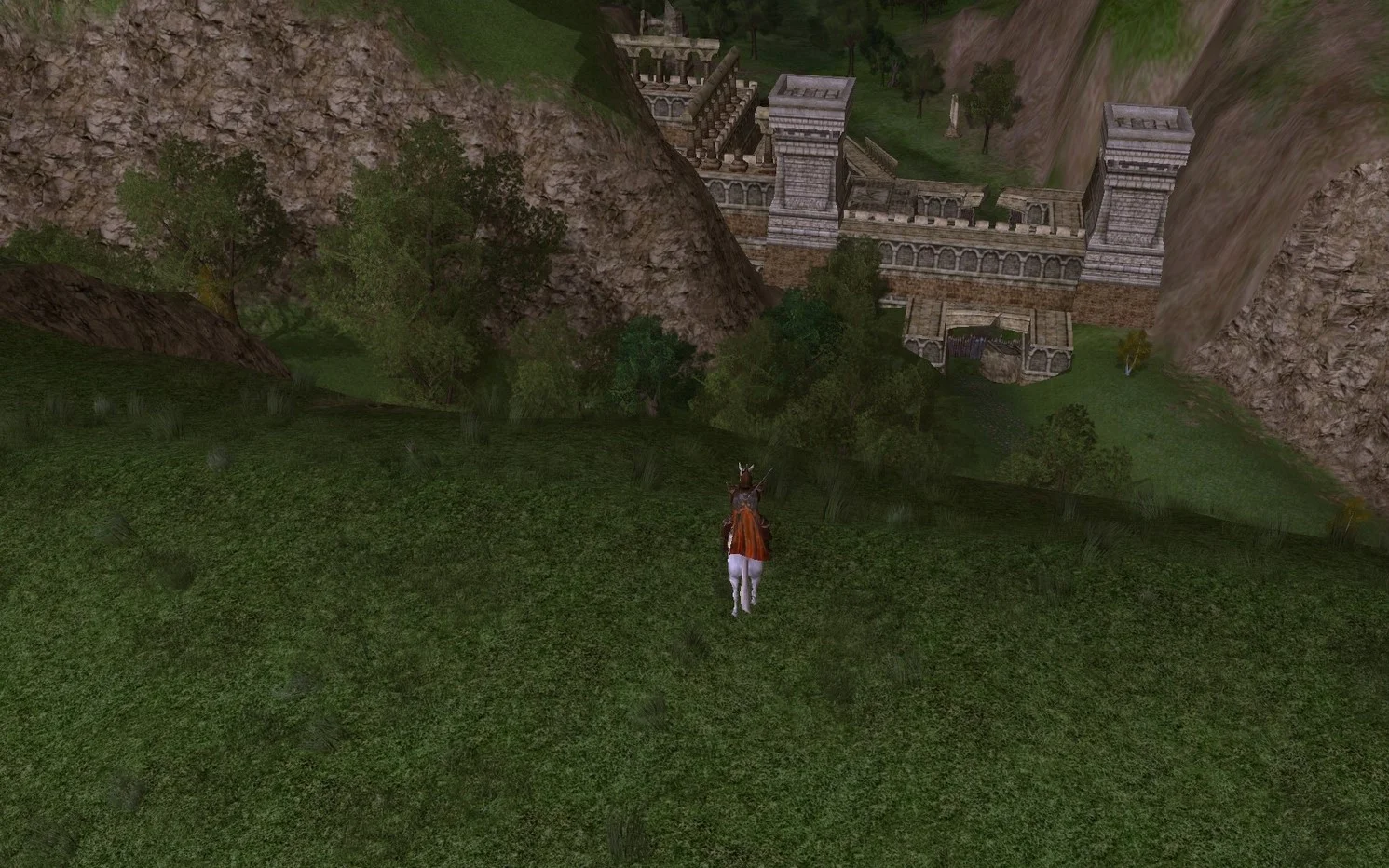
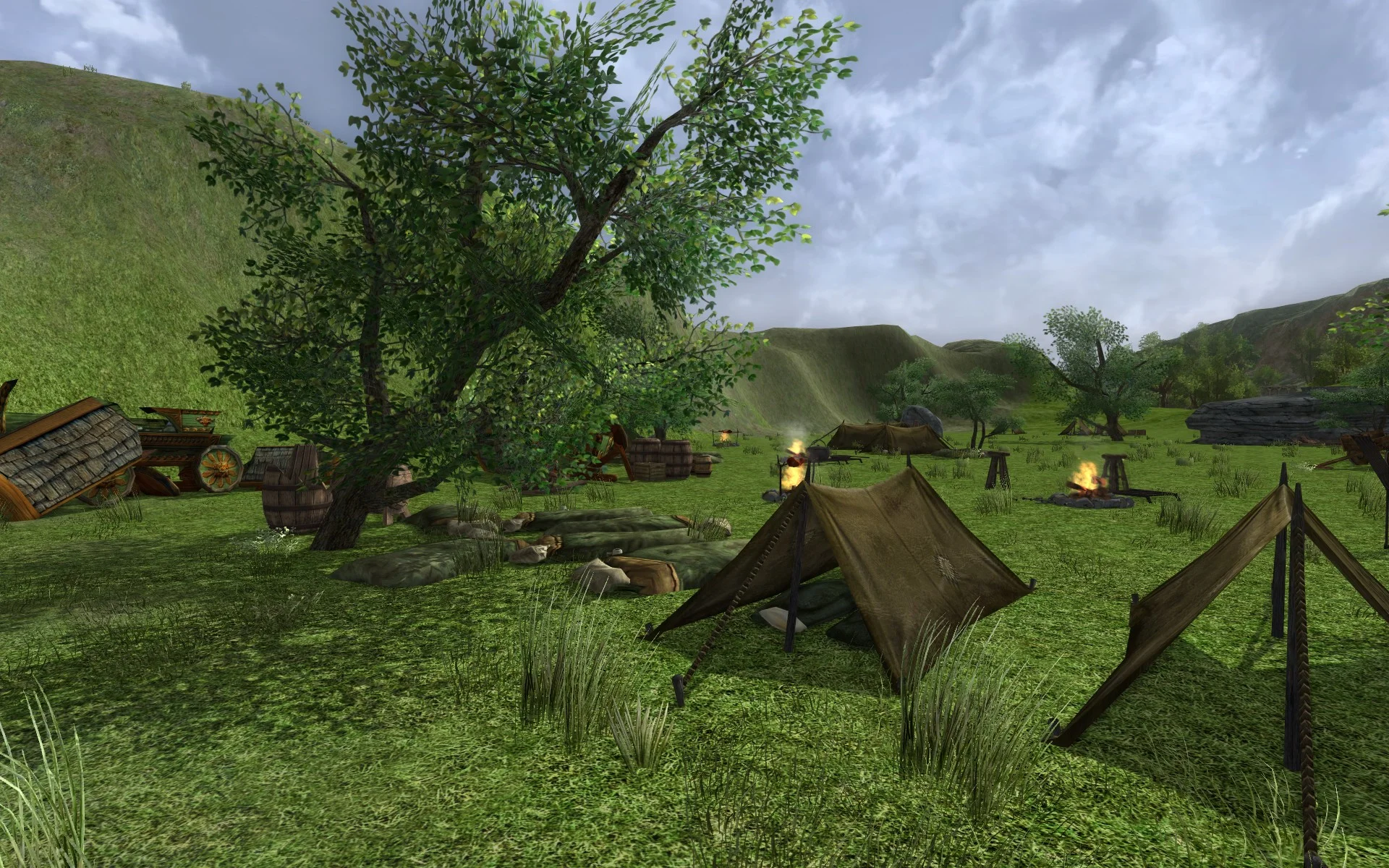
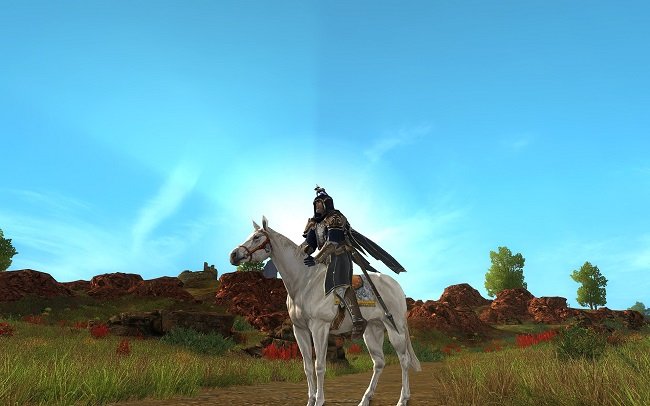
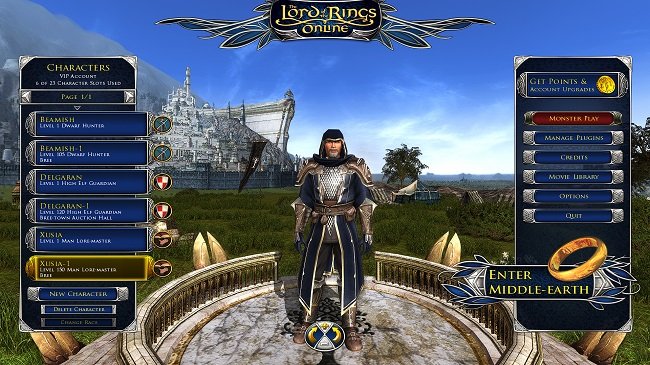
Despite the dangers and the risk of incurring the wrath of Standing Stone Games, players still continue to explore the game environment to the full. Irrespective of the rights and wrongs of such activities, it certainly makes for some very interesting screen captures and provides a new insight into the games development. I have collated a small collection of “off map” images. None of these screen captures were taken by myself and due to the controversial nature of such activities, I will not credit the sources. I am simply referencing information that is publicly available on the internet and am not endorsing one way or the other, the practice of going "off map".

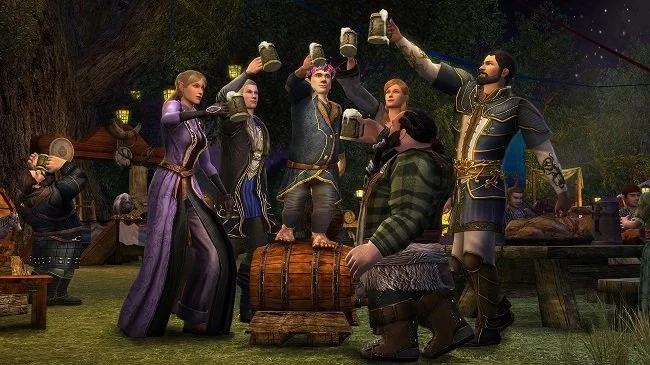



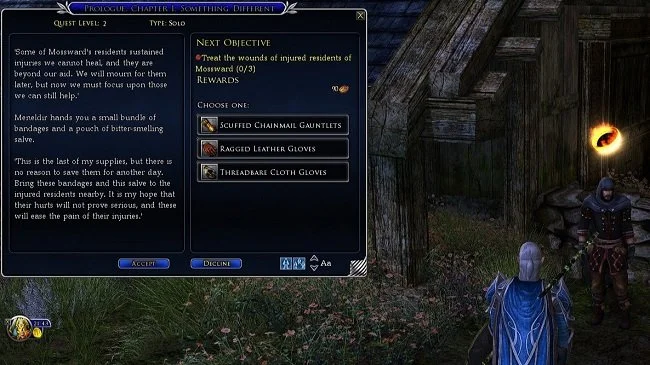
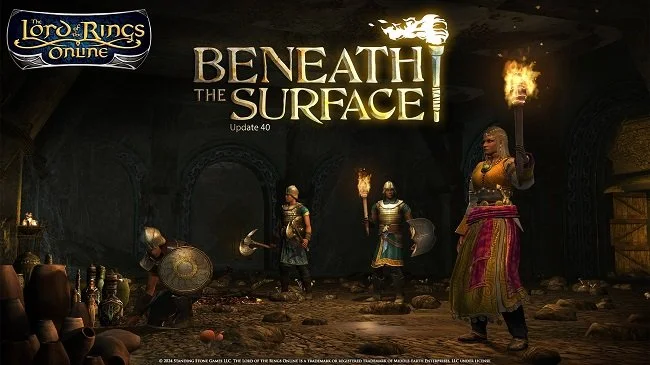
Contracting Out Work in LOTRO
I recently decided to focus upon crafting on my new Hunter. I’ve opted for the explorer professions on this character as refining raw material is always a good way of making in-game gold. However, over recent weeks I’ve focused on levelling and have not processed any wood or ore from the various zones that I worked through. Thus, last week I found myself in Eregion and I couldn’t mine any of the ore nodes or gather timber. If I wanted to progress, I had to consider the following options. I could return to the starter zones and farm the resources I needed then process them, unlocking the next levels. Or I could buy what stocks of wood and ore that I required from the auction house and again work through the crafting tiers. The first option didn’t really appeal to me and the second was dependent on stock levels of various resources on Auction House. So, after some thought I decided the best alternative was to contract out the gathering work.
I recently decided to focus upon crafting on my new Hunter. I’ve opted for the explorer professions on this character as refining raw material is always a good way of making in-game gold. However, over recent weeks I’ve focused on levelling and have not processed any wood or ore from the various zones that I worked through. Thus, last week I found myself in Eregion and I couldn’t mine any of the ore nodes or gather timber. If I wanted to progress, I had to consider the following options. I could return to the starter zones and farm the resources I needed then process them, unlocking the next levels. Or I could buy what stocks of wood and ore that I required from the auction house and again work through the crafting tiers. The first option didn’t really appeal to me and the second was dependent on stock levels of various resources on Auction House. So, after some thought I decided the best alternative was to contract out the gathering work.
Laurelin is a busy role-play server with a lot of new players. Many of whom are time rich and gold poor. The hyperinflation you’ll find in a decade old MMO, put’s new players at a disadvantage. As a longtime LOTRO player the one thing I do have is substantial gold reserves. Let it suffice to say that after a quick conversation in the trade channel, I secure three eager players who were happy to go to the various zones and farm ore, wood and hides for me. Within an evening, I had sufficient materials to unlock all processing tiers I required. The cost was 300 gold and a few class specific items that I had been stock piling for exactly such an occasion. The players I contracted went away content as they felt that they had been adequately rewarded and had gained XP while farming for me. All round, it was a “win, win” situation.
Having played LOTRO for years, although I still find a lot of the game’s arbitrary tasks enjoyable, some can be a little tedious. However, I must admit I had a lot of fun arranging this recent outsourcing of work. It reminded me of the halcyon days of LOTRO when raiding was still a big thing. I used to buy morale and power potions when they were cheap and then sell them high over the weekend when people would play through group content. I always found auction house speculation an amusing mini game and suspect that regular contracting out of gathering tasks may serve a similar purpose. Furthermore, isn’t this a classic example of so-called “emergent content” that stems from player interaction in MMOs? Although there may be a few purists who frown on such activities, I think you have to take your pleasures, where you find them, be it in LOTRO or any other MMO.
Sniper Elite 4
I first discovered the Sniper Elite franchise back in 2014, when Steam gave away free keys for Volume 2 as part of a promotion. I enjoyed the game so much I purchased all the available DLC. Having regularly played both Call of Duty and Battlefield, it was a pleasant change at the time, for a game to be set during World War II. Later that year I bought, Sniper Elite 3, as it offered a far more polished gaming experience, compared to earlier instalments. Furthermore, the story was set in North Africa; a theatre of war that is often neglected in multimedia. Although the plot was somewhat arbitrary, Sniper Elite 3, like its predecessor, still offered an immersive gaming experience with an emphasis on situational awareness and stealth. The franchise has never been about “running and gunning” and favours the patient and methodical player.
I first discovered the Sniper Elite franchise back in 2014, when Steam gave away free keys for Volume 2 as part of a promotion. I enjoyed the game so much I purchased all the available DLC. Having regularly played both Call of Duty and Battlefield, it was a pleasant change at the time, for a game to be set during World War II. Later that year I bought, Sniper Elite 3, as it offered a far more polished gaming experience, compared to earlier instalments. Furthermore, the story was set in North Africa; a theatre of war that is often neglected in multimedia. Although the plot was somewhat arbitrary, Sniper Elite 3, like its predecessor, still offered an immersive gaming experience with an emphasis on situational awareness and stealth. The franchise has never been about “running and gunning” and favours the patient and methodical player.
This spring saw the release of Sniper Elite 4 which offers yet another refined and improved version of the game. The action this time is set in Italy, leading up the Allied Invasion. Like the previous three games, Sniper Elite 4 is based around completing a series of missions through stealth, sniping and guerrilla tactics. The x-ray killcam is still present in all its gory glory, as well as the option to set booby traps. The weapons are authentic and varied. Customisations are unlocked by progress and there’s a rudimentary skills tree. However, developer Rebellion, have made two significant changes. The maps are now much larger and have an open world format. Objectives can be done in any order. Furthermore, climbing now plays a bigger role in the game, allowing a greater use of the environment.
Where Call of Duty goes to great length to offer players a complex narrative in campaign mode, Sniper Elite has always favoured a more simplistic approach. That’s not to say the story driving the game is bad, as it is not. It just not anything special. The character animations are effectively motion captured and the voice acting is adequate. It’s the gameplay experience that generates the excitement and fun. At times Sniper Elite 4 feels like a virtual sixties war movie. The music cues are well timed and certainly increase the tension as you stalk your prey. Conversely, if you make a mistake and blow your cover, the ambient atmosphere really creates a sense of fear. Remember this is a game where the enemy will triangulate your position if you fire more than three shots from the same place. Also, if you kill a stray guard, don’t forget to hide the body. Unless you want to booby trap it.
Although there are only eight missions to the main campaign, they are substantive, varied and replayable. The maps include such diverse locations as a hillside village, a naval base and an underground factory. With a competent graphics card the game does look rather handsome. There are also more in-depth co-op and multiplayer elements to Sniper Elite 4 that address the campfest problems that featured in earlier versions of the game. Another novel feature is the ability to play through the campaign collaboratively, with another player. I would recommend new players to spend some time at the in-game firing range to test each weapon, before committing to a loadout. The rifles all handle differently and it’s important to find one that suits your style and methodology.
Sniper Elite 4 is a refreshing change of scene and pace for games of this genre. If you approach the game with a traditional FPS mentality then you will often fail the missions and not experience the best elements of the game. There are still bugs here and there with some of the gunshot ballistics being over powered. Vehicle and enemy AI is sometimes questionable and you may find yourself raising the difficulty setting to overcome them. However, biding one’s time can still provide great game play experiences. Luring enemies into a booby-trapped chokepoint can be especially satisfying. Plus, the new melee stealth kills are great fun. However, I still get a big kick out of long range rifle shots while masking the gunfire with environmental noise. My best Ghost kill is 239 metres.
Overall Sniper Elite 4 is a superior third person stealth game due to its atmosphere, tactical elements and nominal sandbox approach. This latest instalment is certainly the best version of the game to date. Developers Rebellion have successfully improved both its performance and accessibility, very much like CD Projekt Red have refined The Witcher series. Sniper Elite 4 at times reminds me of Hidden and Dangerous 2, which is a game I hold in high esteem. As I previously mentioned, the game draws heavily from big budget sixties and seventies war movies. Think Where Eagles Dare, Operation Crossbow and The Guns of Navarone. Sniper Elite 4 exudes these sorts of vibes. If you’re feeling quite adventurous, try playing while listening to the soundtrack of a classic war movie as it really adds to the game play.
Games We Cannot Play
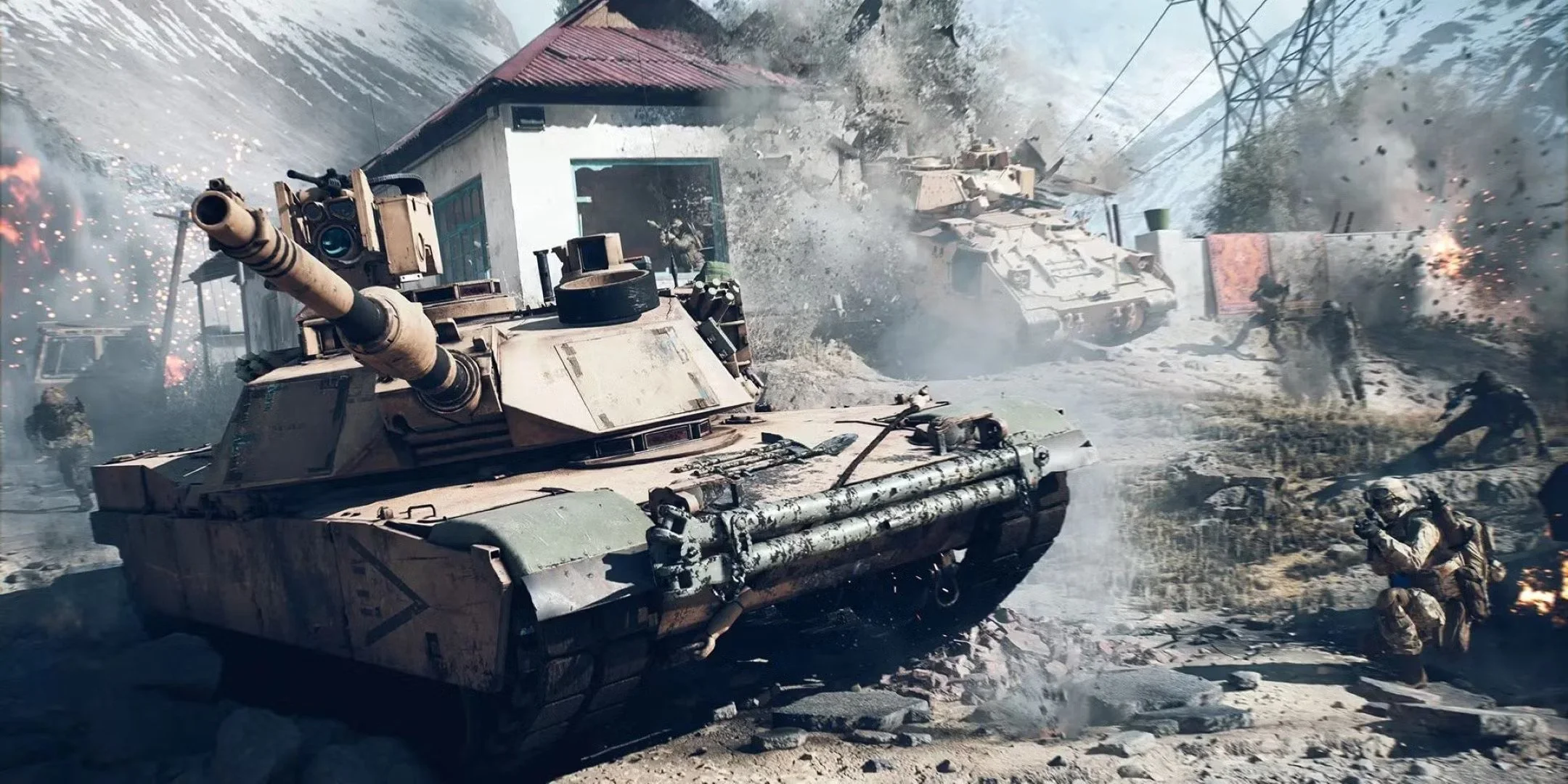
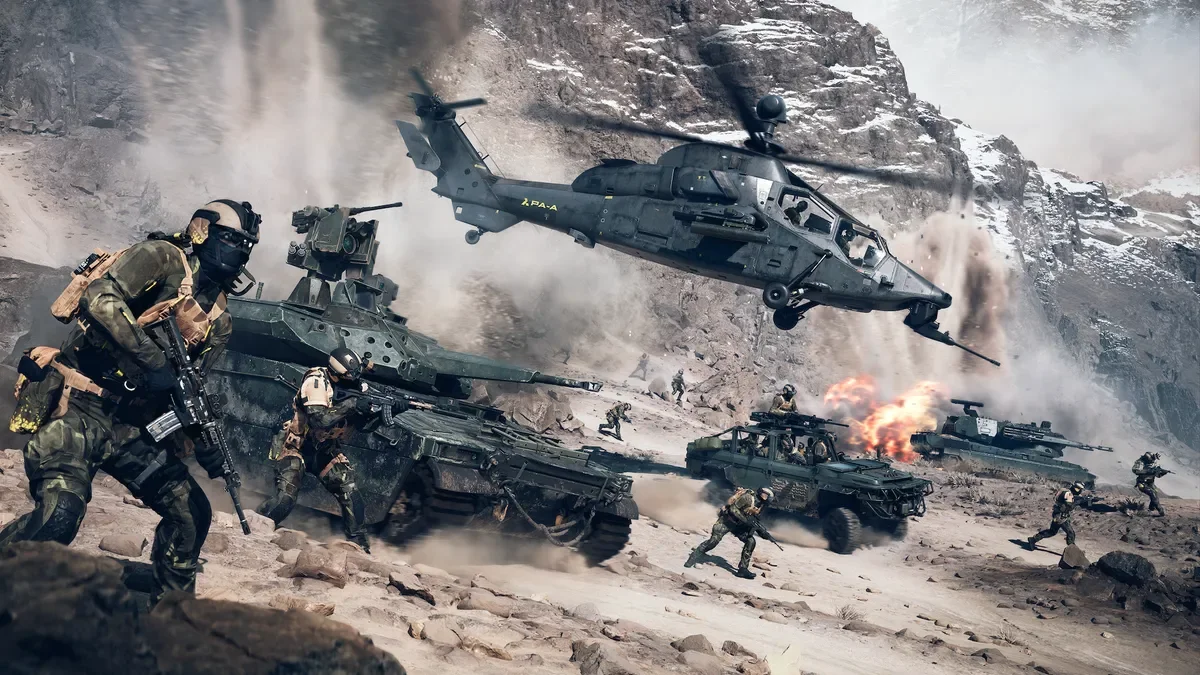
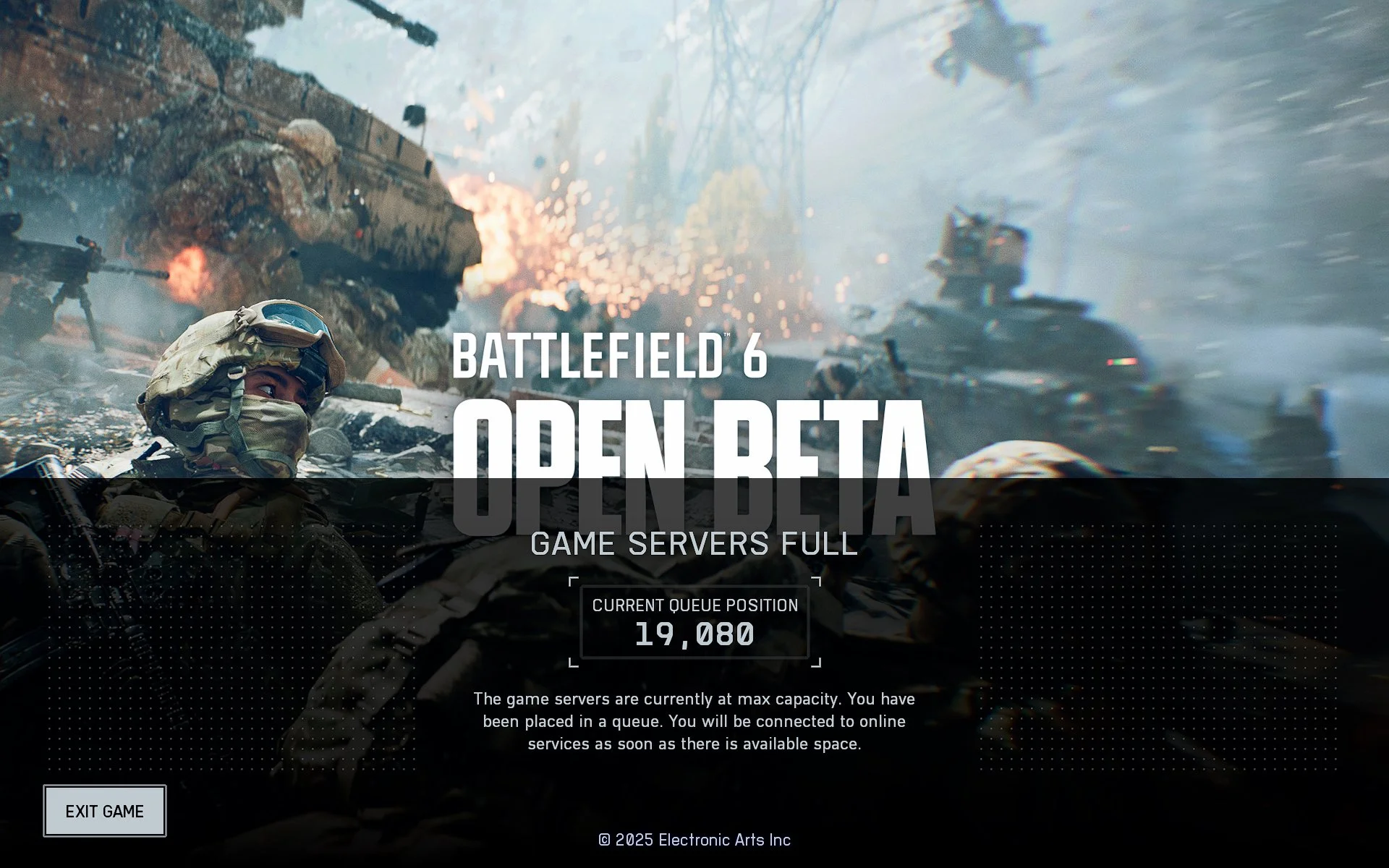
I have written in the past about how certain games can be very appealing conceptually but the reality is quite different. Often the fundamental disappointment doesn't lie with the game itself but with our inability to play them. For me the Battlefield franchise is a prime example of this and more recently For Honor. The trailers for these games are frenetic, focusing on action and spectacle. The associated marketing certainly sells the idea of “awesome action”. Sadly, my personal experience of Battlefield has usually been running across an inordinately large map, only to arrive at the hot spot to get one-shotted. As for the planes, helicopters and vehicles; I can't fly them or drive them effectively so team mates tend to abandon me. I can only describe my experience in For Honor as being a flesh piñata for other players. The fun experience depicted in the advertising was as elusive as a good, odd numbered Star Trek movie.
I have written in the past about how certain games can be very appealing conceptually but the reality is quite different. Often the fundamental disappointment doesn't lie with the game itself but with our inability to play them. For me the Battlefield franchise is a prime example of this and more recently For Honor. The trailers for these games are frenetic, focusing on action and spectacle. The associated marketing certainly sells the idea of “awesome action”. Sadly, my personal experience of Battlefield has usually been running across an inordinately large map, only to arrive at the hot spot to get one-shotted. As for the planes, helicopters and vehicles; I can't fly them or drive them effectively so team mates tend to abandon me. I can only describe my experience in For Honor as being a flesh piñata for other players. The fun experience depicted in the advertising was as elusive as a good, odd numbered Star Trek movie.
This is one of the reasons I gave up on EVE Online after a fortnight free trial. I simply could not progress in the game through a lack of skill and a chronic tolerance and patience deficit. With other game genres such as first person shooters or massive online battle arenas, I broadly have the same lack of success. Often with titles such as Overwatch and Guardians of Middle-earth it boils down to twitch gaming. Sadly, this is the prerogative of youth. For someone my age, by the time I’ve adjusted my Pince-nez, taken a sip of Madeira and pondered on the matter in hand, I find that I’ve been defeated. And don’t even get me started on flight simulators. What could possibly be cooler than flying a classic warplane or an iconic commercial airliner? Yet the complexity of such titles is beyond me. Nope, with the best will in the world, these sorts of games are not for me. As Harry Callahan said in Magnum Force, "A man's got to know his limitations".
I think most gamers of sound mind eventually arrive at a similar conclusion. Through trial and error, we establish what we can and cannot play. There are a few alleged renaissance men and women that claim otherwise, although most of these are delusional. As for those who genuinely can succeed with all game genres, well they deserve nothing more than a slap for making the rest of us look bad. Yet despite this reality, as humans we like to occasionally take leave of our senses and buy a game that’s sale that we have no hope in hell of succeeding at. I did this several years ago when I bought Ace Combat Assault Horizon Enhanced Edition for the PC. In my defense one of the first reviews that I skimmed through described it as "Call of Duty takes to the skies". At the time my first play through was a dismal failure and I didn’t reach the end. This weekend, I dusted off Ace Combat Assault Horizon Enhanced Edition for round two.
In many respects the CoD analogy is quite accurate. The game has a scaled back control system for the various planes and helicopters and is designed to be used with a game controller. The central campaign storyline is like Modern Warfare in so far as it has a generic World War III narrative filled with caricatures. There's then co-op and multiplayer online missions to be played in various permutations. The thing is, even with the game difficulty dropped to the lowest setting, I still found controlling the planes exceptionally taxing. At one point, I felt I may gain better results if I put a bag over my head and trusted to luck. It took hours before I realised that the on-screen messages that I was berating for blocking my view, were giving me hints. Upon taking the advice there was a significant improvement. However, I still found myself struggling with such things as orientation and situational awareness. For a second time, I have abandoned Ace Combat Assault Horizon Enhanced Edition only half completed.
It's an odd thing, coming to terms with the fact that there are some games that just aren't for you. We quickly learn while growing up that we can't be good at everything in life. Music, art, academia or sport are not for everyone. By and large we get over these things. Well, most of us do. Furthermore, we adapt. If you can't hold a tune, it’s no big deal. If you find yourself in a situation that requires you to sing, just mime. Half your church congregation does this regularly. Not especially good at sports? No worries; you can still enjoy them on TV and your lack of ability certainly is no impediment to being an armchair expert. But the notion that you can't be good at a game is troubling to some. I wonder exactly how many titles fill the average gamer's library that remain uncompleted, abandoned and forgotten; due to the realisation that they were crap at playing them? I’d hazard a guess it’s far more common place than you think.
LOTRO 10th Anniversary: Remembering LOTRO Part 1
On Monday 22nd December 2008, I visited the Game store at Colliers Wood, South West London. I was working at St George’s Hospital in Tooting the time at and the nearby shopping centre was an ideal place to spend the lunch hour. As I perused the shelves in the PC gaming section, I spotted a “compilation pack” that contained not only the MMORPG The Lord of the Rings Online but it’s recently released expansion pack, Mines of Moria. Although I was aware of the MMO genre at the time, I had never played one beyond a trial of Star Wars: Galaxies. However, as I had recently moved and was living alone, I was in the perfect position to start playing such a game. So, I decided to take the plunge and buy LOTRO for the bargain price of twenty pounds. There was also a sizeable display for World of Warcraft in the shop, which was by far the market leader at the time. Yet because I’ve always been a Tolkien fan, I just naturally gravitated toward buying LOTRO and it never crossed my mind to buy another product.
On Monday 22nd December 2008, I visited the Game store at Colliers Wood, South West London. I was working at St George’s Hospital in Tooting the time at and the nearby shopping centre was an ideal place to spend the lunch hour. As I perused the shelves in the PC gaming section, I spotted a “compilation pack” that contained not only the MMORPG The Lord of the Rings Online but it’s recently released expansion pack, Mines of Moria. Although I was aware of the MMO genre at the time, I had never played one beyond a trial of Star Wars: Galaxies. However, as I had recently moved and was living alone, I was in the perfect position to start playing such a game. So, I decided to take the plunge and buy LOTRO for the bargain price of twenty pounds. There was also a sizeable display for World of Warcraft in the shop, which was by far the market leader at the time. Yet because I’ve always been a Tolkien fan, I just naturally gravitated toward buying LOTRO and it never crossed my mind to buy another product.
I installed and started playing the game that very night. It should be noted that the European version of LOTRO was distributed and administered under license by Codemasters at the time. So, I set up a subscription and on a whim decided to create my first character on Gilrain server, which met my language and social requirements. Having spent some time reading about the various classes in LOTRO, I can remember now that I was still a little confused by it all. Yet there was something about the Lore-master that just seemed to appeal to me. Perhaps it was the pets, or its semi-magical status. Although I wasn’t that au fait with control classes, I found the explanation of how the Lore-master fought intriguing. “The Lore-master uses his knowledge of ancient wisdom to stave off the advance of the shadow for a time. He can use his knowledge to attack his foes or to treat the wounds and suffering of his companions. He can even communicate with animals and request their aid”.
Let it suffice to say that the tutorial quickly got my orientated in the game. Having been a gamer prior to LOTRO, meant that the learning curve was not so steep. The other advantage I benefitted from by playing LOTRO at this particular time, eighteen months after its launch, was that there was a wealth of online resources for the game already in place. This proved invaluable because things were pretty different in LOTRO back in late 2008. For example, the location of quest objectives were not directly marked on the map. The quest bestowal details usually referred to a specific area which you then had to find and search. Sometimes this would be a very intuitive process but from time to time there would be frustration. Thus, fan sites and blog would often have map coordinates to aid this process. Obtaining a mount was also a challenge. A player didn’t become eligible to purchase a horse until level 35. It also cost a tidy sum of gold and was dependent on a somewhat convoluted quest.
Looking back now at these early days of LOTRO, the most pronounced difference was the fact that much of the game was designed to be completed in a group or fellowship. The Epic storyline frequently had group content as did a percentage of the regional quests. Zone chat was filled with requests for fellowships. Yet because of the volume of players in the game and that fact that Middle-earth had not yet grown to the size that it has now, finding a group was never an issue. There was also a prevailing sense of camaraderie. If a random stranger sent you a tell, you’d more than likely answer it. For the most part, the game was populated by mature Tolkien fans and as a result, things remained mainly civil. Plus, the concept of multiplayer gaming was still novel.
It took me nine months of to reach the then level cap of sixty. That meant playing most evenings and investing a considerable amount of time into LOTRO. There were occasions over weekends where I’d spend a whole day playing. There were also plenty of late nights, although I never did this at the expense of my personal life or work. However, let me be clear, LOTRO at the time became my primary means of entertainment and therefore I was happy to lavish it with attention. As I’m not the sort of player to experiment with multiple alts, this time was exclusively invested into my Lore-master. Lore-master crowd control skills were a key part of group play back then, so I found myself regularly grouping. As a result, friendships were formed and eventually I found the right kinship for me. Eight years on I’m still an active member of it.
Kinships always have been the heart and soul of LOTRO. They come in many shapes and sizes, catering to all types of gameplay. Yet they all have mutual support and friendship in common. What I particularly like about my kinship is its diversity and inherent good humour. It includes people from all over Europe and various walks of life. As a result, interacting with such a cross section of people has been a very positive experience and has certainly broadened my horizons. Then of course there’s the community outside of the game itself. The bloggers, podcasters, streamers and such like. Many are still active today but seven or eight years ago the scene was much bigger and very lively. Because of that community I changed my existing website to a LOTRO blog and instantly it got traction. LOTRO also inspired me to podcast. I can honestly say I’ve not encountered anything similar in all the subsequent MMOs that I’ve experienced.
To be continued.
The Geography of LOTRO: Part 3 Filling in the Gaps
I would like to once again return to the matter of the geography of Middle Earth. David Braben, co-creator of seminal video game Elite, called truly open-ended game design and sandbox gaming environments "The Holy Grail" of modern video gaming. He cited games like Elite and the Grand Theft Auto series as early steps in that direction. For many gamers, the idea of being able to freely roam a virtual world without any deliberate restrictions is a very enticing one. For Tolkien fans, the notion of being given complete freedom of movement throughout Middle Earth would be a dream come true. However, due to the way that LOTRO has been designed, Standing Stone Games vision of Middle Earth, although well-conceived is not such an environment.
I would like to once again return to the matter of the geography of Middle Earth. David Braben, co-creator of seminal video game Elite, called truly open-ended game design and sandbox gaming environments "The Holy Grail" of modern video gaming. He cited games like Elite and the Grand Theft Auto series as early steps in that direction. For many gamers, the idea of being able to freely roam a virtual world without any deliberate restrictions is a very enticing one. For Tolkien fans, the notion of being given complete freedom of movement throughout Middle Earth would be a dream come true. However, due to the way that LOTRO has been designed, Standing Stone Games vision of Middle Earth, although well-conceived is not such an environment.
The latest stable map for LOTRO shows all the various regions that currently feature in the game. Furthermore, the map highlights a significant amount of Middle-earth that does not at present exist within the MMORPG. This includes areas in Eriador such as The Grey Havens, The South Farthing and Tharbad. When looking across the Misty Mountains to Rhovanion, even more noteworthy locations are conspicuously absent. Esgaroth, Mount Gundabad and The Iron Hills spring to mind. Until recently, LOTRO players and Tolkien aficionados have just written off these missing territories. Their omission is due to the realities of developing an MMO, set in a vast Lore filled world. However, more recently new developers Standing Stone Games have indicated that they have a game plan beyond the scope of the book and that there is a possibility of many “blanks” being filled in at a later date.
In the past, Turbine have taken a very practical approach to the way they have developed Middle Earth. The areas that have been included are all there to underpin the story. Regional quest hubs facilitate players advancement, then migrate them to new locations via the narrative. The game mechanic is heavily orientated towards playing through certain areas at specific levels. Simply put, any part of Middle Earth that does not have any relevance to the ongoing epic storyline has been somewhat ignored. Although, there are plenty of explorer deeds to be completed in each area, Turbine never really intended to make the game weighted towards players who simply wished to wander through Middle Earth. Due to the levelling mechanic and region phasing, you cannot simply travel from Ered Luin to Mirkwood just exploring.
Despite these restriction, there is still much to see in LOTRO and clearing regional quest is no guarantee of seeing all that Middle Earth has to offer. If you have a curious nature there are still many nooks and crannies to explore and little embellishments that the developers have added through their love of the source text. There are also scattered around Middle Earth, hidden villages that were created in the early devlopement of the game which were then removed from the final release. In the early days of LOTRO these could still be accessed but it would appear that Turbine have sealed these off now. One example was the hidden Hobbit villages, West of the Shire. There was another on the Western bank of Lake Evendim.
With LOTRO’s increased focus on themed festivals such as Winter-home and new events such as the treasure hunt, there is an opportunity to utilise these vacant areas of Middle Earth. Frostbluff for example seems to be located between Northern Ered Luin and Western Forochel. Furthermore the appearance of new locations and settlements can often now be spotted in advance of these areas being made available. Northcottons farms and Stoneheights were both copiously documented and discussed prior to Update 2 going live.
Although I very much enjoy the world that Turbine, now Standing Stone Games has created, I still find it a little saddening that there are some locations in Middle Earth that I cannot get a chance to visit and discover at present. For instance I would very much like to visit the Elf Towers to the West of The Shire. Whenever I am confronted with a barrier, be it a gate, a convenient range of mountains or cliff face, I always try to look beyond it. I am always curious to know how much landmass the developers actually created. I recently travelled to the South Farthing gate and by adjusting the camera perspective tried to see as much as what was beyond it. The view is very tantalising. In a true sandbox environment the road beyond would ultimately wind a path all the way down to Enedwaith.
As a gamer, I would like to see an MMO that allowed a player to choose a non-combat class and to simply be able to travel, explore, trade and move on again. It would be engaging to find quests and deeds specifically created around such characters, out in the wider world. Placing items or information in obscure locations could be an interesting game mechanic. Obviously, with a game such as LOTRO that now has an established methodology, the likelihood of adapting this may well be impossible , even if the developers were in favour of it. However, despite the restrictions that exist Standing Stone Games vision of Middle Earth still lends itself to a degree of exploration. New events can potentially open up the world. Narrative freedom beyond the end of text, offers even further opportunity. I think that in the years to come we may yet see many of these missing areas coming to life.
Review Scores
Two stories caught my attention recently, regarding the merits of review scores and the current fetish for review aggregation services. The first was about film director and producer Brett Ratner’s dislike for review aggregation site Rotten Tomatoes. He contests that “it’s the destruction of our business” due to the way it condenses nuanced reviews into a simple number. Scores below a certain threshold keep “Middle America” away and thus harm business. The other article was about game critic and pundit, Jim Sterling, who gave The Legend of Zelda: Breath of the Wild a review score of 7 out of 10. Once this was added to Metacritic’s number crunching formula, the game in question dropped from an overall score of 98 down to 97. Fans did not care for this “outrage” and a DDoS attack followed as well as the usual comment based flame war.
Two stories caught my attention recently, regarding the merits of review scores and the current fetish for review aggregation services. The first was about film director and producer Brett Ratner’s dislike for review aggregation site Rotten Tomatoes. He contests that “it’s the destruction of our business” due to the way it condenses nuanced reviews into a simple number. Scores below a certain threshold keep “Middle America” away and thus harm business. The other article was about game critic and pundit, Jim Sterling, who gave The Legend of Zelda: Breath of the Wild a review score of 7 out of 10. Once this was added to Metacritic’s number crunching formula, the game in question dropped from an overall score of 98 down to 97. Fans did not care for this “outrage” and a DDoS attack followed as well as the usual comment based flame war.
Both these events got me thinking about difference between long form, detailed criticism and analysis versus the perceived convenience of simple review scores. For me I initially became aware of the difference during the eighties, when reading movie reviews. On one hand, you had old school critics such as Derek Malcolm writing lengthy critiques in the broadsheet newspapers and on the other tabloids that adopted the Siskel and Ebert approach of “two thumbs up”. The former approach to criticism allows for detailed analysis and eschews binary breakdowns. A movie (or a game) is more than just good or bad. The latter style of review, offers readers a simple and quick opinion and thus an opportunity to make a similar choice. Both methodologies have their merits but it would seem that contemporary culture is leaning more towards the review score. It fits the current “spirit”of our digital age.
Personally, I’ve always preferred an in-depth written post that clearly critiques a games merits and flaws. I favour the same approach to movie reviews, as I think that such artistic endeavours cannot adequately be distilled into a numerical breakdown. However, I fully recognise how the review score system has gained traction due to its accessibility and immediacy. Convenience is the buzz word of modern life. Reading an in-depth review takes time and thought. Both are finite commodities these days. Plus, the review score has become an important marketing tool and something that with regard to games, does have an impact upon sales. Sadly, it’s a system that can also be manipulated by the publishers themselves. It is this aspect that tarnishes the review score system and brings score aggregation services into disrepute.
There have been numerous cases in recent years of bogus reviews being used to skew opinion on sites such as Amazon, Trivago and Trip Advisor. You Tube has also become a battle ground of late, with game developers using bogus copyright infringement and other spurious claims to try and take down reviews and criticism that can potentially harm sales. The need to own and control all information regarding a product, has become a common place business aspiration in certain circles. Fans also contribute to this problem, seeing low reviews scores as personal attacks rather than measured criticism. But when you reduce something that is complex to the binary, there is bound to be fallout and dissent. Our societies move away from academia to the fallacy of “all opinions are of equal merit” is also a factor.
Review scores ultimately have an impact upon the way products are made. Movies and games are effectively being conceived and created to meet the criteria of the review score systems, rather than to innovate and push boundaries. Mainstream artistic endeavour has always been tempered with the practicalities of commercial interest but we now seem to be entering an age when new products are genuinely hampered by the need to meet ever increasing marketing requirements. Sooner or later there will be a backlash against the inflexibility of the review score system and potentially a crash within the gaming market. In the meantime, I would encourage all to offset the scores from Metacritic and Rotten Tomatoes with lengthier reviews, be they written or video based. Although time is at a premium these days, the old maxim about knowledge being power, still holds true. Therefore it is always to the consumers advantage to know as much about a product as they can.
First Contact Day
Star Trek Online is an MMO that likes an event. They have numerous scheduled over the course of the year. The latest is to celebrate First Contact Day (5th April), when Humans and Vulcans first met on Earth. The event takes place at the Zefram Cochrane Memorial and Historical Museum and participants are tasked with building their own replica Phoenix ship. To build an effective vessel, players have to search the immediate vicinity for engine, hull and stabiliser parts. These vary in quality following the games standard colour coding system. Thus, in theory, purple colour parts will perform better. Once the Phoenix replicas are assembled, they are launched simultaneously, with the winner being the one that reaches the highest altitude.
Star Trek Online is an MMO that likes an event. They have numerous scheduled over the course of the year. The latest is to celebrate First Contact Day (5th April), when Humans and Vulcans first met on Earth. The event takes place at the Zefram Cochrane Memorial and Historical Museum and participants are tasked with building their own replica Phoenix ship. To build an effective vessel, players have to search the immediate vicinity for engine, hull and stabiliser parts. These vary in quality following the games standard colour coding system. Thus, in theory, purple colour parts will perform better. Once the Phoenix replicas are assembled, they are launched simultaneously, with the winner being the one that reaches the highest altitude.
As ever with STO, events run over a fixed period and can be played once every twenty hours. There is a reward at the end that requires a fixed number of vouchers to be handed in. Players receive both a voucher and a choice of rep marks each time the participate. Yet despite the competitive framing of the event and the mechanic involving variable part quality, the outcome is actually random. Phoenix replicas with blue and green parts frequently outperform those with purple parts. Furthermore, your place in the race results table has no impact upon the number of rep marks you receive as a reward. In fact, some players simply elect to join the event and then go AFK during its short duration. I tried this myself today, collecting no parts for my Phoenix. Although I came last I still got the event voucher and full rep marks of my choice, for doing nothing.
I don’t claim to be the most driven MMO player and do not like events or activities with excessive complex criteria. Yet even I balk at this situation that Cryptic has created. An event that allows you to simply sit and wait rather than participate is certainly ill-conceived. Plus, the random nature of the outcome totally contradicts the competitive aspect that the event implies. At least ensure that the quality of the parts that you use does have an actual bearing on race results. First Contact Day is only a six-day event, so it won’t remain a bone of contention for long but as a player of STO I don’t wish to see its flaws perpetuated in any future activities. Perhaps Cryptic will learn from this situation and tweak the event for next year, making it more equitable and removing the AFK flaw.
Labels
Because I play PC games as one of my leisure activities, that apparently makes me a “gamer”. I find this curious because I also like to read books, yet no one seems to be in a hurry to call me a “reader”. So I thought it would be interesting to explore this matter further. For convenience sake let’s just call this post a discussion about labels. It’s a subject I’ve written about before but I wish to return to because I think it is something that is becoming more pervasive in contemporary culture.
Because I play PC games as one of my leisure activities, that apparently makes me a “gamer”. I find this curious because I also like to read books, yet no one seems to be in a hurry to call me a “reader”. So I thought it would be interesting to explore this matter further. For convenience sake let’s just call this post a discussion about labels. It’s a subject I’ve written about before but I wish to return to because I think it is something that is becoming more pervasive in contemporary culture.
We live in a world where everything is quantified and measured. By doing so we can create a frame of reference and strive to understand the world we live in. Therefore I do not find myself at odds with labels such as Humbolt Squid, Tsunami or Châteauneuf-du-Pape. They are functional and serve a clear purpose. Marcus Aurelius perhaps said it best in his book Meditations (Book 8, Meditiation 10). This quote was subsequently paraphrased by Doctor Hannibal Lector in the novel The Silence of the Lambs.
This, what is it in itself, and by itself, according to its proper constitution? What is the substance of it? What is the matter, or proper use? What is the form, or efficient cause? What is it for in this world, and how long will it abide? Thus must thou examine all things that present themselves unto thee.
However there are many other kinds of labelling, some of which are not so transparent or benign. We are continuously pigeon holed by the government, business and the press. We even do it ourselves at a conscious and sub-conscious level. Society is based around defining and quantifying its respective members. Wealth, politics, class, ethnicity, sexual preference, intelligence, faith (or the absence of it) are some of the ways in which we are all categorised. These factors and others shape how we interact with the world, how we pick our friends and who we choose to love.
Now my concern over the use of labels is not just arbitrary. I am not offended because they tend to generalise. You won’t hear me say “You don’t know me, man. I’m more complex than that”. Quite the opposite, I think that my personality can be quite easily distilled, delineated and analysed. Furthermore, I can probably correctly predict the results. No my primary objection to systematic labelling is that its frequently a blunt tool and often used for the wrong reasons. In many respects it is the proverbial sledgehammer to crack a Walnut. As a result its can often be erroneous.
As I like gaming and have been labelled such, many third parties will subsequently assume that I like other “similar” pastimes. Amazon frequently tries to make appropriate recommendations based upon my purchases. Unfortunately, it has no means to determine if I am purchasing for myself or others, which I frequently do. So, if this data is extrapolated, it may well result in a profile that is far from the truth. Plus we currently live in a very binary world were thinking has taken a back seat. If you are labelled one thing, many people are happy to leap to the conclusion that you are a dozen other similar things as well, regardless of whether you are.
Now some folk like labels. A lot of my fellow bloggers, podcasters and such like will happily embrace words like Nerd and Geek. They see them as non-threatening terms which identifies where their passions lie. I’ve personally never liked them as they were originally pejorative terms meant to cause upset and offence. To me they’ve never lost that taint and I’m not sure if they’ve been reclaimed in the way that some like to think. Overall I feel that they are mainly marketing terms. However, the fact remains that some people like that sense of belonging and community that can be associated by certain labels. I guess it doesn’t have to be a negative thing all the time. I just feel if we must deal with such terms of classification, why not define them ourselves?
I still cleave to somewhat old fashioned notions such as a person being defined by their actions. You can label me white, British, middle-aged, gamer, drinker and a host of other terms that are all factually correct. However what do these labels say about me overall? Not a lot really. If you got access to a full psychological profile of me and the list of terms that were used, then that may well provide a fuller picture. However, such data is seldom available, so society tends to fall back on these more nebulous nuggets of information. Most of the time the only details we have at our disposal is superficial and non- contextual. That means that being labelled a “gamer” really doesn’t say much except play to some peoples prejudice.
So there you have it. There’s my beef with non-scientific labelling. More often than not it has no real relevance and the only people who favour it, are either those who want to sell you something, or have an axe to grind. It is the latter group who willoften be most eager to place one round your neck.
Politics and Gaming
I watched an interesting video on You Tube recently, exploring the perennial subject of “politics in gaming”. Produced by the Extra Credit, who specialise in video games studies, it succinctly points out that it is impossible to remove any sort of political input from creative content. However, this is not a universally held point of view. The recent release of Mass Effect: Andromeda has seen a lot of discussion regarding whether politics and political agendas negatively impact upon game development. This has ranged from measured debate about inclusivity and representation to diatribes about how “feminazis” are “ruining gaming”.
I watched an interesting video on You Tube recently, exploring the perennial subject of “politics in gaming”. Produced by the Extra Credits, who specialise in video games studies, it succinctly points out that it is impossible to remove any sort of political input from creative content. However, this is not a universally held point of view. The recent release of Mass Effect: Andromeda has seen a lot of discussion regarding whether politics and political agendas negatively impact upon game development. This has ranged from measured debate about inclusivity and representation to diatribes about how “feminazis” are “ruining gaming”.
Two years ago, John Bain AKA Total Biscuit, British gaming commentator and critic on YouTube, made a series of tweets about the effects that mixing politics and gaming may have. He stated that "injecting politics into fiction is naturally exclusionary and in my view regressive". It was a bold statement if nothing else. He further went on to say “we're going to be inclusive by naturally antagonizing people with different ideas? We'll you're rubbish at being inclusive then”. However, he ignored the obvious fact that you face exactly the same dilemma if you try not to be exclusionary. Wilfully ignoring politics and maintaining a bland status quo will inevitably lead to a minority or fringe group feeling marginalised. It would appear that sitting on the fence doesn’t forestall the problems associated with picking a side.
Introducing overt or even oblique political subtexts into a game is potentially exclusionary but that is not unique to politics per se. There are many other factors associated with game development that can be a stumbling block to some players. Game mechanics such as permadeath, art design and even the business model can all have a similar effect. There is no such thing as a catch-all product that is universally appealing. It is a mythical Holy Grail. Games like music, books and movies are pitched at specific markets. These can be broad or niche but there is seldom any universal consensus. In fact, I’d say the world we inhabit both on and offline is more fragmented than ever before. The reality of the situation is that genres, styles and idioms are exclusionary by their very definition.
The concept of the apolitical game has been a regular and persistent rallying cry over the years. It is founded on the benign notion of keeping games free from real world issues and ideologies. Thus, the gaming environment becomes accommodating to all. However, I do not think this is actually achievable or even desirable. Many academics and thinkers have argued that nothing is truly apolitical. To try and purge such themes from games is itself a political act. I also question the motives of some of those who lobby for apolitical gaming. Is it really about creating a safe neutral zone or simply eliminating the inclusion of ideas and concepts that some do not like?
Some of the world’s finest literature and art is based upon political themes or the critiquing of specific dogma. Consider the works or George Orwell, Sergio Leone, Picasso and Johnny Cash. If you don't care for any of these artists, then replace them with ones that you do. You’ll find that they all nail their colours to the mast at some point and if you find someone who doesn’t, the conscious decision they’ve made to be neutral is in fact an act of political choice. As for argument that we shouldn’t seek to antagonise those with differing views in the name of inclusivity, it really does beggar belief. If that is the case Harper Lee patently wasn't considering the needs of racists when she wrote To Kill a Mockingbird. Such a mindset is hardly beneficial for creativity.
So, I personally do not reject the idea of allowing politics, social issues and moral conundrums to bleed through into creative work. I do not particularly enjoy obvious political and social hectoring in gaming, preferring a subtle approach rather than being belaboured with an obvious metaphor or plot device. However, that is more of an issue of poor implementation to the detriment of an idea, rather than the idea being bad per se. Ultimately, I think that refuting the inclusion of politics in creative undertaking is a very naive position. It ignores a fundamental truth that we are essentially tribal by nature. Mass appeal based on an apolitical approach simply leads to homogeneity, which doesn't make for good gaming, movies or music etc. As for mainstream games development, isn’t it problematic enough at present, without making it duller?
Super Mario Run
Super Mario Run is now available for Android smartphones, so I thought I’d show willing and check it out. Despite Nintendo’s shockingly inane business decisions in recent years and their dogged determination to still approach the video games market as if it were still the nineties, I like many others still have a degree of good will towards them due to their franchises. So, I downloaded the game from the Google Play Store to find that, despite it’s free moniker, it is effectively a trial. Players get access World Tour, Toad Rally, and Kingdom Builder modes, with a selection of courses. The full game requires a single in-app purchase of $9.99 after which there are no further micro-transactions.
Super Mario Run is now available for Android smartphones, so I thought I’d show willing and check it out. Despite Nintendo’s shockingly inane business decisions in recent years and their dogged determination to still approach the video games market as if it were still the nineties, I like many others still have a degree of good will towards them due to their franchises. So, I downloaded the game from the Google Play Store to find that, despite it’s free moniker, it is effectively a trial. Players get access World Tour, Toad Rally, and Kingdom Builder modes, with a selection of courses. The full game requires a single in-app purchase of $9.99 after which there are no further micro-transactions.
Essentially, Super Mario Run is an automatic running game that uses simple touch controls to perform various types of aerial acrobatics. You can increase the size Mario's jump, delay the following fall and ricochet off enemies to reach inaccessible areas. The game utilises the screen relatively well, so I didn’t find my view obscured by my own finger and hand. However, the game also hinges on the basic mechanic of Mario’s continuous forward movement. Although it is easy in principle to grasp what needs to be done to successfully navigate the game environment, the skill lies in pulling it off.
Super Mario Run is a moderately fun return to the Mushroom Kingdom, yet it inherently lacks any major new wow factor. We’re still fighting the same trash mobs and bosses in the same old fashion. The levels designs are novel but the game seems to have one foot in the past. Now I know that nostalgia is a driving factor here and that fans expect to see key elements of the franchise but there is still a need to present a mixture of old and new to engage with players. The game overall feels too much like previous Mario outings and doesn’t make sufficient use of the benefits a mobile platform can provide. I was essentially disappointed with Super Mario Run.
And it would seem that I’m not alone in feeling that way. Although the game has had more than 78 million downloads since its December launch on iOS, only 5 percent of players paid to unlock the game. I was part of that niche group and although it is a relatively small sum of money, the game didn’t really live up to my expectations or provide any real long term value. Perhaps that is the problem. Nintendo are simply hamstrung by the nostalgic mindset of their player base and their own inability to fully embrace mobile platforms to the full. Either way, I think I shall certainly be far more cautious before buying another one of their mobile titles. That’s assuming that they still intend to pursue this particular market.
Update 20: Battle of the Black Gate
Finally, ten years after the launch of LOTRO, we find ourselves outside the Black Gates of Mordor. Dagorlad is the latest zone to feature in Update 20, released today and it’s a stark contrast after the lush and verdant hills of North Ithilien. Yet as ever with LOTRO the new area is beautifully realised and filled with lore references. The fact that we’ve finally arrived before the Morannon and will be entering Mordor in the next expansion, compensates to a degree for the years of unnecessary diversion we’ve endured, with prior zones such as Mirkwood, Enedwaith and Dunland. I make no bones about the fact that I never liked these areas and felt the stories they told were somewhat superfluous. However, that is all behind us now and Mordor awaits.
Finally, ten years after the launch of LOTRO, we find ourselves outside the Black Gates of Mordor. Dagorlad is the latest zone to feature in Update 20, released today and it’s a stark contrast after the lush and verdant hills of North Ithilien. Yet as ever with LOTRO the new area is beautifully realised and filled with lore references. The fact that we’ve finally arrived before the Morannon and will be entering Mordor in the next expansion, compensates to a degree for the years of unnecessary diversion we’ve endured, with prior zones such as Mirkwood, Enedwaith and Dunland. I make no bones about the fact that I never liked these areas and felt the stories they told were somewhat superfluous. However, that is all behind us now and Mordor awaits.
The Epic Story is central to my enjoyment of LOTRO. The developers have always managed to create clever narratives that either reference the source text or allow us to visit the Fellowship via session play. Over the years, this game mechanic has allowed us to play as a Dwarf during the Fall of Moria, as one of the Dead Men from Dunharrow and even as a horse. This time the game excels itself as we get to play as Gollum. Unlike the film adaptations which painted a more tragic picture of Frodo’s nemesis, here he is depicted in a far more sinister, as he sneaks off in to the heart of Cirith Ungol to strike a deal with Shealob. This is a great game event that exudes atmosphere. It’s a shame that a minor foible of the game intruded upon my enjoyment.
### Chat Capture: General 03/21 11:41 PM ###
No Other Way
"Up, up, up the stairs, gollum. Gollum. And then... the tunnel, yes... this way, good hobbitses... yes..."
New Quest: Interlude: No Other Way
Entered the Trade channel.
Entered the LFF channel.
Entered the World channel.
Entered the Trade channel.
Entered the LFF channel.
Entered the World channel.
[Trade] Faelox: 'WTB tome of will 5,6 // WTB sturdy steel key x2'
Screenshot [ScreenShot00052.jpg] saved to disk.
[World] Lucwald: 'you may get attacked for wandering around like a mel gibson super fan from the passion haha'
Frodo says, ''Come on, Sam! We're nearly at the top!''
[World] Calanais: 'do you actually know any muslims ilmate?'
Samwise says, ''I have had my fill of stairs, Mr. Frodo.''
[World] Calanais: 'well yes probably but that was hyperbole'
Frodo says, ''Me too, Sam. Me too.''
Samwise says, ''What was it Gollum said was at the top of the stairs?''
[World] Pren: 'Is it the 10 year Anniversairy this year?'
Frodo says, ''A tunnel, he said.''
[World] Ilmate: 'Dude, I already provided several links. Another guy did the same. I said lets close this subject.'
[World] Asabairn: 'mhm'
Samwise says, ''That's right. I don't much care for tunnels.''
Frodo says, ''The stairs, the tunnel... and Mordor.''
[World] Pren: 'Nice cosmetic pets being realeased then!'
Samwise says, ''Who would have thought we'd make it there, Mr. Frodo?''
[World] Ilmate: 'And yeah, I have several muslim friends.'
Frodo says, ''I think we are almost at the top.''
[World] Colherlus: 'There is always evil in people, race or religion doesn't matter. Even in Middle Earth, so no point arguing.'
Samwise says, ''I can't believe it! At last!''
[World] Calanais: 'friends?'
[World] Morellian: 'the dog is adorable <3'
[World] Gonursua: 'Your links were about as reliable as the National Enquirer.'
Frodo says, ''A tower... there is a tower above the pass.''
Samwise says, ''I don't like the look of that at all.''
[World] Calanais: 'oh so they're not all evil christian killers'
Samwise says, ''Your secret way is guarded after all, Gollum!''
Samwise says, ''I suppose you knew that all along! Leading us into a trap, are you?''
Frodo says, ''He is right, Sam. Every way into Mordor will be watched, in some fashion.''
[World] Ilmate: 'Muslims immigrants that assimilate with another's culture and ideals are a rare breed.'
Frodo says, ''Look, we can rest over here, out of the wind.''
It should be noted that when you enter session play, as you’re playing a unique character, all custom settings of your UI reset to their defaults. Thus, World Chat is enabled. Often when I’m playing through new content there is much to see, so I can at time miss the onscreen dialogue from the NPCs. I therefore re-read this text in the chat window. During a key scene during the Gollum session play I suddenly found text from World Chat appearing in between dialogue from the game. It was disconcerting to say the least and more than a little immersion breaking. I managed to capture the text and you can read it below. The lesson of this story is to load your UI customisations as soon as you start session play, if this sort of thing bothers you. Furthermore, I think the chat log makes a perfect case for avoiding this particular chat channel.
As I mentioned, LOTRO excels at including many minor facets of Professor Tolkien’s source text into the MMO. I read a post recently on BioBreak regarding a quest chain in North Ithilien that ends with Gandalf entering the Morgul Vale and destroying the bridge to Minas Morgul. It is a small aspect of the story and not in any way essential to the overall plot. It is however a fine embellishment to the game. I hadn’t done this particular instance myself and when I checked my quest log, found an unfinished series of quests that led to this event. Needless to say, I completed them and got to experience this interesting vignette myself.
So, for the present, I shall be logging into LOTRO several times a week and slowly working my way through the new content. There’s plenty to do and I am pleased that I prepared for this new zone by upgrading much of the armour and jewellery on my primary character. There are still things that I need to investigate and familiarise myself with, such as the new ore nodes that are available in Dagorlad. They yield some sort of resource that can be converted in to a barter currency. Plus, there is an area of the new map, Dol Acharn, that seems to be inhabited by some sort of wight. Approaching the ruins there causes your character’s morale to deplete very rapidly. I would assume that there is some sort of event associated with this. All these matters can be explored over the weeks to come ensuring that LOTRO continues to be a major part of my leisure time.
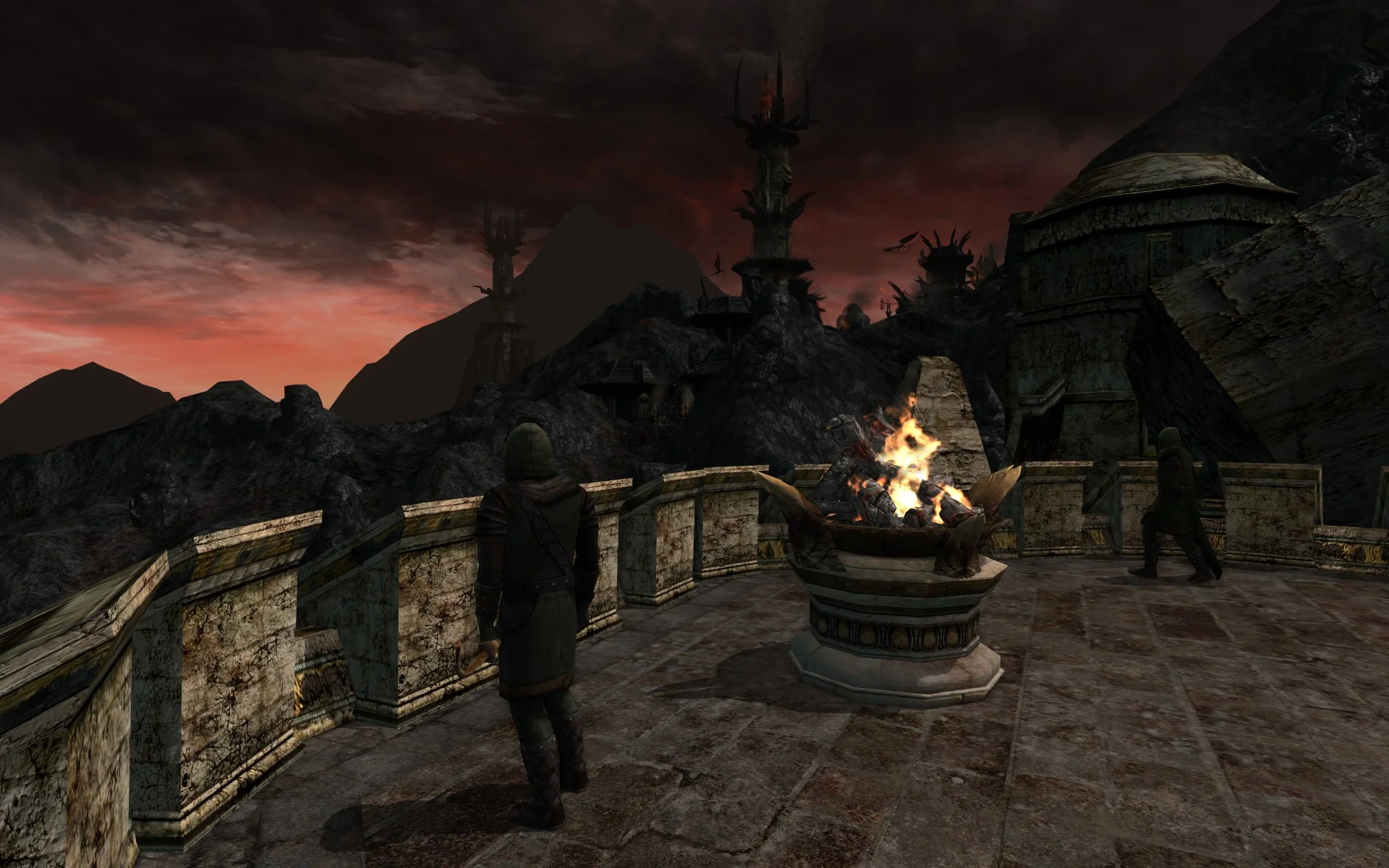

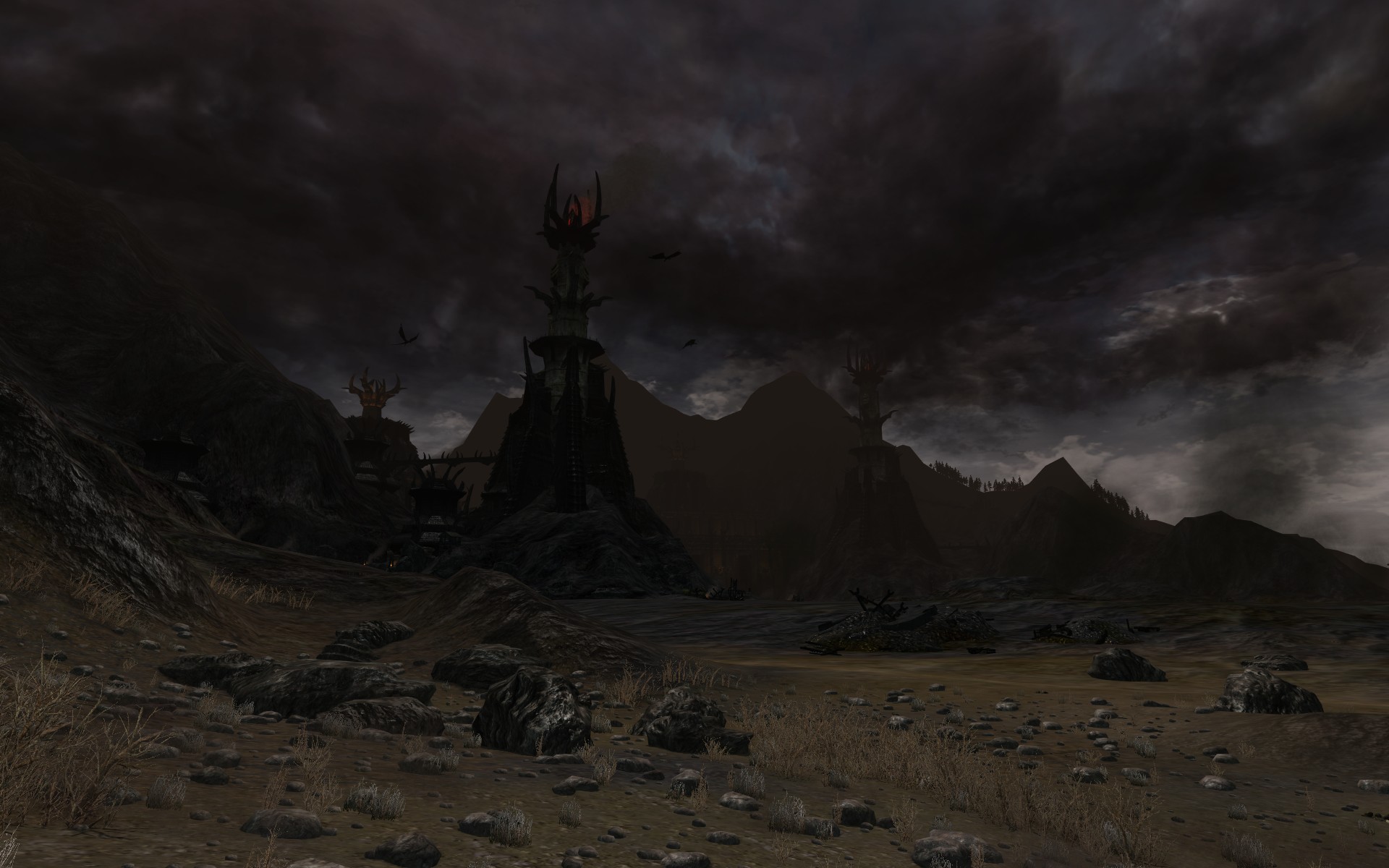
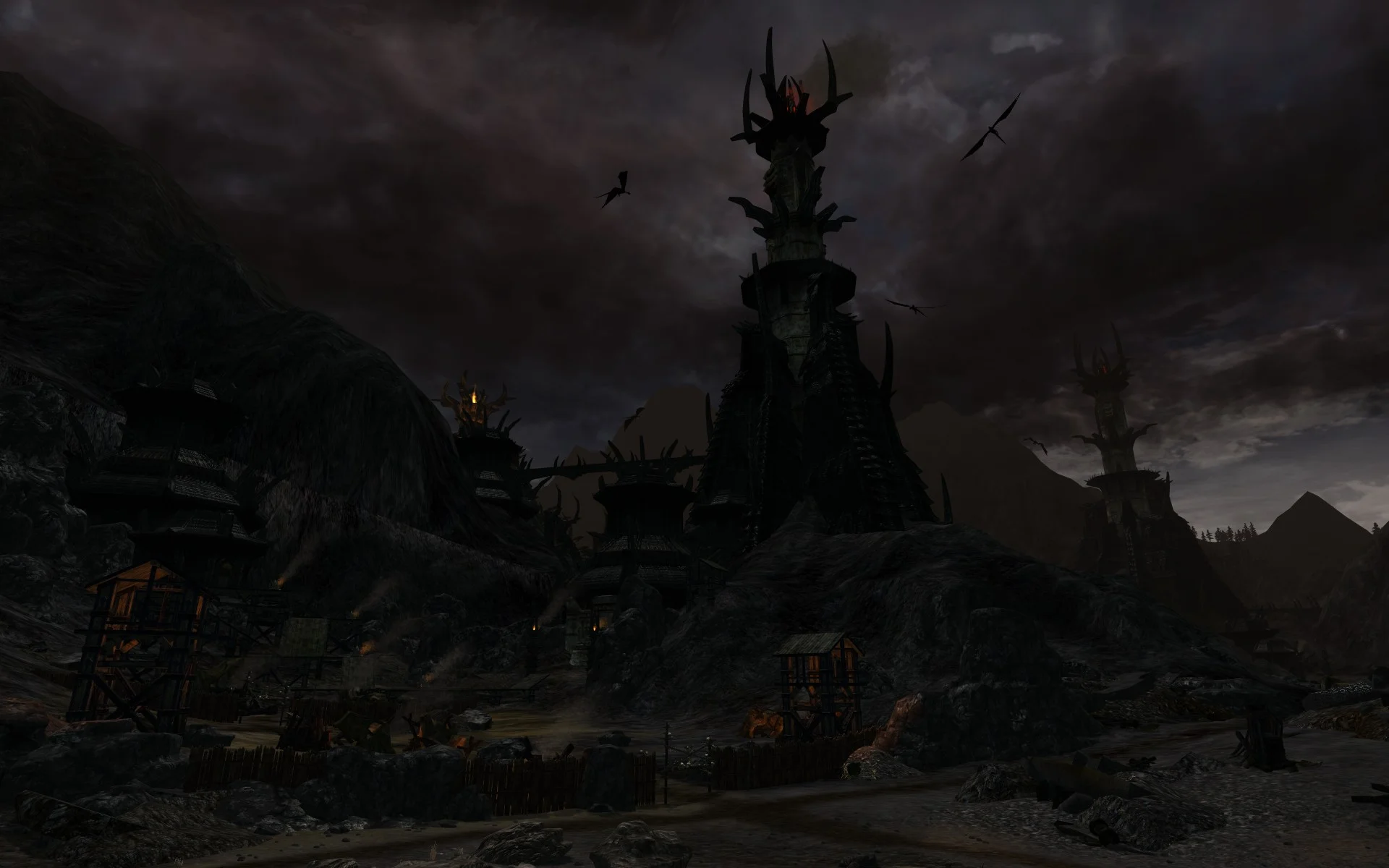
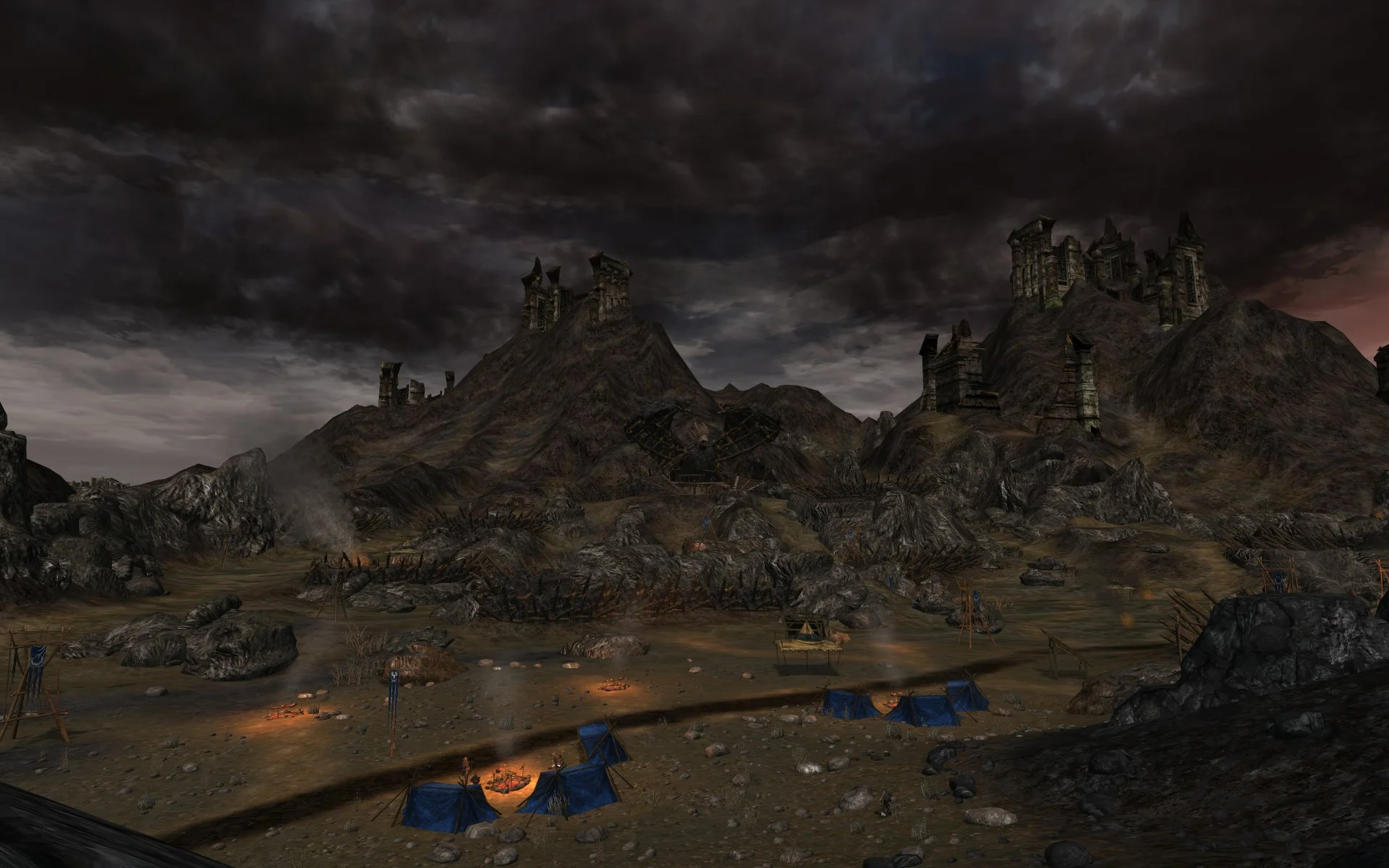
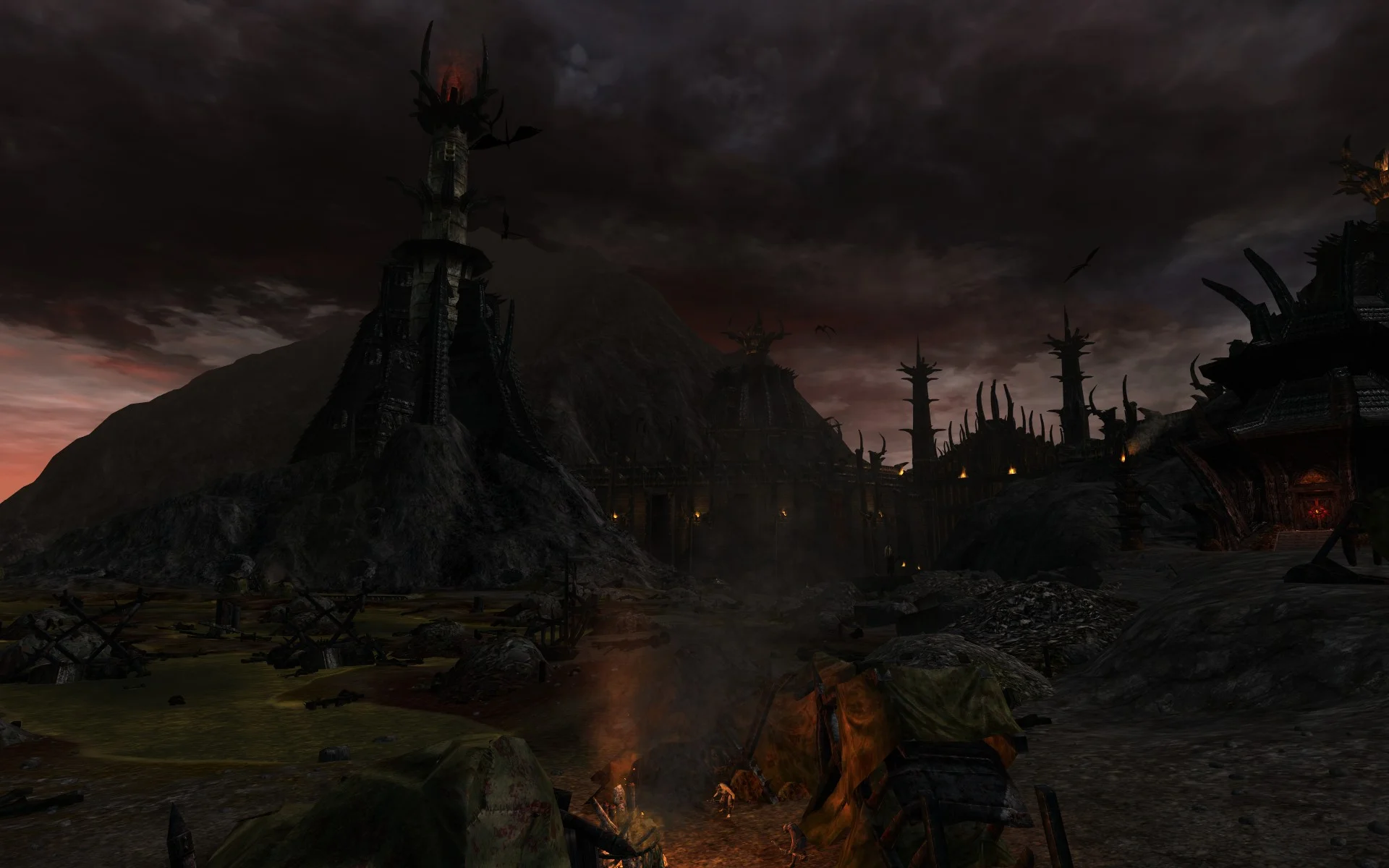
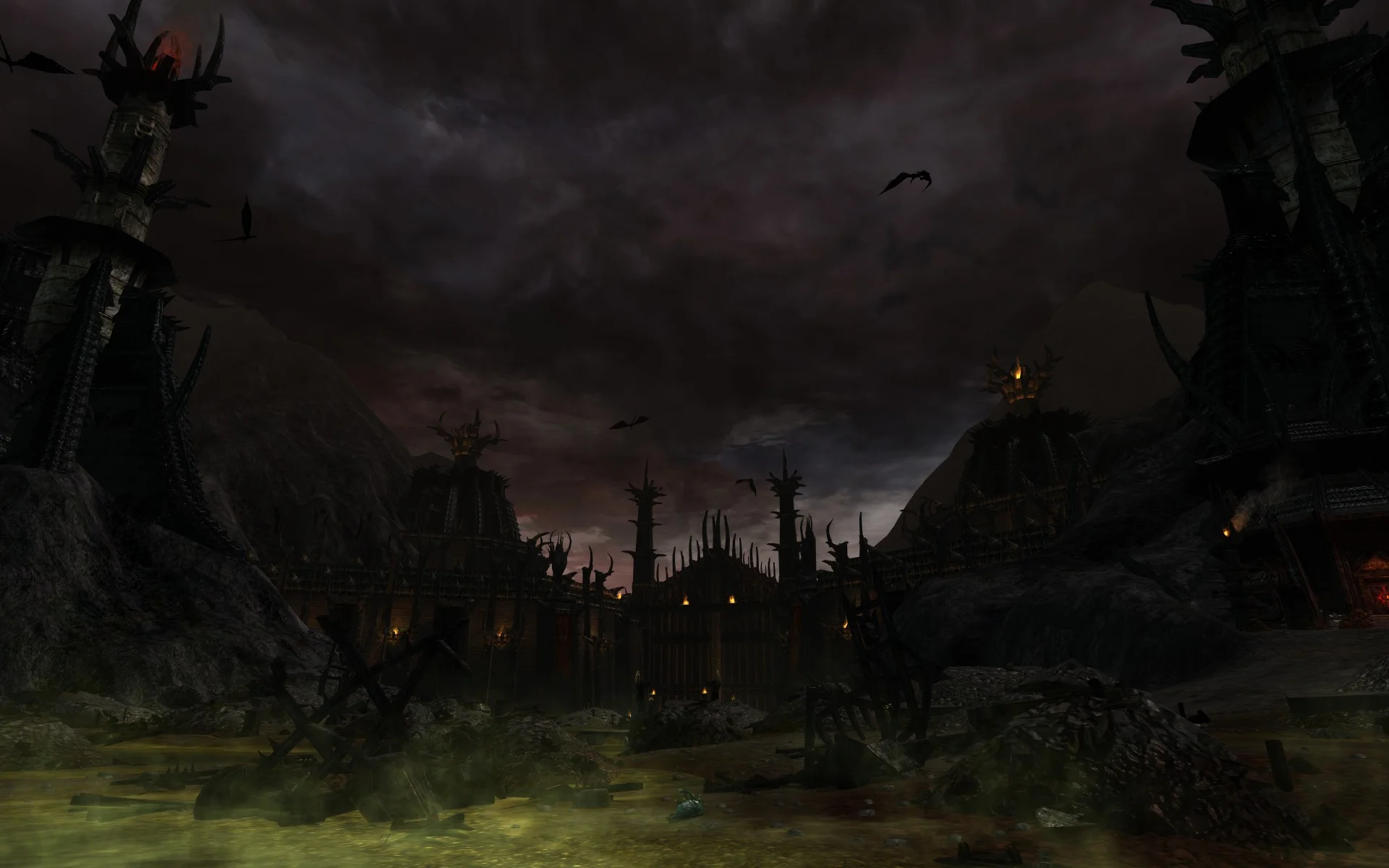
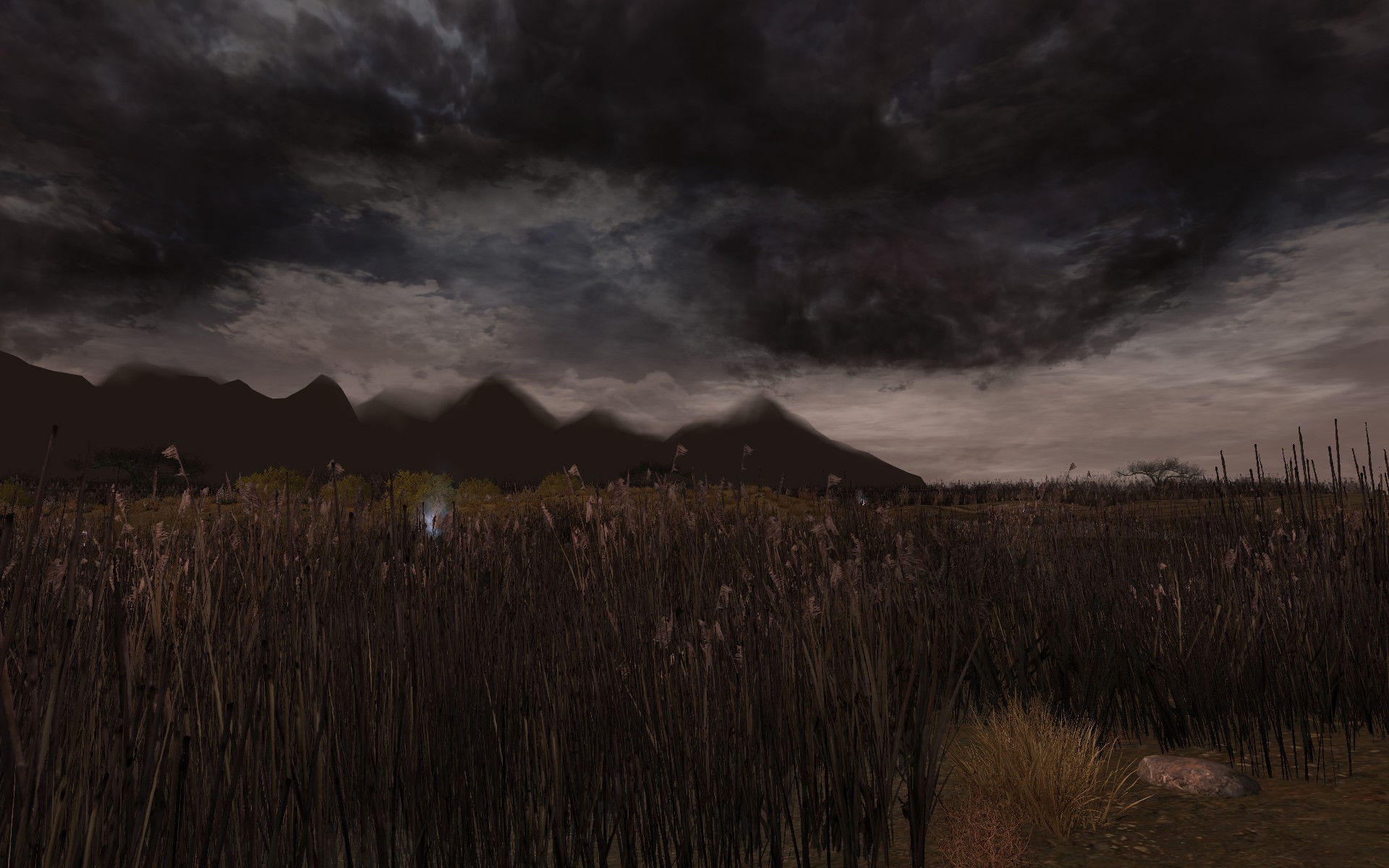
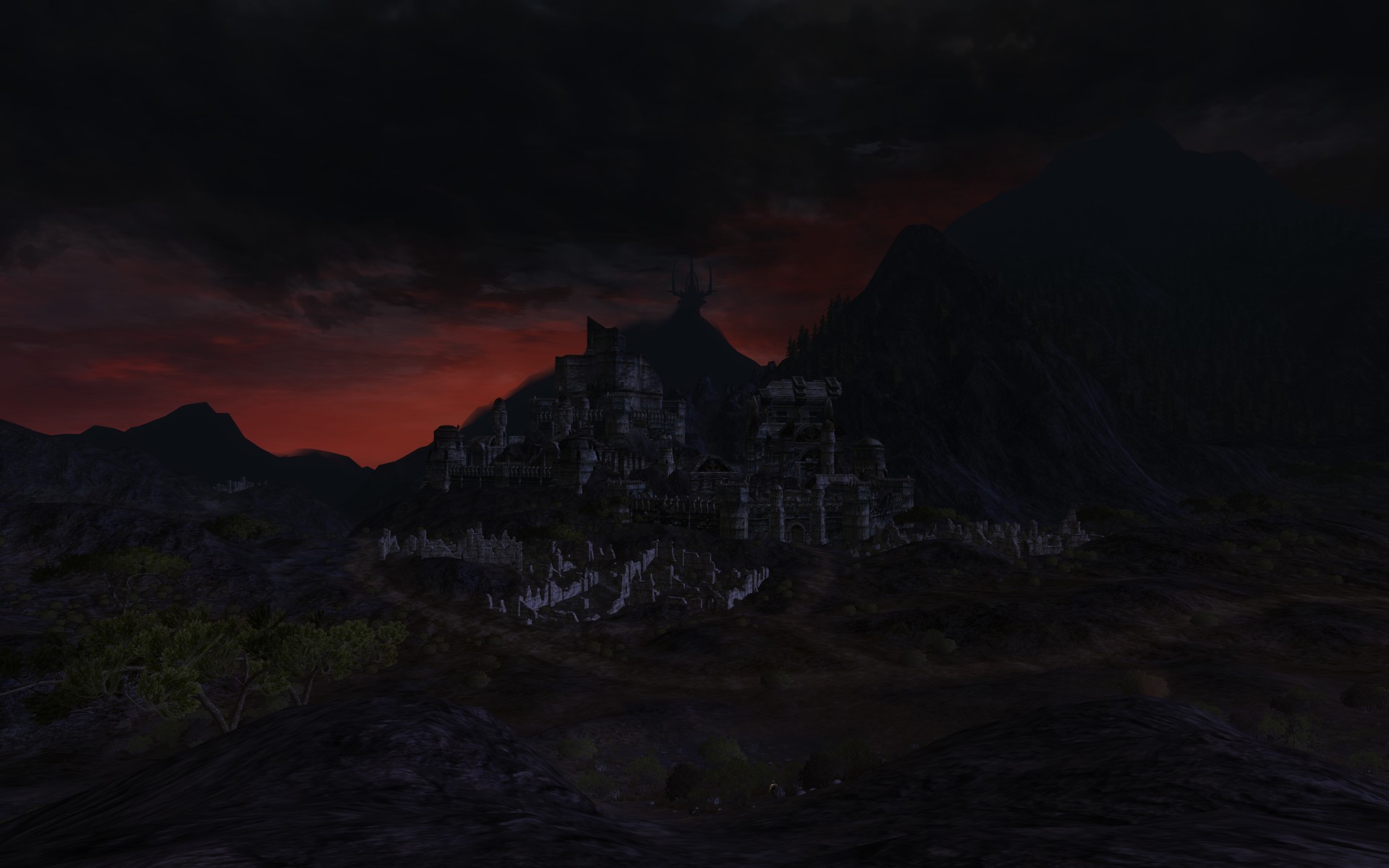
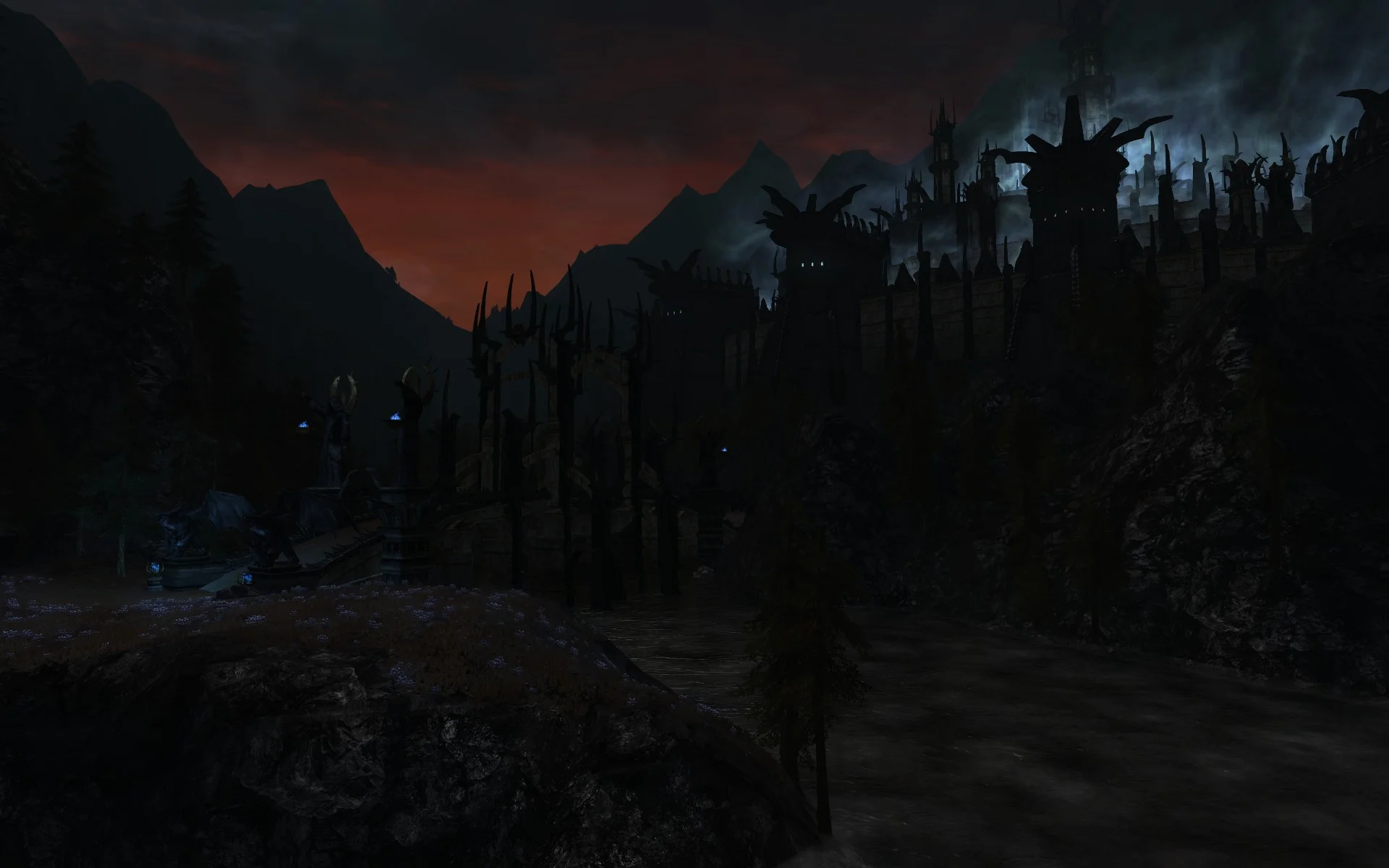
Am I a Whale?
Whenever reading about game monetisation, I often come across the term “whale” and their alleged importance to the free-to-play business model. Primarily they seem to be associated with the mobile gaming industry, due to the way the games are constructed. Paying does more than enhance game play, it is required to facilitate it. However, the whale is no stranger to the MMO genre. The proliferation of cash stores, lock boxes and cosmetic customisation means that there’s always something that people want. Furthermore, gaming in many respects can be a more economic form of entertainment compared to others. Therefore, occasional expenditure is often seen as providing value for money. Fans also like to support the developers that create the games that they enjoy, so again spending money is perceived as a positive thing.
Whenever reading about game monetisation, I often come across the term “whale” and their alleged importance to the free-to-play business model. Primarily they seem to be associated with the mobile gaming industry, due to the way the games are constructed. Paying does more than enhance game play, it is required to facilitate it. However, the whale is no stranger to the MMO genre. The proliferation of cash stores, lock boxes and cosmetic customisation means that there’s always something that people want. Furthermore, gaming in many respects can be a more economic form of entertainment compared to others. Therefore, occasional expenditure is often seen as providing value for money. Fans also like to support the developers that create the games that they enjoy, so again spending money is perceived as a positive thing.
I play at present three MMOs. Lord of the Rings Online, The Elder Scrolls Online and Star Trek Online. I subscribe in LOTRO and do not own a life time account. ESO is a buy to play title with an optional sub for access to additional content. At present, I have bought the base game only. STO is the one game in which I bought a life time account. All these titles have in-game stores offering cosmetic or convenience based items. As I’m relatively new to ESO, I’ve yet to determine if the store has anything I desire. In LOTRO, I have bought milestone skills, stat tomes and other items that improve “quality of life”. Beyond these items, I have purchased relatively little, despite receiving a monthly stipend of in-game currency. It is in STO that I have regularly spent the most money, mainly because they sell ships, weapons and equipment.
Over the course of 2016, I spent £143.89 in Star Trek Online buying Zen, one of many in-game currencies. I bought items from the C-Store that I either used, traded or converted into Dilithium. Compared to other games in which I spend very little, this can be seen a large amount. Does this make me a whale? Probably not within the STO community. My primary character in STO is part of the Reddit Alert Fleet and you’ll frequently find other members discussing their relative expenditure in the chat channel. In this fleet you’ll find a lot of high end players who will regularly buy new ships and often in the cross faction bundles. For example, prior to the launch of the Agents of Yesterday expansion, Cryptic marketed the Temporal Agents Pack, featuring a wealth of ships, gear and items. It retailed at the time at £99.99 and I was surprised at how many colleagues bought this.
This picture is tenuously relevant. No clues. You figure it out.
Now regarding my non-whale status in STO, it should be noted that I spent a further £153.83 via the “grey” market. Bringing my total spend over the year to nearly £300. To put that number in to context, that averages out to broadly £6 per week. A comparable cost to coffee, sandwiches or beer. It is also unlikely that I will spend a similar amount of money on STO this year. I have maxed out my primary character and a lot of the items I’ve bought, are available account wide. However, what I think this minor analysis proves is that, if I deem it viable, I will spend money in a game. Therefore, I may well invest in another game at a future date if it suits my needs to do so. Considering that in most F2P games, the majority of the player base spend nothing, maybe I do have Cetacean tendencies after all. According to research 46% of all revenue comes from .22% of player base. If I am part of that group, all I can say is “Thar she blows of the starboard bow!”.
What’s My Name Again?
A few Weeks ago, I created a new Dwarf Hunter in LOTRO and started playing through the game from scratch. Why? Because I wanted to. As ever with MMOs that have been around for a while, all the best names are taken. I spent at least thirty minutes trying various names that I had planned in advance. All were conspicuous by their absence, including Burton, which really irked me. I remember having a similar experience trying to secure a suitable name during the WildStar beta. I wanted Brother Numpsay but it was not available, so I had to settle for Captain Queeg. I guess WildStar players are more conversant with Eddie Murphy than Herman Wouk. But I digress. I ended up calling my new Dwarf Hunter Gryg, as a homage to a character in the film The Last Starfighter.
A few Weeks ago, I created a new Dwarf Hunter in LOTRO and started playing through the game from scratch. Why? Because I wanted to. As ever with MMOs that have been around for a while, all the best names are taken. I spent at least thirty minutes trying various names that I had planned in advance. All were conspicuous by their absence, including Burton, which really irked me. I remember having a similar experience trying to secure a suitable name during the WildStar beta. I wanted Brother Numpsay but it was not available, so I had to settle for Captain Queeg. I guess WildStar players are more conversant with Eddie Murphy than Herman Wouk. But I digress. I ended up calling my new Dwarf Hunter Gryg, as a homage to a character in the film The Last Starfighter.
Well to cut a long story I want to change the name. However, this come with a cost, as you would expect in a MMO with a hybrid free-to-play business model. In this case a rename token is 995 LOTRO points. That works out at a little over £10, which I thought was a little steep for correcting a minor nominative error. So as I had recently received my monthly stipend of 500 points, I foolishly decided to grind out the remaining 495 required to purchase the token. Man alive, was that a mistake. Grinding slayer deeds is exquisitely tiresome and time consuming. I eventually ended up switching to my primary level cap character and mopping up a few residual deeds to speed the process along.
Earlier today, I found that I had earned sufficient LOTRO points that I could go ahead and buy the rename token. Here’s a useful tip. As soon as you purchase the token, it immediately opens a rename window. I was expecting an item in my bag that was manually used. However regardless of this somewhat peremptory message, you do not have to use the rename immediately, especially if you are still considering names. You can cancel the window and access it again at a more convenient time from your Alerts window. So I logged out of the game, to start drafting a new list of prospective names. I also logged back in to make sure nothing screwed up, which it hasn’t. I like to be thorough.
Now as I’m a community orientated and socially inclined individual, I thought I would consider reader suggestions for Gryg’s new name, before making a final choice. So if you have any witty ideas, then feel free to leave a comment here or on Twitter. I’ll wait until the end of the week and see what sort of results we have. If a suitable name is suggested than I’ll use it and take screen captures to verify that it’s been implemented. As we’re all fully rounded grownups I don’t have to stipulate any caveats about offense, religion, racism or sexism, do I? No. Didn’t think so. Good. Then let us all put are thinking caps on and we’ll reconvene in four days’ time.