
Returning to Middle-earth Again
Now that Turbine have settled into the pattern of releasing two content updates for LOTRO a year, I have correspondingly settled into the pattern of re-subscribing for a month or two when each one appears. The latest, Update 17 The Siege of Minas Tirith, went live on 27th October but as there was so much other gaming content released at that time, I postponed my customary winter excursion to Middle-earth. I must admit that I had provisionally checked out the new area and the iconic city of Minas Tirith on the Bullroarer test server and I was not especially impressed. However as of last night having found the time in my gaming schedule I decided it was time to re-subscribe to LOTRO and push on with the epic story.
Now that Turbine have settled into the pattern of releasing two content updates for LOTRO a year, I have correspondingly settled into the pattern of re-subscribing for a month or two when each one appears. The latest, Update 17 The Siege of Minas Tirith, went live on 27th October but as there was so much other gaming content released at that time, I postponed my customary winter excursion to Middle-earth. I must admit that I had provisionally checked out the new area and the iconic city of Minas Tirith on the Bullroarer test server and I was not especially impressed. However as of last night having found the time in my gaming schedule I decided it was time to re-subscribe to LOTRO and push on with the epic story.
Having recently transferred from Gilrain server with most of my kinship, this is the first time I’ve undertaken any major content on our new home of Laurelin. Sadly my hopes for a more vibrant game economy have not happened. The auction house on this server is just as devoid of a broad spectrum of gear and items as the previous. It would appear that no one seems to craft and sell level cap items anymore. I blame slotted armour. It would appear that out of the two European English language servers that survived Turbines downsizing, Evernight has proven more popular. I may well at a future date move an alt there to see if there are any significant advantages on that server.
As for the latest instalment of the epic story, it is proving to be quite engaging once you have got beyond orientating yourself around Minas Tirith and carrying out the ubiquitous fetch quests. As ever with Turbine, there are times when the story telling in LOTRO really does demonstrate a keen understanding of Tolkien’s source text. Such moments are always enjoyable. Then there times when some of the regional quests really do feel arbitrary. There’s a particular quest requiring you to kill three captains of the enemy in camps in the Pelennor fields. These NPCs do not always spawn in the same place and may be at one of three possible locations. Rather than feeling challenging it simply comes across as a cheap way to extend the quests playing time. Sadly this is how Turbine’s content has become recently; of varying quality mainly due to a lack of time and resources.
Minas Tirith itself is a rather dour and sombre affair. Far from being the White City it’s rather drab and grey. As I suspected after the beta test, there are copious quantities of fast mounts to help navigate around the cities seven levels. Exploring each level is fun initially and if you’re not in a rush can yield some nice hidden features. However after a while the novelty soon wears off and its design simply becomes an impediment to travel and a pain in the butt. If you leave the city and travel Old Anorien you soon discover that the mob density has been cranked up. Again you can cogently argue that this is a ploy to slow players down etc. The addition of two warbands in such close proximity to each other is a similar example.
Nostalgia and fond memories are major factors when it comes to playing LOTRO and I think Turbine is fully aware of this. They’ve fully committed to the Big/Epic battles system and there are a further two in the latest update. Yet I still strangely have enough goodwill towards this ageing MMO to endure these and soldier on to the next stage of the story. I still think about the immense fun I had playing LOTRO between 2008 -2009. Plus there’s the fact that there isn’t any other Tolkien based game of this kind around, nor it there likely to be in the future. So I guess I like many players I will dutifully work through Update 17 and then leave, only to return again in the Spring when the next update becomes available.
Scrooge (1951)
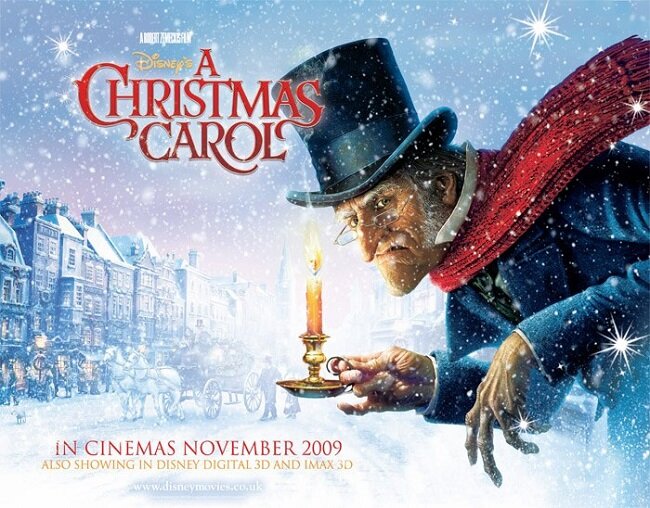
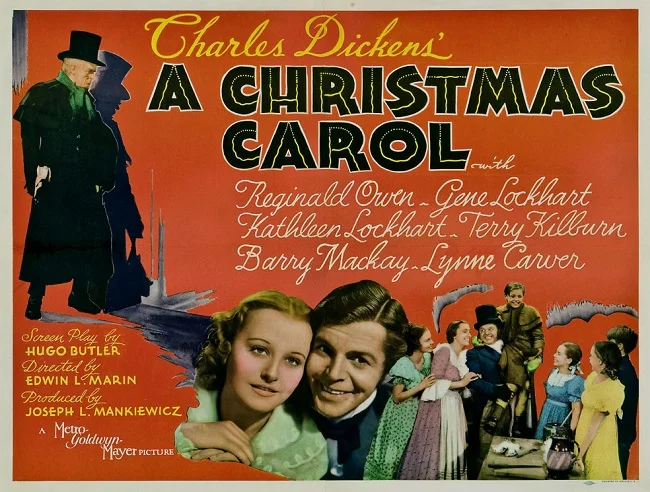
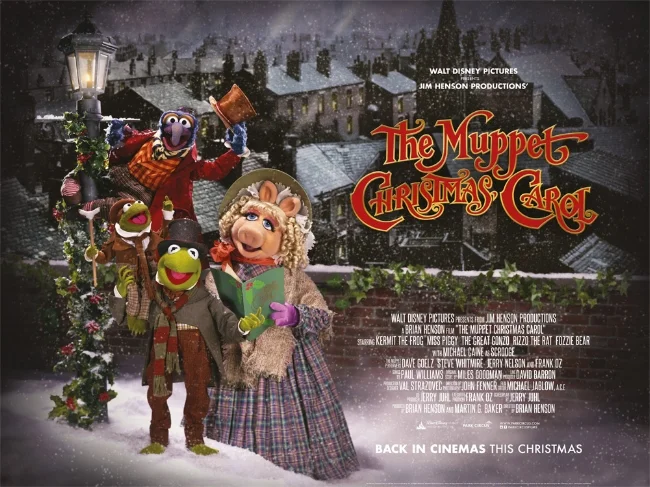
I am a great fan of Charles Dickens' "A Christmas Carol". There is something very special about the novella which is quite hard to quantify. It is a very unique book despite its central theme of redemption being universal. The text has for want of another phrase, a "power" to it. It is profoundly moving, insightful and true. Perhaps the key this story’s appeal lies with the central character, Ebenezer Scrooge. Not because Scrooge is a monster (which are so often fascinating) but because he's a man broken by circumstance. I think readers throughout the years have related to this and considered "There, but for the grace of God, go I". Cinema has found a rich vein of gold running through this tale, which is why it’s been revisited so often and interpreted so many ways.
I am a great fan of Charles Dickens' "A Christmas Carol". There is something very special about the novella which is quite hard to quantify. It is a very unique book despite its central theme of redemption being universal. The text has for want of another phrase, a "power" to it. It is profoundly moving, insightful and true. Perhaps the key this story’s appeal lies with the central character, Ebenezer Scrooge. Not because Scrooge is a monster (which are so often fascinating) but because he's a man broken by circumstance. I think readers throughout the years have related to this and considered "There, but for the grace of God, go I". Cinema has found a rich vein of gold running through this tale, which is why it’s been revisited so often and interpreted so many ways.
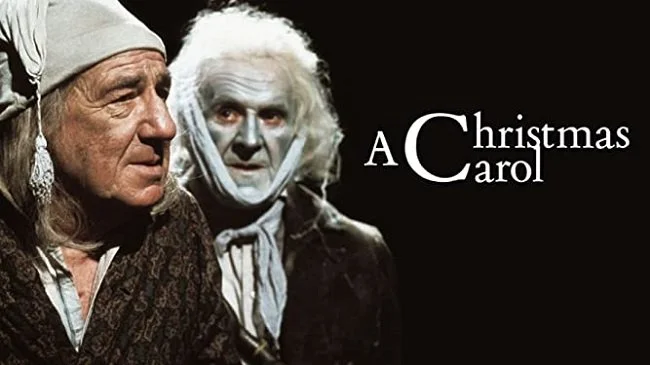
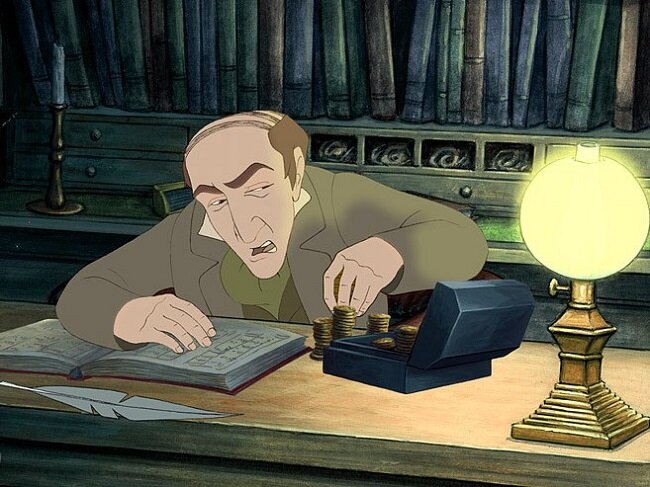
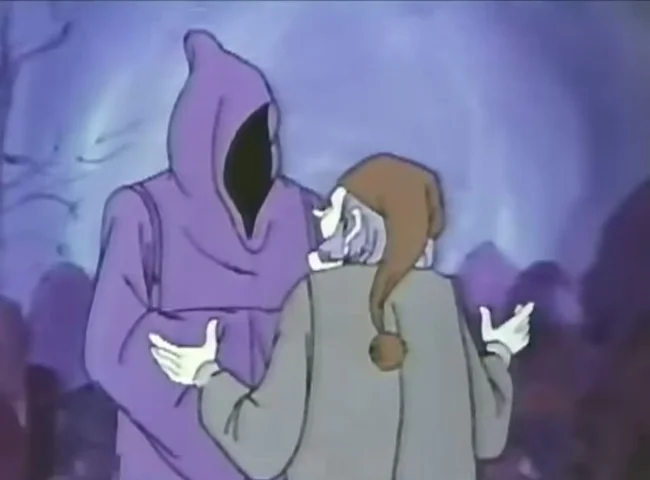
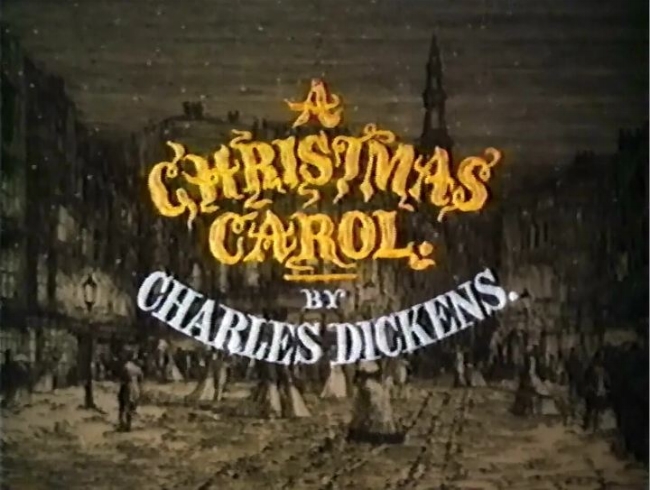
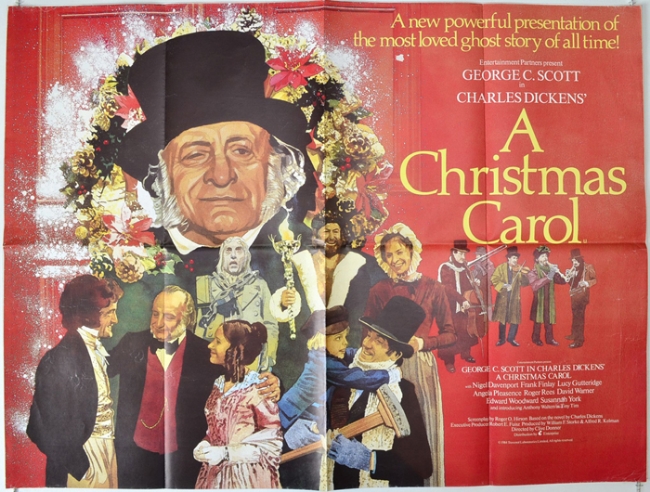
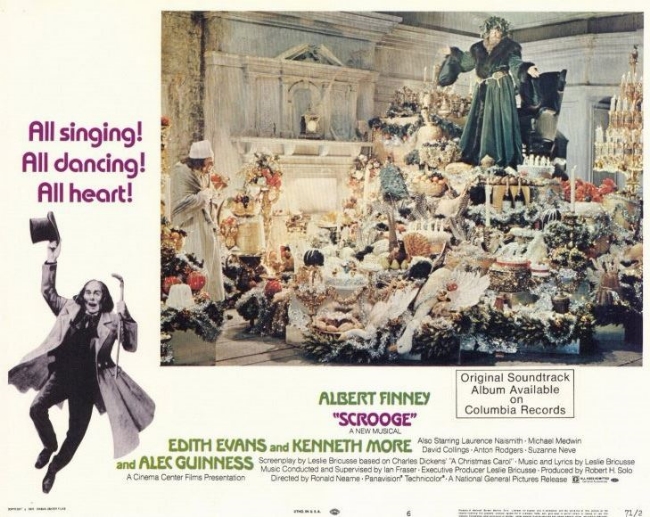
I have my own personal favourites such a Richard William's superb animated version, which is quite shocking in its depiction of the supernatural. Then there is the musical version Scrooge, directed by Ronald Neame, from 1970. The film's musical score was composed by Leslie Bricusse and featured an outstanding central performance by Albert Finney who was only 34 at the time. I also have a soft spot for the 1984 TV movie version of A Christmas Carol, mainly due to George C. Scott's interesting take on the role of Scrooge. The characters traditional irascibility is replaced by a much colder and calculating demeanour.
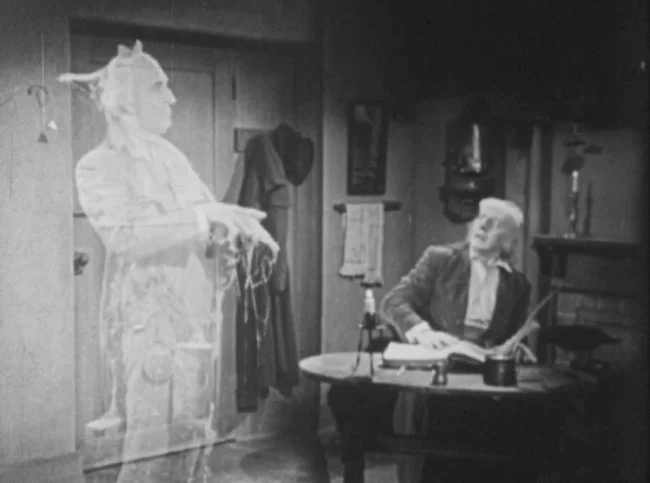
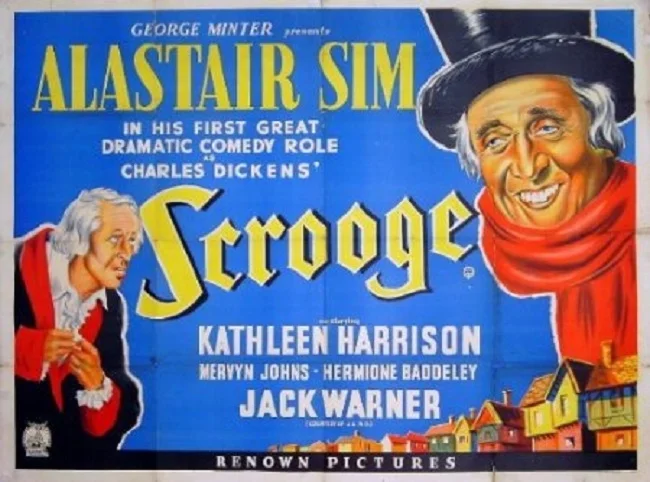
However, I still find the 1951 adaptation of the story, filmed under the title Scrooge, to be a constant source of joy and fascination. The ensemble cast featuring such talents as Mervyn John, Ernest Thesiger, Michael Horden and Kathleen Harrison portray a very stark and foreboding vision of Dickensian times. Yet the acting never descends in to melodrama or excessive pathos. As for Alistair Sim's lead performance, it is simply sublime. The audience never once doubts the sincerity or credibility of his acting. His transformation at the movies climax is simply remarkable. The man seems to have changed in a tangible way that is clear to see, yet hard to define. That is the hallmark of the finest quality acting.
This modest production, deftly directed by Brian Desmond Hurst, exudes atmosphere. It is well paced and thorough. It also boasts handsome black and white cinematography by C.M. Pennington-Richards which captures the spirit of John Leech's original engraving from the first edition of the book. Art Director Ralph Brinton creates a very gloomy London, gripped in a bitterly cold winter. The location footage is minimal but very imposing, such as the use of the Royal exchange. The set designs have an authentic feel to them, especially Scrooge's dreary office. Unlike contemporary productions the story does not get bogged down or overshadowed by excessive effects work. The optical processing is simple and functional.
There is much to ponder after watching Scrooge. Viewers can consider the movie’s themes from a moral, religious or even a socio-political context, because it contains all those elements. Due to lapses in copyright the film has been released multiple times on numerous formats. Many copies are of poor quality. At present I would recommend the 2011 VCI Blu-ray release that featuring an excellent restored print of the film as well as superb commentary by the late George Cole. Despite being perceived as being a seasonal film Scrooge makes for thought provoking and entertainment year all year round. Perhaps more frequent viewing would encourage goodwill to all men all year round, rather than just as Christmas.





Eon Altar: Early Access
Last week I got to try the RPG Eon Altar which I subsequently discussed with my co-host Brian on the Burton & Scrooge podcast. We were overall very positive about the game which is currently in early access on Steam. However we could not play the game in co-op mode as it is not designed for collaborative internet play. Eon Altar is intended for up to four people to play co-operatively, locally via your wireless network. This is very much a game that caters to social play, via your living room and couch. So I press ganged my son into helping me out and managed to spend three hours today checking out the co-op aspect of the game. Let me say right up front that Eon Altar comes into its own when played with two or more players and that this is the optimal way to play the game.
Last week I got to try the RPG Eon Altar which I subsequently discussed with my co-host Brian on the Burton & Scrooge podcast. We were overall very positive about the game which is currently in early access on Steam. However we could not play the game in co-op mode as it is not designed for collaborative internet play. Eon Altar is intended for up to four people to play co-operatively, locally via your wireless network. This is very much a game that caters to social play, via your living room and couch. So I press ganged my son into helping me out and managed to spend three hours today checking out the co-op aspect of the game. Let me say right up front that Eon Altar comes into its own when played with two or more players and that this is the optimal way to play the game.
For those who are unfamiliar with this game it a co-op isometric RPG featuring all the usual mechanics you’d associate with the genre. There are abilities to unlock and gear to upgrade, as well as consumables to craft. The main difference is that the game requires a smartphone or tablet to play and that the device is more than just a mere controller but in many ways your character. It’s a very innovative approach and makes playing collaboratively a much more personal experience. Character interaction is handled via the phone and players can elect to share unique information within their team or pursue their own goals. This adds an interesting dimension to group undertakings.
It is important to note that Eon Altar is currently still a work in progress and at present only three levels are available. There are four classes to choose from; Battlemage, Assassin, Crusader and Guardmans. During my co-op play through I chose the Assassin and my son opted for the Battlemage. This gave us the advantage of ranged attacks but left us a little squishy when engaged in melee combat. It did not take us long to discover this and adjust our tactics accordingly. The game environment can at times encourage you to run headlong into new areas with the allure of loot. The isometric view can occlude your view at times and there is the risk of pulling all mobs in an area.
As I mentioned on the podcast, movement via the smartphone is extremely fluid. You can set waypoints and run to them or keep your finger on the screen and control your alt directly. Navigating your characters build and stats via your phone is intuitive. The drop down menus and their respective nested screens are relatively easy to fathom. Minor issues such as font size can be challenging for those with “older” eyes but overall this easy to use. The skills wheel in combat is also very logical. Where the game is lacking at present is with its tutorials. It takes a while to figure out when you should be looking at the monitor/TV screen and when you need to be looking at your phone.
I do not consider myself an excessively lazy player and am not afraid to investigate a games mechanics, interface and the virtual environment it takes place in to figure things out. However there were several occasions while playing Eon Altar where I wanted a prompt either on screen or via the phone. Has a dialogue discussion finished? Where do I go next? Can I have a clue or a hint as to how to solve a problem or fight a foe? Because of the nature of the game I don’t necessarily expect a full blown world map but a bread crumb trail or an arrow would have been beneficial. I ended my co-op session because it could be determined what to do next.
Isometric views in games as mentioned earlier have advantages and disadvantages. For example if players choose to go in opposite directions the game camera can only accommodate them so far. Eventually someone has to decide to follow the group. Perhaps having the ability to flag a player as leader would be useful. A follow option would also help greatly. There were several times when the in game camera panned round in such a fashion that a wall was in the way. The game deals with this by making the obstacle opaque but is still blocks your cursor/reticle which cause no end of problems if a fight starts.
Another matter to be mindful of while playing Eon Altar is friendly fire from AoE skills, especially those used by the Battlemage. It is important to watch where you stand and the inclusion of a tell or marker showing where AoE damage will occur would reduce “accidents” from happening. Ranged bow skills require the avatar to be a specific distance away from the target. At present the game will simply run your character to the optimal location when the skill is used. It would be nice if there was a way of choosing a safe location before using the bow attacks and that the game highlighted these, similarly to the way SWTOR does with the smuggler class.
The above comments are designed to provide some hopefully useful feedback for the developers. However I would like to point out that despite the issues one naturally encounters with an early access game, I had immense fun playing two player co-op. As this game is designed to be played via a sofa rather than across the internet, it has a different social dimension. My son and I quickly got very competitive with regard to looting. Basically is became a race as to who got all the “good shit” first. I have a suspicion that four player co-op with the right group of friends would be a genuinely enjoyable and laugh out loud experience. There’s so much scope for “accidently killing” your team mates, friendly bickering, getting lost and general tomfoolery. For me this is the core of quality social gaming, as it was with multiplayer sessions on the SNES back in the day.
After playing yesterday, I sent my game logs files to Flying Helmet Games, who are proactively seeking feedback at present. There is a forum to leave bug details as well as your overall thoughts. The various developers and company managers are also accessible on Twitter. As I consider Eon Altar to be a game with a lot of potential, I naturally would like to help in any way I can with ironing out the bugs and seeing the full game released. I look forward to playing again soon and hope that a new build is forthcoming. If you are interested in assisting an indie developer with an innovative product and are fully aware of the ramifications of early access, then you may wish to pick up a copy of Eon Altar.
The Contains Moderate Peril Christmas Gift Guide
As we approach that time of year where we’re forced to spend time with people we don't like and pretend to enjoy their company, the tricky issue of buying suitable gifts rears its ugly head. This “great” tradition simply compounds a felony. Not only do we have to endure the terminally tedious, when then have to shower them with presents. Furthermore, in return for the carefully considered trinket you’ve purchased for the aforementioned bastard, you receive a tawdry piece of cheap, worthless shit, adding insult to injury. So much for it being the “season to be jolly”.
As we approach that time of year where we’re forced to spend time with people we don't like and pretend to enjoy their company, the tricky issue of buying suitable gifts rears its ugly head. This “great” tradition simply compounds a felony. Not only do we have to endure the terminally tedious, we then have to shower them with presents. Furthermore, in return for the carefully considered trinket you’ve purchased for the aforementioned bastard, you receive a tawdry piece of cheap, worthless shit, adding insult to injury. So much for it being the “season to be jolly”.
Therefore I thought I’d help ease this tiresome time of year by offering some advice regarding how to navigate the treacherous waters of these seasonal rituals. So I've decided to collate a gift guide filled with items that are unique, thought provoking and undeniable talking points. You may wish to use this post as a subtle hint with your respective loved one. Alternatively, why not buy one of them for yourself and to hell with everyone else. All are outstanding products and infinitely preferable to the hand knitted sweater your Aunty Bastard will send you. Please note that Contains Moderate Peril is not responsible for any marital strife/relationship angst that incur from purchasing any of these items.
Cylon Centurion Costume Replica (POA): Available from Kropserkel
Cut a dash at your office Christmas Party with this bold alternative to the traditional little black number.
Dalek Replica (POA): Available from Firebox
No smart dressed man or women should be without one.
M41-A Pulse Rifle Replica ($499.95): Available from Hollywood Collectibles
Outstanding but you'll have to make the noise yourself.
Star Wars Princess Leia Slave Outfit ($47.99): Available from Buy Costumes
Ask your partner to wear it and end a relationship. Alternatively, wear it yourself and end a relationship.
Cthulhu Plush Puppet ($19.95): Available from Toy Vault
One for the kiddies. "Hey kids, let's summon a Shoggoth..."
Star Trek The Original Series Tricorder ($49.99): Available from Diamond Select
Take a Tricorder reading to find out why your sex life is non-existent.
Replica Glaive ($170.00): Available from Hole in the Ground Productions
Throw it at Ken Marshall (Not Liam Neeson).
The Lament Configuration Replica (£100.00): Available from Hellraiser Box
Give it to someone you don't like and tell them not to waste good suffering.
Alien Facehugger Plush (£29.99): Available from Think Geek
Placing this on the face of a sleeping baby is VERY funny but is technically child abuse.
Wall Socket with built in 2 x USB Charging Ports (£9.99): Available from BT Shop
No really, I want these in my home!
The Elder Scrolls Online and the $1,000,000 Giveaway
In the past an MMO kept players engaged with their game by the psychology of the subscription model and providing content updates. Loyalty and the overall cost of running multiple games meant that most players dedicated themselves to one game and stuck with it. Free to play eliminated these ties and a lot of MMO players became a lot more itinerant. Developers therefore have had to become a lot more creative in finding ways to keep people logging into their games. Hence we now find many MMOs that feature daily rewards, content that has to be unlocked by claiming it and short term events that offer unique rewards.
In the past an MMO kept players engaged with their game by the psychology of the subscription model and providing content updates. Loyalty and the overall cost of running multiple games meant that most players dedicated themselves to one game and stuck with it. Free to play eliminated these ties and a lot of MMO players became a lot more itinerant. Developers therefore have had to become a lot more creative in finding ways to keep people logging into their games. Hence we now find many MMOs that feature daily rewards, content that has to be unlocked by claiming it and short term events that offer unique rewards.
The Elder Scrolls Online launched in April 2014 with a subscription based business model. By March 2015 the game went buy to play and was rebranded TESO: Tamriel Unlimited. Developers ZeniMax now find themselves in a very competitive gaming market in which MMORPGs are no longer the cash cow they were considered to be a decade ago. Like many companies they have been striving to maintain their share of the market and find a way to keep players logging in and playing, as well as encouraging perspective players to buy the base game. I must admit that their latest marketing campaign does have a novel approach and an interesting hook. Bethseda Softworks are to giveaway $1,000,000 to one lucky player, be they an existing or new customer.
The criteria for entry are at first glance somewhat straightforward. You need to log in to the game or complete an entry form available online by January 10th 2016. The winner will be drawn on 1st February and the funds duly paid. At present the base version of the game is currently retailing at its full price, although discounted keys can be found from reseller sites. I wouldn’t be surprised if there were another major Steam sale over the Christmas period. Needless to say the chance to win such a cash prize will definitely cause a spike in account logins. Whether returning players decide to stick around remains to be seen.
Like most competitions there’s a wealth of small print as well as terms and conditions. As each country has its own legislation governing giveways some geographical regions are excluded from entering. As you would expect this has caused those affected to protest most vocally online. As for myself, I briefly considered buying the game and entering but when you consider the initial cost and the approximate odds of winning, this is not a particularly sound gambling proposition. Sure I’d end up with a game that I could play but I have neither the time nor the inclination for another MMO at present. Part of me also thinks this stunt is a little tacky. I’d much rather be enticed to play a game because of some well-made new content. But this is how the gaming industry runs nowadays. Mass appeal has simply lead to greater commercialism. Makes you wonder what the next developer/publisher will do to top this?
The Siege Of Firebase Gloria (1989)
There was a wealth of revisionist Vietnam War films released in the wake of Oliver Stones’ Oscar winning Platoon. Not all were of equal merit or technical competence but occasionally a low budget B movie can surpass the big studio competition. The Siege of Firebase Gloria is one such example, being a minimalist, straightforward film about US Marines defending an isolated outpost in Vietnam, during the Tet offensive. Directed by British expatriate Brain Trenchard-Smith and starring R. Lee Ermey, Wings Hauser and Albert Popwell ("Hey, I've gots to know!"), it’s often been overlooked. However it’s low key plot which seeks no more than to show a small facet of the war, sheds more light upon the overall war and a soldier’s life than one would expect from such a modest production.
There was a wealth of revisionist Vietnam War films released in the wake of Oliver Stones’ Oscar winning Platoon. Not all were of equal merit or technical competence but occasionally a low budget B movie can surpass the big studio competition. The Siege of Firebase Gloria is one such example, being a minimalist, straightforward film about US Marines defending an isolated outpost in Vietnam, during the Tet offensive. Directed by British expatriate Brain Trenchard-Smith and starring R. Lee Ermey, Wings Hauser and Albert Popwell ("Hey, I've gots to know!"), it’s often been overlooked. However it’s low key plot which seeks no more than to show a small facet of the war, sheds more light upon the overall war and a soldier’s life than one would expect from such a modest production.
While on reconnaissance, Sergeant-Major Hafner (R. Lee Ermey) comes across a destroyed village and surmises that "Charlie" is on the move. When the patrol arrives at Firebase Gloria, Hafner takes command from the drug crazed commanding officer and desperately tries to prepare the disorganised base for the impending assault. The chain of command refuses to acknowledge any potential danger and refuses to offer any help. Meanwhile NVA Col. Cao Van prepares his men to swarm and overrun the firebase. He realises that using such a tactic may well provide a favourable result but will inevitably result in a heavy death toll. Such a decision weighs heavily upon him.
The Siege of Firebase Gloria is not your stereotypical flag waver. With clearly drawn characters, a workman like yet amusing script and effective camerawork, the film paints a more vivid and unsettling portrait of the Vietnam War. It also makes its point more effectively than some of the other pretentious movies in the genre. Ermey gives a grounded, genuine performance and it can be argued that he carries the film from the average to the worthy. Wings Hauser is a little over taxed as the burnt out Corporal suffering with PTSD. Albert Popwell provides solid support as the career soldier trying to maintain standards in environment where the "rules" are breaking down. The action scenes are effective and the production strives beyond the confines of its modest budget.
There's nothing remarkable about the central story for The Siege of Firebase Gloria. This is a tale that has been told in various shapes and forms, many times before. However this particular movie explores a siege situation both efficiently and with a noticeable degree of honesty. There are brutalities and error of judgement committed by both sides. Neither is presented in the usual binary terms. The NVA are depicted as simply being soldiers doing a job which in many ways mirrors the Americans. This is a movie eschews the geo-political views of the time and simply focuses on the immediacy of the battle and the impact that it has upon all concerned. As a result The Siege of Firebase Gloria is more than just the sum of its parts and displays a degree of conviction seldom seen in the genre.
Star Trek Online: Q's Winter Wonderland!
Regular readers probably know by now that I'm not a huge fan of festivals in MMOs. Mainly because they never seem to offer rewards that I want. Some folk love to collect cosmetic items and will happily repeat content to obtain them. I prefer a more tangible carrot on the end of the stick but sadly that seldom occurs. However Star Trek Online launched its seasonal festival today, namely Q's Winter Wonderland! This offers players the chance to claim a new Tier 6 ship, a Breen Rezreth Dreadnought Cruiser. This is quite a prize as the latest vessels sell for 3,000 Zen in the in-game store, which equates to about £20/$30.
Regular readers probably know by now that I'm not a huge fan of festivals in MMOs. Mainly because they never seem to offer rewards that I want. Some folk love to collect cosmetic items and will happily repeat content to obtain them. I prefer a more tangible carrot on the end of the stick but sadly that seldom occurs. However Star Trek Online launched its seasonal festival today, namely Q's Winter Wonderland! This offers players the chance to claim a new Tier 6 ship, a Breen Rezreth Dreadnought Cruiser. This is quite a prize as the latest vessels sell for 3,000 Zen in the in-game store, which equates to about £20/$30.
Now obviously Cryptic do not just give players this shiny new vessel on a plate. It has to be earned. Players have to repeat a special racing event that rewards 40 Winter Prize Vouchers, twenty five times before they can unlock their prize. The repeatable activity is far from hard though and simply requires players to beat the clock on a race course made of ice. The trick is to forward roll when taking corners to avoid sliding. I consider this even to be an equitable arrangement and as I am currently well disposed towards this MMO, will be "grinding" towards my goal.
There are of course plenty of other activities to partake of each day which give favours that can be exchanged for traditional cosmetic items such as a pets and winter wear. These are all winter themed and involve snowballs fights and an evil Borg assimilated snowmen invasion. I must admit I prefer the summer festival so I am at present simply working towards earning the new ship and not really partaking of the other activities. It may also be considered heresy but I’ve never been a fan of the character Q in Star Trek The Next Generation, having always found him somewhat trying and bombastic.
Overall I think ones attitude towards in-game events and festivals depends very much on your overall disposition towards the game itself. Since returning to STO in April I've been having a lot of fun which is what gaming is supposed to be about. Therefore I am more than happy to indulge Q's Winter Wonderland! Plus working towards a reward that has some practical benefits is sufficient motivation for me to continue with the required repeatable event. It's a shame that other MMOs don't take a leaf out of developer Cryptic's book, when it comes to viable festival rewards.
Blessing of the Valar
Boosts that auto-level a character in an MMO have always divided player opinion. Naturally when Turbine introduced the Gift of the Valar in late 2014, which instantly increases a character to Ievel fifty, there was a lot of debate in the wider community. It should be noted that at the time of release, Turbine stated they reserved the right to alter the level boost beyond fifty at a future date. On a live stream broadcast on 12th June 2014, it was stated that the boost may be raised to possibly seventy five. It would seem that in update 17.1 for LOTRO, Turbine have created a new boost called the Blessing of the Valar which will increase a character to level ninety five.
Boosts that auto-level a character in an MMO have always divided player opinion. Naturally when Turbine introduced the Gift of the Valar in late 2014, which instantly increases a character to Ievel fifty, there was a lot of debate in the wider community. It should be noted that at the time of release, Turbine stated they reserved the right to alter the level boost beyond fifty at a future date. On a live stream broadcast on 12th June 2014, it was stated that the boost may be raised to possibly seventy five. It would seem that in update 17.1 for LOTRO, Turbine have created a new boost called the Blessing of the Valar which will increase a character to level ninety five.
I do not consider such store based items to be a problem or harmful to the game and deem this one to be far more practical than its previous incarnation. I can understand why a LOTRO “altaholic” may tire of repeating PVE content for the umpteenth time and using such a boost to bring a new alt closer to level cap and endgame participation. That seems far more practical to me compared to the older boost that simple took you just halfway to level cap. However it is always good to have options so having multiple permutations of such a levelling boost seems very beneficial for both players and developers alike.
The price of 5995 Turbine points is somewhat high but then again LOTRO does have a high number of lifetime account holders who have sizeable stockpiles of this currency, due to the monthly stipend. LOTRO also has a lot of whales who are happy to spend money on the only Middle-earth themed game available. Turbine cannot really be chastised for trying to monetise an MMO that is in the final stages of its lifecycle. I wonder how long it will be before we see items such as high end armour and weapons available in the LOTRO store. For those who are sceptical about such things happening, wasn’t a similar opinion on levelling boosts held in the not so distant past?
Classic Game Themes: Hidden & Dangerous 2
Hidden & Dangerous 2 is one of the most enjoyable, yet frustrating games I have encountered. There are some moments of brilliance to be had whilst playing it but sadly bugs and some questionable AI always seems to trip the proceedings up. Released late 2003 when World War II games were still very much in vogue, this third person squad based shooter still has many outstanding features to this day. One of which is the terrific score by Michal Szlavik and Martin Benes, performed by the Brno Philharmonic Orchestra from the Czech Republic.
Hidden & Dangerous 2 is one of the most enjoyable, yet frustrating games I have encountered. There are some moments of brilliance to be had whilst playing it but sadly bugs and some questionable AI always seems to trip the proceedings up. Released late 2003 when World War II games were still very much in vogue, this third person squad based shooter still has many outstanding features to this day. One of which is the terrific score by Michal Szlavik and Martin Benes, performed by the Brno Philharmonic Orchestra from the Czech Republic.
What makes the soundtrack so memorable is its musical idiom, which seems to reflect the styles and nuances we associate with classic war movies. The more than a hint of Ron Goodwin, Roy Budd and Elmer Bernstein permeating the score and it feels very appropriate. I have chosen two cues which I feel encapsulate composers best work from the game. The first plays out at the end of the North African campaign, as your team escapes from a remote airport with German fighters in hot pursuit. It really does have an authentic aerial feel to it, putting one in mind of cues from The Battle of Britain movie.
Please note that the short running time is due to the track being intended to be looped during the game to reflect the fluid nature of the action.
The second is the rousing cue that plays after the successful completion of a mission. It has a very uplifting and positive tone and again reflects the overall quality of the score, which is played with a full orchestra. Many games at the time and even now elect for a score using contemporary synthesizer and sequencers.
Digital Ambassadors
Early this year while listening to Mark Kermode's excellent radio documentary The Business of Film, I was introduced to the term Digital Ambassador. When I had finished laughing and making crass jokes about Wolf Kahler and Ferrero Rocher, I actually pondered the phrase and spent some time researching it online. Like most contemporary buzzwords despite being nauseatingly hyperbolic and overwrought, it did have a functional definition. Furthermore it soon became apparent that I and many of my podcasting and blogging colleagues are indeed examples of this very group.
Early this year while listening to Mark Kermode's excellent radio documentary The Business of Film, I was introduced to the term Digital Ambassador. When I had finished laughing and making crass jokes about Wolf Kahler and Ferrero Rocher, I actually pondered the phrase and spent some time researching it online. Like most contemporary buzzwords despite being nauseatingly hyperbolic and overwrought, it did have a functional definition. Furthermore it soon became apparent that I and many of my podcasting and blogging colleagues are indeed examples of this very group.
This label is of course "marketing speak", however it is not without merit. What it does is demonstrate the significance of bloggers and other content creators and the role they play in promoting products. Most modern marketing campaigns across many leisure industries appreciate the value of fans and the contribution they make in getting "the message" across. The phrase "going viral" may well have become a bit clichéd but it is ultimately what most PR companies want. It is both far reaching and cheap.
It is interesting the way the whole citizen journalism concept has gone from being a threat to the mainstream to an integral tool. If you have a genre specific product to pitch these days, you don't necessarily go straight to the regular press. A targeted promotion at an event such as ComicCon can be far more effective. Albums from established musicians are sometimes given away free to the fan base. Even the small niche market fan blog can receive marketing material and access to advance previews. Things are not what they use to be and promotion is no longer a closed shop. The so-called Digital Ambassadors provide a convenient fast path to the communities that need to be reached.
In many respects this practise has already existed within certain communities. Games developers have frequently courted popular fan sites and podcasts to ensure that their message is heard. A Casual Stroll to Mordor was virtually an unofficial member of the Turbine community team during LOTROs heyday. Dulfy.net makes an invaluable contribution to the Guild Wars 2 community. So it's hardly surprising that the significance of fan sites has now spread to other markets. I am still not one hundred percent sure of the value of some of the You Tube personalities that are currently popular, but the numbers they command cannot be ignored.
Naturally when commercial entities start courting independent bodies such as blogs and podcasts, there is scope for conflicts of interest and ethical U-turns. Ultimately it is down to each individual to decide how they respond to a request to lobby and promote. Whatever your personal stance, I think that the fact that there's actually a specific term for our online endeavours shows that what we do is of value. Most certainly it proves that blogging and podcasting is not dead. How can it be? After all we're Digital Ambassadors.
Next (2007)
Next is based on a story by Philip K. Dick and has nothing to do with the song by the Sensational Alex Harvey Band. Nor is it linked in any way to the fashion and lifestyle chain of retail stores. I just wanted to get that cleared up before I start. Now I believe that the world in general, pretty much wiped their critical backsides upon this film upon its release. There were complaints regarding the lack of plot explanation, back story and character motivation. I dealt with all these points by simply engaging my brain and sense of imagination. It is not essential for every nuance of a storyline to be telegraphed in great detailed. I do not like to be cinematically spoon fed. But there again, I am not afflicted with attention deficit hyperactivity disorder. Now that we’ve got this matter out of the way let us press on. Next is far from a masterpiece; however it is neither the dog’s dinner some would claim.
Next is based on a story by Philip K. Dick and has nothing to do with the song by the Sensational Alex Harvey Band. Nor is it linked in any way to the fashion and lifestyle chain of retail stores. I just wanted to get that cleared up before I start. Now I believe that the world in general, pretty much wiped their critical backsides upon this film upon its release. There were complaints regarding the lack of plot explanation, back story and character motivation. I dealt with all these points by simply engaging my brain and sense of imagination. It is not essential for every nuance of a storyline to be telegraphed in great detailed. I do not like to be cinematically spoon fed. But there again, I am not afflicted with attention deficit hyperactivity disorder. Now that we’ve got this matter out of the way let us press on. Next is far from a masterpiece; however it is neither the dog’s dinner some would claim.
Nicholas Cage plays a Vegas stage magician who has the ability to see two minutes into his own future. This ability has the added complication that each time he uses it there is the risk of altering the events he sees. Subsequently it's been a curse to him all his life and so he hides in plain sight, in the only environment that can provide suitable cover for a man of his unusual talents. It's not long before the government want to pressgang him in to helping them with a terrorist threat involving a stolen nuclear device. As per usual with films of this kind, the intelligence services rather than simply ask for cage's assistance are more content to strong arm him. A romantic subplot involving a woman Cage meets in a diner (Jessica Biel) soon becomes a potential bargaining chip for both the government and terrorists alike.
Next is classic example of big budget, formulaic, studio driven entertainment. All required elements are present and correct. The romantic sub-plot is inoffensive, there are some enjoyable action scenes as well as some arresting visual devices used to demonstrate and convey Mr Cages's abilities. Lee Tamahori directs in a suitable manner for such a commercial project, having handled such studio productions before. Yes this movie is “safe” and nowhere near as challenging as Tony Scott's Deja Vu. However Next is not the cinematic donkey it's been accused of being and provides enjoyable escapist entertainment. Nicholas Cage movies are often a lottery but this one actually suits his style and demeanour.
Something that comes up a lot with regard to Next is the inconsistent nature of the science that drives the plot. This was a common complaint in many a review when the movie was released in 2007. I would argue since when has Hollywood science stood up to close scrutiny? Take a classic film such as Fantastic Voyage which despite having a great premise and outstanding production design, is filled with flawed or incorrect science. Does one particular failing mitigate a movies other attributes and rob it of any entertainment value? I think not. Let us not forget that movies require the audience to suspend their sense of disbelief and also that pedantry is seldom a virtue.
Rose Red (2002)
I've always been partial to a good ghost story and have recently rekindled my interest in the genre after finally reading Shirley Jackson's The Haunting of Hill House. I therefore approached Stephen King's Rose Red with moderately high expectations as it is in many ways homage to that story. However this four hour miniseries, directed by action stalwart Craig R. Baxley, failed to live up to these. The main problem is that King plagiarises virtually every major haunted house novel and movie of the last fifty years; Burnt Offerings, Legend of the Hell House, The Amityville Horror and even his own back catalogue. As a result there is too much derivative content and a distinct lack of a new perspective.
I've always been partial to a good ghost story and have recently rekindled my interest in the genre after finally reading Shirley Jackson's The Haunting of Hill House. I therefore approached Stephen King's Rose Red with moderately high expectations as it is in many ways homage to that story. However this four hour miniseries, directed by action stalwart Craig R. Baxley, failed to live up to these. The main problem is that King plagiarises virtually every major haunted house novel and movie of the last fifty years; Burnt Offerings, Legend of the Hell House, The Amityville Horror and even his own back catalogue. As a result there is too much derivative content and a distinct lack of a new perspective.
Dr. Joyce Reardon, a parapsychologist, leads a team of psychics into a mysterious haunted Seattle mansion named Rose Red. The house was built over ancient Indian burial ground, allegedly causing the estate and subsequent owners to become cursed. Due to its long history of supernatural events and unexplained tragedies, the house is a curious conundrum to the team of psychics. At least twenty three people have either disappeared or died there and the interior of the house appears to change or increase in size, yet only from the inside. It is not long before the team find that they have potentially been lured into a trap and that rather than lift the curse of Rose Red, they may well fall victim to it.
The production boasts a robust cast of good actors such as Nancy Travis, Kevin Tighe, Judith Ivey, Julian Sands and Matt Ross. The characters and initial premise involving an investigation of the haunted premises are efficiently set up. In fact the first hour seems quite promising. There is a particularly interesting plot element regarding a corridor in the house which is has been built with a forced perspective. It soon becomes apparent that it may indeed have a mind of its own. There is another sub plot involving one of the central characters battling with his pre-cognitive gift and an over bearing mother. The off screen deaths in the first act imply shocks to come.
Sadly before too long it all becomes very routine and formulaic, making that usual miniseries mistake of structuring the story around commercial breaks and feeling obliged to have a quota of scares or plot twists at regular intervals. The effects work is distinctly average and the denouement relies too much on spectacle rather than atmosphere. This adaptation certainly out stays its welcome by sixty minutes and would have definitely fared better with a faster pace and shorter running time. Stephen King adaptations always seem to be a very hit and miss affair. The 1979 version of Salem's Lot by Tobe Hooper still remains the bench mark to aspire to.
The Lord of the Rings - BBC Radio Adaptation (1981)
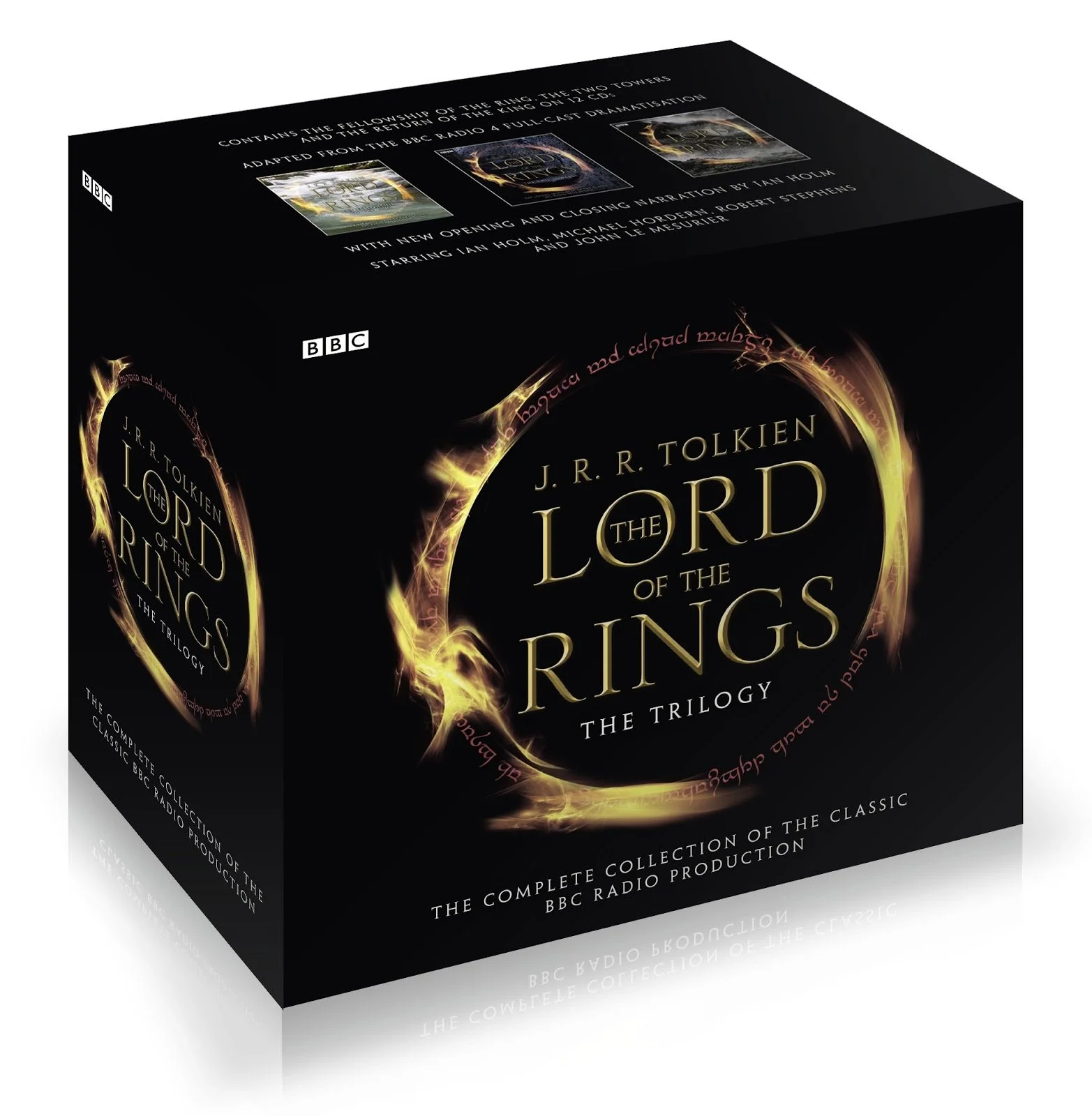
In 1981 BBC Radio 4 produced an ambitious adaptation of The Lord of the Rings, presenting Tolkien’s novel in twenty six, thirty minute episodes. As with all adaptations some material had to be removed, but overall the BBC production was not excessively abridged and followed the plot faithfully. The characterisations and dialogue were extremely well realised and music by composer Stephen Oliver was very much in the style and idiom of Tolkien. This was a production of the highest pedigree and a major event for the BBC at the time. The series was heavily promoted, receiving front page status in The Radio Times, the UK’s premier TV guide and bestselling magazine. Although initial reviews were varied, the series immediately gained a cult following with fans trading episodes recorded on cassette tape. Word of mouth and substantial listening figures soon lead to revised opinions from the press, along with the immortal slogan "Radio is Hobbit 4-ming".
In 1981 BBC Radio 4 produced an ambitious adaptation of The Lord of the Rings, presenting Tolkien’s novel in twenty six, thirty minute episodes. As with all adaptations some material had to be removed, but overall the BBC production was not excessively abridged and followed the plot faithfully. The characterisations and dialogue were extremely well realised and music by composer Stephen Oliver was very much in the style and idiom of Tolkien. This was a production of the highest pedigree and a major event for the BBC at the time. The series was heavily promoted, receiving front page status in The Radio Times, the UK’s premier TV guide and bestselling magazine. Although initial reviews were varied, the series immediately gained a cult following with fans trading episodes recorded on cassette tape. Word of mouth and substantial listening figures soon lead to revised opinions from the press, along with the immortal slogan "Radio is Hobbit 4-ming".
The trilogy was adapted for radio by the then novice writer Brian Sibley and veteran dramatist Michael Bakewell. It was directed by Jane Morgan and Penny Leicester, who were both experienced in radio dramas. The cast was made up of numerous fine British actors and voice artists such as Ian Holm as Frodo Baggins, John Le Mesurier as Bilbo Baggins and Sir Michael Horden as Gandalf. It also featured Robert Stephens as Aragorn and Peter Woodthorpe as Gollum. The adaptation excised a lot of the "excess fat" from the source text allowing the actors to concentrates on plot, character development and atmosphere. The attention to detail of this production was extremely high with Christopher Tolkien approving the scripts, leading to an authentic depiction of Middle Earth. Great care was taken with pronunciation of words and the delivery of dialogue spoken in Elvish and the Black Speech.
Upon its initial release each of the original twenty six episodes received two broadcasts per week, this remains standard practice for many BBC radio serials. After a successful first run the twenty six part series was subsequently edited into thirteen hour-long episodes, restoring some dialogue originally cut for timing, re-arranging some scenes for dramatic impact and adding linking narration and music cues. The re-edited version was released on both cassette tape and CD boxsets during the eighties and nineties and included bonus material such as the Stephen Oliver’s complete soundtrack for the series. It is this version of the BBC adaptation that has proven most popular and has been most commonly distributed and syndicated over the years.
In 2002 due to the commercial success of Peter Jackson's cinematic adaptations of The Lord of the Rings, the BBC re-issued a revised version of their 1981 series. This comprised of three CD sets corresponding to the three original book volumes (The Fellowship of the Ring, The Two Towers and The Return of the King). This version omitted the original episode divisions and included a new opening and closing narration recorded by Ian Holm. The re-edited version also included some additional music cues. However some fans felt that the re-arranging the material in this way actually spoilt the drama and the flow of the narrative. The original edit of the radio series was constructed so that the separate stories of Frodo and Sam ran in parallel to that of the rest of the Fellowship. It heightened the drama and afforded listeners a clearer understanding of the time line.
Tolkien's linear style proved to be a good fit for radio, with Sibley and Bakewell’s adaptation confidently staying true to the source text. Like Peter Jackson’s movies, some story elements have been cut, such as Tom Bombadil, along with the journey through the Old Forest and the Barrow Downs. However the Scouring of the Shire has been included, ensuring that Tolkien’s codicil is in place and therefore ending the tale correctly. One of the reasons this particular adaptation was so successful was due to the care and attention spent on the voice casting as well as the prudent use of music and song. Tolkien went to great pains to make both language and verse and integral part of Middle-earth and Sibley and Bakewell did not shy away from exploring this facet of the story. The BBC Radiophonic workshop also provided some pertinent sound effects and ambient sounds. As a result both the One Ring and the Nazgul have their own distinct audio characteristics.
Because the production elected to intercut the separate storylines to facilitate a more familiar style of narrative, there was a requirement to bridge a few expository gaps. Writers Brian Sibley and Michael Bakewell tackled this issue in an innovative fashion, adapting text from Tolkien’s later book Unfinished Tales which subsequently explained these literary grey areas. For example during the Nazgul’s quest for the One Ring, they visit Isengard and challenge Saruman over the whereabouts of The Shire. He advises them to pursue Gandalf. However as they follow Mithrandir’s trail they chance upon Grima Wormtongue, who is hurrying to Isengard with a message. It is he that gives up the location of the Shire upon threat of death. These narrative additions help with the flow of the story without breaking the lore.
This exceptional adaptation still remains accessible to both established Tolkien fans and those who have yet to read the trilogy. It is also a quintessential example of BBC Radio drama at its best. Although I enjoyed Peter Jackson’s movies upon their initial release, I feel that the BBC radio adaptation, despite being a different medium, is the better of the two. Peter Woodthorpe’s Gollum is a far more nuanced and sinister portrayal than Andy Serkis’s bi-polar performance. Also Jack May’s King Theoden is far more sympathetic and regal than Bernard Hill’s. Apart from reading the source text, this is the next best way to lose oneself in Tolkien’s classic story. It allows the listener to enjoy the outstanding vocal performances while conjuring up their own depictions of the characters in their mind’s eye. Where Peter Jackson’s movies are very much his interpretation of Middle-earth, the BBC radio adaptation of The Lord of the Rings is a far more faithful and nuanced dramatisation. Due to the medium of radio the strong story and characters are not overwhelmed or marginalised by spectacle.







Gaming Merchandise
While watching the official LOTROstream recently, I noted that there was still a lot of LOTRO related merchandise adorning staff desks at Turbine’s offices. I recollect in the past that mouse mats, mugs and other items use to be available for sale in the Warner Bros. store. There was an initial marketing campaign associated with the launch of the game in 2007 and another in 2010 when the game converted to F2P, both of which required a stock of merchandise for promotional reasons. Sadly a search of the Warner Bros. store has shown that no such material is available any longer. Furthermore considering where LOTRO is in its lifespan, there is not likely to be any further stock produced.
While watching the official LOTROstream recently, I noted that there was still a lot of LOTRO related merchandise adorning staff desks at Turbine’s offices. I recollect in the past that mouse mats, mugs and other items use to be available for sale in the Warner Bros. store. There was an initial marketing campaign associated with the launch of the game in 2007 and another in 2010 when the game converted to F2P, both of which required a stock of merchandise for promotional reasons. Sadly a search of the Warner Bros. store has shown that no such material is available any longer. Furthermore considering where LOTRO is in its lifespan, there is not likely to be any further stock produced.
Merchandise such as T-shirts, mugs, mouse mats and stickers are often used as marketing tools when a game launches or new content is released. Take for example the Charr Plush that was in great demand back in August 2012 when Guild Wars 2 was first commercially available. The stock of such items are often limited and not always maintained over games lifespan. Thus these items go from being available to all, to the province of a collector in a very short period of time. Perhaps there is often no commercially sustainable long term market for such products and the initial batch is produced at a loss for the sole purpose of promotion.
However this is not always the case. Guild Wars 2 at present enjoys a healthy range of products. Mass Effect has been and gone, yet the franchise has evolved a strong following among gamers, very much akin to cult Movies and TV shows. The EA store still has a substantial amount of merchandise for sale including some expensive products such as collector’s edition models, hoodys and jackets. Activision has a similar line of apparel for the Call of Duty franchise; although this is far more understandable consider the financial success of the IP and the target demographic. There is also a wealth of merchandise associated with popular titles from the mobile gaming market, although I think this is a core aspect of the business model, rather than an addition to it as with MMOs.
One of the more interesting examples of game related merchandise is FigurePrints bespoke miniature figure service. The company can make a 3D replica of your in-game avatar from World of Warcraft or a section of your own world from Minecraft. Considering the passion that is prevalent among the LOTRO community with its emphasis upon roleplay, it’s a shame that such a service has never been implemented by Turbine for LOTRO or DDO. Perhaps the complexities of the licensing arrangement have something to do with this. Dealing with third party intellectual properties always comes with its own unique set of problems
Building a Tactical DPS Guardian Cruiser – Advice Required
I recently acquired a Mirror Universe Guardian Cruiser for the princely sum of £4, thanks to the recent Pop Culture Hero Coalition charity auction. It would appear that this is a well-regarded vessel within Star Trek Online and worth experimenting with as my primary ship. So I have spent some time (and energy credits) of late, trying to put together an adequate Tactical DPS build. However I am not particularly knowledgeable in this aspect of STO and have so far not exceeded 9K DPS. Although I’m not seeking to join the ranks of the elite, I would at least like to achieve about 10K DPS plus. However researching a suitable loadout is proving somewhat frustrating. Most Reddit threads on the matter are pitched at too high a level for me and often use jargon I’m not familiar with.
I recently acquired a Mirror Universe Guardian Cruiser for the princely sum of £4, thanks to the recent Pop Culture Hero Coalition charity auction. It would appear that this is a well-regarded vessel within Star Trek Online and worth experimenting with as my primary ship. So I have spent some time (and energy credits) of late, trying to put together an adequate Tactical DPS build. However I am not particularly knowledgeable in this aspect of STO and have so far not exceeded 9K DPS. Although I’m not seeking to join the ranks of the elite, I would at least like to achieve about 10K DPS plus. However researching a suitable loadout is proving somewhat frustrating. Most Reddit threads on the matter are pitched at too high a level for me and often use jargon I’m not familiar with.
So I’ve decided to put this matter into the public domain and solicit ideas for possible builds. I do have some stipulations though with regard to advice and suggestions. I have only been playing STO regularly since April and am therefore not sitting on a stockpile of resources. So I am seeking potential builds that are based upon equipment, weapons and consoles that can be sourced via the exchange, reputation rewards or running specific episodes. If the costs start to exceed 50,000,000 Energy Credits or 500,000 refined Dilithium then I won’t consider it viable. Therefore I’m not seeking to spend precious resources on upgrading gear from Mk XII to Mk XIV or spending Lobi Crystals. Although I play STO fairly regularly I do not want to turn working towards a manageable target, into an arduous chore.
So far I have equipped the Mirror Universe Guardian Cruiser with the following items. Please note that the choice was mainly driven by set bonuses and overall cost. I am happy to replace items if given a cogent reason:
Fore Weapons: 4 x Tetryon Beam Array Mk XIII (varying modifiers).
Aft Weapons: Kinetic Cutting Beam + see below.
Temporal Disentanglement Suite: Antichroniton Infused Tetryon Energy Weapon, Temporal Phase Overcharged Core, Temporal Disentanglement Console.
Sol Defence Set: Deflector, Impulse, Shield.
Universal Consoles: Sustained Radiant Field, Particle Conversion Matrix.
Tactical Console: 2 x Tetryon Pulse Generator Mk XII.
None of the above items have been upgraded and are therefore have base statistics.
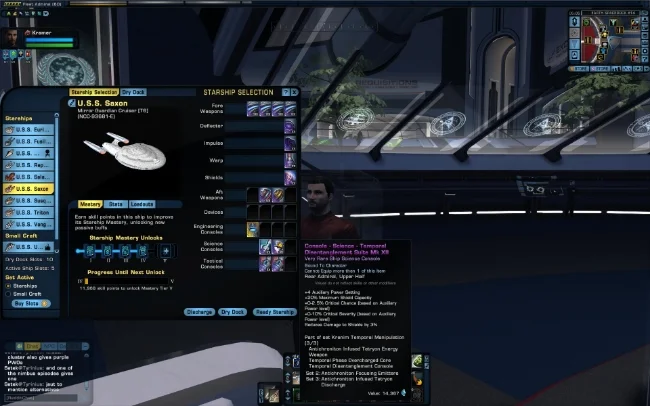
At present I have spent my skills point on a fairly generic tactical build I found on a Reddit thread. My choice of Starship traits are also fairly standard. I can publish the specific details if required but I am mainly hoping that someone can simply suggest a “shopping list” of items that I can then acquire and test. As I stated earlier I am not looking for an über build but merely the ability to be able to output 10K DPS or thereabouts. In principle that doesn’t sound like a big ask but you can never really tell when it comes to the esoteric art of Min-maxing.
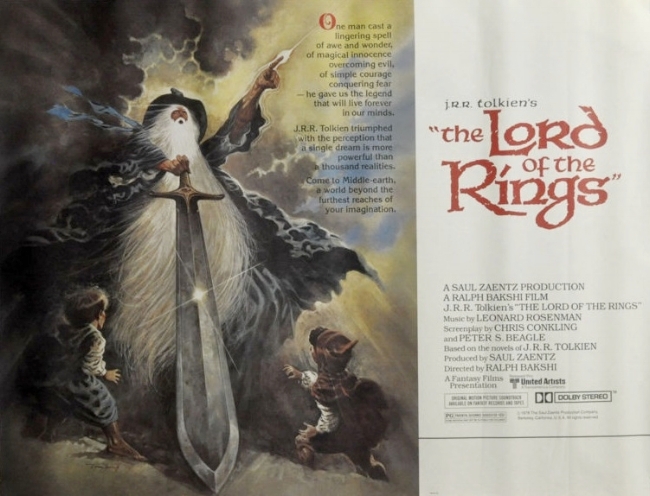
The Lord of the Rings - The John Boorman Adaptation
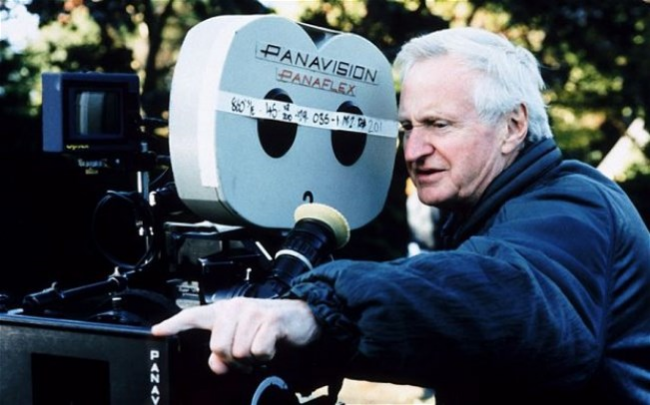
n 1969 JRR Tolkien finally sold the film and merchandising rights of The Lord of the Rings to United Artists for approximately £104,000. A year later the studio asked director John Boorman if he could make the books into a viable film. Boorman, an established director with a track record of being experimental, set about developing a screenplay with his long term collaborator, Rospo Pallenberg. What emerged was a one hundred and fifty minute script and possibly the most radical adaptation of Tolkien's work. Some of the ideas and concepts it contained were extremely innovative but others where simply too radical a divergence from the source text. I’ve collated a few of these for your consideration. If you are familiar with Boorman's 1973 film Zardoz, then you will note both similarities and re-occurring themes.
In 1969 JRR Tolkien finally sold the film and merchandising rights of The Lord of the Rings to United Artists for approximately £104,000. A year later the studio asked director John Boorman if he could make the books into a viable film. Boorman, an established director with a track record of being experimental, set about developing a screenplay with his long term collaborator, Rospo Pallenberg. What emerged was a one hundred and fifty minute script and possibly the most radical adaptation of Tolkien's work. Some of the ideas and concepts it contained were extremely innovative but others where simply too much of a divergence from the source text. I’ve collated a few of these for your consideration. If you are familiar with Boorman's 1973 film Zardoz, then you will note both similarities and re-occurring themes.
1.) After the destruction of the Ringwraiths at the Fords of Bruinen, Frodo is carried into the sparkling palace of Rivendell, where in a vast amphitheatre full of chanting Elves he is laid naked on a crystal table and covered with green leaves. A thirteen-year-old Arwen surgically removes the Morgul-blade fragment from his shoulder with a red-hot knife under the threatening axe of Gimli, while Gandalf dares Boromir to try to take the Ring.
2.) The narrative of "The Council of Elrond" was to be visually interpreted as a fantastic medieval masque representing the history of the Rings. It was to combine elements of Kabuki theatre, rock opera, and circus performance.
3.) At the gates of Moria, the fellowship bury Gimli in a hole, throw a cape on him and beat him to a state of utter exhaustion to retrieve his unconscious ancestral memory. This ancient knowledge allows Gimli to recollect the word for entering Moria and gain insights about the ancient dwarf kingdom.
4.) Also in the Moria sequence, the orcs are slumbering or in some kind suspended animation. The fellowship runs over them and the rhythm of their footsteps start up their hearts.
5.) There was a proposed wizard’s duel between Gandalf and Saruman. This was inspired by an African idea of how magicians duel with words. The script reads:
Gandalf: Saruman, I am the snake about to strike!
Saruman: I am the staff that crushes the snake!
Gandalf: I am the fire that burns the staff to ashes!
Saruman: I am the cloudburst that quenches the fire!
Gandalf: I am the well that traps the waters!
6.) Perhaps the most provocative changes occur by introducing a sexual element. Not necessarily in a exploitative way but more of a metaphor exploring the nature of power. For example, before gazing into Galadriel's mirror, Frodo must have sex with her. Aragon's battlefield healing of Eowyn becomes a sexual analogy of the healing power of the king.
Needless to say, executives at United Artist failed to understand Boorman's script. The project was shelved indefinitely. When Ralph Bakshi approached the studio in 1976 with a proposal of adapting Tolkien's work in to an animated film, the script had to be purchased to acquire full artistic control. Boorman allegedly received $3,000,000 for his script. When Boorman later made his big screen adaptation of the Arthurian legend Excalibur in 1981, many parallels where drawn with The Lord of the Rings. It has often been suggested that several ideas from his the unused Tolkien screenplay made it in to that movie.
Star Wars Battlefront
A reoccurring theme in both my writing and podcasting at present is how age changes one’s personal perspective. This is something that particularly manifests itself with regard to gaming. A decade ago I would have been extremely enthusiastic about a title such as Star Wars Battlefront. I would have pre-ordered the most lavish version available, then waxed lyrical about the beta test and thrown myself wholeheartedly in to the game upon its release. Despite the fact that I’m notoriously poor at the FPS genre, I would have sunk hours in to such a game and done my up most to convince myself and others that I’d had a good time.
A reoccurring theme in both my writing and podcasting at present is how age changes one’s personal perspective. This is something that particularly manifests itself with regard to gaming. A decade ago I would have been extremely enthusiastic about a title such as Star Wars Battlefront. I would have pre-ordered the most lavish version available, then waxed lyrical about the beta test and thrown myself wholeheartedly in to the game upon its release. Despite the fact that I’m notoriously poor at the FPS genre, I would have sunk hours in to such a game and done my up most to convince myself and others that I’d had a good time.
Middle age has fortunately brought a keener insight in to the nature of marketing and as well as my own Pavlovian nature. Battlefront is simply another iteration of the Battlefield franchise from DICE with a veneer of Star wars added. It may well be very polished and a succinct distillation of everything that makes classic Star Wars enjoyable but once the initial euphoria has worn off, the player is left with a just another FPS game. Having read multiple reviews and watched numerous streams, it would seem that the game itself is actually lacking some of the usual progression mechanics found in this genre.
However for me the main issue that has kept me from considering purchasing Star Wars Battlefront is the egregious pricing model that EA has chosen to implement. Although I have come to terms with the concept of DLC and the ubiquitous season pass, I feel in this instance that EA have simply crossed a line with regard to an equitable division of the games content. Where a company such as DC Projekt Red seem to have found the right balance between launch content and future material, EA appear to have simply hobbled their base product at the expense of monetising the games long term life cycle. If I want access to all content in Star Wars Battlefront, both present and future, I have to spend £95.
I am a firm believer in the cost to fun ratio. I therefore if at a future date, I can secure Star Wars Battlefront at a discount price, I will overlook its alleged shortcomings and will more than likely have fun playing through the game. At present the price is prohibitive and frankly illogical. It is not a question of whether I can afford the cost, because I can. I simply do not believe the game justifies such a price tag. So for the present I will not be buying Star Wars Battlefront and because I no longer feel compelled to be an early adopter or be part of the “in crowd”, I am content to go without.
The Burton & Scrooge Guide to Podcasting
This is a somewhat self-indulgent post. I like to listen to podcasts as well as produce them myself. I have very particular tastes, not so much in respect of content but more with regard to presentation, style and quality of production. As a result I aspire to make the Burton & Scrooge podcast in a certain fashion and to a specific standard. But as everyone has their own personal tastes I fully understand that other podcasters may wish to do things differently. Hence this article is not being held up as a de facto guide. It is simply me sharing my process.
This is a somewhat self-indulgent post. I like to listen to podcasts as well as produce them myself. I have very particular tastes, not so much in respect of content but more with regard to presentation, style and quality of production. As a result I aspire to make the Burton & Scrooge podcast in a certain fashion and to a specific standard. But as everyone has their own personal tastes I fully understand that other podcasters may wish to do things differently. Hence this article is not being held up as a de facto guide. It is simply me sharing my process.
Format and structure versus informal chatting:
I listen to a lot of talk radio. It may be a sign of my age but I am beginning to prefer it to TV, especially with regard to news. Without visual input clouding the issue, you get to focus on the language. As a result, this very much shapes my view on podcasting. I like shows with a clear structure, a measured running time and the editorial strength to stay on topic. So I am a great advocate of planning, drafting show notes and discussing with my co-host Brian or any guests well in advance of recording. This does not mean that the entire show is mapped out in advance but it does allow points and counterpoints to be raised in an orderly fashion. It also allows the participants to marshal their thoughts. A good discussion is after all a logical process. A structured plan means that people know exactly what is being discussed and can craft an appropriate response. You can address the question that is being asked, rather than what you think is being asked, remain focused and not get side-tracked or derailed.
A planned approach also means that equal time can be given to all involved in the podcast. Balance is required because some people by the strength of their personality can sometimes dominate a conversation. That doesn't always make for good listening. However do not over do the planning or you can kill the natural conversational aspect of the show. Riffing off each other can be good and make a show more accessible. Informal chatting can make those speaking more "likeable" for want of another phrase. Although podcasting isn't a popularity competition your listeners do needs to be able to relate to you. So don't be too much of an asshole. If this is your "schtick, then you may find that you paint yourself in to a corner.
Do your research:
It's a simple point but it can elude us all at times. If you are going to reference anything in your show, make sure you have the relevant details in front of you when you discuss it. Never try to bluff or pull unsubstantiated facts out of your butt. If you have an opinion, then ensure you can back it up with some facts. Because if you don't there is no end to the armchair experts who will leave lengthy comments pointing out that you are wrong and that you should be burnt as a witch. Another thing worth remembering is to practise in advance any names or words that have unusual pronunciation. Write them down phonetically if need be. Gamers often have complex and esoteric handles. If someone has taken the trouble to write in or has done something worthy of discussion, then the least you can do is get their damn name right.
Using the right hardware in the right environment:
Let us be candid with regard to the technical quality of your podcast; there really is no excuse to producing a show that sounds shit these days. The tools of the trade use to be very expensive and only available to those who worked in the industry. This is no longer the case. With a decent quality gaming headset or desktop microphone, used in conjunction with Skype, Google Hangouts or Audacity, you can produce a show of an acceptable audio quality. Take some time to do some basic tests to ensure optimal sound performance. Don't just assume that whatever software you use to record is working. Double check it. Podcasting also requires the participants to focus and concentrate, so it's best to record in an environment free from distractions and ambient background noise. So turn your phone off or put in on silence. Don't have to TV running in the background. Make family, friends and anyone else you share a space with aware of the fact that you are recording so they don't disturb you. If you have a wireless headset, don't take a "comfort break" in the middle of the recording. It really isn't a pleasant thing to have to listen to. Take some time to have a warm up chat first, before recording or going live.
Editing:
Lots of people like to record their shows live. They then simply upload what has been recorded. This is perfectly fine approach that suits some shows style. I personally like order, structure and streamlined discussions. So I edit the shit out of the Burton & Scrooge podcast (despite trying to make things simpler so I don't have to). Brian and I often record twice as much material than what is actually used. I like to remove all the "ums" and such like from the final edit. I also like clear endings to discussions and neat segues in to the following piece where necessary. All of which requires rather intensive editing. Now the thing is editing is hard work and very time consuming. It is an activity that can sometimes curbs my enthusiasm for podcasting. Yet it can greatly improve the quality a show. It is wise to remove a joke that may not be understood, or cut a digression that takes the discussion off track. Imposing a running time upon the proceedings also forces you as an editor to keep only the most relevant material in the show. If for technical reasons, a part of a show is sub-standard, then lose it. This means making some tough calls sometimes.
Have fun and enjoy yourself:
Don’t forget to have fun while podcasting. If you are locked in to a regular schedule of recording, then the entire process of podcasting can become a bit of a chore. If you are not in the right frame of mind when recording this can become apparent to the listener. So don't half ass things. There is nothing wrong with taking a break or doing a shorter show. Ranting occasionally can be fun and even cathartic. But don't overdo it or you will simply lose credibility with your audience. If you are fortunate to produce a show that becomes popular, don't lose your sense of proportion. Don't get delusions of grandeur just because you do a show that a few people listen to.
Podcasting is great fun and an excellent opportunity to discuss, debate and hangout with likeminded people. It also offers a chance of a discourse that is not filtered by corporate interests or any other financially driven criteria. You can learn a lot by just listening to regular people chatting about the things they enjoy and feel passionately about. There are lot of different ways to podcast and my way may not be right or appropriate for everyone. However I think that my approach may prove suitable to some aspiring podcasters. As ever feel free to comment and share your thoughts. I'm always interested to hear the experiences of my fellow podcasters.
How to Explain Your Passion for Gaming to a Non-Gamer
Gaming is a pastime that is still viewed with scepticism by many people and gamers per se still endure a lot of bad press from those who like to perpetuate lazy stereotypes. If you are a well-adjusted gamer who enjoys gainful employment and a healthy social life, you may find yourself at some point having to explain your passion. Furthermore it could be to people who find your hobby utterly alien. Like most things in life there is no easy solution and there are numerous approaches to tackling such a line of enquiry.
Gaming is a pastime that is still viewed with scepticism by many people and gamers per se still endure a lot of bad press from those who like to perpetuate lazy stereotypes. If you are a well-adjusted gamer who enjoys gainful employment and a healthy social life, you may find yourself at some point having to explain your passion. Furthermore it could be to people who find your hobby utterly alien. Like most things in life there is no easy solution and there are numerous approaches to tackling such a line of enquiry.
The most logical starting point may be to give any curious third party a verbal overview on the merits of gaming; to attempt to convey the very things that you find engaging about gaming. However fans often cannot see the woods for the trees, so there’s a good chance that this approach could result in a lengthy diatribe, which fails in its good intentions and leaves one of the two individuals involved with their eyes glazed over. Can you guess which one?
Another approach may be to try and introduce this fictitious friend who is curious about gaming to some of the professional games coverage that is provided by the wider press. Mind you, this also comes with its own set of problems, as some of it can be very esoteric and niche market. It may only further bewilder and confuse, rather than illuminate. Plus the games media itself can at times be extremely blinkered and unwelcoming.
Overall I think the best way is to show the benefits of gaming. By that I don’t mean just demonstrate one of your favourite titles but how you personally experience it. Highlight the positive aspects of gaming that are common to other hobbies and pastimes, such as the social interactions and the friendships. A great example is the associated blogging community that stems from gaming. Many other hobbies have similar support networks and social portals. Perhaps the most obvious parallel that can be invoked is that of sports fandom. Demonstrating the common ground between the two may well prove beneficial.
The key is to break the stereotype of the gamer being an antisocial person indulging in something that has negative connotations. This is where the growth in casual gaming can work as a stepping stone between those who habitually game and those who do not. I’m not saying that the above is a comprehensive guide. As ever with human interaction, you need to adjust your pitch according to the situation. Yet if each of us manages to change at least ones persons mind about gaming, perhaps we can finally dispel some of the myths that still linger.
The Man from U.N.C.L.E. (2015)
Taking a popular franchise that is familiar to fortysomethings and remaking it for modern audiences is a difficult proposition and a calculated risk. More often than not such undertakings fail. Consider The Wild Wild West, The Avengers (no not that one, the other) and more recently The Lone Ranger. The problem lies in trying to make a film that can please all audiences. Often the finished product is too different from original material to appeal to the “get off my lawn” brigade. Younger viewers often have no connection to the franchise or knowledge of the era it came from. This results in the film failing to find a market and leads to box office failure. However it doesn’t necessarily indicate that the movie is poor per se.
Taking a popular franchise that is familiar to fortysomethings and remaking it for modern audiences is a difficult proposition and a calculated risk. More often than not such undertakings fail. Consider The Wild Wild West, The Avengers (no not that one, the other) and more recently The Lone Ranger. The problem lies in trying to make a film that can please all audiences. Often the finished product is too different from original material to appeal to the “get off my lawn” brigade. Younger viewers often have no connection to the franchise or knowledge of the era it came from. This results in the film failing to find a market and leads to box office failure. However it doesn’t necessarily indicate that the movie is poor per se.
The Man from U.N.C.L.E. is a text book example of this phenomenon, which is a shame. Guy Ritchie’s action comedy is far from a bad film. It’s stylish, sporting a wonderful stylised 60s production design and also has an amusing script. There are numerous homages and clever references to the spy genre, specifically those from the sixties. There’s more than a touch of Bond to the action scenes, international locations and some of the characters personal traits. The movies also boast a splendid cross section of international popular music from the period. The cast are also rather engaging. I was quite surprised by the lead performances from both Henry Cavill and Armie Hammer. I actually came away from watching The Man from U.N.C.L.E. quite entertained.
Yet I can totally understand why this movie was not commercially successful. For anyone unfamiliar with the original sixties TV show, this remake is just another comedy spy drama set in a period of history that is now just a chapter in a history book. An equivalent movie in a similar idiom such as Spy has the advantage of a contemporary setting and a broader rating. It is far more accessible and has no barriers to entry. Older viewers are similarly perplexed by The Man from U.N.C.L.E. as it is not an identical copy of what they are familiar with. The cast may not be known to them and the postmodern sensibilities of this film can be a major stumbling block. Nostalgia is sometimes a millstone.
Yet despite the odds being stacked against them, film studios still seem to back remakes of classic TV shows and movies. The allure of creating a franchise is strong and there are a handful of successful examples, such as the Mission Impossible movies, that appear to justify the risks involved. Therefore the recycling of “classic” content from the past five decades of TV and cinema is likely to continue. I have no doubt that the levels of success and failure will also remain the same.