
LOTRO: Community Nostalgia
Next Thursday LOTRO officially starts its 11th anniversary celebrations. It’s an opportunity for “fun and larks” with a wealth of special in-game events to play or grind through, depending on your perspective. Standing Stones Games will no doubt espouse the MMOs achievements and if we’re lucky they may even elaborate further upon the games long term road map. However, anniversaries are also a time for reflection and I would like to take some time to explore several wider aspects of LOTRO and its community that are no longer with us. A lot has happened in eleven years and things are naturally not the same. Change is inevitable and not always bad, but some of the things that have gone from the LOTRO-verse are sorely missed. Others may be not so, but I would still argue that their presence at the time were born of an engaged and motivate playerbase.
Next Thursday LOTRO officially starts its 11th anniversary celebrations. It’s an opportunity for “fun and larks” with a wealth of special in-game events to play or grind through, depending on your perspective. Standing Stones Games will no doubt espouse the MMOs achievements and if we’re lucky they may even elaborate further upon the games long term road map. However, anniversaries are also a time for reflection and I would like to take some time to explore several wider aspects of LOTRO and its community that are no longer with us. A lot has happened in eleven years and things are naturally not the same. Change is inevitable and not always bad, but some of the things that have gone from the LOTRO-verse are sorely missed. Others may be not so, but I would still argue that their presence at the time were born of an engaged and motivate playerbase.
First off, let us start with what was “the definitive” LOTRO podcast and fansite. A Casual Stroll to Mordor was in many was a microcosm of the LOTRO community. It was consistently well written, informative and above all welcoming. It transcended its initial remit to inform and entertain and became a focal point in the games community and an invaluable resource. The husband and wife hosts, Goldenstar and Merric were the antithesis of elite MMO gamers and their down to earth style and enthusiasm made their content extremely accessible. They were also great ambassadors for the game yet even at the height of their success and popularity, there was never a whiff of ego or smugness about them. Furthermore, they used their popularity to help others who wanted to blog or podcast about LOTRO. A Casual Stroll to Mordor was always happy to cross promote and get people involved.
Yet time and tide wait for no man and after four industrious years, Merric and Goldenstar decided to wind things down. Producing content and maintaining standards is hard work and takes its toll, so it was inevitable that both the website and podcast would come to an end sooner or later. Perhaps the biggest losers at the time were then developers Turbine, who relied heavily on both the podcast and blog to disseminate news and promote the game. It was often commented upon within the LOTRO community at the time that A Casual Stroll to Mordor did a better job than Turbines own marketing and promotion teams. I personally consider A Casual Stroll to Mordor to be a text book example of how to do fan generated content right. There are still good sites and contributor out there that are doing a commendable job in supporting LOTRO, but Merric and Goldenstar were part of a perfect storm of factors that mean that they got it 100% right.
The next facet of the LOTRO community that has waned and that I wish to reference, is far less benign one. At the time is was a somewhat problematic “thing” and caused a great deal of consternation within the LOTRO community and for Turbine. Namely, the rivalry and culture war between the Official LOTRO Forums and the LOTROCommunity AKA The Unofficial LOTRO Forums. Initially the unofficial forums were a means to replace the Codemaster forums, after the merging of the US and EU LOTRO servers. Yet the free to play transition, along with the service consolidation were proceeded by difficult times for LOTRO. The game began to move further in to territory that not all players liked, and it is fair to say that Turbine struggled to manage it community relations at the time. Moderation on the official forums was heavy handed and the unofficial forums quickly provided and alternative platform for discussing and critiquing the state of the game.
Eventually this divide descended into a longstanding flame war between both camps and there developed a very polarised “them and us” mentality in certain quarters of the LOTRO community. There were also a small minority of people who used this situation to indulge their desire to troll and hence there was a lot of mud slinging which to this day, some folk still harbour a grudge over. However, despite the bad aspects of this situation, the alternative forums did provide some well researched and articulated commentary at a time when the game needed it. There was a passion there born of a love of a game that to some had lost its direction. Furthermore, some of the unofficial forum members went on to serve on the player council because irrespective of their views. But again, the ebb and flow of time and one’s passions has seen the unofficial forums fall into decline. Some still post there but its intermittent and no longer especially relevant.
Finally, as its been referenced, let us take some time to reflect upon the LOTRO player council. I make no bones about the fact that I thought it was a bad idea at them time and therefore wasn’t surprised by how it subsequently proved to be a bumpy ride both for those who participated and for Turbine yet again. The problem stemmed from false expectations regarding what the player council was able to do. The problem was then compounded by Turbine being vague and then later inconsistent about what they were after. Ultimately, they wanted free market research, where the community and some of those on the council thought they were providing representation and lobbying. And all of this happened during a time when the LOTRO culture wars were still raging. Overall although some members felt that they had contributed towards the MMOs development, I’m not aware of any significant influence or change that the council facilitated.
After eleven years LOTRO is still ticking over and retains a stoic and loyal fan base. There are still blogs and podcasts about the MMO and it maintains a hardcore group of Twitch streamers. The community is still welcoming and engaged but it runs in a noticeably lower gear. Although there are still disputes on the main forums there is nowhere near the level of zealotry within its community divides. LOTRO is far more sedate and civil these days. But in a curious way I miss all of the above that is now absent from the LOTRO-verse. Even the council which was a misplaced experiment belied an active and strongly motivated community. If LOTRO manages to sustain itself for another five years, I wonder what people will look back and reflect upon from this period in the games lifecycle?
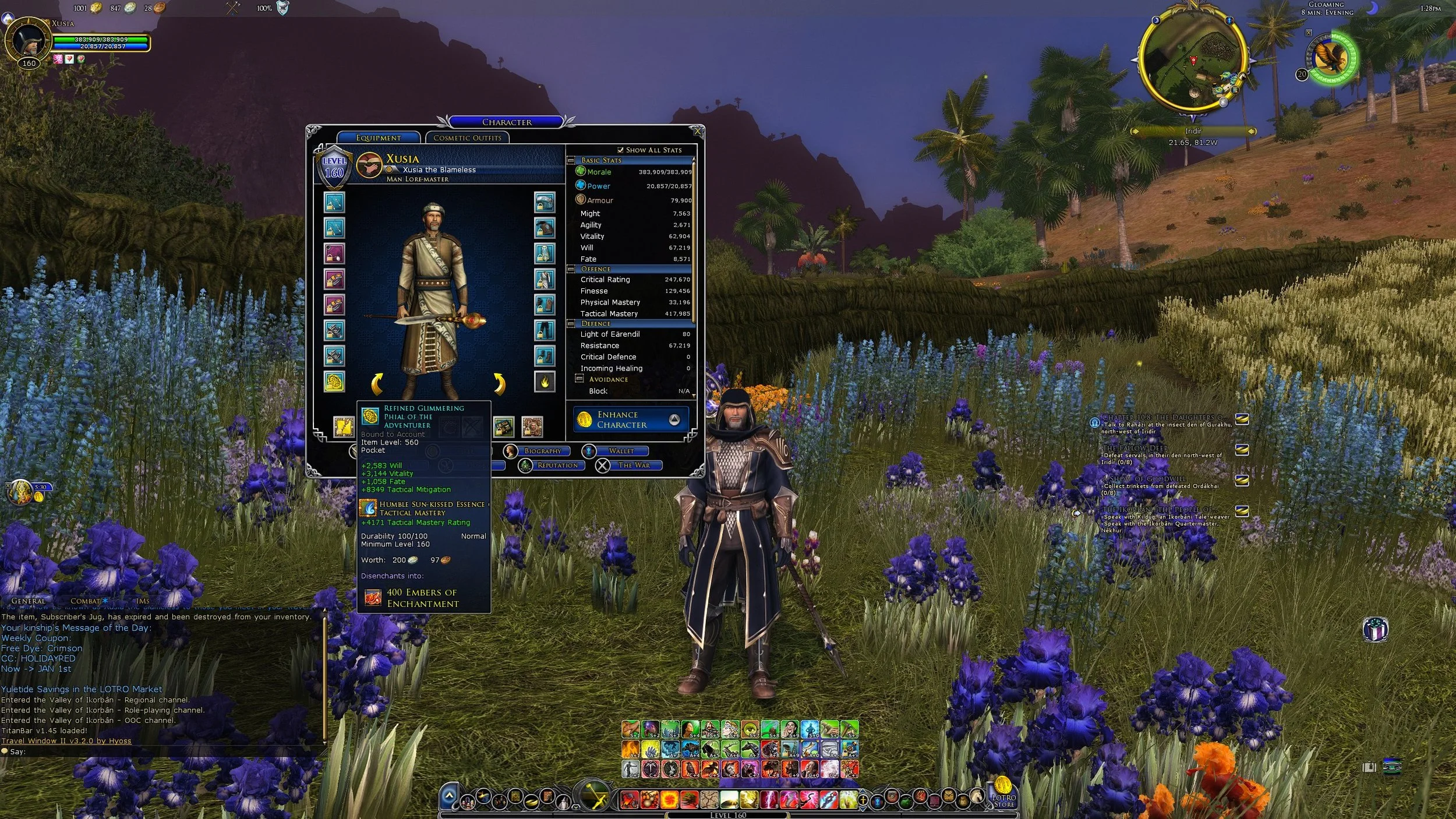
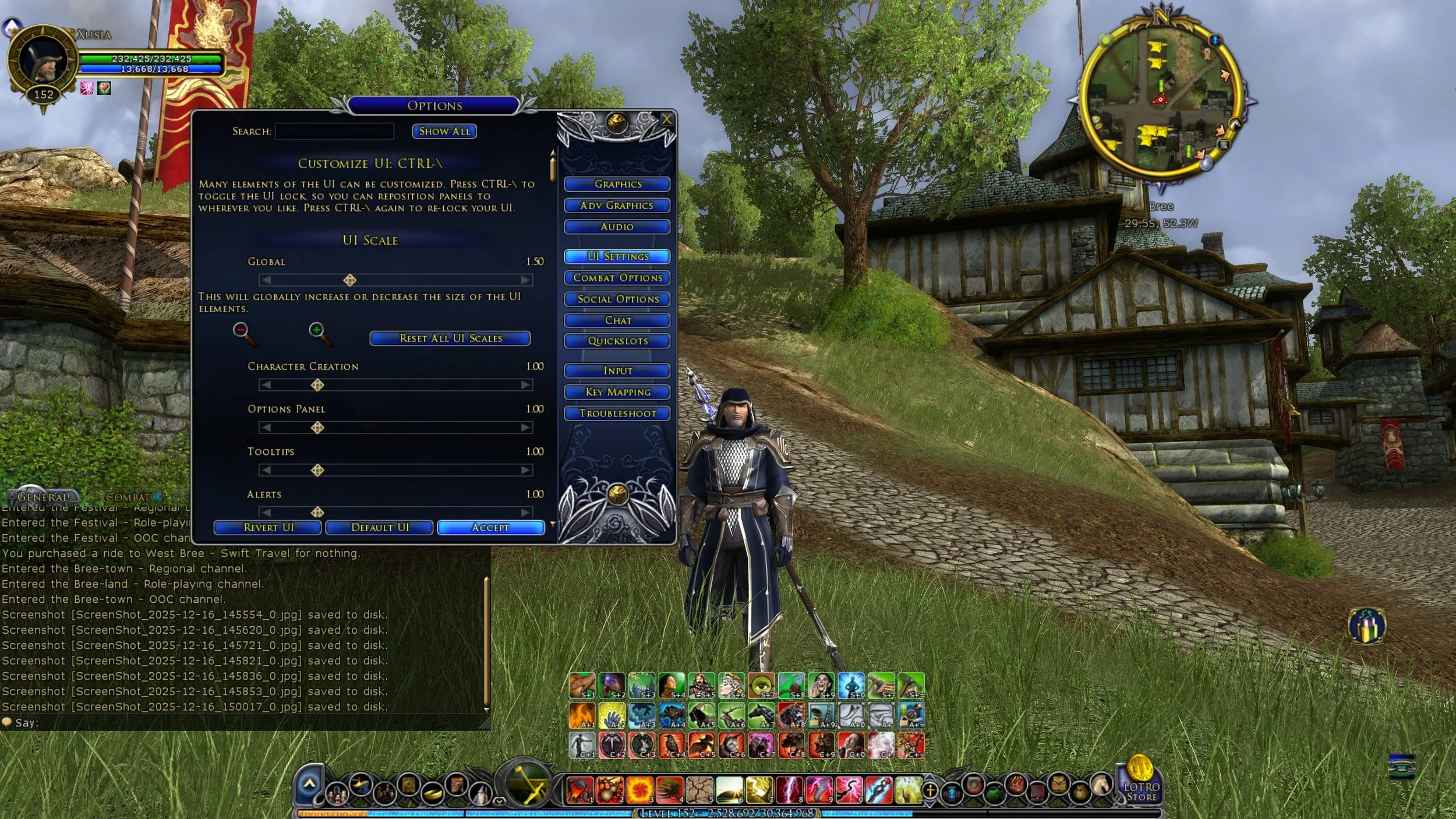



The Deliberately Capricious Nature of the Random Number Generator
Although I enjoy Hand of Fate 2, due to the nature of the game’s underlying narrative, you frequently have to pick a card, roll a dice or select yet another card from a spinning wheel, to determine an outcome to an event or an encounter. Hence the game relies heavily on the use of a random number generator mechanic. Sometimes, depending of the speed of the card-based activities you can visually track the one you need to pick. However there reaches a point when you can’t do this. There are either too many cards to keep an eye on or the spinning wheel is simply going to fast. Then it becomes a matter of random chance. And if the odds are unfavourable a matter of repetition. And then frustration. And then a potential abandonment of the game.
Although I enjoy Hand of Fate 2, due to the nature of the game’s underlying narrative, you frequently have to pick a card, roll a dice or select yet another card from a spinning wheel, to determine an outcome to an event or an encounter. Hence the game relies heavily on the use of a random number generator mechanic. Sometimes, depending of the speed of the card-based activities you can visually track the one you need to pick. However there reaches a point when you can’t do this. There are either too many cards to keep an eye on or the spinning wheel is simply going to fast. Then it becomes a matter of random chance. And if the odds are unfavourable a matter of repetition. And then frustration. And then a potential abandonment of the game.
Random number generators are utilised in many genres of games. From MMOs to MOBAs, Action RPGs and FPS. When they favour the player they’re a delight. When you find yourself on the wrong side of the curve, they’re intolerably unfair and can ruin your gaming experience. Furthermore, they’re frequently not true random number generators because computers are notoriously bad at producing truly random outcomes as this quote from Steve Ward, a Professor of Computer Science and Engineering at MIT, explains. “One thing that traditional computer systems aren’t good at is coin flipping. They’re deterministic, which means that if you ask the same question you’ll get the same answer every time. On a completely deterministic machine you can’t generate anything you could really call a random sequence of numbers because the machine is following the same algorithm to generate them. Typically, that means it starts with a common ‘seed’ number and then follows a pattern. They are what we call pseudo-random numbers".
This presents two problems. The first is simply a PR and marketing problem. A pseudo-random number generator is unfair because it is not what it claims to be. Getting screwed over by a true random number generator is far from a fun experience but it is nobody’s fault. Getting stuffed by a crappy outcome via a pseudo-random number generator is not a blameless and unattributable event. It’s ultimately is down to the developer and they will subsequently get the flak from disgruntled gamers as a result. The second issue is that pseudo-random number generators will follow a pattern. It may well be complex, but a pattern can be determined. Hence there is the risk of manipulation and abuse. Certainly, with regard to single player games, a simple google search will produce links to “trainers” and other cheat file that will circumnavigate the random number generator of your game of choice.
The random number generator as a game mechanic is very convenient from the developer’s perspective. They create the illusion of chance which we see in some real-world decisions, which then adds to the game’s immersion. They also bring a degree of longevity to the proceedings by introducing a fail state. Now for those who consider “competition” to be the foundation of gaming, fail states are not necessarily a bad thing. However, failing due to lack of skill or knowledge can both be addressed. Failure due to random chance is something that has to be endured and is a far more egregious barrier to success. However, the random number generator can make other contributions to a game, other than determining outcomes that give rewards. Unit stats, map generation, mob generation can be handled in such a fashion and frequently are without any major controversy.
If you wish to be pedantic, you can cogently argue about the random nature of much of the real world. However, on a more superficial level (which is also the level that most of daily life is conducted), we like to conduct our daily business here in western civilisation within the confines of a relatively organised and contained society. When I go to the supermarket, I assume that as it’s in the business of selling groceries, that it’s shelves will be adequately stocked. As humans we try our best to manage the daily variable of our lives using knowledge and experience. For example, if I needed to build a foot bridge over a small stream, I would research the best way to do this using mathematics and science, and then undertake the task using appropriate materials. I may fail but if I’ve followed a tried and tested process, the chance of that happening is quite low. In gaming we have no data on the variables and thus cannot manage them. Random chance in this instance is therefore far more of a factor, less realistic and inherently unfair.
Regardless of whether you seen gaming as a competitive undertaking, a broader leisure activity, or as a quid pro quo paid service, the ham-fisted use of a random number generator can be a thorn in the gamers flesh. Is there an alternative? I’m sure there is although I am not sufficiently versed in game theory or development to definitively tell you what it is. But I can say with confidence what I don’t like and being hamstrung by random chance at crucial points in a game’s progression is a prime example of this. It’s not a question of “bad luck”, as luck in this context is being bastardised by the application of anthropomorphism. What gamers need to understand is that the random number generator by default predominantly produces negative outcomes because that is its job. It does this not with malice of forethought but purely by design. Furthermore, it’s ubiquity is due to its expediency and cost. What developers need to do is realise that as a mechanic it really doesn’t have any long-term benefits. Try harder, please.
Social Gaming Without the Gaming
Earlier this evening, I logged into my Discord server as I do each week, to catch up with some internet friends while playing The Elder Scrolls Online. For some technical reason, the game was unavailable, so we chatted among ourselves while pursuing other activities. I don’t think any of us actually played another game while we talked. However, despite the absence of any MMO related entertainment, we managed to keep ourselves amused for three hours. For me this anecdote highlights a point I’ve made many times in the past, that games do not create social interaction but merely facilitate it. Furthermore, the social element of the MMO genre is often misunderstood, misrepresented and over sold. Much of the enjoyment that we get from the social aspect gaming is from our interactions with friends. However, this is not solely dependent on the game which is ultimately nothing more than a conduit.
Earlier this evening, I logged into my Discord server as I do each week, to catch up with some internet friends while playing The Elder Scrolls Online. For some technical reason, the game was unavailable, so we chatted among ourselves while pursuing other activities. I don’t think any of us actually played another game while we talked. However, despite the absence of any MMO related entertainment, we managed to keep ourselves amused for three hours. For me this anecdote highlights a point I’ve made many times in the past, that games do not create social interaction but merely facilitate it. Furthermore, the social element of the MMO genre is often misunderstood, misrepresented and over sold. Much of the enjoyment that we get from the social aspect gaming is from our interactions with friends. However, this is not solely dependent on the game which is ultimately nothing more than a conduit.
How often have you done any of the following? Logged into a game not because you have a pressing need to run a dungeon but because you simply wanted to hang out with like minded people and have a chat. Used your guild mates as a form of group therapy because you just got dumped, didn’t get that promotion or have just had a bad day. Decided to just ride around the virtual world for a while and talk shit with friends, rather than go do the dishes or some other chore you don’t feel disposed towards doing. I suspect a lot of people will have done one or more of these? I know I have. Sometimes the most appealing aspect of social gaming is access to people. The world has changed a lot in my lifetime and the close knit social communities I knew in the seventies are not necessarily there for a lot of folks these days. You don’t always know your neighbours or remain friends for life with the people you went to school with these days. MMOs offer an alternative to this in so far as an opportunity to strike up friendships if you so desire.
Gaming can be greatly enhanced by social interaction, especially when it is with friends. I often think that developers lose sight of this subtle distinction. Too often they confuse random grouping in co-op gaming with the social dynamic you find in close-knit guilds and erroneously think it will yield the same results. It does not. I have had some good experiences with random grouping, but they have been few and far between. Too often they are a necessary evil that you have to endure to achieve your goal. On the other hand, gaming with my peers, who I know and respect, has provided some of the most enjoyable experiences I’ve had in recent years. I still regularly talk to people I’ve known via guilds and kinships irrespective of whether we actually play MMOs together. Some of these friendships are over a decade old and have out lived some of the MMOs that spawned them.
The Tedium of April Fool's Day
Many of the traditions that we maintain as a society, started off with honest intentions. Such things as public holidays, religious observance or the simple celebration of a particular group or ideal are prime examples. Inevitably the meaning of these traditions becomes diluted over time and they more often than not become exercises in marketing or tedious institutions perpetuated by those with a specific agenda. For me April Fool's Day is the embodiment of this concept. An exquisitely unfunny ritual that is inflicted upon us by those who don't realise (or care) that the activity is totally arbitrary. I hate the concept of organised fun. And that it’s something to be martialled and stage managed by self-appointed arbiters. Furthermore, I despise the accompanying mindset that if you somehow don't enjoy yourself, or wish to participate in the ensuing charade, you are somehow lacking or a "killjoy". Both concepts are flawed and morally oppressive. For me fun is something that occurs organically, and its dynamic nature eschews control and shepherding. It should not be at someone else’s expense either.
Many of the traditions that we maintain as a society, started off with honest intentions. Such things as public holidays, religious observance or the simple celebration of a particular group or ideal are prime examples. Inevitably the meaning of these traditions becomes diluted over time and they more often than not become exercises in marketing or tedious institutions perpetuated by those with a specific agenda. For me April Fool's Day is the embodiment of this concept. An exquisitely unfunny ritual that is inflicted upon us by those who don't realise (or care) that the activity is totally arbitrary. I hate the concept of organised fun. And that it’s something to be martialled and stage managed by self-appointed arbiters. Furthermore, I despise the accompanying mindset that if you somehow don't enjoy yourself, or wish to participate in the ensuing charade, you are somehow lacking or a "killjoy". Both concepts are flawed and morally oppressive. For me fun is something that occurs organically and its dynamic nature eschews control and shepherding. It should not be at someone else’s expense either.
However, the video game industry loves a bandwagon and any event that they can crow bar into a game (and monetise if possible). April Fool’s Day has become yet another of these arbitrary occasions. Thus, we have everything from bogus or “prank” press releases, novelty tweets from community managers, “humorous videos” and even themed events. So far, I’ve encountered the following. An “fun” email from Niantic about a graphical upgrade coming to Pokémon GO. A press release about the upcoming Black Desert Online theme park. And a tweet from the official Path of Exile twitter account stating that they’re abandoning the development of their game as an action RPG and that it will be repurposed as a 100 player Battle Royale experience. However, it should be noted that all the above, although annoying, are things that can be avoided. But the developers of the MMORPG Rift, have decided to go so far as to have a little April Fool’s humour at their players expense. The game usually has no fall damage but today they’ve turned it on. Oh, the endless joy.
There are many things in life that are inflicted upon us, often against our will and without any form of redress. Governments, taxes, kids playing music on their phones out loud and the iniquities of [insert name of tediously predictable You Tuber here], to name but a few. So, I really don't want to see more of the same in gaming. If developers do feel the need to “join in the fun” of the season and insert some joke or novelty event (as with the example from Rift), then they should at least give players the option to disable it. The same way that SSG allows players to opt out of forced emotes from other players in LOTRO. That would cover all bases and buy the devs a lot of goodwill. Those who like this sort of thing can split their sides with mirth and the rest of us can be left in peace. The reason I mention this is because it’s never a good idea to upset paying customers. As for April Fool's Day, well it’s a tradition that really needs laying to rest. Does it promote comic genius or simply perpetuate uninspired, thoughtless, ubiquitous mediocrity? (No shouting out, hands up, please). If you want another cogent argument as to why this annual celebration is a cultural blight, then watch the video below by comedian and satirist John Oliver.
The Next Big Thing
I was chatting with a few fellow gamers recently and was asked if I had pre-ordered any new up and coming titles, such as The Crew 2 and Anthem. They seemed surprised when I responded "no". I subsequently explained that I had reached a stage in my life where I was beginning to tire of hype, false expectations, the continual internet chatter and the crap that accompanies being an early adopter. I think that the whole Star Wars: Battlefront II debacle pretty much put it all into perspective for me and I just don't see the point in going through all that again. Then the subject of early access and soft launches came up and I similarly pointed out that I wouldn’t be jumping on the Sea of Thieves bandwagon either. I like to buy a game when it’s finished and therefore get an entire product. I don’t have to be part of the crowd that’s playing any game on day one of launch.
I was chatting with a few fellow gamers recently and was asked if I had pre-ordered any new up and coming titles, such as The Crew 2 and Anthem. They seemed surprised when I responded "no". I subsequently explained that I had reached a stage in my life where I was beginning to tire of hype, false expectations, the continual internet chatter and the crap that accompanies being an early adopter. I think that the whole Star Wars: Battlefront II debacle pretty much put it all into perspective for me and I just don't see the point in going through all that again. Then the subject of early access and soft launches came up and I similarly pointed out that I wouldn’t be jumping on the Sea of Thieves bandwagon either. I like to buy a game when it’s finished and therefore get an entire product. I don’t have to be part of the crowd that’s playing any game on day one of launch.
I’m frequently unimpressed with the pre-order bonus items associated with buying in advance, as they’re seldom of any real benefit and often smack too much of a cash grab. I appreciate that game developers need to get cash up front, but if I am to spend money prior to a game’s release I want a tangible incentive, not just baubles and trinkets. Plus linking beta testing to pre-orders strikes me too much like hedging your bets. I think it is important to try before you buy these days, as gaming often requires a sizeable cash outlay if you want the full product. To gate beta testing behind a pre-order does seem counter intuitive, potentially alienating many of those who would under other circumstances, be happily testing your product for free. $60 (or more if you want a season pass as well) is a lot to spend on a product that may not eventually be to your liking. I beta tested many MMOs in the past and didn’t buy all of them.
I also have doubts over the future of the MMO genre, so would rather wait a while before purchasing any of the new titles currently in early access. Hence Project: Gorgon and Crowfall remain on my radar through news feeds rather than first-hand experience. I want to see if they succeed or fail and what sort of community grows around them. In the meantime, there are plenty of smaller releases that I am interested in. However, these are not MMOs so do not have the any of the potential risks or problems. I am eagerly awaiting Frogware’s The Sinking City, for example. It won't have the any of the hype and marketing impetus of any of the major studio releases this year, but it will arrive on time and in good order, doing hopefully everything that it's more measured sales campaign promises. I find that many of the smaller game developers still have a sense of perspective and tend not to over sell their products.
The cult of "the next big thing" and the early adopter is really a state of mind. I recently spent some time perusing old titles via Steam and Origin, looking at established games that were over two years old. Such products have usually been patched and fine-tuned, eliminating any bugs. There is also a wealth of online resources should a player require any assistance. Then of course there is the massive price differential. The latter is a very important factor. The net result of my search was that I found the RPG The Witcher 3: Wild Hunt GOTY Edition available via for £15, if you shop around online. Let it suffice to say that unless you need to be at the cutting edge of gaming, you can avoid the respective baggage that accompanies “the next big thing” and find comfort and satisfaction with last year’s titles. Sadly, too many people still are enamoured by pre-order culture and “being there” on day one. Until this culture changes, the egregious bonuses and tat that come with premium pre-orders will continue to blight the industry.
Let the Gamer Beware
Gaming is a very interesting and unique industry. It has evolved a great deal over the last three decades and now deals in virtual products. It’s a far cry from traditional notions of business. Yet despite its modern trappings it is still driven by the same processes and imperatives of any other sector. Therefore, should a customer really treat it any differently? The reason I ask is because it seems to me that gamers have a very different relationship with their respective vendors, compared to other groups of consumers. It is a relationship that I believe to be somewhat skewed and therefore detrimental to both parties.
Gaming is a very interesting and unique industry. It has evolved a great deal over the last three decades and now deals in virtual products. It’s a far cry from traditional notions of business. Yet despite its modern trappings it is still driven by the same processes and imperatives of any other sector. Therefore, should a customer really treat it any differently? The reason I ask is because it seems to me that gamers have a very different relationship with their respective vendors, compared to other groups of consumers. It is a relationship that I believe to be somewhat skewed and therefore detrimental to both parties.
Whether you are buying a house, a new TV or loaf of bread at the supermarket, all business transactions are governed by a basic contract. Goods or services are exchanged for money. Furthermore, those goods and services must abide by a set of pre-agreed criterion. If these are not met, then the goods or services are not fit for purpose and the contract is null and void. The transaction is subsequently cancelled. If funds were paid in advance, then they are returned. There is a logical purity to the process. As a consumer this procedure should be your abiding philosophy and caveat emptor (“let the buyer beware”) your personal mantra. Obviously, consumer legislation has layers of complexity and may vary from region to region, but the basic tenets are universal.
Bearing this in mind let us turn our attention to the gaming genre, specifically MMOs. They are a curious product to begin with. Until recently, initial payment only allowed you to use the client software for first thirty days. To continue using it, a subscription was required. This has changed recently, and the basic product is now given away free, with revenue coming from the sale of enhancements and premium services. Yet despite all this, the business model is still subject to the traditional contract. Therefore, if the vendor defaults in anyway on their obligations, then the buyer has appropriate legal recourse, within the terms and conditions of the service.
Unfortunately, gamers do not simply buy a product and view the transaction with dispassionate and logical legal acumen. Gamers bring enthusiasm and fandom to the equation. Games evolve, and player participation and feedback contribute to that process. The love and time that gamers invest into an MMO elevates the process above a simple business transaction. This is a very big factor in shaping the way gamers perceive their business relationship with the developers. In fact, some lose sight that it is an actual business relationship and see it more as some sort of reciprocal partnership. This is where the problems begin.
Because MMOs are so dependent on customer feedback there is a requirement for forums and an overall dialogue with the player base. This in some ways transcends traditional customer services and takes on a broader role. There is a practical need for a centralised point of information and therefore the role of community manager arises. I consider this to be a contributory factor to the blurring of customer, vendor relationship. Most other businesses have customer service or support. They serve their purpose in providing paying customers with the ancillary service they are due, but they do not alter the dynamics of the relationship. A community manager by their very title infers a community that needs to be "managed", which in turn changes customers with statutory rights into a different group altogether.
Communities in the wider world have a voice. Often, they are solicited by politicians and as such, have power as a lobby group. When this sort of terminology is used with regards to gamers, there is the risk of that they will assume a wider degree of involvement and of their own importance. It is this misinterpretation of what each respective group’s role is, that causes problems. Now consider the gamers above average emotional investment into the products that they are buying. People seldom have a comparable bond with the company that manufactured their fridge. Some fans therefore confuse support and interaction with a vicarious form of co-ownership. Because of roles like community manager and the personalities associated with them, the business relationship then blurs and a more personal one replaces it. It may be well meant initially, but it distorts matters and not for the better. Game developers are commercial entities and making money is their raison d'etre. This should never be forgotten. Ultimately "community management" and other "soft skills" are done out of necessity. They are not driven by altruistic notions and are not providing some sort of benevolent social service for the "greater good". They want your money and will do whatever is required to get it. The vendor is not a friend.
If you use a supermarket and get poor service, you will either complain or more than likely just vote with your feet and never return there again. If you buy a high value electrical item from an established company and find the product faulty as well as the customer support wanting, again you will probably just refrain from purchasing from them in future. As a consumer you may tell others of your bad experience, but you will ultimately get over the matter. After all it is a question of maintaining a degree of perspective. Exactly how much damage has this negative experience done too your life? It not as if your family or a Shaolin Temple has been offended? Now obviously with gaming it is important to consider the time that is invested by the players into the product. This does mean that the consumer has possibly more invested and at stake than the casual shopper that I previously described. However, ultimately the personal investment is something the consumer has brought to the proceedings of their own free will. It has no bearing on the basic business contract that both groups of customers are governed by.
The closure of City of Heroes by NCSoft back in 2012, clearly illustrates this situation. Naturally fans of the game were up in arms and far from happy with its demise. There was a great deal of vocal protest and I have read such statements as "I will never by another NCSoft product" or "they'll never see a red cent of my money again". Emotions were extremely high and some of the opinions expressed seemed to be disproportionate with regard to what had actually happened. It is this type of reaction that I see all too often manifest itself across numerous fans bases. Terms like "betrayal" and "traitor" are used. I have seen these in relation to LOTRO for example. Authors such as George R. R. Martin and Jean M. Auel get hectored by fans who are far from happy with the direction the writers have taken their own creations and work. Again, this all stems from the fact that fans feel that they have some sort of collective ownership or claim to the material they love. Dare I even mention Star Wars?
Passion, fandom and a love of a particular thing can be very positive experience. Ask any scientist, musician or film makers and you'll often find that they were influenced by popular culture. Star Trek has inspired a wealth of our best current achievers. But fandom can also lead to a false entitlement and a very blinkered view of the customer, vendor relationship. Consumers are not the same as creative consultants, nor do they share equal status to those that make the products. This is especially relevant for gamers. The recent launch of Sea of Thieves is a perfect opportunity to reflect upon this matter. If you purchase this game at this point in it's lifecycle, then you need to consider the following.
The game has a finite lifespan, which is governed by its capacity to make money and what other future products the manufacturer has in its portfolio. Buying and playing the game, sinking hours of time and passion into it guarantees nothing. Being active within the wider scene, running a website, hanging out with the community manager at PAX or whatever, does not mean you have more say or clout. Your consumer rights have not altered from what they were on day one. It is very depressing to do so, but my advice is to read the terms and conditions that accompany any MMO (or any other genre of game). They often succinctly tell you exactly where you stand, which is not necessarily where you think. Therefore, let the gamer beware.
A Question of Time and Patience
Every couple of days or so, I log into Dauntless and spend an hour or two hunting beasties. I really enjoy the monster hunting but certainly feel that the quests, crafting and the general ancillary mechanics of the game still need working on. From what I can see the EU server appears to be pretty busy and there are certainly a lot of players in the main quest hub area. Yet despite this, I struggle at times in finding a group. It’s not that other player aren’t available. It’s that they seem unable to endure the five minutes it takes to form a four-man team. Often other players will join the group and immediately indicate that they’re good to go. However, I like to wait to see if we can get at least three players out of four, to improve the odds of combat going well. And it is this short period of waiting that seems to be a massive stumbling block for some. Hence it is all too common that some players will disappear within seconds of joining, if the game is not launched immediately.
Every couple of days or so, I log into Dauntless and spend an hour or two hunting beasties. I really enjoy the monster hunting but certainly feel that the quests, crafting and the general ancillary mechanics of the game still need working on. From what I can see the EU server appears to be pretty busy and there are certainly a lot of players in the main quest hub area. Yet despite this, I struggle at times in finding a group. It’s not that other player aren’t available. It’s that they seem unable to endure the five minutes it takes to form a four-man team. Often other players will join the group and immediately indicate that they’re good to go. However, I like to wait to see if we can get at least three players out of four, to improve the odds of combat going well. And it is this short period of waiting that seems to be a massive stumbling block for some. Hence it is all too common that some players will disappear within seconds of joining, if the game is not launched immediately.
As ever, this has got me pondering the nature of countdown timers, as well as time penalties and the whole matter of player patience in gaming. Despite the fact that match making software has to parse huge quantities of data simultaneously and still manages to collate groups within a reasonable amount of time (five minutes), players just don’t seem to have any patience. I’ve noticed the same phenomenon in other games such as Friday the 13th: The Game and Overwatch. Players will quit a group because it isn’t filling up quick enough for them, only to return a few seconds later when they hit “auto group” again and the software reconnects them. It’s curious the way that even a short wait is considered an anathema to some gamers. Often these will be the same individuals that will abandon a game, once they’re dead and unable to respawn. They’re obviously happy to forgo the XP they’ll receive at the end of the round, if they can get straight back into another alternative game. I worry that such an impatient attitude is a contributory factor towards the fractious nature of co-op games.
However, I cannot claim a position of moral rectitude on this subject as I’m far from a big fan of time penalties in games. Although I understand the logic of not instantly respawning a player back at the exact same location of where they just died, I always tend to grind my teeth while waiting to return to a game. I guess it’s comes down to the fact that the adrenaline is flowing, and you’re fired up to get back into combat. In such circumstances, measured and reasonable attitudes seldom prevail. Mercifully, I have mainly avoided most MMORPGs that have any sort of corpse run, death mechanic as I consider this to be an egregious waste of time and an unnecessary delay. There is a fine line between a sensible penalty brought about by specific events and pissing your player base off. LOTRO has a hybrid system that mixes the new with old school mechanics. If you are “defeated” you get one free “rez” on the spot which has an hour cool down. If it happens again you can either respawn using in-game currency or at the nearest rally point on the map. These have become few and far between in recent updates, resulting in further lost time as you ride back to your desired location.
Because time is the key to success in most multiplayer or co-op games as well as a finite commodity for most gamers, I guess that’s why its something that people are sensitive about. I often feel that if I only have a ninety-minute window to play an MMO, I want to use that time efficiently and ensure that it yields some results, or I achieve some goal. However, I am aware that such a mindset can slowly turn a leisure activity into a chore and leech all the pleasure from it. I’m also sufficiently old enough to have had the old adage “time is money” drummed into me. To a certain degree that is the case with the MMO genre if you subscribe or pay in some other fashion. However, as a carer and a grandparent, I like to think I can counter these feeling with a degree of patience that I’ve had to cultivate in recent years for practical reasons. It’s at this point I usually end a blog post with a quip such as “only time will tell”. However, in light of the discussion, I shall decline in this instance.
Gold!
I shall be using the term “Gold” in this post for two reasons. First off, it’s a catch-all, generic phrase that encompasses the primary currency used in most MMOs (irrespective of whether it really is called gold or not). Secondly, it means I can gratuitously crow bar Spandau Ballet references into the proceedings if I see fit. Moving on, I currently have four traditional MMOs installed on my PC, all of which have a main currency that is earned through completing quests and the vendoring of loot. Some of these games make the acquisition of gold relatively easy and others do not. Furthermore, like real life, there are rich and poor players in any MMO and usually for the same reasons. IE Investment of time, at which point you enter the economy, fiscal prudence and the old adage of money going to money. Once you’ve accumulated wealth in an MMO it’s a lot easier to maintain the flow of revenue.
I shall be using the term “Gold” in this post for two reasons. First off, it’s a catch-all, generic phrase that encompasses the primary currency used in most MMOs (irrespective of whether it really is called gold or not). Secondly, it means I can gratuitously crow bar Spandau Ballet references into the proceedings if I see fit. Moving on, I currently have four traditional MMOs installed on my PC, all of which have a main currency that is earned through completing quests and the vendoring of loot. Some of these games make the acquisition of gold relatively easy and others do not. Furthermore, like real life, there are rich and poor players in any MMO and usually for the same reasons. IE Investment of time, at which point you enter the economy, fiscal prudence and the old adage of money going to money. Once you’ve accumulated wealth in an MMO it’s a lot easier to maintain the flow of revenue.
Back in 2008 when I started playing LOTRO, earning gold was a relatively slow but balanced process. Progressing through the game, collecting quest rewards and selling your loot brought in a slow but steady stream of revenue. Occasionally obtaining a rare drop would help increase your personal wealth, once it was sold via the auction house. Furthermore, crafting gear and selling it on could prove lucrative. Then there was playing the in-game economy. One such example would involve buying health potions cheap during the middle of the week only to sell them late on Friday or Saturday evening, when players were busy raiding and demand was high. I’m sure broadly similar scenarios are applicable to other MMOs. However, these processes are not always sustainable because game economies evolve, and dedicated players end up accumulating immense in-game wealth. All of which have a knock-on effect.
In STO, the ability to earn energy credits, the games equivalent of gold, has diminished over time. Vendoring the content of your bags after running several Red Alerts (group instances), does not yield much these days. Yet because the game has a core player base that have maintained multiple alts over the last eight years, there is a lot of concentrated wealth among high achievement players. Many lockbox items are not bound and so desirable items such as ships, weapons and traits are sold at massively inflated prices on the exchange (auction house). If a new player wants a rare Tier 6 vessel they will be looking at a price of 200 to 300 million energy credits. To raise such capital would take a strategy of logging in daily on multiple alts, to run specific events. It may possibly take a year to earn such a sum. Again, you’ll find similar situations in other MMOs. It’s also the reason why gold sellers are still a thing. One year versus a few hours waiting for “Tommy” to drop off your cash.
Interestingly, I did not have any issues earning gold in ESO. I recently created a new character and spent about a month progressing to level cap. During that time, I was able to generate over 150,000 gold which is a tidy sum. It will not kit a player out in legendary quality gear, but it will cover the cost of buying equipment from the next tier down and make them ready to start grinding better gear from the endgame. Although I haven’t played Guild Wars 2 for a while, gold was not in short supply in that game, mainly due to the fact that you could buy a specific in-game currency, gems, with real world money and then convert it back into gold. Obviously, such a system does discriminate against players who don’t wish to or can’t afford to spend real money, but the exchange rate is not especially egregious. Other MMOs have a similar system that let’s player effectively buy gold legitimately. Although some would argue it cures one problem and creates another.
My last point is based more upon a hunch and a feeling, rather than something I can tangibly measure; therefore, I won’t frame it as a fact. When I started playing MMOs a decade or more ago, having a lot of gold was a demonstrable benefit. It was often (not always) a key to getting something that you needed to improve your build or something that aided your gameplay. Nowadays, the in-game store seems to be of more importance and in-game gold is not the currency you need to worry about. The role of gold seems to have diminished because its function cannot easily be monetised in an ageing game economy. Hence the focus on convenience items that can be bought for real money via purchasable currencies. Turns out that maybe gold isn’t necessarily “indestructible” and we shouldn’t “always believe in” it, now we have “the power to know”. Cue Steve Norman saxophone break and accompanying bongos.
The Importance of Bots
The inclusion of AI bots in any multiplayer game is always an added bonus. Playing against bots is a great way of learning the basics of a game and practising your strategy. It also provides a welcome break from the human element of any game, which can become wearisome at times. It’s also a good insurance policy for the future, when a games popularity may have waned and finding an online game may prove difficult. Therefore, I am pleased to see this facility present in titles such as Call of Duty: Black Ops franchise, Overwatch, For Honor, and Friday the 13th: The Game. Bots are also present within the MMO genre. For example, these include your skirmish soldier in LOTRO or your away team in STO. When I played SWTOR I found that some companions were invaluable due to their role as a healer. And let us not forget combat pets. They may well be fluffy and cute or have large pointy teeth, but they’re bots no less.
The inclusion of AI bots in any multiplayer game is always an added bonus. Playing against bots is a great way of learning the basics of a game and practising your strategy. It also provides a welcome break from the human element of any game, which can become wearisome at times. It’s also a good insurance policy for the future, when a games popularity may have waned and finding an online game may prove difficult. Therefore, I am pleased to see this facility present in titles such as Call of Duty: Black Ops franchise, Overwatch, For Honor, and Friday the 13th: The Game. Bots are also present within the MMO genre. For example, these include your skirmish soldier in LOTRO or your away team in STO. When I played SWTOR I found that some companions were invaluable due to their role as a healer. And let us not forget combat pets. They may well be fluffy and cute or have large pointy teeth, but they’re bots no less.
As an advocate of bots, I would like to see them present in a lot more games. One of the main reasons for this, is that I see them as a solution to player toxicity. At least half of all the games I experience in Friday the 13th: The Game are unsatisfactory due to my fellow players fooling around, trolling or simply trying to pursue their own agenda. I stopped playing Overwatch because too many players have become self-appointed arbiters of how to do things “correctly”. And I ceased playing For Honor online due to the proliferation of “lag switch” cheating. Bots resolve all these issues and conspicuously lack a propensity for continuous garrulous inanities. Obviously, if you are a top tier player you may find bots an unsatisfactory opponent. Plus, there’s little fun to be had crowing or taunting a defeated AI opponent. But for the average player, bots can offer an entertaining and enjoyable experience free from stupidity and annoyance.
I would also like to see a greater presence of bots in the MMO genre. Often due to the culture of racing to level cap, if you’re absent from a game for a while, you’ll find yourself in a level appropriate region devoid of other players. If you’re part of a big enough and helpful guild, you’ll may find others to help you through instances and dungeons. But that isn’t always the case and personally, I don’t want to have to be dependent on the good will of other players. I would like to have access to multiple AI companions from different classes that would allow me to tackle what is usually group content. Now some players would consider this an anathema, stating that it mitigates the point of an MMO. However, the Achilles Heel of the genre is the very inter-dependency upon other players. Irrespective of ideological arguments, from a business perspective it is not wise to inconvenience your player base. If I cannot progress, then I will go find something else to do.
I believe that bots may well become more common place in gaming because they ultimately fit into the “live services” mindset that is currently on the rise within the industry. Bots offer convenience and convenience is a marketable commodity. Unlocking a bot healer, DPS class or tank that would allow me to clear content in MMOs that I currently cannot currently do or more to the point, clear more quickly, is something I would pay for. AI technology is also something that is constantly improving, so may be existing prejudice against it will diminish over time. Certainly, the inclusion of AI bots in a game increases its longevity and that therefore impacts positively upon its financial lifecycle. And if we’ve learned anything from the games industry in recent years is that fiscal imperatives drive the market. So, don’t be surprised if the next big thing is the proliferation of bots. I for one will welcome it.
LOTRO: Out of the Frying Pan, Into the Fire
Considering that the Mordor expansion for LOTRO was released on August 2nd last year, I’ve made precious little progress. I don’t like the zone for reasons I’ve mentioned in a previous blog post, yet I now find myself in a position where I need to clear through its content, so I can move on to the new regions that have become available with Update 22 – Legacy of the Necromancer. So, I decided to see if I could just get away with just completing the central Epic Story and ignoring the secondary quest lines. However, I have once again ground to a halt due to what I consider to be excessive grind. Having entered the fortress of Durthang, I found that rather than offer any sort of meaningful tactical challenge, I was instead just confronted with a series of rooms which are all densely packed with mobs. Furthermore, as the Mordor is effectively a gear check due to the additional ten levels that Standing Stone Games have added to the MMO, all mobs in Mordor have been arbitrarily adjusted. As a result, they are demonstrably harder to kill than those in the Dagorlad Waste or North Ithilien.
Considering that the Mordor expansion for LOTRO was released on August 2nd last year, I’ve made precious little progress. I don’t like the zone for reasons I’ve mentioned in a previous blog post, yet I now find myself in a position where I need to clear through its content, so I can move on to the new regions that have become available with Update 22 – Legacy of the Necromancer. So, I decided to see if I could just get away with just completing the central Epic Story and ignoring the secondary quest lines. However, I have once again ground to a halt due to what I consider to be excessive grind. Having entered the fortress of Durthang, I found that rather than offer any sort of meaningful tactical challenge, I was instead just confronted with a series of rooms which are all densely packed with mobs. Furthermore, as the Mordor is effectively a gear check due to the additional ten levels that Standing Stone Games have added to the MMO, all mobs in Mordor have been arbitrarily adjusted. As a result, they are demonstrably harder to kill than those in the Dagorlad Waste or North Ithilien.
Gear checks and difficulty adjustments are frequently necessary in the MMO genre and I have no problem in principle as to what SSG have done with Mordor. You can justify making the region more difficult just on lore alone. However, the developers have not upped the ante through a new mechanic or by grouping particular types of mobs together to offer a tactical challenge. It would appear that enemies have simply had their moral and defensive attributes “turned up”. The net result is that combat isn’t any more taxing in so far as planning and skill. It just takes longer to burn down an enemy. Therein lies the rub. All players have different tolerance levels and degrees of patience when it comes to combat, as it is such a fundamental aspect of the MMO genre. There is a fine and subjective line between what is challenging and what is tedious. Combat in Mordor doesn’t require a new strategy, it just requires time. A lot of time. And as regular readers know, I tend to view my gaming through the prism of an equation. Time and effort plus sundry other variables offset against the expected results. In a nutshell, Mordor is taking too long and thus negating any enjoyment.
I wrote a post about alternative ways of levelling recently but ultimately it solves one problem only to cause another. It is possible to hit the new level cap outside of Mordor, however such a strategy will leave you without any suitable new gear. I received a new pair of Gloves as a quest reward and although they are only uncommon quality, they have an 100% increase in armour value to those I had equipped. The stats are not to be sneezed at either. What this demonstrates is that SSG expect players to progress through Mordor to acquire more robust gear. If you then play through the endgame content, you’ll receive top tier items to further improve your build. Furthermore, Dale, Erebor and the other new areas in Update 22 are of a comparable difficulty to Mordor. Hence if you go directly to the new region without acquiring any new Mordor related gear, you’ll have seriously gimped yourself. Thus, it presents players struggling to catch up with an interesting dilemma. Do you gird your loins and “endure” the grind of Mordor, or go to new zone and slog through quests there in an underpowered state? It does seem a case of “out of the frying pan, into the fire”. However, there is also a third option. Go play something else, which is what I shall do while I considering a solution to this current problem.
Has World of Warcraft's Success Been Detrimental to the MMO Genre?
With the release of Battle of Azeroth due this autumn, I’ve been reflecting upon that MMO heavyweight World of Warcraft. I am not an active player of player of the game but have an interest based more upon its industry standing. I’ve tried World of Warcraft in the past and endeavoured to cultivate an interest in it for the sake of friends and colleagues, but the reality is that I’ve simply never warmed to this particular MMORPG. I don’t especially care for the games aesthetic, have no real interest in its lore or pop culture references and there are plenty of alternative MMOs that are far more appealing to me. So, let me state clearly, that I have no major prejudice against the game; it is just a question of personal taste. The same way I like horror movies, but I don't care for those that have an excess of humour or are dependent upon jump scares. I also fully recognise why World of Warcraft is such a successful MMORPG and appreciate its numerous merit, as well as the impact it has had upon shaping the MMO genre. The game is just not for me and I am content with that.
With the release of Battle of Azeroth due this autumn, I’ve been reflecting upon that MMO heavyweight World of Warcraft. I am not an active player of player of the game but have an interest based more upon its industry standing. I’ve tried World of Warcraft in the past and endeavoured to cultivate an interest in it for the sake of friends and colleagues, but the reality is that I’ve simply never warmed to this particular MMORPG. I don’t especially care for the games aesthetic, have no real interest in its lore or pop culture references and there are plenty of alternative MMOs that are far more appealing to me. So, let me state clearly, that I have no major prejudice against the game; it is just a question of personal taste. The same way I like horror movies, but I don't care for those that have an excess of humour or are dependent upon jump scares. I also fully recognise why World of Warcraft is such a successful MMORPG and appreciate its numerous merit, as well as the impact it has had upon shaping the MMO genre. The game is just not for me and I am content with that.
During the course of researching this blog post, I’ve found many forum and subreddit threads that expressed the view that World of Warcraft has effectively ruined MMO gaming. It’s a common point of discussion. Most of these posts credit the game with the refinement and simplification of many traditional game mechanics which thereby brought MMO genre to a wider audience. However, this is countered with the assertion that the by-product of this process has been the erosion of the social imperative that was at the heart of the genre at the time. This particular point if often explored in detail with clear examples of MMO rulesets prior to World of Warcraft, offset against what are the prevailing current trends. When framed in such terms I think the argument has merit. However, I would ask readers to consider the following. Although World of Warcraft may have been instrumental in setting a trend that deviated from the existing status quo, it doesn't necessarily mean that the established status quo was right or perfect.
My first MMO was The Lord of the Rings Online and I quickly grasped the necessity of social gaming back in 2008 to get ahead. I didn't especially mind this collaborative element, but it is fair to say that there was no choice regarding it. If you balked at team play you got nowhere fast. That was the rule of thumb for most MMOs up until then. So, I tolerated it rather than embraced it. In fact, this very aspect that enthused some players kept others away. Although I can get on with other players and work collaboratively with them, it is seldom done through love of my fellow man. It is simply a means to an end. That may not be a popular sentiment, but it’s is an accurate appraisal of my feeling. I thinks it's fair to say I am not by nature a care bear. However, it should be noted that when I discovered the genre, it had already moved on substantially from the days of EverQuest and Ultima Online. Both of which had far tougher game mechanics and systems. Personally, I am glad that I missed this period of time because, I wouldn’t have found such spartan rulesets to my liking.
Therefore, the tectonic shift in the genre that World of Warcraft pioneered certainly hasn’t inconvenienced players such as me. When I initially played LOTRO I didn't mind the social aspect and was happy to talk in chat and be amiable, as well as actively participate in a guild (or kinship as it is known in that game). However, back in 2008 the social element of the game was waning and by 2010, it was further altered when the game was retooled for the free-to-play market, amking it far more solo friendly. Nowadays I approach most of my MMOs from the position of a single player working towards personal goals. That is what drives me. Although I will group and still hang out with old friends and guild mates, I am not primarily looking for a broader social experience. However, some people still are, and they are the ones who feel displaced by the changes to the genre and possibly the most aggrieved. I understand and respect that, because it is our point of entry with any new leisure activity that usually shapes our experience, expectations and subsequent preferences. Change highlights this. I miss the days of discussing at work the previous nights television programs. I miss writing and receiving letters. But the most human activities are subject to change and progression. Furthermore, we mustn't forget that gaming is a business and ultimately goes wherever the money leads.
What I do believe is true is that the success of World of Warcraft has hindered innovation in the MMORPG genre per se. Too many developers in recent years have wasted precious time simply trying to emulate its formula. Sadly, this has all too often resulted in weak and uninspiring clones. As a result, MMOs in their traditional sense have lost their lustre and many developers are shying away from them. We still do not have a title that has fully broken from the standard mechanics of the genre, although I think Guild Wars 2 and The Elder Scrolls Online have been a step in the right direction. Yet it is this indecision surrounding the future of established MMO, that has led to the tangential rise of MMO variants such as the MOBA and Battle Royale genre. Destiny 2, GTA Online, Overwatch and the like have all thrived by combining the elements of the MMO with other types of games. It would appear that developers think that adding a co-op element to most genres of games is where the future lies, so we shall see more hybrid titles in the months ahead. Sadly, this just highlights the feeling of being disenfranchised by those longing for the old school MMO days.
Pretty much everything in life is about change. Although many gamers would like to see a return to old school MMOS, the casual market is bigger and more lucrative. It really is a numbers game, yet gamers are often blind to the practicality of economics. Perhaps one of the numerous crowd funded projects that are currently under development will provide a solution, although their track record has been somewhat poor of late. Perhaps this particular group of old school gamers needs can be met by a small to medium sized project, which is happy to pitch at a smaller niche market. Then of course there is the emerging trend for vanilla MMO servers, that offer a gameplay experience closer to that of the respective original launch. Rift Prime seems to have met with success and Blizzard clearly think there’s money to be had in World of Warcraft Classic. Will projects such as this satisfy those on the MMO margins? In the meantime, World of Warcraft marches on and although it has lost customers, the next expansion will more than likely bring many absentee players back into the fold.
Although World of Warcraft has caused much change, I do not think that it is the ruination of the MMO genre that some would claim. That can be laid at the door of various developers, who abandoned experimentation and became risk averse. Money may well talk but it also drowns out potential change and innovation. World of Warcraft is ultimately a symptom and not the actual root cause. Then of course there is the old adage that one man’s meat is another man’s poison. For every person who feels that World of Warcraft is the Doctor Beeching of the MMORPG, there are equally those who feel that the game fixed the problems associated with genre. Then of course while you are waiting for a shift in the industry, you can always implement your own. Many people will play MMOs with their own personal ironman rule sets. It is also important to consider that if World of Warcraft hadn’t broken the mould, surely someone else would have? “Convenient” coffee is not the exclusive prerogative of Starbucks. The traditional MMO that emerged from the nineties was the product of a perfect storm of events. Technology and the inherent novelty of the internet certainly had a bearing on the way the genre evolved. But that does not mean that what existed at the time was the optimum or best model. Therefore, considering all these points I suspect that this debate will never truly go away. Nostalgia and sadly recrimination are strong motivators. In the meantime, the market will more than likely allow for both groups to co-exist. Unfortunately for some that is not the desired outcome, as they see things as an ideological issue and a subset of a wider culture war. MMOs are not mere games but a hobby. I’m sure Simon Quinlank would have something to say about that.
The Dilemma of Skill Points
This post stems from an issue that came up recently while progressing through The Elder Scrolls Online. However, similar situations have occurred in other MMOs that I’ve played over the years. Most games of this genre have a standard mechanic in which the player is awarded skill points as they level up through the game. These points are subsequently spent unlocking new abilities or improving existing skills. Often there are a finite amount of skill points to earn in the game. Naturally, at some point, even the most casual MMO player will have to consider how they intend to spend their skills points, because they do have an impact upon your build. That is the entire point of the skills point mechanic. You customise your skills according to how you play and what type of build you wish to achieve. More often than not, the new player who is still at a relatively low level, will simply read what abilities can be unlocked and make an intuitive choice. At this stage, putting a few skill points into health, stamina, or increasing your DPS seems a sensible choice.
This post stems from an issue that came up recently while progressing through The Elder Scrolls Online. However, similar situations have occurred in other MMOs that I’ve played over the years. Most games of this genre have a standard mechanic in which the player is awarded skill points as they level up through the game. These points are subsequently spent unlocking new abilities or improving existing skills. Often there are a finite amount of skill points to earn in the game. Naturally, at some point, even the most casual MMO player will have to consider how they intend to spend their skills points, because they do have an impact upon your build. That is the entire point of the skills point mechanic. You customise your skills according to how you play and what type of build you wish to achieve. More often than not, the new player who is still at a relatively low level, will simply read what abilities can be unlocked and make an intuitive choice. At this stage, putting a few skill points into health, stamina, or increasing your DPS seems a sensible choice.
But then there reaches a point in the game, where you find yourself hoarding a lot of skills points and faced with a multitude of options. Suddenly, its no longer simple. Unless you have a very clear idea about how you intend to develop your build, it becomes a very confusing prospect. Do you put points into flower arranging, so you can increase you Lupin attack, or do you go for heavy embroidery? The fear is that you’ll make the wrong choice and gimp yourself, further down the line. Now most MMOs have a system in which you can refund skill points, should you require to change your allocation. However, this often involves a significant expenditure of in-game currency or worse still, a purchase from the cash shop. As a result, this potentially punitive system will often dissuade players from experimenting. This was certainly the case with me recently, while I was levelling through ESO. I also had a similar experience in STO when the revised the skill tree system was introduced. The only MMO that I currently play that allows a greater degree of choice is LOTRO. By default, the game offers three skill point slots, allowing you to create bespoke builds to swap between.
Now, the easiest resolution to this dilemma is to find a specific build online and to slavishly copy it. I have done this myself both with STO and ESO, but I resent it on some level. Yes, it is quick and easy solution, but it is also robbing the player of the opportunity to learn and experiment in the game. And buying gating the ability to reset your skill points behind some sort of financial penalty, the developers are contributing to creating a culture of risk aversion among players. Don’t get me wrong, I’m not advocating turning an MMO into a job and I am not a fan of having to watch hours of videos to discover the esoteric intricacies of a game (yes, I’m looking at you ESO). However, it is beneficial to allow the player to experiment within reason, without imposing a penalty for the luxury of change. Hence, I believe that the LOTRO option of having three skill points slots is an equitable compromise.
Choice is always a good thing but there’s also a wise old adage about having “too much of a good thing”. Games such as MMOs need to encourage the player to try different builds and embrace experimentation. However, I appreciate that this is a fine line to tread. If you offer too much assistance, then it’s only a matter of time before the usual suspects throw their toys out of the pram, claim that everything is being dumbed down and that their life has once again “been ruined”. I think that this “dilemma” as I’ve described, is just a symptom of a wider problem associated with the MMO genre. That of providing optional information, advice and suggestions to the player, so they can get the most out of the game. Few games have adequate tutorials and “tip” systems. However, that is another blog post altogether (insert Airplane gag here). Returning to ESO, I must applaud ZeniMax for including their Skills Advisor system in the last patch. It provides exactly the sort of broad guidance I was looking for. Other MMOs please take note.
LOTRO: Bullroarer Update 22 Build #2
A week on and Standing Stone Games have revised the latest test iteration of Update 22 for LOTRO, on the Bullroarer server. Build #2 now has a proper map that explains exactly where I went last Sunday. It seems that I visited all locations of note apart from Caras Tilion, a deserted Elven stronghold to the South of Eryn Lasgalen, at the foot of the Mountains of Mirkwood. So, I promptly went there tonight and found it inhabited by Fell Spirits and such like. I suspect that this will be the location for a group event as the mobs all seem high level. Like other areas in the test build, the terrain is unstable, and you can find yourself falling through what are supposed to be solid surfaces. Although there are roads marked on the map, trying to find them on the ground and follow them is somewhat harder. However, I suspect that this is meant to reflect the source text of The Hobbit in which the path through Mirkwood was often overgrown and difficult to track, hence the Dwarves got lost.
A week on and Standing Stone Games have revised the latest test iteration of Update 22 for LOTRO, on the Bullroarer server. Build #2 now has a proper map that explains exactly where I went last Sunday. It seems that I visited all locations of note apart from Caras Tilion, a deserted Elven stronghold to the South of Eryn Lasgalen, at the foot of the Mountains of Mirkwood. So, I promptly went there tonight and found it inhabited by Fell Spirits and such like. I suspect that this will be the location for a group event as the mobs all seem high level. Like other areas in the test build, the terrain is unstable, and you can find yourself falling through what are supposed to be solid surfaces. Although there are roads marked on the map, trying to find them on the ground and follow them is somewhat harder. However, I suspect that this is meant to reflect the source text of The Hobbit in which the path through Mirkwood was often overgrown and difficult to track, hence the Dwarves got lost.
I revisited Lake-town and found that there are now more NPCs and sundry embellishments. On the end of some of the piers, you will find locals queuing to use the privies, which I found rather amusing. The only other’s I’ve ever seen in LOTRO are in Rohan and are indirectly involved in a quest. It would also appear that I was broadly correct in my assumptions about the three entrances on the map and where they lead. The eastern door is now clearly marked opening to the Iron Hills and the Forest Gate to the west does lead to Beorning-land. The third entry (or exit point) to the South of Lake-town lead to an area called the Fields of Celduin. Celduin is the Elven name for the Running River, which flow ultimately to the sea of Sea of Rhûn. Perhap SSG have plans to develop Dorwinion as part of LOTRO. Dorwinion, was a land in the vales of the Celduin, northwest of the Sea of Rhûn. It was famous for its great gardens and as the home of the finest wines in all of Middle-earth. Its people were descendants of the Edain, and they had close ties to the Northmen of Dale in genealogy as well as Avari Elves.
Again, I spent my time this evening simply investigating the immediate area in this latest test build and have not undertaken any of the quests in the region. I prefer to wait for the final release of the update, so as not to spoil my enjoyment of it all. My overall opinion of Eryn Lasgalen and the Dale-lands remains the same as I stated in my previous post. This is a well realised and quite striking zone and Lake-town is a stand out location. It certainly is a welcome relief after the dour and oppressive atmosphere of Mordor. I hope that the quests featured in update 22 are as equally creative as the area itself. It just remains to see when SSG intends to release this update. If past events have any bearing on the matter, we may well see a formal release of this area within a few weeks of three or four test builds. Therefore, we may have a live version of this new area by the middle of March.
Levelling and Gear Progression in ESO
One of the most trying old adages associated with the MMORPG genre is “endgame is where the real game begins”, or some variation thereof. It’s a stupid dogma that is happily negates all that the player has done while levelling. It usually goes hand in hand with the mindset that the only worthwhile pursuit at level cap is raiding, but I digress. For many MMOs, it’s a real challenge to make the levelling experience feel tangible and relevant, so players don’t get the impression that their just treading water when it comes to gear and skill points. However, some games do manage to get this right. LOTRO has several sets of armour that you can acquire at early stages in the game that are worth holding onto for at least ten levels. The Armour of Fém is a good example. It can be obtained at level 42 in Aughaire and can last the player right into Moria, ten levels later, before it needs to be replaced. STO proactively negates this problems by allowing gear to be upgraded but again I digress. My point is, much of what we acquire and use as we progress through an MMO is transient, but if the developers have done their job properly, it doesn’t seem that way.
One of the most trying old adages associated with the MMORPG genre is “endgame is where the real game begins”, or some variation thereof. It’s a stupid dogma that is happily negates all that the player has done while levelling. It usually goes hand in hand with the mindset that the only worthwhile pursuit at level cap is raiding, but I digress. For many MMOs, it’s a real challenge to make the levelling experience feel tangible and relevant, so players don’t get the impression that their just treading water when it comes to gear and skill points. However, some games do manage to get this right. LOTRO has several sets of armour that you can acquire at early stages in the game that are worth holding onto for at least ten levels. The Armour of Fém is a good example. It can be obtained at level 42 in Aughaire and can last the player right into Moria, ten levels later, before it needs to be replaced. STO proactively negates this problems by allowing gear to be upgraded but again I digress. My point is, much of what we acquire and use as we progress through an MMO is transient, but if the developers have done their job properly, it doesn’t seem that way.
Sadly, this is not the case in The Elder Scrolls Online. The game has many virtues and selling points, but the gear grind is clearly an irrelevance until you reach a specific point in the game. Namely level 50 with 160 champion points. Until then, finding adequate gear is very difficult and players are “encouraged” by the prevailing dogma of the game, to just slum it with items from quest drops, irrespective as to whether they’re optimum for your characters build. The alternative is to simply buy armour and jewellery from vendors and to apply glyphs to enchant it to your chosen specifications, but this is an expensive option and the gear itself is of the lowest tier of quality. Of course, there is the option of running delves to find suitable gear, but the task is made more difficult by the fact that your character will frequently be underpowered, due to the lack of quality gear they have equipped. As you can see, it’s a chicken and egg situation. The only other alternative is Dolmen farming but then this is not always the most enjoyable way to play ESO. Plus, if you do it for a few hours at a time, you’ll find you’ve out levelled half of what you’ve acquired.
In other MMOs, there are often several alternative ways of acquiring gear sets, other than depending on standard quest rewards. LOTRO has the skirmish system which provides the player with barter currency to buy specific sets. Furthermore, the sets are available to a variety of levels. The reputation system in STO also allows you to buy a variety of gear sets for your ship. And of course, most games also have an auction house system that allow for the buying and selling of all non-bound items. This is where most players look first to fill the gaps in their build or to buy something passable while levelling. Sadly, there is no server wide auction house system in ESO. Individual guilds buy and sell gear. They have store fronts littered round Tamriel. The range of items they sell is dependent upon the guild size, how prodigiously they craft or farm quests. More often than not, most guild traders only have smattering of items below level 50 with 160 champion points because that’s not where the money and market is. Due to there being multiple outlets, checking stock is time consuming. The only option left therefore is to craft gear yourself. However, like everything else in ESO, this only becomes a viable option at level cap.
Exactly how did ESO arrive at this point? Well the One Tamriel Update removed the level restriction on content, scaling everything according to the player, which obviously didn’t help the gear situation. With delves and story quests scaling to your level, there isn’t the surplus of gear generated by content fixed at a specific level. The lack of a server wide auction system is also a major contributor. Finding specific gear, even with addons to help the search process, is time consuming task that requires you to visit a multitude of outlets. Joining a guild may help and there is the chance that fellow guildmates will help you out with gear acquisition. But ESO strikes me as a game with a substantial player population with alts at level cap. Levelling is not seen as a journey in itself but more of an obstacle to be overcome. It’s a shame. This issue certainly doesn’t mitigate the positive aspects of ESO as an MMO, but it does impact upon the way you play until you approach the level cap. Now that I’ve reached level 50 and have amassed over 100 champion points, I can certainly play more effectively. I can now focus on what gear I would like; something I couldn’t do at the start of the game. Perhaps ZeniMax will address this issue in a future update.
LOTRO: Bullroarer Update 22 Build #1
A beta version of the latest update for LOTRO is currently available on the Bullroarer test server this weekend. Update 22 (Build #1) or Strongholds of the North, features Northern Mirkwood or Eryn Lasgalen as it known since the fall of Sauron and the destruction of Dol Guldur, as well as the Dale-lands. The area includes such iconic locations as The Halls of the Elven King, Lake Town, Dale and Erebor. As this is an early build, players cannot continue the epic story The Black Book of Mordor. At present, the map for the zone is simply a placeholder and serves little navigational purpose. At times the player marker vanishes from the map entirely. However, as Bullroarer is a test server, players can collect a free stipend of Mithril Coins from the Eyes and Guard Tavern and thus use swift travel to all five new stable locations.
A beta version of the latest update for LOTRO is currently available on the Bullroarer test server this weekend. Update 22 (Build #1) or Strongholds of the North, features Northern Mirkwood or Eryn Lasgalen as it known since the fall of Sauron and the destruction of Dol Guldur, as well as the Dale-lands. The area includes such iconic locations as The Halls of the Elven King, Lake Town, Dale and Erebor. As this is an early build, players cannot continue the epic story The Black Book of Mordor. At present, the map for the zone is simply a placeholder and serves little navigational purpose. At times the player marker vanishes from the map entirely. However, as Bullroarer is a test server, players can collect a free stipend of Mithril Coins from the Eyes and Guard Tavern and thus use swift travel to all five new stable locations.
Bearing this all-in mind, I spent a few hours this afternoon exploring the new area. I have not finished the Mordor expansion yet (mainly because I didn’t enjoy the area) so was careful when travelling around as my primary alt is still only level 109. Porting directly from the Eyes and Guard Tavern takes you to Felegoth, the Halls of the Wood Elves. As you would expect, the traditional Elven motif has been maintained in the art design, although there are subtle differences to other Elven enclaves. Because the Halls are mainly underground, the cavernous expanses are filled with stalagmites and stalactites. Yet unlike Dwarven delves, this area is brightly illuminated and has gardens and areas of natural beauty. The keen explorer will also find the dungeon cells where Thorin and his companions were held. There’s also a cellar with a substantial trap door and numerous barrels. One in particular is worth investigating.
Northern Mirkwood itself is a dark and dismal place, similar to its existing Southern counterpart. The light soon vanishes once you travel beyond the Elven King’s territory and the path twists and turns. Luckily, they’re wooden posts marking the trail, but it is important to stay vigilant or you can get lost. Places of interest in the immediate area include an encounter with Radagast and the Elven trading post of Loeglond on the edge of Long Lake. Upon exiting Eyn Ladgalen you enter Dale-land and discover a newly rebuilt and thriving Lake-town. This is very well realised and certainly captures the spirit of Tolkien’s original description from The Hobbit. If you travel downstream you come to the ruins of the old Lake-town and the remains of Smaug. It is a nice embellishment, similar to the remains of the Bridge of Khazad-dûm in the Foundations of Stone.
North of Lake-town the road leads to Dale which is a broader iteration of what already exists in LOTRO in the instance The Bells of Dale. I like the way the town straddle the tributaries of Long Lake and that water and fountains are a major feature of the design and architecture. Beyond Dale to the Northwest lies the guard post of Ravenhill. Within the small Dwarven edifice is Dís, mother of Fíli and Kíli. There is an entrance behind here, which for the present remains closed and suitably enigmatic. But the jewel in the crown in Erebor. It is large, impressive and gloriously Dwarven. Unlike other Dwarven hubs in Middle-earth, this one is quite linear in its layout and easy to navigate. You can also climb to the western spur of Erebor and survey the land below on the other side, although invisible walls hem you in at present.
I always like to explore I LOTRO and make it my business to investigate an area or region as thoroughly as I can. I like to follow the mountain ranges and other topographical features that Standing Stone Games use to funnel players from quest hub to quest hub. What seems to have become a habit in recent years, is that the areas in free updates are often expansive, but not necessarily functional. I got this impression again in parts of Northern Mirkwood and Dale-Land. However, this does not in any way mitigate the time and effort SSG has put into the design of this area. I also found three entrances/exists to the area. One to the South West that may lead to Southern Mirkwood. Another to the North East that may lead to the Iron Hills. I also discovered the Forest Gate which leads from Carrock. All of these “doorways” are currently blocked. Hopefully the next test build will have a more detailed map and will allow for a more accurate appraisal of the area. In the meantime, as ever, I like what I see and it’s reassuring to see the SSG are still maintaining their high standard of world building.
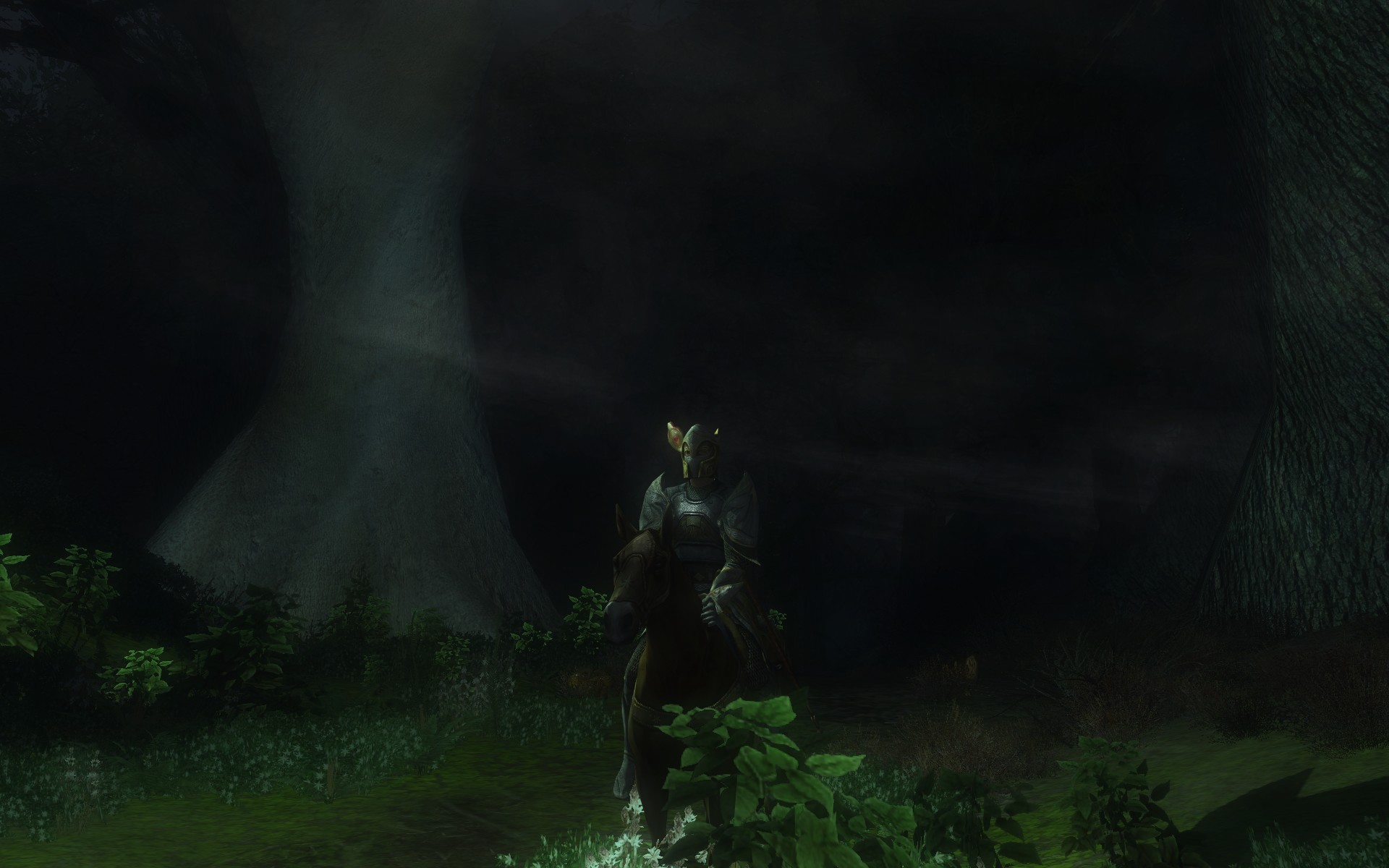
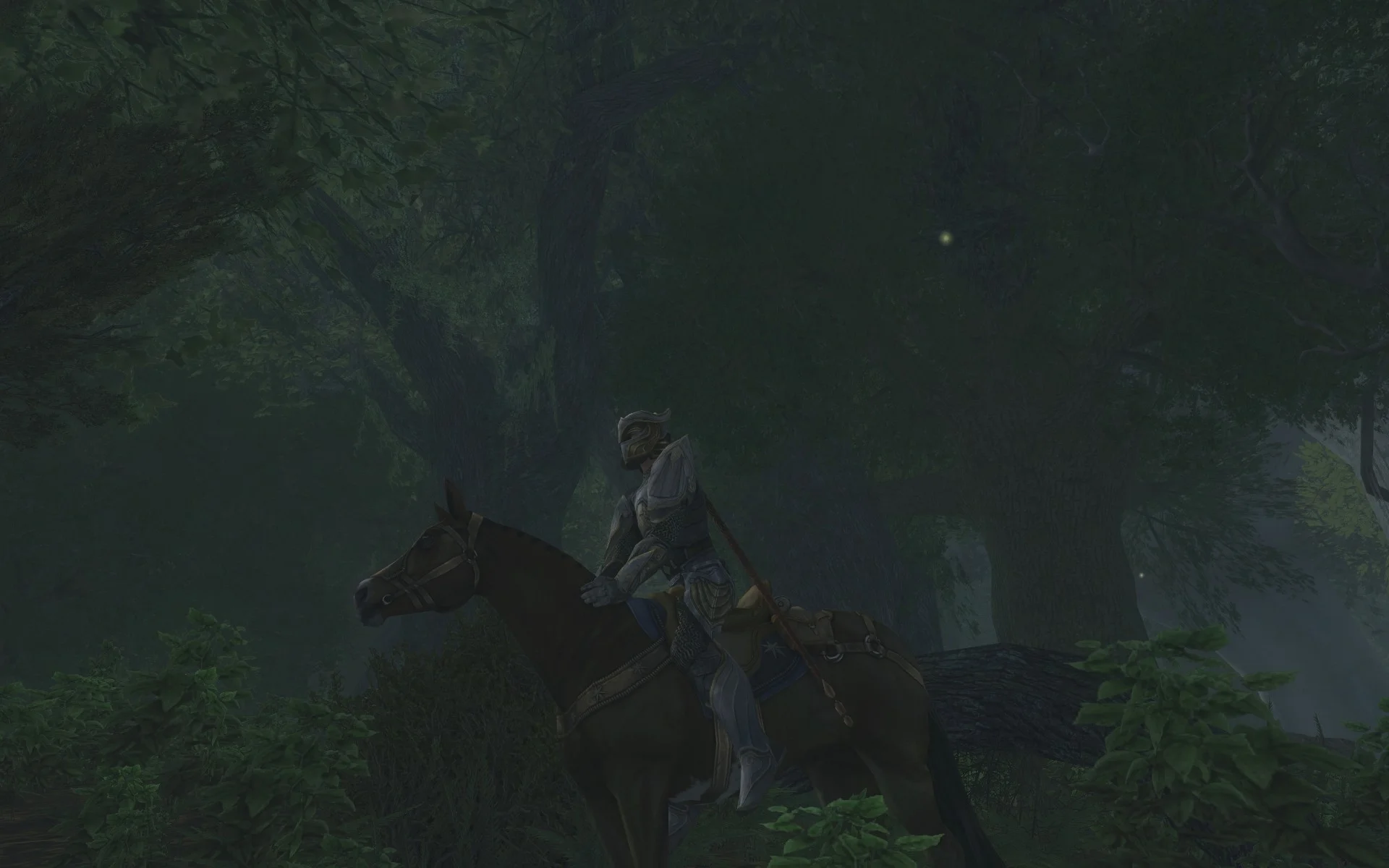
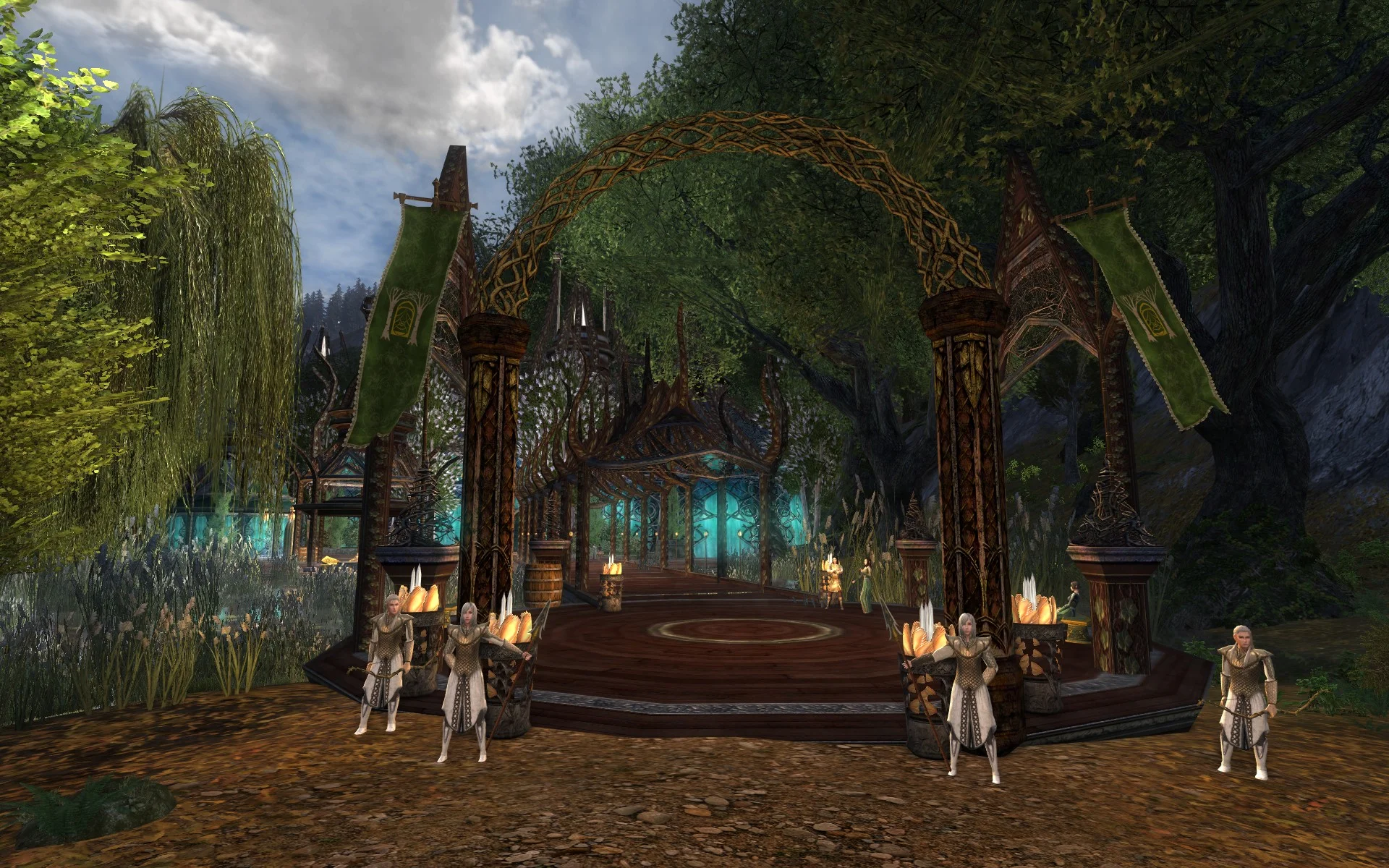
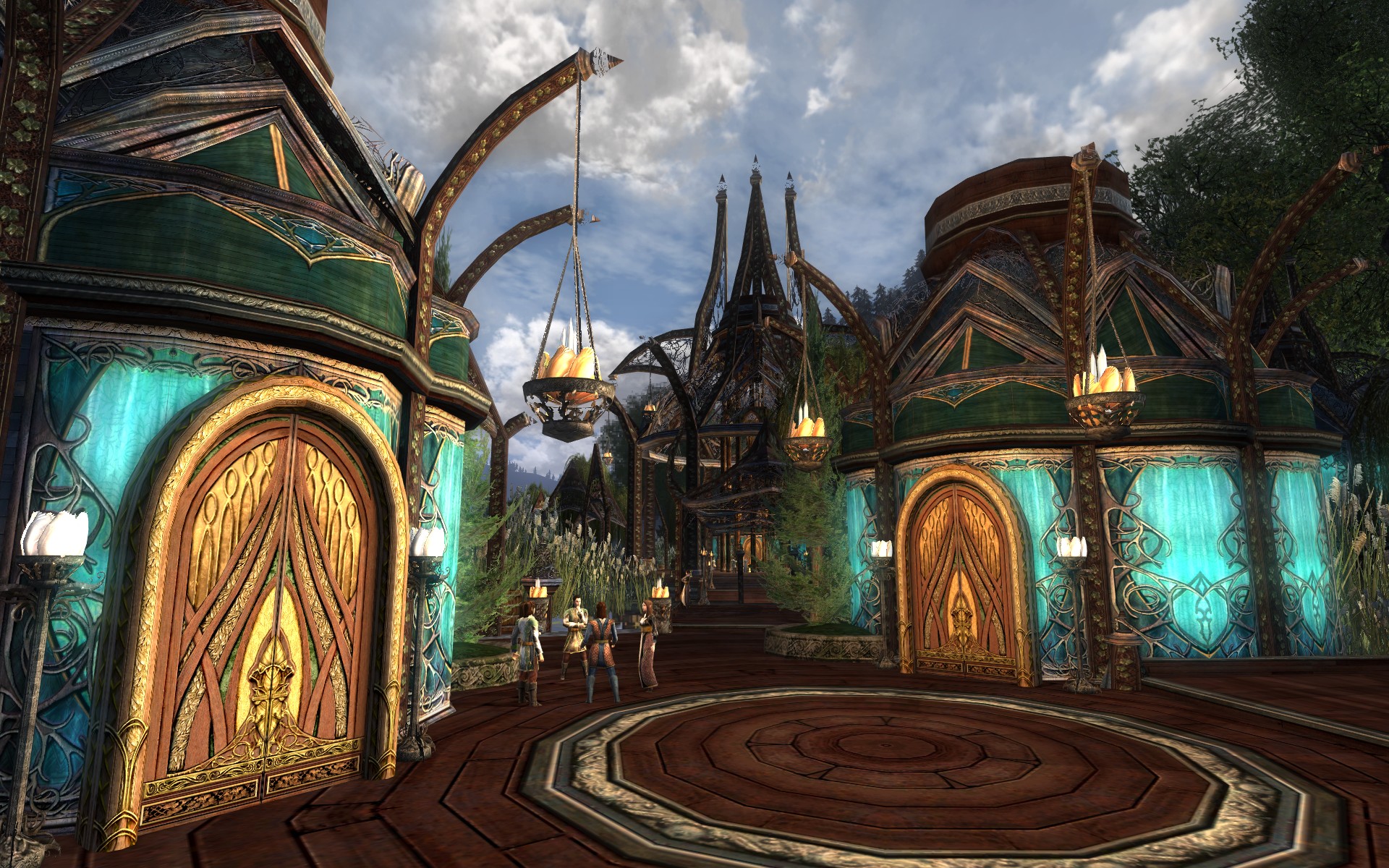
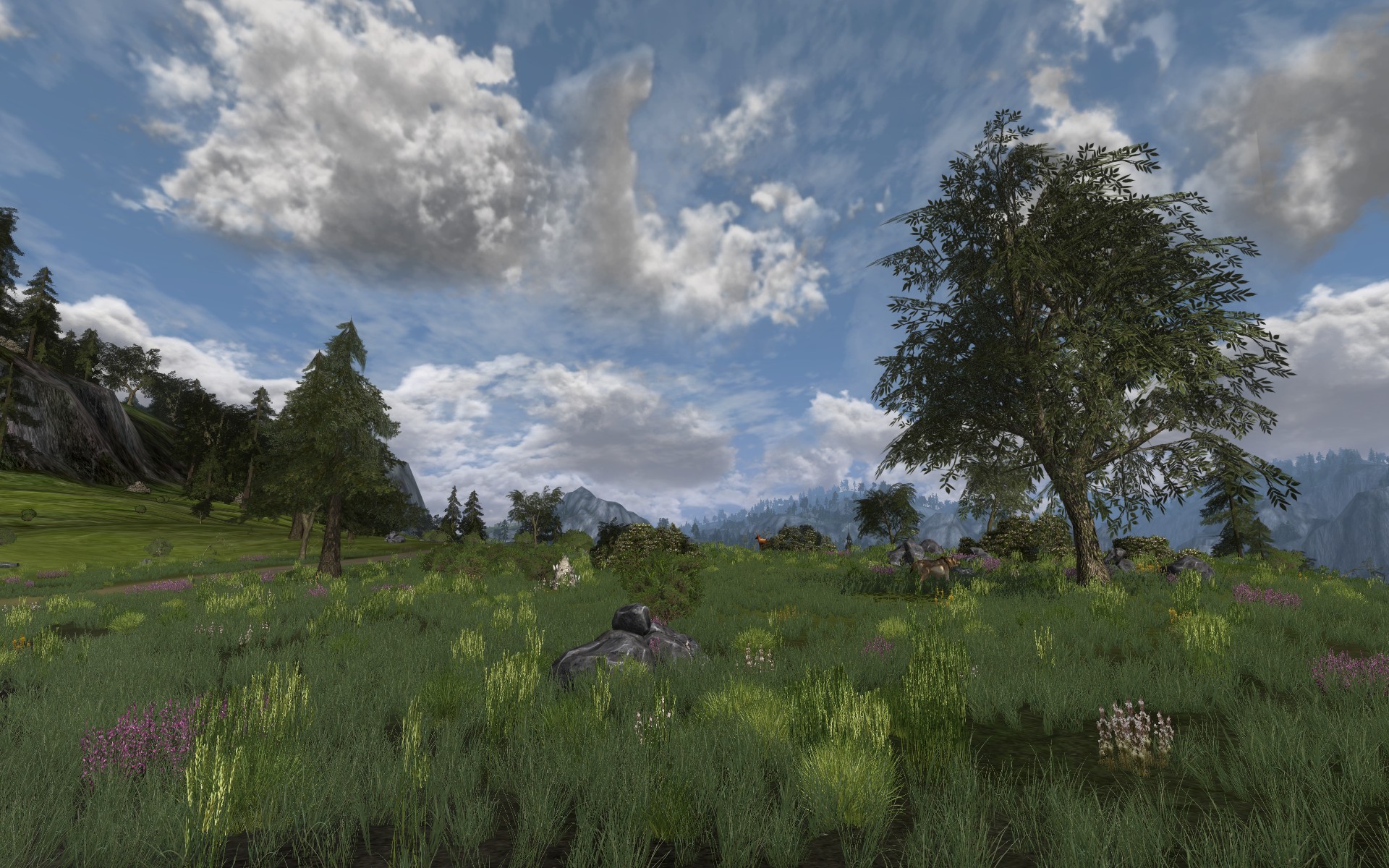
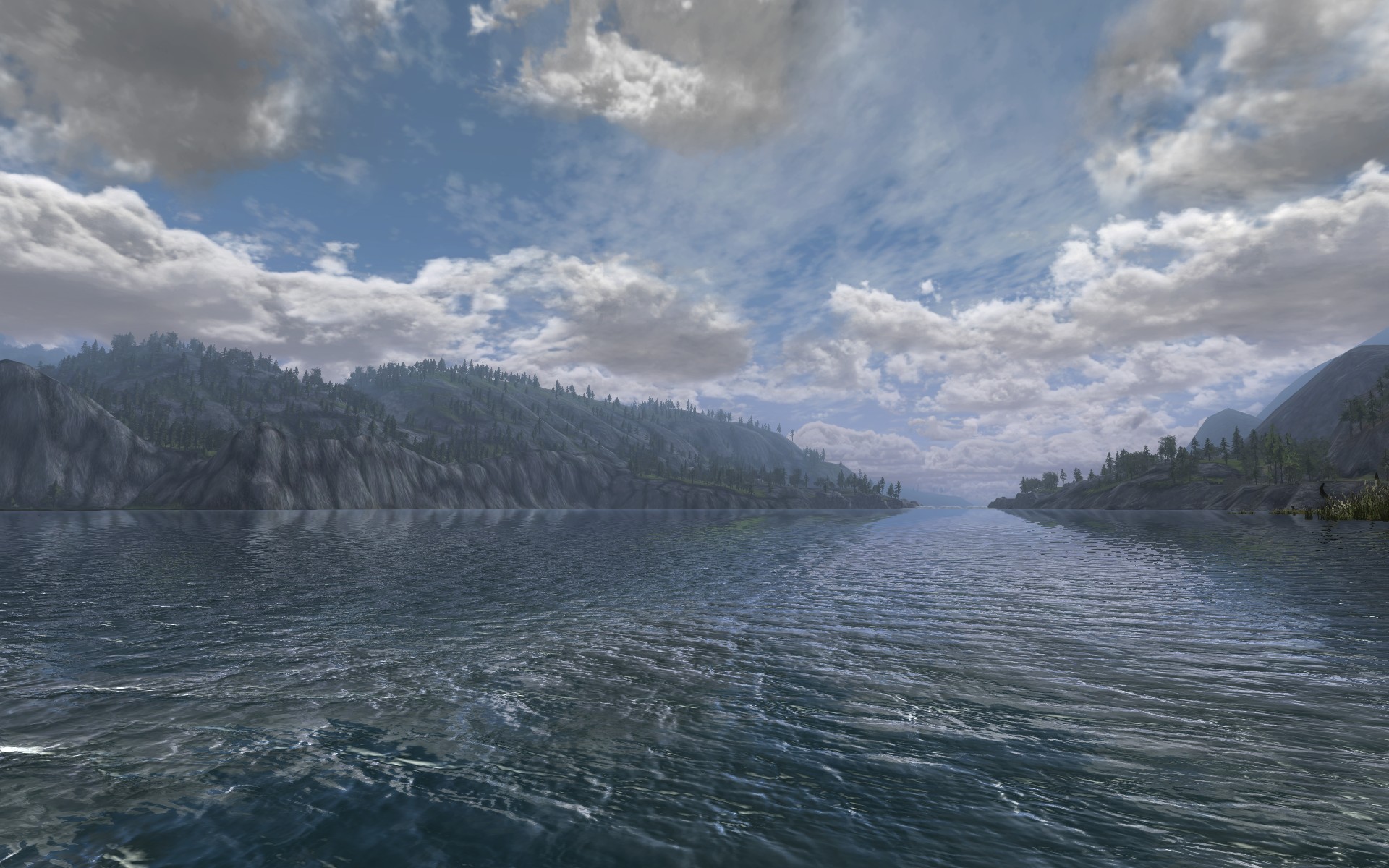
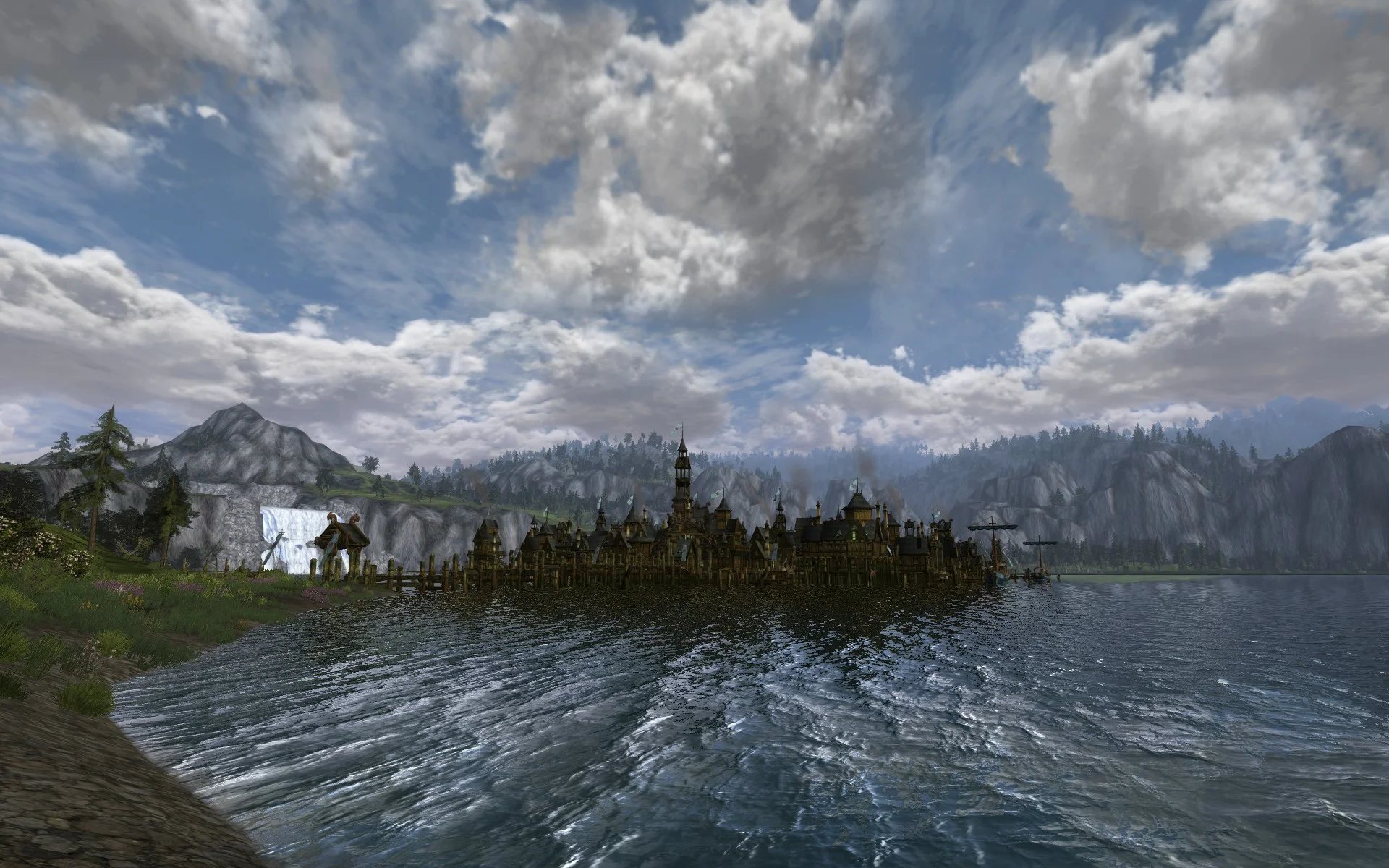
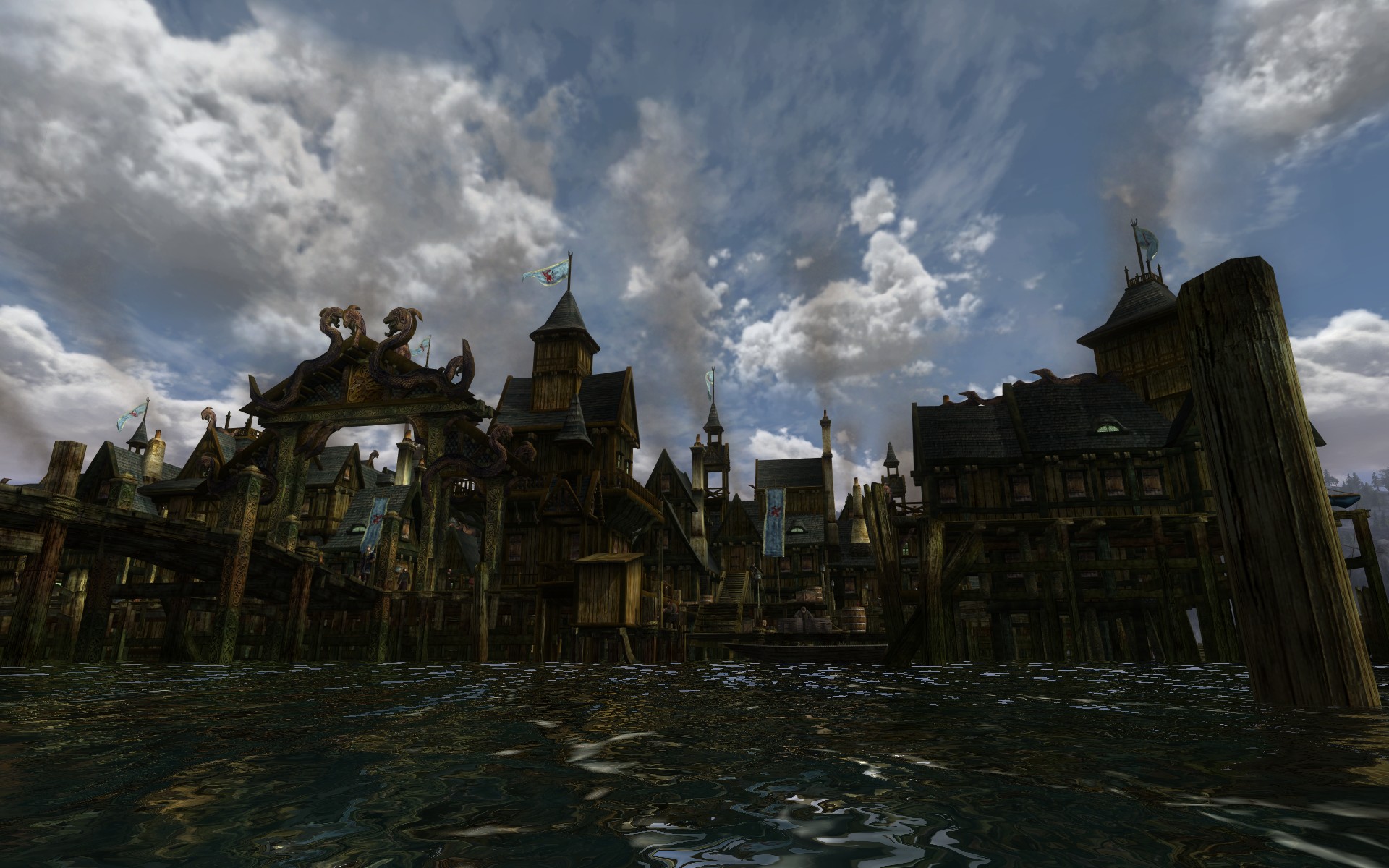
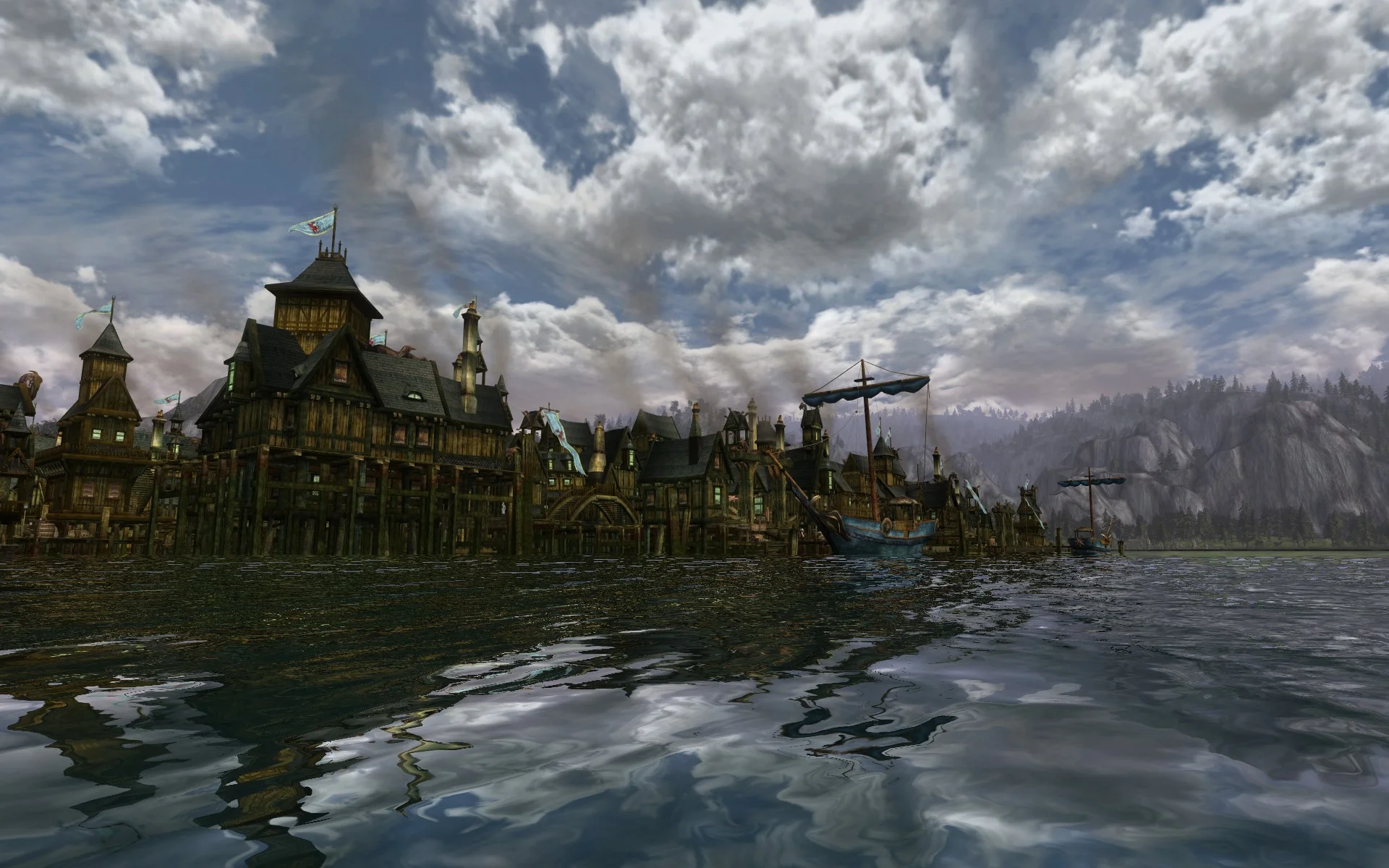
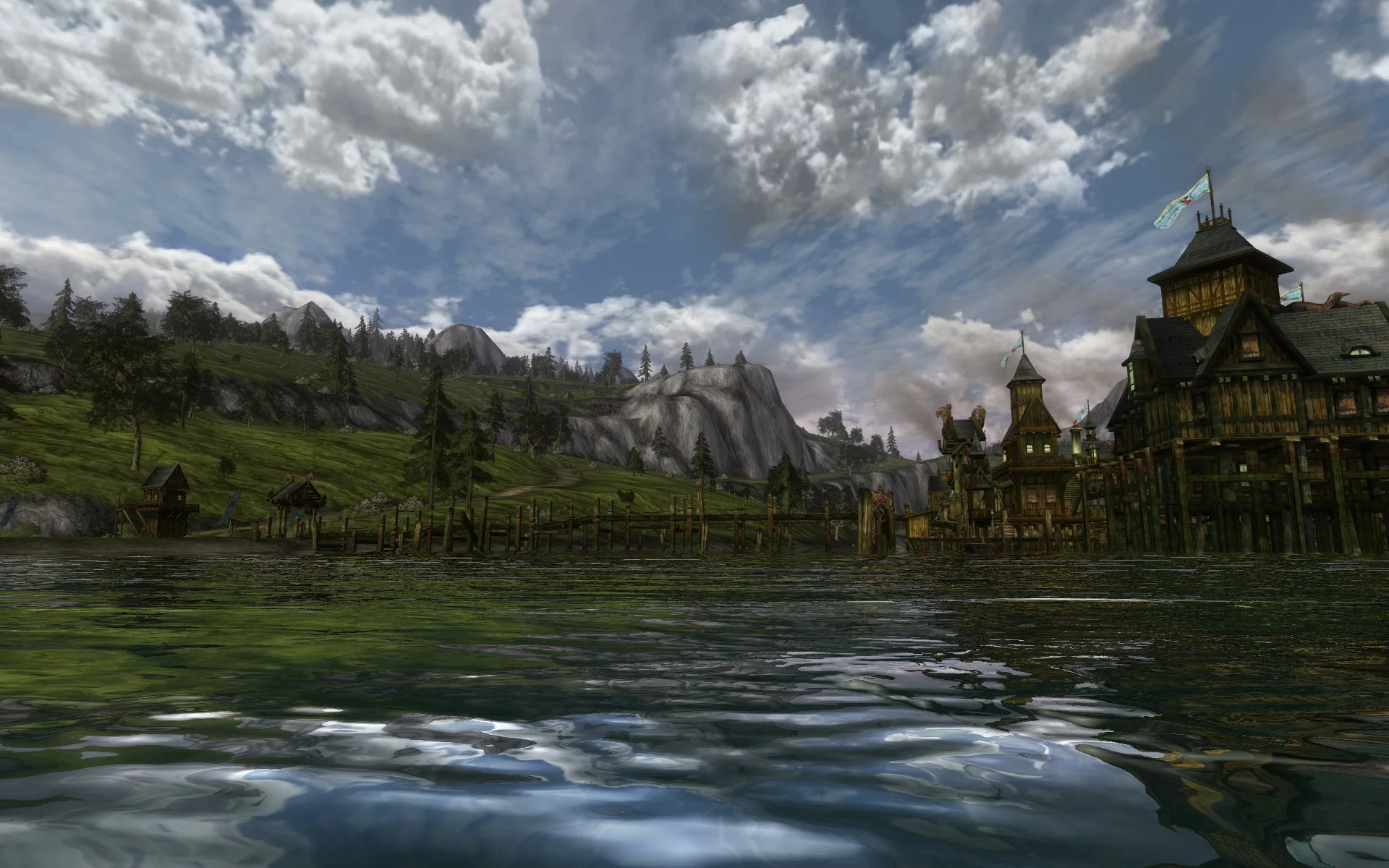
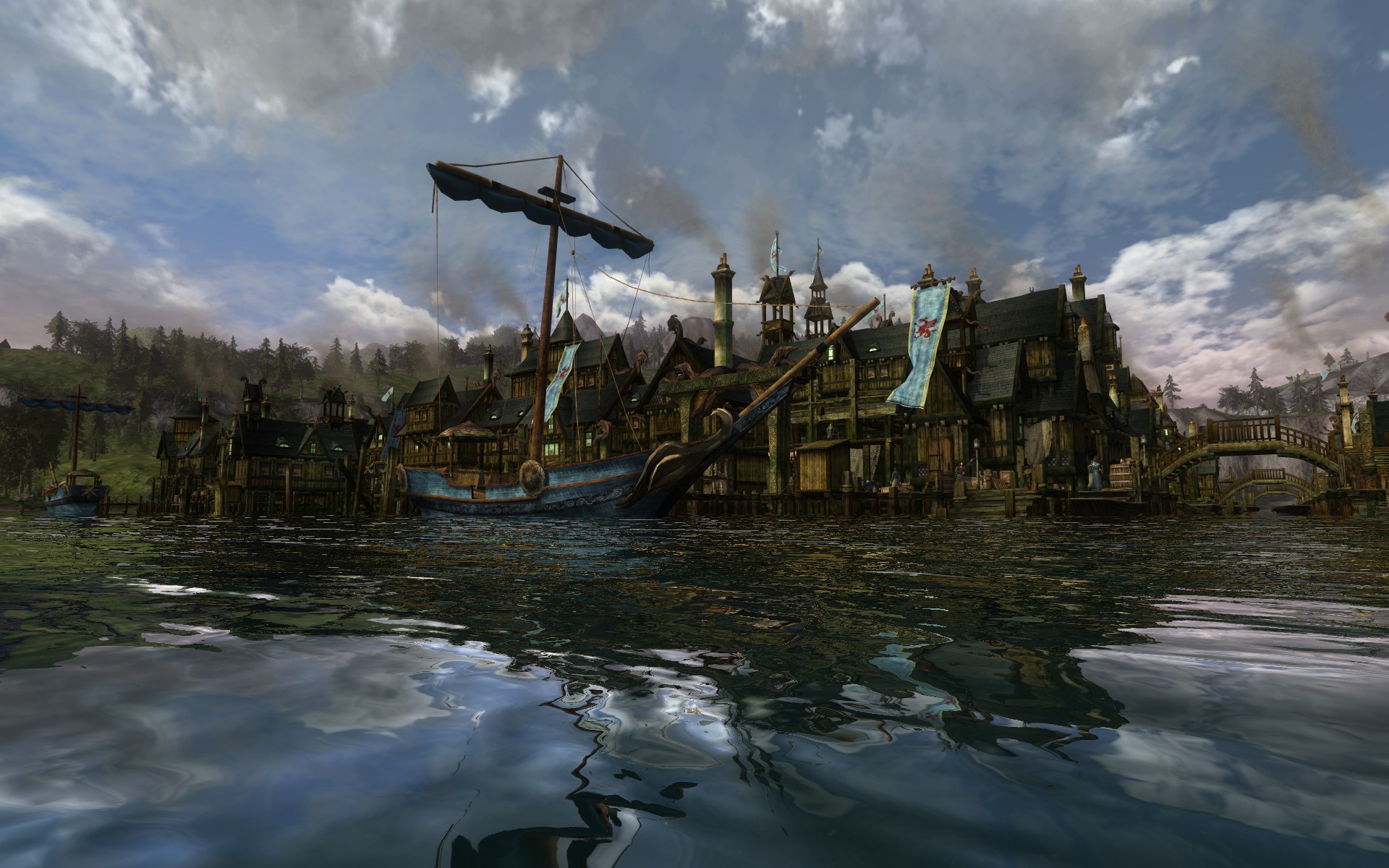
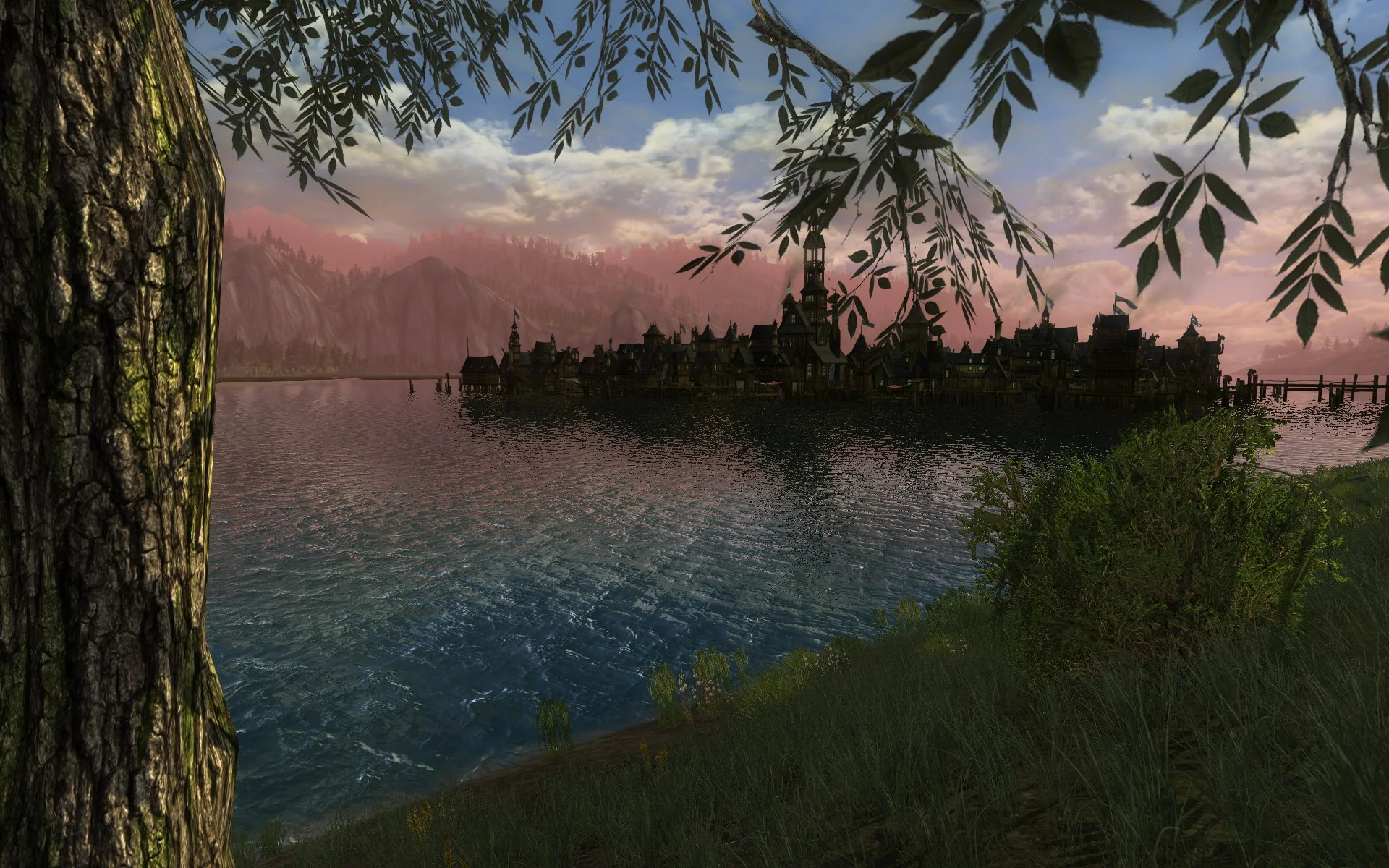
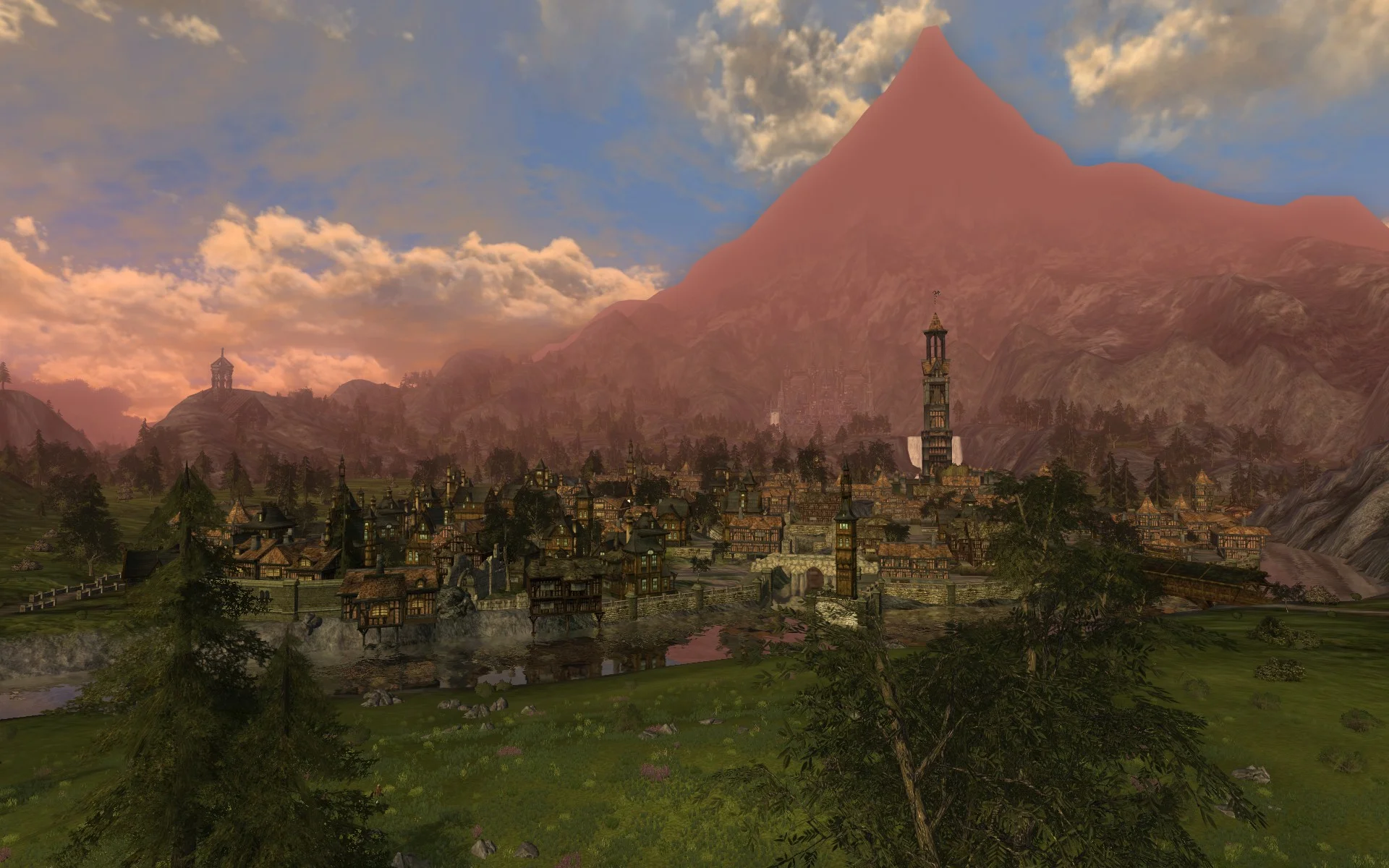
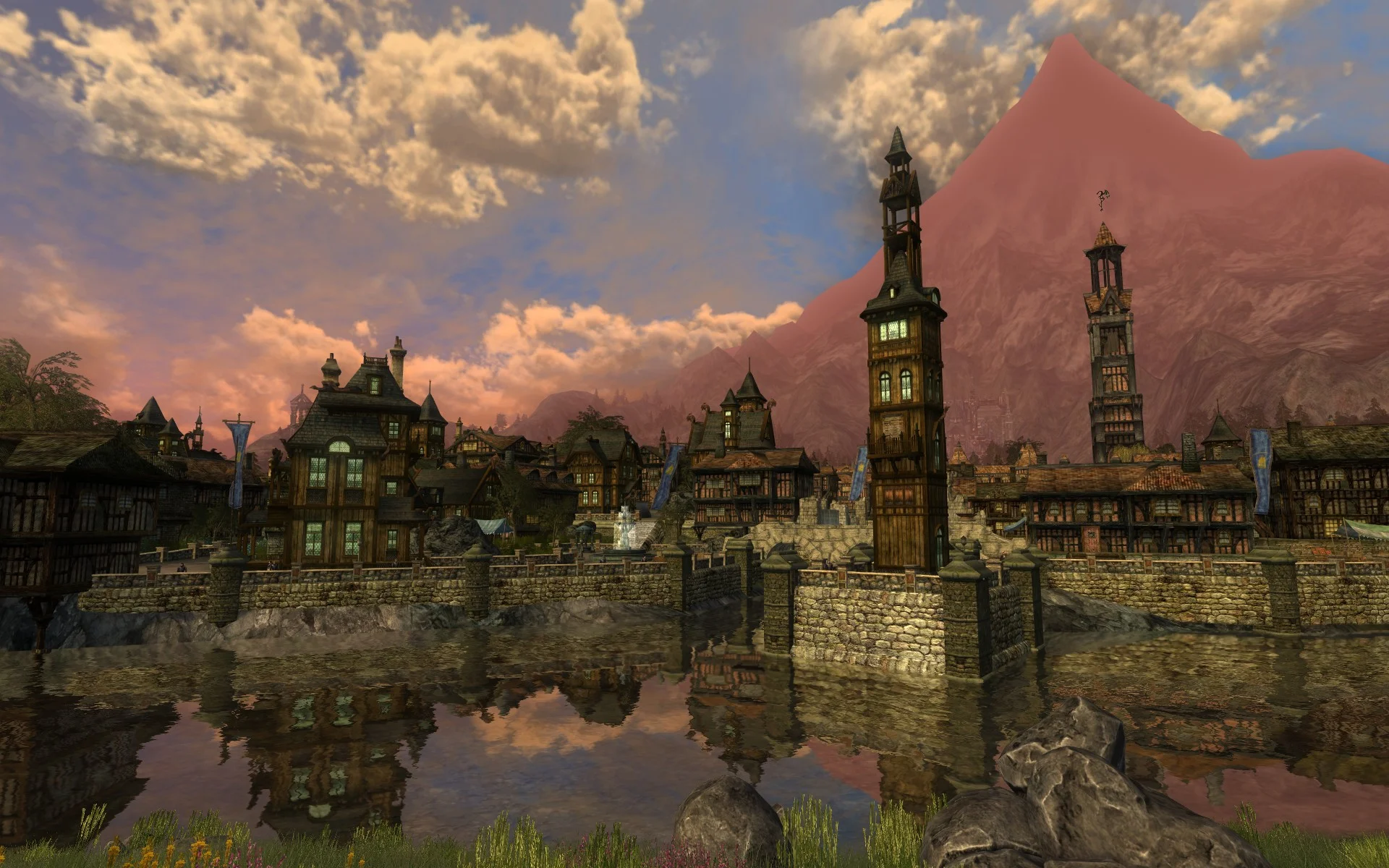
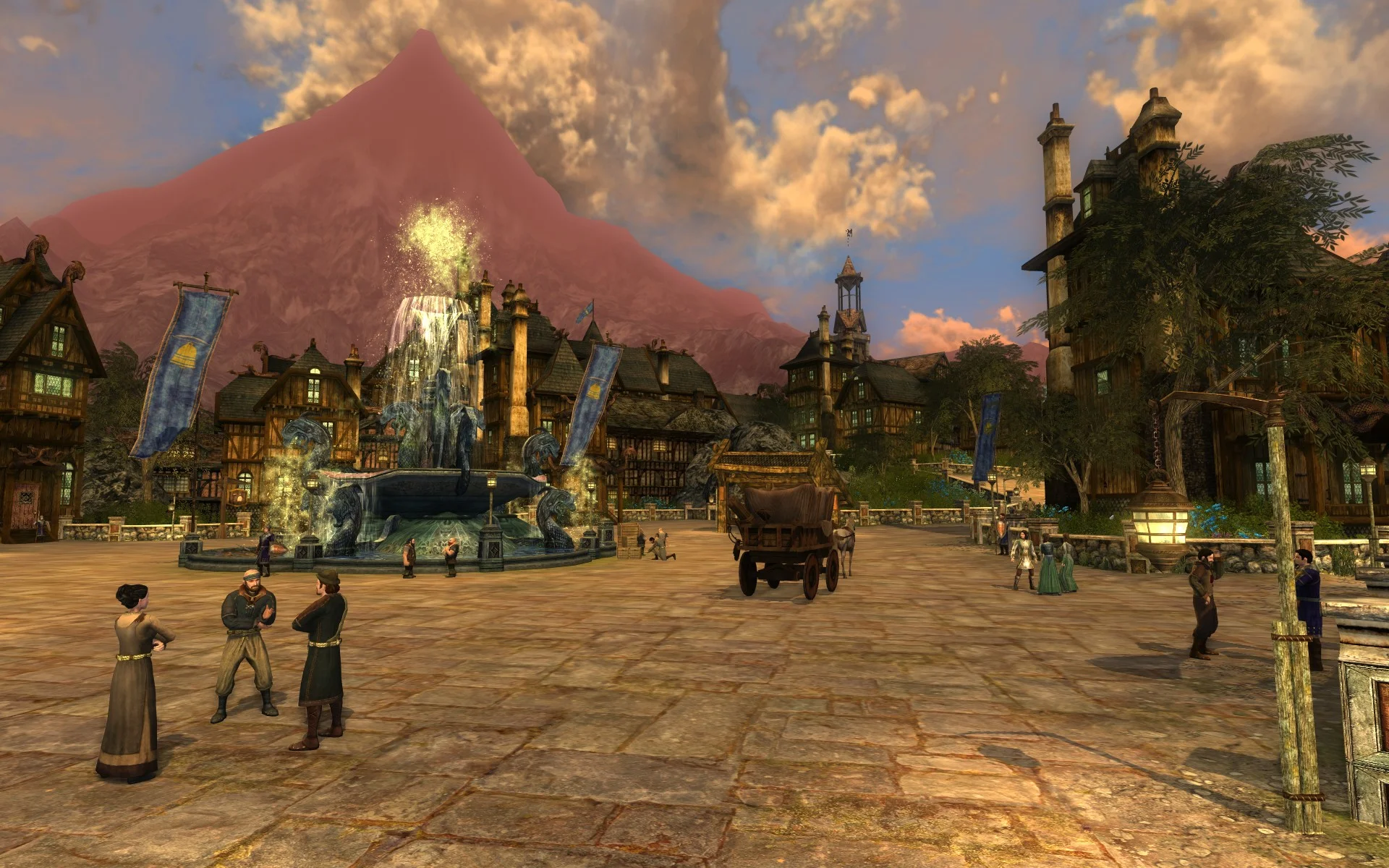
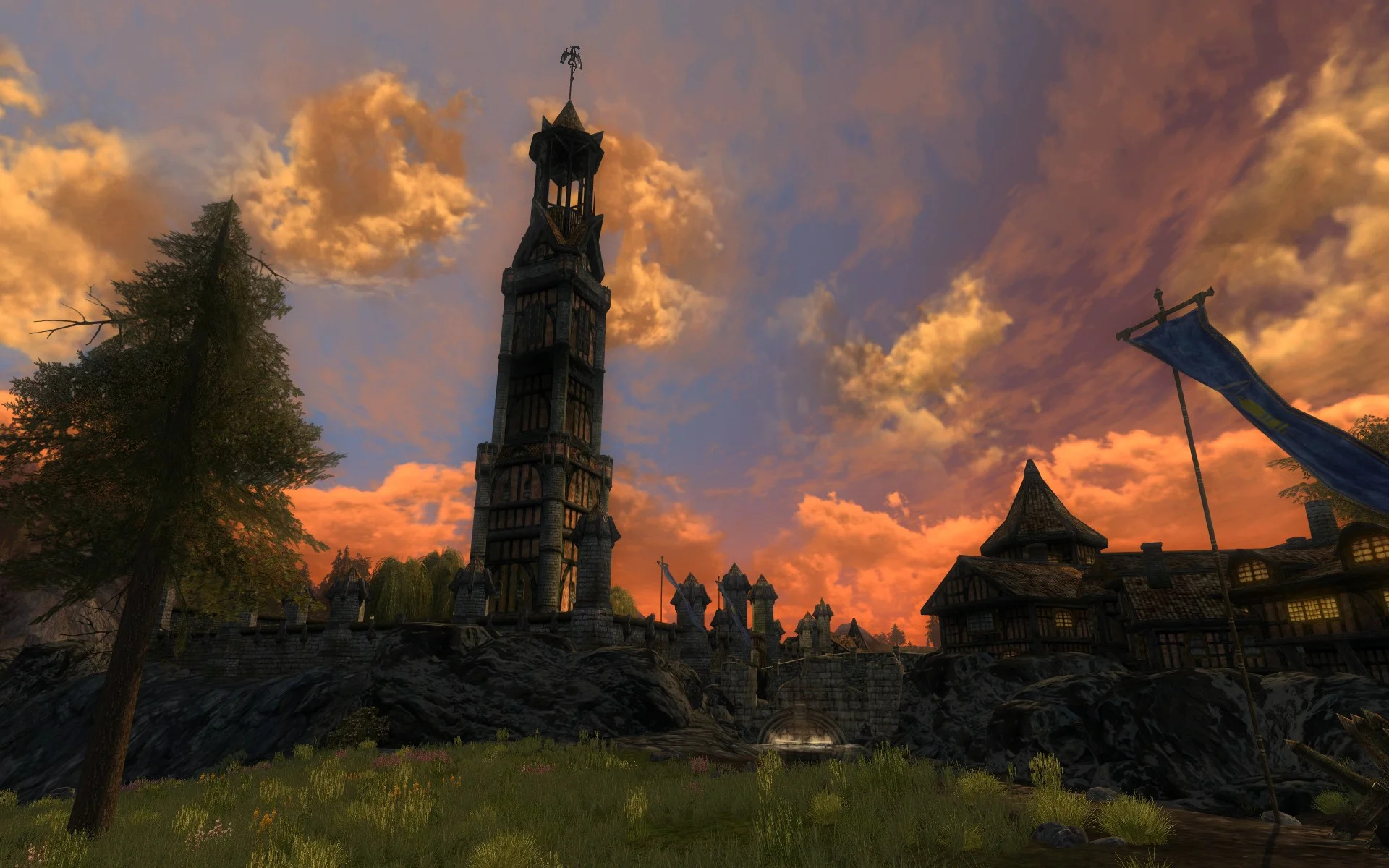
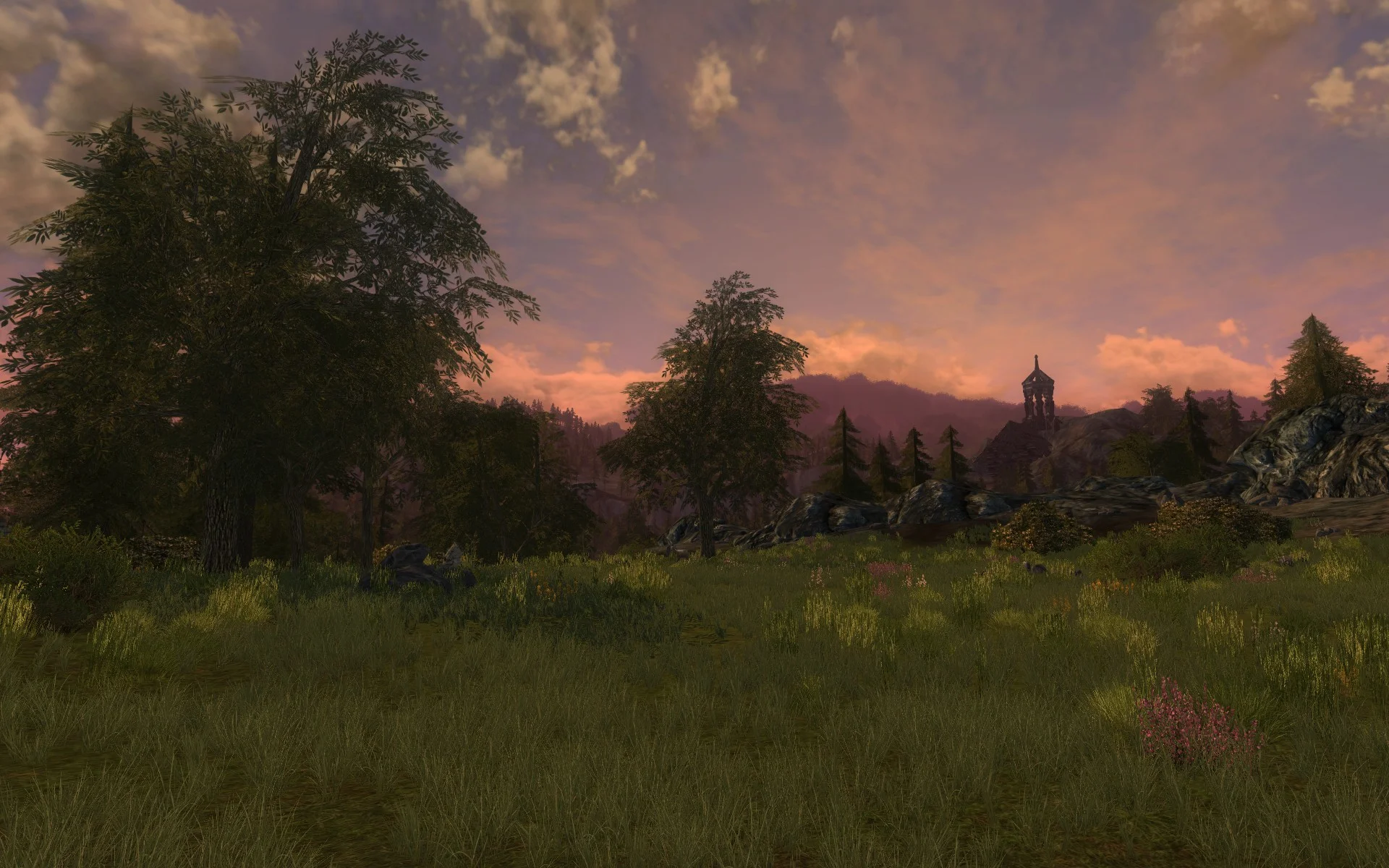
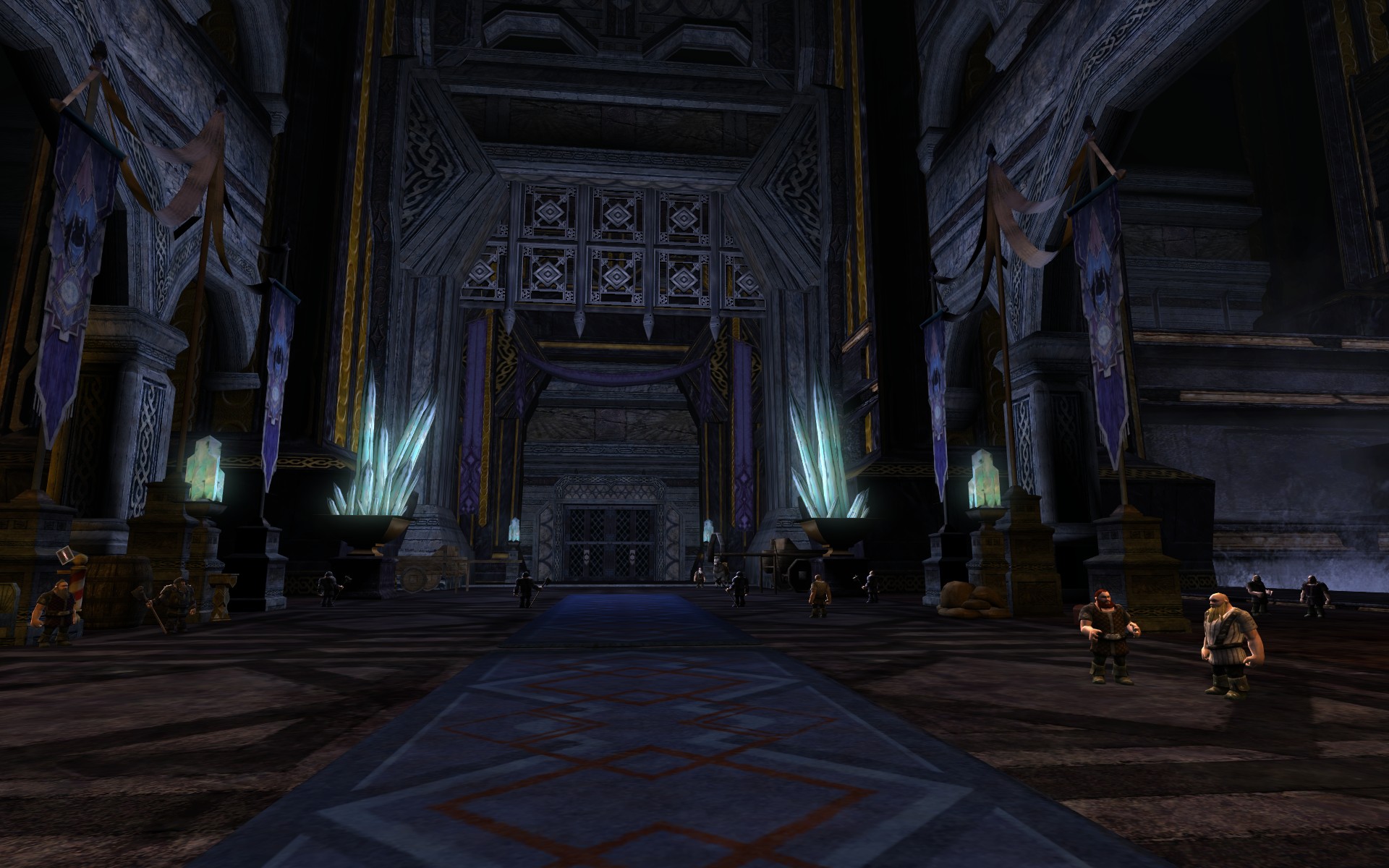
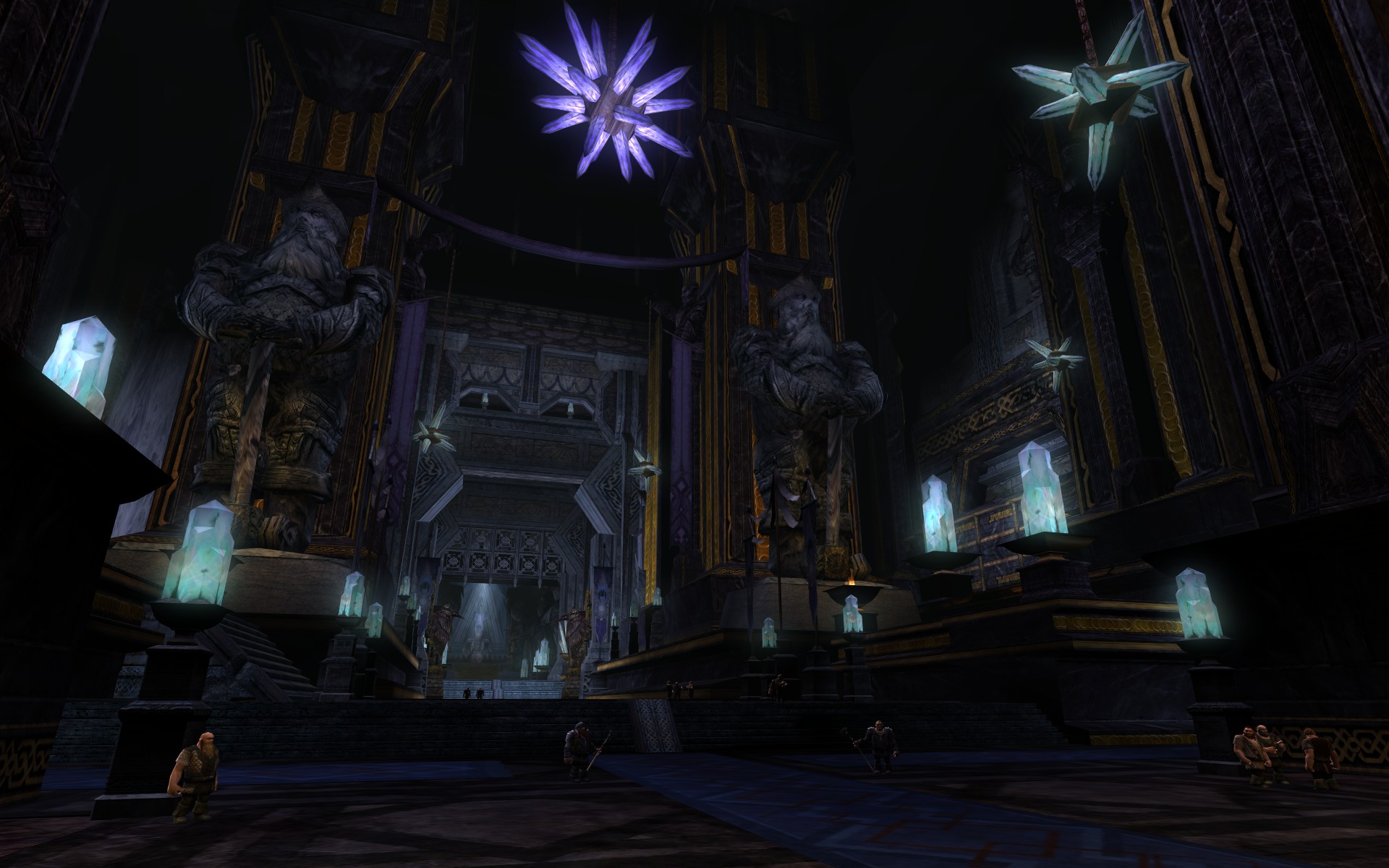
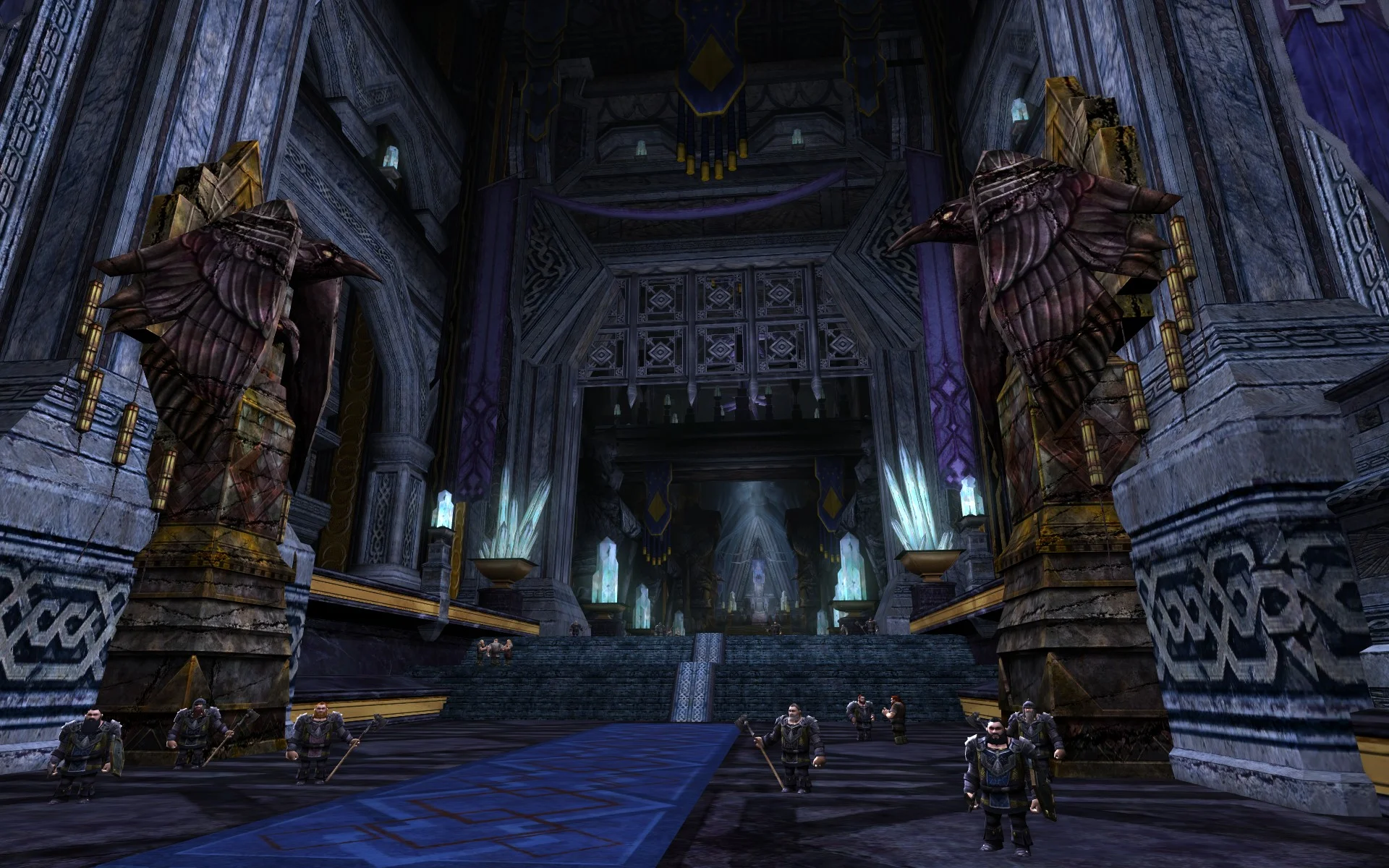
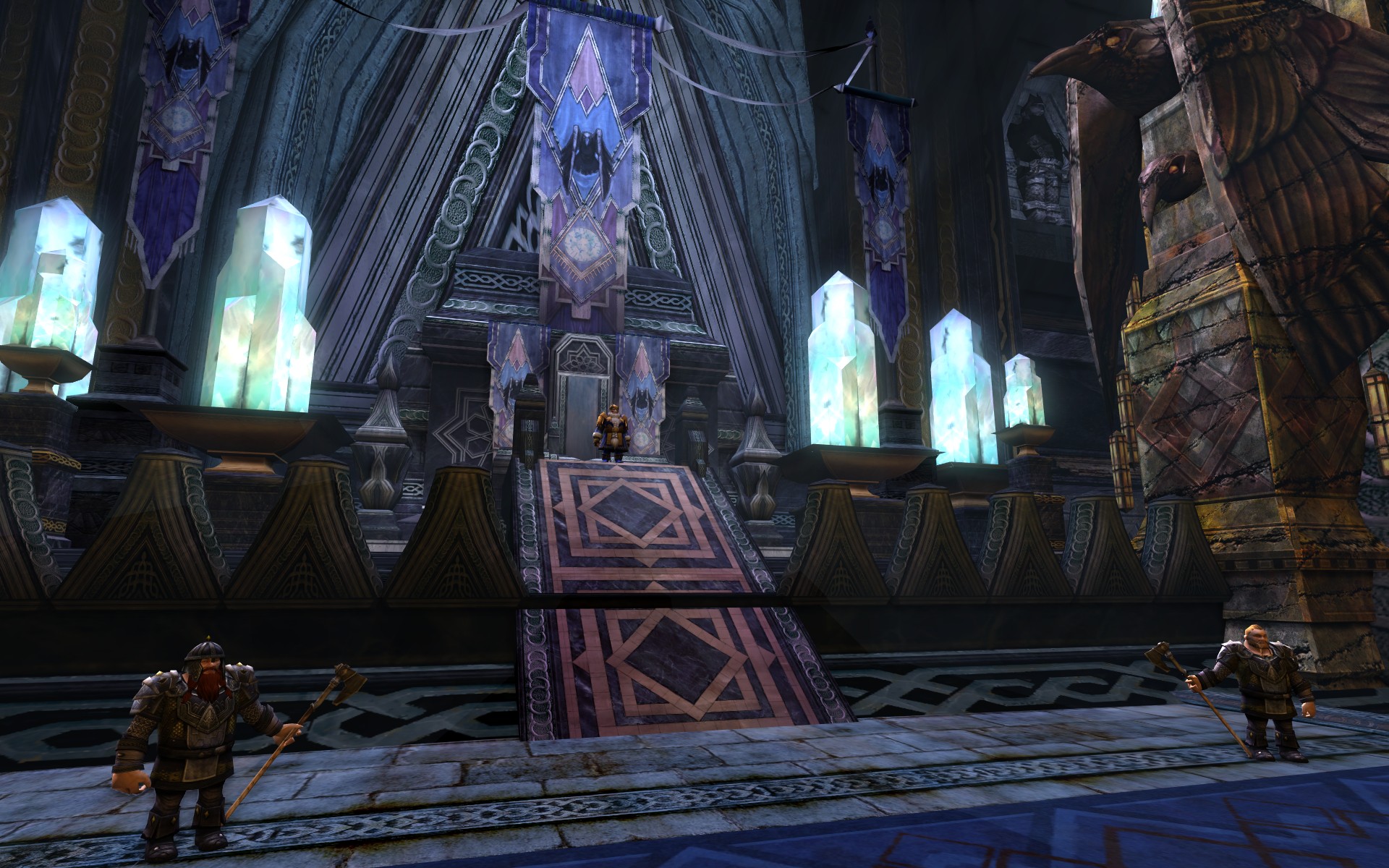
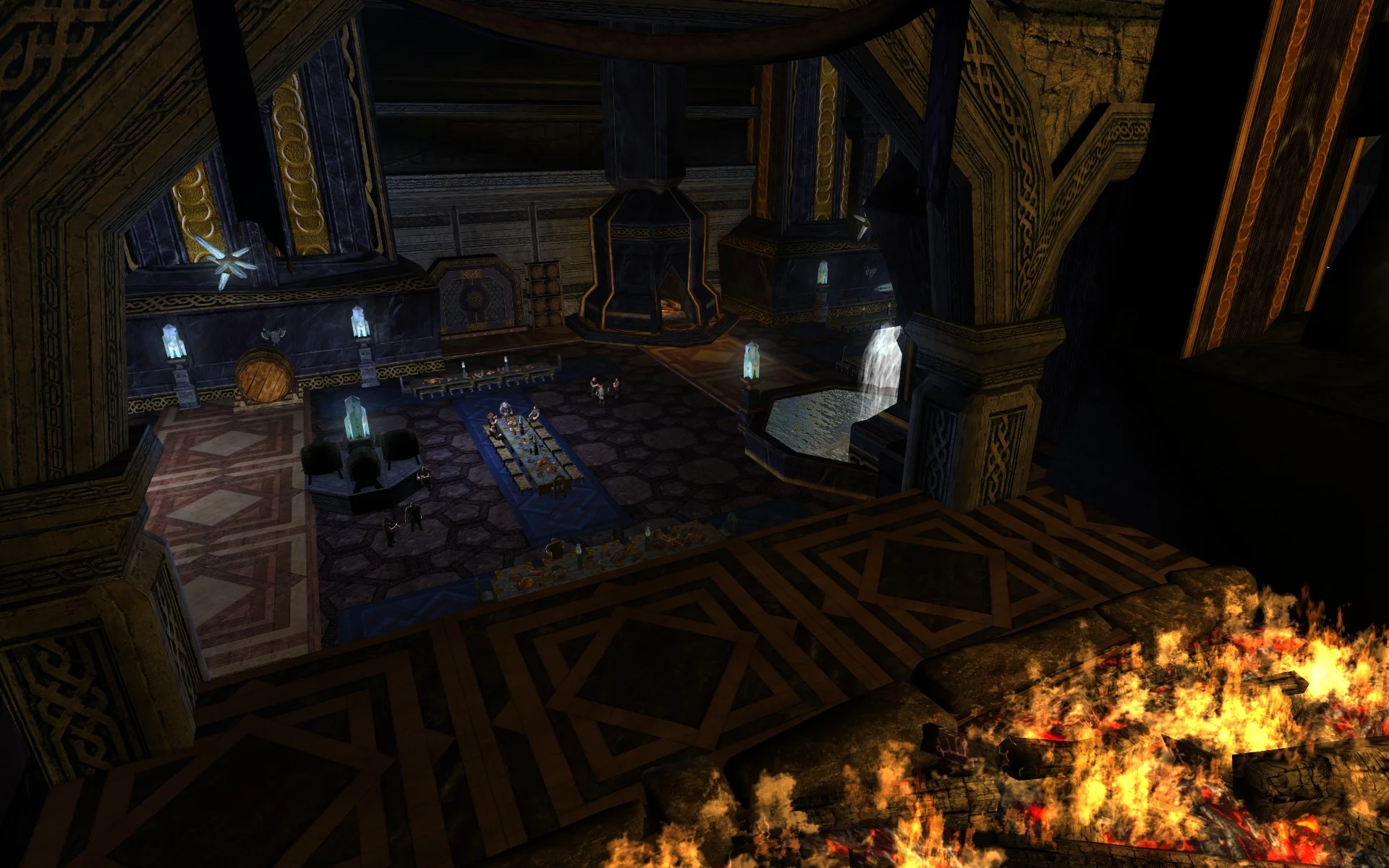
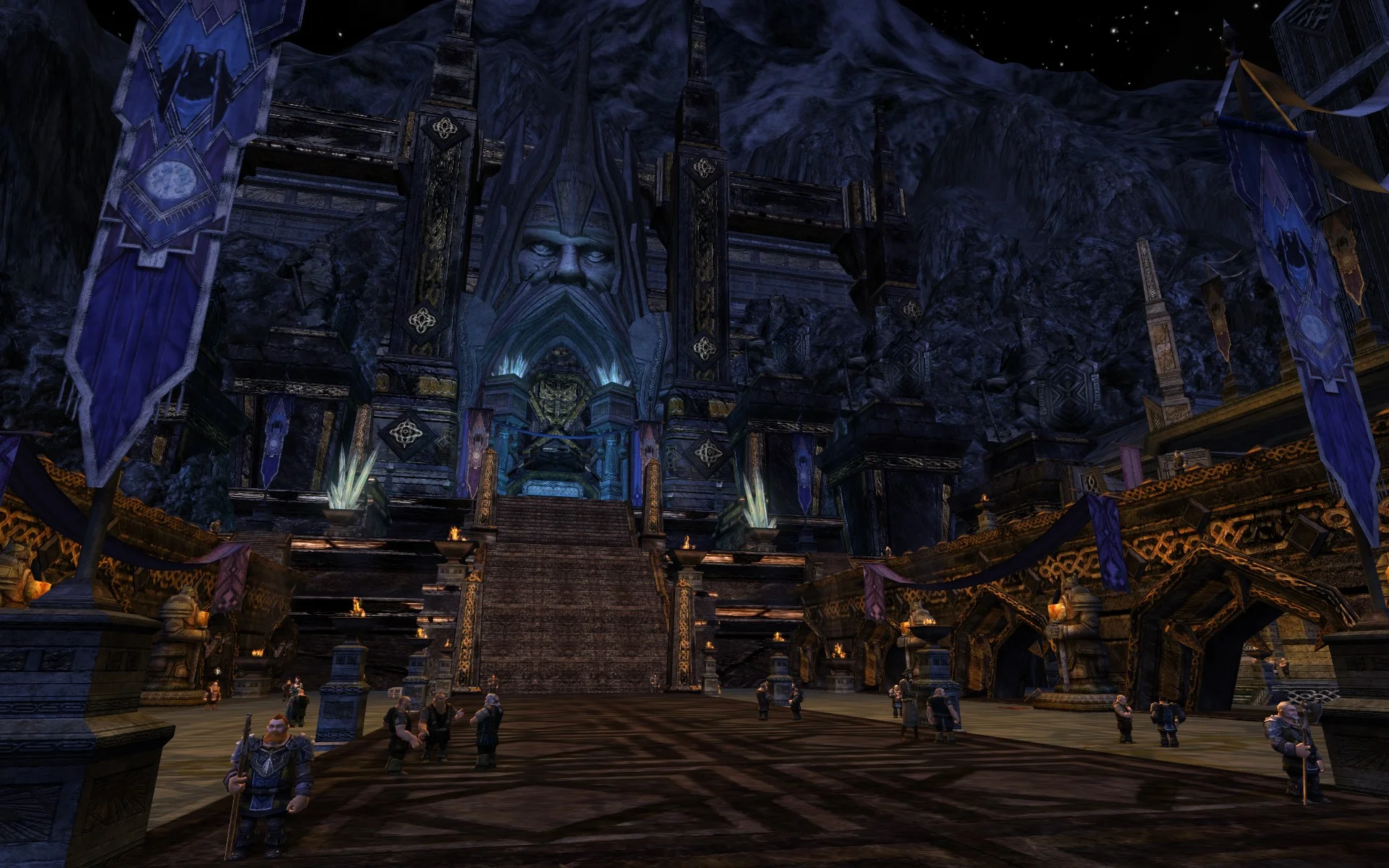
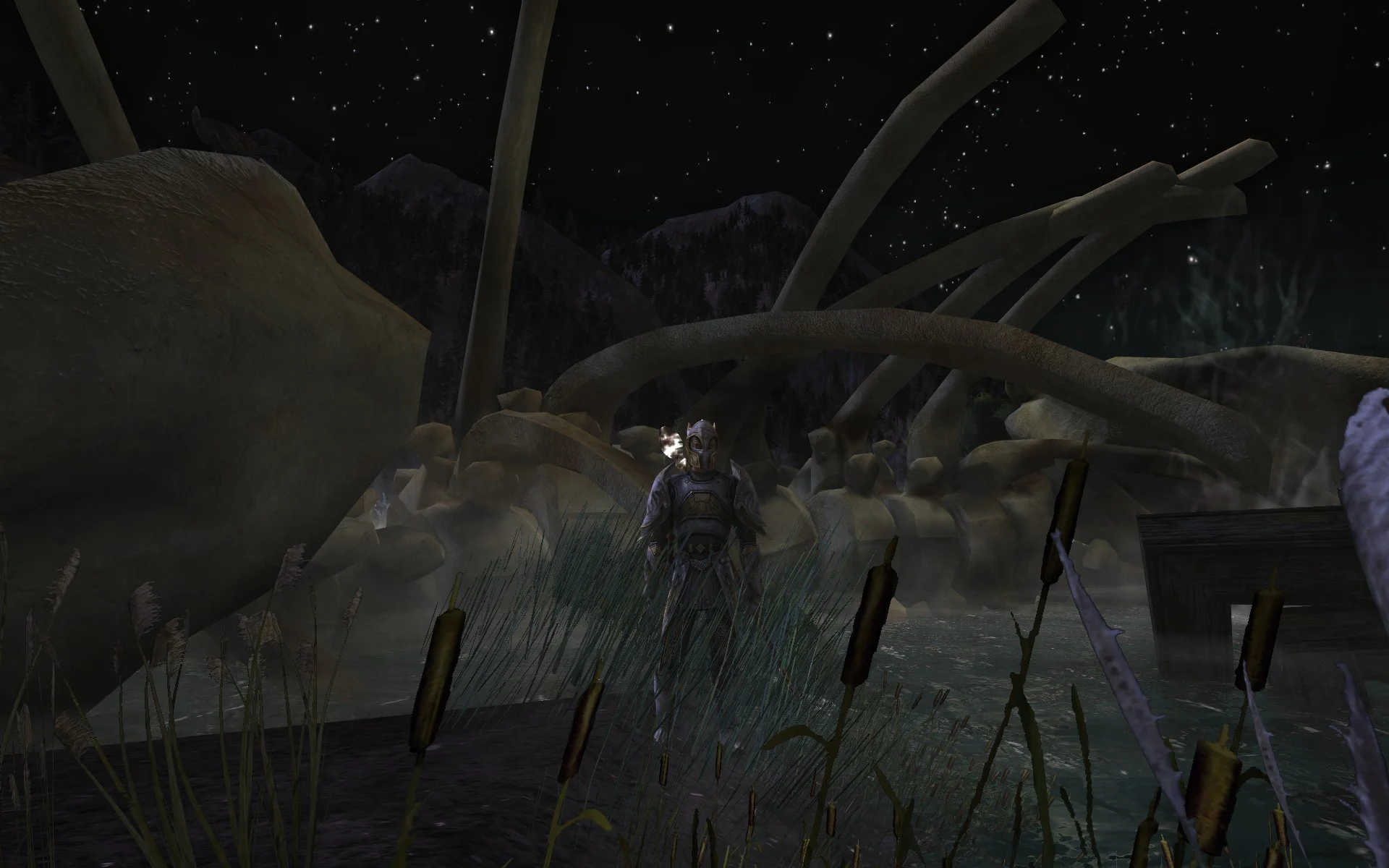
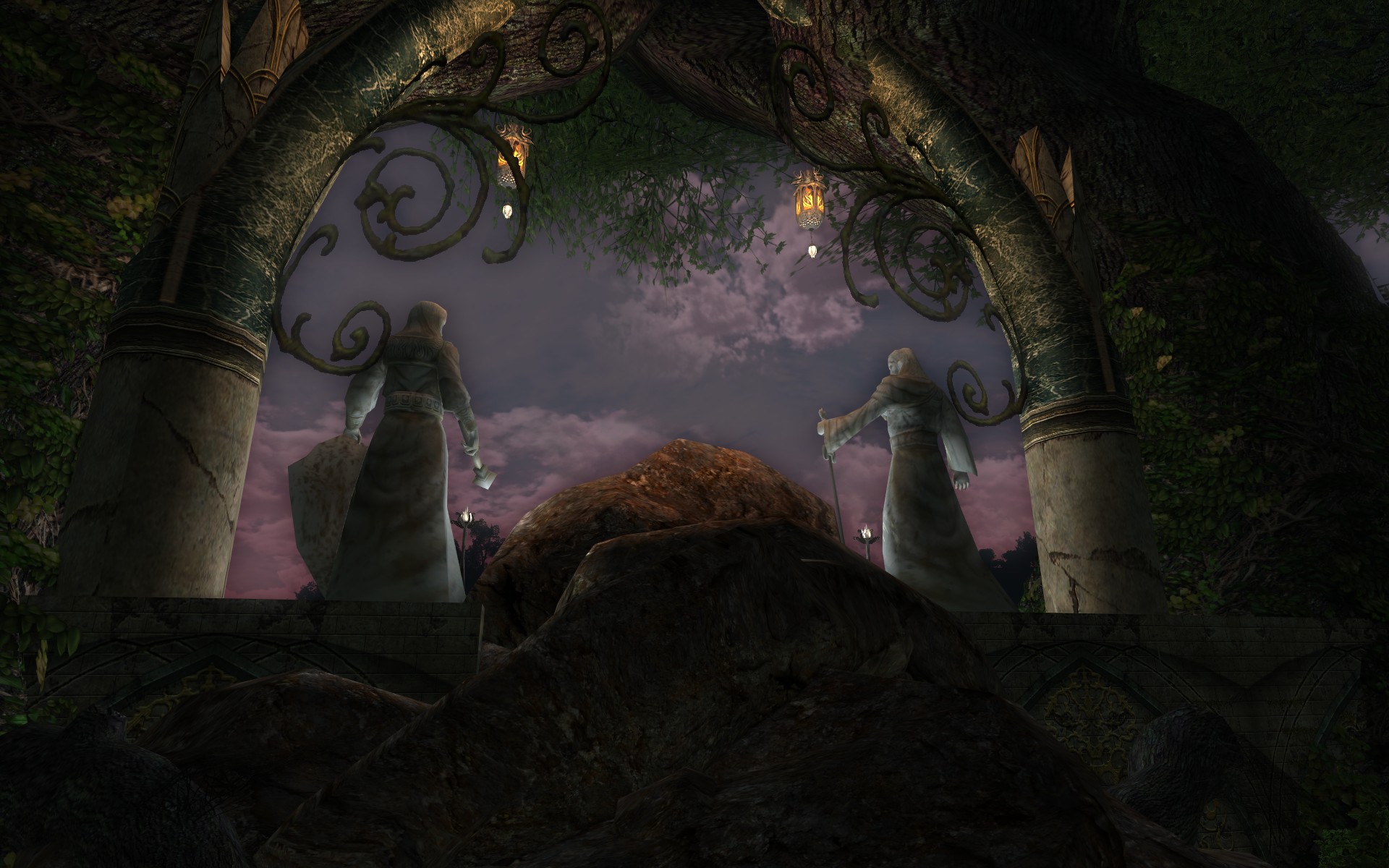
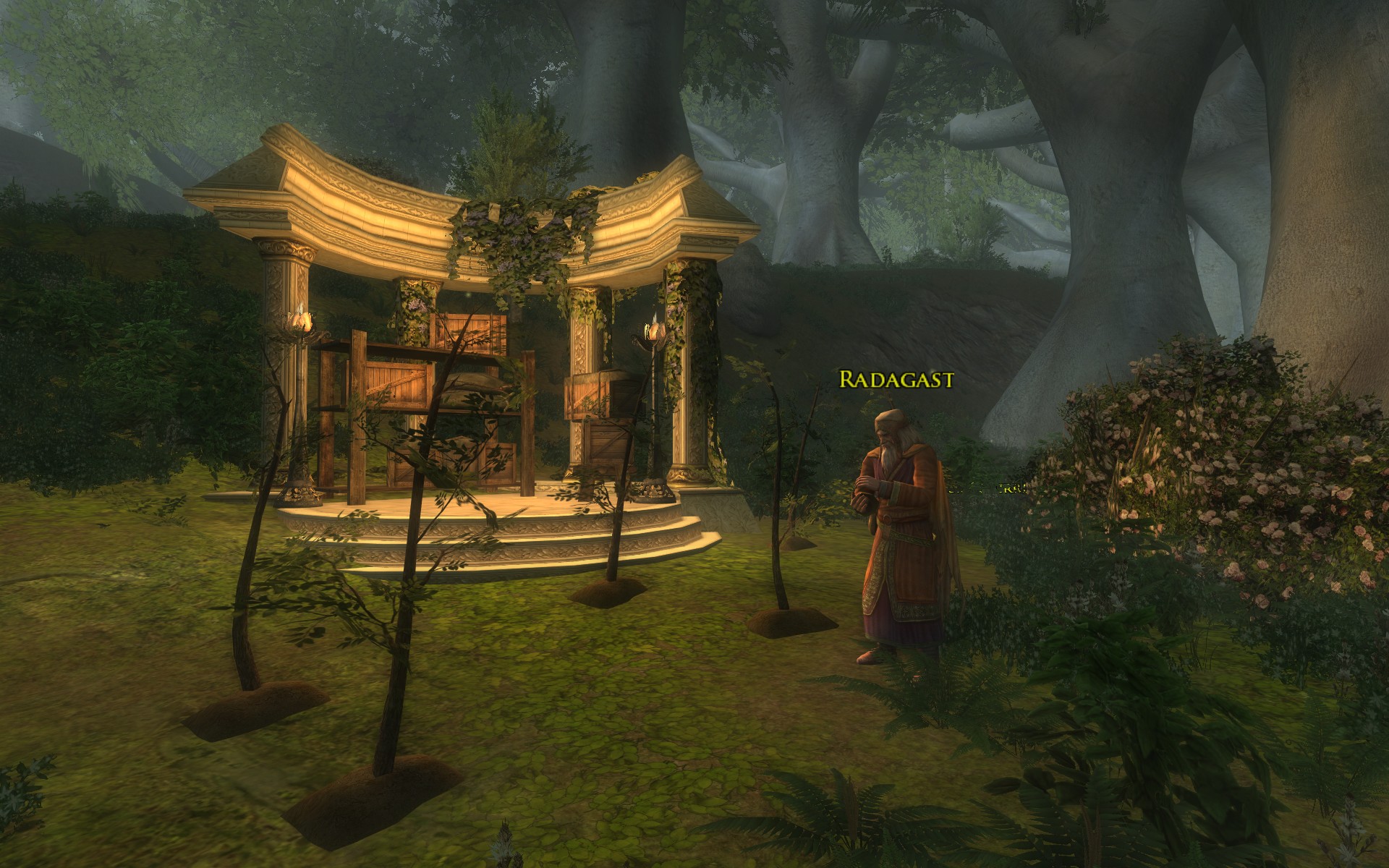
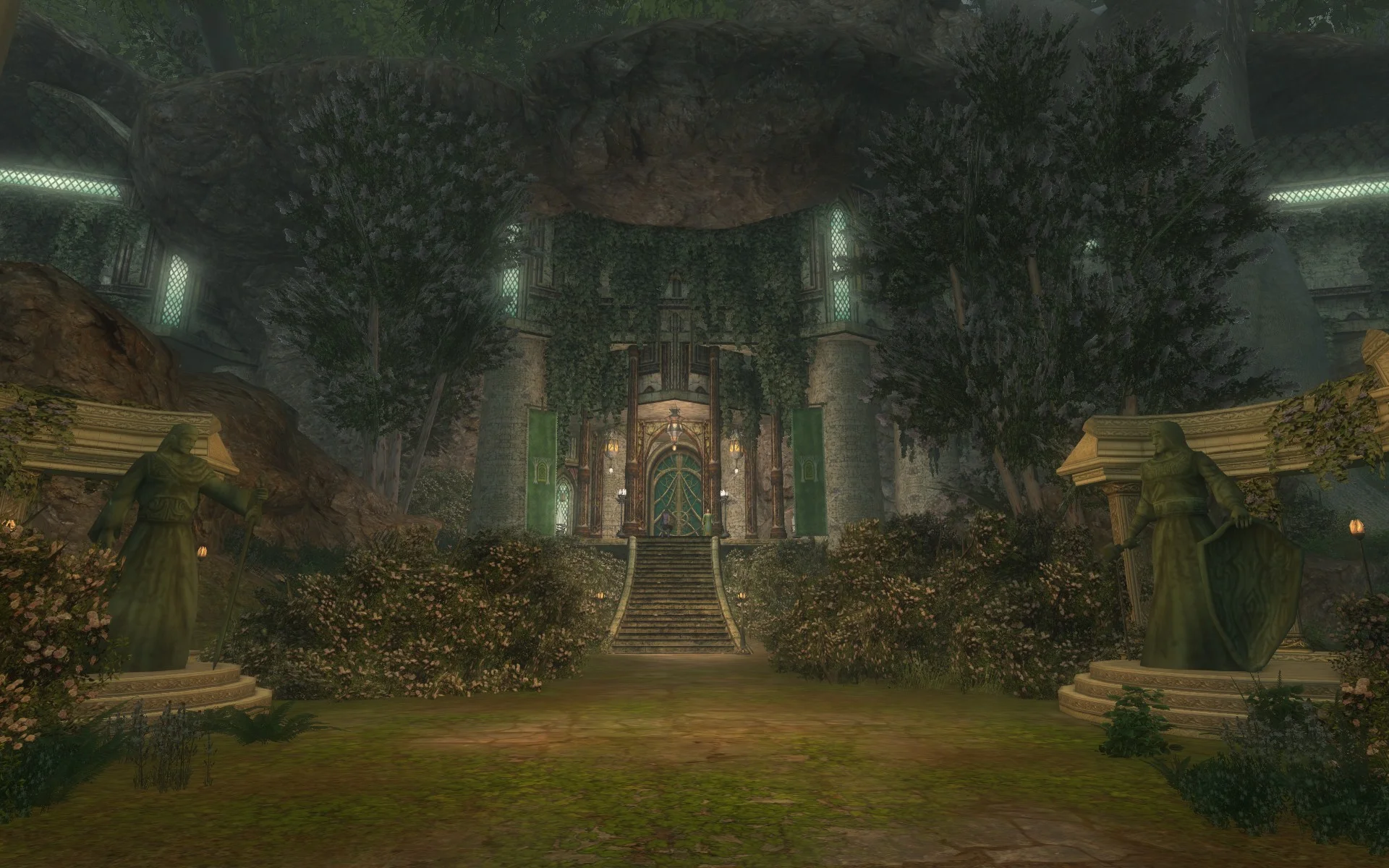
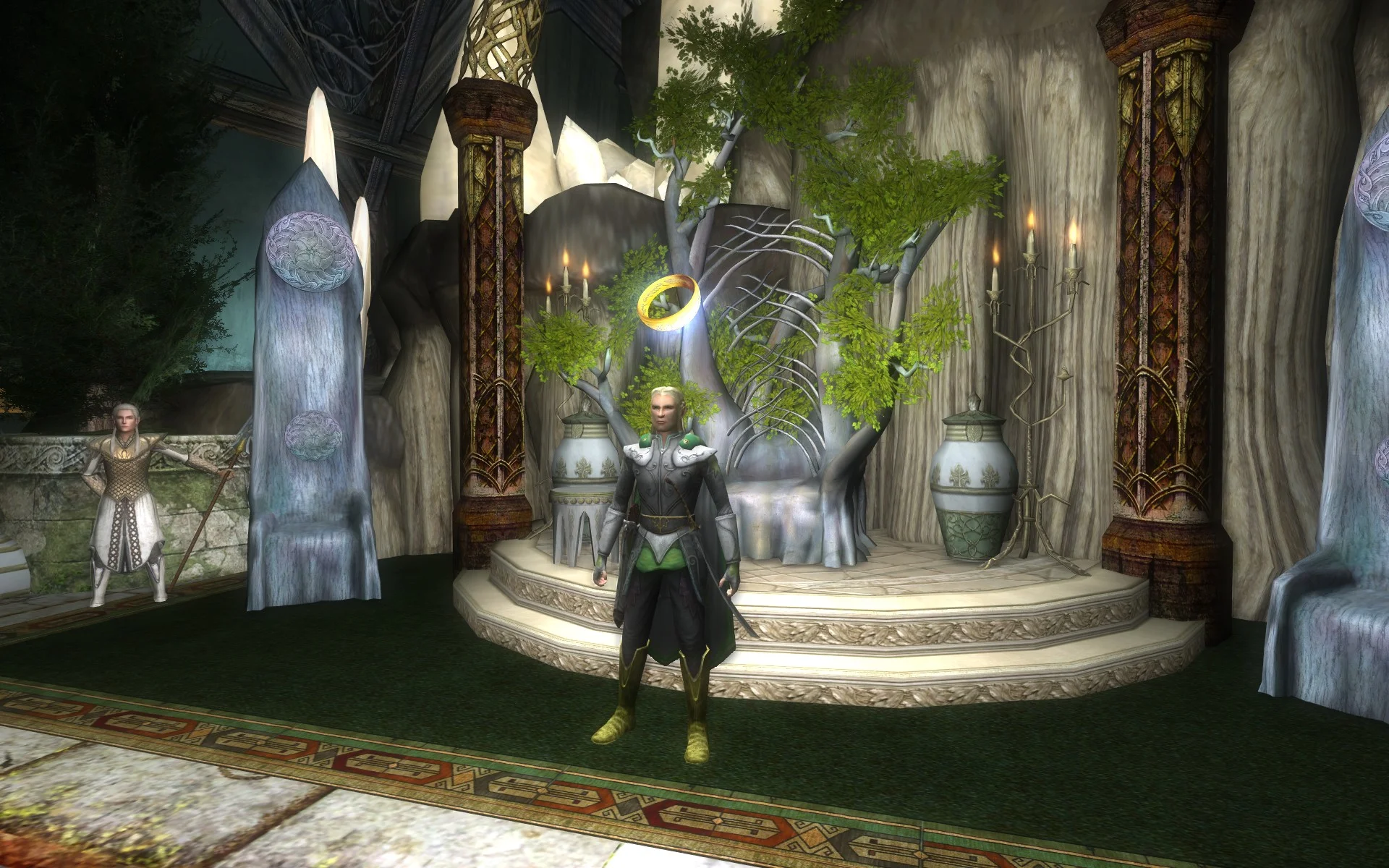
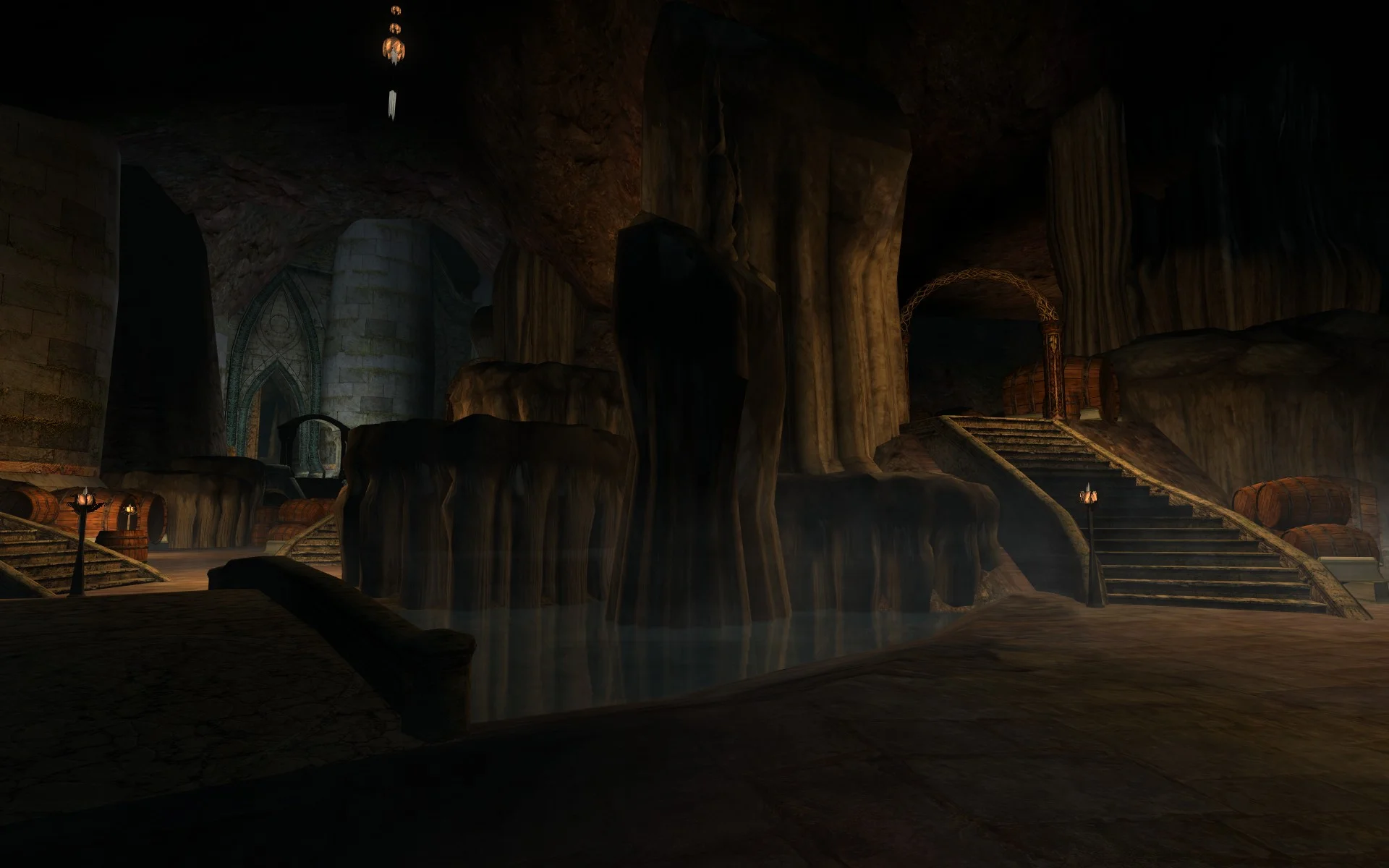
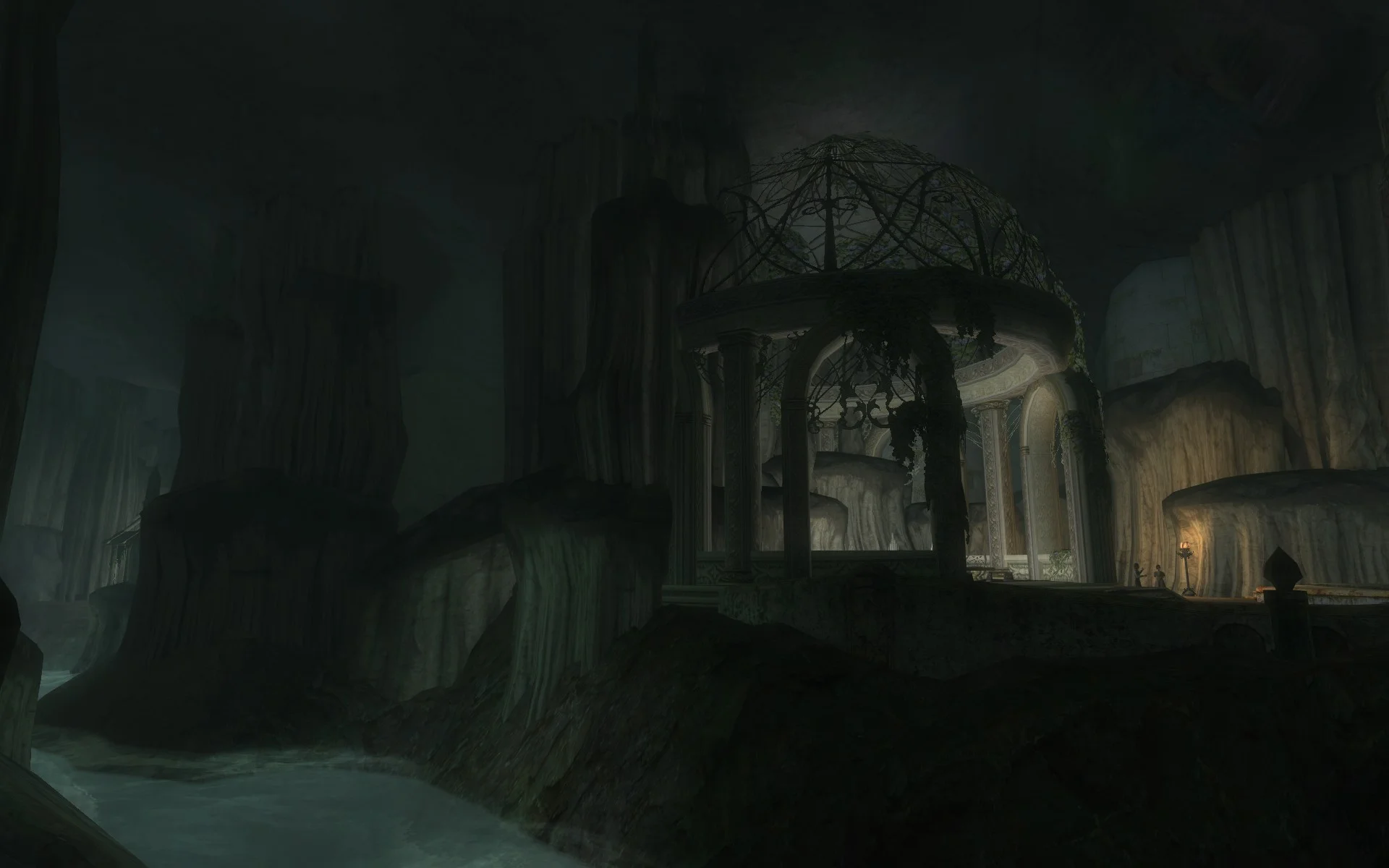
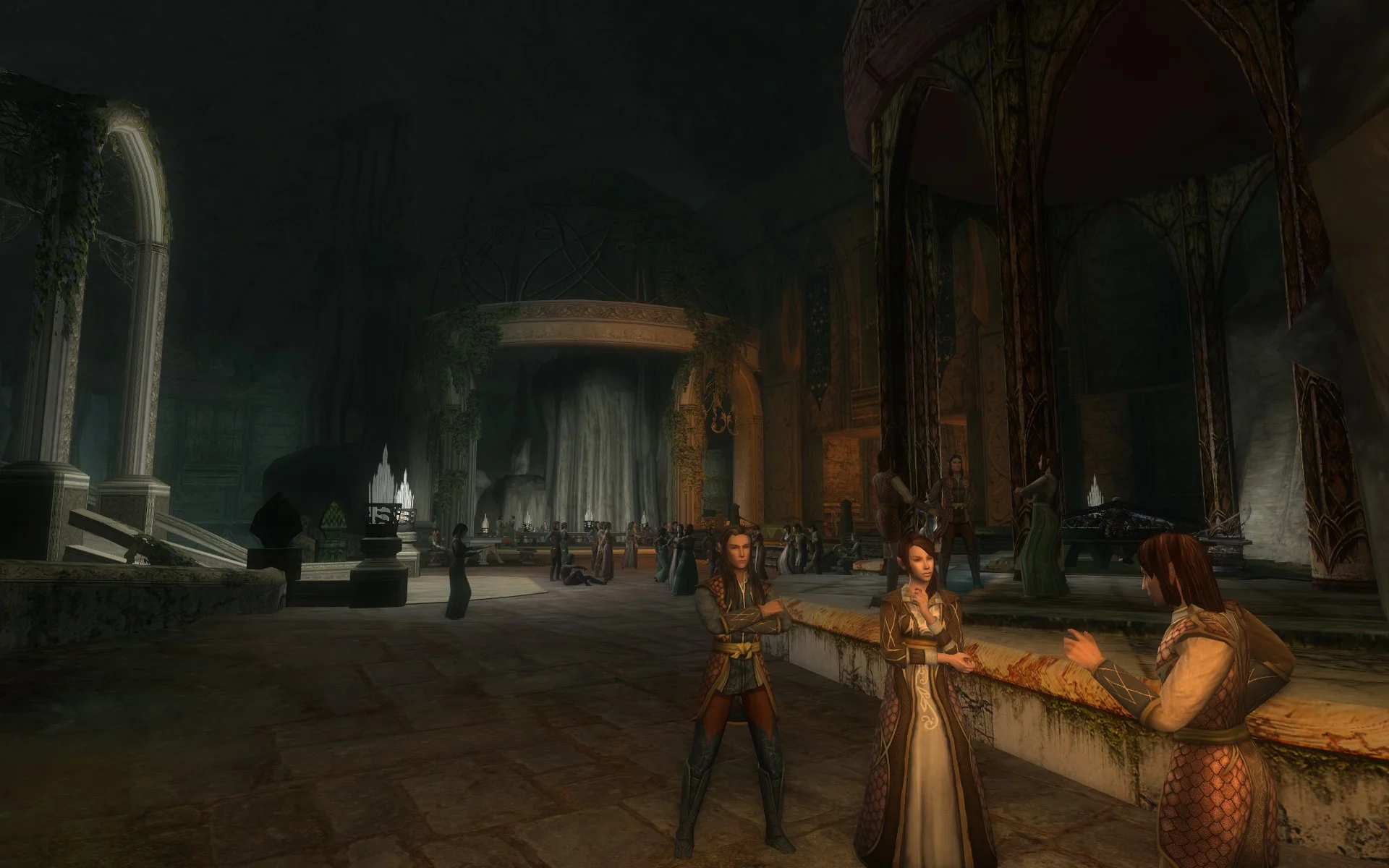
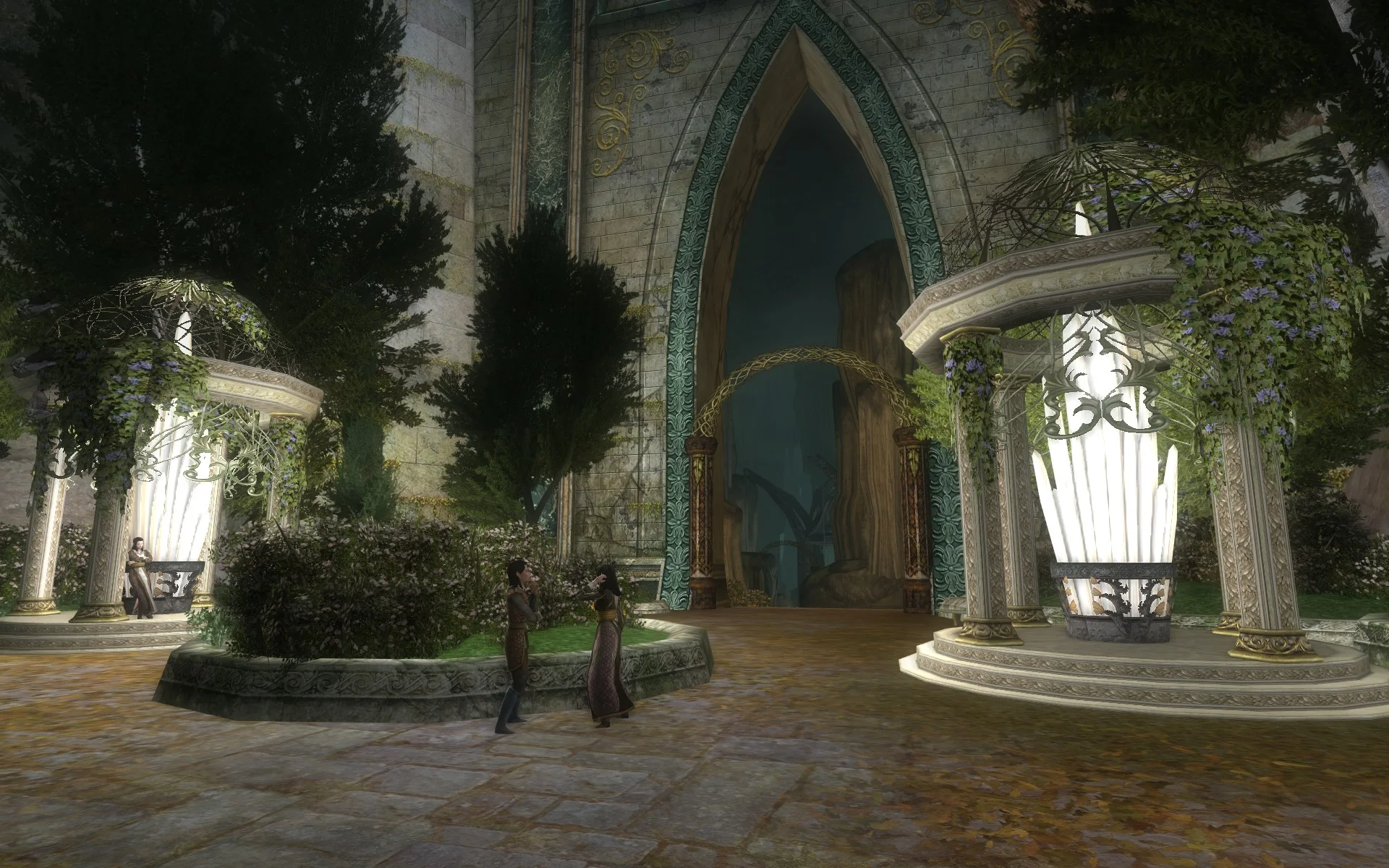
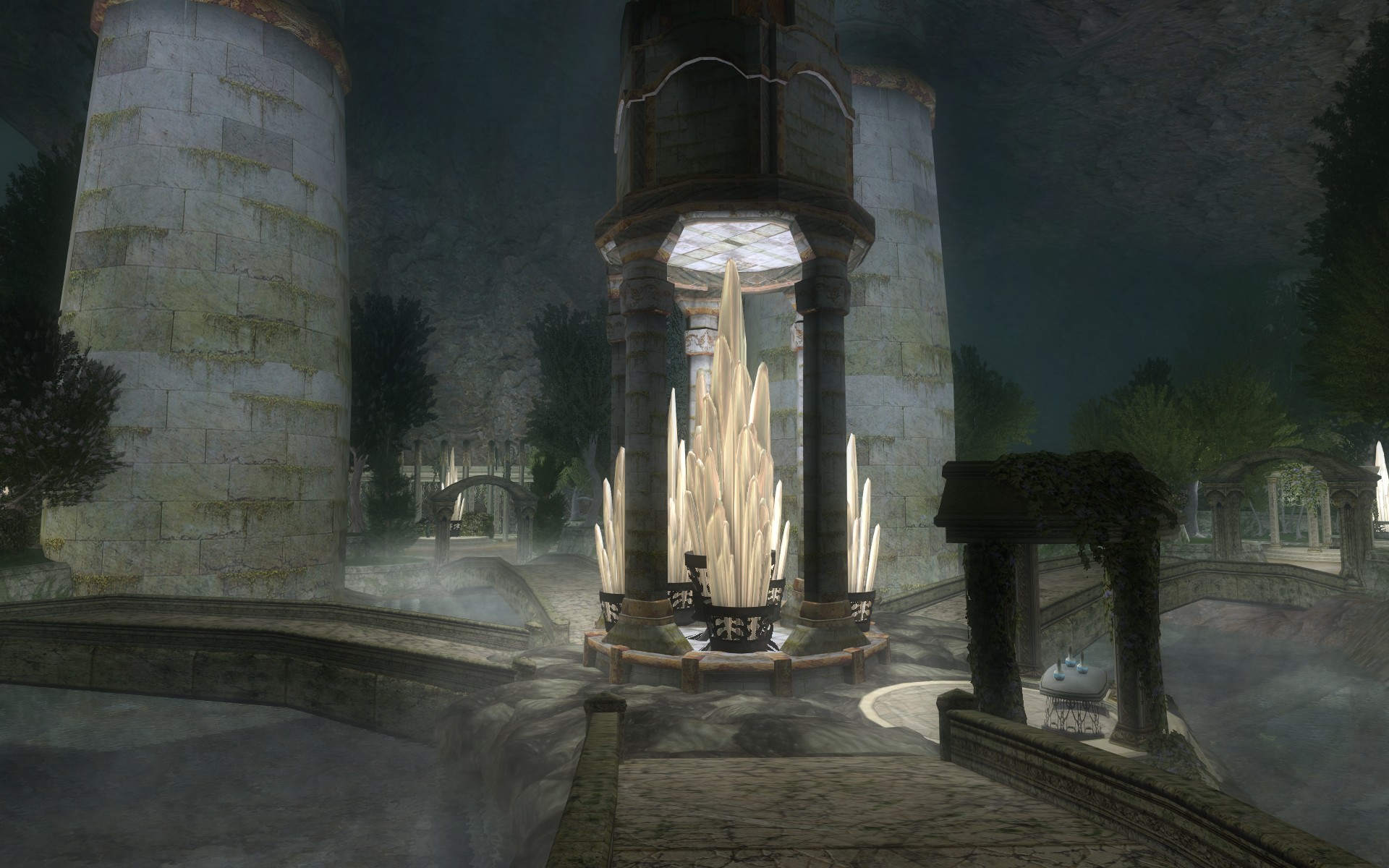
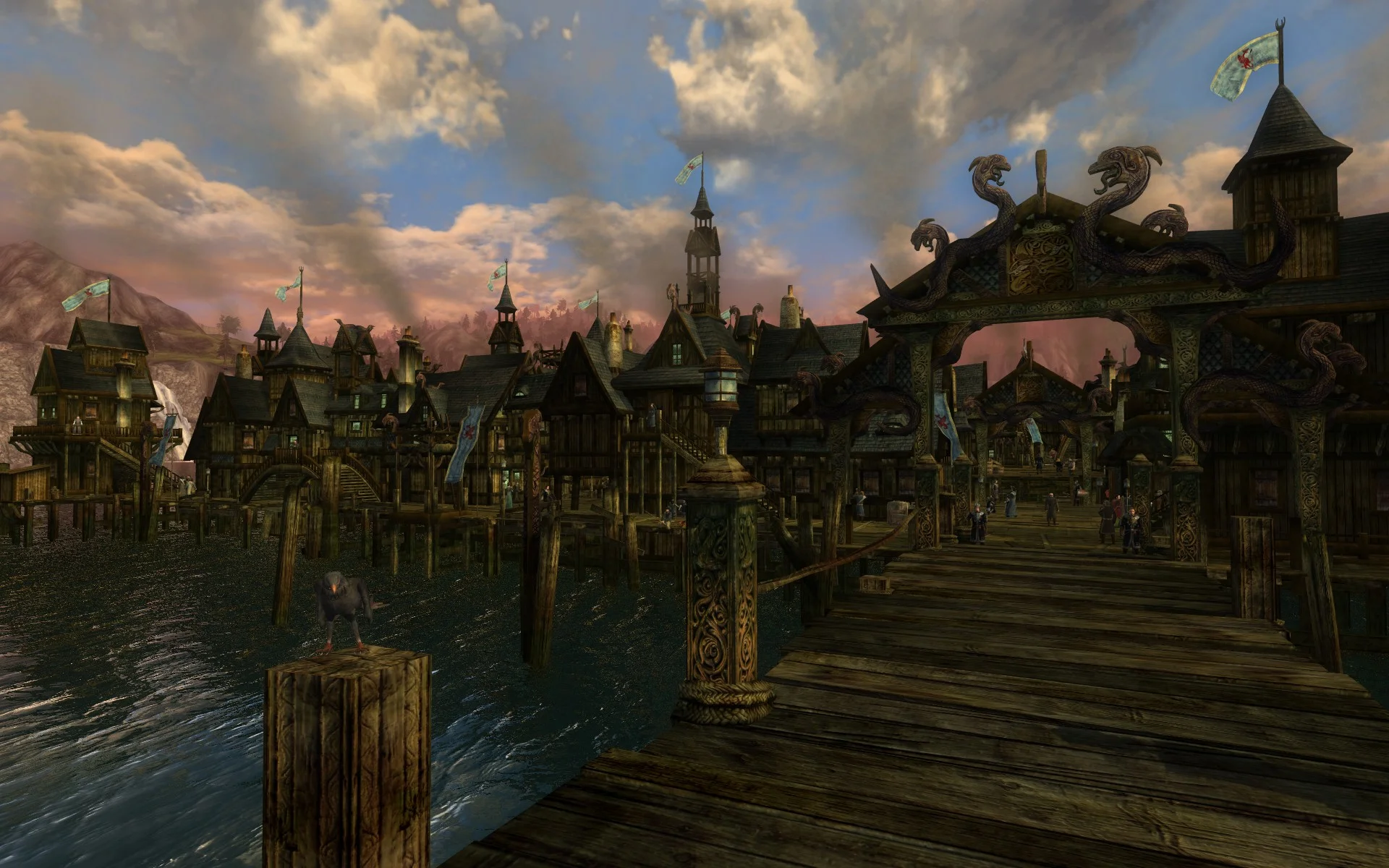
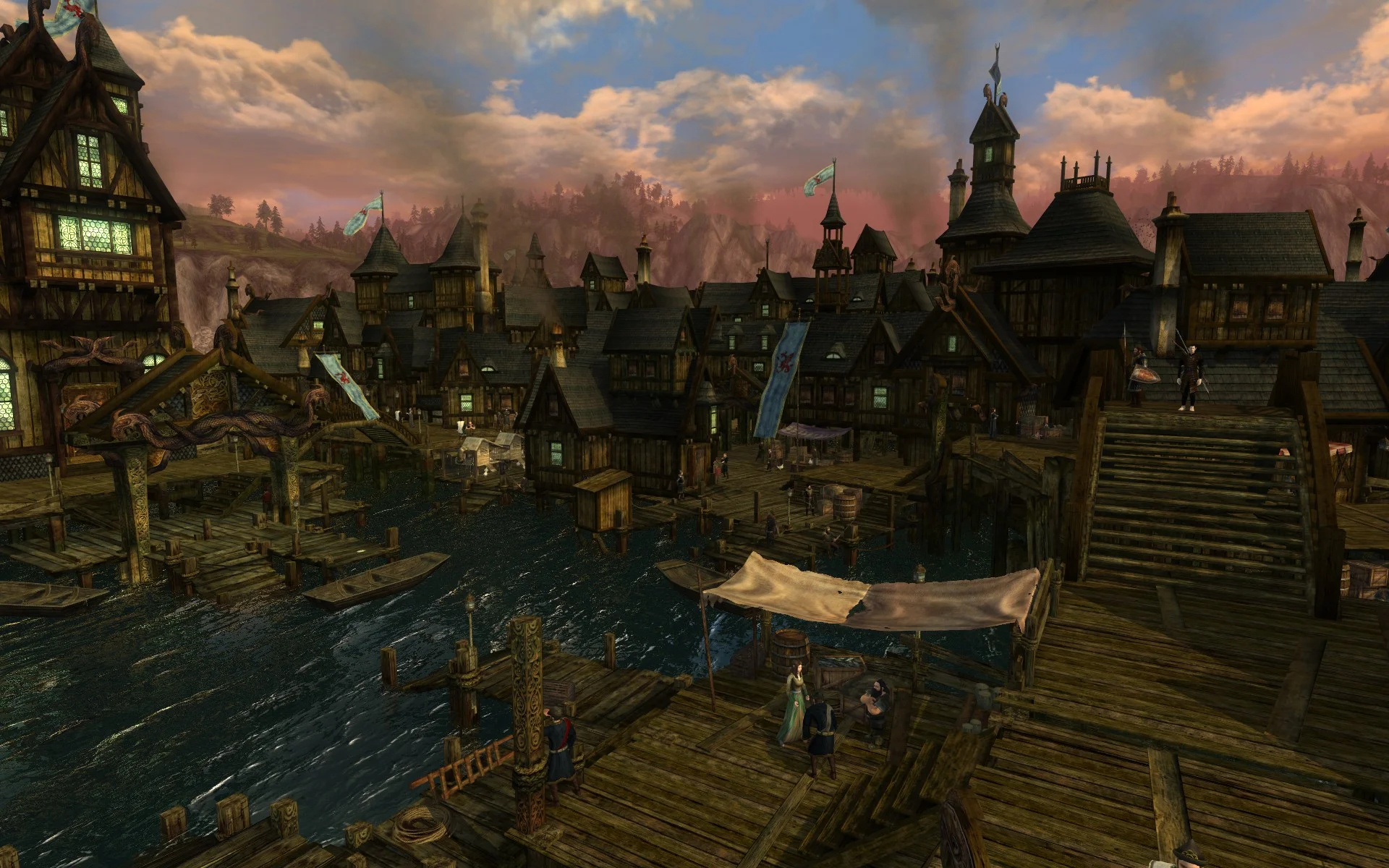
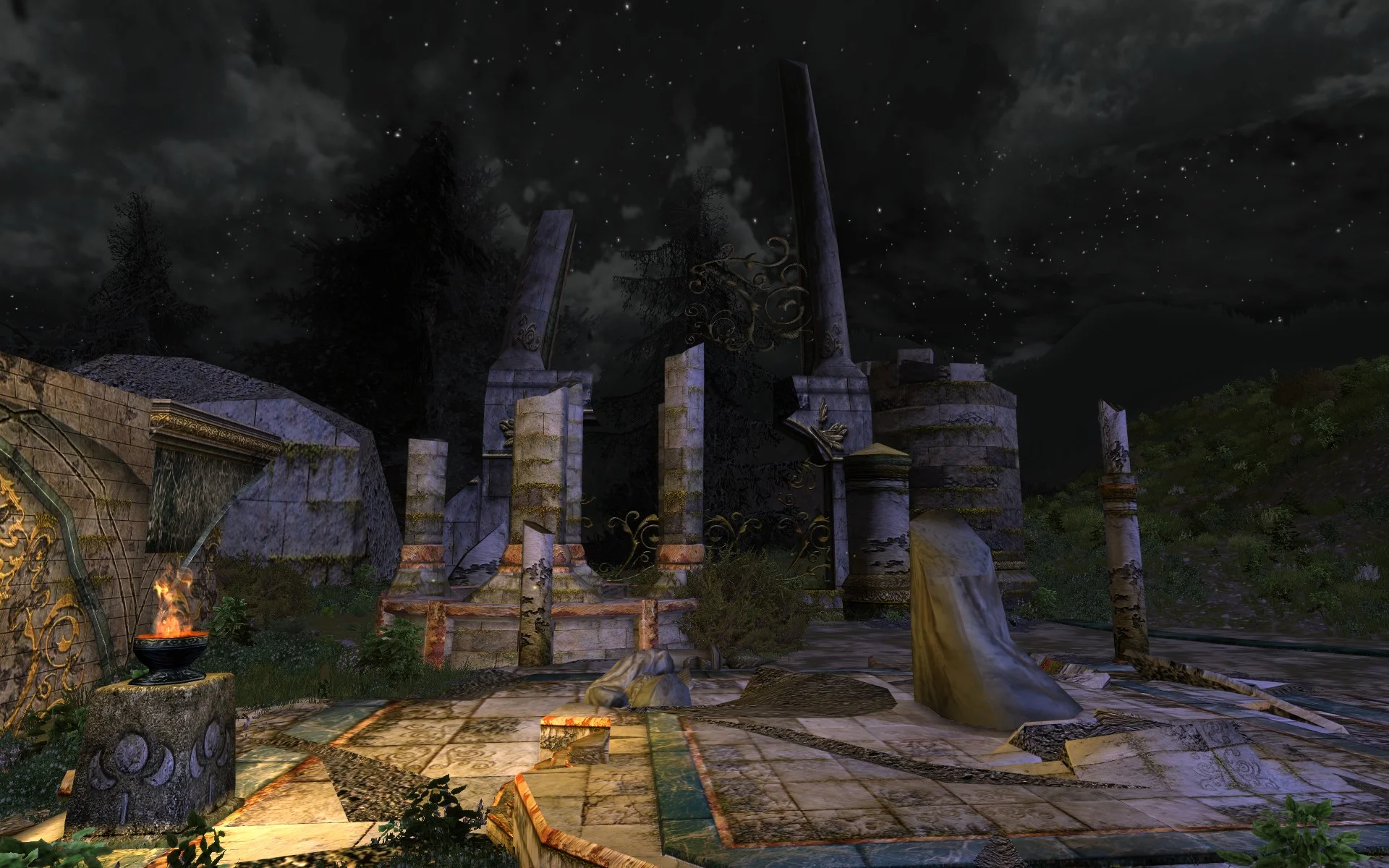
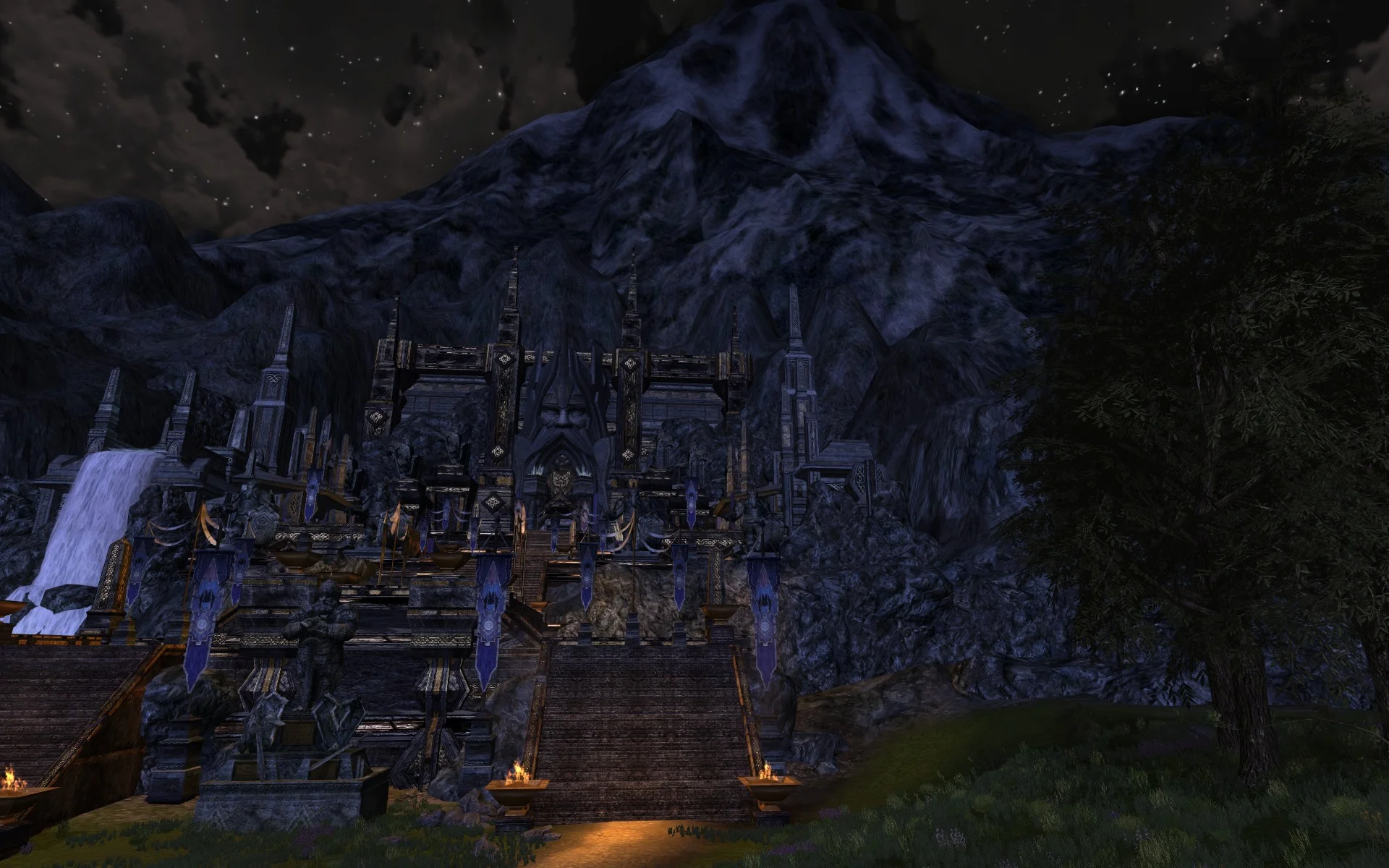
Game Complexity
While perusing You Tube, I watched the following video, boldly titled “The Top MMOs to Play This Year”. I found it to be quite informative and felt that the creator made their case well. However, one thing struck me about the five new MMOs that were referenced. All of these titles seem to be stepping away from the “business as usual” approach of the genre and pursuing an increase in complexity with respect to their game systems and mechanics. Now that’s not to say that existing MMORPGs are not complex. Some are, but I usually find that this is born out of skills or systems bloat and a games growth over time. On paper many of LOTROs mechanics are straightforward, but it is their implementation that is esoteric. This is not the same sort of complexity I saw referenced in the video. Many of these new MMOs will feature systems that need to be monitored, maintained or augmented by the player, because they have a direct impact upon the gameplay experience and the very environment of the virtual world they’ll inhabit.
While perusing You Tube, I watched the following video, boldly titled “The Top MMOs to Play This Year”. I found it to be quite informative and felt that the creator made their case well. However, one thing struck me about the five new MMOs that were referenced. All of these titles seem to be stepping away from the “business as usual” approach of the genre and pursuing an increase in complexity with respect to their game systems and mechanics. Now that’s not to say that existing MMORPGs are not complex. Some are, but I usually find that this is born out of skills or systems bloat and a games growth over time. On paper many of LOTROs mechanics are straightforward, but it is their implementation that is esoteric. This is not the same sort of complexity I saw referenced in the video. Many of these new MMOs will feature systems that need to be monitored, maintained or augmented by the player, because they have a direct impact upon the gameplay experience and the very environment of the virtual world they’ll inhabit.
The weather, the economy, faction feuds, coupled with mechanics such as ageing, permadeath and full corpse looting means that those playing Chronicles of Elyria will have to be cognisant of what is happening around, both at an in-game and community level. And it is this very level of complexity that will be a major selling point of the game. You will always find comments on gaming forums or websites such as Massively Overpowered, from some old school gamers lamenting the level of “hand holding” you find in contemporary MMOs. The industry shift in the last ten years to accommodate the so-called “casual” player has not been universally embraced. Therefore, any new title that dispenses with quest trackers, mini-maps and any of the other quality of life improvements must surely appeal to such advocates. Having to think and reason, as well as play collaboratively must surely offer an experience closer to that found in the golden age of MMOs; something such player always extol. Surely the element of risk presented by playing in such an environment, will be to their liking?
One thing is certain. If you wish to effectively play these new MMOs with their additional layers of complexity, then you will need to invest a substantial amount of time not only to progress through the actual game, but to track and master the various systems and variables that can impact upon your experience. You must also cultivate a mindset that accepts that external factors beyond your control will impact upon your time in-game. You may lose valuable resources, or your avatar may even die, effectively mitigating the time and effort you’ve spent. And therein lies the rub. Although on paper I find a lot of the complex parameters featured in these upcoming MMOs interesting, I wouldn’t choose to endure them. A decade ago I had the time and the dedication to invest in MMOs. I do not now and certainly wouldn’t choose to play a game with such a specific rule set. I play for amusement and leisure, not competition and bragging rights (as some seem to define gaming by). I simply don’t want a game that becomes a “job”.
What remains to be seen is whether these new MMOs with their complex and punitive rule set, find a sufficiently big enough player base to sustain themselves financially. I believe that there are gamers out there that will embrace such an approach and we’ve seen successful games of this nature in the past. It simply comes down to whether there is a viable market or not. I suspect that not all of these titles such as Chronicles of Elyria, Pantheon: Rise of The Fallen, Crowfall and Ashes of Creation will survive. When looking back at early MMOs, we must not overlook the context of the era that spawned them. Many factors such as internet connection speed, graphics quality, server technology shaped their design. Gaming itself was also not so common place an activity and pitching to a player base then, was radically different from the market we see today. So, I think that possibly only a few of these new titles will be commercially successful and the others will end up as interesting but ultimately failed experiments. As ever time will tell.
Looking For a Bargain in ESO
My recent return to The Elder Scrolls Online has been an enjoyable experience. Like STO, it has taken three attempts for the game to chime with me but this time round, everything has fallen into place. I have managed to install just the right number of add-ons to enhance my experience. I’ve also discovered a class which suits my play style and am currently pursuing a specific build. The quest stories are well written and involving which means I don’t feel like I’m simply undertaking arbitrary tasks for XP. Overall ESO seems to be in a much better place than it was upon its launch in early 2014. Because my progress through the game is going well, I’m considering my options with regard to DLC. I bought the digital collector’s upgrade edition of the Morrowind expansion for £17.99 which is a competitive price. However, I’m interested in the Dark Brotherhood story line because I enjoyed it in Skyrim, so I’ve been trying to find a similar bargain.
My recent return to The Elder Scrolls Online has been an enjoyable experience. Like STO, it has taken three attempts for the game to chime with me but this time round, everything has fallen into place. I have managed to install just the right number of add-ons to enhance my experience. I’ve also discovered a class which suits my play style and am currently pursuing a specific build. The quest stories are well written and involving which means I don’t feel like I’m simply undertaking arbitrary tasks for XP. Overall ESO seems to be in a much better place than it was upon its launch in early 2014. Because my progress through the game is going well, I’m considering my options with regard to DLC. I bought the digital collector’s upgrade edition of the Morrowind expansion for £17.99 which is a competitive price. However, I’m interested in the Dark Brotherhood story line because I enjoyed it in Skyrim, so I’ve been trying to find a similar bargain.
At present, ZeniMax have a deal on the Guilds and Glory Mega Pack DLC in the Crown store. This contains Dark Brotherhood, Imperial City, Orsinium and the Thieves Guild and costs 5,500 Crowns (£29.99). At first glance this looks like an adequate discount as individual DLC usually costs between 2,000 and 4,500 Crowns. However, if you shop around and check some of the game key websites, you can find the Gold Edition of ESO, which contains the base game and the above four DLC for £16.06 which is nearly half the price. This naturally is a better option for both an existing or a new player. The latter get’s the benefits of a 500 Crowns, although that won’t buy much at present prices. Then of course there is the option to buy neither of these “bundles” and to subscribed to ESO Plus which will unlock all current DLC. However, access to all new content is dependent on remaining a ESO Plus member, which doesn’t suit everyone.
Furthermore, it would appear that pre-paid subscription cards for ESO have been withdrawn since the changes in the games business model in 2015. There may still be some residual stock in circulation, although whether they still work or not remains to be seen. In the US Gamestop sell six-month ESO Plus time cards that come with a crate allowance. These are purchased online and provide a redeemable code. These are not however available in Europe. Therefore, I’d advise caution to anyone searching through the third-party websites that sell CD keys and game consumables. Ensure that any pre-paid cards are not those for older versions of ESO. Unless the product directly references ESO Plus, then the cards in question are more than likely obsolete.
As ESO is a buy-to-play game, the selling of additional DLC, expansions and cosmetics is the primary source of revenue. ESO Plus offers a further line of capital, although have no data as to how popular the subscription is. Therefore, it is logical that the developers ZeniMax will endeavour to control prices of all their products. Naturally there are sales and discounts to be had from time-to -time, to encourage player spending. But beyond these there is not a lot of scope to obtain a “bargain” for ESO, outside of official channels. Apart from seeking a deal on the Gold or Imperial Editions of the base game, along with the Morrowind Expansion, players are at the mercy of the in-game store prices. However, I do not find the existing business model for ESO to be too egregious and I’m certainly getting a lot value from my initial expenditure at the moment. So, for the present, the cost of playing ESO is seems equitable. Let’s hope it remains that way.
Guilds, Kinships and Fleets
I’ve been in the same LOTRO kinship (a.k.a. guild) since 2009. It’s relatively small in size, made up of a core group of about 20 players and their various alts. Everyone knows each other, and we all get along. There’s a broad spectrum of members from across the UK and Europe and the average age is about 35 plus. We’ve had some drama in the past from a few individuals, but they’ve either left or stopped playing. I don’t recollect there ever being an occasion when someone was. After ten years the kinship is at a point where it just ticks over without any major problems. There are events and activities for those who wish to participate, or if you prefer to simply potter about Middle-earth, then you’ll be left to do so. In the past we’ve had our own kinship website and forums, along with TeamSpeak server and other external support facilities. Bu all of these have fallen by the wayside as the Kinship has evolved. We now just focus on playing the game. Overall, the kinship is a friendly bunch and a good fit for my casual style of gameplay, which is why I’ve remained a member for nine years.
I’ve been in the same LOTRO kinship (a.k.a. guild) since 2009. It’s relatively small in size, made up of a core group of about 20 players and their various alts. Everyone knows each other, and we all get along. There’s a broad spectrum of members from across the UK and Europe and the average age is about 35 plus. We’ve had some drama in the past from a few individuals, but they’ve either left or stopped playing. I don’t recollect there ever being an occasion when someone was. After ten years the kinship is at a point where it just ticks over without any major problems. There are events and activities for those who wish to participate, or if you prefer to simply potter about Middle-earth, then you’ll be left to do so. In the past we’ve had our own kinship website and forums, along with TeamSpeak server and other external support facilities. Bu all of these have fallen by the wayside as the Kinship has evolved. We now just focus on playing the game. Overall, the kinship is a friendly bunch and a good fit for my casual style of gameplay, which is why I’ve remained a member for nine years.
LOTRO was my first MMO and when I started playing in 2008, co-operative play was the key to progression. Much of the games content was not solo friendly, therefore joining a kinship would at that point, greatly enhance a player’s experience. However, over time things have changed. Not just for LOTRO but for many other games from the MMO genre. Despite having played Guild Wars 2, The Secret World, Rift and SWTOR, I’ve never joined a guild for any of these games. There was (and remains for me) no compelling reason to do so. When I started playing LOTRO, part of the charm of the game and indeed the genre, was the social aspect. For me the notion of playing online with others was still a novel experience. However, as newer MMOs emerged, I found that I was more concerned with their gameplay and narrative, rather than cultivating new friendships. Furthermore, due to the increase in casual gaming, more recent MMOs are far more casual friendly.
There are always exceptions to the rules, though. The Fleet system in Star Trek Online offers a wealth of benefits and a player is potentially limiting their options if they do not join one. Fleet holdings such as the Starbases and dilithium mines are maintained by players contributing resources. Once holdings reach optimal capacity, they can provide gear, weapons and consumables, all of which are of a superior quality to that from standard vendors. It’s a relatively similar situation in The Elder Scrolls Online. Being in a guild allows access to quality crafted items which are not so readily available elsewhere. Hence in both these games I have joined guilds, simply to gain access to these facilities. In STO I am a member of REDdit Alert Fleet and although they are a friendly bunch, I am not socially active within it. I maintain a level of civility and ensure I contribute to the fleet projects but beyond that I tend to keep myself to myself and pursue my own goals within the game.
Playing any MMO successfully requires a substantial investment of time. The same can be said about joining a guild. A guild is more than just a collective designed to facilitate group content. It is often a closely knit social group in which members become firm friends, get to know each other and provide mutual support. They can become very intimate environments, sometimes doubling as group therapy or a virtual pub in which players can blow off steam after a tough day at work. For me, my best experience in a guild coincided with my best experience with an MMO. It was during a two-year period of my life in which I had the time and inclination to dedicate to both a leisure activity and a social group. It was a time that I enjoyed immensely. Now, although I like the social aspects of guilds in STO and ESO, they are mainly a means to an end. However, if I ever get nostalgic, all I have to do is return to my LOTRO kinship to be reminded of prior good times.
Star Trek Online: New Ships, Old Prices
Yesterday saw a lot of new content come to Star Trek Online. First off, we saw the start of the eighth anniversary event and the opportunity to earn a Bajoran Interceptor. There’s also a new featured episode; Scylla and Charybdis which further explores the Tzenkethi story line. And then there’s the release of the new Discovery lock box, which ties STO into the new Star Trek: Discovery television show. New lock boxes, means new ships. This time round there’s an opportunity to win a Tier 6 Crossfield-class Science Vanguard which boasts a formidable array of stats. Judging by the discussion on the official STO subreddit, the new vessel seems to have been very well received by the player community. The universal console, Mycelium Ambush, when activated temporarily disables ships weapons and transports the vessel forward. It then releases an energy pulse, impeding the engines of nearby enemy vessels while enhancing your own starship's weapons. After a few seconds, multiple torpedoes are launched, and your starship's weapons are disabled again in order to transport back to the original position.
Yesterday saw a lot of new content come to Star Trek Online. First off, we saw the start of the eighth anniversary event and the opportunity to earn a Bajoran Interceptor. There’s also a new featured episode; Scylla and Charybdis which further explores the Tzenkethi story line. And then there’s the release of the new Discovery lock box, which ties STO into the new Star Trek: Discovery television show. New lock boxes, means new ships. This time round there’s an opportunity to win a Tier 6 Crossfield-class Science Vanguard which boasts a formidable array of stats. Judging by the discussion on the official STO subreddit, the new vessel seems to have been very well received by the player community. The universal console, Mycelium Ambush, when activated temporarily disables ships weapons and transports the vessel forward. It then releases an energy pulse, impeding the engines of nearby enemy vessels while enhancing your own starship's weapons. After a few seconds, multiple torpedoes are launched, and your starship's weapons are disabled again in order to transport back to the original position.
Now considering that the new Discovery lock boxes have only been available for 24 hours, it would appear that many players have been stockpiling keys in preparation for its launch. Subsequently, despite being a rare drop many players have acquired the new Crossfield-class Science Vanguard and they are readily available on the exchange. The price is currently around 620 million energy credits, which is a tidy sum. The ship has also turned up for sale on third party websites available for sale at $125. Furthermore, the arrival of new ships has not depressed the prices of older vessels. Both Kelvin timeline ships are still holding steady at 260 million energy credit and the jewel in the crown of STO, the Tier 6 Constitution class Cruiser remians over 1.5 billion energy credits. So far, the economy adjustment that was anticipated by the introduction of the re-engineering system has yet to happen, although it is still only early days.
The problems STO faces with its in-game economy are really no different from many other MMOs. Frequently, the accumulation of wealth becomes a meta game in its own right. LOTRO has a similarly skewed game economy with everyday items that can be easily gathered, priced extremely high. This is not through supply and demand, but simply because such prices can be charged and paid for. Because gold is simply created in MMOs, rather than linked to any other sort of economic resource to base its levels, it doesn’t take long for hyperinflation to occur. Hyperinflation is detrimental to new and returning players. It can often lead to the auction service becoming the exclusive province of the virtually super rich. Hence we see the introduction of money sinks to try and remove surplus capital from games. These may be auction house fees, non-craftable consumables or housing fees. However money sinks seldom return a game’s economy back to a state of normality.
Cryptic have adjusted the in-game economy of STO several times over the last eight years. It is now far harder to earn energy credits, the games primary currency, than it was four years ago However, the damage is already done and there’s an immense amount of currency in circulation, often stockpiled by power players. The game’s crafting and upgrade system is also a contributory factor to hyperinflation. Until recently, if you craft and upgrade a ships weapon for example, there has been no control over which modifiers are added to it. Hence players would sell on items that didn’t meet their expectations. These items then flood the in-game auction house at inflated prices, as players seek gear with the attributes they require. The new re-engineering system is supposed to make obtaining the modifiers that you desire easier. It will allegedly level the playing field and make players less reliant on crafted items for sale on the exchange. Cryptic hope that this system will ultimately depress prices and eventually lead to less superfluous items entering the game’s financial ecosystem.
MMO economies are strange and esoteric beasts. Despite external factors created by developers, designed to slow and divert wealth creation, it is frequently impossible to slow player progression and dampen their enthusiasm. MMO gamers often rise to the occasion and embrace grind rather than capitulate to it. I suspect that it will take a considerable amount of time before we see any major change in the STO economy. Furthermore, the re-engineering system may well remove the surplus of crated items on the exchange, but I cannot see it impacting upon the prices of rare Tier 6 vessels. If someone is prepared to pay 1.5 billion energy credits for the latest and rarest of ships then the prices will remain as they are. The only other alternative is to make such items bound which would then incur a new set of problems, along with a great deal of player outrage. So for the meantime it is simply a question of watching and waiting to see in what direction the STO market goes.

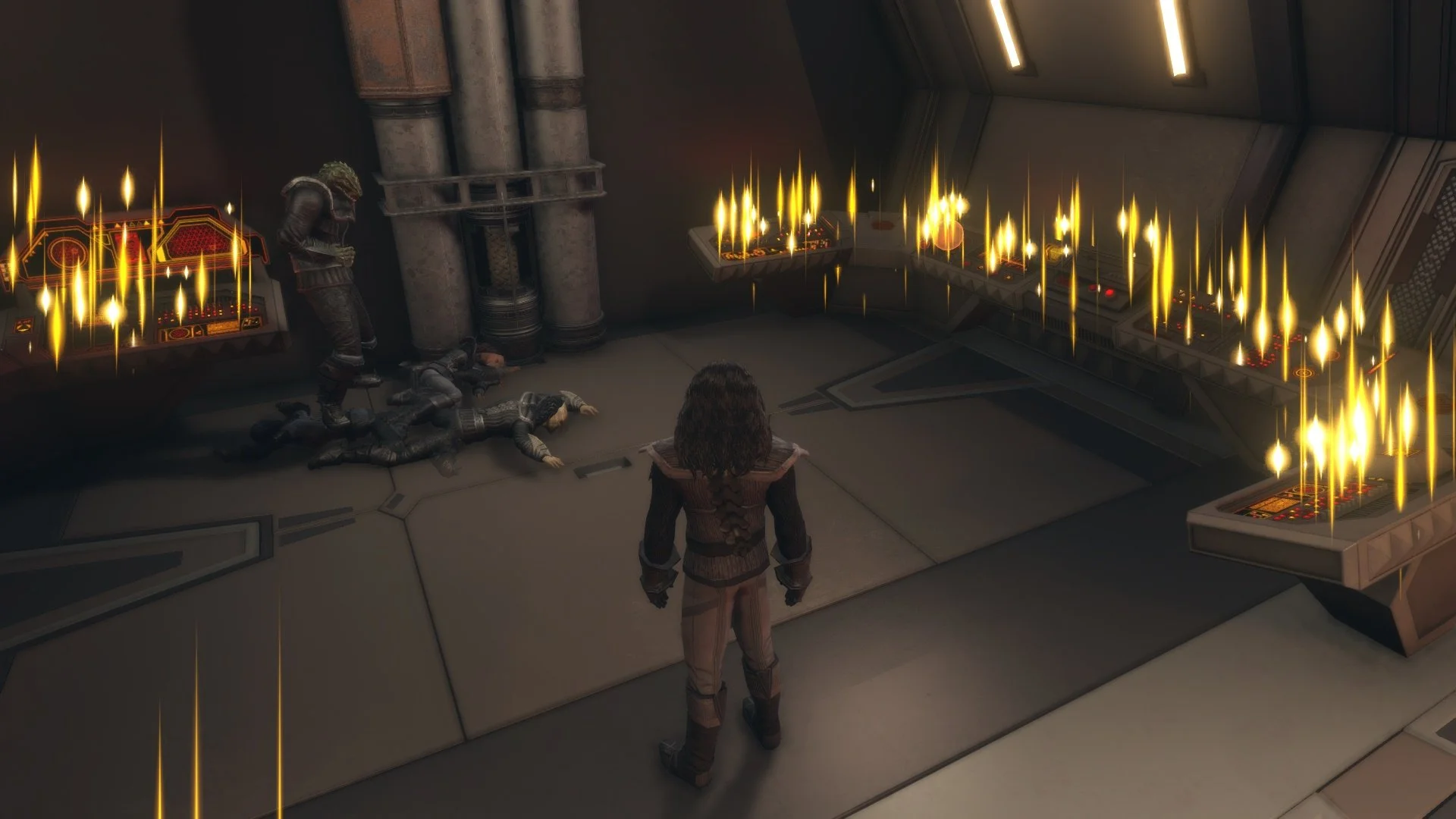
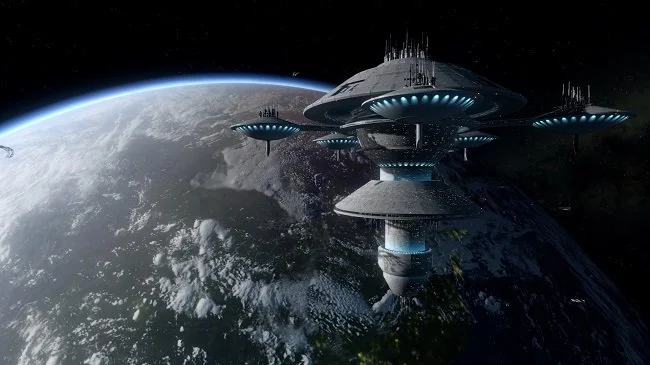
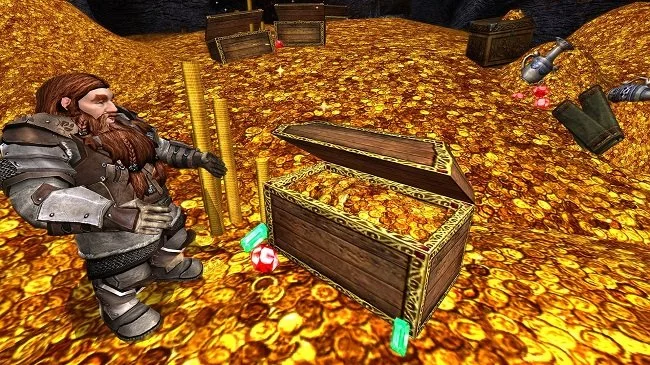
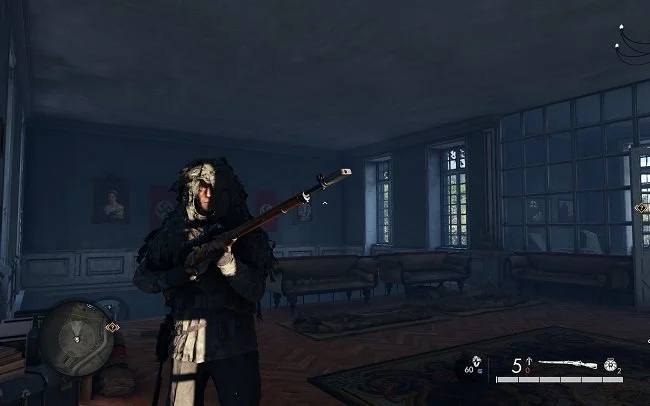
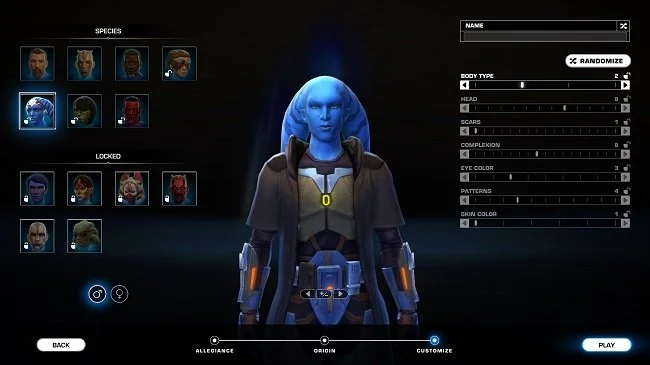

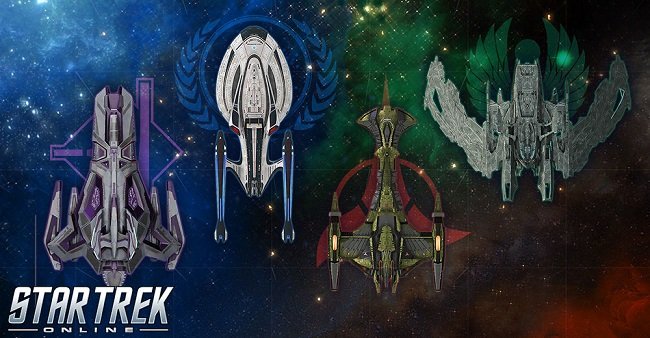
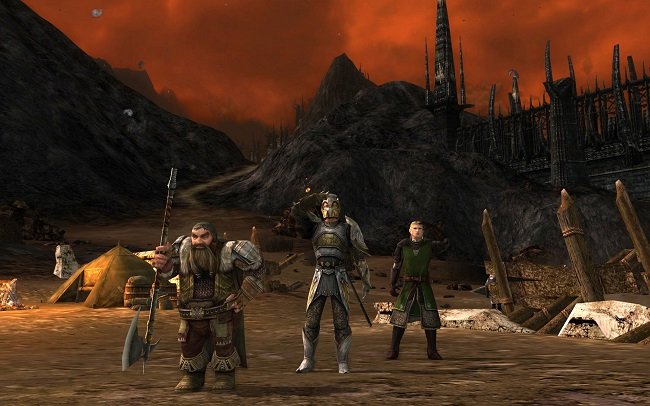
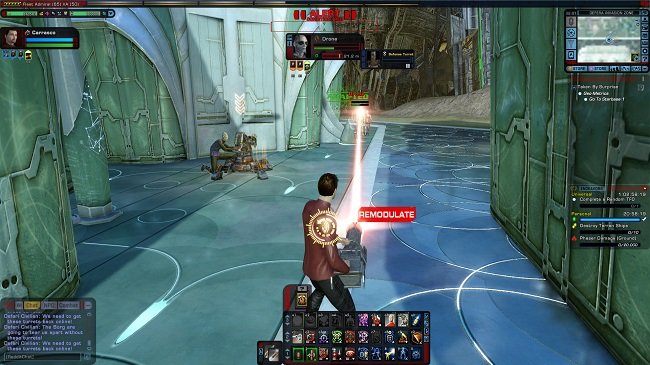
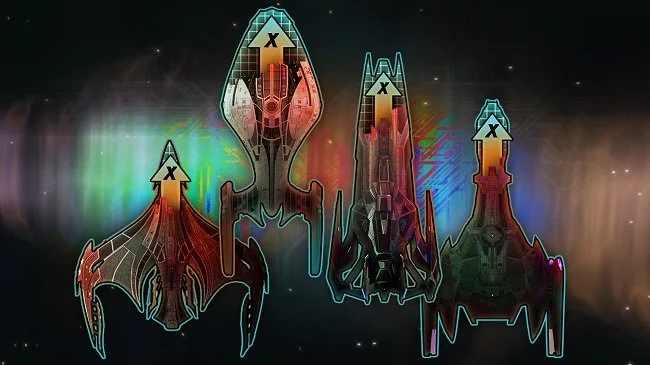
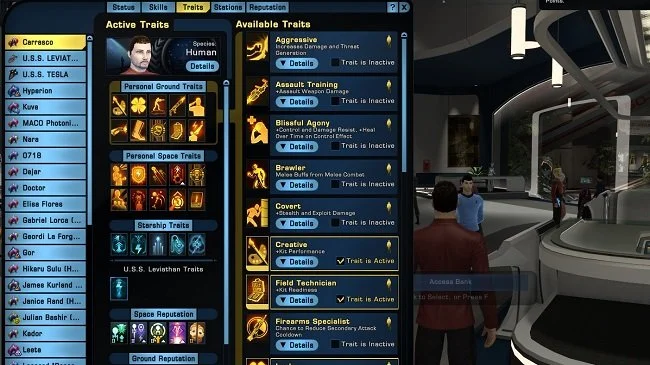
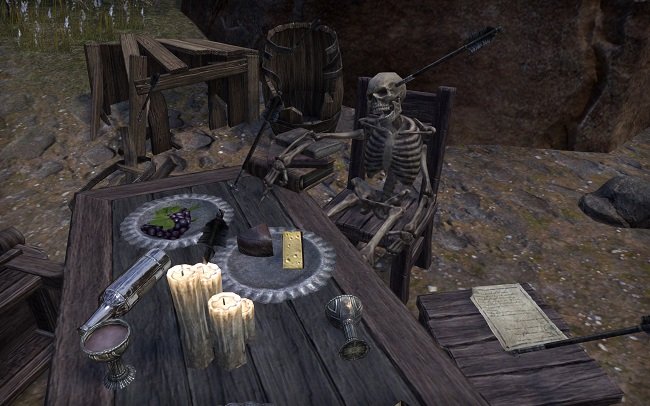
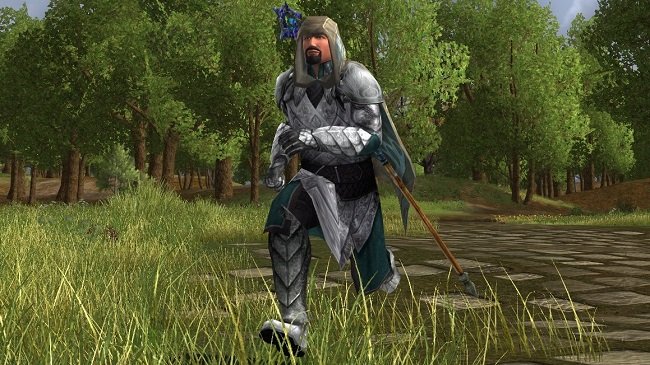
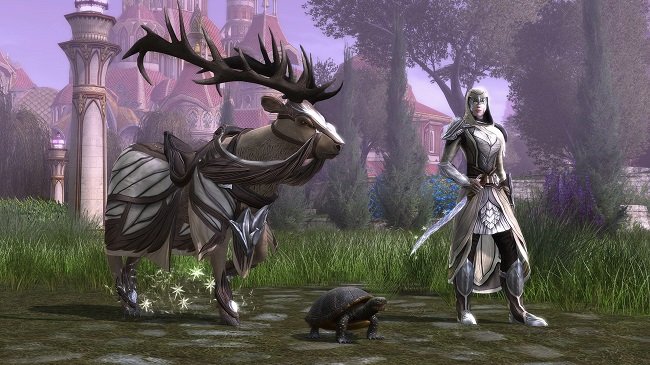
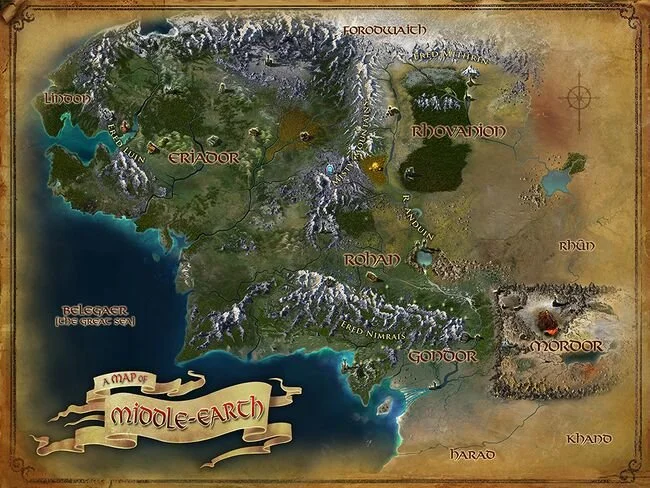
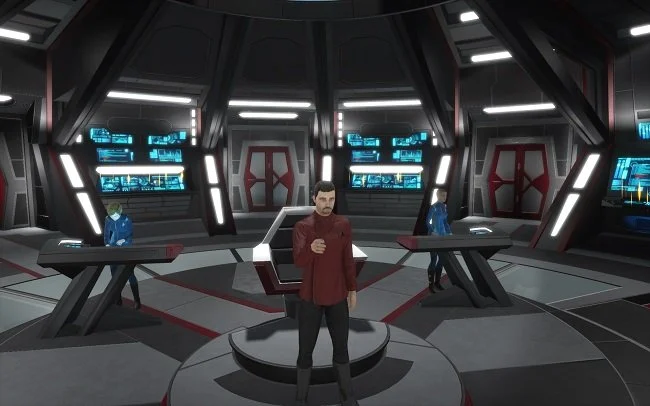

Alik’r Desert Dolmen Farming
Back in 2014 when I was still regularly playing Guild Wars 2 a popular way to level up quickly, as well as grind various rewards, was to join the Queensdale Champion Train. The region was home to multiple Champion level bosses and groups would farm these for hours on end. On arriving in Queensdale, if you wished to join the “train” and farm the various bosses, it was customary to ask “choo choo” in zone chat. You’d then be informed where the “zerg” was and you could catch up with it accordingly. Such are the quaint and esoteric customs associated with the MMO genre. The Queensdale Champion Train eventually got nerfed by ArenaNet and the bosses downgraded, so that it ceased being a viable undertaking. The reason I mention this is because I recently discovered a very similar set up in The Elder Scrolls online. Namely Alik’r Desert Dolmen Farming.
Back in 2014 when I was still regularly playing Guild Wars 2 a popular way to level up quickly, as well as grind various rewards, was to join the Queensdale Champion Train. The region was home to multiple Champion level bosses and groups would farm these for hours on end. On arriving in Queensdale, if you wished to join the “train” and farm the various bosses, it was customary to ask “choo choo” in zone chat. You’d then be informed where the “zerg” was and you could catch up with it accordingly. Such are the quaint and esoteric customs associated with the MMO genre. The Queensdale Champion Train eventually got nerfed by ArenaNet and the bosses downgraded, so that it ceased being a viable undertaking. The reason I mention this is because I recently discovered a very similar set up in The Elder Scrolls online. Namely Alik’r Desert Dolmen Farming.
For those who don’t know, here is a brief explanation of how this player driven event works. Dark Anchors or Dolmens are specific places where the forces of Molag Bal set an "anchor" point to pull Tamriel into Coldharbour. Each zone has 3 Dolmens (except Cyrodiil). The Dark Anchors are activated when fanatical cultists spawn around the Dolmen and begin incantations to open them. Once active these become world events. You can see the effects and hear the incantations from far away, and a horn will sound when the portal is opened. Evil forces then mount an incursion which has to be repelled. Once the event has finished and the Dark Anchors closed, a chest spawns with various rewards. Naturally Dolmens can be used as a means to gain XP quickly and level up.
The reason the Alik’r Desert is popular for Dolmen farming is because there are wayshrines (quick travel teleporters) conveniently close to each location. The Aswala Stables Wayshrine is near to the Hollow Waste Dolmen, Goat's Head Oasis Wayshrine is well placed for the Myrkwasa Dolmen and Shrikes Aerie Wayshrine is at the foot of the hill of the Tigonus Dolmen. Furthermore, the Dolmen respawn quickly in this region and it is not to difficult to complete each and swiftly travel to the next. As with Guild Wars 2, if you enquire in zone chat, you can ascertain where the current “zerg” is. If you type “+ Dolmen” in chat you can potentially join any group farming in the area. Grouping increases XP gain by 10% and also shows the location of the group leader on the map.
I have spent some time recently farming Dolmen in this fashion and it certainly does allow you to level quite quickly. Because content scales in ESO, it’s not as if you out level the regular story quests in the game. Naturally some purist players will pooh-pooh this play style. There’s also the possibility that ZeniMax might nerf this situation in the future if they choose to. One of the reasons ArenaNet nerfed the Champion farming in Guild Wars 2 was because they felt that the “zerg” disrupted new players in what was essentially a low-level area. Whether a similar situation occurs in ESO remains to be seen. In the meantime, I’m going to “make hay while the suns shines” and continue to supplement my regular progression through ESO with such Dolmen farming.