
When MMOs Die
Have you ever wondered exactly what happens when an MMO shuts down? Let's not use the phrase "shuttered" as it’s a public relations term intended to mitigate and defuse the reality of the situation. It is intended to take the sting out of the notion of a game closing; evoking imagery of a well-respected family business, closing up shop for the last time and retiring to Cheshire to keep bees. No that will not do at all, so we won't use it here. "Shut down" is far more accurate. It cuts to the chase, accommodating the economic and legal reasons, which are often the primary reason that a game is closing. It also has a far more definitive ring to it, where “shuttered” leaves room for hope. After all the shutters can come back down from the closed family business, if beekeeping doesn’t work out.
Have you ever wondered exactly what happens when an MMO shuts down? Let's not use the phrase "shuttered" as it’s a public relations term intended to mitigate and defuse the reality of the situation. It is intended to take the sting out of the notion of a game closing; evoking imagery of a well-respected family business, closing up shop for the last time and retiring to Cheshire to keep bees. No that will not do at all, so we won't use it here. "Shut down" is far more accurate. It cuts to the chase, accommodating the economic and legal reasons, which are often the primary reason that a game is closing. It also has a far more definitive ring to it, where “shuttered” leaves room for hope. After all the shutters can come back down from the closed family business, if beekeeping doesn’t work out.
So back to the original question, what is it actually like when a substantial MMORPG finally shuts down? I'm sure we all understand the fundamental concepts involved. The logistics of it are no different from when you're playing an active game online and it's taken down for patching. You receive a succession of on-screen notifications and then you're disconnected. What I'm talking about here is the emotional impact it has upon players and social groups. What is it like to be logged in to your game of choice in those final moments? To be surrounded by your friends in a virtual world that you love and have invested so much time into, knowing that within minutes it will be gone forever? To be moments away from a form of virtual bereavement and subsequent online homelessness?
The answer is ultimately very subjective. Most mature adults have an idea of their own emotional literacy and can probably imagine how they would react in a given situation. I can fully understand how heart breaking it could be for some players to see an integral part of their social life ignominiously dispensed with at the flick of a metaphorical switch. As for myself, I would see it as an inevitability and would therefore deal with it with a degree of emotional detachment. I would also ensure that I was "there when the lights went out”, just so I could experience first-hand what the final moments were actually like. Plus, there may be some last-minute fun and games as the developers turn on various events and gated activities or release a horde of mobs into the world. At the very least, the situation would certainly merit a blog post.
WildStar closed last November and a year prior to that so did Marvel Heroes. Other games such as Vanguard and Wizardry Online have also been shut down in recent years, all of which were for financial, licensing or administrative restructuring issues. All of these games had an active player base, that enjoyed and supported the games right up until the last moment. Subsequently, a cursory search online will produce a wealth of videos, screenshots and eulogies made by those who have become displaced by MMO closures and are still mourning their passing. If you have never played an MMO to any extent, then it will all seem a little perfunctory and a bit of a storm in a teacup to you. For those that have spent hours of their life in a virtual world, with friends they’ve made along the way, it is a far more emotionally compelling matter.
I'm a firm believer in the old adage "forewarned is forearmed". It may not come as any surprise to those who know me that I've made all the necessary arrangements for my own funeral. That's how I run my life. So, for me watching videos of the last moments of any MMO is a pertinent reminder that a similar fate will eventually come to those that I currently play. However, not everyone is like me and some people don't like to continence such things. Each to their own. We all deal with things in our own fashion. However, I would advise active MMO players to watch the video below, regarding WildStar, and subsequently reflect upon it. Perhaps it may teach us to be a little more appreciative of the games we currently enjoy, because time and tide waits for no man or MMO.







LOTRO: The Downside to Fast Levelling
NB. This post is a direct continuation of previous one, posted on 2nd January. As I’ve stated many times before in prior posts, there is a tangible sense of reward to be found in levelling in an MMORPG. Gaining experience and progressing from one level to another, inching further to the in-game cap, is a clear and uncomplicated goal. It’s far from a complex process. You play through content, gain loot and XP and then after a while, “ding”, you hit the next level and revel in a sense of achievement. There are naturally other goals to pursue that are more difficult to achieve, such as gaining a specific set of raid armour or obtaining maximum rep with all factions. But for many players, simply progressing by level per day (or some permutation thereof) is sufficient to keep them happy and make them feel that they are making headway within a specific game. And at present, this is exactly the approach that I take with LOTRO when playing on my new Guardian. Last night I reached level 57, while questing in Nanduhirion.
NB. This post is a direct continuation of previous one, posted on 2nd January. As I’ve stated many times before in prior posts, there is a tangible sense of reward to be found in levelling in an MMORPG. Gaining experience and progressing from one level to another, inching further to the in-game cap, is a clear and uncomplicated goal. It’s far from a complex process. You play through content, gain loot and XP and then after a while, “ding”, you hit the next level and revel in a sense of achievement. There are naturally other goals to pursue that are more difficult to achieve, such as gaining a specific set of raid armour or obtaining maximum rep with all factions. But for many players, simply progressing by level per day (or some permutation thereof) is sufficient to keep them happy and make them feel that they are making headway within a specific game. And at present, this is exactly the approach that I take with LOTRO when playing on my new Guardian. Last night I reached level 57, while questing in Nanduhirion.
Due to the drastically nerfed levelling curve and major revamp of both Shadows of Angmar and Mines of Moria, LOTRO players can fast path through a lot of the classic content if they see fit. Hence, I have focused mainly on the Epic Story and have subsequently powered through Moria to Dimrill Dale. Along the way, the legendary Item system has become available to me and I recently began levelling my second LI one-handed sword (Level 57). Now to cut along story short, the LI system is excessively complex and time consuming as well as being further hindered by different tiers of weapons. This makes any LI under level 100 somewhat redundant as they have a finite lifespan. Furthermore, some of the regular weapons I’m receiving as quest rewards have superior specifications that those on the LI I’m currently levelling. Therefore, until my Guardian hits level 100, I am levelling LI weapons but not equipping them. I will continue to use the Guardian’s Belt LI as there is no alternative to this. However, my approach pretty much sidelines the LI system for the meantime, making it a minor source of adjustment rather than a major game focus.
I’ve also noted that for a while now, low tier essences have dropped from time to time when playing through PVE content. However, I have not seen any quest rewards that offer socketed armour, nor has any randomly dropped. According to the LOTRO-Wiki the essence system becomes available at level 50, yet I have not seen any obvious means of using it at present. For the meantime I am finding a lot of the gear offered by quests to be more than satisfactory and as I have access to shared resources via the barter wallet, I can purchase specific sets from class vendors if I wish. Prior to entering Moria I purchased the High-protector's Armour (Item Level 50) from the Guardian Trainer in Rivendell. I have swapped out a few pieces but have retained four to maintain the set bonus. Again, I find that an aspect of the game that use to require some care and attention before making a choice has now been trivialised due to the wealth of options and shear volume of good quality quest rewards.
It is also worth noting that my brief flirtation with crafting has now ground to a halt. Unlocking the various tiers of the Metalsmith profession is far from difficult but the problem lies with the items required for critical success when crafting. For example, you don’t often find multiple copies of the Supreme Metalsmith's Journal available on Auction House. You therefore have to either pursue the Scholar profession on another alt or look towards your kinship for assistance. However, as both these options appear to fly in the face of the breakneck speed of progression through the game, you can simply opt not to craft and suffer no major inconvenience. And that sentiment is one that seems to prevail in the current iteration of LOTRO. It may well change when players reach Southern Mirkwood, as that area has not been revamped to my knowledge. But certainly, up until level 60 the levelling curve continues to marginalise certain game systems. It’s a shame in a way because all of these aspects of the game will play a key role at higher levels and many players will find that they may have some catching up to do at some point. Myself included. However, as I treat the MMO genre as a “live in the moment” experience, I’ll worry about such problems as and when they become apparent.





Too Much Information
While playing LOTRO recently, I helped random new player who was confused about virtue traits. I explained to them as well as I could, but the incident was a clear reminder of the complexity of the MMO genre and the perennial problem of how the can game developers effectively convey instructions to the player. If you are a long-term gamer and have tried numerous titles across multiple genres, you will often find common mechanics and systems. Hence when playing a new game, you can sometimes figure out the controls as you go. For example, WASD for movement, M for the map etc. But this is not always guaranteed. Because developers have to consider new players who may have no prior gaming experience, when designing their GUI and tutorials. So there’s scope for instructions that seem contradictory and unintuitive to veteran gamers. Porting titles to the PC that were primarily developed for consoles can also cause confusion. Simply put, teaching a player the basics of a game is a big challenge. Providing succinct information on more complex issues is even harder. Many gamer developers are still extremely bad at imparting knowledge and making viable tutorials. Here are some examples I’ve encountered.
While playing LOTRO recently, I helped random new player who was confused about virtue traits. I explained to them as well as I could, but the incident was a clear reminder of the complexity of the MMO genre and the perennial problem of how the can game developers effectively convey instructions to the player. If you are a long-term gamer and have tried numerous titles across multiple genres, you will often find common mechanics and systems. Hence when playing a new game, you can sometimes figure out the controls as you go. For example, WASD for movement, M for the map etc. But this is not always guaranteed. Because developers have to consider new players who may have no prior gaming experience, when designing their GUI and tutorials. So there’s scope for instructions that seem contradictory and unintuitive to veteran gamers. Porting titles to the PC that were primarily developed for consoles can also cause confusion. Simply put, teaching a player the basics of a game is a big challenge. Providing succinct information on more complex issues is even harder. Many gamer developers are still extremely bad at imparting knowledge and making viable tutorials. Here are some examples I’ve encountered.
Firstly, let us consider LOTRO, an established MMO that has some very good selling points along with some not so edifying ones. Legendary Items, weapons you acquire from level 50 onwards, were somewhat confusing when introduced into the game in 2008. Over the past decade the constant revisions, tinkering and attempted rationalisation of the system has left this entire aspect of the game bloated, time consuming and frankly bloody annoying. Last night I identified that I had sufficient relics and shards to manufacture a specific level appropriate gem for my Hunter. It was a moderate upgrade to the existing gem already in place. Let it suffice to say I spent the next half hour auto combining relics up to a certain point in the process and then constantly consulting the in-game menu to find the correct components required to complete crafting my desired item. It took concentration and patience. Furthermore, it seemed disproportionately complex for the reward that was offered. I know of many players who simply bypass this entire process and choose to use under specified weapons rather than indulging in this tedious enterprise.
Secondly, when playing The Elder Scrolls Online, I’ve encountered another variation of this problem. In this case it isn't a matter of being confused by learning new mechanics, but rather being overwhelmed by the wealth of choice. ESO purposefully doesn't funnel players from quest hub to quest hubs. Although it is not a true sandbox game, it is far more flexible in how the player proceeds through content. As you are travelling through a region dynamic content may appear or you may find yourself embroiled in other players activities. All of a sudden you can find yourself with multiple options. If you do not show some degree of self-discipline you will find yourself running around like a headless chicken. Also exploring such cities as Elden Root can be truly daunting, due to its vast size and rich detail. On occasions, I have been unable “to see the woods for the trees” and have had to ask a fellow player to literally guide me to a vendor, despite it being clearly marked on the map. Some folks are strong advocates of this style of "freedom" of content, but I now begin to understand why others may feel adrift without any imposed structure upon the gameplay.
Finally, while playing through the tutorial of Assassin’s Creed: Odyssey I had an identical experience to that when I started playing For Honor. Both games provide a lesson in basic combat moves. Initially, these are straightforward, and it is not hard to combine them effectively. However, the next stage combines attacks with parries and blocks. A successful parry then triggers a riposte which usually does significantly more damage. However, I feel that there’s insufficient time provided in both of these two tutorials to master the techniques being taught. Often there is dialogue playing over the audio and visual cues. Having to concentrate on multiple streams of data can be confusing, resulting in either failure and the player simply relying on basic moves already learnt to complete the task. Because these tutorials are linked to cinematics you cannot simply replay the specific aspects that you’ve missed. You can either quit and restart the entire process, or simply muddle through and come out the other end none the wiser. The other alternative is to tab out of the game itself and seek advice and guidance online. Yet I have always felt that if a game can’t be bothered to “school” you adequately and you have to defer to third parties, it is a failure of the developers. Shouldn’t their product be the first port of call for any information regarding its usage?
Some games thrive on complexity, while others are notoriously simple. Either way both game styles have a requirement to impart information to the player, be it via tutorials, on screen text boxes or voiceovers. This has to be done in an intuitive and user-friendly fashion or it will all end in tears. It is all too easy to sink under the volume of rules, skills and lore that you have to learn, especially with MMOs. There is simply too much information to assimilate at once and the flow and management of data needs to be skilfully handled. I appreciate that one’s tolerance to this situation is subjective and hinges on what sort of player you may be. I by my own admission am lazy and therefore do not warm to excessive learning curve, in what I see as a leisure activity. Other players find joy ploughing through spreadsheets and online wikis. Either way that information needs to be digestible and that is not always something that game developers succeed at. MMOs are an interesting microcosm of human interaction. Surely the clear and precise communication of instructions is equally as important to the genre as collaborative gameplay and engaging content? Can you have one without the other?
Gaming Nostalgia or Gaming Obsession?
If you frequent the Massively Overpowered website you frequently find comments and indeed posts by staff writers, lamenting the loss of those MMOs that have not survived the march of time. The site does on occasions write about Star Wars Galaxies and City of Heroes to name a few. They also advocate historical preservation of titles that are no longer commercially available. This sometimes segues into the thorny issue of emulators and “private servers” and often leads to debates about intellectual property versus player access and notions of the collective ownership of fandom. It’s all very interesting and the discussions are conducted in a measured and mature fashion. Today, there was a jovial post about “which dead MMO needs more coverage?”. Although it was a light-hearted question, I do have reservations regarding gaming nostalgia. Because the gaming community is not exactly known for its balanced, even-handed analysis and outlook on such subjects.
If you frequent the Massively Overpowered website you frequently find comments and indeed posts by staff writers, lamenting the loss of those MMOs that have not survived the march of time. The site does on occasions write about Star Wars Galaxies and City of Heroes to name a few. They also advocate historical preservation of titles that are no longer commercially available. This sometimes segues into the thorny issue of emulators and “private servers” and often leads to debates about intellectual property versus player access and notions of the collective ownership of fandom. It’s all very interesting and the discussions are conducted in a measured and mature fashion. Today, there was a jovial post about “which dead MMO needs more coverage?”. Although it was a light-hearted question, I do have reservations regarding gaming nostalgia. Because the gaming community is not exactly known for its balanced, even-handed analysis and outlook on such subjects.
Nostalgia is fine in moderation. Fondly reflecting upon past experiences in a game that is no longer with us can be a positive thing. Prior activities such as these impact upon our perception of the present. However, I do worry about some gamers who demonstrate an inability to move on or accept that a particular game is no more. There is a distinction between sentimental attachment and fixation. We sadly live in times where an increasing number of people seem to think that if you refute a fact, deny objective reality or generally not like a specific scenario, it can be overruled or somehow corrected by a mere belief, desire or a sense of need. This patently absurd mindset seems to have bled out into all areas of life and tends not to serve any good. It exists in the gaming community and can become a flag to rally around, irrespective of any likelihood to succeed. This can then subsequently lead to toxicity, because of the impossibility of the aspirations such ideas are founded upon.
Therefore, there is always an element of risk linked with gaming nostalgia. If you want further evidence, take a look at the ever-growing litany of failed game related crowdfunding projects. These also contribute to a growing atmosphere of false hope for some gamers and bolster the erroneous notion that commercial extinction can be easily overturned by collective finance. The net result is that a percentage of gamers simply cannot countenance not getting what they want, have no concept of being told “no” and become angry when an utterly spurious fictional promise is not delivered on. Now I’m sure that more responsible gamers will argue that the overall gaming zeitgeist is being driven from the bottom upwards and that the majority are again having to accommodate the least informed and flexible demographic. To which my answer is “yes”. But it’s like that in every other walk of life, so why should gaming be any different. It’s not as if we’re a community known for its measure attitudes and nuanced emotional literacy?
Are You a LOTRO Hoarder?
I was clearing out my vault the other day in LOTRO when I found Erebrandir's Horseshoe. This annoying item was the source of numerous theories back in September 2010 when it became available in Volume 3, Book 2 - Chapter 4: Riding South. Designed to be a “novelty” quest reward the horseshow was supposed to bring luck and many LOTRO players drove themselves crazy trying to ascertain its exact benefits. I just simply filed it in my vault at the time and haven’t given it a second thought until I came across it while doing some housekeeping. I found a lot of other crap that I’ve subsequently learned is of no value (the LOTRO Wiki is your friend) and this has got me thinking about the whole concept of hoarding loot. Because LOTRO is an old school MMORPG and very much a product of its time, the game offers a multitude of loot for players to stockpile and fret and fuss over at every opportunity. But is all of it necessary?
I was clearing out my vault the other day in LOTRO when I found Erebrandir's Horseshoe. This annoying item was the source of numerous theories back in September 2010 when it became available in Volume 3, Book 2 - Chapter 4: Riding South. Designed to be a “novelty” quest reward the horseshow was supposed to bring luck and many LOTRO players drove themselves crazy trying to ascertain its exact benefits. I just simply filed it in my vault at the time and haven’t given it a second thought until I came across it while doing some housekeeping. I found a lot of other crap that I’ve subsequently learned is of no value (the LOTRO Wiki is your friend) and this has got me thinking about the whole concept of hoarding loot. Because LOTRO is an old school MMORPG and very much a product of its time, the game offers a multitude of loot for players to stockpile and fret and fuss over at every opportunity. But is all of it necessary?
I think it’s fair to say that when you play an MMO, you bring a great deal of your own personality traits to the game. It certainly plays a part when choosing the class for your primary character. And then there’s naming your character. Depending on your mindset you may choose something based on lore or you may pick something humorous. The entire process of creating an alt and customising each aspect of it, is our way of expressing ourselves. So, bearing this faux psychology in mind, I think it’s logical to assume that your approach to storage and the management of loot is also determined by your personality. Now I take a very spartan approach to possessions and personal bric-a-brac in my personal life. I like order. I do not like clutter and excess baggage. Everything has a place. I subsequently bring that mindset to the LOTRO and other games that I play.
Therefore, if there is no immediate need or obvious use for something I have looted or been rewarded, then it gets sold ASAP. I am not the sort of player that keeps multiple armour and jewellery sets for specific instances. Therefore, as soon as I’ve acquired an item that is demonstrably better than what I currently have, the old one is replaced and either sold or deconstructed. Until recently I have not really crafted much in the game. Now I do stockpile hides, ore and wood but this is often spread around three alts or left in shared storage. However, this overall approach has been at times a double-edged sword. Frequently, I have seen players with items that have impressed me (I like to inspect those around me in MMOs). On enquiring where they obtained them, I have sometime discovered that they are standard drops from quests that I have already completed, and I therefore must have simply sold the items in my haste.
Of course, I know (as I'm sure we all do) many players who are the polar opposite to me. There are numerous LOTRO aficionados who have purchased every additional storage slot available and who own multiple houses simply for the chests. Then there's the use of the shared storage, the mail and even the auction house as a means of providing a convenient overflow system. I’m amazed at how often kin mates and friends complain about their bags being full. It usually turns out that they only had half of the space available to begin with, because the rest was being used as temporary storage for an alt. I even know a few dedicated players who have so many alts and so many saved resources, that they track it all by spreadsheet. Each to their own but this utterly horrifies me. It seems like far too much of a chore. I as you may guess, I like to travel light, with just a few potions and items of food in my bags. I do however have a “Visiting Banker” in my premium house, which provides convenient access to my Vault, Shared Vault and Wardrobe. This lootbox item has proven invaluable.
For the new player, LOTRO by default offers only limited storage and I have found many a thread on the official LOTRO forums about how frustrating some people find the initial storage limitations. Cautious players will also fall foul of “what if” syndrome and can end up holding onto many items based upon an assumed future need and a reticence to potentially hobble oneself. Certainly, for a while back in 2010, the Erebrandir's Horseshoe further increased this mindset, due to the items enigmatic purpose. However, time and a more streamlined development team has meant that such whimsy has not been perpetuated in the game. However, the potential to be a “pack rat” still exists in LOTRO due to the nature of the level and gear progression. It’s never likely to go away. However, part of the appeal of LOTRO is that you can play the game very much on your own terms and not suffer greatly as a consequence, despite what you may think. Hence you can hoard as much as you want or favour a leaner outlook. The only question you really need to ask is what play style suits you the best.
Pop Culture Tributes in MMOs
There are a wealth of pop culture tributes in the MMORPG, World of Warcraft. You’ll find nods, homages and quotes from movies, TV, fantasy literature and more littered throughout the game and its numerous expansions. For example, in the Mage Quarter of Stormwind, the Warlock trainers can be found in the basement of a pub called The Slaughtered Lamb which is a homage to the movie An American Werewolf in London. The fish vendor Old Man Heming in Booty Bay and the fishing achievement are references to Ernest Hemingway's novel The Old Man and the Sea. And in Dread Wastes resides a faction called The Klaxxi, that provide a large amount buffs as enchants and augmentations. These buffs all have names referring to specific heavy metal songs from the likes of Slayer, Queensrÿche and Manowar. There are dozens of others such references and I can certainly see the appeal of discovering them as you play through content and explore the virtual world.
There are a wealth of pop culture tributes in the MMORPG, World of Warcraft. You’ll find nods, homages and quotes from movies, TV, fantasy literature and more littered throughout the game and its numerous expansions. For example, in the Mage Quarter of Stormwind, the Warlock trainers can be found in the basement of a pub called The Slaughtered Lamb which is a homage to the movie An American Werewolf in London. The fish vendor Old Man Heming in Booty Bay and the fishing achievement are references to Ernest Hemingway's novel The Old Man and the Sea. And in Dread Wastes resides a faction called The Klaxxi, that provide a large amount buffs as enchants and augmentations. These buffs all have names referring to specific heavy metal songs from the likes of Slayer, Queensrÿche and Manowar. There are dozens of others such references and I can certainly see the appeal of discovering them as you play through content and explore the virtual world.
Having maintained such a tradition, it is hardly surprising that Blizzard have recently added a new NPC named Stanley to the capital city of Stormwind. This is, of course, a tribute to the late, great Stan Lee, the former writer, editor, and publisher of Marvel Comics who died in November. Stanley doesn’t do much other than take a long leisurely stroll around the keep and its surrounding grounds, but it provides fans with an opportunity to walk with the creator of Iron Man, the Hulk, and Spider-Man and reflect on the man’s work and achievements. During Stanley’s perambulations he hails passers-by with his signature greeting of “Excelsior!”. Blizzard included a similar tribute to actor Robin Williams, adding him to the game following his death in 2014. No doubt this practice will continue, and further distinguished pop culture icons will be added to the MMO in the years to come.
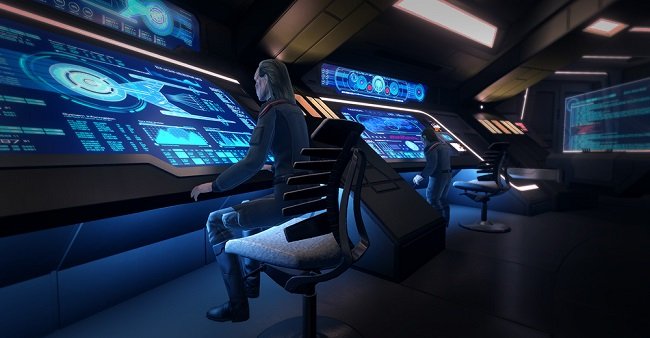
Star Trek Online, is similarly home to several tributes to late cast members. When news first broke of Leonard Nimoy’s death in May 2015, STO players gathered around a fountain on Vulcan to mourn. Cryptic Studios subsequently replaced the structure in the centre of the fountain with a stone statue of Spock, along with the inscription “live long and prosper”. New Romulus received a similar statue, but a different quote; “The needs of the many outweigh the needs of the few.” There is also a memorial plaque on the mezzanine at Earth Space Dock that also pays tribute to Nimoy along with Majel Barrett (Nurse Chapel), James Doohan (Scotty), DeForest Kelley (Bones), and Gene Roddenberry. Anton Yelchin (Checkov) was recently added. Players can interact with the names to read the dates of birth and death as well as a small quote from each.
Standing Stone Games, flagship MMO The Lord of the Rings Online has some interesting and somewhat esoteric references to JRR Tolkien as well as his literary colleagues. “The Bird and Baby” tavern in Michel Delving hosts a meeting of Hobbits, held in a small room at the back. This is a reference to the real-world tavern "Eagle and Child" in Oxford, England, which was frequented by the members of The Inklings literary discussion group which included J.R.R. Tolkien, and other well-known professors and authors. From 1939 to 1962, the Inklings members regularly met in a back room of the pub which is now known as the Rabbit Room. Several members of the Inklings are represented in the “The Bird and Baby” tavern. C.S. "Jack" Lewis (Jack Lewisdown), Owen Barfield (Owen Farfield), Charles Williams (Carlo Williams), and there is also a Rabbit. They refer to a fellow member of the Writing Club named Ronald Dwale, which is based upon Tolkien.
“Easter Eggs” and pop culture references on this nature have been accused of immersion breaking by some MMO gamers. But I would argue that these little conceits that the game developers add to the games, contribute greatly to the social aspect of the genre. Shared experiences and common interest are one of the central pillars of the MMORPG. As gamers often have common interests outside of the game, why not reference them and provide a talking point and a social touchstone. Also, are in-game tributes to those who are no longer with us, any less sincere than those published in more traditional mediums? I think not. Plus, a little bit of occasional frivolity can be a welcome antidote to a lot of the grind, seriousness and competitive aspects of gaming. Every now and then, I visit the cave of Caer Bannog in South Western Enedwaith while playing LOTRO, just to remind myself of this and to put a much-needed smile on my face.
LOTRO: Out Levelling Content
As I fast approach level 50 with my recently created High Elf Guardian, I’m surprised by how much content I have bypassed in LOTRO. Levelling on Laurelin server nowadays is a radically different process to what it was on Gilrain, a decade ago. I am not an altoholic by nature, so levelling new characters is a recent development for me. For the bulk of the 10 years that I’ve played the MMORPG LOTRO, I have focused on my Lore-master, which was the first character I created when I started playing. Levelling back in 2008 was a very precise process and there was a very clear route throughout the zones contained within the Shadow of Angmar. Hence, I followed the epic story from region to region, supplementing this progression with XP from local quest hubs. These would also further embellish the narrative and clarify the Epic Story. However, now I find myself out levelling a zone quickly and jumping around locations to find quests that provide the greatest XP return. A new player following suite would certainly find the story arc much harder to keep up with.
As I fast approach level 50 with my recently created High Elf Guardian, I’m surprised by how much content I have bypassed in LOTRO. Levelling on Laurelin server nowadays is a radically different process to what it was on Gilrain, a decade ago. I am not an altoholic by nature, so levelling new characters is a recent development for me. For the bulk of the 10 years that I’ve played the MMORPG LOTRO, I have focused on my Lore-master, which was the first character I created when I started playing. Levelling back in 2008 was a very precise process and there was a very clear route throughout the zones contained within the Shadow of Angmar. Hence, I followed the epic story from region to region, supplementing this progression with XP from local quest hubs. These would also further embellish the narrative and clarify the Epic Story. However, now I find myself out levelling a zone quickly and jumping around locations to find quests that provide the greatest XP return. A new player following suite would certainly find the story arc much harder to keep up with.
The problem lies (if indeed you see it at such) in the fact that all the regions contained within the original game, prior to entering Moria, have been streamlined and revamped several times. This was done initially in 2010 to accommodate the F2P conversion and then again in the proceeding years to deal with the games numerous level cap increases. It has left the Epic Story somewhat fragmented, as you can now start multiple books simultaneously. Due to some nominal story changes, some of the dialogue and cutscenes no longer accurately reflect that plot. For example, the level five instance “The Assault on Archet” originally featured the Angmarim Commander Éogan arriving in the burning town to claim Amdir. However, revisions made to the introduction quest line have replaced him with a more sinister Cargûl and Calder Cob. Yet the cutscene that plays at the end of this sequence of quests still feature Éogan. He is also referenced by several NPC during the game, despite not being particularly prominent. Thus, when Éogan features in the later instance “Unravelling the Thread”, there is potential for confusion as to his role in the story.
The other issue that stems from the streamlining of content in the Shadow of Angmar story, is that many of the game’s deeds will remain uncompleted unless the player actively chooses to pursue them. In the original version of the game, the structured progression from zone to zone meant that slayer, exploration and race deeds would slowly be completed as you cleared all local quest related content. The XP increase that has ensued in the intervening decade now means that a player will move on to a new region before completing these secondary activities. Faction reputation also suffers and will remain incomplete unless a player determines to repeat content, even when it becomes below their current level. Also, hastily moving through content and focusing on progression, can deny players the opportunity to fully experience the subtleties and detail of each area. LOTRO is a game where it still merits “stopping to smell the Roses” from time-to-time.
However, it should be noted that for some LOTRO players, the new streamline path through the first 50 levels of the MMO, is optimised perfectly for their play style. Not everyone is especially fussed about the narrative or being a completist. Deeds are a lot easier to clear when you return to them at a higher level. Plus, some players simply enjoy the game the most as they level, as it provides a clear goal. It can also be argued that if players wants a slower levelling experience, then the Legendary Servers provide that service. Some more invested LOTRO players have created detailed levelling guides that can steer alts through optimal progression paths, that also accommodate deeds and reputation. If you don’t care such organised gameplay, then there are the other options to consider such as simply staying in a zone and completing everything available or buying the Stone of the Tortoise from the LOTRO store. This item effectively disables all quest and monster kill XP. All things considered, whether you see out levelling content as a boon or a bane, it is a matter born of the longevity of LOTRO. Perhaps it is a small price to pay as the MMO enter its twelve year.
Star Trek Online: The Other MMO
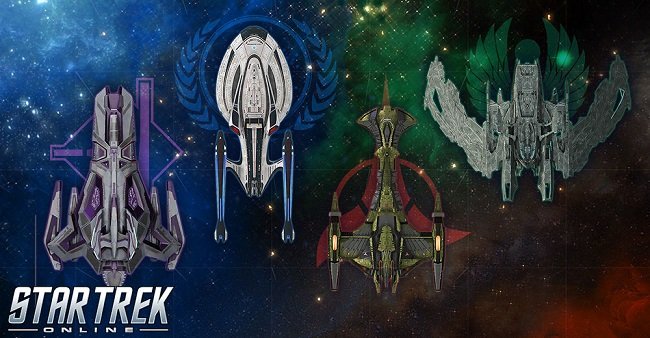
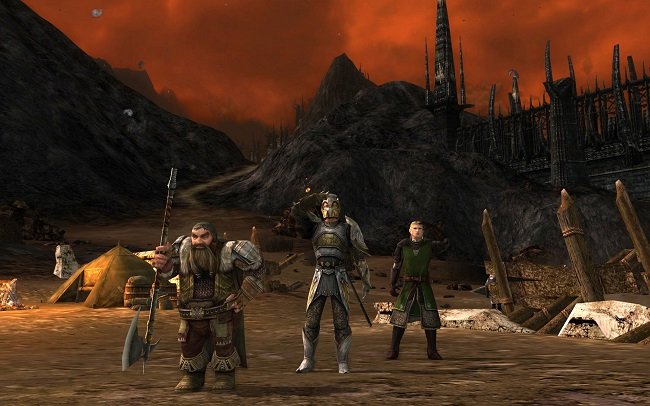
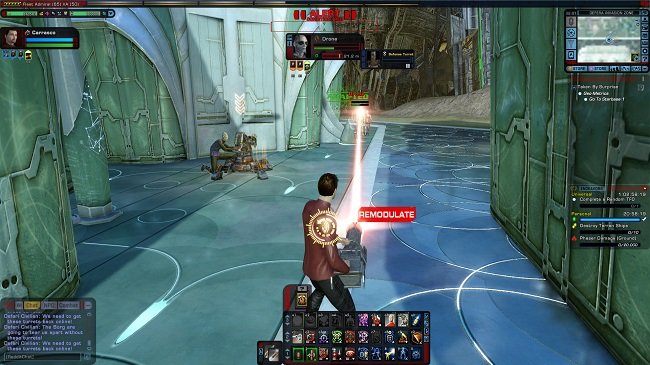
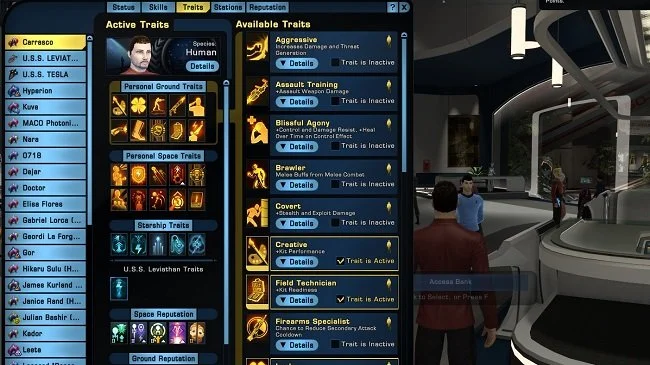
It’s a curious thing that despite having played the MMORPG Star Trek Online, fairly regularly since its launch in 2010, I don’t write about it consistently. This realisation has given me pause for thought because I’ve spent a of lot of time playing my primary character over the years. I enjoy the fundamentals of this game. It is very lore friendly, with strong narratives and themes. As a hybrid free-to-play game it is very accessible, especially to new players. There are regularly events and activities scheduled throughout the year, outside of the core game content. And yes, if you want to sink a fortune buying ships from the cash store, you certainly can do so but it is not essential to have a positive game experience. Yet despite many positive points, looking back over my written output this year, STO doesn’t get as much attention from me as LOTRO. Which I guess is the reason for this post. I feel “obliged” to say something about the game.
It’s a curious thing that despite having played the MMORPG Star Trek Online, fairly regularly since its launch in 2010, I don’t write about it consistently. This realisation has given me pause for thought because I’ve spent a of lot of time playing my primary character over the years. I enjoy the fundamentals of this game. It is very lore friendly, with strong narratives and themes. As a hybrid free-to-play game it is very accessible, especially to new players. There are regularly events and activities scheduled throughout the year, outside of the core game content. And yes, if you want to sink a fortune buying ships from the cash store, you certainly can do so but it is not essential to have a positive game experience. Yet despite many positive points, looking back over my written output this year, STO doesn’t get as much attention from me as LOTRO. Which I guess is the reason for this post. I feel “obliged” to say something about the game.
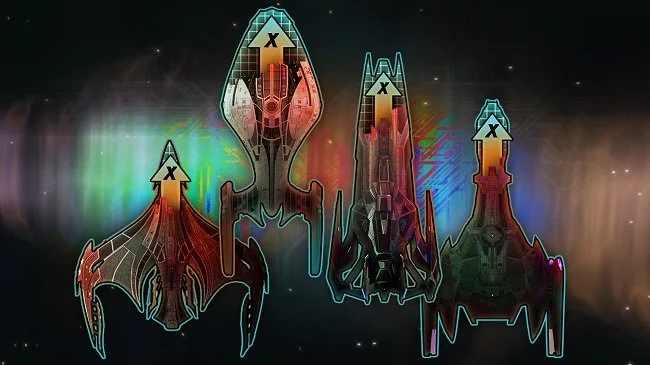
At present in Star Trek Online, the seasonal festival Q’s Winter Wonderland, is in full swing. As ever it is packed to the gunwales with activities. Players can battle the Kramp’lhri, enjoy a snowball fight, try Klingon fishing as well as take part in a pie eating competition. The daily “Fastest Game on Ice” contributes towards claiming a new, shiny Fek’Ihri S’torr Warship (T6). If you earn this on one character it unlocks across your entire account for other alts. Compared to other Winter Festivals, the one in STO doesn’t quite feel as false and contrived. Having the bizarre variety of events pan out as part of a scheme cooked up by Q works quite well lore-wise. The events themselves are also enjoyable and there is plenty of scope to earn the respective yuletide barter currency. After all, who doesn’t want a Christmas sweater for their Gorn captain?
The episodic nature of much of the narrative content of STO means that it‘s a game that can be tackled in either bite size chunks or at length, depending on your preference. I often play in fits and starts, when I’m between other games. At present I’m slowly advancing some alts through older content and bringing them all slowly up to speed with the various reputation factions. I have sufficient ships at present and have a build that I am happy with, that gets things done. So, there’s no need for any major tweaking for the moment. STO certainly provides me with a healthy fix of MMO excitement but unlike other games such as LOTRO, it doesn’t blow me away with its community and wider social component. I converse and exchange ideas with other in Reddit Alert chat when I log into the game, but I don’t “know” other players as I do in other games. And I miss that to a degree but the community although friendly is very insular and self-sufficient. If you want more, then you have to seek it out. It doesn’t proactively come to you.
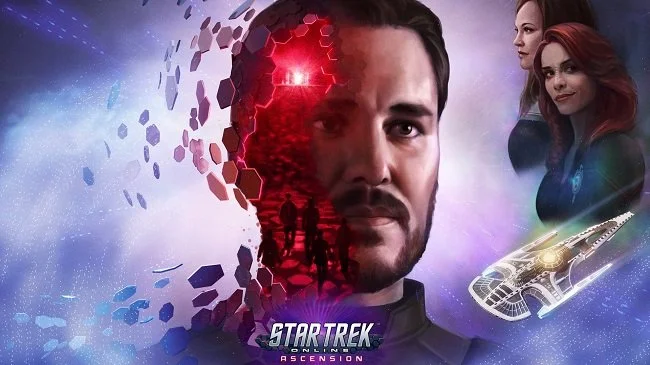
Unlike some MMOs that have struggled in recent years, STO seems to be ticking over quite well at present. It is currently tied-in to season 2 of Star Trek: Discovery and has voice acting credits from Mary Wiseman, reprising her role as Starfleet Cadet Sylvia Tilley. A road map for the year ahead has already been published, indicating that the game has further feature episodes, epic events and taskforce operations to come in 2019. Admittedly a lot of this will be more of the same, but for an MMO that is coming up to nine years old, the addition of new content is always welcome. If Cryptic could also spend some time on “quality of life” improvements and polishing some of the game’s rough edges, then that would certainly improve community relations. They’ve been strained of late. But overall, I am pleased to have this MMO at my disposal as it has proven, over yet another twelve months, to be a dependable game. Whether filling the gaps in my leisure schedule or being its focus.
The LOTRO Legacy Bundle
I wrote recently about how I wished that lifetime subscriptions were still available for the MMORPG, The Lord of the Rings Online. I explored the value of such deals and concluded that the ongoing revival of the game, especially with regard to the launch of the progression Legendary Servers, presented the developers with the perfect opportunity to offer something similar to new players. Oddly enough, Standing Stone Games have just announced the LOTRO Legacy Bundle, which although not a lifetime subscription, offers a substantial quantity of game content and bonuses at a substantially discounted price. Here is a breakdown of what is on offer.
I wrote recently about how I wished that lifetime subscriptions were still available for the MMORPG, The Lord of the Rings Online. I explored the value of such deals and concluded that the ongoing revival of the game, especially with regard to the launch of the progression Legendary Servers, presented the developers with the perfect opportunity to offer something similar to new players. Oddly enough, Standing Stone Games have just announced the LOTRO Legacy Bundle, which although not a lifetime subscription, offers a substantial quantity of game content and bonuses at a substantially discounted price. Here is a breakdown of what is on offer.
One Year of VIP Access Time
Get all the perks of being a VIP like 500 LOTRO points every month, mobile mailbox access, all character trait slots, and no 5g currency cap!
All The Content For One Great Price
Get Quests, Instances, Raids, Deeds, and Regions that LOTRO has released as of December 31st, 2018, even quests from Expansions!
*Excludes expansion pre-order or bonus items, includes only Quests, Instances, Raids, Deeds.
A Gift For All Your Characters, Forever!
Get a Crystal of Remembrance for every character on your account! You'll also get a Crystal of Remembrance on every additional character you create on your account going forward.
Bonus Items
You'll also get one Legacy Package for the character of your choice. It includes tons of bonus items to help you through your adventures and enough housing writs to buy your own premium house with no upkeep fees! Upon redemption of your Legacy Bundle code, you will immediately receive your bonus items on the character you log in on.
Your Legacy Package (one per account) Includes:
250 Mithril Coins
Wallet
Riding Skill
5 vitality stat tome pickers
10 skill and slayer deed boosts
10 Reputation supply
A Fleet-Footed Goat
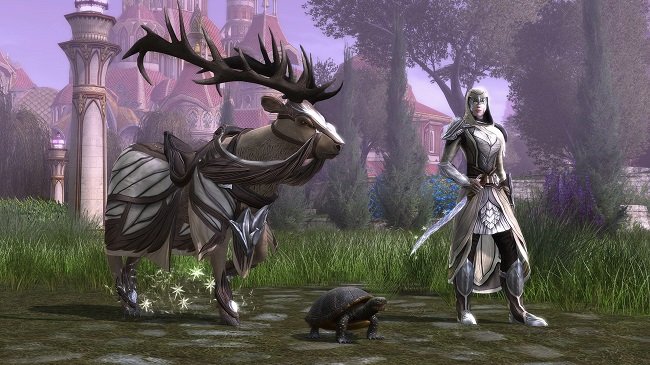
A Mount Picker (Steed of the White City, Steed of the Citadel Guard, Forest Elk, Snow-Beast Steed)
A Housing kit which includes:
20 Housing Writs
Bird Bath
Hedgehog House
Premium Ingredients Crates
Fish Pond
ALL House Crafting Items
Sleeping Cat
Bevy of Swans Ice Sculpture
Makeshift Mûmak
Hound Property Guard
Gondorian Supplier Horn
Quest Packs Include:
Mines of Moria* Quest Pack
Mirkwood* Quest Pack
Rise of Isengaurd* Quest Pack
Riders of Rohan* Quest Pack
Helm's Deep* Quest Pack
Mordor* Quest Pack
Eregion
Enedwaith
Angmar
Evendim
Forochel
Misty Mountains
Trollshaws
North Downs
Lothlorien
Great River
Wildermore
East Gondor
Central Gondor
West Gondor
Old Anórien
Far Anórien
March of the King
Battle of the Black Gate
Legacy of the Necromancer
Where Dragons Dwell
For further details visit https://www.lotro.com/en/LegacyBundle
Now it is abundantly clear that this is an offer that favours the new or returning player. If you already have a lifetime subscription, then this bundle doesn’t offer you much more than the LOTRO store extras. Lifetime subscribers already have permanent VIP status, and thus an indefinite monthly stipend of 500 LOTRO points, as well as continuous access to non-expansion quests. However, this bundle is good value to those who subscribe intermittently to the game and haven’t bought any of the expansion packs. For a player who has rolled a new alt, either on the Legendary Servers or any of the regular servers, this offers access to everything that exists in the game at present. Furthermore, after a year when the VIP subscription expires, all quest content will remains unlocked.
For a long-term player like myself, who has bought all previous expansions, this bundle is also quite enticing. I currently subscribe monthly to LOTRO at a cost of £8.99 per month. That’s £107.88 per year. I pay monthly because it suits me financially and allows me to stop paying when I’m not playing. I recently started a new alt that I intend to take to level cap. Hence the additional store items included in the bundle are eminently practical. The total price of $199, works out as £157 (rounded up). That covers my years subscription (at the price I would have paid for it) along with £50 worth of store goods, which I suspect would cost more than that if I bought them separately. Again, if I stop playing for a while and return at a later date when my VIP status has expired, I will not be locked out of any quest content, apart from material that is added after December 31st 2018.
Naturally one’s perspective on the $199 cost of the LOTRO Legacy Bundle, is determined by the state of your personal finances. However, with Christmas coming up, this bundle has great potential as a gift. I am certainly giving it serious consideration. For me it’s the next best thing to a lifetime subscription. Price wise, it’s also worth considering the following. If I bought premium additions of two newly released single player games, the cost would be broadly similar to the LOTRO Legacy Bundle. 2018 has been the years where I have bought several single player games that I have ultimately been disappointed with. LOTRO regardless of its age and specific flaws, is a known quantity and a tried and tested source of amusement, entertainment and social interaction. I therefore have until December 16th to make up my mind.
LOTRO: Choosing a Skirmish Soldier
I’ve always enjoyed the skirmish system since it was introduced into LOTRO in late 2009 with the Siege of Mirkwood expansion. These one to twelve-person instances are designed to provide a short and targeted fix of combat, with linear objectives and a climatic boss fight. What makes them different from standard instances within the game, is that you have an AI companion or skirmish soldier. It is this facet of the game that lends itself to tactical variation, as you get to choose which variety of skirmish soldier best compliments your class and play style. As ever with LOTRO, there is not a single optimal choice to make and if you ask a hundred players what the best role is, you’ll get a hundred different answers. The other practical benefit of the skirmish system is that they provide an alternative means of levelling, outside of PVE questing.
I’ve always enjoyed the skirmish system since it was introduced into LOTRO in late 2009 with the Siege of Mirkwood expansion. These one to twelve-person instances are designed to provide a short and targeted fix of combat, with linear objectives and a climatic boss fight. What makes them different from standard instances within the game, is that you have an AI companion or skirmish soldier. It is this facet of the game that lends itself to tactical variation, as you get to choose which variety of skirmish soldier best compliments your class and play style. As ever with LOTRO, there is not a single optimal choice to make and if you ask a hundred players what the best role is, you’ll get a hundred different answers. The other practical benefit of the skirmish system is that they provide an alternative means of levelling, outside of PVE questing.
Skirmish soldiers broadly reflect the roles of the main classes in LOTRO, as you can see from the above matrix. The idea is to choose one that provides skills that your primary alt does not directly have. Often players of all classes opt for the Herbalist simply to provide themselves with additional healing. Similarly, a DPS skirmish soldier such as a Warrior is also a solid, all-round choice. However, as my new character is a Guardian and can maintain threat, I thought it may be useful to have an Archer providing ranged DPS. The idea is to round up the mobs and have the Archer pick off them off while I hold aggro. I was also toying with choosing a Sage or Bannerguard, for their ranged debuff and buff abilities. But I’m not sufficiently knowledgeable of this sort of play style so eventually opted for the Archer. So far, it is proving to be an effective choice, but skirmishes at this level (24) are fairly straight forward.
Having re-rolled my Guardian on Laurelin (I now use the Legendary Servers as a “try before you buy” environment), I have access to my shared barter wallet and an ample supply of skirmish marks. Hence my Archer is relatively over powered at present, which is how I like things. If at higher levels, the Archer proves to be less effective, I have the option of slotting a different role and changing to another play style. Then of course there is the entire issue of running group skirmishes where an eclectic array of soldiers can lead to a very “interesting” experience. Because, despite both the statistical and cosmetic customisations that can be made to a skirmish soldier, they are still a somewhat blunt tool in combat. On occasions they can be used to great effect but more often than not they are chaotic and random. But in an odd way, this is part of their appeal. The other major choice a player is confronted with when equipping a skirmish soldier is exactly what to name them, but such matters are an entirely separate blog post.
LOTRO: Crafting
It’s only taken a decade. Yes, I’ve finally decided to start crafting in LOTRO, mainly out of necessity. After the “debate” on the recent podcast as to whether to continue to invest time and energy into my alt on the Legendary Server, I decided to recreate my High Elf Guardian on Laurelin. The main advantage being having access to my account-wide barter wallet and its respective resources. However, unlike the healthy economy of the Legendary Servers, established servers such as Laurelin have a distinct lack of armour, weapons and jewellery for lower level characters available on Auction House. As I like to play any MMO as over powered as possible, I decided to start crafting to ensure that my Guardian is optimally equipped for the progression ahead. Now I’ve always been told about the highs and lows of crafting in LOTRO, but it has certainly been interesting to finally experience them after all this time.
It’s only taken a decade. Yes, I’ve finally decided to start crafting in LOTRO, mainly out of necessity. After the “debate” on the recent podcast as to whether to continue to invest time and energy into my alt on the Legendary Server, I decided to recreate my High Elf Guardian on Laurelin. The main advantage being having access to my account-wide barter wallet and its respective resources. However, unlike the healthy economy of the Legendary Servers, established servers such as Laurelin have a distinct lack of armour, weapons and jewellery for lower level characters available on Auction House. As I like to play any MMO as over powered as possible, I decided to start crafting to ensure that my Guardian is optimally equipped for the progression ahead. Now I’ve always been told about the highs and lows of crafting in LOTRO, but it has certainly been interesting to finally experience them after all this time.
First off there’s the “fun” of gathering resources. Well it immediately struck me that the sensible thing to do was to use my level 120 Lore-master for this chore. They can freely move around low level zones without the being incommoded by the local population, plus I have the benefit of +78% mounts run speed. I then did the requisite research to find which zones I needed to go to and farm the necessary ore. Needless to say, Google is your friend in this matter and I quickly found maps that marked the locations of all the nodes. Within 75 minutes, after making several circuits of the area, I had sufficient for my needs. It was interesting to note that I didn’t encounter any other players in The North Downs while I did this. All gathered resources where then dumped into shared storage.
Next, the “fun and games” really started as I logged into my Guardian and trudged through the various professions and slowly advanced them. Having chosen the practical Vocation of an Armoursmith, I had to refine the ore into ingots via Prospecting. Naturally making such ingots gains crafting experience and once you have obtained sufficient, it unlocks the next tier. This is important because you cannot go out and farm the next tier of ore until you have done this. It took about an hour to unlock the first three levels; Apprentice, Journeyman and Expert. By then I could process Rich Iron Ore which was the material I required to craft armour at a level appropriate for my alt. I then started processing the various ingots I had amassed into standard Heavy Armour (no additional recipe required). Again, you have to unlock each tier to progress to the next, which means you have to craft a lot more armour than you need. Since there is no market for it on server, I simply sold it to a vendor afterwards.
Crafting is an odd facet of LOTRO. Because of the age of the game, it is suitably esoteric, time consuming and frankly tedious. However, crafting provides experience gain not only in your chosen profession, but also with respect your progression to level cap. Hence, I gained two entire levels while crafting and hit 20 as I finished (and was also rewarded with the “Undying” title as a bonus). I ended up with a full set of Elven Steel Armour which has an item level of 24 but can be used from level 22, so for the present I cannot use this set. However, despite this minor inconvenience I did derive immense satisfaction in crafting this set and knowing that I don’t have to rely on random drops or quest rewards for the immediate future. I also made an additional set of armour for a friend who has an alt at a comparable level, which was also pleasing to do. Such is nature of crafting in LOTRO. It’s a necessary evil and a pain in the butt, yet it also provides an odd sense of achievement. Something that other players have known for a decade and I just found out, yesterday.
Top Tip: The Universal Toolkit is essential. Without it crafting becomes even more tedious and annoying.
LOTRO: Resetting the Economy
If you go to the auction house on Laurelin server, you will see all the hallmarks of an established, long term playerbase that have multiple characters at level cap. IE Mainly nothing but high-end crafted items being sold at ridiculously high prices. MMO inflation is a weird thing. Naturally people who have played LOTRO for a long time have substantial reserves of in-game gold. Gold therefore is not an asset of value in itself per se. Yet due to peoples complicated relationship with money, be it real or virtual, there is still a propensity to hoard it and increase one’s reserves. Hence, relatively sought-after items tend to be posted for sale on auction house at grossly inflated prices. Now regardless of the reasons why this inflation happens, the net result is always the same. A skewed economy with increased prices at one end of the gear spectrum and a shortage of items at the other, because no one is crafting anything beyond what they need for their new alts.
If you go to the auction house on Laurelin server, you will see all the hallmarks of an established, long term playerbase that have multiple characters at level cap. IE Mainly nothing but high-end crafted items being sold at ridiculously high prices. MMO inflation is a weird thing. Naturally people who have played LOTRO for a long time have substantial reserves of in-game gold. Gold therefore is not an asset of value in itself per se. Yet due to peoples complicated relationship with money, be it real or virtual, there is still a propensity to hoard it and increase one’s reserves. Hence, relatively sought-after items tend to be posted for sale on auction house at grossly inflated prices. Now regardless of the reasons why this inflation happens, the net result is always the same. A skewed economy with increased prices at one end of the gear spectrum and a shortage of items at the other, because no one is crafting anything beyond what they need for their new alts.
However, the launch of the two new Legendary Servers on November 8th provided an interesting opportunity, economically speaking. Some resources, perks and benefits in LOTRO are account wide, such as cosmetic items associated with the purchase of expansion packs. However, gold, mithril coins and skirmish marks are all server bound and can only be shared between alts therein. Thus, no one came to Anor and Ithil with the advantage of previously earned wealth. As a result, it has done wonder for these servers’ economies. Players are having to craft all the items they need and sell the surplus. There is also a healthy trade in the resources that sustain crafting. Two weeks on from launch and the acquisition of gold is still a relatively balanced process. Subsequently, buying new gear is still a viable option beyond that which you earn through questing. There are also lots of new kinships which support the needs of their members. So far, the game economy is not derailed.
As ever, it will be very interesting to see if this balanced and broadly equitable situation continues over the month to come. Perhaps the release of further content in four-months’ time will alter the status quo. By then there will likely be a percentage of wealthy players at level cap, along with those who are doing “okay” and some who are neither at cap or have a proverbial “pot to piss in”. Such is the nature of MMOs and those who play them. The other thing to keep an eye out for on the new servers is the presence of gold farmers. As gold is not transferable between existing servers, it has to be earned from its current location. So far, there is not a sufficient surfeit of gold to be assimilated and “redistributed” by such third party “institutions”. This again main change when the Mines of Moria expansion is added to both legendary servers. In the meantime, I am already buying any potential bargains I find on auction house, not only for my primary alt’s current needs but for the future as well. It certainly is a pleasant change from the dearth of choice currently found on the older LOTRO servers.
Pick-up Groups and MMOs
Star Trek Online has recently revamped group PVE activities and rebranded them Task Force Operations. These are just instanced events designed for five players, that have a handful of objectives and a boss fight at the end. Players can group with friends or use the auto-grouping tool that is available, to play through TFO of their own choosing. Alternatively, there is the option to join a pick-up group and play a random TFO for greater rewards. Now although not unduly complex, TFOs usually have a basic set of rules to follow if you want to complete them quickly and efficiently. For example, closing dimensional portals reduces the number of trash mobs joining the TFO, so it makes sense for at least one of the five players to focus on this activity. However, PUGs are open to all players and therefore there is always a chance that you may group with an inexperienced player or someone who wants to do things “their way”. Either way, if you are seeking optimal gameplay, then PUGs may not be the best place to look.
Star Trek Online has recently revamped group PVE activities and rebranded them Task Force Operations. These are just instanced events designed for five players, that have a handful of objectives and a boss fight at the end. Players can group with friends or use the auto-grouping tool that is available, to play through TFO of their own choosing. Alternatively, there is the option to join a pick-up group and play a random TFO for greater rewards. Now although not unduly complex, TFOs usually have a basic set of rules to follow if you want to complete them quickly and efficiently. For example, closing dimensional portals reduces the number of trash mobs joining the TFO, so it makes sense for at least one of the five players to focus on this activity. However, PUGs are open to all players and therefore there is always a chance that you may group with an inexperienced player or someone who wants to do things “their way”. Either way, if you are seeking optimal gameplay, then PUGs may not be the best place to look.
Now, you may well ask “why are you stating the bleedin’ obvious about PUGs?” Well the reason I’ve chosen to succinctly distil and reiterate their respective pros and cons is because I continuously come across gamers regularly lamenting the iniquities of PUGs, as if they’re supposed to function in a fashion that is contrary to their nature. It’s a bit like complaining about a compass for pointing north or a politician for lying. Joking aside, pick-up groups are not intended to be efficient. They are designed to facilitate group play in an expedient manner. Many MMOs have players who either cannot find a guild, do not want to be in a guild or simply have time restrictions that impede grouping with regular friends and online colleagues. PUGs and auto grouping tools are a means to facilitate such players in accessing instances and other content designed to be played as a group. It’s not as if game developers are oblivious to the potential shortcomings of such systems. Hence in STO and other MMOs, players will receive a bonus reward for playing via auto grouping.
The key to successfully using any PUG mechanic in an MMO is to greatly temper your expectations and to use auto grouping tactically. For example, I recently used LFF chat in LOTRO to run a particular 6-man instance. I did not expect to successfully complete everything but was simply tagging along to see if we could defeat the first boss, which I needed for a deed. The group performed poorly, and it was a struggle to progress, but we did get to the end. Not only did I complete the deed, but I also got the benefit of some loot that I wasn’t anticipating on getting. For me this was an added bonus, so I was not discouraged by the multiple wipes that the group endured. Where some players felt we’d performed poorly, I was pleasantly surprised because I had been realistic about what we could achieve as a group, right from the start.
PUGs are not always a bad experience and there are many factors that determine their outcome. Some groups in certain games require very little direct interaction. The TFOs in Star Trek Online can be undertaken without any need for chat. I personally always say “hello” and “good game” but it’s not essential. Quitting a group for whatever reason usually doesn’t involve too big a penalty. It may result in a thirty-minute sanction or reduced rewards but nothing more. Depending on the game, some will offer rewards even if the primary goals of an instance aren’t even achieved. This alone can make the use of auto grouping viable for some players. As the MMO genre has been around for over two decades, it has developed several universal foibles. One of these is the capricious nature of collaborating with random strangers. Would you expect five random people in the real world to work extremely efficiently together after just meeting? Of course not. So why should something as frivolous as a game be any different? Frankly excessive criticism of the PUG system with regard to MMOs is redundant. PUGs in other genres of games is a separate matter.
LOTRO: Coming Full Circle
I returned to LOTRO in August and started to work through all the outstanding content that had built up during my absence. I have subsequently completed the Mordor expansion pack, along with all of Update 22: Legacy of the Necromancer and Update23: Where Dragons Dwell. This has meant consistently playing, re-gearing my primary character (twice) and generally tweaking different aspects of their build. I have applied myself to the various stories and have not felt overwhelmed by the narrative. Overall, I haven’t played LOTRO this diligently since I joined back in late 2008. This recent experience, along with launch of the Legendary Server, has been extremely satisfying. It’s all been very nostalgic, and I have found myself of late occasionally recapturing the feelings that I had a decade ago. Especially so when questing with friends and tackling group content. I have also thoroughly enjoyed the new Dwarven focused storyline in the Grey Mountains. It’s a rugged yet interesting zone with some exceeding good ambient music.
LOTRO: 14th September 2009
I returned to LOTRO in August and started to work through all the outstanding content that had built up during my absence. I have subsequently completed the Mordor expansion pack, along with all of Update 22: Legacy of the Necromancer and Update23: Where Dragons Dwell. This has meant consistently playing, re-gearing my primary character (twice) and generally tweaking different aspects of their build. I have applied myself to the various stories and have not felt overwhelmed by the narrative. Overall, I haven’t played LOTRO this diligently since I joined back in late 2008. This recent experience, along with launch of the Legendary Server, has been extremely satisfying. It’s all been very nostalgic, and I have found myself of late occasionally recapturing the feelings that I had a decade ago. Especially so when questing with friends and tackling group content. I have also thoroughly enjoyed the new Dwarven focused storyline in the Grey Mountains. It’s a rugged yet interesting zone with some exceeding good ambient music.
It’s a curious thing, that despite having regularly played a specific MMO for a decade, I am not exactly an expert on any of the games systems or the specifics of my primary characters statistics. I often just inspect other players of the same class and have copied their build. I have not been especially selective about the skills tree either and have simply maxed out the red line and put the few remaining points into what seem relevant in the blue and yellow lines. It is only since August that I’ve started taking a greater interest in min-maxing in LOTRO, mainly because the gear check that appears early on in Mordor is so abrupt. As a result, I’ve changed my virtue traits, replaced settings, runes and gems on my LI and been far more particular about the stats on any gear that I equip. The subsequent benefits have been quite noticeable. I even pay more attention now to my skills rotation and vary it according to the enemy. It’s only taken ten years for me to start playing at this “level”, although I still find an excess of number crunching ultimately quite dull.
LOTRO: 16th November 2018
Despite having changed PC several times since I started playing LOTRO and re-installed the game numerous times, I still have every screen capture I’ve ever taken. I found on taken on 14th September 2009 back when I was playing on the European server, Gilrain. My Lore-master is sporting a very simply cosmetic outfit, comprising of some Elvish light armour (bought in Rivendell) and dyed black. In a fit of nostalgia, I promptly recreated the outfit today and am currently wearing it for old time sake. It’s strange but this simple act seems to embody the sense I have at present of coming full circle. Playing the same MMO for a decade is a substantial investment of time. A lot has happened both in-game and to me personally during this period. I suspect that a good many other players are also having similar such moments of introspection at present. The Legendary Servers seem to have roused many lapsed players into returning to the game. A LOTRO renaissance if you will. Who would have thought it?
LOTRO: Releasing the Complete Soundtrack
I have written in the past about the quality of the soundtrack for the MMO The Lord of the Rings Online and how it is far more than an embellishment to the game but a character in itself. Now the developers of LOTRO Standing Stone Games (formerly Turbine) have released over the years a variety of soundtrack CDs and digital downloads, offering a selection of music usually associated with specific expansions for the game. Although these have been well received, they have only provided a percentage of the music that is present in the current release of LOTRO. In the latest build there is approximately 4GB of audio in the game. Admittedly some of this will be dialogue and ambient sounds but the majority of that is music cues in .ogg format. I sure I’m not the only LOTRO aficionado who would like to see a more comprehensive release of the games musical content.
I have written in the past about the quality of the soundtrack for the MMO The Lord of the Rings Online and how it is far more than an embellishment to the game but a character in itself. Now the developers of LOTRO Standing Stone Games (formerly Turbine) have released over the years a variety of soundtrack CDs and digital downloads, offering a selection of music usually associated with specific expansions for the game. Although these have been well received, they have only provided a percentage of the music that is present in the current release of LOTRO. In the latest build there is approximately 4GB of audio in the game. Admittedly some of this will be dialogue and ambient sounds but the majority of that is music cues in .ogg format. I sure I’m not the only LOTRO aficionado who would like to see a more comprehensive release of the games musical content.
When LOTRO was released in 2007, there was a soundtrack CD in the Collector’s Edition. This included 26 tracks from the Shadow of Angmar written by composers Chance Thomas and Steve DiGregorio. A similar CD was then released in the Collector’s Edition of The Mines of Moria expansion. This included 18 tracks. I believe that Turbine also made a digital download available comprising of 61 cues from the base game, shortly after this. Neither of these two official soundtrack CDs were ever made commercially available outside of these boxsets. The digital download is also no longer available. Since 2010, when LOTRO went free-to-play, there have been three further soundtrack CDs released (also available via digital download). Two of which are music written by composer Chance Thomas for the Riders of Rohan and Mordor expansions. Then there’s a tenth anniversary CD and download featuring a compilation of 26 tracks, of mainly previously available material by both composers. Some of these are alternative versions and there are a handful of new cues. These CDs are still available. It should also be noted that composer Steve DiGregorio has posted the soundtrack for the Helm’s Deep expansion and Update 14: Paths of the Dead on his Soundcloud account.
Music rights, licensing and distribution arrangements can be legally complex to administer. I am not privy to the specific arrangements that Standing Stone Games has with regard to the game’s soundtrack and its respective composers. However, the fact that music from the game has been released previously must be a positive sign. What I can say with confidence is that LOTRO’s music is held in very high regard among both fans and wider MMO players, due to its particular high standard and artistic scope. Therefore, if SSG wanted to release a more comprehensive selection of music from the game, that was broken down by region, race or release date, I’m sure it would receive a warm welcome from the player base and more importantly, sell very well. Furthermore, it is a non-egregious form of monetisation that they could continue to perpetuate as the game grows. It remains to be seen if lobbying for such a release will yield any results, but I can’t help but feel that SSG are missing out on an opportunity in this instance.
LOTRO: Legendary Servers Launch
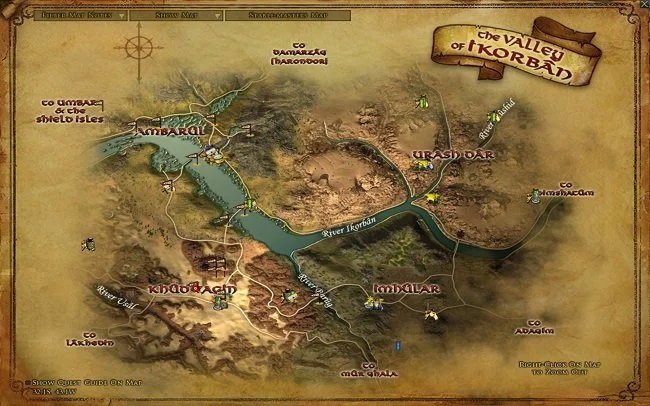
First off, fellow blogger Wilhelm Arcturus wrote a blog post that predicted pretty much everything that happened today, with regard of the launch of the new Legendary Servers. Yes, you read that right. Servers, plural. Apparently, there was so much interest in Anor, it led to massive login queues, so Standing Stone Games very quickly set up a second Legendary Server named Ithil to deal with the over flow. To ensure that folks get to be with their friends and kinmates, there’s also a free transfer grace period. I guess there’s no such thing as a smooth launch, be it a new game or a variation of it. The more cynical among us, may even go so far as to postulate that the server queues were planned to generate a “buzz” and the “need” for a second server. However, it’s more likely that SSG just miscalculated and had to think on their feet. There could well be server merges ahead when the excitement, queues and possibly player numbers die down. Either way, the job is now done and LOTRO now has two progression servers.
First off, fellow blogger Wilhelm Arcturus wrote a blog post that predicted pretty much everything that happened today, with regard of the launch of the new Legendary Servers. Yes, you read that right. Servers, plural. Apparently, there was so much interest in Anor, it led to massive login queues, so Standing Stone Games very quickly set up a second Legendary Server named Ithil to deal with the over flow. To ensure that folks get to be with their friends and kinmates, there’s also a free transfer grace period. I guess there’s no such thing as a smooth launch, be it a new game or a variation of it. The more cynical among us, may even go so far as to postulate that the server queues were planned to generate a “buzz” and the “need” for a second server. However, it’s more likely that SSG just miscalculated and had to think on their feet. There could well be server merges ahead when the excitement, queues and possibly player numbers die down. Either way, the job is now done and LOTRO now has two progression servers.
I logged into Anor shortly after 5:00 PM GMT today. The launcher initially showed that I was some ridiculous number in a queue and it quickly became apparent that it wasn’t decreasing, and the client had indeed stalled (Ctrl-Alt-Delete and Task Manager are your friend). So, I started multiple copies of the launcher and logged in the game and eventually one connected with the new server. I knew what class I was going to play and what my character name was in advance, so setting up a new avatar was not an issue. I skipped the tutorial, loaded my saved custom UI and then pushed ahead with the intro quests. Needless to say, the starter zone was heavily populated, and it took a while to kill the standard number of Boars or Wolves as required. However, the zerg had its benefits and tricky areas like the spider filled basement under Sprigley’s Farm was easy to navigate.
World chat was very active and relatively civilised, and players broadly seem to accommodate each other. Orderly queues formed to kill the likes of Jagger Jack and people were happy to group to make clearing quests easier. Eight hours on from launch and there was already crafted items appearing on Auction House for sale. Despite the “all about the journey” mantra your often see banded around on the official forums by many traditionalist LOTRO players, by the time I logged off there were already people approaching level 30 or so. It was also pleasant to see a lot of Kinships recruiting. Judging from world chat, there are a lot of retuning players who have been absent for quite a while. I have set up a Contains Moderate Peril kin, mainly just for fun and larks but if players stay the course, I see no reason not to run some of the endgame content.
Nostalgia is a curious thing. I liked the way the SSG has re-instated the original music at the character select screen. Playing with a low-level character is pleasingly uncomplicated with only a handful of skills. There is also a very re-assuring sense of familiarity with the game when it’s presented like this. The sheer volume of players bustling about also reminded me what the original allure of the MMO genre was; a thriving living world or at least the appearance of one. More than a decade on simply being online with others has lost its mystique and is something you just take for granted. This evening gave me a pleasant reminder of how exciting it was back in 2008 to see a town filled with other people. However, there are a few things that bring you back down to earth, such as the absence of all the items you have purchased on your regular server. Vault space was quickly filled and at present there is no kinship or personal house to use as an overflow. I also just couldn’t get used to wondering around without my standard cosmetic outfit, so I’ve already put my hand in my pocket and bought it again, which was probably SSG’s motivation all along.
It will be interesting to see if player numbers are sustained before the release of new content to Anor and Ithil in four months’ time. There’s is no real reason to leave if you’re a returning player because they are not burdened with over familiarity with the content or harbour a grudge over previous changes to game mechanics. But there will be an inevitable decrease of player as some get bored and kinships find it harder to run content due to a lack of “bums on seats”. Personally, I don’t see any problems getting to level 50. I always liked this part of the Epic Story and I tend to level quite fast due to structured and planned sessions. It’s what comes next that is a stumbling block for many. Even a revamped Moria is still a big ask for some players. However, the LOTRO community is very tenacious and often flies in the face of established wisdom. So, I shall simply wait and see how things pan out on the Legendary Servers, while having fun progressing through Bree-land and beyond.
LOTRO: The Return of Lifetime Subscriptions?
Please note the question mark in the title. This is not a news post announcing that Standing Stone Games are offering lifetime subscriptions for The Lord of the Rings Online once again. Don’t go getting over excited. I am simply raising the question as to why they haven’t chosen to do this since they announced their “acquisition” of both LOTRO and DDO back in December 2016. Because broadly speaking, it would appear that LOTRO is doing well under the auspices of SSG as opposed to Turbine. The game had a much-needed expansion, Mordor, added a new race and has a clear road map for what is beyond the recently released Update 23: Where Dragons Dwell. Furthermore, we have the imminent launch of a new progression server on the 8th of November. The licensing issue has been laid to rest and changes at Middle-earth Enterprises and the Tolkien Estate have surely had beneficial results. The game may not have the player base of some MMOs, but its core audience appears to be loyal and stable. Surely, with LOTRO enjoying a gaming renaissance, now would be a good period to capitalise upon?
Please note the question mark in the title. This is not a news post announcing that Standing Stone Games are offering lifetime subscriptions for The Lord of the Rings Online once again. Don’t go getting over excited. I am simply raising the question as to why they haven’t chosen to do this since they announced their “acquisition” of both LOTRO and DDO back in December 2016. Because broadly speaking, it would appear that LOTRO is doing well under the auspices of SSG as opposed to Turbine. The game had a much-needed expansion, Mordor, added a new race and has a clear road map for what is beyond the recently released Update 23: Where Dragons Dwell. Furthermore, we have the imminent launch of a new progression server on the 8th of November. The licensing issue has been laid to rest and changes at Middle-earth Enterprises and the Tolkien Estate have surely had beneficial results. The game may not have the player base of some MMOs, but its core audience appears to be loyal and stable. Surely, with LOTRO enjoying a gaming renaissance, now would be a good period to capitalise upon?
Some people will argue that lifetime subscriptions are not necessarily good for the MMO genre. It raises capital for the developers in the short term but may discourage further expenditure from players in the future. Certainly, in the days of subscription only MMOs, that may have been plausible. However, as most games of this type now have a F2P hybrid model with additional tiers of payment, I’m not sure if such an argument holds true. Lifetime accounts may well offer a monthly stipend of in-game store currency, but it doesn’t cover expansions packs and such like. Furthermore, stipends accrue at a fixed rate and sometimes having only half of the cost of an in-store item may encourage the player to avoid waiting and buy further currency. Simply put, you could write multiple posts about the psychology of MMO players and what determines their personal spending habits. Hence binary statements about the effectiveness of lifetime subscriptions are not so relevant.
Star Trek Online, another MMO with a hybrid business model, still offers lifetime subscriptions. They currently have a sale where the price for such an account has been discounted from $299.99 to $199.99 (sale ends 6th December). The game no longer offers monthly subscriptions (which was $14.99) and has replaced them with a “starter pack” that allows you to permanently unlock most of the same perpetual benefits for a one-time fee. However, when you add up the cost of all the services and features that are contained with the lifetime subscription, there is still a substantial discount compared to purchasing them individually. I bought such a subscription back in April 2015 and consider it to be excellent value. In recent months I have begun to feel that it was a mistake not to have done the same with LOTRO back in the Codemasters days. The irony is that I tracked down a Collector Edition, complete with a lifetime account code, earlier this year. Sadly, the grace period in which SSG honoured such products has long expired.
SSG have experimented with various methods of monetising LOTRO over the last two years. The Mordor expansion saw an increase in lootboxes within the game that has subsequently been dialled back, possibly due to their unpopularity and the changes in the law in specific European countries. The new Legendary Server which launches soon requires a VIP subscription for access. Then there is the outstanding issue of a new class being added to the game, that will naturally require purchasing. Surely offering lifetime subscriptions or something of a similar nature is the next logical step. There are many LOTRO players who already have them, but there are equally players like me, who missed the boat or were reticent to buy last time they were available. Because a lot of the doubts about the games long term future have now been addressed, I would welcome the opportunity to purchase such a service. LOTRO has a very dedicated playerbase, many of whom are “altaholics”. I suspect that the demand for a new lifetime subscription offer would be surprisingly high. I hope that SSG therefore considers this option.
Re-installing MMOs
Having replaced my hard drive with a solid-state drive, I’ve had to re-install various games, along with all the other apps and programs I use. However, the smaller size of the new SSD has meant I’ve had to think long and hard about which title I choose. At present, I’ve limited myself to the two MMOs that I regularly play; namely The Lord of the Rings Online and Star Trek Online. Both have improved loading times as a result of running via a SSD and are performing a lot better than previously. I also prefer clean installations, rather than long term game setups that have been through numerous patches and updates. It was interesting to note that LOTRO now installs into a Standing Stone Games folder, rather than one marked Turbine. Sadly, STO required using either Steam or Arc as a means of installing the game. I opted for Arc, purely because it has a useful facility for redeeming game codes build into the launcher. Plus, you can bypass Arc and launch the game client directly if you want.
Having replaced my hard drive with a solid-state drive, I’ve had to re-install various games, along with all the other apps and programs I use. However, the smaller size of the new SSD has meant I’ve had to think long and hard about which title I choose. At present, I’ve limited myself to the two MMOs that I regularly play; namely The Lord of the Rings Online and Star Trek Online. Both have improved loading times as a result of running via a SSD and are performing a lot better than previously. I also prefer clean installations, rather than long term game setups that have been through numerous patches and updates. It was interesting to note that LOTRO now installs into a Standing Stone Games folder, rather than one marked Turbine. Sadly, STO required using either Steam or Arc as a means of installing the game. I opted for Arc, purely because it has a useful facility for redeeming game codes build into the launcher. Plus, you can bypass Arc and launch the game client directly if you want.
LOTRO being the older of the two games and still saddled with only a 32-bit client, proved to be the more problematic to download and install. The Akamai service that handles this process is very slow, irrespective of your internet connection. Despite having a 65MB fibre connection it took over four hours to install LOTRO, which is presently a 28GB download. STO being more of a space-centric game is a smaller 14GB install and was done in under ninety minutes. Due to the instanced nature of many of the zones, you can start playing the game while it downloads. With LOTRO you have to simply watch and wait as the blue bar slowly inches across the screen. Let us hope that SSG address this installation issue if we ever see the alleged 64-bit version of the game they’re developing. I also had to update my Nvidia graphic drivers and install Direct X 11 to get both games up and running. Something I shall prepare for in advance if I have to re-install any of these games again any time soon.
Here’s a tip if you find yourself in a similar position with either of these two MMOs. You may wish to back up the various files in “The Lord of the Rings Online” folder, which is usually a sub-folder of “Documents” on a standard Windows installation of LOTRO. These have details of minor UI customisations such as the order of your bags on the quickslot bar and what chat channels you utilise. It also has all your personal settings regarding screen resolution and general game preferences. It’s not essential that you do this, but it can save you some time tweaking your new installation once its complete. Similarly, with STO, you may also wish to copy your screenshots folder (usually located here: {Local path to program}\Star Trek Online_en\Star Trek Online\Live\screenshots\). Not only does it contain your previous screen captures, but more importantly it has details of any custom outfits you may have created for your characters.
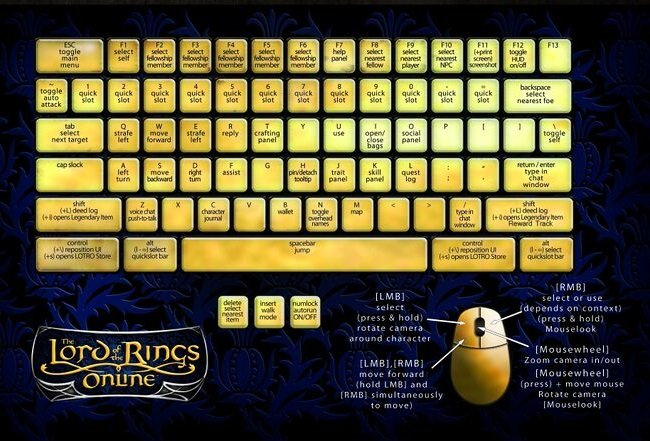
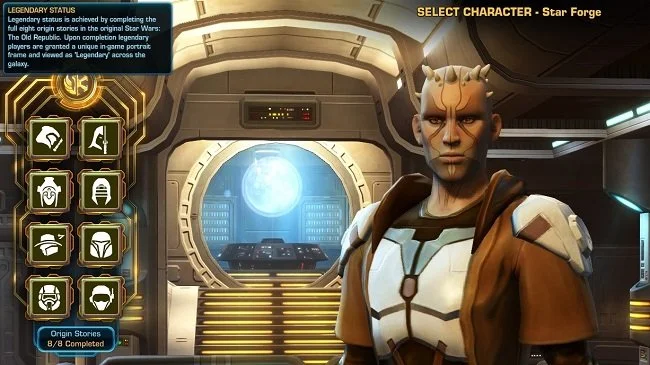
What’s in a Name?
“What's in a name? That which we call a rose by any other name would smell as sweet”. William Shakespeare, Romeo and Juliet.
There are two types of MMO players (actually there aren’t but I’m invoking a figure of speech as an opening gambit for the overall thrust of this post, so there). Those who meander through the character creation screens only to be taken by surprise by the fact that at the end, they now have to provide their avatar with a name of some kind. And then there are those who have a complete dossier compiled in advance, shedding light on the entire back story and life history of their new alt. Naturally, the latter group will already have a name prepared with much love and care. It will be relevant, appropriate and most importantly of all, it will afford them a much greater degree of connection with their in-game character. Because names are an integral part of identity and that is a much bigger aspect of MMO player psychology than some imagine. Would you simply want an index number instead of a character name?
Tee-hee, chortle and guffaw
“What's in a name? That which we call a rose by any other name would smell as sweet”. William Shakespeare, Romeo and Juliet.
There are two types of MMO players (actually there aren’t but I’m invoking a figure of speech as an opening gambit for the overall thrust of this post, so there). Those who meander through the character creation screens only to be taken by surprise by the fact that at the end, they now have to provide their avatar with a name of some kind. And then there are those who have a complete dossier compiled in advance, shedding light on the entire back story and life history of their new alt. Naturally, the latter group will already have a name prepared with much love and care. It will be relevant, appropriate and most importantly of all, it will afford them a much greater degree of connection with their in-game character. Because names are an integral part of identity and that is a much bigger aspect of MMO player psychology than some imagine. Would you simply want an index number instead of a character name?
I take a fairly hard line when it comes to character naming in the MMO genre. If a game has specific guidelines to begin with then they should be respected. I’m all for player freedom but an MMO is by its very nature shared space and so that means (or at least should in principle) that other players are due a degree of consideration. So, let us take it as read that inflammatory names, racial abuse, religious trolling and like have no place and should not be tolerated. In a game such a LOTRO, there is a great deal of lore that impacts upon names. The game goes so far as to make suggestions depending on race and region etc, which can be helpful. However, if you simply wish to give your character a generic fantasy sounding name, I don’t have a problem with that. What I do find tedious are the endless permutations of known character names, such as Legolas (in LOTRO) and James T Kirk (in STO). But for me, the greatest sin in naming after this, is giving your character your own name. Is there anything that screams “I have had the capacity to think creatively surgically removed” more than a Hunter running about the major quest hubs named “Colin Peters” or “Jacinda Barrington-Humphries”?
They drink it in the Congo…
Now joking aside, not everyone is equally creative, which is why there are plenty of online name generators that can assist you when it comes to the right name. Another strategy if you run multiple alts is to follow a naming convention and use various permutations thereof. This is a useful workaround and certainly is helpful to friends and colleagues who loose track of who is and who isn’t online within the guild. I have used name generators for inspiration in the past. However, I also think it’s important to find a name that suits your character (especially if you’re of a role-playing bent) and that is also user friendly and pronounceable. It’s all very well coming up with a cunning, lore appropriate name for your High Elf window dresser, but if everyone subsequently mangles said name every time you’re on Discord (because you always end up being known to your guild mates by your primary characters name and not your own), it gets very old fast.
Isn’t there a hat company there, on Bagel Street?
One of the things I use to get frustrated with about LOTRO was that it would suggest names, irrespective of whether they had been taken or not. Thus, you’d find a cool name for your shiny new Dwarf Quantity Surveyor only to discover there were already a dozen or so variants already on the server. More recent MMOs have addressed this issue by having an account name that suffixes your chosen name, thus accommodating duplicates. The issues still persists in LOTRO, but I have solved it for myself by not creating any alts. Overall, I think that as character customisation becomes more complex in gaming, then there needs to be scope and support for equally complex naming conventions. I know that jarring, trivial and puerile names can spoil the immersion of some players in MMOs. So why can’t phasing technology be used to remove those that bother us, or at least allow you to rename the offenders from your own perspective? Because it’s clear that despite the various changes and trends that have come and gone in the MMO genre over the last decade, names remain a very important facet of player engagement.
Numbers, Spreadsheets and Calculations
Over the last few days, I’ve been working towards achieving “ally” reputation status with the Men of Dale while playing LOTRO. There were two particular armour pieces that I desired, which would enhance my statistics, that were gated behind this achievement. I’ve been also grinding for several jewellery items, which require 5,000 Motes of Enchantment. I was sufficiently close last night that I actually took the time to work out exactly how much XP was outstanding and what was the optimal way to earn it. I made a few notes on paper and determined that three repeatable quests and five tasks would be sufficient to reach the target. As of today, the calculation proved right, and I now have the two armour pieces equipped. The jewellery is proving more difficult as Motes of Enchantment are a lot harder to come by. That project remains an ongoing concern.
Over the last few days, I’ve been working towards achieving “ally” reputation status with the Men of Dale while playing LOTRO. There were two particular armour pieces that I desired, which would enhance my statistics, that were gated behind this achievement. I’ve been also grinding for several jewellery items, which require 5,000 Motes of Enchantment. I was sufficiently close last night that I actually took the time to work out exactly how much XP was outstanding and what was the optimal way to earn it. I made a few notes on paper and determined that three repeatable quests and five tasks would be sufficient to reach the target. As of today, the calculation proved right, and I now have the two armour pieces equipped. The jewellery is proving more difficult as Motes of Enchantment are a lot harder to come by. That project remains an ongoing concern.
Now an odd thing occurred as I did the mental arithmetic last night and figured out exactly what permutation was required to get the required rep. Just for a moment I had this brief flash of insight in which the arbitrary nature of MMO mechanics became very clear. And for an instance it spoilt my fun. Luckily this was a fleeting experience, and, in a few moments, I was back to killing spiders in Lhingris for spiny carapaces and chatting on Discord to friends. It is the social element of MMOs that helps mitigate the mundane nature of some of the basic mechanics of the genre. It is a curious thing though because where as I find all the number crunching, min-maxing and esoteric formulas somewhat dull, others consider learning all this data and becoming an expert as part of the games allure. I have a basic grasp in LOTRO of the various stats and which ones are relevant for Lore-masters. However, the intricate details are lost on me. I choose not to know because in doing so, it diminishes my enjoyment of the game.
Star Trek Online is another MMO that has a player base that delve deep into the mathematics behind the game. You will find endless discussions on the games sub-reddit regarding builds and how best to maximise DPS or survivability. It is surprisingly complex and at first glance quite captivating. I have flirted with DPS parsers and tweaked my build in the past. However, it quickly becomes clear that a lot of people’s preferences are subjective and not just based on data. Weapon type, class and play styles determine various schools of thought. Also, if you want to pursue the “best builds” you frequently need access to a lot of rare items and traits, which are really only the province of the long term and heavily invested player. That’s fine and I certainly don’t begrudge those players that play so diligently, but for us who are somewhere between the shallow and the deep end, such tinkering is not applicable to us.
When thinking of the “spreadsheet” culture that goes hand-in-hand with some games, I suppose the most obvious example is EVE Online. I never got any further than four days into a two-week trial with that niche product and I learned very quickly that the realities of that MMO were far removed from what I had assumed. For me, the selling points of the two MMOs that I play the most are their narrative, intellectual property and the provision of goal orientated achievements. The social aspect is also a strong consideration. Although both LOTRO and STO require an element of analysis and technical understanding, it never overshadows the leisure that they provide. A quick skirmish or random task force can satisfy my urge for combat. Riding around Middle-earth or meandering round the promenade on Deep Space Nine helps me relax after a tough day. A game that requires me to track everything, weigh up every pro and con and maintain a complex inventory simply doesn’t strike me as fun. However, it is very much a question of “horses for courses”.