
Yet Another Divided Community?
Overwatch is currently celebrating the Chinese New Year with an event that adds not only additional cosmetic skins but also a new game mode. Capture the Rooster is a themed variation of capture the flag. What makes this new content so interesting is that Blizzard initially stated that such a game mechanic would not be viable for the game, due to the abilities of specific characters giving them an unfair advantage. However, the developers have placed a time delay between capturing the flag and when a player can run with it, allegedly mitigating this loophole. Yet despite this change Capture the Rooster is still proving controversial with the player base. Feel free to peruse the comments section over at Polygon or on the Overwatch subreddit for further information. The key to success appears to be with having a balanced organised team. Thus, guilds that player regularly fair better than players who just auto group.
Overwatch is currently celebrating the Chinese New Year with an event that adds not only additional cosmetic skins but also a new game mode. Capture the Rooster is a themed variation of capture the flag. What makes this new content so interesting is that Blizzard initially stated that such a game mechanic would not be viable for the game, due to the abilities of specific characters giving them an unfair advantage. However, the developers have placed a time delay between capturing the flag and when a player can run with it, allegedly mitigating this loophole. Yet despite this change Capture the Rooster is still proving controversial with the player base. Feel free to peruse the comments section over at Polygon or on the Overwatch subreddit for further information. The key to success appears to be with having a balanced organised team. Thus, guilds that player regularly fair better than players who just auto group.
This point and others demonstrate the divide that has quickly formed within the Overwatch community. As ever this division forms around player styles. Specifically, casual players who auto group and play for fun and those who pursue ranked competitive gameplay. I’ve read a lot recently about the alleged “toxicity” of the Overwatch community but have not encountered it myself until recently. But then again, I have been “playing in the shallow end” with regard to my time in game. I usually just use the Quick Play facility to auto group with players of my level. If I want to try and familiarise myself with a new character, then I play against the game AI. So far, all my interactions with other players have been positive. There’s been a few crass comments but they’ve been few and far between. However, as I recently hit level 30, I decided to give the Competitive Play ago and the difference in behaviour was striking.
Competitive gameplay can be a good thing, or so I’m told. Please insert all the usual platitudes about team dynamics, creating communities and building character here. I’m not sure if they are applicable to all players but I’m prepared to consider that not everyone partaking of Competitive Play in Overwatch is ill-mannered and ill humoured. Yet the reality is that a lot are and as ever they leech all the enjoyment out of the proceedings. Tantrums about changing characters as well as blame and anger after a lost round are all too frequent. As ever, racially abusive terms, sexually violent threats and brooding rancour liberally abound in text and audio chat. There’s a somewhat tiresome and tedious inevitability about this state of affairs. Furthermore, it’s sad because the ranked games in Overwatch, do tend to be better. Players show a far greater understanding on their character’s skills and have better situational awareness. I must admit I’ve been impressed by the standard of the games I lost. It’s just a shame that all this goes hand in glove with a simultaneous race to the bottom.
I and possibly many of my colleagues have reached a point now in our respective gaming lives where these kinds of community divides are just a fact of life. Ranked playing simply comes with baggage and you just have to roll with it. If such a mechanic is introduced in to any game, then this kind of behaviour always manifests itself. Of course, different developers try different approaches to correct this situation, with vary degrees of sincerity and success but I suspect it is ultimately unsolvable. The anonymity of the internet simply frees people from social convention and shows that perhaps our default position isn’t as nice as we would like to think. So, it’s back to the “shallow end” for me. I have insufficient skill anyway to truly thrive in ranked gameplay and as a result I don’t enjoy such an environment. As for the issues of division and “toxicity” (which is a nebulous term) perhaps they just prove that the brotherhood of gamers, so often extolled, is a myth and that we all play for vastly differing reasons. Therefore, why should we all get along?
Looking for the Right RPG
Sometimes when you try something new, you can inadvertently enter the market at the top end. For example, if the first fantasy novel you read may be The Lord of the Rings or the first RPG game you play is either Skyrim or The Witcher 3: Wild Hunt, then you’re definitely dealing with A list products. Although this has the benefit of providing a high quality personal experience, it also comes with a downside. The bar for such content has now been set extremely high and subsequent forays into similar territory may not be as good or enjoyable. To use a clumsy analogy, once you’ve had Châteauneuf-du-Pape, your local stores economy brand may no longer suffice.
Sometimes when you try something new, you can inadvertently enter the market at the top end. For example, if the first fantasy novel you read may be The Lord of the Rings or the first RPG game you play is either Skyrim or The Witcher 3: Wild Hunt, then you’re definitely dealing with A list products. Although this has the benefit of providing a high quality personal experience, it also comes with a downside. The bar for such content has now been set extremely high and subsequent forays into similar territory may not be as good or enjoyable. To use a clumsy analogy, once you’ve had Châteauneuf-du-Pape, your local stores economy brand may no longer suffice.
I have grown to like RPGs in recent years. I enjoy the open world environments and the scope they offer for epic story telling. When done well an RPG creates the illusion of a living world. This can range from major events that have an impact upon the landscape, all the way down to the banter that is exchanged between NPCs in the town centres. For me the most important factor in all of this is the underlying narrative. I want to like the central character and participate in an engaging story. Effectively, The Witcher 3: Wild Hunt has spoilt me rotten and I would very much like to have a comparable experience with another title. However, finding such a game can prove difficult.
Recently I revisited Arcania: Gothic 4 and played through the main game as well as the expansion, Fall of Setarrif. The game's mechanics are perfectly adequate and the combat, crafting and skills point allocation have been straight forward. The game engine is not too shabby and ingame world looks quite vivid. The climate changes from sunshine to rain and the wind sways the foliage, producing a pleasant and credible environment to explore. The different zones do feel a little to artificially hemmed in at times, which can break the illusion that this is a true open world but it’s not a deal breaker. Sadly the sea is not accessible and you cannot swim from the coastline due to invisible walls
The character models are acceptable but upon closer inspection are repeated quite a lot within the game. You cannot customise the look of the character that you play, which is a little disappointing. The voice acting is also somewhat patchy and there are dialogue glitches that occur from time to time. The subtitles do not always match what is said, which can be both confusing and hilarious. Which leads me to the games overall story which is sadly an arbitrary fantasy adventure. It not excruciatingly bad and I've endured far worse in the past. It's just very generic with the usual tropes, faux lore and geographical locations. The dialogue is a very stylised form of "Olde English" with liberal use of UK colloquial slang.
It's a shame that there aren't more open world games based in different settings. The RPGs, despite having some high-profile forays in to the science fiction genre, still seems to be predominantly, fantasy-centric. Can we not have a change? This is one of the reasons I like Sherlock Homes: Crimes & Punishment and The Testament of Sherlock Holmes. I love the authentic Victorian world that developers Frogwares have created with its attention to detail and period atmosphere. Such an environment would be ideal for an RPG but sadly these games are not technically of that genre and merely hint at the potential of true open world. The bottom line is that fantasy sells, having a tried and tested track record, so it takes a bold vision to do something different.
Even with the latest technological resources, creating an expansive open world game which simulates a living world, as well as populating it with well-defined NPCs, is time consuming and expensive. As a result, game’s such a Skyrim and The Witcher 3 are few and far between. The PC port of Grand Theft Auto V, despite sporting a fantastically detailed sandbox environment sadly lacked the depth of narrative that I look for. It was a similar story with Watch Dogs. It makes me wonder if the RPG genre will ever reach its full potential, due to the fact that gamers aspirations and developers financial imperatives seem to be at odds with each other. In the meantime, I'll soldier on and try another of the RPGs I have in my Steam catalogue. Let’s see if there’s any mileage in Risen 3: Titan Lords.
Classic Movie Themes: Conan the Barbarian
A well written film soundtrack does more than simply embellish the on-screen imagery. It permeates the very fabric of the film and becomes character itself, adding emotional content and driving forward the narrative. However, there is a fine line between enhancing the pace and atmosphere of a film and simply "telegraphing" imminent events in a melodramatic fashion. The score for Conan The Barbarian by the late Basil Poledouris is a rare example of the former and in itself totally sublime. Using the traditional style of the "leitmotif", a ninety-piece orchestra and twenty four voice choir, Poledouris creates "a continuous musical drama" that has now entered the pantheon of classic modern film scores.
A well written film soundtrack does more than simply embellish the on-screen imagery. It permeates the very fabric of the film and becomes character itself, adding emotional content and driving forward the narrative. However, there is a fine line between enhancing the pace and atmosphere of a film and simply "telegraphing" imminent events in a melodramatic fashion. The score for Conan The Barbarian by the late Basil Poledouris is a rare example of the former and in itself totally sublime. Using the traditional style of the "leitmotif", a ninety-piece orchestra and twenty four voice choir, Poledouris creates "a continuous musical drama" that has now entered the pantheon of classic modern film scores.
The opening credits of 1982 movie directed by John Milius, (infinitely superior to the 2011 reboot) depicts Conan's Father forging a sword and establishes the central plot device regarding the "Riddle of Steel." The sequence is beautifully complemented by Basil Poledouris's intense and bombastic title theme, the "Anvil of Crom". It is a powerful piece played by twenty French horns, strings and timpani and sets the tone eloquently for the remainder of the film. According to Poledouris, Milius envisioned Conan as an opera with very little or no dialogue. The movie therefore has musical accompaniment for most of its two hour plus running time.
Housing in MMOs
Having recently returned to The Elder Scrolls Online, there is a lot of excitement within the community regarding the introduction of housing in the next major game update in February. So far from the information that is available, there’s a wide variety of house styles and customisation options available. Properties can be bought furnished or unfurnished and players can further embellish their respective dwellings by crafting specific items for them. Housing also includes the usual fast travel options to and from their location and access can be shared among friends and alts. There’s a more detailed breakdown at The Elder Scrolls Online website and so far, ZeniMax seem to be offering all a comprehensive version of the current popular MMO mechanic.
Having recently returned to The Elder Scrolls Online, there is a lot of excitement within the community regarding the introduction of housing in the next major game update in February. So far from the information that is available, there’s a wide variety of house styles and customisation options available. Properties can be bought furnished or unfurnished and players can further embellish their respective dwellings by crafting specific items for them. Housing also includes the usual fast travel options to and from their location and access can be shared among friends and alts. There’s a more detailed breakdown at The Elder Scrolls Online website and so far, ZeniMax seem to be offering all a comprehensive version of the current popular MMO mechanic.
LOTRO is also implementing a housing upgrade with its next update, allowing home contents to be placed where the player wants them, as opposed to relying on predefined “hooks”. Again, this is an improvement that has been long awaited by the LOTRO community. Over the years, previous developers Turbine frequently promised changes to the housing mechanic but sadly failed to implement them. At present homes and the homesteads in which they are located, simply offer the same services as the major towns and social hubs, with the benefit of some extra storage. In fact, as far as I’m aware there is no major social dynamic to any of the housing systems implemented in any of the top ranking MMOs.
It is this social element or the lack of thereof that is predominantly of interest to me. Let us not be diverted with questions regarding the purchase of in-game housing. In the modern MMO market making premium housing available for cash purchase is simply a no-brainer. What you can do with housing is a far more interesting talking point. At present housing mainly offers in the MMO genre additional storage, an opportunity for aesthetic customisation and convenient support services. For example, in LOTRO if you repair your gear from a vendor based in the homestead, there is a discount. STO and SWTOR can offer access to personal and account banks as well as the auction facilities. STO is a little different to other MMOs in so far as your ship is your home to all intents and purposes.
What housing across most MMOs fails to do is offer any additional social facilities or unique group content. Players can group together and generate their own social events but they can also do that in other areas such as Bree, Earth Spacedock or Divinities Reach. Considering how many MMOs have strong social communities, especially among roleplayers, you’d think that game developers would be quick to capitalise on such human resources. If there were more reasons for players to use their homes and spend time in the homestead areas, the demand for housing would increase, thus bringing more revenue to any game. Housing could also provide a potentially different way to play MMOs. If crafting became more accessible via housing, players could level by developing their own cottage industries.
However, it is only fair to consider the other side of the argument. Some players may well like and prefer the relative tranquillity of housing as it is currently implemented. Not everyone wants to find fifty plus players embarking on a lengthy social event next door to them, spamming emotes and indulging in shenanigans. And many of the more recent MMOs do not seem to be as actively social as the older ones. So far, I have seen no compelling reason to join a guild or interact with other players in The Elder Scrolls Online. Guild Wars 2 is also a game I have predominantly played alone and it still seems to lack any essential social mechanic. Perhaps dynamic grouping effectively renders more complex social interaction redundant.
From my perspective, I always like to have more options than less. I also like social functionality to be optional and not essential. Therefore, I welcome any improvement to housing for any MMO along with any bespoke future social content. As long as it comes with a toggle in the UI settings then I’ll deem it an equitable arrangement. If a big guild wants to use its housing to a higher degree and access potential in-game benefits, then it should be afforded such an option. But I would also ask the developers to make judicious use of the phasing mechanic or offer the option to buy a “remote house” for those of a more solitary disposition. I am neither a strong advocate of either mantra, “better together” or Hell is other people”. I believe that the truth lies somewhere between the two.
Conquest of the Planet of the Apes - Unrated Version (1972)
I have always been a fan of the Planet of the Apes films since I saw them on TV as a child. At the time I enjoyed them on a very superficial level, where upon later viewing I became aware of their political and sociological subtext. I recently caught up with the alternative version of Conquest of the Planet of the Apes that is available on Blu-ray. Director J. Lee Thompson's original cut of the film was considered too bleak and was re-edited into the theatrical version that most viewers are familiar with. The differences were mainly substitutions hence both versions have the same running time.
I have always been a fan of the Planet of the Apes films since I saw them on TV as a child. At the time I enjoyed them on a very superficial level, where upon later viewing I became aware of their political and sociological subtext. I recently caught up with the alternative version of Conquest of the Planet of the Apes that is available on Blu-ray. Director J. Lee Thompson's original cut of the film was considered too bleak and was re-edited into the theatrical version that most viewers are familiar with. The differences were mainly substitutions hence both versions have the same running time.
The 2008 Blu-ray release includes both the theatrical version and an Unrated version with an alternate opening credits sequence as well as an alternate ending sequence. These were both re-edited and re-shot due to a poor test audience reaction. The studio also wished to secure a lower theatrical rating and thus maximize the potential box office returns. The subsequent changes make substantial impact upon the tone of the film and certainly take the narrative in a different direction.
In the opening, a police patrol tracks and kills a gorilla, which is shown to have numerous cuts and welts through maltreatment. Governor Breck later refers to a gorilla who turned on his master and was killed. In the ending, Caesar allows the apes to beat Breck and the other human’s prisoners to death. Breck does not cower, but faces his executioners. The Chimpanzee Lisa does not say "No" and Caesar makes no speech counselling compassion. There are also additional shots of apes and humans bleeding from gunshots, and apes stacking bodies of dead riot police.
Such violent material and a downbeat ending where not uncommon to seventies cinema. In fact you only have to look back three years prior to Beneath the Planet of the Apes for a prime example. However, Twentieth Century Fox were aware of the diminishing box office returns of the franchise and did not want to further harm profits with excessive political content that could further alienate an audience. In some respects this entry in the series is perhaps the most cerebral. Certainly this alternate version makes quite a powerful statement, has greater credibility and is Roddy Mc Dowall's best performance in the series.
Yet this cut of the film cannot stand as the definitive version as it effectively contradicts the premise for the next instalment. Battle for the Planet of the Apes begins with both apes and the human survivors attempting to live in peace. Something that could have hardly take place if there had been a massacre as depicted in the unrated version of Conquest of the Planet of the Apes. Therefore, this alternative version remains an interesting companion piece, rather than a replacement for the established theatrical
The Abandoned Graveyard
In LOTRO, as you travel north of Bree along the Greenway, there is a small cleft in the hills to the left of the road. It’s southeast of Saeradan's Cabin, east of Thornley's Work Site, and south of the Festival Grounds. In this remote spot is a small abandoned graveyard within a low walled enclosure. An empty cabin overlooks the site and a solitary mourner weeps at the grave of a departed friend. It’s a rather mournful place and somewhat esoteric. The mourner doesn’t bestow any quests, nor do any of the other NPCs in the vicinity. In fact, beyond the aesthetic, this location serves no apparent purpose in the game. So, what is the purpose of the abandoned graveyard?
In LOTRO, as you travel north of Bree along the Greenway, there is a small cleft in the hills to the left of the road. It’s southeast of Saeradan's Cabin, east of Thornley's Work Site, and south of the Festival Grounds. In this remote spot is a small abandoned graveyard within a low walled enclosure. An empty cabin overlooks the site and a solitary mourner weeps at the grave of a departed friend. It’s a rather mournful place and somewhat esoteric. The mourner doesn’t bestow any quests, nor do any of the other NPCs in the vicinity. In fact, beyond the aesthetic, this location serves no apparent purpose in the game. So, what is the purpose of the abandoned graveyard?
Well after a little research, trawling through old forum posts and defunct websites, it would appear that this particular location represents a storyline and quest hub that was removed from the game during its development. Breeland is one of the original areas of LOTRO that came with Shadow of Angmar. It is quite common for material to be removed from a game during its testing. There are (or at least were) other examples of such in LOTRO. At one point a hidden Hobbit village, west of the Shire, was still accessible in the game. As for why such content was changed I cannot say. Size, relevance or quality may well have been deciding factors.
There is certainly some evidence remaining within the graveyard area itself that sheds light on a possible story arc. To the right of the cabin is an old wagon. Next to it is a corpse with a dagger in its chest. There are also skeletal remains scattered around the area. Was someone caught grave robbing and subject to summary justice? Also there’s the graveyard mourner and her reference to old Cal. Both present interesting possibilities. Who are they and what is their history. There is also one grave that differs from the others by having a small bush (or flowers) growing on it. Is this of any significance?
The graveyard itself is also a point to ponder. In western culture, such places are usually linked to major religious institutions. Yet Tolkien does not mention any comparable equivalent bodies in The Lord of the Rings. In fact, theirs is a conspicuous lack of any major organised faith in the source text. Although a Catholic, Tolkien conspicuously avoids any major theological elements in his work. With regard to burial practises, the only references that I can immediately recall are to barrows, burial mounds and tombs. So, is a graveyard a little incongruous, or should we just accept it, assuming it to be the standard manner of dealing with the deceased of Middle Earth?
There may well be more examples of residual stories and quest littering the game. However, they may not be as tangible as the abandoned graveyard. As the game has been revamped on several occasions, it gets harder to tell. So many NPCs, items and quest locations have been moved over LOTROs lifespan, it’s possible that many potential clues have now been lost. Yet these anomalies do add a great deal of character to the game which is one of the reasons I return to LOTRO frequently. And there presence provides more reasons to explore the MMOs extensive regions and zones.
Diary of a Podcaster Part 1
I recently wrote in a blog post that I would be producing a new podcast this year and that Burton & Scrooge Uncut would be taking a break for the immediate future. Well in fact I’ve decided to record two new shows. In the meantime, Brian has already embarked upon his solo project and seems to have found his niche already. I however am currently bogged down in the pre-production process and because the format of the new podcast is different from those I’ve done before, it is proving to be a little more challenging than I initially thought. Since I find writing to be a practical way of ordering my thoughts, I thought I’d keep a podcast diary. I can therefore work through some of the issues that arise as well as produce a blog post, now that I’m back to writing daily.
I recently wrote in a blog post that I would be producing a new podcast this year and that Burton & Scrooge Uncut would be taking a break for the immediate future. Well in fact I’ve decided to record two new shows. In the meantime, Brian has already embarked upon his solo project and seems to have found his niche already. I however am currently bogged down in the pre-production process and because the format of the new podcast is different from those I’ve done before, it is proving to be a little more challenging than I initially thought. Since I find writing to be a practical way of ordering my thoughts, I thought I’d keep a podcast diary. I can therefore work through some of the issues that arise as well as produce a blog post, now that I’m back to writing daily.
Despite a busy schedule I managed to find some time today to record some material for one of the new podcasts I’m working on. This project is a solo show and it’s taken me a while to adjust to the format. I’ve spent the last six years recording with a co-host(s) and have become use to riffing off others. The dynamics of a good group conversation move a podcast forward and have an inherent rhythm. Although editing such a discussion can be more complex, there is a very natural quality to the finished product. Recording a podcast exclusively on your own can result in a somewhat stilted delivery. Or at least that’s what I’m finding. I found that a third of the material that I recorded today simply sounded like I was reading from an autocue. I therefore won’t use it and will replace later.
I usually advocate a warm up discussion on group recordings, as it really does seem to iron out a lot of the verbal ticks etc. It’s something we learned quickly on previous shows, especially when we had guest who were unfamiliar with the recording process. I may have to try and think of a similar technique for the solo podcaster. I have a theory that if I place an object or picture in front of me and focus upon that, as if I were addressing it, it may help with the delivery. I don’t want this particular podcast to sound like a lecture or a formal public address. I want there to be a degree of depth but would prefer a more conversational tone. I suspect that next time I record I will be speaking to Walter (see picture above for details).
Every podcaster approaches their final cut with their own unique set of rules. Some folk edit very little, where I fret and fuss about every pregnant pause or piece of over lapping dialogue. I hate it when I mangle my words or fluff my lines. I also worry that the respective segments are too long. It's very hard to define a common standard as so many people have different views. It's also a temptation to listen to other people’s podcasts and make comparisons to your own, even though often you’re doing completely different things. These issues are compounded with my current project as it is a solo affair and broadly meant to be an audio form of long-form criticism. Length and detail are essential to the format but there is still a need frame it all within an acceptable structure.
I suspect that I shall have to do a degree of experimenting over the next week to find both a tone and an editorial style that I like. Of course, I may be over thinking things. I’m sure many of my fellow podcasters would not fret or fuss over the things that concern me and would have forged ahead with their own recordings under similar circumstances. However, we are all slaves to our own nature and I have standards that I want to adhere to. So, I shall persevere and see what progress I make next time I record. The first episode of the new show has been mapped out and has specific topics and bullet points. I just need to find a suitable tone. As for the length and editing issues, I shall address them once I have all the recording done.
Crooked House (2008)
The BBC has a history of supernatural dramas broadcast over the festive season. During the seventies and eighties, they have frequently adapted classic ghost stories by such authors as M. R. James, Charles Dickens, and Hector Hugh Munro aka Saki. In late 2008 BBC Four broadcast Crooked House; a three-part ghost story shown on consecutive nights from 22nd to 24th December. It was written and co-produced by actor and writer Mark Gatiss, of The League of Gentlemen fame. The three inter-linked episodes form a portmanteau story, influenced by the works of M. R. James and Amicus compendium horror films of the seventies.
The BBC has a history of supernatural dramas broadcast over the festive season. During the seventies and eighties, they have frequently adapted classic ghost stories by such authors as M. R. James, Charles Dickens, and Hector Hugh Munro aka Saki. In late 2008 BBC Four broadcast Crooked House; a three-part ghost story shown on consecutive nights from 22nd to 24th December. It was written and co-produced by actor and writer Mark Gatiss, of The League of Gentlemen fame. The three inter-linked episodes form a portmanteau story, influenced by the works of M. R. James and Amicus compendium horror films of the seventies.
The plot centres on the ghostly history of Geap Manor, a recently demolished Tudor mansion. The stories are relayed by local Historian (Mark Gatiss) to local resident Ben (Lee Ingleby), who has discovered an old door knocker from the manor house. The first story, "The Wainscoting", set in the late 18th century, centres around Joseph Bloxham (Philip Jackson), who has boughtand started renovating the Manor. It would appear that he has greatly profited from an investment which ruined his fellow speculators. Strange noises are heard behind the newly installed wainscoting, along spectral blood stains. Is this due to the timber coming from the gallows known as “Tyburn Tree”?
The second vignette, "Something Old", takes place in the twenties, while Geap Manor hosts a decadent costume party. During the evening Felix de Momery announces his engagement to Ruth, much to the surprise and annoyance of his Grandmother (Jean Marsh) and his friends, Billy and Katherine. It is not long before a ghostly bride stalks young Ruth, forcing a long-kept family secret in to the open. In the final contemporary set tale, "The Knocker", Ben foolishly puts the knocker from demolished Geap Manor on his own door. Recently split from his partner, his modern suburban home proves no protection from sinister forces from the past and the spirit of Sir Roger Widdowson.
Writer and actor Mark Gatiss has produced not only a loving homage to the portmanteau genre but constructed a thoroughly creepy and unsettling drama. Crooked House displays a sound knowledge of history with a lot of detail and period slang which embellishing the proceedings. However, unlike other writers, he successfully balances narrative ambiguity with the need to shows enough of the supernatural to appeal to a broader audience. Performances, production design, soundtrack and visual effects are all of the calibre audiences expect from the BBC. Crooked House is a throwback to a genre that has become quite a rarity in recent years. I was strongly reminded of the TV series Hammer House of Horror. Crooked House successfully bridges the divide between old and new producing a drama that is pitched perfectly for a modern audience.
The Geography of LOTRO: Part 1 The Shire
One of the most engaging aspects of The Lord of the Rings is the expansive and detailed world that Tolkien has created. His love of maps combined with his detailed descriptions of the geography of Middle Earth, makes a credible and living environment. The Shire in particular is described in great depth, becoming a character in itself within the narrative. So, when Turbine developed LOTRO a decade ago, they were faced with an extremely difficult task of adapting this territory into a suitable MMO environment. However, the results have been well received and this region has remained a firm favourite with LOTRO players. So, I thought it would be interesting to look in more detail at selected areas of Middle Earth and explore the subtle differences between the game and the source text over a series of blog posts. So, let us start where the story begins, in The Shire.
One of the most engaging aspects of The Lord of the Rings is the expansive and detailed world that Tolkien has created. His love of maps combined with his detailed descriptions of the geography of Middle Earth, makes a credible and living environment. The Shire in particular is described in great depth, becoming a character in itself within the narrative. So, when Turbine developed LOTRO a decade ago, they were faced with an extremely difficult task of adapting this territory into a suitable MMO environment. However, the results have been well received and this region has remained a firm favourite with LOTRO players. So, I thought it would be interesting to look in more detail at selected areas of Middle Earth and explore the subtle differences between the game and the source text over a series of blog posts. So, let us start where the story begins, in The Shire.
One of the most important factors to consider with regard to an MMO map, is size. No matter how much of a Tolkien purist you are, I do not think that any game player would be happy with an exact scale realization of Middle Earth. It would mean taking days to travel anywhere, which far from practical for an MMO. Remember that it took Frodo, Sam and Pippin two and a half days to get from Hobbiton to Crickhollow on foot. So Turbine have reduced the scale in a measured and reasonable way. They have also morphed the in-game map to give locations a more even spread . This is quite noticeable in "The Shire". Green Hill Country has been drastically reduced in size and several northern settlements such as Oatbarton and Dwalling removed from the map and relocated to the next in-game area. It should also be noted that at present, the entire "South Farthing" is absent from the game. In light of Standing Stone Games recent acquisition of the game, perhaps this area will appear later in a future expansion.
Despite these adaptations, Turbine have still managed to recreate the spirit of The Shire. They have maintained the rustic feel with the farmlands, orchards and such embellishments as waterwheels and windmills. It is easy to balk at the encompassing mountains ranges that effectively fence in each gaming area but one is hard pressed to come up with a suitable alternative. As a gamer, I have never been a big fan of invisible barriers as they are jarring and can break immersion for some. The Shire is also filled with a wealth of features taken directly from the book, varying from the well-known to the subtle. Various taverns and farms can be found which most readers will be familiar with, as well as more esoteric landmarks such as Three Farthing Stone.
When you contrast the in-game map with one from the books, you discover much that is missing from LOTRO. As mentioned earlier, some may well feature in future expansions. Currently in LOTRO, The Shire has a gate not far from the homestead entrance, that separates the "South Farthing". Beyond this should lie such settlements as Hardbottle, Sackville and Longbottom. The latter being the main area for the cultivation of pipe-weed in The Shire. Another thing to consider is the substantial reduction in size of Green Hill Country. Although I can see the necessity to do so, it does mitigate a plot point. Unspoilt areas of forest such as the Woody End, were rare in this region of Middle-earth. This was a main reason that the High Elves still visited The Shire and is therefore of significance in terms of the story. It should also be noted that much of the infrastructure of the area (roads and bridges) were originally established by the Dunedain. The region was initially was a part of Arthedain, and as such a part of Arnor. It was at one time part of the farm land for that kingdom.
The Shire remains one of the most popular areas in LOTRO. Turbine managed to create a depiction of Tolkien's work, that despite practical compromises, has not been trivialised or suffered from "Disneyfication". It captures the essence of the source text, which in itself is based on pre-industrial West Midlands of England and offers a very striking visual interpretation. As one of the first areas made for the MMO, The Shire has a level of attention to detail that has been missing from some of the more recent zones. Perhaps that is why it resonates so well with the community. You’ll find region bustling with players throughout the year.
The Most Dangerous Game (1932)
“He talks of wine and women as a prelude to the hunt. We barbarians know that it is after the chase, and then only, that man revels. You know the saying of the Ogandi chieftains: "Hunt first the enemy, then the woman." It is the natural instinct. The blood is quickened by the kill. One passion builds upon another. Kill, then love! When you have known that, you have known ecstasy."
The concept of hunting people for sport is hardly a new cinematic idea. Over the years there have been numerous movies that have explored the subject. A Game of Death (1945) Run for the Sun (1954) and Surviving the Game (1994) to name but a few. However back in 1932, this was a bold plot device. Cinema was still a relatively unregulated industry (the Motion Picture Production Code didn’t start being enforced until 1934) and as a result was under increasing scrutiny for its increasingly salacious tendencies. However, such issues did not dissuade producers Merian C. Cooper and Ernest Schoedsack who were quick to see the potential of Richard Connell’s short story "The Hounds of Zaroff". It offered an opportunity to examine the “sin of Cain” with its plot about a reclusive Russian aristocrat who hunted men for pleasure on a private Caribbean island. And then there was scope to explore some of the more “adult” elements of the story (as the above quote alludes to).
“He talks of wine and women as a prelude to the hunt. We barbarians know that it is after the chase, and then only, that man revels. You know the saying of the Ogandi chieftains: "Hunt first the enemy, then the woman." It is the natural instinct. The blood is quickened by the kill. One passion builds upon another. Kill, then love! When you have known that, you have known ecstasy."
The concept of hunting people for sport is hardly a new cinematic idea. Over the years there have been numerous movies that have explored the subject. A Game of Death (1945) Run for the Sun (1954) and Surviving the Game (1994) to name but a few. However back in 1932, this was a bold plot device. Cinema was still a relatively unregulated industry (the Motion Picture Production Code didn’t start being enforced until 1934) and as a result was under increasing scrutiny for its increasingly salacious tendencies. However, such issues did not dissuade producers Merian C. Cooper and Ernest Schoedsack who were quick to see the potential of Richard Connell’s short story "The Hounds of Zaroff". It offered an opportunity to examine the “sin of Cain” with its plot about a reclusive Russian aristocrat who hunted men for pleasure on a private Caribbean island. And then there was scope to explore some of the more “adult” elements of the story (as the above quote alludes to).
The Most Dangerous Game was shot on the existing sets of King Kong (1933) thus giving the film a lush tropical environment without the inconvenience of a location shoot. The movie is also a surprisingly adult undertaking for the times with some very subtle themes about sexuality and the predatory nature of man. The cast is strong with Joel McCrea, (Bob Rainsford) Fay Wray, (Eve Trowbridge) and Leslie Banks (Count Zaroff). It should be noted that the acting style of the times was a lot more theatrical than it is today. However, this does not diminish the tone of the film or its brooding atmosphere. The cinematography is very innovative, featuring overhead tracking shots, often during action sequences. The use of the “close-up” was also a very novel device in 1932 and later became an integral tool in Italian and particularly Japanese cinema. Max Steiner's score is clever and compliments the film immensely.
The Most Dangerous Game is a grim film featuring an impaling, severed heads in jars and undercurrent of sexual menace. Do not be fooled by the quaint early thirties idioms and style, this is very much adult material. The Most Dangerous Game has a nasty streak running through its relatively short hour plus running time and is all the better for it. As a study of the baser aspects of human nature it has not dated and still makes a pertinent statement. It also showcases some early examples of special effects techniques such as matte paintings, foreground miniatures and travelling mattes. Contextually these are very good. This was a cutting-edge film upon its original release. The Most Dangerous Game is therefore required viewing for any scholar of cinema. It succinctly illustrates that sex and violence are by no means a modern cinematic invention and have been an integral part of film making since the birth of the industry.

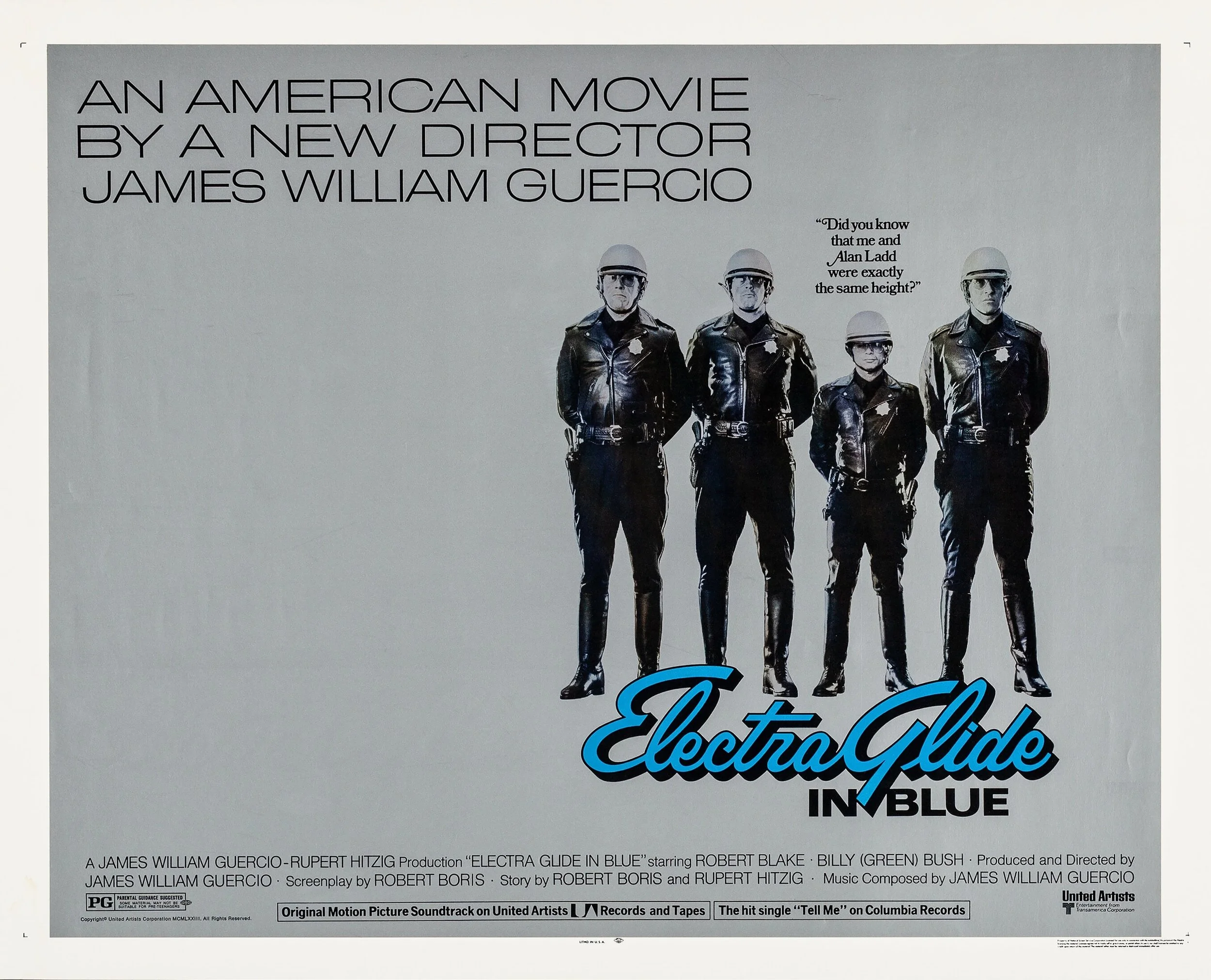
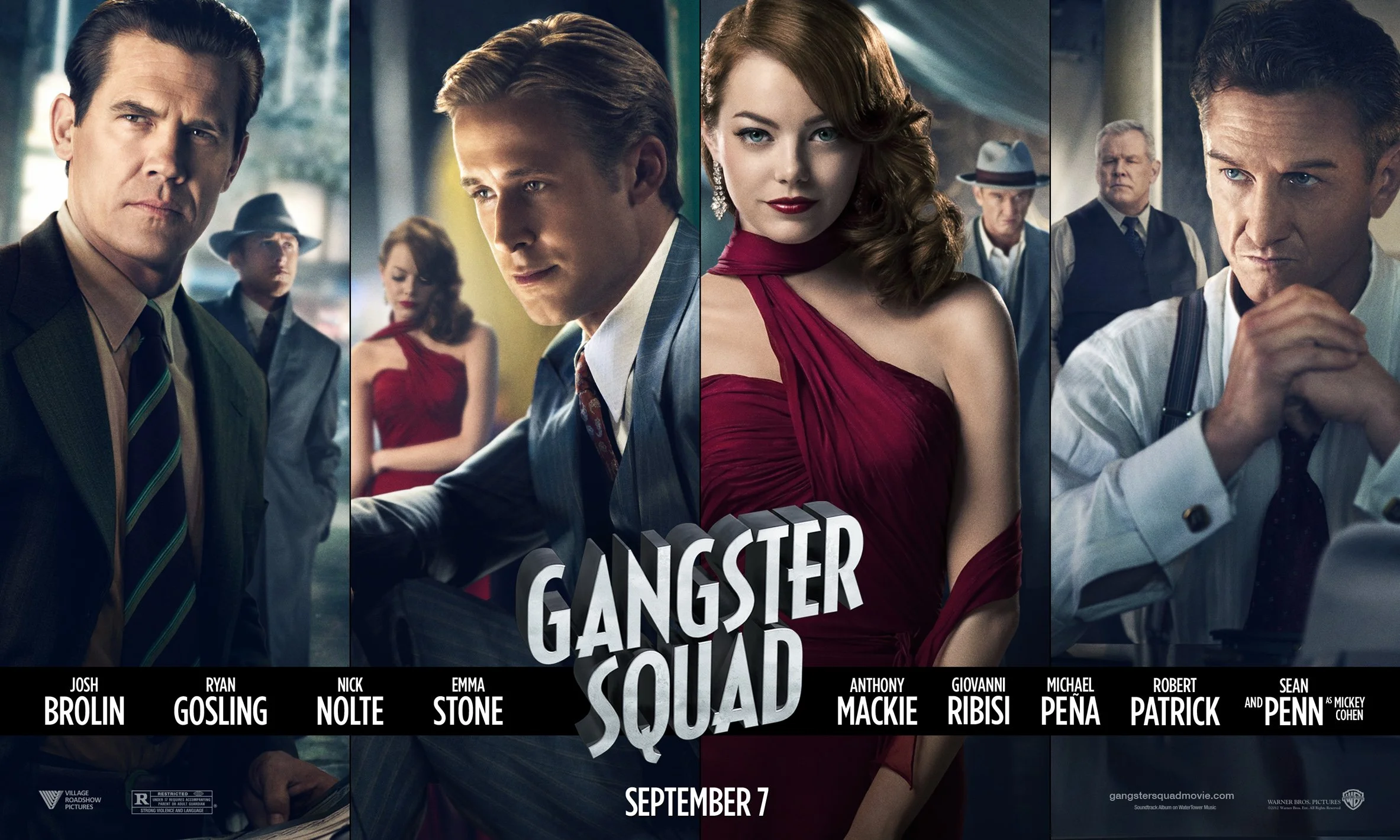
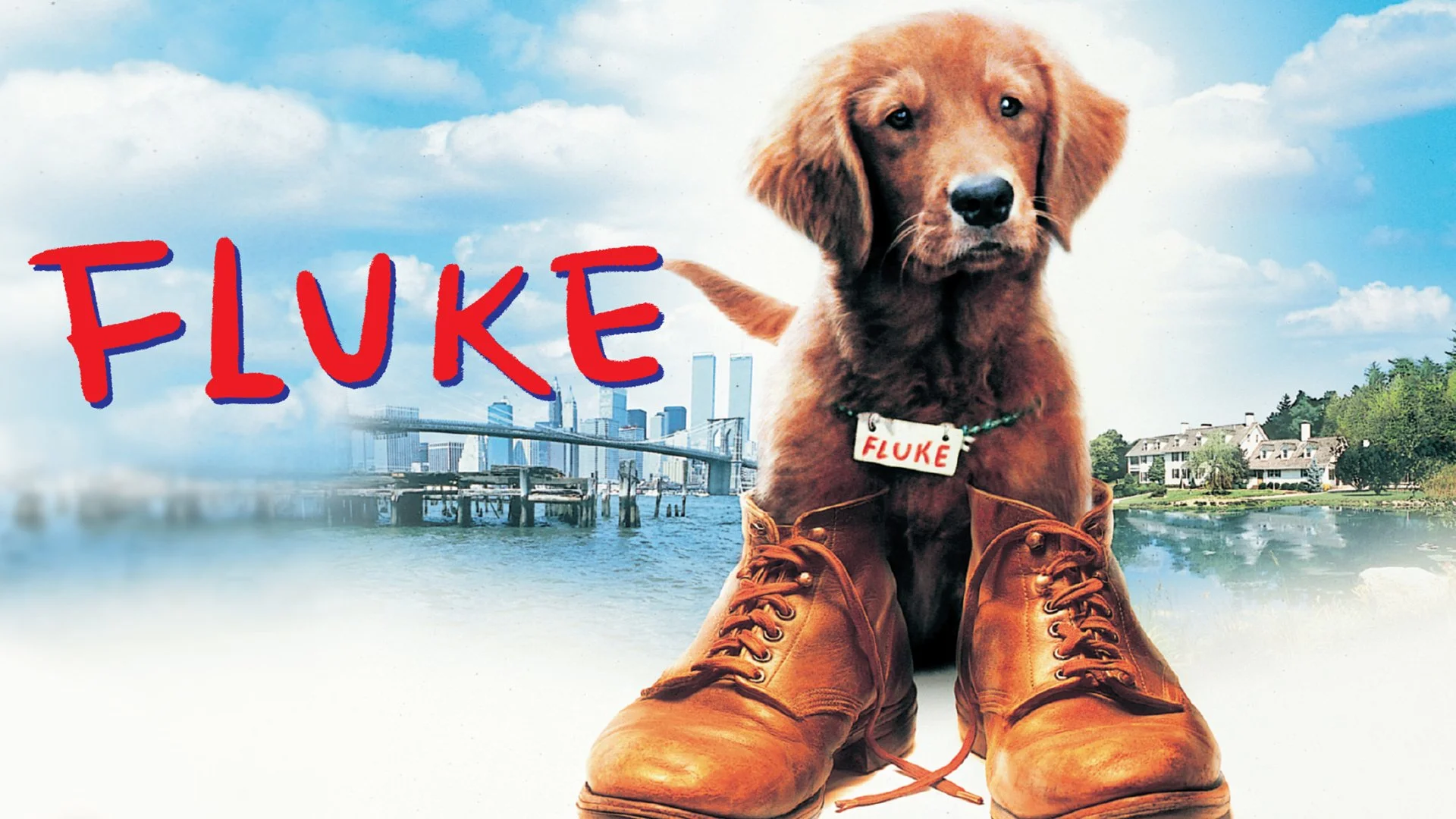







Why is the Fantasy Genre So Popular?
I was watching an episode of The Trews recently during which Russell Brand mentioned that the most popular movies at the box office last year were mainly science fiction or fantasy. He had some thoughts on why this was so and then proceeded to talk about escapism, personal faith and spirituality. Now I didn’t necessarily agree with all his points and I don’t believe in his views on higher powers but I did concur with some of his ideas discussed. As a result of the subject being raised, I have pondered of late why the fantasy genre seems to dominate cinema (and television), literature and gaming. Is it simply a case of providing a narrative vehicle that is universally flexible and accommodating, or are their deeper psychological and sociological reasons.
I was watching an episode of The Trews recently during which Russell Brand mentioned that the most popular movies at the box office last year were mainly science fiction or fantasy. He had some thoughts on why this was so and then proceeded to talk about escapism, personal faith and spirituality. Now I didn’t necessarily agree with all his points and I don’t believe in his views on higher powers but I did concur with some of his ideas discussed. As a result of the subject being raised, I have pondered of late why the fantasy genre seems to dominate cinema (and television), literature and gaming. Is it simply a case of providing a narrative vehicle that is universally flexible and accommodating, or are their deeper psychological and sociological reasons.
First off, escapism is perhaps the most obvious factor to consider when exploring the fantasy genre. It provides narratives that you can immerse yourself in, with its universal themes and conventions. In an age when people work long hours within an increasingly complex world, the notion of escapism as a means of relaxation seems eminently practical. A few hours spent in an MMO or watching Trollhunters on Netflix allow us to forget the rigours of the day and the iniquities of our place of employment. Losing yourself in a good book can have great restorative powers. I can think of several occasions during difficult times in my life in which a solid fantasy novel has allowed me to rest and maintain my emotion stability.
Yet escapism is not always a good thing, particularly if the respite it provides then becomes a crutch or worse still, an escape from reality and the problems one faces. Alcohol, drugs and the like can offer escapism to a degree and if their use is tempered with moderation, then they can be beneficial. Sadly an excess of these is far from good. The same can be said about spending large amounts of your time in a game, if it is done to the detriment of other aspects of your life. I remember as a teenager, how I use to struggle to do all the things I wished and would find myself getting up incredibly early to watch movies I’d rented from Blockbusters, yet had failed to because I’d been out socialising instead. Such habits were naturally unsustainable.
Another interesting facet of the fantasy genre is that it provides a means to process difficult subjects, that we may well avoid or recoil from in real life. Couching complex social issues or problems in a fantasy setting and exploring them via proxies that may have skills and abilities beyond that of mere mortals, can make the bleak, the abhorrent or even the tragic more palatable. A Monster Calls which is currently on release in cinemas is effectively just a tale of a boy having to come to terms with imminent death of his Mother. A difficult subject to be sure, yet the visually expressive way the film explores the story, via the use of allegory, helps audiences connect to the central themes.
Fantasy also offers us the opportunity to envision aspirational worlds that are better than the one we currently inhabit; worlds where deprivation and suffering are no more and people can meet their full potential. I believe a certain Gene Roddenberry may have had some views on this. Fantasy can also provide a virtual environment in which different social, political and philosophical models can be tested and explored. Within gaming, the genre brings likeminded individuals together and helps form communities. Charitable events such as Child’s Play have their roots in such groups and can do a lot of good in the real world. Fantasy can be a means to unite people, especially those who may find themselves marginalised in real life. It can bring a sense of belonging to those who may not feel that way already.
However, it would be foolish to only focus on the positive aspects of fantasy. We should at least consider other reasons for its popularity. As mentioned earlier, we live in an increasingly complex world. The pace of change has accelerated in the last thirty years and many of the social conventions and institutions we look to for stability have proven unsure. Life for some at present is unequal, highly fluid and bleak. Fantasy offers a means not just of escape but to refute the failings of a world we cannot control. Then of course there is the concept of “bread and circuses”. Are certain establishments happy to see the wider population immerse themselves in non-existent worlds and stories, thus allowing the status quo to be perpetuated and abuses of power to go unchecked?
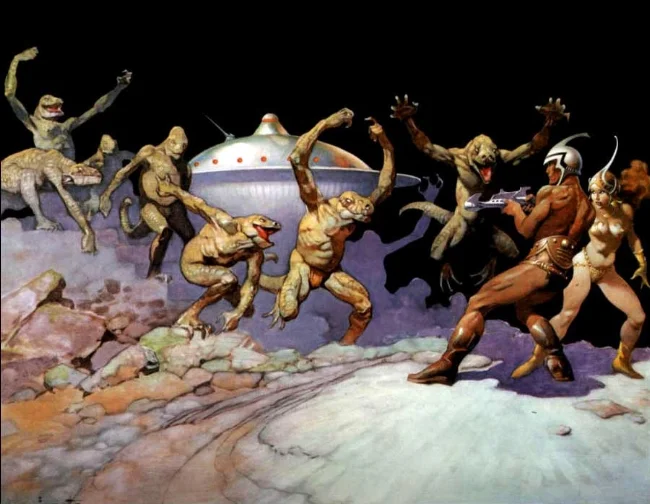
Not all popular fantasy tales offer positive visions or foster egalitarian principles. The writings of Robert E. Howard, H. P. Lovecraft and John Norman however entertaining are somewhat dated in social and political terms. Many RPGs and MMOs are still accommodating to those who wish to indulge in stereotypical power fantasies. Equality in terms of race, gender and sexual orientation are still sadly lacking. It can also be argued that the very communities that are allegedly so beneficial can become echo chambers and inwardly facing pockets of elitism. Fans of fantasy are not always associated with positive social interaction. Consider gamergate and the recent outrage against the Ghostbusters remake.
For me the most interesting theory regarding the popularity of fantasy in the twenty-first century is the idea that it is a surrogate for religion and a variation of personal faith. Traditional religion has certainly declined in the UK and parts of Europe, yet many still yearn for a sense of spiritual growth and fulfilment. Fantasy can provide a framework of similar ideas to Christianity, without the need to embrace more difficult theological concepts and requirements. Within gaming our avatars can at times be presented with opportunities to be virtuous, that we may not have in real life. We can have a positive impact upon our fan communities, help others and feel we are empowered and making a difference. Are these not fundamental tenets of faith and evangelising? The parallels between religion and fantasy are many and whatever your perspective the subject is intriguing.
Like most rhetorical questions of this kind, there isn’t a single definitive answer. For me fantasy provides a platform for films, games and literature to explore beyond the confines of the real world. Those who create within such parameters to be bold and visionary, unconstrained by the rules of physics. Yet fantasy as genre does have its weaknesses. Narrative conceits such as “Deus ex machina” and predestination paradoxes can be very lazy and such a cop out. However overall I think there is a link of some sorts between the popularity of fantasy and the current political climate in the western world. Epic tales are often about restoring that which is lost or righting a wrong. These are questions that we are searching to resolve in our lives at present, yet seem to be failing to achieve. Perhaps we look to fantasy for potential answers? Who can say? May be in the future we will look back upon these times with a clearer understanding.
Warlords of Atlantis (1978)
Being a child of the seventies I was raised on films. I saw a good many classic during my most formative years, usually on a Sunday afternoon, which I'd watch with my family. I also use to enjoy the adverts in the Evening Standard for the latest cinema releases. The poster art was lurid and exotic and would often promise so much. As video was not yet available to the domestic market, trips to the cinema were much more of an event than they are now. By 1978 I was already a firm fan of the fantasy genre (mainly thanks to the work of Ray Harryhausen) so when Warlords of Atlantis was released I was duly excited. I had seen all the previous films that John Dark had produced in this series. The Land That Time Forgot, At the Earth’s Core and The People That Time Forgot. Although cheap and cheerful, they were very entertaining, especially to younger audiences.
Being a child of the seventies I was raised on films. I saw a good many classic during my most formative years, usually on a Sunday afternoon, which I'd watch with my family. I also use to enjoy the adverts in the Evening Standard for the latest cinema releases. The poster art was lurid and exotic and would often promise so much. As video was not yet available to the domestic market, trips to the cinema were much more of an event than they are now. By 1978 I was already a firm fan of the fantasy genre (mainly thanks to the work of Ray Harryhausen) so when Warlords of Atlantis was released I was duly excited. I had seen all the previous films that John Dark had produced in this series. The Land That Time Forgot, At the Earth’s Core and The People That Time Forgot. Although cheap and cheerful, they were very entertaining, especially to younger audiences.
Now it is important to judge Warlords of Atlantis both within the historical context of the times and in accord with its budget. These movies were modest productions by the standards of the seventies and were certainly not in the same league as Harryhausen's fantasy films at the time. But Roger Dickens rod puppet monsters have a peculiar charm about them. They strive to beat the technical restrictions of their budgets. The miniature work is also good, but then again John Richardson was (and still is) an expert in his field, with a very distinguished pedigree. I would also draw attention to Mike Vickers score which is rather enjoyable. It adds an extra dimension of bogus quality to the proceedings.
The cast is packed with stalwarts of the industry and indeed this genre. Doug McClure was a man who could play himself with great intensity. Then there’s also Shane Rimmer, in-between his work for Gerry Anderson, as well as Michael Gothard and Peter Gilmore. All provide performances that are totally suitable for the material in question. Malta and Gozo once again provide the exotic location required for the mysterious undersea kingdom. Not being hindered by any progressive politics, there is also the ubiquitous ample breasted female. For an unreconstructed ten year old, raised during the pre-Thatcher era, this film just kept ticking the right boxes at the time. There is no laconic humour, or postmodern irony. The story is played straight and the better for it.
Unlike previous John Dark productions, Warlords of Atlantis was not based on the work of Edgar Rice Burroughs. The screenplay was the work of Brian Hayles, one of the bastions of British television. He wrote prolifically for early Doctor Who (The Celestial Toymaker, The Smugglers, The Ice Warriors, The Seeds of Death, The Curse of Peladon and The Monster of Peladon) and often explored socio-political themes. These are present in Warlords of Atlantis, with an elite class of oppressive Martians using a slave class to stave off the constant attack of mutations. I believe the film was originally entitled “Seven Cities of Atlantis” before being altered, to one that did not invoke such high budget imagery.
The market of the time was soon to be saturated by Star Wars rip-offs and as a result, this was the last of the Amicus productions in this vein. Their traditional approach may seem dated to today’s modern sensibilities and I doubt if a contemporary audience would see any virtue in them. I shudder to think what sort or "re-imagining" these films would require to reach the screen today. However, if you can look beyond the superficial, there is entertainment to be had from Warlords of Atlantis. Enjoy it for what it is. It's one hundred times better than any low budget equivalent you’d find these days on Syfy.
Engaging With Others
If you create any sort of content, then at some point you must address the practical issue of engaging with your audience. Some folk get by without doing so, subsequently disabling comments on their You Tube channel or blog. My fellow podcaster Brian has happily managed without a Twitter account for years and has only just returned to that online community. However, I feel that two-way communication is broadly a good thing and I’ve advocated this in past and more recent posts. I’m currently trying to leave more comments on the various blogs that I read and retweet and reply more frequently on Twitter. So far this has been a positive experience. And then I went a stage further and entered in to an “exchange of views” on a well-known gaming news and discussion site. Let it suffice to say that it clearly brought in to focus the unpredictable nature of human interaction and the often-baffling behaviour of others online. Due to the obvious lack of visual, verbal and social cues, discerning others words can be difficult. Something that some no doubt deliberately play on.
If you create any sort of content, then at some point you must address the practical issue of engaging with your audience. Some folk get by without doing so, subsequently disabling comments on their You Tube channel or blog. My fellow podcaster Brian has happily managed without a Twitter account for years and has only just returned to that online community. However, I feel that two-way communication is broadly a good thing and I’ve advocated this in past and more recent posts. I’m currently trying to leave more comments on the various blogs that I read and retweet and reply more frequently on Twitter. So far this has been a positive experience. And then I went a stage further and entered in to an “exchange of views” on a well-known gaming news and discussion site. Let it suffice to say that it clearly brought in to focus the unpredictable nature of human interaction and the often-baffling behaviour of others online. Due to the obvious lack of visual, verbal and social cues, discerning others words can be difficult. Something that some no doubt deliberately play on.
I shall obliquely refer to the facts of the matter, as I don’t see the point in personalising this post. In a nutshell, I replied to a comment on a post, explaining my view and why I thought that way. It certainly wasn’t a binary opinion and I countenanced other potential outcomes. I tried to be a clear as possible and even handed. All opinions are biased, as that is their nature but I certainly tried to apply a degree of logic to my stance and the way I expressed it. Needless to say, someone else begged to differ and responded in kind. That is how comments work on such websites. So, after some consideration I decided to respond again, further clarifying my position. After all, the person(s) you are engaging with may have not have read your reply fully, could have misunderstood something or English may not be their first language.
Unfortunately, despite a second response, the discussion did not move on. It simply spawned a counter reply that made erroneous assertions and failed to recognise the point I was making. The author was either unable to understand my point or was wilfully ignoring it to perpetuate the discussion. There may well have been a deliberate attempt at sealioning or it could have all been a basic misunderstanding. Either way, it was clear that the most rudimentary rules of debate where not being adhered so I saw no further point in pursuing that discussion.
I’m sure the proceeding anecdote is far from unique and many of us have encountered such a scenario before. I won’t put this experience down to “trolling”, as that is far too much of a cop out and is a term that is used to often these days to overlook the social complexity of online discussions. There may be a myriad of reasons as to why things went the way they did. Some folk love to engage in lengthy forum and comment exchanges. Others like to play devil’s advocate as an intellectual exercise. Then of course you can consider such options as bias, “tribal associations” and the personal disposition of the individual you’re dealing with. We also live in a world that currently puts how we feel on an equal footing with facts and data. A contradiction of a personal view can sometimes be interpreted as a personal attack.
As you can see, engaging with others comes with a lot more to consider these days. Furthermore, you don’t get to pick and choose who you get to interact with in advance. You only really get a handle on the person(s) thoughts and may be personality, once the ball has started rolling, so to speak. Therein lies the rub and is the reason why a lot of people don’t bother to reach out and engage. Engagement can take time, effort and doesn’t necessarily take you down the path you expect. That can be a good thing or a potential chore. In the case in question the impasse I found myself confronted with came from a failure to grasp the point I was making, be it deliberately or not. I was expecting a logical pattern of events and they didn’t happen.
I have neither the time nor the inclination to be drawn in to pointless or self-indulgent or circular debates online. There is no obligation to do so and if someone wants to turn a discussion in to something more, then I’ll just shrug my shoulders and move on. It does however leave me pondering whether this sort of malady is on the increase or not. Are a percentage of all forms of human interactions doomed to failure due to some sort of unpredictable human factor? It also raises that old thorny issue of the echo chamber, although I feel that this is another term that is sued to often and applied incorrectly. Filtering is a necessary process. There is a difference between balance and suffering pointless contradiction. Also, why debate with those who have no interest in reconsidering their position. Again, there are many things to consider.
I am not especially concerned with that curious internet phenomenon of trying to present your “best self” online. I’m 49 and fully aware that I’m far from perfect. Although I don’t set out to deliberately upset someone, I won’t compromise my views or position to spare someone else’s feelings or try and paint a likeable picture of myself. If you want to judge my morals, ethics or lack of, then fine. Your potential disdain doesn’t really make much difference, does it? Overall, when participating in a forum or sharing a comment, I’m merely interested in an exchange of ideas, uncluttered by anything else than the basic facts. However, unless one has the benefit of interacting with others with a similar agenda and process there is always the risk that all engagement will be subject the caprices of human emotions and frankly it doesn’t help.
The Elder Scrolls Online, Again
I participated in the Beta testing of The Elder Scrolls Online in spring 2014. Overall I found the game agreeable enough but chose not to purchase it upon its release, due to the subscription model and a lack of time. Like many MMOs the initial launch was problematic and the game had numerous issues and bugs. Within a year, the game was re-branded with a buy-to-play business model and extensive patching made the overall game more equitable. As a result, I’ve had my eye on The Elder Scrolls Online: Tamriel Unlimited for a while and frequently toyed with the idea of buying it. Perhaps one of the reasons I’ve held off from purchasing the game is because I have such fond memories of Skyrim and therefore wonder if I’d prefer a new RPG to an MMO.
I participated in the Beta testing of The Elder Scrolls Online in spring 2014. Overall I found the game agreeable enough but chose not to purchase it upon its release, due to the subscription model and a lack of time. Like many MMOs the initial launch was problematic and the game had numerous issues and bugs. Within a year, the game was re-branded with a buy-to-play business model and extensive patching made the overall game more equitable. As a result, I’ve had my eye on The Elder Scrolls Online: Tamriel Unlimited for a while and frequently toyed with the idea of buying it. Perhaps one of the reasons I’ve held off from purchasing the game is because I have such fond memories of Skyrim and therefore wonder if I’d prefer a new RPG to an MMO.
However, to cut a long story short, a deal turned up recently on a key selling site and was still there a week later. So, I took advantage of this favourable offer tonight and bought The Imperial Edition of The Elder Scrolls Online for just under £14. This particular variant of the game comes with the following bonuses and extras:
Imperial Race: Play as an Imperial in any alliances.
Imperial White Horse: This in-game mount has the same stats as any other horses in the game.
Rings of Mara: Receive the blessing of Mara, the goddess of Love, who will bless your union with a partner of your choice (aka friend).
Mudcrab Vanity Pet: A self-explanatory cosmetic pet.
Another thing worth noting about The Elder Scrolls Online: Tamriel Unlimited, is that the game client is currently up to a whopping 38GB which is not an easy download, even for those with a decent fibre connection. The game also has an optional subscription service (ESO Plus) that allows access to the various DLC that have been released in the last year. These can be unlocked for a monthly cost of £8.99 or bought permanently using the in-game currency. For the meantime I shall defer both options. It remains to be seen whether I need additional content as there may be sufficient in the base game. The Crown stipend that comes with the sub is not a compelling bonus at the moment.
Because I’m the sort of gamer that likes to know in advance “what’s what”, I’ll probably read a few FAQs and websites before I jump in to the game. It may beneficial for me to join a US rather than European server, as I know several people that play The Elder Scrolls Online: Tamriel Unlimited and they are all in North America. Another major plus that this MMO offers, is the opportunity to write about a game again, which is something I’ve been struggling with recently. So, expect to see some posts regarding my initial experience in Tamriel over the next week or two. Hopefully it will be a positive one.
Revisiting Red Dawn
I was a teenager during the eighties and grew up during the final days of the Cold War. The threat of another war in Europe was very real and the fear of a nuclear confrontation was always present. John Milius’s Red Dawn therefore had quite a profound impact upon the viewing public at the time. It certainly was not the first movie to tackle the concept of an invasion or to explore the role of the guerilla. However, what it succeeded in doing was depicting the idea in a contemporary way that the audience could relate to. The iconic image of Russian troops outside McDonalds encapsulated the films mood entirely.
I was a teenager during the eighties and grew up during the final days of the Cold War. The threat of another war in Europe was very real and the fear of a nuclear confrontation was always present. John Milius’s Red Dawn therefore had quite a profound impact upon the viewing public at the time. It certainly was not the first movie to tackle the concept of an invasion or to explore the role of the guerilla. However, what it succeeded in doing was depicting the idea in a contemporary way that the audience could relate to. The iconic image of Russian troops outside McDonalds encapsulated the films mood entirely.
The movie was unfairly labelled jingoistic and a product of the Reagan era and was to a degree discounted by critics at the time. Yet despite of writer/director John Milius's personal politics, the movie depicts partisans quite honestly, portraying them as everyday people, in this case teenagers. They are not invincible, infallible or morally unassailable. Fighting on their home-soil takes a very heavy toll upon them all. They have to deal with such things as PTSD, betrayal and family loss. There is also dissent among the group and war is depicted as not being a black and white situation. These are quite weighty themes and not something you immediately expect from a mainstream action movie aimed at the teen market. It is also worth noting that Red Dawn was the first movie to receive the PG-13 rating from the MPAA, yet it is curiously violent and frankly nearer to an R.
The magnitude of the ongoing war depicted in Red Dawn is only briefly glimpsed though the eyes of our partisan protagonists. We see small scale sorties against the enemy and are limited to the invaders activities in Colorado. In fact the Wolverines never really get a clear idea of the state of the war until they meet a USAF pilot who's been shot down. It is this minimalist approach, showing the how the occupation has personally affected a small town that bolsters the strength of the story. For a movie with teenage protagonists and aimed squarely at an equivalent demographic, it makes few concessions to pander to its audience. There is no major romance, comic relief or happy ending. Most of the Wolverines die, being shown as part of a wider national sacrifice.
Red Dawn is very much a product of its time, both politically and cinematically. Yet despite being a mainstream studio production it does not compromise its theme by trivialising it. It deals squarely with the idea of how war effects youth. Something that was absent from the 2010 movie Tomorrow, When the War Began. Based on the novels by John Marsden, the film depicts a group of young Australians struggling to cope with an invasion by an unspecified foreign military power. Where Red Dawn endeavours to show youth being thrust violently into an adult world and its tragic consequences, Tomorrow, When the War Began attempts no such thing. The invasion is simply an inconvenience and it takes long time for the protagonists to grasp the magnitude of their predicament. The movie avoids any geo-political explanation of the war itself and instead provides what the target audience expects. Thus we have complex relationships and teen angst and occasionally some guerrilla activities against a faceless enemy.
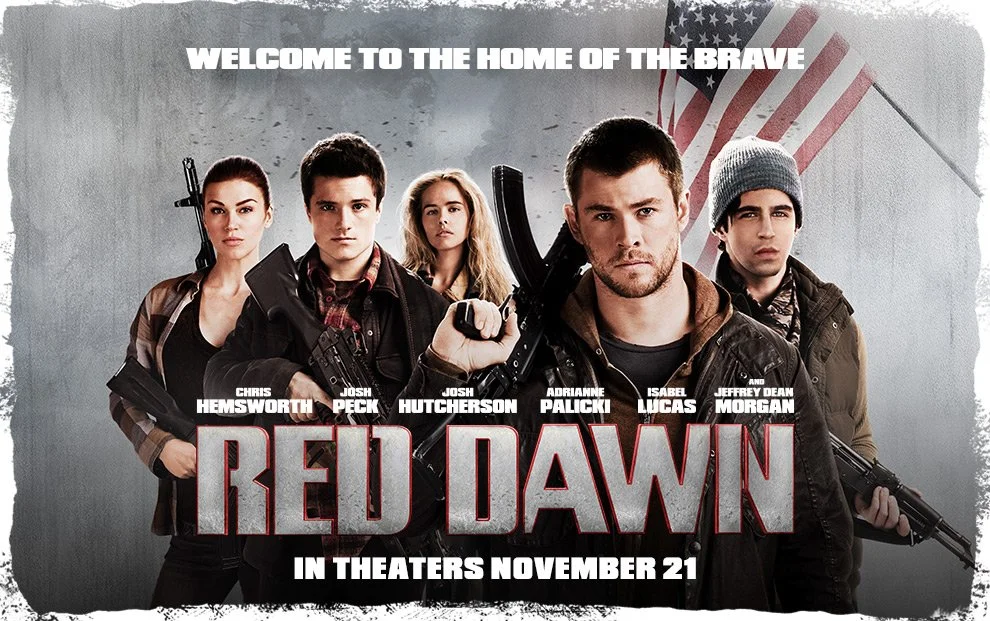
Roundabout the same time as Tomorrow, When the War Began was released, MGM/UA were preparing to launch their remake of Red Dawn. This re-imagining of the 1984 original was originally conceived to depict a Chinese invasion, similar to that shown in Tomorrow, When the War Began. However, due to the studios financial problems at the time, the movie was shelved. Problems were further compounded over the next two years by the expansion of the US film exports to the Chinese market. After recovering from near bankruptcy, the studio was left with a movie that now potentially maligned its biggest new customer. Thus Red Dawn underwent significant re-shooting and editing. The most significant plot change being the Chinese invaders being altered to North Korean.
Sadly, these radical augmentation do have a negative impact upon the new movie, which was finally released in 2012. The original story centred around a failing US economy and its reneging on its debt to China, hence the subsequent invasion. How the new storyline with North Korea as the antagonist plays out via the fanciful plot device of Asian imperialist aggression. Rather than attempting to explore post 9/11 sensibilities, Red Dawn is content to be yet another PG-13 teen orientated action movie. It is interesting to note that this time round, lead character Jed Eckert (Chris Hemsworth) is depicted as having prior military experience, which does somewhat alter the underpinning concept of true homegrown partisans.
The themes of invasion, occupation and insurrection lend themselves to strong cinema. However, the relative peace we currently enjoy in the western hemisphere, means that these are ideas are that seldom revisited, at least with regard to our own nations. The 1984 original version of Red Dawn managed to explore these ideas even within the parameters of the prevailing political framework of the time. To accommodate more contemporary tastes, such notions were absent or only superficially addressed in Tomorrow, When the War Began and the remake of Red Dawn. Ironically Western politics seems to be at war with itself at present, which would certainly lend a new spin to the Red Dawn scenario. Invasion would more than likely be replaced in any screenplay with civil war. Perhaps such a subject is a little too close to home at the moment.
If you saw Red Dawn upon its original release and haven’t seen it since, perhaps a second viewing would prove interesting experience. The threat of war with other nations doesn’t seem so immediate now and has been replaced with the more nebulous fear of terrorism and the less clearly defined enemies. Younger viewers may find it difficult to grasp the prevailing dread that the Cold War perpetuated. And if the political aspects of the film along with its social themes, don’t appeal to you, at least you can enjoy an adequate action movie, free from preposterous CGI set pieces and committee driven ending.
*For those wondering why I have not referenced the 1987 US TV miniseries Amerika with its similar themes, it is simply because I have never seen it and it doesn't appear to be currently available on any home media format.
Meanwhile, Back in LOTRO
The recent news regarding Standing Stone Games’ acquisition of LOTRO has certainly re-invigorated the fan community and led to some renewed wider interest in the game. I’ve kept my own subscription going mostly out of curiosity for LOTROs future, rather than a burning passion for the MMO. In fact, on Laurelin server, it’s pretty much business as usual. My kinship has a core group of players who logon regularly as do most others. Key regional hubs such as Bree and the Twenty-first Hall are relatively busy, usually with role players and music groups running events. Beyond this there doesn’t appear to have been a major change at present to the game’s overall population. Perhaps something tangible needs to be added to LOTRO first before we see such a shift.
The recent news regarding Standing Stone Games’ acquisition of LOTRO has certainly re-invigorated the fan community and led to some renewed wider interest in the game. I’ve kept my own subscription going mostly out of curiosity for LOTROs future, rather than a burning passion for the MMO. In fact, on Laurelin server, it’s pretty much business as usual. My kinship has a core group of players who logon regularly as do most others. Key regional hubs such as Bree and the Twenty-first Hall are relatively busy, usually with role players and music groups running events. Beyond this there doesn’t appear to have been a major change at present to the game’s overall population. Perhaps something tangible needs to be added to LOTRO first before we see such a shift.
In the meantime, I continue to work my way through various regional quests in The Beacon Hills, Taur Drúadan and North Ithilien, in a leisurely fashion. My primary character is a Lore-master at level cap that I’ve had since I first started LOTRO back in Winter 2008. Yet despite numerous in-game achievements over the last eight years, I still find outstanding deeds to do and activities to pursue. LOTRO has an inordinately large amount of content and landmass to explore. At present, I’m spending some time on my Explorer vocation that I’ve neglected of late. The tenth tier was not unlocked, so I focused on that today. Crafting ingots is still a trying affair. Plus, I only just noticed that an auctioneer had been added to the Bree Crafting Hall, which shows how infrequently I visit.
Another more recent addition to Bree is the Scholar’s Hall (opposite the Cat Lady’s House). This has apparently been added to LOTRO to accommodate the Mythgard Institute's academic lectures with the Tolkien Professor, as well as concerts and other community events. Although I welcome such a venue being added to the game, its distinctly Gondorian style of architecture (and not Anorian) does seem a little incongruous, considering its location. I suppose it’s easier to use existing in-game assets than create new ones. The interior is suitably sumptuous and reflects the various regions of Middle-earth. Let us hope that the faithful find it useful and to their liking.
I recently found some use for my LOTRO points (formerly Turbine points), spending several thousand of them on Relics for my Legendary Items. Although the store Settings, Gems, and Runes may not be the best, they certainly offer both convenience and a leg up on those I had already. Their addition to my weapons has had a tangible impact upon my stats. I have also finally grasped the nettle and started equipping slotted armour and adding appropriate essences. In the past, I have eschewed this game mechanic because it adds another layer of complexity that lazy players such as I eschew. However, I found that I had sufficient funds to buy suitable essences and have started grinding for the latest armour set.
Having no significant alts, means that I have a lot of time to spend on my primary character. Therefore, at present, my time in LOTRO is spent at a sedate pace. I set straightforward goals and pursue them in a manner that still allows me to enjoy my surroundings. The ambient music in North Ithilien is of a high quality and I suspect that some material that was recorded earlier on in the games life, was kept back for key locations. My recent tinkering with my build means that even an indifferent player such as I, doesn’t have to worry about survivability. All in all, I go where I please and face no major challenges, which is how I like to play. I dislike being underpowered and at a disadvantage. Let us not forget what Conan said about what is best in life.
Such is my personal status quo in LOTRO at present. I must admit it’s an advantageous position to be in. It certainly allows me to reflect upon what may be coming next in 2017. Will the Daybreak Gaming Company offer a new tier of subscription? There are occasions when I do regret not buying a lifetime sub but I wouldn’t be surprised if that gets replaced by something else. A new broom always likes top sweep clean and all that. Then of course, there is the small matter of getting to Mordor and may be beyond? LOTRO in the Fourth Age is an interesting proposition. Over to you Standing Stone Games. We await new content.
Watching Movies on Commercial TV Stations
The relevance of this post, comes down to how much you like and care about film. If movies are simply a transient form of entertainment to you, something you have no major investment in beyond killing time, then my following protestations will be water off a duck’s back. If like me, you consider film to be art, then hopefully you’ll concur with my sentiments. Because I do consider movies to be a the most immediate and significant art form of the twentieth century. There are no significant barriers to entry beyond the ability to see and they can convey thoughts, ideas and emotions to the broadest possible audience.
The relevance of this post, comes down to how much you like and care about film. If movies are simply a transient form of entertainment to you, something you have no major investment in beyond killing time, then my following protestations will be water off a duck’s back. If like me, you consider film to be art, then hopefully you’ll concur with my sentiments. Because I do consider movies to be a the most immediate and significant art form of the twentieth century. There are no significant barriers to entry beyond the ability to see and they can convey thoughts, ideas and emotions to the broadest possible audience.
Yesterday I watched Devil in a Blue Dress, for the first time. Carl Franklin’s socio-historic thriller enjoys a strong reputation as a neo-noir and is also considered an important piece of “Black Cinema”. It boasts a strong cast featuring the likes of Denzel Washington and Don Cheadle and offers a great deal of period detail. There's also a fine score by Elmer Bernstein. All things considered this is a film of note, dealing with important subjects such as institutional racism and personal friendship, told within the framework of a hard-boiled detective story. The narrative has many a twist and is squarely aimed at mature audiences with a sense of historical perspective.
Sadly AMC (UK), the channel that broadcast Devil in a Blue Dress on December 10th, decide to do so at 5:00 PM in the afternoon. I didn’t realise this initially as I was watching a recording on our DVR but it soon became apparent that the film had been edited to accommodate broadcast at such a time. These cuts where at time so ham-fisted that they stood out like a saw thumb. Edits to violence and a sex scene as well as sundry dialogue omissions were made to sanitise the film for broadcast. However, considering the nature of the plot and the era that the story was set in, such changes drastically altered the dramatic impact of the movie. One missing scene had a particular bearing on the narrative. Then there is the entire separate issue of interfering with the film makers artistic vision.
Unfortunately, such practises are common place on commercial television stations these days. Films are not only edited for content but shown in the wrong aspect ratio, plagued with commercial breaks every ten minutes and further blighted by onscreen graphics and logos. If you enjoy perusing the end credits you’ll often find these compromised in a similarly crass fashion. Often the picture quality of the source content is subpar and further degraded by the rigours of digital compression. Simply put, watching a film under such circumstances is often intolerable for film fans or aficionados. For those seeking out specific movies, as I were with Devil in a Blue Dress, it really can impact upon your enjoyment and critical judgement. I subsequently re-watched this film several hours later, via a superior source to improve my perception of it.
Overall such practises by commercial stations simply show they have no real interest in the movies they peddle. As ever it is simply a question of viewing figures and ad revenue that concerns them. Thus, they will more than likely continue with such practises irrespective of the few complaints that they may receive. Therefore, I have personally chosen that henceforth I shall no longer watch movies under these circumstances, unless there really is no other option available. Unless a film is extremely rare and unobtainable on any other platform, I shall only watch it via DVD, Blu-ray, Netflix, Amazon Prime or some other electronic file format. Adverts, digital branding, censorship and incorrect formatting is no longer acceptable and belong to the last century.
I’m sure there are some who will label me purist but I believe that all creative material is due a degree of respect with regards to the manner in which it is presented; and that should always be in the accordance with its creator. Tampering simply sends a message that there is no inherent value in that which is being shown. It is born of hubris and a lack of creative understanding. Therefore, broadcasters should never butcher films, talk across music or songs and generally interfere with art, simply for the convenience of their business model. Sadly, it is highly unlikely that those currently guilty of such things are going to support such a change in policy. Thus, we return to the concept of voting with our feet and seeking out quality cinema (and other art forms) via the best outlet possible. Why diminish your enjoyment? It is time to start treating these commercial stations with the same indifference they show to film.
Exodus: Gods and Kings (2014)
Epic adventure Exodus: Gods and Kings is the story of one man's daring courage to take on the might of an empire. Using state of the art visual effects and 3D immersion, Scott brings new life to the story of the defiant leader Moses as he rises up against the Egyptian Pharaoh Ramses, setting 600,000 slaves on a monumental journey of escape from Egypt and its terrifying cycle of deadly plagues. Written by 20th Century Fox.
So reads the marketing material for Exodus: Gods and Kings according to 20th Century Fox. However, the movie itself despite brimming with "state of the art visual effects and 3D immersion" lacks any emotional impact, has a choppy narrative and is completely devoid of any religious conviction. Do not mistake Ridley Scott's ponderous movie for a religious epic. It is more of a pseudo-historical blockbuster with some metaphysical overtones. By endeavouring to rationalise the faith based aspect of the story, we are left with a distinctly underwhelming costume drama.
Epic adventure Exodus: Gods and Kings is the story of one man's daring courage to take on the might of an empire. Using state of the art visual effects and 3D immersion, Scott brings new life to the story of the defiant leader Moses as he rises up against the Egyptian Pharaoh Ramses, setting 600,000 slaves on a monumental journey of escape from Egypt and its terrifying cycle of deadly plagues. Written by 20th Century Fox.
So reads the marketing material for Exodus: Gods and Kings according to 20th Century Fox. However, the movie itself despite brimming with "state of the art visual effects and 3D immersion" lacks any emotional impact, has a choppy narrative and is completely devoid of any religious conviction. Do not mistake Ridley Scott's ponderous movie for a religious epic. It is more of a pseudo-historical blockbuster with some metaphysical overtones. By endeavouring to rationalise the faith based aspect of the story, we are left with a distinctly underwhelming costume drama.
It soon becomes apparent while watching Exodus: Gods and Kings that this movie has been subject to the usual editing issues that plague the work of Ridley Scott. Key members of the cast such as Sigourney Weaver, Aaron Paul and Andrew Tarbet simply vanish from the story shortly after their introduction. There are obvious gaps in the narrative and many of the key characters feel poorly defined. The central relationship between Moses (Christian Bale) and Ramses (Joel Egerton) is very thin and there is little back story to their emerging rivalry. Possibly these gaps will be plugged in a future directors cut; something Ridley Scott is no stranger to.
Many critics joked that "at least the plagues are nice" when reviewing this movie. They are right in this respect. The digital effects work certainly paints an authentic picture of the Egyptian world and the subsequent plagues are brutal and unpleasant. The Crocodile attacks are particularly striking, yet tonally sit quite awkwardly with the rest of the film. The choice to down play the religious element of the plot and effectively sideline Moses's visions of God as the results of a head injury is somewhat counter-intuitive. As a result, Exodus: Gods and Kings feels distinctly lacking in any sort of conviction.
I often wonder if the reason so many "great" directors produce such weak work in their twilight years is because their fame and success has placed them in an echo chamber. It is either assumed that their creative vision is infallible or that all concerned parties are simply too scared to challenge any of the ideas that are presented. This is by far Scott's weakest movie for a long time and frankly I am not sufficiently enamoured to give another longer version a try, as and when it becomes available. Unless you are a Scott completest Exodus: Gods and Kings is best avoided. If you are a person of faith you may still wish to defer to Cecil B. DeMille's The Ten Commandments.
Landmark to Close on February 21st
It was announced yesterday by the Daybreak Game Company that the MMO Landmark will be closing on 21st of February. Landmark joins an ever-growing list of titles that have closed since DGC acquired SOEs back catalogue. As ever the press release does not give any specific details as to why the game is to be shutdown. However, it is more than likely down to operating costs versus profits. Furthermore, irrespective of the corporate reasons for the decision, there are still numbers of Landmark players who will be saddened by the news. This development is also of interest to LOTRO and DDO players, due to the Daybreak Game Company recently becoming the publisher of those titles.
It was announced yesterday by the Daybreak Game Company that the MMO Landmark will be closing on 21st of February. Landmark joins an ever-growing list of titles that have closed since DGC acquired SOEs back catalogue. As ever the press release does not give any specific details as to why the game is to be shutdown. However, it is more than likely down to operating costs versus profits. Furthermore, irrespective of the corporate reasons for the decision, there are still numbers of Landmark players who will be saddened by the news. This development is also of interest to LOTRO and DDO players, due to the Daybreak Game Company recently becoming the publisher of those titles.
Now if you peruse the comments section of a site such as Massively OP, then you’ll find statements such as “LOTRO is fine” and there’s nothing to be concerned about because DGC is just the publisher for Standing Stone Games. However, I don’t think the situation is as binary as that and it would be wise to scrutinise the business relationship between DGC and SSG more closely. Because I and others suspect that DGC may well have underwritten SSG costs, when they acquired both DDO and LOTRO from Turbine and Warner Bros. If that is the case, then such financial involvement give DGC far more leverage with SSG than merely publishing their gaming catalogue.
Too many gamers allow personal sentiment and affection for the games that they play to blind them to the realities of business. MMOs as I have said time and time again are not social services but products to be bought and sold for money. The moment any product doesn't meet the expectations its owners, then it's future is in question. I would have thought that was abundantly clear by the way Warner Bros. cut LOTRO and DDO loose, as they organise their balance sheet for their pending acquisition with AT&T. Why should the Daybreak Gaming Company, itself a subsidiary of a Russian venture capital company, view its assets any differently?
Game Developers often have the best of intentions for the products they make. Artistic vision and ethical practises may well be key to their business ethos. However, unless those that create have total financial and therefore legal control, then such noble aspirations can and are frequently side-lined. In my experience business is usually driven by those who control the purse strings, which once again returns me to the question of whether DGC are merely SSGs publisher or is there a more complex business relationship? Are LOTRO and DDO going to be measured by criteria set by their developers or someone else? If these games survival is dependent on targets set by DGC, then their future may not be as rosy as some like to think.
The Haunted Palace (1963)
Despite being marketed as yet another Gothic Horror based upon the works of Edgar Allan Poe, The Haunted Palace is in fact a lose adaptation of The Case of Charles Dexter Ward, by H. P. Lovecraft. The film's title is merely taken from a poem by Poe and is an example of the clever promotion often associated with the movies of Roger Corman. The poster's tagline as ever focuses on the more sensational aspects of the storyline, although audiences’ expectations are not exactly met. Yet there is often a great deal of merit to be found in Corman's output from this decade and as ever The Haunted Palace, like so many of his other movies transcends its modest budget with a sumptuous production design and atmosphere.
Despite being marketed as yet another Gothic Horror based upon the works of Edgar Allan Poe, The Haunted Palace is in fact a lose adaptation of The Case of Charles Dexter Ward, by H. P. Lovecraft. The film's title is merely taken from a poem by Poe and is an example of the clever promotion often associated with the movies of Roger Corman. The poster's tagline as ever focuses on the more sensational aspects of the storyline, although audiences’ expectations are not exactly met. Yet there is often a great deal of merit to be found in Corman's output from this decade and as ever The Haunted Palace, like so many of his other movies transcends its modest budget with a sumptuous production design and atmosphere.
Charles Dexter Ward (Vincent Price) and his wife Ann (Debra Paget) travel to Arkham to take custody of a palace he's inherited. Its previous owner was his great grandfather, Joseph Curwen, who was burned at the stake by local villages for practicing the black arts. Upon arrival the locals are hostile to Ward with the exception of Dr. Willet (Frank Maxwell). Many of the villagers are afflicted with birth defects that are attributed to a curse that Curwen made as he died. Ward soon finds that a portrait of his ancestor bears a striking similarity to himself. It is not long before he finds his own identity under threat from the malignant spirit of Curwen, who seeks revenge and to resume his ungodly pursuits.
The Haunted Palace certainly has some noteworthy aspects. This was the only time that iconic horror actor, Lon Chaney Jr. appeared in a Roger Corman movie. Although his role is somewhat under developed, his presence is still tangible and suitably creepy. As ever, the production does a great deal with very little. The set designs by Daniel Haller are intricate and have an authentic feel. Many were built in forced perspective to create the illusion of scale. Floyd Crosby's cinematography is stylish and make great use of the widescreen format. There are is also some simple but eerie makeup effects by Ted Coodley,
After a captivating opening, The Haunted Palace embarks upon a story of possession, revenge as well as arcane rituals. There are quite a lot of elements from Lovecraft's source text, including the infamous Necronomicon. The concept of the Elder Gods seeking earthly form by cross breeding with humans is quite bold for the times. The movie also has some quite strong death scenes. One villager is dragged into the fireplace and burnt alive at the hands of his own mutant son. Another hapless local is immolated in the streets, resulting in a grim incinerated corpse. The film has a sinister ambience, especially during the scene when Ward and his wife are menaced by a group of deformed villagers.
Sadly, the final act fails to sustain this momentum and the ending is somewhat abrupt and predictable, especially with regard to the inevitable twist. It also fails to account for the fate of certain characters. It's a shame because this production strives to do something different from other Corman horror movies. It excels in many aspects of the production but simply over reaches itself at the end and cannot adequately bring events to a satisfactory conclusion. However that is not to say that the movie isn't entertaining and frequently demonstrates low budget creativity. Many of today's horror directors today could benefit from a close study of Corman's approach to film making and his innovative techniques.