
STO and the Humble Bundle Jingle Jam 2017
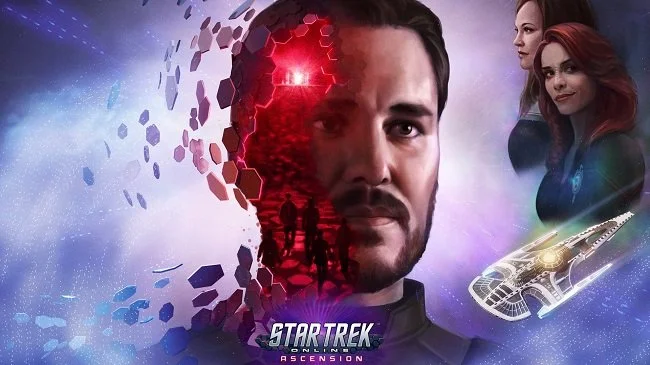
This month’s Humble Bundle is a collaboration with the Yogscast, featuring a collection of indie games, DLC, game soundtracks and sundry other odds and sods. There are 25 items in the bundle and so far, six have been revealed. As December progresses you’ll find out what other goodies are included. If you can’t wait, there’s a leaked list here. By paying the base price of $35 (about £26.16) you’ll unlock the entire package. Furthermore, lurking within this bundle is the rare TOS Bridge Officer pack for Star Trek Online. This includes holographic versions of iconic Star Trek TOS characters such as Spock, McCoy, Scott, Chekov, Uhura, Sulu, and Rand which you can add to your bridge officer roster and make part of your away team. For fans of both the game and the TV show this is quite a big deal. So far, codes for the rare TOS Bridge Officer pack, are usually only available at convention giveaways or on occasional livestreams. So naturally this is an enticing offer.
This month’s Humble Bundle is a collaboration with the Yogscast, featuring a collection of indie games, DLC, game soundtracks and sundry other odds and sods. There are 25 items in the bundle and so far, six have been revealed. As December progresses you’ll find out what other goodies are included. If you can’t wait, there’s a leaked list here. By paying the base price of $35 (about £26.16) you’ll unlock the entire package. Furthermore, lurking within this bundle is the rare TOS Bridge Officer pack for Star Trek Online. This includes holographic versions of iconic Star Trek TOS characters such as Spock, McCoy, Scott, Chekov, Uhura, Sulu, and Rand which you can add to your bridge officer roster and make part of your away team. For fans of both the game and the TV show this is quite a big deal. So far, codes for the rare TOS Bridge Officer pack, are usually only available at convention giveaways or on occasional livestreams. So naturally this is an enticing offer.
However, £26 plus is still quite a lot of money for an additional game resource, which although fun is not really essential to the MMO. I could for example spend that money on the game Hand of Fate 2 and cogently argue that it is better value for money. But the heart wants what the heart wants and other dubious excuses, leaving me with a minor moral dilemma. I could justify the purchase of the bundle on the grounds that the money is all going to both British and international charities. But then again, I wouldn’t mind playing Hand of Fate 2 at some point over Christmas, once all the guests have pissed off and I’m left mercifully alone and I’ve already donated to some worthy causes. So rather than agonise about this matter on my own, I thought I’d share it with you dear reader(s) and at the same time dress this first world problem up as an informative, news based, blog post. I may have to read through the list of other titles included in the Jingle Jam bundle and see if any of them are worth investing in.


Story Driven Gaming
This is a collaborative post debating merits of emergent storytelling vs. static storytelling between myself and TheBro from MMOBro. After reading this, make sure to check out his side of the debate!
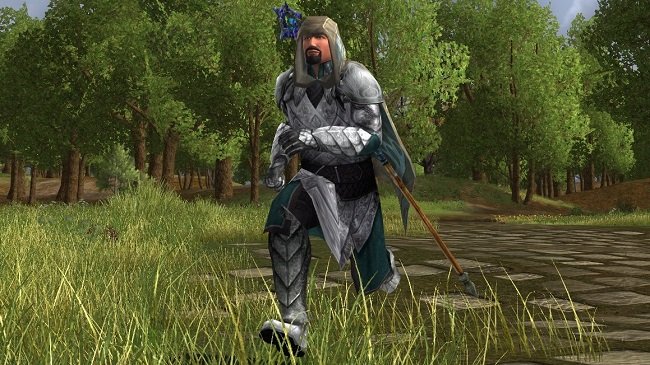
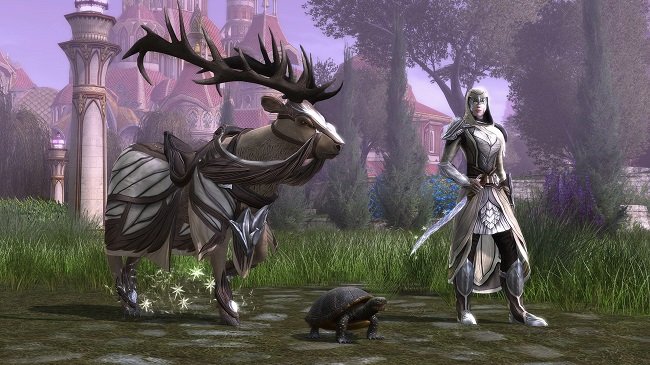
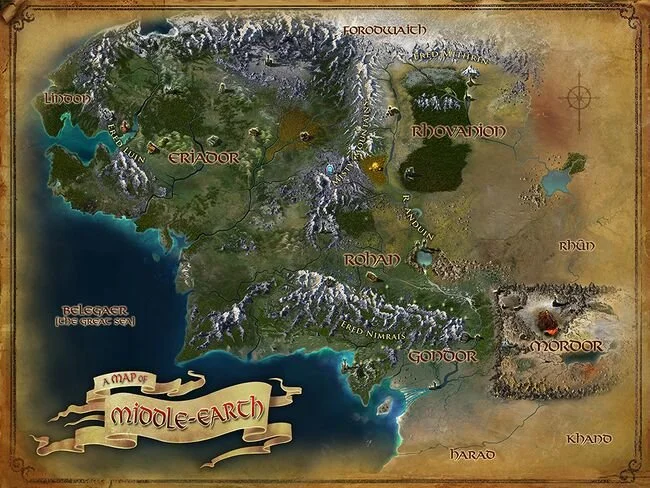
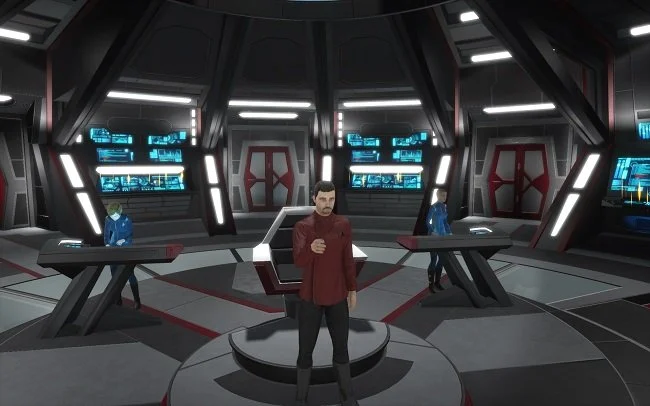
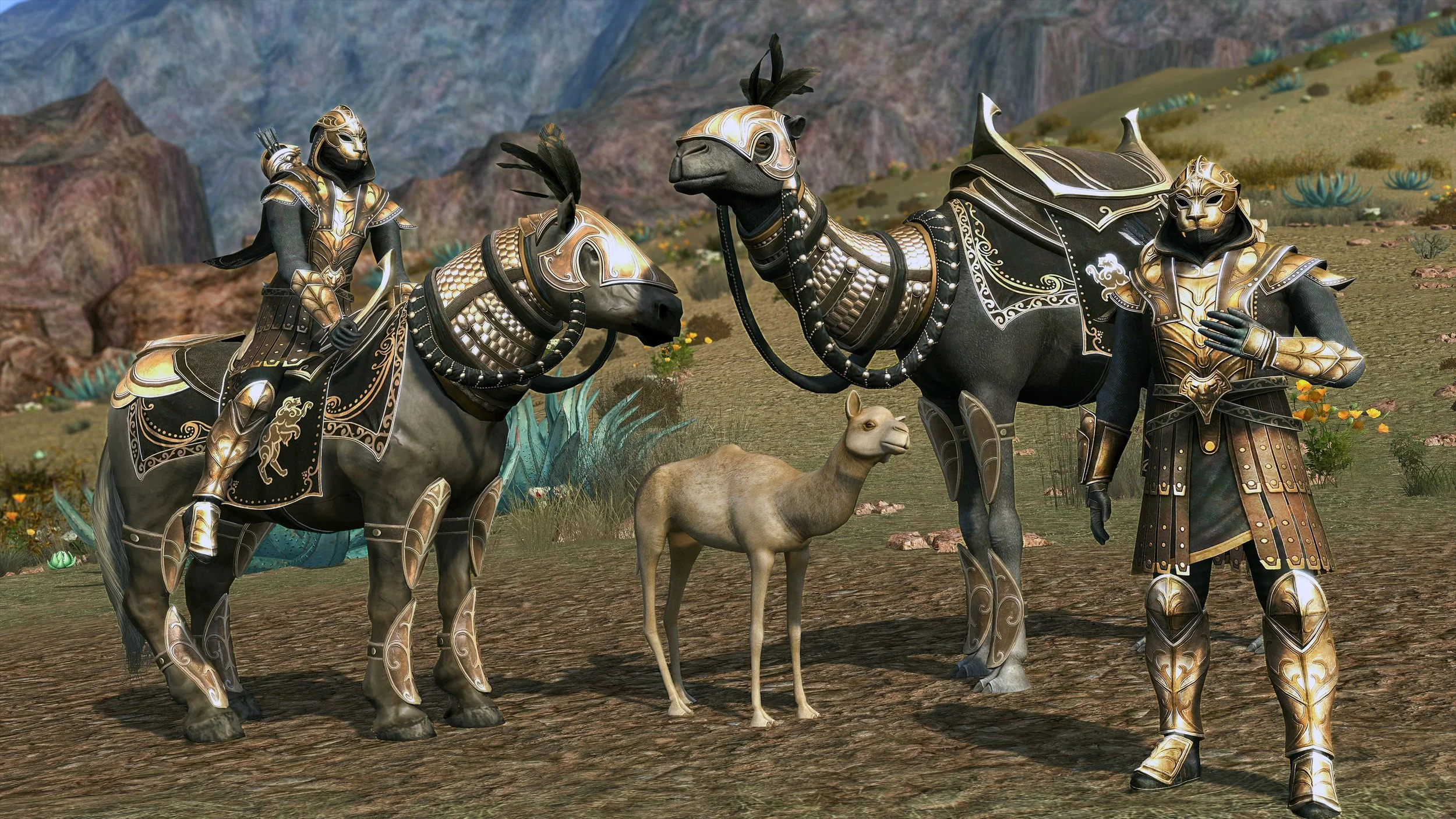
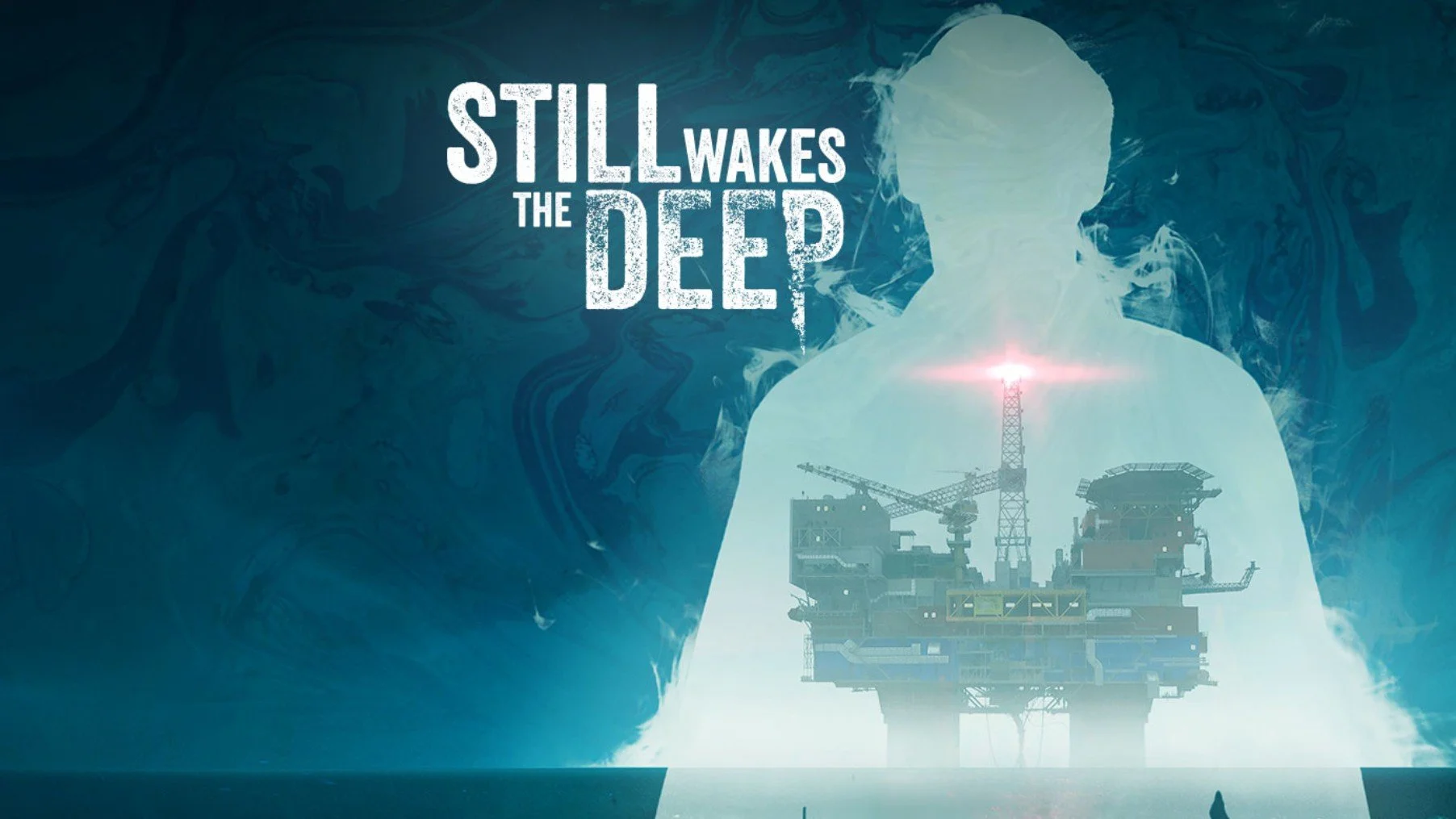
As I peruse my Steam library, it becomes very apparent that the titles I’ve spent the most time playing are those with complex and involving traditional, linear narratives. This is hardly surprising as I’ve always liked stories and have a strong affection for books with in-depth lore and complex faux histories. It is one of the reasons I enjoy Professor Tolkien’s work and therefore gravitate towards games that expand upon these intellectual properties. Games such as LOTRO and even Middle-earth: Shadow of War. Both endeavour to explore the mythology of Third Age from an alternative perspective. Through the Elder Scrolls V: Skyrim, I discovered a wealth of lore and entered a living, breathing world. Then of course there is the MMORPG Star Trek Online, that until recently has been the only source of new Star Trek content. All these diverse titles from multiple genres have one thing in common. A strong narrative that underpins each game.
This is a collaborative post debating merits of emergent storytelling vs. static storytelling between myself and TheBro from MMOBro. After reading this, make sure to check out his side of the debate!
As I peruse my Steam library, it becomes very apparent that the titles I’ve spent the most time playing are those with complex and involving traditional, linear narratives. This is hardly surprising as I’ve always liked stories and have a strong affection for books with in-depth lore and complex faux histories. It is one of the reasons I enjoy Professor Tolkien’s work and therefore gravitate towards games that expand upon these intellectual properties. Games such as LOTRO and even Middle-earth: Shadow of War. Both endeavour to explore the mythology of Third Age from an alternative perspective. Through the Elder Scrolls V: Skyrim, I discovered a wealth of lore and entered a living, breathing world. Then of course there is the MMORPG Star Trek Online, that until recently has been the only source of new Star Trek content. All these diverse titles from multiple genres have one thing in common. A strong narrative that underpins each game.
Often when gaming, once the player looks beyond the scope and setting of the title, they will find a set of repeatable tasks, endeavours and targets to achieve. RPGs and especially the MMORPG genre are built upon such systems. If I am to shoot, explore or resource farm within a game, all of which can be quite arbitrary at times, then I do like to have some motivation or narrative explanation as to why I am doing these things. These game mechanics actually become less arduous if I am provided with an interesting enough narrative and a world with its own internal logic. Star Trek Online for example can justify the most innocuous of tasks with a healthy dose of its unique technobabble. The grinding nature of the rebuilding of Hytbold, a major quest line in LOTRO back in 2012, was eased considerably by the well-crafted storyline that accompanied the undertaking.
However, a strong story can achieve more than simply justifying repeatable daily quests or progression grinds. Take an RPG such as The Witcher 3: Wild Hunt. I cannot remember a game that tackled adult themes and socially complex issues, so well. The central characters were very well defined with flaws and common foibles, making them extremely credible and identifiable. As a result, the player becomes thoroughly invested in the characters and has a clear emotional stake in their fate. For me The Witcher 3: Wild Hunt often felt like taking part in an interactive novel. Now such a concept may not be to all gamers liking, however when you consider the cultural significance of the story it is hardly surprising that they are an intrinsic part of gaming. We as a society reflect upon our history, politics and ethics through fictional narrative. I see games with epic linear narratives to be an extension of this concept. Furthermore, as games are not locked into a single outcome, as with a book, there is scope for interaction and to have multiple outcomes.
However, although I am a big advocate for strong stories and complex plots in gaming, I am not dismissing the alternative out of hand. Emergent storylines and player created content is ideal for certain genres and can add a very human element to gameplay, especially in the MMO genre. But emergent content is a very broad term and therefore one has to be careful to make appropriate comparisons. Early MMOs often took a less structured approach in terms of narrative. Ultima Online being a clear example of this. The narrative experience where shaped by the activities of player guilds and their interactions. High profile betrayals and assassinations would alter power struggles. Economic manipulation would also have an impact upon persistent worlds. We still see all these aspects today in EVE Online with its territorial wars, bank heists and political subterfuge.
However, these events and emergent stories have several disadvantages. They are unique and time specific. For those who were present and participated, they may well be exceptionally gripping and entertaining but if you weren’t their then you missed it all. An embedded narrative has no expiry date. Another consideration is that emergent stories and interaction often stem from the players being active in the community beyond the game itself. Guilds socialise, plot and scheme outside of the game via forums and subreddits. Social groups have hierarchies with people playing specific roles. Yet MMOs are filled with “average players” who are not always involved with the wider aspects of a game. For them, emergent stories and events are something that happen to other people, assuming they get to hear about them at all. These more passive players only experience the outcome, rather than shape it. Perhaps it can therefore be argued that player generated content is really only of benefit to the more involved player. The player with the time and inclination to devote a great many hours to a single game.
Another concern I have regarding players shaping the narrative and direction of events in a game such as EVE Online, is that the driving force may not always be a positive or pleasant one. The socio-political dynamic of games of this ilk too often manifests as betrayal, hostile acquisition or economic chaos. Although these are good themes narratively, I tire of the continual race to the bottom that such behaviour encourages. We have enough of this in real life and I do not always wish to find such thing reflected in games, especially MMOs. It is also worth considering that the open world environment that encourages emergent gameplay is an incentive to some and a source of confusion to others. I have spoken to players in both Guild Wars 2 and The Elder Scrolls Online, who are lost without the structure of clear cut quest hubs and mission objective. Choice is not always a good thing and suits all taste. And let us not forget that player generated content in such games as LOTRO. This is often roleplay driven and centred around telling tales, reading poetry and playing in a band. For those of a creative persuasion this is hog heaven. For others it again proves to be a somewhat passive or even exclusionary experience.
Then there are those players who are never going to be interested in a story based narrative of any kind. They are not motivated by plot or characters and will skip all quest explanations and in-game cutscenes. This is the kind of gamer whose pleasure hinges upon achievement, leader boards and the actual process of playing. Competitive games do not need a narrative, although there is a backstory to titles such as Overwatch. Games of this idiom are driven by league tables and success. The reward is pride and bragging rights. In fact, you could strip back the details regarding some games setting and who the various factions are, choosing to present them as simply the red and blue team in arena number three. Because if the gameplay is fun and challenging, then that will suffice for some gamers.
Like novels and movies, a narrative driven game can provide more than just an enjoyable ride. It can focus and raise awareness of complex moral, social and political issues. MMOs and RPGs can inform and make us think about difficult matters. Of course, that is not to everyone liking and some wish games to be entirely free of such elements. But for me, I find narrative games to be the next step in our ongoing evolving relationship with storytelling. Although I am not averse to MMOs and other genres that focus on player generated narratives, I favour the traditional story based approach. Hardly surprising from someone who enjoys writing. However, there are many views on this matter other than my own perspective and ass ever there is no definitive right or wrong answer. For an alternative take on this subject, The Bro over at MMOBro has written an interesting piece favouring emergent storytelling.

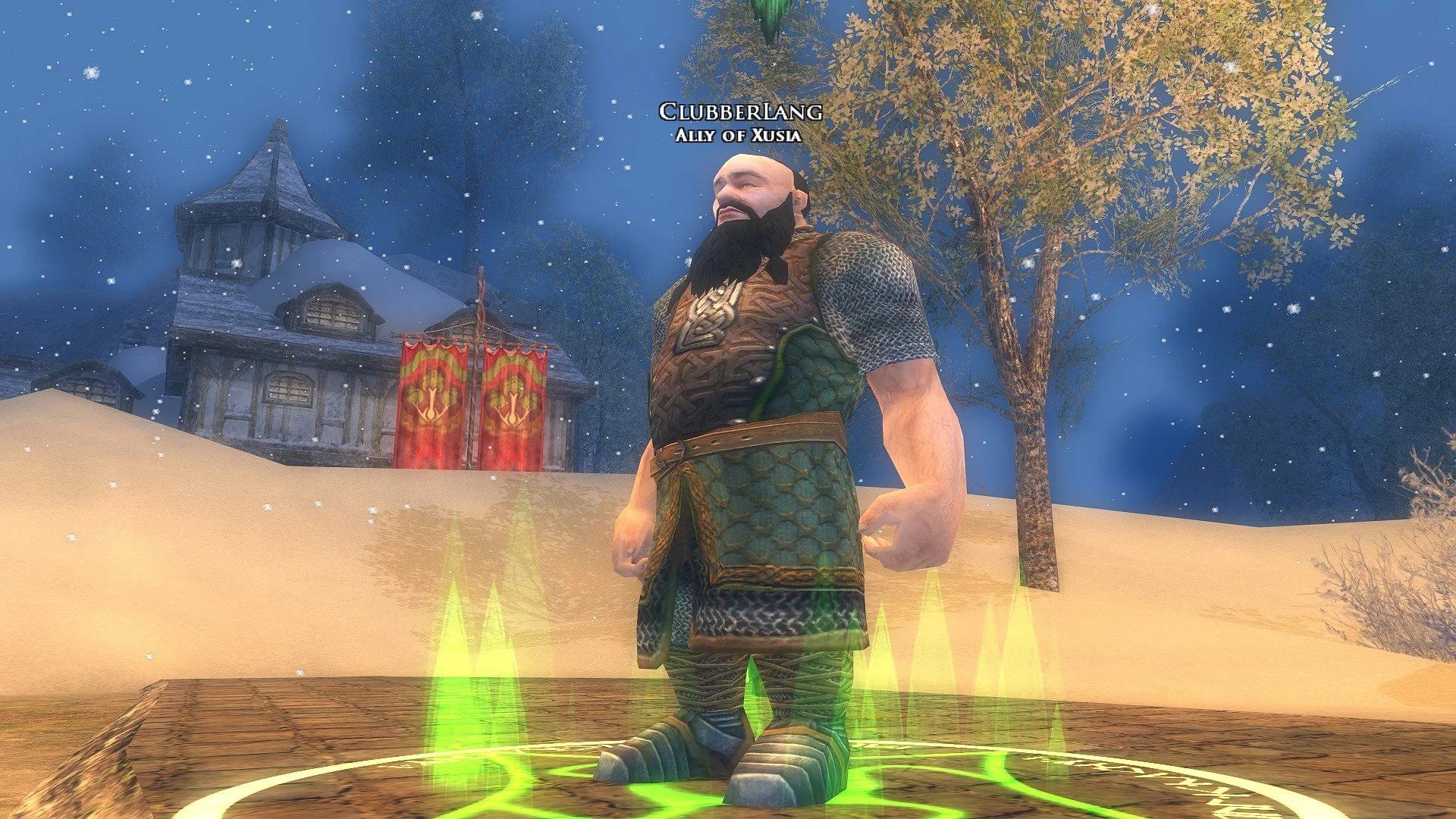

Mirror Invasion
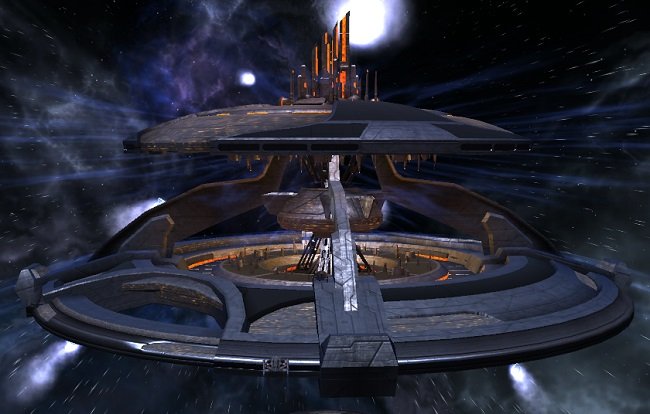
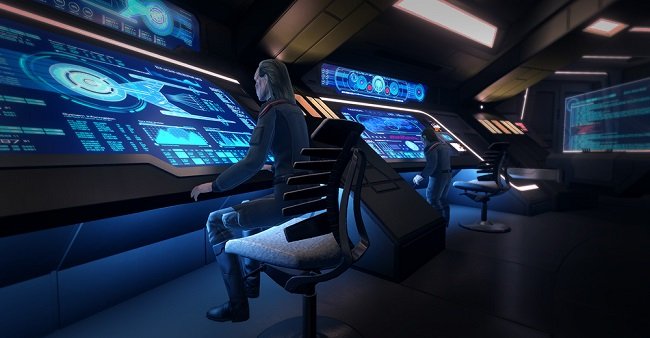
The Mirror Invasion, also known as the Terran Empire Incursion, is no stranger to Star Trek Online. This five-man event has appeared six times since its launch in 2104. Despite some minor revisions and different event rewards, the basic premise remains the same. The players must defend Vauthil Station from a Terran Empire assault from the Mirror Universe. Rifts appear and have to be closed before they unleash enemy vessels. There are also four power substations that charge the stations defences, that have to brought online. In the final stage of the event, an enemy Dreadnought and support squadron make a final attack on the station. It’s a fun ten-minute team event and if tackled correctly, is not too challenging. Science vessels can close rifts quicker than other classes and Command ships can initiate the power substations more efficiently. Players are awarded a Multidimensional Transporter for playing this event. By turning in 14 Transporters through the Reputation System, players will receive Dilithium Ore, Reputation Marks and the new Interphasic Instability console.
The Mirror Invasion, also known as the Terran Empire Incursion, is no stranger to Star Trek Online. This five-man event has appeared six times since its launch in 2104. Despite some minor revisions and different event rewards, the basic premise remains the same. The players must defend Vauthil Station from a Terran Empire assault from the Mirror Universe. Rifts appear and have to be closed before they unleash enemy vessels. There are also four power substations that charge the stations defences, that have to brought online. In the final stage of the event, an enemy Dreadnought and support squadron make a final attack on the station. It’s a fun ten-minute team event and if tackled correctly, is not too challenging. Science vessels can close rifts quicker than other classes and Command ships can initiate the power substations more efficiently. Players are awarded a Multidimensional Transporter for playing this event. By turning in 14 Transporters through the Reputation System, players will receive Dilithium Ore, Reputation Marks and the new Interphasic Instability console.
Sadly, there is a problem with the Mirror Invasion. A problem that has been present for a while and one that remains uncorrected by Cryptic. Upon joining this event, either via the PVE queue system which auto groups you with other players or through creating a private encounter, you can simply spawn and go AFK, allowing the event to run without any discernible player interaction. You may get reduced rewards for not passing the all the event challenges but you will receive the Multidimensional Transporter. This is because the Mirror Invasion is driven by it ten-minute duration and it is the passage of time that triggers different stages of the event. You can safely neglect to close the rifts and allow the vessels to swarm the area without any major consequence. If Vauthil Station gets too damaged it simply initiates repair protocols. Eventually the Station fires an anti-tachyon pulse and forces the Mirror Universe forces back to their dimension, clearing the area. The final Dreadnought attack can be similarly ignored until the timer expires.
Some STO players consider this situation an exploit, where others do not. Naturally this is hotly debated but I think that particular discussion is essentially missing the point. This is a significant flaw in the event design and anything that actively encourages players to not engage with the activity erodes the relationship between the player and game. This is not the first time this has happened in STO either. There is a similar defect in the First Contact Day event where you can bypass the scavenger hunt to upgrade your replica Phoenix. It further disheartening to know that both of these problems are known to Cryptic but do not seem to be high on their priority list. Then there is the “social” issue of going AFK in pickup groups. Unless this is something that is mutually agreed by all parties, it does seem somewhat ill-mannered to take a seat while others do all the work. Again, encouraging such behaviour through a correctable flaw is bad for STO and its community. Sadly, Cryptic are not known for being quick off the mark, so I suspect this problem will persist.
Emotes
Emotes in MMORPGs have always been a great means to facilitate social interaction. You can hail your friends when you meet them, laugh at their jokes or show displeasure at those indulging in tomfoolery and shenanigans. They can also be used in events, such as dance competitions or as specific actions to be undertaken in quests. Then of course there is the inherent need of some gamers to collect all possible emotes available in a game and the business opportunities that this offers to developers. Thus, emotes are an integral part of MMOs and source of amusement and pleasure for many players.
Emotes in MMORPGs have always been a great means to facilitate social interaction. You can hail your friends when you meet them, laugh at their jokes or show displeasure at those indulging in tomfoolery and shenanigans. They can also be used in events, such as dance competitions or as specific actions to be undertaken in quests. Then of course there is the inherent need of some gamers to collect all possible emotes available in a game and the business opportunities that this offers to developers. Thus, emotes are an integral part of MMOs and source of amusement and pleasure for many players.
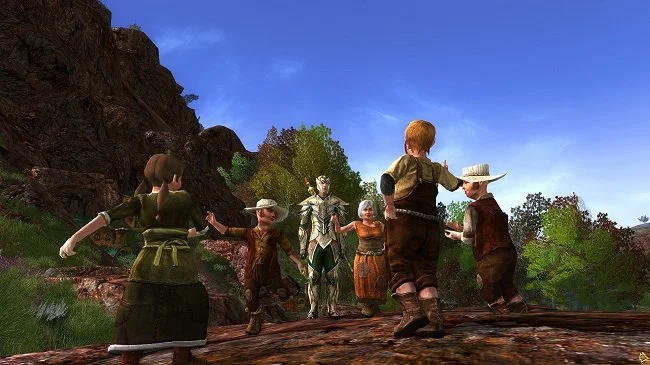
Over the years I have always played many MMOs and one of the first things I’ve always done when in-game is check out what emotes are available. I am especially fond of those found in LOTRO, which are very rich and varied. For starters there are race specific dances which do reflect the appropriate idiom of Elves, Dwarves and Men. However, it is the Hobbit specific emotes that seem to have had the greatest amount of love lavished upon them by the developers. Then there are a wealth of social interactions and humourous embellishments, such as Wippitydo, Surrender and Toast. The Toast emote is gained from an anniversary quest, so is somewhat rare with only a limited yearly window to obtain it.
However, Star Trek Online have a diverse collection of emotes which can give other MMOs a run for their money. Naturally there are many that replicate signature salutes and greetings that can be found directly in the various TV shows. Obviously, anything Klingon is very bombastic. However, it is with the dance emotes that the game really excels, and they feature heavily in the summer festival dance competition on Risa. But for me the jewel in the crown is an emote that Cryptic have just recently given away during the Hearts and Minds mission for Halloween. Namely the iconic Michael Jackson Zombie Dance, from the Thriller music video. There was a dozen or so player performing this emote on Drozana station tonight. I have no idea how they managed to synchronise everyone, but it really looked good. I laughed like a drain.
Naturally there are some players who don’t care that much for in-game emotes and think that they’re simply a cosmetic bauble. Each to their own I guess. Plus, there is scope for some players to be a nuisance with communal emotes, although games like LOTRO do have a facility to turn them off. Ultimately, I find that it is the little things within the MMO genre such as emotes, that are increasingly providing my main source of interest in such games. Furthermore, if games must have a cash store then selling emotes is less bothersome than peddling more tangible items that boost performance. In the meantime, I’m off to laugh myself stupid watch Junkrat do his Vaudeville emote in Overwatch.
Gaming and Voice Chat
I was reading through the patch notes for the latest test build for LOTRO (Bullroarer Update 21.2 - Beta 1 Take 2) and was interested to find down at the bottom of the list, a reference to some changes that are coming to in-game voice chat. Namely, party member voice volume can be adjusted individually. Party volume control visibility can be toggled by clicking on the party voice chat icon for party members. Default Group Volume preference are to be added to the Voice section of Audio options. The volume slider can be used to set the default voice volume level of new group members. Its 75% volume by default. Well, huzzah with highly polished brass knobs on. I’m pleased that this is being done but isn’t it somewhat late? We could have done with these improvements a decade ago.
I was reading through the patch notes for the latest test build for LOTRO (Bullroarer Update 21.2 - Beta 1 Take 2) and was interested to find down at the bottom of the list, a reference to some changes that are coming to in-game voice chat. Namely, party member voice volume can be adjusted individually. Party volume control visibility can be toggled by clicking on the party voice chat icon for party members. Default Group Volume preference are to be added to the Voice section of Audio options. The volume slider can be used to set the default voice volume level of new group members. Its 75% volume by default. Well, huzzah with highly polished brass knobs on. I’m pleased that this is being done but isn’t it somewhat late? We could have done with these improvements a decade ago.
For years LOTRO players have had the benefit of an in-built voice chat service, rather than having to install and configure a third-party application. It was quite a far-reaching thing to do by then developers Turbine, when the game launched back in 2007. However, for years we’ve also had the endure the following issues. Players whose volume levels are simply too low. Players whose volume levels are simply too high. Microphones picking up and repeating voice traffic. Microphones picking up ambient background noise. Poorly configured microphones, producing "pop", distortion and feedback. For every good experience I’ve had with LOTRO voice chat, I also had a bad one. I’ve spent evenings either being deafened by my colleagues or struggling to understand them due to low volume or distortion.
So, I guess it’s good that these problems are being addressed but I must admit, it’s because of them that I’ve been running a TeamSpeak server for the last seven years. However, third party solutions come with their own set of issues. Some solutions such as TeamSpeak have to be paid for. It’s not a fortune but it does add to your ongoing gaming costs. Other services like Discord are free but that can be subject to change. I’ve always been reticent about becoming reliant on free online services as we have no consumer rights should they change business model or decide to discontinue. Which then returns me LOTRO’s built in voice chat service. Considering how crucial voice chat is to the game and the MMO genre, you’d have thought such a facility would have been more common place in other titles.
Star Trek Online is the only other MMO that I’m aware of that boasts in-game voice chat. Perhaps the increasingly solo friendly nature of subsequent MMOs has meant that voice chat is no longer considered important. Or perhaps the licensing of the technology added too much to development costs. However, where the significance of voice chat may have diminished in some genres, it has increased in others. Overwatch, Grand Theft Auto Online and PlayerUnkown’s Battlegrounds all include an in-game voice chat service. PUBG actually has a proximity based chat service as well as team support. It offers a rather interesting perspective to be able to hear your opponent. Then of course there is voice support built into software distribution clients such as Steam and origin. It would appear that third party retailers still deem voice chat to be of merit, even if some developers do not.
However, I do acknowledge the fact that not every user is comfortable speaking publicly and that for everyone who is happy to converse whilst playing a game, there others who are not. However, even if you don’t wish to participate in group chat, you can always mute your microphone and still benefit from being able to hear what’s going on. Sadly, it would be naïve to ignore the fact that voice chat can be a gateway into one of the lower circles of hell and that it can be abused. I have voice chat muted whenever I play Overwatch unless I’m among friends. Bearing that in mind, I guess another reason why some developers won’t include voice chat with their products is that they don’t want to be lumbered with the responsibility of having to police it. Not that Blizzard does much in this respect. Anyway, despite the disparity in up take, I believe the ongoing popularity of co-op based games (as opposed to MMOs) will ensure that in-game voice chat doesn’t vanish. Perhaps as the technology improves, it may evolve beyond just audio into video. There’s a scary thought.
Star Trek Online: Beyond the Nexus
One of the major selling points of Star Trek Online is that it features voice acting from artists who appeared in the various TV shows and feature films. From Star Trek: The Original Series, Leonard Nimoy and Walter Koenig reprised their iconic roles, bringing Spock and Chekov to the game. Michael Dorn and Denise Crosby beamed in from The Next Generation, adding the voices of Worf, Tasha Yar and Empress Sela to several featured episodes. Chase Masterson and Aron Eisenberg came to us from Deep Space Nine to reprise their roles as Leeta and Nog. From Voyager, we have the talents of Tim Russ, Robert Picardo, Jeri Ryan, Ethan Phillips, Garrett Wang, Robert Duncan McNeill, Kim Rhodes, and Lisa LoCicero. Kipleigh Brown and Matt Winston from Enterprise recently joined the roster. The legacy of James Doohan was represented by his son Chris, reprising his father’s role as Scotty. And Zachary Quinto and Joseph Gatt from the Kelvin Timeline Star Trek film franchise have joined the ranks of esteemed Trek alumni in the game.
One of the major selling points of Star Trek Online is that it features voice acting from artists who appeared in the various TV shows and feature films. From Star Trek: The Original Series, Leonard Nimoy and Walter Koenig reprised their iconic roles, bringing Spock and Chekov to the game. Michael Dorn and Denise Crosby beamed in from The Next Generation, adding the voices of Worf, Tasha Yar and Empress Sela to several featured episodes. Chase Masterson and Aron Eisenberg came to us from Deep Space Nine to reprise their roles as Leeta and Nog. From Voyager, we have the talents of Tim Russ, Robert Picardo, Jeri Ryan, Ethan Phillips, Garrett Wang, Robert Duncan McNeill, Kim Rhodes, and Lisa LoCicero. Kipleigh Brown and Matt Winston from Enterprise recently joined the roster. The legacy of James Doohan was represented by his son Chris, reprising his father’s role as Scotty. And Zachary Quinto and Joseph Gatt from the Kelvin Timeline Star Trek film franchise have joined the ranks of esteemed Trek alumni in the game.
More recently we saw J. G. Hertzler reprise his iconic role as General Martok; a much beloved character among Star Trek devotees. However, this week we saw a milestone in STO as LeVar Burton returned as Geordi La Forge in the latest featured episode “Beyond the Nexus”. I must say I was surprised that Cryptic had managed to facilitate such an appearance, considering it has been discretely pointed out in the past that the cost of certain hiring certain actors is prohibitive. But, not being one to look a gift horse in the mouth, I duly logged into STO today to check out the new featured episode and see if Cryptic’s writers had managed to create a vehicle suitable for Star Trek favourite Geordi La Forge. I was intrigued by the concept of revisiting the Nexus that feature in the film Star Trek: Generations. On paper there’s a lot of narrative scope with such a violent, destructive temporal energy ribbon.
Sadly, “Beyond the Nexus” proved to be a squandered opportunity. The story is somewhat formulaic and distinctly average. During the mission, Captain Geordi La Forge and of course yourself investigate two starfleet ships that went missing while studying the infamous energy ribbon, the Nexus. It's discovered that both ship's crews have been taken over by a powerful psionic entity called Khaj'Buur, who has been imprisoned in the Nexus for unknown reasons. The story then becomes a rather linear adventure in which you have to rescue the crew and then defeat Khaj'Buur. Once this is done he surrenders and is imprisoned pending further enquiry. It is mentioned in the mission's conclusion that Khaj'Buur's wish to leave the Nexus is highly unusual, considering the realm surrounds you with the things that make you the happiest.
There are some positive aspects to “Beyond the Nexus”. Part of the story takes part on a Galaxy Class vessel, so traversing the ships interior and engine room is a big plus for fans of ST:TNG. As these assets are now in the game it was inevitable that Cryptic would make them available for purchase in the C-Store. Geordi also sports a Type 3 Phaser Rifle which is pleasing to see if you are a lore buff and like things canonical. The weekly rewards are not too shabby either with a three-item gear set on offer. And with regard to the story, although it is rather perfunctory, it does have a few subtle embellishments. The rogue holoprogram written by Ensign Barclay is a nice touch and raised a wry smile. As for Khaj'Buur, I suspect that he’ll feature in later episodes and his back story will be expanded upon. It is also likely that Captain Geordi La Forge has a larger role to play, in next years expansion.
Lockboxes
It would appear that lockboxes are being discussed once again. Bhagpuss wrote a post over at Inventory Full yesterday, which subsequently got used as a talking point on Massively Overpowered today. What made the debate a little different this time around, was that Bhagpuss doesn’t object to lockboxses per se, merely that in most games that have them, the content is frequently lacklustre and uninspiring. A point I am compelled to concur with. I too have no major objection to lockboxes in principle and partake of them from time to time in various games. However, they seldom seem to contain anything that I consider to be of tangible benefit to me. I want pets, gear and weapons. But because of vocal complaints from certain quarters, we are more often than not saddled with inconsequential convenience items and minor cosmetics baubles and trinkets.
It would appear that lockboxes are being discussed once again. Bhagpuss wrote a post over at Inventory Full yesterday, which subsequently got used as a talking point on Massively Overpowered today. What made the debate a little different this time around, was that Bhagpuss doesn’t object to lockboxses per se, merely that in most games that have them, the content is frequently lacklustre and uninspiring. A point I am compelled to concur with. I too have no major objection to lockboxes in principle and partake of them from time to time in various games. However, they seldom seem to contain anything that I consider to be of tangible benefit to me. I want pets, gear and weapons. But because of vocal complaints from certain quarters, we are more often than not saddled with inconsequential convenience items and minor cosmetics baubles and trinkets.
Lockboxes in Star Trek Online are themed and are only available in the game for a limited period of time. There is a nominal percentage chance to win gear, or even a ship if you are “lucky enough”. However, at the very least, each lockbox yields a quantity of Lobi crystals which are a barter currency. If one ever buys keys to open lockboxes it is best to consider the transaction as a means of buying currency that can be traded in for items. Winning a desirable item on top as that is then an added bonus. That is how I think of things on the occasions I purchase keys. Such an outlook then mitigates concerns over gambling although I have no major qualms about that subject either.
However, where STO handles lockboxes in a manner I like, many other MMOs do not. I have yet to find anything of note from one in LOTRO, Guild Wars 2 or Overwatch. The propensity to provided cosmetic or housing items means that lockboxes are often the prerogative of the role players or the game completists. I’m sure the developers target such a market because they pay dividends but if they could broaden their outlook and diversify the rewards there is scope for lockboxes to appeal to a wider number of consumers. Offering bag or bank space, or further character slots could potentially be attractive. Personally, I would like to see more game gear included but that would result in sabre rattling form the “pay to win crowd”. I certainly think that all lockbox rewards should be bind on equip and if not wanted available to sell via the game auction system.
Ultimately, lockboxes are symptomatic of game developers struggling to find a universally acceptable means to finance their game. The demise of the subscription model has left many MMOs in the thrall of an unsatisfactory hybrid F2P business models that have done precious little to improve the overall quality of the games. Monetisation of this kind impacts upon the conception and design of both content as well as game mechanics and seldom in a positive way. If this business model can be overturned for something better, then lockboxes may well go the way of the Dodo. However, that is not something that seems imminent at present so what can’t be cured must be endured. The current debate will more than likely have no effect on developers who have a propensity to repeat their mistakes and so the lockbox will continue as a gaming bête noire.
MMO Burnout
Although I have played numerous other online games, LOTRO has been my main MMO for the last nine years years. I have invested a great deal of time into it, which is hardly surprising as that is the entire raison d'etre of the genre. I recently purchased the Mordor expansion for the game which offers a wealth of new content. Yet despite having all this available I have done precious little in the game of late and have made no significant progress. Currently, I have Guilds Wars 2, The Elder Scrolls Online, Secret World Legends and Star Trek Online installed on my PC. I have dabbled with them all over the last few weeks, trying to rekindle a sense of enjoyment and pursue content that I have not completed. Sadly, none of them seem to hold my interest. I log in to them in the hope that something will grab my attention but I always seem to find myself just kicking my heels and aimlessly wandering through zones with no sense of focus.
Although I have played numerous other online games, LOTRO has been my main MMO for the last nine years years. I have invested a great deal of time into it, which is hardly surprising as that is the entire raison d'etre of the genre. I recently purchased the Mordor expansion for the game which offers a wealth of new content. Yet despite having all this available I have done precious little in the game of late and have made no significant progress. Currently, I have Guilds Wars 2, The Elder Scrolls Online, Secret World Legends and Star Trek Online installed on my PC. I have dabbled with them all over the last few weeks, trying to rekindle a sense of enjoyment and pursue content that I have not completed. Sadly, none of them seem to hold my interest. I log in to them in the hope that something will grab my attention but I always seem to find myself just kicking my heels and aimlessly wandering through zones with no sense of focus.
The social side of MMOs can also be an issue at times. You log in to a game hoping to find something you wish to do, only to be met with a barrage of welcomes and offers to join groups or participate in some collective event. In different circumstances, this can be a wonderful thing. The restorative properties of friendship can wash away the ills of a bad day and can replace a dark mood with a good humour. However, there are occasions when the attention can be somewhat overwhelming. There have been times when I’ve been upon the verge of logging in to an MMO but after reflecting upon athe gauntlet of upbeat cheerfulness that lays ahead, I’ve decided to do something else instead. Joking aside, there are times when socialising can be wearing and you just want to be left alone.
The consensus seems to be among gamers, as we get older we become far more particular about how we spend our time. I have purchased several games this year that I knew from the beginning would have a relatively short lifespan. Single player games often present a core campaign, online multiplay and DLC over a six-month period. You can effectively complete a game and gain a sense of closure that you’ve had your fill. Sniper Elite 4 has provided me with a solid five months of entertainment. I’ve progressed through all the content that I care to play through and have no desire to pursue it any further. Conversely, I have also returned to Middle-earth: Shadow of Mordor, in anticipation of the sequel that comes out in October. I have managed to complete a campaign that previously alluded me and now feel that I’m ready to move on.
It is this sense of finality, short and limited gameplay as well as the option to play alone, that MMOs cannot compete with at present. Gamers are fickle creatures. There are times when I want to invest time, work towards long term goals and chat with my fellow man. Yet after doing those very things for three to six months they can become somewhat smothering. Sometimes virtual worlds are a welcome respite from the daily tragedy and horror on real life. Yet I still cannot help but think that it is not healthy to make them too much of a focus and a permanent substitute for real world engagement. I tend not to regret the time I have spent gaming, yet from time to time, I do question the hours required to make progress. Often this happens when a new mechanic or goal is introduced into a game and I calculate exactly how many days it will take to achieve it.
As I am currently without an MMO, I find myself in need of an alternative distraction. However, when I look at the various titles that are currently available through a vendor such as Steam, the first thing that strikes me is the interchangeable and homogeneous nature of them all. This is hardly a revelation as most industries tend to follow tried and tested formulas. At present, mainstream films and music are staggeringly bland and uninventive, so it is almost inevitable that the gaming industry should follow suit. This perfunctory style is a major obstacle for me. For example, after pondering on whether to try Black Desert, I concluded that it simply didn't have sufficient difference from any other MMO to warrant a purchase. And of course, at times like this, EVE: Online raises its head once again, offering a wealth of perceived opportunities. Yet the reality of the situation is that I do not want to take on a game with such a steep learning curve. Neither do I have the time required to be successful at such a game.
So, it would appear that I’m currently suffering from a gaming, specifically MMO "burnout". Perhaps fatigue would be a better term on reflection. Although I have currently tired to a degree of the MMO genre, I still find myself interested in gaming. What I find trying is that I cannot seem to find that many titles, both new and old, to get excited about, especially MMOs. As a genre, they have so much potential but are simply hamstrung by a lack of vision and innovation. Perhaps single player game with co-op are the answers. Furthermore, I’m tired of the noticeable disparity in game engines between MMOs and other genres of game. I appreciate that developers have to lower the bar for entry to lower specified PCs but too many MMOs look and more importantly play as if they hail from a different era. It would be nice to have an MMORPG that had the combat of either For Honor or Middle-earth: Shadow of Mordor.
Fortunately, I have not put all my eggs in one basket and made my online activities the focus of all my friendships and socialising. This can be a real issue for some people when confronted with potential burnout, as loyalties and social ties can compound the problem. Gaming by its very nature can be indulged in to a far greater degree than say fishing or other traditional hobbies. It is not seasonal and is accessible 24/7.You don't have to go anywhere, prepare in advance and be mindful of things like the weather. Subsequently, unless we consciously decide to regulate ourselves it will simply swallow all our leisure time. Burnout is not a term I associate with train spotting, stamp collecting or campanology. As gaming continues to become a more mainstream activity, burnout is a phrase I think we shall hear more often.
"You're Playing Wrong"
There’s one particular topic that appears with tedious regularity on MMO subreddits and forums. That old chestnut about how the genre has become too solo friendly and that it’s to the ruination of the genre. It usually hails from the raiding community and follows a predictable path about high end gear and those who do and don’t deserve it. When you look beyond the initial arguments, you’ll frequently find that such positions are very emotive, couched in judgemental terms and often end in the sentiment “why even play an MMO?” or something comparable. The reason I mention this perennial debate is because it appeared recently on a forum that I still occasionally visit. It saddens me to a degree because, this point has been debunked so many times, yet it still persists (a bit like many political talking points). It also smacks of that attitude I see all too frequently these days. A concern and borderline resentment of what others are doing, irrespective of whether it impacts upon you or not.
There’s one particular topic that appears with tedious regularity on MMO subreddits and forums. That old chestnut about how the genre has become too solo friendly and that it’s to the ruination of the genre. It usually hails from the raiding community and follows a predictable path about high end gear and those who do and don’t deserve it. When you look beyond the initial arguments, you’ll frequently find that such positions are very emotive, couched in judgemental terms and often end in the sentiment “why even play an MMO?” or something comparable. The reason I mention this perennial debate is because it appeared recently on a forum that I still occasionally visit. It saddens me to a degree because, this point has been debunked so many times, yet it still persists (a bit like many political talking points). It also smacks of that attitude I see all too frequently these days. A concern and borderline resentment of what others are doing, irrespective of whether it impacts upon you or not.
So how shall we tackle this question of “you’re playing wrong” because that is effectively what it boils down to. Well, let us start with that very question. Is there a definitive way to play an MMORPG? No is the brief answer. Sure, each MMO has a set of rules and procedures that set out a path of progression. However, nowhere in these rules will you find a statement saying it is mandatory to play this particular way. Humans like to adapt things to suit their own needs. Play is under pinned by imagination and creativity. Therefore, role-players are free to pursue their particular play style in an MMO. Players can create alts and continuously replay specific content only if they wish. It is not essential to be in a guild or to raid and not everyone wants the best gear. Furthermore, I have never seen a major objection towards varied play styles from the developers of an MMO. They usually just seem happy that people can find joy in their creation and the publishers are content to have your money regardless of what you do.
As for the question "why even play an MMO?" it is utterly irrelevant to the debate. A player’s motivation for playing and indeed the very manner in which they play is no business of anyone else as long as it remains within the TOS of the game. Another common argument and variation upon this theme is that MMOs are meant to be social games and that the very foundation of the genre is the need for continuous interaction with other players. I remember Massively OP writer Jef Rehard claiming not so long ago that “this is a social genre. This is not your world. It's our world, and how you interact with and ultimately shape it is most definitely my concern". Yet the reality is that a MORPG is only social in so far as it includes game mechanics that can facilitate group interaction. They are there as an option and are seldom mandatory. Therefore, MMORPGs are not solely "a social genre" and it is worth noting that the word social does not feature in the acronym. It is also a common misconception that the social dimension that can be found in MMOs, is a result of the game itself. It is not. The game certainly provides a framework for group interaction but ultimately the social element is organically generated by the players themselves. The game at most is a conduit. Gather people together in any social interaction, friendship and fun will present itself.
As for the issue, as to "who's world is it", the answer is simple. It's the publishers. Gamers frequently make the mistake of believing they have a far greater stake in the object of their affection, beyond their consumer rights. We are all nothing more than a customer and any claim suggesting some vicarious form of collective ownership is nonsense. Fandom is a wonderful thing and has many positive aspects but at times it does cause a form of “tunnel vision” that impacts upon some players sense of perspective. MMORPGs are products created to make money. That is their primary purpose. They are not there to provide a social service nor are they under any obligation to foster a morally righteous community. Such activities are simply a byproduct of their use by the player base. There is equal scope for the community to go in the other direction and become toxic.
The MMORPG genre has changed greatly over the last decade and is now quite different from how it was. All consumer products evolve over time. Why is this situation any different? If one finds oneself aggrieved by such change surely it would be logical to blame it upon market forces and the nature of capitalism, rather than on those players that have elected to pursue their entertainment in a different way to you, as is their right? Thus, the argument that “you’re playing wrong” is a fundamentally flawed concept based on faulty data and incorrect assumptions. It also stems from fundamental misunderstanding of what a players role is within the traditional business and customer relationship.
So, in conclusion, concerns over other MMO players habits are misplaced. Beyond abiding by a games TOS (and hopefully maintaining good manners and common decency), a solo player has no obligation to anyone else and is free to pursue their own endeavours within a game in whatever fashion they see fit. As ever with debates of this kind, it is largely a matter of semantics and logical thinking. As a player who predominantly plays MMORPGs solo, the only way my actions affect other players is through the indirect medium of prevailing business trends. IE being part of a group that offers more business potential to the developers. Carping about this is a bit like complaining that not enough people buy a particular brand of coffee that you like and as a result the supermarket no longer stocks it.
Finally, there is a slight hint of a sense of moral outrage associated with this re-occurring argument. Such sentiment is misplaced in a reasoned and rational argument. This is ultimately a discussion about business decisions and how market forces govern product change. Personal indignation based upon perceived injustices does nothing more than cloud the debate. Developers know that they can't please all customers and it would be beneficial is gamers reciprocated. If as a gamer find yourself on the wrong side of a change of policy or game mechanic, then that is sad for you but beyond that it is of no more significance. However as reasoned and rational discussion is not de rigueur in any public arena at present, let alone just in gaming, I suspect we haven’t seen the last of the “you’re playing wrong” debate.
Star Trek Online: Summer Festival 2017
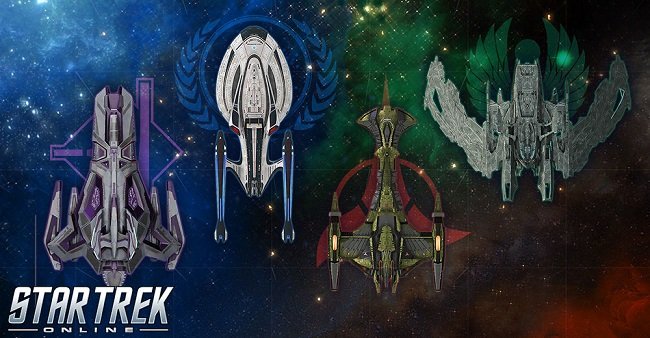
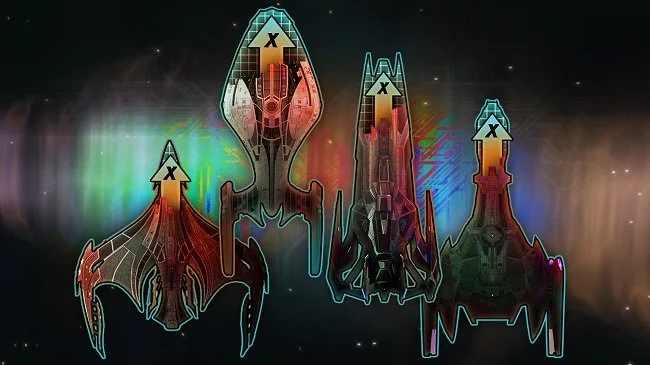
The Star Trek Online Summer Festival 2017 or Risa annual Lohlunat Festival to give it its proper name has been running for over a week now. It started on the June 8th and is available through to 20th July. Although many MMOs have festival and seasonal activities, STO’s Summer and Winter events are outstanding, being accessible, enjoyable and very rewarding. Not only are cosmetic clothing and pets available as barter items, the game also offers kit modules and bridge officer skills as rewards. Then of course each event always allows players to earn a new Tier 6 ship. This Summer it’s a Vorgon Ryn’Kodan Carrier.
The Star Trek Online Summer Festival 2017 or Risa annual Lohlunat Festival to give it its proper name has been running for over a week now. It started on the June 8th and is available through to 20th July. Although many MMOs have festival and seasonal activities, STO’s Summer and Winter events are outstanding, being accessible, enjoyable and very rewarding. Not only are cosmetic clothing and pets available as barter items, the game also offers kit modules and bridge officer skills as rewards. Then of course each event always allows players to earn a new Tier 6 ship. This Summer it’s a Vorgon Ryn’Kodan Carrier.
What I especially like about the Summer event in STO is it’s setting on the vacation resort Risa. Holidays are typically about, sun, sea and surf and Risa has that in spades. You can also dress accordingly with a variety of beachwear and other cosmetic items. The use of Floaters and Powerboards in several events is great fun. The addition of the Biathlon this year combines both in a single race. The transition from one mode of transport to the other can be quite challenging and there are still the odd bug to be worked out. I like the fact that despite being a “race” the winner is determined by the claiming of a flag. It helps level the playing field for those with slower internet connections. Half the fun is listening to players carp in chat about how they came first but overshot the flag and lost their placing.
Then there’s the Dance Party. Although it’s just a question of hitting the right emote when it’s called out by the Dance Instructor, the catchy music and the player interactions on the dance floor, really adds to the atmosphere. As for the contest itself, rather than click on individual emotes or type the necessary command in the chat window, you can simply pin the list of dance emotes to your UI for easy access. STO actually has quite a variety of dance emotes, the majority of which are available by default. Then there are a few extra that can be unlocked by specific quests or purchased using various barter currencies.
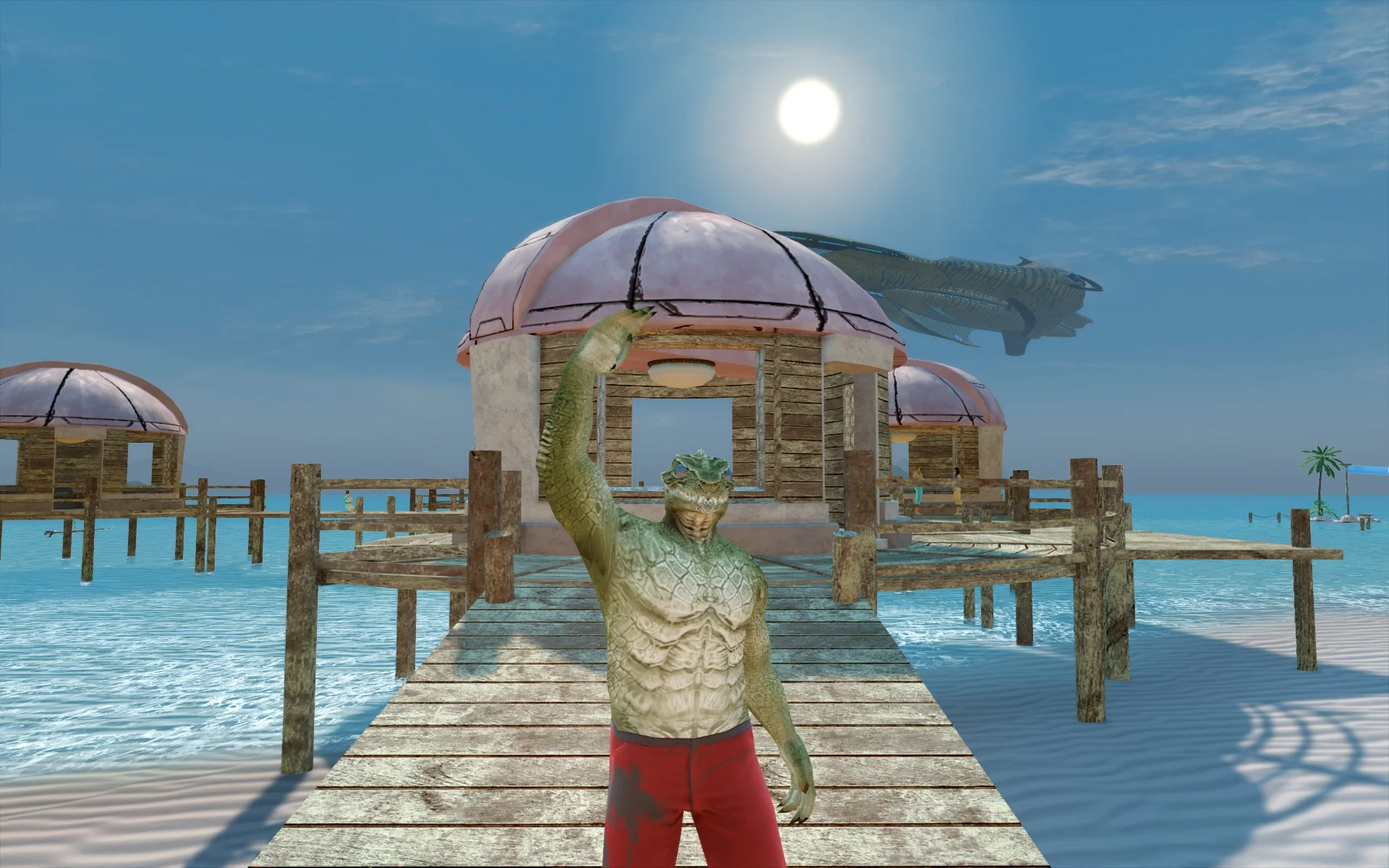
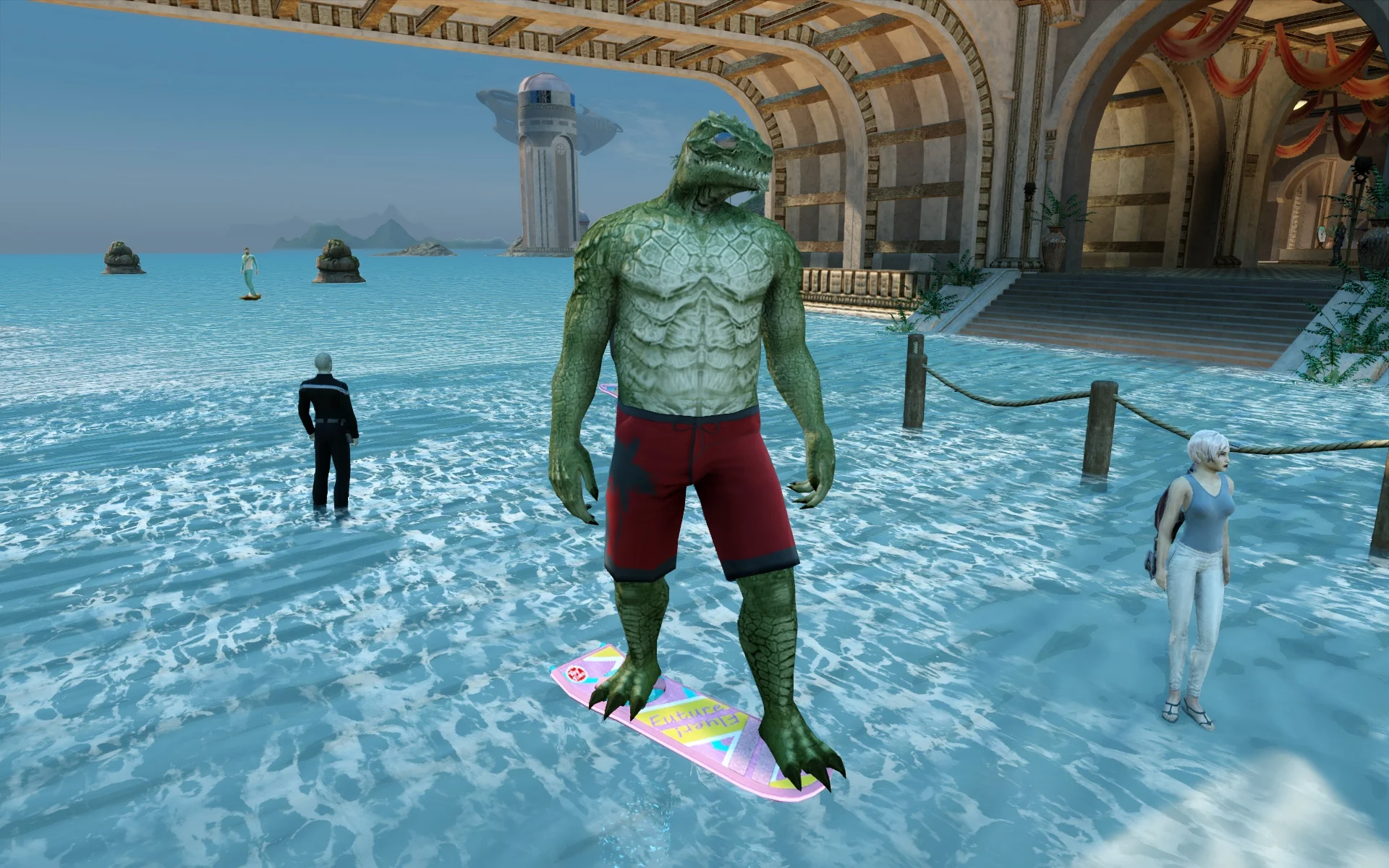
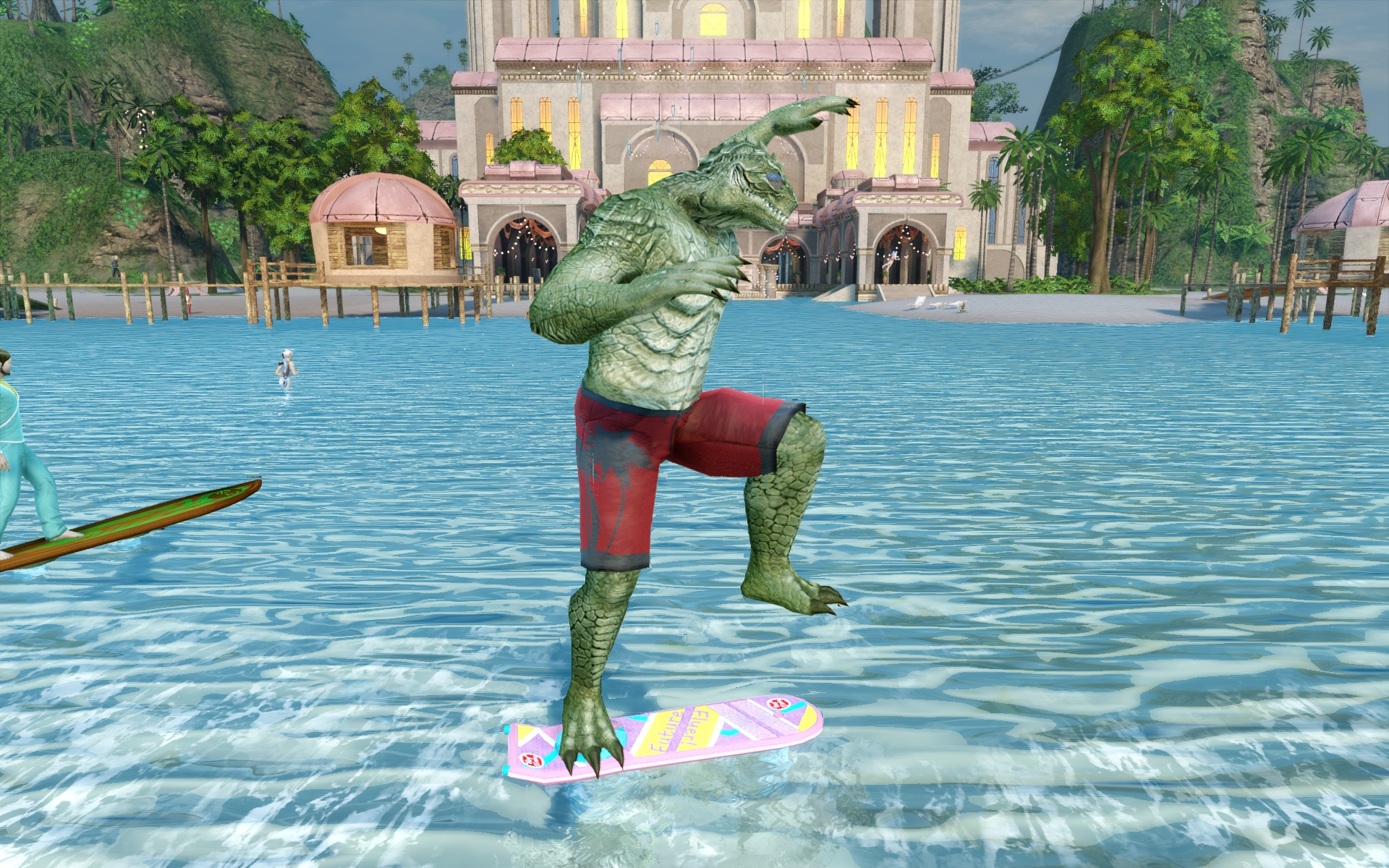
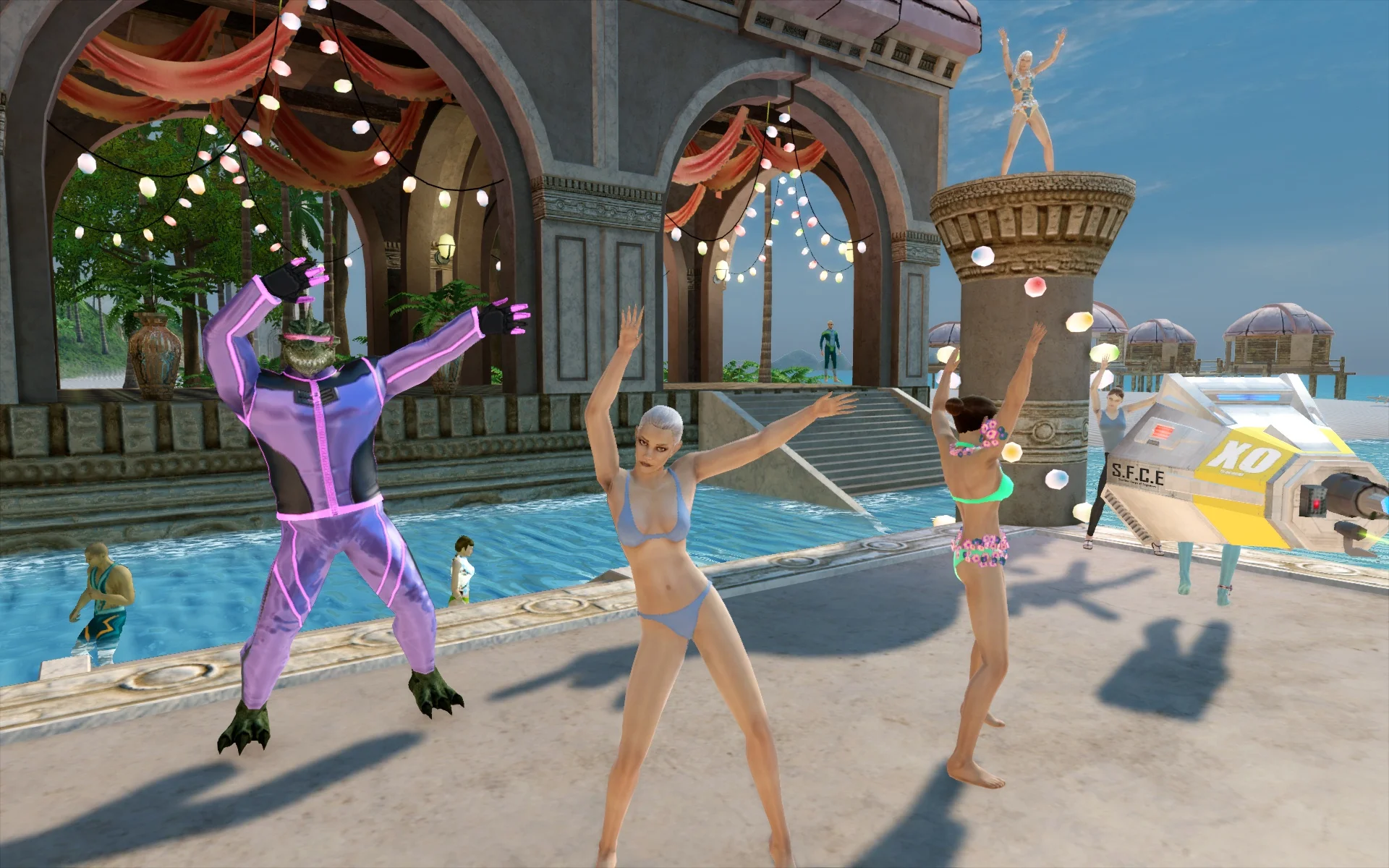
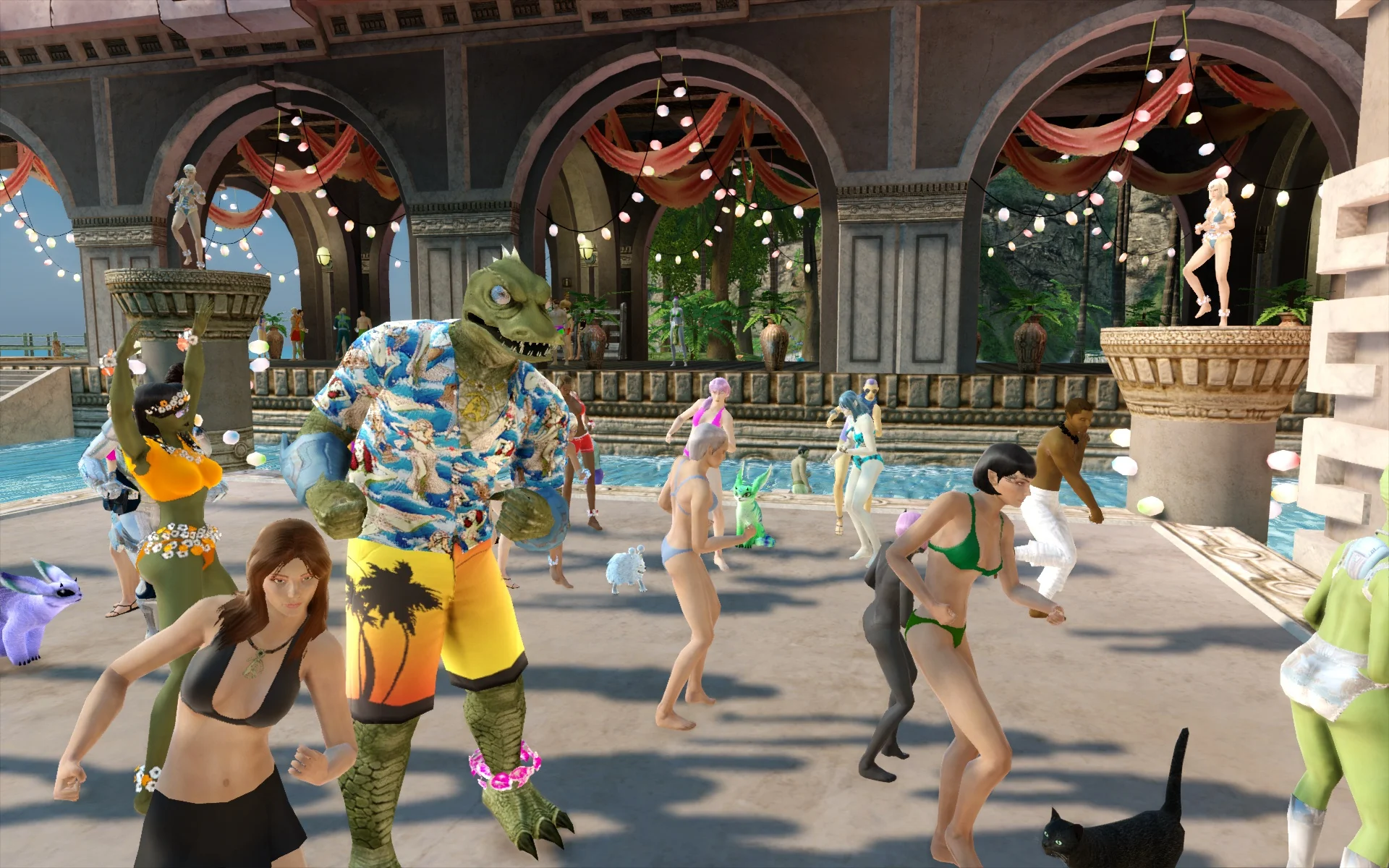
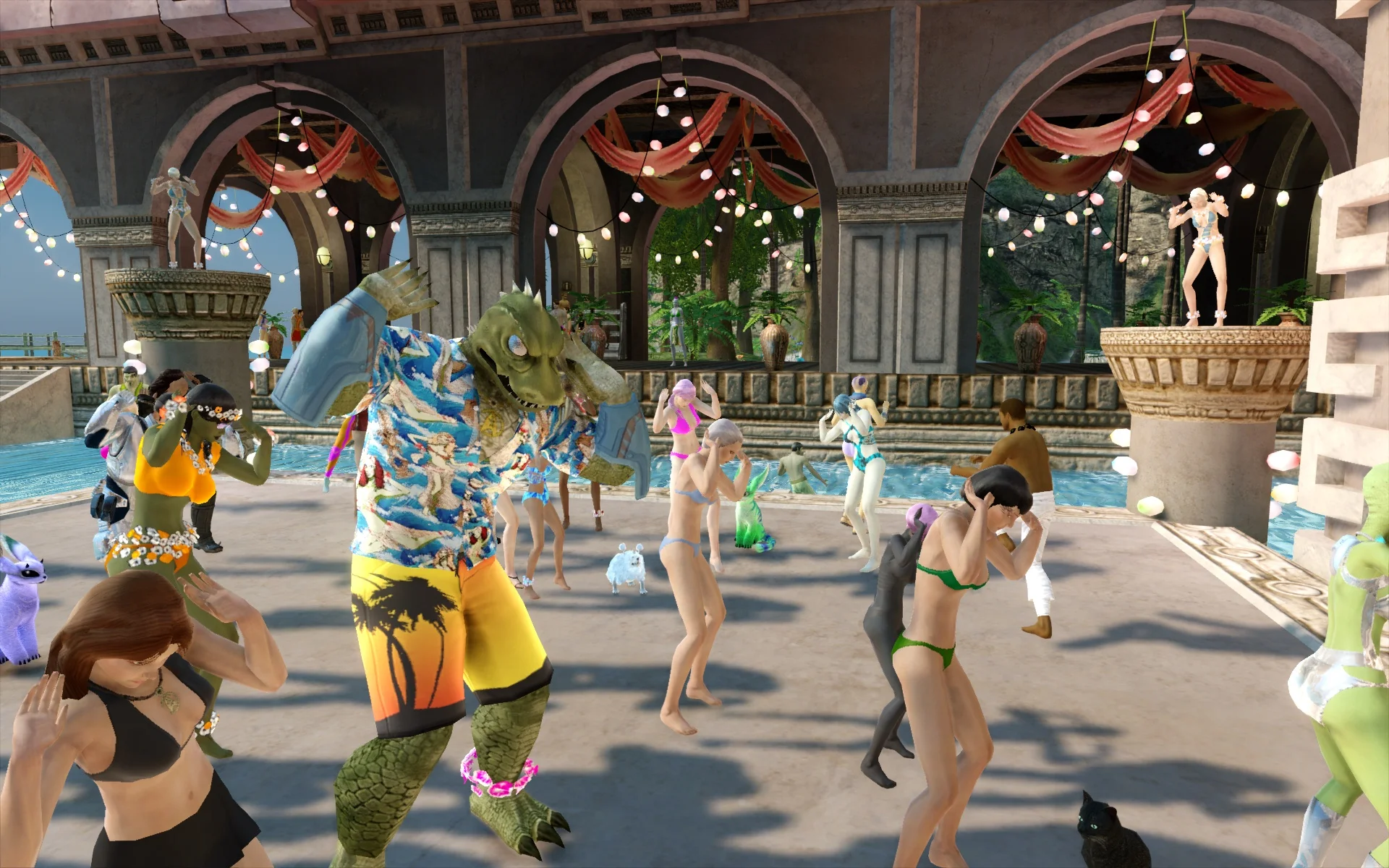
I’m sure that gamers may well claim that similar fun and larks can be had in other MMOs and that these also offer similar bespoke events. But STO has one remaining trump card up its sleeve that no other games can compete with. Gorns. Gorns in Bermuda Shorts. Gorns on Powerboards and Flaoters. Gorns tearing up the dance floor. Yes, Gorns in party mode are a thing of beauty as the gallery below shows. They are the embodiment of grace and style. So, if you have a STO account and haven’t played for a while, log in to the game and get your ass to Risa. Get out on to the dance floor and bust a move. Still not sold? Here’s the Dance Party tune, the Risa Calypso, for your edification.
Pick Up Groups
Out of all my recent gaming, Sniper Elite 4 has proved the most entertaining. The engaging mechanics and stealthy gameplay have held my attention and kept me engaged. So far, I spent over seventy-two hours playing through the campaign and DLC. After watching several You Tube videos I was tempted to try the co-operative mode, something that I don’t always do in these sorts of games. Overwatch allows two players to work together as sniper and spotter respectively, to complete objectives within a custom map. It requires communication and co-ordination. It should also be noted that multiplayer in Sniper Elite 4, is dependent on peer-to-peer connection rather than dedicated servers, with the players hosting the games themselves.
Out of all my recent gaming, Sniper Elite 4 has proved the most entertaining. The engaging mechanics and stealthy gameplay have held my attention and kept me engaged. So far, I spent over seventy-two hours playing through the campaign and DLC. After watching several You Tube videos I was tempted to try the co-operative mode, something that I don’t always do in these sorts of games. Overwatch allows two players to work together as sniper and spotter respectively, to complete objectives within a custom map. It requires communication and co-ordination. It should also be noted that multiplayer in Sniper Elite 4, is dependent on peer-to-peer connection rather than dedicated servers, with the players hosting the games themselves.
So far, I’ve found that my enjoyment of co-op mode has been significantly less than that of the campaign due to the human factor. None of my Steam friends own Sniper Elite 4, so I’ve have been dependent on the grouping service built in to the game. You either host a game yourself and wait to be assigned a partner or join an existing game. Therein lies the proverbial rub. Pick up group mechanics have no scope for quality control. So far, I’ve grouped with players who have refused to communicate, have no concept of teamwork and who quit when things don’t go their way. Furthermore, if they’re hosting the game then you find yourself kicked back to the lobby with nothing to show for your work. It’s an old story. One that will be very familiar to anyone who has ever played an MMORPG and used the instance finder tool.
Pick up groups can often bring out the worst in human nature. You are randomly grouped with complete strangers who are anonymous and are driven by their own need for gain. Manners, decorum and social etiquette are purely optional as the system has no means to impose them. Thus, we encounter players that do not know how to play the instance they have joined, or those who are happy to just go AFK and wait for the end reward. Abuse and unpleasantness are common place in chat and if the group undertaking is unsuccessful, then blame is often thrown about. Even if your PUG manages to avoid these problems, they are often extremely soulless experiences. The auto grouping in Guild Wars 2 and the PVE queues in Star Trek Online simply facilitate tasks and require minimal or even zero social interaction.
Now some players will argue that the frictionless grouping that PUGs provide with no need to communicate directly, is a boon rather than a bane. I will concede that this really is a matter of personal preference. However, mechanics that allow you to abandon a game that you are hosting at the expense of others, or quit a group thus leaving the rest of the players in the lurch, are problematic. For Honor had a major problem with the this. If you or your team are losing then there is no imperative to stick around. There is often no penalty or sanction for abandoning an ongoing game that you may be hosting and no recompense for the other players. This is something I also regularly encounter in Overwatch, which seems to have more than its fair share of petulant and bellicose players.
Justin Olivetti referenced the group finding tool in LOTRO recently and discussed how compared to other MMOs, it was an underused facility. Group content seems to more driven by Kinships in that game so players tend to look directly to their colleagues and friends to run group content. Using the instance finder will seldom provide you with a group. STO has a similar problem. Featured group content or that which provides tangible rewards attracts players. However, older and less popular content doesn’t fair so well therefore you can spend hours looking for a group. I also think there is a particular type of troll in that game that delights in joining group queues and then waiting to the last moment to decline the launch invitation, thus consigning the remaining players back to the lobby again.
Sadly, many of the flawed mechanics we encounter in online games exist because they are the most practical way to address a logistical issue. Player hosted games negates the need for dedicated servers and their associated cost. Group finding tools do exactly that, yet offer no further options. The burden to police the group’s activities falls to the players themselves and there’s precious little they can do if things go pear shaped. But what are the alternatives? If grouping with other players is problematic, then bots are really the only immediate alternative. This is an option in games such as Overwatch, For Honor and some of the Call of Duty franchise. However, it is not necessarily an ideal solution as bots do not provide a comparable experience to human interaction. Their use also doesn’t address the root cause of this problem, namely human behaviour.
Like many things in life, the lowest common denominator disproportionately shapes the experience for the majority. Returning to Sniper Elite 4, although I did have some poor co-operative games due to bad grouping, I also had some thoroughly enjoyable interactions. It’s just a shame that PUGs are such a lottery. Ultimately, it is down to the developers of games to maintain community standards. What is the point of having strict terms and conditions if you have no intention of enforcing them? Furthermore, if I cannot enjoy aspects of a game due to others, I am effectively being excluded from experiencing the entire product. Considering the cost of premium titles these days, why should I pay the full price for a game I can only partially play?
Junior Officer Appreciation Weekend: A Tale of Competitive Nodes
This is a tale about Star Trek Online but as competitive nodes are a common game mechanic in numerous MMORPGs, it is pertinent to many gamers. From today till Monday 5th June, it’s Junior Officer Appreciation Weekend, an in-game event that allows players to earn a rare duty officer. Strange particles can be found around the grounds of Starfleet Academy. If these are scanned with a tricorder, they either disappear, become stable or summon a combat hologram that attacks you. The particles then drop fragments that can be exchanged for event rewards. Collecting the particles is fun but hardly anything groundbreaking. I’m sure that most MMOs have a comparable activity.
This is a tale about Star Trek Online but as competitive nodes are a common game mechanic in numerous MMORPGs, it is pertinent to many gamers. From today till Monday 5th June, it’s Junior Officer Appreciation Weekend, an in-game event that allows players to earn a rare duty officer. Strange particles can be found around the grounds of Starfleet Academy. If these are scanned with a tricorder, they either disappear, become stable or summon a combat hologram that attacks you. The particles then drop fragments that can be exchanged for event rewards. Collecting the particles is fun but hardly anything groundbreaking. I’m sure that most MMOs have a comparable activity.
However, the particles that appear during this event are competitive nodes. Despite fairly generous respawn rates, due to the volume of players in the vicinity, getting to the particles in time to scan and claim them becomes a race. And like any game mechanic that forces players to directly compete with each other, there is scope for rancor and unpleasantness. It took me all of twenty minutes tonight, before I ran into my first ill-tempered player who seemed to think that whatever they saw was immediately theirs. This particular individual after losing out on a particle to me, decided to follow me around for the next ten minutes to try and “avenge” himself upon me, for the heinous outrage I had perpetrated against them. Zone chat also revealed several players arguing over similar incidents.
Now I tend not to rush through events such as these, preferring to go about them at a steady pace. If I spot a particle that is available, I try to ensure that there isn’t a crowd of other players heading towards it. If it does end up in a race, I tend to let the matter go and allow the other party to claim the item. The advancing years have taught me a degree of patience that others seem to lack. However, I don’t concede every race and will compete for a particle, if the fancy takes me. Yet, this entire situation could be avoided if Cryptic simply did away with the competitive node mechanic. In fact, it’s something I’d like to see go from the entire MMORPG genre. ArenaNet have eliminated it from Guild Wars 2 and it is a massive “quality of life” improvement for the game.
Over the last decade, I have gone from being an ardent opponent of egregious behaviour in online games, to just accepting the fact that any gathering of humans will include a tangible percentage of idiots, malcontents and trolls. Developers habitually demonstrate that they have no real interest in dealing with this problems through community policing but some do sometimes use game mechanics as a means to limit shenanigans, tomfoolery and general douchbaggery. Changing competitive nodes to shared one, is a prime example of this. It eliminates a potential avenue for griefing and general bad behaviour. Sure, you can argue that making such a change is allowing a small percentage of players to dictate policy but frankly it’s a small price to pay for a change that inherently improves players in-game experience and overall perception of the community.
Star Trek Online: Life After the Balance Changes
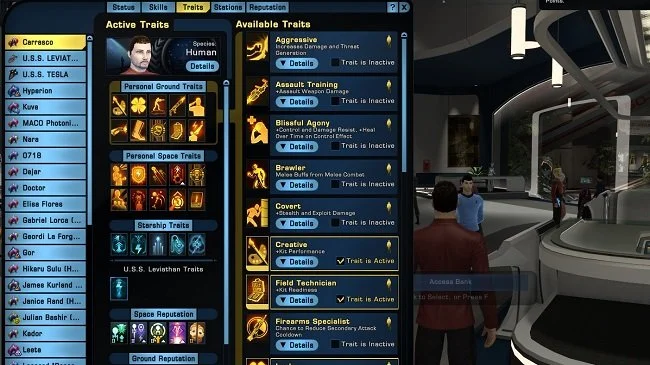
There has been a great deal of discussion on the STO subreddit about the recent balance changes. The subject has also been explored on numerous Tube videos over the last four weeks. As with any game, there’s a lot of technical jargon associated with the various systems and mechanics. Players also use a lot of acronyms and bespoke phrases when referencing content. Subsequently, there can be a steep learning curve to min-maxing and pursuing DPS in STO. Despite having regularly played since the Delta Recruit Event of May 2015, I still struggle to absorb all the subtleties of this MMOs. Certainly, the minutiae of the balance change are lost on me. However, I understand the obvious alterations and have no doubt in my mind that Space combat “feels” different.
There has been a great deal of discussion on the STO subreddit about the recent balance changes. The subject has also been explored on numerous Tube videos over the last four weeks. As with any game, there’s a lot of technical jargon associated with the various systems and mechanics. Players also use a lot of acronyms and bespoke phrases when referencing content. Subsequently, there can be a steep learning curve to min-maxing and pursuing DPS in STO. Despite having regularly played since the Delta Recruit Event of May 2015, I still struggle to absorb all the subtleties of this MMOs. Certainly, the minutiae of the balance change are lost on me. However, I understand the obvious alterations and have no doubt in my mind that Space combat “feels” different.
Unlike some players who go to extremes to experiment, I have broadly taken the path of least resistance with my ship builds in STO. I followed the recommended skills point allocation by the DPS league for tactical officers after that system was revised last year. I also stuck to the prevailing meta of Antiproton Beam Arrays when it came to weapons choice. I ensured that I used the most commonly referenced, consoles, traits and Bridge Officer skills. Overall this has served me well and I managed to reach a DPS parse of 34K. However, the recent thirty percent reduction in power of “Fire at Will” and the obsolescence of Embassy Plasma consoles has reduced my DPS by nearly half. Combat takes longer now and forces the player to think more strategically. I can no longer just rely upon brute force and ignorance.
Furthermore, the balance changes have been universal so NPCs are now more robust. Red Alerts can be more challenging, especially the Tholian invasion. On several occasions, I’ve been in a low DPS PUG which has resulted in the countdown timer expiring before the team has cleared all enemy vessels. The current Mirror Invasion Event can also be a bit of a slog, especially if the portals aren’t closed quickly and there’s an excess of Terran ships to dispose of. Due to the drop in DPS, I’ve been swapping out consoles and ship sets to see if I can improve the situation. So far, tactical and Lobi consoles seem to have a positive impact. Basically, anything that can boost damage, critical chance and severity is beneficial. However, on a positive note Beam Overload and Energy Siphon have been boosted. Pets now feel like they’re pulling their weight. I may also return to a torpedo or cannon based build, although success with these is still very much dependent on piloting skills.
In all fairness, I can’t really complain about the balance changes that Cryptic have implemented. STO has endured a set of meta builds for too long, resulting in a substantially overpowered player base. Those with very high DPS records, pursuing minmax excellence, have not been handicapped by this rebalance but instead have been present with an opportunity to explore a wider variety of builds. PVE remains relatively easy, allowing casual players to advance through the story arcs. Furthermore, the rebalance has meant that previously side-lined gear and equipment may well prove viable again. For players such as myself, I can continue with my low-level experimentation or simply wait for some generic builds to become established.
First Contact Day
Star Trek Online is an MMO that likes an event. They have numerous scheduled over the course of the year. The latest is to celebrate First Contact Day (5th April), when Humans and Vulcans first met on Earth. The event takes place at the Zefram Cochrane Memorial and Historical Museum and participants are tasked with building their own replica Phoenix ship. To build an effective vessel, players have to search the immediate vicinity for engine, hull and stabiliser parts. These vary in quality following the games standard colour coding system. Thus, in theory, purple colour parts will perform better. Once the Phoenix replicas are assembled, they are launched simultaneously, with the winner being the one that reaches the highest altitude.
Star Trek Online is an MMO that likes an event. They have numerous scheduled over the course of the year. The latest is to celebrate First Contact Day (5th April), when Humans and Vulcans first met on Earth. The event takes place at the Zefram Cochrane Memorial and Historical Museum and participants are tasked with building their own replica Phoenix ship. To build an effective vessel, players have to search the immediate vicinity for engine, hull and stabiliser parts. These vary in quality following the games standard colour coding system. Thus, in theory, purple colour parts will perform better. Once the Phoenix replicas are assembled, they are launched simultaneously, with the winner being the one that reaches the highest altitude.
As ever with STO, events run over a fixed period and can be played once every twenty hours. There is a reward at the end that requires a fixed number of vouchers to be handed in. Players receive both a voucher and a choice of rep marks each time the participate. Yet despite the competitive framing of the event and the mechanic involving variable part quality, the outcome is actually random. Phoenix replicas with blue and green parts frequently outperform those with purple parts. Furthermore, your place in the race results table has no impact upon the number of rep marks you receive as a reward. In fact, some players simply elect to join the event and then go AFK during its short duration. I tried this myself today, collecting no parts for my Phoenix. Although I came last I still got the event voucher and full rep marks of my choice, for doing nothing.
I don’t claim to be the most driven MMO player and do not like events or activities with excessive complex criteria. Yet even I balk at this situation that Cryptic has created. An event that allows you to simply sit and wait rather than participate is certainly ill-conceived. Plus, the random nature of the outcome totally contradicts the competitive aspect that the event implies. At least ensure that the quality of the parts that you use does have an actual bearing on race results. First Contact Day is only a six-day event, so it won’t remain a bone of contention for long but as a player of STO I don’t wish to see its flaws perpetuated in any future activities. Perhaps Cryptic will learn from this situation and tweak the event for next year, making it more equitable and removing the AFK flaw.
Am I a Whale?
Whenever reading about game monetisation, I often come across the term “whale” and their alleged importance to the free-to-play business model. Primarily they seem to be associated with the mobile gaming industry, due to the way the games are constructed. Paying does more than enhance game play, it is required to facilitate it. However, the whale is no stranger to the MMO genre. The proliferation of cash stores, lock boxes and cosmetic customisation means that there’s always something that people want. Furthermore, gaming in many respects can be a more economic form of entertainment compared to others. Therefore, occasional expenditure is often seen as providing value for money. Fans also like to support the developers that create the games that they enjoy, so again spending money is perceived as a positive thing.
Whenever reading about game monetisation, I often come across the term “whale” and their alleged importance to the free-to-play business model. Primarily they seem to be associated with the mobile gaming industry, due to the way the games are constructed. Paying does more than enhance game play, it is required to facilitate it. However, the whale is no stranger to the MMO genre. The proliferation of cash stores, lock boxes and cosmetic customisation means that there’s always something that people want. Furthermore, gaming in many respects can be a more economic form of entertainment compared to others. Therefore, occasional expenditure is often seen as providing value for money. Fans also like to support the developers that create the games that they enjoy, so again spending money is perceived as a positive thing.
I play at present three MMOs. Lord of the Rings Online, The Elder Scrolls Online and Star Trek Online. I subscribe in LOTRO and do not own a life time account. ESO is a buy to play title with an optional sub for access to additional content. At present, I have bought the base game only. STO is the one game in which I bought a life time account. All these titles have in-game stores offering cosmetic or convenience based items. As I’m relatively new to ESO, I’ve yet to determine if the store has anything I desire. In LOTRO, I have bought milestone skills, stat tomes and other items that improve “quality of life”. Beyond these items, I have purchased relatively little, despite receiving a monthly stipend of in-game currency. It is in STO that I have regularly spent the most money, mainly because they sell ships, weapons and equipment.
Over the course of 2016, I spent £143.89 in Star Trek Online buying Zen, one of many in-game currencies. I bought items from the C-Store that I either used, traded or converted into Dilithium. Compared to other games in which I spend very little, this can be seen a large amount. Does this make me a whale? Probably not within the STO community. My primary character in STO is part of the Reddit Alert Fleet and you’ll frequently find other members discussing their relative expenditure in the chat channel. In this fleet you’ll find a lot of high end players who will regularly buy new ships and often in the cross faction bundles. For example, prior to the launch of the Agents of Yesterday expansion, Cryptic marketed the Temporal Agents Pack, featuring a wealth of ships, gear and items. It retailed at the time at £99.99 and I was surprised at how many colleagues bought this.
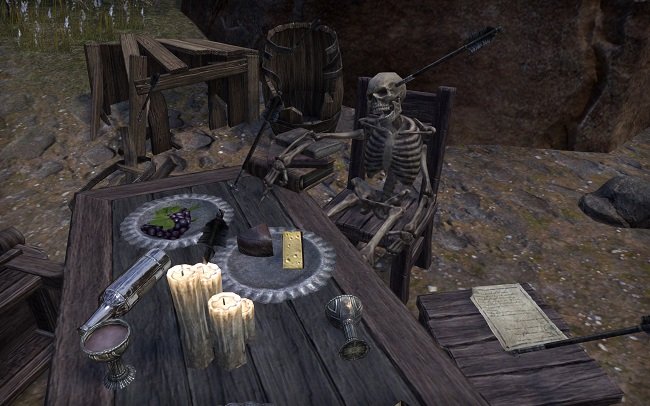
This picture is tenuously relevant. No clues. You figure it out.
Now regarding my non-whale status in STO, it should be noted that I spent a further £153.83 via the “grey” market. Bringing my total spend over the year to nearly £300. To put that number in to context, that averages out to broadly £6 per week. A comparable cost to coffee, sandwiches or beer. It is also unlikely that I will spend a similar amount of money on STO this year. I have maxed out my primary character and a lot of the items I’ve bought, are available account wide. However, what I think this minor analysis proves is that, if I deem it viable, I will spend money in a game. Therefore, I may well invest in another game at a future date if it suits my needs to do so. Considering that in most F2P games, the majority of the player base spend nothing, maybe I do have Cetacean tendencies after all. According to research 46% of all revenue comes from .22% of player base. If I am part of that group, all I can say is “Thar she blows of the starboard bow!”.
Star Trek Online: Beyond Endgame
The recent Arena of Sompek Event in STO was immense fun and presented me with an opportunity to fine tune the ground build on my primary character. Furthermore, the current return of the Phoenix Prize Pack has allowed me to spend a lot of my surplus Dilithium. I obtained a Kobali Samsar Cruiser [T6] last night which allowed me to complete the Kobali Space Set. It’s also nice to be able to finally own the iconic Red Matter Converter, which was only previously available in the Collector’s Edition of STO on launch. However, for me the best item available from the Phoenix Prize Pack is the special Phoenix Upgrade Tech (equivalent to multiple Universal Superior Tech Upgrades, with no Dilithium costs). I have used a hundred plus and have now managed to upgrade a lot of my gear to Epic quality. Finally, after months of tweaking and customising, I’ve broken the 30K DPS barrier.
The recent Arena of Sompek Event in STO was immense fun and presented me with an opportunity to fine tune the ground build on my primary character. Furthermore, the current return of the Phoenix Prize Pack has allowed me to spend a lot of my surplus Dilithium. I obtained a Kobali Samsar Cruiser [T6] last night which allowed me to complete the Kobali Space Set. It’s also nice to be able to finally own the iconic Red Matter Converter, which was only previously available in the Collector’s Edition of STO on launch. However, for me the best item available from the Phoenix Prize Pack is the special Phoenix Upgrade Tech (equivalent to multiple Universal Superior Tech Upgrades, with no Dilithium costs). I have used a hundred plus and have now managed to upgrade a lot of my gear to Epic quality. Finally, after months of tweaking and customising, I’ve broken the 30K DPS barrier.
Once you reach level cap in STO you quickly find that the bulk of the endgame is focused upon experimenting with builds and striving to increase your DPS. Although featured episodes and events are regularly added to the game, there are no traditional dungeons offering fancy gear as rewards. Gear is created through the reputation system and then upgrading it offers the opportunity to add modifiers. Events and PVE queues are effectively used as proving grounds. Once a player reaches a certain level of DPS, it requires a comprehensive program of subtle changes to see any further improvements. It also requires a great deal of in-game resources, such as Dilithium and Energy Credits to facilitate improvements. Success requires multiple alts to farm materials and a liking of spreadsheets and min-maxing.
Eighteen months ago, I wrote a post asking advice about a suitable tactical build for a Guardian Cruiser. I fortunately received none whatsoever, which then forced me to trawl through various subreddits and websites and learn about the mechanics of STO. I’ve now reach a DPS level that is certainly above average and I’m pleased with that achievement. However, I don’t see any reason to pursue any further increase because I suspect it will not be that much fun. So, I’ve decided to take heed of my recent return to LOTRO, where I am currently starting from scratch with a new alt. In the case of STO, rather than create a new character I already have three that remain incomplete. The most prudent one to focus upon is my Agents of Yesterday Federation Tactical Officer. Working my way through all the old content will yield multiple account unlocks that would be very beneficial. I can already craft Ultra Rare Mark XIII gear due on all my alts due to a reputation achievement on the AoY character.
Accolades, duty officer missions and cosmetic customisation are all other potential avenues of interest and fun to pursue in STO. Something else that is always overlooked is the fact that you can play through the various story arcs in the game in a group if you see fit. STO is an MMO yet I’ve spent so little time of the game in groups, apart from STFs and events. Playing through some of the stories with others can put a fresh perspective on them. Certainly, grouping in the Delta Quadrant will definitely give you an advantage and allow you to progress through the zone a lot more quickly. And of course, there is always the potential to role play, if that is your thing. Although, I find some of the activities and chat that goes on in Drozana Station and Risa beyond my ken.
As you can see, the endgame in STO doesn’t have to be DPScentric if you don’t want it to be. Like many MMOs, you get out of the game exactly what you put in. The people you associate with can also improve or kill the game for you. Finding the right fleet helps and there are plenty out there. There nothing wrong with taking your time and trying a few before committing to one. Also rushing to level cap is not essential second or third time round. There is plenty of detail and lore to be experienced along the way in the old content. So, I’m going to broaden my outlook and return to an older character and see where it takes me. If everything else fails I can always fall back upon cosmetic changes and goals for my away team. If you can’t be good be beautiful.
Arena of Sompek Special Event
Star Trek Online regularly runs short term events with unique rewards to keep the player base engaged. The latest of these, the Arena of Sompek Special Event, has just gone live today and will run until to February 27th at 9:00 AM PST (17:00 PM GMT). Level 50 to 60 Captains can queue publicly or form bespoke groups to battle in the ancient Klingon tradition of the qaD HoS; an endless battle against allies and enemies alike. Set in a holodeck, teams of six players face waves of ever increasingly powerful enemies as well as environmental hazards. There are infinite respawns as long as there’s one active player. Once all players are incapacitated, the event ends and rewards are distributed based on how many rounds are completed. These include a choice of reputation marks, Dilithium, crafting materials and a voucher once per day, that can be applied toward a special reward, The Sompek Lightning Universal Kit Module.
Star Trek Online regularly runs short term events with unique rewards to keep the player base engaged. The latest of these, the Arena of Sompek Special Event, has just gone live today and will run until to February 27th at 9:00 AM PST (17:00 PM GMT). Level 50 to 60 Captains can queue publicly or form bespoke groups to battle in the ancient Klingon tradition of the qaD HoS; an endless battle against allies and enemies alike. Set in a holodeck, teams of six players face waves of ever increasingly powerful enemies as well as environmental hazards. There are infinite respawns as long as there’s one active player. Once all players are incapacitated, the event ends and rewards are distributed based on how many rounds are completed. These include a choice of reputation marks, Dilithium, crafting materials and a voucher once per day, that can be applied toward a special reward, The Sompek Lightning Universal Kit Module.
The Arena of Sompek is extremely enjoyable as well as quite challenging. I jumped straight in to this event today as soon as the servers came up after patching, joining a team via the group finder. Fortunately, all participants were well geared and soon came to grips with the event mechanics. Fire barriers, lighting strikes and the central zone becoming toxic, soon teach you to main your situational awareness and not to stay in one position. The enemies become increasingly stronger each time they spawn and can be from any of the factions, races and species that exist in the game. You may face the Borg so bring a frequency remodulator or a TR-116B rifle. Cover shields, overcharge turrets, solar gateways and other devices are invaluable. Teamwork helps.
Your success in this event very much depends upon who you group with. Therefore, you’ll likely to do better in an organised team rather than in a PUG. However, there is immense fun to be had irrespective of how you play the event. Our group managed to last twenty-six rounds on our first attempt which I thought was respectable. No one complained or was difficult in team chat which is always an added bonus these days. Furthermore, the STO community has been quick to post videos on You Tube and share tactics on the official subreddit. As ever the DPS focused community have already clocked in high round scores and doubtless a league table will follow. Yet this is an event that can be enjoyed by all STO players and is something Cryptic intend to make available regularly throughout the year, very much like “Hearts and Minds”. If they can tweak the time delay between rounds, they may well be on to a winner here.
The Return of the DPS Meter
Back in the Summer 2015 I wrote about my flirtation with DPS meters in STO and how they are both a boon and a bane. Eighteen months later I’m still of the same opinion. Chasing numbers is addictive and a source of frustration when you don’t see any significant change. And that is what has happened to me. My overall DPS on my main Federation character has increased from under 5K DPS to somewhere between 23K and 26K DPS. These are perfectly respectable numbers but I hit 30K once and I want to see it again to ensure it wasn’t a fluke. So, I’ve been tinkering with various aspects of my build and regularly parsing my output but the results have been inconsistent. This has led me to do some further research which has highlighted a new set of problems.
Back in the Summer 2015 I wrote about my flirtation with DPS meters in STO and how they are both a boon and a bane. Eighteen months later I’m still of the same opinion. Chasing numbers is addictive and a source of frustration when you don’t see any significant change. And that is what has happened to me. My overall DPS on my main Federation character has increased from under 5K DPS to somewhere between 23K and 26K DPS. These are perfectly respectable numbers but I hit 30K once and I want to see it again to ensure it wasn’t a fluke. So, I’ve been tinkering with various aspects of my build and regularly parsing my output but the results have been inconsistent. This has led me to do some further research which has highlighted a new set of problems.
I guess the acronym is the biggest clue to my current predicament; damage per second. In STO players are advised to run several specific events to measure their DPS. Namely, Infected: The Conduit (Advanced) and Crystalline Catastrophe (Advanced). These six man events can be run privately or via a PUG. Both events are constructed in such a way that you can engage the enemy continuously from start to finish. There are no waves, therefore no breaks in the combat. Thus, the events can be completed quite quickly. This is favourable because the shorter the combat the higher the average DPS figure. Dying and respawning therefore will lower your DPS output when calculated.
Time is not the only variable. Irrespective of your build and stats, a player’s piloting skills and the way they use their skills rotation has a big impact upon their DPS output. There is an optimum way to proceed through both ICA and CCA and it clearly shows in the DPS meter log files. Attacks with slower cooldowns need to be used at the right time to ensure their availability when next needed. Specific enemies need to be eliminated at key times when running these events. Even something as simple as flying from one side of the map to another, needs to be done correctly, or else you’ll pull aggro and get out of sync with the overall game plan. It isn’t a question of just showing up and shooting.
Then there’s another factor that skews PUGs and has an impact upon DPS parsing. Group imbalance. When you set up a group among your friends, you can ensure that there is some sort of broad parity in builds. PUGs are far more random and you can find yourself grouped with players with both low and extremely high DPS output. Frequently I find myself in a PUG with at least one heavy hitter doing about 50K or higher. Effectively these players will own the event and do the lion share of the damage, thus resulting in a lower average DPS output for everyone else. Similarly, if you PUG with a group of poorly geared, inexperienced players, then again, your stats will be subpar due to the time it takes to complete the event.
It is a shame there’s not another way to calculate your DPS in STO, other than using meters and running these specific events with all their respective variables. I’m thinking along the lines of some sort of virtual calculator than takes the stats from your build and runs them against some sort of mathematical model. I guess it’s either not possible or more to the point, not allowed by Cryptic. I’m sure a little more research will provide an answer, as it has done so far. STO is seven years old and has a keen player base. Many of the things I’m currently pondering, have already been fully explored by veteran players. In the meantime, I’m going to take a break from build tinkering and focus on other goals, other than increasing my DPS. Gaming is supposed to be a source of fun, not anxiety.
Star Trek Online and the MMO Trinity
Although I will happily espouse the virtues of Star Trek Online, the multiplayer element of this MMO is very much optional. The central mission arcs are all solo friendly and although you can play through this content in a group, there is no major incentive to do so. The only times I have grouped during standard PVE content has been to help another player new to the game and when replaying a specific mission for the rewards if offers. The latter can be done a lot faster when grouped. The space and ground queues that are available at level 50 are designed for 6, 10 or 20 players but again the multiplayer aspect of these is somewhat arbitrary. Players can either join a PUG via the group finding system or set up bespoke event themselves with friends of fellow Fleet members. Beyond that there is no compelling interaction between players.
Although I will happily espouse the virtues of Star Trek Online, the multiplayer element of this MMO is very much optional. The central mission arcs are all solo friendly and although you can play through this content in a group, there is no major incentive to do so. The only times I have grouped during standard PVE content has been to help another player new to the game and when replaying a specific mission for the rewards if offers. The latter can be done a lot faster when grouped. The space and ground queues that are available at level 50 are designed for 6, 10 or 20 players but again the multiplayer aspect of these is somewhat arbitrary. Players can either join a PUG via the group finding system or set up bespoke event themselves with friends of fellow Fleet members. Beyond that there is no compelling interaction between players.
This difference handling multiplayer content was highlighted recently when I played through a featured instance in LOTRO. Although most of the six players present were somewhat over powered, and could blitz through most of the trash mobs, the final boss did require players to fulfil specific roles. There was a need for a tank to hold aggro, DPS dealers to burn the boss down and the healers and control class to heal and debuff. LOTRO was a game conceived and created when the MMO industry was still very much focused on the traditional trinity of classes. What I find curious is that STO was developed at the same time and technically has class distinctions that would support multiplay in such a fashion. Yet it has either never been implemented within the game or has been removed over time via various updates and patches.
However, the fleet system in STO really does foster a community spirit. My primary Federation Captain is a member of Reddit Alert and I must say that the fleet chat is extremely sociable. Where the game may lack a compelling multiplayer aspect, the discussions, debates and advice that is available in chat is invaluable. Many fleet members frequently group for the pleasure of it or to help others achieve specific goals. In some respects, this is does offer a degree of compensation for the lack of traditional multiplayer elements within STO. Considering the nature of the source material you’d have thought that the game would have been created with content that had specific roles for each class. Such collaborative play would have certainly been lore friendly.
For good or ill, mainstream MMO content has moved away from complex class interdependency and an inherent need to group for content. The majority of games now focus on PVE content that is solo friendly and offer players builds that allow them to selfheal and adapt to the content requirements. Perhaps the home of such class interaction is now the MOBA or the team shooters such as Overwatch. Taking a specific role in a group content in Star Trek Online would be very gratifying in principle. It would help create the illusion of being part of a larger Star Fleet. However, I think it is highly unlikely for the developers Cryptic to take such a step and introduce this mechanic retrospectively. Frankly the way the community now focuses on DPS builds I don’t think you could have a Tank class that could hold threat.
UI Customisation
Game complexity can be both a boon and a bane; a selling point and a source of irritation. There are many titles that I enjoy that have a wealth of systems and mechanics that add greatly to the overall immersion and entertainment. The MMORPG genre excels at this. However, this data all needs to be displayed visually, in an efficient and intuitive fashion. It has to be readily available and easy to navigate. Naturally, there’s a fine balance between making such a system accessible without becoming a source of distraction. This is the challenge that all developers face when designing a user interface. However this problem is compounded further by the human element. Regardless of how well crafted a game’s UI may be, players will always wish to change it to suit their own needs and requirements.
Game complexity can be both a boon and a bane; a selling point and a source of irritation. There are many titles that I enjoy that have a wealth of systems and mechanics that add greatly to the overall immersion and entertainment. The MMORPG genre excels at this. However, this data all needs to be displayed visually, in an efficient and intuitive fashion. It has to be readily available and easy to navigate. Naturally, there’s a fine balance between making such a system accessible without becoming a source of distraction. This is the challenge that all developers face when designing a user interface. However this problem is compounded further by the human element. Regardless of how well crafted a game’s UI may be, players will always wish to change it to suit their own needs and requirements.
What I often find in the MMO genre, is that the UI is streamlined at the beginning of a game with all the essential data that you need to play, evenly distributed around the screen. This grows exponentially as the game progresses, especially with older titles that frequently suffer from skills bloat. LOTRO is a classic example of this with a wealth of data swamping the screen when you reach level cap. I remember having similar issues when I was actively playing SWTOR. I encountered the same in STO recently, especially with regard to the skills hot bar. This was growing and intruding further towards the middle of the screen, impeding combat.
Mercifully most games have the ability to customise the UI, allowing players to indulge their preferences. Furthermore custom HUD settings can frequently be saved and then loaded when required. Monitor size and screen resolution also play a part in this matter and can have a positive impact if altered. Many games also have a cottage industry of players creating and sharing their own custom user interfaces. LOTROinterface has proven to be very popular over the years. The WoW and ESO communities also have multiple sites and resources for such changes. In the competitive genre of MOBAs, a common interface between team mates can be advantageous.
I currently have a 24 inch monitor with a resolution of 1920 x 1200. It provides a fairly large gaming canvas and allows me to spread the various elements of the UI to the borders of the screen. However an excess of data on the periphery of your vision can be distracting, especially if it flashes or attempts to alert you in some fashion. I also find it an impediment if my hot bars start to encroach towards the centre of the screen. I don't know if this is due to a foible of human vision but I find it draws my eyes away from where they need to be. I've had such problems in STO recently with my hot bar resembling a pyramid, resulting is some judicious customisation.
The ability to alter a games GUI, raises some interesting questions. The most obvious is whether or not you actually need everything on-screen. My view is if you're not using a specific element of the HUD, then remove it and that goes for skills as well. Then there is the matter of whether games developers are doing their best to accommodate the needs of players with disabilities. Resizing elements and changing colour schemes, as well as assigning audio alerts can all be incredibly beneficial. Fonts can also be a bone of contention, with some not lending themselves readily to being scaled. A simple change of this nature can often improve gaming.
Personally, I would like to see more customisation options added to games. The mod scene in Skyrim really set the standard. I also like the way that some MMOs such as LOTRO have built in voice chat and access to social media. STO allows players to utilise third party audio players while in-game and The Secret World has its own internal web browser as part of the narrative. Although it is to a developer’s advantage to keep the player focused and in-game, facilitating customisation and providing multiple tools aids this process. Flexibility and accommodating change needs to be more of a driving factors in games development because no two players are alike.