
Unfriended: Dark Web (2018)
I wondered recently whether Unfriended (2014) would kick start an entire subgenre comparable to the “found footage” format. It would appear that it has, and these movies shot on phones, computers and other digital devices have subsequently been labelled “screenlife” films. It’s worth noting that Unfriended: Dark Web is produced by Russian filmmaker Timur Bekmambetov who has already produced two other movies (Profile and Searching) using this technique. So, it won’t be surprising to see further forays into this style of film making. It is cheap, quick to make with a lot of box office potential. So, it’s hardly surprising to see Jason Blum (of Get Out and The Purge fame) attached to the credits as well. As for Unfriended: Dark Web it’s suitably nasty, voyeuristic, fare that is competently made. At this point the novelty of the “screenlife” films has yet run out, but it is still a physically challenging format to endure (as I found with its predecessor).
I wondered recently whether Unfriended (2014) would kick start an entire subgenre comparable to the “found footage” format. It would appear that it has, and these movies shot on phones, computers and other digital devices have subsequently been labelled “screenlife” films. It’s worth noting that Unfriended: Dark Web is produced by Russian filmmaker Timur Bekmambetov who has already produced two other movies (Profile and Searching) using this technique. So, it won’t be surprising to see further forays into this style of film making. It is cheap, quick to make with a lot of box office potential. So, it’s hardly surprising to see Jason Blum (of Get Out and The Purge fame) attached to the credits as well. As for Unfriended: Dark Web it’s suitably nasty, voyeuristic, fare that is competently made. At this point the novelty of the “screenlife” films has yet run out, but it is still a physically challenging format to endure (as I found with its predecessor).
Technically talented slacker with a heart of gold Matias (Colin Woodall) “acquires” a new MacBook and sets about installing all his own files and personalising it. He’s working on a speech to text and signing app for his deaf girlfriend, Amaya (Stephanie Nogueras). She is not overly impressed because its primary purpose is to make it easy for her to understand him and not the other way around. As it’s “game night” he joins a group Skype call with his friends, tech wiz Damon, conspiracy theorist AJ, DJ Lexx, and couple Serena and Nari. After numerous reboots and a series of DMs intended for the previous owner, Matias starts digging around the root directory of his new laptop. This leads to a hidden folder filled torture and snuff videos. Matias soon realises that he and his friends are being watched online, by the computer’s original owner. They wants it back because it’s the only way to access a secure account with a substantial cryptocurrency deposit in it.
Writer director Stephen Susco certainly makes the most out of the “screenlife” format using every glitch, software buffering and packet loss to his advantage. Like the previous movie, the medium used to convey the story adds to the tension and growing suspense. However, once again to enjoy the movie to the fullest I had to watch on my 24-inch computer monitor, rather than on my lounge TV. Unfriended: Dark Web is convincingly acted by the young cast, in so far as the performances do feel like they’re captured from real life, which that’s not an easy thing to achieve. Again, the characters are flawed and therefore do come across as credible. The hubris and tempestuous emotions of youth are reflected well in the serviceable screenplay. The group of friends are overly confident in their collective tech abilities and is never crosses their mind that they’re being “played” until it’s too late.
The evil mastermind behind all these shenanigans is called Charon, which is the name of the ferryman in Greek mythology who took the dead over the river Styx to Hades. The movie then runs with this metaphor as the cast are bumped off in innovative ways. The main difference this time round is that there is a clear human agency behind all the mayhem, rather than the supernatural theme of the first movie. Although Unfriended: Dark Web is far from a milestone in the horror genre, it does have a point to make about voyeurism and the screen-dominated lives and social media leisure habits of the younger generation. Horror like any other cinematic genre has its elitists and snobs and I think that this movie got a tough time from those who see themselves “gatekeepers” or who are simply a few generations removed from such online culture. It’s not without flaws, but its not a complete dogs dinner and if approached with the right mindset it can be rewarding.










Evil Dead (2013)
Urugyan writer and director Fede Alvarez obviously has a great deal of passion for the horror genre and certainly understands it a lot better than may other mainstream film makers. Make no mistake, Evil Dead is an extremely hard R rated movie and is certainly not like the usual tame studio output we see so often these days. There is also an emphasis on physical effects rather than CGI. The film also endeavours to re-invent the movies iconic plot to avoid a scene-by-scene retread of Sam Raimi's original. The idea of a groups of friends electing to stay somewhere isolated to help one of the group go "cold turkey", is a clever one. Perhaps the smartest thing the production does is the removal of the character Ash. Replacing someone such as Bruce Campbell is virtually impossible.
Urugyan writer and director Fede Alvarez obviously has a great deal of passion for the horror genre and certainly understands it a lot better than may other mainstream film makers. Make no mistake, Evil Dead is an extremely hard R rated movie and is certainly not like the usual tame studio output we see so often these days. There is also an emphasis on physical effects rather than CGI. The film also endeavours to re-invent the movies iconic plot to avoid a scene-by-scene retread of Sam Raimi's original. The idea of a groups of friends electing to stay somewhere isolated to help one of the group go "cold turkey", is a clever one. Perhaps the smartest thing the production does is the removal of the character Ash. Replacing someone such as Bruce Campbell is virtually impossible.
They say that the road to hell is paved with good intentions, because despite all its positive points, Evil Dead still manages to fall short of the mark. Don't get me wrong, this is far from a poor film. It will meet a lot of horror fan’s needs, especially those looking for a fix of hardcore gore. It's just that once again we see that there’s a fine line between fandom and homage as opposed to what is in fact just a fan service by someone who is a little too close to the subject they love. Sadly, Evil Dead leans towards the latter to its detriment. There is an unnecessary prologue, Fede Alvarez and Rodo Sayagues screenplay falls very flat and the performances seem strained. Overall there is too much focus on production values, rather than the strong character interaction.
Violence and profanity are just two of the many tools a film maker has at their disposal. The key to using them effectively is to do so in a pertinent fashion that validates their presence. Watching something unpleasant happen to a character that you relate to in some capacity, has a great deal of impact. Viewing clinically accurate effects work, just for the sake of it, without the benefit of a wider context is less effective and possibly the biggest school boy mistakes you can make in the horror genre. When you consider the lengths that cinematographer Aaron Morton has gone to makes the woods in which Evil Dead is set in, seem genuinely malevolent, it is a shame that the atmosphere was not more directly linked to the physical on-screen horror.
Overall this reboot of Evil Dead has far more in common with the works of Eli Roth rather than Sam Raimi. Glimpses of invention and originality are ultimately lost in the frenetic third act when the focus shifts from suspense and horror to mayhem and mutilation. The joy of being scared is replaced with the challenge of enduring the repulsive. As the movie didn’t meet its full potential a new franchise did not materialise. The 2015 Starz TV show Ash vs Evil Dead further put pay to any further cinematic outings. Some degree of praise should be given to all concerned for at least trying to buck the current movie trend. Evil Dead has at least had the courage to try and please the traditional horror market rather than simply court the most commercially viable demographic.
The Omen (2006)
Director John Moore is no stranger to remakes, having produced a new version of The Flight of the Phoenix in 2004. Remakes per se are not necessarily a bad thing as long as they bring something new to the table and explores the narrative in a different fashion. This is why Gus Van Sant’s shot-by-shot remake of Hitchcock's Psycho is so universally reviled and deemed to be pointless, because it doesn’t do any of those things. Which brings me to The Omen which is not an exact copy of Richard Donner’s 1976 film, but it does follow the original screenplay. The movie treads a fine line, adding some additional embellishments to the proceeding such as the opening sequence set in the Vatican as the Pontiff considers the impending Biblical prophecy. Yet it still feels a little too familiar to those older viewers who are au fait with the original movie. Furthermore, the 1976 horror classic was a milestone in the horror genre. It was a big budget production, professionally made with a quality cast. Such a critical and commercial success casts a long shadow and remaking such a production is always going to be an uphill struggle.
Director John Moore is no stranger to remakes, having produced a new version of The Flight of the Phoenix in 2004. Remakes per se are not necessarily a bad thing as long as they bring something new to the table and explores the narrative in a different fashion. This is why Gus Van Sant’s shot-by-shot remake of Hitchcock's Psycho is so universally reviled and deemed to be pointless, because it doesn’t do any of those things. Which brings me to The Omen which is not an exact copy of Richard Donner’s 1976 film, but it does follow the original screenplay. The movie treads a fine line, adding some additional embellishments to the proceeding such as the opening sequence set in the Vatican as the Pontiff considers the impending Biblical prophecy. Yet it still feels a little too familiar to those older viewers who are au fait with the original movie. Furthermore, the 1976 horror classic was a milestone in the horror genre. It was a big budget production, professionally made with a quality cast. Such a critical and commercial success casts a long shadow and remaking such a production is always going to be an uphill struggle.
Moore’s The Omen is competently made, with good use of various European locations such as London and Rome. Malta doubles for Israel in the second act. There is also a strong cast of character actors such as Pete Postlethwaite, Michael Gambon and David Thewlis. What essentially carries the film is the central performance by Liev Shreiber as Robert Torn. He remains credible and behaves like he’s struggling to come to terms with the situation. His relationship with his wife Katherine (Julia Stiles) is also plausible. Mia Farrow adds her acting weight to the role of the sinister nanny Mrs Baylock. Horror fans will also be pleased to see genre stalwart Giovanni Lombardo Radice (AKA John Morghen) as Father Spiletto. The only weak link in the proceedings is Seamus Davey-Fitzpatrick as Damien. He is dressed, made up and shot to look sinister which broadly works but he doesn’t do anything particularly evil and thus doesn’t pose an effective threat.
There are flashes of creativity and an attempt to do more than what was done previously. For example, there is a good use of colour throughout the movie. Red is often a signifier off impending death. When Father Brennan senses that demonic forces are closing in during a storm, we see a person in a red raincoat run through the frame in the background. He also passes someone with a red umbrella. It’s a recurring motif throughout the films set pieces. The score is suitably atmospheric and composer Marco Beltrami wisely references Jerry Goldmsith iconic theme but largely does his own thing. Director John Moore also adds several visionary sequences that reflect the growing fear in both Katherine and Robert Thorn. These work as jump scare but more to the point, provide “omens” of the future and reinforce the idea that Damien’s existence is not just an immediate threat to them but has long term consequences for the future of man.
Overall, The Omen is still a little too close to the original and ultimately just adds a modern veneer to the story, rather than doing something substantially different. Then there is the issue of the death scenes which are one of the motifs of the franchise. The original film’s set pieces where ground breaking, in particular David Warner’s decapitation by a sheet of glass, which has now become a genre “treasure”. What made these scenes so visceral in back in 1976 was the fact that they were physical effects and stunts. This time round they’re simply CGI excesses. For example the roving camera follows the falling scaffolding pipe down from the church spire as it impales Father Brennan, in a manner that instantly negates any sense of credibility. Yes, it looks very photogenic, but the brain knows that such a shot is a technical deceit and as a result this sequence lacks the impact of the original. Similarly, the death of photographer Keith Jennings diminished due to it obvious digital construction.
If you have not seen the 1976 version of The Omen and therefore have no respective emotional baggage pertaining to it, then you’ll find the 2006 remake to be an adequate big budget horror movie that fulfils its own remit. For older viewers and horror aficionados, the main obstacle to enjoying the film is its perceived redundancy. Although well made in most respects it doesn’t quite do enough to set it apart from the original. Does it entertain? Yes, but that has to be offset against a strong sense of “so what”. It is interesting to note that The Omen cost $25 million to make and made an adequate $119,496,523 internationally. Yet despite this no sequel has been forthcoming and I suspect that the studio is a little too aware of the audience ambivalence towards such remakes. The cost of another instalment could finance at least two or three other original properties and given the return on investment the horror genre can provide (for example the Saw franchise) this is probably deemed the wiser course of action.
Unfriended (2014)
Enjoyment of Unfriended depends heavily on the viewers familiarity with social media and its associated youth culture. If you are not “tech savvy”, then you may struggle with the films format, which is presented as an ongoing Skype call, with additional use of Google, You Tube and other sundry apps. I started watching Unfriended in my lounge but struggled to read the onscreen text even on a 40-inch TV screen. I eventually end up viewing the film at my desktop PC, sitting a lot closer to the screen. Watching the movie in the same way as you would consume real online content IE at a computer or via a laptop or tablet, does indeed enhance the viewing experience and give the story a greater sense of immediacy. I’m curious as to how Unfriended came across during its theatrical release and whether big screen digital projection added to the atmosphere or diminished it.
Enjoyment of Unfriended depends heavily on the viewers familiarity with social media and its associated youth culture. If you are not “tech savvy”, then you may struggle with the films format, which is presented as an ongoing Skype call, with additional use of Google, You Tube and other sundry apps. I started watching Unfriended in my lounge but struggled to read the onscreen text even on a 40-inch TV screen. I eventually end up viewing the film at my desktop PC, sitting a lot closer to the screen. Watching the movie in the same way as you would consume real online content IE at a computer or via a laptop or tablet, does indeed enhance the viewing experience and give the story a greater sense of immediacy. I’m curious as to how Unfriended came across during its theatrical release and whether big screen digital projection added to the atmosphere or diminished it.
The story is a clever variation on a well-established horror theme. Five high-school friends, Blaire, Mitch, Jess, Ken and Adam are chatting on Skype when an unexpected six person joins their call. The “guest” claims to Laura Barns, a friend who committed suicide a year ago after a video was posted on You Tube of her drunk and incontinent at a party. At first the friends simply suspect the caller to be a “internet troll” but it soon becomes clear that the person knows a great deal about them, as they begin to reveal their worst secrets. As the group starts to turn on each other, it becomes clear that that something distinctly supernatural is happening. Is the mysterious caller the ghost of Laura Barns, who has returned to seek revenge on those who wronged her? The friends try to disconnect the mysterious caller but are told that they must all remain online and participate in a game, or else one of them will die.
The structure and format of Unfriended is by far its best-selling point. Beyond the creativity of the medium used to tell the story, the film is standard supernatural revenge tale. The lead characters are far from likeable but very relatable and plausible. The screenplay by Nelson Greaves briefly touches upon that peculiarly American social foible of worrying about being perceived as “a good person”. Naturally in this case the cast are shown to be superficial, backstabbing, narcissists that are the embodiment of “generation consume”. The shocks are not anything special, but the narrative does successfully manage to sustain a strong atmosphere of disquiet. All performances are good in so far as the characters all come across as convincingly duplicitous and hypocritical. The ending is suitably hyperbolic and what you expect from such a specific genre movie.
I’m all in favour of the horror genre experimenting in such a fashion as this, because it is through this process that it remains relevant. Despite my own age related bias and my over familiarity with the horror genre, I enjoyed Unfriended far more than I expected. However, its success has already spawned a sequel and I wonder if social media-based horror is destined to go the same way as the found footage genre. I not sure if it can sustain such a level of interest before the novelty of presenting a story in such a fashion becomes old. However, horror cinema has proven to be a very robust medium so only time will tell. In the meantime, as younger viewers have taken to Unfriended like a duck to water, I would encourage the older open-minded horror fan to give it a go. They may find some virtue in it and enjoy how many classic horror tropes are given a new spin.
Red Lights (2012)
Rodrigo Cortés proved with Buried, that he was adept at creating a tense and involving drama with a modest budget and strong lead performances. With Red Lights he once again manages to craft a suspenseful story, in spite of the significantly larger production and inclusion of some A list talent. I say this because Red Lights is a bit top heavy with "actors" who seem to be intent on "acting". Robert De Niro presence does for example overwhelm the proceedings particularly in the last act, which becomes somewhat bombastic in tone. The movie is also a curious hybrid because despite being marketed as a supernatural chiller, it has an underlying theme that would be more at home in a political thriller.
Rodrigo Cortés proved with Buried, that he was adept at creating a tense and involving drama with a modest budget and strong lead performances. With Red Lights he once again manages to craft a suspenseful story, in spite of the significantly larger production and inclusion of some A list talent. I say this because Red Lights is a bit top heavy with "actors" who seem to be intent on "acting". Robert De Niro presence does for example overwhelm the proceedings particularly in the last act, which becomes somewhat bombastic in tone. The movie is also a curious hybrid because despite being marketed as a supernatural chiller, it has an underlying theme that would be more at home in a political thriller.
The plot is an old chestnut. Sigourney Weaver and Cillian Murphy are a pair of scientists, Dr Margaret Matheson and assistant Tom Buckley, who debunk mediums and psychics who prey on the public. When blind psychic Simon Silver (Robert De Niro), re-appears on the scene after a thirty-year absence, Tom takes a keen interest. His mentor is not only sceptical, but also somewhat perturbed advising Tom to act with caution with regard to Silver. Is he a fraud or does he actually have powers of a dangerous nature? Cortés steadily turns up the tension, as doors close on their own, lights blow, and birds become suicidal. Furthermore, the audience is presented with a challenging theme that being sceptical is often treated with more scorn these days than openly embracing the supernatural.
It all plays very well initially, with shades of Hitchcock and Brian De Plama, blended with M Night Shyamalan. There's even a hint of the Parallax View. Then for some reason in the last act, the director decides to turn it up to eleven and then Red Lights comes off the rails. The result is an ending that divides audiences and offers a point of debate. Stupid, pretentious, obtuse and ill-conceived are just some of the terms I’ve encountered with regard to this movie. Now it is never a bad thing for a film’s meaning or ending to become a talking point, if that discussion is a positive process. Unfortunately, I feel that in Red Lights case, that is not what has happened. This is a movie that does not travel to its ending by most direct route and the destination is may not be what you expected. Therefore adjust your expectations.
The Tunnel (2011)
The Tunnel was released direct to Region 3 DVD on 19th May 2011, much the same as any other low budget horror movie. What made the marketing of this minor Aussie "Mockumentary" horror different to other similar products, is that the distributors decided to make a barebones copy of the film available for download, free of charge. The accompanying viral marketing campaign gained quite a lot of traction resulting in The Tunnel being heavily seeded across Bit Torrent sites and exposing the film to an audience of millions globally. Subsequently, when the movie was then showcased in the US and Europe and commercially released in other regions, its profile had been considerably raised. As a result of this novel marketing campaign and the fact that the movie is a better than average example of the found footage genre, The Tunnel won several awards on the festival circuit.
The Tunnel was released direct to Region 3 DVD on 19th May 2011, much the same as any other low budget horror movie. What made the marketing of this minor Aussie "Mockumentary" horror different to other similar products, is that the distributors decided to make a barebones copy of the film available for download, free of charge. The accompanying viral marketing campaign gained quite a lot of traction resulting in The Tunnel being heavily seeded across Bit Torrent sites and exposing the film to an audience of millions globally. Subsequently, when the movie was then showcased in the US and Europe and commercially released in other regions, its profile had been considerably raised. As a result of this novel marketing campaign and the fact that the movie is a better than average example of the found footage genre, The Tunnel won several awards on the festival circuit.
The Tunnel has a somewhat generic storyline, following an investigation into a government cover-up over an abandoned reservoir project, that intended to use a network of abandoned train tunnels under Sydney. TV journalist Natasha Warner (Bel Deliá) and her crew, Peter Ferguson (Andy Rodoreda), Steve Miller (Steve Davis), Jim ‘Tangles’ Williams (Luke Arnold), look for the truth within the subterranean maze, only to find themselves hunted by someone or something. The film consists of video footage taken by the crew on both HD and night vision cameras. Material taken by CCTV and webcams are also used to great effect. Where The Tunnel differs from other films shot in this style, is that it is presented as a completed documentary, and is intercut with "talking heads" from the surviving members of the crew.
Now it could be argued that the format of the film indicates quite quickly who lives and who dies, thus mitigating the suspense. However, this is not the case. It actually adds to the sense of faux credibility. The story unfolds at a measured pace and introduces us to the lead characters, all of whom are quite plausible. Steve Davis, a real-life cameraman, give a very good performance, effectively playing himself and drawing on his working experience. Luke Arnold, makes a suitable foil for him as soundman "Tangles". Director Carlo Ledesma builds a suitable back story regarding the politics of the reservoir project and the aims of the TV journalists before taking the action into the tunnels of the title. The shocks are efficient and subtle. The mysterious entity that stalks the network under the city is kept wisely off camera for most of the proceedings. Less is more in this case.
Once again, Australian cinema shows that it has far greater understanding of the craft of film making that mainstream Hollywood. The Tunnel is certainly formulaic, yet due to a better than average script and measured performances, manages to produce a superior genre offering. Unlike recent equivalent films such as Paranormal Activity franchise, it does not jump the shark when it comes to the scares and maintains sustained tense and threatening atmosphere. The found footage genre, like so many other subsets of horror, can often be no more than a vehicle for lazy and uninspired film making. The key to success in this case is to use the format in an innovative fashion and tell a story from a new perspective. The Tunnel achieves this by maintaining a credible pretence of being a genuine documentary. The framing narrative justifies a lot of the usual questions that arise from this genre, especially the ubiquitous “why keep filming”? Hence, The Tunnel is a superior genre entry and worth seeing by both horror fans and causal viewers.
Final Destination 5 (2011)
Having recently re-watched all of the Final Destination franchise, I’ve been toying with the idea of writing about them. However, they are a somewhat formulaic series of movies and I’m not sure if they each warrant a review to substantiate their respective merits or failings. The first movie was satisfactory in establishing the underlying theme of the franchise and came up with some innovative death scenes. The second instalment was a satisfactory sequel, that upped the ante and gave more of the same. Part three was noticeably superior to what had proceeded, with a more accessible group of protagonists and wider exploration of the idea of death seeking to restore its plan. The fourth film jumped on-board the trend for 3D movies, but effectively became a caricature of itself. The characters were two dimensional and the movie just felt like a group of flamboyant set-pieces, clumsily dovetailed into a contrived bridging plot. However, and somewhat unusually, it is the fifth iteration of Final Destination, that tries to do something different and so is the entry in the series that I’d like to explore further.
Having recently re-watched all of the Final Destination franchise, I’ve been toying with the idea of writing about them. However, they are a somewhat formulaic series of movies and I’m not sure if they each warrant a review to substantiate their respective merits or failings. The first movie was satisfactory in establishing the underlying theme of the franchise and came up with some innovative death scenes. The second instalment was a satisfactory sequel, that upped the ante and gave more of the same. Part three was noticeably superior to what had proceeded, with a more accessible group of protagonists and wider exploration of the idea of death seeking to restore its plan. The fourth film jumped onboard the trend for 3D movies, but effectively became a caricature of itself. The characters were two dimensional and the movie just felt like a group of flamboyant set-pieces, clumsily dovetailed into a contrived bridging plot. However, and somewhat unusually, it is the fifth iteration of Final Destination, that tries to do something different and so is the entry in the series that I’d like to explore further.
Now we all know the storyline for this franchise, don’t we? (No? Well I suggest you cram via this link). As ever, Final Destination 5 hinges upon a group of people, escaping a catastrophe due to one of them having a premonition. On this occasion it is a group of employees who are travelling to a company retreet. They manage to avoid a rather spectacular suspension bridge collapse, only to be grilled by the FBI who find their miraculous survival a little too convenient. Furthermore, at the memorial service local coroner William Bludworth (Tony Todd) ominously tells the survivors that "Death doesn't like to be cheated," and tells them to be careful. Elaborately contrived death scenes then ensue, including an accident involving laser eye surgery and a nasty fall by a gymnast from a balance beam. Yes, it’s more of the same in the shock horror department, but the movie is less jovial and darker in tone this time round. Final Destination 5 attempts to vary the established rules of the previous filsm and add a new twist. Previous instalments have always sought a solution to appease death. This time round a much bleaker proposition is offered. Kill another person to balance the books. This new theme provides an additional moral dilemma alongside the protagonists existing knowledge of their own doom.
Let me stress that any praise offered is still relative. These are disposable horror movies, designed to be enjoyed and not pondered upon. But within its own context, Final Destination 5 managed to re-invigorate the franchise in a similar way that Friday 13th Part 6: Jason Lives did back in 1986. It’s arguably the most thoughtful entry in the series for a long time and not a bad horror film in itself. If you’ve not seen any of the prior instalments, then this can be a perfectly good starting point. However, let us maintain a sense of proportion. This film is no The Thing or Misery. Although it is slick, fun and features Tony Todd being as creepy as fuck, it is no more than the sum of its parts. Curiously, despite being well received by fans, some critics and doing well at the box office, the franchise ended here and there have been no further sequels. However, with horror becoming the flavour of the month with film studios once again, may be a reboot or new entry will be forthcoming. In the meantime, mind how you cross the road, watch you step and avoid chalk dust.
Cockneys vs Zombies (2012)
Back in the summer of 2012, the red band trailer for Cockneys vs Zombies set a very high benchmark and certainly raised expectations for the final movie. The title itself was also somewhat of a gamble, either raising a wry smile among horror fans or eliciting a roll of the eyes and a deep sigh for a genre in decline. I was unable to attend the premier at Frighfest 2012, but the general feedback at the time was that that that the movie was extremely well received by horror fans. Finally, six years later, I finally caught up with the film on Amazon Prime and I’m happy to report that Cockneys vs Zombies does live up expectations and is a thoroughly entertaining, quirky and very British horror movie. It manages to balance both visceral horror with a healthy dose of black humour, which is no mean feat.
Back in the summer of 2012, the red band trailer for Cockneys vs Zombies set a very high benchmark and certainly raised expectations for the final movie. The title itself was also somewhat of a gamble, either raising a wry smile among horror fans or eliciting a roll of the eyes and a deep sigh for a genre in decline. I was unable to attend the premier at Frighfest 2012, but the general feedback at the time was that that that the movie was extremely well received by horror fans. Finally, six years later, I finally caught up with the film on Amazon Prime and I’m happy to report that Cockneys vs Zombies does live up expectations and is a thoroughly entertaining, quirky and very British horror movie. It manages to balance both visceral horror with a healthy dose of black humour, which is no mean feat.
Is Cockneys vs Zombies a ground-breaking genre classic with a subtext of social commentary like George Romero's Dawn of the Dead? Of course not. It’s a lot closer to Return of the Living Dead and Sean of the Dead with its comedy violence and offbeat, quirky characters. It does not redefine the genre, but it certainly embellishes it and offers entertaining new slant. The screenplay by James Moran is witty and packed with clever homages and references to both horror and gangster movies. The cast both young and old acquit themselves well and the visual effects and production design are impressive for a modest budget production. The undead meet a multitude of unpleasant demises, often accompanied by a pithy quip. Full marks go to director Matthias Hoene for correctly ascertaining what audiences want and delivering it in spades.
The central plot device (or MacGuffin) of Cockneys vs Zombies is a group of senior citizens fighting the undead and defending their residential care home. It’s a simple idea that works extremely well. The likes of Richard Briers, Dudley Sutton and Honor Blackman effortlessly inject humour and pathos in to their characters, demonstrating their collective acting talent. Alan Ford excels with a new variation of the traditional East End hard man that he has played many times before. It is with these actors that James Moran's screenplay really finds its stride. The dialogue is profane, dry and filled with the most tortuous Cockney rhyming slang ever. It is also well observed, honest and very entertaining. The secondary plot in which a group of younger protagonists attempts to rob a bank to raise fund for their grandparent’s care home, is not quite so compelling.
Cockneys vs Zombies achieves it aims because it does not over stretch itself. The movie is content to work within the parameters it sets and make great use of its London setting. So many horror films these days fail because they lose sight of what they are about or because they are made by people who fundamentally disrespect the genre. Cockneys vs Zombies is the complete opposite and is clearly a labour of love. There's no parody or self-referential postmodern pretension. Just honest humour and a lot of zombie-based gore. It’s far from subtle, but who wants subtlety in a zombie movie?
The Awakening (2011)
The Awakening has a strong opening with a scene involving a seance. Set in the post WWI years of the early twenties, the film explores the concept of a nation coming to terms with grief. It is here that we are introduced to Florence Cathcart (Rebecca Hall) a professional hoax exposer and paranormal investigator. Is she solely dedicated to debunking the supernatural or does she have a yearning to encounter something genuinely supernatural? This opening sequence is perhaps the highpoint in The Awakening, as it is clever and thought provoking and could have been developed into a story in itself. Although the narrative moves on and maintains a strong grip on the audience for the next two acts, it never quite recaptures the atmosphere and depth of its opening.
The Awakening has a strong opening with a scene involving a seance. Set in the post WWI years of the early twenties, the film explores the concept of a nation coming to terms with grief. It is here that we are introduced to Florence Cathcart (Rebecca Hall) a professional hoax exposer and paranormal investigator. Is she solely dedicated to debunking the supernatural or does she have a yearning to encounter something genuinely supernatural? This opening sequence is perhaps the highpoint in The Awakening, as it is clever and thought provoking and could have been developed into a story in itself. Although the narrative moves on and maintains a strong grip on the audience for the next two acts, it never quite recaptures the atmosphere and depth of its opening.
She is subsequently commissioned to investigate the strange happenings at a boarding school, by schoolmaster Robert Mallory (Dominic West). A boy has reportedly died of fright at seeing a ghostly apparition of a child with a "twisted face". Florence naturally suspects mass hysteria or some distinctly earthly subterfuge. Yet matters are obviously more complex that they first seem, and the plot unfolds into realms of PTS, sexual repression, self-harm. Along the way much ghostly literature is referenced (think M R James, Algernon Blackwood and Shirley Jackson) along with some classic films of a similar idiom, such The Orphanage, The others and The Devil's Backbone.
The Awakening is professionally constructed with a handsome production design and sinister atmosphere. The cast is exceptionally strong, and the film is dominated by Rebecca hall's performance. There are nods to other genre classic and a scene that appears to have been lifted directly from The Changeling, but we will consider this a homage rather than plagiarism. Yet the third act sees the film over reach itself and stray into the realm of incredulity. Considering how much the film initially gets right it is somewhat surprising that such a mistake could have been made at this point. The screenplay co-written by director Nick Murphy and Stephen Volk (Ghostwatch) is very much at fault here and perhaps the least experienced of the pair, Murphy, is the culprit. The twist ending is unfortunately not so much of a surprise and seem to rush to fill in the logical gaps in the plot.
However, despite its faults, I applaud The Awakening for daring to be more traditional in its approach to the genre and for eschewing cheap shocks and tricks that are so prevalent in contemporary horror. The period production design is also authentic and adds to the movies ambience. If you can forgive a somewhat flawed ending you will be rewarded with an atmospheric and thoughtful supernatural drama with solid performances and an understanding of the genre. This film with all its failings is still in a different league to that which Hollywood is currently producing.
Nightbreed: The Cabal Cut (2012)
I originally saw Nightbreed upon its UK cinema release in 1990 and like so many others, was disappointed by the inconsistencies of the theatrical version. Over the next twenty-two years, the movie evolved its own mythos regarding the infamous studio interference that left Clive Barker's original vision undermined and neutered. However, in early 2012, Russell Cherrington, a senior lecturer in film and video production at the University of Derby, created a composite cut of the film using two workprints of the original movie that were sourced from VHS tapes, as well the DVD of the standard theatrical release. This version offered the most complete version of Barker's film available. It ran for 155 minutes and was been dubbed Nightbreed: The Cabal Cut. It was never intended as the director’s definitive version of the film and was primarily created to “encourage” the rights holders to allow Clive Barker to produce a director’s cut of his magnum opus.
I originally saw Nightbreed upon its UK cinema release in 1990 and like so many others, was disappointed by the inconsistencies of the theatrical version. Over the next twenty-two years, the movie evolved its own mythos regarding the infamous studio interference that left Clive Barker's original vision undermined and neutered. However, in early 2012, Russell Cherrington, a senior lecturer in film and video production at the University of Derby, created a composite cut of the film using two workprints of the original movie that were sourced from VHS tapes, as well the DVD of the standard theatrical release. This version offered the most complete version of Barker's film available. It ran for 155 minutes and was been dubbed Nightbreed: The Cabal Cut. It was never intended as the director’s definitive version of the film and was primarily created to “encourage” the rights holders to allow Clive Barker to produce a director’s cut of his magnum opus.
Nightbreed: The Cabal Cut was subsequently shown at various film festival around the world in 2012 and I saw it at a screening at FrightFest in August 2012. Despite issues with the picture quality of most of the new material, horror fans were more than happy to view this new version of the movie. There were high expectations that this cut would be a major milestone in horror cinema and that Nightbreed: The Cabal Cut would finally present Clive Barkers vision as he intended. However, that was not the case. Upon viewing the expanded version of Nightbreed, it became very clear that a lot of the flaws of the theatrical version were still present because they were inherent to performances and the screenplay. Although it was clearly a superior cut of the film, Nightbreed: The Cabal Cut was not the Citizen Kane of horror that so many fans had dreamed of.
The additional footage featured in Nightbreed: The Cabal Cut expands upon the relationship between Boone (Craig Scheffer) and his girlfriend Lori (Anne Bobby). There is more footage off Midian and a wider exploration of its various inhabitants. Then there is the extended finale and the original ending as opposed to the resurrection of “Buttonface”. These extra scenes are interesting and really helps clarify the story and further develop the characters. It certainly feels far more like a literal adaptation of Clive Barker's original novella Cabal. Some scenes in particular standout such as "Buttonface" calling to Dr Decker (David Cronenberg) to be "let out". Another change is that Detective Joyce (Hugh Quarshie) survives in this version, receiving only an injury rather than dying. His character shows a little more depth, as he objects to the Midian genocide. Overall Nightbreed: The Cabal Cut has more substance and there is a specific tonal shift that makes for a more thoughtful movie, whereas the theatrical print is mainly weighted toward spectacle.
Expanding the running time from 109 minutes to 155 minutes for Nightbreed: The Cabal Cut results in a movie that is too long. The expanded action driven third act seems to be the main culprit. It actually drags after a while. Also, despite more content, the central character of Boone is still somewhat thin. His initial dreams of Midian are somewhat glossed over and there is still a lack of gravitas in Craig Scheffer’s performance. The black humour and quips of Narcisse (Hugh Ross) are still divisive, either delighting or annoying the audience. However, the character does dies in this cut of the film. The rather poor song and the nightclub scene at the start of the movie really don’t help much either. Film makers seldom seem to be able to successfully capture the atmosphere of music venues or portray their audiences credibly.
It should also be noted that the Nightbreed: The Cabal Cut is certainly not a gorefest and does not appear to include any major increase in violence. The film is relatively understated in that respect, electing to focus on the grotesque rather than explicit. The most notable change in terms of violent material occurs during the flashback montage depicting the persecution of the “Nightbreed”. It is longer in this edit of the film and slightly more graphic in nature. There are more decapitations and a greater focus on trial by ordeal. The most unsettling scene in the movie still remains the forcible removal of a nipple ring, but that was also present in the theatrical cut. It can be argued that irrespective of depictions of physical violence, Nightbreed: The Cabal Cut is darker in tone and more unsettling, due to the expanded narrative.
Overall Nightbreed: The Cabal Cut is an interesting curio, but it is not the horror masterpiece that it could have been, because there are still fundamental problems with both the old and new material. However, it still has much to recommend it. The creature designs are outstanding and there is a sense of history and community among the denizens of Midian. The story does not quite have the same impact as it did two decades ago, because society has become more familiar with the notion of tolerance, which is one of the core themes. However, with its religious imagery, sexual undertones and inversion of good and evil, you can understand why this film bothered the conservative studio executives at the time of release. Nightbreed: The Cabal Cut puts meat on the bones of narrative and removes some of its major shortcomings. Although the shamelessly commercial original ending with the resurrection of Decker remains, it has been tempered with a message of hope as Boone seeks a new home for the “Nightbreed”.
Due to the success of Nightbreed: The Cabal Cut in 2012 as it was showcased around the world, a deal was struck between the rights holders Morgan Creek and Clive Barker. After finally gaining access to all material that was originally shot, Barker subsequently produced Nightbreed: The Director’s Cut in 2014. This is a third iteration of the film. This includes some additional expositionary scenes at the beginning of the movie, which have never featured in any other version. Barker’s aim was to further focus more on the occupants of Midian and reduce the slasher element involving Dr Decker as well as the action driven finale. Nightbreed: The Director’s Cut is the Barker’s preferred version of the movie and nearest to his original vision. It should be noted that in this 120-minute edit, Narcisse lives and Detective Joyce dies. It certainly removes some of the narrative bloat found in the third act of Nightbreed: The Cabal Cut.
Although much is further put right in Nightbreed: The Director’s Cut, the movie remains a flawed but intelligent experiment in cross genre film making. Ultimately the only real way for Clive Barker to overcome the shortcoming of the original troubled production would be to effectively remake the entire movie from scratch, but of course that will not happen. As a matter of personal choice, I prefer Nightbreed: The Cabal Cut out of all three versions of the movie. Mainly because I prefer the way the story pans out in this edit and the more substantial role played by Detective Joyce. All versions remain an interesting case study in the perils of studio-based film making. The only similar case of a movie that has been retooled to such an extent, is the Paul Schrader movie Dominion. Curiously enough this was yet another troubled Morgan Creek production. Need I say more?
Director Clive Barker has always been appreciative of the support that fans have shown over the years for this movie. Although Nightbreed: The Director’s Cut is his preferred version of the movie, he was aware that some fans had a fondness for Nightbreed: The Cabal Cut, with its everything but the kitchen sink, approach. After some negotiations with Morgan Creek, he was able to recreate Nightbreed: The Cabal Cut after producing Nightbreed: The Director’s Cut. This time round, it has less material sourced from VHS tape but still has some scenes of low visual and audio quality. So, there are at present, effectively three version of the film in circulation, although some are limited editions. The theatrical release of Nightbreed is still available on DVD and is shown on such platforms as Netflix. Nightbreed: The Cabal Cut and Nightbreed: The Director’s Cut have both been released on Blu-ray in the US. The former is an extremely limited pressing purely because Morgan Creek did not wish this version to impact upon sales of the director's cut. For those seeking a far more comprehensive breakdown of the difference between all versions of Nightbreed, there’s an exhaustive analysis over at Movie-Censorship.com
Dream House (2011)
Despite being derivative of several other well-known notable genre films, Dream House has several positive attributes. With its strong cast and capable director, the movies offers a well-made and tense tale with solid production values. But like so many contemporary psychological thrillers and baroque stories with a twist, your overall enjoyment depends on how familiar you are with the genre. The biggest problem I encountered while watching Dream House was my own over familiarity with films of this kind. Hence, I saw the first major plot twist coming a mile off and subsequently accurately predicted the film’s outcome. Because of this it does make it somewhat difficult for me to be as objective as I should about Dream House. However, that is not to say that the movies multi-faceted plot won’t be a source of surprise to the more casual viewer.
Despite being derivative of several other well-known notable genre films, Dream House has several positive attributes. With its strong cast and capable director, the movies offers a well-made and tense tale with solid production values. But like so many contemporary psychological thrillers and baroque stories with a twist, your overall enjoyment depends on how familiar you are with the genre. The biggest problem I encountered while watching Dream House was my own over familiarity with films of this kind. Hence, I saw the first major plot twist coming a mile off and subsequently accurately predicted the film’s outcome. Because of this it does make it somewhat difficult for me to be as objective as I should about Dream House. However, that is not to say that the movies multi-faceted plot won’t be a source of surprise to the more casual viewer.
Will Atenton (Daniel Craig) quit his job as a publisher to spend more time with his wife Libby (Rachel Weisz), their two daughters (Taylor and Claire Geare) and start writing a novel. They move into a large new house, which unbeknown to them was the scene of a mass murder several years prior, in which a father allegedly murdered his entire family. Will subsequently learns that this man, Peter Ward, spent five years in a psychiatric hospital and has recently been released back into the community. Their neighbour, Ann Patterson (Naomi Watts), knows something about Peter Ward, but seems very reticent to discuss the matter with them. Wills daughters soon start seeing a stranger hanging around outside in the street and staring at their house. It’s not long before events take a sinister turn.
Director Jim Sheridan deliberately takes his time with the story telling, in an attempt to build tension and allow the audience to connect with the central characters. However, despite being an accomplished director of human dramas, he is burdened with a particular workman like script by David Loucka, which lacks any major polish. Still he manages to avoid a great many of the genre clichés that are rife in this type of movie and the production design, cinematography and general ambience are extremely competent. Dream House is therefore a very functional cinematic experience but not an especially atmospheric one. The strong cast (Elias Koteas, Marton Csokas) try their best to fill the narratives gaps but overall the premise and payoff are somewhat lacking in punch. The film does not push the boundaries of its PG-13/12 rating. There are some jolting moments and brief images of gunshot wounds. Prior to release the movies was re-edited from a “R” to a lower rating.
Dream House is very much a film of three very acts and sadly they don’t quite hang together as well as they could. The ending doesn’t quite provide the dramatic payoff that some may expect. There are also some logical plot holes that are best not pondered on too long. Once again these can all be attributed to the bland screenplay. Yet despite all these issues, the talented cast and professional production manage to keep the film afloat. So again, I return to my point that your familiarity with the genre will pretty much determine how much you’ll enjoy Dream House overall. For viewers who are not particularly well versed with similar films from the past thirty years years, the premise and twist ending of Dream House, and may prove adequate and sufficiently entertaining. For those who have more than a passing interest in the genre, there are shades of The Twilight Zone, and The Man Who Haunted Himself to be found.
The Silent House (2010)
The Silent House takes a very traditional haunted house story and develops it in a distinctly postmodern fashion. This Uruguayan horror film hinges on the concept of the entire film being shot in one take. Hence the tag line of “real fear in real time”. This takes the recent trend of filming with handheld digital cameras one step further, in an attempt to outdo the likes of Paranormal Activity and its subsequent sequel. It certainly creates a minimalist feel to the proceedings, similar to the myriad of supernatural reality shows that are currently popular on TV. By using the medium of digital cameras, smart phones and internet searches, the movies initially manages to sustain an authentic atmosphere. However, as the narrative proceeds the films flaws become more apparent.
The Silent House (La Casa Muda) takes a very traditional haunted house story and develops it in a distinctly postmodern fashion. This Uruguayan horror film hinges on the concept of the entire film being shot in one take. Hence the tag line of “real fear in real time”. This takes the recent trend of filming with handheld digital cameras one step further, in an attempt to outdo the likes of Paranormal Activity and its subsequent sequel. It certainly creates a minimalist feel to the proceedings, similar to the myriad of supernatural reality shows that are currently popular on TV. By using the medium of digital cameras, smart phones and internet searches, the movies initially manages to sustain an authentic atmosphere. However, as the narrative proceeds the films flaws become more apparent.
The plot is simple and revolves around Laura (Florencia Colucci) and her father Wilson (Gustavo Alonso) while they endeavour to renovate an old family home to prepare it for sale. Vacant and derelict, the house has no utilities, forcing them to rely on battery-operated lanterns to light their way. Laura becomes separated and soon finds she is trapped inside the house, with no contact with the outside world. It soon becomes clear that leaving may not be as easy as thought and that a supernatural presence is behind events. Director Gustavo Hernandez has technically constructed a competent production that certainly benefits from being set outside of the US. Minor cultural differences and references add an interesting veneer to a common place plot device and make it at first more palatable. However, once the initial premise has been set, the film fails to be anything more than be a series of well-executed set piece and never truly frightens in the manner the advertising suggests.
This seems to be the main problem with some contemporary horror cinema. It has lost the ability to illicit an emotional response from the viewer by the exploration of difficult themes and concepts. Instead those making the movies seem a little too focused on crafting a technical rollercoaster ride at the expense of character and emotional investment. Thus, with The Silent House we are simply subject to frequent acts of misdirection followed by an obligatory “boo” moment. It has been a substantial amount of time since I have seen a film that I found genuinely disturbing or suspenseful. I was hoping that this more obscure production would yield better results, but sadly it was not to be. What remains is a interesting international curiosity that squanders it's premise. The US remake that followed a year later maintains the same failings.
Ghost Stories (2017)
Adapting a stage play into a feature film can be a difficult task. If done poorly you’re left with a movie that feels stilted and confined due to its theatrically designed narrative. However, that is not the case with Ghost Stories, whose portmanteau format is inherently cinematic to begin with and has more than a whiff about it of the Amicus compendium horror movie from the seventies. Furthermore, the film adaptation provides even greater scope for genre references and homages to other classic supernatural movies. Director of photography Ole Bratt Birkeland creatively expands and embellishes the central story against a wider visual canvas. The shocks and scares are lovingly contrived, skilfully executed and genuinely unsettling. The film also maintains a very foreboding tone.
Adapting a stage play into a feature film can be a difficult task. If done poorly you’re left with a movie that feels stilted and confined due to its theatrically designed narrative. However, that is not the case with Ghost Stories, whose portmanteau format is inherently cinematic to begin with and has more than a whiff about it of the Amicus compendium horror movie from the seventies. Furthermore, the film adaptation provides even greater scope for genre references and homages to other classic supernatural movies. Director of photography Ole Bratt Birkeland creatively expands and embellishes the central story against a wider visual canvas. The shocks and scares are lovingly contrived, skilfully executed and genuinely unsettling. The film also maintains a very foreboding tone.
Co-writer and co-director, Andy Nyman, star’s as paranormal investigator (and debunker) Professor Phillip Goodman. After being informed of three potential cases that may well defy rational explanation, the Professor sets out to explore them further. The first incident involves a night watchman working in an old factory. The second focuses on a teenager whose car breaks down in a remote location and the last is about business man who is awaiting the birth of his child. Naturally the fourth story is the framing tale of Professor Goodman’s investigation which also serves as the films denouement. To say any more would be to give away the plot and spoil the film. Let it suffice to say that Ghost Stories exudes its horror pedigree and is littered with references to delight genre devotees.
Nyman and Dyson, direct assuredly and the movie maintains a measured pace. Performances are notably good, especially Paul Whithouse as the depressed and perturbed nightwatchman. He gives a very natural and credible performance as blue-collar worker struggling to rationalise his experience. Alex Lawther’s (Black Mirror: Shut Up and Dance) gives us a worryingly good turn as a man on the edge of hysteria. Perhaps it is the third story starring Martin Freeman that is the least thrilling. It’s not that this tale of a nursery-based poltergeist is lacking, but the fact it is used a segue into the final act, that robs it a little of its narrative power. However, the film boasts a suitably grimy production design with such locations as a decaying asylum, a distinctly down at heel working men's club and even the dreary childhood bedroom of one of our protagonists. There is also attention to detail to be found in each scene, from period wood cuts featuring the supernatural to the obligatory tomes and grimoires of the occult, lining bookshelves.
Ghost Stories, like many projects driven by those with a strong affinity to the genre and the influences of their youth, steers a fine line between homage and reference as well as fanboy adulation and cliché attribution. It’s is a bold and creative expansion of the stage play with sufficient difference for the broader visual medium of cinema. It successfully manages to scare, unsettle and bother the audience and in doing so, misdirect attention away from the slightly contrived framing story. It is also a welcome relief to experience genre cinema that hasn’t been exclusively tailor made and refined to fit a specific rating and appeal to a particular demographic. Ghost Stories is far from a gorefest but it is wonderfully creepy and atmospheric and makes no concessions to back pedal or make itself more appealing to wider audiences. It is scary, well-crafted and distinctly British. More please.
The Borderlands (2013)
I audibly groaned when I discovered that The Borderlands was a found footage movie, as this is a genre that really has been flogged to death of late. However, I subsequently found out that the movie had seen the involvement of writer James Moran, albeit in a non-credited capacity, which piqued my interest. A subsequent positive review by UK critic Mark Kermode led me to seek out a copy of the film and I must concur with his sentiments. Low budgets often produce binary results when it comes to movies. They can either be derivative, formulaic and safe or they can revisit an established idea but do so with innovation and flair. The Borderlands strives to do something more with the confines of the genre and is a little more than the some of its parts.
I audibly groaned when I discovered that The Borderlands was a found footage movie, as this is a genre that really has been flogged to death of late. However, I subsequently found out that the movie had seen the involvement of writer James Moran, albeit in a non-credited capacity, which piqued my interest. A subsequent positive review by UK critic Mark Kermode led me to seek out a copy of the film and I must concur with his sentiments. Low budgets often produce binary results when it comes to movies. They can either be derivative, formulaic and safe or they can revisit an established idea but do so with innovation and flair. The Borderlands strives to do something more with the confines of the genre and is a little more than the some of its parts.
The plot is very straight forward with a team of two Vatican investigators and a technical support engineer exploring allegations of a miracle at a remote country church in Devon, Southwest England. Writer and director Elliot Goldner, keeps the setting and unfolding events distinctly low key which works in the movies favour. There are no overtly contrived jolts initially, just a very clever and subtle use of sound design to create an atmosphere of unease. The movies greatest asset by far is the interaction between Deacon (Gordon Kennedy) and techie Gray (Robin Hill). The dialogue is priceless and very credible. The movie also takes a plausible stance in so far that both Vatican investigators are extremely cynical about their work and through experience naturally expect fraud and deceit.
The film builds nicely, with a few deliberate acts of misdirection. There's a rather unpleasant sequence involving some bored youths setting fire to a sheep that has more than a ring of truth about it. The use of technology is credible and at one point indicates that perhaps some of the strange events are not faked. Yet once the resident priest kills himself, the story then starts heading into the realms of the genuine supernatural. The movie climaxes with the arrival of an expert from the Vatican, Father Calvino (Patrick Godfrey), who finally expedites the plot and performs a banishment ritual. It is at this point that the story takes a leap of faith and asks the viewer to come with them. Ones enjoyment of the ending is very much dependent on whether you are prepared to do that.
The final denouement is most certainly an unpleasant experience for claustrophobes and also has a hint of The Blair Witch Project about it. The final payoff does have its own internal logic and I must admit I quite enjoyed the rather off the wall concept. Given that this was a very low budget movie, it is nice to see the writers trying to rise above the obvious limitations imposed upon them and striving to do something "shocking" as the genre's rules demand. The Borderlands is a destined to gain a cult following and is an enjoyable curiosity as well as a distinctly British variation of a tried and tested theme. As a directorial debut it is a promising first step and a welcome change from mainstream Hollywood horror output.
Don't Be Afraid of the Dark (2010)
Don’t Be Afraid of the Dark is a remake of the cult television movie from 1973. Directed by comic artist Troy Nixie and written by Guillermo del Toro, this new version is an old school supernatural horror film, with an emphasis on scares rather than shocks and gore. That’s not to say that it doesn’t have its ghoulish moments and it is plain to see why this film didn’t secure the PG-13 rating it initially sought. What is unusual about Don’t Be Afraid of the Dark, is its traditional approach to its subject matter. It is a far cry from the found footage horror movies such as Paranormal Activity that were dominating the box office at the time. In many ways it’s a homage to the halcyon days of studios-based horror from the likes of Amicus, Hammer and American International Pictures. The initial theatrical release of Don’t Be Afraid of the Dark was delayed due to the sale of Miramax pictures in 2010, and the film did not secure a US and UK distribution deals until late 2011. Despite the having Guillermo del Toro associated with the production, the movie didn’t gain the traction it deserved.
Don’t Be Afraid of the Dark is a remake of the cult television movie from 1973. Directed by comic artist Troy Nixie and written by Guillermo del Toro, this new version is an old school supernatural horror film, with an emphasis on scares rather than shocks and gore. That’s not to say that it doesn’t have its ghoulish moments and it is plain to see why this film didn’t secure the PG-13 rating it initially sought. What is unusual about Don’t Be Afraid of the Dark, is its traditional approach to its subject matter. It is a far cry from the found footage horror movies such as Paranormal Activity that were dominating the box office at the time. In many ways it’s a homage to the halcyon days of studios-based horror from the likes of Amicus, Hammer and American International Pictures. The initial theatrical release of Don’t Be Afraid of the Dark was delayed due to the sale of Miramax pictures in 2010, and the film did not secure a US and UK distribution deals until late 2011. Despite the having Guillermo del Toro associated with the production, the movie didn’t gain the traction it deserved.
Interior designers Alex (Guy Pearce) and his girlfriend Kim (Katie Holmes) are busy renovating Blackwood Manor in Rhode Island, the former home of the artist Lord Blackwood. The aristocrat vanished along with his son, under mysterious circumstances years before. Alex’s ex-wife unexpectedly sends their daughter Sally (Bailee Madison) to live with them it which causes problems for both Alex and Kim. Sally does not get on with Kim and feels that her father does not want her living with him. Despondent and alone, Sally finds a hidden basement while exploring the old house. Alex's employee William Harris, who is a descendant of Blackwood, warns Sally to stay away from the basement but Sally is drawn to the room by hushed voices calling to her. After removing the cover of the ash pit strange events begin to occur in the house and grounds. Kim’s clothes are slashed, and Harris is attacked. Sally claims it is the work of the creatures that live in the ash pit, however, Alex and Kim believe that it is only her imagination and that she is traumatised by her parents’ divorce.
Don’t Be Afraid of the Dark is a mainstream horror film which features a quality cast of character actors as well as good production values. The photography and production design are borderline gothic and the characters are unusually well defined by genre standards, thanks to the Guillermo del Toro’s intelligent screenplay. There were some complaints upon release that the story’s weakest element were the two adult leads and their inability to deal with unfolding events. However, I felt the opposite and thought that their inaction just added credibility to the plot. So many career parents are oblivious to their children’s needs these days and seem to think that most problem can be medicated away or dealt with my a few counselling sessions. The CGI beasties are suitably unpleasant and are a good example of computer effects that works well. They remain relatively discrete throughout the film through clever lighting and editing. Some critics balked at what they saw as “emotional and physical torture” of a young girl as entertainment. But I think this is a misjudgement and a failure to understand this nature of the horror genre. The central character of Sally, shows a great deal of courage and resourcefulness in confounding her attackers. Yet the screenplay doesn’t make the mistake of making her invincible. She is after all a child and is therefore restricted by a child’s mindset and abilities.
The central theme of Don’t Be Afraid of the Dark is one that is common to Guillermo del Toro’s other movies; that many legends about supernatural creature such as fairies, sprites, gnomes and other elementals have a credible basis in reality. Furthermore, our romanticised ideas of such beings are frequently wrong and the reality of the situation is far more sinister. Hinting at ancient races and forces that pre-date human civilisation has always been an interesting theme for the horror genre to explore, both in film and literature. Similar ideas can be found in Clive Barker’s much maligned feature film, Nightbreed. There is a nice reference in Don’t Be Afraid of the Dark to a deal that was brokered between the malevolent ancient race and the Catholic Church. This faux history adds an enjoyable facet to the story.
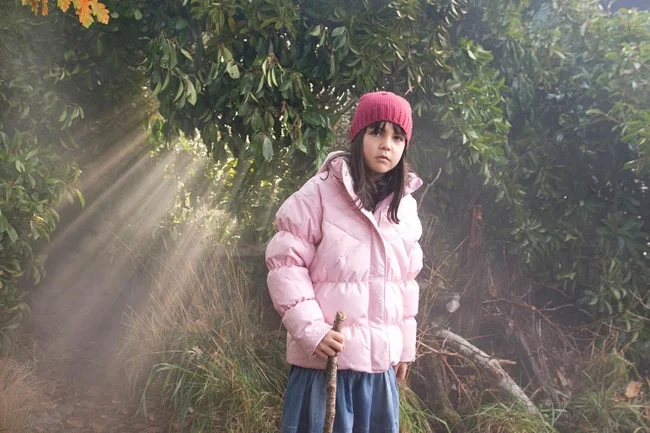
Don’t Be Afraid of the Dark is not without flaws, though. There are a few logical plot holes (as there often are for the horror genre to work effectively) and certain aspects of the story are not developed sufficiently. As ever the observant viewer will wonder why some characters vanished from the plot or question why a specific course of action wasn’t taken. Yet overall this is a creative and genuinely creepy movie that is a welcome change from many contemporary genre offerings. With its strong screenplay and a traditional quasi-gothic approach, it manages to offer tension, suspense and a few unpleasant jolts. The ending is suitably melancholic as you’d expect from Guillermo del Toro. There is also a very pleasing and atmospheric soundtrack by Marco Beltrami and Buck Sanders. Eight years on, and after only performing adequately at the box office, Don’t Be Afraid of the Dark seems to have already been forgotten which, is a shame. This genre throwback merits a second look as it does have far more to offer than other horror movies.
Insidious: The Last Key (2018)
Insidious: The Last Key is the fourth instalment of the franchise, but it’s actually the sequel to a prequel. If you wish to watch these movies in chronological order order then 3, 4, 1, 2 is the correct sequence. However, it is not essential to be au fait with the lore of the series to follow the plot of Insidious: The Last Key, although there are a few in-jokes for fans. The film begins with a prologue that gives us the backstory of Elise (Lin Shaye), our psychic who protagonist. Her childhood is far from happy as she lives next to the state prison where her abusive father is the executioner on death row. Young Elise and her brother encounter several paranormal incidents, the last leaving Elise possessed. Her mother Audrey rescues her but dies in the process. The film then moves on to 2010, where Elise gets a call from a scared man currently living in her old house. Despite reservations, she agrees to meet him and confront the supernatural forces behind the haunting. Her two assistants, Tucker (Angus Sampson) and Specs (Leigh Whannell), accompany her and encounter a growing series of well executed but somewhat formulaic set-pieces.
Insidious: The Last Key is the fourth instalment of the franchise, but it’s actually the sequel to a prequel. If you wish to watch these movies in chronological order order then 3, 4, 1, 2 is the correct sequence. However, it is not essential to be au fait with the lore of the series to follow the plot of Insidious: The Last Key, although there are a few in-jokes for fans. The film begins with a prologue that gives us the backstory of Elise (Lin Shaye), our psychic who protagonist. Her childhood is far from happy as she lives next to the state prison where her abusive father is the executioner on death row. Young Elise and her brother encounter several paranormal incidents, the last leaving Elise possessed. Her mother Audrey rescues her but dies in the process. The film then moves on to 2010, where Elise gets a call from a scared man currently living in her old house. Despite reservations, she agrees to meet him and confront the supernatural forces behind the haunting. Her two assistants, Tucker (Angus Sampson) and Specs (Leigh Whannell), accompany her and encounter a growing series of well executed but somewhat formulaic set-pieces.
Insidious: The Last Key is similar to The Purge: Election Year, in so far as both are examples of a movies in a franchise that don’t move things forward but simply take a step sideways and offer more of the same. With Insidious: The Last Key, we are provided with another extended trip to “the Further” and another demonic being that strives to interfere with human affairs. As ever with this series of films, there has been a lot of thought and effort put into the design of the central demon and Key Face is certainly an innovative design. However, if this franchise has a weakness, it is the fact that the supernatural forces are always given the minimum of explanation. That’s not to say that screenwriter, Leigh Whannell, should spoon feed the audience but it would be interesting to learn a little more about the motivations of the demons and why the manifest the way they do.
There is no major graphic violence and once again, the emphasis is on tension and disquiet. There are the usual jump scares that still seem to be in vogue and the sound design is used to great effect. Where both Lin Shaye and Bruce Davidson (playing her adult, estranged brother Christian) have adequate dialogue and something specific to do with their characters, the rest of the cast are not so lucky. Elise conveniently has two young nieces who are mainly present for “women in peril” duty. Tucker and Specs are again mainly comic foils. However, despite being overall just an adequate entry in the series, Insidious: The Last Key still has Lin Shaye as its trump card. There are not many Hollywood franchises that have at their heart a 74-year-old lady and her character remains endearing and robust. The film also makes a stab at some emotional depth during its climax, when Elise confronts the spirits of her past and the script takes a somewhat compassionate turn.
Overall, I found Insidious: The Last Key to be acceptable and the end of the movie nicely dovetails into the set up for the first Insidious back in 2011. Because of the goodwill that the previous three films have generated, I consider this instalment to be an adequate ending to the series, but I really don’t think that there’s any mileage left for a fifth. I don’t see where else you can go with the character of Elise as her fate is already a known quantity. However, since when have narrative issues and a clearly concluded storyline ever stopped a studio from making more movies in a successful franchise? I have a sneaking suspicion that a Tucker and Specs spin-off is also a possibility, which is far too close to Scooby-Doo territory for my liking. However, irrespective of such speculation, Insidious: The Last Key provides formulaic shocks and a clear conclusion. It will probably play better at home, due to lower expecatations.
Black Sheep (2006)
Black Sheep is a high concept horror comedy from New Zealand. Featuring creative physical effects by Weta Workshop, this tale of genetically modified killer sheep, animal husbandry and environmentalism requires a very broad sense of humour and an abiding love for the “creature feature” sub-genre. It should be noted that the copy I watched was the unrated R1 DVD. This version is stronger in content than the R rated US theatrical release and yet was released at the UK cinemas with only a 15 rating from the BBFC. I suspect that the similarities in humour between the UK and New Zealand contributed to this somewhat low rating. That and the fact that horror comedy often gets a free pass because the humour always tends to mitigate the violence.
Black Sheep is a high concept horror comedy from New Zealand. Featuring creative physical effects by Weta Workshop, this tale of genetically modified killer sheep, animal husbandry and environmentalism requires a very broad sense of humour and an abiding love for the “creature feature” sub-genre. It should be noted that the copy I watched was the unrated R1 DVD. This version is stronger in content than the R rated US theatrical release and yet was released at the UK cinemas with only a 15 rating from the BBFC. I suspect that the similarities in humour between the UK and New Zealand contributed to this somewhat low rating. That and the fact that horror comedy often gets a free pass because the humour always tends to mitigate the violence.
The plot is somewhat rudimentary but appropriate to the genre. Two brothers grow up on a sheep farm. One, Henry Oldfield (Nathan Meister), becomes a sheepophobic (is that a proper word?) after his brother Angus (Peter Feeney) kills his pet and terrorises him with the carcass. Years later Henry discovers that his successful brother is conducting illegal genetic experiments with sheep. An experimental foetus is then accidentally unleashed after environmentalists (Oliver Driver and Danielle Mason) break into the farm. It's not long before those bitten by the monster sheep transform into sheep-human hybrids. Matters get worse as killer flocks rampage through the countryside, seeking human flesh.
Writer and director Jonathan King's debut feature is very matter of fact. You'll either love or hate this film and there is no middle ground. It's gory, crass and obvious. Yet there's some subtle digs at environmentalism, farming and political activism. There are some affectionate homages to the horror genre (one scene is straight out of An American Werewolf in London) and the whole enterprise is refreshingly unpretentious. There is also great cinematography by Richard Bluck and a wonderfully traditional soundtrack by Victoria Kelly which compliments the film greatly. Despite its subject matter and the occasional lapse into that theme we'd hope they wouldn't touch (i.e. sheep loving), Black Sheep is an amusing night's entertainment for those that approach it with the right state of mind. If you are easily offended and gore averse, best give it a miss.

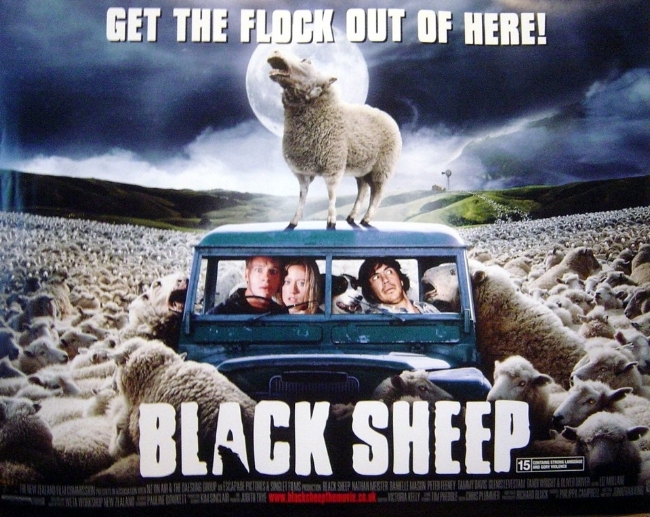


Feast (2005)
Feast is a low budget horror movie in which a remote redneck bar in Nevada, comes under siege from a group of carnivorous desert dwelling beasts. It’s hardly an original story but as always, the devil is in the detail. Where Feast differs from other similar films is that it offers you all the stereotypical characters and tropes that you expect to find in such a genre movie and then goes in completely in the opposite direction. The film is competently directed by John Gulager in a very contemporary style, with fast edits, deliberately obtuse protagonists and a liberal dose of gallows humour. Once the premise has been set, Feast does not waste a moment of its ninety-minute running time.
Feast is a low budget horror movie in which a remote redneck bar in Nevada, comes under siege from a group of carnivorous desert dwelling beasts. It’s hardly an original story but as always, the devil is in the detail. Where Feast differs from other similar films is that it offers you all the stereotypical characters and tropes that you expect to find in such a genre movie and then goes in completely in the opposite direction. The film is competently directed by John Gulager in a very contemporary style, with fast edits, deliberately obtuse protagonists and a liberal dose of gallows humour. Once the premise has been set, Feast does not waste a moment of its ninety-minute running time.
Feast takes a novel approach to its plot exposition. As we’re introduced to each character, there’s a freeze frame and a brief biography appears onscreen along with their projected life expectancy. This innovative approach is deliberately misleading and it’s not long before several cinematic sacred cows are profaned. Our hero is quickly defenestrated and decapitated and an “innocent” child also meets an unpleasant end. Subsequently, there are further amusing plot twists where characters behave contrary to genre convention. One individual who manages to reach a truck in the bar car park, does not return for their comrades but simply drives off.
It is this clever approach to its subject matter that makes Feast enjoyable and superior genre product. The cast (including Henry Rollins and Clu Gulager) are better than expected (and possibly what the movies deserves) but there are few characters that you feel sympathy for. Yet because of their erratic behaviour and flagrant disregard for horror movies tropes, you are kept involved. The marauding creatures are kept suitably off screen for a lot of the film. They wear dead animal skins and bones which also masks their appearance. Obviously, this is mainly due to budgetary reasons, but it also keeps them somewhat enigmatic. Exactly what they are and where they come from is left unanswered.
I watched a US unrated version of the film which contains a few extra seconds of violence here and there. Overall, this is a visceral horror movie containing eyeball violence, maggots, monster vomit, castration and a lot worse. It’s not intended for the casual viewer. However, what keeps Feast above average is its knowing contradiction of audience expectations and tongue in-cheek approach. The script was selected via the amateur filmmaking documentary series Project Greenlight. The producers include Matt Damon, Ben Affleck, Sean Bailey, and Chris Moore. As ever with the horror genre, the movie was far from a critical success but made sufficient money to generate two sequels. Feast makes for superior Friday night viewing and is therefore recommend purely as such.
Insidious: Chapter 3 (2015)
Although I enjoyed Insidious: Chapter 2 it was somewhat constrained by the events of the first movie. It did it best to creatively extricate itself from the corner its predecessor had painted itself in to, but it didn’t really leave much scope for a direct sequel. Hence the producers wisely elected to follow the movie up with a prequel that explored an earlier case that crossed the path of psychic Elise Rainier (Lin Shaye). This change in direction proved surprisingly beneficial for the franchise providing an opportunity to meet new characters and a new antagonist. Despite being the third entry in the series, Insidious: Chapter 3 maintains the standard set by chapters one and two and proved to be a hit at the box office and with fans alike.
Although I enjoyed Insidious: Chapter 2 it was somewhat constrained by the events of the first movie. It did it best to creatively extricate itself from the corner its predecessor had painted itself in to, but it didn’t really leave much scope for a direct sequel. Hence the producers wisely elected to follow the movie up with a prequel that explored an earlier case that crossed the path of psychic Elise Rainier (Lin Shaye). This change in direction proved surprisingly beneficial for the franchise providing an opportunity to meet new characters and a new antagonist. Despite being the third entry in the series, Insidious: Chapter 3 maintains the standard set by chapters one and two and proved to be a hit at the box office and with fans alike.
Several years before The Lambert Haunting, retired psychic Elise Rainier reluctantly helps teenager Quinn Brenner (Stefanie Scott) contact her dead mother, Lillith, who died the year before. However, she urges Quinn not to try and contact her mother again after sensing a malevolent force. Subsequently, Quinn starts seeing a mysterious figure who waves to her. After attending an audition for a school for performing arts, Quinn is distracted by the figure, leading to her being knock down by a car, leaving her bed ridden with two broken legs. Further supernatural events occur, and it soon become apparent that “the man who cannot breathe” has sinister intentions. Quinn’s brother suggests that perhaps the amateur internet demonologists Specs and Tucker (Leigh Whannell and Alex Sampson) can help, but the case proves to be beyond their experience. As matters get worse, it becomes clear that the only person who can help Quinn is Elise.
Insidious: Chapter 3 creates a sinister atmosphere within its urban setting. The apartment block in which the story is set is suitably gothic in its state of disrepair. The new supernatural antagonist is surprisingly creepy and there are several scenes in which “the man who cannot breathe” is effectively used. The oily black foot prints that appear are eerily disturbing. As with many modern horror films, the emphasis is on jumps and scares rather than violence and these are delivered efficiently. What elevates Insidious: Chapter 3 above the average are an eclectic mix of characters that are surprisingly likeable. Stefanie Scott’s Quinn Brenner is not your standard caricature of a teenage girl and is a positive protagonist. Again, Lin Shaye does most of the heavy lifting as Elise Rainier. She once again delivers a compassionate, yet vulnerable performance and she holds viewers attention when on screen. There are also some droll moments with Specs and Tucker.
The movies strengths lie in the first two acts, with the building suspense and the sinister encroachment of the supernatural into an everyday environment. The denouement, which once again takes place in “the Further”, although well executed is a little too familiar. However, Insidious: Chapter 3 is overall an entertaining instalment in the series and certainly fairs better than the Ouija franchise. It is satisfying to see a genre of film that is heavily marketed towards a teen audience, prove successful due to the presence of an older character. The film also ends with a codicil that references the impending events of the first two movies and this circular narrative does provides a good sense of continuity. Considering all the commercial pressures that exist with regard to the horror genre these days, I do like The Insidious franchise and the way it has managed to create a niche for itself.
The Mists (2007)
Frank Darabont achieved both critical acclaim and mass appeal with his adaptations of The Shawshank Redemption and The Green Mile. In 2007 he returned once again to the work of Stephen King with his film version of The Mist. It’s a sideways step away from human drama into a more genre piece, yet it still retains a very traditional story at its heart. Once you look beyond the superficial elements of "creature feature" plot, you get yet another well written character study by an ensemble cast, again focusing on how the human condition deals with extreme situations. The particular route it takes and some of the themes it explores may not be to everyone's taste. However, it still focuses on characters and performances. It is also a movie that ends with a somewhat unexpected plot development, that some viewers may find a little extreme. It is one of those film related twists that if known in advance, greatly diminishes once enjoyment of the film.
Frank Darabont achieved both critical acclaim and mass appeal with his adaptations of The Shawshank Redemption and The Green Mile. In 2007 he returned once again to the work of Stephen King with his film version of The Mist. It’s a sideways step away from human drama into a more genre piece, yet it still retains a very traditional story at its heart. Once you look beyond the superficial elements of "creature feature" plot, you get yet another well written character study by an ensemble cast, again focusing on how the human condition deals with extreme situations. The particular route it takes and some of the themes it explores may not be to everyone's taste. However, it still focuses on characters and performances. It is also a movie that ends with a somewhat unexpected plot development, that some viewers may find a little extreme. It is one of those film related twists that if known in advance, greatly diminishes once enjoyment of the film.
Set in yet another small and unobtrusive town (the kind Stephen King exalts), The Mist starts with an unexpected and extreme storm. This inclement weather forces David Drayton (Thomas Jane) and his family retreat to their basement. When they emerge in the morning a tree has crashed through the front window of his house and the power is out. David and his young son go into town for supplies, leaving his wife behind. It’s at the general store where David first realises something is horribly wrong. A man, covered in blood, races into the store screaming “there’s something in the mist!”. Shortly after an unnatural mist rolls across the town and leaves the store cut off and isolated. From this point on the The Mist focuses on how fragile the social bonds of a community and how thin the veneer of a civilised society really is. It’s not long before friends and neighbours turn against each other, with logic and reason being replaced with blame and fear.
The Mist is more than just some monster movie. It’s a careful and inciteful examination of human nature. Darabont’s screenplay develops each character carefully and the film’s real thrills comes from following his group of terrified survivors, rather than the curious beats that accompany the mist. Their individual emotional journeys and the way they fall apart in different ways as they lose hope, makes for compelling viewing. Some turn to God and fatalism, others strive to be logical, where a few remain in denial and pay dearly for their refusal to face facts. David Drayton however, simply refuses to give up, although this is shown not be without ramifications. As ever this is where director Frank Darabont excels. He has a keen eye for social dynamics and credible characters, constructing a worryingly realistic microcosm of American society. Ten years on this film feels worryingly prescient.
Thomas Jane carries the film with his central performance as an artist turned temporary leader. But it’s not just Jane that turns in a solid performance here. The ensemble cast of quality actors not only embody their respective characters but specific facets of contemporary US society. Toby Jones, the quiet and unassuming junior manager of the store, proves to be a robust and stoic character. Marcia Gay Harden excels as the towns religious zealot, happy to use events to fuel her own prejudices. It's been a while since I wanted to see the "bad guy" in a film get what they deserved, quite so much. Such is the strength of her performance. The Mist again shows Darabont's ability to emotionally connected with the central characters. It is what makes the film so effective. You want them to be safe and you're genuinely upset when some meet a brutal end. The mindless hypocrisy of some characters as they clutch at straws and change their allegiance, to simply survive is also plausible and gripping. Perhaps it makes us feel uncomfortable because it rings so true.
If there’s any flaw in the film, it’s in the mechanics of Darabont’s script, which at times leans towards the predictable. All those the cast and characters are compelling, there are few surprises about who will turn out bad and who will be a unsung hero. But like everything Darabont does The Mist connects so well with its audience on an emotional level, that you can forgive these weaknesses. The film’s monsters are there mainly to serve as a catalyst for a much deeper, emotive and thought-provoking story. Although it should be noted that the film does contains a degree of strong violence and language. The creatures themselves are also creative and baroque. The Mist is a clever, character-driven horror film and a human drama. It could also be considered as a metaphor for genocide and ethnic cleansing. You decide. The Mist is recommended to fans of human drama, strong performances and is not the exclusive province of the horror buff.