
The Curse of Frankenstein (1957)
The 2012 Blu-ray release of Hammer Studio's The Curse of Frankenstein is a visual delight. The use of Eastman colour and the outstanding cinematography by Jack Asher are sumptuous and the new restoration does the film justice. This unique British horror movie introduced a new visceral style and brooding quality to the genre back in 1957. Despite a modest budget the creative production design evokes a truly Gothic horror atmosphere. The studio also introduced graphic violence along with a strong undercurrent of sexuality. These lurid aspects of the film proved particularly successful with the post war audience and became an integral part of the marketing campaign.
The 2012 Blu-ray release of Hammer Studio's The Curse of Frankenstein is a visual delight. The use of Eastman colour and the outstanding cinematography by Jack Asher are sumptuous and the new restoration does the film justice. This unique British horror movie introduced a new visceral style and brooding quality to the genre back in 1957. Despite a modest budget the creative production design evokes a truly Gothic horror atmosphere. The studio also introduced graphic violence along with a strong undercurrent of sexuality. These lurid aspects of the film proved particularly successful with the post war audience and became an integral part of the marketing campaign.
Previous versions of Frankenstein have tended to depict the Baron as misguided and ultimately overwhelmed with the magnitude his endeavours. Peter Cushing’s charming, obsessed and menacing Victor Frankenstein is an unusual and far more interesting exploration of the role. He seduces the maid, betrays his wife and blackmails his best friend Paul Krempe (Richard Urquhart). He is a far from a sympathetic character yet despite all this, Cushing still manages to make the audience pity him at the end. There is also an extraordinary performance from Christopher Lee, as the “monster”. Despite having no dialogue and little character development he still manages to convey an air of despair and confusion.
Some aspects of The Curse of Frankenstein have nominally dated. There is a tendency towards melodrama and the pace is somewhat leisurely but it’s still a potent and morally ambiguous film. It has a dour and morbid tone to it, which is reflected in the way it handles scenes of horror. The removal and disposal of a head in acid, along with the purchase of human eyeballs from morgue are depicted in a somewhat clinical and ghoulish manner rather than sensational. What The Curse of Frankenstein ultimately achieved was establish a clear blue print for future Hammer horror movies. They may well have become more explicit and lurid overtime but they always managed to maintain a degree of class. It was a winning formula that changed the genre permanently.
Them! (1954)
Although the realities of the nuclear age where far from pleasant, for Hollywood it was a source of box office gold. Never mind radiation poisoning, cancer and birth defects; the atomic age was good for business. It meant super powers, mutations and giant big monsters. Such terrors offered a clumsy metaphor for the dangers of atomic energy and a source of terror, thrills and drama on the big screen. Them! was one of the first movies in this idiom and became a blueprint for the genre that followed in its wake. Featuring a colony of out sized ants, that initially terrorise New Mexico but eventually migrate to Los Angeles, Them! leaves a trail of destruction and dead B actors in its wake.
Although the realities of the nuclear age where far from pleasant, for Hollywood it was a source of box office gold. Never mind radiation poisoning, cancer and birth defects; the atomic age was good for business. It meant super powers, mutations and giant big monsters. Such terrors offered a clumsy metaphor for the dangers of atomic energy and a source of terror, thrills and drama on the big screen. Them! was one of the first movies in this idiom and became a blueprint for the genre that followed in its wake. Featuring a colony of out sized ants, that initially terrorise New Mexico but eventually migrate to Los Angeles, Them! leaves a trail of destruction and dead B actors in its wake.
Originally planned to be a 3D release, Them! was shot in 4:3 ratio and not Cinemascope to accommodate the process as well as the special effects. However due to technical and budgetary reasons the 3D process was dropped. The black and white film stock lends a faux documentary quality to the proceedings. The story is fast paced and not excessively complex. Lead performances by the great James Whitmore and James Arness are sincere and engaging. As you would expect the full size animatronic ants are somewhat dated by contemporary standards, yet they have their own unique charm and are shot in a way that gives them character. Their sound effects also add to the ambience.
On watching Them! It’s clear to see the influence the film had on James Cameron when he made Aliens. There are several thematic parallels, such as a traumatised child who has lost their parents and a secret lair where the Queen is laying her eggs. There are also Marines with flamethrowers clearing out the infestation. The more you watch old Hollywood B movies from the fifties, the more you'll find the source material that recent blockbusters have plundered. Sadly they usually only take the simplest of ideas and jettison any associated wit, style and drama.
Them! is still a very entertaining ninety four minutes, as long as you accept it for what it is and are aware of the context of the times. The entire genre of fifties monster movies is very interesting from a sociological point of view. They reflect the public concern over the atom bomb and the lack of understanding about the consequences of its use. They also provide a useful insight insight into how the major film studios where always willing to cater to emerging trends. Science Fiction and Horror where always considered to be second rate genres, yet over the next two decades where to prove two of the most lucrative forms of revenue. They also provided a springboard for a great deal of emerging talent.
Lake Mungo (2008)
Do not be fooled by the marketing and artwork for Lake Mungo. It is not a found footage movie but in fact a faux documentary. If you are looking for cheap scares, loud noises and unpleasant imagery, then you will be disappointed. Lake Mungo is not your standard exploitation fodder. If however you like well constructed movies that create a genuine sense of disquiet, then Lake Mungo is a must see. Once again Australian cinema has managed to produce an innovative and thoughtful entry to a popular sub-genre. The film demonstrates a great understanding of the mechanics of a ghost story and how they should be handled.
Do not be fooled by the marketing and artwork for Lake Mungo. It is not a found footage movie but in fact a faux documentary. If you are looking for cheap scares, loud noises and unpleasant imagery, then you will be disappointed. Lake Mungo is not your standard exploitation fodder. If however you like well constructed movies that create a genuine sense of disquiet, then Lake Mungo is a must see. Once again Australian cinema has managed to produce an innovative and thoughtful entry to a popular sub-genre. The film demonstrates a great understanding of the mechanics of a ghost story and how they should be handled.
The story centres around the Palmer family whose teenage daughter Alice drowned on a family holiday. The movie is shot in the style of a TV documentary, with talking heads, home video footage and recorded phone calls to the emergency services. The performances are very understated and very plausible. The opening scenes quickly establish a very credible depiction of a family coming to terms with loss. Performances by the three leads (Rosie Traynor, David Pledger and Martin Sharpe) are universally good as the Palmers. Shortly after Alice's funeral paranormal activity starts to happen within the house. The Mother is plagued by a recurring dream and the Father sees a manifestation of Alice. Matters are further confused by some photographic evidence that may indicate that Alice is not dead.
All these events are handled in a very understated and measured fashion. As the story progresses and the strain takes its toll on the Palmer family, we are introduced to a medium Ray (Steve Jodrell). Unlike other movies, this is a very sympathetic depiction of the profession and it adds a very different aspect to the narrative. The interview sessions and seances do not necessarily produce the results the viewer expects but like so many elements of Lake Mungo, these subtle sub-plots all have relevance and are tied up as the story progresses. There are several false positive events that occur as the film proceeds (one that particularly reminded me of Ghostwatch) which muddy the waters. This really helps add a credible element of doubt with the audience.
The pivotal plot moment occurs when Alice's Mother discovers her daughter’s secret. It is a terribly sad turn of events and it is purposely ambiguous in some of its details. One of the major themes of Lake Mungo is that of the transition of Alice Palmer; from a happy, outgoing teenage girl to a desperate and burdened soul. As well as the unsettling supernatural atmosphere, there is a great sense of tragedy to the movie. It also plays upon a parents fear of being powerless to help their child. Furthermore, even as the story reaches a point where you think it’s done, there are still several further twists in store. These widen the scope of the events and introduce some bolder ideas.
Lake Mungo is a film about grief, secrets, unfinished business and predestination. It conclusion is satisfactory and very melancholy. Alice Palmer is a very sympathetic character and there seems no justification for what happens to her. Like many things that occur in life, there is a great deal that is not explained. This is not because the writers are trying to be manipulative but because this is just the way of world. Director Joel Anderson maintains a steady pace and does not take liberties with the viewer’s suspension of disbelief. As the credits roll over a montage of photographs there is a further surprise, implying that the false positives we saw earlier were in fact genuine. It is a clever embellishment to end on and a validation of the movies merits.










The Manitou (1978)
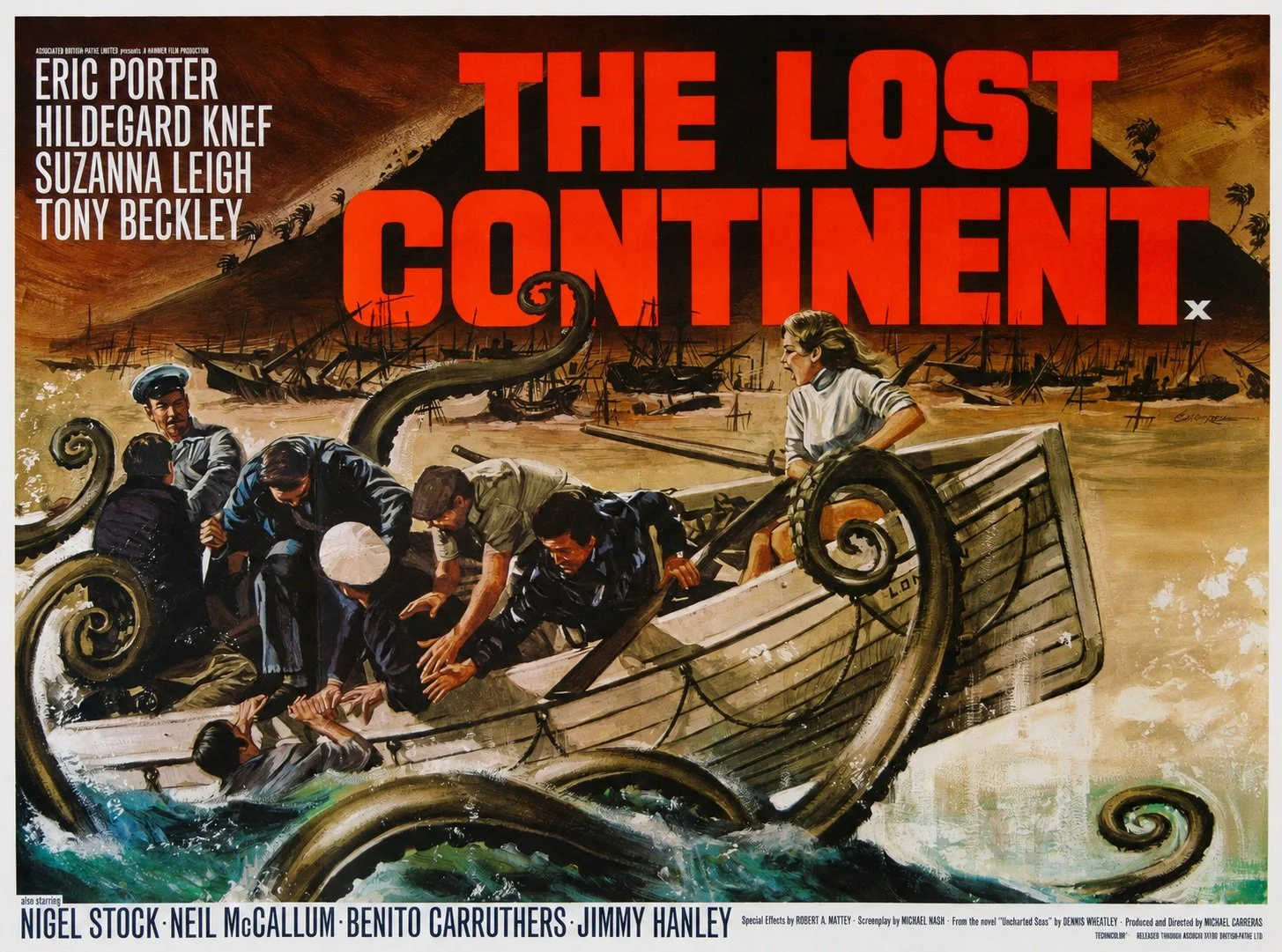
After the commercial success of The Exorcist in 1973, the low budget independent horror films of Hammer and American International fell into decline. The major Hollywood studios started financing more expensive genre movies. Twentieth Century Fox scored a box office hit with The Omen in 1976 proving once again that the supernatural was financially viable. Subsequently several independent film financiers realized that they would have to invest in bigger budget projects if they wished to compete. William Girdler’s 1978 adaptation of the bestselling horror novel, The Manitou, was one such example of this.
After the commercial success of The Exorcist in 1973, the low budget independent horror films of Hammer and American International fell into decline. The major Hollywood studios started financing more expensive genre movies. Twentieth Century Fox scored a box office hit with The Omen in 1976 proving once again that the supernatural was financially viable. Subsequently several independent film financiers realized that they would have to invest in bigger budget projects if they wished to compete. William Girdler’s 1978 adaptation of the bestselling horror novel, The Manitou, was one such example of this.
The Manitou by Graham Masterton is an eminently enjoyable piece of pulp horror fiction despite its outrageous premise. However adapting such a book for the big screen can test an audience’s suspension of disbelief. It would appear that critics and cinema goers alike struggled with the plot of The Manitou upon its release. The story is about a 400 year old re-incarnated Indian Medicine Man called Misquamacus, who is growing in a tumour on a woman’s back. Her ex-boyfriend, a fake medium, turns to a contemporary Indian Medicine Man for help. The use of x-rays by the hospital staff cause birth defects in Misquamacus, resulting in him being born deformed.
Despite the bizarre nature of the plot, the production managed to assemble an impressive cast. Tony Curtis plays the lead role of Harry Erskine, with Michael Ansara as John Singing Rock and Susan Strasberg as Karen Tanday. There is a cameo appearance by Burgess Meredith as the anthropologist and Native American History expert Dr. Snow. The screenplay by director William Girdler and cast member John Cedar is a fairly good adaptation of the source novel, remaining true to the overall plot. The first act of the movie features some pleasant location work set in San Francisco. However once the story moves to the hospital where surgeons attempt to remove Karen Tandy’s tumour, the film becomes an entirely studio bound production for the remainder of its duration.
The Manitou is very much a movie of its time, with an extremely seventies production design. Flared trousers and shirts with unfeasibly large collars abound. The plot explores the clash between modern technology and ancient supernatural forces. As a result a great deal of the hardware on display, such as the hospital computer system and surgical laser are now somewhat archaic. The soundtrack by the ubiquitous Lalo Schifrin is steeped in the musical style of the time. The infamous birth scene created by the Burman studios is suitably ghoulish. Felix Silla best known as Twikki in Buck Rogers and Joe Gieb both play Misquamacus at various points during the film. Sadly some of the optical effects at the movies climax are a little lacklustre.
The Manitou despite its clumsy racial politics is never genuinely disrespectful of Native American culture and the central characters although verging on caricature, are still likeable. If you can look beyond the far-fetched nature of the initial premise there is an entertaining movie to be found. Sadly The Manitou was met with a lukewarm reception from both critics and the public upon its release and failed to live up to box office expectations. The proposed sequel based upon Graham Masterton’s second novel was subsequently abandoned during pre-production.
Lifeforce (1985)
It’s funny how the very name of certain films will get a noticeable response. Especially when talking to fans of genre movies and connoisseurs of the obscure and cult. If you mention Lifeforce to a film buffs of a certain age you’ll more than likely get one of following three reactions.
• Oh that’s the one where that woman wanders around naked all the time.
• Didn't that star Peter Firth? (Usually said with a degree of incredulity)
• That was one seriously fucked up movie.
It’s funny how the very name of certain films will get a noticeable response. Especially when talking to fans of genre movies and connoisseurs of the obscure and cult. If you mention Lifeforce to a film buffs of a certain age you’ll more than likely get one of following three reactions.
• Oh that’s the one where that woman wanders around naked all the time.
• Didn't that star Peter Firth? (Usually said with a degree of incredulity)
• That was one seriously fucked up movie.
Now all of these are true and totally justified. Remember that we are talking about a film featuring a naked female space vampire who’s found on a spaceship in Halley’s Comet, brought back to earth where she zombiefies half the population of London and confounds Shakespearean actors and an ex Double Decker (click here for clarification).
Before we proceed, let us quickly reflect upon the history of this cinematic oddity. Lifeforce was the last of a three picture deal between Canon Films and celebrated director Tobe Hooper. The other two films were a remake of Invaders from Mars and The Texas Chainsaw Massacre 2. Canon films had become big on the back of a string of cheap action films made in the early eighties and where now looking to hit the big league. Lifeforce was supposed to cater to the public’s appetite for both sc-fi and horror which were extremely marketable genres at the time.
The movie was originally filmed and promoted under the title The Space Vampires, based upon Colin Wilson’s novel. Cannon Film spent over $25 million on the production intending to create an international blockbuster. In an attempt to distance themselves from their own low budget past, the film’s title was changed to Lifeforce to try and avoid any exploitation connotations. However what was originally envisaged as sci-fi horror filled with American and European stars ended up as a curious over blown B movie with a distinctly British cast and flavour.
On paper the basic premise for Lifeforce was sound. Tobe Hooper was (and still is) a director with a reputation and the market was ripe for a blockbuster of this kind. Remember that Aliens came out the following year and was a massive commercial success. However Lifeforce was not destined to be a comparable movie. The production was extremely problematic. There were financial issues, continuous revisions to the screenplay, casting changes, further re-writes, arguments between the producers and the director, arguments between the producers and the effects team, arguments between the producers and the cast. Finally it ended with arguments between producer and producer.
After much blood, sweat and tears Tobe Hooper produced an initial cut of the film clocking in at 128 minutes. This was then trimmed down to 116 minutes, removing much of the early material set on-board the space shuttle. Due to poor test screenings the US version was further reduced to 101 minutes. This turned an already confused film into an incoherent mess. These factors along with the lack of any US actors of note (apologies to Steve Railsback) doomed the film. The critics turned on it with relish, the film tanked and Canon films moved a step closer to bankruptcy.
Let us take a few moments to reflect upon some flaws that can be found in Lifeforce. Remember that this movie was originally conceived to be a big budget, star driven, cinematic blockbuster. Consider the following:
• Since when have Frank Finlay, Peter Firth and Michael Gothard been A list box office stars?
• Why do the security guards try to apprehend the naked female space vampire by offering her a half-eaten biscuit?
• Why did the costume department think that SAS officers wear roll neck sweaters and flasher macs?
• Who thought casting Nicholas Ball was a good idea?
• Who the fuck wrote this dialogue?
• Exactly how big did the production designers think the space shuttle was?
• If a corpse sits up as you are about to carry out an autopsy, wouldn’t it be prudent to make like Scooby Doo?
• Why do the UK military have Bloodhound anti-aircraft missiles deployed on Blackheath, when they are supposed to be fighting a communicable contagion?
• Why does Mathilda May spend the whole film naked. Really, why? I mean I dig naked women (usual caveats and small print applicable) but this really has no relevance.
• Why is Halley’s Comet green?
Lifeforce has to be seen to be believed. The dialogue is appalling and yet the film is littered with British character actors of good standing. The effects work, particularly Nick Maley’s animatronics are superb. Henry Mancini’s score is also very effective and is wasted on such drivel. Yet this utter train wreck of a film still exudes a morbid fascination and can be compelling viewing. Furthermore you can see brief references and flashes of inspiration derived from wider genre works. The ending in particular has an uncanny similarity to Nigel Kneale’s Quatermass and the Pit. Yet Lifeforce ultimately fails because the producers, Menahem Golan Yoram Globus simply had no idea how to handle such material and a production of this size.
Once you have seen Lifeforce, you will begin to understand the reactions I listed at the start of this post. It's a film that stays with you for a long time after viewing. You may frequently find yourself musing on it and ending your thought process with the phrase “what the fuck?” Finally I’ll leave you with some dialogue from the film. It may entice you into watching it. I regularly do so, although I’m not entirely sure why.
Colonel Tom Carlsen: She’s resisting. I’m going to have to force her to tell me. Despite appearances, this women is a masochist. An extreme masochist. She wants me to force the name out of her. She wants me to hurt her. I can see the images in her mind. You want to stay? Otherwise wait outside!
Colonel Colin Caine: Not at all. I’m a natural voyeur.
NB The DVD and Blu-ray versions of Lifeforce currently available in the US and Europe, feature the 116 minute international print as well as the shorter theatrical release.
Zombi 2 (1979)
If you are a fan of horror movies then sooner or later Lucio Fulci’s Zombi 2 (also known as Zombie, Island of the Living Dead, Zombie Island, Zombie Flesh-Eaters and Woodoo) will appear on your radar. For good or ill, this movie looms large within the genre and has a mixed reputation. Even by current cinematic standards, this movie is a gore-fest and it still has the ability to make viewers squirm. It is a curious phenomenon that a relatively low budget and obscure Italian cash-in on George Romero’s Dawn of the Dead, has managed to achieve such an infamous, iconic and cult status.
If you are a fan of horror movies then sooner or later Lucio Fulci’s Zombi 2 (also known as Zombie, Island of the Living Dead, Zombie Island, Zombie Flesh-Eaters and Woodoo) will appear on your radar. For good or ill, this movie looms large within the genre and has a mixed reputation. Even by current cinematic standards, this movie is a gore-fest and it still has the ability to make viewers squirm. It is a curious phenomenon that a relatively low budget and obscure Italian cash-in on George Romero’s Dawn of the Dead, has managed to achieve such an infamous, iconic and cult status.
The film was released by Blue Underground on Blu-ray on 25 October 2011 with a 2K transfer. An alternative Blu-ray edition was released by UK distributors Arrow Films with a brand new high definition restoration of the original negative, recently. Both versions come with a wealth of interesting extras and documentaries about the movies production and chequered history. It’s rather ironic that a movie that at one time was labelled a “video nasty” in the UK and banned, is now subject to such a conscientious high definition transfer and scholarly analysis.
The relative merits of Zombi 2 ultimately come down to personal taste. I know fellow horror fans who hate the movie with a passion. It was rather interesting that Mark Gatiss’ recent Horror Europa documentary chose to not dwell on this or any of the director’s other movies. Personable I like the film although I do not consider it to be a cinematic masterpiece. Yet despite its obvious exploitation roots, Zombi 2 does have moments of creativity. The underwater zombie and its subsequent shark attack are truly surreal. The infamous splinter in the eye scene still shocks and it’s actually quite suspenseful. The film soundtrack by Fabio Frizzi and Georgio Cascio is very evocative and suits the movies ambience perfectly.
I have not yet seen the new UK restoration of the movie but I have seen the Blue Underground release. Zombi 2 has never looked so good and the lush tropical locations and mud caked, blood soaked, decaying corpses are extremely vivid. The high definition image does show some of the shortcomings of Gianetto De Rossi’ make up effects but considering the budgetary constraints and the environment the movie was shot in, he and his team worked miracles. To review this film in a formal fashion really is somewhat redundant. It has survived over thirty years of censorship, hyperbole and controversy and has proven to be indifferent to both criticism and praise. My advice is not to just see it but to “experience” it and then make your own mind up accordingly.
In the year 1860, Baron Victor Frankenstein (Peter Cushing) faces execution by guillotine for the murders perpetrated by the creature he created. With the assistance of a hunchback named Karl (Oscar Quitak) he avoids death by beheading the priest who came to give him the last rites. The priest’s body is then mistakenly buried by the authorities. Three years later, Victor, now using the name Doctor Stein, has established himself as a prosperous physician in Karlsbrück, serving both affluent patients and the poor at a paupers’ hospital. Hans Kleve (Francis Matthews), a junior member of the medical council, recognises Victor and being an admirer, seeks to become his apprentice. Victor and Hans then undertake an experiment to transplant Karl’s living brain into a new, more refined body, rather than a grotesque monstrosity the Baron has previously made. Karl is eager to have a new healthy body, especially after encountering Margaret Conrad (Eunice Gayson), the charming new assistant at the hospital.