
Levelling and Gear Progression in ESO
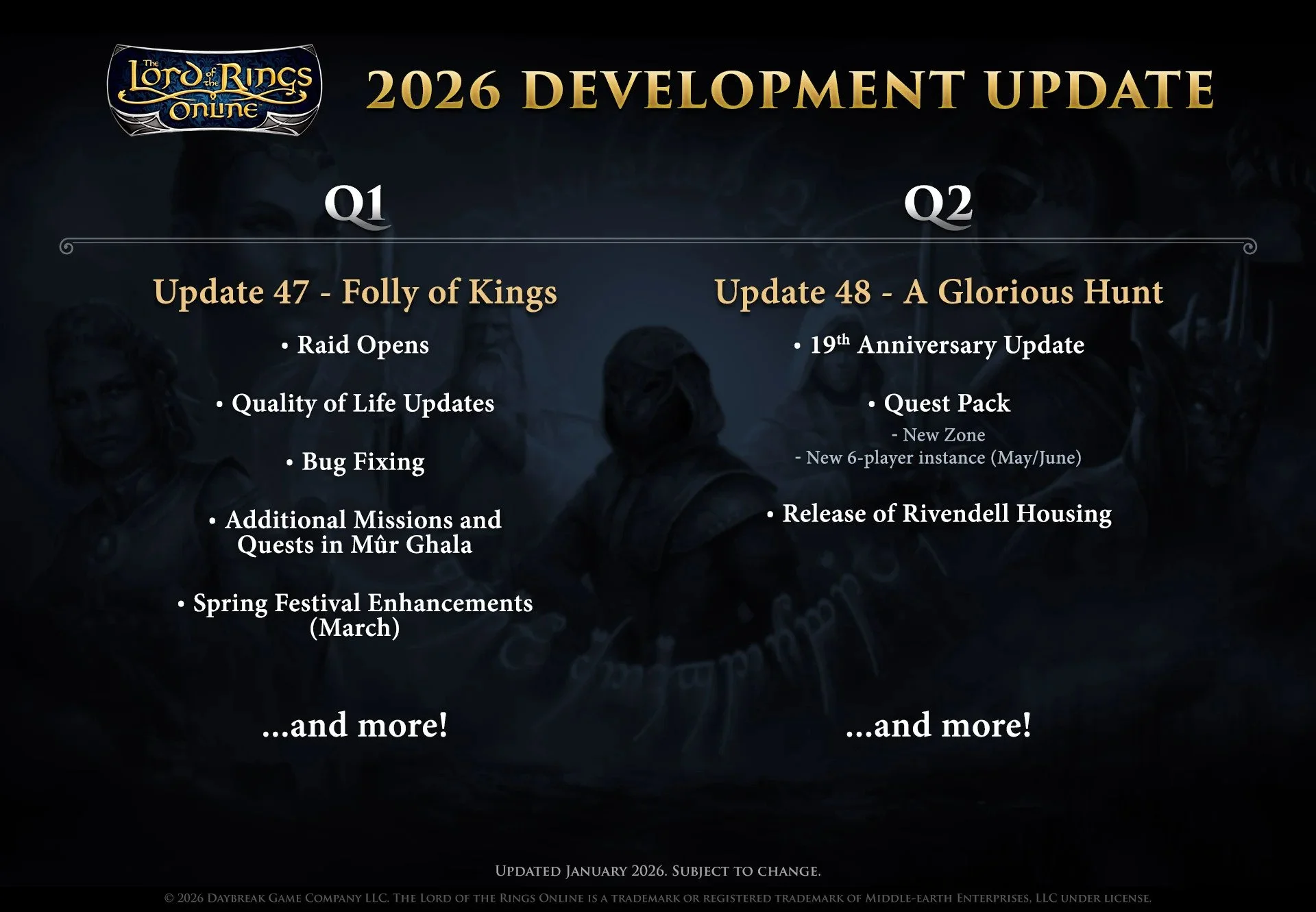
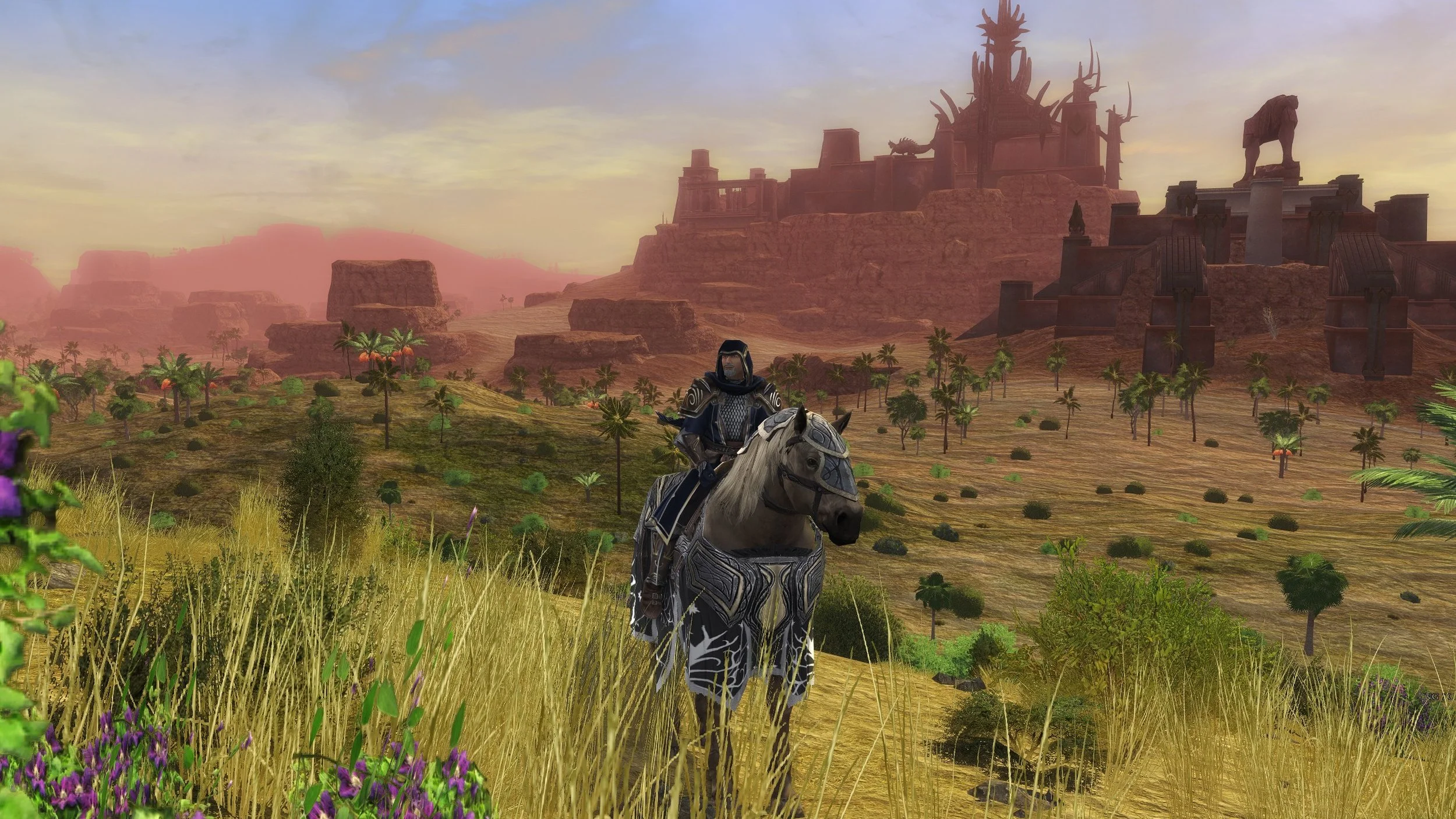
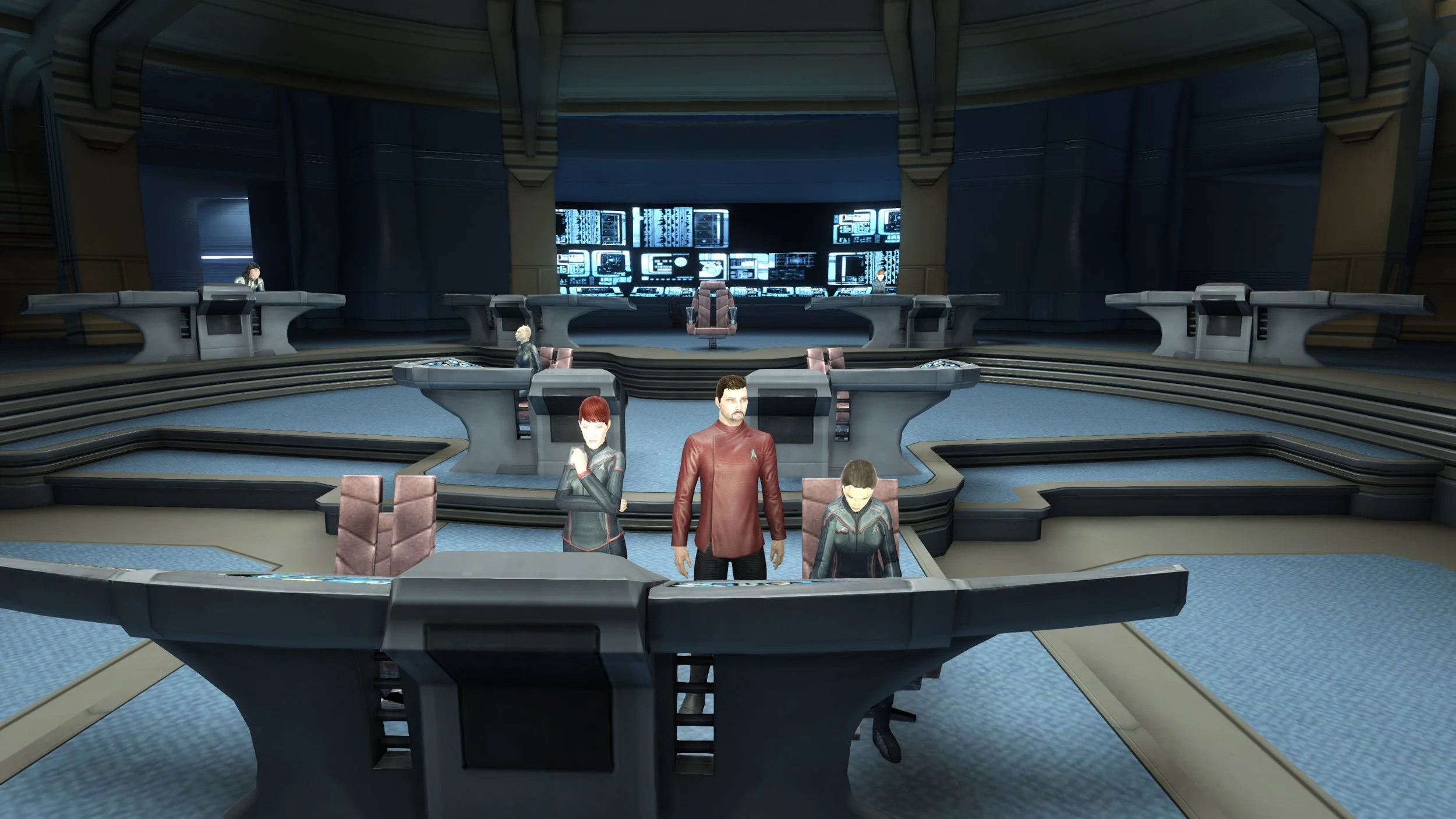
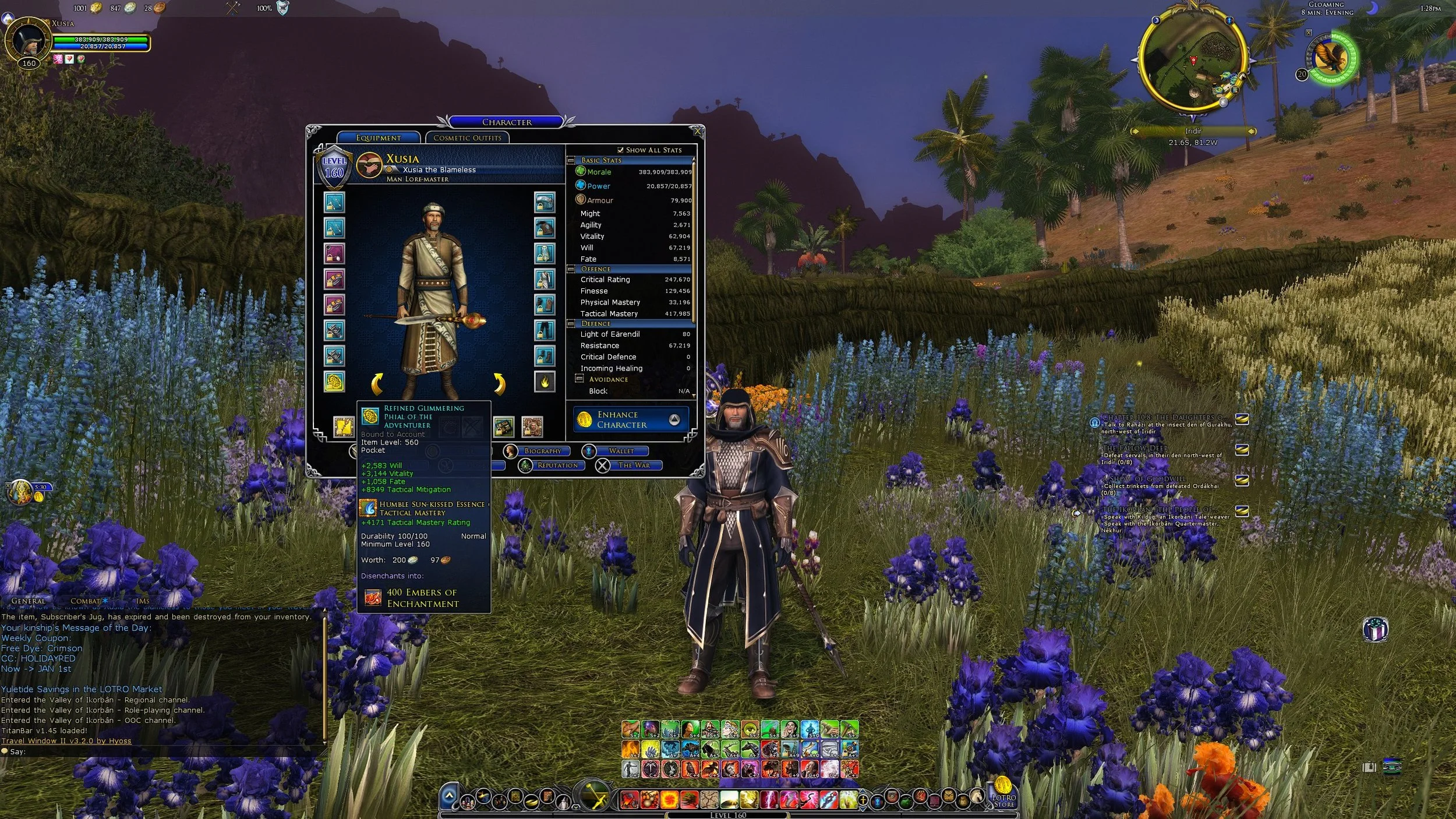
One of the most trying old adages associated with the MMORPG genre is “endgame is where the real game begins”, or some variation thereof. It’s a stupid dogma that is happily negates all that the player has done while levelling. It usually goes hand in hand with the mindset that the only worthwhile pursuit at level cap is raiding, but I digress. For many MMOs, it’s a real challenge to make the levelling experience feel tangible and relevant, so players don’t get the impression that their just treading water when it comes to gear and skill points. However, some games do manage to get this right. LOTRO has several sets of armour that you can acquire at early stages in the game that are worth holding onto for at least ten levels. The Armour of Fém is a good example. It can be obtained at level 42 in Aughaire and can last the player right into Moria, ten levels later, before it needs to be replaced. STO proactively negates this problems by allowing gear to be upgraded but again I digress. My point is, much of what we acquire and use as we progress through an MMO is transient, but if the developers have done their job properly, it doesn’t seem that way.
One of the most trying old adages associated with the MMORPG genre is “endgame is where the real game begins”, or some variation thereof. It’s a stupid dogma that is happily negates all that the player has done while levelling. It usually goes hand in hand with the mindset that the only worthwhile pursuit at level cap is raiding, but I digress. For many MMOs, it’s a real challenge to make the levelling experience feel tangible and relevant, so players don’t get the impression that their just treading water when it comes to gear and skill points. However, some games do manage to get this right. LOTRO has several sets of armour that you can acquire at early stages in the game that are worth holding onto for at least ten levels. The Armour of Fém is a good example. It can be obtained at level 42 in Aughaire and can last the player right into Moria, ten levels later, before it needs to be replaced. STO proactively negates this problems by allowing gear to be upgraded but again I digress. My point is, much of what we acquire and use as we progress through an MMO is transient, but if the developers have done their job properly, it doesn’t seem that way.
Sadly, this is not the case in The Elder Scrolls Online. The game has many virtues and selling points, but the gear grind is clearly an irrelevance until you reach a specific point in the game. Namely level 50 with 160 champion points. Until then, finding adequate gear is very difficult and players are “encouraged” by the prevailing dogma of the game, to just slum it with items from quest drops, irrespective as to whether they’re optimum for your characters build. The alternative is to simply buy armour and jewellery from vendors and to apply glyphs to enchant it to your chosen specifications, but this is an expensive option and the gear itself is of the lowest tier of quality. Of course, there is the option of running delves to find suitable gear, but the task is made more difficult by the fact that your character will frequently be underpowered, due to the lack of quality gear they have equipped. As you can see, it’s a chicken and egg situation. The only other alternative is Dolmen farming but then this is not always the most enjoyable way to play ESO. Plus, if you do it for a few hours at a time, you’ll find you’ve out levelled half of what you’ve acquired.
In other MMOs, there are often several alternative ways of acquiring gear sets, other than depending on standard quest rewards. LOTRO has the skirmish system which provides the player with barter currency to buy specific sets. Furthermore, the sets are available to a variety of levels. The reputation system in STO also allows you to buy a variety of gear sets for your ship. And of course, most games also have an auction house system that allow for the buying and selling of all non-bound items. This is where most players look first to fill the gaps in their build or to buy something passable while levelling. Sadly, there is no server wide auction house system in ESO. Individual guilds buy and sell gear. They have store fronts littered round Tamriel. The range of items they sell is dependent upon the guild size, how prodigiously they craft or farm quests. More often than not, most guild traders only have smattering of items below level 50 with 160 champion points because that’s not where the money and market is. Due to there being multiple outlets, checking stock is time consuming. The only option left therefore is to craft gear yourself. However, like everything else in ESO, this only becomes a viable option at level cap.
Exactly how did ESO arrive at this point? Well the One Tamriel Update removed the level restriction on content, scaling everything according to the player, which obviously didn’t help the gear situation. With delves and story quests scaling to your level, there isn’t the surplus of gear generated by content fixed at a specific level. The lack of a server wide auction system is also a major contributor. Finding specific gear, even with addons to help the search process, is time consuming task that requires you to visit a multitude of outlets. Joining a guild may help and there is the chance that fellow guildmates will help you out with gear acquisition. But ESO strikes me as a game with a substantial player population with alts at level cap. Levelling is not seen as a journey in itself but more of an obstacle to be overcome. It’s a shame. This issue certainly doesn’t mitigate the positive aspects of ESO as an MMO, but it does impact upon the way you play until you approach the level cap. Now that I’ve reached level 50 and have amassed over 100 champion points, I can certainly play more effectively. I can now focus on what gear I would like; something I couldn’t do at the start of the game. Perhaps ZeniMax will address this issue in a future update.

Looking For a Bargain in ESO
My recent return to The Elder Scrolls Online has been an enjoyable experience. Like STO, it has taken three attempts for the game to chime with me but this time round, everything has fallen into place. I have managed to install just the right number of add-ons to enhance my experience. I’ve also discovered a class which suits my play style and am currently pursuing a specific build. The quest stories are well written and involving which means I don’t feel like I’m simply undertaking arbitrary tasks for XP. Overall ESO seems to be in a much better place than it was upon its launch in early 2014. Because my progress through the game is going well, I’m considering my options with regard to DLC. I bought the digital collector’s upgrade edition of the Morrowind expansion for £17.99 which is a competitive price. However, I’m interested in the Dark Brotherhood story line because I enjoyed it in Skyrim, so I’ve been trying to find a similar bargain.
My recent return to The Elder Scrolls Online has been an enjoyable experience. Like STO, it has taken three attempts for the game to chime with me but this time round, everything has fallen into place. I have managed to install just the right number of add-ons to enhance my experience. I’ve also discovered a class which suits my play style and am currently pursuing a specific build. The quest stories are well written and involving which means I don’t feel like I’m simply undertaking arbitrary tasks for XP. Overall ESO seems to be in a much better place than it was upon its launch in early 2014. Because my progress through the game is going well, I’m considering my options with regard to DLC. I bought the digital collector’s upgrade edition of the Morrowind expansion for £17.99 which is a competitive price. However, I’m interested in the Dark Brotherhood story line because I enjoyed it in Skyrim, so I’ve been trying to find a similar bargain.
At present, ZeniMax have a deal on the Guilds and Glory Mega Pack DLC in the Crown store. This contains Dark Brotherhood, Imperial City, Orsinium and the Thieves Guild and costs 5,500 Crowns (£29.99). At first glance this looks like an adequate discount as individual DLC usually costs between 2,000 and 4,500 Crowns. However, if you shop around and check some of the game key websites, you can find the Gold Edition of ESO, which contains the base game and the above four DLC for £16.06 which is nearly half the price. This naturally is a better option for both an existing or a new player. The latter get’s the benefits of a 500 Crowns, although that won’t buy much at present prices. Then of course there is the option to buy neither of these “bundles” and to subscribed to ESO Plus which will unlock all current DLC. However, access to all new content is dependent on remaining a ESO Plus member, which doesn’t suit everyone.
Furthermore, it would appear that pre-paid subscription cards for ESO have been withdrawn since the changes in the games business model in 2015. There may still be some residual stock in circulation, although whether they still work or not remains to be seen. In the US Gamestop sell six-month ESO Plus time cards that come with a crate allowance. These are purchased online and provide a redeemable code. These are not however available in Europe. Therefore, I’d advise caution to anyone searching through the third-party websites that sell CD keys and game consumables. Ensure that any pre-paid cards are not those for older versions of ESO. Unless the product directly references ESO Plus, then the cards in question are more than likely obsolete.
As ESO is a buy-to-play game, the selling of additional DLC, expansions and cosmetics is the primary source of revenue. ESO Plus offers a further line of capital, although have no data as to how popular the subscription is. Therefore, it is logical that the developers ZeniMax will endeavour to control prices of all their products. Naturally there are sales and discounts to be had from time-to -time, to encourage player spending. But beyond these there is not a lot of scope to obtain a “bargain” for ESO, outside of official channels. Apart from seeking a deal on the Gold or Imperial Editions of the base game, along with the Morrowind Expansion, players are at the mercy of the in-game store prices. However, I do not find the existing business model for ESO to be too egregious and I’m certainly getting a lot value from my initial expenditure at the moment. So, for the present, the cost of playing ESO is seems equitable. Let’s hope it remains that way.
Guilds, Kinships and Fleets
I’ve been in the same LOTRO kinship (a.k.a. guild) since 2009. It’s relatively small in size, made up of a core group of about 20 players and their various alts. Everyone knows each other, and we all get along. There’s a broad spectrum of members from across the UK and Europe and the average age is about 35 plus. We’ve had some drama in the past from a few individuals, but they’ve either left or stopped playing. I don’t recollect there ever being an occasion when someone was. After ten years the kinship is at a point where it just ticks over without any major problems. There are events and activities for those who wish to participate, or if you prefer to simply potter about Middle-earth, then you’ll be left to do so. In the past we’ve had our own kinship website and forums, along with TeamSpeak server and other external support facilities. Bu all of these have fallen by the wayside as the Kinship has evolved. We now just focus on playing the game. Overall, the kinship is a friendly bunch and a good fit for my casual style of gameplay, which is why I’ve remained a member for nine years.
I’ve been in the same LOTRO kinship (a.k.a. guild) since 2009. It’s relatively small in size, made up of a core group of about 20 players and their various alts. Everyone knows each other, and we all get along. There’s a broad spectrum of members from across the UK and Europe and the average age is about 35 plus. We’ve had some drama in the past from a few individuals, but they’ve either left or stopped playing. I don’t recollect there ever being an occasion when someone was. After ten years the kinship is at a point where it just ticks over without any major problems. There are events and activities for those who wish to participate, or if you prefer to simply potter about Middle-earth, then you’ll be left to do so. In the past we’ve had our own kinship website and forums, along with TeamSpeak server and other external support facilities. Bu all of these have fallen by the wayside as the Kinship has evolved. We now just focus on playing the game. Overall, the kinship is a friendly bunch and a good fit for my casual style of gameplay, which is why I’ve remained a member for nine years.
LOTRO was my first MMO and when I started playing in 2008, co-operative play was the key to progression. Much of the games content was not solo friendly, therefore joining a kinship would at that point, greatly enhance a player’s experience. However, over time things have changed. Not just for LOTRO but for many other games from the MMO genre. Despite having played Guild Wars 2, The Secret World, Rift and SWTOR, I’ve never joined a guild for any of these games. There was (and remains for me) no compelling reason to do so. When I started playing LOTRO, part of the charm of the game and indeed the genre, was the social aspect. For me the notion of playing online with others was still a novel experience. However, as newer MMOs emerged, I found that I was more concerned with their gameplay and narrative, rather than cultivating new friendships. Furthermore, due to the increase in casual gaming, more recent MMOs are far more casual friendly.
There are always exceptions to the rules, though. The Fleet system in Star Trek Online offers a wealth of benefits and a player is potentially limiting their options if they do not join one. Fleet holdings such as the Starbases and dilithium mines are maintained by players contributing resources. Once holdings reach optimal capacity, they can provide gear, weapons and consumables, all of which are of a superior quality to that from standard vendors. It’s a relatively similar situation in The Elder Scrolls Online. Being in a guild allows access to quality crafted items which are not so readily available elsewhere. Hence in both these games I have joined guilds, simply to gain access to these facilities. In STO I am a member of REDdit Alert Fleet and although they are a friendly bunch, I am not socially active within it. I maintain a level of civility and ensure I contribute to the fleet projects but beyond that I tend to keep myself to myself and pursue my own goals within the game.
Playing any MMO successfully requires a substantial investment of time. The same can be said about joining a guild. A guild is more than just a collective designed to facilitate group content. It is often a closely knit social group in which members become firm friends, get to know each other and provide mutual support. They can become very intimate environments, sometimes doubling as group therapy or a virtual pub in which players can blow off steam after a tough day at work. For me, my best experience in a guild coincided with my best experience with an MMO. It was during a two-year period of my life in which I had the time and inclination to dedicate to both a leisure activity and a social group. It was a time that I enjoyed immensely. Now, although I like the social aspects of guilds in STO and ESO, they are mainly a means to an end. However, if I ever get nostalgic, all I have to do is return to my LOTRO kinship to be reminded of prior good times.
Alik’r Desert Dolmen Farming
Back in 2014 when I was still regularly playing Guild Wars 2 a popular way to level up quickly, as well as grind various rewards, was to join the Queensdale Champion Train. The region was home to multiple Champion level bosses and groups would farm these for hours on end. On arriving in Queensdale, if you wished to join the “train” and farm the various bosses, it was customary to ask “choo choo” in zone chat. You’d then be informed where the “zerg” was and you could catch up with it accordingly. Such are the quaint and esoteric customs associated with the MMO genre. The Queensdale Champion Train eventually got nerfed by ArenaNet and the bosses downgraded, so that it ceased being a viable undertaking. The reason I mention this is because I recently discovered a very similar set up in The Elder Scrolls online. Namely Alik’r Desert Dolmen Farming.
Back in 2014 when I was still regularly playing Guild Wars 2 a popular way to level up quickly, as well as grind various rewards, was to join the Queensdale Champion Train. The region was home to multiple Champion level bosses and groups would farm these for hours on end. On arriving in Queensdale, if you wished to join the “train” and farm the various bosses, it was customary to ask “choo choo” in zone chat. You’d then be informed where the “zerg” was and you could catch up with it accordingly. Such are the quaint and esoteric customs associated with the MMO genre. The Queensdale Champion Train eventually got nerfed by ArenaNet and the bosses downgraded, so that it ceased being a viable undertaking. The reason I mention this is because I recently discovered a very similar set up in The Elder Scrolls online. Namely Alik’r Desert Dolmen Farming.
For those who don’t know, here is a brief explanation of how this player driven event works. Dark Anchors or Dolmens are specific places where the forces of Molag Bal set an "anchor" point to pull Tamriel into Coldharbour. Each zone has 3 Dolmens (except Cyrodiil). The Dark Anchors are activated when fanatical cultists spawn around the Dolmen and begin incantations to open them. Once active these become world events. You can see the effects and hear the incantations from far away, and a horn will sound when the portal is opened. Evil forces then mount an incursion which has to be repelled. Once the event has finished and the Dark Anchors closed, a chest spawns with various rewards. Naturally Dolmens can be used as a means to gain XP quickly and level up.
The reason the Alik’r Desert is popular for Dolmen farming is because there are wayshrines (quick travel teleporters) conveniently close to each location. The Aswala Stables Wayshrine is near to the Hollow Waste Dolmen, Goat's Head Oasis Wayshrine is well placed for the Myrkwasa Dolmen and Shrikes Aerie Wayshrine is at the foot of the hill of the Tigonus Dolmen. Furthermore, the Dolmen respawn quickly in this region and it is not to difficult to complete each and swiftly travel to the next. As with Guild Wars 2, if you enquire in zone chat, you can ascertain where the current “zerg” is. If you type “+ Dolmen” in chat you can potentially join any group farming in the area. Grouping increases XP gain by 10% and also shows the location of the group leader on the map.
I have spent some time recently farming Dolmen in this fashion and it certainly does allow you to level quite quickly. Because content scales in ESO, it’s not as if you out level the regular story quests in the game. Naturally some purist players will pooh-pooh this play style. There’s also the possibility that ZeniMax might nerf this situation in the future if they choose to. One of the reasons ArenaNet nerfed the Champion farming in Guild Wars 2 was because they felt that the “zerg” disrupted new players in what was essentially a low-level area. Whether a similar situation occurs in ESO remains to be seen. In the meantime, I’m going to “make hay while the suns shines” and continue to supplement my regular progression through ESO with such Dolmen farming.
MMO Burnout
Although I have played numerous other online games, LOTRO has been my main MMO for the last nine years years. I have invested a great deal of time into it, which is hardly surprising as that is the entire raison d'etre of the genre. I recently purchased the Mordor expansion for the game which offers a wealth of new content. Yet despite having all this available I have done precious little in the game of late and have made no significant progress. Currently, I have Guilds Wars 2, The Elder Scrolls Online, Secret World Legends and Star Trek Online installed on my PC. I have dabbled with them all over the last few weeks, trying to rekindle a sense of enjoyment and pursue content that I have not completed. Sadly, none of them seem to hold my interest. I log in to them in the hope that something will grab my attention but I always seem to find myself just kicking my heels and aimlessly wandering through zones with no sense of focus.
Although I have played numerous other online games, LOTRO has been my main MMO for the last nine years years. I have invested a great deal of time into it, which is hardly surprising as that is the entire raison d'etre of the genre. I recently purchased the Mordor expansion for the game which offers a wealth of new content. Yet despite having all this available I have done precious little in the game of late and have made no significant progress. Currently, I have Guilds Wars 2, The Elder Scrolls Online, Secret World Legends and Star Trek Online installed on my PC. I have dabbled with them all over the last few weeks, trying to rekindle a sense of enjoyment and pursue content that I have not completed. Sadly, none of them seem to hold my interest. I log in to them in the hope that something will grab my attention but I always seem to find myself just kicking my heels and aimlessly wandering through zones with no sense of focus.
The social side of MMOs can also be an issue at times. You log in to a game hoping to find something you wish to do, only to be met with a barrage of welcomes and offers to join groups or participate in some collective event. In different circumstances, this can be a wonderful thing. The restorative properties of friendship can wash away the ills of a bad day and can replace a dark mood with a good humour. However, there are occasions when the attention can be somewhat overwhelming. There have been times when I’ve been upon the verge of logging in to an MMO but after reflecting upon athe gauntlet of upbeat cheerfulness that lays ahead, I’ve decided to do something else instead. Joking aside, there are times when socialising can be wearing and you just want to be left alone.
The consensus seems to be among gamers, as we get older we become far more particular about how we spend our time. I have purchased several games this year that I knew from the beginning would have a relatively short lifespan. Single player games often present a core campaign, online multiplay and DLC over a six-month period. You can effectively complete a game and gain a sense of closure that you’ve had your fill. Sniper Elite 4 has provided me with a solid five months of entertainment. I’ve progressed through all the content that I care to play through and have no desire to pursue it any further. Conversely, I have also returned to Middle-earth: Shadow of Mordor, in anticipation of the sequel that comes out in October. I have managed to complete a campaign that previously alluded me and now feel that I’m ready to move on.
It is this sense of finality, short and limited gameplay as well as the option to play alone, that MMOs cannot compete with at present. Gamers are fickle creatures. There are times when I want to invest time, work towards long term goals and chat with my fellow man. Yet after doing those very things for three to six months they can become somewhat smothering. Sometimes virtual worlds are a welcome respite from the daily tragedy and horror on real life. Yet I still cannot help but think that it is not healthy to make them too much of a focus and a permanent substitute for real world engagement. I tend not to regret the time I have spent gaming, yet from time to time, I do question the hours required to make progress. Often this happens when a new mechanic or goal is introduced into a game and I calculate exactly how many days it will take to achieve it.
As I am currently without an MMO, I find myself in need of an alternative distraction. However, when I look at the various titles that are currently available through a vendor such as Steam, the first thing that strikes me is the interchangeable and homogeneous nature of them all. This is hardly a revelation as most industries tend to follow tried and tested formulas. At present, mainstream films and music are staggeringly bland and uninventive, so it is almost inevitable that the gaming industry should follow suit. This perfunctory style is a major obstacle for me. For example, after pondering on whether to try Black Desert, I concluded that it simply didn't have sufficient difference from any other MMO to warrant a purchase. And of course, at times like this, EVE: Online raises its head once again, offering a wealth of perceived opportunities. Yet the reality of the situation is that I do not want to take on a game with such a steep learning curve. Neither do I have the time required to be successful at such a game.
So, it would appear that I’m currently suffering from a gaming, specifically MMO "burnout". Perhaps fatigue would be a better term on reflection. Although I have currently tired to a degree of the MMO genre, I still find myself interested in gaming. What I find trying is that I cannot seem to find that many titles, both new and old, to get excited about, especially MMOs. As a genre, they have so much potential but are simply hamstrung by a lack of vision and innovation. Perhaps single player game with co-op are the answers. Furthermore, I’m tired of the noticeable disparity in game engines between MMOs and other genres of game. I appreciate that developers have to lower the bar for entry to lower specified PCs but too many MMOs look and more importantly play as if they hail from a different era. It would be nice to have an MMORPG that had the combat of either For Honor or Middle-earth: Shadow of Mordor.
Fortunately, I have not put all my eggs in one basket and made my online activities the focus of all my friendships and socialising. This can be a real issue for some people when confronted with potential burnout, as loyalties and social ties can compound the problem. Gaming by its very nature can be indulged in to a far greater degree than say fishing or other traditional hobbies. It is not seasonal and is accessible 24/7.You don't have to go anywhere, prepare in advance and be mindful of things like the weather. Subsequently, unless we consciously decide to regulate ourselves it will simply swallow all our leisure time. Burnout is not a term I associate with train spotting, stamp collecting or campanology. As gaming continues to become a more mainstream activity, burnout is a phrase I think we shall hear more often.
"You're Playing Wrong"
There’s one particular topic that appears with tedious regularity on MMO subreddits and forums. That old chestnut about how the genre has become too solo friendly and that it’s to the ruination of the genre. It usually hails from the raiding community and follows a predictable path about high end gear and those who do and don’t deserve it. When you look beyond the initial arguments, you’ll frequently find that such positions are very emotive, couched in judgemental terms and often end in the sentiment “why even play an MMO?” or something comparable. The reason I mention this perennial debate is because it appeared recently on a forum that I still occasionally visit. It saddens me to a degree because, this point has been debunked so many times, yet it still persists (a bit like many political talking points). It also smacks of that attitude I see all too frequently these days. A concern and borderline resentment of what others are doing, irrespective of whether it impacts upon you or not.
There’s one particular topic that appears with tedious regularity on MMO subreddits and forums. That old chestnut about how the genre has become too solo friendly and that it’s to the ruination of the genre. It usually hails from the raiding community and follows a predictable path about high end gear and those who do and don’t deserve it. When you look beyond the initial arguments, you’ll frequently find that such positions are very emotive, couched in judgemental terms and often end in the sentiment “why even play an MMO?” or something comparable. The reason I mention this perennial debate is because it appeared recently on a forum that I still occasionally visit. It saddens me to a degree because, this point has been debunked so many times, yet it still persists (a bit like many political talking points). It also smacks of that attitude I see all too frequently these days. A concern and borderline resentment of what others are doing, irrespective of whether it impacts upon you or not.
So how shall we tackle this question of “you’re playing wrong” because that is effectively what it boils down to. Well, let us start with that very question. Is there a definitive way to play an MMORPG? No is the brief answer. Sure, each MMO has a set of rules and procedures that set out a path of progression. However, nowhere in these rules will you find a statement saying it is mandatory to play this particular way. Humans like to adapt things to suit their own needs. Play is under pinned by imagination and creativity. Therefore, role-players are free to pursue their particular play style in an MMO. Players can create alts and continuously replay specific content only if they wish. It is not essential to be in a guild or to raid and not everyone wants the best gear. Furthermore, I have never seen a major objection towards varied play styles from the developers of an MMO. They usually just seem happy that people can find joy in their creation and the publishers are content to have your money regardless of what you do.
As for the question "why even play an MMO?" it is utterly irrelevant to the debate. A player’s motivation for playing and indeed the very manner in which they play is no business of anyone else as long as it remains within the TOS of the game. Another common argument and variation upon this theme is that MMOs are meant to be social games and that the very foundation of the genre is the need for continuous interaction with other players. I remember Massively OP writer Jef Rehard claiming not so long ago that “this is a social genre. This is not your world. It's our world, and how you interact with and ultimately shape it is most definitely my concern". Yet the reality is that a MORPG is only social in so far as it includes game mechanics that can facilitate group interaction. They are there as an option and are seldom mandatory. Therefore, MMORPGs are not solely "a social genre" and it is worth noting that the word social does not feature in the acronym. It is also a common misconception that the social dimension that can be found in MMOs, is a result of the game itself. It is not. The game certainly provides a framework for group interaction but ultimately the social element is organically generated by the players themselves. The game at most is a conduit. Gather people together in any social interaction, friendship and fun will present itself.
As for the issue, as to "who's world is it", the answer is simple. It's the publishers. Gamers frequently make the mistake of believing they have a far greater stake in the object of their affection, beyond their consumer rights. We are all nothing more than a customer and any claim suggesting some vicarious form of collective ownership is nonsense. Fandom is a wonderful thing and has many positive aspects but at times it does cause a form of “tunnel vision” that impacts upon some players sense of perspective. MMORPGs are products created to make money. That is their primary purpose. They are not there to provide a social service nor are they under any obligation to foster a morally righteous community. Such activities are simply a byproduct of their use by the player base. There is equal scope for the community to go in the other direction and become toxic.
The MMORPG genre has changed greatly over the last decade and is now quite different from how it was. All consumer products evolve over time. Why is this situation any different? If one finds oneself aggrieved by such change surely it would be logical to blame it upon market forces and the nature of capitalism, rather than on those players that have elected to pursue their entertainment in a different way to you, as is their right? Thus, the argument that “you’re playing wrong” is a fundamentally flawed concept based on faulty data and incorrect assumptions. It also stems from fundamental misunderstanding of what a players role is within the traditional business and customer relationship.
So, in conclusion, concerns over other MMO players habits are misplaced. Beyond abiding by a games TOS (and hopefully maintaining good manners and common decency), a solo player has no obligation to anyone else and is free to pursue their own endeavours within a game in whatever fashion they see fit. As ever with debates of this kind, it is largely a matter of semantics and logical thinking. As a player who predominantly plays MMORPGs solo, the only way my actions affect other players is through the indirect medium of prevailing business trends. IE being part of a group that offers more business potential to the developers. Carping about this is a bit like complaining that not enough people buy a particular brand of coffee that you like and as a result the supermarket no longer stocks it.
Finally, there is a slight hint of a sense of moral outrage associated with this re-occurring argument. Such sentiment is misplaced in a reasoned and rational argument. This is ultimately a discussion about business decisions and how market forces govern product change. Personal indignation based upon perceived injustices does nothing more than cloud the debate. Developers know that they can't please all customers and it would be beneficial is gamers reciprocated. If as a gamer find yourself on the wrong side of a change of policy or game mechanic, then that is sad for you but beyond that it is of no more significance. However as reasoned and rational discussion is not de rigueur in any public arena at present, let alone just in gaming, I suspect we haven’t seen the last of the “you’re playing wrong” debate.
UI Customisation
Game complexity can be both a boon and a bane; a selling point and a source of irritation. There are many titles that I enjoy that have a wealth of systems and mechanics that add greatly to the overall immersion and entertainment. The MMORPG genre excels at this. However, this data all needs to be displayed visually, in an efficient and intuitive fashion. It has to be readily available and easy to navigate. Naturally, there’s a fine balance between making such a system accessible without becoming a source of distraction. This is the challenge that all developers face when designing a user interface. However this problem is compounded further by the human element. Regardless of how well crafted a game’s UI may be, players will always wish to change it to suit their own needs and requirements.
Game complexity can be both a boon and a bane; a selling point and a source of irritation. There are many titles that I enjoy that have a wealth of systems and mechanics that add greatly to the overall immersion and entertainment. The MMORPG genre excels at this. However, this data all needs to be displayed visually, in an efficient and intuitive fashion. It has to be readily available and easy to navigate. Naturally, there’s a fine balance between making such a system accessible without becoming a source of distraction. This is the challenge that all developers face when designing a user interface. However this problem is compounded further by the human element. Regardless of how well crafted a game’s UI may be, players will always wish to change it to suit their own needs and requirements.
What I often find in the MMO genre, is that the UI is streamlined at the beginning of a game with all the essential data that you need to play, evenly distributed around the screen. This grows exponentially as the game progresses, especially with older titles that frequently suffer from skills bloat. LOTRO is a classic example of this with a wealth of data swamping the screen when you reach level cap. I remember having similar issues when I was actively playing SWTOR. I encountered the same in STO recently, especially with regard to the skills hot bar. This was growing and intruding further towards the middle of the screen, impeding combat.
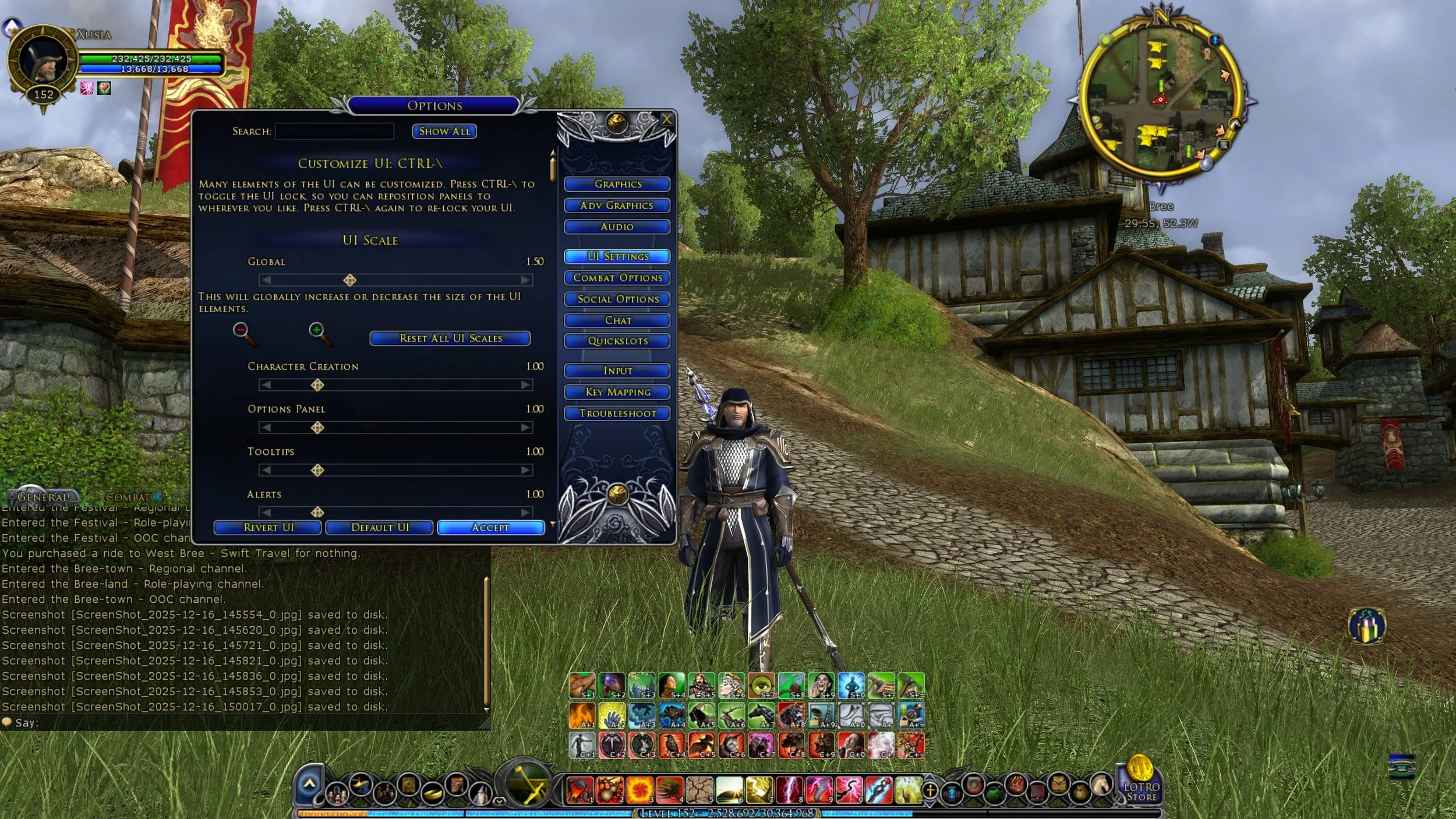
Mercifully most games have the ability to customise the UI, allowing players to indulge their preferences. Furthermore custom HUD settings can frequently be saved and then loaded when required. Monitor size and screen resolution also play a part in this matter and can have a positive impact if altered. Many games also have a cottage industry of players creating and sharing their own custom user interfaces. LOTROinterface has proven to be very popular over the years. The WoW and ESO communities also have multiple sites and resources for such changes. In the competitive genre of MOBAs, a common interface between team mates can be advantageous.
I currently have a 24 inch monitor with a resolution of 1920 x 1200. It provides a fairly large gaming canvas and allows me to spread the various elements of the UI to the borders of the screen. However an excess of data on the periphery of your vision can be distracting, especially if it flashes or attempts to alert you in some fashion. I also find it an impediment if my hot bars start to encroach towards the centre of the screen. I don't know if this is due to a foible of human vision but I find it draws my eyes away from where they need to be. I've had such problems in STO recently with my hot bar resembling a pyramid, resulting is some judicious customisation.
The ability to alter a games GUI, raises some interesting questions. The most obvious is whether or not you actually need everything on-screen. My view is if you're not using a specific element of the HUD, then remove it and that goes for skills as well. Then there is the matter of whether games developers are doing their best to accommodate the needs of players with disabilities. Resizing elements and changing colour schemes, as well as assigning audio alerts can all be incredibly beneficial. Fonts can also be a bone of contention, with some not lending themselves readily to being scaled. A simple change of this nature can often improve gaming.
Personally, I would like to see more customisation options added to games. The mod scene in Skyrim really set the standard. I also like the way that some MMOs such as LOTRO have built in voice chat and access to social media. STO allows players to utilise third party audio players while in-game and The Secret World has its own internal web browser as part of the narrative. Although it is to a developer’s advantage to keep the player focused and in-game, facilitating customisation and providing multiple tools aids this process. Flexibility and accommodating change needs to be more of a driving factors in games development because no two players are alike.
Damning the Elder Scrolls Online with Faint Praise?
I recently wrote about how about how I finally purchased The Elder Scrolls Online, two years after the games launch. As the purpose of this post is to contrast my thoughts on the MMO both then and now and how they may have potentially changed, I must first reiterate how I felt about ESO initially. As memory serves, here is a breakdown of my initial impressions. I participated in the beta testing in 2014 and although I broadly enjoyed the game, I was not in any way blown away by it. Overall things took several hours to hit their stride as far as gameplay and enjoyment. I also felt that the early levels seemed too focused on establishing the narrative at the expense of the player getting into the game. Eventually I did get that Elder Scrolls vibe but it was not immediately apparent. The action combat needed refining and the multiplayer element frankly felt redundant, unless you were focused on PVP.
I recently wrote about how about how I finally purchased The Elder Scrolls Online, two years after the games launch. As the purpose of this post is to contrast my thoughts on the MMO both then and now and how they may have potentially changed, I must first reiterate how I felt about ESO initially. As memory serves, here is a breakdown of my initial impressions. I participated in the beta testing in 2014 and although I broadly enjoyed the game, I was not in any way blown away by it. Overall things took several hours to hit their stride as far as gameplay and enjoyment. I also felt that the early levels seemed too focused on establishing the narrative at the expense of the player getting into the game. Eventually I did get that Elder Scrolls vibe but it was not immediately apparent. The action combat needed refining and the multiplayer element frankly felt redundant, unless you were focused on PVP.
Upon my return, I found that the starting zone was still very much a handholding exercise with regard to the game mechanics and the central story. These “nursery” areas are always tend to be problematic for the MMO genre, often falling between two stools. Some players will find them to too hemmed in and on rails, yet there is a need to teach those new to the genre the basic mechanics of the game. Once out of the starter area, things do pick up and it becomes clear that the game leans more towards Skyrim that to other traditional MMOs. If you elect to play ESO with the standard interface, then it’s incumbent upon you to explore the world and figure things out. If you want a more contemporary MMO experience with mini-maps and a wealth of prompts, then add-ons are your friend.
Second time around I felt far more confident about ESO. Certainly, two years’ worth of patches have ironed out a lot of bugs. The combat is more fluid and will provide you with tells if you so wish. The quest lines are well written and engaging, as is the voice acting. The colour scheme is still very muted and this is a far from vibrant game world. However, the games aesthetics suit the lore and match the previous iterations of the franchise. My experience this time round was also enhanced by the wealth of videos and FAQs that are now available for ESO. I had to watch about thirty minutes of video in total to get an adequate handle on the games systems and intricacies. So overall this was a better experience for me, thus proving the old adage about not being an early adopter. The only thing that remained conspicuously the same was the issue of other players. So far, I’ve had no compelling reason to group or interact with them.
Admittedly, I have only been playing for a few days and therefore ESO may well have further revelations for me that will radically change my opinion on the game. Yet I have a nagging concern that that may not be the case and I’m just going to get more of the same. Namely, an MMO with various systems to progress, gear to grind for and a wealth of well written quests to embark upon. All of which is perfectly acceptable but far from exceptional. To summarise everything so far is okay. In fact, one word can sum things up. Adequate. Now there’s a word that often misunderstood so let us remind ourselves with its dictionary definition. Adequate (adjective) satisfactory or acceptable in quality or quantity". This office is perfectly adequate for my needs". Synonyms: sufficient, enough, ample, requisite, apposite, appropriate, suitable.
Now this raises a very interesting point. Is there anything is wrong with a game being just adequate? Why does every new MMORPG have to be revelation and gaming epiphany? To find an answer to this question, let us consider the realities of our own lives. I doubt very few of us receive utter perfection from any of the services we pay for or products we buy. I drink some well-known but distinctly mainstream brands of beer and spirits. That is not to say that they are not enjoyable but they are not anything special. They are merely serviceable. Society does not overtly balk at the notion of adequacy in other industries. So why are gamers aspirations regarding the MMO genre so much higher than those in other aspects of their life?
Some may feel that the use of such words as "adequate" is simply damning ESO with faint praise and that it is far from a complement. I'm not so sure. I think that the primary reason for ESO’s continuing existence is the franchise itself. This is after all the most current iteration of the Elder Scrolls mythos and it satisfies fan’s needs. The quality of the game, which I am arguing is not all bad, is a secondary consideration. If this was an MMO stripped of the vestige of the IP, perhaps it would not enjoy the level of success that it currently does. Perhaps adequate proves that ESO is still a work in progress, on a continuing journey of self-improvement. Being deemed acceptable and workman like across a spectrum of game mechanics is ultimately preferable to a broken game or one that excels at something and fails at others. At present ESO adequacy is sufficient reason for me to continue playing. After all I’ve played many adequate games over the years and have still enjoyed them.
Housing in MMOs
Having recently returned to The Elder Scrolls Online, there is a lot of excitement within the community regarding the introduction of housing in the next major game update in February. So far from the information that is available, there’s a wide variety of house styles and customisation options available. Properties can be bought furnished or unfurnished and players can further embellish their respective dwellings by crafting specific items for them. Housing also includes the usual fast travel options to and from their location and access can be shared among friends and alts. There’s a more detailed breakdown at The Elder Scrolls Online website and so far, ZeniMax seem to be offering all a comprehensive version of the current popular MMO mechanic.
Having recently returned to The Elder Scrolls Online, there is a lot of excitement within the community regarding the introduction of housing in the next major game update in February. So far from the information that is available, there’s a wide variety of house styles and customisation options available. Properties can be bought furnished or unfurnished and players can further embellish their respective dwellings by crafting specific items for them. Housing also includes the usual fast travel options to and from their location and access can be shared among friends and alts. There’s a more detailed breakdown at The Elder Scrolls Online website and so far, ZeniMax seem to be offering all a comprehensive version of the current popular MMO mechanic.
LOTRO is also implementing a housing upgrade with its next update, allowing home contents to be placed where the player wants them, as opposed to relying on predefined “hooks”. Again, this is an improvement that has been long awaited by the LOTRO community. Over the years, previous developers Turbine frequently promised changes to the housing mechanic but sadly failed to implement them. At present homes and the homesteads in which they are located, simply offer the same services as the major towns and social hubs, with the benefit of some extra storage. In fact, as far as I’m aware there is no major social dynamic to any of the housing systems implemented in any of the top ranking MMOs.
It is this social element or the lack of thereof that is predominantly of interest to me. Let us not be diverted with questions regarding the purchase of in-game housing. In the modern MMO market making premium housing available for cash purchase is simply a no-brainer. What you can do with housing is a far more interesting talking point. At present housing mainly offers in the MMO genre additional storage, an opportunity for aesthetic customisation and convenient support services. For example, in LOTRO if you repair your gear from a vendor based in the homestead, there is a discount. STO and SWTOR can offer access to personal and account banks as well as the auction facilities. STO is a little different to other MMOs in so far as your ship is your home to all intents and purposes.
What housing across most MMOs fails to do is offer any additional social facilities or unique group content. Players can group together and generate their own social events but they can also do that in other areas such as Bree, Earth Spacedock or Divinities Reach. Considering how many MMOs have strong social communities, especially among roleplayers, you’d think that game developers would be quick to capitalise on such human resources. If there were more reasons for players to use their homes and spend time in the homestead areas, the demand for housing would increase, thus bringing more revenue to any game. Housing could also provide a potentially different way to play MMOs. If crafting became more accessible via housing, players could level by developing their own cottage industries.
However, it is only fair to consider the other side of the argument. Some players may well like and prefer the relative tranquillity of housing as it is currently implemented. Not everyone wants to find fifty plus players embarking on a lengthy social event next door to them, spamming emotes and indulging in shenanigans. And many of the more recent MMOs do not seem to be as actively social as the older ones. So far, I have seen no compelling reason to join a guild or interact with other players in The Elder Scrolls Online. Guild Wars 2 is also a game I have predominantly played alone and it still seems to lack any essential social mechanic. Perhaps dynamic grouping effectively renders more complex social interaction redundant.
From my perspective, I always like to have more options than less. I also like social functionality to be optional and not essential. Therefore, I welcome any improvement to housing for any MMO along with any bespoke future social content. As long as it comes with a toggle in the UI settings then I’ll deem it an equitable arrangement. If a big guild wants to use its housing to a higher degree and access potential in-game benefits, then it should be afforded such an option. But I would also ask the developers to make judicious use of the phasing mechanic or offer the option to buy a “remote house” for those of a more solitary disposition. I am neither a strong advocate of either mantra, “better together” or Hell is other people”. I believe that the truth lies somewhere between the two.
The Elder Scrolls Online, Again
I participated in the Beta testing of The Elder Scrolls Online in spring 2014. Overall I found the game agreeable enough but chose not to purchase it upon its release, due to the subscription model and a lack of time. Like many MMOs the initial launch was problematic and the game had numerous issues and bugs. Within a year, the game was re-branded with a buy-to-play business model and extensive patching made the overall game more equitable. As a result, I’ve had my eye on The Elder Scrolls Online: Tamriel Unlimited for a while and frequently toyed with the idea of buying it. Perhaps one of the reasons I’ve held off from purchasing the game is because I have such fond memories of Skyrim and therefore wonder if I’d prefer a new RPG to an MMO.
I participated in the Beta testing of The Elder Scrolls Online in spring 2014. Overall I found the game agreeable enough but chose not to purchase it upon its release, due to the subscription model and a lack of time. Like many MMOs the initial launch was problematic and the game had numerous issues and bugs. Within a year, the game was re-branded with a buy-to-play business model and extensive patching made the overall game more equitable. As a result, I’ve had my eye on The Elder Scrolls Online: Tamriel Unlimited for a while and frequently toyed with the idea of buying it. Perhaps one of the reasons I’ve held off from purchasing the game is because I have such fond memories of Skyrim and therefore wonder if I’d prefer a new RPG to an MMO.
However, to cut a long story short, a deal turned up recently on a key selling site and was still there a week later. So, I took advantage of this favourable offer tonight and bought The Imperial Edition of The Elder Scrolls Online for just under £14. This particular variant of the game comes with the following bonuses and extras:
Imperial Race: Play as an Imperial in any alliances.
Imperial White Horse: This in-game mount has the same stats as any other horses in the game.
Rings of Mara: Receive the blessing of Mara, the goddess of Love, who will bless your union with a partner of your choice (aka friend).
Mudcrab Vanity Pet: A self-explanatory cosmetic pet.
Another thing worth noting about The Elder Scrolls Online: Tamriel Unlimited, is that the game client is currently up to a whopping 38GB which is not an easy download, even for those with a decent fibre connection. The game also has an optional subscription service (ESO Plus) that allows access to the various DLC that have been released in the last year. These can be unlocked for a monthly cost of £8.99 or bought permanently using the in-game currency. For the meantime I shall defer both options. It remains to be seen whether I need additional content as there may be sufficient in the base game. The Crown stipend that comes with the sub is not a compelling bonus at the moment.
Because I’m the sort of gamer that likes to know in advance “what’s what”, I’ll probably read a few FAQs and websites before I jump in to the game. It may beneficial for me to join a US rather than European server, as I know several people that play The Elder Scrolls Online: Tamriel Unlimited and they are all in North America. Another major plus that this MMO offers, is the opportunity to write about a game again, which is something I’ve been struggling with recently. So, expect to see some posts regarding my initial experience in Tamriel over the next week or two. Hopefully it will be a positive one.
The Elder Scrolls Online and the $1,000,000 Giveaway
In the past an MMO kept players engaged with their game by the psychology of the subscription model and providing content updates. Loyalty and the overall cost of running multiple games meant that most players dedicated themselves to one game and stuck with it. Free to play eliminated these ties and a lot of MMO players became a lot more itinerant. Developers therefore have had to become a lot more creative in finding ways to keep people logging into their games. Hence we now find many MMOs that feature daily rewards, content that has to be unlocked by claiming it and short term events that offer unique rewards.
In the past an MMO kept players engaged with their game by the psychology of the subscription model and providing content updates. Loyalty and the overall cost of running multiple games meant that most players dedicated themselves to one game and stuck with it. Free to play eliminated these ties and a lot of MMO players became a lot more itinerant. Developers therefore have had to become a lot more creative in finding ways to keep people logging into their games. Hence we now find many MMOs that feature daily rewards, content that has to be unlocked by claiming it and short term events that offer unique rewards.
The Elder Scrolls Online launched in April 2014 with a subscription based business model. By March 2015 the game went buy to play and was rebranded TESO: Tamriel Unlimited. Developers ZeniMax now find themselves in a very competitive gaming market in which MMORPGs are no longer the cash cow they were considered to be a decade ago. Like many companies they have been striving to maintain their share of the market and find a way to keep players logging in and playing, as well as encouraging perspective players to buy the base game. I must admit that their latest marketing campaign does have a novel approach and an interesting hook. Bethseda Softworks are to giveaway $1,000,000 to one lucky player, be they an existing or new customer.
The criteria for entry are at first glance somewhat straightforward. You need to log in to the game or complete an entry form available online by January 10th 2016. The winner will be drawn on 1st February and the funds duly paid. At present the base version of the game is currently retailing at its full price, although discounted keys can be found from reseller sites. I wouldn’t be surprised if there were another major Steam sale over the Christmas period. Needless to say the chance to win such a cash prize will definitely cause a spike in account logins. Whether returning players decide to stick around remains to be seen.
Like most competitions there’s a wealth of small print as well as terms and conditions. As each country has its own legislation governing giveways some geographical regions are excluded from entering. As you would expect this has caused those affected to protest most vocally online. As for myself, I briefly considered buying the game and entering but when you consider the initial cost and the approximate odds of winning, this is not a particularly sound gambling proposition. Sure I’d end up with a game that I could play but I have neither the time nor the inclination for another MMO at present. Part of me also thinks this stunt is a little tacky. I’d much rather be enticed to play a game because of some well-made new content. But this is how the gaming industry runs nowadays. Mass appeal has simply lead to greater commercialism. Makes you wonder what the next developer/publisher will do to top this?