
The Caller (1987)
A woman (Madolyn Smith) returns to a remote cabin in the woods carrying groceries. On the way she passes an abandoned vehicle, which she searches. She finds a broken doll in the glove box. On arrival at the cabin, she takes a shower and then calls her daughter. She then prepares a meal for a guest and goes to the garage only to find that her jeep has a puncture from a broken bottle. A mysterious stranger (Malcolm McDowell) prowls around outside the cabin, watching the woman through the windows. He then knocks, claiming that his car has broken down and asks if he can use her phone. He calls a local tow service and requests that his car is collected and repaired. The woman grudgingly allows the stranger to wait although she states she is expecting a guest. The two then converse and it soon becomes clear that they’re both sceptical of each other’s respective stories. A strange game of cat and mouse ensues with each alternately gaining the upper hand. Slowly the atmosphere becomes more tense.
A woman (Madolyn Smith) returns to a remote cabin in the woods carrying groceries. On the way she passes an abandoned vehicle, which she searches. She finds a broken doll in the glove box. On arrival at the cabin, she takes a shower and then calls her daughter. She then prepares a meal for a guest and goes to the garage only to find that her jeep has a puncture from a broken bottle. A mysterious stranger (Malcolm McDowell) prowls around outside the cabin, watching the woman through the windows. He then knocks, claiming that his car has broken down and asks if he can use her phone. He calls a local tow service and requests that his car is collected and repaired. The woman grudgingly allows the stranger to wait although she states she is expecting a guest. The two then converse and it soon becomes clear that they’re both sceptical of each other’s respective stories. A strange game of cat and mouse ensues with each alternately gaining the upper hand. Slowly the atmosphere becomes more tense.
The Caller comes across more like a stage play than a film. There are only two cast members and the first thirty minutes are exclusively confined to the cabin. Initially the guarded dialogue exchanges between the two characters seems to imply that maybe the stranger is a police officer and the woman a suspect in murder case. But it soon becomes clear, due to the contradictory dialogue and the curious behaviour of each character when the other is out of the room, that something much more arcane is going on. The screenplay by Michael Sloan strives to be “Kafkaesque”, but although intriguing, it isn’t clever enough. The two leads are good and strive to bring some dramatic focus to the proceedings. But by the second act, which takes place the following day when the stranger and the woman meet in town and resume their confrontation, it starts to become frustrating.
The denouement of The Caller is remarkably left field and radically alters the trajectory of the film in its closing scenes. Director Arthur Allan Seidelman, who has a background in theatre as well as film, handles the proceedings in a workmanlike fashion. The fact that this film was made by Empire Pictures may perhaps give some viewers a clue as to what may lie ahead of them. The ending does resolve the story, but it may not satisfy all viewers. Upon reflection such a story would have fared better as an episode of The Twilight Zone or The Outer Limits. If you are going to tackle a story which incorporates a substantial twist that tests your viewers suspension of disbelief, then you perhaps need to approach such material in a more subtle fashion. As it stands The Caller is a curiosity but not necessarily because it is compelling. After investing an hour of your time, you just want to see where it ends up.









Night of the Eagle (1962)
Norman Taylor (Peter Wyngarde) is a psychology lecturer whose career has taken off since he and his wife, Tansy (Janet Blair), returned to England from Jamaica. His students are doing well and he is socially climbing within the school’s administrative hierarchy. Some other members of the faculty are jealous of his success. One night he is shocked to discover curious artefacts hidden around his home and to learn that his wife is practising obeah. Tansy claims that the charms are responsible for his rapid advancement and also protect him, as she has found a similar but malicious item left in their home after a bridge evening. Norman, a consummate rationalist, demands that the charms are destroyed but Tansy warns him she is not responsible for what may happen next. The next day events take a turn for the worse. A student accuses Norman of rape and another threatens him with a gun due to his poor grades. During the night, a freak storm batters Norman’s cottage. Is it just bad weather or something more sinister?
Norman Taylor (Peter Wyngarde) is a psychology lecturer whose career has taken off since he and his wife, Tansy (Janet Blair), returned to England from Jamaica. His students are doing well and he is socially climbing within the school’s administrative hierarchy. Some other members of the faculty are jealous of his success. One night he is shocked to discover curious artefacts hidden around his home and to learn that his wife is practising obeah. Tansy claims that the charms are responsible for his rapid advancement and also protect him, as she has found a similar but malicious item left in their home after a bridge evening. Norman, a consummate rationalist, demands that the charms are destroyed but Tansy warns him she is not responsible for what may happen next. The next day events take a turn for the worse. A student accuses Norman of rape and another threatens him with a gun due to his poor grades. During the night, a freak storm batters Norman’s cottage. Is it just bad weather or something more sinister?
Night of the Eagle was released in the US by American International Pictures under the title Burn, Witch Burn. They added a narrated prologue about witchcraft still being prevalent today to the beginning of the film, along with a spell to protect the audience. They also made an addition to the closing credits with an onscreen question, “do you believe?”, which adds a more sensationalist tone to the film that isn’t required. Beyond these minor embellishments there are no differences between the US and UK versions. Veteran film and TV director, Sidney Hayers, handles the proceedings well and takes a serious tone, making good use of Reginald Wyer’s crisp and well-structured black and white cinematography. The film takes a measured pace and quickly builds a portentous atmosphere. The stone eagles that adorn the school are frequently visually referenced, implying that Norman Taylor is being watched and plotted against.
Night of the Eagle is loosely based upon Conjure Wife by Fritz Leiber. Adapted by Richard Matheson and Charles Beaumont, who frequently wrote for The Twilight Zone, with additional material by George Baxt, the screenplay is measured and reflects British society at the time, especially the social aspirations of the middle classes. This was Peter Wyngarde’s first leading role and his performance is key to the film’s success. The story and production strive to build the sort of atmosphere found in the works of Val Lewton and there are elements not too dissimilar to Jaques Tourneur’s Night of the Demon. However, the shocks that punctuate the slow burn storytelling are a little too brief and feel a little under done. The storm that assails Norman’s home, may have been conjured by an incantation hidden in the background noise of a tape recording that is playing. Yet this novel idea is over too quickly when the door bursts open, just as the recording is stopped.
Night of the Eagle is an interesting precursor to later films such as Rosemary’s Baby (1968) and The Stepford Wives (1974). There is a common theme shared between all these genre movies that the security and even mundanity of middle-class communities is in fact a facade, behind which something far more sinister lurks. The film also reflects the sexual politics of the times and depicts women who have to intercede in a “man’s world” outside of the usual channels and through unorthodox means. The ending of the film neatly resolves the story and makes the films point succinctly. The additions made to the US version hammer home this message further but in an unsubtle manner. Although Night of the Eagle may lack the grandeur and scope of some of its cinematic contemporaries, it still delivers an atmospheric tale, efficiently and charismatically.
Ghost (1990)
Banker Sam Wheat (Patrick Swayze) and his girlfriend, artist Molly Jensen (Demi Moore), move into a Manhattan loft apartment and begin to renovate. They are helped by Sam's friend and co-worker Carl Bruner (Tony Goldwyn). One night, after attending the theatre with Molly, Sam is fatally shot by a mugger who tries to steal his wallet. Sam is shocked to discover he is a ghost but refuses to move on to the afterlife because of his love for Molly. In the following weeks he observes his funeral and Molly’s unhappiness. However, when the mugger (Rick Aviles) who shot him breaks into their apartment and searches it, Sam suspects that his death was not just a robbery that went wrong. During his travels Sam discovers a fake medium, Oda Mae Brown (Whoopi Goldberg), who can hear him. Sam desperately tries to convince her to help him as he believes that Molly may be in danger.
Banker Sam Wheat (Patrick Swayze) and his girlfriend, artist Molly Jensen (Demi Moore), move into a Manhattan loft apartment and begin to renovate. They are helped by Sam's friend and co-worker Carl Bruner (Tony Goldwyn). One night, after attending the theatre with Molly, Sam is fatally shot by a mugger who tries to steal his wallet. Sam is shocked to discover he is a ghost but refuses to move on to the afterlife because of his love for Molly. In the following weeks he observes his funeral and Molly’s unhappiness. However, when the mugger (Rick Aviles) who shot him breaks into their apartment and searches it, Sam suspects that his death was not just a robbery that went wrong. During his travels Sam discovers a fake medium, Oda Mae Brown (Whoopi Goldberg), who can hear him. Sam desperately tries to convince her to help him as he believes that Molly may be in danger.
Ghost is unusual in so far that it is a mainstream, commercial studio film, that is entertaining, accessible, and well made. Do not be fooled by the PG-13 rating, Ghost is not a twee, overly sentimental family film. It works all the better for the fact that the story is portrayed in a more credible adult fashion. Although ostensibly a supernatural, romantic drama, it is tempered by some clever ideas, genuine tension, and some quite scary set pieces. The casting is sound and there’s a tangible sense of romance between leads. Whoopi Goldberg provides excellent comic relief, but she also gives a good performance as a jaded and cynical con artist. The direction, by Jerry Zucker, is measured and finds the right balance between the lighter and darker elements. This was his first dramatic movie. He had previously made several parody films such as Airplane! and The Naked Gun: From the Files of Police Squad!
One aspect of Ghost that works well is the lack of explanation regarding the supernatural elements. There is not an excess of religious connotations. Death results in the spirit either moving on to the afterlife or being dragged away by spectral figures. Some spirits, such as Sam, linger in the world for personal reasons. It is also interesting how spirits have limited abilities to interact with physical objects. Ghost also balances the romance and humour with a few solid shocks, such as the sinister figures that claim those who have died and are deemed evil. The villain’s death is also surprisingly shocking. All of which contribute to the film being well rounded and a good example of mainstream, studio filmmaking from the decade. If Ghost were remade today, I suspect it would be bereft of all these positive aspects and more of a cynical marketing pitch to a specific demographic.
House (1986)
Horror author Roger Cobb (William Katt) inherits his aunt’s house after she commits suicide by hanging herself. She raised Roger as a child when his parents died. Under pressure from his publisher to complete another horror book, Roger decides to move into the gothic property and write about his experiences in Vietnam instead. He hopes the process will be cathartic, not only for his PTSD but because his son Jimmy, vanished from the house without a trace. The trauma of which caused himself and his wife, Sandy (Kay Lenz), to separate. It’s not long before Roger is haunted by dreams of Vietnam and how he was forced to abandon a fellow soldier, Big Ben (Richard Moll), to die. After seeing supernatural apparitions are seen around the house, Roger attempts to photograph them with the assistance of his neighbour and fan, Harold (George Wendt). Is Roger succumbing to mental illness or is the house genuinely playing upon his fears?
Horror author Roger Cobb (William Katt) inherits his aunt’s house after she commits suicide by hanging herself. She raised Roger as a child when his parents died. Under pressure from his publisher to complete another horror book, Roger decides to move into the gothic property and write about his experiences in Vietnam instead. He hopes the process will be cathartic, not only for his PTSD but because his son Jimmy, vanished from the house without a trace. The trauma of which caused himself and his wife, Sandy (Kay Lenz), to separate. It’s not long before Roger is haunted by dreams of Vietnam and how he was forced to abandon a fellow soldier, Big Ben (Richard Moll), to die. After seeing supernatural apparitions are seen around the house, Roger attempts to photograph them with the assistance of his neighbour and fan, Harold (George Wendt). Is Roger succumbing to mental illness or is the house genuinely playing upon his fears?
Comedy horror is a difficult path to tread. Few films that try to blend these two genres really get it right. House however tries its best and the results are fairly successful. Directed by Steve Miner, House blends traditional haunted house tropes with comically grotesque apparitions and jump scares. It even touches upon the complex issues of PTSD and the trauma of the Vietnam war. It shrewdly doesn’t make the mistake of ramping up the gore and horror too much, preferring to favour the bizarre and grotesque instead. Hence, this neatly dovetails into the comedic elements making them comfortable bedfellows. On paper it all sounds somewhat incongruous, but it all comes out in the wash. Mainly due to the screenplay by Ethan Wiley hitting the right tone, good production values for an independent film on a mid-tier budget and a charismatic lead performance by William Katt.
House is a change of pace for director Steve Miner, who previously made Friday the 13th Part 2 and Friday the 13th Part III. The creepy ambience of the old house is well maintained and belies the modest budget. The studio bound Vietnam flashbacks don’t fare so well but are kept to a minimum. The make-up effects are inventive, especially the zombie version of Big Ben. Harry Manfredini provides a quirky score that bolsters both the shocks and the humour well. Although the story touches on several weighty issues, the overall tone of the film is light. It would have been a mistake to have jettisoned the levity and make this a darker and more serious exploration of Vietnam and missing children. As it stands, House is a droll, enjoyable comedy horror that isn’t too taxing on one’s nerves or patience. It does what it sets out to do well and sometimes that is sufficient.
Thirty-One Days of Horror Movies
It would appear that quite a few bloggers write horror movie themed posts throughout the month of October and the lead up to Halloween. Krikket over at Nerd Girl Thoughts has already planned a very interesting viewing schedule of 31 horror films and I am most interested to read her thoughts in the days to come. As a blogger I like a series of planned articles, as I find that it keeps me engaged and focused. So, I’ve decided to write 31 horror movie reviews over the course of October. There is no rhyme or reason to the list of films and they’re not in any specific order. Some are classics that I’ve had on my review “to do list” for a while. Others are titles that have been lurking, unwatched, on my media player for a while. “Thirty-One Days of Horror Movies” presents a golden opportunity to address these. Overall, there’s a broad spectrum of titles from around the world, which will hopefully provide a degree of variety.
It would appear that quite a few bloggers write horror movie themed posts throughout the month of October and the lead up to Halloween. Krikket over at Nerd Girl Thoughts has already planned a very interesting viewing schedule of 31 horror films and I am most interested to read her thoughts in the days to come. As a blogger I like a series of planned articles, as I find that it keeps me engaged and focused. So, I’ve decided to write 31 horror movie reviews over the course of October. There is no rhyme or reason to the list of films and they’re not in any specific order. Some are classics that I’ve had on my review “to do list” for a while. Others are titles that have been lurking, unwatched, on my media player for a while. “Thirty-One Days of Horror Movies” presents a golden opportunity to address these. Overall, there’s a broad spectrum of titles from around the world, which will hopefully provide a degree of variety.
The following list is provisional and dependent on whether I can find copies of some of the titles. Streaming services do offer some obscure and niche titles, but they are far from comprehensive. Due to the nature of some of the films on the lists, not all of the reviews will be especially in depth. There is only so much one can say about Willaim Lustig’s Maniac Cop, for example. But others may well lend themselves to more rigorous scrutiny, such as Onibaba and Witchfinder General. As ever with my cinematic musings, I hope that some of the reviews of the more niche market and obscure titles will encourage others to seek them out and watch them. However, there is still good material to be found in the mainstream, so I’ve included some more recent movies for balance. I will note accordingly which version of a film I have watched if there are multiple editions available, to avoid confusion.
Thirty-One Days of Horror Movies 2023:
Amityville: The Awakening (2017)
Black Sunday (1960)
The Bride (1985)
The Last Voyage of the Demeter (2023)
Maniac Cop (1988)
Maniac Cop 2 (1990)
Maniac Cop III: Badge of Silence (1993)
The Caller (1987)
The Uninvited (1946)
The Host (2006)
The Keep (1983)
The Boogeyman (2023)
A Bay of Blood (1971)
The Bad Seed (1956)
The Good Son (1993)
The Prowler (1981)
Onibaba (1964)
Talk to Me (2023)
The Nest (1988)
Witchfinder General (1968)
The Funhouse (1981)
Ready or Not (2019)
Two Evil Eyes (1990)
Death Valley (1982)
Halloween Ends (2022)
The Beyond (1981)
Terrified (2017)
The Sentinel (1977)
Night of the Eagle (1962)
Eyes of a Stranger (1981)
The Orphanage (2007)
The Conspiracy (2012)
Filmmakers Aaron (Aaron Poole) and Jim (James Gilbert) decide to make a documentary about online conspiracy theories Terrance G (Alan Peterson), mainly due to the amount of attention he attracts online. Terrance explains in detail how many global events all appear to be linked to an NGO called the Tarsus Club. Jim remains sceptical of such theories, but Aaron is more willing to accept them. During an interview, Terrance becomes agitated and points out a man whom he believes to be following him. A few days later Terrance vanishes. Aaron searches through various newspaper clippings left in Terrance’s apartment and finds a reference to a Time magazine article about the Tarsus Club written by Mark Tucker (Bruce Clayton). As the pair of journalists search for Tucker, they see the same man that was following Terrance. They are also menaced by a Black SUV that parks outside Jim’s house at night. Finally, Tucker contacts them online and it becomes clear that he has more to reveal about the Tarsus Club. Aaron suggests that they try to infiltrate the next meeting, but Jim is reluctant to do so, due to the possible danger.
Filmmakers Aaron (Aaron Poole) and Jim (James Gilbert) decide to make a documentary about online conspiracy theories Terrance G (Alan Peterson), mainly due to the amount of attention he attracts online. Terrance explains in detail how many global events all appear to be linked to an NGO called the Tarsus Club. Jim remains sceptical of such theories, but Aaron is more willing to accept them. During an interview, Terrance becomes agitated and points out a man whom he believes to be following him. A few days later Terrance vanishes. Aaron searches through various newspaper clippings left in Terrance’s apartment and finds a reference to a Time magazine article about the Tarsus Club written by Mark Tucker (Bruce Clayton). As the pair of journalists search for Tucker, they see the same man that was following Terrance. They are also menaced by a Black SUV that parks outside Jim’s house at night. Finally, Tucker contacts them online and it becomes clear that he has more to reveal about the Tarsus Club. Aaron suggests that they try to infiltrate the next meeting, but Jim is reluctant to do so, due to the possible danger.
The Conspiracy is very much a film of two halves. The first forty-five minutes sets up the story well as the two documentary filmmakers immerse themselves in the world of conspiracy theorists. We meet various personalities known within the conspiracy theory community, there are clips from their YouTube channels and we see online meetings via virtual chat rooms. Terrance G. is very plausible (and by far the most interesting character) who is cleverly offset and contrasted by occasional sound bites from an academic. His disappearance and the subsequent investigation by Aaron and Jim is suitably intriguing. Events begin to escalate as the journalists are followed by a black SUV and Aaron’s home is broken into. These events put a strain upon Jim and Aaron’s working relationship. When they meet Mark Tucker and he alludes to more powerful and sinister forces, the plot maintains a sense of credibility within its own internal logic. The Tarsus Club, initially represented as a political lobbying body and international business cartel, is not an inherently implausible plot device. So far, so good.
However, director and writer Christopher MacBride, takes the plot in a different direction during the second half of The Conspiracy. The faux documentary, through a plot conceit, switches to the use of hidden camera footage for most of the climax. Hence, we have a distinct change of tone as the film slips awkwardly into the found footage/horror genre as Aaron finds himself in jeopardy. Sadly, this transition doesn’t really work and negates the innovation of the first half. The main characters work adequately as documentary filmmakers because they are conduits for an exploration of conspiracy theories. Once they become protagonists in jeopardy, rather than just spectators, they’re too insubstantial to support such a plot twist. The ending, which implies a cover up, tries to reconcile the two different halves of this film but it struggles to do so in an acceptable fashion. It’s a shame because The Conspiracy begins with a lot of promise. Overall, it ends up being very average.

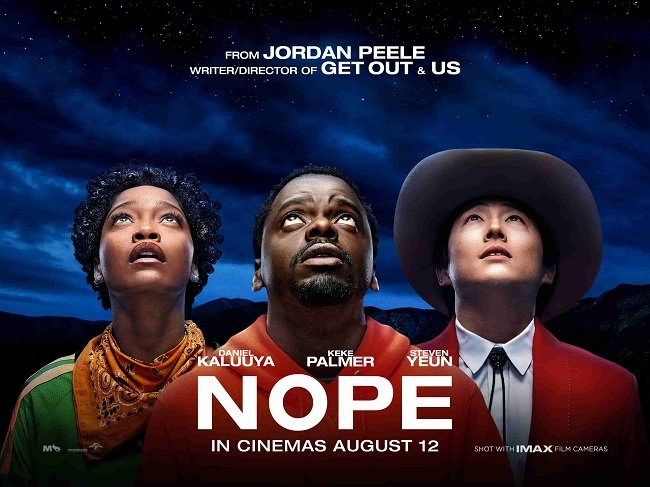
Nope (2022)
In Agua Dulce, California, the Haywood family trains horses for film and TV productions. One day at the Haywood ranch, small metal objects unaccountably fall from the sky. One of which, a nickel, kills Otis Haywood Sr (Keith David). His children, Emerald “Em” Haywood (Keke Palmer) and Otis “OJ” Haywood Jr. (Daniel Kaluuya), continue to run the business. However, due to the loss of a contract, they have to sell some of the horses to Ricky “Jupe” Park (Steven Yeun), who operates a Western theme park called Jupiter's Claim. One night, the Haywood’s notice the electricity supply fluctuating and their horses violently reacting to an unknown presence. They discover that something has been taking their horses and regurgitating inorganic matter, which OJ believes caused their father's death. The Haywood’s decide to obtain proof and subsequently ask electronics store employee and UFO enthusiast, Angel Torres (Brandon Perea) to set up surveillance cameras.
In Agua Dulce, California, the Haywood family trains horses for film and TV productions. One day at the Haywood ranch, small metal objects unaccountably fall from the sky. One of which, a nickel, kills Otis Haywood Sr (Keith David). His children, Emerald “Em” Haywood (Keke Palmer) and Otis “OJ” Haywood Jr. (Daniel Kaluuya), continue to run the business. However, due to the loss of a contract, they have to sell some of the horses to Ricky “Jupe” Park (Steven Yeun), who operates a Western theme park called Jupiter's Claim. One night, the Haywood’s notice the electricity supply fluctuating and their horses violently reacting to an unknown presence. They discover that something has been taking their horses and regurgitating inorganic matter, which OJ believes caused their father's death. The Haywood’s decide to obtain proof and subsequently ask electronics store employee and UFO enthusiast, Angel Torres (Brandon Perea) to set up surveillance cameras.
Nope is a contemporary telling of an old tale. It has many of the standard tropes you expect from the “creature feature” genre but with a contemporary spin. Just as George A. Romero’s Dawn of the Dead is also a vehicle for a critique of capitalism and consumerism, director Jordan Peele tackles a wealth of sociopolitical points via Nope. He dissects modern media culture, internet fame and the relationship between race and employment. There are no traditional white scientists, didactically explaining things and expediting the plot in received English. The protagonists are all blue-collar workers, who speak and act in a realistic manner. The cast are very good, and the characters are interestingly quirky. The screenplay’s innovation comes from showing a group of people who usually are not the traditional participants in such genre movies. Yet they figure things out on their own terms and the conspicuous absence of the military, local police or newspaper reporter is refreshing.
Nope also excels in depicting a truly original monster. One that is genuinely scary because of the nature of the threat. The digital effects are subtle and it is not until the climax of the film that the audience gains a clearer grasp of the nature of the creature. One sequence is reminiscent of a comparable scare in The Borderlands (2013) and some viewers may consider this a step too far. However, if you’ve made it this far then I would argue that you’re pretty much onboard with wherever Nope is going to go. Although it can be argued that being 30 minutes shorter may have helped proceedings. There is an entire subplot involving Ricky “Jupe” Park, who was a child actor in a sitcom with a chimp called Gordy. This fascinating and tragic vignette seems a little incongruous in relation to the main story and may well have worked better as the basis for a separate film. Minor criticisms aside, Nope is creative, different and superior to much of current mainstream horror cinema. However, its niche approach may not be everyone's cup of tea.



Fallen (1998)
Detective John Hobbes (Denzel Washington) visits convicted serial killer Edgar Reese (Elias Koteas), prior to his execution. An unrepentant Reese poses a riddle for Hobbes then lapses into a strange language. He goes to his execution singing “Time Is On My Side” by The Rolling Stones. Shortly after, Hobbes receives an anonymous tip by phone of a murder. On arrival at the crime scene, Hobbes and his partner “Jonesy” (John Goodman) find that the murder victim has been killed in an identical fashion to those killed by Reese. Furthermore, the same riddle has been written on the wall. Despite warnings from his senior officer, Lieutenant Stanton (Donald Sutherland), not to pursue solving the riddle, Hobbes persists in his investigation. It leads to a highly decorated policeman who killed himself under mysterious circumstances and a pattern of events not dissimilar to those that Hobbes is currently facing.
Detective John Hobbes (Denzel Washington) visits convicted serial killer Edgar Reese (Elias Koteas), prior to his execution. An unrepentant Reese poses a riddle for Hobbes then lapses into a strange language. He goes to his execution singing “Time Is On My Side” by The Rolling Stones. Shortly after, Hobbes receives an anonymous tip by phone of a murder. On arrival at the crime scene, Hobbes and his partner “Jonesy” (John Goodman) find that the murder victim has been killed in an identical fashion to those killed by Reese. Furthermore, the same riddle has been written on the wall. Despite warnings from his senior officer, Lieutenant Stanton (Donald Sutherland), not to pursue solving the riddle, Hobbes persists in his investigation. It leads to a highly decorated policeman who killed himself under mysterious circumstances and a pattern of events not dissimilar to those that Hobbes is currently facing.
Fallen did not do well upon its initial release. It received mixed reviews from the critics and failed to recoup its production costs at the box office. However, not being commercially successful doesn’t mean that a film is bad. Sometimes it can be because a film is not marketed correctly and has failed to find its audience. Or that it was released at the wrong time and cinema goers may have been struggling with genre fatigue. If you want a textbook example of this consider the 1989 James Bond film Licence to Kill. This seems to be the case with Fallen (1998), directed by Gregory Hoblit. More recently, opinions have been revised regarding this film and it has developed a cult following. There is definitely more to it than the plot synopsis suggests.
Fallen is a character driven, performance lead, slow burn. An intellectual game of cat and mouse between Hobbes and his potentially supernatural adversary. There are a few minor action scenes but they are not the film’s raison d'être. Instead the script by Nicholas Kazan (who also wrote Matilda and Enough) explores the nature of the “daily” evil that the police face and how it impacts upon their lives. Hobbes is a morally upright man, who tries to do his best, both at work and at home where he looks after his special needs brother and young nephew. The theological elements are handled very discreetly and the protagonists gradual realisation that something potentially supernatural is afoot is managed well. The film doesn’t make the mistake of trying to force a romantic situation between Hobbes and the only major female character in the story.
I suspect that the subtlety of the supernatural elements in Fallen and a distinct lack of any overt genre sensationalism may have contributed to it not being a commercial success. There are similarities between this film and The Hidden (1987) which handles the theme of a transient killer moving from host to host far more graphicly. Such trappings are absent here by choice. However, if you have the patience to apply yourself to a thoughtful, understated, psychological thriller then Fallen has much to offer. The strong cast, especially Washington himself, holds your attention and although the ending may not necessarily be to everyone's liking, it at least brings the story full circle. This is thoughtful genre filmmaking with the emphasis on suspense and a requirement for audiences to think. The latter often alienates a percentage of viewers.
Insidious: The Red Door (2023)
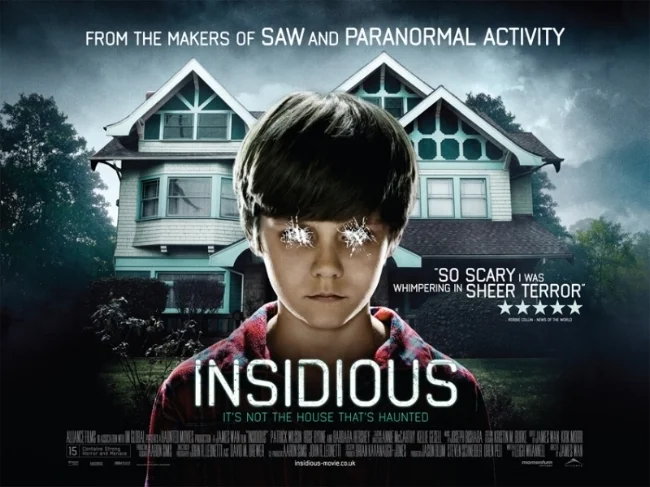
I was surprised to learn that a fifth film had been made in the Insidious franchise. However, I like this series sufficiently well enough to indulge a further entry, especially in light of the fact that the story has returned its focus on the Lambert family. It is also worth noting that lead actor Patrick Wilson who plays Josh Lambert in the first two films directs Insidious: The Red Door. Perhaps the story, which explores the emotional fallout of the previous events, appealed to him both in front and behind the camera. It is this approach to the fifth instalment which keeps things fresh and ensures that the film doesn’t solely revisit familiar territory. That also might also be the reason why this latest instalment didn’t quite get the same critical and commercial traction that previous entries did.
I was surprised to learn that a fifth film had been made in the Insidious franchise. However, I like this series sufficiently well enough to indulge a further entry, especially in light of the fact that the story has returned its focus on the Lambert family. It is also worth noting that lead actor Patrick Wilson who plays Josh Lambert in the first two films directs Insidious: The Red Door. Perhaps the story, which explores the emotional fallout of the previous events, appealed to him both in front and behind the camera. It is this approach to the fifth instalment which keeps things fresh and ensures that the film doesn’t solely revisit familiar territory. That also might also be the reason why this latest instalment didn’t quite get the same critical and commercial traction that previous entries did.
After the events of the first two films, Josh (Patrick Wilson) and Dalton Lambert (Ty Simpkins) are voluntarily hypnotised so that they forget their astral voyage to the Further. Ten years later in the present, Josh has never fully got his life back on track and has subsequently divorced Renai Lambert (Rose Byrne) and is estranged from his children. The family meet up at the funeral of Lorraine Lambert, Josh’s mother and Renai suggests Josh drive Dalton to the university as a means to reconcile. However, the trip ends in an argument that both regret. Dalton is studying art with Professor Armagan (Hiam Abbass) who asks her students to look deep into themselves for inspiration. Dalton discovers hidden memories that manifest themself through his art. His roommate Chris (Sinclair Daniel) soon discovers that Dalton can astral project and the pair wonder if this is the key to unlocking his secret past.
Insidious: The Red Door is a different beast from previous instalments. The first two films are about a family coming apart due to supernatural events, whereas this entry is very much about external events bringing people back together. There is a degree of sentimentality about fathers and sons but it is quite well handled. Josh and Dalton don’t hate each other. They just don’t know each other and the one shared experience that they have is a suppressed memory. This theme is the focus of the plot and hence the demons of the Further are relegated to a more of a supporting role. There are some solidly constructed jump scares, with one taking place in an MRI scanner. They are artfully lit and well constructed, yet they are not quite as impactful as in previous films. Possibly because they are not so pivotal to the story.
Insidious: The Red Door doesn’t suffer from an excess of characters and Dalton has a great foil in his roommate Chris. She is wise and open minded about events and the screenplay doesn’t feel obliged to turn their relationship into a romantic one. There’s a good sense of continuity, with prior characters turning up in inventive ways. Specs (Leigh Whannell) and Tucker (Angus Sampson) appear in a YouTube video and Elise Rainier (Lin Shaye) even manages to make a meaningful appearance. There’s also a poignant scene between Josh and Renai which succinctly explains the inevitable collapse of their marriage. Overall, I thought this to be quite a different sort of sequel but sadly, therein lies the problem. Many viewers wanted a more traditional exploration of the subject and expansion of the lore. Hence Insidious: The Red Door has met with a degree of ambivalence.


Holocaust 2000 (1977)
The commercial and critical success of The Exorcist upon its release in late 1973 led to an increase in major studios investing in big budget, star driven horror films. The Omen (1976) further established this horror renaissance, which moved away from the traditional gothic horror of Hammer Studios and Roger Corman’s AIP releases. Horror was now about evil and biblical predictions manifesting in the modern world. As ever, with any successful film or genre, there are those subsequent productions that seek to imitate and cash-in. Holocaust 2000 is such a film. A British-Italian co-production, it features Kirk Douglas (who does much of the film’s heavy lifting), several well known British character actors and some notably violent set pieces. It takes the fashionable theological threat of the Antichrist and also adds an interesting nuclear angle, where a fusion plant built to solve the energy crisis could prove to be a harbinger of doom.
The commercial and critical success of The Exorcist upon its release in late 1973 led to an increase in major studios investing in big budget, star driven horror films. The Omen (1976) further established this horror renaissance, which moved away from the traditional gothic horror of Hammer Studios and Roger Corman’s AIP releases. Horror was now about evil and biblical predictions manifesting in the modern world. As ever, with any successful film or genre, there are those subsequent productions that seek to imitate and cash-in. Holocaust 2000 is such a film. A British-Italian co-production, it features Kirk Douglas (who does much of the film’s heavy lifting), several well known British character actors and some notably violent set pieces. It takes the fashionable theological threat of the Antichrist and also adds an interesting nuclear angle, where a fusion plant built to solve the energy crisis could prove to be a harbinger of doom.
Industrialist Robert Caine (Kirk Douglas) is looking to build the world’s first nuclear fusion reactor in the Middle East to resolve the energy crisis. While visiting the proposed site with local politicians, journalist Sara Golan (Agostina Belli) shows him a hidden cave where early christians met. It is portentously destroyed during the groundbreaking ceremony. On returning to London Caine finds that his project is strongly opposed. His home is surrounded by protesters and his wife Eva (Virginia McKenna) states she will use her shares in Caine Industries to halt the plan. Eva is subsequently killed by a radical protester whose intended target was Caine himself. Despite this and other setbacks, Caine’s son Angel (Simon Ward) supports the project wholeheartedly and urges him to forge ahead. A chance encounter with a Monsignor (Romolo Valli) on a flight, gives Caine pause for thought. Is the project safe? Does Angel have an ulterior motive? Are there more sinister forces at work?
Director and writer Alberto De Martino was a seasoned Italian filmmaker, having worked as a second unit director for Sergio Leone. Like many genre directors of his time, he had an eye for visual composition and lighting. As ever with Italian genre cinema, the visuals often trump a film’s narrative. There are elements of this in Holocaust 2000. When it is revealed that Robert Caines son, Angel, is the Antichrist there is no explanation as to how this has happened. Also, will Caine’s second son equally be of note. Sadly the screenplay chooses not to explore these points. Instead it invests time and effort in building towards several set pieces. There is a notable dream sequence in which the seven fusion reactors built on towers, rise from the sea and transform into a seven headed hydra. There are some striking death scenes including a nasty accident involving helicopter rotors.
Although Holocaust 2000 treads very familiar territory it has sufficient innovation to keep viewers engaged and benefits greatly from the visual flair inherent in Italian filmmaking. The use of iconic British locations such as Bigbury-on-sea in Devon and Carlton House Terrace in London add to the atmosphere. The cast of solid British actors adds weight to the proceedings. The idea of the Devil using a fusion reactor to destroy the world is clever and the background stories of the energy crisis and the political turmoil in the Middle East are timely. The film is further bolstered by an Ennio Morricone soundtrack. However, several cultural tropes have aged poorly, such as the ageing man with a much younger lover. Kirk Douglas was 61 at the time where co-star Agostina Belli was 30. There’s a plot line where Caine pressurises Sara to have an abortion that feels archaic.
Holocaust 2000, like so many international films, was released in the US and other territories under several different names. It was called Rain of Fire in some prints and The Chosen when it was released in North America by American International Pictures. This version is shorter and has an alternative ending. Where Holocaust 2000 ends ambiguously with Caine fleeing back to Sara’s home in the Middle East, to raise their new child, The Chosen has a more definitive conclusion. Caine flies to Geneva where Angel is holding a board meeting and kills himself and everyone else with a concealed bomb. Sadly the editing and the hastily created miniature effects are poor, undermining the film’s climax. The original ending is the better of the two, reflecting the anxieties of the seventies after several nuclear accidents and the ongoing hostilities between the Arab world and Israel. Italian exploitation cinema doesn’t always try this hard, which makes Holocaust 2000 an interesting entry in the demonology genre.
Amityville 3-D (1983)
The Amityville Horror (1979) performed extremely well commercially upon release. Hence a prequel, Amityville II: The Possession (1982), was made three years later to capitalise on that box office success. Both films are allegedly based upon real events. The first film depicts the haunting of the Amityville house and the events that befell the Lutz family that moved in. The second explores the original DeFeo murders which took place earlier, although here the family is renamed Montelli. A third film, Amityville 3-D, was released in 1983 and is a curious sequel. Unlike previous instalments, it was an original story and did not attempt to mine the wealth of books associated with the Amityville case. It also jumped on the 3-D revival bandwagon that was popular at the time with such films as Friday 13th Part III and Jaws 3-D. It is a very workmanlike production, directed by Richard Fleischer.
The Amityville Horror (1979) performed extremely well commercially upon release. Hence a prequel, Amityville II: The Possession (1982), was made three years later to capitalise on that box office success. Both films are allegedly based upon real events. The first film depicts the haunting of the Amityville house and the events that befell the Lutz family that moved in. The second explores the original DeFeo murders which took place earlier, although here the family is renamed Montelli. A third film, Amityville 3-D, was released in 1983 and is a curious sequel. Unlike previous instalments, it was an original story and did not attempt to mine the wealth of books associated with the Amityville case. It also jumped on the 3-D revival bandwagon that was popular at the time with such films as Friday 13th Part III and Jaws 3-D. It is a very workmanlike production, directed by Richard Fleischer.
After exposing a pair of mediums who have been using the Amityville house for bogus seances, investigative journalist John Baxter (Tony Roberts), decides to buy the property as he is getting divorced and needs a new home. His photographer friend, Melanie (Candy Clark), takes several pictures of John and real estate broker Clifford Sanders (John Harkins) at the house. Shortly afterwards Sanders dies in the attic under mysterious circumstances. When Melanie develops the photos she finds the images of Sanders are distorted and she takes the film and camera to Dr. Elliot West (Robert Joy), at the Institute for Psychic Research. Susan (Lori Loughlin), John’s daughter, is keen to see the alleged haunted house but her mother, Nancy Baxter (Tess Harper), does not want her to stay there. Paranormal events begin to escalate and it becomes clear that a malevolent force is at work.
Amityville 3-D begins by establishing protagonist John Baxter as a dyed in the wool sceptic, who writes about lurid cases in an equally lurid magazine. Initially after buying the Amityville house, all the subsequent supernatural events happen to others. When Baxter asks why he hasn’t experienced anything, Melanie portentously exclaims “maybe the house has other plans for you”. After a deliberate, slow paced first act, several of the lead characters die and it is clear to Baxter that the house is a malign influence. Eventually Dr. West and his team are called in to investigate the Amityville house and its infamous well. This culminates in a climax filled with 3-D special effects with everything bar the kitchen sink being hurled at the camera (including a stuffed swordfish). The story is neatly concluded with an opening for a sequel, yet nothing is really explained beyond a cursory reference to the house being built on an Native American burial ground.
Amityville 3-D starts as a low key supernatural tale with the emphasis on scares, rather than gore. The first death scene harks back to the swarm of flies that attacked Rod Steiger in the first film. The next few set pieces revolve around gusts of freezing wind, a free falling elevator and a bathroom wall that moves. Then at the start of the third act, it all becomes somewhat grimmer with one cast member burnt to death. The climatic demon is also somewhat left field. It’s all somewhat inconsistent as if the production couldn’t quite decide what to do with its competent cast of character actors. There are cinematic nods along the way to The Omen and Poltergeist. The 3-D cinematography leaves the 2.35:1 image a little blurred at the left and right of the frame. The film plays out against a suitably eerie soundtrack written by British composer Howard Blake of The Snowman fame.
Needful Things: Extended TV Cut (1993)
Fraser C. Heston’s 1993 adaptation of Stephen King’s Needful Things did not fare well upon release. Despite having a robust cast of character actors and good production values, it was neither a critical nor commercial success. In more recent years there has been a growing critical reassessment of the film and its lack of success has mainly been attributed to audience fatigue. The eighties and nineties saw a wealth of King adaptations on both the big and small screen. It is also worth noting that condensing the sprawling and character filled books of Stephen King is an incredibly difficult thing to achieve within the parameters of a two hour movie. Which is why the TV miniseries has often proved a more successful format. Which brings me to the extended version of Needful Things that was prepared for television shortly after its theatrical release.
Fraser C. Heston’s 1993 adaptation of Stephen King’s Needful Things did not fare well upon release. Despite having a robust cast of character actors and good production values, it was neither a critical nor commercial success. In more recent years there has been a growing critical reassessment of the film and its lack of success has mainly been attributed to audience fatigue. The eighties and nineties saw a wealth of King adaptations on both the big and small screen. It is also worth noting that condensing the sprawling and character filled books of Stephen King is an incredibly difficult thing to achieve within the parameters of a two hour movie. Which is why the TV miniseries has often proved a more successful format. Which brings me to the extended version of Needful Things that was prepared for television shortly after its theatrical release.
The plot of Needful Things is straightforward. A new antique shop opens in the quiet coastal town of Castle Rock and its charismatic owner, Leland Gaunt (Max von Sydow) has an uncanny ability of discerning his customer needs and providing them with some item that is their heart’s desire. Yet these transactions are often dependent upon a “small service” to be carried out and it is not long before the seeds of discontent are sowed in Castle Rock. As arguments become feuds and feuds end in murder, Sheriff Alan J. Pangborn (Ed Harris) becomes increasingly suspicious of Leland Gaunt and his shop “Needful Things”. As ever with Stephen King, the literary strength of this story stems from the plausibility of his characters and the credibility of small town life that he depicts. These sumptuous details that exist on the page usually have to be cut to the bone when adapting for film. It certainly was a criticism levelled at the theatrical release of Needful Things.
However, shortly after a disappointing box office release, Cable TV network TBS commissioned distributor Columbia Pictures and director Fraser C. Heston to create a longer miniseries edit of three hours, that could air in a four-hour TV time slot with commercial breaks. Hence an hour of previously unused material was added back into the film which mainly extends or appends existing scenes. We see far more of the relationship between Sheriff Pangborn and his fiance, Polly Chalmers (Bonnie Bedelia). There is more exposition of Leland Gaunt manipulating young Brian Rusk (Shane Meier) and the feud between Wilma Jerzyck (Valri Bromfield) and Nettie Cobb (Amanda Plummer) goes through several stages of escalation before ending in murder. The most standout new material is an entire subplot about Cora Rusk (Lisa Blount) who becomes infatuated with a bust of Elvis Presley.
Director Fraser C. Heston integrates the new material skillfully into the extended TV cut subtly changing the pacing and making this version of Needful Things a much slower burn. It remains very much Max von Sydow’s film and the atmosphere increases noticeably when he is on screen. His performance is effortlessly sinister and charming. As this was a version prepared for nineties television there have been some concessions made to that medium. Some profanity has been replaced with alternative, less extreme dialogue but the violence from the theatrical edit remains. The extended TV cut is also presented in an aspect ratio of 4:3 to fit the television sets of the time. Fraser C. Heston has stated that this longer edit is not a director's cut and that he prefers the theatrical edit. Although still flawed, it certainly provides an alternate take on one of Stephen King’s best stories.
Dead Heat (1988)
Throughout the eighties, two of the most commercially successful genres in Hollywood were buddy cop movies and horror films. Therefore it was inevitable that someone, somewhere would eventually combine them. Dead Heat is a comedy action movie with both horror and science fiction elements. If you think such an eclectic blend of themes is a little incongruous, then watching the movie will validate your assumption. All things considered, Dead Heat is a bit of a mess. However, despite its faults, of which there are several, it remains quite an enjoyable film. A textbook example of the over the top eighties action movie, utterly removed from established police procedures and indeed reality. It is also one of two feature films directed by renowned film editor, Mark Goldblatt, whose credits include Rambo: First Blood Part II, RoboCop and Terminator 2: Judgment Day.
Throughout the eighties, two of the most commercially successful genres in Hollywood were buddy cop movies and horror films. Therefore it was inevitable that someone, somewhere would eventually combine them. Dead Heat is a comedy action movie with both horror and science fiction elements. If you think such an eclectic blend of themes is a little incongruous, then watching the movie will validate your assumption. All things considered, Dead Heat is a bit of a mess. However, despite its faults, of which there are several, it remains quite an enjoyable film. A textbook example of the over the top eighties action movie, utterly removed from established police procedures and indeed reality. It is also one of two feature films directed by renowned film editor, Mark Goldblatt, whose credits include Rambo: First Blood Part II, RoboCop and Terminator 2: Judgment Day.
“Loose cannon” LAPD cops, Roger Mortis (Treat Williams) and Doug Bigelow (Joe Piscopo), are hot on the trail of a gang that are robbing jewellery stores. After a chaotic shootout the gang are shot dead and the subsequent autopsies by coroner Dr. Rebecca Smythers (Clare Kirkconnell) indicates that they were dead prior to the robberies. Doug and Roger follow a lead to Dante Pharmaceutical, a company owned by millionaire industrialist Arthur P. Laudermilk (Vincent Price). While investigating the company headquarters, Roger is attacked by another animated corpse. After suffocating in a decompression chamber, Roger is resurrected via an experimental machine that Rebecca and Doug have discovered in a secure laboratory. However, Roger’s new lifespan is only twelve hours, giving him little time to complete his investigation.
Dead Heat telegraphs exactly what sort of film it is within the first ten minutes. The reanimated thieves are dense comic foils to the cool detectives who endorse their clichéd credentials by driving around in a convertible and playing “upbeat rock music” (according to the Blu-ray subtitles). Treat Williams is the suit wearing straight guy, where Joe Piscopo is the “chews with his mouth open”, uncouth sidekick with a mullet. The latter of the two lead characters will either irritate or amuse you. The jokes are a bit hit and miss and due to the brevity of the theatrical edit, the story line doesn’t quite add up. There are several other versions of the film with some additional scenes that do make the plot a little more linear. However, the action scenes are suitably excessive and the prosthetic effects are very well realised. Sadly, many of them did not make it into the US theatrical version in their entirety due rating restrictions at the time.
Dead Heat is fast paced and never dull, with Treat Williams doing much of the heavy lifting. Veteran character actor Darren McGavin also delivers, despite the screenplays shortcomings and his limited screen time. Keye Luke (Gremlins) and Robert Picardo (Star Trek: Voyager) also have cameo appearances. But the standout scene of the entire film is when Roger and Doug follow a lead to a Chinese restaurant which has a prototype resurrection machine. This results in a multitude of items on the menu coming back to life and attacking our heroes. It is filled with old school, practical effects and is both unpleasant and droll. So if you can accommodate the plot holes, the tonal inconsistency and Joe Piscopo’s “love him or loathe him” performance, then Dead Heat may well amuse you. It is very much a product of its time and is the sort of film that would struggle to find a backer these days.
Nightmares (1983)
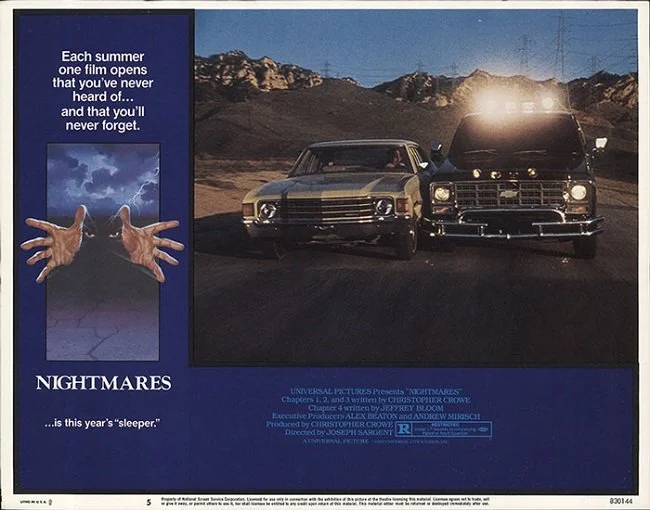
Due to the commercial success of George A. Romero’s Creepshow in 1982 and the Twilight Zone: The Movie in 1983, there was a resurgence of anthology horror films in the eighties and nineties. Nightmares is one of many “portmanteau movies” that followed and is neither the worst, or the best that the genre has to offer. Originally conceived as a pilot for a NBC TV show, the completed film was deemed too “intense” for television and eventually released theatrically with an “R” rating. Judged by today’s standards, it is not especially violent and the strongest content is in the first chapter of the four part story. Written by Jeffrey Bloom and Christopher Crowe, both of whom have a background in popular seventies television, Nightmares has the look and feel of a TV production.
Due to the commercial success of George A. Romero’s Creepshow in 1982 and the Twilight Zone: The Movie in 1983, there was a resurgence of anthology horror films in the eighties and nineties. Nightmares is one of many “portmanteau movies” that followed and is neither the worst, or the best that the genre has to offer. Originally conceived as a pilot for a NBC TV show, the completed film was deemed too “intense” for television and eventually released theatrically with an “R” rating. Judged by today’s standards, it is not especially violent and the strongest content is in the first chapter of the four part story. Written by Jeffrey Bloom and Christopher Crowe, both of whom have a background in popular seventies television, Nightmares has the look and feel of a TV production.
The first story, Terror in Topanga, follows a homicidal patient who escapes from a mental institution and attacks a police officer. Meanwhile, chain smoking housewife Lisa (Christina Raines) drives to the local store to buy cigarettes. Will their paths cross? The second chapter, The Bishop of Battle, follows teenager J.J. (Emilio Estevez) obsessive battle to reach the mysterious thirteenth level of a video game in his local arcade. J. J. learns that all is not quite as it appears. The third chapter, The Benediction, stars Lance Henriksen as priest Frank MacLeod, who leaves his parish after a crisis of faith. He is stalked on a remote desert road by a black pickup truck that has murderous intent and potentially supernatural origins. The final chapter, Night of the Rat, features a suburban family (Richard Masur, Veronica Cartwright and Brigette Andersen) being menaced by a particularly large and intelligent rat.
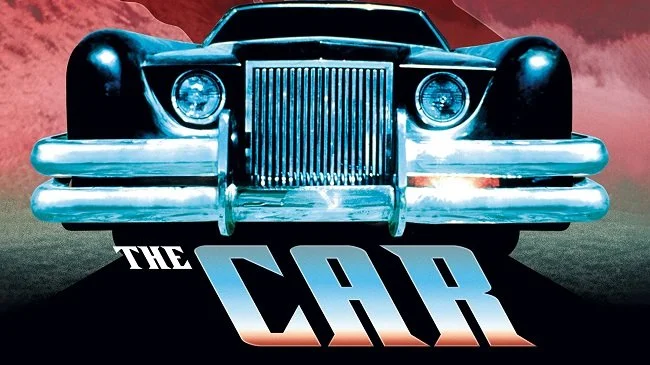
Nightmares is efficiently directed by veteran filmmaker Joseph Sargent. However, the inherent problem with portmanteau films is ensuring that all stories are equally engaging. Sadly that is not the case here. Terror in Topanga is the most efficient of the four chapters. It sets out its stall and delivers a suitable climax to its story arc. But the next instalment, The Bishop of Battle is a major tonal shift from horror to fantasy and an obvious and uninspired tale. The Benediction offers a variation on an established theme (see Duel or The Car) but is carried by the presence of Lance Henriksen. Night of the Rat, which was intended to be the bravura ending to Nightmares, is somewhat stilted due to a weak script and an unlikeable lead character. Yet despite these inconsistencies Nightmares doesn’t out stay its 99 minute running time. It manages to get its pacing right. Something other anthologies often fail to do.
When viewed with a contemporary eye, Nightmares has some interesting points of interest. Setting aside the trope of the escaped murderer, Terror in Topanga uses smoking as a central plot device. Something that seems somewhat archaic today. The Bishop of Battle provides a window not only on arcade culture from the eighties but touches upon hardcore punk, with songs by Black Flag and Fear. The Benediction features a truck stunt that was used heavily in the marketing of the film. Such a thing would nowadays be done digitally, but here it is a physical effect and more impressive for it. Overall, Nightmares now serves mainly as a nostalgic reminder of the popularity of the anthology genre during the horror boom of the eighties. It is an amusing diversion for those well disposed towards such material and may play better to those who grew up during this era.

Crawl (2019)
It is no secret that the film industry relies on a handful of common tropes as the mainstay of their cinematic output. It uses timeless themes, storylines and archetypes that have featured in folk tales, plays and literature throughout history. Hence their familiarity with audiences around the world. Where the skill in filmmaking lies is to take a common, well known idea and interpret it in a new and innovative fashion. Akira Kurosawa took Shakespeare’s MacBeth and retold the tale through the prism of Japanese feudalistic culture. The result, Throne of Blood, is considered a masterpiece. Similarly, The Lion King retells the same story through the medium of animation and anthropomorphic wildlife. All of which proves that the key to successfully retelling a familiar tale is to be creative with regard to setting, presentation and perspective.
It is no secret that the film industry relies on a handful of common tropes as the mainstay of their cinematic output. It uses timeless themes, storylines and archetypes that have featured in folk tales, plays and literature throughout history. Hence their familiarity with audiences around the world. Where the skill in filmmaking lies is to take a common, well known idea and interpret it in a new and innovative fashion. Akira Kurosawa took Shakespeare’s MacBeth and retold the tale through the prism of Japanese feudalistic culture. The result, Throne of Blood, is considered a masterpiece. Similarly, The Lion King retells the same story through the medium of animation and anthropomorphic wildlife. All of which proves that the key to successfully retelling a familiar tale is to be creative with regard to setting, presentation and perspective.
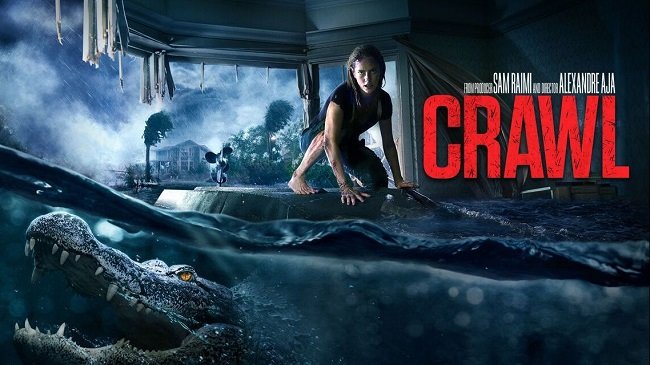
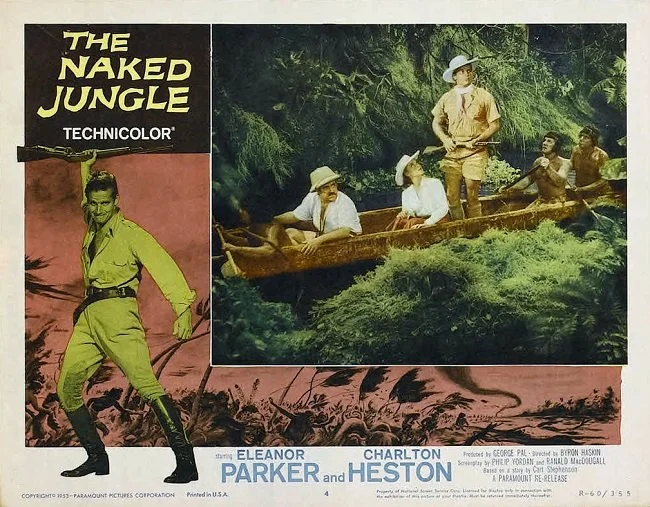
Which neatly brings me to Crawl. A creature feature where the central “McGuffin” is a group of people trapped by wayward wildlife. Hollywood has explored this plot device many times before. Consider The Naked Jungle (1954) in which Charlton Heston faces a swarm of South American ants. Then there is Hitchcock’s The Birds (1963). More recently Bait (2012) features a group of people trapped in a flooded supermarket along with a Great White Shark after a tsunami. Crawl (2019) has a father and daughter trapped in a house during a hurricane. Due to the Florida setting the dangerous beasties are Alligators on this occasion. What makes the film a cut above the average genre outing is a solid script with plausible characters and a decent cast that give life to the proceedings. Director Alexandre Aja builds a genuine sense of tension and punctuates the 87 minute running time with some robust set pieces.
Filmed in Belgrade, the production seamlessly recreates Florida. The digital effects convincingly depict a hurricane and the Alligators are a mixture of animatronics and CGI. But the film’s greatest assets are the main performances by Kaya Scodelario as Haley Keller and Barry Pepper as Dave Keller. Daughter Haley is an aspiring swimmer and her estranged father Dave is her former coach. The screenplay by Michael Rasmussen and Shawn Rasmussen keeps the scope of the narrative simple and immediate, resulting in a plausible family dynamic. The wider cast is minimal and although some characters are merely “red shirts” intended to expedite the threat of the Alligators with their timely deaths, the screenplay doesn’t treat them in a totally arbitrary fashion. The scenes of violence, are well realised, suspenseful and surprisingly unpleasant.
Crawl is content to stick within the parameters it has set itself and concentrates on telling its story to the best of its ability. There is an assumption from some critics that genre movies are by their nature, no more than the sum of their parts. Those with a more enlightened perspective believe that all types of film can craft well told stories and explore deep themes. Crawl is a prime example of an old story told from a fresh and different perspective. Yes, it does include horror elements but that is not all that it has to offer. At its heart this is a film about the perennial theme of fathers and daughters, which Crawl explores this well. It also has a point to make about climate change. However, if you’re just looking for a quality creature feature, complete with jump scares and grisly shocks, then the film also delivers this in spades.
Speak No Evil (2022)
The plot of Speak No Evil is an exploration of what can happen when someone driven by a cultural urge to be polite and avoid any form of confrontation, encounters a psychopath who exploits their very nature. Speak No Evil is a very European psychological horror and I stress that point because this film will not necessarily play well to audiences who are not so familiar with such institutionalised deference or passivity. Danish writer and director Christian Tafdrup skilfully and slowly builds the tension, but the plot contrivances of the final act do somewhat mitigate its credibility. Hence realism gives way purely to threat and suspense. If you’re the sort of viewer who can countenance that different cultures, age groups and political leanings can dramatically impact upon one’s behaviour, then you may well get through Speak No Evil. If you struggle to come to terms with the poor decisions made in an episode of Scooby Doo then Speak No Evil will leave you screaming at your TV.
The plot of Speak No Evil is an exploration of what can happen when someone driven by a cultural urge to be polite and avoid any form of confrontation, encounters a psychopath who exploits their very nature. Speak No Evil is a very European psychological horror and I stress that point because this film will not necessarily play well to audiences who are not so familiar with such institutionalised deference or passivity. Danish writer and director Christian Tafdrup skilfully and slowly builds the tension, but the plot contrivances of the final act do somewhat mitigate its credibility. Hence realism gives way purely to threat and suspense. If you’re the sort of viewer who can countenance that different cultures, age groups and political leanings can dramatically impact upon one’s behaviour, then you may well get through Speak No Evil. If you struggle to come to terms with the poor decisions made in an episode of Scooby Doo then Speak No Evil will leave you screaming at your TV.
Speak No Evil superficially is the story of a Danish family who befriends a Dutch family while on holiday. Formal and polite, Bjørn (Morten Burian) and Louise (Sidsel Siem Koch) are enamoured and impressed by the brash Patrick (Fedja van Huêt) and the warmth of Karin (Karina Smulders). Their much beloved daughter Agnes (Liva Forsberg) finds a companion in Patrick and Karin's shy and retiring son Abel (Marius Damslev). After the holiday, when a postcard arrives inviting them to spend a weekend with their new friends in their remote, rural cabin in the Dutch countryside, it seems like a perfect opportunity to further enjoy the new family friendship. “What's the worst that could happen?” Bjørn jokes, ironically telegraphing that the worst is not only coming but that it is going to be a very grim journey.
The cast of Speak No Evil is very good as they experience social faux pas then physical coercion. Morten Burian (Bjørn) is infuriatingly passive, self loathing and conflicted but his performance is worryingly credible. Sidsel Siem Koch (Louise) seems genuinely intimidated by Fedja van Huêt (Patrick) who exudes volatility, where Karina Smulders (Karin) is deliberately ill defined. Is she also being coerced or a more subtle manipulator? However, despite solid performances, Speak No Evil struggles to maintain all the themes and motifs it touches upon during its first act. The big reveal it’s been heading towards is a little too contrived and once it has been established, the protagonist's behaviour becomes hard to identify with. When the violence comes it is quite stark and jarring. The ending doesn’t answer the question of motive, relying on the old trop of “evil people are evil”.
Speak No Evil has some good ideas at its core. One could argue that it explores many talking points about contemporary culture and gender roles. Are modern European men too worried about risk and conflict? Has the modern habit of self examination gone too far and left those who do so powerless to make decisions? Is the need to please a social blessing or a curse? However, a better film would bring us to the conclusion via a less obvious route. It becomes very clear that Speak No Evil is going from A to B to C come hell or highwater and it shows in the final act. Furthermore, I have no problems with horror films with a message. Dawn of the Dead, for example, is as pertinent today as it was back in 1978. But I’m seldom impressed when a message driven story co-opts the horror genre out of convenience. It strikes me as very insincere and confected. And that is how I felt after watching Speak No Evil. That and the fact that the film seems too pleased with itself, when it really has no right to be.
Tales of Terror (1962)
Directed by Roger Corman, Tales of Terror is an anthology horror film based upon three short stories by Edgar Allan Poe. “Morella”, “The Black Cat” and “The Facts in the Case of M. Valdemar”. Adapted by Richard Matheson, the screenplay offers a ghoulish tale of revenge, a humorous story of a drunk who murders his wife and her lover and a sinister story of a mesmerist who hypnotises a terminally ill man at the point of death. Deftly produced and looking far more sumptuous than you’d expect from such a modest budget film, Tales of Terror benefits from a strong cast of old school, Hollywood character actors. The anthology format affords each story a fairly prompt and ghoulish climax and as ever with the films of Roger Corman from this period, visual creativity and innovation elevate the proceedings above the standard exploitation fare of the time.
Directed by Roger Corman, Tales of Terror is an anthology horror film based upon three short stories by Edgar Allan Poe. “Morella”, “The Black Cat” and “The Facts in the Case of M. Valdemar”. Adapted by Richard Matheson, the screenplay offers a ghoulish tale of revenge, a humorous story of a drunk who murders his wife and her lover and a sinister story of a mesmerist who hypnotises a terminally ill man at the point of death. Deftly produced and looking far more sumptuous than you’d expect from such a modest budget film, Tales of Terror benefits from a strong cast of old school, Hollywood character actors. The anthology format affords each story a fairly prompt and ghoulish climax and as ever with the films of Roger Corman from this period, visual creativity and innovation elevate the proceedings above the standard exploitation fare of the time.
Tales of Terror is the fourth entry into the Roger Corman’s series of adaptations of the work of Edgar Allan Poe and the first to use the portmanteau format. Vincent Price makes a return after being absent in the previous entry Premature Burial which starred Ray Milland. Price demonstrates his acting prowess not only in three lead roles but by also providing the linking narration that frame all the stories. The short nature of each story doesn’t afford an opportunity for any in depth character development, hence the presence of a cast of robust and charismatic actors is invaluable in bolstering the narrative. The financial success of the previous instalments of the series meant that there was a greater budget available for the cast. Hence Price is joined by two stalwarts from the golden age of Hollywood; Peter Lorre and Basil Rathbone.
As ever with Corman productions, the production design by Daniel Haller is handsome and the sets are cleverly contrived to look more opulent than they actually are. Many have been recycled from previous production. Cinematographer Floyd Crosby, a long time collaborator of Roger Corman productions, lights the proceedings in an atmospheric way. This is especially noticeable in the last story, in which the mutlicoloured light used by mesmerist Mr. Carmichael (Basil Rathbone), bathes the actors in red, blue and yellow light in turn. There are also several sequences that use optical effects to distort the film image and give the stories a suitably supernatural ambiance. They also mask the basic nature of some of the make up effects. Legendary special effects artist Albert Whitlock created two notable matte paintings for the film. The Locke residence next to the sea and the Valdemar mansion nestled among the trees.
Tales of Terror presents an interesting change of approach from the earlier Roger Corman adaptations of the work of Edgar Allan Poe. The anthology format has both strengths and weaknesses. It provides a convenient means to swiftly build up to a climatic shock and offers three stories instead of one. Yet the strong cast have to rely on their established cinematic personalities to carry each story, as the script doesn’t offer much beyond what you see. Perhaps the most noticeable deviation from prior Poe adaptations is the humorous tone of the second story, The Black Cat. Peter Lorre is an amusing drunk and doesn’t really come across as a potential threat and murderer. However, despite this tonal shift, Tales of Terror remains a well crafted and enjoyable example of US Gothic horror form the sixties. Although similar in many ways to the UK’s Hammer productions, Corman’s work has a very different look and feel to it.
Scream and Scream Again (1970)
I first saw Scream and Scream Again as a teenager while watching late night television. I was expecting the usual sort of lurid, seventies, exploitation horror and much to my surprise was met with something quite different. The film left a marked impression upon me and so I decided to re-watch it recently. This second viewing only further compounded my sense of surprise. Scream and Scream Again was clearly marketed as a horror film upon release but it strays more into the science fiction genre. I was reminded of Don Siegel’s Invasion of the Body Snatchers and there is a further hint of conspiracy thrillers such as The Parallax View. Although a low budget film, quickly made to meet production schedule and fill a gap in the market, Scream and Scream Again has an intriguing premise and is presented in an engaging format, with three seemingly separate stories coming together to form a rather sinister conclusion. There are more ideas here than you’ll find in many big budget contemporary movies.
I first saw Scream and Scream Again as a teenager while watching late night television. I was expecting the usual sort of lurid, seventies, exploitation horror and much to my surprise was met with something quite different. The film left a marked impression upon me and so I decided to re-watch it recently. This second viewing only further compounded my sense of surprise. Scream and Scream Again was clearly marketed as a horror film upon release but it strays more into the science fiction genre. I was reminded of Don Siegel’s Invasion of the Body Snatchers and there is a further hint of conspiracy thrillers such as The Parallax View. Although a low budget film, quickly made to meet production schedule and fill a gap in the market, Scream and Scream Again has an intriguing premise and is presented in an engaging format, with three seemingly separate stories coming together to form a rather sinister conclusion. There are more ideas here than you’ll find in many big budget contemporary movies.
A jogger running through suburban London collapses in the street. He wakes up in a hospital bed, tended by a mute nurse. He lifts the bed sheets to discover his right leg has been amputated. He starts to scream. Elsewhere, in an unidentified Eastern European totalitarian state, intelligence operative Konratz (Marshall Jones) returns home for a debriefing with his superior, Captain Schweitz (Peter Sallis). During the meeting Konratz reveals some information he isn’t supposed to know, arousing Schweitz’s suspicion. Konratz calmly kills him by placing his hand on his shoulder, paralysing him. In London Detective Superintendent Bellaver (Alfred Marks) investigates the rape and murder of a young woman, Eileen Stevens. Supt. Bellaver and forensic pathologist Dr. David Sorel (Christopher Matthews) interview her employer Dr. Browning (Vincent Price) who is unable to provide any information. Meanwhile another young woman, Sylvia (Judy Huxtable), is picked up by a tall man named Keith (Michael Gothard) at a nightclub. She later found dead and completely drained of blood
Scream and Scream Again has a strong cast featuring horror stalwarts such as Vincent Price, Christopher Lee and Peter Cushing. However due to the three distinct story lines they do not often cross paths or share much screen time together. Performances are solid with British character actors such as Peter Sallis and Julian Holloway filling minor roles. The screenplay by Christopher Wicking is fast paced and handles the complexity of the different plot threads well. Alfred Marks has some suitably droll and cynical dialogue that is becoming of a senior and cynical career police officer. Again I must mention that the proceedings feel far more like a thriller. There’s a particularly well staged car chase in a rural setting, culminating at a chalk quarry, which has a real sense of speed and inertia. The night club scene briefly features the Welsh psychedelic rock group Amen Corner who also provide a song which plays over the end credits.
For those who are expecting a bonafide horror film, then there’s little on screen violence. The storyline featuring the jogger who has his limbs amputated one by one is disconcerting but far from graphic as you only ever see him recovering in bed. The nightclub serial killer is similarly far from graphic with the emphasis on him chasing his prey. Yet despite the absence of overt violence, there is a very unsettling undertone to Scream and Scream Again and it builds to a suitably grim climax. The film’s modest budget does let it down in some areas. The make up and practical special effects are somewhat cheap, especially the acid bath which appears mainly to be dishwashing detergent. Yet despite these minor shortcomings, the film is a prime example of low budget innovation and how good ideas can carry a production. Scream and Scream Again stands out because it is not afraid to do something different. It is not only a genre anomaly but also a rather interesting and enjoyable film.
The Mezzotint (2021)
In 1922, middle-aged University Don Edward Williams (Rory Kinnear), is sent a somewhat “indifferent” mezzotint (a monochrome print made from an engraved copper or steel plate) on approval from one of his regular art dealers. On arrival the mezzotint features an unidentified English country house and has no distinguishing features to merit its price. Later that day, Williams shows the print to Binks (John Hopkins), a colleague he plays golf with. He comments that the moonlight is quite well done and there appears to be a figure just on the right of the image. Williams is puzzled that he hadn’t noticed it before. That evening Garwood (Robert Bathurst), a fellow academic, studies the picture and comments on a “grotesque” figure. When Williams checks again before going to bed there is now clearly a shroud covered shape crawling across the lawn in the mezzotint. Williams confers with his friends as to what they have seen, as it becomes clear that the picture is trying to show them something.
In 1922, middle-aged University Don Edward Williams (Rory Kinnear), is sent a somewhat “indifferent” mezzotint (a monochrome print made from an engraved copper or steel plate) on approval from one of his regular art dealers. On arrival the mezzotint features an unidentified English country house and has no distinguishing features to merit its price. Later that day, Williams shows the print to Binks (John Hopkins), a colleague he plays golf with. He comments that the moonlight is quite well done and there appears to be a figure just on the right of the image. Williams is puzzled that he hadn’t noticed it before. That evening Garwood (Robert Bathurst), a fellow academic, studies the picture and comments on a “grotesque” figure. When Williams checks again before going to bed there is now clearly a shroud covered shape crawling across the lawn in the mezzotint. Williams confers with his friends as to what they have seen, as it becomes clear that the picture is trying to show them something.
The Mezzotint is part of the A Ghost Story for Christmas series of short television films, produced by the BBC somewhat intermittently since 1971. More recently, writer, director and actor Mark Gatiss has resurrected this franchise and produced several adaptations of short stories by the great M. R. James. The Mezzotint is his latest production and was broadcast on Christmas Eve 2021. Running for just 30 minutes Gatiss builds an unsettling atmosphere as the story progresses.The changes that take place in the print are not dwelt upon onscreen but instead he focuses upon the impression they make on those who are looking. Rory Kinnear excels as the befuddled bachelor who begins to feel a sense of impending doom. There is also a strong cameo appearance by Frances Barber as Mrs. Ambrigail, an amateur historian. Scottish composer Blair Mowat provides a succinct and creepy score which adds to the overall ambience.
The original short story is set in 1904 and takes place mainly in the rooms of the various protagonists at the University. Although it is a sinister tale, it lacks a suitably strong ending, hence Mark Gatiss has chosen to expand the storyline. The drama is now set in 1922 and the staff of the University are debating whether to allow women students to study for degrees. To make the story a little less male-centric some characters have been changed to women; a University Porter becomes a Housekeeper. The most significant addition to the story is a subplot regarding William’s ongoing investigations into his family tree. Hence Mrs. Ambrigail, the Vicar’s wife, searches through the various parish records. This thread has a major impact upon the climax of The Mezzotint which in this adaptation ends with a substantial “Jamesian wallop” (the unofficial term for a shock or surprise twist in the stories of M. R. James).
Some purists have balked at the embellishments and changes that have been made to this adaptation. If you’re of a similar mind, then you may be better off listening to an audiobook version of the original short story. There is a very good collection read by David Collings available. However, I am of the view that the story requires expanding to lend itself to the requirements of television and I feel that the widening of the plot and additional ending are to the drama’s overall benefit. Mark Gatiss is clearly a consummate fan of M. R. James and I feel his screenplay is very sympathetic to the source text. As for the “Jamesian wallop” at the story’s denouement, I believe this is consistent with the author’s style which often featured a grotesque and eldritch flourish at the end of a story. I hope that the BBC has the good sense to commission further adaptations from Mark Gatiss so that the A Ghost Story for Christmas series can continue.
Resident Evil: Welcome to Raccoon City (2021)
I have seen 2 of the 6 films in the Resident Evil cinematic franchise. Beyond the actor Colin Salmon getting diced into cubes by some laser grid, I cannot recollect anything specific about those movies. That is how much of an impression they made upon me. My interest in the first film came from George A. Romero’s initial association with the production. However, when he left the project my attention waned. I eventually saw Resident Evil (2002) when it was released to the home media market and that was the end of the matter. It was an adequate, quick fix of entertainment and nothing more. As I had no major association with the video game franchise beyond playing Resident Evil: Code Veronica on the Dreamcast, I subsequently didn’t keep up with the subsequent movie beyond the first sequel. However, the franchise went on to gross $1.25 billion at the box office over the next 14 years.
I have seen 2 of the 6 films in the Resident Evil cinematic franchise. Beyond the actor Colin Salmon getting diced into cubes by some laser grid, I cannot recollect anything specific about those movies. That is how much of an impression they made upon me. My interest in the first film came from George A. Romero’s initial association with the production. However, when he left the project my attention waned. I eventually saw Resident Evil (2002) when it was released to the home media market and that was the end of the matter. It was an adequate, quick fix of entertainment and nothing more. As I had no major association with the video game franchise beyond playing Resident Evil: Code Veronica on the Dreamcast, I subsequently didn’t keep up with the subsequent movie beyond the first sequel. However, the franchise went on to gross $1.25 billion at the box office over the next 14 years.
So it comes as no surprise that after a gap of 5 years that the film series has now been rebooted with Resident Evil: Welcome to Raccoon City. I’m sure that the success of new video games as well as remakes of earlier instalments have highlighted to the cinematic rights holders that “there's gold in them thar hills”. Like it’s predecessors Resident Evil: Welcome to Raccoon City is what is broadly termed as a “medium budget” production (between $2 - 80 million). The cast is largely made up of television actors and the majority of the film takes place in building interiors. Despite it’s $25 million production costs Resident Evil: Welcome to Raccoon City does not look cheap. The location photography is suitably convincing and sells the idea of a remote, snowbound industrial town in the midwest American mountains. Compared to earlier films, this reboot seems to draw far more heavily upon the story and the atmosphere of the first two video games. It is this aspect that is the film’s best asset but also its weakness.
In 1998, Claire Redfield (Kaya Scodelario) travels back to her childhood town of Raccoon City, in the mountains of the midwest. She gets a lift from a trucker who subsequently runs over a woman who appears to just step out into the road. When the pair get out to investigate, the body mysteriously vanishes leaving only a pool of blood. On arrival in Raccoon City, Claire visits her estranged brother Chris (Robbie Amell), a cop in the RPD. The police department consists of a skeleton crew as the town is being closed by its owners, the Umbrella Corporation, who are relocating their business interests elsewhere. It is not long until police officers go missing and the town inhabitants start exhibiting signs of a dangerous contagion. Claire soon discovers that Dr. William Birkin (Neal McDonough), a sinister physician from the orphanage in which she was raised, is involved in secret experiments on behalf of the Umbrella Corporation.
Movies based upon video game franchises do not have the most impressive track record with regard to being creative and innovative cinematic endeavours. My expectations for Resident Evil: Welcome to Raccoon City were very low. However, upon viewing I found the film to be satisfactory. I know this sounds very much like damning with faint praise but this is a perfectly adequate horror movie which offers an acceptable experience for those unfamiliar with the source material, as well as a reasonable interpretation of the first two games in the series. There are some clever references such as a scene where Chris is in a darkened room trying to illuminate it with a faulty zippo lighter. Each time it briefly lights it shows zombies getting closer. As the story takes place in the nineties there are some nice pop culture references such as data being held on a PalmPilot. Cinematographer, Maxime Alexandre, lights the proceedings in the style of Mario Bava. Johannes Roberts directs with enthusiasm.
To put things in perspective when I say adequate, I mean moderately entertaining. Resident Evil: Welcome to Raccoon City does not reinvent the wheel in any way, shape or form. Characters are painted with broad strokes and some function purely as Redshirts. Performances are okay but this is not really a film driven by acting prowess but by action set pieces and gore. The latter is present and sufficiently entertaining. Although there are CGI bullet hits and blood spray, there are also some quite good physical effects. As I previously mentioned the story focuses upon the claustrophobic elements of the video games and has a very straightforward narrative arc. Hence the story is somewhat simplistic. It may give those familiar with Resident Evil what they want but casual viewers only get a fairly basic linear story. However, it provides enough action and gore to suffice along with a modicum of wit and style. There are far worse horror films to invest your time in.