
The Price of a Freddo as an Economic Indicator
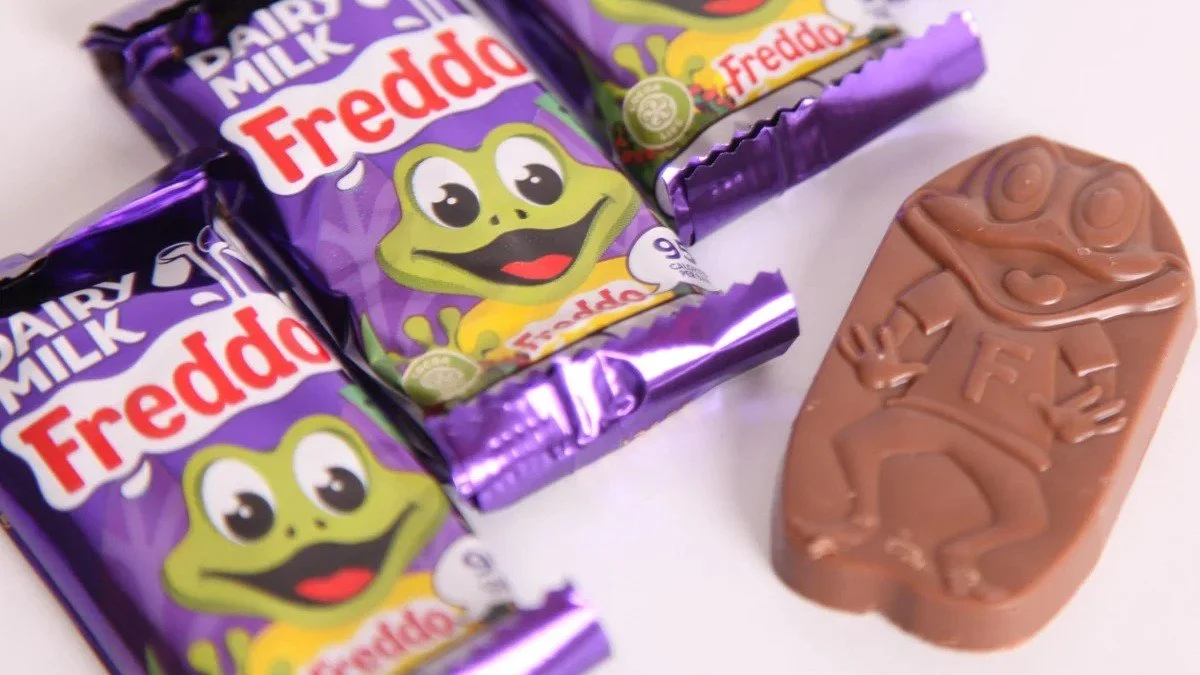
Before we start, let me explain to those readers outside of the UK, the significance of a Dairy Milk Freddo chocolate bar and its relevance to this post. The “Freddo” is an 18g (0.63 oz) chocolate bar, in the shape of an anthropomorphic frog. When it was re-launched by Cadbury in 1990 (it had previously been manufactured by an Australian confectionery company in the seventies), it was priced at 10p (£0.10). It remained at that price until 2005 when a 1p to 2p increase began to occur each year. By 2016 Freddos were retailing at 25p. However, the following year the price “lept” to 30p with an increase that was double its usual yearly rise. This led to public outrage across social media. Since then the price of a Freddo has waxed and waned. Tesco supermarket reduced the price back to 10p as part of their centenary celebrations. The post COVID price in 2022 hit 49p. At present, the average price of a Freddo in the UK is somewhere around 35p.
Before we start, let me explain to those readers outside of the UK, the significance of a Dairy Milk Freddo chocolate bar and its relevance to this post. The “Freddo” is an 18g (0.63 oz) chocolate bar, in the shape of an anthropomorphic frog. When it was re-launched by Cadbury in 1990 (it had previously been manufactured by an Australian confectionery company in the seventies), it was priced at 10p (£0.10). It remained at that price until 2005 when a 1p to 2p increase began to occur each year. By 2016 Freddos were retailing at 25p. However, the following year the price “lept” to 30p with an increase that was double its usual yearly rise. This led to public outrage across social media. Since then the price of a Freddo has waxed and waned. Tesco supermarket reduced the price back to 10p as part of their centenary celebrations. The post COVID price in 2022 hit 49p. At present, the average price of a Freddo in the UK is somewhere around 35p.
Although to the layman the price of a Dairy Milk Freddo chocolate bar may seem somewhat trivial, it has started to appear as some sort of economic indicator in the tabloid press and in mainstream political discourse. This was further compounded in October 2024, Labour MP Patrick Hurley launched a campaign to reduce the price of the Freddo as a way to engage young people in politics and discussions about the cost of living crisis. Although it was as somewhat light-hearted statement, the use of a Freddo as an accessible frame of reference, does have some merit. It is easily defined and quantified, as well as being very easily recognised. However, does such a consumer item serve any real use in economic discourse? Funnily enough, the answer is actually, “yes”, although it is mainly as an illustration of inflation, rather than a genuine economic indicator.
The Freddo works unusually well in public discussion because it is familiar, inexpensive and easily remembered. Many people recall it costing about 10p during the 1990s and early 2000s, whereas it now commonly costs roughly 30–35p, although individual retailers may charge considerably more. That makes the cumulative effect of rising prices immediately comprehensible in a way that an abstract index number often is not. A Freddo can be used as a small case study for the following:
Price inflation: How the nominal price of a fixed product rises over time.
Shrinkflation: Whether the weight or quantity changes as well as the price.
Price stickiness: Inexpensive products often remain at one conspicuous price for years, then rise in relatively large steps rather than moving smoothly.
Supply chains and costs: Chocolate involves cocoa, milk, sugar, energy, packaging, transport, labour and retail margins.
Consumer psychology: People notice frequent and familiar purchases more than many larger but less frequent expenses.
That last point is economically important. Bank of England research has found that food prices have a disproportionately strong influence on British households’ perceptions and expectations of inflation. Other research similarly indicates that consumers tend to form their inflation expectations partly from the grocery prices they personally encounter. A memorable item such as a Freddo can therefore tell us something about how inflation is perceived and discussed, even when it tells us little about the true overall inflation rate.
However, the Freddo is just one branded product, made by one company and sold by retailers with different pricing strategies. Its price may change because of promotions, profit margins, packaging decisions, brand positioning or a manufacturer’s desire to maintain a convenient price point. Indeed, analysis of its production costs suggests that fluctuations in the cocoa price alone account for only a limited portion of what shoppers pay. The Freddo also represents a negligible portion of normal household expenditure. Official inflation figures instead track a large, weighted collection of representative goods and services. The Office for National Statistic’s 2026 CPI basket contains 760 representative items, with their influence determined by how much households collectively spend on each of the relevant categories. Housing, transport, energy and services consequently matter far more than a small chocolate bar.
Overall, the Freddo is best regarded as a cultural cost-of-living index, rather than a more significant economic indicator. It is a good indicator of how inflation feels, a useful teaching device for explaining cumulative price rises and an interesting microeconomic example. That being said, it is not a sufficient instrument for measuring the overall state of the British economy and its complexities, which is why the Chancellor of the Exchequer does not feature them in their fiscal policies or end of year budget analysis. Used light-heartedly, it makes economic discussion more accessible. Used as evidence that official inflation is inaccurate, or as a substitute for CPI, wage growth, household costs or purchasing power, it becomes misleading. The distinction is essentially one between economic storytelling and economic measurement. But it does makes for a fun blog post. What is the equivalent of a Freddo in your country?



Before we start, let me explain to those readers outside of the UK, the significance of a Dairy Milk Freddo chocolate bar and its relevance to this post. The “Freddo” is an 18g (0.63 oz) chocolate bar, in the shape of an anthropomorphic frog. When it was re-launched by Cadbury in 1990 (it had previously been manufactured by an Australian confectionery company in the seventies), it was priced at 10p (£0.10). It remained at that price until 2005 when a 1p to 2p increase began to occur each year. By 2016 Freddos were retailing at 25p. However, the following year the price “lept” to 30p with an increase that was double its usual yearly rise. This led to public outrage across social media. Since then the price of a Freddo has waxed and waned. Tesco supermarket reduced the price back to 10p as part of their centenary celebrations. The post COVID price in 2022 hit 49p. At present, the average price of a Freddo in the UK is somewhere around 35p.