
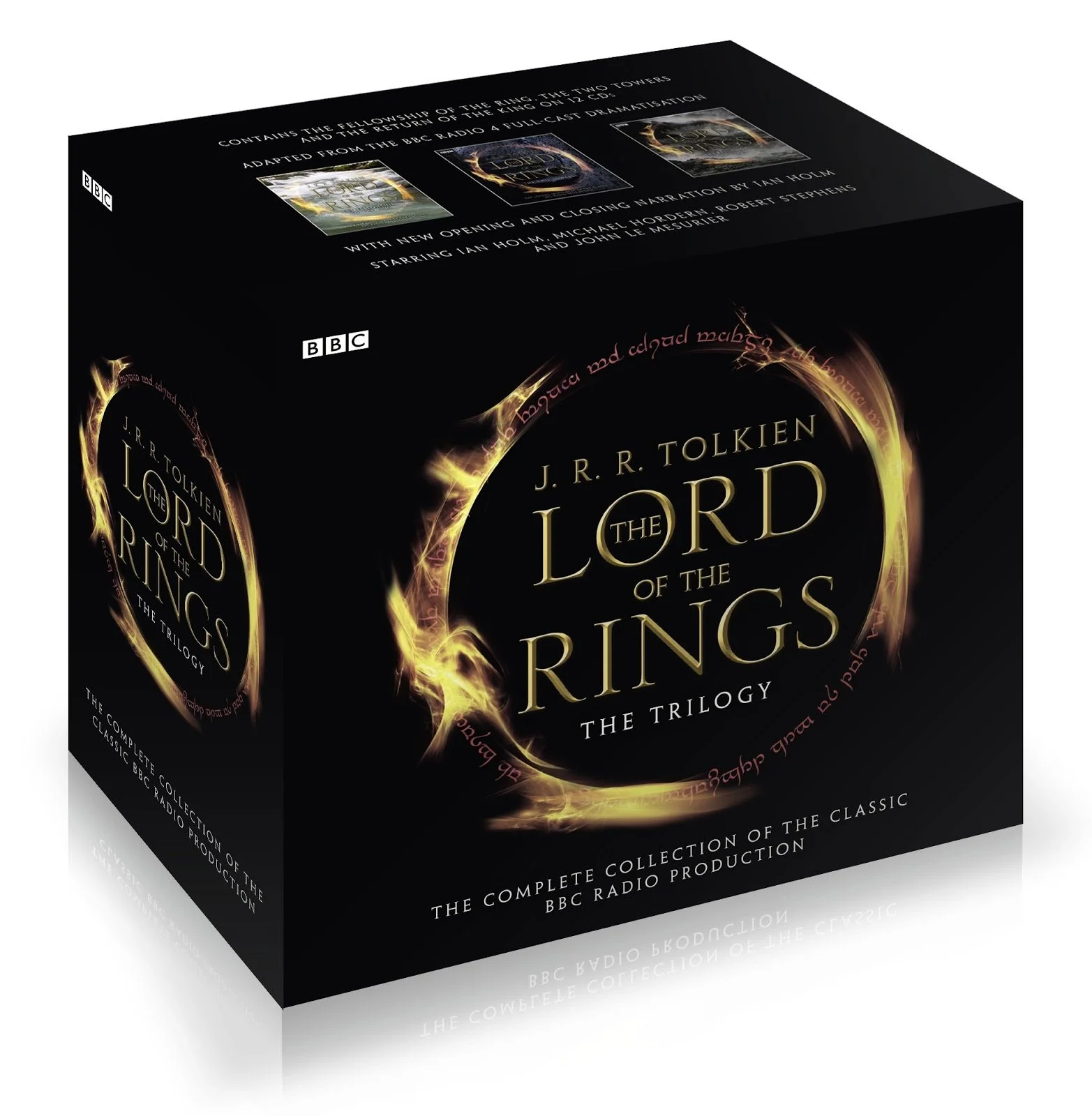
The Lord of the Rings - BBC Radio Adaptation (1981)
In 1981 BBC Radio 4 produced an ambitious adaptation of The Lord of the Rings, presenting Tolkien’s novel in twenty six, thirty minute episodes. As with all adaptations some material had to be removed, but overall the BBC production was not excessively abridged and followed the plot faithfully. The characterisations and dialogue were extremely well realised and music by composer Stephen Oliver was very much in the style and idiom of Tolkien. This was a production of the highest pedigree and a major event for the BBC at the time. The series was heavily promoted, receiving front page status in The Radio Times, the UK’s premier TV guide and bestselling magazine. Although initial reviews were varied, the series immediately gained a cult following with fans trading episodes recorded on cassette tape. Word of mouth and substantial listening figures soon lead to revised opinions from the press, along with the immortal slogan "Radio is Hobbit 4-ming".
In 1981 BBC Radio 4 produced an ambitious adaptation of The Lord of the Rings, presenting Tolkien’s novel in twenty six, thirty minute episodes. As with all adaptations some material had to be removed, but overall the BBC production was not excessively abridged and followed the plot faithfully. The characterisations and dialogue were extremely well realised and music by composer Stephen Oliver was very much in the style and idiom of Tolkien. This was a production of the highest pedigree and a major event for the BBC at the time. The series was heavily promoted, receiving front page status in The Radio Times, the UK’s premier TV guide and bestselling magazine. Although initial reviews were varied, the series immediately gained a cult following with fans trading episodes recorded on cassette tape. Word of mouth and substantial listening figures soon lead to revised opinions from the press, along with the immortal slogan "Radio is Hobbit 4-ming".
The trilogy was adapted for radio by the then novice writer Brian Sibley and veteran dramatist Michael Bakewell. It was directed by Jane Morgan and Penny Leicester, who were both experienced in radio dramas. The cast was made up of numerous fine British actors and voice artists such as Ian Holm as Frodo Baggins, John Le Mesurier as Bilbo Baggins and Sir Michael Horden as Gandalf. It also featured Robert Stephens as Aragorn and Peter Woodthorpe as Gollum. The adaptation excised a lot of the "excess fat" from the source text allowing the actors to concentrates on plot, character development and atmosphere. The attention to detail of this production was extremely high with Christopher Tolkien approving the scripts, leading to an authentic depiction of Middle Earth. Great care was taken with pronunciation of words and the delivery of dialogue spoken in Elvish and the Black Speech.
Upon its initial release each of the original twenty six episodes received two broadcasts per week, this remains standard practice for many BBC radio serials. After a successful first run the twenty six part series was subsequently edited into thirteen hour-long episodes, restoring some dialogue originally cut for timing, re-arranging some scenes for dramatic impact and adding linking narration and music cues. The re-edited version was released on both cassette tape and CD boxsets during the eighties and nineties and included bonus material such as the Stephen Oliver’s complete soundtrack for the series. It is this version of the BBC adaptation that has proven most popular and has been most commonly distributed and syndicated over the years.
In 2002 due to the commercial success of Peter Jackson's cinematic adaptations of The Lord of the Rings, the BBC re-issued a revised version of their 1981 series. This comprised of three CD sets corresponding to the three original book volumes (The Fellowship of the Ring, The Two Towers and The Return of the King). This version omitted the original episode divisions and included a new opening and closing narration recorded by Ian Holm. The re-edited version also included some additional music cues. However some fans felt that the re-arranging the material in this way actually spoilt the drama and the flow of the narrative. The original edit of the radio series was constructed so that the separate stories of Frodo and Sam ran in parallel to that of the rest of the Fellowship. It heightened the drama and afforded listeners a clearer understanding of the time line.
Tolkien's linear style proved to be a good fit for radio, with Sibley and Bakewell’s adaptation confidently staying true to the source text. Like Peter Jackson’s movies, some story elements have been cut, such as Tom Bombadil, along with the journey through the Old Forest and the Barrow Downs. However the Scouring of the Shire has been included, ensuring that Tolkien’s codicil is in place and therefore ending the tale correctly. One of the reasons this particular adaptation was so successful was due to the care and attention spent on the voice casting as well as the prudent use of music and song. Tolkien went to great pains to make both language and verse and integral part of Middle-earth and Sibley and Bakewell did not shy away from exploring this facet of the story. The BBC Radiophonic workshop also provided some pertinent sound effects and ambient sounds. As a result both the One Ring and the Nazgul have their own distinct audio characteristics.
Because the production elected to intercut the separate storylines to facilitate a more familiar style of narrative, there was a requirement to bridge a few expository gaps. Writers Brian Sibley and Michael Bakewell tackled this issue in an innovative fashion, adapting text from Tolkien’s later book Unfinished Tales which subsequently explained these literary grey areas. For example during the Nazgul’s quest for the One Ring, they visit Isengard and challenge Saruman over the whereabouts of The Shire. He advises them to pursue Gandalf. However as they follow Mithrandir’s trail they chance upon Grima Wormtongue, who is hurrying to Isengard with a message. It is he that gives up the location of the Shire upon threat of death. These narrative additions help with the flow of the story without breaking the lore.
This exceptional adaptation still remains accessible to both established Tolkien fans and those who have yet to read the trilogy. It is also a quintessential example of BBC Radio drama at its best. Although I enjoyed Peter Jackson’s movies upon their initial release, I feel that the BBC radio adaptation, despite being a different medium, is the better of the two. Peter Woodthorpe’s Gollum is a far more nuanced and sinister portrayal than Andy Serkis’s bi-polar performance. Also Jack May’s King Theoden is far more sympathetic and regal than Bernard Hill’s. Apart from reading the source text, this is the next best way to lose oneself in Tolkien’s classic story. It allows the listener to enjoy the outstanding vocal performances while conjuring up their own depictions of the characters in their mind’s eye. Where Peter Jackson’s movies are very much his interpretation of Middle-earth, the BBC radio adaptation of The Lord of the Rings is a far more faithful and nuanced dramatisation. Due to the medium of radio the strong story and characters are not overwhelmed or marginalised by spectacle.






The Lord of the Rings - The John Boorman Adaptation
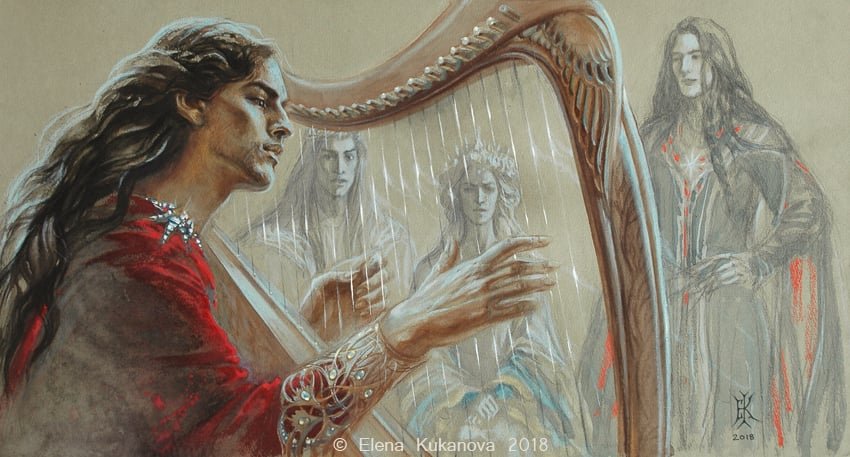
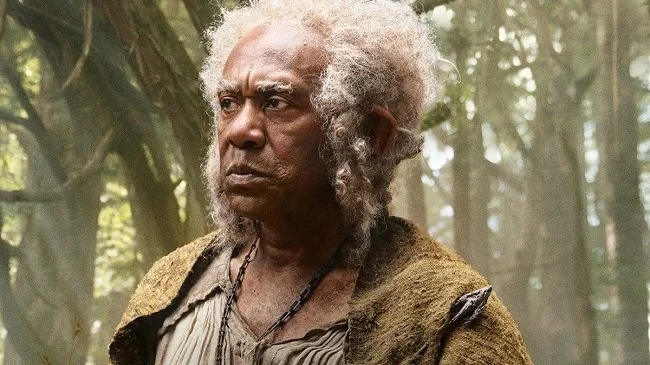
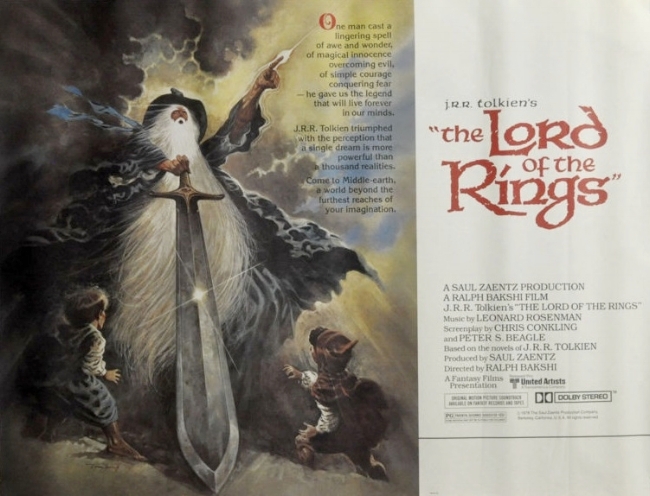
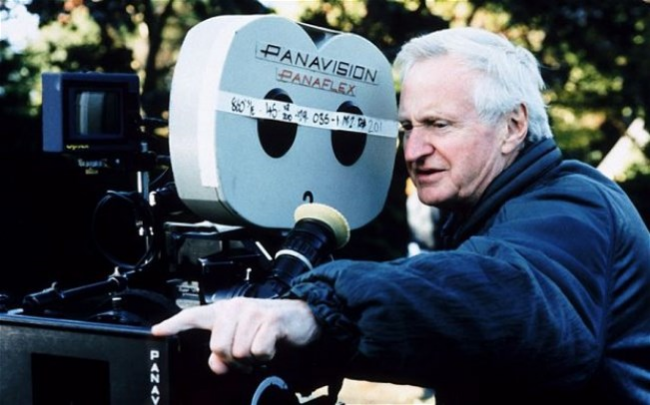
n 1969 JRR Tolkien finally sold the film and merchandising rights of The Lord of the Rings to United Artists for approximately £104,000. A year later the studio asked director John Boorman if he could make the books into a viable film. Boorman, an established director with a track record of being experimental, set about developing a screenplay with his long term collaborator, Rospo Pallenberg. What emerged was a one hundred and fifty minute script and possibly the most radical adaptation of Tolkien's work. Some of the ideas and concepts it contained were extremely innovative but others where simply too radical a divergence from the source text. I’ve collated a few of these for your consideration. If you are familiar with Boorman's 1973 film Zardoz, then you will note both similarities and re-occurring themes.
In 1969 JRR Tolkien finally sold the film and merchandising rights of The Lord of the Rings to United Artists for approximately £104,000. A year later the studio asked director John Boorman if he could make the books into a viable film. Boorman, an established director with a track record of being experimental, set about developing a screenplay with his long term collaborator, Rospo Pallenberg. What emerged was a one hundred and fifty minute script and possibly the most radical adaptation of Tolkien's work. Some of the ideas and concepts it contained were extremely innovative but others where simply too much of a divergence from the source text. I’ve collated a few of these for your consideration. If you are familiar with Boorman's 1973 film Zardoz, then you will note both similarities and re-occurring themes.
1.) After the destruction of the Ringwraiths at the Fords of Bruinen, Frodo is carried into the sparkling palace of Rivendell, where in a vast amphitheatre full of chanting Elves he is laid naked on a crystal table and covered with green leaves. A thirteen-year-old Arwen surgically removes the Morgul-blade fragment from his shoulder with a red-hot knife under the threatening axe of Gimli, while Gandalf dares Boromir to try to take the Ring.
2.) The narrative of "The Council of Elrond" was to be visually interpreted as a fantastic medieval masque representing the history of the Rings. It was to combine elements of Kabuki theatre, rock opera, and circus performance.
3.) At the gates of Moria, the fellowship bury Gimli in a hole, throw a cape on him and beat him to a state of utter exhaustion to retrieve his unconscious ancestral memory. This ancient knowledge allows Gimli to recollect the word for entering Moria and gain insights about the ancient dwarf kingdom.
4.) Also in the Moria sequence, the orcs are slumbering or in some kind suspended animation. The fellowship runs over them and the rhythm of their footsteps start up their hearts.
5.) There was a proposed wizard’s duel between Gandalf and Saruman. This was inspired by an African idea of how magicians duel with words. The script reads:
Gandalf: Saruman, I am the snake about to strike!
Saruman: I am the staff that crushes the snake!
Gandalf: I am the fire that burns the staff to ashes!
Saruman: I am the cloudburst that quenches the fire!
Gandalf: I am the well that traps the waters!
6.) Perhaps the most provocative changes occur by introducing a sexual element. Not necessarily in a exploitative way but more of a metaphor exploring the nature of power. For example, before gazing into Galadriel's mirror, Frodo must have sex with her. Aragon's battlefield healing of Eowyn becomes a sexual analogy of the healing power of the king.
Needless to say, executives at United Artist failed to understand Boorman's script. The project was shelved indefinitely. When Ralph Bakshi approached the studio in 1976 with a proposal of adapting Tolkien's work in to an animated film, the script had to be purchased to acquire full artistic control. Boorman allegedly received $3,000,000 for his script. When Boorman later made his big screen adaptation of the Arthurian legend Excalibur in 1981, many parallels where drawn with The Lord of the Rings. It has often been suggested that several ideas from his the unused Tolkien screenplay made it in to that movie.

The Lord of the Rings - The Mind's Eye Radio Adaptation (1979)
When discussing the various audio dramatizations of J. R. R. Tolkien's The Lord of the Rings, people often think of the BBC Radio adaptation by default. However it should be noted that it was not the first. An earlier version was made and broadcast in 1979 on US National Public Radio and was subsequently released as an audiobook. It was produced by The Mind's Eye, a company who were responsible for numerous adaptations of classic literature for radio at the time. The script written by Bernard Mayes is a somewhat abridged version of the book. The eleven hour running time focuses significantly on the dialogue, with much of the back history, lore and expositionary narration removed.
When discussing the various audio dramatizations of J. R. R. Tolkien's The Lord of the Rings, people often think of the BBC Radio adaptation by default. However it should be noted that it was not the first. An earlier version was made and broadcast in 1979 on US National Public Radio and was subsequently released as an audiobook. It was produced by The Mind's Eye, a company who were responsible for numerous adaptations of classic literature for radio at the time. The script written by Bernard Mayes is a somewhat abridged version of the book. The eleven hour running time focuses significantly on the dialogue, with much of the back history, lore and expositionary narration removed.
The production was very low budget, drawing upon local amateur actors and friends of the producer. There was extensive use of library music and homemade sound effects. Due to scheduling issues the cast often recorded their lines separately resulting in some curiously stilted exchanges of dialogue in key scenes. The voice cast also had to provide multiple character voices which at times causes a degree of confusion. It is also clear that none of the production were Tolkien scholars. The pronunciation of many names and places are often incorrect and the clumsy adaptation results in several plot holes and unresolved storylines.
However despite these flaws this production proved popular at the time of its broadcast. Its simplicity is actually quite a benefit, making this adaptation accessible for a younger audience or those with only a passing interest in Tolkien's work. It should also be noted that this production does not omit Tom Bombadil and presents his part of the story in quite an effective fashion. This production has been distributed by several audio book companies over the years and can even be found on "You Tube". Although purists may eschew The Mind’s Eye production for its obvious faults, there is still much to enjoy from this drama, if it is approached in the right fashion.