
Caring for the Elderly
The UK population grew by half a million last year to 65.1 million, according to figures from the Office for National Statistics. Of that number 10% are over 75 years old. At present there are 6.5 million carers in the UK, many of whom are coping with an aging parent(s). As healthcare in the UK improves overall life expectancy, the population is rapidly aging which means that every year over 2.1 million adults become carers (although almost as many people find that their caring responsibilities come to an end). This turnover means that most families in the UK face this issue at some time and 3 in 5 people will become carers during their lives.
The UK population grew by half a million last year to 65.1 million, according to figures from the Office for National Statistics. Of that number 10% are over 75 years old. At present there are 6.5 million carers in the UK, many of whom are coping with an aging parent(s). As healthcare in the UK improves overall life expectancy, the population is rapidly aging which means that every year over 2.1 million adults become carers (although almost as many people find that their caring responsibilities come to an end). This turnover means that most families in the UK face this issue at some time and 3 in 5 people will become carers during their lives.
This spring, due to my 85 year old Mother’s declining mobility, I became her carer. My Mother is now Registered Disabled and I’ve taken early retirement from work to attend to her needs. Being self-employed it made sense for me to adopt this role, rather than my sister who has worked full time for civil service for the last thirty years. Changing her working practises now would have a major impact upon her pension and future prosperity. So I now focus on my Mother’s care and visit daily. I get a respite on weekends as my Sister takes the lead. My finances are in order and I work occasionally to ensure my economic stability. I have also moved to be nearer to my parents.
At present my caring duties are mainly administrative and logistical. I do paperwork, arrange appointments and do household chores. Once a week I take my Mother out in her wheelchair so she can visit the shops and have her hair done. Effectively I have taken on many of the duties normally carried out by my Father who can no longer do them due to old age. Neither of my parents have a single overarching medical problem, just a plethora of minor ailments that collectively impair the quality of their lives. At present through me and my Sisters intervention, a status quo is maintained. However this is not something that will continue indefinitely. Sadly the long term prognosis is that my parent’s health will continue to decline.
Something I have learned of late is that caring is more than just providing the practical support that the old need. There are other factors to consider such as my parents emotional well being. Both are fiercely independent and are far from comfortable with being reliant on others. That terrible phrase about “being a burden” comes up from time to time. There is also a lot of frustration because being old and feeling old are not the same thing. Therefore I endeavour to help my parents with good grace. I try not to get frustrated when they fret over minor things as I realise that it is not I who is relinquishing control of day to day matters. As far as I’m concerned my parents took care of me as a child and have always been there for me throughout my adult life, so it is only right and proper that I now address their needs.
Carers such as myself are far from saints. We’re just regular people trying to get by. We grumble and gripe with regard to our lot from time to time. There are arguments with are loved ones on occasions simply due to the stress all are subject to. Luckily there is support out there from fellow carers, charities, local authorities and even central government. My advice to all concerned is to put your pride in your pocket and take any help you can find. If you in turn can assist someone else then do so. The slightest assistance is often invaluable. Healthcare services often only covers emergencies but at least in the UK the government is canny enough to realise it’s more cost effective to help carers while in the home, before there’s a need for a hospital.
This week my Father took a turn for the worse. In the space of seven days he’s gone from being out and about to bed ridden. Again he doesn’t have any new medical problems but his existing ones just seem to be getting worse. At nearly 87 there’s a chance that he may well recover but there is also scope for things to deteriorate. Everything that can be done is being done so it really just comes down to a waiting game. At present I see it as my duty to keep the home ticking over and maintain a sense of order and calm. I try to keep a positive disposition as fear can be contagious and counterproductive.
There are many carers who have to cope with far more than me. However sharing my story has helped me order my own thoughts and provides a degree of catharsis. Perhaps I can in some small way provide some sort of help or support to others who are experiencing a similar situation or just embarking upon this challenging journey. I don’t have many words of wisdom to offer. I think the most important thing you can do is to have a frank and candid discussion with those that you are caring for. It helps clear the air. I find having a routine is also invaluable. It allows me to cope with the daily tasks. Also consider your loved ones feelings and reassure them that you’re motivated by love. I want my parents around irrespective of their health because I enjoy their company so. I think it’s essential to keep a sense of humour and laugh together at the absurdity of the situation.
If you and your parents are still relatively young, I guess the notion of caring for them may seem years away. However time has a terrible habit of running away from you and the next thing you know twenty five years have rolled by. It is also a sad fact that illness and infirmity can strike at any age. So it never does any harm to be prepared to some degree. The current economic climate may not lend itself to saving or paying for an insurance policy but I would urge all too at least consider the possibility of becoming a carer at some point. Therefore make whatever provision you can. I suspect that the statistic of 3 in 5 people becoming carers at some point will only get larger in the years to come.
Data via Carers UK and the Office for National Statistics
The EU Referendum
On Thursday 23rd June the UK will vote on whether to remain a member of the EU or leave the community. It is possibly the biggest political, economic and social issue that I have voted on in my lifetime and both outcomes have the potential for both positive and negative effects upon the country and its future. As you would imagine with an issue of this magnitude, the pros and cons on both sides of the debate are complex. Immigration, security, trade, financial stability are some of the factors involved that shape people’s opinions. Then there are more nebulous concepts like sovereignty and nationalism that influence voter’s perspective. Whereas the logistical and administrative arguments are far more couched in facts and data, the more emotive issues are driven by tribal politics and feelings. I’m not a fan of either.
On Thursday 23rd June the UK will vote on whether to remain a member of the EU or leave the community. It is possibly the biggest political, economic and social issue that I have voted on in my lifetime and both outcomes have the potential for both positive and negative effects upon the country and its future. As you would imagine with an issue of this magnitude, the pros and cons on both sides of the debate are complex. Immigration, security, trade, financial stability are some of the factors involved that shape people’s opinions. Then there are more nebulous concepts like sovereignty and nationalism that influence voter’s perspective. Whereas the logistical and administrative arguments are far more couched in facts and data, the more emotive issues are driven more by tribal politics and feelings. I’m not a fan of either.
Over the next one hundred and twenty or so days both campaigns will vie for the public’s attention. Those who have already made up their minds which way they intend to vote are not really relevant in terms of the campaigning that will be conducted. It is those who have yet to make up their minds that will hold the balance. For such people (myself included) to make an informed choice, there is a requirement for clear and succinct data. I would like to be presented with comprehensive fact based arguments from both sides. I would also like to see measured and impartial discussions by the UK media. Sadly none of this is going to happen. The UK press, especially the newspapers are biased and both respective campaigns seem to be focusing on soundbites based upon fear. It seems that the referendum will be determined by lowest common denominator politics.
I’ve read the opinions of many ardent supporters from both sides of the debate and am very much bemused by the idealism and naivety exhibited. A common refrain is that of “unelected officials” and having to endure the governance by parties one didn’t vote for. But this is something that the majority of the electorate currently endure already from our own existing Parliamentary system. I also do not understand why some quarters are more trusting of our own politicians than those of the EU. A UK government free from such EU rules as the Human Rights Act and Working Time Directive could potentially act with impunity and to the detriment of many an employee. UK governments of all political persuasions have hardly acted with integrity or for the benefit of all over the last three decades. I would also add that he stay campaigns fixation on security and defence is also spurious. The UK whether in or out of the EU is still a major player in both NATO and the UN.
However what we have learned over recent months is not to put too much stock in opinion polls and market research. The Scottish Independence referendum appeared to be going in one direction at one point, as did predictions for a hung parliament in last May’s UK general election. The public is less free with information about their voting preferences these days and may well continue to play its cards close to its chest. This is hardly surprising as some of the more vocal members of the public seem to be far from tolerant of differing views. Look at any comment section of a news website covering the EU referendum and you’ll find hyperbole, invective and a general lack of respect. I see that Patriotism is now being trotted out as an argument from some quarters of the leave campaign. Need I quote Samuel Johnson?
At present not only do I find myself considering my own position on the referendum itself but also whether I will be able to personally endure any potentially negative consequences that may ensue, regardless which decision prevails. If there are economic problems at a later date, will my own personal circumstances be sufficient to insulate me from any financial fallout? It is worrying to have to think in such terms and only adds further to the entire negative ambience of this entire campaign. Perhaps for the sake of balance it would help to consider on some more light hearted questions that stem from this debate. If the UK leaves the EU does that mean we will no longer be able/have to participate in the Eurovision Song contest? Also does a successful Brexit mean that the UK Independence Party’s work is done and it will cease to operate? There’s precious little levity in contemporary UK politics, so let us enjoy a little now. I’m sure in three months’ time all vestige of humour will be gone from the EU referendum debate and fear and loathing will be the default response from most quarters.
To Blog or Not to Blog?
I’ve been ill recently. What started off as just an innocuous winter cold subsequently became a chest and eye infection. Despite being in relatively good health for a man of my age, this bout of illness really knocked me for six. The Doctor ordered bed rest and that’s exactly what I did. Frankly I didn’t feel at all disposed towards doing anything else, so as a result all blogging ceased and the podcast, which was already on hiatus, has been kicked further into the long grass. For a few fleeting minutes I felt some misplaced angst, regarding this lull in content creation but it was short lived. Frankly it felt good to not have to worry about daily posts or interesting topics to discuss.
I’ve been ill recently. What started off as just an innocuous winter cold subsequently became a chest and eye infection. Despite being in relatively good health for a man of my age, this bout of illness really knocked me for six. The Doctor ordered bed rest and that’s exactly what I did. Frankly I didn’t feel at all disposed towards doing anything else, so as a result all blogging ceased and the podcast, which was already on hiatus, has been kicked further into the long grass. For a few fleeting minutes I felt some misplaced angst, regarding this lull in content creation but it was short lived. Frankly it felt good to not have to worry about daily posts or interesting topics to discuss.
I have been feeling somewhat jaded with regard to blogging of late; especially when it comes to gaming. People are still writing about the games they play and reacting to the latest news but no one seems to be doing any in-depth think pieces anymore. They’ve either all be done or perhaps some bloggers just feel that there isn’t any point anymore. I look back through material I wrote five years ago and I no longer recognise the love and affection I use to lavish on the games I played back then. I also often find myself at odds with the community I’m allegedly part of. I see gamers behaving in an unedifying fashion or simply demonstrating a distinct lack of perspective and proportion.
Plus it shouldn’t be forgotten that writing a blog to some sort of standard or creating a weekly podcast is time consuming and “work” for want of another phrase. It can be very rewarding when the heavens align and you produce something that connects with your audience. On other occasions it is a proverbial millstone round your neck that you’d happily be rid of. Then there is the perennial issue of time and the fact that it’s a finite commodity. I think there’s something about hitting middle age that really provides you with an epiphany with regard to this precious resource.
However despite all the apathy and negativity, I still find blogging very useful for marshalling my thoughts and refining my views and opinions. Irrespective of whether people read my writing, I find the process of committing my ideas to text an incredibly beneficial tool. I also enjoy recording the Burton and Scrooge podcast. When it goes well Brian and I have a lot of fun. I am very fortunate to have such an amiable co-host. So it would seem that the good points about content creation currently trump the bad ones and therefore motivate me to push through this malaise of indifference.
So over the next few weeks I shall not only continue to inflict my views upon an unsuspecting internet but I’ll actually back fill posts from the previous two weeks. I don’t know why exactly but it seems to satisfy my notions of order and balance. Don’t be surprised if I stray in to non-game related subjects more often. I’ve become increasingly disposed towards just writing what comes in to my head these days and some of the stuff in their even surprises me. So it’s back to the grindstone I guess.
Not Liking Sport
Sport can be a universal icebreaker at social and work related gatherings. Having spent several years in the field of short term IT contracts, I’ve frequently found myself working with small groups of men (mainly), often from different parts of the UK or from around the world. One of the first subjects broached so people could get to know each other would usually be sport. “Did you see the (insert sporting event here)?” is a common place opening gambit. The next thing you know people are holding forth and a social dynamic is formed. This is a classic example of the sort of etiquette that helps society tick over. However there’s only one problem with this social tool. I don't care for sport. As a result I can be at a social disadvantage in certain scenarios.
Sport can be a universal icebreaker at social and work related gatherings. Having spent several years in the field of short term IT contracts, I’ve frequently found myself working with small groups of men (mainly), often from different parts of the UK or from around the world. One of the first subjects broached so people could get to know each other would usually be sport. “Did you see the (insert sporting event here)?” is a common place opening gambit. The next thing you know people are holding forth and a social dynamic is formed. This is a classic example of the sort of etiquette that helps society tick over. However there’s only one problem with this social tool. I don't care for sport. As a result I can be at a social disadvantage in certain scenarios.
Let me qualify my position. I have no specific hatred of sport or sporting endeavours. I totally "get" why other people do like them in all there various manifestations. I simply have no major interest in any of them and don't imbue them, their respective exponents or the wider culture with a lot of the virtues and merits that some people do. I recognise that sport can do a lot of good for both individuals and groups and that it can play a valid role within society. However I temper this outlook with the fact that sports are big business and that this will potentially bring a whole host of other not so beneficial issues to bear.
One of the questions I’ve pondered over the years is how have I arrived at being a non-sports person, when so many people do the opposite? Well I guess it has a lot to do with one’s personal upbringing. A love of sports usually starts in the home, which is something I’ve never had. As a child the TV was not on during Saturday afternoon, mainly because my Dad is an academic with no interest in sport. We never went to sporting events of supported any local teams or activities. Thus sports per se have always just been something that other people do and therefore never had a particular hold over me. With my own son I was scrupulously aware that a lack of exposure to sport may be a negative thing, so his Godfather filled the gap in this area, taking him to football matches and the like.
Other aspects of sporting culture have proven problematic for me over the years and have ensured that I have not altered my position. Many sports are vehicles for elitism, sexism, racism, and pretty much any other "ism" that's going. I am aware that not everyone involved with sport falls in to this category but it’s not just a fringe element either. I also struggle with the entire concept of vicariously living through others achievements and that terms such as “we” are frequently used when discussing a team’s achievements or failures. Fandom is also rife with armchair experts and folk wearing sports related clothing. Yet many are patently incapable of participating in the activities that they venerate. It should be noted that fandom is seldom based upon critical thinking and thus has its blind spots.
Despite my upbringing I was far from averse from participating in sporting activities at school. Quite the opposite was true and I use to try pretty much everything with an open mind. However my motivation was often very different to others. I participated in sporting activities for their own inherent fun and was not really interested in the prevailing culture of competitiveness. This changed when I was picked to be on the school football team (in the UK sense of the word) roundabout the age of eleven. Here is a condensed version of the incident.
PE Teacher: Why didn't you come to football practise on Saturday morning?
Me: I didn't want to miss Swap Shop (for non UK folk, insert some other popular Saturday morning TV show )
PE Teacher: It's not about what you want but what the school wants...
This resulted in the PE teacher taking the matter up with my Father, thinking he could prevail on his generational notions of obligation, team play and respecting authority. He didn’t count on my Dad being an intellectual snob who thought Physical Education was a shit Degree to have. As a result he got short thrift from my Father who pointed out what I did with my own time was my concern and none of his. I spent the next few years on this particular teacher’s shit list as a result. But then again PE teachers in the 1970s were notorious bastards.
Let me be very candid about one other thing that I believe is relevant to this discussion. It’s something that a lot of people won't admit to. I don't enjoy losing. Although I’m old enough now to hide it well in social situations it still really gets on my tits. Naturally this is a stumbling block in the competitive world of sports. I also don't care for some of the aspects of team dynamics that are associated with sport, such as the concept of team failure over individual failure. I remember as a child being castigated by another teacher because the team that I was on had lost a game. It annoyed me no end that we were blamed as a group when the fault lay with two very specific individuals. Sod team responsibilities and the bogus notion of “character building”, whatever the fuck that is. I deal in logic and intellectual processes to determine where the weak link in a chain is.
So here I am now at the age of Fortysomething and there is an entire aspect of UK culture that passes me by. Don't get me wrong I can happily watch any major sporting event on TV, understand it and even discuss it for the sake of courtesy. I just don't give a shit about it. However as I mentioned earlier, I recognise that sport is a major ice breaker and therefore an invaluable social tool. But if you aren't in to it, then there’s a lot of TV programming, social events and general culture that simply passes you by. It doesn't happen so much now, especially in the circles I currently move in, but if you don't like sports you are often met with suspicion from certain quarters. Some will even consider it to be an indicator of your sexuality or politics for some reason.
Venerating an individual or a team’s dedication to excellence is laudable in principle. Human beings are competitive and naturally sports feed in to that. Sports also foster collaboration which is another important life skill. Yet like so many other cultural institutions there comes a tipping point where the positive and beneficial aspects that accompany them can quickly become something far less edifying. Fandom can become partisan and lead to violence. Then there is the entire issue of being part of a group that is not perceived as being part of the accepted social norm. Not liking sports can put you in such a demographic. I have fortunately not suffered to any degree by not embracing this part of UK culture. However I could see it being a problem for others in certain situations. Difference can be a convenient tool of oppression.
So there you have a succinct breakdown of my relationship with sport, or non-relationship as it is in this case. It just remains for me to put one question to you, the reader. Where do you stand on this matter? Do you like me, not care for this part of day to day life? Does it cause you any issues? How do you deal with it? I’d be fascinated to know.
Alan Rickman (1946 - 2016)
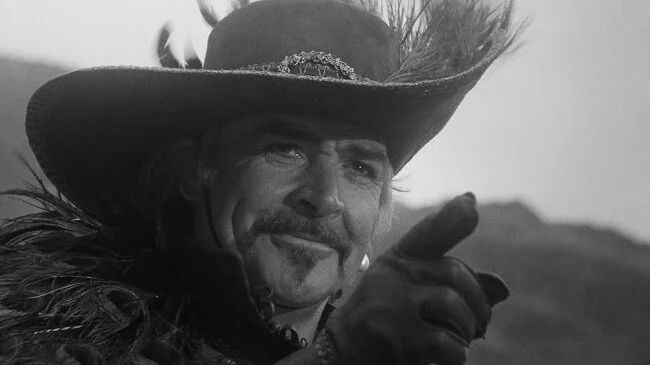
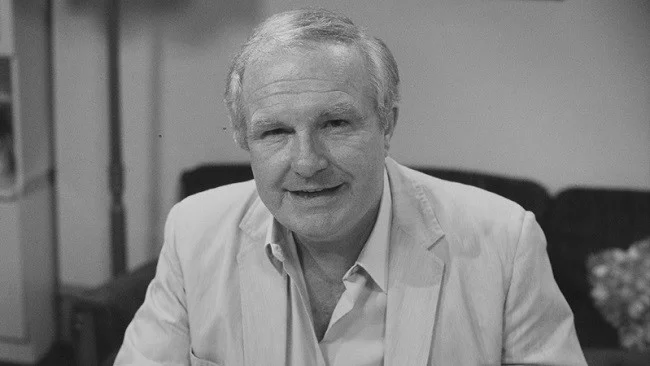
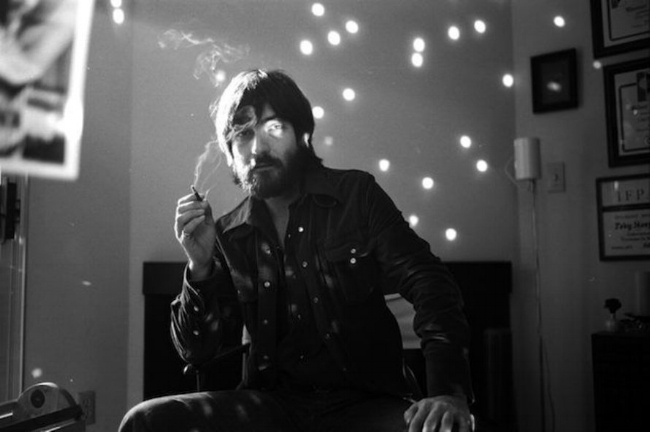
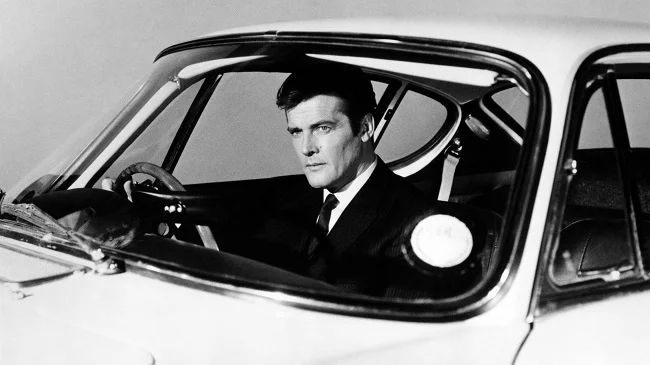
I first became aware of the actor Alan Rickman during the early eighties while watching The Barchester Chronicles. He played the scheming curate Obadiah Slope who aspired to the office of Bishop, in this television adaptation of Anthony Trollopes novels. It was the sort of period costumed drama that the BBC excels at and a role the Rickman clearly relished. Six years later his performance as the German terrorist Hans Gruber in Die Hard gained him international acclaim and placed him squarely on Hollywood’s radar. He continued to appear in both mainstream blockbusters and smaller more cerebral independent productions over the years, yet maintained his credibility as a serious character actor, despite his fame and association with populist franchises.
I first became aware of the actor Alan Rickman during the early eighties while watching The Barchester Chronicles. He played the scheming curate Obadiah Slope who aspired to the office of Bishop, in this television adaptation of Anthony Trollopes novels. It was the sort of period costumed drama that the BBC excels at and a role the Rickman clearly relished. Six years later his performance as the German terrorist Hans Gruber in Die Hard gained him international acclaim and placed him squarely on Hollywood’s radar. He continued to appear in both mainstream blockbusters and smaller more cerebral independent productions over the years, yet maintained his credibility as a serious character actor, despite his fame and association with populist franchises.
Alan’s appeal was very much due to his versatility. He could perform classic theatre, light comedy and even action movies with ease. He knew exactly when to adopt a theatrical style (Robin Hood Prince of Thieves) and when to take a more understated approach (Sense and Sensibility). He was an actor with a broad dramatic range and a commanding voice, yet often did his finest work through the most subtle of expressions of his face. His presence in a film always piqued my interest and I would at time stray out of my personal cinematic comfort zone just to see a movie in which he appeared; his performance as Ronald Reagan in The Butler being one such example.
For a whole generation Alan Rickman will always be Professor Severus Snape, as this was the role that introduced them to his work. I will always enjoy is outstanding performance in Galaxy Quest, an underrated movie that is one of the finest satires I’ve seen about popular culture. He excels as aging Shakespearean actor Alexander Dane who has a love hate relationship with his alter ego Dr Lazarus. Rickman has by far the best lines in the film, which are acerbically delivered with consummate ease. Again much of the nuances of his performance are from his mannerism and deportment. It’s an excellent showcase for his acting talent. He will be sorely missed. “Happy Trails, Hans”.








David Bowie (1947 - 2016)
Last September I was sitting in the cinema enjoying The Martian when to my delight Starman featured as part of the movie soundtrack. At the time it raised a wry smile and a moment of contemplation as I reflected on how appropriate the song was, the relevance of the lyrics and how David Bowie has been ever present throughout my youth and adult life. As an artist Bowie has continuously explored new avenues, tested himself and remained relevant while his contemporaries are just content to tour and revisit their greatest hits. Therefore I was both shocked and saddened to wake up this morning and learn of his death. It took a while to compute, after all, he only released two new albums last week.
Last September I was sitting in the cinema enjoying The Martian when to my delight Starman featured as part of the movie soundtrack. At the time it raised a wry smile and a moment of contemplation as I reflected on how appropriate the song was, the relevance of the lyrics and how David Bowie has been ever present throughout my youth and adult life. As an artist Bowie has continuously explored new avenues, tested himself and remained relevant while his contemporaries are just content to tour and revisit their greatest hits. Therefore I was both shocked and saddened to wake up this morning and learn of his death. It took a while to compute, after all, he only released two new albums last week.
David Bowie was more than just an outstanding musician and performance artists. He was cultural touchstone who showed us that we can define ourselves if we choose to, in whatever way we see fit and that it’s possible to rise above cultural perceptions of gender and sexuality. After five decades of critical and commercial success he still managed to maintain a private life and enjoyed a reputation of being dignified, professional and gracious. Those who had the opportunity to see him perform have often said that it was unique and unlike anything that they’d previously experienced. His work is far from ephemeral and has an enduring quality to it. As an actor Bowie was subtle and understated. It’s a shame he didn’t explore the medium further.
In an age when exposure is confused with fame and internet traffic appears to trump talent, there are precious few artists left like David Bowie. This is a man whose death has effectively cleared the UK news agenda and even the Prime Minister feels compelled to comment. A man who sold an estimated 140 million records worldwide and who’s body of work is considered to be of the highest calibre. It is still somewhat difficult to come to terms with the passing of such a cultural icon. His larger than life musical personas and his enduring significance made many of us think he was in some way immortal. Sadly this was not the case. Yet he leaves behind an incredible legacy for those that come after and will remain forever a cultural beacon.
How Not to Do Business
I've been blogging for nearly nine years and by sheer persistence the audience has grown and traffic is relatively respectable. There are plenty of web based tools available that can determine how well a site is performing and as a result I have recently started receiving a great deal more unsolicited material. This consists of press releases, invitations to review content and even the occasional freebie. I'm fine with all this because it broadly indicates that Contains Moderate Peril is growing and appearing on the radar of a wider variety of organisations. Plus some of the stuff I’m sent is quite useful. At the very least it proves the old adage that if you throw enough shit at the wall, some of it will stick.
I've been blogging for nearly nine years and by sheer persistence the audience has grown and traffic is relatively respectable. There are plenty of web based tools available that can determine how well a site is performing and as a result I have recently started receiving a great deal more unsolicited material. This consists of press releases, invitations to review content and even the occasional freebie. I'm fine with all this because it broadly indicates that Contains Moderate Peril is growing and appearing on the radar of a wider variety of organisations. Plus some of the stuff I’m sent is quite useful. At the very least it proves the old adage that if you throw enough shit at the wall, some of it will stick.
However among these various communications are small percentage from businesses that always seem to have a "great business opportunity" or "proposal that I can't afford to miss". Effectively they're trying to sell me something that I don't need or worse still, they want to buy a link back to their site. It is the latter galls me the most.
Now I am not averse to the notion of my blogging endeavours making money if possible, but funnily enough I do have some principles regarding how this is done. Firstly, I don't carry any advertising on the website because the delivery software totally dictates what material gets shown. I don't like that notion at all. Then there are are some businesses that I don't want to be associated with and featuring them on my site in my opinions cheapens it. Plus the use of adblockers seems to be making this means of generating revenue obsolete anyway. I also apply exactly the same stipulations to anyone trying to buy a link from my site to their. Do I want to be associated with you?
Secondly, although link sharing has its uses, it is fundamentally based on a parasitical concept. Think about it for a moment. After years of giving up my free time to write and build up an audience, some third party thinks they can just waltz in, toss me a few dollars and leech off my blood sweat and tears? I think not. Plus while we’re talking about hard work, something I’ve noticed about many of the business requests I receive is the casual and lacklustre way in which they are made. They often lack any real effort. Business etiquette, common sense and good manners seem to elude them.
Take for example the above email. Who in their right mind thinks this is a good way to conduct business? Let's address some of its points of failure in bullet point format, because it will curb my tendency to rant excessively about the overall stupidity of this communication.
1.) For starters what kind of business do you wish to conduct? If you are making a pitch then it may be beneficial to include the relevant details.
2.) So my site fits your needs? Really? As you haven't at this point given me any inkling of what it is that you want, please remind me again why I should give a fuck about what fits your needs?
3.) As for the best way to contact me, let's ponder that one for a moment? Hey why not drop me an email like the one you just fucking sent?
So it would appear that this joker wants to do some sort of business with me, but is reticent to stipulate the exact nature of which and furthermore wants me to waste my precious time contacting them to proceed further. The stupidity of the proposition beggars belief. They must be stupid, ill-mannered or utterly clueless about how to conduct business; or maybe all three? Perhaps a Venn diagram will help clarify the situation.
Here is some guidance to those wanting to do business with Contains Moderate Peril. If you have any sort of business proposal then a concise email providing an overview of what you are offering is required. I will then on the basis of that communication decide whether I wish to contact you to discuss the matter further. Do not make any type of pitch where I have to do all the leg work. If you want something from me then make some effort yourself. My time is precious and I have better things to do than accommodating your ineptitude.
Also take time out to consider what you are selling. I'm not interested in gambling sites, miracle cures, dating websites, stilts for Dachshunds or an Osmonds tribute act. Make sure it is relevant to Contains Moderate Peril. And if you haven’t even the decency to use my name in your email then don’t bother. I like manners. By following these simple rules there's a chance for a mutually beneficial relationship. Ignore them and you'll be pissing in the wind.
The Decline of UK Politics
I’ve written this post from the perspective of politics in the UK but I daresay that some of the points are relevant to other Western countries. Please note that this is not a post advocating any particular political stance or ideology. It is a commentary about the system itself and the public’s current relationship with the world of politics per se.
Two party politics has dominated the UK for over two hundred years and the electoral system that has evolved reflects that. The first past the post system has major shortcomings when dealing with emerging parties and diverse voting patterns. In recent years the traditional parties have seen a decline in membership and they no longer enjoy the levels of support with the UK electorate that they did fifty years ago. My parents grew up in a culture of tribal politics, driven by class, wealth and left wing and right wing ideologies. I personally think the notion that a single party can adequately represent all my political, philosophical and ethical needs is risible. Therefore I have no specific party allegiance or cleave to a particular political school of thought. I am a floating voter when it comes to both local and national elections.
I’ve written this post from the perspective of politics in the UK but I daresay that some of the points are relevant to other Western countries. Please note that this is not a post advocating any particular political stance or ideology. It is a commentary about the system itself and the public’s current relationship with the world of politics per se.
Two party politics has dominated the UK for over two hundred years and the electoral system that has evolved reflects that. The first past the post system has major shortcomings when dealing with emerging parties and diverse voting patterns. In recent years the traditional parties have seen a decline in membership and they no longer enjoy the levels of support with the UK electorate that they did fifty years ago. My parents grew up in a culture of tribal politics, driven by class, wealth and left wing and right wing ideologies. I personally think the notion that a single party can adequately represent all my political, philosophical and ethical needs is risible. Therefore I have no specific party allegiance or cleave to a particular political school of thought. I am a floating voter when it comes to both local and national elections.
Although politics is a deeply divisive and problematic subject to discuss, a fully functioning democracy requires a politically literate and engaged population. Sadly that is not the case at present. Political debate, national policies and our entire approach to the subject has deteriorated in my lifetime. Politicians are viewed cynically by the overall population and often for legitimate reasons. Parties no longer seem to be driven by any credible ideologies or dogma. Major issues are seldom addressed and often kicked into the proverbial long grass. Furthermore the media exults political discourse of the lowest common dominator. Meaningful and civilised debate is virtually non-existence. Consequently large swathes of the population are no longer interested in politics. Many of those that profess to be so, are ill informed and have no idea how to discuss their views in a viable manner.
It is ironic that in an age when virtually anyone has access to tools that allow them to express an opinion and engage with others, that the level of debate has so notably declined. We live in a binary world in which opposing views are not countered by facts and data but are merely shouted down. In seems that many who live in our democracy seem to eschew its universal applicability. Tolerance, politely begging to differ and simple common sense are scarce commodities these days. Furthermore the UK has slowly since the sixties assimilated US style politics, which chooses to focus on the cult of personality rather than issues. Electoral pledges and longstanding policies are replaced with soundbites. It’s no longer about advocating what your party can offer but sowing the seeds of fear about the opposition. Last year’s general election result effectively came down to floating voters deciding at the last minute based on who they feared the most with regard to running the economy.
This malady affects politics at every level. From the comments section of any news website, to local government, right the way up to Parliament itself. I recently attended several council meetings regarding a local issue and was shocked by the lack of decorum and the subpar debating skills of the councillors. Straw man arguments and ad hominem attacks were rife and the quality of the meeting was very poor. Few had any concept of public speaking or debating skills. Yet this approach to politics is endemic at present and I fear it will be the driving factor behind the forthcoming Europe referendum. I would like to see detailed arguments from both sides of the debate, backed up with facts and data. Whether the UK remains part of the EU is an extremely complex matter with major ramifications. Surely the public needs to be provided with robust information before an opinion can be formed or decided upon. Sadly the debate will be driven by fear and some perfunctory soundbites. It is deeply worrying that a decision of this magnitude will be decided upon in such an arbitrary manner.
The most depressing thing for me about the state of contemporary UK politics is the feeling that my vote carries no weight and is of little consequence. I believe this is a contributory reason why a third of the UK’s 45,000,000 registered voters do not bother to cast a vote. Let us not forget that there is a further 6,000,000 people who are entitled to vote but have not registered. Thus we have elected government implementing policies with nowhere near a convincing mandate. The current administration is in power after successfully polling about a quarter of the electorate. Again due to the failings of the current voting system other parties gained over 4,000,000 votes yet only secured one seat in Parliament. Unless you live in a marginal seat that can potentially swing between parties, then your vote has no impact upon political change.
I am also not comfortable with the blanket demonization of all politicians, journalists and pundits. Although many are of a poor standard there are still those that seem motivated for the right reasons. During my career I’ve met many on both sides of the political divide that I admire. However they are often hamstrung by the system they work within and the fact that they are often dealing against groups with powerful vested interests. The net result is that those of worth and character frequently go unnoticed on a national level. Plus the unsophisticated rhetoric of the current political arena means that we seldom get beyond “Tory scum”, “bleeding heart liberal” and “Champagne Socialist”. Such hyperbolic language stifles any discussion and further muddies the waters. The opinion of those that use such jargon is seldom informed.
What I would like to see emerge from the current status quo would be a new voting system based upon some form of proportional representation. I would also like to see new parties emerge as well as far more independent candidates, especially at local level. There is a need for policies born out of intelligent debate from all quarters, rather than thought up be biased think tanks. Politicians need to create a new covenant with the electorate and validate it by their deeds. However I am fully aware that this is all highly unlikely. Society seems to be regressing at present, as the divide between rich and poor increases and tolerance, informed opinion and a wider world view are largely in decline. I can if pressed fall back up a personal position of “I’m alright Jack” but many can’t. Also I don’t want to have to adopt such a self-centred and isolationist mentality.
As I stated at the start, I do not consider this post to be a political statement in support of a particular party or group. I merely see it as a summary of the perceived failing of our current political system. It is of course based upon my own personal perspective. I’m sure that those that enjoy power would see it quite differently. However we are far from a golden age of national politics and are not necessarily a nation driven by common ideals and values anymore. The good of the country seems to have been supplanted by the needs and desires of the individual. None of this is good for the UK. A healthy democracy needs a government that is seen to respond the wishes of its people. There is also a need for a robust opposition and debate. None of this is possible if the majority of the electorate are political disengaged. If this situation is not addressed then the future consequences could be dire.
The Secularisation of Christmas Entertainment
The central theme of this post may well be better suited to a scholarly essay by a noted academic. I'm afraid all you'll get from me are just a few personal observations. But I wanted to raise this subject because I am at an age now where I am very conscious of the changes that have happened in UK society over the course of my life. I'm not advocating one side of the debate over another, just merely collating my thoughts on a broad cultural shift. Christmas has become increasingly secular over recent decades and because I write about popular entertainment that is the medium I viewed this process through.
The central theme of this post may well be better suited to a scholarly essay by a noted academic. I'm afraid all you'll get from me are just a few personal observations. But I wanted to raise this subject because I am at an age now where I am very conscious of the changes that have happened in UK society over the course of my life. I'm not advocating one side of the debate over another, just merely collating my thoughts on a broad cultural shift. Christmas has become increasingly secular over recent decades and because I write about popular entertainment that is the medium I viewed this process through.
As a child of the seventies, I grew up as a cultural Christian. School began each day with a formal assembly in which hymns were sung, Bible passages were often read and a moral lesson was taught by the headmaster/mistress. Shops closed on Sunday, the public broadly attended services and the establishment still showed deference to the Anglican Church and other denominations. Irrespective of my personal beliefs, I was raised in a society that was steeped in Christian tradition (and still is). Remember that church and state have never been truly separate throughout UK history.
As I have previously written about Easter, Christian faith has slowly been driven out of the TV schedules over the years. Faith based content is far from common place on the major TV networks. TV shows and films seem to focus on the secular aspects of the season, such as family, the exchange of gifts and being together. Much of this alternative entertainment is based around the faux mythology of Santa Claus, Kris Kringle or even Dicken's tale of Ebenezer Scrooge's redemption. The Christian message with its fundamental tenets of service to others, giving and personal self-sacrifice do not sit well with a prevailing culture of self-indulgence and hedonism.

In recent years, a new factor has impacted upon the inclusion of Christianity in most forms of Christmas entertainment. Because the debate between religion and the secular has become increasingly polarised the media have naturally focused on extremes on both sides of the debate. Such elements are always good for a cheap binary headline. As a result Christianity is portrayed as the province of killjoys, bigots and the lunatic fringe, despite this not being an accurate or fair representation.
With regard to gaming, trying to dovetail a Christian message into such a medium is a difficult task. The lore and other worldly settings negate any obvious Christmas reference. The fact that games, especially the MMO genre have a global audience, developers are mindful of the diversity of the player base and the multiple faiths they represent. As a result we get Winter Festivals, Yuletide events and other broader concepts. These are more akin to our secular Christmas experiences in the real world. Yet they often come across as somewhat hollow undertakings and somehow fail to capture the sentiment of the season.
At this time of year in the UK, it is traditional for the head of state to broadcast a Christmas message. The Queen is formally the "Defender of the Faith and Supreme Governor of the Church of England" and also comes from a generation that genuinely believe in their Christian faith. Therefore, when she speaks on such matters I believe she does so with utter personal conviction. I respect this in principle. Sadly the concept of a Christmas message has now been adopted by politicians as well as anyone with a media presence and an axe to grind. Seasonal messages from such quarters as these seldom have any credibility.
The secularisation of various facets of UK life is a complex subject and this post is far from a thorough exploration. I've simply collated a few thoughts on the matter. This beggars the question as to whether I have an overall point. If I do, then I believe it to be that the ongoing secularisation of Christmas, especially through the medium of entertainment, has not necessarily been to society's benefit. Although one can never recapture ones experiences of the past, I can honestly say that Christmas as it currently exists, is a somewhat hollow and arbitrary experience for me. It has usurped a festival that had positive moral connotations and replaced it with consumerism and “organized” fun. I don't know what the answers are to this conundrum or whether I am correct in my observations. All I know is that I feel that something has been lost and that makes me a little sad.
Out With the Old
I’ve been blogging and podcasting for over half a decade and as a result I’ve left a trail of material scattered across the internet. Maintaining multiple sites and hosting old content costs both money and time. Although the world is treating me relatively well at present, I am not a man of limitless resources. Therefore I have decided that it is time to close some of these sites and archives.
I’ve been blogging and podcasting for over half a decade and as a result I’ve left a trail of material scattered across the internet. Maintaining multiple sites and hosting old content costs both money and time. Although the world is treating me relatively well at present, I am not a man of limitless resources. Therefore I have decided that it is time to close some of these sites and archives.
The first to go will be the back catalogue of Contains Moderate Peril podcasts. These are currently available via Libsyn, the old CMP website and iTunes. All one hundred and seventy three episodes will cease to be available after 31st October. If you wish to keep any for posterity, my advice is to download them now while you still can. This will also affect the Council of the Unwise podcast but there are only a few instalments of that show. Please note that the Burton & Scrooge podcast is still alive and kicking but is not subject to a regular schedule. Brian and I produce it strictly on an “as and when” basis.
I will be closing the old Contains Moderate Peril website at the end of this month. Rather than leave a trail of broken links I shall set up a global redirect so that wayward traffic finds its way to the current CMP blog. It’s a shame to lose an established presence on the internet but I feel that the current situations with two websites co-existing simultaneously, to be both confusing and detrimental to traffic. All previously posted content has been successfully exported and saved.
Despite what I and a lot of others people where told a few years back, you can function as a human being quite efficiently without Facebook and Google + accounts. Both are closed communities that require individual input, which creates more work. In the past I have simply reposted content to these platforms, which on mature reflection is counterproductive. If anything it takes traffic away from CMP, so I have terminated both of these services forthwith.
I would also like to reiterate that I shall no longer be directly involved in the running of the Newbie Blogger Initiative. I shall be closing the existing site and the forums at the end of this year and will not being renewing the domain name next May. If someone wishes to utilise the current .com address then they may wish to get in touch prior to the domain name lapsing.
It would seem that a lot of veteran content creators are currently facing similar issues to mine or at the very least trying to balance their creative desires with the realities of the real world. Unless your life remains static, there is no way you can avoid the shifting demands of modern life. I would not be surprised if we see several high profile community members scale back their online endeavours or even cease them entirely in the not too distant future.
Working in IT
Working in IT is an extremely broad job description that encompasses multiple subsets and disciplines. Each specific field has its own skills and academic hierarchies. You may well be an experienced Network Administrator but that doesn’t make you equally as knowledgeable with regard to Database Development and vice versa. Saying that you work in IT is pretty much the same as saying that you work in healthcare. You could be working in procurement or be a Cardiothoracic Surgeon. However none of this is of any concern to those who work outside of IT. If you get collared by someone at a social event and tell them you work in IT, it’s only a matter of time before you get asked “I’m thinking of buying a new laptop, which one is best?” or something similar. I always tell them that Purple ones have the most RAM.
Don't mess with my patching
Working in IT is an extremely broad job description that encompasses multiple subsets and disciplines. Each specific field has its own skills and academic hierarchies. You may well be an experienced Network Administrator but that doesn’t make you equally as knowledgeable with regard to Database Development and vice versa. Saying that you work in IT is pretty much the same as saying that you work in healthcare. You could be working in procurement or be a Cardiothoracic Surgeon. However none of this is of any concern to those who work outside of IT. If you get collared by someone at a social event and tell them you work in IT, it’s only a matter of time before you get asked “I’m thinking of buying a new laptop, which one is best?” or something similar. I always tell them that Purple ones have the most RAM.
I won’t ramble on about how I got into IT as a career, as it’s not particularly interesting. I will say that having an aptitude for technology has helped as well as being in the right place at the right time. I was working for a major UK government department at a time when it was undergoing a major systems upgrade. I volunteered for a new position and was trained by seasoned third party contractors. Although I have some formal qualifications most of my knowledge is from hands on experience. After twenty years I now find myself self-employed, running a niche market consultancy offering superfluous and overpriced solutions for clients with more money than sense. It’s not the best job in the world, nor is it the worse. For me my real passions now lie elsewhere and work is mainly a means to an ends, although I recognise that I have far more favourable working conditions than many. Not many careers allow you to work in your underwear.
Of course this is a typical home office...
Something that I’ve found interesting since I’ve been writing online and podcasting is the amount of friends and colleagues from the Bloggersphere that also work in IT. Perhaps their technical aptitude means that social media and other online activities are not so daunting. My Father who is an old school mechanical engineer considers IT to be this generation’s equivalent field. It’s a skilled profession with many new and evolving disciplines. It also has clear career paths and progressions, making it stable work for those buying a home or raising a family (other money pits are available). However not every job in the IT industry is safe bet. There is a great deal of short term contracts and market rates rise and fall, based on supply and demand.
There is also the perception that IT is a very academic and studious industry to work in. This can be true but a great deal can also be learned simply by “monkey see, monkey do”. And while we’re on the subject of perceptions working with technology still has the whole geek and nerd stereotype associated with it. The funny thing is the vast majority of my IT colleagues are very social creatures who are often far more emotionally literate than many of our peers in other industries. However something that has changed in the last decade and a half is the perceived standing of information technology. Up until 2000 I felt that many considered IT to be a field very much akin to alchemy, because it was alien to so many people. Now because technology is so pervasive in our lives IT literacy is much higher. As result I find that I am no longer regarded as a Wizard but just an overpriced Photocopier repair guy (no disrespect intended ).
Only 25% of IT professionals are women
IT is still very much a male dominated industry. My own personal experience reflects this as I have only worked with six female colleagues over a twenty year career. Considering that there is no gender imbalance with regard to the use of technology it is sad to see such a disparity within the industry itself. To say that the IT sector is institutionally sexist would be too broad a generalisation. However I have regularly encountered individuals with prejudicial views often at an age group commensurate to my own. There still seems to be an assumption both within IT and from its external customer that when someone arrives from the technical department, regardless of their level it will always be a man; hence phrases such as “call the tech support guy”. From my perspective ignoring the skills and talents of 50% of the workforce is illogical, so I support in principle any endeavour to redress this imbalance within the industry.
Although IT is a multi-faceted industry perhaps the area we are all most familiar with is tech support, because pretty much most businesses have IT infrastructure and services that need maintaining these days. First line support is one of the commonest entry points in to the industry and many IT professionals will have at one point in their career cut their teeth providing customer support or manning a help desk. Like any job that involves dealing with the public, it can be challenging. This is exacerbated in IT by the gulf in knowledge between vendor and client as well as unrealistic user expectations. The person you speak to on the phone does not know the answer to everything. If they did they wouldn’t be answering the phone.
"Have you tried fucking off and dying?"
Anyone who’s worked in tech support will have a wealth of amusing anecdotes and horror stories regarding the “users”. Most office staff will have similar vignettes about the IT support department. It is a strange symbiotic relationship. Most of those that have worked in first line support do not look back upon it fondly. It’s a rite of passage that has to be undertaken to reach the next stage of your career. To this day I do everything in my power to minimise my personal interaction with the customer. However it is far harder to escape the technical needs of ones friends and families or that neighbour who has a PC that’s still running Windows ME. If you want to avoid such situations you either need to lie to everyone you meet about your line of work of become an orphan.
I once went to a social event after a long day at work, only to find myself saddled with insufferable dullard who was out for some free advice. His simple enquiry turned out to be a crass attempt at an hour’s free consultancy. After five minutes or so I interrupted his stream of questions and asked what his preferred method of payment was? Before he could answer I pointed out what my hourly rate was and that I had a credit card reader in my bag. The conversation very rapidly turned to his new patio which proved to be as equally dull. However to counter this particular story I would like to offer another. I worked for nearly two years at St. Georges Hospital in South West London. Undertaking the most arbitrary support tasks within the A&E department, such a fixing a printer or a PC on reception were always met with genuine gratitude. I was told by front-line staff that removing such hassles made their life demonstrably less difficult. I got immense satisfaction from this.
"Congratulations. You've just bought a cloud-based enterprise solution and I'm retiring to the Cayman Islands."
So there you have it; a few random thoughts about working in IT. It’s not something I deliberately set out to do, yet all things considered it has served me very well over the years. As a result I’ve worked for some very diverse employers and seen some very interesting aspects of life I may not have done so under other circumstances. Furthermore it has been intellectually challenging and a source of self-improvement, as there’s always something new to learn in this field. As someone who doesn’t care for office politics and social hierarchies too much, IT has also been a means of bypassing a lot of work place drama. The person at the top of a company and the most junior member of staff both rely on technology and I have always endeavoured to treat them equally. IT has afforded me a great deal of freedom outside of standard business rules and etiquette. Plus in what other industry can you walk around with a network cable or a circuit board and people just assume that you’re really busy?
My Work and Gaming Environment
I know a good bandwagon to jump on when I see one, so I’m also going to write about my personal work space. Joking aside I don’t consider this sort of post to be just filler. As a self-employed person my desk and PC set up has a major impact upon how I make my living. I spend a significant part of my week based at my desk, so it’s essential to me that it is an organised, efficient and healthy work space. As I use the same set up for recreational purposes, it is doubly important that this is an agreeable environment.
I know a good bandwagon to jump on when I see one, so I’m also going to write about my personal work space. Joking aside I don’t consider this sort of post to be just filler. As a self-employed person my desk and PC set up has a major impact upon how I make my living. I spend a significant part of my week based at my desk, so it’s essential to me that it is an organised, efficient and healthy work space. As I use the same set up for recreational purposes, it is doubly important that this is an agreeable environment.
First off there is my chair. It is an executive model that is two years old and has certainly seen better days. It conforms to all the usual health and safety regulations, being fully adjustable and fire resistant. However it doesn’t matter how well designed a chair may be, if you don’t sit in it properly then all its health benefits are mitigated. I have a tendency to slouch but when I do sit properly my trusty chair has proven to be comfortable and supportive.
The desk is actually a dining table I bought back in 2008. It is a little higher than the average office desk and as a result my monitor is directly level with my line of sight. I favour a clear desk and tend to avoid the miscellaneous bric-a-brac that usually accumulates. I keep an A4 notepad to hand as well as my 7 inch Android tablet. I use this so I don’t have to tab out of games to web browse and to also playback podcasts. This has the benefits of not placing additional system demands upon my PC. I tend not to eat at my desk while at work or gaming. I use a coaster for drinks because someone has to maintain standards.
My primary display is a single Samsung SyncMaster T240HD dual monitor and TV. This is a curious hybrid with a native resolution of 1920 x 1200. It’s becoming increasingly hard to find 24 inch screens that accommodate this resolution these days. Although seven years old this screen still has a bright and vivid image quality. Audio is via a pair of Logitech LS21 stereo speakers and subwoofer. These are over 12 years old but still provide adequate sound quality for gaming.
Having worked in IT for twenty years, I have until recently maintained a stockpile of spare peripherals. These were mainly surplus stock from corporate rollouts and tended to be Dell or HP items. I get through a keyboard and mouse every twelve months as I wear them out through constant use. This summer I exhausted my stock and had to buy a new gaming mouse. I chose a mid-range Steelseries Rival Optical mouse which I’ve found to be perfectly adequate. My keyboard is the one that came with my Zoostorm PC when I last upgraded in spring 2014. Cataloguing the finer details of one’s PC is incredibly tedious. Let is suffice to say I have system based around the ubiquitous Intel Core i-5 processor, an acceptable amount of RAM and a suitable Nvidia GPU. I recently upgraded to Windows 10.
Overall I am content with my work and gaming environment. Much of the hardware could be upgraded if I chose to but everything that is currently in place is both functional and a known quantity. The space in which you work and play is just as much about comfort and familiarity as it is about performance and reliability. So at present I am happy to maintain the status quo. It suits my needs eminently and ensures that my desk is free from water marks. Finally before anyone asks, yes I do dust my desk and PC about twice a week. I am not a barbarian.
Re-evaluating my Relationship with Twitter
I enjoy Twitter. I consider it to be an amusing diversion. It provides an opportunity to interact with friends that I’ve made all over the world. I find that swapping banter and trading quips with my twitter chums, often raises the spirits after a day filled with first world problems.
I recently went through my Twitter settings and “unfollowed” a lot of accounts. This included celebrities that only Tweet occasionally when they had a tour or a book to promote. Politicians and social commentators whose views and principles I find tiring. I even ditched a few fellow bloggers who have a tendency to whine or moan about their lot in life. You could argue that I’ve created an echo chamber and that I’m living in an online bubble. You may well be right. Humans often do the opposite of what they claim to believe. It’s like our default setting is one of cognitive dissonance.
I enjoy Twitter. I consider it to be an amusing diversion. It provides an opportunity to interact with friends that I’ve made all over the world. I find that swapping banter and trading quips with my twitter chums, often raises the spirits after a day filled with first world problems.
I recently went through my Twitter settings and “unfollowed” a lot of accounts. This included celebrities that only Tweet occasionally when they had a tour or a book to promote. Politicians and social commentators whose views and principles I find tiring. I even ditched a few fellow bloggers who have a tendency to whine or moan about their lot in life. You could argue that I’ve created an echo chamber and that I’m living in an online bubble. You may well be right. Humans often do the opposite of what they claim to believe. It’s like our default setting is one of cognitive dissonance.
The today at about 6:15 PM GMT the following Tweets appeared in my timeline. A timeline filled with gaming news, movie trivia, jokes and fun; a tide of light, ephemeral and utterly inconsequential inanities.
There amid all the trivia and decadence that we surround ourselves with on a daily basis was a picture of a small child, face down in the water on a beach in Turkey. Dead.
It took several seconds for this image to fully compute. What exactly was this picture that Father Roderick Vonhogen had unceremoniously dumped in my bright and cheerful timeline? So I followed the link to The Independent website and read the subsequent story. Then finally magnitude of what was depicted finally hit me and it hit me hard. I make no bones about the fact that I wept at the utter tragedy of what I saw and read.
If you can bring yourself to follow the link to the newspaper article, you’ll discover the very human face of the “ongoing migrant crisis” that is currently occurring across Europe. The child is believed to be a dead Syrian refugee, one of eleven that have died trying to reach the Greek island of Kos. Like many people, my perception of this political and social issue is both vague and abstract. Until today it’s simply something that has just occupied the news and frankly doesn't have any meaningful impact upon my cosy life.
Today that has changed.
I have no political axe to grind with regard this matter. I fully appreciate that all the factors that are contributory to the current wave of migrants are very complex. This is not a black and white situation and there are no easy solutions or quick fixes. I am sympathetic to the needs of both the migrants and refugees as well the populations of the European countries affected. But as a human being I can no longer ignore the fact that there is a very real tragedy taking place on my very doorstep. I cannot dismiss dead children washing up on beaches as if it were nothing. So tomorrow I shall start by lobbying my local Member of Parliament and seek clarification as to exactly what the UK government is doing with regard to this matter. Ironically my MP James Brokenshire, is also Minister of State for Immigration. Contacting my political representative may not have much impact but it’s a start. A position of concern is better than one of indifference.
And so we return to the subject of Twitter. Ultimately it is wrong to adopt a shoot the messenger mind set, after all my Twitter timeline is something of my own making. Plus it is intellectually flawed to assume that everything that is not a weighty issue is “bad” and should be dismissed. Relativism and context should not be thrown out with the bath water in a fit of knee-jerk self-pity.
However I do think that if Twitter is to continue to be one of the windows that I use to view the world, it may be time to take some steps to change the view. I need to leave my self-imposed comfort zone and allow a greater diversity of content in my timeline. Rather than disengaging with the world as I grow older, I need to do the opposite. Exactly what I should do I’m not sure but I feel that I should do something? Changing my use of social media is perhaps the first step of that process.
Same Meat, Different Gravy
After a short break the time has come to relaunch Contains Moderate Peril. Ironically I've returned to blogging just as the Blaugust has started, so bang goes my plan to reduce my writing schedule. So for the next month I shall be writing everyday but once this event comes to an end on the 31st, I will defer to my original idea of writing several times a week.
After a short break the time has come to relaunch Contains Moderate Peril. Ironically I've returned to blogging just as the Blaugust has started, so bang goes my plan to reduce my writing schedule. So for the next month I shall be writing everyday but once this event comes to an end on the 31st, I will defer to my original idea of writing several times a week.
I've written in the past about the importance of finding a writing schedule that is both comfortable and achievable. It is beneficial for both the writer and readers. If your audience knows that there is going to be regular content then they will visit consistently. The moment you cease posting articles then the traffic will abruptly stop. The old incarnation of this site has seen a 75% reduction in traffic over the last fourteen days.
There is something quite invigorating about a new website. As of yet, there are no broken links or missing images and the blog has a lean and streamlined feel to it. I certainly am impressed with Squarespace and can see why they are rapidly becoming the website host of choice. It was very easy to create Contains Moderate Peril 2.0 and get things up and running. Too often the aesthetics of a blog can become a distraction and hours can be lost tweaking templates rather than writing.
Overall it will be business as usual for Contains Moderate Peril. I will continue to write about movies, TV and gaming as well as other aspects of popular culture, only this time round I shall be more candid and forthright. This is after all a platform for personal opinion and expression. The site may also on occasion stray into other contemporary issues and news stories. Simply put if it’s something I'm thinking about then it may well turn up here.
So now that I've set out my stall, I guess it’s just a case of getting on with the content creation. There’s no need for a mission statement and I'm not going to hamstring myself by setting unnecessary goals. I'm just going to write and share my thoughts. If there’s one lesson I've learnt after seven years of blogging is that it doesn't need to be any more complicated than that.