
A Divided Nation
I’ve heard some journalists and political pundits refer to Brexit as an insoluble problem. Technically that is not the case. A Hard Brexit would effectively meet the criteria of the 2016 referendum result and its binary question. What is insoluble is the government delivering a result that pleases all parties and more importantly doesn’t put the UK economy at risk. Brexit is a microcosm of everything that is wrong with UK politics at the present. The original very straight forward question on the ballot paper did not indicate in any way the logistical, procedural and legal complexities of extricating the UK from the EU after over forty years of major harmonisation and integration. The leave campaign openly stated that this very process would be easy and getting a good deal was not an issue. Both were lies. Hence, we now find ourselves in a situation where the realities of what Brexit entails are manifestly clear, and no one agrees as to what is the best way to proceed. And all of this is panning out against a background of broken, tribal and hostile politics. It is a recipe for disaster and now that the Brexit Pandora’s Box has been opened, there is no scenario that doesn’t lead to future problems and unrest.
I’ve heard some journalists and political pundits refer to Brexit as an insoluble problem. Technically that is not the case. A Hard Brexit would effectively meet the criteria of the 2016 referendum result and its binary question. What is insoluble is the government delivering a result that pleases all parties and more importantly doesn’t put the UK economy at risk. Brexit is a microcosm of everything that is wrong with UK politics at the present. The original very straight forward question on the ballot paper did not indicate in any way the logistical, procedural and legal complexities of extricating the UK from the EU after over forty years of major harmonisation and integration. The leave campaign openly stated that this very process would be easy and getting a good deal was not an issue. Both were lies. Hence, we now find ourselves in a situation where the realities of what Brexit entails are manifestly clear, and no one agrees as to what is the best way to proceed. And all of this is panning out against a background of broken, tribal and hostile politics. It is a recipe for disaster and now that the Brexit Pandora’s Box has been opened, there is no scenario that doesn’t lead to future problems and unrest.
The UK is a divided country. Its political parties seem to have abandoned very specific parts of society and entire regions have been neglected by successive governments. The gap between rich and poor is increasing, and the middle classes are no longer insulated from the country’s economic woes. Social changes over the last fifty years have seen a shift away from traditional political doctrines and the sense of being part of specific communities and groups. Consumerism has led to politics being seen as a means of personal gain and that is what often shapes the electorates position on major issues at elections. There is also an ever-widening gulf between the generations and the way they view the world. The young are happy to embrace a global market and are not constrained by past prejudices and cultural baggage. They also do not fear social change. Where as the Baby Boomer generation are very much entrenched in a mindset born of their time. Hence foreigners cannot be trusted and fantasies about British Exceptionalism are still harboured. A fictional past is mourned, and a modern future is feared.
Possibly the most worrying development in recent years is the shift in politics from fact based, intellectually driven debate into wanton tribalism. The “politics of feelings” has emerged as a result of social media and the internet. Equal access to online platforms has fostered an environment of false equivalence and the mainstream medias obsession with balance has perpetuated the myth that all views, no matter how unfounded or extreme, are of equal merit. Then there was Michael Gove’s misquoted statement that “people in this country have had enough of experts”. Although he was referencing a very specific group of tail chasing think tanks, the point was embraced in certain quarters. There has been a growing pushback of late against academia because it is by its very nature exclusionary. Some people simply do not like the idea that having no knowledge or experience of a specific thing, somehow keeps them from the top table and that their views are not treated with the same deference of those with a deeper understanding. The current socio-political changes in the UK go hand-in-hand with the spreading intellectual blackout throughout western democracies.
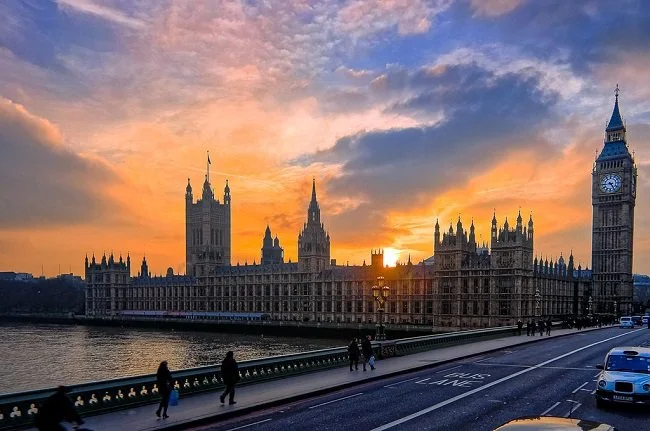
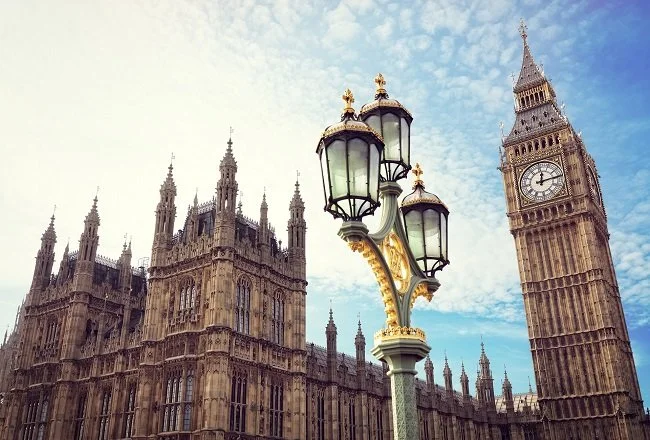
A great many people are legitimately unhappy with the way politics and social change has bypassed their concerns and wishes. The UK has an ageing political system that seems to be ill equipped for the modern world and more importantly an increasing diversity of opinions and views. Both the major political parties seem to be far too self-obsessed and removed from the reality of most of the electorates daily experience. Parliament needs to be overhauled, relocated and divested of many of the patrician traditions it is steeped in. Proportional representation also needs to be embraced. Yet sadly, none of these things appears to be immediate propositions. The growing disillusionment with mainstream politics leaves much of the electorate politically homeless. The major concern here is that the gap left by the demise of the only UK protest party, UKIP, may drive some into the waiting arms of the hard right or the extreme left. Are we looking at a return to the violent and tumultuous political times of the seventies? Because politics and governance driven by either extreme of the political spectrum seldom benefits the country.
What next for Theresa May’s EU deal?
And so the UK continues to act out of character with ongoing acts of protest and catharticism. Journalist Agnes C. Poirier, the UK editor for the French weekly magazine Marianne recently said on the BBC news discussion show Dateline London, that the UK “was behaving in a very un-British way” in so far as after decades of not cleaving to strong ideologies it is now doing the opposite over Brexit and also by being “passionate”, which is not a trait usually associated with the UK populous and their relationship with politics. It begs the question where will it all end? Well I think with regard to Brexit, the answer is not well. I believe any outcome available will be broadly unsatisfactory to the UK electorate. A Hard Brexit comes with potential economic turmoil, job loss and more. The Prime Minister’s compromise deal pleases neither side of the debate and entails the risk associated with a finite transition period and a dependency for the government to negotiate “good trade deals”. And the prospect of cancelling Brexit and retroactively remaining will cause social unrest and a further loss of faith in the UK political system. No one group is going to win, because there’s nothing to win. Brexit has simply removed a plaster from a festering national wound that has been neglected for decades.
As we as a nation are navigating uncharted territory politically and socially, it makes it very difficult to make any accurate predictions. I have never held the view that we cannot leave the EU. I have simply maintained that it cannot be done quickly and yet expected to yield the economic results that some politicians claimed. If the referendum had asked a more detailed question, stating a staged exit over several parliaments, then the very small leave result would be more palatable and practical. But it wasn’t and that is why we find ourselves in this mess. And Brexit is just the tip of the iceberg. It is simply a distillation of ongoing divide in opinion that is rife in the UK. Over the last two years it has become increasingly clear that many of the so-called shared “British values” are not universally embraced. The public do not all think in the same way regarding racism, equality, empathy and shared economic prosperity. And due to the “footballfication” of these sorts of issues, there is no scope for concessions, compromise of “agreeing to disagree”. You simply pick a side and hate the other. If you dare to opt out, then by default you’re an enemy because the prevailing mindset is “it’s my way or the highway”.
The British Empire at its height in the 20th Century
I am expecting a Hard Brexit and the consequences that go along with that. One can prepare to a degree but so many of the potential issues that could arise are out of our personal control. I fully expect the UK public to be in turmoil as a result and for there to be a series of minority governments in the immediate years to come. If there are hard economic consequences, then many who voted for Brexit may well be surprised that they are suffering as a result of their actions. Naturally blame will be placed at every door bar those who are genuinely responsible. The divide between rich and poor will grow, and social unrest increase as a result. As for the thorny issue of immigration, we will simply see European migrant labour replaced with international or, more than likely, Commonwealth migrant labour. That will not be well received in certain quarters. The systemic failing of our educational system and the cultural snobbery regarding many service-related jobs will leave us ill equipped to maintain the status quo regarding the way we live and consume. I suspect that the resulting backlash that is coming will end in violence and even fatalities. I believe the political classes will be at increased risk. But maybe Brexit and what proceeds it is a much needed and long postponed reality check for a nation. Perhaps we can finally lay to rest the myth on British Exceptionalism as well as put our colonial past and glory days behind us and find a new appropriate role in the modern world. However, if such a lesson can be learned it will be long, extremely painful and come with a significant price.






The EU Referendum
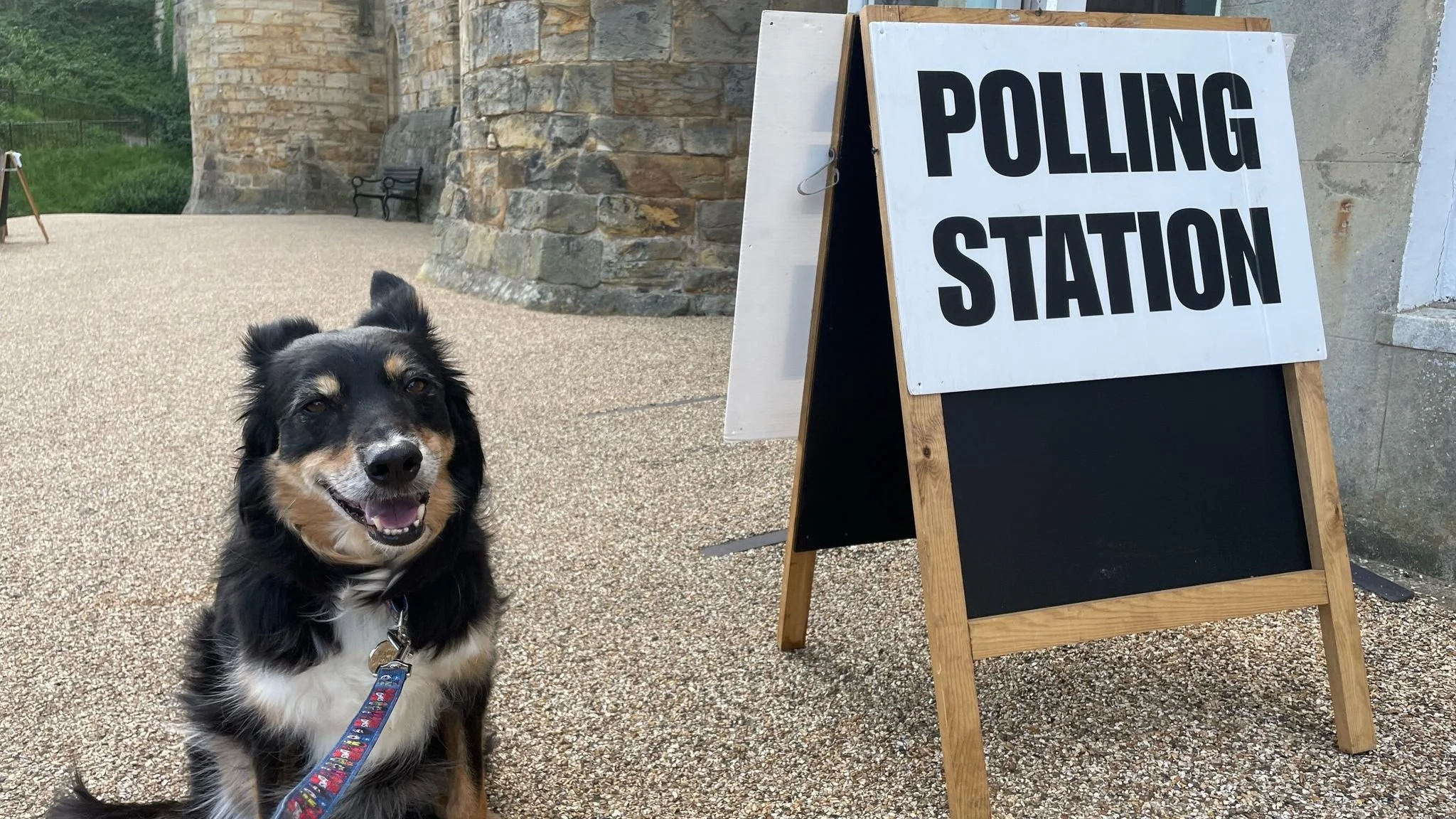
On Thursday 23rd June the UK will vote on whether to remain a member of the EU or leave the community. It is possibly the biggest political, economic and social issue that I have voted on in my lifetime and both outcomes have the potential for both positive and negative effects upon the country and its future. As you would imagine with an issue of this magnitude, the pros and cons on both sides of the debate are complex. Immigration, security, trade, financial stability are some of the factors involved that shape people’s opinions. Then there are more nebulous concepts like sovereignty and nationalism that influence voter’s perspective. Whereas the logistical and administrative arguments are far more couched in facts and data, the more emotive issues are driven by tribal politics and feelings. I’m not a fan of either.
On Thursday 23rd June the UK will vote on whether to remain a member of the EU or leave the community. It is possibly the biggest political, economic and social issue that I have voted on in my lifetime and both outcomes have the potential for both positive and negative effects upon the country and its future. As you would imagine with an issue of this magnitude, the pros and cons on both sides of the debate are complex. Immigration, security, trade, financial stability are some of the factors involved that shape people’s opinions. Then there are more nebulous concepts like sovereignty and nationalism that influence voter’s perspective. Whereas the logistical and administrative arguments are far more couched in facts and data, the more emotive issues are driven more by tribal politics and feelings. I’m not a fan of either.
Over the next one hundred and twenty or so days both campaigns will vie for the public’s attention. Those who have already made up their minds which way they intend to vote are not really relevant in terms of the campaigning that will be conducted. It is those who have yet to make up their minds that will hold the balance. For such people (myself included) to make an informed choice, there is a requirement for clear and succinct data. I would like to be presented with comprehensive fact based arguments from both sides. I would also like to see measured and impartial discussions by the UK media. Sadly none of this is going to happen. The UK press, especially the newspapers are biased and both respective campaigns seem to be focusing on soundbites based upon fear. It seems that the referendum will be determined by lowest common denominator politics.
I’ve read the opinions of many ardent supporters from both sides of the debate and am very much bemused by the idealism and naivety exhibited. A common refrain is that of “unelected officials” and having to endure the governance by parties one didn’t vote for. But this is something that the majority of the electorate currently endure already from our own existing Parliamentary system. I also do not understand why some quarters are more trusting of our own politicians than those of the EU. A UK government free from such EU rules as the Human Rights Act and Working Time Directive could potentially act with impunity and to the detriment of many an employee. UK governments of all political persuasions have hardly acted with integrity or for the benefit of all over the last three decades. I would also add that he stay campaigns fixation on security and defence is also spurious. The UK whether in or out of the EU is still a major player in both NATO and the UN.
However what we have learned over recent months is not to put too much stock in opinion polls and market research. The Scottish Independence referendum appeared to be going in one direction at one point, as did predictions for a hung parliament in last May’s UK general election. The public is less free with information about their voting preferences these days and may well continue to play its cards close to its chest. This is hardly surprising as some of the more vocal members of the public seem to be far from tolerant of differing views. Look at any comment section of a news website covering the EU referendum and you’ll find hyperbole, invective and a general lack of respect. I see that Patriotism is now being trotted out as an argument from some quarters of the leave campaign. Need I quote Samuel Johnson?
At present not only do I find myself considering my own position on the referendum itself but also whether I will be able to personally endure any potentially negative consequences that may ensue, regardless which decision prevails. If there are economic problems at a later date, will my own personal circumstances be sufficient to insulate me from any financial fallout? It is worrying to have to think in such terms and only adds further to the entire negative ambience of this entire campaign. Perhaps for the sake of balance it would help to consider on some more light hearted questions that stem from this debate. If the UK leaves the EU does that mean we will no longer be able/have to participate in the Eurovision Song contest? Also does a successful Brexit mean that the UK Independence Party’s work is done and it will cease to operate? There’s precious little levity in contemporary UK politics, so let us enjoy a little now. I’m sure in three months’ time all vestige of humour will be gone from the EU referendum debate and fear and loathing will be the default response from most quarters.
If you visit the websites for such UK tabloid newspapers as the Daily Express or the Daily Mail you will no doubt encounter prominent stories about Megan Markle, Nigel Farage and “immigrants”. If these two august institutions are short of column inches, they’ll run a piece about how some former celebrity has had the unmitigated gall and temerity to get old. I mean WTF? How dare they do what human beings are genetically disposed to do. It’s outrageous. Similarly, head over to the Unherd website and you’ll find foam flecked tirades regarding spurious points of contention over dubious subjects. Often the topic being harangued is incredibly niche and I’ve never heard of it before or even considered it being a thing. These sort of talking points are not about informing, debating and most certainly aren’t about thinking. They exist to provoke reactions.