
Watching Movies on Commercial TV Stations
The relevance of this post, comes down to how much you like and care about film. If movies are simply a transient form of entertainment to you, something you have no major investment in beyond killing time, then my following protestations will be water off a duck’s back. If like me, you consider film to be art, then hopefully you’ll concur with my sentiments. Because I do consider movies to be a the most immediate and significant art form of the twentieth century. There are no significant barriers to entry beyond the ability to see and they can convey thoughts, ideas and emotions to the broadest possible audience.
The relevance of this post, comes down to how much you like and care about film. If movies are simply a transient form of entertainment to you, something you have no major investment in beyond killing time, then my following protestations will be water off a duck’s back. If like me, you consider film to be art, then hopefully you’ll concur with my sentiments. Because I do consider movies to be a the most immediate and significant art form of the twentieth century. There are no significant barriers to entry beyond the ability to see and they can convey thoughts, ideas and emotions to the broadest possible audience.
Yesterday I watched Devil in a Blue Dress, for the first time. Carl Franklin’s socio-historic thriller enjoys a strong reputation as a neo-noir and is also considered an important piece of “Black Cinema”. It boasts a strong cast featuring the likes of Denzel Washington and Don Cheadle and offers a great deal of period detail. There's also a fine score by Elmer Bernstein. All things considered this is a film of note, dealing with important subjects such as institutional racism and personal friendship, told within the framework of a hard-boiled detective story. The narrative has many a twist and is squarely aimed at mature audiences with a sense of historical perspective.
Sadly AMC (UK), the channel that broadcast Devil in a Blue Dress on December 10th, decide to do so at 5:00 PM in the afternoon. I didn’t realise this initially as I was watching a recording on our DVR but it soon became apparent that the film had been edited to accommodate broadcast at such a time. These cuts where at time so ham-fisted that they stood out like a saw thumb. Edits to violence and a sex scene as well as sundry dialogue omissions were made to sanitise the film for broadcast. However, considering the nature of the plot and the era that the story was set in, such changes drastically altered the dramatic impact of the movie. One missing scene had a particular bearing on the narrative. Then there is the entire separate issue of interfering with the film makers artistic vision.
Unfortunately, such practises are common place on commercial television stations these days. Films are not only edited for content but shown in the wrong aspect ratio, plagued with commercial breaks every ten minutes and further blighted by onscreen graphics and logos. If you enjoy perusing the end credits you’ll often find these compromised in a similarly crass fashion. Often the picture quality of the source content is subpar and further degraded by the rigours of digital compression. Simply put, watching a film under such circumstances is often intolerable for film fans or aficionados. For those seeking out specific movies, as I were with Devil in a Blue Dress, it really can impact upon your enjoyment and critical judgement. I subsequently re-watched this film several hours later, via a superior source to improve my perception of it.
Overall such practises by commercial stations simply show they have no real interest in the movies they peddle. As ever it is simply a question of viewing figures and ad revenue that concerns them. Thus, they will more than likely continue with such practises irrespective of the few complaints that they may receive. Therefore, I have personally chosen that henceforth I shall no longer watch movies under these circumstances, unless there really is no other option available. Unless a film is extremely rare and unobtainable on any other platform, I shall only watch it via DVD, Blu-ray, Netflix, Amazon Prime or some other electronic file format. Adverts, digital branding, censorship and incorrect formatting is no longer acceptable and belong to the last century.
I’m sure there are some who will label me purist but I believe that all creative material is due a degree of respect with regards to the manner in which it is presented; and that should always be in the accordance with its creator. Tampering simply sends a message that there is no inherent value in that which is being shown. It is born of hubris and a lack of creative understanding. Therefore, broadcasters should never butcher films, talk across music or songs and generally interfere with art, simply for the convenience of their business model. Sadly, it is highly unlikely that those currently guilty of such things are going to support such a change in policy. Thus, we return to the concept of voting with our feet and seeking out quality cinema (and other art forms) via the best outlet possible. Why diminish your enjoyment? It is time to start treating these commercial stations with the same indifference they show to film.
Exodus: Gods and Kings (2014)
Epic adventure Exodus: Gods and Kings is the story of one man's daring courage to take on the might of an empire. Using state of the art visual effects and 3D immersion, Scott brings new life to the story of the defiant leader Moses as he rises up against the Egyptian Pharaoh Ramses, setting 600,000 slaves on a monumental journey of escape from Egypt and its terrifying cycle of deadly plagues. Written by 20th Century Fox.
So reads the marketing material for Exodus: Gods and Kings according to 20th Century Fox. However, the movie itself despite brimming with "state of the art visual effects and 3D immersion" lacks any emotional impact, has a choppy narrative and is completely devoid of any religious conviction. Do not mistake Ridley Scott's ponderous movie for a religious epic. It is more of a pseudo-historical blockbuster with some metaphysical overtones. By endeavouring to rationalise the faith based aspect of the story, we are left with a distinctly underwhelming costume drama.
Epic adventure Exodus: Gods and Kings is the story of one man's daring courage to take on the might of an empire. Using state of the art visual effects and 3D immersion, Scott brings new life to the story of the defiant leader Moses as he rises up against the Egyptian Pharaoh Ramses, setting 600,000 slaves on a monumental journey of escape from Egypt and its terrifying cycle of deadly plagues. Written by 20th Century Fox.
So reads the marketing material for Exodus: Gods and Kings according to 20th Century Fox. However, the movie itself despite brimming with "state of the art visual effects and 3D immersion" lacks any emotional impact, has a choppy narrative and is completely devoid of any religious conviction. Do not mistake Ridley Scott's ponderous movie for a religious epic. It is more of a pseudo-historical blockbuster with some metaphysical overtones. By endeavouring to rationalise the faith based aspect of the story, we are left with a distinctly underwhelming costume drama.
It soon becomes apparent while watching Exodus: Gods and Kings that this movie has been subject to the usual editing issues that plague the work of Ridley Scott. Key members of the cast such as Sigourney Weaver, Aaron Paul and Andrew Tarbet simply vanish from the story shortly after their introduction. There are obvious gaps in the narrative and many of the key characters feel poorly defined. The central relationship between Moses (Christian Bale) and Ramses (Joel Egerton) is very thin and there is little back story to their emerging rivalry. Possibly these gaps will be plugged in a future directors cut; something Ridley Scott is no stranger to.
Many critics joked that "at least the plagues are nice" when reviewing this movie. They are right in this respect. The digital effects work certainly paints an authentic picture of the Egyptian world and the subsequent plagues are brutal and unpleasant. The Crocodile attacks are particularly striking, yet tonally sit quite awkwardly with the rest of the film. The choice to down play the religious element of the plot and effectively sideline Moses's visions of God as the results of a head injury is somewhat counter-intuitive. As a result, Exodus: Gods and Kings feels distinctly lacking in any sort of conviction.
I often wonder if the reason so many "great" directors produce such weak work in their twilight years is because their fame and success has placed them in an echo chamber. It is either assumed that their creative vision is infallible or that all concerned parties are simply too scared to challenge any of the ideas that are presented. This is by far Scott's weakest movie for a long time and frankly I am not sufficiently enamoured to give another longer version a try, as and when it becomes available. Unless you are a Scott completest Exodus: Gods and Kings is best avoided. If you are a person of faith you may still wish to defer to Cecil B. DeMille's The Ten Commandments.
Landmark to Close on February 21st
It was announced yesterday by the Daybreak Game Company that the MMO Landmark will be closing on 21st of February. Landmark joins an ever-growing list of titles that have closed since DGC acquired SOEs back catalogue. As ever the press release does not give any specific details as to why the game is to be shutdown. However, it is more than likely down to operating costs versus profits. Furthermore, irrespective of the corporate reasons for the decision, there are still numbers of Landmark players who will be saddened by the news. This development is also of interest to LOTRO and DDO players, due to the Daybreak Game Company recently becoming the publisher of those titles.
It was announced yesterday by the Daybreak Game Company that the MMO Landmark will be closing on 21st of February. Landmark joins an ever-growing list of titles that have closed since DGC acquired SOEs back catalogue. As ever the press release does not give any specific details as to why the game is to be shutdown. However, it is more than likely down to operating costs versus profits. Furthermore, irrespective of the corporate reasons for the decision, there are still numbers of Landmark players who will be saddened by the news. This development is also of interest to LOTRO and DDO players, due to the Daybreak Game Company recently becoming the publisher of those titles.
Now if you peruse the comments section of a site such as Massively OP, then you’ll find statements such as “LOTRO is fine” and there’s nothing to be concerned about because DGC is just the publisher for Standing Stone Games. However, I don’t think the situation is as binary as that and it would be wise to scrutinise the business relationship between DGC and SSG more closely. Because I and others suspect that DGC may well have underwritten SSG costs, when they acquired both DDO and LOTRO from Turbine and Warner Bros. If that is the case, then such financial involvement give DGC far more leverage with SSG than merely publishing their gaming catalogue.
Too many gamers allow personal sentiment and affection for the games that they play to blind them to the realities of business. MMOs as I have said time and time again are not social services but products to be bought and sold for money. The moment any product doesn't meet the expectations its owners, then it's future is in question. I would have thought that was abundantly clear by the way Warner Bros. cut LOTRO and DDO loose, as they organise their balance sheet for their pending acquisition with AT&T. Why should the Daybreak Gaming Company, itself a subsidiary of a Russian venture capital company, view its assets any differently?
Game Developers often have the best of intentions for the products they make. Artistic vision and ethical practises may well be key to their business ethos. However, unless those that create have total financial and therefore legal control, then such noble aspirations can and are frequently side-lined. In my experience business is usually driven by those who control the purse strings, which once again returns me to the question of whether DGC are merely SSGs publisher or is there a more complex business relationship? Are LOTRO and DDO going to be measured by criteria set by their developers or someone else? If these games survival is dependent on targets set by DGC, then their future may not be as rosy as some like to think.
The Haunted Palace (1963)
Despite being marketed as yet another Gothic Horror based upon the works of Edgar Allan Poe, The Haunted Palace is in fact a lose adaptation of The Case of Charles Dexter Ward, by H. P. Lovecraft. The film's title is merely taken from a poem by Poe and is an example of the clever promotion often associated with the movies of Roger Corman. The poster's tagline as ever focuses on the more sensational aspects of the storyline, although audiences’ expectations are not exactly met. Yet there is often a great deal of merit to be found in Corman's output from this decade and as ever The Haunted Palace, like so many of his other movies transcends its modest budget with a sumptuous production design and atmosphere.
Despite being marketed as yet another Gothic Horror based upon the works of Edgar Allan Poe, The Haunted Palace is in fact a lose adaptation of The Case of Charles Dexter Ward, by H. P. Lovecraft. The film's title is merely taken from a poem by Poe and is an example of the clever promotion often associated with the movies of Roger Corman. The poster's tagline as ever focuses on the more sensational aspects of the storyline, although audiences’ expectations are not exactly met. Yet there is often a great deal of merit to be found in Corman's output from this decade and as ever The Haunted Palace, like so many of his other movies transcends its modest budget with a sumptuous production design and atmosphere.
Charles Dexter Ward (Vincent Price) and his wife Ann (Debra Paget) travel to Arkham to take custody of a palace he's inherited. Its previous owner was his great grandfather, Joseph Curwen, who was burned at the stake by local villages for practicing the black arts. Upon arrival the locals are hostile to Ward with the exception of Dr. Willet (Frank Maxwell). Many of the villagers are afflicted with birth defects that are attributed to a curse that Curwen made as he died. Ward soon finds that a portrait of his ancestor bears a striking similarity to himself. It is not long before he finds his own identity under threat from the malignant spirit of Curwen, who seeks revenge and to resume his ungodly pursuits.
The Haunted Palace certainly has some noteworthy aspects. This was the only time that iconic horror actor, Lon Chaney Jr. appeared in a Roger Corman movie. Although his role is somewhat under developed, his presence is still tangible and suitably creepy. As ever, the production does a great deal with very little. The set designs by Daniel Haller are intricate and have an authentic feel. Many were built in forced perspective to create the illusion of scale. Floyd Crosby's cinematography is stylish and make great use of the widescreen format. There are is also some simple but eerie makeup effects by Ted Coodley,
After a captivating opening, The Haunted Palace embarks upon a story of possession, revenge as well as arcane rituals. There are quite a lot of elements from Lovecraft's source text, including the infamous Necronomicon. The concept of the Elder Gods seeking earthly form by cross breeding with humans is quite bold for the times. The movie also has some quite strong death scenes. One villager is dragged into the fireplace and burnt alive at the hands of his own mutant son. Another hapless local is immolated in the streets, resulting in a grim incinerated corpse. The film has a sinister ambience, especially during the scene when Ward and his wife are menaced by a group of deformed villagers.
Sadly, the final act fails to sustain this momentum and the ending is somewhat abrupt and predictable, especially with regard to the inevitable twist. It also fails to account for the fate of certain characters. It's a shame because this production strives to do something different from other Corman horror movies. It excels in many aspects of the production but simply over reaches itself at the end and cannot adequately bring events to a satisfactory conclusion. However that is not to say that the movie isn't entertaining and frequently demonstrates low budget creativity. Many of today's horror directors today could benefit from a close study of Corman's approach to film making and his innovative techniques.
The Great and Secret Show by Clive Barker (1989)
During the eighties, I was an avid fan of the novelist Clive Barker. I consumed all his work voraciously and sought out magazine and television interviews with him whenever I could, finding the man equally as fascinating as his work. Oh, to be a twenty something horror fan during the genre renaissance of that decade. Despite the yolk of the Video Recordings Acts and the scaremongering of the tabloid press over “Video nasties”, horror fiction both in print and on the big screen was elevated to new levels due to the creativity of one British author and director. These were halcyon days for fan boys and girls.
During the eighties, I was an avid fan of the novelist Clive Barker. I consumed all his work voraciously and sought out magazine and television interviews with him whenever I could, finding the man equally as fascinating as his work. Oh, to be a twenty something horror fan during the genre renaissance of that decade. Despite the yolk of the Video Recordings Acts and the scaremongering of the tabloid press over “Video nasties”, horror fiction both in print and on the big screen was elevated to new levels due to the creativity of one British author and director. These were halcyon days for fan boys and girls.
In August 1989 Clive Barker released his fifth major novel, The Great and Secret Show. Expectations among fans were high as they prepared themselves for another cerebral, densely plotted and philosophical tale. Barker has always had a gift for characters and is an author that doesn’t give his readers everything on a plate. You have to bring your imagination and intellect with you when you read his work. Let other’s sit around and debate Proust or Kafka. We had Clive Barker who provided not only comparable brain food but did so via the medium of the horror genre. Such work provided a great opportunity for fans to pose, get their fix and stroke their beards.
Naturally there was a various book signings across the UK to promote the new book. My memory is a little vague here but I believe an autumn appearance at The Forbidden Planet in London offered me the best opportunity to meet Clive Barker. However, something came up unexpectedly and I was unable to attend the signing, so my friend Paul went alone, entrusted with a vital message like R2-D2. I awaited eagerly at home pondering how my thoughtful and penetrating question would be greeted by the great author. What words of wisdom would I be given in return? How the hubris of my youth still haunts me to this day.
When I next met with Paul, I was presented with a first edition copy of The Great and Secret Show. To my surprise, Paul did not convey to me verbally, the reply Clive Barker had made to my probing enquiry or regale me with a lengthy anecdote about his experience. He simply opened the book, presenting me with a hand-written inscription from the author himself. I remember being utterly stunned that Clive Barker himself had not only written a personal message but had addressed my point head on, in a succinct and candid fashion. To this very day, I’m still impressed that he took the time to do this. I think it speaks volumes about the man and his approach to fans and life.
Today as I was going through some storage crates, searching for a specific book, I found my copy of The Great and Secret Show. Naturally this whole story came flooding back and I found myself reminiscing about not only these specific events but the entire horror scene at the time. They were happy days. But I digress. Here finally is a picture of the very inscription that Clive Barker wrote. It just remains for me to tell you exactly what it was that I had asked by proxy. My question was simply this. “Why was Hellbound: Hellraiser II so shit?” Clive’s answer, as you can see, is magnificent.
Twenty-seven years on I find myself both older and little wiser. I still consider Clive Barker to be one of the best writers of those times. I also have enormous respect for the way he treats his readers and audience. I know he’s had some bad experiences in the past and I’m amazed he found the good humour to deal with such a crass and puerile enquiry such as mine. If I were ever to meet him in the future I like to think I’d ask him something a little more respectful and interesting this time round. They say that fans shouldn’t meet their heroes. However, I believe there’s something to be said about the reverse. I’ll let you ponder that while I re-read The Great and Secret Show.
Scrooge Uncut
While the Burton & Scrooge Podcast is on hiatus, Brian has decided to forge ahead with a solo show; the first episode of which is now available. Scrooge Uncut is a showcase for all the various subjects that cross Brian’s mind, so expect a very dynamic and eclectic range of material. The podcast is very much a stream of consciousness, neatly edited into bitesize segments, presented in Brian’s inimitable style. The debut episode touches upon technology and gaming and also updates several talking points previously raised on the Burton & Scrooge Podcast.
While the Burton & Scrooge Podcast is on hiatus, Brian has decided to forge ahead with a solo show; the first episode of which is now available. Scrooge Uncut is a showcase for all the various subjects that cross Brian’s mind, so expect a very dynamic and eclectic range of material. The podcast is very much a stream of consciousness, neatly edited into bitesize segments, presented in Brian’s inimitable style. The debut episode touches upon technology and gaming and also updates several talking points previously raised on the Burton & Scrooge Podcast.
I’m very pleased that Brian has taken the plunge to forge ahead with this solo project. Our previous vehicle didn’t always accommodate all the material we wished to cover. Running time and judicious editing leaver so much “gold” on the cutting room floor. Scrooge Uncut is a great opportunity to redress this and diversify in to new territory. After all, isn’t that the whole point of podcasting? To explore new discussions, to seek out new topics for debate and to boldly rant about things that no one has ranted about before?
So, for your delight and edification, here is the debut episode of Scrooge Uncut. God bless her and all who listen to her.
Return to Twitter: @xyderias. Why Scrooge Uncut? Mechanical Keyboards. SkyrimSE. New Game Purchases. Selling Steam Trading Cards. Learning to Draw?!? WoW Updates. Soylent Update. ASMR Update.
"Make a New Plan, Stan"
“If something's important, you'll make the time”. Montgomery Scott.
I enjoy writing. I find the process helps order my thoughts. Then there’s the pleasure of communicating with others and being part of a community. Therefore, writing is something that I wish to do regularly. Up until 2015 I use to post content on Contains Moderate Peril every day. However, I began to find it a bit of a chore (because I had followed this schedule for 5 years), so subsequently reduced my output. Then in 2016 I had to make further changes due to real life issues, so my writing became even more infrequent, as did my podcasting. However, in recent weeks I cannot help but reflect upon Scotty’s wise words. I do have some leisure time and a degree of flexibility in my weekly schedule. I suspect that although time has been a factor in my reduced content output, motivation has also played a part.
“If something's important, you'll make the time”. Montgomery Scott.
I enjoy writing. I find the process helps order my thoughts. Then there’s the pleasure of communicating with others and being part of a community. Therefore, writing is something that I wish to do regularly. Up until 2015 I use to post content on Contains Moderate Peril every day. However, I began to find it a bit of a chore (because I had followed this schedule for 5 years), so subsequently reduced my output. Then in 2016 I had to make further changes due to real life issues, so my writing became even more infrequent, as did my podcasting. However, in recent weeks I cannot help but reflect upon Scotty’s wise words. I do have some leisure time and a degree of flexibility in my weekly schedule. I suspect that although time has been a factor in my reduced content output, motivation has also played a part.
My blog posts, like many other writers, reflect what my current interests are. As I’ve mentioned before my relationship with gaming has changed in recent years. So, it’s been harder to write meaningfully about them of late. Despite having often extolled the virtues of writing for yourself, I do feel I have been reticent about varying the core content of Contains Moderate Peril to drastically. So, I’ve decided to take the plunge and simply write about whatever I want. Contains Moderate Peril is no longer to be a site just about gaming, movies and other aspects of popular culture. It’s effectively going to be a vehicle what’s in my head, what I’m currently interested in, enthused or outraged about. That may be Overwatch, Sam Pekinpah or my love of Cheese. Readers can either join me on the journey or take their leave.
Stop me if any of the following sounds familiar to you. Whenever you decided to implement a new project or plan, rather than just focus on the core idea, you find yourself bogged down in the periphery. For example, because I want to write more and take Contains Moderate Peril in a new direction, part of me wants to rebrand, change blog template and generally mess around with superficial stuff that really isn’t that important to the overall scheme. I spent some time last night pondering such things before realising that such an approach really was unnecessary. So, I’m just going to leave the site as it is. I made some tiny changes to backgrounds and such like but that’s it. The idea is for me to write and that’s what I intend to do. Not everything will be long form criticism or the like. Some posts may well be nothing more than streams of consciousness or immediate thoughts and reactions. However, if I modify my approach to my writing I feel I can do more.
I also spoke with Brian last night regarding the Burton& Scrooge Uncut Podcast. It’s getting put on “the shelf” to be returned to later. The show has become unfocused, irregular and ticks over mainly because our listeners very kindly indulge us. However, I have a specific podcast project that I really want to focus on in 2017, so I am going to sideline any possibly distractions. As to the new show, well I’ll talk about that when it’s ready. That way I hopefully won’t paint myself in to any corners. In the past, I’ve made the mistake of being to specific or changing my mind about something quite quickly, causing confusion among listeners and overall panic in the ranks. Oh, and I’m also quite prepared to gatecrash other people’s podcasts in 2017. I like being a guest. I may also reach out to those other podcasters who find themselves currently at a loose end. You know who you are.
Those who regularly visit here know that I do not set myself tortuous and unrealistic New Year Resolutions. I prefer to set credible goals that can be achieved. Therefore, I’m going to endeavour to keep abreast of more quality blogs this year and strive to comment, retweet and generally provide input and feedback to my fellow content creators. The reasons for this are simple. Such interactions foster a sense of community and I also want the bastards to help me promote my crap as well. Let’s be grown up about this. Life is effectively based upon the notion of quid pro quo. I do feel that the blogging community that I have been part of for five years, has changed a lot but that is to be expected. However, I think with some mutual encouragement we can raise our collective online profile. Mind you, I’m going to leave the Newbie Blogger Initiative to others in 2017.
So, there you have it. My new plan for 2017 as advised by Paul Simon. I sure a lot of you out there may well have similar schemes in development or have thought at least about making some changes. On a serious note, I don’t think it is an appropriate time to retreat into our own respective bubbles. We need to respond to what we see, hear and read. If you have an opinion, then damn well share it. If you want to call someone or something out, then do so. Don’t let others stop you from expressing yourself just because you don’t fit into their world view. We live in an age unparalleled for and sharing ideas. Don’t squander such a golden opportunity. Happy New Year.
A Year in Multimedia
In the past, I’ve often written a summary of my experiences with gaming, movies and TV at the end of each year. Similarly, I usually reflect upon my activities in podcasting and blogging as well. However, 2016 has been unique in many respects. Political and social tides have changed in the West and there is much to reflect upon in the real world. Certainly, my appetite for creating content has taken a knock and I have at times stopped and wondered if it really is all worth the bother. But after such moments of introspection I still see the benefits of the written word or bellowing in to a microphone, so here we are once again. The only difference this time is rather than multiple posts, I can pretty much distil my thought on 2016 in one simple account.
In the past, I’ve often written a summary of my experiences with gaming, movies and TV at the end of each year. Similarly, I usually reflect upon my activities in podcasting and blogging as well. However, 2016 has been unique in many respects. Political and social tides have changed in the West and there is much to reflect upon in the real world. Certainly, my appetite for creating content has taken a knock and I have at times stopped and wondered if it really is all worth the bother. But after such moments of introspection I still see the benefits of the written word or bellowing in to a microphone, so here we are once again. The only difference this time is rather than multiple posts, I can pretty much distil my thought on 2016 in one simple account.
Gaming:
To things have had a major impact upon my gaming this year. A lack of time and too few new titles that aroused my interest. I started the year playing through Hearts of Stone, the first DLC for The Witcher III: Wild Hunt and continued with the second expansion, Blood and Wine when it was released in May. I waxed lyrical about the quality of this RPG last year and will continue to do so this time. The last DLC not only added yet another superbly crafted narrative but refined the game mechanics and system even further. I think it will be a long time before I find another game from this genre that offers anywhere near a comparable experience.
MMO wise I have continued to regularly log into Star Trek Online during 2016 as it has frequently had new content to explore. This year being the 50th Anniversary of Star Trek, the new expansion, Agents of Yesterday, offered an appropriate homage to the original series. The new lighting system has improved the overall aesthetic of the game and it’s clear that developers Cryptic have plenty more in store for the MMO. It’s recent port to consoles clearly indicates that the game is in a healthy state.
LOTRO has had a curious year. I took a six-month break from the game due to the repetitive and formulaic nature of the new content. Yet the Battle of Pelennor Fields brought me back, being surprisingly well realised given the restrictions of the ageing game engine. Update 19 released in October took the game one step closer to Mordor. As ever the epic central story continues to be written to a high standard and certainly compensates for other more pedestrian regional quests. Recent news that ex Turbine staff have formed a new independent company and taken over the development of the game does seem to have renewed interest in the MMO. I remain cautiously optimistic for LOTRO’s future.
It would be remiss of me if I didn’t mention Overwatch. I played the open beta out of idle curiosity and was greatly surprised by how accessible the game is. It has now become my game of choice whenever I want a quick fix of entertainment. I’m still amazed at how equitable this team based, first person shooter is and how anyone can find a role to play, regardless of the style or abilities. It continues to add content and new characters ensuring longevity. Something that Pokémon Go has failed to do. This was another title that I was drawn to out of nostalgia and curiosity but it quickly became apparent that it was unsustainable.
TV and Movies:
I only went to my local multiplex to see movies upon their release, six time this year, which is unusual for me. This is mainly due to there being precious little of interest for me these days. Cinemas seem choked with Blockbusters and Super Hero movies. A lot of the more niche market, independent films have limited releases and tend to be available on-demand very quickly. Those movies I did see were suitably entertaining. Deadpool provided audiences with exactly what they expected and proved that the R rating could still be economically viable. Star Trek Beyond finally saw the new stories set in the Kelvin Timeline hit their stride. It offered a good character driven story that finally tapped in to the soul of the original series. Fantastic Beast and Where to Find Them also proved to be a crowd pleaser with excellent production values and a decent storyline. I have high hopes for this off shoot of the Wizarding World franchise. Rogue One certainly met with my approval and filled a suitable gap in the Star Wars lore. I almost got as much fun out of the fan driven debates about the story as the film itself.
TV once again proved to be the home of more cerebral and densely plotted drama. Stranger Things was a wonderful homage to eighties genre cinema and popular culture. Finally embracing both Amazon Prime and Netflix certainly afforded our household with more choice and provided a respite from the scourge of advertising which just seems to become increasingly preposterous and crass. The Man in the High Castle provided a suitable bookend to the start and end of the year and continues to be both intriguing and entertaining. It has also been beneficial to have access to all previous series of Star Trek and work my way through those shows I’m less familiar with.
Network TV on both sides of the Atlantic has been entertaining. There are still far too many shows to keep up with and I’m constantly amazed at how many shows bite the dust after one lacklustre season. Elementary still maintains a high standard of writing and the central characters of Holmes and Watson still have engaging story arcs. The final season of Person of Interest was both succinct and fitting, providing a bitter sweet, yet plausible ending for the show. Blindpsot somehow made it to a second season and completely reinvented itself to try and escape the narrative knot it had go itself in to. Back in the UK, Endeavour once again proved to be both superbly acted and well written. It’s sedate pace and introspective themes continue to be captivating.
As a grandparent, I also watch a great deal of children’s television, especially those aimed at the pre-school demographic. Therefore, I would like to praise CBeebies for their continued quality programming and point out that Hey Duggee is a sublime show. If you are thirtysomething, then you’ll love the pop culture references that litter every episode. Plus, in the last few days, I also been caught up in the hype surrounding Guillermo del Toro’s Trollhunters. Let it suffice to say that it is charming and entertaining. It’s curious how some creative talents can handle sentimentality without tipping in to emotional overkill.
Blogging and Podcasting:
I stopped writing daily in 2016. I simply ran out of steam after five years and then real world changes meant that such a schedule was off the table for the immediate future. However, I managed to contribute to this year’s NBI and Blaugust, so I guess content creation wasn’t a complete write off (no pun intended). The Burton & Scrooge Podcast became The Burton & Scrooge Uncut Podcast and followed a somewhat erratic release pattern. I enjoy recording with my co-host Brian but I’m thinking we need to either seriously rethink the show format for 2017 or take a break for a while. I’m determined to get my movie related show in to production next year and I also need to return to writing my book, which ground to a halt this summer.
It would appear that real life and all that it contains caught up with many of my blogging and podcasting colleagues this year. Thus, there was reduced output from certain quarters and some went so far as to take a break. It’s sad but totally understandable. Yet it was not all doom and gloom. Syp over at Bio Break continues to write and podcast with great enthusiasm. The year also saw the launch of the Geek to Geek Podcast with Void and Beej. Their dedication and focus has been a source of inspiration and the show itself is thoroughly entertaining. It also reacquainted me with the concept that you can agree to disagree, cordially. Pam over at Cannot be Tamed also produced lots of quality content via blog post, podcast and You Tube. Joseph (formerly known as the MMO troll) kept creating his own unique brand of content with the Pthppt! podcast. It always raises a wry smile and I’ll happily listen to topics that I usually wouldn’t consider exploring.
Valedictory Remarks:
For me the overwhelming impression that 2016 leaves is ones of change. This has been reflected in politics, world events, within the entertainment industry per se and even my personal life. Yet change is an inherent part of life and cannot be avoided. Therefore, I intend to start 2017 with a positive outlook and rather than focus on what I can’t do, explore what can be achieved with the time and resources that I have. I’m also sure there will still be good content available in all mediums. It may simply be a case of having to broaden one’s search. I recently discovered to my surprise that there’s a fourth instalment of Sniper Elite arriving in spring and I’m still greatly looking forward to Star Trek Discovery. I shall also continue to blog and podcast in my own peculiar way. Perhaps I may even encourage others to do so. After all, you’ve got to have a project.
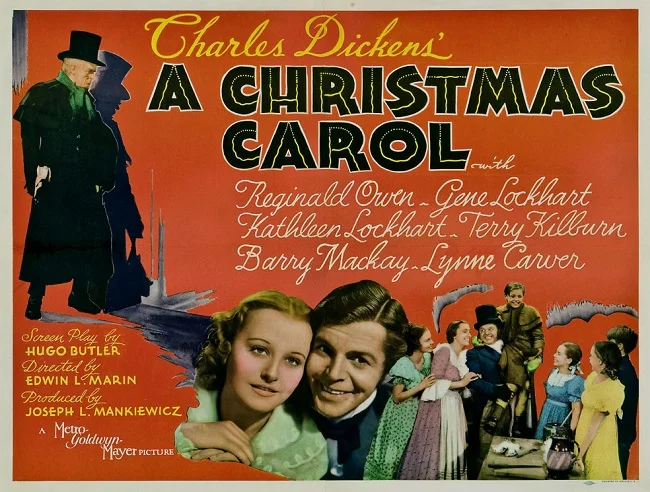
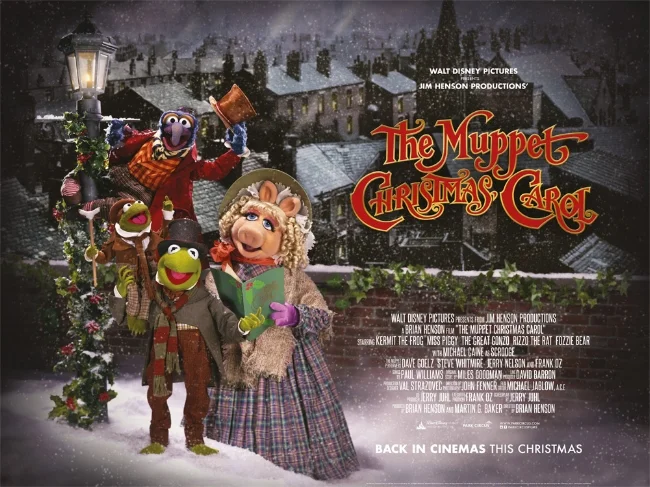
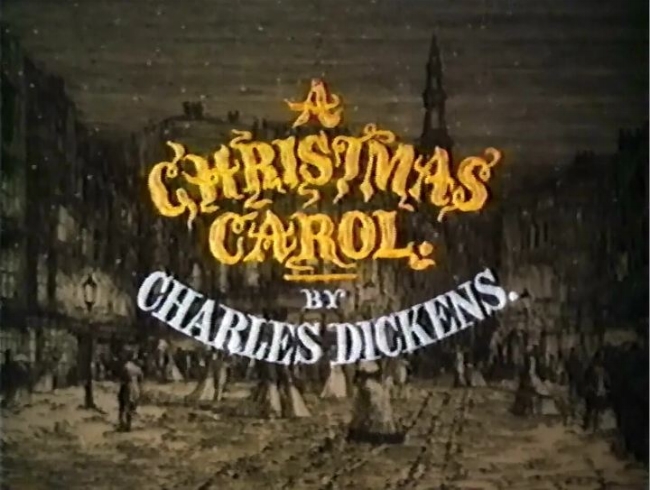
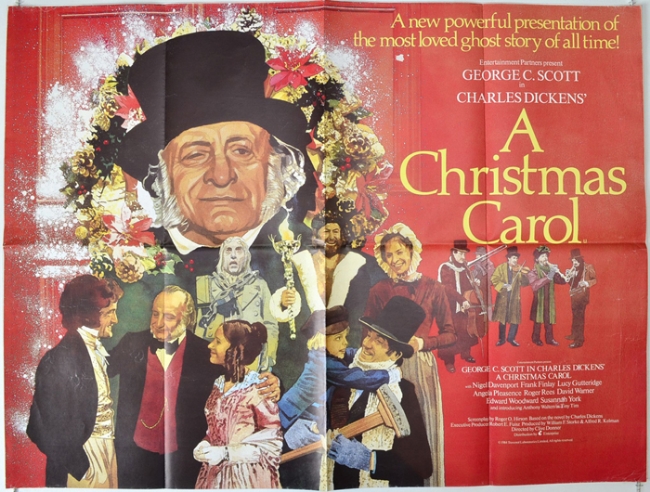
A Christmas Carol (1971)
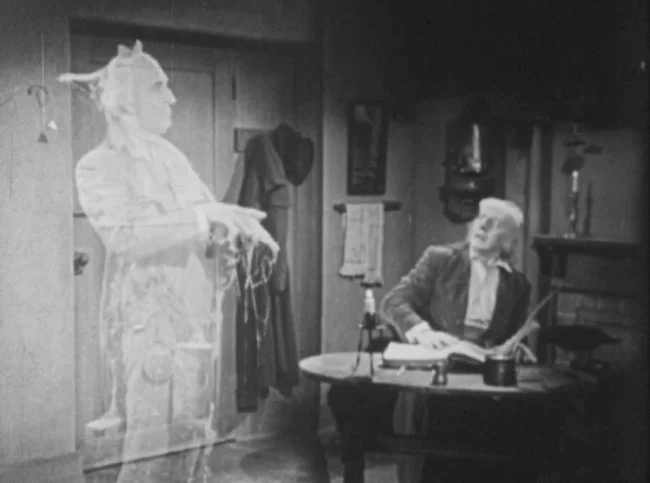
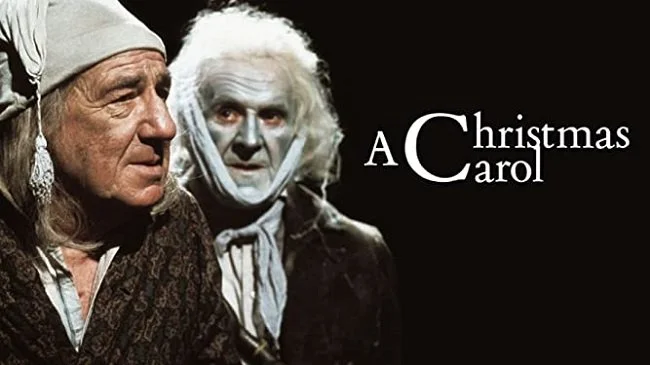
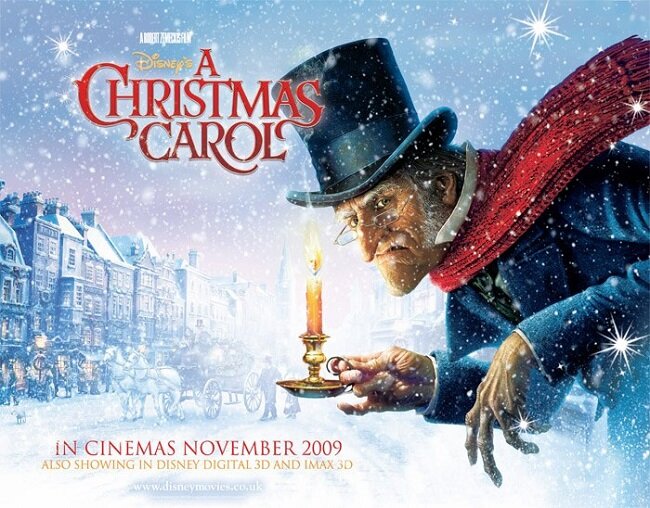
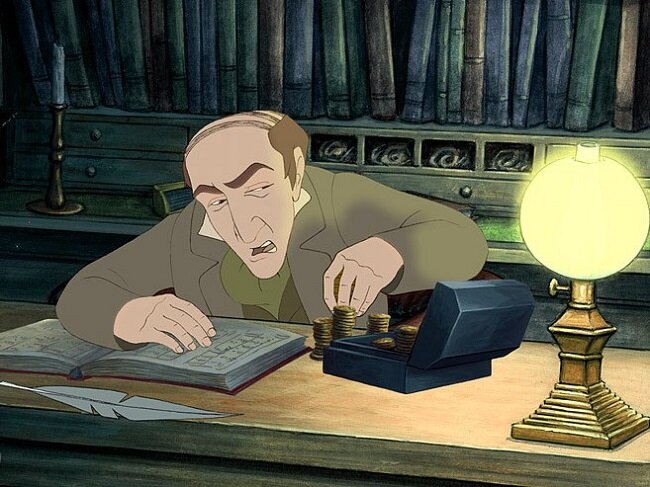
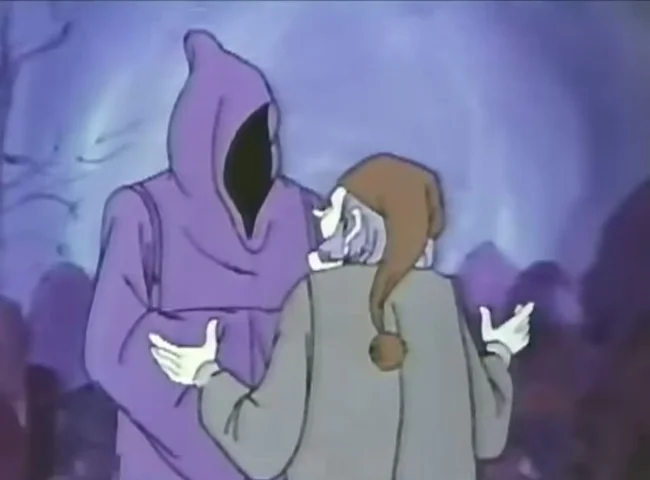
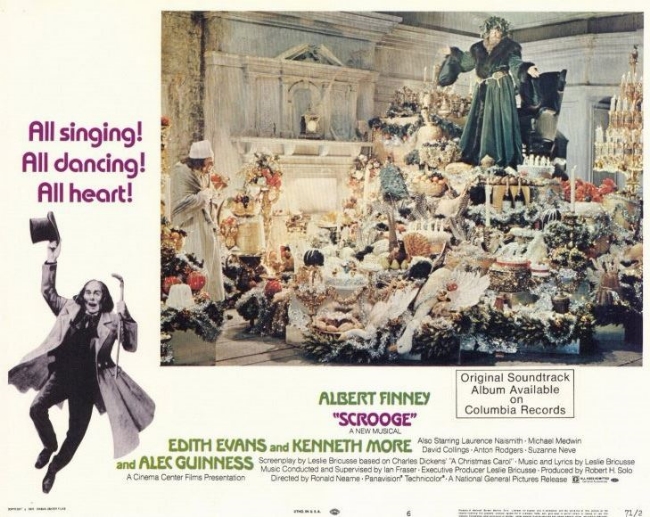
I have a great deal of affection for Charles Dickens' A Christmas Carol, not only because it’s a fine piece of literature but because it lends itself so well to dramatisation. I therefore have a keen interests in all the respective adaptation, of which there are many. Over the years there has been a trend to focus excessively on the sentimental aspect of the plot, resulting in a rather nauseating Disneyfication of the story. Although the redemption of the main protagonist is central to the narrative, the poverty and deprivations of the time are still very pertinent themes, especially in today's economic climate. I was therefore very gratified to rediscover the 1971 version of Charles Dickens' classic story which was originally shown on ABC. This short 25 minute animated feature realises the story superbly, capturing the tone of the book and accurately reflecting the darker aspects. Remember that A Christmas Carol is fundamentally a ghost story.
I have a great deal of affection for Charles Dickens' A Christmas Carol, not only because it’s a fine piece of literature but because it lends itself so well to dramatisation. I therefore have a keen interests in all the respective adaptation, of which there are many. Over the years there has been a trend to focus excessively on the sentimental aspect of the plot, resulting in a rather nauseating Disneyfication of the story. Although the redemption of the main protagonist is central to the narrative, the poverty and deprivations of the time are still very pertinent themes, especially in today's economic climate. I was therefore very gratified to rediscover the 1971 version of Charles Dickens' classic story which was originally shown on ABC. This short 25 minute animated feature realises the story superbly, capturing the tone of the book and accurately reflecting the darker aspects. Remember that A Christmas Carol is fundamentally a ghost story.
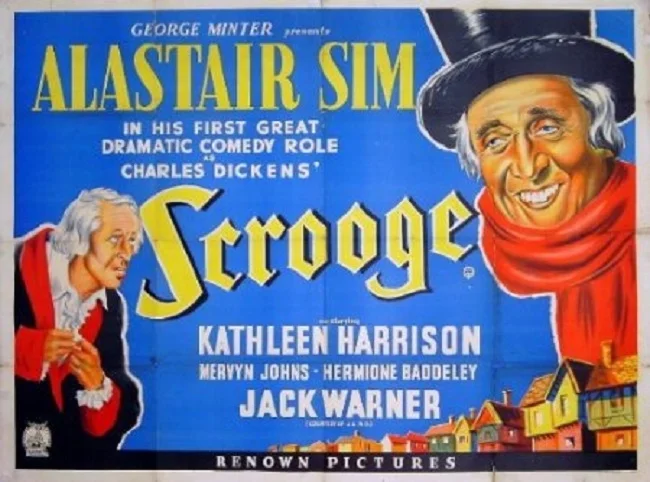
The TV special features Alastair Sim as the voice of Ebenezer Scrooge (a role Sim had previously performed in the 1951 live-action film Scrooge). Michael Hordern likewise reprised his 1951 performance as Marley's Ghost. Veteran animator Chuck Jones served as executive producer, while the great Richard Williams directed. This is a very distinguished pedigree for any animated production. The story is beautifully condensed considering the running time and captures the harsh winter environment of London in the 1843. The supernatural elements are intelligently realised, drawing directly from the source text. The scene where Marley's Ghost, removes the handkerchief that secures his jaw, so it drops to his chest terrified me as a child when I first saw it. The subsequent depiction of "Ignorance" and "Want" is also bleak and shocking.
Originally produced for television, A Christmas Carol won an Academy Award for best animated short subject in 1973; it remains the only film adaptation of the story to date to have done so. However, elements within Hollywood were unhappy that a TV show had won an Academy Award, which led to the Academy changing its policy, disqualifying any shorts that were shown on television first. Overall A Christmas Carol remains a benchmark for quality animations. The subtle line drawings and water colours bring Dicken's London to life wonderfully. The characters are vividly drawn and reflect a thoughtful design. The voice cast bring gravitas to the proceedings, resulting in a quality adaptation of the story. Unfortunately, this short animated film is not readily available. The VHS release is long obsolete and there is no mainstream DVD copy available. The film did feature on a limited edition DVD boxset of the work of Richard Williams. If you can track down a copy via the internet, then you will be well rewarded.





Standing Stone Games and LOTRO
To date one of LOTRO’s greatest weaknesses has been the way it’s been run and marketed. There are other flaws but these have been fully discussed over the years, so I see no reason to revisit them. Considering the games pedigree, the nine-year-old MMO has never reached its full potential but that is a criticism that can be levelled at many entries in this genre. In recent years LOTRO has limped forward, hobbled by an ever-diminishing development team and starved of resources by its corporate master. Yet because of the dedication of a core group of fans the game generates sufficient revenue to keep it from folding. Thus, despite continued predictions of closure from armchair experts such as myself, LOTRO endures, while other titles have sailed into the West.
To date one of LOTRO’s greatest weaknesses has been the way it’s been run and marketed. There are other flaws but these have been fully discussed over the years, so I see no reason to revisit them. Considering the games pedigree, the nine-year-old MMO has never reached its full potential but that is a criticism that can be levelled at many entries in this genre. In recent years LOTRO has limped forward, hobbled by an ever-diminishing development team and starved of resources by its corporate master. Yet because of the dedication of a core group of fans the game generates sufficient revenue to keep it from folding. Thus, despite continued predictions of closure from armchair experts such as myself, LOTRO endures, while other titles have sailed into the West.
Yesterday it was announced that Turbine would no longer be overseeing the development of LOTRO. In fact, the core team that has running both LOTRO and DDO over recent years, has formed their own new independent game studio called Standing Stone Games and have acquired both properties. Furthermore, Standing Stone Games have partnered with Daybreak Game Company who will provide global publishing services. Sundry press releases were made by both parties and a FAQ was posted to reassure existing customers of both MMOs. The separation process from Turbine and Warner Bros. Interactive Entertainment is ongoing but already LOTRO has been patched to add the Standing Stone Games logo.
Now whether you are a die-hard LOTRO fan or a casually interested bystander (I’m somewhere between these two positions), this change raises a lot of questions. As ever a lot of the answers will only be known to those at the top of each respective company and will not be addressed publicly. However, common sense and a degree of deductive reasoning will probably furnish some answers. For example, it is reasonable to assume that the licensing issue has been addressed and that LOTRO has gained an extension and will not close in 2017. Middle Earth Enterprises may well have become more relaxed about licensing per se since the recent death of Saul Zaentz. I certainly can’t see any company embarking on such a transfer of ownership for a product that had less than a year to live.
Warner Bros. Interactive Entertainment obviously didn’t see the need to hang on to LOTRO, which is hardly surprising as they’ve done precious little with the IP since they acquired Turbine in 2012. At the time, many LOTRO players envisaged a sizeable capital injection and an increase in game development but it never really happened. Warner’s were more than likely just acquiring studios and assets for licenses and patents. So, Standing Stone Games proposition was probably viewed as expedient and convenient. However, the most intriguing aspect of this transfer of ownership is the involvement of Daybreak Game Company. Their acquisition of SOE in early 2015 was surprise and their management of several online titles has been chequered to say the least. Exactly what impact (if any) will they have upon LOTRO?
As a publisher of an online game DGC will theoretically be responsible for things such as account systems, support services and server infrastructure. However, from what we’ve learned already it would appear that a lot of the existing facilities for LOTRO are to be maintained. However, there is the issue of the Turbine Store which no doubt will be quickly converted to reflect DGCs branding. Can we expect to see a change in the LOTROs monetisation policy? It’s very dependent upon Standing Stone Games relationship with Daybreak Game Company. As a new indie studio where did SSG get its funding. Is DGC bankrolling the development team? Or did they provide the capital for the game license which I’m sure did cost pocket change. If you follow the money you usually find out who calls the shots and that will surely impact upon the direction that LOTRO takes.
As ever with a change of this kind, speculation seems to be at both ends of the possible spectrum. LOTRO according to some is to enjoy some sort of renaissance and have a wealth of new content, or alternatively decline into lock box, money grab hell and be dead within six months. Realistically the truth is more than likely somewhere in the middle. Standing Stone Games is now in a better position to focus exclusively for content creation for both LOTRO and DDO without losing staff to other projects. If this transition is handled well then LOTRO can still deliver a modest and steady stream of revenue. DGC may well be pursuing a different endgame that is beyond LOTRO. Perhaps they have an eye on a longer-term relationship with SSG and future products. As ever only time will tell but in the meantime, it is wise to remain cautious. Perhaps this unseen news may even encourage some players to return to LOTRO. Either way my advice is to live in the present and enjoy LOTRO while you can.
Rogue One (2016)
After watching Rogue One earlier today, I was suitably impressed. Once again Disney have used all the knowledge they've amassed from successfully running major franchises and applied it here, resulting in a finely tuned and polished entry into the Star Wars pantheon. The concept of standalone movies released in-between instalments of the classic story has now proven viable opens up a wealth of possibilities. Rogue One works well narratively and provides the spectacle that fans expect from the series. The continuity and attention to detail is outstanding continuously keeping viewers on their toes. Furthermore, the story itself is credible, dovetailing nicely into the lore.
After watching Rogue One earlier today, I was suitably impressed. Once again Disney have used all the knowledge they've amassed from successfully running major franchises and applied it here, resulting in a finely tuned and polished entry into the Star Wars pantheon. The concept of standalone movies released in-between instalments of the classic story has now proven viable opens up a wealth of possibilities. Rogue One works well narratively and provides the spectacle that fans expect from the series. The continuity and attention to detail is outstanding continuously keeping viewers on their toes. Furthermore, the story itself is credible, dovetailing nicely into the lore.
One of the movies greatest assets is its depiction of a galaxy at war. A point that sometimes gets lost in the original trilogy. The rebel alliance is shown as a less than perfect organisation with fragile alliances and rogue factions. Our protagonists are also flawed, some of whom have done questionable things in the name of their cause. It is these themes that bring a greater degree of maturity to Rogue One. The dark tone is more in keeping with that of The Empire Strikes Back, rather than A New Hope.
Technically the movie is a triumph, sporting the quality of computer effects one expects from the franchise. The dogfights in space and the ground assault on the Scarif are suitably impressive. ILM’s loving recreation of Peter Cushing is fascinating to see and also raises some interesting questions regarding the future use of digital actors. The film also showcases several ideas that were previously considered but not used, such as Darth Vader’s bacta chamber. However it is the sense of continuity in the production design and casting that is most striking; Rogue One looks and feels like a seventies production.
Despite a storyline that paves the ways for A New Hope, Rogue One manages to avoid being boxed in by its narrative and takes some interesting turns along the way. The casting works well offering a diverse team of protagonist, reflecting the inter-species nature of the Rebel Alliance. The Empire remains a haven for British character actors with seventies sideburns and as the story unfolds, takes on a credibly dark tone. Rogue One is essentially a war movie and like all good examples of the genre, does not explore the subject matter in binary terms.
Apparently director Gareth Edwards original cut of the movie was a little too dark and Disney decided to shoot additional material and retool the movies ending. Yet the final edit does not necessarily bear all the hallmarks of post-production tinkering. Perhaps Darth Vader’s personal intervention to retrieve the stolen plans at the movies climax is a little contrived but appears to have been well received by fans. The films conclusion is both credible and appropriate. Opting for a more “happily ever after” tone would have diminished the themes that Rogue One explores during its two hour plus running time.
Personally I feel that the bi-yearly standalone movies that Disney has planned offer a lot more scope than the continuation of the classic story. Although I’m curious to know the fate of Luke Skywalker, that tale doesn’t seem to offer as many possibilities. I am a firm believer in the concept that not every movie needs sequel and am looking forward to the forthcoming ad-hoc stories regarding various characters from the Star Wars pantheon. If future films maintain the standard set by Rogue One then fans certainly have nothing to fear and I’m sure Disney will continue to enjoy the commercial success.
Westworld (2016)
Considering the pace of technological change since the early seventies, Michael Crichton’s Westworld was ripe for a reboot. Where the original movie simply pondered the notion of robots designed by computers becoming psychotic, HBO’s recent ten-part series has opted for a broader exploration of the subject matter. Show creators Jonathan Nolan and Lisa Joy reflect upon the nature of sentience, the moral ambiguity of an amusement park such as Westworld and whether fictitious emotions created through programming are any less real than those genuinely experienced. Over ten and a half hours Westworld certainly covers a lot of ground. Its $100 million production cost is also very apparent.
Considering the pace of technological change since the early seventies, Michael Crichton’s Westworld was ripe for a reboot. Where the original movie simply pondered the notion of robots designed by computers becoming psychotic, HBO’s recent ten-part series has opted for a broader exploration of the subject matter. Show creators Jonathan Nolan and Lisa Joy reflect upon the nature of sentience, the moral ambiguity of an amusement park such as Westworld and whether fictitious emotions created through programming are any less real than those genuinely experienced. Over ten and a half hours Westworld certainly covers a lot of ground. Its $100 million production cost is also very apparent.
When it was announced in early 2014 that Westworld was to be rebooted by HBO, many media commentators agreed that this was a good match. HBO being free from the content restrictions of network television and enjoying larger production budgets. Due to the scope of the show HBO shared financing with Warner Bros. Television who currently hold the copyright to the franchise. As further details emerged over the following months regarding casting and other production details, Westworld became one of the most eagerly awaited shows of 2016. It was broadly expected by many critics, that a show with such a pedigree was bound to be a hit.
HBO have had a lot of experience with large productions of this nature. Band of Brothers and The Pacific are good examples, both of which maintained a high standard of writing and narrative vision. However, there is also the more recent success of Game of Thrones to consider. This sprawling epic has found an audience not only because of its densely plotted narrative but due to the liberal quantities of violence, nudity and abhorrent behaviour featured in each season. It cannot be denied that the more salacious elements of George R. R. Martin’s fiction are a contributory element to the shows appeal and popularity. Furthermore, these elements may now be considered an integral part of HBOs formula for success because they are also present in Westworld. Whether they are beneficial or not is a hotly debated question.
Westworld is a story that unfolds from the point of view of the hosts, the artificial lifeforms that populate an amusement park owned by the fictitious company Delos. Because the hosts memories and experiences are constantly manipulated, erased or altered by their creators, the narrative is complex and often deliberately confusing. As a concept and a way of telling a story this is a great idea. However, there is a very fine line to tread between intriguing complexity and excessive, even self-indulgent intricacy. There is also a very old maxim regarding telling a story via a visual medium that it’s better to show rather than tell. Westworld seems to struggle to commit to either of these two courses of action over its story arc.
The shows substantial budget can be seen in every facet of the production. The visual effects are very good and the cinematography is well conceived. Costumes, props and locations all contribute to making the Westworld a credible amusement park. The cast is universally good with Evan Rachel Wood, Thandie Newton and Jeffrey Wright especially standing out. Ed Harris is also a very compelling on screen presence. Frequently sub-plots involving these actors are the high point of each episode. The writers should also be commended for some of the philosophical ideas the narrative explores. Television seldom becomes so contemplative. Yet despite so many positive aspects Westworld often slows down as it attempts to tie itself up in unnecessary dramatic Gordian knots. Furthermore, at times it exudes an air of smug satisfaction at its own “cleverness”. A prime example being the weekly use of contemporary songs being played on the Pianola.
A good screenplay can draw on a broad range of dramatic devices if it is well written and the said devices are intelligently used. Thus, physical, psychological and sexual violence can be utilised successfully beyond mere titillation. Because Westworld is a story about an amusement park that allows customers to indulge in such activities, it is natural to assume that they will be depicted. However, I feel that the spectre of Game of Thrones has impacted upon the production. Therefore, on several occasions I felt that the writers were including a degree of profane language or acts of violence because they felt obliged to. Sadly, it did not always work and stood out quite noticeably and the net result was somewhat immersion breaking.
The season finale of Westworld did manage to draw many of the plot element together and upon mature reflection, some of the more esoteric aspects of the previous episodes did now have a clear purpose. Although one should not directly compare HBOs show with the 1973 feature film, as they are very different beasts, there is broadly a comparable story arc. Effectively after ten hours plus of convoluted and at times frustrating drama, Westworld arrived at a point in the narrative that the feature film reached in about forty minutes. The journey has been far from dull but not exactly the rollercoaster ride the producers intended. For every good point of the production there is a negative one. Thought provoking themes give way to arbitrary plot twists and intriguing ideas get lost in a mire of pretentious intellectual posturing. I therefore hope that season two of Westworld manages to keep the cerebral elements of the story but jettisons the pompous tone and the deliberately pedestrian pacing.
Amazon Echo
I recently decided to buy a year’s subscription to Amazon Prime. It was discounted by £20 and as I’ve been purchasing more and more from Amazon of late, it made sense to take advantage of the deal. So, I spent £59 and became a Prime customer. The first thing I did after receiving the confirmation email that I was now one of the “chosen”, was to buy the Amazon Echo. I’ve had my eye on these so-called smart speakers for a while. I was toying with the idea of buying the Google Home but it doesn’t become available in the UK until after Christmas. The Amazon echo has the advantage of being a tried and tested product that has been around since June 2015 in the US. As I’ve now bought into the Amazon ecosystem it made sense to go with their product and utilise its respective resources fully.
I recently decided to buy a year’s subscription to Amazon Prime. It was discounted by £20 and as I’ve been purchasing more and more from Amazon of late, it made sense to take advantage of the deal. So, I spent £59 and became a Prime customer. The first thing I did after receiving the confirmation email that I was now one of the “chosen”, was to buy the Amazon Echo. I’ve had my eye on these so-called smart speakers for a while. I was toying with the idea of buying the Google Home but it doesn’t become available in the UK until after Christmas. The Amazon echo has the advantage of being a tried and tested product that has been around since June 2015 in the US. As I’ve now bought into the Amazon ecosystem it made sense to go with their product and utilise its respective resources fully.
After a week and a half of using the Amazon Echo I am broadly in agreement with most of the reviews that I’ve read. The speaker itself is robust and of a sound quality that I find more than acceptable. Despite being a Prime customer I opted to try Amazon Music for a month, thus expanding the library of music available from two million tracks to forty million. The reason for this is that my significant other and I have broad and eclectic music taste and simply wanted more choice. Playing individual songs, specific albums and bespoke playlists is quick and easy. In a nutshell, the ease of access and use that the Echo affords means that music is now a regular feature in our household again.
The Echo is also easy to move about the house, connecting effortlessly to your Wi-Fi. Bluetooth connectivity means that it can easily pair with phones, tablets or even desktop PC. This flexibility means that family members do not have to fight over using the Echo, nor inflict differing musical preferences upon each other. The voice recognition software is sufficiently sophisticated and usually understands the various requests our household makes. There are times when Alexa struggles to understand languages other than English but then again it may down to my poor pronunciation. As for Alexa, her neutral UK English accent is pleasant and far from irritating. She has also been programmed to be suitably apologetic when request fails and has a sense of humour. Try asking “Open the pod bay doors, HAL”.
Echo users can customise news, weather and travel services as well use practical apps such as timers and alarms. It should be noted that a lot of the apps and functionality that are currently available in the US are not at the disposal of UK customers. However, I’m sure this will change over time. In fact, I see the Amazon Echo as a provisional incarnation of the sort of automated convenience we’ve seen in science fiction movies and literature for years. A decade from now this sort of technology will be standard in most new build homes. At present, it offers a degree of convenience and novelty. It’s fair to say that the Echo is also a cunning marketing tool, as you gain greater functionality the more Amazon services you buy into. The Echo could also be a prime example (no pun intended) of the emerging digital divide we are seeing in contemporary society.
Overall, I’m happy with the Amazon Echo and Alexa. So far, the only disappointment I’ve suffered was after trying to use the device as a surrogate sound bar for the TV. I purchased a Bluetooth adaptor and managed to output audio from both the television, IPTV and Blu-ray player via the Echo. Sadly, due to the inherent nature of Bluetooth, there was sufficient latency for the sound to be just a fraction out of sync with the visuals. It was too noticeable to be viable so I ceased using the device in this fashion. However, this specific con did not outweigh any of the aforementioned pros. I remain confident that over the next six months I shall find more useful ways to utilise the Amazon echo. Certainly, if I can address Alexa as “computer” in a Star Trek fashion, my user satisfaction would increase even further.
The Grand Tour
I don’t drive. Never have done. I don’t hold a driver’s license and have never been behind the wheel of a car. My life has panned out in such a way that driving has never been a necessity. When I was a teenager, there was always someone else in the social group who drove (thanks’ Chris) and as an adult my other half took up the slack. Plus, I happen to live in an area with great public transport links. Driving has been something that I’ve simply bypassed without any major consequences. Furthermore, I don’t feel that I’ve missed out on anything. Therefore, the entire sub-culture associated with cars and driving is somewhat abstract to me (just like sports). Don’t get me wrong, I can understand its appeal but overall, it’s not relevant to my life.
Therefore, you may be forgiven for assuming that the popular culture phenomenon that is Top Gear is of no interest to me. However, that is in fact not the case. For many years now Top Gear has been an “entertainment” show and Mr. Clarkson a consummate performer. So, I’ve never felt my lack of interest in motoring excluded me from viewing. Irrespective of whether you’re a serious “petrolhead” or not, Top Gear is a show that you can just tune in to and enjoy for what it was; dumb fun. Like many others, I was also interested in the debacle that surrounded Messrs Clarkson, May and Hammond’s departure from the BBC and was curious to see where they’d find a new home. The subsequent move to Amazon Prime seemed a logical choice.
I don’t drive. Never have done. I don’t hold a driver’s license and have never been behind the wheel of a car. My life has panned out in such a way that driving has never been a necessity. When I was a teenager, there was always someone else in the social group who drove (thanks’ Chris) and as an adult my other half took up the slack. Plus, I happen to live in an area with great public transport links. Driving has been something that I’ve simply bypassed without any major consequences. Furthermore, I don’t feel that I’ve missed out on anything. Therefore, the entire sub-culture associated with cars and driving is somewhat abstract to me (just like sports). Don’t get me wrong, I can understand its appeal but overall, it’s not relevant to my life.
Therefore, you may be forgiven for assuming that the popular culture phenomenon that is Top Gear is of no interest to me. However, that is in fact not the case. For many years now Top Gear has been an “entertainment” show and Mr. Clarkson a consummate performer. So, I’ve never felt my lack of interest in motoring excluded me from viewing. Irrespective of whether you’re a serious “petrolhead” or not, Top Gear is a show that you can just tune in to and enjoy for what it was; dumb fun. Like many others, I was also interested in the debacle that surrounded Messrs Clarkson, May and Hammond’s departure from the BBC and was curious to see where they’d find a new home. The subsequent move to Amazon Prime seemed a logical choice.
So, today I watched the debut episode of The Grand Tour on Amazon Prime and found the show to be exactly as I expected. Free from the public broadcasting restraints of the BBC and bolstered by the corporate financing of Amazon, The Grand Tour was a loud, self-indulgent, self-assured show that gave fans more of the same. It was extremely entertaining within the parameters of its own remit and was professionally produced. The banter was there along with exotic locations and expensive “boy toys”. The formula had been tweaked sufficiently to avoid any legal issues while still catering to the tastes of the core audience. The Grand Tour is ideal for a medium such as Amazon Prime, being the embodiment of big budget disposable entertainment.
Thus, with such a marriage made in heaven, theoretically The Grand Tour should happily rumble on in its current idiom bringing unbridled joy to its core viewers. However, the shows greatest strength may also prove to be its Achilles Heel. There’s a subtle difference between being knowingly self-referential and self-plagiarising. Clarkson, May and Hammond are at risk of becoming caricatures of themselves. There’s “lads” banter and then there’s just being a bore and it won’t take much for our three leads to step from one side of the line to the other. Then of course there’s the inherent unsustainability of trying to outdo yourself. Each week The Grand Tour is going to have to attempt to better the previous episode. There surely must be limits on the size of explosions you can safely set off and similarly how “outrageous” our hosts can be. Will they eventually outstay their welcomes like the class clown we all new at school?
It’s also worth pondering is populist television entertainment just harmless fun and a convenient means to relax or something more sinister. Is demographic specific programming a subtle way to distract the public from wider social and political issues that may be of concern to them? Are Amazon Prime, Netflix and other online content delivery services just the modern equivalent of bread and circuses? Perhaps that’s a question best left to future historians. In the meantime, it will be interesting to see if The Grand Tour can sustain itself and continue to meet expectations. Or whether it will ultimately implode under the weight of its own excesses; a victim of the old adage, “familiarity breeds contempt”?
Thoughts on the Current Political Climate
Both the US Presidential election and the recent UK Brexit referendum are subjects that can be dissected from numerous angles and perspectives. Pundits, journalists and academics alike will be debating these “shock results” for months to come. As for the proverbial man in the street, let it suffice to say that these electoral outcomes have come as far less of a surprise. The divide between electorate and political classes has been clearly highlighted in 2016. However, it should be noted that the overall sense of dissatisfaction with the status quo is a very broad church and that the public are motivated by a wide variety of ideas, concerns and motivations. Analysis of both these political outcomes is complex and should not simply be dismissed with broad brushstrokes.
Both the US Presidential election and the recent UK Brexit referendum are subjects that can be dissected from numerous angles and perspectives. Pundits, journalists and academics alike will be debating these “shock results” for months to come. As for the proverbial man in the street, let it suffice to say that these electoral outcomes have come as far less of a surprise. The divide between electorate and political classes has been clearly highlighted in 2016. However, it should be noted that the overall sense of dissatisfaction with the status quo is a very broad church and that the public are motivated by a wide variety of ideas, concerns and motivations. Analysis of both these political outcomes is complex and should not simply be dismissed with broad brushstrokes.
Sadly, therein lies the rub. Complex problems often require complex solutions. We live in an age where the public seems to have very little tolerance for “complex”, as well as experts and facts. As Otto von Bismark said “Politics is the art of the possible, the attainable — the art of the next best”. Compromise doesn’t strike me as something that will go down with a lot of the electorate. Therefore, it is not outside the realms of possibility that both the US and UK electorate will be disappointed by their respective governments within a year or so. When you consider the inherent diversity of individual expectations, it seems to be almost inevitable that Brexit and making America “great” again are projects doomed to overall failure.
Perhaps the most perplexing aspect of these emergent social, cultural and political divides is the question of how to address them. Debate, interaction and conciliation appear to be currently off the table. How can there be any meaningful engagement when the media is reviled, facts are denied and binary positions are adhered to. There is no clear majority position at present therefore neither side can credibly discount the other. There are levelled headed individuals on both sides of the divide who will still want to engage in dialogue and counter arguments but I am doubtful as to how much success they will have. I have always thought that society, irrespective of its diversity of views and opinions, was at least founded upon some commonly held ideals. Perhaps that is no longer the case and that the rise of the “consumer” and individual over traditional notions of “belonging” to a wider society, no longer prevail.
It has been argued that one of the driving forces behind the ongoing political turmoil currently being seen in Western countries, is an inherent opposition to the established order. The electorate have reached a point where they simply wish to see change, irrespective as to whether it’s driven by a clear plan or not; change for change sake as the adage says. Naturally this comes with a degree of risk both economically and socially. Furthermore, the benefits of change are dependent on which side of the divide you are and whether you stand to gain or lose. As previously mentioned at present there is no majority opinion so there is scope for a very large number of people to find themselves in the “losing” group if significant change is achieved. Thus, we arrive at another factor that has been associated with both Brexit and the Presidential election; namely “fear”.
Politics across the US and Europe is currently very ugly. It has also been in the past so it’s not necessarily a unique situation but it’s been a while since things were so acrimonious and tribal. Legitimate subjects of debate such as immigration, economics and equality have developed a peripheral taint and are not always discussed calmly and logically. Because anti-establishment feeling has gathered momentum and proven successful at the polls, it has validated some of the more controversial views held by some. It also raises the question as to whether so-called “extremist views” are the prerogative of a few. Perhaps large sections of society in the US and the UK are not advocates of equality and do hold less inclusive views. After all morality and ethics are abstract concepts and not naturally occurring. A cursory look at world history shows that established schools of thought wax and wane and that democratic principles are not inherently our default setting.
At present, we find ourselves in a situation where a lot of people are genuinely worried that they will have their rights taken away or be vilified in some way. They feel that they will be relegated to a position of second class citizen or worse. There is genuine scope for social unrest and violence in both the US and UK at present. However, exactly how you feel about this climate of fear and the prospect of civil disturbances is dependent upon your politics or possibly more importantly whether is directly impacts upon you and yours. The social economic make up of your neighbourhood is a major factor. You may live in a flashpoint or removed from it all. Furthermore, riots usually tend to be contained by the authorities and thus those protesting tend to do the most harm to themselves. May be some of those that have pushed for change have done so knowing that they won’t directly bear the immediate consequences. Yet there are some types of fallout that cannot be avoided. Inflation, unemployment and the value of the Dollar or Pound in your pocket must be endured by all. As ever it’s the poorest who will potentially be hurt the most, which is ironic as statistics show they are the greatest advocate of these emerging movements.
There’s another group of people that’s worth considering. A very curious group that seems to be growing. Those who have chosen for whatever reason to opt out of the entire political and voting process. There are 241 million people of voting age in the United States but only approximately 200 million of those registered to vote. In the latest US election, only 46.6% of the electorate turned out to cast their ballot. Comparable percentages of voter apathy are rife in the UK and Europe. Why exactly such numbers of people have chosen to do this is perplexing. Utter exasperation, indifference, mental incompetence or independent wealth may all be factors. However, if this group ever become politically engaged at some point they certainly have sufficient numbers to impact upon the system. Sooner or later the most jaded or apathetic voter will find a reason to “get involved”. Sadly, this usually only happens when something truly bad is imminent.
So, where exactly does the current political landscape leave us? Some may say up a certain creek without a suitable mean of locomotion. Other may say en route to the promised land. The most likely outcome is somewhere between the two of these two views. There is political uncertainty ahead and that will have social and economic consequences. However, history shows us that many things are cyclical and if a period of economic prosperity can be achieved then political unrest usually subsides as all parties benefit from an improved status quo. However economic stability does not just occur by itself and requires intervention by third parties. We also must countenance the fact that maybe we as a species are not destined for a future such as that envisioned by Gene Roddenberry. May be the reason that we don’t “just all get along” is because we can’t. Perhaps we are an evolutionary cul-de-sac doomed to live in “interesting times”. Let us hope that the latter of these two prospect is not a forgone conclusion.
The Damned (1963)
The Damned starts as a delinquent youth drama (a popular theme at the time) and then over the proceeding ninety minutes morphs into a menacing sci-fi plot that climaxes in a full blown conspiracy. It's a most unusual and experimental film that cannot easily be pigeon-holed, yet the same could be said about many other movies by veteran film director Joseph Losey (Boom!, Figures in a Landscape). It proved to be somewhat too "different" for Hammer studios who commissioned the movie and they subsequently shelved The Damned for two years. It was finally released in a heavily edited form under the alternative title of These are the Damned.
The Damned starts as a delinquent youth drama (a popular theme at the time) and then over the proceeding ninety minutes morphs into a menacing sci-fi plot that climaxes in a full blown conspiracy. It's a most unusual and experimental film that cannot easily be pigeon-holed, yet the same could be said about many other movies by veteran film director Joseph Losey (Boom!, Figures in a Landscape). It proved to be somewhat too "different" for Hammer studios who commissioned the movie and they subsequently shelved The Damned for two years. It was finally released in a heavily edited form under the alternative title of These are the Damned.
Set on the Dorset coast an American tourist Simon Wells (Macdonald Carey) on a boating holiday along England’s south coast, is assaulted by a gang of hoodlums led by the charismatic King (Oliver Reed). King's sister Joan (Shirley Anne Field) tries to make amends with Wells but incurs the wrath of her Brother. Both Wells and Joan escape the gang and hide in a network of caves and bunkers on the coast. They discover a group of strange children who have been kept isolated from the world by the military, in what appears to be some sinister government experiment. It soon becomes clear that military are not going to allow them to leave and risk the security of their top secret operation.
The Damned runs at its own pace and which is somewhat sedyte. Yet the shift between storylines midway through the proceedings is bold and quite compelling. The film explores several themes that would later be the foundation for other more notable movies, such as Stanley Kubrick’s A Clockwork Orange (1971). The most outstanding facet of this film is its overall tone. Government conspiracies where not such a common place plot devices at the time and the notion of sacrificing children for an advantage in the Cold War, made the distributors uncomfortable. The bleak ending further muddied the waters. Such material is far from controversial today but at the time this was quite radical.
It should be noted that this film is not a third instalment in the cinematic adaptation of John Wyndham's The Midwich Cuckoo. The story is based on the novel Children of the Light by H L Lawrence. It is alleged that Losey completely rewrote the script and that as well as being a statement about the Cold War, it was also a veiled criticism of his Hollywood blacklisting. Whether that is true or not remains to be seen. The Damned is mostly certainly an interesting curio with is wistful introspection and existential crisis. Dated in many respects (especially the opening song) it is still tonally a very experimental piece, especially if seen in its fully restored ninety seven minute running time.
The Terror of the Tongs (1961)
In 1910, Hong Kong is in the grips of the powerful Red Dragon tong, a secret society that extorts revenue from merchant seamen, deals in both opium and slave trades and savagely slaughters all those who offer opposition. A merchant sailor, Captain Jackson (Geoffrey Toone), swears revenge on the nefarious clan after they brutally murder his first officer and daughter. Hammer's The Terror of the Tongs strives to offer a lurid period drama but falls somewhat short of the mark due to a clumsy script, an indifferent hero and a conspicuous lack of authentic Asian actors. Apart from Burt Kwouk, most of the cast are Europeans sporting rather poor prosthetics. Christopher Lee manages to bluff his way through his role as Tong leader Chung King, through the force of his acting skills. French actress Yvonne Monlaur (Brides of Dracula) is not as successful as a mixed raced serving girl.
In 1910, Hong Kong is in the grips of the powerful Red Dragon tong, a secret society that extorts revenue from merchant seamen, deals in both opium and slave trades and savagely slaughters all those who offer opposition. A merchant sailor, Captain Jackson (Geoffrey Toone), swears revenge on the nefarious clan after they brutally murder his first officer and daughter. Hammer's The Terror of the Tongs strives to offer a lurid period drama but falls somewhat short of the mark due to a clumsy script, an indifferent hero and a conspicuous lack of authentic Asian actors. Apart from Burt Kwouk, most of the cast are Europeans sporting rather poor prosthetics. Christopher Lee manages to bluff his way through his role as Tong leader Chung King, through the force of his acting skills. French actress Yvonne Monlaur (Brides of Dracula) is not as successful as a mixed raced serving girl.
However despite its shortcomings The Terror of the Tongs is still somewhat entertaining with its highly stylised view of the Chinese underworld. Frankly expecting anything like historical accuracy from such a studio as Hammer is a mistake. They were far more focused on shock, titillation and appealing to adult audiences baser needs. Thus we have a rather sixties interpretation of what an early twentieth century gambling den looks like. Also the violent activities of the Tongs are somewhat understated. Merchants have their fingers cut off with hatchets while others that cross the Red Dragon are stabbed but it is far from graphic. Indeed the infamous bone scraping torture scene in which Milton Reid uses long needles to inflict pain upon an incapacitated hero is very restrained, resulting mainly in reaction shots.
As ever with Hammer movies, The Terror of the Tongs benefits greatly from a set design that implies a far more lavish production. Despite being very studio bound, the movie has an engaging production design bolstered by a few robust matte paintings to make the dock sequences more credible. James Bernard's score is evocative as well as exciting and brings a degree of polish to the proceedings. Hammer continued to make several more of these historical dramas in parallel to their established horror franchises over the years and they often made for a welcome alternative to the restrictions of the Gothic Horror genre. The Terror of the Tongs is a somewhat workman like entry in Hammer's back catalogue and is more than likely of interest to the fans of the studio rather than casual viewers.
The Enigma of 2001: A Space Odyssey
"2001: A Space Odyssey. Stanley Kubrick’s philosophically ambitious, technically innovative and visually stunning cinematic milestone". BFI November 2014.
You will often find this sort of language associated with Kubrick's work, especially 2001: A Space Odyssey. It is considered by many to be his finest production and one of the greatest science fiction feature films ever made. In fact 2001: A Space Odyssey has become one of those cinematic sacred cows that regularly features in most film buffs top ten movies of all time. It's a curious thing because a little research will show that critical opinion was split right down the middle on its release in spring 1968. It is only over the course of the last five decades that the movie has grown in artistic stature and garnered the acclaim it now enjoys.
"2001: A Space Odyssey. Stanley Kubrick’s philosophically ambitious, technically innovative and visually stunning cinematic milestone". BFI November 2014.
You will often find this sort of language associated with Kubrick's work, especially 2001: A Space Odyssey. It is considered by many to be his finest production and one of the greatest science fiction feature films ever made. In fact 2001: A Space Odyssey has become one of those cinematic sacred cows that regularly features in most film buffs top ten movies of all time. It's a curious thing because a little research will show that critical opinion was split right down the middle on its release in spring 1968. It is only over the course of the last five decades that the movie has grown in artistic stature and garnered the acclaim it now enjoys.
When movies achieve such status, it becomes very difficult to objectively critique them. Many viewers feel obliged to add their voice to the consensus. "If everyone thinks this film is great then so must I" seems to be the prevailing mentality. There is also an erroneous assumption that if a film is truly great, it will automatically be accessible to all potential audiences. That is often not the case. For every person who watches 2001: A Space Odyssey for the first time and comes away feeling profoundly inspired, there will be another who leaves confused, mislead or just plain bored. 2001: A Space Odyssey is ultimately an acquired taste and although I enjoy and admire the film for many reasons; I would not say that it is for everyone. In fact I would actually discourage some viewers from seeing it.
The first thing I would say to anyone intending to watch his movie for the first time is to be patient. It has a deliberately slow and measured pace. The lack of dialogue in the first act, which focuses on the "dawn of man", requires you to pay extra attention to the subtleties of the story and performances. As ever with Kubrick’s work there's a focus upon imagery and emphasis placed upon visual composition. In the second act the characters are somewhat cold and clinically defined. The production design and the technology is by far the larger player at this stage. The denouement with is allegorical content will be especially hard to digest by those viewers that like their narrative linear and presented in an easily digestible format. If you are not a fan of classical music then the movie’s soundtrack may also be a major stumbling block.
There is however, much to be praised about the movie. The visual effects still hold up well today and there is little technologically to date the proceedings. The computer graphic and GUIs that are depicted are still quite pertinent. Despite its somewhat somber tone the story is a very positive one. Perhaps mankind's future isn't as bleak as some would think. It may be that the movies greatest achievement is its ability to make you think and reflect. Due to the somewhat nebulous ending, viewers are encouraged to interpret matters for themselves. I have known 2001: A Space Odyssey to inspire debates about religion, determinism and many other philosophical concepts.
2001: A Space Odyssey is more than just a conventional piece of cinematic story telling. It is a conduit for ideas and concepts. It is far from just a passive experience and requires viewers to participate in the experience with an open and enquiring mind. Kubrick has fashioned a puzzle that you can either admired for what it is, or you can go a stage further and attempt to solve it. As long as you realise that there is no single correct solution. Ultimately viewing this movie is a very unique and personal experience; 2001: A Space Odyssey doesn't necessarily offer the same thing to everyone. Perhaps that is why some viewers do not enjoy watching it. However that doesn't prove that either they or Kubrick is somehow wrong. It simply demonstrates the subjective nature of art.
There is still an enigma associated with 2001: A Space Odyssey. It will never truly disappear because the themes that Kubrick explores are ultimately timeless. So if you are tempted to see this movie at any other point, take time to consider whether it really is for you. There has been so much written about it that you shouldn't have any difficulty making such a choice. If the answer is no then that is fine. Film cannot be everything to everyone and that is especially true of 2001: A Space Odyssey. It is not always essential to join the consensus about a movie and it is perfectly acceptable to say that something is not to your liking due to differing taste. One should never feel obliged to like something because of the prevailing culture. That is something Kubrick himself would have eschewed.
Endeavour (2012-present)
The police procedural genre is one of the most flexible in existence. It has an innate quality that allows for continuous reinterpretation and reinvention. Thus it is a perennial mainstay of television drama and shows no sign of losing popularity with the public. Endeavour is a prime example of this, with three seasons under its belt and fourth in production; it’s a polished, intelligent and character driven production. Based upon Colin Dexter’s Inspector Morse, Endeavour explores the detectives early years in the Oxford Police, set against the social and political changes of the sixties. The writing and performances are outstanding, elevating often formulaic stories to greater dramatic level. The use of classical music and the Oxford locations add a layer of sophistication and gravitas to the proceedings.
The police procedural genre is one of the most flexible in existence. It has an innate quality that allows for continuous reinterpretation and reinvention. Thus it is a perennial mainstay of television drama and shows no sign of losing popularity with the public. Endeavour is a prime example of this, with three seasons under its belt and fourth in production; it’s a polished, intelligent and character driven production. Based upon Colin Dexter’s Inspector Morse, Endeavour explores the detective's early years in the Oxford Police, set against the social and political changes of the sixties. The writing and performances are outstanding, elevating often formulaic stories to a greater dramatic level. The use of classical music and the Oxford locations add a layer of sophistication and gravitas to the proceedings.
I could wax lyrical for many a paragraph regarding the lead performances. Both Shaun Evans and Roger Allam are compelling. I could also bang on about the handsome production design and the cunning use of low key digital effects that remove contemporary buildings and structures from the Oxford skyline. Then of course there are Russell Lewis’ superbly crafted screenplays for each feature length episode. The plots are often multi-layered and with each story we see both major and minor characters grow. Difficult issues are explored with intelligence and within the socio-political context of the time.
Yet there is one aspect of Endeavour that I’ve only recently discovered after watching all three seasons for a second time. Showrunner Russell Lewis is obviously a movie buff who likes to smuggle the occasional reference or homage into the proceedings. Classic dialogue is paraphrased or even used openly. Fictional characters are referenced as if they were real. It adds to the enjoyment of the show and I’m certain there may well be more than the ones that I’ve spotted so far. Here are a few examples.
From the episode Fugue (S01E03): When Morse discusses the serial killer with Dr. Daniel Cronyn, his response is very similar to that of the character Ash in the film Alien when he is quizzed about the Xenomorph. Both antagonists have a sneaking regard for their quarry and are thus accused of “admiring” them.
From episode Nocturne (S02E02): After the death of a specialist in heraldry and genealogy, Inspector Thursday and Morse seek the advice of Sir Hilary Bray at the London College of Arms. Sir Hilary is out of the country so his deputy deals with their enquiry. Bray is a character from the James Bond novel (and film adaptation) On Her Majesties Secret Service.
From the episode Prey (S03E03): The MacGuffin in this story is a Tiger that was kept illegally and has subsequently escaped into the Oxfordshire countryside. When a mauled body is pulled from a local river, large sections of the dialogue are taken directly from Jaws. Pathologist De Bryn is emphatic that “this is no boating accident”. Later in the episode when searching for the Tiger, Night of the Demon is referenced when a startled cast member states “"It's in the trees. It's coming”.
These homages that embellish Endeavour are just another example of the attention to detail and love that is lavished upon the production by those involved. They are yet another reason as to why you should watch the show. In an age of fast paced, strident police procedurals with their reliance on technology, it makes for a pleasant change to see a more measured approach to solving crime. A time when enquiries had to be done manually, painstakingly trawling through paper records and interviewing the public. Endeavour focuses on those involved in solving the crime rather than on the crime itself, although the plots are never dull. The period detail, locations and atmosphere are indeed characters in themselves. This is superior television and therefore I highly recommend it. Even more so now I’ve discovered the “hidden” movie references.
For the Love of Spock (2016)
Adam Nimoy doesn’t paint a rosy picture of family life in his documentary about his father. The novelty of fame and popular acclaim soon wore off with it’s never ending photoshoots and long working hours that kept his father from ever being home. Yet among the anecdotes in this greatly condensed biopic there evidence of a lot of love and professional respect. Far from being comprehensive For the Love of Spock focuses on the matters that interest fans the most. So the documentary explores Nimoy’s relationship with Gene Roddenberry, his subsequent casting in Star Trek, his post Trek stage career and his return to the fold with the big screen movies.
Adam Nimoy doesn’t paint a rosy picture of family life in his documentary about his father. The novelty of fame and popular acclaim soon wore off with it’s never ending photoshoots and long working hours that kept his father from ever being home. Yet among the anecdotes in this greatly condensed biopic there evidence of a lot of love and professional respect. Far from being comprehensive For the Love of Spock focuses on the matters that interest fans the most. So the documentary explores Nimoy’s relationship with Gene Roddenberry, his subsequent casting in Star Trek, his post Trek stage career and his return to the fold with the big screen movies.
Although the documentary references the autobiography I Am Not Spock, which explored Nimoy’s struggle with his own identify and his on screen persona, it is not especially thorough. The actor eventually wrote a second book titled, I Am Spock that revealed he’d reconciled both the man and the character, something the documentary is more interested in exploring. There is an allusion to conflict in later life between father and son, though the reasons for it are not elaborated on. Both struggled with substance abuse and Adam himself hints at the strain of being in his father’s formidable shadow. For the Love of Spock also acknowledges the existence of “The Ballad of Bilbo Baggins” but sees fit to delve no further.
Many stars of the original TV series are interviewed along the way, as well the astrophysicist Neil deGrasse Tyson and the cast of J. J. Abrams’s cinematic reboot. Leonard’s profound contributions to Star Trek TOS are dissected such as the phrase “Live long and prosper”, its accompanying hand gesture and the iconic Vulcan nerve pinch. Time is also spent on Nimoy’s exploration of Spock ongoing battle with his half-human emotions and how he wanted the character to grow. Leonard’s stage career, as well as his film directing is also acknowledged. Time is also spent reflecting Nimoy’s dualistic relationship with Paramount studios and his legal battles with them.
For the Love of Spock treads a fairly even path through the career of one of the most iconic actors of the twentieth century. It does not shy away from the human flaws of both Nimoy senior and junior. One can’t help feeling that there is more to say but because the production is a family affair then it is natural that a degree of privacy is maintained. The documentary wisely ends on the immense legacy of Leornard Nimoy and the enduring nature of his alter ego Spock. There is a positive message in the final summation and it is handled with dignity and quiet reflection. In many ways these are the traits that make Nimoy and Spock so appealing.