
Classic Movie Themes: Conan the Barbarian
A well written film soundtrack does more than simply embellish the on-screen imagery. It permeates the very fabric of the film and becomes character itself, adding emotional content and driving forward the narrative. However, there is a fine line between enhancing the pace and atmosphere of a film and simply "telegraphing" imminent events in a melodramatic fashion. The score for Conan The Barbarian by the late Basil Poledouris is a rare example of the former and in itself totally sublime. Using the traditional style of the "leitmotif", a ninety-piece orchestra and twenty four voice choir, Poledouris creates "a continuous musical drama" that has now entered the pantheon of classic modern film scores.
A well written film soundtrack does more than simply embellish the on-screen imagery. It permeates the very fabric of the film and becomes character itself, adding emotional content and driving forward the narrative. However, there is a fine line between enhancing the pace and atmosphere of a film and simply "telegraphing" imminent events in a melodramatic fashion. The score for Conan The Barbarian by the late Basil Poledouris is a rare example of the former and in itself totally sublime. Using the traditional style of the "leitmotif", a ninety-piece orchestra and twenty four voice choir, Poledouris creates "a continuous musical drama" that has now entered the pantheon of classic modern film scores.
The opening credits of 1982 movie directed by John Milius, (infinitely superior to the 2011 reboot) depicts Conan's Father forging a sword and establishes the central plot device regarding the "Riddle of Steel." The sequence is beautifully complemented by Basil Poledouris's intense and bombastic title theme, the "Anvil of Crom". It is a powerful piece played by twenty French horns, strings and timpani and sets the tone eloquently for the remainder of the film. According to Poledouris, Milius envisioned Conan as an opera with very little or no dialogue. The movie therefore has musical accompaniment for most of its two hour plus running time.
Conquest of the Planet of the Apes - Unrated Version (1972)
I have always been a fan of the Planet of the Apes films since I saw them on TV as a child. At the time I enjoyed them on a very superficial level, where upon later viewing I became aware of their political and sociological subtext. I recently caught up with the alternative version of Conquest of the Planet of the Apes that is available on Blu-ray. Director J. Lee Thompson's original cut of the film was considered too bleak and was re-edited into the theatrical version that most viewers are familiar with. The differences were mainly substitutions hence both versions have the same running time.
I have always been a fan of the Planet of the Apes films since I saw them on TV as a child. At the time I enjoyed them on a very superficial level, where upon later viewing I became aware of their political and sociological subtext. I recently caught up with the alternative version of Conquest of the Planet of the Apes that is available on Blu-ray. Director J. Lee Thompson's original cut of the film was considered too bleak and was re-edited into the theatrical version that most viewers are familiar with. The differences were mainly substitutions hence both versions have the same running time.
The 2008 Blu-ray release includes both the theatrical version and an Unrated version with an alternate opening credits sequence as well as an alternate ending sequence. These were both re-edited and re-shot due to a poor test audience reaction. The studio also wished to secure a lower theatrical rating and thus maximize the potential box office returns. The subsequent changes make substantial impact upon the tone of the film and certainly take the narrative in a different direction.
In the opening, a police patrol tracks and kills a gorilla, which is shown to have numerous cuts and welts through maltreatment. Governor Breck later refers to a gorilla who turned on his master and was killed. In the ending, Caesar allows the apes to beat Breck and the other human’s prisoners to death. Breck does not cower, but faces his executioners. The Chimpanzee Lisa does not say "No" and Caesar makes no speech counselling compassion. There are also additional shots of apes and humans bleeding from gunshots, and apes stacking bodies of dead riot police.
Such violent material and a downbeat ending where not uncommon to seventies cinema. In fact you only have to look back three years prior to Beneath the Planet of the Apes for a prime example. However, Twentieth Century Fox were aware of the diminishing box office returns of the franchise and did not want to further harm profits with excessive political content that could further alienate an audience. In some respects this entry in the series is perhaps the most cerebral. Certainly this alternate version makes quite a powerful statement, has greater credibility and is Roddy Mc Dowall's best performance in the series.
Yet this cut of the film cannot stand as the definitive version as it effectively contradicts the premise for the next instalment. Battle for the Planet of the Apes begins with both apes and the human survivors attempting to live in peace. Something that could have hardly take place if there had been a massacre as depicted in the unrated version of Conquest of the Planet of the Apes. Therefore, this alternative version remains an interesting companion piece, rather than a replacement for the established theatrical
The Most Dangerous Game (1932)
“He talks of wine and women as a prelude to the hunt. We barbarians know that it is after the chase, and then only, that man revels. You know the saying of the Ogandi chieftains: "Hunt first the enemy, then the woman." It is the natural instinct. The blood is quickened by the kill. One passion builds upon another. Kill, then love! When you have known that, you have known ecstasy."
The concept of hunting people for sport is hardly a new cinematic idea. Over the years there have been numerous movies that have explored the subject. A Game of Death (1945) Run for the Sun (1954) and Surviving the Game (1994) to name but a few. However back in 1932, this was a bold plot device. Cinema was still a relatively unregulated industry (the Motion Picture Production Code didn’t start being enforced until 1934) and as a result was under increasing scrutiny for its increasingly salacious tendencies. However, such issues did not dissuade producers Merian C. Cooper and Ernest Schoedsack who were quick to see the potential of Richard Connell’s short story "The Hounds of Zaroff". It offered an opportunity to examine the “sin of Cain” with its plot about a reclusive Russian aristocrat who hunted men for pleasure on a private Caribbean island. And then there was scope to explore some of the more “adult” elements of the story (as the above quote alludes to).
“He talks of wine and women as a prelude to the hunt. We barbarians know that it is after the chase, and then only, that man revels. You know the saying of the Ogandi chieftains: "Hunt first the enemy, then the woman." It is the natural instinct. The blood is quickened by the kill. One passion builds upon another. Kill, then love! When you have known that, you have known ecstasy."
The concept of hunting people for sport is hardly a new cinematic idea. Over the years there have been numerous movies that have explored the subject. A Game of Death (1945) Run for the Sun (1954) and Surviving the Game (1994) to name but a few. However back in 1932, this was a bold plot device. Cinema was still a relatively unregulated industry (the Motion Picture Production Code didn’t start being enforced until 1934) and as a result was under increasing scrutiny for its increasingly salacious tendencies. However, such issues did not dissuade producers Merian C. Cooper and Ernest Schoedsack who were quick to see the potential of Richard Connell’s short story "The Hounds of Zaroff". It offered an opportunity to examine the “sin of Cain” with its plot about a reclusive Russian aristocrat who hunted men for pleasure on a private Caribbean island. And then there was scope to explore some of the more “adult” elements of the story (as the above quote alludes to).
The Most Dangerous Game was shot on the existing sets of King Kong (1933) thus giving the film a lush tropical environment without the inconvenience of a location shoot. The movie is also a surprisingly adult undertaking for the times with some very subtle themes about sexuality and the predatory nature of man. The cast is strong with Joel McCrea, (Bob Rainsford) Fay Wray, (Eve Trowbridge) and Leslie Banks (Count Zaroff). It should be noted that the acting style of the times was a lot more theatrical than it is today. However, this does not diminish the tone of the film or its brooding atmosphere. The cinematography is very innovative, featuring overhead tracking shots, often during action sequences. The use of the “close-up” was also a very novel device in 1932 and later became an integral tool in Italian and particularly Japanese cinema. Max Steiner's score is clever and compliments the film immensely.
The Most Dangerous Game is a grim film featuring an impaling, severed heads in jars and undercurrent of sexual menace. Do not be fooled by the quaint early thirties idioms and style, this is very much adult material. The Most Dangerous Game has a nasty streak running through its relatively short hour plus running time and is all the better for it. As a study of the baser aspects of human nature it has not dated and still makes a pertinent statement. It also showcases some early examples of special effects techniques such as matte paintings, foreground miniatures and travelling mattes. Contextually these are very good. This was a cutting-edge film upon its original release. The Most Dangerous Game is therefore required viewing for any scholar of cinema. It succinctly illustrates that sex and violence are by no means a modern cinematic invention and have been an integral part of film making since the birth of the industry.






Warlords of Atlantis (1978)
Being a child of the seventies I was raised on films. I saw a good many classic during my most formative years, usually on a Sunday afternoon, which I'd watch with my family. I also use to enjoy the adverts in the Evening Standard for the latest cinema releases. The poster art was lurid and exotic and would often promise so much. As video was not yet available to the domestic market, trips to the cinema were much more of an event than they are now. By 1978 I was already a firm fan of the fantasy genre (mainly thanks to the work of Ray Harryhausen) so when Warlords of Atlantis was released I was duly excited. I had seen all the previous films that John Dark had produced in this series. The Land That Time Forgot, At the Earth’s Core and The People That Time Forgot. Although cheap and cheerful, they were very entertaining, especially to younger audiences.
Being a child of the seventies I was raised on films. I saw a good many classic during my most formative years, usually on a Sunday afternoon, which I'd watch with my family. I also use to enjoy the adverts in the Evening Standard for the latest cinema releases. The poster art was lurid and exotic and would often promise so much. As video was not yet available to the domestic market, trips to the cinema were much more of an event than they are now. By 1978 I was already a firm fan of the fantasy genre (mainly thanks to the work of Ray Harryhausen) so when Warlords of Atlantis was released I was duly excited. I had seen all the previous films that John Dark had produced in this series. The Land That Time Forgot, At the Earth’s Core and The People That Time Forgot. Although cheap and cheerful, they were very entertaining, especially to younger audiences.
Now it is important to judge Warlords of Atlantis both within the historical context of the times and in accord with its budget. These movies were modest productions by the standards of the seventies and were certainly not in the same league as Harryhausen's fantasy films at the time. But Roger Dickens rod puppet monsters have a peculiar charm about them. They strive to beat the technical restrictions of their budgets. The miniature work is also good, but then again John Richardson was (and still is) an expert in his field, with a very distinguished pedigree. I would also draw attention to Mike Vickers score which is rather enjoyable. It adds an extra dimension of bogus quality to the proceedings.
The cast is packed with stalwarts of the industry and indeed this genre. Doug McClure was a man who could play himself with great intensity. Then there’s also Shane Rimmer, in-between his work for Gerry Anderson, as well as Michael Gothard and Peter Gilmore. All provide performances that are totally suitable for the material in question. Malta and Gozo once again provide the exotic location required for the mysterious undersea kingdom. Not being hindered by any progressive politics, there is also the ubiquitous ample breasted female. For an unreconstructed ten year old, raised during the pre-Thatcher era, this film just kept ticking the right boxes at the time. There is no laconic humour, or postmodern irony. The story is played straight and the better for it.
Unlike previous John Dark productions, Warlords of Atlantis was not based on the work of Edgar Rice Burroughs. The screenplay was the work of Brian Hayles, one of the bastions of British television. He wrote prolifically for early Doctor Who (The Celestial Toymaker, The Smugglers, The Ice Warriors, The Seeds of Death, The Curse of Peladon and The Monster of Peladon) and often explored socio-political themes. These are present in Warlords of Atlantis, with an elite class of oppressive Martians using a slave class to stave off the constant attack of mutations. I believe the film was originally entitled “Seven Cities of Atlantis” before being altered, to one that did not invoke such high budget imagery.
The market of the time was soon to be saturated by Star Wars rip-offs and as a result, this was the last of the Amicus productions in this vein. Their traditional approach may seem dated to today’s modern sensibilities and I doubt if a contemporary audience would see any virtue in them. I shudder to think what sort or "re-imagining" these films would require to reach the screen today. However, if you can look beyond the superficial, there is entertainment to be had from Warlords of Atlantis. Enjoy it for what it is. It's one hundred times better than any low budget equivalent you’d find these days on Syfy.
Watching Movies on Commercial TV Stations
The relevance of this post, comes down to how much you like and care about film. If movies are simply a transient form of entertainment to you, something you have no major investment in beyond killing time, then my following protestations will be water off a duck’s back. If like me, you consider film to be art, then hopefully you’ll concur with my sentiments. Because I do consider movies to be a the most immediate and significant art form of the twentieth century. There are no significant barriers to entry beyond the ability to see and they can convey thoughts, ideas and emotions to the broadest possible audience.
The relevance of this post, comes down to how much you like and care about film. If movies are simply a transient form of entertainment to you, something you have no major investment in beyond killing time, then my following protestations will be water off a duck’s back. If like me, you consider film to be art, then hopefully you’ll concur with my sentiments. Because I do consider movies to be a the most immediate and significant art form of the twentieth century. There are no significant barriers to entry beyond the ability to see and they can convey thoughts, ideas and emotions to the broadest possible audience.
Yesterday I watched Devil in a Blue Dress, for the first time. Carl Franklin’s socio-historic thriller enjoys a strong reputation as a neo-noir and is also considered an important piece of “Black Cinema”. It boasts a strong cast featuring the likes of Denzel Washington and Don Cheadle and offers a great deal of period detail. There's also a fine score by Elmer Bernstein. All things considered this is a film of note, dealing with important subjects such as institutional racism and personal friendship, told within the framework of a hard-boiled detective story. The narrative has many a twist and is squarely aimed at mature audiences with a sense of historical perspective.
Sadly AMC (UK), the channel that broadcast Devil in a Blue Dress on December 10th, decide to do so at 5:00 PM in the afternoon. I didn’t realise this initially as I was watching a recording on our DVR but it soon became apparent that the film had been edited to accommodate broadcast at such a time. These cuts where at time so ham-fisted that they stood out like a saw thumb. Edits to violence and a sex scene as well as sundry dialogue omissions were made to sanitise the film for broadcast. However, considering the nature of the plot and the era that the story was set in, such changes drastically altered the dramatic impact of the movie. One missing scene had a particular bearing on the narrative. Then there is the entire separate issue of interfering with the film makers artistic vision.
Unfortunately, such practises are common place on commercial television stations these days. Films are not only edited for content but shown in the wrong aspect ratio, plagued with commercial breaks every ten minutes and further blighted by onscreen graphics and logos. If you enjoy perusing the end credits you’ll often find these compromised in a similarly crass fashion. Often the picture quality of the source content is subpar and further degraded by the rigours of digital compression. Simply put, watching a film under such circumstances is often intolerable for film fans or aficionados. For those seeking out specific movies, as I were with Devil in a Blue Dress, it really can impact upon your enjoyment and critical judgement. I subsequently re-watched this film several hours later, via a superior source to improve my perception of it.
Overall such practises by commercial stations simply show they have no real interest in the movies they peddle. As ever it is simply a question of viewing figures and ad revenue that concerns them. Thus, they will more than likely continue with such practises irrespective of the few complaints that they may receive. Therefore, I have personally chosen that henceforth I shall no longer watch movies under these circumstances, unless there really is no other option available. Unless a film is extremely rare and unobtainable on any other platform, I shall only watch it via DVD, Blu-ray, Netflix, Amazon Prime or some other electronic file format. Adverts, digital branding, censorship and incorrect formatting is no longer acceptable and belong to the last century.
I’m sure there are some who will label me purist but I believe that all creative material is due a degree of respect with regards to the manner in which it is presented; and that should always be in the accordance with its creator. Tampering simply sends a message that there is no inherent value in that which is being shown. It is born of hubris and a lack of creative understanding. Therefore, broadcasters should never butcher films, talk across music or songs and generally interfere with art, simply for the convenience of their business model. Sadly, it is highly unlikely that those currently guilty of such things are going to support such a change in policy. Thus, we return to the concept of voting with our feet and seeking out quality cinema (and other art forms) via the best outlet possible. Why diminish your enjoyment? It is time to start treating these commercial stations with the same indifference they show to film.
Exodus: Gods and Kings (2014)
Epic adventure Exodus: Gods and Kings is the story of one man's daring courage to take on the might of an empire. Using state of the art visual effects and 3D immersion, Scott brings new life to the story of the defiant leader Moses as he rises up against the Egyptian Pharaoh Ramses, setting 600,000 slaves on a monumental journey of escape from Egypt and its terrifying cycle of deadly plagues. Written by 20th Century Fox.
So reads the marketing material for Exodus: Gods and Kings according to 20th Century Fox. However, the movie itself despite brimming with "state of the art visual effects and 3D immersion" lacks any emotional impact, has a choppy narrative and is completely devoid of any religious conviction. Do not mistake Ridley Scott's ponderous movie for a religious epic. It is more of a pseudo-historical blockbuster with some metaphysical overtones. By endeavouring to rationalise the faith based aspect of the story, we are left with a distinctly underwhelming costume drama.
Epic adventure Exodus: Gods and Kings is the story of one man's daring courage to take on the might of an empire. Using state of the art visual effects and 3D immersion, Scott brings new life to the story of the defiant leader Moses as he rises up against the Egyptian Pharaoh Ramses, setting 600,000 slaves on a monumental journey of escape from Egypt and its terrifying cycle of deadly plagues. Written by 20th Century Fox.
So reads the marketing material for Exodus: Gods and Kings according to 20th Century Fox. However, the movie itself despite brimming with "state of the art visual effects and 3D immersion" lacks any emotional impact, has a choppy narrative and is completely devoid of any religious conviction. Do not mistake Ridley Scott's ponderous movie for a religious epic. It is more of a pseudo-historical blockbuster with some metaphysical overtones. By endeavouring to rationalise the faith based aspect of the story, we are left with a distinctly underwhelming costume drama.
It soon becomes apparent while watching Exodus: Gods and Kings that this movie has been subject to the usual editing issues that plague the work of Ridley Scott. Key members of the cast such as Sigourney Weaver, Aaron Paul and Andrew Tarbet simply vanish from the story shortly after their introduction. There are obvious gaps in the narrative and many of the key characters feel poorly defined. The central relationship between Moses (Christian Bale) and Ramses (Joel Egerton) is very thin and there is little back story to their emerging rivalry. Possibly these gaps will be plugged in a future directors cut; something Ridley Scott is no stranger to.
Many critics joked that "at least the plagues are nice" when reviewing this movie. They are right in this respect. The digital effects work certainly paints an authentic picture of the Egyptian world and the subsequent plagues are brutal and unpleasant. The Crocodile attacks are particularly striking, yet tonally sit quite awkwardly with the rest of the film. The choice to down play the religious element of the plot and effectively sideline Moses's visions of God as the results of a head injury is somewhat counter-intuitive. As a result, Exodus: Gods and Kings feels distinctly lacking in any sort of conviction.
I often wonder if the reason so many "great" directors produce such weak work in their twilight years is because their fame and success has placed them in an echo chamber. It is either assumed that their creative vision is infallible or that all concerned parties are simply too scared to challenge any of the ideas that are presented. This is by far Scott's weakest movie for a long time and frankly I am not sufficiently enamoured to give another longer version a try, as and when it becomes available. Unless you are a Scott completest Exodus: Gods and Kings is best avoided. If you are a person of faith you may still wish to defer to Cecil B. DeMille's The Ten Commandments.
The Haunted Palace (1963)
Despite being marketed as yet another Gothic Horror based upon the works of Edgar Allan Poe, The Haunted Palace is in fact a lose adaptation of The Case of Charles Dexter Ward, by H. P. Lovecraft. The film's title is merely taken from a poem by Poe and is an example of the clever promotion often associated with the movies of Roger Corman. The poster's tagline as ever focuses on the more sensational aspects of the storyline, although audiences’ expectations are not exactly met. Yet there is often a great deal of merit to be found in Corman's output from this decade and as ever The Haunted Palace, like so many of his other movies transcends its modest budget with a sumptuous production design and atmosphere.
Despite being marketed as yet another Gothic Horror based upon the works of Edgar Allan Poe, The Haunted Palace is in fact a lose adaptation of The Case of Charles Dexter Ward, by H. P. Lovecraft. The film's title is merely taken from a poem by Poe and is an example of the clever promotion often associated with the movies of Roger Corman. The poster's tagline as ever focuses on the more sensational aspects of the storyline, although audiences’ expectations are not exactly met. Yet there is often a great deal of merit to be found in Corman's output from this decade and as ever The Haunted Palace, like so many of his other movies transcends its modest budget with a sumptuous production design and atmosphere.
Charles Dexter Ward (Vincent Price) and his wife Ann (Debra Paget) travel to Arkham to take custody of a palace he's inherited. Its previous owner was his great grandfather, Joseph Curwen, who was burned at the stake by local villages for practicing the black arts. Upon arrival the locals are hostile to Ward with the exception of Dr. Willet (Frank Maxwell). Many of the villagers are afflicted with birth defects that are attributed to a curse that Curwen made as he died. Ward soon finds that a portrait of his ancestor bears a striking similarity to himself. It is not long before he finds his own identity under threat from the malignant spirit of Curwen, who seeks revenge and to resume his ungodly pursuits.
The Haunted Palace certainly has some noteworthy aspects. This was the only time that iconic horror actor, Lon Chaney Jr. appeared in a Roger Corman movie. Although his role is somewhat under developed, his presence is still tangible and suitably creepy. As ever, the production does a great deal with very little. The set designs by Daniel Haller are intricate and have an authentic feel. Many were built in forced perspective to create the illusion of scale. Floyd Crosby's cinematography is stylish and make great use of the widescreen format. There are is also some simple but eerie makeup effects by Ted Coodley,
After a captivating opening, The Haunted Palace embarks upon a story of possession, revenge as well as arcane rituals. There are quite a lot of elements from Lovecraft's source text, including the infamous Necronomicon. The concept of the Elder Gods seeking earthly form by cross breeding with humans is quite bold for the times. The movie also has some quite strong death scenes. One villager is dragged into the fireplace and burnt alive at the hands of his own mutant son. Another hapless local is immolated in the streets, resulting in a grim incinerated corpse. The film has a sinister ambience, especially during the scene when Ward and his wife are menaced by a group of deformed villagers.
Sadly, the final act fails to sustain this momentum and the ending is somewhat abrupt and predictable, especially with regard to the inevitable twist. It also fails to account for the fate of certain characters. It's a shame because this production strives to do something different from other Corman horror movies. It excels in many aspects of the production but simply over reaches itself at the end and cannot adequately bring events to a satisfactory conclusion. However that is not to say that the movie isn't entertaining and frequently demonstrates low budget creativity. Many of today's horror directors today could benefit from a close study of Corman's approach to film making and his innovative techniques.
A Year in Multimedia
In the past, I’ve often written a summary of my experiences with gaming, movies and TV at the end of each year. Similarly, I usually reflect upon my activities in podcasting and blogging as well. However, 2016 has been unique in many respects. Political and social tides have changed in the West and there is much to reflect upon in the real world. Certainly, my appetite for creating content has taken a knock and I have at times stopped and wondered if it really is all worth the bother. But after such moments of introspection I still see the benefits of the written word or bellowing in to a microphone, so here we are once again. The only difference this time is rather than multiple posts, I can pretty much distil my thought on 2016 in one simple account.
In the past, I’ve often written a summary of my experiences with gaming, movies and TV at the end of each year. Similarly, I usually reflect upon my activities in podcasting and blogging as well. However, 2016 has been unique in many respects. Political and social tides have changed in the West and there is much to reflect upon in the real world. Certainly, my appetite for creating content has taken a knock and I have at times stopped and wondered if it really is all worth the bother. But after such moments of introspection I still see the benefits of the written word or bellowing in to a microphone, so here we are once again. The only difference this time is rather than multiple posts, I can pretty much distil my thought on 2016 in one simple account.
Gaming:
To things have had a major impact upon my gaming this year. A lack of time and too few new titles that aroused my interest. I started the year playing through Hearts of Stone, the first DLC for The Witcher III: Wild Hunt and continued with the second expansion, Blood and Wine when it was released in May. I waxed lyrical about the quality of this RPG last year and will continue to do so this time. The last DLC not only added yet another superbly crafted narrative but refined the game mechanics and system even further. I think it will be a long time before I find another game from this genre that offers anywhere near a comparable experience.
MMO wise I have continued to regularly log into Star Trek Online during 2016 as it has frequently had new content to explore. This year being the 50th Anniversary of Star Trek, the new expansion, Agents of Yesterday, offered an appropriate homage to the original series. The new lighting system has improved the overall aesthetic of the game and it’s clear that developers Cryptic have plenty more in store for the MMO. It’s recent port to consoles clearly indicates that the game is in a healthy state.
LOTRO has had a curious year. I took a six-month break from the game due to the repetitive and formulaic nature of the new content. Yet the Battle of Pelennor Fields brought me back, being surprisingly well realised given the restrictions of the ageing game engine. Update 19 released in October took the game one step closer to Mordor. As ever the epic central story continues to be written to a high standard and certainly compensates for other more pedestrian regional quests. Recent news that ex Turbine staff have formed a new independent company and taken over the development of the game does seem to have renewed interest in the MMO. I remain cautiously optimistic for LOTRO’s future.
It would be remiss of me if I didn’t mention Overwatch. I played the open beta out of idle curiosity and was greatly surprised by how accessible the game is. It has now become my game of choice whenever I want a quick fix of entertainment. I’m still amazed at how equitable this team based, first person shooter is and how anyone can find a role to play, regardless of the style or abilities. It continues to add content and new characters ensuring longevity. Something that Pokémon Go has failed to do. This was another title that I was drawn to out of nostalgia and curiosity but it quickly became apparent that it was unsustainable.
TV and Movies:
I only went to my local multiplex to see movies upon their release, six time this year, which is unusual for me. This is mainly due to there being precious little of interest for me these days. Cinemas seem choked with Blockbusters and Super Hero movies. A lot of the more niche market, independent films have limited releases and tend to be available on-demand very quickly. Those movies I did see were suitably entertaining. Deadpool provided audiences with exactly what they expected and proved that the R rating could still be economically viable. Star Trek Beyond finally saw the new stories set in the Kelvin Timeline hit their stride. It offered a good character driven story that finally tapped in to the soul of the original series. Fantastic Beast and Where to Find Them also proved to be a crowd pleaser with excellent production values and a decent storyline. I have high hopes for this off shoot of the Wizarding World franchise. Rogue One certainly met with my approval and filled a suitable gap in the Star Wars lore. I almost got as much fun out of the fan driven debates about the story as the film itself.
TV once again proved to be the home of more cerebral and densely plotted drama. Stranger Things was a wonderful homage to eighties genre cinema and popular culture. Finally embracing both Amazon Prime and Netflix certainly afforded our household with more choice and provided a respite from the scourge of advertising which just seems to become increasingly preposterous and crass. The Man in the High Castle provided a suitable bookend to the start and end of the year and continues to be both intriguing and entertaining. It has also been beneficial to have access to all previous series of Star Trek and work my way through those shows I’m less familiar with.
Network TV on both sides of the Atlantic has been entertaining. There are still far too many shows to keep up with and I’m constantly amazed at how many shows bite the dust after one lacklustre season. Elementary still maintains a high standard of writing and the central characters of Holmes and Watson still have engaging story arcs. The final season of Person of Interest was both succinct and fitting, providing a bitter sweet, yet plausible ending for the show. Blindpsot somehow made it to a second season and completely reinvented itself to try and escape the narrative knot it had go itself in to. Back in the UK, Endeavour once again proved to be both superbly acted and well written. It’s sedate pace and introspective themes continue to be captivating.
As a grandparent, I also watch a great deal of children’s television, especially those aimed at the pre-school demographic. Therefore, I would like to praise CBeebies for their continued quality programming and point out that Hey Duggee is a sublime show. If you are thirtysomething, then you’ll love the pop culture references that litter every episode. Plus, in the last few days, I also been caught up in the hype surrounding Guillermo del Toro’s Trollhunters. Let it suffice to say that it is charming and entertaining. It’s curious how some creative talents can handle sentimentality without tipping in to emotional overkill.
Blogging and Podcasting:
I stopped writing daily in 2016. I simply ran out of steam after five years and then real world changes meant that such a schedule was off the table for the immediate future. However, I managed to contribute to this year’s NBI and Blaugust, so I guess content creation wasn’t a complete write off (no pun intended). The Burton & Scrooge Podcast became The Burton & Scrooge Uncut Podcast and followed a somewhat erratic release pattern. I enjoy recording with my co-host Brian but I’m thinking we need to either seriously rethink the show format for 2017 or take a break for a while. I’m determined to get my movie related show in to production next year and I also need to return to writing my book, which ground to a halt this summer.
It would appear that real life and all that it contains caught up with many of my blogging and podcasting colleagues this year. Thus, there was reduced output from certain quarters and some went so far as to take a break. It’s sad but totally understandable. Yet it was not all doom and gloom. Syp over at Bio Break continues to write and podcast with great enthusiasm. The year also saw the launch of the Geek to Geek Podcast with Void and Beej. Their dedication and focus has been a source of inspiration and the show itself is thoroughly entertaining. It also reacquainted me with the concept that you can agree to disagree, cordially. Pam over at Cannot be Tamed also produced lots of quality content via blog post, podcast and You Tube. Joseph (formerly known as the MMO troll) kept creating his own unique brand of content with the Pthppt! podcast. It always raises a wry smile and I’ll happily listen to topics that I usually wouldn’t consider exploring.
Valedictory Remarks:
For me the overwhelming impression that 2016 leaves is ones of change. This has been reflected in politics, world events, within the entertainment industry per se and even my personal life. Yet change is an inherent part of life and cannot be avoided. Therefore, I intend to start 2017 with a positive outlook and rather than focus on what I can’t do, explore what can be achieved with the time and resources that I have. I’m also sure there will still be good content available in all mediums. It may simply be a case of having to broaden one’s search. I recently discovered to my surprise that there’s a fourth instalment of Sniper Elite arriving in spring and I’m still greatly looking forward to Star Trek Discovery. I shall also continue to blog and podcast in my own peculiar way. Perhaps I may even encourage others to do so. After all, you’ve got to have a project.
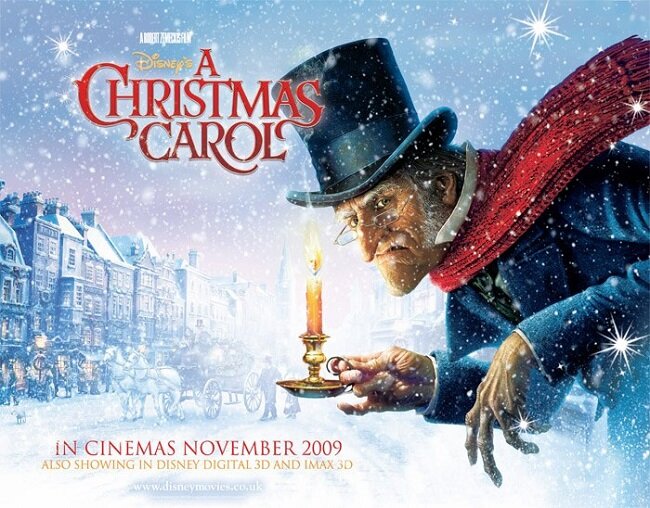
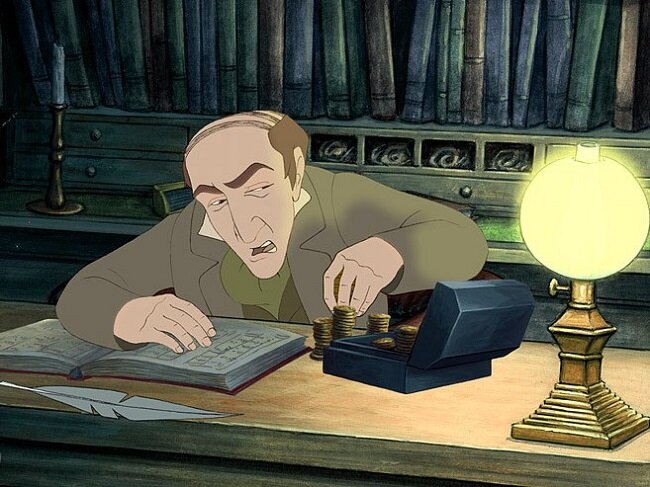
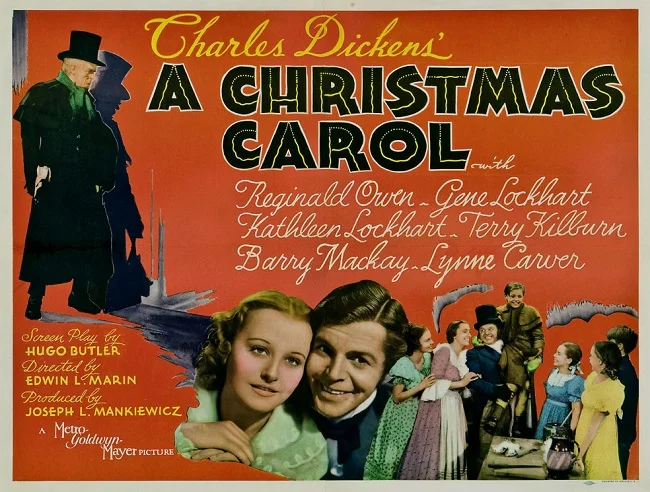
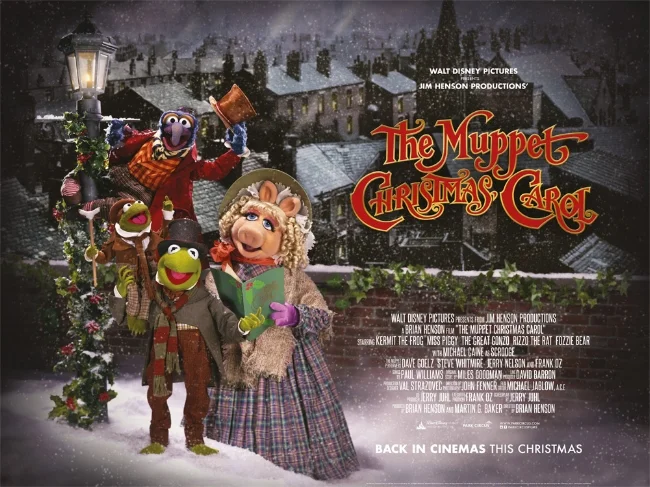
A Christmas Carol (1971)
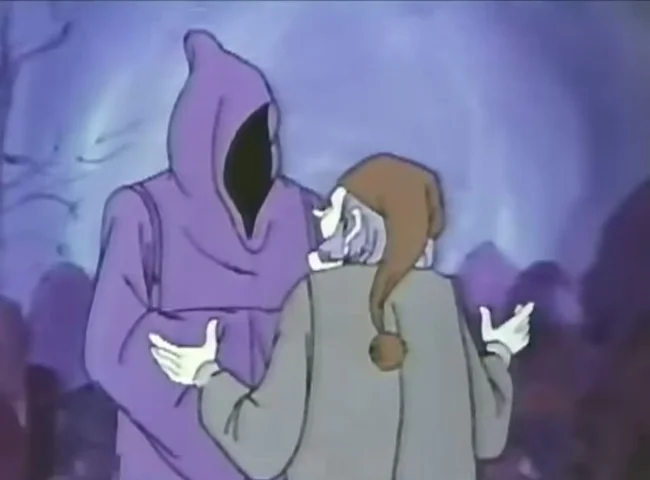
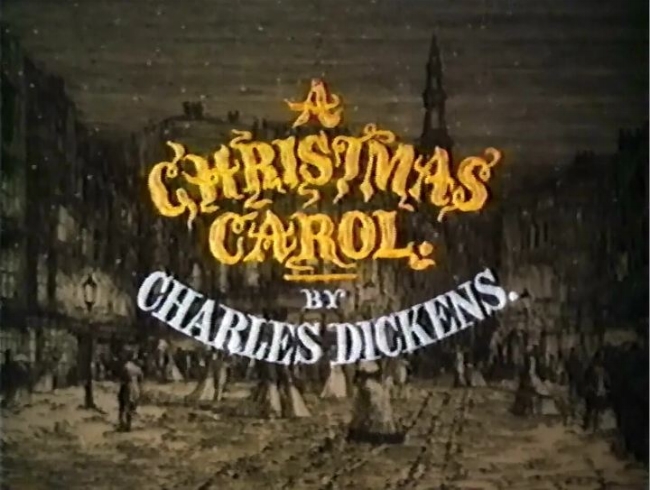
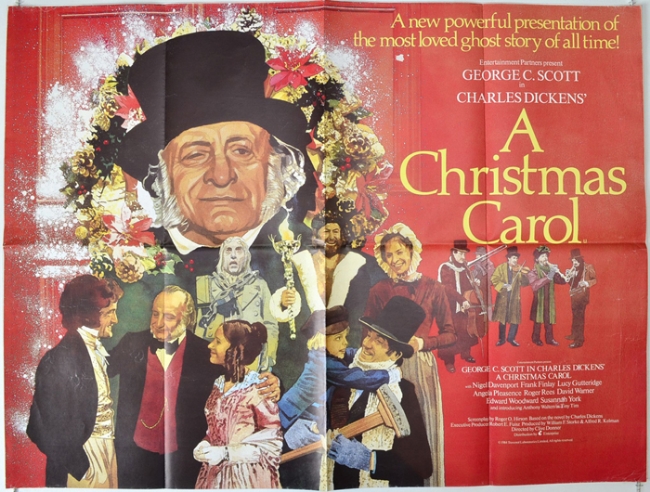
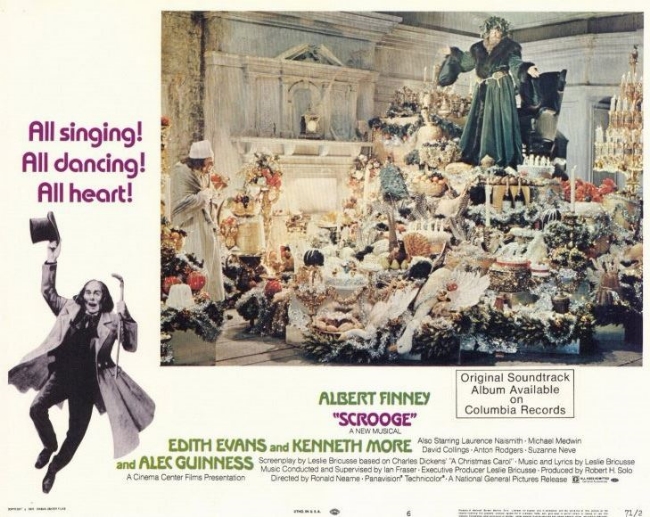
I have a great deal of affection for Charles Dickens' A Christmas Carol, not only because it’s a fine piece of literature but because it lends itself so well to dramatisation. I therefore have a keen interests in all the respective adaptation, of which there are many. Over the years there has been a trend to focus excessively on the sentimental aspect of the plot, resulting in a rather nauseating Disneyfication of the story. Although the redemption of the main protagonist is central to the narrative, the poverty and deprivations of the time are still very pertinent themes, especially in today's economic climate. I was therefore very gratified to rediscover the 1971 version of Charles Dickens' classic story which was originally shown on ABC. This short 25 minute animated feature realises the story superbly, capturing the tone of the book and accurately reflecting the darker aspects. Remember that A Christmas Carol is fundamentally a ghost story.
I have a great deal of affection for Charles Dickens' A Christmas Carol, not only because it’s a fine piece of literature but because it lends itself so well to dramatisation. I therefore have a keen interests in all the respective adaptation, of which there are many. Over the years there has been a trend to focus excessively on the sentimental aspect of the plot, resulting in a rather nauseating Disneyfication of the story. Although the redemption of the main protagonist is central to the narrative, the poverty and deprivations of the time are still very pertinent themes, especially in today's economic climate. I was therefore very gratified to rediscover the 1971 version of Charles Dickens' classic story which was originally shown on ABC. This short 25 minute animated feature realises the story superbly, capturing the tone of the book and accurately reflecting the darker aspects. Remember that A Christmas Carol is fundamentally a ghost story.
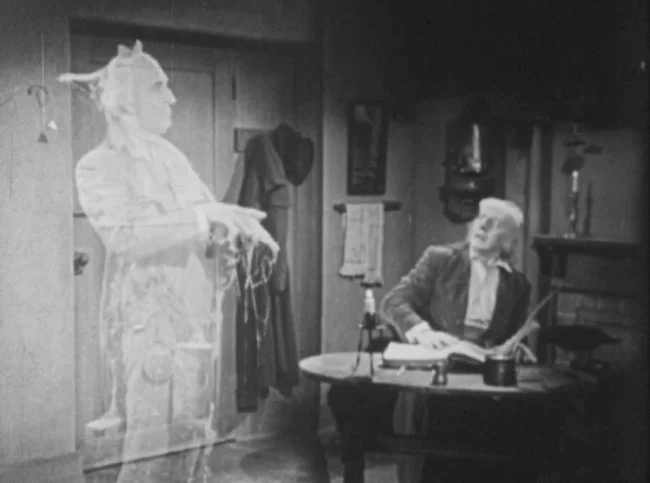
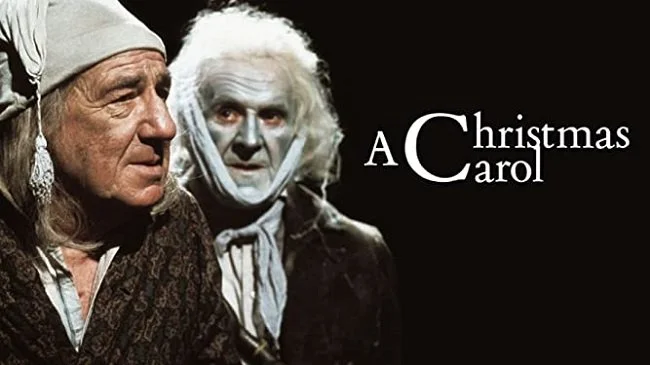
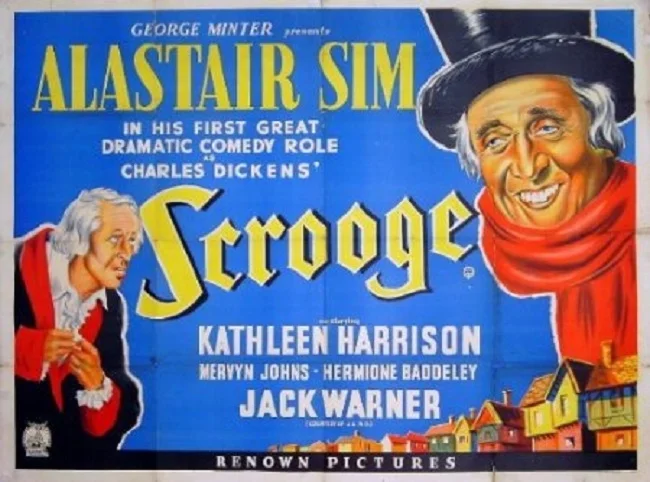
The TV special features Alastair Sim as the voice of Ebenezer Scrooge (a role Sim had previously performed in the 1951 live-action film Scrooge). Michael Hordern likewise reprised his 1951 performance as Marley's Ghost. Veteran animator Chuck Jones served as executive producer, while the great Richard Williams directed. This is a very distinguished pedigree for any animated production. The story is beautifully condensed considering the running time and captures the harsh winter environment of London in the 1843. The supernatural elements are intelligently realised, drawing directly from the source text. The scene where Marley's Ghost, removes the handkerchief that secures his jaw, so it drops to his chest terrified me as a child when I first saw it. The subsequent depiction of "Ignorance" and "Want" is also bleak and shocking.
Originally produced for television, A Christmas Carol won an Academy Award for best animated short subject in 1973; it remains the only film adaptation of the story to date to have done so. However, elements within Hollywood were unhappy that a TV show had won an Academy Award, which led to the Academy changing its policy, disqualifying any shorts that were shown on television first. Overall A Christmas Carol remains a benchmark for quality animations. The subtle line drawings and water colours bring Dicken's London to life wonderfully. The characters are vividly drawn and reflect a thoughtful design. The voice cast bring gravitas to the proceedings, resulting in a quality adaptation of the story. Unfortunately, this short animated film is not readily available. The VHS release is long obsolete and there is no mainstream DVD copy available. The film did feature on a limited edition DVD boxset of the work of Richard Williams. If you can track down a copy via the internet, then you will be well rewarded.





Rogue One (2016)
After watching Rogue One earlier today, I was suitably impressed. Once again Disney have used all the knowledge they've amassed from successfully running major franchises and applied it here, resulting in a finely tuned and polished entry into the Star Wars pantheon. The concept of standalone movies released in-between instalments of the classic story has now proven viable opens up a wealth of possibilities. Rogue One works well narratively and provides the spectacle that fans expect from the series. The continuity and attention to detail is outstanding continuously keeping viewers on their toes. Furthermore, the story itself is credible, dovetailing nicely into the lore.
After watching Rogue One earlier today, I was suitably impressed. Once again Disney have used all the knowledge they've amassed from successfully running major franchises and applied it here, resulting in a finely tuned and polished entry into the Star Wars pantheon. The concept of standalone movies released in-between instalments of the classic story has now proven viable opens up a wealth of possibilities. Rogue One works well narratively and provides the spectacle that fans expect from the series. The continuity and attention to detail is outstanding continuously keeping viewers on their toes. Furthermore, the story itself is credible, dovetailing nicely into the lore.
One of the movies greatest assets is its depiction of a galaxy at war. A point that sometimes gets lost in the original trilogy. The rebel alliance is shown as a less than perfect organisation with fragile alliances and rogue factions. Our protagonists are also flawed, some of whom have done questionable things in the name of their cause. It is these themes that bring a greater degree of maturity to Rogue One. The dark tone is more in keeping with that of The Empire Strikes Back, rather than A New Hope.
Technically the movie is a triumph, sporting the quality of computer effects one expects from the franchise. The dogfights in space and the ground assault on the Scarif are suitably impressive. ILM’s loving recreation of Peter Cushing is fascinating to see and also raises some interesting questions regarding the future use of digital actors. The film also showcases several ideas that were previously considered but not used, such as Darth Vader’s bacta chamber. However it is the sense of continuity in the production design and casting that is most striking; Rogue One looks and feels like a seventies production.
Despite a storyline that paves the ways for A New Hope, Rogue One manages to avoid being boxed in by its narrative and takes some interesting turns along the way. The casting works well offering a diverse team of protagonist, reflecting the inter-species nature of the Rebel Alliance. The Empire remains a haven for British character actors with seventies sideburns and as the story unfolds, takes on a credibly dark tone. Rogue One is essentially a war movie and like all good examples of the genre, does not explore the subject matter in binary terms.
Apparently director Gareth Edwards original cut of the movie was a little too dark and Disney decided to shoot additional material and retool the movies ending. Yet the final edit does not necessarily bear all the hallmarks of post-production tinkering. Perhaps Darth Vader’s personal intervention to retrieve the stolen plans at the movies climax is a little contrived but appears to have been well received by fans. The films conclusion is both credible and appropriate. Opting for a more “happily ever after” tone would have diminished the themes that Rogue One explores during its two hour plus running time.
Personally I feel that the bi-yearly standalone movies that Disney has planned offer a lot more scope than the continuation of the classic story. Although I’m curious to know the fate of Luke Skywalker, that tale doesn’t seem to offer as many possibilities. I am a firm believer in the concept that not every movie needs sequel and am looking forward to the forthcoming ad-hoc stories regarding various characters from the Star Wars pantheon. If future films maintain the standard set by Rogue One then fans certainly have nothing to fear and I’m sure Disney will continue to enjoy the commercial success.
The Damned (1963)
The Damned starts as a delinquent youth drama (a popular theme at the time) and then over the proceeding ninety minutes morphs into a menacing sci-fi plot that climaxes in a full blown conspiracy. It's a most unusual and experimental film that cannot easily be pigeon-holed, yet the same could be said about many other movies by veteran film director Joseph Losey (Boom!, Figures in a Landscape). It proved to be somewhat too "different" for Hammer studios who commissioned the movie and they subsequently shelved The Damned for two years. It was finally released in a heavily edited form under the alternative title of These are the Damned.
The Damned starts as a delinquent youth drama (a popular theme at the time) and then over the proceeding ninety minutes morphs into a menacing sci-fi plot that climaxes in a full blown conspiracy. It's a most unusual and experimental film that cannot easily be pigeon-holed, yet the same could be said about many other movies by veteran film director Joseph Losey (Boom!, Figures in a Landscape). It proved to be somewhat too "different" for Hammer studios who commissioned the movie and they subsequently shelved The Damned for two years. It was finally released in a heavily edited form under the alternative title of These are the Damned.
Set on the Dorset coast an American tourist Simon Wells (Macdonald Carey) on a boating holiday along England’s south coast, is assaulted by a gang of hoodlums led by the charismatic King (Oliver Reed). King's sister Joan (Shirley Anne Field) tries to make amends with Wells but incurs the wrath of her Brother. Both Wells and Joan escape the gang and hide in a network of caves and bunkers on the coast. They discover a group of strange children who have been kept isolated from the world by the military, in what appears to be some sinister government experiment. It soon becomes clear that military are not going to allow them to leave and risk the security of their top secret operation.
The Damned runs at its own pace and which is somewhat sedyte. Yet the shift between storylines midway through the proceedings is bold and quite compelling. The film explores several themes that would later be the foundation for other more notable movies, such as Stanley Kubrick’s A Clockwork Orange (1971). The most outstanding facet of this film is its overall tone. Government conspiracies where not such a common place plot devices at the time and the notion of sacrificing children for an advantage in the Cold War, made the distributors uncomfortable. The bleak ending further muddied the waters. Such material is far from controversial today but at the time this was quite radical.
It should be noted that this film is not a third instalment in the cinematic adaptation of John Wyndham's The Midwich Cuckoo. The story is based on the novel Children of the Light by H L Lawrence. It is alleged that Losey completely rewrote the script and that as well as being a statement about the Cold War, it was also a veiled criticism of his Hollywood blacklisting. Whether that is true or not remains to be seen. The Damned is mostly certainly an interesting curio with is wistful introspection and existential crisis. Dated in many respects (especially the opening song) it is still tonally a very experimental piece, especially if seen in its fully restored ninety seven minute running time.
The Terror of the Tongs (1961)
In 1910, Hong Kong is in the grips of the powerful Red Dragon tong, a secret society that extorts revenue from merchant seamen, deals in both opium and slave trades and savagely slaughters all those who offer opposition. A merchant sailor, Captain Jackson (Geoffrey Toone), swears revenge on the nefarious clan after they brutally murder his first officer and daughter. Hammer's The Terror of the Tongs strives to offer a lurid period drama but falls somewhat short of the mark due to a clumsy script, an indifferent hero and a conspicuous lack of authentic Asian actors. Apart from Burt Kwouk, most of the cast are Europeans sporting rather poor prosthetics. Christopher Lee manages to bluff his way through his role as Tong leader Chung King, through the force of his acting skills. French actress Yvonne Monlaur (Brides of Dracula) is not as successful as a mixed raced serving girl.
In 1910, Hong Kong is in the grips of the powerful Red Dragon tong, a secret society that extorts revenue from merchant seamen, deals in both opium and slave trades and savagely slaughters all those who offer opposition. A merchant sailor, Captain Jackson (Geoffrey Toone), swears revenge on the nefarious clan after they brutally murder his first officer and daughter. Hammer's The Terror of the Tongs strives to offer a lurid period drama but falls somewhat short of the mark due to a clumsy script, an indifferent hero and a conspicuous lack of authentic Asian actors. Apart from Burt Kwouk, most of the cast are Europeans sporting rather poor prosthetics. Christopher Lee manages to bluff his way through his role as Tong leader Chung King, through the force of his acting skills. French actress Yvonne Monlaur (Brides of Dracula) is not as successful as a mixed raced serving girl.
However despite its shortcomings The Terror of the Tongs is still somewhat entertaining with its highly stylised view of the Chinese underworld. Frankly expecting anything like historical accuracy from such a studio as Hammer is a mistake. They were far more focused on shock, titillation and appealing to adult audiences baser needs. Thus we have a rather sixties interpretation of what an early twentieth century gambling den looks like. Also the violent activities of the Tongs are somewhat understated. Merchants have their fingers cut off with hatchets while others that cross the Red Dragon are stabbed but it is far from graphic. Indeed the infamous bone scraping torture scene in which Milton Reid uses long needles to inflict pain upon an incapacitated hero is very restrained, resulting mainly in reaction shots.
As ever with Hammer movies, The Terror of the Tongs benefits greatly from a set design that implies a far more lavish production. Despite being very studio bound, the movie has an engaging production design bolstered by a few robust matte paintings to make the dock sequences more credible. James Bernard's score is evocative as well as exciting and brings a degree of polish to the proceedings. Hammer continued to make several more of these historical dramas in parallel to their established horror franchises over the years and they often made for a welcome alternative to the restrictions of the Gothic Horror genre. The Terror of the Tongs is a somewhat workman like entry in Hammer's back catalogue and is more than likely of interest to the fans of the studio rather than casual viewers.
The Enigma of 2001: A Space Odyssey
"2001: A Space Odyssey. Stanley Kubrick’s philosophically ambitious, technically innovative and visually stunning cinematic milestone". BFI November 2014.
You will often find this sort of language associated with Kubrick's work, especially 2001: A Space Odyssey. It is considered by many to be his finest production and one of the greatest science fiction feature films ever made. In fact 2001: A Space Odyssey has become one of those cinematic sacred cows that regularly features in most film buffs top ten movies of all time. It's a curious thing because a little research will show that critical opinion was split right down the middle on its release in spring 1968. It is only over the course of the last five decades that the movie has grown in artistic stature and garnered the acclaim it now enjoys.
"2001: A Space Odyssey. Stanley Kubrick’s philosophically ambitious, technically innovative and visually stunning cinematic milestone". BFI November 2014.
You will often find this sort of language associated with Kubrick's work, especially 2001: A Space Odyssey. It is considered by many to be his finest production and one of the greatest science fiction feature films ever made. In fact 2001: A Space Odyssey has become one of those cinematic sacred cows that regularly features in most film buffs top ten movies of all time. It's a curious thing because a little research will show that critical opinion was split right down the middle on its release in spring 1968. It is only over the course of the last five decades that the movie has grown in artistic stature and garnered the acclaim it now enjoys.
When movies achieve such status, it becomes very difficult to objectively critique them. Many viewers feel obliged to add their voice to the consensus. "If everyone thinks this film is great then so must I" seems to be the prevailing mentality. There is also an erroneous assumption that if a film is truly great, it will automatically be accessible to all potential audiences. That is often not the case. For every person who watches 2001: A Space Odyssey for the first time and comes away feeling profoundly inspired, there will be another who leaves confused, mislead or just plain bored. 2001: A Space Odyssey is ultimately an acquired taste and although I enjoy and admire the film for many reasons; I would not say that it is for everyone. In fact I would actually discourage some viewers from seeing it.
The first thing I would say to anyone intending to watch his movie for the first time is to be patient. It has a deliberately slow and measured pace. The lack of dialogue in the first act, which focuses on the "dawn of man", requires you to pay extra attention to the subtleties of the story and performances. As ever with Kubrick’s work there's a focus upon imagery and emphasis placed upon visual composition. In the second act the characters are somewhat cold and clinically defined. The production design and the technology is by far the larger player at this stage. The denouement with is allegorical content will be especially hard to digest by those viewers that like their narrative linear and presented in an easily digestible format. If you are not a fan of classical music then the movie’s soundtrack may also be a major stumbling block.
There is however, much to be praised about the movie. The visual effects still hold up well today and there is little technologically to date the proceedings. The computer graphic and GUIs that are depicted are still quite pertinent. Despite its somewhat somber tone the story is a very positive one. Perhaps mankind's future isn't as bleak as some would think. It may be that the movies greatest achievement is its ability to make you think and reflect. Due to the somewhat nebulous ending, viewers are encouraged to interpret matters for themselves. I have known 2001: A Space Odyssey to inspire debates about religion, determinism and many other philosophical concepts.
2001: A Space Odyssey is more than just a conventional piece of cinematic story telling. It is a conduit for ideas and concepts. It is far from just a passive experience and requires viewers to participate in the experience with an open and enquiring mind. Kubrick has fashioned a puzzle that you can either admired for what it is, or you can go a stage further and attempt to solve it. As long as you realise that there is no single correct solution. Ultimately viewing this movie is a very unique and personal experience; 2001: A Space Odyssey doesn't necessarily offer the same thing to everyone. Perhaps that is why some viewers do not enjoy watching it. However that doesn't prove that either they or Kubrick is somehow wrong. It simply demonstrates the subjective nature of art.
There is still an enigma associated with 2001: A Space Odyssey. It will never truly disappear because the themes that Kubrick explores are ultimately timeless. So if you are tempted to see this movie at any other point, take time to consider whether it really is for you. There has been so much written about it that you shouldn't have any difficulty making such a choice. If the answer is no then that is fine. Film cannot be everything to everyone and that is especially true of 2001: A Space Odyssey. It is not always essential to join the consensus about a movie and it is perfectly acceptable to say that something is not to your liking due to differing taste. One should never feel obliged to like something because of the prevailing culture. That is something Kubrick himself would have eschewed.
Alligator (1980)
After the commercial success of Jaws in 1975, there followed a wealth of low budget creature features, hell bent on separating the viewing public from their hard earned cash. At one point every conceivable species of animal featured in a movie in which it went on the rampage and dined on B list actors and sundry extras. Many of these films left no lasting impression and vanished into obscurity (only to be resurrected a decade later during the eighties video boom). However even in this desert of cinematic mediocrity, a few examples stood out as an oasis of independent creativity. Alligator is one of these. It has stood the test of time because it’s smart and has a good pedigree.
After the commercial success of Jaws in 1975, there followed a wealth of low budget creature features, hell bent on separating the viewing public from their hard earned cash. At one point every conceivable species of animal featured in a movie in which it went on the rampage and dined on B list actors and sundry extras. Many of these films left no lasting impression and vanished into obscurity (only to be resurrected a decade later during the eighties video boom). However even in this desert of cinematic mediocrity, a few examples stood out as an oasis of independent creativity. Alligator is one of these. It has stood the test of time because it’s smart and has a good pedigree.
Firstly, the screenplay written by genre luminary and indie film-maker John Sayles is witty and satirical. The characters are likeable, with amusing foibles. The story makes sly digs at the very formula of the genre, itself. The dialogue is smart and extremely quotable. Secondly, director Lewis Teague knows exactly how to handle the material. The film has a stark and grimy eighties feel to it. The protagonists are not “beautiful people” (as they would be if the film were remade) and the production design is realistic, reflecting the Reagan era. For the bulk of the movie, the giant alligator preys on the poor in a rough neighbourhood. The authorities don’t really care until the creature moves uptown.
The film has a solid cast of quality character actors. Robert Forster delivers a sympathetic performance as a world weary detective, living in bachelor squalor, fighting male pattern baldness and City Hall politics. Victor Gazzo plays his harassed boss and Henry Silva excels as a flamboyant, misogynist, Great White hunter. There is also a nice cameo by Bart Braverman (anyone remember that TV series Vegas?) as a sleazy tabloid journalist (is there any other kind?) who gets the scoop of his life at a hefty price. All characters are well defined and credible due to John Sayles’ intelligent and smart screenplay.
The story is fairly straight forward and starts with an unwanted pet Alligator being flushed down the toilet. After eating illegally dumped medical waste loaded with growth hormones, the reptile grows to an exceptional size and soon goes looking for a suitable food supply. However it is the quirky characters and subplots that make the film so enjoyable. Henry Silva's urban safari is particularly amusing. Dean Jagger plays the corrupt CEO of a pharmaceutical company who "owns" the local Mayor. Their exchanges of dialogue, especially at a fateful wedding party, are very well observed.
Now for a modest budget film, the special effects are quite good. The beastie of the title is kept suitably hidden for the first third of the film. Later, the attack scenes are carefully crafted to maximise shock and hide the short comings of the animatronic reptile. In wider shots a full size Alligator is used on scaled down sets, to good effect. The death scenes are fairly brutal but not excessive. Alligator also breaks the Hollywood mainstream taboo, of killing a child on camera. It even has the cheek to do it in an amusing way. Alligator has a broad streak of gallows humour running through its ninety odd minute running time.
Alligator is very much a product of its time, reflecting the best aspects of independent film making that came from the US during the late seventies. Its intelligence and humour make it more than just your average creature feature. It not only entertains but provides an interesting socio-economic snapshot of the times. The screenplay and casting once again prove that when you have a solid script and the right actors, you’ve won half the battle already. The minimalist special effects work to the film’s advantage and allow the viewers to immerse themselves in the story and performances. When the shocks come they have far more impact as you actually care about the central characters.
Leviathan (1989)
There was a glut of undersea action film in 1989. The only one that really had any credibility was James Cameron’s The Abyss. Although it was not a box office success, the film gained a following over time and was substantially improved by the release of the special edition in 1993. Leviathan conversely, is one of the forgotten titles from that aquatic sub-genre. The plot follows a team of undersea miners that find a sunken Russian vessel. A case of recovered vodka turns out to be a genetic mutagen, resulting in crew members mutating into an aquatic human hybrid. It’s all conspicuously derivative and the embodiment of the term formulaic. Yet despite these flaws it does have a few virtues that merit a viewing, if you’re feeling undemanding.
There was a glut of undersea action film in 1989. The only one that really had any credibility was James Cameron’s The Abyss. Although it was not a box office success, the film gained a following over time and was substantially improved by the release of the special edition in 1993. Leviathan conversely, is one of the forgotten titles from that aquatic sub-genre. The plot follows a team of undersea miners that find a sunken Russian vessel. A case of recovered vodka turns out to be a genetic mutagen, resulting in crew members mutating into an aquatic human hybrid. It’s all conspicuously derivative and the embodiment of the term formulaic. Yet despite these flaws it does have a few virtues that merit a viewing, if you’re feeling undemanding.
Competently directed by George Pan Cosmatos, the movie features a solid cast of support actors. Peter Weller, Richard Crenna, Daniel Stern, Hector Elizondo, Ernie Hudson and Meg Foster all do the best they can. The creature effects are handled by the Stan Winston Studios, the production design is convincing and the film looks far from cheap. So what went wrong? Well the whole enterprise reeks of studio interference; story re-writes and post production editing. Fangoria reported heavily on the animatronics for this film at the time of filming, yet precious little is visible in the final cut. Also one character dies off screen and is explained away with a few lines of dialogue.
These clues point to a major shift of direction somewhere in the films production. Perhaps the studio thought that suspense was a better option than a gorefest. But Leviathan is no Alien and simply doesn’t have a compelling enough narrative to pursue that angle. So what we are left with is a failed entry in an obscure sub-genre, which is still mildly entertaining. However any film with a Jerry Goldmsith score can’t be all bad. So if you set your expectations low, or feel like playing film cliché bingo, you may find this aquatic escapade an adequate way to fill one hour and forty minutes.
The Tower (2012)
Kim Ji-hoon's The Tower is an indirect remake of John Guillermin's 1974 disaster movie, The Towering Inferno. The plot centres on a fire that breaks out in a luxury skyscraper in central Seoul on Christmas Eve. However the director manages to put a very modern spin on the story while maintaining the human drama you would expect from such a genre movie. It’s also apparent that the events of 9/11 have had an influence on the narrative; something that some critics have taken umbrage at. Yet these parallels do not extend beyond the superficial and there is certainly no attempt at any wider commentary on that real life tragedy.
Kim Ji-hoon's The Tower is an indirect remake of John Guillermin's 1974 disaster movie, The Towering Inferno. The plot centres on a fire that breaks out in a luxury skyscraper in central Seoul on Christmas Eve. However the director manages to put a very modern spin on the story while maintaining the human drama you would expect from such a genre movie. It’s also apparent that the events of 9/11 have had an influence on the narrative; something that some critics have taken umbrage at. Yet these parallels do not extend beyond the superficial and there is certainly no attempt at any wider commentary on that real life tragedy.
The cultural and social differences between US and South Korean cinema are very apparent in The Tower. The first act of the movie has a light and frivolous tone, as we meet the cast of characters. For example, Junior cook Young-cheol (Jeon Bae-soo) hides an engagement ring for his girlfriend within an ice cream, which is inadvertently eaten by his manager. Friction between one of the wealthy residents and the cleaner also highlight the rather rigid class divide within South Korean society. However despite these nominal cultural differences there are many universal themes in The Tower that make the film accessible to those with an open mind.
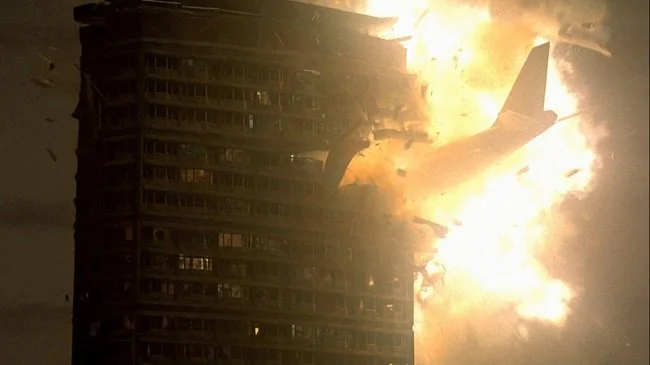
The Tower features some visually arresting set pieces and the physical and visual effects are of a high standard. The two burning towers are linked via a glass walkway that inevitably has to be crossed. This naturally occurs at a point when the structure is close to collapse, yet despite being a very contrived scene it is quite tense and well handled. The director also strikes the right balance between suspense and some of the more horrific aspects you would associate with a fire. Stuntmen and women are set alight and blasted through windows. Panicking staff are cooked alive in an elevator stuck in the lift shaft. Sundry extras are crushed or impaled by failing masonry. Yet none of this carnage is dwelt on excessively.
As with the The Towering Inferno, no cliché is left unturned and the scientific aspects of the plot are flawed and do not stand up to close scrutiny. The Mayor is mainly concerned about rescuing the building richest residents (I was surprised it wasn't an election year). The Director of the company that owns the tower is happy to take risks just to satisfy the shareholders. Captain Kang Young-ki (Sol Kyung-gu) of the Fire Department is estranged from his wife. Plus the most common solution to the various firefighting problems that arise is to simply blow something up. However it really wouldn't be a disaster movie without these melodramatic plot indulgences.
The Tower is by no means an outstanding movie but it is certainly entertaining. The South Korean perspective affords an interesting and alternative window onto familiar cinematic territory. The central characters although somewhat formulaic are likeable and the action scenes are enthralling. As long as you do not have an aversion to reading curiously translated subtitles or are an inherent xenophobe, then The Tower can offer two hours of spectacle and entertainment.
Some People (1962)
Some People offers a rather interesting insight in to early sixties youth culture, as well as touching upon the class divide in post war Britain. It focuses on a group of working class youths (Ray Brooks, David Hemmings and David Andrews) who after being banned from driving, are somewhat at a loose end and heading for trouble. Their fortunes change when a local choirmaster (Kenneth Moore) gives them an opportunity to use the church hall for band practice. However this is not a rags to riches story by any means. In many ways it’s quite the opposite as the narrative has a sense of inevitability about the protagonist’s long term prospects and overall fate.
Some People offers a rather interesting insight in to early sixties youth culture, as well as touching upon the class divide in post war Britain. It focuses on a group of working class youths (Ray Brooks, David Hemmings and David Andrews) who after being banned from driving, are somewhat at a loose end and heading for trouble. Their fortunes change when a local choirmaster (Kenneth Moore) gives them an opportunity to use the church hall for band practice. However this is not a rags to riches story by any means. In many ways it’s quite the opposite as the narrative has a sense of inevitability about the protagonist’s long term prospects and overall fate.
It is easy to be side tracked by some of the superficial aspects of Some People. Obviously the beat music is very much a product of the time and the rebellious shenanigans of the cast are somewhat tame by contemporary standards. Yet the film clearly demonstrates the restrictive society of the post war era. Some of the comments made by the magistrates during the court scene reflect the prevailing socio-economic politics of era. Vicars, youth leaders and pretty much any other adult featured in the film are portrayed as authority figures desperate to maintain the status quo. There is also a rather melancholic plot theme about the generation gap. Ray Brook's father regrets not knowing his own son and realises that there's precious little he can do about it.
There's also a very liberal streak running through Some People. The great Kenneth Moore plays a progressive single parent who tries to offer the young people a way of defining themselves. The film strongly advocates the Duke of Edinburgh's Award as a means of doing this. Moore also takes a very modern attitude to his daughter’s involvement with Ray Brooks, trusting her to do the "right thing". There is a clear subtext that the class differential means that the relationship will not last. It’s implied that Moore's liberalism is a result of his academia, as he is an electrical engineer working in the aviation industry. Conversely, the most blinkered character with regard to politics and social mobility is shown to be Bill, one of the three lead young men. He maintains a “not for the likes of use” attitude which was still common at the time.
Some People is in some ways quite unique, being one of the first "Kitchen sink dramas" aimed at the youth market. Previous movies focusing on this demographic had a tendency to be American and although there was much common ground, they weren't fully applicable to a UK audience. Some People offered the genuine article for the British market. Overall it is a quite bold film for its time, considering that it was made in an era when scripts for UK productions were submitted to the BBFC in advance for approval. Director Clive Donner strayed into similar pop culture territory again with Here We Go Round the Mulberry Bush but it lacked the earthy realism of Some People. Ironically five years later youth culture had evolved from a source of social concern into just a new commercial market.
Split Second (1992)
Split Second has great aspirations. Sadly they’re totally beyond the movies budget, the quality of screenplay and the ability of director Tony Maylam. The poster clearly demonstrates this with the rather bold tagline of "Blade Runner meets Alien". The reality is somewhat different. Furthermore Split Second seems to be from the wrong decade. Despite being a nineties sci-fi action movie it has all the hallmarks of one from ten years prior. The Director of Photography relies on a wealth of neon lighting to try and create a suitable atmosphere. The costume design is heavily based on leather clothing and outfits that accentuate the shoulders. There's also a drab and grating electronic score that was synonymous with this genre during the eighties. Overall Split Second certainly has a lot of strikes against it.
Split Second has great aspirations. Sadly they’re totally beyond the movies budget, the quality of screenplay and the ability of director Tony Maylam. The poster clearly demonstrates this with the rather bold tagline of "Blade Runner meets Alien". The reality is somewhat different. Furthermore Split Second seems to be from the wrong decade. Despite being a nineties sci-fi action movie it has all the hallmarks of one from ten years prior. The Director of Photography relies on a wealth of neon lighting to try and create a suitable atmosphere. The costume design is heavily based on leather clothing and outfits that accentuate the shoulders. There's also a drab and grating electronic score that was synonymous with this genre during the eighties. Overall Split Second certainly has a lot of strikes against it.
However the film has one trump card up its sleeve which it plays right from the get go; the presence of Dutch character actor and genre stalwart Rutger Hauer. He starts chewing the scenery immediately after the credits have finished and despite the movies many failings, manages to keep the film together. Hauer plays Harley Stone, a cop on the edge who’s become a loose cannon after losing his partner to a serial killer. He's the kind of guy who shoots first, asks questions later and swears profusely in his spare time. Writer Gary Scott Thompson obviously felt that a plethora of strong language could fill the gaps in the film's plot. Hauer even calls a dog a dickhead within the first five minutes of the film.
Split Second like so many other low budget genre movies seems to run on its own unique internal logic. Characters are ill defined and plot devices are often left underdeveloped. It's as if there was a production meeting and it was decided to throw in every possible cliché and trope in the hope that some of them would work. So we have an “Alien” style monster that has occult affiliations, prowling through a flooded London that has been brought about by global warming and pollution. Hearts are torn out, big guns are brandished and people swear copiously. The Police Chief shouts a lot and Hauer's new partner (Alistair Duncan) is a book worm who becomes gung-ho. Oh and there’s an obligatory and totally arbitrary love interest played by Kim Cattrall. The London locations and the finale set in an abandoned part of the Tube are convenient and cheap.
Now to the casual viewer this all adds up to a shoddy, poorly conceived movie with no redeeming features. However Split Second is not really the province of the causal viewer. Its core audience are viewers who love cheap and cheerful genre knock offs of this idiom. All the potential faults and flaws that I’ve catalogued are the very thing that fans enjoy. If you watch this movie on your own it may either raise a wry smile or annoy you. View it with a few like minded friends after a trip to the pub and its merit grows exponentially. See Split Second at a film festival with an audience of rabid B movie junkies and you'll have a totally different cinematic experience. It all comes down talent versus enthusiasm. Split Second is wanting in many respects but it has been made with a degree of love for the genre. Somehow that has managed to permeate the film and can be tapped into through shared viewing in the right circumstances.
Edge of Tomorrow (2014)
Edge of Tomorrow is based upon Hiroshi Sakurazaka book All You Need Is Kill, from 2004 and it's a shame that the movie did not retain that title. Edge of Tomorrow is a somewhat bland and generic moniker. Mercifully the film itself is a cut above your usual blockbuster Sci-fi release. The screenplay written by Christopher McQuarrie (The Usual Suspects) and Jez Butterworth (Jerusalem) offers a tight and gripping narrative which quickly establishes its premise and makes it continuously engaging. Dubbed "Groundhog D-Day" by certain pundits, the story of history repeating itself is presented in such a fashion as to be intriguing rather than repetitive.
Edge of Tomorrow is based upon Hiroshi Sakurazaka book All You Need Is Kill, from 2004 and it's a shame that the movie did not retain that title. Edge of Tomorrow is a somewhat bland and generic moniker. Mercifully the film itself is a cut above your usual blockbuster Sci-fi release. The screenplay written by Christopher McQuarrie (The Usual Suspects) and Jez Butterworth (Jerusalem) offers a tight and gripping narrative which quickly establishes its premise and makes it continuously engaging. Dubbed "Groundhog D-Day" by certain pundits, the story of history repeating itself is presented in such a fashion as to be intriguing rather than repetitive.
Tom Cruise plays a reluctant military officer William Cage who find himself leading a major offensive against a group of what appear to be bio-mechanical Cephalopoda, who are attacking worldwide. He is not a seasoned soldier, coming from a military PR background and subsequently dies in combat. However through a curious side effect of being exposed to the dead aliens precious bodily fluids, he find himself in a time loop in which he continuously repeats his final day. Furthermore he is cognisant of this temporal anomaly and tries to learn from his mistakes and change the outcome of the time line.
The first two thirds of Edge of Tomorrow are inventive and absorbing. The production design and overall ambience are well conceived. The battles look authentic as various global landmarks are reduced to rubble. It is also nice to see Tom Cruise play against type. He does not start the story as a generic hero and is in fact somewhat unlikeable. It is in the final act that the narrative becomes a little less logical and more contradictory. Prior to this point, Cage and his cohorts have persevered through meticulously learning from their prior mistakes. Suddenly their approach changes to one of greater improvisation, which does seem somewhat incongruous.
However director Doug Liman handles the film with sufficient originality making Edge of Tomorrow his best picture since The Bourne Identity (2002). The supporting cast featuring such quality character actors as Brendan Gleeson and Bill Paxton adds immensely to the proceedings. Furthermore Edge of Tomorrow is not just a cinematic vehicle for Tom Cruise. Emily Blunt more than holds her own in the role of Rita Vrataski, the seasoned veteran who he continuously learns from.
Overall Edge of Tomorrow is happy to be a smartly contrived Sci-fi action movie, that sticks to its own remit. Therefore viewers shouldn’t expect the wider social themes of films such a Minority Report and Starship Troopers. What you do get with Edge of Tomorrow is a surprisingly superior action movie featuring quality set pieces, good performances and an engaging narrative. Time travel can be a tricky plot device if poorly handled but that’s not a mistake that Edge of Tomorrow makes.
Vigilante (1985)
William Lustig, a director of low budget exploitation films, has a small but distinguished back catalogue. His 1983 foray into the revenge sub-genre is a curious beast but certainly not without merit. Far less sensational than The Exterminator or Death Wish II, it is still a stark and grimy look at urban crime and its impact on working class neighbourhoods. It is the minimalist style of Vigilante, along with parallel storylines and complete lack of moral judgement that makes it a surprisingly better film than it first appears. Considering the violent nature of the story the film is rather restrained, yet does includes a rather unpleasant child murder. Although not graphic, it is somewhat shocking. Such material would be handled a lot differently these days.
William Lustig, a director of low budget exploitation films, has a small but distinguished back catalogue. His 1983 foray into the revenge sub-genre is a curious beast but certainly not without merit. Far less sensational than The Exterminator or Death Wish II, it is still a stark and grimy look at urban crime and its impact on working class neighbourhoods. It is the minimalist style of Vigilante, along with parallel storylines and complete lack of moral judgement that makes it a surprisingly better film than it first appears. Considering the violent nature of the story the film is rather restrained, yet does includes a rather unpleasant child murder. Although not graphic, it is somewhat shocking. Such material would be handled a lot differently these days.
The plot focuses upon blue collar workers Robert Forster and Fred Williamson as they struggle to earn a living and support their families. Crime in the neighbourhood is on the increase and Mr Williamson pro-actively advocates "doing something about it". His friend Robert Forster takes a contrary view. When his family falls victim to a home invasion, he puts his faith in the court system and eschews offers of personal justice. However corrupt lawyers and plea bargaining sees his family’s killers set free and our hero facing thirty days in prison for contempt of court. After a reality check from veteran con Woody Strode, Robert Forster seeks the help of his friends to even the score.
Director William Lustig varies the standard genre formula and manages to avoid some of the more obvious clichés. Despite being a tale of revenge our protagonist finds no absolution. At the end of the movie his life and marriage are in ruins. His wife leaves him unable to cope with the death of their child. The film also avoids any strong moral stance and simply shows you the events and their consequences. The strong cast of genre stalwarts give honest performances and there is little or no histrionics. Vigilante also reflects the bleak environment of New York at the time of filming. It’s harsh and unforgiving. Perhaps the weakest aspect of the film is the street gang which seems somewhat derivative of Street Thunder from Assault on Precinct 13. There is no major attempt to explain their history or excessively violent nature.
Vigilante has an intriguing narrative style, showing Fred Williamson's small scale urban justice in parallel with his work colleagues tragedy and legal battle. For the first act of the film, it’s difficult to determine who the central protagonist is. The scale of the events also lends credibility to the proceedings, showing local people taking on local pimps and dealers, rather than single-handedly shutting down international cartels. The shortcoming of a legal system that actively seeks deals and plea bargains is explored quite well. Also the police are not so much depicted as incompetent but simply overwhelmed and demoralised. When a gang member is killed by the local vigilantes, it is the police who suffer the consequences.
Vigilante is certainly worth seeing for fans of seventies and eighties revenge movies. It is very much a product of its time and may certainly not appeal to those raised on the glossy contemporary equivalents such as Law Abiding Citizen. Yet it has an honesty that you see in low budget indie picture from this time. The subject of personal justice is a perennial favourite of the film industry and has been the basis for many a good movie. Vigilante is far from a great film, with some clumsy dialogue, logical omissions and plot inconsistencies but it still manages to tackle a thorny issue in quite an effective way. Its lack of any socio-political agenda is also worth noting. Rather than lecture viewers, Vigilante simply shows things as they were at the time and lets the audience reflect upon them.