Spaceballs (1987)
There are some movies that you just never get around to seeing and they can remain an unknown quantity for many a year. If any of these films were a big event at the time, or have become a major part of pop culture, then catching up with them can presents its own set of problems. For example the status of some cinematic classics or cult movies inevitably raises expectations, which then may be hard to meet. Then there can also be pressure not to fly in the face of popular consensus, leaving the viewer obliged to like a film or find merit in some way. I had this experience myself recently when I finally caught up with Spaceballs.
There are some movies that you just never get around to seeing and they can remain an unknown quantity for many a year. If any of these films were a big event at the time, or have become a major part of pop culture, then catching up with them can presents its own set of problems. For example the status of some cinematic classics or cult movies inevitably raises expectations, which then may be hard to meet. Then there can also be pressure not to fly in the face of popular consensus, leaving the viewer obliged to like a film or find merit in some way. I had this experience myself recently when I finally caught up with Spaceballs.
Mel Brooks already amassed an impressive body of work when he made this movie in 1987. So I was expecting Spaceballs to be of his usual high standard. Instead I found myself watching a rather weak Star Wars parody (with a few nods to other science fiction classics), littered with poor puns, childish humour and tortuously contrived sight gags. It raised a smile but little more and certainly paled into into insignificance compared to other genre satires such as Galaxy Quest or Family Guy Star Wars Trilogy. I really felt that this movie suffered from "the emperor's new clothes" syndrome, due to its pedigree. The late John Candy can usually lift most movies by his presence but not here. Rick Moranis as Dark Helmet really is the only character of any note.
I was actually far more interested in the films production values which were high for a comedy. There were some rather good optical effects and outstanding matte paintings from Apogee Inc. There's a nice shot of a space diner with various intergalactic Winnebagos in the parking lot. One of which is none other than the Millennium Falcon. It's a shame that equal attention wasn't spent on the screenplay. Perhaps Brooks thought that the very act of satirising Star Wars would be funny enough in itself, as it was considered somewhat sacrosanct by fans at the time. Spaceballs was after all only made four years after Return of the Jedi.
After finally catching up with Spaceballs after twenty nine years I would argue that this is far from the classic that some ardent fans claim it to be. Perhaps the term cult may me more appropriate in this case. My viewing experience has certainly confirmed once again that broad popularity is no guarantee of a good movie. Furthermore fond affection by fans should not be construed as a definitive litmus test. Humour is a very subjective thing and for me Spaceballs was somewhat lacking. However that not to say it’s a terrible film and the very points that I struggled with may well delight others. Perhaps the lesson is that when viewing a film that has an established status, try your best to adjust your expectations and take into account, historical context and the fan factor.
Star Trek Beyond (2016)
I am not a dogmatic fan. In fact as I get older, I become far more flexible and forgiving in my outlook. I certainly don’t buy into the concept that your “childhood can be ruined”. The only way something new can spoil the memories of something old that you hold dear, is if you allow it to. If you wish to explore this concept further, I’d suggest reading Marcus Aurelius. Back to the matter in hand. When I found out that Star Trek was to be rebooted via an alternative timeline plot device, I was content with this. I decided to ditch my personal baggage and try and be objective about the now named “Kelvin Timeline”. I make no bones about the fact I have liked the previous two Star Trek movies. Are they masterpieces? No. Are they entertaining? Yes. That is far more than some reboots have achieved.
I am not a dogmatic fan. In fact as I get older, I become far more flexible and forgiving in my outlook. I certainly don’t buy into the concept that your “childhood can be ruined”. The only way something new can spoil the memories of something old that you hold dear, is if you allow it to. If you wish to explore this concept further, I’d suggest reading Marcus Aurelius. Back to the matter in hand. When I found out that Star Trek was to be rebooted via an alternative timeline plot device, I was content with this. I decided to ditch my personal baggage and try and be objective about the now named “Kelvin Timeline”. I make no bones about the fact I have liked the previous two Star Trek movies. Are they masterpieces? No. Are they entertaining? Yes. That is far more than some reboots have achieved.
Since J.J. Abrams move from director to executive producer on the new movie franchise, I’ve been a little sceptical regarding the third instalment. Justin Lin is not a film maker I would have immediately thought of with regard to Star Trek. Thankfully, I am happy to say my personal misgivings have been proven wrong. The director’s frenetic signature set pieces are certainly present in Star Trek Beyond. But so is an obvious understanding of the source material. In many respects the film plays out like a big budget, extended episode of the original series. However far from being a criticism, this is a major compliment, showing that the entire production team fundamentally understands what makes the franchise great and what fans like the best.
The plot is relatively straightforward, involving the Enterprise being lured into an ambush within the confines of an uncharted nebula. Marooned on a nearby planet, most of the crew find themselves prisoner of Krall, an alleged alien warlord. However, Kirk, Chekov, Spock, McCoy and Scotty evade capture and plan to rescue their colleagues. It is here that the film comes into its own, with the focus on the crew interaction. The pairing of McCoy and Spock is very reminiscent of scenes from the original series and includes some classic banter between the two. I was very pleased to see Karl Urban given more onscreen time, as his portrayal of Doctor McCoy is spot on. Although at times reminiscent of DeForest Kelly, Urban manages to provide a contemporary spin on the character and make the role his own. The movie also comes to life when the classic trinity of Kirk, Spock and McCoy come together. It would also be remiss of me to not mention Simon Pegg who has an expanded role this time round. His pairing with another alien Jaylah (Sofia Boutella), who has also been marooned, provides a greater insight into the character. There is humour and pathos in his performance.
Star Trek Beyond also takes the time to ponder some wider issues pertaining to the franchise. I like the concept of a captain questioning the validity of the five year mission faced with the infinite nature of the universe. The screenplay written by Doug Jung and Simon Pegg also sensitively deals with death of Leonard Nimoy. The passing of Spock Prime causes his younger self to reflect of his various choices, such as joining Starfleet and his relationship with Uhura. It is a credible dilemma that could beset those who find themselves part of a diaspora. The movie’s only narrative weakness it with its villain Krall, played by Idris Elba. He lacks sufficient development and although we understand his motives, they are somewhat arbitrary. Perhaps some additional screen time could have remedied this minor deficiency.
It was announced last week by producer J.J. Abrams that the role of Chekov will not be recast after the tragic death of Anton Yelchin. However the franchise will see a further instalment with a plot featuring Kirk meeting his dead father, George. Despite some rather vocal naysayers, it would appear that these new movie set in the “Kelvin Timeline” are finding an audience and proving commercially viable. With Bryan Fuller recently revealing that his new TV shows will be called Star Trek Discovery, it looks like the entire Star Trek franchise is in good shape after fifty years. Star Trek Beyond certainly contributes to this current good standing and manages remain true to the spirit of Gene Roddenberry’s vision, despite an unlikely director.
Dark of the Sun AKA Mercenaries (1968)
British cinematographer Jack Cardiff had an extremely distinguished career working with the like of Powell & Pressburger, Hitchcock and John Huston. As a director he received acclaim for Intent to Kill (1958), Web of Evidence (1959) and Sons and Lovers (1960). However his 1968 adaptation of Wilbur Smith's novel Dark of the Sun (also known as Mercenaries) is often overlooked. In some respects this gritty action movie may have been a little before its time with regard to both its politics and depiction of the Simba Rebellion of 1964-65. It still packs a punch forty eight years later.
British cinematographer Jack Cardiff had an extremely distinguished career working with the like of Powell & Pressburger, Hitchcock and John Huston. As a director he received acclaim for Intent to Kill (1958), Web of Evidence (1959) and Sons and Lovers (1960). However his 1968 adaptation of Wilbur Smith's novel Dark of the Sun (also known as Mercenaries) is often overlooked. In some respects this gritty action movie may have been a little before its time with regard to both its politics and depiction of the Simba Rebellion of 1964-65. It still packs a punch forty eight years later.
Dark of the Sun is set during the Simba revolt when the Congo government recruited mercenaries to fight a Marxist insurgency. Rod Taylor and Jim Brown star as Captain Curry and Sergeant Ruffo, a pair of professional soldiers paid to retrieve a cash of diamonds. The story starts in a fairly formulaic fashion with the rag tag assortment of mercenaries being assembled, including racist ex-Nazi Henlein (Peter Carsten) and alcoholic Doctor Wreid (Kenneth More). As they travel by train into the Congo interior, they rescue Claire (Yvette Mimieux), a white settler and victim of the Simba revolt. On reaching the diamond mine, they find that the vault has a time lock and must wait several hours. Tension increases as the insurgent’s approach, especially as they have a reputation for committing atrocities.
What makes Dark of the Sun different from this point onward is its exploration of the polarised politics of Africa and its uncharacteristically harsh and brutal depiction of the atrocities. By the standards of mainstream cinema of the time, this was considered a hard edged movie for a studio such as MGM/UA. There are scenes of the Simba's raping a Nun and a man being dragged by a motorbike whilst having petrol poured on him. Another victim has a burning torch thrust in his face. There is also an inference of male rape, which was far from common place in US cinema at the time. The film also has several brutal fights between Taylor and Carsten which are still quite strong.
However it is not just these aspects that make the film so intriguing. Dark of the Sun also contains a subtle performance by Kenneth Moore. As an actor he always gravitated to bluff English stereotypes and has often been accused of simply playing himself; his screen persona being forever synonymous with his performances in Northwest Frontier and Reach for the Sky. Here he bucks the trend playing an alcoholic Doctor whose conscience gets the better of him. It’s a measured and thoughtful performance proving that Moore's had a far wider range than many thought. Doctor Wreid is a flawed man who struggles with his own failure, afforded a chance to do something right, no matter how futile it may ultimately be. If only Moore had chosen other such roles during his career.
There is an element of truth to Dark of the Sun, as the two lead characters are loosely based on real life mercenaries 'Mad' Mike Hoare and Siegfried Müeller. Although far from a historically correct depiction of events, the action scenes are robust and the location filming bolsters the authenticity of the narrative. There is also an air of melancholy to the film as it ponders the end of colonialism, the futility of war and the realities of international politics. I therefore recommend Dark of the Sun to action fans as an interesting late sixties exploration of the genre. Tonally it has similarities to Cornel Wilde's World War II movie Beach Red. It certainly showcases the talents of Jack Cardiff as an eclectic director.
Greystoke: The Legend of Tarzan Lord of the Apes (1984)
Greystoke: The Legend of Tarzan Lord of the Apes approaches Edgar Rice Burroughs’ source material very differently from previous adaptations. The movie is far removed from the vintage Johnny Weismuller films from the thirties and forties. There are no white ivory poachers, evil tribesmen or a tree house love nest. Nobody says “Ungawa”. This is a revisionist recounting of the Tarzan legend undertaken in a thoughtful and intelligent fashion. Although relatively faithful to the original stories, there are some major thematic changes. Gone are the period notions of Nietzsche’s Übermensch. The screenplay also reflects contemporary understanding of great ape behaviour and society.
Greystoke: The Legend of Tarzan Lord of the Apes approaches Edgar Rice Burroughs’ source material very differently from previous adaptations. The movie is far removed from the vintage Johnny Weismuller films from the thirties and forties. There are no white ivory poachers, evil tribesmen or a tree house love nest. Nobody says “Ungawa”. This is a revisionist recounting of the Tarzan legend undertaken in a thoughtful and intelligent fashion. Although relatively faithful to the original stories, there are some major thematic changes. Gone are the period notions of Nietzsche’s Übermensch. The screenplay also reflects contemporary understanding of great ape behaviour and society.
I will dispense with a detailed plot synopsis due to the familiarity of the storyline. Let it suffice to say that Tarzan is raised in the jungle, discovered as an adult and brought back the UK. The literate screenplay by Robert Towne depicts Tarzan, not as racially superior warrior, but a man torn between two worlds; the natural and the civilized. In a remarkable performance, Christopher Lambert portrays this angst and duality with realism. The movie was his first major English dialogue role. The supporting cast is uniformly excellent, boasting robust performances from dependable actors such as Ian Holm, John Wells, and the late, great Sir Ralph Richardson. Andie McDowell made her debut as Jane Porter. For some reason, she was completely re-dubbed by Glenn Close.
The cinematography of the African segment of the tale is very good. It captures both the beauty of the African wilderness and its savagery. Inevitably the ape sequences had to be shot in a controlled environment, so there are a lot of studio scenes to accommodate them. Also being a period film and a costume drama, there is exceptional use of English countryside as well as London exteriors. The Natural History museum is used to great effect. The production design is very authentic in representing the Edwardian age. The soundtrack by John Scott is very evocative and compliments the narrative without being too obtrusive.
Of course the film stand or falls by the quality of the ape make up effects. Rick Baker and his team excel themselves in this area, creating a range of different simian characters, all with distinct features and attributes. It should also be noted that despite its PG certificate, there are some disturbing scenes. These are mainly in the ape sequences where the cruelty of the jungle is not downplayed. Ian Holm also removes an arrow from his side in a “Rambo-esque” fashion. Bear this in mind when watching with young children. The violence, dark tone and narrative driven plot may not lend itself to the casual viewer.
Hugh Hudson is a talented director who works relatively infrequently. After the Oscar winning success of Chariots of Fire, it was a bold move to pitch such a radical adaptation to such a traditional studio such as Warner Bros. Greystoke: The Legend of Tarzan Lord of the Apes is a worthy human drama, exploring the subjects of “man’s dominion over beast” and “social Darwinisms”. It takes a hard look at the strictures of English society and ponders that old chestnut of how thin the veneer of our civilisation really is. Overall this is a sombre movie with an inherently tragic thread running through it. However it can be a rewarding experience for those seeking a more in-depth exploration of the Tarzan mythos.
The Island at the Top of the World (1974)
I last saw The Island at the Top of the World in 1974 when it was initially released at the theatres. I was seven years old. Going to the cinema was a real event at the time and films such as this were always an entertaining spectacle. They frequently left a marked impression on a young mind. Special effects driven movies were not so ubiquitous during this decade. With these things in mind I recently decided to revisit The Island at the Top of the World. Forty two years watching the movie from an adult’s perspective was quite a different experience. That’s not to say that it’s a bad film; far from it. However it is quite a different beast compared to the modern action adventure movie.
I last saw The Island at the Top of the World in 1974 when it was initially released at the theatres. I was seven years old. Going to the cinema was a real event at the time and films such as this were always an entertaining spectacle. They frequently left a marked impression on a young mind. Special effects driven movies were not so ubiquitous during this decade. With these things in mind I recently decided to revisit The Island at the Top of the World. Forty two years watching the movie from an adult’s perspective was quite a different experience. That’s not to say that it’s a bad film; far from it. However it is quite a different beast compared to the modern action adventure movie.
Wealthy industrialist Sir Anthony Ross (Donald Sinden) cajoles historian and archaeologist Prof. Ivarsson (Phil Hartman) into helping him find his son, who’s lost in the Arctic. He may well have gone in search of the legendary graveyard of whales. Using his business connections, Sir Anthony hires an experimental French airship, “The Hyperion”, flown by Captain Brieux (Jacques Marin), to take the quickest route to the frozen North. Along the way, they find an Inuit named Oomiak (Mako) who was the last person to travel with Sir Anthony's son. After many adventures our protagonists find themselves marooned on an island shrouded in cloud. Volcanic activity has allowed a secret valley to stay warm and fertile. Furthermore it is populated by Vikings, who have remained isolated from the outside world, entrenched in their ways and customs.
What stands out the most about this movie is the “family friendly” screenplay. The protagonists face danger often through the hostile environment or extreme weather and not through violence. The evil high priest is a caricature who never gets an opportunity to do any real harm. At one point comic relief character, Oomiak, appear to be killed whilst escaping. However he evades death by swimming away under water. The film also rather clumsily endeavours to educate the viewer by introducing various aspect of Viking culture. The narrative takes time out every five minutes or so, to focus on village architecture, the famous longboat or the social structure of the community. Disney had a reputation at the time for its live action documentaries.
Anyone over the age of thirty will remember a time when there were no computer generated special effects. The industry and its skilled experts relied on optical effects, namely filming elements separately and then combining them. Miniatures were used along with intricate matte paintings on glass sheets. These skills had been in use since the very start of cinema and have often produced excellent results. Disney at the time had a reputation for producing effects work of the highest quality. It is not surprising that the work on display in The Island at the Top of the World is very good by the standards of the time. However, those viewing with an unobjective modern eye may not necessarily see this.
Director Robert Stevenson handles the story in a competent fashion and the film does not out stay its welcome. The production, cinematography and casting are all competent. The story follows a suitable arc. This is a classic example of functional film making. As a result after all these years, I still found The Island at the Top of the World entertaining. Yet it does belong to a category of film that seems to have died out of the world. Family friendly movies are few and far between these days. The PG rated movie has fallen to the more robust and commercially viable PG-13. The Island at the Top of the World with its simplicity, educational agenda and lack of brutality would not necessarily endear it to a contemporary audience.
Multiple Versions – Do We Have a Two Tier Movie Industry?
Mainstream Hollywood is all about making money. Let’s not lose sight of that fact. That is not to say that the system cannot make good movies, because it does. It is just not the primary purpose. Commercial viability comes first over artistic vision. I cannot remember a time when the US film industry was more focused on targeted movie making. Projects are conceived, developed and made with specific demographics in mind. This is because certain social-economic groups go to the theatre more often, spends more while there and are driven by popular trends. The entire process of making a movie, marketing it and generating revenue has been rendered down to an equation.
Mainstream Hollywood is all about making money. Let’s not lose sight of that fact. That is not to say that the system cannot make good movies, because it does. It is just not the primary purpose. Commercial viability comes first over artistic vision. I cannot remember a time when the US film industry was more focused on targeted movie making. Projects are conceived, developed and made with specific demographics in mind. This is because certain social-economic groups go to the theatre more often, spends more while there and are driven by popular trends. The entire process of making a movie, marketing it and generating revenue has been rendered down to an equation.
As a result of this business practise, one particular phenomenon has become increasingly more common in recent years; multiple versions of movies. The theatrical cut of a tent-pole release is driven by financial imperatives such as securing the most lucrative rating and optimum running time. The shorter a movie the more often it can be shown in one day. The net result is a plethora of movies rated PG-13 and running two hours or less. Once the theatrical run of the movie is over, retails sales on home media are driven by a different set of criteria. Hence you will often find unrated, extended and directors cuts, offering more footage. These extended versions are marketed specifically on their additional content.
Affectively the movie industry is now running what is fast becoming a two tier system. Furthermore this system has an impact upon consumer’s viewing habits. However because this does not have a negative financial impact upon overall revenue , these two very separate markets are left to run in parallel, irrespective of any wider issues they may have upon the industry.
A perfect example of this situation is the recent blockbuster Batman v Superman: Dawn of Justice. Director Zack Snyder was obliged to produce a theatrical cut of the movie that was rated PG-13 for contractual reasons. This ran for 151 minutes. However the “Ultimate Edition” to be released on DVD/Blu-ray in mid-July has an additional thirty minutes of footage re-instated into the film, which has garnered an R rating. This results in two very distinct cuts of the same movie, specifically aimed at different audiences.
Now as a blogger I do like to see some movies as soon as possible because it lends itself to topical writing. However as a film fan, I often wish to see the most comprehensive version of a film and I personally dislike seeing a watered down theatrical version. This is especially so when I know that a more interesting version may be released within three months or less. As a result I and other potential viewers often do not choose to not go and see a movie during its theatrical release. Why pay for less effectively?
Faced with such marketing strategies consumers now make their choice according to their personal preferences and needs. Younger demographics will flock to the theatre to see a movie that has been marketed specifically to them, whereas the more mature film fan will simply wait for the retail version. Either way the studio still benefits from both streams of revenue.
However the question remains is creating such distinct and separate markets a good thing? Is making multiple versions of a film beneficial for a director’s artistic expression? The world is becoming increasingly niche market, with everyone doing their own thing at a time when it suits them. Many activities that use to be shared and universal experiences are now solitary and independent. Like watching TV or listening to music. I am a great fan of choice but I do worry about the notion of the movies becoming a product line rather than a single creative entity. Will we reach a point when you and I both see the same movie and have totally different experiences, not due to personal taste but due to differing content?
Slipstream (1989)
I'm always intrigued by films that have troubled production histories, or that have failed at the box office. Slipstream is a prime example and is also a very hard movie to define; a real cinematic oddity. Superficially it is a fusion of "Post Apocalypse" and "Buddy" genres. It has a distinguished pedigree, boasting a cast of quality character actors, an experimental director, excellent locations and a solid UK production crew. It also sports a superb score by the great Elmer Bernstein, considered in some circles to be one of his finest. Yet the overall movie is messy, disjointed, poorly edited and somewhat ponderous in its intellectual aspirations. However despite all these criticisms, it has a curious quality that holds the attention.
I'm always intrigued by films that have troubled production histories, or that have failed at the box office. Slipstream is a prime example and is also a very hard movie to define; a real cinematic oddity. Superficially it is a fusion of "Post Apocalypse" and "Buddy" genres. It has a distinguished pedigree, boasting a cast of quality character actors, an experimental director, excellent locations and a solid UK production crew. It also sports a superb score by the great Elmer Bernstein, considered in some circles to be one of his finest. Yet the overall movie is messy, disjointed, poorly edited and somewhat ponderous in its intellectual aspirations. However despite all these criticisms, it has a curious quality that holds the attention.
In the future the earth has been ravaged by a series of natural disasters. Earthquakes have altered the continents throwing nations together. The surface is swept by super wind-storms, forcing people to travel the Slipstream in the canyons and ravines of the earth crust. Bounty hunter Will Tasker (Mark Hamill) is searching for Byron (Bob Peck), a mysterious figure who is wanted for murder. Despite capturing him, he soon loses his prisoner to Matt Owens (Bill Paxton), an enterprising "trader" who takes Byron in hope of collecting a reward himself. During their travels Owens and Byron become incongruous friends, while being doggedly pursued by Tasker. It’s not before Owens starts to wonder about his friends strange abilities and whether there’s more to the criminal charges against him than first meets the eye?
On paper it all sounds quite good but rather than approaching the material as an action/sci-fi film, director Steven Lisberger (of Tron fame) seems hell-bent on making a "message" picture. There are intermittent pauses in the story to ponder metaphysics. Performances overall are very good. Bob Peck is superb, being enigmatic, vulnerable and just a little bit dangerous. Hamill, a truly underrated actor, is very convincing as the hard-nosed, old school bounty hunter. The aerial photography is also very creative and makes good use of multiple European locations. This was clearly a production that made the most of its budget. The effects work is very much of its time relying on physical stunts and optical processing. This aspect of the movie is never allowed to overwhelm the narrative which is very much the focus of the one hundred and two minute running time.
Yet Slipstream smacks of a film that has gone through multiple edits. There are several scenes that end abruptly or shy away from what has been telegraphed. For example, Hamill confronts a group of smugglers. Guns are drawn and then instead of a dramatic shootout, we cut to close shot of a shotgun muzzle being fired rapidly. Next thing we see are the dead victims being buried. Yet strangely, during the films climax, we see one of the lead characters shot and blown backward through a glass cabinet in slow motion. Minor characters enter the story and then are never seen again. The titular Slipstream itself seems to diminish in importance as the film progresses. I just get the impression that there's another twenty minutes of footage somewhere, that if reinstated would have drastically improved the proceedings.
Several of the sub-plots the run throughout Slipstream, seem strangely dated focusing upon philosophical questions pertaining to the end of society. Director Steven Lisberger seems enamoured with seventies counter culture. Tonally I was strongly reminded of such films as Zardoz and A Boy and His Dog. One of the most thought provoking aspects of the film is the old chestnut about how androids are external manifestations of human vanity. Byron an android, who was built as a companion, appears to have murdered his master. When questioned, Owens assumes that "he had it coming". Peck confirms this but the delivery of the lines implies a deeper meaning. A mercy killing perhaps, of someone who was terminally ill? It’s an aspect of the plot that would’ve benefited further exploration.
If you are a connoisseur of the unusual and have patience as well as an open mind, Slipstream is worth a look. It is definitely a failed opportunity but still has many aspects to engage the mind. Sadly a Director’s Cut seems highly unlikely, as producer Gary Kurtz stated recently that much of the missing footage was incomplete or dropped from the script before being shot. There simply isn’t the material to restore to the film. He also implied that the original story was a lot darker in tone and far more violent. Sadly, due to the financial failure of Slipstream the film is now in the public domain and therefore many of the copies available are sourced from poor quality prints, shown in the wrong aspect ratio. Therefore choose wisely how and where you decide to watch this cinematic curiosity.
SWTOR - Knights of the Fallen Empire
I decided to return to SWTOR today, not because I wanted another MMO but instead required a narrative driven RPG. I’ve been convinced by several websites and podcast that BioWare has effectively given us KOTOR 3 via Knights of the Fallen Empire and so I decided it was time to revisit the proverbial galaxy far, far away etc. I initially played SWTOR upon its launch in late 2011 and returned to the game after the F2P conversion, when Rise of the Hutt Cartel expansion was released. Although I enjoyed the game more second time around I still felt that it sat somewhat uncomfortably between an old school MMO and a more contemporary variation. The less said about Galactic Starfighter the better, as that expansion just wasn’t to my liking. Essentially my return to the game is based on the promise of a single player RPG experience and the underlying appeal of the franchise.
I decided to return to SWTOR today, not because I wanted another MMO but instead required a narrative driven RPG. I’ve been convinced by several websites and podcast that BioWare has effectively given us KOTOR 3 via Knights of the Fallen Empire and so I decided it was time to revisit the proverbial galaxy far, far away etc. I initially played SWTOR upon its launch in late 2011 and returned to the game after the F2P conversion, when Rise of the Hutt Cartel expansion was released. Although I enjoyed the game more second time around I still felt that it sat somewhat uncomfortably between an old school MMO and a more contemporary variation. The less said about Galactic Starfighter the better, as that expansion just wasn’t to my liking. Essentially my return to the game is based on the promise of a single player RPG experience and the underlying appeal of the franchise.
Overall re-installing the game wasn’t too difficult. I managed to download the entire game client within an hour and forty minutes. To get the benefits of the latest expansion, a subscription is required which meant logging into the official SWTOR website. The one time password verification system quickly became trying but I sorted out a month’s fees while the game was installing. Once the game client was updated I logged in to find all three of my old characters. I had a brief look at them all but soon concluded that I had absolutely no idea how to play them or navigate around the game. So rather than waste time with these and play through the slightly older, more traditional MMO content, I decided to create a level 60 character for the new storyline. However before I proceeded I checked my cartel coins and found that I had nearly 5,000. So I bought some account wide inventory space and unlocked the Sith Pureblood skin.
Despite having played SWTOR before I’ve never explored either the Jedi or Sith classes, so this time round I decided to go all in and create a Red Sith Juggernaut. As ever the only stumbling block during character creation was trying to find a suitable name that hadn’t been already taken. This game mechanic has often been one of the MMO genre’s Achilles Heel. However once a name was secured I jumped straight into the action and played though the first chapter of Knights of the Fallen Empire. Despite many familiar aspects such as the GIU and the basic game mechanics, the story takes a far more dominant place in the proceedings and the narrative moves events forward very much like a single player RPG. Checkpoints are regularly reached and as a player I can log out of the new story and return to the more traditional MMO content should I see fit. However for those wishing to avoid the usual trappings of an MMO such as other players, chat and people just generally getting under your feet, then there is a large onscreen button to return you to the instanced episodic content.
So far although I have not gone far into the story, I am enjoying my return to SWTOR. It has the usual Star Wars ambience with its strong idiomatic soundtrack and quality voice acting. As I didn’t play through the last expansion Shadow of Revan, I’m not up to speed with the plot. However I have spent some time perusing the Star Wars wiki and this has helped no end. After all Knights of the Fallen Empire is virtually an RPG and for me the appeal of that genre lies mainly with their narrative content. I don’t have many negative comments at present, although I do feel that SWTOR still has an excess of skills. The time I spent in Guild Wars 2 in recent years has certainly taught me that less is more. My hot bars in SWTOR are already awash with icons and I really don’t think that all of them are essential. I guess time will tell. At present I have a month to decide if Knights of the Fallen Empire is to my liking and it has only cost me £8.99, which means that if it goes ill, I won’t feel especially out of pocket.
Deadpool (2016)
Deadpool firmly nails its colours to the mast within the first minute of the opening credits with such statements as “Directed by an overpaid tool”. With the tone clearly established the movie then proceeds to satirise the very genre its set in and walks a very fine line between knowing in-jokes and actually biting the hand that feeds it. The screenplay is littered with profanity and dick jokes, with violent death frequently served as a punchline. The only thing missing from the proceedings are well placed rimshots. Deadpool is a film that will polarise audiences. Many will find the breaking of the fourth wall, the smutty quips along with the overall mocking of the super hero genre very droll. However there will be some critics who are obliged to see this movie that won’t be in on the joke and they will more than likely leave theatres very offended.
Deadpool firmly nails its colours to the mast within the first minute of the opening credits with such statements as “Directed by an overpaid tool”. With the tone clearly established the movie then proceeds to satirise the very genre its set in and walks a very fine line between knowing in-jokes and actually biting the hand that feeds it. The screenplay is littered with profanity and dick jokes, with violent death frequently served as a punchline. The only thing missing from the proceedings are well placed rimshots. Deadpool is a film that will polarise audiences. Many will find the breaking of the fourth wall, the smutty quips along with the overall mocking of the super hero genre very droll. However there will be some critics who are obliged to see this movie that won’t be in on the joke and they will more than likely leave theatres very offended.
As for me, I thoroughly enjoyed Deadpool. Despite being very traditional with its storyline, offering a standard “super hero origin” tale, it has an enjoyable narrative structure based upon a series of flashbacks. This is a story of boy meets girl, boy gets cancer and boy then takes a gamble on a covert military project that will allegedly cure him. Naturally our hero is betrayed and left with regenerative powers but horribly scarred. Obligatory vengeance is required and mayhem, slaughter and extreme violence ensues. Directors Tim Miller does a great deal with the films moderate budget and when the resources simply aren’t there, he ensures there’s a self-effacing quip in the script to mitigate the problem. It’s a clever approach that certainly entertained audiences in the screening I saw.
Performances are universally good and suit the idiom of the film. Ryan Reynolds, Morena Baccarin and Ed Skrein are well cast and tackle their respective roles in an appropriate manner. However it is writers Paul Wernick and Rhett Reese who really should take the credit for the movies success. They hit exactly the right tone and broadly maintain it throughout the films one hundred and eight minute running time. There are a few jokes that go astray but most of the time the dialogue hits the mark. There’s a superb gag involving a potential death by Zamboni that pleased the crowd and I enjoyed the way that Wham’s Careless Whisper was crowbarred into the proceedings. Extra marks are awarded for Deadpool’s musings upon Bryan Mills (Liam Neeson from Taken).
Deadpool is a wry and clever movie but it inevitably remains a niche market product. It certainly deserves to do as well as it can at the box office within the parameters of its genre, as I wouldn’t mind seeing another cinematic excursion. However I don’t think it’s a franchise that is indefinitely sustainable. Yet compared to the usual Marvel cinematic universe output, Deadpool is a breath of fresh air. The serious tone and lofty aspirations of the genre are beautifully subverted here. Therefore savour Deadpool for what it is and don’t forget to stay for the obligatory post credits sequence. As you’d expect from such a movie it flies in the face of the usual teaser format. Think Ferris Bueller's Day Off and you won’t be disappointed.
Theremin versus Ondes Martenot
A few years ago UK Film Critic Mark Kermode made a short video extolling the virtues of that curious musical instrument the Theremin. However his performance was far from edifying, so to redress the balance, I’ve posted below the main theme from Mars Attacks by Danny Elfman. It highlights the ubiquity of this instrument in the science fiction genre. All of which stems from the wonderfully atmospheric score for the 1951 classic, The Day the Earth Stood by the great Hollywood composer Bernard Herrmann. It was a milestone in the evolution of film soundtracks. Both tracks illustrates the point made by Mr. Kermode perfectly. The Theremin, due to its frequent use in a genre during its most formative years, has virtually become the de facto “sound of space" in popular culture.
A few years ago UK Film Critic Mark Kermode made a short video extolling the virtues of that curious musical instrument the Theremin. However his performance was far from edifying, so to redress the balance, I’ve posted below the main theme from Mars Attacks by Danny Elfman. It highlights the ubiquity of this instrument in the science fiction genre. All of which stems from the wonderfully atmospheric score for the 1951 classic, The Day the Earth Stood by the great Hollywood composer Bernard Herrmann. It was a milestone in the evolution of film soundtracks. Both tracks illustrates the point made by Mr. Kermode perfectly. The Theremin, due to its frequent use in a genre during its most formative years, has virtually become the de facto “sound of space" in popular culture.
Or is it? There is another instrument that vies for the crown of the definitive sound of science fiction; namely the Ondes Martenot. This esoteric French instrument, has been used in many films and TV series, such as The Twilight Zone, Lawrence of Arabia, Billion Dollar Brain and Ghostbusters. The original design was similar in sound to the Theremin. The instrument's eerie wavering notes are produced by varying the frequency of oscillation in vacuum tubes.
Composer Barry Gray often used this instrument to great effect and I would argue that some of his compositions are the equal of those by the Hollywood greats. Here is the classic "Sleeping Astronauts" theme from the 1969 film Doppelgänger AKA Journey to the Far side of the Sun. It remains one of Barry Gray’s finest tracks.
It is often a mistake to make generalisations when it comes to fandom, due to its subjective nature. Genres that are so liberally populated by fanboys will be rife with debate over the most minor and esoteric of points. However I do not think that either instrument trumps the other and I like the eerie ambience of both. These two tracks are outstanding in their own way and I think that pop culture can happily give them equal billing with regard to their contribution to the “sound of space”.
Tomorrow Never Dies (1997)
By the time the Bond franchise had reached its 18th incarnation in 1997 with Tomorrow Never Dies, the coveted opportunity to provide the title track was chosen through a competitive tender process. There were twelve submissions made for the movie, including songs from Swan Lee, Pulp, Saint Etienne, Marc Almond, Sheryl Crow and David Arnold. Arnold had already been personally recommended to compose the film’s soundtrack by Bond veteran John Barry, who had retired from the series in 1987.
By the time the Bond franchise had reached its 18th incarnation in 1997 with Tomorrow Never Dies, the coveted opportunity to provide the title track was chosen through a competitive tender process. There were twelve submissions made for the movie, including songs from Swan Lee, Pulp, Saint Etienne, Marc Almond, Sheryl Crow and David Arnold. Arnold had already been personally recommended to compose the film’s soundtrack by Bond veteran John Barry, who had retired from the series in 1987.
The producers eventually chose Sheryl Crow's track for the main titles, while David Arnold's song "Surrender" performed by K.D. Lang, was relegated to the end titles. Arnold’s song had obviously been a very serious contender at one point as its melody occurs in various cues throughout the film. The decision to parachute Crows song into the iconic title sequence was more than likely based on commercial considerations. However, "Surrender" is an infinitely superior song, written in a traditional Bond idiom and performed in a similarly appropriate fashion.
This is yet another example of the many “curious” business decisions that have been made regarding the Bond movies over the last fifty years. Others include the removal of George Lazenby after one movie and the decision to release Licence to Kill in the summer of 1989, thus competing with Lethal Weapon 2, Indiana Jones and the Last Crusade and Batman. Yet despite these odd choices the franchise still remains a major box office attraction and K.D. Lang’s "Surrender" is still the epitome of a Bond title song, even if it never quite achieved that status.
Are the Oscars Still Relevant?
The idea of a meritocracy where you are fairly judged by your peers is a noble and idealistic notion. It is one that many august bodies aspire to, as they endeavour to honour those they claim to represent. Yet the reality is often quite different from the intended aim. I believe that the Oscars are a text book example of this. Rather than being an impartial and honest award ceremony, the entire events is more a demonstration of corporate leverage and power politics. Furthermore, it would seem that the wider public has fallen out of love with Hollywood as yearly viewing figures fluctuate. Overall this is more of an event for the benefit of Hollywood, rather than a promotion of the art of cinema.
The idea of a meritocracy where you are fairly judged by your peers is a noble and idealistic notion. It is one that many august bodies aspire to, as they endeavour to honour those they claim to represent. Yet the reality is often quite different from the intended aim. I believe that the Oscars are a text book example of this. Rather than being an impartial and honest award ceremony, the entire events is more a demonstration of corporate leverage and power politics. Furthermore, it would seem that the wider public has fallen out of love with Hollywood as yearly viewing figures fluctuate. Overall this is more of an event for the benefit of Hollywood, rather than a promotion of the art of cinema.
There's a degree of cynicism associated with this annual event and each year’s nominations are frequently met with an air of scepticism. "Worthy" titles that have performed well at the box office, or that tick the right boxes make the list. It is all very predictable. There also prevails a "them and us" mentality between independent film makers and the big studios. The academy is a creature of habit that seldom deviates from its established game plan. Certain genres will never be afforded any acknowledgement and specific actors and film makers who exist outside of the mainstream are effectively out of the running.
That's not to say that all academy awards are contrived or unjust. A great deal of talented individuals and quality productions are appropriately honoured. Life time achievements are often honestly given. But the proceedings are still hindered by a very US-centric outlook and a predilection to focus on box office returns rather than broader creativity. Documentaries, short films, animation, as well as genres such as horror and science fiction do not get treated the same as human dramas, biopic, or historical movies. It seems at times that there is almost a formula to achieving an academy award. Perhaps there is truth in Kirk Lazarus' statement about "Never go full retard".
It will be interesting to see how well this year’s live award ceremony will be received. I have a horrible suspicion that the return of Chris Rock as host is merely a political gesture to try and negate the #OscarsSoWhite lobby that has manifested for a second year. Furthermore exactly how much influence does this annual event have on an increasingly independently minded public? It would seem that the traditional critic now has to seriously compete with social media and word of mouth. People seem more comfortable taking advice and recommendations from friends rather than established bodies. If the Oscars fail to have the impact that people such as Harvey Weinstein expect, then there may well be a lot of disappointed executives and investors.
We live in times when fans and enthusiasts can easily communicate with each other, create communities and hold events. Often awards and honours coming from these quarters hold more meaning for the recipients. If people feel that the academy is not representing certain sectors or showcasing certain artists, then alternative bodies will emerge to fill the gap. If recent history has shown us anything, it is that niche markets can often grow in to far more substantial entities. We have also seen a cultural shift in which the public increasingly feels it’s important that they have a say in matters themselves. Perhaps the Academy of Motion Picture Arts and Sciences needs to consider reinventing itself before it becomes totally obsolete.
A Christmas Carol (1984)
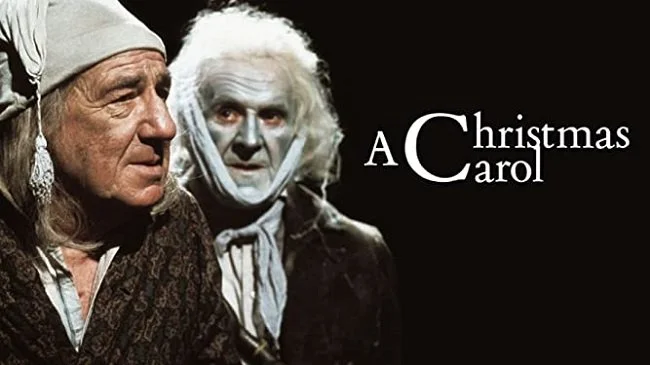
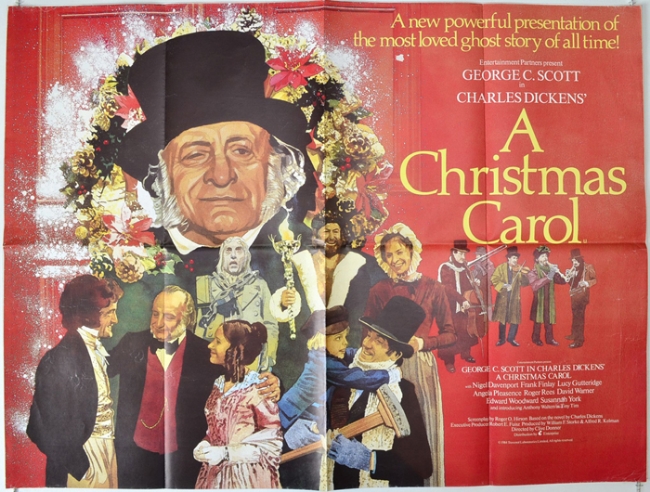
Clive Donner's 1984 version of the Dickens' classic "A Christmas Carol” is bold and different mainly because of the casting of George C. Scott as Ebenezer Scrooge. The story is told with precision and an eye to detail. In some respects it’s the most authentic adaptation, with credible performances from the ensemble cast. Alastair Sim's portrayal in the 1951 film has always been perceived as a benchmark and provided a template as to how the role should be interpreted. Scott replaces the traditional anger, bitterness and rage with a cold and utterly dispassionate demeanour. There is a strong sense of honesty in his Scrooge as the audience follows him on his emotional journey. The tears, the regret and the realisation that there is still hope are all present, yet explored in a very non-theatrical manner.
Clive Donner's 1984 version of the Dickens' classic "A Christmas Carol” is bold and different mainly because of the casting of George C. Scott as Ebenezer Scrooge. The story is told with precision and an eye to detail. In some respects it’s the most authentic adaptation, with credible performances from the ensemble cast. Alastair Sim's portrayal in the 1951 film has always been perceived as a benchmark and provided a template as to how the role should be interpreted. Scott replaces the traditional anger, bitterness and rage with a cold and utterly dispassionate demeanour. There is a strong sense of honesty in his Scrooge as the audience follows him on his emotional journey. The tears, the regret and the realisation that there is still hope are all present, yet explored in a very non-theatrical manner.
There is always a danger with so called "all-star" casts that the actor’s respective fame can swamp the story. This is not the case here and all acquit themselves well. Frank Finlay is the Ghost of Jacob Marley and adopts a somewhat sinister tone. Edward Woodward is affable as the Spirit of Christmas Present; complete with stilts to increase his eight. David Warner is spot on with his Bob Cratchit, maintaining a sincere performance. You feel for this man but never pity him. The production also hits the mark with Anthony Walters as Tiny Tim. His acting is credible and devoid of excessive sentimentality. Overall it is this measured approach that makes the production so unusual. The story's moral rectitude is present but the message is delivered in a subtle fashion.
The exterior locations shot in Shrewsbury are exquisite and bolster the authentic atmosphere of the production. Scrooge's grave can still be visited at St Chad's Church graveyard, where the churchyard sequence was shot. The production team left the gravestone in place once filming was completed. Originally commissioned to be shown on TV by CBS, A Christmas Carol was released theatrically in the UK. Scott's performance was subsequently nominated for an Emmy. It garnered positive critical reviews and has over the years, has built a deserved reputation for being a very robust and intelligent adaptation. It certainly has not been bettered by more recent adaptations.





Alternative Christmas Movies
As the season of goodwill reaches its zenith, there's nothing I like better than to sit in my comfy fireside chair with a bucket of Brandy, a mountain of nuts, whilst fitted with a catheter so I can watch some quality seasonally themed films. Let's face it Christmas TV is usually a load of old bollocks, consisting mainly of repeats of TV specials featuring dead, unfunny comedians and classic films butchered to fit the midday schedules and shown in the WRONG aspect ratio. So rather than enduring such poor entertainment, I thought I'd share the love and sentiments of the time of year, by recommending some alternative material for your edification.
As the season of goodwill reaches its zenith, there's nothing I like better than to sit in my comfy fireside chair with a bucket of Brandy, a mountain of nuts, whilst fitted with a catheter so I can watch some quality seasonally themed films. Let's face it Christmas TV is usually a load of old bollocks, consisting mainly of repeats of TV specials featuring dead, unfunny comedians and classic films butchered to fit the midday schedules and shown in the WRONG aspect ratio. So rather than enduring such poor entertainment, I thought I'd share the love and sentiments of the time of year, by recommending some alternative material for your edification.
Die Hard (1988)
So let us begin with the all-time best Crimble movie ever. Die Hard. Yes Uncle Bruce gets his vest dirty and shoots Germans. The star of the film is of course Alan Rickman who oozes malevolence and delivers his dialogue with abject relish. "I wanted this to be professional, efficient, adult, cooperative. Not a lot to ask. Alas, your Mr. Takagi did not see it that way... so he won't be joining us for the rest of his life". A veritable blue print for other action films with is perfect blend of human drama, action and wisecracking. Go watch a high definition copy and relish the bullet hits. Oh and don't forget to kick it old school with Run DMC's Christmas in Hollis.
Die Hard 2: Die Harder (1990)
Lightning can strike twice, even during the festive season, so next up we have Die Hard 2. Is it as good as the first? Of course not, but it's still a solid action movie which compensates for not having Alan Rickman, by including some really unpleasant violence. There’s a throat cutting, a head in the baggage handling machine and of course everyone favourite, the icicle in the eye. Plus we also get a cameo by the legendary Franco Nero (is that not the worlds coolest name?). Furthermore there's lots of snow. What can be more seasonal than that? This time round the Christmas song that has been neatly dove tailed into the production is "Let it snow, let it snow, let it snow" by Vaughn Monroe.
The Silent Partner (1978)
Moving on to something a little more obscure but none the less rewarding. The Silent Partner is an excellent example of the hard boiled thriller genre from the seventies. Remember when films were gritty, with slick dialogue and populated with characters who didn't have to be A list leads? The Silent Partner is a heist movie with a difference. Career criminal Christopher Plummer fails to rob bank cashier Elliott Gould, who seeing the chance to pocket some cash himself, then proceeds to pin the blame on said robber. Discovering this duplicity, blackmail, murder and revenge ensue. Is it particularly Christmassy? Not really. However Mr Plummer does conduct the initial heist dressed as Santa, so that will suffice. This is a good film with a hard edge; the villain being a sexual sadist. There's also a rather unpleasant murder that comes as a shock to the average viewer and tropical fish enthusiasts.
Battle of the Bulge (1965)
Let’s take a more historical tack with regard to seasonal movies. It should not be forgotten that one of the last major offensives of WWII was fought was during the holiday period. Thus I would recommend to all discerning viewers of all-star, big budget war films, to reacquaint themselves with Battle of the Bulge. Nothing says Christmas more than big tanks and Robert Shaw as a Nazi. Don't forget to stamp your feet and join in with the Panzerlied. It's not a bad film for summarising the actual details of the battle, although purist tankophiles may bristle at the technical inaccuracies. German King Tiger tanks are depicted by American M47 Pattons, with M24 Chaffees representing the M4 Sherman. Telly Savalas plays a wisecracking, sarcastic anti-hero, as per usual. A good second choice for those who fancy a break from the season ritual that is The Great Escape.
Trading Places (1983)
A change of pace and scene now, with John Landis' classic 1983 comedy Trading Places. Yes back in the days when Eddie Murphy was still funny, this film really showcased his talents and put him on the Hollywood map. This intelligent comedy makes some wry observations not only on the issue of race, but also wealth and social demographics. It even led to some legal changes within the banking community (See the "Eddie Murphy Rule"). Is it directly linked to Christmas? Not entirely, but Dan Ackroyd does dress as Santa and part of the movie is set during the holiday season. I've added the picture above, not because it’s a gratuitous breast shot but to highlight the running gag of "See you next Wednesday", which features in many of John Landis' films.
Gremlins (1984)
It wouldn't be Christmas without a film about a cute adorable creature that multiplies when wet, and if fed after midnight turns into a slavering sociopath with a sense of gallows humour. Gremlins is Joe Dante's near perfect creature feature homage. This film is not only cinematically literate but great fun and also quite scary. The microwave scene still never fails to amuse me! Phoebe Cates monologue about the death of her Father at Christmas is very black indeed.
"The worst thing that ever happened to me was on Christmas. Oh, God. It was so horrible. It was Christmas Eve. I was 9 years old. Me and Mom were decorating the tree, waiting for Dad to come home from work. A couple hours went by. Dad wasn't home. So Mom called the office. No answer. Christmas Day came and went, and still nothing. So the police began a search. Four or five days went by. Neither one of us could eat or sleep. Everything was falling apart. It was snowing outside. The house was freezing, so I went to try to light up the fire. That's when I noticed the smell. The firemen came and broke through the chimney top. And me and Mom were expecting them to pull out a dead cat or a bird. And instead they pulled out my father. He was dressed in a Santa Claus suit. He'd been climbing down the chimney... his arms loaded with presents. He was gonna surprise us. He slipped and broke his neck. He died instantly. And that's how I found out there was no Santa Claus".
Lethal Weapon (1987)
Finally, I would like to briefly mention Lethal Weapon. I watched this again recently on Blu-ray and the first thing that struck me was how well the hardboiled dialogue was written for this genre of movie, courtesy of Shane Black. Buddy crime thriller movies are so totally overblown these days. Take Bad Boys II as an example. I appreciate that this type of film requires the viewer’s suspension of disbelief, but as my Grandad use to say "There's a difference between farting and shitting yourself". Lethal Weapon although action packed, doesn't jump the shark and is a well-crafted film. It boasts likeable characters and solid direction. Gary Busey is also a top villain. The man shoots a Christmas tree!
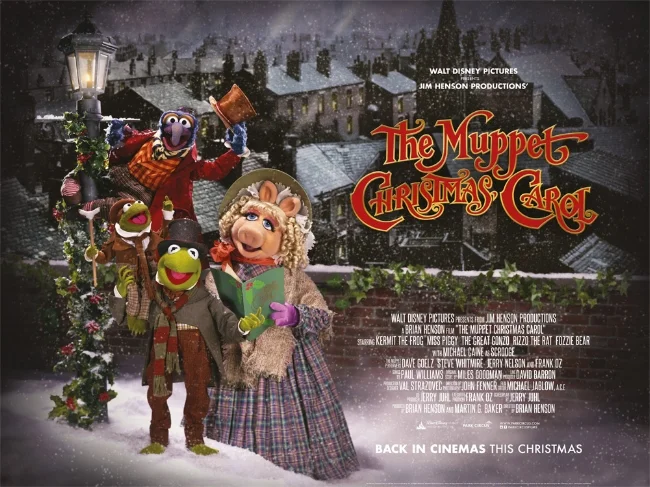
That completes the Contains Moderate Peril alternative Christmas guide and our recommendations of films we think make good substitutes to the standard drivel that fill the Christmas TV schedules. I’d like to honourably mention most film versions of A Christmas Carol (especially the Muppets Christmas Carol) as well as any adaptation of the Ghost stories of M.R. James. Christmas is a time for supernatural tales. Also don’t forget Raymond Brigg’s The Snowman. It’s a wonderful piece of animation. Next week there’ll be The Contains Moderate Peril guide to New Year and why that cultural tradition is also a load of old bollocks.
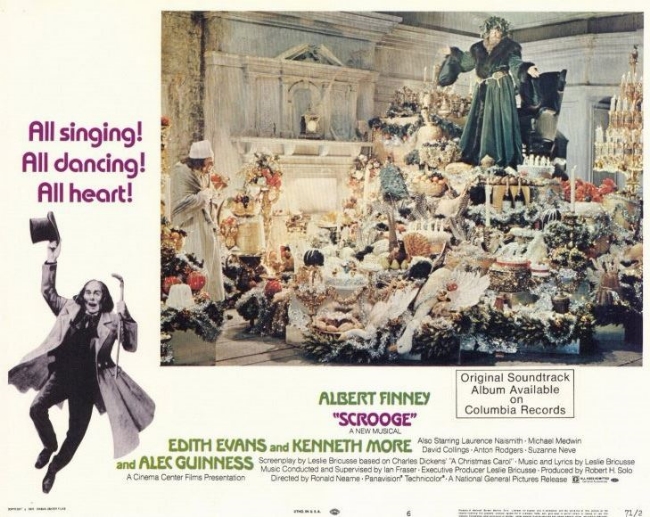
Scrooge (1970)
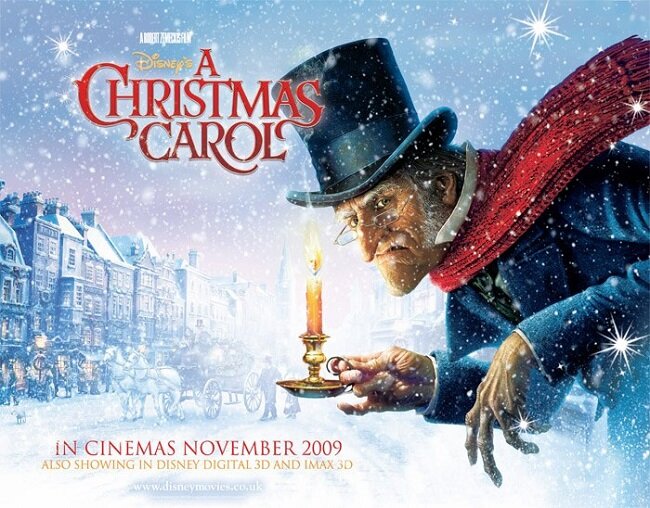
The all-star big screen musical was desperately striving to be different during the sixties and seventies, producing many hits and misses. Tommy, The Lost Horizon and The Wiz are prime examples of the experimentation made within the genre at the time. However, due to the success of Oliver! at the box office in 1968 it was thought that there was potential mileage to be had from Dicken's classic "A Christmas Carol". So the musical Scrooge was conceived. Unlike Oliver! it was not based on a existing stage adaptation but on a wholly original screenplay, although a theatrical treatment has since been adapted.
The all-star big screen musical was desperately striving to be different during the sixties and seventies, producing many hits and misses. Tommy, The Lost Horizon and The Wiz are prime examples of the experimentation made within the genre at the time. However, due to the success of Oliver! at the box office in 1968 it was thought that there was potential mileage to be had from Dicken's classic "A Christmas Carol". So the musical Scrooge was conceived. Unlike Oliver! it was not based on a existing stage adaptation but on a wholly original screenplay, although a theatrical treatment has since been adapted.
The creative foundation of this 1970 production is twofold. Firstly there is Leslie Bricusse's superb score and literate screenplay. Then there is Albert Finney's remarkable performance as Scrooge. Bricusse adapts Dickens novella superbly, including much of the original dialogue and subtleties of the story. The songs are very catchy and emotive, especially "Father Christmas" and "Thank You Very much". Both the musical numbers and the screenplay set the tone perfectly. Veteran director Ronald Neame manages to capture the warmth and sentimentality of the book. Once again this adaptation does not shy away from the fact that this is a ghost story and the sequence when Scrooge and Marley (Alec Guiness) take to the air and fly among the lost souls is rather creepy.
But it is Albert Finney's acting that dominates the movie during its well paced, two hour running time. Relying on the minimum of make-up and avoiding the use of prosthetics, Finney convinces the audience that he is a man of mature years rather than the 34 year old that he was at the time, by his demeanour, mannerism and gate. This is also possibly the most pitiable on screen portrayal of Scrooge, as the screenplay specifically emphasises the impact of his failed engagement. The production cost $5 million and although mainly set bound, boasts a very handsome production design. It catches the Dickensian spirit of London well, especially the hustle and bustle of the busy London markets.
Scrooge also features a wealth of British characters actors and benefits greatly from their talent. David Collings is an earnest Bob Cratchit and Anton Rodgers succinctly depicts one of Scrooge's debtors. But perhaps the most sublime casting is Kenneth Moore as the Ghost of Christmas Present. His larger than life personality and specific style of acting fits the role perfectly. Surprisingly he also manages to morally chastise Scrooge successfully without resorting to bluster. Moore was a truly underestimated actor and it is roles such as this that show his true range. With regard to Lawrence Naismith, let it suffice to say that the man was born to play Fezziwig.
Scrooge enjoyed only modest financial success upon its initial release. The critics praised Finney's performance but the box office was merely adequate and the public were split on both the songs and tone of the movie. The non-canonical scenes set in hell, seemed to be a stumbling block and were subsequently removed from TV prints of the film in future years. Forty Five years on the movie now has a much wider fan base and has become a seasonal institution for many. Critics have also revised their opinions deeming it a strong adaptation. For me it is one of those rare occasions where the source text and the medium of the musical combine to produce a movie of great emotional resonance. Dickens’ work seldom receives such treatment.
Star Wars: The Force Awakens (2015)
Contrary to my expectation Star Wars: The Force Awakens is an extremely entertaining and enjoyable movie. It manages to balance the needs of all interested parties. Fans get epic battles, iconic hardware and dependable performances from established and cherished characters. The new cast dovetail into the story with ease and are engaging. The torch is past from old to new seamlessly. There is humour, pathos and genuine tragedy to be found in Star Wars: The Force Awakens and it’s there because all involved clearly love and respect the franchise but also understand what makes good cinema. Fandom tempered by professional film making. The two do not have to be mutually exclusive.
Contrary to my expectation Star Wars: The Force Awakens is an extremely entertaining and enjoyable movie. It manages to balance the needs of all interested parties. Fans get epic battles, iconic hardware and dependable performances from established and cherished characters. The new cast dovetail into the story with ease and are engaging. The torch is past from old to new seamlessly. There is humour, pathos and genuine tragedy to be found in Star Wars: The Force Awakens and it’s there because all involved clearly love and respect the franchise but also understand what makes good cinema. Fandom tempered by professional film making. The two do not have to be mutually exclusive.
There are times when the movie seems more like a reboot of Episode IV but then as soon as you feel yourself thinking this way it does something different and wrong foots the viewer. It can also be argued that historical mistakes are often repeated thus making some plot elements in The Force Awakens quite plausible. It is also very clear that not all plot points will be clarified immediately. Disney obvious intends this to be a franchise of some length and the answers too many of the questions that arise will obviously be forthcoming later on. Who exactly is Supreme Leader Snoke? How did The First order come to power? Why is Ackbar still only and Admiral? The list goes on but this movie does enough to fill the most important gaps in our knowledge.
There is a lot of humour in Star Wars: The Force Awakens and it is pitched just right and hits the mark. Han Solo naturally has all the best line and his continuous banter with Chewbacca is an absolute delight. Harrison Ford simply owns the screen from the moment he appears. Furthermore there is a great deal of depth and nuance to his performance when you look beyond the one liners. If only this franchise had passed to Disney twenty five years earlier and we had had more films about the adventures of Hans and Chewie. Sadly this was not to be but you can see the great potential that could have been when watching Episode VII.
It would be remiss of me not to mention the new bad guy Kylo Ren played by Adam Driver. Ren is far from a two dimensional villain and it becomes clear quite quickly that there is far more behind his journey to the dark side and his personal conflict. The third act of the movie even goes so far as to flirt with Shakespearean tragedy but due to the expert way the writers Lawrence Kasdan, J. J. Abrams, Michael Arndt handle the story it works surprisingly well. I would also like to point out how easy it was too warm to Rey (Daisy Ridley) and Finn (John Boyega). Despite having very specific roles to play in the structure of the story, their narratives play out quite organically and don’t feel too contrived.
As you would expect from a movie of this calibre and budget the effects work and production design our outstanding. A lot of the aliens and background characters are physical effects and all the better for it. If I did have to voice a criticism it would be that Supreme Leader Snoke, played by Andy Serkis in yet another motion captured performance, seemed a little too “computer generated”. Once again John Williams has created a score that effortlessly embellishes the story and emphatically declares that you are most definitely watching a Star Wars movie.
I could continue and reference many other aspects of the movie that I enjoyed; BB-8 and the classic droids for example. But it’s difficult to work within a non-spoiler framework, so instead I will try and summarise why Star Wars: The Force Awakens has exceeded my expectations and is populist entertainment of the highest quality. J.J. Abrams has found a way to cater to as many tastes as possible. By providing a fresh perspective we get a sequel that reaches back to the past and satisfies our sense of nostalgia while still managing to be bold and new. Furthermore none of this is at the expense of the narrative. Mind you considering that Disney paid $3 Billion for this franchise and have spent over $200 Million on this movie alone, were they really going to cock it up? Therefore Star Wars: The Force Awakens is genuinely recommended by Contains Moderate Peril because it has proven that populist movies can be entertaining, spectacular and still dramatically powerful.
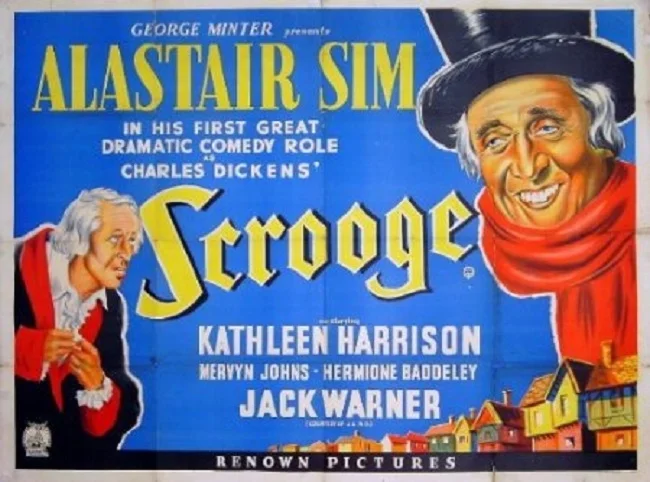
Scrooge (1951)
I am a great fan of Charles Dickens' "A Christmas Carol". There is something very special about the novella which is quite hard to quantify. It is a very unique book despite its central theme of redemption being universal. The text has for want of another phrase, a "power" to it. It is profoundly moving, insightful and true. Perhaps the key this story’s appeal lies with the central character, Ebenezer Scrooge. Not because Scrooge is a monster (which are so often fascinating) but because he's a man broken by circumstance. I think readers throughout the years have related to this and considered "There, but for the grace of God, go I". Cinema has found a rich vein of gold running through this tale, which is why it’s been revisited so often and interpreted so many ways.
I am a great fan of Charles Dickens' "A Christmas Carol". There is something very special about the novella which is quite hard to quantify. It is a very unique book despite its central theme of redemption being universal. The text has for want of another phrase, a "power" to it. It is profoundly moving, insightful and true. Perhaps the key this story’s appeal lies with the central character, Ebenezer Scrooge. Not because Scrooge is a monster (which are so often fascinating) but because he's a man broken by circumstance. I think readers throughout the years have related to this and considered "There, but for the grace of God, go I". Cinema has found a rich vein of gold running through this tale, which is why it’s been revisited so often and interpreted so many ways.
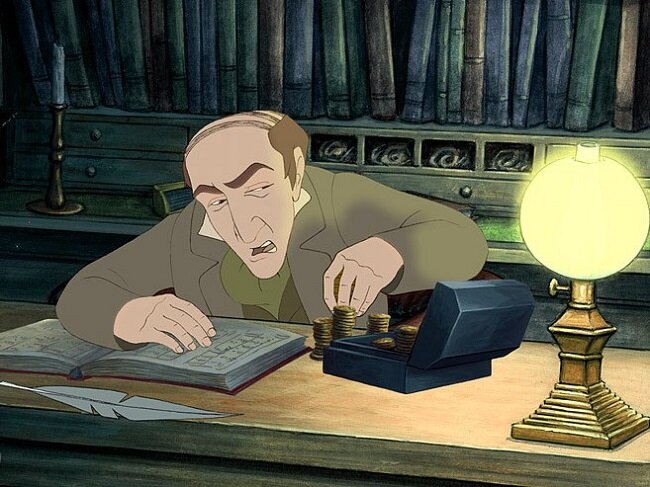
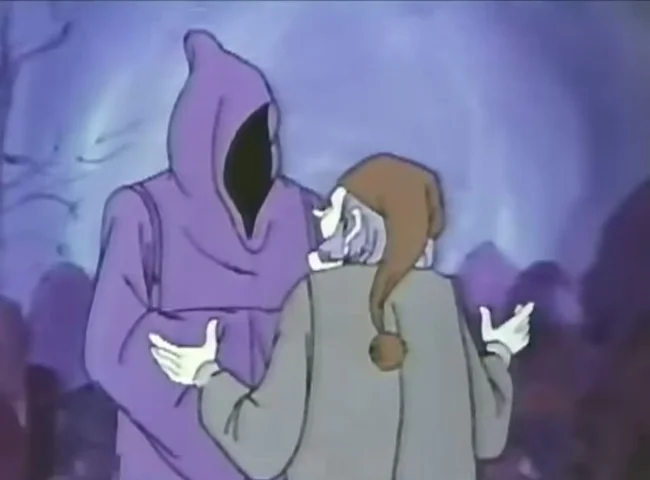
I have my own personal favourites such a Richard William's superb animated version, which is quite shocking in its depiction of the supernatural. Then there is the musical version Scrooge, directed by Ronald Neame, from 1970. The film's musical score was composed by Leslie Bricusse and featured an outstanding central performance by Albert Finney who was only 34 at the time. I also have a soft spot for the 1984 TV movie version of A Christmas Carol, mainly due to George C. Scott's interesting take on the role of Scrooge. The characters traditional irascibility is replaced by a much colder and calculating demeanour.
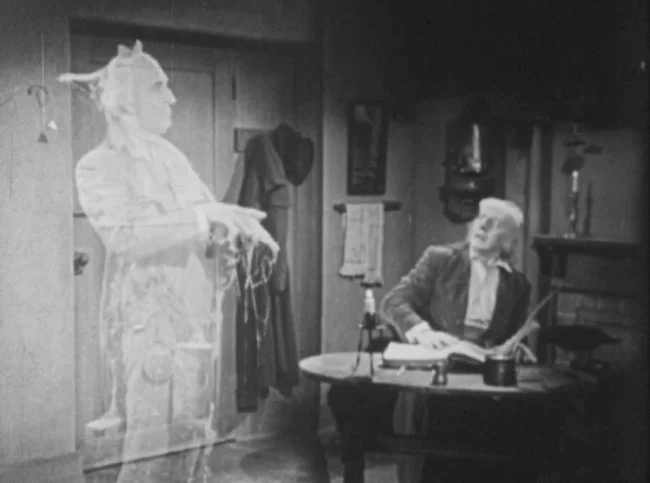
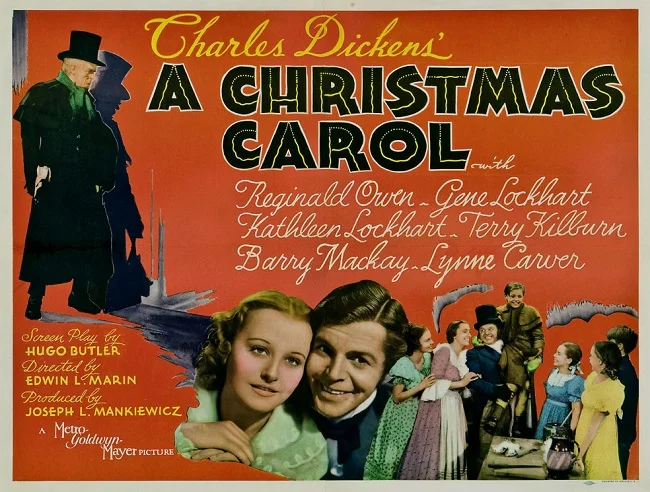
However, I still find the 1951 adaptation of the story, filmed under the title Scrooge, to be a constant source of joy and fascination. The ensemble cast featuring such talents as Mervyn John, Ernest Thesiger, Michael Horden and Kathleen Harrison portray a very stark and foreboding vision of Dickensian times. Yet the acting never descends in to melodrama or excessive pathos. As for Alistair Sim's lead performance, it is simply sublime. The audience never once doubts the sincerity or credibility of his acting. His transformation at the movies climax is simply remarkable. The man seems to have changed in a tangible way that is clear to see, yet hard to define. That is the hallmark of the finest quality acting.
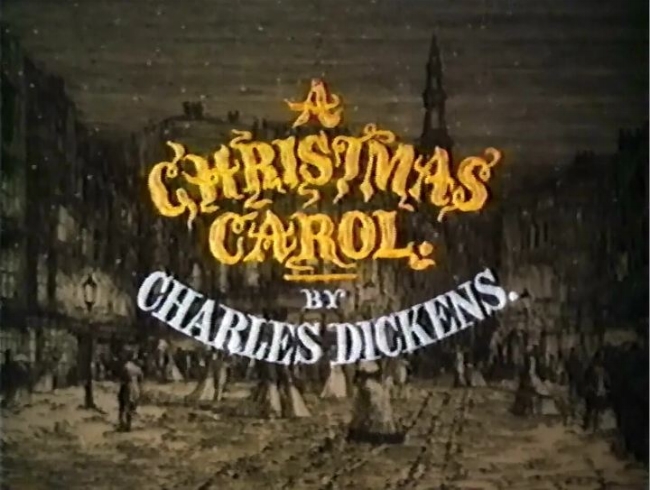
This modest production, deftly directed by Brian Desmond Hurst, exudes atmosphere. It is well paced and thorough. It also boasts handsome black and white cinematography by C.M. Pennington-Richards which captures the spirit of John Leech's original engraving from the first edition of the book. Art Director Ralph Brinton creates a very gloomy London, gripped in a bitterly cold winter. The location footage is minimal but very imposing, such as the use of the Royal exchange. The set designs have an authentic feel to them, especially Scrooge's dreary office. Unlike contemporary productions the story does not get bogged down or overshadowed by excessive effects work. The optical processing is simple and functional.
There is much to ponder after watching Scrooge. Viewers can consider the movie’s themes from a moral, religious or even a socio-political context, because it contains all those elements. Due to lapses in copyright the film has been released multiple times on numerous formats. Many copies are of poor quality. At present I would recommend the 2011 VCI Blu-ray release that featuring an excellent restored print of the film as well as superb commentary by the late George Cole. Despite being perceived as being a seasonal film Scrooge makes for thought provoking and entertainment year all year round. Perhaps more frequent viewing would encourage goodwill to all men all year round, rather than just as Christmas.
The Siege Of Firebase Gloria (1989)
There was a wealth of revisionist Vietnam War films released in the wake of Oliver Stones’ Oscar winning Platoon. Not all were of equal merit or technical competence but occasionally a low budget B movie can surpass the big studio competition. The Siege of Firebase Gloria is one such example, being a minimalist, straightforward film about US Marines defending an isolated outpost in Vietnam, during the Tet offensive. Directed by British expatriate Brain Trenchard-Smith and starring R. Lee Ermey, Wings Hauser and Albert Popwell ("Hey, I've gots to know!"), it’s often been overlooked. However it’s low key plot which seeks no more than to show a small facet of the war, sheds more light upon the overall war and a soldier’s life than one would expect from such a modest production.
There was a wealth of revisionist Vietnam War films released in the wake of Oliver Stones’ Oscar winning Platoon. Not all were of equal merit or technical competence but occasionally a low budget B movie can surpass the big studio competition. The Siege of Firebase Gloria is one such example, being a minimalist, straightforward film about US Marines defending an isolated outpost in Vietnam, during the Tet offensive. Directed by British expatriate Brain Trenchard-Smith and starring R. Lee Ermey, Wings Hauser and Albert Popwell ("Hey, I've gots to know!"), it’s often been overlooked. However it’s low key plot which seeks no more than to show a small facet of the war, sheds more light upon the overall war and a soldier’s life than one would expect from such a modest production.
While on reconnaissance, Sergeant-Major Hafner (R. Lee Ermey) comes across a destroyed village and surmises that "Charlie" is on the move. When the patrol arrives at Firebase Gloria, Hafner takes command from the drug crazed commanding officer and desperately tries to prepare the disorganised base for the impending assault. The chain of command refuses to acknowledge any potential danger and refuses to offer any help. Meanwhile NVA Col. Cao Van prepares his men to swarm and overrun the firebase. He realises that using such a tactic may well provide a favourable result but will inevitably result in a heavy death toll. Such a decision weighs heavily upon him.
The Siege of Firebase Gloria is not your stereotypical flag waver. With clearly drawn characters, a workman like yet amusing script and effective camerawork, the film paints a more vivid and unsettling portrait of the Vietnam War. It also makes its point more effectively than some of the other pretentious movies in the genre. Ermey gives a grounded, genuine performance and it can be argued that he carries the film from the average to the worthy. Wings Hauser is a little over taxed as the burnt out Corporal suffering with PTSD. Albert Popwell provides solid support as the career soldier trying to maintain standards in environment where the "rules" are breaking down. The action scenes are effective and the production strives beyond the confines of its modest budget.
There's nothing remarkable about the central story for The Siege of Firebase Gloria. This is a tale that has been told in various shapes and forms, many times before. However this particular movie explores a siege situation both efficiently and with a noticeable degree of honesty. There are brutalities and error of judgement committed by both sides. Neither is presented in the usual binary terms. The NVA are depicted as simply being soldiers doing a job which in many ways mirrors the Americans. This is a movie eschews the geo-political views of the time and simply focuses on the immediacy of the battle and the impact that it has upon all concerned. As a result The Siege of Firebase Gloria is more than just the sum of its parts and displays a degree of conviction seldom seen in the genre.
Next (2007)
Next is based on a story by Philip K. Dick and has nothing to do with the song by the Sensational Alex Harvey Band. Nor is it linked in any way to the fashion and lifestyle chain of retail stores. I just wanted to get that cleared up before I start. Now I believe that the world in general, pretty much wiped their critical backsides upon this film upon its release. There were complaints regarding the lack of plot explanation, back story and character motivation. I dealt with all these points by simply engaging my brain and sense of imagination. It is not essential for every nuance of a storyline to be telegraphed in great detailed. I do not like to be cinematically spoon fed. But there again, I am not afflicted with attention deficit hyperactivity disorder. Now that we’ve got this matter out of the way let us press on. Next is far from a masterpiece; however it is neither the dog’s dinner some would claim.
Next is based on a story by Philip K. Dick and has nothing to do with the song by the Sensational Alex Harvey Band. Nor is it linked in any way to the fashion and lifestyle chain of retail stores. I just wanted to get that cleared up before I start. Now I believe that the world in general, pretty much wiped their critical backsides upon this film upon its release. There were complaints regarding the lack of plot explanation, back story and character motivation. I dealt with all these points by simply engaging my brain and sense of imagination. It is not essential for every nuance of a storyline to be telegraphed in great detailed. I do not like to be cinematically spoon fed. But there again, I am not afflicted with attention deficit hyperactivity disorder. Now that we’ve got this matter out of the way let us press on. Next is far from a masterpiece; however it is neither the dog’s dinner some would claim.
Nicholas Cage plays a Vegas stage magician who has the ability to see two minutes into his own future. This ability has the added complication that each time he uses it there is the risk of altering the events he sees. Subsequently it's been a curse to him all his life and so he hides in plain sight, in the only environment that can provide suitable cover for a man of his unusual talents. It's not long before the government want to pressgang him in to helping them with a terrorist threat involving a stolen nuclear device. As per usual with films of this kind, the intelligence services rather than simply ask for cage's assistance are more content to strong arm him. A romantic subplot involving a woman Cage meets in a diner (Jessica Biel) soon becomes a potential bargaining chip for both the government and terrorists alike.
Next is classic example of big budget, formulaic, studio driven entertainment. All required elements are present and correct. The romantic sub-plot is inoffensive, there are some enjoyable action scenes as well as some arresting visual devices used to demonstrate and convey Mr Cages's abilities. Lee Tamahori directs in a suitable manner for such a commercial project, having handled such studio productions before. Yes this movie is “safe” and nowhere near as challenging as Tony Scott's Deja Vu. However Next is not the cinematic donkey it's been accused of being and provides enjoyable escapist entertainment. Nicholas Cage movies are often a lottery but this one actually suits his style and demeanour.
Something that comes up a lot with regard to Next is the inconsistent nature of the science that drives the plot. This was a common complaint in many a review when the movie was released in 2007. I would argue since when has Hollywood science stood up to close scrutiny? Take a classic film such as Fantastic Voyage which despite having a great premise and outstanding production design, is filled with flawed or incorrect science. Does one particular failing mitigate a movies other attributes and rob it of any entertainment value? I think not. Let us not forget that movies require the audience to suspend their sense of disbelief and also that pedantry is seldom a virtue.
The Lord of the Rings - The John Boorman Adaptation
n 1969 JRR Tolkien finally sold the film and merchandising rights of The Lord of the Rings to United Artists for approximately £104,000. A year later the studio asked director John Boorman if he could make the books into a viable film. Boorman, an established director with a track record of being experimental, set about developing a screenplay with his long term collaborator, Rospo Pallenberg. What emerged was a one hundred and fifty minute script and possibly the most radical adaptation of Tolkien's work. Some of the ideas and concepts it contained were extremely innovative but others where simply too radical a divergence from the source text. I’ve collated a few of these for your consideration. If you are familiar with Boorman's 1973 film Zardoz, then you will note both similarities and re-occurring themes.
In 1969 JRR Tolkien finally sold the film and merchandising rights of The Lord of the Rings to United Artists for approximately £104,000. A year later the studio asked director John Boorman if he could make the books into a viable film. Boorman, an established director with a track record of being experimental, set about developing a screenplay with his long term collaborator, Rospo Pallenberg. What emerged was a one hundred and fifty minute script and possibly the most radical adaptation of Tolkien's work. Some of the ideas and concepts it contained were extremely innovative but others where simply too much of a divergence from the source text. I’ve collated a few of these for your consideration. If you are familiar with Boorman's 1973 film Zardoz, then you will note both similarities and re-occurring themes.
1.) After the destruction of the Ringwraiths at the Fords of Bruinen, Frodo is carried into the sparkling palace of Rivendell, where in a vast amphitheatre full of chanting Elves he is laid naked on a crystal table and covered with green leaves. A thirteen-year-old Arwen surgically removes the Morgul-blade fragment from his shoulder with a red-hot knife under the threatening axe of Gimli, while Gandalf dares Boromir to try to take the Ring.
2.) The narrative of "The Council of Elrond" was to be visually interpreted as a fantastic medieval masque representing the history of the Rings. It was to combine elements of Kabuki theatre, rock opera, and circus performance.
3.) At the gates of Moria, the fellowship bury Gimli in a hole, throw a cape on him and beat him to a state of utter exhaustion to retrieve his unconscious ancestral memory. This ancient knowledge allows Gimli to recollect the word for entering Moria and gain insights about the ancient dwarf kingdom.
4.) Also in the Moria sequence, the orcs are slumbering or in some kind suspended animation. The fellowship runs over them and the rhythm of their footsteps start up their hearts.
5.) There was a proposed wizard’s duel between Gandalf and Saruman. This was inspired by an African idea of how magicians duel with words. The script reads:
Gandalf: Saruman, I am the snake about to strike!
Saruman: I am the staff that crushes the snake!
Gandalf: I am the fire that burns the staff to ashes!
Saruman: I am the cloudburst that quenches the fire!
Gandalf: I am the well that traps the waters!
6.) Perhaps the most provocative changes occur by introducing a sexual element. Not necessarily in a exploitative way but more of a metaphor exploring the nature of power. For example, before gazing into Galadriel's mirror, Frodo must have sex with her. Aragon's battlefield healing of Eowyn becomes a sexual analogy of the healing power of the king.
Needless to say, executives at United Artist failed to understand Boorman's script. The project was shelved indefinitely. When Ralph Bakshi approached the studio in 1976 with a proposal of adapting Tolkien's work in to an animated film, the script had to be purchased to acquire full artistic control. Boorman allegedly received $3,000,000 for his script. When Boorman later made his big screen adaptation of the Arthurian legend Excalibur in 1981, many parallels where drawn with The Lord of the Rings. It has often been suggested that several ideas from his the unused Tolkien screenplay made it in to that movie.