
LOTRO World Transfers
This evening I successfully transferred my two primary LOTRO characters from Gilrain server to Laurelin. The process was intuitive and took about an hour in total. Considering this was mid-evening and therefore UK gaming primetime, I thought this to be an acceptable timeframe. I had no issues with any of the contents of my personal bags or vault and was refunded all the rent that I had paid in advance for my house. I took the opportunity brought about by the move to downsize to a smaller in-game property. I was please to find that the migration of my kinship was proceeding well with many other familiar faces arriving on Laurelin during the course of the evening. So from my point of view this migration was far from a difficult experience.
This evening I successfully transferred my two primary LOTRO characters from Gilrain server to Laurelin. The process was intuitive and took about an hour in total. Considering this was mid-evening and therefore UK gaming primetime, I thought this to be an acceptable timeframe. I had no issues with any of the contents of my personal bags or vault and was refunded all the rent that I had paid in advance for my house. I took the opportunity brought about by the move to downsize to a smaller in-game property. I was please to find that the migration of my kinship was proceeding well with many other familiar faces arriving on Laurelin during the course of the evening. So from my point of view this migration was far from a difficult experience.
The world transfers are a necessity and I have had no issue reconciling myself to this. I not an unduly sentimental person, so leaving Gilrain was simply a matter of logistics for me. Laurelin despite being an English RP server seems like a suitable home for my kinship. We mainly tend to have lore friendly names and are mindful of the needs of those who role play. I think we should have no issue settling in to our new virtual home. The benefits of a server with a higher population are already abundant. There is a healthy economy on Laurelin and prices seem to be far more reasonable than usual. It would appear the community is resistant to the concept of hyperinflation. The various chat channels throughout the game seem active and the atmosphere is far from unfriendly.
However despite my broadly positive experience, I have found threads on both the official and unofficial LOTRO forums that refer to alleged complaints about the influx of new players to Laurelin. There are also criticisms from those who have had to rename their characters due to RP TOS violations. Having spent some time in world chat and talking with both new and established denizens of Laurelin, it would seem that there are just a handful of individuals that are unhappy with the status quo. Some may be justified in their protestations, others not so. Either way it is not accurate reflection of the overall community on the server who seem to be adapting to the influx of new players.
As I get older I do find this predilection for drama from certain quarters rather tedious and it actively contributes to me further distancing from the gaming community. As for LOTRO its future seems to be somewhat unsurprising. The recent Player Council leak confirms that we shall continue to get more of the same and that there are no real surprises or radical changes to come in the immediate future. Therefore I am happy to play new content as and when it is released and to take pleasure in what the game can currently provide, rather than focus on what could be. LOTRO is in its autumn years and a more existential approach to the game seems prudent.
Movie Trivia: The Wilhelm Scream
In the 1951 movie Distant Drums starring Gary Cooper, a small band of soldiers are crossing a swamp in pursuit of Seminole Indians. While wading through the Everglades, one unnamed soldier is attacked and dragged underwater by an alligator. His last sound is an agonised, startled scream. Two years later in The Charge at Feather River, a soldier named Private Wilhelm screamed as he’s struck by an arrow in his leg. So began the cinematic legend that is the “Wilhelm Scream”, a sound effect that has punctuated a multitude of films over six decades.
In the 1951 movie Distant Drums starring Gary Cooper, a small band of soldiers are crossing a swamp in pursuit of Seminole Indians. While wading through the Everglades, one unnamed soldier is attacked and dragged underwater by an alligator. His last sound is an agonised, startled scream. Two years later in The Charge at Feather River, a soldier named Private Wilhelm screamed as he’s struck by an arrow in his leg. So began the cinematic legend that is the “Wilhelm Scream”, a sound effect that has punctuated a multitude of films over six decades.
Most studios add audio effects for a film during post-production and of course it’s not unusual for them to recycle material from their archives. In the case of Distant Drums, six short screams were recorded and creatively titled “man getting bit by an alligator, and he screams”. The fifth take was used for the alligator scene and the others were used throughout the rest of the film. Following the movie’s release the distinctive scream was placed in the Warner Bros. sound effects library and used regularly over the years in various productions. It can be heard in Them! (1954), Swiss Family Robinson (1960) and The Green Berets (1968).
Ground breaking sound engineer Ben Burtt noticed the repeated use of the scream during the course of his career. When he made the The Scarlet Blade in 1974 he decided to use the scream, so he cunningly copied it from another film’s soundtrack. Two years later, he was hired to create the sound effects for Star Wars and he managed to track down the original source recording from the Warner Bros. archive. Burtt subsequently began to regularly insert the sound effect into projects he worked on, including the Star Wars sequels. He dubbed it the “Wilhelm scream” in honour of the first named character to use it. The use of the scream rapidly become an in-joke for those in the post production business and from there it use has spread.
The “Wilhelm scream” has been featured in over two hundred movies, TV programs, commercials and video games. Notable film-makers have also specifically requested the “Wilhelm scream” for their movies after learning of its history, including directors such as Quentin Tarantino, Robert Rodriguez, Tobe Hooper, Joe Dante and Peter Jackson. A comprehensive list of titles that incorporate the scream can be found at the IMDB and it’s growing yearly.
The source of the of the “Wilhelm Scream” remains a mystery, but many believe it to be the voice of Sheb Wooley. Wooley is most famous for his song “Purple People Eater”, which was a number-one hit for six weeks in 1958. He had a small part in Distant Drums and was one of a few actors who were called back after filming for some additional dialogue recording. Although he died in 2003 his wife Linda believes it was his scream. She recalls that Sheb was a very gifted voice artist, performing screams, laughs, and other vocals effects for film and TV.
The “Wilhelm Scream” has joined a library of sound effects that are frequently used by sound editors. Others include a thunder clap created for the James Whale’s Frankenstein. Also a particular recording of the red-tailed hawk’s distinctive cry has become ubiquitous in Westerns or any movie with a desert setting. You can also include the universal telephone ring, which has been used on hundreds of films. It would appear that the entire field of audio effects is filled with re-occurring material. Bond films are rife with generic audio effects for automated doors, explosion, electronic devices, jet engines and death screams. A lot of these sound effects seem to have migrated from the back catalogue of Gerry Anderson’s productions.
Like many in jokes, once it becomes too widely known it can lose its impact. The “Wilhelm Scream” is no longer a secret outside of the movie industry and possibly may now have become too ubiquitous. However its history remains interesting like so many obscure facets of the industry. It will interesting to see that as the entertainment industry continues to evolve whether they be equivalents to the “Wilhelm Scream” in five decades times.
The Complete Ghost Stories of M R James – Read By David Collings (2007)
The supernatural fiction of Montague Rhodes James is a major milestone in the history of the literary ghost story. His work tangibly helped shape the genre as we know it today, focusing on classic themes such as retribution, vengeance and other aspects of traditional mythology literature. The protagonists are often socially dysfunctional intellectuals who face peril due to their excessive curiosity. The very physical nature of horror often masquerades for deeper psychological issues. They also serve as an invaluable window into the socioeconomic structure of Edwardian Britain.
The supernatural fiction of Montague Rhodes James is a major milestone in the history of the literary ghost story. His work tangibly helped shape the genre as we know it today, focusing on classic themes such as retribution, vengeance and other aspects of traditional mythology literature. The protagonists are often socially dysfunctional intellectuals who face peril due to their excessive curiosity. The very physical nature of horror often masquerades for deeper psychological issues. They also serve as an invaluable window into the socioeconomic structure of Edwardian Britain.
In more recent years critics have tried to determine if the author’s personal life and idiosyncrasies are reflected in his written work. Is there a hidden subtext within the narrative, hinting at inner conflict and repression in James own life? It’s quite possibly so. Either way there is no doubt that M R James is one of the finest authors of short stories, this country has known. His influence is still seen today in the works of Brian Lumley, James Herbert and Clive Barker. Furthermore his stories still have the capacity to disturb the reader.
Recently I was pleased to discover a comprehensive audio book featuring the complete collection of M R James ghost stories, read by David Collings. Previously selected stories had been recorded in the middle Eighties by the great Sir Michael Horden. Sadly these are no longer available. The new recordings are presented in two volumes by Craftsman Audio Books. They contain all short stories in chronological order and are unabridged. Atmospheric music is used strategically to bridge the material.
David Collings reads the works of M R James as they’re meant to be heard. He is word perfect and his delivery is smooth and lyrical. He alternates between regional accents and Latin with polished aplomb. Collings must be an M R James aficionado as he brings out all the sly humour of the Edwardian text, adding charm and chilling nuance to every story. Although I am a strong advocate of reading for oneself this material lends itself strongly to the audio book format and is an utter delight. I cannot praise this collection enough and consider it to be the perfect way to while away the cold winter nights.
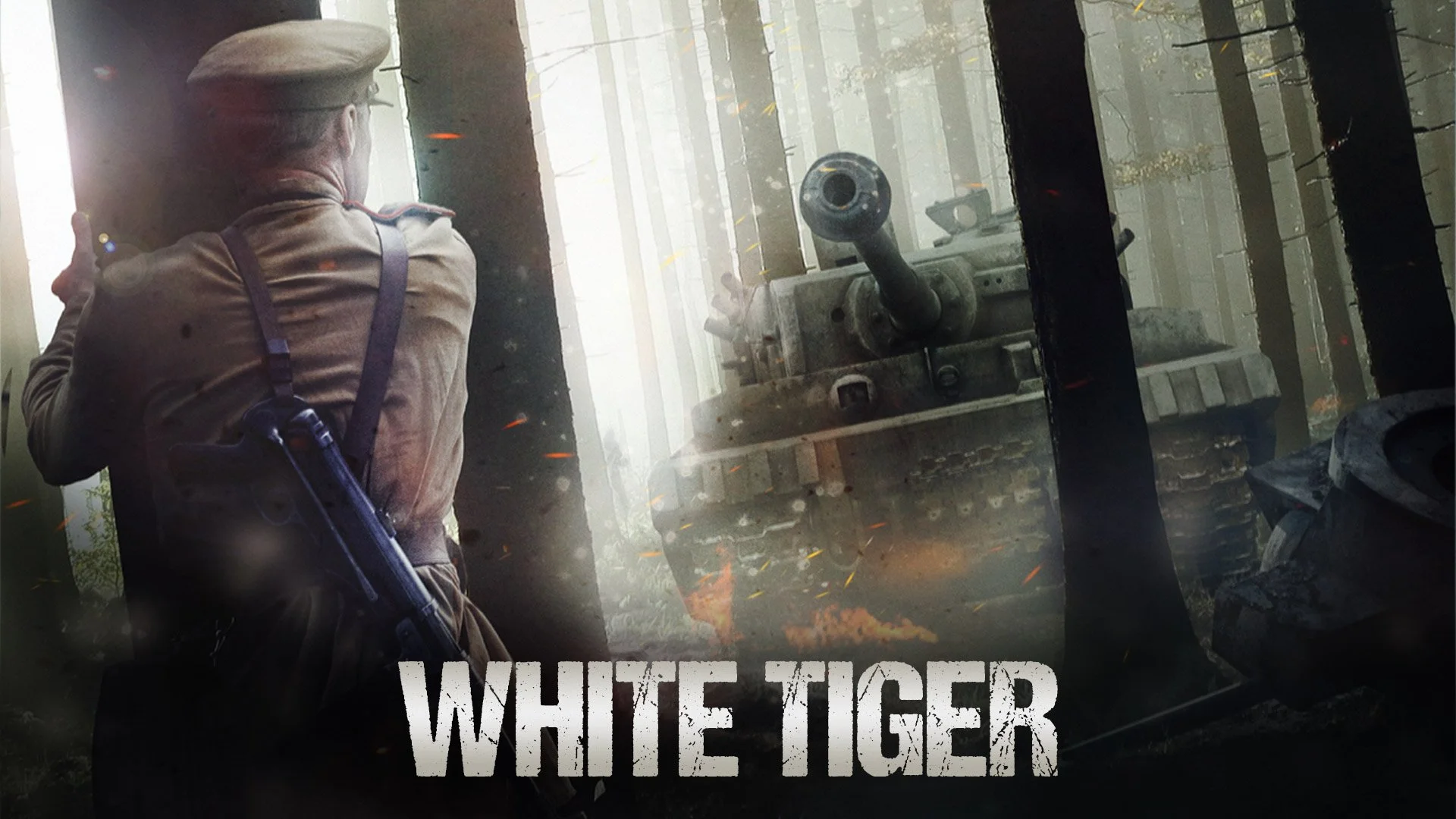
White Tiger AKA Belyy Tigr (2012)
It is rewarding to find a movie that wrong-foots you and challenges your perceptions on certain subjects. White Tiger is exactly such a film. Starting of as a traditional war movie, the story quickly evolves into a supernatural revenge story with shades of Moby Dick. The final act and subsequent sting in the tail ending provides immense food for thought. It proposes an idea that many will find particularly challenging. However the film succeeds in making such a bold pitch because of its inherent Russian earnestness and the fact that that nation’s war experience is so subtly different from others.
It is rewarding to find a movie that wrong-foots you and challenges your perceptions on certain subjects. White Tiger is exactly such a film. Starting of as a traditional war movie, the story quickly evolves into a supernatural revenge story with shades of Moby Dick. The final act and subsequent sting in the tail ending provides immense food for thought. It proposes an idea that many will find particularly challenging. However the film succeeds in making such a bold pitch because of its inherent Russian earnestness and the fact that that nation’s war experience is so subtly different from others.
White Tiger starts with Russian soldiers find a blackened tank driver in a burnt out wreck with burns to 90% of his body. He miraculously survives and recovers in just three weeks. Remembering nothing of his past life or identity he is renamed Ivan Naydenov (Aleksey Vertkov). He claims to have gained the mystical abilities and to have been charged with the mission of destroying the White Tiger that is decimating Russian tanks. Major Fedotov (Vitaly Kishchenko) reluctantly supports Ivan as he does seem to have uncanny skills in combat. He subsequently assigns to him a customised T-34 along with a sceptical crew who balk at being instructed to attack targets they cannot see. Ivan finally catches up with the allusive Tiger tank in a deserted village but is everything as it seems?
It soon becomes apparent that much of what is happening in White Tiger is not to be taken literally. Both the White Tiger and Ivan himself are symbols. Physical manifestations of war itself, locked in an unending battle; like the human body continuously fighting disease and infection. Finally when the war ends and the Russian POWs are released, Ivan declares that he cannot stop fighting as the White Tiger is still at large. The codicil at the end of the movie shows Hitler calmly discussing the policies he pursued during the war and attempting to justify them. He declares that war is a natural thing and he has simply released a force of nature. “War is fought everywhere and always; it has no beginning and no end. War is life itself”.
Director Karen Shakhnazarov has crafted a singularly enigmatic piece of cinema with White Tiger. It has an eerie quality about it which is not something expected in the war genre. Curiously enough I felt myself reminded of Duel and The Car as well as Herman Melville’s famous novel. The purposely erratic pace of the narrative may not be to everyone’s taste but the performances and prevailing atmosphere are compelling. The ending is a major talking point in itself and I envisage that there will be many discussions and possibly arguments over the many plot elements that are not resolved or explained. However I consider this to be a good thing as cinema has become too much of a passive experience of late. A subject as complex as global war should not be rendered into binary terms; thankfully White Tiger does exactly the opposite.


The Enduring Appeal of Mario Kart
One of the best games I have ever played is Super Mario Kart. It simply embodies all those elements that make Nintendo titles so great. It is a polished product with a cheerful aesthetic that is eminently playable. It has exactly the right balance between skill and random chance resulting in a fun and compelling game. No two races are ever the same. It is one of the few titles that I have literally played all night with friends. I still smart over the “incident” where someone stole my feather just as I was about to jump across the shortcut on the Ghost Valley 1 track (this will make perfect sense to those who have played the game).
One of the best games I have ever played is Super Mario Kart. It simply embodies all those elements that make Nintendo titles so great. It is a polished product with a cheerful aesthetic that is eminently playable. It has exactly the right balance between skill and random chance resulting in a fun and compelling game. No two races are ever the same. It is one of the few titles that I have literally played all night with friends. I still smart over the “incident” where someone stole my feather just as I was about to jump across the shortcut on the Ghost Valley 1 track (this will make perfect sense to those who have played the game).
Due to the game’s inherent appeal, there has been a further seven incarnations of Mario Kart. All have proven to be bestsellers. Despite Nintendo’s ongoing financial difficulties, last year’s release of Mario Kart 8 was a welcome shot in the arm for the ailing games company. Sales have reached 2 million copies in the US alone since its May release. The title has also been beneficial for sales of the ailing Wii U, a console that until recently had been effectively written off by many in the gaming industry. Furthermore Mario Kart 8 attracted “strongest review scores in franchise history,” according to the company.
So what exactly are the reasons behind the enduring appeal of Mario Kart? Obviously the accessible and well-conceived game mechanics are a big factor. Each new version of the game maintains the balance between refining old ideas while introducing fresh new ones. The pleasant graphics with their stylised cartoon aesthetic along with the playful soundtrack broadens its appeal to all age groups. The game also lacks the male-centric philosophy that is associated with so many driving and racing franchises. Perhaps the most important quality present in all versions of Mario Kart is the “fun factor”. It’s something Nintendo has always inherently. It’s the reason why I still play Super Mario Kart today, via an emulator on my PC and tablet.
El Dorado (1966)
El Dorado opens with a montage of paintings by celebrated Western artists Olaf Weighorst. These beautiful pictures in many ways reflect the nature of the movie, depicting a stylised representation of the Old West that despite its beauty, never really existed. Director Howard Hawks includes every possible genre trope and meme into El Dorado but far from being a handicap, it makes the movie a perfect distillation of Hollywood Western. The pairing of John Wayne and Robert Mitchum is sublime as the two effortlessly riff off each other. If you need an example of how the Western is the most flexible and accessible movie genre, then El Dorado is a text book example.
El Dorado opens with a montage of paintings by celebrated Western artists Olaf Weighorst. These beautiful pictures in many ways reflect the nature of the movie, depicting a stylised representation of the Old West that despite its beauty, never really existed. Director Howard Hawks includes every possible genre trope and meme into El Dorado but far from being a handicap, it makes the movie a perfect distillation of Hollywood Western. The pairing of John Wayne and Robert Mitchum is sublime as the two effortlessly riff off each other. If you need an example of how the Western is the most flexible and accessible movie genre, then El Dorado is a text book example.
Wayne plays Cole Thornton, a hired gun who travels El Dorado to pursue a potential job offer from Rancher Bart Jason (Ed Asner). Jason needs Thornton to remove my any means, a rival rancher who own the local water rights and to also take care” of local Sheriff J P Harrah (Robert Mitchum). Thornton refuses the contract as Harrah is a friend and subsequently leaves town. Six months later Thornton returns to El Dorado to find his friend has become a drunk after being crossed in love. The range war has also escalated and Bart Jason now has a formidable army of men, led by notorious gunman Nelse McLeod (Christopher George, sporting an excellent scar and contact lens). Outnumbered, Thornton and Harrah try to keep the peace with only the help of an old Indian fighter (Arthur Hunnicutt) and an inexperienced greenhorn called Mississippi (James Caan).
The mid-sixties were a very interesting time for Hollywood as writers and directors tired of the status quo, started pushing boundaries of movie ratings. El Dorado blends traditional Western machismo with Greek tragedy and plenty of sassy dialogue. It is also quite violent for the times, something that becomes more apparent with the clarity of the latest Blu-ray release. Although predominantly set bound, the film does have some scenic what location work. The chemistry between the two leads is by far the movies strongest selling point and their real life friendship is clear. Leigh Bracket’s script is loaded with wise cracks, Western philosophy and musings on the Code of the West. Caan and Hunnicutt are great foils.
On release El Dorado was considered to be a little old school compared to the emerging revisionist trends of the time. The ballad that plays over the opening credits, sung by George Alexander and The Mellomen, is very traditional. Nelson Riddles score conversely has quite a contemporary arrangement. The movie sits squarely between the old and the new. Its theatrical release was delayed by Paramount so that it would not clash with Nevada Smith, which depicted a far more cynical and bleaker interpretation of the West.
Over the years El Dorado has grown in critical and public acclaim and is now rated more highly than it was upon its initial release. Roger Ebert gave the film a near-perfect rating at 3 1/2 out of four stars, stating “El Dorado is a tightly directed, humorous, altogether successful Western, turned out almost effortlessly, it would seem, by three old pros: John Wayne, Robert Mitchum and director Howard Hawks”. The movie certainly made an impact upon me as I saw it as a child and has stayed with me over the years. I still have a soft spot for Edgar Allan Poes poem Eldorado that is quoted by James Caan throughout the movie.
Gold Sellers
Having returned to several MMOs recently, I have been surprised to see that gold selling is still quite common place. Purveyors of these and other dubious services still regularly spam the in-game chat channels of games such as Star Trek Online and Guild Wars 2. I would hazard a guess that games based on single server environments amplify the hawking of such wares. I have not seen such messages on the Gilrain server where I play LOTRO for several years. However it is clear that gold selling is still a “thing” within this genre, irrespective of my surprise.
Having returned to several MMOs recently, I have been surprised to see that gold selling is still quite common place. Purveyors of these and other dubious services still regularly spam the in-game chat channels of games such as Star Trek Online and Guild Wars 2. I would hazard a guess that games based on single server environments amplify the hawking of such wares. I have not seen such messages on the Gilrain server where I play LOTRO for several years. However it is clear that gold selling is still a “thing” within this genre, irrespective of my surprise.
One of the commonest issues facing a new player of MMO, is a shortfall of in-game gold. There are game mechanics in place in most games of this genre that allow you to legitimately amass a sizeable personal fortune but they require time. Therein lies the problem. Long term players at endgame frequently have a substantial supply of gold that ceases to have any major benefit for them. Gold is often most required midway through the levelling process. Having recently returned to both STO and Guild Wars 2, I’ve found that I am spending the respective in-game currency on upgraded gear as fast as I earn it.
Now this is exactly the sort of scenario that could potentially encourage some players to use the services of a gold seller. Let us not waste time on any moral debates about such vendors; that is another blog post all together. I and many other people have used gold sellers in the past as a convenient means to an end. However with the advent of free to play games and the common practise of using multiple in-game currencies, surely the financial benefits of using gold sellers has fallen by the wayside? Simply put, are such services value for money?
Let us use STO as an example. Perfect World sells Zen for use in the C-Store, where players can by ships, commodities, buffs and boost and all the usual trinkets and baubles you find in a MMO. Recently I bought 5300 Zen for £32 (€45, $49). I then spent 5250 Zen buying 46 lock box keys (4 x pack of 10 and 6 individual keys). At the time keys were selling on the in-game exchange for 2.6 million Energy Credits. Within one hour of posting the keys they had all sold for a total of119,600,00 Energy Credits. This may sound like a lot but high end items can sell for 10 to 15 million Energy Credits or more. However if spent prudently this is a reasonable war chest for a new player.
So to summarise, I effectively spent £32 for nearly 120 million energy credits, using legitimate game processes. However a Google search not only yields the names of the most popular gold sellers online but also lists a gold selling comparison site. MMOBux provides quite a comprehensive service, with reviews of gold sellers and price tracking. It’s both mind boggling and yet perfectly logical that site such as this should exist. Using the comparison site I determined at the time that MMOGA could source 120 million Energy Credits for £27 where Koala Credits could supply the required amount for £93.
It would appear that it is more cost effective and safer to buy in-game currency in STO via Perfect World, rather than take your chances with these third party vendors. It’s a similar story with Guild Wars 2 as they allows players to purchase gems and convert them directly in-game into gold, via a server wide exchange mechanism. At present you can safely buy in-game, 2800 gems for £30 and convert them to 532 gold. Again the third party gold sellers cannot really undercut the official tariff and therefore can only offer an equivalent price.
So based on these two examples, why is gold selling still a “thing” in the MMO genre? Why would anyone be willing to risk losing their currency order, just for a negligible saving (and assuming there is one)? It’s an interesting question because obviously people still use these dubious services as my Google search showed. I think like most questions the answer is complex rather than binary. I get the impression that a lot of players haven’t stopped and done the maths, so don’t realise they can get in-game gold legitimately and without risk. I also think that gold selling advertising is a bit like supermarket special offers. When you actually crunch the numbers there isn't actually a deal to be had but you are distinctly given the impression that there is one. Also third party gold sellers probably don’t care too much about whether the customer is actually the owner of the credit card being used.
As there is no significant advantage to buying gold from third party outlets, you would think that players would prefer to use the legitimate services associated with many games. MMOs have operating costs so spending money directly via the developers helps support the game and its future growth. Gold sellers drain money from this revenue stream which is ultimately damaging, not only for the game but for the player as well. All things considered there shouldn't really be any reason why gold selling is still a “thing” in 2015. Perhaps if more players took time out to consider the matter, such services would become obsolete.
Hidden & Dangerous 2
Hidden & Dangerous 2 was released in 2003, one of many WWII based tactical shooters that were a popular genre at the time. It was an indirect sequel to Hidden & Dangerous from 1999, which had met with moderate success. The game was developed by the Czech company Illusion Softworks and published by Gathering of Developers and Take-Two Interactive. Hidden & Dangerous 2 featured single player campaigns set around Europe and North Africa, as well as the option for online multiplay hosted via player created servers.
Hidden & Dangerous 2 was released in 2003, one of many WWII based tactical shooters that were a popular genre at the time. It was an indirect sequel to Hidden & Dangerous from 1999, which had met with moderate success. The game was developed by the Czech company Illusion Softworks and published by Gathering of Developers and Take-Two Interactive. Hidden & Dangerous 2 featured single player campaigns set around Europe and North Africa, as well as the option for online multiplay hosted via player created servers.
The game strived to be more than just a standard shooter and endeavoured to promote the tactical aspect of gameplay. The game fared well in the UK and built quite a cult following. Unfortunately it did not fare so well in the North American market. Despite receiving above-average reviews, partly because of the popularity of similar games, it failed to find an audience. It can be argued that the lack of any major US protagonists and the focus on European theatres of war were contributory factors. The game was plagued by bugs that persisted throughout its lifespan despite successive and often large patches.
Gameplay focuses upon a four man British Special Air Service team conducting a wide variety of operations behind enemy lines. This included such locations as France, Libya and Norway. The final mission was set in Czechoslovakia during the last days of the war, ending in a skirmish with the Soviet Red Army over German secret documents. An additional expansion pack with extra mission, “Sabre Squadron” was released a year later. This added co-operative online game play and new weapons to the game. Hidden & Dangerous 2 was a minor milestone in its genre at the time, due to realistic tactical approach and immersive environments. Weapon and vehicle physics were plausible and fairly accurate; more so than most games at the time of a similar genre.
This was one of the first video games that I bought that I became heavily involved with. I joined a clan, the “Devil’s Bridge Veterans” and hosted two dedicated multiplayer servers with custom weapon inventories. What I liked about the Hidden & Dangerous 2 was its British perspective and the involvement of the SAS. It also focused on several theatres of war that were seldom explored, such as Burma and Czechoslovakia. I enjoyed the diversity of missions and way you could switch between 1st and 3rd person views. The game featured a magnificent orchestral score by Michal Szlavik and Martin Benes at a time when a lot of competitors where still relying on electronic soundtracks.
I re-installed Hidden & Dangerous 2 on my PC a few years ago. It performed well under Windows 7 64 bit and the only drawback was the lack of support for 16 x 9 ratio resulting in a stretched image. Despite dated graphics the tactical elements were still engaging and the game still offers more than just an average point and shoots experience. There were still dedicated servers hosting co-op and death match games, last time I checked in 2011. Furthermore there are still websites resources for this game if you’re prepared to look.
Hidden & Dangerous 2 was a classic example of game that although it never became truly big, did gain a specific cult following. Its developers Illusion Softworks are now part of 2K Games. It is interesting to note that one of their other franchises, Mafia, is still in existence with a third instalment scheduled for a release in early 2016. Perhaps there is still a possibility Hidden & Dangerous 3 may be made and that the WWII tactical shooter genre will make a return.
Dirty Harry - The Video Game
"Dirty Harry" Callahan first appeared in a video game in 1990 on the NES. Developed by Grey Matter Inc and published by Mindscape the game titled “Dirty Harry” was a simple side scroller, featuring arbitrary platforms, shooting and fist fight mechanics. Apart from its basic vigilante cop narrative and some digitised soundbites from the films, there was very little to link it to the source material. Overall this was hardly a fitting debut for the character that has defined Clint Eastwood’s career and spawned five motion pictures. Beyond a brief appearance on a themed pin ball machine in 1995, Harry Callahan has remained conspicuously absent from the video games genre.
"Dirty Harry" Callahan first appeared in a video game in 1990 on the NES. Developed by Grey Matter Inc and published by Mindscape the game titled “Dirty Harry” was a simple side scroller, featuring arbitrary platforms, shooting and fist fight mechanics. Apart from its basic vigilante cop narrative and some digitised soundbites from the films, there was very little to link it to the source material. Overall this was hardly a fitting debut for the character that has defined Clint Eastwood’s career and spawned five motion pictures. Beyond a brief appearance on a themed pin ball machine in 1995, Harry Callahan has remained conspicuously absent from the video games genre.
Due to the success of the Grand Theft Auto franchise a decade and a half later, several game studios looked to classic crime cinema for inspiration developing a competing product. As a result movies such as The Godfather, The Warriors and Scarface were adapted as video games with mixed success. All boasted voice acting by original cast members and where based upon the visual aesthetic of the source material. It was about this time that Warner Interactive announced that it too would be producing a comparable game, based upon the iconic Dirty Harry franchise.
"Dirty Harry helped define a genre and introduced the world to a character who has since become a cultural icon, so bringing Clint Eastwood's authentic Dirty Harry character to this next generation of consoles provides exciting promise for game playing audiences everywhere". Jason Hall, Senior Vice President of Warner Bros. Interactive Entertainment.
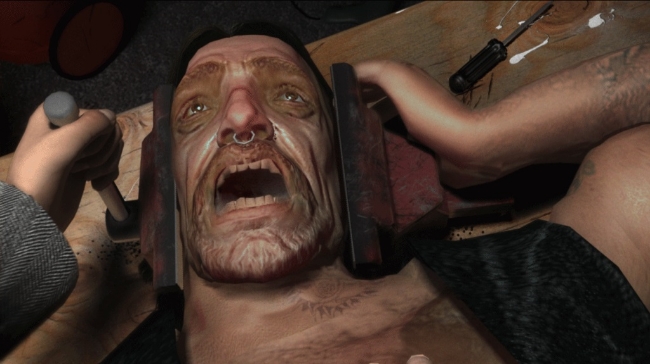
Simply titled Dirty Harry the game was to be developed by The Collective Inc in association with Clint Eastwood’s Malpaso production company. The premise of the game was to continue the story of loose-cannon police detective “Dirty Harry” Callahan as he sought to clean up the streets of San Francisco. The story was set immediately after the “Scorpio” case, as featured in the original movie and prior to events featured in the sequel Magnum Force. Clint Eastwood was to reprise his role as Harry Callahan, lending his voice and likeness as well as providing consultancy services and creative input. The game was scheduled to be released in 2007 on multiple platforms.
Sadly despite the project being nearly 70% completed, the game never saw the light of day. Allegedly senior management at Warner Bros. Interactive Entertainment were not happy with the work that had been completed and were worried about potential harm to the “brand”. It has been claimed, although never officially confirmed, that the project was then transferred to two further studios for redevelopment; namely TimeGate studios and Monolith Productions. However the cost of replacing the game engine and adding additional content such a co-op multiplay was prohibitive. The game’s launch was further delayed and eventually vanished from the publishers marketing and press releases. It has been implied by those involved with the project that the main reason for Dirty Harry’s demise was that it simply wasn’t that good.
Apart from some screen captures taken from preliminary builds and a promotional trailer, not much remains in the public domain of Dirty Harry. It should be noted that the trailer that is still available on You Tube does not actually show any footage from the game itself. It was animated by a production house, using the concept artwork to simulate the completed product. It’s a shame in many respects because the game seemed to have an authentic seventies feel to it. Certainly Dirty Harry boasted an impressive voice cast with the likes of Lawrence Fishburne, Lucy Liu and Gene Hackman, joining Clint Eastwood. Sadly Dirty Harry is now just another title on an ever growing list of games that “could have been”. Perhaps that is for the best because a franchise such as this deserves a truly great game and not a one that “knows its limitations” to quote Harry Callahan.
Air Warrior
It was about mid 1996 when I first got internet access. At the time the UK market had a multitude of small ISPs but it took the likes of AOL and CompuServe to make the worldwide web truly accessible to the general public. Like many others I had an AOL account mainly because it was easy to configure and use. There was no complexity to setting up the service and so it wasn’t long before I was monopolising the telephone line and running up epic phone bills. The early days of the internet were an exciting time. This was the age of modems, the Netscape vs Internet Explorer browser war and IRC flame wars. It had a hint of living on the frontier about it.
It was about mid 1996 when I first got internet access. At the time the UK market had a multitude of small ISPs but it took the likes of AOL and CompuServe to make the worldwide web truly accessible to the general public. Like many others I had an AOL account mainly because it was easy to configure and use. There was no complexity to setting up the service and so it wasn't long before I was monopolising the telephone line and running up epic phone bills. The early days of the internet were an exciting time. This was the age of modems, the Netscape vs Internet Explorer browser war and IRC flame wars. It had a hint of living on the frontier about it.
Now I was a dyed-in-the-wool PC gamer by this time so when I was presented with the opportunity to play online along with hundreds of other people I jumped at the chance. AOL was in business partnership with games developer Kesmai at the time and had recently included their multiplayer on-line air-combat simulator, Air Warrior as part of their internet services. I can remember now how it took numerous hours to download the game client and that I then copied it to dozens of floppy disks to save my friends the pain of a similar ordeal. I was so enthusiastic that I even bought an analogue joystick and spent hours calibrating it.
Air Warrior offered an extensive collection of World War II planes that you could fly in multiplayer dogfights with up to 100 pilots at the same time. The combat was set in both the European and Pacific theatres of war. There were also single player missions which were invaluable for honing your skill as a pilot. Each aircraft had individual flight models, cockpits and unique features. The game used flat polygon graphics and supported a maximum resolution of 1024 x 768. Air Warrior was surprisingly complex and not a simplistic as some arcade air combat shooters. It was also highly addictive, especially when playing with friends.
Gameplay centred on trying to destroy the enemy factions’ airfields, thus requiring the use of both fighters and bombers. For players who were not so adept with one-on-one aerial combat, you could choose to man one of the various gun turrets on the bombers. The tail gunner on the B-17 being the most coveted position. Dropping your stick of bombs via the bombsight was also immense fun and quite a skill in itself. It was always immensely satisfying to change camera positions after dropping your payload and watching the explosions several seconds later.
Like many online games if you were prepared to take the time and experiment, you could achieve some interesting results. For example Air Warrior also offered tanks and trucks as well as planes. The Flakpanzer was a mobile AA vehicle that was designed to be deployed around your team’s airfield to provide ground-to-air support. However I discovered that it was possible to drive across the entire game map to the enemies’ airfields and that if you took a scenic route; you were seldom spotted from the air. I use to spawn camp the main runway and destroy enemy aircraft as they materialised. This could continue for ten or even fifteen minutes before they realised exactly what was happening and take countermeasures.
Air Warrior was my first multiplayer online game. Although it wasn’t a MMO as such, it shared many similarities. I enjoyed it immensely and for a twelve month period played it frequently. It’s odd that when I inevitably drifted away, I didn't return to multiplayer gaming until 2003 when I started playing Hidden and Dangerous 2. As for MMOs, I bypassed most of the classic titles apart from a brief trial of Star Wars Galaxies and didn't really explore the genre until 2008 when I started playing LOTRO. In many respects it was my fond memories of Air Warrior that inspired me to buy the double pack of Shadow of Angmar and Mines of Moria.
Working in IT
Working in IT is an extremely broad job description that encompasses multiple subsets and disciplines. Each specific field has its own skills and academic hierarchies. You may well be an experienced Network Administrator but that doesn’t make you equally as knowledgeable with regard to Database Development and vice versa. Saying that you work in IT is pretty much the same as saying that you work in healthcare. You could be working in procurement or be a Cardiothoracic Surgeon. However none of this is of any concern to those who work outside of IT. If you get collared by someone at a social event and tell them you work in IT, it’s only a matter of time before you get asked “I’m thinking of buying a new laptop, which one is best?” or something similar. I always tell them that Purple ones have the most RAM.
Don't mess with my patching
Working in IT is an extremely broad job description that encompasses multiple subsets and disciplines. Each specific field has its own skills and academic hierarchies. You may well be an experienced Network Administrator but that doesn’t make you equally as knowledgeable with regard to Database Development and vice versa. Saying that you work in IT is pretty much the same as saying that you work in healthcare. You could be working in procurement or be a Cardiothoracic Surgeon. However none of this is of any concern to those who work outside of IT. If you get collared by someone at a social event and tell them you work in IT, it’s only a matter of time before you get asked “I’m thinking of buying a new laptop, which one is best?” or something similar. I always tell them that Purple ones have the most RAM.
I won’t ramble on about how I got into IT as a career, as it’s not particularly interesting. I will say that having an aptitude for technology has helped as well as being in the right place at the right time. I was working for a major UK government department at a time when it was undergoing a major systems upgrade. I volunteered for a new position and was trained by seasoned third party contractors. Although I have some formal qualifications most of my knowledge is from hands on experience. After twenty years I now find myself self-employed, running a niche market consultancy offering superfluous and overpriced solutions for clients with more money than sense. It’s not the best job in the world, nor is it the worse. For me my real passions now lie elsewhere and work is mainly a means to an ends, although I recognise that I have far more favourable working conditions than many. Not many careers allow you to work in your underwear.
Of course this is a typical home office...
Something that I’ve found interesting since I’ve been writing online and podcasting is the amount of friends and colleagues from the Bloggersphere that also work in IT. Perhaps their technical aptitude means that social media and other online activities are not so daunting. My Father who is an old school mechanical engineer considers IT to be this generation’s equivalent field. It’s a skilled profession with many new and evolving disciplines. It also has clear career paths and progressions, making it stable work for those buying a home or raising a family (other money pits are available). However not every job in the IT industry is safe bet. There is a great deal of short term contracts and market rates rise and fall, based on supply and demand.
There is also the perception that IT is a very academic and studious industry to work in. This can be true but a great deal can also be learned simply by “monkey see, monkey do”. And while we’re on the subject of perceptions working with technology still has the whole geek and nerd stereotype associated with it. The funny thing is the vast majority of my IT colleagues are very social creatures who are often far more emotionally literate than many of our peers in other industries. However something that has changed in the last decade and a half is the perceived standing of information technology. Up until 2000 I felt that many considered IT to be a field very much akin to alchemy, because it was alien to so many people. Now because technology is so pervasive in our lives IT literacy is much higher. As result I find that I am no longer regarded as a Wizard but just an overpriced Photocopier repair guy (no disrespect intended ).
Only 25% of IT professionals are women
IT is still very much a male dominated industry. My own personal experience reflects this as I have only worked with six female colleagues over a twenty year career. Considering that there is no gender imbalance with regard to the use of technology it is sad to see such a disparity within the industry itself. To say that the IT sector is institutionally sexist would be too broad a generalisation. However I have regularly encountered individuals with prejudicial views often at an age group commensurate to my own. There still seems to be an assumption both within IT and from its external customer that when someone arrives from the technical department, regardless of their level it will always be a man; hence phrases such as “call the tech support guy”. From my perspective ignoring the skills and talents of 50% of the workforce is illogical, so I support in principle any endeavour to redress this imbalance within the industry.
Although IT is a multi-faceted industry perhaps the area we are all most familiar with is tech support, because pretty much most businesses have IT infrastructure and services that need maintaining these days. First line support is one of the commonest entry points in to the industry and many IT professionals will have at one point in their career cut their teeth providing customer support or manning a help desk. Like any job that involves dealing with the public, it can be challenging. This is exacerbated in IT by the gulf in knowledge between vendor and client as well as unrealistic user expectations. The person you speak to on the phone does not know the answer to everything. If they did they wouldn’t be answering the phone.
"Have you tried fucking off and dying?"
Anyone who’s worked in tech support will have a wealth of amusing anecdotes and horror stories regarding the “users”. Most office staff will have similar vignettes about the IT support department. It is a strange symbiotic relationship. Most of those that have worked in first line support do not look back upon it fondly. It’s a rite of passage that has to be undertaken to reach the next stage of your career. To this day I do everything in my power to minimise my personal interaction with the customer. However it is far harder to escape the technical needs of ones friends and families or that neighbour who has a PC that’s still running Windows ME. If you want to avoid such situations you either need to lie to everyone you meet about your line of work of become an orphan.
I once went to a social event after a long day at work, only to find myself saddled with insufferable dullard who was out for some free advice. His simple enquiry turned out to be a crass attempt at an hour’s free consultancy. After five minutes or so I interrupted his stream of questions and asked what his preferred method of payment was? Before he could answer I pointed out what my hourly rate was and that I had a credit card reader in my bag. The conversation very rapidly turned to his new patio which proved to be as equally dull. However to counter this particular story I would like to offer another. I worked for nearly two years at St. Georges Hospital in South West London. Undertaking the most arbitrary support tasks within the A&E department, such a fixing a printer or a PC on reception were always met with genuine gratitude. I was told by front-line staff that removing such hassles made their life demonstrably less difficult. I got immense satisfaction from this.
"Congratulations. You've just bought a cloud-based enterprise solution and I'm retiring to the Cayman Islands."
So there you have it; a few random thoughts about working in IT. It’s not something I deliberately set out to do, yet all things considered it has served me very well over the years. As a result I’ve worked for some very diverse employers and seen some very interesting aspects of life I may not have done so under other circumstances. Furthermore it has been intellectually challenging and a source of self-improvement, as there’s always something new to learn in this field. As someone who doesn’t care for office politics and social hierarchies too much, IT has also been a means of bypassing a lot of work place drama. The person at the top of a company and the most junior member of staff both rely on technology and I have always endeavoured to treat them equally. IT has afforded me a great deal of freedom outside of standard business rules and etiquette. Plus in what other industry can you walk around with a network cable or a circuit board and people just assume that you’re really busy?
Overfamiliarity with a Genre
I have watched a lot of movies over the years; more so than the average viewer. Being a fan I seek out new and obscure content on a daily basis. A day seldom goes by without me watching a movie or at the least a TV show. As I am not a causal viewer, a movie gets my undivided attention. I focus on dialogue, composition, editing and also try to take in the subtle background detail that can often yield some extra level of enjoyment. As a result of my passion, I can often remember minute detail and recollect specifics, long after viewing. I guess this is the nature of fandom. If you like something, you retain it.
I have watched a lot of movies over the years; more so than the average viewer. Being a fan I seek out new and obscure content on a daily basis. A day seldom goes by without me watching a movie or at the least a TV show. As I am not a causal viewer, a movie gets my undivided attention. I focus on dialogue, composition, editing and also try to take in the subtle background detail that can often yield some extra level of enjoyment. As a result of my passion, I can often remember minute detail and recollect specifics, long after viewing. I guess this is the nature of fandom. If you like something, you retain it.
I have a particular fondness for horror films and enjoy the universal monster movies from the thirties, through to the halcyon days of Hammer in the fifties and sixties. I was raised on the slasher genre of the eighties and since then have branched out into euro-horror and many other sub genres. I can remember when I saw such classics as Dawn of the Dead, Suspiria and Night of the Demon for the first time and how they made me feel. I'm sure many other horror fans will look back upon their own rite of passage with similar affection.
Sadly there is a downside to having such a veracious appetite for new content. The more one watches horror movies (or any other genre), the more familiar you become with the actual mechanics of scaring the audience. The accumulative knowledge one builds up overtime ends up negating any chance of being taken by surprise or “frightened”. I became acutely aware of this recently when The Conjuring was released. It is a very well-crafted shocker with a great atmosphere that builds at a measured pace. The shocks, jolts and jumps are well conceived and effective, yet they failed to elicit anything more from me other than my admiration for their execution.
I have simply seen too many horror movies and as a result, my brain is constantly analysing them as I view them; deconstructing them on the fly. The moment the protagonist moves towards the open window with the curtains billowing, I know that they’ll subsequently be an epic act of misdirection as a cat or bird causes the audience to jump. Then as the characters turns away from the false alarm, I await for them to walk straight into the arms of the psychopath who was behind them all along. The horror industry is founded upon variations on a theme and I am aware of most of the tropes and memes it draws upon.
As a result I will never be able to experience a horror movie in the same way I did twenty or thirty years ago. Ignorance can indeed be bliss. That’s not to say that I can no longer enjoy the genre I love so much but that I’ve definitely fallen victim to overfamiliarity. As a gamer I have heard a similar lament from other players that they cannot go back and experience certain key games as they did originally. In fact it seems to be a universal refrain among fans that they can’t forget or erase certain experiences so they have the pleasure of reliving them again. With regard to horror films, the nearest we can get to reliving a particular movie experience is to watch them with someone who is new to them. This way we can vicariously enjoy their reactions as they jump and scream, with a degree of avuncular self-satisfaction and even a little envy.
The World at War (1973)
The seventies were a Golden Age for cerebral documentaries with such outstanding examples as The Ascent of Man, Cosmos and Life on Earth. Such shows were content driven, relying heavily upon the quality of the script along with the charisma and gravitas of the presenter. Jacob Bronowski, Carl Sagan and David Attenborough were exemplars of this. Jeremy Isaac’s The World at War is another archetype of quality documentary film making from this decade.
The seventies were a Golden Age for cerebral documentaries with such outstanding examples as The Ascent of Man, Cosmos and Life on Earth. Such shows were content driven, relying heavily upon the quality of the script along with the charisma and gravitas of the presenter. Jacob Bronowski, Carl Sagan and David Attenborough were exemplars of this. Jeremy Isaac’s The World at War is another archetype of quality documentary film making from this decade.
The World at War was first broadcast in the UK on Wednesday 26th October in 1973 on the ITV network. This was the year of the oil crisis, one of many miners' strike and Ted Heath's three-day week. World War II still loomed large in the nation’s collection psyche and influenced global politics. Forty Two years on, The World at War it is still being watched all over the world via DVDs, VoD and TV repeats. It can be cogently argued that the documentary still remains an powerful account of World War II. There are some areas that possibly may revision due to the emergence of de-classified information but as a whole this is still an in-depth, scholarly and accessible historical analysis.
Isaacs always was motivated by wanting to tell the story of World War II from a truly global perspective. At the time UK film makers and scholars still tended to follow a very UK-centric narrative adhering to Churchill’s "finest hour" mindset. Noble Frankland the director of the Imperial War Museum and the series historical adviser encouraged Isaacs to not only adopt this approach but emphasise the role of the Red Army and explore to a greater degree the significance of the war against Japan.
One of the most powerful features of the series was the use of in-depth conversations with ordinary people, often those who were directly involved in the event being explored. The first hand experiences of the average soldier at Anzio or the perspective of the civilians that endured the Blitz remains compelling viewing. The World at War also contains an unprecedented wealth of interviews with the politicians and military leaders of the time. Admiral Dönitz, Anthony Eden, Mark Clark and "Bomber" Harris are among those who shared their often contradictory views on the way key event unfolded. Perhaps the most significant contributor was Hitler's secretary Traudl Junge who paints a very human picture of the Führer's final days.
Two elements worthy of note are the series score by composer Carl Davis and narration by Laurence Olivier. Both underpin the archive newsreel footage and add gravitas to the overall narrative. The script although focusing upon the global scope of World War II, maintains a very human perspective with passages from letters, journals and popular songs from the time. Olivier’s understated delivery often affords the viewer opportunity to contemplate the magnitude of events. Davis’ score adds focus to each episode and never strays into melodrama.
Although the factual rigour of The World at War remains robust there are areas where the narrative requires updating and theatres of war that need a broader exploration. Since the shows original broadcast the facts regarding the breaking of the enigma code at Bletchley Park have come to light. As a result the episode "Wolfpack" about the battle of the Atlantic is now somewhat passé. Both China and India’s experiences during the war are conspicuous by their absence; likewise Yugoslavia’s war time ordeal is only alluded to.
The World at War was a significant undertaking for a major television network at the time and keenly reflected the production and audience standards of the decade. It is highly unlikely that a documentary series of this calibre could be produced today. Not only are there no longer any surviving interviewees with first-hand experience of the events in question, there may no longer be an appetite from the general public for such an in-depth analysis of a period of history we are becoming increasingly removed from.
Subtitles
My hearing is fairly robust for a man of my age. I also pride myself on my ability to concentrate. Yet despite the benefits of both those attributes, I still often find myself struggling to keep up with the dialogue and plot of many a game, TV show or movie. It’s something that is not unique to me and seems to be part of a growing phenomenon. Take last year’s science fiction blockbuster Interstellar. Amongst the critical praise there was a lot of grumbling over the mixing of ambient sound effects and the movies score drowning out dialogue. Similar complaints have been levelled at a lot of contemporary TV shows.
My hearing is fairly robust for a man of my age. I also pride myself on my ability to concentrate. Yet despite the benefits of both those attributes, I still often find myself struggling to keep up with the dialogue and plot of many a game, TV show or movie. It’s something that is not unique to me and seems to be part of a growing phenomenon. Take last year’s science fiction blockbuster Interstellar. Amongst the critical praise there was a lot of grumbling over the mixing of ambient sound effects and the movies score drowning out dialogue. Similar complaints have been levelled at a lot of contemporary TV shows.
This problem frequently manifests itself in video games, although it is more often than not due to overlapping dialogue. All too often I’ve been playing a game in which an essential piece of narrative from a key NPC is competing against the ambient dialogue from background characters. As someone who enjoys a good story and likes to absorb as much details as possible, this problem can be quite frustrating. Hence I’ve recently started enabling all subtitle options on games, TV shows and movies by default. It was a little disconcerting initially but it’s something I have adapted to quite quickly.
Subtitles apart from reflecting the main dialogue, often have the benefit of providing a lot more detail. Audio descriptions of sound effects, as well as secondary dialogue and other background noise can prove to be most illuminating. When watching the movie Right at Your Door, the subtitles displayed all the details of the radio and TV broadcasts that were playing in the background. This greatly enhanced the plot and provided some invaluable narrative detail. Subtitles are also a great way of obtaining an accurate quote and resolving the esoteric spelling of certain words and character names.
I find subtitles in gaming to be increasingly useful. Unlike a movie you cannot easily rewind a cutscene or the bestowal dialogue for a quest. If like me you find the story one of the main selling points of a game then you don’t really like to miss any of the plot. Also games don’t always have the best voice acting and subtitles allow you a means of penetrating poor accents and poorly expressed dialogue. Therefore having an additional tier of information is useful. It can also provide some amusement when the text is misspelt or has not been updated and is merely place-holder content.
However subtitles are not for everyone. Some people find onscreen text very distracting and a major impediment to their enjoyment of the game or movie. Plot and dialogue are also not important to all gamers, many of whom simply want to get to the action, rather than waste time upon a story that is superfluous to them. Therefore it very much is a question of taste and mercifully subtitles are more often than not optional. For me I consider them to be a great asset and an enhancement to my entertainment. They also play a great part in making many leisure activities far more accessible and inclusional. As a result I find their absence from certain mediums an inconvenience.
The Manitou (1978)
After the commercial success of The Exorcist in 1973, the low budget independent horror films of Hammer and American International fell into decline. The major Hollywood studios started financing more expensive genre movies. Twentieth Century Fox scored a box office hit with The Omen in 1976 proving once again that the supernatural was financially viable. Subsequently several independent film financiers realized that they would have to invest in bigger budget projects if they wished to compete. William Girdler’s 1978 adaptation of the bestselling horror novel, The Manitou, was one such example of this.
After the commercial success of The Exorcist in 1973, the low budget independent horror films of Hammer and American International fell into decline. The major Hollywood studios started financing more expensive genre movies. Twentieth Century Fox scored a box office hit with The Omen in 1976 proving once again that the supernatural was financially viable. Subsequently several independent film financiers realized that they would have to invest in bigger budget projects if they wished to compete. William Girdler’s 1978 adaptation of the bestselling horror novel, The Manitou, was one such example of this.
The Manitou by Graham Masterton is an eminently enjoyable piece of pulp horror fiction despite its outrageous premise. However adapting such a book for the big screen can test an audience’s suspension of disbelief. It would appear that critics and cinema goers alike struggled with the plot of The Manitou upon its release. The story is about a 400 year old re-incarnated Indian Medicine Man called Misquamacus, who is growing in a tumour on a woman’s back. Her ex-boyfriend, a fake medium, turns to a contemporary Indian Medicine Man for help. The use of x-rays by the hospital staff cause birth defects in Misquamacus, resulting in him being born deformed.
Despite the bizarre nature of the plot, the production managed to assemble an impressive cast. Tony Curtis plays the lead role of Harry Erskine, with Michael Ansara as John Singing Rock and Susan Strasberg as Karen Tanday. There is a cameo appearance by Burgess Meredith as the anthropologist and Native American History expert Dr. Snow. The screenplay by director William Girdler and cast member John Cedar is a fairly good adaptation of the source novel, remaining true to the overall plot. The first act of the movie features some pleasant location work set in San Francisco. However once the story moves to the hospital where surgeons attempt to remove Karen Tandy’s tumour, the film becomes an entirely studio bound production for the remainder of its duration.
The Manitou is very much a movie of its time, with an extremely seventies production design. Flared trousers and shirts with unfeasibly large collars abound. The plot explores the clash between modern technology and ancient supernatural forces. As a result a great deal of the hardware on display, such as the hospital computer system and surgical laser are now somewhat archaic. The soundtrack by the ubiquitous Lalo Schifrin is steeped in the musical style of the time. The infamous birth scene created by the Burman studios is suitably ghoulish. Felix Silla best known as Twikki in Buck Rogers and Joe Gieb both play Misquamacus at various points during the film. Sadly some of the optical effects at the movies climax are a little lacklustre.
The Manitou despite its clumsy racial politics is never genuinely disrespectful of Native American culture and the central characters although verging on caricature, are still likeable. If you can look beyond the far-fetched nature of the initial premise there is an entertaining movie to be found. Sadly The Manitou was met with a lukewarm reception from both critics and the public upon its release and failed to live up to box office expectations. The proposed sequel based upon Graham Masterton’s second novel was subsequently abandoned during pre-production.
Gaming and Lore
Lore: A body of traditions and knowledge on a subject or held by a particular group, typically passed from person to person by word of mouth. Synonyms: mythology, myths, legends, stories, traditions, folklore, culture, beliefs, sayings, superstitions, fantasy, oral tradition.
Certain genres of games love to steep themselves in faux lore. Then there are titles based upon existing intellectual properties that have a wealth of material to draw upon. Either way it would seem that such content is very popular among gamers. Perhaps it has something to do with how an in-depth sense of history can bring a virtual world to life. Or maybe it’s more about being human and our compulsion to share stories. Regardless of the armchair psychology, the bottom line is lore can be a major selling point for a game.
Lore: A body of traditions and knowledge on a subject or held by a particular group, typically passed from person to person by word of mouth. Synonyms: mythology, myths, legends, stories, traditions, folklore, culture, beliefs, sayings, superstitions, fantasy, oral tradition.
Certain genres of games love to steep themselves in faux lore. Then there are titles based upon existing intellectual properties that have a wealth of material to draw upon. Either way it would seem that such content is very popular among gamers. Perhaps it has something to do with how an in-depth sense of history can bring a virtual world to life. Or maybe it’s more about being human and our compulsion to share stories. Regardless of the armchair psychology, the bottom line is lore can be a major selling point for a game.
Personally I like strong narratives in the games, whether it’s based on an established franchises such as Star Wars, Star Trek or Middle-earth, or wholly original like The Elder Scrolls. When questing in a MMO or single player RPG, I like to know why I have to vanquish the Nibble-pibblies, rather than just blithely go and exterminate them. Ultimately it comes down to the old literary device of “investment”. Providing a back story makes the player more likely to empathise with the characters and the narrative. This contributes to the sense of immersion, which for many is a key aspect of gaming.
The Lord of the Rings Online is a text book example of an MMO whose lore is integral to its popularity. In some respects it is quite unique beast in so far that it’s IP has the capacity to attract non-gamers. The game developer’s Turbine have always managed to work within the confines of the established lore and create stories that although are not canonical, are inventive, measured and engaging. LOTRO is one of the games that I always ensure that I read all bestowal and dialogue text. I am interested in how the in-game characters link to existing plot elements from Tolkien’s source text.
Sadly not every game is successful at creating a vibrant and involved lore. The fantasy genre can often be extremely generic, self-plagiarising and even arbitrary. Where the lore in Skyrim prompted me to conduct further research outside of the game, due to its depth and sophistication, the storyline of Arcania Gothic 4 was lost on me. The latter game seemed to have a very inconsistent narrative that had precious little new to offer. Thus by the time I completed the RPG after thirty hours plus of gameplay, I was left confused as to the meaning of the ending and ill disposed towards installing the expansion.
Lore can also find itself at odds with pre-established material when it pertains to popular IPs. Both Star Wars: The Old Republic and Star Trek Online have complex and well written storylines that were designed to work in harmony with existing content. Sadly both are officially non-canonical, marginalising the hard work of the writers. This is especially galling for Star Trek fans as there is not any official new material being created at present, outside of the recent movies which are set in an alternate timeline.
Earlier this year I attempted to complete Dragon Age: Inquisition. Having not played through the previous two games in the series, I was not au fait with the lore and as a result struggled to keep abreast of the wider story. Although I enjoyed the fully voice acted character interactions I couldn’t apply myself to the various codex entries that regularly appeared. Despite having an impressive legendarium I was far more concerned with trying to master the various game mechanics. As a result the lore actively became a distraction rather than an embellishment.
As ever with gaming there are always opposite points of view and the matter of lore is no different. I know many a player who will happily skip cutscenes, ignore bestowal dialogue and are not in the least bit interested in the prevailing back story of the virtual world they inhabit. If that is their chosen play style then so be it. There is no right or wrong way to play a game, despite what some may tell you. There are players who are more interested in the task in hand, rather than the motivation for it. As long as they are having fun, then that is all that matters. However for me, lore still counts as an integral part of my game enjoyment and I shall continue to seek it out in the titles I play.
Legend (2015)
Legend is an extremely lavish biopic. Despite being about a pair of notorious British villains it has both the look and feel of an American gangster epic. There is no real attempt to depict either the period or the locations accurately nor is the story of the Kray twins themselves factually correct. As ever with American productions of this nature both the era and the subject matter are viewed through a miasma of sentimentality and faux nostalgia. The Krays are portrayed as folk heroes rather than the petty thugs that they were. However if you are prepared to overlook these deliberate biases then Legend is can still be an entertaining movie.
Legend is an extremely lavish biopic. Despite being about a pair of notorious British villains it has both the look and feel of an American gangster epic. There is no real attempt to depict either the period or the locations accurately nor is the story of the Kray twins themselves factually correct. As ever with American productions of this nature both the era and the subject matter are viewed through a miasma of sentimentality and faux nostalgia. The Krays are portrayed as folk heroes rather than the petty thugs that they were. However if you are prepared to overlook these deliberate biases then Legend is can still be an entertaining movie.
There is a very slick and even Vogue-like aesthetic to Legend. The cinematography by Dick Pope is very luxuriant as it strives to recreate that Sixties look and feel. However, as so often is the case, the production design becomes a caricature of what it strives to achieve, resulting in distinct lack of authenticity. London was never that glamourous and no amount of Burt Bacharach or ambient period music can really convince us otherwise. This ersatz world of the Krays is also somewhat tonally inconsistent with the bloodletting and violence.
Naturally the dual roles played by Tom Hardy dominate the proceedings and the critical reviews. Such a daunting task as creating two unique performances is seldom undertaken by actors. I can only recollect two convincing prior attempts, namely Jeremy Irons in Dead Ringers and Sam Rockwell in Moon. In this instance Hardy’s portrayal of Reggie Kray is thoroughly credible. His performance with regard to Ronnie is shall we say a little more experimental. Ronnie has a somewhat comic element to his nature which at times veers from sinister to borderline Alan Partridge. The interaction between the twins is also inconsistent. On occasions you feel you are in the company of two genuine gangsters and at others it’s like you’re listening to Peter Cook and Dudley Moore discussing Shelley Winter’s in The Poseidon Adventure. Because of the focus on Hardy’s dual roles, it puts a lot of the rest of the cast in the shade which is a shame. There’s a lot of talent in the cast of Legend.
Legend has obviously been made for an international market and therefore plays to the tropes and memes of the genre. Emily Browning’s voice-over highlights this in every way as it attempts to sell this patently stylised mythology of the Krays. The violence depicted during the film is unpleasant but curiously mitigated by the patently phoney historical context. Although there were failings in Peter Medak’s 1990 movie The Krays, it got a lot more right and was far more powerful in its depiction of East End thuggery. It was also a more honest movie because it didn't try and sell us the folk hero myth that writer/director Brian Helgeland does in Legend.
If you are happy to accept from the get go that Legend is a commercial and stylised gangster story rather than a credible biopic then it may well grant you an undemanding evening’s entertainment. Tom Hardy is fascinating to watch and if the narrative is not to your liking then you can happily focus on the technical achievement of the movie. The seamless interaction between Hardy’s two performances is impressive. Legend is no The Long Good Friday or Sexy Beast, so don’t expect a film of commensurate calibre. This is very much a pop culture movie rather than a serious evaluation of Britain’s most infamous criminals. However as the legacy of the Kray twins has since become a commercial brand in itself perhaps Legend is the most appropriate form of depiction.
The Cost to Fun Ratio
In January I bought a Codemasters gaming bundle for the sum of £2.79 which contained ten titles. One of them was the action RPG Rise of the Argonauts, initially released in 2008. The game’s setting in the world of Greek mythology was its main appeal. A little research showed that the game had a distinctly average score and offered nothing new. I completed the entire story over the period of a week in about sixteen hours or so. It was broadly entertaining, although nothing special, apart from not being in the usual fantasy setting. The word “adequate” springs to mind.
In January I bought a Codemasters gaming bundle for the sum of £2.79 which contained ten titles. One of them was the action RPG Rise of the Argonauts, initially released in 2008. The game’s setting in the world of Greek mythology was its main appeal. A little research showed that the game had a distinctly average score and offered nothing new. I completed the entire story over the period of a week in about sixteen hours or so. It was broadly entertaining, although nothing special, apart from not being in the usual fantasy setting. The word “adequate” springs to mind. Here’s a reminder of the dictionary definition.
Adequate (adjective). Satisfactory or acceptable in quality or quantity.
Rise of the Argonauts has an enjoyable story, which apart from drawing upon famous characters, has no real basis in established mythology. Yet the original plot serves its purpose and includes some enjoyable characters and good voice acting. I liked Pan especially, mainly due to his banter and quips. Combat is based around hit chains and unlocking bonus skills. There are the usual dialogue trees with their arbitrary choices and optional side quests. However if this game were compared with a more recent title such as The Witcher 3: Wild Hunt, it is simply not quite of the same calibre. However I still enjoyed Rise of the Argonauts and felt that my time had been well spent.
This raises the question how much does a games price have upon the level of enjoyment you gain from it? Is there such a thing as the cost to fun ratio? If I had spent £40 or more on Rise of the Argonauts would I have been so forgiving of its generic game mechanics or distinctly average storyline? Would I have felt that its sixteen hours plus running time was good value for money? Would I have finished the game with quite the same sense of satisfaction? I believe that my opinion on these points would be somewhat different.
In the past I have equated the difference between good and average games as being similar to comparing a fine restaurant and a fast food outlet. Both can be enjoyable experiences but they satisfy different needs. The money that you spend determines some interesting differences between meals, such as presentation, the overall quality of the constituent parts and that most nebulous of terms, the customer experience. Fast food chains use their generic nature as an actual selling point. You can get an identical meal at any of their outlets. The expensive restaurant is trying to sell a more unique experience with the bespoke creations of its gourmet chef. These points can be applicable to games.
Another important aspect to consider is the expectation that comes with the purchase of any game. This most certainly does vary and there’s a great deal of research out there on this very matter. When you stump up £70 for a triple A title along with a season pass, you do so expecting to have your socks well and truly blown off. It’s the same if you go and see a major band or musical artists perform an arena concert or buy a top of the range electrical device. Purchases of this nature come with perceived expectations and practical obligations. Conversely, games bought as part of a bundle is not subject to the same criteria. If it amuses for an evening then it’s justified its cost. If not then it was hardly a major financial loss.
I can’t really say whether this perceived difference in the quality “fun” is real or simply an illusion, born of snobbery and clever marketing. I do think there is some truth regarding cost influencing expectation. From my own perspective, I’ve had more consistent enjoyment of late from games I’ve bought from bundles than those I’ve purchased upon releases. Out of the five premium games I bought upon launch last year, three were abandoned for various reasons. Yet many of the titles I bought at a discount were played to completion. So perhaps for me at least I am influenced by the cost to fun ratio.
Is there a similar parallel in other industries? Are other products subject to the same scrutiny? For example consider the difference between an inexpensive bottle of wine and one of a fine and rare vintage. Both can be the basis of a good evening, have a similar affect as far as consuming alcohol but have entirely different price implications. Returning to a gaming example I enjoyed Skyrim immensely but I bought it in 2013 at the retail half price with all the DLC included. Would I have enjoyed it just as much if I had purchased it at launch eighteen months earlier?
Once Upon Atari (2003)
Once Upon Atari is a documentary exploring the meteoric success of the Atari company during the seventies and eighties. It consists mainly of interviews with many original Atari 2600 game development staff. Made by Howard Scott Warshaw, a programmer and author of titles such as Yar’s Revenge, Indiana Jones and the infamous E.T. the documentary provides a fascinating insight into day-to-day life at what was one of the most iconic companies of its era. The work environment as described by those who laboured there is the polar opposite of the way many businesses are structured today. This was the age of the game auteur, where successful coders were indulged.
Once Upon Atari is a documentary exploring the meteoric success of the Atari company during the seventies and eighties. It consists mainly of interviews with many original Atari 2600 game development staff. Made by Howard Scott Warshaw, a programmer and author of titles such as Yar’s Revenge, Indiana Jones and the infamous E.T. the documentary provides a fascinating insight into day-to-day life at what was one of the most iconic companies of its era. The work environment as described by those who laboured there is the polar opposite of the way many businesses are structured today. This was the age of the game auteur, where successful coders were indulged.
Once Upon Atari features informal but in-depth interviews with the likes of Larry Kaplan (Kaboom! ), Rob Fulop (Missile Command ), Tod Frye (Pac-Man ) as well as Atari co-founder, Nolan Bushnell. The documentary format is predominantly "talking head" interviews intercut with some game clips and a wealth of personal photos. If you're at all interested in the significance of Atari and its place in the annals of gaming history then you'll be extremely satisfied. This is an honest snapshot of how the game industry worked over three decades ago. It certainly paints a vivid picture of the organised chaos that occurred daily at the Atari office.
Once Upon Atari is filled with anecdotes such as “the hot tub, the sprinkler lobotomy, the flying frog, walking on walls”. Many were fuelled by the use of recreational drug. It’s amazing how these talented individuals were given creative freedom and fiscal responsibility at such a young age. It reminds me of the similar culture that existed in dot-com “companies” of the late nineties. The programmers essentially worked their own hours, eschewed the conventional formality of the business world and were known for their hijinks both in and out of the office. As with dot-com “millionaires”, the programmers often made their fortunes, only to lose them shortly thereafter.
Although very simply made Once Upon Atari highlights the unique situation at Atari and how through synchronicity, it brought an eclectic group of talented freethinkers together at the right time. It’s amazing to think that during the eighties, a hit game could be conceived, written and lovingly crafted by just a single developer. A freedom that I’m sure many who currently work in the gaming industry would view with envy today. If you are a gamer who is at all interested in the history of the medium or have fond memories of the Atari 2600, then you need to watch this documentary. It’s funny, informative and compelling.
Lifeforce (1985)
It’s funny how the very name of certain films will get a noticeable response. Especially when talking to fans of genre movies and connoisseurs of the obscure and cult. If you mention Lifeforce to a film buffs of a certain age you’ll more than likely get one of following three reactions.
• Oh that’s the one where that woman wanders around naked all the time.
• Didn't that star Peter Firth? (Usually said with a degree of incredulity)
• That was one seriously fucked up movie.
It’s funny how the very name of certain films will get a noticeable response. Especially when talking to fans of genre movies and connoisseurs of the obscure and cult. If you mention Lifeforce to a film buffs of a certain age you’ll more than likely get one of following three reactions.
• Oh that’s the one where that woman wanders around naked all the time.
• Didn't that star Peter Firth? (Usually said with a degree of incredulity)
• That was one seriously fucked up movie.
Now all of these are true and totally justified. Remember that we are talking about a film featuring a naked female space vampire who’s found on a spaceship in Halley’s Comet, brought back to earth where she zombiefies half the population of London and confounds Shakespearean actors and an ex Double Decker (click here for clarification).
Before we proceed, let us quickly reflect upon the history of this cinematic oddity. Lifeforce was the last of a three picture deal between Canon Films and celebrated director Tobe Hooper. The other two films were a remake of Invaders from Mars and The Texas Chainsaw Massacre 2. Canon films had become big on the back of a string of cheap action films made in the early eighties and where now looking to hit the big league. Lifeforce was supposed to cater to the public’s appetite for both sc-fi and horror which were extremely marketable genres at the time.
The movie was originally filmed and promoted under the title The Space Vampires, based upon Colin Wilson’s novel. Cannon Film spent over $25 million on the production intending to create an international blockbuster. In an attempt to distance themselves from their own low budget past, the film’s title was changed to Lifeforce to try and avoid any exploitation connotations. However what was originally envisaged as sci-fi horror filled with American and European stars ended up as a curious over blown B movie with a distinctly British cast and flavour.
On paper the basic premise for Lifeforce was sound. Tobe Hooper was (and still is) a director with a reputation and the market was ripe for a blockbuster of this kind. Remember that Aliens came out the following year and was a massive commercial success. However Lifeforce was not destined to be a comparable movie. The production was extremely problematic. There were financial issues, continuous revisions to the screenplay, casting changes, further re-writes, arguments between the producers and the director, arguments between the producers and the effects team, arguments between the producers and the cast. Finally it ended with arguments between producer and producer.
After much blood, sweat and tears Tobe Hooper produced an initial cut of the film clocking in at 128 minutes. This was then trimmed down to 116 minutes, removing much of the early material set on-board the space shuttle. Due to poor test screenings the US version was further reduced to 101 minutes. This turned an already confused film into an incoherent mess. These factors along with the lack of any US actors of note (apologies to Steve Railsback) doomed the film. The critics turned on it with relish, the film tanked and Canon films moved a step closer to bankruptcy.
Let us take a few moments to reflect upon some flaws that can be found in Lifeforce. Remember that this movie was originally conceived to be a big budget, star driven, cinematic blockbuster. Consider the following:
• Since when have Frank Finlay, Peter Firth and Michael Gothard been A list box office stars?
• Why do the security guards try to apprehend the naked female space vampire by offering her a half-eaten biscuit?
• Why did the costume department think that SAS officers wear roll neck sweaters and flasher macs?
• Who thought casting Nicholas Ball was a good idea?
• Who the fuck wrote this dialogue?
• Exactly how big did the production designers think the space shuttle was?
• If a corpse sits up as you are about to carry out an autopsy, wouldn’t it be prudent to make like Scooby Doo?
• Why do the UK military have Bloodhound anti-aircraft missiles deployed on Blackheath, when they are supposed to be fighting a communicable contagion?
• Why does Mathilda May spend the whole film naked. Really, why? I mean I dig naked women (usual caveats and small print applicable) but this really has no relevance.
• Why is Halley’s Comet green?
Lifeforce has to be seen to be believed. The dialogue is appalling and yet the film is littered with British character actors of good standing. The effects work, particularly Nick Maley’s animatronics are superb. Henry Mancini’s score is also very effective and is wasted on such drivel. Yet this utter train wreck of a film still exudes a morbid fascination and can be compelling viewing. Furthermore you can see brief references and flashes of inspiration derived from wider genre works. The ending in particular has an uncanny similarity to Nigel Kneale’s Quatermass and the Pit. Yet Lifeforce ultimately fails because the producers, Menahem Golan Yoram Globus simply had no idea how to handle such material and a production of this size.
Once you have seen Lifeforce, you will begin to understand the reactions I listed at the start of this post. It's a film that stays with you for a long time after viewing. You may frequently find yourself musing on it and ending your thought process with the phrase “what the fuck?” Finally I’ll leave you with some dialogue from the film. It may entice you into watching it. I regularly do so, although I’m not entirely sure why.
Colonel Tom Carlsen: She’s resisting. I’m going to have to force her to tell me. Despite appearances, this women is a masochist. An extreme masochist. She wants me to force the name out of her. She wants me to hurt her. I can see the images in her mind. You want to stay? Otherwise wait outside!
Colonel Colin Caine: Not at all. I’m a natural voyeur.
NB The DVD and Blu-ray versions of Lifeforce currently available in the US and Europe, feature the 116 minute international print as well as the shorter theatrical release.