
Audible: The Standard Plan
I am a big fan of Audible as a service. Over several years I have built up a sizeable collection of audiobooks and whenever a new title is released that is of interest to me, I instantly consider do I wish to buy a physical copy of the book in question or an audio version. I consume a lot of non-fiction titles, especially science based content. I find audiobook versions of such material a lot easier to digest, mainly due to the measured pace of the narrator that gives me time to consider and mentally digest what I am listening too. If I struggle with a point, I can instantly rewind the audio back 30 seconds and listen again. Plus listening to Stephen Fry or someone else with a distinctive and charismatic voice read something is eminently superior to my own inner monologue. Hence I find audiobooks to be a medium that if both convenient and enjoyable for me. Furthermore, the various subscription tiers of Audible have proven beneficial. That is until this March when they altered these.
Audible use to have a two tier subscription system. The first tier cost £8.99 a month and award the customer 1 credit that they could use to purchase an audiobook of their choice. The next tier cost more and gave the customer 2 credits per month. Both of these tiers also gave subscribers access to some free books and bespoke podcast content. If you stop subscribing you naturally lost access to the free books and Audible exclusive podcasts but you still owned the books that you purchased with your credits. Furthermore, every six months or so, Audible would have a promotion where you could subscribe to the first tier for only £2.99 a month for 3 months, then the price increased to the standard amount. This was very useful as you could take advantage of this for three months then cancel your subscription. Sadly, Audible decided that allowing customers to buy a newly released audiobook for just £1 is perhaps a little too generous. Hence they altered the subscription model.
A new entry level tier called the Standard Plan has been introduced that costs £5.99 a month. This again awards the customer with a credit that they can spend on any title in the current catalogue. However, the moment you stop subscribing, you lose access to that title. Hence you haven’t purchased the book you have simply rented access to it. It is not a dissimilar business model to some MMORPG video games. The old first tier option offering 1 credit for £8.99 has now become the second tier. As £8.99 still buys 1 credit, what is my point, I hear you ask. It is the elimination of the regular featured promotion of 3 months subscription at £2.99 and the fact that the new default, entry level tier of subscription doesn’t allow customers to own the books that they spend their credits on. This appears to be an example of the online version of “shrinkflation” and requires new customers to read small print very carefully as they are now “renters” and not “owners” at this tier of subscription.
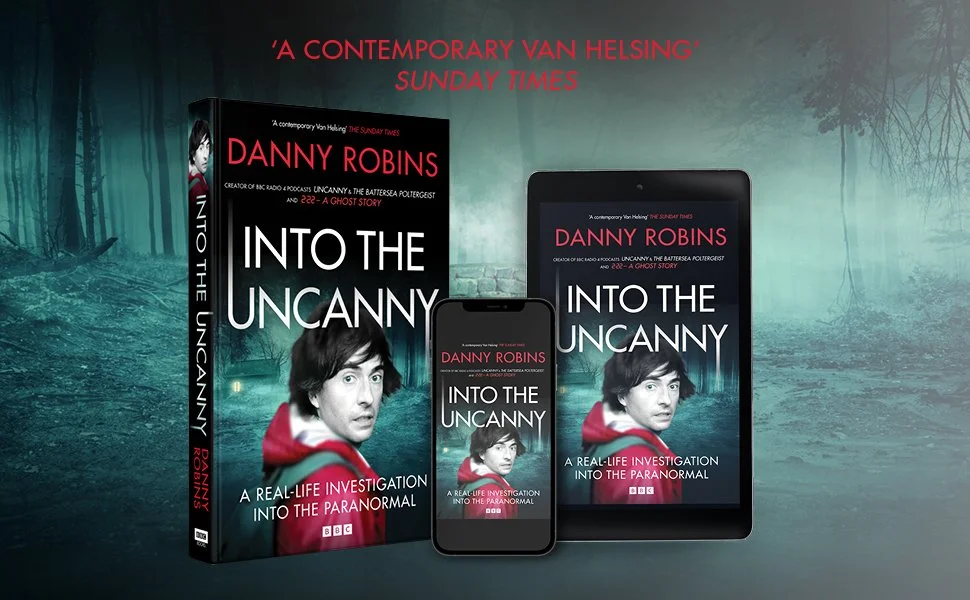
Last August I listened to The Battersea Poltergeist podcast by Danny Robins and was subsequently introduced to his other production Uncanny. Both are investigations into alleged supernatural events but unlike other shows of this kind, these are far better researched, produced and most importantly even handed. Danny makes a great deal of effort to try and keep a foot in each camp; team believer and team sceptic. Overall these podcast work as they genuinely appeal to multiple audiences and they are not excessively hyperbolic or credulous. A lot of this comes down to Danny’s personality which is upbeat and relatable. Perhaps his greatest strength is being a sympathetic ear to those recounting their experiences. He lightens the mood from time to time with humour when required. He also liberally litters the proceedings with pop culture references. However, he will probe and ask pointed questions but does so in a non-accusatory manner.
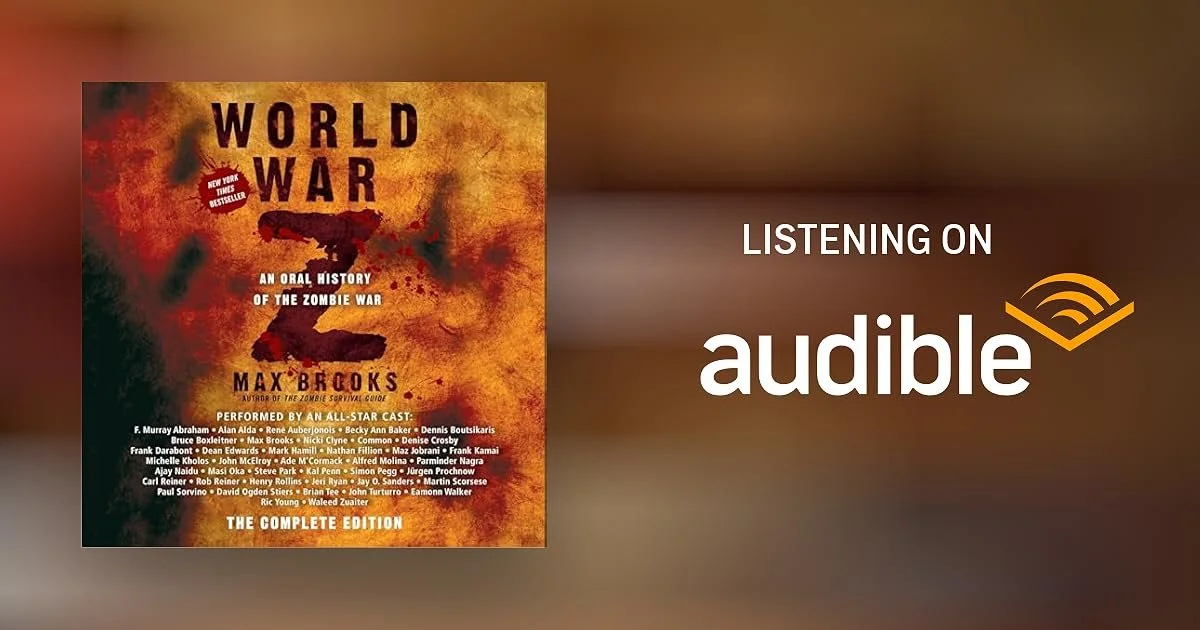
The zombie genre is a narrative seam that has been heavily mined in recent years. There seems to have been a never-ending supply of films, television shows and video games involving the undead over the last two decades. Which is why the notion of society being destroyed by its own citizens has somewhat lost its intellectual and horrific lustre. Hence I can understand people rolling their eyes at the mention of the novel World War Z by Max Brooks. The 2013 film adaptation starring Brad Pitt, which jettisoned most of the source text's innovations, isn’t the best advertisement for the book’s virtues. However, if you take the time to look beyond the hyperbolic title, you’ll find World War Z a work of singular intelligence which uses the zombie genre as a means to explore multiple socio-economic and political themes.
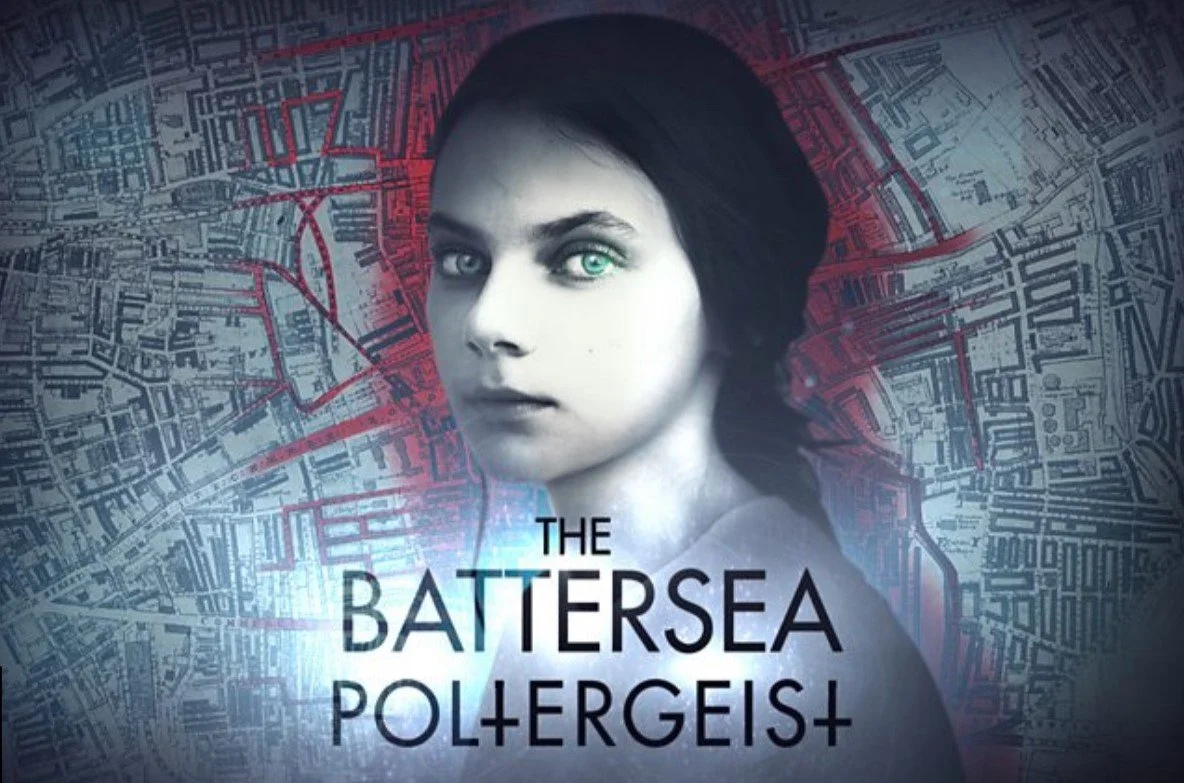
I was unaware of the The Battersea Poltergeist podcast and accompanying online interest during its initial release. Created by Bafflegab Productions and presented by Danny Robins, who is well known in this field with similar shows such as Haunted and Uncanny, it was broadcast on BBC Sounds and BBC Radio 4 between February and March 2021 during lockdown. The Battersea Poltergeist is a documentary of a true story with dramatized re-enactments. The show alternates between interviews, discussions and research into the case with short vignettes from a cast of actors recreating events for dramatic effect. It was released episodically and gained a lot of online and press interest at the time. Hence there were additional episodes interspersed throughout the initial run which provided “case updates” and listener feedback and questions.
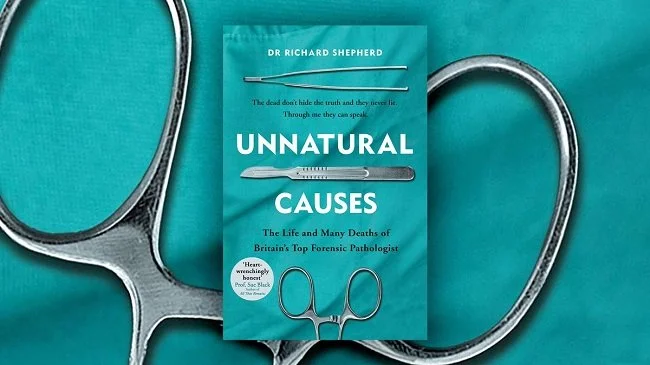
Dr Richard Shepherd is a senior forensic pathologist with over 30 years’ experience, consisting of 23,000 postmortems. His book, Unnatural Causes, explores his career and his devotion to the truth in determining how each of his cases died. Over the course of his career this includes victims of mass disasters, homicides, and those who have died in their own homes from unknown causes. Dr Shepherd’s job is to ascertain a cause of death based upon the facts and data presented. Each case is described with detail and empathy and it’s surprising how much the reader becomes immersed in the methodical approach that each postmortem entails. Furthermore, it is very satisfying to learn of Dr Shepherd’s verdict. However, far from being a technical dissertation on a succession of cases, this is a deeply personal and humane book which addresses the impact of the author’s career upon himself and his family. It is written with a surprising degree of literary flair and is profoundly thought provoking and moving.
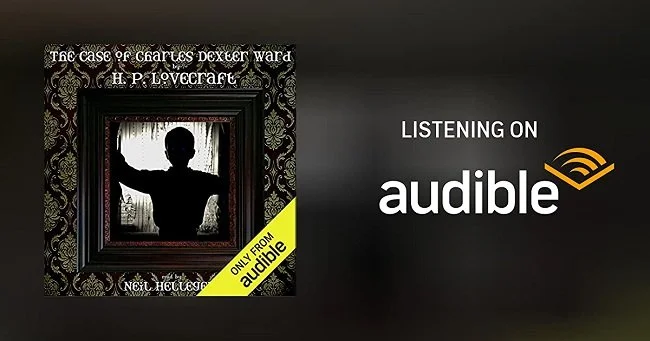
Charles Dexter Ward is a young man from a prominent Rhode Island family with a keen interest in history. He spends much of his childhood wandering the streets of ancient Providence, drawn inexorably to its architecture, as well as it’s colourful heritage. As an adult he continues his antiquarian leanings and subsequently discovers a hitherto unknown ancestor, Joseph Curwen. One with a shadowy past which hints at the pursuit of alchemy and other arcane practises. Charles decides to uncover the truth regarding Joseph Curwen and over time his interest changes into obsession. His Father begins to worry about his son’s fixation and the family Doctor, Marinus Bicknell Willett, decides to keep an eye upon the youth’s state of mind. A series of curious events hint at a growing eldritch malevolence and Doctor Willett begins to suspect that Charles is in grave danger from a menace stretching across time.
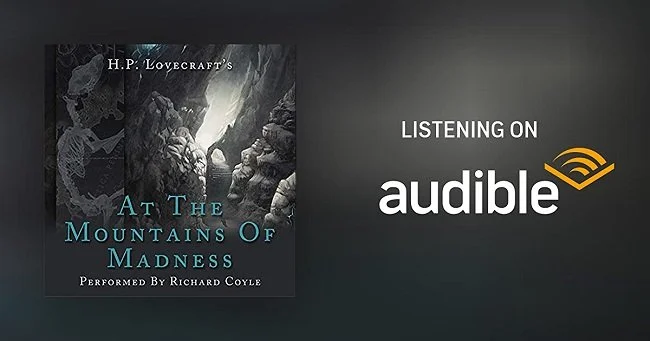
At the Mountains of Madness is a story told from a first-person perspective by geologist William Dyer, a professor from Miskatonic University in Arkham, a fictional town in Essex County, Massachusetts USA. When a new scientific expedition to Antarctica is announced, Dyer breaks his silence and discloses hitherto unknown and closely kept secrets about his own explorations of the continent and exactly what befell his own expedition. He details how his team found the preserved remains of 14 prehistoric life forms unknown to science and outside of the existing geological and evolutionary timescale. He goes on to recount how some of the men and sled dogs are killed under mysterious circumstances. Dyer and graduate student Danforth, subsequently explored a mountain range by plane and discovered a vast, abandoned stone city, which is alien to any form of human architecture. What is the secret of this ancient ruin? Can Dyer convince subsequent explorers to stay clear of “the mountains of madness”.
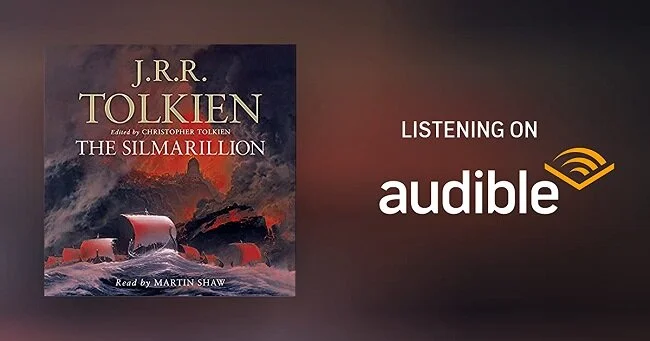
Let’s not be coy about this. J. R. R. Tolkien’s The Silmarillion is not in any way a light read. It has a complex narrative, filled with staggering amounts of lore to digest. I certainly wouldn’t recommend it to anyone as their first point of entry into the Tolkien Legendarium. I think this is a book that you tackle after The Hobbit and The Lord of the Rings, if you are sufficiently enamoured with the threads of a wider backstory that are alluded to in both those volumes. If that is the case then brace yourself. However, despite its sprawling histories and dense genealogies, The Silmarillion is an incredibly rewarding book. There is an air of majesty surrounding the epic stories it contains and its themes about the eternal struggle between the dark and the light are timeless. Due to the immense detail that Tolkien lavishes upon the text, Middle-earth feels like a genuine living, breathing world. A world of languages, culture, geography and history. To date it has never been equalled.
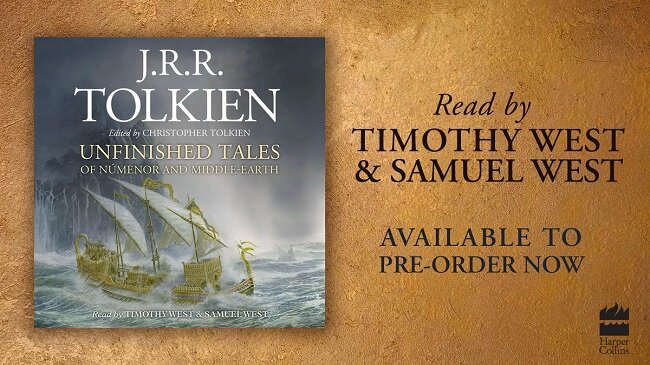
First published in 1980, Unfinished Tales is a collection of stories by J. R. R. Tolkien, that spans from the Elder Days of Middle-earth to the end of the War of the Ring. For those who have read both The Silmarillion and The Lord of the Rings, this book provides additional insights and more detailed accounts of many key events of the First, Second and Third age. Such as Gandalf’s informative tale of how he came to send the Dwarves to Bag-End in search of a burglar, the appearance of the sea deity Ulmo before Tuor on the coast of Beleriand and an in depth description of the military organization of the Riders of Rohan. This collection of stories and essays by J. R. R. Tolkien were never fully completed during the author’s lifetime but were posthumously edited by his son Christopher Tolkien and present with notes, annotations and were required a detailed commentary.
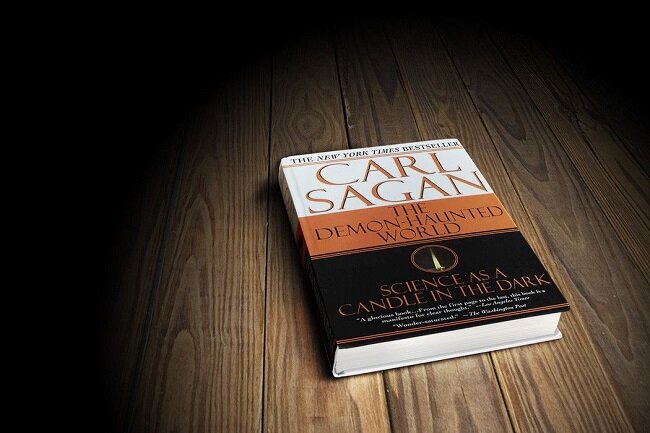
“For me, it is far better to grasp the Universe as it really is than to persist in delusion, however satisfying and reassuring.”
The problems that beset the modern world are complicated and nuanced. Thus any potential solutions will be equally complex and subtle. There are no quick fixes for issues such as climate change or nuclear proliferation and anyone trying to sell you one is either a charlatan or a fool. In his book, The Demon-Haunted World, Carl Sagan strongly advocates that adopting a scientific approach to thinking is essential in a modern democracy. By this he means questioning ideas critically and requiring evidence based arguments. If something cannot be effectively measured, tested or verified we should be deeply sceptical of it. He even goes so far as to argue that it is patriotic to ask questions and that any person, institution or organisation that avoids such scrutiny should be deemed suspect. Published in 1995 Sagan’s concerns regarding the coming century have proven sadly accurate. A quarter of a century ago, he predicted the rise of misinformation, fake news and alternative facts. When information is controlled and a population lacks critical thinking it becomes "unable to distinguish between what feels good and what’s true".

In my youth I was a prodigious reader. I spent many a happy weekend visiting my local library and often spent my pocket money on books as a child. Overtime, I changed from reading fiction to non-fiction. More recently, a lot of my reading has been done online, consumed either via my office PC or tablet. That’s not to say that I don’t buy paperback or hardback books anymore. I still consider this to be the preferred experience. There is something fundamentally exciting about sitting down in a comfy chair, reading at your own pace, away from distractions. However last year I injured my left arm and I have subsequently found holding a large hardback book to be a difficult experience. So for the sake of convenience I started listening to audiobooks instead. I’ve always enjoyed them considering them a great alternative to traditional print media. What my recent foray into this format has taught me is how much the medium of the audiobook has grown.

I have reviewed several audio recordings of J.R.R. Tolkien’s The Lord of the Rings over the years. My personal favourite is the BBC Radio adaptation from 1981, which has a superb cast of British character actors and does a wonderful job of adapting the text without diminishing the scope of the narrative. This is a dramatisation, rather than a straightforward reading of the book. However, if the latter is what you are looking for then the go to version is 1990 recording by Robert Inglis. He provides unique voices for all characters and even sings the songs included in the source text. And then there is the quirky Mind’s Eye Production from 1979, which is another dramatisation. This is a flawed version with a focus upon the character dialogue with much of the lore removed. Yet it has its charm and includes the often omitted Tom Bombadil. However, quite recently I accidentally stumbled upon a fourth adaptation and was surprised not only by the quality of the production but the curious history associated with it.
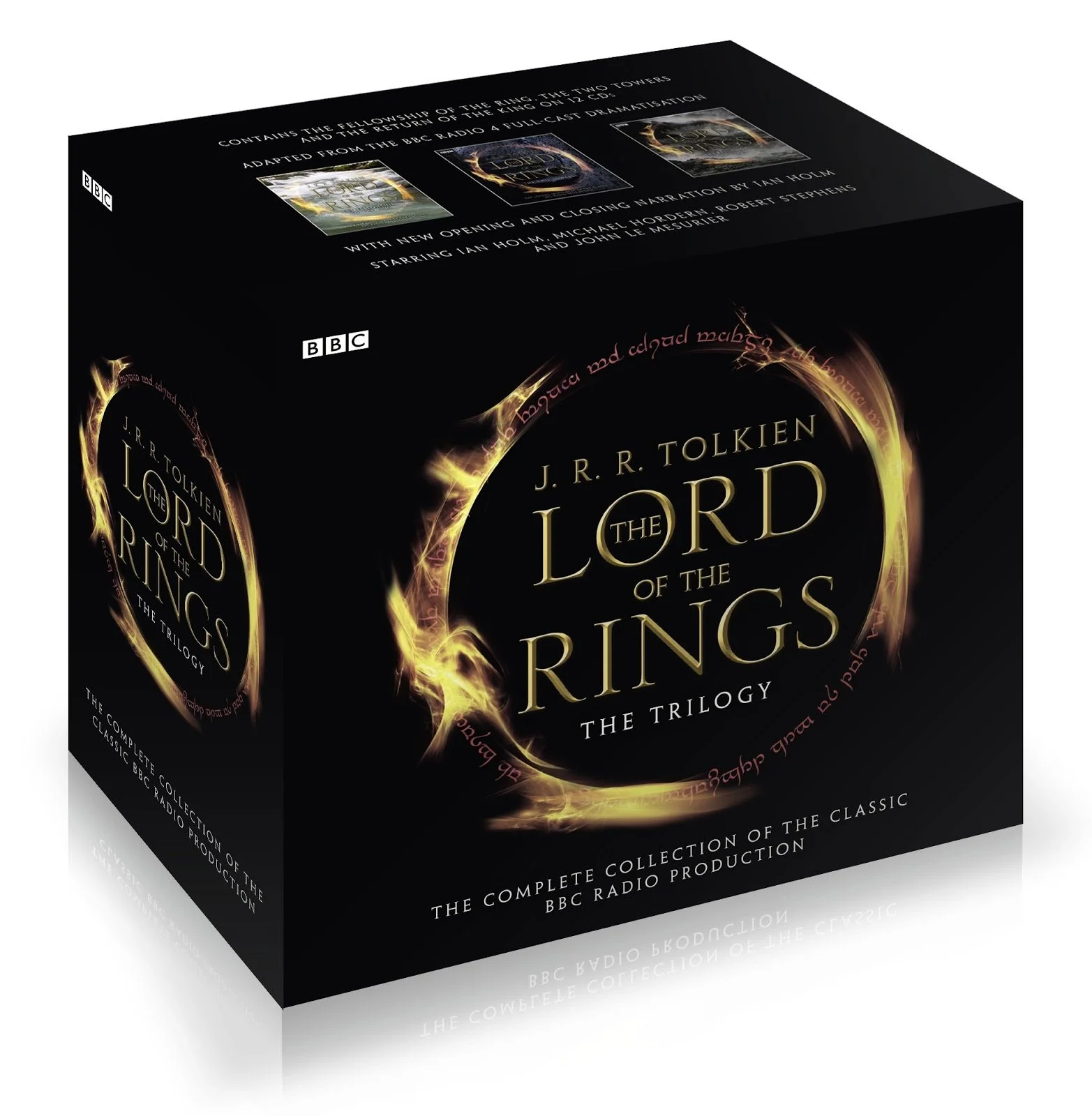
In 1981 BBC Radio 4 produced an ambitious adaptation of The Lord of the Rings, presenting Tolkien’s novel in twenty six, thirty minute episodes. As with all adaptations some material had to be removed, but overall the BBC production was not excessively abridged and followed the plot faithfully. The characterisations and dialogue were extremely well realised and music by composer Stephen Oliver was very much in the style and idiom of Tolkien. This was a production of the highest pedigree and a major event for the BBC at the time. The series was heavily promoted, receiving front page status in The Radio Times, the UK’s premier TV guide and bestselling magazine. Although initial reviews were varied, the series immediately gained a cult following with fans trading episodes recorded on cassette tape. Word of mouth and substantial listening figures soon lead to revised opinions from the press, along with the immortal slogan "Radio is Hobbit 4-ming".

When discussing the various audio dramatizations of J. R. R. Tolkien's The Lord of the Rings, people often think of the BBC Radio adaptation by default. However it should be noted that it was not the first. An earlier version was made and broadcast in 1979 on US National Public Radio and was subsequently released as an audiobook. It was produced by The Mind's Eye, a company who were responsible for numerous adaptations of classic literature for radio at the time. The script written by Bernard Mayes is a somewhat abridged version of the book. The eleven hour running time focuses significantly on the dialogue, with much of the back history, lore and expositionary narration removed.
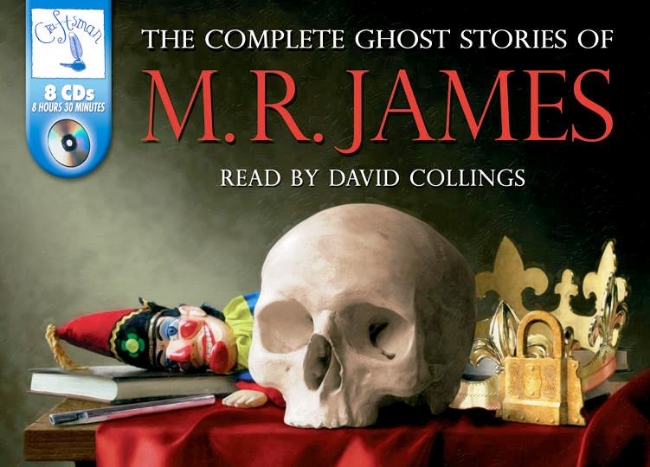
The supernatural fiction of Montague Rhodes James is a major milestone in the history of the literary ghost story. His work tangibly helped shape the genre as we know it today, focusing on classic themes such as retribution, vengeance and other aspects of traditional mythology literature. The protagonists are often socially dysfunctional intellectuals who face peril due to their excessive curiosity. The very physical nature of horror often masquerades for deeper psychological issues. They also serve as an invaluable window into the socioeconomic structure of Edwardian Britain.
 Roger Edwards
First off, credit where credit is due. I pilfered the idea for this post from Mark Rogers who writes the Newsonaut blog. Apparently it’s a questionnaire that has been doing the rounds across various indie blogs for a while. However, it happens to ask some interesting questions about one’s reading habits. I read a book every month or so and I supplement this by listening to a lot of audiobooks. Yes, I’m aware they’re not the same thing entirely but both offer a means to consume and digest a book. Hence I am not interested in this “popular” internet debate and won’t waste my time on it here. I advocate reading in all its variant forms. Be it sitting in an armchair and perusing a grimoire while smoking a Meerschaum, to reading an article online on your phone or PC. I’d rather that people read in some shape or form, than not at all. As Mark Twain wisely said, “The man who does not read has no advantage over the man who cannot read”. So without further ado, here are my answers to the “five Ws of Reading”.