
Refugees, Gary Lineker and the UK Culture Wars
Okay, keep up as there’s a lot of ground to cover. The UK government is currently suffering in the opinion polls and after 13 years in office, is facing potential oblivion at the next general election. In an attempt to shore up support among the party faithful, the Prime Minister, Rishi Sunak, is currently pursuing a hardline with regard to immigration. According to Ipsos, as a political issue about 29% of the electorate consider immigration to be a major problem. The remainder either think current levels are manageable or have no substantive view on the matter. However, as a “culture war” issue that can be weaponized by the tabloid press, which often has direct links to the Conservative Party in the UK, immigration is a hill to die upon. Hence you will find a lot of rhetoric that is anti-immigration and any contrary view is tarred with trite pejorative terms such as “lefty”, “liberal” and “woke”.
Okay, keep up as there’s a lot of ground to cover. The UK government is currently suffering in the opinion polls and after 13 years in office, is facing potential oblivion at the next general election. In an attempt to shore up support among the party faithful, the Prime Minister, Rishi Sunak, is currently pursuing a hardline with regard to immigration. According to Ipsos, as a political issue about 29% of the electorate consider immigration to be a major problem. The remainder either think current levels are manageable or have no substantive view on the matter. However, as a “culture war” issue that can be weaponized by the tabloid press, which often has direct links to the Conservative Party in the UK, immigration is a hill to die upon. Hence you will find a lot of rhetoric that is anti-immigration and any contrary view is tarred with trite pejorative terms such as “lefty”, “liberal” and “woke”.
Which brings us to the new Illegal Migration Bill, which is intended to “take back control of our borders, once and for all”, according to PM Rishi Sunak. The proposed legislation is specifically designed to target the small boats that cross the English Channel from France to the UK. Under the new law, asylum claims by those who travel to the UK via illegal means will be rendered inadmissible. The migrants will be detained, deported and banned from returning, Furthermore, the Illegal Migration Bill will be applied retrospectively, impacting on those already awaiting an asylum claim while being “housed” at immigration processing centres. However, the proposed bill risks breaching the Human Rights Act. Furthermore, UNHCR (UN Refugee Agency) is “profoundly concerned” by the proposed plan which it sees as a “clear breach” of the 1951 Refugee Convention. Conversely, the UK Home Secretary, Suella Braverman, believes the bill is “compatible with international law.”
UK Home Secretary Suella Braverman
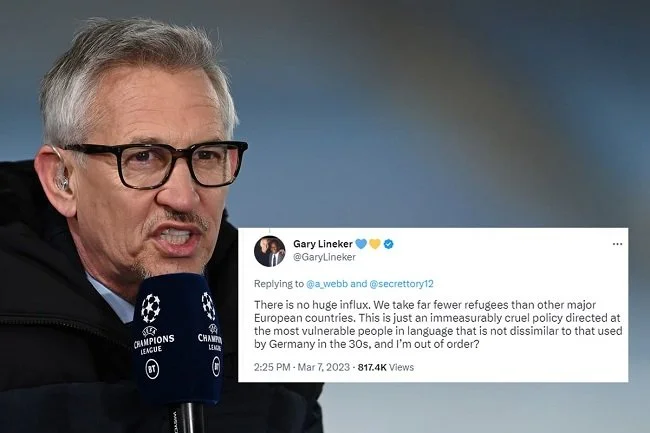
As the UK government indulges in what is essentially performative politics which do not address the real issues around immigration, there has been a degree of pushback and condemnation of the proposed legislation across the political spectrum of the commentariat. Enter Gary Lineker, retired professional football player, sports pundits and presenter of Match of the Day, the BBC’s flagship football program with an audience in excess of 20 million viewers. Gary is an active participant on Twitter and other social media and has expressed opinions in the past on politics and social issues. He is broadly left leaning and is well liked among both sports fans and the general public. The tabloid press and those on the political right loath him. On Tuesday March 7th Mr Lineker made the following tweet while discussing the Illegal Migration Bill with others online.
“This is just an immeasurably cruel policy directed at the most vulnerable people in language that is not dissimilar to that used by Germany in the '30s, and I'm out of order?”
Needless to say as UK political discourse is becoming very much like that of the US, a storm of “outrage” and “indignation” has ensued over the last 4 days. The tabloid press and some Conservative MPs are “offended” at being labelled “Nazis”, although this was not actually done. Demands have been made upon the BBC to take action against Mr Lineker. Hours of spittle flecked invective has spewed from the right of the commentariat and the story has dominated the mainstream news cycle. Sadly, an intelligent and rigorous debate over the rectitude of the Illegal Migration Bill has not taken place and instead we have endured a cavalcade of “pearl clutching” over a member of the electorate having the gall and the temerity to express an opinion. An opinion that is critical of the government and that some have chosen to take offence at.
UK Tabloid The Daily Mail reacts accordingly to Gary Lineker’s Tweet
I suspect that after Gary Lineker made his comments, those who see him as a political and cultural foe probably thought that this was a golden opportunity to attack and neutralise him. Especially if an apology or a suspension could be forced. However, events have not panned out as some have expected. Yesterday, the BBC after growing political pressure took action against Gary Lineker. Initially they had asked him to temporarily step back from presenting Match of the Day while they clarified their policy regarding employees and social media. However, when he refused to apologise for his comments on Twitter they suspended him. This course of action has raised serious questions about the impartiality and independence of the BBC. Have they caved in to political pressure from the government? Then there is the fundamental issue of freedom of speech and Mr Lineker’s right to express an opinion.
The matter has become further complicated by a show of solidarity for Mr Lineker by professional colleagues. Fellow Match of the Day presenters Ian Wright, Alan Shearer and Alex Scott have all declined to be on Saturday night’s show. Match of the Day commentator Steve Wilson has also decided not to take part on the show. Furthermore, a spokesman for the Professional Footballers Association said “We have been informed that players involved in today's games will not be asked to participate in interviews with Match of the Day”. And it would appear that Football Focus, another BBC sports show scheduled for Saturday, has been cancelled as staff have chosen to withdraw in support of Mr Lineker’s suspension. It appears that this turn of events has left the BBC without an exit strategy with regard to the overall situation.
BBC Sport Match of the Day
If one looks beyond the obvious culture war hyperbole of this debacle there are several serious points to consider. Firstly there’s the matter of whether Gary Lineker can express a personal opinion while employed by the BBC. If he were a journalist then he would not be able to do so but as a pundit and presenter, employed in a freelance capacity he is not bound by such rules. The rules are somewhat ambiguous, although he is expected broadly not to court controversy. But there have been many other individuals employed by the BBC that have not done so, such as the journalist Andrew Neil. As to the matter of the BBC’s impartiality to the government, this seems to have wavered recently with several political appointments. The current chairman of the BBC, Richard Sharp, donated £400,000 to the Conservative Party and helped to arrange an £800,000 loan for the former Prime Minister Boris Johnson. Another member of the BBC board, Sir Robbie Gibb, was the former communications director for ex-PM Theresa May.
Beyond the contortions of the BBC as it ties itself in knots, there is the wider issue of those in the government who are “offended” by Gary Lineker’s comments. Many of those currently “outraged” are railing against things that have not been said. Mr Lineker did not use the phrase Nazi or directly invoke the Holocaust in a casual fashion. He succinctly pointed out that the rhetoric surrounding the proposed new legislation and the wider debate regarding immigration was couched in the sort of language used in Germany during the 1930s and that this was divisive and problematic. A point that was recently made by 83 year old Holocaust survivor Joan Salter to Home Secretary, Suella Braverman. Such wilful ignorance and deliberate misinterpretation by some MPs is another example of the performative nature of modern politics. It also highlights the lack of self awareness of certain politicians who remain oblivious or indifferent to the offence their actions have caused to many voters.
Conservative MP Lee Anderson, known for his performative outrage, has a TV show on “news” channel GB News
The question on many people’s lips is how this matter will resolve itself. If Gary Lineker stays true to his principles he may end up terminating his association with the BBC and Match of the Day. The show may even fold entirely which would be a crushing blow to the BBC, whereas I’m sure Mr Lineker would quickly find alternative employment. As to the political pressure and the ire of the tabloid press, this may soon be directed elsewhere as the government lurches from one scandal to another. On March 20th former prime Minister Boris Johnson will be giving evidence to the Committee of Privileges as to whether he misled parliament. Plus there are the ongoing revelations being serialised in The Times newspaper regarding the leaked cabinet WhatsApp messages. Hence I suspect that this particular battle in the UK culture wars is not going to yield the results that some hope it will. I’m not even sure if the majority of the UK electorate have an appetite for such things.
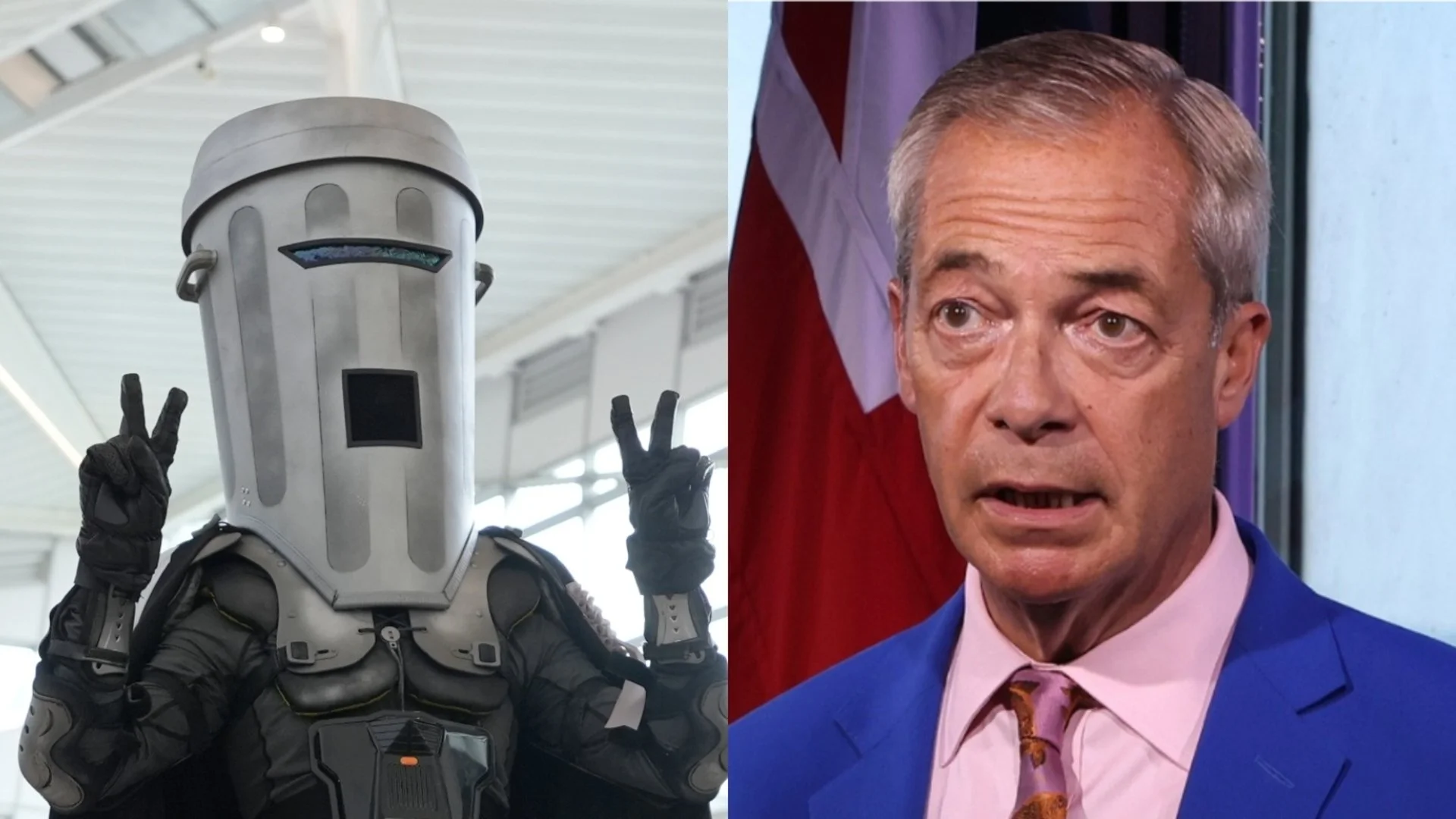
Yesterday afternoon, Nigel Farage the Member of Parliament for Clacton and leader of the Reform Party, held a press conference in which he declared that he would be resigning his seat and thus triggering a by-election. He cited the following list of grievances that have led to him making this decision. That the Parliamentary standards investigations were being politicised, the media and other parties were conducting a coordinated campaign against him and that he had endured years of threats and physical attacks. He further asserted that his family’s privacy and safety had been breached as well. He finished by alleging that the political system was repeatedly changing rules to obstruct Reform and that he was the most attacked politician in the UK. Rather than be judged by the legacy media and the “establishment”, he would rather put the issue of his political integrity to the electorate of Clacton. He even offered to pay for the cost of the by-election.
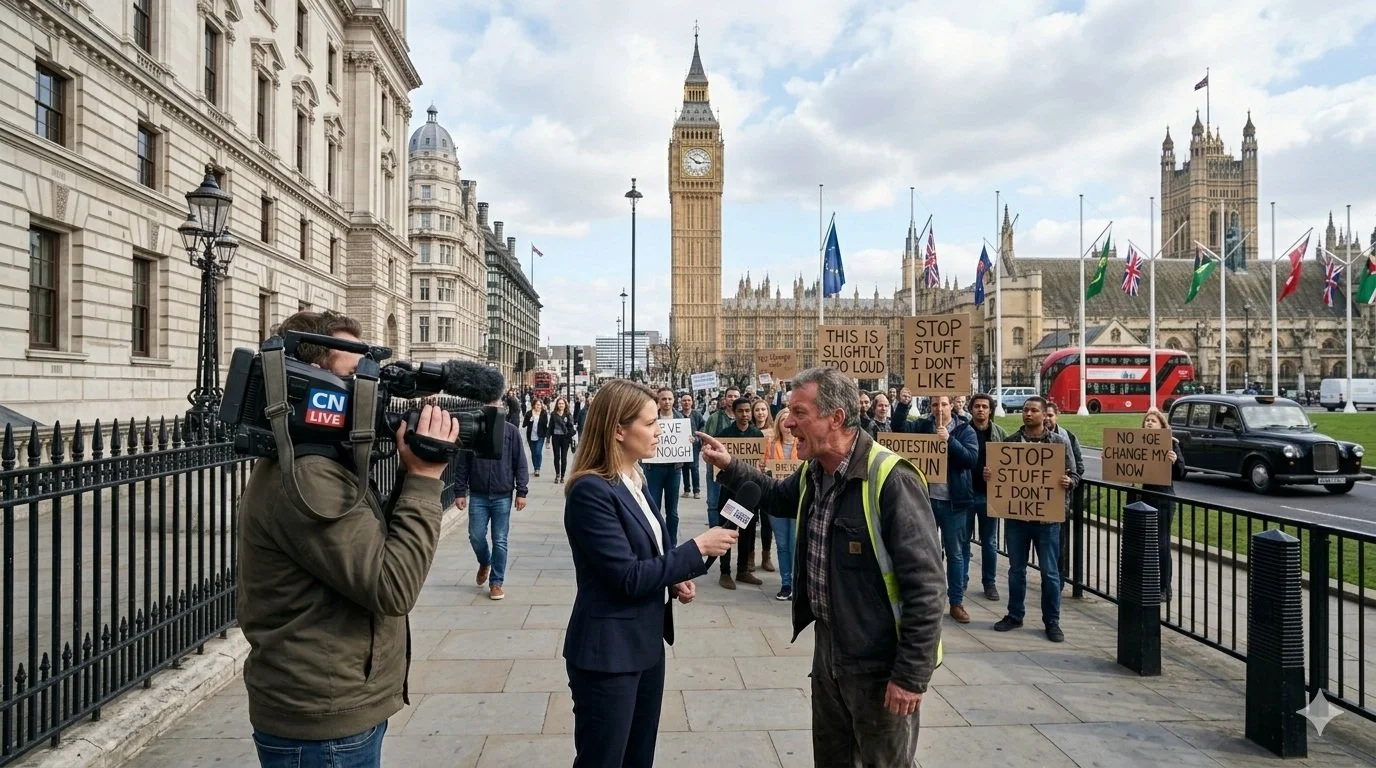
UK Prime Minister, Sir Keir Starmer has resigned and intends to leave office before the parliamentary summer recess. By then Andy Burnham will more than likely be voted leader of the Labour Party and by default will become the new Prime Minister. Due to the current size of the incumbent Government’s majority, there is no pressing reason for a General Election that the UK’s right wing tabloid press is currently calling for. Whether this provides the Government with the reset they’re hoping for when Parliament reconvenes in autumn remains to be seen. With seven Prime Ministers coming and going in a decade, there are some serious questions to be asked about the current state of UK politics. However, the mechanics of contemporary politics, the decline of clearly defined ideologies and the people that seek elected office to be our leaders are only half of the problem. The other major impediment to the UK’s democracy functioning properly is the electorate.
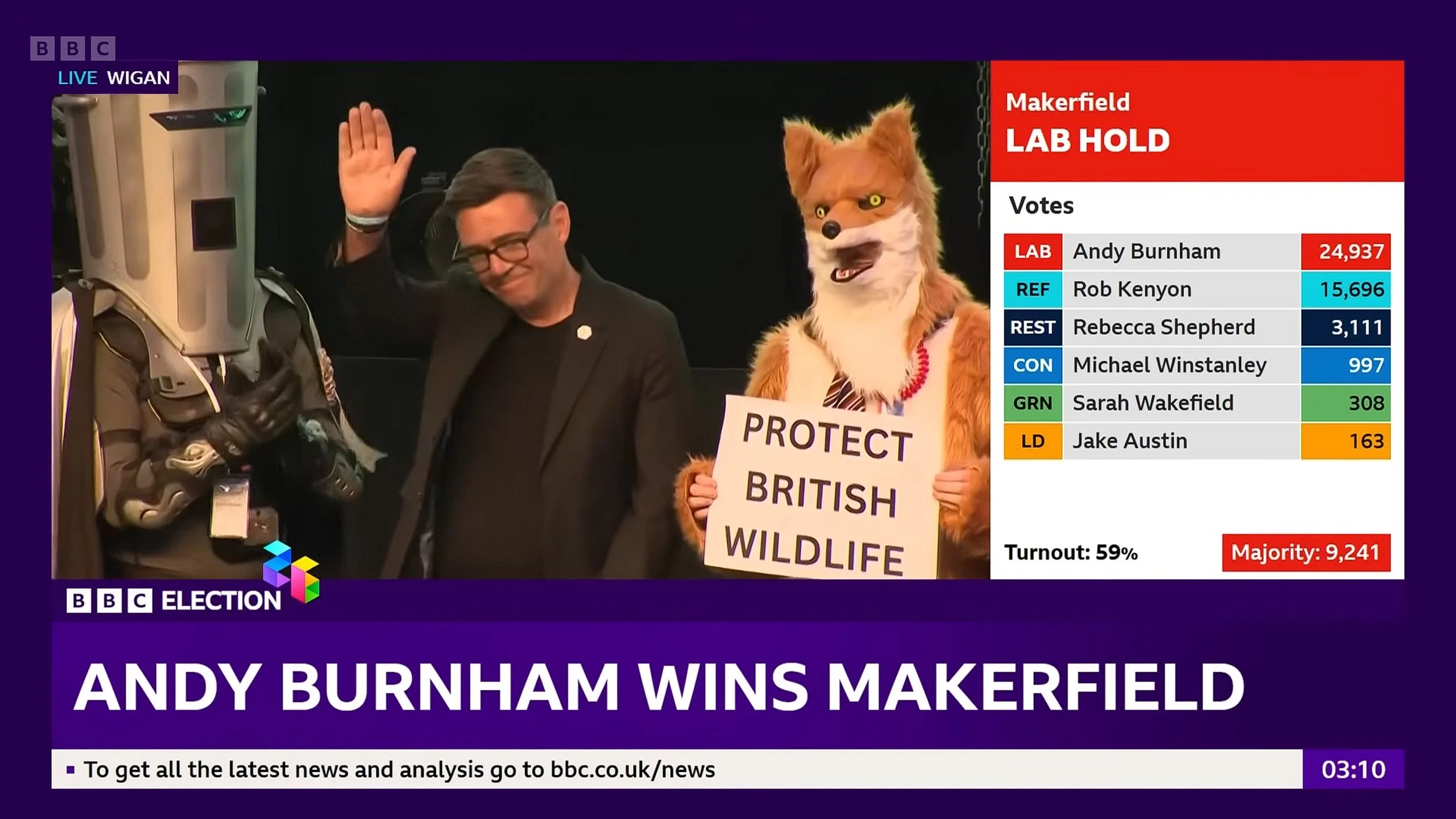
Andy Burnham successfully won the Makerfield by-election yesterday, returning him to the House of Commons as a member of Parliament after holding the position of Mayor of Manchester for the past nine years. Prior to this, Burnham was Labour MP for Leigh from 2001 and 2017. He served in both the Tony Blair and Gordon Brown administrations and has held such senior governmental posts as Chief Secretary to the Treasury, Secretary of State for Culture, Media and Sport and Secretary of State for Health. His return to Parliamentary politics is likely to result in a leadership challenge to incumbent Prime Minister Keir Starmer. When speaking after winning yesterday’s by-election Burnham spoke of “a final chance for change” the current trajectory of the present Labour Government. However, I don’t wish to focus on any of this at present. I am far more interested in the above picture, taken as the results were announced and what it says about UK politics.

The UK Government has formerly announced its intention to ban under-16s from using social media. This is due to increasing public pressure that “something must be done” about the perceived iniquities of many online platforms. However, as with most complex social problems of this nature, no one has any clear or practical ideas as to what that “something” is. It remains a nebulous, non-specific panacea and clearly someone else’s job to identify and implement. As ever, why choose a nuanced and multifaceted solution to a complex problem, when it is far easier and politically expedient to just “ban” something. The former requires effort and a degree of thinking. If such an approach fails it also means that those who came up with it now carry the can. The latter dumps the problem in the lap of various third parties, who can then be conveniently blamed when the ill conceived policy fails.
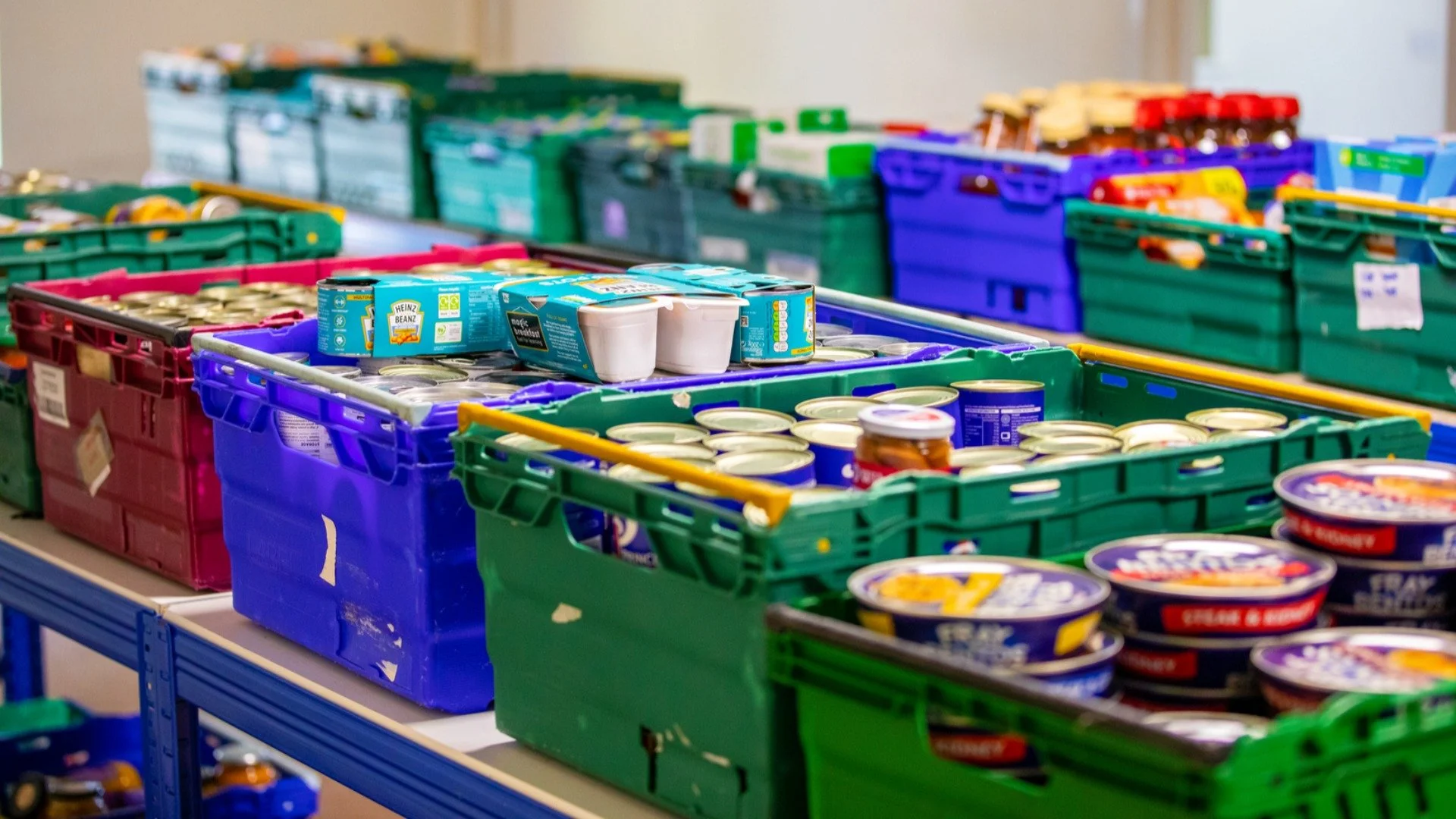
Every Thursday, Mrs P volunteers at a food bank that is run from a local church; Avery Hill Christian Fellowship. Today there was a shortage of staff so I agreed to help out. It proved to be an equitable arrangement as she collated the various orders and I packed the bags and took them to the respective clients. The food bank itself is organised and administered by the Trussell Trust, a UK based NGO and charity providing emergency food and support to people locked in poverty. It is open for 2 to 3 hours a week depending upon demand. During today’s session we served just six people. Some weeks its can be triple that amount. Upon closure, a member of staff from the Trussel Trust did a stock take and collated a list of what was needed. This is provided by various local church communities via parishioners donations, as well as local supermarkets who have an arrangement with the trust to provide surplus stock or good approaching the end of their sales window.
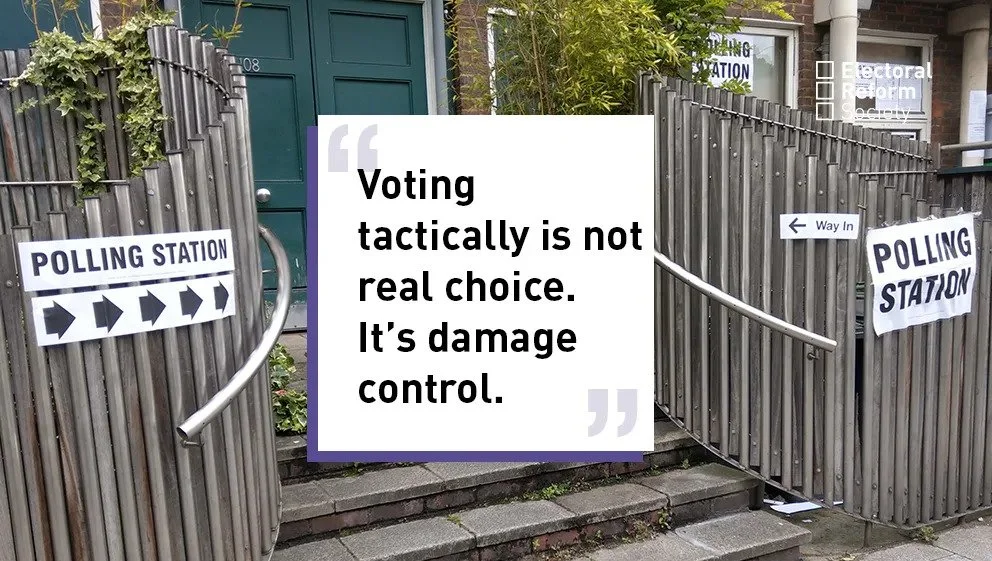
Under the First Past the Post electoral system, the candidate(s) receiving the highest number of votes in each constituency are elected. This system is used in the UK during general elections and in some local elections, such as those recently conducted in England. An alternative approach is the system of proportional representation, which aims to allocate seats in a manner that reflects the popularity of various parties. Both the Scottish Parliament and the Senedd in Wales employ systems of Proportional Representation. Historically, first-past-the-post has been seen as advantageous for the Conservative and Labour parties. It poses challenges for smaller parties whose votes are distributed evenly across different regions, making it difficult for them to secure seats. This dynamic effectively prevents potential competitors to the Conservatives and Labour from succeeding electorally. Consequently, due to this situation, voters may hesitate to support these smaller parties from the outset.
There are local elections being held across the UK today. Voters in Scotland and Wales will elect representatives to their respective national parliaments, while in England the voting is for local councils and regional mayors. These are the first major elections to be held in the UK since the 2024 General Election which saw the Conservative government of fourteen years, fall to the Labour Party. Midterm elections are often a litmus test for how the electorate think the national government are performing although local issues are also a major factor. The consensus among political journalists and commentators is that the incumbent government is polling extremely poorly and will subsequently face a backlash. In recent years the UK has seen a decline in traditional two party voting with Reform UK and the Greens gaining significant traction among the electorate. Hence today’s elections may well see both these parties make significant gains.
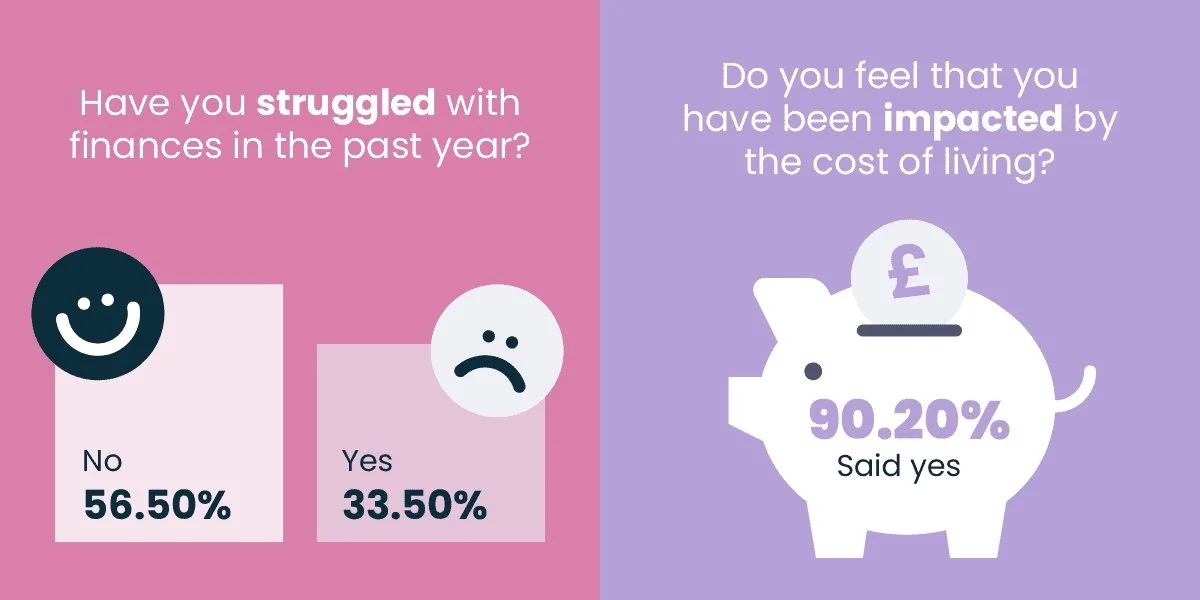
Our household is currently trying to reduce our monthly overheads in response to the ever increasing cost of living. April is not that far away and a great many service providers will increase their rates and tariff as the new financial year begins. Then there is the ongoing effects, both direct and indirect, of inflation to consider. Although the UK inflation rate is dropping, currently sitting at 3.4% in December 2025, food inflation remains higher at 4.5%. Being based in the UK, salaries and billed services tend to be administered monthly. You get paid usually at the end of the months and bills can turn up at any point, depending upon when you started a service. Any payments coming from central government, such as state pension or other benefits, are paid every 4 weeks. This means that there are 13 payments in a year. I thought it pertinent to clarify this point as other countries, such as the USA, favour a fortnightly financial cycle. Hence as a household we work around a monthly budget.
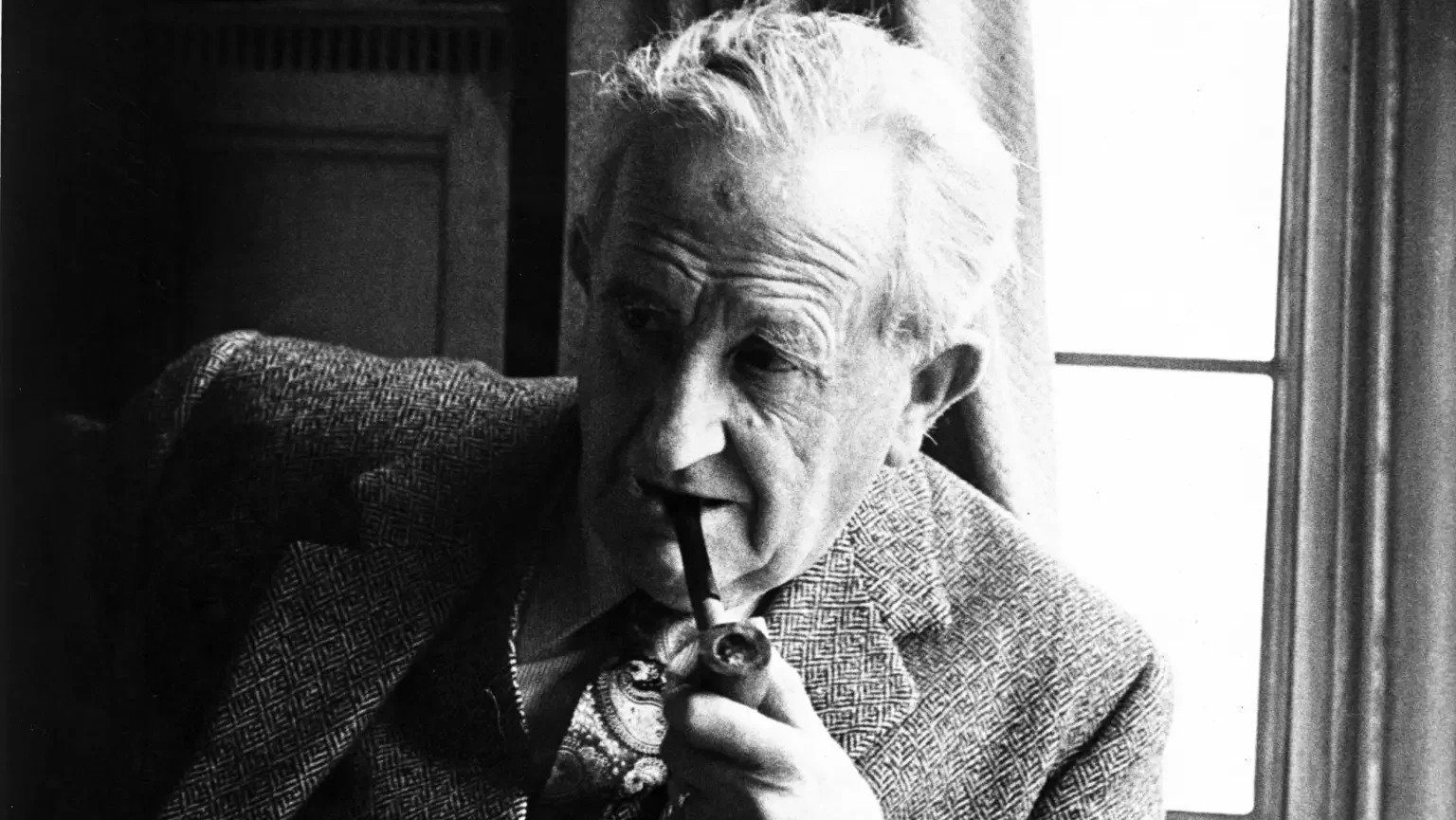
I don’t know if you have noticed that there are quite a lot of companies that have names taken from Tolkien’s Legendarium. At first glance, this seems innocuous enough. Tolkien’s writings grew in popularity over the seventies and eighties but since the release of the film trilogy at the start of the twenty-first century, his work has become more well known and been assimilated into our wider pop culture. Hence, it seems quite logical that a startup tech company, for example, would choose a name from his writings. No doubt the founders grew up reading The Lord of the Rings and are fans. That all seems plausible. However if you take a further look, it gets somewhat more complex. Here are four companies that have Tolkien based names.
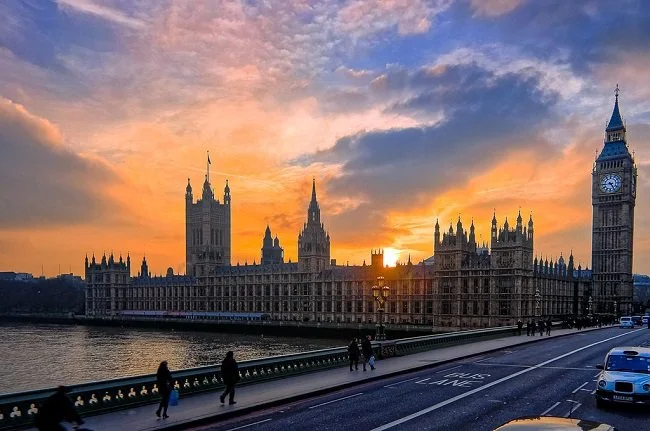
“Managed decline” is a phrase that refers to the processes associated with the end of a specific lifecycle, with the goal of minimizing costs or other forms of loss. The concept originated in business where it referred to the management of companies and industries. More recently it is used in wider contexts. The concept gained prominence with regard to urban policy, particularly in the UK during the eighties when several major cities suffered economic and political collapse. Of late, the term has been applied to the UK, encompassing a systematic weakening of the economy, social structures, and cultural values, as well as its global political and diplomatic force. In each case, managed decline involves making strategic choices about resource allocation and accepting the consequences of those decisions. It is a complex issue with ethical and practical considerations, often sparking debate about the best way to address decline and reverse the process.
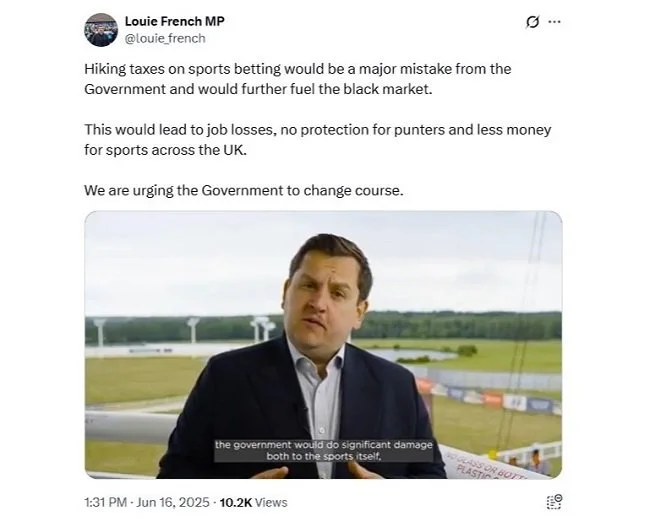
I still maintain a legacy presence on Twitter/X and I follow my local MP (member of Parliament) Louie French. It’s not something I especially relish as I am not a supporter of the Conservative party (or any other) and I did not vote for him in the last election. I just like to know what he is up to as he is the political representative for our constituency. As the Conservatives are out of power at present, to all intent and purposes, Mr French is a backbench MP although he has a minor position as Shadow Parliamentary Undersecretary (Culture, Media and Sport). However, with that being said he is hardly a key member of the shadow cabinet. Hence he focuses on constituency work and that which is generated by his shadow posting. He will also lend his voice, when required, to any major policy decision or statement made by his party.

Sunday 6th April is the start of a new financial year, here in the UK. According to data from numerous financial and economic institutions, an estimated million plus households will be facing annual increases of £400 to £500 as the proverbial “cost of living” goes up. Everything from Council Tax to Mobile and Broadband costs are being increased. Future cost hikes are expected in our energy and water utilities. As bills start going up across the country today, average wages remain stagnant. Middle-income and poorer households have been worst hit by this wage related issue. Hence the tabloid press have labelled the start of the new financial year as “Awful April”. Hyperbole aside, this is a very real issue which due to its complex, global causes, doesn’t have a quick fix solution.
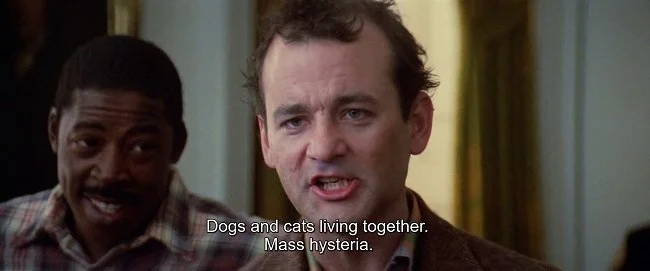
I consider myself to be a grounded, rational individual. I am not excessively emotional. I like facts, data and reason as opposed to hyperbole, rhetoric and bluster. That being said, I am aware that the world is an imperfect place. Opinions are often not based upon empirical fact but personal perspective. Hence many people experience reality differently to me. They are driven by their feelings and other factors. However, despite these differences in philosophy, for most of my life the world has remained functional and over time slowly improved in subtle ways. Deference to expertise, a sense of community and basic pragmatism meant that people broadly pulled in the same direction. Of course there has always been dissent but it has been within a stable system. However, of late I feel that this era is now finally over. Things are no longer stable. We live in an uncertain world.
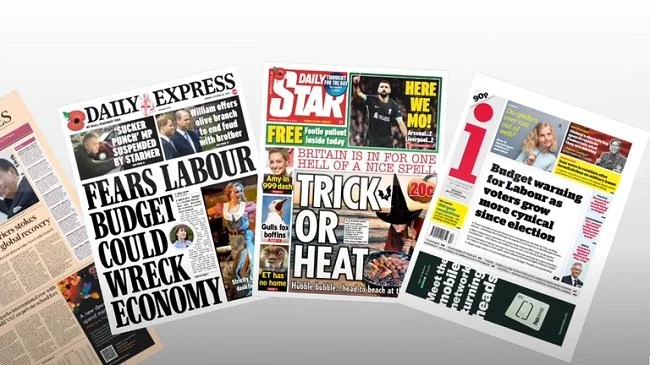
Newspapers were an integral part of UK culture in the seventies. During the week, they were delivered prior to going to work, so you would peruse them over breakfast. Alternatively you would buy one en route to your place of employment and read it on the bus or train. In a world before 24 hour, rolling news, they were the primary means of keeping the public abreast of events and as such, enjoyed a substantial audience. On occasions a newspaper story could make or break a political career or launch a crusading campaign to address a social ill. Newspapers were a force to be reckoned with and therefore a significant part of the socio-political landscape. However, due to a strong union presence within the workforce, the UKs newspapers often lagged behind other industries with regard to the technology.
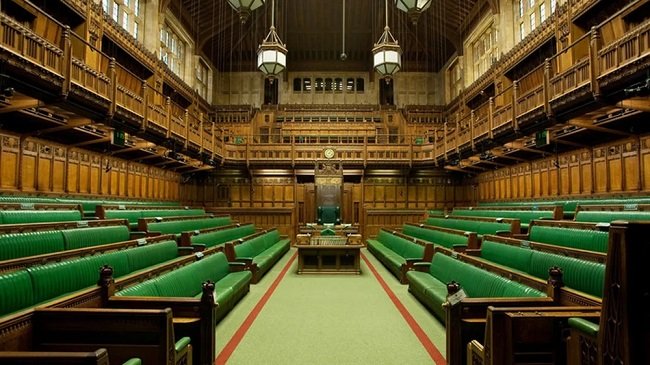
The First Past the Post (FPTP) electoral system used in the United Kingdom, as well as in several other countries such as the US and India, has both advantages and disadvantages. However, despite being a simple and straightforward system it has been abandoned by many democracies in favour of more proportional and equitable methods. The primary criticism against FPTP is that it allows a minority of the electorate to return a majority government. Since 1935, there have been majority governments 90% of the time, but not one of them had the support of a majority of voters. At present, the current UK government has a majority of seats with just 43.6% of the votes. In the 2019 election they gained an extra 48 seats despite an increase of only 1.2% of the vote share.
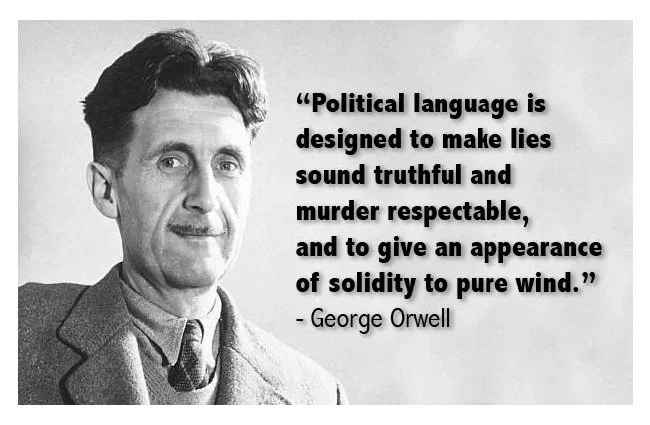
Politicians have a distinct way of talking when being interviewed or giving a press conference. It is often characterised by a strategic use of language, centred around rhetorical devices, persuasion techniques and a careful framing of messages. Direct answers to questions are usually avoided, with tangential responses being preferred. Opinions and specific perspectives are frequently presented as facts. There is also a propensity to focus on “problems” and apportioning blame, rather than “solutions”. It’s important to note that the use of language in politics is a complex and dynamic process influenced by various factors, including cultural context, media dynamics, and the evolving political landscape. Different politicians may employ different communication strategies based on their individual styles and objectives. Here are some key aspects of how politicians use language:
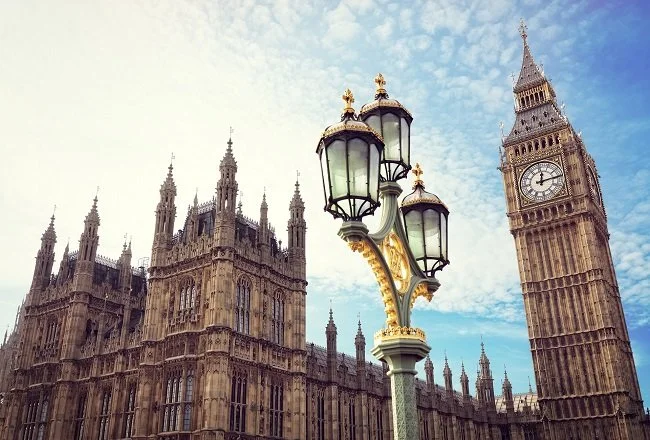
The United Kingdom is one of the few democratic countries in the world that does not have a single, written constitution. Others include Canada, New Zealand and Israel. To date, its constitution is a combination of written and unwritten sources, including statutes, common law, conventions and somewhat esoterically, royal prerogatives. The reason for this is predominantly historical. Since 1688, Britain has not experienced a revolution or regime change, which often leads to a constitutional initiative, such as the American or the French Revolution. Britain’s constitution has evolved slowly over time under relative stability and as such, it has never been deemed necessary to list the fundamental laws and principles of the country's political system.

On Friday 15th September the former actor and comedian turned internet social commentator, Russell Brand, released a video on his YouTube channel addressing allegations about his personal life, ahead of a forthcoming UK current affairs documentary. Brand vehemently denied what he described as “very serious criminal allegations”. The following day Channel Four broadcast “Russell Brand: In Plain Sight”. During the course of the program Brand was accused by one woman of rape and by three others of sexual assaults, and emotional abuse between 2006 and 2013. During the course of the week, further claims have been made against him and that his “predatory” behaviour was an open secret within the TV industry. Furthermore, women would warn each other in advance if they had any dealing with him. All of which has played out against a mixture of broadsheet analysis, tabloid hyperbole, performative politics and internet bluster.
For those who live outside of the UK, let me categorically state that Brexit has broken British politics. Prior to 2016, national politics still broadly functioned along traditional party political lines, with income and class substantially determining voter allegiance. The big three cities (London, Birmingham and Liverpool) maintained their liberal dispositions and Scotland, Northern Ireland and Wales were dominated by their regional politics. Brexit changed all this creating fault lines that fell outside of the existing political status quo. Opinions differed based upon where you lived, how politically literate you were and even education. Your party political allegiance no longer indicated what stance you took on this matter. Furthermore, the discourse around this complex subject was quickly debased into a bipartisan culture war that was toxic and dangerous.
Okay, keep up as there’s a lot of ground to cover. The UK government is currently suffering in the opinion polls and after 13 years in office, is facing potential oblivion at the next general election. In an attempt to shore up support among the party faithful, the Prime Minister, Rishi Sunak, is currently pursuing a hardline with regard to immigration. According to Ipsos, as a political issue about 29% of the electorate consider immigration to be a major problem. The remainder either think current levels are manageable or have no substantive view on the matter. However, as a “culture war” issue that can be weaponized by the tabloid press, which often has direct links to the Conservative Party in the UK, immigration is a hill to die upon. Hence you will find a lot of rhetoric that is anti-immigration and any contrary view is tarred with trite pejorative terms such as “lefty”, “liberal” and “woke”.
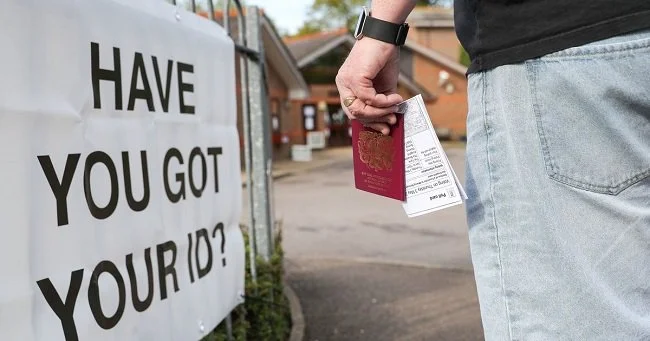
Last April, the Election Act 2022 became law within the UK. The Act introduced a requirement for all those voting in-person to produce photo identification when attending a polling station. This is the first time that such an ID has been required. Prior to this, voters could either bring their polling card to verify their identity at the polling station, or confirm their registered address from the electoral roll with staff. Now a UK driving licence or passport are considered the primary means of identity. A list of additional photo identification that has been deemed acceptable, is available on the UK government website. For those members of the electorate who do not have any of the qualifying ID, there is a Voter Authority Certificate available, which can be applied for online. This photo ID is linked to the applicants National Insurance Number. For further impartial information on photo ID and registering to vote, visit the The Electoral Commission website.

I am writing this post from the perspective of a UK citizen, but the sentiments expressed are applicable to anyone who lives in a country where you have democratically elected local political representation. IE someone who is supposed to advocate on behalf of your community or for you personally as the duly elected political representative. Here in the UK, the country is divided into 650 constituencies, each returning one Member of Parliament. Irrespective of whether you voted for your MP or whether you support the political party that they belong to, they are obliged to represent you and advocate on your behalf, if you request it. Such is the relationship in principle between constituents and MPs in the UK. It is important to be aware that your local MP is not a delegate whose sole purpose is to represent majority constituency views. Under the UK political system, an MP makes decisions on behalf of constituents and can take a position counter to local opinion, if they feel that is in the best interest of the constituency.
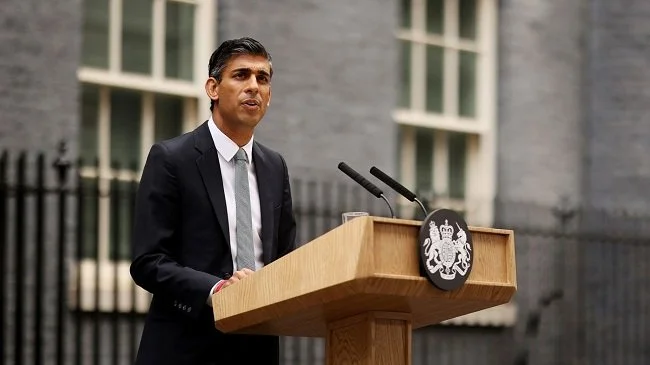
It is difficult to write about the state of UK politics with any degree of intellectual rigour when the entire situation has become so utterly farcical. My initial reaction to the recent departure of Liz Truss after just 45 days in office, was to laugh with abject scorn and derision. She was destined to fail due to utter lack of ability. However, there is still the outstanding matter of the country lacking a credible and functional government to address inflation, the cost of living crisis and resolve all the issues stemming from Brexit. There are problematic national and international events taking place that need addressing. A united, pragmatic and empathetic government is required to solve both these short term and long term needs. Sadly, the governing party is riven with opposing factions and there is no commonly held policy or underlying ideology. The PM may well have changed but the underlying flaws remain.
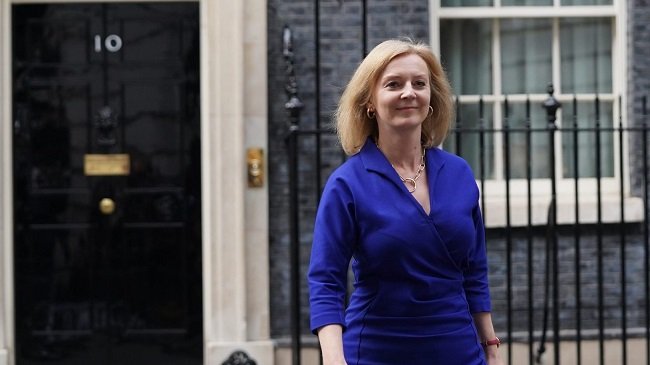
Conservative Party has been in government in the UK since 2010. During that time there have been three Prime Ministers. Today we moved onto the fourth. After Boris Johnson resigned on 7th July, the nation has had to endure a tedious two month process in which the Conservative Party elects a new leader. That person then becomes the PM by default. Many readers unfamiliar with the UK political system may be surprised that a change of leader has not led to a General Election. That is because the Conservative Party still holds a parliamentary majority of 71 elected Members of Parliament. Hence it is still constitutionally quite able to govern, despite Boris Johnson being forced from office. Therefore party members vote for a new party leader who gets the top job by default. Remember that in the UK, the Prime Minister is not the head of state and does not have the executive powers of a President.
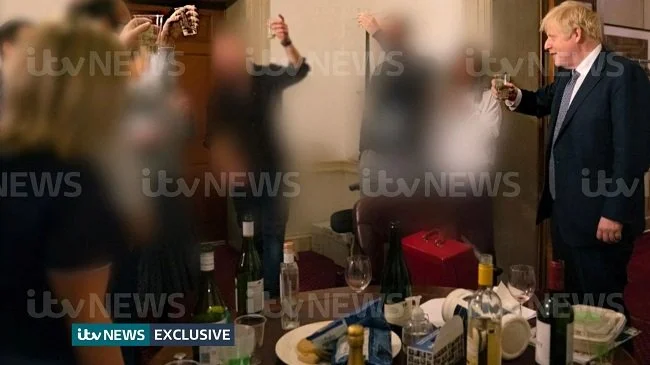
I try to keep my thoughts on political matters to a minimum here at Contains Moderate Peril, mainly because UK politics and the current state of discourse associated with it has become an absolute shit show in recent years. Brexit broke traditional politics and has made matters far more tribal and partisan. The two main parties have declined from having clear ideologies, identities and manifestos, to becoming either a lobby group for the specific demographic group that supports them, or a conflicted, divided and schizoid shadow of its former self. I’ll let you work out which is which. Politics is no longer about governing a nation for the benefit of all its citizens. Now you simply pick a side and join the ongoing culture war against everyone and everything else. This rotten system produces rotten leaders. Hence, when Alexander Boris de Pfeffel Johnson became Prime Minister in December 2019, it was clear that the nation was taking a major risk on such a man. His failings as a politician and a person are a matter of public record for anyone who has the eyes to see them.

The title for this post is a quote from The Hobbit by J.R.R. Tolkien. I’ve used it as a verbal cue to try and give readers an overview of the point I’m striving to convey. Because I want to talk about modern life in western civilization, specifically its complexity and increasing uncertainty. If you’re extremely wealthy you can mitigate these two points but I’m working on the premise that most of the people who read Contains Moderate Peril are not. The blogging community, of which I am a participant, is a diverse group but from what I’ve observed it’s not populated by millionaires. In fact most of the people I know, both online and in person, are just holding down a job, trying to keep a roof over their head and pay the bills. Often they’re doing the job they do in default of anything else and they’re at the very least ambivalent towards it. The pandemic has also brought home how fragile so-called “normality” is. Modern politics are also volatile and life in general just doesn’t seem as certain as it was twenty years ago.
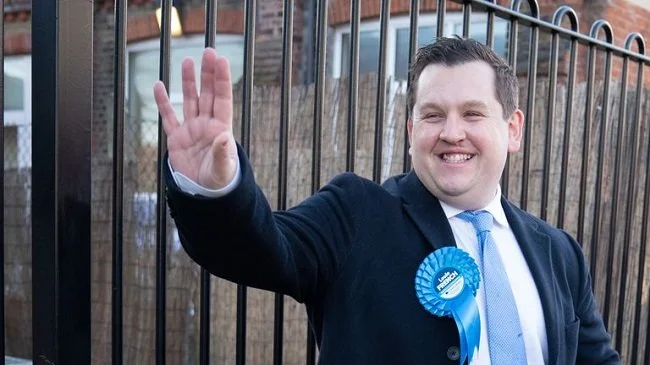
The Conservative Party successfully held onto their “safe seat” of Old Bexley and Sidcup in yesterday’s closely watched by-election. However their overall majority was reduced by more than half amid a very low voter turnout. Conservative councillor Louie French becomes the country’s newest MP after winning 11,189 votes, more than 50 per cent of those cast, in the seat previously held by the former cabinet minister James Brokenshire. Mr Brokenshire died in October from lung cancer aged 53. The closest challenger was Labour’s Daniel Francis, who secured 6,711 as the Tory majority fell from nearly 19,000 to 4,478, the equivalent of a vote share swing of 10 per cent to Labour. Turnout in the constituency was just 34%, down from the almost 70% who voted in the 2019 general election.
UK Voter ID
Last April, the Election Act 2022 became law within the UK. The Act introduced a requirement for all those voting in-person to produce photo identification when attending a polling station. This is the first time that such an ID has been required. Prior to this, voters could either bring their polling card to verify their identity at the polling station, or confirm their registered address from the electoral roll with staff. Now a UK driving licence or passport are considered the primary means of identity. A list of additional photo identification that has been deemed acceptable, is available on the UK government website. For those members of the electorate who do not have any of the qualifying ID, there is a Voter Authority Certificate available, which can be applied for online. This photo ID is linked to the applicants National Insurance Number. For further impartial information on photo ID and registering to vote, visit the The Electoral Commission website.
Last April, the Election Act 2022 became law within the UK. The Act introduced a requirement for all those voting in-person to produce photo identification when attending a polling station. This is the first time that such an ID has been required. Prior to this, voters could either bring their polling card to verify their identity at the polling station, or confirm their registered address from the electoral roll with staff. Now a UK driving licence or passport are considered the primary means of identity. A list of additional photo identification that has been deemed acceptable, is available on the UK government website. For those members of the electorate who do not have any of the qualifying ID, there is a Voter Authority Certificate available, which can be applied for online. This photo ID is linked to the applicants National Insurance Number. For further impartial information on photo ID and registering to vote, visit the The Electoral Commission website.
At first glance, the Election Act 2022 will come as no surprise to those living in Europe. Many countries have a requirement for formal ID to be able to vote. However, many European countries have national identity cards schemes making voter ID easy and non-discriminatory. The UK does not currently have a national identity card scheme and has instead chosen to base its voter ID requirement upon documents that are purely optional and not universal among the electorate. Although the Voter Authority Certificate provides a photo ID that is acceptable it is not issued to voters by default and instead has to be personally applied for. In light of this, exactly why has the UK government made changes to a process that has existed and functioned in an acceptable manner for decades? Furthermore are these changes to the UK voting system for the better?
Previously your polling card or just confirming your name and address was sufficient evidence to allow you to vote in the UK
The central argument for the Elections Act 2022, as made by the UK government , is to address alleged voter fraud, especially with postal votes. Due to an ageing population and a workforce that increasingly works outside of traditional “office hours”, there has been an increase in postal voting in recent years. In the 2019 General election 18% of the UK electorate voted by post. However, in-depth analysis by The Electoral Commision and other independent bodies have found little evidence of any kind of voter fraud. Between 2015 and 2019, during which three general elections were held and 153 million in-person votes were cast, only 88 allegations were made of voter fraud. Between 2010 and 2018, there were just two convictions for voter fraud. Due to the size of the UK electorate and the manner in which ballot papers are manually counted, the process does not easily lend itself to fraud. Hence the government's arguments underpinning the Elections Act 2022 are spurious.
It seems to be an inevitable and logical conclusion that the primary reason for the Elections Act 2022 is to marginalise the 1.1 million voters that currently do not hold a UK passport or driving licence. This group is mainly made up of the long term sick, the disabled, those in low income jobs or unemployed. All of which are socioeconomic groups that statistically tend not to vote for the Conservative Party, which has been in office for the last 13 years. Another group who will be impacted by the new legislation are those between the ages of 18 and 25. In the 2019 United Kingdom general election 56% of voters aged 18–24 voted Labour, whereas 67% of 70+ voters voted Conservative, according to polling by YouGov. Upon considering these facts, the Elections Act 2022 is nothing more than a deliberate move to try and disenfranchise a specific part of the UK electorate for political reasons. It is no different from traditional gerrymandering in its insidious nature.
The Oyster card, which allows travel on the tube (metro) in London, is sufficient photo ID for the over 60s to vote, but insufficient ID for anyone under that age
Sadly, although the Elections Act 2022 is a poor and dishonest piece of legislation, it is a reality that has to be endured at the present. Perhaps if there is a change of government in the next election, this legislation will be amended or repealed. Perhaps it is time for the UK to finally have a mature and measured debate about national identity cards. However, those are matters for another day. In the meantime I urge everyone who is eligible to vote in the UK and who does not possess any of the requisite photo ID, to apply and obtain the Voter Authority Certificate. Due to the volatile nature of UK politics at present, there may well be an election sooner rather than later. Because of the nature of the First Past the Post voting system, it is important to ensure as large a voter turnout as possible, especially in marginal constituencies. Voting is a fundamental right of UK citizens and should not be interfered with by any party or institution.

If you visit the websites for such UK tabloid newspapers as the Daily Express or the Daily Mail you will no doubt encounter prominent stories about Megan Markle, Nigel Farage and “immigrants”. If these two august institutions are short of column inches, they’ll run a piece about how some former celebrity has had the unmitigated gall and temerity to get old. I mean WTF? How dare they do what human beings are genetically disposed to do. It’s outrageous. Similarly, head over to the Unherd website and you’ll find foam flecked tirades regarding spurious points of contention over dubious subjects. Often the topic being harangued is incredibly niche and I’ve never heard of it before or even considered it being a thing. These sort of talking points are not about informing, debating and most certainly aren’t about thinking. They exist to provoke reactions.
Yesterday afternoon, Nigel Farage the Member of Parliament for Clacton and leader of the Reform Party, held a press conference in which he declared that he would be resigning his seat and thus triggering a by-election. He cited the following list of grievances that have led to him making this decision. That the Parliamentary standards investigations were being politicised, the media and other parties were conducting a coordinated campaign against him and that he had endured years of threats and physical attacks. He further asserted that his family’s privacy and safety had been breached as well. He finished by alleging that the political system was repeatedly changing rules to obstruct Reform and that he was the most attacked politician in the UK. Rather than be judged by the legacy media and the “establishment”, he would rather put the issue of his political integrity to the electorate of Clacton. He even offered to pay for the cost of the by-election.
UK Prime Minister, Sir Keir Starmer has resigned and intends to leave office before the parliamentary summer recess. By then Andy Burnham will more than likely be voted leader of the Labour Party and by default will become the new Prime Minister. Due to the current size of the incumbent Government’s majority, there is no pressing reason for a General Election that the UK’s right wing tabloid press is currently calling for. Whether this provides the Government with the reset they’re hoping for when Parliament reconvenes in autumn remains to be seen. With seven Prime Ministers coming and going in a decade, there are some serious questions to be asked about the current state of UK politics. However, the mechanics of contemporary politics, the decline of clearly defined ideologies and the people that seek elected office to be our leaders are only half of the problem. The other major impediment to the UK’s democracy functioning properly is the electorate.
Andy Burnham successfully won the Makerfield by-election yesterday, returning him to the House of Commons as a member of Parliament after holding the position of Mayor of Manchester for the past nine years. Prior to this, Burnham was Labour MP for Leigh from 2001 and 2017. He served in both the Tony Blair and Gordon Brown administrations and has held such senior governmental posts as Chief Secretary to the Treasury, Secretary of State for Culture, Media and Sport and Secretary of State for Health. His return to Parliamentary politics is likely to result in a leadership challenge to incumbent Prime Minister Keir Starmer. When speaking after winning yesterday’s by-election Burnham spoke of “a final chance for change” the current trajectory of the present Labour Government. However, I don’t wish to focus on any of this at present. I am far more interested in the above picture, taken as the results were announced and what it says about UK politics.
The UK Government has formerly announced its intention to ban under-16s from using social media. This is due to increasing public pressure that “something must be done” about the perceived iniquities of many online platforms. However, as with most complex social problems of this nature, no one has any clear or practical ideas as to what that “something” is. It remains a nebulous, non-specific panacea and clearly someone else’s job to identify and implement. As ever, why choose a nuanced and multifaceted solution to a complex problem, when it is far easier and politically expedient to just “ban” something. The former requires effort and a degree of thinking. If such an approach fails it also means that those who came up with it now carry the can. The latter dumps the problem in the lap of various third parties, who can then be conveniently blamed when the ill conceived policy fails.
Every Thursday, Mrs P volunteers at a food bank that is run from a local church; Avery Hill Christian Fellowship. Today there was a shortage of staff so I agreed to help out. It proved to be an equitable arrangement as she collated the various orders and I packed the bags and took them to the respective clients. The food bank itself is organised and administered by the Trussell Trust, a UK based NGO and charity providing emergency food and support to people locked in poverty. It is open for 2 to 3 hours a week depending upon demand. During today’s session we served just six people. Some weeks its can be triple that amount. Upon closure, a member of staff from the Trussel Trust did a stock take and collated a list of what was needed. This is provided by various local church communities via parishioners donations, as well as local supermarkets who have an arrangement with the trust to provide surplus stock or good approaching the end of their sales window.
Under the First Past the Post electoral system, the candidate(s) receiving the highest number of votes in each constituency are elected. This system is used in the UK during general elections and in some local elections, such as those recently conducted in England. An alternative approach is the system of proportional representation, which aims to allocate seats in a manner that reflects the popularity of various parties. Both the Scottish Parliament and the Senedd in Wales employ systems of Proportional Representation. Historically, first-past-the-post has been seen as advantageous for the Conservative and Labour parties. It poses challenges for smaller parties whose votes are distributed evenly across different regions, making it difficult for them to secure seats. This dynamic effectively prevents potential competitors to the Conservatives and Labour from succeeding electorally. Consequently, due to this situation, voters may hesitate to support these smaller parties from the outset.
There are local elections being held across the UK today. Voters in Scotland and Wales will elect representatives to their respective national parliaments, while in England the voting is for local councils and regional mayors. These are the first major elections to be held in the UK since the 2024 General Election which saw the Conservative government of fourteen years, fall to the Labour Party. Midterm elections are often a litmus test for how the electorate think the national government are performing although local issues are also a major factor. The consensus among political journalists and commentators is that the incumbent government is polling extremely poorly and will subsequently face a backlash. In recent years the UK has seen a decline in traditional two party voting with Reform UK and the Greens gaining significant traction among the electorate. Hence today’s elections may well see both these parties make significant gains.
Our household is currently trying to reduce our monthly overheads in response to the ever increasing cost of living. April is not that far away and a great many service providers will increase their rates and tariff as the new financial year begins. Then there is the ongoing effects, both direct and indirect, of inflation to consider. Although the UK inflation rate is dropping, currently sitting at 3.4% in December 2025, food inflation remains higher at 4.5%. Being based in the UK, salaries and billed services tend to be administered monthly. You get paid usually at the end of the months and bills can turn up at any point, depending upon when you started a service. Any payments coming from central government, such as state pension or other benefits, are paid every 4 weeks. This means that there are 13 payments in a year. I thought it pertinent to clarify this point as other countries, such as the USA, favour a fortnightly financial cycle. Hence as a household we work around a monthly budget.
I don’t know if you have noticed that there are quite a lot of companies that have names taken from Tolkien’s Legendarium. At first glance, this seems innocuous enough. Tolkien’s writings grew in popularity over the seventies and eighties but since the release of the film trilogy at the start of the twenty-first century, his work has become more well known and been assimilated into our wider pop culture. Hence, it seems quite logical that a startup tech company, for example, would choose a name from his writings. No doubt the founders grew up reading The Lord of the Rings and are fans. That all seems plausible. However if you take a further look, it gets somewhat more complex. Here are four companies that have Tolkien based names.
“Managed decline” is a phrase that refers to the processes associated with the end of a specific lifecycle, with the goal of minimizing costs or other forms of loss. The concept originated in business where it referred to the management of companies and industries. More recently it is used in wider contexts. The concept gained prominence with regard to urban policy, particularly in the UK during the eighties when several major cities suffered economic and political collapse. Of late, the term has been applied to the UK, encompassing a systematic weakening of the economy, social structures, and cultural values, as well as its global political and diplomatic force. In each case, managed decline involves making strategic choices about resource allocation and accepting the consequences of those decisions. It is a complex issue with ethical and practical considerations, often sparking debate about the best way to address decline and reverse the process.
I still maintain a legacy presence on Twitter/X and I follow my local MP (member of Parliament) Louie French. It’s not something I especially relish as I am not a supporter of the Conservative party (or any other) and I did not vote for him in the last election. I just like to know what he is up to as he is the political representative for our constituency. As the Conservatives are out of power at present, to all intent and purposes, Mr French is a backbench MP although he has a minor position as Shadow Parliamentary Undersecretary (Culture, Media and Sport). However, with that being said he is hardly a key member of the shadow cabinet. Hence he focuses on constituency work and that which is generated by his shadow posting. He will also lend his voice, when required, to any major policy decision or statement made by his party.
Sunday 6th April is the start of a new financial year, here in the UK. According to data from numerous financial and economic institutions, an estimated million plus households will be facing annual increases of £400 to £500 as the proverbial “cost of living” goes up. Everything from Council Tax to Mobile and Broadband costs are being increased. Future cost hikes are expected in our energy and water utilities. As bills start going up across the country today, average wages remain stagnant. Middle-income and poorer households have been worst hit by this wage related issue. Hence the tabloid press have labelled the start of the new financial year as “Awful April”. Hyperbole aside, this is a very real issue which due to its complex, global causes, doesn’t have a quick fix solution.
I consider myself to be a grounded, rational individual. I am not excessively emotional. I like facts, data and reason as opposed to hyperbole, rhetoric and bluster. That being said, I am aware that the world is an imperfect place. Opinions are often not based upon empirical fact but personal perspective. Hence many people experience reality differently to me. They are driven by their feelings and other factors. However, despite these differences in philosophy, for most of my life the world has remained functional and over time slowly improved in subtle ways. Deference to expertise, a sense of community and basic pragmatism meant that people broadly pulled in the same direction. Of course there has always been dissent but it has been within a stable system. However, of late I feel that this era is now finally over. Things are no longer stable. We live in an uncertain world.
Newspapers were an integral part of UK culture in the seventies. During the week, they were delivered prior to going to work, so you would peruse them over breakfast. Alternatively you would buy one en route to your place of employment and read it on the bus or train. In a world before 24 hour, rolling news, they were the primary means of keeping the public abreast of events and as such, enjoyed a substantial audience. On occasions a newspaper story could make or break a political career or launch a crusading campaign to address a social ill. Newspapers were a force to be reckoned with and therefore a significant part of the socio-political landscape. However, due to a strong union presence within the workforce, the UKs newspapers often lagged behind other industries with regard to the technology.
The First Past the Post (FPTP) electoral system used in the United Kingdom, as well as in several other countries such as the US and India, has both advantages and disadvantages. However, despite being a simple and straightforward system it has been abandoned by many democracies in favour of more proportional and equitable methods. The primary criticism against FPTP is that it allows a minority of the electorate to return a majority government. Since 1935, there have been majority governments 90% of the time, but not one of them had the support of a majority of voters. At present, the current UK government has a majority of seats with just 43.6% of the votes. In the 2019 election they gained an extra 48 seats despite an increase of only 1.2% of the vote share.
Politicians have a distinct way of talking when being interviewed or giving a press conference. It is often characterised by a strategic use of language, centred around rhetorical devices, persuasion techniques and a careful framing of messages. Direct answers to questions are usually avoided, with tangential responses being preferred. Opinions and specific perspectives are frequently presented as facts. There is also a propensity to focus on “problems” and apportioning blame, rather than “solutions”. It’s important to note that the use of language in politics is a complex and dynamic process influenced by various factors, including cultural context, media dynamics, and the evolving political landscape. Different politicians may employ different communication strategies based on their individual styles and objectives. Here are some key aspects of how politicians use language:
The United Kingdom is one of the few democratic countries in the world that does not have a single, written constitution. Others include Canada, New Zealand and Israel. To date, its constitution is a combination of written and unwritten sources, including statutes, common law, conventions and somewhat esoterically, royal prerogatives. The reason for this is predominantly historical. Since 1688, Britain has not experienced a revolution or regime change, which often leads to a constitutional initiative, such as the American or the French Revolution. Britain’s constitution has evolved slowly over time under relative stability and as such, it has never been deemed necessary to list the fundamental laws and principles of the country's political system.
On Friday 15th September the former actor and comedian turned internet social commentator, Russell Brand, released a video on his YouTube channel addressing allegations about his personal life, ahead of a forthcoming UK current affairs documentary. Brand vehemently denied what he described as “very serious criminal allegations”. The following day Channel Four broadcast “Russell Brand: In Plain Sight”. During the course of the program Brand was accused by one woman of rape and by three others of sexual assaults, and emotional abuse between 2006 and 2013. During the course of the week, further claims have been made against him and that his “predatory” behaviour was an open secret within the TV industry. Furthermore, women would warn each other in advance if they had any dealing with him. All of which has played out against a mixture of broadsheet analysis, tabloid hyperbole, performative politics and internet bluster.
For those who live outside of the UK, let me categorically state that Brexit has broken British politics. Prior to 2016, national politics still broadly functioned along traditional party political lines, with income and class substantially determining voter allegiance. The big three cities (London, Birmingham and Liverpool) maintained their liberal dispositions and Scotland, Northern Ireland and Wales were dominated by their regional politics. Brexit changed all this creating fault lines that fell outside of the existing political status quo. Opinions differed based upon where you lived, how politically literate you were and even education. Your party political allegiance no longer indicated what stance you took on this matter. Furthermore, the discourse around this complex subject was quickly debased into a bipartisan culture war that was toxic and dangerous.
Okay, keep up as there’s a lot of ground to cover. The UK government is currently suffering in the opinion polls and after 13 years in office, is facing potential oblivion at the next general election. In an attempt to shore up support among the party faithful, the Prime Minister, Rishi Sunak, is currently pursuing a hardline with regard to immigration. According to Ipsos, as a political issue about 29% of the electorate consider immigration to be a major problem. The remainder either think current levels are manageable or have no substantive view on the matter. However, as a “culture war” issue that can be weaponized by the tabloid press, which often has direct links to the Conservative Party in the UK, immigration is a hill to die upon. Hence you will find a lot of rhetoric that is anti-immigration and any contrary view is tarred with trite pejorative terms such as “lefty”, “liberal” and “woke”.
Last April, the Election Act 2022 became law within the UK. The Act introduced a requirement for all those voting in-person to produce photo identification when attending a polling station. This is the first time that such an ID has been required. Prior to this, voters could either bring their polling card to verify their identity at the polling station, or confirm their registered address from the electoral roll with staff. Now a UK driving licence or passport are considered the primary means of identity. A list of additional photo identification that has been deemed acceptable, is available on the UK government website. For those members of the electorate who do not have any of the qualifying ID, there is a Voter Authority Certificate available, which can be applied for online. This photo ID is linked to the applicants National Insurance Number. For further impartial information on photo ID and registering to vote, visit the The Electoral Commission website.
I am writing this post from the perspective of a UK citizen, but the sentiments expressed are applicable to anyone who lives in a country where you have democratically elected local political representation. IE someone who is supposed to advocate on behalf of your community or for you personally as the duly elected political representative. Here in the UK, the country is divided into 650 constituencies, each returning one Member of Parliament. Irrespective of whether you voted for your MP or whether you support the political party that they belong to, they are obliged to represent you and advocate on your behalf, if you request it. Such is the relationship in principle between constituents and MPs in the UK. It is important to be aware that your local MP is not a delegate whose sole purpose is to represent majority constituency views. Under the UK political system, an MP makes decisions on behalf of constituents and can take a position counter to local opinion, if they feel that is in the best interest of the constituency.
It is difficult to write about the state of UK politics with any degree of intellectual rigour when the entire situation has become so utterly farcical. My initial reaction to the recent departure of Liz Truss after just 45 days in office, was to laugh with abject scorn and derision. She was destined to fail due to utter lack of ability. However, there is still the outstanding matter of the country lacking a credible and functional government to address inflation, the cost of living crisis and resolve all the issues stemming from Brexit. There are problematic national and international events taking place that need addressing. A united, pragmatic and empathetic government is required to solve both these short term and long term needs. Sadly, the governing party is riven with opposing factions and there is no commonly held policy or underlying ideology. The PM may well have changed but the underlying flaws remain.
Conservative Party has been in government in the UK since 2010. During that time there have been three Prime Ministers. Today we moved onto the fourth. After Boris Johnson resigned on 7th July, the nation has had to endure a tedious two month process in which the Conservative Party elects a new leader. That person then becomes the PM by default. Many readers unfamiliar with the UK political system may be surprised that a change of leader has not led to a General Election. That is because the Conservative Party still holds a parliamentary majority of 71 elected Members of Parliament. Hence it is still constitutionally quite able to govern, despite Boris Johnson being forced from office. Therefore party members vote for a new party leader who gets the top job by default. Remember that in the UK, the Prime Minister is not the head of state and does not have the executive powers of a President.
I try to keep my thoughts on political matters to a minimum here at Contains Moderate Peril, mainly because UK politics and the current state of discourse associated with it has become an absolute shit show in recent years. Brexit broke traditional politics and has made matters far more tribal and partisan. The two main parties have declined from having clear ideologies, identities and manifestos, to becoming either a lobby group for the specific demographic group that supports them, or a conflicted, divided and schizoid shadow of its former self. I’ll let you work out which is which. Politics is no longer about governing a nation for the benefit of all its citizens. Now you simply pick a side and join the ongoing culture war against everyone and everything else. This rotten system produces rotten leaders. Hence, when Alexander Boris de Pfeffel Johnson became Prime Minister in December 2019, it was clear that the nation was taking a major risk on such a man. His failings as a politician and a person are a matter of public record for anyone who has the eyes to see them.
The title for this post is a quote from The Hobbit by J.R.R. Tolkien. I’ve used it as a verbal cue to try and give readers an overview of the point I’m striving to convey. Because I want to talk about modern life in western civilization, specifically its complexity and increasing uncertainty. If you’re extremely wealthy you can mitigate these two points but I’m working on the premise that most of the people who read Contains Moderate Peril are not. The blogging community, of which I am a participant, is a diverse group but from what I’ve observed it’s not populated by millionaires. In fact most of the people I know, both online and in person, are just holding down a job, trying to keep a roof over their head and pay the bills. Often they’re doing the job they do in default of anything else and they’re at the very least ambivalent towards it. The pandemic has also brought home how fragile so-called “normality” is. Modern politics are also volatile and life in general just doesn’t seem as certain as it was twenty years ago.
The Conservative Party successfully held onto their “safe seat” of Old Bexley and Sidcup in yesterday’s closely watched by-election. However their overall majority was reduced by more than half amid a very low voter turnout. Conservative councillor Louie French becomes the country’s newest MP after winning 11,189 votes, more than 50 per cent of those cast, in the seat previously held by the former cabinet minister James Brokenshire. Mr Brokenshire died in October from lung cancer aged 53. The closest challenger was Labour’s Daniel Francis, who secured 6,711 as the Tory majority fell from nearly 19,000 to 4,478, the equivalent of a vote share swing of 10 per cent to Labour. Turnout in the constituency was just 34%, down from the almost 70% who voted in the 2019 general election.
What Do You Know About Your Political Representative?
I am writing this post from the perspective of a UK citizen, but the sentiments expressed are applicable to anyone who lives in a country where you have democratically elected local political representation. IE someone who is supposed to advocate on behalf of your community or for you personally as the duly elected political representative. Here in the UK, the country is divided into 650 constituencies, each returning one Member of Parliament. Irrespective of whether you voted for your MP or whether you support the political party that they belong to, they are obliged to represent you and advocate on your behalf, if you request it. Such is the relationship in principle between constituents and MPs in the UK. It is important to be aware that your local MP is not a delegate whose sole purpose is to represent majority constituency views. Under the UK political system, an MP makes decisions on behalf of constituents and can take a position counter to local opinion, if they feel that is in the best interest of the constituency.
I am writing this post from the perspective of a UK citizen, but the sentiments expressed are applicable to anyone who lives in a country where you have democratically elected local political representation. IE someone who is supposed to advocate on behalf of your community or for you personally as the duly elected political representative. Here in the UK, the country is divided into 650 constituencies, each returning one Member of Parliament. Irrespective of whether you voted for your MP or whether you support the political party that they belong to, they are obliged to represent you and advocate on your behalf, if you request it. Such is the relationship in principle between constituents and MPs in the UK. It is important to be aware that your local MP is not a delegate whose sole purpose is to represent majority constituency views. Under the UK political system, an MP makes decisions on behalf of constituents and can take a position counter to local opinion, if they feel that is in the best interest of the constituency.
Towards the end of 2021 our local MP and former cabinet minister James Brokenshire sadly died. Subsequently there was a by-election and Louie French was duly elected. Old Bexley and Sidcup constituency is considered a “safe seat” for the Conservative Party, although it should be noted that their majority dropped by 20%. This however is more to do with the electorate's dissatisfaction with the government and the state of UK politics, rather than a reflection upon Mr French. As an ex-councillor Mr French has already experience of local borough politics and it would appear, judging from his website, that he is primarily focused on addressing the needs of his constituents. He is currently campaigning for increased local funding and is against cuts to local services such as transport, healthcare and local policing. This is further reflected in his contributions to parliamentary debates which also shows an interest in animal welfare.
At present Mr French is a backbench MP and does not hold a ministerial position. Hence it is perfectly reasonable to see him advocate in such a practical fashion for the constituency that he represents. However, Mr French is a Conservative MP and as such is expected by default to vote with the government on any legislation they plan to pass. As a constituent of Old Bexley and Sidcup, I am curious to know what views Mr French holds on the major issues facing the UK at present. Although there is “government policy” and the official “party line”, there is not a consensus on taxation, public spending, Brexit and the cost of living crisis among MPs. The Conservative Party is currently rife with factions across a spectrum of right wing views. It should also be noted that in the General Election of 2019 the party effectively expelled all moderates and centrists. Hence I am keen to know where Mr French fits into this political landscape at present.
For the sake of transparency, I am not a supporter or member of any UK political party and vote tactically. I don’t subscribe to trite, blanket narratives such as “all politicians are liars” or “they’re just as bad as each other”. Such comments are designed to avoid any difficult thinking, to opt out of any responsibility as a voter and simply maintain the status quo. I am sceptical but not cynical and like logical, reasoned debate, driven by critical thinking. I despise the “footballification” of politics and blinkered tribalism. There are politicians that I admire and respect on both sides of the house, which reflects my own broad and diverse political outlook. Thus I want to know where Mr French stands on the UK Online Safety Bill, the Policing Bill, Brexit, trade deals, taxation, the current wave of strikes, the future of the NHS and much more. Because I’ve looked online and I can find little or no information regarding these points.
Louie French had only been a MP for 6 months last year, when Boris Johnson was ousted from office as Prime Minister. During the tumultuous events of last summer, I did not hear Mr French express any opinion on the matter. Was he unhappy with the PM’s conduct or did he see no problem at all? It is important to know because for myself and many other constituents, the PM’s behaviour was beyond the pale. Hence we expected some sort of indication of Mr French’s opinion. He has already said he has no intention of being a “career politician”, thus I see no reason why he needs to be deliberately ambiguous in what he says. One of the things that I dislike most about contemporary politics is the manner in which many MPs refuse to commit to any position or opinion, for fear that it may “come back to haunt them”. “Cakeism” is self-serving and a sad indictment of character.
And so we arrive at the point of this post. What do you know about your political representative? Because I believe if you are the right person to represent the needs of your local community at any level, then I think you need to be transparent in your views. I accept that someone can change their views and am politically and emotionally mature enough to see that as a positive thing. When facts change it is logical to change your mind. I will also concede that on some of the more “complex” political and social issues, it is a valid stance to still be “collating” your opinion. But I won’t accept that it is reasonable to willfully avoid expressing a view or an opinion, purely as a political tool and a matter of convenience. If an MP is effectively “too afraid” to say what they think, then perhaps they should reconsider their career. I for one would not want to be represented by such an individual.
Therefore I think it is fair to ask your political representative what they personally believe in, so you can assess them politically and get a measure of their character. I would also argue that you also need to know about their business interests and affiliations. Naturally, my outlook will put me at odds with current political practices. UK politics at times strives to exist separate from reality and observable facts. It tries to be everything to everyone, while simultaneously committing to nothing, yet claiming the exact opposite. Hence maintaining a coherent position is an anathema and political kryptonite. Yet that is what I and much of the electorate want. Because if you don’t say what you mean, how can you mean what you say? I shall monitor Mr French over the course of 2023 to see if he does express a view on anything other than his established brief. I may even ask him, as one of his constituents. Sadly, I don’t feel optimistic about the outcome.
If you visit the websites for such UK tabloid newspapers as the Daily Express or the Daily Mail you will no doubt encounter prominent stories about Megan Markle, Nigel Farage and “immigrants”. If these two august institutions are short of column inches, they’ll run a piece about how some former celebrity has had the unmitigated gall and temerity to get old. I mean WTF? How dare they do what human beings are genetically disposed to do. It’s outrageous. Similarly, head over to the Unherd website and you’ll find foam flecked tirades regarding spurious points of contention over dubious subjects. Often the topic being harangued is incredibly niche and I’ve never heard of it before or even considered it being a thing. These sort of talking points are not about informing, debating and most certainly aren’t about thinking. They exist to provoke reactions.
Yesterday afternoon, Nigel Farage the Member of Parliament for Clacton and leader of the Reform Party, held a press conference in which he declared that he would be resigning his seat and thus triggering a by-election. He cited the following list of grievances that have led to him making this decision. That the Parliamentary standards investigations were being politicised, the media and other parties were conducting a coordinated campaign against him and that he had endured years of threats and physical attacks. He further asserted that his family’s privacy and safety had been breached as well. He finished by alleging that the political system was repeatedly changing rules to obstruct Reform and that he was the most attacked politician in the UK. Rather than be judged by the legacy media and the “establishment”, he would rather put the issue of his political integrity to the electorate of Clacton. He even offered to pay for the cost of the by-election.
UK Prime Minister, Sir Keir Starmer has resigned and intends to leave office before the parliamentary summer recess. By then Andy Burnham will more than likely be voted leader of the Labour Party and by default will become the new Prime Minister. Due to the current size of the incumbent Government’s majority, there is no pressing reason for a General Election that the UK’s right wing tabloid press is currently calling for. Whether this provides the Government with the reset they’re hoping for when Parliament reconvenes in autumn remains to be seen. With seven Prime Ministers coming and going in a decade, there are some serious questions to be asked about the current state of UK politics. However, the mechanics of contemporary politics, the decline of clearly defined ideologies and the people that seek elected office to be our leaders are only half of the problem. The other major impediment to the UK’s democracy functioning properly is the electorate.
Andy Burnham successfully won the Makerfield by-election yesterday, returning him to the House of Commons as a member of Parliament after holding the position of Mayor of Manchester for the past nine years. Prior to this, Burnham was Labour MP for Leigh from 2001 and 2017. He served in both the Tony Blair and Gordon Brown administrations and has held such senior governmental posts as Chief Secretary to the Treasury, Secretary of State for Culture, Media and Sport and Secretary of State for Health. His return to Parliamentary politics is likely to result in a leadership challenge to incumbent Prime Minister Keir Starmer. When speaking after winning yesterday’s by-election Burnham spoke of “a final chance for change” the current trajectory of the present Labour Government. However, I don’t wish to focus on any of this at present. I am far more interested in the above picture, taken as the results were announced and what it says about UK politics.
The UK Government has formerly announced its intention to ban under-16s from using social media. This is due to increasing public pressure that “something must be done” about the perceived iniquities of many online platforms. However, as with most complex social problems of this nature, no one has any clear or practical ideas as to what that “something” is. It remains a nebulous, non-specific panacea and clearly someone else’s job to identify and implement. As ever, why choose a nuanced and multifaceted solution to a complex problem, when it is far easier and politically expedient to just “ban” something. The former requires effort and a degree of thinking. If such an approach fails it also means that those who came up with it now carry the can. The latter dumps the problem in the lap of various third parties, who can then be conveniently blamed when the ill conceived policy fails.
Every Thursday, Mrs P volunteers at a food bank that is run from a local church; Avery Hill Christian Fellowship. Today there was a shortage of staff so I agreed to help out. It proved to be an equitable arrangement as she collated the various orders and I packed the bags and took them to the respective clients. The food bank itself is organised and administered by the Trussell Trust, a UK based NGO and charity providing emergency food and support to people locked in poverty. It is open for 2 to 3 hours a week depending upon demand. During today’s session we served just six people. Some weeks its can be triple that amount. Upon closure, a member of staff from the Trussel Trust did a stock take and collated a list of what was needed. This is provided by various local church communities via parishioners donations, as well as local supermarkets who have an arrangement with the trust to provide surplus stock or good approaching the end of their sales window.
Under the First Past the Post electoral system, the candidate(s) receiving the highest number of votes in each constituency are elected. This system is used in the UK during general elections and in some local elections, such as those recently conducted in England. An alternative approach is the system of proportional representation, which aims to allocate seats in a manner that reflects the popularity of various parties. Both the Scottish Parliament and the Senedd in Wales employ systems of Proportional Representation. Historically, first-past-the-post has been seen as advantageous for the Conservative and Labour parties. It poses challenges for smaller parties whose votes are distributed evenly across different regions, making it difficult for them to secure seats. This dynamic effectively prevents potential competitors to the Conservatives and Labour from succeeding electorally. Consequently, due to this situation, voters may hesitate to support these smaller parties from the outset.
There are local elections being held across the UK today. Voters in Scotland and Wales will elect representatives to their respective national parliaments, while in England the voting is for local councils and regional mayors. These are the first major elections to be held in the UK since the 2024 General Election which saw the Conservative government of fourteen years, fall to the Labour Party. Midterm elections are often a litmus test for how the electorate think the national government are performing although local issues are also a major factor. The consensus among political journalists and commentators is that the incumbent government is polling extremely poorly and will subsequently face a backlash. In recent years the UK has seen a decline in traditional two party voting with Reform UK and the Greens gaining significant traction among the electorate. Hence today’s elections may well see both these parties make significant gains.
Our household is currently trying to reduce our monthly overheads in response to the ever increasing cost of living. April is not that far away and a great many service providers will increase their rates and tariff as the new financial year begins. Then there is the ongoing effects, both direct and indirect, of inflation to consider. Although the UK inflation rate is dropping, currently sitting at 3.4% in December 2025, food inflation remains higher at 4.5%. Being based in the UK, salaries and billed services tend to be administered monthly. You get paid usually at the end of the months and bills can turn up at any point, depending upon when you started a service. Any payments coming from central government, such as state pension or other benefits, are paid every 4 weeks. This means that there are 13 payments in a year. I thought it pertinent to clarify this point as other countries, such as the USA, favour a fortnightly financial cycle. Hence as a household we work around a monthly budget.
I don’t know if you have noticed that there are quite a lot of companies that have names taken from Tolkien’s Legendarium. At first glance, this seems innocuous enough. Tolkien’s writings grew in popularity over the seventies and eighties but since the release of the film trilogy at the start of the twenty-first century, his work has become more well known and been assimilated into our wider pop culture. Hence, it seems quite logical that a startup tech company, for example, would choose a name from his writings. No doubt the founders grew up reading The Lord of the Rings and are fans. That all seems plausible. However if you take a further look, it gets somewhat more complex. Here are four companies that have Tolkien based names.
“Managed decline” is a phrase that refers to the processes associated with the end of a specific lifecycle, with the goal of minimizing costs or other forms of loss. The concept originated in business where it referred to the management of companies and industries. More recently it is used in wider contexts. The concept gained prominence with regard to urban policy, particularly in the UK during the eighties when several major cities suffered economic and political collapse. Of late, the term has been applied to the UK, encompassing a systematic weakening of the economy, social structures, and cultural values, as well as its global political and diplomatic force. In each case, managed decline involves making strategic choices about resource allocation and accepting the consequences of those decisions. It is a complex issue with ethical and practical considerations, often sparking debate about the best way to address decline and reverse the process.
I still maintain a legacy presence on Twitter/X and I follow my local MP (member of Parliament) Louie French. It’s not something I especially relish as I am not a supporter of the Conservative party (or any other) and I did not vote for him in the last election. I just like to know what he is up to as he is the political representative for our constituency. As the Conservatives are out of power at present, to all intent and purposes, Mr French is a backbench MP although he has a minor position as Shadow Parliamentary Undersecretary (Culture, Media and Sport). However, with that being said he is hardly a key member of the shadow cabinet. Hence he focuses on constituency work and that which is generated by his shadow posting. He will also lend his voice, when required, to any major policy decision or statement made by his party.
Sunday 6th April is the start of a new financial year, here in the UK. According to data from numerous financial and economic institutions, an estimated million plus households will be facing annual increases of £400 to £500 as the proverbial “cost of living” goes up. Everything from Council Tax to Mobile and Broadband costs are being increased. Future cost hikes are expected in our energy and water utilities. As bills start going up across the country today, average wages remain stagnant. Middle-income and poorer households have been worst hit by this wage related issue. Hence the tabloid press have labelled the start of the new financial year as “Awful April”. Hyperbole aside, this is a very real issue which due to its complex, global causes, doesn’t have a quick fix solution.
I consider myself to be a grounded, rational individual. I am not excessively emotional. I like facts, data and reason as opposed to hyperbole, rhetoric and bluster. That being said, I am aware that the world is an imperfect place. Opinions are often not based upon empirical fact but personal perspective. Hence many people experience reality differently to me. They are driven by their feelings and other factors. However, despite these differences in philosophy, for most of my life the world has remained functional and over time slowly improved in subtle ways. Deference to expertise, a sense of community and basic pragmatism meant that people broadly pulled in the same direction. Of course there has always been dissent but it has been within a stable system. However, of late I feel that this era is now finally over. Things are no longer stable. We live in an uncertain world.
Newspapers were an integral part of UK culture in the seventies. During the week, they were delivered prior to going to work, so you would peruse them over breakfast. Alternatively you would buy one en route to your place of employment and read it on the bus or train. In a world before 24 hour, rolling news, they were the primary means of keeping the public abreast of events and as such, enjoyed a substantial audience. On occasions a newspaper story could make or break a political career or launch a crusading campaign to address a social ill. Newspapers were a force to be reckoned with and therefore a significant part of the socio-political landscape. However, due to a strong union presence within the workforce, the UKs newspapers often lagged behind other industries with regard to the technology.
The First Past the Post (FPTP) electoral system used in the United Kingdom, as well as in several other countries such as the US and India, has both advantages and disadvantages. However, despite being a simple and straightforward system it has been abandoned by many democracies in favour of more proportional and equitable methods. The primary criticism against FPTP is that it allows a minority of the electorate to return a majority government. Since 1935, there have been majority governments 90% of the time, but not one of them had the support of a majority of voters. At present, the current UK government has a majority of seats with just 43.6% of the votes. In the 2019 election they gained an extra 48 seats despite an increase of only 1.2% of the vote share.
Politicians have a distinct way of talking when being interviewed or giving a press conference. It is often characterised by a strategic use of language, centred around rhetorical devices, persuasion techniques and a careful framing of messages. Direct answers to questions are usually avoided, with tangential responses being preferred. Opinions and specific perspectives are frequently presented as facts. There is also a propensity to focus on “problems” and apportioning blame, rather than “solutions”. It’s important to note that the use of language in politics is a complex and dynamic process influenced by various factors, including cultural context, media dynamics, and the evolving political landscape. Different politicians may employ different communication strategies based on their individual styles and objectives. Here are some key aspects of how politicians use language:
The United Kingdom is one of the few democratic countries in the world that does not have a single, written constitution. Others include Canada, New Zealand and Israel. To date, its constitution is a combination of written and unwritten sources, including statutes, common law, conventions and somewhat esoterically, royal prerogatives. The reason for this is predominantly historical. Since 1688, Britain has not experienced a revolution or regime change, which often leads to a constitutional initiative, such as the American or the French Revolution. Britain’s constitution has evolved slowly over time under relative stability and as such, it has never been deemed necessary to list the fundamental laws and principles of the country's political system.
On Friday 15th September the former actor and comedian turned internet social commentator, Russell Brand, released a video on his YouTube channel addressing allegations about his personal life, ahead of a forthcoming UK current affairs documentary. Brand vehemently denied what he described as “very serious criminal allegations”. The following day Channel Four broadcast “Russell Brand: In Plain Sight”. During the course of the program Brand was accused by one woman of rape and by three others of sexual assaults, and emotional abuse between 2006 and 2013. During the course of the week, further claims have been made against him and that his “predatory” behaviour was an open secret within the TV industry. Furthermore, women would warn each other in advance if they had any dealing with him. All of which has played out against a mixture of broadsheet analysis, tabloid hyperbole, performative politics and internet bluster.
For those who live outside of the UK, let me categorically state that Brexit has broken British politics. Prior to 2016, national politics still broadly functioned along traditional party political lines, with income and class substantially determining voter allegiance. The big three cities (London, Birmingham and Liverpool) maintained their liberal dispositions and Scotland, Northern Ireland and Wales were dominated by their regional politics. Brexit changed all this creating fault lines that fell outside of the existing political status quo. Opinions differed based upon where you lived, how politically literate you were and even education. Your party political allegiance no longer indicated what stance you took on this matter. Furthermore, the discourse around this complex subject was quickly debased into a bipartisan culture war that was toxic and dangerous.
Okay, keep up as there’s a lot of ground to cover. The UK government is currently suffering in the opinion polls and after 13 years in office, is facing potential oblivion at the next general election. In an attempt to shore up support among the party faithful, the Prime Minister, Rishi Sunak, is currently pursuing a hardline with regard to immigration. According to Ipsos, as a political issue about 29% of the electorate consider immigration to be a major problem. The remainder either think current levels are manageable or have no substantive view on the matter. However, as a “culture war” issue that can be weaponized by the tabloid press, which often has direct links to the Conservative Party in the UK, immigration is a hill to die upon. Hence you will find a lot of rhetoric that is anti-immigration and any contrary view is tarred with trite pejorative terms such as “lefty”, “liberal” and “woke”.
Last April, the Election Act 2022 became law within the UK. The Act introduced a requirement for all those voting in-person to produce photo identification when attending a polling station. This is the first time that such an ID has been required. Prior to this, voters could either bring their polling card to verify their identity at the polling station, or confirm their registered address from the electoral roll with staff. Now a UK driving licence or passport are considered the primary means of identity. A list of additional photo identification that has been deemed acceptable, is available on the UK government website. For those members of the electorate who do not have any of the qualifying ID, there is a Voter Authority Certificate available, which can be applied for online. This photo ID is linked to the applicants National Insurance Number. For further impartial information on photo ID and registering to vote, visit the The Electoral Commission website.
I am writing this post from the perspective of a UK citizen, but the sentiments expressed are applicable to anyone who lives in a country where you have democratically elected local political representation. IE someone who is supposed to advocate on behalf of your community or for you personally as the duly elected political representative. Here in the UK, the country is divided into 650 constituencies, each returning one Member of Parliament. Irrespective of whether you voted for your MP or whether you support the political party that they belong to, they are obliged to represent you and advocate on your behalf, if you request it. Such is the relationship in principle between constituents and MPs in the UK. It is important to be aware that your local MP is not a delegate whose sole purpose is to represent majority constituency views. Under the UK political system, an MP makes decisions on behalf of constituents and can take a position counter to local opinion, if they feel that is in the best interest of the constituency.
It is difficult to write about the state of UK politics with any degree of intellectual rigour when the entire situation has become so utterly farcical. My initial reaction to the recent departure of Liz Truss after just 45 days in office, was to laugh with abject scorn and derision. She was destined to fail due to utter lack of ability. However, there is still the outstanding matter of the country lacking a credible and functional government to address inflation, the cost of living crisis and resolve all the issues stemming from Brexit. There are problematic national and international events taking place that need addressing. A united, pragmatic and empathetic government is required to solve both these short term and long term needs. Sadly, the governing party is riven with opposing factions and there is no commonly held policy or underlying ideology. The PM may well have changed but the underlying flaws remain.
Conservative Party has been in government in the UK since 2010. During that time there have been three Prime Ministers. Today we moved onto the fourth. After Boris Johnson resigned on 7th July, the nation has had to endure a tedious two month process in which the Conservative Party elects a new leader. That person then becomes the PM by default. Many readers unfamiliar with the UK political system may be surprised that a change of leader has not led to a General Election. That is because the Conservative Party still holds a parliamentary majority of 71 elected Members of Parliament. Hence it is still constitutionally quite able to govern, despite Boris Johnson being forced from office. Therefore party members vote for a new party leader who gets the top job by default. Remember that in the UK, the Prime Minister is not the head of state and does not have the executive powers of a President.
I try to keep my thoughts on political matters to a minimum here at Contains Moderate Peril, mainly because UK politics and the current state of discourse associated with it has become an absolute shit show in recent years. Brexit broke traditional politics and has made matters far more tribal and partisan. The two main parties have declined from having clear ideologies, identities and manifestos, to becoming either a lobby group for the specific demographic group that supports them, or a conflicted, divided and schizoid shadow of its former self. I’ll let you work out which is which. Politics is no longer about governing a nation for the benefit of all its citizens. Now you simply pick a side and join the ongoing culture war against everyone and everything else. This rotten system produces rotten leaders. Hence, when Alexander Boris de Pfeffel Johnson became Prime Minister in December 2019, it was clear that the nation was taking a major risk on such a man. His failings as a politician and a person are a matter of public record for anyone who has the eyes to see them.
The title for this post is a quote from The Hobbit by J.R.R. Tolkien. I’ve used it as a verbal cue to try and give readers an overview of the point I’m striving to convey. Because I want to talk about modern life in western civilization, specifically its complexity and increasing uncertainty. If you’re extremely wealthy you can mitigate these two points but I’m working on the premise that most of the people who read Contains Moderate Peril are not. The blogging community, of which I am a participant, is a diverse group but from what I’ve observed it’s not populated by millionaires. In fact most of the people I know, both online and in person, are just holding down a job, trying to keep a roof over their head and pay the bills. Often they’re doing the job they do in default of anything else and they’re at the very least ambivalent towards it. The pandemic has also brought home how fragile so-called “normality” is. Modern politics are also volatile and life in general just doesn’t seem as certain as it was twenty years ago.
The Conservative Party successfully held onto their “safe seat” of Old Bexley and Sidcup in yesterday’s closely watched by-election. However their overall majority was reduced by more than half amid a very low voter turnout. Conservative councillor Louie French becomes the country’s newest MP after winning 11,189 votes, more than 50 per cent of those cast, in the seat previously held by the former cabinet minister James Brokenshire. Mr Brokenshire died in October from lung cancer aged 53. The closest challenger was Labour’s Daniel Francis, who secured 6,711 as the Tory majority fell from nearly 19,000 to 4,478, the equivalent of a vote share swing of 10 per cent to Labour. Turnout in the constituency was just 34%, down from the almost 70% who voted in the 2019 general election.
Another New Prime Minister
It is difficult to write about the state of UK politics with any degree of intellectual rigour when the entire situation has become so utterly farcical. My initial reaction to the recent departure of Liz Truss after just 45 days in office, was to laugh with abject scorn and derision. She was destined to fail due to utter lack of ability. However, there is still the outstanding matter of the country lacking a credible and functional government to address inflation, the cost of living crisis and resolve all the issues stemming from Brexit. There are problematic national and international events taking place that need addressing. A united, pragmatic and empathetic government is required to solve both these short term and long term needs. Sadly, the governing party is riven with opposing factions and there is no commonly held policy or underlying ideology. The PM may well have changed but the underlying flaws remain.
It is difficult to write about the state of UK politics with any degree of intellectual rigour when the entire situation has become so utterly farcical. My initial reaction to the recent departure of Liz Truss after just 45 days in office, was to laugh with abject scorn and derision. She was destined to fail due to utter lack of ability. However, there is still the outstanding matter of the country lacking a credible and functional government to address inflation, the cost of living crisis and resolve all the issues stemming from Brexit. There are problematic national and international events taking place that need addressing. A united, pragmatic and empathetic government is required to solve both these short term and long term needs. Sadly, the governing party is riven with opposing factions and there is no commonly held policy or underlying ideology. The PM may well have changed but the underlying flaws remain.
The new incumbent of No 10 Downing Street, Rishi Sunak, has achieved one major milestone. He is the first British Asian Prime Minister and that is certainly noteworthy. However, beyond this I see no other reason to celebrate his appointment. He may have calmed the markets by representing the traditional face of Conservative fiscal prudence but he has no new policy announcements. Effectively, he intends to carry on with the conspicuously nebulous manifesto promises of 2019 and will no doubt usher in “Austerity 2.0” after his predecessor left a gaping hole in the nation’s finances and undermined our capacity to borrow cheaply. He has said nothing to allay the immediate fears of those on middle or low incomes. Furthermore, after promising to bring “integrity and accountability” back to UK politics he re-appointed Suella Braverman as Home Secretary, after she resigned for breaching the ministerial code 6 days earlier.
We are still two years away from a General Election and even if there was one announced tomorrow, I would still struggle to find a political party that came anywhere near representing what I consider to be the nation’s political and economic needs. I would vote Labour only to remove the current administration and not because I am overly enthused by the party. Ultimately I and many other voters are politically homeless and the current “First Past the Post” voting system does not favour new parties. Furthermore, over the course of my lifetime the UK electorate has become increasingly politically illiterate and increasingly impatient, resulting in certain socio-economic groups voting against their own interests. It raises the question as to how much responsibility do the electorate bear for the iniquities they inflict on themselves and others by their political choices? Overall I am not optimistic about the immediate future and I am reminded of that line from Gremlins 2 about “put everything you've got into canned food and shotguns”.
If you visit the websites for such UK tabloid newspapers as the Daily Express or the Daily Mail you will no doubt encounter prominent stories about Megan Markle, Nigel Farage and “immigrants”. If these two august institutions are short of column inches, they’ll run a piece about how some former celebrity has had the unmitigated gall and temerity to get old. I mean WTF? How dare they do what human beings are genetically disposed to do. It’s outrageous. Similarly, head over to the Unherd website and you’ll find foam flecked tirades regarding spurious points of contention over dubious subjects. Often the topic being harangued is incredibly niche and I’ve never heard of it before or even considered it being a thing. These sort of talking points are not about informing, debating and most certainly aren’t about thinking. They exist to provoke reactions.
Yesterday afternoon, Nigel Farage the Member of Parliament for Clacton and leader of the Reform Party, held a press conference in which he declared that he would be resigning his seat and thus triggering a by-election. He cited the following list of grievances that have led to him making this decision. That the Parliamentary standards investigations were being politicised, the media and other parties were conducting a coordinated campaign against him and that he had endured years of threats and physical attacks. He further asserted that his family’s privacy and safety had been breached as well. He finished by alleging that the political system was repeatedly changing rules to obstruct Reform and that he was the most attacked politician in the UK. Rather than be judged by the legacy media and the “establishment”, he would rather put the issue of his political integrity to the electorate of Clacton. He even offered to pay for the cost of the by-election.
UK Prime Minister, Sir Keir Starmer has resigned and intends to leave office before the parliamentary summer recess. By then Andy Burnham will more than likely be voted leader of the Labour Party and by default will become the new Prime Minister. Due to the current size of the incumbent Government’s majority, there is no pressing reason for a General Election that the UK’s right wing tabloid press is currently calling for. Whether this provides the Government with the reset they’re hoping for when Parliament reconvenes in autumn remains to be seen. With seven Prime Ministers coming and going in a decade, there are some serious questions to be asked about the current state of UK politics. However, the mechanics of contemporary politics, the decline of clearly defined ideologies and the people that seek elected office to be our leaders are only half of the problem. The other major impediment to the UK’s democracy functioning properly is the electorate.
Andy Burnham successfully won the Makerfield by-election yesterday, returning him to the House of Commons as a member of Parliament after holding the position of Mayor of Manchester for the past nine years. Prior to this, Burnham was Labour MP for Leigh from 2001 and 2017. He served in both the Tony Blair and Gordon Brown administrations and has held such senior governmental posts as Chief Secretary to the Treasury, Secretary of State for Culture, Media and Sport and Secretary of State for Health. His return to Parliamentary politics is likely to result in a leadership challenge to incumbent Prime Minister Keir Starmer. When speaking after winning yesterday’s by-election Burnham spoke of “a final chance for change” the current trajectory of the present Labour Government. However, I don’t wish to focus on any of this at present. I am far more interested in the above picture, taken as the results were announced and what it says about UK politics.
The UK Government has formerly announced its intention to ban under-16s from using social media. This is due to increasing public pressure that “something must be done” about the perceived iniquities of many online platforms. However, as with most complex social problems of this nature, no one has any clear or practical ideas as to what that “something” is. It remains a nebulous, non-specific panacea and clearly someone else’s job to identify and implement. As ever, why choose a nuanced and multifaceted solution to a complex problem, when it is far easier and politically expedient to just “ban” something. The former requires effort and a degree of thinking. If such an approach fails it also means that those who came up with it now carry the can. The latter dumps the problem in the lap of various third parties, who can then be conveniently blamed when the ill conceived policy fails.
Every Thursday, Mrs P volunteers at a food bank that is run from a local church; Avery Hill Christian Fellowship. Today there was a shortage of staff so I agreed to help out. It proved to be an equitable arrangement as she collated the various orders and I packed the bags and took them to the respective clients. The food bank itself is organised and administered by the Trussell Trust, a UK based NGO and charity providing emergency food and support to people locked in poverty. It is open for 2 to 3 hours a week depending upon demand. During today’s session we served just six people. Some weeks its can be triple that amount. Upon closure, a member of staff from the Trussel Trust did a stock take and collated a list of what was needed. This is provided by various local church communities via parishioners donations, as well as local supermarkets who have an arrangement with the trust to provide surplus stock or good approaching the end of their sales window.
Under the First Past the Post electoral system, the candidate(s) receiving the highest number of votes in each constituency are elected. This system is used in the UK during general elections and in some local elections, such as those recently conducted in England. An alternative approach is the system of proportional representation, which aims to allocate seats in a manner that reflects the popularity of various parties. Both the Scottish Parliament and the Senedd in Wales employ systems of Proportional Representation. Historically, first-past-the-post has been seen as advantageous for the Conservative and Labour parties. It poses challenges for smaller parties whose votes are distributed evenly across different regions, making it difficult for them to secure seats. This dynamic effectively prevents potential competitors to the Conservatives and Labour from succeeding electorally. Consequently, due to this situation, voters may hesitate to support these smaller parties from the outset.
There are local elections being held across the UK today. Voters in Scotland and Wales will elect representatives to their respective national parliaments, while in England the voting is for local councils and regional mayors. These are the first major elections to be held in the UK since the 2024 General Election which saw the Conservative government of fourteen years, fall to the Labour Party. Midterm elections are often a litmus test for how the electorate think the national government are performing although local issues are also a major factor. The consensus among political journalists and commentators is that the incumbent government is polling extremely poorly and will subsequently face a backlash. In recent years the UK has seen a decline in traditional two party voting with Reform UK and the Greens gaining significant traction among the electorate. Hence today’s elections may well see both these parties make significant gains.
Our household is currently trying to reduce our monthly overheads in response to the ever increasing cost of living. April is not that far away and a great many service providers will increase their rates and tariff as the new financial year begins. Then there is the ongoing effects, both direct and indirect, of inflation to consider. Although the UK inflation rate is dropping, currently sitting at 3.4% in December 2025, food inflation remains higher at 4.5%. Being based in the UK, salaries and billed services tend to be administered monthly. You get paid usually at the end of the months and bills can turn up at any point, depending upon when you started a service. Any payments coming from central government, such as state pension or other benefits, are paid every 4 weeks. This means that there are 13 payments in a year. I thought it pertinent to clarify this point as other countries, such as the USA, favour a fortnightly financial cycle. Hence as a household we work around a monthly budget.
I don’t know if you have noticed that there are quite a lot of companies that have names taken from Tolkien’s Legendarium. At first glance, this seems innocuous enough. Tolkien’s writings grew in popularity over the seventies and eighties but since the release of the film trilogy at the start of the twenty-first century, his work has become more well known and been assimilated into our wider pop culture. Hence, it seems quite logical that a startup tech company, for example, would choose a name from his writings. No doubt the founders grew up reading The Lord of the Rings and are fans. That all seems plausible. However if you take a further look, it gets somewhat more complex. Here are four companies that have Tolkien based names.
“Managed decline” is a phrase that refers to the processes associated with the end of a specific lifecycle, with the goal of minimizing costs or other forms of loss. The concept originated in business where it referred to the management of companies and industries. More recently it is used in wider contexts. The concept gained prominence with regard to urban policy, particularly in the UK during the eighties when several major cities suffered economic and political collapse. Of late, the term has been applied to the UK, encompassing a systematic weakening of the economy, social structures, and cultural values, as well as its global political and diplomatic force. In each case, managed decline involves making strategic choices about resource allocation and accepting the consequences of those decisions. It is a complex issue with ethical and practical considerations, often sparking debate about the best way to address decline and reverse the process.
I still maintain a legacy presence on Twitter/X and I follow my local MP (member of Parliament) Louie French. It’s not something I especially relish as I am not a supporter of the Conservative party (or any other) and I did not vote for him in the last election. I just like to know what he is up to as he is the political representative for our constituency. As the Conservatives are out of power at present, to all intent and purposes, Mr French is a backbench MP although he has a minor position as Shadow Parliamentary Undersecretary (Culture, Media and Sport). However, with that being said he is hardly a key member of the shadow cabinet. Hence he focuses on constituency work and that which is generated by his shadow posting. He will also lend his voice, when required, to any major policy decision or statement made by his party.
Sunday 6th April is the start of a new financial year, here in the UK. According to data from numerous financial and economic institutions, an estimated million plus households will be facing annual increases of £400 to £500 as the proverbial “cost of living” goes up. Everything from Council Tax to Mobile and Broadband costs are being increased. Future cost hikes are expected in our energy and water utilities. As bills start going up across the country today, average wages remain stagnant. Middle-income and poorer households have been worst hit by this wage related issue. Hence the tabloid press have labelled the start of the new financial year as “Awful April”. Hyperbole aside, this is a very real issue which due to its complex, global causes, doesn’t have a quick fix solution.
I consider myself to be a grounded, rational individual. I am not excessively emotional. I like facts, data and reason as opposed to hyperbole, rhetoric and bluster. That being said, I am aware that the world is an imperfect place. Opinions are often not based upon empirical fact but personal perspective. Hence many people experience reality differently to me. They are driven by their feelings and other factors. However, despite these differences in philosophy, for most of my life the world has remained functional and over time slowly improved in subtle ways. Deference to expertise, a sense of community and basic pragmatism meant that people broadly pulled in the same direction. Of course there has always been dissent but it has been within a stable system. However, of late I feel that this era is now finally over. Things are no longer stable. We live in an uncertain world.
Newspapers were an integral part of UK culture in the seventies. During the week, they were delivered prior to going to work, so you would peruse them over breakfast. Alternatively you would buy one en route to your place of employment and read it on the bus or train. In a world before 24 hour, rolling news, they were the primary means of keeping the public abreast of events and as such, enjoyed a substantial audience. On occasions a newspaper story could make or break a political career or launch a crusading campaign to address a social ill. Newspapers were a force to be reckoned with and therefore a significant part of the socio-political landscape. However, due to a strong union presence within the workforce, the UKs newspapers often lagged behind other industries with regard to the technology.
The First Past the Post (FPTP) electoral system used in the United Kingdom, as well as in several other countries such as the US and India, has both advantages and disadvantages. However, despite being a simple and straightforward system it has been abandoned by many democracies in favour of more proportional and equitable methods. The primary criticism against FPTP is that it allows a minority of the electorate to return a majority government. Since 1935, there have been majority governments 90% of the time, but not one of them had the support of a majority of voters. At present, the current UK government has a majority of seats with just 43.6% of the votes. In the 2019 election they gained an extra 48 seats despite an increase of only 1.2% of the vote share.
Politicians have a distinct way of talking when being interviewed or giving a press conference. It is often characterised by a strategic use of language, centred around rhetorical devices, persuasion techniques and a careful framing of messages. Direct answers to questions are usually avoided, with tangential responses being preferred. Opinions and specific perspectives are frequently presented as facts. There is also a propensity to focus on “problems” and apportioning blame, rather than “solutions”. It’s important to note that the use of language in politics is a complex and dynamic process influenced by various factors, including cultural context, media dynamics, and the evolving political landscape. Different politicians may employ different communication strategies based on their individual styles and objectives. Here are some key aspects of how politicians use language:
The United Kingdom is one of the few democratic countries in the world that does not have a single, written constitution. Others include Canada, New Zealand and Israel. To date, its constitution is a combination of written and unwritten sources, including statutes, common law, conventions and somewhat esoterically, royal prerogatives. The reason for this is predominantly historical. Since 1688, Britain has not experienced a revolution or regime change, which often leads to a constitutional initiative, such as the American or the French Revolution. Britain’s constitution has evolved slowly over time under relative stability and as such, it has never been deemed necessary to list the fundamental laws and principles of the country's political system.
On Friday 15th September the former actor and comedian turned internet social commentator, Russell Brand, released a video on his YouTube channel addressing allegations about his personal life, ahead of a forthcoming UK current affairs documentary. Brand vehemently denied what he described as “very serious criminal allegations”. The following day Channel Four broadcast “Russell Brand: In Plain Sight”. During the course of the program Brand was accused by one woman of rape and by three others of sexual assaults, and emotional abuse between 2006 and 2013. During the course of the week, further claims have been made against him and that his “predatory” behaviour was an open secret within the TV industry. Furthermore, women would warn each other in advance if they had any dealing with him. All of which has played out against a mixture of broadsheet analysis, tabloid hyperbole, performative politics and internet bluster.
For those who live outside of the UK, let me categorically state that Brexit has broken British politics. Prior to 2016, national politics still broadly functioned along traditional party political lines, with income and class substantially determining voter allegiance. The big three cities (London, Birmingham and Liverpool) maintained their liberal dispositions and Scotland, Northern Ireland and Wales were dominated by their regional politics. Brexit changed all this creating fault lines that fell outside of the existing political status quo. Opinions differed based upon where you lived, how politically literate you were and even education. Your party political allegiance no longer indicated what stance you took on this matter. Furthermore, the discourse around this complex subject was quickly debased into a bipartisan culture war that was toxic and dangerous.
Okay, keep up as there’s a lot of ground to cover. The UK government is currently suffering in the opinion polls and after 13 years in office, is facing potential oblivion at the next general election. In an attempt to shore up support among the party faithful, the Prime Minister, Rishi Sunak, is currently pursuing a hardline with regard to immigration. According to Ipsos, as a political issue about 29% of the electorate consider immigration to be a major problem. The remainder either think current levels are manageable or have no substantive view on the matter. However, as a “culture war” issue that can be weaponized by the tabloid press, which often has direct links to the Conservative Party in the UK, immigration is a hill to die upon. Hence you will find a lot of rhetoric that is anti-immigration and any contrary view is tarred with trite pejorative terms such as “lefty”, “liberal” and “woke”.
Last April, the Election Act 2022 became law within the UK. The Act introduced a requirement for all those voting in-person to produce photo identification when attending a polling station. This is the first time that such an ID has been required. Prior to this, voters could either bring their polling card to verify their identity at the polling station, or confirm their registered address from the electoral roll with staff. Now a UK driving licence or passport are considered the primary means of identity. A list of additional photo identification that has been deemed acceptable, is available on the UK government website. For those members of the electorate who do not have any of the qualifying ID, there is a Voter Authority Certificate available, which can be applied for online. This photo ID is linked to the applicants National Insurance Number. For further impartial information on photo ID and registering to vote, visit the The Electoral Commission website.
I am writing this post from the perspective of a UK citizen, but the sentiments expressed are applicable to anyone who lives in a country where you have democratically elected local political representation. IE someone who is supposed to advocate on behalf of your community or for you personally as the duly elected political representative. Here in the UK, the country is divided into 650 constituencies, each returning one Member of Parliament. Irrespective of whether you voted for your MP or whether you support the political party that they belong to, they are obliged to represent you and advocate on your behalf, if you request it. Such is the relationship in principle between constituents and MPs in the UK. It is important to be aware that your local MP is not a delegate whose sole purpose is to represent majority constituency views. Under the UK political system, an MP makes decisions on behalf of constituents and can take a position counter to local opinion, if they feel that is in the best interest of the constituency.
It is difficult to write about the state of UK politics with any degree of intellectual rigour when the entire situation has become so utterly farcical. My initial reaction to the recent departure of Liz Truss after just 45 days in office, was to laugh with abject scorn and derision. She was destined to fail due to utter lack of ability. However, there is still the outstanding matter of the country lacking a credible and functional government to address inflation, the cost of living crisis and resolve all the issues stemming from Brexit. There are problematic national and international events taking place that need addressing. A united, pragmatic and empathetic government is required to solve both these short term and long term needs. Sadly, the governing party is riven with opposing factions and there is no commonly held policy or underlying ideology. The PM may well have changed but the underlying flaws remain.
Conservative Party has been in government in the UK since 2010. During that time there have been three Prime Ministers. Today we moved onto the fourth. After Boris Johnson resigned on 7th July, the nation has had to endure a tedious two month process in which the Conservative Party elects a new leader. That person then becomes the PM by default. Many readers unfamiliar with the UK political system may be surprised that a change of leader has not led to a General Election. That is because the Conservative Party still holds a parliamentary majority of 71 elected Members of Parliament. Hence it is still constitutionally quite able to govern, despite Boris Johnson being forced from office. Therefore party members vote for a new party leader who gets the top job by default. Remember that in the UK, the Prime Minister is not the head of state and does not have the executive powers of a President.
I try to keep my thoughts on political matters to a minimum here at Contains Moderate Peril, mainly because UK politics and the current state of discourse associated with it has become an absolute shit show in recent years. Brexit broke traditional politics and has made matters far more tribal and partisan. The two main parties have declined from having clear ideologies, identities and manifestos, to becoming either a lobby group for the specific demographic group that supports them, or a conflicted, divided and schizoid shadow of its former self. I’ll let you work out which is which. Politics is no longer about governing a nation for the benefit of all its citizens. Now you simply pick a side and join the ongoing culture war against everyone and everything else. This rotten system produces rotten leaders. Hence, when Alexander Boris de Pfeffel Johnson became Prime Minister in December 2019, it was clear that the nation was taking a major risk on such a man. His failings as a politician and a person are a matter of public record for anyone who has the eyes to see them.
The title for this post is a quote from The Hobbit by J.R.R. Tolkien. I’ve used it as a verbal cue to try and give readers an overview of the point I’m striving to convey. Because I want to talk about modern life in western civilization, specifically its complexity and increasing uncertainty. If you’re extremely wealthy you can mitigate these two points but I’m working on the premise that most of the people who read Contains Moderate Peril are not. The blogging community, of which I am a participant, is a diverse group but from what I’ve observed it’s not populated by millionaires. In fact most of the people I know, both online and in person, are just holding down a job, trying to keep a roof over their head and pay the bills. Often they’re doing the job they do in default of anything else and they’re at the very least ambivalent towards it. The pandemic has also brought home how fragile so-called “normality” is. Modern politics are also volatile and life in general just doesn’t seem as certain as it was twenty years ago.
The Conservative Party successfully held onto their “safe seat” of Old Bexley and Sidcup in yesterday’s closely watched by-election. However their overall majority was reduced by more than half amid a very low voter turnout. Conservative councillor Louie French becomes the country’s newest MP after winning 11,189 votes, more than 50 per cent of those cast, in the seat previously held by the former cabinet minister James Brokenshire. Mr Brokenshire died in October from lung cancer aged 53. The closest challenger was Labour’s Daniel Francis, who secured 6,711 as the Tory majority fell from nearly 19,000 to 4,478, the equivalent of a vote share swing of 10 per cent to Labour. Turnout in the constituency was just 34%, down from the almost 70% who voted in the 2019 general election.
The New Prime Minister of the United Kingdom (Again)
Conservative Party has been in government in the UK since 2010. During that time there have been three Prime Ministers. Today we moved onto the fourth. After Boris Johnson resigned on 7th July, the nation has had to endure a tedious two month process in which the Conservative Party elects a new leader. That person then becomes the PM by default. Many readers unfamiliar with the UK political system may be surprised that a change of leader has not led to a General Election. That is because the Conservative Party still holds a parliamentary majority of 71 elected Members of Parliament. Hence it is still constitutionally quite able to govern, despite Boris Johnson being forced from office. Therefore party members vote for a new party leader who gets the top job by default. Remember that in the UK, the Prime Minister is not the head of state and does not have the executive powers of a President.
Conservative Party has been in government in the UK since 2010. During that time there have been three Prime Ministers. Today we moved onto the fourth. After Boris Johnson resigned on 7th July, the nation has had to endure a tedious two month process in which the Conservative Party elects a new leader. That person then becomes the PM by default. Many readers unfamiliar with the UK political system may be surprised that a change of leader has not led to a General Election. That is because the Conservative Party still holds a parliamentary majority of 71 elected Members of Parliament. Hence it is still constitutionally quite able to govern, despite Boris Johnson being forced from office. Therefore party members vote for a new party leader who gets the top job by default. Remember that in the UK, the Prime Minister is not the head of state and does not have the executive powers of a President.
This afternoon the results were formally announced, although polling and market research has strongly indicated that the former Foreign Secretary Liz Truss was more than likely to win. That has now been confirmed. Liz Truss received 81,326 votes (57%) and Rishi Sunak received 60,399 (43%) on a turnout of 141,725 (82.6%). 172,437 Conservative Party members were eligible to vote. If you want to drill down deeper into the numbers Truss received 47% of eligible Tory members. Although she has won the election, it is not a decisive victory. Previous Tory leaders won by greater margins (Boris Johnson 66% and Theresa May 60%). Nor does she enjoy unanimous support from her own MPs, as only 113 saw fit to vote for her as leader (Rishi Sunak earned 137 votes), prior to the ballot being put to the party membership. According to YouGov, only 12% of Britons expect Truss to be a good or great leader, while 52% expect her to be poor or terrible.
To say that Liz Truss has some major political and social problems to tackle in the first month of her leadership is an understatement. Those of a political bent will be aware of her rise through the political ranks of the Conservative Party. The wider public are not so familiar with her apart from what they’ve seen in recent weeks. What they have seen is someone campaigning, not to the nation, but to the party faithful. Hence a lot of what Liz Truss has said has been showboating to the home crowd and politically tone deaf to the wider public. If you use Google to research the new Prime Minister the first thing you’ll find are all the gaffs she’s made in previous years that have now all become memes. If you set aside politics and judge her on her oratorical skills, charisma and overall appeal, she comes up wanting. Those who cry “give her a chance” are spuriously appealing to the alleged sense of fair play of the UK electorate. A quality the government of the last 12 years sorely lacks. It is current Tory policy to change any rule that stands in its way.
Tomorrow the new Prime Minister will announce her new cabinet and it will no doubt be a dismal collection of the intellectually bankrupt and the hopelessly out of their depth. I very much doubt if any of the major political challenges will be addressed in the coming parliamentary session. Real help will not come regarding spiralling energy prices, the Northern Ireland protocol will continue to be insoluble for a pro Brexit government and the ongoing skills and labour shortage, combined with ongoing lack of funding will lead to more public institutions collapsing. Inflation, low wages and rising crime could all contribute to a volatile political climate in 2023. So far, rather than seeking new ideas, Liz Truss has indicated an ideological retreat into Thatcherism, advocating policies and dogma that are no longer relevant in the current political climate.
If you take the time to find and read the serious political pundits, not the client journalists found in the popular UK press, you’ll find a lot of speculation about how the Conservative and Unionist Party is heading for an electoral disaster in 2024 and potentially its own extinction. I sadly feel obliged to remind people that it is “the doom of men that they forget”. Logic and clear evidence no longer shift the political scales like they used to. At best I think a voting pact between all parties that aren’t the Conservatives, may prevail. Perhaps the next government will then be a coalition against them. However, the election is a long way off. Myself and many other politically homeless voters’ biggest concern is the human collateral damage that will be incurred while we wait. Sadly, there is no immediate light at the end of the tunnel and that it also appears to be inordinately long.
If you visit the websites for such UK tabloid newspapers as the Daily Express or the Daily Mail you will no doubt encounter prominent stories about Megan Markle, Nigel Farage and “immigrants”. If these two august institutions are short of column inches, they’ll run a piece about how some former celebrity has had the unmitigated gall and temerity to get old. I mean WTF? How dare they do what human beings are genetically disposed to do. It’s outrageous. Similarly, head over to the Unherd website and you’ll find foam flecked tirades regarding spurious points of contention over dubious subjects. Often the topic being harangued is incredibly niche and I’ve never heard of it before or even considered it being a thing. These sort of talking points are not about informing, debating and most certainly aren’t about thinking. They exist to provoke reactions.
Yesterday afternoon, Nigel Farage the Member of Parliament for Clacton and leader of the Reform Party, held a press conference in which he declared that he would be resigning his seat and thus triggering a by-election. He cited the following list of grievances that have led to him making this decision. That the Parliamentary standards investigations were being politicised, the media and other parties were conducting a coordinated campaign against him and that he had endured years of threats and physical attacks. He further asserted that his family’s privacy and safety had been breached as well. He finished by alleging that the political system was repeatedly changing rules to obstruct Reform and that he was the most attacked politician in the UK. Rather than be judged by the legacy media and the “establishment”, he would rather put the issue of his political integrity to the electorate of Clacton. He even offered to pay for the cost of the by-election.
UK Prime Minister, Sir Keir Starmer has resigned and intends to leave office before the parliamentary summer recess. By then Andy Burnham will more than likely be voted leader of the Labour Party and by default will become the new Prime Minister. Due to the current size of the incumbent Government’s majority, there is no pressing reason for a General Election that the UK’s right wing tabloid press is currently calling for. Whether this provides the Government with the reset they’re hoping for when Parliament reconvenes in autumn remains to be seen. With seven Prime Ministers coming and going in a decade, there are some serious questions to be asked about the current state of UK politics. However, the mechanics of contemporary politics, the decline of clearly defined ideologies and the people that seek elected office to be our leaders are only half of the problem. The other major impediment to the UK’s democracy functioning properly is the electorate.
Andy Burnham successfully won the Makerfield by-election yesterday, returning him to the House of Commons as a member of Parliament after holding the position of Mayor of Manchester for the past nine years. Prior to this, Burnham was Labour MP for Leigh from 2001 and 2017. He served in both the Tony Blair and Gordon Brown administrations and has held such senior governmental posts as Chief Secretary to the Treasury, Secretary of State for Culture, Media and Sport and Secretary of State for Health. His return to Parliamentary politics is likely to result in a leadership challenge to incumbent Prime Minister Keir Starmer. When speaking after winning yesterday’s by-election Burnham spoke of “a final chance for change” the current trajectory of the present Labour Government. However, I don’t wish to focus on any of this at present. I am far more interested in the above picture, taken as the results were announced and what it says about UK politics.
The UK Government has formerly announced its intention to ban under-16s from using social media. This is due to increasing public pressure that “something must be done” about the perceived iniquities of many online platforms. However, as with most complex social problems of this nature, no one has any clear or practical ideas as to what that “something” is. It remains a nebulous, non-specific panacea and clearly someone else’s job to identify and implement. As ever, why choose a nuanced and multifaceted solution to a complex problem, when it is far easier and politically expedient to just “ban” something. The former requires effort and a degree of thinking. If such an approach fails it also means that those who came up with it now carry the can. The latter dumps the problem in the lap of various third parties, who can then be conveniently blamed when the ill conceived policy fails.
Every Thursday, Mrs P volunteers at a food bank that is run from a local church; Avery Hill Christian Fellowship. Today there was a shortage of staff so I agreed to help out. It proved to be an equitable arrangement as she collated the various orders and I packed the bags and took them to the respective clients. The food bank itself is organised and administered by the Trussell Trust, a UK based NGO and charity providing emergency food and support to people locked in poverty. It is open for 2 to 3 hours a week depending upon demand. During today’s session we served just six people. Some weeks its can be triple that amount. Upon closure, a member of staff from the Trussel Trust did a stock take and collated a list of what was needed. This is provided by various local church communities via parishioners donations, as well as local supermarkets who have an arrangement with the trust to provide surplus stock or good approaching the end of their sales window.
Under the First Past the Post electoral system, the candidate(s) receiving the highest number of votes in each constituency are elected. This system is used in the UK during general elections and in some local elections, such as those recently conducted in England. An alternative approach is the system of proportional representation, which aims to allocate seats in a manner that reflects the popularity of various parties. Both the Scottish Parliament and the Senedd in Wales employ systems of Proportional Representation. Historically, first-past-the-post has been seen as advantageous for the Conservative and Labour parties. It poses challenges for smaller parties whose votes are distributed evenly across different regions, making it difficult for them to secure seats. This dynamic effectively prevents potential competitors to the Conservatives and Labour from succeeding electorally. Consequently, due to this situation, voters may hesitate to support these smaller parties from the outset.
There are local elections being held across the UK today. Voters in Scotland and Wales will elect representatives to their respective national parliaments, while in England the voting is for local councils and regional mayors. These are the first major elections to be held in the UK since the 2024 General Election which saw the Conservative government of fourteen years, fall to the Labour Party. Midterm elections are often a litmus test for how the electorate think the national government are performing although local issues are also a major factor. The consensus among political journalists and commentators is that the incumbent government is polling extremely poorly and will subsequently face a backlash. In recent years the UK has seen a decline in traditional two party voting with Reform UK and the Greens gaining significant traction among the electorate. Hence today’s elections may well see both these parties make significant gains.
Our household is currently trying to reduce our monthly overheads in response to the ever increasing cost of living. April is not that far away and a great many service providers will increase their rates and tariff as the new financial year begins. Then there is the ongoing effects, both direct and indirect, of inflation to consider. Although the UK inflation rate is dropping, currently sitting at 3.4% in December 2025, food inflation remains higher at 4.5%. Being based in the UK, salaries and billed services tend to be administered monthly. You get paid usually at the end of the months and bills can turn up at any point, depending upon when you started a service. Any payments coming from central government, such as state pension or other benefits, are paid every 4 weeks. This means that there are 13 payments in a year. I thought it pertinent to clarify this point as other countries, such as the USA, favour a fortnightly financial cycle. Hence as a household we work around a monthly budget.
I don’t know if you have noticed that there are quite a lot of companies that have names taken from Tolkien’s Legendarium. At first glance, this seems innocuous enough. Tolkien’s writings grew in popularity over the seventies and eighties but since the release of the film trilogy at the start of the twenty-first century, his work has become more well known and been assimilated into our wider pop culture. Hence, it seems quite logical that a startup tech company, for example, would choose a name from his writings. No doubt the founders grew up reading The Lord of the Rings and are fans. That all seems plausible. However if you take a further look, it gets somewhat more complex. Here are four companies that have Tolkien based names.
“Managed decline” is a phrase that refers to the processes associated with the end of a specific lifecycle, with the goal of minimizing costs or other forms of loss. The concept originated in business where it referred to the management of companies and industries. More recently it is used in wider contexts. The concept gained prominence with regard to urban policy, particularly in the UK during the eighties when several major cities suffered economic and political collapse. Of late, the term has been applied to the UK, encompassing a systematic weakening of the economy, social structures, and cultural values, as well as its global political and diplomatic force. In each case, managed decline involves making strategic choices about resource allocation and accepting the consequences of those decisions. It is a complex issue with ethical and practical considerations, often sparking debate about the best way to address decline and reverse the process.
I still maintain a legacy presence on Twitter/X and I follow my local MP (member of Parliament) Louie French. It’s not something I especially relish as I am not a supporter of the Conservative party (or any other) and I did not vote for him in the last election. I just like to know what he is up to as he is the political representative for our constituency. As the Conservatives are out of power at present, to all intent and purposes, Mr French is a backbench MP although he has a minor position as Shadow Parliamentary Undersecretary (Culture, Media and Sport). However, with that being said he is hardly a key member of the shadow cabinet. Hence he focuses on constituency work and that which is generated by his shadow posting. He will also lend his voice, when required, to any major policy decision or statement made by his party.
Sunday 6th April is the start of a new financial year, here in the UK. According to data from numerous financial and economic institutions, an estimated million plus households will be facing annual increases of £400 to £500 as the proverbial “cost of living” goes up. Everything from Council Tax to Mobile and Broadband costs are being increased. Future cost hikes are expected in our energy and water utilities. As bills start going up across the country today, average wages remain stagnant. Middle-income and poorer households have been worst hit by this wage related issue. Hence the tabloid press have labelled the start of the new financial year as “Awful April”. Hyperbole aside, this is a very real issue which due to its complex, global causes, doesn’t have a quick fix solution.
I consider myself to be a grounded, rational individual. I am not excessively emotional. I like facts, data and reason as opposed to hyperbole, rhetoric and bluster. That being said, I am aware that the world is an imperfect place. Opinions are often not based upon empirical fact but personal perspective. Hence many people experience reality differently to me. They are driven by their feelings and other factors. However, despite these differences in philosophy, for most of my life the world has remained functional and over time slowly improved in subtle ways. Deference to expertise, a sense of community and basic pragmatism meant that people broadly pulled in the same direction. Of course there has always been dissent but it has been within a stable system. However, of late I feel that this era is now finally over. Things are no longer stable. We live in an uncertain world.
Newspapers were an integral part of UK culture in the seventies. During the week, they were delivered prior to going to work, so you would peruse them over breakfast. Alternatively you would buy one en route to your place of employment and read it on the bus or train. In a world before 24 hour, rolling news, they were the primary means of keeping the public abreast of events and as such, enjoyed a substantial audience. On occasions a newspaper story could make or break a political career or launch a crusading campaign to address a social ill. Newspapers were a force to be reckoned with and therefore a significant part of the socio-political landscape. However, due to a strong union presence within the workforce, the UKs newspapers often lagged behind other industries with regard to the technology.
The First Past the Post (FPTP) electoral system used in the United Kingdom, as well as in several other countries such as the US and India, has both advantages and disadvantages. However, despite being a simple and straightforward system it has been abandoned by many democracies in favour of more proportional and equitable methods. The primary criticism against FPTP is that it allows a minority of the electorate to return a majority government. Since 1935, there have been majority governments 90% of the time, but not one of them had the support of a majority of voters. At present, the current UK government has a majority of seats with just 43.6% of the votes. In the 2019 election they gained an extra 48 seats despite an increase of only 1.2% of the vote share.
Politicians have a distinct way of talking when being interviewed or giving a press conference. It is often characterised by a strategic use of language, centred around rhetorical devices, persuasion techniques and a careful framing of messages. Direct answers to questions are usually avoided, with tangential responses being preferred. Opinions and specific perspectives are frequently presented as facts. There is also a propensity to focus on “problems” and apportioning blame, rather than “solutions”. It’s important to note that the use of language in politics is a complex and dynamic process influenced by various factors, including cultural context, media dynamics, and the evolving political landscape. Different politicians may employ different communication strategies based on their individual styles and objectives. Here are some key aspects of how politicians use language:
The United Kingdom is one of the few democratic countries in the world that does not have a single, written constitution. Others include Canada, New Zealand and Israel. To date, its constitution is a combination of written and unwritten sources, including statutes, common law, conventions and somewhat esoterically, royal prerogatives. The reason for this is predominantly historical. Since 1688, Britain has not experienced a revolution or regime change, which often leads to a constitutional initiative, such as the American or the French Revolution. Britain’s constitution has evolved slowly over time under relative stability and as such, it has never been deemed necessary to list the fundamental laws and principles of the country's political system.
On Friday 15th September the former actor and comedian turned internet social commentator, Russell Brand, released a video on his YouTube channel addressing allegations about his personal life, ahead of a forthcoming UK current affairs documentary. Brand vehemently denied what he described as “very serious criminal allegations”. The following day Channel Four broadcast “Russell Brand: In Plain Sight”. During the course of the program Brand was accused by one woman of rape and by three others of sexual assaults, and emotional abuse between 2006 and 2013. During the course of the week, further claims have been made against him and that his “predatory” behaviour was an open secret within the TV industry. Furthermore, women would warn each other in advance if they had any dealing with him. All of which has played out against a mixture of broadsheet analysis, tabloid hyperbole, performative politics and internet bluster.
For those who live outside of the UK, let me categorically state that Brexit has broken British politics. Prior to 2016, national politics still broadly functioned along traditional party political lines, with income and class substantially determining voter allegiance. The big three cities (London, Birmingham and Liverpool) maintained their liberal dispositions and Scotland, Northern Ireland and Wales were dominated by their regional politics. Brexit changed all this creating fault lines that fell outside of the existing political status quo. Opinions differed based upon where you lived, how politically literate you were and even education. Your party political allegiance no longer indicated what stance you took on this matter. Furthermore, the discourse around this complex subject was quickly debased into a bipartisan culture war that was toxic and dangerous.
Okay, keep up as there’s a lot of ground to cover. The UK government is currently suffering in the opinion polls and after 13 years in office, is facing potential oblivion at the next general election. In an attempt to shore up support among the party faithful, the Prime Minister, Rishi Sunak, is currently pursuing a hardline with regard to immigration. According to Ipsos, as a political issue about 29% of the electorate consider immigration to be a major problem. The remainder either think current levels are manageable or have no substantive view on the matter. However, as a “culture war” issue that can be weaponized by the tabloid press, which often has direct links to the Conservative Party in the UK, immigration is a hill to die upon. Hence you will find a lot of rhetoric that is anti-immigration and any contrary view is tarred with trite pejorative terms such as “lefty”, “liberal” and “woke”.
Last April, the Election Act 2022 became law within the UK. The Act introduced a requirement for all those voting in-person to produce photo identification when attending a polling station. This is the first time that such an ID has been required. Prior to this, voters could either bring their polling card to verify their identity at the polling station, or confirm their registered address from the electoral roll with staff. Now a UK driving licence or passport are considered the primary means of identity. A list of additional photo identification that has been deemed acceptable, is available on the UK government website. For those members of the electorate who do not have any of the qualifying ID, there is a Voter Authority Certificate available, which can be applied for online. This photo ID is linked to the applicants National Insurance Number. For further impartial information on photo ID and registering to vote, visit the The Electoral Commission website.
I am writing this post from the perspective of a UK citizen, but the sentiments expressed are applicable to anyone who lives in a country where you have democratically elected local political representation. IE someone who is supposed to advocate on behalf of your community or for you personally as the duly elected political representative. Here in the UK, the country is divided into 650 constituencies, each returning one Member of Parliament. Irrespective of whether you voted for your MP or whether you support the political party that they belong to, they are obliged to represent you and advocate on your behalf, if you request it. Such is the relationship in principle between constituents and MPs in the UK. It is important to be aware that your local MP is not a delegate whose sole purpose is to represent majority constituency views. Under the UK political system, an MP makes decisions on behalf of constituents and can take a position counter to local opinion, if they feel that is in the best interest of the constituency.
It is difficult to write about the state of UK politics with any degree of intellectual rigour when the entire situation has become so utterly farcical. My initial reaction to the recent departure of Liz Truss after just 45 days in office, was to laugh with abject scorn and derision. She was destined to fail due to utter lack of ability. However, there is still the outstanding matter of the country lacking a credible and functional government to address inflation, the cost of living crisis and resolve all the issues stemming from Brexit. There are problematic national and international events taking place that need addressing. A united, pragmatic and empathetic government is required to solve both these short term and long term needs. Sadly, the governing party is riven with opposing factions and there is no commonly held policy or underlying ideology. The PM may well have changed but the underlying flaws remain.
Conservative Party has been in government in the UK since 2010. During that time there have been three Prime Ministers. Today we moved onto the fourth. After Boris Johnson resigned on 7th July, the nation has had to endure a tedious two month process in which the Conservative Party elects a new leader. That person then becomes the PM by default. Many readers unfamiliar with the UK political system may be surprised that a change of leader has not led to a General Election. That is because the Conservative Party still holds a parliamentary majority of 71 elected Members of Parliament. Hence it is still constitutionally quite able to govern, despite Boris Johnson being forced from office. Therefore party members vote for a new party leader who gets the top job by default. Remember that in the UK, the Prime Minister is not the head of state and does not have the executive powers of a President.
I try to keep my thoughts on political matters to a minimum here at Contains Moderate Peril, mainly because UK politics and the current state of discourse associated with it has become an absolute shit show in recent years. Brexit broke traditional politics and has made matters far more tribal and partisan. The two main parties have declined from having clear ideologies, identities and manifestos, to becoming either a lobby group for the specific demographic group that supports them, or a conflicted, divided and schizoid shadow of its former self. I’ll let you work out which is which. Politics is no longer about governing a nation for the benefit of all its citizens. Now you simply pick a side and join the ongoing culture war against everyone and everything else. This rotten system produces rotten leaders. Hence, when Alexander Boris de Pfeffel Johnson became Prime Minister in December 2019, it was clear that the nation was taking a major risk on such a man. His failings as a politician and a person are a matter of public record for anyone who has the eyes to see them.
The title for this post is a quote from The Hobbit by J.R.R. Tolkien. I’ve used it as a verbal cue to try and give readers an overview of the point I’m striving to convey. Because I want to talk about modern life in western civilization, specifically its complexity and increasing uncertainty. If you’re extremely wealthy you can mitigate these two points but I’m working on the premise that most of the people who read Contains Moderate Peril are not. The blogging community, of which I am a participant, is a diverse group but from what I’ve observed it’s not populated by millionaires. In fact most of the people I know, both online and in person, are just holding down a job, trying to keep a roof over their head and pay the bills. Often they’re doing the job they do in default of anything else and they’re at the very least ambivalent towards it. The pandemic has also brought home how fragile so-called “normality” is. Modern politics are also volatile and life in general just doesn’t seem as certain as it was twenty years ago.
The Conservative Party successfully held onto their “safe seat” of Old Bexley and Sidcup in yesterday’s closely watched by-election. However their overall majority was reduced by more than half amid a very low voter turnout. Conservative councillor Louie French becomes the country’s newest MP after winning 11,189 votes, more than 50 per cent of those cast, in the seat previously held by the former cabinet minister James Brokenshire. Mr Brokenshire died in October from lung cancer aged 53. The closest challenger was Labour’s Daniel Francis, who secured 6,711 as the Tory majority fell from nearly 19,000 to 4,478, the equivalent of a vote share swing of 10 per cent to Labour. Turnout in the constituency was just 34%, down from the almost 70% who voted in the 2019 general election.
Partygate
I try to keep my thoughts on political matters to a minimum here at Contains Moderate Peril, mainly because UK politics and the current state of discourse associated with it has become an absolute shit show in recent years. Brexit broke traditional politics and has made matters far more tribal and partisan. The two main parties have declined from having clear ideologies, identities and manifestos, to becoming either a lobby group for the specific demographic group that supports them, or a conflicted, divided and schizoid shadow of its former self. I’ll let you work out which is which. Politics is no longer about governing a nation for the benefit of all its citizens. Now you simply pick a side and join the ongoing culture war against everyone and everything else. This rotten system produces rotten leaders. Hence, when Alexander Boris de Pfeffel Johnson became Prime Minister in December 2019, it was clear that the nation was taking a major risk on such a man. His failings as a politician and a person are a matter of public record for anyone who has the eyes to see them.
I try to keep my thoughts on political matters to a minimum here at Contains Moderate Peril, mainly because UK politics and the current state of discourse associated with it has become an absolute shit show in recent years. Brexit broke traditional politics and has made matters far more tribal and partisan. The two main parties have declined from having clear ideologies, identities and manifestos, to becoming either a lobby group for the specific demographic group that supports them, or a conflicted, divided and schizoid shadow of its former self. I’ll let you work out which is which. Politics is no longer about governing a nation for the benefit of all its citizens. Now you simply pick a side and join the ongoing culture war against everyone and everything else. This rotten system produces rotten leaders. Hence, when Alexander Boris de Pfeffel Johnson became Prime Minister in December 2019, it was clear that the nation was taking a major risk on such a man. His failings as a politician and a person are a matter of public record for anyone who has the eyes to see them.
Over the last 2 years, Johnson has overseen a litany of political failures. Sadly, the only people with the power to remove him from office are his own MPs. The Conservative party has a long and established history of regicide. They will circle the wagons and defend their leader without question in a crisis, until it becomes clear that the aforementioned leader is an electoral liability and they could lose their own seats. Then the knives are unsheathed, as Margaret Thatcher, John Major, William Hague, Iain Duncan Smith and Michael Howard all found out. However, Johnson is proving to be the most slippery of eels. The fact that there is no clear successor is an invaluable get out of jail card for the PM. The UK is also in the midst of a major cost of living crisis, there’s a war in Europe and the government is about to embark upon a trade dispute with the EU. All of which are sound reasons why no one possibly wants the job at present. However, there’s one scandal that just doesn’t want to go away, like a wayward stool in an avocado coloured, seventies toilet. Partygate.
For those who live outside of the UK who may not be fully up to speed with this issue, I’ll try my best to summarise. If you wish for more detail, then do watch this video from last month by BBC journalist Ros Atkins. From March to December 2020, the UK was subject to some very stringent COVID-19 restrictions. In the run up to Christmas, there were concerns about a resurgence of the virus, so the rules governing social distancing, gatherings and general interaction were tightened. Simply put, people could not meet friends and families, socialising was out of the question and the idea of traditional Christmas celebrations were out of the question. People could not visit sick and dying relatives in hospitals. Funerals were heavily restricted. UK citizens made major personal sacrifices for the greater public good. Unlike the Prime Minister, his staff and various other Cabinet Ministers who broke their own rules as they partied and fraternised. Johnson is far from a complicated individual. He likes to be perceived as a “good guy” and “fun”. Hence, he brought a “play hard” culture with him when he took office. He sadly neglected the “work hard” part.
Now if you are a hardened cynic or feel disposed towards being politically obtuse, you may ask “is this really such a big deal. It’s just a party”. To which I would reply, it wasn’t one there were over a dozen and at least 8 have been subject to a Police investigation resulting in 126 fines, including the Prime Minister himself. But the parties are in many respects a misdirection. To quote Bruce Lee “it is like a finger pointing away to the moon. Don't concentrate on the finger or you will miss all that heavenly glory”. The biggest issue stemming from so-called Partygate is the Prime Minister denying any malfeasance. On multiple occasions, Johnson stated categorically in the House of Commons that there were no parties and all COVID-19 related regulations were followed. Yet he was fined for attending his own birthday party. Something he has justified by claiming he didn’t know it was a party. Let us take a moment to reflect upon this state of affairs. Johnson has denied any wrongdoing time and time again. Yet he is now the only ever serving UK Prime Minister to receive a fine for breaking the law. Laws that he oversaw through Parliament.
Today, after last week’s announcement by the Metropolitan Police that no further criminal action would be taken against the Prime Minister, several photographs have reached ITV News showing Johnson attending what any sane person would classify as a party. The photo shows at least 7 guests, the PM and were taken by an official photographer. 9 people in a room drinking and clearly socialising, with 6 open bottles of alcohol in view. 7 if they also drank the hand sanitiser. Naturally like all modern digital photos, it contains data pertaining to where and when it was taken. Allegedly that was on November 13th 2020. On 8th December 2020, Labour MP Catherine West asked the Prime Minister in the Commons if a party had taken place in Downing Street on 13th November. Johnson replied “No - but I am sure that whatever happened, the guidance was followed and the rules were followed at all times”. Was this a lie and a clear example of the PM misleading Parliament? Something that has always been considered a resigning offence.
The scandal that is Partygate has been rumbling on since December 2021. The continual drip, drip of information, photos and tip offs grew to the point where it was dominating the political agenda by the end of January this year. Hence Johnson appointed senior civil servant Sue Gray, Second Permanent Secretary in the Cabinet Office, to investigate the matter. Her report has already been delayed once, when in February the Metropolitan Police retrospectively decided to investigate the alleged lockdown infractions. However, her report is due to be published this week and will certainly ensure that the story once again dominates the headlines. Already, several important questions have emerged, prior to its publication. Why did Ms Gray meet with the PM to discuss the report last week? Although Johnson is Ms Gray’s boss, is it appropriate for these parties to meet without the minutes of that meeting being fully disclosed? And why have the Metropolitan Police fined people who attended the party in the picture published today but have not sanctioned the PM for a second time?
A politician's relationship with the truth is often a strained one. However, the role of Prime Minister requires that basic standards are adhered to. For want of another phrase you have to be “sound”, in the Yes Minister and Yes Prime Minister sense of the word. The UK is still a major player on the international stage although that soft power is fast evaporating. A Prime Minister has to be considered trustworthy by their international allies as well as their own electorate. They have to uphold the rule of law and their word must be considered bond. A proven liar cannot do such things and is a calamity for both domestic and international politics. A democracy in which the truth is openly scorned and deemed an impediment is a broken democracy. Sadly, this is where the UK currently stands. If Johnson remains in office then the only remaining route is down. However, the Gray Report may be a scandal too far. There are two By-elections coming up and if the Conservatives lose these seats there may be repercussions for the PM from his own party. I suspect that the PM is in an extremely uncomfortable position at present, both politically and personally. Has good fortune finally deserted him? I do hope so.
If you visit the websites for such UK tabloid newspapers as the Daily Express or the Daily Mail you will no doubt encounter prominent stories about Megan Markle, Nigel Farage and “immigrants”. If these two august institutions are short of column inches, they’ll run a piece about how some former celebrity has had the unmitigated gall and temerity to get old. I mean WTF? How dare they do what human beings are genetically disposed to do. It’s outrageous. Similarly, head over to the Unherd website and you’ll find foam flecked tirades regarding spurious points of contention over dubious subjects. Often the topic being harangued is incredibly niche and I’ve never heard of it before or even considered it being a thing. These sort of talking points are not about informing, debating and most certainly aren’t about thinking. They exist to provoke reactions.
Yesterday afternoon, Nigel Farage the Member of Parliament for Clacton and leader of the Reform Party, held a press conference in which he declared that he would be resigning his seat and thus triggering a by-election. He cited the following list of grievances that have led to him making this decision. That the Parliamentary standards investigations were being politicised, the media and other parties were conducting a coordinated campaign against him and that he had endured years of threats and physical attacks. He further asserted that his family’s privacy and safety had been breached as well. He finished by alleging that the political system was repeatedly changing rules to obstruct Reform and that he was the most attacked politician in the UK. Rather than be judged by the legacy media and the “establishment”, he would rather put the issue of his political integrity to the electorate of Clacton. He even offered to pay for the cost of the by-election.
UK Prime Minister, Sir Keir Starmer has resigned and intends to leave office before the parliamentary summer recess. By then Andy Burnham will more than likely be voted leader of the Labour Party and by default will become the new Prime Minister. Due to the current size of the incumbent Government’s majority, there is no pressing reason for a General Election that the UK’s right wing tabloid press is currently calling for. Whether this provides the Government with the reset they’re hoping for when Parliament reconvenes in autumn remains to be seen. With seven Prime Ministers coming and going in a decade, there are some serious questions to be asked about the current state of UK politics. However, the mechanics of contemporary politics, the decline of clearly defined ideologies and the people that seek elected office to be our leaders are only half of the problem. The other major impediment to the UK’s democracy functioning properly is the electorate.
Andy Burnham successfully won the Makerfield by-election yesterday, returning him to the House of Commons as a member of Parliament after holding the position of Mayor of Manchester for the past nine years. Prior to this, Burnham was Labour MP for Leigh from 2001 and 2017. He served in both the Tony Blair and Gordon Brown administrations and has held such senior governmental posts as Chief Secretary to the Treasury, Secretary of State for Culture, Media and Sport and Secretary of State for Health. His return to Parliamentary politics is likely to result in a leadership challenge to incumbent Prime Minister Keir Starmer. When speaking after winning yesterday’s by-election Burnham spoke of “a final chance for change” the current trajectory of the present Labour Government. However, I don’t wish to focus on any of this at present. I am far more interested in the above picture, taken as the results were announced and what it says about UK politics.
The UK Government has formerly announced its intention to ban under-16s from using social media. This is due to increasing public pressure that “something must be done” about the perceived iniquities of many online platforms. However, as with most complex social problems of this nature, no one has any clear or practical ideas as to what that “something” is. It remains a nebulous, non-specific panacea and clearly someone else’s job to identify and implement. As ever, why choose a nuanced and multifaceted solution to a complex problem, when it is far easier and politically expedient to just “ban” something. The former requires effort and a degree of thinking. If such an approach fails it also means that those who came up with it now carry the can. The latter dumps the problem in the lap of various third parties, who can then be conveniently blamed when the ill conceived policy fails.
Every Thursday, Mrs P volunteers at a food bank that is run from a local church; Avery Hill Christian Fellowship. Today there was a shortage of staff so I agreed to help out. It proved to be an equitable arrangement as she collated the various orders and I packed the bags and took them to the respective clients. The food bank itself is organised and administered by the Trussell Trust, a UK based NGO and charity providing emergency food and support to people locked in poverty. It is open for 2 to 3 hours a week depending upon demand. During today’s session we served just six people. Some weeks its can be triple that amount. Upon closure, a member of staff from the Trussel Trust did a stock take and collated a list of what was needed. This is provided by various local church communities via parishioners donations, as well as local supermarkets who have an arrangement with the trust to provide surplus stock or good approaching the end of their sales window.
Under the First Past the Post electoral system, the candidate(s) receiving the highest number of votes in each constituency are elected. This system is used in the UK during general elections and in some local elections, such as those recently conducted in England. An alternative approach is the system of proportional representation, which aims to allocate seats in a manner that reflects the popularity of various parties. Both the Scottish Parliament and the Senedd in Wales employ systems of Proportional Representation. Historically, first-past-the-post has been seen as advantageous for the Conservative and Labour parties. It poses challenges for smaller parties whose votes are distributed evenly across different regions, making it difficult for them to secure seats. This dynamic effectively prevents potential competitors to the Conservatives and Labour from succeeding electorally. Consequently, due to this situation, voters may hesitate to support these smaller parties from the outset.
There are local elections being held across the UK today. Voters in Scotland and Wales will elect representatives to their respective national parliaments, while in England the voting is for local councils and regional mayors. These are the first major elections to be held in the UK since the 2024 General Election which saw the Conservative government of fourteen years, fall to the Labour Party. Midterm elections are often a litmus test for how the electorate think the national government are performing although local issues are also a major factor. The consensus among political journalists and commentators is that the incumbent government is polling extremely poorly and will subsequently face a backlash. In recent years the UK has seen a decline in traditional two party voting with Reform UK and the Greens gaining significant traction among the electorate. Hence today’s elections may well see both these parties make significant gains.
Our household is currently trying to reduce our monthly overheads in response to the ever increasing cost of living. April is not that far away and a great many service providers will increase their rates and tariff as the new financial year begins. Then there is the ongoing effects, both direct and indirect, of inflation to consider. Although the UK inflation rate is dropping, currently sitting at 3.4% in December 2025, food inflation remains higher at 4.5%. Being based in the UK, salaries and billed services tend to be administered monthly. You get paid usually at the end of the months and bills can turn up at any point, depending upon when you started a service. Any payments coming from central government, such as state pension or other benefits, are paid every 4 weeks. This means that there are 13 payments in a year. I thought it pertinent to clarify this point as other countries, such as the USA, favour a fortnightly financial cycle. Hence as a household we work around a monthly budget.
I don’t know if you have noticed that there are quite a lot of companies that have names taken from Tolkien’s Legendarium. At first glance, this seems innocuous enough. Tolkien’s writings grew in popularity over the seventies and eighties but since the release of the film trilogy at the start of the twenty-first century, his work has become more well known and been assimilated into our wider pop culture. Hence, it seems quite logical that a startup tech company, for example, would choose a name from his writings. No doubt the founders grew up reading The Lord of the Rings and are fans. That all seems plausible. However if you take a further look, it gets somewhat more complex. Here are four companies that have Tolkien based names.
“Managed decline” is a phrase that refers to the processes associated with the end of a specific lifecycle, with the goal of minimizing costs or other forms of loss. The concept originated in business where it referred to the management of companies and industries. More recently it is used in wider contexts. The concept gained prominence with regard to urban policy, particularly in the UK during the eighties when several major cities suffered economic and political collapse. Of late, the term has been applied to the UK, encompassing a systematic weakening of the economy, social structures, and cultural values, as well as its global political and diplomatic force. In each case, managed decline involves making strategic choices about resource allocation and accepting the consequences of those decisions. It is a complex issue with ethical and practical considerations, often sparking debate about the best way to address decline and reverse the process.
I still maintain a legacy presence on Twitter/X and I follow my local MP (member of Parliament) Louie French. It’s not something I especially relish as I am not a supporter of the Conservative party (or any other) and I did not vote for him in the last election. I just like to know what he is up to as he is the political representative for our constituency. As the Conservatives are out of power at present, to all intent and purposes, Mr French is a backbench MP although he has a minor position as Shadow Parliamentary Undersecretary (Culture, Media and Sport). However, with that being said he is hardly a key member of the shadow cabinet. Hence he focuses on constituency work and that which is generated by his shadow posting. He will also lend his voice, when required, to any major policy decision or statement made by his party.
Sunday 6th April is the start of a new financial year, here in the UK. According to data from numerous financial and economic institutions, an estimated million plus households will be facing annual increases of £400 to £500 as the proverbial “cost of living” goes up. Everything from Council Tax to Mobile and Broadband costs are being increased. Future cost hikes are expected in our energy and water utilities. As bills start going up across the country today, average wages remain stagnant. Middle-income and poorer households have been worst hit by this wage related issue. Hence the tabloid press have labelled the start of the new financial year as “Awful April”. Hyperbole aside, this is a very real issue which due to its complex, global causes, doesn’t have a quick fix solution.
I consider myself to be a grounded, rational individual. I am not excessively emotional. I like facts, data and reason as opposed to hyperbole, rhetoric and bluster. That being said, I am aware that the world is an imperfect place. Opinions are often not based upon empirical fact but personal perspective. Hence many people experience reality differently to me. They are driven by their feelings and other factors. However, despite these differences in philosophy, for most of my life the world has remained functional and over time slowly improved in subtle ways. Deference to expertise, a sense of community and basic pragmatism meant that people broadly pulled in the same direction. Of course there has always been dissent but it has been within a stable system. However, of late I feel that this era is now finally over. Things are no longer stable. We live in an uncertain world.
Newspapers were an integral part of UK culture in the seventies. During the week, they were delivered prior to going to work, so you would peruse them over breakfast. Alternatively you would buy one en route to your place of employment and read it on the bus or train. In a world before 24 hour, rolling news, they were the primary means of keeping the public abreast of events and as such, enjoyed a substantial audience. On occasions a newspaper story could make or break a political career or launch a crusading campaign to address a social ill. Newspapers were a force to be reckoned with and therefore a significant part of the socio-political landscape. However, due to a strong union presence within the workforce, the UKs newspapers often lagged behind other industries with regard to the technology.
The First Past the Post (FPTP) electoral system used in the United Kingdom, as well as in several other countries such as the US and India, has both advantages and disadvantages. However, despite being a simple and straightforward system it has been abandoned by many democracies in favour of more proportional and equitable methods. The primary criticism against FPTP is that it allows a minority of the electorate to return a majority government. Since 1935, there have been majority governments 90% of the time, but not one of them had the support of a majority of voters. At present, the current UK government has a majority of seats with just 43.6% of the votes. In the 2019 election they gained an extra 48 seats despite an increase of only 1.2% of the vote share.
Politicians have a distinct way of talking when being interviewed or giving a press conference. It is often characterised by a strategic use of language, centred around rhetorical devices, persuasion techniques and a careful framing of messages. Direct answers to questions are usually avoided, with tangential responses being preferred. Opinions and specific perspectives are frequently presented as facts. There is also a propensity to focus on “problems” and apportioning blame, rather than “solutions”. It’s important to note that the use of language in politics is a complex and dynamic process influenced by various factors, including cultural context, media dynamics, and the evolving political landscape. Different politicians may employ different communication strategies based on their individual styles and objectives. Here are some key aspects of how politicians use language:
The United Kingdom is one of the few democratic countries in the world that does not have a single, written constitution. Others include Canada, New Zealand and Israel. To date, its constitution is a combination of written and unwritten sources, including statutes, common law, conventions and somewhat esoterically, royal prerogatives. The reason for this is predominantly historical. Since 1688, Britain has not experienced a revolution or regime change, which often leads to a constitutional initiative, such as the American or the French Revolution. Britain’s constitution has evolved slowly over time under relative stability and as such, it has never been deemed necessary to list the fundamental laws and principles of the country's political system.
On Friday 15th September the former actor and comedian turned internet social commentator, Russell Brand, released a video on his YouTube channel addressing allegations about his personal life, ahead of a forthcoming UK current affairs documentary. Brand vehemently denied what he described as “very serious criminal allegations”. The following day Channel Four broadcast “Russell Brand: In Plain Sight”. During the course of the program Brand was accused by one woman of rape and by three others of sexual assaults, and emotional abuse between 2006 and 2013. During the course of the week, further claims have been made against him and that his “predatory” behaviour was an open secret within the TV industry. Furthermore, women would warn each other in advance if they had any dealing with him. All of which has played out against a mixture of broadsheet analysis, tabloid hyperbole, performative politics and internet bluster.
For those who live outside of the UK, let me categorically state that Brexit has broken British politics. Prior to 2016, national politics still broadly functioned along traditional party political lines, with income and class substantially determining voter allegiance. The big three cities (London, Birmingham and Liverpool) maintained their liberal dispositions and Scotland, Northern Ireland and Wales were dominated by their regional politics. Brexit changed all this creating fault lines that fell outside of the existing political status quo. Opinions differed based upon where you lived, how politically literate you were and even education. Your party political allegiance no longer indicated what stance you took on this matter. Furthermore, the discourse around this complex subject was quickly debased into a bipartisan culture war that was toxic and dangerous.
Okay, keep up as there’s a lot of ground to cover. The UK government is currently suffering in the opinion polls and after 13 years in office, is facing potential oblivion at the next general election. In an attempt to shore up support among the party faithful, the Prime Minister, Rishi Sunak, is currently pursuing a hardline with regard to immigration. According to Ipsos, as a political issue about 29% of the electorate consider immigration to be a major problem. The remainder either think current levels are manageable or have no substantive view on the matter. However, as a “culture war” issue that can be weaponized by the tabloid press, which often has direct links to the Conservative Party in the UK, immigration is a hill to die upon. Hence you will find a lot of rhetoric that is anti-immigration and any contrary view is tarred with trite pejorative terms such as “lefty”, “liberal” and “woke”.
Last April, the Election Act 2022 became law within the UK. The Act introduced a requirement for all those voting in-person to produce photo identification when attending a polling station. This is the first time that such an ID has been required. Prior to this, voters could either bring their polling card to verify their identity at the polling station, or confirm their registered address from the electoral roll with staff. Now a UK driving licence or passport are considered the primary means of identity. A list of additional photo identification that has been deemed acceptable, is available on the UK government website. For those members of the electorate who do not have any of the qualifying ID, there is a Voter Authority Certificate available, which can be applied for online. This photo ID is linked to the applicants National Insurance Number. For further impartial information on photo ID and registering to vote, visit the The Electoral Commission website.
I am writing this post from the perspective of a UK citizen, but the sentiments expressed are applicable to anyone who lives in a country where you have democratically elected local political representation. IE someone who is supposed to advocate on behalf of your community or for you personally as the duly elected political representative. Here in the UK, the country is divided into 650 constituencies, each returning one Member of Parliament. Irrespective of whether you voted for your MP or whether you support the political party that they belong to, they are obliged to represent you and advocate on your behalf, if you request it. Such is the relationship in principle between constituents and MPs in the UK. It is important to be aware that your local MP is not a delegate whose sole purpose is to represent majority constituency views. Under the UK political system, an MP makes decisions on behalf of constituents and can take a position counter to local opinion, if they feel that is in the best interest of the constituency.
It is difficult to write about the state of UK politics with any degree of intellectual rigour when the entire situation has become so utterly farcical. My initial reaction to the recent departure of Liz Truss after just 45 days in office, was to laugh with abject scorn and derision. She was destined to fail due to utter lack of ability. However, there is still the outstanding matter of the country lacking a credible and functional government to address inflation, the cost of living crisis and resolve all the issues stemming from Brexit. There are problematic national and international events taking place that need addressing. A united, pragmatic and empathetic government is required to solve both these short term and long term needs. Sadly, the governing party is riven with opposing factions and there is no commonly held policy or underlying ideology. The PM may well have changed but the underlying flaws remain.
Conservative Party has been in government in the UK since 2010. During that time there have been three Prime Ministers. Today we moved onto the fourth. After Boris Johnson resigned on 7th July, the nation has had to endure a tedious two month process in which the Conservative Party elects a new leader. That person then becomes the PM by default. Many readers unfamiliar with the UK political system may be surprised that a change of leader has not led to a General Election. That is because the Conservative Party still holds a parliamentary majority of 71 elected Members of Parliament. Hence it is still constitutionally quite able to govern, despite Boris Johnson being forced from office. Therefore party members vote for a new party leader who gets the top job by default. Remember that in the UK, the Prime Minister is not the head of state and does not have the executive powers of a President.
I try to keep my thoughts on political matters to a minimum here at Contains Moderate Peril, mainly because UK politics and the current state of discourse associated with it has become an absolute shit show in recent years. Brexit broke traditional politics and has made matters far more tribal and partisan. The two main parties have declined from having clear ideologies, identities and manifestos, to becoming either a lobby group for the specific demographic group that supports them, or a conflicted, divided and schizoid shadow of its former self. I’ll let you work out which is which. Politics is no longer about governing a nation for the benefit of all its citizens. Now you simply pick a side and join the ongoing culture war against everyone and everything else. This rotten system produces rotten leaders. Hence, when Alexander Boris de Pfeffel Johnson became Prime Minister in December 2019, it was clear that the nation was taking a major risk on such a man. His failings as a politician and a person are a matter of public record for anyone who has the eyes to see them.
The title for this post is a quote from The Hobbit by J.R.R. Tolkien. I’ve used it as a verbal cue to try and give readers an overview of the point I’m striving to convey. Because I want to talk about modern life in western civilization, specifically its complexity and increasing uncertainty. If you’re extremely wealthy you can mitigate these two points but I’m working on the premise that most of the people who read Contains Moderate Peril are not. The blogging community, of which I am a participant, is a diverse group but from what I’ve observed it’s not populated by millionaires. In fact most of the people I know, both online and in person, are just holding down a job, trying to keep a roof over their head and pay the bills. Often they’re doing the job they do in default of anything else and they’re at the very least ambivalent towards it. The pandemic has also brought home how fragile so-called “normality” is. Modern politics are also volatile and life in general just doesn’t seem as certain as it was twenty years ago.
The Conservative Party successfully held onto their “safe seat” of Old Bexley and Sidcup in yesterday’s closely watched by-election. However their overall majority was reduced by more than half amid a very low voter turnout. Conservative councillor Louie French becomes the country’s newest MP after winning 11,189 votes, more than 50 per cent of those cast, in the seat previously held by the former cabinet minister James Brokenshire. Mr Brokenshire died in October from lung cancer aged 53. The closest challenger was Labour’s Daniel Francis, who secured 6,711 as the Tory majority fell from nearly 19,000 to 4,478, the equivalent of a vote share swing of 10 per cent to Labour. Turnout in the constituency was just 34%, down from the almost 70% who voted in the 2019 general election.
What are You Doing and Where are You Going?
The title for this post is a quote from The Hobbit by J.R.R. Tolkien. I’ve used it as a verbal cue to try and give readers an overview of the point I’m striving to convey. Because I want to talk about modern life in western civilization, specifically its complexity and increasing uncertainty. If you’re extremely wealthy you can mitigate these two points but I’m working on the premise that most of the people who read Contains Moderate Peril are not. The blogging community, of which I am a participant, is a diverse group but from what I’ve observed it’s not populated by millionaires. In fact most of the people I know, both online and in person, are just holding down a job, trying to keep a roof over their head and pay the bills. Often they’re doing the job they do in default of anything else and they’re at the very least ambivalent towards it. The pandemic has also brought home how fragile so-called “normality” is. Modern politics are also volatile and life in general just doesn’t seem as certain as it was twenty years ago.
The title for this post is a quote from The Hobbit by J.R.R. Tolkien. I’ve used it as a verbal cue to try and give readers an overview of the point I’m striving to convey. Because I want to talk about modern life in western civilization, specifically its complexity and increasing uncertainty. If you’re extremely wealthy you can mitigate these two points but I’m working on the premise that most of the people who read Contains Moderate Peril are not. The blogging community, of which I am a participant, is a diverse group but from what I’ve observed it’s not populated by millionaires. In fact most of the people I know, both online and in person, are just holding down a job, trying to keep a roof over their head and pay the bills. Often they’re doing the job they do in default of anything else and they’re at the very least ambivalent towards it. The pandemic has also brought home how fragile so-called “normality” is. Modern politics are also volatile and life in general just doesn’t seem as certain as it was twenty years ago.
We all approach life and deal with its respective slings and arrows in our own way. I am of an age where I was culturally indoctrinated to have a plan. They were very popular in the seventies and eighties. Everyone seemed to have one. Paul Simon, Leonid Brezhnev, Baldrick to name but a few. As a child, the plan that my parents had for me was pretty much the standard one from that era. Go to school and get an education and good qualifications. Find a suitable career. If you’re not sure about a career, then get a good intermediary job. Find a suitable partner and get married. Buy a home, have children and try to improve your lot in life. It was pretty much the white, middle class equivalent of the Xenomorph’s life cycle from Alien. By and large I broadly tried to follow this strategy but I found that reality constantly got in the way and tried to obstruct both me and everyone else who was trying to navigate life’s choppy waters.
So here I am at the age of 54. Life has changed for both my family and me a lot in the last eight years in ways that I never really imagined. This is documented in other posts so I won’t cover old ground here. Returning to the title of this piece, I find myself at a time in my life where I am considering “what am I doing and where and I going?”, so to speak. There are many reasons why we all get philosophically introspective at times. Society expects us to have an orderly trajectory to our lives, passing certain milestones along the way. However, many of these expectations are unrealistic and unattainable, so we then devote an excess of our time and energy examining our perceived failures. It is hardly a recipe for personal happiness and contentment. The information age has also opened our eyes to the reality of our relationship with the government. The various social contracts that are supposed to exist between citizens and state are all broken. Working hard does not necessarily pay off, neither does “doing the right thing”.
It is therefore not unusual to wish for a fairer and stable world. A world where opportunities exist for all, a job pays sufficient to keep a roof over your head and there is equality before the law. Sadly, that is not the case. Here in the UK the political system is broken and taken advantage of. It’s binary nature and tribal culture often means people vote for what they believe is the least worst of two “evils”. Hence people end up directly and indirectly voting at times against their own interests. At present we have a politically and intellectually weak government who are greedy, petty and dangerous. We are isolated internationally during the midst of the biggest geopolitical problem since World War II. The immediate future for the UK is not good politically, economically or socially. It is more upsetting knowing that some of these problems we inflicted upon ourselves.
So returning to the original question of “what are you doing and where are you going?” I have a major decision ahead of me this year. My caring commitments will be coming to an end in April and I have to determine whether I shall be returning to the job market, or whether my personal finances will allow me to officially retire. I suspect that the latter may not be possible and the prospect of the modern work environment doesn’t fill me with joy. My long term plan is to move out of London and attempt to keep the world’s problems at arms length. I just want to live out the remainder of my days in as much peace and quiet as possible. However, that seems more and more like an aspiration rather than a definitive plan, especially if I am reliant upon a job. It seems like no one can escape uncertainty these days. Being free from worry seems to be becoming a prerogative exclusive to the rich. It would be nice to end this post on a positive note but I cannot think of one.

When I was a child, I quickly learned never to say within earshot of my parents that I was bored. It was quickly met with a response along the lines of “an intelligent mind is never bored” or more worryingly “if you’ve got nothing to do, I’ll find you something” which meant a chore or Herculean task. Being a child of the seventies and due to my parents fundamentalist approach to declarations of boredom, I quickly discovered numerous ways to occupy myself. The default solution was a book or comic. I always liked reading as a child and had plenty of books to choose from. I also had numerous of comics as an alternative to a hefty tome. I would also draw and paint. My father use to work during the summer holidays as a design draftsman and as a result, we always had plenty of paper in our house. Then of course there were toys and such like. Hence I learned the art of keeping myself busy.
When I first started this series of posts back in 2023, they were originally intended to provide a useful overview into UK (mainly British) slang. US slang is ubiquitous globally due to the pervasive nature of American culture. Hence most people have a good grasp of its nuances. However, the proverbial door does not swing both ways. Hence most people will watch British TV dramas or read popular novels and can be quite bamboozled by some of the phrases that are used. That is what I was trying to address. However, over time this entire enterprise now reads like a some sort of Guy Ritchie film with Colin as the anti-hero. That notwithstanding, hopefully the list of slang phrases below will prove useful to know, if you ever visit the UK or tour around London. As ever I have given an example of their respective use. Feel free to ask questions if anything needs clarifying, or you wish to leave a comment with examples of you’re own national and regional slang.
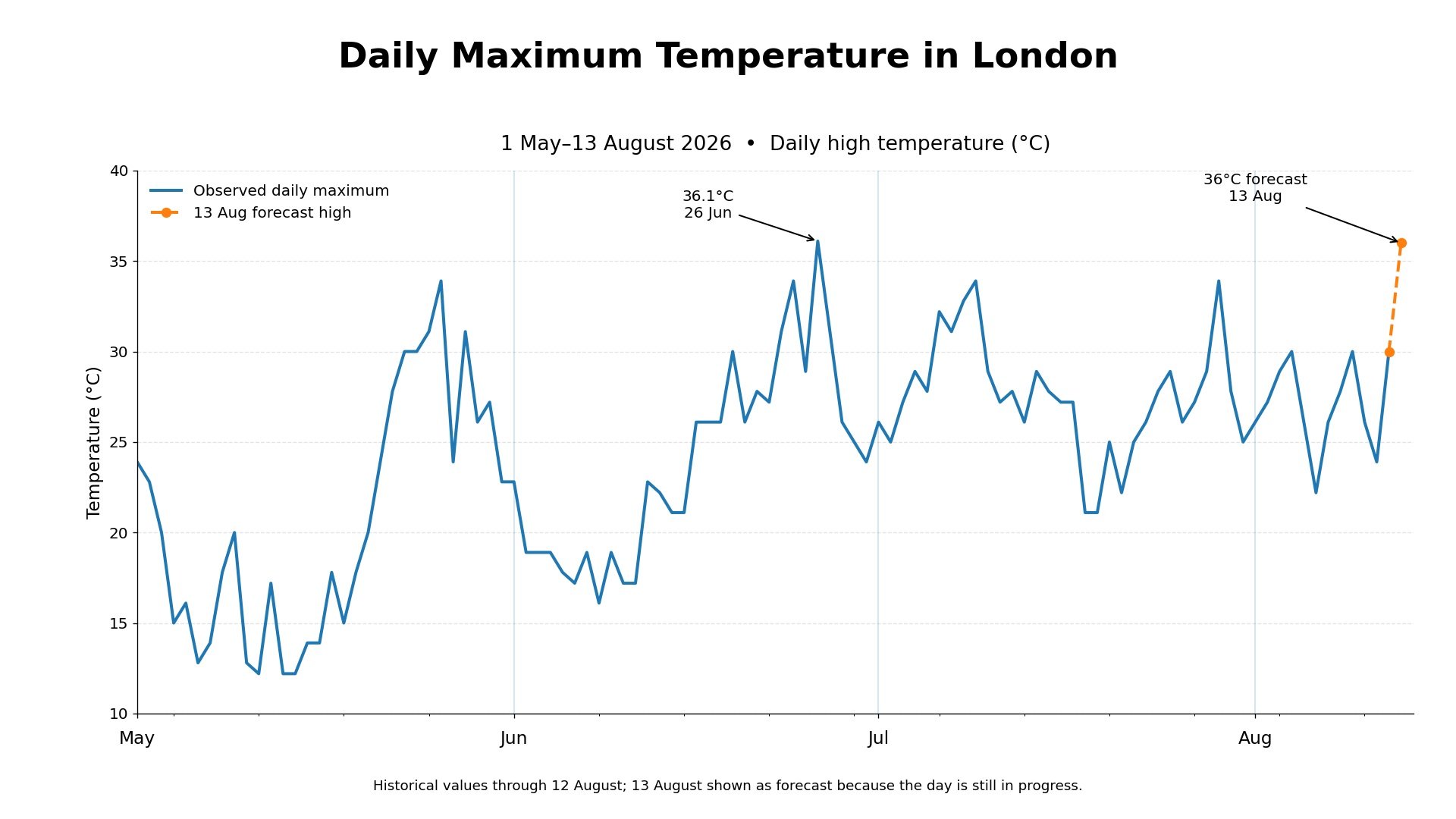
As I write this post, the temperature in Greater London is 33°C (91.4°F). This has become a regular occurrence since the middle of May onwards. High temperatures are fine when you’re on holiday mainly because you’re off work and at your leisure. You don’t have to perform the usual daily task that life requires of you such as work, shop, cook, clean etc. Furthermore, if you’re on vacation you’ll probably be staying at a resort or hotel that is fully air conditioned and you’re dressed accordingly. However, if you’re still performing you’re daily routine such as commuting to work and spending time in an office that wasn’t built with such external temperatures in mind, then 33°C is frankly a pain in the ass. Oh and if you’re one of those people who always respond to discussions such as this with “well I live in Riyadh and it’s 40°C here”, please sod off. You live in a desert which is dumb to begin with. Plus this is not a commensurate comparison. Temperatures are rising in the UK. It’s always hot in Saudi Arabia.
If you visit the websites for such UK tabloid newspapers as the Daily Express or the Daily Mail you will no doubt encounter prominent stories about Megan Markle, Nigel Farage and “immigrants”. If these two august institutions are short of column inches, they’ll run a piece about how some former celebrity has had the unmitigated gall and temerity to get old. I mean WTF? How dare they do what human beings are genetically disposed to do. It’s outrageous. Similarly, head over to the Unherd website and you’ll find foam flecked tirades regarding spurious points of contention over dubious subjects. Often the topic being harangued is incredibly niche and I’ve never heard of it before or even considered it being a thing. These sort of talking points are not about informing, debating and most certainly aren’t about thinking. They exist to provoke reactions.
Before we start, let me explain to those readers outside of the UK, the significance of a Dairy Milk Freddo chocolate bar and its relevance to this post. The “Freddo” is an 18g (0.63 oz) chocolate bar, in the shape of an anthropomorphic frog. When it was re-launched by Cadbury in 1990 (it had previously been manufactured by an Australian confectionery company in the seventies), it was priced at 10p (£0.10). It remained at that price until 2005 when a 1p to 2p increase began to occur each year. By 2016 Freddos were retailing at 25p. However, the following year the price “lept” to 30p with an increase that was double its usual yearly rise. This led to public outrage across social media. Since then the price of a Freddo has waxed and waned. Tesco supermarket reduced the price back to 10p as part of their centenary celebrations. The post COVID price in 2022 hit 49p. At present, the average price of a Freddo in the UK is somewhere around 35p.
Over the last 10 years, I’ve written several blog posts about my personal working experiences and my career, such as it was. I touched upon working specifically in IT and how that industry changed over time, both technically and in the way that other people perceived it. I have also given my thoughts on the social dynamics of the modern work environment and the way we interact with our colleagues and employers. That is another area that has changed dramatically. Naturally my retirement from full time work has been written about, as it is such a radical change in one’s life. Especially if you’re the sort of person who is clearly defined by their job, which I personally was not. This time, I want to share a few thoughts I have about what I miss about “going to work” and “having a job”. I’m not sure if “miss” is the right word. Perhaps it is more a question of things being absent. Either way, there are some aspects of being employed that I use to enjoy or at least found beneficial that I now no longer experience.
UK Prime Minister, Sir Keir Starmer has resigned and intends to leave office before the parliamentary summer recess. By then Andy Burnham will more than likely be voted leader of the Labour Party and by default will become the new Prime Minister. Due to the current size of the incumbent Government’s majority, there is no pressing reason for a General Election that the UK’s right wing tabloid press is currently calling for. Whether this provides the Government with the reset they’re hoping for when Parliament reconvenes in autumn remains to be seen. With seven Prime Ministers coming and going in a decade, there are some serious questions to be asked about the current state of UK politics. However, the mechanics of contemporary politics, the decline of clearly defined ideologies and the people that seek elected office to be our leaders are only half of the problem. The other major impediment to the UK’s democracy functioning properly is the electorate.
The UK Government has formerly announced its intention to ban under-16s from using social media. This is due to increasing public pressure that “something must be done” about the perceived iniquities of many online platforms. However, as with most complex social problems of this nature, no one has any clear or practical ideas as to what that “something” is. It remains a nebulous, non-specific panacea and clearly someone else’s job to identify and implement. As ever, why choose a nuanced and multifaceted solution to a complex problem, when it is far easier and politically expedient to just “ban” something. The former requires effort and a degree of thinking. If such an approach fails it also means that those who came up with it now carry the can. The latter dumps the problem in the lap of various third parties, who can then be conveniently blamed when the ill conceived policy fails.
Every Thursday, Mrs P volunteers at a food bank that is run from a local church; Avery Hill Christian Fellowship. Today there was a shortage of staff so I agreed to help out. It proved to be an equitable arrangement as she collated the various orders and I packed the bags and took them to the respective clients. The food bank itself is organised and administered by the Trussell Trust, a UK based NGO and charity providing emergency food and support to people locked in poverty. It is open for 2 to 3 hours a week depending upon demand. During today’s session we served just six people. Some weeks its can be triple that amount. Upon closure, a member of staff from the Trussel Trust did a stock take and collated a list of what was needed. This is provided by various local church communities via parishioners donations, as well as local supermarkets who have an arrangement with the trust to provide surplus stock or good approaching the end of their sales window.
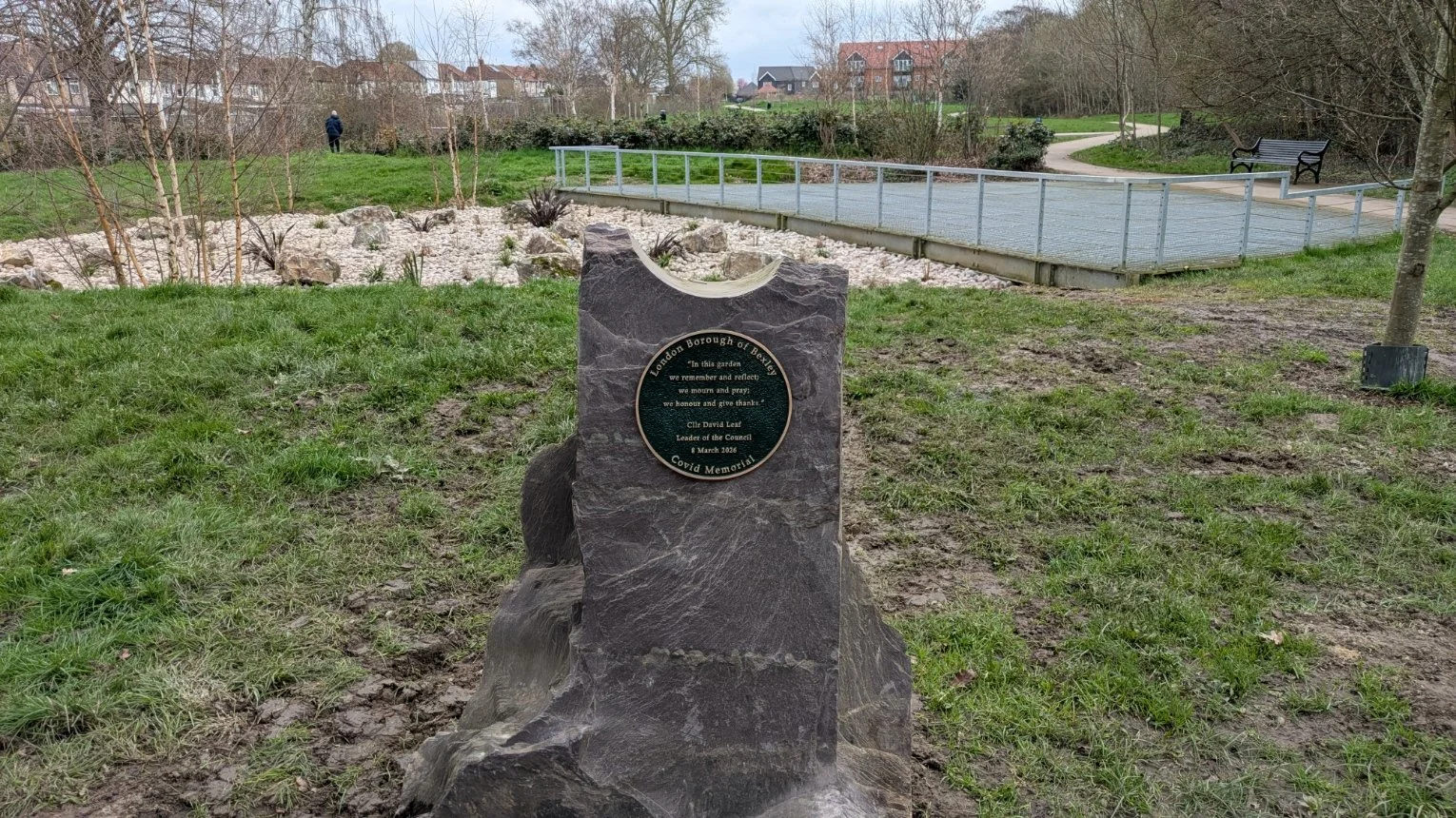
There are approximately 4000 parks and green spaces in Greater London. Bexley Borough alone has over 100. Public parks and green spaces are vital to modern cities, providing essential health, environmental and social benefits. They boost physical and mental wellbeing by reducing stress and providing a place for exercise. Furthermore they enhance urban sustainability, mitigate heat, and provide a sustainable environment for a wildlife. Parks are often a venue for social activities and events and as such are an important part of the local community. Going to the park has always been a part of my life. I live next to Old Farm Park in Sidcup and have made use of this recreational space throughout my life. I used visit with my parents in the seventies, when I was a child. Thirty years later my son, father in-law and I would fly kites there. Now I take my grandchildren to Old Farm Park as it now has a playground.
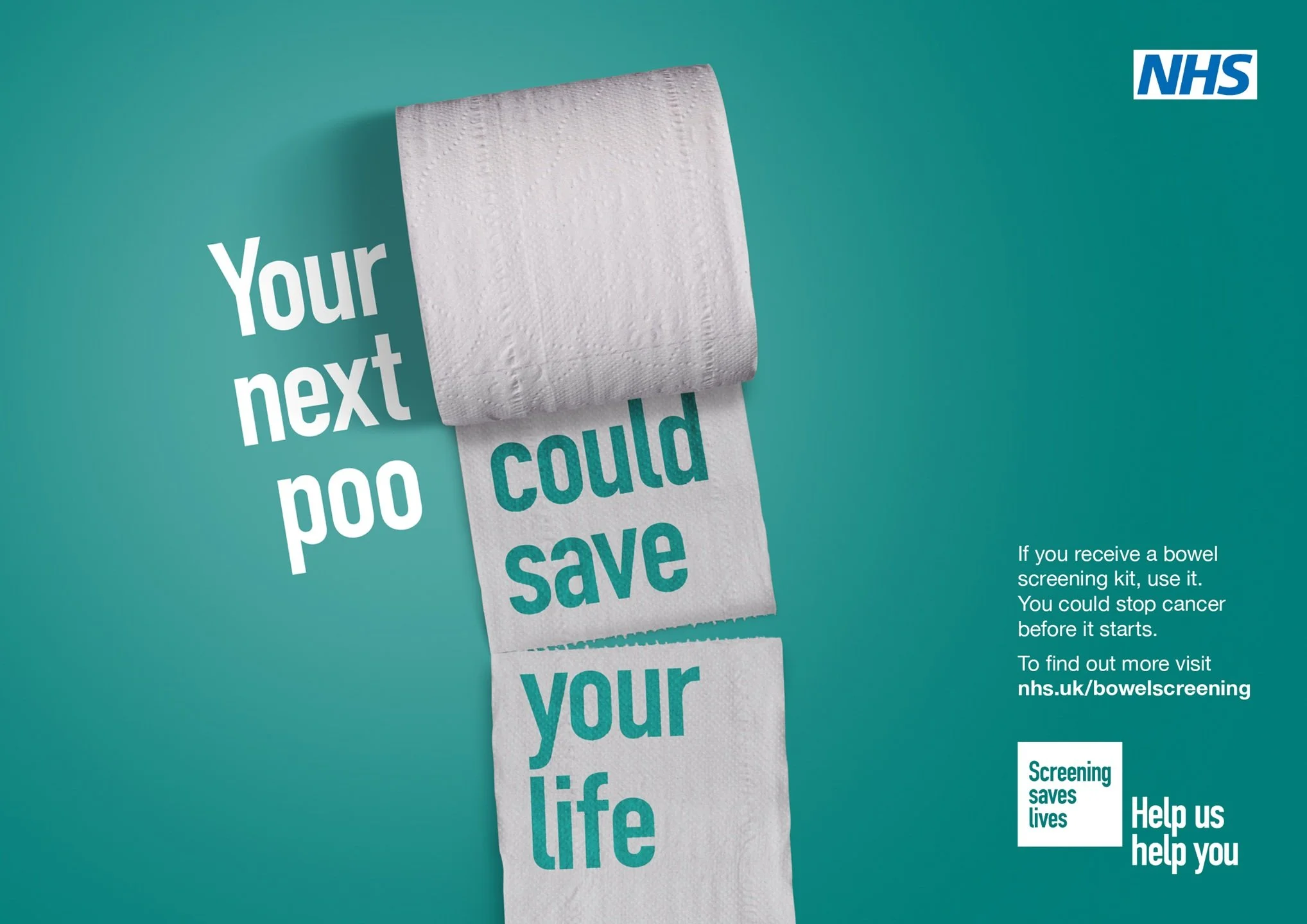
Being a 58 year old man, I welcome any undertaking which can potentially improve my health. One such thing is proactive screening and testing. The UK National Health Service has started doing a lot more of this in recent years, mainly because diagnosing a problem and treating it early is far more efficient and cost effective than retroactive action. Hence this policy and my age is why I was recently sent a NHS Bowel Cancer Test Kit via the post. This screening service takes place every two years for people aged 50 to 74 in the UK. The kit is very quick and simple to use. A sample of your stool is sent via a prepaid return envelope for testing and the entire process is free of charge. Upon receipt, the laboratory test determines whether there is any blood present in your stool, which is a potential indicator of bowel cancer. If detected, an early diagnosis greatly improves any subsequent treatment outcomes.
I like learning things. I always have. During my middle school years I thought I was a mediocre student and often I wouldn’t apply myself. According to an old school report this was because I was “too busy indulging in Tomfoolery”. Then I had the positive experience of meeting an exceptional teacher. Their lessons were the highlight of the week as they had an ability to make the subject matter, Classical History, utterly compelling and relevant. The teacher in question also treated us like adults and the class benefitted from only having five pupils. This really brought home to me that a lot of disinterest and underachievement in education is linked to the paucity of some teachers. One bad teacher can undermine the good work that all the others can do. Perhaps it has improved nowadays?

I’ve had an interest in the paranormal since I was a child. My mother always got books out of the library about ghosts and UFO phenomenon, so in some respects I was influenced by her reading habits. As a child such tales were by default interesting and any potentially scary element naturally made them more enjoyable. However, my father being an academic had taught me to question everything, so I felt fairly evenly equipped when exploring these subjects. Further to this point, over the years I have learned that humans have a very unique perspective on the world. We are hard wired to see patterns, regardless of whether they’re there or not. Our senses can also be fooled and often are. Perhaps the most important aspect of our nature that impacts upon any analysis we make into the paranormal is our penchant for creating stories. Hence unusual experiences can be subconsciously misremembered and “retconned” to form more precise narratives.
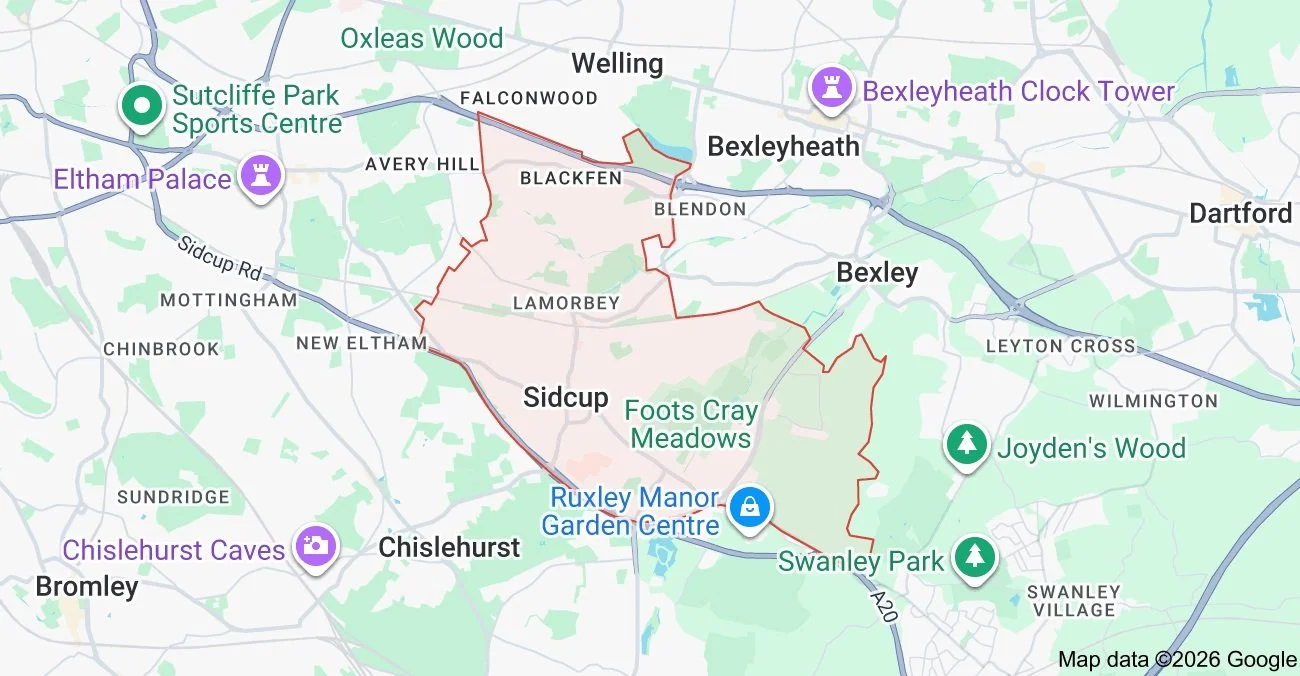
I have lived in Sidcup, in South East London, for most of my life. The first two schools that I went to were local and within 15 minutes walking distance. My Doctor’s Surgery and Dentist are only a few streets away, as is the barbershop that I’ve frequented since 1970. I now have my haircut by the son of the original barber. My point being that Sidcup has everything that residents immediately need. There’s a local hospital, good public transport networks and a broad range of shopping and restaurant facilities. It also has several parks with lakes, sport facilities and children’s play areas. It is a microcosm of the concept of suburbia with its residents commuting into Central London or out into Kent for work. People move here to raise families and end up staying. My parents lived here for 62 years.
Our household is currently trying to reduce our monthly overheads in response to the ever increasing cost of living. April is not that far away and a great many service providers will increase their rates and tariff as the new financial year begins. Then there is the ongoing effects, both direct and indirect, of inflation to consider. Although the UK inflation rate is dropping, currently sitting at 3.4% in December 2025, food inflation remains higher at 4.5%. Being based in the UK, salaries and billed services tend to be administered monthly. You get paid usually at the end of the months and bills can turn up at any point, depending upon when you started a service. Any payments coming from central government, such as state pension or other benefits, are paid every 4 weeks. This means that there are 13 payments in a year. I thought it pertinent to clarify this point as other countries, such as the USA, favour a fortnightly financial cycle. Hence as a household we work around a monthly budget.

I try not to let the failings of contemporary capitalism get to me but such a mindset is very hard to maintain. From time to time it does just piss you off and you know damn well that there’s nothing you can do about it. So to begin this tale, at the end of November, our Indesit washer/dryer gave up the ghost after a valiant twelve year lifespan. As a result of this household appliance’s stirling work, it was decided to buy another from the same manufacturer. Their website informed me that the model that had just broken was no longer being produced. However, it recommended two newer appliances that had comparable specifications and more importantly the same size. This washer/dryer had to fit into a fitted kitchen unit. To cut a long story short, a model was chosen, purchased, delivered within 48 hours and installed. The broken predecessor was subsequently taken away. The wonders of modern consumer culture!

I was in a pub last night, catching up with friends before Christmas, when I noticed on the wall something I haven’t seen in a pub for a very long time. A jukebox. In my experiences most of the pubs I go to take one of the following two approaches to background music. They either have a sound system and exclusively manage any music via personally curated playlists from behind the bar. Or they have no music at all. The Wetherspoons chain of pubs broadly follow the latter policy and actively use it as a marketing point. Quiet pubs for clientele that just want to talk can be popular. Hence finding an accessible jukebox was a blast from the past. During the late eighties and early nineties, I regularly visited my local pub and often used the jukebox there, which at the time, was operated by an ever changing store of CDs. The jukebox I encountered last night was digital.

Today is my 58th birthday. It would appear that I have existed for nearly six decades. Put another way, I am over half a century old. All of which has given me pause for thought with regard to the passage of time. A phrase that is often bandied about, but what exactly does it mean? As I understand it, the “passage of time” refers to our perception of the flow of time and how we experience its movement. This is something distinct and different from objective time as measured by clocks. Our subjective experience of time can vary due to multiple factors. Two common examples are how time can feel like it's flying by when we're having fun and enjoying something or dragging its feet when you’re enduring something dull. Other factors are whether we are applying ourselves to a task, concentrating and general activity. Such focus can make time pass quickly.

When Mrs P and I moved into our current home, over twenty years ago, we were both working full time. As the garden was poorly maintained and neither of us had any horticultural skills, we decided to employ a gardener. At the time it was a practical solution to the issue of garden maintenance and remains so today. Hence it is a service we continue to use, although our personal health is now the main reason we pay a gardener.
In July the UK Government introduced the Online Safety Act which requires age checks for accessing sexually explicit content online. As a result of this, Pornhub, the 19th most visited site on the internet, has reported a 77% decline in UK traffic. Furthermore, according to the UK regulatory body, OFCOM (The Office of Communications), overall visits to pornographic websites from the UK have fallen by 33%. Naturally, those who championed this legislation are claiming a moral and political victory. However, once you consider what these facts actually mean, they paint a somewhat different and potentially more worrying picture. It would be staggeringly naïve to think that UK visitors to Pornhub have ceased visiting such sites due to the age verification requirements. The more likely explanation is that UK porn consumers are now using VPNs to circumnavigate these restrictions and that this traffic to Pornhub is now recorded as coming from elsewhere.

Formal education in the UK is a structured process, starting at early years learning and continuing through to higher education at university. Some aspects of the educational system are mandatory, whereas others are optional. At present, children in the UK must start full-time education from the age of 5 and remain until the age of 16. After this age, they are no longer required to attend school per se but must remain in some other form of education or training, such as a vocational college or an apprenticeship. Many students remain at school until 18, as there are specific exams to be obtained that are required for a subsequent university placement. Here is a breakdown of the current process as it exists in the UK.
I don’t know if you have noticed that there are quite a lot of companies that have names taken from Tolkien’s Legendarium. At first glance, this seems innocuous enough. Tolkien’s writings grew in popularity over the seventies and eighties but since the release of the film trilogy at the start of the twenty-first century, his work has become more well known and been assimilated into our wider pop culture. Hence, it seems quite logical that a startup tech company, for example, would choose a name from his writings. No doubt the founders grew up reading The Lord of the Rings and are fans. That all seems plausible. However if you take a further look, it gets somewhat more complex. Here are four companies that have Tolkien based names.

Last Wednesday, I woke up with what I thought to be a crick in my neck on the left hand side. I assumed this was simply due to sleeping awkwardly and so I self medicated with some non-prescription pain relief and judicious use of a heat pad. Unfortunately, the problem has persisted and in the last 24 hours it has become much worse. I awoke this morning at about 5:00 AM and as I sat up in bed, an intense pain ran up the left side of my neck and behind my ear. It took several attempts for me to get out of bed because if I turned my head in either direction or inclined my chin, the pain would again run up the side of my neck. Sitting down, getting up and raising my arms caused similar results. While dressing, I attempted to pull a t-shirt over my head. The pain in my neck on this occasion was so severe that I yelled out loud and nearly blacked out.

I am a non-driver. If you wish to know the specifics of how this situation came about, feel free to read the post I wrote about it back in early 2018. To be succinct, I don’t drive, I’ve never learned how and have never owned a car. I don’t feel that I’ve missed out. In fact I feel quite the opposite. I think I’ve dodged a major hassle and expense in life. Mrs P, my significant other, is the designated driver of our household. She owns a car, insures it and maintains it. She also mainly pays for the petrol, whereas I pick up the tab for other things such as lunch or hotels when we travel. All I have to do is make like Iggy Pop if we go anywhere. The most I am ever called upon to do is navigate using Google maps and Android Auto. Fortunately, Mrs P enjoys driving. Always has done. Hence I look upon this situation as an extremely fortunate and equitable arrangement.
I am getting old. I shall be 58 in December. Now, as soon as you say something like that these days, some folk will get uncomfortable and say things like “age is relative” or “you’re as old as you feel”. Well I don’t measure my age in geological terms, so it’s not relative and I’m not feeling anyone especially young at the moment, so both schools or thoughts can sod off. I am getting old by the yardstick we measure human life by, namely years. I have specific, age related health issues and I just don’t feel as energised as I did a decade ago. There are minor signs, such as deciding to go to bed earlier and taking longer to get dressed after taking a shower. I’m not at death’s door but I am slowing up physically. It would also appear that my reactions are also slowing down as I tend to get massacred in any FPS I play these days. So far, my mental faculties seem to be holding up. However, that is the one thing I worry about the most. The potential loss of cognitive abilities scares the shit out of me.
Foots Cray Reuse and Recycling Centre is the fancy name of our local dump. A few decades ago, this was no more than a scrap yard. The rubbish and bric-a-brac left by the public was sorted and scavenged for resaleable scrap. Everything that was left was subsequently sent to landfill or incineration. Much has changed. Today it is the embodiment of the modern recycling ethos. The recycling centre is a well managed, carefully segregated site providing safe disposal of a wide variety of household and garden waste. Wood, metal and hardcore are recycled and there is similar provision for a multitude of electrical goods. Plastics, oils, paint, batteries can be safely disposed of. I have yet to find a home item that they do not have provision to dispose of. The Foots Cray Reuse and Recycling Centre has won awards for the service it provides and is considered one of the best facilities of its kind in the South East of the country.
One of the things I enjoy most about having my own blog is the fact I can write about the mundane and the trivial. Mainly because so much of life falls into this category. Life defining events are all fine and dandy and certainly lend themselves to philosophical musings that make fine blog posts. However, you can get just as much mileage out of those everyday things in life with less gravitas, that we all do. Such as buying new clothes, taking out the recycling and going to buy groceries. I have written about all of these in the past. However, today I wish to broach a subject that both fascinates me but also raises my blood pressure. I believe it to be a social marker and a clear indication of an individual’s personal psychology. Yes, I’m talking about packing your groceries at the supermarket and the various rituals and social etiquette associated with it.
“Managed decline” is a phrase that refers to the processes associated with the end of a specific lifecycle, with the goal of minimizing costs or other forms of loss. The concept originated in business where it referred to the management of companies and industries. More recently it is used in wider contexts. The concept gained prominence with regard to urban policy, particularly in the UK during the eighties when several major cities suffered economic and political collapse. Of late, the term has been applied to the UK, encompassing a systematic weakening of the economy, social structures, and cultural values, as well as its global political and diplomatic force. In each case, managed decline involves making strategic choices about resource allocation and accepting the consequences of those decisions. It is a complex issue with ethical and practical considerations, often sparking debate about the best way to address decline and reverse the process.
Old Bexley and Sidcup By-election Part 3
The Conservative Party successfully held onto their “safe seat” of Old Bexley and Sidcup in yesterday’s closely watched by-election. However their overall majority was reduced by more than half amid a very low voter turnout. Conservative councillor Louie French becomes the country’s newest MP after winning 11,189 votes, more than 50 per cent of those cast, in the seat previously held by the former cabinet minister James Brokenshire. Mr Brokenshire died in October from lung cancer aged 53. The closest challenger was Labour’s Daniel Francis, who secured 6,711 as the Tory majority fell from nearly 19,000 to 4,478, the equivalent of a vote share swing of 10 per cent to Labour. Turnout in the constituency was just 34%, down from the almost 70% who voted in the 2019 general election.
The Conservative Party successfully held onto their “safe seat” of Old Bexley and Sidcup in yesterday’s closely watched by-election. However their overall majority was reduced by more than half amid a very low voter turnout. Conservative councillor Louie French becomes the country’s newest MP after winning 11,189 votes, more than 50 per cent of those cast, in the seat previously held by the former cabinet minister James Brokenshire. Mr Brokenshire died in October from lung cancer aged 53. The closest challenger was Labour’s Daniel Francis, who secured 6,711 as the Tory majority fell from nearly 19,000 to 4,478, the equivalent of a vote share swing of 10 per cent to Labour. Turnout in the constituency was just 34%, down from the almost 70% who voted in the 2019 general election.
The results subsequently saw positive statements made by both the Conservatives and Labour. Mr French stated that such a victory for a sitting government was “almost unheard of”. Ellie Reeves MP, Labour's political lead for the 2021 Old Bexley and Sidcup by-election, remarked “There’s been a 10% swing over to Labour this evening”. Reform UK, formerly the Brexit Party, came third with 6.6% of the vote, with the party's leader and candidate Richard Tice describing it as a "massive result". Speaking after the results were announced, Mr Tice claimed “The reduction in the Conservatives’ majority in Old Bexley and Sidcup is a rejection of Boris Johnson personally because the Prime Minister is now viewed as a liability, not an asset in Tory heartlands”. The Green Party and Liberal Democrats both lost their deposits as they polled under 5% of the votes.
Old Bexley and Sidcup by-election 2021 results:
Louie French (Con) 11,189 (51.48%, -13.06%)
Daniel Francis (Lab) 6,711 (30.88%, +7.40%)
Richard Tice (Reform) 1,432 (6.59%)
Jonathan Rooks (Green) 830 (3.82%, +0.62%)
Simone Reynolds (Lib Dem) 647 (2.98%, -5.31%)
Elaine Cheeseman (Eng Dem) 271 (1.25%)
John Poynton (UKIP) 184 (0.85%)
Richard Hewison (Rejoin) 151 (0.69%)
David Kurten (Heritage) 116 (0.53%)
Carol Valinejad (CPA) 108 (0.50%)
Mad Mike Young (Loony) 94 (0.43%)
Although the retention of the constituency is a relief for the Conservative Party, the reduction in majority and the dismal voter turnout cannot be ignored. It is extremely disheartening to see two thirds of the electorate deciding not to bother to vote. COVID-19 and poor weather are convenient excuses but both those factors did not deter voters two years ago in the General Election of 12th December 2019. Brexit was a pressing political issue at the time but the demographics of a constituency such as Old Bexley and Sidcup means that they usually make an effort to vote. Hence such voter apathy is food for thought. Doorstep canvassing by all parties discovered a growing sense of disillusionment with the lack of political direction of the government and the inadequacy of the Prime Minister himself. Yet that despondency did not translate into votes for alternative parties.
As a floating voter who has no strong political attachment to either of the two main parties, I have reached a point where none of the choices available on the ballot paper seem appropriate or desirable. I did vote in this election but it had zero impact, due to the “winner takes all” approach that is entrenched in the UK’s political system. Unless you live in a marginal seat, voting against a majority incumbent is effectively redundant. Therefore, with a vote that feels meaningless and a paucity of parties to choose from, I fully understand why people turn their backs on politics. Especially the under 30 year olds. All the canvassing that I saw taking place seemed to be undertaken by the over 40s and pitched at a similar age demographic and above. All too often, UK politics just seems to be a form of lobbying for specific socioeconomic groups. Sadly, I do not see the situation improving anytime soon.
As for Louie French, it will be interesting to follow his voting record in parliament in the months to come to see where he fits within the spectrum of modern Conservatism. At present, as a new MP he is naturally focused upon the needs of his constituents. In his victory speech Mr French stated he will “work tirelessly to repay the trust you put in me”. But I am more intrigued to learn what his position is on several major forthcoming pieces of legislation, such as the UK Online Safety Bill and the new Policing Bill with its potential restrictions regarding the right to protest. I think his voting intentions along with the way he conducts his MPs finances will provide a measure of the man. I also suspect that despite the current drop in the overall majority for this MP, this may well increase in two year’s time when the next General Election is held.
If you visit the websites for such UK tabloid newspapers as the Daily Express or the Daily Mail you will no doubt encounter prominent stories about Megan Markle, Nigel Farage and “immigrants”. If these two august institutions are short of column inches, they’ll run a piece about how some former celebrity has had the unmitigated gall and temerity to get old. I mean WTF? How dare they do what human beings are genetically disposed to do. It’s outrageous. Similarly, head over to the Unherd website and you’ll find foam flecked tirades regarding spurious points of contention over dubious subjects. Often the topic being harangued is incredibly niche and I’ve never heard of it before or even considered it being a thing. These sort of talking points are not about informing, debating and most certainly aren’t about thinking. They exist to provoke reactions.
Yesterday afternoon, Nigel Farage the Member of Parliament for Clacton and leader of the Reform Party, held a press conference in which he declared that he would be resigning his seat and thus triggering a by-election. He cited the following list of grievances that have led to him making this decision. That the Parliamentary standards investigations were being politicised, the media and other parties were conducting a coordinated campaign against him and that he had endured years of threats and physical attacks. He further asserted that his family’s privacy and safety had been breached as well. He finished by alleging that the political system was repeatedly changing rules to obstruct Reform and that he was the most attacked politician in the UK. Rather than be judged by the legacy media and the “establishment”, he would rather put the issue of his political integrity to the electorate of Clacton. He even offered to pay for the cost of the by-election.
UK Prime Minister, Sir Keir Starmer has resigned and intends to leave office before the parliamentary summer recess. By then Andy Burnham will more than likely be voted leader of the Labour Party and by default will become the new Prime Minister. Due to the current size of the incumbent Government’s majority, there is no pressing reason for a General Election that the UK’s right wing tabloid press is currently calling for. Whether this provides the Government with the reset they’re hoping for when Parliament reconvenes in autumn remains to be seen. With seven Prime Ministers coming and going in a decade, there are some serious questions to be asked about the current state of UK politics. However, the mechanics of contemporary politics, the decline of clearly defined ideologies and the people that seek elected office to be our leaders are only half of the problem. The other major impediment to the UK’s democracy functioning properly is the electorate.
Andy Burnham successfully won the Makerfield by-election yesterday, returning him to the House of Commons as a member of Parliament after holding the position of Mayor of Manchester for the past nine years. Prior to this, Burnham was Labour MP for Leigh from 2001 and 2017. He served in both the Tony Blair and Gordon Brown administrations and has held such senior governmental posts as Chief Secretary to the Treasury, Secretary of State for Culture, Media and Sport and Secretary of State for Health. His return to Parliamentary politics is likely to result in a leadership challenge to incumbent Prime Minister Keir Starmer. When speaking after winning yesterday’s by-election Burnham spoke of “a final chance for change” the current trajectory of the present Labour Government. However, I don’t wish to focus on any of this at present. I am far more interested in the above picture, taken as the results were announced and what it says about UK politics.
The UK Government has formerly announced its intention to ban under-16s from using social media. This is due to increasing public pressure that “something must be done” about the perceived iniquities of many online platforms. However, as with most complex social problems of this nature, no one has any clear or practical ideas as to what that “something” is. It remains a nebulous, non-specific panacea and clearly someone else’s job to identify and implement. As ever, why choose a nuanced and multifaceted solution to a complex problem, when it is far easier and politically expedient to just “ban” something. The former requires effort and a degree of thinking. If such an approach fails it also means that those who came up with it now carry the can. The latter dumps the problem in the lap of various third parties, who can then be conveniently blamed when the ill conceived policy fails.
Every Thursday, Mrs P volunteers at a food bank that is run from a local church; Avery Hill Christian Fellowship. Today there was a shortage of staff so I agreed to help out. It proved to be an equitable arrangement as she collated the various orders and I packed the bags and took them to the respective clients. The food bank itself is organised and administered by the Trussell Trust, a UK based NGO and charity providing emergency food and support to people locked in poverty. It is open for 2 to 3 hours a week depending upon demand. During today’s session we served just six people. Some weeks its can be triple that amount. Upon closure, a member of staff from the Trussel Trust did a stock take and collated a list of what was needed. This is provided by various local church communities via parishioners donations, as well as local supermarkets who have an arrangement with the trust to provide surplus stock or good approaching the end of their sales window.
Under the First Past the Post electoral system, the candidate(s) receiving the highest number of votes in each constituency are elected. This system is used in the UK during general elections and in some local elections, such as those recently conducted in England. An alternative approach is the system of proportional representation, which aims to allocate seats in a manner that reflects the popularity of various parties. Both the Scottish Parliament and the Senedd in Wales employ systems of Proportional Representation. Historically, first-past-the-post has been seen as advantageous for the Conservative and Labour parties. It poses challenges for smaller parties whose votes are distributed evenly across different regions, making it difficult for them to secure seats. This dynamic effectively prevents potential competitors to the Conservatives and Labour from succeeding electorally. Consequently, due to this situation, voters may hesitate to support these smaller parties from the outset.
There are local elections being held across the UK today. Voters in Scotland and Wales will elect representatives to their respective national parliaments, while in England the voting is for local councils and regional mayors. These are the first major elections to be held in the UK since the 2024 General Election which saw the Conservative government of fourteen years, fall to the Labour Party. Midterm elections are often a litmus test for how the electorate think the national government are performing although local issues are also a major factor. The consensus among political journalists and commentators is that the incumbent government is polling extremely poorly and will subsequently face a backlash. In recent years the UK has seen a decline in traditional two party voting with Reform UK and the Greens gaining significant traction among the electorate. Hence today’s elections may well see both these parties make significant gains.
Our household is currently trying to reduce our monthly overheads in response to the ever increasing cost of living. April is not that far away and a great many service providers will increase their rates and tariff as the new financial year begins. Then there is the ongoing effects, both direct and indirect, of inflation to consider. Although the UK inflation rate is dropping, currently sitting at 3.4% in December 2025, food inflation remains higher at 4.5%. Being based in the UK, salaries and billed services tend to be administered monthly. You get paid usually at the end of the months and bills can turn up at any point, depending upon when you started a service. Any payments coming from central government, such as state pension or other benefits, are paid every 4 weeks. This means that there are 13 payments in a year. I thought it pertinent to clarify this point as other countries, such as the USA, favour a fortnightly financial cycle. Hence as a household we work around a monthly budget.
I don’t know if you have noticed that there are quite a lot of companies that have names taken from Tolkien’s Legendarium. At first glance, this seems innocuous enough. Tolkien’s writings grew in popularity over the seventies and eighties but since the release of the film trilogy at the start of the twenty-first century, his work has become more well known and been assimilated into our wider pop culture. Hence, it seems quite logical that a startup tech company, for example, would choose a name from his writings. No doubt the founders grew up reading The Lord of the Rings and are fans. That all seems plausible. However if you take a further look, it gets somewhat more complex. Here are four companies that have Tolkien based names.
“Managed decline” is a phrase that refers to the processes associated with the end of a specific lifecycle, with the goal of minimizing costs or other forms of loss. The concept originated in business where it referred to the management of companies and industries. More recently it is used in wider contexts. The concept gained prominence with regard to urban policy, particularly in the UK during the eighties when several major cities suffered economic and political collapse. Of late, the term has been applied to the UK, encompassing a systematic weakening of the economy, social structures, and cultural values, as well as its global political and diplomatic force. In each case, managed decline involves making strategic choices about resource allocation and accepting the consequences of those decisions. It is a complex issue with ethical and practical considerations, often sparking debate about the best way to address decline and reverse the process.
I still maintain a legacy presence on Twitter/X and I follow my local MP (member of Parliament) Louie French. It’s not something I especially relish as I am not a supporter of the Conservative party (or any other) and I did not vote for him in the last election. I just like to know what he is up to as he is the political representative for our constituency. As the Conservatives are out of power at present, to all intent and purposes, Mr French is a backbench MP although he has a minor position as Shadow Parliamentary Undersecretary (Culture, Media and Sport). However, with that being said he is hardly a key member of the shadow cabinet. Hence he focuses on constituency work and that which is generated by his shadow posting. He will also lend his voice, when required, to any major policy decision or statement made by his party.
Sunday 6th April is the start of a new financial year, here in the UK. According to data from numerous financial and economic institutions, an estimated million plus households will be facing annual increases of £400 to £500 as the proverbial “cost of living” goes up. Everything from Council Tax to Mobile and Broadband costs are being increased. Future cost hikes are expected in our energy and water utilities. As bills start going up across the country today, average wages remain stagnant. Middle-income and poorer households have been worst hit by this wage related issue. Hence the tabloid press have labelled the start of the new financial year as “Awful April”. Hyperbole aside, this is a very real issue which due to its complex, global causes, doesn’t have a quick fix solution.
I consider myself to be a grounded, rational individual. I am not excessively emotional. I like facts, data and reason as opposed to hyperbole, rhetoric and bluster. That being said, I am aware that the world is an imperfect place. Opinions are often not based upon empirical fact but personal perspective. Hence many people experience reality differently to me. They are driven by their feelings and other factors. However, despite these differences in philosophy, for most of my life the world has remained functional and over time slowly improved in subtle ways. Deference to expertise, a sense of community and basic pragmatism meant that people broadly pulled in the same direction. Of course there has always been dissent but it has been within a stable system. However, of late I feel that this era is now finally over. Things are no longer stable. We live in an uncertain world.
Newspapers were an integral part of UK culture in the seventies. During the week, they were delivered prior to going to work, so you would peruse them over breakfast. Alternatively you would buy one en route to your place of employment and read it on the bus or train. In a world before 24 hour, rolling news, they were the primary means of keeping the public abreast of events and as such, enjoyed a substantial audience. On occasions a newspaper story could make or break a political career or launch a crusading campaign to address a social ill. Newspapers were a force to be reckoned with and therefore a significant part of the socio-political landscape. However, due to a strong union presence within the workforce, the UKs newspapers often lagged behind other industries with regard to the technology.
The First Past the Post (FPTP) electoral system used in the United Kingdom, as well as in several other countries such as the US and India, has both advantages and disadvantages. However, despite being a simple and straightforward system it has been abandoned by many democracies in favour of more proportional and equitable methods. The primary criticism against FPTP is that it allows a minority of the electorate to return a majority government. Since 1935, there have been majority governments 90% of the time, but not one of them had the support of a majority of voters. At present, the current UK government has a majority of seats with just 43.6% of the votes. In the 2019 election they gained an extra 48 seats despite an increase of only 1.2% of the vote share.
Politicians have a distinct way of talking when being interviewed or giving a press conference. It is often characterised by a strategic use of language, centred around rhetorical devices, persuasion techniques and a careful framing of messages. Direct answers to questions are usually avoided, with tangential responses being preferred. Opinions and specific perspectives are frequently presented as facts. There is also a propensity to focus on “problems” and apportioning blame, rather than “solutions”. It’s important to note that the use of language in politics is a complex and dynamic process influenced by various factors, including cultural context, media dynamics, and the evolving political landscape. Different politicians may employ different communication strategies based on their individual styles and objectives. Here are some key aspects of how politicians use language:
The United Kingdom is one of the few democratic countries in the world that does not have a single, written constitution. Others include Canada, New Zealand and Israel. To date, its constitution is a combination of written and unwritten sources, including statutes, common law, conventions and somewhat esoterically, royal prerogatives. The reason for this is predominantly historical. Since 1688, Britain has not experienced a revolution or regime change, which often leads to a constitutional initiative, such as the American or the French Revolution. Britain’s constitution has evolved slowly over time under relative stability and as such, it has never been deemed necessary to list the fundamental laws and principles of the country's political system.
On Friday 15th September the former actor and comedian turned internet social commentator, Russell Brand, released a video on his YouTube channel addressing allegations about his personal life, ahead of a forthcoming UK current affairs documentary. Brand vehemently denied what he described as “very serious criminal allegations”. The following day Channel Four broadcast “Russell Brand: In Plain Sight”. During the course of the program Brand was accused by one woman of rape and by three others of sexual assaults, and emotional abuse between 2006 and 2013. During the course of the week, further claims have been made against him and that his “predatory” behaviour was an open secret within the TV industry. Furthermore, women would warn each other in advance if they had any dealing with him. All of which has played out against a mixture of broadsheet analysis, tabloid hyperbole, performative politics and internet bluster.
For those who live outside of the UK, let me categorically state that Brexit has broken British politics. Prior to 2016, national politics still broadly functioned along traditional party political lines, with income and class substantially determining voter allegiance. The big three cities (London, Birmingham and Liverpool) maintained their liberal dispositions and Scotland, Northern Ireland and Wales were dominated by their regional politics. Brexit changed all this creating fault lines that fell outside of the existing political status quo. Opinions differed based upon where you lived, how politically literate you were and even education. Your party political allegiance no longer indicated what stance you took on this matter. Furthermore, the discourse around this complex subject was quickly debased into a bipartisan culture war that was toxic and dangerous.
Okay, keep up as there’s a lot of ground to cover. The UK government is currently suffering in the opinion polls and after 13 years in office, is facing potential oblivion at the next general election. In an attempt to shore up support among the party faithful, the Prime Minister, Rishi Sunak, is currently pursuing a hardline with regard to immigration. According to Ipsos, as a political issue about 29% of the electorate consider immigration to be a major problem. The remainder either think current levels are manageable or have no substantive view on the matter. However, as a “culture war” issue that can be weaponized by the tabloid press, which often has direct links to the Conservative Party in the UK, immigration is a hill to die upon. Hence you will find a lot of rhetoric that is anti-immigration and any contrary view is tarred with trite pejorative terms such as “lefty”, “liberal” and “woke”.
Last April, the Election Act 2022 became law within the UK. The Act introduced a requirement for all those voting in-person to produce photo identification when attending a polling station. This is the first time that such an ID has been required. Prior to this, voters could either bring their polling card to verify their identity at the polling station, or confirm their registered address from the electoral roll with staff. Now a UK driving licence or passport are considered the primary means of identity. A list of additional photo identification that has been deemed acceptable, is available on the UK government website. For those members of the electorate who do not have any of the qualifying ID, there is a Voter Authority Certificate available, which can be applied for online. This photo ID is linked to the applicants National Insurance Number. For further impartial information on photo ID and registering to vote, visit the The Electoral Commission website.
I am writing this post from the perspective of a UK citizen, but the sentiments expressed are applicable to anyone who lives in a country where you have democratically elected local political representation. IE someone who is supposed to advocate on behalf of your community or for you personally as the duly elected political representative. Here in the UK, the country is divided into 650 constituencies, each returning one Member of Parliament. Irrespective of whether you voted for your MP or whether you support the political party that they belong to, they are obliged to represent you and advocate on your behalf, if you request it. Such is the relationship in principle between constituents and MPs in the UK. It is important to be aware that your local MP is not a delegate whose sole purpose is to represent majority constituency views. Under the UK political system, an MP makes decisions on behalf of constituents and can take a position counter to local opinion, if they feel that is in the best interest of the constituency.
It is difficult to write about the state of UK politics with any degree of intellectual rigour when the entire situation has become so utterly farcical. My initial reaction to the recent departure of Liz Truss after just 45 days in office, was to laugh with abject scorn and derision. She was destined to fail due to utter lack of ability. However, there is still the outstanding matter of the country lacking a credible and functional government to address inflation, the cost of living crisis and resolve all the issues stemming from Brexit. There are problematic national and international events taking place that need addressing. A united, pragmatic and empathetic government is required to solve both these short term and long term needs. Sadly, the governing party is riven with opposing factions and there is no commonly held policy or underlying ideology. The PM may well have changed but the underlying flaws remain.
Conservative Party has been in government in the UK since 2010. During that time there have been three Prime Ministers. Today we moved onto the fourth. After Boris Johnson resigned on 7th July, the nation has had to endure a tedious two month process in which the Conservative Party elects a new leader. That person then becomes the PM by default. Many readers unfamiliar with the UK political system may be surprised that a change of leader has not led to a General Election. That is because the Conservative Party still holds a parliamentary majority of 71 elected Members of Parliament. Hence it is still constitutionally quite able to govern, despite Boris Johnson being forced from office. Therefore party members vote for a new party leader who gets the top job by default. Remember that in the UK, the Prime Minister is not the head of state and does not have the executive powers of a President.
I try to keep my thoughts on political matters to a minimum here at Contains Moderate Peril, mainly because UK politics and the current state of discourse associated with it has become an absolute shit show in recent years. Brexit broke traditional politics and has made matters far more tribal and partisan. The two main parties have declined from having clear ideologies, identities and manifestos, to becoming either a lobby group for the specific demographic group that supports them, or a conflicted, divided and schizoid shadow of its former self. I’ll let you work out which is which. Politics is no longer about governing a nation for the benefit of all its citizens. Now you simply pick a side and join the ongoing culture war against everyone and everything else. This rotten system produces rotten leaders. Hence, when Alexander Boris de Pfeffel Johnson became Prime Minister in December 2019, it was clear that the nation was taking a major risk on such a man. His failings as a politician and a person are a matter of public record for anyone who has the eyes to see them.
The title for this post is a quote from The Hobbit by J.R.R. Tolkien. I’ve used it as a verbal cue to try and give readers an overview of the point I’m striving to convey. Because I want to talk about modern life in western civilization, specifically its complexity and increasing uncertainty. If you’re extremely wealthy you can mitigate these two points but I’m working on the premise that most of the people who read Contains Moderate Peril are not. The blogging community, of which I am a participant, is a diverse group but from what I’ve observed it’s not populated by millionaires. In fact most of the people I know, both online and in person, are just holding down a job, trying to keep a roof over their head and pay the bills. Often they’re doing the job they do in default of anything else and they’re at the very least ambivalent towards it. The pandemic has also brought home how fragile so-called “normality” is. Modern politics are also volatile and life in general just doesn’t seem as certain as it was twenty years ago.
The Conservative Party successfully held onto their “safe seat” of Old Bexley and Sidcup in yesterday’s closely watched by-election. However their overall majority was reduced by more than half amid a very low voter turnout. Conservative councillor Louie French becomes the country’s newest MP after winning 11,189 votes, more than 50 per cent of those cast, in the seat previously held by the former cabinet minister James Brokenshire. Mr Brokenshire died in October from lung cancer aged 53. The closest challenger was Labour’s Daniel Francis, who secured 6,711 as the Tory majority fell from nearly 19,000 to 4,478, the equivalent of a vote share swing of 10 per cent to Labour. Turnout in the constituency was just 34%, down from the almost 70% who voted in the 2019 general election.
Old Bexley and Sidcup By-election Part 2
Political events in the constituency of Old Bexley and Sidcup have moved forward in the last few weeks, following on from the death of incumbent MP James Brokenshire on 8th of October. Although no formal announcement has yet been made regarding the date of the forthcoming by-election, the major political parties have started announcing the names of their respective candidates. There were initial concerns among some constituents that this safe Conservative Party seat may have been used as a means of parachuting in a candidate favoured by central office, rather than one determined by the local Conservative Association. Fortunately, that has not been the case. The UK Government currently enjoys a parliamentary majority of 79 seats and is therefore not in any urgent need of fast pathing further political allies.
Political events in the constituency of Old Bexley and Sidcup have moved forward in the last few weeks, following on from the death of incumbent MP James Brokenshire on 8th of October. Although no formal announcement has yet been made regarding the date of the forthcoming by-election, the major political parties have started announcing the names of their respective candidates. There were initial concerns among some constituents that this safe Conservative Party seat may have been used as a means of parachuting in a candidate favoured by central office, rather than one determined by the local Conservative Association. Fortunately, that has not been the case. The UK Government currently enjoys a parliamentary majority of 79 seats and is therefore not in any urgent need of fast pathing further political allies.
At present three candidates have been confirmed as standing for election. Louie French who is standing for The Conservative Party. Mr French has been a Bexley councillor for the last eight years and was Deputy Leader of Bexley Council from 2018 to 2021. He is a resident of the Borough and has a background in the financial services industry, working in the City of London. The late James Brokenshire was both a friend and mentor to Louie, therefore from a party political perspective, he is a logical choice to stand as The Conservative Party candidate. His existing familiarity with the borough and its constituents offers practical continuity. Considering the voting habits of constituents and the historical track record of by-elections held in Old Bexley and Sidcup, unless something radical occurs it is safe to consider that Louie French is the favourite candidate to win the seat.
Daniel Francis, a Bexley councillor and former leader of Bexley’s Labour group on the council, has been selected as Labour’s parliamentary candidate for the upcoming Old by-election. Daniel Francis represents Belvedere Ward on Bexley Council and grew up locally. He is married with two primary school aged children, one of whom has cerebral palsy and he campaigns on accessibility issues. Mr Francis served as leader of Bexley Labour group from 2017 to 2021 and is the shadow cabinet member for environment, transport and leisure. He was first elected to the council in 2000. In the 2019 election, Labour polled 23.5% of the vote. Since the constituency of Old Bexley and Sidcup was created in 1983 the electorate has only elected Conservative Members of Parliament.
The third candidate to be announced is Richard Tice, the leader of the party Reform UK. Formerly known as the Brexit Party, Reform UK is now presenting itself as a broader political entity with policies encompassing wider and more traditional issues. The party lost its 29 MEPs when the UK left the EU on 31 January 2020. At present it has three councillors nationally. Reform UK has been seeking parliamentary seats since 2019 but has not been successful so far. Mr Tice is a British businessman and CEO of the property investment firm. It will be interesting to see whether the presence of Richard Tice as both a candidate and the leader of his party will gain any traction with constituents and whether Reform UK can transition successfully from a single issue party. Furthermore, will his participation in the by-election increase media attention?
If you visit the websites for such UK tabloid newspapers as the Daily Express or the Daily Mail you will no doubt encounter prominent stories about Megan Markle, Nigel Farage and “immigrants”. If these two august institutions are short of column inches, they’ll run a piece about how some former celebrity has had the unmitigated gall and temerity to get old. I mean WTF? How dare they do what human beings are genetically disposed to do. It’s outrageous. Similarly, head over to the Unherd website and you’ll find foam flecked tirades regarding spurious points of contention over dubious subjects. Often the topic being harangued is incredibly niche and I’ve never heard of it before or even considered it being a thing. These sort of talking points are not about informing, debating and most certainly aren’t about thinking. They exist to provoke reactions.
Yesterday afternoon, Nigel Farage the Member of Parliament for Clacton and leader of the Reform Party, held a press conference in which he declared that he would be resigning his seat and thus triggering a by-election. He cited the following list of grievances that have led to him making this decision. That the Parliamentary standards investigations were being politicised, the media and other parties were conducting a coordinated campaign against him and that he had endured years of threats and physical attacks. He further asserted that his family’s privacy and safety had been breached as well. He finished by alleging that the political system was repeatedly changing rules to obstruct Reform and that he was the most attacked politician in the UK. Rather than be judged by the legacy media and the “establishment”, he would rather put the issue of his political integrity to the electorate of Clacton. He even offered to pay for the cost of the by-election.
UK Prime Minister, Sir Keir Starmer has resigned and intends to leave office before the parliamentary summer recess. By then Andy Burnham will more than likely be voted leader of the Labour Party and by default will become the new Prime Minister. Due to the current size of the incumbent Government’s majority, there is no pressing reason for a General Election that the UK’s right wing tabloid press is currently calling for. Whether this provides the Government with the reset they’re hoping for when Parliament reconvenes in autumn remains to be seen. With seven Prime Ministers coming and going in a decade, there are some serious questions to be asked about the current state of UK politics. However, the mechanics of contemporary politics, the decline of clearly defined ideologies and the people that seek elected office to be our leaders are only half of the problem. The other major impediment to the UK’s democracy functioning properly is the electorate.
Andy Burnham successfully won the Makerfield by-election yesterday, returning him to the House of Commons as a member of Parliament after holding the position of Mayor of Manchester for the past nine years. Prior to this, Burnham was Labour MP for Leigh from 2001 and 2017. He served in both the Tony Blair and Gordon Brown administrations and has held such senior governmental posts as Chief Secretary to the Treasury, Secretary of State for Culture, Media and Sport and Secretary of State for Health. His return to Parliamentary politics is likely to result in a leadership challenge to incumbent Prime Minister Keir Starmer. When speaking after winning yesterday’s by-election Burnham spoke of “a final chance for change” the current trajectory of the present Labour Government. However, I don’t wish to focus on any of this at present. I am far more interested in the above picture, taken as the results were announced and what it says about UK politics.
The UK Government has formerly announced its intention to ban under-16s from using social media. This is due to increasing public pressure that “something must be done” about the perceived iniquities of many online platforms. However, as with most complex social problems of this nature, no one has any clear or practical ideas as to what that “something” is. It remains a nebulous, non-specific panacea and clearly someone else’s job to identify and implement. As ever, why choose a nuanced and multifaceted solution to a complex problem, when it is far easier and politically expedient to just “ban” something. The former requires effort and a degree of thinking. If such an approach fails it also means that those who came up with it now carry the can. The latter dumps the problem in the lap of various third parties, who can then be conveniently blamed when the ill conceived policy fails.
Every Thursday, Mrs P volunteers at a food bank that is run from a local church; Avery Hill Christian Fellowship. Today there was a shortage of staff so I agreed to help out. It proved to be an equitable arrangement as she collated the various orders and I packed the bags and took them to the respective clients. The food bank itself is organised and administered by the Trussell Trust, a UK based NGO and charity providing emergency food and support to people locked in poverty. It is open for 2 to 3 hours a week depending upon demand. During today’s session we served just six people. Some weeks its can be triple that amount. Upon closure, a member of staff from the Trussel Trust did a stock take and collated a list of what was needed. This is provided by various local church communities via parishioners donations, as well as local supermarkets who have an arrangement with the trust to provide surplus stock or good approaching the end of their sales window.
Under the First Past the Post electoral system, the candidate(s) receiving the highest number of votes in each constituency are elected. This system is used in the UK during general elections and in some local elections, such as those recently conducted in England. An alternative approach is the system of proportional representation, which aims to allocate seats in a manner that reflects the popularity of various parties. Both the Scottish Parliament and the Senedd in Wales employ systems of Proportional Representation. Historically, first-past-the-post has been seen as advantageous for the Conservative and Labour parties. It poses challenges for smaller parties whose votes are distributed evenly across different regions, making it difficult for them to secure seats. This dynamic effectively prevents potential competitors to the Conservatives and Labour from succeeding electorally. Consequently, due to this situation, voters may hesitate to support these smaller parties from the outset.
There are local elections being held across the UK today. Voters in Scotland and Wales will elect representatives to their respective national parliaments, while in England the voting is for local councils and regional mayors. These are the first major elections to be held in the UK since the 2024 General Election which saw the Conservative government of fourteen years, fall to the Labour Party. Midterm elections are often a litmus test for how the electorate think the national government are performing although local issues are also a major factor. The consensus among political journalists and commentators is that the incumbent government is polling extremely poorly and will subsequently face a backlash. In recent years the UK has seen a decline in traditional two party voting with Reform UK and the Greens gaining significant traction among the electorate. Hence today’s elections may well see both these parties make significant gains.
Our household is currently trying to reduce our monthly overheads in response to the ever increasing cost of living. April is not that far away and a great many service providers will increase their rates and tariff as the new financial year begins. Then there is the ongoing effects, both direct and indirect, of inflation to consider. Although the UK inflation rate is dropping, currently sitting at 3.4% in December 2025, food inflation remains higher at 4.5%. Being based in the UK, salaries and billed services tend to be administered monthly. You get paid usually at the end of the months and bills can turn up at any point, depending upon when you started a service. Any payments coming from central government, such as state pension or other benefits, are paid every 4 weeks. This means that there are 13 payments in a year. I thought it pertinent to clarify this point as other countries, such as the USA, favour a fortnightly financial cycle. Hence as a household we work around a monthly budget.
I don’t know if you have noticed that there are quite a lot of companies that have names taken from Tolkien’s Legendarium. At first glance, this seems innocuous enough. Tolkien’s writings grew in popularity over the seventies and eighties but since the release of the film trilogy at the start of the twenty-first century, his work has become more well known and been assimilated into our wider pop culture. Hence, it seems quite logical that a startup tech company, for example, would choose a name from his writings. No doubt the founders grew up reading The Lord of the Rings and are fans. That all seems plausible. However if you take a further look, it gets somewhat more complex. Here are four companies that have Tolkien based names.
“Managed decline” is a phrase that refers to the processes associated with the end of a specific lifecycle, with the goal of minimizing costs or other forms of loss. The concept originated in business where it referred to the management of companies and industries. More recently it is used in wider contexts. The concept gained prominence with regard to urban policy, particularly in the UK during the eighties when several major cities suffered economic and political collapse. Of late, the term has been applied to the UK, encompassing a systematic weakening of the economy, social structures, and cultural values, as well as its global political and diplomatic force. In each case, managed decline involves making strategic choices about resource allocation and accepting the consequences of those decisions. It is a complex issue with ethical and practical considerations, often sparking debate about the best way to address decline and reverse the process.
I still maintain a legacy presence on Twitter/X and I follow my local MP (member of Parliament) Louie French. It’s not something I especially relish as I am not a supporter of the Conservative party (or any other) and I did not vote for him in the last election. I just like to know what he is up to as he is the political representative for our constituency. As the Conservatives are out of power at present, to all intent and purposes, Mr French is a backbench MP although he has a minor position as Shadow Parliamentary Undersecretary (Culture, Media and Sport). However, with that being said he is hardly a key member of the shadow cabinet. Hence he focuses on constituency work and that which is generated by his shadow posting. He will also lend his voice, when required, to any major policy decision or statement made by his party.
Sunday 6th April is the start of a new financial year, here in the UK. According to data from numerous financial and economic institutions, an estimated million plus households will be facing annual increases of £400 to £500 as the proverbial “cost of living” goes up. Everything from Council Tax to Mobile and Broadband costs are being increased. Future cost hikes are expected in our energy and water utilities. As bills start going up across the country today, average wages remain stagnant. Middle-income and poorer households have been worst hit by this wage related issue. Hence the tabloid press have labelled the start of the new financial year as “Awful April”. Hyperbole aside, this is a very real issue which due to its complex, global causes, doesn’t have a quick fix solution.
I consider myself to be a grounded, rational individual. I am not excessively emotional. I like facts, data and reason as opposed to hyperbole, rhetoric and bluster. That being said, I am aware that the world is an imperfect place. Opinions are often not based upon empirical fact but personal perspective. Hence many people experience reality differently to me. They are driven by their feelings and other factors. However, despite these differences in philosophy, for most of my life the world has remained functional and over time slowly improved in subtle ways. Deference to expertise, a sense of community and basic pragmatism meant that people broadly pulled in the same direction. Of course there has always been dissent but it has been within a stable system. However, of late I feel that this era is now finally over. Things are no longer stable. We live in an uncertain world.
Newspapers were an integral part of UK culture in the seventies. During the week, they were delivered prior to going to work, so you would peruse them over breakfast. Alternatively you would buy one en route to your place of employment and read it on the bus or train. In a world before 24 hour, rolling news, they were the primary means of keeping the public abreast of events and as such, enjoyed a substantial audience. On occasions a newspaper story could make or break a political career or launch a crusading campaign to address a social ill. Newspapers were a force to be reckoned with and therefore a significant part of the socio-political landscape. However, due to a strong union presence within the workforce, the UKs newspapers often lagged behind other industries with regard to the technology.
The First Past the Post (FPTP) electoral system used in the United Kingdom, as well as in several other countries such as the US and India, has both advantages and disadvantages. However, despite being a simple and straightforward system it has been abandoned by many democracies in favour of more proportional and equitable methods. The primary criticism against FPTP is that it allows a minority of the electorate to return a majority government. Since 1935, there have been majority governments 90% of the time, but not one of them had the support of a majority of voters. At present, the current UK government has a majority of seats with just 43.6% of the votes. In the 2019 election they gained an extra 48 seats despite an increase of only 1.2% of the vote share.
Politicians have a distinct way of talking when being interviewed or giving a press conference. It is often characterised by a strategic use of language, centred around rhetorical devices, persuasion techniques and a careful framing of messages. Direct answers to questions are usually avoided, with tangential responses being preferred. Opinions and specific perspectives are frequently presented as facts. There is also a propensity to focus on “problems” and apportioning blame, rather than “solutions”. It’s important to note that the use of language in politics is a complex and dynamic process influenced by various factors, including cultural context, media dynamics, and the evolving political landscape. Different politicians may employ different communication strategies based on their individual styles and objectives. Here are some key aspects of how politicians use language:
The United Kingdom is one of the few democratic countries in the world that does not have a single, written constitution. Others include Canada, New Zealand and Israel. To date, its constitution is a combination of written and unwritten sources, including statutes, common law, conventions and somewhat esoterically, royal prerogatives. The reason for this is predominantly historical. Since 1688, Britain has not experienced a revolution or regime change, which often leads to a constitutional initiative, such as the American or the French Revolution. Britain’s constitution has evolved slowly over time under relative stability and as such, it has never been deemed necessary to list the fundamental laws and principles of the country's political system.
On Friday 15th September the former actor and comedian turned internet social commentator, Russell Brand, released a video on his YouTube channel addressing allegations about his personal life, ahead of a forthcoming UK current affairs documentary. Brand vehemently denied what he described as “very serious criminal allegations”. The following day Channel Four broadcast “Russell Brand: In Plain Sight”. During the course of the program Brand was accused by one woman of rape and by three others of sexual assaults, and emotional abuse between 2006 and 2013. During the course of the week, further claims have been made against him and that his “predatory” behaviour was an open secret within the TV industry. Furthermore, women would warn each other in advance if they had any dealing with him. All of which has played out against a mixture of broadsheet analysis, tabloid hyperbole, performative politics and internet bluster.
For those who live outside of the UK, let me categorically state that Brexit has broken British politics. Prior to 2016, national politics still broadly functioned along traditional party political lines, with income and class substantially determining voter allegiance. The big three cities (London, Birmingham and Liverpool) maintained their liberal dispositions and Scotland, Northern Ireland and Wales were dominated by their regional politics. Brexit changed all this creating fault lines that fell outside of the existing political status quo. Opinions differed based upon where you lived, how politically literate you were and even education. Your party political allegiance no longer indicated what stance you took on this matter. Furthermore, the discourse around this complex subject was quickly debased into a bipartisan culture war that was toxic and dangerous.
Okay, keep up as there’s a lot of ground to cover. The UK government is currently suffering in the opinion polls and after 13 years in office, is facing potential oblivion at the next general election. In an attempt to shore up support among the party faithful, the Prime Minister, Rishi Sunak, is currently pursuing a hardline with regard to immigration. According to Ipsos, as a political issue about 29% of the electorate consider immigration to be a major problem. The remainder either think current levels are manageable or have no substantive view on the matter. However, as a “culture war” issue that can be weaponized by the tabloid press, which often has direct links to the Conservative Party in the UK, immigration is a hill to die upon. Hence you will find a lot of rhetoric that is anti-immigration and any contrary view is tarred with trite pejorative terms such as “lefty”, “liberal” and “woke”.
Last April, the Election Act 2022 became law within the UK. The Act introduced a requirement for all those voting in-person to produce photo identification when attending a polling station. This is the first time that such an ID has been required. Prior to this, voters could either bring their polling card to verify their identity at the polling station, or confirm their registered address from the electoral roll with staff. Now a UK driving licence or passport are considered the primary means of identity. A list of additional photo identification that has been deemed acceptable, is available on the UK government website. For those members of the electorate who do not have any of the qualifying ID, there is a Voter Authority Certificate available, which can be applied for online. This photo ID is linked to the applicants National Insurance Number. For further impartial information on photo ID and registering to vote, visit the The Electoral Commission website.
I am writing this post from the perspective of a UK citizen, but the sentiments expressed are applicable to anyone who lives in a country where you have democratically elected local political representation. IE someone who is supposed to advocate on behalf of your community or for you personally as the duly elected political representative. Here in the UK, the country is divided into 650 constituencies, each returning one Member of Parliament. Irrespective of whether you voted for your MP or whether you support the political party that they belong to, they are obliged to represent you and advocate on your behalf, if you request it. Such is the relationship in principle between constituents and MPs in the UK. It is important to be aware that your local MP is not a delegate whose sole purpose is to represent majority constituency views. Under the UK political system, an MP makes decisions on behalf of constituents and can take a position counter to local opinion, if they feel that is in the best interest of the constituency.
It is difficult to write about the state of UK politics with any degree of intellectual rigour when the entire situation has become so utterly farcical. My initial reaction to the recent departure of Liz Truss after just 45 days in office, was to laugh with abject scorn and derision. She was destined to fail due to utter lack of ability. However, there is still the outstanding matter of the country lacking a credible and functional government to address inflation, the cost of living crisis and resolve all the issues stemming from Brexit. There are problematic national and international events taking place that need addressing. A united, pragmatic and empathetic government is required to solve both these short term and long term needs. Sadly, the governing party is riven with opposing factions and there is no commonly held policy or underlying ideology. The PM may well have changed but the underlying flaws remain.
Conservative Party has been in government in the UK since 2010. During that time there have been three Prime Ministers. Today we moved onto the fourth. After Boris Johnson resigned on 7th July, the nation has had to endure a tedious two month process in which the Conservative Party elects a new leader. That person then becomes the PM by default. Many readers unfamiliar with the UK political system may be surprised that a change of leader has not led to a General Election. That is because the Conservative Party still holds a parliamentary majority of 71 elected Members of Parliament. Hence it is still constitutionally quite able to govern, despite Boris Johnson being forced from office. Therefore party members vote for a new party leader who gets the top job by default. Remember that in the UK, the Prime Minister is not the head of state and does not have the executive powers of a President.
I try to keep my thoughts on political matters to a minimum here at Contains Moderate Peril, mainly because UK politics and the current state of discourse associated with it has become an absolute shit show in recent years. Brexit broke traditional politics and has made matters far more tribal and partisan. The two main parties have declined from having clear ideologies, identities and manifestos, to becoming either a lobby group for the specific demographic group that supports them, or a conflicted, divided and schizoid shadow of its former self. I’ll let you work out which is which. Politics is no longer about governing a nation for the benefit of all its citizens. Now you simply pick a side and join the ongoing culture war against everyone and everything else. This rotten system produces rotten leaders. Hence, when Alexander Boris de Pfeffel Johnson became Prime Minister in December 2019, it was clear that the nation was taking a major risk on such a man. His failings as a politician and a person are a matter of public record for anyone who has the eyes to see them.
The title for this post is a quote from The Hobbit by J.R.R. Tolkien. I’ve used it as a verbal cue to try and give readers an overview of the point I’m striving to convey. Because I want to talk about modern life in western civilization, specifically its complexity and increasing uncertainty. If you’re extremely wealthy you can mitigate these two points but I’m working on the premise that most of the people who read Contains Moderate Peril are not. The blogging community, of which I am a participant, is a diverse group but from what I’ve observed it’s not populated by millionaires. In fact most of the people I know, both online and in person, are just holding down a job, trying to keep a roof over their head and pay the bills. Often they’re doing the job they do in default of anything else and they’re at the very least ambivalent towards it. The pandemic has also brought home how fragile so-called “normality” is. Modern politics are also volatile and life in general just doesn’t seem as certain as it was twenty years ago.
The Conservative Party successfully held onto their “safe seat” of Old Bexley and Sidcup in yesterday’s closely watched by-election. However their overall majority was reduced by more than half amid a very low voter turnout. Conservative councillor Louie French becomes the country’s newest MP after winning 11,189 votes, more than 50 per cent of those cast, in the seat previously held by the former cabinet minister James Brokenshire. Mr Brokenshire died in October from lung cancer aged 53. The closest challenger was Labour’s Daniel Francis, who secured 6,711 as the Tory majority fell from nearly 19,000 to 4,478, the equivalent of a vote share swing of 10 per cent to Labour. Turnout in the constituency was just 34%, down from the almost 70% who voted in the 2019 general election.
Old Bexley and Sidcup By-election Part 1
Last week James Brokenshire, MP for the constituency of Old Bexley and Sidcup, died of lung cancer at the age of 53. He had held this parliamentary seat since 2010 and maintained a strong majority throughout the 2015, 2017 and 2019 general elections. Hence the constituency of Old Bexley and Sidcup is considered a “safe seat” for the Conservative Party. In fact it has only ever returned MPs from that party since its creation in 1983. As a result of Mr Brokenshire’s death, there will now be a by-election held in the constituency of Old Bexley and Sidcup to return a new MP to parliament. What makes this local election a little more interesting than usual, is that it will not be taking place against a wider ongoing national election. Therefore, there is scope that local issues may well play a greater part in the electioneering of all participating parties.
Last week James Brokenshire, MP for the constituency of Old Bexley and Sidcup, died of lung cancer at the age of 53. He had held this parliamentary seat since 2010 and maintained a strong majority throughout the 2015, 2017 and 2019 general elections. Hence the constituency of Old Bexley and Sidcup is considered a “safe seat” for the Conservative Party. In fact it has only ever returned MPs from that party since its creation in 1983. As a result of Mr Brokenshire’s death, there will now be a by-election held in the constituency of Old Bexley and Sidcup to return a new MP to parliament. What makes this local election a little more interesting than usual, is that it will not be taking place against a wider ongoing national election. Therefore, there is scope that local issues may well play a greater part in the electioneering of all participating parties.
The parliamentary procedure for holding a by-election are as follows. The Chief Whip of the political party whose MP held the vacant seat starts the process by “moving the Writ”. This is a motion requesting “that the Speaker do issue his Warrant to the Clerk of the Crown to make out a new Writ for the electing of a Member to serve in this present Parliament for the constituency of .... in the room of…”. The Speaker puts the question to MPs to decide whether to agree to the motion. If MPs agree it becomes an Order for the Speaker. The Speaker then issues a Warrant to the Clerk of the Crown who then sends the writ to the Returning Officer, who is responsible for the administration of the by-election. A new Writ is usually issued within three months of the vacancy. The by-election timetable is between 21 and 27 working days from the issuing of the writ.

As the current UK government enjoys a majority of over 80 seats, there is no pressing political need to hold this by-election as soon as possible. Therefore it seems logical that it will more than likely happen in early 2022. However, nothing is in tablets of stone so there is a possibility it could take place prior to Christmas, as did the last General election in 2019. A more important factor than the prospective date, is the issue of the candidates fielded by each respective party. As mentioned previously, Old Bexley and Sidcup is a safe seat for the Conservative Party. Hence, it is broadly expected that whoever becomes the Conservative candidate will subsequently win the by-election, due to the established voting patterns of the constituents. Old Bexley and Sidcup is a predominantly white, middle-class suburb of South-East London and as such is seen as a Tory “heartland”.
Like any political party, the Conservatives have their own unique set of rules with regard to candidate selection. In the past, Conservative party selection was largely in the control of the local Constituency Associations, however there was an approved list held at party HQ to be considered. In recent years the approved list has been replaced and a more equitable assessment board convened ensuring greater ethnic diversity and more female representation. However, local Constituency Associations still have a major say in candidate selection. Therefore under normal circumstances, there shouldn’t be any controversy surrounding the new Conservative candidate. However, the current Prime Minister Boris Johnson isn’t known for being a “stickler for the rules”. There is a degree of concern among the constituents of Old Bexley and Sidcup, as to whether a candidate could be “imposed” and parachuted into a convenient safe seat.
Time will tell as to what happens next. There is scope for the entire by-election to be a straightforward and uncontroversial process. Equally, things may go the opposite way. UK politics have become very unsettled in the last six years, Traditional voting patterns, party loyalties and general public opinions have shifted and not necessarily along traditional party lines. Furthermore, the Conservative party has radically changed since 2019. Many moderate MPs did not stand for re-election in the last general election. Although Old Bexley and Sidcup may still be a Tory safe seat, that doesn’t mean that the constituency is by default, well disposed toward Boris Johnson and his particular brand of politics. It will be interesting to see if such sentiments are reflected in the by-election.
If you visit the websites for such UK tabloid newspapers as the Daily Express or the Daily Mail you will no doubt encounter prominent stories about Megan Markle, Nigel Farage and “immigrants”. If these two august institutions are short of column inches, they’ll run a piece about how some former celebrity has had the unmitigated gall and temerity to get old. I mean WTF? How dare they do what human beings are genetically disposed to do. It’s outrageous. Similarly, head over to the Unherd website and you’ll find foam flecked tirades regarding spurious points of contention over dubious subjects. Often the topic being harangued is incredibly niche and I’ve never heard of it before or even considered it being a thing. These sort of talking points are not about informing, debating and most certainly aren’t about thinking. They exist to provoke reactions.
Yesterday afternoon, Nigel Farage the Member of Parliament for Clacton and leader of the Reform Party, held a press conference in which he declared that he would be resigning his seat and thus triggering a by-election. He cited the following list of grievances that have led to him making this decision. That the Parliamentary standards investigations were being politicised, the media and other parties were conducting a coordinated campaign against him and that he had endured years of threats and physical attacks. He further asserted that his family’s privacy and safety had been breached as well. He finished by alleging that the political system was repeatedly changing rules to obstruct Reform and that he was the most attacked politician in the UK. Rather than be judged by the legacy media and the “establishment”, he would rather put the issue of his political integrity to the electorate of Clacton. He even offered to pay for the cost of the by-election.
UK Prime Minister, Sir Keir Starmer has resigned and intends to leave office before the parliamentary summer recess. By then Andy Burnham will more than likely be voted leader of the Labour Party and by default will become the new Prime Minister. Due to the current size of the incumbent Government’s majority, there is no pressing reason for a General Election that the UK’s right wing tabloid press is currently calling for. Whether this provides the Government with the reset they’re hoping for when Parliament reconvenes in autumn remains to be seen. With seven Prime Ministers coming and going in a decade, there are some serious questions to be asked about the current state of UK politics. However, the mechanics of contemporary politics, the decline of clearly defined ideologies and the people that seek elected office to be our leaders are only half of the problem. The other major impediment to the UK’s democracy functioning properly is the electorate.
Andy Burnham successfully won the Makerfield by-election yesterday, returning him to the House of Commons as a member of Parliament after holding the position of Mayor of Manchester for the past nine years. Prior to this, Burnham was Labour MP for Leigh from 2001 and 2017. He served in both the Tony Blair and Gordon Brown administrations and has held such senior governmental posts as Chief Secretary to the Treasury, Secretary of State for Culture, Media and Sport and Secretary of State for Health. His return to Parliamentary politics is likely to result in a leadership challenge to incumbent Prime Minister Keir Starmer. When speaking after winning yesterday’s by-election Burnham spoke of “a final chance for change” the current trajectory of the present Labour Government. However, I don’t wish to focus on any of this at present. I am far more interested in the above picture, taken as the results were announced and what it says about UK politics.
The UK Government has formerly announced its intention to ban under-16s from using social media. This is due to increasing public pressure that “something must be done” about the perceived iniquities of many online platforms. However, as with most complex social problems of this nature, no one has any clear or practical ideas as to what that “something” is. It remains a nebulous, non-specific panacea and clearly someone else’s job to identify and implement. As ever, why choose a nuanced and multifaceted solution to a complex problem, when it is far easier and politically expedient to just “ban” something. The former requires effort and a degree of thinking. If such an approach fails it also means that those who came up with it now carry the can. The latter dumps the problem in the lap of various third parties, who can then be conveniently blamed when the ill conceived policy fails.
Every Thursday, Mrs P volunteers at a food bank that is run from a local church; Avery Hill Christian Fellowship. Today there was a shortage of staff so I agreed to help out. It proved to be an equitable arrangement as she collated the various orders and I packed the bags and took them to the respective clients. The food bank itself is organised and administered by the Trussell Trust, a UK based NGO and charity providing emergency food and support to people locked in poverty. It is open for 2 to 3 hours a week depending upon demand. During today’s session we served just six people. Some weeks its can be triple that amount. Upon closure, a member of staff from the Trussel Trust did a stock take and collated a list of what was needed. This is provided by various local church communities via parishioners donations, as well as local supermarkets who have an arrangement with the trust to provide surplus stock or good approaching the end of their sales window.
Under the First Past the Post electoral system, the candidate(s) receiving the highest number of votes in each constituency are elected. This system is used in the UK during general elections and in some local elections, such as those recently conducted in England. An alternative approach is the system of proportional representation, which aims to allocate seats in a manner that reflects the popularity of various parties. Both the Scottish Parliament and the Senedd in Wales employ systems of Proportional Representation. Historically, first-past-the-post has been seen as advantageous for the Conservative and Labour parties. It poses challenges for smaller parties whose votes are distributed evenly across different regions, making it difficult for them to secure seats. This dynamic effectively prevents potential competitors to the Conservatives and Labour from succeeding electorally. Consequently, due to this situation, voters may hesitate to support these smaller parties from the outset.
There are local elections being held across the UK today. Voters in Scotland and Wales will elect representatives to their respective national parliaments, while in England the voting is for local councils and regional mayors. These are the first major elections to be held in the UK since the 2024 General Election which saw the Conservative government of fourteen years, fall to the Labour Party. Midterm elections are often a litmus test for how the electorate think the national government are performing although local issues are also a major factor. The consensus among political journalists and commentators is that the incumbent government is polling extremely poorly and will subsequently face a backlash. In recent years the UK has seen a decline in traditional two party voting with Reform UK and the Greens gaining significant traction among the electorate. Hence today’s elections may well see both these parties make significant gains.
Our household is currently trying to reduce our monthly overheads in response to the ever increasing cost of living. April is not that far away and a great many service providers will increase their rates and tariff as the new financial year begins. Then there is the ongoing effects, both direct and indirect, of inflation to consider. Although the UK inflation rate is dropping, currently sitting at 3.4% in December 2025, food inflation remains higher at 4.5%. Being based in the UK, salaries and billed services tend to be administered monthly. You get paid usually at the end of the months and bills can turn up at any point, depending upon when you started a service. Any payments coming from central government, such as state pension or other benefits, are paid every 4 weeks. This means that there are 13 payments in a year. I thought it pertinent to clarify this point as other countries, such as the USA, favour a fortnightly financial cycle. Hence as a household we work around a monthly budget.
I don’t know if you have noticed that there are quite a lot of companies that have names taken from Tolkien’s Legendarium. At first glance, this seems innocuous enough. Tolkien’s writings grew in popularity over the seventies and eighties but since the release of the film trilogy at the start of the twenty-first century, his work has become more well known and been assimilated into our wider pop culture. Hence, it seems quite logical that a startup tech company, for example, would choose a name from his writings. No doubt the founders grew up reading The Lord of the Rings and are fans. That all seems plausible. However if you take a further look, it gets somewhat more complex. Here are four companies that have Tolkien based names.
“Managed decline” is a phrase that refers to the processes associated with the end of a specific lifecycle, with the goal of minimizing costs or other forms of loss. The concept originated in business where it referred to the management of companies and industries. More recently it is used in wider contexts. The concept gained prominence with regard to urban policy, particularly in the UK during the eighties when several major cities suffered economic and political collapse. Of late, the term has been applied to the UK, encompassing a systematic weakening of the economy, social structures, and cultural values, as well as its global political and diplomatic force. In each case, managed decline involves making strategic choices about resource allocation and accepting the consequences of those decisions. It is a complex issue with ethical and practical considerations, often sparking debate about the best way to address decline and reverse the process.
I still maintain a legacy presence on Twitter/X and I follow my local MP (member of Parliament) Louie French. It’s not something I especially relish as I am not a supporter of the Conservative party (or any other) and I did not vote for him in the last election. I just like to know what he is up to as he is the political representative for our constituency. As the Conservatives are out of power at present, to all intent and purposes, Mr French is a backbench MP although he has a minor position as Shadow Parliamentary Undersecretary (Culture, Media and Sport). However, with that being said he is hardly a key member of the shadow cabinet. Hence he focuses on constituency work and that which is generated by his shadow posting. He will also lend his voice, when required, to any major policy decision or statement made by his party.
Sunday 6th April is the start of a new financial year, here in the UK. According to data from numerous financial and economic institutions, an estimated million plus households will be facing annual increases of £400 to £500 as the proverbial “cost of living” goes up. Everything from Council Tax to Mobile and Broadband costs are being increased. Future cost hikes are expected in our energy and water utilities. As bills start going up across the country today, average wages remain stagnant. Middle-income and poorer households have been worst hit by this wage related issue. Hence the tabloid press have labelled the start of the new financial year as “Awful April”. Hyperbole aside, this is a very real issue which due to its complex, global causes, doesn’t have a quick fix solution.
I consider myself to be a grounded, rational individual. I am not excessively emotional. I like facts, data and reason as opposed to hyperbole, rhetoric and bluster. That being said, I am aware that the world is an imperfect place. Opinions are often not based upon empirical fact but personal perspective. Hence many people experience reality differently to me. They are driven by their feelings and other factors. However, despite these differences in philosophy, for most of my life the world has remained functional and over time slowly improved in subtle ways. Deference to expertise, a sense of community and basic pragmatism meant that people broadly pulled in the same direction. Of course there has always been dissent but it has been within a stable system. However, of late I feel that this era is now finally over. Things are no longer stable. We live in an uncertain world.
Newspapers were an integral part of UK culture in the seventies. During the week, they were delivered prior to going to work, so you would peruse them over breakfast. Alternatively you would buy one en route to your place of employment and read it on the bus or train. In a world before 24 hour, rolling news, they were the primary means of keeping the public abreast of events and as such, enjoyed a substantial audience. On occasions a newspaper story could make or break a political career or launch a crusading campaign to address a social ill. Newspapers were a force to be reckoned with and therefore a significant part of the socio-political landscape. However, due to a strong union presence within the workforce, the UKs newspapers often lagged behind other industries with regard to the technology.
The First Past the Post (FPTP) electoral system used in the United Kingdom, as well as in several other countries such as the US and India, has both advantages and disadvantages. However, despite being a simple and straightforward system it has been abandoned by many democracies in favour of more proportional and equitable methods. The primary criticism against FPTP is that it allows a minority of the electorate to return a majority government. Since 1935, there have been majority governments 90% of the time, but not one of them had the support of a majority of voters. At present, the current UK government has a majority of seats with just 43.6% of the votes. In the 2019 election they gained an extra 48 seats despite an increase of only 1.2% of the vote share.
Politicians have a distinct way of talking when being interviewed or giving a press conference. It is often characterised by a strategic use of language, centred around rhetorical devices, persuasion techniques and a careful framing of messages. Direct answers to questions are usually avoided, with tangential responses being preferred. Opinions and specific perspectives are frequently presented as facts. There is also a propensity to focus on “problems” and apportioning blame, rather than “solutions”. It’s important to note that the use of language in politics is a complex and dynamic process influenced by various factors, including cultural context, media dynamics, and the evolving political landscape. Different politicians may employ different communication strategies based on their individual styles and objectives. Here are some key aspects of how politicians use language:
The United Kingdom is one of the few democratic countries in the world that does not have a single, written constitution. Others include Canada, New Zealand and Israel. To date, its constitution is a combination of written and unwritten sources, including statutes, common law, conventions and somewhat esoterically, royal prerogatives. The reason for this is predominantly historical. Since 1688, Britain has not experienced a revolution or regime change, which often leads to a constitutional initiative, such as the American or the French Revolution. Britain’s constitution has evolved slowly over time under relative stability and as such, it has never been deemed necessary to list the fundamental laws and principles of the country's political system.
On Friday 15th September the former actor and comedian turned internet social commentator, Russell Brand, released a video on his YouTube channel addressing allegations about his personal life, ahead of a forthcoming UK current affairs documentary. Brand vehemently denied what he described as “very serious criminal allegations”. The following day Channel Four broadcast “Russell Brand: In Plain Sight”. During the course of the program Brand was accused by one woman of rape and by three others of sexual assaults, and emotional abuse between 2006 and 2013. During the course of the week, further claims have been made against him and that his “predatory” behaviour was an open secret within the TV industry. Furthermore, women would warn each other in advance if they had any dealing with him. All of which has played out against a mixture of broadsheet analysis, tabloid hyperbole, performative politics and internet bluster.
For those who live outside of the UK, let me categorically state that Brexit has broken British politics. Prior to 2016, national politics still broadly functioned along traditional party political lines, with income and class substantially determining voter allegiance. The big three cities (London, Birmingham and Liverpool) maintained their liberal dispositions and Scotland, Northern Ireland and Wales were dominated by their regional politics. Brexit changed all this creating fault lines that fell outside of the existing political status quo. Opinions differed based upon where you lived, how politically literate you were and even education. Your party political allegiance no longer indicated what stance you took on this matter. Furthermore, the discourse around this complex subject was quickly debased into a bipartisan culture war that was toxic and dangerous.
Okay, keep up as there’s a lot of ground to cover. The UK government is currently suffering in the opinion polls and after 13 years in office, is facing potential oblivion at the next general election. In an attempt to shore up support among the party faithful, the Prime Minister, Rishi Sunak, is currently pursuing a hardline with regard to immigration. According to Ipsos, as a political issue about 29% of the electorate consider immigration to be a major problem. The remainder either think current levels are manageable or have no substantive view on the matter. However, as a “culture war” issue that can be weaponized by the tabloid press, which often has direct links to the Conservative Party in the UK, immigration is a hill to die upon. Hence you will find a lot of rhetoric that is anti-immigration and any contrary view is tarred with trite pejorative terms such as “lefty”, “liberal” and “woke”.
Last April, the Election Act 2022 became law within the UK. The Act introduced a requirement for all those voting in-person to produce photo identification when attending a polling station. This is the first time that such an ID has been required. Prior to this, voters could either bring their polling card to verify their identity at the polling station, or confirm their registered address from the electoral roll with staff. Now a UK driving licence or passport are considered the primary means of identity. A list of additional photo identification that has been deemed acceptable, is available on the UK government website. For those members of the electorate who do not have any of the qualifying ID, there is a Voter Authority Certificate available, which can be applied for online. This photo ID is linked to the applicants National Insurance Number. For further impartial information on photo ID and registering to vote, visit the The Electoral Commission website.
I am writing this post from the perspective of a UK citizen, but the sentiments expressed are applicable to anyone who lives in a country where you have democratically elected local political representation. IE someone who is supposed to advocate on behalf of your community or for you personally as the duly elected political representative. Here in the UK, the country is divided into 650 constituencies, each returning one Member of Parliament. Irrespective of whether you voted for your MP or whether you support the political party that they belong to, they are obliged to represent you and advocate on your behalf, if you request it. Such is the relationship in principle between constituents and MPs in the UK. It is important to be aware that your local MP is not a delegate whose sole purpose is to represent majority constituency views. Under the UK political system, an MP makes decisions on behalf of constituents and can take a position counter to local opinion, if they feel that is in the best interest of the constituency.
It is difficult to write about the state of UK politics with any degree of intellectual rigour when the entire situation has become so utterly farcical. My initial reaction to the recent departure of Liz Truss after just 45 days in office, was to laugh with abject scorn and derision. She was destined to fail due to utter lack of ability. However, there is still the outstanding matter of the country lacking a credible and functional government to address inflation, the cost of living crisis and resolve all the issues stemming from Brexit. There are problematic national and international events taking place that need addressing. A united, pragmatic and empathetic government is required to solve both these short term and long term needs. Sadly, the governing party is riven with opposing factions and there is no commonly held policy or underlying ideology. The PM may well have changed but the underlying flaws remain.
Conservative Party has been in government in the UK since 2010. During that time there have been three Prime Ministers. Today we moved onto the fourth. After Boris Johnson resigned on 7th July, the nation has had to endure a tedious two month process in which the Conservative Party elects a new leader. That person then becomes the PM by default. Many readers unfamiliar with the UK political system may be surprised that a change of leader has not led to a General Election. That is because the Conservative Party still holds a parliamentary majority of 71 elected Members of Parliament. Hence it is still constitutionally quite able to govern, despite Boris Johnson being forced from office. Therefore party members vote for a new party leader who gets the top job by default. Remember that in the UK, the Prime Minister is not the head of state and does not have the executive powers of a President.
I try to keep my thoughts on political matters to a minimum here at Contains Moderate Peril, mainly because UK politics and the current state of discourse associated with it has become an absolute shit show in recent years. Brexit broke traditional politics and has made matters far more tribal and partisan. The two main parties have declined from having clear ideologies, identities and manifestos, to becoming either a lobby group for the specific demographic group that supports them, or a conflicted, divided and schizoid shadow of its former self. I’ll let you work out which is which. Politics is no longer about governing a nation for the benefit of all its citizens. Now you simply pick a side and join the ongoing culture war against everyone and everything else. This rotten system produces rotten leaders. Hence, when Alexander Boris de Pfeffel Johnson became Prime Minister in December 2019, it was clear that the nation was taking a major risk on such a man. His failings as a politician and a person are a matter of public record for anyone who has the eyes to see them.
The title for this post is a quote from The Hobbit by J.R.R. Tolkien. I’ve used it as a verbal cue to try and give readers an overview of the point I’m striving to convey. Because I want to talk about modern life in western civilization, specifically its complexity and increasing uncertainty. If you’re extremely wealthy you can mitigate these two points but I’m working on the premise that most of the people who read Contains Moderate Peril are not. The blogging community, of which I am a participant, is a diverse group but from what I’ve observed it’s not populated by millionaires. In fact most of the people I know, both online and in person, are just holding down a job, trying to keep a roof over their head and pay the bills. Often they’re doing the job they do in default of anything else and they’re at the very least ambivalent towards it. The pandemic has also brought home how fragile so-called “normality” is. Modern politics are also volatile and life in general just doesn’t seem as certain as it was twenty years ago.
The Conservative Party successfully held onto their “safe seat” of Old Bexley and Sidcup in yesterday’s closely watched by-election. However their overall majority was reduced by more than half amid a very low voter turnout. Conservative councillor Louie French becomes the country’s newest MP after winning 11,189 votes, more than 50 per cent of those cast, in the seat previously held by the former cabinet minister James Brokenshire. Mr Brokenshire died in October from lung cancer aged 53. The closest challenger was Labour’s Daniel Francis, who secured 6,711 as the Tory majority fell from nearly 19,000 to 4,478, the equivalent of a vote share swing of 10 per cent to Labour. Turnout in the constituency was just 34%, down from the almost 70% who voted in the 2019 general election.
Up and Down Voting User Comments
I was reading an article on Eurogamer this morning when I noticed that like so many other websites, it allows readers to vote user comments either up or down. It is a functionality that has become increasingly more commonplace in recent years. I would hazard a guess that Reddit set the trend for this so-called “social tool” and is the source of its ubiquity. If, like me, you are someone who finds the rectitude of this system “questionable”, you can set the filtering options in such a fashion so you can effectively disable the results of up or down voting. But that means taking a few minutes of your time to alter the comment settings, which means that a lot of people simply won’t bother to do it. Thus a lot of readers will miss out on content that their peers have deemed to be of little or no value, irrespective of whether or not that is actually the case. I find this a very disturbing concept and the ongoing use of up or down voting a worrying trend.
I was reading an article on Eurogamer this morning when I noticed that like so many other websites, it allows readers to vote user comments either up or down. It is a functionality that has become increasingly more commonplace in recent years. I would hazard a guess that Reddit set the trend for this so-called “social tool” and is the source of its ubiquity. If, like me, you are someone who finds the rectitude of this system “questionable”, you can set the filtering options in such a fashion so you can effectively disable the results of up or down voting. But that means taking a few minutes of your time to alter the comment settings, which means that a lot of people simply won’t bother to do it. Thus a lot of readers will miss out on content that their peers have deemed to be of little or no value, irrespective of whether or not that is actually the case. I find this a very disturbing concept and the ongoing use of up or down voting a worrying trend.
So what is the philosophy behind up and down voting of reader comments? Well those that oversee its implementation will tell you that it is a process for discovering and promoting the best comments that readers have submitted, therefore maximizing engagement and increasing the value of the content and the overall user experience. A more cynical take is that such systems are a means by which you can gamify leaving comments. The interactive element may not necessarily yield the up voting of the best comments but it encourages user interaction and increasing clicks, which means greater exposure to paid posts and advertisements. The associated dopamine rush that comes with up or down voting, or posting a comment that proves popular is tangible and makes it far more likely that readers will return. You’ve added fun but fun does not necessarily equate with value.
But the road to hell is paved with good intentions. Up and down voting comments only allows the best and most useful comments to rise to the top if the readers vote without personal bias and all approach the process with an ethical and altruistic outlook. Naturally this is not the case nine times out of ten. Up and down votes more often than not are just used as a dislike option, with people voting comments down simply because they don't agree or care for them. The process then becomes a means of controlling and silencing dissenting opinions. Thus, popularity eventually trumps validity and relevance. Critical thinking goes into decline. Websites become tribal echo chambers and so the culture wars tediously rumble on. All fun is subsequently leached out of all human interaction and so the world becomes just a little bit shittier each day, until life becomes an inescapable black hole of despair.
It can be argued that most means of airing opinions are ultimately subject to some sort of editing. The letters page of a newspaper selects what it deems are pertinent comments. The television talk show also maintains a degree of control over what is discussed and how. Yet editors are usually accountable to some degree for their decisions and are ultimately driven by a policy from their owners or shareholders. The up and down voting is simply driven by the capricious whims of “the crowd”, which I find even more concerning. Although being able to avoid things that you don’t like sounds initially quite alluring, it is actually counterproductive and hinders a broad and well balanced world view. It can also be used as an unscrupulous political tool that trivialises debate and public discourse. Sadly, because it allows people to ”stick it to the fascists”, or alternatively “own the liberals”, I don’t see up and down voting comments going away anytime soon.
If you visit the websites for such UK tabloid newspapers as the Daily Express or the Daily Mail you will no doubt encounter prominent stories about Megan Markle, Nigel Farage and “immigrants”. If these two august institutions are short of column inches, they’ll run a piece about how some former celebrity has had the unmitigated gall and temerity to get old. I mean WTF? How dare they do what human beings are genetically disposed to do. It’s outrageous. Similarly, head over to the Unherd website and you’ll find foam flecked tirades regarding spurious points of contention over dubious subjects. Often the topic being harangued is incredibly niche and I’ve never heard of it before or even considered it being a thing. These sort of talking points are not about informing, debating and most certainly aren’t about thinking. They exist to provoke reactions.
Yesterday afternoon, Nigel Farage the Member of Parliament for Clacton and leader of the Reform Party, held a press conference in which he declared that he would be resigning his seat and thus triggering a by-election. He cited the following list of grievances that have led to him making this decision. That the Parliamentary standards investigations were being politicised, the media and other parties were conducting a coordinated campaign against him and that he had endured years of threats and physical attacks. He further asserted that his family’s privacy and safety had been breached as well. He finished by alleging that the political system was repeatedly changing rules to obstruct Reform and that he was the most attacked politician in the UK. Rather than be judged by the legacy media and the “establishment”, he would rather put the issue of his political integrity to the electorate of Clacton. He even offered to pay for the cost of the by-election.
UK Prime Minister, Sir Keir Starmer has resigned and intends to leave office before the parliamentary summer recess. By then Andy Burnham will more than likely be voted leader of the Labour Party and by default will become the new Prime Minister. Due to the current size of the incumbent Government’s majority, there is no pressing reason for a General Election that the UK’s right wing tabloid press is currently calling for. Whether this provides the Government with the reset they’re hoping for when Parliament reconvenes in autumn remains to be seen. With seven Prime Ministers coming and going in a decade, there are some serious questions to be asked about the current state of UK politics. However, the mechanics of contemporary politics, the decline of clearly defined ideologies and the people that seek elected office to be our leaders are only half of the problem. The other major impediment to the UK’s democracy functioning properly is the electorate.
Andy Burnham successfully won the Makerfield by-election yesterday, returning him to the House of Commons as a member of Parliament after holding the position of Mayor of Manchester for the past nine years. Prior to this, Burnham was Labour MP for Leigh from 2001 and 2017. He served in both the Tony Blair and Gordon Brown administrations and has held such senior governmental posts as Chief Secretary to the Treasury, Secretary of State for Culture, Media and Sport and Secretary of State for Health. His return to Parliamentary politics is likely to result in a leadership challenge to incumbent Prime Minister Keir Starmer. When speaking after winning yesterday’s by-election Burnham spoke of “a final chance for change” the current trajectory of the present Labour Government. However, I don’t wish to focus on any of this at present. I am far more interested in the above picture, taken as the results were announced and what it says about UK politics.
The UK Government has formerly announced its intention to ban under-16s from using social media. This is due to increasing public pressure that “something must be done” about the perceived iniquities of many online platforms. However, as with most complex social problems of this nature, no one has any clear or practical ideas as to what that “something” is. It remains a nebulous, non-specific panacea and clearly someone else’s job to identify and implement. As ever, why choose a nuanced and multifaceted solution to a complex problem, when it is far easier and politically expedient to just “ban” something. The former requires effort and a degree of thinking. If such an approach fails it also means that those who came up with it now carry the can. The latter dumps the problem in the lap of various third parties, who can then be conveniently blamed when the ill conceived policy fails.
Every Thursday, Mrs P volunteers at a food bank that is run from a local church; Avery Hill Christian Fellowship. Today there was a shortage of staff so I agreed to help out. It proved to be an equitable arrangement as she collated the various orders and I packed the bags and took them to the respective clients. The food bank itself is organised and administered by the Trussell Trust, a UK based NGO and charity providing emergency food and support to people locked in poverty. It is open for 2 to 3 hours a week depending upon demand. During today’s session we served just six people. Some weeks its can be triple that amount. Upon closure, a member of staff from the Trussel Trust did a stock take and collated a list of what was needed. This is provided by various local church communities via parishioners donations, as well as local supermarkets who have an arrangement with the trust to provide surplus stock or good approaching the end of their sales window.
Under the First Past the Post electoral system, the candidate(s) receiving the highest number of votes in each constituency are elected. This system is used in the UK during general elections and in some local elections, such as those recently conducted in England. An alternative approach is the system of proportional representation, which aims to allocate seats in a manner that reflects the popularity of various parties. Both the Scottish Parliament and the Senedd in Wales employ systems of Proportional Representation. Historically, first-past-the-post has been seen as advantageous for the Conservative and Labour parties. It poses challenges for smaller parties whose votes are distributed evenly across different regions, making it difficult for them to secure seats. This dynamic effectively prevents potential competitors to the Conservatives and Labour from succeeding electorally. Consequently, due to this situation, voters may hesitate to support these smaller parties from the outset.
There are local elections being held across the UK today. Voters in Scotland and Wales will elect representatives to their respective national parliaments, while in England the voting is for local councils and regional mayors. These are the first major elections to be held in the UK since the 2024 General Election which saw the Conservative government of fourteen years, fall to the Labour Party. Midterm elections are often a litmus test for how the electorate think the national government are performing although local issues are also a major factor. The consensus among political journalists and commentators is that the incumbent government is polling extremely poorly and will subsequently face a backlash. In recent years the UK has seen a decline in traditional two party voting with Reform UK and the Greens gaining significant traction among the electorate. Hence today’s elections may well see both these parties make significant gains.
Our household is currently trying to reduce our monthly overheads in response to the ever increasing cost of living. April is not that far away and a great many service providers will increase their rates and tariff as the new financial year begins. Then there is the ongoing effects, both direct and indirect, of inflation to consider. Although the UK inflation rate is dropping, currently sitting at 3.4% in December 2025, food inflation remains higher at 4.5%. Being based in the UK, salaries and billed services tend to be administered monthly. You get paid usually at the end of the months and bills can turn up at any point, depending upon when you started a service. Any payments coming from central government, such as state pension or other benefits, are paid every 4 weeks. This means that there are 13 payments in a year. I thought it pertinent to clarify this point as other countries, such as the USA, favour a fortnightly financial cycle. Hence as a household we work around a monthly budget.
I don’t know if you have noticed that there are quite a lot of companies that have names taken from Tolkien’s Legendarium. At first glance, this seems innocuous enough. Tolkien’s writings grew in popularity over the seventies and eighties but since the release of the film trilogy at the start of the twenty-first century, his work has become more well known and been assimilated into our wider pop culture. Hence, it seems quite logical that a startup tech company, for example, would choose a name from his writings. No doubt the founders grew up reading The Lord of the Rings and are fans. That all seems plausible. However if you take a further look, it gets somewhat more complex. Here are four companies that have Tolkien based names.
“Managed decline” is a phrase that refers to the processes associated with the end of a specific lifecycle, with the goal of minimizing costs or other forms of loss. The concept originated in business where it referred to the management of companies and industries. More recently it is used in wider contexts. The concept gained prominence with regard to urban policy, particularly in the UK during the eighties when several major cities suffered economic and political collapse. Of late, the term has been applied to the UK, encompassing a systematic weakening of the economy, social structures, and cultural values, as well as its global political and diplomatic force. In each case, managed decline involves making strategic choices about resource allocation and accepting the consequences of those decisions. It is a complex issue with ethical and practical considerations, often sparking debate about the best way to address decline and reverse the process.
I still maintain a legacy presence on Twitter/X and I follow my local MP (member of Parliament) Louie French. It’s not something I especially relish as I am not a supporter of the Conservative party (or any other) and I did not vote for him in the last election. I just like to know what he is up to as he is the political representative for our constituency. As the Conservatives are out of power at present, to all intent and purposes, Mr French is a backbench MP although he has a minor position as Shadow Parliamentary Undersecretary (Culture, Media and Sport). However, with that being said he is hardly a key member of the shadow cabinet. Hence he focuses on constituency work and that which is generated by his shadow posting. He will also lend his voice, when required, to any major policy decision or statement made by his party.
Sunday 6th April is the start of a new financial year, here in the UK. According to data from numerous financial and economic institutions, an estimated million plus households will be facing annual increases of £400 to £500 as the proverbial “cost of living” goes up. Everything from Council Tax to Mobile and Broadband costs are being increased. Future cost hikes are expected in our energy and water utilities. As bills start going up across the country today, average wages remain stagnant. Middle-income and poorer households have been worst hit by this wage related issue. Hence the tabloid press have labelled the start of the new financial year as “Awful April”. Hyperbole aside, this is a very real issue which due to its complex, global causes, doesn’t have a quick fix solution.
I consider myself to be a grounded, rational individual. I am not excessively emotional. I like facts, data and reason as opposed to hyperbole, rhetoric and bluster. That being said, I am aware that the world is an imperfect place. Opinions are often not based upon empirical fact but personal perspective. Hence many people experience reality differently to me. They are driven by their feelings and other factors. However, despite these differences in philosophy, for most of my life the world has remained functional and over time slowly improved in subtle ways. Deference to expertise, a sense of community and basic pragmatism meant that people broadly pulled in the same direction. Of course there has always been dissent but it has been within a stable system. However, of late I feel that this era is now finally over. Things are no longer stable. We live in an uncertain world.
Newspapers were an integral part of UK culture in the seventies. During the week, they were delivered prior to going to work, so you would peruse them over breakfast. Alternatively you would buy one en route to your place of employment and read it on the bus or train. In a world before 24 hour, rolling news, they were the primary means of keeping the public abreast of events and as such, enjoyed a substantial audience. On occasions a newspaper story could make or break a political career or launch a crusading campaign to address a social ill. Newspapers were a force to be reckoned with and therefore a significant part of the socio-political landscape. However, due to a strong union presence within the workforce, the UKs newspapers often lagged behind other industries with regard to the technology.
The First Past the Post (FPTP) electoral system used in the United Kingdom, as well as in several other countries such as the US and India, has both advantages and disadvantages. However, despite being a simple and straightforward system it has been abandoned by many democracies in favour of more proportional and equitable methods. The primary criticism against FPTP is that it allows a minority of the electorate to return a majority government. Since 1935, there have been majority governments 90% of the time, but not one of them had the support of a majority of voters. At present, the current UK government has a majority of seats with just 43.6% of the votes. In the 2019 election they gained an extra 48 seats despite an increase of only 1.2% of the vote share.
Politicians have a distinct way of talking when being interviewed or giving a press conference. It is often characterised by a strategic use of language, centred around rhetorical devices, persuasion techniques and a careful framing of messages. Direct answers to questions are usually avoided, with tangential responses being preferred. Opinions and specific perspectives are frequently presented as facts. There is also a propensity to focus on “problems” and apportioning blame, rather than “solutions”. It’s important to note that the use of language in politics is a complex and dynamic process influenced by various factors, including cultural context, media dynamics, and the evolving political landscape. Different politicians may employ different communication strategies based on their individual styles and objectives. Here are some key aspects of how politicians use language:
The United Kingdom is one of the few democratic countries in the world that does not have a single, written constitution. Others include Canada, New Zealand and Israel. To date, its constitution is a combination of written and unwritten sources, including statutes, common law, conventions and somewhat esoterically, royal prerogatives. The reason for this is predominantly historical. Since 1688, Britain has not experienced a revolution or regime change, which often leads to a constitutional initiative, such as the American or the French Revolution. Britain’s constitution has evolved slowly over time under relative stability and as such, it has never been deemed necessary to list the fundamental laws and principles of the country's political system.
On Friday 15th September the former actor and comedian turned internet social commentator, Russell Brand, released a video on his YouTube channel addressing allegations about his personal life, ahead of a forthcoming UK current affairs documentary. Brand vehemently denied what he described as “very serious criminal allegations”. The following day Channel Four broadcast “Russell Brand: In Plain Sight”. During the course of the program Brand was accused by one woman of rape and by three others of sexual assaults, and emotional abuse between 2006 and 2013. During the course of the week, further claims have been made against him and that his “predatory” behaviour was an open secret within the TV industry. Furthermore, women would warn each other in advance if they had any dealing with him. All of which has played out against a mixture of broadsheet analysis, tabloid hyperbole, performative politics and internet bluster.
For those who live outside of the UK, let me categorically state that Brexit has broken British politics. Prior to 2016, national politics still broadly functioned along traditional party political lines, with income and class substantially determining voter allegiance. The big three cities (London, Birmingham and Liverpool) maintained their liberal dispositions and Scotland, Northern Ireland and Wales were dominated by their regional politics. Brexit changed all this creating fault lines that fell outside of the existing political status quo. Opinions differed based upon where you lived, how politically literate you were and even education. Your party political allegiance no longer indicated what stance you took on this matter. Furthermore, the discourse around this complex subject was quickly debased into a bipartisan culture war that was toxic and dangerous.
Okay, keep up as there’s a lot of ground to cover. The UK government is currently suffering in the opinion polls and after 13 years in office, is facing potential oblivion at the next general election. In an attempt to shore up support among the party faithful, the Prime Minister, Rishi Sunak, is currently pursuing a hardline with regard to immigration. According to Ipsos, as a political issue about 29% of the electorate consider immigration to be a major problem. The remainder either think current levels are manageable or have no substantive view on the matter. However, as a “culture war” issue that can be weaponized by the tabloid press, which often has direct links to the Conservative Party in the UK, immigration is a hill to die upon. Hence you will find a lot of rhetoric that is anti-immigration and any contrary view is tarred with trite pejorative terms such as “lefty”, “liberal” and “woke”.
Last April, the Election Act 2022 became law within the UK. The Act introduced a requirement for all those voting in-person to produce photo identification when attending a polling station. This is the first time that such an ID has been required. Prior to this, voters could either bring their polling card to verify their identity at the polling station, or confirm their registered address from the electoral roll with staff. Now a UK driving licence or passport are considered the primary means of identity. A list of additional photo identification that has been deemed acceptable, is available on the UK government website. For those members of the electorate who do not have any of the qualifying ID, there is a Voter Authority Certificate available, which can be applied for online. This photo ID is linked to the applicants National Insurance Number. For further impartial information on photo ID and registering to vote, visit the The Electoral Commission website.
I am writing this post from the perspective of a UK citizen, but the sentiments expressed are applicable to anyone who lives in a country where you have democratically elected local political representation. IE someone who is supposed to advocate on behalf of your community or for you personally as the duly elected political representative. Here in the UK, the country is divided into 650 constituencies, each returning one Member of Parliament. Irrespective of whether you voted for your MP or whether you support the political party that they belong to, they are obliged to represent you and advocate on your behalf, if you request it. Such is the relationship in principle between constituents and MPs in the UK. It is important to be aware that your local MP is not a delegate whose sole purpose is to represent majority constituency views. Under the UK political system, an MP makes decisions on behalf of constituents and can take a position counter to local opinion, if they feel that is in the best interest of the constituency.
It is difficult to write about the state of UK politics with any degree of intellectual rigour when the entire situation has become so utterly farcical. My initial reaction to the recent departure of Liz Truss after just 45 days in office, was to laugh with abject scorn and derision. She was destined to fail due to utter lack of ability. However, there is still the outstanding matter of the country lacking a credible and functional government to address inflation, the cost of living crisis and resolve all the issues stemming from Brexit. There are problematic national and international events taking place that need addressing. A united, pragmatic and empathetic government is required to solve both these short term and long term needs. Sadly, the governing party is riven with opposing factions and there is no commonly held policy or underlying ideology. The PM may well have changed but the underlying flaws remain.
Conservative Party has been in government in the UK since 2010. During that time there have been three Prime Ministers. Today we moved onto the fourth. After Boris Johnson resigned on 7th July, the nation has had to endure a tedious two month process in which the Conservative Party elects a new leader. That person then becomes the PM by default. Many readers unfamiliar with the UK political system may be surprised that a change of leader has not led to a General Election. That is because the Conservative Party still holds a parliamentary majority of 71 elected Members of Parliament. Hence it is still constitutionally quite able to govern, despite Boris Johnson being forced from office. Therefore party members vote for a new party leader who gets the top job by default. Remember that in the UK, the Prime Minister is not the head of state and does not have the executive powers of a President.
I try to keep my thoughts on political matters to a minimum here at Contains Moderate Peril, mainly because UK politics and the current state of discourse associated with it has become an absolute shit show in recent years. Brexit broke traditional politics and has made matters far more tribal and partisan. The two main parties have declined from having clear ideologies, identities and manifestos, to becoming either a lobby group for the specific demographic group that supports them, or a conflicted, divided and schizoid shadow of its former self. I’ll let you work out which is which. Politics is no longer about governing a nation for the benefit of all its citizens. Now you simply pick a side and join the ongoing culture war against everyone and everything else. This rotten system produces rotten leaders. Hence, when Alexander Boris de Pfeffel Johnson became Prime Minister in December 2019, it was clear that the nation was taking a major risk on such a man. His failings as a politician and a person are a matter of public record for anyone who has the eyes to see them.
The title for this post is a quote from The Hobbit by J.R.R. Tolkien. I’ve used it as a verbal cue to try and give readers an overview of the point I’m striving to convey. Because I want to talk about modern life in western civilization, specifically its complexity and increasing uncertainty. If you’re extremely wealthy you can mitigate these two points but I’m working on the premise that most of the people who read Contains Moderate Peril are not. The blogging community, of which I am a participant, is a diverse group but from what I’ve observed it’s not populated by millionaires. In fact most of the people I know, both online and in person, are just holding down a job, trying to keep a roof over their head and pay the bills. Often they’re doing the job they do in default of anything else and they’re at the very least ambivalent towards it. The pandemic has also brought home how fragile so-called “normality” is. Modern politics are also volatile and life in general just doesn’t seem as certain as it was twenty years ago.
The Conservative Party successfully held onto their “safe seat” of Old Bexley and Sidcup in yesterday’s closely watched by-election. However their overall majority was reduced by more than half amid a very low voter turnout. Conservative councillor Louie French becomes the country’s newest MP after winning 11,189 votes, more than 50 per cent of those cast, in the seat previously held by the former cabinet minister James Brokenshire. Mr Brokenshire died in October from lung cancer aged 53. The closest challenger was Labour’s Daniel Francis, who secured 6,711 as the Tory majority fell from nearly 19,000 to 4,478, the equivalent of a vote share swing of 10 per cent to Labour. Turnout in the constituency was just 34%, down from the almost 70% who voted in the 2019 general election.
Shortages
In early June I was visiting Sainsbury’s supermarket in Crayford, apparently their biggest site in the UK, when I noticed that several shelves had the following sign. “Please bear with us. We’re experiencing high demand”. At the time I thought nothing of it but then I started seeing similar notices in other stores. I then began seeing stories on some news websites about supply chain problems. This point was then reiterated on the news radio station LBC. Two month on and this issue is now finding its way into the mainstream press. McDonald’s currently cannot supply milkshakes or bottle drinks and Nando has had to close 45 branches around the UK as it has no chicken wings to serve. It is now becoming very clear that there is a big problem on the horizon, due to several complex factors. If it is not addressed this matter will only get worse with shortages directly impacting upon Christmas sales.
In early June I was visiting Sainsbury’s supermarket in Crayford, apparently their biggest site in the UK, when I noticed that several shelves had the following sign. “Please bear with us. We’re experiencing high demand”. At the time I thought nothing of it but then I started seeing similar notices in other stores. I then began seeing stories on some news websites about supply chain problems. This point was then reiterated on the news radio station LBC. Two month on and this issue is now finding its way into the mainstream press. McDonald’s currently cannot supply milkshakes or bottle drinks and Nando has had to close 45 branches around the UK as it has no chicken wings to serve. It is now becoming very clear that there is a big problem on the horizon, due to several complex factors. If it is not addressed this matter will only get worse with shortages directly impacting upon Christmas sales.
It would appear that Britain’s supply chain crisis is a result of worker shortages and transport disruption caused by Covid and Brexit. Confederation of British Industry (CBI) has stated that major retailers currently have the lowest stock levels since 1983. Furthermore a national shortage of lorry drivers and workers for food processing plants has led to increasing disruptions for food outlets and warnings of further empty supermarket shelves. Andrew Kuyk, the director general of the Provision Trade Federation, said there was no shortage of produce from UK farms, The gaps on shelves are instead the result of manpower and logistical difficulties. “Food is still being produced on farms and in factories, but it’s getting it to the consumer that is proving the challenge in lots of different ways. There is a lack of lorry drivers, warehouse staff, staff in retail distribution centres, in the supermarket to put it on the shelves”.
So what is being done to address the situation? Recruitment across all related industries has increased but so far has not remedied the situation. The big supermarket chains are offering substantial bonuses and pay increases, especially to HGV drivers. However, the short term result is that they’re merely poaching staff from smaller outlets and alleviating their own problems by compounding those of other sectors. Another aspect of these ongoing staff shortages is the fact that those who previously worked in these jobs were migrant labour from Europe. The post Brexit landscape with increased administrative work and bureaucracy has not proved conducive to attracting replacements. Furthermore, although not exclusively a Brexit issue, its very association makes this a politically charged subject. The current UK government which was elected on the mandate of “getting Brexit done” will not want to concede that there are downsides to the undertaking.
At present, although this supply and labour problem is currently known in the UK, it has not become the focus of the UK media. Therefore many members of the public will be oblivious of this problem until it directly affects them. I wouldn’t be surprised if we see the tabloid press capitalise on this aspect, once matters worsen. I also suspect that the UK government will be late to act and when they do, their response will be inadequate, as it has been with everything else they’ve dealt with since December 2019. I’m curious to see if shortages at Christmas will have a greater impact upon the Prime Minister’s approval rating than the thousands of excess COVID-19 related deaths. In the meantime, we’ve bought a second freezer and are doing our best to prepare for a difficult winter. Sadly not everyone is in a position to do so. What a ridiculous state of affairs for a G7 country.
If you visit the websites for such UK tabloid newspapers as the Daily Express or the Daily Mail you will no doubt encounter prominent stories about Megan Markle, Nigel Farage and “immigrants”. If these two august institutions are short of column inches, they’ll run a piece about how some former celebrity has had the unmitigated gall and temerity to get old. I mean WTF? How dare they do what human beings are genetically disposed to do. It’s outrageous. Similarly, head over to the Unherd website and you’ll find foam flecked tirades regarding spurious points of contention over dubious subjects. Often the topic being harangued is incredibly niche and I’ve never heard of it before or even considered it being a thing. These sort of talking points are not about informing, debating and most certainly aren’t about thinking. They exist to provoke reactions.
Yesterday afternoon, Nigel Farage the Member of Parliament for Clacton and leader of the Reform Party, held a press conference in which he declared that he would be resigning his seat and thus triggering a by-election. He cited the following list of grievances that have led to him making this decision. That the Parliamentary standards investigations were being politicised, the media and other parties were conducting a coordinated campaign against him and that he had endured years of threats and physical attacks. He further asserted that his family’s privacy and safety had been breached as well. He finished by alleging that the political system was repeatedly changing rules to obstruct Reform and that he was the most attacked politician in the UK. Rather than be judged by the legacy media and the “establishment”, he would rather put the issue of his political integrity to the electorate of Clacton. He even offered to pay for the cost of the by-election.
UK Prime Minister, Sir Keir Starmer has resigned and intends to leave office before the parliamentary summer recess. By then Andy Burnham will more than likely be voted leader of the Labour Party and by default will become the new Prime Minister. Due to the current size of the incumbent Government’s majority, there is no pressing reason for a General Election that the UK’s right wing tabloid press is currently calling for. Whether this provides the Government with the reset they’re hoping for when Parliament reconvenes in autumn remains to be seen. With seven Prime Ministers coming and going in a decade, there are some serious questions to be asked about the current state of UK politics. However, the mechanics of contemporary politics, the decline of clearly defined ideologies and the people that seek elected office to be our leaders are only half of the problem. The other major impediment to the UK’s democracy functioning properly is the electorate.
Andy Burnham successfully won the Makerfield by-election yesterday, returning him to the House of Commons as a member of Parliament after holding the position of Mayor of Manchester for the past nine years. Prior to this, Burnham was Labour MP for Leigh from 2001 and 2017. He served in both the Tony Blair and Gordon Brown administrations and has held such senior governmental posts as Chief Secretary to the Treasury, Secretary of State for Culture, Media and Sport and Secretary of State for Health. His return to Parliamentary politics is likely to result in a leadership challenge to incumbent Prime Minister Keir Starmer. When speaking after winning yesterday’s by-election Burnham spoke of “a final chance for change” the current trajectory of the present Labour Government. However, I don’t wish to focus on any of this at present. I am far more interested in the above picture, taken as the results were announced and what it says about UK politics.
The UK Government has formerly announced its intention to ban under-16s from using social media. This is due to increasing public pressure that “something must be done” about the perceived iniquities of many online platforms. However, as with most complex social problems of this nature, no one has any clear or practical ideas as to what that “something” is. It remains a nebulous, non-specific panacea and clearly someone else’s job to identify and implement. As ever, why choose a nuanced and multifaceted solution to a complex problem, when it is far easier and politically expedient to just “ban” something. The former requires effort and a degree of thinking. If such an approach fails it also means that those who came up with it now carry the can. The latter dumps the problem in the lap of various third parties, who can then be conveniently blamed when the ill conceived policy fails.
Every Thursday, Mrs P volunteers at a food bank that is run from a local church; Avery Hill Christian Fellowship. Today there was a shortage of staff so I agreed to help out. It proved to be an equitable arrangement as she collated the various orders and I packed the bags and took them to the respective clients. The food bank itself is organised and administered by the Trussell Trust, a UK based NGO and charity providing emergency food and support to people locked in poverty. It is open for 2 to 3 hours a week depending upon demand. During today’s session we served just six people. Some weeks its can be triple that amount. Upon closure, a member of staff from the Trussel Trust did a stock take and collated a list of what was needed. This is provided by various local church communities via parishioners donations, as well as local supermarkets who have an arrangement with the trust to provide surplus stock or good approaching the end of their sales window.
Under the First Past the Post electoral system, the candidate(s) receiving the highest number of votes in each constituency are elected. This system is used in the UK during general elections and in some local elections, such as those recently conducted in England. An alternative approach is the system of proportional representation, which aims to allocate seats in a manner that reflects the popularity of various parties. Both the Scottish Parliament and the Senedd in Wales employ systems of Proportional Representation. Historically, first-past-the-post has been seen as advantageous for the Conservative and Labour parties. It poses challenges for smaller parties whose votes are distributed evenly across different regions, making it difficult for them to secure seats. This dynamic effectively prevents potential competitors to the Conservatives and Labour from succeeding electorally. Consequently, due to this situation, voters may hesitate to support these smaller parties from the outset.
There are local elections being held across the UK today. Voters in Scotland and Wales will elect representatives to their respective national parliaments, while in England the voting is for local councils and regional mayors. These are the first major elections to be held in the UK since the 2024 General Election which saw the Conservative government of fourteen years, fall to the Labour Party. Midterm elections are often a litmus test for how the electorate think the national government are performing although local issues are also a major factor. The consensus among political journalists and commentators is that the incumbent government is polling extremely poorly and will subsequently face a backlash. In recent years the UK has seen a decline in traditional two party voting with Reform UK and the Greens gaining significant traction among the electorate. Hence today’s elections may well see both these parties make significant gains.
Our household is currently trying to reduce our monthly overheads in response to the ever increasing cost of living. April is not that far away and a great many service providers will increase their rates and tariff as the new financial year begins. Then there is the ongoing effects, both direct and indirect, of inflation to consider. Although the UK inflation rate is dropping, currently sitting at 3.4% in December 2025, food inflation remains higher at 4.5%. Being based in the UK, salaries and billed services tend to be administered monthly. You get paid usually at the end of the months and bills can turn up at any point, depending upon when you started a service. Any payments coming from central government, such as state pension or other benefits, are paid every 4 weeks. This means that there are 13 payments in a year. I thought it pertinent to clarify this point as other countries, such as the USA, favour a fortnightly financial cycle. Hence as a household we work around a monthly budget.
I don’t know if you have noticed that there are quite a lot of companies that have names taken from Tolkien’s Legendarium. At first glance, this seems innocuous enough. Tolkien’s writings grew in popularity over the seventies and eighties but since the release of the film trilogy at the start of the twenty-first century, his work has become more well known and been assimilated into our wider pop culture. Hence, it seems quite logical that a startup tech company, for example, would choose a name from his writings. No doubt the founders grew up reading The Lord of the Rings and are fans. That all seems plausible. However if you take a further look, it gets somewhat more complex. Here are four companies that have Tolkien based names.
“Managed decline” is a phrase that refers to the processes associated with the end of a specific lifecycle, with the goal of minimizing costs or other forms of loss. The concept originated in business where it referred to the management of companies and industries. More recently it is used in wider contexts. The concept gained prominence with regard to urban policy, particularly in the UK during the eighties when several major cities suffered economic and political collapse. Of late, the term has been applied to the UK, encompassing a systematic weakening of the economy, social structures, and cultural values, as well as its global political and diplomatic force. In each case, managed decline involves making strategic choices about resource allocation and accepting the consequences of those decisions. It is a complex issue with ethical and practical considerations, often sparking debate about the best way to address decline and reverse the process.
I still maintain a legacy presence on Twitter/X and I follow my local MP (member of Parliament) Louie French. It’s not something I especially relish as I am not a supporter of the Conservative party (or any other) and I did not vote for him in the last election. I just like to know what he is up to as he is the political representative for our constituency. As the Conservatives are out of power at present, to all intent and purposes, Mr French is a backbench MP although he has a minor position as Shadow Parliamentary Undersecretary (Culture, Media and Sport). However, with that being said he is hardly a key member of the shadow cabinet. Hence he focuses on constituency work and that which is generated by his shadow posting. He will also lend his voice, when required, to any major policy decision or statement made by his party.
Sunday 6th April is the start of a new financial year, here in the UK. According to data from numerous financial and economic institutions, an estimated million plus households will be facing annual increases of £400 to £500 as the proverbial “cost of living” goes up. Everything from Council Tax to Mobile and Broadband costs are being increased. Future cost hikes are expected in our energy and water utilities. As bills start going up across the country today, average wages remain stagnant. Middle-income and poorer households have been worst hit by this wage related issue. Hence the tabloid press have labelled the start of the new financial year as “Awful April”. Hyperbole aside, this is a very real issue which due to its complex, global causes, doesn’t have a quick fix solution.
I consider myself to be a grounded, rational individual. I am not excessively emotional. I like facts, data and reason as opposed to hyperbole, rhetoric and bluster. That being said, I am aware that the world is an imperfect place. Opinions are often not based upon empirical fact but personal perspective. Hence many people experience reality differently to me. They are driven by their feelings and other factors. However, despite these differences in philosophy, for most of my life the world has remained functional and over time slowly improved in subtle ways. Deference to expertise, a sense of community and basic pragmatism meant that people broadly pulled in the same direction. Of course there has always been dissent but it has been within a stable system. However, of late I feel that this era is now finally over. Things are no longer stable. We live in an uncertain world.
Newspapers were an integral part of UK culture in the seventies. During the week, they were delivered prior to going to work, so you would peruse them over breakfast. Alternatively you would buy one en route to your place of employment and read it on the bus or train. In a world before 24 hour, rolling news, they were the primary means of keeping the public abreast of events and as such, enjoyed a substantial audience. On occasions a newspaper story could make or break a political career or launch a crusading campaign to address a social ill. Newspapers were a force to be reckoned with and therefore a significant part of the socio-political landscape. However, due to a strong union presence within the workforce, the UKs newspapers often lagged behind other industries with regard to the technology.
The First Past the Post (FPTP) electoral system used in the United Kingdom, as well as in several other countries such as the US and India, has both advantages and disadvantages. However, despite being a simple and straightforward system it has been abandoned by many democracies in favour of more proportional and equitable methods. The primary criticism against FPTP is that it allows a minority of the electorate to return a majority government. Since 1935, there have been majority governments 90% of the time, but not one of them had the support of a majority of voters. At present, the current UK government has a majority of seats with just 43.6% of the votes. In the 2019 election they gained an extra 48 seats despite an increase of only 1.2% of the vote share.
Politicians have a distinct way of talking when being interviewed or giving a press conference. It is often characterised by a strategic use of language, centred around rhetorical devices, persuasion techniques and a careful framing of messages. Direct answers to questions are usually avoided, with tangential responses being preferred. Opinions and specific perspectives are frequently presented as facts. There is also a propensity to focus on “problems” and apportioning blame, rather than “solutions”. It’s important to note that the use of language in politics is a complex and dynamic process influenced by various factors, including cultural context, media dynamics, and the evolving political landscape. Different politicians may employ different communication strategies based on their individual styles and objectives. Here are some key aspects of how politicians use language:
The United Kingdom is one of the few democratic countries in the world that does not have a single, written constitution. Others include Canada, New Zealand and Israel. To date, its constitution is a combination of written and unwritten sources, including statutes, common law, conventions and somewhat esoterically, royal prerogatives. The reason for this is predominantly historical. Since 1688, Britain has not experienced a revolution or regime change, which often leads to a constitutional initiative, such as the American or the French Revolution. Britain’s constitution has evolved slowly over time under relative stability and as such, it has never been deemed necessary to list the fundamental laws and principles of the country's political system.
On Friday 15th September the former actor and comedian turned internet social commentator, Russell Brand, released a video on his YouTube channel addressing allegations about his personal life, ahead of a forthcoming UK current affairs documentary. Brand vehemently denied what he described as “very serious criminal allegations”. The following day Channel Four broadcast “Russell Brand: In Plain Sight”. During the course of the program Brand was accused by one woman of rape and by three others of sexual assaults, and emotional abuse between 2006 and 2013. During the course of the week, further claims have been made against him and that his “predatory” behaviour was an open secret within the TV industry. Furthermore, women would warn each other in advance if they had any dealing with him. All of which has played out against a mixture of broadsheet analysis, tabloid hyperbole, performative politics and internet bluster.
For those who live outside of the UK, let me categorically state that Brexit has broken British politics. Prior to 2016, national politics still broadly functioned along traditional party political lines, with income and class substantially determining voter allegiance. The big three cities (London, Birmingham and Liverpool) maintained their liberal dispositions and Scotland, Northern Ireland and Wales were dominated by their regional politics. Brexit changed all this creating fault lines that fell outside of the existing political status quo. Opinions differed based upon where you lived, how politically literate you were and even education. Your party political allegiance no longer indicated what stance you took on this matter. Furthermore, the discourse around this complex subject was quickly debased into a bipartisan culture war that was toxic and dangerous.
Okay, keep up as there’s a lot of ground to cover. The UK government is currently suffering in the opinion polls and after 13 years in office, is facing potential oblivion at the next general election. In an attempt to shore up support among the party faithful, the Prime Minister, Rishi Sunak, is currently pursuing a hardline with regard to immigration. According to Ipsos, as a political issue about 29% of the electorate consider immigration to be a major problem. The remainder either think current levels are manageable or have no substantive view on the matter. However, as a “culture war” issue that can be weaponized by the tabloid press, which often has direct links to the Conservative Party in the UK, immigration is a hill to die upon. Hence you will find a lot of rhetoric that is anti-immigration and any contrary view is tarred with trite pejorative terms such as “lefty”, “liberal” and “woke”.
Last April, the Election Act 2022 became law within the UK. The Act introduced a requirement for all those voting in-person to produce photo identification when attending a polling station. This is the first time that such an ID has been required. Prior to this, voters could either bring their polling card to verify their identity at the polling station, or confirm their registered address from the electoral roll with staff. Now a UK driving licence or passport are considered the primary means of identity. A list of additional photo identification that has been deemed acceptable, is available on the UK government website. For those members of the electorate who do not have any of the qualifying ID, there is a Voter Authority Certificate available, which can be applied for online. This photo ID is linked to the applicants National Insurance Number. For further impartial information on photo ID and registering to vote, visit the The Electoral Commission website.
I am writing this post from the perspective of a UK citizen, but the sentiments expressed are applicable to anyone who lives in a country where you have democratically elected local political representation. IE someone who is supposed to advocate on behalf of your community or for you personally as the duly elected political representative. Here in the UK, the country is divided into 650 constituencies, each returning one Member of Parliament. Irrespective of whether you voted for your MP or whether you support the political party that they belong to, they are obliged to represent you and advocate on your behalf, if you request it. Such is the relationship in principle between constituents and MPs in the UK. It is important to be aware that your local MP is not a delegate whose sole purpose is to represent majority constituency views. Under the UK political system, an MP makes decisions on behalf of constituents and can take a position counter to local opinion, if they feel that is in the best interest of the constituency.
It is difficult to write about the state of UK politics with any degree of intellectual rigour when the entire situation has become so utterly farcical. My initial reaction to the recent departure of Liz Truss after just 45 days in office, was to laugh with abject scorn and derision. She was destined to fail due to utter lack of ability. However, there is still the outstanding matter of the country lacking a credible and functional government to address inflation, the cost of living crisis and resolve all the issues stemming from Brexit. There are problematic national and international events taking place that need addressing. A united, pragmatic and empathetic government is required to solve both these short term and long term needs. Sadly, the governing party is riven with opposing factions and there is no commonly held policy or underlying ideology. The PM may well have changed but the underlying flaws remain.
Conservative Party has been in government in the UK since 2010. During that time there have been three Prime Ministers. Today we moved onto the fourth. After Boris Johnson resigned on 7th July, the nation has had to endure a tedious two month process in which the Conservative Party elects a new leader. That person then becomes the PM by default. Many readers unfamiliar with the UK political system may be surprised that a change of leader has not led to a General Election. That is because the Conservative Party still holds a parliamentary majority of 71 elected Members of Parliament. Hence it is still constitutionally quite able to govern, despite Boris Johnson being forced from office. Therefore party members vote for a new party leader who gets the top job by default. Remember that in the UK, the Prime Minister is not the head of state and does not have the executive powers of a President.
I try to keep my thoughts on political matters to a minimum here at Contains Moderate Peril, mainly because UK politics and the current state of discourse associated with it has become an absolute shit show in recent years. Brexit broke traditional politics and has made matters far more tribal and partisan. The two main parties have declined from having clear ideologies, identities and manifestos, to becoming either a lobby group for the specific demographic group that supports them, or a conflicted, divided and schizoid shadow of its former self. I’ll let you work out which is which. Politics is no longer about governing a nation for the benefit of all its citizens. Now you simply pick a side and join the ongoing culture war against everyone and everything else. This rotten system produces rotten leaders. Hence, when Alexander Boris de Pfeffel Johnson became Prime Minister in December 2019, it was clear that the nation was taking a major risk on such a man. His failings as a politician and a person are a matter of public record for anyone who has the eyes to see them.
The title for this post is a quote from The Hobbit by J.R.R. Tolkien. I’ve used it as a verbal cue to try and give readers an overview of the point I’m striving to convey. Because I want to talk about modern life in western civilization, specifically its complexity and increasing uncertainty. If you’re extremely wealthy you can mitigate these two points but I’m working on the premise that most of the people who read Contains Moderate Peril are not. The blogging community, of which I am a participant, is a diverse group but from what I’ve observed it’s not populated by millionaires. In fact most of the people I know, both online and in person, are just holding down a job, trying to keep a roof over their head and pay the bills. Often they’re doing the job they do in default of anything else and they’re at the very least ambivalent towards it. The pandemic has also brought home how fragile so-called “normality” is. Modern politics are also volatile and life in general just doesn’t seem as certain as it was twenty years ago.
The Conservative Party successfully held onto their “safe seat” of Old Bexley and Sidcup in yesterday’s closely watched by-election. However their overall majority was reduced by more than half amid a very low voter turnout. Conservative councillor Louie French becomes the country’s newest MP after winning 11,189 votes, more than 50 per cent of those cast, in the seat previously held by the former cabinet minister James Brokenshire. Mr Brokenshire died in October from lung cancer aged 53. The closest challenger was Labour’s Daniel Francis, who secured 6,711 as the Tory majority fell from nearly 19,000 to 4,478, the equivalent of a vote share swing of 10 per cent to Labour. Turnout in the constituency was just 34%, down from the almost 70% who voted in the 2019 general election.
Euro 2020 and Political Bandwagons
We live in unique and unparalleled times in which public figures can make a clear and unambiguous critical statement on Monday and then completely contradict themselves by the end of the week. Perhaps the saddest aspect of this recent shift in political discourse is the way we the UK public blithely accept it. It’s become so commonplace that we no longer treat it as a “WTF?” moment. The politically savvy shrug it off with a sigh as the latest tactic in the ongoing culture wars, while the credulous willingly go along with this premeditated reshaping of reality because their side is “owning the liberals”. It makes me cringe as I type these words but this is what political and social discourse has come to in the UK. It is no longer about competing political ideologies or strongly held principles but just trite, tribal loyalties. Many political commentators refer to this process as the “footballfication” of politics.
We live in unique and unparalleled times in which public figures can make a clear and unambiguous critical statement on Monday and then completely contradict themselves by the end of the week. Perhaps the saddest aspect of this recent shift in political discourse is the way we the UK public blithely accept it. It’s become so commonplace that we no longer treat it as a “WTF?” moment. The politically savvy shrug it off with a sigh as the latest tactic in the ongoing culture wars, while the credulous willingly go along with this premeditated reshaping of reality because their side is “owning the liberals”. It makes me cringe as I type these words but this is what political and social discourse has come to in the UK. It is no longer about competing political ideologies or strongly held principles but just trite, tribal loyalties. Many political commentators refer to this process as the “footballfication” of politics.
If you wish to see a textbook example of this process then look no further than the Euro 2020 tournament which reaches its final today. For those who live outside of the UK, I cannot stress enough how integral football is to the country's popular culture and national identity. It is a staple of public discourse serving multiple purposes. It is a convenient conduit for nationalism when needed and at other times a microcosm of the tabloid press’ negative obsession with class, racism and the objectification of women via WAG culture. Football is a multi billion pound industry that simultaneously infuriates and delights both its fans and the national commentariat. Hence the delayed UEFA European Football Championship has arrived at exactly the right time, offering an opportunity for national catharthcism after the ravages of COVID-19 and the perfect platform for the worst sort of tubthumping nationalism from the incumbent government.
However, before focusing upon today’s final between England and Italy, let’s take a moment to reflect upon the nation’s perspective of the “beautiful game” a month ago. There was a great deal of popular press and public pushback after the recent England vs Croatia match in June when the England squad “took a knee” before the game started. Some sections of the crowd booed their own team. Several government ministers such as the Home Secretary Priti Patel and numerous serving MPs took to social media to criticize the England team for daring to express any sort of political opinion (despite being registered voters). And the popular press (that is 80% right leaning in the UK) queued up to hector the players for “lecturing them”. Mind you that is a national pastime. Much of what passes for sports journalism in the UK is just a vehicle to attack white working class players and impugn those of ethnicity.
So that was the lie of the land just under a month ago. Today we find ourselves as a nation in the unusual position of England being in the final of a major international tournament, with a genuine chance of winning. A national team that in previous years has been disconnected, and poorly managed has now been transformed into a cohesive and viable squad. Both manager and the team have taken public criticism on the chin and faced the sling and arrows of outrageous fortune with fortitude and dignity. I am not in any way a sports fan and am not qualified to offer an in-depth analysis but something different has occurred this time round and it is noticeable. All involved have obviously felt they have something to prove and to quote the great Sam Gamgee “you have shown your quality, sir - the very highest”. However, this situation has now presented a bandwagon and we now have to endure the unseemly spectacle of the very worst of us trying to follow in the wake of the very best.
On Wednesday England beat Denmark and all the usual suspects went into full Shaggy mode (as in the song “It wasn’t me”) and instantly reversed their position from that of three weeks ago. Hence the Home Secretary trotted out her insincere support for the England team on social media, despite the fact she is currently spearheading legislation that would potentially have kept many of the squad’s parents from entering the UK. And several tabloid press rabble rousers suddenly became very enthusiastic and generous with their praise. But perhaps the most sickening in its inherent moral bankruptcy was the pitiful display by our current Prime Minister Boris Johnson. A man whose career has been defined by his complete lack of belief in any idea, concept or institution other than his own advancement, gurning as he desperately tried to associate himself with something positive. Populist politics has no truck with culture but will happily attach itself to it like a parasite, when it is expedient to do so.
What concerns me the most is whatever the outcome of today’s final, there is political gain to be had either way. Such is the beauty of a cleft stick. Either end can be used to beat you. In a perfect world an England win would be a shot in the arm to all genuine football fans and a moral boost to a nation that has been down by both COVID-19 and Brexit. But we live in a very imperfect world and an England win would also provide ammunition, bragging rights and propaganda for the current government and their side of the culture wars. It could be used to bolster the lies about “Global Britain” and add fuel to the fire of British exceptionalism (by which Johnson really means English exceptionalism). Conversely, a loss could aid the rights victim mentality and the specious notion that poor old Blighty is being persecuted by Johnny Foreigner, especially that mean EU. And irrespective of either outcome, political capital is a short lived gain. Within weeks the status quo would return and professional footballers would be relegated back to their status of pampered billionaires or the questionable sons of criminals by those exiting the bandwagon.
There have always been political bandwagons as they are useful vehicles to focus the ongoing national narrative on simple, binary issues. They are by nature lazy, knee jerk exercises in the worst sort of political and social bun fighting but they get traction. We currently have a government that was elected on a lie and that does not have any tangible vision for the country beyond their own nebulous soundbites. Therefore the bandwagon is an increasingly useful tool, especially Euro 2020, with its additional nationalist perspective. Astute political commentators have suggested that most of the UKs woes stem from the fact that it just hasn’t found a role for itself in the modern world and that it clings too much to its past. Some have gone as far to say that perhaps the nation only voted for Brexit as a means to feel good about itself and that this could be served just as well by winning a football tournament.
You cannot keep politics out of sport. Wherever there is money, athletes from all walks of life and a mass audience often drawn heavily from specific socioeconomic groups you will inevitably get expressions of political allegiance and ideology. Sometimes these views will be divergent and factional within sport itself. However, sometimes using such a platform as sport can be very powerful as Marcus Rashford discovered in 2020 with his campaign for free school meals during the lockdown. This is something that politicians both fear but also find alluring. They fear it because they are terrified of youth and its often honed sense of morality. These things are alien to them and they cannot control them. But they are attracted to the reach that sports men and women have and they covet it. So it is no surprise why so many of the political and chattering classes are currently circling Euro 2020 waiting to either feast on the remains of a defeat, or soar upon the thermals coming from a fevered victory. We’ll know which one by tomorrow.
If you visit the websites for such UK tabloid newspapers as the Daily Express or the Daily Mail you will no doubt encounter prominent stories about Megan Markle, Nigel Farage and “immigrants”. If these two august institutions are short of column inches, they’ll run a piece about how some former celebrity has had the unmitigated gall and temerity to get old. I mean WTF? How dare they do what human beings are genetically disposed to do. It’s outrageous. Similarly, head over to the Unherd website and you’ll find foam flecked tirades regarding spurious points of contention over dubious subjects. Often the topic being harangued is incredibly niche and I’ve never heard of it before or even considered it being a thing. These sort of talking points are not about informing, debating and most certainly aren’t about thinking. They exist to provoke reactions.
Yesterday afternoon, Nigel Farage the Member of Parliament for Clacton and leader of the Reform Party, held a press conference in which he declared that he would be resigning his seat and thus triggering a by-election. He cited the following list of grievances that have led to him making this decision. That the Parliamentary standards investigations were being politicised, the media and other parties were conducting a coordinated campaign against him and that he had endured years of threats and physical attacks. He further asserted that his family’s privacy and safety had been breached as well. He finished by alleging that the political system was repeatedly changing rules to obstruct Reform and that he was the most attacked politician in the UK. Rather than be judged by the legacy media and the “establishment”, he would rather put the issue of his political integrity to the electorate of Clacton. He even offered to pay for the cost of the by-election.
UK Prime Minister, Sir Keir Starmer has resigned and intends to leave office before the parliamentary summer recess. By then Andy Burnham will more than likely be voted leader of the Labour Party and by default will become the new Prime Minister. Due to the current size of the incumbent Government’s majority, there is no pressing reason for a General Election that the UK’s right wing tabloid press is currently calling for. Whether this provides the Government with the reset they’re hoping for when Parliament reconvenes in autumn remains to be seen. With seven Prime Ministers coming and going in a decade, there are some serious questions to be asked about the current state of UK politics. However, the mechanics of contemporary politics, the decline of clearly defined ideologies and the people that seek elected office to be our leaders are only half of the problem. The other major impediment to the UK’s democracy functioning properly is the electorate.
Andy Burnham successfully won the Makerfield by-election yesterday, returning him to the House of Commons as a member of Parliament after holding the position of Mayor of Manchester for the past nine years. Prior to this, Burnham was Labour MP for Leigh from 2001 and 2017. He served in both the Tony Blair and Gordon Brown administrations and has held such senior governmental posts as Chief Secretary to the Treasury, Secretary of State for Culture, Media and Sport and Secretary of State for Health. His return to Parliamentary politics is likely to result in a leadership challenge to incumbent Prime Minister Keir Starmer. When speaking after winning yesterday’s by-election Burnham spoke of “a final chance for change” the current trajectory of the present Labour Government. However, I don’t wish to focus on any of this at present. I am far more interested in the above picture, taken as the results were announced and what it says about UK politics.
The UK Government has formerly announced its intention to ban under-16s from using social media. This is due to increasing public pressure that “something must be done” about the perceived iniquities of many online platforms. However, as with most complex social problems of this nature, no one has any clear or practical ideas as to what that “something” is. It remains a nebulous, non-specific panacea and clearly someone else’s job to identify and implement. As ever, why choose a nuanced and multifaceted solution to a complex problem, when it is far easier and politically expedient to just “ban” something. The former requires effort and a degree of thinking. If such an approach fails it also means that those who came up with it now carry the can. The latter dumps the problem in the lap of various third parties, who can then be conveniently blamed when the ill conceived policy fails.
Every Thursday, Mrs P volunteers at a food bank that is run from a local church; Avery Hill Christian Fellowship. Today there was a shortage of staff so I agreed to help out. It proved to be an equitable arrangement as she collated the various orders and I packed the bags and took them to the respective clients. The food bank itself is organised and administered by the Trussell Trust, a UK based NGO and charity providing emergency food and support to people locked in poverty. It is open for 2 to 3 hours a week depending upon demand. During today’s session we served just six people. Some weeks its can be triple that amount. Upon closure, a member of staff from the Trussel Trust did a stock take and collated a list of what was needed. This is provided by various local church communities via parishioners donations, as well as local supermarkets who have an arrangement with the trust to provide surplus stock or good approaching the end of their sales window.
Under the First Past the Post electoral system, the candidate(s) receiving the highest number of votes in each constituency are elected. This system is used in the UK during general elections and in some local elections, such as those recently conducted in England. An alternative approach is the system of proportional representation, which aims to allocate seats in a manner that reflects the popularity of various parties. Both the Scottish Parliament and the Senedd in Wales employ systems of Proportional Representation. Historically, first-past-the-post has been seen as advantageous for the Conservative and Labour parties. It poses challenges for smaller parties whose votes are distributed evenly across different regions, making it difficult for them to secure seats. This dynamic effectively prevents potential competitors to the Conservatives and Labour from succeeding electorally. Consequently, due to this situation, voters may hesitate to support these smaller parties from the outset.
There are local elections being held across the UK today. Voters in Scotland and Wales will elect representatives to their respective national parliaments, while in England the voting is for local councils and regional mayors. These are the first major elections to be held in the UK since the 2024 General Election which saw the Conservative government of fourteen years, fall to the Labour Party. Midterm elections are often a litmus test for how the electorate think the national government are performing although local issues are also a major factor. The consensus among political journalists and commentators is that the incumbent government is polling extremely poorly and will subsequently face a backlash. In recent years the UK has seen a decline in traditional two party voting with Reform UK and the Greens gaining significant traction among the electorate. Hence today’s elections may well see both these parties make significant gains.
Our household is currently trying to reduce our monthly overheads in response to the ever increasing cost of living. April is not that far away and a great many service providers will increase their rates and tariff as the new financial year begins. Then there is the ongoing effects, both direct and indirect, of inflation to consider. Although the UK inflation rate is dropping, currently sitting at 3.4% in December 2025, food inflation remains higher at 4.5%. Being based in the UK, salaries and billed services tend to be administered monthly. You get paid usually at the end of the months and bills can turn up at any point, depending upon when you started a service. Any payments coming from central government, such as state pension or other benefits, are paid every 4 weeks. This means that there are 13 payments in a year. I thought it pertinent to clarify this point as other countries, such as the USA, favour a fortnightly financial cycle. Hence as a household we work around a monthly budget.
I don’t know if you have noticed that there are quite a lot of companies that have names taken from Tolkien’s Legendarium. At first glance, this seems innocuous enough. Tolkien’s writings grew in popularity over the seventies and eighties but since the release of the film trilogy at the start of the twenty-first century, his work has become more well known and been assimilated into our wider pop culture. Hence, it seems quite logical that a startup tech company, for example, would choose a name from his writings. No doubt the founders grew up reading The Lord of the Rings and are fans. That all seems plausible. However if you take a further look, it gets somewhat more complex. Here are four companies that have Tolkien based names.
“Managed decline” is a phrase that refers to the processes associated with the end of a specific lifecycle, with the goal of minimizing costs or other forms of loss. The concept originated in business where it referred to the management of companies and industries. More recently it is used in wider contexts. The concept gained prominence with regard to urban policy, particularly in the UK during the eighties when several major cities suffered economic and political collapse. Of late, the term has been applied to the UK, encompassing a systematic weakening of the economy, social structures, and cultural values, as well as its global political and diplomatic force. In each case, managed decline involves making strategic choices about resource allocation and accepting the consequences of those decisions. It is a complex issue with ethical and practical considerations, often sparking debate about the best way to address decline and reverse the process.
I still maintain a legacy presence on Twitter/X and I follow my local MP (member of Parliament) Louie French. It’s not something I especially relish as I am not a supporter of the Conservative party (or any other) and I did not vote for him in the last election. I just like to know what he is up to as he is the political representative for our constituency. As the Conservatives are out of power at present, to all intent and purposes, Mr French is a backbench MP although he has a minor position as Shadow Parliamentary Undersecretary (Culture, Media and Sport). However, with that being said he is hardly a key member of the shadow cabinet. Hence he focuses on constituency work and that which is generated by his shadow posting. He will also lend his voice, when required, to any major policy decision or statement made by his party.
Sunday 6th April is the start of a new financial year, here in the UK. According to data from numerous financial and economic institutions, an estimated million plus households will be facing annual increases of £400 to £500 as the proverbial “cost of living” goes up. Everything from Council Tax to Mobile and Broadband costs are being increased. Future cost hikes are expected in our energy and water utilities. As bills start going up across the country today, average wages remain stagnant. Middle-income and poorer households have been worst hit by this wage related issue. Hence the tabloid press have labelled the start of the new financial year as “Awful April”. Hyperbole aside, this is a very real issue which due to its complex, global causes, doesn’t have a quick fix solution.
I consider myself to be a grounded, rational individual. I am not excessively emotional. I like facts, data and reason as opposed to hyperbole, rhetoric and bluster. That being said, I am aware that the world is an imperfect place. Opinions are often not based upon empirical fact but personal perspective. Hence many people experience reality differently to me. They are driven by their feelings and other factors. However, despite these differences in philosophy, for most of my life the world has remained functional and over time slowly improved in subtle ways. Deference to expertise, a sense of community and basic pragmatism meant that people broadly pulled in the same direction. Of course there has always been dissent but it has been within a stable system. However, of late I feel that this era is now finally over. Things are no longer stable. We live in an uncertain world.
Newspapers were an integral part of UK culture in the seventies. During the week, they were delivered prior to going to work, so you would peruse them over breakfast. Alternatively you would buy one en route to your place of employment and read it on the bus or train. In a world before 24 hour, rolling news, they were the primary means of keeping the public abreast of events and as such, enjoyed a substantial audience. On occasions a newspaper story could make or break a political career or launch a crusading campaign to address a social ill. Newspapers were a force to be reckoned with and therefore a significant part of the socio-political landscape. However, due to a strong union presence within the workforce, the UKs newspapers often lagged behind other industries with regard to the technology.
The First Past the Post (FPTP) electoral system used in the United Kingdom, as well as in several other countries such as the US and India, has both advantages and disadvantages. However, despite being a simple and straightforward system it has been abandoned by many democracies in favour of more proportional and equitable methods. The primary criticism against FPTP is that it allows a minority of the electorate to return a majority government. Since 1935, there have been majority governments 90% of the time, but not one of them had the support of a majority of voters. At present, the current UK government has a majority of seats with just 43.6% of the votes. In the 2019 election they gained an extra 48 seats despite an increase of only 1.2% of the vote share.
Politicians have a distinct way of talking when being interviewed or giving a press conference. It is often characterised by a strategic use of language, centred around rhetorical devices, persuasion techniques and a careful framing of messages. Direct answers to questions are usually avoided, with tangential responses being preferred. Opinions and specific perspectives are frequently presented as facts. There is also a propensity to focus on “problems” and apportioning blame, rather than “solutions”. It’s important to note that the use of language in politics is a complex and dynamic process influenced by various factors, including cultural context, media dynamics, and the evolving political landscape. Different politicians may employ different communication strategies based on their individual styles and objectives. Here are some key aspects of how politicians use language:
The United Kingdom is one of the few democratic countries in the world that does not have a single, written constitution. Others include Canada, New Zealand and Israel. To date, its constitution is a combination of written and unwritten sources, including statutes, common law, conventions and somewhat esoterically, royal prerogatives. The reason for this is predominantly historical. Since 1688, Britain has not experienced a revolution or regime change, which often leads to a constitutional initiative, such as the American or the French Revolution. Britain’s constitution has evolved slowly over time under relative stability and as such, it has never been deemed necessary to list the fundamental laws and principles of the country's political system.
On Friday 15th September the former actor and comedian turned internet social commentator, Russell Brand, released a video on his YouTube channel addressing allegations about his personal life, ahead of a forthcoming UK current affairs documentary. Brand vehemently denied what he described as “very serious criminal allegations”. The following day Channel Four broadcast “Russell Brand: In Plain Sight”. During the course of the program Brand was accused by one woman of rape and by three others of sexual assaults, and emotional abuse between 2006 and 2013. During the course of the week, further claims have been made against him and that his “predatory” behaviour was an open secret within the TV industry. Furthermore, women would warn each other in advance if they had any dealing with him. All of which has played out against a mixture of broadsheet analysis, tabloid hyperbole, performative politics and internet bluster.
For those who live outside of the UK, let me categorically state that Brexit has broken British politics. Prior to 2016, national politics still broadly functioned along traditional party political lines, with income and class substantially determining voter allegiance. The big three cities (London, Birmingham and Liverpool) maintained their liberal dispositions and Scotland, Northern Ireland and Wales were dominated by their regional politics. Brexit changed all this creating fault lines that fell outside of the existing political status quo. Opinions differed based upon where you lived, how politically literate you were and even education. Your party political allegiance no longer indicated what stance you took on this matter. Furthermore, the discourse around this complex subject was quickly debased into a bipartisan culture war that was toxic and dangerous.
Okay, keep up as there’s a lot of ground to cover. The UK government is currently suffering in the opinion polls and after 13 years in office, is facing potential oblivion at the next general election. In an attempt to shore up support among the party faithful, the Prime Minister, Rishi Sunak, is currently pursuing a hardline with regard to immigration. According to Ipsos, as a political issue about 29% of the electorate consider immigration to be a major problem. The remainder either think current levels are manageable or have no substantive view on the matter. However, as a “culture war” issue that can be weaponized by the tabloid press, which often has direct links to the Conservative Party in the UK, immigration is a hill to die upon. Hence you will find a lot of rhetoric that is anti-immigration and any contrary view is tarred with trite pejorative terms such as “lefty”, “liberal” and “woke”.
Last April, the Election Act 2022 became law within the UK. The Act introduced a requirement for all those voting in-person to produce photo identification when attending a polling station. This is the first time that such an ID has been required. Prior to this, voters could either bring their polling card to verify their identity at the polling station, or confirm their registered address from the electoral roll with staff. Now a UK driving licence or passport are considered the primary means of identity. A list of additional photo identification that has been deemed acceptable, is available on the UK government website. For those members of the electorate who do not have any of the qualifying ID, there is a Voter Authority Certificate available, which can be applied for online. This photo ID is linked to the applicants National Insurance Number. For further impartial information on photo ID and registering to vote, visit the The Electoral Commission website.
I am writing this post from the perspective of a UK citizen, but the sentiments expressed are applicable to anyone who lives in a country where you have democratically elected local political representation. IE someone who is supposed to advocate on behalf of your community or for you personally as the duly elected political representative. Here in the UK, the country is divided into 650 constituencies, each returning one Member of Parliament. Irrespective of whether you voted for your MP or whether you support the political party that they belong to, they are obliged to represent you and advocate on your behalf, if you request it. Such is the relationship in principle between constituents and MPs in the UK. It is important to be aware that your local MP is not a delegate whose sole purpose is to represent majority constituency views. Under the UK political system, an MP makes decisions on behalf of constituents and can take a position counter to local opinion, if they feel that is in the best interest of the constituency.
It is difficult to write about the state of UK politics with any degree of intellectual rigour when the entire situation has become so utterly farcical. My initial reaction to the recent departure of Liz Truss after just 45 days in office, was to laugh with abject scorn and derision. She was destined to fail due to utter lack of ability. However, there is still the outstanding matter of the country lacking a credible and functional government to address inflation, the cost of living crisis and resolve all the issues stemming from Brexit. There are problematic national and international events taking place that need addressing. A united, pragmatic and empathetic government is required to solve both these short term and long term needs. Sadly, the governing party is riven with opposing factions and there is no commonly held policy or underlying ideology. The PM may well have changed but the underlying flaws remain.
Conservative Party has been in government in the UK since 2010. During that time there have been three Prime Ministers. Today we moved onto the fourth. After Boris Johnson resigned on 7th July, the nation has had to endure a tedious two month process in which the Conservative Party elects a new leader. That person then becomes the PM by default. Many readers unfamiliar with the UK political system may be surprised that a change of leader has not led to a General Election. That is because the Conservative Party still holds a parliamentary majority of 71 elected Members of Parliament. Hence it is still constitutionally quite able to govern, despite Boris Johnson being forced from office. Therefore party members vote for a new party leader who gets the top job by default. Remember that in the UK, the Prime Minister is not the head of state and does not have the executive powers of a President.
I try to keep my thoughts on political matters to a minimum here at Contains Moderate Peril, mainly because UK politics and the current state of discourse associated with it has become an absolute shit show in recent years. Brexit broke traditional politics and has made matters far more tribal and partisan. The two main parties have declined from having clear ideologies, identities and manifestos, to becoming either a lobby group for the specific demographic group that supports them, or a conflicted, divided and schizoid shadow of its former self. I’ll let you work out which is which. Politics is no longer about governing a nation for the benefit of all its citizens. Now you simply pick a side and join the ongoing culture war against everyone and everything else. This rotten system produces rotten leaders. Hence, when Alexander Boris de Pfeffel Johnson became Prime Minister in December 2019, it was clear that the nation was taking a major risk on such a man. His failings as a politician and a person are a matter of public record for anyone who has the eyes to see them.
The title for this post is a quote from The Hobbit by J.R.R. Tolkien. I’ve used it as a verbal cue to try and give readers an overview of the point I’m striving to convey. Because I want to talk about modern life in western civilization, specifically its complexity and increasing uncertainty. If you’re extremely wealthy you can mitigate these two points but I’m working on the premise that most of the people who read Contains Moderate Peril are not. The blogging community, of which I am a participant, is a diverse group but from what I’ve observed it’s not populated by millionaires. In fact most of the people I know, both online and in person, are just holding down a job, trying to keep a roof over their head and pay the bills. Often they’re doing the job they do in default of anything else and they’re at the very least ambivalent towards it. The pandemic has also brought home how fragile so-called “normality” is. Modern politics are also volatile and life in general just doesn’t seem as certain as it was twenty years ago.
The Conservative Party successfully held onto their “safe seat” of Old Bexley and Sidcup in yesterday’s closely watched by-election. However their overall majority was reduced by more than half amid a very low voter turnout. Conservative councillor Louie French becomes the country’s newest MP after winning 11,189 votes, more than 50 per cent of those cast, in the seat previously held by the former cabinet minister James Brokenshire. Mr Brokenshire died in October from lung cancer aged 53. The closest challenger was Labour’s Daniel Francis, who secured 6,711 as the Tory majority fell from nearly 19,000 to 4,478, the equivalent of a vote share swing of 10 per cent to Labour. Turnout in the constituency was just 34%, down from the almost 70% who voted in the 2019 general election.
Goodbye Politics
Today, I logged on to Twitter and unfollowed over 50 accounts. These included journalists, social commentators and some everyday folk who are ardent activists. It’s not something I especially wanted to do. In fact clicking the unfollow button for some accounts was especially difficult. But I had to do it. Despite the fact I am a level headed and analytical person, I can no longer tolerate the decline of UK politics and current state of national discourse. Rational debate has been replaced with tribalism and every possible subject conceivable is now presented as a partisan bun fight and you have to pick a side. For over a decade I have been politically homeless because I no longer think that any of the major UK political parties are fit for purpose. No one is interested in any form of national unity, tackling the big issues and equality. There’s a conspicuous lack of tangible, long term plans and policies. Political parties are just self serving lobbyists for specific interest groups. If you aren’t one of them or don’t fit favourably into their world view, you are effectively the enemy.
Today, I logged on to Twitter and unfollowed over 50 accounts. These included journalists, social commentators and some everyday folk who are ardent activists. It’s not something I especially wanted to do. In fact clicking the unfollow button for some accounts was especially difficult. But I had to do it. Despite the fact I am a level headed and analytical person, I can no longer tolerate the decline of UK politics and current state of national discourse. Rational debate has been replaced with tribalism and every possible subject conceivable is now presented as a partisan bun fight and you have to pick a side. For over a decade I have been politically homeless because I no longer think that any of the major UK political parties are fit for purpose. No one is interested in any form of national unity, tackling the big issues and equality. There’s a conspicuous lack of tangible, long term plans and policies. Political parties are just self serving lobbyists for specific interest groups. If you aren’t one of them or don’t fit favourably into their world view, you are effectively the enemy.
This endless conflict is deliberate and serves a specific purpose. It is essential to the “divide and conquer” ethos that is the foundation of contemporary politics. And if you have an iota of self awareness, decency and an interest in life beyond yourself and your own personal circumstances, it is utterly soul destroying. Because the daily diet of barefaced lies, the never ending refutation of objective reality and the prevailing mean spirited, sociopathic attitude that drives it all is poison. I now find myself in a situation where this unrelenting Orwellian nightmare is having a detrimental effect upon my mental and physical health. The problems that beset the UK are not going to go away anytime soon and are more than likely going to get worse. I believe the UK is following in the cultural and political wake of the US and that we are going to have to endure a period of populists madness before sanity returns.
At present the UK is sitting on a tinderbox of both private and public debt. The “First Past the Post” political system is an unrepresentative relic of the 19th Century that can be gamed and manipulated to political advantage. We have an uncompetitive economy that no longer has traditional industries but has failed to fully embrace the new. The financial sector strangles the real economy along with any means of change. And the electorate have largely abandoned reason in pursuit of dogma and blame culture and the press is dominated by client journalism. Notions of equality, the dissemination of wealth, society, collective responsibility and shared values have all been sacrificed on the altar of individualism, consumerism and capitalism. People no longer agree to disagree. A contrary opinion is a personal attack and cannot be tolerated. The various social groups that make up the UK effectively hate each other and they are not reticent about saying so. Contemporary politics feeds upon this divide and ensures that the status quo prevails, thus serving the needs of those in power.
Hence I am keeping the media circus that is UK news and politics at arm's length from now on. Part of me thinks that’s a terribly selfish thing to do. Because I have the luxury of switching off as my personal circumstances are not as bad as others. There are lots of people who are going to find themselves on the wrong side of the political and social divide in the next decade and it’s going to be a terrible experience for them. And it’s not just going to be the usual social demographics. A lot of folk who thought they were doing okay have been wrong footed by the pandemic and have had to use the welfare state and other institutions that they were previously sceptical about. And they have found them wanting and not as the tabloids told them. Without going into too much personal detail, due to my age I have a couple of options available to me which means I can move out of London and simply try to live out the remainder of my life away from the shitshow that is UK culture wars.
So goodbye politics, I am done with you. I can’t stop thinking about the song Bad Old World by New Model Army. I don’t consider myself in any way to be an ardent activist but it doesn’t sit right with me turning my back in this fashion. However this mess isn’t of my making and I’d argue that it is politics that is failing the public and not vice versa. Some may argue that it’s just a case of sour grapes and that my view is simply born of my “side” not being in charge so to speak but that is just such an intellectually weak argument. My position is driven by the fact that UK politics has simply dispensed with the pretense that it is anything other than self serving. I can’t do anything about these problems democratically at present and I don’t want to have my nose rubbed in the iniquities of the present government on a daily basis. So for the sake of my sanity, I am taking myself out of the arena (if I may quote John Morlar). You wish to do so too. I wouldn’t blame you. In the meantime, god help any politician that knocks on my front door this May, canvassing for votes.
If you visit the websites for such UK tabloid newspapers as the Daily Express or the Daily Mail you will no doubt encounter prominent stories about Megan Markle, Nigel Farage and “immigrants”. If these two august institutions are short of column inches, they’ll run a piece about how some former celebrity has had the unmitigated gall and temerity to get old. I mean WTF? How dare they do what human beings are genetically disposed to do. It’s outrageous. Similarly, head over to the Unherd website and you’ll find foam flecked tirades regarding spurious points of contention over dubious subjects. Often the topic being harangued is incredibly niche and I’ve never heard of it before or even considered it being a thing. These sort of talking points are not about informing, debating and most certainly aren’t about thinking. They exist to provoke reactions.
Yesterday afternoon, Nigel Farage the Member of Parliament for Clacton and leader of the Reform Party, held a press conference in which he declared that he would be resigning his seat and thus triggering a by-election. He cited the following list of grievances that have led to him making this decision. That the Parliamentary standards investigations were being politicised, the media and other parties were conducting a coordinated campaign against him and that he had endured years of threats and physical attacks. He further asserted that his family’s privacy and safety had been breached as well. He finished by alleging that the political system was repeatedly changing rules to obstruct Reform and that he was the most attacked politician in the UK. Rather than be judged by the legacy media and the “establishment”, he would rather put the issue of his political integrity to the electorate of Clacton. He even offered to pay for the cost of the by-election.
UK Prime Minister, Sir Keir Starmer has resigned and intends to leave office before the parliamentary summer recess. By then Andy Burnham will more than likely be voted leader of the Labour Party and by default will become the new Prime Minister. Due to the current size of the incumbent Government’s majority, there is no pressing reason for a General Election that the UK’s right wing tabloid press is currently calling for. Whether this provides the Government with the reset they’re hoping for when Parliament reconvenes in autumn remains to be seen. With seven Prime Ministers coming and going in a decade, there are some serious questions to be asked about the current state of UK politics. However, the mechanics of contemporary politics, the decline of clearly defined ideologies and the people that seek elected office to be our leaders are only half of the problem. The other major impediment to the UK’s democracy functioning properly is the electorate.
Andy Burnham successfully won the Makerfield by-election yesterday, returning him to the House of Commons as a member of Parliament after holding the position of Mayor of Manchester for the past nine years. Prior to this, Burnham was Labour MP for Leigh from 2001 and 2017. He served in both the Tony Blair and Gordon Brown administrations and has held such senior governmental posts as Chief Secretary to the Treasury, Secretary of State for Culture, Media and Sport and Secretary of State for Health. His return to Parliamentary politics is likely to result in a leadership challenge to incumbent Prime Minister Keir Starmer. When speaking after winning yesterday’s by-election Burnham spoke of “a final chance for change” the current trajectory of the present Labour Government. However, I don’t wish to focus on any of this at present. I am far more interested in the above picture, taken as the results were announced and what it says about UK politics.
The UK Government has formerly announced its intention to ban under-16s from using social media. This is due to increasing public pressure that “something must be done” about the perceived iniquities of many online platforms. However, as with most complex social problems of this nature, no one has any clear or practical ideas as to what that “something” is. It remains a nebulous, non-specific panacea and clearly someone else’s job to identify and implement. As ever, why choose a nuanced and multifaceted solution to a complex problem, when it is far easier and politically expedient to just “ban” something. The former requires effort and a degree of thinking. If such an approach fails it also means that those who came up with it now carry the can. The latter dumps the problem in the lap of various third parties, who can then be conveniently blamed when the ill conceived policy fails.
Every Thursday, Mrs P volunteers at a food bank that is run from a local church; Avery Hill Christian Fellowship. Today there was a shortage of staff so I agreed to help out. It proved to be an equitable arrangement as she collated the various orders and I packed the bags and took them to the respective clients. The food bank itself is organised and administered by the Trussell Trust, a UK based NGO and charity providing emergency food and support to people locked in poverty. It is open for 2 to 3 hours a week depending upon demand. During today’s session we served just six people. Some weeks its can be triple that amount. Upon closure, a member of staff from the Trussel Trust did a stock take and collated a list of what was needed. This is provided by various local church communities via parishioners donations, as well as local supermarkets who have an arrangement with the trust to provide surplus stock or good approaching the end of their sales window.
Under the First Past the Post electoral system, the candidate(s) receiving the highest number of votes in each constituency are elected. This system is used in the UK during general elections and in some local elections, such as those recently conducted in England. An alternative approach is the system of proportional representation, which aims to allocate seats in a manner that reflects the popularity of various parties. Both the Scottish Parliament and the Senedd in Wales employ systems of Proportional Representation. Historically, first-past-the-post has been seen as advantageous for the Conservative and Labour parties. It poses challenges for smaller parties whose votes are distributed evenly across different regions, making it difficult for them to secure seats. This dynamic effectively prevents potential competitors to the Conservatives and Labour from succeeding electorally. Consequently, due to this situation, voters may hesitate to support these smaller parties from the outset.
There are local elections being held across the UK today. Voters in Scotland and Wales will elect representatives to their respective national parliaments, while in England the voting is for local councils and regional mayors. These are the first major elections to be held in the UK since the 2024 General Election which saw the Conservative government of fourteen years, fall to the Labour Party. Midterm elections are often a litmus test for how the electorate think the national government are performing although local issues are also a major factor. The consensus among political journalists and commentators is that the incumbent government is polling extremely poorly and will subsequently face a backlash. In recent years the UK has seen a decline in traditional two party voting with Reform UK and the Greens gaining significant traction among the electorate. Hence today’s elections may well see both these parties make significant gains.
Our household is currently trying to reduce our monthly overheads in response to the ever increasing cost of living. April is not that far away and a great many service providers will increase their rates and tariff as the new financial year begins. Then there is the ongoing effects, both direct and indirect, of inflation to consider. Although the UK inflation rate is dropping, currently sitting at 3.4% in December 2025, food inflation remains higher at 4.5%. Being based in the UK, salaries and billed services tend to be administered monthly. You get paid usually at the end of the months and bills can turn up at any point, depending upon when you started a service. Any payments coming from central government, such as state pension or other benefits, are paid every 4 weeks. This means that there are 13 payments in a year. I thought it pertinent to clarify this point as other countries, such as the USA, favour a fortnightly financial cycle. Hence as a household we work around a monthly budget.
I don’t know if you have noticed that there are quite a lot of companies that have names taken from Tolkien’s Legendarium. At first glance, this seems innocuous enough. Tolkien’s writings grew in popularity over the seventies and eighties but since the release of the film trilogy at the start of the twenty-first century, his work has become more well known and been assimilated into our wider pop culture. Hence, it seems quite logical that a startup tech company, for example, would choose a name from his writings. No doubt the founders grew up reading The Lord of the Rings and are fans. That all seems plausible. However if you take a further look, it gets somewhat more complex. Here are four companies that have Tolkien based names.
“Managed decline” is a phrase that refers to the processes associated with the end of a specific lifecycle, with the goal of minimizing costs or other forms of loss. The concept originated in business where it referred to the management of companies and industries. More recently it is used in wider contexts. The concept gained prominence with regard to urban policy, particularly in the UK during the eighties when several major cities suffered economic and political collapse. Of late, the term has been applied to the UK, encompassing a systematic weakening of the economy, social structures, and cultural values, as well as its global political and diplomatic force. In each case, managed decline involves making strategic choices about resource allocation and accepting the consequences of those decisions. It is a complex issue with ethical and practical considerations, often sparking debate about the best way to address decline and reverse the process.
I still maintain a legacy presence on Twitter/X and I follow my local MP (member of Parliament) Louie French. It’s not something I especially relish as I am not a supporter of the Conservative party (or any other) and I did not vote for him in the last election. I just like to know what he is up to as he is the political representative for our constituency. As the Conservatives are out of power at present, to all intent and purposes, Mr French is a backbench MP although he has a minor position as Shadow Parliamentary Undersecretary (Culture, Media and Sport). However, with that being said he is hardly a key member of the shadow cabinet. Hence he focuses on constituency work and that which is generated by his shadow posting. He will also lend his voice, when required, to any major policy decision or statement made by his party.
Sunday 6th April is the start of a new financial year, here in the UK. According to data from numerous financial and economic institutions, an estimated million plus households will be facing annual increases of £400 to £500 as the proverbial “cost of living” goes up. Everything from Council Tax to Mobile and Broadband costs are being increased. Future cost hikes are expected in our energy and water utilities. As bills start going up across the country today, average wages remain stagnant. Middle-income and poorer households have been worst hit by this wage related issue. Hence the tabloid press have labelled the start of the new financial year as “Awful April”. Hyperbole aside, this is a very real issue which due to its complex, global causes, doesn’t have a quick fix solution.
I consider myself to be a grounded, rational individual. I am not excessively emotional. I like facts, data and reason as opposed to hyperbole, rhetoric and bluster. That being said, I am aware that the world is an imperfect place. Opinions are often not based upon empirical fact but personal perspective. Hence many people experience reality differently to me. They are driven by their feelings and other factors. However, despite these differences in philosophy, for most of my life the world has remained functional and over time slowly improved in subtle ways. Deference to expertise, a sense of community and basic pragmatism meant that people broadly pulled in the same direction. Of course there has always been dissent but it has been within a stable system. However, of late I feel that this era is now finally over. Things are no longer stable. We live in an uncertain world.
Newspapers were an integral part of UK culture in the seventies. During the week, they were delivered prior to going to work, so you would peruse them over breakfast. Alternatively you would buy one en route to your place of employment and read it on the bus or train. In a world before 24 hour, rolling news, they were the primary means of keeping the public abreast of events and as such, enjoyed a substantial audience. On occasions a newspaper story could make or break a political career or launch a crusading campaign to address a social ill. Newspapers were a force to be reckoned with and therefore a significant part of the socio-political landscape. However, due to a strong union presence within the workforce, the UKs newspapers often lagged behind other industries with regard to the technology.
The First Past the Post (FPTP) electoral system used in the United Kingdom, as well as in several other countries such as the US and India, has both advantages and disadvantages. However, despite being a simple and straightforward system it has been abandoned by many democracies in favour of more proportional and equitable methods. The primary criticism against FPTP is that it allows a minority of the electorate to return a majority government. Since 1935, there have been majority governments 90% of the time, but not one of them had the support of a majority of voters. At present, the current UK government has a majority of seats with just 43.6% of the votes. In the 2019 election they gained an extra 48 seats despite an increase of only 1.2% of the vote share.
Politicians have a distinct way of talking when being interviewed or giving a press conference. It is often characterised by a strategic use of language, centred around rhetorical devices, persuasion techniques and a careful framing of messages. Direct answers to questions are usually avoided, with tangential responses being preferred. Opinions and specific perspectives are frequently presented as facts. There is also a propensity to focus on “problems” and apportioning blame, rather than “solutions”. It’s important to note that the use of language in politics is a complex and dynamic process influenced by various factors, including cultural context, media dynamics, and the evolving political landscape. Different politicians may employ different communication strategies based on their individual styles and objectives. Here are some key aspects of how politicians use language:
The United Kingdom is one of the few democratic countries in the world that does not have a single, written constitution. Others include Canada, New Zealand and Israel. To date, its constitution is a combination of written and unwritten sources, including statutes, common law, conventions and somewhat esoterically, royal prerogatives. The reason for this is predominantly historical. Since 1688, Britain has not experienced a revolution or regime change, which often leads to a constitutional initiative, such as the American or the French Revolution. Britain’s constitution has evolved slowly over time under relative stability and as such, it has never been deemed necessary to list the fundamental laws and principles of the country's political system.
On Friday 15th September the former actor and comedian turned internet social commentator, Russell Brand, released a video on his YouTube channel addressing allegations about his personal life, ahead of a forthcoming UK current affairs documentary. Brand vehemently denied what he described as “very serious criminal allegations”. The following day Channel Four broadcast “Russell Brand: In Plain Sight”. During the course of the program Brand was accused by one woman of rape and by three others of sexual assaults, and emotional abuse between 2006 and 2013. During the course of the week, further claims have been made against him and that his “predatory” behaviour was an open secret within the TV industry. Furthermore, women would warn each other in advance if they had any dealing with him. All of which has played out against a mixture of broadsheet analysis, tabloid hyperbole, performative politics and internet bluster.
For those who live outside of the UK, let me categorically state that Brexit has broken British politics. Prior to 2016, national politics still broadly functioned along traditional party political lines, with income and class substantially determining voter allegiance. The big three cities (London, Birmingham and Liverpool) maintained their liberal dispositions and Scotland, Northern Ireland and Wales were dominated by their regional politics. Brexit changed all this creating fault lines that fell outside of the existing political status quo. Opinions differed based upon where you lived, how politically literate you were and even education. Your party political allegiance no longer indicated what stance you took on this matter. Furthermore, the discourse around this complex subject was quickly debased into a bipartisan culture war that was toxic and dangerous.
Okay, keep up as there’s a lot of ground to cover. The UK government is currently suffering in the opinion polls and after 13 years in office, is facing potential oblivion at the next general election. In an attempt to shore up support among the party faithful, the Prime Minister, Rishi Sunak, is currently pursuing a hardline with regard to immigration. According to Ipsos, as a political issue about 29% of the electorate consider immigration to be a major problem. The remainder either think current levels are manageable or have no substantive view on the matter. However, as a “culture war” issue that can be weaponized by the tabloid press, which often has direct links to the Conservative Party in the UK, immigration is a hill to die upon. Hence you will find a lot of rhetoric that is anti-immigration and any contrary view is tarred with trite pejorative terms such as “lefty”, “liberal” and “woke”.
Last April, the Election Act 2022 became law within the UK. The Act introduced a requirement for all those voting in-person to produce photo identification when attending a polling station. This is the first time that such an ID has been required. Prior to this, voters could either bring their polling card to verify their identity at the polling station, or confirm their registered address from the electoral roll with staff. Now a UK driving licence or passport are considered the primary means of identity. A list of additional photo identification that has been deemed acceptable, is available on the UK government website. For those members of the electorate who do not have any of the qualifying ID, there is a Voter Authority Certificate available, which can be applied for online. This photo ID is linked to the applicants National Insurance Number. For further impartial information on photo ID and registering to vote, visit the The Electoral Commission website.
I am writing this post from the perspective of a UK citizen, but the sentiments expressed are applicable to anyone who lives in a country where you have democratically elected local political representation. IE someone who is supposed to advocate on behalf of your community or for you personally as the duly elected political representative. Here in the UK, the country is divided into 650 constituencies, each returning one Member of Parliament. Irrespective of whether you voted for your MP or whether you support the political party that they belong to, they are obliged to represent you and advocate on your behalf, if you request it. Such is the relationship in principle between constituents and MPs in the UK. It is important to be aware that your local MP is not a delegate whose sole purpose is to represent majority constituency views. Under the UK political system, an MP makes decisions on behalf of constituents and can take a position counter to local opinion, if they feel that is in the best interest of the constituency.
It is difficult to write about the state of UK politics with any degree of intellectual rigour when the entire situation has become so utterly farcical. My initial reaction to the recent departure of Liz Truss after just 45 days in office, was to laugh with abject scorn and derision. She was destined to fail due to utter lack of ability. However, there is still the outstanding matter of the country lacking a credible and functional government to address inflation, the cost of living crisis and resolve all the issues stemming from Brexit. There are problematic national and international events taking place that need addressing. A united, pragmatic and empathetic government is required to solve both these short term and long term needs. Sadly, the governing party is riven with opposing factions and there is no commonly held policy or underlying ideology. The PM may well have changed but the underlying flaws remain.
Conservative Party has been in government in the UK since 2010. During that time there have been three Prime Ministers. Today we moved onto the fourth. After Boris Johnson resigned on 7th July, the nation has had to endure a tedious two month process in which the Conservative Party elects a new leader. That person then becomes the PM by default. Many readers unfamiliar with the UK political system may be surprised that a change of leader has not led to a General Election. That is because the Conservative Party still holds a parliamentary majority of 71 elected Members of Parliament. Hence it is still constitutionally quite able to govern, despite Boris Johnson being forced from office. Therefore party members vote for a new party leader who gets the top job by default. Remember that in the UK, the Prime Minister is not the head of state and does not have the executive powers of a President.
I try to keep my thoughts on political matters to a minimum here at Contains Moderate Peril, mainly because UK politics and the current state of discourse associated with it has become an absolute shit show in recent years. Brexit broke traditional politics and has made matters far more tribal and partisan. The two main parties have declined from having clear ideologies, identities and manifestos, to becoming either a lobby group for the specific demographic group that supports them, or a conflicted, divided and schizoid shadow of its former self. I’ll let you work out which is which. Politics is no longer about governing a nation for the benefit of all its citizens. Now you simply pick a side and join the ongoing culture war against everyone and everything else. This rotten system produces rotten leaders. Hence, when Alexander Boris de Pfeffel Johnson became Prime Minister in December 2019, it was clear that the nation was taking a major risk on such a man. His failings as a politician and a person are a matter of public record for anyone who has the eyes to see them.
The title for this post is a quote from The Hobbit by J.R.R. Tolkien. I’ve used it as a verbal cue to try and give readers an overview of the point I’m striving to convey. Because I want to talk about modern life in western civilization, specifically its complexity and increasing uncertainty. If you’re extremely wealthy you can mitigate these two points but I’m working on the premise that most of the people who read Contains Moderate Peril are not. The blogging community, of which I am a participant, is a diverse group but from what I’ve observed it’s not populated by millionaires. In fact most of the people I know, both online and in person, are just holding down a job, trying to keep a roof over their head and pay the bills. Often they’re doing the job they do in default of anything else and they’re at the very least ambivalent towards it. The pandemic has also brought home how fragile so-called “normality” is. Modern politics are also volatile and life in general just doesn’t seem as certain as it was twenty years ago.
The Conservative Party successfully held onto their “safe seat” of Old Bexley and Sidcup in yesterday’s closely watched by-election. However their overall majority was reduced by more than half amid a very low voter turnout. Conservative councillor Louie French becomes the country’s newest MP after winning 11,189 votes, more than 50 per cent of those cast, in the seat previously held by the former cabinet minister James Brokenshire. Mr Brokenshire died in October from lung cancer aged 53. The closest challenger was Labour’s Daniel Francis, who secured 6,711 as the Tory majority fell from nearly 19,000 to 4,478, the equivalent of a vote share swing of 10 per cent to Labour. Turnout in the constituency was just 34%, down from the almost 70% who voted in the 2019 general election.
Goodbye 2020
A very wise Vulcan once said “change is the essential process of all existence”. 2020 has demonstrated that unequivocally. How our privileged, pampered lives have altered over the last twelve months. We’ve had to stay at home, curtail our social interactions and reflect upon the meaning of existence. I appreciate that things are relative, so it’s not helpful to compare the concerns that discombobulate people today with the realities that folk had to endure during World War II for example. I won’t trivialise the sense of isolation and desperation some folk have felt over the lockdown. From my own perspective, my life as a carer is regimented and focused, so 2020 hasn’t really “cramped my style” to use an old fashioned phrase. However, several things happened over the course of the year that have had an impact upon myself and my family.
A very wise Vulcan once said “change is the essential process of all existence”. 2020 has demonstrated that unequivocally. How our privileged, pampered lives have altered over the last twelve months. We’ve had to stay at home, curtail our social interactions and reflect upon the meaning of existence. I appreciate that things are relative, so it’s not helpful to compare the concerns that discombobulate people today with the realities that folk had to endure during World War II for example. I won’t trivialise the sense of isolation and desperation some folk have felt over the lockdown. From my own perspective, my life as a carer is regimented and focused, so 2020 hasn’t really “cramped my style” to use an old fashioned phrase. However, several things happened over the course of the year that have had an impact upon myself and my family.
In April I fell ill with COVID-19. My symptoms were not sufficiently bad enough to require hospitalisation but it was a singularly unpleasant experience. The feeling of having restricted breathing as if I was being held in a perpetual bearhug, was most disconcerting. My biggest fear was infecting Mrs P who is unfortunately in a high risk group due to her heart condition. The initial symptoms burnt themselves out within two weeks but it took at least another three to four months before I felt healthy again. And then in late August my 90 year old Father became ill and was hospitalised. He endured four years of very poor health after several strokes and frankly he was fed up with it all. He passed away on September 16th. Due to COVID -19, I could only visit him once in hospital. It then fell to me to sort everything out. I still to this day do not feel I’ve grieved “properly”. Every time I think I’m coping well something trivial reminds me he’s not about anymore and I suddenly become aware that I miss him profoundly.
Another terrible weight that many have laboured under, here in the UK, has been the state of contemporary politics. Irrespective of whether you specifically voted for the incumbent government, one naturally expected them to rise to the occasion when faced with a national crisis. Because COVID-19 and Brexit are issues that should be considered above petty, partisan politics. Sadly that has not been the case. Boris Johnson has handled both issues poorly and is surrounded by an equally inept cabinet. The country is still terribly divided and he’s made no attempts to build bridges or pour oil on troubled waters. He is untrustworthy, a liar and shambolic in his rhetorical style. His paucity of talent, along with his dishevelled appearance, denigrates the office he currently occupies. He lacks principles and conviction which means he will never commit to anything that requires him to maintain a position. Hence he is late to deal with things and does so in a weak, non-committal fashion. Sadly, we have to endure this inept, coward and his craven government for another four years.
Mercifully, it hasn’t all been doom and gloom. 2020 has shown that there are still plenty talented, focused and empathetic people in the world. From healthcare professionals to the staff in the supermarket and delivery drivers. While some of our so-called best have proven to be dull and tarnished, some everyday folk have pulled together, gone the extra mile and truly shone this year. Another positive event to reflect upon is that Trump lost the US election and the entire world will not have to endure his insane ramblings in 2021. His departure certainly doesn’t fix the broken state of US politics but every journey has to begin with a first step. And on a personal note, I get to meet my new Grandson in February. So the next twelve months have some positive aspects already. The COVID-19 vaccines won’t solve everything and I’m sure the immediate future is going to be tough. But as Churchill may or may not have said, “if you're going through hell, keep going”. Wise words. Onwards and upwards I say.
I don’t really celebrate New Year’s Eve anymore. By that I mean, I don’t go to the pub or any other social gatherings. Nor do we have guests ourselves. Mrs P often doesn’t stay up to midnight. Mainly because she tends to go to bed relatively early, by default. One year changing to another seems a somewhat arbitrary excuse for a celebration to me. However, I realise that New Year is a big deal for some. I used to work with someone who said, very philosophically, that Christmas was for the children and New Year was for the adults. He was of Scottish antecedents and so New Year’s Eve was of more cultural significance to him. Also if you’ve had a difficult, problematic or traumatic 2025, then I fully understand that you may well be happy to see the back of 2025 and look to 2026 to be a significantly better year. Or at least, not to be as shit.

I have not watched as much TV as I usually do, this year. Mainly because I have become a little weary of the ways contemporary TV is produced, especially with regards to streaming shows. Due to the costs, shows such as Star Trek: Strange New Worlds only have 10 episodes per season. Simply put, the season begins to hit its stride and then is abruptly over. This problem (if you see it as such) is then further compounded by there being a significant wait between seasons. In the case of STSNW it was two years between season two and season three. Not all shows fall foul of this. Apple TV produces two seasons of the excellent espionage drama Slow Horses at a time, ensuring a prompt release schedule. However, even this has issues. Due to the complexity of the plots of many contemporary TV shows, something that is a marketing point, some viewers cannot remember the plot after a twelve month hiatus. Network TV shows seldom have these issues with each season being 20 plus episodes long and story arcs that are seldom as complex.
It is customary in a post such as this to list the various games that I’ve played over the last twelve months and share my thoughts on them. Wider analysis of the video game industry is also de rigeur. Unfortunately, I don’t really feel disposed to do either of those two things. My thoughts on the games I’ve played have already been published and can easily be accessed via the links at the bottom of this post. As for the video game industry, it suffers the same flaws as music, TV and cinema. There is creativity and innovation out there but it is often drowned out by mainstream products which are demonstrably inferior due to their inherent mediocrity. As for the business side of things, we once again clearly see the failings of the corporate management class. Sadly, they do not face the consequences of the mistakes that they make.

I began 2025 with a fairly strong writing streak, publishing posts about games, technology and even air fryers. Sadly, this burst of enthusiasm gradually tailed off between April and June. I can’t even recollect if there was any particular “real world” reason for this or whether it was just a case of I wasn’t especially motivated. Fortunately, I started writing again in July in preparation for Blaugust: Festival of Blogging and subsequently wrote throughout the entirety of August. Revamping my blog in September and moving it to the latest version of Squarespace proved a positive move and since then I have kept up a writing schedule of posting to Contains Moderate Peril every second day. At present I have a lot of draft posts pending and I am not struggling to come up with ideas and write in general. I intend to nurture this positive approach and see if I can build upon it in 2026.

Looking back at my various posts regarding “technology” this year, a recurring theme has been my ongoing attempts to replace certain mainstream products with alternatives that do the job in-hand better, don’t require constant updates, aren’t bloated by superfluous functionality and are more cost effective or even ethical. Needless to say, this has proven quite hard. Hence I was unable to find a suitable replacement email client for Microsoft Outlook and end my subscription to Microsoft 365 Personal. The main problem is that most alternative software won’t support my email archive due to differences in the mailbox format. One possible work around is to install an older and therefore, non-subscription version of Outlook but this raises support and compatibility issues. It would be a lot easier to divest myself of a lot of mainstream software if I was starting from scratch.

I created a Bluesky account a little over a year ago. I was initially somewhat sceptical of adopting a third social media messaging platform, because I had become quite comfortable using Mastodon as a replacement for Twitter/X. However, certain individuals that I wished to continue to follow were migrating to Bluesky, so I followed suit. It has always been my long term goal to pick one of these two newer services and make it my sole point of presence in social media terms. So far that hasn’t happened. Hence a year on I find myself juggling three such platforms. Twitter/X, Mastodon and Bluesky. I post links to my blog posts on all of these services. To be honest none of them generate any tangible traffic but this is how you promoted your website or blog 15 years ago and old habits die hard.

In my teenage years, there was a social obligation to go out on New Year’s Eve. This often meant congregating in some dismal pub, queuing at the bar for 30 minutes to get a drink, then trying to find a corner where you could stand and struggle to have a conversation with your friends, above the noise of the crowd. The evening was dull, noisy and often ended in a fight. Then, around 1:00 AM we were summarily turfed out into the street and had to make our way home. Buses always run at this time of year to serve a public need but the “drunk express” was never a pleasant means of transportation. Quite frankly the whole experience was shit but the hubris of youth meant we deluded ourselves that we were having a good time. If someone suggested something similar today, I would laugh in their face. I am happy to spend New Year’s Eve indoors and away from it all.
It is customary for me to write an end of year summary of my gaming activities but I suspect that on this occasion it will be somewhat short. For me, 2024 has really hammered home the notion of the ephemeral nature of video games as well as their commercial ubiquity. The moment a game fails to satisfy for whatever reason, rather than complain or worry about it, I just move on to something else. It’s not as if there’s a shortage of games out there. I have a substantial back catalogue of games that Epic and Amazon prime regularly giveaway. I have bought numerous discounted bundles in the past, in the pious hope that I’ll play one of the games included, at some point in the future. Games may well be enjoyable and engaging but many are also disposable. That’s not to say they’re bad. While playing them you are indeed “entertained”. However, when you’re “done”, it’s amazing how you quickly find another and forget what you were previously playing.
The last time I wrote A Year in Movies post was back in 2020. That was naturally an unusual year and it certainly had a radical impact upon the film industry and the way new movies are distributed. In many ways the pandemic accelerated the inevitable move towards cross platform, same day releases. 4 years on and it is quite usual for films to have a short cinema release before becoming available on streaming media. They often appear on physical media at the same time. Effectively you can go to the cinema, or simply watch at home on the platform of your choice if you prefer. Rent, buy or subscribe, the film studios still get their pound of flesh and everyone is happy. Sometimes if a film has failed to gain sufficient traction at the cinema, its release will be cut short and it will go to streaming even quicker. Direct to video from the eighties and nineties has been superseded with direct to streaming.

It is fair to say that we live in an age where we do not lack quality TV. There are numerous shows that have garnered critical acclaim or a strong word of mouth following that are deemed “must see” viewing. No doubt you, like myself, have a long “to do” list of programs that you need to “get round to watching” on top of those shows which are staples of your viewing regime. If you didn’t have enough programmes already to catch up with, we all have friends and family telling us about a “great show” that’s on a platform we don’t subscribe to, that we really need to see. It is quite extraordinary and a far cry from my youth when the UK simply had three terrestrial channels until satellite TV became popular in the late eighties. To paraphrase the former Prime Minister Harold Macmillan “we’ve never had it so good”.
This post is not intended to be a comprehensive review of music per se in 2024. It is simply a few thoughts on what I’ve been listening to over the course of the year and my ever changing relationship with the Terpsichorean muse. As a man in his fifties who has always enjoyed multiple genres of music and it is a comforting presence in day-to-day life. Up to a year ago, I relied upon my own music collection on my PC as the source of music to which I listened. Yet, this meant that I was somewhat locked into my own existing tastes and there was limited scope for me to find new material. This changed last December when I started subscribing to Spotify and since then it has become my primary source of music. It caters to my tastes, which at times are quite niche and it gently introduces me to new material without being too invasive. This has proven most beneficial.
This is my third attempt at writing this post. The first was a little too philosophical, tackling the nature of adult life and how it is a far cry from the childish notions I had about being a “grown up” when I was seven. The second was just a list of the various shit that has gone down in my life over the last twelve months and it felt far too much like whinging. Hopefully this one is more succinct and even handed. 2022 was not a good year, personally speaking. My family and I experienced a lot of health issues and my mother died after a rapid decline. Hence there has been a lot of stress and anxiety which has left me feeling tired and somewhat jaded. Due to the subsequent changes in my personal circumstances, I now find myself at somewhat of a “loose end”. I feel the need to channel my energies into something but I’m not sure exactly what at present.

So far I have written 135 blog posts in 2022. Not much compared to previous years, but frankly I’ve become a little despondent with writing in recent months (I shall expand more upon that in a moment). Hence, since October I have been enjoying a break from regular blogging. I have written sparingly and pursued other leisure activities. Given that my post output has gone down, it would be logical to assume that there has been a commensurate drop in web traffic to Contains Moderate Peril, but this is not the case. Overall, my monthly statistics have remained the same, proving once again that most of my readership find my written content via Google searches, rather than reading new material on a daily basis. This has given me much food for thought and added to my ongoing reflection upon my writing activities.
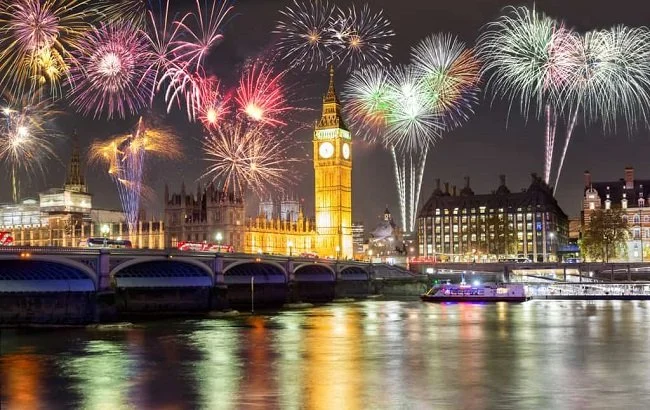
When I wrote Goodbye 2020 a year ago, I endeavoured to be philosophical and sanguine in my approach. It was a challenging year for all of us and for me it was further compounded by a bereavement. However, I strove to keep matters in perspective and tried to look at things in a broader context. I cannot be as even handed this time. 2021 has been a very difficult year for myself and my family and I will be glad to see the back of it. Nationally speaking, things haven’t been much better. I feel that we’ve squandered the initial progress that the COVID-19 vaccines offered. Obviously, I cannot do anything about the problems that the UK faces in 2022. However, I certainly intend to address some of the issues that I and my immediate family are facing. I am going to tackle some specific problems that need to be laid to rest and set myself some tangible goals to achieve. 2022 isn’t going to be something that just happens and I passively sit back and watch.
Getting older does have a few benefits. One of them, if you are fortunate enough to embrace the concept, is a degree of self awareness and the ability to be honest with yourself. Over the years I have tried to adjust my technological habits but ultimately I am a creature of habit. My use of technology and consumption of content has been determined by the decades I grew up in. Therefore, I am a PC user and prefer to sit in my office where I write, play games and peruse the internet. I have my desk set up in a way that suits my needs and I can go about my business in comfort. When away from my office, I rely heavily on my phone as an alternative platform. In some instances phone based apps offer a superior experience to the desktop or browser based PC alternatives. Banking being one example. For better or for worse this is how I do things and I am comfortable with these choices.
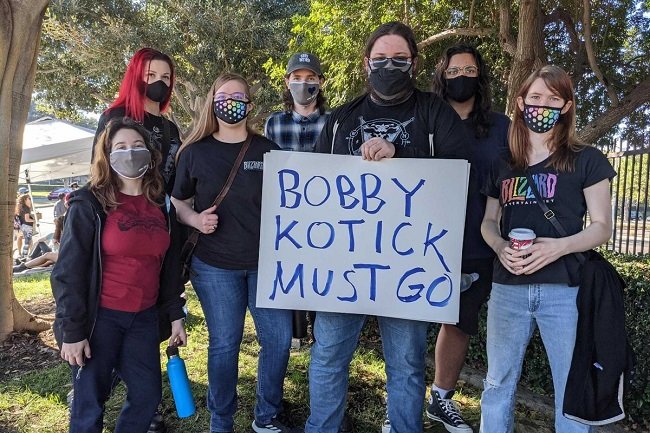
Usually in a post such as this, my primary focus would be writing about the games that I’ve played over the last twelve month and what it was about them that I specifically enjoyed. However, this year I feel that I must address the wider issues that have dominated the news regarding the video games industry. Simply put, several very high profile and successful triple A video game companies have been beset by scandals over the last twelve months. And these have been of such a nature that they have finally laid to rest the myth that some still cling to, that working “in video games” is somehow different from working in more traditional industries because it’s “cool”. It turns out that it has all the same failings as TV, music and film. The people at the top are abusive and broken and maltreat those at the coalface who do all the real work for precious little reward.

I can’t speak for others but my relationship with social media has certainly changed over the last two years. Whenever new internet technologies emerge, there is a brief period when it feels like some sort of new frontier. Often such innovations become a means of empowering the marginalised and the voiceless. For a while new platforms can even be a force for good. But eventually commercial interests creep in along with rules and regulations. Hence, it all inevitably takes a turn for the worst. The frontier is finally tamed and ends up being just another corporate space. Social media is certainly not a forum for discussing social issues or politics, instead being a medium for tribalism and rancour. Because of these factors and others, I have moderated my use of social media and it has proven extremely beneficial to my state of mind.

A very wise Vulcan once said “change is the essential process of all existence”. 2020 has demonstrated that unequivocally. How our privileged, pampered lives have altered over the last twelve months. We’ve had to stay at home, curtail our social interactions and reflect upon the meaning of existence. I appreciate that things are relative, so it’s not helpful to compare the concerns that discombobulate people today with the realities that folk had to endure during World War II for example. I won’t trivialise the sense of isolation and desperation some folk have felt over the lockdown. From my own perspective, my life as a carer is regimented and focused, so 2020 hasn’t really “cramped my style” to use an old fashioned phrase. However, several things happened over the course of the year that have had an impact upon myself and my family.
Let it suffice to say that due to current “circumstances”, Mrs P and I have watched a lot more TV this year. However, rather than just reiterate what we’ve viewed, which is already covered in my recurring blog post The Idiot Box, I thought I’d take the time to reflect upon some wider issues. TV has become a major source not only of entertainment but psychological support during this year’s social restrictions. The closure of cinemas for the majority of the past twelve months has meant that TV has had little or no competition. Furthermore, many of the films that may well have drawn audiences away, have come to the smaller screens a lot quicker. Never has so much TV been voraciously consumed. There’s also been a degree of nostalgia as viewers have watched popular shows at broadly similar times, reviving that sense of a shared experience that was so common in the seventies and eighties. However, the pandemic has also caused a slow down in TV production. Will the shortage of new content that many have predicted finally manifest itself next year?

In 2019, I went to the cinema just once to see Star Wars: The Rise of Skywalker. I didn’t write a summary of the films I’d seen throughout that year, as I felt that mainstream releases had become far too formulaic and dull. 2020 has done little to change my perspective. The global pandemic has meant that Cinemas have spent most of the time closed and therefore many of this year’s major film releases have ended up on video on demand services. A few titles remain indefinitely postponed, such as the latest Bond movie No Time to Die, while Sony Pictures wait to see if “normality” resumes. But a film that is sitting on the shelf is not a film making money. Hence, Warner Bros. have announced that all their major releases for 2021 will be across multiple platforms simultaneously, thus ensuring a broader flow of revenue. This has not pleased director’s such as Christopher Nolan who argue passionately regarding the merits of cinema. But I doubt Mr. Nolan has ever had to endure an out of focus screening in the wrong aspect ratio at Cineworld, Rochester, where audiences talk and mess with their phones continuously.
Retrospective posts such as this can be a sprawling mess. There is also potential to cover the same old ground that I’ve covered in my monthly summaries “A Month in Gaming”. So I’ll try to be as succinct as I can. Firstly I won’t dwell too much on the iniquities of the video game industry as I’ve covered that elsewhere. Let it suffice to say that the notion of the “rock star developer” and the ethical publisher have proven false. Buying a triple A mainstream game is as morally compromised as buying a pair of jeans made by child labour. But let’s not get caught up in ethics. That’s another post. The pandemic meant that I, like many others, had far more leisure time this year and hence I spent that time gaming. It’s been a good year for video games publishers and the revenue has rolled in. Have I had fun while playing more games? Yes. The games have proven engaging and they also provide a lot to write about, so it’s a win, win scenario from my perspective.

In my lifetime technology has always been promoted as something that improves our lives, especially at a domestic level. The VCR in the eighties is a prime example of this. It liberated us from having to watch TV at a specific time and place. Then there the personal computer, which brought into our own homes tools, that until that point, had been exclusive to the office. And for all the ill that it brings, the internet has certainly made the world demonstrably smaller. It’s revolutionised shopping and has improved the administration of services. So overall, I still feel that technology is a force for good. However there have been changes. In recent years technology on a domestic level has ceased to be quite as transformative and become more of a disposable commodity. Tech is now a fashion accessory, with a distinct lifecycle and upgrade treadmill. It is fast becoming just another form of superfluous crap to fill your home with.
Despite the tumultuous events of the last twelve months and the accompanying emotional fallout that has followed in their wake, I’ve managed to keep writing throughout 2020. My output has been somewhat inconsistent this year and I’ve noticed some changes in what I write about. This is inevitable as one’s tastes and focus changes naturally change over time. I’m finding it tougher to write enthusiastically about the video games industry per se, as it has hardly covered itself in glory this year. However, I still enjoy writing film reviews although I haven’t set foot inside a cinema for over a year. I suspect that this will remain the case for much of 2021. My writing has broadened in its scope and I find myself writing social commentary about various aspects of life, rather than just posting articles about my hobbies. Sharing my thoughts on the pandemic itself and “caring for the elderly” has proven very cathartic. But as I’ve stated many times before, writing is one of the ways in which I make sense of the world around me.

Last year I tried to write a measured and balanced post about the passing of the year. Sadly this time round my attitude toward the departing 12-month period is somewhat binary. Yes there were a couple of highlights to 2019 but most of it was an uphill struggle and therefore not worth celebrating. It can frankly sod off and won’t be missed. The two high points were my son’s wedding in August and my renewed enthusiasm for blogging that came about due to the Blaugust writing event. But overall 2019 was a repetitive and somewhat depressing grind having to continuously deal with multiple family illnesses, numerous hospital visits and then at the end of the year a bereavement. Yes, these are things that happened to us all eventually and there is no escaping them but I appear to be trapped in this facet of the “circle of life”. Furthermore, until certain situations resolve themselves, I cannot make or implement any long-term plans. 2019 has been in many ways about just treading water.

Life is often cyclical, if you don’t believe me go watch The Lion King. I started 2018 playing The Lord of the Rings Online and by writing a post about how gamers collectively seem to repeat the same mistakes. And as the year and indeed the decade ends, I find myself once again playing the Yule Festival in LOTRO and reflecting upon how some games that garnered criticism over their egregious business models, have ended up as huge hits. It would appear that gamers are their own worst enemy. I shall leave the psychological analysis of paradox to others. From my perspective, irrespective of the iniquities of the video game industry and certain quarters of the gaming community, it has been a good year, gaming wise. I have enjoyed my time playing MMOs such as Star Trek Online, The Elder Scrolls Online and the aforementioned LOTRO. These and other titles have entertained me, provided me with an opportunity to unwind as well as affording me some much-needed social interaction. I particularly enjoy Wednesday evenings when I log into my Discord server and then chat and play collaboratively with longstanding gaming friends.
One of the benefits that comes with age (for some people at least), if the gift of realistic expectations. Having reached 51 years, I no longer harbour thoughts that each year will be a rollercoaster ride of excitement, mirth and personal gain. Nor do I count on the stars aligning so that I make my fortune and retire peacefully to the Cayman Islands, to live the life of a tax exile. If New Year’s Eve rolls round and no one has died, I’m not looking at being tried for murder and there’s still gin in the drinks cabinet, then I usually deem the previous twelve months an acceptable year. However, despite even these fairly lose and undemanding criteria I feel compelled to say that 2018 was bollocks and that I won’t be sad to see the back of it.

I did not manage to maintain my writing schedule this year and have not posted everyday as I would’ve liked. I have produced over two hundred and seventy posts but still feel I could have done more. Blaugust was a welcome burst of enthusiasm that I managed to sustain for September and October, but I lost momentum in the run up to Christmas. At least I know what the root cause is which puts me a step nearer to resolving it. Having written several posts in the past about “writers block” and the other perennial excuse of not having anything to write about, I seem to have squarely fallen into both those traps. At present I find that motivating myself is the key problem. If I haven’t started writing something by midday, then it more than often gets left for the day. If I intend to escape this malaise, then I shall have to establish a far stricter writing schedule for 2019 and endeavour to do my writing first thing in the morning, when I am most focused.

Throughout my adult life I have always gone to the cinema as a leisure activity. 2018 has been of note in this regard as it’s the year I’ve been to the cinema the least. I have visited my local multiplex just three times over the last twelve months. It’s not that good quality movies are not made anymore. Far from it. It’s just that they don’t always get released theatrically. Furthermore, the cost to entertainment ratio has simply become too much of a gamble. Standard tickets are priced between £12 to £15 locally and I resent such an outlay for a film that may only be adequate or worse. Perhaps my outlook on pricing is unreasonable but I am not going to pay such money for mediocre entertainment. I don’t expect every movie I see to be a cinematic milestone or genre classic but nor do I expect it to be an exercise in indifference. If I had paid such ticket prices to see The Predator or Death Wish at my local Cineworld, then I would have been singularly annoyed. Mercifully I saw them both at home and therefore at a much lower cost.
Taxation and Wealth Distribution in the UK
There was a rather angry man on BBC Question Time on Thursday night who was somewhat upset over the tax proposals set out in the Labour Party manifesto. Labour intend to increase the higher rate of tax from 40% to 45% if they are elected. The person in question by their own admission earns £80,000 plus a year and he didn’t believe he was in the top 8% of UK earners. He therefore objected to the fact that under a Labour Government he would face a tax increase. Unfortunately this individual was mistaken. According to figures from HMRC, he is clearly one of 4.3 million people in the higher tax category. Perhaps what he found incongruous was the fact that he falls into a demographic that includes people on his salary all the way to multimillionaires. However, at a salary of over £80,000 a year, he is earning way above the UK average. I think this is what flummoxes people so much. There is an assumption that wealth is evenly distributed throughout the working age UK population and that any graph showing salaries is a gentle curve. Sadly, this is not the case as a little research will show.
There was a rather angry man on BBC Question Time on Thursday night who was somewhat upset over the tax proposals set out in the Labour Party manifesto. Labour intend to increase the higher rate of tax from 40% to 45% if they are elected. The person in question by their own admission earns £80,000 plus a year and he didn’t believe he was in the top 8% of UK earners. He therefore objected to the fact that under a Labour Government he would face a tax increase. Unfortunately this individual was mistaken. According to figures from HMRC, he is clearly one of 4.3 million people in the higher tax category. Perhaps what he found incongruous was the fact that he falls into a demographic that includes people on his salary all the way to multimillionaires. However, at a salary of over £80,000 a year, he is earning way above the UK average. I think this is what flummoxes people so much. There is an assumption that wealth is evenly distributed throughout the working age UK population and that any graph showing salaries is a gentle curve. Sadly, this is not the case as a little research will show.
First of all, here are the current UK Tax Rates for financial year 2019-20.
Personal allowance Up to £12,500 0%
Basic rate £12,501 to £50,000 20%
Higher rate £50,001 to £150,000 40%
Additional rate Over £150,001 45%
In 2018-19, an estimated 26.4 million individuals (82.4%) are Basic Rate taxpayers, 4.3 million individuals (13.8%) are Higher Rate taxpayers and 393,000 (1.3%) are Additional Rate taxpayers. That is a total of 31 million people paying taxes in the UK. However the working age population of the United Kingdom is 52 million. That means around 21 million people (43%) earn less than £12,500 a year and are below the Basic Rate tax threshold and therefore do not pay income tax. With these numbers in mind it then become very clear why the median annual income in the UK is £28,677 for full-time employees. There are many jobs that the public perceive as being well paid that in fact are not. Nurses, Policemen and Teachers are classic examples of public servants that fall into this category. The starting salary for all of these professions is between £22,000 and £24,000 per annum.
Once you start looking into subjects such as earnings, taxation and the distribution of wealth in the UK, it becomes very clear that there is a high level of economic inequality. One’s political perspective upon such matters is both personal and subjective but the facts are undeniable. Wealth in the UK remains primarily in the hands of the top 20% who have an income more than 12 times the amount earned by the poorest 20%. Those who are the least financially compensated for their work often find themselves having to supplement their income with such government benefits as Tax Credits. Sadly due to the increasing cost of living, especially with regard to rented accommodation, many families find themselves in poverty. Yet paradoxically the UK is sixth-largest national economy in the world measured by nominal gross domestic product (GDP), ninth largest by purchasing power parity (PPP), and twenty second largest by GDP per capita, comprising 3.3% of world GDP. It’s all very sobering and food for thought. Perhaps the irate man on BBC Question Time should reflect upon all this.
If you visit the websites for such UK tabloid newspapers as the Daily Express or the Daily Mail you will no doubt encounter prominent stories about Megan Markle, Nigel Farage and “immigrants”. If these two august institutions are short of column inches, they’ll run a piece about how some former celebrity has had the unmitigated gall and temerity to get old. I mean WTF? How dare they do what human beings are genetically disposed to do. It’s outrageous. Similarly, head over to the Unherd website and you’ll find foam flecked tirades regarding spurious points of contention over dubious subjects. Often the topic being harangued is incredibly niche and I’ve never heard of it before or even considered it being a thing. These sort of talking points are not about informing, debating and most certainly aren’t about thinking. They exist to provoke reactions.
Yesterday afternoon, Nigel Farage the Member of Parliament for Clacton and leader of the Reform Party, held a press conference in which he declared that he would be resigning his seat and thus triggering a by-election. He cited the following list of grievances that have led to him making this decision. That the Parliamentary standards investigations were being politicised, the media and other parties were conducting a coordinated campaign against him and that he had endured years of threats and physical attacks. He further asserted that his family’s privacy and safety had been breached as well. He finished by alleging that the political system was repeatedly changing rules to obstruct Reform and that he was the most attacked politician in the UK. Rather than be judged by the legacy media and the “establishment”, he would rather put the issue of his political integrity to the electorate of Clacton. He even offered to pay for the cost of the by-election.
UK Prime Minister, Sir Keir Starmer has resigned and intends to leave office before the parliamentary summer recess. By then Andy Burnham will more than likely be voted leader of the Labour Party and by default will become the new Prime Minister. Due to the current size of the incumbent Government’s majority, there is no pressing reason for a General Election that the UK’s right wing tabloid press is currently calling for. Whether this provides the Government with the reset they’re hoping for when Parliament reconvenes in autumn remains to be seen. With seven Prime Ministers coming and going in a decade, there are some serious questions to be asked about the current state of UK politics. However, the mechanics of contemporary politics, the decline of clearly defined ideologies and the people that seek elected office to be our leaders are only half of the problem. The other major impediment to the UK’s democracy functioning properly is the electorate.
Andy Burnham successfully won the Makerfield by-election yesterday, returning him to the House of Commons as a member of Parliament after holding the position of Mayor of Manchester for the past nine years. Prior to this, Burnham was Labour MP for Leigh from 2001 and 2017. He served in both the Tony Blair and Gordon Brown administrations and has held such senior governmental posts as Chief Secretary to the Treasury, Secretary of State for Culture, Media and Sport and Secretary of State for Health. His return to Parliamentary politics is likely to result in a leadership challenge to incumbent Prime Minister Keir Starmer. When speaking after winning yesterday’s by-election Burnham spoke of “a final chance for change” the current trajectory of the present Labour Government. However, I don’t wish to focus on any of this at present. I am far more interested in the above picture, taken as the results were announced and what it says about UK politics.
The UK Government has formerly announced its intention to ban under-16s from using social media. This is due to increasing public pressure that “something must be done” about the perceived iniquities of many online platforms. However, as with most complex social problems of this nature, no one has any clear or practical ideas as to what that “something” is. It remains a nebulous, non-specific panacea and clearly someone else’s job to identify and implement. As ever, why choose a nuanced and multifaceted solution to a complex problem, when it is far easier and politically expedient to just “ban” something. The former requires effort and a degree of thinking. If such an approach fails it also means that those who came up with it now carry the can. The latter dumps the problem in the lap of various third parties, who can then be conveniently blamed when the ill conceived policy fails.
Every Thursday, Mrs P volunteers at a food bank that is run from a local church; Avery Hill Christian Fellowship. Today there was a shortage of staff so I agreed to help out. It proved to be an equitable arrangement as she collated the various orders and I packed the bags and took them to the respective clients. The food bank itself is organised and administered by the Trussell Trust, a UK based NGO and charity providing emergency food and support to people locked in poverty. It is open for 2 to 3 hours a week depending upon demand. During today’s session we served just six people. Some weeks its can be triple that amount. Upon closure, a member of staff from the Trussel Trust did a stock take and collated a list of what was needed. This is provided by various local church communities via parishioners donations, as well as local supermarkets who have an arrangement with the trust to provide surplus stock or good approaching the end of their sales window.
Under the First Past the Post electoral system, the candidate(s) receiving the highest number of votes in each constituency are elected. This system is used in the UK during general elections and in some local elections, such as those recently conducted in England. An alternative approach is the system of proportional representation, which aims to allocate seats in a manner that reflects the popularity of various parties. Both the Scottish Parliament and the Senedd in Wales employ systems of Proportional Representation. Historically, first-past-the-post has been seen as advantageous for the Conservative and Labour parties. It poses challenges for smaller parties whose votes are distributed evenly across different regions, making it difficult for them to secure seats. This dynamic effectively prevents potential competitors to the Conservatives and Labour from succeeding electorally. Consequently, due to this situation, voters may hesitate to support these smaller parties from the outset.
There are local elections being held across the UK today. Voters in Scotland and Wales will elect representatives to their respective national parliaments, while in England the voting is for local councils and regional mayors. These are the first major elections to be held in the UK since the 2024 General Election which saw the Conservative government of fourteen years, fall to the Labour Party. Midterm elections are often a litmus test for how the electorate think the national government are performing although local issues are also a major factor. The consensus among political journalists and commentators is that the incumbent government is polling extremely poorly and will subsequently face a backlash. In recent years the UK has seen a decline in traditional two party voting with Reform UK and the Greens gaining significant traction among the electorate. Hence today’s elections may well see both these parties make significant gains.
Our household is currently trying to reduce our monthly overheads in response to the ever increasing cost of living. April is not that far away and a great many service providers will increase their rates and tariff as the new financial year begins. Then there is the ongoing effects, both direct and indirect, of inflation to consider. Although the UK inflation rate is dropping, currently sitting at 3.4% in December 2025, food inflation remains higher at 4.5%. Being based in the UK, salaries and billed services tend to be administered monthly. You get paid usually at the end of the months and bills can turn up at any point, depending upon when you started a service. Any payments coming from central government, such as state pension or other benefits, are paid every 4 weeks. This means that there are 13 payments in a year. I thought it pertinent to clarify this point as other countries, such as the USA, favour a fortnightly financial cycle. Hence as a household we work around a monthly budget.
I don’t know if you have noticed that there are quite a lot of companies that have names taken from Tolkien’s Legendarium. At first glance, this seems innocuous enough. Tolkien’s writings grew in popularity over the seventies and eighties but since the release of the film trilogy at the start of the twenty-first century, his work has become more well known and been assimilated into our wider pop culture. Hence, it seems quite logical that a startup tech company, for example, would choose a name from his writings. No doubt the founders grew up reading The Lord of the Rings and are fans. That all seems plausible. However if you take a further look, it gets somewhat more complex. Here are four companies that have Tolkien based names.
“Managed decline” is a phrase that refers to the processes associated with the end of a specific lifecycle, with the goal of minimizing costs or other forms of loss. The concept originated in business where it referred to the management of companies and industries. More recently it is used in wider contexts. The concept gained prominence with regard to urban policy, particularly in the UK during the eighties when several major cities suffered economic and political collapse. Of late, the term has been applied to the UK, encompassing a systematic weakening of the economy, social structures, and cultural values, as well as its global political and diplomatic force. In each case, managed decline involves making strategic choices about resource allocation and accepting the consequences of those decisions. It is a complex issue with ethical and practical considerations, often sparking debate about the best way to address decline and reverse the process.
I still maintain a legacy presence on Twitter/X and I follow my local MP (member of Parliament) Louie French. It’s not something I especially relish as I am not a supporter of the Conservative party (or any other) and I did not vote for him in the last election. I just like to know what he is up to as he is the political representative for our constituency. As the Conservatives are out of power at present, to all intent and purposes, Mr French is a backbench MP although he has a minor position as Shadow Parliamentary Undersecretary (Culture, Media and Sport). However, with that being said he is hardly a key member of the shadow cabinet. Hence he focuses on constituency work and that which is generated by his shadow posting. He will also lend his voice, when required, to any major policy decision or statement made by his party.
Sunday 6th April is the start of a new financial year, here in the UK. According to data from numerous financial and economic institutions, an estimated million plus households will be facing annual increases of £400 to £500 as the proverbial “cost of living” goes up. Everything from Council Tax to Mobile and Broadband costs are being increased. Future cost hikes are expected in our energy and water utilities. As bills start going up across the country today, average wages remain stagnant. Middle-income and poorer households have been worst hit by this wage related issue. Hence the tabloid press have labelled the start of the new financial year as “Awful April”. Hyperbole aside, this is a very real issue which due to its complex, global causes, doesn’t have a quick fix solution.
I consider myself to be a grounded, rational individual. I am not excessively emotional. I like facts, data and reason as opposed to hyperbole, rhetoric and bluster. That being said, I am aware that the world is an imperfect place. Opinions are often not based upon empirical fact but personal perspective. Hence many people experience reality differently to me. They are driven by their feelings and other factors. However, despite these differences in philosophy, for most of my life the world has remained functional and over time slowly improved in subtle ways. Deference to expertise, a sense of community and basic pragmatism meant that people broadly pulled in the same direction. Of course there has always been dissent but it has been within a stable system. However, of late I feel that this era is now finally over. Things are no longer stable. We live in an uncertain world.
Newspapers were an integral part of UK culture in the seventies. During the week, they were delivered prior to going to work, so you would peruse them over breakfast. Alternatively you would buy one en route to your place of employment and read it on the bus or train. In a world before 24 hour, rolling news, they were the primary means of keeping the public abreast of events and as such, enjoyed a substantial audience. On occasions a newspaper story could make or break a political career or launch a crusading campaign to address a social ill. Newspapers were a force to be reckoned with and therefore a significant part of the socio-political landscape. However, due to a strong union presence within the workforce, the UKs newspapers often lagged behind other industries with regard to the technology.
The First Past the Post (FPTP) electoral system used in the United Kingdom, as well as in several other countries such as the US and India, has both advantages and disadvantages. However, despite being a simple and straightforward system it has been abandoned by many democracies in favour of more proportional and equitable methods. The primary criticism against FPTP is that it allows a minority of the electorate to return a majority government. Since 1935, there have been majority governments 90% of the time, but not one of them had the support of a majority of voters. At present, the current UK government has a majority of seats with just 43.6% of the votes. In the 2019 election they gained an extra 48 seats despite an increase of only 1.2% of the vote share.
Politicians have a distinct way of talking when being interviewed or giving a press conference. It is often characterised by a strategic use of language, centred around rhetorical devices, persuasion techniques and a careful framing of messages. Direct answers to questions are usually avoided, with tangential responses being preferred. Opinions and specific perspectives are frequently presented as facts. There is also a propensity to focus on “problems” and apportioning blame, rather than “solutions”. It’s important to note that the use of language in politics is a complex and dynamic process influenced by various factors, including cultural context, media dynamics, and the evolving political landscape. Different politicians may employ different communication strategies based on their individual styles and objectives. Here are some key aspects of how politicians use language:
The United Kingdom is one of the few democratic countries in the world that does not have a single, written constitution. Others include Canada, New Zealand and Israel. To date, its constitution is a combination of written and unwritten sources, including statutes, common law, conventions and somewhat esoterically, royal prerogatives. The reason for this is predominantly historical. Since 1688, Britain has not experienced a revolution or regime change, which often leads to a constitutional initiative, such as the American or the French Revolution. Britain’s constitution has evolved slowly over time under relative stability and as such, it has never been deemed necessary to list the fundamental laws and principles of the country's political system.
On Friday 15th September the former actor and comedian turned internet social commentator, Russell Brand, released a video on his YouTube channel addressing allegations about his personal life, ahead of a forthcoming UK current affairs documentary. Brand vehemently denied what he described as “very serious criminal allegations”. The following day Channel Four broadcast “Russell Brand: In Plain Sight”. During the course of the program Brand was accused by one woman of rape and by three others of sexual assaults, and emotional abuse between 2006 and 2013. During the course of the week, further claims have been made against him and that his “predatory” behaviour was an open secret within the TV industry. Furthermore, women would warn each other in advance if they had any dealing with him. All of which has played out against a mixture of broadsheet analysis, tabloid hyperbole, performative politics and internet bluster.
For those who live outside of the UK, let me categorically state that Brexit has broken British politics. Prior to 2016, national politics still broadly functioned along traditional party political lines, with income and class substantially determining voter allegiance. The big three cities (London, Birmingham and Liverpool) maintained their liberal dispositions and Scotland, Northern Ireland and Wales were dominated by their regional politics. Brexit changed all this creating fault lines that fell outside of the existing political status quo. Opinions differed based upon where you lived, how politically literate you were and even education. Your party political allegiance no longer indicated what stance you took on this matter. Furthermore, the discourse around this complex subject was quickly debased into a bipartisan culture war that was toxic and dangerous.
Okay, keep up as there’s a lot of ground to cover. The UK government is currently suffering in the opinion polls and after 13 years in office, is facing potential oblivion at the next general election. In an attempt to shore up support among the party faithful, the Prime Minister, Rishi Sunak, is currently pursuing a hardline with regard to immigration. According to Ipsos, as a political issue about 29% of the electorate consider immigration to be a major problem. The remainder either think current levels are manageable or have no substantive view on the matter. However, as a “culture war” issue that can be weaponized by the tabloid press, which often has direct links to the Conservative Party in the UK, immigration is a hill to die upon. Hence you will find a lot of rhetoric that is anti-immigration and any contrary view is tarred with trite pejorative terms such as “lefty”, “liberal” and “woke”.
Last April, the Election Act 2022 became law within the UK. The Act introduced a requirement for all those voting in-person to produce photo identification when attending a polling station. This is the first time that such an ID has been required. Prior to this, voters could either bring their polling card to verify their identity at the polling station, or confirm their registered address from the electoral roll with staff. Now a UK driving licence or passport are considered the primary means of identity. A list of additional photo identification that has been deemed acceptable, is available on the UK government website. For those members of the electorate who do not have any of the qualifying ID, there is a Voter Authority Certificate available, which can be applied for online. This photo ID is linked to the applicants National Insurance Number. For further impartial information on photo ID and registering to vote, visit the The Electoral Commission website.
I am writing this post from the perspective of a UK citizen, but the sentiments expressed are applicable to anyone who lives in a country where you have democratically elected local political representation. IE someone who is supposed to advocate on behalf of your community or for you personally as the duly elected political representative. Here in the UK, the country is divided into 650 constituencies, each returning one Member of Parliament. Irrespective of whether you voted for your MP or whether you support the political party that they belong to, they are obliged to represent you and advocate on your behalf, if you request it. Such is the relationship in principle between constituents and MPs in the UK. It is important to be aware that your local MP is not a delegate whose sole purpose is to represent majority constituency views. Under the UK political system, an MP makes decisions on behalf of constituents and can take a position counter to local opinion, if they feel that is in the best interest of the constituency.
It is difficult to write about the state of UK politics with any degree of intellectual rigour when the entire situation has become so utterly farcical. My initial reaction to the recent departure of Liz Truss after just 45 days in office, was to laugh with abject scorn and derision. She was destined to fail due to utter lack of ability. However, there is still the outstanding matter of the country lacking a credible and functional government to address inflation, the cost of living crisis and resolve all the issues stemming from Brexit. There are problematic national and international events taking place that need addressing. A united, pragmatic and empathetic government is required to solve both these short term and long term needs. Sadly, the governing party is riven with opposing factions and there is no commonly held policy or underlying ideology. The PM may well have changed but the underlying flaws remain.
Conservative Party has been in government in the UK since 2010. During that time there have been three Prime Ministers. Today we moved onto the fourth. After Boris Johnson resigned on 7th July, the nation has had to endure a tedious two month process in which the Conservative Party elects a new leader. That person then becomes the PM by default. Many readers unfamiliar with the UK political system may be surprised that a change of leader has not led to a General Election. That is because the Conservative Party still holds a parliamentary majority of 71 elected Members of Parliament. Hence it is still constitutionally quite able to govern, despite Boris Johnson being forced from office. Therefore party members vote for a new party leader who gets the top job by default. Remember that in the UK, the Prime Minister is not the head of state and does not have the executive powers of a President.
I try to keep my thoughts on political matters to a minimum here at Contains Moderate Peril, mainly because UK politics and the current state of discourse associated with it has become an absolute shit show in recent years. Brexit broke traditional politics and has made matters far more tribal and partisan. The two main parties have declined from having clear ideologies, identities and manifestos, to becoming either a lobby group for the specific demographic group that supports them, or a conflicted, divided and schizoid shadow of its former self. I’ll let you work out which is which. Politics is no longer about governing a nation for the benefit of all its citizens. Now you simply pick a side and join the ongoing culture war against everyone and everything else. This rotten system produces rotten leaders. Hence, when Alexander Boris de Pfeffel Johnson became Prime Minister in December 2019, it was clear that the nation was taking a major risk on such a man. His failings as a politician and a person are a matter of public record for anyone who has the eyes to see them.
The title for this post is a quote from The Hobbit by J.R.R. Tolkien. I’ve used it as a verbal cue to try and give readers an overview of the point I’m striving to convey. Because I want to talk about modern life in western civilization, specifically its complexity and increasing uncertainty. If you’re extremely wealthy you can mitigate these two points but I’m working on the premise that most of the people who read Contains Moderate Peril are not. The blogging community, of which I am a participant, is a diverse group but from what I’ve observed it’s not populated by millionaires. In fact most of the people I know, both online and in person, are just holding down a job, trying to keep a roof over their head and pay the bills. Often they’re doing the job they do in default of anything else and they’re at the very least ambivalent towards it. The pandemic has also brought home how fragile so-called “normality” is. Modern politics are also volatile and life in general just doesn’t seem as certain as it was twenty years ago.
The Conservative Party successfully held onto their “safe seat” of Old Bexley and Sidcup in yesterday’s closely watched by-election. However their overall majority was reduced by more than half amid a very low voter turnout. Conservative councillor Louie French becomes the country’s newest MP after winning 11,189 votes, more than 50 per cent of those cast, in the seat previously held by the former cabinet minister James Brokenshire. Mr Brokenshire died in October from lung cancer aged 53. The closest challenger was Labour’s Daniel Francis, who secured 6,711 as the Tory majority fell from nearly 19,000 to 4,478, the equivalent of a vote share swing of 10 per cent to Labour. Turnout in the constituency was just 34%, down from the almost 70% who voted in the 2019 general election.
The Importance of Voting in the December 12th 2019 UK General Election
The UK is having a General Election on Thursday, December 12th. The third in five years. Due to the current volatile state of national politics, existing party loyalties are not in anyway guaranteed. The European Election in May of this year showed that many of the UK electorate where voting tactically. Furthermore the shadow of Brexit looms ominously over the forthcoming General Election and will further impact upon existing voting patterns. Simply put, this is an election unlike others we’ve seen in recent times. The outcome will have far reaching consequences. If there is a majority Conservative government, then the UK will leave the EU with the current deal. Trade negotiations will ensue and the country will face a period of transition. There is also scope that the deal on offer is rejected by hard-line Conservative MPs and there could be a “No Deal Brexit”. Alternatively, a majority Labour government could lead to a second referendum on both leaving the EU and Scottish Independence. A hung parliament should also not be ruled out, leading to potential coalitions or a National Unity Government.
The UK is having a General Election on Thursday, December 12th. The third in five years. Due to the current volatile state of national politics, existing party loyalties are not in anyway guaranteed. The European Election in May of this year showed that many of the UK electorate where voting tactically. Furthermore the shadow of Brexit looms ominously over the forthcoming General Election and will further impact upon existing voting patterns. Simply put, this is an election unlike others we’ve seen in recent times. The outcome will have far reaching consequences. If there is a majority Conservative government, then the UK will leave the EU with the current deal. Trade negotiations will ensue and the country will face a period of transition. There is also scope that the deal on offer is rejected by hard-line Conservative MPs and there could be a “No Deal Brexit”. Alternatively, a majority Labour government could lead to a second referendum on both leaving the EU and Scottish Independence. A hung parliament should also not be ruled out, leading to potential coalitions or a National Unity Government.
Voting in December’s General Election is therefore very important. The next parliament will shape the United Kingdom’s long-term social and economic future as well as our relationship with the rest of the world. Yet research by the Electoral Commission has found that 17% of eligible voters in Great Britain, as many as 9.4 million people, are either missing from the electoral register or not registered at their current address. Major errors affect up to 5.6 million people. The Commission also highlighted substantial differences in registration levels between younger people, renters, low-income and black and ethnic minority people, compared with older white people who own their homes. Furthermore, analysis clearly shows that older and wealthier members of the electorate are far more likely to go out to the polling stations to vote or utilise the postal ballot service.
Earlier this year, voter ID was made compulsory in 10 voting districts despite voter impersonation making up just 3% of all alleged electoral offences at the previous local election. This experiment could become a national policy in the UK under a Conservative government. Presented as a means to tackle voter fraud, it has been seen by some as a deliberate way to disenfranchise specific groups of voters. Voters who are perceived not to be traditional Conservative Party supporters. The two specific types of personal ID required are a current UK Driver’s License or a UK Passport. Both of which have a significant cost associated with them and are statistically not so commonly held by certain socioeconomic groups in the UK. The same socioeconomic group that also tends not to vote regularly in elections and who are usually identified by pollsters as “leaning” towards the Labour Party.
The UK has an electorate of 46,843,896. The turnout in the 2017 General Election was 68.7%. However, 14,662,139 registered voters did not participate and chose not to vote. To put this significant number into context, the amount of uncast ballots is greater than the number of votes that any single party received. 13,636,684 people voted for the Conservative Party. 12,877,918 voted for the Labour Party. Simply put if these members of the electorate decide to vote in the forthcoming General Election it could significantly change the outcome. Since the 2016 EU Referendum, the UK electorate has become increasingly politically engaged. Current data doesn’t reflect to what level or how well-informed voters are but certainly people are more disposed towards adopting a political stance and acting upon it. Perhaps polling day on December 12th will have a larger turnout than usual, despite the time of the year. Or will voter apathy play a major role? If you wish to vote in the General Election then you must register by 11:59pm on 26th November.
If you visit the websites for such UK tabloid newspapers as the Daily Express or the Daily Mail you will no doubt encounter prominent stories about Megan Markle, Nigel Farage and “immigrants”. If these two august institutions are short of column inches, they’ll run a piece about how some former celebrity has had the unmitigated gall and temerity to get old. I mean WTF? How dare they do what human beings are genetically disposed to do. It’s outrageous. Similarly, head over to the Unherd website and you’ll find foam flecked tirades regarding spurious points of contention over dubious subjects. Often the topic being harangued is incredibly niche and I’ve never heard of it before or even considered it being a thing. These sort of talking points are not about informing, debating and most certainly aren’t about thinking. They exist to provoke reactions.
Yesterday afternoon, Nigel Farage the Member of Parliament for Clacton and leader of the Reform Party, held a press conference in which he declared that he would be resigning his seat and thus triggering a by-election. He cited the following list of grievances that have led to him making this decision. That the Parliamentary standards investigations were being politicised, the media and other parties were conducting a coordinated campaign against him and that he had endured years of threats and physical attacks. He further asserted that his family’s privacy and safety had been breached as well. He finished by alleging that the political system was repeatedly changing rules to obstruct Reform and that he was the most attacked politician in the UK. Rather than be judged by the legacy media and the “establishment”, he would rather put the issue of his political integrity to the electorate of Clacton. He even offered to pay for the cost of the by-election.
UK Prime Minister, Sir Keir Starmer has resigned and intends to leave office before the parliamentary summer recess. By then Andy Burnham will more than likely be voted leader of the Labour Party and by default will become the new Prime Minister. Due to the current size of the incumbent Government’s majority, there is no pressing reason for a General Election that the UK’s right wing tabloid press is currently calling for. Whether this provides the Government with the reset they’re hoping for when Parliament reconvenes in autumn remains to be seen. With seven Prime Ministers coming and going in a decade, there are some serious questions to be asked about the current state of UK politics. However, the mechanics of contemporary politics, the decline of clearly defined ideologies and the people that seek elected office to be our leaders are only half of the problem. The other major impediment to the UK’s democracy functioning properly is the electorate.
Andy Burnham successfully won the Makerfield by-election yesterday, returning him to the House of Commons as a member of Parliament after holding the position of Mayor of Manchester for the past nine years. Prior to this, Burnham was Labour MP for Leigh from 2001 and 2017. He served in both the Tony Blair and Gordon Brown administrations and has held such senior governmental posts as Chief Secretary to the Treasury, Secretary of State for Culture, Media and Sport and Secretary of State for Health. His return to Parliamentary politics is likely to result in a leadership challenge to incumbent Prime Minister Keir Starmer. When speaking after winning yesterday’s by-election Burnham spoke of “a final chance for change” the current trajectory of the present Labour Government. However, I don’t wish to focus on any of this at present. I am far more interested in the above picture, taken as the results were announced and what it says about UK politics.
The UK Government has formerly announced its intention to ban under-16s from using social media. This is due to increasing public pressure that “something must be done” about the perceived iniquities of many online platforms. However, as with most complex social problems of this nature, no one has any clear or practical ideas as to what that “something” is. It remains a nebulous, non-specific panacea and clearly someone else’s job to identify and implement. As ever, why choose a nuanced and multifaceted solution to a complex problem, when it is far easier and politically expedient to just “ban” something. The former requires effort and a degree of thinking. If such an approach fails it also means that those who came up with it now carry the can. The latter dumps the problem in the lap of various third parties, who can then be conveniently blamed when the ill conceived policy fails.
Every Thursday, Mrs P volunteers at a food bank that is run from a local church; Avery Hill Christian Fellowship. Today there was a shortage of staff so I agreed to help out. It proved to be an equitable arrangement as she collated the various orders and I packed the bags and took them to the respective clients. The food bank itself is organised and administered by the Trussell Trust, a UK based NGO and charity providing emergency food and support to people locked in poverty. It is open for 2 to 3 hours a week depending upon demand. During today’s session we served just six people. Some weeks its can be triple that amount. Upon closure, a member of staff from the Trussel Trust did a stock take and collated a list of what was needed. This is provided by various local church communities via parishioners donations, as well as local supermarkets who have an arrangement with the trust to provide surplus stock or good approaching the end of their sales window.
Under the First Past the Post electoral system, the candidate(s) receiving the highest number of votes in each constituency are elected. This system is used in the UK during general elections and in some local elections, such as those recently conducted in England. An alternative approach is the system of proportional representation, which aims to allocate seats in a manner that reflects the popularity of various parties. Both the Scottish Parliament and the Senedd in Wales employ systems of Proportional Representation. Historically, first-past-the-post has been seen as advantageous for the Conservative and Labour parties. It poses challenges for smaller parties whose votes are distributed evenly across different regions, making it difficult for them to secure seats. This dynamic effectively prevents potential competitors to the Conservatives and Labour from succeeding electorally. Consequently, due to this situation, voters may hesitate to support these smaller parties from the outset.
There are local elections being held across the UK today. Voters in Scotland and Wales will elect representatives to their respective national parliaments, while in England the voting is for local councils and regional mayors. These are the first major elections to be held in the UK since the 2024 General Election which saw the Conservative government of fourteen years, fall to the Labour Party. Midterm elections are often a litmus test for how the electorate think the national government are performing although local issues are also a major factor. The consensus among political journalists and commentators is that the incumbent government is polling extremely poorly and will subsequently face a backlash. In recent years the UK has seen a decline in traditional two party voting with Reform UK and the Greens gaining significant traction among the electorate. Hence today’s elections may well see both these parties make significant gains.
Our household is currently trying to reduce our monthly overheads in response to the ever increasing cost of living. April is not that far away and a great many service providers will increase their rates and tariff as the new financial year begins. Then there is the ongoing effects, both direct and indirect, of inflation to consider. Although the UK inflation rate is dropping, currently sitting at 3.4% in December 2025, food inflation remains higher at 4.5%. Being based in the UK, salaries and billed services tend to be administered monthly. You get paid usually at the end of the months and bills can turn up at any point, depending upon when you started a service. Any payments coming from central government, such as state pension or other benefits, are paid every 4 weeks. This means that there are 13 payments in a year. I thought it pertinent to clarify this point as other countries, such as the USA, favour a fortnightly financial cycle. Hence as a household we work around a monthly budget.
I don’t know if you have noticed that there are quite a lot of companies that have names taken from Tolkien’s Legendarium. At first glance, this seems innocuous enough. Tolkien’s writings grew in popularity over the seventies and eighties but since the release of the film trilogy at the start of the twenty-first century, his work has become more well known and been assimilated into our wider pop culture. Hence, it seems quite logical that a startup tech company, for example, would choose a name from his writings. No doubt the founders grew up reading The Lord of the Rings and are fans. That all seems plausible. However if you take a further look, it gets somewhat more complex. Here are four companies that have Tolkien based names.
“Managed decline” is a phrase that refers to the processes associated with the end of a specific lifecycle, with the goal of minimizing costs or other forms of loss. The concept originated in business where it referred to the management of companies and industries. More recently it is used in wider contexts. The concept gained prominence with regard to urban policy, particularly in the UK during the eighties when several major cities suffered economic and political collapse. Of late, the term has been applied to the UK, encompassing a systematic weakening of the economy, social structures, and cultural values, as well as its global political and diplomatic force. In each case, managed decline involves making strategic choices about resource allocation and accepting the consequences of those decisions. It is a complex issue with ethical and practical considerations, often sparking debate about the best way to address decline and reverse the process.
I still maintain a legacy presence on Twitter/X and I follow my local MP (member of Parliament) Louie French. It’s not something I especially relish as I am not a supporter of the Conservative party (or any other) and I did not vote for him in the last election. I just like to know what he is up to as he is the political representative for our constituency. As the Conservatives are out of power at present, to all intent and purposes, Mr French is a backbench MP although he has a minor position as Shadow Parliamentary Undersecretary (Culture, Media and Sport). However, with that being said he is hardly a key member of the shadow cabinet. Hence he focuses on constituency work and that which is generated by his shadow posting. He will also lend his voice, when required, to any major policy decision or statement made by his party.
Sunday 6th April is the start of a new financial year, here in the UK. According to data from numerous financial and economic institutions, an estimated million plus households will be facing annual increases of £400 to £500 as the proverbial “cost of living” goes up. Everything from Council Tax to Mobile and Broadband costs are being increased. Future cost hikes are expected in our energy and water utilities. As bills start going up across the country today, average wages remain stagnant. Middle-income and poorer households have been worst hit by this wage related issue. Hence the tabloid press have labelled the start of the new financial year as “Awful April”. Hyperbole aside, this is a very real issue which due to its complex, global causes, doesn’t have a quick fix solution.
I consider myself to be a grounded, rational individual. I am not excessively emotional. I like facts, data and reason as opposed to hyperbole, rhetoric and bluster. That being said, I am aware that the world is an imperfect place. Opinions are often not based upon empirical fact but personal perspective. Hence many people experience reality differently to me. They are driven by their feelings and other factors. However, despite these differences in philosophy, for most of my life the world has remained functional and over time slowly improved in subtle ways. Deference to expertise, a sense of community and basic pragmatism meant that people broadly pulled in the same direction. Of course there has always been dissent but it has been within a stable system. However, of late I feel that this era is now finally over. Things are no longer stable. We live in an uncertain world.
Newspapers were an integral part of UK culture in the seventies. During the week, they were delivered prior to going to work, so you would peruse them over breakfast. Alternatively you would buy one en route to your place of employment and read it on the bus or train. In a world before 24 hour, rolling news, they were the primary means of keeping the public abreast of events and as such, enjoyed a substantial audience. On occasions a newspaper story could make or break a political career or launch a crusading campaign to address a social ill. Newspapers were a force to be reckoned with and therefore a significant part of the socio-political landscape. However, due to a strong union presence within the workforce, the UKs newspapers often lagged behind other industries with regard to the technology.
The First Past the Post (FPTP) electoral system used in the United Kingdom, as well as in several other countries such as the US and India, has both advantages and disadvantages. However, despite being a simple and straightforward system it has been abandoned by many democracies in favour of more proportional and equitable methods. The primary criticism against FPTP is that it allows a minority of the electorate to return a majority government. Since 1935, there have been majority governments 90% of the time, but not one of them had the support of a majority of voters. At present, the current UK government has a majority of seats with just 43.6% of the votes. In the 2019 election they gained an extra 48 seats despite an increase of only 1.2% of the vote share.
Politicians have a distinct way of talking when being interviewed or giving a press conference. It is often characterised by a strategic use of language, centred around rhetorical devices, persuasion techniques and a careful framing of messages. Direct answers to questions are usually avoided, with tangential responses being preferred. Opinions and specific perspectives are frequently presented as facts. There is also a propensity to focus on “problems” and apportioning blame, rather than “solutions”. It’s important to note that the use of language in politics is a complex and dynamic process influenced by various factors, including cultural context, media dynamics, and the evolving political landscape. Different politicians may employ different communication strategies based on their individual styles and objectives. Here are some key aspects of how politicians use language:
The United Kingdom is one of the few democratic countries in the world that does not have a single, written constitution. Others include Canada, New Zealand and Israel. To date, its constitution is a combination of written and unwritten sources, including statutes, common law, conventions and somewhat esoterically, royal prerogatives. The reason for this is predominantly historical. Since 1688, Britain has not experienced a revolution or regime change, which often leads to a constitutional initiative, such as the American or the French Revolution. Britain’s constitution has evolved slowly over time under relative stability and as such, it has never been deemed necessary to list the fundamental laws and principles of the country's political system.
On Friday 15th September the former actor and comedian turned internet social commentator, Russell Brand, released a video on his YouTube channel addressing allegations about his personal life, ahead of a forthcoming UK current affairs documentary. Brand vehemently denied what he described as “very serious criminal allegations”. The following day Channel Four broadcast “Russell Brand: In Plain Sight”. During the course of the program Brand was accused by one woman of rape and by three others of sexual assaults, and emotional abuse between 2006 and 2013. During the course of the week, further claims have been made against him and that his “predatory” behaviour was an open secret within the TV industry. Furthermore, women would warn each other in advance if they had any dealing with him. All of which has played out against a mixture of broadsheet analysis, tabloid hyperbole, performative politics and internet bluster.
For those who live outside of the UK, let me categorically state that Brexit has broken British politics. Prior to 2016, national politics still broadly functioned along traditional party political lines, with income and class substantially determining voter allegiance. The big three cities (London, Birmingham and Liverpool) maintained their liberal dispositions and Scotland, Northern Ireland and Wales were dominated by their regional politics. Brexit changed all this creating fault lines that fell outside of the existing political status quo. Opinions differed based upon where you lived, how politically literate you were and even education. Your party political allegiance no longer indicated what stance you took on this matter. Furthermore, the discourse around this complex subject was quickly debased into a bipartisan culture war that was toxic and dangerous.
Okay, keep up as there’s a lot of ground to cover. The UK government is currently suffering in the opinion polls and after 13 years in office, is facing potential oblivion at the next general election. In an attempt to shore up support among the party faithful, the Prime Minister, Rishi Sunak, is currently pursuing a hardline with regard to immigration. According to Ipsos, as a political issue about 29% of the electorate consider immigration to be a major problem. The remainder either think current levels are manageable or have no substantive view on the matter. However, as a “culture war” issue that can be weaponized by the tabloid press, which often has direct links to the Conservative Party in the UK, immigration is a hill to die upon. Hence you will find a lot of rhetoric that is anti-immigration and any contrary view is tarred with trite pejorative terms such as “lefty”, “liberal” and “woke”.
Last April, the Election Act 2022 became law within the UK. The Act introduced a requirement for all those voting in-person to produce photo identification when attending a polling station. This is the first time that such an ID has been required. Prior to this, voters could either bring their polling card to verify their identity at the polling station, or confirm their registered address from the electoral roll with staff. Now a UK driving licence or passport are considered the primary means of identity. A list of additional photo identification that has been deemed acceptable, is available on the UK government website. For those members of the electorate who do not have any of the qualifying ID, there is a Voter Authority Certificate available, which can be applied for online. This photo ID is linked to the applicants National Insurance Number. For further impartial information on photo ID and registering to vote, visit the The Electoral Commission website.
I am writing this post from the perspective of a UK citizen, but the sentiments expressed are applicable to anyone who lives in a country where you have democratically elected local political representation. IE someone who is supposed to advocate on behalf of your community or for you personally as the duly elected political representative. Here in the UK, the country is divided into 650 constituencies, each returning one Member of Parliament. Irrespective of whether you voted for your MP or whether you support the political party that they belong to, they are obliged to represent you and advocate on your behalf, if you request it. Such is the relationship in principle between constituents and MPs in the UK. It is important to be aware that your local MP is not a delegate whose sole purpose is to represent majority constituency views. Under the UK political system, an MP makes decisions on behalf of constituents and can take a position counter to local opinion, if they feel that is in the best interest of the constituency.
It is difficult to write about the state of UK politics with any degree of intellectual rigour when the entire situation has become so utterly farcical. My initial reaction to the recent departure of Liz Truss after just 45 days in office, was to laugh with abject scorn and derision. She was destined to fail due to utter lack of ability. However, there is still the outstanding matter of the country lacking a credible and functional government to address inflation, the cost of living crisis and resolve all the issues stemming from Brexit. There are problematic national and international events taking place that need addressing. A united, pragmatic and empathetic government is required to solve both these short term and long term needs. Sadly, the governing party is riven with opposing factions and there is no commonly held policy or underlying ideology. The PM may well have changed but the underlying flaws remain.
Conservative Party has been in government in the UK since 2010. During that time there have been three Prime Ministers. Today we moved onto the fourth. After Boris Johnson resigned on 7th July, the nation has had to endure a tedious two month process in which the Conservative Party elects a new leader. That person then becomes the PM by default. Many readers unfamiliar with the UK political system may be surprised that a change of leader has not led to a General Election. That is because the Conservative Party still holds a parliamentary majority of 71 elected Members of Parliament. Hence it is still constitutionally quite able to govern, despite Boris Johnson being forced from office. Therefore party members vote for a new party leader who gets the top job by default. Remember that in the UK, the Prime Minister is not the head of state and does not have the executive powers of a President.
I try to keep my thoughts on political matters to a minimum here at Contains Moderate Peril, mainly because UK politics and the current state of discourse associated with it has become an absolute shit show in recent years. Brexit broke traditional politics and has made matters far more tribal and partisan. The two main parties have declined from having clear ideologies, identities and manifestos, to becoming either a lobby group for the specific demographic group that supports them, or a conflicted, divided and schizoid shadow of its former self. I’ll let you work out which is which. Politics is no longer about governing a nation for the benefit of all its citizens. Now you simply pick a side and join the ongoing culture war against everyone and everything else. This rotten system produces rotten leaders. Hence, when Alexander Boris de Pfeffel Johnson became Prime Minister in December 2019, it was clear that the nation was taking a major risk on such a man. His failings as a politician and a person are a matter of public record for anyone who has the eyes to see them.
The title for this post is a quote from The Hobbit by J.R.R. Tolkien. I’ve used it as a verbal cue to try and give readers an overview of the point I’m striving to convey. Because I want to talk about modern life in western civilization, specifically its complexity and increasing uncertainty. If you’re extremely wealthy you can mitigate these two points but I’m working on the premise that most of the people who read Contains Moderate Peril are not. The blogging community, of which I am a participant, is a diverse group but from what I’ve observed it’s not populated by millionaires. In fact most of the people I know, both online and in person, are just holding down a job, trying to keep a roof over their head and pay the bills. Often they’re doing the job they do in default of anything else and they’re at the very least ambivalent towards it. The pandemic has also brought home how fragile so-called “normality” is. Modern politics are also volatile and life in general just doesn’t seem as certain as it was twenty years ago.
The Conservative Party successfully held onto their “safe seat” of Old Bexley and Sidcup in yesterday’s closely watched by-election. However their overall majority was reduced by more than half amid a very low voter turnout. Conservative councillor Louie French becomes the country’s newest MP after winning 11,189 votes, more than 50 per cent of those cast, in the seat previously held by the former cabinet minister James Brokenshire. Mr Brokenshire died in October from lung cancer aged 53. The closest challenger was Labour’s Daniel Francis, who secured 6,711 as the Tory majority fell from nearly 19,000 to 4,478, the equivalent of a vote share swing of 10 per cent to Labour. Turnout in the constituency was just 34%, down from the almost 70% who voted in the 2019 general election.
The New Prime Minister of the United Kingdom
From time to time, I have written what can broadly be classified as political posts. Most of these have been designed to present an overview to those readers who live outside of the UK and may not be familiar with the subtleties of British politics. Furthermore, I am not affiliated to any of the major UK political parties and broadly see myself as politically homeless at present. This post is a brief overview on today’s change in UK Prime Minister and is intended to explain how this situation has occurred and what happens next.
From time to time, I have written what can broadly be classified as political posts. Most of these have been designed to present an overview to those readers who live outside of the UK and may not be familiar with the subtleties of British politics. Furthermore, I am not affiliated to any of the major UK political parties and broadly see myself as politically homeless at present. This post is a brief overview on today’s change in UK Prime Minister and is intended to explain how this situation has occurred and what happens next.
In the 2017 General Election the Conservative Party managed to bolster its reduced numbers in the House of Parliament by doing a deal with the Democratic Unionist Party of Northern Ireland, thus having sufficient seats to form a government. The leader of the Conservative party was at that time Theresa May, so by default she became the 54th Prime Minister of the UK. However, the issue of Brexit currently falls outside of traditional party lines and therefore cannot be seen purely as a “Left versus Right” problem. The Conservative Party has been and remains divided over Brexit and Theresa May has been fighting a running battle not only with opposition parties but with half of her own backbenchers. Due to current parliamentary arithmetic she has been unable to find any support for her Brexit Withdrawal Agreement and effectively lost the ability to lead her own party. Her departure from the office of Prime Minister is down to her own party, who concluded that she couldn’t deliver Brexit in a manner deemed suitable nor win a General Election. Hence, she was politically forced to go.
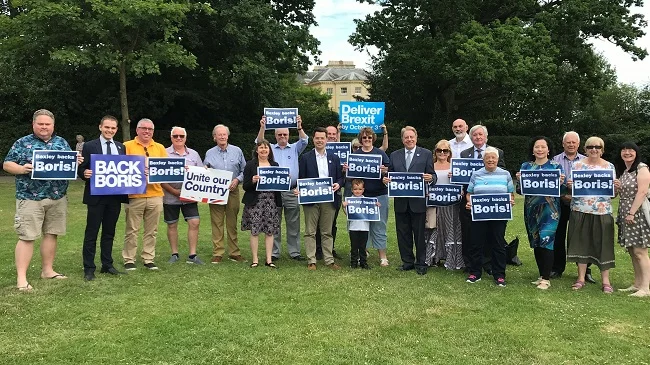
So in recent weeks there has been a “battle” to become the next leader of the Conservative party because that leader will by default become the next Prime Minister. Needless to say early opinion polls showed the Ex-Foreign Secretary and former Mayor of London Boris Johnson was heading for a substantial victory. Yesterday it was announced that he had won the leadership race against the current Foreign Secretary Jeremy Hunt, by 92,153 to 46,656 votes. Now, it is very important to stress that this was not in anyway, a public vote. This was a vote of Conservative Party members; the members of the general public who are sufficiently engaged politically to pay their subscriptions fees and join the Conservative Party. It wasn’t a vote for Prime Minister but a vote on who would be the new leader of the party. But because that party is currently in government, then that new party leader automatically steps into the role of Prime Minister. Therefore the leader of the 5th largest economy in the world was decided by 138,809 people. The current electorate of the UK is 46.8 million people.
As of this afternoon, Theresa May has visited The Queen and formally resigned her premiership. Boris Johnson will subsequently have an audience with Her Majesty and state his intentions to form a government. Once these formalities have been addressed, he will return to 10 Downing Street and take residence. His next immediate duty is to sign the “letters of last resort”. These are four identically worded handwritten letters from the Prime Minister of the United Kingdom to the commanding officers of the four British ballistic missile submarines. They contain instructions to retaliate or not to retaliate against a nuclear strike, or for the Commander to use their own judgement or to place the vessel under command of an Allied Power. Once this has been done, then it is a question of politics. No doubt the new Prime Minister will make a formal statement to the British public before then proceeding with forming a new cabinet. Political opponents will be dismissed and those loyal, or invaluable will be given new positions. It should be noted that Boris Johnson is a controversial figure within his own party. That combined with current Brexit divisions means that some MPs will not work with him. Several Ministers have already resigned.
What happens in the next few weeks of Prime Minister Johnson’s term of office is much harder to predict. He has stated that he means to return to the EU and “re-open Brexit negotiations, although there is little or no political will from Europe to do such things. There is still very strong political resistance against “no deal” in parliament across all parties. Will there be any tangible movement on Brexit? I’m not so sure. Then there is the issue of international relationships and due to the shadow of Brexit, will there be a shift towards the greater ties with the US and its current incumbent president. There some in the UK that would like to see a Prime Minister that followed suite with President Trump and pursued a similarly unorthodox approach to government. One that is happy to break with tradition and existing perceived wisdom. Yet there are others both at a parliamentary level and as registered voters that are deeply sceptical of Boris Johnson, his political track record, associations and overall approach to politics.
If the new Prime Minster finds himself stymied on all fronts it may well lead to another general election. There is the possibility of a vote of no confidence by MPs or Prime Minister Johnson may well take a calculated risk to hold an election himself to give his position political legitimacy and to seek to increase the Conservative majority in parliament. It should be noted that one of the reasons that Johnson was voted into office by party members, is because he’s one of the few politicians that is recognised nationally. Because a substantial percentage of the UK electorate are not greatly politically engaged, he has the advantage of brand recognition and is perceived as affable and a charismatic. Therefore Conservative party members hope he be able successfully win a further term of office for the current government. Yet the recent Local Council Elections along with the European Election showed that the country remains divided and broadly entrenched in its political positions. I’m not sure if such a gamble would payoff or make any significant difference to the parliamentary landscape.
Effectively it is now just a question of time and waiting to see where Prime Minister tries to go politically. Will he pursue a dogmatic approach to Brexit or will he prove to be more pragmatic and flexible to get this extremely difficult matter resolved? Or will he be politically consumed by his Premiership as his predecessor? As for the man himself and the controversy surrounding him, I will leave that to others to analyse as they have far more information at their disposal than I. Here is a link to an article in today’s Washington Post by Ian Dunt is the editor of Politics.co.uk, in which he scrutinises Boris Johnson and reflects upon both his political and private personas.
If you visit the websites for such UK tabloid newspapers as the Daily Express or the Daily Mail you will no doubt encounter prominent stories about Megan Markle, Nigel Farage and “immigrants”. If these two august institutions are short of column inches, they’ll run a piece about how some former celebrity has had the unmitigated gall and temerity to get old. I mean WTF? How dare they do what human beings are genetically disposed to do. It’s outrageous. Similarly, head over to the Unherd website and you’ll find foam flecked tirades regarding spurious points of contention over dubious subjects. Often the topic being harangued is incredibly niche and I’ve never heard of it before or even considered it being a thing. These sort of talking points are not about informing, debating and most certainly aren’t about thinking. They exist to provoke reactions.
Yesterday afternoon, Nigel Farage the Member of Parliament for Clacton and leader of the Reform Party, held a press conference in which he declared that he would be resigning his seat and thus triggering a by-election. He cited the following list of grievances that have led to him making this decision. That the Parliamentary standards investigations were being politicised, the media and other parties were conducting a coordinated campaign against him and that he had endured years of threats and physical attacks. He further asserted that his family’s privacy and safety had been breached as well. He finished by alleging that the political system was repeatedly changing rules to obstruct Reform and that he was the most attacked politician in the UK. Rather than be judged by the legacy media and the “establishment”, he would rather put the issue of his political integrity to the electorate of Clacton. He even offered to pay for the cost of the by-election.
UK Prime Minister, Sir Keir Starmer has resigned and intends to leave office before the parliamentary summer recess. By then Andy Burnham will more than likely be voted leader of the Labour Party and by default will become the new Prime Minister. Due to the current size of the incumbent Government’s majority, there is no pressing reason for a General Election that the UK’s right wing tabloid press is currently calling for. Whether this provides the Government with the reset they’re hoping for when Parliament reconvenes in autumn remains to be seen. With seven Prime Ministers coming and going in a decade, there are some serious questions to be asked about the current state of UK politics. However, the mechanics of contemporary politics, the decline of clearly defined ideologies and the people that seek elected office to be our leaders are only half of the problem. The other major impediment to the UK’s democracy functioning properly is the electorate.
Andy Burnham successfully won the Makerfield by-election yesterday, returning him to the House of Commons as a member of Parliament after holding the position of Mayor of Manchester for the past nine years. Prior to this, Burnham was Labour MP for Leigh from 2001 and 2017. He served in both the Tony Blair and Gordon Brown administrations and has held such senior governmental posts as Chief Secretary to the Treasury, Secretary of State for Culture, Media and Sport and Secretary of State for Health. His return to Parliamentary politics is likely to result in a leadership challenge to incumbent Prime Minister Keir Starmer. When speaking after winning yesterday’s by-election Burnham spoke of “a final chance for change” the current trajectory of the present Labour Government. However, I don’t wish to focus on any of this at present. I am far more interested in the above picture, taken as the results were announced and what it says about UK politics.
The UK Government has formerly announced its intention to ban under-16s from using social media. This is due to increasing public pressure that “something must be done” about the perceived iniquities of many online platforms. However, as with most complex social problems of this nature, no one has any clear or practical ideas as to what that “something” is. It remains a nebulous, non-specific panacea and clearly someone else’s job to identify and implement. As ever, why choose a nuanced and multifaceted solution to a complex problem, when it is far easier and politically expedient to just “ban” something. The former requires effort and a degree of thinking. If such an approach fails it also means that those who came up with it now carry the can. The latter dumps the problem in the lap of various third parties, who can then be conveniently blamed when the ill conceived policy fails.
Every Thursday, Mrs P volunteers at a food bank that is run from a local church; Avery Hill Christian Fellowship. Today there was a shortage of staff so I agreed to help out. It proved to be an equitable arrangement as she collated the various orders and I packed the bags and took them to the respective clients. The food bank itself is organised and administered by the Trussell Trust, a UK based NGO and charity providing emergency food and support to people locked in poverty. It is open for 2 to 3 hours a week depending upon demand. During today’s session we served just six people. Some weeks its can be triple that amount. Upon closure, a member of staff from the Trussel Trust did a stock take and collated a list of what was needed. This is provided by various local church communities via parishioners donations, as well as local supermarkets who have an arrangement with the trust to provide surplus stock or good approaching the end of their sales window.
Under the First Past the Post electoral system, the candidate(s) receiving the highest number of votes in each constituency are elected. This system is used in the UK during general elections and in some local elections, such as those recently conducted in England. An alternative approach is the system of proportional representation, which aims to allocate seats in a manner that reflects the popularity of various parties. Both the Scottish Parliament and the Senedd in Wales employ systems of Proportional Representation. Historically, first-past-the-post has been seen as advantageous for the Conservative and Labour parties. It poses challenges for smaller parties whose votes are distributed evenly across different regions, making it difficult for them to secure seats. This dynamic effectively prevents potential competitors to the Conservatives and Labour from succeeding electorally. Consequently, due to this situation, voters may hesitate to support these smaller parties from the outset.
There are local elections being held across the UK today. Voters in Scotland and Wales will elect representatives to their respective national parliaments, while in England the voting is for local councils and regional mayors. These are the first major elections to be held in the UK since the 2024 General Election which saw the Conservative government of fourteen years, fall to the Labour Party. Midterm elections are often a litmus test for how the electorate think the national government are performing although local issues are also a major factor. The consensus among political journalists and commentators is that the incumbent government is polling extremely poorly and will subsequently face a backlash. In recent years the UK has seen a decline in traditional two party voting with Reform UK and the Greens gaining significant traction among the electorate. Hence today’s elections may well see both these parties make significant gains.
Our household is currently trying to reduce our monthly overheads in response to the ever increasing cost of living. April is not that far away and a great many service providers will increase their rates and tariff as the new financial year begins. Then there is the ongoing effects, both direct and indirect, of inflation to consider. Although the UK inflation rate is dropping, currently sitting at 3.4% in December 2025, food inflation remains higher at 4.5%. Being based in the UK, salaries and billed services tend to be administered monthly. You get paid usually at the end of the months and bills can turn up at any point, depending upon when you started a service. Any payments coming from central government, such as state pension or other benefits, are paid every 4 weeks. This means that there are 13 payments in a year. I thought it pertinent to clarify this point as other countries, such as the USA, favour a fortnightly financial cycle. Hence as a household we work around a monthly budget.
I don’t know if you have noticed that there are quite a lot of companies that have names taken from Tolkien’s Legendarium. At first glance, this seems innocuous enough. Tolkien’s writings grew in popularity over the seventies and eighties but since the release of the film trilogy at the start of the twenty-first century, his work has become more well known and been assimilated into our wider pop culture. Hence, it seems quite logical that a startup tech company, for example, would choose a name from his writings. No doubt the founders grew up reading The Lord of the Rings and are fans. That all seems plausible. However if you take a further look, it gets somewhat more complex. Here are four companies that have Tolkien based names.
“Managed decline” is a phrase that refers to the processes associated with the end of a specific lifecycle, with the goal of minimizing costs or other forms of loss. The concept originated in business where it referred to the management of companies and industries. More recently it is used in wider contexts. The concept gained prominence with regard to urban policy, particularly in the UK during the eighties when several major cities suffered economic and political collapse. Of late, the term has been applied to the UK, encompassing a systematic weakening of the economy, social structures, and cultural values, as well as its global political and diplomatic force. In each case, managed decline involves making strategic choices about resource allocation and accepting the consequences of those decisions. It is a complex issue with ethical and practical considerations, often sparking debate about the best way to address decline and reverse the process.
I still maintain a legacy presence on Twitter/X and I follow my local MP (member of Parliament) Louie French. It’s not something I especially relish as I am not a supporter of the Conservative party (or any other) and I did not vote for him in the last election. I just like to know what he is up to as he is the political representative for our constituency. As the Conservatives are out of power at present, to all intent and purposes, Mr French is a backbench MP although he has a minor position as Shadow Parliamentary Undersecretary (Culture, Media and Sport). However, with that being said he is hardly a key member of the shadow cabinet. Hence he focuses on constituency work and that which is generated by his shadow posting. He will also lend his voice, when required, to any major policy decision or statement made by his party.
Sunday 6th April is the start of a new financial year, here in the UK. According to data from numerous financial and economic institutions, an estimated million plus households will be facing annual increases of £400 to £500 as the proverbial “cost of living” goes up. Everything from Council Tax to Mobile and Broadband costs are being increased. Future cost hikes are expected in our energy and water utilities. As bills start going up across the country today, average wages remain stagnant. Middle-income and poorer households have been worst hit by this wage related issue. Hence the tabloid press have labelled the start of the new financial year as “Awful April”. Hyperbole aside, this is a very real issue which due to its complex, global causes, doesn’t have a quick fix solution.
I consider myself to be a grounded, rational individual. I am not excessively emotional. I like facts, data and reason as opposed to hyperbole, rhetoric and bluster. That being said, I am aware that the world is an imperfect place. Opinions are often not based upon empirical fact but personal perspective. Hence many people experience reality differently to me. They are driven by their feelings and other factors. However, despite these differences in philosophy, for most of my life the world has remained functional and over time slowly improved in subtle ways. Deference to expertise, a sense of community and basic pragmatism meant that people broadly pulled in the same direction. Of course there has always been dissent but it has been within a stable system. However, of late I feel that this era is now finally over. Things are no longer stable. We live in an uncertain world.
Newspapers were an integral part of UK culture in the seventies. During the week, they were delivered prior to going to work, so you would peruse them over breakfast. Alternatively you would buy one en route to your place of employment and read it on the bus or train. In a world before 24 hour, rolling news, they were the primary means of keeping the public abreast of events and as such, enjoyed a substantial audience. On occasions a newspaper story could make or break a political career or launch a crusading campaign to address a social ill. Newspapers were a force to be reckoned with and therefore a significant part of the socio-political landscape. However, due to a strong union presence within the workforce, the UKs newspapers often lagged behind other industries with regard to the technology.
The First Past the Post (FPTP) electoral system used in the United Kingdom, as well as in several other countries such as the US and India, has both advantages and disadvantages. However, despite being a simple and straightforward system it has been abandoned by many democracies in favour of more proportional and equitable methods. The primary criticism against FPTP is that it allows a minority of the electorate to return a majority government. Since 1935, there have been majority governments 90% of the time, but not one of them had the support of a majority of voters. At present, the current UK government has a majority of seats with just 43.6% of the votes. In the 2019 election they gained an extra 48 seats despite an increase of only 1.2% of the vote share.
Politicians have a distinct way of talking when being interviewed or giving a press conference. It is often characterised by a strategic use of language, centred around rhetorical devices, persuasion techniques and a careful framing of messages. Direct answers to questions are usually avoided, with tangential responses being preferred. Opinions and specific perspectives are frequently presented as facts. There is also a propensity to focus on “problems” and apportioning blame, rather than “solutions”. It’s important to note that the use of language in politics is a complex and dynamic process influenced by various factors, including cultural context, media dynamics, and the evolving political landscape. Different politicians may employ different communication strategies based on their individual styles and objectives. Here are some key aspects of how politicians use language:
The United Kingdom is one of the few democratic countries in the world that does not have a single, written constitution. Others include Canada, New Zealand and Israel. To date, its constitution is a combination of written and unwritten sources, including statutes, common law, conventions and somewhat esoterically, royal prerogatives. The reason for this is predominantly historical. Since 1688, Britain has not experienced a revolution or regime change, which often leads to a constitutional initiative, such as the American or the French Revolution. Britain’s constitution has evolved slowly over time under relative stability and as such, it has never been deemed necessary to list the fundamental laws and principles of the country's political system.
On Friday 15th September the former actor and comedian turned internet social commentator, Russell Brand, released a video on his YouTube channel addressing allegations about his personal life, ahead of a forthcoming UK current affairs documentary. Brand vehemently denied what he described as “very serious criminal allegations”. The following day Channel Four broadcast “Russell Brand: In Plain Sight”. During the course of the program Brand was accused by one woman of rape and by three others of sexual assaults, and emotional abuse between 2006 and 2013. During the course of the week, further claims have been made against him and that his “predatory” behaviour was an open secret within the TV industry. Furthermore, women would warn each other in advance if they had any dealing with him. All of which has played out against a mixture of broadsheet analysis, tabloid hyperbole, performative politics and internet bluster.
For those who live outside of the UK, let me categorically state that Brexit has broken British politics. Prior to 2016, national politics still broadly functioned along traditional party political lines, with income and class substantially determining voter allegiance. The big three cities (London, Birmingham and Liverpool) maintained their liberal dispositions and Scotland, Northern Ireland and Wales were dominated by their regional politics. Brexit changed all this creating fault lines that fell outside of the existing political status quo. Opinions differed based upon where you lived, how politically literate you were and even education. Your party political allegiance no longer indicated what stance you took on this matter. Furthermore, the discourse around this complex subject was quickly debased into a bipartisan culture war that was toxic and dangerous.
Okay, keep up as there’s a lot of ground to cover. The UK government is currently suffering in the opinion polls and after 13 years in office, is facing potential oblivion at the next general election. In an attempt to shore up support among the party faithful, the Prime Minister, Rishi Sunak, is currently pursuing a hardline with regard to immigration. According to Ipsos, as a political issue about 29% of the electorate consider immigration to be a major problem. The remainder either think current levels are manageable or have no substantive view on the matter. However, as a “culture war” issue that can be weaponized by the tabloid press, which often has direct links to the Conservative Party in the UK, immigration is a hill to die upon. Hence you will find a lot of rhetoric that is anti-immigration and any contrary view is tarred with trite pejorative terms such as “lefty”, “liberal” and “woke”.
Last April, the Election Act 2022 became law within the UK. The Act introduced a requirement for all those voting in-person to produce photo identification when attending a polling station. This is the first time that such an ID has been required. Prior to this, voters could either bring their polling card to verify their identity at the polling station, or confirm their registered address from the electoral roll with staff. Now a UK driving licence or passport are considered the primary means of identity. A list of additional photo identification that has been deemed acceptable, is available on the UK government website. For those members of the electorate who do not have any of the qualifying ID, there is a Voter Authority Certificate available, which can be applied for online. This photo ID is linked to the applicants National Insurance Number. For further impartial information on photo ID and registering to vote, visit the The Electoral Commission website.
I am writing this post from the perspective of a UK citizen, but the sentiments expressed are applicable to anyone who lives in a country where you have democratically elected local political representation. IE someone who is supposed to advocate on behalf of your community or for you personally as the duly elected political representative. Here in the UK, the country is divided into 650 constituencies, each returning one Member of Parliament. Irrespective of whether you voted for your MP or whether you support the political party that they belong to, they are obliged to represent you and advocate on your behalf, if you request it. Such is the relationship in principle between constituents and MPs in the UK. It is important to be aware that your local MP is not a delegate whose sole purpose is to represent majority constituency views. Under the UK political system, an MP makes decisions on behalf of constituents and can take a position counter to local opinion, if they feel that is in the best interest of the constituency.
It is difficult to write about the state of UK politics with any degree of intellectual rigour when the entire situation has become so utterly farcical. My initial reaction to the recent departure of Liz Truss after just 45 days in office, was to laugh with abject scorn and derision. She was destined to fail due to utter lack of ability. However, there is still the outstanding matter of the country lacking a credible and functional government to address inflation, the cost of living crisis and resolve all the issues stemming from Brexit. There are problematic national and international events taking place that need addressing. A united, pragmatic and empathetic government is required to solve both these short term and long term needs. Sadly, the governing party is riven with opposing factions and there is no commonly held policy or underlying ideology. The PM may well have changed but the underlying flaws remain.
Conservative Party has been in government in the UK since 2010. During that time there have been three Prime Ministers. Today we moved onto the fourth. After Boris Johnson resigned on 7th July, the nation has had to endure a tedious two month process in which the Conservative Party elects a new leader. That person then becomes the PM by default. Many readers unfamiliar with the UK political system may be surprised that a change of leader has not led to a General Election. That is because the Conservative Party still holds a parliamentary majority of 71 elected Members of Parliament. Hence it is still constitutionally quite able to govern, despite Boris Johnson being forced from office. Therefore party members vote for a new party leader who gets the top job by default. Remember that in the UK, the Prime Minister is not the head of state and does not have the executive powers of a President.
I try to keep my thoughts on political matters to a minimum here at Contains Moderate Peril, mainly because UK politics and the current state of discourse associated with it has become an absolute shit show in recent years. Brexit broke traditional politics and has made matters far more tribal and partisan. The two main parties have declined from having clear ideologies, identities and manifestos, to becoming either a lobby group for the specific demographic group that supports them, or a conflicted, divided and schizoid shadow of its former self. I’ll let you work out which is which. Politics is no longer about governing a nation for the benefit of all its citizens. Now you simply pick a side and join the ongoing culture war against everyone and everything else. This rotten system produces rotten leaders. Hence, when Alexander Boris de Pfeffel Johnson became Prime Minister in December 2019, it was clear that the nation was taking a major risk on such a man. His failings as a politician and a person are a matter of public record for anyone who has the eyes to see them.
The title for this post is a quote from The Hobbit by J.R.R. Tolkien. I’ve used it as a verbal cue to try and give readers an overview of the point I’m striving to convey. Because I want to talk about modern life in western civilization, specifically its complexity and increasing uncertainty. If you’re extremely wealthy you can mitigate these two points but I’m working on the premise that most of the people who read Contains Moderate Peril are not. The blogging community, of which I am a participant, is a diverse group but from what I’ve observed it’s not populated by millionaires. In fact most of the people I know, both online and in person, are just holding down a job, trying to keep a roof over their head and pay the bills. Often they’re doing the job they do in default of anything else and they’re at the very least ambivalent towards it. The pandemic has also brought home how fragile so-called “normality” is. Modern politics are also volatile and life in general just doesn’t seem as certain as it was twenty years ago.
The Conservative Party successfully held onto their “safe seat” of Old Bexley and Sidcup in yesterday’s closely watched by-election. However their overall majority was reduced by more than half amid a very low voter turnout. Conservative councillor Louie French becomes the country’s newest MP after winning 11,189 votes, more than 50 per cent of those cast, in the seat previously held by the former cabinet minister James Brokenshire. Mr Brokenshire died in October from lung cancer aged 53. The closest challenger was Labour’s Daniel Francis, who secured 6,711 as the Tory majority fell from nearly 19,000 to 4,478, the equivalent of a vote share swing of 10 per cent to Labour. Turnout in the constituency was just 34%, down from the almost 70% who voted in the 2019 general election.
Nothing Has Changed
On the 23rd of June 2016, the UK held a referendum on whether to remain or leave the European Union. The results were 51.89% to leave and 48.11% to remain. Due to the significance of the subject matter and the way the European question has been discussed in the media over the past decade, there was a high voter turnout of 72.21%. 33,577,342 people cast their vote out of a total electorate of 46,500,001. The levels of public engagement were far higher than those seen with local or general elections. However, despite a binary question yielding a binary result, the issue of Brexit has not been laid to rest. It can be cogently argued that the entire referendum was rushed, poorly thought through, with neither side running campaigns that provided all the relevant facts of the impact of leaving the EU. As ever the entire matter has been driven first and foremost by party politics and remains so today. Perhaps the biggest issue that stems from the 2016 vote is the size of the leave victory. A “win” of 1.89% is far from decisive and makes a nonsense of political rhetoric such as “the will of the people”. At the time, Nigel Farage, then leader of the UK Independence Party, stated that “a 52-48 referendum this would be unfinished business by a long way. If the Remain campaign win two-thirds to one-third that ends it”. Unfortunately, nearly three years on Brexit shows no sign of ending.
On the 23rd of June 2016, the UK held a referendum on whether to remain or leave the European Union. The results were 51.89% to leave and 48.11% to remain. Due to the significance of the subject matter and the way the European question has been discussed in the media over the past decade, there was a high voter turnout of 72.21%. 33,577,342 people cast their vote out of a total electorate of 46,500,001. The levels of public engagement were far higher than those seen with local or general elections. However, despite a binary question yielding a binary result, the issue of Brexit has not been laid to rest. It can be cogently argued that the entire referendum was rushed, poorly thought through, with neither side running campaigns that provided all the relevant facts of the impact of leaving the EU. As ever the entire matter has been driven first and foremost by party politics and remains so today. Perhaps the biggest issue that stems from the 2016 vote is the size of the leave victory. A “win” of 1.89% is far from decisive and makes a nonsense of political rhetoric such as “the will of the people”. At the time, Nigel Farage, then leader of the UK Independence Party, stated that “a 52-48 referendum this would be unfinished business by a long way. If the Remain campaign win two-thirds to one-third that ends it”. Unfortunately, nearly three years on Brexit shows no sign of ending.
Traditionally, UK politics is mainly driven by two major parties, which hail from different ends of the political spectrum. Major socioeconomic issues are usually championed or opposed by each of these groups. The UK electorate are broadly tribal and due to the first past the post voting, deciding outcomes on the big issues such as taxation, the economy and social matters is fairly straightforward. However, Brexit has thrown a major spanner in the works, as it has fallen outside of this existing methodology. The choice of whether to remain or leave has divided both the Conservative and Labour parties, therefore neither are fully invested in one particular position. Parliament is therefore split on Brexit which is why it has been unable to deliver a definitive outcome. The referendum asked a very simple question and the results were then handed to parliament to implement. But parliament has not managed to do this and it would appear that this inertia will prevail for the immediate future. There is no majority view on either side of the debate and more importantly, parliamentary numbers to back a specific position and force it through.
The entire Brexit debate has also seen a shift in UK politics away from evidenced based, factual driven policy and measured reasoned debate. In many ways Brexit has been co-opted into a broader political cause that encompasses many long-standing grievances. Regional inequality, a decade of austerity and fears over globalisation and social change have resulted in a major sense of pushback against a political system and traditional parties that do not appear to serve any interest other than their own. Societal changes have seen broadly held political ideologies erode and the rise of consumerism and individualism means that many now view politics as a mechanic for facilitating one’s own needs, rather than the collective “good” of the nation. Hence Brexit is a very dogmatic and tribal driven debate. Contemporary politics has always been up until now about compromise and what can be achieved over what is hoped for. Yet attempts to compromise over Brexit have failed in parliament and certainly the public appears to have no stomach for it. It’s very much a case of all or nothing.
Last week, the UK voted in the European Parliamentary Elections. Due to the ongoing Brexit impasse, the country was legally bound to participate. As many of the electorate were deeply unhappy with the status quo there was a strong show of support for the newly formed Brexit Party, which has campaigned on a single issue and has at present no other distinct policies. Hence the traditional parties of Labour and the Conservatives suffered an unparalleled loss of public support. Again this stems from neither having a clear policy on the matter. At first glance, it would appear that the Brexit Party was the major success story of these elections. As ever politicians interviewed across multiple news outlets fought to put their own unique spin on the results, to either validate their own positions or to mollify the political fallout. But if one looks beyond the rhetoric and consider the results in a measured analytical fashion, they offer a rather stark conclusion. It is broadly agreed that these elections where fought predominantly on one issue alone; the question of Brexit. Therefore if the results are viewed from such a perspective you find that leave voters predominantly supported the Brexit Party which polled 31.6% of the vote. Remain voters backed the Liberal Democrats and the Green Party who collectively made up 32.4% of the vote share. If you then consider the Scottish and Welsh Nationalist votes, as both parties have a clear remain agenda, then that adds a further 4.6% to that position.
The question of where the two big parties stand is more ambiguous so it is hard to assign their numbers to either of the two sides of the Brexit debate. Ultimately these numbers show that there is still no majority view in the UK of the subject of leaving the EU. Furthermore, the electorate appear to be becoming more entrenched in their position and have simply transferred their votes to those parties that have a clear policy on the subject. Therefore the conclusion is that after nearly three years, despite numerous debates in parliament, new facts and details about the reality of Brexit becoming apparent and continual public discourse on the matter, nothing has changed. This conclusion is certainly food for thought.
For those who wish to see a speedy resolution to Brexit, these results are a clear sign that such a thing is not going to happen any time soon. The question of Europe and our relationship with the continent has claimed yet another Conservative leader and we now face the prospect of an acrimonious battle for the position. Currently the next leader will become Prime Minister by default, yet regardless of whether that individual adopts a tougher stance on Brexit, favouring a no deal resolution, it doesn’t alter the current parliamentary reality. There is still no prevailing consensus among MPs and no one political party has sufficient numbers to force through any kind of definitive decision. Furthermore, the divide within the Conservative party is such that some MPs are preparing to vote against their own government and party to initiate no confidence proceedings if a no deal scenario becomes likely. Simply put, last night’s election results have made the Brexit conundrum even harder to resolve.
So what happens next? If both Labour and the Conservative parties wish to survive as functioning political entities, then they need to rethink their positions and effectively pick a side very quickly. It will more than likely be a case that the Conservatives will now pursue a no-deal stance and go all in on concluding our exit from the EU by the current October 31st deadline. Labour will now have to clearly adopt a confirmatory vote policy that includes a remain option, on any proposal that parliament agrees upon. Again, the notion of compromise is jettisoned. There will naturally be consequences for picking a side, as much as there will be for not doing so.
Brexit remains the most impossible political circle to square in current peace time politics. And due to the lack of a clear consensus among the electorate, no single outcome will “heal the nation”. The UK is not only going to remain an angry divided nation, it is more than likely going to get a lot worse. For those outside of the UK with an interest in global politics, I’m sure the Brexit issue may well provide fascinating viewing and much to consider. Yet for those living and enduring the ongoing Brexit debacle it is becoming a major source of worry and concern. There is scope for a no deal Brexit to have calamitous results upon the UK economy, potentially of the kind you cannot just ignore. Similarly, overturning Brexit and revoking Article 50 could also lead to the implosion of nation politics and the collapse of the “perception” of democracy. A political “Kobayashi Maru test” if you will. What happens next is anyone’s guess.
If you visit the websites for such UK tabloid newspapers as the Daily Express or the Daily Mail you will no doubt encounter prominent stories about Megan Markle, Nigel Farage and “immigrants”. If these two august institutions are short of column inches, they’ll run a piece about how some former celebrity has had the unmitigated gall and temerity to get old. I mean WTF? How dare they do what human beings are genetically disposed to do. It’s outrageous. Similarly, head over to the Unherd website and you’ll find foam flecked tirades regarding spurious points of contention over dubious subjects. Often the topic being harangued is incredibly niche and I’ve never heard of it before or even considered it being a thing. These sort of talking points are not about informing, debating and most certainly aren’t about thinking. They exist to provoke reactions.
Yesterday afternoon, Nigel Farage the Member of Parliament for Clacton and leader of the Reform Party, held a press conference in which he declared that he would be resigning his seat and thus triggering a by-election. He cited the following list of grievances that have led to him making this decision. That the Parliamentary standards investigations were being politicised, the media and other parties were conducting a coordinated campaign against him and that he had endured years of threats and physical attacks. He further asserted that his family’s privacy and safety had been breached as well. He finished by alleging that the political system was repeatedly changing rules to obstruct Reform and that he was the most attacked politician in the UK. Rather than be judged by the legacy media and the “establishment”, he would rather put the issue of his political integrity to the electorate of Clacton. He even offered to pay for the cost of the by-election.
UK Prime Minister, Sir Keir Starmer has resigned and intends to leave office before the parliamentary summer recess. By then Andy Burnham will more than likely be voted leader of the Labour Party and by default will become the new Prime Minister. Due to the current size of the incumbent Government’s majority, there is no pressing reason for a General Election that the UK’s right wing tabloid press is currently calling for. Whether this provides the Government with the reset they’re hoping for when Parliament reconvenes in autumn remains to be seen. With seven Prime Ministers coming and going in a decade, there are some serious questions to be asked about the current state of UK politics. However, the mechanics of contemporary politics, the decline of clearly defined ideologies and the people that seek elected office to be our leaders are only half of the problem. The other major impediment to the UK’s democracy functioning properly is the electorate.
Andy Burnham successfully won the Makerfield by-election yesterday, returning him to the House of Commons as a member of Parliament after holding the position of Mayor of Manchester for the past nine years. Prior to this, Burnham was Labour MP for Leigh from 2001 and 2017. He served in both the Tony Blair and Gordon Brown administrations and has held such senior governmental posts as Chief Secretary to the Treasury, Secretary of State for Culture, Media and Sport and Secretary of State for Health. His return to Parliamentary politics is likely to result in a leadership challenge to incumbent Prime Minister Keir Starmer. When speaking after winning yesterday’s by-election Burnham spoke of “a final chance for change” the current trajectory of the present Labour Government. However, I don’t wish to focus on any of this at present. I am far more interested in the above picture, taken as the results were announced and what it says about UK politics.
The UK Government has formerly announced its intention to ban under-16s from using social media. This is due to increasing public pressure that “something must be done” about the perceived iniquities of many online platforms. However, as with most complex social problems of this nature, no one has any clear or practical ideas as to what that “something” is. It remains a nebulous, non-specific panacea and clearly someone else’s job to identify and implement. As ever, why choose a nuanced and multifaceted solution to a complex problem, when it is far easier and politically expedient to just “ban” something. The former requires effort and a degree of thinking. If such an approach fails it also means that those who came up with it now carry the can. The latter dumps the problem in the lap of various third parties, who can then be conveniently blamed when the ill conceived policy fails.
Every Thursday, Mrs P volunteers at a food bank that is run from a local church; Avery Hill Christian Fellowship. Today there was a shortage of staff so I agreed to help out. It proved to be an equitable arrangement as she collated the various orders and I packed the bags and took them to the respective clients. The food bank itself is organised and administered by the Trussell Trust, a UK based NGO and charity providing emergency food and support to people locked in poverty. It is open for 2 to 3 hours a week depending upon demand. During today’s session we served just six people. Some weeks its can be triple that amount. Upon closure, a member of staff from the Trussel Trust did a stock take and collated a list of what was needed. This is provided by various local church communities via parishioners donations, as well as local supermarkets who have an arrangement with the trust to provide surplus stock or good approaching the end of their sales window.
Under the First Past the Post electoral system, the candidate(s) receiving the highest number of votes in each constituency are elected. This system is used in the UK during general elections and in some local elections, such as those recently conducted in England. An alternative approach is the system of proportional representation, which aims to allocate seats in a manner that reflects the popularity of various parties. Both the Scottish Parliament and the Senedd in Wales employ systems of Proportional Representation. Historically, first-past-the-post has been seen as advantageous for the Conservative and Labour parties. It poses challenges for smaller parties whose votes are distributed evenly across different regions, making it difficult for them to secure seats. This dynamic effectively prevents potential competitors to the Conservatives and Labour from succeeding electorally. Consequently, due to this situation, voters may hesitate to support these smaller parties from the outset.
There are local elections being held across the UK today. Voters in Scotland and Wales will elect representatives to their respective national parliaments, while in England the voting is for local councils and regional mayors. These are the first major elections to be held in the UK since the 2024 General Election which saw the Conservative government of fourteen years, fall to the Labour Party. Midterm elections are often a litmus test for how the electorate think the national government are performing although local issues are also a major factor. The consensus among political journalists and commentators is that the incumbent government is polling extremely poorly and will subsequently face a backlash. In recent years the UK has seen a decline in traditional two party voting with Reform UK and the Greens gaining significant traction among the electorate. Hence today’s elections may well see both these parties make significant gains.
Our household is currently trying to reduce our monthly overheads in response to the ever increasing cost of living. April is not that far away and a great many service providers will increase their rates and tariff as the new financial year begins. Then there is the ongoing effects, both direct and indirect, of inflation to consider. Although the UK inflation rate is dropping, currently sitting at 3.4% in December 2025, food inflation remains higher at 4.5%. Being based in the UK, salaries and billed services tend to be administered monthly. You get paid usually at the end of the months and bills can turn up at any point, depending upon when you started a service. Any payments coming from central government, such as state pension or other benefits, are paid every 4 weeks. This means that there are 13 payments in a year. I thought it pertinent to clarify this point as other countries, such as the USA, favour a fortnightly financial cycle. Hence as a household we work around a monthly budget.
I don’t know if you have noticed that there are quite a lot of companies that have names taken from Tolkien’s Legendarium. At first glance, this seems innocuous enough. Tolkien’s writings grew in popularity over the seventies and eighties but since the release of the film trilogy at the start of the twenty-first century, his work has become more well known and been assimilated into our wider pop culture. Hence, it seems quite logical that a startup tech company, for example, would choose a name from his writings. No doubt the founders grew up reading The Lord of the Rings and are fans. That all seems plausible. However if you take a further look, it gets somewhat more complex. Here are four companies that have Tolkien based names.
“Managed decline” is a phrase that refers to the processes associated with the end of a specific lifecycle, with the goal of minimizing costs or other forms of loss. The concept originated in business where it referred to the management of companies and industries. More recently it is used in wider contexts. The concept gained prominence with regard to urban policy, particularly in the UK during the eighties when several major cities suffered economic and political collapse. Of late, the term has been applied to the UK, encompassing a systematic weakening of the economy, social structures, and cultural values, as well as its global political and diplomatic force. In each case, managed decline involves making strategic choices about resource allocation and accepting the consequences of those decisions. It is a complex issue with ethical and practical considerations, often sparking debate about the best way to address decline and reverse the process.
I still maintain a legacy presence on Twitter/X and I follow my local MP (member of Parliament) Louie French. It’s not something I especially relish as I am not a supporter of the Conservative party (or any other) and I did not vote for him in the last election. I just like to know what he is up to as he is the political representative for our constituency. As the Conservatives are out of power at present, to all intent and purposes, Mr French is a backbench MP although he has a minor position as Shadow Parliamentary Undersecretary (Culture, Media and Sport). However, with that being said he is hardly a key member of the shadow cabinet. Hence he focuses on constituency work and that which is generated by his shadow posting. He will also lend his voice, when required, to any major policy decision or statement made by his party.
Sunday 6th April is the start of a new financial year, here in the UK. According to data from numerous financial and economic institutions, an estimated million plus households will be facing annual increases of £400 to £500 as the proverbial “cost of living” goes up. Everything from Council Tax to Mobile and Broadband costs are being increased. Future cost hikes are expected in our energy and water utilities. As bills start going up across the country today, average wages remain stagnant. Middle-income and poorer households have been worst hit by this wage related issue. Hence the tabloid press have labelled the start of the new financial year as “Awful April”. Hyperbole aside, this is a very real issue which due to its complex, global causes, doesn’t have a quick fix solution.
I consider myself to be a grounded, rational individual. I am not excessively emotional. I like facts, data and reason as opposed to hyperbole, rhetoric and bluster. That being said, I am aware that the world is an imperfect place. Opinions are often not based upon empirical fact but personal perspective. Hence many people experience reality differently to me. They are driven by their feelings and other factors. However, despite these differences in philosophy, for most of my life the world has remained functional and over time slowly improved in subtle ways. Deference to expertise, a sense of community and basic pragmatism meant that people broadly pulled in the same direction. Of course there has always been dissent but it has been within a stable system. However, of late I feel that this era is now finally over. Things are no longer stable. We live in an uncertain world.
Newspapers were an integral part of UK culture in the seventies. During the week, they were delivered prior to going to work, so you would peruse them over breakfast. Alternatively you would buy one en route to your place of employment and read it on the bus or train. In a world before 24 hour, rolling news, they were the primary means of keeping the public abreast of events and as such, enjoyed a substantial audience. On occasions a newspaper story could make or break a political career or launch a crusading campaign to address a social ill. Newspapers were a force to be reckoned with and therefore a significant part of the socio-political landscape. However, due to a strong union presence within the workforce, the UKs newspapers often lagged behind other industries with regard to the technology.
The First Past the Post (FPTP) electoral system used in the United Kingdom, as well as in several other countries such as the US and India, has both advantages and disadvantages. However, despite being a simple and straightforward system it has been abandoned by many democracies in favour of more proportional and equitable methods. The primary criticism against FPTP is that it allows a minority of the electorate to return a majority government. Since 1935, there have been majority governments 90% of the time, but not one of them had the support of a majority of voters. At present, the current UK government has a majority of seats with just 43.6% of the votes. In the 2019 election they gained an extra 48 seats despite an increase of only 1.2% of the vote share.
Politicians have a distinct way of talking when being interviewed or giving a press conference. It is often characterised by a strategic use of language, centred around rhetorical devices, persuasion techniques and a careful framing of messages. Direct answers to questions are usually avoided, with tangential responses being preferred. Opinions and specific perspectives are frequently presented as facts. There is also a propensity to focus on “problems” and apportioning blame, rather than “solutions”. It’s important to note that the use of language in politics is a complex and dynamic process influenced by various factors, including cultural context, media dynamics, and the evolving political landscape. Different politicians may employ different communication strategies based on their individual styles and objectives. Here are some key aspects of how politicians use language:
The United Kingdom is one of the few democratic countries in the world that does not have a single, written constitution. Others include Canada, New Zealand and Israel. To date, its constitution is a combination of written and unwritten sources, including statutes, common law, conventions and somewhat esoterically, royal prerogatives. The reason for this is predominantly historical. Since 1688, Britain has not experienced a revolution or regime change, which often leads to a constitutional initiative, such as the American or the French Revolution. Britain’s constitution has evolved slowly over time under relative stability and as such, it has never been deemed necessary to list the fundamental laws and principles of the country's political system.
On Friday 15th September the former actor and comedian turned internet social commentator, Russell Brand, released a video on his YouTube channel addressing allegations about his personal life, ahead of a forthcoming UK current affairs documentary. Brand vehemently denied what he described as “very serious criminal allegations”. The following day Channel Four broadcast “Russell Brand: In Plain Sight”. During the course of the program Brand was accused by one woman of rape and by three others of sexual assaults, and emotional abuse between 2006 and 2013. During the course of the week, further claims have been made against him and that his “predatory” behaviour was an open secret within the TV industry. Furthermore, women would warn each other in advance if they had any dealing with him. All of which has played out against a mixture of broadsheet analysis, tabloid hyperbole, performative politics and internet bluster.
For those who live outside of the UK, let me categorically state that Brexit has broken British politics. Prior to 2016, national politics still broadly functioned along traditional party political lines, with income and class substantially determining voter allegiance. The big three cities (London, Birmingham and Liverpool) maintained their liberal dispositions and Scotland, Northern Ireland and Wales were dominated by their regional politics. Brexit changed all this creating fault lines that fell outside of the existing political status quo. Opinions differed based upon where you lived, how politically literate you were and even education. Your party political allegiance no longer indicated what stance you took on this matter. Furthermore, the discourse around this complex subject was quickly debased into a bipartisan culture war that was toxic and dangerous.
Okay, keep up as there’s a lot of ground to cover. The UK government is currently suffering in the opinion polls and after 13 years in office, is facing potential oblivion at the next general election. In an attempt to shore up support among the party faithful, the Prime Minister, Rishi Sunak, is currently pursuing a hardline with regard to immigration. According to Ipsos, as a political issue about 29% of the electorate consider immigration to be a major problem. The remainder either think current levels are manageable or have no substantive view on the matter. However, as a “culture war” issue that can be weaponized by the tabloid press, which often has direct links to the Conservative Party in the UK, immigration is a hill to die upon. Hence you will find a lot of rhetoric that is anti-immigration and any contrary view is tarred with trite pejorative terms such as “lefty”, “liberal” and “woke”.
Last April, the Election Act 2022 became law within the UK. The Act introduced a requirement for all those voting in-person to produce photo identification when attending a polling station. This is the first time that such an ID has been required. Prior to this, voters could either bring their polling card to verify their identity at the polling station, or confirm their registered address from the electoral roll with staff. Now a UK driving licence or passport are considered the primary means of identity. A list of additional photo identification that has been deemed acceptable, is available on the UK government website. For those members of the electorate who do not have any of the qualifying ID, there is a Voter Authority Certificate available, which can be applied for online. This photo ID is linked to the applicants National Insurance Number. For further impartial information on photo ID and registering to vote, visit the The Electoral Commission website.
I am writing this post from the perspective of a UK citizen, but the sentiments expressed are applicable to anyone who lives in a country where you have democratically elected local political representation. IE someone who is supposed to advocate on behalf of your community or for you personally as the duly elected political representative. Here in the UK, the country is divided into 650 constituencies, each returning one Member of Parliament. Irrespective of whether you voted for your MP or whether you support the political party that they belong to, they are obliged to represent you and advocate on your behalf, if you request it. Such is the relationship in principle between constituents and MPs in the UK. It is important to be aware that your local MP is not a delegate whose sole purpose is to represent majority constituency views. Under the UK political system, an MP makes decisions on behalf of constituents and can take a position counter to local opinion, if they feel that is in the best interest of the constituency.
It is difficult to write about the state of UK politics with any degree of intellectual rigour when the entire situation has become so utterly farcical. My initial reaction to the recent departure of Liz Truss after just 45 days in office, was to laugh with abject scorn and derision. She was destined to fail due to utter lack of ability. However, there is still the outstanding matter of the country lacking a credible and functional government to address inflation, the cost of living crisis and resolve all the issues stemming from Brexit. There are problematic national and international events taking place that need addressing. A united, pragmatic and empathetic government is required to solve both these short term and long term needs. Sadly, the governing party is riven with opposing factions and there is no commonly held policy or underlying ideology. The PM may well have changed but the underlying flaws remain.
Conservative Party has been in government in the UK since 2010. During that time there have been three Prime Ministers. Today we moved onto the fourth. After Boris Johnson resigned on 7th July, the nation has had to endure a tedious two month process in which the Conservative Party elects a new leader. That person then becomes the PM by default. Many readers unfamiliar with the UK political system may be surprised that a change of leader has not led to a General Election. That is because the Conservative Party still holds a parliamentary majority of 71 elected Members of Parliament. Hence it is still constitutionally quite able to govern, despite Boris Johnson being forced from office. Therefore party members vote for a new party leader who gets the top job by default. Remember that in the UK, the Prime Minister is not the head of state and does not have the executive powers of a President.
I try to keep my thoughts on political matters to a minimum here at Contains Moderate Peril, mainly because UK politics and the current state of discourse associated with it has become an absolute shit show in recent years. Brexit broke traditional politics and has made matters far more tribal and partisan. The two main parties have declined from having clear ideologies, identities and manifestos, to becoming either a lobby group for the specific demographic group that supports them, or a conflicted, divided and schizoid shadow of its former self. I’ll let you work out which is which. Politics is no longer about governing a nation for the benefit of all its citizens. Now you simply pick a side and join the ongoing culture war against everyone and everything else. This rotten system produces rotten leaders. Hence, when Alexander Boris de Pfeffel Johnson became Prime Minister in December 2019, it was clear that the nation was taking a major risk on such a man. His failings as a politician and a person are a matter of public record for anyone who has the eyes to see them.
The title for this post is a quote from The Hobbit by J.R.R. Tolkien. I’ve used it as a verbal cue to try and give readers an overview of the point I’m striving to convey. Because I want to talk about modern life in western civilization, specifically its complexity and increasing uncertainty. If you’re extremely wealthy you can mitigate these two points but I’m working on the premise that most of the people who read Contains Moderate Peril are not. The blogging community, of which I am a participant, is a diverse group but from what I’ve observed it’s not populated by millionaires. In fact most of the people I know, both online and in person, are just holding down a job, trying to keep a roof over their head and pay the bills. Often they’re doing the job they do in default of anything else and they’re at the very least ambivalent towards it. The pandemic has also brought home how fragile so-called “normality” is. Modern politics are also volatile and life in general just doesn’t seem as certain as it was twenty years ago.
The Conservative Party successfully held onto their “safe seat” of Old Bexley and Sidcup in yesterday’s closely watched by-election. However their overall majority was reduced by more than half amid a very low voter turnout. Conservative councillor Louie French becomes the country’s newest MP after winning 11,189 votes, more than 50 per cent of those cast, in the seat previously held by the former cabinet minister James Brokenshire. Mr Brokenshire died in October from lung cancer aged 53. The closest challenger was Labour’s Daniel Francis, who secured 6,711 as the Tory majority fell from nearly 19,000 to 4,478, the equivalent of a vote share swing of 10 per cent to Labour. Turnout in the constituency was just 34%, down from the almost 70% who voted in the 2019 general election.
Get Your House in Order
Theoretically, the fallout from the Christchurch mass shooting should be far reaching. There is at present an opportunity to address numerous problems and issues while the tragedy still has both political and social momentum. Because “it is the doom of man that he forgets”. 24-hour news culture has severely strained the public’s attention span. Plus it is in the interests of numerous institutions for the news cycle to move on, because current scrutiny is highlighting how culpable they are. The tabloid press, media commentators, tech companies and internet communities have been found wanting for a while and last weeks carnage is now raising questions over their involvement in the growing culture of hate and therefore their potential regulation. This may be the last chance for many to put their own house in order before the establishment does. And considering the knee-jerk, ham-fisted nature of contemporary western politics, the latter is not likely to be either subtle, efficient or even beneficial.
Theoretically, the fallout from the Christchurch mass shooting should be far reaching. There is at present an opportunity to address numerous problems and issues while the tragedy still has both political and social momentum. Because “it is the doom of man that he forgets”. 24-hour news culture has severely strained the public’s attention span. Plus it is in the interests of numerous institutions for the news cycle to move on, because current scrutiny is highlighting how culpable they are. The tabloid press, media commentators, tech companies and internet communities have been found wanting for a while and last weeks carnage is now raising questions over their involvement in the growing culture of hate and therefore their potential regulation. This may be the last chance for many to put their own house in order before the establishment does. And considering the knee-jerk, ham-fisted nature of contemporary western politics, the latter is not likely to be either subtle, efficient or even beneficial.
It sadly did not come as a surprise that Brenton Tarrant is steeped in numerous aspects of the unsavoury side of internet culture. Namely, 8chan, shitposting and the alt-right. A “manifesto” allegedly attributed to him is filled with the usual weaponised use of memes to try and obfuscate and confuse. And then there’s the fact that he was allegedly a gamer and conversant with You Tube sub-culture to consider. While old school politicians, mainstream journalists and senior members of the public struggle to catch up, those of us who are more familiar with fluid and rapidly evolving nature of internet culture are facing the stark reality that it played a part in shaping this killer’s beliefs. Furthermore gaming, online communities and You Tube personalities are some of the many intersecting circles of a wider and ultimately harmful Venn diagram. Memes aren’t necessarily “just harmless, movements such as #gamergate aren’t purely about “ethics in gaming journalism” and when You Tube personalities say racist, sexist or homophobic things, it not just “banter” or “a joke”.
Tarrant stated, “Remember lads, subscribe to PewDiePie!” just before he started shooting. Felix Kjellberg has made a statement disavowing any association with him, his ideology and being “sickened” by his comments. However, Kjellberg has used racist language in the past, as well as given shout-outs to questionable individuals. With 89 million plus YouTube subscribers who are predominantly young, male and white, he has a lot of reach. Then there are other personalities and channels that cater and court this specific demographic. One filled with poorly skilled, disaffected young males, struggling with emotional literacy and social awkwardness. Add to this a growing adversarial culture that eschews nuance and increasing zealotry in previously benign social interactions and pastimes such as fandom and there’s trouble. PC culture has failed and the pendulum has now swung the other way with populist bandwagons such as Brexit and MAGA. A perfect storm has been forming for a while and it appears to have now arrived.
It is both sad and ironic that the old cautionary mantra of “the only thing necessary for the triumph of evil is for good men to do nothing” which has almost become hokey in recent years, has suddenly become alarming relevant again. Online communities, You Tube, Twitch, even game developers have not done enough (if indeed anything) to adequately police and moderate the communities they financially benefit from. They’ve hidden behind “freedom of speech”, claims they are not publishers and generally complained that the technology or man power required to do the job would be too difficult to manage and inefficient. And so we saw both Facebook and You Tube desperately trying to get in control of the continuous reposting of video content of the Christchurch shootings. “Why not just suspend all uploads during such circumstances?” some politicians have asked. The ensuing silence from the tech companies was deafening. And the real answer is money as anyone with a functioning intellect knows.
There are no simple reasons for the rise in hate crimes or easy explanations for such tragic events such as that in Christchurch. Nor are there any quick fixes. Multiple factors have contributed to an ongoing drip, drip, drip of populist rhetoric that have normalised racism, xenophobia and hatred of “the other”. Online culture has evolved quickly from a quirky, backwater niche to an unchecked, unpoliced “frontier town”. We now find that such an environment is dangerous and action needs to be taken. Codes of conduct need to be enforced, moderation is required and we must stop mollifying sanctions with bogus attempts at reform, because we still want everyones money. We all need to play our part and call out those who peddle hatred. We also need to be smart and ensure we don’t throw the baby out with the bath water. With regard to the bigger players such as You Tube and Facebook, if they don’t take real steps now to prevent abuse of their services, they will find control rested away from them and given to the politicians. Not the most desirable solution. The time for “whataboutery” and generally prevaricating is over. There is guilt by association and in some cases blood on the hands of those who profit from the status quo. So to all involved, get you house in order. While you still can. The consequences for not doing so don’t bear thinking about.
When I was a child, I quickly learned never to say within earshot of my parents that I was bored. It was quickly met with a response along the lines of “an intelligent mind is never bored” or more worryingly “if you’ve got nothing to do, I’ll find you something” which meant a chore or Herculean task. Being a child of the seventies and due to my parents fundamentalist approach to declarations of boredom, I quickly discovered numerous ways to occupy myself. The default solution was a book or comic. I always liked reading as a child and had plenty of books to choose from. I also had numerous of comics as an alternative to a hefty tome. I would also draw and paint. My father use to work during the summer holidays as a design draftsman and as a result, we always had plenty of paper in our house. Then of course there were toys and such like. Hence I learned the art of keeping myself busy.
When I first started this series of posts back in 2023, they were originally intended to provide a useful overview into UK (mainly British) slang. US slang is ubiquitous globally due to the pervasive nature of American culture. Hence most people have a good grasp of its nuances. However, the proverbial door does not swing both ways. Hence most people will watch British TV dramas or read popular novels and can be quite bamboozled by some of the phrases that are used. That is what I was trying to address. However, over time this entire enterprise now reads like a some sort of Guy Ritchie film with Colin as the anti-hero. That notwithstanding, hopefully the list of slang phrases below will prove useful to know, if you ever visit the UK or tour around London. As ever I have given an example of their respective use. Feel free to ask questions if anything needs clarifying, or you wish to leave a comment with examples of you’re own national and regional slang.
As I write this post, the temperature in Greater London is 33°C (91.4°F). This has become a regular occurrence since the middle of May onwards. High temperatures are fine when you’re on holiday mainly because you’re off work and at your leisure. You don’t have to perform the usual daily task that life requires of you such as work, shop, cook, clean etc. Furthermore, if you’re on vacation you’ll probably be staying at a resort or hotel that is fully air conditioned and you’re dressed accordingly. However, if you’re still performing you’re daily routine such as commuting to work and spending time in an office that wasn’t built with such external temperatures in mind, then 33°C is frankly a pain in the ass. Oh and if you’re one of those people who always respond to discussions such as this with “well I live in Riyadh and it’s 40°C here”, please sod off. You live in a desert which is dumb to begin with. Plus this is not a commensurate comparison. Temperatures are rising in the UK. It’s always hot in Saudi Arabia.
If you visit the websites for such UK tabloid newspapers as the Daily Express or the Daily Mail you will no doubt encounter prominent stories about Megan Markle, Nigel Farage and “immigrants”. If these two august institutions are short of column inches, they’ll run a piece about how some former celebrity has had the unmitigated gall and temerity to get old. I mean WTF? How dare they do what human beings are genetically disposed to do. It’s outrageous. Similarly, head over to the Unherd website and you’ll find foam flecked tirades regarding spurious points of contention over dubious subjects. Often the topic being harangued is incredibly niche and I’ve never heard of it before or even considered it being a thing. These sort of talking points are not about informing, debating and most certainly aren’t about thinking. They exist to provoke reactions.
Before we start, let me explain to those readers outside of the UK, the significance of a Dairy Milk Freddo chocolate bar and its relevance to this post. The “Freddo” is an 18g (0.63 oz) chocolate bar, in the shape of an anthropomorphic frog. When it was re-launched by Cadbury in 1990 (it had previously been manufactured by an Australian confectionery company in the seventies), it was priced at 10p (£0.10). It remained at that price until 2005 when a 1p to 2p increase began to occur each year. By 2016 Freddos were retailing at 25p. However, the following year the price “lept” to 30p with an increase that was double its usual yearly rise. This led to public outrage across social media. Since then the price of a Freddo has waxed and waned. Tesco supermarket reduced the price back to 10p as part of their centenary celebrations. The post COVID price in 2022 hit 49p. At present, the average price of a Freddo in the UK is somewhere around 35p.
Over the last 10 years, I’ve written several blog posts about my personal working experiences and my career, such as it was. I touched upon working specifically in IT and how that industry changed over time, both technically and in the way that other people perceived it. I have also given my thoughts on the social dynamics of the modern work environment and the way we interact with our colleagues and employers. That is another area that has changed dramatically. Naturally my retirement from full time work has been written about, as it is such a radical change in one’s life. Especially if you’re the sort of person who is clearly defined by their job, which I personally was not. This time, I want to share a few thoughts I have about what I miss about “going to work” and “having a job”. I’m not sure if “miss” is the right word. Perhaps it is more a question of things being absent. Either way, there are some aspects of being employed that I use to enjoy or at least found beneficial that I now no longer experience.
UK Prime Minister, Sir Keir Starmer has resigned and intends to leave office before the parliamentary summer recess. By then Andy Burnham will more than likely be voted leader of the Labour Party and by default will become the new Prime Minister. Due to the current size of the incumbent Government’s majority, there is no pressing reason for a General Election that the UK’s right wing tabloid press is currently calling for. Whether this provides the Government with the reset they’re hoping for when Parliament reconvenes in autumn remains to be seen. With seven Prime Ministers coming and going in a decade, there are some serious questions to be asked about the current state of UK politics. However, the mechanics of contemporary politics, the decline of clearly defined ideologies and the people that seek elected office to be our leaders are only half of the problem. The other major impediment to the UK’s democracy functioning properly is the electorate.
The UK Government has formerly announced its intention to ban under-16s from using social media. This is due to increasing public pressure that “something must be done” about the perceived iniquities of many online platforms. However, as with most complex social problems of this nature, no one has any clear or practical ideas as to what that “something” is. It remains a nebulous, non-specific panacea and clearly someone else’s job to identify and implement. As ever, why choose a nuanced and multifaceted solution to a complex problem, when it is far easier and politically expedient to just “ban” something. The former requires effort and a degree of thinking. If such an approach fails it also means that those who came up with it now carry the can. The latter dumps the problem in the lap of various third parties, who can then be conveniently blamed when the ill conceived policy fails.
Every Thursday, Mrs P volunteers at a food bank that is run from a local church; Avery Hill Christian Fellowship. Today there was a shortage of staff so I agreed to help out. It proved to be an equitable arrangement as she collated the various orders and I packed the bags and took them to the respective clients. The food bank itself is organised and administered by the Trussell Trust, a UK based NGO and charity providing emergency food and support to people locked in poverty. It is open for 2 to 3 hours a week depending upon demand. During today’s session we served just six people. Some weeks its can be triple that amount. Upon closure, a member of staff from the Trussel Trust did a stock take and collated a list of what was needed. This is provided by various local church communities via parishioners donations, as well as local supermarkets who have an arrangement with the trust to provide surplus stock or good approaching the end of their sales window.
There are approximately 4000 parks and green spaces in Greater London. Bexley Borough alone has over 100. Public parks and green spaces are vital to modern cities, providing essential health, environmental and social benefits. They boost physical and mental wellbeing by reducing stress and providing a place for exercise. Furthermore they enhance urban sustainability, mitigate heat, and provide a sustainable environment for a wildlife. Parks are often a venue for social activities and events and as such are an important part of the local community. Going to the park has always been a part of my life. I live next to Old Farm Park in Sidcup and have made use of this recreational space throughout my life. I used visit with my parents in the seventies, when I was a child. Thirty years later my son, father in-law and I would fly kites there. Now I take my grandchildren to Old Farm Park as it now has a playground.
Being a 58 year old man, I welcome any undertaking which can potentially improve my health. One such thing is proactive screening and testing. The UK National Health Service has started doing a lot more of this in recent years, mainly because diagnosing a problem and treating it early is far more efficient and cost effective than retroactive action. Hence this policy and my age is why I was recently sent a NHS Bowel Cancer Test Kit via the post. This screening service takes place every two years for people aged 50 to 74 in the UK. The kit is very quick and simple to use. A sample of your stool is sent via a prepaid return envelope for testing and the entire process is free of charge. Upon receipt, the laboratory test determines whether there is any blood present in your stool, which is a potential indicator of bowel cancer. If detected, an early diagnosis greatly improves any subsequent treatment outcomes.
I like learning things. I always have. During my middle school years I thought I was a mediocre student and often I wouldn’t apply myself. According to an old school report this was because I was “too busy indulging in Tomfoolery”. Then I had the positive experience of meeting an exceptional teacher. Their lessons were the highlight of the week as they had an ability to make the subject matter, Classical History, utterly compelling and relevant. The teacher in question also treated us like adults and the class benefitted from only having five pupils. This really brought home to me that a lot of disinterest and underachievement in education is linked to the paucity of some teachers. One bad teacher can undermine the good work that all the others can do. Perhaps it has improved nowadays?
I’ve had an interest in the paranormal since I was a child. My mother always got books out of the library about ghosts and UFO phenomenon, so in some respects I was influenced by her reading habits. As a child such tales were by default interesting and any potentially scary element naturally made them more enjoyable. However, my father being an academic had taught me to question everything, so I felt fairly evenly equipped when exploring these subjects. Further to this point, over the years I have learned that humans have a very unique perspective on the world. We are hard wired to see patterns, regardless of whether they’re there or not. Our senses can also be fooled and often are. Perhaps the most important aspect of our nature that impacts upon any analysis we make into the paranormal is our penchant for creating stories. Hence unusual experiences can be subconsciously misremembered and “retconned” to form more precise narratives.
I have lived in Sidcup, in South East London, for most of my life. The first two schools that I went to were local and within 15 minutes walking distance. My Doctor’s Surgery and Dentist are only a few streets away, as is the barbershop that I’ve frequented since 1970. I now have my haircut by the son of the original barber. My point being that Sidcup has everything that residents immediately need. There’s a local hospital, good public transport networks and a broad range of shopping and restaurant facilities. It also has several parks with lakes, sport facilities and children’s play areas. It is a microcosm of the concept of suburbia with its residents commuting into Central London or out into Kent for work. People move here to raise families and end up staying. My parents lived here for 62 years.
Our household is currently trying to reduce our monthly overheads in response to the ever increasing cost of living. April is not that far away and a great many service providers will increase their rates and tariff as the new financial year begins. Then there is the ongoing effects, both direct and indirect, of inflation to consider. Although the UK inflation rate is dropping, currently sitting at 3.4% in December 2025, food inflation remains higher at 4.5%. Being based in the UK, salaries and billed services tend to be administered monthly. You get paid usually at the end of the months and bills can turn up at any point, depending upon when you started a service. Any payments coming from central government, such as state pension or other benefits, are paid every 4 weeks. This means that there are 13 payments in a year. I thought it pertinent to clarify this point as other countries, such as the USA, favour a fortnightly financial cycle. Hence as a household we work around a monthly budget.
I try not to let the failings of contemporary capitalism get to me but such a mindset is very hard to maintain. From time to time it does just piss you off and you know damn well that there’s nothing you can do about it. So to begin this tale, at the end of November, our Indesit washer/dryer gave up the ghost after a valiant twelve year lifespan. As a result of this household appliance’s stirling work, it was decided to buy another from the same manufacturer. Their website informed me that the model that had just broken was no longer being produced. However, it recommended two newer appliances that had comparable specifications and more importantly the same size. This washer/dryer had to fit into a fitted kitchen unit. To cut a long story short, a model was chosen, purchased, delivered within 48 hours and installed. The broken predecessor was subsequently taken away. The wonders of modern consumer culture!
I was in a pub last night, catching up with friends before Christmas, when I noticed on the wall something I haven’t seen in a pub for a very long time. A jukebox. In my experiences most of the pubs I go to take one of the following two approaches to background music. They either have a sound system and exclusively manage any music via personally curated playlists from behind the bar. Or they have no music at all. The Wetherspoons chain of pubs broadly follow the latter policy and actively use it as a marketing point. Quiet pubs for clientele that just want to talk can be popular. Hence finding an accessible jukebox was a blast from the past. During the late eighties and early nineties, I regularly visited my local pub and often used the jukebox there, which at the time, was operated by an ever changing store of CDs. The jukebox I encountered last night was digital.
Today is my 58th birthday. It would appear that I have existed for nearly six decades. Put another way, I am over half a century old. All of which has given me pause for thought with regard to the passage of time. A phrase that is often bandied about, but what exactly does it mean? As I understand it, the “passage of time” refers to our perception of the flow of time and how we experience its movement. This is something distinct and different from objective time as measured by clocks. Our subjective experience of time can vary due to multiple factors. Two common examples are how time can feel like it's flying by when we're having fun and enjoying something or dragging its feet when you’re enduring something dull. Other factors are whether we are applying ourselves to a task, concentrating and general activity. Such focus can make time pass quickly.
When Mrs P and I moved into our current home, over twenty years ago, we were both working full time. As the garden was poorly maintained and neither of us had any horticultural skills, we decided to employ a gardener. At the time it was a practical solution to the issue of garden maintenance and remains so today. Hence it is a service we continue to use, although our personal health is now the main reason we pay a gardener.
In July the UK Government introduced the Online Safety Act which requires age checks for accessing sexually explicit content online. As a result of this, Pornhub, the 19th most visited site on the internet, has reported a 77% decline in UK traffic. Furthermore, according to the UK regulatory body, OFCOM (The Office of Communications), overall visits to pornographic websites from the UK have fallen by 33%. Naturally, those who championed this legislation are claiming a moral and political victory. However, once you consider what these facts actually mean, they paint a somewhat different and potentially more worrying picture. It would be staggeringly naïve to think that UK visitors to Pornhub have ceased visiting such sites due to the age verification requirements. The more likely explanation is that UK porn consumers are now using VPNs to circumnavigate these restrictions and that this traffic to Pornhub is now recorded as coming from elsewhere.
Formal education in the UK is a structured process, starting at early years learning and continuing through to higher education at university. Some aspects of the educational system are mandatory, whereas others are optional. At present, children in the UK must start full-time education from the age of 5 and remain until the age of 16. After this age, they are no longer required to attend school per se but must remain in some other form of education or training, such as a vocational college or an apprenticeship. Many students remain at school until 18, as there are specific exams to be obtained that are required for a subsequent university placement. Here is a breakdown of the current process as it exists in the UK.
I don’t know if you have noticed that there are quite a lot of companies that have names taken from Tolkien’s Legendarium. At first glance, this seems innocuous enough. Tolkien’s writings grew in popularity over the seventies and eighties but since the release of the film trilogy at the start of the twenty-first century, his work has become more well known and been assimilated into our wider pop culture. Hence, it seems quite logical that a startup tech company, for example, would choose a name from his writings. No doubt the founders grew up reading The Lord of the Rings and are fans. That all seems plausible. However if you take a further look, it gets somewhat more complex. Here are four companies that have Tolkien based names.
Last Wednesday, I woke up with what I thought to be a crick in my neck on the left hand side. I assumed this was simply due to sleeping awkwardly and so I self medicated with some non-prescription pain relief and judicious use of a heat pad. Unfortunately, the problem has persisted and in the last 24 hours it has become much worse. I awoke this morning at about 5:00 AM and as I sat up in bed, an intense pain ran up the left side of my neck and behind my ear. It took several attempts for me to get out of bed because if I turned my head in either direction or inclined my chin, the pain would again run up the side of my neck. Sitting down, getting up and raising my arms caused similar results. While dressing, I attempted to pull a t-shirt over my head. The pain in my neck on this occasion was so severe that I yelled out loud and nearly blacked out.
I am a non-driver. If you wish to know the specifics of how this situation came about, feel free to read the post I wrote about it back in early 2018. To be succinct, I don’t drive, I’ve never learned how and have never owned a car. I don’t feel that I’ve missed out. In fact I feel quite the opposite. I think I’ve dodged a major hassle and expense in life. Mrs P, my significant other, is the designated driver of our household. She owns a car, insures it and maintains it. She also mainly pays for the petrol, whereas I pick up the tab for other things such as lunch or hotels when we travel. All I have to do is make like Iggy Pop if we go anywhere. The most I am ever called upon to do is navigate using Google maps and Android Auto. Fortunately, Mrs P enjoys driving. Always has done. Hence I look upon this situation as an extremely fortunate and equitable arrangement.
I am getting old. I shall be 58 in December. Now, as soon as you say something like that these days, some folk will get uncomfortable and say things like “age is relative” or “you’re as old as you feel”. Well I don’t measure my age in geological terms, so it’s not relative and I’m not feeling anyone especially young at the moment, so both schools or thoughts can sod off. I am getting old by the yardstick we measure human life by, namely years. I have specific, age related health issues and I just don’t feel as energised as I did a decade ago. There are minor signs, such as deciding to go to bed earlier and taking longer to get dressed after taking a shower. I’m not at death’s door but I am slowing up physically. It would also appear that my reactions are also slowing down as I tend to get massacred in any FPS I play these days. So far, my mental faculties seem to be holding up. However, that is the one thing I worry about the most. The potential loss of cognitive abilities scares the shit out of me.
Foots Cray Reuse and Recycling Centre is the fancy name of our local dump. A few decades ago, this was no more than a scrap yard. The rubbish and bric-a-brac left by the public was sorted and scavenged for resaleable scrap. Everything that was left was subsequently sent to landfill or incineration. Much has changed. Today it is the embodiment of the modern recycling ethos. The recycling centre is a well managed, carefully segregated site providing safe disposal of a wide variety of household and garden waste. Wood, metal and hardcore are recycled and there is similar provision for a multitude of electrical goods. Plastics, oils, paint, batteries can be safely disposed of. I have yet to find a home item that they do not have provision to dispose of. The Foots Cray Reuse and Recycling Centre has won awards for the service it provides and is considered one of the best facilities of its kind in the South East of the country.
One of the things I enjoy most about having my own blog is the fact I can write about the mundane and the trivial. Mainly because so much of life falls into this category. Life defining events are all fine and dandy and certainly lend themselves to philosophical musings that make fine blog posts. However, you can get just as much mileage out of those everyday things in life with less gravitas, that we all do. Such as buying new clothes, taking out the recycling and going to buy groceries. I have written about all of these in the past. However, today I wish to broach a subject that both fascinates me but also raises my blood pressure. I believe it to be a social marker and a clear indication of an individual’s personal psychology. Yes, I’m talking about packing your groceries at the supermarket and the various rituals and social etiquette associated with it.
“Managed decline” is a phrase that refers to the processes associated with the end of a specific lifecycle, with the goal of minimizing costs or other forms of loss. The concept originated in business where it referred to the management of companies and industries. More recently it is used in wider contexts. The concept gained prominence with regard to urban policy, particularly in the UK during the eighties when several major cities suffered economic and political collapse. Of late, the term has been applied to the UK, encompassing a systematic weakening of the economy, social structures, and cultural values, as well as its global political and diplomatic force. In each case, managed decline involves making strategic choices about resource allocation and accepting the consequences of those decisions. It is a complex issue with ethical and practical considerations, often sparking debate about the best way to address decline and reverse the process.
If you visit the websites for such UK tabloid newspapers as the Daily Express or the Daily Mail you will no doubt encounter prominent stories about Megan Markle, Nigel Farage and “immigrants”. If these two august institutions are short of column inches, they’ll run a piece about how some former celebrity has had the unmitigated gall and temerity to get old. I mean WTF? How dare they do what human beings are genetically disposed to do. It’s outrageous. Similarly, head over to the Unherd website and you’ll find foam flecked tirades regarding spurious points of contention over dubious subjects. Often the topic being harangued is incredibly niche and I’ve never heard of it before or even considered it being a thing. These sort of talking points are not about informing, debating and most certainly aren’t about thinking. They exist to provoke reactions.