
Thoughts on the 2017 UK General Election
Politics is a controversial and emotive subject. It’s also something that a lot of bloggers are very wary of writing about sadly, because it’s seldom debated with any wisdom or civility. You’ll find my thoughts on the poor state of UK politics in this previous post, so I don’t need to reiterate them here. On this occasion, I would like to venture a few opinions on the General Election that was held in the UK this week, the interesting results and the potential fallout. I’m not here to champion any party, ideology or dogma, as I’m a floating voter without any major affiliations. I just merely want to express what I have observed and some of my hopes for the future.
Politics is a controversial and emotive subject. It’s also something that a lot of bloggers are very wary of writing about sadly, because it’s seldom debated with any wisdom or civility. You’ll find my thoughts on the poor state of UK politics in this previous post, so I don’t need to reiterate them here. On this occasion, I would like to venture a few opinions on the General Election that was held in the UK this week, the interesting results and the potential fallout. I’m not here to champion any party, ideology or dogma, as I’m a floating voter without any major affiliations. I just merely want to express what I have observed and some of my hopes for the future.
First off, the election has cost the UK tax payer approximately £142million. Despite what the Prime Minister said regarding establishing a mandate from the electorate regarding Brexit, there was no pressing need to call this election due to the fix-term parliament act that was introduced in 2010 by the coalition government. Theresa May prior to June 8th had a working majority of 330 Conservative MPs, which although not substantial, broadly allowed her to push her party’s agenda through the House of Commons. The UK electorate were far from spoiling for another vote, as election fatigue and political exhaustion are very prevalent of late. Brenda from Bristol pretty much summed up a common sentiment when her vox pop with the BBC went viral in April. Theresa May was more interested in quashing dissent in here own party as she had been challenged by back benchers in recent months. The election was simply called out of hubris and party-political gain and had nothing to do with gaining mandates. The country is divided over Brexit so there is zero chance of getting any sort of majority consensus on the matter.
The Conservative election campaign was ill conceived and poorly run, opting for populist, lightweight TV appearances, rather than public debates and discourse. The Prime Ministers absence from any meaningful discussion with her political opponents just came across as arrogant and just plain rude. The latter is something the UK public still broadly abhors. The repetition of vacuous soundbites and meaningless buzz phrases has finally worn thin and is now being perceived as an insult to the electorate. Also, some of the Tory manifesto, seemed to strike at the very party faithful that usually unquestionably supports their party. The so-called “Dementia Tax” was a staggeringly short-sighted idea that bit the very hand that feeds the Conservative party. The shameless pursuit of UKIP voters over the traditional political middle ground was also a costly error.
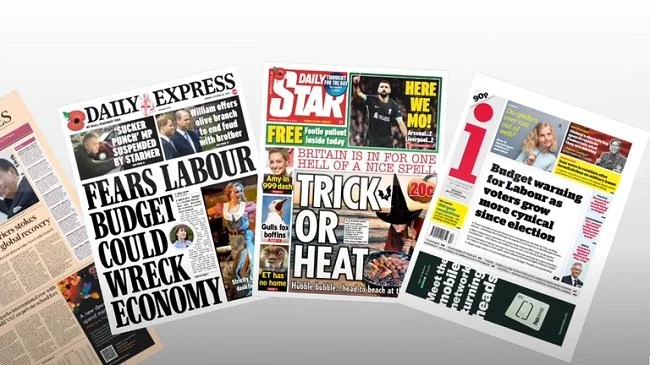
Now I’m not saying that the other political parties ran perfect campaigns. Far from it. There were mistakes and faux pas from all quarters. However, the Labour party focused very much on mobilising grass roots campaigners and getting out on the streets and knocking on doors. Jeremy Corbyn was also very much front and centre in the run up to the election. His non-confrontational style and unsophisticated passion for his beliefs, actually seem to chime with those he meets. Furthermore, the continual barrage of petty and spiteful calumny from the UK tabloid press seems to have been rejected by a large share of UK voters. People are fed up being told what to think by a handful of newspaper editors with their own agenda. These papers have effectively made Jeremy Corbyn in to an underdog. We don’t like bullies in this country and it’s funny how the public will turn and champion a person or cause if they feel that spite and malice are involved against them.
The overall turnout for Thursday vote was 68.7%, the highest since 1997. Much has been made about the youth vote and I am very glad to see the young engaged and getting involved with politics. Democracy is something we live and breathe every day, not something that we briefly enthuse over for a few weeks. There is a very clear difference in mindset and political outlook between the old and the young in this country and although I have a lot of love and respect for the baby boomer generation, too many of its political and cultural imperatives are obsolete, born of a by gone era that will never return. Brexit has clearly highlighted this. In numerous comments sections of various news websites, I’ve seen regular statements about the young’s alleged lack of “wordly experience”. It’s a trite, ad hominem argument that doesn’t wash. Wisdom does not come with age by default. Plus, there is no universal life experience to be had. History shows us that the young have built nations. Their views deserve no less consideration than those of their elders.
Whatever your personal loyalties and views, I think it is fair to say that UK politics just got a lot more interesting in the last forty-eight hours. The electorate have been taken for granted for too long and many are fed up with the status quo. Perhaps we’ve moved on from simple protest voting and are now considering tangible and practical change. Look what happens when we do. Whether you wanted Brexit or not, it’s a reality that needs to be addressed. If it is the most challenging issue this country has faced since World War II then perhaps it should be tackled jointly by all parties. Perhaps it is also time to firmly reject the tabloid press and their shameless interference in UK politics. May be politicians need to cultivate some courage and actually engage with the average voter. If they’re not prepared to do so then show them the door. I sincerely hope that voters of all persuasion are finally going to demand more from the political classes. The tail does not wag the dog and on Thursday the electorate reminded the Westminster of exactly that.


Register to Vote
A third of registered voters in the UK do not vote in either Local or General Elections. Out of an electorate of approximately 46,200,000 that is 15,700,000. Yet despite this substantial group not participating, it is seldom covered or discussed in the media. It is usually just written off as “voter apathy”, implying that those who did not cast their ballot are feckless, lazy or stupid. Not only is this patently untrue, not voting has major consequences. If this group of people were engaged and voted in the upcoming general election, then it would have a tangible impact upon the results. By not voting you are effectively giving the next UK government carte blanche to ignore your interests and pursue their own agenda. As Leonardo da Vinci famously said, "Nothing strengthens authority so much as silence".
A third of registered voters in the UK do not vote in either Local or General Elections. Out of an electorate of approximately 46,200,000 that is 15,700,000. Yet despite this substantial group not participating, it is seldom covered or discussed in the media. It is usually just written off as “voter apathy”, implying that those who did not cast their ballot are feckless, lazy or stupid. Not only is this patently untrue, not voting has major consequences. If this group of people were engaged and voted in the upcoming general election, then it would have a tangible impact upon the results. By not voting you are effectively giving the next UK government carte blanche to ignore your interests and pursue their own agenda. As Leonardo da Vinci famously said, "Nothing strengthens authority so much as silence".
I fully understand why people do not vote and are generally exhausted with the state of UK politics. Political discourse at present is devoid of any depth, substance or intellectual rigour. It is rife with spin and soundbites. False and spurious narratives are driven home by the tabloid press and the subtle complexities of domestic and foreign policy are distilled down to bogus binary choices. Furthermore, the major parties are all beyond their sell by dates and they know it. However, the archaic first past the post voting system favours them and not the electorate, so you’ll more than likely not see a change in electoral procedure for a while. Plus, we also have an ageing population that still cleave to outdated tribal allegiances which also skews matters further. Simply put, UK politics is a mess, especially if you wish to see change driven my intelligent discussion and an ethical consensus.
However, we are now facing a major crossroads in UK history, with Brexit. Whether you voted for it or not is now arbitrary. The realities of our countries exit from the EU needs to addressed calmly and by those who can genuinely obtain the best deal for the UK. Therefore, whatever government is in power after 8th June, needs to be scrutinised and held to account over every stage of Brexit. Therefore, it is extremely important that as many people turn out and vote on election day as possible. You can choose to vote for a specific party is you feel that they are best suited for the job, or vote tactically if you feel that will achieve a better outcome. If you feel that none of the candidates from the major parties suit your needs, then look to the smaller interest groups. If you find yourself in a serious moral quandary over who to vote for, then you can always spoil your ballot or write “none of the above”. The number of spoilt ballots is always noted and at the very least you have undertaken your duty as a UK citizen and turned up to vote. It’s not your fault that all the candidates are an utter shower.
So, if you are not currently registered to vote in the UK, then I would urge you to do so now. You have until 11:59 PM on Monday 22nd May. You can either contact your local borough council, or register online via the government website. The process is straight forward and takes about five minutes. The only details you need provide are you name, full address (including postcode), date of birth and National Insurance number. You can choose to either go to the polling station on election day or vote by post if you prefer. If you choose not to vote then you are effectively throwing away the only leverage you have as a citizen. Politicians primarily care about remaining in office, thus have an interest in registered voters. It can also be cogently argued that if you don’t vote and subsequently do not like the policies that are implemented because they impact upon you adversely, then you brought it upon yourself. Don’t give the next government a blank. Register to vote and have your say, even if your say is just “sod off”.


Is the UK Voting System Broken?
At present, there is talk in political circles of the prospect of an early General Election in the UK as a means of dealing with several looming political problems. If such a situation were to arise, then it has to contend with the fragmented state of the UK electorate as well as voter apathy and low turnouts. Perhaps the biggest issue is the mechanics of the election process itself. It has its roots in the past when there were two major parties. Things have changed in recent years with more political groups competing for parliamentary seats and the system now seems to be inequitable. So I thought it may be of interest to readers to offer a broad overview of the process. It differs quite considerably from other countries and as you'd expect with anything British, it has more than a few quirks and foibles. This is not in any way a discussion about party politics. I am simply writing about the actual mechanics of the UK First Past the Post system that determines who will form a government.
At present, there is talk in political circles of the prospect of an early General Election in the UK as a means of dealing with several looming political problems. If such a situation were to arise, then it has to contend with the fragmented state of the UK electorate as well as voter apathy and low turnouts. Perhaps the biggest issue is the mechanics of the election process itself. It has its roots in the past when there were two major parties. Things have changed in recent years with more political groups competing for parliamentary seats and the system now seems to be unequitable. So I thought it may be of interest to readers to offer a broad overview of the process. It differs quite considerably from other countries and as you'd expect with anything British, it has more than a few quirks and foibles. This is not in any way a discussion about party politics. I am simply writing about the actual mechanics of the UK First Past the Post system that determines who will form a government.
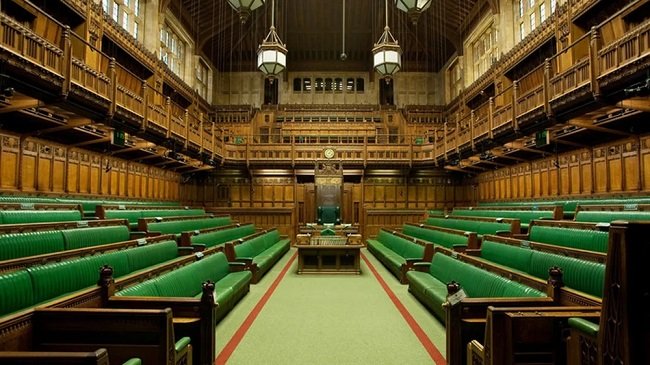
There are 650 parliamentary constituencies in the UK, each returning a Member of Parliament (MP). For a single political party to form a government they need to have at least 326 MPs duly elected. When UK voters go to the polls, they are not voting for the specific leader of a particular party IE they are not voting who will be the British Prime Minister. They are voting for a specific candidate, who will represent their constituency at Parliament. This choice is dependent upon which candidates are standing for which parties in each constituency.
The party that wins 326 parliamentary seats or more is then in a position to form a government. The leader of that party then becomes Prime Minister by default. It should be noted that the UK Prime Minister is not also the head of state. That role which is non-political is assumed by the current Monarch.
At present in the UK, votes in local, regional and national elections are written by hand on Ballot Papers and counted manually. Not only does this reduce potential fraud but it actually makes the counting process easier. It also affords voters a chance to deface or spoil their ballot paper if they see fit. Something you cannot do if you vote mechanically or electronically. Disallowed votes are counted as such and statistics are kept.
Now here’s the part I and many other UK voters find most frustrating. Out of the 650 constituencies in the UK, approximately 456 are considered to be safe seats IE the current incumbent has a sufficient majority of votes from the local electorate to be able to maintain their position. Only 194 Parliamentary seats are based in constituencies that are deemed marginal. There is no fixed definition of a marginal but it is usually defined as seats with majorities of 10% or less that require a swing of 5% for the incumbent party to lose. Safe seats tend to remain constant. Marginal seats play a key role in elections.
I live in the constituency of Old Bexley and Sidcup, in South East London. It is the embodiment of a white, middle class, residential borough and has been a safe seat for the Conservative Party for years. The electorate is about 65,000 in total. The turnout in the last election was about 69%. James Brokenshire the incumbent MP has a majority of over 15, 000 votes (he actually poled 24,500 votes).
No matter what my party politics and how I personally vote, Mr. Brokenshire is very likely to remain my MP by the simple fact he has an unassailable majority. He may lose some votes in protest but not enough to unseat him. The likelihood of 8,000 plus voters changing their political allegiances, in a constituency that is already socio-economically disposed towards the Conservative Party is highly unlikely. Similar arguments can be made regarding the static nature of all other so-called safe seats.
This raises one of the major failings of the current UK voting system and safes seats. If you live in such a constituency and vote against the current favoured incumbent, your vote effectively counts for nothing and has no impact on the UK political landscape. For years the UK has mainly been a two-party country and as a result the political system has evolved to reflect that. In 2010, the UK had a referendum on changing to the AV voting system that had elements of proportional representation. The change was rejected. Since then, several new parties have emerged and gained favour, while the two main parties have waned and lost some of their broad public support. We now live in a multi-party environment but lack a voting system to adequately reflect that.
Presently, the only voters that can tangibly make change in their constituencies are those that live in the 194 marginal seats. Because the incumbent's majority is often low in such situations and there are far more floating or tactical voters, ardent campaigning can yield results and make swings in either political direction. Effectively it is these constituencies and the voters that live in them that determine the UK General Election results. Because of such issues as population density, some of these marginal seats may have small electorates. In some cases, it's simply the floating voter within a few streets that can change things. It is both fascinating and a little concerning to consider that the next five years of government are effectively decided by a small percentage of the electorate.
The other issue that the UK faces in an election is the prospect of no party being an outright winner. The prospect of a coalition raises its head. Although coalitions have been effective in many other European nations, the UK is not culturally used to them. Where the younger generation seems to warm to the concept, those of an older age group with more entrenched party loyalties balk at the notion of "forced collaboration". However, I think this change in the UK's political landscape is here for good and if anything, there will be even more new parties in the next decade, especially if the Labour Party disintegrates. In the meantime, the only voters determining the outcome of the current election are those living in marginal seats. According to some political experts, this may be as few as 250, 0000 voters out of a total of 46,000,000 registered to vote.
To me is seems self-evident that the ageing First Past the Post system is not fit to serve a modern electorate and needs to be replaced by a fairer procedure. It is ironic that UK representatives standing as MEPs in the European Parliament are subject to a proportional representation voting system, as are the devolved parliament in Scotland and Wales. However, to expect a change to be implemented by the very party in government that directly benefits from the current status quo is naïve. In the meantime, we must continue to endure the flaws inherent in the process that is in place.
Thoughts on the Current Political Climate
Both the US Presidential election and the recent UK Brexit referendum are subjects that can be dissected from numerous angles and perspectives. Pundits, journalists and academics alike will be debating these “shock results” for months to come. As for the proverbial man in the street, let it suffice to say that these electoral outcomes have come as far less of a surprise. The divide between electorate and political classes has been clearly highlighted in 2016. However, it should be noted that the overall sense of dissatisfaction with the status quo is a very broad church and that the public are motivated by a wide variety of ideas, concerns and motivations. Analysis of both these political outcomes is complex and should not simply be dismissed with broad brushstrokes.
Both the US Presidential election and the recent UK Brexit referendum are subjects that can be dissected from numerous angles and perspectives. Pundits, journalists and academics alike will be debating these “shock results” for months to come. As for the proverbial man in the street, let it suffice to say that these electoral outcomes have come as far less of a surprise. The divide between electorate and political classes has been clearly highlighted in 2016. However, it should be noted that the overall sense of dissatisfaction with the status quo is a very broad church and that the public are motivated by a wide variety of ideas, concerns and motivations. Analysis of both these political outcomes is complex and should not simply be dismissed with broad brushstrokes.
Sadly, therein lies the rub. Complex problems often require complex solutions. We live in an age where the public seems to have very little tolerance for “complex”, as well as experts and facts. As Otto von Bismark said “Politics is the art of the possible, the attainable — the art of the next best”. Compromise doesn’t strike me as something that will go down with a lot of the electorate. Therefore, it is not outside the realms of possibility that both the US and UK electorate will be disappointed by their respective governments within a year or so. When you consider the inherent diversity of individual expectations, it seems to be almost inevitable that Brexit and making America “great” again are projects doomed to overall failure.
Perhaps the most perplexing aspect of these emergent social, cultural and political divides is the question of how to address them. Debate, interaction and conciliation appear to be currently off the table. How can there be any meaningful engagement when the media is reviled, facts are denied and binary positions are adhered to. There is no clear majority position at present therefore neither side can credibly discount the other. There are levelled headed individuals on both sides of the divide who will still want to engage in dialogue and counter arguments but I am doubtful as to how much success they will have. I have always thought that society, irrespective of its diversity of views and opinions, was at least founded upon some commonly held ideals. Perhaps that is no longer the case and that the rise of the “consumer” and individual over traditional notions of “belonging” to a wider society, no longer prevail.
It has been argued that one of the driving forces behind the ongoing political turmoil currently being seen in Western countries, is an inherent opposition to the established order. The electorate have reached a point where they simply wish to see change, irrespective as to whether it’s driven by a clear plan or not; change for change sake as the adage says. Naturally this comes with a degree of risk both economically and socially. Furthermore, the benefits of change are dependent on which side of the divide you are and whether you stand to gain or lose. As previously mentioned at present there is no majority opinion so there is scope for a very large number of people to find themselves in the “losing” group if significant change is achieved. Thus, we arrive at another factor that has been associated with both Brexit and the Presidential election; namely “fear”.
Politics across the US and Europe is currently very ugly. It has also been in the past so it’s not necessarily a unique situation but it’s been a while since things were so acrimonious and tribal. Legitimate subjects of debate such as immigration, economics and equality have developed a peripheral taint and are not always discussed calmly and logically. Because anti-establishment feeling has gathered momentum and proven successful at the polls, it has validated some of the more controversial views held by some. It also raises the question as to whether so-called “extremist views” are the prerogative of a few. Perhaps large sections of society in the US and the UK are not advocates of equality and do hold less inclusive views. After all morality and ethics are abstract concepts and not naturally occurring. A cursory look at world history shows that established schools of thought wax and wane and that democratic principles are not inherently our default setting.
At present, we find ourselves in a situation where a lot of people are genuinely worried that they will have their rights taken away or be vilified in some way. They feel that they will be relegated to a position of second class citizen or worse. There is genuine scope for social unrest and violence in both the US and UK at present. However, exactly how you feel about this climate of fear and the prospect of civil disturbances is dependent upon your politics or possibly more importantly whether is directly impacts upon you and yours. The social economic make up of your neighbourhood is a major factor. You may live in a flashpoint or removed from it all. Furthermore, riots usually tend to be contained by the authorities and thus those protesting tend to do the most harm to themselves. May be some of those that have pushed for change have done so knowing that they won’t directly bear the immediate consequences. Yet there are some types of fallout that cannot be avoided. Inflation, unemployment and the value of the Dollar or Pound in your pocket must be endured by all. As ever it’s the poorest who will potentially be hurt the most, which is ironic as statistics show they are the greatest advocate of these emerging movements.
There’s another group of people that’s worth considering. A very curious group that seems to be growing. Those who have chosen for whatever reason to opt out of the entire political and voting process. There are 241 million people of voting age in the United States but only approximately 200 million of those registered to vote. In the latest US election, only 46.6% of the electorate turned out to cast their ballot. Comparable percentages of voter apathy are rife in the UK and Europe. Why exactly such numbers of people have chosen to do this is perplexing. Utter exasperation, indifference, mental incompetence or independent wealth may all be factors. However, if this group ever become politically engaged at some point they certainly have sufficient numbers to impact upon the system. Sooner or later the most jaded or apathetic voter will find a reason to “get involved”. Sadly, this usually only happens when something truly bad is imminent.
So, where exactly does the current political landscape leave us? Some may say up a certain creek without a suitable mean of locomotion. Other may say en route to the promised land. The most likely outcome is somewhere between the two of these two views. There is political uncertainty ahead and that will have social and economic consequences. However, history shows us that many things are cyclical and if a period of economic prosperity can be achieved then political unrest usually subsides as all parties benefit from an improved status quo. However economic stability does not just occur by itself and requires intervention by third parties. We also must countenance the fact that maybe we as a species are not destined for a future such as that envisioned by Gene Roddenberry. May be the reason that we don’t “just all get along” is because we can’t. Perhaps we are an evolutionary cul-de-sac doomed to live in “interesting times”. Let us hope that the latter of these two prospect is not a forgone conclusion.
Park Closure Used For Cheap Political Capital
For the last twelve months residents of Sidcup, in South East London have been fighting against the sale of Old Farm Park but sadly the local council have approved the “disposal” of this asset. Many who live in the area are of the opinion that this was a done deal right from the get-go. However despite the inevitability of this situation, residents as well as some councillors and even the local Member of Parliament have been robust in their efforts to prevent this sale.
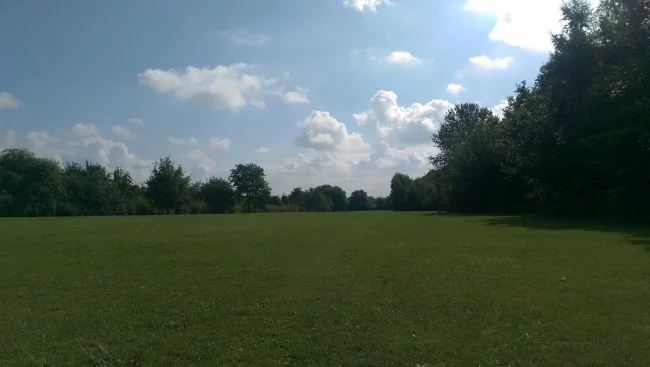
For the last twelve months residents of Sidcup, in South East London have been fighting against the sale of Old Farm Park but sadly the local council have approved the “disposal” of this asset. Many who live in the area are of the opinion that this was a done deal right from the get-go. However despite the inevitability of this situation, residents as well as some councillors and even the local Member of Parliament have been robust in their efforts to prevent this sale.
Over recent months many of those involved in campaigning have stated how difficult it has been to get wider media attention. The local newspaper has printed a few factually inaccurate stories but overall local TV, radio and the press have been somewhat indifferent. To them this simply is another case of Nimbyism from the suburban middle classes.
So I was somewhat surprised when I received a group email requesting residents to attend a meeting in the park today. London Mayor Candidate Peter Whittle (UKIP) was to make an appearance and there was to be news coverage from ITV. I believe there was a journalist from The Guardian present as well. Now although I am not a UKIP supporter, I am aware that they have spoken out about building of green field sites, so I decided to go along.
I try not to be too cynical but I had suspicions that this event was going to be more about campaigning for UKIP than addressing the specific issue of Old Farm Park. Sadly my suspicions were correct. Residents were kept waiting for the camera crew to arrive. During which time Mr Whittle and his entourage made no attempt to apologise for the delay or to thank those present for attending. During his talk he briefly referenced UKIPs policy on urban development and made an incidental nod to the matter in hand; namely the sale of this park. Overall he was far more concerned about the press coverage than the key local issue.
As for the actual news article that was shown tonight on ITV London News, it was not about the sale of the park or even the issue of property development in London. It was simply a political opinion piece in which a news reporter spent a day with Mr Whittle while he canvassed in Bexley Borough. As for the residents of Sidcup who attended the meeting this morning to talk about the sale of their park, they found themselves unwittingly featuring as UKIP supporters, due to the way the video was edited.
On mature reflection it was naïve to think that the presence of a politician and the involvement of ITV news would in any way prove beneficial. As for the sale of Old Farm Park that now seems to be a closed issue. However I don’t think the councillors that voted for the sale of Old Farm Park can afford to rest on their laurels. I wouldn't be surprised if many of the local residents who diligently campaigned to save the park will now spend a comparable amount of time and effort ensuring that those responsible are not returned to office in the next local elections.
The EU Referendum
On Thursday 23rd June the UK will vote on whether to remain a member of the EU or leave the community. It is possibly the biggest political, economic and social issue that I have voted on in my lifetime and both outcomes have the potential for both positive and negative effects upon the country and its future. As you would imagine with an issue of this magnitude, the pros and cons on both sides of the debate are complex. Immigration, security, trade, financial stability are some of the factors involved that shape people’s opinions. Then there are more nebulous concepts like sovereignty and nationalism that influence voter’s perspective. Whereas the logistical and administrative arguments are far more couched in facts and data, the more emotive issues are driven by tribal politics and feelings. I’m not a fan of either.
On Thursday 23rd June the UK will vote on whether to remain a member of the EU or leave the community. It is possibly the biggest political, economic and social issue that I have voted on in my lifetime and both outcomes have the potential for both positive and negative effects upon the country and its future. As you would imagine with an issue of this magnitude, the pros and cons on both sides of the debate are complex. Immigration, security, trade, financial stability are some of the factors involved that shape people’s opinions. Then there are more nebulous concepts like sovereignty and nationalism that influence voter’s perspective. Whereas the logistical and administrative arguments are far more couched in facts and data, the more emotive issues are driven more by tribal politics and feelings. I’m not a fan of either.
Over the next one hundred and twenty or so days both campaigns will vie for the public’s attention. Those who have already made up their minds which way they intend to vote are not really relevant in terms of the campaigning that will be conducted. It is those who have yet to make up their minds that will hold the balance. For such people (myself included) to make an informed choice, there is a requirement for clear and succinct data. I would like to be presented with comprehensive fact based arguments from both sides. I would also like to see measured and impartial discussions by the UK media. Sadly none of this is going to happen. The UK press, especially the newspapers are biased and both respective campaigns seem to be focusing on soundbites based upon fear. It seems that the referendum will be determined by lowest common denominator politics.
I’ve read the opinions of many ardent supporters from both sides of the debate and am very much bemused by the idealism and naivety exhibited. A common refrain is that of “unelected officials” and having to endure the governance by parties one didn’t vote for. But this is something that the majority of the electorate currently endure already from our own existing Parliamentary system. I also do not understand why some quarters are more trusting of our own politicians than those of the EU. A UK government free from such EU rules as the Human Rights Act and Working Time Directive could potentially act with impunity and to the detriment of many an employee. UK governments of all political persuasions have hardly acted with integrity or for the benefit of all over the last three decades. I would also add that he stay campaigns fixation on security and defence is also spurious. The UK whether in or out of the EU is still a major player in both NATO and the UN.
However what we have learned over recent months is not to put too much stock in opinion polls and market research. The Scottish Independence referendum appeared to be going in one direction at one point, as did predictions for a hung parliament in last May’s UK general election. The public is less free with information about their voting preferences these days and may well continue to play its cards close to its chest. This is hardly surprising as some of the more vocal members of the public seem to be far from tolerant of differing views. Look at any comment section of a news website covering the EU referendum and you’ll find hyperbole, invective and a general lack of respect. I see that Patriotism is now being trotted out as an argument from some quarters of the leave campaign. Need I quote Samuel Johnson?
At present not only do I find myself considering my own position on the referendum itself but also whether I will be able to personally endure any potentially negative consequences that may ensue, regardless which decision prevails. If there are economic problems at a later date, will my own personal circumstances be sufficient to insulate me from any financial fallout? It is worrying to have to think in such terms and only adds further to the entire negative ambience of this entire campaign. Perhaps for the sake of balance it would help to consider on some more light hearted questions that stem from this debate. If the UK leaves the EU does that mean we will no longer be able/have to participate in the Eurovision Song contest? Also does a successful Brexit mean that the UK Independence Party’s work is done and it will cease to operate? There’s precious little levity in contemporary UK politics, so let us enjoy a little now. I’m sure in three months’ time all vestige of humour will be gone from the EU referendum debate and fear and loathing will be the default response from most quarters.
The Decline of UK Politics
I’ve written this post from the perspective of politics in the UK but I daresay that some of the points are relevant to other Western countries. Please note that this is not a post advocating any particular political stance or ideology. It is a commentary about the system itself and the public’s current relationship with the world of politics per se.
Two party politics has dominated the UK for over two hundred years and the electoral system that has evolved reflects that. The first past the post system has major shortcomings when dealing with emerging parties and diverse voting patterns. In recent years the traditional parties have seen a decline in membership and they no longer enjoy the levels of support with the UK electorate that they did fifty years ago. My parents grew up in a culture of tribal politics, driven by class, wealth and left wing and right wing ideologies. I personally think the notion that a single party can adequately represent all my political, philosophical and ethical needs is risible. Therefore I have no specific party allegiance or cleave to a particular political school of thought. I am a floating voter when it comes to both local and national elections.
I’ve written this post from the perspective of politics in the UK but I daresay that some of the points are relevant to other Western countries. Please note that this is not a post advocating any particular political stance or ideology. It is a commentary about the system itself and the public’s current relationship with the world of politics per se.
Two party politics has dominated the UK for over two hundred years and the electoral system that has evolved reflects that. The first past the post system has major shortcomings when dealing with emerging parties and diverse voting patterns. In recent years the traditional parties have seen a decline in membership and they no longer enjoy the levels of support with the UK electorate that they did fifty years ago. My parents grew up in a culture of tribal politics, driven by class, wealth and left wing and right wing ideologies. I personally think the notion that a single party can adequately represent all my political, philosophical and ethical needs is risible. Therefore I have no specific party allegiance or cleave to a particular political school of thought. I am a floating voter when it comes to both local and national elections.
Although politics is a deeply divisive and problematic subject to discuss, a fully functioning democracy requires a politically literate and engaged population. Sadly that is not the case at present. Political debate, national policies and our entire approach to the subject has deteriorated in my lifetime. Politicians are viewed cynically by the overall population and often for legitimate reasons. Parties no longer seem to be driven by any credible ideologies or dogma. Major issues are seldom addressed and often kicked into the proverbial long grass. Furthermore the media exults political discourse of the lowest common dominator. Meaningful and civilised debate is virtually non-existence. Consequently large swathes of the population are no longer interested in politics. Many of those that profess to be so, are ill informed and have no idea how to discuss their views in a viable manner.
It is ironic that in an age when virtually anyone has access to tools that allow them to express an opinion and engage with others, that the level of debate has so notably declined. We live in a binary world in which opposing views are not countered by facts and data but are merely shouted down. In seems that many who live in our democracy seem to eschew its universal applicability. Tolerance, politely begging to differ and simple common sense are scarce commodities these days. Furthermore the UK has slowly since the sixties assimilated US style politics, which chooses to focus on the cult of personality rather than issues. Electoral pledges and longstanding policies are replaced with soundbites. It’s no longer about advocating what your party can offer but sowing the seeds of fear about the opposition. Last year’s general election result effectively came down to floating voters deciding at the last minute based on who they feared the most with regard to running the economy.
This malady affects politics at every level. From the comments section of any news website, to local government, right the way up to Parliament itself. I recently attended several council meetings regarding a local issue and was shocked by the lack of decorum and the subpar debating skills of the councillors. Straw man arguments and ad hominem attacks were rife and the quality of the meeting was very poor. Few had any concept of public speaking or debating skills. Yet this approach to politics is endemic at present and I fear it will be the driving factor behind the forthcoming Europe referendum. I would like to see detailed arguments from both sides of the debate, backed up with facts and data. Whether the UK remains part of the EU is an extremely complex matter with major ramifications. Surely the public needs to be provided with robust information before an opinion can be formed or decided upon. Sadly the debate will be driven by fear and some perfunctory soundbites. It is deeply worrying that a decision of this magnitude will be decided upon in such an arbitrary manner.
The most depressing thing for me about the state of contemporary UK politics is the feeling that my vote carries no weight and is of little consequence. I believe this is a contributory reason why a third of the UK’s 45,000,000 registered voters do not bother to cast a vote. Let us not forget that there is a further 6,000,000 people who are entitled to vote but have not registered. Thus we have elected government implementing policies with nowhere near a convincing mandate. The current administration is in power after successfully polling about a quarter of the electorate. Again due to the failings of the current voting system other parties gained over 4,000,000 votes yet only secured one seat in Parliament. Unless you live in a marginal seat that can potentially swing between parties, then your vote has no impact upon political change.
I am also not comfortable with the blanket demonization of all politicians, journalists and pundits. Although many are of a poor standard there are still those that seem motivated for the right reasons. During my career I’ve met many on both sides of the political divide that I admire. However they are often hamstrung by the system they work within and the fact that they are often dealing against groups with powerful vested interests. The net result is that those of worth and character frequently go unnoticed on a national level. Plus the unsophisticated rhetoric of the current political arena means that we seldom get beyond “Tory scum”, “bleeding heart liberal” and “Champagne Socialist”. Such hyperbolic language stifles any discussion and further muddies the waters. The opinion of those that use such jargon is seldom informed.
What I would like to see emerge from the current status quo would be a new voting system based upon some form of proportional representation. I would also like to see new parties emerge as well as far more independent candidates, especially at local level. There is a need for policies born out of intelligent debate from all quarters, rather than thought up be biased think tanks. Politicians need to create a new covenant with the electorate and validate it by their deeds. However I am fully aware that this is all highly unlikely. Society seems to be regressing at present, as the divide between rich and poor increases and tolerance, informed opinion and a wider world view are largely in decline. I can if pressed fall back up a personal position of “I’m alright Jack” but many can’t. Also I don’t want to have to adopt such a self-centred and isolationist mentality.
As I stated at the start, I do not consider this post to be a political statement in support of a particular party or group. I merely see it as a summary of the perceived failing of our current political system. It is of course based upon my own personal perspective. I’m sure that those that enjoy power would see it quite differently. However we are far from a golden age of national politics and are not necessarily a nation driven by common ideals and values anymore. The good of the country seems to have been supplanted by the needs and desires of the individual. None of this is good for the UK. A healthy democracy needs a government that is seen to respond the wishes of its people. There is also a need for a robust opposition and debate. None of this is possible if the majority of the electorate are political disengaged. If this situation is not addressed then the future consequences could be dire.